SB 1342: Wages: investigations: subpoenas.
- Session Year: 2015-2016
- House: Senate
- Latest Version Date: 2016-07-25
Existing law authorizes the Industrial Welfare Commission to subpoena witnesses. Existing law provides that if a person fails to comply with an order or subpoena of the commission or a witness refuses to testify to any matter regarding which he or she may lawfully be interrogated before any wage board or the commission, it shall be the duty of the superior court to compel obedience in a manner by which such obedience could be compelled in a proceeding pending before the court.
This bill would specify that a legislative body of a city or county is authorized to delegate that bodys authority to issue subpoenas and to report noncompliance thereof to the judge of the superior court of the county, to a county or city official or department head in order to enforce any local law or ordinance, including local wage laws. The bill would provide legislative findings in support of this provision.
Existing law authorizes the Industrial Welfare Commission to subpoena witnesses. Existing law provides that if a person fails to comply with an order or subpoena of the commission or a witness refuses to testify to any matter regarding which he or she may lawfully be interrogated before any wage board or the commission, it shall be the duty of the superior court to compel obedience in a manner by which such obedience could be compelled in a proceeding pending before the court.
This bill would authorize a board of supervisors of a county or specify that a legislative body of a city or county is authorized to delegate that board or bodys authority to issue subpoenas, by resolution or ordinance, subpoenas and to report noncompliance thereof to the judge of the superior court of the county, to a county or city officer official or department head for the purpose of conducting investigations in order to enforce local wage laws. The bill would require these subpoenas to only be issued for purposes of obtaining records and testimony reasonably necessary to determine if a local wage ordinance was violated, to be reviewed by the county counsel or city attorney, and signed by the designated officer or department head before it is issued. The bill would provide that if any person so duly subpoenaed to appear and give evidence or to produce any books or papers before the designated officer or department head, neglects or refused to appear, or to produce any books or papers, as required by the subpoena, or refuses to testify or answer any questions that the designated officer or department head decides are proper and pertinent, he or she shall be in contempt, and the designated officer or department head shall report that fact to the judge of the superior court of the county. The bill would provide legislative findings in support of this provision.
Existing law authorizes the Industrial Welfare Commission to subpoena witnesses. Existing law provides that if a person fails to comply with an order or subpoena of the commission or a witness refuses to testify to any matter regarding which he or she may lawfully be interrogated before any wage board or the commission, it shall be the duty of the superior court to compel obedience in a manner by which such obedience could be compelled in a proceeding pending before the court.
This bill would authorize a board of supervisors of a county or a legislative body of a city to delegate that board or bodys authority to issue subpoenas, by resolution or ordinance, to a county or city officer or department head for the purpose of conducting investigations to enforce local wage laws. The bill would require these subpoenas to only be issued for purposes of obtaining records and testimony reasonably necessary to determine if a local wage ordinance was violated, to be reviewed by the county counsel or city attorney, and signed by the designated officer or department head before it is issued. The bill would provide that if any person so duly subpoenaed to appear and give evidence or to produce any books or papers before the designated officer or department head, neglects or refused to appear, or to produce any books or papers, as required by the subpoena, or refuses to testify or answer any questions that the designated officer or department head decides are proper and pertinent, he or she shall be in contempt, and the designated officer or department head shall report that fact to the judge of the superior court of the county.
(a)The Legislature finds and declares all of the following:
(1)Wage theft is prevalent among immigrant and low-wage workers in California.
(2)Los Angeles County, where approximately $26.6 million in wages is stolen from laborers every week, has been dubbed by some as the wage theft capital of the United States.
(3)The Economic Roundtable and the University of California, Los Angeles, indicate that violations of wage laws in Los Angeles are pervasive, with 30 percent of low-wage workers in Los Angeles receiving less than the minimum wage and 88.5 percent of workers experiencing some sort of wage theft.
(4)Wage theft can cause workers extreme financial hardship, making it harder for workers experiencing wage theft to take care of their families and contribute to the state economy.
(5)According to the Milton Marks Little Hoover Commission on California State Government Organization and Economy, wage enforcement resources in California have not kept pace with increases in the number of employers and increased complexity of the employer-employee relationship. Local jurisdictions, including the City and County of San Francisco, the City of Los Angeles, and the County of Los Angeles, have addressed the need for additional wage enforcement resources by establishing local wage enforcement agencies.
(6)In California, 14 local jurisdictions have enacted minimum wage ordinances. The majority of these jurisdictions have designated or created local agencies to enforce local wage laws.
(7)Local wage enforcement is an effective means of combating wage theft. For example, San Franciscos Office of Labor Standards Enforcement recovered 90.5 percent of wages and interest owed to workers between 2003 and 2013.
(8)Pursuant to Sections 25207, 27721, and 37104, and Dibb v. County of San Diego, (8 Cal. 4th 1200), cities and counties are authorized to delegate to local officials the authority to issue subpoenas in support of enforcing local wage ordinances.
(b)It is the intent of the Legislature in enacting this measure to promote honest pay for fair work by giving local wage enforcement programs all of the tools necessary to conduct successful wage claim investigations in order to recover unpaid back wages for hardworking Californians.
(c)Cities and counties are encouraged to develop and enact specific measures to target and remedy wage theft.
SEC. 2.Section 53060.4 is added to the Government Code, to read:53060.4.(a)The legislative body of a city or county may delegate to a county or city official or department head its authority to issue subpoenas and to report noncompliance thereof to the judge of the superior court of the county, in order to enforce any local law or ordinance, including, but not limited to, local wage laws.
(b)The Legislature finds and declares that these provisions do not constitute a change in, but are declaratory of, existing law.
(a)The Legislature finds and declares all of the following:
(1)Wage theft is prevalent among immigrant and low-wage workers in California.
(2)Los Angeles County, where approximately $26.6 million in wages is stolen from laborers every week, has been dubbed by some as the wage theft capital of the United States.
(3)The Economic Roundtable and the University of California, Los Angeles, indicate that violations of wage laws in Los Angeles are pervasive, with 30 percent of low-wage workers in Los Angeles receiving less than the minimum wage and 88.5 percent of workers experiencing some sort of wage theft.
(4)Wage theft can cause workers extreme financial hardship, making it harder for workers experiencing wage theft to take care of their families and contribute to the state economy.
(5)According to the Milton Marks Little Hoover Commission on California State Government Organization and Economy, wage enforcement resources in California have not kept pace with increases in the number of employers and increased complexity of the employer-employee relationship. Local jurisdictions, including the City and County of San Francisco, the City of Los Angeles, and the County of Los Angeles, have addressed the need for additional wage enforcement resources by establishing local wage enforcement agencies.
(6)In California, 14 local jurisdictions have enacted minimum wage ordinances. The majority of these jurisdictions have designated or created local agencies to enforce local wage laws.
(7)Local wage enforcement is an effective means of combating wage theft. For example, San Franciscos Office of Labor Standards Enforcement recovered 90.5 percent of wages and interest owed to workers between 2003 and 2013.
(8)Pursuant to Sections 25207, 27721, and 37104, and Dibb v. County of San Diego, (8 Cal. 4th 1200), cities and counties are authorized to delegate to local officials the authority to issue subpoenas in support of enforcing local wage ordinances.
(b)It is the intent of the Legislature in enacting this measure to promote honest pay for fair work by giving local wage enforcement programs all of the tools necessary to conduct successful wage claim investigations in order to recover unpaid back wages for hardworking Californians.
(c)Cities and counties are encouraged to develop and enact specific measures to target and remedy wage theft.
SEC. 2.Section 53060.4 is added to the Government Code, to read:53060.4.(a)The legislative body of a city or county may delegate to a county or city official or department head its authority to issue subpoenas and to report noncompliance thereof to the judge of the superior court of the county, in order to enforce local wage laws. any local law or ordinance, including, but not limited to, local wage laws.
(b)The Legislature finds and declares that these provisions do not constitute a change in, but are declaratory of, existing law.
(a)The Legislature finds and declares all of the following:
(1)Wage theft is prevalent among immigrant and low-wage workers in California.
(2)Los Angeles County, where approximately $26.6 million in wages are is stolen from laborers every week, has been dubbed by some as the wage theft capital of the United States.
(3)The Economic Roundtable and the University of California, Los Angeles, indicate that violations of wage laws in Los Angeles are pervasive, with 30 percent of low-wage workers in Los Angeles receiving less than the minimum wage and 88.5 percent of workers experiencing some sort of wage theft.
(4)Wage theft can cause workers extreme financial hardship, making it harder for workers experiencing wage theft to take care of their families and contribute to the state economy.
(5)According to the Milton Marks Little Hoover Commission on California State Government Organization and Economy, wage enforcement resources in California have not kept pace with increases in the number of employers and increased complexity of the employer-employee relationship. Local jurisdictions, including the City and County of San Francisco, the City of Los Angeles, and the County of Los Angeles, have addressed the need for additional wage enforcement resources by establishing local wage enforcement agencies.
(6)In California, 14 local jurisdictions have enacted minimum wage ordinances. The majority of these jurisdictions have designated or created a local agency local agencies to enforce local wage laws.
(7)Local wage enforcement is an effective means of combating wage theft. For example, San Franciscos Office of Labor Standards Enforcement recovered 90.5 percent of wages and interest owed to workers between 2003 and 2013.
(8)Pursuant to Sections 25207, 27721, and 37104, and Dibb v. County of San Diego, (8 Cal. 4th 1200), cities and counties are authorized to delegate to local officials the authority to issue subpoenas in support of enforcing local wage ordinances.
(b)It is the intent of the Legislature in enacting this measure to promote honest pay for fair work by giving local wage enforcement programs all of the tools necessary to conduct successful wage claim investigations in order to recover unpaid back wages for hard working hardworking Californians.
(c)Cities and counties are encouraged to develop and enact specific measures to target and remedy wage theft.
SEC. 2.Section 1176.5 is added to the Labor Code, to read:1176.5.(a)(1)The board of supervisors of a county may delegate the boards authority to issue subpoenas, by resolution or ordinance, to a county officer or department head for the purpose of conducting investigations to enforce local wage laws.
(2)The subpoena shall only be for purposes of obtaining records and testimony reasonably necessary to determine if a local wage ordinance was violated. The subpoena shall be reviewed by the county counsel and signed by the designated county officer or department head before it is issued. The subpoena shall be served in the same manner as subpoenas are served in civil actions.
(3)If a county and a city contract for purposes of the county conducting investigations to enforce local wage laws within the boundaries of a city, that contract may provide a county officer or department head with the authority to issue subpoenas within the contracting citys boundaries with the same force and effect as if issued in unincorporated areas of that county. A subpoena issued pursuant to this subdivision shall be reviewed by the county counsel before being issued.
(b)(1)The legislative body of a city may delegate that bodys authority to issue subpoenas, by resolution or ordinance, to a county officer or department head for the purpose of conducting investigations to enforce local wage laws.
(2)The subpoena shall only be for purposes of obtaining records and testimony reasonably necessary to determine if a local wage ordinance was violated. The subpoena shall be reviewed by the city attorney and signed by the designated city officer or department head before it is issued. The subpoena shall be served in the same manner as subpoenas are served in civil actions.
(3)If a county and a city contract for purposes of the city conducting investigations to enforce local wage laws within the unincorporated areas of the county, that contract may provide a city officer or department head with the authority to issue subpoenas within the contracting countys unincorporated areas with the same force and effect as if issued within the citys boundaries. A subpoena issued pursuant to this subdivision shall be reviewed by the city attorney before being issued.
(c)If any person duly subpoenaed pursuant to this section to appear and give evidence or to produce any books or papers before the designated officer or department head, neglects or refused to appear, or to produce any books or papers, as required by the subpoena, or refuses to testify or answer any questions that the designated officer or department head decides are proper and pertinent, he or she shall be in contempt, and the designated officer or department head shall report the that fact to the judge of the superior court of the county.
SEC. 2.Section 53060.4 is added to the Government Code, to read:53060.4.(a)The legislative body of a city or county may delegate to a county or city official or department head its authority to issue subpoenas and to report noncompliance thereof to the judge of the superior court of the county, in order to enforce local wage laws.
(b)The Legislature finds and declares that these provisions do not constitute a change in, but are declaratory of, existing law.
(a)The Legislature finds and declares all of the following:
(1)Wage theft is prevalent among immigrant and low-wage workers in California.
(2)Los Angeles County, where approximately $26.6 million in wages are stolen from laborers every week, has been dubbed by some as the wage theft capital of the United States.
(3)The Economic Roundtable and the University of California, Los Angeles, indicate that violations of wage laws in Los Angeles are pervasive, with 30 percent of low-wage workers in Los Angeles receiving less than the minimum wage and 88.5 percent of workers experiencing some sort of wage theft.
(4)Wage theft can cause workers extreme financial hardship, making it harder for workers experiencing wage theft to take care of their families and contribute to the state economy.
(5)According to the Milton Marks Little Hoover Commission on California State Government Organization and Economy, wage enforcement resources in California have not kept pace with increases in the number of employers and increased complexity of the employer-employee relationship. Local jurisdictions, including the City and County of San Francisco, the City of Los Angeles, and the County of Los Angeles, have addressed the need for additional wage enforcement resources by establishing local wage enforcement agencies.
(6)In California, 14 local jurisdictions have enacted minimum wage ordinances. The majority of these jurisdictions have designated or created a local agency to enforce local wage laws.
(7)Local wage enforcement is an effective means of combating wage theft. For example, San Franciscos Office of Labor Standards Enforcement recovered 90.5 percent of wages and interest owed to workers between 2003 and 2013.
(b)It is the intent of the Legislature in enacting this measure to promote honest pay for fair work by giving local wage enforcement programs all of the tools necessary to conduct successful wage claim investigations in order to recover unpaid back wages for hard working Californians.
SEC. 2.Section 1176.5 is added to the Labor Code, to read:1176.5.(a)(1)The board of supervisors of a county may delegate the boards authority to issue subpoenas, by resolution or ordinance, to a county officer or department head for the purpose of conducting investigations to enforce local wage laws.
(2)The subpoena shall only be for purposes of obtaining records and testimony reasonably necessary to determine if a local wage ordinance was violated. The subpoena shall be reviewed by the county counsel and signed by the designated county officer or department head before it is issued. The subpoena shall be served in the same manner as subpoenas are served in civil actions.
(3)If a county and a city contract for purposes of the county conducting investigations to enforce local wage laws within the boundaries of a city, that contract may provide a county officer or department head with the authority to issue subpoenas within the contracting citys boundaries with the same force and effect as if issued in unincorporated areas of that county. A subpoena issued pursuant to this subdivision shall be reviewed by the county counsel before being issued.
(b)(1)The legislative body of a city may delegate that bodys authority to issue subpoenas, by resolution or ordinance, to a county officer or department head for the purpose of conducting investigations to enforce local wage laws.
(2)The subpoena shall only be for purposes of obtaining records and testimony reasonably necessary to determine if a local wage ordinance was violated. The subpoena shall be reviewed by the city attorney and signed by the designated city officer or department head before it is issued. The subpoena shall be served in the same manner as subpoenas are served in civil actions.
(3)If a county and a city contract for purposes of the city conducting investigations to enforce local wage laws within the unincorporated areas of the county, that contract may provide a city officer or department head with the authority to issue subpoenas within the contracting countys unincorporated areas with the same force and effect as if issued within the citys boundaries. A subpoena issued pursuant to this subdivision shall be reviewed by the city attorney before being issued.
(c)If any person duly subpoenaed pursuant to this section to appear and give evidence or to produce any books or papers before the designated officer or department head, neglects or refused to appear, or to produce any books or papers, as required by the subpoena, or refuses to testify or answer any questions that the designated officer or department head decides are proper and pertinent, he or she shall be in contempt, and the designated officer or department head shall report the that fact to the judge of the superior court of the county.
|
Date
|
Status
|
|---|---|
| May 12, 2016 | Referred to Com. on JUD. |
| Jul 25, 2016 | Chaptered by Secretary of State. Chapter 115, Statutes of 2016. |
| Jul 25, 2016 | Approved by the Governor. |
| Jul 13, 2016 | Enrolled and presented to the Governor at 4 p.m. |
| Jun 30, 2016 | Assembly amendments concurred in. (Ayes 37. Noes 0.) Ordered to engrossing and enrolling. |
| Jun 30, 2016 | Assembly amendments concurred in. (Ayes 37. Noes 0. Page 4655.) Ordered to engrossing and enrolling. |
| Jun 22, 2016 | Ordered to special consent calendar. |
| Jun 16, 2016 | Read third time. Passed. Ordered to the Senate. |
| Jun 16, 2016 | In Senate. Concurrence in Assembly amendments pending. |
| Jun 13, 2016 | Read second time. Ordered to consent calendar. |
| Jun 9, 2016 | From committee: Do pass. Ordered to consent calendar. (Ayes 9. Noes 0.) (June 8). |
| May 26, 2016 | From committee with author's amendments. Read second time and amended. Re-referred to Com. on JUD. |
| Feb 19, 2016 | Introduced. To Com. on RLS. for assignment. To print. |
| May 3, 2016 | In Assembly. Read first time. Held at Desk. |
| May 2, 2016 | Read third time. Passed. (Ayes 38. Noes 0.) Ordered to the Assembly. |
| May 2, 2016 | Read third time. Passed. (Ayes 38. Noes 0. Page 3738.) Ordered to the Assembly. |
| Apr 28, 2016 | Read second time. Ordered to third reading. |
| Apr 27, 2016 | From committee: Do pass. (Ayes 6. Noes 0.) (April 26). |
| Apr 27, 2016 | From committee: Do pass. (Ayes 6. Noes 0. Page 3701.) (April 26). |
| Apr 14, 2016 | Set for hearing April 26. |
| Apr 12, 2016 | From committee with author's amendments. Read second time and amended. Re-referred to Com. on JUD. |
| Mar 3, 2016 | Referred to Com. on JUD. |
| Feb 22, 2016 | Read first time. |
| Feb 22, 2016 | From printer. May be acted upon on or after March 23. |
|
Date
|
Description
|
Location
|
Votes
|
|
|---|---|---|---|---|
| Jun 30, 2016 | Special Consent # SB1342 Mendoza | Senate Floor |
Passed |
|
| Jun 16, 2016 | SB 1342 Mendoza Consent Calendar Second Day Regular Session | Assembly Floor |
Passed |
|
| Jun 8, 2016 | Do pass. To Consent Calendar. | Assembly Standing Committee on Judiciary |
Passed |
|
| May 2, 2016 | Senate 3rd Reading SB1342 Mendoza | Senate Floor |
Passed |
|
| Apr 26, 2016 | Do pass | Senate Standing Committee on Judiciary |
Passed |
This list shows positions taken on this bill by organizations on the date displayed, which is linked to the original source.
Positions by individuals are not included.
|
Organization
|
Position
|
Date
|
|---|---|---|
| Los Angeles County Board of Supervisors | ** Support | May 2, 2016 |
| Los Angeles County Department of Consumer Affairs | * Support | Apr 26, 2016 |
Office of Senate Floor Analyses (916) 651-1520 Fax: (916) 327-4478 | SB |
UNFINISHED BUSINESS
Bill No: SB 1342
:
SENATE JUDICIARY COMMITTEE: 6-0, 4/26/16
AYES: Jackson, Anderson, Hertzberg, Leno, Monning, Wieckowski
NO VOTE RECORDED: Moorlach
SENATE FLOOR: 38-0, 5/2/16
AYES: Allen, Anderson, Bates, Beall, Berryhill, Block, Cannella, De León, Fuller, Gaines, Galgiani, Glazer, Hall, Hancock, Hernandez, Hill, Hueso, Huff, Jackson, Lara, Leno, Leyva, Liu, McGuire, Mendoza, Mitchell, Monning, Moorlach, Morrell, Nguyen, Nielsen, Pan, Pavley, Roth, Stone, Vidak, Wieckowski, Wolk
NO VOTE RECORDED: Hertzberg, Runner
ASSEMBLY FLOOR: 78-0, 6/16/16 (Consent) - See last page for vote
SOURCE: Los Angeles County Board of Supervisors
DIGEST: This bill specifies that a legislative body of a city or county is authorized to delegate that body’s authority to issue subpoenas and to report noncompliance thereof to the judge of the superior court of the county, to a county or city official or department head in order to enforce any local law or ordinance, including local wage laws. The bill provides legislative findings in support of this provision.
Assembly Amendments clarify that local wage laws are included in the phrase “any local law or ordinance.”
Existing law:
- Provides, generally, that a county board of supervisors may perform acts required by law, or which are necessary to discharge the duties of the legislative authority of the county government. (Government Code Section 25207.)
- Provides that when a state law or local ordinance provides that a hearing be held or that findings of fact or conclusions of law be made by any county board, agency, commission, or committee, the county hearing officer may be authorized by ordinance or resolution to conduct the hearing; to issue subpoenas; to receive evidence; to administer oaths; to rule on questions of law and the admissibility of evidence; and to prepare a record of the proceedings. (Government Code Section 27721.)
- Authorizes the legislative body of a city to issue subpoenas requiring attendance of witnesses or production of books or other documents for evidence or testimony in any action or proceeding before it. (Government Code Section 37104.)
- Provides that if any person who is duly subpoenaed neglects or refuses to obey a subpoena, or, appearing, refuses to testify or answer any questions which a majority of the legislative body decide proper and pertinent, the mayor shall report the fact to the judge of the superior court of the county. (Government Code Section 37106.)
- Holds that the fact that the California Constitution does not expressly grant to charter counties the specific authority to give its county officers power to issue subpoenas does not mean that charter counties do not have the power to do so. (Dibb v. County of San Diego (1994) 8 Cal 4th 1200, and cases cited therein.)
This bill:
- Makes findings and declarations relating to the problem of wage theft and the enforcement of local minimum wage ordinances, including the authority to issue subpoenas in support of enforcing such ordinances. States the intent of the Legislature to promote honest pay for fair work by giving appropriate investigatory tools to the local law enforcement programs.
- Specifies that the legislative body of a city or county may delegate to a county or city official or department head its authority to issue subpoenas and to report noncompliance thereof to the judge of the superior court of the county, in order to enforce any local law or ordinance, including, but not limited to, local wage laws.
- Finds and declares that these provisions do not constitute a change in, but are declaratory of, existing law.
Background
Across the country, with California leading the way, cities and counties are passing their own minimum wage laws, often with significantly higher wages than currently exist at the state and federal level. In 2014, San Francisco voters overwhelmingly approved a ballot measure to gradually raise the city’s minimum wage to $15 an hour by 2018. Last year the Los Angeles City Council voted to establish a city minimum wage that will reach $15 an hour by 2021, followed soon thereafter by a measure by Los Angeles County. San Jose adopted a city minimum wage in 2012 and smaller cities have recently done the same, including Oakland, Berkeley, Richmond, Sunnyvale, Emeryville, Mountain View, Santa Clara, and San Diego. Last month the Legislature, ensuring that California maintains the highest minimum wage in the country, approved a plan to raise the minimum wage of the entire state to $15 per hour over the next six years.
However, delivering on the promise of higher wages rests largely on the ability of cities, counties, and the state to put enforcement systems in place and fight the wage theft that low-wage workers often experience. Wage theft, generally, is when workers are not paid the wages to which they are legally entitled. This can occur when workers receive payment at a rate below the legal hourly minimum, when employees are not paid for off-the-clock work, are not properly paid overtime, or fail to get required rest and meal breaks, among other violations. Significant and extensive minimum wage violations have been documented around the country and in cities throughout California, as described by a recent report:
Significant and extensive minimum wage violations have been documented around the country and in cities throughout California. An analysis of worker surveys conducted by the Census and Bureau of Labor Statistics estimates that in California, minimum wage violations occur in any given week in 11 to 12 percent of all the low-wage jobs in the state (Eastern Research Group 2014). While this estimate already represents a significant amount of wage theft, experience suggests that official government surveys undercount workers who are especially vulnerable to wage theft, such as those working off the books or who are undocumented.
Other estimates come from surveys that use alternative sampling strategies much more likely to capture the full range of workers in the low-wage labor market. The best such study to date is a large representative survey of low-wage workers in Los Angeles in 2008, which found that 30 percent had been paid below the minimum wage during the previous week and 88 percent had at least one pay-related violation in the previous week. The amount of underpayment due to minimum wage violations assuming a full-year work schedule averaged $1,135 a year per worker, or 6.9 percent of earnings. Counting all pay-based violations, such as unpaid overtime and off-the-clock work, workers lost $2,070 per year, or 12.5 percent of earnings. Violations occurred across industries and occupations, with above-average rates of minimum wage violations in garment manufacturing, domestic service, building services, and department stores. (Bernhardt, Dietz, and Koonse, Enforcing City Minimum Wage Laws in California: Best Practices and City-State Partnerships, UCLA Center for Labor Research and Education and UC Berkeley Center for Labor Research and Education, Oct. 2015.)
Recovery of stolen wages requires that the employee either find a private lawyer to sue the employer, or more commonly, file a complaint with a government agency charged with enforcement of labor violations. However, because low-wage workers have limited access to private attorneys, private actions have failed to address wage theft on a large scale. This is largely because the relatively low value of the average complaint dramatically reduces profit for private attorneys, even when taking 40 percent of the recovery. In addition, the difficulty private attorneys face when collecting from employers jeopardizes their ability to recover their attorneys’ fees and earn anything for their effort. Thus, public enforcement plays a central role in ensuring that workers receive the wages they are owed. This bill, sponsored by the Los Angeles County Board of Supervisors, seeks to ensure that cities and counties have the tools necessary to enforce wage laws by clarifying that cities and counties have the ability to delegate the authority to issue subpoenas to a county or city official or department head.
FISCAL EFFECT: Appropriation: Fiscal Com.: Local:
Los Angeles County Board of Supervisors (source)
OPPOSITION: (Verified 6/17/16)
None received
ARGUMENTS IN SUPPORT: According to the author:
Well over a dozen cities and counties have passed minimum wage ordinances going beyond the State-mandated $10 an hour. In many cases, however, employers do not obey these laws. In Los Angeles County alone, workers are denied over $26 million a week in earned wages and have no local enforcement mechanism to assist them. … Subpoenas are a necessary part of conducting a full and fair investigation of alleged violations of local ordinances because subpoenas can compel the production of evidence from both sides of a complaint … existing law grants administrative subpoena authority to the heads of state departments to investigate matters under a department’s jurisdiction . . . many cities and counties are uncertain or unaware of this legal authority.
Accordingly, the sponsor, the Los Angeles County Board of Supervisors, concludes that “SB 1342 will eliminate any uncertainty in current law that allows a county board of supervisors or the legislative body of a city to delegate its administrative subpoena power.”
ASSEMBLY FLOOR: 78-0, 6/16/16
AYES: Achadjian, Alejo, Travis Allen, Arambula, Atkins, Baker, Bigelow, Bloom, Bonilla, Bonta, Brown, Burke, Calderon, Campos, Chang, Chau, Chávez, Chiu, Chu, Cooley, Cooper, Dababneh, Dahle, Daly, Dodd, Eggman, Frazier, Beth Gaines, Gallagher, Cristina Garcia, Eduardo Garcia, Gatto, Gipson, Gomez, Gonzalez, Gordon, Gray, Grove, Hadley, Harper, Holden, Irwin, Jones, Jones-Sawyer, Kim, Lackey, Levine, Linder, Lopez, Low, Maienschein, Mathis, Mayes, McCarty, Medina, Melendez, Mullin, Nazarian, Obernolte, O'Donnell, Olsen, Patterson, Quirk, Ridley-Thomas, Rodriguez, Salas, Santiago, Steinorth, Mark Stone, Thurmond, Ting, Wagner, Waldron, Weber, Wilk, Williams, Wood, Rendon
NO VOTE RECORDED: Brough, Roger Hernández
6/20/16 11:18:34
**** END ****
Date of Hearing: June 8, 2016
ASSEMBLY COMMITTEE ON JUDICIARY
Mark Stone, Chair
SBPCA Bill Id:SB 1342
Author:(Mendoza) – As Amended Ver:May 26, 2016
PROPOSED CONSENT
SENATE VOTE: 38-0
SUBJECT: Wages: investigations: subpoenas
KEY ISSUE: is it necessary to clarify that a city or county has the power to delegate its authority to issue subpoenas to city and county officials or department heads, and to report noncompliance thereof, in order to enforce local laws, including local wage laws?
SYNOPSIS
This bill would clarify that the legislative body of a city or county may delegate, to a city or county official or department head, its power to issue subpoenas and report noncompliance with the subpoena to the judge of the superior court, in order to enforce local wage laws. Existing law already gives a city or county the power to issue subpoenas and report noncompliance with subpoenas in order to enforce any local law or ordinance, and existing case law already makes it clear that a city or county can delegate these powers to local officials. This bill codifies these powers within a single code section and specifies that this power applies to the enforcement of local wages laws. As the bill expressly states, its provisions do not constitute a change in, but are merely declaratory of, existing law. Although the bill was prompted by concerns about the enforcement of local wage laws, this bill as recently amended would clarify the authority of a city or county to delegate its subpoena power, and report violations thereof, to enforce any local law or ordinance, including local wage laws. While cities and counties already possess the authority expressly granted by this bill, the author maintains that "many cities and counties are uncertain or unaware of this authority." In addition, while the power of the legislative authority of a city to delegate subpoena power is expressly stated in statute, there is no express provision authorizing the county to do the same, even though the California Supreme Court has held that a county most certainly has this power. This bill will make it absolutely clear that the legislative body of both a city and a county has the authority to issue a subpoena to enforce its laws and ordinances; may delegate that authority to city or county officials; and may report noncompliance with a subpoena to the appropriate superior court. There is no opposition to the measure, which passed unanimously in all Senate committee and floor votes.
SUMMARY: Clarifies that a legislative body of a city or county may delegate to a city or county official or department head it's authority to issue a subpoena and report noncompliance thereof to the proper court. Specifically, this bill:
- Makes findings and declarations relating to the problem of wage theft and the enforcement of local minimum wage ordinances, including the authority to issue subpoenas in support of enforcing such ordinances. States the intent of the Legislature to promote honest pay for fair work by giving appropriate investigatory tools to the local law enforcement programs.
- Specifies that the legislative body of a city or county may delegate to a county or city official or department head its authority to issue subpoenas and to report noncompliance thereof to the judge of the superior court of the county, in order to enforce any local law or ordinance, including, but not limited to, local wage laws.
- Finds and declares that these provisions do not constitute a change in, but are declaratory of, existing law.
EXISTING LAW:
- Provides, generally, that a county board of supervisors may perform acts required by law, or which are necessary to discharge the duties of the legislative authority of the county government. (Government Code Section 25207.)
- Provides that when a state law or local ordinance provides that a hearing be held or that findings of fact or conclusions of law be made by any county board, ageny, commission, or committee, the county hearing officer may be authorized by ordinace or resolution to conduct the hearing; to issue subpoenas; to receive evidence; to administer oaths; to rule on questions of law and the admissibility of evidence; and to prepare a record of the proceedings. (Government Code Section 27721.)
- Authorizes the legislative body of a city to issue subpoenas requiring attendance of witnesses or production of books or other documents for evidence or testimony in any action or proceeding before it. (Government Code Section 37104.)
- Provides that if any person who is duly subpoenaed neglects or refuses to obey a subpoena, or, appearing, refuses to testify or answer any questions which a majority of the legislative body decide proper and pertinent, the mayor shall report the fact to the judge of the superior court of the county. (Government Code Section 37106.)
- Holds that the fact that the California Constitution does not expressly grant to charter counties the specific authority to give its county officers power to issue subpoenas does not mean that charter counties do not have the power to do so. (Dibb v. County of San Diego (1994) 8 Cal 4th 1200, and cases cited therein.)
FISCAL EFFECT: As currently in print this bill is keyed non-fiscal.
COMMENTS: Sponsored by the Los Angeles County Board of Supervisors, this bill would clarify that the legislative body of a city or county may delegate, to a city or county official or department head, its power to issue subpoenas and report noncompliance with a subpoena to the judge of the superior court, in order to enforce any local law or ordinance, including, but not limited to, local wage laws. Existing law already gives a city or county the power to issues subpoenas and report noncompliance in order to enforce any local law or ordinance and existing case law already makes it clear that a city or county can delegate such powers to local officials. Why then, one might reasonably ask, is this bill necessary? While the bill may not be necessary, it nonetheless usefully codifies these existing powers within a single code section and specifies that this power applies to the enforcement of local wages laws, among other local laws and ordinances. As expressly stated in the bill, the provisions of this bill do not constitute a change in, but are declaratory of, existing law. Although the bill was prompted by concerns about the enforcement of local wage laws, in particular, it will allow a city or county to delegate its subpoena power, and report violations thereof, to enforce any local law or ordinance, including local wage laws.
Background. Although this measure will clarify the ability of a city and county legislative body to delegate subpoena power to enforce any local law or ordinance, the author and sponsor are particularly concerned about the ability of local authorities to enforce local wage laws. At least fourteen jurisdictions within the state have minimum wage laws that exceed the minimum wage mandated by the state and by the federal government. Yet, despite the existence of these laws, the author and sponsor claim that wage theft – which includes not only failure to pay the minimum wage, but failure to pay overtime or for off-the-clock work – continues to be a serious problem. According to the sponsor, in Los Angeles County alone, workers are denied over $26 million a week in legally-earned and legally-mandated wages. Although cities and counties have the inherent authority to enforce local laws, the author and sponsor maintain that they also need the power to issue subpoenas in order to investigate alleged violations and produce evidence that will inform the decision whether to file a complaint. As a general matter, the city and county legislative bodies that enact local laws have the power to subpoena evidence as necessary to enforce those laws, and, as a general matter, have the power to delegate this subpoena authority to individual city or county officials or department heads responsible for enforcing a particular local law. If a person or entity duly subpoenaed does not comply with the subpoena, the person or entity that issued the subpoena can report noncompliance to the appropriate superior court. (See Dibb v. County of San Diego (1994) 8 Cal 4th 1200; Government Code Sections 25207, 27721, 37104, and 37106.)
However, these existing powers and authority, while clear and unquestioned, are not expressly stated in a single statute with consistent language. Provisions setting forth the subpoena power of cities and counties appear in different sections of the Government Code with slightly different wording. The decision in Dibb v. County of San Diego, supra, finds such powers to be inherent in the general authority of a city or county to enforce its laws and implicit in the overall statutory scheme, but the Dibb holding is nowhere succinctly and expressly codified. This bill will expressly state, within a single statute, the ability of a city or county to delegate its subpoena power to local officials and report noncompliance to the appropriate superior court.
ARGUMENTS IN SUPPORT: According to the author, "well over a dozen cities and counties have passed minimum wage ordinances going beyond the State-mandated $10 an hour. In many cases, however, employers do not obey these laws. In Los Angeles County alone, workers are denied over $26 million a week in earned wages and have no local enforcement mechanism to assist them." The author argues that while "Subpoenas are a necessary part of conducting a full and fair investigation of alleged violations of local ordinances because subpoenas can compel the production of evidence from both sides of a complaint," and "existing law grants administrative subpoena authority to the heads of state departments to investigate matters under a department’s jurisdiction . . . many cities and counties are uncertain or unaware of this legal authority." Accordingly, the sponsor, the Los Angeles County Board of Supervisors, concludes that "SB 1342 will eliminate any uncertainty in current law that allows a county board of supervisors or the legislative body of a city to delegate its administrative subpoena power."
REGISTERED SUPPORT / OPPOSITION:
Support
Los Angeles County Board of Supervisors (sponsor)
Opposition
None on file
Analysis Prepared by: Thomas Clark / JUD. / (916) 319-2334
Office of Senate Floor Analyses (916) 651-1520 Fax: (916) 327-4478 | SB |
THIRD READING
Bill No: SB 1342
:
SENATE JUDICIARY COMMITTEE: 6-0, 4/26/16
AYES: Jackson, Anderson, Hertzberg, Leno, Monning, Wieckowski
NO VOTE RECORDED: Moorlach
SOURCE: Los Angeles County Board of Supervisors
DIGEST: This bill specifies that a legislative body of a city or county is authorized to delegate that body’s authority to issue subpoenas to a county or city official or department head and may report noncompliance thereof to the judge of the superior court of the county in order to enforce local wage laws. This bill also makes related legislative findings.
Existing law:
- Divides the state into cities and counties, and requires that the Legislature provide for the powers of cities and counties. (Cal. Const., art. XI, Secs. 1 and 2.)
- Authorizes counties and cities to adopt a charter for their own governance, independent of the Legislative scheme. (Cal. Const., art. XI, Secs. 3-6.)
- Provides for the general powers of counties and specifies that a board of supervisors may do and perform all other acts and things required by law, or which are necessary to the full discharge of the duties of the legislative authority of the county government. (Gov. Code Sec. 25200 et seq. and Gov. Code Sec. 25207.)
- Authorizes the board of supervisors of any county to establish the office of the county hearing officer, and provides that the duties of the office are to conduct hearings for the county or any board, agency, commission, or committee of the county. (Gov. Code Sec. 27720.)
- Provides that when a law or ordinance requires that a hearing be held or that findings of fact or conclusions of law be made by any county board, agency, commission, or committee, the county hearing officer may be authorized, by ordinance or resolution, to: 1) conduct the hearing; 2) to issue subpoenas; 3) to receive evidence; 4) to administer oaths; 5) to rule on questions of law and the admissibility of evidence; and 6) to prepare a record of the proceedings. (Gov. Code Sec. 27721.)
- Provides for the general powers of cities including the ability to pass ordinances not in conflict with the Constitution or laws of the state, and specifies that the legislative body may issue subpoenas requiring attendance of witnesses or production of books or other documents for evidence or testimony in any action or proceeding pending before it. (Gov. Code Secs. 37100 et seq., 37104.)
- Authorizes that, in addition to other powers, a city may perform all acts necessary or proper to carry out its powers. (Gov. Code Sec. 37112.)
This bill:
- Specifies that, in order to enforce local wage laws, a legislative body of a city or county may delegate to a county or city official or department head its authority to issue subpoenas and to report noncompliance thereof to the judge of the superior court of the county.
- Provides that the Legislature finds and declares that the provision above, does not constitute a change in, but is declaratory of, existing law.
- Makes various Legislative findings and declarations including:
- statistics related to wage theft;
- clarifying that the authority to delegate to local officials the ability to issue subpoenas exists under current law; and
- encouraging cities and counties to develop and enact specific measures to target and remedy wage theft.
Background
Across the country, with California leading the way, cities and counties are passing their own minimum wage laws, often with significantly higher wages than currently exist at the state and federal level. In 2014, San Francisco voters overwhelmingly approved a ballot measure to gradually raise the city’s minimum wage to $15 an hour by 2018. Last year the Los Angeles City Council voted to establish a city minimum wage that will reach $15 an hour by 2021, followed soon thereafter by a measure by Los Angeles County. San Jose adopted a city minimum wage in 2012 and smaller cities have recently done the same, including Oakland, Berkeley, Richmond, Sunnyvale, Emeryville, Mountain View, Santa Clara, and San Diego. Last month the Legislature, ensuring that California maintains the highest minimum wage in the country, approved a plan to raise the minimum wage of the entire state to $15 per hour over the next six years.
However, delivering on the promise of higher wages rests largely on the ability of cities, counties, and the state to put enforcement systems in place and fight the wage theft that low-wage workers often experience. Wage theft, generally, is when workers are not paid the wages to which they are legally entitled. This can occur when workers receive payment at a rate below the legal hourly minimum, when employees are not paid for off-the-clock work, are not properly paid overtime, or fail to get required rest and meal breaks, among other violations. Significant and extensive minimum wage violations have been documented around the country and in cities throughout California, as described by a recent report:
Significant and extensive minimum wage violations have been documented around the country and in cities throughout California. An analysis of worker surveys conducted by the Census and Bureau of Labor Statistics estimates that in California, minimum wage violations occur in any given week in 11 to 12 percent of all the low-wage jobs in the state (Eastern Research Group 2014). While this estimate already represents a significant amount of wage theft, experience suggests that official government surveys undercount workers who are especially vulnerable to wage theft, such as those working off the books or who are undocumented.
Other estimates come from surveys that use alternative sampling strategies much more likely to capture the full range of workers in the low-wage labor market. The best such study to date is a large representative survey of low-wage workers in Los Angeles in 2008, which found that 30 percent had been paid below the minimum wage during the previous week and 88 percent had at least one pay-related violation in the previous week. The amount of underpayment due to minimum wage violations assuming a full-year work schedule averaged $1,135 a year per worker, or 6.9 percent of earnings. Counting all pay-based violations, such as unpaid overtime and off-the-clock work, workers lost $2,070 per year, or 12.5 percent of earnings. Violations occurred across industries and occupations, with above-average rates of minimum wage violations in garment manufacturing, domestic service, building services, and department stores. (Bernhardt, Dietz, and Koonse, Enforcing City Minimum Wage Laws in California: Best Practices and City-State Partnerships, UCLA Center for Labor Research and Education and UC Berkeley Center for Labor Research and Education, Oct. 2015.)
Recovery of stolen wages requires that the employee either find a private lawyer to sue the employer, or more commonly, file a complaint with a government agency charged with enforcement of labor violations. However, because low-wage workers have limited access to private attorneys, private actions have failed to address wage theft on a large scale. This is largely because the relatively low value of the average complaint dramatically reduces profit for private attorneys, even when taking 40 percent of the recovery. In addition, the difficulty private attorneys face when collecting from employers jeopardizes their ability to recover their attorneys’ fees and earn anything for their effort. Thus, public enforcement plays a central role in ensuring that workers receive the wages they are owed. This bill, sponsored by the Los Angeles County Board of Supervisors, seeks to ensure that cities and counties have the tools necessary to enforce wage laws by clarifying that cities and counties have the ability to delegate the authority to issue subpoenas to a county or city official or department head.
FISCAL EFFECT: Appropriation: Fiscal Com.: Local:
Los Angeles County Board of Supervisors (source)
OPPOSITION: (Verified 4/28/16)
None received
ARGUMENTS IN SUPPORT: The Los Angeles County Board of Supervisors writes in support:
SB 1342 would clarify current law which allows county boards of supervisors or the legislative body of a city to delegate its administrative subpoena powers to a county department head or city official to investigate allegations of wage theft.
Wage theft occurs when a worker has performed work for his or her employer, but has not been paid for that work. This includes unpaid wages and overtime, minimum wage violations, and off-the-clock work. Wage theft is a statewide problem, and is prevalent among immigrant and low-wage workers. When employees are not paid for the work that they have duly performed for their employers, it not only hurts them, but their families who depend upon them for their support. Further, when workers are not paid, it not only jeopardizes their housing, but also their health as underpaid workers often forgo medical care and will work while sick to compensate for lost wages.
4/29/16 12:39:25
**** END ****
Senator Hannah-Beth Jackson, Chair
2015-2016 Regular Session
Bill No: SB 1342 (Author:Mendoza)
Version: April 12, 2016
Hearing Date: April 26, 2016
Fiscal: No
Urgency: No
Consultant: NR
SUBJECT
Wages: investigations: subpoenas
DESCRIPTION
This bill would specify that a legislative body of a city or county is authorized to delegate that body’s authority to issue subpoenas to a county or city official or department head and may report noncompliance thereof to the judge of the superior court of the county in order to enforce local wage laws. This bill would also make related legislative findings.
BACKGROUND
Across the country, with California leading the way, cities and counties are passing their own minimum wage laws, often with significantly higher wages than currently exist at the state and federal level. In 2014, San Francisco voters overwhelmingly approved a ballot measure to gradually raise the city’s minimum wage to $15 an hour by 2018. Last year the Los Angeles City Council voted to establish a city minimum wage that will reach $15 an hour by 2021, followed soon thereafter by a measure by Los Angeles County. San Jose adopted a city minimum wage in 2012 and smaller cities have recently done the same, including Oakland, Berkeley, Richmond, Sunnyvale, Emeryville, Mountain View, Santa Clara, and San Diego. Last month the Legislature, ensuring that California maintains the highest minimum wage in the country, approved a plan to raise the minimum wage of the entire state to $15 per hour over the next six years.
However, delivering on the promise of higher wages rests largely on the ability of cities, counties, and the state to put enforcement systems in place and fight the wage theft that low-wage workers often experience. Wage theft, generally, is when workers are not paid the wages to which they are legally entitled. This can occur when workers receive payment at a rate below the legal hourly minimum, when employees are not paid for off-the-clock work, are not properly paid overtime, or fail to get required rest and meal breaks, among other violations. Significant and extensive minimum wage violations have been documented around the country and in cities throughout California, as described by a recent report:
Significant and extensive minimum wage violations have been documented around the country and in cities throughout California. An analysis of worker surveys conducted by the Census and Bureau of Labor Statistics estimates that in California, minimum wage violations occur in any given week in 11 to 12 percent of all the low-wage jobs in the state (Eastern Research Group 2014). While this estimate already represents a significant amount of wage theft, experience suggests that official government surveys undercount workers who are especially vulnerable to wage theft, such as those working off the books or who are undocumented.
Other estimates come from surveys that use alternative sampling strategies much more likely to capture the full range of workers in the low-wage labor market. The best such study to date is a large representative survey of low-wage workers in Los Angeles in 2008, which found that 30 percent had been paid below the minimum wage during the previous week and 88 percent had at least one pay-related violation in the previous week. The amount of underpayment due to minimum wage violations assuming a full-year work schedule averaged $1,135 a year per worker, or 6.9 percent of earnings. Counting all pay-based violations, such as unpaid overtime and off-the-clock work, workers lost $2,070 per year, or 12.5 percent of earnings. Violations occurred across industries and occupations, with above-average rates of minimum wage violations in garment manufacturing, domestic service, building services, and department stores. (Bernhardt, Dietz, and Koonse, Enforcing City Minimum Wage Laws in California: Best Practices and City-State Partnerships, UCLA Center for Labor Research and Education and UC Berkeley Center for Labor Research and Education, Oct. 2015.)
Recovery of stolen wages requires that the employee either find a private lawyer to sue the employer, or more commonly, file a complaint with a government agency charged with enforcement of labor violations. However, because low-wage workers have limited access to private attorneys, private actions have failed to address wage theft on a large scale. This is largely because the relatively low value of the average complaint dramatically reduces profit for private attorneys, even when taking 40 percent of the recovery. In addition, the difficulty private attorneys face when collecting from employers jeopardizes their ability to recover their attorneys’ fees and earn anything for their effort. Thus, public enforcement plays a central role in ensuring that workers receive the wages they are owed. This bill, sponsored by the Los Angeles County Board of Supervisors, seeks to ensure that cities and counties have the tools necessary to enforce wage laws by clarifying that cities and counties have the ability to delegate the authority to issue subpoenas to a county or city official or department head.
CHANGES TO EXISTING LAW
Existing law, the California Constitution, divides the state into cities and counties, and requires that the Legislature provide for the powers of cities and counties. (Cal. Const., art. XI, Secs. 1 and 2.)
Existing law, the California Constitution, allows counties and cities to adopt a charter for their own governance, independent of the Legislative scheme. (Cal. Const., art. XI, Secs. 3-6.)
Existing law provides for the general powers of counties and specifies that a board of supervisors may do and perform all other acts and things required by law, or which are necessary to the full discharge of the duties of the legislative authority of the county government. (Gov. Code Sec. 25200 et seq. and Gov. Code Sec. 25207.)
Existing law authorizes the board of supervisors of any county to establish the office of the county hearing officer, and provides that the duties of the office are to conduct hearings for the county or any board, agency, commission, or committee of the county. (Gov. Code Sec. 27720.)
Existing law provides that when a law or ordinance requires that a hearing be held or that findings of fact or conclusions of law be made by any county board, agency, commission, or committee, the county hearing officer may be authorized, by ordinance or resolution, to: 1) conduct the hearing; 2) to issue subpoenas; 3) to receive evidence; 4) to administer oaths; 5) to rule on questions of law and the admissibility of evidence; and 6) to prepare a record of the proceedings. (Gov. Code Sec. 27721.)
Existing law provides for the general powers of cities including the ability to pass ordinances not in conflict with the Constitution or laws of the state, and specifies that the legislative body may issue subpoenas requiring attendance of witnesses or production of books or other documents for evidence or testimony in any action or proceeding pending before it. (Gov. Code Secs. 37100 et seq., 37104.)
Existing law provides that, in addition to other powers, a city may perform all acts necessary or proper to carry out its powers. (Gov. Code Sec. 37112.)
This bill would specify that, in order to enforce local wage laws, a legislative body of a city or county may delegate to a county or city official or department head its authority to issue subpoenas and to report noncompliance thereof to the judge of the superior court of the county.
This bill would provide that the Legislature finds and declares that the provision above, does not constitute a change in, but is declaratory of, existing law.
This bill would make various Legislative findings and declarations including:
- statistics related to wage theft;
- clarifying that the authority to delegate to local officials the ability to issue subpoenas exists under current law; and
- encouraging cities and counties to develop and enact specific measures to target and remedy wage theft.
COMMENT
- Stated need for the bill
According to the author:
Currently, well over a dozen cities and counties have passed minimum wage ordinances going beyond the State-mandated $10 an hour. In many cases however, employers do not obey these laws. In Los Angeles County alone, workers are denied over $26 million a week in earned wages and have no local enforcement mechanism to assist them. No coherent multilevel approach exists that brings the state, counties, and cities together to work in concert to protect workers from these predatory practices.
This bill would amend the code to specify that the board of supervisors of a county, or the legislative body of a city, may delegate its administrative subpoena authority to a county or city official or department head to investigate allegations of wage theft.
- Ability of cities and counties to delegate the authority to issue subpoenas
The California Constitution establishes that cities are instruments of local government, and counties are subdivisions of the state. (Cal. Const., art. XI, Secs. 1 and 2.) The Government Code then fleshes out their respective powers and responsibilities. Specifically, the Code provides for the general powers of counties and specifies that a board of supervisors may perform all other acts “which are necessary to the full discharge of the duties of the legislative authority of the county government.” (Gov. Code Sec. 25207.)
With regard to counties, the Code expressly allows counties to establish the office of a county hearing officer to conduct hearings for the county or any board, agency, commission, or committee of the county, and allows the hearing officer to issue subpoenas. (Gov. Code Secs. 27720 and 27721.) The general powers of cities are broader than those of counties, and include the ability to pass any “ordinances not in conflict with the Constitution or laws of the state,” and the ability to “perform all acts necessary or proper to carry out its powers.” (Gov. Code Secs. 37100 and 37112.) Related to this bill, under existing law, cities are specifically given the authority to “issue subpoenas requiring attendance of witnesses or production of books or other documents for evidence or testimony in any action or proceeding pending before it.” (Gov. Code Sec. 37104.)
In addition to the general powers of cities and counties provided in the Government Code, the California Constitution allows for cities and counties to elect an alternative government structure by adopting a charter for their own governance. (Cal. Const., art. XI, Secs. 3-6.) Currently, 14 out of 58 California counties, and 121 out of 482 cities have adopted a charter. Charter cities and counties have the ability to amend their charters to expressly address the delegating of the subpoena power for the enforcement of wage theft. San Francisco, for example, amended its charter to create the Office of Labor Standards Enforcement and specifically granted the Labor Standards Enforcement Officer the authority to subpoena the production of books, papers, records or other items relevant to investigations under the Office’s jurisdiction. (See San Francisco Charter Sec. 2A.23.)
The courts have routinely upheld the authority of cities and counties to delegate some of their authority to a board, office, or commission in furtherance of carrying out the duties of the legislative body. In Dibb v. County of San Diego (1994) 8 Cal. 4th 1200, the California Supreme Court held that “the purpose of allowing counties to adopt charters was to ensure ‘home rule’ or ‘the right of the people of a charter county to create their own local government and define its powers within the limits set out by the Constitution. Construing the constitutional provisions in light of that purpose, we conclude the charter county of San Diego has constitutional authority [ … ] to confer the power to issue subpoenas on [a citizen review board].” Accordingly, this bill is arguably not necessary to give the sponsor, Los Angeles County the ability to delegate the authority to issue subpoenas to an official or department head.
However, given California’s recent approval of a state-wide $15 minimum wage, it is important that all cities and counties understand their ability to create boards, commissions, and offices with true wage enforcement authority. By specifically including in the Government Code the ability of counties and cities to delegate their authority to issue subpoenas, this bill will arguably help ensure that Californians are paid the wages they have earned.
- Compelling compliance with subpoenas
This bill would authorize a city or county official, or department head, who had issued a subpoena seeking to enforce local wage laws, to report noncompliance with that subpoena to the superior court.
In most other circumstances where individuals, agencies, or departments are expressly authorized to report noncompliance to the superior court, the Code outlines the next steps for enforcement. For example, when a person does not comply with a subpoena issued by the legislative body of a city, the mayor is required to report the noncompliance to the superior court, and the superior court is required to “issue an attachment directed to the sheriff of the county where the witness was required to appear, commanding him to attach the person, and forthwith bring him before the judge.” (See Gov. Code Secs. 37104–37109.) Or, when a person refuses to comply with a subpoena issued in relation to an investigation by the Commission on Judicial Performance, the Commission may petition the court for an order compelling the person to produce the writings or things required by the subpoena. (See Gov. Code Sec. 68572). Similar processes, whereby agencies, departments and offices enforce compliance with subpoenas by petitioning the court for an order to compel. (See e.g., Gov. Code Sec. 11187, authorizing state departments to petition the court for an order to compel; Gov. Code Sec. 12930, authorizing the Department of Fair Employment and Housing to petition the superior court to compel the appearance and testimony of witnesses.)
Staff notes that the authority under this bill to report noncompliance to the superior court does not, on its own: 1) ensure that the non-compliance is reported; or 2) ensure that the court take any action if the non-compliance is, in fact, reported. While the ability to petition the court for an order to compel is generally available, if the intent of the bill is to create strong wage theft enforcement mechanisms, the author should consider amending the bill to mandate subsequent action on the part of the city, county, or court in the event that a subpoena is not complied with.
Support: None Known
Opposition: None Known
HISTORY
Source: Los Angeles County Board of Supervisors
Related Pending Legislation: None Known
Prior Legislation: None Known
**************
Discussed in Hearing
View Older Hearings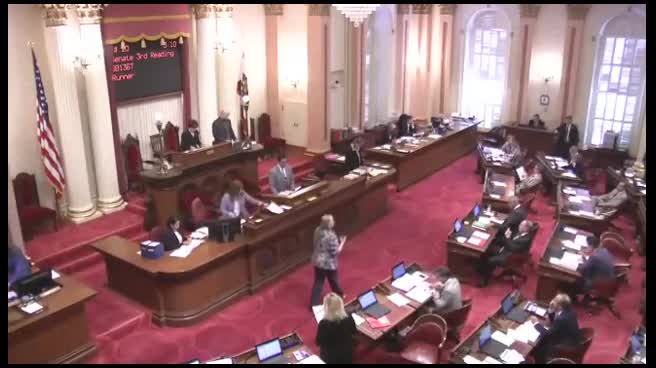
Bill Author
Bill Co-Author(s):