SB 1365: Hospitals.
- Session Year: 2015-2016
- House: Senate
- Latest Version Date: 2016-09-23
Under existing law, health facilities, including general acute care hospitals, are licensed and regulated by the State Department of Public Health. Existing law prohibits a health facility from charging, billing, or otherwise soliciting payment from a patient on behalf of, or referring a patient to, another health facility in which the health facility has a significant beneficial interest, except as provided. A violation of these provisions is a crime.
This bill would require a general acute care hospital, except as specified, to provide a delineated notice to each patient scheduled for a service in a hospital-based outpatient clinic, as defined, when that service is available in a nonhospital-based location. By expanding the application of an existing crime, the bill would create a state-mandated local program.
The California Constitution requires the state to reimburse local agencies and school districts for certain costs mandated by the state. Statutory provisions establish procedures for making that reimbursement.
This bill would provide that no reimbursement is required by this act for a specified reason.
Under existing law, health facilities, including general acute care hospitals, are licensed and regulated by the State Department of Public Health. Existing law prohibits a health facility from charging, billing, or otherwise soliciting payment from a patient on behalf of, or referring a patient to, another health facility in which the health facility has a significant beneficial interest, except as provided. A violation of these provisions is a crime.
This bill would require a general acute care hospital hospital, except as specified, to provide a specified delineated notice to each patient scheduled for a service in a hospital-based outpatient clinic, as defined, when that service is available in a nonhospital-based location. By expanding the application of an existing crime, the bill would create a state-mandated local program.
The California Constitution requires the state to reimburse local agencies and school districts for certain costs mandated by the state. Statutory provisions establish procedures for making that reimbursement.
This bill would provide that no reimbursement is required by this act for a specified reason.
Under existing law, health facilities, including hospitals, as defined, general acute care hospitals, are licensed and regulated by the State Department of Public Health. Existing law prohibits a health facility from charging, billing, or otherwise soliciting payment from a patient on behalf of, or referring a patient to, another health facility in which the health facility has a significant beneficial interest, except as provided. A violation of these provisions is a crime.
This bill would require a general acute care hospital that offers a service in a hospital-based outpatient clinic, as defined, to provide a specified notice to each patient scheduled for a service in a hospital-based outpatient clinic, as defined, when that service is available in a nonhospital-based location. By expanding the application of an existing crime, the bill would create a state-mandated local program.
The California Constitution requires the state to reimburse local agencies and school districts for certain costs mandated by the state. Statutory provisions establish procedures for making that reimbursement.
This bill would provide that no reimbursement is required by this act for a specified reason.
Under existing law, health facilities, including hospitals, as defined, are licensed and regulated by the State Department of Public Health. Existing law prohibits a health facility from charging, billing, or otherwise soliciting payment from a patient on behalf of, or referring a patient to, another health facility in which the health facility has a significant beneficial interest, except as provided. A violation of these provisions is a crime.
This bill would require an entity that operates or controls a hospital, as defined, and that also operates, controls, or leases real property for use as an outpatient treatment setting, to ensure that the outpatient facility does not charge a fee to or impose costs on a patient or other payer for inpatient care or hospital care, except as provided. require a general acute care hospital that offers a service in a hospital-based outpatient clinic, as defined, to provide specified notice to each patient when that service is available in a nonhospital-based location. By expanding a the application of an existing crime, this the bill would create a state-mandated local program.
The California Constitution requires the state to reimburse local agencies and school districts for certain costs mandated by the state. Statutory provisions establish procedures for making that reimbursement.
This bill would provide that no reimbursement is required by this act for a specified reason.
Under existing law, health facilities, including hospitals, as defined, are licensed and regulated by the State Department of Public Health. Existing law prohibits a health facility from charging, billing, or otherwise soliciting payment from a patient on behalf of, or referring a patient to, another health facility in which the health facility has a significant beneficial interest, except as provided. A violation of these provisions is a crime.
This bill would require an entity that operates or controls a hospital, as defined, and that also operates, controls, or leases real property for use as an outpatient treatment setting, to ensure that the outpatient facility does not charge a fee to or impose costs on a patient or other payer for inpatient care or hospital care, except as provided. By expanding a crime, this bill would create a state-mandated local program.
The California Constitution requires the state to reimburse local agencies and school districts for certain costs mandated by the state. Statutory provisions establish procedures for making that reimbursement.
This bill would provide that no reimbursement is required by this act for a specified reason.
(a)A general acute care hospital shall notify each patient scheduled for a service in a hospital-based outpatient clinic when that service is available in another location that is not hospital-based. The notification shall be in substantially the following form:
The location where you are being scheduled to receive services is a hospital-based clinic, and, therefore, may have higher costs. The same service may be available at another location within our health system that is not hospital-based, which may cost less. Check with the [insert name of office] at [insert telephone number] for another location within our health system, or check with your health insurance company, for more information about other locations that may cost less.
(b)For purposes of this section, a hospital-based outpatient clinic means a department of a provider, as defined in Section 413.65(a)(2) of Title 42 of the Code of Federal Regulations, that is not located on the campus of that provider.
(c)This section shall not apply to a general acute care hospital operated by a nonprofit corporation under common control with a nonprofit health care service plan licensed pursuant to the Knox-Keene Health Care Service Plan Act of 1975 (Chapter 2.2 (commencing with Section 1340) of Division 2) that exclusively contracts with no more than two medical groups in the state to provide and arrange for medical services for the enrollees of the health care service plan, so long as the cost-sharing design does not vary based on whether the care is provided in a hospital-based clinic or a medical office building.
SEC. 2.No reimbursement is required by this act pursuant to Section 6 of Article XIIIB of the California Constitution because the only costs that may be incurred by a local agency or school district will be incurred because this act creates a new crime or infraction, eliminates a crime or infraction, or changes the penalty for a crime or infraction, within the meaning of Section 17556 of the Government Code, or changes the definition of a crime within the meaning of Section 6 of Article XIIIB of the California Constitution.
(a)A general acute care hospital that offers a service in a hospital-based outpatient clinic shall notify each patient scheduled for a service in a hospital-based outpatient clinic when that service is available in a nonhospital-based location, as follows: another location that is not hospital-based. The notification shall be in substantially the following form:
The
The location where you are being scheduled to receive services is a hospital-based clinic, and, therefore, may have higher costs. The same service may be available at another location within our health system that is not hospital-based, which may cost less. Check with ___ (Patient Financial Services Office) the [insert name of office] at [insert telephone number] for another location within our health system, or check with your health insurance company, for more information about other locations that may cost less. less.
(b)For purposes of this section, a hospital-based outpatient clinic means a department of a provider, as defined in Section 413.65(a)(2) of Title 42 of the Code of Federal Regulations, that is not located on the campus of that provider.
SEC. 2.No reimbursement is required by this act pursuant to Section 6 of Article XIIIB of the California Constitution because the only costs that may be incurred by a local agency or school district will be incurred because this act creates a new crime or infraction, eliminates a crime or infraction, or changes the penalty for a crime or infraction, within the meaning of Section 17556 of the Government Code, or changes the definition of a crime within the meaning of Section 6 of Article XIIIB of the California Constitution.
An entity that operates or controls a hospital, as defined in subdivision (a), (b), or (f) of Section 1250, and that also operates, controls, or leases real property for use as an outpatient treatment setting shall ensure that the outpatient facility does not charge a fee to or impose costs on a patient or other payer for inpatient care or hospital care unless the care is provided in the portion of the facility that is subject to Section 1276.4 or a hospital building as defined in subdivision (a) of Section 129725.
SECTION 1.Section 1323.1 is added to the Health and Safety Code, to read:1323.1.(a)A general acute care hospital that offers a service in a hospital-based outpatient clinic shall notify each patient when that service is available in a nonhospital-based location, as follows:
The location where you are being scheduled to receive services is a hospital-based clinic, and, therefore, may have higher costs. The same service may be available at another location that is not hospital-based, which may cost less. Check with ___ (Patient Financial Services Office) for another location within our health system, or your health insurance company, for more information about other locations that may cost less.
(b)For purposes of this section, a hospital-based outpatient clinic means a department of a provider, as defined in Section 413.65(a)(2) of Title 42 of the Code of Federal Regulations, that is not located on the campus of that provider.
SEC. 2.No reimbursement is required by this act pursuant to Section 6 of Article XIIIB of the California Constitution because the only costs that may be incurred by a local agency or school district will be incurred because this act creates a new crime or infraction, eliminates a crime or infraction, or changes the penalty for a crime or infraction, within the meaning of Section 17556 of the Government Code, or changes the definition of a crime within the meaning of Section 6 of Article XIIIB of the California Constitution.
An entity that operates or controls a hospital, as defined in subdivision (a), (b), or (f) of Section 1250, and that also operates, controls, or leases real property for use as an outpatient treatment setting shall ensure that the outpatient facility does not charge a fee to or impose costs on a patient or other payer for inpatient care or hospital care unless the care is provided in the portion of the facility that is subject to Section 1276.4 or a hospital building as defined in subdivision (a) of Section 129725.
SEC. 2.No reimbursement is required by this act pursuant to Section 6 of Article XIIIB of the California Constitution because the only costs that may be incurred by a local agency or school district will be incurred because this act creates a new crime or infraction, eliminates a crime or infraction, or changes the penalty for a crime or infraction, within the meaning of Section 17556 of the Government Code, or changes the definition of a crime within the meaning of Section 6 of Article XIIIB of the California Constitution.
|
Date
|
Status
|
|---|---|
| Jun 2, 2016 | Read third time. Passed. (Ayes 26. Noes 11.) Ordered to the Assembly. |
| Sep 8, 2016 | Enrolled and presented to the Governor at 5 p.m. |
| Aug 29, 2016 | Assembly amendments concurred in. (Ayes 26. Noes 13.) Ordered to engrossing and enrolling. |
| Aug 29, 2016 | Assembly amendments concurred in. (Ayes 26. Noes 13. Page 5490.) Ordered to engrossing and enrolling. |
| Aug 25, 2016 | In Senate. Concurrence in Assembly amendments pending. |
| Aug 24, 2016 | Read third time. Passed. Ordered to the Senate. |
| Aug 18, 2016 | Read third time and amended. |
| Aug 18, 2016 | Ordered to third reading. |
| Aug 8, 2016 | Ordered to third reading. |
| Aug 8, 2016 | From consent calendar on motion of Assembly Member Calderon. |
| Aug 4, 2016 | Read second time. Ordered to consent calendar. |
| Aug 3, 2016 | From committee: Do pass. Ordered to consent calendar. (Ayes 20. Noes 0.) (August 3). |
| Jun 29, 2016 | From committee: Do pass and re-refer to Com. on APPR. (Ayes 18. Noes 0.) (June 28). Re-referred to Com. on APPR. |
| Jun 16, 2016 | From committee with author's amendments. Read second time and amended. Re-referred to Com. on HEALTH. |
| Jun 13, 2016 | Referred to Com. on HEALTH. |
| Feb 19, 2016 | Introduced. To Com. on RLS. for assignment. To print. |
| Jun 2, 2016 | Read third time. Passed. (Ayes 26. Noes 11. Page 4147.) Ordered to the Assembly. |
| Jun 2, 2016 | In Assembly. Read first time. Held at Desk. |
| Jun 1, 2016 | Read second time. Ordered to third reading. |
| May 31, 2016 | Read third time and amended. |
| May 31, 2016 | Ordered to second reading. |
| May 24, 2016 | Read second time. Ordered to third reading. |
| May 23, 2016 | From committee: Be ordered to second reading pursuant to Senate Rule 28.8. |
| May 13, 2016 | Set for hearing May 23. |
| Apr 21, 2016 | From committee: Do pass and re-refer to Com. on APPR. (Ayes 5. Noes 1.) (April 20). Re-referred to Com. on APPR. |
| Apr 21, 2016 | From committee: Do pass and re-refer to Com. on APPR. (Ayes 5. Noes 1. Page 3646.) (April 20). Re-referred to Com. on APPR. |
| Apr 5, 2016 | Set for hearing April 20. |
| Mar 3, 2016 | Referred to Com. on HEALTH. |
| Feb 22, 2016 | Read first time. |
| Feb 22, 2016 | From printer. May be acted upon on or after March 23. |
|
Date
|
Description
|
Location
|
Votes
|
|
|---|---|---|---|---|
| Aug 29, 2016 | Unfinished Business SB1365 Hernandez Concurrence | Senate Floor |
Passed |
|
| Aug 24, 2016 | SB 1365 Hernandez Senate Third Reading By WOOD | Assembly Floor |
Passed |
|
| Aug 3, 2016 | Do pass. To Consent Calendar. | Assembly Standing Committee on Appropriations |
Passed |
|
| Jun 28, 2016 | Do pass and be re-referred to the Committee on [Appropriations] | Assembly Standing Committee on Health |
Passed |
|
| Jun 2, 2016 | Senate 3rd Reading SB1365 Hernandez | Senate Floor |
Passed |
|
| Apr 20, 2016 | Do pass, but first be re-referred to the Committee on [Appropriations] | Senate Standing Committee on Health |
Passed |
This list shows positions taken on this bill by organizations on the date displayed, which is linked to the original source.
Positions by individuals are not included.
|
Organization
|
Position
|
Date
|
|---|---|---|
| Alliance for Site Neutral Payment Reform | ** Support | Aug 29, 2016 |
| Association of California Healthcare Districts | ** Against | Jun 2, 2016 |
| California Children'S Hospital Association | ** Against | Jun 2, 2016 |
| California Hospital Association | ** Against | Jun 2, 2016 |
| California Teamsters Public Affairs Council | ** Support | Aug 29, 2016 |
| Consumer Federation Of California | ** Support | Aug 29, 2016 |
| Health Access | ** Support | Aug 29, 2016 |
| US Oncology Network | ** Support | Aug 29, 2016 |
Office of Senate Floor Analyses (916) 651-1520 Fax: (916) 327-4478 | SB |
UNFINISHED BUSINESS
Bill No: SB 1365
: 8/18/16
SENATE HEALTH COMMITTEE: 5-1, 4/20/16
AYES: Hernandez, Hall, Mitchell, Monning, Pan
NOES: Nguyen
NO VOTE RECORDED: Nielsen, Roth, Wolk
SENATE APPROPRIATIONS COMMITTEE: Senate Rule 28.8
SENATE FLOOR: 26-11, 6/2/16
AYES: Allen, Beall, Block, De León, Galgiani, Glazer, Hall, Hancock, Hernandez, Hertzberg, Hill, Hueso, Huff, Jackson, Lara, Leno, Leyva, Liu, McGuire, Mendoza, Mitchell, Monning, Pan, Pavley, Wieckowski, Wolk
NOES: Anderson, Bates, Berryhill, Cannella, Fuller, Gaines, Moorlach, Morrell, Nguyen, Nielsen, Vidak
NO VOTE RECORDED: Roth, Runner, Stone
ASSEMBLY FLOOR: 80-0, 8/24/16 - See last page for vote
SOURCE: California Teamsters Public Affairs Council
DIGEST: This bill requires a general acute care hospital to notify patients scheduled for a service in a hospital-based outpatient clinic, as defined, when that service is available at other locations that may cost less.
Assembly Amendments exempt Kaiser Permanente hospitals from the provisions of this bill, and make other technical and clarifying changes.
Existing federal law:
- Defines “department of a provider” as a facility or organization that is either created by, or acquired by, a hospital for the purpose of furnishing health care services of the same type as those furnished by the main hospital.
- Defines “campus” of a hospital as the physical area immediately adjacent to the hospital’s main buildings, other areas and structures that are not strictly contiguous to the main buildings but are located within 250 yards of the main buildings, and any other areas determined on an individual case basis by the Centers for Medicare and Medicaid Services to be part of the hospital’s campus.
Existing state law:
- Licenses and regulates health facilities through the Department of Public Health (DPH), including general acute care hospitals, acute psychiatric hospitals, and special hospitals.
- Permits DPH to issue a consolidated license to a general acute care hospital that includes more than one physical plant maintained and operated on separate premises, under certain conditions, including that the physical plants maintained and operated under the consolidated license are located not more than 15 miles apart, unless one or more of the physical plants is located in a rural area or only provides outpatient services, among other specified exceptions.
- Requires a general acute care hospital and an acute psychiatric hospital, if supplies or services are provided on an outpatient basis by an ancillary health services provider which is not on the same site as, or is not on a site which is within a 400-yard radius of the boundaries of, the general acute care hospital, to disclose in writing to the customers if they have a significant beneficial interest in the ancillary health service provider, and that they may choose to have another ancillary health service provider provide any supplies or services ordered by a member of the medical staff of the hospital. “Ancillary health services provider” is defined, for these purposes, as including, but not limited to, providers of pharmaceutical, laboratory, optometry, prosthetic, or orthopedic supplies or services, among others.
This bill:
- Requires a general acute care hospital to notify each patient scheduled for a service in a hospital-based outpatient clinic when that service is available in another location that is not hospital-based location. Requires the notice to be in substantially the following form:
The location where you are being scheduled to receive services is a hospital-based clinic, and, therefore, may have higher costs. The same service may be available at another location within out health system that is not hospital-based, which may cost less. Check with the [insert name of office] at [insert telephone number] for another location within out health system, or check with your health insurance company, for more information about other locations that may cost less.
- Defines “hospital-based outpatient clinic,” for purposes of this bill, as a department of a provider, as defined in specified provisions of federal regulations, that is not located on the campus of that provider.
- Exempts from the provisions of this bill hospitals that are operated by a nonprofit corporation under common control with a licensed nonprofit health care service plan that exclusively contracts with no more than two medical groups in the state to provide and arrange for medical services for the enrollees of the health care service plan, so long as the cost-sharing design does not vary based on whether the care is provided in a hospital-based clinic or a medical office building. (This exemption describes hospitals operated by Kaiser Permanente.)
Comments
- Author’s statement. According to the author, this bill is intended to notify patients when a hospital is scheduling them to receive services in an outpatient setting, that is not on the hospital campus, that charges a hospital facility fee. In many of these instances, these hospital-affiliated clinics are simply providing primary care services that could easily be performed in a physician’s office. Worse, patients often have no idea that the clinic where they are receiving care is part of a hospital, since it is miles away from the actual hospital campus, and are therefore getting care at a more expensive setting. This has two significant consequences: 1) consumers may have higher out-of-pocket costs, particularly those patients served by a PPO; and, 2) health insurance premiums will be driven up as a result of patients unwittingly, and unnecessarily, receiving care at more expensive settings. With the passage of the Affordable Care Act, we are now requiring everyone to purchase health insurance. It is incumbent upon policymakers to contain costs to keep insurance rates as affordable as possible. This bill will at least makes sure that patients are aware that they may face higher costs at these types of facilities, and gives them an option to seek care at a less expensive alternative location.
- Facility fees. Medicare rules have historically established the payment structure that is used throughout the insurance industry. Under Medicare’s payment policies, when a service is provided in a physician office, Medicare makes a single payment to the physician at Medicare’s physician fee schedule “non-facility rate.” When the service is provided in a hospital outpatient department (HOPD), however, Medicare makes two payments: one payment at the physician fee schedule “facility rate,” and a second payment to the hospital at the hospital outpatient prospective payment system rate, often referred to as the facility fee. While the facility rate payment for physician services at an HOPD is a little lower compared to the non-facility rate payed at a doctor’s office, when the two separate charges for services at an HOPD are combined, the total charge is higher for the same service. The argument for the higher payment rates for services in HOPDs is that these higher reimbursements are necessary to compensate for the additional costs associated with maintaining a hospital – costs such as maintaining an emergency room, more extensive equipment, increased staffing, etc. However, this facility fee can be added to bills even when the service is provided in a setting up to 35 miles away from the actual hospital, if the outpatient setting is on the hospital’s license. In many of these cases, the hospital’s outpatient clinics look nearly indistinguishable from a physician practice that is not associated with a hospital (and are not permitted to charge a facility fee). This has created a situation in which patients go to what they believe is simply a medical doctors office, but are billed a much higher fee than expected.
- GAO report and Medicare’s new “site neutral” payment reform. The United States Government Accountability Office (GAO) issued a report in December of 2015 titled “Increasing Hospital-Physician Consolidation Highlights Need for Payment Reform.” According to this GAO report, Medicare expenditures for HOPD services have grown rapidly, and there have been questions raised about the extent to which this growth in spending can be attributed to services that were previously performed in physician offices shifting to HOPDs. The GAO report stated that “regardless of what has driven hospitals and physicians to vertically consolidate, paying substantially more for the same service when performed in an HOPD rather than a physician office provides an incentive to shift services.” The GAO concluded that in order to prevent a shift toward HOPDs from increasing costs, Congress should consider equalizing payment rates between settings for evaluation and management offices visits.
Even prior to the publication of the GAO report, Congress included a Medicare “site neutral” payment reform provision as part of the budget deal approved in October of 2015. Beginning on January 1, 2017, Medicare will no longer pay a facility fee to HOPDs that are located more than 250 yards from the main campus of the hospital. However, this new law grandfathered in all existing HOPDs, and only applies to new outpatient departments going forward. The hospital industry is seeking to allow locations in the planning or construction phase to be grandfathered in as well.
FISCAL EFFECT: Appropriation: No Fiscal Com.: Yes Local: Yes
According to the Assembly Appropriations Committee, any costs to the California Department of Public Health to enforce this requirement are minor and absorbable (Licensing and Certification Fund).
SUPPORT: (Verified 8/24/16)
California Teamsters Public Affairs Council (source)
Alliance for Site Neutral Payment Reform
America’s Health Insurance Plans
California Labor Federation
Consumer Federation of California
Health Access
SEIU California
US Oncology Network
OPPOSITION: (Verified 8/24/16)
None received
ARGUMENTS IN SUPPORT: This bill is sponsored by the California Teamsters Public Affairs Council (Teamsters), which states that increasingly, hospitals that own outpatient clinics providing routine treatment are charging consumers exorbitant “facility fees” as if they were being treated in an acute care facility. The Teamsters state that this is fundamentally unfair to health care consumers who seek treatment in outpatient facilities precisely because they are supposed to be less expensive than hospitals. America’s Health Insurance Plans (AHIP) states in support that this bill directly addresses one of the cost-drivers that is occurring under provider consolidation. According to AHIP, when a hospital purchases a physician practice and re-categorizes it under the hospital organization, nothing has changed for the physician’s office, yet they are now allowed to bill under a differed code, because it is now considered an “outpatient facility” for billing purposes. AHIP states that when a change of ownership is all that allows for physician offices to bill for higher reimbursement, without any corresponding change in service, the patient pays more through either higher copayments or higher premiums. Health Access California states in support that charging for hospital services when care is provided outside a hospital appears to misrepresent the level of care provided and the costs associated with that care. The California Labor Federation (CLF) states in support that the shift toward outpatient care has meant that more patients are receiving care outside of acute care hospitals. However, CLF states that the facility fee has followed patients out of hospitals and into outpatient care, which is designed to be less expensive and intensive than inpatient care. CLF states that patients who go to their doctor’s office for a minor procedure find themselves on the hook for unexpected facility fees simply because the physician’s office is owned by a hospital. The Alliance for Site Neutral Payment Reform states that it believes payment policies that support higher reimbursement in the HOPD setting encourages the acquisition of office-based physician practices, which results in higher costs to patients, payers and employers.
ASSEMBLY FLOOR: 80-0, 8/24/16
AYES: Achadjian, Alejo, Travis Allen, Arambula, Atkins, Baker, Bigelow, Bloom, Bonilla, Bonta, Brough, Brown, Burke, Calderon, Campos, Chang, Chau, Chávez, Chiu, Chu, Cooley, Cooper, Dababneh, Dahle, Daly, Dodd, Eggman, Frazier, Beth Gaines, Gallagher, Cristina Garcia, Eduardo Garcia, Gatto, Gipson, Gomez, Gonzalez, Gordon, Gray, Grove, Hadley, Harper, Roger Hernández, Holden, Irwin, Jones, Jones-Sawyer, Kim, Lackey, Levine, Linder, Lopez, Low, Maienschein, Mathis, Mayes, McCarty, Medina, Melendez, Mullin, Nazarian, Obernolte, O'Donnell, Olsen, Patterson, Quirk, Ridley-Thomas, Rodriguez, Salas, Santiago, Steinorth, Mark Stone, Thurmond, Ting, Wagner, Waldron, Weber, Wilk, Williams, Wood, Rendon
8/29/16 9:39:42
**** END ****
SENATE THIRD READING
STR Bill Id:SB 1365
Author:(Hernandez)
As Amended Ver:August 18, 2016
Majority vote
SENATE VOTE: 26-11
Committee | Votes | Ayes | Noes |
Health | 18-0 | Wood, Maienschein, Bonilla, Burke, Campos, Chiu, Gomez, Roger Hernández, Lackey, Nazarian, Olsen, Patterson, Ridley-Thomas, Rodriguez, Santiago, Steinorth, McCarty, Waldron | |
Appropriations | 20-0 | Gonzalez, Bigelow, Bloom, Bonilla, Bonta, Calderon, Chang, Daly, Eggman, Gallagher, Eduardo Garcia, Holden, Jones, Obernolte, Quirk, Santiago, Wagner, Weber, Wood, Chau |
SUMMARY: Requires a general acute care hospital to notify each patient scheduled for a service in a hospital-based outpatient clinic when that service is available in another location that is not hospital-based.
FISCAL EFFECT: According to the Assembly Appropriations Committee any costs to the California Department of Public Health to enforce this requirement are minor and absorbable (Licensing and Certification Fund).
COMMENTS: According to the author, this bill is intended to notify patients when a hospital is scheduling them to receive services in an outpatient setting, that is not on the hospital campus, which charges a hospital facility fee. The author states that in many of these instances, these hospital-affiliated clinics are simply providing primary care services that could easily be performed in a physician's office. The author notes that patients often have no idea that the clinic where they are receiving care is part of a hospital, since it is miles away from the actual hospital campus, and are therefore getting care in a more expensive setting. The author also notes this has two significant consequences: 1) consumers may have higher out-of-pocket costs, particularly those patients served by a Preferred Provider Organization; and, 2) health insurance premiums will be driven up as a result of patients unwittingly, and unnecessarily, receiving care in more expensive settings. With the passage of the Patient Protection and Affordable Care Act, we are now requiring everyone to purchase health insurance and it is incumbent upon policymakers to contain costs to keep insurance rates as affordable as possible. The author concludes this bill will at least make sure that patients are aware that they may face higher costs at these types of facilities, and gives them an option to seek care at a less expensive alternative location.
Facility fees. Medicare rules have historically established the payment structure that is used throughout the insurance industry. Under Medicare's payment policies, when a service is provided in a physician's office, Medicare makes a single payment to the physician at Medicare's physician fee schedule "non-facility rate." When the service is provided in a hospital outpatient department (HOPD), however, Medicare makes two payments: one payment at the physician fee schedule "facility rate" and a second payment to the hospital at the hospital outpatient prospective payment system rate, often referred to as the facility fee. While the facility rate payment for physician services at an HOPD is a little lower compared to the non-facility rate paid at a doctor's office, when the two separate charges for services at an HOPD are combined, the total charge is higher for the same service. The argument for the higher payment rates for services in HOPDs is that these higher reimbursements are necessary to compensate for the additional costs associated with maintaining a hospital – costs such as maintaining an emergency room, more extensive equipment, and increased staffing. However, this facility fee can be added to bills even when the service is provided in a setting up to 35 miles away from the actual hospital, if the outpatient setting is on the hospital's license. In many of these cases, the hospital's outpatient clinics look nearly indistinguishable from a physician practice that is not associated with a hospital (and are not permitted to charge a facility fee). This has created a situation in which patients go to what they believe is simply a medical doctor's office, but are billed a much higher fee than expected.
GAO report and Medicare's new "site neutral" payment reform. The United States Government Accountability Office (GAO) issued a report in December 2015 titled "Increasing Hospital-Physician Consolidation Highlights Need for Payment Reform." According to this GAO report, Medicare expenditures for HOPD services have grown rapidly, and there have been questions raised about the extent to which this growth in spending can be attributed to services that were previously performed in physician offices shifting to HOPDs. The GAO report stated that "regardless of what has driven hospitals and physicians to vertically consolidate, paying substantially more for the same service when performed in an HOPD rather than a physician office provides an incentive to shift services."
Corporate Practice of Medicine. Across the nation, the push for "site neutral" payment reform has been driven, in large part, by an escalation in hospital-physician consolidation, with hospitals acquiring physician practices, and then increasing charges due to the ability to charge HOPD rates. In California, however, this is mitigated by the ban on the corporate practice of medicine, which prevents corporations from practicing medicine, including the employment of physicians. However, there are a number of exceptions to the ban on hospital employment of physicians, established over the years through both statutory exemptions as well as case law. All teaching hospital systems are allowed to employ physicians, which includes the five University of California medical schools, as well as the three private medical schools at Stanford University, Loma Linda University, and the University of Southern California. Additionally, all 12 county-owned hospital systems are allowed to employ physicians. Other exemptions from the ban include nonprofit community clinics, health maintenance organizations, state agencies, and certain charitable institutions.
Analysis Prepared by: Lara Flynn / HEALTH / (916) 319-2097 FN: 0003962
SENATE THIRD READING
STR Bill Id:SB 1365
Author:(Hernandez)
As Amended Ver:June 16, 2016
Majority vote
SENATE VOTE: 26-11
Committee | Votes | Ayes | Noes |
Health | 18-0 | Wood, Maienschein, Bonilla, Burke, Campos, Chiu, Gomez, Roger Hernández, Lackey, Nazarian, Olsen, Patterson, Ridley-Thomas, Rodriguez, Santiago, Steinorth, McCarty, Waldron | |
Appropriations | 20-0 | Gonzalez, Bigelow, Bloom, Bonilla, Bonta, Calderon, Chang, Daly, Eggman, Gallagher, Eduardo Garcia, Holden, Jones, Obernolte, Quirk, Santiago, Wagner, Weber, Wood, Chau |
|
SUMMARY: Requires a general acute care hospital to notify each patient scheduled for a service in a hospital-based outpatient clinic when that service is available in another location that is not hospital-based.
FISCAL EFFECT: According to the Assembly Appropriations Committee any costs to the California Department of Public Health to enforce this requirement are minor and absorbable (Licensing and Certification Fund).
COMMENTS: According to the author, this bill is intended to notify patients when a hospital is scheduling them to receive services in an outpatient setting, that is not on the hospital campus, which charges a hospital facility fee. The author states that in many of these instances, these hospital-affiliated clinics are simply providing primary care services that could easily be performed in a physician's office. The author notes that patients often have no idea that the clinic where they are receiving care is part of a hospital, since it is miles away from the actual hospital campus, and are therefore getting care in a more expensive setting. The author also notes this has two significant consequences: 1) consumers may have higher out-of-pocket costs, particularly those patients served by a Preferred Provider Organization; and, 2) health insurance premiums will be driven up as a result of patients unwittingly, and unnecessarily, receiving care in more expensive settings. With the passage of the Patient Protection and Affordable Care Act, we are now requiring everyone to purchase health insurance and it is incumbent upon policymakers to contain costs to keep insurance rates as affordable as possible. The author concludes this bill will at least make sure that patients are aware that they may face higher costs at these types of facilities, and gives them an option to seek care at a less expensive alternative location.
Facility fees. Medicare rules have historically established the payment structure that is used throughout the insurance industry. Under Medicare's payment policies, when a service is provided in a physician's office, Medicare makes a single payment to the physician at Medicare's physician fee schedule "non-facility rate." When the service is provided in a hospital outpatient department (HOPD), however, Medicare makes two payments: one payment at the physician fee schedule "facility rate" and a second payment to the hospital at the hospital outpatient prospective payment system rate, often referred to as the facility fee. While the facility rate payment for physician services at an HOPD is a little lower compared to the non-facility rate paid at a doctor's office, when the two separate charges for services at an HOPD are combined, the total charge is higher for the same service. The argument for the higher payment rates for services in HOPDs is that these higher reimbursements are necessary to compensate for the additional costs associated with maintaining a hospital – costs such as maintaining an emergency room, more extensive equipment, and increased staffing. However, this facility fee can be added to bills even when the service is provided in a setting up to 35 miles away from the actual hospital, if the outpatient setting is on the hospital's license. In many of these cases, the hospital's outpatient clinics look nearly indistinguishable from a physician practice that is not associated with a hospital (and are not permitted to charge a facility fee). This has created a situation in which patients go to what they believe is simply a medical doctor's office, but are billed a much higher fee than expected.
GAO report and Medicare's new "site neutral" payment reform. The United States Government Accountability Office (GAO) issued a report in December 2015 titled "Increasing Hospital-Physician Consolidation Highlights Need for Payment Reform." According to this GAO report, Medicare expenditures for HOPD services have grown rapidly, and there have been questions raised about the extent to which this growth in spending can be attributed to services that were previously performed in physician offices shifting to HOPDs. The GAO report stated that "regardless of what has driven hospitals and physicians to vertically consolidate, paying substantially more for the same service when performed in an HOPD rather than a physician office provides an incentive to shift services."
Corporate Practice of Medicine. Across the nation, the push for "site neutral" payment reform has been driven, in large part, by an escalation in hospital-physician consolidation, with hospitals acquiring physician practices, and then increasing charges due to the ability to charge HOPD rates. In California, however, this is mitigated by the ban on the corporate practice of medicine, which prevents corporations from practicing medicine, including the employment of physicians. However, there are a number of exceptions to the ban on hospital employment of physicians, established over the years through both statutory exemptions as well as case law. All teaching hospital systems are allowed to employ physicians, which includes the five University of California medical schools, as well as the three private medical schools at Stanford University, Loma Linda University, and the University of Southern California. Additionally, all 12 county-owned hospital systems are allowed to employ physicians. Other exemptions from the ban include nonprofit community clinics, health maintenance organizations, state agencies, and certain charitable institutions.
Analysis Prepared by: Lara Flynn / HEALTH / (916) 319-2097 FN: 0003875
Date of Hearing: August 3, 2016
ASSEMBLY COMMITTEE ON APPROPRIATIONS
Lorena Gonzalez, Chair
SBPCA Bill Id:SB 1365
Author:(Hernandez) – As Amended Ver:June 16, 2016
Policy Committee: | Health | Vote: | 18 - 0 |
Urgency: No State Mandated Local Program: Yes Reimbursable: No
SUMMARY:
This bill requires a general acute care hospital to provide a specified notice to each patient scheduled for a service in a hospital-based outpatient clinic, when that service is available in another location that is not hospital-based.
FISCAL EFFECT:
Any costs to the California Department of Public Health to enforce this requirement are minor and absorbable (Licensing and Certification Fund).
COMMENTS:
- Purpose. According to the author, this disclosure bill is intended to notify patients when a hospital is scheduling them to receive services in a hospital-based outpatient setting that is more costly than other outpatient settings. The author notes hospitals often charge a hospital facility fee even when its clinics are simply providing primary care services that could easily be performed in a physician’s office. The author also explains this has two significant consequences: higher out-of-pocket costs for consumers, and higher health insurance premiums, as a result of patients unwittingly, and unnecessarily, receiving care in more expensive settings. This bill is sponsored by the California Teamsters Public Affairs Council (Teamsters) and supported by Health Access California, health insurance plans, and other labor groups. It has no opposition.
- Background. Medicare, which sets precedent in health care payment that are commonly adopted throughout the insurance industry, pays for hospital outpatient department (HOPD) services at a rate that includes a hospital facility fee. The rates are generally higher than the rate paid to physician not affiliated with a hospital facility. Last year, the Government Accountability Office (GAO) reported Medicare expenditures for HOPD services have grown rapidly. This has raised questions about the extent to which this growth in spending can be attributed to services that were previously performed in physician offices shifting to HOPDs.
CDPH licenses and regulates health facilities, including general acute care hospitals.
Analysis Prepared by: Lisa Murawski / APPR. / (916) 319-2081
Date of Hearing: June 28, 2016
ASSEMBLY COMMITTEE ON HEALTH
Jim Wood, Chair
SBPCA Bill Id:SB 1365
Author:(Hernandez) – As Amended Ver:June 16, 2016
SENATE VOTE: 26-11
SUBJECT: Hospitals.
SUMMARY: Requires a general acute care hospital to notify each patient scheduled for a service in a hospital-based outpatient clinic when that service is available in another location that is not hospital-based. Specifically, this bill:
- Requires the notification to be in substantially the following form:
The location where you are being scheduled to receive services is a hospital-based clinic, and therefore, may have higher costs. The same service may be available at another location within our health system that is not hospital-based, which may cost less. Check with the [insert name of office] at [insert telephone number] for another location within our health system, or check with your health insurance company, for more information about other locations that may cost less.
- Defines hospital-based outpatient clinic as a department of a provider, as defined in federal regulations, that is not located on the campus of that provider.
EXISTING STATE LAW:
1) Establishes the Department of Public Health (DPH) which licenses and regulates health facilities, including general acute care hospitals, acute psychiatric hospitals, and special hospitals.
2) Permits DPH to issue a consolidated license to a general acute care hospital that includes more than one physical plant maintained and operated on separate premises, under certain conditions, including that the physical plants maintained and operated under the consolidated license are located not more than 15 miles apart, unless one or more of the physical plants is located in a rural area or only provides outpatient services, among other specified exceptions.
3) Requires a general acute care hospital and an acute psychiatric hospital, if supplies or services are provided on an outpatient basis by an ancillary health services provider which is not on the same site as, or is not on a site which is within a 400-yard radius of the boundaries of, the general acute care hospital, to disclose in writing to the customers if they have a significant beneficial interest in the ancillary health service provider, and that they may choose to have another ancillary health service provider provide any supplies or services ordered by a member of the medical staff of the hospital. Ancillary health services provider is defined, to include, but not limited to, providers of pharmaceutical, laboratory, optometry, prosthetic, or orthopedic supplies or services, among others.
4) Establishes the Alfred E. Alquist Hospital Facilities Seismic Act, and defines hospital building as any building used, or designed to be used, for a health facility of a type required to be licensed, except any building where outpatient clinical services are provided that is separated from a building in which hospital services are provided, and other specified exceptions.
EXISTING FEDERAL LAW:
1) Defines “department of a provider” as a facility or organization that is either created by, or acquired by, a hospital for the purpose of furnishing health care services of the same type as those furnished by the main hospital.
2) Defines “campus” of a hospital as the physical area immediately adjacent to the hospital’s main buildings, other areas and structures that are not strictly contiguous to the main buildings but are located within 250 yards of the main buildings, and any other areas determined on an individual case basis by the Centers for Medicare and Medicaid Services to be part of the hospital’s campus.
FISCAL EFFECT: According to the Senate Appropriations Committee, pursuant to Senate Rule 28.8, negligible state costs.
COMMENTS:
- PURPOSE OF THIS BILL. According to the author, this bill is intended to notify patients when a hospital is scheduling them to receive services in an outpatient setting, that is not on the hospital campus, that charges a hospital facility fee. The author states that in many of these instances, these hospital-affiliated clinics are simply providing primary care services that could easily be performed in a physician’s office. The author notes that patients often have no idea that the clinic where they are receiving care is part of a hospital, since it is miles away from the actual hospital campus, and are therefore getting care in a more expensive setting. The author also notes this has two significant consequences: a) consumers may have higher out-of-pocket costs, particularly those patients served by a Preferred Provider Organization; and, b) health insurance premiums will be driven up as a result of patients unwittingly, and unnecessarily, receiving care in more expensive settings. With the passage of the Patient Protection and Affordable Care Act, we are now requiring everyone to purchase health insurance and it is incumbent upon policymakers to contain costs to keep insurance rates as affordable as possible. The author concludes this bill will at least make sure that patients are aware that they may face higher costs at these types of facilities, and gives them an option to seek care at a less expensive alternative location.
- BACKGROUND.
- Facility fees. Medicare rules have historically established the payment structure that is used throughout the insurance industry. Under Medicare’s payment policies, when a service is provided in a physician office, Medicare makes a single payment to the physician at Medicare’s physician fee schedule “non-facility rate.” When the service is provided in a hospital outpatient department (HOPD), however, Medicare makes two payments: one payment at the physician fee schedule “facility rate” and a second payment to the hospital at the hospital outpatient prospective payment system rate, often referred to as the facility fee. While the facility rate payment for physician services at an HOPD is a little lower compared to the non-facility rate payed at a doctor’s office, when the two separate charges for services at an HOPD are combined, the total charge is higher for the same service. The argument for the higher payment rates for services in HOPDs is that these higher reimbursements are necessary to compensate for the additional costs associated with maintaining a hospital – costs such as maintaining an emergency room, more extensive equipment, and increased staffing. However, this facility fee can be added to bills even when the service is provided in a setting up to 35 miles away from the actual hospital, if the outpatient setting is on the hospital’s license. In many of these cases, the hospital’s outpatient clinics look nearly indistinguishable from a physician practice that is not associated with a hospital (and are not permitted to charge a facility fee). This has created a situation in which patients go to what they believe is simply a medical doctors office, but are billed a much higher fee than expected.
- GAO report and Medicare’s new “site neutral” payment reform. The U.S. Government Accountability Office (GAO) issued a report in December 2015 titled “Increasing Hospital-Physician Consolidation Highlights Need for Payment Reform.” According to this GAO report, Medicare expenditures for HOPD services have grown rapidly, and there have been questions raised about the extent to which this growth in spending can be attributed to services that were previously performed in physician offices shifting to HOPDs. The GAO report stated that “regardless of what has driven hospitals and physicians to vertically consolidate, paying substantially more for the same service when performed in an HOPD rather than a physician office provides an incentive to shift services.” The GAO concluded that in order to prevent a shift toward HOPDs from increasing costs, the U.S. Congress should consider equalizing payment rates between settings for evaluation and management offices visits.
Even prior to the publication of the GAO report, the U.S. Congress included a Medicare “site neutral” payment reform provision as part of the budget deal approved in October of 2015. Beginning on January 1, 2017, Medicare will no longer pay a facility fee to HOPDs that are located more than 250 yards from the main campus of the hospital. However, this new law grandfathered in all existing HOPDs, and only applies to new outpatient departments going forward. The hospital industry is seeking to allow locations in the planning or construction phase to be grandfathered in as well.
- Corporate Practice of Medicine. Across the nation, the push for “site neutral” payment reform has been driven, in large part, by an escalation in hospital-physician consolidation, with hospitals acquiring physician practices, and then increasing charges due to the ability to charge HOPD rates. In California, however, this is mitigated by the ban on the corporate practice of medicine, which prevents corporations from practicing medicine, including the employment of physicians. However, there are a number of exceptions to the ban on hospital employment of physicians, established over the years through both statutory exemptions as well as case law. All teaching hospital systems are allowed to employ physicians, which includes the five University of California medical schools, as well as the three private medical schools at Stanford University, Loma Linda University, and the University of Southern California. Additionally, all 12 county-owned hospital systems are allowed to employ physicians. Other exemptions from the ban include nonprofit community clinics, health maintenance organizations, state agencies, and certain charitable institutions.
- SUPPORT. The California Teamsters Public Affairs Council (Teamsters) are the sponsors of this bill and state, increasingly, hospitals that own outpatient clinics providing routine treatment are charging consumers exorbitant facility fees as if they were being treated in an acute care facility. The Teamsters contend that this is fundamentally unfair to health care consumers who seek treatment in outpatient facilities precisely because they are supposed to be less expensive than hospitals. The Teamsters conclude that healthcare is expensive enough without making consumers pay for the use of hospitals that they are not being treated in.
Health Access California (HAC) supports this bill stating that to HAC, charging for hospital services when care is provided outside a hospital appears to misrepresent the level of care provided and the costs associated with that care.
The US Oncology Network (the Network) supports this bill and points to a 2015 study by the IMS Institute which found that in 2014 Medicare paid HOPDs twice as much as a physician's offices for the same drug administration service. The Network concludes this bill is an important step to ensure patients do not pay more for medical treatment, regardless of whether they receive treatment in a hospital or outpatient facility.
- RELATED LEGISLATION. SB 932 (Hernandez) would prohibit contracts between health care providers and payors from including specified provisions. SB 932 would require prior approval from the Department of Managed Health Care for mergers and other transactions between health plans and other organizations. SB 932 was held on the Senate Appropriations Committee Suspense File.
- POLICY COMMENT. As this bill moves forward the author may wish to clarify that patients should be provided the required notice enough in advance to allow them time to re-schedule the service at a non-hospital based location.
REGISTERED SUPPORT / OPPOSITION:
Support
California Teamsters Public Affairs Council (sponsor)
Alliance for Site Neutral Payment Reform
America's Health Insurance Plans
California Labor Federation
Consumer Federation of California
Health Access California
US Oncology Network
Opposition
None on file.
Analysis Prepared by: Lara Flynn / HEALTH / (916) 319-2097
Office of Senate Floor Analyses (916) 651-1520 Fax: (916) 327-4478 | SB |
THIRD READING
Bill No: SB 1365
:
SENATE HEALTH COMMITTEE: 5-1, 4/20/16
AYES: Hernandez, Hall, Mitchell, Monning, Pan
NOES: Nguyen
NO VOTE RECORDED: Nielsen, Roth, Wolk
SENATE APPROPRIATIONS COMMITTEE: Senate Rule 28.8
SOURCE: California Teamsters Public Affairs Council
DIGEST: This bill requires a general acute care hospital that offers a service in a hospital-based outpatient clinic, as defined, to provide a notice to patients informing them that the location may have higher costs, and that the same service may be available at other locations that cost less.
Senate Floor Amendments of 5/31/16 reflect an agreement the author made when the bill was heard in Senate Health Committee to change this bill to a disclosure requirement.
Existing federal law:
- Defines “department of a provider” as a facility or organization that is either created by, or acquired by, a hospital for the purpose of furnishing health care services of the same type as those furnished by the main hospital.
- Defines “campus” of a hospital as the physical area immediately adjacent to the hospital’s main buildings, other areas and structures that are not strictly contiguous to the main buildings but are located within 250 yards of the main buildings, and any other areas determined on an individual case basis by the Centers for Medicare and Medicaid Services to be part of the hospital’s campus.
Existing law:
- Licenses and regulates health facilities through the Department of Public Health (DPH), including general acute care hospitals, acute psychiatric hospitals, and special hospitals.
- Permits DPH to issue a consolidated license to a general acute care hospital that includes more than one physical plant maintained and operated on separate premises, under certain conditions, including that the physical plants maintained and operated under the consolidated license are located not more than 15 miles apart, unless one or more of the physical plants is located in a rural area or only provides outpatient services, among other specified exceptions.
- Requires a general acute care hospital and an acute psychiatric hospital, if supplies or services are provided on an outpatient basis by an ancillary health services provider which is not on the same site as, or is not on a site which is within a 400-yard radius of the boundaries of, the general acute care hospital, to disclose in writing to the customers if they have a significant beneficial interest in the ancillary health service provider, and that they may choose to have another ancillary health service provider provide any supplies or services ordered by a member of the medical staff of the hospital. “Ancillary health services provider” is defined, for these purposes, as including, but not limited to, providers of pharmaceutical, laboratory, optometry, prosthetic, or orthopedic supplies or services, among others.
- Establishes the Alfred E. Alquist Hospital Facilities Seismic Act (Hospital Seismic Act), and defines “hospital building” for purposes of this Act as any building used, or designed to be used, for a health facility of a type required to be licensed, except any building where outpatient clinical services are provided that is separated from a building in which hospital services are provided, and other specified exceptions.
This bill:
- Requires a general acute care hospital, that offers a service in a hospital-based outpatient clinic, to notify each patient when that services is available in a nonhospital-based location, as follows:
“The location where you are being scheduled to receive services is a hospital-based clinic, and, therefore, may have higher costs. The same service may be available at another location that is not hospital-based, which may cost less. Check with ____ (Patient Financial Services Office) for another location within out health system, or your health insurance company, for more information about other locations that may cost less.”
- Defines “hospital-based outpatient clinic,” for purposes of this bill, as a department of a provider, as defined in specified provisions of federal regulations, that is not located on the campus of that provider.
Comments
Author’s statement. According to the author, this bill is intended to notify patients when a hospital is scheduling them to receive services in an outpatient setting, that is not on the hospital campus, that charges a hospital facility fee. In many of these instances, these hospital-affiliated clinics are simply providing primary care services that could easily be performed in a physician’s office. Worse, patients often have no idea that the clinic where they are receiving care is part of a hospital, since it is miles away from the actual hospital campus, and are therefore getting care at a more expensive setting. This has two significant consequences: 1) consumers may have higher out-of-pocket costs, particularly those patients served by a PPO; and, 2) health insurance premiums will be driven up as a result of patients unwittingly, and unnecessarily, receiving care at more expensive settings. With the passage of the Affordable Care Act, we are now requiring everyone to purchase health insurance. It is incumbent upon policymakers to contain costs to keep insurance rates as affordable as possible. This bill will at least makes sure that patients are aware that they may face higher costs at these types of facilities, and gives them an option to seek care at a less expensive alternative location.
Facility fees. Medicare rules have historically established the payment structure that is used throughout the insurance industry. Under Medicare’s payment policies, when a service is provided in a physician office, Medicare makes a single payment to the physician at Medicare’s physician fee schedule “non-facility rate.” When the service is provided in a hospital outpatient department (HOPD), however, Medicare makes two payments: one payment at the physician fee schedule “facility rate,” and a second payment to the hospital at the hospital outpatient prospective payment system rate, often referred to as the facility fee. While the facility rate payment for physician services at an HOPD is a little lower compared to the non-facility rate payed at a doctor’s office, when the two separate charges for services at an HOPD are combined, the total charge is higher for the same service. The argument for the higher payment rates for services in HOPDs is that these higher reimbursements are necessary to compensate for the additional costs associated with maintaining a hospital – costs such as maintaining an emergency room, more extensive equipment, increased staffing, etc. However, this facility fee can be added to bills even when the service is provided in a setting up to 35 miles away from the actual hospital, if the outpatient setting is on the hospital’s license. In many of these cases, the hospital’s outpatient clinics look nearly indistinguishable from a physician practice that is not associated with a hospital (and are not permitted to charge a facility fee). This has created a situation in which patients go to what they believe is simply a medical doctors office, but are billed a much higher fee than expected.
GAO report and Medicare’s new “site neutral” payment reform. The United States Government Accountability Office (GAO) issued a report in December of 2015 titled “Increasing Hospital-Physician Consolidation Highlights Need for Payment Reform.” According to this GAO report, Medicare expenditures for HOPD services have grown rapidly, and there have been questions raised about the extent to which this growth in spending can be attributed to services that were previously performed in physician offices shifting to HOPDs. The GAO report stated that “regardless of what has driven hospitals and physicians to vertically consolidate, paying substantially more for the same service when performed in an HOPD rather than a physician office provides an incentive to shift services.” The GAO concluded that in order to prevent a shift toward HOPDs from increasing costs, Congress should consider equalizing payment rates between settings for evaluation and management offices visits.
Even prior to the publication of the GAO report, Congress included a Medicare “site neutral” payment reform provision as part of the budget deal approved in October of 2015. Beginning on January 1, 2017, Medicare will no longer pay a facility fee to HOPDs that are located more than 250 yards from the main campus of the hospital. However, this new law grandfathered in all existing HOPDs, and only applies to new outpatient departments going forward. The hospital industry is seeking to allow locations in the planning or construction phase to be grandfathered in as well.
Corporate Practice of Medicine. Across the nation, the drive for “site neutral” payment reform has been driven, in large part, by an escalation in hospital-physician consolidation, with hospitals acquiring physician practices, and then increasing charges due to the ability to charge HOPD rates. In California, however, this is mitigated by the ban on the corporate practice of medicine, which prevents corporations from practicing medicine, including the employment of physicians. However, there are a number of exceptions to the ban on hospital employment of physicians, established over the years through both statutory exemptions as well as case law. All teaching hospital systems are allowed to employ physicians, which includes the five University of California medical schools, as well as the three private medical schools at Stanford University, Loma Linda University, and the University of Southern California. Additionally, all 12 county-owned hospital systems are allowed to employ physicians. Other exemptions from the ban include nonprofit community clinics, health maintenance organizations, state agencies, and certain charitable institutions.
Regulations pertaining to HOPDs. As hospitals argue in opposition to this bill, outpatient services operated by hospitals are subject to certain requirements that do not apply to physician offices not affiliated with a hospital. For example, regulations for outpatient services of a hospital require a registered nurse to be responsible for the nursing service in the outpatient setting. Additionally, HOPDs are subject to more stringent building code requirements than physician offices, as HOPDS are required to meet the same “OSHPD 3” building code requirements as primary care clinics, which specify minimum size of examination rooms, and specific plumbing and mechanical requirements, among other building code requirements.
FISCAL EFFECT: Appropriation: Fiscal Com.: Local:
SUPPORT: (Verified 5/31/16)
California Teamsters Public Affairs Council (source)
Alliance for Site Neutral Payment Reform
America’s Health Insurance Plans
California Labor Federation
Consumer Federation of California
Health Access
SEIU California
US Oncology Network
OPPOSITION: (Verified 5/31/16)
Association of California Healthcare Districts
California Children’s Hospital Association
California Hospital Association
ARGUMENTS IN SUPPORT: This bill is sponsored by the California Teamsters Public Affairs Council (Teamsters), which states that increasingly, hospitals that own outpatient clinics providing routine treatment are charging consumers exorbitant “facility fees” as if they were being treated in an acute care facility. The Teamsters state that this is fundamentally unfair to health care consumers who seek treatment in outpatient facilities precisely because they are supposed to be less expensive than hospitals. America’s Health Insurance Plans (AHIP) states in support that this bill directly addresses one of the cost-drivers that is occurring under provider consolidation. According to AHIP, when a hospital purchases a physician practice and re-categorizes it under the hospital organization, nothing has changed for the physician’s office, yet they are now allowed to bill under a differed code, because it is now considered an “outpatient facility” for billing purposes. AHIP states that when a change of ownership is all that allows for physician offices to bill for higher reimbursement, without any corresponding change in service, the patient pays more through either higher copayments or higher premiums. Health Access California states in support that charging for hospital services when care is provided outside a hospital appears to misrepresent the level of care provided and the costs associated with that care. The California Labor Federation (CLF) states in support that the shift toward outpatient care has meant that more patients are receiving care outside of acute care hospitals. However, CLF states that the facility fee has followed patients out of hospitals and into outpatient care, which is designed to be less expensive and intensive than inpatient care. CLF states that patients who go to their doctor’s office for a minor procedure find themselves on the hook for unexpected facility fees simply because the physician’s office is owned by a hospital. The Alliance for Site Neutral Payment Reform states that it believes payment policies that support higher reimbursement in the HOPD setting encourages the acquisition of office-based physician practices, which results in higher costs to patients, payers and employers.
ARGUMENTS IN OPPOSITION: The California Hospital Association (CHA) states in opposition (to the prior version of this bill) that this bill fails to recognize the critical role hospitals play in our health care system and would only exacerbate the access issues that proliferate across California. According to CHA, off-campus facilities are part of a hospital’s license and must comply with applicable laws and regulations. Hospital outpatient settings operate with higher cost structures due to greater regulatory requirements compared to physician offices or ambulatory surgery centers. According to CHA, hospital outpatient departments must adhere to rigorous standards for patient care, facility infrastructure and operational procedures as if they were directly on a hospital campus. This increases the cost of care, and CHA states that the Medicare program accordingly supports payment rates inclusive of a facility fee and a professional fee. The California Children’s Hospital Association (CCHA) states in opposition (to the prior version of this bill) that it is extremely concerned by the public health and financial impacts of this bill, which could destabilize the state’s network of hospital-based outpatient clinics and reduce access to critically needed specialty care for children with complex medical needs. According to CCHA, California’s children’s hospitals experienced more than one million outpatient clinic visits in 2014, including neurosurgery, speech, prenatal diagnostic centers, audiology, genetics, and high risk infant follow-up clinics, and that 65% of the visits were Medi-Cal insured. CCHA states that facility fees are utilized to reimburse hospitals for the level and intensity of the nursing services and hospital resources used in an outpatient clinic setting. CCHA states that by prohibiting hospitals from charging for these additional costs of providing care unless it is provided in an inpatient setting, this bill would create an unsustainable financial burden for children’s hospitals. Without the ability to cover these expenses, CCHA states it would be forced to reevaluate the outpatient clinics they offer and possibly close clinics, moving patients to the more expensive and unnecessary inpatient setting, or attempt to manage patients through the emergency room. This bill is also opposed by the Association of California Healthcare Districts (ACHD), which states in many instances, healthcare districts are the sole source of health care in the community, and that outpatient clinics provide needed health care services to Medi-Cal patients. According to ACHD, this bill does not take into account the cost structure inherent in hospitals that are meeting community needs and addressing access to care.
6/1/16 18:41:41
**** END ****
Office of Senate Floor Analyses (916) 651-1520 Fax: (916) 327-4478 | SB |
THIRD READING
Bill No: SB 1365
:
SENATE HEALTH COMMITTEE: 5-1, 4/20/16
AYES: Hernandez, Hall, Mitchell, Monning, Pan
NOES: Nguyen
NO VOTE RECORDED: Nielsen, Roth, Wolk
SENATE APPROPRIATIONS COMMITTEE: Senate Rule 28.8
SOURCE: California Teamsters Public Affairs Council
DIGEST: This bill prohibits an outpatient setting that is operated or controlled by a hospital from charging a fee or imposing costs on a patient or payer for hospital care unless the care is provided in a hospital building, as defined.
Existing law:
- Licenses and regulates health facilities through the Department of Public Health (DPH), including general acute care hospitals, acute psychiatric hospitals, and special hospitals.
- Permits DPH to issue a consolidated license to a general acute care hospital that includes more than one physical plant maintained and operated on separate premises, under certain conditions, including that the physical plants maintained and operated under the consolidated license are located not more than 15 miles apart, unless one or more of the physical plants is located in a rural area or only provides outpatient services, among other specified exceptions.
- Requires a general acute care hospital and an acute psychiatric hospital, if supplies or services are provided on an outpatient basis by an ancillary health services provider which is not on the same site as, or is not on a site which is within a 400-yard radius of the boundaries of, the general acute care hospital, to disclose in writing to the customers if they have a significant beneficial interest in the ancillary health service provider, and that they may choose to have another ancillary health service provider provide any supplies or services ordered by a member of the medical staff of the hospital. “Ancillary health services provider” is defined, for these purposes, as including, but not limited to, providers of pharmaceutical, laboratory, optometry, prosthetic, or orthopedic supplies or services, among others.
- Establishes the Alfred E. Alquist Hospital Facilities Seismic Act (Hospital Seismic Act), and defines “hospital building” for purposes of this Act as any building used, or designed to be used, for a health facility of a type required to be licensed, except any building where outpatient clinical services are provided that is separated from a building in which hospital services are provided, and other specified exceptions.
- Requires DPH to establish minimum licensed nurse-to-patient ratios for all general acute, acute psychiatric, and special hospitals, in the following hospital units: critical care unit; burn unit; labor and delivery room; post-anesthesia service area; emergency department; operating room; pediatric unit; step-down/intermediate care unit; specialty care unit; telemetry unit; general medical care unit; subacute care unit; and transitional inpatient care unit.
This bill requires an entity that operates or controls a general acute care, acute psychiatric, or special hospital, as defined, and that also operates, controls, or leases real property for use as an outpatient treatment setting, to ensure that the outpatient facility does not charge a fee to, or impose costs on, a patient or other payer for inpatient care or hospital care unless the care is provided in the portion of the facility that is either:
- Subject to nurse-to-patient staffing ratios; or,
- A hospital building as defined for purposes of the Hospital Seismic Act, as specified.
Comments
- Author’s statement. According to the author, this bill is intended to prohibit a hospital from charging a hospital facility fee for care provided in an outpatient setting when the outpatient setting is not a part of the actual hospital campus. In many of these instances, these hospital-affiliated clinics are simply providing primary care services that could easily be performed in a physician’s office. Worse, patients often have no idea that the clinic where they are receiving care is part of a hospital, since it is miles away from the actual hospital campus, and are therefore getting care at a more expensive setting. This has two significant consequences: 1) consumers may have higher out-of-pocket costs, particularly those patients served by a PPO; and, 2) health insurance premiums will be driven up as a result of patients unwittingly, and unnecessarily, receiving care at more expensive settings. With the passage of the Affordable Care Act, we are now requiring everyone to purchase health insurance. It is incumbent upon policymakers to contain costs to keep insurance rates as affordable as possible. This bill will ensure these facility fees stay where they belong -- at the hospital.
- Facility fees. Medicare rules have historically established the payment structure that is used throughout the insurance industry. Under Medicare’s payment policies, when a service is provided in a physician office, Medicare makes a single payment to the physician at Medicare’s physician fee schedule “non-facility rate.” When the service is provided in a hospital outpatient department (HOPD), however, Medicare makes two payments: one payment at the physician fee schedule “facility rate,” and a second payment to the hospital at the hospital outpatient prospective payment system rate, often referred to as the facility fee. While the facility rate payment for physician services at an HOPD is a little lower compared to the non-facility rate payed at a doctor’s office, when the two separate charges for services at an HOPD are combined, the total charge is higher for the same service. The argument for the higher payment rates for services in HOPDs is that these higher reimbursements are necessary to compensate for the additional costs associated with maintaining a hospital – costs such as maintaining an emergency room, more extensive equipment, increased staffing, etc. However, this facility fee can be added to bills even when the service is provided in a setting up to 35 miles away from the actual hospital, if the outpatient setting is on the hospital’s license. In many of these cases, the hospital’s outpatient clinics look nearly indistinguishable from a physician practice that is not associated with a hospital (and are not permitted to charge a facility fee). This has created a situation in which patients go to what they believe is simply a medical doctors office, but are billed a much higher fee than expected.
- GAO report and Medicare’s new “site neutral” payment reform. The United States Government Accountability Office (GAO) issued a report in December of 2015 titled “Increasing Hospital-Physician Consolidation Highlights Need for Payment Reform.” According to this GAO report, Medicare expenditures for HOPD services have grown rapidly, and there have been questions raised about the extent to which this growth in spending can be attributed to services that were previously performed in physician offices shifting to HOPDs. The GAO report stated that “regardless of what has driven hospitals and physicians to vertically consolidate, paying substantially more for the same service when performed in an HOPD rather than a physician office provides an incentive to shift services.” The GAO concluded that in order to prevent a shift toward HOPDs from increasing costs, Congress should consider equalizing payment rates between settings for evaluation and management offices visits.
Even prior to the publication of the GAO report, Congress included a Medicare “site neutral” payment reform provision as part of the budget deal approved in October of 2015. Beginning on January 1, 2017, Medicare will no longer pay a facility fee to HOPDs that are located more than 250 yards from the main campus of the hospital. However, this new law grandfathered in all existing HOPDs, and only applies to new outpatient departments going forward. The hospital industry is seeking to allow locations in the planning or construction phase to be grandfathered in as well. - Corporate Practice of Medicine. Across the nation, the drive for “site neutral” payment reform has been driven, in large part, by an escalation in hospital-physician consolidation, with hospitals acquiring physician practices, and then increasing charges due to the ability to charge HOPD rates. In California, however, this is mitigated by the ban on the corporate practice of medicine, which prevents corporations from practicing medicine, including the employment of physicians. However, there are a number of exceptions to the ban on hospital employment of physicians, established over the years through both statutory exemptions as well as case law. All teaching hospital systems are allowed to employ physicians, which includes the five University of California medical schools, as well as the three private medical schools at Stanford University, Loma Linda University, and the University of Southern California. Additionally, all 12 county-owned hospital systems are allowed to employ physicians. Other exemptions from the ban include nonprofit community clinics, health maintenance organizations, state agencies, and certain charitable institutions.
- Regulations pertaining to HOPDs. As hospitals argue in opposition to this bill, outpatient services operated by hospitals are subject to certain requirements that do not apply to physician offices not affiliated with a hospital. For example, regulations for outpatient services of a hospital require a registered nurse to be responsible for the nursing service in the outpatient setting. Additionally, HOPDs are subject to more stringent building code requirements than physician offices, as HOPDS are required to meet the same “OSHPD 3” building code requirements as primary care clinics, which specify minimum size of examination rooms, and specific plumbing and mechanical requirements, among other building code requirements.
Related/Prior Legislation
SB 932 (Hernandez) bans seven specified provisions from contracts between health care providers and payors and requires prior approval from the Department of Managed Health Care for mergers and other transactions between health care service plans, risk-based and other organizations. SB 932 has been placed on suspense file.
FISCAL EFFECT: Appropriation: Fiscal Com.: Local:
California Teamsters Public Affairs Council (source)
Alliance for Site Neutral Payment Reform
America’s Health Insurance Plans
California Labor Federation
Consumer Federation of California
Health Access
SEIU California
US Oncology Network
OPPOSITION: (Verified 5/24/16)
Association of California Healthcare Districts
California Children’s Hospital Association
California Hospital Association
ARGUMENTS IN SUPPORT: This bill is sponsored by the California Teamsters Public Affairs Council (Teamsters), which states that increasingly, hospitals that own outpatient clinics providing routine treatment are charging consumers exorbitant “facility fees” as if they were being treated in an acute care facility. The Teamsters state that this is fundamentally unfair to health care consumers who seek treatment in outpatient facilities precisely because they are supposed to be less expensive than hospitals. America’s Health Insurance Plans (AHIP) states in support that this bill directly addresses one of the cost-drivers that is occurring under provider consolidation. According to AHIP, when a hospital purchases a physician practice and re-categorizes it under the hospital organization, nothing has changed for the physician’s office, yet they are now allowed to bill under a differed code, because it is now considered an “outpatient facility” for billing purposes. AHIP states that when a change of ownership is all that allows for physician offices to bill for higher reimbursement, without any corresponding change in service, the patient pays more through either higher copayments or higher premiums. Health Access California states in support that this bill simply says that a provider cannot charge for hospital services unless those services are provided in a hospital. According to Health Access, charging for hospital services when care is provided outside a hospital appears to misrepresent the level of care provided and the costs associated with that care. The California Labor Federation (CLF) states in support that the shift toward outpatient care has meant that more patients are receiving care outside of acute care hospitals. However, CLF states that the facility fee has followed patients out of hospitals and into outpatient care, which is designed to be less expensive and intensive than inpatient care. CLF states that patients who go to their doctor’s office for a minor procedure find themselves on the hook for unexpected facility fees simply because the physician’s office is owned by a hospital. The US Oncology Network states in support that it is all too familiar with the higher rates for outpatient oncology services that hospitals command, and that this bill is an important step to ensure patients do not pay more for medical treatment, regardless of whether they receive treatment in a hospital or outpatient facility. The Alliance for Site Neutral Payment Reform states that it believes payment policies that support higher reimbursement in the HOPD setting encourages the acquisition of office-based physician practices, which results in higher costs to patients, payers and employers. The Consumer Federation of California states that by prohibiting hospitals from charging facility fees for services provided in an outpatient setting that is not a part of the actual hospital campus, this bill will protect consumers and control health insurance premiums by averting unnecessary costs.
ARGUMENTS IN OPPOSITION: The California Hospital Association (CHA) states in opposition that this bill fails to recognize the critical role hospitals play in our health care system and would only exacerbate the access issues that proliferate across California. According to CHA, off-campus facilities are part of a hospital’s license and must comply with applicable laws and regulations. Hospital outpatient settings operate with higher cost structures due to greater regulatory requirements compared to physician offices or ambulatory surgery centers. According to CHA, hospital outpatient departments must adhere to rigorous standards for patient care, facility infrastructure and operational procedures as if they were directly on a hospital campus. This increases the cost of care, and CHA states that the Medicare program accordingly supports payment rates inclusive of a facility fee and a professional fee. The California Children’s Hospital Association (CCHA) states in opposition that it is extremely concerned by the public health and financial impacts of this bill, which could destabilize the state’s network of hospital-based outpatient clinics and reduce access to critically needed specialty care for children with complex medical needs. According to CCHA, California’s children’s hospitals experienced more than one million outpatient clinic visits in 2014, including neurosurgery, speech, prenatal diagnostic centers, audiology, genetics, and high risk infant follow-up clinics, and that 65% of the visits were Medi-Cal insured. CCHA states that facility fees are utilized to reimburse hospitals for the level and intensity of the nursing services and hospital resources used in an outpatient clinic setting. CCHA states that by prohibiting hospitals from charging for these additional costs of providing care unless it is provided in an inpatient setting, this bill would create an unsustainable financial burden for children’s hospitals. Without the ability to cover these expenses, CCHA states it would be forced to reevaluate the outpatient clinics they offer and possibly close clinics, moving patients to the more expensive and unnecessary inpatient setting, or attempt to manage patients through the emergency room. This bill is also opposed by the Association of California Healthcare Districts (ACHD), which states in many instances, healthcare districts are the sole source of health care in the community, and that outpatient clinics provide needed health care services to Medi-Cal patients. According to ACHD, this bill does not take into account the cost structure inherent in hospitals that are meeting community needs and addressing access to care.
5/25/16 13:50:29
SENATE COMMITTEE ON HEALTH
Senator Ed Hernandez, O.D., Chair
BILL NO: SB 1365
AUTHOR: | Hernandez | ||
VERSION: | February 19, 2016 | ||
HEARING DATE: | April 20, 2016 | ||
CONSULTANT: | Vince Marchand | ||
SUBJECT: Hospitals
SUMMARY:
Prohibits an outpatient setting that is operated or controlled by a hospital from charging a fee or imposing costs on a patient or payer for hospital care unless the care is provided in a hospital building, as defined.
Existing law:
- Licenses and regulates health facilities through the Department of Public Health (DPH), including general acute care hospitals, acute psychiatric hospitals, and special hospitals.
- Permits DPH to issue a consolidated license to a general acute care hospital that includes more than one physical plant maintained and operated on separate premises, under certain conditions, including that the physical plants maintained and operated under the consolidated license are located not more than 15 miles apart, unless one or more of the physical plants is located in a rural area or only provides outpatient services, among other specified exceptions.
- Requires a general acute care hospital and an acute psychiatric hospital, if supplies or services are provided on an outpatient basis by an ancillary health services provider which is not on the same site as, or is not on a site which is within a 400-yard radius of the boundaries of, the general acute care hospital, to disclose in writing to the customers if they have a significant beneficial interest in the ancillary health service provider, and that they may choose to have another ancillary health service provider provide any supplies or services ordered by a member of the medical staff of the hospital. “Ancillary health services provider” is defined, for these purposes, as including, but not limited to, providers of pharmaceutical, laboratory, optometry, prosthetic, or orthopedic supplies or services, among others.
- Establishes the Alfred E. Alquist Hospital Facilities Seismic Act (Hospital Seismic Act), and defines “hospital building” for purposes of this Act as any building used, or designed to be used, for a health facility of a type required to be licensed, except any building where outpatient clinical services are provided that is separated from a building in which hospital services are provided, and other specified exceptions.
- Requires DPH to establish minimum licensed nurse-to-patient ratios for all general acute, acute psychiatric, and special hospitals, in the following hospital units: critical care unit; burn unit; labor and delivery room; post-anesthesia service area; emergency department; operating room; pediatric unit; step-down/intermediate care unit; specialty care unit; telemetry unit; general medical care unit; subacute care unit; and transitional inpatient care unit.
This bill:
- Requires an entity that operates or controls a general acute care, acute psychiatric, or special hospital, as defined, and that also operates, controls, or leases real property for use as an outpatient treatment setting, to ensure that the outpatient facility does not charge a fee to, or impose costs on, a patient or other payer for inpatient care or hospital care unless the care is provided in the portion of the facility that is either:
- Subject to nurse-to-patient staffing ratios; or,
- A hospital building as defined for purposes of the Hospital Seismic Act, as specified.
FISCAL EFFECT:
This bill has not been analyzed by a fiscal committee.
COMMENTS:
- Author’s statement. According to the author, this bill is intended to prohibit a hospital from charging a hospital facility fee for care provided in an outpatient setting when the outpatient setting is not a part of the actual hospital campus. In many of these instances, these hospital-affiliated clinics are simply providing primary care services that could easily be performed in a physician’s office. Worse, patients often have no idea that the clinic where they are receiving care is part of a hospital, since it is miles away from the actual hospital campus, and are therefore getting care at a more expensive setting. This has two significant consequences: 1) consumers may have higher out-of-pocket costs, particularly those patients served by a PPO; and, 2) health insurance premiums will be driven up as a result of patients unwittingly, and unnecessarily, receiving care at more expensive settings. With the passage of the Affordable Care Act, we are now requiring everyone to purchase health insurance. It is incumbent upon policymakers to contain costs to keep insurance rates as affordable as possible. This bill will ensure these facility fees stay where they belong -- at the hospital.
- Background on facility fees. Medicare rules have historically established the payment structure that that is used throughout the insurance industry. Under Medicare’s payment policies, when a service is provided in a physician office, Medicare makes a single payment to the physician at Medicare’s physician fee schedule “non-facility rate.” When the service is provided in a hospital outpatient department (HOPD), however, Medicare makes two payments: one payment at the physician fee schedule “facility rate,” and a second payment to the hospital at the hospital outpatient prospective payment system rate, often referred to as the facility fee. While the facility rate payment for physician services at an HOPD is a little lower compared to the non-facility rate payed at a doctor’s office, when the two separate charges for services at an HOPD are combined, the total charge is higher for the same service. The argument for the higher payment rates for services in HOPDs is that these higher reimbursements are necessary to compensate for the additional costs associated with maintaining a hospital – costs such as maintaining an emergency room, more extensive equipment, increased staffing, etc. However, this facility fee can be added to bills even when the service is provided in a setting up to 35 miles away from the actual hospital, if the outpatient setting is on the hospital’s license. In many of these cases, the hospital’s outpatient clinics look nearly indistinguishable from a physician practice that is not associated with a hospital (and are not permitted to charge a facility fee). This has created a situation in which patients go to what they believe is simply a medical doctors office, but are billed a much higher fee than expected.
- GAO report and Medicare’s new “site neutral” payment reform. The United States Government Accountability Office (GAO) issued a report in December of 2015 titled “Increasing Hospital-Physician Consolidation Highlights Need for Payment Reform.” According to this GAO report, Medicare expenditures for hospital outpatient department (HOPD) services have grown rapidly, and there have been questions raised about the extent to which this growth in spending can be attributed to services that were previously performed in physician offices shifting to HOPDs. The GAO report stated that “regardless of what has driven hospitals and physicians to vertically consolidate, paying substantially more for the same service when performed in an HOPD rather than a physician office provides an incentive to shift services.” The GAO concluded that in order to prevent a shift toward HOPDs from increasing costs, Congress should consider equalizing payment rates between settings for evaluation and management offices visits.
Even prior to the publication of the GAO report, Congress included a Medicare “site neutral” payment reform provision as part of the budget deal approved in October of 2015. Beginning on January 1, 2017, Medicare will no longer pay a facility fee to HOPDs that are located more than 250 yards from the main campus of the hospital. However, this new law grandfathered in all existing HOPDs, and only applies to new outpatient departments going forward. The hospital industry is seeking to allow locations in the planning or construction phase to be grandfathered in as well. - Corporate Practice of Medicine. Across the nation, the drive for “site neutral” payment reform has been driven, in large part, by an escalation in hospital-physician consolidation, with hospitals acquiring physician practices, and then increasing charges due to the ability to charge HOPD rates. In California, however, this is mitigated by the ban on the corporate practice of medicine, which prevents corporations from practicing medicine, including the employment of physicians. However, there are a number of exceptions to the ban on hospital employment of physicians, established over the years through both statutory exemptions as well as case law. All teaching hospital systems are allowed to employ physicians, which includes the five University of California medical schools, as well as the three private medical schools at Stanford University, Loma Linda University, and the University of Southern California. Additionally, all 12 county-owned hospital systems are allowed to employ physicians. Other exemptions from the ban include nonprofit community clinics, health maintenance organizations, state agencies, and certain charitable institutions.
- Regulations pertaining to HOPDs. As hospitals argue in opposition to this bill, outpatient services operated by hospitals are subject to certain requirements that do not apply to physician offices not affiliated with a hospital. For example, regulations for outpatient services of a hospital require a registered nurse to be responsible for the nursing service in the outpatient setting. Additionally, HOPDs are subject to more stringent building code requirements than physician offices, as HOPDS are required to meet the same “OSHPD 3” building code requirements as primary care clinics, which specify minimum size of examination rooms, and specific plumbing and mechanical requirements, among other building code requirements.
- Related legislation. SB 932 (Hernandez) would ban seven specified provisions from contracts between health care providers and payors and requires prior approval from the Department of Managed Health Care for mergers and other transactions between health care service plans, risk-based and other organizations. SB 932 is set for hearing on April 20, 2016, in this Committee.
- Support. This bill is sponsored by the California Teamsters Public Affairs Council (Teamsters), which states that increasingly, hospitals that own outpatient clinics providing routine treatment are charging consumers exorbitant “facility fees” as if they were being treated in an acute care facility. The Teamsters state that this is fundamentally unfair to health care consumers who seek treatment in outpatient facilities precisely because they are supposed to be less expensive than hospitals. America’s Health Insurance Plans (AHIP) states in support that this bill directly addresses one of the cost-drivers that is occurring under provider consolidation. According to AHIP, when a hospital purchases a physician practice and re-categorizes it under the hospital organization, nothing has changed for the physician’s office, yet they are now allowed to bill under a differed code, because it is now considered an “outpatient facility” for billing purposes. AHIP states that when a change of ownership is all that allows for physician offices to bill for higher reimbursement, without any corresponding change in service, the patient pays more through either higher copayments or higher premiums. Health Access California states in support that this bill simply says that a provider cannot charge for hospital services unless those services are provided in a hospital. According to Health Access, charging for hospital services when care is provided outside a hospital appears to misrepresent the level of care provided and the costs associated with that care. The California Labor Federation (CLF) states in support that the shift toward outpatient care has meant that more patients are receiving care outside of acute care hospitals. However, CLF states that the facility fee has followed patients out of hospitals and into outpatient care, which is designed to be less expensive and intensive than inpatient care. CLF states that patients who go to their doctor’s office for a minor procedure find themselves on the hook for unexpected facility fees simply because the physician’s office is owned by a hospital. The US Oncology Network states in support that it is all too familiar with the higher rates for outpatient oncology services that hospitals command, and that this bill is an important step to ensure patients do not pay more for medical treatment, regardless of whether they receive treatment in a hospital or outpatient facility. The Alliance for Site Neutral Payment Reform states that it believes payment policies that support higher reimbursement in the HOPD setting encourages the acquisition of office-based physician practices, which results in higher costs to patients, payers and employers. The Consumer Federation of California states that by prohibiting hospitals from charging facility fees for services provided in an outpatient setting that is not a part of the actual hospital campus, this bill will protect consumers and control health insurance premiums by averting unnecessary costs.
- Opposition. The California Hospital Association (CHA) states in opposition that this bill fails to recognize the critical role hospitals play in our health care system and would only exacerbate the access issues that proliferate across California. According to CHA, off-campus facilities are part of a hospital’s license and must comply with applicable laws and regulations. Hospital outpatient settings operate with higher cost structures due to greater regulatory requirements compared to physician offices or ambulatory surgery centers. According to CHA, hospital outpatient departments must adhere to rigorous standards for patient care, facility infrastructure and operational procedures as if they were directly on a hospital campus. This increases the cost of care, and CHA states that the Medicare program accordingly supports payment rates inclusive of a facility fee and a professional fee. The California Children’s Hospital Association (CCHA) states in opposition that it is extremely concerned by the public health and financial impacts of this bill, which could destabilize the state’s network of hospital-based outpatient clinics and reduce access to critically needed specialty care for children with complex medical needs. According to CCHA, California’s children’s hospitals experienced more than one million outpatient clinic visits in 2014, including neurosurgery, speech, prenatal diagnostic centers, audiology, genetics, and high risk infant follow-up clinics, and that 65% of the visits were Medi-Cal insured. CCHA states that facility fees are utilized to reimburse hospitals for the level and intensity of the nursing services and hospital resources used in an outpatient clinic setting. CCHA states that by prohibiting hospitals from charging for these additional costs of providing care unless it is provided in an inpatient setting, this bill would create an unsustainable financial burden for children’s hospitals. Without the ability to cover these expenses, CCHA states it would be forced to reevaluate the outpatient clinics they offer and possibly close clinics, moving patients to the more expensive and unnecessary inpatient setting, or attempt to manage patients through the emergency room. This bill is also opposed by the Association of California Healthcare Districts (ACHD), which states in many instances, healthcare districts are the sole source of health care in the community, and that outpatient clinics provide needed health care services to Medi-Cal patients. According to ACHD, this bill does not take into account the cost structure inherent in hospitals that are meeting community needs and addressing access to care.
SUPPORT AND OPPOSITION:
Support: California Teamsters Public Affairs Council (sponsor)
Alliance for Site Neutral Payment Reform
America’s Health Insurance Plans
California Labor Federation
Consumer Federation of California
Health Access
SEIU California
US Oncology Network
Oppose: Association of California Healthcare Districts
California Children’s Hospital Association
California Hospital Association
-- END --
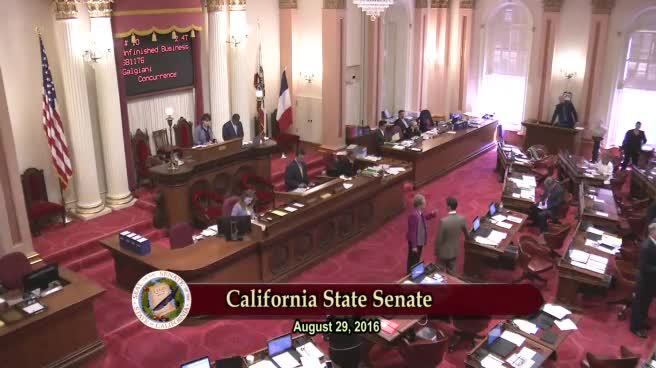
Bill Author

Bill Co-Author(s):
