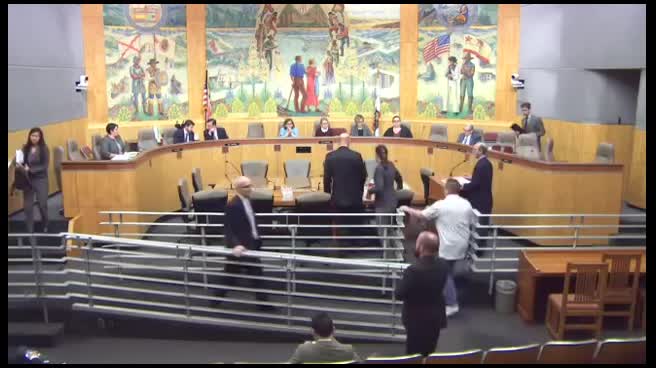
SB 1389: Interrogation: electronic recordation.
- Session Year: 2015-2016
- House: Senate
- Latest Version Date: 2016-09-28
Existing law requires the electronic recording of the entire custodial interrogation of a minor who is in a fixed place of detention, as defined, and who, at the time of the interrogation, is suspected of committing or accused of committing murder. Existing law sets forth various exceptions from this requirement, including if the law enforcement officer conducting the interrogation or his or her superior reasonably believes that electronic recording would disclose the identity of a confidential informant or jeopardize the safety of an officer, the individual being interrogated, or another individual. Existing law requires the prosecution to show by clear and convincing evidence that an exception applies to justify the failure to make that electronic recording. Existing law requires the interrogating entity to maintain the original or an exact copy of an electronic recording made of the interrogation until the final conclusion of the proceedings, as specified. Existing law additionally requires the court to provide jury instructions developed by the Judicial Council if the court finds that a defendant was subjected to a custodial interrogation in violation of the above-mentioned provisions.
This bill would make this electronic recording requirement applicable to the custodial interrogation of any person suspected of committing murder. By imposing new requirements on local law enforcement, this bill would impose a state-mandated local program. The bill would exempt from the electronic recording requirement the interrogation of a person who is in custody on a charge of murder if the interrogation is not related to the commission of murder, as specified.
Existing law defines electronic recording for these provisions as a video recording that accurately records a custodial interrogation.
This bill would specify that the above definition applies only to the custodial interrogation of a minor. The bill would expand the definition to include a video or audio recording in the case of the custodial interrogation of an adult and would express the Legislatures encouragement that law enforcement agencies use video recording when available.
This bill would make technical, nonsubstantive changes to the above provisions.
The California Constitution requires the state to reimburse local agencies and school districts for certain costs mandated by the state. Statutory provisions establish procedures for making that reimbursement.
This bill would provide that, if the Commission on State Mandates determines that the bill contains costs mandated by the state, reimbursement for those costs shall be made pursuant to these statutory provisions.
Existing law requires the electronic recording of the entire custodial interrogation of a minor who is in a fixed place of detention, as defined, and who, at the time of the interrogation, is suspected of committing or accused of committing murder. Existing law sets forth various exceptions from this requirement, including if the law enforcement officer conducting the interrogation or his or her superior reasonably believes that electronic recording would disclose the identity of a confidential informant or jeopardize the safety of an officer, the individual being interrogated, or another individual. Existing law requires the prosecution to show by clear and convincing evidence that an exception applies to justify the failure to make that electronic recording. Existing law requires the interrogating entity to maintain the original or an exact copy of an electronic recording made of the interrogation until the final conclusion of the proceedings, as specified. Existing law additionally requires the court to provide jury instructions developed by the Judicial Council if the court finds that a defendant was subjected to a custodial interrogation in violation of the above-mentioned provisions.
This bill would expand these provisions to apply to make this electronic recording requirement applicable to the custodial interrogation of any person suspected of committing murder, instead of just minors. murder. By imposing new requirements on local law enforcement, this bill would impose a state-mandated local program. The bill would exempt from the electronic recording requirement the interrogation of a person who is in custody on a charge of murder if the interrogation is not related to the commission of murder, as specified.
Existing law defines electronic recording for these provisions as a video recording that accurately records a custodial interrogation.
This bill would specify that the above definition applies only to the custodial interrogation of a minor and minor. The bill would expand the definition to include a video or audio recording for in the case of the custodial interrogation of an adult. adult and would express the Legislatures encouragement that law enforcement agencies use video recording when available.
This bill would make technical, nonsubstantive changes to the above provisions.
The California Constitution requires the state to reimburse local agencies and school districts for certain costs mandated by the state. Statutory provisions establish procedures for making that reimbursement.
This bill would provide that, if the Commission on State Mandates determines that the bill contains costs mandated by the state, reimbursement for those costs shall be made pursuant to these statutory provisions.
Existing law requires the electronic recording of the entire custodial interrogation of a minor who is in a fixed place of detention, as defined, and who, at the time of the interrogation, is suspected of committing or accused of committing murder. Existing law sets forth various exceptions from this requirement, including if the law enforcement officer conducting the interrogation or his or her superior reasonably believes that electronic recording would disclose the identity of a confidential informant or jeopardize the safety of an officer, the individual being interrogated, or another individual. Existing law requires the prosecution to show by clear and convincing evidence that an exception applies to justify the failure to make that electronic recording. Existing law requires the interrogating entity to maintain the original or an exact copy of an electronic recording made of the interrogation until the final conclusion of the proceedings, as specified. Existing law additionally requires the court to provide jury instructions developed by the Judicial Council if the court finds that a defendant was subjected to a custodial interrogation in violation of the above-mentioned provisions.
This bill would expand these provisions to apply to any person suspected of committing murder, instead of just minors. By imposing new requirements on local law enforcement, this bill would impose a state-mandated local program.
Existing law defines electronic recording for these provisions as a video recording that accurately records a custodial interrogation.
This bill would specify that the above definition applies only to the custodial interrogation of a minor and would expand the definition to include a video or audio recording for the custodial interrogation of an adult.
The California Constitution requires the state to reimburse local agencies and school districts for certain costs mandated by the state. Statutory provisions establish procedures for making that reimbursement.
This bill would provide that, if the Commission on State Mandates determines that the bill contains costs mandated by the state, reimbursement for those costs shall be made pursuant to these statutory provisions.
Existing law requires the electronic recording of the entire custodial interrogation of a minor who is in a fixed place of detention, as defined, and who, at the time of the interrogation, is suspected of committing or accused of committing murder. Existing law sets forth various exceptions from this requirement, including if the law enforcement officer conducting the interrogation or his or her superior reasonably believes that electronic recording would disclose the identity of a confidential informant or jeopardize the safety of an officer, the individual being interrogated, or another individual. Existing law requires the prosecution to show by clear and convincing evidence that an exception applies to justify the failure to make that electronic recording. Existing law requires the interrogating entity to maintain the original or an exact copy of an electronic recording made of the interrogation until the final conclusion of the proceedings, as specified. Existing law additionally requires the court to provide jury instructions developed by the Judicial Council if the court finds that a defendant was subjected to a custodial interrogation in violation of the above-mentioned provisions.
This bill would expand these provisions to apply to any person suspected of committing murder, instead of just minors. By imposing new requirements on local law enforcement, this bill would impose a state-mandated local program.
The California Constitution requires the state to reimburse local agencies and school districts for certain costs mandated by the state. Statutory provisions establish procedures for making that reimbursement.
This bill would provide that, if the Commission on State Mandates determines that the bill contains costs mandated by the state, reimbursement for those costs shall be made pursuant to these statutory provisions.
(a)The Legislature finds and declares the following:
(1)According to a national study, false confessions extracted during police questioning of suspects have been identified as a leading cause of a wrongful conviction. Although threats and coercion sometimes lead innocent people to confess, even the most standardized interrogations can result in a false confession or admission. Mentally ill or mentally disabled persons are particularly vulnerable, and some confess to crimes because they want to please authority figures or to protect another person. Additionally, innocent people may come to believe that they will receive a harsher sentence, or even the death penalty, unless they confess to the alleged crime.
(2)Three injustices result from false confessions. First, a false confession can result in an innocent person being incarcerated. Second, when an innocent person is incarcerated, the criminal investigations end and the real perpetrator remains free to commit similar or potentially worse crimes. Third, victims families are subjected to double the trauma: the loss of, or injury occurring to, a loved one and the guilt over the conviction of an innocent person. Mandating electronic recording of custodial interrogations of both adults and juveniles will improve criminal investigation techniques, reduce the likelihood of wrongful convictions, and further the cause of justice in California.
(3)Evidence of a defendants alleged statement or confession is one of the most significant pieces of evidence in any criminal trial. Although confessions and admissions are the most accurate evidence used to solve countless crimes, they can also lead to wrongful convictions. When there is a complete recording of the entire interrogation that produced such a statement or confession, the factfinder can evaluate its precise contents and any alleged coercive influences that may have produced it.
(b)For these reasons, it is the intent of the Legislature to require electronic recording of custodial interrogations of both adults and juveniles. Recording interrogations decreases wrongful convictions based on false confessions and enhances public confidence in the criminal justice process. Properly recorded interrogations provide the best evidence of the communications that occurred during an interrogation, prevent disputes about how an officer conducted himself or herself or treated a suspect during the course of an interrogation, prevent a defendant from lying about the account of events he or she originally provided to law enforcement, and spare judges and jurors the time necessary and the need to assess which account of an interrogation to believe.
SEC. 2.Section 859.5 of the Penal Code is amended to read:859.5.(a)Except as otherwise provided in this section, a custodial interrogation of any person, including an adult or a minor, who is in a fixed place of detention, and suspected of committing murder, as listed in Section 187 or 189 of this code, or paragraph (1) of subdivision (b) of Section 707 of the Welfare and Institutions Code, shall be electronically recorded in its entirety. A statement that is electronically recorded as required pursuant to this section creates a rebuttable presumption that the electronically recorded statement was, in fact, given and was accurately recorded by the prosecutions witnesses, provided that the electronic recording was made of the custodial interrogation in its entirety and the statement is otherwise admissible.
(b)The requirement for the electronic recordation of a custodial interrogation pursuant to this section shall not apply under any of the following circumstances:
(1)Electronic recording is not feasible because of exigent circumstances. An explanation of the exigent circumstances shall be documented in the police report.
(2)The person to be interrogated states that he or she will speak to a law enforcement officer only if the interrogation is not electronically recorded. If feasible, that statement shall be electronically recorded. The requirement also does not apply if the person being interrogated indicates during interrogation that he or she will not participate in further interrogation unless electronic recording ceases. If the person being interrogated refuses to record any statement, the officer shall document that refusal in writing.
(3)The custodial interrogation occurred in another jurisdiction and was conducted by law enforcement officers of that jurisdiction in compliance with the law of that jurisdiction, unless the interrogation was conducted with intent to avoid the requirements of this section.
(4)The interrogation occurs when no law enforcement officer conducting the interrogation has knowledge of facts and circumstances that would lead an officer to reasonably believe that the individual being interrogated may have committed murder for which this section requires that a custodial interrogation be recorded. If during a custodial interrogation, the individual reveals facts and circumstances giving a law enforcement officer conducting the interrogation reason to believe that murder has been committed, continued custodial interrogation concerning that offense shall be electronically recorded pursuant to this section.
(5)A law enforcement officer conducting the interrogation or the officers superior reasonably believes that electronic recording would disclose the identity of a confidential informant or jeopardize the safety of an officer, the individual being interrogated, or another individual. An explanation of the circumstances shall be documented in the police report.
(6)The failure to create an electronic recording of the entire custodial interrogation was the result of a malfunction of the recording device, despite reasonable maintenance of the equipment, and timely repair or replacement was not feasible.
(7)The questions presented to a person by law enforcement personnel and the persons responsive statements were part of a routine processing or booking of that person. Electronic recording is not required for spontaneous statements made in response to questions asked during the routine processing of the arrest of the person.
(8)The interrogation of a person who is in custody on a charge of a violation of Section 187 or 189 of this code or paragraph (1) of subdivision (b) of Section 707 of the Welfare and Institutions Code if the interrogation is not related to any of these offenses. If, during the interrogation, any information concerning one of these offenses is raised or mentioned, continued custodial interrogation concerning that offense shall be electronically recorded pursuant to this section.
(c)If the prosecution relies on an exception in subdivision (b) to justify a failure to make an electronic recording of a custodial interrogation, the prosecution shall show by clear and convincing evidence that the exception applies.
(d)A persons statements that were not electronically recorded pursuant to this section may be admitted into evidence in a criminal proceeding or in a juvenile court proceeding, as applicable, if the court finds that all of the following apply:
(1)The statements are admissible under applicable rules of evidence.
(2)The prosecution has proven by clear and convincing evidence that the statements were made voluntarily.
(3)Law enforcement personnel made a contemporaneous audio or audio and visual recording of the reason for not making an electronic recording of the statements. This provision does not apply if it was not feasible for law enforcement personnel to make that recording.
(4)The prosecution has proven by clear and convincing evidence that one or more of the circumstances described in subdivision (b) existed at the time of the custodial interrogation.
(e)Unless the court finds that an exception in subdivision (b) applies, all of the following remedies shall be granted as relief for noncompliance:
(1)Failure to comply with any of the requirements of this section shall be considered by the court in adjudicating motions to suppress a statement of a defendant made during or after a custodial interrogation.
(2)Failure to comply with any of the requirements of this section shall be admissible in support of claims that a defendants statement was involuntary or is unreliable, provided the evidence is otherwise admissible.
(3)If the court finds that a defendant was subject to a custodial interrogation in violation of subdivision (a), the court shall provide the jury with an instruction, to be developed by the Judicial Council, that advises the jury to view with caution the statements made in that custodial interrogation.
(f)The interrogating entity shall maintain the original or an exact copy of an electronic recording made of a custodial interrogation until a conviction for any offense relating to the interrogation is final and all direct and habeas corpus appeals are exhausted or the prosecution for that offense is barred by law or, in a juvenile court proceeding, as otherwise provided in subdivision (b) of Section 626.8 of the Welfare and Institutions Code. The interrogating entity may make one or more true, accurate, and complete copies of the electronic recording in a different format.
(g)For the purposes of this section, the following terms have the following meanings:
(1)Custodial interrogation means any interrogation in a fixed place of detention involving a law enforcement officers questioning that is reasonably likely to elicit incriminating responses, and in which a reasonable person in the subjects position would consider himself or herself to be in custody, beginning when a person should have been advised of his or her constitutional rights, including the right to remain silent, the right to have counsel present during any interrogation, and the right to have counsel appointed if the person is unable to afford counsel, and ending when the questioning has completely finished.
(2)(A)For the purposes of the custodial interrogation of a minor, pursuant to subdivision (a) or (b), electronically recorded, electronic recordation, and electronic recording refer to a video recording that accurately records a custodial interrogation.
(B)For the purposes of the custodial interrogation of an adult, pursuant to subdivision (a) or (b), electronically recorded, electronic recordation, and electronic recording refer to a video or audio recording that accurately records a custodial interrogation. The Legislature encourages law enforcement agencies to use video recording when available.
(3)Fixed place of detention means a fixed location under the control of a law enforcement agency where an individual is held in detention in connection with a criminal offense that has been, or may be, filed against that person, including a jail, police or sheriffs station, holding cell, correctional or detention facility, juvenile hall, or a facility of the Division of Juvenile Facilities.
(4)Law enforcement officer means a person employed by a law enforcement agency whose duties include enforcing criminal laws or investigating criminal activity, or any other person who is acting at the request or direction of that person.
SEC. 3.If the Commission on State Mandates determines that this act contains costs mandated by the state, reimbursement to local agencies and school districts for those costs shall be made pursuant to Part 7 (commencing with Section 17500) of Division 4 of Title 2 of the Government Code.
(a)The Legislature finds and declares the following:
(1)According to a national study, false confessions extracted during police questioning of suspects have been identified as a leading cause of a wrongful conviction. Although threats and coercion sometimes lead innocent people to confess, even the most standardized interrogations can result in a false confession or admission. Mentally ill or mentally disabled persons are particularly vulnerable, and some confess to crimes because they want to please authority figures or to protect another person. Additionally, innocent people may come to believe that they will receive a harsher sentence, or even the death penalty, unless they confess to the alleged crime.
(2)Three injustices result from false confessions. First, a false confession can result in an innocent person being incarcerated. Second, when an innocent person is incarcerated, the criminal investigations end and the real perpetrator remains free to commit similar or potentially worse crimes. Third, victims families are subjected to double the trauma: the loss of, or injury occurring to, a loved one and the guilt over the conviction of an innocent person. Mandating electronic recording of custodial interrogations of both adults and juveniles will improve criminal investigation techniques, reduce the likelihood of wrongful convictions, and further the cause of justice in California.
(3)Evidence of a defendants alleged statement or confession is one of the most significant pieces of evidence in any criminal trial. Although confessions and admissions are the most accurate evidence used to solve countless crimes, they can also lead to wrongful convictions. When there is a complete recording of the entire interrogation that produced such a statement or confession, the factfinder can evaluate its precise contents and any alleged coercive influences that may have produced it.
(b)For these reasons, it is the intent of the Legislature to require electronic recording of custodial interrogations of both adults and juveniles. Recording interrogations decreases wrongful convictions based on false confessions and enhances public confidence in the criminal justice process. Properly recorded interrogations provide the best evidence of the communications that occurred during an interrogation, prevent disputes about how an officer conducted himself or herself or treated a suspect during the course of an interrogation, prevent a defendant from lying about the account of events he or she originally provided to law enforcement, and spare judges and jurors the time necessary and the need to assess which account of an interrogation to believe.
SEC. 2.Section 859.5 of the Penal Code is amended to read:859.5.(a)Except as otherwise provided in this section, a custodial interrogation of any person, including an adult or a minor, who is in a fixed place of detention, and suspected of committing murder, as listed in Section 187 or 189 of this code, or paragraph (1) of subdivision (b) of Section 707 of the Welfare and Institutions Code, shall be electronically recorded in its entirety. A statement that is electronically recorded as required pursuant to this section creates a rebuttable presumption that the electronically recorded statement was, in fact, given and was accurately recorded by the prosecutions witnesses, provided that the electronic recording was made of the custodial interrogation in its entirety and the statement is otherwise admissible.
(b)The requirement for the electronic recordation of a custodial interrogation pursuant to this section shall not apply under any of the following circumstances:
(1)Electronic recording is not feasible because of exigent circumstances. The An explanation of the exigent circumstances shall be recorded documented in the police report.
(2)The person to be interrogated states that he or she will speak to a law enforcement officer only if the interrogation is not electronically recorded. If feasible, that statement shall be electronically recorded. The requirement also does not apply if the person being interrogated indicates during interrogation that he or she will not participate in further interrogation unless electronic recording ceases. If the person being interrogated refuses to record any statement, the officer shall document that refusal in writing.
(3)The custodial interrogation took place occurred in another jurisdiction and was conducted by law enforcement officers of that jurisdiction in compliance with the law of that jurisdiction, unless the interrogation was conducted with intent to avoid the requirements of this section.
(4)The interrogation occurs when no law enforcement officer conducting the interrogation has knowledge of facts and circumstances that would lead an officer to reasonably believe that the individual being interrogated may have committed murder for which this section requires that a custodial interrogation be recorded. If during a custodial interrogation, the individual reveals facts and circumstances giving a law enforcement officer conducting the interrogation reason to believe that murder has been committed, continued custodial interrogation concerning that offense shall be electronically recorded pursuant to this section.
(5)A law enforcement officer conducting the interrogation or the officers superior reasonably believes that electronic recording would disclose the identity of a confidential informant or jeopardize the safety of an officer, the individual being interrogated, or another individual. An explanation of the circumstances shall be recorded documented in the police report.
(6)The failure to create an electronic recording of the entire custodial interrogation was the result of a malfunction of the recording device, despite reasonable maintenance of the equipment, and timely repair or replacement was not feasible.
(7)The questions presented to a person by law enforcement personnel and the persons responsive statements were part of a routine processing or booking of that person. Electronic recording is not required for spontaneous statements made in response to questions asked during the routine processing of the arrest of the person.
(8)The interrogation of a person who is in custody on a charge of a violation of Section 187 or 189 of this code or paragraph (1) of subdivision (b) of Section 707 of the Welfare and Institutions Code if the interrogation is not related to any of these offenses. If, during the interrogation, any information concerning one of these offenses is raised or mentioned, continued custodial interrogation concerning that offense shall be electronically recorded pursuant to this section.
(c)If the prosecution relies on an exception in subdivision (b) to justify a failure to make an electronic recording of a custodial interrogation, the prosecution shall show by clear and convincing evidence that the exception applies.
(d)A persons statements that were not electronically recorded pursuant to this section may be admitted into evidence in a criminal proceeding or in a juvenile court proceeding, as applicable, if the court finds that all of the following apply:
(1)The statements are admissible under applicable rules of evidence.
(2)The prosecution has proven by clear and convincing evidence that the statements were made voluntarily.
(3)Law enforcement personnel made a contemporaneous audio or audio and visual recording of the reason for not making an electronic recording of the statements. This provision does not apply if it was not feasible for law enforcement personnel to make that recording.
(4)The prosecution has proven by clear and convincing evidence that one or more of the circumstances described in subdivision (b) existed at the time of the custodial interrogation.
(e)Unless the court finds that an exception in subdivision (b) applies, all of the following remedies shall be granted as relief for noncompliance:
(1)Failure to comply with any of the requirements of this section shall be considered by the court in adjudicating motions to suppress a statement of a defendant made during or after a custodial interrogation.
(2)Failure to comply with any of the requirements of this section shall be admissible in support of claims that a defendants statement was involuntary or is unreliable, provided the evidence is otherwise admissible.
(3)If the court finds that a defendant was subject to a custodial interrogation in violation of subdivision (a), the court shall provide the jury with an instruction, to be developed by the Judicial Council, that advises the jury to view with caution the statements made in that custodial interrogation.
(f)The interrogating entity shall maintain the original or an exact copy of an electronic recording made of a custodial interrogation until a conviction for any offense relating to the interrogation is final and all direct and habeas corpus appeals are exhausted or the prosecution for that offense is barred by law or, in a juvenile court proceeding, as otherwise provided in subdivision (b) of Section 626.8 of the Welfare and Institutions Code. The interrogating entity may make one or more true, accurate, and complete copies of the electronic recording in a different format.
(g)For the purposes of this section, the following terms have the following meanings:
(1)Custodial interrogation means any interrogation in a fixed place of detention involving a law enforcement officers questioning that is reasonably likely to elicit incriminating responses, and in which a reasonable person in the subjects position would consider himself or herself to be in custody, beginning when a person should have been advised of his or her constitutional rights, including the right to remain silent, the right to have counsel present during any interrogation, and the right to have counsel appointed if the person is unable to afford counsel, and ending when the questioning has completely finished.
(2)(A)For the purposes of the custodial interrogation of a minor, pursuant to subdivision (a), (a) or (b), electronically recorded, electronic recordation, and electronic recording means refer to a video recording that accurately records a custodial interrogation.
(B)For the purposes of the custodial interrogation of an adult, pursuant to subdivision (a), (a) or (b), electronically recorded, electronic recordation, and electronic recording means refer to a video or audio recording that accurately records a custodial interrogation. The Legislature encourages law enforcement agencies to use video recording when available.
(3)Fixed place of detention means a fixed location under the control of a law enforcement agency where an individual is held in detention in connection with a criminal offense that has been, or may be, filed against that person, including a jail, police or sheriffs station, holding cell, correctional or detention facility, juvenile hall, or a facility of the Division of Juvenile Facilities.
(4)Law enforcement officer means a person employed by a law enforcement agency whose duties include enforcing criminal laws or investigating criminal activity, or any other person who is acting at the request or direction of that person.
SEC. 3.If the Commission on State Mandates determines that this act contains costs mandated by the state, reimbursement to local agencies and school districts for those costs shall be made pursuant to Part 7 (commencing with Section 17500) of Division 4 of Title 2 of the Government Code.
(a)The Legislature finds and declares the following:
(1)According to a national study, false confessions extracted during police questioning of suspects have been identified as a leading cause of a wrongful conviction. Although threats and coercion sometimes lead innocent people to confess, even the most standardized interrogations can result in a false confession or admission. Mentally ill or mentally disabled persons are particularly vulnerable, and some confess to crimes because they want to please authority figures or to protect another person. Additionally, innocent people may come to believe that they will receive a harsher sentence, or even the death penalty, unless they confess to the alleged crime.
(2)Three injustices result from false confessions. First, a false confession can result in an innocent person being incarcerated. Second, when an innocent person is incarcerated, the criminal investigations end and the real perpetrator remains free to commit similar or potentially worse crimes. Third, victims families are subjected to double the trauma: the loss of, or injury occurring to, a loved one and the guilt over the conviction of an innocent person. Mandating electronic recording of custodial interrogations of both adults and juveniles will improve criminal investigation techniques, reduce the likelihood of wrongful convictions, and further the cause of justice in California.
(3)Evidence of a defendants alleged statement or confession is one of the most significant pieces of evidence in any criminal trial. Although confessions and admissions are the most accurate evidence used to solve countless crimes, they can also lead to wrongful convictions. When there is a complete recording of the entire interrogation that produced such a statement or confession, the factfinder can evaluate its precise contents and any alleged coercive influences that may have produced it.
(b)For these reasons, it is the intent of the Legislature to require electronic recording of custodial interrogations of both adults and juveniles. Recording interrogations decreases wrongful convictions based on false confessions and enhances public confidence in the criminal justice process. Properly recorded interrogations provide the best evidence of the communications that occurred during an interrogation, prevent disputes about how an officer conducted himself or herself or treated a suspect during the course of an interrogation, prevent a defendant from lying about the account of events he or she originally provided to law enforcement, and spare judges and jurors the time necessary and the need to assess which account of an interrogation to believe.
SEC. 2.Section 859.5 of the Penal Code is amended to read:859.5.(a)Except as otherwise provided in this section, a custodial interrogation of any person, including an adult or a minor, who is in a fixed place of detention, and suspected of committing murder, as listed in Sections 187 or 189, Section 187 or 189 of this code, or paragraph (1) of subdivision (b) of Section 707 of the Welfare and Institutions Code, shall be electronically recorded in its entirety. A statement that is electronically recorded as required pursuant to this section creates a rebuttable presumption that the electronically recorded statement was, in fact, given and was accurately recorded by the prosecutions witnesses, provided that the electronic recording was made of the custodial interrogation in its entirety and the statement is otherwise admissible.
(b)The requirement for the electronic recordation of a custodial interrogation pursuant to this section shall not apply under any of the following circumstances:
(1)Electronic recording is not feasible because of exigent circumstances. The exigent circumstances shall be recorded in the police report.
(2)The person to be interrogated states that he or she will speak to a law enforcement officer only if the interrogation is not electronically recorded. If feasible, that statement shall be electronically recorded. The requirement also does not apply if the person being interrogated indicates during interrogation that he or she will not participate in further interrogation unless electronic recording ceases. If the person being interrogated refuses to record any statement, the officer shall document that refusal in writing.
(3)The custodial interrogation took place in another jurisdiction and was conducted by law enforcement officers of that jurisdiction in compliance with the law of that jurisdiction, unless the interrogation was conducted with intent to avoid the requirements of this section.
(4)The interrogation occurs when no law enforcement officer conducting the interrogation has knowledge of facts and circumstances that would lead an officer to reasonably believe that the individual being interrogated may have committed murder for which this section requires that a custodial interrogation be recorded. If during a custodial interrogation, the individual reveals facts and circumstances giving a law enforcement officer conducting the interrogation reason to believe that murder has been committed, continued custodial interrogation concerning that offense shall be electronically recorded pursuant to this section.
(5)A law enforcement officer conducting the interrogation or the officers superior reasonably believes that electronic recording would disclose the identity of a confidential informant or jeopardize the safety of an officer, the individual being interrogated, or another individual. An explanation of the circumstances shall be recorded in the police report.
(6)The failure to create an electronic recording of the entire custodial interrogation was the result of a malfunction of the recording device, despite reasonable maintenance of the equipment, and timely repair or replacement was not feasible.
(7)The questions presented to a person by law enforcement personnel and the persons responsive statements were part of a routine processing or booking of that person. Electronic recording is not required for spontaneous statements made in response to questions asked during the routine processing of the arrest of the person.
(c)If the prosecution relies on an exception in subdivision (b) to justify a failure to make an electronic recording of a custodial interrogation, the prosecution shall show by clear and convincing evidence that the exception applies.
(d)A persons statements that were not electronically recorded pursuant to this section may be admitted into evidence in a criminal proceeding or in a juvenile court proceeding, as applicable, if the court finds that all of the following apply:
(1)The statements are admissible under applicable rules of evidence.
(2)The prosecution has proven by clear and convincing evidence that the statements were made voluntarily.
(3)Law enforcement personnel made a contemporaneous audio or audio and visual recording of the reason for not making an electronic recording of the statements. This provision does not apply if it was not feasible for law enforcement personnel to make that recording.
(4)The prosecution has proven by clear and convincing evidence that one or more of the circumstances described in subdivision (b) existed at the time of the custodial interrogation.
(e)Unless the court finds that an exception in subdivision (b) applies, all of the following remedies shall be granted as relief for noncompliance:
(1)Failure to comply with any of the requirements of this section shall be considered by the court in adjudicating motions to suppress a statement of a defendant made during or after a custodial interrogation.
(2)Failure to comply with any of the requirements of this section shall be admissible in support of claims that a defendants statement was involuntary or is unreliable, provided the evidence is otherwise admissible.
(3)If the court finds that a defendant was subject to a custodial interrogation in violation of subdivision (a), the court shall provide the jury with an instruction, to be developed by the Judicial Council, that advises the jury to view with caution the statements made in that custodial interrogation.
(f)The interrogating entity shall maintain the original or an exact copy of an electronic recording made of a custodial interrogation until a conviction for any offense relating to the interrogation is final and all direct and habeas corpus appeals are exhausted or the prosecution for that offense is barred by law or, in a juvenile court proceeding, as otherwise provided in subdivision (b) of Section 626.8 of the Welfare and Institutions Code. The interrogating entity may make one or more true, accurate, and complete copies of the electronic recording in a different format.
(g)For the purposes of this section, the following terms have the following meanings:
(1)Custodial interrogation means any interrogation in a fixed place of detention involving a law enforcement officers questioning that is reasonably likely to elicit incriminating responses, and in which a reasonable person in the subjects position would consider himself or herself to be in custody, beginning when a person should have been advised of his or her constitutional rights, including the right to remain silent, the right to have counsel present during any interrogation, and the right to have counsel appointed if the person is unable to afford counsel, and ending when the questioning has completely finished.
(2)Electronic (A)For the purposes of the custodial interrogation of a minor, pursuant to subdivision (a), electronic recording means a video recording that accurately records a custodial interrogation.
(B)For the purposes of the custodial interrogation of an adult, pursuant to subdivision (a), electronic recording means a video or audio recording that accurately records a custodial interrogation.
(3)Fixed place of detention means a fixed location under the control of a law enforcement agency where an individual is held in detention in connection with a criminal offense that has been, or may be, filed against that person, including a jail, police or sheriffs station, holding cell, correctional or detention facility, juvenile hall, or a facility of the Division of Juvenile Facilities.
(4)Law enforcement officer means a person employed by a law enforcement agency whose duties include enforcing criminal laws or investigating criminal activity, or any other person who is acting at the request or direction of that person.
SEC. 3.If the Commission on State Mandates determines that this act contains costs mandated by the state, reimbursement to local agencies and school districts for those costs shall be made pursuant to Part 7 (commencing with Section 17500) of Division 4 of Title 2 of the Government Code.
(a)The Legislature finds and declares the following:
(1)According to a national study, false confessions extracted during police questioning of suspects have been identified as a leading cause of a wrongful conviction. Although threats and coercion sometimes lead innocent people to confess, even the most standardized interrogations can result in a false confession or admission. Mentally ill or mentally disabled persons are particularly vulnerable, and some confess to crimes because they want to please authority figures or to protect another person. Additionally, innocent people may come to believe that they will receive a harsher sentence, or even the death penalty, unless they confess to the alleged crime.
(2)Three injustices result from false confessions. First, a false confession can result in an innocent person being incarcerated. Second, when an innocent person is incarcerated, the criminal investigations end and the real perpetrator remains free to commit similar or potentially worse crimes. Third, victims families are subjected to double the trauma: the loss of, or injury occurring to, a loved one and the guilt over the conviction of an innocent person. Mandating electronic recording of custodial interrogations of both adults and juveniles will improve criminal investigation techniques, reduce the likelihood of wrongful convictions, and further the cause of justice in California.
(3)Evidence of a defendants alleged statement or confession is one of the most significant pieces of evidence in any criminal trial. Although confessions and admissions are the most accurate evidence used to solve countless crimes, they can also lead to wrongful convictions. When there is a complete recording of the entire interrogation that produced such a statement or confession, the factfinder can evaluate its precise contents and any alleged coercive influences that may have produced it.
(b)For these reasons, it is the intent of the Legislature to require electronic recording of custodial interrogations of both adults and juveniles. Recording interrogations decreases wrongful convictions based on false confessions and enhances public confidence in the criminal justice process. Properly recorded interrogations provide the best evidence of the communications that occurred during an interrogation, prevent disputes about how an officer conducted himself or herself or treated a suspect during the course of an interrogation, prevent a defendant from lying about the account of events he or she originally provided to law enforcement, and spare judges and jurors the time necessary and the need to assess which account of an interrogation to believe.
SEC. 2.Section 859.5 of the Penal Code is amended to read:859.5.(a)Except as otherwise provided in this section, a custodial interrogation of any person, including a minor, who is in a fixed place of detention, and suspected of committing murder, as listed in Sections 187 or 189, or paragraph (1) of subdivision (b) of Section 707 of the Welfare and Institutions Code, shall be electronically recorded in its entirety. A statement that is electronically recorded as required pursuant to this section creates a rebuttable presumption that the electronically recorded statement was, in fact, given and was accurately recorded by the prosecutions witnesses, provided that the electronic recording was made of the custodial interrogation in its entirety and the statement is otherwise admissible.
(b)The requirement for the electronic recordation of a custodial interrogation pursuant to this section shall not apply under any of the following circumstances:
(1)Electronic recording is not feasible because of exigent circumstances. The exigent circumstances shall be recorded in the police report.
(2)The person to be interrogated states that he or she will speak to a law enforcement officer only if the interrogation is not electronically recorded. If feasible, that statement shall be electronically recorded. The requirement also does not apply if the person being interrogated indicates during interrogation that he or she will not participate in further interrogation unless electronic recording ceases. If the person being interrogated refuses to record any statement, the officer shall document that refusal in writing.
(3)The custodial interrogation took place in another jurisdiction and was conducted by law enforcement officers of that jurisdiction in compliance with the law of that jurisdiction, unless the interrogation was conducted with intent to avoid the requirements of this section.
(4)The interrogation occurs when no law enforcement officer conducting the interrogation has knowledge of facts and circumstances that would lead an officer to reasonably believe that the individual being interrogated may have committed murder for which this section requires that a custodial interrogation be recorded. If during a custodial interrogation, the individual reveals facts and circumstances giving a law enforcement officer conducting the interrogation reason to believe that murder has been committed, continued custodial interrogation concerning that offense shall be electronically recorded pursuant to this section.
(5)A law enforcement officer conducting the interrogation or the officers superior reasonably believes that electronic recording would disclose the identity of a confidential informant or jeopardize the safety of an officer, the individual being interrogated, or another individual. An explanation of the circumstances shall be recorded in the police report.
(6)The failure to create an electronic recording of the entire custodial interrogation was the result of a malfunction of the recording device, despite reasonable maintenance of the equipment, and timely repair or replacement was not feasible.
(7)The questions presented to a person by law enforcement personnel and the persons responsive statements were part of a routine processing or booking of that person. Electronic recording is not required for spontaneous statements made in response to questions asked during the routine processing of the arrest of the person.
(c)If the prosecution relies on an exception in subdivision (b) to justify a failure to make an electronic recording of a custodial interrogation, the prosecution shall show by clear and convincing evidence that the exception applies.
(d)A persons statements that were not electronically recorded pursuant to this section may be admitted into evidence in a criminal proceeding or in a juvenile court proceeding, as applicable, if the court finds that all of the following apply:
(1)The statements are admissible under applicable rules of evidence.
(2)The prosecution has proven by clear and convincing evidence that the statements were made voluntarily.
(3)Law enforcement personnel made a contemporaneous audio or audio and visual recording of the reason for not making an electronic recording of the statements. This provision does not apply if it was not feasible for law enforcement personnel to make that recording.
(4)The prosecution has proven by clear and convincing evidence that one or more of the circumstances described in subdivision (b) existed at the time of the custodial interrogation.
(e)Unless the court finds that an exception in subdivision (b) applies, all of the following remedies shall be granted as relief for noncompliance:
(1)Failure to comply with any of the requirements of this section shall be considered by the court in adjudicating motions to suppress a statement of a defendant made during or after a custodial interrogation.
(2)Failure to comply with any of the requirements of this section shall be admissible in support of claims that a defendants statement was involuntary or is unreliable, provided the evidence is otherwise admissible.
(3)If the court finds that a defendant was subject to a custodial interrogation in violation of subdivision (a), the court shall provide the jury with an instruction, to be developed by the Judicial Council, that advises the jury to view with caution the statements made in that custodial interrogation.
(f)The interrogating entity shall maintain the original or an exact copy of an electronic recording made of a custodial interrogation until a conviction for any offense relating to the interrogation is final and all direct and habeas corpus appeals are exhausted or the prosecution for that offense is barred by law or, in a juvenile court proceeding, as otherwise provided in subdivision (b) of Section 626.8 of the Welfare and Institutions Code. The interrogating entity may make one or more true, accurate, and complete copies of the electronic recording in a different format.
(g)For the purposes of this section, the following terms have the following meanings:
(1)Custodial interrogation means any interrogation in a fixed place of detention involving a law enforcement officers questioning that is reasonably likely to elicit incriminating responses, and in which a reasonable person in the subjects position would consider himself or herself to be in custody, beginning when a person should have been advised of his or her constitutional rights, including the right to remain silent, the right to have counsel present during any interrogation, and the right to have counsel appointed if the person is unable to afford counsel, and ending when the questioning has completely finished.
(2)Electronic recording means a video recording that accurately records a custodial interrogation.
(3)Fixed place of detention means a fixed location under the control of a law enforcement agency where an individual is held in detention in connection with a criminal offense that has been, or may be, filed against that person, including a jail, police or sheriffs station, holding cell, correctional or detention facility, juvenile hall, or a facility of the Division of Juvenile Facilities.
(4)Law enforcement officer means a person employed by a law enforcement agency whose duties include enforcing criminal laws or investigating criminal activity, or any other person who is acting at the request or direction of that person.
SEC. 3.If the Commission on State Mandates determines that this act contains costs mandated by the state, reimbursement to local agencies and school districts for those costs shall be made pursuant to Part 7 (commencing with Section 17500) of Division 4 of Title 2 of the Government Code.
|
Date
|
Status
|
|---|---|
| Jun 2, 2016 | Read third time. Passed. (Ayes 32. Noes 5. Page 4139.) Ordered to the Assembly. |
| Aug 31, 2016 | Enrolled and presented to the Governor at 6 p.m. |
| Aug 25, 2016 | Assembly amendments concurred in. (Ayes 33. Noes 6. Page 5409.) Ordered to engrossing and enrolling. |
| Aug 25, 2016 | Assembly amendments concurred in. (Ayes 32. Noes 6.) Ordered to engrossing and enrolling. |
| Aug 23, 2016 | Read third time. Passed. (Ayes 63. Noes 13. Page 6096.) Ordered to the Senate. |
| Aug 23, 2016 | Read third time. Passed. Ordered to the Senate. |
| Aug 23, 2016 | In Senate. Concurrence in Assembly amendments pending. |
| Aug 16, 2016 | Read second time. Ordered to third reading. |
| Aug 15, 2016 | Read second time and amended. Ordered to second reading. |
| Aug 12, 2016 | From committee: Do pass as amended. (Ayes 17. Noes 3.) (August 11). |
| Aug 3, 2016 | August 3 set for first hearing. Placed on APPR. suspense file. |
| Jun 28, 2016 | From committee: Do pass and re-refer to Com. on APPR. (Ayes 7. Noes 0.) (June 28). Re-referred to Com. on APPR. |
| Jun 21, 2016 | June 21 set for first hearing canceled at the request of author. |
| Jun 9, 2016 | Referred to Com. on PUB. S. |
| Jun 2, 2016 | Read third time. Passed. (Ayes 32. Noes 5.) Ordered to the Assembly. |
| Feb 19, 2016 | Introduced. To Com. on RLS. for assignment. To print. |
| Jun 2, 2016 | In Assembly. Read first time. Held at Desk. |
| May 31, 2016 | Read second time and amended. Ordered to third reading. |
| May 27, 2016 | From committee: Do pass as amended. (Ayes 6. Noes 1.) (May 27). |
| May 27, 2016 | From committee: Do pass as amended. (Ayes 6. Noes 1. Page 4009.) (May 27). |
| May 20, 2016 | Set for hearing May 27. |
| Apr 18, 2016 | April 18 hearing: Placed on APPR. suspense file. |
| Apr 8, 2016 | Set for hearing April 18. |
| Apr 5, 2016 | From committee: Do pass and re-refer to Com. on APPR. (Ayes 7. Noes 0.) (April 5). Re-referred to Com. on APPR. |
| Apr 5, 2016 | From committee: Do pass and re-refer to Com. on APPR. (Ayes 7. Noes 0. Page 3396.) (April 5). Re-referred to Com. on APPR. |
| Mar 15, 2016 | Set for hearing April 5. |
| Mar 10, 2016 | Referred to Com. on PUB. S. |
| Feb 22, 2016 | Read first time. |
| Feb 22, 2016 | From printer. May be acted upon on or after March 23. |
|
Date
|
Description
|
Location
|
Votes
|
|
|---|---|---|---|---|
| Aug 25, 2016 | Unfinished Business SB1389 Glazer Concurrence | Senate Floor |
Passed |
|
| Aug 23, 2016 | SB 1389 Glazer Senate Third Reading By COOLEY | Assembly Floor |
Passed |
|
| Aug 11, 2016 | Do pass as amended. | Assembly Standing Committee on Appropriations |
Passed |
|
| Jun 28, 2016 | Do pass and be re-referred to the Committee on [Appropriations] | Assembly Standing Committee on Public Safety |
Passed |
|
| Jun 2, 2016 | Senate 3rd Reading SB1389 Glazer | Senate Floor |
Passed |
|
| May 27, 2016 | Do pass as amended | Senate Standing Committee on Appropriations |
Passed |
|
| Apr 18, 2016 | Placed on suspense file | Senate Standing Committee on Appropriations |
Passed |
|
| Apr 5, 2016 | Do pass, but first be re-referred to the Committee on [Appropriations] | Senate Standing Committee on Public Safety |
Passed |
This list shows positions taken on this bill by organizations on the date displayed, which is linked to the original source.
Positions by individuals are not included.
|
Organization
|
Position
|
Date
|
|---|---|---|
| A New PATH | ** Support | Aug 23, 2016 |
| A New Way of Life Re-Entry Project | ** Support | Aug 23, 2016 |
| ACLU | * Indeterminate | Jun 28, 2016 |
| Anti-Recidivism Coalition | ** Support | Aug 23, 2016 |
| Association Of Orange County Deputy Sheriffs | ** Against | Aug 23, 2016 |
| California Attorneys For Criminal Justice | ** Support | Aug 23, 2016 |
| California Police Chiefs Association | * Indeterminate | Jun 28, 2016 |
| California Public Defenders Association | * Indeterminate | Jun 28, 2016 |
| California Public Defenders Association Page R | * Support | Jun 28, 2016 |
| California State Sheriffs' Association | ** Against | Aug 23, 2016 |
| California Statewide Law Enforcement Association | ** Against | Aug 23, 2016 |
| Californians United for a Responsibe Budget | * Support | Apr 5, 2016 |
| Drug Policy Alliance | ** Support | Jun 28, 2016 |
| Ella Baker Center For Human Rights | ** Support | Aug 23, 2016 |
| Exoneree | * Indeterminate | Jun 28, 2016 |
| Fraternal Order of Police | ** Against | Aug 23, 2016 |
| Friends Committee On Legislation Of California | ** Support | Aug 23, 2016 |
| Human Rights and Drug Policy Alliance | * Indeterminate | Jun 28, 2016 |
| Innocence Project | ** Support | Aug 23, 2016 |
| Legal Services for Prisoners with Children | ** Support | Aug 23, 2016 |
| Long Beach Police Officers Association | ** Against | Aug 23, 2016 |
| Major Cities Chiefs Association | ** Support | Aug 23, 2016 |
| Major Cities Chiefs Association 1 private individual | ** Support | Jun 28, 2016 |
| One individual | ** Support | Aug 23, 2016 |
| Page S | ** Support | Jun 28, 2016 |
| Sacramento County Deputy Sheriffs' Association | ** Against | Aug 23, 2016 |
| San Jose Police Department | * Indeterminate | Jun 28, 2016 |
Office of Senate Floor Analyses (916) 651-1520 Fax: (916) 327-4478 | SB |
UNFINISHED BUSINESS
Bill No: SB 1389
:
SENATE PUBLIC SAFETY COMMITTEE: 7-0, 4/5/16
AYES: Hancock, Anderson, Glazer, Leno, Liu, Monning, Stone
SENATE APPROPRIATIONS COMMITTEE: 6-1, 5/27/16
AYES: Lara, Bates, Beall, Hill, McGuire, Mendoza
NOES: Nielsen
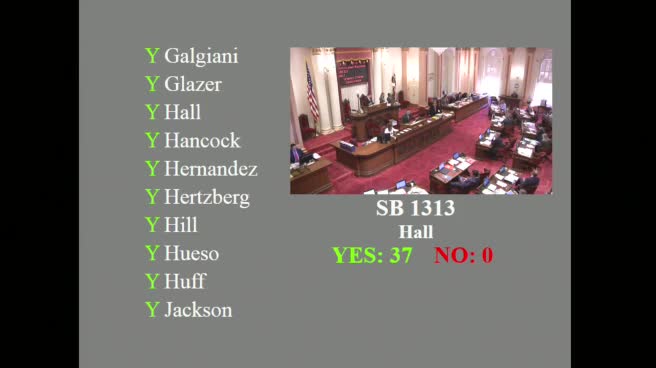
SENATE FLOOR: 32-5, 6/2/16
AYES: Allen, Anderson, Bates, Beall, Berryhill, Block, Cannella, De León, Glazer, Hall, Hancock, Hernandez, Hertzberg, Hill, Hueso, Huff, Jackson, Lara, Leno, Leyva, Liu, McGuire, Mitchell, Monning, Moorlach, Nguyen, Pan, Pavley, Roth, Stone, Wieckowski, Wolk
NOES: Fuller, Gaines, Morrell, Nielsen, Vidak
NO VOTE RECORDED: Galgiani, Mendoza, Runner
ASSEMBLY FLOOR: 63-13, 8/23/16 - See last page for vote
SOURCE: American Civil Liberties Union
California Attorneys for Criminal Justice
DIGEST: This bill requires the electronic recording of the interrogation of any person suspected of murder.
Assembly Amendments exempt from the recording requirement the interrogation of a person who is in custody on a murder charge when the interrogation is not related to the murder.
Existing law:
- Provides under the Fifth Amendment of the Federal Constitution provides in pertinent part that “No person shall…be compelled in any criminal case to be a witness against himself….”
- States that the U.S. Supreme Court in Miranda v. Arizona (1966) 384 U.S. 436, held that the Fifth Amendment privilege may be invoked during a custodial interrogation. To protect the privilege, when a suspect invokes the right to remain silent or the right to an attorney, all questioning must cease. The only exceptions to this rule are to allow officers to question when reasonably necessary to protect the public safety or to obtain non-incriminating booking information.
- Creates the Commission on Peace Officer Standards and Training (POST) and provides that the Commission shall adopt, and may from time to time amend, rules establishing minimum standards relating to physical, mental, and moral fitness that shall govern the recruitment of peace officers. (Penal Code § 13510)
- Provides that POST shall prepare guidelines establishing standard procedures which may be followed by police agencies and prosecutors in interviewing minor witnesses. (Penal Code § 13517.5)
- Provides that a custodial interrogation of a minor who is suspected of committing a murder offense shall be electronically recorded in its entirety. (Penal Code § 859.5 (a))
- Provides that a statement that is electronically recorded as required creates a rebuttable presumption that the electronically recorded statement was, in fact, given and was accurately recorded by the prosecution’s witnesses, provided the electronic recording was made of the custodial interrogation in its entirety and the statement is otherwise admissible. (Penal Code § 859.5 (a))
- Provides that the requirement for the electronic recordation of a custodial interrogation pursuant to this section shall not apply under any of the following circumstances:
- Electronic recording is not feasible because of exigent circumstance. The exigent circumstances shall be recorded in the police report.
- The person to be interrogated states that he or she will speak to a law enforcement officer only if the interrogation is not electronically recorded. If feasible, that statement shall be electronically recorded. The requirement also does not apply if the person being interrogated indicates during interrogations that he or she will not participate in further interrogation unless electronic recording ceases. If the person refuses to record any statement, the officer shall document that refusal in writing.
- The custodial interrogation took place in another jurisdiction and was conducted by law enforcement officers of that jurisdiction in compliance with the law of that jurisdiction, unless the interrogation was conducted with the intent to avoid the requirements of this section.
- The interrogation occurs when no law enforcement officer conducting the interrogation has knowledge of facts and circumstances that would lead an officer to reasonably believe that the individual being interrogated may have committed a murder. If during a custodial interrogation, the individual reveals the facts and circumstances giving the officer reason to believe a murder may have been committed, continued interrogation concerning that offense shall be electronically recorded.
- A law enforcement officer conducting the interrogation or the officer’s superior reasonably believes that electronic recording would disclose the identity of a confidential informant or jeopardize the safety of an officer, the individual being interrogated, or another individual. An explanation of the circumstances shall be recorded in the police report.
- The failure to create an electronic recording of the entire custodial interrogation was the result of a malfunction of the recording device, despite reasonable maintenance of the equipment, and timely repair or replacement was not feasible.
- The questions presented to a person by law enforcement personnel and the person’s responsive statements were part of a routine processing or booking of that person. Electronic recording is not required of spontaneous statements made in response to questions asked during the routine processing of the arrest of the person. (Penal Code § 859.5 (b))
- Provides that if the prosecution relies on an exception to justify a failure to make an electronic recording of a custodial interrogation, the prosecution shall show by clear and convincing evidence that the exception applies. (Penal Code § 859.5 (c))
- Provides that the presumption of inadmissibility of statements provided in this section may be overcome, and a person’s statements that were not electronically recorded may be admitted into evidence in a criminal proceeding or a in a juvenile court proceeding, as applicable if the court finds that all of the following apply:
- If the statements are admissible under applicable rules of evidence.
- The prosecution has proven by clear and convincing evidence that the statements were made voluntarily.
- Law enforcement personnel made a contemporaneous audio or audio and visual recording of the reason for not making an electronic recording of the statements.
- This provision does not apply if it was not feasible for law enforcement personnel to make that recording.
- The prosecution has proven by clear and convincing evidence that one or more of the exceptions existed at the time of the custodial interrogation. (Penal Code § 859.5 (d))
- Provides that unless the court finds that an exception applies, all of the following remedies shall be granted as relief for noncompliance:
- Failure to comply with any requirements of this section shall be considered by the court in adjudicating motions to suppress a statement of a defendant made during or after a custodial interrogation.
- Failure to comply with any of the requirements of this section shall be admissible in support of claims that the defendant’s statement was involuntary or unreliable, provided the evidence is otherwise inadmissible.
- If the court admits into evidence a statement made during the custodial interrogation that was not electronically recorded in compliance with this section, the court, upon request of the defendant, shall give to the jury cautionary instructions. (Penal Code § 859.5 (e))
- Provides that the interrogating entity shall maintain the original or an exact copy of an electronic recording made of an electronic recording made of a custodial interrogation until a conviction for any offense relating to the interrogation is final and all direct and habeas corpus appeals are exhausted or the prosecution for that offense is barred by law, or in a juvenile court proceeding, otherwise provided in Welfare and Institutions Code Section 626.8. The interrogating entity may make one or more true, accurate, and complete copies of the electronic recording in a different format. (Penal Code § 859.5 (f))
This bill:
- Applies the requirements that an interrogation be electronically recorded to any person suspected of committing murder, not just a juvenile.
- Provides that for the purposes of the custodial interrogation of an adult, “electronic recording” means a video or audio recording that accurately records a custodial interrogation.
Comments
False Confessions
Every year many people are wrongly convicted because of false confessions. Defendants also often make motions to exclude statements made during an interrogation arguing that they were coerced, there was abuse or the statement was not made. Studies have shown that recording of interrogations puts an end to disputes regarding statements and also has additional benefits.
In March 2000, after declaring a moratorium on executions, the then Governor of Illinois George Ryan appointed a commission to see what reforms to the death penalty would be necessary to make it fair and just in Illinois. After 24 months of study the commission set forth 85 recommendations. Among the recommendations of Illinois Governor’s Commission on Capital Punishment (Illinois Commission) was the recommendation that:
Custodial interrogations of a suspect in a homicide case occurring at a police facility should be videotaped. Videotaping should not include merely the statement made by the suspect after interrogation, but the entire process.
Illinois followed the recommendation, becoming “the first state (recently joined by Maine and the District of Columbia) to require by statute electronic recording of custodial interrogations in custodial interrogations in homicide investigations.”
On July 25, 2006 the California Commission on the Fair Administration of Justice (CCFAJ) issued a “Report and Recommendations Regarding False Confessions.” The Commission had a public hearing on June 21, 2006 and studied the reports of the commissions and task forces assembled in other states addressing the issue of false confessions, as well as research documenting 125 cases of false confessions by suspects who were indisputably proven to be innocent. CCFAJ found that:
Although it may seem surprising that factually innocent persons would falsely confess to the commission of serious crimes, the research provides ample evidence that this phenomenon occurs with greater frequency than widely assumed. The research of Professors Steven Drizin and Richard A. Leo identifies 125 cases which occurred between 1972 and 2002, with 31% of them occurring in the five years previous to 2003. Eight of these examples, or 6 % of the sample, occurred in California cases. (California Commission on the Fair Administration of Justice, “Report and Recommendations Regarding False Confessions” p.2 www.ccfaj.org)
Like the Illinois Commission, CCFAJ found that recording interrogations not only helps reduce false confessions but that:
There are a number of reasons why the taping of interrogations actually benefits the police departments that require it. First, taping creates an objective, comprehensive record of the interrogation. Second, taping leads to the improved quality of interrogation, with a higher level of scrutiny that will deter police misconduct and improve the quality of interrogation practices. Third, taping provides the police protection against false claims of police misconduct. Finally, with taping, detectives, police managers, prosecutors, defense attorneys and judges are able to more easily detect false confessions and more easily prevent their admission into evidence. (Id. p. 4)
Electronic Recording of Interrogations
As of January 2014, the law requires the electronic recording of the interrogation of a juvenile suspected of murder. In addition, there are a number of jurisdictions in California that voluntarily, at least some of the time, electronically record other interrogations. This bill extends the provision requiring the electronic recording of the interrogation of juvenile murder suspects to apply to any person suspected of murder.
FISCAL EFFECT: Appropriation: Fiscal Com.: Local:
According to the Assembly Appropriations Committee, there would be potentially significant increase in one-time and ongoing reimbursable mandated costs (General Fund) to local agencies to provide video recording of all adult custodial interrogations in murder investigations. Since the mandate for electronic recording of minors is already established under existing law, any additional state-reimbursable costs attributable to this bill would be those costs incurred for recording adults above the existing mandate. Given the significant number of local law enforcement agencies subject to the mandate, and the significant increase in volume of required recordings, even the minimal mandate reimbursement claim of $1,000 would result in costs in excess of $400,000. According to the Department of Justice statistics, there were 1,351 adults arrested for homicide in 2015
American Civil Liberties Union (co-source)
California Attorneys for Criminal Justice (co-source)
A New Path
A New Way of Life Re-Entry Project
Anti-Recidivism Coalition
Ella Baker Center for Human Rights
Friends Committee on Legislation of California
Innocence Project
Lawyers’ Committee for Civil Rights of the San Francisco Bay Area
Legal Services for Prisoners with Children
Major Cities Chiefs Association
One individual
OPPOSITION: (Verified 8/16/16)
Association of Orange County Deputy Sheriffs
California State Sheriffs’ Association
California Statewide Law Enforcement Association
Fraternal Order of Police
Long Beach Police Officers Association
Sacramento County Deputy Sheriffs’ Association
ARGUMENTS IN SUPPORT: According to the American Civil Liberties Union:
False confessions, extracted during law enforcement questioning of suspects, have been identified as the leading cause of wrongful conviction. A recent report found that more than 80 percent of the exonerations involving false confessions were in homicide cases.
Three injustices result from such false confessions. First, a false confession can cause an innocent person to be incarcerated. Second, when an innocent person is incarcerated, criminal investigations end and the real perpetrator remains free to commit similar, or potentially worse, crimes. Third, victims’ families are subjected to double trauma, with the loss of injury of a loved one, the guilt over the conviction of an innocent person. The reforms contained in SB 1389, specifically mandating electronic recording of custodial interrogations of all people suspected of committing murder, will improve criminal investigation techniques, reduce the likelihood of wrongful conviction, and further the cause of justice in California.
California law enforcement is already familiar with the mandate to record custodial interrogations of murder suspects, as they are already required to conduct such recordings in juvenile cases. As law enforcement agencies across the state and country will attest, electronic recording of custodial interrogations results in many benefits to law enforcement agencies. First, recording creates an objective, comprehensive record of the interrogation, which helps to avoid disputes as to what was said and one by the participants in the interview and how the participants conducted themselves. Second, recording enhances public confidence in law enforcement, while reducing the number of civilian complaints against officers. And lastly, recording captures subtle details that may be lost if unrecorded, which help law enforcement better investigate the crime.
ARGUMENTS IN OPPOSITION: The California State Sheriffs’ Association (CSSA) opposes this bill stating:
CSSA is not opposed to the video recording of interrogation. That said, SB 1389 could result in statements made in an unrecorded interrogation being given less weight by a jury inasmuch as the bill requires a judge to instruct a jury to view with caution any statements made in such an interrogation. The simple fact that a confession or statement is not recorded on video does not make the statement any less reliable on its face. However, SB 1389 casts a blanket of doubt on any unrecorded statement by effectively questioning the veracity of it based simply on whether it was recorded.
Additionally, this bill represents another unfunded mandate on law enforcement agencies. Many counties may not currently possess the requisite equipment to comply with the bill, but SB 1389 makes no exception for them. Counties that have multiple custodial facilities, sometimes located a great distance from one another, would have to be duplicatively equipped to avoid an otherwise righteous confession from being unfairly questioned based simply on the fact it was not video recorded.
ASSEMBLY FLOOR: 63-13, 8/23/16
AYES: Achadjian, Alejo, Arambula, Atkins, Baker, Bloom, Bonilla, Bonta, Brown, Burke, Calderon, Campos, Chang, Chau, Chiu, Chu, Cooley, Dababneh, Daly, Dodd, Eggman, Cristina Garcia, Eduardo Garcia, Gipson, Gomez, Gonzalez, Gordon, Hadley, Harper, Roger Hernández, Holden, Irwin, Jones, Jones-Sawyer, Kim, Lackey, Levine, Linder, Lopez, Low, Maienschein, Mathis, McCarty, Medina, Melendez, Mullin, Nazarian, O'Donnell, Olsen, Quirk, Ridley-Thomas, Rodriguez, Salas, Santiago, Mark Stone, Thurmond, Ting, Wagner, Waldron, Weber, Wilk, Wood, Rendon
NOES: Travis Allen, Bigelow, Brough, Chávez, Cooper, Dahle, Beth Gaines, Gallagher, Gatto, Grove, Obernolte, Patterson, Steinorth
NO VOTE RECORDED: Frazier, Gray, Mayes, Williams
Prepared by: Mary Kennedy / PUB. S. /
8/23/16 20:19:34
**** END ****
SENATE THIRD READING
STR Bill Id:SB 1389
Author:(Glazer and Hernandez)
As Amended Ver:August 15, 2016
Majority vote
SENATE VOTE: 32-5
Committee | Votes | Ayes | Noes |
Public Safety | 7-0 | Jones-Sawyer, Melendez, Lackey, Lopez, Low, Quirk, Santiago | |
Appropriations | 17-3 | Gonzalez, Bloom, Bonilla, Bonta, Calderon, Chang, Daly, Eggman, Eduardo Garcia, Holden, Jones, Quirk, Santiago, Wagner, Weber, Wood, McCarty | Bigelow, Gallagher, Obernolte |
SUMMARY: Requires the electronic recording of the interrogation of any person suspected of murder. Specifically, this bill:
- Applies the requirements that an interrogation be electronically recorded to any person suspected of committing murder, not just a juvenile.
- Specifies that for the purposes of the custodial interrogation of an adult, "electronic recording" means a video or audio recording that accurately records a custodial interrogation and that the Legislature encourages law enforcement agencies to use video recording when available.
- Clarifies that the provisions requiring recording of an interrogation for murder, as specified, shall not apply if the initial interrogation is not related to murder. However, the bill states that once murder is mentioned or raised, continued custodial interrogation concerning that offense shall be electronically recorded pursuant to the provision of this bill.
EXISTING LAW:
- Provides under the Fifth Amendment of the Federal Constitution provides in pertinent part that "No person shall…be compelled in any criminal case to be a witness against himself…"
- States that the United States (U.S.) Supreme Court in Miranda v. Arizona (1966) 384 U.S. 436, held that the Fifth Amendment privilege may be invoked during a custodial interrogation. To protect the privilege, when a suspect invokes the right to remain silent or the right to an attorney, all questioning must cease. The only exceptions to this rule are to allow officers to question when reasonably necessary to protect the public safety or to obtain non-incriminating booking information.
- Creates the Commission on Peace Officer Standards and Training (POST) and provides that the Commission shall adopt, and may from time to time amend, rules establishing minimum standards relating to physical, mental, and moral fitness that shall govern the recruitment of peace officers.
- Provides that POST shall prepare guidelines establishing standard procedures which may be followed by police agencies and prosecutors in interviewing minor witnesses.
- Provides that a custodial interrogation of a minor who is suspected of committing a murder offense shall be electronically recorded in its entirety.
- Provides that a statement that is electronically recorded as required creates a rebuttable presumption that the electronically recorded statement was, in fact, given and was accurately recorded by the prosecution's witnesses, provided the electronic recording was made of the custodial interrogation in its entirety and the statement is otherwise admissible.
- Provides that the requirement for the electronic recordation of a custodial interrogation pursuant to this section shall not apply under any of the following circumstances:
- Electronic recording is not feasible because of exigent circumstance. The exigent circumstances shall be recorded in the police report;
- The person to be interrogated states that he or she will speak to a law enforcement officer only if the interrogation is not electronically recorded. If feasible, that statement shall be electronically recorded. The requirement also does not apply if the person being interrogated indicates during interrogations that he or she will not participate in further interrogation unless electronic recording ceases. If the person refuses to record any statement, the officer shall document that refusal in writing;
- The custodial interrogation took place in another jurisdiction and was conducted by law enforcement officers of that jurisdiction in compliance with the law of that jurisdiction, unless the interrogation was conducted with the intent to avoid the requirements of this section;
- The interrogation occurs when no law enforcement officer conducting the interrogation has knowledge of facts and circumstances that would lead an officer to reasonably believe that the individual being interrogated may have committed a murder. If during a custodial interrogation, the individual reveals the facts and circumstances giving the officer reason to believe a murder may have been committed, continued interrogation concerning that offense shall be electronically recorded;
- A law enforcement officer conducting the interrogation or the officer's superior reasonably believes that electronic recording would disclose the identity of a confidential informant or jeopardize the safety of an officer, the individual being interrogated, or another individual. An explanation of the circumstances shall be recorded in the police report;
- The failure to create an electronic recording of the entire custodial interrogation was the result of a malfunction of the recording device, despite reasonable maintenance of the equipment, and timely repair or replacement was not feasible; and
- The questions presented to a person by law enforcement personnel and the person's responsive statements were part of a routine processing or booking of that person. Electronic recording is not required of spontaneous statements made in response to questions asked during the routine processing of the arrest of the person.
- Provides that if the prosecution relies on an exception to justify a failure to make an electronic recording of a custodial interrogation, the prosecution shall show by clear and convincing evidence that the exception applies.
- Provides that the presumption of inadmissibility of statements provided in this section may be overcome, and a person's statements that were not electronically recorded may be admitted into evidence in a criminal proceeding or a in a juvenile court proceeding, as applicable if the court finds that all of the following apply:
- If the statements are admissible under applicable rules of evidence;
- The prosecution has proven by clear and convincing evidence that the statements were made voluntarily;
- Law enforcement personnel made a contemporaneous audio or audio and visual recording of the reason for not making an electronic recording of the statements;
- This provision does not apply if it was not feasible for law enforcement personnel to make that recording; and
- The prosecution has proven by clear and convincing evidence that one or more of the exceptions existed at the time of the custodial interrogation.
- Provides that unless the court finds that an exception applies, all of the following remedies shall be granted as relief for noncompliance:
- Failure to comply with any requirements of this section shall be considered by the court in adjudicating motions to suppress a statement of a defendant made during or after a custodial interrogation;
- Failure to comply with any of the requirements of this section shall be admissible in support of claims that the defendant's statement was involuntary or unreliable, provided the evidence is otherwise inadmissible; and
- If the court admits into evidence a statement made during the custodial interrogation that was not electronically recorded in compliance with this section, the court, upon request of the defendant, shall give to the jury cautionary instructions.
- Provides that the interrogating entity shall maintain the original or an exact copy of an electronic recording made of an electronic recording made of a custodial interrogation until a conviction for any offense relating to the interrogation is final and all direct and habeas corpus appeals are exhausted or the prosecution for that offense is barred by law, or in a juvenile court proceeding, otherwise provided in Welfare and Institutions Code Section 626.8. The interrogating entity may make one or more true, accurate, and complete copies of the electronic recording in a different format.
FISCAL EFFECT: According to the Assembly Appropriations Committee, potentially significant increase in one-time and ongoing reimbursable mandated costs (General Fund) to local agencies to provide video recording of all adult custodial interrogations in murder investigations. Since the mandate for electronic recording of minors is already established under existing law, any additional state-reimbursable costs attributable to this bill would be those costs incurred for recording adults above the existing mandate. Given the significant number of local law enforcement agencies subject to the mandate, and the significant increase in volume of required recordings, even the minimal mandate reimbursement claim of $1,000 would result in costs in excess of $400,000. According to the Department of Justice statistics, there were 1,351 adults arrested for homicide in 2015.
COMMENTS: According to the author, "videotaping of interrogations has emerged as a powerful innovation and fact-finding tool for the criminal justice system. The virtue of videotaping interrogations, and its strength as a public policy, lies not only in its ability to develop the strongest evidence possible to help convict the guilty but also to help guard against false confessions.
"This tool goes to the heart of the criminal justice system: to accurately ascertain the facts surrounding criminal offenses so that perpetrators are correctly identified and punished.
"According to national studies, law enforcement agencies that videotape interrogations report that this practice increases the quality of evidence available at trial and allows officers to focus on the suspect during questioning rather than on note-taking.
"The ability to view a permanent record of the interrogation is integral to the subsequent assessment of the suspect; his or her comprehension of the Miranda warnings; and the nature, setting and circumstances of the interrogation. It is particularly important to have a permanent record of interrogations of people with mental disabilities, one of the groups most prone to false admissions of guilt.
"Unfortunately, where there has been an absence of videotaped interrogations, there's also been a rise in convictions later overturned.
"Wrongful convictions have become a nationwide, high-profile issue, reflected in the more than 1,730 exonerations since 1989, according to the National Registry of Exonerations, a project of the University of Michigan Law School. Many of these wrongful convictions are based on an ever-increasing number of false confessions, particularly in homicide cases.
"False confessions were identified as the second most frequent cause of wrongful convictions – behind false eyewitness testimony – in a national study conducted by Professor Samuel Gross of the University of Michigan.
"2015 saw a record number of exonerations in the United States: 149. This record continued the rapid increase in exonerations over the past several years. Wrongfully convicted individuals exonerated in 2015 served an average of 14.5 years in prison.
"2015 also set a record for exonerations resulting from false confessions: 27. Of these 27 false confessions, 22 were in cases involving homicide.
"Because of the increased possibility of false confessions in homicide cases—cases with very high stakes for society, victims' families, and wrongfully convicted individuals—we must have policies in place that ensure accurate documentation of interrogations in these cases so that the best possible evidence is presented in the courtroom.
"The requirement in Senate Bill 1389 to videotape or audio record the custodial interrogations of any person suspected of homicide will improve criminal investigation techniques, document false confessions when they occur, reduce the likelihood of wrongful conviction, and further the cause of justice in California."
Analysis Prepared by: Gabriel Caswell / PUB. S. / (916) 319-3744 FN: 0004075
Date of Hearing: August 3, 2016
ASSEMBLY COMMITTEE ON APPROPRIATIONS
Lorena Gonzalez, Chair
SBPCA Bill Id:SB 1389
Author:(Glazer) – As Amended Ver:May 31, 2016
Policy Committee: | Public Safety | Vote: | 7 - 0 |
Urgency: No State Mandated Local Program: Yes Reimbursable: Yes
SUMMARY:
This bill extends the existing requirement to electronically record a custodial interrogation of a minor suspected of committing murder to apply to any person suspected of committing murder, and specifies that for the purposes of the custodial interrogation of an adult, “electronic recording” means a video or audio recording that accurately records a custodial interrogation.
FISCAL EFFECT:
Potentially significant increase in one-time and ongoing reimbursable mandated costs (General Fund) to local agencies to provide video recording of all adult custodial interrogations in murder investigations. Since the mandate for electronic recording of minors is already established under existing law, any additional state-reimbursable costs attributable to this bill would be those costs incurred for recording adults above the existing mandate. Given the significant number of local law enforcement agencies subject to the mandate, and the significant increase in volume of required recordings, even the minimal mandate reimbursement claim of $1,000 would result in costs in excess of $400,000. According to the Department of Justice statistics, there were 1,351 adults arrested for homicide in 2015
COMMENTS:
Background and Purpose. As of January 2014, current law requires the electronic recording of the interrogation of a juvenile suspected of murder. In addition, there are a number of jurisdictions in California that voluntarily, at least some of the time, electronically record other interrogations.
Every year many people are wrongly convicted because of false confessions. Defendants also often make motions to exclude statements made during an interrogation arguing that they were coerced, there was abuse or the statement was not made. Studies have shown that recording of interrogations puts an end to disputes regarding statements and also has additional benefits.
This bill would extend the provision requiring the electronic recording of the interrogation of juvenile murder suspects to apply to any person suspected of murder.
There are a number of benefits in recording interrogations; it allows the interviewer to question the suspect without any distractions (notebooks, statement forms, or typewriters), observe the suspect's demeanor and body language, and use the recordings as training for other personnel. Recording interrogations also reduces allegations of coerced or false confessions.
Analysis Prepared by: Pedro Reyes / APPR. / (916) 319-2081
Date of Hearing: June 28, 2016
Counsel: Gabriel Caswell
ASSEMBLY COMMITTEE ON PUBLIC SAFETY
Reginald Byron Jones-Sawyer, Sr., Chair
SBPCA Bill Id:SB 1389
Author:(Glazer) – As Amended Ver:May 31, 2016
SUMMARY: Requires the electronic recording of the interrogation of any person suspected of murder. Specifically, this bill:
- Applies the requirements that an interrogation be electronically recorded to any person suspected of committing murder, not just a juvenile.
- Specifies that for the purposes of the custodial interrogation of an adult, “electronic recording” means a video or audio recording that accurately records a custodial interrogation.
EXISTING LAW:
- Provides under the Fifth Amendment of the Federal Constitution provides in pertinent part that “No person shall…be compelled in any criminal case to be a witness against himself….”
- States that the U.S. Supreme Court in Miranda v. Arizona (1966) 384 U.S. 436, held that the Fifth Amendment privilege may be invoked during a custodial interrogation. To protect the privilege, when a suspect invokes the right to remain silent or the right to an attorney, all questioning must cease. The only exceptions to this rule are to allow officers to question when reasonably necessary to protect the public safety or to obtain non-incriminating booking information.
- Creates the Commission on Peace Officer Standards and Training (POST) and provides that the Commission shall adopt, and may from time to time amend, rules establishing minimum standards relating to physical, mental, and moral fitness that shall govern the recruitment of peace officers. (Pen. Code, § 13510)
- Provides that POST shall prepare guidelines establishing standard procedures which may be followed by police agencies and prosecutors in interviewing minor witnesses. (Pen. Code, § 13517.5)
- Provides that a custodial interrogation of a minor who is suspected of committing a murder offense shall be electronically recorded in its entirety. (Pen. Code, § 859.5, subd. (a).)
- Provides that a statement that is electronically recorded as required creates a rebuttable presumption that the electronically recorded statement was, in fact, given and was accurately recorded by the prosecution’s witnesses, provided the electronic recording was made of the custodial interrogation in its entirety and the statement is otherwise admissible. (Pen. Code, § 859.5, subd. (a).)
- Provides that the requirement for the electronic recordation of a custodial interrogation pursuant to this section shall not apply under any of the following circumstances: (Pen. Code, § 859.5, subd. (b).)
- Electronic recording is not feasible because of exigent circumstance. The exigent circumstances shall be recorded in the police report;
- The person to be interrogated states that he or she will speak to a law enforcement officer only if the interrogation is not electronically recorded. If feasible, that statement shall be electronically recorded. The requirement also does not apply if the person being interrogated indicates during interrogations that he or she will not participate in further interrogation unless electronic recording ceases. If the person refuses to record any statement, the officer shall document that refusal in writing;
- The custodial interrogation took place in another jurisdiction and was conducted by law enforcement officers of that jurisdiction in compliance with the law of that jurisdiction, unless the interrogation was conducted with the intent to avoid the requirements of this section;
- The interrogation occurs when no law enforcement officer conducting the interrogation has knowledge of facts and circumstances that would lead an officer to reasonably believe that the individual being interrogated may have committed a murder. If during a custodial interrogation, the individual reveals the facts and circumstances giving the officer reason to believe a murder may have been committed, continued interrogation concerning that offense shall be electronically recorded;
- A law enforcement officer conducting the interrogation or the officer’s superior reasonably believes that electronic recording would disclose the identity of a confidential informant or jeopardize the safety of an officer, the individual being interrogated, or another individual. An explanation of the circumstances shall be recorded in the police report;
- The failure to create an electronic recording of the entire custodial interrogation was the result of a malfunction of the recording device, despite reasonable maintenance of the equipment, and timely repair or replacement was not feasible; and
- The questions presented to a person by law enforcement personnel and the person’s responsive statements were part of a routine processing or booking of that person. Electronic recording is not required of spontaneous statements made in response to questions asked during the routine processing of the arrest of the person.
- Provides that if the prosecution relies on an exception to justify a failure to make an electronic recording of a custodial interrogation, the prosecution shall show by clear and convincing evidence that the exception applies. (Pen. Code, § 859.5, subd. (c).)
- Provides that the presumption of inadmissibility of statements provided in this section may be overcome, and a person’s statements that were not electronically recorded may be admitted into evidence in a criminal proceeding or a in a juvenile court proceeding, as applicable if the court finds that all of the following apply: (Pen. Code, § 859.5, subd. (d).)
- If the statements are admissible under applicable rules of evidence;
- The prosecution has proven by clear and convincing evidence that the statements were made voluntarily;
- Law enforcement personnel made a contemporaneous audio or audio and visual recording of the reason for not making an electronic recording of the statements;
- This provision does not apply if it was not feasible for law enforcement personnel to make that recording; and
- The prosecution has proven by clear and convincing evidence that one or more of the exceptions existed at the time of the custodial interrogation.
- Provides that unless the court finds that an exception applies, all of the following remedies shall be granted as relief for noncompliance: (Pen. Code, § 859.5, subd. (e).)
- Failure to comply with any requirements of this section shall be considered by the court in adjudicating motions to suppress a statement of a defendant made during or after a custodial interrogation;
- Failure to comply with any of the requirements of this section shall be admissible in support of claims that the defendant’s statement was involuntary or unreliable, provided the evidence is otherwise inadmissible; and
- If the court admits into evidence a statement made during the custodial interrogation that was not electronically recorded in compliance with this section, the court, upon request of the defendant, shall give to the jury cautionary instructions.
- Provides that the interrogating entity shall maintain the original or an exact copy of an electronic recording made of an electronic recording made of a custodial interrogation until a conviction for any offense relating to the interrogation is final and all direct and habeas corpus appeals are exhausted or the prosecution for that offense is barred by law, or in a juvenile court proceeding, otherwise provided in Welfare and Institutions Code Section 626.8. The interrogating entity may make one or more true, accurate, and complete copies of the electronic recording in a different format. (Pen. Code, § 859.5, subd. (f).)
FISCAL EFFECT: Unknown.
COMMENTS:
- Author's Statement: According to the author, "videotaping of interrogations has emerged as a powerful innovation and fact-finding tool for the criminal justice system. The virtue of videotaping interrogations, and its strength as a public policy, lies not only in its ability to develop the strongest evidence possible to help convict the guilty but also to help guard against false confessions.
"This tool goes to the heart of the criminal justice system: to accurately ascertain the facts surrounding criminal offenses so that perpetrators are correctly identified and punished.
"According to national studies, law enforcement agencies that videotape interrogations report that this practice increases the quality of evidence available at trial and allows officers to focus on the suspect during questioning rather than on note-taking.
"The ability to view a permanent record of the interrogation is integral to the subsequent assessment of the suspect; his or her comprehension of the Miranda warnings; and the nature, setting and circumstances of the interrogation. It is particularly important to have a permanent record of interrogations of people with mental disabilities, one of the groups most prone to false admissions of guilt.
"Unfortunately, where there has been an absence of videotaped interrogations, there’s also been a rise in convictions later overturned.
"Wrongful convictions have become a nationwide, high-profile issue, reflected in the more than 1,730 exonerations since 1989, according to the National Registry of Exonerations, a project of the University of Michigan Law School. Many of these wrongful convictions are based on an ever-increasing number of false confessions, particularly in homicide cases.
"False confessions were identified as the second most frequent cause of wrongful convictions – behind false eyewitness testimony – in a national study conducted by Professor Samuel Gross of the University of Michigan.
"2015 saw a record number of exonerations in the United States: 149. This record continued the rapid increase in exonerations over the past several years. Wrongfully convicted individuals exonerated in 2015 served an average of 14.5 years in prison.
"2015 also set a record for exonerations resulting from false confessions: 27. Of these 27 false confessions, 22 were in cases involving homicide.
"Because of the increased possibility of false confessions in homicide cases—cases with very high stakes for society, victims’ families, and wrongfully convicted individuals—we must have policies in place that ensure accurate documentation of interrogations in these cases so that the best possible evidence is presented in the courtroom.
"The requirement in Senate Bill 1389 to videotape or audio record the custodial interrogations of any person suspected of homicide will improve criminal investigation techniques, document false confessions when they occur, reduce the likelihood of wrongful conviction, and further the cause of justice in California."
- False Confessions: Every year many people are wrongly convicted because of false confessions. Defendants also often make motions to exclude statements made during an interrogation arguing that they were coerced, there was abuse or the statement was not made. Studies have shown that recording of interrogations puts an end to disputes regarding statements and also has additional benefits.
In March 2000, after declaring a moratorium on executions, the then Governor of Illinois George Ryan appointed a Commission to see what reforms to the death penalty would be necessary to make it fair and just in Illinois. After 24 months of study the Commission set forth 85 recommendations. Among the recommendations of Illinois Governor’s Commission on Capital Punishment (Illinois Commission) was the recommendation that:
Custodial interrogations of a suspect in a homicide case occurring at a police facility should be videotaped. Videotaping should not include merely the statement made by the suspect after interrogation, but the entire process.[1]
Illinois followed the recommendation, becoming “the first state (recently joined by Maine and the District of Columbia) to require by statute electronic recording of custodial interrogations in custodial interrogations in homicide investigations.”[2]
On July 25, 2006 the California Commission on the Fair Administration of Justice (CCFAJ) issued a “Report and Recommendations Regarding False Confessions.” The Commission had a public hearing on June 21, 2006 and studied the reports of the commissions and task forces assembled in other states addressing the issue of false confessions, as well as research documenting 125 cases of false confessions by suspects who were indisputably proven to be innocent. CCFAJ found that:
Although it may seem surprising that factually innocent persons would falsely confess to the commission of serious crimes, the research provides ample evidence that this phenomenon occurs with greater frequency than widely assumed. The research of Professors Steven Drizin and Richard A. Leo identifies 125 cases which occurred between 1972 and 2002, with 31% of them occurring in the five years previous to 2003. Eight of these examples, or 6 % of the sample, occurred in California cases. (California Commission on the Fair Administration of Justice, “Report and Recommendations Regarding False Confessions” p.2 www.ccfaj.org)
Like the Illinois Commission CCFAJ found that recording interrogations not only helps reduce false confessions but that:
There are a number of reasons why the taping of interrogations actually benefits the police departments that require it. First, taping creates an objective, comprehensive record of the interrogation. Second, taping leads to the improved quality of interrogation, with a higher level of scrutiny that will deter police misconduct and improve the quality of interrogation practices. Third, taping provides the police protection against false claims of police misconduct. Finally, with taping, detectives, police managers, prosecutors, defense attorneys and judges are able to more easily detect false confessions and more easily prevent their admission into evidence. (Id. p. 4)
- Electronic Recording of Interrogations: As of January 2014, the law requires the electronic recording of the interrogation of a juvenile suspected of murder. In addition, there are a number of jurisdictions in California that voluntarily, at least some of the time, electronically record other interrogations. This bill would extend the provision requiring the electronic recording of the interrogation of juvenile murder suspects to apply to any person suspected of murder.
- Benefits to Law Enforcement: There are a number of benefits in recording interrogations: it allows the interviewer to question the suspect without any distractions (notebooks, statement forms, or typewriters), observe the suspect's demeanor and body language, and use the recordings as training for other personnel. Recording interrogations also reduces allegations of coerced or false confessions. A National Institute for Justice study found that law enforcement agencies experienced 43.5% fewer allegations of improper police tactics as a result of recording interrogation sessions. This practice also enhances the reliability of any statements as judges and juries are able to view the tape themselves.
- Fifth Amendment Protections: The Fifth Amendment of the U.S. Constitution provides in pertinent part that "No person shall…be compelled in any criminal case to be a witness against himself…."
The U.S. Supreme Court in Miranda v. Arizona (1966) 384 U.S. 436, held that the Fifth Amendment privilege may be invoked during a custodial interrogation. To protect the privilege, when a suspect invokes the right to remain silent or the right to an attorney, all questioning must cease. The only exceptions to this rule are to allow officers to question when reasonably necessary to protect the public safety or to obtain non-incriminating booking information.
To establish a valid waiver of Miranda rights, the prosecution must show by a preponderance of the evidence that the waiver was knowing, intelligent, and voluntary. [People v. Williams (2010) 49 Cal.4th 405, 425.] Voluntariness of a juvenile's confession is to be treated differently than an adult's. The court must consider and weigh the age, intelligence, education and ability to comprehend when determining whether the confession was a product of free will and an intelligent waiver of the minor's Fifth Amendment rights. [In re Aven S. (1991) 1 Cal.App.4th 69, 75.] - Arguments in Support:
- According to the American Civil Liberties Union, "The ACLU of California of proud to cosponsor SB 1389, an important bill that will require the electronic recording of custodial interrogations of any person suspected of committing murder.
"False confessions, extracted during law enforcement questioning of suspects, have been identified as a leading cause of wrongful conviction.[3] A recent report found that more than 80 percent of the exonerations involving false confessions were in homicide cases.[4]
"Three injustices result from such false confessions. First, a false confession can cause an innocent person to be incarcerated. Second, when an innocent person is incarcerated, criminal investigations end and the real perpetrator remains free to commit similar, or potentially worse, crimes. Third, victims’ families are subjected to double the trauma, with the loss or injury of a loved one, and the guilt over the conviction of an innocent person. The reforms contained in SB 1389, specifically mandating electronic recording of custodial interrogations of all people suspected of committing murder, will improve criminal investigation techniques, reduce the likelihood of wrongful conviction, and further the cause of justice in California.
"California law enforcement is already familiar with the mandate to record custodial interrogations of murder suspects, as they are already required to conduct such recordings in juvenile cases.[5] As law enforcement agencies across the state and country will attest, electronic recording of custodial interrogations results in many benefits to law enforcement agencies. First, recording creates an objective, comprehensive record of the interrogation, which helps to avoid disputes as to what was said and done by the participants in the interview and how the participants conducted themselves. Second, recording enhances public confidence in law enforcement, while reducing the number of civilian complaints against officers. And lastly, recording captures subtle details that may be lost if unrecorded, which help law enforcement better investigate the crime.
"Because of these benefits, over 500 police departments throughout the country require the taping of interrogations and confessions.[6] The American Federation of Police and Concerned Citizens, International Association of Chiefs of Police, Major Cities Chiefs Association, and National District Attorney’s Association are all in support of electronic recording of custodial interrogations.[7] Even before the passage of SB 569, a substantial number of departments in California were already recording a majority of custodial interrogations, including county sheriffs of Alameda, Butte, Contra Costa, El Dorado, Orange, Placer, Sacramento, San Bernardino, San Joaquin, Santa Clara (including all police agencies operating within the county), Ventura, and Yolo counties, as well as numerous municipal police departments.[8]
"SB 1389 is important step in ensuring that confessions made by defendants charged with the most serious crimes are accurate and that the right person is held to answer for the crime in question."
- According to the California Attorneys for Criminal Justice, "This bill would expand Penal Code 859.5 to all persons suspected of committing a crime of homicide.
"Under Penal Code 859.5, a custodial interrogation of a minor that is suspected of committing murder is required to be electronically recorded in its entirety. This law was passed to provide protection for this vulnerable group that needs protection based on their age, cognitive development, and due to the adversarial nature of custodial interrogations.
"The National Registry of Exonerations, a project of the University of Michigan Law School, tracks the number of wrongful convictions in the United States. Since 1989, there have been at least 1,700 exonerations nationwide. According to a national study conducted by Professor Samuel Gross of the University of Michigan, Professor Gross identified that false confessions extracted during police questioning of suspects as the second most frequent cause of wrongful convictions.
"SB 1389 would require the electronic recordation of custodial interrogations of all persons, whether a minor or an adult, suspected of a homicide. Videotaping of interrogations have become commonplace and an accepted best practice among many law enforcement agencies around the nation and in California. This recording not only guards against false confessions, but also develops the strongest evidence possible to help convict the guilty.
"The National Innocence Project has provided research relating to contributing factors causing false confessions including: real or perceived intimidation of the suspect by law enforcement; use of force by law enforcement, compromised reasoning ability of the suspect, due to exhaustion, stress, mental limitations, or limited education; devious interrogation techniques, such as untrue statements about the presence of incriminating evidence, and fear that failure to confess will lead to a harsher punishment.[9]
"Besides being prudent public policy, recording these custodial interrogations benefit both the suspect and law enforcement. This policy ensures that the suspect’s rights are protected during the interrogation. Also, this recording creates a deterrent for law enforcement to use coercive techniques as they are aware of the oversight and accountability. Furthermore, the record provides protection for law enforcement if the suspect suggest improper actions during the interrogation. This recording may also increase public confidence in law enforcement by reducing the number of citizen complaints against law enforcement.
"By implementing this best practice, both the alleged suspect and law enforcement benefit from this oversight and protections. For these reasons CACJ is proud to co-sponsor SB 1389."
- Prior Legislation:
- SB 569 (Lieu) Chapter 799 of the Statutes of 2013, required the custodial interrogation of juveniles suspected of committing murder to be electronically recorded in its entirety.
- SB 1300 (Alquist), of the 2011-12 Legislative Session, would have required the electronic recordation of custodial interrogations of both adults and minors suspected of serious or violent felonies. SB 1300 was held on the Senate Appropriations Committee's Suspense File.
- SB 1590 (Alquist), of the 2007- 08 Legislative Session, would have required the electronic recordation of any custodial interrogation of an individual suspected of homicide or a violent felony. SB 1590 was held on the Senate Appropriations Committee's Suspense File.
- SB 511 (Alquist), of the 2007-08 Legislative Session, would have required custodial interrogations of violent felony suspects to be electronically recorded. SB 511 was vetoed.
- SB 171 (Alquist), of the 2005- 06 Legislative Session, would have required the electronic recording of all custodial interrogations relating to homicides and all violent felony offenses. SB 171 was vetoed.
- AB 161 (Dymally), Chapter 754, Statutes of 2003, would have encouraged law enforcement officials to videotape and record the interrogation of a person accused of, arrested for, or charged with a felony. AB 161 was later amended to a different subject matter.
REGISTERED SUPPORT / OPPOSITION:
Support
American Civil Liberties Union (Co-sponsor)
California Attorneys for Criminal Justice (Co-sponsor)
California Public Defenders Association (Co-sponsor)
Northern California Innocence Project (Co-sponsor)
A New PATH
Anti-Recidivism Coalition
California Innocence Project
Drug Policy Alliance
Ella Baker Center for Human Rights
Friends Committee on Legislation of California
Innocence Project
Legal Services for Prisoners with Children
Major Cities Chiefs Association
1 private individual
Opposition
None
Analysis Prepared by: Gabriel Caswell / PUB. S. / (916) 319-3744
Recommendation 4, Report of the Illinois Governor’s Commission on Capital Punishment (April 2002). ↑
Sullivan, Thomas P.; “Police Experiences with Recording Custodial Interrogations” A special report by: North western University School of Law Center on Wrongful Convictions, Summer 2004, p. 2. (www.law.northwestern.edu/wrongfulconvictions/caused/custodialinterrogations.htm) ↑
Richard A. Leo, False Confessions: Causes, Consequences, and Implications, 37 Journal of the American Academy of Psychiatry and the Law (2009), available at http://www.jaapl.org/content/37/3/332.full.pdf. ↑
National Registry of Exonerations, Exonerations in 2015 (2016), available at http://www.law.umich.edu/special/exoneration/Documents/Exonerations_in_2015.pdf. ↑
See SB 569 (Ted Lieu), Chapter 799, Statutes of 2013. ↑
California Commission on the Fair Administration of Justice, Report and Recommendations Regarding False Confessions (2006). ↑
Thomas P. Sullivan, A Compendium of the Law Relating to Electronic Recording of Custodial Interrogations (2016). ↑
California Commission on the Fair Administration of Justice, supra note 4. ↑
http://www.innocenceproject.org/free-innocent/improve-the-law/fact-sheets/false-confessions-recording-of-custodial-interrogations ↑
Office of Senate Floor Analyses (916) 651-1520 Fax: (916) 327-4478 | SB |
THIRD READING
Bill No: SB 1389
: 5/31/16
SENATE PUBLIC SAFETY COMMITTEE: 7-0, 4/5/16
AYES: Hancock, Anderson, Glazer, Leno, Liu, Monning, Stone
SENATE APPROPRIATIONS COMMITTEE: 6-1, 5/27/16
AYES: Lara, Bates, Beall, Hill, McGuire, Mendoza
NOES: Nielsen
SOURCE: American Civil Liberties Union
California Attorneys for Criminal Justice
DIGEST: This bill requires the electronic recording of the interrogation of any person suspected of murder.
Existing law:
- Provides under the Fifth Amendment of the Federal Constitution provides in pertinent part that “No person shall…be compelled in any criminal case to be a witness against himself….”
- States that the U.S. Supreme Court in Miranda v. Arizona (1966) 384 U.S. 436, held that the Fifth Amendment privilege may be invoked during a custodial interrogation. To protect the privilege, when a suspect invokes the right to remain silent or the right to an attorney, all questioning must cease. The only exceptions to this rule are to allow officers to question when reasonably necessary to protect the public safety or to obtain non-incriminating booking information.
- Creates the Commission on Peace Officer Standards and Training (POST) and provides that the Commission shall adopt, and may from time to time amend, rules establishing minimum standards relating to physical, mental, and moral fitness that shall govern the recruitment of peace officers. (Penal Code § 13510)
- Provides that POST shall prepare guidelines establishing standard procedures which may be followed by police agencies and prosecutors in interviewing minor witnesses. (Penal Code § 13517.5)
- Provides that a custodial interrogation of a minor who is suspected of committing a murder offense shall be electronically recorded in its entirety. (Penal Code § 859.5 (a))
- Provides that a statement that is electronically recorded as required creates a rebuttable presumption that the electronically recorded statement was, in fact, given and was accurately recorded by the prosecution’s witnesses, provided the electronic recording was made of the custodial interrogation in its entirety and the statement is otherwise admissible. (Penal Code § 859.5 (a))
- Provides that the requirement for the electronic recordation of a custodial interrogation pursuant to this section shall not apply under any of the following circumstances:
- Electronic recording is not feasible because of exigent circumstance. The exigent circumstances shall be recorded in the police report.
- The person to be interrogated states that he or she will speak to a law enforcement officer only if the interrogation is not electronically recorded. If feasible, that statement shall be electronically recorded. The requirement also does not apply if the person being interrogated indicates during interrogations that he or she will not participate in further interrogation unless electronic recording ceases. If the person refuses to record any statement, the officer shall document that refusal in writing.
- The custodial interrogation took place in another jurisdiction and was conducted by law enforcement officers of that jurisdiction in compliance with the law of that jurisdiction, unless the interrogation was conducted with the intent to avoid the requirements of this section.
- The interrogation occurs when no law enforcement officer conducting the interrogation has knowledge of facts and circumstances that would lead an officer to reasonably believe that the individual being interrogated may have committed a murder. If during a custodial interrogation, the individual reveals the facts and circumstances giving the officer reason to believe a murder may have been committed, continued interrogation concerning that offense shall be electronically recorded.
- A law enforcement officer conducting the interrogation or the officer’s superior reasonably believes that electronic recording would disclose the identity of a confidential informant or jeopardize the safety of an officer, the individual being interrogated, or another individual. An explanation of the circumstances shall be recorded in the police report.
- The failure to create an electronic recording of the entire custodial interrogation was the result of a malfunction of the recording device, despite reasonable maintenance of the equipment, and timely repair or replacement was not feasible.
- The questions presented to a person by law enforcement personnel and the person’s responsive statements were part of a routine processing or booking of that person. Electronic recording is not required of spontaneous statements made in response to questions asked during the routine processing of the arrest of the person. (Penal Code § 859.5 (b))
- Provides that if the prosecution relies on an exception to justify a failure to make an electronic recording of a custodial interrogation, the prosecution shall show by clear and convincing evidence that the exception applies. (Penal Code § 859.5 (c))
- Provides that the presumption of inadmissibility of statements provided in this section may be overcome, and a person’s statements that were not electronically recorded may be admitted into evidence in a criminal proceeding or a in a juvenile court proceeding, as applicable if the court finds that all of the following apply:
- If the statements are admissible under applicable rules of evidence.
- The prosecution has proven by clear and convincing evidence that the statements were made voluntarily.
- Law enforcement personnel made a contemporaneous audio or audio and visual recording of the reason for not making an electronic recording of the statements.
- This provision does not apply if it was not feasible for law enforcement personnel to make that recording.
- The prosecution has proven by clear and convincing evidence that one or more of the exceptions existed at the time of the custodial interrogation. (Penal Code § 859.5 (d))
- Provides that unless the court finds that an exception applies, all of the following remedies shall be granted as relief for noncompliance:
- Failure to comply with any requirements of this section shall be considered by the court in adjudicating motions to suppress a statement of a defendant made during or after a custodial interrogation.
- Failure to comply with any of the requirements of this section shall be admissible in support of claims that the defendant’s statement was involuntary or unreliable, provided the evidence is otherwise inadmissible.
- If the court admits into evidence a statement made during the custodial interrogation that was not electronically recorded in compliance with this section, the court, upon request of the defendant, shall give to the jury cautionary instructions. (Penal Code § 859.5 (e))
- Provides that the interrogating entity shall maintain the original or an exact copy of an electronic recording made of an electronic recording made of a custodial interrogation until a conviction for any offense relating to the interrogation is final and all direct and habeas corpus appeals are exhausted or the prosecution for that offense is barred by law, or in a juvenile court proceeding, otherwise provided in Welfare and Institutions Code Section 626.8. The interrogating entity may make one or more true, accurate, and complete copies of the electronic recording in a different format. (Penal Code § 859.5 (f))
This bill:
- Applies the requirements that an interrogation be electronically recorded to any person suspected of committing murder, not just a juvenile.
- Provides that for the purposes of the custodial interrogation of an adult, “electronic recording” means a video or audio recording that accurately records a custodial interrogation.
Comments
False Confessions
Every year many people are wrongly convicted because of false confessions. Defendants also often make motions to exclude statements made during an interrogation arguing that they were coerced, there was abuse or the statement was not made. Studies have shown that recording of interrogations puts an end to disputes regarding statements and also has additional benefits.
In March 2000, after declaring a moratorium on executions, the then Governor of Illinois George Ryan appointed a commission to see what reforms to the death penalty would be necessary to make it fair and just in Illinois. After 24 months of study the commission set forth 85 recommendations. Among the recommendations of Illinois Governor’s Commission on Capital Punishment (Illinois Commission) was the recommendation that:
Custodial interrogations of a suspect in a homicide case occurring at a police facility should be videotaped. Videotaping should not include merely the statement made by the suspect after interrogation, but the entire process.
Illinois followed the recommendation, becoming “the first state (recently joined by Maine and the District of Columbia) to require by statute electronic recording of custodial interrogations in custodial interrogations in homicide investigations.”
On July 25, 2006 the California Commission on the Fair Administration of Justice (CCFAJ) issued a “Report and Recommendations Regarding False Confessions.” The Commission had a public hearing on June 21, 2006 and studied the reports of the commissions and task forces assembled in other states addressing the issue of false confessions, as well as research documenting 125 cases of false confessions by suspects who were indisputably proven to be innocent. CCFAJ found that:
Although it may seem surprising that factually innocent persons would falsely confess to the commission of serious crimes, the research provides ample evidence that this phenomenon occurs with greater frequency than widely assumed. The research of Professors Steven Drizin and Richard A. Leo identifies 125 cases which occurred between 1972 and 2002, with 31% of them occurring in the five years previous to 2003. Eight of these examples, or 6 % of the sample, occurred in California cases. (California Commission on the Fair Administration of Justice, “Report and Recommendations Regarding False Confessions” p.2 www.ccfaj.org)
Like the Illinois Commission, CCFAJ found that recording interrogations not only helps reduce false confessions but that:
There are a number of reasons why the taping of interrogations actually benefits the police departments that require it. First, taping creates an objective, comprehensive record of the interrogation. Second, taping leads to the improved quality of interrogation, with a higher level of scrutiny that will deter police misconduct and improve the quality of interrogation practices. Third, taping provides the police protection against false claims of police misconduct. Finally, with taping, detectives, police managers, prosecutors, defense attorneys and judges are able to more easily detect false confessions and more easily prevent their admission into evidence. (Id. p. 4)
Electronic Recording of Interrogations
As of January 2014, the law requires the electronic recording of the interrogation of a juvenile suspected of murder. In addition, there are a number of jurisdictions in California that voluntarily, at least some of the time, electronically record other interrogations. This bill extends the provision requiring the electronic recording of the interrogation of juvenile murder suspects to apply to any person suspected of murder.
FISCAL EFFECT: Appropriation: Fiscal Com.: Local:
According to the Senate Appropriations Committee:
- Local law enforcement agencies: Potentially significant increase in one-time and ongoing state-reimbursable local costs (General Fund) in excess of hundreds of thousands of dollars annually to electronically record interrogations of detained adults suspected of committing murder. As the mandate for electronic recording of minors is already established under existing law, any additional state-reimbursable costs attributable to this bill would be those costs incurred for recording adults above the existing mandate. Given the significant number of local law enforcement agencies subject to the mandate, and the significant increase in volume of required recordings, even the minimal mandate reimbursement claim of $1,000 would result in costs of nearly $400,000.
- State agencies: Minor ongoing costs (General Fund/Special Fund) to state agencies including the CHP, CDCR, and DOJ to extend the existing recordation requirement to adults. Agencies have indicated no new costs would be incurred for equipment.
- Trial courts: Potentially significant future trial court cost savings (General Fund) to the extent mandated electronic interrogation recording results in fewer false confessions, expedited trials, and avoided litigation involving interrogation issues.
American Civil Liberties Union (co-source)
California Attorneys for Criminal Justice (co-source)
Anti-Recidivism Coalition
Ella Baker Center for Human Rights
Friends Committee on Legislation of California
Innocence Project
Lawyers’ Committee for Civil Rights of the San Francisco Bay Area
Legal Services for Prisoners with Children
Major Cities Chiefs Association
A New Path
A New Way of Life Re-Entry Project
One individual
OPPOSITION: (Verified 5/31/16)
Association of Orange County Deputy Sheriffs
California State Sheriffs’ Association
California Statewide Law Enforcement Association
Fraternal Order of Police
Long Beach Police Officers Association
Sacramento County Deputy Sheriffs’ Association
ARGUMENTS IN SUPPORT: According to the American Civil Liberties Union:
False confessions, extracted during law enforcement questioning of suspects, have been identified as the leading cause of wrongful conviction. A recent report found that more than 80 percent of the exonerations involving false confessions were in homicide cases.
Three injustices result from such false confessions. First, a false confession can cause an innocent person to be incarcerated. Second, when an innocent person is incarcerated, criminal investigations end and the real perpetrator remains free to commit similar, or potentially worse, crimes. Third, victims’ families are subjected to double trauma, with the loss of injury of a loved one, the guilt over the conviction of an innocent person. The reforms contained in SB 1389, specifically mandating electronic recording of custodial interrogations of all people suspected of committing murder, will improve criminal investigation techniques, reduce the likelihood of wrongful conviction, and further the cause of justice in California.
California law enforcement is already familiar with the mandate to record custodial interrogations of murder suspects, as they are already required to conduct such recordings in juvenile cases. As law enforcement agencies across the state and country will attest, electronic recording of custodial interrogations results in many benefits to law enforcement agencies. First, recording creates an objective, comprehensive record of the interrogation, which helps to avoid disputes as to what was said and one by the participants in the interview and how the participants conducted themselves. Second, recording enhances public confidence in law enforcement, while reducing the number of civilian complaints against officers. And lastly, recording captures subtle details that may be lost if unrecorded, which help law enforcement better in investigate the crime.
ARGUMENTS IN OPPOSITION: The California State Sheriffs’ Association (CSSA) opposes this bill stating:
CSSA is not opposed to the video recording of interrogation. That said, SB 1389 could result in statements made in an unrecorded interrogation being given less weight by a jury inasmuch as the bill requires a judge to instruct a jury to view with caution any statements made in such an interrogation. The simple fact that a confession or statement is not recorded on video does not make the statement any less reliable on its face. However, SB 1389 casts a blanket of doubt on any unrecorded statement by effectively questioning the veracity of it based simply on whether it was recorded.
Additionally, this bill represents another unfunded mandate on law enforcement agencies. Many counties may not currently possess the requisite equipment to comply with the bill, but SB 1389 makes no exception for them. Counties that have multiple custodial facilities, sometimes located a great distance from one another, would have to be duplicatively equipped to avoid an otherwise righteous confession from being unfairly questioned based simply on the fact it was not video recorded.
5/31/16 20:58:28
**** END ****
SENATE COMMITTEE ON APPROPRIATIONS
Senator Ricardo Lara, Chair
2015 - 2016 Regular Session
SB 1389 (Glazer) - Interrogation: electronic recordation
Version: February 19, 2016 | Policy Vote: PUB. S. 7 - 0 |
Urgency: No | Mandate: Yes |
Hearing Date: May 27, 2016 | Consultant: Jolie Onodera |
Bill Summary:
SB 1389 would extend the existing requirement to electronically record a custodial interrogation of a minor suspected of committing murder to apply to any person suspected of committing murder, as specified.
*********** ANALYSIS ADDENDUM – SUSPENSE FILE ***********
The following information is revised to reflect amendments
adopted by the committee on May 27, 2016
Fiscal Impact:
- Local law enforcement agencies: Potentially significant increase in one-time and ongoing state-reimbursable local costs (General Fund) in excess of hundreds of thousands of dollars annually to electronically record interrogations of detained adults suspected of committing murder. As the mandate for electronic recording of minors is already established under existing law, any additional state-reimbursable costs attributable to this bill would be those costs incurred for recording adults above the existing mandate. Given the significant number of local law enforcement agencies subject to the mandate, and the significant increase in volume of required recordings, even the minimal mandate reimbursement claim of $1,000 would result in costs of nearly $400,000.
- State agencies: Minor ongoing costs (General Fund/Special Fund*) to state agencies including the CHP, CDCR, and DOJ to extend the existing recordation requirement to adults. Agencies have indicated no new costs would be incurred for equipment.
- Trial courts: Potentially significant future trial court cost savings (General Fund) to the extent mandated electronic interrogation recording results in fewer false confessions, expedited trials, and avoided litigation involving interrogation issues.
*Motor Vehicle Account
Committee Amendments:
Provide for electronic recording of custodial interrogations of adults by either audio or video means.
-- END --
SENATE COMMITTEE ON
Senator Ricardo Lara, Chair
2015 - 2016 Regular Session
SB 1389 (Glazer) - Interrogation: electronic recordation
Version: | Policy Vote: |
Urgency: | Mandate: |
Hearing Date: April 18, 2016 | Consultant: |
This bill meets the criteria for referral to the Suspense File.
Bill Summary:
SB 1389 would extend the existing requirement to electronically record a custodial interrogation of a minor suspected of committing murder to apply to any person suspected of committing murder, as specified.
Fiscal Impact:
- Local law enforcement agencies: Potentially significant increase in one-time and ongoing state-reimbursable local costs (General Fund) in excess of hundreds of thousands of dollars annually to electronically record interrogations of detained adults suspected of committing murder. As the mandate for electronic recording of minors is already established under existing law, any additional state-reimbursable costs attributable to this bill would be those costs incurred for recording adults above the existing mandate. Given the significant number of local law enforcement agencies (nearly 400) subject to the mandate, and the significant increase in volume of required recordings, even the minimal mandate reimbursement claim of $1,000 would result in costs of nearly $400,000.
- State agencies: Minor ongoing costs (General Fund/Special Fund*) to state agencies including the CHP, CDCR, and DOJ to extend the existing recordation requirement to adults. Agencies have indicated no new costs would be incurred for equipment.
- Trial courts: Potentially significant future trial court cost savings (General Fund) to the extent mandated electronic interrogation recording results in fewer false confessions, expedited trials, and avoided litigation involving interrogation issues.
*Motor Vehicle Account
Background:
Existing law requires the electronic recording of the entire custodial interrogation of a minor who is in a fixed place of detention, as defined, and who, at the time of the interrogation, is suspected of committing or accused of committing murder. (Penal Code § 859.5(a).)
Existing law sets forth various exceptions from the requirement to electronically record the interrogation, as follows:
- Electronic recordation is not feasible because of exigent circumstances, and the exigent circumstances are to be recorded in the police report.
- The person to be interrogated states that he or she will speak to a law enforcement officer only if the interrogation is not electronically recorded.
- The custodial interrogation took place in another jurisdiction and was conducted by law enforcement officers of that jurisdiction in compliance with the law of that jurisdiction, unless the interrogation was conducted with the intent to avoid the requirements of this section.
- The interrogation occurs when no law enforcement officer conducting the interrogation has knowledge of facts and circumstances that would lead an officer to reasonably believe that the individual being interrogated may have committed a murder.
- A law enforcement officer conducting the interrogation or the officer’s superior reasonably believes that electronic recording would disclose the identity of a confidential informant or jeopardize the safety of an officer, the individual being interrogated, or another individual. An explanation of the circumstances shall be recorded in the police report.
- The failure to create an electronic recording of the entire custodial interrogation was the result of a malfunction of the recording device, despite reasonable maintenance of the equipment, and timely repair or replacement was not feasible.
- The questions presented to a person by law enforcement personnel and the person’s responsive statements were part of a routine processing or booking of that person. Electronic recording is not required of spontaneous statements made in response to questions asked during the routine processing of the arrest. (PC § 859.5(b).)
In its report entitled “Report and Recommendations Regarding False Confessions (July 2006),” the California Commission on the Fair Administration of Justice (CCFAJ) noted that false confessions were identified as the second most frequent cause of wrongful convictions in a national study previously reviewed by the CCFAJ. The CCFAJ report states:
“There are a number of reasons why the taping of interrogations actually benefits the police departments that require it. First, taping creates an objective, comprehensive record of the interrogation. Second, taping leads to the improved quality of interrogation, with a higher level of scrutiny that will deter police misconduct and improve the quality of interrogation practices. Third, taping provides the police protection against false claims of police misconduct. Finally, with taping, detectives, police managers, prosecutors, defense attorneys and judges are able to more easily detect false confessions and more easily prevent their admission into evidence. The cost of recording custodial interrogations must be measured against the cost of false confessions, which takes a devastating human toll on those who are wrongfully charged, their families, the victims of crime, and their families. Closing a case with conviction of the wrong person based upon a false confession also leaves the real perpetrator at large, to victimize others. The cost of litigating claims of police misconduct that might have been deterred by taping, and the savings in avoiding false claims of police misconduct should, in the long run, more than pay the costs of implementation of a mandate that all custodial interrogation in serious criminal cases be electronically recorded.”
Proposed Law:
This bill would extend the existing requirement to electronically record the custodial interrogation of minors suspected of committing murder to apply to all persons suspected of committing murder, as specified. This bill would retain the exceptions from electronic recordation under existing law for minors to apply to all persons.
Related Legislation:
SB 569 (Lieu) Chapter 799/2013 requires the electronic recordation of the interrogation of any minor suspected of committing murder.
SB 1300 (Alquist) 2012 would have required the electronic recordation of custodial interrogations of both adults and minors suspected of serious or violent felonies. This bill was held on the Suspense File of this Committee.
SB 1590 (Alquist) 2008 would have required the electronic recordation of any custodial interrogation of an individual suspected of homicide or a violent felony. This bill was held on the Suspense File of this Committee.
SB 511 (Alquist) 2007 would have required custodial interrogations of violent felony suspects to be electronically recorded. This bill was vetoed by the Governor with the following message:
I am returning Senate Bill 511 without my signature. While reducing the number of false confessions is a laudable goal, I cannot support a measure that would deny law enforcement the flexibility necessary to interrogate suspects in homicide and violent felony cases when the need to do so is not clear. Police interrogations are dynamic processes that require investigators to use acumen, skill and experience to determine which methods of interrogation are best for the situation. This bill would place unnecessary restrictions on police investigators.
SB 171 (Alquist) 2006, a measure similar to SB 511, was also vetoed by the Governor.
Staff Comments:
By requiring the electronic recordation of custodial interrogations of any person suspected of committing murder, this bill expands upon the existing mandate on local agencies that requires the electronic recordation of interrogations of minors suspected of committing murder. It is unknown how many additional electronic recordings this bill could require, as in addition to individuals arrested for murder (on average 5,100 persons annually under PC §§ 187,189), a substantially larger population of persons detained and suspected of committing murder would be subject to the electronic recording requirement.
To the extent the existing mandate to electronically record the custodial interrogations of minors resulted in the purchase of equipment, storage, and possibly additional facility space, those costs would not be attributable to this bill. However, any additional staff time, storage needs, administrative costs to catalogue and preserve the additional recordings, and additional equipment/facility requirements related to the significant increase in electronic recordings specific to adults would be attributable to this bill and could potentially require reimbursement from the state. With 58 sheriff departments and over 330 police departments statewide, even the minimal mandate reimbursable claim amount of $1,000 per department would equate to nearly $400,000 in additional costs. As “electronic recording” is defined as a video recording, additional storage costs for a greater number of interrogations would vary based on the method of video recordation utilized by each entity.
-- END --
SENATE COMMITTEE ON PUBLIC SAFETY
Senator Loni Hancock, Chair
2015 - 2016 Regular
Bill No: SB 1389 Hearing Date: April 5, 2016
Author: | Glazer | ||
Version: | February 19, 2016 | ||
Urgency: | No | Fiscal: | Yes |
Consultant: | MK | ||
Subject: Interrogation: Electronic Recordation
HISTORY
Source: American Civil Liberties Union; Northern California Innocence Project
Prior Legislation: SB 569 (Lieu) Chapter 799, Stats. 2013
SB 1300 (Alquist) held in Senate Appropriations 2012
SB 1590 (Alquist) held Senate Appropriations 2008
SB 511 (Alquist) – Vetoed, 2007
SB 171 (Alquist) – Vetoed, 2006
AB 161 (Dymally) As introduced 2003
Support: John K. Van de Kamp, Former California Attorney General; Ella Baker Center for Human Rights; Friends Committee on Legislation of California; Innocence Project; Judge Ladoris H. Cordell (Ret.); Lawyers’ Committee for Civil Rights of the San Francisco Bay Area; Legal Services for Prisoners with Children; Major Cities Chiefs Association; A New Path; A New Way of Life Re-Entry Project; one individual
Opposition: California State Sheriffs’ Association
PURPOSE
The purpose of this bill is to require the electronic recording of the interrogation of any person suspected of murder.
The Fifth Amendment of the Federal Constitution provides in pertinent part that “No person shall…be compelled in any criminal case to be a witness against himself….”
The U.S. Supreme Court in Miranda v. Arizona (1966) 384 U.S. 436, held that the Fifth Amendment privilege may be invoked during a custodial interrogation. To protect the privilege, when a suspect invokes the right to remain silent or the right to an attorney, all questioning must cease. The only exceptions to this rule are to allow officers to question when reasonably necessary to protect the public safety or to obtain non-incriminating booking information.
Existing law creates the Commission on Peace Officer Standards and Training (POST) and provides that the commission shall adopt, and may from time to time amend, rules establishing minimum standards relating to physical, mental, and moral fitness that shall govern the recruitment of peace officers. (Penal Code § 13510)
Existing law provides that POST shall prepare guidelines establishing standard procedures which may be followed by police agencies and prosecutors in interviewing minor witnesses. (Penal Code § 13517.5)
Existing law provides that notwithstanding provisions prohibiting eavesdropping, any district attorney, or any assistant, deputy or investigator of the Attorney General or any district attorney any officer of the California Highway Patrol, any chief of police or city and county, any sheriff, undersheriff or deputy sheriff regularly employed and paid in that capacity by a county, police officer of the County of Los Angeles, or any person acting pursuant to the direction of one of these law enforcement officers acting within the scope of his or her authority, is not prohibited from overhearing or recording any communication…(Penal Code § 633)
Existing law provides that a custodial interrogation of a minor who is suspected of committing a murder offense shall be electronically recorded in its entirety. (Penal Code § 859.5 (a))
Existing law provides that a statement that is electronically recorded as required creates a rebuttable presumption that the electronically recorded statement was, in fact, given and was accurately recorded by the prosecution’s witnesses, provided the electronic recording was made of the custodial interrogation in its entirety and the statement is otherwise admissible. (Penal Code § 859.5 (a))
Existing law provides that the requirement for the electronic recordation of a custodial interrogation pursuant to this section shall not apply under any of the following circumstances:
- Electronic recording is not feasible because of exigent circumstance. The exigent circumstances shall be recorded in the police report.
- The person to be interrogated states that he or she will speak to a law enforcement officer only if the interrogation is not electronically recorded. If feasible, that statement shall be electronically recorded. The requirement also does not apply if the person being interrogated indicates during interrogations that he or she will not participate in further interrogation unless electronic recording ceases. If the person refuses to record any statement, the officer shall document that refusal in writing.
- The custodial interrogation took place in another jurisdiction and was conducted by law enforcement officers of that jurisdiction in compliance with the law of that jurisdiction, unless the interrogation was conducted with the intent to avoid the requirements of this section.
- The interrogation occurs when no law enforcement officer conducting the interrogation has knowledge of facts and circumstances that would lead an officer to reasonably believe that the individual being interrogated may have committed a murder. If during a custodial interrogation, the individual reveals the facts and circumstances giving the officer reason to believe a murder may have been committed, continued interrogation concerning that offense shall be electronically recorded.
- A law enforcement officer conducting the interrogation or the officer’s superior reasonably believes that electronic recording would disclose the identity of a confidential informant or jeopardize the safety of an officer, the individual being interrogated, or another individual. An explanation of the circumstances shall be recorded in the police report.
- The failure to create an electronic recording of the entire custodial interrogation was the result of a malfunction of the recording device, despite reasonable maintenance of the equipment, and timely repair or replacement was not feasible.
- The questions presented to a person by law enforcement personnel and the person’s responsive statements were part of a routine processing or booking of that person. Electronic recording is not required of spontaneous statements made in response to questions asked during the routine processing of the arrest of the person. (Penal Code § 859.5 (b))
Existing law provides that if the prosecution relies on an exception to justify a failure to make an electronic recording of a custodial interrogation, the prosecution shall show by clear and convincing evidence that the exception applies. (Penal Code § 859.5 (c))
Existing law provides that the presumption of inadmissibility of statements provided in this section may be overcome, and a person’s statements that were not electronically recorded may be admitted into evidence in a criminal proceeding or a in a juvenile court proceeding, as applicable if the court finds that all of the following apply:
- If the statements are admissible under applicable rules of evidence.
- The prosecution has proven by clear and convincing evidence that the statements were made voluntarily.
- Law enforcement personnel made a contemporaneous audio or audio and visual recording of the reason for not making an electronic recording of the statements. This provision does not apply if it was not feasible for law enforcement personnel to make that recording.
- The prosecution has proven by clear and convincing evidence that one or more of the exceptions existed at the time of the custodial interrogation. (Penal Code § 859.5 (d))
Existing law provides that unless the court finds that an exception applies, all of the following remedies shall be granted as relief for noncompliance:
- Failure to comply with any requirements of this section shall be considered by the court in adjudicating motions to suppress a statement of a defendant made during or after a custodial interrogation.
- Failure to comply with any of the requirements of this section shall be admissible in support of claims that the defendant’s statement was involuntary or unreliable, provided the evidence is otherwise inadmissible.
- If the court admits into evidence a statement made during the custodial interrogation that was not electronically recorded in compliance with this section, the court, upon request of the defendant, shall give to the jury cautionary instructions. (Penal Code § 859.5 (e))
Existing law provides that the interrogating entity shall maintain the original or an exact copy of an electronic recording made of an electronic recording made of a custodial interrogation until a conviction for any offense relating to the interrogation is final and all direct and habeas corpus appeals are exhausted or the prosecution for that offense is barred by law, or in a juvenile court proceeding, otherwise provided in WIC Section 626.8. The interrogating entity may make one or more true, accurate, and complete copies of the electronic recording in a different format. (Penal Code § 859.5 (f))
This bill would apply the requirements that an interrogation be electronically recorded to any person suspected of committing murder, not just a juvenile.
RECEIVERSHIP/OVERCROWDING CRISIS AGGRAVATION
For the past several years this Committee has scrutinized legislation referred to its jurisdiction for any potential impact on prison overcrowding. Mindful of the United States Supreme Court ruling and federal court orders relating to the state’s ability to provide a constitutional level of health care to its inmate population and the related issue of prison overcrowding, this Committee has applied its “ROCA” policy as a content-neutral, provisional measure necessary to ensure that the Legislature does not erode progress in reducing prison overcrowding.
On February 10, 2014, the federal court ordered California to reduce its in-state adult institution population to 137.5% of design capacity by February 28, 2016, as follows:
- 143% of design bed capacity by June 30, 2014;
- 141.5% of design bed capacity by February 28, 2015; and,
- 137.5% of design bed capacity by February 28, 2016.
In December of 2015 the administration reported that as “of December 9, 2015, 112,510 inmates were housed in the State’s 34 adult institutions, which amounts to 136.0% of design bed capacity, and 5,264 inmates were housed in out-of-state facilities. The current population is 1,212 inmates below the final court-ordered population benchmark of 137.5% of design bed capacity, and has been under that benchmark since February 2015.” (Defendants’ December 2015 Status Report in Response to February 10, 2014 Order, 2:90-cv-00520 KJM DAD PC, 3-Judge Court, Coleman v. Brown, Plata v. Brown (fn. omitted).) One year ago, 115,826 inmates were housed in the State’s 34 adult institutions, which amounted to 140.0% of design bed capacity, and 8,864 inmates were housed in out-of-state facilities. (Defendants’ December 2014 Status Report in Response to February 10, 2014 Order, 2:90-cv-00520 KJM DAD PC, 3-Judge Court, Coleman v. Brown, Plata v. Brown (fn. omitted).)
While significant gains have been made in reducing the prison population, the state must stabilize these advances and demonstrate to the federal court that California has in place the “durable solution” to prison overcrowding “consistently demanded” by the court. (Opinion Re: Order Granting in Part and Denying in Part Defendants’ Request For Extension of December 31, 2013 Deadline, NO. 2:90-cv-0520 LKK DAD (PC), 3-Judge Court, Coleman v. Brown, Plata v. Brown (2-10-14). The Committee’s consideration of bills that may impact the prison population therefore will be informed by the following questions:
- Whether a proposal erodes a measure which has contributed to reducing the prison population;
- Whether a proposal addresses a major area of public safety or criminal activity for which there is no other reasonable, appropriate remedy;
- Whether a proposal addresses a crime which is directly dangerous to the physical safety of others for which there is no other reasonably appropriate sanction;
- Whether a proposal corrects a constitutional problem or legislative drafting error; and
- Whether a proposal proposes penalties which are proportionate, and cannot be achieved through any other reasonably appropriate remedy.
COMMENTS
- Need for This Bill
According to the author:
Unfortunately, where there has been an absence of videotaped interrogations, there’s also been a rise in convictions later overturned.
Wrongful convictions have become a nationwide, high-profile issue, reflected in the more than 1,730 exonerations since 1989, according to the National Registry of Exonerations, a project of the University of Michigan Law School. Many of these wrongful convictions are based on an ever-increasing number of false confessions, particularly in homicide cases.
False confessions were identified as the second most frequent cause of wrongful convictions – behind false eyewitness testimony – in a national study conducted by Professor Samuel Gross of the University of Michigan.
2015 saw a record number of exonerations in the United States: 149. This record continued the rapid increase in exonerations over the past several years. Wrongfully convicted individuals exonerated in 2015 served an average of 14.5 years in prison.
2015 also set a record for exonerations resulting from false confessions: 27. Of these 27 false confessions, 22 were in cases involving homicide.
Because of the increased possibility of false confessions in homicide cases—cases with very high stakes for society, victims’ families, and wrongfully convicted individuals—we must have policies in place that ensure accurate documentation of interrogations in these cases so that the best possible evidence is presented in the courtroom.
The requirement in Senate Bill 1389 to videotape the custodial interrogations of any person suspected of homicide will improve criminal investigation techniques, document false confessions when they occur, reduce the likelihood of wrongful conviction, and further the cause of justice in California.
2. False Confessions
Every year many people are wrongly convicted because of false confessions. Defendants also often make motions to exclude statements made during an interrogation arguing that they were coerced, there was abuse or the statement was not made. Studies have shown that recording of interrogations puts an end to disputes regarding statements and also has additional benefits.
In March 2000, after declaring a moratorium on executions, the then Governor of Illinois George Ryan appointed a Commission to see what reforms to the death penalty would be necessary to make it fair and just in Illinois. After 24 months of study the Commission set forth 85 recommendations. Among the recommendations of Illinois Governor’s Commission on Capital Punishment (Illinois Commission) was the recommendation that:
Custodial interrogations of a suspect in a homicide case occurring at a police facility should be videotaped. Videotaping should not include merely the statement made by the suspect after interrogation, but the entire process.[1]
Illinois followed the recommendation, becoming “the first state (recently joined by Maine and the District of Columbia) to require by statute electronic recording of custodial interrogations in custodial interrogations in homicide investigations.”[2]
On July 25, 2006 the California Commission on the Fair Administration of Justice (CCFAJ) issued a “Report and Recommendations Regarding False Confessions.” The Commission had a public hearing on June 21, 2006 and studied the reports of the commissions and task forces assembled in other states addressing the issue of false confessions, as well as research documenting 125 cases of false confessions by suspects who were indisputably proven to be innocent. CCFAJ found that:
Although it may seem surprising that factually innocent persons would falsely confess to the commission of serious crimes, the research provides ample evidence that this phenomenon occurs with greater frequency than widely assumed. The research of Professors Steven Drizin and Richard A. Leo identifies 125 cases which occurred between 1972 and 2002, with 31% of them occurring in the five years previous to 2003. Eight of these examples, or 6 % of the sample, occurred in California cases. (California Commission on the Fair Administration of Justice, “Report and Recommendations Regarding False Confessions” p.2 www.ccfaj.org)
Like the Illinois Commission CCFAJ found that recording interrogations not only helps reduce false confessions but that:
There are a number of reasons why the taping of interrogations actually benefits the police departments that require it. First, taping creates an objective, comprehensive record of the interrogation. Second, taping leads to the improved quality of interrogation, with a higher level of scrutiny that will deter police misconduct and improve the quality of interrogation practices. Third, taping provides the police protection against false claims of police misconduct. Finally, with taping, detectives, police managers, prosecutors, defense attorneys and judges are able to more easily detect false confessions and more easily prevent their admission into evidence. (Id. p. 4)
3. Electronic Recording of Interrogations
As of January 2014, the law requires the electronic recording of the interrogation of a juvenile suspected of murder. In addition, there are a number of jurisdictions in California that voluntarily, at least some of the time, electronically record other interrogations. This bill would extend the provision requiring the electronic recording of the interrogation of juvenile murder suspects to apply to any person suspected of murder.
-- END –
Recommendation 4, Report of the Illinois Governor’s Commission on Capital Punishment (April 2002). ↑
Sullivan, Thomas P.; “Police Experiences with Recording Custodial Interrogations” A special report by: North western University School of Law Center on Wrongful Convictions, Summer 2004, p. 2. (www.law.northwestern.edu/wrongfulconvictions/caused/custodialinterrogations.htm) ↑