SB 1398: Public water systems: lead user service lines.
- Session Year: 2015-2016
- House: Senate
- Latest Version Date: 2016-09-27
Existing law requires public water systems to take specified actions to test for and remediate certain contaminants in drinking water, including lead and copper. Existing law prohibits the use of any pipe, pipe or plumbing fitting or fixture, solder, or flux that is not lead free in the installation or repair of any public water system or any plumbing in a facility providing water for human consumption, except as specified.
This bill would require a public water system to compile an inventory of known lead user service lines in use in its distribution system and identify areas that may have lead user service lines in use in its distribution system by July 1, 2018. This bill would require a public water system, after completing the inventory, to provide a timeline for replacement of known lead user service lines in the distribution system to the State Water Resources Control Board. This bill would require, by July 1, 2020, a public water system with areas that may have lead user service lines in use in its distribution system to either determine the existence or absence of lead user service lines in these areas and provide that information to the board or provide a timeline for replacement of the user service lines whose content cannot be determined. This bill would require the board to approve a replacement timeline, as specified.
Existing law requires public water systems to take specified actions to test for and remediate certain contaminants in drinking water, including lead and copper. Existing law prohibits the use of any pipe, pipe or plumbing fitting or fixture, solder, or flux that is not lead free in the installation or repair of any public water system or any plumbing in a facility providing water for human consumption, except as specified.
This bill would require a public water system to compile an inventory of known lead user service lines in use in its distribution system and identify areas that may have lead user service lines in use in its distribution system by July 1, 2018. This bill would require a public water system, after completing the inventory, to provide a timeline for replacement of known lead user service lines in the distribution system to the State Water Resources Control Board. This bill would require, by July 1, 2020, a public water system with areas that may have lead user service lines in use in its distribution system to either determine the existence or absence of lead user service lines in these areas and provide that information to the board or provide a timeline for replacement of the pipes, tubings, and fittings user service lines whose content cannot be determined that connect a water main to an individual water meter or service connection. determined. This bill would require the board to approve a replacement timeline, as specified.
Existing law requires public water systems to take specified actions to test for and remediate certain contaminants in drinking water, including lead and copper. Existing law prohibits the use of any pipe, pipe or plumbing fitting or fixture, solder, or flux that is not lead free in the installation or repair of any public water system or any plumbing in a facility providing water for human consumption, except as specified.
This bill would require a public water system to compile an inventory of known lead pipes service lines in use in its distribution system and identify areas that may have lead pipes service lines in use in its distribution system by July 1, 2018. This bill would require a public water system, after completing the inventory, to provide a timeline for replacement of known lead pipes service lines in the distribution system to the State Water Resources Control Board. This bill would require, by July 1, 2020, a public water system with areas that may have lead pipes service lines in use in its distribution system to either determine the existence or absence of lead pipes service lines in these areas and provide that information to the state board or provide a timeline for replacement of pipes the pipes, tubings, and fittings whose content cannot be determined to the state board. that connect a water main to an individual water meter or service connection. This bill would require the board to approve a replacement timeline, as specified.
Existing law requires public water systems to take specified actions to test for and remediate certain contaminants in drinking water, including lead and copper. Existing law prohibits the use of any pipe, pipe or plumbing fitting or fixture, solder, or flux that is not lead free in the installation or repair of any public water system or any plumbing in a facility providing water for human consumption, except as specified.
This bill would require a public water system to compile an inventory of known lead pipes in use in its system and identify areas that may have lead pipes in use in its system by July 1, 2018, and, 2018. This bill would require a public water system, after completing the inventory, to provide a timeline for replacement of known lead pipes in the system to the State Water Resources Control Board. This bill would require, by July 1, 2020, a public water system with areas that may have lead pipes in use in its system to either determine the existence or absence of lead pipes in these areas and provide that information to the state board or provide a timeline for replacement of pipes whose content cannot be determined to the state board.
Existing law requires public water systems to take specified actions to test for and remediate certain contaminants in drinking water, including lead and copper. Existing law prohibits the use of any pipe, pipe or plumbing fitting or fixture, solder, or flux that is not lead free in the installation or repair of any public water system or any plumbing in a facility providing water for human consumption, except as specified.
This bill would require a public water system to compile an inventory of lead pipes in use by July 1, 2018, and, after completing the inventory, to provide a timeline for replacement of lead pipes in the system to the board. This bill would require the board to establish best practices to ensure that chemicals introduced into public water systems do not create corrosion or contamination within the system. State Water Resources Control Board.
Existing law requires public water systems to take specified actions to test for and remediate certain contaminants in drinking water, including lead and copper. Existing law prohibits the use of any pipe, pipe or plumbing fitting or fixture, solder, or flux that is not lead free in the installation or repair of any public water system or any plumbing in a facility providing water for human consumption, except as specified.
This bill would require a public water system to compile an inventory of lead pipes in use by July 1, 2018, and, after completing the inventory, to provide a timeline for replacement of lead pipes in the system to the board. This bill would require the board to establish best practices to ensure that chemicals introduced into public water systems do not create corrosion or contamination within the system.
The California Global Warming Solutions Act of 2006 designates the State Air Resources Board as the state agency charged with monitoring and regulating sources of emissions of greenhouse gases. The act requires the board to adopt greenhouse gas emission limits and emission reduction measures by regulation, and authorizes the state board to include the use of market-based compliance mechanisms to comply with the regulations. Existing law requires all moneys, except for fines and penalties, collected by the state board as part of a market-based compliance mechanism to be deposited in the Greenhouse Gas Reduction Fund and to be available upon appropriation. Existing law requires the Department of Finance, in consultation with the state board and any other relevant state agency, to develop, as specified, a 3-year investment plan for the moneys deposited in the Greenhouse Gas Reduction Fund. Existing law requires the investment plan to allocate a minimum of 25% of the available moneys in the fund to projects that provide benefits to disadvantaged communities and a minimum of 10% to projects located in disadvantaged communities. Existing law provides that the allocation of 10% for projects located in disadvantaged communities may be used for projects included in the minimum allocation of 25% for projects that provide benefits to disadvantaged communities.
This bill would make nonsubstantive changes to the latter provisions.
(a)The Legislature finds and declares all of the following:
(1)Lead in public water systems represents a threat to public health, and any related risks should be assessed and mitigated by public water systems.
(2)Public water systems in California may not have complete knowledge and data concerning the existence of lead in their water distribution systems due to the age of the system, inadequate recordkeeping, or the addition of service areas for which recordkeeping was not properly maintained.
(3)Public water systems in the state are required to comply with a drinking water permit issued by the State Water Resources Control Board, the United States Environmental Protection Agencys lead and copper rule, and other state and federal requirements intended to protect public health. Public water systems are required to regularly test their water supplies both at the source and within their distribution systems to ensure that water users are not exposed to lead.
(b)All of the following is the intent of the Legislature:
(1)To ensure that lead water pipes are identified and replaced as promptly as practicable.
(2)That public water systems evaluate water service lines of unidentified composition and take appropriate actions to ascertain whether they contain lead.
(3)That public water systems manage the replacement of service lines on a schedule that is commensurate with the risks and costs involved.
SEC. 2.Section 116885 is added to the Health and Safety Code, to read:116885.(a)By July 1, 2018, a public water system shall compile an inventory of known lead user service lines in use in its distribution system and identify areas that may have lead user service lines in use in its distribution system.
(b)(1)After completing the inventory required pursuant to subdivision (a), a public water system shall provide a timeline for replacement of known lead user service lines in use in its distribution system to the board.
(2)By July 1, 2020, a public water system with areas that may have lead user service lines in use in its distribution system shall do either of the following:
(A)Determine the existence or absence of lead user service lines in use in its distribution system and provide that information to the board.
(B)Provide a timeline to the board for replacement of user service lines whose content cannot be determined.
(c)The board shall approve a timeline established pursuant to subdivision (b) as follows:
(1)The board shall review a public water systems proposed timeline for lead user service line replacement and, within 30 days of submission of the timeline to the board, do either of the following:
(A)Approve the proposed timeline.
(B)Deny the proposed timeline and propose a revised timeline to the public water system. The board shall explain to the public water system, in writing, why the public water systems timeline was not approved, the factors that the board used to propose a revised timeline, and why the board used those factors.
(2)If the board fails to act within 30 days of the submission of the timeline, the timeline shall be deemed approved.
(3)If the public water system rejects the boards proposed revised timeline, the public water system and the board shall develop a compromise timeline within 30 days.
(4)An approved timeline or a compromise timeline shall be a public record and available on the boards Internet Web site.
(5)In cases where a portion of a public water systems distribution system is located within a Superfund site, as designated under the Comprehensive Environmental Response, Compensation, and Liability Act of 1980, as amended (42 U.S.C. Sec. 9601 et seq.), under an active cleanup order, the board shall not propose a timeline for lead user service line replacement that does not conform to any applicable federal regulatory requirements or timelines.
(d)For the purposes of this section:
(1)Board means the State Water Resources Control Board.
(2)Public water system has the same meaning as in Section 116275.
(3)User service line has the same meaning as in Section 64551.60 of Title 22 of the California Code of Regulations.
(a)The Legislature finds and declares all of the following:
(1)Lead in public water systems represents a threat to public health, and any related risks should be assessed and mitigated by public water systems.
(2)Public water systems in California may not have complete knowledge and data concerning the existence of lead in their water distribution systems due to the age of the system, inadequate recordkeeping, or the addition of service areas for which recordkeeping was not properly maintained.
(3)Public water systems in the state are required to comply with a drinking water permit issued by the State Water Resources Control Board, the United States Environmental Protection Agencys lead and copper rule, and other state and federal requirements intended to protect public health. Public water systems are required to regularly test their water supplies both at the source and within their distribution systems to ensure that water users are not exposed to lead.
(b)All of the following is the intent of the Legislature:
(1)To ensure that lead water pipes are identified and replaced as promptly as practicable.
(2)That public water systems evaluate water service lines of unidentified composition and take appropriate actions to ascertain whether they contain lead.
(3)That public water systems manage the replacement of service lines on a schedule that is commensurate with the risks and costs involved.
SECTION 1.SEC. 2.Section 116885 is added to the Health and Safety Code, to read:116885.(a)By July 1, 2018, a public water system shall compile an inventory of known lead user service lines in use in its distribution system and identify areas that may have lead user service lines in use in its distribution system.
(b)(1)After completing the inventory required pursuant to subdivision (a), a public water system shall provide a timeline for replacement of known lead user service lines in use in its distribution system to the board.
(2)By July 1, 2020, a public water system with areas that may have lead user service lines in use in its distribution system shall do either of the following:
(A)Determine the existence or absence of lead user service lines in use in its distribution system and provide that information to the board.
(B)Provide a timeline to the board for replacement of pipes, tubings, and fittings user service lines whose content cannot be determined that connect a water main to an individual water meter or service connection. determined.
(c)The board shall approve a timeline established pursuant to subdivision (b) as follows:
(1)The board shall review a public water systems proposed timeline for lead user service line replacement and within, and, within 30 days of submission of the timeline to the board, do either of the following:
(A)Approve the proposed timeline.
(B)Deny the proposed timeline and propose a revised timeline to the public water system. The board shall explain to the public water system, in writing, why the public water systems timeline was not approved, the factors that the board used to propose a revised timeline, and why the board used those factors.
(2)If the board fails to act within 30 days of the submission of the timeline, the timeline shall be deemed approved.
(3)If the public water system rejects the boards proposed revised timeline, the public water system and the board shall develop a compromise timeline within 30 days.
(4)An approved timeline or a compromise timeline shall be a public record and available on the boards Internet Web site.
(5)In cases where a portion of a public water systems distribution system is located within a Superfund site, as designated under the Comprehensive Environmental Response, Compensation, and Liability Act of 1980, as amended (42 U.S.C. Sec. 9601 et seq.), under an active cleanup order, the board shall not propose a timeline for lead user service line replacement that does not conform to any applicable federal regulatory requirements or timelines.
(d)For the purposes of this section:
(1)Board means the State Water Resources Control Board.
(2)Lead service line has the same meaning as in Section 64671.35 of Title 22 of the California Code of Regulations.
(3)
(2)Public water system has the same meaning as in Section 116275.
(3)User service line has the same meaning as in Section 64551.60 of Title 22 of the California Code of Regulations.
(a)By July 1, 2018, a public water system shall compile an inventory of known lead pipes service lines in use in its distribution system and identify areas that may have lead pipes service lines in use in its distribution system.
(b)(1)After completing the inventory required pursuant to subdivision (a), a public water system shall provide a timeline for replacement of known lead pipes service lines in use in its distribution system to the State Water Resources Control Board. board.
(2)By July 1, 2020, a public water system with areas that may have lead pipes service lines in use in its distribution system shall do either of the following:
(A)Determine the existence or absence of lead pipes service lines in these areas use in its distribution system and provide that information to the State Water Resources Control Board. board.
(B)Provide a timeline to the board for replacement of pipes pipes, tubings, and fittings whose content cannot be determined to the State Water Resources Control Board. that connect a water main to an individual water meter or service connection.
(c)The board shall approve a timeline established pursuant to subdivision (b) as follows:
(1)The board shall review a public water systems proposed timeline for lead service line replacement and within, 30 days of submission of the timeline to the board, do either of the following:
(A)Approve the proposed timeline.
(B)Deny the proposed timeline and propose a revised timeline to the public water system. The board shall explain to the public water system, in writing, why the public water systems timeline was not approved, the factors that the board used to propose a revised timeline, and why the board used those factors.
(2)If the board fails to act within 30 days of the submission of the timeline, the timeline shall be deemed approved.
(3)If the public water system rejects the boards proposed revised timeline, the public water system and the board shall develop a compromise timeline within 30 days.
(4)An approved timeline or a compromise timeline shall be a public record and available on the boards Internet Web site.
(c)
(d)For the purposes of this section, public water system has the same meaning as provided in Section 116275. section:
(1)Board means the State Water Resources Control Board.
(2)Lead service line has the same meaning as in Section 64671.35 of Title 22 of the California Code of Regulations.
(3)Public water system has the same meaning as in Section 116275.
(a)By July 1, 2018, a public water system shall compile an inventory of known lead pipes in use. use in its system and identify areas that may have lead pipes in use in its system.
(b)(1)After completing the inventory required pursuant to subdivision (a), a public water system shall provide a timeline for replacement of known lead pipes in the its system to the State Water Resources Control Board.
(2)By July 1, 2020, a public water system with areas that may have lead pipes in use in its system shall do either of the following:
(A)Determine the existence or absence of lead pipes in these areas and provide that information to the State Water Resources Control Board.
(B)Provide a timeline for replacement of pipes whose content cannot be determined to the State Water Resources Control Board.
(c)For the purposes of this section, public water system has the same meaning as provided in Section 116275.
(a)By July 1, 2018, a public water system shall compile an inventory of lead pipes in use.
(b)After completing the inventory required pursuant to subdivision (a), a public water system shall provide a timeline for replacement of lead pipes in the system to the State Water Resources Control Board.
(c)The State Water Resources Control Board shall establish best practices to ensure that chemicals introduced into public water systems do not create corrosion or contamination within the system.
(d)
(c)For the purposes of this section, public water system has the same meaning as provided in Section 116275.
(a)By July 1, 2018, a public water system shall compile an inventory of lead pipes in use.
(b)After completing the inventory required pursuant to subdivision (a), a public water system shall provide a timeline for replacement of lead pipes in the system to the State Water Resources Control Board.
(c)The State Water Resources Control Board shall establish best practices to ensure that chemicals introduced into public water systems do not create corrosion or contamination within the system.
(d)For the purposes of this section, public water system has the meaning provided in Section 116275.
SECTION 1.Section 39713 of the Health and Safety Code is amended to read:39713.(a)The investment plan developed and submitted to the Legislature, pursuant to Section 39716, shall allocate at least 25 percent of the available moneys in the fund to projects that provide benefits to communities described in Section 39711.
(b)The investment plan shall allocate at least 10 percent of the available moneys in the fund to projects located within communities described in Section 39711.
(c)The allocation pursuant to subdivision (b) may be, but need not be, for projects included, in whole or in part, in the set of projects supported by the allocation described in subdivision (a).
(a)The investment plan developed and submitted to the Legislature, pursuant to Section 39716, shall allocate a minimum of at least 25 percent of the available moneys in the fund to projects that provide benefits to communities described in Section 39711.
(b)The investment plan shall allocate a minimum of at least 10 percent of the available moneys in the fund to projects located within communities described in Section 39711.
(c)The allocation pursuant to subdivision (b) may be, but need not be, for projects included, in whole or in part, in the set of projects supported by the allocation described in subdivision (a).
|
Date
|
Status
|
|---|---|
| Jun 2, 2016 | Read third time. Passed. (Ayes 36. Noes 0.) Ordered to the Assembly. |
| Sep 9, 2016 | Enrolled and presented to the Governor at 3:30 p.m. |
| Aug 31, 2016 | Assembly amendments concurred in. (Ayes 39. Noes 0.) Ordered to engrossing and enrolling. |
| Aug 31, 2016 | Assembly amendments concurred in. (Ayes 39. Noes 0. Page 5555.) Ordered to engrossing and enrolling. |
| Aug 30, 2016 | In Senate. Concurrence in Assembly amendments pending. |
| Aug 29, 2016 | Read third time. Passed. (Ayes 72. Noes 7. Page 6367.) Ordered to the Senate. |
| Aug 29, 2016 | Read third time. Passed. Ordered to the Senate. |
| Aug 18, 2016 | Read third time and amended. |
| Aug 18, 2016 | Ordered to third reading. |
| Aug 11, 2016 | Read second time. Ordered to third reading. |
| Aug 10, 2016 | From committee: Do pass. (Ayes 17. Noes 2.) (August 10). |
| Aug 3, 2016 | August 3 hearing postponed by committee. |
| Jun 30, 2016 | Read second time and amended. Re-referred to Com. on APPR. |
| Jun 29, 2016 | From committee: Do pass as amended and re-refer to Com. on APPR. (Ayes 5. Noes 1.) (June 28). |
| Jun 20, 2016 | From committee with author's amendments. Read second time and amended. Re-referred to Com. on E.S. & T.M. |
| Jun 13, 2016 | Referred to Com. on E.S. & T.M. |
| Feb 19, 2016 | Introduced. To Com. on RLS. for assignment. To print. |
| Jun 2, 2016 | Read third time. Passed. (Ayes 36. Noes 0. Page 4126.) Ordered to the Assembly. |
| Jun 2, 2016 | In Assembly. Read first time. Held at Desk. |
| May 31, 2016 | Read second time and amended. Ordered to third reading. |
| May 27, 2016 | From committee: Do pass as amended. (Ayes 6. Noes 1.) (May 27). |
| May 27, 2016 | From committee: Do pass as amended. (Ayes 6. Noes 1. Page 4010.) (May 27). |
| May 20, 2016 | Set for hearing May 27. |
| May 9, 2016 | May 9 hearing: Placed on APPR. suspense file. |
| Apr 29, 2016 | Set for hearing May 9. |
| Apr 21, 2016 | From committee: Do pass and re-refer to Com. on APPR. (Ayes 6. Noes 1.) (April 20). Re-referred to Com. on APPR. |
| Apr 21, 2016 | From committee: Do pass and re-refer to Com. on APPR. (Ayes 6. Noes 1. Page 3644.) (April 20). Re-referred to Com. on APPR. |
| Mar 31, 2016 | Re-referred to Com. on E.Q. |
| Mar 28, 2016 | From committee with author's amendments. Read second time and amended. Re-referred to Com. on RLS. |
| Mar 10, 2016 | Referred to Com. on RLS. |
| Feb 22, 2016 | Read first time. |
| Feb 22, 2016 | From printer. May be acted upon on or after March 23. |
|
Date
|
Description
|
Location
|
Votes
|
|
|---|---|---|---|---|
| Aug 31, 2016 | Unfinished Business SB1398 Leyva Concurrence | Senate Floor |
Passed |
|
| Aug 29, 2016 | SB 1398 Leyva Senate Third Reading By QUIRK | Assembly Floor |
Passed |
|
| Aug 10, 2016 | Do pass. | Assembly Standing Committee on Appropriations |
Passed |
|
| Jun 28, 2016 | Do pass as amended and be re-referred to the Committee on [Appropriations] | Assembly Standing Committee on Environmental Safety and Toxic Materials |
Passed |
|
| Jun 2, 2016 | Senate 3rd Reading SB1398 Leyva | Senate Floor |
Passed |
|
| May 27, 2016 | Do pass as amended | Senate Standing Committee on Appropriations |
Passed |
|
| May 9, 2016 | Placed on suspense file | Senate Standing Committee on Appropriations |
Passed |
|
| Apr 20, 2016 | Do pass, but first be re-referred to the Committee on [Appropriations] | Senate Standing Committee on Environmental Quality |
Passed |
This list shows positions taken on this bill by organizations on the date displayed, which is linked to the original source.
Positions by individuals are not included.
|
Organization
|
Position
|
Date
|
|---|---|---|
| California Association of Environmental Health Administrators | ** Support | Aug 31, 2016 |
| California Director of Clean Water Action | * Support | Aug 10, 2016 |
| California Environmental Justice Alliance | ** Support | Aug 31, 2016 |
| California League Of Conservation Voters | ** Support | Aug 31, 2016 |
| California Public Interest Group | ** Support | Aug 31, 2016 |
| Center for Food Safety Community Water Center | ** Support | Aug 10, 2016 |
| Clean Water Action | ** Support | Jun 2, 2016 |
| Community Water Center | ** Support | Aug 31, 2016 |
| Consumer Attorneys Of California | ** Support | Aug 31, 2016 |
| East Bay Municipal Utility District | ** Support | Jun 2, 2016 |
| East Bay Municipal Water District | ** Support | Aug 31, 2016 |
| Environment California | ** Support | Aug 31, 2016 |
| Environmental Justice Coalition for Water | ** Support | Aug 31, 2016 |
| Environmental Working Group | ** Support | Aug 31, 2016 |
| Food and Water Watch | ** Support | Aug 31, 2016 |
| Natural Resources Defense Council | ** Support | Aug 31, 2016 |
| Pacific Water Quality Association, Inc. | ** Support | Aug 31, 2016 |
| Rural Community Assistance Corporation | ** Support | Aug 31, 2016 |
| Sierra Club California | ** Support | Aug 31, 2016 |
| Water Program Manager | ** Support | Aug 31, 2016 |
Office of Senate Floor Analyses (916) 651-1520 Fax: (916) 327-4478 | SB 1398 |
UNFINISHED BUSINESS
Bill No: SB 1398
Amended: 8/18/16
SENATE ENVIRONMENTAL QUALITY COMMITTEE: 6-1, 4/20/16
AYES: Wieckowski, Bates, Hill, Jackson, Leno, Pavley
NOES: Gaines
SENATE APPROPRIATIONS COMMITTEE: 6-1, 5/27/16
AYES: Lara, Bates, Beall, Hill, McGuire, Mendoza
NOES: Nielsen
SENATE FLOOR: 36-0, 6/2/16
AYES: Allen, Anderson, Bates, Beall, Berryhill, Block, Cannella, De León, Galgiani, Glazer, Hall, Hancock, Hernandez, Hertzberg, Hill, Hueso, Huff, Jackson, Lara, Leno, Leyva, Liu, McGuire, Mendoza, Mitchell, Monning, Moorlach, Morrell, Nguyen, Pan, Pavley, Roth, Stone, Vidak, Wieckowski, Wolk
NO VOTE RECORDED: Fuller, Gaines, Nielsen, Runner
ASSEMBLY FLOOR: 72-7, 8/29/16 - See last page for vote
SUBJECT: Public water systems: lead user service lines
DIGEST: This bill requires, by July 1, 2018, a public water system (PWS) to identify and replace known lead service lines.
Assembly Amendments (1) add intent language stating the risk to public health from exposure to lead in water service lines; (2) clarify that the service lines, not just the pipes, should be evaluated for lead and replaced as-needed; and (3) give the State Water Resources Control Board (State Water Board) authority to approve and/or revise a PWS's timeline for service line replacement.
Existing law:
- Requires PWSs to take specified actions to test for and remediate certain contaminants in drinking water, including lead and copper.
- Prohibits the use of any pipe, pipe or plumbing fitting or fixture, solder, or flux that is not “lead free” in the installation or repair of any PWS or any plumbing in a facility providing water for human consumption, except as specified.
- Prohibits any person engaged in the business of selling plumbing supplies, except manufacturers, from selling solder or flux that is not “lead free” as defined in statute.
- Prohibits the introduction into commerce of any solder or flux that is not “lead free” unless the solder or flux bears a label stating that it is illegal to use the solder or flux in the installation or repair of any plumbing providing water for human consumption.
- Prohibits the introduction into commerce of any pipe, pipe or plumbing fitting, or fixture intended to convey or dispense water for human consumption that is not “lead free” as defined in statute.
This bill requires, by July 1, 2018, a PWS to identify and replace known lead service lines. Specifically, this bill:
- States the intent of the Legislature to ensure that lead water pipes are identified and replaced as promptly as possible; that PWSs evaluate water service lines of unidentified composition and take appropriate action to ascertain whether they contain lead; and, that PWSs manage the replacement of service lines on a schedule that is commensurate with the risks and costs involved.
- Requires, by July 1, 2018, a PWS to compile an inventory of known lead user service lines in use in its system, and identify areas that may have lead user service lines in use in its distribution system. Requires a PWS to provide a timeline for replacement of known lead user service lines in its distribution system to the State Water Board.
- Requires, by July 1, 2020, a PWS with areas that may have lead user service lines in its systems to do either of the following:
- Determine the existence or absence of lead user service lines in use in their distribution systems and provide that information to the State Water Board; or,
- Provide a timeline for replacement of user service lines connecting a water main to an individual water meter or service connection whose content cannot be determined to the State Water Board.
- Authorizes the State Water Board to approve the timelines for lead user service line replacement and establishes a timeframe for approving, denying and revising the PWS's proposed timelines. Requires an approved timeline to be a public record and available on the State Water Board's Internet Web site.
- Prohibits the State Water Board, where a portion of a PWS's distribution system is located within in a Superfund site under an active federal cleanup order, from proposing a timeline for lead user service line replacement that does not conform to any applicable federal regulatory requirements or timelines.
Background
Lead in water. The most prevalent sources of lead in drinking water are from pipes, fixtures, and associated hardware from which the lead can leach. Lead can enter a building's drinking water by leaching from lead service connections, from lead solder used in copper piping, and from brass fixtures. The amount of lead in tap water can depend on several factors, including the age and material of the pipes, concentration of lead in water delivered by the public utility (or, for private domestic wells, the concentration of lead in raw groundwater), and corrosivity (acidity, temperature, and the concentration of other mineral components) of the water. More corrosive water can cause greater leaching from pipes. As pipes age, mineral deposits will form a coating on the inside of the pipes that protect against further corrosion.
To address the issue of lead in drinking water, this bill requires a PWS to compile an inventory of all known lead user service lines in use in its distribution system, and identify areas that may have lead service lines in use in its system. The PWS would then have to establish a timeline for replacing those known lead pipes and a separate timeline for investigating and replacing the unknown pipes.
Flint, Michigan. Flint is located along the Flint River northwest of Detroit, Michigan. In April 2014, Flint switched its water supply from Lake Huron (via Detroit) to the Flint River. The Flint River water is corrosive (high pH and low salinity levels), which, absent an added corrosion inhibitor chemical like orthophosphate, can erode the pipes or solder exposing lead. As a cost-saving measure, water officials opted not to add the corrosion inhibitor chemicals. The corrosive Flint River water caused lead from aging pipes to leach into the water supply, causing extremely elevated levels of lead. As a result, between 6,000 and 12,000 children in Flint have been exposed to drinking water with high levels of lead and they potentially will experience a range of serious health problems.
Who is falling through the cracks in California. According to the State Water Board, 98% of Californians are served by PWSs drinking water that meets federal and state drinking water standards, which leaves 2% of California's drinking water failing to meet federal and state safe drinking water standards. While the contaminated water serving that 2% is likely contaminated at the drinking water source, lead contamination from corroded plumbing could be a contributing factor.
On July 9, the Fresno Bee reported that lead has been found at various residences with galvanized pipes in Northern Fresno, possibly a result of corrosion from the City of Fresno's (Fresno) water supplies from the Surface Water Treatment Facility. Much is unknown about what is causing the problem and how large the problem is. Fresno is testing homes in an effort to pinpoint the factors causing the problem, from water chemistry to corrosion control to the types of pipes and fixtures in affected homes. Potential solutions could be incremental adjustments of pH levels, corrosion-control chemicals in the water, running faucets to flush water from the fixtures, and/or to replacing plumbing fixtures or service lines coming off Fresno’s water meters. As of last month, a total of 69 faucets in 39 homes tested positive for lead contamination at levels in exceedance of 15 parts per billion, the threshold set by the United States Environmental Protection Agency (US EPA) at which corrective action must be taken.
Federal lead testing requirements. Under the Safe Drinking Water Act, the US EPA is mandated to set enforceable drinking water standards, or maximum contaminant levels (MCLs) for contaminants. While there is no MCL for lead, in 1991, the US EPA adopted the Lead and Copper Rule (LCR), which established “action levels” for lead of 15 μg/L (0.015 mg/L). The LCR requires a PWS to test water at the tap at a sample of their customers served for lead levels. If more than 10% of the samples collected are at or above the action level for lead, it can trigger 'actions' that include lead user service line replacement. The LCR requires lead samples to be collected every six months. The LCR, however, is not an exhaustive requirement for identifying the real potential for lead pipes (or user service lines) in a PWSs territory.
Given recent events in Flint, Michigan, the US EPA is increasing oversight of state programs to identify and address any deficiencies in current implementation of the LCR. The US EPA is meeting with every state drinking water program across the country to ensure states are taking appropriate actions to address lead action level exceedances, including optimizing corrosion control, providing effective public health communication and outreach to residents to reduce lead exposure, and removing lead service lines where required by the LCR.
This bill is getting in front of the problem by necessitating the replacement of all known lead-containing service lines before they potentially leach lead into the drinking water they convey.
Comments
Need for the bill. According to the author, “Given the age of many of the underground pipes utilized within PWSs, it is not commonly known where lead pipes disproportionately threaten the public health of local communities. In fact, current federal or state law does not require water districts to report locations of lead service pipes. While lead pipes may be less common in California, it is vital that we know where these pipes are and eliminate them… SB 1398 enhances public knowledge of remaining lead pipes in use and implements a plan for their complete removal from water for human consumption. By setting in motion a plan to remove all lead from public water system pipes, SB 1398 helps to reduce public health risks and the costs of corrosion control treatment from lead in public water system pipes.”
FISCAL EFFECT: Appropriation: No Fiscal Com.: Yes Local: No
According to the Assembly Appropriations Committee, any additional costs to the State Water Board would not be significant, and likely absorbable.
California Association of Environmental Health Administrators
California Environmental Justice Alliance
California League of Conservation Voters
California Public Interest Group
Center for Food Safety
Community Water Center
Consumer Attorneys of California
East Bay Municipal Water District
Environment California
Environmental Justice Coalition for Water
Environmental Working Group
Food and Water Watch
Natural Resources Defense Council
Pacific Water Quality Association
Rural Community Assistance Corporation
Sierra Club California
Water Program Manager
OPPOSITION: (Verified 8/29/16)
None received
ASSEMBLY FLOOR: 72-7, 8/29/16
AYES: Achadjian, Alejo, Travis Allen, Arambula, Atkins, Baker, Bloom, Bonilla, Bonta, Brough, Brown, Burke, Calderon, Campos, Chang, Chau, Chávez, Chiu, Chu, Cooley, Dababneh, Dahle, Daly, Dodd, Eggman, Frazier, Gallagher, Cristina Garcia, Eduardo Garcia, Gatto, Gipson, Gomez, Gonzalez, Gordon, Hadley, Roger Hernández, Holden, Irwin, Jones, Jones-Sawyer, Kim, Lackey, Levine, Linder, Lopez, Low, Maienschein, Mathis, McCarty, Medina, Melendez, Mullin, Nazarian, O'Donnell, Olsen, Patterson, Quirk, Ridley-Thomas, Rodriguez, Salas, Santiago, Steinorth, Mark Stone, Thurmond, Ting, Wagner, Waldron, Weber, Wilk, Williams, Wood, Rendon
NOES: Bigelow, Beth Gaines, Gray, Grove, Harper, Mayes, Obernolte
NO VOTE RECORDED: Cooper
Prepared by: Rachel Machi Wagoner / E.Q. / (916) 651-4108
8/30/16 20:24:28
**** END ****
SENATE THIRD READING
STR Bill Id:SB 1398
Author:(Leyva)
As Amended Ver:August 18, 2016
Majority vote
SENATE VOTE: 36-0
Committee | Votes | Ayes | Noes |
Environmental Safety | 5-1 | Alejo, Dahle, Arambula, Lopez, McCarty | Gray |
Appropriations | 17-2 | Gonzalez, Bloom, Bonilla, Bonta, Calderon, Daly, Eggman, Gallagher, Eduardo Garcia, Holden, Jones, Quirk, Santiago, Wagner, Weber, Wood, Chu | Bigelow, Obernolte |
SUMMARY: Requires, by July 1, 2018, a public water system (PWS) to identify and replace known lead service lines. Specifically, this bill:
- States the intent of the Legislature to ensure that lead water pipes are identified and replaced as promptly as possible; that public water systems evaluate water service lines of unidentified composition and take appropriate action to ascertain whether they contain lead; and, that public water systems manage the replacement of service lines on a schedule that is commensurate with the risks and costs involved.
- Requires, by July 1, 2018, a PWS to compile an inventory of known lead user service lines in use in its system, and identify areas that may have lead user service lines in use in its distribution system. Requires a PWS to provide a timeline for replacement of known lead user service lines in its distribution system to the State Water Resources Control Board (State Water Board).
- Requires, by July 1, 2020, a PWS with areas that may have lead user service lines in its systems to do either of the following:
- Determine the existence or absence of lead user service lines in use in their distribution systems and provide that information to the State Water Board; or,
- Provide a timeline for replacement of user service lines connecting a water main to an individual water meter or service connection whose content cannot be determined to the State Water Board.
- Authorizes the State Water Board to approve the timelines for lead user service line replacement and establishes a timeframe for approving, denying and revising the PWS's proposed timelines. Requires an approved timeline to be a public record and available on the State Water Board's Internet Web site.
- Prohibits the State Water Board, where a portion of a public water system's distribution system is located within in a Superfund site under an active federal cleanup order, from proposing a timeline for lead user service line replacement that does not conform to any applicable federal regulatory requirements or timelines.
FISCAL EFFECT: According to the Assembly Appropriations Committee, any additional costs to the State Water Board would not be significant, and likely absorbable.
COMMENTS:
Need for the bill: According to the author, "Given the age of many of the underground pipes utilized within PWSs, it is not commonly known where lead pipes disproportionately threaten the public health of local communities. In fact, current federal or state law does not require water districts to report locations of lead service pipes. While lead pipes may be less common in California, it is vital that we know where these pipes are and eliminate them… SB 1398 enhances public knowledge of remaining lead pipes in use and implements a plan for their complete removal from water for human consumption. By setting in motion a plan to remove all lead from public water system pipes, SB 1398 helps to reduce public health risks and the costs of corrosion control treatment from lead in public water system pipes."
Lead in water: The most prevalent sources of lead in drinking water are from pipes, fixtures, and associated hardware from which the lead can leach. Lead can enter a building's drinking water by leaching from lead service connections, from lead solder used in copper piping, and from brass fixtures. The amount of lead in tap water can depend on several factors, including the age and material of the pipes, concentration of lead in water delivered by the public utility (or, for private domestic wells, the concentration of lead in raw groundwater), and corrosivity (acidity, temperature, and the concentration of other mineral components) of the water. More corrosive water can cause greater leaching from pipes. As pipes age, mineral deposits will form a coating on the inside of the pipes that protect against further corrosion.
To address the issue of lead in drinking water, this bill would require a PWS to compile an inventory of all known lead user service lines in use in its distribution system, and identify areas that may have lead service lines in use in its system. The PWS would then have to establish a timeline for replacing those known lead pipes and a separate timeline for investigating and replacing the unknown pipes.
Flint, Michigan: Flint is located along the Flint River northwest of Detroit, Michigan. In April 2014, Flint switched its water supply from Lake Huron (via Detroit) to the Flint River. The Flint River water is corrosive (high pH and low salinity levels), which, absent an added corrosion inhibitor chemical like orthophosphate, can erode the pipes or solder exposing lead. As a cost-saving measure, water officials opted not to add the corrosion inhibitor chemicals. The corrosive Flint River water caused lead from aging pipes to leach into the water supply, causing extremely elevated levels of lead. As a result, between 6,000 and 12,000 children in Flint have been exposed to drinking water with high levels of lead and they potentially will experience a range of serious health problems.
Who is falling through the cracks in California: According to the State Water Board, 98% of Californians are served by PWSs drinking water that meets federal and state drinking water standards, which leaves 2% of California's drinking water failing to meet federal and state safe drinking water standards. While the contaminated water serving that 2% is likely contaminated at the drinking water source, lead contamination from corroded plumbing could be a contributing factor.
On July 9, the Fresno Bee reported that lead has been found at various residences with galvanized pipes in Northern Fresno, possibly a result of corrosion from the City of Fresno's (Fresno) water supplies from the Surface Water Treatment Facility. Much is unknown about what is causing the problem and how large the problem is. Fresno is testing homes in an effort to pinpoint the factors causing the problem, from water chemistry to corrosion control to the types of pipes and fixtures in affected homes. Potential solutions could be incremental adjustments of pH levels, corrosion-control chemicals in the water, running faucets to flush water from the fixtures, and/or to replacing plumbing fixtures or service lines coming off Fresno's water meters. As of last month, a total of 69 faucets in 39 homes tested positive for lead contamination at levels in exceedance of 15 parts per billion, the threshold set by the United States Environmental Protection Agency (US EPA) at which corrective action must be taken.
Federal lead testing requirements: Under the Safe Drinking Water Act (SDWA), the US EPA is mandated to set enforceable drinking water standards, or maximum contaminant levels (MCLs) for contaminants. While there is no MCL for lead, in 1991, the US EPA adopted the Lead and Copper Rule (LCR), which established "action levels" for lead of 15 μg/L (0.015 mg/L). The LCR requires a PWS to test water at the tap at a sample of their customers served for lead levels. If more than 10% of the samples collected are at or above the action level for lead, it can trigger 'actions' that include lead user service line replacement. The LCR requires lead samples to be collected every six months. The LCR, however, is not an exhaustive requirement for identifying the real potential for lead pipes (or user service lines) in a PWSs territory.
Given recent events in Flint, Michigan, the US EPA is increasing oversight of state programs to identify and address any deficiencies in current implementation of the LCR. The US EPA is meeting with every state drinking water program across the country to ensure states are taking appropriate actions to address lead action level exceedences, including optimizing corrosion control, providing effective public health communication and outreach to residents to reduce lead exposure, and removing lead service lines where required by the LCR.
This bill is getting in front of the problem by necessitating the replacement of all known lead-containing service lines before they potentially leach lead into the drinking water they convey.
Analysis Prepared by: Paige Brokaw / E.S. & T.M. / (916) 319-3965 FN: 0004403
SENATE THIRD READING
STR Bill Id:SB 1398
Author:(Leyva)
As Amended Ver:June 30, 2016
Majority vote
SENATE VOTE: 36-0
Committee | Votes | Ayes | Noes |
Environmental Safety | 5-1 | Alejo, Dahle, Arambula, Lopez, McCarty | Gray |
Appropriations | 17-2 | Gonzalez, Bloom, Bonilla, Bonta, Calderon, Daly, Eggman, Gallagher, Eduardo Garcia, Holden, Jones, Quirk, Santiago, Wagner, Weber, Wood, Chu | Bigelow, Obernolte |
SUMMARY: Requires, by July 1, 2018, a public water system (PWS) to identify and replace known lead service lines. Specifically, this bill:
- Requires, by July 1, 2018, a PWS to compile an inventory of known lead service lines in use in its system, and identify areas that may have lead service lines in use in its distribution system. Requires a PWS to provide a timeline for replacement of known lead service lines in its distribution system to the State Water Resources Control Board (State Water Board).
- Requires, by July 1, 2020, a PWS with areas that may have lead service lines in its systems to do either of the following:
- Determine the existence or absence of lead service lines in use in their distribution systems and provide that information to the State Water Board; or,
- Provide a timeline for replacement of pipes, tubings, and fittings connecting a water main to an individual water meter or service connection whose content cannot be determined to the State Water Board.
- Authorizes the State Water Board to approve the timelines for lead service line replacement and establishes a timeframe for approving, denying and revising the PWS's proposed timelines. Requires an approved timeline to be a public record and available on the State Water Board's Internet Web site.
FISCAL EFFECT: According to the Assembly Appropriations Committee, any additional costs to the State Water Board would not be significant, and likely absorbable.
COMMENTS:
Need for the bill: According to the author, "Given the age of many of the underground pipes utilized within PWSs, it is not commonly known where lead pipes disproportionately threaten the public health of local communities. In fact, current federal or state law does not require water districts to report locations of lead service pipes. While lead pipes may be less common in California, it is vital that we know where these pipes are and eliminate them … SB 1398 enhances public knowledge of remaining lead pipes in use and implements a plan for their complete removal from water for human consumption. By setting in motion a plan to remove all lead from public water system pipes, SB 1398 helps to reduce public health risks and the costs of corrosion control treatment from lead in public water system pipes."
Lead in water: The most prevalent sources of lead in drinking water are from pipes, fixtures, and associated hardware from which the lead can leach. Lead can enter a building's drinking water by leaching from lead service connections, from lead solder used in copper piping, and from brass fixtures. The amount of lead in tap water can depend on several factors, including the age and material of the pipes, concentration of lead in water delivered by the public utility (or, for private domestic wells, the concentration of lead in raw groundwater), and corrosivity (acidity, temperature, and the concentration of other mineral components) of the water. More corrosive water can cause greater leaching from pipes. As pipes age, mineral deposits will form a coating on the inside of the pipes that protect against further corrosion.
To address the issue of lead in drinking water, this bill would require a PWS to compile an inventory of all known lead service lines in use in its distribution system, and identify areas that may have lead service lines in use in its system. The PWS would then have to establish a timeline for replacing those known lead pipes and a separate timeline for investigating and replacing the unknown pipes.
Flint, Michigan: Flint is located along the Flint River northwest of Detroit, Michigan. In April 2014, Flint switched its water supply from Lake Huron (via Detroit) to the Flint River. The Flint River water is corrosive (high pH and low salinity levels), which, absent an added corrosion inhibitor chemical like orthophosphate, can erode the pipes or solder exposing lead. As a cost-saving measure, water officials opted not to add the corrosion inhibitor chemicals. The corrosive Flint River water caused lead from aging pipes to leach into the water supply, causing extremely elevated levels of lead. As a result, between 6,000 and 12,000 children in Flint have been exposed to drinking water with high levels of lead and they potentially will experience a range of serious health problems.
Who is falling through the cracks in California: According to the State Water Board, 98% of Californians are served by PWSs drinking water that meets federal and state drinking water standards, which leaves 2% of California's drinking water failing to meet federal and state safe drinking water standards. While the contaminated water serving that 2% is likely contaminated at the drinking water source, lead contamination from corroded plumbing could be a contributing factor.
On July 9, the Fresno Bee reported that lead has been found at various residences with galvanized pipes in Northern Fresno, possibly a result of corrosion from the City of Fresno's (Fresno) water supplies from the Surface Water Treatment Facility. Much is unknown about what is causing the problem and how large the problem is. Fresno is testing homes in an effort to pinpoint the factors causing the problem, from water chemistry to corrosion control to the types of pipes and fixtures in affected homes. Potential solutions could be incremental adjustments of pH levels, corrosion-control chemicals in the water, running faucets to flush water from the fixtures, and/or to replacing plumbing fixtures or service lines coming off Fresno's water meters. As of last month, a total of 69 faucets in 39 homes tested positive for lead contamination at levels in exceedance of 15 parts per billion, the threshold set by the United States Environmental Protection Agency (US EPA) at which corrective action must be taken.
Federal lead testing requirements: Under the Safe Drinking Water Act (SDWA), the US EPA is mandated to set enforceable drinking water standards, or maximum contaminant levels (MCLs) for contaminants. While there is no MCL for lead, in 1991, the US EPA adopted the Lead and Copper Rule (LCR), which established "action levels" for lead of 15 μg/L (0.015 mg/L). The LCR requires a PWS to test water at the tap at a sample of their customers served for lead levels. If more than 10% of the samples collected are at or above the action level for lead, it can trigger 'actions' that include lead service line replacement. The LCR requires lead samples to be collected every six months. The LCR, however, is not an exhaustive requirement for identifying the real potential for lead pipes (or service lines) in a PWSs territory.
Given recent events in Flint, Michigan, the US EPA is increasing oversight of state programs to identify and address any deficiencies in current implementation of the LCR. The US EPA is meeting with every state drinking water program across the country to ensure states are taking appropriate actions to address lead action level exceedences, including optimizing corrosion control, providing effective public health communication and outreach to residents to reduce lead exposure, and removing lead service lines where required by the LCR.
This bill is getting in front of the problem by necessitating the replacement of all known lead-containing service lines before they potentially leach lead into the drinking water they convey.
Analysis Prepared by: Paige Brokaw / E.S. & T.M. / (916) 319-3965 FN: 0003927
Date of Hearing: August 10, 2016
ASSEMBLY COMMITTEE ON APPROPRIATIONS
Lorena Gonzalez, Chair
SBPCA Bill Id:SB 1398
Author:(Leyva) – As Amended Ver:June 30, 2016
Policy Committee: | Environmental Safety and Toxic Materials | Vote: | 5 - 1 |
Urgency: No State Mandated Local Program: No Reimbursable: No
SUMMARY:
This bill requires a public water system (PWS) to identify and replace lead plumbing. Specifically, this bill:
- Requires a PWS to compile an inventory of known lead service lines in its distribution system and identify areas with potential lead service lines by July 1, 2018.
- Requires a PWS, after completing the inventory, to provide the State Water Resources Control Board (SWRCB) with a timeline for replacement of the known lead service lines.
- Requires, by July 1, 2020, a PWS with areas that may have lead service lines, to make a determination and report to SWRCB or provide a timeline for the replacement of pipes, tubings, and fittings that connect to a water main, water meter or service connection, if the content cannot be determined.
- Requires the SWRCB to approve or deny a PWS replacement timeline, as specified.
FISCAL EFFECT:
Additional SWRCB costs are not significant, and likely absorbable.
COMMENTS:
- Purpose. According to the author, neither current federal nor state law requires water districts to report locations of lead service pipes. This bill will help reduce public health risks by enhancing public knowledge and setting a plan in motion to remove all lead from public water systems.
- Background. Lead has been listed under California's Proposition 65 since 1987 as a substance that can cause reproductive damage and birth defects and has been listed as a chemical known to cause cancer since 1992. According to the Office of Environmental Health Hazard Assessment (OEHHA), lead has multiple toxic effects on the human body. In particular, decreased intelligence in children and increased blood pressure in adults are among the more serious non-carcinogenic effects. There is no level that has been proven safe, either for children or for adults. The most prevalent sources of lead in drinking water are from pipes, fixtures, and associated hardware from which the lead can leach.
Analysis Prepared by: Jennifer Galehouse / APPR. / (916) 319-2081
Date of Hearing: June 28, 2016
ASSEMBLY COMMITTEE ON ENVIRONMENTAL SAFETY AND TOXIC MATERIALS
Luis Alejo, Chair
SBPCA Bill Id:SB 1398
Author:(Leyva) – As Amended Ver:June 20, 2016
SENATE VOTE: 31-0
SUBJECT: Public water systems: lead pipes
SUMMARY: Requires, by July 1, 2018, a public water system (PWS) to identify and replace known leaded plumbing. Specifically, this bill:
- Requires, by July 1, 2018, a PWS to compile an inventory of known lead pipes in use in its system, and identify areas that may have lead pipes in use in its system.
- Requires a PWS to provide a timeline for replacement of known lead pipes in its system to the State Water Resources Control Board (State Water Board).
- Requires, by July 1, 2020, a PWS with areas that may have lead pipes in its systems to:
- Determine the existence or absence of lead pipes in these areas and provide that information to the State Water Board; or,
- Provide a timeline for replacement of pipes whose content cannot be determined.
EXISTING LAW:
- Establishes the policy of the state that every human being has the right to safe, clean, affordable, and accessible water adequate for human consumption, cooking, and sanitary purposes. (Water Code § 106.3)
- Establishes the California Safe Drinking Water Act (SDWA). (Health & Safety Code (H&S) § 116270, et seq.)
- Defines a PWS as a system for the provision of water for human consumption through pipes or other constructed conveyances that has 15 or more service connections or regularly serves at least 25 individuals daily at least 60 days out of the year. (H&S § 116275)
- Establishes the Safe Drinking Water State Revolving Fund to provide financial assistance for community water systems to achieve compliance with the SWDA. (H&S §116760.30)
- Requires, pursuant to the federal Safe Drinking Water Act and California SDWA, drinking water to meet specified standards for contamination (maximum contaminant levels, or MCLs) as set by the United States Environmental Protection Agency (US EPA) or the State Water Board. (H&S § 116270, et seq.)
- Declares childhood lead exposure as the most significant childhood environmental health problem in the state and establishes the Childhood Lead Poisoning Prevention Program to reduce the incidence of childhood lead exposure in California. (H&S § 124125, et seq.)
FISCAL EFFECT: According to the Senate Appropriations Committee, enactment of this bill could result in minor costs to the State Water Board.
COMMENTS:
Need for the bill: According to the author, "Given the age of many of the underground pipes utilized within PWSs, it is not commonly known where lead pipes disproportionately threaten the public health of local communities. In fact, current federal or state law does not require water districts to report locations of lead service pipes. While lead pipes may be less common in California, it is vital that we know where these pipes are and eliminate them … SB 1398 enhances public knowledge of remaining lead pipes in use and implements a plan for their complete removal from water for human consumption. By setting in motion a plan to remove all lead from public water system pipes, SB 1398 helps to reduce public health risks and the costs of corrosion control treatment from lead in public water system pipes."
Human right to water: In 2012, California became the first state to enact a Human Right to Water law, AB 685 (Chapter 524, Statutes of 2012). Public policy continues to be focused on the right of every human being to have safe, clean, affordable, and accessible water adequate for human consumption, cooking, and sanitation. Water supply, contaminants, costs of treatment and distribution systems, the number and nature of small PWSs, especially in disadvantaged communities, and many other factors will continue to challenge progress in addressing the Human Right to Water.
The problem with lead: Lead has been listed under California's Proposition 65 since 1987 as a substance that can cause reproductive damage and birth defects and has been listed as a chemical known to cause cancer since 1992. According to the Office of Environmental Health Hazard Assessment, lead has multiple toxic effects on the human body. In particular, decreased intelligence in children and increased blood pressure in adults are among the more serious non-carcinogenic effects. There is no level that has been proven safe, either for children or for adults.
Lead in plumbing: Beginning January 1, 2010, California law prohibited the introduction into commerce of any pipe, pipe or plumbing fitting, or fixture intended to convey or dispense water for human consumption through drinking or cooking that is not “lead free” as defined in statute. This includes kitchen faucets, bathroom faucets, and any other end-use devices intended to convey or dispense water for human consumption through drinking or cooking. However, service saddles, backflow preventers for non-potable services such as irrigation and industrial uses, and water distribution main gate valves that are two inches in diameter and above are excluded.
Lead in water: The most prevalent sources of lead in drinking water are from pipes, fixtures, and associated hardware from which the lead can leach. According to Lead in Drinking Water and Human Blood Levels in the United States, published by the National Center for Environmental Health in 2012, nearly all lead in users' tap water does not come from the primary water source or from the municipal treatment plant, but is a result of corrosion resulting from materials containing lead coming into contact with water after it leaves the treatment plant. Lead can enter a building's drinking water by leaching from lead service connections, from lead solder used in copper piping, and from brass fixtures.
The amount of lead in tap water can depend on several factors, including the age and material of the pipes, concentration of lead in water delivered by the public utility (or, for private domestic wells, the concentration of lead in raw groundwater), and corrosivity (acidity, temperature, and the concentration of other mineral components) of the water. More corrosive water can cause greater leaching from pipes. As pipes age, mineral deposits will form a coating on the inside of the pipes protect against further corrosion.
In March, 2016, USA Today Network released findings from a nationwide investigation on lead in drinking water, which found that, "nearly 2,000 water systems spanning all 50 states where testing has shown excessive levels of lead contamination."
To address this issue, SB 1398 would require a PWS to compile an inventory of all known leaded pipes in use in its system, and identify areas that may have lead pipes in use in its system. The PWS would then have to establish a timeline for replacing those known lead pipes and a separate timeline for investigating and replacing the unknown pipes.
Flint, Michigan: Flint is located along the Flint River northwest of Detroit, Michigan. In April 2014, Flint switched its water supply from Lake Huron (via Detroit) to the Flint River. The Flint River water is corrosive (high pH and low salinity levels), which, absent an added corrosion inhibitor chemical like orthophosphate, can erode the pipes or solder exposing lead. As a cost-saving measure, water officials opted not to add the corrosion inhibitor chemicals. The corrosive Flint River water caused lead from aging pipes to leach into the water supply, causing extremely elevated levels of lead.
As a result, between 6,000 and 12,000 children in Flint have been exposed to drinking water with high levels of lead and they potentially will experience a range of serious health problems. This has led to a federal lawsuit, the resignation of several officials, and a public health state of emergency for all of Genesee County.
What do we know about California's pipes? There are about 7,500 PWSs throughout the state. The State Water Board's Division of Drinking Water (DDW) regulates all PWSs, which are singularly defined as a system for the provision of water for human consumption through pipes or other constructed conveyances that has 15 or more service connections or regularly serves at least 25 individuals daily at least 60 days out of the year. Private well owners are not regulated by the state and therefore their drinking water is not overseen by the state's regulatory rules for drinking water standards.
California has stringent testing and monitoring protocols in place that ensure that drinking water supplies meet California's MCLs and that appropriate chemistry is maintained to inhibit corrosion of the pipes delivering drinking water that prevents a Flint, Michigan-type incident from occurring in California. More specifically, the State Water Board tracks all water sources in California for pH and salinity levels for potential corrosion, and tracks which water providers add corrosion inhibitors to their water supplies.
In addition, state regulation requires drinking water testing to be done on a regular basis. As it relates to lead and potential contamination from plumbing, PWSs conduct water sampling once every six months for lead. Testing frequency relaxes if test results consistently show no lead exceedances. According to the State Water Board, most water systems are on a schedule to test for lead once every three years.
However, according to the State Water Board, 98% of Californians are served by PWSs drinking water that meets federal and state drinking water standards, which leaves 2% of California's drinking water failing to meet the goal of AB 685. While the contaminated water serving that 2% is likely contaminated at the drinking water source, lead contamination from corroded plumbing could be a contributing factor.
Federal lead testing requirements: Under the SDWA, the US EPA is mandated to set enforceable MCLs for contaminants. While there is no MCL for lead, in 1991, the US EPA adopted the Lead and Copper Rule (LCR), which established "action levels" for lead of 15 μg/L (0.015 mg/L). The LCR requires a PWS to test water at the tap at a sample of their customers served for lead levels. If more than 10 percent of the samples collected are at or above the action level for lead, it can trigger ‘actions’ that include public education, water quality parameter monitoring, corrosion control treatment, source water monitoring/treatment, public education, and lead service line replacement. The LCR requires lead samples to be collected every 6 months. The LCR, however, is not an exhaustive requirement for identifying the real potential for leaded pipes in a PWSs territory.
Given recent events in Flint, Michigan, the US EPA is increasing oversight of state programs to identify and address any deficiencies in current implementation of the LCR. The US EPA is meeting with every state drinking water program across the country to ensure states are taking appropriate actions to address lead action level exceedences, including optimizing corrosion control, providing effective public health communication and outreach to residents to reduce lead exposure, and removing lead service lines where required by the LCR.
On February 29, 2016, the US EPA sent a letter to the State Water Board noting that the State Water Board's DDW should work with the US EPA to identify strategies and actions to improve the safety and sustainability of our drinking water systems. The US EPA suggested additional resources are needed to work with the US EPA to develop and distribute guidance related to the LCR.
LCR data is currently submitted to each district and hand entered into a local database to be submitted into a statewide database. Currently, the State Water Board is only able to report about 30% of the data required by the US EPA with existing staff resources.
Governor's Budget: The Governor’s FY 2016/2017 Budget includes 10 positions and $1.4 million to increase compliance with the US EPA's federal requirements related to drinking water. That includes funding for the State Water Board to prepare guidance documents and engage in outreach to schools to assist local efforts for water quality testing, and support public water systems in improving compliance with federal LCR reporting requirements.
The funding is intended to ensure that DDW is able to have timely and quality data in order to track compliance, issue enforcement actions, and follow up on directives regarding the provision of safe drinking water by PWSs. It will also provide guidance to PWSs and local agencies to expedite reliable data transfer into state and federal databases that can be made available for public consumption.
To support state efforts, the US EPA will be providing information to assist states in understanding steps needed to ensure optimal corrosion control treatment and on appropriate sampling techniques.
Mitigation measures: Under current law, if lead is known to be in a system and the federal LCR action level or any other state or federal regulatory level for lead is exceeded, then mitigation measures are required to be in place. SB 1398 requires PWSs to replace any pipes with known lead, and current law makes clear that that if a PWS has known leaded pipes in its system that it shall implement mitigation measures until their own deadline is met to replace the known leaded pipes.
Mitigation measures can include the installation of point-of-use and point-of-entry treatment devices that are designed to filter out contaminants, including lead, before consumption or use.
Related legislation: SB 334 (Leyva, 2015) proposed prohibiting drinking water that does not meet the US EPA's drinking water standards for lead from being provided at a school facility, among other provisions. It was vetoed by Governor Brown. The veto message stated:
"As our first order of business, local schools should understand the nature of their water quality problem, if there is one. Accordingly, I am directing the State Water Resources Control Board to work with school districts and local public water systems to incorporate water quality testing in schools as part of their lead and copper rule. School districts should utilize this information to ensure all students are provided safe water."
The Governor's FY 2016/2017 Budget responds to his SB 334 veto message. Similarly, SB 1398 can be seen as a follow-up effort to last year's legislation to identify the scope of the problem regarding leaded pipes.
Proposed amendments: The Committee may wish to consider making the following amendments to:
- Clarify that the service lines, not just the pipes, should be evaluated for lead and replaced as-needed; and,
- Give the State Water Board authority to approve and/or revise a PWS's timeline for service line replacement.
If adopted, the amendments to the bill would drafted as follows:
116885. (a) By July 1, 2018, a public water system shall compile an inventory of known lead pipes lead service lines in use in its distribution system, and identify areas that may have lead pipes lead service lines in use in its distribution system.
(b) (1) After completing the inventory required pursuant to subdivision (a), a public water system shall provide a timeline for replacement of known lead pipes lead service lines in use in its distribution system to the State Water Resources Control Board.
(2) By July 1, 2020, public water systems with areas that may have lead pipes lead service lines in its use in their distribution systems shall do either of the following:
(A) Determine the existence or absence of lead pipes lead service lines in these areas use in their distribution systems and provide that information to the State Water Resources Control Board.
(B) Provide a timeline for replacement of the pipes, tubings, and fittings connecting a water main to an individual water meter or service connection pipes whose content cannot be determined to the State Water Resources Control Board.
(c) The board shall approve the timelines established pursuant to (a) and (b).
Within 30 days of submission of a timeline to the Board, the Board shall review and either approve the public water system's proposed timeline for lead pipe replacement, or deny the proposed timeline and propose a revised timeline to the public water system.
If the board denies and proposed revisions to the timeline, the Board shall explain, in writing, to the public water system why the public water system’s timeline was not approved, and which factors the Board used to propose a revised timeline and why.
If the board fails to act within 30 days of the receipt of the timeline, the timeline shall be deemed approved.
If the public water system rejects the board’s revised timeline, the public water system and the Board shall develop a compromise timeline within 30 days.
An approved timeline or a compromise timeline shall be a public record and available on the board’s Internet Web site.
(d) For the purposes of this section, "public water system" has the meaning provided in Section 116275.
(e) For the purposes of this section, “lead service line” has the meaning provided in California Code of Regulations, Title 22, Division 4, Chapter 17.5.
REGISTERED SUPPORT / OPPOSITION:
Support
California Association of Environmental Health Administrators
California Environmental Justice Alliance
California League of Conservation Voters
California Public Interest Group
Center for Food Safety
Community Water Center
East Bay Municipal Water District
Environment California
Environmental Justice Coalition for Water
Environmental Working Group
Food and Water Watch
Natural Resources Defense Council
Pacific Water Quality Association
Rural Community Assistance Corporation
Sierra Club California
Water Program Manager
Opposition
None on file
Analysis Prepared by: Paige Brokaw / E.S. & T.M. / (916) 319-3965
Office of Senate Floor Analyses (916) 651-1520 Fax: (916) 327-4478 | SB |
THIRD READING
Bill No: SB 1398
:
SENATE ENVIRONMENTAL QUALITY COMMITTEE: 6-1, 4/20/16
AYES: Wieckowski, Bates, Hill, Jackson, Leno, Pavley
NOES: Gaines
SENATE APPROPRIATIONS COMMITTEE: 6-1, 5/27/16
AYES: Lara, Bates, Beall, Hill, McGuire, Mendoza
NOES: Nielsen
DIGEST: This bill requires public water systems, by July 1, 2018, to compile an inventory of lead pipes in use and, after completing the inventory to provide a timeline for replacement of lead pipes in the system to the State Water Resources Control Board (SWRCB).
Existing law:
- Requires public water systems to take specified actions to test for and remediate certain contaminants in drinking water, including lead and copper.
- Prohibits the use of any pipe, pipe or plumbing fitting or fixture, solder, or flux that is not “lead free” in the installation or repair of any public water system or any plumbing in a facility providing water for human consumption, except as specified.
- Prohibits any person engaged in the business of selling plumbing supplies, except manufacturers, from selling solder or flux that is not “lead free” as defined in statute.
- Prohibits the introduction into commerce of any solder or flux that is not “lead free” unless the solder or flux bears a label stating that it is illegal to use the solder or flux in the installation or repair of any plumbing providing water for human consumption.
- Prohibits the introduction into commerce of any pipe, pipe or plumbing fitting, or fixture intended to convey or dispense water for human consumption that is not “lead free” as defined in statute.
This bill:
- Requires a public water system to compile an inventory of lead pipes in use by July 1, 2018.
- Requires, after completing the inventory, the public water systems provide a timeline for replacement of lead pipes in the system to the State Water Resources Control Board (SWRCB).
Background
- Lead in Plumbing
Lead is a common additive in plumbing materials such as lead solder, brass, bronze, and other alloys. Any plumbing product containing lead that is in contact with water is a potential source of drinking water contamination.
Lead primarily enters drinking water from the corrosion of plumbing materials that contain lead and are in contact with the water. Lead that leaches from household pipes and faucets into drinking water cannot be easily detected nor removed.
Exposure to lead in drinking water can cause a variety of adverse health effects, especially in children and infants. Their exposure to high levels of lead in drinking water can result in delays in physical or mental development, reduced intelligence, learning disabilities, attention deficit disorder, behavioral problems, stunted growth, impaired hearing and kidney damage.
For adults, high levels of exposure to lead in drinking water can result in kidney problems, high blood pressure, nerve disorders, fertility problems, muscle and joint pain, irritability, memory and concentration problems. Furthermore, pregnant women can pass lead contained in their bodies to their fetuses.
Lead exposure across the United States has fallen dramatically since the 1980s; however, no blood-lead level is considered completely safe. Children under age five, and especially infants and fetuses, bear the greatest risk of deleterious and irreversible health outcomes. From 2012 to the present (2016), the Centers for Disease Control and Prevention set a “reference level” of five micrograms per deciliter (µg/dL), in order to target for case management the 2.5% of young American children with the highest blood-lead levels. At 45 µg/dL, chelation therapy is considered.
Among the many ways lead can enter a modern American’s bloodstream is through lead plumbing. Acidic water makes it easier for the lead found in pipes, leaded solder, and brass faucets to be dissolved and to enter a home’s drinking water. Therefore, public water treatment systems are legally required to use control measures to make water less acidic. Plumbing that contains lead is often found in buildings built in the 1980s and earlier.
Beginning January 1, 2010, California law prohibits the introduction into commerce of any pipe, pipe or plumbing fitting, or fixture intended to convey or dispense water for human consumption through drinking or cooking that is not “lead free” as defined in statute. This includes kitchen faucets, bathroom faucets, and any other end-use devices intended to convey or dispense water for human consumption through drinking or cooking. However, service saddles, backflow preventers for non-potable services such as irrigation and industrial, and water distribution main gate valves that are two inches in diameter and above are excluded.
- Flint, Michigan
The Flint, Michigan drinking water crisis started in April 2014. After Flint changed its water source from treated Detroit Water and Sewerage Department water (which was sourced from Lake Huron as well as the Detroit River) to the Flint River (to which officials had failed to apply corrosion inhibitors), its drinking water had a series of problems that culminated with lead contamination, creating a serious public health danger. The corrosive Flint River water caused lead from aging pipes to leach into the water supply, causing extremely elevated levels of the heavy metal. In Flint, between 6,000 and 12,000 children have been exposed to drinking water with high levels of lead and they may experience a range of serious health problems. Due to the change in water source, the percentage of Flint children with elevated blood-lead levels may have risen from about 2.5% in 2013 to as much as 5% in 2015. The water change is also a possible cause of an outbreak of Legionnaires’ disease in the county that has killed 10 people and affected another 77.
Several lawsuits have been filed against government officials on the issue, and several investigations have been opened. On January 5, 2016, the city was declared to be in a state of emergency by the Governor of Michigan, Rick Snyder, before President Barack Obama declared it as a federal state of emergency, authorizing additional help from the Federal Emergency Management Agency and the Department of Homeland Security less than two weeks later.
Four government officials—one from the City of Flint, two from the Michigan Department of Environmental Quality (MDEQ), and one from the United States Environmental Protection Agency (US EPA)—resigned over the mishandling of the crisis, and one additional MDEQ staff member was fired and another has a termination hearing pending. Governor Snyder issued an apology to citizens and promised to fix the problem, and then sent $28 million to Flint for supplies, medical care and infrastructure upgrades, and later budgeted an additional $30 million to Flint that will give water bill credits of 65% for residents and 20% for businesses.
The water disaster called attention to the problem of aging and seriously neglected water infrastructure nationwide. The Flint crisis recalled recent lead contamination crises in the tap water in various cities, such as the lead contamination in Washington, D.C. drinking water (2001), Columbia, South Carolina (2005); Durham and Greenville, North Carolina (2006); Jackson, Mississippi (2015), and Sebring, Ohio (2015).
The New York Times notes in an article on February 8, 2016, written by Michael Wines & John Schwartz, entitled, “Unsafe Lead Levels in Tap Water Not Limited to Flint,” that “Although Congress banned lead water pipes 30 years ago, between 3.3 million and 10 million older ones remain, primed to leach lead into tap water by forces as simple as jostling during repairs or a change in water chemistry.” Inadequate regulation was cited as one reason for unsafe lead levels in tap water and “efforts to address shortcomings often encounter push-back from industries like agriculture and mining that fear cost increases, and from politicians ideologically opposed to regulation.” The crisis called attention to a “resource gap” for water regulators. The annual budget of the US EPA’s drinking water office declined 15% from 2006 to 2015, with the office losing over 10% of employees, and the Association of State Drinking Water Administrators reported in 2013 that “federal officials had slashed drinking-water grants, 17 states had cut drinking-water budgets by more than a fifth, and 27 had cut spending on full-time employees, with serious implications for states’ ability to protect public health.”
- Why Flint is not California
In the April 6, 2016 oversight hearing of the Senate Environmental Quality Committee regarding the transfer of the Drinking Water Program from the Department of Public Health to SWRCB, testimony was given by the Deputy Director of the Division of Drinking Water that California has stringent testing and monitoring protocols in place that ensure that drinking water supplies meet California’s Maximum Contaminant Levels (MCLs) and that appropriate chemistry is maintained to inhibit corrosion of the pipes delivering drinking water that prevents a Flint, Michigan type incident from happening in California.
However, like Michigan and most other states, California’s water system is aging, and that infrastructure poses a risk to public health, especially because the extent of old infrastructure is not known.
- Indication for Concern for California
While California is not Michigan, there are concerns that have been noted in California public water systems.
An Associated Press article published April 6, 2016, by Scott Smith outlined an analysis done by the Associated Press on US EPA data that found that nearly 1,400 water systems nationwide, including dozens in California, reported lead levels exceeding the government’s allowable level of 15 parts per billion at least once between January 1, 2013, and September 30, 2015.
The AP article states that in California, the federal data show that roughly 57 water systems, including schools, parks, prisons and neighborhoods, reported being over the allowable lead content within the last three years.
According to the article some of the readings, however, were recorded in error when the state manually input data collected from local water systems, said Cindy Forbes, Deputy Director of the SWRCB’s Division of Drinking Water. State water officials said they are closely monitoring 19 water systems. Some are included in the analysis of the federal data as exceeding the allowable limits for lead.
Comments
- Purpose of bill. According the author:
In recent decades, California has been a leader in reducing lead exposure in drinking water. In 1986, the use of lead-pipes and solder were banned. By 2010, all plumbing part and water fixtures sold in California were required to be lead-free”. Given the detrimental health impacts of lead, even in very low levels, it is critical that California continues to take every step necessary to eliminate lead in drinking water.
Recognizing that there is “no safe blood lead level” the National Drinking Water Advisory Council’s (NDWAC) 2015 comprehensive recommendations for the long-term revisions of the LCR called for publicly accessible inventories of all lead service line connections and a strategy for proactively replacing all lead pipes from contact with drinking water.
Many communities throughout the nation, most notably Flint, Michigan, are suffering from severe lead contamination in drinking water systems which have caused a public health crisis. Like much of the nation’s public water systems, California is suffering the negative impacts of an aging water infrastructure.
Given the age of many of the underground pipes utilized within PWSs, it is not commonly known where lead pipes disproportionately threaten the public health of local communities. In fact, current federal or state law does not require water districts to report locations of lead service pipes.
While lead pipes may be less common in California, it is vital that we know where these pipes are and eliminate them.
From 2012-2015, 98 public water systems in the state recorded high level lead readings – impacting families, children and pregnant mothers throughout the state.
SB 1398 enhances public knowledge of remaining lead pipes in use and implements a plan for their complete removal from water for human consumption. By setting in motion a plan to remove all lead from public water system pipes, SB 1398 helps to reduce public health risks and the costs of corrosion control treatment from lead in public water system pipes.
Related/Prior Legislation
SB 334 (Leyva, 2015) would have prohibited drinking water that does not meet the US EPA drinking water standards for lead from being provided at a school facility, requires schools that have lead-containing plumbing components to flush all drinking water sources at the beginning of each school day, and deletes the authority for school district governing boards to adopt a resolution stating that it is unable to comply with the requirement to provide access to free, fresh drinking water during meal times in the food service areas. SB 334 was vetoed by the Governor. In his veto message, Governor Brown states:
I am returning Senate Bill 334 without my signature.
This bill requires a school district that has a drinking water source that does not meet the Environmental Protection Agency's drinking water standards to provide alternative drinking water to their students.
I agree that all California students should have access to safe drinking water but this bill creates a state mandate of uncertain but possibly very large magnitude.
As our first order of business, local schools should understand the nature of their water quality problem, if there is one. Accordingly, I am directing the State Water Resources Control Board to work with school districts and local public water systems to incorporate water quality testing in schools as part of their lead and copper rule. School districts should utilize this information to ensure all students are provided safe water.
AB 1953 (Chan, Chapter 853, Statutes of 2006) enacted the Lead Free Plumbing Act, which reduced the permitted lead level in plumbing fixtures used for drinking water, as specified.
FISCAL EFFECT: Appropriation: Fiscal Com.: Local:
According to the Senate Appropriations Committee, this bill has minor costs to the SWRCB.
California Association of Environmental Health Administrators
California Environmental Justice Alliance
California League of Conservation Voters
California Public Interest Group
Center for Food Safety
Community Water Center
East Bay Municipal Utility District
Environment California
Environmental Justice Coalition for Water
Environmental Working Group
Food and Water Watch
Natural Resources Defense Council
Pacific Water Quality Association
Rural Community Assistance Corporation
Sierra Club California
OPPOSITION: (Verified 5/27/16)
None received
5/31/16 20:58:26
**** END ****
SENATE COMMITTEE ON
Senator Ricardo Lara, Chair
2015 - 2016 Regular Session
SB 1398 (Leyva) - Public water systems: lead pipes
Version: | Policy Vote: |
Urgency: | Mandate: |
Hearing Date: | Consultant: |
Bill Summary:
SB 1398 requires public water systems,
by July 1, 2018, to compile an inventory of lead pipes in use and, after completing the inventory to provide a timeline for replacement of lead pipes in the system to the State Water Resources Control Board (SWRCB). The bill also requires SWRCB to establish best practices to ensure that chemicals introduced into public water systems do not create corrosion or contamination within the system.
*********** ANALYSIS ADDENDUM – SUSPENSE FILE ***********
The following information is revised to reflect amendments
adopted by the committee on May 27, 2016
Fiscal Impact:
- Minor costs to the SWRCB.
Author Amendments:
- Removes the requirement that the SWRCB establish best practices.
-- END --
SENATE COMMITTEE ON APPROPRIATIONS
Senator Ricardo Lara, Chair
2015 - 2016 Regular Session
SB 1398 (Leyva) - Public water systems: lead pipes
Version: March 28, 2016 | Policy Vote: E.Q. 6 - 1 |
Urgency: No | Mandate: No |
Hearing Date: May 9, 2016 | Consultant: Narisha Bonakdar |
This bill meets the criteria for referral to the Suspense File.
Bill Summary: SB 1398 requires public water systems,
by July 1, 2018, to compile an inventory of lead pipes in use and, after completing the inventory to provide a timeline for replacement of lead pipes in the system to the State Water Resources Control Board (SWRCB). The bill also requires SWRCB to establish best practices to ensure that chemicals introduced into public water systems do not create corrosion or contamination within the system.
Fiscal Impact:
Unknown, but likely significant costs to SWRCB to develop best practices to prevent corrosion or contamination within public water systems.
Background:
Lead is a common additive in plumbing materials such as lead solder, brass, bronze, and other alloys. Any plumbing product containing lead that is in contact with water is a potential source of drinking water contamination.
Beginning January 1, 2010, California law prohibited the introduction into commerce of any pipe, pipe or plumbing fitting, or fixture intended to convey or dispense water for human consumption through drinking or cooking that is not “lead free” as defined in statute. This includes kitchen faucets, bathroom faucets, and any other end-use devices intended to convey or dispense water for human consumption through drinking or cooking. However, service saddles, backflow preventers for non-potable services such as irrigation and industrial, and water distribution main gate valves that are two inches in diameter and above are excluded.
An Associated Press article published April 6, 2016, by Scott Smith outlined an analysis done by the Associated Press (AP) on United State Environmental Protection Agency (US EPA) data that found that nearly 1,400 water systems nationwide, including dozens in California, reported lead levels exceeding the government’s allowable level of 15 parts per billion at least once between January 1, 2013, and September 30, 2015.
The AP article states that in California, the federal data show that roughly 57 water systems, including schools, parks, prisons and neighborhoods, reported being over the allowable lead content within the last three years.
However, the article notes that some of the readings were recorded in error when the state manually input data collected from local water systems, said Cindy Forbes, Deputy Director of the State Water Resources Control Board’s Division of Drinking Water. State water officials said they are closely monitoring 19 water systems. Some are included in the analysis of the federal data as exceeding the allowable limits for lead.
Proposed Law:
This bill:
- Requires a public water system to compile an inventory of lead pipes in use by July 1, 2018.
- Requires the public water systems, after completing the inventory, to provide a timeline for replacement of lead pipes in the system to the SWRCB.
- Requires the SWRCB to establish best practices to ensure that chemicals introduced into public water systems do not create corrosion or contamination within the system.
Related Legislation:
SB 334 (Leyva, 2015) would have prohibited drinking water that does not meet the US EPA drinking water standards for lead from being provided at a school facility, required schools that have lead-containing plumbing components to flush all drinking water sources at the beginning of each school day, and deleted the authority for school district governing boards to adopt a resolution stating that it is unable to comply with the requirement to provide access to free, fresh drinking water during meal times in the food service areas. Vetoed by the Governor.
-- END --
SENATE COMMITTEE ON ENVIRONMENTAL QUALITY
Senator Wieckowski, Chair
2015 - 2016 Regular
Bill No: SB 1398
Author: | Leyva | ||
Version: | 3/28/2016 | Hearing Date: | 4/20/2016 |
Urgency: | No | Fiscal: | Yes |
Consultant: | Rachel Machi Wagoner | ||
SUBJECT: Public water systems: lead pipes
ANALYSIS:
Existing law:
- Requires public water systems to take specified actions to test for and remediate certain contaminants in drinking water, including lead and copper.
- Prohibits the use of any pipe, pipe or plumbing fitting or fixture, solder, or flux that is not “lead free” in the installation or repair of any public water system or any plumbing in a facility providing water for human consumption, except as specified.
- Prohibits any person engaged in the business of selling plumbing supplies, except manufacturers, from selling solder or flux that is not “lead free” as defined in statute.
- Prohibits the introduction into commerce of any solder or flux that is not “lead free” unless the solder or flux bears a label stating that it is illegal to use the solder or flux in the installation or repair of any plumbing providing water for human consumption.
- Prohibits the introduction into commerce of any pipe, pipe or plumbing fitting, or fixture intended to convey or dispense water for human consumption that is not “lead free” as defined in statute.
This bill:
- Requires a public water system to compile an inventory of lead pipes in use by July 1, 2018.
- Requires, after completing the inventory, the public water systems provide a timeline for replacement of lead pipes in the system to the State Water Resources Control Board (SWRCB).
- Requires the board to establish best practices to ensure that chemicals introduced into public water systems do not create corrosion or contamination within the system.
Background
- Lead in Plumbing.
Lead is a common additive in plumbing materials such as lead solder, brass, bronze, and other alloys. Any plumbing product containing lead that is in contact with water is a potential source of drinking water contamination.
Lead primarily enters drinking water from the corrosion of plumbing materials that contain lead and are in contact with the water. Lead that leaches from household pipes and faucets into drinking water cannot be easily detected nor removed.
Exposure to lead in drinking water can cause a variety of adverse health effects, especially in children and infants. Their exposure to high levels of lead in drinking water can result in delays in physical or mental development, reduced intelligence, learning disabilities, attention deficit disorder, behavioral problems, stunted growth, impaired hearing and kidney damage.
For adults, high levels of exposure to lead in drinking water can result in kidney problems, high blood pressure, nerve disorders, fertility problems, muscle and joint pain, irritability, memory and concentration problems. Furthermore, pregnant women can pass lead contained in their bodies to their fetuses.
Lead exposure across the United States has fallen dramatically since the 1980s; however, no blood-lead level is considered completely safe. Children under age five, and especially infants and fetuses, bear the greatest risk of deleterious and irreversible health outcomes. From 2012 to the present (2016), the Centers for Disease Control and Prevention set a “reference level” of 5 micrograms per deciliter (µg/dL), in order to target for case management the 2.5% of young American children with the highest blood-lead levels. At 45 µg/dL, chelation therapy is considered.
Among the many ways lead can enter a modern American’s bloodstream is through lead plumbing. Acidic water makes it easier for the lead found in pipes, leaded solder, and brass faucets to be dissolved and to enter a home’s drinking water. Therefore, public water treatment systems are legally required to use control measures to make water less acidic. Plumbing that contains lead is often found in buildings built in the 1980s and earlier.
Beginning January 1, 2010, California law prohibits the introduction into commerce of any pipe, pipe or plumbing fitting, or fixture intended to convey or dispense water for human consumption through drinking or cooking that is not “lead free” as defined in statute. This includes kitchen faucets, bathroom faucets, and any other end-use devices intended to convey or dispense water for human consumption through drinking or cooking. However, service saddles, backflow preventers for non-potable services such as irrigation and industrial, and water distribution main gate valves that are two inches in diameter and above are excluded.
- Flint, Michigan.
The Flint, Michigan drinking water crisis started in April 2014. After Flint changed its water source from treated Detroit Water and Sewerage Department water (which was sourced from Lake Huron as well as the Detroit River) to the Flint River (to which officials had failed to apply corrosion inhibitors), its drinking water had a series of problems that culminated with lead contamination, creating a serious public health danger. The corrosive Flint River water caused lead from aging pipes to leach into the water supply, causing extremely elevated levels of the heavy metal. In Flint, between 6,000 and 12,000 children have been exposed to drinking water with high levels of lead and they may experience a range of serious health problems. Due to the change in water source, the percentage of Flint children with elevated blood-lead levels may have risen from about 2.5% in 2013 to as much as 5% in 2015. The water change is also a possible cause of an outbreak of Legionnaires’ disease in the county that has killed 10 people and affected another 77.
Several lawsuits have been filed against government officials on the issue, and several investigations have been opened. On January 5, 2016, the city was declared to be in a state of emergency by the Governor of Michigan, Rick Snyder, before President Barack Obama declared it as a federal state of emergency, authorizing additional help from the Federal Emergency Management Agency and the Department of Homeland Security less than two weeks later.
Four government officials—one from the City of Flint, two from the Michigan Department of Environmental Quality (MDEQ), and one from the United States Environmental Protection Agency (US EPA)—resigned over the mishandling of the crisis, and one additional MDEQ staff member was fired and another has a termination hearing pending. Governor Snyder issued an apology to citizens and promised to fix the problem, and then sent $28 million to Flint for supplies, medical care and infrastructure upgrades, and later budgeted an additional $30 million to Flint that will give water bill credits of 65% for residents and 20% for businesses.
The water disaster called attention to the problem of aging and seriously neglected water infrastructure nationwide. The Flint crisis recalled recent lead contamination crises in the tap water in various cities, such as the lead contamination in Washington, D.C. drinking water (2001), Columbia, South Carolina (2005); Durham and Greenville, North Carolina (2006); Jackson, Mississippi (2015), and Sebring, Ohio (2015).
The New York Times notes in an article on February 8, 2016, written by Michael Wines & John Schwartz, entitled, “Unsafe Lead Levels in Tap Water Not Limited to Flint,” that “Although Congress banned lead water pipes 30 years ago, between 3.3 million and 10 million older ones remain, primed to leach lead into tap water by forces as simple as jostling during repairs or a change in water chemistry.” Inadequate regulation was cited as one reason for unsafe lead levels in tap water and “efforts to address shortcomings often encounter push-back from industries like agriculture and mining that fear cost increases, and from politicians ideologically opposed to regulation.” The crisis called attention to a “resource gap” for water regulators. The annual budget of the US EPA’s drinking water office declined 15% from 2006 to 2015, with the office losing over 10% of employees, and the Association of State Drinking Water Administrators reported in 2013 that “federal officials had slashed drinking-water grants, 17 states had cut drinking-water budgets by more than a fifth, and 27 had cut spending on full-time employees, with serious implications for states’ ability to protect public health.”
- Why Flint is not California.
In the April 6, 2016 oversight hearing of the Senate Environmental Quality Committee regarding the transfer of the Drinking Water Program from the Department of Public Health to the State Water Resources Control Board, testimony was given by the Deputy Director of the Division of Drinking Water that California has stringent testing and monitoring protocols in place that ensure that drinking water supplies meet California’s Maximum Contaminant Levels (MCLs) and that appropriate chemistry is maintained to inhibit corrosion of the pipes delivering drinking water that prevents a Flint, Michigan type incident from happening in California.
However, like Michigan and most other states, California’s water system is aging, and that infrastructure poses a risk to public health, especially because the extent of old infrastructure is not known.
- Indication for Concern for California.
While California is not Michigan, there are concerns that have been noted in California public water systems.
An Associated Press article published April 6, 2016, by Scott Smith outlined an analysis done by the Associated Press on US EPA data that found that nearly 1,400 water systems nationwide, including dozens in California, reported lead levels exceeding the government’s allowable level of 15 parts per billion at least once between January 1, 2013, and September 30, 2015.
The AP article states that in California, the federal data show that roughly 57 water systems, including schools, parks, prisons and neighborhoods, reported being over the allowable lead content within the last three years.
According to the article some of the readings, however, were recorded in error when the state manually input data collected from local water systems, said Cindy Forbes, Deputy Director of the State Water Resources Control Board’s Division of Drinking Water. State water officials said they are closely monitoring 19 water systems. Some are included in the analysis of the federal data as exceeding the allowable limits for lead.
Comments
- Purpose of Bill. According the author:
In recent decades, California has been a leader in reducing lead exposure in drinking water. In 1986, the use of lead-pipes and solder were banned. By 2010, all plumbing part and water fixtures sold in California were required to be lead-free”. Given the detrimental health impacts of lead, even in very low levels, it is critical that California continues to take every step necessary to eliminate lead in drinking water.
Recognizing that there is “no safe blood lead level” the National Drinking Water Advisory Council’s (NDWAC) 2015 comprehensive recommendations for the long-term revisions of the LCR called for publicly accessible inventories of all lead service line connections and a strategy for proactively replacing all lead pipes from contact with drinking water.
Many communities throughout the nation, most notably Flint, Michigan, are suffering from severe lead contamination in drinking water systems which have caused a public health crisis. Like much of the nation’s public water systems, California is suffering the negative impacts of an aging water infrastructure.
Given the age of many of the underground pipes utilized within PWSs, it is not commonly known where lead pipes disproportionately threaten the public health of local communities. In fact, current federal or state law does not require water districts to report locations of lead service pipes.
While lead pipes may be less common in California, it is vital that we know where these pipes are and eliminate them.
From 2012-2015, 98 public water systems in the state recorded high level lead readings – impacting families, children and pregnant mothers throughout the state.
SB 1398 enhances public knowledge of remaining lead pipes in use and implements a plan for their complete removal from water for human consumption. By setting in motion a plan to remove all lead from public water system pipes, SB 1398 helps to reduce public health risks and the costs of corrosion control treatment from lead in public water system pipes.
Related/Prior Legislation
SB 334 (Leyva, 2015) would have prohibited drinking water that does not meet the United States Environmental Protection Agency (US EPA) drinking water standards for lead from being provided at a school facility, requires schools that have lead-containing plumbing components to flush all drinking water sources at the beginning of each school day, and deletes the authority for school district governing boards to adopt a resolution stating that it is unable to comply with the requirement to provide access to free, fresh drinking water during meal times in the food service areas. SB 334 was vetoed by the Governor. In his veto message, Governor Brown states:
“I am returning Senate Bill 334 without my signature.
This bill requires a school district that has a drinking water source that does not meet the Environmental Protection Agency's drinking water standards to provide alternative drinking water to their students.
I agree that all California students should have access to safe drinking water but this bill creates a state mandate of uncertain but possibly very large magnitude.
As our first order of business, local schools should understand the nature of their water quality problem, if there is one. Accordingly, I am directing the State Water Resources Control Board to work with school districts and local public water systems to incorporate water quality testing in schools as part of their lead and copper rule. School districts should utilize this information to ensure all students are provided safe water.”
AB 1953 (Chan, Chapter 853 Statutes of 2006) enacted the Lead Free Plumbing Act, which reduced the permitted lead level in plumbing fixtures used for drinking water, as specified.
SOURCE:
Author
SUPPORT:
California Association of Environmental Health Administrators
California League of Conservation Voters
California Public Interest Group
Center for Food Safety
Clean Water Action
Community Water Center
Consumer Attorneys of California
Environment California
Environmental Justice Coalition for Water
Environmental Working Group
Food and Water Watch
Rural Community Assistance Corporation
Sierra Club California
OPPOSITION:
None received
-- END --
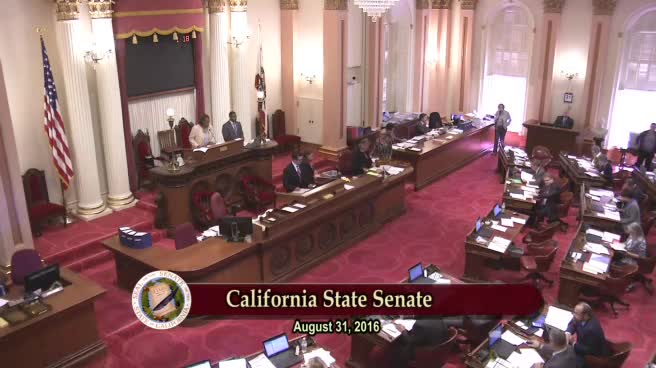
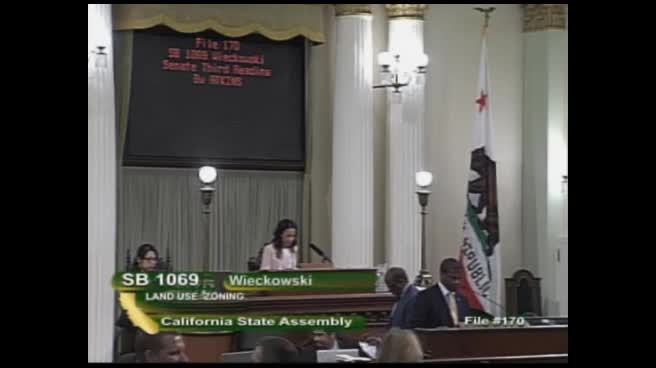
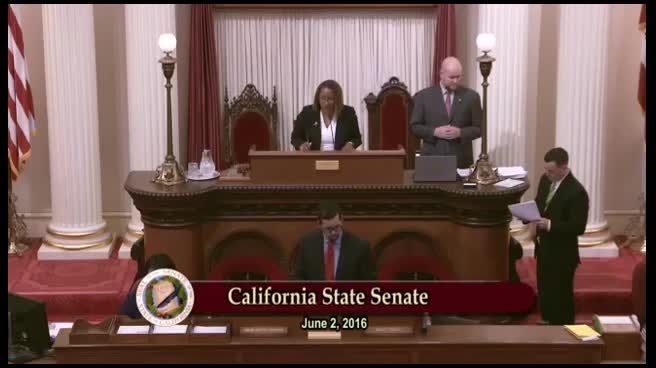
Bill Author

Bill Co-Author(s):