SB 14: Sexual battery: consent defense: minor’s sexual conduct.
- Session Year: 2015-2016
- House: Senate
- Latest Version Date: 2015-07-16
Existing civil law makes a person who commits a sexual battery, as defined, upon another liable to that person for damages and authorizes a court to award equitable relief, as specified. Existing civil law provides that he or she who consents to an act is not wronged by it.
This bill would prohibit consent from being a defense in any sexual battery civil action if the person committing the sexual battery is a specified adult who is in a position of authority and is able to exercise undue influence, as defined, over the minor.
Under existing law, in any civil action alleging conduct which constitutes sexual harassment, sexual assault, or sexual battery, opinion evidence, reputation evidence, and evidence of specific instances of plaintiffs sexual conduct, or any of that evidence, is not admissible by the defendant in order to prove consent by the plaintiff or the absence of injury to the plaintiff. Existing law requires specified procedures to be followed in any civil action alleging conduct constituting sexual harassment, sexual assault, or sexual battery if evidence of sexual conduct of the plaintiff is offered to attack the credibility of the plaintiff, as specified. Existing law authorizes the court in its discretion to exclude evidence if its probative value is substantially outweighed by the probability that its admission will either necessitate undue consumption of time or create substantial danger of undue prejudice, confusing the issues, or misleading the jury.
This bill, in any sexual battery civil action involving a minor and an adult who is in a position of authority as described above, would prohibit evidence of the plaintiff minors sexual conduct with the defendant adult from being admissible to prove consent by the plaintiff or the absence of injury to the plaintiff. The bill would authorize such evidence of the plaintiffs sexual conduct to be introduced only to attack the credibility of the plaintiff or to prove something other than consent by the plaintiff if, upon a hearing of the court out of the presence of the jury, the defendant proves that the probative value of that evidence outweighs the prejudice to the plaintiff, as specified.
Existing civil law makes a person who commits a sexual battery, as defined, upon another liable to that person for damages and authorizes a court to award equitable relief, as specified. Existing civil law provides that he or she who consents to an act is not wronged by it.
This bill would prohibit consent from being a defense in any sexual battery civil action if the person committing the sexual battery is a specified adult who is in a position of authority and is able to exercise undue influence, as defined, over the minor.
Under existing law, in any civil action alleging conduct which constitutes sexual harassment, sexual assault, or sexual battery, opinion evidence, reputation evidence, and evidence of specific instances of plaintiffs sexual conduct, or any of that evidence, is not admissible by the defendant in order to prove consent by the plaintiff or the absence of injury to the plaintiff. Existing law requires specified procedures to be followed in any civil action alleging conduct constituting sexual harassment, sexual assault, or sexual battery if evidence of sexual conduct of the plaintiff is offered to attack the credibility of the plaintiff, as specified. Existing law authorizes the court in its discretion to exclude evidence if its probative value is substantially outweighed by the probability that its admission will either necessitate undue consumption of time or create substantial danger of undue prejudice, confusing the issues, or misleading the jury.
This bill would, in any sexual battery civil action involving a minor and an adult who is in a position of authority as described above, would prohibit evidence of the plaintiff minors sexual conduct with the defendant adult from being admissible to prove consent by the plaintiff or the absence of injury to the plaintiff. The bill would authorize such evidence of the plaintiffs sexual conduct to be introduced only to attack the credibility of the plaintiff or to prove something other than consent by the plaintiff if, upon a hearing of the court out of the presence of the jury, the defendant proves that the probative value of that evidence outweighs the prejudice to the plaintiff, as specified.
Under existing criminal law, unlawful sexual intercourse is an act of sexual intercourse accomplished with a person who is not the spouse of the perpetrator, if the person is under 18 years of age. Existing
Existing civil law makes a person who commits a sexual battery, as defined, upon another liable to that person for damages and authorizes a court to award equitable relief, as specified. Existing civil law provides that he or she who consents to an act is not wronged by it.
This bill would, under civil law, define nonconsensual sexual intercourse as an act of sexual intercourse between an adult and a person who is not the spouse of the adult, if the person is under 18 years of age. would prohibit consent from being a defense in any sexual battery civil action if the person committing the sexual battery is a specified adult who is in a position of authority and is able to exercise undue influence, as defined, over the minor.
Under existing law, in any civil action alleging conduct which constitutes sexual harassment, sexual assault, or sexual battery, opinion evidence, reputation evidence, and evidence of specific instances of plaintiffs sexual conduct, or any of that evidence, is not admissible by the defendant in order to prove consent by the plaintiff or the absence of injury to the plaintiff. Under existing case law, the elements of a civil cause of action for negligence are the existence of a duty (the obligation to other persons to conform to a standard of care to avoid unreasonable risk of harm to them); breach of that duty (conduct below the standard of care); causation (between the defendants act or omission and the plaintiffs injuries); and damages. Existing law requires specified procedures to be followed in any civil action alleging conduct constituting sexual harassment, sexual assault, or sexual battery if evidence of sexual conduct of the plaintiff is offered to attack the credibility of the plaintiff, as specified. Existing law authorizes the court in its discretion to exclude evidence if its probative value is substantially outweighed by the probability that its admission will either necessitate undue consumption of time or create substantial danger of undue prejudice, confusing the issues, or misleading the jury.
This bill would, in any negligence civil action, prohibit the admissibility of any evidence of a minor plaintiffs sexual history by the defendant in order to prove consent by the minor plaintiff. would, in any sexual battery civil action involving a minor and an adult who is in a position of authority as described above, prohibit evidence of the plaintiff minors sexual conduct with the defendant adult from being admissible to prove consent by the plaintiff or the absence of injury to the plaintiff. The bill would authorize such evidence of the plaintiffs sexual conduct to be introduced only to attack the credibility of the plaintiff or to prove something other than consent by the plaintiff if, upon a hearing of the court out of the presence of the jury, the defendant proves that the probative value of that evidence outweighs the prejudice to the plaintiff, as specified.
Under existing criminal law, unlawful sexual intercourse is an act of sexual intercourse accomplished with a person who is not the spouse of the perpetrator, if the person is under 18 years of age. Existing civil law makes a person who commits a sexual battery, as defined, upon another liable to that person for damages and authorizes a court to award equitable relief, as specified.
This bill would, under civil law, define nonconsensual sexual intercourse as an act of sexual intercourse between an adult and a person who is not the spouse of the adult, if the person is under 18 years of age.
Under existing law, in any civil action alleging conduct which constitutes sexual harassment, sexual assault, or sexual battery, opinion evidence, reputation evidence, and evidence of specific instances of plaintiffs sexual conduct, or any of that evidence, is not admissible by the defendant in order to prove consent by the plaintiff or the absence of injury to the plaintiff. Under existing case law, the elements of a civil cause of action for negligence are the existence of a duty (the obligation to other persons to conform to a standard of care to avoid unreasonable risk of harm to them); breach of that duty (conduct below the standard of care); causation (between the defendants act or omission and the plaintiffs injuries); and damages.
This bill would, in any negligence civil action, prohibit the admissibility of any evidence of a minor plaintiffs sexual history by the defendant in order to prove consent by the minor plaintiff.
(a)Notwithstanding Section 3515, consent shall not be a defense in any civil action under Section 1708.5 if the person who commits the sexual battery is an adult who is in a position of authority over the minor.
(b)For purposes of this section, an adult is in a position of authority if he or she, by reason of that position, is able to exercise undue influence over a minor. A position of authority includes, but is not limited to, a natural parent, stepparent, foster parent, relative, partner of any such parent or relative, caretaker, youth leader, recreational director, athletic manager, coach, teacher, counselor, therapist, religious leader, doctor, employee of one of those aforementioned persons, or coworker.
(c)For purposes of this section, undue influence has the same meaning as in Section 15610.70 of the Welfare and Institutions Code.
SEC. 2.Section 1106 of the Evidence Code is amended to read:1106.(a)In any civil action alleging conduct which constitutes sexual harassment, sexual assault, or sexual battery, opinion evidence, reputation evidence, and evidence of specific instances of plaintiffs sexual conduct, or any of that evidence, is not admissible by the defendant in order to prove consent by the plaintiff or the absence of injury to the plaintiff, unless the injury alleged by the plaintiff is in the nature of loss of consortium.
(b)Subdivision (a) shall not be applicable to evidence of the plaintiffs sexual conduct with the alleged perpetrator.
(c)Notwithstanding subdivision (b), in any civil action brought pursuant to Section 1708.5 of the Civil Code involving a minor and adult as described in Section 1708.5.5 of the Civil Code, evidence of the plaintiff minors sexual conduct with the defendant adult shall not be admissible to prove consent by the plaintiff or the absence of injury to the plaintiff. Such evidence of the plaintiffs sexual conduct may only be introduced to attack the credibility of the plaintiff in accordance with Section 783 or to prove something other than consent by the plaintiff if, upon a hearing of the court out of the presence of the jury, the defendant proves that the probative value of that evidence outweighs the prejudice to the plaintiff consistent with Section 352.
(d) If the plaintiff introduces evidence, including testimony of a witness, or the plaintiff as a witness gives testimony, and the evidence or testimony relates to the plaintiffs sexual conduct, the defendant may cross-examine the witness who gives the testimony and offer relevant evidence limited specifically to the rebuttal of the evidence introduced by the plaintiff or given by the plaintiff.
(e)Nothing in this section shall be construed to make inadmissible any evidence offered to attack the credibility of the plaintiff as provided in Section 783.
(a)Notwithstanding Section 3515, consent shall not be a defense in any civil action under Section 1708.5 if the person who commits the sexual battery is an adult who is in a position of authority over the minor.
(b)For purposes of this section, a person an adult is in a position of authority if he or she, by reason of that position, is able to exercise undue influence over a minor. A position of authority includes, but is not limited to, a natural parent, stepparent, foster parent, relative, partner of any such parent or relative, caretaker, adult youth leader, recreational director who is an adult, adult director, athletic manager, adult coach, teacher, counselor, therapist, religious leader, doctor, adult employee of one of those aforementioned persons, or adult coworker.
(c)For purposes of this section undue influence has the same meaning as in Section 15610.70 of the Welfare and Institutions Code.
SEC. 2.Section 1106 of the Evidence Code is amended to read:1106.(a)In any civil action alleging conduct which constitutes sexual harassment, sexual assault, or sexual battery, opinion evidence, reputation evidence, and evidence of specific instances of plaintiffs sexual conduct, or any of that evidence, is not admissible by the defendant in order to prove consent by the plaintiff or the absence of injury to the plaintiff, unless the injury alleged by the plaintiff is in the nature of loss of consortium.
(b)Subdivision (a) shall not be applicable to evidence of the plaintiffs sexual conduct with the alleged perpetrator.
(c)Notwithstanding subdivision (b), in any civil action brought pursuant to Section 1708.5 of the Civil Code involving a minor and adult as described in Section 1708.5.5 of the Civil Code, evidence of the plaintiff minors sexual conduct with the defendant adult shall not be admissible to prove consent by the plaintiff or the absence of injury to the plaintiff. Such evidence of the plaintiffs sexual conduct may only be introduced to attack the credibility of the plaintiff in accordance with Section 783 or to prove something other than consent by the plaintiff if, upon a hearing of the court out of the presence of the jury, the defendant proves that the probative value of that evidence outweighs the prejudice to the plaintiff consistent with Section 352.
(d) If the plaintiff introduces evidence, including testimony of a witness, or the plaintiff as a witness gives testimony, and the evidence or testimony relates to the plaintiffs sexual conduct, the defendant may cross-examine the witness who gives the testimony and offer relevant evidence limited specifically to the rebuttal of the evidence introduced by the plaintiff or given by the plaintiff.
(e)Nothing in this section shall be construed to make inadmissible any evidence offered to attack the credibility of the plaintiff as provided in Section 783.
Nonconsensual sexual intercourse is an act of sexual intercourse between an adult and a person who is not the spouse of the adult, if the person is a minor. For purposes of this section, a minor is a person who is under 18 years of age and an adult is a person who is at least 18 years of age.
1708.5.5.(a)Notwithstanding Section 3515, consent shall not be a defense in any civil action under Section 1708.5 if the person who commits the sexual battery is an adult who is in a position of authority over the minor.
(b)For purposes of this section, a person is in a position of authority if he or she, by reason of that position, is able to exercise undue influence over a minor. A position of authority includes, but is not limited to, a natural parent, step-parent, foster parent, relative, partner of any such parent or relative, caretaker, adult youth leader, recreational director who is an adult, adult athletic manager, adult coach, teacher, counselor, therapist, religious leader, doctor, adult employee of one of those aforementioned persons, or adult coworker.
(c)For purposes of this section undue influence has the same meaning as in Section 15610.70 of the Welfare and Institutions Code.
SEC. 2.Section 1106 of the Evidence Code is amended to read:1106.(a)(1)In any civil action alleging conduct which constitutes sexual harassment, sexual assault, or sexual battery, opinion evidence, reputation evidence, and evidence of specific instances of plaintiffs sexual conduct, or any of that evidence, is not admissible by the defendant in order to prove consent by the plaintiff or the absence of injury to the plaintiff, unless the injury alleged by the plaintiff is in the nature of loss of consortium.
(2)Notwithstanding any other law, in any negligence civil action, no evidence of a minor plaintiffs sexual history is admissible by the defendant in order to prove consent by the plaintiff. For purposes of this paragraph, a minor is a person who is under 18 years of age.
(b)Paragraph (1) of subdivision Subdivision (a) shall not be applicable to evidence of the plaintiffs sexual conduct with the alleged perpetrator.
(c)Notwithstanding subdivision (b), in any civil action brought pursuant to Section 1708.5 of the Civil Code involving a minor and adult as described in Section 1708.5.5 of the Civil Code, evidence of the plaintiff minors sexual conduct with the defendant adult shall not be admissible to prove consent by the plaintiff or the absence of injury to the plaintiff. Such evidence of the plaintiffs sexual conduct may only be introduced to attack the credibility of the plaintiff in accordance with Section 783 or to prove something other than consent by the plaintiff if, upon a hearing of the court out of the presence of the jury, the defendant proves that the probative value of that evidence outweighs the prejudice to the plaintiff consistent with Section 352.
(c)
(d) If the plaintiff introduces evidence, including testimony of a witness, or the plaintiff as a witness gives testimony, and the evidence or testimony relates to the plaintiffs sexual conduct, the defendant may cross-examine the witness who gives the testimony and offer relevant evidence limited specifically to the rebuttal of the evidence introduced by the plaintiff or given by the plaintiff.
(d)Except as provided in paragraph (2), nothing
(e)Nothing in this section shall be construed to make inadmissible any evidence offered to attack the credibility of the plaintiff as provided in Section 783.
Nonconsensual sexual intercourse is an act of sexual intercourse between an adult and a person who is not the spouse of the adult, if the person is a minor. For purposes of this section, a minor is a person who is under 18 years of age and an adult is a person who is at least 18 years of age.
SEC. 2.Section 1106 of the Evidence Code is amended to read:1106.(a)(1)In any civil action alleging conduct which constitutes sexual harassment, sexual assault, or sexual battery, opinion evidence, reputation evidence, and evidence of specific instances of plaintiffs sexual conduct, or any of such that evidence, is not admissible by the defendant in order to prove consent by the plaintiff or the absence of injury to the plaintiff, unless the injury alleged by the plaintiff is in the nature of loss of consortium.
(2)Notwithstanding any other law, in any negligence civil action, no evidence of a minor plaintiffs sexual history is admissible by the defendant in order to prove consent by the plaintiff. For purposes of this paragraph, a minor is a person who is under 18 years of age.
(b)Subdivision Paragraph (1) of subdivision (a) shall not be applicable to evidence of the plaintiffs sexual conduct with the alleged perpetrator.
(c) If the plaintiff introduces evidence, including testimony of a witness, or the plaintiff as a witness gives testimony, and the evidence or testimony relates to the plaintiffs sexual conduct, the defendant may cross-examine the witness who gives the testimony and offer relevant evidence limited specifically to the rebuttal of the evidence introduced by the plaintiff or given by the plaintiff.
(d)Nothing Except as provided in paragraph (2), nothing in this section shall be construed to make inadmissible any evidence offered to attack the credibility of the plaintiff as provided in Section 783.
|
Date
|
Status
|
|---|---|
| May 14, 2015 | Referred to Com. on JUD. |
| Jul 16, 2015 | Chaptered by Secretary of State. Chapter 128, Statutes of 2015. |
| Jul 16, 2015 | Approved by the Governor. |
| Jul 8, 2015 | Enrolled and presented to the Governor at 4:30 p.m. |
| Jul 6, 2015 | Read third time. Passed. (Ayes 78. Noes 0. Page 2257.) Ordered to the Senate. |
| Jul 6, 2015 | Read third time. Passed. Ordered to the Senate. |
| Jul 6, 2015 | In Senate. Ordered to engrossing and enrolling. |
| Jun 17, 2015 | Read second time. Ordered to third reading. |
| Jun 16, 2015 | From committee: Do pass. (Ayes 10. Noes 0.) (June 16). |
| Dec 1, 2014 | Introduced. Read first time. To Com. on RLS. for assignment. To print. |
| Apr 16, 2015 | Read third time. Passed. (Ayes 38. Noes 0. Page 632.) Ordered to the Assembly. |
| Apr 16, 2015 | In Assembly. Read first time. Held at Desk. |
| Apr 14, 2015 | Read second time and amended. Ordered to third reading. |
| Apr 13, 2015 | From committee: Do pass as amended. (Ayes 6. Noes 0. Page 525.) (April 7). |
| Mar 25, 2015 | Set for hearing April 7. |
| Mar 16, 2015 | From committee with author's amendments. Read second time and amended. Re-referred to Com. on JUD. |
| Jan 15, 2015 | Referred to Com. on JUD. |
| Dec 2, 2014 | From printer. May be acted upon on or after January 1. |
|
Date
|
Description
|
Location
|
Votes
|
|
|---|---|---|---|---|
| Jul 6, 2015 | SB 14 Lara Senate Third Reading By STONE | Assembly Floor |
Passed |
|
| Jun 16, 2015 | Do pass. | Assembly Standing Committee on Judiciary |
Passed |
|
| Apr 16, 2015 | Senate 3rd Reading SB14 Lara | Senate Floor |
Passed |
|
| Apr 7, 2015 | Do pass as amended | Senate Standing Committee on Judiciary |
Passed |
This list shows positions taken on this bill by organizations on the date displayed, which is linked to the original source.
Positions by individuals are not included.
|
Organization
|
Position
|
Date
|
|---|---|---|
| California Communities United Institute | ** Support | Apr 16, 2015 |
| California Police Chiefs Association | ** Support | Jun 16, 2015 |
| California State PTA | ** Support | Jun 16, 2015 |
| Crime Victims United Of California | * Support | Jun 16, 2015 |
| Junior League of Long Beach | ** Support | Jun 16, 2015 |
| McHugh, Koepke and Associates | * Support | Jun 16, 2015 |
| Planned Parenthood | * Support | Jun 16, 2015 |
| Planned Parenthood Affiliates Of California | * Support | Jun 16, 2015 |
| The Child Abuse Prevention Center | * Support | Jun 16, 2015 |
| UC Davis | * Indeterminate | Apr 7, 2015 |
SB 14
Page 3
SENATE THIRD READING
SB 14
(Lara)
As Amended April 14, 2015
Majority vote
SENATE VOTE: 38-0
Committee |
Votes |
Ayes |
Noes |
Judiciary |
10-0 |
Mark Stone, Wagner, Alejo, Chau, Chiu, Gallagher, Cristina Garcia, Holden, Maienschein, O'Donnell |
|
SUMMARY: Prohibits a consent defense in certain civil actions involving sexual intercourse with a minor and prohibits the use of evidence of the minor's sexual conduct with the adult perpetrator. Specifically, this bill:
Provides that notwithstanding the existing provision that a person who consents to an act is not wronged by it, consent is not a defense in a sexual battery civil action involving a minor, as specified, if the person who commits the sexual battery is an adult who is in a position of authority over the minor.
Provides that an adult is in a "position of authority" under 1) above, if he or she, by reason of that position, is able to exercise undue influence over a minor and includes, but is not limited to, a parent, step-parent, foster parent, relative, partner of any parent or relative, caretaker, youth leader, recreational director, athletic manager, coach, teacher, counselor, therapist, religious leader, doctor, employee of one of the above individuals, or coworker. Defines "undue influence" as excessive persuasion that causes another person to act or refrain from acting by overcoming that person's free will and results in inequity.
Provides that notwithstanding existing law that permits the use of evidence of the plaintiff’s sexual conduct with the alleged perpetrator, in any civil action arising out of sexual battery involving a minor and an adult in position of authority evidence of the minor plaintiff’s sexual conduct with the adult defendant is not admissible to prove consent by the plaintiff or the absence of injury to the plaintiff.
Provides that evidence of the minor plaintiff’s sexual conduct may only be introduced to attack the credibility of the plaintiff in accordance with existing law or to prove something other than consent by the plaintiff, if, upon a hearing before the judge out of the presence of the jury, the defendant proves that the probative value of that evidence outweighs the prejudice to the plaintiff.
EXISTING LAW:
Creates a duty for every person to abstain from injuring another person or the property of another, or from infringing the rights of another.
Provides a cause of action for sexual battery, as defined, and allows the plaintiff in such a case to seek general, special and punitive damages and equitable relief including injunctive relief and costs.
Provides that a defendant may raise consent as an affirmative defense to civil liability.
Makes it a crime for a person to have sexual intercourse with a minor under 18 years of age who is not the spouse of the person. A minor is deemed incapable of affording consent to a criminal sexual act.
Provides that, except as otherwise provided by statute, all relevant evidence is admissible. Allows a court, in its discretion, to exclude evidence if its probative value is substantially outweighed by the probability that its admission will: a) necessitate undue consumption of time; or b) create substantial danger of undue prejudice, of confusing the issues, or of misleading the jury.
Provides that in any civil action alleging sexual harassment, sexual assault, or sexual battery, if evidence of sexual conduct of the plaintiff is offered to attack credibility of the plaintiff, then: a) The defendant must provide a written motion and offer of proof on the relevancy of evidence; b) if the court finds that the offer of proof is sufficient, the court must order a hearing out of the presence of the jury to allow questioning of the plaintiff regarding the offer of proof; and c) if the court finds that evidence offered by the defendant is relevant and is not otherwise inadmissible, the court may make an order stating what evidence may be introduced by the defendant, and the nature of the questions to be permitted.
Generally renders inadmissible in any civil action alleging sexual harassment, sexual assault or sexual battery, opinion evidence, reputation evidence and evidence of specific instances of plaintiff’s sexual conduct in order to prove consent by the plaintiff or the absence of injury to the plaintiff. However, provides that this general prohibition is not applicable to evidence of the plaintiff’s sexual conduct with the alleged perpetrator. Provides that this does not make inadmissible any evidence offered to attack the credibility of the plaintiff.
FISCAL EFFECT: None
COMMENTS: This bill arises out of a disturbing case last year in which a court found against a 14-year-old Los Angeles Unified School District student who sued the district for negligence after her 28-year old teacher sexually assaulted her. According to news reports, the teacher was sentenced to three years in prison, but in the later civil case against the school district, a jury found for the district, in part, because the 14-year old allegedly consented to sexual activities with her teacher. While criminal law is clear that minors cannot consent to sexual acts, civil law is less clear about when and how a consent defense may be raised. This bill confirms that consent may not be raised as a defense in an action involving the sexual battery of a minor by an adult who is in a position of authority over the minor, nor can evidence of the minor's sexual conduct with the adult be used as evidence in court, except for very limited instances.
Background on the Differences Between Criminal and Civil Sexual Offenses in California. Under California criminal law, it is unlawful to have sexual intercourse with a minor under 18 years of age unless the partners are married (previously this provision was known as statutory rape). Accordingly, in a criminal case involving unlawful sexual intercourse with a minor, the minor is deemed incapable of consenting – regardless of whether the minor may have afforded genuine or valid consent. However, district attorneys have discretion about which cases to prosecute, and it is unlikely that two 17-year-olds or an 18-year-old in a relationship with a 17-year-old would be prosecuted for consensual sexual intercourse. Additionally, the punishment differs based on the age differential between the parties. The greater the age difference, the more severe the potential punishment.
In 1990, the Legislature enacted SB 2336 (Roberti), Chapter 1531, creating a civil action for injuries resulting from sexual battery. SB 2336 was intended to provide victims of criminal sexual offenses with the ability to pursue a separate civil remedy in civil court. In fact, SB 2336 was intended to "respond to the inability of the criminal justice system to adequately address the victims of rape or other sexual crimes." (Assembly Subcommittee on the Administration of Justice, Analysis of SB 2336 (June 1990) (quoting the bill's author).) Accordingly, SB 2336 afforded a victim "redress for a sexual injury in the civil process where the standard of proof is lower and you do not need a unanimous jury." (Id.)
Under civil law principles, consent is generally available as a defense. While civil law creates an obligation for every person to abstain from injuring another person, a defendant in a civil action can present, as a defense, evidence that the injured person consented to the injury. Thus, when the Legislature created a new civil action for sexual battery, the general civil law defenses attached to the new civil action, absent legislative directive to the contrary. Accordingly, a consent defense is possible in a civil action for sexual battery.
Courts in California have not adopted a singular strategy for how to treat the issue of consent. Some courts have found that the minor's consent is relevant in considering civil liability. (See Cynthia M. v. Rodney E. (1991) 228 Cal.App.3d 1040, 1044 [case involved two minors]; Doe v. Starbucks (2009) 2009 U.S. Dist. LEXIS 118878 at 18-19 [case involved a 16-year old and her 24-year old supervisor where the court, relying on the California Supreme Court case of People v. Tobias (2001) 25 Cal.4th 327, 33-334, found that the California Legislature implicitly acknowledged that "in some cases at least, a minor may be capable of giving legal consent to sexual relations," by creating a separate statute for what constitutes unlawful sexual intercourse with a minor in the Penal Code and amending the rape statute to no longer include sex with a minor in the definition of rape].) Other courts have prohibited a defendant from raising a consent defense, at least with respect to a civil action based on the Penal Code. (See In re Kennedy (2009) WL 256511 [a bankruptcy court found that consent could not be raised as a defense to a civil action based on the criminal sexual intercourse with a minor statute, but might be possible for an action based on the Civil Code].)
Analysis Prepared by: Leora Gershenzon / JUD. / (916) 319-2334 FN: 0000949
SB 14
Page 6
Date of Hearing: June 16, 2015
ASSEMBLY COMMITTEE ON JUDICIARY
Mark Stone, Chair
SB 14
(Lara) – As Amended April 14, 2015
SENATE VOTE: 38-0
SUBJECT: CIVIL ACTION FOR Sexual battery: consent defense
KEY ISSUE: IN ORDER TO BETTER PROTECT CHILD VICTIMS OF SEXUAL ASSAULT, SHOULD CONSENT NOT BE A DEFENSE IN A CIVIL ACTION INVOLVING SEXUAL BATTERY BETWEEN A MINOR AND AN ADULT WHO IS IN A POSITION OF AUTHORITY OVER THE MINOR?
SYNOPSIS
This bill eliminates the defense of consent in an action involving the sexual battery of a minor by an adult in a position of authority over the minor. This bill arises out of a disturbing case last year in which a court found against a 14-year-old Los Angeles Unified School District student who sued the district for negligence after her 28-year old teacher sexually assaulted her. According to news reports, the teacher was sentenced to three years in prison, but, in the later civil case against the school district, a jury found for the district, in part, because the 14-year old had allegedly consented to the sexual acts with her teacher. While criminal law is clear that minors cannot consent to sexual acts, civil law is less clear about when and how the defense of consent may be raised. This bill clarifies that consent may not be raised as a defense in an action involving the sexual battery of a minor by an adult who is in a position of authority over the minor and prohibits the use of evidence of the minor's sexual conduct with the adult to prove consent. This bill is similar to AB 29 (Campos), which passed this Committee earlier this year and is now in the Senate. It is supported by, among others, the California Police Chiefs Association, California State PTA, Crime Victims United of California and Planned Parenthood Affiliates of California, and has no known opposition.
SUMMARY: Prohibits a consent defense in certain civil actions involving sexual intercourse with a minor and prohibits the use of evidence of the minor’s sexual conduct with the adult perpetrator. Specifically, this bill:
Provides that notwithstanding the existing provision that a person who consents to an act is not wronged by it, consent is not a defense in a sexual battery civil action involving a minor, as specified, if the person who commits the sexual battery is an adult who is in a position of authority over the minor.
Provides that an adult is in a “position of authority” under #1), above, if he or she, by reason of that position, is able to exercise undue influence over a minor and includes, but is not limited to, a parent, step-parent, foster parent, relative, partner of any parent or relative, caretaker, youth leader, recreational director, athletic manager, coach, teacher, counselor, therapist, religious leader, doctor, employee of one of the above individuals, or coworker. Defines “undue influence” as excessive persuasion that causes another person to act or refrain from acting by overcoming that person’s free will and results in inequity.
Provides that notwithstanding existing law that permits the use of evidence of the plaintiff’s sexual conduct with the alleged perpetrator, in any civil action arising out of sexual battery involving a minor and an adult in position of authority evidence of the minor plaintiff’s sexual conduct with the adult defendant is not admissible to prove consent by the plaintiff or the absence of injury to the plaintiff.
Provides that evidence of the minor plaintiff’s sexual conduct may only be introduced to attack the credibility of the plaintiff in accordance with existing law or to prove something other than consent by the plaintiff, if, upon a hearing before the judge out of the presence of the jury, the defendant proves that the probative value of that evidence outweighs the prejudice to the plaintiff.
EXISTING LAW:
Creates a duty for every person to abstain from injuring another person or the property of another, or from infringing the rights of another. (Civil Code Section 1708. All further statutory references are to that code, unless otherwise stated.)
Provides a cause of action for sexual battery, as defined, and allows the plaintiff in such a case to seek general, special and punitive damages and equitable relief including injunctive relief and costs. (Section 1708.5.)
Provides that a defendant may raise consent as an affirmative defense to civil liability. (Section 3515.)
Makes it a crime for a person to have sexual intercourse with a minor under 18 years of age who is not the spouse of the person. A minor is deemed incapable of affording consent to a criminal sexual act. (Penal Code 261.5; See also People v. Brown (1973) 35 Cal.App.3d 317, 326.)
Provides that, except as otherwise provided by statute, all relevant evidence is admissible. Allows a court, in its discretion, to exclude evidence if its probative value is substantially outweighed by the probability that its admission will (a) necessitate undue consumption of time or (b) create substantial danger of undue prejudice, of confusing the issues, or of misleading the jury. (Evidence Code Sections 351-52.)
Provides that in any civil action alleging sexual harassment, sexual assault, or sexual battery, if evidence of sexual conduct of the plaintiff is offered to attack credibility of the plaintiff, then: (a) The defendant must provide a written motion and offer of proof on the relevancy of evidence; (b) if the court finds that the offer of proof is sufficient, the court must order a hearing out of the presence of the jury to allow questioning of the plaintiff regarding the offer of proof; and (c) if the court finds that evidence offered by the defendant is relevant and is not otherwise inadmissible, the court may make an order stating what evidence may be introduced by the defendant, and the nature of the questions to be permitted. (Evidence Code Section 783.)
Generally renders inadmissible in any civil action alleging sexual harassment, sexual assault or sexual battery, opinion evidence, reputation evidence and evidence of specific instances of plaintiff’s sexual conduct in order to prove consent by the plaintiff or the absence of injury to the plaintiff. However, provides that this general prohibition is not applicable to evidence of the plaintiff’s sexual conduct with the alleged perpetrator. Provides that this does not make inadmissible any evidence offered to attack the credibility of the plaintiff. (Evidence Code Section 1106(a).)
FISCAL EFFECT: As currently in print this bill is keyed non-fiscal.
COMMENTS: This bill arises out of a disturbing case last year in which a court found against a 14-year-old Los Angeles Unified School District student who sued the district for negligence after her 28-year old teacher sexually assaulted her. According to news reports, the teacher was sentenced to three years in prison, but in the later civil case against the school district, a jury found for the district, in part, because the 14-year old allegedly consented to sexual activities with her teacher. While criminal law is clear that minors cannot consent to sexual acts, civil law is less clear about when and how a consent defense may be raised. This bill confirms that consent may not be raised as a defense in an action involving the sexual battery of a minor by an adult who is in a position of authority over the minor, nor can evidence of the minor's sexual conduct with the adult be used as evidence in court, except for very limited instances.
In support, the author writes, "SB 14 will prevent an adult in a position of authority who sexually abuses a child from claiming that child consented or from using that child's sexual history in defense of a civil claim for damages. Ultimately, this bill will ensure minors who are sexually abused are able to get the help they need to recover from trauma inflicted by an adult who was supposed to take care of them."
Background on the Differences Between Criminal and Civil Sexual Offenses in California. Under California criminal law, it is unlawful to have sexual intercourse with a minor under the 18 years of age unless the partners are married (previously this provision was known as statutory rape). Accordingly, in a criminal case involving unlawful sexual intercourse with a minor, the minor is deemed incapable of consenting – regardless of whether the minor may have afforded genuine or valid consent. However, district attorneys have discretion about which cases to prosecute, and it is unlikely that two 17-year-olds or an 18-year-old in a relationship with a 17-year-old would be prosecuted for consensual sexual intercourse. Additionally, the punishment differs based on the age differential between the parties. The greater the age difference, the more severe the potential punishment.
In 1990, the Legislature enacted SB 2336 (Roberti), Chap. 1531, Stats. 1990, creating a civil action for injuries resulting from sexual battery. The statute was intended to provide victims of criminal sexual offenses with the ability to pursue a separate civil remedy in civil court. In fact, SB 2336 was intended to “respond[] to the inability of the criminal justice system to adequately address the victims of rape or other sexual crimes.” (Assembly Subcommittee on the Administration of Justice, Analysis of SB 2336 (June 1990) (quoting the bill's author).) Accordingly, SB 2336 afforded a victim “redress for a sexual injury in the civil process where the standard of proof is lower and you do not need a unanimous jury.” (Id.)
Under civil law principles, consent is generally available as a defense. While civil law creates an obligation for every person to abstain from injuring another person, a defendant in a civil action can present, as a defense, evidence that the injured person consented to the injury. Thus, when the Legislature created a new civil action for sexual battery, the general civil law defenses attached to the new civil action, absent legislative directive to the contrary. Accordingly, a consent defense is possible in a civil action for sexual battery.
Courts in California have not adopted a singular strategy for how to treat the issue of consent. Some courts have found that the minor’s consent is relevant in considering civil liability. (See Cynthia M. v. Rodney E. (1991) 228 Cal.App.3d 1040, 1044 [case involved two minors]; Doe v. Starbucks (2009) 2009 U.S. Dist. LEXIS 118878 at 18-19 [case involved a 16-year old and her 24-year old supervisor where the court, relying on the California Supreme Court case of People v. Tobias (2001) 25 Cal.4th 327, 33-334, found that the California Legislature implicitly acknowledged that “in some cases at least, a minor may be capable of giving legal consent to sexual relations,” by creating a separate statute for what constitutes unlawful sexual intercourse with a minor in the Penal Code and amending the rape statute to no longer include sex with a minor in the definition of rape].) Other courts have prohibited a defendant from raising a consent defense, at least with respect to a civil action based on the Penal Code. (See In re Kennedy (2009) WL 256511 [a bankruptcy court found that consent could not be raised as a defense to a civil action based on the criminal sexual intercourse with a minor statute, but might be possible for an action based on the Civil Code].)
Some States Allow a Consent Defense to a Civil Sexual Assault Case Involving a Minor, While Other Do Not. The Committee's review of other state laws did not find any state that has adopted a statute prohibiting a consent defense in a civil action involving sexual battery. Instead, state courts have generally adopted two different approaches. Some state courts, relying on the existing criminal statutory rape framework, prohibit the consent defense. (See C.C.H. v. Philadelphia Phillies (2008) 596 Pa. 23, 40 [court determined that evidence of the minor's consent to sexual contact, like in criminal proceedings, was not an available defense in determining civil liability]; Wilson v. Tobiassen (1989) 97 Or. App. 527, 534 ["[I]f conduct is made criminal in order to protect a certain class of persons irrespective of their consent, the consent of members of that class to the conduct is not effective to bar a tort action. Accordingly, we hold that a person's incapacity to consent . . . extends to civil cases."].) Other courts, relying on the principal that the civil and criminal laws are uniquely different, allow the consent defense. (See Tate v. Board of Education of Prince George's County (2004) 155 Md. App. 536, 554 [holding that a minor's consent to sexual battery is relevant for purposes of determining civil liability]; LK v. Reed (1994) 631 So.2d 604, 608 [holding that age alone cannot fully invalidate a consent defense, rather it should be considered as part of comparative fault analysis].)
This Bill Eliminates the Defense of Consent When the Adult is in a Position of Authority Over the Minor. This bill specifically prohibits a consent defense in a civil action involving sexual battery between a minor and adult who was in a position of authority over the minor. The bill specifically defines an adult as being in a “position of authority” if he or she, by reason of that position, is able to exercise undue influence over a child and includes a non-exhaustive list of positions of authority, including parents, relatives, caretakers, youth leaders, coaches, teachers, counselors, religious leaders, or doctors. Thus, if this bill had been law, Los Angeles Unified School District would not have been able to raise the 14-year-old girl's alleged consent as a defense. It might, however, still have been able to argue that the girl's willingness to hide the criminal acts made it harder for the District to learn of the sexual assault and to protect the girl from harm.
The Bill Also Limits the Use of Evidence of the Minor's Sexual History That Could Potentially Bias a Jury. To avoid any harm from the introduction of sexual history evidence that could potentially bias the jury against a child, this bill also generally excludes evidence of the child's sexual history with the adult to prove consent or the absence of injury. Generally, public policy disfavors the exclusion of relevant evidence at trial and, accordingly, the Evidence Code begins with a general presumption that all relevant evidence is admissible. (See Evidence Code Section 351.) A judge may, however, exclude otherwise relevant evidence based upon the undue prejudice that the evidence would pose to the party against whom it is sought to be introduced. Specifically, Section 352 authorizes a court, in its discretion, to exclude evidence if its probative value is substantially outweighed by the probability that its admission will create substantial danger of undue prejudice, of confusing the issues, or of misleading the jury.
The Evidence Code also makes certain evidence generally inadmissible as a matter of law. (See Evidence Code Section 1100 et seq.) Most relevant to this bill is Section 1106 of the Evidence Code, which operates to bar the admission, by the defendant, of evidence of specific instances of plaintiff’s sexual conduct to prove consent by the plaintiff, or the absence of injury to the plaintiff in civil actions alleging sexual harassment, sexual assault, or sexual battery. There is, however, an exception to the general prohibition where the evidence relates to the plaintiff’s sexual conduct with the alleged perpetrator. Additionally, defendants are permitted to cross-examine any witnesses and offer relevant evidence specifically to rebut evidence introduced by the plaintiff or given by the plaintiff, where the plaintiff has introduced evidence relating to his or her own sexual conduct. Lastly, the exception does not affect the admissibility of any evidence offered to attack the credibility of the plaintiff pursuant to specified procedures. Those procedures require, among other things, that the defendant must first provide a written motion to the court and the plaintiff’s attorney with an offer of proof of the relevancy of evidence of sexual conduct of the plaintiff proposed to be presented. If the court finds the offer of proof to be sufficient, it must hold a hearing outside of the presence of the jury to allow questioning of the plaintiff regarding the offer of proof. Only at the conclusion of that hearing, if the court finds that evidence proposed to be offered by the defendant regarding the sexual conduct of the plaintiff is relevant and if the court does not find the evidence inadmissible pursuant to its analysis of the probative value and potential prejudice, the court may make an order stating what evidence may be introduced by the defendant, and the nature of the questions to be permitted. (See Evidence Code Sections 352, 780, and 783.)
Accordingly and following that model, this bill provides that, in any civil action arising out of sexual battery of a child by an adult in a position of authority, evidence of the minor plaintiff’s sexual conduct with the adult defendant is not admissible to prove consent by the plaintiff or absence of injury to the plaintiff. Building upon existing Evidence Code rules, the bill only allows the introduction of evidence of the plaintiff’s sexual conduct to either: (1) attack the credibility of the plaintiff in accordance with existing law; or (2) prove something other than consent by the plaintiff. Even then, the bill only allows the admission of the evidence, if, upon a hearing of the court out of the presence of the jury, the defendant proves that the probative value of that evidence outweighs the prejudice to the plaintiff, consistent with existing law.
In doing so, the bill strikes an appropriate balance between the public policies in favor of putting forth all relevant evidence before judges and juries, and in favor of preventing undue prejudice to a party – particularly where that party is a minor who is statutorily incapable of consenting to sexual battery by an adult in a position of authority over the child.
Regardless of This Legislation, Minors in California Can Still Consent to Various Treatments and Services. California law explicitly provides that minors may consent to various medical and mental health services, including, among other things, contraceptive use; medical treatment related to a pregnancy or sexually transmitted disease; abortion; sexual assault treatment services; and outpatient mental health services, including drug and alcohol abuse treatment. This bill does not limit or change those existing minor consent provisions.
ARGUMENTS IN SUPPORT: Planned Parenthood Affiliates of California writes in support:
California criminal law places higher penalties on those in a position of power over a minor who sexually abuses a child. Despite the consequences, according to a recent federal report on child abuse in public schools, nearly 1 in 10 students are subjected to sexual abuse by teachers, coaches, principals, bus drivers, or other school personnel during their K-12 career.
Currently in a California civil case, a perpetrator can argue that the child consented to a sexual relationship with an adult in a position of authority. Evidence of the child’s sexual history can also be introduced, unlike in criminal cases, where California’s rape shield law protects victims from their sexual history being used against them. These loopholes are dangerous and threaten the safety of our children by allowing sexual predators off the hook for child abuse and negligence.
SB 14 will prevent an adult in a position of authority who sexually abuses a child from claiming that child consented or from using that child's sexual history in defense of a civil claim for damages. Ultimately, this bill will ensure minors who are sexually abused are able to get the help they need to recover from trauma inflicted by an adult who was supposed to take care of them.
Related Pending Legislation: AB 29 (Campos) would, in any sexual battery civil action involving a minor and an adult who is in a position of authority, as defined, prohibit evidence of the minor’s sexual conduct with the defendant adult from being admissible to prove either consent by the plaintiff, or the absence of injury to the plaintiff. This bill passed this Committee and is awaiting hearing in the Senate.
REGISTERED SUPPORT / OPPOSITION:
Support
California Police Chiefs Association
California State PTA
Child Abuse Prevention Center
Crime Victims United of California
Junior League of Long Beach
Planned Parenthood Affiliates of California
Opposition
None on file
Analysis Prepared by: Leora Gershenzon / JUD. / (916) 319-2334
SB 14
Page 6
|
Office of Senate Floor Analyses (916) 651-1520 Fax: (916) 327-4478 |
THIRD READING
Bill No: SB 14
Amended: 4/14/15
SENATE JUDICIARY COMMITTEE: 6-0, 4/7/15
AYES: Jackson, Vidak, Anderson, Hertzberg, Leno, Monning
NO VOTE RECORDED: Wieckowski
SUBJECT: Sexual battery: consent defense: minor’s sexual conduct
DIGEST: This bill prohibits the use of consent as a defense in any sexual battery civil action involving a minor victim where the person committing the sexual battery is an adult who is in a position of authority, as defined. This bill prohibits the use of any evidence of the minor’s sexual conduct with the adult perpetrator, except in limited circumstances.
Existing law:
Provides that unlawful sexual intercourse is an act of sexual intercourse accomplished with a person who is not the spouse of the perpetrator, if the person is a minor under 18 years of age. Existing law provides that:
Any person who engages in an act of unlawful sexual intercourse with a minor who is not more than three years older or three years younger than the perpetrator, is guilty of a misdemeanor;
Any person who engages in an act of unlawful sexual intercourse with a minor who is more than three years younger than the perpetrator is guilty of either a misdemeanor or a felony, and shall be punished by imprisonment in a county jail not exceeding one year, or by imprisonment as specified; and
Any person 21 years of age or older who engages in an act of unlawful sexual intercourse with a minor who is under 16 years of age is guilty of either a misdemeanor or a felony, and shall be punished by imprisonment in a county jail not exceeding one year, or by imprisonment, as specified, for two, three, or four years.
Provides that a person who consents to an act is not wronged by it.
Provides that the rights of personal relations forbid the seduction of a person under the age of legal consent.
Provides that there is no cause of action for “seduction of a person over age of legal consent.”
Enumerates specified acts that constitute a sexual battery and provides that a person who commits a sexual battery upon another is liable to that person for specified damages. Existing law also authorizes courts in such actions to award equitable relief, including, but not limited to, an injunction, costs, and any other relief the court deems proper. Existing law also provides that the rights and remedies provided in these provisions are in addition to any other rights and remedies provided by law.
Provides that, except as otherwise provided by statute, all relevant evidence is admissible.
Authorizes a court, in its discretion, to exclude evidence if its probative value is substantially outweighed by the probability that its admission will (a) necessitate undue consumption of time or (b) create substantial danger of undue prejudice, of confusing the issues, or of misleading the jury.
Generally allows the court or jury to consider various types of evidence, such as prior inconsistent statements, in determining the credibility of a witness any matter that has any tendency in reason to prove or disprove the truthfulness of the witness’s testimony at the hearing.
Provides that in any civil action alleging conduct which constitutes sexual harassment, sexual assault, or sexual battery, if evidence of sexual conduct of the plaintiff is offered to attack credibility of the plaintiff, as specified, the following procedures shall be followed:
The defendant must provide a written motion to the court and the plaintiff’s attorney stating that the defense has an offer of proof of the relevancy of evidence of the sexual conduct of the plaintiff proposed to be presented.
The written motion must be accompanied by an affidavit in which the offer of proof shall be stated.
If the court finds that the offer of proof is sufficient, the court must order a hearing out of the presence of the jury, if any, and at the hearing allow the questioning of the plaintiff regarding the offer of proof made by the defendant.
At the conclusion of the hearing, if the court finds that evidence proposed to be offered by the defendant regarding the sexual conduct of the plaintiff is relevant, as specified, and is not inadmissible pursuant to existing law above (because the probability of undue prejudice would outweigh the probative value of the evidence), the court may make an order stating what evidence may be introduced by the defendant, and the nature of the questions to be permitted. The defendant may then offer evidence pursuant to the order of the court.
Renders certain types of evidence inadmissible under specified circumstances. In any civil action alleging conduct which constitutes sexual harassment, sexual assault, or sexual battery, existing law generally renders opinion evidence, reputation evidence, and evidence of specific instances of plaintiff’s sexual conduct, or any of such evidence, inadmissible by the defendant in order to prove consent by the plaintiff or the absence of injury to the plaintiff.
Provides that the above general prohibition is not applicable to evidence of the plaintiff’s sexual conduct with the alleged perpetrator. Existing law also provides that this exception does not make inadmissible any evidence offered to attack the credibility of the plaintiff pursuant to the procedures outlined under specified law.
This bill:
Provides that notwithstanding the existing provision that a person who consents to an act is not wronged by it, consent shall not be a defense in a sexual battery civil action, as specified, if the person who commits the sexual battery is an adult who is in a position of authority over the minor.
Provides that, for these purposes, an adult is in a “position of authority” if he or she, by reason of that position, is able to exercise undue influence over a minor. This bill provides that position of authority for these purposes to include, but not be limited to, a natural parent, step-parent, foster parent, relative, partner of any such parent or relative, caretaker, youth leader, recreational director, athletic manager, coach, teacher, counselor, therapist, religious leader, doctor, employee of one of these aforementioned persons, or coworker.
Defines “undue influence” to have the same meaning as provided under the Welfare and Institutions Code, which defines the term to mean excessive persuasion that causes another person to act or refrain from acting by overcoming that person’s free will and results in inequity.
Provides that notwithstanding the provision of existing law that permits the use of evidence of the plaintiff’s sexual conduct with the alleged perpetrator, in any civil action arising out of sexual battery involving a minor and adult in position of authority, as specified, evidence of the plaintiff minor’s sexual conduct with the defendant adult shall not be admissible to prove consent by the plaintiff or the absence of injury to the plaintiff.
Provides that such evidence of the plaintiff’s sexual conduct may only be introduced to attack the credibility of the plaintiff in accordance with existing law or to prove something other than consent by the plaintiff, if, upon a hearing of the court out of the presence of the jury, the defendant proves that the probative value of that evidence outweighs the prejudice to the plaintiff consistent with existing law.
Background
California civil law generally provides that no one can be wronged by an act where he or she has consented to that act causing the injury or loss. (See Civ. Code Sec. 3515; in a legal sense, the word “consent” means capable, deliberate, and voluntary assent or agreement to, or concurrence in, some act or purpose, implying physical and mutual power and free action. Heine v. Wright (1926) 76 Cal.App. 338, 343.)
As a matter of criminal law, in cases involving allegations of unlawful sexual intercourse, consent does not operate to preclude a criminal violation because bright lines are drawn based on the age of the individuals. Instead the relevant question is the “age of consent.” If a person over the age of consent has sexual intercourse with a person under the age of consent, the older person may be prosecuted for statutory rape regardless of whether the younger person consented to the act. In a criminal case, the age of consent is 18, pursuant to Penal Code Section 261.5 (which generally makes it a crime for a person over 18 to have intercourse with a person under 18. Depending on the age of the victim and the perpetrator, or their age difference, the penalty varies).
Last November, various news outlets reported that in a civil case filed by a 14-year old student against the Los Angeles County Unified School District (LAUSD) seeking compensation for emotional trauma suffered as a result of sexual acts committed against her by her middle school teacher (who was convicted on criminal charges of lewd acts against a child and sentenced to three years in prison in 2011), the LAUSD argued in defense that the student was mature enough to consent to sex with her teacher. (See e.g. Watanabe, L.A. Unified Says Girl, 14, Could Consent to Sex With Teacher, Los Angeles Times (Nov. 13, 2014) <http://www.latimes.com/local/education/la-me-lausd-sex-20141114-story.html [as of Mar. 26, 2015].)
While the lawyer who made the argument was subsequently removed from the case and LAUSD ultimately prevailed in the case on separate (non-consent related) grounds, at least three bills were introduced earlier this session to attempt to address the situation, of which this bill is one.
Accordingly, this bill seeks to remove any doubt as to whether a minor can consent to sex with an adult in a position of authority over the minor, as specified. It also seeks to prohibit any prejudice to the minor by introduction of evidence relating to the minor’s sexual history for the specific purpose of proving consent or an absence of injury. This bill allows the introduction of such evidence only upon a hearing of the court out of the presence of the jury in a manner consistent with existing law, for the limited purposes of attacking the credibility of the plaintiff minor or to prove something other than consent, as specified.
Comments
The author writes:
Currently, the protections that exist in the civil and penal code regarding consent are different. Civil code currently allows defendants to argue minors consented to sexual activity with an adult to avoid liability. Additionally, the law allows defendants to use minor’s sexual history as evidence against the minor.
SB 14 ensures that consent may not be used as a defense in a sexual battery case if the person is an adult in a position of authority and [the] victim is a minor. The bill also prohibits defendants from using a minor’s sexual history as evidence of the minor’s consent or absence of injury.
FISCAL EFFECT: Appropriation: No Fiscal Com.: No Local: No
California Communities United Institute
Crime Victims United of California
Junior League of Long Beach
Planned Parenthood Affiliates of California
Approximately 50 individuals
OPPOSITION: (Verified 4/14/15)
None received
Prepared by: Ronak Daylami / JUD. / (916) 651-4113
4/15/15 16:29:11
**** END ****
SB 14 (Lara)
Page 9 of 9
Senator Hannah-Beth Jackson, Chair
2015 - 2016 Regular Session
SB 14 (Lara)
Version: March 16, 2015
Hearing Date: April 7, 2015
Fiscal: No
Urgency: No
RD
SUBJECT
Sexual battery: consent defense: minors, sexual conduct
DESCRIPTION
This bill would prohibit the use of consent as a defense in any sexual battery civil action involving a minor victim where the person committing the sexual battery is an adult who is in a position of authority, as defined. This bill would prohibit the use of any evidence of the minor’s sexual conduct with the adult perpetrator, except in limited circumstances.
BACKGROUND
California civil law generally provides that no one can be wronged by an act where he or she has consented to that act causing the injury or loss. (See Civ. Code Sec. 3515; in a legal sense, the word “consent” means capable, deliberate, and voluntary assent or agreement to, or concurrence in, some act or purpose, implying physical and mutual power and free action. Heine v. Wright (1926) 76 Cal.App. 338, 343.)
As a matter of criminal law, in cases involving allegations of unlawful sexual intercourse, consent does not operate to preclude a criminal violation because bright lines are drawn based on the age of the individuals. Instead the relevant question is the “age of consent.” If a person over the age of consent has sexual intercourse with a person under the age of consent, the older person may be prosecuted for statutory rape regardless of whether the younger person consented to the act. In a criminal case, the age of consent is 18, pursuant to Penal Code Section 261.5 (which generally makes it a crime for a person over 18 to have intercourse with a person under eighteen. Depending on the age of the victim and the perpetrator, or their age difference, the penalty varies).
Last November, various news outlets reported that in a civil case filed by a 14-year old student against the Los Angeles County Unified School District (LAUSD) seeking compensation for emotional trauma suffered as a result of sexual acts committed against her by her middle school teacher (who was convicted on criminal charges of lewd acts against a child and sentenced to three years in prison in 2011), the LAUSD argued in defense that the student was mature enough to consent to sex with her teacher. (See e.g. Watanabe, L.A. Unified Says Girl, 14, Could Consent to Sex With Teacher, Los Angeles Times (Nov. 13, 2014) <http://www.latimes.com/local/education/la-me-lausd-sex-20141114-story.html> [as of Mar. 26, 2015].)
While the lawyer who made the argument was subsequently removed from the case and LAUSD ultimately prevailed in the case on separate (non-consent related) grounds, at least three bills were introduced earlier this session to attempt to address the situation, of which this bill is one.
Accordingly, this bill seeks to remove any doubt as to whether a minor can consent to sex with an adult in a position of authority over the minor, as specified. It also seeks to prohibit any prejudice to the minor by introduction of evidence relating to the minor’s sexual history for the specific purpose of proving consent or an absence of injury. The bill would allow the introduction of such evidence only upon a hearing of the court out of the presence of the jury in a manner consistent with existing law, for the limited purposes of attacking the credibility of the plaintiff minor or to prove something other than consent, as specified.
CHANGES TO EXISTING LAW
1. Existing criminal law provides that unlawful sexual intercourse is an act of sexual intercourse accomplished with a person who is not the spouse of the perpetrator, if the person is a minor under 18 years of age. Existing law provides that:
any person who engages in an act of unlawful sexual intercourse with a minor who is not more than three years older or three years younger than the perpetrator, is guilty of a misdemeanor;
any person who engages in an act of unlawful sexual intercourse with a minor who is more than three years younger than the perpetrator is guilty of either a misdemeanor or a felony, and shall be punished by imprisonment in a county jail not exceeding one year, or by imprisonment as specified; and
any person 21 years of age or older who engages in an act of unlawful sexual intercourse with a minor who is under 16 years of age is guilty of either a misdemeanor or a felony, and shall be punished by imprisonment in a county jail not exceeding one year, or by imprisonment, as specified, for two, three, or four years. (Pen. Code Sec. 261.5(a)-(c).)
Existing civil law provides that a person who consents to an act is not wronged by it. (Civ. Code Sec. 3515.)
Existing civil law provides that the rights of personal relations forbid the seduction of a person under the age of legal consent. (Civ. Code Sec. 49; see also Section 43 for rights of personal relations.)
Existing civil law provides that there is no cause of action for “seduction of a person over age of legal consent.” (Civ. Code Sec. 43.5.)
Existing civil law enumerates specified acts that constitute a sexual battery and provides that a person who commits a sexual battery upon another is liable to that person for specified damages. Existing law also authorizes courts in such actions to award equitable relief, including, but not limited to, an injunction, costs, and any other relief the court deems proper. Existing law also provides that those rights and remedies provided in this section are in addition to any other rights and remedies provided by law. (Civ. Code. Sec. 1708.5(a)-(c), (e).)
This bill would provide that notwithstanding Section 3515 above, consent shall not be a defense in a sexual battery civil action, as specified, if the person who commits the sexual battery is an adult who is in a position of authority over the minor.
This bill would provide that, for these purposes, a person is in a “position of authority” if he or she, by reason of that position, is able to exercise undue influence over a minor. This bill would further define position of authority for these purposes to include, but not be limited to, a natural parent, step-parent, foster parent, relative, partner of any such parent or relative, caretaker, adult youth leader, recreational director who is an adult, adult athletic manager, adult coach, teacher, counselor, therapist, religious leader, doctor, adult employee of one of these aforementioned persons, or adult coworker.
This bill would define “undue influence” to have the same meaning as provided under the Welfare and Institutions Code, which defines the term to mean excessive persuasion that causes another person to act or refrain from acting by overcoming that person’s free will and results in inequity. (See Welf. & Inst. Code Sec. 15610.70. That section further requires certain factors, including the vulnerability of the victim and the influencer’s apparent authority, as specified, to be considered in making this determination.)
2. Existing law provides that, except as otherwise provided by statute, all relevant evidence is admissible. (Evid. Code Sec. 351.)
Existing law authorizes a court, in its discretion, to exclude evidence if its probative value is substantially outweighed by the probability that its admission will (a) necessitate undue consumption of time or (b) create substantial danger of undue prejudice, of confusing the issues, or of misleading the jury. (Evid. Code Sec. 352.)
Existing law generally allows the court or jury to consider various types of evidence, such as prior inconsistent statements, in determining the credibility of a witness any matter that has any tendency in reason to prove or disprove the truthfulness of the witness’s testimony at the hearing. (Evid. Code Sec. 780.)
Existing law provides that in any civil action alleging conduct which constitutes sexual harassment, sexual assault, or sexual battery, if evidence of sexual conduct of the plaintiff is offered to attack credibility of the plaintiff, as specified, the following procedures shall be followed:
The defendant must provide a written motion to the court and the plaintiff’s attorney stating that the defense has an offer of proof of the relevancy of evidence of the sexual conduct of the plaintiff proposed to be presented.
The written motion must be accompanied by an affidavit in which the offer of proof shall be stated.
If the court finds that the offer of proof is sufficient, the court must order a hearing out of the presence of the jury, if any, and at the hearing allow the questioning of the plaintiff regarding the offer of proof made by the defendant.
At the conclusion of the hearing, if the court finds that evidence proposed to be offered by the defendant regarding the sexual conduct of the plaintiff is relevant, as specified, and is not inadmissible pursuant to Section 352 above, the court may make an order stating what evidence may be introduced by the defendant, and the nature of the questions to be permitted. The defendant may then offer evidence pursuant to the order of the court. (Evid. Code Sec. 783.)
Existing law renders certain types of evidence inadmissible under specified circumstances. (Evid. Code Secs. 1100-1109.) Existing law, in any civil action alleging conduct which constitutes sexual harassment, sexual assault, or sexual battery, generally renders opinion evidence, reputation evidence, and evidence of specific instances of plaintiff’s sexual conduct, or any of such evidence, inadmissible by the defendant in order to prove consent by the plaintiff or the absence of injury to the plaintiff. (Evid. Code Sec. 1106(a).)
Existing law provides that the above general prohibition is not applicable to evidence of the plaintiff’s sexual conduct with the alleged perpetrator. Existing law also provides that this exception does not make inadmissible any evidence offered to attack the credibility of the plaintiff pursuant to the procedures specified in Section 783, above. (Evid. Code Sec. 1106(b), (d).)
This bill would provide that notwithstanding the exception above for evidence of the plaintiff’s sexual conduct with the alleged perpetrator, in any civil action arising out of sexual battery involving a minor and adult in position of authority, as specified, evidence of the plaintiff minor’s sexual conduct with the defendant adult shall not be admissible to prove consent by the plaintiff or the absence of injury to the plaintiff.
This bill would provide that such evidence of the plaintiff’s sexual conduct may only be introduced to attack the credibility of the plaintiff in accordance with existing law or to prove something other than consent by the plaintiff, if, upon a hearing of the court out of the presence of the jury, the defendant proves that the probative value of that evidence outweighs the prejudice to the plaintiff consistent with existing law.
COMMENT
1. Stated need for the bill
According to the author:
Currently, the protections that exist in the civil and penal code regarding consent are different. Civil code currently allows defendants to argue minors consented to sexual activity with an adult to avoid liability. Additionally, the law allows defendants to use minor’s sexual history as evidence against the minor.
SB 14 ensures that consent may not be used as a defense in a sexual battery case if the person is an adult in a position of authority and [the] victim is a minor. The bill also prohibits defendants from using a minor’s sexual history as evidence of the minor’s consent or absence of injury.
2. Bill narrowly limits the ability of a minor to grant civil consent in specific instances
This bill would prevent the defense of consent in a civil case involving sexual battery where the plaintiff is a minor and the defendant is an adult in a position of authority. For these purposes, an adult would be deemed to be in a “position of authority” if by reason of that position, he or she is able to exercise undue influence over a minor, as defined under existing law. The bill would include a non-exhaustive list of persons in a “position of authority,” including, for example, a natural parent, relative, caretaker, adult coach, teacher, therapist, religious leader, doctor, or adult coworker.
As noted in the Background, this bill arose in part due to a recent situation in Los Angeles where, in a civil lawsuit arising out of harms suffered as a result of sexual acts against a 14-year old student, the lawyer for the Los Angeles Unified School District (LAUSD) provided a defense that included an argument that the minor plaintiff consented to the sexual acts which ultimately lead to the criminal conviction of her teacher for lewd acts against a child.
While the LAUSD case was not decided on grounds of consent by the minor, the author provides an example to the Committee that shows, as recently as 2009, a California federal district court ruled that persons under eighteen may legally consent to sex with an adult. Specifically, in the case of Doe v. Starbucks (2009) 2009 U.S. Dist. LEXIS 118878, a civil lawsuit involving a 16-year old and 24-year old, the parties disputed whether persons under 18 in California can legally consent. The U.S. District Court for the Central District of California agreed with the defendants that they can. (See id. at 18.) The court, relying on the California Supreme Court case of People v. Tobias (2001) 25 Cal.4th 327, 333-334, found that the California Legislature implicitly acknowledged that “in some cases at least, a minor may be capable of giving legal consent to sexual relations,” by creating a separate statute for what constitutes unlawful sexual intercourse with a minor in Section 261.5 of the Penal Code and amending the rape statute (Section 261 of the Penal Code) to no longer include sex with a minor in the definition of rape. (Starbucks, 2009 U.S. Dist. LEXIS at 18-19, quoting Tobias.) The Starbucks court added that, “[w]hile Tobias was a criminal case, the rule that ‘a minor may be capable of giving legal consent to sexual relations’ has been extended to non-criminal cases.” (Id. at 19 [internal citation omitted].)
Notably, as described above, this bill would only apply to sexual battery civil actions involving an adult who is in a position of authority over the plaintiff minor. Accordingly, the bill would likely not have any impact in situations such as those involving a 17-year old minor plaintiff and 18-year old adult defendant who began dating as minors. It would also effectively avoid any unintended inferences or consequences with respect to the ability of minors to provide consent for other purposes, such as medical care. Again, it is narrowly drafted to specifically apply to situations, such as that seen in the LAUSD case referenced in the Background, where a minor is preyed upon by a person who, by nature of his or her position as well as age, can exert undue influence over the minor.
3. Exclusion of evidence of minor’s sexual history with alleged perpetrator
To avoid any harm from the introduction of sexual history evidence that could potentially bias the jury against the minor, the bill would also amend the Evidence Code to generally exclude evidence as to a minor’s sexual history with the alleged perpetrator to prove consent or the absence of injury.
Generally, public policy disfavors the exclusion of relevant evidence at trial and, accordingly, the Evidence Code begins with a general presumption that all relevant evidence is admissible. (See Evid. Code Sec. 351.) A judge may, however, exclude otherwise relevant evidence based upon the undue prejudice that the evidence would pose to the party against whom it is sought to be introduced. Specifically, Section 352 authorizes a court, in its discretion, to exclude evidence if its probative value is substantially outweighed by the probability that its admission will (a) necessitate undue consumption of time or (b) create substantial danger of undue prejudice, of confusing the issues, or of misleading the jury. The Evidence Code also reflects certain situations wherein in the Legislature has determined that policy dictates that various types of evidence be made inadmissible as a matter of law. (See Evid. Code Sec. 1100 et seq.)
Most relevant to this bill is Section 1106 of the Evidence Code, which operates to generally bar the admission of opinion evidence, reputation evidence, and evidence of specific instances of plaintiff’s sexual conduct, by the defendant to prove consent by the plaintiff or the absence of injury to the plaintiff in civil actions alleging sexual harassment, sexual assault, or sexual battery. There is, however, an exception to that general prohibition where the evidence relates to the plaintiff’s sexual conduct with the alleged perpetrator. Additionally, defendants are permitted to cross-examine any witnesses and offer relevant evidence specifically to rebut evidence introduced by the plaintiff or given by the plaintiff, where the plaintiff has introduced evidence relating to his or her own sexual conduct. Lastly, the exception does not affect the admissibility of any evidence offered to attack the credibility of the plaintiff pursuant to specified procedures. (Evid. Code Sec. 1106.) Those procedures outline, among other things, that the defendant must first provide a written motion to the court and the plaintiff’s attorney stating it has an offer of proof of the relevancy of evidence of sexual conduct of the plaintiff proposed to be presented and then, if it finds the offer of proof to be sufficient, the court must hold a hearing outside of the presence of the jury to allow questioning of the plaintiff regarding the offer of proof. Only at the conclusion of that hearing, if the court finds that evidence proposed to be offered by the defendant regarding the sexual conduct of the plaintiff is relevant, as specified, and is not rendered inadmissible pursuant to the court’s analysis of the probative value and potential prejudice, the court may make an order stating what evidence may be introduced by the defendant, and the nature of the questions to be permitted. (See Evid. Code Sec. 352, 780, and 783.)
Accordingly, this bill would amend Section 1106 to also specify that in any civil action arising out of sexual battery involving a minor and adult in position of authority, as specified, evidence of the plaintiff minor’s sexual conduct with the defendant adult shall not be admissible to prove consent by the plaintiff or the absence of injury to the plaintiff. Building upon existing Evidence Code rules, the bill would only allow the introduction of evidence of the plaintiff’s sexual conduct to either: (1) attack the credibility of the plaintiff in accordance with existing law; or (2) prove something other than consent by the plaintiff. Even then, the bill only would allow the admission of the evidence, if, upon a hearing of the court out of the presence of the jury, the defendant proves that the probative value of that evidence outweighs the prejudice to the plaintiff consistent with existing law.
Arguably, in doing so, the bill strikes an appropriate balance between the public policies in favor of putting forth all relevant evidence before judges and juries, and in favor of preventing undue prejudice to a party—particularly where that party is a minor incapable of giving legal consent to sexual acts with an adult who is in a position of authority.
4. Author’s technical amendments
Given that the bill applies only in situations where the person who commits the sexual battery “is an adult who is in a position of authority over the minor,” the following amendments would make clear that all of the enumerated examples of “position of authority” apply only where the person in that position is an adult.
Author amendments:
On page 3, line 10, strike out “a person” and insert “an adult”
On page 3, line 15, strike “adult” before “youth leader,” after “recreational director,” and at the end of the line.
On page 3, line 16, strike “adult” before “coach”
On page 3, line 17, strike “adult” before “employee”
On page 3, line 18, strike “adult” before “coworker”
Support: California Communities United Institute; Crime Victims United of California; Junior League of Long Beach; Planned Parenthood Affiliates of California; approximately 50 individuals
Opposition: None Known
HISTORY
Source: Author
Related Pending Legislation: AB 29 (Campos, 2015) would provide that notwithstanding existing law, in any civil action involving sexual intercourse between an adult and a minor, it shall not be a defense that the minor consented to the sexual intercourse. This bill was heard by the Assembly Judiciary Committee and passed with amendments on a 10-0 vote.
SB 30 (Gaines, 2015), as introduced, would have defined nonconsensual sexual intercourse as an act of sexual intercourse between an adult and a person who is not the spouse of the adult, if the person is under 18 years of age. That bill was subsequently gutted and amended and has been withdrawn from this Committee as a result.
Prior Legislation: None Known
**************
Discussed in Hearing
 1MIN
Assembly Floor
 4MIN
Assembly Standing Committee on Judiciary
 2MIN
Senate Floor
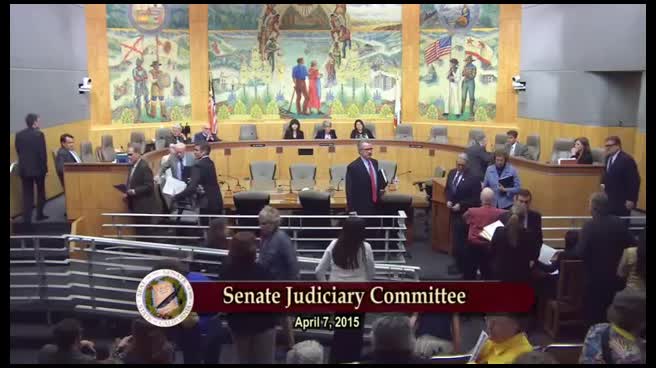 11MIN