SB 1431: Service of summons or subpoena.
- Session Year: 2015-2016
- House: Senate
- Latest Version Date: 2016-07-22
Existing law requires specified persons to be granted access to a gated community for a reasonable period of time for the sole purpose of performing lawful service of process or service of a subpoena, as specified.
This bill would additionally require an investigator who is employed by an office of the Attorney General, a county counsel, a city attorney, a district attorney, or a public defender, upon the display of proper identification, to be granted access to a gated community for the sole purpose of performing lawful service of process or service of a subpoena.
Existing law requires specified persons to be granted access to a gated community for a reasonable period of time for the sole purpose of performing lawful service of process or service of a subpoena, as specified.
This bill would additionally require an investigator who is employed by an office of a district attorney the attorney general, a county counsel, a city attorney, a district attorney, or a public defender, upon the display of proper identification, to be granted access to a gated community for the sole purpose of performing lawful service of process or service of a subpoena.
Existing law requires specified persons to be granted access to a gated community for a reasonable period of time for the sole purpose of performing lawful service of process or service of a subpoena, as specified.
This bill would additionally require an investigator who is employed by a government entity, an office of a district attorney or a public defender, upon the display of proper identification, to be granted access to a gated community for the sole purpose of performing lawful service of process or service of a subpoena.
Existing law requires specified persons to be granted access to a gated community for a reasonable period of time for the sole purpose of performing lawful service of process or service of a subpoena, as specified.
This bill would additionally require an investigator who is employed by a government entity, upon the display of proper identification, to be granted access to a gated community for the sole purpose of performing lawful service of process or service of a subpoena.
(a)Notwithstanding any other law, any person shall be granted access to a gated community for a reasonable period of time for the sole purpose of performing lawful service of process or service of a subpoena upon displaying a current drivers license or other identification, and one of the following:
(1)A badge or other confirmation that the individual is acting in his or her capacity as a representative of a county sheriff or marshal, or as an investigator employed by an office of the Attorney General, a county counsel, a city attorney, a district attorney, or a public defender.
(2)Evidence of current registration as a process server pursuant to Chapter 16 (commencing with Section 22350) of Division 8 of the Business and Professions Code or of licensure as a private investigator pursuant to Chapter 11.3 (commencing with Section 7512) of Division 3 of the Business and Professions Code.
(b)This section shall only apply to a gated community that is staffed at the time service of process is attempted by a guard or other security personnel assigned to control access to the community.
(a)Notwithstanding any other law, any person shall be granted access to a gated community for a reasonable period of time for the sole purpose of performing lawful service of process or service of a subpoena upon displaying a current drivers license or other identification, and one of the following:
(1)A badge or other confirmation that the individual is acting in his or her capacity as a representative of a county sheriff or marshal, or as an investigator employed by an office of a district attorney the attorney general, a county counsel, a city attorney, a district attorney, or a public defender.
(2)Evidence of current registration as a process server pursuant to Chapter 16 (commencing with Section 22350) of Division 8 of the Business and Professions Code or of licensure as a private investigator pursuant to Chapter 11.3 (commencing with Section 7512) of Division 3 of the Business and Professions Code.
(b)This section shall only apply to a gated community that is staffed at the time service of process is attempted by a guard or other security personnel assigned to control access to the community.
(a)Notwithstanding any other law, any person shall be granted access to a gated community for a reasonable period of time for the sole purpose of performing lawful service of process or service of a subpoena upon displaying a current drivers license or other identification, and one of the following:
(1)A badge or other confirmation that the individual is acting in his or her capacity as a representative of a county sheriff or marshal, or as an investigator employed by a government entity. an office of a district attorney or a public defender.
(2)Evidence of current registration as a process server pursuant to Chapter 16 (commencing with Section 22350) of Division 8 of the Business and Professions Code or of licensure as a private investigator pursuant to Chapter 11.3 (commencing with Section 7512) of Division 3 of the Business and Professions Code.
(b)This section shall only apply to a gated community that is staffed at the time service of process is attempted by a guard or other security personnel assigned to control access to the community.
(a)Notwithstanding any other law, any person shall be granted access to a gated community for a reasonable period of time for the sole purpose of performing lawful service of process or service of a subpoena upon displaying a current drivers license or other identification, and one of the following:
(1)A badge or other confirmation that the individual is acting in his or her capacity as a representative of a county sheriff or marshal, or as an investigator employed by a government entity.
(2)Evidence of current registration as a process server pursuant to Chapter 16 (commencing with Section 22350) of Division 8 of the Business and Professions Code or of licensure as a private investigator pursuant to Chapter 11.3 (commencing with Section 7512) of Division 3 of the Business and Professions Code.
(b)This section shall only apply to a gated community that is staffed at the time service of process is attempted by a guard or other security personnel assigned to control access to the community.
|
Date
|
Status
|
|---|---|
| May 5, 2016 | Referred to Com. on JUD. |
| Jul 22, 2016 | Chaptered by Secretary of State. Chapter 88, Statutes of 2016. |
| Jul 22, 2016 | Approved by the Governor. |
| Jul 13, 2016 | Enrolled and presented to the Governor at 4 p.m. |
| Jun 30, 2016 | Assembly amendments concurred in. (Ayes 37. Noes 0.) Ordered to engrossing and enrolling. |
| Jun 30, 2016 | Assembly amendments concurred in. (Ayes 37. Noes 0. Page 4655.) Ordered to engrossing and enrolling. |
| Jun 22, 2016 | Ordered to special consent calendar. |
| Jun 16, 2016 | Read third time. Passed. Ordered to the Senate. |
| Jun 16, 2016 | In Senate. Concurrence in Assembly amendments pending. |
| Jun 14, 2016 | Read second time. Ordered to consent calendar. |
| Jun 13, 2016 | Read second time and amended. Ordered to second reading. |
| Jun 9, 2016 | From committee: Do pass as amended. Ordered to consent calendar. (Ayes 9. Noes 0.) (June 8). |
| Feb 19, 2016 | Introduced. To Com. on RLS. for assignment. To print. |
| Apr 14, 2016 | Read third time. Passed. (Ayes 38. Noes 0.) Ordered to the Assembly. |
| Apr 14, 2016 | Read third time. Passed. (Ayes 38. Noes 0. Page 3536.) Ordered to the Assembly. |
| Apr 14, 2016 | In Assembly. Read first time. Held at Desk. |
| Apr 12, 2016 | Read second time and amended. Ordered to third reading. |
| Apr 11, 2016 | From committee: Do pass as amended. (Ayes 7. Noes 0.) (April 5). |
| Apr 11, 2016 | From committee: Do pass as amended. (Ayes 7. Noes 0. Page 3394.) (April 5). |
| Mar 24, 2016 | Set for hearing April 5. |
| Mar 10, 2016 | Referred to Com. on JUD. |
| Feb 22, 2016 | Read first time. |
| Feb 22, 2016 | From printer. May be acted upon on or after March 23. |
|
Date
|
Description
|
Location
|
Votes
|
|
|---|---|---|---|---|
| Jun 30, 2016 | Special Consent # SB1431 Morrell | Senate Floor |
Passed |
|
| Jun 16, 2016 | SB 1431 Morrell Consent Calendar Second Day Regular Session | Assembly Floor |
Passed |
|
| Jun 8, 2016 | Do pass as amended. To Consent Calendar. | Assembly Standing Committee on Judiciary |
Passed |
|
| Apr 14, 2016 | Senate 3rd Reading SB1431 Morrell | Senate Floor |
Passed |
|
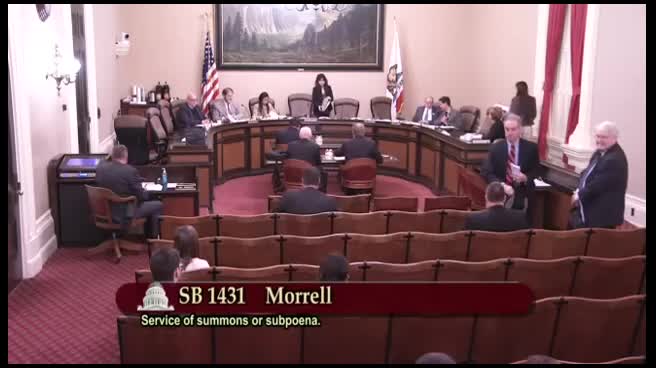
| Apr 5, 2016 | Do pass as amended | Senate Standing Committee on Judiciary |
Passed |
This list shows positions taken on this bill by organizations on the date displayed, which is linked to the original source.
Positions by individuals are not included.
|
Organization
|
Position
|
Date
|
|---|---|---|
| California District Attorneys Association | ** Support | Apr 14, 2016 |
| Conference of California Bar Associations | ** Support | Apr 14, 2016 |
Office of Senate Floor Analyses (916) 651-1520 Fax: (916) 327-4478 | SB |
UNFINISHED BUSINESS
Bill No: SB 1431
:
SENATE JUDICIARY COMMITTEE: 7-0, 4/5/16
AYES: Jackson, Moorlach, Anderson, Hertzberg, Leno, Monning, Wieckowski
SENATE FLOOR: 38-0, 4/14/16
AYES: Allen, Anderson, Bates, Beall, Berryhill, Block, Cannella, De León, Fuller, Gaines, Galgiani, Glazer, Hall, Hancock, Hernandez, Hertzberg, Hill, Hueso, Huff, Jackson, Lara, Leno, Leyva, Liu, Mendoza, Mitchell, Monning, Moorlach, Morrell, Nguyen, Nielsen, Pan, Pavley, Roth, Stone, Vidak, Wieckowski, Wolk
NO VOTE RECORDED: McGuire, Runner
ASSEMBLY FLOOR: 78-0, 6/16/16 (Consent) - See last page for vote
SOURCE: Conference of California Bar Associations
DIGEST: This bill allows investigators employed by an office of a district attorney or public defender to gain access to gated communities for a reasonable amount of time for the sole purpose of performing lawful service of process or service of subpoena upon displaying a current driver’s license or other identification, and a badge or other confirmation that the individual is acting in his or her capacity as an investigator employed by an office of the attorney general, a county counsel, a city attorney, a district attorney or a public defender.
Assembly Amendments add investigators employed by an office of the attorney general, a county counsel, or a city attorney to this bill.
Existing law:
- Requires the registration of and governs specified persons who qualify as process servers, as specified. Provides that a person who receives or expects specific compensation for serving process more than 10 times in a year must file and maintain a certificate of registration as a process server in the appropriate county.
- Provides, with respect to gated communities staffed at the time service of process is attempted by a guard or other security personnel assigned to control access to the community, that notwithstanding any other law, any person shall be granted access to a gated community for a reasonable period of time for the sole purpose of performing lawful service of process or service of a subpoena upon displaying a current driver’s license or other identification, and one of the following:
- A badge or other confirmation that the individual is acting in his or her capacity as a representative of a county sheriff or marshal; or
- Evidence of current registration as a process server or of licensure as a private investigator under the Business and Professions Code.
This bill adds to the above, authority for an investigator employed by a government entity to gain access to a gated community for a reasonable period of time, for the sole purpose of performing lawful service of process or service of subpoena upon displaying both (1) a current driver’s license or other identification, and (2) either a badge or other confirmation that the individual is acting in his or her capacity as an investigator employed by an office of the attorney general, a county counsel, a city attorney, a district attorney, or public defender.
Background
In 1994, AB 3307 (Takasugi, Chapter 691, Statutes of 1994) added Section 415.21 to the Code of Civil Procedure to allow for registered process servers or representatives of a county’s sheriff’s or marshal’s office to gain access to a gated community in order to perform service of process, as prescribed. That section was added in response to difficulties witnessed with serving process in gated communities, and was later expanded to include access to perform service of subpoenas.
In 2012, recognizing that California law allows licensed private investigators to perform service of process but does not provide those investigators with the statutory authority under Section 415.21 to enter gated communities in the same fashion as registered process servers or county sheriff’s and marshal’s representatives in order to perform that service, the Legislature enacted AB 1720 (Torres, Chapter 113, Statutes of 2012) to allow licensed private investigators to also enter a gated community for a reasonable amount of time and for the sole purpose of performing lawful service of process or service of subpoena, upon showing specified identification. That bill also clarified that registered process servers and county sheriff’s and marshal’s representatives who enter to perform service of process or subpoena are also entering under those limited conditions.
This bill now allows investigators employed by an office of the attorney general, a county counsel, a city attorney, a district attorney, or public defender to gain access to gated communities for a reasonable amount of time for the sole purpose of performing lawful service of process or service of subpoena upon providing proper identification, as specified under existing law.
Comments
As stated by the author:
Private guard staff of gated communities can and do deny entrance to process servers who do not have a badge identifying that person as a peace officer, or official identification as a registered process server or private investigator.
Although they are employees of public agencies engaged in investigative work and also carry badges, public defender investigators are not peace officers and often are not registered process servers. Even though district attorney investigators may be peace officers, they do not fall within the three categories found in existing law. For these reasons, many of these investigators have been denied access to gated communities, even though they are authorized by statute [ . . . ] to serve process generally. This requires the agencies in question to either impose upon the local sheriff or marshal’s office, or spend taxpayer dollars to hire a registered process server or private investigator.
SB 1431 would add investigators employed by public agencies to the list of persons permitted access to gated communities under [Code of Civil Procedure Section] 415.21, subject to that section’s requirements and limitations.
FISCAL EFFECT: Appropriation: Fiscal Com.: Local:
Conference of California Bar Associations (source)
California District Attorneys Association
OPPOSITION: (Verified 6/17/16)
None received
ASSEMBLY FLOOR: 78-0, 6/16/16
AYES: Achadjian, Alejo, Travis Allen, Arambula, Atkins, Baker, Bigelow, Bloom, Bonilla, Bonta, Brown, Burke, Calderon, Campos, Chang, Chau, Chávez, Chiu, Chu, Cooley, Cooper, Dababneh, Dahle, Daly, Dodd, Eggman, Frazier, Beth Gaines, Gallagher, Cristina Garcia, Eduardo Garcia, Gatto, Gipson, Gomez, Gonzalez, Gordon, Gray, Grove, Hadley, Harper, Holden, Irwin, Jones, Jones-Sawyer, Kim, Lackey, Levine, Linder, Lopez, Low, Maienschein, Mathis, Mayes, McCarty, Medina, Melendez, Mullin, Nazarian, Obernolte, O'Donnell, Olsen, Patterson, Quirk, Ridley-Thomas, Rodriguez, Salas, Santiago, Steinorth, Mark Stone, Thurmond, Ting, Wagner, Waldron, Weber, Wilk, Williams, Wood, Rendon
NO VOTE RECORDED: Brough, Roger Hernández
6/17/16 15:04:02
**** END ****
Date of Hearing: June 8, 2016
ASSEMBLY COMMITTEE ON JUDICIARY
Mark Stone, Chair
SBPCA Bill Id:SB 1431
Author:(Morrell) – As Amended Ver:April 12, 2016
PROPOSED CONSENT (As Proposed to be Amended)
SENATE VOTE: 38-0
SUBJECT: GATED COMMUNITIES: SERVICE OF SUMMONS OR SUBPOENA
KEY ISSUE: SHOULD INVESTIGATORS HIRED BY CERTAIN GOVERNMENTAL ENTITIES, INCLUDING THE ATTORNEY GENERAL, A COUNTY COUNSEl, A CITY ATTORNEY, A DISTRICT ATTORNEY, AND A PUBLIC DEFENDER be AUTHORIZED TO EFFECTUATE SERVICE OR SERVE SUBPOENAS IN GATED COMMUNITIES?
SYNOPSIS
An increasing number of Californians live in gated communities – many of which are staffed by guards at the main entrances. Although a guard’s presence is intended to deter unauthorized people from accessing the gated community, the guard also makes it potentially difficult for litigants to effectuate service or serve subpoenas on persons who live within the community. In fact, this Committee has learned about instances where guards have turned away legitimate and registered process servers. To resolve difficulties arising from parties unable to effectuate service in gated communities, the Legislature has authorized certain individuals to gain access to a gated community, specifying that access is for a reasonable amount of time and for the sole purpose of performing lawful service of process or service of a subpoena. Those individuals must also provide any guard at the gated community with proof of their identity and their status before entering the community. Currently, the individuals who are authorized are limited to a county sheriff or marshal, a registered process server, and a private investigator.
Consistent with prior measures, this non-controversial bill simply expands that list of individuals who are allowed to effectuate service and serve subpoenas in gated communities to include investigators who are employed by certain governmental entities (e.g., the attorney general, a county counsel, a city attorney, a district attorney, or a public defender). This bill is sponsored by the Conference of California Bar Associations and has no opposition.
SUMMARY: Expands the list of individuals who are allowed to effectuate service or serve subpoenas in a gated community. Specifically, this bill allows an investigator employed by an office of the attorney general, a county counsel, a city attorney, a district attorney, or a public defender to access a gated community for a reasonable period of time for the sole purpose of performing lawful service of process or service of a subpoena, as provided.
EXISTING LAW:
- Requires that a person be granted access to a gated community for a reasonable period of time for the purpose of performing lawful service of process or service of a subpoena, upon the display of that person’s current driver's license or other specified form of identification and one of the following to a guard or other security personnel assigned to control access to the gated community:
- A badge or other confirmation that the individual is acting in his or her capacity as a representative of a county sheriff or marshal; or
- Evidence of current registration as a process server or of licensure as a private investigator as provided. (Code of Civil Procedure Section 415.21.)
- Authorizes service of summons and complaint upon a guard at a residential gated community for the purpose of effectuating substituted service pursuant to Code of Civil Procedure Section 415.20. (Bein v. Brechtel-Jochim Group, Inc. (1992) 6 Cal.App.4th 1387.)
- Requires the registration of and governs specified persons who qualify as process servers. (Business and Professions Code Section 22350 et seq.)
- Provides that a person who receives or expects specific compensation for serving process more than 10 times in a year must file and maintain a certificate of registration as a process server in the appropriate county, unless otherwise provided. (Ibid.)
- Establishes the Private Investigator Act, which governs the licensing, registration, and regulation of private investigators. (Business and Professions Code Section 7512 et seq.)
- Provides that subpoenas to compel the attendance of a witness in a criminal proceeding may be signed and issued by any of the following: a district attorney or his or her investigator; a public defender or his or her investigator. (Penal Code Section 1326.)
FISCAL EFFECT: As currently in print this bill is keyed non-fiscal.
COMMENTS: An increasing number of Californians live in gated communities – many of which are frequently staffed by guards at the main entrances. Although a guard’s presence is intended to deter unauthorized people from accessing the gated community, the guard also makes it potentially difficult for litigants to effectuate service or serve subpoenas on persons who live in the community. In fact, this Committee has learned about instances where guards have turned away legitimate and registered process servers. However, the law is clear: while people have the right to choose where they live, they do not have the right to defeat service by making it physically impossible. (Khourie v. Sabek (1990) 200 Cal.App.3d 1009, 1013.) Indeed, California courts have determine that if a resident within a gated community cannot be served, a litigant may effectuate substituted service by serving the guard at a residential gated community. (Bein v. Brechtel-Jochim Group, Inc. (1992), 6 Cal.App.4th 1387.)
To resolve difficulties arising from parties unable to effectuate service in gated communities, the Legislature has authorized certain individuals to gain access to a gated community, specifying that access is for a reasonable amount of time and for the sole purpose of performing lawful service of process or service of a subpoena. Those individuals must also provide any guard with proof of their identity and their status before entering the community. Currently, those individuals who are authorized to effectuate service are limited to a county sheriff or marshal, a registered process server, and a private investigator.
In explaining the need for this bill, the author states that:
Private guard staff of gated communities can and do deny entrance to process servers who do not have a badge identifying that person as a peace officer, or official identification as a registered process server or private investigator.
Although they are employees of public agencies engaged in investigative work and also carry badges, public defender investigators are not peace officers and often are not registered process servers. Even though district attorney investigators may be peace officers, they do not fall within the three categories found in existing law. For these reasons, many of these investigators have been denied access to gated communities, even though they are authorized by statute (Penal Code §1326) to serve process generally. This requires the agencies in question to either impose upon the local sheriff or marshal’s office, or spend taxpayer dollars to hire a registered process server or private investigator.
To resolve the problem identified by the author, this bill reasonably expands the list of individuals who may enter into a gated community for the purpose of effectuating service or subpoenas.
Under the original version of this bill, any governmental investigator would be allowed to effectuate service or subpoenas in gated communities. The original version appears to have been a reasonable approach because of existing safeguards intended to protect both gated-community residents and litigants. For example, current law provides that individuals who are authorized to enter gated communities to effectuate service may only access the community for the sole purpose of performing lawful service of process or service of a subpoena. Additionally, those individuals must act within a reasonable time and must provide proof of identity and status. Given these protections, it seems appropriate to allow all government investigators to effectuate service and subpoenas in gated communities. Indeed, this Committee anecdotally learned that many state agencies have investigators who have some form of subpoena power and would have benefited from the authorization provided under the original bill. However, to address concerns that were raised in the Senate, this bill was narrowed to apply only to investigators employed by a district attorney or a public defender. To maintain the spirit of the bill while still allowing certain governmental entity investigators to effectuate service in gated communities, the author also seeks to take the following reasonable amendments to include investigators employed by the attorney general, a county counsel, and a city attorney:
On page 2, line 6, after “of” insert: the attorney general, a county counsel, a city attorney,
SIMILAR PAST LEGISLATION: AB 1720 (Torres, Chapter 113, Statutes of 2012) allows licensed private investigators to enter a gated community for a reasonable amount of time for the sole purpose of performing lawful service of process or service of subpoena.
AB 1742 (Committee on Judiciary, Chapter 706, Statutes of 2005) allows registered process services and sheriff’s and marshal’s representatives to have access to gated communities to perform service of subpoenas.
AB 3307 (Takasugi, Chapter 691, Statutes of 1994) allows registered process services and sheriff’s and marshal’s representatives to have access to gated communities to perform service of process.
REGISTERED SUPPORT / OPPOSITION:
Support
Conference of California Bar Associations (sponsor)
California District Attorneys Association
Opposition
None on file
Analysis Prepared by: Eric Dang / JUD. / (916) 319-2334
Office of Senate Floor Analyses (916) 651-1520 Fax: (916) 327-4478 | SB |
THIRD READING
Bill No: SB 1431
:
SENATE JUDICIARY COMMITTEE: 7-0, 4/5/16
AYES: Jackson, Moorlach, Anderson, Hertzberg, Leno, Monning, Wieckowski
SOURCE: Conference of California Bar Associations
DIGEST: This bill allows investigators employed by an office of a district attorney or public defender to gain access to gated communities for a reasonable amount of time for the sole purpose of performing lawful service of process or service of subpoena upon displaying a current driver’s license or other identification, and a badge or other confirmation that the individual is acting in his or her capacity as an investigator employed by an office of a district attorney or public defender.
Existing law:
- Requires the registration of and governs specified persons who qualify as process servers, as specified. Provides that a person who receives or expects specific compensation for serving process more than 10 times in a year must file and maintain a certificate of registration as a process server in the appropriate county.
- Provides, with respect to gated communities staffed at the time service of process is attempted by a guard or other security personnel assigned to control access to the community, that notwithstanding any other law, any person shall be granted access to a gated community for a reasonable period of time for the sole purpose of performing lawful service of process or service of a subpoena upon displaying a current driver’s license or other identification, and one of the following:
- A badge or other confirmation that the individual is acting in his or her capacity as a representative of a county sheriff or marshal; or
- Evidence of current registration as a process server or of licensure as a private investigator under the Business and Professions Code.
This bill adds to the above, authority for an investigator employed by a government entity to gain access to a gated community for a reasonable period of time, for the sole purpose of performing lawful service of process or service of subpoena upon displaying both (1) a current driver’s license or other identification, and (2) either a badge or other confirmation that the individual is acting in his or her capacity as an investigator employed by an office of a district attorney or public defender.
Background
In 1994, AB 3307 (Takasugi, Chapter 691, Statutes of 1994) added Section 415.21 to the Code of Civil Procedure to allow for registered process servers or representatives of a county’s sheriff’s or marshal’s office to gain access to a gated community in order to perform service of process, as prescribed. That section was added in response to difficulties witnessed with serving process in gated communities, and was later expanded to include access to perform service of subpoenas.
In 2012, recognizing that California law allows licensed private investigators to perform service of process but does not provide those investigators with the statutory authority under Section 415.21 to enter gated communities in the same fashion as registered process servers or county sheriff’s and marshal’s representatives in order to perform that service, the Legislature enacted AB 1720 (Torres, Chapter 113, Statutes of 2012) to allow licensed private investigators to also enter a gated community for a reasonable amount of time and for the sole purpose of performing lawful service of process or service of subpoena, upon showing specified identification. That bill also clarified that registered process servers and county sheriff’s and marshal’s representatives who enter to perform service of process or subpoena are also entering under those limited conditions.
This bill now allows investigators employed by an office of a district attorney or public defender to gain access to gated communities for a reasonable amount of time for the sole purpose of performing lawful service of process or service of subpoena upon providing proper identification, as specified under existing law.
Comments
As stated by the author:
Private guard staff of gated communities can and do deny entrance to process servers who do not have a badge identifying that person as a peace officer, or official identification as a registered process server or private investigator.
Although they are employees of public agencies engaged in investigative work and also carry badges, public defender investigators are not peace officers and often are not registered process servers. Even though district attorney investigators may be peace officers, they do not fall within the three categories found in existing law. For these reasons, many of these investigators have been denied access to gated communities, even though they are authorized by statute [ . . . ] to serve process generally. This requires the agencies in question to either impose upon the local sheriff or marshal’s office, or spend taxpayer dollars to hire a registered process server or private investigator.
SB 1431 would add investigators employed by public agencies to the list of persons permitted access to gated communities under [Code of Civil Procedure Section] 415.21, subject to that section’s requirements and limitations.
FISCAL EFFECT: Appropriation: Fiscal Com.: Local:
Conference of California Bar Associations (source)
California District Attorneys Association
OPPOSITION: (Verified 4/14/16)
None received
4/13/16 15:58:01
Senator Hannah-Beth Jackson, Chair
2015-2016 Regular Session
Bill No: SB 1431 (Author:Morrell)
Version: February 19, 2016
Hearing Date: April 5, 2016
Fiscal: No
Urgency: No
Consultant: RD
SUBJECT
Service of summons or subpoena
DESCRIPTION
This bill would allow investigators employed by a government entity to gain access to gated communities for a reasonable amount of time for the sole purpose of performing lawful service of process or service of subpoena upon displaying a current driver’s license or other identification, and a badge or other confirmation that the individual is acting in his or her capacity as an investigator employed by a government entity.
BACKGROUND
In 1994, AB 3307 (Takasugi, Ch. 691, Stats. 1994), added Section 415.21 to the Code of Civil Procedure to allow for registered process servers or representatives of a county’s sheriff’s or marshal’s office to gain access to a gated community in order to perform service of process, as prescribed. That section was added in response to difficulties witnessed with serving process in gated communities, and was later expanded to include access to perform service of subpoenas.
In 2012, recognizing that California law allows licensed private investigators to perform service of process but does not provide those investigators with the statutory authority under Section 415.21 to enter gated communities in the same fashion as registered process servers or county sheriff’s and marshal’s representatives in order to perform that service, the Legislature enacted AB 1720 (Torres, Ch. 113, Stats. 2012) to allow licensed private investigators to also enter a gated community for a reasonable amount of time and for the sole purpose of performing lawful service of process or service of subpoena, upon showing specified identification. That bill also clarified that registered process servers and county sheriff’s and marshal’s representatives who enter to perform service of process or subpoena are also entering under those limited conditions.
This bill would now allow investigators employed by a government entity to gain access to gated communities for a reasonable amount of time for the sole purpose of performing lawful service of process or service of subpoena upon providing proper identification, as specified under existing law.
CHANGES TO EXISTING LAW
Existing law requires the registration of and governs specified persons who qualify as process servers, as specified. (Bus. & Prof. Code Sec. 22350 et seq.) Existing law provides that a person who receives or expects specific compensation for serving process more than 10 times in a year must file and maintain a certificate of registration as a process server in the appropriate county. Existing law provides for specified exemptions from this requirement to register as a process server, including, among others, private investigators. (Bus. & Prof. Code Sec. 22350.)
Existing law, the Private Investigator Act, governs the licensing, registration, and regulation of private investigators, as specified. (Bus. & Prof. Code Sec. 7512 et seq.) Existing law provides that a private investigator within the meaning of this chapter is a person, subject to certain exceptions, who, for any consideration whatsoever, engages in business or accepts employment to furnish or agrees to furnish any person to protect persons, as specified, or engages in business or accepts employment to furnish, or agrees to make, or makes, any investigation for the purpose of obtaining certain information. (Bus. & Prof. Code Sec. 7521.)
Existing law, with respect to gated communities staffed at the time service of process is attempted by a guard or other security personnel assigned to control access to the community, provides that notwithstanding any other law, any person shall be granted access to a gated community for a reasonable period of time for the sole purpose of performing lawful service of process or service of a subpoena upon displaying a current driver’s license or other identification, and one of the following:
- a badge or other confirmation that the individual is acting in his or her capacity as a representative of a county sheriff or marshal; or
- evidence of current registration as a process server or of licensure as a private investigator under the Business and Professions Code. (Code Civ. Proc. Sec. 415.21.)
This bill would add to the above, authority for an investigator employed by a government entity to gain access to a gated community for a reasonable period of time, for the sole purpose of performing lawful service of process or service of subpoena upon displaying both (1) a current driver’s license or other identification, and (2) either a badge or other confirmation that the individual is acting in his or her capacity as an investigator employed by a government entity.
COMMENT
1. Stated need for the bill
According to the author:
Private guard staff of gated communities can and do deny entrance to process servers who do not have a badge identifying that person as a peace officer, or official identification as a registered process server or private investigator.
Although they are employees of public agencies engaged in investigative work and also carry badges, public defender investigators are not peace officers and often are not registered process servers. Even though district attorney investigators may be peace officers, they do not fall within the three categories found in existing law. For these reasons, many of these investigators have been denied access to gated communities, even though they are authorized by statute [ . . . ] to serve process generally. This requires the agencies in question to either impose upon the local sheriff or marshal’s office, or spend taxpayer dollars to hire a registered process server or private investigator.
SB 1431 would add investigators employed by public agencies to the list of persons permitted access to gated communities under [Code of Civil Procedure Section] 415.21, subject to that section’s requirements and limitations.
2. Gated community access
Where there is a gated community staffed by a guard or other security personnel assigned to control access to the community at the time service of process is attempted, existing law requires a person to be granted access to the gated community for a reasonable period of time for the sole purpose of performing lawful service of process or service of a subpoena, upon displaying a current driver’s license or other identification, and one of the following: (1) a badge or other confirmation that the individual is acting in his or her capacity as a representative of a county sheriff or marshal; or (2) evidence of current registration as a process server or of licensure as a private investigator. (Code Civ. Proc. Sec. 415.21.) This bill would add authority for investigators employed by a government entity to gain access to such gated communities upon displaying a current driver’s license or other identification and a badge or other confirmation that he or she is acting within his or her capacity as an investigator employed by a government entity.
Gated communities guarded by security exist for the safety and privacy of the individuals residing in the community. While a sheriff or marshal can be easily identifiable, the same does not necessarily apply to process servers or private investigators. Nonetheless, the Legislature has approved legislation in recent years to provide very limited authorization for these individuals to gain reasonable access to gated communities for the sole purposes of serving process or subpoenas, recognizing that these individuals are otherwise registered or licensed with the State of California and can provide documentation to that effect as well. By requiring that any such person present both identification and other evidence of current registration as a process server or of licensure as a private investigator and expressly limiting their access to gated communities for a reasonable amount of time for the sole purpose of serving process, existing law thus operates to prevent a person seeking access to the private community for potentially nefarious purposes from gaining access to the community under the false pretense that he or she is a licensed private investigator or service processor there to serve process or subpoenas on an individual residing in the community.
Notably, while this bill expands the ability of additional individuals to gain access to such private communities, it retains existing protections by allowing access only where the investigator displays his or her current driver’s license or other identification, and a badge or other confirmation that he or she is acting in the capacity of an investigator employed by a government entity. Even then, access would be further limited to a reasonable amount of time and for the sole purpose of performing lawful service of process or service of subpoena. However, the authorization provided by this bill for individuals who are able to present a badge or other confirmation that they are acting in their capacity as “an investigator employed by a government entity” might nonetheless appear vague compared to the authorization for representatives of a county sheriff or marshal, or registered process servers or licensed private investigators under specified law.
According to the sponsor of this bill, the Conference of California Bar Associations (CCBA), the investigators being turned away by private guard staff at gated communities are employees of district attorneys and public defenders and carry badges and credentials to that effect. Specifically, district attorney investigators are sworn peace officers under Penal Code Section 830.1 and are issued badges and law enforcement credentials, and public defender investigators (who are at times also private investigators or former law enforcement) receive badges from counties as they are county employees. CCBA writes that because these investigators are denied entrance, “the agencies in question [must] either impose upon the local sheriff or marshal’s office to serve the process or subpoena, or to spend taxpayer dollars to hire a registered process server or private investigator to do so.”
As such, to better ensure the privacy of individuals residing in gated communities and to improve the ability of private security guards to identify who to allow into the community for these purposes, the author offers the following amendment to narrow the bill to individuals acting in their capacity as an investigator employed by an office of a district attorney or public defender.
Author’s amendment
On page 2, line 3, strike “a government entity” and insert “an office of a district attorney or public defender”
Support: California District Attorneys Association
Opposition: None Known
HISTORY
Source: Conference of California Bar Associations
Related Pending Legislation: None Known
Prior Legislation:
AB 1720 (Torres, Ch. 113, Stats. 2012) allowed licensed private investigators to enter a gated community for a reasonable amount of time for the sole purpose of performing lawful service of process or service of subpoena and also clarified that registered process servers and county sheriff’s and marshal’s representatives who enter to perform service of process or subpoena are also entering for that sole purpose.
AB 1742 (Committee on Judiciary, Ch. 706, Stats. 2005), allowed registered process servers and sheriff’s and marshal’s representatives to have access to gated communities, as otherwise specified, to perform service of subpoenas.
AB 3307 (Takasugi, Ch. 691, Stats. 1994) See Background.
**************
Discussed in Hearing
View Older Hearings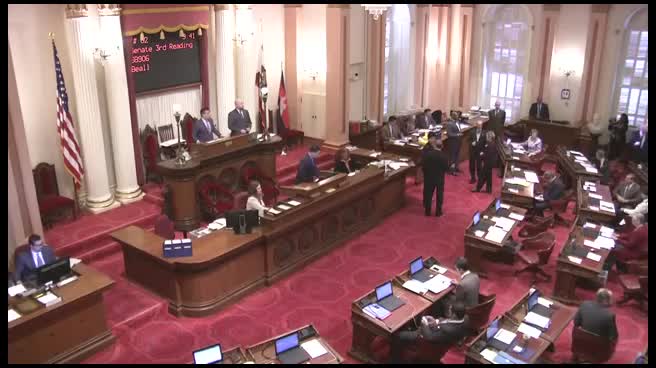
Bill Author
Bill Co-Author(s):