SB 1456: Safe Drinking Water State Revolving Fund Law of 1997: water systems: financing.
- Session Year: 2015-2016
- House: Senate
- Latest Version Date: 2016-09-22
Existing law establishes the Safe Drinking Water State Revolving Fund, and moneys in the fund are continuously appropriated to the State Water Resources Control Board for the provision of grants and revolving fund loans to provide for the design and construction of projects for public water systems that will enable suppliers to meet safe drinking water standards. Existing law, for community public water systems and not-for-profit noncommunity public water systems, allows planning and preliminary engineering studies, project design, and construction costs incurred by those public water systems to be funded by loans and other repayable financing. Existing law additionally allows, if those public water systems are owned by public agencies or not-for-profit water companies, those specified costs to be funded by grants, principal forgiveness, or a combination of grants and loans or other financial assistance. Existing law requires the board to determine what portion of the full costs the public agency or private not-for-profit water company is capable of repaying and requires the board to authorize a grant or principal forgiveness only to the extent the board finds the public agency or private not-for-profit water company is unable to repay the full costs of the financing.
This bill would authorize the above-described costs to be funded by loans or other repayable financing, grants, principal forgiveness, or a combination of grants and loans or other financial assistance, regardless of whether the community water system or not-for-profit noncommunity water system is owned by a public agency or private not-for-profit water company. By expanding the use of moneys in a continuously appropriated fund, this bill would make an appropriation. The bill would only authorize a grant or principal forgiveness to a community water system or not-for-profit noncommunity water system that serves a disadvantaged community. The bill, for a water system that is a water corporation regulated by the Public Utilities Commission, would limit the principal forgiveness to capital improvements made by the water system serving disadvantaged communities with fewer than 3,300 service connections.
Existing law deems a public agency or private not-for-profit water company serving a severely disadvantaged community with fewer than 200 service connections and that owns a small community water system or nontransient community water system to have no ability to repay any financing for a project serving the severely disadvantaged community.
This bill would apply this finding to a community water system or not-for-profit noncommunity water system that is not a water corporation regulated by the Public Utilities Commission and that serves a severely disadvantaged community with fewer than 200 service connections.
Existing law establishes the Safe Drinking Water State Revolving Fund, and moneys in the fund are continuously appropriated to the State Water Resources Control Board for the provision of grants and revolving fund loans to provide for the design and construction of projects for public water systems that will enable suppliers to meet safe drinking water standards. Existing law, for community public water systems and not-for-profit noncommunity public water systems, allows planning and preliminary engineering studies, project design, and construction costs incurred by those public water systems to be funded by loans and other repayable financing. Existing law additionally allows, if those public water systems are owned by public agencies or not-for-profit water companies, those specified costs to be funded by grants, principal forgiveness, or a combination of grants and loans or other financial assistance. Existing law requires the board to determine what portion of the full costs the public agency or private not-for-profit water company is capable of repaying and requires the board to authorize a grant or principal forgiveness only to the extent the board finds the public agency or private not-for-profit water company is unable to repay the full costs of the financing.
This bill would authorize the above-described costs to be funded by loans or other repayable financing, grants, principal forgiveness, or a combination of grants and loans or other financial assistance, regardless of whether the public water system is a community public water system or a not-for-profit noncommunity public water system, or whether the public water system is owned by a public agency or private not-for-profit water company. By expanding the use of moneys in a continuously appropriated fund, this bill would make an appropriation. The bill would only authorize a grant or principal forgiveness to a community water system or not-for-profit noncommunity water system that serves a disadvantaged community. The bill, for a public water system that is a water corporation regulated by the Public Utilities Commission, would limit the principal forgiveness to capital improvements made by the water system serving severely disadvantaged communities with fewer than 200 3,300 service connections.
Existing law deems a public agency or private not-for-profit water company serving a severely disadvantaged community with fewer than 200 service connections and that owns a small community water system or nontransient community water system to have no ability to repay any financing for a project serving the severely disadvantaged community.
This bill would apply this finding to a public community water system or not-for-profit noncommunity water system that is not a water corporation regulated by the Public Utilities Commission and that serves a severely disadvantaged community with fewer than 200 service connections.
Existing law establishes the Safe Drinking Water State Revolving Fund, and moneys in the fund are continuously appropriated to the State Water Resources Control Board for the provision of grants and revolving fund loans to provide for the design and construction of projects for public water systems that will enable suppliers to meet safe drinking water standards. Existing law, for community public water systems and not-for-profit noncommunity public water systems, allows planning and preliminary engineering studies, project design, and construction costs incurred by those public water systems to be funded by loans and other repayable financing. Existing law additionally allows, if those public water systems are owned by public agencies or not-for-profit water companies, those specified costs to be funded by grants, principal forgiveness, or a combination of grants and loans or other financial assistance.
This bill would authorize the above-described costs to be funded by loans or other repayable financing, grants, principal forgiveness, or a combination of grants and loans or other financial assistance, regardless of whether the public water system is a community public water system or a not-for-profit noncommunity public water system, or whether the public water system is owned by a public agency or private not-for-profit water company. By expanding the use of moneys in a continuously appropriated fund, this bill would make an appropriation. The bill, for a public water system that is a water corporation regulated by the Public Utilities Commission, would limit the principal forgiveness to capital improvements serving severely disadvantaged communities with fewer than 200 service connections.
Existing law deems a public agency or private not-for-profit water company serving a severely disadvantaged community with fewer than 200 service connections and that owns a small community water system or nontransient community water system to have no ability to repay any financing for a project serving the severely disadvantaged community.
This bill would apply this finding to any a public water system serving that is not a water corporation regulated by the Public Utilities Commission and that serves a severely disadvantaged community with fewer than 200 service connections.
Existing law establishes the Safe Drinking Water State Revolving Fund, and moneys in the fund are continuously appropriated to the State Water Resources Control Board for the provision of grants and revolving fund loans to provide for the design and construction of projects for public water systems that will enable suppliers to meet safe drinking water standards. Existing law, for community public water systems and not-for-profit noncommunity public water systems, allows planning and preliminary engineering studies, project design, and construction costs incurred by those public water systems to be funded by loans and other repayable financing. Existing law additionally allows, if those public water systems are owned by public agencies or not-for-profit water companies, those specified costs to be funded by grants, principal forgiveness, or a combination of grants and loans or other financial assistance.
This bill would authorize the above-described costs to be funded by loans or other repayable financing, grants, principal forgiveness, or a combination of grants and loans or other financial assistance, regardless of whether the public water system is a community public water system or a not-for-profit noncommunity public water system, or whether the public water system is owned by a public agency or private not-for-profit water company. By expanding the use of moneys in a continuously appropriated fund, this bill would make an appropriation.
Existing law deems a public agency or private not-for-profit water company serving a severely disadvantaged community with fewer than 200 service connections and that owns a small community water system or nontransient community water system to have no ability to repay any financing for a project serving the severely disadvantaged community.
This bill would apply this finding to any public water system serving a severely disadvantaged community with fewer than 200 service connections.
(a)Planning and preliminary engineering studies, project design, and construction costs incurred by a community water system or not-for-profit noncommunity water system may be funded under this chapter.
(b)(1)The board shall determine what portion of the full costs the water system is capable of repaying and authorize funding in the form of a loan or other repayable financing for that amount. The board may authorize a grant or principal forgiveness to a system eligible under subdivision (a) that serves a disadvantaged community and only to the extent the board finds the water system is unable to repay the full costs of the financing.
(2)Where the otherwise eligible water system is a water corporation regulated by the Public Utilities Commission, principal forgiveness shall be limited to capital improvements made by a water system serving disadvantaged communities with fewer than 3,300 service connections, and the board shall incorporate consideration of the water systems rate of return for the three fiscal years before the timeframe in which the board is considering financial assistance.
(3)Where an otherwise eligible water system is not a water corporation described in paragraph (2) and serves a severely disadvantaged community with fewer than 200 service connections, the water system is deemed to have no ability to repay any financing for a project serving the severely disadvantaged community.
(c)At the request of the board, the Public Utilities Commission shall submit comments concerning the ability of water systems, subject to its jurisdiction, to finance the project from other sources and to repay the financing.
(a)Planning and preliminary engineering studies, project design, and construction costs incurred by a public water community water system or not-for-profit noncommunity water system may be funded under this chapter by loans or other repayable financing, grants, principal forgiveness, or a combination of grants and loans or other financial assistance. chapter.
(b)(1)The board shall determine what portion of the full costs the public water system is capable of repaying and authorize funding in the form of a loan or other repayable financing for that amount. The board shall may authorize a grant or principal forgiveness to a system eligible under subdivision (a) that serves a disadvantaged community and only to the extent the board finds the public water system is unable to repay the full costs of the financing.
(2)Where the public otherwise eligible water system is a water corporation regulated by the Public Utilities Commission, principal forgiveness shall be limited to capital improvements made by a water system serving severely disadvantaged communities with fewer than 200 3,300 service connections connections, and the board shall consider the realized incorporate consideration of the water systems rate of return for the public water system as a criteria for determining the public water systems ability to repay the costs of the financing. three fiscal years before the timeframe in which the board is considering financial assistance.
(3)Where a public an otherwise eligible water system is not a water corporation described in paragraph (2) and serves a severely disadvantaged community with fewer than 200 service connections, the public water system is deemed to have no ability to repay any financing for a project serving the severely disadvantaged community.
(c)At the request of the board, the Public Utilities Commission shall submit comments concerning the ability of public water systems, subject to its jurisdiction, to finance the project from other sources and to repay the financing.
(a)Planning and preliminary engineering studies, project design, and construction costs incurred by a public water system may be funded under this chapter by loans or other repayable financing, grants, principal forgiveness, or a combination of grants and loans or other financial assistance.
(b)(1)The board shall determine what portion of the full costs the public water system is capable of repaying and authorize funding in the form of a loan or other repayable financing for that amount. The board shall authorize a grant or principal forgiveness only to the extent the board finds the public water system is unable to repay the full costs of the financing.
(2)Where the public water system is a water corporation regulated by the Public Utilities Commission, principal forgiveness shall be limited to capital improvements serving severely disadvantaged communities with fewer than 200 service connections and the board shall consider the realized rate of return for the public water system as a criteria for determining the public water systems ability to repay the costs of the financing.
(2)Notwithstanding any other provision of this chapter, where a
(3)Where a public water system is not a water corporation described in paragraph (2) and serves a severely disadvantaged community with fewer than 200 service connections, the public water system is deemed to have no ability to repay any financing for a project serving the severely disadvantaged community.
(c)At the request of the board, the Public Utilities Commission shall submit comments concerning the ability of public water systems, subject to its jurisdiction, to finance the project from other sources and to repay the financing.
(a)Planning and preliminary engineering studies, project design, and construction costs incurred by community and not-for-profit noncommunity a public water systems system may be funded under this chapter by loans or other repayable financing, and, if these systems are owned by public agencies or private not-for-profit water companies, by grants, principal forgiveness, or a combination of grants and loans or other financial assistance.
(b)(1)The board shall determine what portion of the full costs the public agency or private not-for-profit water company water system is capable of repaying and authorize funding in the form of a loan or other repayable financing for that amount. The board shall authorize a grant or principal forgiveness only to the extent the board finds the public agency or not-for-profit water company water system is unable to repay the full costs of the financing.
(2)Notwithstanding any other provision of this chapter, where a public agency or private not-for-profit water company serving water system serves a severely disadvantaged community with fewer than 200 service connections owns a small community water system or nontransient noncommunity water system, connections, the public agency or private not-for-profit serving the severely disadvantaged community water system is deemed to have no ability to repay any financing for a project serving the severely disadvantaged community.
(c)At the request of the board, the Public Utilities Commission shall submit comments concerning the ability of suppliers, public water systems, subject to its jurisdiction, to finance the project from other sources and to repay the financing.
|
Date
|
Status
|
|---|---|
| Aug 15, 2016 | Read second time. Ordered to third reading. |
| May 27, 2016 | Read second time. Ordered to third reading. |
| May 31, 2016 | Read third time. Passed. (Ayes 38. Noes 0. Page 4060.) Ordered to the Assembly. |
| May 31, 2016 | Read third time. Passed. (Ayes 38. Noes 0.) Ordered to the Assembly. |
| Jun 1, 2016 | In Assembly. Read first time. Held at Desk. |
| Jun 9, 2016 | Referred to Com. on E.S. & T.M. |
| Jun 29, 2016 | From committee: Do pass and re-refer to Com. on APPR. (Ayes 7. Noes 0.) (June 28). Re-referred to Com. on APPR. |
| Aug 3, 2016 | August 3 set for first hearing. Placed on APPR. suspense file. |
| Aug 12, 2016 | From committee: Do pass. (Ayes 15. Noes 0.) (August 11). |
| May 27, 2016 | From committee: Do pass. (Ayes 7. Noes 0.) (May 27). |
| Aug 18, 2016 | Ordered to third reading. |
| Aug 18, 2016 | Read third time and amended. |
| Aug 23, 2016 | In Senate. Concurrence in Assembly amendments pending. |
| Aug 23, 2016 | Read third time. Passed. Ordered to the Senate. |
| Aug 23, 2016 | Read third time. Passed. (Ayes 80. Noes 0. Page 6089.) Ordered to the Senate. |
| Aug 25, 2016 | Assembly amendments concurred in. (Ayes 39. Noes 0. Page 5411.) Ordered to engrossing and enrolling. |
| Aug 25, 2016 | Assembly amendments concurred in. (Ayes 39. Noes 0.) Ordered to engrossing and enrolling. |
| Aug 31, 2016 | Enrolled and presented to the Governor at 6 p.m. |
| Apr 27, 2016 | Read second time and amended. Re-referred to Com. on APPR. |
| Feb 22, 2016 | From printer. May be acted upon on or after March 23. |
| Feb 22, 2016 | Read first time. |
| Mar 10, 2016 | Referred to Com. on E.Q. |
| Mar 15, 2016 | Set for hearing April 6. |
| Apr 6, 2016 | April 6 set for first hearing canceled at the request of author. |
| Apr 8, 2016 | Set for hearing April 20. |
| Apr 26, 2016 | From committee: Do pass as amended and re-refer to Com. on APPR. (Ayes 7. Noes 0. Page 3645.) (April 20). |
| Apr 26, 2016 | From committee: Do pass as amended and re-refer to Com. on APPR. (Ayes 7. Noes 0.) (April 20). |
| Feb 19, 2016 | Introduced. To Com. on RLS. for assignment. To print. |
| Apr 29, 2016 | Set for hearing May 9. |
| May 5, 2016 | May 9 hearing postponed by committee. |
| May 6, 2016 | Set for hearing May 16. |
| May 12, 2016 | May 16 hearing postponed by committee. |
| May 13, 2016 | Set for hearing May 23. |
| May 23, 2016 | May 23 hearing: Placed on APPR. suspense file. (Ayes 7. Noes 0.) |
| May 24, 2016 | Set for hearing May 27. |
| May 27, 2016 | From committee: Do pass. (Ayes 7. Noes 0. Page 4011.) (May 27). |
|
Date
|
Description
|
Location
|
Votes
|
|
|---|---|---|---|---|
| Aug 25, 2016 | Unfinished Business SB1456 Galgiani Concurrence | Senate Floor |
Passed |
|
| Aug 23, 2016 | SB 1456 Galgiani Senate Third Reading By MATHIS | Assembly Floor |
Passed |
|
| Aug 11, 2016 | Do pass. | Assembly Standing Committee on Appropriations |
Passed |
|
| Jun 28, 2016 | Do pass and be re-referred to the Committee on [Appropriations] | Assembly Standing Committee on Environmental Safety and Toxic Materials |
Passed |
|
| May 31, 2016 | Senate 3rd Reading SB1456 Galgiani | Senate Floor |
Passed |
|
| May 27, 2016 | Do pass | Senate Standing Committee on Appropriations |
Passed |
|
| May 23, 2016 | Placed on suspense file | Senate Standing Committee on Appropriations |
Passed |
|
| Apr 20, 2016 | Do pass as amended, but first amend, and re-refer to the Committee on [Appropriations] | Senate Standing Committee on Environmental Quality |
Passed |
This list shows positions taken on this bill by organizations on the date displayed, which is linked to the original source.
Positions by individuals are not included.
|
Organization
|
Position
|
Date
|
|---|---|---|
| California Association Of Mutual Water Companies | ** Support | May 31, 2016 |
| California Public Utilities Commission | ** Support | May 31, 2016 |
| California Water Association | ** Support | Aug 23, 2016 |
Office of Senate Floor Analyses (916) 651-1520 Fax: (916) 327-4478 | SB 1456 |
UNFINISHED BUSINESS
Bill No: SB 1456
Amended: 8/18/16
SENATE ENVIRONMENTAL QUALITY COMMITTEE: 7-0, 4/20/16
AYES: Wieckowski, Gaines, Bates, Hill, Jackson, Leno, Pavley
SENATE APPROPRIATIONS COMMITTEE: 7-0, 5/27/16
AYES: Lara, Bates, Beall, Hill, McGuire, Mendoza, Nielsen
SENATE FLOOR: 38-0, 5/31/16
AYES: Allen, Anderson, Bates, Beall, Berryhill, Block, Cannella, De León, Fuller, Gaines, Galgiani, Glazer, Hall, Hancock, Hernandez, Hertzberg, Hill, Hueso, Huff, Jackson, Lara, Leno, Leyva, Liu, McGuire, Mendoza, Mitchell, Monning, Moorlach, Morrell, Nguyen, Nielsen, Pan, Pavley, Roth, Stone, Vidak, Wolk
NO VOTE RECORDED: Runner, Wieckowski
ASSEMBLY FLOOR: 80-0, 8/23/16 - See last page for vote
SUBJECT: Safe Drinking Water State Revolving Fund Law of 1997: water systems: financing
SOURCE: California Water Association
DIGEST: This bill allows costs incurred by a community water system or not-for-profit noncommunity water system for planning and preliminary engineering studies, project design, and construction to be funded under the Safe Drinking Water State Revolving Fund (SDWSRF).
Assembly Amendments authorize a grant or principal forgiveness to a community water system or not-for-profit noncommunity water system that serves a disadvantaged community and limits the principal forgiveness to capital improvements made by the water system serving disadvantaged communities with fewer than 3,300 service connections.
Existing law:
- Requires, under the California Safe Drinking Water Act (SDWA), the State Water Resources Control Board (SWRCB) to regulate drinking water and enforce the federal Safe Drinking Water Act and other regulations.
- Establishes SDWSRF, and moneys in the fund are continuously appropriated to SWRCB for the provision of grants and revolving fund loans to provide for the design and construction of projects for public water systems that will enable suppliers to meet safe drinking water standards.
- For community public water systems and not-for-profit noncommunity public water systems, allows planning and preliminary engineering studies, project design, and construction costs incurred by those public water systems to be funded by loans and other repayable financing.
- Additionally allows, if those public water systems are owned by public agencies or not-for-profit water companies, those specified costs to be funded by grants, principal forgiveness, or a combination of grants and loans or other financial assistance.
- Deems a public agency or private not-for-profit water company serving a severely disadvantaged community with fewer than 200 service connections and that owns a small community water system or nontransient community water system to have no ability to repay any financing for a project serving the severely disadvantaged community.
- Requires the California Public Utilities Commission (CPUC) to establish rates for investor-owned utilities water service providers.
This bill:
- Authorizes the above-described capital and design costs to be funded by loans or other repayable financing, grants, principal forgiveness, or a combination of grants and loans or other financial assistance, regardless of whether the water system is a community public water system, a not-for-profit noncommunity public water system, or is owned by a public agency or private not-for-profit investor-owned utility water service provider. By expanding the use of moneys in a continuously appropriated fund, this bill will make an appropriation.
- Specifies that any public water system serving a severely disadvantaged community with fewer than 3,300 service connections does not have the ability to repay any financing for a project serving the severely disadvantaged community.
Background
- SDWSRF. Congress established the SDWSRF as part of the 1996 Safe Drinking Water Act amendments to better enable public water systems to comply with national primary drinking water standards and to protect public health. The SDWSRF provides financial assistance in the form of capitalization grants to states to provide low-interest loans and other assistance to public water systems.
In order to receive these funds, states must provide a state match equal to 20% of the federal capitalization grants and must create a drinking water state revolving fund program for public water system infrastructure needs and other drinking water-related activities. In response, California established the SDWSRF through SB 1307 (Costa, Chapter 734, Statutes of 1997) to help fund the state’s drinking water needs.
SDWSRF provides low-interest preconstruction and construction loans or grants to drinking water systems. These loans or grants cover capital improvements that increase public health and compliance with drinking water regulations.
Financial incentives including reduced interest rates, extended financing terms, principal forgiveness and grants targeted toward small disadvantaged communities with financial hardship.
SWRCB division of drinking water evaluates financial hardship and ability to repay based on affordability criteria including population, median household income, and rates as a percent of median household income.
- What are investor-owned water utilities? Investor-owned water companies are water service providers that own regulated water and wastewater utilities, partner with municipalities to form public-private partnerships, or operate and maintain water and wastewater systems as contracted services providers. These companies may be privately owned or publicly traded.
In California, these water service providers who own and operate utilities are regulated by CPUC. CPUC establishes rates and terms of service. In setting rates, CPUC reviews the company’s costs, audits system needs, conducts public hearings for customers, holds formal evidentiary hearings adjudicated by administrative law judges, and issues a final decision authorizing the utility to establish approved rates and terms of service.
Rates are set to collect an authorized revenue requirement to compensate for just and reasonable expenses for operating and maintaining a water system and costs related to capital expenditure, including an authorized rate of return on the underappreciated capital investment (rate base), depreciation expense, property and income taxes.
There are 108 investor-owned water utilities under the CPUC’s jurisdiction providing water service to about 16% of California’s residents. Approximately 95% of that total is served by nine large water utilities each serving more than 10,000 connections. Annual water and wastewater revenues under the CPUC’s regulation total $1.4 billion.
CPUC regulates 70 Class D water utilities that have less than 500 connections. Of these 70, 55 have less than 200 service connections. There are also eight districts of Class A and B multi-district utilities that have less than 200 connections. CPUC’s regulation of water utilities does not consider whether or not the utility is serving severely disadvantaged communities. As such, CPUC does not maintain information to know if any of the 55 Class D water utilities or the eight districts of the Class A and B multi-district utilities serve severely disadvantaged communities.
The after-tax authorized rate of return on a utility’s rate base is between 10.2% and 11.2% for Class D water utilities.
Comments
Need for the bill: According to the author, water utilities regulated by the CPUC are eligible for water-related state and federal funding programs, like the Prop.1 Water Bond, as long as the funding is used for projects to benefit their customers. CPUC-regulated water utilities are eligible for loans from the SDWSRF. This program, under SWRCB, assists water systems in financing the cost of drinking water infrastructure projects needed to achieve or maintain compliance with SDWA requirements. CPUC-regulated water utilities are not eligible for loan forgiveness under this statute. SB 1456 expands the eligibility for loan forgiveness for capital improvements to all water systems serving severely disadvantaged communities with fewer than 200 service connections.
FISCAL EFFECT: Appropriation: Yes Fiscal Com.: Yes Local: No
According to the Assembly Appropriations Committee:
- Unknown, potentially significant, cost pressures on the SDWSRF resulting from eligibility for grants and loan forgiveness for an increased number of water systems.
- Minor, absorbable SWRCB.
SUPPORT: (Unable to verify at time of writing)
California Water Association (source)
OPPOSITION: (Unable to verify at time of writing)
None received
ASSEMBLY FLOOR: 80-0, 8/23/16
AYES: Achadjian, Alejo, Travis Allen, Arambula, Atkins, Baker, Bigelow, Bloom, Bonilla, Bonta, Brough, Brown, Burke, Calderon, Campos, Chang, Chau, Chávez, Chiu, Chu, Cooley, Cooper, Dababneh, Dahle, Daly, Dodd, Eggman, Frazier, Beth Gaines, Gallagher, Cristina Garcia, Eduardo Garcia, Gatto, Gipson, Gomez, Gonzalez, Gordon, Gray, Grove, Hadley, Harper, Roger Hernández, Holden, Irwin, Jones, Jones-Sawyer, Kim, Lackey, Levine, Linder, Lopez, Low, Maienschein, Mathis, Mayes, McCarty, Medina, Melendez, Mullin, Nazarian, Obernolte, O'Donnell, Olsen, Patterson, Quirk, Ridley-Thomas, Rodriguez, Salas, Santiago, Steinorth, Mark Stone, Thurmond, Ting, Wagner, Waldron, Weber, Wilk, Williams, Wood, Rendon
Prepared by: Rachel Machi Wagoner / E.Q. / (916) 651-4108
8/23/16 20:26:30
**** END ****
SENATE THIRD READING
STR Bill Id:SB 1456
Author:(Galgiani)
As Amended Ver:April 27, 2016
Majority vote
SENATE VOTE: 38-0
Committee | Votes | Ayes | Noes |
Environmental Safety | 7-0 | Alejo, Dahle, Arambula, Beth Gaines, Gray, Lopez, McCarty | |
Appropriations | 15-0 | Gonzalez, Bigelow, Bloom, Bonilla, Bonta, Chang, Eggman, Eduardo Garcia, Jones, Obernolte, Quirk, Santiago, Weber, Wood, McCarty |
|
SUMMARY: Expands the eligibility for grants and principal loan forgiveness under the Safe Drinking Water State Revolving Fund (SDWSRF) to water corporations regulated by the California Public Utilities Commission (CPUC). Specifically, this bill:
- Expands the eligibility for projects under the SDWSRF by allowing water corporations regulated by the CPUC to be eligible for grants and principal loan forgiveness.
- Requires the State Water Resources Control Board (State Water Board) to determine what portion of the full costs the public water system is capable of repaying and authorizes funding in the form of a loan or other repayable financing. Requires the State Water Board to authorize a grant or principal forgiveness only to the extent the State Water Board finds the public water system is unable to repay the full costs of the financing.
- Limits principal forgiveness to capital improvements serving severely disadvantaged communities with fewer than 200 service connections where the public water system is a water corporation regulated by the CPUC. Requires the State Water Board to consider the realized rate of return for the public water system as criteria for determining the public water system's ability to repay the costs of the financing.
- Provides that a public water system, other than those regulated by the CPUC, serving a severely disadvantaged community with fewer than 200 service connections is deemed to have no ability to repay any financing for a project serving a severely disadvantaged community.
- Requires the CPUC, at the request of the State Water Board, to submit comments to the State Water Board concerning the ability of public water systems that are regulated by the CPUC to finance the project from other sources and to repay the financing.
EXISTING LAW:
- Establishes the SDWSRF to provide financial assistance for community water systems to achieve compliance with the Safe Drinking Water Act. (Health and Safety Code (HSC) Section 116760 et seq.)
- Allows costs incurred by a community and not-for-profit noncommunity public water system for planning and preliminary engineering studies, project design, and construction to be funded from the SDWSRF by loans or other repayable financing. Allows public water systems that are owned by public agencies or private not-for-profit water companies to be eligible for grants, principal forgiveness, or a combination of grants and loans or other financial assistance under the SDWSRF. (HSC Section 116761.20 (a))
- Requires the State Water Board to determine what portion of the full costs the public agency or private not-for-profit water company is capable of repaying and authorizes funding in the form of a loan or other repayable financing. Requires the State Water Board to authorize a grant or principal forgiveness only to the extent the State Water Board finds the public agency or not-for-profit water company is unable to repay the full costs of the financing. (HSC Section 116761.20 (b)(1))
FISCAL EFFECT: According to the Assembly Appropriations Committee, if this bill is enacted, there would be unknown, potentially significant, cost pressures on the SDWRF resulting from eligibility for grants and loan forgiveness for an increased number of water systems.
COMMENTS:
Need for the bill: According to the author,
Water utilities regulated by the CPUC are eligible for water-related state and federal funding programs, like the Prop.1 Water Bond, as long as the funding is used for projects to benefit their customers. CPUC-regulated water utilities are eligible for loans from the SDWSRF. This program, under the State Water Board, assists water systems in financing the cost of drinking water infrastructure projects needed to achieve or maintain compliance with SDWA requirements. CPUC-regulated water utilities are not eligible for loan forgiveness under this statute.
SB 1456 expands the eligibility for loan forgiveness for capital improvements to all water systems serving severely disadvantaged communities with fewer than 200 service connections.
Safe Drinking Water State Revolving Fund (SDWSRF): The SDWSRF provides low-interest loans, zero-interest loans, debt refinancing, principal forgiveness, and grants to public water systems for infrastructure improvements to correct system deficiencies and improve drinking water quality.
The SDWSRF is funded by annual grants from the United States Environmental Protection Agency and a federally required 20% match from the state. The federal and state funds are used to provide financial assistance for eligible projects. The proceeds from these loans are then paid back, with interest, into the SDWSRF in later years, providing funding for new loans in the future.
Water companies regulated by the CPUC: The CPUC is responsible for ensuring that California's investor-owned water utilities deliver clean, safe, and reliable water to their customers at reasonable rates. There are 108 investor-owned water utilities under the CPUC's jurisdiction providing water service to about 16% of California's residents. Approximately 95% of that total is served by 9 large water utilities each serving more than 10,000 connections.
Under current law, only public agencies or not-for-profit water companies are eligible for grants or principal loan forgiveness through the SDWSRF. This bill would expand that eligibility by allowing water companies that are regulated by the CPUC to be eligible for loan forgiveness and grants for capital improvements. The author argues that it makes sense to allow CPUC regulated water companies to be eligible for the grant and loan forgiveness element of the SDWSRF in light of the fact that the customers of these water corporations pay taxes, along with the customers of all other public water systems, which provide funding for these programs.
Analysis Prepared by: Josh Tooker / E.S. & T.M. / (916) 319-3965 FN: 0004017
SENATE THIRD READING
STR Bill Id:SB 1456
Author:(Galgiani)
As Amended Ver:August 18, 2016
Majority vote
SENATE VOTE: 38-0
Committee | Votes | Ayes | Noes |
Environmental Safety | 7-0 | Alejo, Dahle, Arambula, Beth Gaines, Gray, Lopez, McCarty | |
Appropriations | 15-0 | Gonzalez, Bigelow, Bloom, Bonilla, Bonta, Chang, Eggman, Eduardo Garcia, Jones, Obernolte, Quirk, Santiago, Weber, Wood, McCarty |
SUMMARY: Allows costs incurred by a community water system or not-for-profit noncommunity water system for planning and preliminary engineering studies, project design, and construction to be funded under the Safe Drinking Water State Revolving Fund (SDWSRF). Specifically, this bill:
- Allows costs incurred by a community water system or not-for-profit noncommunity water system for planning and preliminary engineering studies, project design, and construction to be funded under the SDWSRF.
- Requires the State Water Resources Control Board (State Water Board) to determine what portion of the full costs the water system is capable of repaying and authorizes funding in the form of a loan or other repayable financing. Authorizes the State Water Board to provide a grant or principal forgiveness to a community water system or not-for-profit noncommunity water system that serves a disadvantaged community only to the extent the State Water Board finds the water system is unable to repay the full costs of the financing.
- Limits, where a water system is a water corporation regulated by a the California Public Utilities Commission (CPUC), principal forgiveness on a loan from the SDWSRF to capital improvements made by a water system serving disadvantaged communities with fewer than 3,300 connections. Requires the State Water Board, in considering principal forgiveness, to incorporate consideration of the water system's rate of return for the three fiscal years before the timeframe in which the State Water Board is considering financial assistance.
- Deems a water system, other than those regulated by the CPUC, serving a severely disadvantaged community with fewer than 200 service connections as having no ability to repay any financing for a project serving a severely disadvantaged community.
- Requires the CPUC, at the request of the State Water Board, to submit comments to the State Water Board concerning the ability of water systems that are regulated by the CPUC to finance the project from other sources and to repay the financing.
EXISTING LAW:
- Defines a "disadvantaged community" as the entire service area of a community water system, or a community therein, in which the median household income is less than 80% of the statewide average. (Health and Safety Code (HSC) Section 116275 (ab))
- Establishes the SDWSRF to provide financial assistance for community water systems to achieve compliance with the Safe Drinking Water Act. (HSC Section116760 et seq.)
- Allows costs incurred by a community and not-for-profit noncommunity public water system for planning and preliminary engineering studies, project design, and construction to be funded from the SDWSRF by loans or other repayable financing. Allows public water systems that are owned by public agencies or private not-for-profit water companies to be eligible for grants, principal forgiveness, or a combination of grants and loans or other financial assistance under the SDWSRF. (HSC Section 116761.20 (a))
- Requires the State Water Board to determine what portion of the full costs the public agency or private not-for-profit water company is capable of repaying and authorizes funding in the form of a loan or other repayable financing. Requires the State Water Board to authorize a grant or principal forgiveness only to the extent the State Water Board finds the public agency or not-for-profit water company is unable to repay the full costs of the financing. (HSC Section 116761.20 (b)(1))
FISCAL EFFECT: According to the Assembly Appropriations Committee, if this bill is enacted, there would be unknown, potentially significant, cost pressures on the SDWSRF resulting from eligibility for grants and loan forgiveness for an increased number of water systems.
COMMENTS:
Need for the bill: According to the author,
Water utilities regulated by the CPUC are eligible for water-related state and federal funding programs, like the Prop.1 Water Bond, as long as the funding is used for projects to benefit their customers. CPUC-regulated water utilities are eligible for loans from the SDWSRF. This program, under the State Water Board, assists water systems in financing the cost of drinking water infrastructure projects needed to achieve or maintain compliance with SDWA requirements. CPUC-regulated water utilities are not eligible for loan forgiveness under this statute.
SB 1456 expands the eligibility for loan forgiveness for capital improvements to all water systems serving severely disadvantaged communities with fewer than 200 service connections.
Safe Drinking Water State Revolving Fund (SDWSRF): The SDWSRF provides low-interest loans, zero-interest loans, debt refinancing, principal forgiveness, and grants to public water systems for infrastructure improvements to correct system deficiencies and improve drinking water quality.
The SDWSRF is funded by annual grants from the United States Environmental Protection Agency and a federally required 20% match from the state. The federal and state funds are used to provide financial assistance for eligible projects. The proceeds from these loans are then paid back, with interest, into the SDWSRF in later years, providing funding for new loans in the future.
Water companies regulated by the CPUC: The CPUC is responsible for ensuring that California's investor-owned water utilities deliver clean, safe, and reliable water to their customers at reasonable rates. There are 108 investor-owned water utilities under the CPUC's jurisdiction providing water service to about 16% of California's residents. Approximately 95% of that total is served by nine large water utilities each serving more than 10,000 connections.
Under current law, only public agencies or not-for-profit water companies are eligible for grants or principal loan forgiveness through the SDWSRF. This bill would expand that eligibility by allowing all community water systems, which include water companies that are regulated by the CPUC to be eligible for loan forgiveness and grants for capital improvements. The author argues that it makes sense to allow CPUC regulated water companies to be eligible for the grant and loan forgiveness element of the SDWSRF in light of the fact that the customers of these water corporations pay taxes, along with the customers of all other public water systems, which provide funding for these programs.
Analysis Prepared by: Josh Tooker / E.S. & T.M. / (916) 319-3965 FN: 0004273
Date of Hearing: August 3, 2016
ASSEMBLY COMMITTEE ON APPROPRIATIONS
Lorena Gonzalez, Chair
SBPCA Bill Id:SB 1456
Author:(Galgiani) – As Amended Ver:April 27, 2016
Policy Committee: | Environmental Safety and Toxic Materials | Vote: | 7 - 0 |
|
| ||
|
|
Urgency: No State Mandated Local Program: No Reimbursable: No
SUMMARY:
This bill expands the eligibility for Safe Drinking Water State Revolving Fund (SDWSRF) grants and principal loan forgiveness to water corporations regulated by the California Public Utilities Commission (PUC). Specifically, this bill:
- For PUC-regulated water corporations, limits principal loan forgiveness to capital improvements serving severely disadvantaged communities with fewer than 200 service connections. Requires the State Water Resources Control Board (SWRCB) to consider the water corporation's realized rate of return as criteria for determining its ability to repay the loan.
- Deems all public water systems serving disadvantaged communities with fewer than 200 service connections, other than PUC-regulated water corporations, without the ability to repay any financing for projects serving severely disadvantaged communities.
FISCAL EFFECT:
- Unknown, potentially significant, cost pressures on the SDWRF resulting from eligibility for grants and loan forgiveness for an increased number of water systems.
- Minor, absorbable SWRCB.
COMMENTS:
- Purpose. According to the author, SWRCB is allowed to authorize a grant or principal forgiveness under the SDWSRF in cases where the SWRCB finds a public agency or private not-for-profit water company is unable to repay the full costs of the financing.
This bill expands the eligibility for grants, or specified loan forgiveness for capital improvements, to all water systems serving severely disadvantaged communities with fewer than 200 service connections.
- Background. The 1996 amendments to the Federal Safe Drinking Water Act re-establish the SDWSRF to provide financial assistance in the form of capitalization grants to states to provide low-interest loans and other assistance to public water systems.
In order to receive funds, states must provide a match equal to 20% of the federal grants and must create a drinking water state revolving fund program for public water system infrastructure needs and other drinking water-related activities. California established the SDWSRF through SB 1307 (Costa, Chapter 734, Statutes of 1997) to help fund the state’s drinking water needs.
SDWSRF provides low-interest preconstruction and construction loans or grants to drinking water systems. These loans or grants cover capital improvements that increase public health and compliance with drinking water regulations. Financial incentives including reduced interest rates, extended financing terms, principal forgiveness and grants targeted toward small disadvantaged communities with financial hardship.
The SDWSRF uses the repayment of loans as a source of funding for future projects, so anytime there is a grant or loan forgiveness, it will reduce the amount of funds available in the future.
- PUC-Regulated Water Corporations. There are 108 investor-owned water utilities (water corporations) under the PUC’s jurisdiction providing water service to about 16% of California’s residents. Approximately 95% of that total is served by nine large water corporations, each serving more than 10,000 connections. Annual water and wastewater revenues under the PUC’s regulation total $1.4 billion.
The PUC regulates 70 Class D water utilities that have less than 500 connections. Of these, 55 have less than 200 service connections. The after-tax authorized rate of return on a utility’s rate base is between 10.2% and 11.2% for Class D water utilities.
There are also eight districts of Class A and B multi-district utilities that have less than 200 connections. The PUC’s regulation of water utilities does not consider or maintain information on whether or not the utility is serving severely disadvantaged communities.
Analysis Prepared by: Jennifer Galehouse / APPR. / (916) 319-2081
Date of Hearing: June 28, 2016
ASSEMBLY COMMITTEE ON ENVIRONMENTAL SAFETY AND TOXIC MATERIALS
Luis Alejo, Chair
SBPCA Bill Id:SB 1456
Author:(Galgiani) – As Amended Ver:April 27, 2016
SENATE VOTE: 38-0
SUBJECT: Safe Drinking Water State Revolving Fund Law of 1997: public water systems: financing
SUMMARY: Expands the eligibility for grants and principal loan forgiveness to water corporations regulated by the California Public Utilities Commission (CPUC) for projects funded under the Safe Drinking Water State Revolving Fund (SDWSRF). Specifically, this bill:
- Expands the eligibility for projects under the SDWSRF by allowing water corporations regulated by the CPUC to be eligible for grants and principal loan forgiveness.
- Requires the State Water Resources Control Board (State Water Board) to determine what portion of the full costs the public water system is capable of repaying and authorizes funding in the form of a loan or other repayable financing. Requires the State Water Board to authorize a grant or principal forgiveness only to the extent the State Water Board finds the public water system is unable to repay the full costs of the financing.
- Limits principal forgiveness to capital improvements serving severely disadvantaged communities with fewer than 200 service connections, where the public water system is a water corporation regulated by the CPUC. Requires the State Water Board to consider the realized rate of return for the public water system as criteria for determining the public water system’s ability to repay the costs of the financing.
- Provides that a public water system, other than those regulated by the CPUC, serving a severely disadvantaged community with fewer than 200 service connections is deemed to have no ability to repay any financing for a project serving a severely disadvantaged community.
- Requires the CPUC, at the request of the State Water Board, to submit comments, to the State Water Board, concerning the ability of public water systems, regulated by the CPUC, to finance the project from other sources and to repay the financing.
EXISTING LAW:
- Establishes the California Safe Drinking Water Act (SDWA) and requires the State Water Board to maintain a drinking water program. (Health & Safety Code (HSC) § 116270, et seq.)
- Defines a “public water system” as a system for the provision of water for human consumption through pipes or other constructed conveyances that has 15 or more service connections or regularly serves at least 25 individuals daily at least 60 days out of the year. (HSC § 116275)
- Establishes the SDWSRF to provide financial assistance for community water systems to achieve compliance with the SWDA. (HSC §116760 et seq.)
- Defines a “severely disadvantaged community” as a community with a median household income of less than 60 percent of the statewide average. (HSC § 116760.20)
- Allows costs incurred by a community and not-for-profit noncommunity public water system for planning and preliminary engineering studies, project design, and construction to be funded from the SDWSRF by loans or other repayable financing. Further allows public water systems that are owned by public agencies or private not-for-profit water companies to be eligible for grants, principal forgiveness, or a combination of grants and loans or other financial assistance under the SDWSRF. (HSC § 116761.20 (a))
- Requires the State Water Board to determine what portion of the full costs the public agency or private not-for-profit water company is capable of repaying and authorizes funding in the form of a loan or other repayable financing. Requires the State Water Board to authorize a grant or principal forgiveness only to the extent the State Water Board finds the public agency or not-for-profit water company is unable to repay the full costs of the financing. (HSC § 116761.20 (b)(1))
- Provides that where a public agency or private not-for-profit water company serving a severely disadvantaged community with fewer than 200 service connections owns a small community water system or nontransient noncommunity water system, the public agency or private not-for-profit serving the severely disadvantaged community is deemed to have no ability to repay any financing for a project serving the severely disadvantaged community. (HSC § 116761.20 (b)(2))
- Defines a “water corporation” to include every corporation or person owning, controlling, operating, or managing any water system for compensation within this State. (Public Utilities Code (PUC) § 241)
- Defines a “public utility” to include every common carrier, toll bridge corporation, pipeline corporation, gas corporation, electrical corporation, telephone corporation, telegraph corporation, water corporation, sewer system corporation, and heat corporation, where the service is performed for, or the commodity is delivered to, the public. (PUC § 216 (a))
- Provides that when any public utility performs a service for, or delivers a commodity to, the public for which any compensation or payment is received, it is subject to the jurisdiction, control, and regulation of the CPUC. (PUC § 216(b))
FISCAL EFFECT: According to the Senate Appropriations Committee, if this bill is enacted, there could be cost pressures on the SDWSRF resulting from eligibility for loan forgiveness for an increased number of water systems.
COMMENTS:
Need for the bill: According to the author,
“Water utilities regulated by the CPUC are eligible for water-related state and federal funding programs, like the Prop.1 Water Bond, as long as the funding is used for projects to benefit their customers. This is due to the fact that customers of regulated utilities pay for the funding of programs through taxes just like every other taxpayer in the state. The CPUC has rules governing the water utilities’ receipt and use of state and federal funds, which, among other things, ensure the customers directly benefit from the receipt and use of these funds.
CPUC-regulated water utilities are eligible for loans from the SDWSRF. This program, under the State Water Board, assists water systems in financing the cost of drinking water infrastructure projects needed to achieve or maintain compliance with SDWA requirements. CPUC-regulated water utilities are not eligible for loan forgiveness under this statute. There are water service territories of CPUC-regulated water utilities in distressed communities where their customers would benefit from loan forgiveness by the State Water Board.
The State Water Board is allowed to authorize a grant or principal forgiveness under the SDWSRF in cases where the State Water Board finds a public agency or private not-for-profit water company is unable to repay the full costs of the financing. Again, CPUC-regulated water utilities are not eligible for loan forgiveness under state law.
SB 1456 expands the eligibility for loan forgiveness for capital improvements to all water systems serving severely disadvantaged communities with fewer than 200 service connections.”
Safe Drinking Water Act: The federal Safe Drinking Water Act (SDWA) was enacted in 1974 to protect public health by regulating drinking water. California has enacted its own safe drinking water act to implement the federal law and establish state standards. The United States Environmental Protection Agency (US EPA) enforces the federal SDWA at the national level. Most states, including California, have been granted “primacy” by the US EPA, giving them the authority to implement and enforce the federal SDWA at the state level. In accordance with the federal SDWA, the US EPA provides funds to states for their drinking water loan programs, conducts an annual oversight review of each state’s SDWSRF program, and issues an annual program evaluation report.
Safe Drinking Water State Revolving Fund (SDWSRF): The SDWSRF provides low-interest loans, zero-interest loans, debt refinancing, principal forgiveness, and grants to public water systems for infrastructure improvements to correct system deficiencies and improve drinking water quality. Eligible projects include the planning, design, and construction of drinking water projects such as water treatment systems, distribution systems, and consolidations of two or more water systems. Eligible applicants for SDWSRF monies include publicly owned community water systems (counties, cities, and districts), privately owned community water systems (for-profit water utilities, nonprofit mutual water companies), and nonprofit or publicly owned noncommunity water systems (public school districts).
The State Water Board maintains a list, posted on its website, to identify potentially eligible future projects. A project must be on this list to be considered for financing. However, placement on the list does not guarantee a project will be funded. Priority is given to projects that address the most serious risk to human health; are necessary to ensure compliance with the requirements of the federal SDWA; and, assist systems most financially in need on a per household basis.
The SDWSRF is funded by annual grants from the US EPA and a federally required 20 percent match from the state. The federal and state funds are used to provide financial assistance for eligible projects. The proceeds from these loans are then paid back, with interest, into the SDWSRF in later years, providing funding for new loans in the future.
Water companies regulated by the CPUC: The California Public Utilities Commission (CPUC) is responsible for ensuring that California’s investor-owned water utilities deliver clean, safe, and reliable water to their customers at reasonable rates. There are 108 investor-owned water utilities under the CPUC’s jurisdiction providing water service to about 16 percent of California’s residents. Approximately 95 percent of that total is served by 9 large water utilities each serving more than 10,000 connections.
Under current law, only public agencies or not-for-profit water companies are eligible for grants or principal loan forgiveness through the SDWSRF. This bill would expand that eligibility by allowing water companies that are regulated by the CPUC to be eligible for loan forgiveness and grants for capital improvements. The customers of these water companies pay taxes, along with the customers of all other public water systems, which provide funding for these loan programs. Given that, the author argues that it does make sense to allow these CPUC regulated water companies to be eligible for the grant and loan forgiveness element of the SDWSRF. It is important to note however, that the SDWSRF uses the repayment of loans as source of funding for future projects, so anytime there is a grant or loan forgiveness it could reduce the amount of funds available to the SDWSRF in the future.
REGISTERED SUPPORT / OPPOSITION:
Support
California Water Association
Opposition
None on file.
Analysis Prepared by: Josh Tooker / E.S. & T.M. / (916) 319-3965
Office of Senate Floor Analyses (916) 651-1520 Fax: (916) 327-4478 | SB |
THIRD READING
Bill No: SB 1456
:
SENATE ENVIRONMENTAL QUALITY COMMITTEE: 7-0, 4/20/16
AYES: Wieckowski, Gaines, Bates, Hill, Jackson, Leno, Pavley
SENATE APPROPRIATIONS COMMITTEE: 7-0, 5/27/16
AYES: Lara, Bates, Beall, Hill, McGuire, Mendoza, Nielsen
DIGEST: This bill expands the eligibility for loan forgiveness for capital improvements to all water systems serving severely disadvantaged communities with fewer than 200 service connections.
Existing law:
- Requires, under the California Safe Drinking Water Act (SDWA), the State Water Resources Control Board (SWRCB) to regulate drinking water and enforce the federal Safe Drinking Water Act and other regulations.
- Establishes the Safe Drinking Water State Revolving Fund (SDWSRF), and moneys in the Fund are continuously appropriated to the SWRCB for the provision of grants and revolving fund loans to provide for the design and construction of projects for public water systems that will enable suppliers to meet safe drinking water standards.
- For community public water systems and not-for-profit noncommunity public water systems, allows planning and preliminary engineering studies, project design, and construction costs incurred by those public water systems to be funded by loans and other repayable financing.
- Additionally allows, if those public water systems are owned by public agencies or not-for-profit water companies, those specified costs to be funded by grants, principal forgiveness, or a combination of grants and loans or other financial assistance.
- Deems a public agency or private not-for-profit water company serving a severely disadvantaged community with fewer than 200 service connections and that owns a small community water system or nontransient community water system to have no ability to repay any financing for a project serving the severely disadvantaged community.
- Requires the California Public Utilities Commission (CPUC) to establish rates for investor-owned utilities water service providers.
This bill expands the eligibility for loan forgiveness for capital improvements to all water systems serving severely disadvantaged communities with fewer than 200 service connections. By expanding the use of moneys in a continuously appropriated fund, this bill makes an appropriation.
Background
- SDWSRF
Congress established the SDWSRF as part of the 1996 Safe Drinking Water Act amendments to better enable public water systems to comply with national primary drinking water standards and to protect public health. The SDWSRF provides financial assistance in the form of capitalization grants to states to provide low-interest loans and other assistance to public water systems.
In order to receive these funds, states must provide a state match equal to 20% of the federal capitalization grants and must create a drinking water state revolving fund program for public water system infrastructure needs and other drinking water-related activities. In response, California established the SDWSRF through SB 1307 (Costa, Chapter 734, Statutes of 1997) to help fund the state’s drinking water needs.
SDWSRF provides low-interest preconstruction and construction loans or grants to drinking water systems. These loans or grants cover capital improvements that increase public health and compliance with drinking water regulations.
Financial incentives including reduced interest rates, extended financing terms, principal forgiveness and grants targeted toward small disadvantaged communities with financial hardship.
SWRCB division of drinking water evaluates financial hardship and ability to repay based on affordability criteria including population, median household income, and rates as a percent of median household income.
- What are investor-owned water utilities?
Investor-owned water companies are water service providers that own regulated water and wastewater utilities, partner with municipalities to form public-private partnerships, or operate and maintain water and wastewater systems as contracted services providers. These companies may be privately owned or publicly traded.
In California, these water service providers who own and operate utilities are regulated by the CPUC. CPUC establishes rates and terms of service. In setting rates, CPUC reviews the company’s costs, audits system needs, conducts public hearings for customers, holds formal evidentiary hearings adjudicated by administrative law judges, and issues a final decision authorizing the utility to establish approved rates and terms of service.
Rates are set to collect an authorized revenue requirement to compensate for just and reasonable expenses for operating and maintaining a water system and costs related to capital expenditure, including an authorized rate of return on the undepreciated capital investment (rate base), depreciation expense, property and income taxes.
There are 108 investor-owned water utilities under the CPUC’s jurisdiction providing water service to about 16% of California’s residents. Approximately 95% of that total is served by nine large water utilities each serving more than 10,000 connections. Annual water and wastewater revenues under the CPUC’s regulation total $1.4 billion.
CPUC regulates 70 Class D water utilities that have less than 500 connections. Of these 70, 55 have less than 200 service connections. There are also eight districts of Class A and B multi-district utilities that have less than 200 connections. CPUC’s regulation of water utilities does not consider whether or not the utility is serving severely disadvantaged communities. As such, CPUC does not maintain information to know if any of the 55 Class D water utilities or the eight districts of the Class A and B multi-district utilities serve severely disadvantaged communities.
The after-tax authorized rate of return on a utility’s rate base is between 10.2% and 11.2% for Class D water utilities.
Comments
- Purpose of bill. According to the author, CPUC-regulated water utilities are eligible for loans from the SDWSRF Program. The author asserts that these loans are necessary to help finance the cost of drinking water infrastructure projects needed to achieve or maintain compliance with SDWA requirements. The author states that when a public agency or private not-for-profit water company is unable to repay the full cost of the financing, the SWRCB is able to authorize a grant or principal loan forgiveness. SB 1456 allows CPUC regulated water utilities (for-profit investor-owned utilities) to access loan forgiveness.
- Apples to oranges evaluation of “ability to repay loan”?
There is clear evidence that small water systems serving severely disadvantages communities do not have the ability to bear the costs of major capital improvements through the rate base. Therefore, there is clear value in expanding the definition in statute of those systems that are deemed unable to repay any financing for a project serving the severely disadvantaged community serving 200 connections or less to treat equally all systems regardless of whether the water provider is not-for-profit or for-profit in order to ensure clean drinking water delivery is not dependent on the severely disadvantaged communities’ ability to bear the cost.
However, the value is less clear on providing loan forgiveness for those for-profit water systems whose investors are earning a rate of return between 10% and 11% and that are large enough that the economy of scale is such that the rate base and investor’s profit may be able to bear some portion of the cost of the capital improvement.
While there is value to the state’s, and thereby taxpayers, investment in capital upgrades to water systems to ensure clean drinking water regardless of nature of water system (i.e. not-for-profit or for-profit), it is less clear whether for profit companies should be treated the same as not-for-profit systems when it comes to subsidizing their infrastructure.
Additionally, the SDWSRF was constructed to be a revolving loan program. If California expands the pool (to every water system in the state) for loan forgiveness of a continuously appropriated program, it increases the probability of depleting the revenue more quickly and the program eventually ceasing to be a revolving loan program and rather becoming a grant program that does not serve the ongoing needs of California’s most vulnerable communities and water systems. It is not clear that the current SDWSRF loan forgiveness criteria as set by SWRCB is limiting enough to prevent this from happening.
FISCAL EFFECT: Appropriation: Fiscal Com.: Local:
According to the Senate Appropriations Committee, there are cost pressures on the SDWSRF resulting from eligibility for loan forgiveness for an increased number of water systems.
California Association of Mutual Water Companies
California Public Utilities Commission
California Water Association
OPPOSITION: (Verified 5/27/16)
None received
5/28/16 17:08:41
**** END ****
SENATE COMMITTEE ON
Senator Ricardo Lara, Chair
2015 - 2016 Regular Session
SB 1456 (Galgiani) - Safe Drinking Water State Revolving Fund Law of 1997: public water systems: financing
Version: | Policy Vote: |
Urgency: | Mandate: |
Hearing Date: | Consultant: |
Bill Summary: This bill expands the eligibility for loan forgiveness for capital all water systems serving severely disadvantaged communities with fewer than 200 service connections.
Fiscal Impact:
- Cost pressures on the SDWRF resulting from eligibility for loan forgiveness for an increased number of water systems.
Background:
SDWSRF. Congress established the SDWSRF as part of the 1996 Safe Drinking Water Act amendments to better enable public water systems to comply with national primary drinking water standards and to protect public health. The SDWSRF provides financial assistance in the form of capitalization grants to states to provide low-interest loans and other assistance to public water systems.
In order to receive these funds, states must provide a state match equal to 20% of the federal capitalization grants and must create a drinking water state revolving fund program for public water system infrastructure needs and other drinking water-related activities. In response, California established the SDWSRF through SB 1307 (Costa, Chapter 734, Statutes of 1997) to help fund the state’s drinking water needs.
SDWSRF provides low-interest preconstruction and construction loans or grants to drinking water systems. These loans or grants cover capital improvements that increase public health and compliance with drinking water regulations.
Financial incentives including reduced interest rates, extended financing terms, principal forgiveness and grants targeted toward small disadvantaged communities with financial hardship.
SWRCB division of drinking water evaluates financial hardship and ability to repay based on affordability criteria including population, median household income, and rates as a percent of median household income.
What are investor-owned water utilities? Investor-owned water companies are water service providers that own regulated water and wastewater utilities, partner with municipalities to form public-private partnerships, or operate and maintain water and wastewater systems as contracted services providers. These companies may be privately owned or publicly traded.
In California, these water service providers who own and operate utilities are regulated by the California Public Utilities Commission (CPUC). CPUC establishes rates and terms of service. In setting rates, CPUC reviews the company’s costs, audits system needs, conducts public hearings for customers, holds formal evidentiary hearings adjudicated by administrative law judges, and issues a final decision authorizing the utility to establish approved rates and terms of service.
Rates are set to collect an authorized revenue requirement to compensate for just and reasonable expenses for operating and maintaining a water system and costs related to capital expenditure, including an authorized rate of return on the undepreciated capital investment (rate base), depreciation expense, property and income taxes.
There are 108 investor-owned water utilities under the CPUC’s jurisdiction providing water service to about 16% of California’s residents. Approximately 95% of that total is served by nine large water utilities each serving more than 10,000 connections. Annual water and wastewater revenues under the CPUC’s regulation total $1.4 billion.
CPUC regulates 70 Class D water utilities that have less than 500 connections. Of these 70, 55 have less than 200 service connections. There are also eight districts of Class A and B multi-district utilities that have less than 200 connections. CPUC’s regulation of water utilities does not consider whether or not the utility is serving severely disadvantaged communities. As such, CPUC does not maintain information to know if any of the 55 Class D water utilities or the eight districts of the Class A and B multi-district utilities serve severely disadvantaged communities.
The after-tax authorized rate of return on a utility’s rate base is between 10.2% and 11.2% for Class D water utilities.
Proposed Law: This bill expands the eligibility for loan forgiveness for capital all water systems serving severely disadvantaged communities with fewer than 200 service connections.
Related Legislation:
AB 983 (Perea) Chapter 515, Statutes of 2011 makes several changes to the SDWSRF regarding providing grants and loans for safe drinking water projects, including allowing certain disadvantaged communities to be eligible for grants up to 100% of project costs.
Staff Comments:
The SDWSRF was constructed to be a revolving loan program. If California expands the pool (to every water system in the state) for loan forgiveness of a continuously appropriated program, it increases the probability of depleting the revenue more quickly and the program eventually ceasing to be a revolving loan program and rather becoming a grant program that does not serve the ongoing needs of California’s most vulnerable communities and water systems. It is not clear that the current SDWSRF loan forgiveness criteria as set by SWRCB is limiting enough to prevent this from happening.
-- END --
SENATE COMMITTEE ON ENVIRONMENTAL QUALITY
Senator Wieckowski, Chair
2015 - 2016 Regular
Bill No: SB 1456
Author: | Galgiani | ||
Version: | 2/19/2016 | Hearing Date: | 4/20/2016 |
Urgency: | No | Fiscal: | Yes |
Consultant: | Rachel Machi Wagoner | ||
SUBJECT: Safe Drinking Water State Revolving Fund Law of 1997: public water systems: financing
ANALYSIS:
Existing law:
- Under the California Safe Drinking Water Act (SDWA):
- Requires the State Water Resources Control Board to regulate drinking water and enforce the federal Safe Drinking Water Act and other regulations.
- Establishes the Safe Drinking Water State Revolving Fund (SDWSRF), and moneys in the fund are continuously appropriated to the State Water Resources Control Board (SWRCB) for the provision of grants and revolving fund loans to provide for the design and construction of projects for public water systems that will enable suppliers to meet safe drinking water standards.
- For community public water systems and not-for-profit noncommunity public water systems, allows planning and preliminary engineering studies, project design, and construction costs incurred by those public water systems to be funded by loans and other repayable financing.
- Additionally allows, if those public water systems are owned by public agencies or not-for-profit water companies, those specified costs to be funded by grants, principal forgiveness, or a combination of grants and loans or other financial assistance.
- Deems a public agency or private not-for-profit water company serving a severely disadvantaged community with fewer than 200 service connections and that owns a small community water system or nontransient community water system to have no ability to repay any financing for a project serving the severely disadvantaged community.
- Requires the California Public Utilities Commission (CPUC) to establish rates for investor-owned utilities water service providers.
This bill:
- Authorizes the above-described capital and design costs to be funded by loans or other repayable financing, grants, principal forgiveness, or a combination of grants and loans or other financial assistance, regardless of whether the public water system is a community public water system, a not-for-profit noncommunity public water system, or is owned by a public agency or private not-for-profit investor-owned utility water service provider. By expanding the use of moneys in a continuously appropriated fund, this bill would make an appropriation.
- Specifies that any public water system serving a severely disadvantaged community with fewer than 200 service connections does not have the ability to repay any financing for a project serving the severely disadvantaged community.
Background
- SDWSRF.
Congress established the SDWSRF as part of the 1996 Safe Drinking Water Act amendments to better enable public water systems to comply with national primary drinking water standards and to protect public health. The SDWSRF provides financial assistance in the form of capitalization grants to states to provide low-interest loans and other assistance to public water systems.
In order to receive these funds, states must provide a state match equal to 20% of the federal capitalization grants and must create a drinking water state revolving fund program for public water system infrastructure needs and other drinking water-related activities. In response, California established the SDWSRF through SB 1307 (Costa, Chapter 734, Statutes of 1997) to help fund the state’s drinking water needs.
SDWSRF provides low-interest preconstruction and construction loans or grants to drinking water systems. These loans or grants cover capital improvements that increase public health and compliance with drinking water regulations.
Financial incentives including reduced interest rates, extended financing terms, principal forgiveness and grants targeted toward small disadvantaged communities with financial hardship.
SWRCB division of drinking water evaluates financial hardship and ability to repay based on affordability criteria including population, median household income, and rates as a percent of median household income.
- What are investor-owned water utilities?
Investor-owned water companies are water service providers that own regulated water and wastewater utilities, partner with municipalities to form public-private partnerships, or operate and maintain water and wastewater systems as contracted services providers. These companies may be privately owned or publicly traded.
In California, these water service providers who own and operate utilities are regulated by the California Public Utilities Commission (CPUC). CPUC establishes rates and terms of service. In setting rates, CPUC reviews the company’s costs, audits system needs, conducts public hearings for customers, holds formal evidentiary hearings adjudicated by administrative law judges, and issues a final decision authorizing the utility to establish approved rates and terms of service.
Rates are set to collect an authorized revenue requirement to compensate for just and reasonable expenses for operating and maintaining a water system and costs related to capital expenditure, including an authorized rate of return on the undepreciated capital investment (rate base), depreciation expense, property and income taxes.
There are 108 investor-owned water utilities under the CPUC’s jurisdiction providing water service to about 16% of California’s residents. Approximately 95% of that total is served by nine large water utilities each serving more than 10,000 connections. Annual water and wastewater revenues under the CPUC’s regulation total $1.4 billion.
CPUC regulates 70 Class D water utilities that have less than 500 connections. Of these 70, 55 have less than 200 service connections. There are also eight districts of Class A and B multi-district utilities that have less than 200 connections. CPUC’s regulation of water utilities does not consider whether or not the utility is serving severely disadvantaged communities. As such, CPUC does not maintain information to know if any of the 55 Class D water utilities or the eight districts of the Class A and B multi-district utilities serve severely disadvantaged communities.
The after-tax authorized rate of return on a utility’s rate base is between 10.2% and 11.2% for Class D water utilities.
Comments
- Purpose of Bill. According to the author, CPUC-regulated water utilities are eligible for loans from the Safe Drinking Water State Revolving Fund Program. The author asserts that these loans are necessary to help finance the cost of drinking water infrastructure projects needed to achieve or maintain compliance with Safe Drinking Water Act requirements. The author states that when a public agency or private not-for-profit water company is unable to repay the full cost of the financing, the State Water Resources Control Board is able to authorize a grant or principal loan forgiveness. SB 1456 would allow CPUC regulated water utilities (for-profit investor-owned utilities) to access loan forgiveness.
- Concerns raised.
In a letter received from Clean Water Action the following concern is raised:
I am writing to express our organization’s concerns with SB 1456, which expands eligibility for loan forgiveness for SDWSRF to investor-owned public water systems.
In some cases, investor-owned public water systems are the only option to provide safe drinking water to small severely disadvantaged communities in California. For that reason, Clean Water Action supports the proposal in the legislation to expand loan forgiveness for projects serving such communities.
Where we disagree with the author’s proposal is in section (b) (2), which allows the State Board to allocate loan forgiveness for a project. The difficulty is that the SDWSRF determines whether a project qualifies for loan forgiveness based upon the rates paid by ratepayers as a percentage of their median household income. But water rates for customers of investor-owned systems include profit, making such an allocation a potential gift of public funds. For that reason, we recommend that this paragraph be removed from the bill.
- Apples to Oranges evaluation of “ability to repay loan”?
There is clear evidence that small water systems serving severely disadvantages communities do not have the ability to bear the costs of major capital improvements through the rate base. Therefore, there is clear value in expanding the definition in statute of those systems that are deemed unable to repay any financing for a project serving the severely disadvantaged community serving 200 connections or less to treat equally all systems regardless of whether the water provider is not-for-profit or for-profit in order to ensure clean drinking water delivery is not dependent on the severely disadvantaged communities’ ability to bear the cost.
However, the value is less clear on providing loan forgiveness for those for-profit water systems whose investors are earning a rate of return between 10% and 11% and that are large enough that the economy of scale is such that the rate base and investor’s profit may be able to bear some portion of the cost of the capital improvement.
While there is value to the state’s, and thereby taxpayers, investment in capital upgrades to water systems to ensure clean drinking water regardless of nature of water system (i.e. not-for-profit or for-profit), the current statutory authorization for SWRCB to consider “ability to repay” loans granted from the SDWSRF was constructed assuming no profit being made and does not contemplate that the water system’s profit margin should potentially be a factor in considering the ability to repay a loan made at taxpayer expense.
Additionally, the SDWSRF was constructed to be a revolving loan program. If California expands the pool (to every water system in the state) for loan forgiveness of a continuously appropriated program, it increases the probability of depleting the revenue more quickly and the program eventually ceasing to be a revolving loan program and rather becoming a grant program that does not serve the ongoing needs of California’s most vulnerable communities and water systems. It is not clear that the current SDWSRF loan forgiveness criteria as set by SWRCB is limiting enough to prevent this from happening.
Suggested Amendments.
In order to ensure that the SDWSRF remain a viable, ongoing program, the bill should limit eligibility for investor-owned utility water service providers’ loan forgiveness to those providers that are serving small, severely disadvantaged communities of 200 service connections or less and where the capital improvement is specifically for that community.
Additionally, the bill should be amended to create a separate process by which SWRCB assesses an investor-owned utility water service provider’s ability to repay an SDWSRF loan, which factors in the extent at which the investors profit in considering the ability to repay the loan.
Related/Prior Legislation
AB 983 (Perea) Chapter 515, Statutes of 2011 makes several changes to the SDWSRF regarding providing grants and loans for safe drinking water projects, including allowing certain disadvantaged communities to be eligible for grants up to 100% of project costs.
SOURCE:
Author
SUPPORT:
California Water Association
California Public Utilities Commission
OPPOSITION:
None received
-- END --
SENATE COMMITTEE ON ENVIRONMENTAL QUALITY
Senator Wieckowski, Chair
2015 - 2016 Regular
Bill No: SB 1456
Author: | Galgiani | ||
Version: | 2/19/2016 | Hearing Date: | 4/6/2016 |
Urgency: | No | Fiscal: | Yes |
Consultant: | Rachel Machi Wagoner | ||
SUBJECT: Safe Drinking Water State Revolving Fund Law of 1997: public water systems: financing
ANALYSIS:
Existing law:
- Under the California Safe Drinking Water Act (SDWA):
- Requires the State Water Resources Control Board to regulate drinking water and enforce the federal Safe Drinking Water Act and other regulations.
- Establishes the Safe Drinking Water State Revolving Fund (SDWSRF), and moneys in the fund are continuously appropriated to the State Water Resources Control Board (SWRCB) for the provision of grants and revolving fund loans to provide for the design and construction of projects for public water systems that will enable suppliers to meet safe drinking water standards.
- For community public water systems and not-for-profit noncommunity public water systems, allows planning and preliminary engineering studies, project design, and construction costs incurred by those public water systems to be funded by loans and other repayable financing.
- Additionally allows, if those public water systems are owned by public agencies or not-for-profit water companies, those specified costs to be funded by grants, principal forgiveness, or a combination of grants and loans or other financial assistance.
- Deems a public agency or private not-for-profit water company serving a severely disadvantaged community with fewer than 200 service connections and that owns a small community water system or nontransient community water system to have no ability to repay any financing for a project serving the severely disadvantaged community.
- Requires the California Public Utilities Commission (CPUC) to establish rates for investor-owned utilities water service providers.
This bill:
- Authorizes the above-described capital and design costs to be funded by loans or other repayable financing, grants, principal forgiveness, or a combination of grants and loans or other financial assistance, regardless of whether the public water system is a community public water system, a not-for-profit noncommunity public water system, or is owned by a public agency or private not-for-profit investor-owned utility water service provider. By expanding the use of moneys in a continuously appropriated fund, this bill would make an appropriation.
- Specifies that any public water system serving a severely disadvantaged community with fewer than 200 service connections does not have the ability to repay any financing for a project serving the severely disadvantaged community.
Background
- SDWSRF.
Congress established the SDWSRF as part of the 1996 Safe Drinking Water Act amendments to better enable public water systems to comply with national primary drinking water standards and to protect public health. The SDWSRF provides financial assistance in the form of capitalization grants to states to provide low-interest loans and other assistance to public water systems.
In order to receive these funds, states must provide a state match equal to 20% of the federal capitalization grants and must create a drinking water state revolving fund program for public water system infrastructure needs and other drinking water-related activities. In response, California established the SDWSRF through SB 1307 (Costa, Chapter 734, Statutes of 1997) to help fund the state’s drinking water needs.
SDWSRF provides low-interest preconstruction and construction loans or grants to drinking water systems. These loans or grants cover capital improvements that increase public health and compliance with drinking water regulations.
Financial incentives including reduced interest rates, extended financing terms, principal forgiveness and grants targeted toward small disadvantaged communities with financial hardship.
SWRCB division of drinking water evaluates financial hardship and ability to repay based on affordability criteria including population, median household income, and rates as a percent of median household income.
- What are investor-owned water utilities?
Investor-owned water companies are water service providers that own regulated water and wastewater utilities, partner with municipalities to form public-private partnerships, or operate and maintain water and wastewater systems as contracted services providers. These companies may be privately owned or publicly traded.
In California, these water service providers who own and operate utilities are regulated by the California Public Utilities Commission (CPUC). CPUC establishes rates and terms of service. In setting rates, CPUC reviews the company’s costs, audits system needs, conducts public hearings for customers, holds formal evidentiary hearings adjudicated by administrative law judges, and issues a final decision authorizing the utility to establish approved rates and terms of service.
Rates are set to collect an authorized revenue requirement to compensate for just and reasonable expenses for operating and maintaining a water system and costs related to capital expenditure, including an authorized rate of return on the undepreciated capital investment (rate base), depreciation expense, property and income taxes.
There are 108 investor-owned water utilities under the CPUC’s jurisdiction providing water service to about 16% of California’s residents. Approximately 95% of that total is served by nine large water utilities each serving more than 10,000 connections. Annual water and wastewater revenues under the CPUC’s regulation total $1.4 billion.
CPUC regulates 70 Class D water utilities that have less than 500 connections. Of these 70, 55 have less than 200 service connections. There are also eight districts of Class A and B multi-district utilities that have less than 200 connections. CPUC’s regulation of water utilities does not consider whether or not the utility is serving severely disadvantaged communities. As such, CPUC does not maintain information to know if any of the 55 Class D water utilities or the eight districts of the Class A and B multi-district utilities serve severely disadvantaged communities.
The after-tax authorized rate of return on a utility’s rate base is between 10.2% and 11.2% for Class D water utilities.
Comments
- Purpose of Bill. According to the author, CPUC-regulated water utilities are eligible for loans from the Safe Drinking Water State Revolving Fund Program. The author asserts that these loans are necessary to help finance the cost of drinking water infrastructure projects needed to achieve or maintain compliance with Safe Drinking Water Act requirements. The author states that when a public agency or private not-for-profit water company is unable to repay the full cost of the financing, the State Water Resources Control Board is able to authorize a grant or principal loan forgiveness. SB 1456 would allow CPUC regulated water utilities (for-profit investor-owned utilities) to access loan forgiveness.
- Concerns raised.
In a letter received from Clean Water Action the following concern is raised:
I am writing to express our organization’s concerns with SB 1456, which expands eligibility for loan forgiveness for SDWSRF to investor-owned public water systems.
In some cases, investor-owned public water systems are the only option to provide safe drinking water to small severely disadvantaged communities in California. For that reason, Clean Water Action supports the proposal in the legislation to expand loan forgiveness for projects serving such communities.
Where we disagree with the author’s proposal is in section (b) (2), which allows the State Board to allocate loan forgiveness for a project. The difficulty is that the SDWSRF determines whether a project qualifies for loan forgiveness based upon the rates paid by ratepayers as a percentage of their median household income. But water rates for customers of investor-owned systems include profit, making such an allocation a potential gift of public funds. For that reason, we recommend that this paragraph be removed from the bill.
- Apples to Oranges evaluation of “ability to repay loan”?
There is clear evidence that small water systems serving severely disadvantages communities do not have the ability to bear the costs of major capital improvements through the rate base. Therefore, there is clear value in expanding the definition in statute of those systems that are deemed unable to repay any financing for a project serving the severely disadvantaged community serving 200 connections or less to treat equally all systems regardless of whether the water provider is not-for-profit or for-profit in order to ensure clean drinking water delivery is not dependent on the severely disadvantaged communities’ ability to bear the cost.
However, the value is less clear on providing loan forgiveness for those for-profit water systems whose investors are earning a rate of return between 10% and 11% and that are large enough that the economy of scale is such that the rate base and investor’s profit may be able to bear some portion of the cost of the capital improvement.
While there is value to the state’s, and thereby taxpayers, investment in capital upgrades to water systems to ensure clean drinking water regardless of nature of water system (i.e. not-for-profit or for-profit), the current statutory authorization for SWRCB to consider “ability to repay” loans granted from the SDWSRF was constructed assuming no profit being made and does not contemplate that the water system’s profit margin should potentially be a factor in considering the ability to repay a loan made at taxpayer expense.
Additionally, the SDWSRF was constructed to be a revolving loan program. If California expands the pool (to every water system in the state) for loan forgiveness of a continuously appropriated program, it increases the probability of depleting the revenue more quickly and the program eventually ceasing to be a revolving loan program and rather becoming a grant program that does not serve the ongoing needs of California’s most vulnerable communities and water systems. It is not clear that the current SDWSRF loan forgiveness criteria as set by SWRCB is limiting enough to prevent this from happening.
Suggested Amendments.
In order to ensure that the SDWSRF remain a viable, ongoing program, the bill should limit eligibility for investor-owned utility water service providers’ loan forgiveness to those providers that are serving small, severely disadvantaged communities of 200 service connections or less and where the capital improvement is specifically for that community.
Additionally, the bill should be amended to create a separate process by which SWRCB assesses an investor-owned utility water service provider’s ability to repay an SDWSRF loan, which factors in the extent at which the investors profit in considering the ability to repay the loan.
Related/Prior Legislation
AB 983 (Perea) Chapter 515, Statutes of 2011 makes several changes to the SDWSRF regarding providing grants and loans for safe drinking water projects, including allowing certain disadvantaged communities to be eligible for grants up to 100% of project costs.
SOURCE:
Author
SUPPORT:
None received
OPPOSITION:
None received
-- END --
Discussed in Hearing
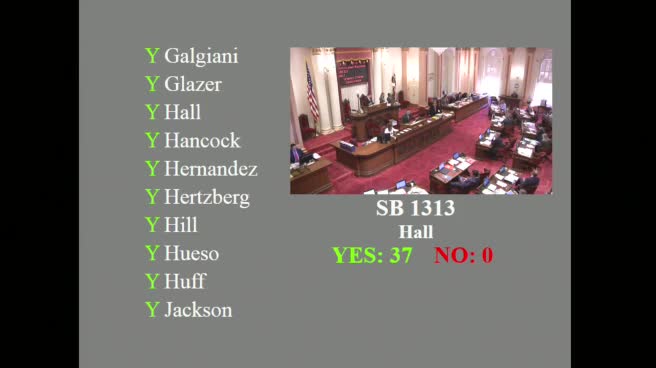 1MIN
Senate Floor
 1MIN
Assembly Floor
 1MIN
Assembly Floor
 2MIN
Senate Floor
Bill Author

Bill Co-Author(s):