SB 1464: California Global Warming Solutions Act of 2006: greenhouse gas emissions reduction.
- Session Year: 2015-2016
- House: Senate
- Latest Version Date: 2016-09-26
The California Global Warming Solutions Act of 2006 designates the State Air Resources Board as the state agency charged with monitoring and regulating sources of emissions of greenhouse gases. The state board is required to adopt a statewide greenhouse gas emissions limit equivalent to the statewide greenhouse gas emissions level in 1990 to be achieved by 2020, and to adopt rules and regulations in an open public process to achieve the maximum technologically feasible and cost-effective greenhouse gas emission reductions.
Existing law requires the Department of Finance, in consultation with the state board and any other relevant state agency, to develop and update, as specified, a 3-year investment plan for the moneys deposited in the Greenhouse Gas Reduction Fund. Existing law requires the investment plan to, among other things, identify priority programmatic investments of moneys that will facilitate the achievement of feasible and cost-effective greenhouse gas emissions reductions toward achievement of greenhouse gas reduction goals and targets by sector.
This bill would require, in identifying priority programmatic investments, that the investment plan assess how proposed investments interact with current state regulations, policies, and programs, and evaluate if and how the proposed investments could be incorporated into existing programs. The bill would also require the investment plan to recommend metrics that would measure progress and benefits from the proposed programmatic investments.
The California Global Warming Solutions Act of 2006 designates the State Air Resources Board as the state agency charged with monitoring and regulating sources of emissions of greenhouse gases. The state board is required to adopt a statewide greenhouse gas emissions limit equivalent to the statewide greenhouse gas emissions level in 1990 to be achieved by 2020, and to adopt rules and regulations in an open public process to achieve the maximum technologically feasible and cost-effective greenhouse gas emission reductions.
Existing law requires the Department of Finance, in consultation with the state board and any other relevant state agency, to develop and update, as specified, a 3-year investment plan for the moneys deposited in the Greenhouse Gas Reduction Fund. Existing law requires the investment plan to, among other things, identify priority programmatic investments of moneys that will facilitate the achievement of feasible and cost-effective greenhouse gas emissions reductions toward achievement of greenhouse gas reduction goals and targets by sector.
This bill would require, in identifying priority programmatic investments, that the investment plan assess how proposed investments interact with current state regulations, policies, and programs, and evaluate if and how the proposed investments could be incorporated into existing programs. The bill would also require the investment plan to recommend metrics that would measure progress and benefits from the proposed programmatic investments.
The California Global Warming Solutions Act of 2006 designates the State Air Resources Board as the state agency charged with monitoring and regulating sources of emissions of greenhouse gases. The state board is required to adopt a statewide greenhouse gas emissions limit equivalent to the statewide greenhouse gas emissions level in 1990 to be achieved by 2020, and to adopt rules and regulations in an open public process to achieve the maximum technologically feasible and cost-effective greenhouse gas emission reductions.
Existing law requires the state board to consult with other states, the federal government, and other nations to identify the most effective strategies and methods to reduce greenhouse gases, manage greenhouse gas control programs, and facilitate the development of integrated and cost-effective regional, national, and international greenhouse gas reduction programs.
This bill would require the state board to also consult with local agencies for these purposes.
Existing law requires the Department of Finance, in consultation with the state board and any other relevant state agency, to develop and update, as specified, a 3-year investment plan for the moneys deposited in the Greenhouse Gas Reduction Fund. Existing law requires the investment plan to, among other things, identify priority programmatic investments of moneys that will facilitate the achievement of feasible and cost-effective greenhouse gas emissions reductions toward achievement of greenhouse gas reduction goals and targets by sector.
This bill would require, in identifying priority programmatic investments, that the investment plan assess how proposed investments interact with current state regulations, policies, and programs, and evaluate if and how the proposed investments could be incorporated into existing programs. The bill would also require the investment plan to recommend metrics that would measure progress and benefits from the proposed programmatic investments.
The California Global Warming Solutions Act of 2006 designates the State Air Resources Board as the state agency charged with monitoring and regulating sources of emissions of greenhouse gases. The state board is required to adopt a statewide greenhouse gas emissions limit equivalent to the statewide greenhouse gas emissions level in 1990 to be achieved by 2020, and to adopt rules and regulations in an open public process to achieve the maximum technologically feasible and cost-effective greenhouse gas emission reductions.
Existing law requires the state board to consult with other states, the federal government, and other nations to identify the most effective strategies and methods to reduce greenhouse gases, manage greenhouse gas control programs, and facilitate the development of integrated and cost-effective regional, national, and international greenhouse gas reduction programs.
This bill would require the state board to also consult with local agencies for these purposes.
(a)The Department of Finance, on behalf of the Governor, and in consultation with the state board and any other relevant state entity, shall develop and submit to the Legislature at the time of the departments adjustments to the proposed 201314 fiscal year budget pursuant to subdivision (e) of Section 13308 of the Government Code a three-year investment plan. Commencing with the 201617 fiscal year budget and every three years thereafter, with the release of the Governors budget proposal, the Department of Finance shall include updates to the investment plan following the public process described in subdivisions (b) and (c). The investment plan, consistent with the requirements of Section 39712, shall do all of the following:
(1)Identify the states near-term and long-term greenhouse gas emissions reduction goals and targets by sector.
(2)Analyze gaps, where applicable, in current state strategies to meeting the states greenhouse gas emissions reduction goals and targets by sector.
(3)(A)Identify priority programmatic investments of moneys that will facilitate the achievement of feasible and cost-effective greenhouse gas emissions reductions toward achievement of greenhouse gas reduction goals and targets by sector, consistent with subdivision (c) of Section 39712.
(B)In identifying priority programmatic investments, the investment plan shall do both of the following:
(i)Assess how proposed investments interact with current state regulations, policies, and programs.
(ii)Evaluate if and how those proposed investments could be incorporated into existing programs.
(4)Recommend metrics that would measure progress and benefits from the proposed programmatic investments.
(b)(1)The state board shall hold at least two public workshops in different regions of the state and one public hearing prior to the Department of Finance submitting the investment plan.
(2)The state board shall, prior to the submission of each investment plan, consult with the Public Utilities Commission to ensure the investment plan is coordinated with, and does not conflict with or unduly overlap with, activities under the oversight or administration of the Public Utilities Commission undertaken pursuant to Part 5 (commencing with Section 38570) of Division 25.5 or other activities under the oversight or administration of the Public Utilities Commission that facilitate greenhouse gas emissions reductions consistent with this division. The investment plan shall include a description of the use of any moneys generated by the sale of allowances received at no cost by the investor-owned utilities pursuant to a market-based compliance mechanism.
(c)The Climate Action Team, established under Executive Order S-3-05, shall provide information to the Department of Finance and the state board to assist in the development of each investment plan. The Climate Action Team shall participate in each public workshop held on an investment plan and provide testimony to the state board on each investment plan. For purposes of this section, the Secretary of Labor and Workforce Development shall assist the Climate Action Team in its efforts.
(a)The Department of Finance, on behalf of the Governor, and in consultation with the state board and any other relevant state entity, shall develop and submit to the Legislature at the time of the departments adjustments to the proposed 201314 fiscal year budget pursuant to subdivision (e) of Section 13308 of the Government Code a three-year investment plan. Commencing with the 201617 fiscal year budget and every three years thereafter, with the release of the Governors budget proposal, the Department of Finance shall include updates to the investment plan following the public process described in subdivisions (b) and (c). The investment plan, consistent with the requirements of Section 39712, shall do all of the following:
(1)Identify the states near-term and long-term greenhouse gas emissions reduction goals and targets by sector.
(2)Analyze gaps, where applicable, in current state strategies to meeting the states greenhouse gas emissions reduction goals and targets by sector.
(3)(A)Identify priority programmatic investments of moneys that will facilitate the achievement of feasible and cost-effective greenhouse gas emissions reductions toward achievement of greenhouse gas reduction goals and targets by sector, consistent with subdivision (c) of Section 39712.
(B)In identifying priority programmatic investments, the investment plan shall do both of the following:
(i)Assess how proposed investments interact with current state regulations, policies, and programs.
(ii)Evaluate if and how those proposed investments could be incorporated into existing programs.
(4)Recommend metrics that would measure progress and benefits from the proposed programmatic investments.
(b)(1)The state board shall hold at least two public workshops in different regions of the state and one public hearing prior to the Department of Finance submitting the investment plan.
(2)The state board shall, prior to the submission of each investment plan, consult with the Public Utilities Commission to ensure the investment plan is coordinated with, and does not conflict with or unduly overlap with, activities under the oversight or administration of the Public Utilities Commission undertaken pursuant to Part 5 (commencing with Section 38570) of Division 25.5 or other activities under the oversight or administration of the Public Utilities Commission that facilitate greenhouse gas emissions reductions consistent with this division. The investment plan shall include a description of the use of any moneys generated by the sale of allowances received at no cost by the investor-owned utilities pursuant to a market-based compliance mechanism.
(c)The Climate Action Team, established under Executive Order S-3-05, shall provide information to the Department of Finance and the state board to assist in the development of each investment plan. The Climate Action Team shall participate in each public workshop held on an investment plan and provide testimony to the state board on each investment plan. For purposes of this section, the Secretary of Labor and Workforce Development shall assist the Climate Action Team in its efforts.
(a)The Department of Finance, on behalf of the Governor, and in consultation with the state board and any other relevant state entity, shall develop and submit to the Legislature at the time of the departments adjustments to the proposed 201314 fiscal year budget pursuant to subdivision (e) of Section 13308 of the Government Code a three-year investment plan. Commencing with the 201617 fiscal year budget and every three years thereafter, with the release of the Governors budget proposal, the Department of Finance shall include updates to the investment plan following the public process described in subdivisions (b) and (c). The investment plan, consistent with the requirements of Section 39712, shall do all of the following:
(1)Identify the states near-term and long-term greenhouse gas emissions reduction goals and targets by sector.
(2)Analyze gaps, where applicable, in current state strategies to meeting the states greenhouse gas emissions reduction goals and targets by sector.
(3)(A)Identify priority programmatic investments of moneys that will facilitate the achievement of feasible and cost-effective greenhouse gas emissions reductions toward achievement of greenhouse gas reduction goals and targets by sector, consistent with subdivision (c) of Section 39712.
(B)In identifying priority programmatic investments, the investment plan shall do both of the following:
(i)Assess how proposed investments interact with current state regulations, policies, and programs.
(ii)Evaluate if and how those proposed investments could be incorporated into existing programs.
(4)Recommend metrics that would measure progress and benefits from the proposed programmatic investments.
(b)(1)The state board shall hold at least two public workshops in different regions of the state and one public hearing prior to the Department of Finance submitting the investment plan.
(2)The state board shall, prior to the submission of each investment plan, consult with the Public Utilities Commission to ensure the investment plan is coordinated with, and does not conflict with or unduly overlap with, activities under the oversight or administration of the Public Utilities Commission undertaken pursuant to Part 5 (commencing with Section 38570) of Division 25.5 or other activities under the oversight or administration of the Public Utilities Commission that facilitate greenhouse gas emissions reductions consistent with this division. The investment plan shall include a description of the use of any moneys generated by the sale of allowances received at no cost by the investor-owned utilities pursuant to a market-based compliance mechanism.
(c)The Climate Action Team, established under Executive Order S-3-05, shall provide information to the Department of Finance and the state board to assist in the development of each investment plan. The Climate Action Team shall participate in each public workshop held on an investment plan and provide testimony to the state board on each investment plan. For purposes of this section, the Secretary of Labor and Workforce Development shall assist the Climate Action Team in its efforts.
SECTION 1.Section 38564 of the Health and Safety Code is amended to read:38564.The state board shall consult with local agencies, other states, the federal government, and other nations to identify the most effective strategies and methods to reduce greenhouse gases, manage greenhouse gas control programs, and facilitate the development of integrated and cost-effective regional, national, and international greenhouse gas reduction programs.
The state board shall consult with local agencies, other states, and the federal government, and other nations to identify the most effective strategies and methods to reduce greenhouse gases, manage greenhouse gas control programs, and to facilitate the development of integrated and cost-effective regional, national, and international greenhouse gas reduction programs.
|
Date
|
Status
|
|---|---|
| May 27, 2016 | Read second time. Ordered to third reading. |
| Sep 8, 2016 | Enrolled and presented to the Governor at 5 p.m. |
| Aug 30, 2016 | In Senate. Ordered to engrossing and enrolling. |
| Aug 25, 2016 | Read third time. Passed. (Ayes 72. Noes 3. Page 6270.) Ordered to the Senate. |
| Aug 25, 2016 | Read third time. Passed. Ordered to the Senate. |
| Aug 15, 2016 | Read second time. Ordered to third reading. |
| Aug 12, 2016 | From committee: Do pass. (Ayes 12. Noes 1.) (August 11). |
| Aug 3, 2016 | August 3 set for first hearing. Placed on APPR. suspense file. |
| Jun 28, 2016 | From committee: Do pass and re-refer to Com. on APPR. (Ayes 7. Noes 1.) (June 27). Re-referred to Com. on APPR. |
| Jun 6, 2016 | Referred to Com. on NAT. RES. |
| Jun 1, 2016 | In Assembly. Read first time. Held at Desk. |
| May 31, 2016 | Read third time. Passed. (Ayes 26. Noes 5.) Ordered to the Assembly. |
| May 31, 2016 | Read third time. Passed. (Ayes 26. Noes 5. Page 4060.) Ordered to the Assembly. |
| Feb 19, 2016 | Introduced. To Com. on RLS. for assignment. To print. |
| May 27, 2016 | From committee: Do pass. (Ayes 5. Noes 0.) (May 27). |
| May 27, 2016 | From committee: Do pass. (Ayes 5. Noes 0. Page 4011.) (May 27). |
| May 20, 2016 | Set for hearing May 27. |
| May 9, 2016 | May 9 hearing: Placed on APPR. suspense file. |
| Apr 29, 2016 | Set for hearing May 9. |
| Apr 21, 2016 | From committee: Do pass and re-refer to Com. on APPR. (Ayes 7. Noes 0.) (April 20). Re-referred to Com. on APPR. |
| Apr 21, 2016 | From committee: Do pass and re-refer to Com. on APPR. (Ayes 7. Noes 0. Page 3645.) (April 20). Re-referred to Com. on APPR. |
| Apr 11, 2016 | From committee with author's amendments. Read second time and amended. Re-referred to Com. on E.Q. |
| Mar 10, 2016 | Referred to Com. on E.Q. |
| Feb 22, 2016 | Read first time. |
| Feb 22, 2016 | From printer. May be acted upon on or after March 23. |
|
Date
|
Description
|
Location
|
Votes
|
|
|---|---|---|---|---|
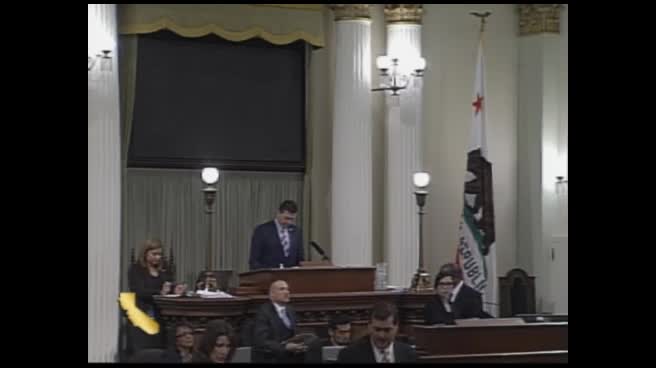
| Aug 25, 2016 | SB 1464 De León Senate Third Reading By GOMEZ | Assembly Floor |
Passed |
|
| Aug 11, 2016 | Do pass. | Assembly Standing Committee on Appropriations |
Passed |
|
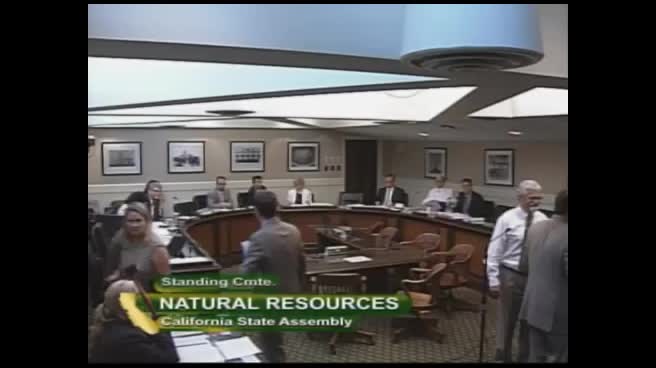
| Jun 27, 2016 | Do pass and be re-referred to the Committee on [Appropriations] | Assembly Standing Committee on Natural Resources |
Passed |
|
| May 31, 2016 | Senate 3rd Reading SB1464 De León | Senate Floor |
Passed |
|
| May 27, 2016 | Do pass | Senate Standing Committee on Appropriations |
Passed |
|
| May 9, 2016 | Placed on suspense file | Senate Standing Committee on Appropriations |
Passed |
|
| Apr 20, 2016 | Do pass, but first be re-referred to the Committee on [Appropriations] | Senate Standing Committee on Environmental Quality |
Passed |
This list shows positions taken on this bill by organizations on the date displayed, which is linked to the original source.
Positions by individuals are not included.
|
Organization
|
Position
|
Date
|
|---|---|---|
| Western States Petroleum Association | * Support | Jun 27, 2016 |
SENATE THIRD READING
STR Bill Id:SB 1464
Author:(De León)
As Amended Ver:April 11, 2016
Majority vote
SENATE VOTE: 26-5
Committee | Votes | Ayes | Noes |
Natural Resources | 7-1 | Williams, Cristina Garcia, Gomez, Hadley, McCarty, Mark Stone, Wood | Harper |
Appropriations | 12-1 | Gonzalez, Bloom, Bonilla, Bonta, Eggman, Eduardo Garcia, Jones, Quirk, Santiago, Weber, Wood, McCarty | Bigelow |
SUMMARY: Requires that the Greenhouse Gas Reduction Fund (GGRF) Investment Plan include additional assessments and recommended metrics for proposed investments. Specifically, this bill:
- Requires that when identifying priority programmatic investments that facilitate the achievement of feasible and cost-effective greenhouse gas (GHG) emissions reductions toward achievement of GHG reduction goals and targets, the Investment Plan do both of the following:
- Asses how the proposed investments interact with current state regulations, policies, and programs; and,
- Evaluate if and how those proposed investments could be incorporated into existing programs.
- Requires that the Investment Plan recommend metrics that would measure progress and benefits from the proposed programmatic investments.
FISCAL EFFECT: Increased Air Resources Board (ARB) costs of approximately $320,000 per year for two years, and an additional $300,000 in contracts for modeling investments, interactions with existing policies, and analyzing emissions impacts from investment concepts (GGRF).
COMMENTS: The first three-year Investment Plan for cap-and-trade auction proceeds, developed by the Department of Finance in consultation with ARB and other state agencies and covering 2013-2015, was submitted to the Legislature in May 2013. The Investment Plan identified sustainable communities and clean transportation, energy efficiency and clean energy, and natural resources and waste diversion as the three broad categories that provide the best opportunities, in that order, for achieving state GHG reduction goals via auction proceeds. Existing law also directs specified levels of investment be made to benefit disadvantaged communities. Within those categories, the Investment Plan identified a range of programs and measures to reduce GHG emissions, benefit disadvantaged communities, and provide other cobenefits, such as reduced air pollution, diversification of energy and fuels, and spurring relevant technological innovation.
The second Investment Plan was released in January 2016, and proposes diverse strategies under the same three major investment categories, identifies gaps in the current investment portfolio, and suggests approaches that would help address these gaps.
According to the Legislative Analyst's Office February 2016 report on the Governor's proposed resources and environmental protection budget expenditures, the Investment Plan lacks the necessary analysis needed to develop a framework for spending. They also state that the Investment Plan does not explicitly address how new programs might interact with existing regulations or programs, and that proposals from the administration lack reliable estimates of benefits, which make it difficult to evaluate which set of programs are likely to best achieve state priorities and provide the greatest overall benefits, compared to alternative strategies.
This bill is intended to ensure that the Investment Plan better serves its original statutory intent to guide the Legislature in funding an optimized strategy of complementary investments to maximize GHG emissions reductions and co-benefits from the GGRF, especially in those communities disproportionately burdened by pollution.
Analysis Prepared by: Elizabeth MacMillan / NAT. RES. / (916) 319-2092 FN: 0004018
Date of Hearing: August 3, 2016
ASSEMBLY COMMITTEE ON APPROPRIATIONS
Lorena Gonzalez, Chair
SBPCA Bill Id:SB 1464
Author:(De León) – As Amended Ver:April 11, 2016
Policy Committee: | Natural Resources | Vote: | 7 - 1 |
Urgency: No State Mandated Local Program: No Reimbursable: No
SUMMARY:
This bill requires the AB 32 cap-and-trade revenue investment plan to include additional assessments and recommended metrics for proposed investments. Specifically, this bill:
- Requires the investment plan, when identifying priority programmatic investments as specified, to:
- Asses how the proposed investments interact with current state regulations, policies, and programs; and
- Evaluate if and how those proposed investments could be incorporated into existing programs.
- Requires the investment plan to recommend metrics to measure progress and benefits from the proposed programmatic investments.
FISCAL EFFECT:
Increased Air Resources Board (ARB) costs of approximately $320,000 per year for two years, and an additional $300,000 in contracts for modeling investments, interactions with existing policies, and analyzing emissions impacts from investment concepts (Greenhouse Gas Reduction Fund).
COMMENTS:
- Purpose. According to the Legislative Analyst’s Office February 2016 report on the Governor’s proposed budget expenditures, the AB 32 investment plan lacks the necessary analysis needed to develop a framework for spending.
The report also notes that the investment plan does not explicitly address how new programs interact with existing regulations or programs, and that proposals from the administration lack reliable estimates of benefits, which make it difficult to evaluate which set of programs are likely to best achieve state priorities and provide the greatest overall benefits, compared to alternative strategies.
According to the author, this bill will result in an investment plan that will better serve its original statutory intent – to guide the Legislature in funding an optimized strategy of complementary investments to maximize greenhouse gas (GHG) emissions reductions and co-benefits from the Greenhouse Gas Reduction Fund (GGRF), especially in those communities disproportionately burdened by pollution.
- Background. The California Global Warming Solutions Act of 2006 (AB 32, Chapter 488, Statutes of 2006) required ARB to adopt a statewide greenhouse gas (GHG) emissions limit equivalent to 1990 levels by 2020 and adopt regulations to achieve maximum technologically feasible and cost-effective GHG emission reductions. As part of its AB 32 implementation, ARB adopted a cap-and-trade program for which the proceeds from the auction or sale of GHG allowances are deposited in the GGRF available for appropriation by the Legislature.
AB 1532 (Pérez, Chapter 807, Statutes of 2012) required the Department of Finance (DOF), in consultation with ARB and any other relevant state agency, to develop a three-year investment plan for AB 32 cap-and-trade auction proceeds. The first investment plan was submitted to the Legislature in May 2013.
The plan identified: 1) sustainable communities and clean transportation; 2) energy efficiency and clean energy; and 3) natural resources and waste diversion as the three broad categories that provide the best opportunities to achieve the goals of AB 32.
The second Investment Plan was released in January 2016, and proposes diverse strategies under the same three major investment categories. The plan also identifies gaps in the current investment portfolio and suggests approaches that would help address these gaps.
- Cap-and-trade auction revenue. To date, cap-and-trade auction revenues have generated over $4 billion. However, the most recent auction, held last month, generated just over $10 million, much less than expected. The previous auction (February, 2016) generated over $500 million.
SB 862 (Committee on Budget and Fiscal Review, Chapter 36, Statutes of 2014) established a long-term cap-and-trade expenditure plan by continuously appropriating portions of the funds for designated programs or purposes. The legislation appropriated 25% for the state’s high-speed rail project, 20% for affordable housing and sustainable communities grants, 10% to the Transit and Intercity Rail Capital Program, and 5% for low-carbon transit operations. The remaining 40% is available for annual appropriation by the Legislature.
The Governor proposed spending over $3 billion for a variety of programs and projects in the transportation, energy, natural resources, and waste diversion sectors in the 2016-17 budget, however, the Legislature did not act upon these items. According to the Assembly Budget Committee, due to lower-than-expected auction revenues, decisions on cap-and-trade funding were deferred until after June 15, 2016. This extra time should allow for more analysis of the revenue available for appropriation in the budget year.
Analysis Prepared by: Jennifer Galehouse / APPR. / (916) 319-2081
Date of Hearing: June 27, 2016
ASSEMBLY COMMITTEE ON NATURAL RESOURCES
Das Williams, Chair
SBPCA Bill Id:SB 1464
Author:(De León) – As Amended Ver:April 11, 2016
SENATE VOTE: 26-5
SUBJECT: California Global Warming Solutions Act of 2006: greenhouse gas emissions reduction
SUMMARY: Requires that the Greenhouse Gas Reduction Fund (GGRF) Investment Plan include additional assessments and recommended metrics for proposed investments.
EXISTING LAW:
- Requires the Air Resources Board (ARB), pursuant to California Global Warming Solutions Act of 2006 [AB 32 (Nunez), Chapter 488, Statutes of 2006], to adopt a statewide greenhouse gas (GHG) emissions limit equivalent to 1990 levels by 2020 and adopt regulations to achieve maximum technologically feasible and cost-effective GHG emission reductions. AB 32 authorizes ARB to permit the use of market-based compliance mechanisms to comply with GHG reduction regulations, once specified conditions are met.
- Establishes the GGRF and requires all moneys, except for fines and penalties, collected by ARB from the auction or sale of allowances pursuant to a market-based compliance mechanism (i.e., the cap-and-trade program adopted by ARB under AB 32) to be deposited in the GGRF and available for appropriation by the Legislature.
- Requires the Department of Finance (DOF), in consultation with the ARB and any other relevant state agency, to develop a three-year GGRF Investment Plan to set procedures for the investment of GHG allowance auction revenues. Authorizes a range of GHG reduction investments, establishes policy objectives, and requires that the Investment Plan:
- Identify the state's near-term and long-term GHG emissions reduction goals and targets by sector;
- Analyze gaps, where applicable, in state strategies to meeting the state's GHG emissions reduction goals and targets; and,
- Identify priority programmatic investments of moneys that will facilitate the achievement of feasible and cost-effective GHG emissions reductions toward achievement of the GHG reduction goals and targets.
- Identify the state's near-term and long-term GHG emissions reduction goals and targets by sector;
- Requires the Investment Plan to allocate a minimum of 25% of the available moneys in the GGRF to projects that provide benefits to identified disadvantaged communities and a minimum of 10% of the available moneys in the GGRF to projects located within identified disadvantaged communities.
THIS BILL:
- Requires that when identifying priority programmatic investments that facilitate the achievement of feasible and cost-effective GHG emissions reductions toward achievement of GHG reduction goals and targets, the Investment Plan do both of the following:
- Asses how the proposed investments interact with current state regulations, policies, and programs; and,
- Evaluate if and how those proposed investments could be incorporated into existing programs.
- Requires that the Investment Plan recommend metrics that would measure progress and benefits from the proposed programmatic investments.
FISCAL EFFECT: According to the Senate Appropriations Committee, this bill has costs of approximately $145,000 (GGRF) annually for two years for ARB for limited-term staffing costs and approximately $150,000 (GGRF) annually for contracts for modeling GGRF investments interactions with existing state policies and analyzing emissions impacts from investment concepts.
COMMENTS:
- Cap-and-trade auction revenue. To date, cap-and-trade auction revenues have generated over $4 billion. However, the most recent auction, held last month, generated just over $10 million, much less than expected. The previous auction (February, 2016) generated over $500 million. Current law requires that auction revenues be used to facilitate GHG emissions reductions and outlines various categories of allowable expenditures. Statute further requires the DOF, in consultation with ARB and any other relevant state agency, to develop a three-year investment plan for the auction proceeds, which are deposited in the GGRF. ARB is also required to develop funding guidelines for agencies to ensure GGRF requirements are met, and provide guidance on maximizing benefits to disadvantaged communities and reporting and quantifying GHG emissions reductions and benefits.
SB 862 (Committee on Budget and Fiscal Review, Chapter 36, Statutes of 2014) established a long-term cap-and-trade expenditure plan by continuously appropriating portions of the funds for designated programs or purposes. The legislation appropriated 25% for the state’s high-speed rail project, 20% for affordable housing and sustainable communities grants, 10% to the Transit and Intercity Rail Capital Program, and 5% for low-carbon transit operations. The remaining 40% is available for annual appropriation by the Legislature.
The Governor’s 2016-17 proposed budget appropriated over $3 billion to a variety of programs and projects in the transportation, energy, natural resources, and waste diversion sectors; however, the Assembly Budget Committee states, "due to lower-than-expected auction revenues, decisions on cap and trade programmatic funding have been deferred until after June 15, 2016. This extra time should allow for more analysis of the revenue available for appropriation in the budget year." - Investment Plan. Pursuant to AB 1532 (Pérez, Chapter 807, Statutes of 2012), the first three-year Investment Plan for cap-and-trade auction proceeds, developed by DOF in consultation with ARB and other state agencies and covering 2013-2015, was submitted to the Legislature in May 2013. The plan identified sustainable communities and clean transportation, energy efficiency and clean energy, and natural resources and waste diversion as the three broad categories that provide the best opportunities, in that order, for achieving the legislative goals of AB 32 via auction proceeds. In addition, SB 535 directed that threshold levels of investment be made to benefit disadvantaged communities. Within those categories, the plan identified a range of programs and measures to reduce GHG emissions, benefit disadvantaged communities, and provide other cobenefits, such as reduced air pollution, diversification of energy and fuels, and spurring relevant technological innovation.
The second Investment Plan was released in January 2016, and proposes diverse strategies under the same three major investment categories, identifies gaps in the current investment portfolio, and suggests approaches that would help address these gaps. - LAO findings. According to the Legislative Analyst’s Office February 2016 report on the Governor’s proposed resources and environmental protection budget expenditures, the Investment Plan lacks the necessary analysis needed to develop a framework for spending. They also state that the Investment Plan does not explicitly address how new programs might interact with existing regulations or programs, and that proposals from the administration lack reliable estimates of benefits, which make it difficult to evaluate which set of programs are likely to best achieve state priorities and provide the greatest overall benefits, compared to alternative strategies.
- Author's statement:
SB 1464 requires the Investment Plan to consider how proposed investments interact with current state programs, and if those investments and programs can be incorporated into current state programs.
SB 1464 also requires the Investment Plan recommend metrics that would measure progress and benefits from the proposed programmatic investments.
In this way, the Investment Plan will better serve its original statutory intent – to guide the Legislature in funding an optimized strategy of complementary investments to maximize GHG emissions reductions and co-benefits from the GGRF, especially in those communities disproportionately burdened by pollution.
REGISTERED SUPPORT / OPPOSITION:
Support
None on file
Opposition
None on file
Analysis Prepared by: Elizabeth MacMillan / NAT. RES. / (916) 319-2092
Office of Senate Floor Analyses (916) 651-1520 Fax: (916) 327-4478 | SB |
THIRD READING
Bill No: SB 1464
:
SENATE ENVIRONMENTAL QUALITY COMMITTEE: 7-0, 4/20/16
AYES: Wieckowski, Gaines, Bates, Hill, Jackson, Leno, Pavley
SENATE APPROPRIATIONS COMMITTEE: 5-0, 5/27/16
AYES: Lara, Beall, Hill, McGuire, Mendoza
NO VOTES RECORDED: Bates, Nielsen
DIGEST: This bill requires the investment plan for the greenhouse gas reduction fund (GGRF) expenditures include additional assessments and recommended metrics for proposed investments, as specified.
Existing law:
- Requires, under the California Global Warming Solutions Act of 2006 (also known as AB 32), the California Air Resources Board (ARB) to determine the 1990 statewide greenhouse gas (GHG) emissions level and approve a statewide GHG emissions limit that is equivalent to that level, to be achieved by 2020, and to adopt GHG emissions reductions measures by regulation. ARB is authorized to include the use of market-based mechanisms to comply with these regulations. (Health and Safety Code §38500 et seq.)
- Establishes the GGRF in the State Treasury, requires all moneys, except for fines and penalties, collected pursuant to a market-based mechanism be deposited in the fund. (Government Code §16428.8)
- Requires the Department of Finance (DOF), in consultation with ARB and any other relevant state agency, to develop a three-year investment plan for the moneys deposited in the GGRF that does all of the following (HSC §39716):
- Identifies the state’s near-term and long-term GHG emissions reduction goals and targets by sector.
- Analyzes gaps in state strategies to meeting the state’s GHG emissions reduction goals and targets by sector.
- Identifies priority programmatic investments of moneys that facilitate the achievement of feasible and cost-effective GHG emissions reductions toward achievement of GHG emission reduction goals and targets by sector.
This bill requires the Investment Plan recommend metrics that measures progress and benefits from the proposed programmatic investments, and, in identifying priority programmatic investments, requires the Investment Plan to do both of the following:
- Assess how proposed investments interact with current state regulations, policies, and programs.
- Evaluate if and how proposed investments could be incorporated into existing programs.
Background
- Cap-and-trade auction revenue. Since November 2012, ARB has conducted 15 cap-and-trade auctions, generating over $4 billion in proceeds to the state.
State law specifies that the auction revenues must be used to facilitate the achievement of GHG emissions reductions and outlines various categories of allowable expenditures. Statute further requires the DOF, in consultation with ARB and any other relevant state agency, to develop a three-year investment plan for the auction proceeds, which are deposited in the GGRF. ARB is also required to develop funding guidelines for agencies to ensure GGRF requirements are met, and provide guidance on maximizing benefits to disadvantaged communities and reporting and quantifying GHG emissions reductions and benefits.
Disadvantaged communities. SB 535 (de León, Chapter 830, Statutes of 2012) required the Department of Finance, in the investment plan, to allocate at least 25% of available moneys in the GGRF to projects that provide benefits to disadvantaged communities, and at least 10% to projects located within disadvantaged communities.
Budget allocations. SB 862 (Committee on Budget and Fiscal Review, Chapter 36, Statutes of 2014) established a long-term cap-and-trade expenditure plan by continuously appropriating portions of the funds for designated programs or purposes. The legislation appropriated 25% for the state’s high-speed rail project, 20% for affordable housing and sustainable communities grants, 10% to the Transit and Intercity Rail Capital Program, and 5% for low-carbon transit operations. The remaining 40% is available for annual appropriation by the Legislature.
The Governor’s 2016-17 proposed budget appropriates over $3 billion to a variety of programs and projects in the transportation, energy, natural resources, and waste diversion sectors.
- Investment plan. Pursuant to AB 1532 (Pérez, Chapter 807, Statutes of 2012), the first three-year Investment Plan for cap-and-trade auction proceeds, developed by DOF in consultation with ARB and other state agencies and covering 2013-2015, was submitted to the Legislature in May 2013. The plan identified 1) sustainable communities and clean transportation, 2) energy efficiency and clean energy, and 3) natural resources and waste diversion as the three broad categories that provide the best opportunities, in that order, for achieving the legislative goals of AB 32 via auction proceeds. In addition, SB 535 directed that threshold levels of investment be made to benefit disadvantaged communities. Within those categories, the plan identified a range of programs and measures to reduce GHG emissions, benefit disadvantaged communities, and provide other cobenefits, such as reduced air pollution, diversification of energy and fuels, and spurring relevant technological innovation.
The Second Plan was released in January 2016, and like the First Investment Plan, proposes diverse strategies under the same three major investment categories, identifies gaps in the current investment portfolio, and suggests approaches that would help address these gaps.
- LAO findings. According to the Legislative Analyst’s Office February 2016 report on the Governor’s proposed resources and environmental protection budget expenditures, the Investment Plan lacks the necessary analysis needed to develop a framework for spending. They also state that the Investment Plan does not explicitly address how new programs might interact with existing regulations or programs, and that proposals from the administration lack reliable estimates of benefits, which make it difficult to evaluate which set of programs are likely to best achieve state priorities and provide the greatest overall benefits, compared to alternative strategies.
Comments
Purpose of Bill. According to the author, “Cap-and-trade auction revenue, with proceeds to the state of over $4 billion since the initial auction, has been appropriated to more than 12 different agencies to administer over 20 different programs to reduce GHG emissions and provide cobenefits, including benefits to disadvantaged communities. In 2012, the Legislature directed the Department of Finance to prepare an investment plan every three years to help guide Legislative appropriation of the proceeds. The Investment Plan is required to assess gaps in the state’s strategies to meet climate goals, and identify priority investments. However, as the Legislative Analyst’s Office has noted in their recent budget report, the Investment Plan does not provide a robust analysis with which to evaluate proposals for GGRF spending, including how proposed investments interact with the current state programs. Additionally, the LAO reports the lack of specificity of benefits assigned to administration budget proposals, and the difficulty this poses in evaluating these proposals for funding.
“SB 1464 requires the Investment Plan to consider how proposed investments interact with current state programs, and if those investments and programs can be incorporated into current state programs. SB 1464 also requires the investment plan recommend metrics that would measure progress and benefits from the proposed programmatic investments. In this way, the Investment Plan will better serve its original statutory intent—to guide the Legislature in funding an optimized strategy of complementary investments to maximize GHG emissions reductions and cobenefits from the GGRF, especially in those communities disproportionately burdened by pollution.”
FISCAL EFFECT: Appropriation: Fiscal Com.: Local:
According to the Senate Appropriations Committee:
- Approximately $145,000 (GGRF) annually for two years to ARB for limited-term staffing costs.
- Approximately $150,000 (GGRF) annually for contracts for modeling GGRF investments interactions with existing state policies and analyzing emissions impacts from investment concepts.
None received
OPPOSITION: (Verified 5/27/16)
None received
5/28/16 17:15:05
**** END ****
SENATE COMMITTEE ON
Senator Ricardo Lara, Chair
2015 - 2016 Regular Session
SB 1464 (De León) - California Global Warming Solutions Act of 2006: greenhouse gas emissions reduction
Version: | Policy Vote: |
Urgency: | Mandate: |
Hearing Date: | Consultant: |
This bill meets the criteria for referral to the Suspense File.
Bill Summary:
SB 1464 requires the Department of Finance (DOF) and the Air Resources Board (Board), in identifying priority programmatic investments using Greenhouse Gas Reduction Fund (GGRF) monies, to assess how proposed investments interact with current state regulations, policies, and programs, and evaluate if and how the proposed investments could be incorporated into existing programs. The bill also requires the investment plan to recommend metrics that would measure progress and benefits from the proposed programmatic investments.
Fiscal Impact:
- Approximately $145,000 (GGRF) annually for two years to Air Resources Board for limited-term staffing costs.
- Approximately $150,000 (GGRF) annually for contracts for modeling GGRF investments interactions with existing state policies and analyzing emissions impacts from investment concepts.
Background:
The California Global Warming Solutions Act of 2006 (referred to as AB 32, HSC §38500 et seq.) requires the ARB to determine the 1990 statewide greenhouse gas (GHG) emissions level, to approve a statewide GHG emissions limit equivalent to that level that will be achieved by 2020, and to adopt GHG emissions reductions measures by regulation. ARB is authorized to include the use of market-based mechanisms to comply with the regulations. Under this authority, the ARB initiated the cap-and-trade program. All monies, except for fines and penalties, collected pursuant to the cap-and-trade program deposited in the GGRF (Government Code §16428.8).
Existing law requires that the GGRF only be used to facilitate the achievement of reductions of GHG emissions consistent with AB 32 (HSC §39710 et seq.). To this end, the DOF, in consultation with the ARB and any other relevant state agencies, is required to develop, as specified, a three-year investment plan for the moneys deposited in the GGRF. The investment plan must allocate a minimum of 25% of the funds to projects that benefit disadvantaged communities and to allocate 10% of the funds to projects located within disadvantaged communities. Additionally, the ARB, in consultation with CalEPA, is required to develop funding guidelines for administering agencies receiving allocations of GGRF funds that include a component for how agencies should maximize benefits to disadvantaged communities.
Proposed Law:
This bill requires the Investment Plan to recommend metrics that would measure progress and benefits from the proposed programmatic investments, and, in identifying priority programmatic investments, requires the Investment Plan to do both of the following:
- Assess how proposed investments interact with current state regulations, policies, and programs.
- Evaluate if and how proposed investments could be incorporated into existing programs.
Related Legislation:
AB 1532 (Pérez, Chapter 807, Statutes of 2012) required DOF, in consultation with ARB and any other relevant state entity, to develop a 3-year investment plan that includes specified analysis and information and to submit the plan to the Legislature. The bill also required the DOF to submit a report no later than March 1, 2014, and annually thereafter, to the appropriate committees of the Legislature containing specified information.
Staff Comments:
- According to the author, “Cap-and-trade auction revenue, with proceeds to the state of over $4 billion since the initial auction, has been appropriated to more than 12 different agencies to administer a variety of programs to reduce GHG emissions and provide co-benefits, including benefits to disadvantaged communities. In 2012, the Legislature directed the Department of Finance to prepare an investment plan every three years to help guide Legislative appropriation of the proceeds. The Investment Plan is required to assess gaps in the state’s strategies to meet climate goals, and identify priority investments. However, as the Legislative Analyst’s Office has noted in their recent budget report, the Investment Plan does not provide a robust analysis with which to evaluate proposals for GGRF spending, including how proposed investments interact with the current state programs. Additionally, the LAO reports the lack of specificity of benefits assigned to administration budget proposals, and the difficulty this poses in evaluating these proposals for funding. On top of this, the GGRF fund keeps growing, with the potential to fund a variety of new programs. SB 1464 requires the Investment Plan to consider how proposed investments interact with current state programs, and if those investments and programs can be incorporated into current state programs. SB 1464 also requires the investment plan recommend metrics that would measure progress and benefits from the proposed programmatic investments. In this way, the Investment Plan will better serve its original statutory intent—to guide the Legislature in funding an optimized strategy of complementary investments to maximize GHG emissions reductions and co-benefits from the GGRF, especially in those communities disproportionately burdened by pollution.”
-- END --
SENATE COMMITTEE ON ENVIRONMENTAL QUALITY
Senator Wieckowski, Chair
2015 - 2016 Regular
Bill No: SB 1464
Author: | De León | ||
Version: | 4/11/2016 | Hearing Date: | 4/20/2016 |
Urgency: | No | Fiscal: | Yes |
Consultant: | Rebecca Newhouse | ||
SUBJECT: California Global Warming Solutions Act of 2006: greenhouse gas emissions reduction
ANALYSIS:
Existing law:
- Under the California Global Warming Solutions Act of 2006 (also known as AB 32), requires the California Air Resources Board (ARB) to determine the 1990 statewide greenhouse gas (GHG) emissions level and approve a statewide GHG emissions limit that is equivalent to that level, to be achieved by 2020, and to adopt GHG emissions reductions measures by regulation. ARB is authorized to include the use of market-based mechanisms to comply with these regulations. (Health and Safety Code §38500 et seq.)
- Establishes the Greenhouse Gas Reduction Fund (GGRF) in the State Treasury, requires all moneys, except for fines and penalties, collected pursuant to a market-based mechanism be deposited in the fund. (Government Code §16428.8)
- Requires the Department of Finance, in consultation with the state board and any other relevant state agency, to develop a three-year investment plan for the moneys deposited in the GGRF that does all of the following (HSC §39716):
- Identifies the state’s near-term and long-term GHG emissions reduction goals and targets by sector.
- Analyzes gaps in state strategies to meeting the state’s GHG emissions reduction goals and targets by sector.
- Identifies priority programmatic investments of moneys that facilitate the achievement of feasible and cost-effective GHG emissions reductions toward achievement of GHG emission reduction goals and targets by sector.
This bill requires the Investment Plan recommend metrics that would measure progress and benefits from the proposed programmatic investments, and, in identifying priority programmatic investments, requires the Investment Plan to do both of the following:
- Assess how proposed investments interact with current state regulations, policies, and programs.
- Evaluate if and how proposed investments could be incorporated into existing programs.
Background
- Cap-and-trade auction revenue. Since November 2012, ARB has conducted 14 cap-and-trade auctions, generating over $4 billion in proceeds to the state.
State law specifies that the auction revenues must be used to facilitate the achievement of GHG emissions reductions and outlines various categories of allowable expenditures. Statute further requires the Department of Finance, in consultation with ARB and any other relevant state agency, to develop a three-year investment plan for the auction proceeds, which are deposited in the GGRF.
Disadvantaged communities. SB 535 (de León, Chapter 830, Statutes of 2012) requires the Department of Finance, in the investment plan, to allocate at least 25% of available moneys in the GGRF to projects that provide benefits to disadvantaged communities, and at least 10% to projects located within disadvantaged communities.
To meet the SB 535 mandate, the Office of Environmental Health Hazard Assessment, under CalEPA’s guidance, developed a tool (termed CalEnviroScreen) to assess and rank census tracts across the state that are disproportionately affected by multiple types of pollution and areas with vulnerable populations. CalEPA has designated 25% of census tracts in California as disadvantaged communities for the purpose of investing cap-and-trade proceeds.
Additionally, SB 862 (Committee on Budget and Fiscal Review, Chapter 36, Statutes of 2014) requires ARB to develop guidelines on maximizing benefits for disadvantaged communities by agencies administering GGRF funds.
Legal consideration of cap-and-trade auction revenues. The 2012-13 Budget analysis of cap-and-trade auction revenue by the Legislative Analyst’s Office noted that, based on an opinion from the Office of Legislative Counsel, the auction revenues should be considered mitigation fee revenues, and their use requires that a clear nexus exist between an activity for which a mitigation fee is used and the adverse effects related to the activity on which that fee is levied. Therefore, in order for their use to be valid as mitigation fees, revenues from the cap-and-trade auction must be used to mitigate GHG emissions or the harms caused by GHG emissions.
In 2012, the California Chamber of Commerce filed a lawsuit against the ARB claiming that cap-and-trade auction revenues constitute illegal tax revenue. In November 2013, the superior court ruling declined to hold the auction a tax, concluding that it is more akin to a regulatory fee. In February of 2014, the plaintiffs filed an appeal with the 3rd District Court of Appeal in Sacramento. That case is currently pending.
Budget allocations. SB 862 (Committee on Budget and Fiscal Review, Chapter 36, Statutes of 2014) established a long-term cap-and-trade expenditure plan by continuously appropriating portions of the funds for designated programs or purposes. The legislation appropriates 25% for the state’s high-speed rail project, 20% for affordable housing and sustainable communities grants, 10% to the Transit and Intercity Rail Capital Program, and 5% for low-carbon transit operations. The remaining 40% is available for annual appropriation by the Legislature.
The Governor’s 2016-17 proposed budget appropriates over $3 billion to a variety of programs and projects in the transportation, energy, natural resources, and waste diversion sectors.
Since 2013, GGRF moneys have been appropriated to 12 different agencies to administer 22 different programs.
- Investment plan. Pursuant to AB 1532 (Pérez, Chapter 807, Statutes of 2012), the first three-year Investment Plan for cap-and-trade auction proceeds, developed by Department of Finance in consultation with ARB and other state agencies and covering 2013-2015, was submitted to the Legislature in May 2013. The plan identified 1) sustainable communities and clean transportation, 2) energy efficiency and clean energy, and 3) natural resources and waste diversion as the three broad categories that provide the best opportunities, in that order, for achieving the legislative goals of AB 32 via auction proceeds. In addition, SB 535 directs that threshold levels of investment be made to benefit disadvantaged communities. Within those categories, the plan identified a range of programs and measures to reduce GHG emissions, benefit disadvantaged communities, and provide other cobenefits, such as reduced air pollution, diversification of energy and fuels, and spurring relevant technological innovation.
The Second Plan was released in January 2016, and like the First Investment Plan, proposes diverse strategies under the same three major investment categories, identifies gaps in the current investment portfolio, and suggests approaches that would help address these gaps.
- LAO findings. According to the Legislative Analyst’s Office February 2016 report on the Governor’s proposed resources and environmental protection budget expenditures, the Investment Plan lacks the necessary analysis needed to develop a framework for spending. They also state that the Investment Plan does not explicitly address how new programs might interact with existing regulations or programs, and that proposals from the administration lack reliable estimates of benefits, which make it difficult to evaluate which set of programs are likely to best achieve state priorities and provide the greatest overall benefits, compared to alternative strategies.
Comments
- Purpose of Bill. According to the author, “Cap-and-trade auction revenue, with proceeds to the state of over $4 billion since the initial auction, has been appropriated to more than 12 different agencies to administer a variety of programs to reduce GHG emissions and provide cobenefits, including benefits to disadvantaged communities. In 2012, the Legislature directed the Department of Finance to prepare an investment plan every three years to help guide Legislative appropriation of the proceeds. The Investment Plan is required to assess gaps in the state’s strategies to meet climate goals, and identify priority investments. However, as the Legislative Analyst’s Office has noted in their recent budget report, the Investment Plan does not provide a robust analysis with which to evaluate proposals for GGRF spending, including how proposed investments interact with the current state programs. Additionally, the LAO reports the lack of specificity of benefits assigned to administration budget proposals, and the difficulty this poses in evaluating these proposals for funding. On top of this, the GGRF fund keeps growing, with the potential to fund a variety of new programs. SB 1464 requires the Investment Plan to consider how proposed investments interact with current state programs, and if those investments and programs can be incorporated into current state programs. SB 1464 also requires the investment plan recommend metrics that would measure progress and benefits from the proposed programmatic investments. In this way, the Investment Plan will better serve its original statutory intent—to guide the Legislature in funding an optimized strategy of complementary investments to maximize GHG emissions reductions and cobenefits from the GGRF, especially in those communities disproportionately burdened by pollution.”
SOURCE:
Author
SUPPORT:
None received
OPPOSITION:
None received
-- END --
Discussed in Hearing
 2MIN
Assembly Floor
 3MIN
Assembly Standing Committee on Natural Resources
 3MIN
Senate Floor
Bill Author
Bill Co-Author(s):