SB 168: Unmanned aircraft systems.
- Session Year: 2015-2016
- House: Senate
- Latest Version Date: 2015-09-16
(1)Existing law makes it a misdemeanor to engage in disorderly conduct that delays or prevents a fire from being timely extinguished or to resist or interfere with the lawful efforts of a firefighter in the discharge of an official duty. Existing law makes it a misdemeanor to impede police officers, firefighters, emergency personnel, or military personnel in the performance of their duties in coping with an emergency.
This bill would make it unlawful to knowingly, intentionally, or recklessly operate an unmanned aircraft or unmanned aircraft system, as defined, in a manner that prevents or delays the extinguishment of a fire, or in any way interferes with the efforts of firefighters to control, contain, or extinguish a fire. The bill would make a violation of this prohibition punishable by imprisonment in a county jail not to exceed 6 months, by a fine not to exceed $5,000, or by both that fine and imprisonment. By creating a new crime, this bill would impose a state-mandated local program.
(2)Existing law provides certain individuals with immunity from civil liability under specific circumstances, including, among others, limiting the civil liability of a person who in good faith, and not for compensation, renders emergency medical or nonmedical care at the scene of an emergency, as specified.
This bill would further limit the exposure to civil liability of an emergency responder, defined as an unpaid volunteer or private entity acting within the scope of authority implicitly or expressly provided by a public entity or a public employee to provide emergency services, for damages to an unmanned aircraft or unmanned aircraft system, if the damage was caused while the emergency responder was performing specific emergency services and the unmanned aircraft or unmanned aircraft system was interfering with the provision of those emergency services.
(3)The Government Claims Act sets forth the general procedure for the presentation of a claim as a prerequisite to the commencement of an action for money or damages against a public entity or a public employee, and defines those terms for its purposes. The act prohibits liability against a public entity or public employee for, among other things, certain acts relating to the provision of fire protection and police and correctional activities, as specified.
This bill would further limit the exposure to civil liability of a public entity or public employee for damage to an unmanned aircraft or unmanned aircraft system, if the damage was caused while the public entity or public employee was performing specific emergency services and the unmanned aircraft or unmanned aircraft system was interfering with the provision of those emergency services.
(4)The California Constitution requires the state to reimburse local agencies and school districts for certain costs mandated by the state. Statutory provisions establish procedures for making that reimbursement.
This bill would provide that no reimbursement is required by this act for a specified reason.
(5)This bill would declare that it is to take effect immediately as an urgency statute.
Existing
(1)Existing law makes it a misdemeanor to engage in disorderly conduct that delays or prevents a fire from being timely extinguished or to resist or interfere with the lawful efforts of a firefighter in the discharge of an official duty. Existing law makes it a misdemeanor to impede police officers, firefighters, emergency personnel, or military personnel in the performance of their duties in coping with an emergency.
This bill would make it unlawful to knowingly, intentionally, or recklessly operate an unmanned aircraft or unmanned aircraft system, as defined, in a manner that prevents or delays the extinguishment of a fire, or in any way interferes with the efforts of firefighters to control, contain, or extinguish a fire. The bill would make a violation of this prohibition punishable by imprisonment in a county jail not to exceed 6 months, by a fine not to exceed $5,000, or by both that fine and imprisonment. By creating a new crime, this bill would impose a state-mandated local program.
The
(2)Existing law provides certain individuals with immunity from civil liability under specific circumstances, including, among others, limiting the civil liability of a person who in good faith, and not for compensation, renders emergency medical or nonmedical care at the scene of an emergency, as specified.
This bill would further limit the exposure to civil liability of an emergency responder, defined as an unpaid volunteer or private entity acting within the scope of authority implicitly or expressly provided by a public entity or a public employee to provide emergency services, for damages to an unmanned aircraft or unmanned aircraft system, if the damage was caused while the emergency responder was performing specific emergency services and the unmanned aircraft or unmanned aircraft system was interfering with the provision of those emergency services.
(3)The Government Claims Act sets forth the general procedure for the presentation of a claim as a prerequisite to the commencement of an action for money or damages against a public entity or a public employee, and defines those terms for its purposes. The act prohibits liability against a public entity or public employee for, among other things, certain acts relating to the provision of fire protection and police and correctional activities, as specified.
This bill would further limit the exposure to civil liability by an emergency responder, defined to include of a public entity, entity or public employee, and an unpaid volunteer, as specified, employee for damages damage to an unmanned aircraft or unmanned aircraft system, if the damage was caused while the emergency responder public entity or public employee was performing specific emergency services and the unmanned aircraft or unmanned aircraft system was interfering with the provision of those emergency services.
The
(4)The California Constitution requires the state to reimburse local agencies and school districts for certain costs mandated by the state. Statutory provisions establish procedures for making that reimbursement.
This bill would provide that no reimbursement is required by this act for a specified reason.
This
(5)This bill would declare that it is to take effect immediately as an urgency statute.
Existing law makes it a misdemeanor to engage in disorderly conduct that delays or prevents a fire from being timely extinguished or to resist or interfere with the lawful efforts of a firefighter in the discharge of an official duty. Existing law makes it a misdemeanor to impede police officers, firefighters, emergency personnel, or military personnel in the performance of their duties in coping with an emergency.
This bill would make it unlawful to knowingly, intentionally, or recklessly operate an unmanned aircraft or unmanned aircraft system, as defined, in a manner that prevents or delays the extinguishment of a fire, or in any way interferes with the efforts of firefighters to control, contain, or extinguish a fire. The bill would make a violation of this prohibition punishable by imprisonment in a county jail not to exceed 6 months, by a fine not to exceed $5,000, or by both that fine and imprisonment. By creating a new crime, this bill would impose a state-mandated local program.
The Government Claims Act sets forth the general procedure for the presentation of a claim as a prerequisite to the commencement of an action for money or damages against a public entity or a public employee, and defines those terms for its purposes. The act prohibits liability against a public entity or public employee for, among other things, certain acts relating to the provision of fire protection and police and correctional activities, as specified.
This bill would further limit the exposure to liability by an emergency responder, defined to include a public entity, public employee, and an unpaid volunteer, as specified, for damages to an unmanned aircraft system, if the damage was caused while the emergency responder was performing specific emergency services and the unmanned aircraft system was interfering with the provision of those emergency services.
The California Constitution requires the state to reimburse local agencies and school districts for certain costs mandated by the state. Statutory provisions establish procedures for making that reimbursement.
This bill would provide that no reimbursement is required by this act for a specified reason.
This bill would declare that it is to take effect immediately as an urgency statute.
The Government Claims Act sets forth the general procedure for the presentation of a claim as a prerequisite to the commencement of an action for money or damages against a public entity or a public employee, and defines those terms for its purposes. The act prohibits liability against a public entity or public employee for, among other things, certain acts relating to the provision of fire protection and police and correctional activities, as specified.
This bill would further limit the exposure to liability by an emergency responder, defined to include a public entity, public employee, and an unpaid volunteer, as specified, for damages to an unmanned aircraft system, if the damage was caused while the emergency responder was performing specific emergency services and the unmanned aircraft system was interfering with the provision of those emergency services.
This bill would declare that it is to take effect immediately as an urgency statute.
Existing law provides for the regulation of insurers by the Insurance Commissioner. Existing law requires every insurer, each year on or before the first day of March, to make and file with the Insurance Commissioner statements exhibiting its condition and affairs as of the previous December 31.
This bill would make technical, nonsubstantive changes to that provision.
(a)An emergency responder shall not be liable for any damage to an unmanned aircraft or unmanned aircraft system, if the damage was caused while the emergency responder was providing, and the unmanned aircraft or unmanned aircraft system was interfering with, the operation, support, or enabling of the emergency services listed in Section 853 of the Government Code.
(b)(1)For purposes of this section, emergency responder means either of the following, if acting within the scope of authority implicitly or expressly provided by a public entity or a public employee to provide emergency services:
(A)A paid or unpaid volunteer.
(B)A private entity.
(2)All of the following terms shall have the same meaning as the terms as used in Chapter 4.5 (commencing with Section 853) of Part 2 of Division 3.6 of Title 1 of the Government Code:
(A)Public employee.
(B)Public entity.
(C)Unmanned aircraft.
(D)Unmanned aircraft system.
SEC. 2.Chapter 4.5 (commencing with Section 853) is added to Part 2 of Division 3.6 of Title 1 of the Government Code, to read:4.5.Unmanned Aircraft853.A public entity or public employee shall not be liable for any damage to an unmanned aircraft or unmanned aircraft system, if the damage was caused while the public entity or public employee was providing, and the unmanned aircraft or unmanned aircraft system was interfering with, the operation, support, or enabling of any of the following emergency services:
(a)Emergency medical services or ambulance transport services, including, but not limited to, air ambulance services.
(b)Firefighting or firefighting-related services, including, but not limited to, air services related to firefighting or firefighting-related services.
(c)Search and rescue services, including, but not limited to, air search and rescue services.
853.5.The following definitions shall apply to this chapter:
(a)Unmanned aircraft means an aircraft that is operated without the possibility of direct human intervention from within or on the aircraft.
(b)Unmanned aircraft system means an unmanned aircraft and associated elements, including, but not limited to, communication links and the components that control the unmanned aircraft that are required for the pilot in command to operate safely and efficiently in the national airspace system.
SEC. 3.Section 402.5 is added to the Penal Code, to read:402.5.(a)It is unlawful to knowingly, intentionally, or recklessly operate an unmanned aircraft or unmanned aircraft system in a manner that prevents or delays the extinguishment of a fire, or in any way interferes with the efforts of firefighters to control, contain, or extinguish a fire, including, but not limited to, efforts to control, contain, or extinguish the fire from the air. A violation of this section is punishable by imprisonment in a county jail not to exceed six months, by a fine not to exceed five thousand dollars ($5,000), or by both that imprisonment and fine.
(b)(1)For purposes of this section, unmanned aircraft means an aircraft that is operated without the possibility of direct human intervention from within or on the aircraft.
(2)For purposes of this section, unmanned aircraft system means an unmanned aircraft and associated elements, including, but not limited to, communication links and the components that control the unmanned aircraft that are required for the individual in command to operate safely and efficiently in the national airspace system.
(3)For purposes of this section, recklessly means a person is aware of and consciously disregards a substantial and unjustifiable risk that his or her act will prevent or delay the extinguishment of a fire, or in any way interfere with the efforts of firefighters to control, contain, or extinguish a fire, including, but not limited to, efforts to control, contain, or extinguish the fire from the air. The risk shall be of such nature and degree that disregard of that risk constitutes a gross deviation from the standard of conduct that a reasonable person would observe in the situation. A person who creates such a risk but is unaware of that risk solely by reason of voluntary intoxication also acts recklessly for purposes of this section.
SEC. 4.No reimbursement is required by this act pursuant to Section 6 of Article XIIIB of the California Constitution because the only costs that may be incurred by a local agency or school district will be incurred because this act creates a new crime or infraction, eliminates a crime or infraction, or changes the penalty for a crime or infraction, within the meaning of Section 17556 of the Government Code, or changes the definition of a crime within the meaning of Section 6 of Article XIIIB of the California Constitution.
SEC. 5.This act is an urgency statute necessary for the immediate preservation of the public peace, health, or safety within the meaning of Article IV of the Constitution and shall go into immediate effect. The facts constituting the necessity are:
To address the interference of unmanned aircraft and unmanned aircraft systems with efforts to fight fires and to keep fires from raging out of control during this historic drought, and to protect public and private emergency responders who are providing specific critical emergency services from potential civil liability relating to the new and increasing proliferation of unmanned aircraft systems that disrupt the provision of those emergency services, it is necessary that this act take effect immediately.
(a)An emergency responder shall not be liable for any damage to an unmanned aircraft or unmanned aircraft system, if the damage was caused while the emergency responder was providing, and the unmanned aircraft or unmanned aircraft system was interfering with, the operation, support, or enabling of the emergency services listed in Section 853 of the Government Code.
(b)(1)For purposes of this section, emergency responder means either of the following, if acting within the scope of authority implicitly or expressly provided by a public entity or a public employee to provide emergency services:
(A)A paid or unpaid volunteer.
(B)A private entity.
(2)All of the following terms shall have the same meaning as the terms as used in Chapter 4.5 (commencing with Section 853) of Part 2 of Division 3.6 of Title 1 of the Government Code:
(A)Public employee.
(B)Public entity.
(C)Unmanned aircraft.
(D)Unmanned aircraft system.
SECTION 1.SEC. 2.Chapter 4.5 (commencing with Section 853) is added to Part 2 of Division 3.6 of Title 1 of the Government Code, to read:4.5.Emergency Responders Unmanned Aircraft853.An emergency responder A public entity or public employee shall not be liable for any damage to an unmanned aircraft or unmanned aircraft system, if the damage was caused while the emergency responder public entity or public employee was providing, and the unmanned aircraft or unmanned aircraft system was interfering with, the operation, support, or enabling of any of the following emergency services:
(a)Ambulance Emergency medical services or ambulance transport services, including, but not limited to, air ambulance services.
(b)Firefighting or firefighting-related services, including, but not limited to, air services related to firefighting or firefighting-related services.
(c)Search and rescue services, including, but not limited to, air search and rescue services.
853.5.The following definitions shall apply to this chapter:
(a)Emergency responder means a public entity, a public employee, or an unpaid volunteer, acting within the scope of authority implicitly or expressly provided by a public entity or public employee to respond to an emergency situation.
(b)
(a)Unmanned aircraft means an aircraft that is operated without the possibility of direct human intervention from within or on the aircraft.
(c)
(b)Unmanned aircraft system means an unmanned aircraft and associated elements, including, but not limited to, communication links and the components that control the unmanned aircraft that are required for the pilot in command to operate safely and efficiently in the national airspace system.
SEC. 2.SEC. 3.Section 402.5 is added to the Penal Code, to read:402.5.(a)It is unlawful to knowingly, intentionally, or recklessly operate an unmanned aircraft or unmanned aircraft system in a manner that prevents or delays the extinguishment of a fire, or in any way interferes with the efforts of firefighters to control, contain, or extinguish a fire, including, but not limited to, efforts to control, contain, or extinguish the fire from the air. A violation of this section is punishable by imprisonment in a county jail not to exceed six months, by a fine not to exceed five thousand dollars ($5,000), or by both that imprisonment and fine.
(b)(1)For purposes of this section, unmanned aircraft means an aircraft that is operated without the possibility of direct human intervention from within or on the aircraft.
(2)For purposes of this section, unmanned aircraft system means an unmanned aircraft and associated elements, including, but not limited to, communication links and the components that control the unmanned aircraft that are required for the individual in command to operate safely and efficiently in the national airspace system.
(3)For purposes of this section, recklessly means a person is aware of and consciously disregards a substantial and unjustifiable risk that his or her act will prevent or delay the extinguishment of a fire, or in any way interfere with the efforts of firefighters to control, contain, or extinguish a fire, including, but not limited to, efforts to control, contain, or extinguish the fire from the air. The risk shall be of such nature and degree that disregard of that risk constitutes a gross deviation from the standard of conduct that a reasonable person would observe in the situation. A person who creates such a risk but is unaware of that risk solely by reason of voluntary intoxication also acts recklessly for purposes of this section.
SEC. 3.SEC. 4.No reimbursement is required by this act pursuant to Section 6 of Article XIIIB of the California Constitution because the only costs that may be incurred by a local agency or school district will be incurred because this act creates a new crime or infraction, eliminates a crime or infraction, or changes the penalty for a crime or infraction, within the meaning of Section 17556 of the Government Code, or changes the definition of a crime within the meaning of Section 6 of Article XIIIB of the California Constitution.
SEC. 4.SEC. 5.This act is an urgency statute necessary for the immediate preservation of the public peace, health, or safety within the meaning of Article IV of the Constitution and shall go into immediate effect. The facts constituting the necessity are:
To address the interference of unmanned aircraft and unmanned aircraft systems with efforts to fight fires and to keep fires from raging out of control during this historic drought, and to protect public and private emergency responders who are providing specific critical emergency services from potential civil liability relating to the new and increasing proliferation of unmanned aircraft systems that disrupt the provision of those emergency services, it is necessary that this act take effect immediately.
An emergency responder shall not be liable for any damage to an unmanned aircraft system, if the damage was caused while the emergency responder was providing, and the unmanned aircraft system was interfering with, the operation, support, or enabling of any of the following emergency services:
(a)Ambulance services, including, but not limited to, air ambulance services.
(b)Firefighting or firefighting-related services, including, but not limited to, air services related to firefighting or firefighting-related services.
(c)Search and rescue services, including, but not limited to, air search and rescue services.
853.5.The following definitions shall apply to this chapter:
(a)Emergency responder means a public entity, a public employee, or an unpaid volunteer volunteer, acting within the scope of authority implicitly or expressly provided by a public entity or public employee to respond to an emergency situation.
(b)Unmanned aircraft means an aircraft that is operated without the possibility of direct human intervention from within or on the aircraft.
(c)Unmanned aircraft system means an unmanned aircraft and associated elements, including, but not limited to, communication links and the components that control the unmanned aircraft that are required for the pilot in command to operate safely and efficiently in the national airspace system.
SEC. 2.Section 402.5 is added to the Penal Code, to read:402.5.(a)It is unlawful to knowingly, intentionally, or recklessly operate an unmanned aircraft or unmanned aircraft system in a manner that prevents or delays the extinguishment of a fire, or in any way interferes with the efforts of firefighters to control, contain, or extinguish a fire, including, but not limited to, efforts to control, contain, or extinguish the fire from the air. A violation of this section is punishable by imprisonment in a county jail not to exceed six months, by a fine not to exceed five thousand dollars ($5,000), or by both that imprisonment and fine.
(b)(1)For purposes of this section, unmanned aircraft means an aircraft that is operated without the possibility of direct human intervention from within or on the aircraft.
(2)For purposes of this section, unmanned aircraft system means an unmanned aircraft and associated elements, including, but not limited to, communication links and the components that control the unmanned aircraft that are required for the individual in command to operate safely and efficiently in the national airspace system.
(3)For purposes of this section, recklessly means a person is aware of and consciously disregards a substantial and unjustifiable risk that his or her act will prevent or delay the extinguishment of a fire, or in any way interfere with the efforts of firefighters to control, contain, or extinguish a fire, including, but not limited to, efforts to control, contain, or extinguish the fire from the air. The risk shall be of such nature and degree that disregard of that risk constitutes a gross deviation from the standard of conduct that a reasonable person would observe in the situation. A person who creates such a risk but is unaware of that risk solely by reason of voluntary intoxication also acts recklessly for purposes of this section.
SEC. 3.No reimbursement is required by this act pursuant to Section 6 of Article XIIIB of the California Constitution because the only costs that may be incurred by a local agency or school district will be incurred because this act creates a new crime or infraction, eliminates a crime or infraction, or changes the penalty for a crime or infraction, within the meaning of Section 17556 of the Government Code, or changes the definition of a crime within the meaning of Section 6 of Article XIIIB of the California Constitution.
SEC. 2.SEC. 4.This act is an urgency statute necessary for the immediate preservation of the public peace, health, or safety within the meaning of Article IV of the Constitution and shall go into immediate effect. The facts constituting the necessity are:
To address the interference of unmanned aircraft with efforts to fight fires and to keep fires from raging out of control during this historic drought, and to protect emergency responders who are providing specific critical emergency services from potential civil liability relating to the new and increasing proliferation of unmanned aircraft systems that disrupt the provision of those emergency services, it is necessary that this act take effect immediately.
An emergency responder shall not be liable for any damage to an unmanned aircraft system, if the damage was caused while the emergency responder was providing, and the unmanned aircraft system was interfering with, the operation, support, or enabling of any of the following emergency services:
(a)Ambulance services, including, but not limited to, air ambulance services.
(b)Firefighting or firefighting-related services, including, but not limited to, air services related to firefighting or firefighting-related services.
(c)Search and rescue services, including, but not limited to, air search and rescue services.
853.5.The following definitions shall apply to this chapter:
(a)Emergency responder means a public entity, public employee, or an unpaid volunteer acting within the scope of authority implicitly or expressly provided by a public entity or public employee to respond to an emergency situation.
(b)Unmanned aircraft means an aircraft that is operated without the possibility of direct human intervention from within or on the aircraft.
(c)Unmanned aircraft system means an unmanned aircraft and associated elements, including, but not limited to, communication links and the components that control the unmanned aircraft that are required for the pilot in command to operate safely and efficiently in the national airspace system.
SEC. 2.This act is an urgency statute necessary for the immediate preservation of the public peace, health, or safety within the meaning of Article IV of the Constitution and shall go into immediate effect. The facts constituting the necessity are:
To protect emergency responders who are providing specific critical emergency services from potential civil liability relating to the new and increasing proliferation of unmanned aircraft systems that disrupt the provision of those emergency services, it is necessary that this act take effect immediately.
SECTION 1.Section 900 of the Insurance Code is amended to read:900.(a)Each year, on or before the first day of March, every insurer doing business in this state shall make and file with the commissioner, in the number, form, and by the methods prescribed by the commissioner, statements exhibiting its condition and affairs as of the previous December 31. If the first day of March falls on a day other than a business day, the filing is due to the commissioner by the first business day preceding the first day of March.
(b)Each year, on or before the following dates, every insurer doing business in this state shall make and file with the commissioner, in the number, form, and methods prescribed by the commissioner, statements exhibiting its condition and affairs for the period beginning on January 1 of the current calendar year through the end of each quarter of the current year as described below. These quarterly filings shall cover the period of time beginning January 1 of the current year through and including the last day of the quarter for which the report is being made. The first quarter filing shall be filed with the commissioner on or before May 15 of every year. The second quarter filing shall be filed with the commissioner on or before August 15 of every year. The third quarter filing shall be filed with the commissioner on or before November 15 of every year. If any of these dates fall on a day other than a business day, then the filing is due to the commissioner by the first business day preceding that date.
(a)On or before the first day of March of each year Each year, on or before the first day of March, every insurer doing business in this state shall make and file with the commissioner, in the number, form, and by the methods prescribed by the commissioner, statements exhibiting its condition and affairs as of the previous December 31. If the first day of March falls on a day other than a business day, the filing is due to the commissioner by the first business day preceding the first day of March.
(b)Each year, on or before the following dates, every insurer doing business in this state shall make and file with the commissioner, in the number, form, and methods prescribed by the commissioner, statements exhibiting its condition and affairs for the period beginning on January 1 of the current calendar year through the end of each quarter of the current year as described below. These quarterly filings shall cover the period of time beginning January 1 of the current year through and including the last day of the quarter for which the report is being made. The first quarter filing shall be filed with the commissioner on or before May 15th 15 of every year. The second quarter filing shall be filed with the commissioner on or before August 15th 15 of every year. The third quarter filing shall be filed with the commissioner on or before November 15th 15 of every year. If any of these dates fall on a day other than a business day, then the filing is due to the commissioner by the first business day preceding that date.
|
Date
|
Status
|
|---|---|
| Sep 11, 2015 | Ordered to third reading. |
| Sep 10, 2015 | Joint Rule 61(a) suspended. |
| Sep 10, 2015 | Joint Rule 61(a) suspended. (Ayes 75. Noes 0. Page 3102.) |
| Sep 10, 2015 | Referred to Com. on P. & C.P. |
| Sep 11, 2015 | Assembly amendments concurred in. (Ayes 40. Noes 0. Page 2785.) Ordered to engrossing and enrolling. |
| Sep 11, 2015 | Assembly amendments concurred in. (Ayes 40. Noes 0.) Ordered to engrossing and enrolling. |
| Sep 11, 2015 | Assembly Rule 63 suspended. |
| Sep 11, 2015 | From committee: Do pass. (Ayes 10. Noes 0.) (September 11). |
| Sep 11, 2015 | In Senate. Concurrence in Assembly amendments pending. |
| Sep 11, 2015 | Joint Rule 62(a) suspended. |
| Sep 10, 2015 | From committee with author's amendments. Read second time and amended. Re-referred to Com. on P. & C.P. |
| Sep 11, 2015 | Read second time. Ordered to third reading. |
| Sep 11, 2015 | Read third time. Urgency clause adopted. Passed. Ordered to the Senate. |
| Sep 11, 2015 | Read third time. Urgency clause adopted. Passed. (Ayes 79. Noes 0. Page 3193.) Ordered to the Senate. |
| Sep 17, 2015 | Enrolled and presented to the Governor at 4:45 p.m. |
| Oct 3, 2015 | In Senate. Consideration of Governor's veto pending. |
| Oct 3, 2015 | Vetoed by the Governor. |
| Apr 25, 2016 | Last day to consider Governors veto pursuant to Joint Rule 58.5. |
| Apr 25, 2016 | Last day to consider Governor’s veto pursuant to Joint Rule 58.5. |
| Aug 27, 2015 | From committee: Be ordered to second reading pursuant to Senate Rule 28.8. |
| Feb 6, 2015 | From printer. May be acted upon on or after March 8. |
| Feb 19, 2015 | Referred to Com. on RLS. |
| Aug 17, 2015 | From committee with author's amendments. Read second time and amended. Re-referred to Com. on RLS. |
| Aug 18, 2015 | Re-referred to Com. on JUD. |
| Aug 24, 2015 | From committee with author's amendments. Read second time and amended. Re-referred to Com. on JUD. |
| Aug 24, 2015 | Joint Rule 62(a) suspended. |
| Aug 25, 2015 | Set for hearing August 27 in APPR. pending receipt. |
| Aug 25, 2015 | Set for hearing August 27. |
| Feb 5, 2015 | Introduced. Read first time. To Com. on RLS. for assignment. To print. |
| Aug 27, 2015 | From committee: Do pass and re-refer to Com. on APPR. (Ayes 7. Noes 0. Page 2235.) (August 27). Re-referred to Com. on APPR. |
| Aug 27, 2015 | From committee: Do pass and re-refer to Com. on APPR. (Ayes 7. Noes 0.) (August 27). Re-referred to Com. on APPR. |
| Aug 27, 2015 | Read second time. Ordered to third reading. |
| Aug 31, 2015 | In Assembly. Read first time. Held at Desk. |
| Aug 31, 2015 | Read third time. Urgency clause adopted. Passed. (Ayes 39. Noes 0. Page 2277.) Ordered to the Assembly. |
| Aug 31, 2015 | Read third time. Urgency clause adopted. Passed. (Ayes 39. Noes 0.) Ordered to the Assembly. |
| Sep 10, 2015 | (Ayes 77. Noes 0. Page 3103.) |
| Sep 10, 2015 | Art. IV. Sec. 8(b) of the Constitution dispensed with. |
|
Date
|
Description
|
Location
|
Votes
|
|
|---|---|---|---|---|
| Sep 11, 2015 | Unfinished Business (Supplemental File 6) SB168 Gaines Urgency Clause Concurrence | Senate Floor |
Passed |
|
| Sep 11, 2015 | SB 168 Gaines Third Reading Urgency By GATTO | Assembly Floor |
Passed |
|
| Sep 11, 2015 | Do pass. | Assembly Standing Committee on Privacy and Consumer Protection |
Passed |
|
| Aug 31, 2015 | Senate 3rd Reading SB168 Gaines Urgency Clause | Senate Floor |
Passed |
|
| Aug 27, 2015 | Do pass, but first be re-referred to the Committee on [Appropriations] | Senate Standing Committee on Judiciary |
Passed |
This list shows positions taken on this bill by organizations on the date displayed, which is linked to the original source.
Positions by individuals are not included.
|
Organization
|
Position
|
Date
|
|---|---|---|
| Air and Surface Transport Nurses Association | ** Support | Sep 11, 2015 |
| Cal Fire Local 2881 | ** Support | Sep 11, 2015 |
| California Ambulance Association | ** Support | Sep 11, 2015 |
| California Association Of Local Conservation Corps | * Support | Jun 25, 2018 |
| California Chamber Of Commerce | * Against | Jun 25, 2018 |
| California Fire Chiefs Association | ** Support | Sep 11, 2015 |
| California Plastics Recyclers Coalition | * Support | Jun 25, 2018 |
| California Police Chiefs Association | ** Support | Sep 11, 2015 |
| California Professional Firefighters | ** Support | Sep 11, 2015 |
| California State Association Of Counties | ** Support | Sep 11, 2015 |
| California State Firefighters' Association | ** Support | Sep 11, 2015 |
| California State Lodge, Fraternal Order of Police | ** Support | Sep 11, 2015 |
| California State Sheriffs' Association | * Support | Aug 27, 2015 |
| City of Dublin | ** Support | Sep 11, 2015 |
| City of Oakland Councilmember Dan Kalb | ** Support | Sep 11, 2015 |
| County of San Bernardino | ** Support | Sep 11, 2015 |
| County Of San Diego | ** Support | Sep 11, 2015 |
| Emergency Nurses Association | ** Support | Sep 11, 2015 |
| Fire Districts Association Of California | ** Support | Sep 11, 2015 |
| Glass Packaging Institute | * Against | Jun 25, 2018 |
| Grocery Manufacturers Of America | * Support | Jun 25, 2018 |
| League Of California Cities | ** Support | Sep 11, 2015 |
| LIUNA Local 792 | ** Support | Sep 11, 2015 |
| Long Beach Police Officers Association | ** Support | Sep 11, 2015 |
| Los Angeles County Professional Peace Officers Association | ** Support | Sep 11, 2015 |
| McHugh, Koepke & Associates | * Support | Jun 25, 2018 |
| Orange County Fire Authority | * Support | Aug 27, 2015 |
| Orange County Fire Authority Board of Directors | ** Support | Sep 11, 2015 |
| Orange County Professional Firefighters Association, Local 3631 | ** Support | Sep 11, 2015 |
| Orange County Professional Firefighters, Local 3631 | ** Support | Sep 11, 2015 |
| Recology | * Support | Jun 25, 2018 |
| Riverside; County Of | ** Support | Sep 11, 2015 |
| Sacramento County Deputy Sheriffs' Association | ** Support | Sep 11, 2015 |
| The Honorable Dan Kalb, Oakland City Councilmember | ** Support | Sep 11, 2015 |
SB 168
Page 9
|
Office of Senate Floor Analyses (916) 651-1520 Fax: (916) 327-4478 |
SB 168 |
VETO
Bill No: SB 168
Author: Gaines (R) and Jackson (D), et al.
Amended: 9/10/15
SENATE JUDICIARY COMMITTEE: 7-0, 8/27/15
AYES: Jackson, Moorlach, Anderson, Hertzberg, Leno, Monning, Wieckowski
SENATE APPROPRIATIONS COMMITTEE: Senate Rule 28.8
SENATE FLOOR: 39-0, 8/31/15
AYES: Allen, Anderson, Bates, Beall, Berryhill, Block, Cannella, De León, Fuller, Gaines, Galgiani, Glazer, Hall, Hernandez, Hertzberg, Hill, Hueso, Huff, Jackson, Lara, Leno, Leyva, Liu, McGuire, Mendoza, Mitchell, Monning, Moorlach, Morrell, Nguyen, Nielsen, Pan, Pavley, Roth, Runner, Stone, Vidak, Wieckowski, Wolk
NO VOTE RECORDED: Hancock
SENATE FLOOR: 40-0, 9/11/15
AYES: Allen, Anderson, Bates, Beall, Berryhill, Block, Cannella, De León, Fuller, Gaines, Galgiani, Glazer, Hall, Hancock, Hernandez, Hertzberg, Hill, Hueso, Huff, Jackson, Lara, Leno, Leyva, Liu, McGuire, Mendoza, Mitchell, Monning, Moorlach, Morrell, Nguyen, Nielsen, Pan, Pavley, Roth, Runner, Stone, Vidak, Wieckowski, Wolk
ASSEMBLY FLOOR: 79-0, 9/11/15 - See last page for vote
SUBJECT: Unmanned aircraft systems
SOURCE: California Police Chiefs Association
League of California Cities
DIGEST: This bill provides specified emergency responders with immunity from civil liability for any damage to an unmanned aircraft system, if the damage was caused while the emergency responder was providing, and the unmanned aircraft system was interfering with, the operation, support, or enabling of specified emergency services. This bill also makes it unlawful to knowingly, intentionally, or recklessly operate an unmanned aircraft or unmanned aircraft system in a manner that prevents or delays the extinguishment of a fire, or in any way interferes with the efforts of firefighters to control, contain, or extinguish a fire, as specified.
Existing law:
Provides that every person is bound, without contract, to abstain from injuring the person or property of another, or infringing upon any of his or her rights.
Provides that everyone is responsible, not only for the result of his or her willful acts, but also for an injury to another caused by his or her lack of ordinary care or skill in the management of his or her property or person, except so far as the latter has, willfully or from lack of ordinary care, brought the injury upon himself or herself.
Specifies, under the Government Tort Claims Act (Act), rules of civil liability that apply to public entities and public employees in California. The Act generally provides that all public entities, state and local, are liable in tort to the extent declared by statute, subject to stated immunities and defenses. Public employees are liable to the same extent as private persons, subject to various immunities and defenses.
Defines, for purposes of that Act, a “public entity” to include the state, the Regents of the University of California, the Trustees of the California State University and the California State University, a county, city, district, public authority, public agency, and any other political subdivision or public corporation in the State. Defines a “public employee” to mean an employee of a public entity.
Governs, under the Act, the liability of public entities and public employees with regard to fire protection. Provides, generally, that neither a public agency nor public employee acting in the scope of his employment is liable for any injury resulting from the condition of fire protection or firefighting equipment or facilities, or for any injury caused fighting fires.
Provides that every person who willfully commits any of the following acts at the burning of a building or at any other time and place where any fireman or firemen or emergency rescue personnel are discharging or attempting to discharge an official duty, is guilty of a misdemeanor:
Resists or interferes with the lawful efforts of any fireman or firemen or emergency rescue personnel in the discharge or attempt to discharge an official duty;
Disobeys the lawful orders of any fireman or public officer;
Engages in any disorderly conduct which delays or prevents a fire from being timely extinguished; or
Forbids or prevents others from assisting in extinguishing a fire or exhorts another person, as to whom he has no legal right or obligation to protect or control, from assisting in extinguishing a fire.
Provides that every person is guilty of a misdemeanor punishable by a fine of $100 to $1,000, who, at a forest fire does any of the following:
Disobeys the lawful orders of any public officer or fireman;
Offers any resistance to, or interference with, the lawful efforts of any fireman or company of firemen to extinguish the fire;
Engages in any disorderly conduct which is calculated to prevent the fire from being extinguished;
Forbids, prevents, or dissuades others from assisting to extinguish the fire; or
Rides, drives, or propels any vehicles or conveyance upon, over, or across any firehose or chemical hose which is used by, or in charge of, any public officer or fireman, or injures or damages in any manner any such hose or apparatus of any kind which is in use by, or in charge of, any public or fireman.
Provides that every person who goes to the scene of an emergency, or stops at the scene of an emergency, for the purpose of viewing the scene or the activities of police officers, firefighters, emergency medical, or other emergency personnel, or military personnel coping with the emergency in the course of their duties during the time it is necessary for emergency vehicles or those personnel to be at the scene of the emergency or to be moving to or from the scene of the emergency for the purpose of protecting lives or property, unless it is part of the duties of that person’s employment to view that scene or activities, and thereby impedes police officers, firefighters, emergency medical, or other emergency personnel or military personnel, in the performance of their duties in coping with the emergency, is guilty of a misdemeanor.
Provides that for the purposes of the above, an emergency includes a condition or situation involving injury to persons, damage to property, or peril to the safety of persons or property, which results from a fire, an explosion, an airplane crash, flooding, windstorm damage, a railroad accident, a traffic accident, a power plant accident, a toxic chemical or biological spill, or any other natural or human-caused event.
This bill:
Provides that it is unlawful to knowingly, intentionally, or recklessly operate an unmanned aircraft or unmanned aircraft system in a manner that prevents or delays the extinguishment of a fire, or in any way interferes with the efforts of firefighters to control, contain, or extinguish a fire, including, but not limited to, efforts to control, contain, or extinguish the fire from the air.
Makes a violation of the above punishable by imprisonment in a county jail not to exceed six months, by a fine not to exceed $5,000, or by both that fine and imprisonment.
Specifies under the Act that a public entity or public employee shall not be liable for any damage to an unmanned aircraft or unmanned aircraft system, if the damage was caused while the public entity or public employee was providing, and the unmanned aircraft or unmanned aircraft system was interfering with, the operation, support, or enabling of any of the following emergency services:
Emergency medical services or ambulance transport services, including, but not limited to, air ambulance services;
Firefighting or firefighting-related services, including, but not limited to, air services related to firefighting or firefighting-related services; or
Search and rescue services, including, but not limited to, air search and rescue services.
Provides, additionally, under the Civil Code, that an “emergency responder” shall not be liable for any damage an unmanned aircraft or unmanned aircraft system, if the damage was caused while the emergency responder was providing, and the unmanned aircraft or unmanned aircraft system was interfering with, the operation, support, or enabling of the emergency services specified above. Defines, for these purposes, “emergency responder” to include both paid and unpaid volunteers, and private entities, if acting within the scope of authority implicitly or expressly provided by a public entity or a public employee to provide emergency services.
Defines various terms for the above purposes, including:
“Unmanned aircraft system” means an unmanned aircraft and associated elements, including, but not limited to, communication links and the components that control the unmanned aircraft that are required for the pilot in command to operate safely and efficiently in the national airspace system.
“Recklessly” means a person is aware of and consciously disregards a substantial and unjustifiable risk that his or her act will prevent or delay the extinguishment of a fire, or in any way interfere with the efforts of firefighters to control, contain, or extinguish a fire, including, but not limited to, efforts to control, contain, or extinguish the fire from the air. The risk shall be of such nature and degree that disregard of that risk constitutes a gross deviation from the standard of conduct that a reasonable person would observe in the situation. A person who creates such a risk but is unaware of that risk solely by reason of voluntary intoxication also acts recklessly for these purposes.
Goes into effect immediately as an urgency measure.
Background
As with most new technologies, the possibility of having potentially thousands of commercial and private unmanned aerial vehicles or “drones” take to California’s skies in the coming years has called into question how well state law is prepared to incorporate these vehicles – and the policy issues associated with their operation – into California’s legal landscape. At present, the use of unmanned aerial vehicles in the skies over California is fairly restricted. Congress effectively closed the national airspace to commercial drone flights in the Federal Aviation Administration Modernization and Reform Act of 2012 (Modernization and Reform Act). (49 U.S.C. Sec. 40102(a)(32).) That Act established a framework for safely integrating unmanned aircraft into the national airspace no later than September 30, 2015. Until these vehicles can be safely integrated into our airspace, federal law generally prohibits the commercial use of drones.
While the Modernization and Reform Act does permit certain commercial unmanned aircraft operations to take place before the integration framework is implemented pursuant to special interim requirements, to date, it appears that only a handful of commercial operators have applied for, and received, permission to fly commercial drones, including several film production companies, construction, surveying, and inspection companies, and a number of real estate firms. The Modernization and Reform Act also sets out a separate interim operation exemption for “public unmanned aircraft,” allowing public agencies like police departments to operate drones upon application, provided the aircraft and their operators meet certain minimum standards. (See Section 334 of the Modernization and Reform Act.) Unlike commercial and public drone operations, flying an unmanned aircraft “strictly for hobby or recreational use” is authorized so long as the operator pilots the craft in accordance with specific safety rules. (See Section 336 of the Modernization and Reform Act.) As a result, most of the drones one sees in California today are being piloted by private citizens.
Of particular import to this bill are both the practical safety considerations and the legal implications posed by drones and their users when occupying the same space as emergency response aircraft. To this end, news reports have focused in recent months on instances where drones have interfered with the ability of emergency responders to perform their jobs, such as firefighting. As noted in a CNN article last month:
Of all the elements they must battle in a wildfire, firefighters face a new foe: drones operated by enthusiasts who presumably take close-up video of the disaster.
Five such “unmanned aircraft systems” prevented California firefighters from dispatching helicopters with water buckets for up to 20 minutes over a wildfire that roared Friday onto a Los Angeles area freeway that leads to Las Vegas.
Helicopters couldn’t drop water because five drones hovered over the blaze, creating hazards in smoky winds for a deadly midair disaster, officials said. (Martinez, Vercammen & Brumfield, Above spectacular wildfire on freeway rises new scourge: drones, CNN (Jul. 19, 2015) <http://www.cnn.com/2015/07/18/us/california-freeway-fire/ [as of Aug. 18, 2015].)
Further, in a joint oversight hearing conducted by the Senate Judiciary Committee and the Legislative Committee on Emergency Management on August 18, 2015, the chief of the state Department of Forestry and Fire Protection testified as to the impact of drones on firefighting efforts. As reported by the Los Angeles Times, a DC-10 air tanker returning to base after fighting the Rocky fire in Northern California came within 50 feet of a drone. The chief of the state Department of Forestry and Fire Protection commented that the irresponsible use of drones places their crews and pilots in immediate danger. (McGreevy, Private drones are putting firefighters in ‘immediate danger,’ California fire official says, Los Angeles Times (Aug. 18, 2015) <http://www.latimes.com/local/political/la-me-pc-fire-officials-warn-lawmakers-about-threat-of-drones-to-firefighting-aircraft-20150818-story.html [as of Aug. 18, 2015].)
Accordingly, this bill makes it unlawful to operate an unmanned aircraft or unmanned aircraft system in a knowing, intentional, or reckless manner that prevents or delays the extinguishment of a fire. Additionally, this bill expressly provides emergency responders (including public entities and employees, as well as specified unpaid and paid volunteers and private entities), with immunity from civil liability for any damage to an unmanned aircraft system if that unmanned aircraft system interfered with emergency services, as specified.
Comments
As stated by the author:
Early in the course of this drought-heightened fire season, private-unauthorized drones have repeatedly halted firefighting efforts. The simple presence of these drones has forced firefighters to ground mission-critical tanker aircraft, unnecessarily putting pilots, firefighters, civilians and property at risk. California Law currently makes it a misdemeanor in Penal Code Section 148.2 to interfere with firefighting efforts. Senate Bill 168 increases the possible fines for drone interference with these efforts. Additionally, it will help ensure that emergency responders fighting these fires can do the job of protecting the public without worrying about frivolous lawsuits. As drones become more accessible to the public, their presence in the sky is quickly increasing. It is essential that lifesaving services provided by emergency responders be free to continue despite someone’s misplaced desire to capture imagines for YouTube and the like.
[Furthermore, c]urrent law does not provide explicit immunity for emergency personnel who damage a drone that is interfering with the emergency services. This bill will clearly state that there is civil immunity in these situations. Impeding one tanker drop could be the difference between life and death of an individual or the loss of an entire neighborhood in flames. Senate Bill 168 is an urgently needed and important piece of legislation that will protect forests, property and the lives of citizens and firefighters.
FISCAL EFFECT: Appropriation: No Fiscal Com.: Yes Local: Yes
Unknown with latest amendments.
California Police Chiefs Association (co-source)
League of California Cities (co-source)
Air and Surface Transport Nurses Association
California Ambulance Association
California Fire Chiefs Association
CAL FIRE Local 2881
California Professional Firefighters
California State Association of Counties
California State Firefighters Association
California State Lodge, Fraternal Order of Police
City of Oakland Councilmember Dan Kalb
City of Dublin
City of Redding
County of Riverside
County of San Bernardino
County of San Diego
Emergency Nurses Association
Fire Districts Association of California
Long Beach Police Officers Association
Los Angeles County Professional Peace Officers Association
LIUNA Local 792
Orange County Fire Authority Board of Directors
Orange County Professional Firefighters Association, Local 3631
Sacramento County Deputy Sheriffs’ Association
OPPOSITION: (Verified 10/20/15)
None received
GOVERNOR'S VETO MESSAGE:
I am returning the following nine bills without my signature:
Assembly Bill 144
Assembly Bill 849
Senate Bill 168
Senate Bill 170
Senate Bill 271
Senate Bill 333
Senate Bill 347
Senate Bill 716
Senate Bill 722
Each of these bills creates a new crime - usually by finding a novel way to characterize and criminalize conduct that is already proscribed. This multiplication and particularization of criminal behavior creates increasing complexity without commensurate benefit.
Over the last several decades, California's criminal code has grown to more than 5,000 separate provisions, covering almost every conceivable form of human misbehavior. During the same period, our jail and prison populations have exploded.
Before we keep going down this road, I think we should pause and reflect on how our system of criminal justice could be made more human, more just and more cost-effective.
ASSEMBLY FLOOR: 79-0, 9/11/15
AYES: Achadjian, Alejo, Travis Allen, Baker, Bigelow, Bloom, Bonilla, Bonta, Brough, Brown, Burke, Calderon, Campos, Chang, Chau, Chávez, Chiu, Chu, Cooley, Cooper, Dababneh, Dahle, Daly, Dodd, Eggman, Frazier, Beth Gaines, Gallagher, Cristina Garcia, Eduardo Garcia, Gatto, Gipson, Gomez, Gonzalez, Gordon, Gray, Grove, Hadley, Harper, Roger Hernández, Holden, Irwin, Jones, Jones-Sawyer, Kim, Lackey, Levine, Linder, Lopez, Low, Maienschein, Mathis, Mayes, McCarty, Medina, Melendez, Mullin, Nazarian, Obernolte, O'Donnell, Olsen, Patterson, Perea, Quirk, Rendon, Ridley-Thomas, Rodriguez, Salas, Santiago, Steinorth, Mark Stone, Thurmond, Ting, Wagner, Waldron, Weber, Wilk, Wood, Atkins
NO VOTE RECORDED: Williams
Prepared by: Ronak Daylami / JUD. / (916) 651-4113
11/4/15 14:01:17
SB 168
Page 3
(Without Reference to File)
SENATE THIRD READING
SB 168
(Gaines and Jackson)
As Amended September 10, 2015
2/3 vote. Urgency
SENATE VOTE: 39-0
Committee |
Votes |
Ayes |
Noes |
Privacy |
10-0 |
Gatto, Wilk, Baker, Calderon, Chang, Chau, Dababneh, Dahle, Gordon, Low |
|
SUMMARY: Increases fines for unmanned aircraft system (UAS) interference with firefighting activities and grants civil immunity to public entities, public employees, and unpaid volunteers and private entities acting within the scope of delegated authority who damage a UAS in the course of providing a variety of emergency services. Specifically, this bill:
Specifies in the Civil Code that an emergency responder is not liable for damage to a UAS if the damage was caused while the emergency responder was providing, and the unmanned aircraft system was interfering with, the operation, support, or enabling of any of the following emergency services:
Emergency medical services or ambulance transport services, including, but not limited to, air ambulance services;
Firefighting or firefighting-related services, including, but not limited to, air services related to firefighting or firefighting-related services; and
Search and rescue services, including, but not limited to, air search and rescue services.
Defines the term "emergency responder," for purposes of the Civil Code, to mean either of the following, if acting within the scope of authority implicitly or expressly provided by a public entity or a public employee to provide emergency services:
A paid or unpaid volunteer; or
A private entity.
Specifies in the Government Code that a public entity or public employee is not liable for any damage to a UAS if the damage was caused while the public entity or public employee was providing, and the unmanned aircraft system was interfering with, the operation, support, or enabling of any of the following emergency services:
Emergency medical services or ambulance transport services, including, but not limited to, air ambulance services;
Firefighting or firefighting-related services, including, but not limited to, air services related to firefighting or firefighting-related services; and
Search and rescue services, including, but not limited to, air search and rescue services.
Makes it a misdemeanor to knowingly, intentionally, or recklessly operate an unmanned aircraft or unmanned aircraft system in a manner that prevents or delays the extinguishment of a fire, or in any way interferes with the efforts of firefighters to control, contain, or extinguish a fire, including, but not limited to, efforts to control, contain, or extinguish the fire from the air. Makes a violation punishable by imprisonment in a county jail not to exceed six months, a fine not to exceed $5,000, or both.
Defines "unmanned aircraft" as an aircraft that is operated without the possibility of direct human intervention from within or on the aircraft, and defines "unmanned aircraft system" as an unmanned aircraft and all of the associated elements, including, but not limited to, communication links and the components that control the unmanned aircraft that are required for the pilot in command to operate safely and efficiently.
Defines "recklessly" as a person is aware of and consciously disregards a substantial and unjustifiable risk that his or her act will prevent or delay the extinguishment of a fire, or in any way interfere with the efforts of firefighters to control, contain, or extinguish a fire, including, but not limited to, efforts to control, contain, or extinguish the fire from the air. The risk shall be of such nature and degree that disregard of that risk constitutes a gross deviation from the standard of conduct that a reasonable person would observe in the situation. A person who creates such a risk but is unaware of that risk solely by reason of voluntary intoxication also acts recklessly for these purposes.
Declares that no reimbursement is required because the only costs that may be incurred by a local agency or school district will be incurred because this bill creates a new crime or infraction, eliminates a crime or infraction, changes the penalty for a crime or infraction, or changes the definition of a crime.
Declares that this bill is an urgency measure and shall go into effect immediately.
FISCAL EFFECT: According to the Senate Appropriations Committee, pursuant to Senate Rule 28.8, negligible state costs.
COMMENTS: This bill is intended to stop civilian UAS from interfering with firefighting and other emergency response activities by increasing the fines specifically for drone interference with firefighting activities and granting civil immunity to first responders for damaging a drone in the line of duty. This bill is sponsored by the League of California Cities and the California Police Chiefs Association.
More specifically, this bill would make it a misdemeanor, carrying a penalty of up to six months jail time and up to $5,000 in fines, to use a UAS in a way that interferes with firefighting. This bill would also grant immunity from civil liability to public and private sector emergency responders, including emergency medical service and ambulance transport providers, for damage caused to drones that interfere with emergency response services (such as conducting firefighting, air ambulance, and search-and-rescue operations).
Analysis Prepared by: Jennie Bretschneider / P. & C.P. / (916) 319-2200 FN: 0002399
SB 168
Page 8
|
Office of Senate Floor Analyses (916) 651-1520 Fax: (916) 327-4478 |
UNFINISHED BUSINESS
Bill No: SB 168
Author: Gaines (R) and Jackson (D), et al.
Amended: 9/10/15
SENATE JUDICIARY COMMITTEE: 7-0, 8/27/15
AYES: Jackson, Moorlach, Anderson, Hertzberg, Leno, Monning, Wieckowski
SENATE FLOOR: 39-0, 8/31/15
AYES: Allen, Anderson, Bates, Beall, Berryhill, Block, Cannella, De León, Fuller, Gaines, Galgiani, Glazer, Hall, Hernandez, Hertzberg, Hill, Hueso, Huff, Jackson, Lara, Leno, Leyva, Liu, McGuire, Mendoza, Mitchell, Monning, Moorlach, Morrell, Nguyen, Nielsen, Pan, Pavley, Roth, Runner, Stone, Vidak, Wieckowski, Wolk
NO VOTE RECORDED: Hancock
ASSEMBLY FLOOR: Not available
SUBJECT: Unmanned aircraft systems
SOURCE: California Police Chiefs Association
League of California Cities
DIGEST: This bill provides specified emergency responders with immunity from civil liability for any damage to an unmanned aircraft system, if the damage was caused while the emergency responder was providing, and the unmanned aircraft system was interfering with, the operation, support, or enabling of specified emergency services. This bill also makes it unlawful to knowingly, intentionally, or recklessly operate an unmanned aircraft or unmanned aircraft system in a manner that prevents or delays the extinguishment of a fire, or in any way interferes with the efforts of firefighters to control, contain, or extinguish a fire, as specified.
Assembly Amendments 1) expand the bill to also apply to emergency responders that are private entities, if acting within the scope of authority implicitly or expressly provided by a public entity or a public employee to provide emergency services; and 2) make other clarifying changes.
Existing law:
Provides that every person is bound, without contract, to abstain from injuring the person or property of another, or infringing upon any of his or her rights.
Provides that everyone is responsible, not only for the result of his or her willful acts, but also for an injury to another caused by his or her lack of ordinary care or skill in the management of his or her property or person, except so far as the latter has, willfully or from lack of ordinary care, brought the injury upon himself or herself.
Specifies, under the Government Tort Claims Act (Act), rules of civil liability that apply to public entities and public employees in California. The Act generally provides that all public entities, state and local, are liable in tort to the extent declared by statute, subject to stated immunities and defenses. Public employees are liable to the same extent as private persons, subject to various immunities and defenses.
Defines, for purposes of that Act, a “public entity” to include the state, the Regents of the University of California, the Trustees of the California State University and the California State University, a county, city, district, public authority, public agency, and any other political subdivision or public corporation in the State. Defines a “public employee” to mean an employee of a public entity.
Governs, under the Act, the liability of public entities and public employees with regard to fire protection. Provides, generally, that neither a public agency nor public employee acting in the scope of his employment is liable for any injury resulting from the condition of fire protection or firefighting equipment or facilities, or for any injury caused fighting fires.
Provides that every person who willfully commits any of the following acts at the burning of a building or at any other time and place where any fireman or firemen or emergency rescue personnel are discharging or attempting to discharge an official duty, is guilty of a misdemeanor:
Resists or interferes with the lawful efforts of any fireman or firemen or emergency rescue personnel in the discharge or attempt to discharge an official duty;
Disobeys the lawful orders of any fireman or public officer;
Engages in any disorderly conduct which delays or prevents a fire from being timely extinguished; or
Forbids or prevents others from assisting in extinguishing a fire or exhorts another person, as to whom he has no legal right or obligation to protect or control, from assisting in extinguishing a fire.
Provides that every person is guilty of a misdemeanor punishable by a fine of $100 to $1,000, who, at a forest fire does any of the following:
Disobeys the lawful orders of any public officer or fireman;
Offers any resistance to, or interference with, the lawful efforts of any fireman or company of firemen to extinguish the fire;
Engages in any disorderly conduct which is calculated to prevent the fire from being extinguished;
Forbids, prevents, or dissuades others from assisting to extinguish the fire; or
Rides, drives, or propels any vehicles or conveyance upon, over, or across any firehose or chemical hose which is used by, or in charge of, any public officer or fireman, or injures or damages in any manner any such hose or apparatus of any kind which is in use by, or in charge of, any public or fireman.
Provides that every person who goes to the scene of an emergency, or stops at the scene of an emergency, for the purpose of viewing the scene or the activities of police officers, firefighters, emergency medical, or other emergency personnel, or military personnel coping with the emergency in the course of their duties during the time it is necessary for emergency vehicles or those personnel to be at the scene of the emergency or to be moving to or from the scene of the emergency for the purpose of protecting lives or property, unless it is part of the duties of that person’s employment to view that scene or activities, and thereby impedes police officers, firefighters, emergency medical, or other emergency personnel or military personnel, in the performance of their duties in coping with the emergency, is guilty of a misdemeanor.
Provides that for the purposes of the above, an emergency includes a condition or situation involving injury to persons, damage to property, or peril to the safety of persons or property, which results from a fire, an explosion, an airplane crash, flooding, windstorm damage, a railroad accident, a traffic accident, a power plant accident, a toxic chemical or biological spill, or any other natural or human-caused event.
This bill:
Provides that it is unlawful to knowingly, intentionally, or recklessly operate an unmanned aircraft or unmanned aircraft system in a manner that prevents or delays the extinguishment of a fire, or in any way interferes with the efforts of firefighters to control, contain, or extinguish a fire, including, but not limited to, efforts to control, contain, or extinguish the fire from the air.
Makes a violation of the above punishable by imprisonment in a county jail not to exceed six months, by a fine not to exceed $5,000, or by both that fine and imprisonment.
Specifies under the Act that a public entity or public employee shall not be liable for any damage to an unmanned aircraft or unmanned aircraft system, if the damage was caused while the public entity or public employee was providing, and the unmanned aircraft or unmanned aircraft system was interfering with, the operation, support, or enabling of any of the following emergency services:
Emergency medical services or ambulance transport services, including, but not limited to, air ambulance services;
Firefighting or firefighting-related services, including, but not limited to, air services related to firefighting or firefighting-related services; or
Search and rescue services, including, but not limited to, air search and rescue services.
Provides, additionally, under the Civil Code, that an “emergency responder” shall not be liable for any damage an unmanned aircraft or unmanned aircraft system, if the damage was caused while the emergency responder was providing, and the unmanned aircraft or unmanned aircraft system was interfering with, the operation, support, or enabling of the emergency services specified above. Defines, for these purposes, “emergency responder” to include both paid and unpaid volunteers, and private entities, if acting within the scope of authority implicitly or expressly provided by a public entity or a public employee to provide emergency services.
Defines various terms for the above purposes, including:
“Unmanned aircraft system” means an unmanned aircraft and associated elements, including, but not limited to, communication links and the components that control the unmanned aircraft that are required for the pilot in command to operate safely and efficiently in the national airspace system.
“Recklessly” means a person is aware of and consciously disregards a substantial and unjustifiable risk that his or her act will prevent or delay the extinguishment of a fire, or in any way interfere with the efforts of firefighters to control, contain, or extinguish a fire, including, but not limited to, efforts to control, contain, or extinguish the fire from the air. The risk shall be of such nature and degree that disregard of that risk constitutes a gross deviation from the standard of conduct that a reasonable person would observe in the situation. A person who creates such a risk but is unaware of that risk solely by reason of voluntary intoxication also acts recklessly for these purposes.
Goes into effect immediately as an urgency measure.
Background
As with most new technologies, the possibility of having potentially thousands of commercial and private unmanned aerial vehicles or “drones” take to California’s skies in the coming years has called into question how well state law is prepared to incorporate these vehicles – and the policy issues associated with their operation – into California’s legal landscape. At present, the use of unmanned aerial vehicles in the skies over California is fairly restricted. Congress effectively closed the national airspace to commercial drone flights in the Federal Aviation Administration Modernization and Reform Act of 2012 (Modernization and Reform Act). (49 U.S.C. Sec. 40102(a)(32).) That Act established a framework for safely integrating unmanned aircraft into the national airspace no later than September 30, 2015. Until these vehicles can be safely integrated into our airspace, federal law generally prohibits the commercial use of drones.
While the Modernization and Reform Act does permit certain commercial unmanned aircraft operations to take place before the integration framework is implemented pursuant to special interim requirements, to date, it appears that only a handful of commercial operators have applied for, and received, permission to fly commercial drones, including several film production companies, construction, surveying, and inspection companies, and a number of real estate firms. The Modernization and Reform Act also sets out a separate interim operation exemption for “public unmanned aircraft,” allowing public agencies like police departments to operate drones upon application, provided the aircraft and their operators meet certain minimum standards. (See Section 334 of the Modernization and Reform Act.) Unlike commercial and public drone operations, flying an unmanned aircraft “strictly for hobby or recreational use” is authorized so long as the operator pilots the craft in accordance with specific safety rules. (See Section 336 of the Modernization and Reform Act.) As a result, most of the drones one sees in California today are being piloted by private citizens.
Of particular import to this bill are both the practical safety considerations and the legal implications posed by drones and their users when occupying the same space as emergency response aircraft. To this end, news reports have focused in recent months on instances where drones have interfered with the ability of emergency responders to perform their jobs, such as firefighting. As noted in a CNN article last month:
Of all the elements they must battle in a wildfire, firefighters face a new foe: drones operated by enthusiasts who presumably take close-up video of the disaster.
Five such “unmanned aircraft systems” prevented California firefighters from dispatching helicopters with water buckets for up to 20 minutes over a wildfire that roared Friday onto a Los Angeles area freeway that leads to Las Vegas.
Helicopters couldn’t drop water because five drones hovered over the blaze, creating hazards in smoky winds for a deadly midair disaster, officials said. (Martinez, Vercammen & Brumfield, Above spectacular wildfire on freeway rises new scourge: drones, CNN (Jul. 19, 2015) <http://www.cnn.com/2015/07/18/us/california-freeway-fire/ [as of Aug. 18, 2015].)
Further, in a joint oversight hearing conducted by the Senate Judiciary Committee and the Legislative Committee on Emergency Management on August 18, 2015, the chief of the state Department of Forestry and Fire Protection testified as to the impact of drones on firefighting efforts. As reported by the Los Angeles Times, a DC-10 air tanker returning to base after fighting the Rocky fire in Northern California came within 50 feet of a drone. The chief of the state Department of Forestry and Fire Protection commented that the irresponsible use of drones places their crews and pilots in immediate danger. (McGreevy, Private drones are putting firefighters in ‘immediate danger,’ California fire official says, Los Angeles Times (Aug. 18, 2015) <http://www.latimes.com/local/political/la-me-pc-fire-officials-warn-lawmakers-about-threat-of-drones-to-firefighting-aircraft-20150818-story.html [as of Aug. 18, 2015].)
Accordingly, this bill makes it unlawful to operate an unmanned aircraft or unmanned aircraft system in a knowing, intentional, or reckless manner that prevents or delays the extinguishment of a fire. Additionally, this bill expressly provides emergency responders (including public entities and employees, as well as specified unpaid and paid volunteers and private entities), with immunity from civil liability for any damage to an unmanned aircraft system if that unmanned aircraft system interfered with emergency services, as specified.
Comments
As stated by the author:
Early in the course of this drought-heightened fire season, private-unauthorized drones have repeatedly halted firefighting efforts. The simple presence of these drones has forced firefighters to ground mission-critical tanker aircraft, unnecessarily putting pilots, firefighters, civilians and property at risk. California Law currently makes it a misdemeanor in Penal Code Section 148.2 to interfere with firefighting efforts. Senate Bill 168 increases the possible fines for drone interference with these efforts. Additionally, it will help ensure that emergency responders fighting these fires can do the job of protecting the public without worrying about frivolous lawsuits. As drones become more accessible to the public, their presence in the sky is quickly increasing. It is essential that lifesaving services provided by emergency responders be free to continue despite someone’s misplaced desire to capture imagines for YouTube and the like.
[Furthermore, c]urrent law does not provide explicit immunity for emergency personnel who damage a drone that is interfering with the emergency services. This bill will clearly state that there is civil immunity in these situations. Impeding one tanker drop could be the difference between life and death of an individual or the loss of an entire neighborhood in flames. Senate Bill 168 is an urgently needed and important piece of legislation that will protect forests, property and the lives of citizens and firefighters.
FISCAL EFFECT: Appropriation: No Fiscal Com.: Yes Local: Yes
Unknown with latest amendments.
California Police Chiefs Association (co-source)
League of California Cities (co-source)
Air and Surface Transport Nurses Association
California Ambulance Association
California Fire Chiefs Association
CAL FIRE Local 2881
California Professional Firefighters
California State Association of Counties
California State Firefighters Association
California State Lodge, Fraternal Order of Police
City of Oakland Councilmember Dan Kalb
City of Dublin
City of Redding
County of Riverside
County of San Bernardino
County of San Diego
Emergency Nurses Association
Fire Districts Association of California
Long Beach Police Officers Association
Los Angeles County Professional Peace Officers Association
LIUNA Local 792
Orange County Fire Authority Board of Directors
Orange County Professional Firefighters Association, Local 3631
Sacramento County Deputy Sheriffs’ Association
OPPOSITION: (Verified 9/11/15)
None received
Prepared by: Ronak Daylami / JUD. / (916) 651-4113
9/11/15 21:22:07
**** END ****
SB 168
Page 9
Date of Hearing: September 11, 2015
ASSEMBLY COMMITTEE ON PRIVACY AND CONSUMER PROTECTION
Mike Gatto, Chair
SB 168
(Gaines) – As Amended September 10, 2015
SENATE VOTE: 39-0
SUBJECT: Unmanned aircraft systems.
SUMMARY: Increases fines for unmanned aircraft system (UAS) interference with firefighting activities and grants civil immunity to public entities, public employees, and unpaid volunteers and private entities acting within the scope of delegated authority who damage a UAS in the course of providing a variety of emergency services. Specifically, this bill:
Specifies in the Civil Code that an emergency responder is not liable for damage to a UAS if the damage was caused while the emergency responder was providing, and the unmanned aircraft system was interfering with, the operation, support, or enabling of any of the following emergency services:
Emergency medical services or ambulance transport services, including, but not limited to, air ambulance services;
Firefighting or firefighting-related services, including, but not limited to, air services related to firefighting or firefighting-related services; and
Search and rescue services, including, but not limited to, air search and rescue services.
Defines the term “emergency responder,” for purposes of the Civil Code, to mean either of the following, if acting within the scope of authority implicitly or expressly provided by a public entity or a public employee to provide emergency services:
A paid or unpaid volunteer; or
A private entity.
Specifies in the Government Code that a public entity or public employee is not liable for any damage to a UAS if the damage was caused while the public entity or public employee was providing, and the unmanned aircraft system was interfering with, the operation, support, or enabling of any of the following emergency services:
Emergency medical services or ambulance transport services, including, but not limited to, air ambulance services;
Firefighting or firefighting-related services, including, but not limited to, air services related to firefighting or firefighting-related services; and
Search and rescue services, including, but not limited to, air search and rescue services.
Makes it a misdemeanor to knowingly, intentionally, or recklessly operate an unmanned aircraft or unmanned aircraft system in a manner that prevents or delays the extinguishment of a fire, or in any way interferes with the efforts of firefighters to control, contain, or extinguish a fire, including, but not limited to, efforts to control, contain, or extinguish the fire from the air.
Makes a violation of the above prohibition on interference with firefighting efforts punishable by imprisonment in a county jail not to exceed six months, a fine not to exceed $5,000, or both.
Defines the term “unmanned aircraft” to mean an aircraft that is operated without the possibility of direct human intervention from within or on the aircraft.
Defines the term “unmanned aircraft system” to mean an unmanned aircraft and all of the associated elements, including, but not limited to, communication links and the components that control the unmanned aircraft that are required for the pilot in command to operate safely and efficiently in the national airspace system.
Defines the term “recklessly” to mean a person is aware of and consciously disregards a substantial and unjustifiable risk that his or her act will prevent or delay the extinguishment of a fire, or in any way interfere with the efforts of firefighters to control, contain, or extinguish a fire, including, but not limited to, efforts to control, contain, or extinguish the fire from the air. The risk shall be of such nature and degree that disregard of that risk constitutes a gross deviation from the standard of conduct that a reasonable person would observe in the situation. A person who creates such a risk but is unaware of that risk solely by reason of voluntary intoxication also acts recklessly for these purposes.
Declares that no reimbursement is required because the only costs that may be incurred by a local agency or school district will be incurred because this bill creates a new crime or infraction, eliminates a crime or infraction, changes the penalty for a crime or infraction, or changes the definition of a crime.
Declares that this bill is an urgency measure and shall go into effect immediately to address the interference of UAS with efforts to fight fires and to keep fires from raging out of control during this historic drought, and to protect public and private emergency responders who are providing specific critical emergency services from potential civil liability relating to the new and increasing proliferation of UAS that disrupt the provision of those emergency services.
EXISTING LAW:
Makes it a misdemeanor to willfully commit any of the following acts at the burning of a building or anywhere firefighters or emergency responders are operating:
Resist or interfere with the efforts of firefighters or emergency rescue personnel;
Disobey the lawful orders of any firefighter or public officer;
Engage in any disorderly conduct which delays or prevents a fire from being timely extinguished; or
Forbid, prevent, or dissuade others from assisting in extinguishing a fire. (Penal Code (PC) Section 148.2)
Makes it a misdemeanor punishable by a fine of $100 to $1,000 to do any of the following at a forest fire:
Resist or interfere with the efforts of firefighters;
Disobey the lawful orders of any firefighter or public officer;
Engage in any disorderly conduct which is calculated to prevent the fire from being extinguished;
Forbid, prevent, or dissuade others from assisting in extinguishing a fire; or
Ride, drive, or propel a vehicle over or across any firehose or chemical hose in use by a firefighter. (Public Resource Code Sections 4165, 4166)
Makes it a misdemeanor to go to the scene of an emergency or stop at the scene of an emergency to watch the scene or the activities of first responders or military personnel if doing so impedes their efforts, unless it is part of the duties of the person’s employment to view the scene or activities. (PC 402(a))
Defines an “emergency” as a condition or situation involving injury to persons, damage to property, or peril to the safety of persons or property, which results from a fire, explosion, airplane crash, flooding, windstorm damage, rail accident, traffic accident, power plant accident, toxic chemical or biological spill, or any other natural or human-caused event. (PC 402(c))
Provides that every person is bound, without contract, to abstain from injuring the person or property of another, or infringing upon any of his or her rights. (Civil Code (CC) Section 1708)
Makes a person responsible, not only for the result of a willful act, but also for an injury to another caused by lack of ordinary care or skill in the management of a person’s property or person. (CC 1714(a))
Establishes, under the Government Tort Claims Act (Act), rules of civil liability that apply to public entities and public employees in California. (Government Code (GC) Section 810 et seq.)
Defines a “public entity” to include the state, the Regents of the University of California, the Trustees of the California State University and the California State University, a county, city, district, public authority, public agency, and any other political subdivision or public corporation in the State, and makes all public entities, state and local, liable in tort to the extent declared by statute, subject to stated immunities and defenses. (GC 811.2 and 815 et seq.)
Defines a “public employee” as an employee of a public entity and makes public employees liable to the same extent as private persons, subject to various immunities and defenses. (GC 811.4 and 820 et seq.)
Generally exempts a public agency, or public employee acting in the scope of his employment, from liability for injury resulting from the condition of fire protection or firefighting equipment or facilities, and for any injury caused fighting fires. (GC 850.4)
Requires, under the Federal Aviation Administration (FAA) Modernization and Reform Act of 2012, the FAA to integrate UAS into the national airspace system by September 30, 2015, and to develop and implement certification requirements for the operation of UAS in the national airspace system by December 31, 2015. (Public Law Number 112-095)
FISCAL EFFECT: This bill passed the Senate Appropriations Committee pursuant to Senate Rule 28.8.
COMMENTS:
Purpose of this bill. This bill is intended to stop civilian UAS from interfering with firefighting and other emergency response activities by increasing the fines for drone interference with firefighting activities and granting civil immunity to public entities, public employees, and unpaid volunteers and private entities acting within the scope of delegated authority who damage a drone in the line of duty (such as conducting firefighting, air ambulance, and search-and-rescue operations). This bill is sponsored by the League of California Cities and the California Police Chiefs Association.
Author's statement. According to the author: “Early in the course of this drought-heightened fire season, private unauthorized drones have repeatedly halted firefighting efforts. The simple presence of these drones has forced firefighters to ground mission-critical tanker aircraft, unnecessarily putting pilots, firefighters, civilians and property at risk. Disruption by drones at all fires-wildfire or otherwise-can have grave consequences and must be severely dealt with in California’s code."
“[This bill] will also help ensure that emergency responders fighting these fires can do the job of protecting the public without worrying about frivolous lawsuits. As drones become more accessible to the public, their presence in the sky is quickly increasing. It is essential that lifesaving services provided by emergency responders be free to continue despite someone’s misplaced desire to capture images for YouTube and the like. It is the author’s hope and intent that the advent of effective 'jamming' technology could keep drones away from emergency response areas and flight paths, and that warnings and public education efforts could ensure that the safest, least-damaging methods for avoiding or disabling unauthorized drones will be the primary methods used in these crises. [This bill] is a critical piece of legislation to keep rogue drones from interfering with the most effective response to time-sensitive crises.”
Growth in commercial and recreational uses of UAS. Commercial applications for UAS are growing exponentially. UAS give the news media economical and environmentally-friendly access to aerial views of traffic, storms, and other events when compared to the current use of helicopters and other manned aircraft. UAS is used in the agricultural industry to observe and measure crops while conserving resources and avoiding the use of heavy equipment. And UAS may be the future delivery system for mail order and Internet companies.
In fact, Amazon, the largest Internet-based retailer in the United States, has previously said that it plans to seek FAA approval for “PrimeAir” – a new delivery system that would use small UAS to deliver packages instead of mail trucks. According to the Amazon.com website, the company has UAS delivery development and testing centers in the United States, the United Kingdom and Israel, but has no immediate plans for roll out.
UAS are widely available to the public for recreational use. Retail UAS devices outfitted with cameras now range from roughly $300 to $1,500. A July 2015 report by the Consumer Electronics Association estimates that hobbyists in the United States will buy 700,000 drones in 2015 alone.
FAA’s forthcoming regulation of UAS. In 2012, Congress passed the FAA Modernization and Reform Act of 2012 (Act). The Act required the FAA to establish a framework for safely integrating UAS into the national airspace no later than September 30, 2015, and authorized the FAA establish interim requirements for the commercial operation of UAS. Under the interim rules, UAS operators must meet certain standards and apply for a commercial use exemption and an FAA Certificate of Authorization (COA) to operate in in “navigable airspace,” which is generally above 500 feet and within five miles of airports.
Under a 1981 FAA advisory circular (AC 91-57), the FAA authorized the use of small UAS for recreational purposes without a COA as long as the UAS is operated below 400 feet and at least five miles from an airport. However, on February 15, 2015, the FAA proposed a new framework of regulations to allow the use of “small” UAS (under 55 pounds) from the ground up to 500 feet. If enacted, the proposed rules would limit flights to non-recreational, daylight uses and would require the UAS pilot to maintain a visual line of sight with the UAS. The FAA has stated it may also create a less strict regulatory framework for “micro” UAS (under 4.4 pounds). Of course, such regulations, once enacted, may be found to preempt state statutes governing drone use.Recent drone incidents near wildfires. In July 2015, several hobby UAS operators disrupted firefighting efforts during the initial stage of the North Fire near Cajon Pass. According to the California Department of Forestry and Fire Protection (Cal Fire), as the fire burned toward Interstate 15, which links Southern California to Las Vegas, fire officials were forced to ground firefighting aircraft – efforts that could otherwise have held back the blaze that ultimately destroyed 20 vehicles and forced motorists to flee on foot from oncoming flames.
The North Fire is just one of many recent incidents in which hobby drones have caused disruptions in the suppression of California's major wildfires. On July 22, 2015, a drone grounded Cal Fire air support crews that were fighting a grassfire near Auburn in Placer County. Drone operators also interfered with emergency crews at the Mill 2 Fire in Yucaipa on July 12, 2015, and the Lake Fire near Barton Flats on June 17, 2015.
Aerial firefighting aircraft, such as air tankers and helicopters, must fly at very low altitudes in order to be effective. Hobbyists who fly UAS near fires create the potential for a mid-air collision that could injure or kill aerial and ground firefighters as well as innocent bystanders on the ground below. Because of this risk, when firefighters detect a UAS flying over or near a wildfire, air operations must be suspended until all drones flying in a fire area are removed. This delay allows wildfires to grow, and in some cases like the North Fire, such a delay can pose an immediate threat to human lives and property.
Penalties for interference with firefighting operations. This bill proposes making it a misdemeanor, carrying a penalty of up to six months jail time and up to $5,000 in fines, to use a UAS in a way that interferes with firefighting. The author contends that the enhanced criminal fines comport with the seriousness of the risk posed by irresponsible UAS use and will discourage hobbyists from using UAS to capture photos of wildfires for social media websites.
Civil immunity for damage to drones that interfere with emergency services. This bill also proposes creating immunity from civil liability for damage caused to drones that interfere with emergency services more broadly, including ambulance services, services related to firefighting, and search and rescue operations – whether air, land or water-based – and whether public or private sector emergency responders are involved.
Generally speaking, under the Government Tort Claims Act, public entities and public employees already enjoy immunity from civil liability for injury caused fighting fires. This bill would provide specific immunity from civil liability to public and private sector emergency responders for any damage to a UAS, if the damage was caused while the responder was providing, and the UAS was interfering with, the emergency services. For example, if an emergency responder collided with a drone, or if a drone had to be purposely damaged or destroyed in order to begin emergency operations, then the immunity would apply, but only for damage to drone itself and not any secondary effects.
Note that, for purposes of the civil immunity, the bill applies to forms of emergency response beyond firefighting, including ambulance services and search and rescue services.
SB 168 also defines “emergency responder” to include not just public entities and public employees, but also unpaid volunteers and private entities who are acting within the scope of authority implicitly or expressly provided by a public entity or public employee to respond to an emergency situation.
Consumer education and other UAS mitigation tools are insufficient. Theoretically, law enforcement agencies can use a number of tools, such as consumer education, communications jamming, and geofencing technology to help mitigate UAS interference in wildfires and other emergencies. But those efforts may not be sufficient to fully address the problem.
Cal Fire and other agencies have already begun an extensive public education campaign under the motto, “If You Fly, We Can’t!” to inform the public of the dangers of flying UAS near emergencies and to discourage hobbyists from flying UAS near wildfires. Cal Fire has also established a hotline (1-844-DRONE11) for reporting information about irresponsible UAS operators flying close to disasters and emergencies. Private sector smart phone applications, like Hover, can also help users avoid restricted areas.
In certain cases, law enforcement agencies can jam communication frequencies to stop drones from approaching danger zones. However, untargeted jamming technologies can inadvertently interfere with first-responder and civilian communications, and could disable drones in use by legitimate first responders.
Some experts have proposed requiring UAS to have so-called “geofencing” chips that could one day automatically prevent a UAS from flying near an area designated by authorities as a danger zone. However, most recreational drones on the market today do not contain geofencing technology, and those that do can be disabled by drone operators.
Arguments in support. According to the California Police Chiefs Association and the League of California Cities, “Privately operated drones pose a serious threat to our state’s first responders battling wildfires, transporting critically ill individuals and searching for missing persons. Earlier this month in Fresno we witnessed a civilian’s drone nearly collide with an air ambulance. At the Cajon Pass, we witnessed a tragedy as dozens of cars combusted. The cause? A civilian drone forced firefighting operations to land, allowing for the fire to grow and jump the freeway. The U.S. Forest Services has tallied thirteen wildfires in which suspected drones interfered with firefighting aircraft this year. In fact, this increasingly frequent hazard is causing local jurisdiction to offer rewards ranging from $25 to 75,000 for information on interrupting drone-operators. The distractions, delays, and heightened threat to public safety caused by the irresponsible use of civilian drones pose an unacceptable and growing risk for both our first responders and members of the public. [This bill] will allow first responders to continue their operations and keep Californians safe.”
The California State Firefighters’ Association states, “We are amidst a fire intensive season during this drought. At the same time, drones have become more accessible to the public. Consequently, many of these drones have gotten in the way of many firefighting efforts; [this bill] will ensure that these emergency responders can serve the needs of the public without interference and worry of frivolous lawsuits from these drone operators.’
Recent amendments remove concerns. The California Ambulance Association (CAA) and the Orange County Professional Firefighters Association (OCPFA) raised concerns that the bill did not cover other types of emergency response services that may be provided in a fire. For example, the previous version of the bill did not specifically reference private ambulance companies or emergency medical service employees or providers. The author recently accepted amendments addressing the concerns raised by CAA and OCPFA that not all types of emergency responders were included. Specifically, the recent amendments:
Clarify that the immunity provisions of the bill apply to emergency medical services more broadly, in addition to ambulance, firefighting, and search and rescue operations; and
Add a new section to the Civil Code to create immunity from civil liability for damage to a drone caused by a private entity emergency responder acting within the scope of authority provided by a public entity; and
Add co-authors.
Urgency clause. SB 168 is an urgency measure intended to address interference with current firefighting efforts during a period of unusually severe fire danger caused by California's historic drought. As such, this bill will require a 2/3 vote on the Assembly Floor.
Related legislation. AB 14 (Waldron) would have created the Unmanned Aircraft Systems Task Force, comprised of 10 members. AB 14 failed passage in the Assembly Transportation Committee on a 5-9 vote.
AB 56 (Quirk) regulates the use of UAS by public agencies, including
law enforcement. AB 56 passed the Assembly on a 61-12 vote and is
currently pending on the Senate Floor.
AB 856 (Calderon) expands the scope of the cause of action in existing law for physical invasion of privacy by making a person liable for physical invasion of privacy when the person knowingly enters “into the airspace” above the land of another person without permission. AB 856 passed the Assembly on a 78-0 vote, passed the Senate 40-0, and is currently awaiting action by the Governor.
SB 142 (Jackson) extends liability for wrongful occupation of real property and damages to a person who without permission operates a UAS below 350 feet over the real property. SB 142 passed the Senate on a 24-9 vote, passed the Assembly on a 56-13 vote but was vetoed the Governor.
SB 167 (Gaines) increases fines for UAS interference with firefighting activities. SB 167 is currently pending in the Senate Public Safety Committee.
SB 170 (Gaines)
creates
a felony crime for the use of a UAS to deliver contraband into a
prison or county jail and creates a misdemeanor crime for the use of
UAS over a prison or capture images of a prison. SB 170 passed
the Senate on a 39-0 vote, passed the Assembly 80-0
and is currently awaiting action by the Governor.
SB 271 (Gaines) prohibits the use of a UAS at or less than 350 feet above a public school campus or to use a UAS to capture images of school campus during school hours without the written permission of the school principal. SB 271 passed the Senate on a 40-0 vote, passed the Assembly 80-0, and is currently awaiting action by the Governor.
SB 262 (Galgiani) would have
authorized a law enforcement agency to use a UAS if it complies with
the U.S. Constitution and the California Constitution, federal law
applicable to the use of UAS by a law enforcement agency, state law
applicable to a law enforcement agency’s use of surveillance
technology that can be attached to a UAS, and if the local governing
board approves the use. SB 262 was held in the Senate Judiciary
Committee.
SJR 18 (Wolk) urges the President of the United States and the United States Secretary of Transportation to allow for the operation of small unmanned aircraft systems (UAS) by farmers and rangeland managers pursuant to emergency rules adopted by the administration using its emergency powers. SJR 18 passed the Senate 39-0 and is currently pending in the Assembly Privacy and Consumer Protection Committee.
REGISTERED SUPPORT / OPPOSITION:
Support
California Police Chiefs Association (co-sponsor)
League of California Cities (co-sponsor)
The Honorable Dan Kalb, Oakland City Councilmember
Air and Surface Transport Nurses Association
California Fire Chiefs Association
California Professional Firefighters
California State Association of Counties
California State Firefighters’ Association
California State Lodge, Fraternal Order of Police
City of Dublin
City of Redding
County of Riverside
County of San Bernardino
County of San Diego
Emergency Nurses Association
Long Beach Police Officers Association
Los Angeles County Professional Peace Officers Association
Orange County Professional Firefighters, Local 3631
Sacramento County Deputy Sheriffs’ Association
Opposition
None on file.
Analysis Prepared by: Jennie Bretschneider / P. & C.P. / (916) 319-2200
SB 168 (Gaines and Jackson)
Page 10 of 10
Senator Hannah-Beth Jackson, Chair
2015-2016 Regular Session
SB 168 (Gaines and Jackson)
Version: August 24, 2015
Hearing Date: August 27, 2015
Fiscal: Yes
Urgency: Yes
RD
SUBJECT
Unmanned aircraft systems
DESCRIPTION
This bill would provide emergency responders with immunity from civil liability for any damage to an unmanned aircraft system, if the damage was caused while the emergency responder was providing, and the unmanned aircraft system was interfering with, the operation, support, or enabling of specified emergency services.
This bill would also make it unlawful to knowingly, intentionally, or recklessly operate an unmanned aircraft or unmanned aircraft system in a manner that prevents or delays the extinguishment of a fire, or in any way interferes with the efforts of firefighters to control, contain, or extinguish a fire, as specified.
BACKGROUND
As with most new technologies, the possibility of having potentially thousands of commercial and private unmanned aerial vehicles or “drones” take to California’s skies in the coming years has called into question how well state law is prepared to incorporate these vehicles – and the policy issues associated with their operation – into California’s legal landscape. At present, the use of unmanned aerial vehicles in the skies over California is fairly restricted. Congress effectively closed the national airspace to commercial drone flights in the Federal Aviation Administration (FAA) Modernization and Reform Act of 2012 (Modernization and Reform Act). (49 U.S.C. Sec. 40102(a)(32).) That act established a framework for safely integrating unmanned aircraft into the national airspace no later than September 30, 2015. Until these vehicles can be safely integrated into our airspace, federal law generally prohibits the commercial use of drones.
While the Modernization and Reform Act does permit certain commercial unmanned aircraft operations to take place before the integration framework is implemented pursuant to special interim requirements, to date, it appears that only a handful of commercial operators have applied for, and received, permission to fly commercial drones, including several film production companies, construction, surveying, and inspection companies, and a number of real estate firms. The Modernization and Reform Act also sets out a separate interim operation exemption for “public unmanned aircraft,” allowing public agencies like police departments to operate drones upon application, provided the aircraft and their operators meet certain minimum standards. (See Section 334 of the Modernization and Reform Act.) Unlike commercial and public drone operations, flying an unmanned aircraft “strictly for hobby or recreational use” is authorized so long as the operator pilots the craft in accordance with specific safety rules. (See Section 336 of the Modernization and Reform Act.) As a result, most of the drones one sees in California today are being piloted by private citizens.
Of particular import to this bill are both the practical safety considerations and the legal implications posed by drones and their users when occupying the same space as emergency response aircraft. To this end, news reports have focused in recent months on instances where drones have interfered with the ability of emergency responders to perform their jobs, such as firefighting. As noted in a CNN article last month:
Of all the elements they must battle in a wildfire, firefighters face a new foe: drones operated by enthusiasts who presumably take close-up video of the disaster.
Five such “unmanned aircraft systems” prevented California firefighters from dispatching helicopters with water buckets for up to 20 minutes over a wildfire that roared Friday onto a Los Angeles area freeway that leads to Las Vegas.
Helicopters couldn’t drop water because five drones hovered over the blaze, creating hazards in smoky winds for a deadly midair disaster, officials said. (Martinez, Vercammen & Brumfield, Above spectacular wildfire on freeway rises new scourge: drones, CNN (Jul. 19, 2015) <http://www.cnn.com/2015/07/18/us/california-freeway-fire/> [as of Aug. 18, 2015].)
Further, in a joint oversight hearing conducted by this Committee and the Legislative Committee on Emergency Management on August 18, 2015, the chief of the state Department of Forestry and Fire Protection testified as to the impact of drones on firefighting efforts. As reported by the Los Angeles Times, a DC-10 air tanker returning to base after fighting the Rocky fire in Northern California came within 50 feet of a drone. The chief of the state Department of Forestry and Fire Protection commented that the irresponsible use of drones places their crews and pilots in immediate danger. (McGreevy, Private drones are putting firefighters in ‘immediate danger,’ California fire official says, Los Angeles Times (Aug. 18, 2015) <http://www.latimes.com/local/political/la-me-pc-fire-officials-warn-lawmakers-about-threat-of-drones-to-firefighting-aircraft-20150818-story.html> [as of Aug. 18, 2015].)
Accordingly, this bill would make it unlawful to operate an unmanned aircraft or unmanned aircraft system in a knowing, intentional, or reckless manner that prevents or delays the extinguishment of a fire. Additionally, this bill would expressly provide emergency responders with immunity from civil liability for any damage to an unmanned aircraft system if that unmanned aircraft system interfered with emergency services, as specified.
CHANGES TO EXISTING LAW
Existing law provides that every person is bound, without contract, to abstain from injuring the person or property of another, or infringing upon any of his or her rights. (Civ. Code Sec. 1708.)
Existing law provides that everyone is responsible, not only for the result of his or her willful acts, but also for an injury to another caused by his or her lack of ordinary care or skill in the management of his or her property or person, except so far as the latter has, willfully or from lack of ordinary care, brought the injury upon himself or herself. (Civ. Code Sec. 1714(a).)
Existing law, the Government Tort Claims Act (Act), specifies rules of civil liability that apply to public entities and public employees in California. (Gov. Code Sec. 810 et seq.) The Act generally provides that all public entities, state and local, are liable in tort to the extent declared by statute, subject to stated immunities and defenses. (Gov. Code Sec. 815 et seq.) Public employees are liable to the same extent as private persons, subject to various immunities and defenses. (Gov. Code Sec. 820 et seq.)
Existing law defines a “public entity” to include the state, the Regents of the University of California, the Trustees of the California State University and the California State University, a county, city, district, public authority, public agency, and any other political subdivision or public corporation in the State. Existing law defines a “public employee” to mean an employee of a public entity. (Gov. Code Secs. 811.2, 811.4.)
Existing law governs the liability of public entities and public employees with regard to fire protection. (Gov. Code Sec. 850 et seq.) Existing law generally provides that neither a public agency nor public employee acting in the scope of his employment is liable for any injury resulting from the condition of fire protection or firefighting equipment or facilities, or for any injury caused fighting fires. (Gov. Code Sec. 850.4.)
Existing law provides that every person who willfully commits any of the following acts at the burning of a building or at any other time and place where any fireman or firemen or emergency rescue personnel are discharging or attempting to discharge an official duty, is guilty of a misdemeanor:
resists or interferes with the lawful efforts of any fireman or firemen or emergency rescue personnel in the discharge or attempt to discharge an official duty;
disobeys the lawful orders of any fireman or public officer;
engages in any disorderly conduct which delays or prevents a fire from being timely extinguished; or
forbids or prevents others from assisting in extinguishing a fire or exhorts another person, as to whom he has no legal right or obligation to protect or control, from assisting in extinguishing a fire. (Pen. Code Sec. 148.2.)
Existing law provides that every person is guilty of a misdemeanor punishable by a fine of $100 to $1,000, who, at a forest fire does any of the following:
disobeys the lawful orders of any public officer or fireman;
offers any resistance to, or interference with, the lawful efforts of any fireman or company of firemen to extinguish the fire;
engages in any disorderly conduct which is calculated to prevent the fire from being extinguished;
forbids, prevents, or dissuades others from assisting to extinguish the fire; or
rides, drives, or propels any vehicles or conveyance upon, over, or across any firehose or chemical hose which is used by, or in charge of, any public officer or fireman, or injures or damages in any manner any such hose or apparatus of any kind which is in use by, or in charge of, any public or fireman. (Pub. Resource Code Secs. 4165, 4166.)
Existing law provides that every person who goes to the scene of an emergency, or stops at the scene of an emergency, for the purpose of viewing the scene or the activities of police officers, firefighters, emergency medical, or other emergency personnel, or military personnel coping with the emergency in the course of their duties during the time it is necessary for emergency vehicles or those personnel to be at the scene of the emergency or to be moving to or from the scene of the emergency for the purpose of protecting lives or property, unless it is part of the duties of that person’s employment to view that scene or activities, and thereby impedes police officers, firefighters, emergency medical, or other emergency personnel or military personnel, in the performance of their duties in coping with the emergency, is guilty of a misdemeanor. (Pen. Code Sec. 402(a).)
Existing law provides that for the purposes of the above, an emergency includes a condition or situation involving injury to persons, damage to property, or peril to the safety of persons or property, which results from a fire, an explosion, an airplane crash, flooding, windstorm damage, a railroad accident, a traffic accident, a power plant accident, a toxic chemical or biological spill, or any other natural or human-caused event. (Pen. Code Sec. 402(c).)
This bill would provide that it is unlawful to knowingly, intentionally, or recklessly operate an unmanned aircraft or unmanned aircraft system in a manner that prevents or delays the extinguishment of a fire, or in any way interferes with the efforts of firefighters to control, contain, or extinguish a fire, including, but not limited to, efforts to control, contain, or extinguish the fire from the air.
This bill would make a violation of the above punishable by imprisonment in a county jail not to exceed six months, by a fine not to exceed $5,000, or by both that fine and imprisonment.
This bill would additionally provide that an emergency responder shall not be liable for any damage to an unmanned aircraft system, if the damage was caused while the emergency responder was providing, and the unmanned aircraft system was interfering with, the operation, support, or enabling of any of the following emergency services:
ambulance services, including, but not limited to, air ambulance services;
firefighting or firefighting-related services, including, but not limited to, air services related to firefighting or firefighting-related services; or
search and rescue services, including, but not limited to, air search and rescue services.
This bill would define various terms for the above purposes, including:
“Emergency responder” means a public entity, a public employee, or an unpaid volunteer, acting within the scope of authority implicitly or expressly provided by a public entity or public employee to respond to an emergency situation.
“Recklessly” means a person is aware of and consciously disregards a substantial and unjustifiable risk that his or her act will prevent or delay the extinguishment of a fire, or in any way interfere with the efforts of firefighters to control, contain, or extinguish a fire, including, but not limited to, efforts to control, contain, or extinguish the fire from the air. The risk shall be of such nature and degree that disregard of that risk constitutes a gross deviation from the standard of conduct that a reasonable person would observe in the situation. A person who creates such a risk but is unaware of that risk solely by reason of voluntary intoxication also acts recklessly for these purposes.
This bill would go into effect immediately as an urgency measure.
COMMENT
Stated need for the bill
According to the author:
Early in the course of this drought-heightened fire season, private-unauthorized drones have repeatedly halted firefighting efforts. The simple presence of these drones has forced firefighters to ground mission-critical tanker aircraft, unnecessarily putting pilots, firefighters, civilians and property at risk. California Law currently makes it a misdemeanor in Penal Code Section 148.2 to interfere with firefighting efforts. Senate Bill 168 increases the possible fines for drone interference with these efforts. Additionally, it will help ensure that emergency responders fighting these fires can do the job of protecting the public without worrying about frivolous lawsuits. As drones become more accessible to the public, their presence in the sky is quickly increasing. It is essential that lifesaving services provided by emergency responders be free to continue despite someone’s misplaced desire to capture imagines for YouTube and the like.
[Furthermore, c]urrent law does not provide explicit immunity for emergency personnel who damage a drone that is interfering with the emergency services. This bill will clearly state that there is civil immunity in these situations. Impeding one tanker drop could be the difference between life and death of an individual or the loss of an entire neighborhood in flames. Senate Bill 168 is an urgently needed and important piece of legislation that will protect forests, property and the lives of citizens and firefighters.
Bill provides limited immunity from civil liability for damages caused to drones that interfere with the provision of specified emergency services
Civil liability has the primary effect of ensuring that some measure of recourse exists for those persons injured by the negligent or willful acts of others, and the risk of that liability has the primary effect of ensuring parties act reasonably to avoid harm to those to whom they owe a duty. As a general rule, California law provides that everyone is responsible, not only for the result of his or her willful acts, but also for an injury occasioned to another by his or her want of ordinary care or skill in the management of his or her property or person, except so far as the latter has, willfully or by want of ordinary care, brought the injury upon himself or herself. (Civ. Code Sec. 1714(a).)
With respect to governmental entities’ and employees’ liability, questions of liability are primarily governed by the Government Tort Claims Act. The intent of the Tort Claims Act “is not to expand the rights of plaintiffs in suits against governmental entities, but to confine potential governmental liability to rigidly delineated circumstances: immunity is waived only if the various requirements of the [A]ct are satisfied.” (Williams v. Horvath (1976) 16 Cal.3d 834, 838.) The Act provides that all public entities, state and local, are liable in tort to the extent declared by statute, and have certain statutory immunities and defenses. (Gov. Code Sec. 815.) With regard to liability for firefighting, the Act generally provides that neither a public agency nor public employee acting in the scope of his employment is liable for any injury resulting from the condition of fire protection or firefighting equipment or facilities, or for any injury caused fighting fires. (Gov. Code Sec. 850.4.)
This bill would additionally provide immunity from civil liability to emergency responders for any damage to an unmanned aircraft system, if the damage was caused while the emergency responder was providing, and the unmanned aircraft system was interfering with, the operation, support, or enabling of specified emergency services (ambulance services firefighting or firefighting-related services, and search and rescue services). For these purposes, emergency responders would include not just public entities or employees, but also unpaid volunteers, who are acting within the scope of authority implicitly or expressly provided by a public entity or public employee to respond to an emergency situation.
Although immunity provisions are rarely preferable because they, by their nature, prevent an injured party from seeking a particular type of recovery, the Legislature has in limited scenarios allowed for measured immunity from liability to promote other policy goals that could benefit the public. As noted in the Background, recent news reports have surrounded dangers posed by drones to firefighters fighting wildfires in this state. (See Background.) One such article, quoting officials, describes how “[l]ow-flying air tankers cannot share the sky with drones because the small aircraft can be sucked into jet engines, causing the engines to fail and the planes to crash.” (Barbash, Drones impede air battle against California wildfires. “If you fly we can’t,” pleads firefighter, Washington Post (Jul. 31, 2015) <http://www.washingtonpost.com/news/morning-mix/wp/2015/07/31/if-you-fly-we-cant-pleads-california-firefighter-as-drones-impede-spreading-wildfire-battle/> [as of Aug. 19, 2015].)
As a matter of public policy, the public arguably benefits from knowing that concern of liability from damage caused to drones would not delay or affect the decision-making process of emergency responders in emergency response situations, such as when fighting wildfires, providing ambulance services (including air ambulance services), or conducting search and rescue efforts. Further, as a practical matter, the bill would provide only immunity from damages caused to the unmanned aircraft system itself, and even then, only if the drone actually interfered with the emergency services. Additionally, as noted above, public entities and public employees already enjoy immunity from civil liability for any injury resulting from the condition of fire protection or firefighting equipment or facilities, or for any injury caused fighting fires, when acting in the scope of their employment.
New misdemeanor for using a drone to interfere with the extinguishment of a fire
Current California law contains several provisions that make it a misdemeanor to interfere with the provision of various emergency services. For example, under Penal Code Section 148.2, any person who willfully acts to interfere with the lawful efforts of any fireman or firemen or emergency rescue personnel in the discharge or attempt to discharge an official duty is guilty of a misdemeanor. Under that law, it is also a misdemeanor to willfully engage in any disorderly conduct which delays or prevents a fire from being timely extinguished. Separately, Penal Code Section 402 generally provides that it is a misdemeanor for a person to go to or stop at the scene of an emergency for the purpose of viewing the scene or the activities of police officers, firefighters, emergency medical, or other emergency personnel, or military personnel coping with the emergency in the course of their duties during the time it is necessary for emergency vehicles or those personnel to be at the scene of the emergency or to be moving to or from the scene of the emergency for the purpose of protecting lives or property, and impeding such emergency personnel in the performance of their duties in coping with the emergency. (Pen. Code Sec. 402(a).)
This bill now seeks to expressly provide that it is unlawful to knowingly, intentionally, or recklessly operate an unmanned aircraft or unmanned aircraft system in a manner that prevents or delays the extinguishment of a fire, or in any way interferes with the efforts of firefighters to control, contain, or extinguish a fire, including, but not limited to, efforts to control, contain, or extinguish the fire from the air. Any violation of this provision would be punishable by imprisonment in a county jail not to exceed six months, by a fine not to exceed $5,000, or by both that fine and imprisonment.
With respect to the bill’s Penal Code provisions, the Orange County Professional Firefighters Association, Local 3631 writes that “[t]he job of firefighters is already an inherently dangerous one, and one in which every minute lost is a minute in which tragedy may occur. Activities undertaken by private citizens that impede the ability of firefighters to do their jobs must be curbed and penalized. The flying of unmanned drones by private citizens not only jeopardizes the safety of firefighters, but it also all but ensures that fires which otherwise could be tamed, will needlessly and dangerously spread.” The County of San Bernardino argues, in support, that this bill will “discourage the reckless behavior of individuals that endanger the lives and property of our residents and emergency personnel.”
As a matter of public policy, the addition of a new misdemeanor would appear consistent with other California law that makes it a misdemeanor for anyone to offer resistance to, or interfere with, the lawful efforts of any fireman or company of firemen to extinguish the fire. (See Pub. Resources Code Secs. 4165, 4166; that misdemeanor is punishable by a fine of $100-$1,000, plus penalty assessments, or if the person refuses to pay the fine by one day in county jail for every $5 of fine.)
Support if amended
The California Ambulance Association (CAA) writes that it “wholeheartedly supports” the concept of providing immunity for civil liability to emergency responders for any damage caused to unmanned aircraft systems if that damage is caused while the emergency responder was performing emergency services and the unmanned aircraft system was interfering with the provision of those emergency services. However, CAA notes that the bill’s narrow definition of emergency responders excludes private ambulance companies and argues that “[p]rivate ambulance companies are essential emergency responders and need immunity from civil liability, too. We request that [the] bill be amended to include immunity from civil liability to ALL emergency responders, not solely those employed by public agencies or volunteers.”
The Orange County Professional Firefighters Association, Local 3631 also writes a “support if amended” letter, requesting that the bill be amended to include specific reference to “emergency medical services:”
The provision of fire department services often comprises emergency medical response, which may or may not include transportation services. The bill’s current reference to air ambulance services, without corresponding reference to emergency medical services, could be interpreted to mean that basic EMS rendered by firefighters at the scene of an emergency (where transport is not a component) was intended to be excluded from this measure. As this might leave one category of fire services professionals open to liability, where others are not, we respectfully request that the bill be clarified to include specific reference to “emergency medical services.”
Support: California Ambulance Association (Section 1 of the bill: support if amended); California Fire Chiefs Association; CAL FIRE Local 2881 (Section 2 of the bill); County of San Bernardino; Fire Districts Association of California; Orange County Fire Authority Board of Directors (Section 2 of the bill); Orange County Professional Firefighters Association, Local 3631 (support if amended)
Opposition: None Known
HISTORY
Source: California Police Chiefs Association; League of California Cities
Related Pending Legislation:
SB 167 (Gaines and Jackson, 2015) is substantially similar to the Penal Code provisions of this bill. That bill is currently in the Public Safety Committee.
SB 271 (Gaines, 2015) would make it an infraction to operate an unmanned aircraft on or above the grounds of a public school providing instruction in kindergarten or grades 1 to 12. This bill is pending in the Assembly Appropriations Committee.
SB 170 (Gaines, 2015) would provide that a person who knowingly and intentionally operates an unmanned aircraft system below “navigable airspace,” as defined in federal law, overlaying a state prison is guilty of a misdemeanor, and would also provide, with certain exceptions, that a person who knowingly and intentionally captures images or data of a state prison through the operation of an unmanned aircraft is guilty of a misdemeanor. This bill is pending in the Assembly Appropriations Committee.
AB 14 (Waldron, 2015) would create the Unmanned Aircraft Systems Task Force, which would be required to research, develop, and formulate a comprehensive state policy for unmanned aircraft systems. The task force would be required to submit, among other things, a policy draft and suggested legislation pertaining to unmanned aircraft systems to the Legislature and the Governor on or before January 1, 2018. This bill failed passage in the Assembly Transportation Committee and was granted reconsideration.
Prior Legislation: None Known
**************
SB 168
Page 8
|
Office of Senate Floor Analyses (916) 651-1520 Fax: (916) 327-4478 |
THIRD READING
Bill No: SB 168
Author: Gaines (R) and Jackson (D), et al.
Amended: 8/24/15
SENATE JUDICIARY COMMITTEE: 7-0, 8/27/15
AYES: Jackson, Moorlach, Anderson, Hertzberg, Leno, Monning, Wieckowski
SENATE APPROPRIATIONS COMMITTEE: Senate Rule 28.8
SUBJECT: Unmanned aircraft systems
SOURCE: California Police Chiefs Association
League of California Cities
DIGEST: This bill provides emergency responders with immunity from civil liability for any damage to an unmanned aircraft system, if the damage was caused while the emergency responder was providing, and the unmanned aircraft system was interfering with, the operation, support, or enabling of specified emergency services. This bill also makes it unlawful to knowingly, intentionally, or recklessly operate an unmanned aircraft or unmanned aircraft system in a manner that prevents or delays the extinguishment of a fire, or in any way interferes with the efforts of firefighters to control, contain, or extinguish a fire, as specified.
Existing law:
Provides that every person is bound, without contract, to abstain from injuring the person or property of another, or infringing upon any of his or her rights.
Provides that everyone is responsible, not only for the result of his or her willful acts, but also for an injury to another caused by his or her lack of ordinary care or skill in the management of his or her property or person, except so far as the latter has, willfully or from lack of ordinary care, brought the injury upon himself or herself.
Specifies, under the Government Tort Claims Act (Act), rules of civil liability that apply to public entities and public employees in California. The Act generally provides that all public entities, state and local, are liable in tort to the extent declared by statute, subject to stated immunities and defenses. Public employees are liable to the same extent as private persons, subject to various immunities and defenses.
Defines, for purposes of that Act, a “public entity” to include the state, the Regents of the University of California, the Trustees of the California State University and the California State University, a county, city, district, public authority, public agency, and any other political subdivision or public corporation in the State. Defines a “public employee” to mean an employee of a public entity.
Governs, under the Act, the liability of public entities and public employees with regard to fire protection. Provides, generally, that neither a public agency nor public employee acting in the scope of his employment is liable for any injury resulting from the condition of fire protection or firefighting equipment or facilities, or for any injury caused fighting fires.
Provides that every person who willfully commits any of the following acts at the burning of a building or at any other time and place where any fireman or firemen or emergency rescue personnel are discharging or attempting to discharge an official duty, is guilty of a misdemeanor:
Resists or interferes with the lawful efforts of any fireman or firemen or emergency rescue personnel in the discharge or attempt to discharge an official duty;
Disobeys the lawful orders of any fireman or public officer;
Engages in any disorderly conduct which delays or prevents a fire from being timely extinguished; or
Forbids or prevents others from assisting in extinguishing a fire or exhorts another person, as to whom he has no legal right or obligation to protect or control, from assisting in extinguishing a fire.
Provides that every person is guilty of a misdemeanor punishable by a fine of $100 to $1,000, who, at a forest fire does any of the following:
Disobeys the lawful orders of any public officer or fireman;
Offers any resistance to, or interference with, the lawful efforts of any fireman or company of firemen to extinguish the fire;
Engages in any disorderly conduct which is calculated to prevent the fire from being extinguished;
Forbids, prevents, or dissuades others from assisting to extinguish the fire; or
Rides, drives, or propels any vehicles or conveyance upon, over, or across any firehose or chemical hose which is used by, or in charge of, any public officer or fireman, or injures or damages in any manner any such hose or apparatus of any kind which is in use by, or in charge of, any public or fireman.
Provides that every person who goes to the scene of an emergency, or stops at the scene of an emergency, for the purpose of viewing the scene or the activities of police officers, firefighters, emergency medical, or other emergency personnel, or military personnel coping with the emergency in the course of their duties during the time it is necessary for emergency vehicles or those personnel to be at the scene of the emergency or to be moving to or from the scene of the emergency for the purpose of protecting lives or property, unless it is part of the duties of that person’s employment to view that scene or activities, and thereby impedes police officers, firefighters, emergency medical, or other emergency personnel or military personnel, in the performance of their duties in coping with the emergency, is guilty of a misdemeanor.
Provides that for the purposes of the above, an emergency includes a condition or situation involving injury to persons, damage to property, or peril to the safety of persons or property, which results from a fire, an explosion, an airplane crash, flooding, windstorm damage, a railroad accident, a traffic accident, a power plant accident, a toxic chemical or biological spill, or any other natural or human-caused event.
This bill:
Provides that it is unlawful to knowingly, intentionally, or recklessly operate an unmanned aircraft or unmanned aircraft system in a manner that prevents or delays the extinguishment of a fire, or in any way interferes with the efforts of firefighters to control, contain, or extinguish a fire, including, but not limited to, efforts to control, contain, or extinguish the fire from the air.
Makes a violation of the above punishable by imprisonment in a county jail not to exceed six months, by a fine not to exceed $5,000, or by both that fine and imprisonment.
Provides, additionally, that an emergency responder shall not be liable for any damage to an unmanned aircraft system, if the damage was caused while the emergency responder was providing, and the unmanned aircraft system was interfering with, the operation, support, or enabling of any of the following emergency services:
Ambulance services, including, but not limited to, air ambulance services;
Firefighting or firefighting-related services, including, but not limited to, air services related to firefighting or firefighting-related services; or
Search and rescue services, including, but not limited to, air search and rescue services.
Defines various terms for the above purposes, including:
“Emergency responder” means a public entity, a public employee, or an unpaid volunteer, acting within the scope of authority implicitly or expressly provided by a public entity or public employee to respond to an emergency situation.
“Recklessly” means a person is aware of and consciously disregards a substantial and unjustifiable risk that his or her act will prevent or delay the extinguishment of a fire, or in any way interfere with the efforts of firefighters to control, contain, or extinguish a fire, including, but not limited to, efforts to control, contain, or extinguish the fire from the air. The risk shall be of such nature and degree that disregard of that risk constitutes a gross deviation from the standard of conduct that a reasonable person would observe in the situation. A person who creates such a risk but is unaware of that risk solely by reason of voluntary intoxication also acts recklessly for these purposes.
Goes into effect immediately as an urgency measure.
Background
As with most new technologies, the possibility of having potentially thousands of commercial and private unmanned aerial vehicles or “drones” take to California’s skies in the coming years has called into question how well state law is prepared to incorporate these vehicles – and the policy issues associated with their operation – into California’s legal landscape. At present, the use of unmanned aerial vehicles in the skies over California is fairly restricted. Congress effectively closed the national airspace to commercial drone flights in the Federal Aviation Administration (FAA) Modernization and Reform Act of 2012 (Modernization and Reform Act). (49 U.S.C. Sec. 40102(a)(32).) That act established a framework for safely integrating unmanned aircraft into the national airspace no later than September 30, 2015. Until these vehicles can be safely integrated into our airspace, federal law generally prohibits the commercial use of drones.
While the Modernization and Reform Act does permit certain commercial unmanned aircraft operations to take place before the integration framework is implemented pursuant to special interim requirements, to date, it appears that only a handful of commercial operators have applied for, and received, permission to fly commercial drones, including several film production companies, construction, surveying, and inspection companies, and a number of real estate firms. The Modernization and Reform Act also sets out a separate interim operation exemption for “public unmanned aircraft,” allowing public agencies like police departments to operate drones upon application, provided the aircraft and their operators meet certain minimum standards. (See Section 334 of the Modernization and Reform Act.) Unlike commercial and public drone operations, flying an unmanned aircraft “strictly for hobby or recreational use” is authorized so long as the operator pilots the craft in accordance with specific safety rules. (See Section 336 of the Modernization and Reform Act.) As a result, most of the drones one sees in California today are being piloted by private citizens.
Of particular import to this bill are both the practical safety considerations and the legal implications posed by drones and their users when occupying the same space as emergency response aircraft. To this end, news reports have focused in recent months on instances where drones have interfered with the ability of emergency responders to perform their jobs, such as firefighting. As noted in a CNN article last month:
Of all the elements they must battle in a wildfire, firefighters face a new foe: drones operated by enthusiasts who presumably take close-up video of the disaster.
Five such “unmanned aircraft systems” prevented California firefighters from dispatching helicopters with water buckets for up to 20 minutes over a wildfire that roared Friday onto a Los Angeles area freeway that leads to Las Vegas.
Helicopters couldn’t drop water because five drones hovered over the blaze, creating hazards in smoky winds for a deadly midair disaster, officials said. (Martinez, Vercammen & Brumfield, Above spectacular wildfire on freeway rises new scourge: drones, CNN (Jul. 19, 2015) <http://www.cnn.com/2015/07/18/us/california-freeway-fire/ [as of Aug. 18, 2015].)
Further, in a joint oversight hearing conducted by the Senate Judiciary Committee and the Legislative Committee on Emergency Management on August 18, 2015, the chief of the state Department of Forestry and Fire Protection testified as to the impact of drones on firefighting efforts. As reported by the Los Angeles Times, a DC-10 air tanker returning to base after fighting the Rocky fire in Northern California came within 50 feet of a drone. The chief of the state Department of Forestry and Fire Protection commented that the irresponsible use of drones places their crews and pilots in immediate danger. (McGreevy, Private drones are putting firefighters in ‘immediate danger,’ California fire official says, Los Angeles Times (Aug. 18, 2015) <http://www.latimes.com/local/political/la-me-pc-fire-officials-warn-lawmakers-about-threat-of-drones-to-firefighting-aircraft-20150818-story.html [as of Aug. 18, 2015].)
Accordingly, this bill makes it unlawful to operate an unmanned aircraft or unmanned aircraft system in a knowing, intentional, or reckless manner that prevents or delays the extinguishment of a fire. Additionally, this bill expressly provides emergency responders with immunity from civil liability for any damage to an unmanned aircraft system if that unmanned aircraft system interfered with emergency services, as specified.
Comment
As stated by the author:
Early in the course of this drought-heightened fire season, private-unauthorized drones have repeatedly halted firefighting efforts. The simple presence of these drones has forced firefighters to ground mission-critical tanker aircraft, unnecessarily putting pilots, firefighters, civilians and property at risk. California Law currently makes it a misdemeanor in Penal Code Section 148.2 to interfere with firefighting efforts. Senate Bill 168 increases the possible fines for drone interference with these efforts. Additionally, it will help ensure that emergency responders fighting these fires can do the job of protecting the public without worrying about frivolous lawsuits. As drones become more accessible to the public, their presence in the sky is quickly increasing. It is essential that lifesaving services provided by emergency responders be free to continue despite someone’s misplaced desire to capture imagines for YouTube and the like.
[Furthermore, c]urrent law does not provide explicit immunity for emergency personnel who damage a drone that is interfering with the emergency services. This bill will clearly state that there is civil immunity in these situations. Impeding one tanker drop could be the difference between life and death of an individual or the loss of an entire neighborhood in flames. Senate Bill 168 is an urgently needed and important piece of legislation that will protect forests, property and the lives of citizens and firefighters.
FISCAL EFFECT: Appropriation: No Fiscal Com.: Yes Local: Yes
California Police Chiefs Association (co-source)
League of California Cities (co-source)
Air and Surface Transport Nurses Association
California Ambulance Association
California Fire Chiefs Association
CAL FIRE Local 2881
California Professional Firefighters
California State Association of Counties
California State Firefighters Association
California State Lodge, Fraternal Order of Police
County of Riverside
County of San Bernardino
County of San Diego
Emergency Nurses Association
Fire Districts Association of California
Long Beach Police Officers Association
Los Angeles County Professional Peace Officers Association
Orange County Fire Authority Board of Directors
Orange County Professional Firefighters Association, Local 3631
Sacramento County Deputy Sheriffs’ Association
OPPOSITION: (Verified 8/28/15)
None received
ARGUMENTS IN SUPPORT: The California Ambulance Association (CAA), taking a support if amended position on this bill, writes that it “wholeheartedly supports” the concept of providing immunity for civil liability to emergency responders for any damage caused to unmanned aircraft systems if that damage is caused while the emergency responder was performing emergency services and the unmanned aircraft system was interfering with the provision of those emergency services. However, CAA notes that the bill’s narrow definition of emergency responders excludes private ambulance companies and argues that “[p]rivate ambulance companies are essential emergency responders and need immunity from civil liability, too. We request that [the] bill be amended to include immunity from civil liability to ALL emergency responders, not solely those employed by public agencies or volunteers.”
The Orange County Professional Firefighters Association, Local 3631 and the California Professional Firefighters also write “support if amended” letters, requesting that the bill be amended to include specific reference to “emergency medical services.” The Orange County Professional Firefighters Association, Local 3631 explains:
The provision of fire department services often comprises emergency medical response, which may or may not include transportation services. The bill’s current reference to air ambulance services, without corresponding reference to emergency medical services, could be interpreted to mean that basic EMS rendered by firefighters at the scene of an emergency (where transport is not a component) was intended to be excluded from this measure. As this might leave one category of fire services professionals open to liability, where others are not, we respectfully request that the bill be clarified to include specific reference to “emergency medical services.”
The Orange County Fire Authority (OCFA) Board of Directors and CAL FIRE Local 2881, both write in support of the Penal Code provisions of the bill. CAL FIRE Local 2881 writes that “every minute counts when fighting a fire. Assessing a penalty on those who operate drones in or around forest fires will hold the violator accountable and prevent serious delays, which can be catastrophic.” The OCFA Board of Directors similarly writes that it “supports [this bill’s efforts] to deter individuals from engaging in these reckless acts and punish those who place the lives of firefighters and the public in danger.”
Prepared by: Ronak Daylami / JUD. / (916) 651-4113
8/28/15 15:04:52
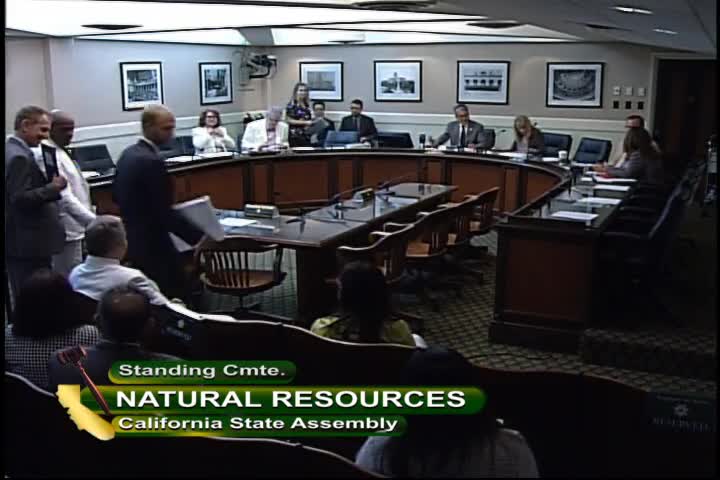
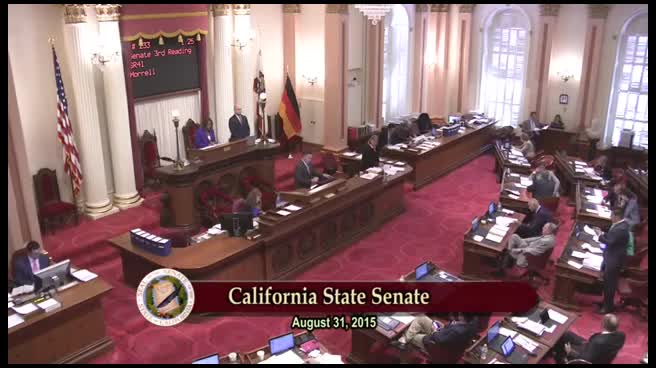

Bill Co-Author(s):