SB 219: Prisons: alternative custody.
- Session Year: 2015-2016
- House: Senate
- Latest Version Date: 2015-10-10
Existing law authorizes the Secretary of the Department of Corrections and Rehabilitation to offer a program under which female inmates who are committed to state prison may be allowed to participate in a voluntary alternative custody program in lieu of confinement in state prison. Existing law defines an alternative custody program to include confinement to a residential home, a residential drug or treatment program, or a transitional care facility that offers appropriate services. Existing law provides that female inmates sentenced to determinate sentences shall be eligible for participation in the program, subject to certain disqualifying criteria.
Except as specified, existing law requires the suspension of certain Medi-Cal benefits to an individual who is an inmate of a public institution. Existing law requires the state to retain responsibility for the medical, dental, and mental health needs of individuals participating in the alternative custody program.
This bill would provide that an inmates existing psychiatric or medical condition that requires ongoing care is not a basis for excluding the inmate from eligibility for the program.
The bill would also prescribe specific timeframes for, among other things, the review of an application to participate in the program, notifying an applicant when a determination has been made on that application, the development of an individualized treatment and rehabilitation plan, and release of the inmate into the program. The bill would require a notice of denial to specify the reasons the inmate has been denied participation in the program, and authorize an inmate to reapply for participation in the program or appeal a denial, as specified.
The bill would also require the secretary or his or her designee to assist an individual participating in the alternative custody program in obtaining health care coverage, including, but not limited to, assistance with having suspended Medi-Cal benefits reinstated, applying for Medi-Cal benefits, or obtaining health care coverage under a private health plan or policy. The bill would require that, to the extent not covered by a participants health care coverage, the state would retain responsibility for the medical, dental, and mental health needs of individuals participating in the alternative custody program.
Existing law authorizes the Secretary of the Department of Corrections and Rehabilitation to offer a program under which female inmates who are committed to state prison may be allowed to participate in a voluntary alternative custody program in lieu of confinement in state prison. Existing law defines an alternative custody program to include confinement to a residential home, a residential drug or treatment program, or a transitional care facility that offers appropriate services. Existing law provides that female inmates sentenced to determinate sentences shall be eligible for participation in the program, subject to certain disqualifying criteria.
Except as specified, existing law requires the suspension of certain Medi-Cal benefits to an individual who is an inmate of a public institution. Existing law requires the state to retain responsibility for the medical, dental, and mental health needs of individuals participating in the alternative custody program.
This bill would provide that an inmates existing psychiatric or medical condition that requires ongoing care is not a basis for excluding the inmate from eligibility for the program.
The bill would also prescribe specific timeframes for, among other things, the review of an application to participate in the program and program, notifying an applicant when a determination has been made on that application. application, the development of an individualized treatment and rehabilitation plan, and release of the inmate into the program. The bill would require a notice of denial to specify the reasons the inmate has been denied participation in the program, and authorize an inmate to reapply for participation in the program or appeal a denial, as specified.
The bill would also require the secretary or his or her designee to assist an individual participating in the alternative custody program in obtaining health care coverage, including, but not limited to, assistance with having suspended Medi-Cal benefits reinstated, applying for Medi-Cal benefits, or obtaining health care coverage under a private health plan or policy. The bill would require that, to the extent not covered by a participants health care coverage, the state would retain responsibility for the medical, dental, and mental health needs of individuals participating in the alternative custody program.
Existing law authorizes the Secretary of the Department of Corrections and Rehabilitation to offer a program under which female inmates who are committed to state prison may be allowed to participate in a voluntary alternative custody program in lieu of confinement in state prison. Existing law defines an alternative custody program to include confinement to a residential home, a residential drug or treatment program, or a transitional care facility that offers appropriate services. Existing law provides that female inmates sentenced to determinate sentences shall be eligible for participation in the program, subject to certain disqualifying criteria.
Except as specified, existing law requires the suspension of certain Medi-Cal benefits to an individual who is an inmate of a public institution. Existing law requires the state to retain responsibility for the medical, dental, and mental health needs of individuals participating in the alternative custody program.
This bill would provide that an inmates existing psychiatric or medical condition that requires ongoing care is not a basis for excluding the inmate from eligibility for the program.
The bill would also prescribe specific timeframes for, among other things, the review of an application to participate in the program and notifying an applicant when a determination has been made on that application. The bill would require a notice of denial to specify the reasons the inmate has been denied participation in the program, and authorize an inmate to reapply for participation in the program or appeal a denial, as specified.
The bill would also require the secretary or his or her designee to assist an individual participating in the alternative custody program in obtaining health care coverage, including, but not limited to, assistance with having suspended Medi-Cal benefits reinstated, applying for Medi-Cal benefits, or obtaining health care coverage under a private health plan or policy. The bill would require that, to the extent not covered by a participants health care coverage, the state would retain responsibility for the medical, dental, and mental health needs of individuals participating in the alternative custody program.
Existing law authorizes the Secretary of the Department of Corrections and Rehabilitation to offer a program under which female inmates who are committed to state prison may be allowed to participate in a voluntary alternative custody program in lieu of confinement in state prison. Existing law defines an alternative custody program to include confinement to a residential home, a residential drug or treatment program, or a transitional care facility that offers appropriate services. Existing law provides that female inmates sentenced to determinate sentences shall be eligible for participation in the program, subject to certain disqualifying criteria.
Except as specified, existing law requires the suspension of certain Medi-Cal benefits to an individual who is an inmate of a public institution. Existing law requires the state to retain responsibility for the medical, dental, and mental health needs of individuals participating in the alternative custody program.
This bill would additionally exclude a person who was sentenced to state prison pursuant to an initiative statute from participation in the program.
This bill would provide that an inmates existing psychiatric or medical condition that requires ongoing care is not a basis for excluding the inmate from eligibility for the program.
The bill would also prescribe specific timeframes for, among other things, the review of an application to participate in the program and notifying an applicant when a determination has been made on that application. The bill would require a notice of denial to specify the reasons the inmate has been denied participation in the program, and authorize an inmate to reapply for participation in the program or appeal a denial, as specified.
The bill would also require the secretary or his or her designee to assist an individual participating in the alternative custody program in obtaining health care coverage, including, but not limited to, assistance with having suspended Medi-Cal benefits reinstated, applying for Medi-Cal benefits, or obtaining health care coverage under a private health plan or policy. The bill would require that, to the extent not covered by a participants health care coverage, the state would retain responsibility for the medical, dental, and mental health needs of individuals participating in the alternative custody program.
(a)Notwithstanding any other law, the Secretary of the Department of Corrections and Rehabilitation is authorized to offer a program under which female inmates as specified in subdivision (c), who are not precluded by subdivision (d), and who have been committed to state prison may be allowed to participate in a voluntary alternative custody program as defined in subdivision (b) in lieu of their confinement in state prison. In order to qualify for the program an offender need not be confined in an institution under the jurisdiction of the Department of Corrections and Rehabilitation. Under this program, one day of participation in an alternative custody program shall be in lieu of one day of incarceration in the state prison. Participants in the program shall receive any sentence reduction credits that they would have received had they served their sentence in the state prison, and shall be subject to denial and loss of credit pursuant to subdivision (a) of Section 2932. The department may enter into contracts with county agencies, not-for-profit organizations, for-profit organizations, and others in order to promote alternative custody placements.
(b)As used in this section, an alternative custody program shall include, but not be limited to, the following:
(1)Confinement to a residential home during the hours designated by the department.
(2)Confinement to a residential drug or treatment program during the hours designated by the department.
(3)Confinement to a transitional care facility that offers appropriate services.
(c)Except as provided by subdivision (d), female inmates sentenced to state prison for a determinate term of imprisonment pursuant to Section 1170, and only those persons, are eligible to participate in the alternative custody program authorized by this section.
(d)An inmate committed to the state prison who meets any of the following criteria is not eligible to participate in the alternative custody program:
(1)The person has a current conviction for a violent felony as defined in Section 667.5.
(2)The person has a current conviction for a serious felony as defined in Sections 1192.7 and 1192.8.
(3)The person has a current or prior conviction for an offense that requires the person to register as a sex offender as provided in Chapter 5.5 (commencing with Section 290) of Title 9 of Part 1.
(4)The person was screened by the department using a validated risk assessment tool and determined to pose a high risk to commit a violent offense.
(5)The person has a history, within the last 10 years, of escape from a facility while under juvenile or adult custody, including, but not limited to, any detention facility, camp, jail, or state prison facility.
(e)An alternative custody program shall include the use of electronic monitoring, global positioning system devices, or other supervising devices for the purpose of helping to verify a participants compliance with the rules and regulations of the program. The devices shall not be used to eavesdrop or record any conversation, except a conversation between the participant and the person supervising the participant, in which case the recording of such a conversation is to be used solely for the purposes of voice identification.
(f)(1)In order to implement alternative custody for the population specified in subdivision (c), the department shall create, and the participant shall agree to and fully participate in, an individualized treatment and rehabilitation plan. When available and appropriate for the individualized treatment and rehabilitation plan, the department shall prioritize the use of evidence-based programs and services that will aid in the successful reentry into society while she takes part in alternative custody. Case management services shall be provided to support rehabilitation and to track the progress and individualized treatment plan compliance of the inmate.
(2)For purposes of this section, evidence-based practices means supervision policies, procedures, programs, and practices demonstrated by scientific research to reduce recidivism among individuals under probation, parole, or postrelease community supervision.
(g)The secretary shall prescribe reasonable rules and regulations under which the alternative custody program shall operate. The department shall adopt regulations necessary to effectuate this section, including emergency regulations as provided under Section 5058.3 and adopted pursuant to the Administrative Procedure Act (Chapter 3.5 (commencing with Section 11340) of Part 1 of Division 3 of Title 2 of the Government Code). The participant shall be informed in writing that she shall comply with the rules and regulations of the program, including, but not limited to, the following rules:
(1)The participant shall remain within the interior premises of her residence during the hours designated by the secretary or his or her designee.
(2)The participant shall be subject to search and seizure by a peace officer at any time of the day or night, with or without cause. In addition, the participant shall admit any peace officer designated by the secretary or his or her designee into the participants residence at any time for purposes of verifying the participants compliance with the conditions of her detention. Prior to participation in the alternative custody program, all participants shall agree in writing to these terms and conditions.
(3)The secretary or his or her designee may immediately retake the participant into custody to serve the balance of her sentence if the electronic monitoring or supervising devices are unable for any reason to properly perform their function at the designated place of detention, if the participant fails to remain within the place of detention as stipulated in the agreement, or if the participant for any other reason no longer meets the established criteria under this section.
(h)Whenever a peace officer supervising a participant has reasonable suspicion to believe that the participant is not complying with the rules or conditions of the program, or that the electronic monitoring devices are unable to function properly in the designated place of confinement, the peace officer may, under general or specific authorization of the secretary or his or her designee, and without a warrant of arrest, retake the participant into custody to complete the remainder of the original sentence.
(i)This section does not require the secretary or his or her designee to allow an inmate to participate in this program if it appears from the record that the inmate has not satisfactorily complied with reasonable rules and regulations while in custody. An inmate is eligible for participation in an alternative custody program only if the secretary or his or her designee concludes that the inmate meets the criteria for program participation established under this section and that the inmates participation is consistent with any reasonable rules and regulations prescribed by the secretary.
(1)The rules and regulations and administrative policies of the program shall be written and shall be given or made available to the participant upon assignment to the alternative custody program.
(2)The secretary or his or her designee shall have the sole discretion concerning whether to permit program participation as an alternative to custody in state prison. A risk and needs assessment shall be completed on each inmate to assist in the determination of eligibility for participation and the type of alternative custody.
(3)An inmates existing psychiatric or medical condition that requires ongoing care is not a basis for excluding the inmate from eligibility to participate in an alternative custody program authorized by this section.
(j)The secretary or his or her designee shall establish a timeline for the application process. The secretary or his or her designee shall respond to an applicant within two weeks of her application to inform the inmate that the application was received, and to notify the inmate of the eligibility criteria of the program. The secretary or his or her designee shall provide a written notice to the inmate of her acceptance or denial into the program. The individualized treatment and rehabilitation plan described in subdivision (f) shall be developed, in consultation with the inmate, after the applicant has been found potentially eligible for participation in the program and no later than 30 calendar days after the potential eligibility determination. Except as necessary to comply with any release notification requirements, the inmate shall be released to the program no later than seven business days following notice of acceptance into the program, or if this is not possible in the case of an inmate to be placed in a residential drug or treatment program or in a transitional care facility, the first day a contracted bed becomes available at the requested location. If the inmate is denied participation in the program, the notice of denial shall specify the reason the inmate was denied. The secretary or his or her designee shall maintain a record of the application and notice of denials for participation. The inmate may appeal the decision through normal grievance procedures or reapply for participation in the program 30 days after the notice of the denial.
(k)The secretary or his or her designee shall permit program participants to seek and retain employment in the community, attend psychological counseling sessions or educational or vocational training classes, participate in life skills or parenting training, utilize substance abuse treatment services, or seek medical and dental assistance based upon the participants individualized treatment and release plan. Participation in other rehabilitative services and programs may be approved by the case manager if it is specified as a requirement of the inmates individualized treatment and rehabilitative case plan. Willful failure of the program participant to return to the place of detention not later than the expiration of any period of time during which she is authorized to be away from the place of detention pursuant to this section, unauthorized departures from the place of detention, or tampering with or disabling, or attempting to tamper with or disable, an electronic monitoring device shall subject the participant to a return to custody pursuant to subdivisions (g) and (h). In addition, participants may be subject to forfeiture of credits pursuant to the provisions of Section 2932, or to discipline for violation of rules established by the secretary.
(l)(1)Notwithstanding any other law, the secretary or his or her designee shall provide the information specified in paragraph (2) regarding participants in an alternative custody program to the law enforcement agencies of the jurisdiction in which persons participating in an alternative custody program reside.
(2)The information required by paragraph (1) shall consist of the following:
(A)The participants name, address, and date of birth.
(B)The offense committed by the participant.
(C)The period of time the participant will be subject to an alternative custody program.
(3)The information received by a law enforcement agency pursuant to this subdivision may be used for the purpose of monitoring the impact of an alternative custody program on the community.
(m)It is the intent of the Legislature that the alternative custody program established under this section maintain the highest public confidence, credibility, and public safety. In the furtherance of these standards, the secretary may administer an alternative custody program pursuant to written contracts with appropriate public agencies or entities to provide specified program services. No public agency or entity entering into a contract may itself employ any person who is in an alternative custody program. The department shall determine the recidivism rate of each participant in an alternative custody program.
(n)An inmate participating in this program shall voluntarily agree to all of the provisions of the program in writing, including that she may be returned to confinement at any time with or without cause, and shall not be charged fees or costs for the program.
(o)(1)The secretary or his or her designee shall assist an individual participating in the alternative custody program in obtaining health care coverage, including, but not limited to, assistance with having suspended Medi-Cal benefits reinstated, applying for Medi-Cal benefits, or obtaining health care coverage under a private health plan or policy.
(2)To the extent not covered by a participants health care coverage, the state shall retain responsibility for the medical, dental, and mental health needs of individuals participating in the alternative custody program.
(p)The secretary shall adopt emergency regulations specifically governing participants in this program.
(q)If a phrase, clause, sentence, or provision of this section or application thereof to a person or circumstance is held invalid, that invalidity shall not affect any other phrase, clause, sentence, or provision or application of this section, which can be given effect without the invalid phrase, clause, sentence, or provision or application and to this end the provisions of this section are declared to be severable.
(a)Notwithstanding any other law, the Secretary of the Department of Corrections and Rehabilitation is authorized to offer a program under which female inmates as specified in subdivision (c), who are not precluded by subdivision (d), and who have been committed to state prison may be allowed to participate in a voluntary alternative custody program as defined in subdivision (b) in lieu of their confinement in state prison. In order to qualify for the program an offender need not be confined in an institution under the jurisdiction of the Department of Corrections and Rehabilitation. Under this program, one day of participation in an alternative custody program shall be in lieu of one day of incarceration in the state prison. Participants in the program shall receive any sentence reduction credits that they would have received had they served their sentence in the state prison, and shall be subject to denial and loss of credit pursuant to subdivision (a) of Section 2932. The department may enter into contracts with county agencies, not-for-profit organizations, for-profit organizations, and others in order to promote alternative custody placements.
(b)As used in this section, an alternative custody program shall include, but not be limited to, the following:
(1)Confinement to a residential home during the hours designated by the department.
(2)Confinement to a residential drug or treatment program during the hours designated by the department.
(3)Confinement to a transitional care facility that offers appropriate services.
(c)Except as provided by subdivision (d), female inmates sentenced to state prison for a determinate term of imprisonment pursuant to Section 1170, and only those persons, are eligible to participate in the alternative custody program authorized by this section.
(d)An inmate committed to the state prison who meets any of the following criteria is not eligible to participate in the alternative custody program:
(1)The person has a current conviction for a violent felony as defined in Section 667.5.
(2)The person has a current conviction for a serious felony as defined in Sections 1192.7 and 1192.8.
(3)The person has a current or prior conviction for an offense that requires the person to register as a sex offender as provided in Chapter 5.5 (commencing with Section 290) of Title 9 of Part 1.
(4)The person was screened by the department using a validated risk assessment tool and determined to pose a high risk to commit a violent offense.
(5)The person has a history, within the last 10 years, of escape from a facility while under juvenile or adult custody, including, but not limited to, any detention facility, camp, jail, or state prison facility.
(e)An alternative custody program shall include the use of electronic monitoring, global positioning system devices, or other supervising devices for the purpose of helping to verify a participants compliance with the rules and regulations of the program. The devices shall not be used to eavesdrop or record any conversation, except a conversation between the participant and the person supervising the participant, in which case the recording of such a conversation is to be used solely for the purposes of voice identification.
(f)(1)In order to implement alternative custody for the population specified in subdivision (c), the department shall create, and the participant shall agree to and fully participate in, an individualized treatment and rehabilitation plan. When available and appropriate for the individualized treatment and rehabilitation plan, the department shall prioritize the use of evidence-based programs and services that will aid in the successful reentry into society while she takes part in alternative custody. Case management services shall be provided to support rehabilitation and to track the progress and individualized treatment plan compliance of the inmate.
(2)For purposes of this section, evidence-based practices means supervision policies, procedures, programs, and practices demonstrated by scientific research to reduce recidivism among individuals under probation, parole, or postrelease community supervision.
(g)The secretary shall prescribe reasonable rules and regulations under which the alternative custody program shall operate. The department shall adopt regulations necessary to effectuate this section, including emergency regulations as provided under Section 5058.3 and adopted pursuant to the Administrative Procedure Act (Chapter 3.5 (commencing with Section 11340) of Part 1 of Division 3 of Title 2 of the Government Code). The participant shall be informed in writing that she shall comply with the rules and regulations of the program, including, but not limited to, the following rules:
(1)The participant shall remain within the interior premises of her residence during the hours designated by the secretary or his or her designee.
(2)The participant shall be subject to search and seizure by a peace officer at any time of the day or night, with or without cause. In addition, the participant shall admit any peace officer designated by the secretary or his or her designee into the participants residence at any time for purposes of verifying the participants compliance with the conditions of her detention. Prior to participation in the alternative custody program, all participants shall agree in writing to these terms and conditions.
(3)The secretary or his or her designee may immediately retake the participant into custody to serve the balance of her sentence if the electronic monitoring or supervising devices are unable for any reason to properly perform their function at the designated place of detention, if the participant fails to remain within the place of detention as stipulated in the agreement, or if the participant for any other reason no longer meets the established criteria under this section.
(h)Whenever a peace officer supervising a participant has reasonable suspicion to believe that the participant is not complying with the rules or conditions of the program, or that the electronic monitoring devices are unable to function properly in the designated place of confinement, the peace officer may, under general or specific authorization of the secretary or his or her designee, and without a warrant of arrest, retake the participant into custody to complete the remainder of the original sentence.
(i)This section does not require the secretary or his or her designee to allow an inmate to participate in this program if it appears from the record that the inmate has not satisfactorily complied with reasonable rules and regulations while in custody. An inmate is eligible for participation in an alternative custody program only if the secretary or his or her designee concludes that the inmate meets the criteria for program participation established under this section and that the inmates participation is consistent with any reasonable rules and regulations prescribed by the secretary.
(1)The rules and regulations and administrative policies of the program shall be written and shall be given or made available to the participant upon assignment to the alternative custody program.
(2)The secretary or his or her designee shall have the sole discretion concerning whether to permit program participation as an alternative to custody in state prison. A risk and needs assessment shall be completed on each inmate to assist in the determination of eligibility for participation and the type of alternative custody.
(3)An inmates existing psychiatric or medical condition that requires ongoing care is not a basis for excluding the inmate from eligibility to participate in an alternative custody program authorized by this section.
(j)The secretary or his or her designee shall establish a timeline for the application process. The secretary or his or her designee shall respond to an applicant within two weeks of her application to inform the inmate that the application was received, and to notify the inmate of the eligibility criteria of the program. The secretary or his or her designee shall provide a written notice to the inmate of her acceptance or denial into the program. The individualized treatment and rehabilitation plan described in subdivision (f) shall be developed, in consultation with the inmate, after the applicant has been found potentially eligible for participation in the program and no later than 30 calendar days after the potential eligibility determination. The Except as necessary to comply with any release notification requirements, the inmate shall be released to the program no later than five seven business days following notice of acceptance into the program. program, or if this is not possible in the case of an inmate to be placed in a residential drug or treatment program or in a transitional care facility, the first day a contracted bed becomes available at the requested location. If the inmate is denied participation in the program, the notice of denial shall specify the reason the inmate was denied. The secretary or his or her designee shall maintain a record of the application and notice of denials for participation. The inmate may appeal the decision through normal grievance procedures or reapply for participation in the program 30 days after the notice of the denial.
(k)The secretary or his or her designee shall permit program participants to seek and retain employment in the community, attend psychological counseling sessions or educational or vocational training classes, participate in life skills or parenting training, utilize substance abuse treatment services, or seek medical and dental assistance based upon the participants individualized treatment and release plan. Participation in other rehabilitative services and programs may be approved by the case manager if it is specified as a requirement of the inmates individualized treatment and rehabilitative case plan. Willful failure of the program participant to return to the place of detention not later than the expiration of any period of time during which she is authorized to be away from the place of detention pursuant to this section, unauthorized departures from the place of detention, or tampering with or disabling, or attempting to tamper with or disable, an electronic monitoring device shall subject the participant to a return to custody pursuant to subdivisions (g) and (h). In addition, participants may be subject to forfeiture of credits pursuant to the provisions of Section 2932, or to discipline for violation of rules established by the secretary.
(l)(1)Notwithstanding any other law, the secretary or his or her designee shall provide the information specified in paragraph (2) regarding participants in an alternative custody program to the law enforcement agencies of the jurisdiction in which persons participating in an alternative custody program reside.
(2)The information required by paragraph (1) shall consist of the following:
(A)The participants name, address, and date of birth.
(B)The offense committed by the participant.
(C)The period of time the participant will be subject to an alternative custody program.
(3)The information received by a law enforcement agency pursuant to this subdivision may be used for the purpose of monitoring the impact of an alternative custody program on the community.
(m)It is the intent of the Legislature that the alternative custody program established under this section maintain the highest public confidence, credibility, and public safety. In the furtherance of these standards, the secretary may administer an alternative custody program pursuant to written contracts with appropriate public agencies or entities to provide specified program services. No public agency or entity entering into a contract may itself employ any person who is in an alternative custody program. The department shall determine the recidivism rate of each participant in an alternative custody program.
(n)An inmate participating in this program shall voluntarily agree to all of the provisions of the program in writing, including that she may be returned to confinement at any time with or without cause, and shall not be charged fees or costs for the program.
(o)(1)The secretary or his or her designee shall assist an individual participating in the alternative custody program in obtaining health care coverage, including, but not limited to, assistance with having suspended Medi-Cal benefits reinstated, applying for Medi-Cal benefits, or obtaining health care coverage under a private health plan or policy.
(2)To the extent not covered by a participants health care coverage, the state shall retain responsibility for the medical, dental, and mental health needs of individuals participating in the alternative custody program.
(p)The secretary shall adopt emergency regulations specifically governing participants in this program.
(q)If a phrase, clause, sentence, or provision of this section or application thereof to a person or circumstance is held invalid, that invalidity shall not affect any other phrase, clause, sentence, or provision or application of this section, which can be given effect without the invalid phrase, clause, sentence, or provision or application and to this end the provisions of this section are declared to be severable.
(a)Notwithstanding any other law, the Secretary of the Department of Corrections and Rehabilitation is authorized to offer a program under which female inmates as specified in subdivision (c), who are not precluded by subdivision (d), and who have been committed to state prison may be allowed to participate in a voluntary alternative custody program as defined in subdivision (b) in lieu of their confinement in state prison. In order to qualify for the program an offender need not be confined in an institution under the jurisdiction of the Department of Corrections and Rehabilitation. Under this program, one day of participation in an alternative custody program shall be in lieu of one day of incarceration in the state prison. Participants in the program shall receive any sentence reduction credits that they would have received had they served their sentence in the state prison, and shall be subject to denial and loss of credit pursuant to subdivision (a) of Section 2932. The department may enter into contracts with county agencies, not-for-profit organizations, for-profit organizations, and others in order to promote alternative custody placements.
(b)As used in this section, an alternative custody program shall include, but not be limited to, the following:
(1)Confinement to a residential home during the hours designated by the department.
(2)Confinement to a residential drug or treatment program during the hours designated by the department.
(3)Confinement to a transitional care facility that offers appropriate services.
(c)Except as provided by subdivision (d), female inmates sentenced to state prison for a determinate term of imprisonment pursuant to Section 1170, and only those persons, are eligible to participate in the alternative custody program authorized by this section.
(d)An inmate committed to the state prison who meets any of the following criteria is not eligible to participate in the alternative custody program:
(1)The person has a current conviction for a violent felony as defined in Section 667.5.
(2)The person has a current conviction for a serious felony as defined in Sections 1192.7 and 1192.8.
(3)The person has a current or prior conviction for an offense that requires the person to register as a sex offender as provided in Chapter 5.5 (commencing with Section 290) of Title 9 of Part 1.
(4)The person was screened by the department using a validated risk assessment tool and determined to pose a high risk to commit a violent offense.
(5)The person has a history, within the last 10 years, of escape from a facility while under juvenile or adult custody, including, but not limited to, any detention facility, camp, jail, or state prison facility.
(e)An alternative custody program shall include the use of electronic monitoring, global positioning system devices, or other supervising devices for the purpose of helping to verify a participants compliance with the rules and regulations of the program. The devices shall not be used to eavesdrop or record any conversation, except a conversation between the participant and the person supervising the participant, in which case the recording of such a conversation is to be used solely for the purposes of voice identification.
(f)(1)In order to implement alternative custody for the population specified in subdivision (c), the department shall create, and the participant shall agree to and fully participate in, an individualized treatment and rehabilitation plan. When available and appropriate for the individualized treatment and rehabilitation plan, the department shall prioritize the use of evidence-based programs and services that will aid in the successful reentry into society while she takes part in alternative custody. Case management services shall be provided to support rehabilitation and to track the progress and individualized treatment plan compliance of the inmate.
(2)For purposes of this section, evidence-based practices means supervision policies, procedures, programs, and practices demonstrated by scientific research to reduce recidivism among individuals under probation, parole, or postrelease community supervision.
(g)The secretary shall prescribe reasonable rules and regulations under which the alternative custody program shall operate. The department shall adopt regulations necessary to effectuate this section, including emergency regulations as provided under Section 5058.3 and adopted pursuant to the Administrative Procedure Act (Chapter 3.5 (commencing with Section 11340) of Part 1 of Division 3 of Title 2 of the Government Code). The participant shall be informed in writing that she shall comply with the rules and regulations of the program, including, but not limited to, the following rules:
(1)The participant shall remain within the interior premises of her residence during the hours designated by the secretary or his or her designee.
(2)The participant shall be subject to search and seizure by a peace officer at any time of the day or night, with or without cause. In addition, the participant shall admit any peace officer designated by the secretary or his or her designee into the participants residence at any time for purposes of verifying the participants compliance with the conditions of her detention. Prior to participation in the alternative custody program, all participants shall agree in writing to these terms and conditions.
(3)The secretary or his or her designee may immediately retake the participant into custody to serve the balance of her sentence if the electronic monitoring or supervising devices are unable for any reason to properly perform their function at the designated place of detention, if the participant fails to remain within the place of detention as stipulated in the agreement, or if the participant for any other reason no longer meets the established criteria under this section.
(h)Whenever a peace officer supervising a participant has reasonable suspicion to believe that the participant is not complying with the rules or conditions of the program, or that the electronic monitoring devices are unable to function properly in the designated place of confinement, the peace officer may, under general or specific authorization of the secretary or his or her designee, and without a warrant of arrest, retake the participant into custody to complete the remainder of the original sentence.
(i)This section does not require the secretary or his or her designee to allow an inmate to participate in this program if it appears from the record that the inmate has not satisfactorily complied with reasonable rules and regulations while in custody. An inmate is eligible for participation in an alternative custody program only if the secretary or his or her designee concludes that the inmate meets the criteria for program participation established under this section and that the inmates participation is consistent with any reasonable rules and regulations prescribed by the secretary.
(1)The rules and regulations and administrative policies of the program shall be written and shall be given or made available to the participant upon assignment to the alternative custody program.
(2)The secretary or his or her designee shall have the sole discretion concerning whether to permit program participation as an alternative to custody in state prison. A risk and needs assessment shall be completed on each inmate to assist in the determination of eligibility for participation and the type of alternative custody.
(3)An inmates existing psychiatric or medical condition that requires ongoing care is not a basis for excluding the inmate from eligibility to participate in an alternative custody program authorized by this section.
(j)The secretary or his or her designee shall establish a timeline for the application process. The secretary or his or her designee shall respond to an applicant within two weeks of her application to inform the inmate that the application was received, and to notify the inmate of the ineligibility eligibility criteria of the program. The individualized treatment and rehabilitation plan described in subdivision (f) shall be developed during the two weeks following the notice of receipt of the application, in consultation with the inmate, during which time the decision whether to accept the inmate into the program shall be made, and the The secretary or his or her designee shall provide a written notice to the inmate of her acceptance or denial into the program. The individualized treatment and rehabilitation plan described in subdivision (f) shall be developed, in consultation with the inmate, after the applicant has been found eligible for participation in the program and no later than 30 calendar days after the eligibility determination. The inmate shall be released to the program no later than five business days following notice of acceptance into the program. If the inmate is denied participation in the program, the notice of denial shall specify the reason the inmate was denied. The secretary or his or her designee shall maintain a record of the application and notice of denials for participation. The inmate may, 30 days after the notice of denial, reapply for participation in the program, or may appeal the decision through normal grievance procedures or reapply for participation in the program 30 days after the notice of the denial.
(k)The secretary or his or her designee shall permit program participants to seek and retain employment in the community, attend psychological counseling sessions or educational or vocational training classes, participate in life skills or parenting training, utilize substance abuse treatment services, or seek medical and dental assistance based upon the participants individualized treatment and release plan. Participation in other rehabilitative services and programs may be approved by the case manager if it is specified as a requirement of the inmates individualized treatment and rehabilitative case plan. Willful failure of the program participant to return to the place of detention not later than the expiration of any period of time during which she is authorized to be away from the place of detention pursuant to this section, unauthorized departures from the place of detention, or tampering with or disabling, or attempting to tamper with or disable, an electronic monitoring device shall subject the participant to a return to custody pursuant to subdivisions (g) and (h). In addition, participants may be subject to forfeiture of credits pursuant to the provisions of Section 2932, or to discipline for violation of rules established by the secretary.
(l)(1)Notwithstanding any other law, the secretary or his or her designee shall provide the information specified in paragraph (2) regarding participants in an alternative custody program to the law enforcement agencies of the jurisdiction in which persons participating in an alternative custody program reside.
(2)The information required by paragraph (1) shall consist of the following:
(A)The participants name, address, and date of birth.
(B)The offense committed by the participant.
(C)The period of time the participant will be subject to an alternative custody program.
(3)The information received by a law enforcement agency pursuant to this subdivision may be used for the purpose of monitoring the impact of an alternative custody program on the community.
(m)It is the intent of the Legislature that the alternative custody program established under this section maintain the highest public confidence, credibility, and public safety. In the furtherance of these standards, the secretary may administer an alternative custody program pursuant to written contracts with appropriate public agencies or entities to provide specified program services. No public agency or entity entering into a contract may itself employ any person who is in an alternative custody program. The department shall determine the recidivism rate of each participant in an alternative custody program.
(n)An inmate participating in this program shall voluntarily agree to all of the provisions of the program in writing, including that she may be returned to confinement at any time with or without cause, and shall not be charged fees or costs for the program.
(o)(1)The secretary or his or her designee shall assist an individual participating in the alternative custody program in obtaining health care coverage, including, but not limited to, assistance with having suspended Medi-Cal benefits reinstated, applying for Medi-Cal benefits, or obtaining health care coverage under a private health plan or policy.
(2)To the extent not covered by a participants health care coverage, the state shall retain responsibility for the medical, dental, and mental health needs of individuals participating in the alternative custody program.
(p)The secretary shall adopt emergency regulations specifically governing participants in this program.
(q)If a phrase, clause, sentence, or provision of this section or application thereof to a person or circumstance is held invalid, that invalidity shall not affect any other phrase, clause, sentence, or provision or application of this section, which can be given effect without the invalid phrase, clause, sentence, or provision or application and to this end the provisions of this section are declared to be severable.
(a)Notwithstanding any other law, the Secretary of the Department of Corrections and Rehabilitation is authorized to offer a program under which female inmates as specified in subdivision (c), who are not precluded by subdivision (d), and who have been committed to state prison may be allowed to participate in a voluntary alternative custody program as defined in subdivision (b) in lieu of their confinement in state prison. In order to qualify for the program an offender need not be confined in an institution under the jurisdiction of the Department of Corrections and Rehabilitation. Under this program, one day of participation in an alternative custody program shall be in lieu of one day of incarceration in the state prison. Participants in the program shall receive any sentence reduction credits that they would have received had they served their sentence in the state prison, and shall be subject to denial and loss of credit pursuant to subdivision (a) of Section 2932. The department may enter into contracts with county agencies, not-for-profit organizations, for-profit organizations, and others in order to promote alternative custody placements.
(b)As used in this section, an alternative custody program shall include, but not be limited to, the following:
(1)Confinement to a residential home during the hours designated by the department.
(2)Confinement to a residential drug or treatment program during the hours designated by the department.
(3)Confinement to a transitional care facility that offers appropriate services.
(c)Except as provided by subdivision (d), female inmates sentenced to state prison for a determinate term of imprisonment pursuant to Section 1170, and only those persons, are eligible to participate in the alternative custody program authorized by this section.
(d)An inmate committed to the state prison who meets any of the following criteria is not eligible to participate in the alternative custody program:
(1)The person has a current conviction for a violent felony as defined in Section 667.5.
(2)The person has a current conviction for a serious felony as defined in Sections 1192.7 and 1192.8.
(3)The person has a current or prior conviction for an offense that requires the person to register as a sex offender as provided in Chapter 5.5 (commencing with Section 290) of Title 9 of Part 1.
(4)The person was sentenced to state prison pursuant to an initiative statute.
(5)
(4)The person was screened by the department using a validated risk assessment tool and determined to pose a high risk to commit a violent offense.
(6)
(5)The person has a history, within the last 10 years, of escape from a facility while under juvenile or adult custody, including, but not limited to, any detention facility, camp, jail, or state prison facility.
(e)An alternative custody program shall include the use of electronic monitoring, global positioning system devices, or other supervising devices for the purpose of helping to verify a participants compliance with the rules and regulations of the program. The devices shall not be used to eavesdrop or record any conversation, except a conversation between the participant and the person supervising the participant, in which case the recording of such a conversation is to be used solely for the purposes of voice identification.
(f)(1)In order to implement alternative custody for the population specified in subdivision (c), the department shall create, and the participant shall agree to and fully participate in, an individualized treatment and rehabilitation plan. When available and appropriate for the individualized treatment and rehabilitation plan, the department shall prioritize the use of evidence-based programs and services that will aid in the successful reentry into society while she takes part in alternative custody. Case management services shall be provided to support rehabilitation and to track the progress and individualized treatment plan compliance of the inmate.
(2)For purposes of this section, evidence-based practices means supervision policies, procedures, programs, and practices demonstrated by scientific research to reduce recidivism among individuals under probation, parole, or postrelease community supervision.
(g)The secretary shall prescribe reasonable rules and regulations under which the alternative custody program shall operate. The department shall adopt regulations necessary to effectuate this section, including emergency regulations as provided under Section 5058.3 and adopted pursuant to the Administrative Procedure Act (Chapter 3.5 (commencing with Section 11340) of Part 1 of Division 3 of Title 2 of the Government Code). The participant shall be informed in writing that she shall comply with the rules and regulations of the program, including, but not limited to, the following rules:
(1)The participant shall remain within the interior premises of her residence during the hours designated by the secretary or his or her designee.
(2)The participant shall be subject to search and seizure by a peace officer at any time of the day or night, with or without cause. In addition, the participant shall admit any peace officer designated by the secretary or his or her designee into the participants residence at any time for purposes of verifying the participants compliance with the conditions of her detention. Prior to participation in the alternative custody program, all participants shall agree in writing to these terms and conditions.
(3)The secretary or his or her designee may immediately retake the participant into custody to serve the balance of her sentence if the electronic monitoring or supervising devices are unable for any reason to properly perform their function at the designated place of detention, if the participant fails to remain within the place of detention as stipulated in the agreement, or if the participant for any other reason no longer meets the established criteria under this section.
(h)Whenever a peace officer supervising a participant has reasonable suspicion to believe that the participant is not complying with the rules or conditions of the program, or that the electronic monitoring devices are unable to function properly in the designated place of confinement, the peace officer may, under general or specific authorization of the secretary or his or her designee, and without a warrant of arrest, retake the participant into custody to complete the remainder of the original sentence.
(i)This section does not require the secretary or his or her designee to allow an inmate to participate in this program if it appears from the record that the inmate has not satisfactorily complied with reasonable rules and regulations while in custody. An inmate is eligible for participation in an alternative custody program only if the secretary or his or her designee concludes that the inmate meets the criteria for program participation established under this section and that the inmates participation is consistent with any reasonable rules and regulations prescribed by the secretary.
(1)The rules and regulations and administrative policies of the program shall be written and shall be given or made available to the participant upon assignment to the alternative custody program.
(2)The secretary or his or her designee shall have the sole discretion concerning whether to permit program participation as an alternative to custody in state prison. A risk and needs assessment shall be completed on each inmate to assist in the determination of eligibility for participation and the type of alternative custody.
(3)An inmates existing psychiatric or medical condition that requires ongoing care is not a basis for excluding the inmate from eligibility to participate in an alternative custody program authorized by this section.
(j)The secretary or his or her designee shall establish a timeline for the application process. The secretary or his or her designee shall respond to an applicant within two weeks of his or her application to inform the inmate that the application was received, and to notify the inmate of the ineligibility criteria of the program. The individualized treatment and rehabilitation plan described in subdivision (f) shall be developed during the two weeks following the notice of receipt of the application, in consultation with the inmate, during which time the decision whether to accept the inmate into the program shall be made, and the secretary or his or her designee shall provide a written notice to the inmate of his or her acceptance or denial into the program. The inmate shall be released to the program no later than five business days following notice of acceptance into the program. If the inmate is denied participation in the program, the notice of denial shall specify the reason the inmate was denied. The secretary or his or her designee shall maintain a record of the application and notice of denials for participation. The inmate may, 30 days after the notice of denial, reapply for participation in the program, or appeal the decision through normal grievance procedures.
(k)The secretary or his or her designee shall permit program participants to seek and retain employment in the community, attend psychological counseling sessions or educational or vocational training classes, participate in life skills or parenting training, utilize substance abuse treatment services, or seek medical and dental assistance based upon the participants individualized treatment and release plan. Participation in other rehabilitative services and programs may be approved by the case manager if it is specified as a requirement of the inmates individualized treatment and rehabilitative case plan. Willful failure of the program participant to return to the place of detention not later than the expiration of any period of time during which she is authorized to be away from the place of detention pursuant to this section, unauthorized departures from the place of detention, or tampering with or disabling, or attempting to tamper with or disable, an electronic monitoring device shall subject the participant to a return to custody pursuant to subdivisions (g) and (h). In addition, participants may be subject to forfeiture of credits pursuant to the provisions of Section 2932, or to discipline for violation of rules established by the secretary.
(l)(1)Notwithstanding any other law, the secretary or his or her designee shall provide the information specified in paragraph (2) regarding participants in an alternative custody program to the law enforcement agencies of the jurisdiction in which persons participating in an alternative custody program reside.
(2)The information required by paragraph (1) shall consist of the following:
(A)The participants name, address, and date of birth.
(B)The offense committed by the participant.
(C)The period of time the participant will be subject to an alternative custody program.
(3)The information received by a law enforcement agency pursuant to this subdivision may be used for the purpose of monitoring the impact of an alternative custody program on the community.
(m)It is the intent of the Legislature that the alternative custody program established under this section maintain the highest public confidence, credibility, and public safety. In the furtherance of these standards, the secretary may administer an alternative custody program pursuant to written contracts with appropriate public agencies or entities to provide specified program services. No public agency or entity entering into a contract may itself employ any person who is in an alternative custody program. The department shall determine the recidivism rate of each participant in an alternative custody program.
(n)An inmate participating in this program shall voluntarily agree to all of the provisions of the program in writing, including that she may be returned to confinement at any time with or without cause, and shall not be charged fees or costs for the program.
(o)(1)The secretary or his or her designee shall assist an individual participating in the alternative custody program in obtaining health care coverage, including, but not limited to, assistance with having suspended Medi-Cal benefits reinstated, applying for Medi-Cal benefits, or obtaining health care coverage under a private health plan or policy.
(2)To the extent not covered by a participants health care coverage, the state shall retain responsibility for the medical, dental, and mental health needs of individuals participating in the alternative custody program.
(p)The secretary shall adopt emergency regulations specifically governing participants in this program.
(q)If a phrase, clause, sentence, or provision of this section or application thereof to a person or circumstance is held invalid, that invalidity shall not affect any other phrase, clause, sentence, or provision or application of this section, which can be given effect without the invalid phrase, clause, sentence, or provision or application and to this end the provisions of this section are declared to be severable.
(a)Notwithstanding any other law, the Secretary of the Department of Corrections and Rehabilitation is authorized to offer a program under which female inmates as specified in subdivision (c), who are not precluded by subdivision (d), and who have been committed to state prison may be allowed to participate in a voluntary alternative custody program as defined in subdivision (b) in lieu of their confinement in state prison. In order to qualify for the program an offender need not be confined in an institution under the jurisdiction of the Department of Corrections and Rehabilitation. Under this program, one day of participation in an alternative custody program shall be in lieu of one day of incarceration in the state prison. Participants in the program shall receive any sentence reduction credits that they would have received had they served their sentence in the state prison, and shall be subject to denial and loss of credit pursuant to subdivision (a) of Section 2932. The department may enter into contracts with county agencies, not-for-profit organizations, for-profit organizations, and others in order to promote alternative custody placements.
(b)As used in this section, an alternative custody program shall include, but not be limited to, the following:
(1)Confinement to a residential home during the hours designated by the department.
(2)Confinement to a residential drug or treatment program during the hours designated by the department.
(3)Confinement to a transitional care facility that offers appropriate services.
(c)Except as provided by subdivision (d), female inmates sentenced to state prison for a determinate term of imprisonment pursuant to Section 1170, and only those persons, shall be are eligible to participate in the alternative custody program authorized by this section.
(d)An inmate committed to the state prison who meets any of the following criteria shall is not be eligible to participate in the alternative custody program:
(1)The person has a current conviction for a violent felony as defined in Section 667.5.
(2)The person has a current conviction for a serious felony as defined in Sections 1192.7 and 1192.8.
(3)The person has a current or prior conviction for an offense that requires the person to register as a sex offender as provided in Chapter 5.5 (commencing with Section 290) of Title 9 of Part 1.
(4)The person was sentenced to state prison pursuant to an initiative statute.
(4)
(5)The person was screened by the department using a validated risk assessment tool and determined to pose a high risk to commit a violent offense.
(5)
(6)The person has a history, within the last 10 years, of escape from a facility while under juvenile or adult custody, including, but not limited to, any detention facility, camp, jail, or state prison facility.
(e)An alternative custody program shall include the use of electronic monitoring, global positioning system devices, or other supervising devices for the purpose of helping to verify a participants compliance with the rules and regulations of the program. The devices shall not be used to eavesdrop or record any conversation, except a conversation between the participant and the person supervising the participant, in which case the recording of such a conversation is to be used solely for the purposes of voice identification.
(f)(1)In order to implement alternative custody for the population specified in subdivision (c), the department shall create, and the participant shall agree to and fully participate in, an individualized treatment and rehabilitation plan. When available and appropriate for the individualized treatment and rehabilitation plan, the department shall prioritize the use of evidence-based programs and services that will aid in the successful reentry into society while she takes part in alternative custody. Case management services shall be provided to support rehabilitation and to track the progress and individualized treatment plan compliance of the inmate.
(2)For purposes of this section, evidence-based practices means supervision policies, procedures, programs, and practices demonstrated by scientific research to reduce recidivism among individuals under probation, parole, or postrelease community supervision.
(g)The secretary shall prescribe reasonable rules and regulations under which the alternative custody program shall operate. The department shall adopt regulations necessary to effectuate this section, including emergency regulations as provided under Section 5058.3 and adopted pursuant to the Administrative Procedure Act (Chapter 3.5 (commencing with Section 11340) of Part 1 of Division 3 of Title 2 of the Government Code). The participant shall be informed in writing that she shall comply with the rules and regulations of the program, including, but not limited to, the following rules:
(1)The participant shall remain within the interior premises of her residence during the hours designated by the secretary or his or her designee.
(2)The participant shall be subject to search and seizure by a peace officer at any time of the day or night, with or without cause. In addition, the participant shall admit any peace officer designated by the secretary or his or her designee into the participants residence at any time for purposes of verifying the participants compliance with the conditions of her detention. Prior to participation in the alternative custody program, all participants shall agree in writing to these terms and conditions.
(3)The secretary or his or her designee may immediately retake the participant into custody to serve the balance of her sentence if the electronic monitoring or supervising devices are unable for any reason to properly perform their function at the designated place of detention, if the participant fails to remain within the place of detention as stipulated in the agreement, or if the participant for any other reason no longer meets the established criteria under this section.
(h)Whenever a peace officer supervising a participant has reasonable suspicion to believe that the participant is not complying with the rules or conditions of the program, or that the electronic monitoring devices are unable to function properly in the designated place of confinement, the peace officer may, under general or specific authorization of the secretary or his or her designee, and without a warrant of arrest, retake the participant into custody to complete the remainder of the original sentence.
(i)Nothing in this This section shall be construed to does not require the secretary or his or her designee to allow an inmate to participate in this program if it appears from the record that the inmate has not satisfactorily complied with reasonable rules and regulations while in custody. An inmate shall be is eligible for participation in an alternative custody program only if the secretary or his or her designee concludes that the inmate meets the criteria for program participation established under this section and that the inmates participation is consistent with any reasonable rules and regulations prescribed by the secretary.
(1)The rules and regulations and administrative policies of the program shall be written and shall be given or made available to the participant upon assignment to the alternative custody program.
(2)The secretary or his or her designee shall have the sole discretion concerning whether to permit program participation as an alternative to custody in state prison. A risk and needs assessment shall be completed on each inmate to assist in the determination of eligibility for participation and the type of alternative custody.
(3)An inmates existing psychiatric or medical condition that requires ongoing care is not a basis for excluding the inmate from eligibility to participate in an alternative custody program authorized by this section.
(j)The secretary or his or her designee shall establish a timeline for the application process. The secretary or his or her designee shall respond to an applicant within two weeks of his or her application to inform the inmate that the application was received, and to notify the inmate of the ineligibility criteria of the program. The individualized treatment and rehabilitation plan described in subdivision (f) shall be developed during the two weeks following the notice of receipt of the application, in consultation with the inmate, during which time the decision whether to accept the inmate into the program shall be made, and the secretary or his or her designee shall provide a written notice to the inmate of his or her acceptance or denial into the program. The inmate shall be released to the program no later than five business days following notice of acceptance into the program. If the inmate is denied participation in the program, the notice of denial shall specify the reason the inmate was denied. The secretary or his or her designee shall maintain a record of the application and notice of denials for participation. The inmate may, 30 days after the notice of denial, reapply for participation in the program, or appeal the decision through normal grievance procedures.
(j)
(k)The secretary or his or her designee shall permit program participants to seek and retain employment in the community, attend psychological counseling sessions or educational or vocational training classes, participate in life skills or parenting training, utilize substance abuse treatment services, or seek medical and dental assistance based upon the participants individualized treatment and release plan. Participation in other rehabilitative services and programs may be approved by the case manager if it is specified as a requirement of the inmates individualized treatment and rehabilitative case plan. Willful failure of the program participant to return to the place of detention not later than the expiration of any period of time during which she is authorized to be away from the place of detention pursuant to this section, unauthorized departures from the place of detention, or tampering with or disabling, or attempting to tamper with or disable, an electronic monitoring device shall subject the participant to a return to custody pursuant to subdivisions (g) and (h). In addition, participants may be subject to forfeiture of credits pursuant to the provisions of Section 2932, or to discipline for violation of rules established by the secretary.
(k)
(l)(1)Notwithstanding any other law, the secretary or his or her designee shall provide the information specified in paragraph (2) regarding participants in an alternative custody program to the law enforcement agencies of the jurisdiction in which persons participating in an alternative custody program reside.
(2)The information required by paragraph (1) shall consist of the following:
(A)The participants name, address, and date of birth.
(B)The offense committed by the participant.
(C)The period of time the participant will be subject to an alternative custody program.
(3)The information received by a law enforcement agency pursuant to this subdivision may be used for the purpose of monitoring the impact of an alternative custody program on the community.
(l)
(m)It is the intent of the Legislature that the alternative custody program established under this section maintain the highest public confidence, credibility, and public safety. In the furtherance of these standards, the secretary may administer an alternative custody program pursuant to written contracts with appropriate public agencies or entities to provide specified program services. No public agency or entity entering into a contract may itself employ any person who is in an alternative custody program. The department shall determine the recidivism rate of each participant in an alternative custody program.
(m)
(n)An inmate participating in this program must shall voluntarily agree to all of the provisions of the program in writing, including that she may be returned to confinement at any time with or without cause, and shall not be charged fees or costs for the program.
(o)(1)The secretary or his or her designee shall assist an individual participating in the alternative custody program in obtaining health care coverage, including, but not limited to, assistance with having suspended Medi-Cal benefits reinstated, applying for Medi-Cal benefits, or obtaining health care coverage under a private health plan or policy.
(n)The
(2)To the extent not covered by a participants health care coverage, the state shall retain responsibility for the medical, dental, and mental health needs of individuals participating in the alternative custody program.
(o)
(p)The secretary shall adopt emergency regulations specifically governing participants in this program.
(p)
(q)If a phrase, clause, sentence, or provision of this section or application thereof to a person or circumstance is held invalid, that invalidity shall not affect any other phrase, clause, sentence, or provision or application of this section, which can be given effect without the invalid phrase, clause, sentence, or provision or application and to this end the provisions of this section are declared to be severable.
|
Date
|
Status
|
|---|---|
| Jun 2, 2015 | Read third time. Passed. (Ayes 24. Noes 14.) Ordered to the Assembly. |
| Oct 10, 2015 | Chaptered by Secretary of State. Chapter 762, Statutes of 2015. |
| Oct 10, 2015 | Approved by the Governor. |
| Sep 3, 2015 | Enrolled and presented to the Governor at 10 a.m. |
| Sep 1, 2015 | Assembly amendments concurred in. (Ayes 25. Noes 14.) Ordered to engrossing and enrolling. |
| Sep 1, 2015 | Assembly amendments concurred in. (Ayes 25. Noes 14. Page 2367.) Ordered to engrossing and enrolling. |
| Aug 27, 2015 | Read third time. Passed. (Ayes 61. Noes 15. Page 2630.) Ordered to the Senate. |
| Aug 27, 2015 | Read third time. Passed. Ordered to the Senate. |
| Aug 27, 2015 | In Senate. Concurrence in Assembly amendments pending. |
| Aug 20, 2015 | Read second time. Ordered to third reading. |
| Aug 19, 2015 | From committee: Do pass. (Ayes 12. Noes 5.) (August 19). |
| Jul 9, 2015 | From committee with author's amendments. Read second time and amended. Re-referred to Com. on APPR. |
| Jul 1, 2015 | From committee: Do pass and re-refer to Com. on APPR. (Ayes 7. Noes 0.) (June 30). Re-referred to Com. on APPR. |
| Jun 11, 2015 | Referred to Com. on PUB. S. |
| Feb 12, 2015 | Introduced. Read first time. To Com. on RLS. for assignment. To print. |
| Jun 2, 2015 | Read third time. Passed. (Ayes 24. Noes 14. Page 1250.) Ordered to the Assembly. |
| Jun 2, 2015 | In Assembly. Read first time. Held at Desk. |
| Jun 1, 2015 | Read second time and amended. Ordered to third reading. |
| May 28, 2015 | From committee: Do pass as amended. (Ayes 5. Noes 2.) (May 28). |
| May 28, 2015 | From committee: Do pass as amended. (Ayes 5. Noes 2. Page 1149.) (May 28). |
| May 23, 2015 | Set for hearing May 28. |
| Apr 20, 2015 | April 20 hearing: Placed on APPR. suspense file. |
| Apr 10, 2015 | Set for hearing April 20. |
| Apr 7, 2015 | From committee: Do pass and re-refer to Com. on APPR. (Ayes 5. Noes 2. Page 507.) (April 7). Re-referred to Com. on APPR. |
| Mar 26, 2015 | From committee with author's amendments. Read second time and amended. Re-referred to Com. on PUB. S. |
| Mar 10, 2015 | Set for hearing April 7. |
| Feb 26, 2015 | Referred to Com. on PUB. S. |
| Feb 13, 2015 | From printer. May be acted upon on or after March 15. |
|
Date
|
Description
|
Location
|
Votes
|
|
|---|---|---|---|---|
| Sep 1, 2015 | Unfinished Business SB219 Liu Concurrence | Senate Floor |
Passed |
|
| Aug 27, 2015 | SB 219 Liu Senate Third Reading By QUIRK | Assembly Floor |
Passed |
|
| Aug 19, 2015 | Do pass. | Assembly Standing Committee on Appropriations |
Passed |
|
| Jun 30, 2015 | Do pass and be re-referred to the Committee on [Appropriations] | Assembly Standing Committee on Public Safety |
Passed |
|
| Jun 2, 2015 | Senate 3rd Reading SB219 Liu | Senate Floor |
Passed |
|
| May 28, 2015 | Do pass as amended | Senate Standing Committee on Appropriations |
Passed |
|
| Apr 20, 2015 | Placed on suspense file | Senate Standing Committee on Appropriations |
Passed |
|
| Apr 7, 2015 | Do pass, but first be re-referred to the Committee on [Appropriations] | Senate Standing Committee on Public Safety |
Passed |
This list shows positions taken on this bill by organizations on the date displayed, which is linked to the original source.
Positions by individuals are not included.
|
Organization
|
Position
|
Date
|
|---|---|---|
| A New PATH | ** Support | Sep 1, 2015 |
| AllCare Alliance | ** Support | Sep 1, 2015 |
| America Friends Service Committee | * Support | Apr 7, 2015 |
| California Attorneys For Criminal Justice | ** Support | Sep 1, 2015 |
| California Catholic Conference | ** Support | Sep 1, 2015 |
| California Coalition for Women Prisoners | ** Support | Sep 1, 2015 |
| California Families Against Solitary Confinement | ** Support | Sep 1, 2015 |
| California Latinas for Reproductive Justice | ** Support | Aug 19, 2015 |
| California Partnership | ** Support | Sep 1, 2015 |
| California Public Defenders Association | ** Support | Sep 1, 2015 |
| Californians for a Responsible Budget | ** Support | Sep 1, 2015 |
| Californians for Safety and Justice | ** Support | Sep 1, 2015 |
| Center on Juvenile Justice and Criminal Justice | ** Support | Sep 1, 2015 |
| Communities United or Restorative Youth Justice | ** Support | Sep 1, 2015 |
| Courage Campaign | ** Support | Sep 1, 2015 |
| Dignity and Power Now | ** Support | Sep 1, 2015 |
| Drug Policy Alliance | ** Support | Aug 19, 2015 |
| Ella Baker Center For Human Rights | ** Support | Sep 1, 2015 |
| Friends Committee On Legislation Of California | ** Support | Sep 1, 2015 |
| Justice Now | ** Support | Sep 1, 2015 |
| Life Support Alliance | * Support | Apr 7, 2015 |
| Nami California | ** Support | Aug 19, 2015 |
| National Association of Social Workers California Chapter | ** Support | Aug 19, 2015 |
| One individual | ** Support | Jun 2, 2015 |
| Returning Home Foundation | ** Support | Sep 1, 2015 |
| The Los Angeles Regional Reentry Partnership | ** Support | Sep 1, 2015 |
| Western Regional Advocacy Project | ** Support | Sep 1, 2015 |
| Women's Prison Association | ** Support | Sep 1, 2015 |
SB 219
Page 8
|
Office of Senate Floor Analyses (916) 651-1520 Fax: (916) 327-4478 |
UNFINISHED BUSINESS
Bill No: SB 219
Amended: 7/9/15
SENATE PUBLIC SAFETY COMMITTEE: 5-2, 4/7/15
AYES: Hancock, Leno, Liu, McGuire, Monning
NOES: Anderson, Stone
SENATE APPROPRIATIONS COMMITTEE: 5-2, 5/28/15
AYES: Lara, Beall, Hill, Leyva, Mendoza
NOES: Bates, Nielsen
SENATE FLOOR: 24-14, 6/2/15
AYES: Allen, Beall, Block, De León, Glazer, Hall, Hancock, Hernandez, Hertzberg, Hill, Hueso, Jackson, Lara, Leno, Leyva, Liu, Mendoza, Mitchell, Monning, Pan, Pavley, Roth, Wieckowski, Wolk
NOES: Anderson, Bates, Berryhill, Cannella, Fuller, Gaines, Huff, Moorlach, Morrell, Nguyen, Nielsen, Runner, Stone, Vidak
NO VOTE RECORDED: Galgiani, McGuire
ASSEMBLY FLOOR: 61-15, 8/27/15 - See last page for vote
SUBJECT: Prisons: alternative custody
SOURCE: Californians for a Responsible Budget
Justice Now
DIGEST: This bill (1) provides that an inmate’s existing psychiatric or medical condition that requires ongoing care is not a basis for excluding the inmate from eligibility from the California Department of Corrections and Rehabilitation’s (CDCR) voluntary alternative custody program (ACP); (2) requires CDCR to meet a variety of timeframes in processing applications for ACP; and, (3) requires CDCR to assist individuals participating in ACP in obtaining health care coverage, including, but not limited to Medi-Cal benefits.
Assembly Amendments state that, except as necessary to comply with any release notification requirements, the inmate must be released to the program no later than seven business days following notice of acceptance into the program, or if this is not possible in the case of an inmate to be placed in a residential drug or treatment program or in a transitional care facility, the first day a contracted bed becomes available at the requested location.
Existing law:
Creates in state government the CDCR, to be headed by a secretary, who shall be appointed by the Governor, subject to Senate confirmation, and shall serve at the pleasure of the Governor. (Government Code § 12838.) CDCR shall consist of Adult Operations, Adult Programs, Health Care Services, Juvenile Justice, the Board of Parole Hearings, the State Commission on Juvenile Justice, the Prison Industry Authority, and the Prison Industry Board. (Id.)
Authorizes the Secretary of CDCR to offer a program under which female inmates, as specified, who have been committed to state prison may be allowed to participate in a voluntary ACP in lieu of their confinement in state prison. In order to qualify for the program an offender need not be confined in an institution under the jurisdiction of CDCR. Under this program, one day of participation is in lieu of one day of incarceration. Participants in the program receive any sentence reduction credits that they would have received had they served their sentence in the state prison, and shall be subject to denial and loss of credit, as specified. (Penal Code § 1170.05(a).)
States, in Penal Code Section 1170.05 (b), that an ACP must include, but not be limited to, the following:
Confinement to a residential home during the hours designated by CDCR.
Confinement to a residential drug or treatment program during the hours designated by CDCR.
Confinement to a transitional care facility that offers appropriate services.
States, in Penal Code Section 1170.05 (c) and (d), that female inmates sentenced to state prison for a determinate term of imprisonment pursuant to Section 1170, and only those persons, must be eligible to participate in an ACP, except for an inmate who:
Has a current conviction for a violent felony as defined in Section 667.5.
Has a current conviction for a serious felony as defined in Sections 1192.7 and 1192.8.
Has a current or prior conviction for an offense that requires the person to register as a sex offender as provided in Chapter 5.5 of Title 9 of Part 1.
Was screened by CDCR using a validated risk assessment tool and determined to pose a high risk to commit a violent offense.
Has a history, within the last 10 years, of escape from a facility while under juvenile or adult custody, including, but not limited to, any detention facility, camp, jail, or state prison facility.
Requires an ACP to include the use of electronic monitoring, global positioning system devices, or other supervising devices for the purpose of helping to verify a participant's compliance with the rules and regulations of the program. (Penal Code § 1170.05(e).)
Requires CDCR to create, and the participant must agree to and fully participate in, an individualized treatment and rehabilitation plan. When available and appropriate for the individualized treatment and rehabilitation plan, CDCR shall prioritize the use of evidence-based programs and services that will aid in the successful reentry into society while she takes part in alternative custody. Case management services must be provided to support rehabilitation and to track the progress and individualized treatment plan compliance of the inmate. (Penal Code § 1170.05(f).)
States that CDCR is not required to allow an inmate to participate in this program if it appears from the record that the inmate has not satisfactorily complied with reasonable rules and regulations while in custody. An inmate is eligible for participation in an ACP only if it is concluded that the inmate meets the criteria for program participation and that the inmate’s participation is consistent with any reasonable rules and regulations prescribed by CDCR. CDCR has the sole discretion concerning whether to permit program participation as an alternative to custody in state prison. A risk and needs assessment must be completed on each inmate to assist in the determination of eligibility for participation and the type of alternative custody. (Penal Code § 1170.05 (i).)
Permits the secretary or his or her designee to permit program participants to seek and retain employment in the community, attend psychological counseling sessions or educational or vocational training classes, participate in life skills or parenting training, utilize substance abuse treatment services, or seek medical and dental assistance based upon the participant's individualized treatment and release plan. Participation in other rehabilitative services and programs may be approved by the case manager if it is specified as a requirement of the inmate's individualized treatment and rehabilitative case plan. Willful failure of the program participant to return to the place of detention not later than the expiration of any period of time during which he or she is authorized to be away, unauthorized departures, or tampering with or disabling, or attempting to tamper with or disable, an electronic monitoring device subjects the participant to a return to custody. In addition, participants may be subject to forfeiture of credits, or to discipline for violation of rules established by CDCR. (Penal Code § 1170.05 (j).)
Allows CDCR to administer an ACP pursuant to written contracts with appropriate public agencies or entities to provide specified program services. CDCR is required to determine the recidivism rate of each participant in an alternative custody program. (Penal Code § 1170.05 (l).)
States that an inmate participating in an ACP must voluntarily agree to all of the provisions of the program in writing, including that she may be returned to confinement at any time with or without cause, and cannot be charged fees or costs for the program. (Penal Code § 1170.05 (m).)
Requires the state to retain responsibility for the medical, dental, and mental health needs of individuals participating in ACP. (Penal Code § 1170.05 (n).)
This bill:
Provides that an inmate’s existing psychiatric or medical condition that requires ongoing care is not a basis for excluding the inmate from eligibility for the program.
Prescribes specific timeframes for, among other things, the review of an application to participate in the program and notifying an applicant when a determination has been made on that application. Requires a notice of denial to specify the reasons the inmate has been denied participation in the program, and authorizes an inmate to reapply for participation in the program or appeal a denial, as specified.
Requires CDCR to assist an individual participating in the alternative custody program in obtaining health care coverage, including, but not limited to, assistance with having suspended Medi-Cal benefits reinstated, applying for Medi-Cal benefits, or obtaining health care coverage under a private health plan or policy. Requires that, to the extent not covered by a participant’s health care coverage, the state would retain responsibility for the medical, dental, and mental health needs of individuals participating in ACP.
Background
According to information provided by CDCR, as of March 17, 2015, there were 67 offenders in the ACP. At that time, CDCR had approximately 440 active ACP/EACP (enhanced ACP) applications at various stages of the process. Applications are generally screened within three to five days of receipt, and the entire process takes approximately 55 days. According to CDCR, “[i]nmates with mental or medical conditions are accepted to participate in ACP/EACP on a case-by-case basis, and are not categorically denied participation solely based on such a condition. Such inmates may be denied participation because their condition requires a level of care not available in an acceptable ACP environment upon release.”
An Individual Treatment Rehabilitative Plan (ITRP) is requested once the application is screened for criteria eligibility. The ITRP is generally completed within five days. CDCR states that, in most cases, once the inmate is endorsed to ACP by the Classification Services Representative; the inmate is transferred within 14 days.
This bill makes it clear that that an inmate’s existing psychiatric or medical condition that requires ongoing care is not a basis for excluding the inmate from eligibility for the program.
It further places specific timeframes on the application process and release to ACP and requires that an ITRP be done for every inmate that is found eligible for participation in the program.
In cases where the inmate is denied participation, the notice of denial shall specify the reason the inmate was denied. The inmate may, 30 days after the notice of denial, reapply for participation in ACP, or appeal the decision through the normal grievance process.
This bill, additionally, requires CDCR to assist individual’s participating in ACP to obtain health care coverage, including Medi-Cal benefits.
Comments
ACP is currently being challenged in federal court. (Sassman v. Brown, 2:14-cv-01679-MCE-KJN, Eastern District, California.) Plaintiff is claiming that his exclusion from ACP, as authorized by California Penal Code Section 1170.05, violates the Equal Protection Clause of the Fourteenth Amendment. This matter is still pending before the federal court and both parties have filed motions for summary judgment. While the court has not yet ruled on the motions for summary judgment, the court, in ruling on Plaintiff’s Motion for Preliminary Injunction, stated:
CDCR has repeatedly made clear that the primary objectives of the ACP are family reunification and community reintegration. However, since all women are permitted to participate in the ACP, not just women with children, it is unclear how the statute furthers those goals. Moreover, this Court still cannot see how either goal is advanced by excluding male prisoners. To the contrary, it seems that permitting men to participate in the program would actually serve the State's objectives. Defendants have thus failed to show how the ACP can be substantially related to the State's interests of family reunification and community reintegration when, to apply, women need not be mothers, nor must they show a need for rehabilitation or recovery services aimed at substance abuse or domestic violence, but men, even if they show all of the foregoing, may not apply at all. Absent a closer connection between the statute and the goals it is intended to serve, Plaintiff is likely to succeed on the merits of his claim. (Sassman v. Brown, 2014 U.S. Dist. LEXIS 146536 (E.D. Cal., 2014) (Citations Omitted).)
FISCAL EFFECT: Appropriation: No Fiscal Com.: Yes Local: No
According to the Assembly Appropriations Committee, the fiscal impact includes increased administrative costs to CDCR in the $100,000 (General Fund) range to meet the specified timelines and process appeals.
Californians for a Responsible Budget (co-source)
Justice Now (co-source)
A New PATH
AllCare Alliance
California Attorneys for Criminal Justice
California Catholic Conference
California Coalition for Women Prisoners
California Families Against Solitary Confinement
California Partnership
California Public Defenders Association
Californians for Safety and Justice
Center on Juvenile Justice and Criminal Justice
Communities United or Restorative Youth Justice
Courage Campaign
Dignity and Power Now
Ella Baker Center for Human Rights
Friends Committee on Legislation of California
Returning Home Foundation
The Los Angeles Regional Reentry Partnership
Western Regional Advocacy Project
Women’s Prison Association
Two individuals
OPPOSITION: (Verified 8/27/15)
None received
ARGUMENTS IN SUPPORT:
According to the Californians for Safety and Justice:
We write in support of SB 219 (Liu), a bill that would codify and expand access to the existing Alternative Custody Program by enacting a responsible timeline for application review and provide applicants with an opportunity to appeal. This bill would ensure that all state-incarcerated women eligible for acceptance into ACP are part of a more transparent, informed process, and removes some significant barriers for program entry.
The Alternative Custody Program is a great way for women who are the primary caregiver for their children to retain their close family ties, reducing their likelihood of recidivating, reduce foster care placements of their children, and help to end the intergenerational cycle of incarceration.
ASSEMBLY FLOOR: 61-15, 8/27/15
AYES: Achadjian, Alejo, Baker, Bloom, Bonilla, Bonta, Brown, Calderon, Campos, Chau, Chávez, Chiu, Chu, Cooley, Cooper, Dababneh, Daly, Dodd, Eggman, Cristina Garcia, Eduardo Garcia, Gatto, Gipson, Gomez, Gonzalez, Gordon, Gray, Hadley, Roger Hernández, Holden, Irwin, Jones-Sawyer, Kim, Lackey, Levine, Lopez, Low, Maienschein, McCarty, Medina, Melendez, Mullin, Nazarian, O'Donnell, Olsen, Perea, Quirk, Rendon, Ridley-Thomas, Rodriguez, Salas, Santiago, Steinorth, Mark Stone, Thurmond, Ting, Waldron, Weber, Williams, Wood, Atkins
NOES: Travis Allen, Bigelow, Brough, Chang, Dahle, Beth Gaines, Gallagher, Grove, Harper, Jones, Linder, Mathis, Obernolte, Wagner, Wilk
NO VOTE RECORDED: Burke, Frazier, Mayes, Patterson
Prepared by: Jessica Devencenzi / PUB. S. /
8/28/15 14:08:56
**** END ****
SB 219
Page 4
SENATE THIRD READING
SB 219
(Liu)
As Amended July 9, 2015
Majority vote
SENATE VOTE: 24-14
Committee |
Votes |
Ayes |
Noes |
Public Safety |
7-0 |
Quirk, Melendez, Jones-Sawyer, Lackey, Lopez, Low, Santiago |
|
Appropriations |
12-5 |
Gomez, Bloom, Bonta, Calderon, Daly, Eggman, Eduardo Garcia, Holden, Quirk, Rendon, Weber, Wood |
Bigelow, Chang, Gallagher, Jones, Wagner |
SUMMARY: Provides that an inmate's psychiatric or medical condition is not a basis for excluding an inmate from California Department of Corrections and Rehabilitation's (CDCR) voluntary Alternative Custody Program (ACP), and establishes timelines for the processing of applications to participate in the program. Specifically, this bill:
Provides that an inmate's existing psychiatric condition or medical condition that requires ongoing care is not a basis for excluding the inmate from the CDCR's voluntary alternative custody program.
Prescribes specific time lines for, among other things, notice to the inmate of the receipt of the application to participate in the alternative custody program, notice of the eligibility criteria of the program, and written notice to the inmate of his or her acceptance or denial into the program. If an applicant is found potentially eligible for the program, an individualized treatment program shall be developed in consultation with the inmate. If the inmate is denied participation in the program, the notice of denial shall specify the reason the inmate was denied.
Requires CDCR to maintain a record of the application and notice of the denials of participation in the alternative custody program, and allows an inmate, after denial of an application, to reapply for participation in the program, or appeal the decision through normal grievance procedures.
Requires CDCR to assist individuals participating in the alternative custody program in obtaining health care coverage, including, but not limited to Medi-Cal benefits.
EXISTING LAW:
Authorizes the Secretary of CDCR to offer a program under which female inmates, as specified, who have been committed to state prison may be allowed to participate in a voluntary ACP in lieu of their confinement in state prison. In order to qualify for the program an offender need not be confined in an institution under the jurisdiction of CDCR. Under this program, one day of participation is in lieu of one day of incarceration. Participants in the program receive any sentence reduction credits that they would have received had they served their sentence in the state prison, and shall be subject to denial and loss of credit, as specified.
Requires that an ACP include, but not be limited to the following:
Confinement to a residential home during the hours designated by CDCR.
Confinement to a residential treatment program during the hours designated by CDCR.
Confinement to a transitional care facility that offers appropriate services.
Provides that female inmates sentenced to the state prison for a determinate term, and only those inmates, shall be eligible to participate in the ACP.
Prohibits an inmate committed to the state prison who meets any of the following criteria from participating in the ACP:
Has a current or prior conviction for a violent felony, as specified;
Has a current or prior conviction for a serious felony, as specified;
Has a current or prior conviction that requires the individual to register as a sex offender;
Has been screened by CDCR using a validated risk assessment tool and is determined to pose a high risk to commit a violent offense; or,
Has a history of escape from a facility while under juvenile or adult custody, within the last 10 years.
Requires an ACP to include the use of electronic monitoring, global positioning system devices, or other supervising devices for the purpose of helping to verify a participant's compliance with the rules and regulations of the program.
Requires CDCR to create, and the participant to agree to and fully participate in, an individualized treatment and rehabilitation plan. When available and appropriate for the individualized treatment and rehabilitation plan, the department shall prioritize the use of evidence-based programs and services that will aid in the successful reentry into society while she takes part in alternative custody. Case management services must be provided to support rehabilitation and to track the progress and individualized treatment plan compliance of the inmate.
Requires the Secretary of CDCR to prescribe reasonable rules and regulations under which the ACP shall operate. Rules shall include, but are not limited to:
The participant shall remain within the interior premises of his or her residence during the hours designated by the Secretary or his or her designee.
The participant is subject to search and seizure by a peace officer at any time with or without cause. The participant must admit any peace officer into the participant's residence to ensure the participant's compliance with the conditions of his or her detention. These terms must agree to these terms in writing prior to participation in the alternative custody program.
The Secretary or his or her designee may immediately retake the participant into custody to serve the remainder of his or her sentence if the electronic monitoring or supervising devices are unable for any reason to properly perform their function at the designated place of detention, if the participant fails to remain within the place of detention as stipulated in the agreement, or if the participant for any other reason no longer meets the established criteria under this section.
States that CDCR is not required to allow an inmate to participate in this program if it appears from the record that the inmate has not satisfactorily complied with reasonable rules and regulations while in custody. An inmate is eligible for participation in an ACP only if it is concluded that the inmate meets the criteria for program participation and that the inmate's participation is consistent with any reasonable rules and regulations prescribed by CDCR. CDCR has the sole discretion concerning whether to permit program participation as an alternative to custody in state prison. A risk and needs assessment must be completed on each inmate to assist in the determination of eligibility for participation and the type of alternative custody.
Allows the Secretary of CDCR or his or her designee to permit program participants to seek and retain employment in the community, attend psychological counseling sessions or educational or vocational training classes, participate in life skills or parenting training, utilize substance abuse treatment services, or seek medical and dental assistance based upon the participant's individualized treatment and release plan. Participation in other rehabilitative services and programs may be approved by the case manager if it is specified as a requirement of the inmate's individualized treatment and rehabilitative case plan. Willful failure of the program participant to return to the place of detention not later than the expiration of any period of time during which she is authorized to be away, unauthorized departures, or tampering with or disabling, or attempting to tamper with or disable, an electronic monitoring device subjects the participant to a return to custody. In addition, participants may be subject to forfeiture of credits, or to discipline for violation of rules established by CDCR.
Authorizes CDCR to administer an ACP pursuant to written contracts with appropriate public agencies or entities to provide specified program services. The department is required to determine the recidivism rate of each participant in an alternative custody program.
States that an inmate participating in an ACP must voluntarily agree to all of the provisions of the program in writing, including that she may be returned to confinement at any time with or without cause, and cannot be charged fees or costs for the program.
Requires the state to retain responsibility for the medical, dental, and mental health needs of individuals participating in an ACP.
FISCAL EFFECT: According to the Assembly Appropriations Committee, increased administrative costs to CDCR in the $100,000 (General Fund) range to meet the specified timelines and process appeals.
COMMENTS: According to the author, "SB 219 clarifies and strengthens standards for administering ACP, which will result in the continued success and longevity of the program. ACP, while effective, has gone under-utilized. Since being implemented in 2011, 7,200 applications have been submitted, with only 460 offenders being approved to participate in the program. Of those 460 women, 90% have successfully completed the program. Offering inmates rehabilitative settings in the community represents a cost savings for California. ACP is a successful and thoughtfully designed program with a particular emphasis on rehabilitation and family reunification. Further, the program has served as a model for the state's Enhanced Alternative Custody Program. This bill ensures that California continues to administer ACP in a fair and consistent manner, furthering ACP as a promising alternative to the incarceration of female offenders."
Analysis Prepared by: Gregory Pagan / PUB. S. / (916) 319-3744 FN: 0001413
Date of Hearing: August 19, 2015
ASSEMBLY COMMITTEE ON APPROPRIATIONS
Jimmy Gomez, Chair
SB 219
(Liu) – As Amended July 9, 2015
Policy Committee: |
Public Safety |
Vote: |
7 - 0 |
|
|
|
|
|
|
|
|
Urgency: No State Mandated Local Program: No Reimbursable: No
SUMMARY:
This bill provides
that an inmate's psychiatric or medical condition is not a basis for
excluding an inmate from California Department of Corrections and
Rehabilitation's (CDCR) voluntary Alternative Custody Program (ACP),
and establishes timelines for the processing of applications to
participate in the program. Specifically, this bill:
Provides that an inmate's existing psychiatric condition or medical condition that requires ongoing care is not a basis for excluding the inmate from the CDCR's voluntary alternative custody program.
Prescribes specific timelines for, among other things, notice to the inmate of the receipt of the application to participate in the alternative custody program, notice of the eligibility criteria of the program, and written notice to the inmate of his or her acceptance or denial into the program. If an applicant is found eligible for the program, an individualized treatment program is required to be developed in consultation with the inmate. If the inmate is denied participation in the program, the notice of denial is required to specify the reason the inmate was denied.
Requires CDCR to maintain a record of the application and notice of the denials of participation in the alternative custody program, and allows an inmate, after denial of an application, to reapply for participation in the program, or appeal the decision through normal grievance procedures.
Requires CDCR to assist individuals participating in the alternative custody program in obtaining health care coverage, including, but not limited to Medi-Cal benefits.
FISCAL EFFECT:
Increased administrative costs to CDCR in the $100,000 (GF) range to meet the specified timelines and process appeals.
COMMENTS:
Purpose. According to the author, "SB 219 clarifies and strengthens standards for administering ACP, which will result in the continued success and longevity of the program. ACP, while effective, has gone under-utilized. Since being implemented in 2011, 7,200 applications have been submitted, with only 460 offenders being approved to participate in the program. Of those 460 women, 90% have successfully completed the program. Offering inmates rehabilitative settings in the community represents a cost savings for California. ACP is a successful and thoughtfully designed program with a particular emphasis on rehabilitation and family reunification. Further, the program has served as a model for the state’s Enhanced Alternative Custody Program. This bill ensures that California continues to administer ACP in a fair and consistent manner, furthering ACP as a promising alternative to the incarceration of female offenders."
Background. Current law authorizes the Secretary of CDCR to offer a program under which female inmates, as specified, who have been committed to state prison may be allowed to participate in a voluntary ACP, in lieu of their confinement in state prison. In order to qualify for the program an offender need not be confined in an institution under the jurisdiction of CDCR. The state is required to retain responsibility for the medical, dental, and mental health needs of individuals participating in an ACP.
Current law also requires the secretary of CDCR to prescribe reasonable rules and regulations under which the alternative custody program shall operate. Under this program, one day of participation is in lieu of one day of incarceration. Participants in the program receive any sentence reduction credits that they would have received had they served their sentence in the state prison, and are subject to denial and loss of credit, as specified.
Since ACP was implemented in September of 2011, approximately 7,200
applications have been submitted. Of those applications, only 460
offenders have been approved for Alternative Custody. Of those 460,
ninety percent have successfully completed the program.
Argument in Support: The Ella Baker Center for Human Rights states, in support, indicates the ACP reunites incarcerated women-with their families by allowing them to serve the remainder of their sentences in a residential home, nonprofit residential treatment center, or transitional-care facility. The voluntary program allows women to be connected to their children, which greatly reduces the negative impact on children by keeping them out of the foster care system, and helps to end the cycle of incarceration that destroys families.
Analysis Prepared by: Pedro R. Reyes / APPR. / (916) 319-2081
SB 219
Page 5
Date of Hearing: June 30, 2015
Chief Counsel: Gregory Pagan
ASSEMBLY COMMITTEE ON PUBLIC SAFETY
Bill Quirk, Chair
SB 219
(Liu) – As Amended June 1, 2015
SUMMARY:
Provides that an inmate's psychiatric or medical condition is not a
basis for excluding an inmate from California Department of
Corrections and Rehabilitation's (CDCR) voluntary Alternative Custody
Program (ACP), and establishes timelines for the processing of
applications to participate in the program. Specifically, this
bill:
Provides that an inmate's existing psychiatric condition or medical condition that requires ongoing care is not a basis for excluding the inmate from the CDCR's voluntary alternative custody program.
Prescribes specific time lines for, among other things, notice to the inmate of the receipt of the application to participate in the alternative custody program, notice of the eligibility criteria of the program, and written notice to the inmate of his or her acceptance or denial into the program. If an applicant is found eligible for the program, an individualized treatment program shall be developed in consultation with the inmate. If the inmate is denied participation in the program, the notice of denial shall specify the reason the inmate was denied.
Requires CDCR to maintain a record of the application and notice of the denials of participation in the alternative custody program, and allows an inmate, after denial of an application, to reapply for participation in the program, or appeal the decision through normal grievance procedures.
Require CDCR to assist individuals participating in the alternative custody program in obtaining health care coverage, including, but not limited to Medi-Cal benefits.
EXISTING LAW:
Authorizes the Secretary of CDCR to offer a program under which female inmates, as specified, who have been committed to state prison may be allowed to participate in a voluntary ACP in lieu of their confinement in state prison. In order to qualify for the program an offender need not be confined in an institution under the jurisdiction of CDCR. Under this program, one day of participation is in lieu of one day of incarceration. Participants in the program receive any sentence reduction credits that they would have received had they served their sentence in the state prison, and shall be subject to denial and loss of credit, as specified. (Pen. Code, § 1170.05, subd. (a).)
Requires that an ACP include, but not be limited to the following:
Confinement to a residential home during the hours designated by CDCR.
Confinement to a residential treatment program during the hours designated by CDCR.
Confinement to a transitional care facility that offers appropriate services. (Pen. Code, § 1170.05, subd. (b).)
Provides that female inmates sentenced to the state prison for a determinate term, and only those inmates, shall be eligible to participate in eh alternative custody program. (Pen. Code, § 1170.05, subd. (c).)
Prohibits an inmate committed to the state prison who meets any of the following criteria from participating in the alternative custody program:
Has a current or prior conviction for a violent felony, as specified;
Has a current or prior conviction for a serious felony, as specified;
Has a current or prior conviction that requires the individual to register as a sex offender;
Has been screened by CDCR using a validated risk assessment tool and is determined to pose a high risk to commit a violent offense; or,
Has a history of escape from a facility while under juvenile or adult custody, within the last 10 years. (Pen. Code, § 1170.05, subd. (d).)
Requires an ACP to include the use of electronic monitoring, global positioning system devices, or other supervising devices for the purpose of helping to verify a participant's compliance with the rules and regulations of the program. (Pen. Code, § 1170.05, subd. (e).)
Requires CDCR to create, and the participant to agree to and fully participate in, an individualized treatment and rehabilitation plan. When available and appropriate for the individualized treatment and rehabilitation plan, the department shall prioritize the use of evidence-based programs and services that will aid in the successful reentry into society while she takes part in alternative custody. Case management services must be provided to support rehabilitation and to track the progress and individualized treatment plan compliance of the inmate. (Pen. Code, § 1170.05, subd. (f).)
Requires the secretary of CDCR to prescribe reasonable rules and regulations under which the alternative custody program shall operate. Rules shall include, but are not limited to:
The participant shall remain within the interior premises of his or her residence during the hours designated by the secretary or his or her designee.
The participant is subject to search and seizure by a peace officer at any time with or without cause. The participant must admit any peace officer into the participant's residence to ensure the participant's compliance with the conditions of his or her detention. These terms must agree to these terms in writing prior to participation in the alternative custody program.
The Secretary or his or her designee may immediately retake the participant into custody to serve the remainder of his or her sentence if the electronic monitoring or supervising devices are unable for any reason to properly perform their function at the designated place of detention, if the participant fails to remain within the place of detention as stipulated in the agreement, or if the participant for any other reason no longer meets the established criteria under this section. (Pen. Code, § 1170.05 subd. (g)(1)-(3).)
States that CDCR is not required to allow an inmate to participate in this program if it appears from the record that the inmate has not satisfactorily complied with reasonable rules and regulations while in custody. An inmate is eligible for participation in an ACP only if it is concluded that the inmate meets the criteria for program participation and that the inmate’s participation is consistent with any reasonable rules and regulations prescribed by CDCR. CDCR has the sole discretion concerning whether to permit program participation as an alternative to custody in state prison. A risk and needs assessment must be completed on each inmate to assist in the determination of eligibility for participation and the type of alternative custody. (Pen. Code, § 1170.05, subd. (i).)
Allows the secretary of CDCR or his or her designee to permit program participants to seek and retain employment in the community, attend psychological counseling sessions or educational or vocational training classes, participate in life skills or parenting training, utilize substance abuse treatment services, or seek medical and dental assistance based upon the participant's individualized treatment and release plan. Participation in other rehabilitative services and programs may be approved by the case manager if it is specified as a requirement of the inmate's individualized treatment and rehabilitative case plan. Willful failure of the program participant to return to the place of detention not later than the expiration of any period of time during which she is authorized to be away, unauthorized departures, or tampering with or disabling, or attempting to tamper with or disable, an electronic monitoring device subjects the participant to a return to custody. In addition, participants may be subject to forfeiture of credits, or to discipline for violation of rules established by CDCR. (Pen. Code, § 1170.05, subd. (j).)
Authorizes CDCR to administer an ACP pursuant to written contracts with appropriate public agencies or entities to provide specified program services. The department is required to determine the recidivism rate of each participant in an alternative custody program. (Pen. Code, § 1170.05, subd. (l).)
States that an inmate participating in an ACP must voluntarily agree to all of the provisions of the program in writing, including that she may be returned to confinement at any time with or without cause, and cannot be charged fees or costs for the program. (Pen. Code § 1170.05, subd. (m).)
Requires the state to retain responsibility for the medical, dental, and mental health needs of individuals participating in an ACP. (Pen. Code, § 1170.05, subd. (n).)
FISCAL EFFECT: Unknown
COMMENTS:
Author's Statement: According to the author, "SB 219 clarifies and strengthens standards for administering ACP, which will result in the continued success and longevity of the program. ACP, while effective, has gone under-utilized. Since being implemented in 2011, 7,200 applications have been submitted, with only 460 offenders being approved to participate in the program. Of those 460 women, 90% have successfully completed the program. Offering inmates rehabilitative settings in the community represents a cost savings for California. ACP is a successful and thoughtfully designed program with a particular emphasis on rehabilitation and family reunification. Further, the program has served as a model for the state’s Enhanced Alternative Custody Program. This bill ensures that California continues to administer ACP in a fair and consistent manner, furthering ACP as a promising alternative to the incarceration of female offenders.
Background: According to background supplied by the author, ACP was established by SB 1266 (Liu) in 2010 and was intended to offer more appropriate rehabilitative settings to incarcerated female offenders and inmates who were primary caregivers. The program, predating AB 109, at its inception was designed for the approximately 4,500 low-level women offenders then incarcerated that could be eligible for placement in secure, community-based programs without risking community safety (National Council on Crime and delinquency (NCCD), 2006).
SB 1266 (2010, Liu) authorized the Secretary of CDCR to assign
alternative custody arrangements to individuals on a voluntary basis
that met the following criteria:
No current or prior convictions of a violent, serious or sex crime;
Determined by an assessment to be low risk; and
Women, pregnant inmates, and primary caregivers of dependent children.
In 2012 the program was amended to include only female inmates and
consider only the inmate’s current conviction.
Alternative
Custody includes:
Confinement to a residential home.
Confinement to a residential drug or treatment program.
Confinement to a transitional care facility.
Use of electronic monitoring, GPS, or other supervising devices.
Since ACP was implemented in September of 2011 approximately 7,200
applications have been submitted. Of those applications, only 460
offenders have been approved for Alternative Custody. Of those 460,
Ninety percent have successfully completed the program.
Argument in Support: The Ella Baker Center for Human Rights states, "The ACP, enacted January 1, 2011, reunites incarcerated women-with their families by allowing them to serve the remainder of their sentences in a residential home, nonprofit residential treatment center, or transitional-care facility. This voluntary program provides individualized treatment and rehabilitation services based on a prisoner’s needs. It allows women to be connected to their children, greatly reduces the negative impact on children by keeping them out of the foster care system, and helps to end the cycle of incarceration that destroys families. Prior to ACP’s enactment, the California Department of Corrections and Rehabilitation (CDCR) estimated that nearly half of incarcerated women, at the time 4,500 individuals, would be eligible for the program. Despite that estimate, only 460 women have been approved for participation in ACP.”
Prior Legislation: SB 1266 (Liu), Chapter 664, Statutes of 2011, authorized CDCR to create ACPs for specified inmates, including female inmates, pregnant inmates, or inmates who were the primary caregiver immediately prior to incarceration. Inmates must not have committed a serious or violent felony, been required to register as a sex offender, been determined to pose a high risk to commit a violent offense by a validated risk assessment tool, or have a history of escape within the last 10 years in order to be eligible for this program.
REGISTERED SUPPORT / OPPOSITION:
Support
A New PATH
California Attorneys
for Criminal Justice
California Catholic Conference of
Bishops
Californians for Safety and Justice
California Latinas for Reproductive Justice
California Public Defenders Association
Center on Juvenile and Criminal Justice
Courage
Campaign
Dignity and Power Now
Drug Policy
Alliance
Ella Baker Center for Human Rights
Friends
Committee on Legislation of California
NAMI
California
National Association of Social Workers California
Chapter
Opposition
None
Analysis Prepared by: Gregory Pagan / PUB. S. / (916) 319-3744
SB 219
Page 7
|
Office of Senate Floor Analyses (916) 651-1520 Fax: (916) 327-4478 |
THIRD READING
Bill No: SB 219
Amended: 6/1/15
SENATE PUBLIC SAFETY COMMITTEE: 5-2, 4/7/15
AYES: Hancock, Leno, Liu, McGuire, Monning
NOES: Anderson, Stone
SENATE APPROPRIATIONS COMMITTEE: 5-2, 5/28/15
AYES: Lara, Beall, Hill, Leyva, Mendoza
NOES: Bates, Nielsen
SUBJECT: Prisons: alternative custody
SOURCE: Californians for a Responsible Budget
Justice Now
DIGEST: This bill (1) provides that an inmate’s existing psychiatric or medical condition that requires ongoing care is not a basis for excluding the inmate from eligibility from the California Department of Corrections and Rehabilitation’s (CDCR) voluntary alternative custody program (ACP); (2) requires CDCR to meet a variety of timeframes in processing applications for ACP; and, (3) requires CDCR to assist individuals participating in ACP in obtaining health care coverage, including, but not limited to Medi-Cal benefits.
Existing law:
Creates in state government the CDCR, to be headed by a Secretary, who shall be appointed by the Governor, subject to Senate confirmation, and shall serve at the pleasure of the Governor. (Government Code § 12838.) CDCR shall consist of Adult Operations, Adult Programs, Health Care Services, Juvenile Justice, the Board of Parole Hearings, the State Commission on Juvenile Justice, the Prison Industry Authority, and the Prison Industry Board. (Id.)
Authorizes the Secretary of CDCR to offer a program under which female inmates, as specified, who have been committed to state prison may be allowed to participate in a voluntary ACP in lieu of their confinement in state prison. In order to qualify for the program an offender need not be confined in an institution under the jurisdiction of CDCR. Under this program, one day of participation is in lieu of one day of incarceration. Participants in the program receive any sentence reduction credits that they would have received had they served their sentence in the state prison, and shall be subject to denial and loss of credit, as specified. (Penal Code § 1170.05(a).)
States, in Penal Code Section 1170.05 (b), that an ACP must include, but not be limited to, the following:
Confinement to a residential home during the hours designated by CDCR.
Confinement to a residential drug or treatment program during the hours designated by CDCR.
Confinement to a transitional care facility that offers appropriate services.
States, in Penal Code Section 1170.05 (c) and (d), that female inmates sentenced to state prison for a determinate term of imprisonment pursuant to Section 1170, and only those persons, must be eligible to participate in an ACP, except for an inmate who:
Has a current conviction for a violent felony as defined in Section 667.5.
Has a current conviction for a serious felony as defined in Sections 1192.7 and 1192.8.
Has a current or prior conviction for an offense that requires the person to register as a sex offender as provided in Chapter 5.5 of Title 9 of Part 1.
Was screened by CDCR using a validated risk assessment tool and determined to pose a high risk to commit a violent offense.
Has a history, within the last 10 years, of escape from a facility while under juvenile or adult custody, including, but not limited to, any detention facility, camp, jail, or state prison facility.
Requires an ACP to include the use of electronic monitoring, global positioning system devices, or other supervising devices for the purpose of helping to verify a participant's compliance with the rules and regulations of the program. (Penal Code § 1170.05(e).)
Requires CDCR to create, and the participant must agree to and fully participate in, an individualized treatment and rehabilitation plan. When available and appropriate for the individualized treatment and rehabilitation plan, CDCR shall prioritize the use of evidence-based programs and services that will aid in the successful reentry into society while she takes part in alternative custody. Case management services must be provided to support rehabilitation and to track the progress and individualized treatment plan compliance of the inmate. (Penal Code § 1170.05(f).)
States that CDCR is not required to allow an inmate to participate in this program if it appears from the record that the inmate has not satisfactorily complied with reasonable rules and regulations while in custody. An inmate is eligible for participation in an ACP only if it is concluded that the inmate meets the criteria for program participation and that the inmate’s participation is consistent with any reasonable rules and regulations prescribed by CDCR. CDCR has the sole discretion concerning whether to permit program participation as an alternative to custody in state prison. A risk and needs assessment must be completed on each inmate to assist in the determination of eligibility for participation and the type of alternative custody. (Penal Code § 1170.05 (i).)
Permits the Secretary or his or her designee to permit program participants to seek and retain employment in the community, attend psychological counseling sessions or educational or vocational training classes, participate in life skills or parenting training, utilize substance abuse treatment services, or seek medical and dental assistance based upon the participant's individualized treatment and release plan. Participation in other rehabilitative services and programs may be approved by the case manager if it is specified as a requirement of the inmate's individualized treatment and rehabilitative case plan. Willful failure of the program participant to return to the place of detention not later than the expiration of any period of time during which he or she is authorized to be away, unauthorized departures, or tampering with or disabling, or attempting to tamper with or disable, an electronic monitoring device subjects the participant to a return to custody. In addition, participants may be subject to forfeiture of credits, or to discipline for violation of rules established by CDCR. (Penal Code § 1170.05 (j).)
Allows CDCR to administer an ACP pursuant to written contracts with appropriate public agencies or entities to provide specified program services. CDCR is required to determine the recidivism rate of each participant in an alternative custody program. (Penal Code § 1170.05 (l).)
States that an inmate participating in an ACP must voluntarily agree to all of the provisions of the program in writing, including that she may be returned to confinement at any time with or without cause, and cannot be charged fees or costs for the program. (Penal Code § 1170.05 (m).)
Requires the state to retain responsibility for the medical, dental, and mental health needs of individuals participating in ACP. (Penal Code § 1170.05 (n).)
This bill:
Provides that an inmate’s existing psychiatric or medical condition that requires ongoing care is not a basis for excluding the inmate from eligibility for the program.
Prescribes specific timeframes for, among other things, the review of an application to participate in the program and notifying an applicant when a determination has been made on that application. This bill requires a notice of denial to specify the reasons the inmate has been denied participation in the program, and authorizes an inmate to reapply for participation in the program or appeal a denial, as specified.
Requires CDCR to assist an individual participating in the alternative custody program in obtaining health care coverage, including, but not limited to, assistance with having suspended Medi-Cal benefits reinstated, applying for Medi-Cal benefits, or obtaining health care coverage under a private health plan or policy. This bill requires that, to the extent not covered by a participant’s health care coverage, the state would retain responsibility for the medical, dental, and mental health needs of individuals participating in ACP.
Background
According to information provided by CDCR, as of March 17, 2015, there were 67 offenders in the ACP. At that time CDCR had approximately 440 active ACP/EACP (enhanced ACP) applications at various stages of the process. Applications are generally screened within three to five days of receipt, and the entire process takes approximately 55 days. According to CDCR, “[i]nmates with mental or medical conditions are accepted to participate in ACP/EACP on a case-by-case basis, and are not categorically denied participation solely based on such a condition. Such inmates may be denied participation because their condition requires a level of care not available in an acceptable ACP environment upon release.”
An Individual Treatment Rehabilitative Plan (ITRP) is requested once the application is screened for criteria eligibility. The ITRP is generally completed within five days. CDCR states that, in most cases, once the inmate is endorsed to ACP by the Classification Services Representative; the inmate is transferred within 14 days.
This bill makes it clear that that an inmate’s existing psychiatric or medical condition that requires ongoing care is not a basis for excluding the inmate from eligibility for the program.
It further places specific timeframes on the application process and release to ACP and requires that an ITRP be done for every inmate that is found eligible for participation in the program.
In cases where the inmate is denied participation, the notice of denial shall specify the reason the inmate was denied. The inmate may, 30 days after the notice of denial, reapply for participation in ACP, or appeal the decision through the normal grievance process.
This bill, additionally, requires CDCR to assist individual’s participating in ACP to obtain health care coverage, including Medi-Cal benefits.
Comments
ACP is currently being challenged in federal court. (Sassman v. Brown, 2:14-cv-01679-MCE-KJN, Eastern District, California.) Plaintiff is claiming that his exclusion from ACP, as authorized by California Penal Code Section 1170.05, violates the Equal Protection Clause of the Fourteenth Amendment. This matter is still pending before the federal court and both parties have filed motions for summary judgment. While the court has not yet ruled on the motions for summary judgment, the court, in ruling on Plaintiff’s Motion for Preliminary Injunction, stated:
CDCR has repeatedly made clear that the primary objectives of the ACP are family reunification and community reintegration. However, since all women are permitted to participate in the ACP, not just women with children, it is unclear how the statute furthers those goals. Moreover, this Court still cannot see how either goal is advanced by excluding male prisoners. To the contrary, it seems that permitting men to participate in the program would actually serve the State's objectives. Defendants have thus failed to show how the ACP can be substantially related to the State's interests of family reunification and community reintegration when, to apply, women need not be mothers, nor must they show a need for rehabilitation or recovery services aimed at substance abuse or domestic violence, but men, even if they show all of the foregoing, may not apply at all. Absent a closer connection between the statute and the goals it is intended to serve, Plaintiff is likely to succeed on the merits of his claim. (Sassman v. Brown, 2014 U.S. Dist. LEXIS 146536 (E.D. Cal., 2014) (Citations Omitted).)
FISCAL EFFECT: Appropriation: No Fiscal Com.: Yes Local: No
According to the Senate Appropriations Committee:
CDCR administration: increase in administrative costs likely less than $100,000 (General Fund) to meet the specified timelines prescribed for processing applications, completing ITRPs, and transitioning inmates to ACP within five business days of acceptance to the program.
ACP caseload impact: potential future cost savings (General Fund) to the extent the number of ACP participants increases as a result of the prohibition on denial due to psychiatric/medical conditions and/or to the extent inmates are transitioned to ACP more expeditiously under the prescribed timeframes. While the caseload impact is not estimated to be significant, additional inmates transitioned to ACP would result in net cost savings in incarceration, medical, dental, and mental health care costs.
Californians for a Responsible Budget (co-source)
Justice Now (co-source)
A New PATH
California Attorneys for Criminal Justice
California Catholic Conference
California Families Against Solitary Confinement
California Partnership
California Public Defenders Association
Californians for Safety and Justice
Communities United or Restorative youth Justice
Friends Committee on Legislation of California
Western Regional Advocacy Project
Women’s Prison Association
One individual
OPPOSITION: (Verified 5/29/15)
None received
ARGUMENTS IN SUPPORT:
According to the Californians for Safety and Justice:
We write in support of SB 219 (Liu), a bill that would codify and expand access to the existing Alternative Custody Program by enacting a responsible timeline for application review and provide applicants with an opportunity to appeal. This bill would ensure that all state-incarcerated women eligible for acceptance into ACP are part of a more transparent, informed process, and removes some significant barriers for program entry.
The Alternative Custody Program is a great way for women who are the primary caregiver for their children to retain their close family ties, reducing their likelihood of recidivating, reduce foster care placements of their children, and help to end the intergenerational cycle of incarceration.
Prepared by: Jessica Devencenzi / PUB. S. /
6/1/15 13:56:52
**** END ****
SB 219 (Liu) Page 5 of 5
SENATE COMMITTEE ON APPROPRIATIONS
Senator Ricardo Lara, Chair
2015 - 2016 Regular
SB 219 (Liu) - Prisons: alternative custody program
|
|
Version: March 26, 2015 |
Policy Vote: PUB. S. 5 - 2 |
Urgency: No |
Mandate: No |
Hearing Date: May 28, 2015 |
Consultant: Jolie Onodera |
SUSPENSE FILE. AS AMENDED.
Bill Summary:
SB 219 would prohibit the Department of Corrections and Rehabilitation (CDCR) from excluding a female inmate from eligibility for the alternative custody program (ACP) on the basis of an existing psychiatric or medical condition, as specified. This bill would require the CDCR to meet prescribed timeframes for the processing of ACP applications, the development of individualized treatment and rehabilitation plans (ITRPs), the provision of written notifications, and the transition of inmates to ACP. This bill would also require the CDCR to assist ACP participants in obtaining health care coverage, as specified.
Fiscal Impact (as approved May 28, 2015):
CDCR administration: increase in administrative costs likely less than $100,000 (General Fund) to meet the specified timelines prescribed for processing applications, completing ITRPs, and transitioning inmates to ACP within five business days of acceptance to the program.
ACP caseload impact: potential future cost savings (General Fund) to the extent the number of ACP participants increases as a result of the prohibition on denial due to psychiatric/medical conditions and/or to the extent inmates are transitioned to ACP more expeditiously under the prescribed timeframes. While the caseload impact is not estimated to be significant, additional inmates transitioned to ACP would result in net cost savings in incarceration, medical, dental, and mental health care costs.
Background:
Existing law authorizes the Secretary of the CDCR to offer a program under which female inmates who meet specified eligibility requirements may be allowed to participate in a voluntary ACP in lieu of confinement in state prison. Under existing law, eligible inmates may be permitted to serve the remainder of their sentences (24 months or less) in a residential home, a residential drug treatment program, or a transitional care facility that offers appropriate services. (Penal Code (PC) § 1170.05.)
The following exclusionary criteria preclude an inmate from participation in the ACP:
The person has a current conviction for a serious or violent felony.
The person has a current or prior conviction for an offense requiring registration as a sex offender.
The person was screened by the CDCR using a validated risk assessment tool and determined to pose a high risk to commit a violent offense.
The person has a history, within the last 10 years, of escape from a facility while under juvenile or adult custody, as specified.
An ACP participant must comply with all rules and regulations as prescribed by the CDCR, including participation in an ITRP, supervision by a parole agent, and electronic monitoring at all times. ACP participants are eligible for sentence reduction credits that they would have received had they served their sentences in state prison. Failure to comply with ACP rules or regulations may result in return to custody to complete the remainder of the original sentence.
The Three-Judge Court, in its February 10, 2014, order granting a two-year extension to reduce the in-state adult inmate population to 137.5 percent of design capacity, ordered the CDCR to immediately implement several population reduction measures, including the implementation of an expanded ACP (EACP) for female inmates. According to the CDCR April 2015 Status and Benchmark Report to the Three-Judge Court, “The State's alternative custody program for females, Custody to Community Transitional Reentry Program (CCTRP), provides female inmates with a range of rehabilitative services that assist with alcohol and drug recovery, employment, education, housing, family reunification, and social support. Female inmates in the CCTRP program are housed at one of two facilities located in San Diego and Southern California. The San Diego facility, which is an 82-bed facility, is currently at full capacity. The Southern California facility, which opened on April 9, 2015, and is also an 82-bed facility, had 10 beds filled as of April 14, 2015. The State continues to transfer inmates into the Southern California facility at a rate of 5-7 inmates per week.”
The CDCR has indicated that since the inception of the ACP in September 2011, approximately 7,200 applications (including duplications, resubmittals, and EACP applications) have been received, of which 460 offenders have been approved and transferred to ACP status.
The ACP is currently being challenged in federal court (Sassman v. Brown, 2:14-cv-01679-MCE-KJN). On July 16, 2014, a male prisoner in the custody of the CDCR filed a lawsuit in the U.S. District Court for the Eastern District of California. The plaintiff asked for declaratory and injunctive relief, claiming that California’s blanket exclusion of male prisoners from the ACP violates the Equal Protection Clause of the Fourteenth Amendment to the U.S. Constitution. See Staff Comments for additional information.
Proposed Law:
This bill would modify the existing eligibility criteria and application process of the ACP as follows:
Prohibits the CDCR from excluding an inmate from eligibility to participate in ACP due to an inmate’s existing psychiatric or medical condition that requires ongoing care.
Requires the CDCR to establish a timeline for the ACP application process, as follows:
Requires a response to an applicant within two weeks of application receipt.
Requires notification to the inmate of the ineligibility criteria of the ACP.
Requires an ITRP to be developed during two weeks following notice of receipt of application, in consultation with the inmate, during which time the decision whether to accept the inmate in the ACP shall be made.
A written notice must be provided to the inmate of acceptance or denial.
The inmate must be released to the ACP no later than five business days following notice of acceptance into the program.
The notice of denial must specify the reason for the denial.
CDCR must maintain records of all ACP applications and denial notices.
Authorizes an inmate to reapply to the ACP 30 days after notice of denial, or the decision may be appealed through normal grievance procedures.
Requires the CDCR to assist an ACP participant in obtaining health care coverage, including but not limited to assistance with having suspended Medi-Cal benefits reinstated, applying for Medi-Cal benefits, or obtaining health care coverage under a private health plan or policy.
Specifies that to the extent not covered by a participant’s health care coverage, the state retains responsibility for the medical, dental, and mental health needs of individuals participating in the ACP.
Prior Legislation:
SB 1266 (Liu) Chapter 644/2010 established the ACP within the CDCR under which eligible female inmates, pregnant inmates, or inmates (male or female) who were the primary caregivers of dependent children would be allowed to participate in lieu of their confinement in state prison, as specified.
SB 1021 (Committee on Budget and Fiscal Review) Chapter 41/2012 modified the ACP to specify that only female inmates are eligible for the program. The bill also required that case management services be provided to support rehabilitation and to track the progress and ITRP compliance of the inmate.
Staff Comments:
The CDCR has indicated the provisions of this measure would result in increased administrative workload but does not anticipate an impact on participation in the ACP. While the timeframes may be achievable for many cases, the CDCR has indicated concern with the ability to meet the strict timeframes in every case, specifically with the provisions requiring completion of the ITRP and the requirement that the inmate be released into the program within five business days of acceptance to the program.
The CDCR has indicated the typical ACP application process takes approximately 55 days from initiation to completion, and an inmate is typically placed into the program within 14 days of being accepted. While additional staff would better enable the CDCR to meet the timeframes imposed by the bill, the CDCR has indicated in specified circumstances it may not be possible to adhere to the specified timeframes, regardless of staff or resources.
The provisions of this bill also require the CDCR to develop an ITRP for all applicants, irrespective of acceptance or denial to the ACP, which would create additional workload, as under existing law ITRPs are developed only for applicants that have been screened as eligible and accepted into the program. To the extent the additional administrative workload is not absorbable, increased staffing costs in excess of $50,000 to $100,000 (General Fund) per year could be incurred.
The CDCR does not anticipate that the expanded criteria in the bill will impact the number of individuals released onto ACP. According to the CDCR, individuals with a psychiatric or medical condition requiring ongoing care are not currently excluded from eligibility, but are considered on a case-by-case basis. Additionally, the CDCR currently provides participating inmates with insurance and Medi-Cal assistance. As a result, no change to current procedures is anticipated. While the caseload impact is not estimated to be significant, to the extent the number of ACP participants increases and/or inmates are transitioned to ACP more expeditiously under the prescribed timeframes in the bill would result in net cost savings (General Fund) in incarceration, as well as medical, dental, and mental health care costs.
Staff notes that the ACP is currently being challenged in federal court (Sassman v. Brown, 2:14-cv-01679-MCE-KJN). On July 16, 2014, a male prisoner in the custody of the CDCR filed a lawsuit requesting declaratory and injunctive relief, claiming that California’s blanket exclusion of male prisoners from the ACP violates the Equal Protection Clause of the Fourteenth Amendment to the U.S. Constitution. The plaintiff is a male prisoner with two children and an ailing mother with Stage IV colon cancer whom he wished to care for. He filed the lawsuit and requested a preliminary injunction due to his rejection by CDCR from participating in the program for no other reason than that he is a man. While the court has not yet ruled on the motions for summary judgment, the court, in ruling on Plaintiff’s Motion for Preliminary Injunction, stated:
Defendants claim that Plaintiff cannot succeed on the merits of his Equal Protection claim because he is not similarly situated to those female inmates applying for and being approved to participate in the ACP. Plaintiff, on the other hand, claims that he is similarly situated to female inmates for purposes of the ACP by referencing the gender-neutral exclusionary criteria contained within the implementing regulations that ensure only low-risk, low-level offenders participate in the program. More specifically, Plaintiff contends that because he qualifies to submit an application to the ACP with reference to those criteria, he is similarly situated to females who qualify as well. Plaintiff's argument is well taken.
CDCR has repeatedly made clear that the primary objectives of the ACP are family reunification and community reintegration. However, since all women are permitted to participate in the ACP, not just women with children, it is unclear how the statute furthers those goals. Moreover, this Court still cannot see how either goal is advanced by excluding male prisoners. To the contrary, it seems that permitting men to participate in the program would actually serve the State's objectives. Defendants have thus failed to show how the ACP can be substantially related to the State's interests of family reunification and community reintegration when, to apply, women need not be mothers, nor must they show a need for rehabilitation or recovery services aimed at substance abuse or domestic violence, but men, even if they show all of the foregoing, may not apply at all. Absent a closer connection between the statute and the goals it is intended to serve, Plaintiff is likely to succeed on the merits of his claim.
Author amendments (as adopted May 28, 2015):
Reduce CDCR administrative workload by requiring development of the ITRP after the applicant has been found eligible for participation in the program, as specified.
Make other technical changes.
-- END --
SB 219 (Liu) Page 5 of 5
SENATE COMMITTEE ON APPROPRIATIONS
Senator Ricardo Lara, Chair
2015 - 2016 Regular
SB 219 (Liu) - Prisons: alternative custody program
|
|
Version: March 26, 2015 |
Policy Vote: PUB. S. 5 - 2 |
Urgency: No |
Mandate: No |
Hearing Date: April 20, 2015 |
Consultant: Jolie Onodera |
This bill meets the criteria for referral to the Suspense File.
Bill Summary:
SB 219 would prohibit the Department of Corrections and Rehabilitation (CDCR) from excluding a female inmate from eligibility for the alternative custody program (ACP) on the basis of an existing psychiatric or medical condition, as specified. This bill would require the CDCR to meet prescribed timeframes for the processing of ACP applications, the development of individualized treatment and rehabilitation plans (ITRPs), the provision of written notifications, and the transition of inmates to ACP. This bill would also require the CDCR to assist ACP participants in obtaining health care coverage, as specified.
Fiscal Impact:
CDCR administration: increase in administrative costs potentially in excess of $50,000 to $100,000 (General Fund) to develop ITRPs for all applicants, and to meet the specified timelines prescribed for processing applications, completing ITRPs, and transitioning inmates to ACP within five business days of acceptance to the program.
ACP caseload impact: potential future cost savings (General Fund) to the extent the number of ACP participants increases as a result of the prohibition on denial due to psychiatric/medical conditions and/or to the extent inmates are transitioned to ACP more expeditiously under the prescribed timeframes. While the caseload impact is not estimated to be significant, additional inmates transitioned to ACP would result in net cost savings in incarceration, medical, dental, and mental health care costs.
Background:
Existing law authorizes the Secretary of the CDCR to offer a program under which female inmates who meet specified eligibility requirements may be allowed to participate in a voluntary ACP in lieu of confinement in state prison. Under existing law, eligible inmates may be permitted to serve the remainder of their sentences (24 months or less) in a residential home, a residential drug treatment program, or a transitional care facility that offers appropriate services. (Penal Code (PC) § 1170.05.)
The following exclusionary criteria preclude an inmate from participation in the ACP:
The person has a current conviction for a serious or violent felony.
The person has a current or prior conviction for an offense requiring registration as a sex offender.
The person was screened by the CDCR using a validated risk assessment tool and determined to pose a high risk to commit a violent offense.
The person has a history, within the last 10 years, of escape from a facility while under juvenile or adult custody, as specified.
An ACP participant must comply with all rules and regulations as prescribed by the CDCR, including participation in an ITRP, supervision by a parole agent, and electronic monitoring at all times. ACP participants are eligible for sentence reduction credits that they would have received had they served their sentences in state prison. Failure to comply with ACP rules or regulations may result in return to custody to complete the remainder of the original sentence.
The Three-Judge Court, in its February 10, 2014, order granting a two-year extension to reduce the in-state adult inmate population to 137.5 percent of design capacity, ordered the CDCR to immediately implement several population reduction measures, including the implementation of an expanded ACP (EACP) for female inmates. According to the CDCR April 2015 Status and Benchmark Report to the Three-Judge Court, “The State's alternative custody program for females, Custody to Community Transitional Reentry Program (CCTRP), provides female inmates with a range of rehabilitative services that assist with alcohol and drug recovery, employment, education, housing, family reunification, and social support. Female inmates in the CCTRP program are housed at one of two facilities located in San Diego and Southern California. The San Diego facility, which is an 82-bed facility, is currently at full capacity. The Southern California facility, which opened on April 9, 2015, and is also an 82-bed facility, had 10 beds filled as of April 14, 2015. The State continues to transfer inmates into the Southern California facility at a rate of 5-7 inmates per week.”
The CDCR has indicated that since the inception of the ACP in September 2011, approximately 7,200 applications (including duplications, resubmittals, and EACP applications) have been received, of which 460 offenders have been approved and transferred to ACP status.
The ACP is currently being challenged in federal court (Sassman v. Brown, 2:14-cv-01679-MCE-KJN). On July 16, 2014, a male prisoner in the custody of the CDCR filed a lawsuit in the U.S. District Court for the Eastern District of California. The plaintiff asked for declaratory and injunctive relief, claiming that California’s blanket exclusion of male prisoners from the ACP violates the Equal Protection Clause of the Fourteenth Amendment to the U.S. Constitution. See Staff Comments for additional information.
Proposed Law:
This bill would modify the existing eligibility criteria and application process of the ACP as follows:
Prohibits the CDCR from excluding an inmate from eligibility to participate in ACP due to an inmate’s existing psychiatric or medical condition that requires ongoing care.
Requires the CDCR to establish a timeline for the ACP application process, as follows:
Requires a response to an applicant within two weeks of application receipt.
Requires notification to the inmate of the ineligibility criteria of the ACP.
Requires an ITRP to be developed during two weeks following notice of receipt of application, in consultation with the inmate, during which time the decision whether to accept the inmate in the ACP shall be made.
A written notice must be provided to the inmate of acceptance or denial.
The inmate must be released to the ACP no later than five business days following notice of acceptance into the program.
The notice of denial must specify the reason for the denial.
CDCR must maintain records of all ACP applications and denial notices.
Authorizes an inmate to reapply to the ACP 30 days after notice of denial, or the decision may be appealed through normal grievance procedures.
Requires the CDCR to assist an ACP participant in obtaining health care coverage, including but not limited to assistance with having suspended Medi-Cal benefits reinstated, applying for Medi-Cal benefits, or obtaining health care coverage under a private health plan or policy.
Specifies that to the extent not covered by a participant’s health care coverage, the state retains responsibility for the medical, dental, and mental health needs of individuals participating in the ACP.
Prior Legislation:
SB 1266 (Liu) Chapter 644/2010 established the ACP within the CDCR under which eligible female inmates, pregnant inmates, or inmates (male or female) who were the primary caregivers of dependent children would be allowed to participate in lieu of their confinement in state prison, as specified.
SB 1021 (Committee on Budget and Fiscal Review) Chapter 41/2012 modified the ACP to specify that only female inmates are eligible for the program. The bill also required that case management services be provided to support rehabilitation and to track the progress and ITRP compliance of the inmate.
Staff Comments:
The CDCR has indicated the provisions of this measure would result in increased administrative workload but does not anticipate an impact on participation in the ACP. While the timeframes may be achievable for many cases, the CDCR has indicated concern with the ability to meet the strict timeframes in every case, specifically with the provisions requiring completion of the ITRP and the requirement that the inmate be released into the program within five business days of acceptance to the program.
The CDCR has indicated the typical ACP application process takes approximately 55 days from initiation to completion, and an inmate is typically placed into the program within 14 days of being accepted. While additional staff would better enable the CDCR to meet the timeframes imposed by the bill, the CDCR has indicated in specified circumstances it may not be possible to adhere to the specified timeframes, regardless of staff or resources.
The provisions of this bill also require the CDCR to develop an ITRP for all applicants, irrespective of acceptance or denial to the ACP, which would create additional workload, as under existing law ITRPs are developed only for applicants that have been screened as eligible and accepted into the program. To the extent the additional administrative workload is not absorbable, increased staffing costs in excess of $50,000 to $100,000 (General Fund) per year could be incurred.
The CDCR does not anticipate that the expanded criteria in the bill will impact the number of individuals released onto ACP. According to the CDCR, individuals with a psychiatric or medical condition requiring ongoing care are not currently excluded from eligibility, but are considered on a case-by-case basis. Additionally, the CDCR currently provides participating inmates with insurance and Medi-Cal assistance. As a result, no change to current procedures is anticipated. While the caseload impact is not estimated to be significant, to the extent the number of ACP participants increases and/or inmates are transitioned to ACP more expeditiously under the prescribed timeframes in the bill would result in net cost savings (General Fund) in incarceration, as well as medical, dental, and mental health care costs.
Staff notes that the ACP is currently being challenged in federal court (Sassman v. Brown, 2:14-cv-01679-MCE-KJN). On July 16, 2014, a male prisoner in the custody of the CDCR filed a lawsuit requesting declaratory and injunctive relief, claiming that California’s blanket exclusion of male prisoners from the ACP violates the Equal Protection Clause of the Fourteenth Amendment to the U.S. Constitution. The plaintiff is a male prisoner with two children and an ailing mother with Stage IV colon cancer whom he wished to care for. He filed the lawsuit and requested a preliminary injunction due to his rejection by CDCR from participating in the program for no other reason than that he is a man. While the court has not yet ruled on the motions for summary judgment, the court, in ruling on Plaintiff’s Motion for Preliminary Injunction, stated:
Defendants claim that Plaintiff cannot succeed on the merits of his Equal Protection claim because he is not similarly situated to those female inmates applying for and being approved to participate in the ACP. Plaintiff, on the other hand, claims that he is similarly situated to female inmates for purposes of the ACP by referencing the gender-neutral exclusionary criteria contained within the implementing regulations that ensure only low-risk, low-level offenders participate in the program. More specifically, Plaintiff contends that because he qualifies to submit an application to the ACP with reference to those criteria, he is similarly situated to females who qualify as well. Plaintiff's argument is well taken.
CDCR has repeatedly made clear that the primary objectives of the ACP are family reunification and community reintegration. However, since all women are permitted to participate in the ACP, not just women with children, it is unclear how the statute furthers those goals. Moreover, this Court still cannot see how either goal is advanced by excluding male prisoners. To the contrary, it seems that permitting men to participate in the program would actually serve the State's objectives. Defendants have thus failed to show how the ACP can be substantially related to the State's interests of family reunification and community reintegration when, to apply, women need not be mothers, nor must they show a need for rehabilitation or recovery services aimed at substance abuse or domestic violence, but men, even if they show all of the foregoing, may not apply at all. Absent a closer connection between the statute and the goals it is intended to serve, Plaintiff is likely to succeed on the merits of his claim.
-- END --
SB 219 (Liu ) Page 7 of 7
SENATE COMMITTEE ON PUBLIC SAFETY
Senator Loni Hancock, Chair
2015 - 2016 Regular
Bill No: SB 219 Hearing Date: April 7, 2015
Author: |
Liu |
||
Version: |
March 26, 2015 |
||
Urgency: |
No |
Fiscal: |
Yes |
Consultant: |
JRD |
||
Subject: California Department Of Corrections and Rehabilitation: Alternative Custody Program
HISTORY
Source: Justice Now and Californians United for a Responsible Budget
Prior Legislation: SB 1266 (Lui) — Ch. 644, Stats. of 2010
SB 1021 (Comm. on Budget and Fiscal Review) ― Ch. 41, Stats. of 2012
Support: A New PATH; California Attorneys for Criminal Justice; California Catholic Conference; California Families Against Solitary Confinement; California Partnership; California Public Defenders Association; Californians for Safety and Justice; Communities United or Restorative youth Justice; Friends Committee on Legislation of California; Western Regional Advocacy Project; Western Regional Advocacy Project; Women’s Prison Association; 1 individual
Opposition: None Known
PURPOSE
The purpose of this bill is to: (1) provide that an inmate’s existing psychiatric or medical condition that requires ongoing care is not a basis for excluding the inmate from eligibility from the California Department of Corrections and Rehabilitation’s (CDCR) voluntary alternative custody program (ACP); (2) require CDCR to meet a variety of timeframes in processing applications for ACP; and, (3) require CDCR to assist individuals participating in ACP in obtaining health care coverage, including, but not limited to Medi-Cal benefits.
Current law creates in state government the CDCR, to be headed by a secretary, who shall be appointed by the Governor, subject to Senate confirmation, and shall serve at the pleasure of the Governor. (Government Code § 12838.) CDCR shall consist of Adult Operations, Adult Programs, Health Care Services, Juvenile Justice, the Board of Parole Hearings, the State Commission on Juvenile Justice, the Prison Industry Authority, and the Prison Industry Board. (Id.) As explained in the Legislative Analyst's Office Analysis of the Governor’s 2015-16 Proposed Budget:
The CDCR is responsible for the incarceration of adult felons, including the provision of training, education, and health care services. As of February 4, 2015, CDCR housed about 132,000 adult inmates in the state’s prison system. Most of these inmates are housed in the state’s 34 prisons and 43 conservation camps. About 15,000 inmates are housed in either in–state or out–of–state contracted prisons. The department also supervises and treats about 44,000 adult parolees
and is responsible for the apprehension of those parolees who commit new offenses or parole violations. In addition, about 700 juvenile offenders are housed in facilities operated by CDCR’s Division of Juvenile Justice, which includes three facilities and one conservation camp.
The Governor’s budget proposes total expenditures of $10.3 billion ($10 billion General Fund) for CDCR operations in 2015–16.
Existing law authorizes the Secretary of CDCR to offer a program under which female inmates, as specified, who have been committed to state prison may be allowed to participate in a voluntary ACP in lieu of their confinement in state prison. In order to qualify for the program an offender need not be confined in an institution under the jurisdiction of CDCR. Under this program, one day of participation is in lieu of one day of incarceration. Participants in the program receive any sentence reduction credits that they would have received had they served their sentence in the state prison, and shall be subject to denial and loss of credit, as specified. (Penal Code § 1170.05(a).)
Existing law states that an ACP must include, but not be limited to, the following:
Confinement to a residential home during the hours designated by the department.
Confinement to a residential drug or treatment program during the hours designated by the department.
Confinement to a transitional care facility that offers appropriate services.
(Penal Code § 1170.05 (b).)
Under existing law female inmates sentenced to state prison for a determinate term of imprisonment pursuant to Section 1170, and only those persons, must be eligible to participate in an ACP, except for an inmate who:
Has a current conviction for a violent felony as defined in Section 667.5.
Has a current conviction for a serious felony as defined in Sections 1192.7 and 1192.8.
Has a current or prior conviction for an offense that requires the person to register as a sex offender as provided in Chapter 5.5 of Title 9 of Part 1.
Was screened by the department using a validated risk assessment tool and determined to pose a high risk to commit a violent offense.
Has a history, within the last 10 years, of escape from a facility while under juvenile or adult custody, including, but not limited to, any detention facility, camp, jail, or state prison facility.
(Penal Code § 1170.05 (c) and (d).)
Existing law requires an ACP to include the use of electronic monitoring, global positioning system devices, or other supervising devices for the purpose of helping to verify a participant's compliance with the rules and regulations of the program. (Penal Code § 1170.05(e).)
Under existing law CDCR must create, and the participant shall agree to and fully participate in, an individualized treatment and rehabilitation plan. When available and appropriate for the individualized treatment and rehabilitation plan, the department shall prioritize the use of evidence-based programs and services that will aid in the successful reentry into society while she takes part in alternative custody. Case management services must be provided to support rehabilitation and to track the progress and individualized treatment plan compliance of the inmate. (Penal Code § 1170.05(f).)
Existing law states that CDCR is not required to allow an inmate to participate in this program if it appears from the record that the inmate has not satisfactorily complied with reasonable rules and regulations while in custody. An inmate is eligible for participation in an ACP only if it is concluded that the inmate meets the criteria for program participation and that the inmate’s participation is consistent with any reasonable rules and regulations prescribed by CDCR. CDCR has the sole discretion concerning whether to permit program participation as an alternative to custody in state prison. A risk and needs assessment must be completed on each inmate to assist in the determination of eligibility for participation and the type of alternative custody. (Penal Code § 1170.05 (i).)
Existing law permits the secretary or his or her designee to permit program participants to seek and retain employment in the community, attend psychological counseling sessions or educational or vocational training classes, participate in life skills or parenting training, utilize substance abuse treatment services, or seek medical and dental assistance based upon the participant's individualized treatment and release plan. Participation in other rehabilitative services and programs may be approved by the case manager if it is specified as a requirement of the inmate's individualized treatment and rehabilitative case plan. Willful failure of the program participant to return to the place of detention not later than the expiration of any period of time during which she is authorized to be away, unauthorized departures, or tampering with or disabling, or attempting to tamper with or disable, an electronic monitoring device subjects the participant to a return to custody. In addition, participants may be subject to forfeiture of credits, or to discipline for violation of rules established by CDCR. (Penal Code § 1170.05 (j).)
Existing law allows CDCR to administer an ACP pursuant to written contracts with appropriate public agencies or entities to provide specified program services. The department is required to determine the recidivism rate of each participant in an alternative custody program. (Penal Code § 1170.05 (l).)
Existing law states that an inmate participating in an ACP must voluntarily agree to all of the provisions of the program in writing, including that she may be returned to confinement at any time with or without cause, and cannot be charged fees or costs for the program. (Penal Code § 1170.05 (m).)
Existing law requires the state to retain responsibility for the medical, dental, and mental health needs of individuals participating in ACP. (Penal Code § 1170.05 (n).)
This bill would provide that an inmate’s existing psychiatric or medical condition that requires ongoing care is not a basis for excluding the inmate from eligibility for the program.
The bill would prescribe specific timeframes for, among other things, the review of an application to participate in the program and notifying an applicant when a determination has been made on that application. The bill would require a notice of denial to specify the reasons the inmate has been denied participation in the program, and authorize an inmate to reapply for participation in the program or appeal a denial, as specified.
The bill would require CDCR to assist an individual participating in the alternative custody program in obtaining health care coverage, including, but not limited to, assistance with having suspended Medi-Cal benefits reinstated, applying for Medi-Cal benefits, or obtaining health care coverage under a private health plan or policy. The bill would require that, to the extent not covered by a participant’s health care coverage, the state would retain responsibility for the medical, dental, and mental health needs of individuals participating in ACP.
RECEIVERSHIP/OVERCROWDING CRISIS AGGRAVATION
For the past eight years, this Committee has scrutinized legislation referred to its jurisdiction for any potential impact on prison overcrowding. Mindful of the United States Supreme Court ruling and federal court orders relating to the state’s ability to provide a constitutional level of health care to its inmate population and the related issue of prison overcrowding, this Committee has applied its “ROCA” policy as a content-neutral, provisional measure necessary to ensure that the Legislature does not erode progress in reducing prison overcrowding.
On February 10, 2014, the federal court ordered California to reduce its in-state adult institution population to 137.5% of design capacity by February 28, 2016, as follows:
143% of design bed capacity by June 30, 2014;
141.5% of design bed capacity by February 28, 2015; and,
137.5% of design bed capacity by February 28, 2016.
In February of this year the administration reported that as “of February 11, 2015, 112,993 inmates were housed in the State’s 34 adult institutions, which amounts to 136.6% of design bed capacity, and 8,828 inmates were housed in out-of-state facilities. This current population is now below the court-ordered reduction to 137.5% of design bed capacity.”( Defendants’ February 2015 Status Report In Response To February 10, 2014 Order, 2:90-cv-00520 KJM DAD PC, 3-Judge Court, Coleman v. Brown, Plata v. Brown (fn. omitted).
While significant gains have been made in reducing the prison population, the state now must stabilize these advances and demonstrate to the federal court that California has in place the “durable solution” to prison overcrowding “consistently demanded” by the court. (Opinion Re: Order Granting in Part and Denying in Part Defendants’ Request For Extension of December 31, 2013 Deadline, NO. 2:90-cv-0520 LKK DAD (PC), 3-Judge Court, Coleman v. Brown, Plata v. Brown (2-10-14). The Committee’s consideration of bills that may impact the prison population therefore will be informed by the following questions:
Whether a proposal erodes a measure which has contributed to reducing the prison population;
Whether a proposal addresses a major area of public safety or criminal activity for which there is no other reasonable, appropriate remedy;
Whether a proposal addresses a crime which is directly dangerous to the physical safety of others for which there is no other reasonably appropriate sanction;
Whether a proposal corrects a constitutional problem or legislative drafting error; and
Whether a proposal proposes penalties which are proportionate, and cannot be achieved through any other reasonably appropriate remedy.
COMMENTS
1. Need for This Legislation
According to the author:
The Alternative Custody Program was established by SB 1266 (Liu) in 2010 and was intended to offer more appropriate rehabilitative settings to incarcerated female offenders and inmates who were primary caregivers. The program, predating AB 109, at its inception was designed for the approximately 4,500 low-level women offenders then incarcerated that could be eligible for placement in secure, community-based programs without risking community safety (National Council on Crime and delinquency (NCCD), 2006).
After the implementation of AB 109 an additional program, the Enhance Alternative Custody Program (EACP) was established and the applications for the two programs streamlined. This new program includes women that have committed violent and serious crimes. Since ACP was implemented in September of 2011 approximately 7,200 applications have been submitted. Of those applications, only 460 offenders have been approved for Alternative Custody.
After three and a half years it is time to update and clarify the Alternative Custody Program to ensure that women continue to benefit from its robust offerings. SB 219 clarifies that an inmate cannot be excluded from ACP based on an existing medical or psychiatric condition. Further, it establishes a timeline for application review, appeal, and release. Additionally, it requires the Secretary or his/her designee to assist participants in obtaining Medi-Cal or private insurance coverage.
2. Effect of the Legislation
According to information provided by CDCR, there are currently 67 offenders in the ACP. As of March 17, 2015, CDCR had approximately 440 active ACP/EACP applications at various stages of the process. Applications are generally screened within 3 to 5 days of receipt, and the entire process takes approximately 55 days. According to CDCR, “[i]nmates with mental or medical conditions are accepted to participate in ACP/EACP on a case-by-case basis, and are not categorically denied participation solely based on such a condition. Such inmates may be denied participation because their condition requires a level of care not available in an acceptable ACP environment upon release.”
An Individual Treatment Rehabilitative Plan (ITRP) is requested once the application is screened for criteria eligibility. The ITRP is generally completed within 5 days. CDCR states that, in most cases, once the inmate is endorsed to ACP by the Classification Services Representative; the inmate is transferred within 14 days.
This legislation makes it clear that that an inmate’s existing psychiatric or medical condition that requires ongoing care is not a basis for excluding the inmate from eligibility for the program.
It further places specific timeframes on the application process and release to ACP and requires that an ITRP be done for every inmate that applies. Specifically CDCR would be required to:
Respond to an applicant within two weeks to inform the inmate that the application was received, and to notify the inmate of the ineligibility criteria of the program.
Develop the ITRP during the two weeks following the notice of receipt of the application, in consultation with the inmate, during which time the decision whether to accept the inmate into the program shall be made, and requires CDCR to provide a written notice to the inmate of her acceptance or denial into the program.
Release an offender to ACP no later than five business days following notice of acceptance into the program.
In cases where the inmate is denied participation, the notice of denial shall specify the reason the inmate was denied. The inmate may, 30 days after the notice of denial, reapply for participation in ACP, or appeal the decision through the normal grievance process.
This legislation, additionally, would require CDCR to assist individual’s participating in ACP to obtain health care coverage, including Medi-Cal benefits.
SHOULD THE ITRP BE DONE PRIOR TO CDCR DETERMINING THAT THE INMATE IS ELIGIBLE FOR ACP?
3. Constitutional Considerations - Equal Protection
Penal Code section 1170.05 is currently being challenged in federal court. (Sassman v. Brown, 2:14-cv-01679-MCE-KJN, Eastern District, California.) Plaintiff is claiming that his exclusion from ACP, as authorized by California Penal Code section 1170.05, violates the Equal Protection Clause of the Fourteenth Amendment. This matter is still pending before the federal court and both parties have filed motions for summary judgment. While the court has not yet ruled on the motions for summary judgment, the court, in ruling on Plaintiff’s Motion for Preliminary Injunction, stated:
Defendants claim that Plaintiff cannot succeed on the merits of his Equal Protection claim because he is not similarly situated to those female inmates applying for and being approved to participate in the ACP. Plaintiff, on the other hand, claims that he is similarly situated to female inmates for purposes of the ACP by referencing the gender-neutral exclusionary criteria contained within the implementing regulations that ensure only low-risk, low-level offenders participate in the program. More specifically, Plaintiff contends that because he qualifies to submit an application to the ACP with reference to those criteria, he is similarly situated to females who qualify as well. Plaintiff's argument is well taken. (Sassman v. Brown, 2014 U.S. Dist. LEXIS 146536 (E.D. Cal., 2014) (Citations Omitted).)
The court goes on to state:
CDCR has repeatedly made clear that the primary objectives of the ACP are family reunification and community reintegration. However, since all women are permitted to participate in the ACP, not just women with children, it is unclear how the statute furthers those goals. Moreover, this Court still cannot see how either goal is advanced by excluding male prisoners. To the contrary, it seems that permitting men to participate in the program would actually serve the State's objectives. Defendants have thus failed to show how the ACP can be substantially related to the State's interests of family reunification and community reintegration when, to apply, women need not be mothers, nor must they show a need for rehabilitation or recovery services aimed at substance abuse or domestic violence, but men, even if they show all of the foregoing, may not apply at all. Absent a closer connection between the statute and the goals it is intended to serve, Plaintiff is likely to succeed on the merits of his claim. (Id. (Citations and footnotes omitted).)
4. Enhanced Alternative Custody Program
As discussed above, on February 10, 2014, the federal court ordered California to reduce its in-state adult institution population to 137.5% of design capacity by February 28, 2016, as follows:
143% of design bed capacity by June 30, 2014;
141.5% of design bed capacity by February 28, 2015; and,
137.5% of design bed capacity by February 28, 2016.
In its most recent status report to the court (February 2015), the administration reported that as “of February 11, 2015, 112,993 inmates were housed in the State’s 34 adult institutions, which
amounts to 136.6% of design bed capacity, and 8,828 inmates were housed in out-of-state
facilities. This current population is now below the court-ordered reduction to 137.5% of design
bed capacity.”( Defendants’ February 2015 Status Report In Response To February 10, 2014 Order, 2:90-cv-00520 KJM DAD PC, 3-Judge Court, Coleman v. Brown, Plata v. Brown (fn. omitted). Included in the bed capacity are Enhanced Alternative Custody Program beds. According to the February status report,
On August 4, 2014, the State activated an 82 bed facility in San Diego, and expects to open a second facility in Southern California in 2015 for the expanded alternative custody program for females, called the Custody to Community Transitional Reentry Program (CCTRP). As of January 15, 2015, 77 female inmates are housed at the San Diego facility. An additional 5 female inmates are scheduled for transfer to the program on January 23, 2015, filling the program to its current capacity. Female inmates in the CCTRP are provided with a range of rehabilitative services that assist with alcohol and drug recovery, employment, education, housing, family reunification, and social support. (Id.)
HOW DOES THIS LEGISLATION IMPACT ONGOING POPULATION REDUCTION EFFORTS?
-- END --
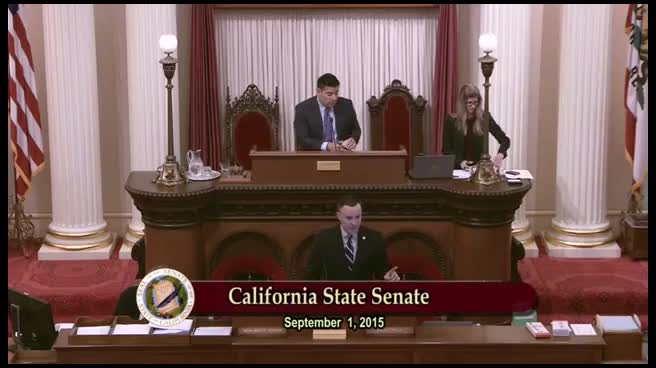


Bill Author

Bill Co-Author(s):
