SB 247: Charter bus transportation: safety improvements.
- Session Year: 2015-2016
- House: Senate
- Latest Version Date: 2016-09-27
The Passenger Charter-party Carriers Act imposes various requirements on charter-party carriers of passengers, and provides for the safety regulation of charter-party carriers of passengers engaged in charter bus transportation, as defined, by the Public Utilities Commission.
Under existing law, the Department of the California Highway Patrol is responsible for specified vehicle safety and equipment regulation. Unless otherwise specified, a violation of these vehicle safety and equipment provisions is an infraction.
This bill, in addition to the above-referenced act, would require a charter-party carrier of passengers engaged in charter bus transportation to ensure that the driver of a charter bus that is designed to carry 39 or more passengers provides oral and written or video instructions to all passengers on the safety equipment and emergency exits on the vehicle prior to the beginning of any trip. The bill would also require those vehicles manufactured after July 1, 2020, to be equipped with emergency lighting fixtures that will turn on in the event of an impact or collision. The bill would require the department to adopt standards and criteria for the implementation of these equipment and safety requirements no later than July 1, 2018. The bill would also make related findings and declarations.
Because a violation of these provisions would be an infraction, this bill would impose a state-mandated local program.
The California Constitution requires the state to reimburse local agencies and school districts for certain costs mandated by the state. Statutory provisions establish procedures for making that reimbursement.
This bill would provide that no reimbursement is required by this act for a specified reason.
The Passenger Charter-party Carriers Act imposes various requirements on charter-party carriers of passengers, and provides for the safety regulation of charter-party carriers of passengers engaged in charter bus transportation, as defined, by the Public Utilities Commission.
Under existing law, the Department of the California Highway Patrol is responsible for specified vehicle safety and equipment regulation. Unless otherwise specified, a violation of these vehicle safety and equipment provisions is an infraction.
This bill, in addition to the above-referenced act, would require a charter-party carrier of passengers engaged in charter bus transportation to ensure that the driver of a charter bus that is designed to carry 39 or more passengers provides oral and written or video instructions to all passengers on the safety equipment and emergency exits on the vehicle prior to the beginning of any trip and that the charter bus is equipped, by July 1, 2019, with specified safety equipment. trip. The bill would also require those vehicles manufactured after July 1, 2020, to be equipped with a secondary door for use as an additional emergency exit and other designated safety equipment. emergency lighting fixtures that will turn on in the event of an impact or collision. The bill would require the department to adopt, no later than July 1, 2017, adopt standards and criteria for the implementation of these equipment and safety requirements. requirements no later than July 1, 2018. The bill would also make related findings and declarations.
Because a violation of these provisions would be an infraction, this bill would impose a state-mandated local program.
The California Constitution requires the state to reimburse local agencies and school districts for certain costs mandated by the state. Statutory provisions establish procedures for making that reimbursement.
This bill would provide that no reimbursement is required by this act for a specified reason.
The Passenger Charter-party Carriers Act imposes various requirements on charter-party carriers of passengers, and provides for the safety regulation of charter-party carriers of passengers engaged in charter bus transportation, as defined, by the Public Utilities Commission.
Under existing law, the Department of the California Highway Patrol is responsible for specified vehicle safety and equipment regulation. Unless otherwise specified, a violation of these vehicle safety and equipment provisions is an infraction.
This bill, in addition to the above-referenced act, would require a charter-party carrier of passengers engaged in charter bus transportation to ensure that the driver of a charter bus provides oral and written instructions to all passengers on the safety equipment and emergency exits on the vehicle prior to the beginning of any trip and that the charter bus is equipped equipped, by July 1, 2019, with specified safety equipment. The bill would also require those vehicles manufactured after July 1, 2017, 2020, to be equipped with a secondary door for use as an additional emergency exit. exit and other designated safety equipment. The bill would require the department to adopt, no later than July 1, 2017, standards and criteria for the implementation of these equipment and safety requirements. The bill would also make related findings and declarations.
Because a violation of these provisions would be an infraction, this bill would impose a state-mandated local program.
The California Constitution requires the state to reimburse local agencies and school districts for certain costs mandated by the state. Statutory provisions establish procedures for making that reimbursement.
This bill would provide that no reimbursement is required by this act for a specified reason.
The Passenger Charter-party Carriers Act imposes various requirements on charter-party carriers of passengers, and provides for the safety regulation of charter-party carriers of passengers engaged in charter bus transportation, as defined, by the Public Utilities Commission.
Under existing law, the Department of the California Highway Patrol is responsible for specified vehicle safety and equipment regulation. Unless otherwise specified, a violation of these vehicle safety and equipment provisions is an infraction.
This bill, in addition to the above-referenced act, would require a charter-party carrier of passengers engaged in charter bus transportation to ensure that the driver of a charter bus provides oral and written instructions to all passengers on the safety equipment and emergency exits on the vehicle prior to the beginning of any trip and that the charter bus is equipped with specified safety equipment. The bill would also require those vehicles manufactured after July 1, 2017, to be equipped with a secondary door for use as an additional emergency exit. The bill would require the department to adopt, no later than July 1, 2017, standards and criteria for the implementation of these equipment and safety requirements. The bill would also make related findings and declarations.
Because a violation of these provisions would be an infraction, this bill would impose a state-mandated local program.
The California Constitution requires the state to reimburse local agencies and school districts for certain costs mandated by the state. Statutory provisions establish procedures for making that reimbursement.
This bill would provide that no reimbursement is required by this act for a specified reason.
The Passenger Charter-party Carriers Act, with certain exceptions, prohibits a charter-party carrier of passengers from engaging in transportation services subject to regulation by the Public Utilities Commission without obtaining a specified certificate or permit, as appropriate, from the commission, and imposes various other Act imposes various requirements on charter-party carriers of passengers. The act passengers, and provides for the safety regulation of charter-party carriers of passengers engaged in charter bus transportation transportation, as defined, by the commission. A violation of the act is a crime. Public Utilities Commission.
Under existing law, the Department of the California Highway Patrol is responsible for specified vehicle safety and equipment regulation. Unless otherwise specified, a violation of these vehicle safety and equipment provisions is an infraction.
This bill bill, in addition to the above-referenced act, would require a charter-party carrier of passengers engaged in charter bus transportation to ensure that the driver of a charter bus provides oral and written instructions to all passengers on the safety equipment and emergency exits on the vehicle prior to the beginning of any trip and that the charter bus is equipped with specified safety equipment. The bill would also require those vehicles manufactured after July 1, 2017, to be equipped with a secondary door for use as an additional emergency exit. The bill would require the Department of the California Highway Patrol department to adopt, no later than July 1, 2017, standards and criteria for the implementation of these equipment and safety requirements. The bill would also make related findings and declarations.
Because a violation of these provisions would be a crime, an infraction, this bill would impose a state-mandated local program.
The California Constitution requires the state to reimburse local agencies and school districts for certain costs mandated by the state. Statutory provisions establish procedures for making that reimbursement.
This bill would provide that no reimbursement is required by this act for a specified reason.
The Passenger Charter-party Carriers Act, with certain exceptions, prohibits a charter-party carrier of passengers from engaging in transportation services subject to regulation by the Public Utilities Commission without obtaining a specified certificate or permit, as appropriate, from the commission, and imposes various other requirements on charter-party carriers of passengers. The act provides for the safety regulation of charter-party carriers of passengers engaged in charter bus transportation by the commission. A violation of the act is a crime.
This bill would require a charter-party carrier of passengers engaged in charter bus transportation to ensure that the driver of a charter bus performs 2 specified tasks prior to any trip that include, among other things, provides oral and written instructions to all passengers on the safety equipment and emergency exits on the vehicle. vehicle prior to the beginning of any trip and that the charter bus is equipped with specified safety equipment. The bill would also require those vehicles manufactured after July 1, 2017, to be equipped with a secondary door for use as an additional emergency exit. The bill would require the Department of the California Highway Patrol to adopt, no later than July 1, 2017, standards and criteria for the implementation of these safety requirements. The bill would also make related findings and declarations and declare the intent of the Legislature to enact specified legislation to require safety improvements on charter buses. declarations.
Because a violation of these provisions would be a crime, this bill would impose a state-mandated local program.
The California Constitution requires the state to reimburse local agencies and school districts for certain costs mandated by the state. Statutory provisions establish procedures for making that reimbursement.
This bill would provide that no reimbursement is required by this act for a specified reason.
The Passenger Charter-party Carriers Act, with certain exceptions, prohibits a charter-party carrier of passengers from engaging in transportation services subject to regulation by the Public Utilities Commission without obtaining a specified certificate or permit, as appropriate, from the commission, and imposes various other requirements on charter-party carriers of passengers. The act provides for the safety regulation of charter-party carriers of passengers engaged in charter bus transportation by the commission. A violation of the act is a crime.
This bill would require a charter-party carrier of passengers engaged in charter bus transportation to ensure that the driver of a charter bus performs 2 specified tasks prior to any trip that include, among other things, instructions to all passengers on the safety equipment and emergency exits on the vehicle. The bill would also make findings and declarations and declare the intent of the Legislature to enact specified legislation to require safety improvements on charter buses.
Because a violation of these provisions would be a crime, this bill would impose a state-mandated local program.
The California Constitution requires the state to reimburse local agencies and school districts for certain costs mandated by the state. Statutory provisions establish procedures for making that reimbursement.
This bill would provide that no reimbursement is required by this act for a specified reason.
Existing law establishes a system of public elementary and secondary schools maintained and operated by local educational agencies throughout the state. Existing law also establishes the California State University, under the administration of the Trustees of the California State University, the University of California, under the administration of the Regents of the University of California, and the California Community Colleges, under the administration of the Board of Governors of the California Community Colleges, as the 3 segments of public postsecondary education in this state.
Existing law requires the Student Aid Commission to establish procedures and forms that enable students who are exempt from paying nonresident tuition because they meet specified residency requirements, or who meet equivalent requirements adopted by the regents, to apply for, and participate in, all student financial aid programs administered by the state to the full extent permitted by federal law.
This bill would authorize the governing board of each school district or county office of education that maintains any of grades 9 to 12, inclusive, the governing board of each community college district, and the Trustees of the California State University to establish, and would encourage the Regents of the University of California to establish, undocumented student support services to include, but not necessarily be limited to, state and institutional financial aid assistance, academic counseling, referral services, and on-campus Dream Centers.
Existing law establishes a system of public elementary and secondary schools maintained and operated by local educational agencies throughout the state. Existing law also establishes the California State University, under the administration of the Trustees of the California State University, the University of California, under the administration of the Regents of the University of California, and the California Community Colleges, under the administration of the Board of Governors of the California Community Colleges, as the 3 segments of public postsecondary education in this state.
Existing law requires the Student Aid Commission to establish procedures and forms that enable students who are exempt from paying nonresident tuition because they meet specified residency requirements, or who meet equivalent requirements adopted by the regents, to apply for, and participate in, all student financial aid programs administered by the state to the full extent permitted by federal law.
This bill would authorize the governing board of each school district or county office of education that maintains any of grades 9 to 12, inclusive, the governing board of each community college district, and the Trustees of the California State University to establish, and would encourage the Regents of the University of California to establish, undocumented student support services to include, but not necessarily be limited to, state and institutional financial aid assistance, academic counseling, referral services, and on-campus Dream Centers to provide information to undocumented pupils and students about educational support services. Centers.
Existing law establishes a system of public elementary and secondary schools maintained and operated by local educational agencies throughout the state. Existing law also establishes the California State University, under the administration of the Trustees of the California State University, the University of California, under the administration of the Regents of the University of California, and the California Community Colleges, under the administration of the Board of Governors of the California Community Colleges, as the 3 segments of public postsecondary education in this state.
Existing law requires the Student Aid Commission to establish procedures and forms that enable students who are exempt from paying nonresident tuition because they meet specified residency requirements, or who meet equivalent requirements adopted by the regents, to apply for, and participate in, all student financial aid programs administered by the state to the full extent permitted by federal law.
This bill would authorize the governing board of each school district or county office of education that maintains any of grades 9 to 12, inclusive, the governing board of each community college district, and the Trustees of the California State University to establish, and would encourage the Regents of the University of California to establish, on-campus Dream Centers to provide information to undocumented pupils and students about educational support services.
The Legislature finds and declares all of the following:
(a)The safety of passengers traveling in charter buses in California is of the utmost importance. According to the Federal Motor Carrier Safety Administration, between 1975 and 2013, there were over 11,000 fatal crashes involving charter buses, including 1,615 occupant fatalities. Improved safety standards and practices are necessary to better protect passengers in the event of a charter bus crash.
(b)On April 10, 2014, in Orland, California, eight passengers traveling on a charter bus, along with the driver, were tragically killed in a freeway collision. In a report released in 2015, the National Transportation Safety Board examined the crash and made recommendations for safety improvements, including fire performance standards for interior materials, requiring pretrip safety briefings for passengers, improvements in vehicle design to facilitate evacuation, and the installation of event data recorder (EDR) technology for crash reconstruction and safety improvements.
(c)These improvements would significantly increase passenger safety and would reduce or prevent future deaths in traffic collisions involving charter buses.
SEC. 2.Article 3.6 (commencing with Section 27425) is added to Chapter 5 of Division 12 of the Vehicle Code, to read:3.6.Charter-Party Carrier Safety Equipment27425.(a)A vehicle described in paragraph (1) of subdivision (b) of Section 5363 of the Public Utilities Code that is designed to carry 39 or more passengers and that is manufactured on or after July 1, 2020, shall be equipped with emergency lighting fixtures that will turn on in the event of an impact or collision.
(b)A vehicle as specified in subdivision (a) shall at all times meet applicable federal motor vehicle safety standards (FMVSS) issued by the United States Department of Transportation. This section shall not be construed to conflict with those standards.
27426.No later than July 1, 2018, the department shall adopt standards and criteria for the implementation of the safety equipment requirements specified in Section 27425.
27427.This act does not alter or affect the requirements of the Passenger Charter-party Carriers Act (Chapter 8 (commencing with Section 5351) of Division 2 of the Public Utilities Code).
SEC. 3.Section 34505.8 is added to the Vehicle Code, to read:34505.8.(a)A charter-party carrier of passengers engaged in charter bus transportation shall ensure that the driver of a vehicle as described in paragraph (1) of subdivision (b) of Section 5363 of the Public Utilities Code that is designed to carry 39 or more passengers shall instruct or play a video for all passengers on the safety equipment and emergency exits on the vehicle prior to the beginning of any trip and provide each passenger with written or video instructions that include, at a minimum, a demonstration of the location and operation of all exits, including emergency exits, and the importance of wearing a seatbelt, if available.
(b)Notwithstanding any other law, no later than July 1, 2018, the department shall adopt standards and criteria for the implementation of the safety requirements specified in this section.
(c)This section does not alter or affect the requirements of the Passenger Charter-party Carriers Act (Chapter 8 (commencing with Section 5351) of Division 2 of the Public Utilities Code).
SEC. 4.No reimbursement is required by this act pursuant to Section 6 of Article XIIIB of the California Constitution because the only costs that may be incurred by a local agency or school district will be incurred because this act creates a new crime or infraction, eliminates a crime or infraction, or changes the penalty for a crime or infraction, within the meaning of Section 17556 of the Government Code, or changes the definition of a crime within the meaning of Section 6 of Article XIIIB of the California Constitution.
The Legislature finds and declares all of the following:
(a)The safety of passengers traveling in charter buses in California is of the utmost importance. According to the Federal Motor Carrier Safety Administration, between 1975 and 2013, there were over 11,000 fatal crashes involving charter buses, including 1,615 occupant fatalities. Improved safety standards and practices are necessary to better protect passengers in the event of a charter bus crash.
(b)On April 10, 2014, in Orland, California, eight passengers traveling on a charter bus, along with the driver, were tragically killed in a freeway collision. In a report released in 2015, the National Transportation Safety Board examined the crash and made recommendations for safety improvements, including fire performance standards for interior materials, requiring pretrip safety briefings for passengers, improvements in vehicle design to facilitate evacuation, and the installation of event data recorder (EDR) technology for crash reconstruction and safety improvements.
(c)These improvements would significantly increase passenger safety and would reduce or prevent future deaths in traffic collisions involving charter buses.
SEC. 2.Article 3.6 (commencing with Section 27425) is added to Chapter 5 of Division 12 of the Vehicle Code, to read:3.6.Charter-Party Carrier Safety Equipment27425.(a)A charter-party carrier of passengers engaged in charter bus transportation shall ensure that a vehicle as described in paragraph (1) of subdivision (b) of Section 5363 of the Public Utilities Code is equipped with interior and exterior luminescent or retroreflective emergency signage by July 1, 2019.
(b)
27425.(a)A vehicle as specified in subdivision (a), manufactured on or after July 1, 2020 described in paragraph (1) of subdivision (b) of Section 5363 of the Public Utilities Code that is designed to carry 39 or more passengers and that is manufactured on or after July 1, 2020, shall also be equipped with all of the following:
(1)A secondary door for use as an additional emergency exit.
(2)Windows that can be easily opened and remain open during an emergency.
(3)Emergency emergency lighting fixtures that will turn on in the event of an impact or collision.
(c)
(b)A vehicle as specified in subdivision (a) shall at all times meet applicable federal motor vehicle safety standards (FMVSS) issued by the United States Department of Transportation. This section shall not be construed to conflict with those standards.
27426.The No later than July 1, 2018, the department shall adopt, no later than July 1, 2017, adopt standards and criteria for the implementation of the safety equipment requirements specified in Section 27425.
27427.This act does not alter or affect the requirements of the Passenger Charter-party Carriers Act (Chapter 8 (commencing with Section 5351) of Division 2 of the Public Utilities Code).
SEC. 3.Section 34505.8 is added to the Vehicle Code, to read:34505.8.(a)A charter-party carrier of passengers engaged in charter bus transportation shall ensure that the driver of a vehicle as described in paragraph (1) of subdivision (b) of Section 5363 of the Public Utilities Code that is designed to carry 39 or more passengers shall instruct or play a video for all passengers on the safety equipment and emergency exits on the vehicle prior to the beginning of any trip and provide each passenger with written or video instructions that include, at a minimum, a demonstration of the location and operation of all exits, including emergency exits, and the importance of wearing a seatbelt, if available.
(b)Notwithstanding any other law, no later than July 1, 2018, the department shall adopt, no later than July 1, 2017, adopt standards and criteria for the implementation of the safety requirements specified in this section.
(c)This section does not alter or affect the requirements of the Passenger Charter-party Carriers Act (Chapter 8 (commencing with Section 5351) of Division 2 of the Public Utilities Code).
SEC. 4.No reimbursement is required by this act pursuant to Section 6 of Article XIIIB of the California Constitution because the only costs that may be incurred by a local agency or school district will be incurred because this act creates a new crime or infraction, eliminates a crime or infraction, or changes the penalty for a crime or infraction, within the meaning of Section 17556 of the Government Code, or changes the definition of a crime within the meaning of Section 6 of Article XIIIB of the California Constitution.
The Legislature finds and declares all of the following:
(a)The safety of passengers traveling in charter buses in California is of the utmost importance. According to the Federal Motor Carrier Safety Administration, between 1975 and 2013, there were over 11,000 fatal crashes involving charter buses, including 1,615 occupant fatalities. Improved safety standards and practices are necessary to better protect passengers in the event of a charter bus crash.
(b)On April 10, 2014, in Orland, California, eight passengers traveling on a charter bus, along with the driver, were tragically killed in a freeway collision. In a report released in 2015, the National Transportation Safety Board examined the crash and made recommendations for safety improvements, including fire performance standards for interior materials, requiring pretrip safety briefings for passengers, improvements in vehicle design to facilitate evacuation, and the installation of event data recorder (EDR) technology for crash reconstruction and safety improvements.
(c)These improvements would significantly increase passenger safety and would reduce or prevent future deaths in traffic collisions involving charter buses.
SEC. 2.Article 3.6 (commencing with Section 27425) is added to Chapter 5 of Division 12 of the Vehicle Code, to read:3.6.Charter-Party Carrier Safety Equipment27425.(a)A charter-party carrier of passengers engaged in charter bus transportation shall ensure that a vehicle as described in paragraph (1) of subdivision (b) of Section 5363 of the Public Utilities Code is equipped with all of the following: interior and exterior luminescent or retroreflective emergency signage by July 1, 2019.
(1)Emergency lighting fixtures with self-contained, independent power sources that will turn on in the event of an impact or collision.
(2)Interior and exterior luminescent or retroreflective emergency signage.
(3)Windows that can be easily opened and remain open during an emergency.
(b)A vehicle as specified in subdivision (a), manufactured on or after July 1, 2017, 2020 shall also be equipped with a secondary door for use as an additional emergency exit. all of the following:
(1)A secondary door for use as an additional emergency exit.
(2)Windows that can be easily opened and remain open during an emergency.
(3)Emergency lighting fixtures that will turn on in the event of an impact or collision.
(c)A vehicle as specified in subdivision (a) shall at all times meet applicable federal motor vehicle safety standards (FMVSS) issued by the United States Department of Transportation. This section shall not be construed to conflict with those standards.
27426.The department shall adopt, no later than July 1, 2017, standards and criteria for the implementation of the safety equipment requirements specified in Section 27425.
27427.This act does not alter or affect the requirements of the Passenger Charter-party Carriers Act (Chapter 8 (commencing with Section 5351) of Division 2 of the Public Utilities Code).
SEC. 3.Section 34505.8 is added to the Vehicle Code, to read:34505.8.(a)A charter-party carrier of passengers engaged in charter bus transportation shall ensure that the driver of a vehicle as described in paragraph (1) of subdivision (b) of Section 5363 of the Public Utilities Code shall instruct all passengers on the safety equipment and emergency exits on the vehicle prior to the beginning of any trip and provide each passenger with written instructions that include, at a minimum, a demonstration of the location and operation of all exits, including emergency exits, and the importance of wearing a seatbelt, if available.
(b)Notwithstanding any other law, the department shall adopt, no later than July 1, 2017, standards and criteria for the implementation of the safety requirements specified in this section.
(c)This section does not alter or affect the requirements of the Passenger Charter-party Carriers Act (Chapter 8 (commencing with Section 5351) of Division 2 of the Public Utilities Code).
SEC. 4.No reimbursement is required by this act pursuant to Section 6 of Article XIIIB of the California Constitution because the only costs that may be incurred by a local agency or school district will be incurred because this act creates a new crime or infraction, eliminates a crime or infraction, or changes the penalty for a crime or infraction, within the meaning of Section 17556 of the Government Code, or changes the definition of a crime within the meaning of Section 6 of Article XIIIB of the California Constitution.
The Legislature finds and declares all of the following:
(a)The safety of passengers traveling in charter buses in California is of the utmost importance. According to the Federal Motor Carrier Safety Administration, between 1975 and 2013, there were over 11,000 fatal crashes involving charter buses, including 1,615 occupant fatalities. Improved safety standards and practices are necessary to better protect passengers in the event of a charter bus crash.
(b)On April 10, 2014, in Orland, California, eight passengers traveling on a charter bus, along with the driver, were tragically killed in a freeway collision. In a report released in 2015, the National Transportation Safety Board examined the crash and made recommendations for safety improvements, including fire performance standards for interior materials, requiring pretrip safety briefings for passengers, improvements in vehicle design to facilitate evacuation, and the installation of event data recorder (EDR) technology for crash reconstruction and safety improvements.
(c)These improvements would significantly increase passenger safety and would reduce or prevent future deaths in traffic collisions involving charter buses.
SEC. 2.Article 3.6 (commencing with Section 27425) is added to Chapter 5 of Division 12 of the Vehicle Code, to read:3.6.Charter-Party Carrier Safety Equipment27425.(a)A charter-party carrier of passengers engaged in charter bus transportation shall ensure that a vehicle as described in paragraph (1) of subdivision (b) of Section 5363 of the Public Utilities Code is equipped with all of the following:
(1)Burn-resistant materials for occupant compartments.
(2)
(1)Emergency lighting fixtures with self-contained, independent power sources that will turn on in the event of an impact or collision.
(3)
(2)Interior and exterior luminescent or retroreflective emergency signage.
(4)An event data recorder capable of recording vehicle-related data in the event of sudden deceleration or hard braking.
(5)
(3)Windows that can be easily opened and remain open during an emergency.
(b)A vehicle as specified in subdivision (a), manufactured on or after July 1, 2017, shall also be equipped with a secondary door for use as an additional emergency exit.
27426.The department shall adopt, no later than July 1, 2017, standards and criteria for the implementation of the safety equipment requirements specified in Section 27425.
27427.This act does not alter or affect the requirements of the Passenger Charter-party Carriers Act (Chapter 8 (commencing with Section 5351) of Division 2 of the Public Utilities Code).
SEC. 3.Section 34505.8 is added to the Vehicle Code, to read:34505.8.(a)A charter-party carrier of passengers engaged in charter bus transportation shall ensure that the driver of a vehicle as described in paragraph (1) of subdivision (b) of Section 5363 of the Public Utilities Code shall instruct all passengers on the safety equipment and emergency exits on the vehicle prior to the beginning of any trip and provide each passenger with written instructions that include, at a minimum, a demonstration of the location and operation of all exits, including emergency exits, and the importance of wearing a seatbelt, if available.
(b)Notwithstanding any other law, the department shall adopt, no later than July 1, 2017, standards and criteria for the implementation of the safety requirements specified in this section.
(c)This section does not alter or affect the requirements of the Passenger Charter-party Carriers Act (Chapter 8 (commencing with Section 5351) of Division 2 of the Public Utilities Code).
SEC. 4.No reimbursement is required by this act pursuant to Section 6 of Article XIIIB of the California Constitution because the only costs that may be incurred by a local agency or school district will be incurred because this act creates a new crime or infraction, eliminates a crime or infraction, or changes the penalty for a crime or infraction, within the meaning of Section 17556 of the Government Code, or changes the definition of a crime within the meaning of Section 6 of Article XIIIB of the California Constitution.
The Legislature finds and declares all of the following:
(a)The safety of passengers traveling in charter buses in California is of the utmost importance. According to the Federal Motor Carrier Safety Administration, between 1975 and 2013, there were over 11,000 fatal crashes involving charter buses, including 1,615 occupant fatalities. Improved safety standards and practices are necessary to better protect passengers in the event of a charter bus crash.
(b)On April 10, 2014, in Orland, California, eight passengers traveling on a charter bus, along with the driver, were tragically killed in a freeway collision. In a report released in 2015, the National Transportation Safety Board examined the crash and made recommendations for safety improvements, including fire performance standards for interior materials, requiring pretrip safety briefings for passengers, improvements in vehicle design to facilitate evacuation, and the installation of event data recorder (EDR) technology for crash reconstruction and safety improvements.
(c)These improvements would significantly increase passenger safety and would reduce or prevent future deaths in traffic collisions involving charter buses.
SEC. 2.Article 3.6 (commencing with Section 27425) is added to Chapter 5 of Division 12 of the Vehicle Code, to read:3.6.Charter-Party Carrier Safety Equipment27425.(a)A charter-party carrier of passengers engaged in charter bus transportation shall ensure that a vehicle as described in paragraph (1) of subdivision (b) of Section 5363 of the Public Utilities Code is equipped with all of the following:
(1)Burn-resistant materials for occupant compartments.
(2)Emergency lighting fixtures with self-contained, independent power sources that will turn on in the event of an impact or collision.
(3)Interior and exterior luminescent or retroreflective emergency signage.
(4)An event data recorder capable of recording vehicle-related data in the event of sudden deceleration or hard braking.
(5)Windows that can be easily opened and remain open during an emergency.
(b)A vehicle as specified in subdivision (a), manufactured on or after July 1, 2017, shall also be equipped with a secondary door for use as an additional emergency exit.
27426.The department shall adopt, no later than July 1, 2017, standards and criteria for the implementation of the safety equipment requirements specified in Section 27425.
27427.This act does not alter or affect the requirements of the Passenger Charter-party Carriers Act (Chapter 8 (commencing with Section 5351) of Division 2 of the Public Utilities Code).
SEC. 3.Section 34505.8 is added to the Vehicle Code, to read:34505.8.(a)A charter-party carrier of passengers engaged in charter bus transportation shall ensure that the driver of a vehicle as described in paragraph (1) of subdivision (b) of Section 5363 of the Public Utilities Code shall instruct all passengers on the safety equipment and emergency exits on the vehicle prior to the beginning of any trip and provide each passenger with written instructions that include, at a minimum, a demonstration of the location and operation of all exits, including emergency exits, and the importance of wearing a seatbelt, if available.
(b)Notwithstanding any other law, the department shall adopt, no later than July 1, 2017, standards and criteria for the implementation of the safety requirements specified in this section.
(c)This section does not alter or affect the requirements of the Passenger Charter-party Carriers Act (Chapter 8 (commencing with Section 5351) of Division 2 of the Public Utilities Code).
SEC. 2.Section 5384.3 is added to the Public Utilities Code, to read:5384.3.(a)A charter-party carrier of passengers engaged in charter bus transportation shall ensure that a vehicle as described in paragraph (1) of subdivision (b) of Section 5363 is operated in compliance with both of the following:
(1)The driver of the vehicle shall instruct all passengers on the safety equipment and emergency exits on the vehicle prior to the beginning of any trip and provide each passenger with written instructions that include, at a minimum, a demonstration of the location and operation of all exits, including emergency exits, and the importance of wearing a seatbelt, if available.
(2)The vehicle shall be equipped with all of the following:
(A)Burn-resistant materials for occupant compartments.
(B)Emergency lighting fixtures with self-contained independent power sources that will turn on in the event of an impact or collision.
(C)Interior and exterior luminescent or retroreflective emergency signage.
(D)An event data recorder capable of recording certain vehicle-related data in the event of sudden deceleration or hard braking.
(E)Windows that can be easily opened and remain open during an emergency.
(b)A vehicle as specified in subdivision (a), manufactured on or after July 1, 2017, shall also be equipped with a secondary door for use as an additional emergency exit.
(c)The Department of the California Highway Patrol shall adopt, no later than July 1, 2017, standards and criteria for the implementation of the safety requirements specified in paragraph (2) of subdivision (a).
SEC. 3.SEC. 4.No reimbursement is required by this act pursuant to Section 6 of Article XIIIB of the California Constitution because the only costs that may be incurred by a local agency or school district will be incurred because this act creates a new crime or infraction, eliminates a crime or infraction, or changes the penalty for a crime or infraction, within the meaning of Section 17556 of the Government Code, or changes the definition of a crime within the meaning of Section 6 of Article XIIIB of the California Constitution.
The Legislature finds and declares all of the following:
(a)The safety of passengers traveling in charter buses in California is of the utmost importance. According to the Federal Motor Carrier Safety Administration, between 1975 and 2012, 2013, there were over 11,000 fatal crashes involving charter buses, including 1,567 1,615 occupant fatalities. Improved safety standards and practices are necessary to better protect passengers in the event of a charter bus crash.
(b)On April 10, 2014, in Orland Orland, California, eight passengers traveling on a charter bus, along with the driver, were tragically killed in a freeway collision. In a report released in 2015, the National Transportation Safety Board examined the crash and made recommendations for safety improvements, including fire performance standards for interior materials, requiring pretrip safety briefings for passengers, improvements in vehicle design to facilitate evacuation, and the installation of event data recorder (EDR) technology for crash reconstruction and safety improvements.
(c)These improvements would significantly increase passenger safety and would reduce or prevent future deaths in traffic collisions involving charter buses.
SEC. 2.It is the intent of the Legislature to enact legislation that would require charter buses to implement all of the following safety improvements:
(a)Burn resistant materials for occupant compartments.
(b)Emergency lighting fixtures with self-contained independent power sources that will turn on in the event of an accident.
(c)Interior and exterior luminescent or retro-reflective emergency signage.
(d)An event data recorder capable of recording certain vehicle-related data in the event of sudden deceleration or hard braking.
(e)Bus windows that can be easily opened and remain open during an emergency.
(f)That new buses be equipped with a secondary door for use as an additional emergency exit.
SEC. 3.SEC. 2.Section 5384.3 is added to the Public Utilities Code, to read:5384.3.(a)A charter-party carrier of passengers engaged in charter bus transportation shall ensure that the driver of a vehicle as described in paragraph (1) of subdivision (b) of Section 5363 performs both of the following tasks prior to any trip: is operated in compliance with both of the following:
(a)Instructs
(1)The driver of the vehicle shall instruct all passengers on the safety equipment and emergency exits on the vehicle. vehicle prior to the beginning of any trip and provide each passenger with written instructions that include, at a minimum, a demonstration of the location and operation of all exits, including emergency exits, and the importance of wearing a seatbelt, if available.
(b)Provides each passenger with written instructions that include, at a minimum, the location and operation of all exits, including emergency exits, and the importance of wearing a seatbelt, if available.
(2)The vehicle shall be equipped with all of the following:
(A)Burn resistant materials for occupant compartments.
(B)Emergency lighting fixtures with self-contained independent power sources that will turn on in the event of an impact or collision.
(C)Interior and exterior luminescent or retroreflective emergency signage.
(D)An event data recorder capable of recording certain vehicle-related data in the event of sudden deceleration or hard braking.
(E)Windows that can be easily opened and remain open during an emergency.
(b)A vehicle as specified in subdivision (a), manufactured on or after July 1, 2017, shall also be equipped with a secondary door for use as an additional emergency exit.
(c)The Department of the California Highway Patrol shall adopt, no later than July 1, 2017, standards and criteria for the implementation of the safety requirements specified in paragraph (2) of subdivision (a).
SEC. 4.SEC. 3.No reimbursement is required by this act pursuant to Section 6 of Article XIIIB of the California Constitution because the only costs that may be incurred by a local agency or school district will be incurred because this act creates a new crime or infraction, eliminates a crime or infraction, or changes the penalty for a crime or infraction, within the meaning of Section 17556 of the Government Code, or changes the definition of a crime within the meaning of Section 6 of Article XIIIB of the California Constitution.
The Legislature finds and declares all of the following:
(a)The safety of passengers traveling in charter buses in California is of the utmost importance. According to the Federal Motor Carrier Safety Administration, between 1975 and 2012, there were over 11,000 fatal crashes involving charter buses, including 1,567 occupant fatalities. Improved safety standards and practices are necessary to better protect passengers in the event of a charter bus crash.
(b)On April 10, 2014, in Orland California, eight passengers traveling on a charter bus, along with the driver, were tragically killed in a freeway collision. In a report released in 2015, the National Transportation Safety Board examined the crash and made recommendations for safety improvements, including fire performance standards for interior materials, requiring pretrip safety briefings for passengers, improvements in vehicle design to facilitate evacuation, and the installation of event data recorder (EDR) technology for crash reconstruction and safety improvements.
(c)These improvements would significantly increase passenger safety and would reduce or prevent future deaths in traffic collisions involving charter buses.
SEC. 2.It is the intent of the Legislature to enact legislation that would require charter buses to implement all of the following safety improvements:
(a)Burn resistant materials for occupant compartments.
(b)Emergency lighting fixtures with self-contained independent power sources that will turn on in the event of an accident.
(c)Interior and exterior luminescent or retro-reflective emergency signage.
(d)An event data recorder capable of recording certain vehicle-related data in the event of sudden deceleration or hard braking.
(e)Bus windows that can be easily opened and remain open during an emergency.
(f)That new buses be equipped with a secondary door for use as an additional emergency exit.
SEC. 3.Section 5384.3 is added to the Public Utilities Code, to read:5384.3.A charter-party carrier of passengers engaged in charter bus transportation shall ensure that the driver of a vehicle described in paragraph (1) of subdivision (b) of Section 5363 performs both of the following tasks prior to any trip:
(a)Instructs all passengers on the safety equipment and emergency exits on the vehicle.
(b)Provides each passenger with written instructions that include, at a minimum, the location and operation of all exits, including emergency exits, and the importance of wearing a seatbelt, if available.
SEC. 4.No reimbursement is required by this act pursuant to Section 6 of Article XIIIB of the California Constitution because the only costs that may be incurred by a local agency or school district will be incurred because this act creates a new crime or infraction, eliminates a crime or infraction, or changes the penalty for a crime or infraction, within the meaning of Section 17556 of the Government Code, or changes the definition of a crime within the meaning of Section 6 of Article XIIIB of the California Constitution.
SECTION 1.Chapter 20 (commencing with Section 11900) is added to Part 7 of Division 1 of Title 1 of the Education Code, to read:20.Dream Centers11900.The governing board of each school district or county office of education that maintains any of grades 9 to 12, inclusive, the governing board of each community college district, and the Trustees of the California State University may establish, and the Regents of the University of California are encouraged to establish, undocumented student support services to include, but not necessarily be limited to, state and institutional financial aid assistance, academic counseling, referral services, and on-campus Dream Centers.
The governing board of each school district or county office of education that maintains any of grades 9 to 12, inclusive, the governing board of each community college district, and the Trustees of the California State University may establish, and the Regents of the University of California are encouraged to establish, undocumented student support services to include, but not necessarily be limited to, state and institutional financial aid assistance, academic counseling, referral services, and on-campus Dream Centers to provide information to undocumented pupils and students about educational support services, including, but not limited to, the financial aid application established by the Student Aid Commission pursuant to subdivision (b) of Section 69508.5, known as the Dream Act Application. Centers.
The governing board of each school district or county office of education that maintains any of grades 9 to 12, inclusive, the governing board of each community college district, and the Trustees of the California State University may establish, and the Regents of the University of California are encouraged to establish, on-campus Dream Centers to provide information to undocumented pupils and students about educational support services, including, but not limited to, the financial aid application established by the Student Aid Commission pursuant to subdivision (b) of Section 69508.5, known as the Dream Act Application.
|
Date
|
Status
|
|---|---|
| Jun 14, 2016 | From committee: Do pass and re-refer to Com. on APPR. (Ayes 13. Noes 0.) (June 13). Re-referred to Com. on APPR. |
| Jan 19, 2016 | January 19 hearing: Placed on APPR. suspense file. |
| Jan 20, 2016 | Set for hearing January 21. |
| Jan 25, 2016 | From committee: Do pass as amended. (Ayes 7. Noes 0. Page 2934.) (January 21). |
| Jan 26, 2016 | Read second time and amended. Ordered to third reading. |
| Jan 27, 2016 | In Assembly. Read first time. Held at Desk. |
| Jan 27, 2016 | Read third time. Passed. (Ayes 26. Noes 4. Page 2963.) Ordered to the Assembly. |
| Apr 28, 2016 | Referred to Com. on TRANS. |
| May 26, 2016 | From committee with author's amendments. Read second time and amended. Re-referred to Com. on TRANS. |
| Jun 8, 2016 | From committee with author's amendments. Read second time and amended. Re-referred to Com. on TRANS. |
| Jan 14, 2016 | Set for hearing January 19. |
| Jun 29, 2016 | From committee: Do pass. (Ayes 13. Noes 5.) (June 29). |
| Jun 30, 2016 | Read second time. Ordered to third reading. |
| Aug 11, 2016 | Ordered to third reading. |
| Aug 11, 2016 | Read third time and amended. |
| Aug 22, 2016 | In Senate. Concurrence in Assembly amendments pending. |
| Aug 22, 2016 | Read third time. Passed. Ordered to the Senate. |
| Aug 22, 2016 | Read third time. Passed. (Ayes 60. Noes 17. Page 6008.) Ordered to the Senate. |
| Aug 24, 2016 | Assembly amendments concurred in. (Ayes 27. Noes 10.) Ordered to engrossing and enrolling. |
| Aug 31, 2016 | Enrolled and presented to the Governor at 3 p.m. |
| Jul 16, 2015 | From committee with author's amendments. Read second time and amended. Re-referred to Com. on APPR. |
| Feb 19, 2015 | From printer. May be acted upon on or after March 21. |
| Feb 26, 2015 | Referred to Com. on ED. |
| Mar 13, 2015 | Set for hearing March 25. |
| Apr 6, 2015 | From committee: Do pass as amended and re-refer to Com. on APPR. (Ayes 8. Noes 0. Page 418.) (March 25). |
| Apr 7, 2015 | Read second time and amended. Re-referred to Com. on APPR. |
| May 1, 2015 | Set for hearing May 11. |
| May 11, 2015 | May 11 hearing: Placed on APPR. suspense file. |
| May 23, 2015 | Set for hearing May 28. |
| May 28, 2015 | May 28 hearing: Held in committee and under submission. |
| Feb 18, 2015 | Introduced. Read first time. To Com. on RLS. for assignment. To print. |
| Aug 19, 2015 | Re-referred to Com. on RLS. |
| Aug 19, 2015 | Withdrawn from committee. |
| Jan 4, 2016 | From committee with author's amendments. Read second time and amended. Re-referred to Com. on RLS. |
| Jan 6, 2016 | Re-referred to Coms. on T. & H. and E., U., & C. |
| Jan 6, 2016 | Set for hearing January 12 in T. & H. pending receipt. |
| Jan 8, 2016 | Set for hearing January 13 in E., U., & C. pending receipt. |
| Jan 12, 2016 | From committee: Do pass and re-refer to Com. on E., U., & C. (Ayes 8. Noes 0. Page 2886.) (January 12). Re-referred to Com. on E., U., & C. |
| Jan 13, 2016 | From committee: Do pass and re-refer to Com. on APPR. (Ayes 8. Noes 0. Page 2895.) (January 13). Re-referred to Com. on APPR. |
|
Date
|
Description
|
Location
|
Votes
|
|
|---|---|---|---|---|
| Aug 24, 2016 | Unfinished Business SB247 Lara Concurrence | Senate Floor |
Passed |
|
| Aug 22, 2016 | SB 247 Lara Senate Third Reading By GARCIA, E. | Assembly Floor |
Passed |
|
| Jun 29, 2016 | Do pass. | Assembly Standing Committee on Appropriations |
Passed |
|
| Jun 13, 2016 | Do pass and be re-referred to the Committee on [Appropriations] | Assembly Standing Committee on Transportation |
Passed |
|
| Jan 27, 2016 | Senate 3rd Reading SB247 Lara | Senate Floor |
Passed |
|
| Jan 21, 2016 | Do pass as amended | Senate Standing Committee on Appropriations |
Passed |
|
| Jan 19, 2016 | Placed on suspense file | Senate Standing Committee on Appropriations |
Passed |
|
| Jan 13, 2016 | Do pass, but first be re-referred to the Committee on [Appropriations] | Senate Standing Committee on Energy, Utilities and Communications |
Passed |
|
| Jan 12, 2016 | Do pass, but first be re-referred to the Committee on [Energy, Utilities and Communications] | Senate Standing Committee on Transportation and Housing |
Passed |
|
| May 11, 2015 | Placed on suspense file | Senate Standing Committee on Appropriations |
Passed |
|
| Mar 25, 2015 | Do pass as amended, but first amend, and re-refer to the Committee on [Appropriations] | Senate Standing Committee on Education |
Passed |
This list shows positions taken on this bill by organizations on the date displayed, which is linked to the original source.
Positions by individuals are not included.
|
Organization
|
Position
|
Date
|
|---|---|---|
| ABC Bus Companies, Inc. | * Against | Jun 13, 2016 |
| ABC Bus Company | * Support | Jun 13, 2016 |
| All West Coachlines | ** Against | Jun 13, 2016 |
| Amador Stage Lines | ** Against | Jun 13, 2016 |
| American Star Trailways | ** Against | Jun 13, 2016 |
| Boer Group | * Support | Jun 13, 2016 |
| California Bus Association | * Against | Jun 13, 2016 |
| California Bus Association | * Support | Jun 13, 2016 |
| California Communities United | ** Support | Mar 25, 2015 |
| California Immigrant Policy Center | ** Support | Mar 25, 2015 |
| Carreras Tours, LLC | ** Against | Jun 13, 2016 |
| Certified Transportation Services, Inc. | ** Against | Jun 13, 2016 |
| Classic Charter | ** Against | Jun 13, 2016 |
| Coalition of Humane Immigrant Rights of Los Angeles | ** Support | Mar 25, 2015 |
| Consumer Attorneys Of California | ** Support | Aug 22, 2016 |
| Consumer Federation Of California | ** Support | Aug 22, 2016 |
| Discovery Luxury Motorcoach Charters | ** Against | Jun 13, 2016 |
| Goldfield Stage | ** Against | Jun 13, 2016 |
| Greyhound Lines, Inc. | ** Against | Jun 13, 2016 |
| Lin Lines | ** Against | Jun 13, 2016 |
| Mexican American Legal Defense and Education Fund | ** Support | Mar 25, 2015 |
| Motor Coach Industries | ** Against | Jun 13, 2016 |
| Motor Coach Industry | * Against | Jun 29, 2016 |
| Pacific Coachways | ** Against | Jun 13, 2016 |
| Pacific Coast Sightseeing Tours and Charters, Inc. | ** Against | Jun 13, 2016 |
| Pacific Monarch Ltd. | ** Against | Jun 13, 2016 |
| Royal Coach Tours | ** Against | Jun 13, 2016 |
| San Diego Charter Company | ** Against | Jun 13, 2016 |
| Santiago | * Support | Jun 13, 2016 |
| Sierra Pacific Tours | ** Against | Jun 13, 2016 |
| Silver Bay Tours | ** Against | Jun 13, 2016 |
| Silverado Stages | ** Against | Jun 13, 2016 |
| Storer Coachways | ** Against | Jun 13, 2016 |
| Sundance Stage Lines | ** Against | Jun 13, 2016 |
| The Volvo Group | ** Against | Jun 13, 2016 |
| u None received. | ** Against | Mar 25, 2015 |
| UC Davis Student | * Support | Mar 25, 2015 |
| WESS Transportation Services, Inc. | ** Against | Jun 13, 2016 |
| Young Invincibles | ** Support | Mar 25, 2015 |
Office of Senate Floor Analyses (916) 651-1520 Fax: (916) 327-4478 | SB |
UNFINISHED BUSINESS
Bill No: SB 247
:
PRIOR VOTES NOT RELEVANT
SENATE TRANS. & HOUSING COMMITTEE: 8-0, 1/12/16
AYES: Beall, Cannella, Allen, Galgiani, McGuire, Mendoza, Roth, Wieckowski
NO VOTE RECORDED: Bates, Gaines, Leyva
SENATE ENERGY, U. & C. COMMITTEE: 8-0, 1/13/16
AYES: Hueso, Cannella, Hertzberg, Hill, Lara, McGuire, Pavley, Wolk
NO VOTE RECORDED: Fuller, Leyva, Morrell
SENATE APPROPRIATIONS COMMITTEE: 7-0, 1/21/16
AYES: Lara, Bates, Beall, Hill, Leyva, Mendoza, Nielsen
SENATE FLOOR: 26-4, 1/27/16
AYES: Allen, Beall, Block, De León, Galgiani, Glazer, Hall, Hancock, Hernandez, Hertzberg, Hill, Hueso, Jackson, Lara, Leno, Leyva, Liu, McGuire, Mendoza, Mitchell, Monning, Pan, Pavley, Roth, Wieckowski, Wolk
NOES: Anderson, Moorlach, Morrell, Vidak
NO VOTE RECORDED: Bates, Berryhill, Cannella, Fuller, Gaines, Huff, Nguyen, Nielsen, Runner, Stone
DIGEST: This bill places new operating and equipment requirements on charter buses.
Assembly Amendments delete some of the equipment requirements and apply them only to buses designed to carry 39 or more passengers and manufactured on or after July 1, 2020.
ANALYSIS: Existing law requires charter-party carriers of passengers to be permitted by the California Public Utilities Commission.
This bill:
- Requires charter bus drivers of buses designed to carry 39 or more passengers to instruct passengers, or play a video, on exit location and operation and the importance of seatbelt use. The instruction shall also include written or video instruction that includes a demonstration of location and operation of all exits. The California Highway Patrol (CHP) shall adopt standards for these provisions by July 1, 2018.
- Requires all charter buses designed to carry 39 or more passengers and that are manufactured by July 1, 2020, to be equipped with emergency lighting fixtures that turn on in the event of a collision.
Comments
- Purpose: Orland accident. In April 2014, a FedEx tractor-trailer traveling on I-5 near Orland, California, drifted across the grassy median separating the- north and southbound lanes and collided with a charter bus carrying a group of Los Angeles-area high school students travelling to Humboldt State University for a campus tour. Diesel from one of the truck’s fuel tanks sprayed into the front of the bus on impact, and friction from the crash ignited it, causing a fire in the passenger compartment. The drivers of both vehicles were killed, along with eight passengers — seven of whom died from asphyxiation or burns rather than their impact-related injuries.
Though the accident was caused by the truck, investigators from the National Transportation Safety Board (NTSB) also examined factors related to the features and operation of the bus that may have contributed to the fatalities. NTSB then made several recommendations to the National Highway and Transportation System Administration and the Federal Motor Carrier Safety Administration, which have so far declined to impose additional regulations on charter buses. This bill proposes to adopt these recommendations — discussed below — as state law.
- What’s covered; what’s not. This bill deals with carriers engaged in charter bus transportation. Charter bus transportation is defined as the use of a vehicle designed to carry more than 10 persons travelling together under a single contract for a fixed fee. This definition excludes school buses and public transit buses. This bill adopts the charter bus definition but only for buses designed to carry 39 or more passengers.
- Passenger safety briefings. Unlike commercial airlines, charter bus companies are not required to provide safety information to passengers at the outset of each trip. The charter bus company involved in the Orland accident had prepared a safety video for passengers; however, the driver did not show it at the outset of this particular trip. This may have affected crash survivability: Although the bus was equipped with seatbelts, many passengers were not wearing them at the time of the accident, and several sustained serious or fatal injuries after being thrown from their seats. Bus passengers also reported having difficulty operating the emergency window exits. Both the availability of seatbelts and window exit operation would have been covered in the safety briefing, had it been shown. The NTSB report recommends that charter bus operators be required to provide pre-trip safety briefings, written safety materials, and information on seatbelts.
- Fire frequency. The California Bus Association knows of no other instances of fires in buses in the past year. They point to what they believe is an exemplary safety record of buses, particularly when considered in the context of passenger miles travelled. The CHP has searched media articles for other instances of deaths from an inability to exit a burning bus, and they could find none. Though not specific to fires, the CHP has found that there have been between two and seven fatal tour bus collisions (not necessarily fire-related) annually in California since 2010. Except for 2014, the year of the Orland fire, the number of tour bus fatalities has been less than four annually during that same period.
- A slimmed-down version. As it passed the Senate, this bill required buses to have burn-resistant materials in their passenger compartments, emergency lighting systems that run on an independent power source, reflective emergency signage, windows that can be easily opened and remain open during an emergency, and event-data recording systems triggered by sudden deceleration or braking. The Assembly amendments deleted most of these requirements, leaving only the requirement for emergency lighting fixtures, delaying the implementation to buses manufactured on or after July 1, 2020, and limiting the applicability to busses designed to carry 39 or more passengers.
- Limousine precedent. There is precedent for state law to require improvements in the ability of passengers to exit vehicles. In an unfortunately analogous circumstance, in 2013, a limousine caught fire on the San Mateo Bridge in the San Francisco Bay Area, killing several passengers who were trapped inside. The Legislature responded by requiring that limousines have additional exits.
FISCAL EFFECT: Appropriation: Fiscal Com.: Local:
From the Assembly Appropriations Committee analysis: One-time minor costs ($20,000) for the CHP to adopt the required standards. [Motor Vehicle Account]
Consumer Attorneys of California
Consumers for Auto Reliability and Safety
Consumer Federation of California
OPPOSITION: (Verified 8/22/16)
None received
8/22/16 21:33:53
**** END ****
SENATE THIRD READING
STR Bill Id:SB 247
Author:(Lara)
As Amended Ver:August 11, 2016
Majority vote
SENATE VOTE: 26-4
Committee | Votes | Ayes | Noes |
Transportation | 13-0 | Frazier, Linder, Baker, Bloom, Brown, Chu, Dodd, Eduardo Garcia, Gomez, Medina, Melendez, Nazarian, O'Donnell | |
Appropriations | 13-5 | Gonzalez, Bloom, Bonta, Calderon, Chang, Daly, Eggman, Roger Hernández, Holden, Quirk, Santiago, Weber, Wood | Bigelow, Gallagher, Jones, Obernolte, Wagner |
SUMMARY: Requires a charter-party carrier of passengers engaged in charter bus transportation to ensure each vehicle operated for that purpose is equipped with specified safety features. Specifically, this bill:
- Requires each vehicle used for charter bus transportation designed to carry 39 or more passengers and manufactured after on or after July 1, 2020, be equipped with emergency lighting fixtures that will turn on in the event of an impact or collision.
- Requires each vehicle used for charter bus transportation to comply at all times with applicable federal motor vehicle safety standards (FMVSS).
- Requires the driver of each vehicle used for charter bus transportation to provide written or video instruction to all passengers on the vehicle's safety equipment and emergency exits prior to any trip.
- Requires the Department of the California Highway Patrol (CHP) to adopt standards and criteria for the implementation of the above safety requirements by July 1, 2018.
EXISTING LAW:
- Defines "charter-party carrier of passengers" as a person engaged in the transportation of persons by motor vehicle for compensation over any public highway.
- Establishes the "Passenger Charter-Party Carriers Act," which directs the California Public Utilities Commission to issue permits or certificates to charter-party carriers, investigate complaints against carriers, and cancel, revoke, or suspend permits and certificates for specific violations.
- Defines "charter bus transportation" as transportation using a vehicle with a capacity of more than 10 persons, including the driver, of a group of persons who have acquired the exclusive use of the vehicle to travel together under a single contract at a fixed charge.
- Requires CHP to regulate the equipment, maintenance, and safe operation of specified vehicles.
FISCAL EFFECT: According to the Assembly Appropriations Committee, one-time minor costs ($20,000) for the CHP to adopt the required standards. (Motor Vehicle Account)
COMMENTS: In April 2014, a tractor trailer drifted across the median of Interstate 5 near Orland and collided with a charter bus carrying high school students on a college visit to northern California. The collision disabled the bus door and caused diesel fuel from the tractor trailer's fuel tank to spray into the passenger compartment of the bus and ignite. Both drivers and eight bus passengers were killed in the collision or by injuries sustained in the fire.
After its investigation of the accident, the National Transportation Safety Board (NTSB) made a number of recommendations to the National Highway Traffic Safety Administration (NHTSA) and the Federal Motor Carrier Safety Administration (FMCSA) for ways to improve the safety of both charter buses and motor carriers. The federal entities identified in the NTSB report have not yet adopted these recommendations.
This bill codifies a number of the NTSB report's recommendations in California statute for vehicles used in charter bus transportation.
The author believes that this bill will close the gap in safety standards between buses and other modes of transportation, such as airplanes and rail, and address the potentially dangerous conditions faced by bus passengers. The author intends to ensure that, although accidents will continue to happen, the survival rate of passengers in those future accidents is as high as possible, and that no future deaths are caused by inadequate emergency exit systems.
The Legislature has enacted similar safety requirements for charter party carrier vehicles in recent years, including equipment requirements for modified limousines as a result of a fatal limousine fire in San Mateo.
Please see the policy committee analysis for full discussion of this bill.
Analysis Prepared by: Justin Behrens / TRANS. / (916) 319-2093 FN: 0003912
SENATE THIRD READING
STR Bill Id:SB 247
Author:(Lara)
As Amended Ver:June 8, 2016
Majority vote
SENATE VOTE: 26-4
Committee | Votes | Ayes | Noes |
Transportation | 13-0 | Frazier, Linder, Baker, Bloom, Brown, Chu, Dodd, Eduardo Garcia, Gomez, Medina, Melendez, Nazarian, O'Donnell | |
Appropriations | 13-5 | Gonzalez, Bloom, Bonta, Calderon, Chang, Daly, Eggman, Roger Hernández, Holden, Quirk, Santiago, Weber, Wood | Bigelow, Gallagher, Jones, Obernolte, Wagner |
SUMMARY: Requires a charter-party carrier of passengers engaged in charter bus transportation to ensure each vehicle operated for that purpose is equipped with specified safety features. Specifically, this bill:
- Requires each vehicle used for charter bus transportation to be equipped with interior and exterior luminescent or retroreflective emergency signage by July 1, 2019.
- Requires each vehicle used for charter bus transportation manufactured after on or after July 1, 2020, to be equipped with a secondary door for use as an additional emergency exit, windows that can be easily opened and remain open during an emergency, and emergency lighting fixtures that will turn on in the event of an impact or collision.
- Requires each vehicle used for charter bus transportation to comply at all times with applicable federal motor vehicle safety standards (FMVSS).
- Requires the driver of each vehicle used for charter bus transportation instruct all passengers on the vehicle's safety equipment and emergency exits prior to any trip.
- Requires the Department of the California Highway Patrol (CHP) to adopt standards and criteria for the implementation of the above safety requirements by July 1, 2017.
EXISTING LAW:
- Defines "charter-party carrier of passengers" as a person engaged in the transportation of persons by motor vehicle for compensation over any public highway.
- Establishes the "Passenger Charter-Party Carriers Act," which directs the California Public Utilities Commission to issue permits or certificates to charter-party carriers, investigate complaints against carriers, and cancel, revoke, or suspend permits and certificates for specific violations.
- Defines "charter bus transportation" as transportation using a vehicle with a capacity of more than 10 persons, including the driver, of a group of persons who have acquired the exclusive use of the vehicle to travel together under a single contract at a fixed charge.
- Requires CHP to regulate the equipment, maintenance, and safe operation of specified vehicles.
FISCAL EFFECT: According to the Assembly Appropriations Committee, one-time minor costs ($20,000) for the CHP to adopt the required standards. [Motor Vehicle Account]
COMMENTS: In April 2014, a tractor trailer drifted across the median of Interstate 5 near Orland and collided with a charter bus carrying high school students on a college visit to northern California. The collision disabled the bus door and caused diesel fuel from the tractor trailer's fuel tank to spray into the passenger compartment of the bus and ignite. Both drivers and eight bus passengers were killed in the collision or by injuries sustained in the fire.
After its investigation of the accident, the National Transportation Safety Board (NTSB) made a number of recommendations to the National Highway Traffic Safety Administration (NHTSA) and the Federal Motor Carrier Safety Administration (FMCSA) for ways to improve the safety of both charter buses and motor carriers. The federal entities identified in the NTSB report have not yet adopted these recommendations.
This bill codifies a number of the NTSB report's recommendations in California statute for vehicles used in charter bus transportation.
The author believes that this bill will close the gap in safety standards between buses and other modes of transportation, such as airplanes and rail, and address the potentially dangerous conditions faced by bus passengers. The author intends to ensure that, although accidents will continue to happen, the survival rate of passengers in those future accidents is as high as possible, and that no future deaths are caused by inadequate emergency exit systems.
The Legislature has enacted similar safety requirements for charter party carrier vehicles in recent years, including equipment requirements for modified limousines as a result of a fatal limousine fire in San Mateo.
Federal preemption potential: Under federal law, states cannot adopt a safety standard for motor vehicle equipment that conflicts with an FMVSS in effect on the same aspect of performance of that equipment. However, this bill would mandate the installation of certain safety features to, in effect, mitigate the impact of a traffic accident, but would not mandate that the performance of that equipment meets a specified standard. For this reason, it appears the requirements of this bill would not be preempted by federal law. For example, under this bill, a motorcoach would be required to be equipped with windows that are easily opened, but those windows would still be required to meet all applicable FMVSS for characteristics such as size, design, and manufacture.
Please see the policy committee analysis for full discussion of this bill.
Analysis Prepared by: Justin Behrens / TRANS. / (916) 319-2093 FN: 0003558
Date of Hearing: June 29, 2016
ASSEMBLY COMMITTEE ON APPROPRIATIONS
Lorena Gonzalez, Chair
SBPCA Bill Id:SB 247
Author:(Lara) – As Amended Ver:June 8, 2016
Policy Committee: | Transportation | Vote: | 13 - 0 |
Urgency: No State Mandated Local Program: Yes Reimbursable: No
SUMMARY:
This bill requires charter buses to be equipped with specified safety features. Specifically, this bill:
- Requires each vehicle used for charter bus transportation:
- To be equipped with interior and exterior luminescent or retroreflective emergency signage by July 1, 2019.
- Manufactured on or after July 1, 2020, to be equipped with a secondary door for use as an additional emergency exist, windows that can be easily opened and remain open during an emergency, and emergency lighting fixtures that will turn on in the event of an impact or collision.
- To comply at all times with applicable federal motor vehicle safety standards (FMVSS).
- Requires the driver of each vehicle used for charter bus transportation to instruct all passengers on the safety equipment and emergency exits on the vehicle prior to the beginning of any trip.
- Requires the CHP, by July 1, 2017, to adopt standards and criteria for the implementation of all of the above.
FISCAL EFFECT:
One-time minor costs ($20,000) for the CHP to adopt the required standards. [Motor Vehicle Account]
COMMENTS:
- Background. In April 2014, a tractor trailer drifted across the median of Interstate 5 near Orland and collided with a charter bus carrying high school students on a college visit to northern California. The collision disabled the bus door and caused diesel fuel from the tractor trailer’s fuel tank to spray into the passenger compartment of the bus and ignite. Both drivers and eight bus passengers were killed from the impact of the collision or injuries sustained in the fire.
After its investigation of the accident, the National Transportation Safety Board (NTSB) made a number of recommendations to the National Highway Traffic Safety Administration (NHTSA) and the Federal Motor Carrier Safety Administration (FMCSA) for ways to improve the safety of both charter buses and motor carriers. These recommendations have not yet been adopted.
- Purpose. The author believes that SB 247 will close the gap in safety standards between buses and other modes of transportation, such as airplanes and rail, and address the potentially dangerous conditions faced by bus passengers. The author intends to ensure that, although accidents will continue to happen, the survival rate of passengers in those future accidents is as high as possible, and that no future deaths are caused by inadequate emergency exit systems.
- Opposition. Motor Coach Industries, a bus manufacturer, argues that the safety requirements for new buses could be either be duplicative or in conflict with NHTSA standards not yet developed.
Analysis Prepared by: Chuck Nicol / APPR. / (916) 319-2081
Date of Hearing: June 13, 2016
ASSEMBLY COMMITTEE ON TRANSPORTATION
Jim Frazier, Chair
SBPCA Bill Id:SB 247
Author:(Lara) – As Amended Ver:June 8, 2016
SENATE VOTE: 26-4
SUBJECT: Charter bus transportation: safety improvements
SUMMARY: Requires a charter-party carrier of passengers engaged in charter bus transportation to ensure each vehicle operated for that purpose is equipped with specified safety features. Specifically, this bill:
- Requires each vehicle used for charter bus transportation to be equipped with interior and exterior luminescent or retroreflective emergency signage by July 1, 2019.
- Requires each vehicle used for charter bus transportation manufactured after on or after
July 1, 2020, to be equipped with a secondary door for use as an additional emergency exist, windows that can be easily opened and remain open during an emergency, and emergency lighting fixtures that will turn on in the event of an impact or collision. - Requires each vehicle used for charter bus transportation to comply at all times with applicable federal motor vehicle safety standards (FMVSS).
- Requires the Department of the California Highway Patrol (CHP) to adopt standards and criteria for the implementation of the above safety equipment by July 1, 2017.
- Requires the driver of each vehicle used for charter bus transportation instruct all passengers on the safety equipment and emergency exits on the vehicle prior to the beginning of any trip and requires CHP to adopt standards and criteria for the implementation of this requirement by July 1, 2017.
EXISTING LAW:
- Defines “charter-party carrier of passengers” as a person engaged in the transportation of persons by motor vehicle for compensation over any public highway.
- Establishes the “Passenger Charter-Party Carriers Act,” which directs the California Public Utilities Commission to issue permits or certificates to charter-party carriers, investigate complaints against carriers, and cancel, revoke, or suspend permits and certificates for specific violations.
- Defines “charter bus transportation” as transportation using a vehicle with a capacity of more than 10 persons, including the driver, of a group of persons who have acquired the exclusive use of the vehicle to travel together under a single contract at a fixed charge.
- Requires CHP to regulate the equipment, maintenance, and safe operation of specified vehicles.
FISCAL EFFECT: Unknown
COMMENTS: In April 2014, a tractor trailer drifted across the median of Interstate 5 near Orland and collided with a charter bus carrying high school students on a college visit to northern California. The collision disabled the bus door and caused diesel fuel from the tractor trailer’s fuel tank to spray into the passenger compartment of the bus and ignite. Both drivers and eight bus passengers were killed from the impact of the collision or injuries sustained in the fire.
After its investigation of the accident, the National Transportation Safety Board (NTSB) made a number of recommendations to the National Highway Traffic Safety Administration (NHTSA) and the Federal Motor Carrier Safety Administration (FMCSA) for ways to improve the safety of both charter buses and motor carriers. Those recommendations included requiring rigorous performance standards for flammability and smoke emissions characteristics for bus interiors, requiring new bus designs to include a secondary door for use as an additional emergency exit, requiring a pretrip safety briefing for bus passengers, requiring windows to be easily opened and remain open during an emergency evacuation, developing standards for on-board crash data recorders, requiring all motorcoaches be equipped with emergency lighting fixtures outfitted with an independent power source, and requiring interior luminescent or exterior retroreflective markings for emergency exits. The federal entities identified in the NTSB report have not yet adopted these recommendations. The report also identified, but made no recommendations relating to numerous other accident factors in the Orland collision, such as the absence of a highway median barrier at the collision site, disuse of seatbelts by some bus passengers, and the volatility of the tractor trailer’s fuel tank.
This bill codifies a number of the NTSB report’s recommendations in California statute for vehicles used in charter bus transportation.
The author believes that SB 247 will close the gap in safety standards between buses and other modes of transportation, such as airplanes and rail, and address the potentially dangerous conditions faced by bus passengers. The author intends to ensure that, although accidents will continue to happen, the survival rate of passengers in those future accidents is as high as possible, and that no future deaths are caused by inadequate emergency exit systems.
According to CHP, the annual number of fatalities caused by collisions with charter buses has been fewer than four since 2010, and it is unclear if any of those are attributable to the same fatal circumstances of the Orland collision.
The Legislature has enacted similar safety requirements for charter party carrier vehicles in recent years, including equipment requirements for modified limousines as a result of a fatal limousine fire in San Mateo.
Federal preemption potential: Under the federal National Traffic and Motor Vehicle Safety Act, states cannot adopt a safety standard for motor vehicle equipment that conflicts with a federal standard in effect on the same aspect of performance of that equipment. However, SB 247 would mandate the installation of certain safety features to, in effect, mitigate the impact of a traffic accident, but would not mandate that the performance of that equipment meets a specified standard. For this reason, it appears the requirements of this bill would not be preempted by federal law. For example, under this bill, a motorcoach would be required to be equipped with windows that are easily opened, but those windows would still be required to meet all federal standards for characteristics such as size, design, and manufacture.
Previous legislation: SB 611 (Hill), Chapter 860, Statutes of 2014, among other provisions required modified limousines to be equipped with two fire extinguishers.
SB 109 (Corbett), Chapter 752, Statutes of 2013, required modified limousines to be equipped with specified safety features, including an additional emergency exit and push-out windows.
REGISTERED SUPPORT / OPPOSITION:
Support
Consumer Attorneys of California
Consumer Federation of California
Consumers for Auto Reliability and Safety
Opposition
ABC Bus Companies, Inc.
All West Coachlines
Amador Stage Lines
American Star Trailways
California Bus Association
Carreras Tours, LLC
Certified Transportation Services, Inc.
Classic Charter
Discovery Luxury Motorcoach Charters
Goldfield Stage
Greyhound Lines, Inc.
Lin Lines
Motor Coach Industries
Pacific Coachways
Pacific Coast Sightseeing Tours and Charters, Inc.
Pacific Monarch Ltd.
Royal Coach Tours
San Diego Charter Company
Sierra Pacific Tours
Silverado Stages
Silver Bay Tours
Storer Coachways
Sundance Stage Lines
The Volvo Group
WESS Transportation Services, Inc.
Analysis Prepared by: Justin Behrens / TRANS. / (916) 319-2093
Office of Senate Floor Analyses (916) 651-1520 Fax: (916) 327-4478 | SB |
THIRD READING
Bill No: SB 247
:
PRIOR VOTES NOT RELEVANT
SENATE TRANS. & HOUSING COMMITTEE: 8-0, 1/12/16
AYES: Beall, Cannella, Allen, Galgiani, McGuire, Mendoza, Roth, Wieckowski
NO VOTE RECORDED: Bates, Gaines, Leyva
SENATE ENERGY, U. & C. COMMITTEE: 8-0, 1/13/16
AYES: Hueso, Cannella, Hertzberg, Hill, Lara, McGuire, Pavley, Wolk
NO VOTE RECORDED: Fuller, Leyva, Morrell
SENATE APPROPRIATIONS COMMITTEE: 7-0, 1/21/16
AYES: Lara, Bates, Beall, Hill, Leyva, Mendoza, Nielsen
DIGEST: This bill places new safety requirements on charter buses.
ANALYSIS: Existing law requires charter-party carriers of passengers to be permitted by the California Public Utilities Commission.
This bill:
- Requires charter bus drivers to instruct passengers on exit location and operation, encourage seatbelt use at the outset of every trip, and provide the same content in writing.
- Requires all charter buses to be equipped with:
- Burn-resistant materials in their passenger compartments
- emergency lighting systems that run on an independent power source
- reflective emergency signage
- windows that can be easily opened and remain open during an emergency
- event data recording systems triggered by sudden deceleration or braking
- Requires the California Highway Patrol (CHP) to adopt standards for these new features by July 1, 2017.
- Requires all buses manufactured after July 1, 2017, and used for charter transportation in California, to be equipped with a secondary door.
Comments
- Purpose of bill: Orland accident. In April 2014, a FedEx tractor-trailer traveling on I-5 near Orland, California, drifted across the grassy median separating the north and southbound lanes and collided with a charter bus carrying a group of Los Angeles-area high school students travelling to Humboldt State University for a campus tour. Diesel from one of the truck’s fuel tanks sprayed into the front of the bus on impact, and friction from the crash ignited it, causing a fire in the passenger compartment. The drivers of both vehicles were killed, along with eight passengers — seven of whom died from asphyxiation or burns rather than their impact-related injuries.
Though the accident was caused by the truck, investigators from the National Transportation Safety Board (NTSB) also examined factors related to the features and operation of the bus that may have contributed to the fatalities. NTSB then made several recommendations to the National Highway and Transportation System Administration and the Federal Motor Carrier Safety Administration, which have so far declined to impose additional regulations on charter buses. This bill proposes to adopt these recommendations — discussed below — as state law.
- What’s covered; what’s not. This bill deals with carriers engaged in charter bus transportation. Charter bus transportation is defined as the use of a vehicle designed to carry more than 10 persons travelling together under a single contract for a fixed fee. This definition excludes school buses and public transit buses.
- State jurisdiction. Federal law imposes some restrictions on California’s jurisdiction over vehicles. The California Bus Association (CBA) notes that states are preempted from regulating vehicle design. However, Legislative Counsel has found that states may exercise “safety regulatory authority” over motor vehicles (49 U.S. Code Section 14501), and believes the provisions of this bill are within California’s jurisdiction.
- Concerns. The bus industry has raised concerns about the bill, noting that the bus and its passengers were the victims of a collision with a truck that crossed the median. CBA quotes the NTSB report as identifying a “sudden and catastrophic rupture” of the truck fuel tank, which sprayed diesel fuel onto and into the bus. They believe that public safety would be better enhanced by requiring truck fuel tank safety cages and pursuing bus equipment requirements through changes in federal law rather than California law.
- Passenger safety briefings. Unlike commercial airlines, charter bus companies are not required to provide safety information to passengers at the outset of each trip. The charter bus company involved in the Orland accident had prepared a safety video for passengers; however, the driver did not show it at the outset of this particular trip. This may have affected crash survivability: Although the bus was equipped with seatbelts, many passengers were not wearing them at the time of the accident, and several sustained serious or fatal injuries after being thrown from their seats. Bus passengers also reported having difficulty operating the emergency window exits. Both the availability of seatbelts and window exit operation would have been covered in the safety briefing, had it been shown. The NTSB report recommends that charter bus operators be required to provide pre-trip safety briefings, written safety materials, and information on seatbelts.
- Fire frequency. The CBA knows of no other instances of fires in buses in the past year. They point to what they believe is an exemplary safety record of buses, particularly when considered in the context of passenger miles travelled. The California Highway Patrol (CHP) has searched media articles for other instances of deaths from an inability to exit a burning bus, and they could find none. Though not specific to fires, the CHP has found that there have been between two and seven fatal tour bus collisions (not necessarily fire-related) annually in California since 2010. Except for 2014, the year of the Orland fire, the number of tour bus fatalities has been less than four annually during that same period.
- Equipment costs and effectiveness. The cost of installing the various safety equipment is unknown, though the CBA believes it will be expensive both in terms of direct costs and the opportunity cost of taking a bus out of service for retrofitting. The different specific requirements of the bill appear to have widely varying costs. While signage and emergency lighting may not be too expensive, retrofitting an event data recorder and windows that remain open could well be. The CBA notes that materials used in buses must already comply with federal flammability standards, and that most modern buses use materials which comply with the standards for airplanes, which have the strictest standards for inflammability. Therefore, the requirement for burn-resistant material may be unnecessary. The effectiveness of the various safety equipment requirements is hard to assess, though it seems clear that open, latchable windows; additional lighting; and visible signage would have saved lives.
- Emergency exit improvements. In the Orland accident, the truck collided with the front of the bus and disabled its only door. Emergency exits through the windows and roof were unfamiliar to passengers and difficult to locate and use, especially as dark smoke obscured operating instructions. These exits were 7 and 12 feet from the ground, respectively — higher than the 6 feet above which aircraft must be equipped with slides for passenger evacuation — and passengers had to hold the very heavy windows open in order to keep them from shutting as they escaped. This bill requires that buses manufactured after July 1, 2017, be equipped with a secondary door, as recommended by the NTSB; retrofit of existing buses is not required. Secondary doors are currently in use in some buses. Both second doors and propping mechanisms for window exits are currently required on all European buses.
- Limousine precedent. There is precedent for state law to require improvements in the ability of passengers to exit vehicles. In an unfortunately analogous circumstance, in 2013 a limousine caught fire on the San Mateo Bridge in the San Francisco Bay Area, killing several passengers who were trapped inside. The Legislature responded by requiring that limousines have additional exits.
FISCAL EFFECT: Appropriation: Fiscal Com.: Local:
According to the Senate Appropriations Committee, CHP would incur costs of approximately $20,000 to develop standards and criteria for the proposed safety equipment requirements. (Motor Vehicle Account)
Consumers for Auto Reliability and Safety
OPPOSITION: (Verified 1/25/16)
None received
1/26/16 16:39:33
**** END ****
SENATE COMMITTEE ON APPROPRIATIONS
Senator Ricardo Lara, Chair
2015 - 2016 Regular Session
SB 247 (Lara) - Charter bus transportation: safety improvements
Version: January 4, 2016 | Policy Vote: T. & H. 8 - 0, E.,U.,& C. 8 - 0 |
Urgency: No | Mandate: Yes |
Hearing Date: January 21, 2016 | Consultant: Mark McKenzie |
*********** ANALYSIS ADDENDUM – SUSPENSE FILE ***********
The following information is revised to reflect amendments
adopted by the committee on January 21, 2016
Bill Summary:
SB 247 would place new safety requirements on charter buses. Specifically, this bill would require all charter buses to have specified safety and emergency equipment, require all charter buses manufactured after July 1, 2017 to have a secondary door as an emergency exit, and require drivers to instruct passengers on the vehicle’s safety equipment and emergency exits prior to any trip.
Fiscal Impact:
- California Highway Patrol (CHP) costs of approximately $20,000 to develop standards and criteria for the proposed safety equipment requirements. (Motor Vehicle Account)
Committee Amendments:
The Committee has adopted amendments to move Section 2 of the bill from the Public Utilities Code to the Vehicle Code. This would have the practical effect of reducing the bill’s costs by eliminating the need for a formal California Public Utilities Commission proceeding to implement charter bus safety requirements.
-- END --
SENATE COMMITTEE ON APPROPRIATIONS
Senator Ricardo Lara, Chair
2015 - 2016 Regular Session
SB 247 (Lara) - Charter bus transportation: safety improvements
Version: January 4, 2016 | Policy Vote: T. & H. 8 - 0, E.,U.,& C. 8 - 0 |
Urgency: No | Mandate: Yes |
Hearing Date: January 19, 2016 | Consultant: Mark McKenzie |
This bill meets the criteria for referral to the Suspense File.
Bill Summary:
SB 247 would place new safety requirements on charter buses. Specifically, this bill would require all charter buses to have specified safety and emergency equipment, require all charter buses manufactured after July 1, 2017 to have a secondary door as an emergency exit, and require drivers to instruct passengers on the vehicle’s safety equipment and emergency exits prior to any trip.
Fiscal Impact:
- Potential California Public Utilities Commission (CPUC) costs in the range of $150,000 to $300,000 for staff support and an administrative law judge to conduct a formal rulemaking proceeding for the new charter bus safety requirements (Transportation Reimbursement Account). See Staff Comments.
- California Highway Patrol (CHP) costs of approximately $20,000 to develop standards and criteria for the proposed safety equipment requirements. (Motor Vehicle Account)
Background:
Existing law, the Passenger Charter-party Carriers’ Act, defines a “charter-party carrier of passengers” as a person or entity engaged in the transportation of persons by motor vehicle for compensation on a prearranged basis over any public highway in the state. The CPUC is generally responsible for the regulation of charter-party carriers of passengers, and existing law prohibits these entities from engaging in transportation services without obtaining a specified permit from the CPUC.
Existing law also defines “charter bus transportation” as transportation using a vehicle designed, used, or maintained for carrying more than 10 persons, including the driver, who have acquired the exclusive use of the vehicle to travel together, pursuant to a common purpose, and under a single contract at a fixed charge.
Existing law requires the CHP to regulate the safe operation of motor vehicles engaged in transportation for hire or compensation, including charter buses, and to inspect those vehicles to ensure that they have the required safety equipment.
Proposed Law:
SB 247 would place new safety requirements on charter-party carriers of passengers engaged in charter bus transportation. Specifically, these carriers must:
- Ensure that charter bus drivers instruct all passengers on the safety equipment and emergency exits on the vehicle prior to any trip, including providing passengers with written instructions that demonstrate the location and operation of all exits and the importance of wearing a seatbelt.
- Ensure that its charter buses are equipped with all of the following safety measures:
- Burn resistant materials for passenger compartments.
- Independently powered emergency lighting fixtures designed to turn on in the event of an impact or collision.
- Interior and exterior luminescent or retroreflective emergency signage.
- An event data recorder capable of recording vehicle-related data in the event of sudden deceleration or hard braking.
- Windows that can be easily opened and remain open during an emergency.
The bill would also require CHP to adopt standards for the implementation of the charter bus safety requirements by July 1, 2017, and require charter buses manufactured after that date to be equipped with a secondary door for use as an emergency exit.
Related Legislation:
SB 109 (Corbett), Chap 752/2013, requires all modified limousines to have at least two rear side doors and two rear push-out windows that may be used as emergency exits by passengers.
Staff Comments:
This bill is intended to place new safety requirements on charter buses that are consistent with recommendations made by the National Transportation Safety Board (NTSB) following the investigation of a tragic head-on collision between a FedEx tractor-trailer and a charter bus in 2014 that resulted in the death of eight passengers.
The CPUC indicates that the bill may require a formal proceeding to implement the new rules pertaining to charter bus safety measures, which would result in one-time costs as high as $328,341 for staff support and an administrative law judge to run the proceeding. The uncertainty is due to the bill requiring CHP to adopt the standards for implementing bus safety requirements, but the provisions are in the Public Utilities Code. Staff notes that it is unclear that a full PY of CPUC staff and administrative law judge time would be necessary to conduct a rulemaking proceeding of this nature. This Committee has typically noted CPUC costs in the range of $150,000 for conducting proceedings of similar scope and complexity, such as those related to limousine safety improvements.
Staff notes that the costs to make the specified safety improvements to charter buses, the scope of which is currently unknown, would be the responsibility of charter bus companies and are not expected to result in a direct state fiscal impact.
Recommended Amendments:
Staff recommends a technical drafting amendment to remove the provisions of the bill from the Public Utilities Code, and instead include the language within the Vehicle Code (similar to the safety equipment requirements for modified limousines, as enacted by SB 109 of 2013). This would have the practical effect of reducing the bill’s costs by eliminating the need for a formal CPUC proceeding to implement charter bus safety requirements.
-- END --
SENATE COMMITTEE ON ENERGY, UTILITIES AND COMMUNICATIONS
Senator Ben Hueso, Chair
2015 - 2016 Regular
Bill No: Hearing Date: 1/13/2016
Author: | |||
Version: | As Amended | ||
Urgency: | Fiscal: | ||
Consultant: | |||
SUBJECT:
DIGEST: This bill requires charter buses to have specified emergency equipment by July 1, 2017, including a secondary exit door, burn resistant materials, event data recorder, and others. This bill also requires charter bus drivers to instruct passengers of locations and operations of emergency exits and the use of seat belts prior to the beginning of a trip and provide these instructions in writing.
ANALYSIS:
Existing law:
- Establishes the California Public Utilities Commission (CPUC) with five members appointed by the governor and confirmed by the Senate and empowers it to regulate privately owned public utilities and common carriers in California. (Article XII of the California Constitution; Public Utilities Code §301 et seq.)
- Defines passenger stage corporation as every corporation or person engaged as a common carrier, for compensation, in the ownership, control, operation, or management of any passenger stage over any public highway in the state between fixed termini or over a regular route, not including those exclusively operating within a local jurisdiction or school buses. Establishes the CPUC’s authority to regulate, require license or permit to operate, require insurance and workers compensation, take appropriate enforcement action and other provisions related to passenger stage corporations. (Public Utilities Code §§226 and 1031 et seq.)
- Defines "charter-party carrier of passengers" as every person engaged in the transportation of persons by motor vehicle for compensation, whether in common or contract carriage, over any public highway in the state and includes any person, corporation, or other entity engaged in the provision of a hired driver service when a rented motor vehicle is being operated by a hired driver. Establishes the CPUC’s authority to regulate, require license or permit to operate, require insurance and workers compensation, take appropriate enforcement action and other provisions related to charter-party carrier of passengers. (Public Utilities Code §5351)
- Establishes the CPUC’s authority to regulate private carriers of passengers including requiring public liability and property insurance, cargo insurance, knowledge of rates, documentation, timely reporting of revenues and payment fees, and provides that the CPUC can take appropriate enforcement action, etc. (Public Utilities Code §4001)
- Provides the California Highway Patrol (CHP) with the ability to take enforcement action related to requirements of buses of charter-party carriers as required by the Public Utilities Code, including ensuring a proper and current license or permit from the CPUC. (Vehicle Code §14602.9)
- Provides that the Department of Motor Vehicles shall regulate the safe operation of buses, including tour buses, and establish regulations regarding equipment and operations. (Vehicle Code §34500, et seq.)
This bill:
- Requires charter buses to be equipped with specified equipment (listed below) and requires the CHP to adopt standards for these new features by July 1, 2017. Specifically:
- Burn resistant materials.
- Emergency lighting fixtures with independent power sources that will turn on in the event of an impact or collision.
- Interior and exterior luminescent emergency signage.
- An event data recorder capable of recording certain vehicle-related data in the event of sudden deceleration or hard braking.
- Windows that can be easily opened and remain open during an emergency.
- Requires all buses manufactured after July 1, 2017, and used for charter transportation in California to be equipped with a secondary exit door.
- Requires charter bus drivers to instruct passengers of exit locations and operations prior to the beginning of a trip.
Background
On April 10, 2014, a FedEx Freight tractor-trailer truck traveling southbound on Interstate-5 near Orland, California, lost control and collided with a four-door sedan and proceeded to drift across the grassy median separating the northbound and southbound lanes. The FedEx truck then collided with the front of a charter bus carrying 45 passengers, consisting of a group of Los Angeles-area high school students and three adult chaperones, on their way to a campus tour of Humboldt State University. A post-crash fire immediately ensued as the diesel fuel from the truck’s fuel tank sprayed into the bus and ignited as a result of the friction and sparks from the collision. The fires spread quickly and visibility within the bus deteriorated rapidly due to the smoke. Both the truck and bus drivers and eight charter bus passengers died, including all three adult chaperones and five high school students. Six of the passengers died from asphyxiation due to inhaling the smoke and another died from burns sustained in the fire.
The National Transportation Safety Board (NTSB) investigated the incident and identified the truck driver’s loss of control as the cause of the accident. Additionally, the NTSB also examined factors related to the safety features and operations of the bus that may have contributed to the death toll. NTSB made several recommendations to two federal agencies responsible for regulating vehicle design and bus transportation, specifically National Highway Traffic Safety Administration and the Federal Motor Carrier Safety Administration. As the NTSB noted, many of the recommendations had previously been recommended by the NTSB, in some cases for many decades. To date, the agencies have not adopted these specific additional regulations on buses.
CPUC Regulated Bus Activities. Since its inception in 1911 (then as the Railroad Commission), the CPUC has regulated private companies and individuals that own, operate, control or manage transportation of people and property. Until 1995, with passage of federal trucking deregulation laws, the CPUC licensed and regulated many types of carriers transporting commodities over public highways within California. Currently, the CPUC’s remaining authority is limited to non-rail passenger carriers and household goods movers. Under state law, the CPUC is required to license carriers, and investigate and enforce safety and consumer protection laws for the following surface transportation carriers:
Passenger Stage Corporations – for-hire carriers transporting passengers over public highways on an individual-fare basis. Examples include Greyhound bus service.
Transportation Charter-Party Carriers – operate under the direction and control of their chartering party that arranges the transportation, on a prearranged basis. Examples include tour buses and sight-seeing buses, as well as limousines and transportation network companies, such as Lyft and Uber.
Private Carriers of Passengers – includes not-for-hire motor carrier transporting passengers in buses (vehicles seating 10 or more) that are required to obtain a “CA number” from CHP. Examples include church buses.
State Jurisdiction. Federal law imposes some restrictions on the states’ jurisdiction over vehicles. The California Bus Association argues that states are preempted from regulating vehicle design, including the requirement of an additional exit door and others changes proposed in this bill. However, they note that California has established unique requirements for red rear lights. Legislative Counsel has found that states may exercise “safety regulatory authority” over motor vehicles, specifically referencing 49 United States Code Section 14501, which provides that states can establish vehicle safety requirements, in so far as, they are not in conflict or inconsistent with a federal requirement. Legislative Counsel believes the provisions of this bill are within California’s jurisdiction.
Not all bus passengers covered. This bill specifically addresses charter-party carrier buses, meaning only those buses used for activities related to reservation of a bus for private use, as was the case in the Orland bus accident. However, bus vehicles are utilized in other activities that allow for passenger transport, including additional activities licensed by the CPUC, such as passenger stage corporations (example: Greyhound buses) and private carriers of passengers (example: church buses). Should this bill move forward, the author may wish to consider expanding the proposed vehicle safety requirements to include all buses that transport passengers by moving the proposed requirements into the California Vehicle Code. As a result, all buses, whether charter-party carriers, passenger stage corporations or others would be required to abide by the Vehicle Code requirements, unless explicitly exempted, such may be the case for school buses, which often have unique requirements. As part of its licensing requirements, the CPUC currently requires all vehicles to be in compliance of applicable Vehicle Code and related regulatory requirements.
Costs are unknown. The proposed changes in this bill have costs of varying degrees, but are not sufficiently known. Neither the author nor those expressing concerns have provided detailed information on costs related to each proposed change. The NTSB notes some of these recommendations are already required on buses in Europe.
Prior/Related Legislation
SB 109 (Corbett, Chapter 752, Statutes of 2013) required all modified, or “stretch,” limousines to have at least two rear doors and two push–out exit windows.
FISCAL EFFECT: Appropriation: Fiscal Com.: Local:
SUPPORT:
Consumers for Auto Reliability and Safety
OPPOSITION:
None received
ARGUMENTS IN SUPPORT: The author states, “NTSB has repeatedly warned the Department of Transportation (DOT) about deficiencies in charter bus safety standards over the last forty years, but the DOT has failed to act. Due to the low safety standards, buses are not nearly as safe as they could and should be.
Most recently in California there was a fatal accident in Orland, California that killed eight people. The majority of the causalities were caused by the difficulty passengers had exiting the vehicle. The door was unusable due to the nature of the accident and the bus was not equipped with a second door. Among other issues, passengers struggled to exit the burning vehicle through the windows because they were not designed to stay open and kept slammed shut after each passenger jumped out.
This bill closes the gap in safety standards between buses and other modes of transportation by requiring charter buses to meet the safety requirements recommended by the NTSB. These improvements will significantly increase passenger safety, reduce and prevent future deaths in bus traffic collisions.”
-- END --
SENATE COMMITTEE ON TRANSPORTATION AND HOUSING
Senator Jim Beall, Chair
2015 - 2016 Regular
Bill No: Hearing Date: 1/12/2016
Author: | Lara | ||
Version: | 1/4/2016 | ||
Urgency: | No | Fiscal: | Yes |
Consultant: | Randy Chinn | ||
SUBJECT:
DIGEST: This bill requires charter bus drivers to instruct passengers on exit location and operation, requires all charter buses to be equipped with specified emergency equipment by July 1, 2017, and requires all buses manufactured after July 1, 2017, and used for charter transportation in California to be equipped with a secondary door.
ANALYSIS:
Existing law requires charter-party carriers of passengers to be permitted by the California Public Utilities Commission.
This bill:
- Requires charter bus drivers to instruct passengers on exit location and operation and encourage seatbelt use at the outset of every trip, and provide the same content in writing.
- Requires all charter buses to be equipped with:
- burn resistant materials in their passenger compartments
- emergency lighting systems that run on an independent power source
- reflective emergency signage
- windows that “can be easily opened and remain open during an emergency”
- event data recording systems triggered by sudden deceleration or braking
- Requires the CHP to adopt standards for these new features by July 1, 2017.
- Requires all buses manufactured after July 1, 2017, and used for charter transportation in California to be equipped with a secondary door.
COMMENTS:
- Background — Orland accident. In April 2014, a FedEx tractor-trailer traveling on I-5 near Orland, California drifted across the grassy median separating the north and southbound lanes and collided with a charter bus carrying a group of Los Angeles-area high school students travelling to Humboldt State University for a campus tour. Diesel from one of the truck’s fuel tanks sprayed into the front of the bus on impact, and friction from the crash ignited it, causing a fire in the passenger compartment. The drivers of both vehicles were killed, along with eight passengers — seven of whom died from asphyxiation or burns rather than their impact-related injuries.
Though the accident was caused by the truck, investigators from the National Transportation Safety Board (NTSB) also examined factors related to the features and operation of the bus that may have contributed to the death toll. NTSB then made several recommendations to federal agencies charged with regulating highway vehicle design and charter bus transportation, which those agencies can choose to adopt or not. The recommendations referenced in its report on the Orland crash were directed to the National Highway and Transportation System Administration (NHTSA) and the Federal Motor Carrier Safety Administration (FMCSA), which as of this writing have declined to impose additional regulations on charter buses. This bill proposes to adopt these recommendations — discussed below — as state law.
- What’s covered; what’s not. This bill deals with carriers engaged in charter bus transportation. Charter bus transportation is defined as the use of a vehicle designed to carry more than 10 persons travelling together under a single contract for a fixed fee. This definition excludes school buses and public transit buses.
- State jurisdiction. Federal law imposes some restrictions on California’s jurisdiction over vehicles. The California Bus Association (CBA) notes that states are preempted from regulating vehicle design. However, Legislative Counsel has found that states may exercise “safety regulatory authority” over motor vehicles[1], and believes the provisions of this bill are within California’s jurisdiction.
- Concerns. The bus industry has raised concerns about the bill, noting that the bus and its passengers were the victims of a collision with a truck that crossed the median. CBA quotes the NTSB report as identifying a “sudden and catastrophic rupture” of the truck fuel tank, which sprayed diesel fuel onto and into the bus. They believe that public safety would be better enhanced by requiring truck fuel tank safety cages and pursuing bus equipment requirements through changes in federal law rather than California law.
Ideally, the merit of imposing safety equipment requirements would be assessed by comparing the risk to the public of fires in buses against the cost and effectiveness of the proposed safety equipment. Unfortunately, such information is difficult to obtain, though some data is available.
- Passenger safety briefings. Unlike commercial airlines, charter bus companies are not required to provide safety information to passengers at the outset of each trip. The charter bus company involved in the Orland accident had prepared a safety video for passengers; however, the driver did not show it at the outset of this particular trip. This may have affected crash survivability: Although the bus was equipped with seatbelts, many passengers were not wearing them at the time of the accident, and several sustained serious or fatal injuries after being thrown from their seats. Bus passengers also reported having difficulty operating the emergency window exits. Both the availability of seatbelts and window exit operation would have been covered in the safety briefing had it been shown. The NTSB report recommends that charter bus operators be required to provide pre-trip safety briefings, written safety materials, and information on seatbelts particularly.
- Fire frequency. The CBA knows of no other instances of fires in buses in the past year. They point to what they believe is an exemplary safety record of buses, particularly when considered in the context of passenger miles travelled. The California Highway Patrol (CHP) has searched media articles for other instances of deaths from an inability to exit a burning bus, and they could find none. Though not specific to fires, the CHP has found that there have been between two and seven fatal tour bus collisions (not necessarily fire-related) annually in California since 2010. Except for 2014, the year of the Orland fire, the number of tour bus fatalities has been less than four annually during that same period.
- Equipment costs and effectiveness. The cost of installing the various safety equipment is unknown, though the CBA believes it will be expensive both in terms of direct costs and the opportunity cost of taking a bus out of service for retrofitting. The different specific requirements of the bill appear to have widely varying costs. While signage and emergency lighting may not be too expensive, retrofitting an event data recorder and windows that remain open could well be. The CBA notes that materials used in buses must already comply with federal flammability standards, and that most modern buses use materials which comply with the standards for airplanes, which have the strictest standards for inflammability. Therefore, the requirement for burn-resistant material may be unnecessary. (The committee has requested cost information from the CBA, which is pending.) The effectiveness of the various safety equipment requirements is hard to assess, though it seems clear that open, latchable windows, additional lighting, and visible signage would have saved lives.
- Emergency exit improvements. In the Orland accident, the truck collided with the front of the bus and disabled its only door. Emergency exits through the windows and roof were unfamiliar to passengers and difficult to locate and use, especially as dark smoke obscured operating instructions. These exits were 7 and 12 feet from the ground, respectively — higher than the 6 feet above which aircraft must be equipped with slides for passenger evacuation — and passengers had to hold the very heavy windows open in order to keep them from shutting as they escaped. This bill requires that buses manufactured after July 1, 2017, be equipped with a secondary door, as recommended by the NTSB; retrofit of existing buses is not required. Secondary doors are currently in use in some buses. (The committee has requested cost information from the CBA, which is pending.) Both second doors and propping mechanisms for window exits are currently required on all European buses.
There is precedent for state law to require improvements in the ability of passengers to exit vehicles. In an unfortunately analogous circumstance, in 2013 a limousine caught fire on the San Mateo bridge in the San Francisco Bay Area, killing several passengers who were trapped inside. The Legislature responded by requiring that limousines have additional exits.
Related Legislation:
SB 109 (Corbett, Chapter 752, Statutes of 2013) — requires all modified, or “stretch,” limousines to have at least two rear doors and two push-out exit windows.
FISCAL EFFECT: Appropriation: No Fiscal Com.: Yes Local: Yes
POSITIONS: (Communicated to the committee before noon on Wednesday,
January 6, 2016.)
SUPPORT:
None received
OPPOSITION:
None received
-- END --
49 U.S. Code Section 14501 ↑
SB 247 (Lara) Page 2 of 2
SENATE COMMITTEE ON APPROPRIATIONS
Senator Ricardo Lara, Chair
2015 - 2016 Regular Session
SB 247 (Lara) - Dream Centers: educational support services.
|
|
Version: April 7, 2015 |
Policy Vote: ED. 8 - 0 |
Urgency: No |
Mandate: No |
Hearing Date: May 11, 2015 |
Consultant: Jillian Kissee |
This bill meets the criteria for referral to the Suspense File.
Bill Summary:
This bill authorizes the establishment of undocumented student support services and on-campus Dream Centers at school districts, county offices of education, and public postsecondary institutions.
Fiscal Impact:
Cost pressure: Potentially significant cost pressure in the tens of millions for school districts, county offices of education, California Community Colleges (CCC), and the California State University (CSU) to fund these services. (see staff comments)
Background:
AB 540 (Chapter 814, Statutes of 2001) authorizes certain undocumented students to pay in-state tuition at the CCC, the CSU, and the University of California (UC).
Existing law provides that AB 540 students are eligible to apply for, and participate in; any student financial aid program administered by the State of California to the full extent permitted by federal law and requires the California Student Aid Commission (CSAC) to establish procedures and forms for this purpose. To comply with this provision the CSAC developed the Dream Application. (Education Code 69508.5)
Proposed Law:
This bill authorizes each governing board of each school district or county office of education that maintains any grades 9 through 12, the governing board of each community college district, and the Trustees of the California State University to establish, and the Regents of the University of California are encouraged to establish, undocumented student support services to include, but not be limited to, state and institutional financial assistance, academic counseling, referral services, and on-campus Dream Centers.
Related Legislation:
AB 1366 (Lopez, 2015) requires the CCC and the CSU, and requests the UC, to establish on-campus Dream resource centers. This bill is pending in the Assembly Appropriations Committee.
Staff Comments:
This bill creates a potentially significant cost pressure for school
districts, county offices of education, CCC, and the CSU to fund
these services.
For illustrative purposes, if school
districts serving grades 9 through 12 (418) and CCC districts (72)
hired at least one position at a rate of $100,000, including
benefits, to provide the services encouraged in the bill, it would
result in costs in the tens of millions Proposition 98 General Fund.
The CSU estimates that this bill will result a cost pressure for the 19 remaining campuses that have not already established a Dream Center ranging from $2.2 million to $4.8 million in the first year and ongoing costs of $1.3 million to $1.9 million General Fund.
The UC indicates that this bill does not result in any additional costs as the university already provides services included in this bill.
To the extent the Dream Centers and related services are offered to students and contribute to better student outcomes, such as reducing the time it takes for a student to earn a degree, colleges and universities could achieve efficiencies by potentially providing broader access to other students.
-- END --
SB 247 (Lara) Page 2 of 2
SENATE COMMITTEE ON EDUCATION
Senator Carol Liu, Chair
2015 - 2016 Regular
Bill No: SB 247
Author: |
Lara |
||
Version: |
February 18, 2015 Hearing Date: March 25, 2015 |
||
Urgency: |
No |
Fiscal: |
Yes |
Consultant: |
Olgalilia Ramirez |
||
Subject: Dream Centers: educational support services
SUMMARY
This bill authorizes the governing board of a school district or county office of education that maintain grades 9-12, the governing board of a California Community College (CCC) district, and the trustees of the California State University (CSU) and encourages the Regents of the University of California (UC) to establish on-campus Dream Centers for the purposes of providing educational support services applicable to undocumented students.
BACKGROUND
Existing law provides that AB 540 students are eligible to apply for, and participate in; any student financial aid program administered by the State of California to the full extent permitted by federal law and requires the California Student Aid Commission (CSAC) to establish procedures and forms for this purpose. To comply with this provision the CSAC developed the Dream Application.
(EC 69508.5)
ANALYSIS
This bill authorizes the governing bodies of school districts, county offices of education, CCC districts and the CSU, and encourages the UC to establish on-campus Dream centers for the purposes of providing information to undocumented students about educational support services which may include the Dream Application established by the CSAC.
STAFF
COMMENTS
Need for the bill: This bill only authorizes and encourages campuses to establish Dream centers and its ultimate effect is unclear. According to the author, the California legislature has adopted several polices to support undocumented students seeking postsecondary education. Most notably, AB 540 granted these students in state-tuition if they meet specified criteria, AB 130 (California Dream Act), and AB 131 allowed students to access state and institutional financial aid. Additionally the federal program known as the Deferred Action for Childhood Arrivals (DACA) enables students to participate in federal work study programs. Despite these policies, there is anecdotal evidence of community groups challenging the need and legality of support services for undocumented students in various school districts and colleges around the state. This bill seeks to provide clarification by explicitly authorizing the creation of dream centers and other support services for undocumented students.
What currently exists? Each University of California (UC) campus designates a point of contact specifically for providing information to undocumented students. All but three campuses have physical space designates for this purpose. Among the twenty-three campuses at the California State University (CSU), the method of delivering information varies. Some campuses have a designated location but most provide information through existing student support programs. It is unclear if any high school or community college campus has an established location similar to a Dream center as described by the bill.
In order to clarify the author’s intent to ensure undocumented students’ needs are met staff recommends the bill be amended as follows:
11900. The governing board of each school district or county office
of education that maintains any of grades 9 to 12, inclusive, the
governing board of each community college district, and the Trustees
of the California State University may establish, and the Regents of
the University of California are encouraged to establish undocumented
student support services to provide but not limited to, state
and institutional financial aid assistance, academic counseling,
referral services and on-campus Dream Centers., to
provide information to undocumented pupils and students about
educational support services, including, but not limited to, the
financial aid application established by the Student Aid Commission
pursuant to subdivision (b) of Section 69508.5, known as the Dream
Act Application.
Related and prior legislation.
AB 1366 (Lopez, 2015) requires the California Community Colleges and the California State University and requests the University of California to establish on-campus Dream resource centers.
SUPPORT
California Communities United
California Immigrant Policy Center
Coalition of Humane Immigrant Rights of Los Angeles (CHIRLA)
Mexican American Legal Defense and Education Fund (MALDEF)
Young Invincibles
OPPOSITION
None received.
-- END --
Discussed in Hearing
 1MIN
Senate Floor
 1MIN
Assembly Floor
 48SEC
Assembly Floor
 3MIN
Assembly Standing Committee on Appropriations
 16MIN
Assembly Standing Committee on Transportation
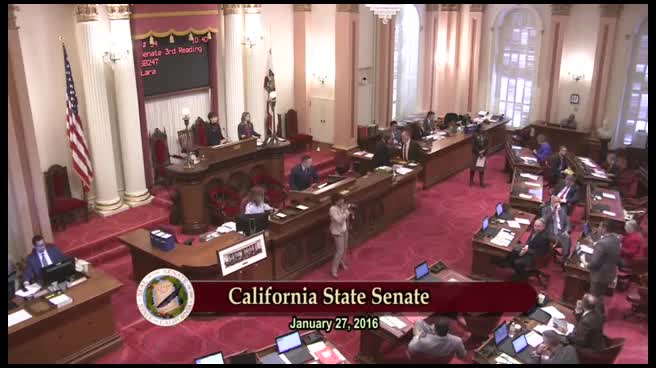 14MIN
Senate Floor
 32SEC
Senate Standing Committee on Appropriations
 18SEC
Senate Standing Committee on Appropriations
Bill Author

Bill Co-Author(s):