SB 254: Campaign finance: voter instruction.
- Session Year: 2015-2016
- House: Senate
- Latest Version Date: 2016-06-09
This bill would call a special election to be consolidated with the November 8, 2016, statewide general election. The bill would require the Secretary of State to submit to the voters at the November 8, 2016, consolidated election a voter instruction asking whether Californias elected officials should use all of their constitutional authority, including proposing and ratifying one or more amendments to the United States Constitution, to overturn Citizens United v. Federal Election Commission (2010) 558 U.S. 310, and other applicable judicial precedents, as specified. The bill would require the Secretary of State to communicate the results of this election to the Congress of the United States. The bill would require the Secretary of State, if prohibited by court order from submitting the voter instruction to the voters at the November 8, 2016, statewide general election, as specified, to submit the voter instruction to the voters at the next occurring election.
This bill would declare that it is to take effect immediately as an act calling an election.
This bill would call a special election to be consolidated with the November 8, 2016, statewide general election. The bill would require the Secretary of State to submit to the voters at the November 8, 2016, consolidated election an advisory question asking whether the Congress of the United States should propose, and the California Legislature should ratify, an amendment or amendments to the United States Constitution a voter instruction asking whether Californias elected officials should use all of their constitutional authority, including proposing and ratifying one or more amendments to the United States Constitution, to overturn Citizens United v. Federal Election Commission (2010) 558 U.S. 310, and other applicable judicial precedents, as specified. The bill would require the Secretary of State to communicate the results of this election to the Congress of the United States. The bill would require the Secretary of State, if prohibited by court order from submitting the voter instruction to the voters at the November 8, 2016, statewide general election, as specified, to submit the voter instruction to the voters at the next occurring election.
This bill would declare that it is to take effect immediately as an act calling an election.
This bill would call a special election to be consolidated with the November 8, 2016, statewide general election. The bill would require the Secretary of State to submit to the voters at the November 8, 2016, consolidated election an advisory question asking whether the Congress of the United States should propose, and the California Legislature should ratify, an amendment or amendments to the United States Constitution to overturn Citizens United v. Federal Election Commission (2010) 558 U.S. 310, and other applicable judicial precedents, as specified. The bill would require the Secretary of State to communicate the results of this election to the Congress of the United States.
This bill would declare that it is to take effect immediately as an act calling an election.
Existing law gives the Department of Transportation full possession and control of all state highways. Existing law describes the authorized routes in the state highway system and establishes a process for adoption of a highway on an authorized route by the California Transportation Commission. Existing law also provides for the commission to relinquish to local agencies state highway segments that have been deleted from the state highway system by legislative enactment or have been superseded by relocation, and in certain other cases.
This bill would revise and recast these provisions to delete the requirement that the portion to be relinquished be deleted from the state highway system by legislative enactment.
The bill would require the department, not later than April 1, 2016, and biennially thereafter, to make a specified report to the commission on which state highway routes or segments primarily serve regional travel and do not primarily facilitate interregional movement of people and goods. The bill would also authorize the department to identify in the report which of those routes and segments are the best candidates for relinquishment.
The bill would also authorize the commission to relinquish a portion of a state highway to a county or city, if the department and the county or city concerned have entered into an agreement providing for the relinquishment of a portion of a state highway, within the territorial limits of the county or city, that is not an interstate highway and does not primarily facilitate the interregional movement of people and goods, as determined in the report. The bill would also require that the relinquishment of those routes and segments is subject to certain conditions, including that the department complete a specified cost-benefit analysis and hold a public hearing on the proposed relinquishment.
The bill would require the commission to compile a list of all portions of the state highway system relinquished in the previous 12 months and include this information in its annual report to the Legislature, as specified.
Existing law gives the Department of Transportation full possession and control of all state highways. Existing law describes the authorized routes in the state highway system and establishes a process for adoption of a highway on an authorized route by the California Transportation Commission. Existing law also provides for the commission to relinquish to local agencies state highway segments that have been deleted from the state highway system by legislative enactment or have been superseded by relocation, and in certain other cases. Existing law prohibits relinquishments of those segments that have been superseded by relocation until the department has placed them in a state of good repair and maintenance, as defined, including litter removal, weed control, and tree and shrub trimming.
This bill would revise and recast these provisions to delete the requirement that the portion to be relinquished be deleted from the state highway system by legislative enactment or superseded by relocation. The bill would authorize the commission to relinquish to a county or a city a portion of a state highway that is not part of the interregional road system, if the department has entered into an agreement with the county or city providing for the relinquishment and the road has been placed in a state of good repair. The bill would delete the requirement that good repair includes maintenance. enactment.
The bill would require the department, not later than April 1, 2016, and biennially thereafter, to make a specified report to the commission on which state highway routes or segments primarily serve regional travel and do not primarily facilitate interregional movement of people and goods. The bill would also authorize the department to identify in the report which of those routes and segments are the best candidates for relinquishment.
The bill would also authorize the commission to relinquish a portion of a state highway to a county or city, if the department and the county or city concerned have entered into an agreement providing for the relinquishment of a portion of a state highway, within the territorial limits of the county or city, that is not an interstate highway and does not primarily facilitate the interregional movement of people and goods, as determined in the report. The bill would also require that the relinquishment of those routes and segments is subject to certain conditions, including that the department complete a specified cost-benefit analysis and hold a public hearing on the proposed relinquishment.
The bill would require the commission to compile a list of all portions of the state highway system relinquished in the previous 12 months and include this information in its annual report to the Legislature, as specified.
Existing law gives the Department of Transportation full possession and control of all state highways. Existing law describes the authorized routes in the state highway system and establishes a process for adoption of a highway on an authorized route by the California Transportation Commission. Existing law also provides for the commission to relinquish to local agencies state highway segments that have been deleted from the state highway system by legislative enactment or have been superseded by relocation, and in certain other cases. Existing law prohibits relinquishments of those segments that have been superseded by relocation until the department has placed them in a state of good repair and maintenance, as defined, including litter removal, weed control, and tree and shrub trimming.
This bill would revise and recast these provisions to delete the requirement that the portion to be relinquished be deleted from the state highway system by legislative enactment or superseded by relocation. The bill would authorize the commission to relinquish to a county or a city a portion of a state highway that is not part of the interregional road system, if the department has entered into an agreement with the county or city providing for the relinquishment and the road has been placed in a state of good repair. The bill would delete the requirement that good repair includes maintenance.
The bill would require the department, not later than April 1, 2016, and biennially thereafter, to make a specified report to the commission on which state highway routes or segments primarily serve regional travel and do not primarily facilitate interregional movement of people and goods. The bill would also authorize the department to identify in the report which of those routes and segments are the best candidates for relinquishment.
The bill would also authorize the commission to relinquish a portion of a state highway to a county or city, if the department and the county or city concerned have entered into an agreement providing for the relinquishment of a portion of a state highway, within the territorial limits of the county or city, that is not an interstate highway and does not primarily facilitate the interregional movement of people and goods, as determined in the report. The bill would also require that the relinquishment of those routes and segments is subject to certain conditions, including that the department complete a specified cost-benefit analysis and hold a public hearing on the proposed relinquishment.
The bill would require the commission to compile a list of all portions of the state highway system relinquished in the previous 12 months and include this information in its annual report to the Legislature, as specified.
Existing law provides for the creation of the Southern California Rapid Transit District in and around the County of Los Angeles, with specified powers and duties relative to providing public transit service. Existing law requires an ordinance passed by the board of directors of the district to be published once within 15 days after passage in a newspaper of general circulation printed and published in the district.
This bill would authorize the district to print and publish an ordinance in a newspaper of general circulation more than once within 15 days after passage. The bill would require the district to also make an ordinance available online on appropriate Internet Web sites within 15 days after passage. By requiring a local agency to perform an additional duty, this bill would impose a state-mandated local program.
The California Constitution requires the state to reimburse local agencies and school districts for certain costs mandated by the state. Statutory provisions establish procedures for making that reimbursement.
This bill would provide that no reimbursement is required by this act for a specified reason.
The Legislature finds and declares all of the following:
(a)The United States Constitution and the Bill of Rights are intended to protect the rights of individual human beings.
(b)Corporations are not mentioned in the United States Constitution, nor have we decreed that corporations have rights separate from We the People.
(c)In Connecticut General Life Insurance Company v. Johnson (1938) 303 U.S. 77, United States Supreme Court Justice Hugo Black stated in his dissent, I do not believe the word person in the Fourteenth Amendment includes corporations.
(d)In Austin v. Michigan Chamber of Commerce (1990) 494 U.S. 652, the United States Supreme Court recognized the threat to a republican form of government posed by the corrosive and distorting effects of immense aggregations of wealth that are accumulated with the help of the corporate form and that have little or no correlation to the publics support for the corporations political ideas.
(e)In Citizens United v. Federal Election Commission (2010) 558 U.S. 310, the United States Supreme Court struck down limits on electioneering communications that were upheld in McConnell v. Federal Election Commission (2003) 540 U.S. 93 and Austin v. Michigan Chamber of Commerce. This decision presents a serious threat to self-government by rolling back previous bans on corporate spending in the electoral process and allows unlimited corporate spending to influence elections, candidate selection, policy decisions, and public debate.
(f)In Citizens United v. Federal Election Commission, Justices John Paul Stevens, Ruth Bader Ginsburg, Stephen Breyer, and Sonia Sotomayor noted in their dissent that corporations have special advantages not enjoyed by natural persons, such as limited liability, perpetual life, and favorable treatment of the accumulation and distribution of assets, that allow them to spend huge sums on campaign messages that have little or no correlation with the beliefs held by natural persons.
(g)Corporations have used the artificial rights bestowed on them by the courts to overturn democratically enacted laws that municipal, state, and federal governments passed to curb corporate abuses, thereby impairing local governments ability to protect their citizens against corporate harms to the environment, consumers, workers, independent businesses, and local and regional economies.
(h)In Buckley v. Valeo (1976) 424 U.S. 1, the United States Supreme Court held that the appearance of corruption justified some contribution limitations, but it wrongly rejected other fundamental interests that the citizens of California find compelling, such as creating a level playing field and ensuring that all citizens, regardless of wealth, have an opportunity to have their political views heard.
(i)In First National Bank of Boston v. Bellotti (1978) 435 U.S. 765 and Citizens Against Rent Control/Coalition for Fair Housing v. City of Berkeley (1981) 454 U.S. 290, the United States Supreme Court rejected limits on contributions to ballot measure campaigns because it concluded that these contributions posed no threat of candidate corruption.
(j)In Nixon v. Shrink Missouri Government PAC (2000) 528 U.S. 377, United States Supreme Court Justice John Paul Stevens observed in his concurrence that money is property; it is not speech.
(k)A February 2010 Washington Post-ABC News poll found that 80 percent of Americans oppose the ruling in Citizens United.
(l)Article V of the United States Constitution empowers and obligates the people of the United States of America to use the constitutional amendment process to correct those egregiously wrong decisions of the United States Supreme Court that go to the heart of our democracy and the republican form of self-government.
(m)Article I of the California Constitution guarantees the right of the people to instruct their representatives, petition government for redress of grievances, and assemble freely to consult for the common good.
(n)The people of California and of the United States have previously used ballot measures as a way of instructing their elected representatives about the express actions they want to see them take on their behalf, including provisions to amend the United States Constitution.
(o)Californias United States Senators and Representatives would benefit from having instructions from California voters about the United States Supreme Courts ruling in Citizens United and other judicial precedents in taking congressional action.
SEC. 3.A special election is hereby called to be held throughout the state on November 8, 2016. The special election shall be consolidated with the statewide general election to be held on that date. The consolidated election shall be held and conducted in all respects as if there were only one election and only one form of ballot shall be used.
SEC. 4.(a)Notwithstanding Section 9040 of the Elections Code, the Secretary of State shall submit the following voter instruction to the voters at the November 8, 2016, consolidated election:
Shall Californias elected officials use all of their constitutional authority, including, but not limited to, proposing and ratifying one or more amendments to the United States Constitution, to overturn Citizens United v. Federal Election Commission (2010) 558 U.S. 310, and other applicable judicial precedents, to allow the full regulation or limitation of campaign contributions and spending, to ensure that all citizens, regardless of wealth, may express their views to one another, and to make clear that corporations should not have the same constitutional rights as human beings?
(b)Upon certification of the election, the Secretary of State shall communicate to the Congress of the United States the results of the election asking the question set forth in subdivision (a).
(c)The provisions of the Elections Code that apply to the preparation of ballot measures and ballot materials at a statewide election apply to the measure submitted pursuant to this section.
SEC. 5.(a)Notwithstanding the requirements of Sections 9040, 9043, 9044, 9061, 9082, and 9094 of the Elections Code or any other law, the Secretary of State shall submit Section 4 of this act to the voters at the November 8, 2016, statewide general election.
(b)Notwithstanding Section 13115 of the Elections Code, Section 4 of this act and any other measure placed on the ballot by the Legislature for the November 8, 2016, statewide general election after the 131-day deadline set forth in Section 9040 of the Elections Code shall be placed on the ballot, following all other ballot measures, in the order in which they qualified as determined by chapter number.
(c)The Secretary of State shall include, in the ballot pamphlets mailed pursuant to Section 9094 of the Elections Code, the information specified in Section 9084 of the Elections Code regarding the ballot measure contained in Section 4 of this act.
SEC. 6.If the Secretary of State is prohibited from complying with Sections 4 and 5 of this act until after November 8, 2016, by court order pending resolution of an unsuccessful legal challenge to the validity of this act, then the Secretary of State shall submit Section 4 of this act to the voters at the next occurring election.
SEC. 7.This act calls an election within the meaning of Article IV of the Constitution and shall go into immediate effect.
The Legislature finds and declares all of the following:
(a)The United States Constitution and the Bill of Rights are intended to protect the rights of individual human beings.
(b)Corporations are not mentioned in the United States Constitution, nor have we decreed that corporations have rights separate from We the People.
(c)In Connecticut General Life Insurance Company v. Johnson (1938) 303 U.S. 77, United States Supreme Court Justice Hugo Black stated in his dissent, I do not believe the word person in the Fourteenth Amendment includes corporations.
(d)In Austin v. Michigan Chamber of Commerce (1990) 494 U.S. 652, the United States Supreme Court recognized the threat to a republican form of government posed by the corrosive and distorting effects of immense aggregations of wealth that are accumulated with the help of the corporate form and that have little or no correlation to the publics support for the corporations political ideas.
(e)In Citizens United v. Federal Election Commission (2010) 558 U.S. 310, the United States Supreme Court struck down limits on electioneering communications that were upheld in McConnell v. Federal Election Commission (2003) 540 U.S. 93 and Austin v. Michigan Chamber of Commerce. This decision presents a serious threat to self-government by rolling back previous bans on corporate spending in the electoral process and allows unlimited corporate spending to influence elections, candidate selection, policy decisions, and public debate.
(f)In Citizens United v. Federal Election Commission, Justices John Paul Stevens, Ruth Bader Ginsburg, Stephen Breyer, and Sonia Sotomayor noted in their dissent that corporations have special advantages not enjoyed by natural persons, such as limited liability, perpetual life, and favorable treatment of the accumulation and distribution of assets, that allow them to spend huge sums on campaign messages that have little or no correlation with the beliefs held by natural persons.
(g)Corporations have used the artificial rights bestowed on them by the courts to overturn democratically enacted laws that municipal, state, and federal governments passed to curb corporate abuses, thereby impairing local governments ability to protect their citizens against corporate harms to the environment, consumers, workers, independent businesses, and local and regional economies.
(h)In Buckley v. Valeo (1976) 424 U.S. 1, the United States Supreme Court held that the appearance of corruption justified some contribution limitations, but it wrongly rejected other fundamental interests that the citizens of California find compelling, such as creating a level playing field and ensuring that all citizens, regardless of wealth, have an opportunity to have their political views heard.
(i)In First National Bank of Boston v. Bellotti (1978) 435 U.S. 765 and Citizens Against Rent Control/Coalition for Fair Housing v. City of Berkeley (1981) 454 U.S. 290, the United States Supreme Court rejected limits on contributions to ballot measure campaigns because it concluded that these contributions posed no threat of candidate corruption.
(j)In Nixon v. Shrink Missouri Government PAC (2000) 528 U.S. 377, United States Supreme Court Justice John Paul Stevens observed in his concurrence that money is property; it is not speech.
(k)A February 2010 Washington Post-ABC News poll found that 80 percent of Americans oppose the ruling in Citizens United.
(l)Article V of the United States Constitution empowers and obligates the people of the United States of America to use the constitutional amendment process to correct those egregiously wrong decisions of the United States Supreme Court that go to the heart of our democracy and the republican form of self-government.
(m)Article I of the California Constitution guarantees the right of the people to instruct their representatives, petition government for redress of grievances, and assemble freely to consult for the common good.
(n)The people of California and of the United States have previously used ballot measures as a way of instructing their elected representatives about the express actions they want to see them take on their behalf, including provisions to amend the United States Constitution.
(o)Californias United States Senators and Representatives would benefit from having instructions from California voters about the United States Supreme Courts ruling in Citizens United and other judicial precedents in taking congressional action.
SEC. 3.A special election is hereby called to be held throughout the state on November 8, 2016. The special election shall be consolidated with the statewide general election to be held on that date. The consolidated election shall be held and conducted in all respects as if there were only one election and only one form of ballot shall be used.
SEC. 4.(a)Notwithstanding Section 9040 of the Elections Code, the Secretary of State shall submit the following voter instruction to the voters at the November 8, 2016, consolidated election:
Shall Californias elected officials use all of their constitutional authority, including, but not limited to, proposing and ratifying one or more amendments to the United States Constitution, to overturn Citizens United v. Federal Election Commission (2010) 558 U.S. 310, and other applicable judicial precedents, to allow the full regulation or limitation of campaign contributions and spending, to ensure that all citizens, regardless of wealth, may express their views to one another, and to make clear that corporations should not have the same constitutional rights of as human beings?
(b)Upon certification of the election, the Secretary of State shall communicate to the Congress of the United States the results of the election asking the question set forth in subdivision (a).
(c)The provisions of the Elections Code that apply to the preparation of ballot measures and ballot materials at a statewide election apply to the measure submitted pursuant to this section.
SEC. 5.(a)Notwithstanding the requirements of Sections 9040, 9043, 9044, 9061, 9082, and 9094 of the Elections Code or any other law, the Secretary of State shall submit Section 4 of this act to the voters at the November 8, 2016, statewide general election.
(b)Notwithstanding Section 13115 of the Elections Code, Section 4 of this act and any other measure placed on the ballot by the Legislature for the November 8, 2016, statewide general election after the 131-day deadline set forth in Section 9040 of the Elections Code shall be placed on the ballot, following all other ballot measures, in the order in which they qualified as determined by chapter number.
(c)The Secretary of State shall include, in the ballot pamphlets mailed pursuant to Section 9094 of the Elections Code, the information specified in Section 9084 of the Elections Code regarding the ballot measure contained in Section 4 of this act.
SEC. 6.If the Secretary of State is prohibited from complying with Sections 4 and 5 of this act until after November 8, 2016, by court order pending resolution of an unsuccessful legal challenge to the validity of this act, then the Secretary of State shall submit Section 4 of this act to the voters at the next occurring election.
SEC. 7.This act calls an election within the meaning of Article IV of the Constitution and shall go into immediate effect.
The Legislature finds and declares all of the following:
(a)The United States Constitution and the Bill of Rights are intended to protect the rights of individual human beings.
(b)Corporations are not mentioned in the United States Constitution and the people have never granted constitutional rights to corporations, nor have we decreed that corporations have authority that exceeds the authority of We the People.
(b)Corporations are not mentioned in the United States Constitution, nor have we decreed that corporations have rights separate from We the People.
(c)In Connecticut General Life Insurance Company v. Johnson (1938) 303 U.S. 77, United States Supreme Court Justice Hugo Black stated in his dissent, I do not believe the word person in the Fourteenth Amendment includes corporations.
(d)In Austin v. Michigan Chamber of Commerce (1990) 494 U.S. 652, the United States Supreme Court recognized the threat to a republican form of government posed by the corrosive and distorting effects of immense aggregations of wealth that are accumulated with the help of the corporate form and that have little or no correlation to the publics support for the corporations political ideas.
(e)In Citizens United v. Federal Election Commission (2010) 558 U.S. 310, the United States Supreme Court struck down limits on electioneering communications that were upheld in McConnell v. Federal Election Commission (2003) 540 U.S. 93 and Austin v. Michigan Chamber of Commerce. This decision presents a serious threat to self-government by rolling back previous bans on corporate spending in the electoral process and allows unlimited corporate spending to influence elections, candidate selection, policy decisions, and public debate.
(f)In Citizens United v. Federal Election Commission, Justices John Paul Stevens, Ruth Bader Ginsburg, Stephen Breyer, and Sonia Sotomayor noted in their dissent that corporations have special advantages not enjoyed by natural persons, such as limited liability, perpetual life, and favorable treatment of the accumulation and distribution of assets, that allow them to spend huge sums on campaign messages that have little or no correlation with the beliefs held by natural persons.
(g)Corporations have used the artificial rights bestowed on them by the courts to overturn democratically enacted laws that municipal, state, and federal governments passed to curb corporate abuses, thereby impairing local governments ability to protect their citizens against corporate harms to the environment, consumers, workers, independent businesses, and local and regional economies.
(h)In Buckley v. Valeo (1976) 424 U.S. 1, the United States Supreme Court held that the appearance of corruption justified some contribution limitations, but it wrongly rejected other fundamental interests that the citizens of California find compelling, such as creating a level playing field and ensuring that all citizens, regardless of wealth, have an opportunity to have their political views heard.
(i)In First National Bank of Boston v. Bellotti (1978) 435 U.S. 765 and Citizens Against Rent Control/Coalition for Fair Housing v. City of Berkeley (1981) 454 U.S. 290, the United States Supreme Court rejected limits on contributions to ballot measure campaigns because it concluded that these contributions posed no threat of candidate corruption.
(j)In Nixon v. Shrink Missouri Government PAC (2000) 528 U.S. 377, United States Supreme Court Justice John Paul Stevens observed in his concurrence that money is property; it is not speech.
(k)A February 2010 Washington Post-ABC News poll found that 80 percent of Americans oppose the ruling in Citizens United.
(l)Article V of the United States Constitution empowers and obligates the people of the United States of America to use the constitutional amendment process to correct those egregiously wrong decisions of the United States Supreme Court that go to the heart of our democracy and the republican form of self-government.
(m)Article I of the California Constitution guarantees the right of the people to instruct their representatives, petition government for redress of grievances, and assemble freely to consult for the common good.
(n)The people of California and of the United States have previously used ballot measures as a way of instructing their elected representatives about the express actions they want to see them take on their behalf, including provisions to amend the United States Constitution.
(o)Californias United States Senators and Representatives would benefit from having instructions from California voters about the United States Supreme Courts ruling in Citizens Citizens United and other judicial precedents in taking congressional action.
SEC. 3.A special election is hereby called to be held throughout the state on November 8, 2016. The special election shall be consolidated with the statewide general election to be held on that date. The consolidated election shall be held and conducted in all respects as if there were only one election and only one form of ballot shall be used.
SEC. 4.(a)Notwithstanding Section 9040 of the Elections Code, the Secretary of State shall submit the following voter instruction to the voters at the November 8, 2016, consolidated election:
Shall Californias elected officials use all of their constitutional authority, including, but not limited to, proposing and ratifying one or more amendments to the United States Constitution, to overturn Citizens United v. Federal Election Commission (2010) 558 U.S. 310, and other applicable judicial precedents, to allow the full regulation or limitation of campaign contributions and spending, to ensure that all citizens, regardless of wealth, may express their views to one another, and to make clear that corporations should not have the constitutional rights of human beings?
(b)Upon certification of the election, the Secretary of State shall communicate to the Congress of the United States the results of the election asking the question set forth in subdivision (a).
(c)The provisions of the Elections Code that apply to the preparation of ballot measures and ballot materials at a statewide election apply to the measure submitted pursuant to this section.
SEC. 5.(a)Notwithstanding the requirements of Sections 9040, 9043, 9044, 9061, 9082, and 9094 of the Elections Code or any other law, the Secretary of State shall submit Section 4 of this act to the voters at the November 8, 2016, statewide general election.
(b)Notwithstanding Section 13115 of the Elections Code, Section 4 of this act and any other measure placed on the ballot by the Legislature for the November 8, 2016, statewide general election after the 131-day deadline set forth in Section 9040 of the Elections Code shall be placed on the ballot, following all other ballot measures, in the order in which they qualified as determined by chapter number.
(c)The Secretary of State shall include, in the ballot pamphlets mailed pursuant to Section 9094 of the Elections Code, the information specified in Section 9084 of the Elections Code regarding the ballot measure contained in Section 4 of this act.
SEC. 6.If the Secretary of State is prohibited from complying with Sections 4 and 5 of this act until after November 8, 2016, by court order pending resolution of an unsuccessful legal challenge to the validity of this act, then the Secretary of State shall submit Section 4 of this act to the voters at the next occurring election.
SEC. 7.This act calls an election within the meaning of Article IV of the Constitution and shall go into immediate effect.
The Legislature finds and declares all of the following:
(a)The United States Constitution and the Bill of Rights are intended to protect the rights of individual human beings.
(b)Corporations are not mentioned in the United States Constitution and the people have never granted constitutional rights to corporations, nor have we decreed that corporations have authority that exceeds the authority of We the People.
(c)In Connecticut General Life Insurance Company v. Johnson (1938) 303 U.S. 77, United States Supreme Court Justice Hugo Black stated in his dissent, I do not believe the word person in the Fourteenth Amendment includes corporations.
(d)In Austin v. Michigan Chamber of Commerce (1990) 494 U.S. 652, the United States Supreme Court recognized the threat to a republican form of government posed by the corrosive and distorting effects of immense aggregations of wealth that are accumulated with the help of the corporate form and that have little or no correlation to the publics support for the corporations political ideas.
(e)In Citizens United v. Federal Election Commission (2010) 558 U.S. 310, the United States Supreme Court struck down limits on electioneering communications that were upheld in McConnell v. Federal Election Commission (2003) 540 U.S. 93 and Austin v. Michigan Chamber of Commerce. This decision presents a serious threat to self-government by rolling back previous bans on corporate spending in the electoral process and allows unlimited corporate spending to influence elections, candidate selection, policy decisions, and public debate.
(f)In Citizens United v. Federal Election Commission, Justices John Paul Stevens, Ruth Bader Ginsburg, Stephen Breyer, and Sonia Sotomayor noted in their dissent that corporations have special advantages not enjoyed by natural persons, such as limited liability, perpetual life, and favorable treatment of the accumulation and distribution of assets, that allow them to spend huge sums on campaign messages that have little or no correlation with the beliefs held by natural persons.
(g)Corporations have used the artificial rights bestowed on them by the courts to overturn democratically enacted laws that municipal, state, and federal governments passed to curb corporate abuses, thereby impairing local governments ability to protect their citizens against corporate harms to the environment, consumers, workers, independent businesses, and local and regional economies.
(h)In Buckley v. Valeo (1976) 424 U.S. 1, the United States Supreme Court held that the appearance of corruption justified some contribution limitations, but it wrongly rejected other fundamental interests that the citizens of California find compelling, such as creating a level playing field and ensuring that all citizens, regardless of wealth, have an opportunity to have their political views heard.
(i)In First National Bank of Boston v. Bellotti (1978) 435 U.S. 765 and Citizens Against Rent Control/Coalition for Fair Housing v. City of Berkeley (1981) 454 U.S. 290, the United States Supreme Court rejected limits on contributions to ballot measure campaigns because it concluded that these contributions posed no threat of candidate corruption.
(j)In Nixon v. Shrink Missouri Government PAC (2000) 528 U.S. 377, United States Supreme Court Justice John Paul Stevens observed in his concurrence that money is property; it is not speech.
(k)A February 2010 Washington Post-ABC News poll found that 80 percent of Americans oppose the ruling in Citizens United.
(l)Article V of the United States Constitution empowers and obligates the people of the United States of America to use the constitutional amendment process to correct those egregiously wrong decisions of the United States Supreme Court that go to the heart of our democracy and the republican form of self-government.
(m)Article I of the California Constitution guarantees the right of the people to instruct their representatives, petition government for redress of grievances, and assemble freely to consult for the common good.
(m)
(n)The people of California and of the United States have previously used ballot measures as a way of instructing their elected representatives about the express actions they want to see them take on their behalf, including provisions to amend the United States Constitution.
(o)Californias United States Senators and Representatives would benefit from having instructions from California voters about the United States Supreme Courts ruling in Citizens United and other judicial precedents in taking congressional action.
SEC. 3.A special election is hereby called to be held throughout the state on November 8, 2016. The special election shall be consolidated with the statewide general election to be held on that date. The consolidated election shall be held and conducted in all respects as if there were only one election and only one form of ballot shall be used.
SEC. 4.(a)Notwithstanding Section 9040 of the Elections Code, the Secretary of State shall submit the following advisory question voter instruction to the voters at the November 8, 2016, consolidated election:
Shall the Congress of the United States propose, and the California Legislature ratify, an amendment or amendments to the United States Constitution Californias elected officials use all of their constitutional authority, including, but not limited to, proposing and ratifying one or more amendments to the United States Constitution, to overturn Citizens United v. Federal Election Commission (2010) 558 U.S. 310, and other applicable judicial precedents, to allow the full regulation or limitation of campaign contributions and spending, to ensure that all citizens, regardless of wealth, may express their views to one another, and to make clear that the rights protected by the United States Constitution are the rights of natural persons only? corporations should not have the constitutional rights of human beings?
(b)Upon certification of the election, the Secretary of State shall communicate to the Congress of the United States the results of the election asking the question set forth in subdivision (a).
(c)The provisions of the Elections Code that apply to the preparation of ballot measures and ballot materials at a statewide election apply to the measure submitted pursuant to this section.
SEC. 5.(a)Notwithstanding the requirements of Sections 9040, 9043, 9044, 9061, 9082, and 9094 of the Elections Code or any other law, the Secretary of State shall submit Section 4 of this act to the voters at the November 8, 2016, statewide general election.
(b)Notwithstanding Section 13115 of the Elections Code, Section 4 of this act and any other measure placed on the ballot by the Legislature for the November 8, 2016, statewide general election after the 131-day deadline set forth in Section 9040 of the Elections Code shall be placed on the ballot, following all other ballot measures, in the order in which they qualified as determined by chapter number.
(c)The Secretary of State shall include, in the ballot pamphlets mailed pursuant to Section 9094 of the Elections Code, the information specified in Section 9084 of the Elections Code regarding the ballot measure contained in Section 4 of this act.
SEC. 6.If the Secretary of State is prohibited from complying with Sections 4 and 5 of this act until after November 8, 2016, by court order pending resolution of an unsuccessful legal challenge to the validity of this act, then the Secretary of State shall submit Section 4 of this act to the voters at the next occurring election.
SEC. 6.SEC. 7.This act calls an election within the meaning of Article IV of the Constitution and shall go into immediate effect.
The Legislature finds and declares all of the following:
(a)The United States Constitution and the Bill of Rights are intended to protect the rights of individual human beings.
(b)Corporations are not mentioned in the United States Constitution and the people have never granted constitutional rights to corporations, nor have we decreed that corporations have authority that exceeds the authority of We the People.
(c)In Connecticut General Life Insurance Company v. Johnson (1938) 303 U.S. 77, United States Supreme Court Justice Hugo Black stated in his dissent, I do not believe the word person in the Fourteenth Amendment includes corporations.
(d)In Austin v. Michigan Chamber of Commerce (1990) 494 U.S. 652, the United States Supreme Court recognized the threat to a republican form of government posed by the corrosive and distorting effects of immense aggregations of wealth that are accumulated with the help of the corporate form and that have little or no correlation to the publics support for the corporations political ideas.
(e)In Citizens United v. Federal Election Commission (2010) 558 U.S. 310, the United States Supreme Court struck down limits on electioneering communications that were upheld in McConnell v. Federal Election Commission (2003) 540 U.S. 93 and Austin v. Michigan Chamber of Commerce. This decision presents a serious threat to self-government by rolling back previous bans on corporate spending in the electoral process and allows unlimited corporate spending to influence elections, candidate selection, policy decisions, and public debate.
(f)In Citizens United v. Federal Election Commission, Justices John Paul Stevens, Ruth Bader Ginsburg, Stephen Breyer, and Sonia Sotomayor noted in their dissent that corporations have special advantages not enjoyed by natural persons, such as limited liability, perpetual life, and favorable treatment of the accumulation and distribution of assets, that allow them to spend huge sums on campaign messages that have little or no correlation with the beliefs held by natural persons.
(g)Corporations have used the artificial rights bestowed on them by the courts to overturn democratically enacted laws that municipal, state, and federal governments passed to curb corporate abuses, thereby impairing local governments ability to protect their citizens against corporate harms to the environment, consumers, workers, independent businesses, and local and regional economies.
(h)In Buckley v. Valeo (1976) 424 U.S. 1, the United States Supreme Court held that the appearance of corruption justified some contribution limitations, but it wrongly rejected other fundamental interests that the citizens of California find compelling, such as creating a level playing field and ensuring that all citizens, regardless of wealth, have an opportunity to have their political views heard.
(i)In First National Bank of Boston v. Bellotti (1978) 435 U.S. 765 and Citizens Against Rent Control/Coalition for Fair Housing v. Berkeley (1981) 454 U.S. 290, the United States Supreme Court rejected limits on contributions to ballot measure campaigns because it concluded that these contributions posed no threat of candidate corruption.
(j)In Nixon v. Shrink Missouri Government PAC (2000) 528 U.S. 377, United States Supreme Court Justice John Paul Stevens observed in his concurrence that money is property; it is not speech.
(k)A February 2010 Washington Post-ABC News poll found that 80 percent of Americans oppose the ruling in Citizens United.
(l)Article V of the United States Constitution empowers and obligates the people of the United States of America to use the constitutional amendment process to correct those egregiously wrong decisions of the United States Supreme Court that go to the heart of our democracy and the republican form of self-government.
(m)The people of California and of the United States have previously used ballot measures as a way of instructing their elected representatives about the express actions they want to see them take on their behalf, including provisions to amend the United States Constitution.
SEC. 3.A special election is hereby called to be held throughout the state on November 8, 2016. The special election shall be consolidated with the statewide general election to be held on that date. The consolidated election shall be held and conducted in all respects as if there were only one election and only one form of ballot shall be used.
SEC. 4.(a)Notwithstanding Section 9040 of the Elections Code, the Secretary of State shall submit the following advisory question to the voters at the November 8, 2016, consolidated election:
Shall the Congress of the United States propose, and the California Legislature ratify, an amendment or amendments to the United States Constitution to overturn Citizens United v. Federal Election Commission (2010) 558 U.S. 310, and other applicable judicial precedents, to allow the full regulation or limitation of campaign contributions and spending, to ensure that all citizens, regardless of wealth, may express their views to one another, and to make clear that the rights protected by the United States Constitution are the rights of natural persons only?
(b)Upon certification of the election, the Secretary of State shall communicate to the Congress of the United States the results of the election asking the question set forth in subdivision (a).
(c)The provisions of the Elections Code that apply to the preparation of ballot measures and ballot materials at a statewide election apply to the measure submitted pursuant to this section.
SEC. 5.(a)Notwithstanding the requirements of Sections 9040, 9043, 9044, 9061, 9082, and 9094 of the Elections Code or any other law, the Secretary of State shall submit Section 4 of this act to the voters at the November 8, 2016, statewide general election.
(b)Notwithstanding Section 13115 of the Elections Code, Section 4 of this act and any other measure placed on the ballot by the Legislature for the November 8, 2016, statewide general election after the 131-day deadline set forth in Section 9040 of the Elections Code shall be placed on the ballot, following all other ballot measures, in the order in which they qualified as determined by chapter number.
(c)The Secretary of State shall include, in the ballot pamphlets mailed pursuant to Section 9094 of the Elections Code, the information specified in Section 9084 of the Elections Code regarding the ballot measure contained in Section 4 of this act.
SEC. 6.This act calls an election within the meaning of Article IV of the Constitution and shall go into immediate effect.
SECTION 1.Section 73 of the Streets and Highways Code is amended to read:73.(a)The Legislature finds and declares both of the following:
(1)Ownership and management of transportation infrastructure should be placed at the most appropriate level of government. Transportation infrastructure primarily serving regional travel and not primarily facilitating interregional movement of people and goods is typically best managed by local and regional government entities. Transportation infrastructure, including interstate highways, that is needed to facilitate interregional movement of people and goods is typically best managed at the state government level.
(2)The Legislature intends for the department to identify routes, and segments of routes, that may be appropriate candidates for relinquishment and to streamline the process of approving relinquishments where the department and the city or county have entered into an agreement providing for the relinquishment.
(b)(1)The commission may relinquish to a county or city a portion of a state highway within the county or city that has been superseded by relocation.
(2)The commission shall not relinquish to a county or city a portion of a state highway that has been superseded by relocation until the department has placed the highway, as defined in Section 23, in a state of good repair. This requirement shall not obligate the department for widening, new construction, or major reconstruction, except as the commission may direct. A state of good repair requires maintenance, as defined in Section 27, including litter removal, weed control, and tree and shrub trimming to the time of relinquishment.
(c)Whenever the department and the county or city concerned have entered into an agreement providing therefor, or the legislative body of the county or city has adopted a resolution consenting thereto, the commission may relinquish, to that county or city, any frontage or service road or outer highway, within the territorial limits of the county or city, that has been constructed as a part of a state highway project, but does not constitute a part of the main traveled roadway thereof.
(d)The commission may also relinquish, to a county or city within whose territorial limits it is located, any nonmotorized transportation facility, as defined in Section 887, constructed as part of a state highway project if the county or city, as the case may be, has entered into an agreement providing therefor or its legislative body has adopted a resolution consenting thereto.
(e)(1)The commission may relinquish a portion of a state highway to a county or city if the department and the county or city concerned have entered into an agreement providing for the relinquishment of that portion of that state highway, within the territorial limits of the county or city, that is not an interstate highway and does not primarily facilitate the interregional movement of people and goods as determined in the report described in subdivision (h). The department and the county or city shall agree upon the condition or state of the relinquished portion of the state highway at the time of its transfer from the department to the county or city. The agreement shall specify any financial terms upon which the department and county or city have agreed. The agreement shall transfer all legal liability for the relinquished portion of the state highway at the time of its transfer from the department to the county or city.
(2)A relinquishment pursuant to paragraph (1) shall not occur unless all of the following conditions are met:
(A)The commission has determined the relinquishment is in the best interest of the state.
(B)The department completes a cost-benefit analysis on behalf of the state that may include a review of route continuity, market value assessments of the proposed relinquishment and associated parcels, a review of historical and estimated future maintenance costs of the proposed relinquishment, or any other quantifiable economic impacts.
(C)The commission holds a public hearing on the proposed relinquishment.
(3)Upon relinquishment of a portion of a state highway under this subdivision, the county or city accepting the relinquished former portion of state highway shall maintain within its jurisdiction signs directing motorists to the continuation of the remaining portions of the state highway, if any, to the extent deemed necessary by the department.
(f)Relinquishment shall be by resolution. A certified copy of the resolution shall be filed with the board of supervisors or the city clerk, as the case may be. A certified copy of the resolution shall also be recorded in the office of the recorder of the county where the land is located and, upon its recordation, all right, title, and interest of the state in and to that portion of state highway shall vest in the county or city, as the case may be, and that highway or portion thereof shall thereupon constitute a county road or city street, as the case may be.
(g)The vesting of all right, title, and interest of the state in and to portions of state highways heretofore relinquished by the commission, in the county or city to which it was relinquished, is hereby confirmed.
(h)Not later than April 1, 2016, and biennially thereafter, the department shall report to the commission on which state highway routes or segments primarily serve regional travel and do not primarily facilitate interregional movement of people and goods. The department may identify these routes or segments by one or more categories and shall indicate which routes and segments are the best candidates for relinquishment. The report shall include an aggregate estimate of future maintenance and preservation costs of the identified routes and segments. The commission, in consultation with the department, shall develop guidelines for this report.
(i)(1)Prior to relinquishing a portion of a state highway to a county or a city, the department shall give 90 days notice in writing of intention to relinquish to the board of supervisors, or the city council, as the case may be, of both the jurisdiction and location of the portion of the state highway to be relinquished and the jurisdictions immediately adjacent to the route where the state highway continues. Where the resolution of relinquishment contains a recital as to the giving of the notice, adoption of the resolution of relinquishment shall be conclusive evidence that the notice has been given.
(2)With respect to a relinquishment pursuant to subdivision (b), within the 90-day period, the board of supervisors or the city council may protest in writing to the commission stating the reasons therefor, including, but not limited to, objections that the highway is not in a state of good repair, or is not needed for public use and should be vacated by the commission. If the commission does not comply with the requests of the protesting body, it may proceed with the relinquishment only after a public hearing given to the protesting body on 10 days written notice.
(j)The commission shall compile a list of all portions of the state highway system relinquished in the previous 12 months and include this information in its annual report to the Legislature pursuant to Section 14535 of the Government Code.
(a)The Legislature finds and declares both of the following:
(1)Ownership and management of transportation infrastructure should be placed at the most appropriate level of government. Transportation infrastructure primarily serving regional travel and not primarily facilitating interregional movement of people and goods is typically best managed by local and regional government entities. Transportation infrastructure, including interstate highways, that is needed to facilitate interregional movement of people and goods is typically best managed at the state government level.
(2)The Legislature intends for the department to identify routes, and segments of routes, that may be appropriate candidates for relinquishment and to streamline the process of approving relinquishments where the department and the city or county have entered into an agreement providing for the relinquishment.
(b)(1)The commission may relinquish to a county or city a portion of a state highway within the county or city that is not part of the interregional road system as defined in Section 164.3. has been superseded by relocation.
(2)The commission shall not relinquish a portion of a state highway pursuant to paragraph (1) until the department has entered into an agreement with the county or city providing for the relinquishment and the department has placed the highway in a state of good repair. This requirement shall not obligate the department for widening, new construction, or major reconstruction.
(2)The commission shall not relinquish to a county or city a portion of a state highway that has been superseded by relocation until the department has placed the highway, as defined in Section 23, in a state of good repair. This requirement shall not obligate the department for widening, new construction, or major reconstruction, except as the commission may direct. A state of good repair requires maintenance, as defined in Section 27, including litter removal, weed control, and tree and shrub trimming to the time of relinquishment.
(c)Whenever the department and the county or city concerned have entered into an agreement providing therefor, or the legislative body of the county or city has adopted a resolution consenting thereto, the commission may relinquish, to that county or city, any frontage or service road or outer highway, within the territorial limits of the county or city, that has been constructed as a part of a state highway project, but does not constitute a part of the main traveled roadway thereof.
(d)The commission may also relinquish, to a county or city within whose territorial limits it is located, any nonmotorized transportation facility, as defined in Section 887, constructed as part of a state highway project if the county or city, as the case may be, has entered into an agreement providing therefor or its legislative body has adopted a resolution consenting thereto.
(e)(1)The commission may relinquish a portion of a state highway to a county or city if the department and the county or city concerned have entered into an agreement providing for the relinquishment of that portion of that state highway, within the territorial limits of the county or city, that is not an interstate highway and does not primarily facilitate the interregional movement of people and goods as determined in the report described in subdivision (h). The department and the county or city shall agree upon the condition or state of the relinquished portion of the state highway at the time of its transfer from the department to the county or city. The agreement shall specify any financial terms upon which the department and county or city have agreed. The agreement shall transfer all legal liability for the relinquished portion of the state highway at the time of its transfer from the department to the county or city.
(2)A relinquishment pursuant to paragraph (1) shall not occur unless all of the following conditions are met:
(A)The commission has determined the relinquishment is in the best interest of the state.
(B)The department completes a cost-benefit analysis on behalf of the state, state that may include a review of route continuity, market value assessments of the proposed relinquishment and associated parcels, a review of historical and estimated future maintenance costs of the proposed relinquishment, or any other quantifiable economic impacts.
(C)The commission holds a public hearing on the proposed relinquishment.
(3)Upon relinquishment of a portion of a state highway under this subdivision, the county or city accepting the relinquished former portion of state highway shall maintain within its jurisdiction signs directing motorists to the continuation of the remaining portions of the state highway, if any, to the extent deemed necessary by the department.
(f)Relinquishment shall be by resolution. A certified copy of the resolution shall be filed with the board of supervisors or the city clerk, as the case may be. A certified copy of the resolution shall also be recorded in the office of the recorder of the county where the land is located and, upon its recordation, all right, title, and interest of the state in and to that portion of state highway shall vest in the county or city, as the case may be, and that highway or portion thereof shall thereupon constitute a county road or city street, as the case may be.
(g)The vesting of all right, title, and interest of the state in and to portions of state highways heretofore relinquished by the commission, in the county or city to which it was relinquished, is hereby confirmed.
(h)Not later than April 1, 2016, and biennially thereafter, the department shall report to the commission on which state highway routes or segments primarily serve regional travel and do not primarily facilitate interregional movement of people and goods. The department may identify these routes or segments by one or more categories and shall indicate which routes and segments are the best candidates for relinquishment. The report shall include an aggregate estimate of future maintenance and preservation costs of the identified routes and segments. The commission, in consultation with the department, shall develop guidelines for this report.
(i)(1)Prior to relinquishing a portion of a state highway to a county or a city pursuant to subdivisions (b) to (d), inclusive, city, the department shall give 90 days notice in writing of intention to relinquish to the board of supervisors, or the city council, as the case may be, of both the jurisdiction and location of the portion of the state highway to be relinquished and the jurisdictions immediately adjacent to the route where the state highway continues. Where the resolution of relinquishment contains a recital as to the giving of the notice, adoption of the resolution of relinquishment shall be conclusive evidence that the notice has been given.
(2)Within With respect to a relinquishment pursuant to subdivision (b), within the 90-day period, the board of supervisors or the city council may protest in writing to the commission stating the reasons therefor, including, but not limited to, objections that the highway is not in a state of good repair, or is not needed for public use and should be vacated by the commission. If the commission does not comply with the requests of the protesting body, it may proceed with the relinquishment only after a public hearing given to the protesting body on 10 days written notice.
(j)The commission shall compile a list of all portions of the state highway system relinquished in the previous 12 months and include this information in its annual report to the Legislature pursuant to Section 14535 of the Government Code.
The commission shall relinquish to any county or city any portion of any state highway within the county or city that has been deleted from the state highway system by legislative enactment, and the relinquishment shall become effective upon the first day of the next calendar or fiscal year, whichever first occurs after the effective date of the legislative enactment. It may likewise relinquish any portion of any state highway that has been superseded by relocation. Whenever
73.(a)The Legislature finds and declares both of the following:
(1)Ownership and management of transportation infrastructure should be placed at the most appropriate level of government. Transportation infrastructure primarily serving regional travel and not primarily facilitating interregional movement of people and goods is typically best managed by local and regional government entities. Transportation infrastructure, including interstate highways, that is needed to facilitate interregional movement of people and goods is typically best managed at the state government level.
(2)The Legislature intends for the department to identify routes, and segments of routes, that may be appropriate candidates for relinquishment and to streamline the process of approving relinquishments where the department and the city or county have entered into an agreement providing for the relinquishment.
(b)(1)The commission may relinquish to a county or city a portion of a state highway within the county or city that is not part of the interregional road system as defined in Section 164.3.
(2)The commission shall not relinquish a portion of a state highway pursuant to paragraph (1) until the department has entered into an agreement with the county or city providing for the relinquishment and the department has placed the highway in a state of good repair. This requirement shall not obligate the department for widening, new construction, or major reconstruction.
(c)Whenever the department and the county or city concerned have entered into an agreement providing therefor, or the legislative body of the county or city has adopted a resolution consenting thereto, the commission may relinquish, to that county or city, any frontage or service road or outer highway, within the territorial limits of the county or city, which has a right-of-way of at least 40 feet in width and which that has been constructed as a part of a state highway project, but does not constitute a part of the main traveled roadway thereof. The
(d)The commission may also relinquish, to a county or city within whose territorial limits it is located, any nonmotorized transportation facility, as defined in Section 887, constructed as part of a state highway project if the county or city, as the case may be, has entered into an agreement providing therefor or its legislative body has adopted a resolution consenting thereto.
(e)(1)The commission may relinquish a portion of a state highway to a county or city if the department and the county or city concerned have entered into an agreement providing for the relinquishment of that portion of that state highway, within the territorial limits of the county or city, that is not an interstate highway and does not primarily facilitate the interregional movement of people and goods as determined in the report described in subdivision (h). The department and the county or city shall agree upon the condition or state of the relinquished portion of the state highway at the time of its transfer from the department to the county or city. The agreement shall specify any financial terms upon which the department and county or city have agreed. The agreement shall transfer all legal liability for the relinquished portion of the state highway at the time of its transfer from the department to the county or city.
(2)A relinquishment pursuant to paragraph (1) shall not occur unless all of the following conditions are met:
(A)The commission has determined the relinquishment is in the best interest of the state.
(B)The department completes a cost-benefit analysis on behalf of the state, that may include a review of route continuity, market value assessments of the proposed relinquishment and associated parcels, a review of historical and estimated future maintenance costs of the proposed relinquishment, or any other quantifiable economic impacts.
(C)The commission holds a public hearing on the proposed relinquishment.
(3)Upon relinquishment of a portion of a state highway under this subdivision, the county or city accepting the relinquished former portion of state highway shall maintain within its jurisdiction signs directing motorists to the continuation of the remaining portions of the state highway, if any, to the extent deemed necessary by the department.
Relinquishment
(f)Relinquishment shall be by resolution. A certified copy of the resolution shall be filed with the board of supervisors or the city clerk, as the case may be. A certified copy of the resolution shall also be recorded in the office of the recorder of the county where the land is located and, upon its recordation, all right, title, and interest of the state in and to that portion of any state highway shall vest in the county or city, as the case may be, and that highway or portion thereof shall thereupon constitute a county road or city street, as the case may be.
The
(g)The vesting of all right, title, and interest of the state in and to portions of any state highways heretofore relinquished by the commission, in the county or city to which it was relinquished, is hereby confirmed.
(h)Not later than April 1, 2016, and biennially thereafter, the department shall report to the commission on which state highway routes or segments primarily serve regional travel and do not primarily facilitate interregional movement of people and goods. The department may identify these routes or segments by one or more categories and shall indicate which routes and segments are the best candidates for relinquishment. The report shall include an aggregate estimate of future maintenance and preservation costs of the identified routes and segments. The commission, in consultation with the department, shall develop guidelines for this report.
Prior
(i)(1)Prior to relinquishing any a portion of a state highway to a county or a city, except where required by legislative enactment, city pursuant to subdivisions (b) to (d), inclusive, the department shall give 90 days notice in writing of intention to relinquish to the board of supervisors, or the city council, as the case may be. be, of both the jurisdiction and location of the portion of the state highway to be relinquished and the jurisdictions immediately adjacent to the route where the state highway continues. Where the resolution of relinquishment contains a recital as to the giving of the notice, adoption of the resolution of relinquishment shall be conclusive evidence that the notice has been given.
The commission shall not relinquish to any county or city any portion of any state highway that has been superseded by relocation until the department has placed the highway, as defined in Section 23, in a state of good repair. This requirement shall not obligate the department for widening, new construction, or major reconstruction, except as the commission may direct. A state of good repair requires maintenance, as defined in Section 27, including litter removal, weed control, and tree and shrub trimming to the time of relinquishment.
Within
(2)Within the 90-day period, the board of supervisors or the city council may protest in writing to the commission stating the reasons therefor, including, but not limited to, objections that the highway is not in a state of good repair, or is not needed for public use and should be vacated by the commission. In the event that If the commission does not comply with the requests of the protesting body, it may proceed with the relinquishment only after a public hearing given to the protesting body on 10 days written notice.
(j)The commission shall compile a list of all portions of the state highway system relinquished in the previous 12 months and include this information in its annual report to the Legislature pursuant to Section 14535 of the Government Code.
SECTION 1.Section 30275 of the Public Utilities Code is amended to read:30275.An ordinance shall be signed by the president or the vice president of the board and attested by the secretary. An ordinance shall be published at least once within 15 days after passage in a newspaper of general circulation printed and published in the district and shall also be made available online on appropriate Internet Web sites within 15 days after passage.
SEC. 2.No reimbursement is required by this act pursuant to Section 6 of Article XIIIB of the California Constitution because a local agency or school district has the authority to levy service charges, fees, or assessments sufficient to pay for the program or level of service mandated by this act, within the meaning of Section 17556 of the Government Code.
All ordinances An ordinance shall be signed by the president or the vice president of the board and attested by the secretary. All ordinances An ordinance shall be published at least once within 15 days after passage in a newspaper of general circulation printed and published in the district and shall also be made available online on appropriate Internet Web sites within 15 days after passage.
SEC. 2.No reimbursement is required by this act pursuant to Section 6 of Article XIIIB of the California Constitution because a local agency or school district has the authority to levy service charges, fees, or assessments sufficient to pay for the program or level of service mandated by this act, within the meaning of Section 17556 of the Government Code.
|
Date
|
Status
|
|---|---|
| May 16, 2016 | From committee: Be re-referred to Com. on E. & C.A. pursuant to Senate Rule 29.10(d). (Ayes 5. Noes 0. Page 3877.) Re-referred to Com. on E. & C.A. |
| Apr 14, 2016 | From committee with author's amendments. Read second time and amended. Re-referred to Com. on E. & R. |
| Apr 27, 2016 | From committee: Do pass and re-refer to Com. on APPR. (Ayes 5. Noes 2.) (April 27). Re-referred to Com. on APPR. |
| Apr 28, 2016 | From committee with author's amendments. Read second time and amended. Re-referred to Com. on APPR. |
| May 5, 2016 | From committee: Do pass as amended. (Ayes 14. Noes 6.) (May 4). |
| May 9, 2016 | Read second time and amended. Ordered to second reading. |
| May 10, 2016 | Read second time. Ordered to third reading. |
| May 12, 2016 | In Senate. Concurrence in Assembly amendments pending. |
| May 12, 2016 | Read third time. Passed. Ordered to the Senate. |
| May 12, 2016 | Read third time. Passed. (Ayes 51. Noes 26. Page 4784.) Ordered to the Senate. |
| May 13, 2016 | Set for hearing May 18 in E. & C.A. pending receipt. |
| Apr 7, 2016 | From committee: Be re-referred to Com. on E. & R. (Ayes 9. Noes 0.) (April 7). Re-referred to Com. on E. & R. |
| May 16, 2016 | From committee: Be re-referred to Com. on E. & C.A. pursuant to Senate Rule 29.10(d). (Ayes 5. Noes 0.) Re-referred to Com. on E. & C.A. |
| May 16, 2016 | Re-referred to Com. on RLS. pursuant to Senate Rule 29.10(d). |
| May 17, 2016 | From committee: That the Assembly amendments be concurred in. (Ayes 4. Noes 1.) |
| May 18, 2016 | From committee: That the Assembly amendments be concurred in. (Ayes 4. Noes 1. Page 3894.) |
| May 27, 2016 | Assembly amendments concurred in. (Ayes 26. Noes 12. Page 3975.) Ordered to engrossing and enrolling. |
| May 27, 2016 | Assembly amendments concurred in. (Ayes 26. Noes 12.) Ordered to engrossing and enrolling. |
| May 27, 2016 | Enrolled and presented to the Governor at 12:30 p.m. |
| Jun 9, 2016 | Became law without Governor's signature. |
| Jun 9, 2016 | Chaptered by Secretary of State. Chapter 20, Statutes of 2016. |
| Jun 1, 2015 | From committee: Do pass as amended. (Ayes 7. Noes 0. Page 1150.) (May 28). |
| Feb 19, 2015 | From printer. May be acted upon on or after March 21. |
| Feb 26, 2015 | Referred to Com. on T. & H. |
| Apr 22, 2015 | From committee with author's amendments. Read second time and amended. Re-referred to Com. on T. & H. |
| Apr 24, 2015 | Set for hearing April 28. |
| Apr 29, 2015 | From committee: Do pass and re-refer to Com. on APPR. (Ayes 11. Noes 0. Page 825.) (April 28). Re-referred to Com. on APPR. |
| Apr 29, 2015 | From committee: Do pass and re-refer to Com. on APPR. (Ayes 11. Noes 0.) (April 28). Re-referred to Com. on APPR. |
| May 5, 2015 | Set for hearing May 11. |
| May 11, 2015 | May 11 hearing: Placed on APPR. suspense file. |
| May 23, 2015 | Set for hearing May 28. |
| Feb 18, 2015 | Introduced. Read first time. To Com. on RLS. for assignment. To print. |
| Jun 1, 2015 | From committee: Do pass as amended. (Ayes 7. Noes 0.) (May 28). |
| Jun 2, 2015 | Read second time and amended. Ordered to third reading. |
| Jun 4, 2015 | In Assembly. Read first time. Held at Desk. |
| Jun 4, 2015 | Read third time. Passed. (Ayes 37. Noes 0. Page 1323.) Ordered to the Assembly. |
| Jun 4, 2015 | Read third time. Passed. (Ayes 37. Noes 0.) Ordered to the Assembly. |
| Jun 15, 2015 | Referred to Com. on TRANS. |
| Mar 3, 2016 | From committee with author's amendments. Read second time and amended. Re-referred to Com. on T. & H. |
| Mar 3, 2016 | From committee with author's amendments. Read second time and amended. Re-referred to Com. on TRANS. |
| Mar 17, 2016 | Re-referred to Com. on RLS. pursuant to Assembly Rule 96. |
|
Date
|
Description
|
Location
|
Votes
|
|
|---|---|---|---|---|
| May 27, 2016 | Unfinished Business SB254 Allen Concurrence | Senate Floor |
Passed |
|
| May 18, 2016 | That the Assembly amendments be concurred in | Senate Standing Committee on Elections and Constitutional Amendments |
Passed |
|
| May 12, 2016 | SB 254 Allen Senate Third Reading By WILLIAMS | Assembly Floor |
Passed |
|
| May 4, 2016 | Do pass as amended. | Assembly Standing Committee on Appropriations |
Passed |
|
| Apr 27, 2016 | Do pass and be re-referred to the Committee on [Appropriations] | Assembly Standing Committee on Elections and Redistricting |
Passed |
|
| Apr 7, 2016 | Be re-referred to the Committee on [Elections and Redistricting] | Assembly Standing Committee on Rules |
Passed |
|
| Jun 4, 2015 | Senate 3rd Reading SB254 Allen | Senate Floor |
Passed |
|
| May 28, 2015 | Do pass as amended | Senate Standing Committee on Appropriations |
Passed |
|
| May 11, 2015 | Placed on suspense file | Senate Standing Committee on Appropriations |
Passed |
|
| Apr 28, 2015 | Do pass, but first be re-referred to the Committee on [Appropriations] | Senate Standing Committee on Transportation and Housing |
Passed |
This list shows positions taken on this bill by organizations on the date displayed, which is linked to the original source.
Positions by individuals are not included.
|
Organization
|
Position
|
Date
|
|---|---|---|
| Amador County Transportation Commission | * Support | Apr 28, 2015 |
| American Family Voices | ** Support | May 27, 2016 |
| American Sustainable Business Council | ** Support | May 27, 2016 |
| California Alliance For Retired Americans | ** Support | May 27, 2016 |
| California Clean Money Campaign | ** Support | May 27, 2016 |
| California Common Cause | ** Support | May 27, 2016 |
| California Taxpayers' Association | ** Against | May 27, 2016 |
| California Teachers Association | ** Support | May 27, 2016 |
| CALPIRG | ** Support | May 27, 2016 |
| City Of Lomita | ** Support | Jun 4, 2015 |
| Consumer Watchdog | ** Support | May 27, 2016 |
| Courage Campaign | ** Support | May 27, 2016 |
| Democracy for America | ** Support | May 27, 2016 |
| Franciscan Action Network | ** Support | May 27, 2016 |
| Free Speech for People | ** Support | May 27, 2016 |
| Friends of the Earth U.S. | ** Support | May 27, 2016 |
| Howard Jarvis Taxpayers Association | ** Against | May 27, 2016 |
| International Union of Operating Engineers | * Indeterminate | Apr 28, 2015 |
| League Of California Cities | ** Support | Jun 4, 2015 |
| Money Out Voters In | * Support | Apr 27, 2016 |
| Move to Amend Coalition | ** Support | May 27, 2016 |
| MOVI, Money Out Voters In | ** Support | May 27, 2016 |
| Public Citizen | ** Support | May 27, 2016 |
| Rural County Representatives of California | ** Support | Jun 4, 2015 |
| Topanga Peace Alliance | ** Support | May 27, 2016 |
Office of Senate Floor Analyses (916) 651-1520 Fax: (916) 327-4478 | SB |
UNFINISHED BUSINESS
Bill No: SB 254
:
PRIOR SENATE VOTES NOT RELEVANT
SENATE ELECTIONS & C.A. COMMITTEE: 4-1, 5/18/16 (Pursuant to Senate Rule 29.10)
AYES: Allen, Hancock, Hertzberg, Liu
NOES: Anderson
ASSEMBLY FLOOR: 51-26, 5/12/16 - See last page for vote
SOURCE: California Common Cause
DIGEST: This bill places a measure on the Statewide General Election ballot regarding amending the United States Constitution to overturn the United States Supreme Court's Citizens United decision.
Assembly Amendments delete the entire prior version and insert the existing language.
Existing law:
- Authorizes each city, county, school district, community college district, county board of education, or special district to hold an advisory election on any date on which that jurisdiction is permitted to hold a regular or special election for the purpose of allowing voters within the jurisdiction, or a portion thereof, to voice their opinions on substantive issues, or to indicate to the local legislative body approval or disapproval of the ballot proposal.
- Requires every constitutional amendment, bond measure, or other legislative measure submitted to the people by the Legislature to appear on the ballot of the first statewide election occurring at least 131 days after the adoption of the proposal by the Legislature.
- Provides, pursuant to the state constitution, that statutes calling elections shall go into effect immediately upon their enactment.
- Requires Congress, pursuant to Article V of the United States Constitution, to call a convention for proposing amendments to the United States Constitution on application of the legislatures of two-thirds of the states. Provides, pursuant to Article V of the United States Constitution, that a constitutional amendment that has been proposed by Congress or by a national convention shall become law when ratified by the legislatures of, or by conventions in, three-fourths of the states.
This bill:
- Calls a special election for November 8, 2016, to be consolidated with the Statewide General Election held on that date, and requires the following question to be placed on the ballot at that election:
Shall California's elected officials use all of their constitutional authority, including, but not limited to, proposing and ratifying one or more amendments to the United States Constitution, to overturn Citizens United v. Federal Elections Commission (2010) 558 U.S. 310, and other applicable judicial precedents, to allow the full regulation or limitation of campaign contributions and spending, to ensure that all citizens, regardless of wealth, may express their views to one another, and to make clear that corporations should not have the same constitutional rights as human beings?
- Contains legislative findings and declarations related to the rights of individual human beings versus corporations under the United States Constitution, the impact of United States Supreme Court decisions related to campaign financing, the role and impact of corporate money in elections, opposition to the Citizens United decision, the appropriateness of using a ballot measure to instruct elected representatives regarding amendments to the United States Constitution, and others as specified.
- Requires the Secretary of State (SOS) to communicate the results of the vote on the measure to Congress.
- Waives various deadlines and other provisions of the Elections Code so that this measure may appear on the ballot at the November 8, 2016, General Election, in the event that this bill is chaptered after the statutory deadline for a legislative measure to appear on the ballot at that election.
- Requires the SOS to submit this measure to the voters at the next occurring election if the SOS is prohibited by a court order from placing this measure on the ballot at the November 8, 2016 General Election, pending resolution of an unsuccessful legal challenge to the validity of this bill.
- Calls an election within the meaning of Article IV of the Constitution, thereby allowing this bill to take effect immediately upon enactment.
Background
Citizens United v. FEC. In January 2010, the United States Supreme Court issued its ruling in Citizens United v. Federal Election Commission (2010) 558 U.S. 310, a case involving a nonprofit corporation (Citizens United) that sought to run television commercials promoting a film it produced that was critical of then-Senator and presidential candidate Hillary Clinton. Because federal law prohibited corporations and unions from using their general treasury funds to make expenditures for "electioneering communications" or for communications that expressly advocated the election or defeat of a candidate, Citizens United was concerned that the television commercials promoting its film could subject the corporation to criminal and civil penalties. In its decision, the Supreme Court struck down the 63-year old law that prohibited corporations and unions from using their general treasury funds to make independent expenditures in federal elections, finding that the law unconstitutionally abridged the freedom of speech.
Past Advisory Questions, Previous Legislation, and Litigation. While existing state law explicitly authorizes cities, counties, school districts, community college districts, county boards of education, and special districts to place advisory questions on the ballot, there is no explicit authorization, nor is there a statutory prohibition, for statewide advisory questions. Although statewide advisory questions are uncommon, at least eight advisory questions have appeared on the statewide ballot in California's history. Seven of those questions were placed on the ballot by the Legislature (most recently in 1933). The eighth advisory question, which dealt with nuclear disarmament, was placed on the ballot by the initiative process and appeared on the statewide ballot in November 1982 as Proposition 12.
Subsequent to the voters' consideration of Proposition 12 in 1982, the California State Supreme Court ruled in American Federation of Labor v. Eu (1984) 36 Cal.3d 687, that placing advisory questions before the voters was not a proper use of the initiative power, because "an initiative which seeks to do something other than enact a statute—which seeks to render an administrative decision, adjudicate a dispute, or declare by resolution the views of the resolving body—is not within the initiative power reserved by the people." The Court's decision in American Federation of Labor did not, however, rule on whether it is permissible for the Legislature to place an advisory question before the voters.
SB 1272 (Lieu, Chapter 175, Statutes of 2014), placed a question on the ballot at the November 2014 General Election that was similar to the question that this bill seeks to place on the ballot at the November 2016 General Election.
In August 2014, however, the California Supreme Court ordered that Proposition 49 be removed from the ballot while it considered the question of whether the California Legislature had the authority to place advisory questions on the ballot. Earlier this year, the Supreme Court ruled in Howard Jarvis Taxpayers Association v. Padilla (2016) 62 Cal. 4th 486, that the Legislature had the authority to place Proposition 49 on the ballot. The majority opinion found that Proposition 49 was "a reasonable and lawful means of assisting the Legislature in the discharge" of its powers under Article V of the United States Constitution in connection with federal constitutional amendments.
The Court's holding in Howard Jarvis Taxpayers Association only addressed advisory measures that were related to potential federal constitutional amendments. The majority opinion noted that because Proposition 49 relates to the exercise of power in connection with Article V, it was "reserv[ing] for another day" the question of whether the Legislature has the authority to place advisory measures on the ballot with respect to questions that do not relate to potential federal constitutional amendments.
Although the Supreme Court's decision concluded that the Legislature had the authority to place Proposition 49 on the ballot, the decision also noted that SB 1272 expressly provided for that question to be placed on the November 2014 ballot. Since that election has already occurred, the Court decided that the Legislature would need to pass another bill if it wanted the advisory question to be considered by the voters at a different election.
Earlier this year, the Legislature filed a petition for rehearing with the Supreme Court requesting that the Court modify its opinion in Howard Jarvis Taxpayers Association to direct the SOS to place SB 1272's advisory question on the November 2016 General Election ballot without the need for the Legislature to take further action. On February 24, the Supreme Court denied that petition without comment.
Comments
- According to the author: SB 254 would place a measure on the November 2016 ballot asking voters whether California’s elected officials should use all of their constitutional authority, including, but not limited to, proposing and ratifying one or more amendments to the United States Constitution, to overturn Citizens United v. Federal Election Commission and other applicable judicial precedents, to allow the full regulation or limitation of campaign contributions and spending, to ensure that all citizens, regardless of wealth, may express their views to one another, and to make clear that corporations should not have the same constitutional rights as human beings.
In 2014, the Legislature approved SB 1272 (Lieu), which placed an advisory measure on the November 2014 Statewide ballot asking California voters whether Congress should propose an amendment to the Constitution to overturn the Citizens United v. Federal Election Commission decision. The Court’s ruling rolled back the previous ban on corporate spending in federal elections, opening the door to unlimited corporate funds being spent on influencing elections, candidate selection, policy decisions and public debate.
According to California Common Cause, since the Citizens United ruling was handed down, spending by Super PACs – funded by organizations whose contribution limits were lifted – has reached $1 billion. More than $600 million of that total has come from just 195 donors and their spouses.
In response to an August 2014 challenge by the Howard Jarvis Taxpayers Association, the California Supreme Court ordered that the measure (Proposition 49) be removed from the ballot while they considered whether the Legislature has the authority to place advisory questions on the ballot. On January 4, 2016, the Court issued its decision concluding that the Legislature could pose this particular advisory question to the voters because it was related to potential federal constitutional amendments. The Court also said that since the previous bill, SB 1272, required the measure to go on the November 2014 ballot, and since that election has now passed, the Legislature would have to pass another bill to place it on a future ballot.
On January 19, 2016, the Legislature filed a petition with the Supreme Court requesting that they modify their opinion and direct the [SOS] to place SB 1272's advisory question on the November 2016 General Election ballot without the need for the Legislature to take further action. On February 24, 2016, the court rejected the petition. SB 254 takes the next step to place a virtually identical measure on the November 2016 ballot. - Legislative Deadlines for Placing a Measure on the Ballot. As detailed above, existing law requires measures submitted to the people by the Legislature to appear on the ballot of the first statewide election occurring at least 131 days after the adoption of the proposal by the Legislature. The statutory deadline to place a measure on the ballot for the November 8, 2016 statewide election is June 30, 2016. In order to protect against the potential that this bill is chaptered after June 30, this bill waives that statutory deadline and various other deadlines and provisions of the Elections Code in order to ensure that this measure appears on the ballot at the November 8, 2016, election.
Related/Prior Legislation
AJR 22 (Wieckowski & Allen, Resolution Chapter 69, Statutes of 2012), called upon the United States Congress to propose and send to the states for ratification a constitutional amendment that would overturn Citizens United.
AJR 1 (Gatto, Resolution Chapter 77, Statutes of 2014), called upon the United States Congress to call a constitutional convention pursuant to Article V of the United States Constitution for the sole purpose of proposing an amendment to the United States Constitution that would limit corporate personhood for purposes of campaign finance and political speech and would further declare that money does not constitute speech and may be legislatively limited.
SB 1272 (Lieu, Chapter 175, Statutes of 2014), proposed to place a question on the ballot at the November 2014 General Election that was similar to the question that this bill seeks to place on the ballot at the November 2016 General Election. See "Background" section, above, for a description of the eventual status of that measure.
FISCAL EFFECT: Appropriation: Fiscal Com.: Local:
According to the Assembly Appropriations Committee, one-time General Fund printing cost of at least $275,000, based on $55,000 per page, to include in the statewide ballot pamphlet the text of the measure, title and summary, Legislative Analyst's Office analysis, and arguments in support and opposition.
California Common Cause (co-source)
MOVI, Money Out Voters In (co-source)
American Family Voices
American Sustainable Business Council
California Alliance for Retired Americans
California Clean Money Campaign
California Labor Federation
California Teachers Association
CALPIRG
Consumer Watchdog
Courage Campaign
Democracy for America
Franciscan Action Network
Free Speech for People
Friends of the Earth U.S.
Move to Amend Coalition
Public Citizen
Topanga Peace Alliance
OPPOSITION: (Verified 5/25/16)
California Taxpayers Association
Howard Jarvis Taxpayers Association
ASSEMBLY FLOOR: 51-26, 5/12/16
AYES: Alejo, Arambula, Atkins, Bloom, Bonilla, Bonta, Brown, Calderon, Campos, Chau, Chiu, Chu, Cooley, Cooper, Dababneh, Daly, Dodd, Eggman, Frazier, Cristina Garcia, Eduardo Garcia, Gatto, Gipson, Gomez, Gonzalez, Gordon, Gray, Roger Hernández, Holden, Irwin, Levine, Lopez, Low, McCarty, Medina, Mullin, Nazarian, O'Donnell, Quirk, Ridley-Thomas, Rodriguez, Salas, Santiago, Mark Stone, Thurmond, Ting, Weber, Wilk, Williams, Wood, Rendon
NOES: Achadjian, Travis Allen, Baker, Bigelow, Brough, Chang, Chávez, Dahle, Beth Gaines, Gallagher, Grove, Harper, Jones, Kim, Lackey, Linder, Maienschein, Mathis, Mayes, Melendez, Obernolte, Olsen, Patterson, Steinorth, Wagner, Waldron
NO VOTE RECORDED: Burke, Hadley, Jones-Sawyer
5/25/16 16:32:17
**** END ****
Office of Senate Floor Analyses (916) 651-1520 Fax: (916) 327-4478 | SB |
UNFINISHED BUSINESS
Bill No: SB 254
:
PRIOR SENATE VOTES NOT RELEVANT
SENATE ELECTIONS & C.A. COMMITTEE: 4-1, 5/18/16 (Pursuant to Senate Rule 29.10)
AYES: Allen, Hancock, Hertzberg, Liu
NOES: Anderson
ASSEMBLY FLOOR: 51-26, 5/12/16 - See last page for vote
SOURCE: California Common Cause
DIGEST: This bill places a measure on the Statewide General Election ballot regarding amending the United States Constitution to overturn the United States Supreme Court's Citizens United decision.
Assembly Amendments delete the entire prior version and insert the existing language.
Existing law:
- Authorizes each city, county, school district, community college district, county board of education, or special district to hold an advisory election on any date on which that jurisdiction is permitted to hold a regular or special election for the purpose of allowing voters within the jurisdiction, or a portion thereof, to voice their opinions on substantive issues, or to indicate to the local legislative body approval or disapproval of the ballot proposal.
- Requires every constitutional amendment, bond measure, or other legislative measure submitted to the people by the Legislature to appear on the ballot of the first statewide election occurring at least 131 days after the adoption of the proposal by the Legislature.
- Provides, pursuant to the state constitution, that statutes calling elections shall go into effect immediately upon their enactment.
- Requires Congress, pursuant to Article V of the United States Constitution, to call a convention for proposing amendments to the United States Constitution on application of the legislatures of two-thirds of the states. Provides, pursuant to Article V of the United States Constitution, that a constitutional amendment that has been proposed by Congress or by a national convention shall become law when ratified by the legislatures of, or by conventions in, three-fourths of the states.
This bill:
- Calls a special election for November 8, 2016, to be consolidated with the Statewide General Election held on that date, and requires the following question to be placed on the ballot at that election:
Shall California's elected officials use all of their constitutional authority, including, but not limited to, proposing and ratifying one or more amendments to the United States Constitution, to overturn Citizens United v. Federal Elections Commission (2010) 558 U.S. 310, and other applicable judicial precedents, to allow the full regulation or limitation of campaign contributions and spending, to ensure that all citizens, regardless of wealth, may express their views to one another, and to make clear that corporations should not have the same constitutional rights as human beings?
- Contains legislative findings and declarations related to the rights of individual human beings versus corporations under the United States Constitution, the impact of United States Supreme Court decisions related to campaign financing, the role and impact of corporate money in elections, opposition to the Citizens United decision, the appropriateness of using a ballot measure to instruct elected representatives regarding amendments to the United States Constitution, and others as specified.
- Requires the Secretary of State (SOS) to communicate the results of the vote on the measure to Congress.
- Waives various deadlines and other provisions of the Elections Code so that this measure may appear on the ballot at the November 8, 2016, General Election, in the event that this bill is chaptered after the statutory deadline for a legislative measure to appear on the ballot at that election.
- Requires the SOS to submit this measure to the voters at the next occurring election if the SOS is prohibited by a court order from placing this measure on the ballot at the November 8, 2016 General Election, pending resolution of an unsuccessful legal challenge to the validity of this bill.
- Calls an election within the meaning of Article IV of the Constitution, thereby allowing this bill to take effect immediately upon enactment.
Background
Citizens United v. FEC. In January 2010, the United States Supreme Court issued its ruling in Citizens United v. Federal Election Commission (2010) 558 U.S. 310, a case involving a nonprofit corporation (Citizens United) that sought to run television commercials promoting a film it produced that was critical of then-Senator and presidential candidate Hillary Clinton. Because federal law prohibited corporations and unions from using their general treasury funds to make expenditures for "electioneering communications" or for communications that expressly advocated the election or defeat of a candidate, Citizens United was concerned that the television commercials promoting its film could subject the corporation to criminal and civil penalties. In its decision, the Supreme Court struck down the 63-year old law that prohibited corporations and unions from using their general treasury funds to make independent expenditures in federal elections, finding that the law unconstitutionally abridged the freedom of speech.
Past Advisory Questions, Previous Legislation, and Litigation. While existing state law explicitly authorizes cities, counties, school districts, community college districts, county boards of education, and special districts to place advisory questions on the ballot, there is no explicit authorization, nor is there a statutory prohibition, for statewide advisory questions. Although statewide advisory questions are uncommon, at least eight advisory questions have appeared on the statewide ballot in California's history. Seven of those questions were placed on the ballot by the Legislature (most recently in 1933). The eighth advisory question, which dealt with nuclear disarmament, was placed on the ballot by the initiative process and appeared on the statewide ballot in November 1982 as Proposition 12.
Subsequent to the voters' consideration of Proposition 12 in 1982, the California State Supreme Court ruled in American Federation of Labor v. Eu (1984) 36 Cal.3d 687, that placing advisory questions before the voters was not a proper use of the initiative power, because "an initiative which seeks to do something other than enact a statute—which seeks to render an administrative decision, adjudicate a dispute, or declare by resolution the views of the resolving body—is not within the initiative power reserved by the people." The Court's decision in American Federation of Labor did not, however, rule on whether it is permissible for the Legislature to place an advisory question before the voters.
SB 1272 (Lieu, Chapter 175, Statutes of 2014), placed a question on the ballot at the November 2014 General Election that was similar to the question that this bill seeks to place on the ballot at the November 2016 General Election.
In August 2014, however, the California Supreme Court ordered that Proposition 49 be removed from the ballot while it considered the question of whether the California Legislature had the authority to place advisory questions on the ballot. Earlier this year, the Supreme Court ruled in Howard Jarvis Taxpayers Association v. Padilla (2016) 62 Cal. 4th 486, that the Legislature had the authority to place Proposition 49 on the ballot. The majority opinion found that Proposition 49 was "a reasonable and lawful means of assisting the Legislature in the discharge" of its powers under Article V of the United States Constitution in connection with federal constitutional amendments.
The Court's holding in Howard Jarvis Taxpayers Association only addressed advisory measures that were related to potential federal constitutional amendments. The majority opinion noted that because Proposition 49 relates to the exercise of power in connection with Article V, it was "reserv[ing] for another day" the question of whether the Legislature has the authority to place advisory measures on the ballot with respect to questions that do not relate to potential federal constitutional amendments.
Although the Supreme Court's decision concluded that the Legislature had the authority to place Proposition 49 on the ballot, the decision also noted that SB 1272 expressly provided for that question to be placed on the November 2014 ballot. Since that election has already occurred, the Court decided that the Legislature would need to pass another bill if it wanted the advisory question to be considered by the voters at a different election.
Earlier this year, the Legislature filed a petition for rehearing with the Supreme Court requesting that the Court modify its opinion in Howard Jarvis Taxpayers Association to direct the SOS to place SB 1272's advisory question on the November 2016 General Election ballot without the need for the Legislature to take further action. On February 24, the Supreme Court denied that petition without comment.
Comments
- According to the author: SB 254 would place a measure on the November 2016 ballot asking voters whether California’s elected officials should use all of their constitutional authority, including, but not limited to, proposing and ratifying one or more amendments to the United States Constitution, to overturn Citizens United v. Federal Election Commission and other applicable judicial precedents, to allow the full regulation or limitation of campaign contributions and spending, to ensure that all citizens, regardless of wealth, may express their views to one another, and to make clear that corporations should not have the same constitutional rights as human beings.
In 2014, the Legislature approved SB 1272 (Lieu), which placed an advisory measure on the November 2014 Statewide ballot asking California voters whether Congress should propose an amendment to the Constitution to overturn the Citizens United v. Federal Election Commission decision. The Court’s ruling rolled back the previous ban on corporate spending in federal elections, opening the door to unlimited corporate funds being spent on influencing elections, candidate selection, policy decisions and public debate.
According to California Common Cause, since the Citizens United ruling was handed down, spending by Super PACs – funded by organizations whose contribution limits were lifted – has reached $1 billion. More than $600 million of that total has come from just 195 donors and their spouses.
In response to an August 2014 challenge by the Howard Jarvis Taxpayers Association, the California Supreme Court ordered that the measure (Proposition 49) be removed from the ballot while they considered whether the Legislature has the authority to place advisory questions on the ballot. On January 4, 2016, the Court issued its decision concluding that the Legislature could pose this particular advisory question to the voters because it was related to potential federal constitutional amendments. The Court also said that since the previous bill, SB 1272, required the measure to go on the November 2014 ballot, and since that election has now passed, the Legislature would have to pass another bill to place it on a future ballot.
On January 19, 2016, the Legislature filed a petition with the Supreme Court requesting that they modify their opinion and direct the [SOS] to place SB 1272's advisory question on the November 2016 General Election ballot without the need for the Legislature to take further action. On February 24, 2016, the court rejected the petition. SB 254 takes the next step to place a virtually identical measure on the November 2016 ballot. - Legislative Deadlines for Placing a Measure on the Ballot. As detailed above, existing law requires measures submitted to the people by the Legislature to appear on the ballot of the first statewide election occurring at least 131 days after the adoption of the proposal by the Legislature. The statutory deadline to place a measure on the ballot for the November 8, 2016 statewide election is June 30, 2016. In order to protect against the potential that this bill is chaptered after June 30, this bill waives that statutory deadline and various other deadlines and provisions of the Elections Code in order to ensure that this measure appears on the ballot at the November 8, 2016, election.
Related/Prior Legislation
AJR 22 (Wieckowski & Allen, Resolution Chapter 69, Statutes of 2012), called upon the United States Congress to propose and send to the states for ratification a constitutional amendment that would overturn Citizens United.
AJR 1 (Gatto, Resolution Chapter 77, Statutes of 2014), called upon the United States Congress to call a constitutional convention pursuant to Article V of the United States Constitution for the sole purpose of proposing an amendment to the United States Constitution that would limit corporate personhood for purposes of campaign finance and political speech and would further declare that money does not constitute speech and may be legislatively limited.
SB 1272 (Lieu, Chapter 175, Statutes of 2014), proposed to place a question on the ballot at the November 2014 General Election that was similar to the question that this bill seeks to place on the ballot at the November 2016 General Election. See "Background" section, above, for a description of the eventual status of that measure.
FISCAL EFFECT: Appropriation: Fiscal Com.: Local:
According to the Assembly Appropriations Committee, one-time General Fund printing cost of at least $275,000, based on $55,000 per page, to include in the statewide ballot pamphlet the text of the measure, title and summary, Legislative Analyst's Office analysis, and arguments in support and opposition.
California Common Cause (co-source)
MOVI, Money Out Voters In (co-source)
American Family Voices
American Sustainable Business Council
California Clean Money Campaign
California Labor Federation
California Teachers Association
CALPIRG
Consumer Watchdog
Courage Campaign
Democracy for America
Franciscan Action Network
Free Speech for People
Friends of the Earth U.S.
Move to Amend Coalition
Public Citizen
Topanga Peace Alliance
OPPOSITION: (Verified 5/18/16)
California Taxpayers Association
Howard Jarvis Taxpayers Association
ASSEMBLY FLOOR: 51-26, 5/12/16
AYES: Alejo, Arambula, Atkins, Bloom, Bonilla, Bonta, Brown, Calderon, Campos, Chau, Chiu, Chu, Cooley, Cooper, Dababneh, Daly, Dodd, Eggman, Frazier, Cristina Garcia, Eduardo Garcia, Gatto, Gipson, Gomez, Gonzalez, Gordon, Gray, Roger Hernández, Holden, Irwin, Levine, Lopez, Low, McCarty, Medina, Mullin, Nazarian, O'Donnell, Quirk, Ridley-Thomas, Rodriguez, Salas, Santiago, Mark Stone, Thurmond, Ting, Weber, Wilk, Williams, Wood, Rendon
NOES: Achadjian, Travis Allen, Baker, Bigelow, Brough, Chang, Chávez, Dahle, Beth Gaines, Gallagher, Grove, Harper, Jones, Kim, Lackey, Linder, Maienschein, Mathis, Mayes, Melendez, Obernolte, Olsen, Patterson, Steinorth, Wagner, Waldron
NO VOTE RECORDED: Burke, Hadley, Jones-Sawyer
5/18/16 16:27:47
**** END ****
SENATE COMMITTEE ON
ELECTIONS AND CONSTITUTIONAL AMENDMENTS
Senator Ben Allen, Chair
2015 - 2016 Regular
Bill No: SB Hearing Date: 5/18/16
Author: | |||
Version: | 5/9/16 | ||
Urgency: | No | Fiscal: | Yes |
Consultant: | Darren Chesin | ||
Subject: Campaign finance: voter instruction
DIGEST
Places a measure on the Statewide General Election ballot regarding amending the United States Constitution to overturn the United States Supreme Court's Citizens United decision.
ANALYSIS
Existing law:
- Authorizes each city, county, school district, community college district, county board of education, or special district to hold an advisory election on any date on which that jurisdiction is permitted to hold a regular or special election for the purpose of allowing voters within the jurisdiction, or a portion thereof, to voice their opinions on substantive issues, or to indicate to the local legislative body approval or disapproval of the ballot proposal.
- Requires every constitutional amendment, bond measure, or other legislative measure submitted to the people by the Legislature to appear on the ballot of the first statewide election occurring at least 131 days after the adoption of the proposal by the Legislature.
- Provides, pursuant to the state constitution, that statutes calling elections shall go into effect immediately upon their enactment.
- Requires Congress, pursuant to Article V of the United States Constitution, to call a convention for proposing amendments to the United States Constitution on application of the legislatures of two-thirds of the states. Provides, pursuant to Article V of the United States Constitution, that a constitutional amendment that has been proposed by Congress or by a national convention shall become law when ratified by the legislatures of, or by conventions in, three-fourths of the states.
This bill:
- Calls a special election for November 8, 2016, to be consolidated with the Statewide General Election held on that date, and requires the following question to be placed on the ballot at that election:
Shall California's elected officials use all of their constitutional authority, including, but not limited to, proposing and ratifying one or more amendments to the United States Constitution, to overturn Citizens United v. Federal Elections Commission (2010) 558 U.S. 310, and other applicable judicial precedents, to allow the full regulation or limitation of campaign contributions and spending, to ensure that all citizens, regardless of wealth, may express their views to one another, and to make clear that corporations should not have the same constitutional rights as human beings?
- Contains the following legislative findings and declarations:
- The United States Constitution and the Bill of Rights are intended to protect the rights of individual human beings.
- Corporations are not mentioned in the United States Constitution, nor have we decreed that corporations have rights separate from “We the People.”
- In Connecticut General Life Insurance Company v. Johnson (1938) 303 U.S. 77, United States Supreme Court Justice Hugo Black stated in his dissent, "I do not believe the word 'person' in the Fourteenth Amendment includes corporations."
- In Austin v. Michigan Chamber of Commerce (1990) 494 U.S. 652, the United States Supreme Court recognized the threat to a republican form of government posed by "the corrosive and distorting effects of immense aggregations of wealth that are accumulated with the help of the corporate form and that have little or no correlation to the public's support for the corporation’s political ideas."
- In Citizens United v. Federal Election Commission (2010) 558 U.S. 310, the United States Supreme Court struck down limits on electioneering communications that were upheld in McConnell v. Federal Election Commission (2003) 540 U.S. 93 and Austin v. Michigan Chamber of Commerce. This decision presents a serious threat to self-government by rolling back previous bans on corporate spending in the electoral process and allows unlimited corporate spending to influence elections, candidate selection, policy decisions, and public debate.
- In Citizens United v. Federal Election Commission, Justices John Paul Stevens, Ruth Bader Ginsburg, Stephen Breyer, and Sonia Sotomayor noted in their dissent that corporations have special advantages not enjoyed by natural persons, such as limited liability, perpetual life, and favorable treatment of the accumulation and distribution of assets, that allow them to spend huge sums on campaign messages that have little or no correlation with the beliefs held by natural persons.
- Corporations have used the artificial rights bestowed on them by the courts to overturn democratically enacted laws that municipal, state, and federal governments passed to curb corporate abuses, thereby impairing local governments’ ability to protect their citizens against corporate harms to the environment, consumers, workers, independent businesses, and local and regional economies.
- In Buckley v. Valeo (1976) 424 U.S. 1, the United States Supreme Court held that the appearance of corruption justified some contribution limitations, but it wrongly rejected other fundamental interests that the citizens of California find compelling, such as creating a level playing field and ensuring that all citizens, regardless of wealth, have an opportunity to have their political views heard.
- In First National Bank of Boston v. Bellotti (1978) 435 U.S. 765 and Citizens Against Rent Control/Coalition for Fair Housing v. City of Berkeley (1981) 454 U.S. 290, the United States Supreme Court rejected limits on contributions to ballot measure campaigns because it concluded that these contributions posed no threat of candidate corruption.
- In Nixon v. Shrink Missouri Government PAC (2000) 528 U.S. 377, United States Supreme Court Justice John Paul Stevens observed in his concurrence that "money is property; it is not speech."
- A February 2010 Washington Post-ABC News poll found that 80 percent of Americans oppose the ruling in Citizens United.
- Article V of the United States Constitution empowers and obligates the people of the United States of America to use the constitutional amendment process to correct those egregiously wrong decisions of the United States Supreme Court that go to the heart of our democracy and the republican form of self-government.
- Article I of the California Constitution guarantees the right of the people to instruct their representatives, petition government for redress of grievances, and assembly freely to consult for the common good.
- The people of California and of the United States have previously used ballot measures as a way of instructing their elected representatives about the express actions they want to see them take on their behalf, including provisions to amend the United States Constitution.
- California's United States Senators and Representatives would benefit from having instructions from California voters about the United States Supreme Court's ruling in Citizens United and other judicial precedents in taking congressional action.
- Requires the Secretary of State (SOS) to communicate the results of the vote on the measure to Congress.
- Waives various deadlines and other provisions of the Elections Code so that this measure may appear on the ballot at the November 8, 2016, General Election, in the event that this bill is chaptered after the statutory deadline for a legislative measure to appear on the ballot at that election. Provides that if this bill is chaptered after the statutory deadline for a legislative measure to appear on the ballot at the November 8, 2016, General Election, it and any other legislative measure placed on the ballot after the statutory deadline shall be placed on the ballot following all other ballot measures, in the order in which they qualified as determined by chapter number.
- Requires the SOS to submit this measure to the voters at the next occurring election if the SOS is prohibited by a court order from placing this measure on the ballot at the November 8, 2016 General Election, pending resolution of an unsuccessful legal challenge to the validity of this bill.
- Calls an election within the meaning of Article IV of the Constitution, thereby allowing this bill to take effect immediately upon enactment.
BACKGROUND
Citizens United v. FEC. In January 2010, the United States Supreme Court issued its ruling in Citizens United v. Federal Election Commission (2010) 558 U.S. 310, a case involving a nonprofit corporation (Citizens United) that sought to run television commercials promoting a film it produced that was critical of then-Senator and presidential candidate Hillary Clinton. Because federal law prohibited corporations and unions from using their general treasury funds to make expenditures for "electioneering communications" or for communications that expressly advocated the election or defeat of a candidate, Citizens United was concerned that the television commercials promoting its film could subject the corporation to criminal and civil penalties. In its decision, the Supreme Court struck down the 63-year old law that prohibited corporations and unions from using their general treasury funds to make independent expenditures in federal elections, finding that the law unconstitutionally abridged the freedom of speech.
Past Advisory Questions, Previous Legislation, and Litigation. While existing state law explicitly authorizes cities, counties, school districts, community college districts, county boards of education, and special districts to place advisory questions on the ballot, there is no explicit authorization, nor is there a statutory prohibition, for statewide advisory questions. Although statewide advisory questions are uncommon, at least eight advisory questions have appeared on the statewide ballot in California's history. Seven of those questions were placed on the ballot by the Legislature (most recently in 1933). The eighth advisory question, which dealt with nuclear disarmament, was placed on the ballot by the initiative process and appeared on the statewide ballot in November 1982 as Proposition 12.
Subsequent to the voters' consideration of Proposition 12 in 1982, the California State Supreme Court ruled in American Federation of Labor v. Eu (1984) 36 Cal.3d 687, that placing advisory questions before the voters was not a proper use of the initiative power, because "an initiative which seeks to do something other than enact a statute—which seeks to render an administrative decision, adjudicate a dispute, or declare by resolution the views of the resolving body—is not within the initiative power reserved by the people." The Court's decision in American Federation of Labor did not, however, rule on whether it is permissible for the Legislature to place an advisory question before the voters.
SB 1272 (Lieu, Chapter 175, Statutes of 2014), placed a question on the ballot at the November 2014 General Election that was similar to the question that this bill seeks to place on the ballot at the November 2016 General Election.
In August 2014, however, the California Supreme Court ordered that Proposition 49 be removed from the ballot while it considered the question of whether the California Legislature had the authority to place advisory questions on the ballot. Earlier this year, the Supreme Court ruled in Howard Jarvis Taxpayers Association v. Padilla (2016) 62 Cal. 4th 486, that the Legislature had the authority to place Proposition 49 on the ballot. The majority opinion found that Proposition 49 was "a reasonable and lawful means of assisting the Legislature in the discharge" of its powers under Article V of the United States Constitution in connection with federal constitutional amendments.
The Court's holding in Howard Jarvis Taxpayers Association only addressed advisory measures that were related to potential federal constitutional amendments. The majority opinion noted that because Proposition 49 relates to the exercise of power in connection with Article V, it was "reserv[ing] for another day" the question of whether the Legislature has the authority to place advisory measures on the ballot with respect to questions that do not relate to potential federal constitutional amendments.
Although the Supreme Court's decision concluded that the Legislature had the authority to place Proposition 49 on the ballot, the decision also noted that SB 1272 expressly provided for that question to be placed on the November 2014 ballot. Since that election has already occurred, the Court decided that the Legislature would need to pass another bill if it wanted the advisory question to be considered by the voters at a different election.
Earlier this year, the Legislature filed a petition for rehearing with the Supreme Court requesting that the Court modify its opinion in Howard Jarvis Taxpayers Association to direct the SOS to place SB 1272's advisory question on the November 2016 General Election ballot without the need for the Legislature to take further action. On February 24, the Supreme Court denied that petition without comment.
COMMENTS
- According to the author: SB 254 would place a measure on the November 2016 ballot asking voters whether California’s elected officials should use all of their constitutional authority, including, but not limited to, proposing and ratifying one or more amendments to the United States Constitution, to overturn Citizens United v. Federal Election Commission and other applicable judicial precedents, to allow the full regulation or limitation of campaign contributions and spending, to ensure that all citizens, regardless of wealth, may express their views to one another, and to make clear that corporations should not have the same constitutional rights as human beings.
In 2014, the Legislature approved SB 1272 (Lieu), which placed an advisory measure on the November 2014 Statewide ballot asking California voters whether Congress should propose an amendment to the Constitution to overturn the Citizens United v. Federal Election Commission decision. The Court’s ruling rolled back the previous ban on corporate spending in federal elections, opening the door to unlimited corporate funds being spent on influencing elections, candidate selection, policy decisions and public debate.
According to California Common Cause, since the Citizens United ruling was handed down, spending by Super PACs – funded by organizations whose contribution limits were lifted – has reached $1 billion. More than $600 million of that total has come from just 195 donors and their spouses.
In response to an August 2014 challenge by the Howard Jarvis Taxpayers Association, the California Supreme Court ordered that the measure (Proposition 49) be removed from the ballot while they considered whether the Legislature has the authority to place advisory questions on the ballot. On January 4, 2016, the Court issued its decision concluding that the Legislature could pose this particular advisory question to the voters because it was related to potential federal constitutional amendments. The Court also said that since the previous bill, SB 1272, required the measure to go on the November 2014 ballot, and since that election has now passed, the Legislature would have to pass another bill to place it on a future ballot.
On January 19, 2016, the legislature filed a petition with the Supreme Court requesting that they modify their opinion and direct the [SOS] to place SB 1272's advisory question on the November 2016 General Election ballot without the need for the legislature to take further action. On February 24, 2016, the court rejected the petition. SB 254 takes the next step to place a virtually identical measure on the November 2016 ballot. - Legislative Deadlines for Placing a Measure on the Ballot. As detailed above, existing law requires measures submitted to the people by the Legislature to appear on the ballot of the first statewide election occurring at least 131 days after the adoption of the proposal by the Legislature. The statutory deadline to place a measure on the ballot for the November 8, 2016 statewide election is June 30, 2016. In order to protect against the potential that this bill is chaptered after June 30, this bill waives that statutory deadline and various other deadlines and provisions of the Elections Code in order to ensure that this measure appears on the ballot at the November 8, 2016, election.
RELATED/PRIOR LEGISLATION
AJR 22 (Wieckowski & Allen, Resolution Chapter 69, Statutes of 2012), called upon the United States Congress to propose and send to the states for ratification a constitutional amendment that would overturn Citizens United.
AJR 1 (Gatto, Resolution Chapter 77, Statutes of 2014), called upon the United States Congress to call a constitutional convention pursuant to Article V of the United States Constitution for the sole purpose of proposing an amendment to the United States Constitution that would limit corporate personhood for purposes of campaign finance and political speech and would further declare that money does not constitute speech and may be legislatively limited.
SB 1272 (Lieu, Chapter 175, Statutes of 2014), proposed to place a question on the ballot at the November 2014 General Election that was similar to the question that this bill seeks to place on the ballot at the November 2016 General Election. See "Background" section, above, for a description of the eventual status of that measure.
PRIOR ACTION
Assembly Floor: | |
Assembly Appropriations Committee: | |
Assembly Elections and Redistricting Committee: | 5 - 2 |
POSITIONS
Sponsor: California Common Cause
MOVI, Money Out Voters In
Support: American Family Voices
American Sustainable Business Council
California Clean Money Campaign
California Teachers Association
CALPIRG
Consumer Watchdog
Courage Campaign
Democracy for America
Franciscan Action Network
Free Speech for People
Friends of the Earth U.S.
Move to Amend Coalition
Public Citizen
Topanga Peace Alliance
Oppose: California Taxpayers Association
Howard Jarvis Taxpayers Association
-- END --
SENATE THIRD READING
STR Bill Id:SB 254
Author:(Allen and Leno)
As Amended Ver:6
Majority vote. Urgency
SENATE VOTE: Vote not relevant
Committee | Votes | Ayes | Noes |
Elections | 5-2 | Weber, Gordon, Low, Mullin, Nazarian | Harper, Travis Allen |
Appropriations | 14-6 | Gonzalez, Bloom, Bonilla, Bonta, Calderon, Daly, Eggman, Eduardo Garcia, McCarty, Holden, Quirk, Santiago, Weber, Wood | Bigelow, Chang, Gallagher, Jones, Obernolte, Wagner |
SUMMARY: Places an advisory measure on the November 8, 2016, statewide general election ballot on amending the United States Constitution to address campaign finance issues. Specifically, this bill:
- Calls a special election for November 8, 2016, to be consolidated with the statewide general election, and requires the following question to be placed on the ballot at that election:
Shall California's elected officials use all of their constitutional authority, including, but not limited to, proposing and ratifying one or more amendments to the United States Constitution, to overturn Citizens United v. Federal Elections Commission (2010) 558 U.S. 310, and other applicable judicial precedents, to allow the full regulation or limitation of campaign contributions and spending, to ensure that all citizens, regardless of wealth, may express their views to one another, and to make clear that corporations should not have the same constitutional rights as human beings?
- Requires the Secretary of State (SOS) to communicate the results of the vote on the measure to Congress.
- Waives various deadlines and other provisions of the Elections Code so that this measure may appear on the ballot at the November 8, 2016, election, in the event that this bill is chaptered after the statutory deadline for a legislative measure to appear on the ballot at that election. Provides that if this bill is chaptered after the statutory deadline for a legislative measure to appear on the ballot at the November 8, 2016, election, it and any other legislative measure placed on the ballot after the deadline shall be placed on the ballot following all other ballot measures.
- Requires the SOS to submit this measure to the voters at the next occurring election if the SOS is prohibited by a court order from placing this measure on the ballot at the November 8, 2016, pending resolution of an unsuccessful legal challenge to the validity of this bill.
- Calls an election within the meaning of the California Constitution Article IV, thereby allowing this bill to take effect immediately upon enactment.
FISCAL EFFECT: According to the Assembly Appropriations Committee, one-time General Fund printing cost of at least $275,000, based on $55,000 per page, to include in the statewide ballot pamphlet the text of the measure, title and summary, Legislative Analyst's Office analysis, and arguments in support and opposition.
COMMENTS: According to the author, "SB 254 would place a measure on the November 2016 ballot asking voters whether California’s elected officials should use all of their constitutional authority, including, but not limited to, proposing and ratifying one or more amendments to the United States Constitution, to overturn Citizens United v. Federal Election Commission and other applicable judicial precedents, to allow the full regulation or limitation of campaign contributions and spending, to ensure that all citizens, regardless of wealth, may express their views to one another, and to make clear that corporations should not have the constitutional rights as human beings."
SB 1272 (Lieu), Chapter 175, Statutes of 2014, proposed to place a question on the ballot at the November 2014 general election that was similar to the question that this bill seeks to place on the ballot at the November 2016 election. In August 2014, however, the California Supreme Court ordered that Proposition 49 be removed from the ballot while it considered the question of whether the Legislature had the authority to place advisory questions on the ballot. In January, the Supreme Court ruled in Howard Jarvis Taxpayers Association v. Padilla (2016) 62 Cal. 4th 486, that the Legislature had the authority to place Proposition 49 on the ballot.
Although the Supreme Court's decision concluded that the Legislature had the authority to place Proposition 49 on the ballot, the decision also noted that SB 1272 expressly provided for that question to be placed on the November 2014 ballot. Since that election has already occurred, the Court decided that the Legislature would need to pass another bill if it wanted the advisory question to be considered by the voters at a different election. Earlier this year, the Legislature filed a petition for rehearing with the Supreme Court requesting that the Court modify its opinion in Howard Jarvis Taxpayers Association to direct the SOS to place SB 1272's advisory question on the November 2016 general election ballot without the need for the Legislature to take further action, but the Supreme Court denied that petition without comment.
Because this bill calls an election within the meaning of Article IV of the Constitution, it would go into immediate effect if chaptered. The statutory deadline to place a legislative measure on the ballot for the November 8, 2016, statewide election is June 30, 2016.
Please see the policy committee analysis for a full discussion of this bill.
Analysis Prepared by: Ethan Jones / E. & R. / (916) 319-2094 FN: 0002862
Date of Hearing: May 4, 2016
ASSEMBLY COMMITTEE ON APPROPRIATIONS
Lorena Gonzalez, Chair
SBPCA Bill Id:SB 254
Author:(Allen) – As Amended Ver:April 28, 2016
Policy Committee: | Rules | Vote: | 9 - 0 |
Elections and Redistricting | 5 - 2 | ||
|
|
Urgency: No State Mandated Local Program: No Reimbursable: No
SUMMARY:
This bill calls a special election, to be consolidated with the statewide general election on November 8, 2016, to submit an advisory question to the voters asking whether the California's elected officials should use all of their constitutional authority to overturn the U.S. Supreme Court's Citizens United decision and other applicable judicial precedents.
FISCAL EFFECT:
One-time General Fund printing cost of at least $275,000, based on $55,000 per page, to include in the statewide ballot pamphlet the text of the measure, title and summary, Legislative Analyst's Office analysis, and arguments in support and opposition.
COMMENTS:
- Background. In January 2010, the U.S. Supreme Court issued its ruling in Citizens United v. Federal Election Commission, a case involving a nonprofit corporation (Citizens United) that sought to run television commercials promoting a film it produced that was critical of then-Senator and presidential candidate Hillary Clinton. Because federal law prohibited corporations and unions from using their general treasury funds to make expenditures for "electioneering communications" or for communications that expressly advocated the election or defeat of a candidate, Citizens United was concerned that the television commercials promoting its film could subject the corporation to criminal and civil penalties. In its decision, the Supreme Court struck down the 63-year old law that prohibited corporations and unions from using their general treasury funds to make independent expenditures in federal elections, finding that the law unconstitutionally abridged the freedom of speech.
- SB 1272 (Lieu), Chapter 175, Statutes of 2014, proposed to place a question on the ballot at the November 2014 general election that was similar to the question that this bill seeks to place on the ballot at the November 2016 election. SB 1272 became law without the Governor's signature; in a message announcing that, while he was willing to allow the specific advisory question in SB 1272 to be placed on the ballot, he was "not inclined to repeat this practice of seeking advisory opinions from voters." The measure was to be placed on the ballot as Proposition 49.
- Court Decisions. In August 2014, however, the California Supreme Court ordered that Proposition 49 be removed from the ballot while it considered the question of whether the California Legislature had the authority to place advisory questions on the ballot. Earlier this year, the Supreme Court ruled in Howard Jarvis Taxpayers Association v. Padilla that the Legislature had the authority to place Proposition 49 on the ballot.
The Legislature subsequently filed a petition for rehearing with the Supreme Court requesting that the Court modify its opinion in Howard Jarvis Taxpayers Association to direct the SOS to place SB 1272's advisory question on the November 2016 general election ballot without the need for the Legislature to take further action. On February 24, the Supreme Court denied that petition without comment, thus SB 254 again places an advisory question regarding Citizens United before the voters.
- Calling an Election. Because this bill calls an election within the meaning of Article IV of the Constitution, it would go into immediate effect if signed by the Governor. The statutory deadline for including legislative ballot measures on the November ballot is June 30, 2016
- Past Advisory Elections. Although statewide advisory questions are uncommon, at least eight advisory questions have appeared on the statewide ballot in California's history. Seven of those questions were placed on the ballot by the Legislature (most recently in 1933). The eighth advisory question, which dealt with nuclear disarmament, was placed on the ballot by the initiative process and appeared on the statewide ballot in November 1982 as Proposition 12.
Analysis Prepared by: Chuck Nicol / APPR. / (916) 319-2081
Date of Hearing: April 27, 2016
ASSEMBLY COMMITTEE ON ELECTIONS AND REDISTRICTING
Shirley Weber, Chair
SBPCA Bill Id:SB 254
Author:(Allen and Leno) – As Amended Ver:April 14, 2016
SENATE VOTE: (not relevant)
SUBJECT: Campaign finance: voter instruction.
SUMMARY: Places an advisory measure on the November 8, 2016, statewide general election ballot on amending the United States Constitution to address campaign finance issues. Specifically, this bill:
- Calls a special election for November 8, 2016, to be consolidated with the statewide general election held on that date, and requires the following question to be placed on the ballot at that election:
Shall California's elected officials use all of their constitutional authority, including, but not limited to, proposing and ratifying one or more amendments to the United States Constitution, to overturn Citizens United v. Federal Elections Commission (2010) 558 U.S. 310, and other applicable judicial precedents, to allow the full regulation or limitation of campaign contributions and spending, to ensure that all citizens, regardless of wealth, may express their views to one another, and to make clear that corporations should not have the constitutional rights of human beings?
- Contains the following Legislative findings and declarations:
- The United States Constitution and the Bill of Rights are intended to protect the rights of individual human beings.
- Corporations are not mentioned in the United States Constitution and the people have never granted constitutional rights to corporations, nor have we decreed that corporations have authority that exceeds the authority of "We the People."
- In Connecticut General Life Insurance Company v. Johnson (1938) 303 U.S. 77, United States Supreme Court Justice Hugo Black stated in his dissent, "I do not believe the word 'person' in the Fourteenth Amendment includes corporations."
- In Austin v. Michigan Chamber of Commerce (1990) 494 U.S. 652, the United States Supreme Court recognized the threat to a republican form of government posed by "the corrosive and distorting effects of immense aggregations of wealth that are accumulated with the help of the corporate form and that have little or no correlation to the public's support for the corporation’s political ideas."
- In Citizens United v. Federal Election Commission (2010) 558 U.S. 310, the United States Supreme Court struck down limits on electioneering communications that were upheld in McConnell v. Federal Election Commission (2003) 540 U.S. 93 and Austin v. Michigan Chamber of Commerce. This decision presents a serious threat to self-government by rolling back previous bans on corporate spending in the electoral process and allows unlimited corporate spending to influence elections, candidate selection, policy decisions, and public debate.
- In Citizens United v. Federal Election Commission, Justices John Paul Stevens, Ruth Bader Ginsburg, Stephen Breyer, and Sonia Sotomayor noted in their dissent that corporations have special advantages not enjoyed by natural persons, such as limited liability, perpetual life, and favorable treatment of the accumulation and distribution of assets, that allow them to spend huge sums on campaign messages that have little or no correlation with the beliefs held by natural persons.
- Corporations have used the artificial rights bestowed on them by the courts to overturn democratically enacted laws that municipal, state, and federal governments passed to curb corporate abuses, thereby impairing local governments’ ability to protect their citizens against corporate harms to the environment, consumers, workers, independent businesses, and local and regional economies.
- In Buckley v. Valeo (1976) 424 U.S. 1, the United States Supreme Court held that the appearance of corruption justified some contribution limitations, but it wrongly rejected other fundamental interests that the citizens of California find compelling, such as creating a level playing field and ensuring that all citizens, regardless of wealth, have an opportunity to have their political views heard.
- In First National Bank of Boston v. Bellotti (1978) 435 U.S. 765 and Citizens Against Rent Control/Coalition for Fair Housing v. City of Berkeley (1981) 454 U.S. 290, the United States Supreme Court rejected limits on contributions to ballot measure campaigns because it concluded that these contributions posed no threat of candidate corruption.
- In Nixon v. Shrink Missouri Government PAC (2000) 528 U.S. 377, United States Supreme Court Justice John Paul Stevens observed in his concurrence that "money is property; it is not speech."
- A February 2010 Washington Post-ABC News poll found that 80 percent of Americans oppose the ruling in Citizens United.
- Article V of the United States Constitution empowers and obligates the people of the United States of America to use the constitutional amendment process to correct those egregiously wrong decisions of the United States Supreme Court that go to the heart of our democracy and the republican form of self-government.
- Article I of the California Constitution guarantees the right of the people to instruct their representatives, petition government for redress of grievances, and assembly freely to consult for the common good.
- The people of California and of the United States have previously used ballot measures as a way of instructing their elected representatives about the express actions they want to see them take on their behalf, including provisions to amend the United States Constitution.
- California's United States Senators and Representatives would benefit from having instructions from California voters about the United States Supreme Court's ruling in Citizens United and other judicial precedents in taking congressional action.
- The United States Constitution and the Bill of Rights are intended to protect the rights of individual human beings.
- Requires the Secretary of State (SOS) to communicate the results of the vote on the measure to Congress.
- Waives various deadlines and other provisions of the Elections Code so that this measure may appear on the ballot at the November 8, 2016, election, in the event that this bill is chaptered after the statutory deadline for a legislative measure to appear on the ballot at that election. Provides that if this bill is chaptered after the statutory deadline for a legislative measure to appear on the ballot at the November 8, 2016, election, it and any other legislative measure placed on the ballot after the statutory deadline shall be placed on the ballot following all other ballot measures, in the order in which they qualified as determined by chapter number.
- Requires the SOS to submit this measure to the voters at the next occurring election if the SOS is prohibited by a court order from placing this measure on the ballot at the November 8, 2016, pending resolution of an unsuccessful legal challenge to the validity of this bill.
- Calls an election within the meaning of Article IV of the Constitution, thereby allowing this bill to take effect immediately upon enactment.
EXISTING LAW:
- Authorizes each city, county, school district, community college district, county board of education, or special district to hold an advisory election on any date on which that jurisdiction is permitted to hold a regular or special election for the purpose of allowing voters within the jurisdiction, or a portion thereof, to voice their opinions on substantive issues, or to indicate to the local legislative body approval or disapproval of the ballot proposal.
- Requires every constitutional amendment, bond measure, or other legislative measure submitted to the people by the Legislature to appear on the ballot of the first statewide election occurring at least 131 days after the adoption of the proposal by the Legislature.
- Provides, pursuant to the state constitution, that statutes calling elections shall go into effect immediately upon their enactment.
- Requires Congress, pursuant to Article V of the United States Constitution, to call a convention for proposing amendments to the United States Constitution on application of the legislatures of two-thirds of the states. Provides, pursuant to Article V of the United States Constitution, that a constitutional amendment that has been proposed by Congress or by a national convention shall become law when ratified by the legislatures of, or by conventions in, three-fourths of the states.
FISCAL EFFECT: Unknown
COMMENTS:
- Purpose of the Bill: According to the author:
SB 254 would place a measure on the November 2016 ballot asking voters whether California’s elected officials should use all of their constitutional authority, including, but not limited to, proposing and ratifying one or more amendments to the United States Constitution, to overturn Citizens United v. Federal Election Commission and other applicable judicial precedents, to allow the full regulation or limitation of campaign contributions and spending, to ensure that all citizens, regardless of wealth, may express their views to one another, and to make clear that corporations should not have the constitutional rights as human beings.
In 2014, the Legislature approved SB 1272 (Lieu), which placed an advisory measure on the November 2014 statewide ballot asking California voters whether Congress should propose an amendment to the Constitution to overturn the Citizens United v. Federal Election Commission decision. The Court’s ruling rolled back the previous ban on corporate spending in federal elections, opening the door to unlimited corporate funds being spent on influencing elections, candidate selection, policy decisions and public debate.
According to California Common Cause, since the Citizens United ruling was handed down, spending by Super PACs – funded by organizations whose contribution limits were lifted – has reached $1 billion. More than $600 million of that total has come from just 195 donors and their spouses.
In response to an August 2014 challenge by the Howard Jarvis Taxpayers Association, the California Supreme Court ordered that the measure (Proposition 49) be removed from the ballot while they considered whether the legislature has the authority to place advisory questions on the ballot. On January 4, 2016, the Court issued its decision concluding that the legislature could pose this particular advisory question to the voters because it was related to potential federal constitutional amendments. The Court also said that since the previous bill, SB 1272, required the measure to go on the November 2014 ballot, and since that election has now passed, the legislature would have to pass another bill to place it on a future ballot.
On January 19, 2016, the legislature filed a petition with the Supreme Court requesting that they modify their opinion and direct the [SOS] to place SB 1272's advisory question on the November 2016 General Election ballot without the need for the legislature to take further action. On February 24, 2016, the court rejected the petition. SB 254 takes the next step to place a virtually identical measure on the November 2016 ballot.
- Past Advisory Questions, Previous Legislation, and Litigation: While existing state law explicitly authorizes cities, counties, school districts, community college districts, county boards of education, and special districts to place advisory questions on the ballot, there is no explicit authorization, nor is there a statutory prohibition, for statewide advisory questions. Although statewide advisory questions are uncommon, at least eight advisory questions have appeared on the statewide ballot in California's history. Seven of those questions were placed on the ballot by the Legislature (most recently in 1933). The eighth advisory question, which dealt with nuclear disarmament, was placed on the ballot by the initiative process and appeared on the statewide ballot in November 1982 as Proposition 12.
Subsequent to the voters' consideration of Proposition 12 in 1982, the California State Supreme Court ruled in American Federation of Labor v. Eu (1984) 36 Cal.3d 687, that placing advisory questions before the voters was not a proper use of the initiative power, because "an initiative which seeks to do something other than enact a statute—which seeks to render an administrative decision, adjudicate a dispute, or declare by resolution the views of the resolving body—is not within the initiative power reserved by the people." The Court's decision in American Federation of Labor did not, however, rule on whether it is permissible for the Legislature to place an advisory question before the voters.
As noted in the author's statement above, SB 1272 (Lieu), Chapter 175, Statutes of 2014, proposed to place a question on the ballot at the November 2014 general election that was similar to the question that this bill seeks to place on the ballot at the November 2016 election.
SB 1272 become law without the Governor's signature; in a message announcing that he was allowing the measure to become law without his signature, Governor Brown stated that "we should not make it a habit to clutter our ballots with nonbinding measures as citizens rightfully assume that their votes are meant to have legal effect" and indicated that while he was willing to allow the specific advisory question in SB 1272 to be placed on the ballot, he was "not inclined to repeat this practice of seeking advisory opinions from voters." As a result, the advisory question was scheduled to appear on the ballot in November 2014, and was designated as Proposition 49.
In August 2014, however, the California Supreme Court ordered that Proposition 49 be removed from the ballot while it considered the question of whether the California Legislature had the authority to place advisory questions on the ballot. Earlier this year, the Supreme Court ruled in Howard Jarvis Taxpayers Association v. Padilla (2016) 62 Cal. 4th 486, that the Legislature had the authority to place Proposition 49 on the ballot. The majority opinion found that Proposition 49 was "a reasonable and lawful means of assisting the Legislature in the discharge" of its powers under Article V of the United States Constitution in connection with federal constitutional amendments.
The Court's holding in Howard Jarvis Taxpayers Association only addressed advisory measures that were related to potential federal constitutional amendments. The majority opinion noted that because Proposition 49 relates to the exercise of power in connection with Article V, it was "reserv[ing] for another day" the question of whether the Legislature has the authority to place advisory measures on the ballot with respect to questions that do not relate to potential federal constitutional amendments.
Although the Supreme Court's decision concluded that the Legislature had the authority to place Proposition 49 on the ballot, the decision also noted that SB 1272 expressly provided for that question to be placed on the November 2014 ballot. Since that election has already occurred, the Court decided that the Legislature would need to pass another bill if it wanted the advisory question to be considered by the voters at a different election.
Earlier this year, the Legislature filed a petition for rehearing with the Supreme Court requesting that the Court modify its opinion in Howard Jarvis Taxpayers Association to direct the SOS to place SB 1272's advisory question on the November 2016 general election ballot without the need for the Legislature to take further action. On February 24, the Supreme Court denied that petition without comment. - Citizens United v. FEC: In January 2010, the United States Supreme Court issued its ruling in Citizens United v. Federal Election Commission (2010) 558 U.S. 310, a case involving a nonprofit corporation (Citizens United) that sought to run television commercials promoting a film it produced that was critical of then-Senator and presidential candidate Hillary Clinton. Because federal law prohibited corporations and unions from using their general treasury funds to make expenditures for "electioneering communications" or for communications that expressly advocated the election or defeat of a candidate, Citizens United was concerned that the television commercials promoting its film could subject the corporation to criminal and civil penalties. In its decision, the Supreme Court struck down the 63-year old law that prohibited corporations and unions from using their general treasury funds to make independent expenditures in federal elections, finding that the law unconstitutionally abridged the freedom of speech.
- California Legislature Has Taken Steps to Overturn Citizens United: During the 2011-2012 Legislative Session, the Legislature approved AJR 22 (Wieckowski & Allen), Resolution Chapter 69, Statutes of 2012, which called upon the United States Congress to propose and send to the states for ratification a constitutional amendment that would overturn Citizens United. Additionally, during the 2013-2014 Legislative Session, the Legislature approved AJR 1 (Gatto), Resolution Chapter 77, Statutes of 2014, which applied to the United States Congress to call a constitutional convention pursuant to Article V of the United States Constitution for the sole purpose of proposing an amendment to the United States Constitution that would limit corporate personhood for purposes of campaign finance and political speech and would further declare that money does not constitute speech and may be legislatively limited.
- Legislative Deadlines for Placing a Measure on the Ballot: As detailed above, existing law requires measures submitted to the people by the Legislature to appear on the ballot of the first statewide election occurring at least 131 days after the adoption of the proposal by the Legislature. The statutory deadline to place a measure on the ballot for the November 8, 2016 statewide election is June 30, 2016. In order to protect against the potential that this bill is chaptered after June 30, this bill waives that statutory deadline and various other deadlines and provisions of the Elections Code in order to ensure that this measure appears on the ballot at the November 8, 2016, election.
- Arguments in Support: In support of a prior version of this bill, California Common Cause wrote:
In 2014, recognizing the disempowering effects of Citizens United, the Legislature placed on the ballot an advisory measure (SB 1272, Lieu) to give voters the chance to exercise their political voice and call for the overturn of this decision. The measure, Proposition 49, was set to be voted on at the November 2014 election, but the vote was temporarily enjoined after a court challenge. Although the California Supreme Court ultimately held there was nothing improper with placing the measure on the ballot, by the time the Court reached its decision, the November 2014 election had passed; the measure was deemed moot, and the people deprived of their opportunity to have their voice heard….
SB 254 gives back to voters their chance to be heard on Citizens United. For more than a century, the California Constitution has provided that “the people have the right to instruct their representatives.” In 1891, Californians exercised this right by voting overwhelmingly in favor of amending the U.S. Constitution to provide for the direct election of U.S. Senators.
- Arguments in Opposition: In opposition to this bill, the California Taxpayers Association writes:
The California Constitution guarantees that the powers of the initiative and referendum are reserved in the people (California Constitution, Article IV, Section 1). While the Legislature can propose constitutional amendments, the power to legislate and pass laws via initiative or referendum is not vested with the Legislature.
Placing an advisory measure on the ballot—an action not even the people can take—is not a function of the Legislature. The Legislature has the power to engage in lawmaking. This bill does not do that. SB 254 is merely an advisory measure with no legal impact.
The ballot should not be used as a public opinion poll. The power of the ballot should remain in the hands of the people.
- Related Legislation: AB 1910 (Harper), places an advisory question relative to transportation funding on the ballot at the November 2016 statewide general election. AB 1910 failed passage on a 5-10 vote in the Assembly Transportation Committee on April 18, 2016, and was granted reconsideration.
- Bill Calling an Election: Because this bill calls an election within the meaning of Article IV of the Constitution, it would go into immediate effect if chaptered.
REGISTERED SUPPORT / OPPOSITION:
Support
American Sustainable Business Council
California Clean Money Campaign
California Common Cause (prior version)
California Teachers Association
CALPIRG
Courage Campaign (prior version)
Democracy for America
Free Speech for People
Friends of the Earth U.S.
Move to Amend Coalition
MOVI, Money Out Voters In (prior version)
Opposition
California Taxpayers Association
Howard Jarvis Taxpayers Association
Analysis Prepared by: Ethan Jones / E. & R. / (916) 319-2094
SB 254
Page 4
|
Office of Senate Floor Analyses (916) 651-1520 Fax: (916) 327-4478 |
THIRD READING
Bill No: SB 254
Amended: 6/2/15
SENATE TRANS. & HOUSING COMMITTEE: 11-0, 4/28/15
AYES: Beall, Cannella, Allen, Bates, Gaines, Galgiani, Leyva, McGuire, Mendoza, Roth, Wieckowski
SENATE APPROPRIATIONS COMMITTEE: 7-0, 5/28/15
AYES: Lara, Bates, Beall, Hill, Leyva, Mendoza, Nielsen
SUBJECT: Streamlining highway relinquishments
DIGEST: This bill authorizes the California Transportation Commission (CTC) to relinquish portions of the state highway system to a county or city without legislative action.
Existing law:
Identifies the California state highway system (SHS) through a description of segments of the state’s regional and interregional roads that are owned and operated by the Department of Transportation (Caltrans). Technically, a state highway is any roadway that Caltrans is legislatively authorized to acquire, lay out, construct, improve, or maintain.
Specifies that it is the intent of the Legislature for the routes of the SHS to connect the communities and regions of the state and that they serve the state’s economy by connecting centers of commerce, industry, agriculture, mineral wealth, and recreation.
Provides a two-step process for the state to expand or delete a section of the state highway system that begins with the Legislature amending existing law and then the CTC making findings that it is in the best interest of the state to include or delete a specified portion of roadway from the system. This is known as the state highway relinquishment process.
This bill:
Authorizes CTC, absent legislative action, to relinquish to a county or city a portion of the SHS within that county or city, as long as it is not part of the interregional road system as defined in existing law.
Restricts CTC from relinquishing any portion of the SHS until Caltrans has placed the highway in a state of good repair.
Requires Caltrans, by April 1, 2016, and every two years thereafter, to report to CTC on which highway segments primarily serve regional travel versus facilitating interregional movement of people and goods. From this report Caltrans must identify which routes and segments are the best candidates for future relinquishment. CTC must develop guidelines for this report in consultation with Caltrans.
Requires CTC to compile a list of relinquished highway routes and segments in the previous 12 months and include this information in its annual report to the Legislature.
Comments
Purpose. According to the author, there appear to be a number of state highways defined in existing law that no longer serve the purpose of a typical highway. They may be urban routes through heavily populated areas, or main streets for burgeoning suburbs. It doesn’t make sense for the state to bear the cost of maintaining these roads, nor is it practicable for local governments to have to work through the state bureaucracy to make important changes like adding parking or turning a thoroughfare into a “complete street.” This bill makes it easier for relinquishments to take place, but only when both the state and the local government agree that it is in everyone’s best interest.
Why streamline relinquishments? Each session, the Legislature passes and the governor signs numerous bills authorizing CTC to relinquish segments of the state highway system to local jurisdictions. Relinquishment transactions are generally preceded by a negotiation of terms and conditions between the local jurisdiction and Caltrans. Once an agreement has been established, CTC typically approves the relinquishment and verifies its approval via a resolution.
In January of this year, the administration proposed budget trailer bill language intending to streamline the state’s relinquishment process. According to the governor’s budget summary, a number of routes are still part of the SHS that serve primarily regional or local purposes. The proposed trailer bill language broadens and streamlines the state process for relinquishing these portions of the statewide system that primarily serve regional or local purposes. This could be a win-win proposal, with both locals and the state benefiting. On one hand, shifting ownership of these segments, many of which run through a downtown area, will increase local flexibility to add stoplights and make better use of valuable real estate to support transit‑oriented development. Meanwhile, additional relinquishments reduce the state’s long‑term costs for ongoing maintenance and repair of the state system. There is merit in a proposal streamlining the relinquishment process; however, it seems that such a proposal should be considered through the policy bill process and not as an add-on to the state’s annual budget. This bill essentially mirrors the administration’s proposal in a policy bill for just this purpose.
FISCAL EFFECT: Appropriation: No Fiscal Com.: Yes Local: No
According to the Senate Appropriations Committee, this bill has the following costs:
Unknown costs to Caltrans, from minor to low millions for each relinquishment, depending on the terms of agreements with local agencies. Any one-time costs for each relinquishment would be offset in future years due to avoided maintenance costs on the relinquished segment. (State Highway Account)
Caltrans staffing costs: approximately $90,000 in ongoing staff time to develop additional cost-benefit analyses, and an additional $96,000 in 2016-17 and 2017-18 to conduct a thorough assessment of relinquishment candidates and estimate future maintenance costs. These limited-term costs may be extended depending on requirements specified in guidelines. (State Highway Account)
CTC costs of approximately $120,000 annually to adopt guidelines, review and evaluate more relinquishment proposals, and adopt those proposals in a public hearing. (State Highway Account)
City of Lomita
League of California Cities
Rural County Representatives of California
OPPOSITION: (Verified 5/29/15)
None received
Prepared by: Eric Thronson / T. & H. / (916) 651-4121
6/2/15 21:28:32
**** END ****
SB 254 (Allen) Page 3 of 3
SENATE COMMITTEE ON APPROPRIATIONS
Senator Ricardo Lara, Chair
2015 - 2016 Regular Session
SB 254 (Allen) - State highways: relinquishment
|
|
Version: April 22, 2015 |
Policy Vote: T. & H. 11 - 0 |
Urgency: No |
Mandate: No |
Hearing Date: May 28, 2015 |
Consultant: Mark McKenzie |
SUSPENSE FILE. AS AMENDED.
Bill Summary:
SB 254 would establish procedures for the administrative relinquishment of state highway segments that do not serve an interregional purpose.
Fiscal Impact (as approved on May 28, 2015):
Unknown costs to Department of Transportation (Caltrans), from minor to low millions for each relinquishment, depending on the terms of agreements with local agencies. Any one-time costs for each relinquishment would be offset in future years due to avoided maintenance costs on the relinquished segment. (State Highway Account) See staff comments.
Caltrans staffing costs: approximately $90,000 in ongoing staff time to develop additional cost-benefit analyses, and an additional $96,000 in 2016-17 and 2017-18 to conduct a thorough assessment of relinquishment candidates and estimate future maintenance costs. These limited-term costs may be extended depending on requirements specified in guidelines. (State Highway Account)
California Transportation Commission (CTC) costs of approximately $120,000 annually to adopt guidelines, review and evaluate more relinquishment proposals, and adopt those proposals in a public hearing. (State Highway Account)
Background:
Existing law identifies the California state highway system (SHS) through a description of segments of the state’s regional and interregional roads that are owned and operated by Caltrans. Existing law requires the CTC to relinquish to cities and counties segments of state highways that have been deleted from the SHS by legislative enactment. The CTC is prohibited from relinquishing a segment of state highway to a city or county that has been superseded by relocation until Caltrans has placed the highway into a “state of good repair,” which includes litter removal, weed control, and tree and shrub trimming, but does not obligate Caltrans for widening, new construction, or major reconstruction, unless directed by the CTC.
The Legislature has provided statutory authorization to CTC to relinquish a number of state highway segments to local jurisdictions under specified conditions. Relinquishment provides the recipient agency with greater control over local transportation projects and relieves Caltrans of any further responsibility to improve, maintain, or repair infrastructure related to the relinquished segment of state highway. Generally, relinquishments are subject to negotiated agreements between Caltrans and a local jurisdiction seeking control of a local highway segment. CTC must determine that the agreement for relinquishment, which has typically involved a one-time payment of State Highway Account funds to the local entity, is in the best interests of the state. The actual amounts vary for each relinquished highway segment and are determined by a negotiation of terms and conditions between Caltrans and the local jurisdiction, but those costs are based upon a cost-benefit analysis covering a ten-year period, which is included in a Project Scope Summary Report prepared for legislative relinquishments. Historically, Caltrans has annually set aside $12 million of State Highway Operations and Protection Plan (SHOPP) funding for rehabilitation necessary for highway relinquishments. In recent years, however, Caltrans has not set aside funding to rehabilitate relinquished highways.
Proposed Law:
SB 254 would establish procedures for the relinquishment of portions of the state highway system without explicit legislative authorization. Specifically, this bill would:
Authorize CTC to relinquish a portion of a state highway to a city or county, if the segment is within the boundaries of the local agency, and the segment is not an interstate highway or a part of the interregional road system, as specified.
Prohibit CTC from relinquishing a segment of state highway until Caltrans has entered into an agreement with the recipient agency and has placed the highway in a state of good repair.
Require Caltrans, by April 1, 2016, and every two years thereafter, to report to CTC on which highway segments primarily serve regional travel rather than facilitating interregional movement of people and goods. From this report Caltrans must identify which routes and segments are the best candidates for future relinquishment and include aggregate costs of future maintenance and preservation of each route. CTC must develop guidelines for this report in consultation with Caltrans.
Require CTC to compile a list of relinquished highway and segments in the previous 12 months and include this information in its annual report to the Legislature.
Related Legislation:
SB 461 (Hernandez), currently on this Committee’s Suspense File, would authorize the CTC to relinquish a specified segment of State Highway Route 164 to the County of Los Angeles.
Staff Comments:
Staff notes that the Governor has proposed budget trailer bill language this year that is intended to broaden and streamline the state process for relinquishing state highway routes that are deemed to no longer serve an interregional purpose, and instead operate primarily as regional or local routes. The Senate Budget Subcommittee #2 rejected the trailer bill proposal at its hearing on April 16, 2015, without prejudice, so that it could be considered instead by the Senate Transportation and Housing Committee. SB 254 is the vehicle containing a legislative proposal for relinquishments in response to the Subcommittee’s action.
Existing law only requires Caltrans to bring a segment of highway proposed for relinquishment up to a “state of good repair” if the segment has been superseded by relocation. Caltrans may at times find it to be in the state’s best interest to negotiate with the local agency a level of work or contribution of funds to facilitate the relinquishment to ensure that the facility is safe and drivable, but the department is under no statutory obligation to bring the roadway up to a state of good repair for relinquishments by legislative enactment. This bill would prohibit CTC from relinquishing any segment of state highway until Caltrans has entered into an agreement with the recipient agency and placed the highway in a state of good repair. This new requirement, combined with the likelihood that there will likely be an increase in highway relinquishments due to the streamlined process, will result in the expenditure of additional State Highway Account maintenance funds, potentially in the millions annually. There would likely be reductions of payments to local agencies in the negotiated agreements as a result of the mandatory maintenance expenditures, which would at least partially offset those additional maintenance costs. In either case, relinquishing a segment of state highway will eventually result in long-term savings in terms of reduced maintenance and liability.
Committee amendments (as adopted on May 28, 2015): Committee amendments would remove the requirement that Caltrans bring a segment of highway up to a state of good repair prior to relinquishment, unless the relinquished segment has been superceded by relocation.
-- END --
SB 254 (Allen) Page 3 of 3
SENATE COMMITTEE ON APPROPRIATIONS
Senator Ricardo Lara, Chair
2015 - 2016 Regular Session
SB 254 (Allen) - State highways: relinquishment
|
|
Version: April 22, 2015 |
Policy Vote: T. & H. 11 - 0 |
Urgency: No |
Mandate: No |
Hearing Date: May 11, 2015 |
Consultant: Mark McKenzie |
This bill meets the criteria for referral to the Suspense File.
Bill Summary:
SB 254 would establish procedures for the administrative relinquishment of state highway segments that do not serve an interregional purpose.
Fiscal Impact:
Unknown substantial costs to Department of Transportation (Caltrans), likely in the millions annually, to bring each segment in a state of good repair prior to relinquishment. Some of these new costs would be offset by reductions in negotiated payments to local agencies taking possession of relinquished segments. (State Highway Account) See staff comments.
Caltrans staffing costs: approximately $90,000 in ongoing staff time to develop additional cost-benefit analyses, and an additional $96,000 in 2016-17 and 2017-18 to conduct a thorough assessment of relinquishment candidates and estimate future maintenance costs. These limited-term costs may be extended depending on requirements specified in guidelines. (State Highway Account)
California Transportation Commission (CTC) costs of approximately $120,000 annually to adopt guidelines, review and evaluate more relinquishment proposals, and adopt those proposals in a public hearing. (State Highway Account)
Background:
Existing law identifies the California state highway system (SHS) through a description of segments of the state’s regional and interregional roads that are owned and operated by Caltrans. Existing law requires the CTC to relinquish to cities and counties segments of state highways that have been deleted from the SHS by legislative enactment. The CTC is prohibited from relinquishing a segment of state highway to a city or county that has been superseded by relocation until Caltrans has placed the highway into a “state of good repair,” which includes litter removal, weed control, and tree and shrub trimming, but does not obligate Caltrans for widening, new construction, or major reconstruction, unless directed by the CTC.
The Legislature has provided statutory authorization to CTC to relinquish a number of state highway segments to local jurisdictions under specified conditions. Relinquishment provides the recipient agency with greater control over local transportation projects and relieves Caltrans of any further responsibility to improve, maintain, or repair infrastructure related to the relinquished segment of state highway. Generally, relinquishments are subject to negotiated agreements between Caltrans and a local jurisdiction seeking control of a local highway segment. CTC must determine that the agreement for relinquishment, which has typically involved a one-time payment of State Highway Account funds to the local entity, is in the best interests of the state. The actual amounts vary for each relinquished highway segment and are determined by a negotiation of terms and conditions between Caltrans and the local jurisdiction, but those costs are based upon a cost-benefit analysis covering a ten-year period, which is included in a Project Scope Summary Report prepared for legislative relinquishments. Historically, Caltrans has annually set aside $12 million of State Highway Operations and Protection Plan (SHOPP) funding for rehabilitation necessary for highway relinquishments. In recent years, however, Caltrans has not set aside funding to rehabilitate relinquished highways.
Proposed Law:
SB 254 would establish procedures for the relinquishment of portions of the state highway system without explicit legislative authorization. Specifically, this bill would:
Authorize CTC to relinquish a portion of a state highway to a city or county, if the segment is within the boundaries of the local agency, and the segment is not an interstate highway or a part of the interregional road system, as specified.
Prohibit CTC from relinquishing a segment of state highway until Caltrans has entered into an agreement with the recipient agency and has placed the highway in a state of good repair.
Require Caltrans, by April 1, 2016, and every two years thereafter, to report to CTC on which highway segments primarily serve regional travel rather than facilitating interregional movement of people and goods. From this report Caltrans must identify which routes and segments are the best candidates for future relinquishment and include aggregate costs of future maintenance and preservation of each route. CTC must develop guidelines for this report in consultation with Caltrans.
Require CTC to compile a list of relinquished highway and segments in the previous 12 months and include this information in its annual report to the Legislature.
Related Legislation:
SB 461 (Hernandez), currently on this Committee’s Suspense File, would authorize the CTC to relinquish a specified segment of State Highway Route 164 to the County of Los Angeles.
Staff Comments:
Staff notes that the Governor has proposed budget trailer bill language this year that is intended to broaden and streamline the state process for relinquishing state highway routes that are deemed to no longer serve an interregional purpose, and instead operate primarily as regional or local routes. The Senate Budget Subcommittee #2 rejected the trailer bill proposal at its hearing on April 16, 2015, without prejudice, so that it could be considered instead by the Senate Transportation and Housing Committee. SB 254 is the vehicle containing a legislative proposal for relinquishments in response to the Subcommittee’s action.
Existing law only requires Caltrans to bring a segment of highway proposed for relinquishment up to a “state of good repair” if the segment has been superseded by relocation. Caltrans may at times find it to be in the state’s best interest to negotiate with the local agency a level of work or contribution of funds to facilitate the relinquishment to ensure that the facility is safe and drivable, but the department is under no statutory obligation to bring the roadway up to a state of good repair for relinquishments by legislative enactment. This bill would prohibit CTC from relinquishing any segment of state highway until Caltrans has entered into an agreement with the recipient agency and placed the highway in a state of good repair. This new requirement, combined with the likelihood that there will likely be an increase in highway relinquishments due to the streamlined process, will result in the expenditure of additional State Highway Account maintenance funds, potentially in the millions annually. There would likely be reductions of payments to local agencies in the negotiated agreements as a result of the mandatory maintenance expenditures, which would at least partially offset those additional maintenance costs. In either case, relinquishing a segment of state highway will eventually result in long-term savings in terms of reduced maintenance and liability.
-- END --
SB 254 (Allen) Page 3 of 3
SENATE COMMITTEE ON TRANSPORTATION AND HOUSING
Senator Jim Beall, Chair
2015 - 2016 Regular
Bill No: SB 254 Hearing Date: 4/28/2015
Author: |
Allen |
||
Version: |
4/22/2015 |
||
Urgency: |
No |
Fiscal: |
Yes |
Consultant: |
Eric Thronson |
||
SUBJECT: Streamlining highway relinquishments
DIGEST: This bill authorizes the California Transportation Commission to relinquish portions of the state highway system to a county or city without legislative action.
ANALYSIS:
Existing law identifies the California state highway system (SHS) through a description of segments of the state’s regional and interregional roads that are owned and operated by the Department of Transportation (Caltrans). Technically, a state highway is any roadway that Caltrans is legislatively authorized to acquire, lay out, construct, improve, or maintain. Existing law specifies that it is the intent of the Legislature for the routes of the state highway system to connect the communities and regions of the state and that they serve the state’s economy by connecting centers of commerce, industry, agriculture, mineral wealth, and recreation.
Further, existing law provides a two-step process for the state to expand or delete a section of the state highway system that begins with the Legislature amending existing law and then the California Transportation Commission (CTC) making findings that it is in the best interest of the state to include or delete a specified portion of roadway from the system. This is known as the state highway relinquishment process.
This bill:
Authorizes CTC, absent legislative action, to relinquish to a county or city a portion of the SHS within that county or city, as long as it is not part of the interregional road system as defined in existing law.
Restricts CTC from relinquishing any portion of the SHS until Caltrans has entered into an agreement with the recipient of the highway segment and has placed the highway in a state of good repair.
Requires Caltrans, by April 1, 2016, and every two years thereafter, to report to CTC on which highway segments primarily serve regional travel versus facilitating interregional movement of people and goods. From this report Caltrans must identify which routes and segments are the best candidates for future relinquishment. CTC must develop guidelines for this report in consultation with Caltrans.
Requires CTC to compile a list of relinquished highway routes and segments in the previous 12 months and include this information in its annual report to the Legislature.
COMMENTS:
Purpose. According to the author, there appear to be a number of state highways defined in existing law that no longer serve the purpose of a typical highway. They may be urban routes through heavily populated areas, or main streets for burgeoning suburbs. It doesn’t make sense for the state to bear the cost of maintaining these roads, nor is it practicable for local governments to have to work through the state bureaucracy to make important changes like adding parking or turning a thoroughfare into a “complete street.” This bill makes it easier for relinquishments to take place, but only when both the state and the local government agree that it is in everyone’s best interest.
Why streamline relinquishments? Each session, the Legislature passes and the governor signs numerous bills authorizing CTC to relinquish segments of the state highway system to local jurisdictions. Relinquishment transactions are generally preceded by a negotiation of terms and conditions between the local jurisdiction and Caltrans. Once an agreement has been established, CTC typically approves the relinquishment and verifies its approval via a resolution.
In January of this year, the administration proposed budget trailer bill language intending to streamline the state’s relinquishment process. According to the governor’s budget summary, a number of routes are still part of the SHS that serve primarily regional or local purposes. The proposed trailer bill language broadens and streamlines the state process for relinquishing these portions of the statewide system that primarily serve regional or local purposes. This could be a win-win proposal, with both locals and the state benefiting. On one hand, shifting ownership of these segments, many of which run through a downtown area, will increase local flexibility to add stoplights and make better use of valuable real estate to support transit‑oriented development. Meanwhile, additional relinquishments reduce the state’s long‑term costs for ongoing maintenance and repair of the state system. There is merit in a proposal streamlining the relinquishment process; however, it seems that such a proposal should be considered through the policy bill process and not as an add-on to the state’s annual budget. This bill essentially mirrors the administration’s proposal in a policy bill for just this purpose.
FISCAL EFFECT: Appropriation: No Fiscal Com.: Yes Local: No
POSITIONS: (Communicated to the committee before noon on Wednesday,
April 22, 2015.)
SUPPORT:
None received
OPPOSITION:
None received
-- END --
Discussed in Hearing
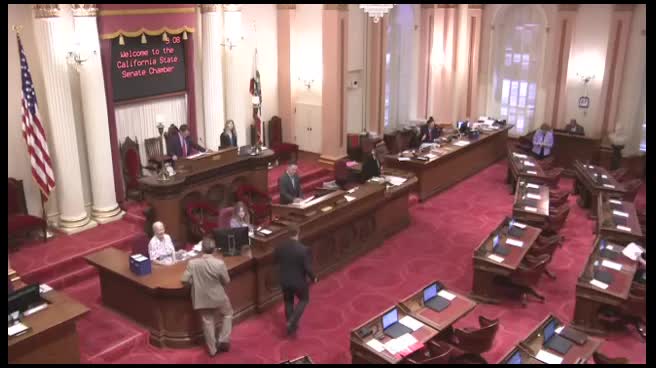 18MIN
Senate Floor
 5MIN
Assembly Floor
 4MIN
Assembly Standing Committee on Appropriations
 30MIN
Assembly Standing Committee on Elections and Redistricting
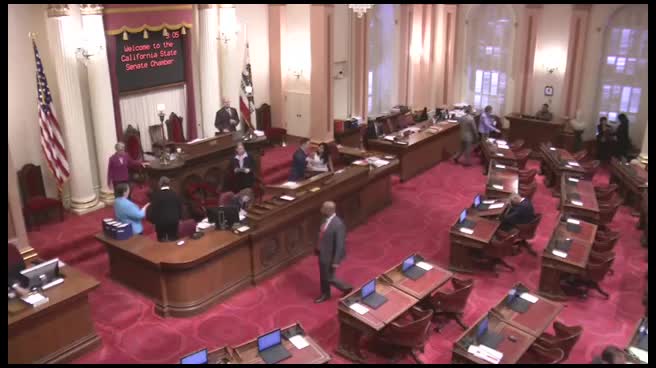 4MIN
Senate Floor
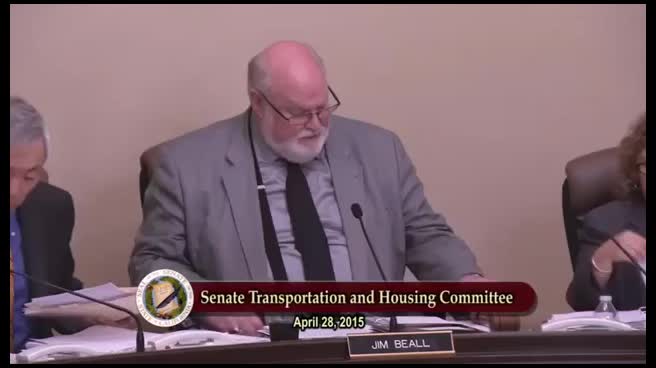 10MIN