SB 288: Vandalism: redwood burls.
- Session Year: 2015-2016
- House: Senate
- Latest Version Date: 2015-08-24
Existing law makes every person who maliciously defaces with graffiti or other inscribed material, damages, or destroys any real or personal property not his or her own guilty of vandalism, which is punishable by imprisonment, or fine, or both imprisonment and fine, as specified. Existing law requires prosecution for an offense punishable by imprisonment in the state prison or county jail to be commenced within 3 years after commission of the offense.
This bill would specifically include in the crime of vandalism maliciously defacing, damaging, or destroying a redwood tree on the property of another without the permission of the owner. The bill would create a permissive inference of a violation when a person violates these provisions with respect to property belonging to a public entity. By expanding the definition of a crime, this bill would impose a state-mandated local program. The bill would begin the running of the time for prosecution for this offense upon discovery of the offense.
The California Constitution requires the state to reimburse local agencies and school districts for certain costs mandated by the state. Statutory provisions establish procedures for making that reimbursement.
This bill would provide that no reimbursement is required by this act for a specified reason.
Existing law makes every person who maliciously defaces with graffiti or other inscribed material, damages, or destroys any real or personal property not his or her own guilty of vandalism, which is punishable by imprisonment, or fine, or both imprisonment and fine, as specified. Existing law requires prosecution for an offense punishable by imprisonment in the state prison or county jail to be commenced within three years after commission of the offense.
This bill would specifically include in the crime of vandalism maliciously defacing, damaging, or destroying a redwood tree on the property of another without the permission of the owner. The bill would create a permissive inference of a violation when a person violates these provisions with respect to property belonging to a public entity or the federal government. entity. By expanding the definition of a crime, this bill would impose a state-mandated local program. The bill would begin the running of the time for prosecution for this offense upon discovery of the offense.
The California Constitution requires the state to reimburse local agencies and school districts for certain costs mandated by the state. Statutory provisions establish procedures for making that reimbursement.
This bill would provide that no reimbursement is required by this act for a specified reason.
Existing law makes every person who maliciously defaces with graffiti or other inscribed material, damages, or destroys any real or personal property not his or her own guilty of vandalism, which is punishable by imprisonment, or fine, or both imprisonment and fine, as specified. Existing law requires prosecution for an offense punishable by imprisonment in the state prison or county jail to be commenced within three years after commission of the offense.
This bill would make it vandalism to specifically include in the crime of vandalism maliciously deface, damage, or destroy defacing, damaging, or destroying a redwood tree on the property of another without the permission of the owner. The bill would create a permissive inference of a violation when a person violates these provisions with respect to property belonging to a public entity or the federal government. The bill would make a violation of these provisions punishable by fines or imprisonment or both, as specified. The bill would also authorize a court, in addition to any other penalty or fine imposed, to order the defendant to pay an additional fine, not to exceed $5,000, to be deposited in the State Park Contingent Fund for the purpose of forest restoration. By expanding the definition of a crime, this bill would impose a state-mandated local program. The bill would begin the running of the time for prosecution for this offense upon discovery of the offense.
The California Constitution requires the state to reimburse local agencies and school districts for certain costs mandated by the state. Statutory provisions establish procedures for making that reimbursement.
This bill would provide that no reimbursement is required by this act for a specified reason.
Existing law makes every person who maliciously defaces with graffiti or other inscribed material, damages, or destroys any real or personal property not his or her own guilty of vandalism, which is punishable by imprisonment, or fine, or both imprisonment and fine, as specified.
This bill would make it vandalism to maliciously deface, damage, or destroy a redwood tree on the property of another without the permission of the owner. The bill would create a permissive inference of a violation when a person violates these provisions with respect to property belonging to a public entity or the federal government. The bill would make a violation of these provisions punishable by fines or imprisonment or both, as specified. The bill would also authorize a court, in addition to any other penalty or fine imposed, to order the defendant to pay an additional fine, not to exceed $5,000, to be deposited in the State Park Contingent Fund for the purpose of forest restoration.
Existing law provides that grand theft is theft when the money, labor, or real or personal property taken is of a value exceeding $950 and is punishable as either a misdemeanor or a felony.
This bill would make it a felony, punishable by imprisonment in county jail, a fine of up to $10,000, or both the fine and imprisonment to steal, take or carry away without the consent of the owner the burl of a redwood tree from the property of another. By creating a new crime, this bill would impose a state-mandated local program.
The California Constitution requires the state to reimburse local agencies and school districts for certain costs mandated by the state. Statutory provisions establish procedures for making that reimbursement.
This bill would provide that no reimbursement is required by this act for a specified reason.
(a)A person who maliciously defaces, damages, or destroys a redwood tree on the property of another without the permission of the owner is guilty of vandalism. Whenever a person violates this section with respect to property belonging to a public entity, as defined by Section 811.2 of the Government Code, it shall be a permissive inference that the person neither owned the property nor had the permission of the owner to deface, damage, or destroy the property.
(b)(1)If the amount of the defacement, damage, or destruction is four hundred dollars ($400) or more, the person shall be punished by imprisonment pursuant to subdivision (h) of Section 1170 or in a county jail for a period not to exceed one year, by a fine of not more than ten thousand dollars ($10,000) or, if the amount of the defacement, damage, or destruction is ten thousand dollars ($10,000) or more, by a fine not to exceed fifty thousand dollars ($50,000), or by both that fine and imprisonment.
(2)(A)If the amount of defacement, damage, or destruction is less than four hundred dollars ($400), vandalism is punishable by imprisonment in a county jail not exceeding one year, or by a fine of not more than one thousand dollars ($1,000), or by both that fine and imprisonment.
(B)If the amount of defacement, damage, or destruction is less than four hundred dollars ($400), and the defendant has previously been convicted of violating this section, the current violation shall be punishable by imprisonment in a county jail for not more than one year, or by a fine of not more than five thousand dollars ($5,000), or by both that fine and imprisonment.
(c)For purposes of this section, damages includes damage caused to public or private property and facilities, public parks property and facilities, and public utilities and water property and facilities, in the course of stealing or attempting to steal, take, or carry away without consent of the owner the burl of a redwood tree from the property of another.
SEC. 2.Section 803.7 is added to the Penal Code, to read:803.7.With respect to a violation of Section 594.9, a limitation of time prescribed in this chapter does not commence to run until the discovery of the offense.
SEC. 3.No reimbursement is required by this act pursuant to Section 6 of Article XIIIB of the California Constitution because the only costs that may be incurred by a local agency or school district will be incurred because this act creates a new crime or infraction, eliminates a crime or infraction, or changes the penalty for a crime or infraction, within the meaning of Section 17556 of the Government Code, or changes the definition of a crime within the meaning of Section 6 of Article XIIIB of the California Constitution.
(a)A person who maliciously defaces, damages, or destroys a redwood tree on the property of another without the permission of the owner is guilty of vandalism. Whenever a person violates this section with respect to property belonging to a public entity, as defined by Section 811.2 of the Government Code, or the federal government, it shall be a permissive inference that the person neither owned the property nor had the permission of the owner to deface, damage, or destroy the property.
(b)(1)If the amount of the defacement, damage, or destruction is four hundred dollars ($400) or more, the person shall be punished by imprisonment pursuant to subdivision (h) of Section 1170 or in a county jail for a period not to exceed one year, by a fine of not more than ten thousand dollars ($10,000) or, if the amount of the defacement, damage, or destruction is ten thousand dollars ($10,000) or more, by a fine not to exceed fifty thousand dollars ($50,000), or by both that fine and imprisonment.
(2)(A)If the amount of defacement, damage, or destruction is less than four hundred dollars ($400), vandalism is punishable by imprisonment in a county jail not exceeding one year, or by a fine of not more than one thousand dollars ($1,000), or by both that fine and imprisonment.
(B)If the amount of defacement, damage, or destruction is less than four hundred dollars ($400), and the defendant has previously been convicted of violating this section, the current violation shall be punishable by imprisonment in a county jail for not more than one year, or by a fine of not more than five thousand dollars ($5,000), or by both that fine and imprisonment.
(c)For purposes of this section, damages includes damage caused to public or private property and facilities, public parks property and facilities, and public utilities and water property and facilities, in the course of stealing or attempting to steal, take, or carry away without consent of the owner the burl of a redwood tree from the property of another.
(d)Upon the conviction of a person for violating this section, the court, in addition to any other penalty or fine imposed, may order the defendant to pay an additional fine, not to exceed five thousand dollars ($5,000), to be deposited in the State Park Contingent Fund, as established by Section 5009 of the Public Resources Code for the purpose of forest restoration.
SEC. 2.Section 803.7 is added to the Penal Code, to read:803.7.With respect to a violation of Section 594.9, a limitation of time prescribed in this chapter does not commence to run until the discovery of the offense.
SEC. 3.No reimbursement is required by this act pursuant to Section 6 of Article XIIIB of the California Constitution because the only costs that may be incurred by a local agency or school district will be incurred because this act creates a new crime or infraction, eliminates a crime or infraction, or changes the penalty for a crime or infraction, within the meaning of Section 17556 of the Government Code, or changes the definition of a crime within the meaning of Section 6 of Article XIIIB of the California Constitution.
SECTION 1.Section 490.8 is added to the Penal Code, to read:490.8.A person who steals, takes or carries away without consent of the owner the burl of a redwood tree from the property of another is guilty of a felony, punishable by imprisonment pursuant to subdivision (h) of Section 1170, or a fine of up to ten thousand dollars ($10,000), or both that fine and imprisonment.
SEC. 2.No reimbursement is required by this act pursuant to Section 6 of Article XIIIB of the California Constitution because the only costs that may be incurred by a local agency or school district will be incurred because this act creates a new crime or infraction, eliminates a crime or infraction, or changes the penalty for a crime or infraction, within the meaning of Section 17556 of the Government Code, or changes the definition of a crime within the meaning of Section 6 of Article XIIIB of the California Constitution.
A person who steals, takes or carries away without consent of the owner the burl of a redwood tree from the property of another is guilty of a felony, punishable by imprisonment pursuant to subdivision (h) of Section 1170, or a fine of up to ten thousand dollars ($10,000), or both that fine and imprisonment.
SEC. 2.No reimbursement is required by this act pursuant to Section 6 of Article XIIIB of the California Constitution because the only costs that may be incurred by a local agency or school district will be incurred because this act creates a new crime or infraction, eliminates a crime or infraction, or changes the penalty for a crime or infraction, within the meaning of Section 17556 of the Government Code, or changes the definition of a crime within the meaning of Section 6 of Article XIIIB of the California Constitution.
|
Date
|
Status
|
|---|---|
| Jun 15, 2015 | Referred to Com. on PUB. S. |
| Apr 19, 2016 | Last day to consider Governor’s veto pursuant to Joint Rule 58.5. |
| Apr 19, 2016 | Last day to consider Governors veto pursuant to Joint Rule 58.5. |
| Sep 9, 2015 | In Senate. Consideration of Governor's veto pending. |
| Sep 8, 2015 | Vetoed by the Governor. |
| Sep 8, 2015 | In Senate. Consideration of Governor's veto pending. |
| Aug 26, 2015 | Enrolled and presented to the Governor at 4:30 p.m. |
| Aug 20, 2015 | Assembly amendments concurred in. (Ayes 38. Noes 0.) Ordered to engrossing and enrolling. |
| Aug 19, 2015 | Ordered to special consent calendar. |
| Jul 16, 2015 | Read third time. Passed. (Ayes 79. Noes 0. Page 2432.) Ordered to the Senate. |
| Jul 16, 2015 | Read third time. Passed. Ordered to the Senate. |
| Jul 16, 2015 | In Senate. Concurrence in Assembly amendments pending. |
| Jul 9, 2015 | Read second time. Ordered to consent calendar. |
| Jul 8, 2015 | From committee: Do pass. Ordered to consent calendar. (Ayes 14. Noes 0.) (July 8). |
| Jul 1, 2015 | From committee: Do pass and re-refer to Com. on APPR. with recommendation: To consent calendar. (Ayes 7. Noes 0.) (June 30). Re-referred to Com. on APPR. |
| Jun 25, 2015 | From committee with author's amendments. Read second time and amended. Re-referred to Com. on PUB. S. |
| Feb 23, 2015 | Introduced. Read first time. To Com. on RLS. for assignment. To print. |
| Jun 4, 2015 | In Assembly. Read first time. Held at Desk. |
| Jun 3, 2015 | Read third time. Passed. (Ayes 40. Noes 0.) Ordered to the Assembly. |
| Jun 3, 2015 | Read third time. Passed. (Ayes 40. Noes 0. Page 1297.) Ordered to the Assembly. |
| Jun 2, 2015 | Read second time and amended. Ordered to third reading. |
| Jun 1, 2015 | From committee: Do pass as amended. (Ayes 6. Noes 0.) (May 28). |
| Jun 1, 2015 | From committee: Do pass as amended. (Ayes 6. Noes 0. Page 1151.) (May 28). |
| May 23, 2015 | Set for hearing May 28. |
| May 11, 2015 | May 11 hearing: Placed on APPR. suspense file. |
| May 1, 2015 | Set for hearing May 11. |
| Apr 22, 2015 | Read second time and amended. Re-referred to Com. on APPR. |
| Apr 21, 2015 | From committee: Do pass as amended and re-refer to Com. on APPR. (Ayes 6. Noes 0.) (April 14). |
| Apr 21, 2015 | From committee: Do pass as amended and re-refer to Com. on APPR. (Ayes 6. Noes 0. Page 595.) (April 14). |
| Mar 18, 2015 | Set for hearing April 14. |
| Mar 5, 2015 | Referred to Com. on PUB. S. |
| Feb 24, 2015 | From printer. May be acted upon on or after March 26. |
|
Date
|
Description
|
Location
|
Votes
|
|
|---|---|---|---|---|
| Aug 20, 2015 | Special Consent #6 SB288 McGuire | Senate Floor |
Passed |
|
| Jul 16, 2015 | SB 288 McGuire Consent Calendar Second Day Regular Session | Assembly Floor |
Passed |
|
| Jul 8, 2015 | Do pass. To Consent Calendar. | Assembly Standing Committee on Appropriations |
Passed |
|
| Jun 30, 2015 | Do pass and be re-referred to the Committee on [Appropriations] with recommendation: To Consent Calendar | Assembly Standing Committee on Public Safety |
Passed |
|
| Jun 3, 2015 | Senate 3rd Reading SB288 McGuire | Senate Floor |
Passed |
|
| May 28, 2015 | Do pass as amended | Senate Standing Committee on Appropriations |
Passed |
|
| May 11, 2015 | Placed on suspense file | Senate Standing Committee on Appropriations |
Passed |
|
| Apr 14, 2015 | Do pass as amended, but first amend, and re-refer to the Committee on [Appropriations] | Senate Standing Committee on Public Safety |
Passed |
This list shows positions taken on this bill by organizations on the date displayed, which is linked to the original source.
Positions by individuals are not included.
|
Organization
|
Position
|
Date
|
|---|---|---|
| California District Attorney Association | ** Support | Jun 3, 2015 |
| California Forestry Association | ** Support | Jun 3, 2015 |
| California State Sheriffs' Association | ** Support | Jun 3, 2015 |
| Center For Biological Diversity, Inc. | ** Support | Jun 3, 2015 |
| Humboldt County District Attorney | ** Support | Jun 3, 2015 |
| Humboldt Redwood Companies | ** Support | Jun 3, 2015 |
| Mendocino | ** Support | Jun 3, 2015 |
| One individual | ** Support | Jun 3, 2015 |
| Pacific Forest Trust | ** Support | Jun 3, 2015 |
| Save the Redwoods League | ** Support | Jun 3, 2015 |
| Sonoma County Agricultural Preservation And Open Space District | ** Support | Jun 3, 2015 |
| Sonoma Land Trust | ** Support | Jun 3, 2015 |
SB 288
Page 5
|
Office of Senate Floor Analyses (916) 651-1520 Fax: (916) 327-4478 |
SB 288 |
VETO
Bill No: SB 288
Amended: 6/25/15
SENATE PUBLIC SAFETY COMMITTEE: 6-0, 4/14/15
AYES: Hancock, Anderson, Leno, McGuire, Monning, Stone
NO VOTE RECORDED: Liu
SENATE APPROPRIATIONS COMMITTEE: 6-0, 5/28/15
AYES: Lara, Bates, Beall, Hill, Leyva, Mendoza
NO VOTE RECORDED: Nielsen
SENATE FLOOR: 40-0, 6/3/15
AYES: Allen, Anderson, Bates, Beall, Berryhill, Block, Cannella, De León, Fuller, Gaines, Galgiani, Glazer, Hall, Hancock, Hernandez, Hertzberg, Hill, Hueso, Huff, Jackson, Lara, Leno, Leyva, Liu, McGuire, Mendoza, Mitchell, Monning, Moorlach, Morrell, Nguyen, Nielsen, Pan, Pavley, Roth, Runner, Stone, Vidak, Wieckowski, Wolk
SENATE FLOOR: 38-0, 8/20/15
AYES: Allen, Anderson, Bates, Beall, Berryhill, Block, Cannella, De León, Fuller, Gaines, Galgiani, Glazer, Hancock, Hernandez, Hertzberg, Hill, Hueso, Huff, Jackson, Lara, Leno, Leyva, Liu, McGuire, Mendoza, Mitchell, Monning, Moorlach, Morrell, Nielsen, Pan, Pavley, Roth, Runner, Stone, Vidak, Wieckowski, Wolk
NO VOTE RECORDED: Hall, Nguyen
ASSEMBLY FLOOR: 79-0, 7/16/15 (Consent) - See last page for vote
SUBJECT: Vandalism: redwood burls
DIGEST: This bill makes it vandalism to maliciously deface, damage, or destroy a redwood tree on the property of another without the permission of the owner, as specified. This bill tolls the statute of limitations on the commencement of prosecution of the offense until the discovery of the offense.
Existing law:
States that every person who maliciously commits any of the following acts with respect to any real or personal property not his or her own, in cases other than those specified by state law, is guilty of vandalism: (a) defaces with graffiti or other inscribed material; (b) damages; or, (c) destroys. Whenever a person violates this subdivision with respect to real property, vehicles, signs, fixtures, furnishings, or property belonging to any public entity or the federal government, it shall be a permissive inference that the person neither owned the property nor had the permission of the owner to deface, damage, or destroy the property. (Penal Code § 594(a).)
States that if the amount of defacement, damage, or destruction is $400 or more, vandalism is punishable by imprisonment pursuant to subdivision (h) of Penal Code Section 1170 or in a county jail not exceeding one year, or by a fine of not more than $10,000, or if the amount of defacement, damage, or destruction is $10,000 or more, by a fine of not more than $50,000, or by both that fine and imprisonment. (Penal Code § 594(b)(1).)
States that if the amount of defacement, damage, or destruction is less than $400, vandalism is punishable by imprisonment in a county jail not exceeding one year, or by a fine of not more than $1,000, or by both that fine and imprisonment. (Penal Code § 594(b)(2)(A).)
States that if the amount of defacement, damage, or destruction is less than $400, and the defendant has been previously convicted of vandalism or affixing graffiti or other inscribed material under Section 594, 594.3, 594.4, 640.5, 640.6, or 640.7, vandalism is punishable by imprisonment in a county jail for not more than one year, or by a fine of not more than $5,000, or by both that fine and imprisonment. (Penal Code § 594(b)(2)(B).)
States that upon conviction of any person under this section for acts of vandalism consisting of defacing property with graffiti or other inscribed materials, the court must, when appropriate and feasible, in addition to any punishment imposed, order the defendant to clean up, repair, or replace the damaged property himself or herself, or order the defendant, and his or her parents or guardians if the defendant is a minor, to keep the damaged property or another specified property in the community free of graffiti for up to one year. Participation of a parent or guardian is not required under this subdivision if the court deems this participation to be detrimental to the defendant, or if the parent or guardian is a single parent who must care for young children. If the court finds that graffiti cleanup is inappropriate, the court shall consider other types of community service, where feasible. (Penal Code § 594(c).)
States that if a minor is personally unable to pay a fine levied for acts prohibited by this section, the parent of that minor shall be liable for payment of the fine. A court may waive payment of the fine, or any part thereof, by the parent upon a finding of good cause. (Penal Code § 594(d).)
States that a statute of limitations is not tolled or extended for any reason, unless there is an enumerated exception. (Penal Code § 803.)
This bill:
Makes it vandalism to maliciously deface, damage, or destroy a redwood tree on the property of another without the permission of the owner.
Creates a permissive inference of a violation when a person violates these provisions with respect to property belonging to a public entity.
Makes a violation of these provisions punishable by fines or imprisonment or both, as specified, consistent with those for the existing offense of vandalism.
Provides that with respect to a violation of this bill’s provisions, the statute of limitations does not commence to run until the discovery of the offense.
Background
This bill makes it vandalism to maliciously deface, damage, or destroy a redwood tree on the property of another without the permission of the owner and makes a violation of these provisions punishable by fines or imprisonment or both, as specified, consistent with those for the existing offense of vandalism pursuant to Penal Code Section 594.
This bill, additionally, tolls the statute of limitations for this newly added vandalism section, so that it does not begin running until the discovery of the offense.
FISCAL EFFECT: Appropriation: No Fiscal Com.: Yes Local: Yes
According to the Assembly Appropriations Committee:
Likely minor General Fund costs for increased state prison commitments for persons with a current or prior violent felony conviction who are convicted of a felony under the provisions of this bill. The universe of these individuals is expected to be very small. Assuming the annual contracted bed rate of $29,000 per inmate, the annual General Fund costs would be $29,000 per each additional year served under such conviction.
Moderate nonreimbursable local costs for incarceration for misdemeanor convictions, or felony convictions of individuals without a current or prior violent felony.
Potentially significant fine revenue to the extent resources are available to collect the fine imposed by the courts.
California District Attorneys Association
California Forestry Association
California State Park Rangers Association
California State Sheriffs’ Association
Center for Biological Diversity
Humboldt County District Attorney
Mendocino/Humboldt Redwood Companies
Pacific Forest Trust
Save the Redwoods League
Sonoma County Agricultural Preservation and Open Space District
Sonoma Land Trust
One individual
OPPOSITION: (Verified 10/26/15)
None received
ARGUMENTS IN SUPPORT: According to the Pacific Forest Trust:
Pacific Forest Trust supports Senator McGuire’s effort to address the terrible problem of illegal harvest and theft of redwood burls.
Prized for its beauty and rarity, redwood burls make distinctive fine woodwork. High quality redwood burls occur on ancient trees, most of which are located in state and national parks. The value of redwood burls has led to terrible damage to irreplaceable natural heritage by callous thieves who savage the ancient trees.
Burl theft harms or kills these priceless ancient trees, depriving future generations of their beauty and majesty.
GOVERNOR'S VETO MESSAGE:
I am returning Senate Bill 288 without my signature.
For the reasons set forth in the messages accompanying my vetoes of SB 110 and SB 456, I do not believe it wise to add yet another crime to our state codes, even on such an important topic as protecting our redwood trees.
AYES: Achadjian, Alejo, Travis Allen, Baker, Bigelow, Bloom, Bonilla, Bonta, Brough, Brown, Burke, Calderon, Campos, Chang, Chau, Chávez, Chiu, Chu, Cooley, Cooper, Dababneh, Dahle, Daly, Dodd, Eggman, Frazier, Beth Gaines, Gallagher, Cristina Garcia, Eduardo Garcia, Gatto, Gipson, Gomez, Gonzalez, Gray, Grove, Hadley, Harper, Roger Hernández, Holden, Irwin, Jones, Jones-Sawyer, Kim, Lackey, Levine, Linder, Lopez, Low, Maienschein, Mathis, Mayes, McCarty, Medina, Melendez, Mullin, Nazarian, Obernolte, O'Donnell, Olsen, Patterson, Perea, Quirk, Rendon, Ridley-Thomas, Rodriguez, Salas, Santiago, Steinorth, Mark Stone, Thurmond, Ting, Wagner, Waldron, Weber, Wilk, Williams, Wood, Atkins
NO VOTE RECORDED: Gordon
Prepared by: Jessica Devencenzi / PUB. S. /
11/4/15 13:34:14
**** END ****
SB 288
Page 5
|
Office of Senate Floor Analyses (916) 651-1520 Fax: (916) 327-4478 |
UNFINISHED BUSINESS
Bill No: SB 288
Amended: 6/25/15
SENATE PUBLIC SAFETY COMMITTEE: 6-0, 4/14/15
AYES: Hancock, Anderson, Leno, McGuire, Monning, Stone
NO VOTE RECORDED: Liu
SENATE APPROPRIATIONS COMMITTEE: 6-0, 5/28/15
AYES: Lara, Bates, Beall, Hill, Leyva, Mendoza
NO VOTE RECORDED: Nielsen
SENATE FLOOR: 40-0, 6/3/15
AYES: Allen, Anderson, Bates, Beall, Berryhill, Block, Cannella, De León, Fuller, Gaines, Galgiani, Glazer, Hall, Hancock, Hernandez, Hertzberg, Hill, Hueso, Huff, Jackson, Lara, Leno, Leyva, Liu, McGuire, Mendoza, Mitchell, Monning, Moorlach, Morrell, Nguyen, Nielsen, Pan, Pavley, Roth, Runner, Stone, Vidak, Wieckowski, Wolk
ASSEMBLY FLOOR: 79-0, 7/16/15 (Consent) - See last page for vote
SUBJECT: Vandalism: redwood burls
DIGEST: This bill makes it vandalism to maliciously deface, damage, or destroy a redwood tree on the property of another without the permission of the owner, as specified. This bill tolls the statute of limitations on the commencement of prosecution of the offense until the discovery of the offense.
Assembly Amendments strike reference to “federal government” in the portion of the bill that creates a permissive inference of a violation when a person violates these provisions with respect to property belonging to a public entity.
Existing law:
States that every person who maliciously commits any of the following acts with respect to any real or personal property not his or her own, in cases other than those specified by state law, is guilty of vandalism: (a) defaces with graffiti or other inscribed material; (b) damages; or, (c) destroys. Whenever a person violates this subdivision with respect to real property, vehicles, signs, fixtures, furnishings, or property belonging to any public entity or the federal government, it shall be a permissive inference that the person neither owned the property nor had the permission of the owner to deface, damage, or destroy the property. (Penal Code § 594(a).)
States that if the amount of defacement, damage, or destruction is $400 or more, vandalism is punishable by imprisonment pursuant to subdivision (h) of Penal Code Section 1170 or in a county jail not exceeding one year, or by a fine of not more than $10,000, or if the amount of defacement, damage, or destruction is $10,000 or more, by a fine of not more than $50,000, or by both that fine and imprisonment. (Penal Code § 594(b)(1).)
States that if the amount of defacement, damage, or destruction is less than $400, vandalism is punishable by imprisonment in a county jail not exceeding one year, or by a fine of not more than $1,000, or by both that fine and imprisonment. (Penal Code § 594(b)(2)(A).)
States that if the amount of defacement, damage, or destruction is less than $400, and the defendant has been previously convicted of vandalism or affixing graffiti or other inscribed material under Section 594, 594.3, 594.4, 640.5, 640.6, or 640.7, vandalism is punishable by imprisonment in a county jail for not more than one year, or by a fine of not more than $5,000, or by both that fine and imprisonment. (Penal Code § 594(b)(2)(B).)
States that upon conviction of any person under this section for acts of vandalism consisting of defacing property with graffiti or other inscribed materials, the court must, when appropriate and feasible, in addition to any punishment imposed, order the defendant to clean up, repair, or replace the damaged property himself or herself, or order the defendant, and his or her parents or guardians if the defendant is a minor, to keep the damaged property or another specified property in the community free of graffiti for up to one year. Participation of a parent or guardian is not required under this subdivision if the court deems this participation to be detrimental to the defendant, or if the parent or guardian is a single parent who must care for young children. If the court finds that graffiti cleanup is inappropriate, the court shall consider other types of community service, where feasible. (Penal Code § 594(c).)
States that if a minor is personally unable to pay a fine levied for acts prohibited by this section, the parent of that minor shall be liable for payment of the fine. A court may waive payment of the fine, or any part thereof, by the parent upon a finding of good cause. (Penal Code § 594(d).)
States that a statute of limitations is not tolled or extended for any reason, unless there is an enumerated exception. (Penal Code § 803.)
This bill:
Makes it vandalism to maliciously deface, damage, or destroy a redwood tree on the property of another without the permission of the owner.
Creates a permissive inference of a violation when a person violates these provisions with respect to property belonging to a public entity.
Makes a violation of these provisions punishable by fines or imprisonment or both, as specified, consistent with those for the existing offense of vandalism.
Provides that with respect to a violation of this bill’s provisions, the statute of limitations does not commence to run until the discovery of the offense.
Background
This bill makes it vandalism to maliciously deface, damage, or destroy a redwood tree on the property of another without the permission of the owner and makes a violation of these provisions punishable by fines or imprisonment or both, as specified, consistent with those for the existing offense of vandalism pursuant to Penal Code Section 594.
This bill, additionally, tolls the statute of limitations for this newly added vandalism section, so that it does not begin running until the discovery of the offense.
FISCAL EFFECT: Appropriation: No Fiscal Com.: Yes Local: Yes
According to the Assembly Appropriations Committee:
Likely minor General Fund costs for increased state prison commitments for persons with a current or prior violent felony conviction who are convicted of a felony under the provisions of this bill. The universe of these individuals is expected to be very small. Assuming the annual contracted bed rate of $29,000 per inmate, the annual General Fund costs would be $29,000 per each additional year served under such conviction.
Moderate nonreimbursable local costs for incarceration for misdemeanor convictions, or felony convictions of individuals without a current or prior violent felony.
Potentially significant fine revenue to the extent resources are available to collect the fine imposed by the courts.
California District Attorneys Association
California Forestry Association
California State Park Rangers Association
California State Sheriffs’ Association
Center for Biological Diversity
Humboldt County District Attorney
Mendocino/Humboldt Redwood Companies
Pacific Forest Trust
Save the Redwoods League
Sonoma County Agricultural Preservation and Open Space District
Sonoma Land Trust
One individual
OPPOSITION: (Verified 7/29/15)
None received
ARGUMENTS IN SUPPORT:
According to the Pacific Forest Trust:
Pacific Forest Trust supports Senator McGuire’s effort to address the terrible problem of illegal harvest and theft of redwood burls.
Prized for its beauty and rarity, redwood burls make distinctive fine woodwork. High quality redwood burls occur on ancient trees, most of which are located in state and national parks. The value of redwood burls has led to terrible damage to irreplaceable natural heritage by callous thieves who savage the ancient trees.
Burl theft harms or kills these priceless ancient trees, depriving future generations of their beauty and majesty.
ASSEMBLY FLOOR: 79-0, 7/16/15
AYES: Achadjian, Alejo, Travis Allen, Baker, Bigelow, Bloom, Bonilla, Bonta, Brough, Brown, Burke, Calderon, Campos, Chang, Chau, Chávez, Chiu, Chu, Cooley, Cooper, Dababneh, Dahle, Daly, Dodd, Eggman, Frazier, Beth Gaines, Gallagher, Cristina Garcia, Eduardo Garcia, Gatto, Gipson, Gomez, Gonzalez, Gray, Grove, Hadley, Harper, Roger Hernández, Holden, Irwin, Jones, Jones-Sawyer, Kim, Lackey, Levine, Linder, Lopez, Low, Maienschein, Mathis, Mayes, McCarty, Medina, Melendez, Mullin, Nazarian, Obernolte, O'Donnell, Olsen, Patterson, Perea, Quirk, Rendon, Ridley-Thomas, Rodriguez, Salas, Santiago, Steinorth, Mark Stone, Thurmond, Ting, Wagner, Waldron, Weber, Wilk, Williams, Wood, Atkins
NO VOTE RECORDED: Gordon
Prepared by: Jessica Devencenzi / PUB. S. /
8/13/15 13:24:48
**** END ****
Date of Hearing: July 8, 2015
ASSEMBLY COMMITTEE ON APPROPRIATIONS
Jimmy Gomez, Chair
SB 288
(McGuire) – As Amended June 25, 2015
Policy Committee: |
Public Safety |
Vote: |
7 - 0 |
|
|
|
|
|
|
|
|
Urgency: No State Mandated Local Program: Yes Reimbursable: No
SUMMARY:
This bill makes a
person who maliciously defaces, damages (as defined), or destroys a
redwood tree on public property, or on the property of another
without the permission of the owner, guilty of vandalism (an existing
alternate felony/misdemeanor) punishable by imprisonment and/or
fines. Specifically, this bill:
States that if the amount of the defacement, damage, or destruction is $400 or more, the person shall be punished by imprisonment in a county jail not exceeding one year, or by 16 months, two, or three years in a county jail, by a fine not to exceed $10,000 or, if the amount of defacement, damage, or destruction is $10,000 or more, by a fine not to exceed $50,000, or by both that fine and imprisonment.
Provides that if the amount of the defacement, damage, or destruction is less than $400, the vandalism is punishable by imprisonment in a county jail not exceeding one year, or by a fine of not more than $1,000, or by both that fine and imprisonment.
States that if the amount of defacement, damage, or destruction is less than $400 and the defendant has been previously been convicted of defacing, damaging, or destroying a redwood tree the current violation is punishable by imprisonment in a county jail for not more than one year, by a fine of not more than $5,000, or by both that fine and imprisonment.
Provides that with respect to defacing, damaging, or destroying a redwood tree the time for commencing a criminal action does not begin until discovery of the offense.
FISCAL EFFECT:
Likely minor GF costs for increased state prison commitments for persons with a current or prior violent felony conviction who are convicted of a felony under the provisions of this bill. The universe of these individuals is expected to be very small. Assuming the annual contracted bed rate of $29,000 per inmate, the annual General Fund costs would be $29,000 per each additional year served under such conviction.
Moderate nonreimbursable local costs for incarceration for misdemeanor convictions, or felony convictions of individuals without a current or prior violent felony.
Potentially significant fine revenue to the extent resources are available to collect the fine imposed by the courts.
COMMENTS:
Purpose. According to the author, “California’s majestic redwood trees – the tallest trees on the planet - are being targeted at an increased rate by poachers seeking to make an easy profit. These poachers will frequently butcher healthy ancient old growth redwoods, often clear cutting paths to the tree where the criminals then use chainsaws to either fell the redwood or hack out the valuable pieces of burl wood. When burls are chopped off it significantly injures the tree, and can actually kill these national treasures. Poachers are able to sell the beautiful, hardwood burls, which are used to create decorative products and trinkets, at high prices. Because the burl of a redwood is becoming more and more rare, poaching on public lands is increasing in frequency and intensity. A redwood burl is the dormant, knobby material that grows at the base of the tree trunk which allows the redwood to grow new saplings and roots. They become visible once a tree is about 3 years old and they continue to grow over the life of the tree. Burls also develop on other parts of the tree in response to wounding, to cover the damage and protect the tree. While coast redwoods do produce seeds, they most commonly reproduce through sprouts that grow from burls. A burl produces a marbled appearance once the wood is cut and polished. Depending on the size of the burl, it can be used to make anything from salt-and pepper shakers, tables or bedroom head and footboards. While some burls are small others can weigh hundreds of pounds and can fetch hundreds to tens of thousands of dollars.”
Background. Current law provides that every person who maliciously defaces real or personal property with graffiti or other inscribed material is guilty of vandalism, which is punishable as an alternate felony/misdemeanor.
Argument in Support: According to the California State Sheriffs' Association, "Burl poaching on public lands is increasing in frequency and intensity. Currently, if caught, and depending on the estimated value of the burl, the perpetrator is likely to be charged with a misdemeanor. But theft poses grave risks to ancient redwoods because poaching requires cutting into the tree base or completely cutting down the tree to remove the burl. Once the bark of the redwood is injured, the tree is instantly vulnerable to pests, fire, disease, and wind."
"California redwoods are considered a national treasure. Their protection should be a priority. For these reasons, CSAA is pleased to support SB 288."
Analysis Prepared by: Pedro Reyes / APPR. / (916) 319-2081
SB 288
Page 4
Date of Hearing: June 30, 2015
Chief Counsel: Gregory Pagan
ASSEMBLY COMMITTEE ON PUBLIC SAFETY
Bill Quirk, Chair
SB 288
(McGuire) – As Amended June 2, 2015
SUMMARY:
Makes a person who maliciously defaces, damages, or destroys a
redwood tree on the property of another without the permission of the
owner guilty of vandalism. Specifically, this bill:
Provides that a person who maliciously defaces, damages, or destroys a redwood tree on the property of another without the permission of the owner is guilty of vandalism. Whenever a person violates this provision with respect to property belonging to a public entity, as specified, it shall be a permissive inference that the person neither owned the property nor had the permission of the owner to deface, damage, or destroy the property.
States that if the amount of the defacement, damage, or destruction is $400 or more, the person shall be punished by imprisonment in a county jail not exceeding one year, or by 16 months, two, or three years in a county jail, by a fine of not to exceed $10,000 or, if the amount of defacement, damage, or destruction is $10,000 or more, by a fine of not to exceed $50,000, or by both that fine and imprisonment.
Provides that if the amount of the defacement, damage, or destruction is less than $400, the vandalism is punishable by imprisonment in a county jail not exceeding one year, or by a fine of not more than $1,000, or by both that fine and imprisonment.
States that if the amount of defacement, damage, or destruction is less than $400 and the defendant has been previously been convicted of defacing, damaging, or destroying a redwood tree the current violation is punishable by imprisonment in a county jail for not more than one year, by a fine of not more than $5,000, or by both that fine and imprisonment.
Defines "damage" to include damage caused to public or private property and facilities, public parks property and facilities, and public utilities and water property and facilities, in the course of stealing or attempting to steal, take, or carry away without the consent of the owner the burl of a redwood tree from the property of another.
Provides that with respect to defacing, damaging, or destroying a redwood tree the time for commencing a criminal action does not begin until discovery of the offense.
EXISTING LAW:
Provides that every person who maliciously defaces real or personal property with graffiti or other inscribed material is guilty of vandalism, which is punishable as an alternate felony/misdemeanor. (Pen. Code, § 594.)
States that if the amount of damage is $400 or more, vandalism is punishable by imprisonment in a county jail not exceeding one year, or by 16 months, two, or three years in a county jail, by a fine not to exceed $10,000 or, if the amount of damage is $10,000 or more, by a fine of not to exceed $50,000, or by both that fine and imprisonment. (Pen. Code, § 594, subd. (b)(1).)
States that if the amount of damage is less than $400, vandalism is punishable by imprisonment in a county jail not exceeding one year, or by a fine of not more than $1,000, or by both that fine and imprisonment. (Pen. Code, § 594, subd. (b)(2)(A).)
Provides that if the amount of damage is less than $400 and the defendant has previously been convicted of vandalism or affixing graffiti or other inscribed material, as specified, vandalism is punishable by imprisonment in a county jail for not more than one year, by a fine of not more than $5,000, or by both that fine and imprisonment. (Pen. Code, § 594, subd. (b)(2)(B).)
Authorizes the court, when appropriate and feasible, in addition to any other punishment imposed, to order the defendant to clean up, repair, or replace the damaged property his or her self, or order the defendant, if a minor, to keep the damaged property or other specified property in the community free of graffiti for up to one year. (Pen. Code, § 594, subd. (c).)
Defines "graffiti or other inscribed material" for purposes of Penal Code section 594 as including any unauthorized inscription, word, figure, mark, or design that is written, marked, etched, scratched, drawn, or painted on real or personal property. (Pen. Code, § 594, subd. (e).)
Provides that the court may order any person convicted of vandalism and ordered to perform community service or graffiti removal to undergo counseling. (Pen. Code, § 594, subd. (f).)
Provides that every person who is convicted of vandalism may be ordered by the court as a condition of probation to perform community service not to exceed 300 hours over a period not to exceed 240 days during a time other than his or her hours of school attendance or employment. (Pen. Code, § 594.6.)
States that any person who knowingly commits any act of vandalism to a church, synagogue, mosque, temple, building owned and operated by a religious educational institution, or other place primarily used as a place of worship where religious services are regularly conducted, or a cemetery, is guilty of a crime punishable by imprisonment in a county jail for 16 months, two, or three years, or by imprisonment in a county jail not to exceed one year. (Pen. Code, Section 594.3, subd. (a).)
States that any person who knowingly commits any act of vandalism to a church, synagogue, mosque, temple, building owned and operated by a religious educational institution, or other place primarily used as a place of worship where religious services are regularly conducted, or a cemetery that is show to have been a hate crime and to have been committed for the purpose of intimidating and deterring persons from freely exercising their religious beliefs, is guilty of a crime punishable by imprisonment in a county jail for 16 months, two, or three years. (Pen. Code, § 594.3, subd. (b).)
States that any person who willfully and maliciously injects or throws upon, or otherwise defaces, destroys or contaminates any structure with butyric acid, or other similar noxious or caustic substance is guilty of a public offense and is to be punished by imprisonment in a county jail for 16 months, two, or three years, or in a county jail not exceeding six months by a fine as follows, or by both that fine and imprisonment. The amount of the fine is determined in the following manner:
If the amount of the damage is more than $50,000, the fine is up to $50,000;
If the amount of the damage is between $5,000 and $50,000, the fine is up to $10,000;
If the amount of the damages is between $950 and $5,000, the fine is up to $5,000; or,
If the amount of the damages is less than $950, the fine is up to $1,000. (Pen. Code, § 594.4.)
States any person who defaces with graffiti or other inscribed material the interior or exterior of the facilities or vehicles of a governmental entity, as defined by the Government Code or the interior or exterior of the facilities or vehicles of a public transportation system as defined by the Public Utilities Code, or the interior or exterior of the facilities of or vehicles operated by entities subsidized by the Department of Transportation or the interior or exterior of any leased or rented facilities or vehicles for which any of the above entities incur costs of less than $250 for cleanup, repair, or replacement is guilty of an infraction, punishable by a fine not to exceed $1,000 and by a minimum of 48 hours of community service for a total time not to exceed 200 hours over a period not to exceed 180 days, during a time other than his or her hours of school attendance or employment. This subdivision does not preclude application of provisions related to vandalism. (Pen. Code, § 640.5, subd. (d)(1).)
Provides that any person who is violates the graffiti or vandalism statutes on or within 100 feet of a highway or its appurtenances is guilty of a misdemeanor, punishable by imprisonment in a county jail not exceeding six months; or by a fine not exceeding $1,000; or by both that imprisonment and fine. A second conviction is punishable by imprisonment in a county jail not exceeding one year; by a fine not exceeding $1,000; or by both that imprisonment and fine. (Pen. Code, § 640.7.)
Provides that a city, county, or city and county may enact an ordinance to provide for the use of city or county funds to remove graffiti or other inscribed material from publicly or privately owned real or personal property located within the city, county, or city and county and to replace or repair public or privately owned property within that city, county, or city and county that has been defaced with graffiti or other inscribed material that cannot be removed cost effectively. (Gov. Code, § 53069.3, subd. (a).)
FISCAL EFFECT: Unknown
COMMENTS:
Author's Statement: According to the author, “California’s majestic redwood trees – the tallest trees on the planet - are being targeted at an increased rate by poachers seeking to make an easy profit. These poachers will frequently butcher healthy ancient old growth redwoods, often clear cutting paths to the tree where the criminals then use chainsaws to either fell the redwood or hack out the valuable pieces of burl wood. When burls are chopped off it significantly injures the tree, and can actually kill these national treasures. Poachers are able to sell the beautiful, hard wood burls, which are used to create decorative products and trinkets, at high prices. Because the burl of a redwood is becoming more and more rare, poaching on public lands is increasing in frequency and intensity. A redwood burl is the dormant, knobby material that grows at the base of the tree trunk which allows the redwood to grow new saplings and roots. They become visible once a tree is about 3 years old and they continue to grow over the life of the tree. Burls also develop on other parts of the tree in response to wounding, to cover the damage and protect the tree. While coast redwoods do produce seeds, they most commonly reproduce through sprouts that grow from burls. A burl produces a marbled appearance once the wood is cut and polished. Depending on the size of the burl, it can be used to make anything from salt-and pepper shakers, tables or bedroom head and footboards. While some burls are small others can weigh hundreds of pounds and can fetch hundreds to tens of thousands of dollars.”
Argument in Support: According to the California State Sheriffs' Association, "Burl poaching on public lands is increasing in frequency and intensity. Currently, if caught, and depending on the estimated value of the burl, the perpetrator is likely to be charged with a misdemeanor. But theft poses grave risks to ancient redwoods because poaching requires cutting into the tree base or completely cutting down the tree to remove the burl. Once the bark of the redwood is injured, the tree is instantly vulnerable to pests, fire, disease, and wind.
"California redwoods are considered a national treasure. Their protection should be a priority. For these reasons, CSAA is pleased to support SB 288."
REGISTERED SUPPORT / OPPOSITION:
Support
California District
Attorneys Association
California State Sheriffs' Association
Los
Angeles County District Attorney's Association
Del Norte County
Board of Supervisors
Opposition
None
Analysis Prepared by: Gregory Pagan / PUB. S. / (916) 319-3744
SB 288
Page 4
|
Office of Senate Floor Analyses (916) 651-1520 Fax: (916) 327-4478 |
THIRD READING
Bill No: SB 288
Amended: 6/2/15
SENATE PUBLIC SAFETY COMMITTEE: 6-0, 4/14/15
AYES: Hancock, Anderson, Leno, McGuire, Monning, Stone
NO VOTE RECORDED: Liu
SENATE APPROPRIATIONS COMMITTEE: 6-0, 5/28/15
AYES: Lara, Bates, Beall, Hill, Leyva, Mendoza
NO VOTE RECORDED: Nielsen
SUBJECT: Vandalism: redwood burls
DIGEST: This bill makes it vandalism to maliciously deface, damage, or destroy a redwood tree on the property of another without the permission of the owner, as specified. This bill tolls the statute of limitations on the commencement of prosecution of the offense until the discovery of the offense.
Existing law:
States that every person who maliciously commits any of the following acts with respect to any real or personal property not his or her own, in cases other than those specified by state law, is guilty of vandalism: (a) defaces with graffiti or other inscribed material; (b) damages; or, (c) destroys. Whenever a person violates this subdivision with respect to real property, vehicles, signs, fixtures, furnishings, or property belonging to any public entity or the federal government, it shall be a permissive inference that the person neither owned the property nor had the permission of the owner to deface, damage, or destroy the property. (Penal Code §594(a).)
States that if the amount of defacement, damage, or destruction is $400 or more, vandalism is punishable by imprisonment pursuant to subdivision (h) of Penal Code Section 1170 or in a county jail not exceeding one year, or by a fine of not more than $10,000, or if the amount of defacement, damage, or destruction is $10,000 or more, by a fine of not more than $50,000, or by both that fine and imprisonment. (Penal Code § 594(b)(1).)
States that if the amount of defacement, damage, or destruction is less than $400, vandalism is punishable by imprisonment in a county jail not exceeding one year, or by a fine of not more than $1,000, or by both that fine and imprisonment. (Penal Code § 594(b)(2)(A).)
States that if the amount of defacement, damage, or destruction is less than $400, and the defendant has been previously convicted of vandalism or affixing graffiti or other inscribed material under Penal Code Section 594, 594.3, 594.4, 640.5, 640.6, or 640.7, vandalism is punishable by imprisonment in a county jail for not more than one year, or by a fine of not more than $5,000, or by both that fine and imprisonment. (Penal Code § 594(b)(2)(B).)
States that upon conviction of any person under this provision for acts of vandalism consisting of defacing property with graffiti or other inscribed materials, the court must, when appropriate and feasible, in addition to any punishment imposed, order the defendant to clean up, repair, or replace the damaged property himself or herself, or order the defendant, and his or her parents or guardians if the defendant is a minor, to keep the damaged property or another specified property in the community free of graffiti for up to one year. Participation of a parent or guardian is not required under this subdivision if the court deems this participation to be detrimental to the defendant, or if the parent or guardian is a single parent who must care for young children. If the court finds that graffiti cleanup is inappropriate, the court shall consider other types of community service, where feasible. (Penal Code § 594(c).)
States that if a minor is personally unable to pay a fine levied for acts prohibited by this section, the parent of that minor shall be liable for payment of the fine. A court may waive payment of the fine, or any part thereof, by the parent upon a finding of good cause. (Penal Code § 594(d).)
States that a statute of limitations is not tolled or extended for any reason, unless there is an enumerated exception. (Penal Code § 803.)
This bill:
Makes it vandalism to maliciously deface, damage, or destroy a redwood tree on the property of another without the permission of the owner.
Creates a permissive inference of a violation when a person violates these provisions with respect to property belonging to a public entity or the federal government.
Makes a violation of these provisions punishable by fines or imprisonment or both, as specified, consistent with those for the existing offense of vandalism.
Provides that with respect to a violation of this bill’s provisions, the statute of limitations does not commence to run until the discovery of the offense.
Background
This bill makes it vandalism to maliciously deface, damage, or destroy a redwood tree on the property of another without the permission of the owner and makes a violation of these provisions punishable by fines or imprisonment or both, as specified, consistent with those for the existing offense of vandalism pursuant to Penal Code Section 594.
This bill, additionally, tolls the statute of limitations for this newly added vandalism section, so that it does not begin running until the discovery of the offense.
FISCAL EFFECT: Appropriation: No Fiscal Com.: Yes Local: Yes
According to the Senate Appropriations Committee:
State prisons: Potential minor to moderate increase in state costs (General Fund)
to the extent additional commitments to state prison occur under the extended statute of limitations to prosecute violations of the offense that otherwise would not have occurred under the existing offense of vandalism.
County jails: Potential increase in non-reimbursable local costs (Local or General Fund*) to the extent additional misdemeanor and felony convictions to jail occur under the extended statute of limitations to prosecute violations of the offense that otherwise would not have occurred under the existing offense of vandalism. Any increased costs to local agencies could potentially require a subvention of funds from the State (General Fund*).
California District Attorney Association
California Forestry Association
California State Sheriffs’ Association
Center for Biological Diversity
Humboldt County District Attorney
Mendocino/Humboldt Redwood Companies
Pacific Forest Trust
Save the Redwoods League
Sonoma County Agricultural Preservation and Open Space District
Sonoma Land Trust
One individual
OPPOSITION: (Verified 5/29/15)
None received
ARGUMENTS IN SUPPORT:
According to the Pacific Forest Trust:
Pacific Forest Trust supports Senator McGuire’s effort to address the terrible problem of illegal harvest and theft of redwood burls.
Prized for its beauty and rarity, redwood burls make distinctive fine woodwork. High quality redwood burls occur on ancient trees, most of which are located in state and national parks. The value of redwood burls has led to terrible damage to irreplaceable natural heritage by callous thieves who savage the ancient trees.
Burl theft harms or kills these priceless ancient trees, depriving future generations of their beauty and majesty.
Prepared by: Jessica Devencenzi / PUB. S. /
6/2/15 14:10:48
SB 288 (McGuire) Page 3 of 3
SENATE COMMITTEE ON APPROPRIATIONS
Senator Ricardo Lara, Chair
2015 - 2016 Regular Session
SB 288 (McGuire) - Vandalism: redwood burls
|
|
Version: April 22, 2015 |
Policy Vote: PUB. S. 6 - 0 |
Urgency: No |
Mandate: Yes |
Hearing Date: May 28, 2015 |
Consultant: Jolie Onodera |
SUSPENSE FILE. AS AMENDED.
Bill Summary:
SB 288 would make it vandalism to maliciously deface, damage, or destroy a redwood tree on the property of another without the permission of the owner, as specified. This bill would toll the statute of limitations on the commencement of prosecution of the offense until the discovery of the offense.
Fiscal Impact (as approved May 28, 2015):
State prisons: Potential minor to moderate increase in state costs (General Fund) to the extent additional commitments to state prison occur under the extended statute of limitations to prosecute violations of the offense that otherwise would not have occurred under the existing offense of vandalism.
County jails: Potential increase in non-reimbursable local costs (Local or General Fund*) to the extent additional misdemeanor and felony convictions to jail occur under the extended statute of limitations to prosecute violations of the offense that otherwise would not have occurred under the existing offense of vandalism. Any increased costs to local agencies could potentially require a subvention of funds from the State (General Fund*).
*Proposition 30 (2012) provides that legislation enacted after September 30, 2012, that has an overall effect of increasing the costs already borne by a local agency for public safety services, as defined, are not subject to mandate reimbursement, however, apply to local agencies only to the extent the State provides annual funding for the cost increase. Legislation creating a new crime or changing the definition of an existing crime is exempt from this funding provision, however, legislation changing the penalty for a crime is not similarly exempted. It is not clear that extending the statute of limitations on what is essentially the existing crime of vandalism to specific types of vandalism would constitute the creation of a new crime. To the extent it is determined that the provisions of this bill instead change the penalty for specified type of vandalism by extending the period within which violations can be prosecuted, any increase in costs to local agencies attributable to provisions of this legislation could potentially require annual funding from the State.
Background:
Existing law makes every person who maliciously defaces with graffiti or other inscribed material, damages, or destroys any real or personal property not his or her own guilty of vandalism, which is punishable as an alternate felony/misdemeanor, dependent on the value of the property so damaged. (Penal Code (PC) § 594.)
If the amount of defacement, damage, or destruction is $400 or more, vandalism is punishable as a felony, by imprisonment in prison or county jail for 16 months, two years, or three years, or in a county jail not exceeding one year, or by a fine of not more than $10,000. If the amount of defacement, damage, or destruction is $10,000 or more, vandalism is punishable by a fine of not more than $50,000, or by both that fine and imprisonment. (PC § 594(b)(1).)
If the amount of defacement, damage, or destruction is less than $400, vandalism is punishable by imprisonment in a county jail not exceeding one year, or by a fine of not more than $1,000, or by both that fine and imprisonment. If the amount of defacement, damage, or destruction is less than $400, and the defendant has been previously convicted of vandalism or affixing graffiti or other inscribed material, as specified, vandalism is punishable by imprisonment in a county jail for not more than one year, or by a fine of not more than $5,000, or by both that fine and imprisonment. (PC § 594(b)(2).)
Under existing law, the statute of limitations for the commencement of the prosecution for a felony offense, with specified exceptions, is within three years after commission of the offense. (PC § 801.) For misdemeanor offenses, the statute of limitations is generally within one year after commission of the offense. (PC § 802.)
Proposed Law:
This bill would make it vandalism to maliciously deface, damage, or destroy a redwood tree on the property of another without the permission of the owner. This bill:
Creates a permissive inference of a violation when a person violates these provisions with respect to property belonging to a public entity or the federal government.
Makes a violation of these provisions punishable by fines or imprisonment or both, as specified, consistent with those for the existing offense of vandalism pursuant to PC § 594.
Authorizes a court, in addition to any other penalty or fine imposed, to order the defendant to pay an additional fine, not to exceed $5,000, to be deposited in the State Park Contingent Fund for the purpose of forest restoration.
Provides that with respect to a violation of the bill’s provisions, the statute of limitations does not commence to run until the discovery of the offense.
Related Legislation:
None applicable.
Staff Comments:
By extending the statute of limitations applicable to violations of the specific type of vandalism described in this measure, additional prosecutions for felony and misdemeanor violations could potentially result in new costs to both state and local agencies to the extent the provisions of this measure result in new commitments to state prison and county jail. The magnitude of these costs would be dependent on various factors including the number of violations that otherwise would not have been subject to prosecution under existing law, and the details of each particular case.
Under 2011 Realignment Legislation, the state provided funding to the counties to place offenders in county jail for specified felonies that previously would have required a state prison sentence. Pursuant to Proposition 30 (2012), legislation enacted after September 30, 2012, that has an overall effect of increasing the costs already borne by a local agency for programs or levels of service mandated by the 2011 Realignment Legislation apply to local agencies only to the extent that the state provides annual funding for the cost increase. Proposition 30 specifies that legislation defining a new crime or changing the definition of an existing crime is not subject to this provision, however, legislation changing the penalty for a crime is not similarly exempted. It is not clear that extending the statute of limitations on what is essentially the existing crime of vandalism to specific types of vandalism would constitute the creation of a new crime. To the extent it is determined that the provisions of this bill instead change the penalty for the specific type of vandalism by extending the period within which violations can be prosecuted, any increase in costs to local agencies attributable to provisions of this legislation could potentially require annual funding from the State.
The Three-Judge Court has ordered the State to reduce its prison population to 137.5 percent of the prison system’s design capacity by February 28, 2016. Pursuant to its February 10, 2014 order, the Court has ordered the CDCR to implement several population reduction measures, prohibited an increase in the population of inmates housed in out-of-state facilities, and indicated the Court will maintain jurisdiction over the State for as long as necessary to ensure that the State’s compliance with the 137.5 percent final benchmark is durable, and that such durability is firmly established. Any future increases to the State's prison population challenge the ability of the State to reach and maintain such a “durable solution,” and could require the State to pursue one of several options, including contracting-out for additional bed space or releasing current inmates early onto parole.
Committee amendments (as adopted May 28, 2015): Delete the additional $5,000 fine.
-- END --
SB 288 (McGuire) Page 3 of 3
SENATE COMMITTEE ON APPROPRIATIONS
Senator Ricardo Lara, Chair
2015 - 2016 Regular Session
SB 288 (McGuire) - Vandalism: redwood burls
|
|
Version: April 22, 2015 |
Policy Vote: PUB. S. 6 - 0 |
Urgency: No |
Mandate: Yes |
Hearing Date: May 11, 2015 |
Consultant: Jolie Onodera |
This bill meets the criteria for referral to the Suspense File.
Bill Summary:
SB 288 would make it vandalism to maliciously deface, damage, or destroy a redwood tree on the property of another without the permission of the owner, as specified. This bill would toll the statute of limitations on the commencement of prosecution of the offense until the discovery of the offense.
Fiscal Impact:
State prisons: Potential minor to moderate increase in state costs (General Fund) to the extent additional commitments to state prison occur under the extended statute of limitations to prosecute violations of the offense that otherwise would not have occurred under the existing offense of vandalism.
County jails: Potential increase in non-reimbursable local costs (Local or General Fund*) to the extent additional misdemeanor and felony convictions to jail occur under the extended statute of limitations to prosecute violations of the offense that otherwise would not have occurred under the existing offense of vandalism. Any increased costs to local agencies could potentially require a subvention of funds from the State (General Fund*).
New fine: Potential increase in revenues (Special Fund**) to the extent the permissive fine is assessed and collected.
*Proposition 30 (2012) provides that legislation enacted after September 30, 2012, that has an overall effect of increasing the costs already borne by a local agency for public safety services, as defined, are not subject to mandate reimbursement, however, apply to local agencies only to the extent the State provides annual funding for the cost increase. Legislation creating a new crime or changing the definition of an existing crime is exempt from this funding provision, however, legislation changing the penalty for a crime is not similarly exempted. It is not clear that extending the statute of limitations on what is essentially the existing crime of vandalism to specific types of vandalism would constitute the creation of a new crime. To the extent it is determined that the provisions of this bill instead change the penalty for specified type of vandalism by extending the period within which violations can be prosecuted, any increase in costs to local agencies attributable to provisions of this legislation could potentially require annual funding from the State.
** State Park Contingent Fund
Background:
Existing law makes every person who maliciously defaces with graffiti or other inscribed material, damages, or destroys any real or personal property not his or her own guilty of vandalism, which is punishable as an alternate felony/misdemeanor, dependent on the value of the property so damaged. (Penal Code (PC) § 594.)
If the amount of defacement, damage, or destruction is $400 or more, vandalism is punishable as a felony, by imprisonment in prison or county for 16 months, two years, or three years, or in a county jail not exceeding one year, or by a fine of not more than $10,000. If the amount of defacement, damage, or destruction is $10,000 or more, vandalism is punishable by a fine of not more than $50,000, or by both that fine and imprisonment. (PC § 594(b)(1).)
If the amount of defacement, damage, or destruction is less than $400, vandalism is punishable by imprisonment in a county jail not exceeding one year, or by a fine of not more than $1,000, or by both that fine and imprisonment. If the amount of defacement, damage, or destruction is less than $400, and the defendant has been previously convicted of vandalism or affixing graffiti or other inscribed material, as specified, vandalism is punishable by imprisonment in a county jail for not more than one year, or by a fine of not more than $5,000, or by both that fine and imprisonment. (PC § 594(b)(2).)
Under existing law, the statute of limitations for the commencement of the prosecution for a felony offense, with specified exceptions, is within three years after commission of the offense. (PC § 801.) For misdemeanor offenses, the statute of limitations is generally within one year after commission of the offense. (PC § 802.)
Proposed Law:
This bill would make it vandalism to maliciously deface, damage, or destroy a redwood tree on the property of another without the permission of the owner. This bill:
Creates a permissive inference of a violation when a person violates these provisions with respect to property belonging to a public entity or the federal government.
Makes a violation of these provisions punishable by fines or imprisonment or both, as specified, consistent with those for the existing offense of vandalism pursuant to PC § 594.
Authorizes a court, in addition to any other penalty or fine imposed, to order the defendant to pay an additional fine, not to exceed $5,000, to be deposited in the State Park Contingent Fund for the purpose of forest restoration.
Provides that with respect to a violation of the bill’s provisions, the statute of limitations does not commence to run until the discovery of the offense.
Related Legislation:
None applicable.
Staff Comments:
By extending the statute of limitations applicable to violations of the specific type of vandalism described in this measure, additional prosecutions for felony and misdemeanor violations could potentially result in new costs to both state and local agencies to the extent the provisions of this measure result in new commitments to state prison and county jail. The magnitude of these costs would be dependent on various factors including the number of violations that otherwise would not have been subject to prosecution under existing law, and the details of each particular case.
Under 2011 Realignment Legislation, the state provided funding to the counties to place offenders in county jail for specified felonies that previously would have required a state prison sentence. Pursuant to Proposition 30 (2012), legislation enacted after September 30, 2012, that has an overall effect of increasing the costs already borne by a local agency for programs or levels of service mandated by the 2011 Realignment Legislation apply to local agencies only to the extent that the state provides annual funding for the cost increase. Proposition 30 specifies that legislation defining a new crime or changing the definition of an existing crime is not subject to this provision, however, legislation changing the penalty for a crime is not similarly exempted. It is not clear that extending the statute of limitations on what is essentially the existing crime of vandalism to specific types of vandalism would constitute the creation of a new crime. To the extent it is determined that the provisions of this bill instead change the penalty for the specific type of vandalism by extending the period within which violations can be prosecuted, any increase in costs to local agencies attributable to provisions of this legislation could potentially require annual funding from the State.
The Three-Judge Court has ordered the State to reduce its prison population to 137.5 percent of the prison system’s design capacity by February 28, 2016. Pursuant to its February 10, 2014 order, the Court has ordered the CDCR to implement several population reduction measures, prohibited an increase in the population of inmates housed in out-of-state facilities, and indicated the Court will maintain jurisdiction over the State for as long as necessary to ensure that the State’s compliance with the 137.5 percent final benchmark is durable, and that such durability is firmly established. Any future increases to the State's prison population challenge the ability of the State to reach and maintain such a “durable solution,” and could require the State to pursue one of several options, including contracting-out for additional bed space or releasing current inmates early onto parole.
-- END --
SB 288 (McGuire ) Page 6 of 6
SENATE COMMITTEE ON PUBLIC SAFETY
Senator Loni Hancock, Chair
2015 - 2016 Regular
Bill No: SB 288 Hearing Date: April 14, 2015
Author: |
McGuire |
||
Version: |
February 23, 2015 |
||
Urgency: |
No |
Fiscal: |
Yes |
Consultant: |
JRD |
||
Subject: Theft of Redwood Burls
HISTORY
Source: Author
Prior Legislation: None known
Support: Humboldt County District Attorney; California District Attorney Association; California State Sheriffs’ Association; Save the Redwoods League; Sonoma County Agricultural Preservation and Open Space District; Sonoma Land Trust; California Forestry Association; Mendocino/Humboldt Redwood Companies
Opposition: None known
PURPOSE
The purpose of this legislation is to make it a felony to “steal, take or carry away” a burl of a redwood tree without consent of the owner, as specified.
Existing law provides that every person who feloniously steals, takes, carries, leads, or drives away the personal property of another is guilty of theft, as specified. (Penal Code § 484.)
Existing
law defines “grand
theft” as any theft where the money, labor, or real or personal
property taken or when the property is taken from the person of
another is of a value exceeding $950. (Penal Code §§ 487(a) and
(c).)
Existing
law provides that
grand theft is committed when the money, labor, or real or personal
property taken is of a value in excess of $950, except as specified.
(Penal Code § 487(a).)
Existing law provides that, notwithstanding the default value of $950 to establish grand theft, grand theft is committed in any of the following cases:
When domestic fowls, avocados, or other farm crops are taken of a value exceeding $250;
When fish or other aqua-cultural products are taken from a commercial or research operation that is producing that product of a value exceeding $250;
Where money, labor or property is taken by a servant or employee from his or her principal and aggregates $950 or more in any consecutive 12-month period;
When the property is taken from the person of another; or
When the property taken is an automobile, firearm, horse, mare, gelding, bovine animal, caprine animal, mule, jack, jenny, sheep, lamb, hog, sow, boar, gilt, barrow, or pig.
(Penal Code § 487(b).)
Existing law provides that grand theft is an alternate felony-misdemeanor, punishable by imprisonment in the county jail for up to one year, a fine of up to $1,000, or both, or by a felony jail sentence of 16 months, two years or three years pursuant to Penal Code Section 1170, subdivision (h), and a fine of up to $10,000. (Penal Code § 489(b).)
Existing law provides that, notwithstanding Section 487, or any other provision of law defining grand theft, obtaining any property by theft where the value of the money, labor, real or personal property taken does not exceed nine hundred fifty dollars ($950) shall be considered petty theft and shall be punished as a misdemeanor, except that such person may instead be punished pursuant to subdivision (h) of Section 1170 if that person has prior a conviction for a serious or violent felony or an offense requiring registration pursuant to 290, as specified. (Penal Code § 490.2(a).)
This bill would make it a felony, punishable by imprisonment pursuant to subdivision (h) of section 1170, or a fine up to ten thousand dollars, or both that fine and imprisonment, to steal, take or carry away, without consent of the owner, the burl of a redwood trees from the property of another.
RECEIVERSHIP/OVERCROWDING CRISIS AGGRAVATION
For the past eight years, this Committee has scrutinized legislation referred to its jurisdiction for any potential impact on prison overcrowding. Mindful of the United States Supreme Court ruling and federal court orders relating to the state’s ability to provide a constitutional level of health care to its inmate population and the related issue of prison overcrowding, this Committee has applied its “ROCA” policy as a content-neutral, provisional measure necessary to ensure that the Legislature does not erode progress in reducing prison overcrowding.
On February 10, 2014, the federal court ordered California to reduce its in-state adult institution population to 137.5% of design capacity by February 28, 2016, as follows:
143% of design bed capacity by June 30, 2014;
141.5% of design bed capacity by February 28, 2015; and,
137.5% of design bed capacity by February 28, 2016.
In February of this year the administration reported that as “of February 11, 2015, 112,993 inmates were housed in the State’s 34 adult institutions, which amounts to 136.6% of design bed capacity, and 8,828 inmates were housed in out-of-state facilities. This current population is now below the court-ordered reduction to 137.5% of design bed capacity.”( Defendants’ February 2015 Status Report In Response To February 10, 2014 Order, 2:90-cv-00520 KJM DAD PC, 3-Judge Court, Coleman v. Brown, Plata v. Brown (fn. omitted).
While significant gains have been made in reducing the prison population, the state now must stabilize these advances and demonstrate to the federal court that California has in place the “durable solution” to prison overcrowding “consistently demanded” by the court. (Opinion Re: Order Granting in Part and Denying in Part Defendants’ Request For Extension of December 31, 2013 Deadline, NO. 2:90-cv-0520 LKK DAD (PC), 3-Judge Court, Coleman v. Brown, Plata v. Brown (2-10-14). The Committee’s consideration of bills that may impact the prison population therefore will be informed by the following questions:
Whether a proposal erodes a measure which has contributed to reducing the prison population;
Whether a proposal addresses a major area of public safety or criminal activity for which there is no other reasonable, appropriate remedy;
Whether a proposal addresses a crime which is directly dangerous to the physical safety of others for which there is no other reasonably appropriate sanction;
Whether a proposal corrects a constitutional problem or legislative drafting error; and
Whether a proposal proposes penalties which are proportionate, and cannot be achieved through any other reasonably appropriate remedy.
COMMENTS
1. Need for This Legislation
According to the Author:
California’s majestic redwood trees – the tallest trees on the planet - are being targeted at an increased rate by poachers seeking to make an easy profit. These poachers will frequently butcher healthy ancient old growth redwoods, often clear cutting paths to the tree where the criminals then use chainsaws to either fell the redwood or hack out the valuable pieces of burl wood. When burls are chopped off it significantly injures the tree, and can actually kill these national treasures.
Poachers are able to sell the beautiful, hard wood burls, which are used to create decorative products and trinkets, at high prices. Because the burl of a redwood is becoming more and more rare, poaching on public lands is increasing in frequency and intensity. Currently, if caught and depending on the estimated value of the burl, the perpetrator is likely to be charged with a misdemeanor and no associated fine.
A redwood burl is the dormant, knobby material that grows at the base of the tree trunk which allows the redwood to grow new saplings and roots. They become visible once a tree is about 3 years old and they continue to grow over the life of the tree. Burls also develop on other parts of the tree in response to wounding, to cover the damage and protect the tree. While coast redwoods do produce seeds, they most commonly reproduce through sprouts that grow from burls.
A burl produces a marbled appearance once the wood is cut and polished. Depending on the size of the burl, it can be used to make anything from salt-and- pepper shakers, tables or bedroom head and footboards. While some burls are small others can weigh hundreds of pounds and can fetch hundreds to tens of thousands of dollars.
Only 5 percent of the remaining old growth redwoods still stand. According to Save the Redwoods “these trees are only naturally occurring today in a narrow band along the coast of Northern California. Since the 1840’s, 95 percent of the coast redwood forest has been cut down, and today only 120,000 acres of ancient coast redwood forest remain.” In 1978, the U.S. congress passed the Redwood Park expansion bill. The total cost of the expansion was about 1 billion.
The state has been aware of redwood burl poaching since the early 2000’s, however only recently started tracking the number of thefts due to the increasing frequency of incidents. Burl theft was at a recorded low in 2011 when only 4 cases were reported. However, burl theft sharply increased to 14 cases in 2012 and has been increasing ever since. Between 2010 and 2014, burl thefts in California State and National Parks have totaled over 106 incidents. However, this number could be much greater as these are only “reported” incidents.
Burl theft poses grave risks to ancient redwoods because poaching requires cutting into the tree base or completely cutting down the tree to remove the burl. Once the bark of the redwood is injured, the tree is instantly vulnerable to pests, fire, disease, and wind – any one of these variables can weaken and kill redwoods.
Park officials and local District Attorneys believe there is a small contingent of individuals responsible for perpetrating the crime. Poachers are motivated by a lethargic local economy and costly methamphetamine habits, according to park officials, and they have been targeting even bigger burls and using increasingly audacious tactics. Last year, a redwood projected to be 400 years old was felled by thieves who wanted access to a 500-pound burl that was 60 feet up.
California’s redwoods are considered a national treasure. These towering trees bring tourists from around the world to enjoy their unparalleled grandeur. The United Nations lists Redwood National and State Parks as a world heritage site. These redwoods also play a critical role in carbon sequestration and helping the state achieve its greenhouse gas reduction targets.
SB 288 will deter potential thefts and make it easier for District Attorneys to prosecute by making the illegal take of a redwood burl a mandatory felony with an associated $10,000 fine.
2. Redwood Burl Theft
This legislation would make theft of a redwood burl a felony, regardless of the value of the burl. The Humboldt County District Attorney states, in support of this legislation:
Currently a park ranger or other law enforcement officer investigating the theft of a burl must determine if its monetary value reaches the threshold amount of $950. This requirement of establishing a dollar amount is difficult and frequently the “street value” of the burl does not come close to the true value of the wood, does not incorporate the risk of mortality to the damaged tree that remains, and does not reflect the value placed on our natural resources by the public.
The frequency of burl theft has increased in Northern California over the last few years; making the act a felony will aid in deterring this crime while reflecting the value of the redwoods to our community and people everywhere.
Aside from statements that the $950 requirement makes prosecution more difficult, the Committee has not been provided with examples in which the $950 threshold was an impediment to prosecution. Two recent burl cases in Humboldt County were successfully prosecuted as felony vandalism:
“(Danny E.) Garcia pleaded guilty to felony vandalism on May 27 and is waiting to be sentenced,” Humboldt County Assistant District Attorney Kelly Neel said on Monday. Garcia had also faced charges of felony grand theft and receiving stolen property. The sentencing will be on June 19 at 2 p.m. in courtroom five of the Humboldt County courthouse.
(Man to be Sentenced in Burl Poaching Case, Melissa Simon, Times-Standard News, June 20, 2014, http://www.times-standard.com/general-news/20140609/man-to-be-sentenced-in-burl-poaching-case/2; emphasis added.)
Orick resident Danny E. Garcia was sentenced Wednesday to 700 hours of community service and ordered to pay just over $11,000 in restitution for hacking redwood burls off trees in the Redwood National and State Parks last year.
Garcia also received a suspended sentence of one year in jail, four years probation — with a credit of 170 days served — and he must not own or possess a firearm for yelling at customers and telling them he was going to kill them at an Orick cafe in January 2012.
Humboldt County Superior Court Judge Joyce Hinrichs said the intent of the sentence was to change Garcia's history of getting by after making offenses, and to have a chance for change.
“This has had a real impact on you and your family and I think you having lived somewhere else has had an impact, and I'm hoping there will be meaningful change,” Hinrichs said during the sentencing.
There were no additional statements by Humboldt County Public Defender Jennifer Dixon or Humboldt County Deputy District Attorney Elan Firpo during the sentencing. Garcia only spoke to answer yes-or-no questions asked by Hinrichs on whether or not he understands the sentence and his right to appeal.
The case gained national attention after park officials released photos of the damage caused to the trees. Hinrichs said that many people living on the North Coast forget to appreciate the beauty of the redwoods and told Garcia he was opportunistic when he damaged the trees.
“I hope this sentence will keep people from doing this,” Hinrichs said in reference to those who purchase burls without proof of proper harvesting and those who cut the burls.
National Park Service Ranger Jeff Denny told the Times-Standard earlier this month that Garcia's arrest in May ended a year-long poaching investigation that began in April 2013 after park rangers received a tip leading them to a store in Del Norte County. The investigation began when a researcher conducting a survey found an old-growth redwood tree with several cuts on it and burls hacked from the tree fallen on the ground around it, with the largest at 8 feet wide by 8 feet high and just under 2 feet thick. Park rangers documented the tree and kept an eye on it.
“This is something that has been going on for a long time, and park staff is continuing to investigate the burl cuts, but we don't have any other suspects and haven't made any other arrests,” Denny said earlier.
Larry Morrow, a second suspect in the case, pleaded guilty to felony vandalism at a May 27 hearing and received a suspended sentence with three years probation with conditions of obeying all the laws and paying $1,600 in victim restitution, according to court documents. Morrow remains in custody at the Humboldt County jail and is scheduled be released on July 11, according to the jail.
Both Morrow and Garcia are required to stay out of Redwood National and State Parks, according to court documents.
(Burl Poacher Sentenced to Community Service, Melissa Simon, Times-Standard News, June 20, 2014, http://www.times-standard.com/general-news/20140620/burl-poacher-sentenced-to-community-service/1; emphasis added.)
3. Author’s Amendments
In discussions concerning the scope and intent of this bill, the author intends to amend this bill as follows: (1) strike the current provisions of the legislation; (2) add a new vandalism section making defacement, damage, or destruction of a redwood tree in the amount of four hundred dollars or more, punishable by imprisonment pursuant to subdivision (h) of Section 1170 or in a county jail not exceeding one year, or by a fine of not more than ten thousand dollars, or if the amount of defacement, damage, or destruction is ten thousand dollars or more, by a fine of not more than fifty thousand dollars, or by both that fine and imprisonment; (3) add a subdivision to the new vandalism section stating that if the amount of defacement, damage, or destruction is less than four hundred dollars, vandalism is punishable by imprisonment in a county jail not exceeding one year, or by a fine of not more than one thousand dollars, or by both that fine and imprisonment; (4) add a subdivision to the new vandalism section increasing the misdemeanor fine if the person has a previous conviction for vandalizing a redwood tree; (5) add a subdivision to the new vandalism section that defines “damages;” (6) add an additional fine, not to exceed $5,000, to pay for forest restoration; and, (7) add a new section stating that the statute of limitations for vandalism of a redwood tree, pursuant to the new vandalism section, begins running at the date of discovery.
-- END –
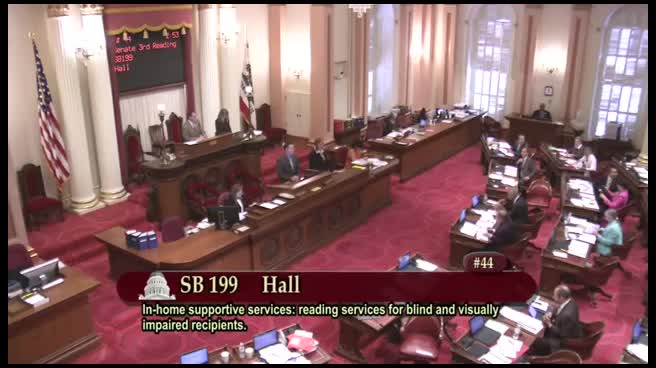
Bill Author

Bill Co-Author(s):
