SB 292: Public employee retirement: contributions.
- Session Year: 2015-2016
- House: Senate
- Latest Version Date: 2015-09-16
The California Public Employees Pension Reform Act of 2013 (PEPRA) requires a public retirement system, as defined, to modify its plan or plans to comply with the act and, among other provisions, establishes new retirement formulas that may not be exceeded by a public employer offering a defined benefit pension plan for employees first hired on or after January 1, 2013. PEPRA requires new employees of public employers, as specified, who participate in a defined benefit plan to have an initial contribution rate of at least 50% of the normal cost rate for that defined benefit plan, rounded to the nearest 1/4 of 1%, or the current contribution rate of similarly situated employees, whichever is greater. PEPRA prohibits an employer from paying the employee contribution.
The California Constitution generally limits ad valorem taxes on real property to 1% of the full cash value of that property. The California Constitution exempts from that limit an additional ad valorem property tax rate for, among other things, indebtedness approved by the voters of the local entity prior to July 1, 1978, including pension programs.
This bill would exempt a city or county that pays its pension costs with revenues from a property tax rate approved by its voters to make payments in support of pension programs and levied in addition to the general property tax rate, and that citys or countys employees, from the above-described prohibition on employer payment of employee contribution, with respect to an employee whose pension is funded by these revenues.
The California Public Employees Pension Reform Act of 2013 (PEPRA) requires a public retirement system, as defined, to modify its plan or plans to comply with the act and, among other provisions, establishes new retirement formulas that may not be exceeded by a public employer offering a defined benefit pension plan for employees first hired on or after January 1, 2013. On and after January 1, 2013, PEPRA requires new employees of specified public employers, the Legislature, the California State University, and the judicial branch as specified, who participate in a defined benefit plan to have an initial contribution rate of at least 50% of the normal cost rate for that defined benefit plan, rounded to the nearest 1/4 of 1%, or the current contribution rate of similarly situated employees, whichever is greater. PEPRA prohibits an employer from paying the employee contribution.
The California Constitution generally limits ad valorem taxes on real property to 1% of the full cash value of that property. The California Constitution exempts from that limit an additional ad valorem property tax rate for, among other things, indebtedness approved by the voters of the local entity prior to July 1, 1978, including pension programs.
This bill would exempt a city or county that pays its pension costs with revenues from a property tax rate, rate approved by the voters of a city or county its voters to make payments in support of pension programs and levied in addition to the general property tax rate, and that citys or countys employees employees, from the above-described 50% contribution rate provision under PEPRA. prohibition on employer payment of employee contribution, with respect to an employee whose pension is funded by these revenues.
The California Public Employees Pension Reform Act of 2013 (PEPRA) requires a public retirement system, as defined, to modify its plan or plans to comply with the act and, among other provisions, establishes new retirement formulas that may not be exceeded by a public employer offering a defined benefit pension plan for employees first hired on or after January 1, 2013. On and after January 1, 2013, PEPRA requires new employees of specified public employers, the Legislature, the California State University, and the judicial branch who participate in a defined benefit plan to have an initial contribution rate of at least 50% of the normal cost rate for that defined benefit plan, rounded to the nearest 1/4 of 1%, or the current contribution rate of similarly situated employees, whichever is greater.
The California Constitution generally limits ad valorem taxes on real property to 1% of the full cash value of that property. The California Constitution exempts from that limit an additional ad valorem property tax rate for, among other things, indebtedness approved by the voters of the local entity prior to July 1, 1978, including pension programs.
This bill would exempt a city or county that pays its pension costs with revenues from a property tax rate, approved by the voters of a city or county to make payments in support of pension programs and levied in addition to the general property tax rate, and that citys or countys employees from the above-described 50% contribution rate provision under PEPRA.
The Public Employees Retirement Law (PERL) creates the Public Employees Retirement System (PERS), which provides a defined benefit to its members based on age at retirement, service credit, and final compensation. Existing law defines member for purposes of PERL and excludes certain people from membership in PERS.
This bill would make technical, nonsubstantive changes to these provisions.
(a)This section shall apply to all public employers and to all new members. Equal sharing of normal costs between public employers and public employees shall be the standard. The standard shall be that employees pay at least 50 percent of normal costs and that employers not pay any of the required employee contribution.
(b)The normal cost rate shall mean the annual actuarially determined normal cost for the plan of retirement benefits provided to the new member and shall be established based on the actuarial assumptions used to determine the liabilities and costs as part of the annual actuarial valuation. The plan of retirement benefits shall include any elements that would impact the actuarial determination of the normal cost, including, but not limited to, the retirement formula, eligibility and vesting criteria, ancillary benefit provisions, and any automatic cost-of-living adjustments as determined by the public retirement system.
(c)(1)New members employed by those public employers defined in paragraphs (2) and (3) of subdivision (i) of Section 7522.04, the Legislature, the California State University, and the judicial branch who participate in a defined benefit plan shall have an initial contribution rate of at least 50 percent of the normal cost rate for that defined benefit plan, rounded to the nearest1/4of 1 percent, unless a greater contribution rate has been agreed to pursuant to the requirements in subdivision (e). Except as provided in paragraph (2), this contribution shall not be paid by the employer on the employees behalf.
(2)With respect to an employee whose pension is funded as described in this subdivision, the prohibition against an employer paying an employees contribution does not apply to a city or county that pays its pension program costs with revenues derived from a property tax rate approved by the voters of the city or county to make payments in support of pension programs and levied in addition to the property tax rate limited by subdivision (a) of Section 1 of Article XIII A of the California Constitution.
(d)Notwithstanding subdivision (c), once established, the employee contribution rate described in subdivision (c) shall not be adjusted on account of a change to the normal cost rate unless the normal cost rate increases or decreases by more than 1 percent of payroll above or below the normal cost rate in effect at the time the employee contribution rate is first established or, if later, the normal cost rate in effect at the time of the last adjustment to the employee contribution rate under this section.
(e)Notwithstanding subdivision (c), employee contributions may be more than one-half of the normal cost rate if the increase has been agreed to through the collective bargaining process, subject to the following conditions:
(1)The employer shall not contribute at a greater rate to the plan for nonrepresented, managerial, or supervisory employees than the employer contributes for other public employees, including represented employees, of the same employer who are in related retirement membership classifications.
(2)The employer shall not increase an employee contribution rate in the absence of a memorandum of understanding that has been collectively bargained in accordance with applicable laws.
(3)The employer shall not use impasse procedures to increase an employee contribution rate above the rate required by this section.
(f)If the terms of a contract, including a memorandum of understanding, between a public employer and its public employees, that is in effect on January 1, 2013, would be impaired by any provision of this section, that provision shall not apply to the public employer and public employees subject to that contract until the expiration of that contract. A renewal, amendment, or any other extension of that contract shall be subject to the requirements of this section.
(a)This section shall apply to all public employers and to all new members. Equal sharing of normal costs between public employers and public employees shall be the standard. The standard shall be that employees pay at least 50 percent of normal costs and that employers not pay any of the required employee contribution.
(b)The normal cost rate shall mean the annual actuarially determined normal cost for the plan of retirement benefits provided to the new member and shall be established based on the actuarial assumptions used to determine the liabilities and costs as part of the annual actuarial valuation. The plan of retirement benefits shall include any elements that would impact the actuarial determination of the normal cost, including, but not limited to, the retirement formula, eligibility and vesting criteria, ancillary benefit provisions, and any automatic cost-of-living adjustments as determined by the public retirement system.
(c)(1)New members employed by those public employers defined in paragraphs (2) and (3) of subdivision (i) of Section 7522.04, the Legislature, the California State University, and the judicial branch who participate in a defined benefit plan shall have an initial contribution rate of at least 50 percent of the normal cost rate for that defined benefit plan, rounded to the nearest quarter1/4of 1 percent, unless a greater contribution rate has been agreed to pursuant to the requirements in subdivision (e). This Except as provided in paragraph (2), this contribution shall not be paid by the employer on the employees behalf.
(2)With respect to an employee whose pension is funded as described in this subdivision, the prohibition against an employer paying an employees contribution does not apply to a city or county that pays its pension program costs with revenues derived from a property tax rate approved by the voters of the city or county to make payments in support of pension programs and levied in addition to the property tax rate limited by subdivision (a) of Section 1 of Article XIII A of the California Constitution.
(d)Notwithstanding subdivision (c), once established, the employee contribution rate described in subdivision (c) shall not be adjusted on account of a change to the normal cost rate unless the normal cost rate increases or decreases by more than 1 percent of payroll above or below the normal cost rate in effect at the time the employee contribution rate is first established or, if later, the normal cost rate in effect at the time of the last adjustment to the employee contribution rate under this section.
(e)Notwithstanding subdivision (c), employee contributions may be more than one-half of the normal cost rate if the increase has been agreed to through the collective bargaining process, subject to the following conditions:
(1)The employer shall not contribute at a greater rate to the plan for nonrepresented, managerial, or supervisory employees than the employer contributes for other public employees, including represented employees, of the same employer who are in related retirement membership classifications.
(2)The employer shall not increase an employee contribution rate in the absence of a memorandum of understanding that has been collectively bargained in accordance with applicable laws.
(3)The employer shall not use impasse procedures to increase an employee contribution rate above the rate required by this section.
(f)If the terms of a contract, including a memorandum of understanding, between a public employer and its public employees, that is in effect on January 1, 2013, would be impaired by any provision of this section, that provision shall not apply to the public employer and public employees subject to that contract until the expiration of that contract. A renewal, amendment, or any other extension of that contract shall be subject to the requirements of this section.
(g)This section does not apply to a public employer and its public employees if the public employer is a city or county that pays its pension program costs with revenues derived from a property tax rate, approved by the voters of a city or county to make payments in support of pension programs and levied in addition to the property tax rate limited by subdivision (a) of Section 1 of Article XIII A of the California Constitution.
(a)This section shall apply to all public employers and to all new members. Equal sharing of normal costs between public employers and public employees shall be the standard. The standard shall be that employees pay at least 50 percent of normal costs and that employers not pay any of the required employee contribution.
(b)The normal cost rate shall mean the annual actuarially determined normal cost for the plan of retirement benefits provided to the new member and shall be established based on the actuarial assumptions used to determine the liabilities and costs as part of the annual actuarial valuation. The plan of retirement benefits shall include any elements that would impact the actuarial determination of the normal cost, including, but not limited to, the retirement formula, eligibility and vesting criteria, ancillary benefit provisions, and any automatic cost-of-living adjustments as determined by the public retirement system.
(c)New members employed by those public employers defined in paragraphs (2) and (3) of subdivision (i) of Section 7522.04, the Legislature, the California State University, and the judicial branch who participate in a defined benefit plan shall have an initial contribution rate of at least 50 percent of the normal cost rate for that defined benefit plan, rounded to the nearest quarter of 1 percent, unless a greater contribution rate has been agreed to pursuant to the requirements in subdivision (e). This contribution shall not be paid by the employer on the employees behalf.
(d)Notwithstanding subdivision (c), once established, the employee contribution rate described in subdivision (c) shall not be adjusted on account of a change to the normal cost rate unless the normal cost rate increases or decreases by more than 1 percent of payroll above or below the normal cost rate in effect at the time the employee contribution rate is first established or, if later, the normal cost rate in effect at the time of the last adjustment to the employee contribution rate under this section.
(e)Notwithstanding subdivision (c), employee contributions may be more than one-half of the normal cost rate if the increase has been agreed to through the collective bargaining process, subject to the following conditions:
(1)The employer shall not contribute at a greater rate to the plan for nonrepresented, managerial, or supervisory employees than the employer contributes for other public employees, including represented employees, of the same employer who are in related retirement membership classifications.
(2)The employer shall not increase an employee contribution rate in the absence of a memorandum of understanding that has been collectively bargained in accordance with applicable laws.
(3)The employer shall not use impasse procedures to increase an employee contribution rate above the rate required by this section.
(f)If the terms of a contract, including a memorandum of understanding, between a public employer and its public employees, that is in effect on January 1, 2013, would be impaired by any provision of this section, that provision shall not apply to the public employer and public employees subject to that contract until the expiration of that contract. A renewal, amendment, or any other extension of that contract shall be subject to the requirements of this section.
(g)This section does not apply to a public employer and its public employees if the public employer is a city or county that pays its pension program costs with revenues derived from a property tax rate, approved by the voters of a city or county to make payments in support of pension programs and levied in addition to the property tax rate limited by subdivision (a) of Section 1 of Article XIII A of the California Constitution.
SECTION 1.Section 20300 of the Government Code is amended to read:20300.The following persons are excluded from membership in this system:
(a)Inmates of state or public agency institutions who are allowed compensation for the service they are able to perform.
(b)Independent contractors who are not employees.
(c)Persons employed as student assistants in the state colleges and persons employed as student aides in the special schools of the State Department of Education and in the public schools of the state.
(d)Persons employed as teacher assistants pursuant to Section 44926 of the Education Code.
(e)Participants, other than staff officers and employees, in the California Conservation Corps.
(f)Persons employed as participants in a program of, and whose wages are paid in whole or in part by federal funds in accordance with, Section 1501 et seq. of Title 29 of the United States Code. This subdivision does not apply with respect to persons employed in job classes that provide eligibility for patrol or safety membership or to the career staff employees of an employer.
(g)All persons who are members in a teachers retirement system, as to the service in which they are members of a teachers retirement system.
(h)Except as otherwise provided in this part, persons rendering professional legal services to a city, other than the person holding the office of city attorney, the office of assistant city attorney, or an established position of deputy city attorney.
(i)A person serving the university as a teacher in university extension, whose compensation for that service is established on the basis of class enrollment, either actual or estimated, with respect to that service.
(j)A person serving a California State University as a teacher in extension service, whose compensation for that service is established on the basis of class enrollment, either actual or estimated, with respect to that service.
(k)A teacher or academic employee of the university or any California State University who is otherwise fully employed and who serves as a teacher or in an academic capacity in a summer session or intersession, for which he or she receives compensation specifically attributable to that service in summer session or intersession, with respect to that service.
(l)A person who is employed under the California Senate Fellows, the Assembly Fellowship, the Judicial Administration Fellowship, or the Executive Fellowship programs.
(m)Board members of the State Compensation Insurance Fund, including those appointed by the Governor.
The following persons are excluded from membership in this system:
(a)Inmates of state or public agency institutions who are allowed compensation for the service they are able to perform.
(b)Independent contractors who are not employees.
(c)Persons employed as student assistants in the state colleges and persons employed as student aides in the special schools of the State Department of Education and in the public schools of the state.
(d)Persons employed as teacher assistants pursuant to Section 44926 of the Education Code.
(e)Participants, other than staff officers and employees, in the California Conservation Corps.
(f)Persons employed as participants in a program of, and whose wages are paid in whole or in part by federal funds in accordance with, Section 1501 et seq. of Title 29 of the United States Code. This subdivision does not apply with respect to persons employed in job classes that provide eligibility for patrol or safety membership or to the career staff employees of an employer.
(g)All persons who are members in any a teachers retirement system, as to the service in which they are members of any a teachers retirement system.
(h)Except as otherwise provided in this part, persons rendering professional legal services to a city, other than the person holding the office of city attorney, the office of assistant city attorney, or an established position of deputy city attorney.
(i)A person serving the university as a teacher in university extension, whose compensation for that service is established on the basis of class enrollment, either actual or estimated, with respect to that service.
(j)A person serving a California State University as a teacher in extension service, whose compensation for that service is established on the basis of class enrollment, either actual or estimated, with respect to that service.
(k)A teacher or academic employee of the university or any California State University who is otherwise fully employed and who serves as a teacher or in an academic capacity in any a summer session or intersession, for which he or she receives compensation specifically attributable to that service in summer session or intersession, with respect to that service.
(l)A person who is employed under the California Senate Fellows, the Assembly Fellowship, the Judicial Administration Fellowship, or the Executive Fellowship programs.
(m)Board members of the State Compensation Insurance Fund, including those appointed by the Governor.
|
Date
|
Status
|
|---|---|
| Sep 11, 2015 | Ordered to third reading. |
| Sep 11, 2015 | Assembly amendments concurred in. (Ayes 27. Noes 12. Page 2777.) Ordered to engrossing and enrolling. |
| Sep 11, 2015 | Assembly amendments concurred in. (Ayes 27. Noes 12.) Ordered to engrossing and enrolling. |
| Sep 11, 2015 | Assembly Rule 63 suspended. |
| Sep 11, 2015 | Assembly Rule 63 suspended. (Ayes 51. Noes 28. Page 3182.) |
| Sep 11, 2015 | Assembly Rule 78 suspended. |
| Sep 11, 2015 | Assembly Rule 78 suspended. (Ayes 51. Noes 28. Page 3182.) |
| Sep 11, 2015 | From inactive file. |
| Sep 11, 2015 | In Senate. Concurrence in Assembly amendments pending. |
| Sep 10, 2015 | Notice of intention to remove from inactive file given by Assembly Member Holden. |
| Sep 11, 2015 | Read third time. Passed. Ordered to the Senate. |
| Sep 11, 2015 | Read third time. Passed. (Ayes 48. Noes 25. Page 3182.) Ordered to the Senate. |
| Sep 17, 2015 | Enrolled and presented to the Governor at 4:45 p.m. |
| Oct 10, 2015 | In Senate. Consideration of Governor's veto pending. |
| Oct 10, 2015 | Vetoed by the Governor. |
| Apr 25, 2016 | Last day to consider Governors veto pursuant to Joint Rule 58.5. |
| Apr 25, 2016 | Last day to consider Governor’s veto pursuant to Joint Rule 58.5. |
| Feb 23, 2015 | Introduced. Read first time. To Com. on RLS. for assignment. To print. |
| Jul 9, 2015 | Ordered to inactive file on request of Assembly Member Holden. |
| Jun 29, 2015 | Read second time. Ordered to third reading. |
| Jun 25, 2015 | Read second time and amended. Ordered to second reading. |
| Jun 24, 2015 | From committee: Do pass as amended. (Ayes 5. Noes 0.) (June 24). |
| May 22, 2015 | Referred to Com. on P.E., R., & S.S. |
| May 5, 2015 | In Assembly. Read first time. Held at Desk. |
| May 4, 2015 | Read third time. Passed. (Ayes 25. Noes 10.) Ordered to the Assembly. |
| May 4, 2015 | Read third time. Passed. (Ayes 25. Noes 10. Page 881.) Ordered to the Assembly. |
| Apr 29, 2015 | Read second time. Ordered to third reading. |
| Apr 28, 2015 | From committee: Do pass. (Ayes 3. Noes 2. Page 797.) (April 27). |
| Apr 23, 2015 | Set for hearing April 27. |
| Apr 22, 2015 | Re-referred to Com. on P.E. & R. |
| Apr 21, 2015 | From committee with author's amendments. Read second time and amended. Re-referred to Com. on RLS. |
| Mar 5, 2015 | Referred to Com. on RLS. |
| Feb 24, 2015 | From printer. May be acted upon on or after March 26. |
|
Date
|
Description
|
Location
|
Votes
|
|
|---|---|---|---|---|
| Sep 11, 2015 | Unfinished Business (Supplemental File 4) SB292 Pan Concurrence | Senate Floor |
Passed |
|
| Sep 11, 2015 | SB 292 Pan Senate Third Reading By BONTA | Assembly Floor |
Passed |
|
| Jun 24, 2015 | Do pass as amended. | Assembly Standing Committee on Public Employees, Retirement, and Social Security |
Passed |
|
| May 4, 2015 | Senate 3rd Reading SB292 Pan | Senate Floor |
Passed |
|
| Apr 27, 2015 | Do pass | Senate Standing Committee on Public Employment and Retirement |
Passed |
This list shows positions taken on this bill by organizations on the date displayed, which is linked to the original source.
Positions by individuals are not included.
|
Organization
|
Position
|
Date
|
|---|---|---|
| California Professional Firefighters | ** Support | Sep 11, 2015 |
| City of Oxnard | ** Against | Sep 11, 2015 |
| Peace Officers Research Association Of California | ** Support | Sep 11, 2015 |
SB 292
Page 7
|
Office of Senate Floor Analyses (916) 651-1520 Fax: (916) 327-4478 |
SB 292 |
VETO
Bill No: SB 292
Amended: 6/25/15
SENATE PUBLIC EMP. & RET. COMMITTEE: 3-2, 4/27/15
AYES: Pan, Beall, Hall
NOES: Morrell, Fuller
SENATE FLOOR: 25-10, 5/4/15
AYES: Allen, Beall, Block, Cannella, De León, Galgiani, Hall, Hernandez, Hertzberg, Hill, Hueso, Huff, Jackson, Lara, Leno, Leyva, Liu, McGuire, Mendoza, Mitchell, Monning, Pan, Roth, Wieckowski, Wolk
NOES: Anderson, Bates, Fuller, Gaines, Moorlach, Morrell, Nielsen, Runner, Stone, Vidak
NO VOTE RECORDED: Berryhill, Hancock, Nguyen, Pavley
SENATE FLOOR: 27-12, 9/11/15
AYES: Allen, Beall, Block, Cannella, De León, Glazer, Hall, Hancock, Hernandez, Hertzberg, Hill, Hueso, Huff, Jackson, Lara, Leno, Leyva, Liu, McGuire, Mendoza, Mitchell, Monning, Pan, Pavley, Roth, Wieckowski, Wolk
NOES: Anderson, Bates, Berryhill, Fuller, Gaines, Moorlach, Morrell, Nguyen, Nielsen, Runner, Stone, Vidak
NO VOTE RECORDED: Galgiani
ASSEMBLY FLOOR: 48-25, 9/11/15 - See last page for vote
SUBJECT: Public employee retirement: contributions
SOURCE: California Professional Firefighters
Peace Officers Research Association of California
DIGEST: This bill specifies that the requirement prohibiting employers from paying employee contributions for employees subject to the California Public Employees’ Pension Reform Act of 2013 (PEPRA), who are required to pay 50% of the actuarial normal cost of their pension benefits, does not apply in specific cities and one county in which voter-approved tax levies were enacted prior to 1978 for the purpose of paying pension costs. In those cities and one county, the employer is not prohibited from paying the employee contribution. The exemption provided by this bill applies to the requirement that an employer may not pay the employee contribution. Thus, when an employer pays its pension program costs with revenues derived from a special tax rate approved by voters in support of pension programs, the employer is not prohibited from making the employee contribution. The bill also clarifies that the employee is still subject to an employee contribution rate of 50% of the normal cost. Finally, the bill clarifies that the exemption only applies with regard to contributions on behalf of pension benefits covered by the pension levies. So in cases in which the levies only cover certain personnel, such as safety and fire personnel, the exemption is with regard to those employees’ benefits only.
ANALYSIS:
Existing law:
Requires, under PEPRA, that new public employees hired after January 1, 2013, shall pay at least 50% of the actuarial normal cost of funding their pension benefits, as specified.
Sets other required employee contribution rates for non-PEPRA (sometimes called classic or legacy members), and allows, in the case of those members, the employer and employees to collectively bargain over whether or not the employer pays some or all of the member contributions.
Prohibits a public employer from paying any portion of an employee’s contribution when the employee is subject to PEPRA and the 50% of normal cost contribution requirement.
Specifies, in PEPRA, that charter cities with independent retirement systems that are not subject to state laws are exempt from PEPRA.
Limits, under the state Constitution (Proposition 13, 1978) property tax rates to 1% of the purchase price of the property with specified adjustments.
Exempts from Proposition 13’s 1% property rate limit a property tax rate approved by voters prior to July 1, 1978, for the purpose of paying the pension costs of the city or county. Twenty-five cities and one county were thus grandfathered under Proposition 13.
Prohibits the imposition of new extraordinary ad valorem property tax rates for indebtedness at the local level other than for general obligation bonds.
Freezes extraordinary tax rates for pensions approved by voters before Proposition 13 at their 1982-83 percentages.
This bill exempts a public employer from the requirement under PEPRA that prohibits the employer from making the mandated PEPRA-employee contributions of at least 50% of the actuarial normal costs of their pensions. This exemption only applies in cases in which the city or county passed a voter-approved tax levy prior to July 1, 1978, for the purpose of paying for the costs of the city’s or county’s pension benefits, and it only applies to the specific pension expenses covered by the special tax levies. Therefore, if the special tax levy is for fire and safety personnel only, the exemption would only apply with regard to those employees’ contributions.
In cases in which the employer is not prohibited from making the employee contribution, the employee’s contribution rate would still be the statutory amount (e.g., 50% of the normal cost for employees subject to PEPRA), and the employer and employee could collectively bargain over whether or not the employer would pick up the employee contributions in full or in part.
Background
Proposition 13 and Extraordinary Tax Rates for Pensions
Proposition 13 limited property taxes to 1% of the purchase price of the property. However, the 1% limit on property tax rates did not apply to special assessments used to pay for indebtedness approved by voters before July 1, 1978. In 1982, the Supreme Court ruled in Carman v. Alvord that extraordinary tax rates approved by voters before July 1, 1978 to fund employee pension systems are valid exemptions under Proposition 13. These levies vary by city, range from 0.05% to 0.45%, and are levied in addition to the 1% general property tax rate.
In 1983, the Legislature enacted a moratorium on property tax rates for indebtedness other than bonds (AB 377, Roos). This moratorium was made permanent in 1985 (AB 13, Roos). AB 13 also froze voter-approved extraordinary tax rates for pensions at their 1982-83 percentage levels. The extraordinary rates are frozen as a specific percentage of total tax revenues; therefore, if total property values grow over time, the total dollar amount of the extraordinary tax revenues increases in tandem, even though the rate does not increase.
Cities and County with Extraordinary Tax Rates for Pensions
The cities and county with extraordinary tax rates for pensions that are also subject to PEPRA are as follows:
Albany, Alameda, Bell, Berkeley, Cloverdale, Coalinga, Compton, El Monte, Huntington Beach, Huntington Park, Inglewood, Lynwood, Maywood, Monrovia, Montebello, Monterey Park, Oakland, Oxnard, Richmond, San Fernando, San Gabriel, Watsonville, and Santa Clara County.
In some of the cities with extraordinary tax rates for pensions, the pension costs covered are for the city’s safety employees only—primarily police and fire personnel. Other employers have extraordinary tax rates for all pension costs. Both employer and employee contributions have been allowed to be paid by proceeds from the extraordinary tax levies, subject to local collective bargaining.
Two cities—Los Angeles and Fresno—do not contract with CalPERS and instead maintain their own independent retirement systems. These cities are independent charter cities that maintain independent retirement systems and are exempt from PEPRA. Thus, they may continue paying their retirement obligations using revenue generated by their respective levies, unlike the ambiguity that has surfaced for those cities that contract with CalPERS, which are subject to PEPRA.
Employee Contributions under PEPRA
PEPRA (AB 340, 2012) requires that new public employees in California first hired after January 1, 2013 must pay 50% of the actuarial normal costs of their pension plans as member contributions to the retirement systems. For employees subject to PEPRA, the employer is prohibited from paying the member contributions. PEPRA employees hired prior to 2013 (referred to as “classic” or “legacy” members of the retirement systems) pay contribution rates at the statutory pre-PEPRA levels set for those employees unless they have collectively bargained a different contribution level with the employer.
PEPRA allowed a new employee to be grandfathered under the classic or legacy employee contribution rate if the agency had a collective bargaining agreement in place on January 1, 2013, that set a specific contribution rate for employees. However, PEPRA states that upon expiration of that bargaining agreement, PEPRA employees must, at that time, begin paying the required member contribution rate equal to 50% of the actuarial normal cost of their respective plans.
Prior Legislation
AB 340 (Furutani, Chapter 296, Statutes of 2012) enacted PEPRA, which became effective on January 1, 2013.
AB 13 (Roos, Chapter 112, Statutes of 1985) made the moratorium on extraordinary tax rates for indebtedness other than bonds enacted by AB 377 permanent and froze extraordinary tax rates for pensions at their 1982-83 percentage levels.
AB 377 (Roos, Chapter 491, Statutes of 1983) created a temporary moratorium on extraordinary tax rates for indebtedness other than bonds.
FISCAL EFFECT: Appropriation: No Fiscal Com.: No Local: No
SUPPORT: (Verified 10/21/15)
California Professional Firefighters (co-source)
Peace Officers Research Association of California (co-source)
Laborers’ International Union of North America, Locals 777 & 792
Oxnard Firefighters Association, International Association of Fire Firefighters Local 1684
Service Employees International Union
OPPOSITION: (Verified 10/21/15)
City of Oxnard
ARGUMENTS IN SUPPORT:
According to the Peace Officers Research Association of California:
SB 292 clarifies an issue that came to PORAC’s attention after the passage of California’s pension reform legislation, the California Public Employees’ Pension Reform Act (PEPRA), took effect on January 1, 2013. A section in the PEPRA calls for all new employees, and by 2018 most current employees, to contribute 50% of their “normal cost.” Normal cost is the basic cost of providing an employee’s future retirement benefit, not including unfunded liabilities or surpluses. The issue that has come to our attention centers around approximately two dozen cities and one county whose voters approved a tax to fund their local retirement obligations. Some of these pension initiatives were approved by voters as early as the 1920’s. The pension levies pay for both the employer and employee contributions out of their respective funds, thereby allowing that city or county’s general fund to be used in other areas important to that jurisdiction.
If these local agencies are to subject to the PEPRA rule on employee contributions, the impact will hit those agencies’ general fund and could potentially result in a serious loss of employees due to the immediate increased cost. Also, it will truly impact recruitment for those entities due to the higher contribution rates that would be required from their general fund.
The Governor’s stated intent for the passage of PEPRA was in large part to save employer cost for increasing pension obligations. Unfortunately, the PEPRA section mandating increased employee contributions will have the opposition effect for these cities and county impacted by Senate Bill 292.
According to the California Professional Firefighters:
Since PEPRA, ambiguity now exists as to whether these employers may use this voter-approved tax revenue to pay all of their retirement obligations, including the employee share. Consequently, these few jurisdictions are now forced to backfill the cost of their retirement obligations using other revenue sources. Additionally, the provisions of PEPRA as currently interpreted, present a conflict with the will of the voters in enacting these pension levies many decades ago. Finally, this conflict presents a new, unexpected strain on a local agency's general fund in having to find other ways to meet its requirements, as outlined in their various collective
ARGUMENTS IN OPPOSITION: The City of Oxnard notes that the revenue received from its pension tax levy does not fully cover its pension costs, and expresses concerns that this bill could result in costs for employee contributions falling back onto the city.
GOVERNOR'S VETO MESSAGE:
I am returning Senate Bill 292 without my signature.
This bill exempts certain employees from making pension contributions if they work in a city or county that receives parcel tax revenue designated for pension costs.
I believe the cost-sharing requirements in the Public Employees' Pension Reform Act of 2013 are unrelated to whether a city or county has an existing parcel tax for pensions. The employee share-of-cost is a crucial standard that must be retained. I am unwilling to chip away at this reform.
ASSEMBLY FLOOR: 48-25, 9/11/15
AYES: Alejo, Bloom, Bonilla, Bonta, Brown, Burke, Calderon, Campos, Chau, Chiu, Chu, Cooley, Cooper, Dababneh, Dodd, Eggman, Frazier, Cristina Garcia, Eduardo Garcia, Gatto, Gipson, Gomez, Gonzalez, Gordon, Gray, Roger Hernández, Holden, Jones-Sawyer, Lopez, Low, McCarty, Medina, Mullin, Nazarian, O'Donnell, Perea, Quirk, Rendon, Ridley-Thomas, Rodriguez, Salas, Santiago, Mark Stone, Thurmond, Ting, Weber, Wood, Atkins
NOES: Achadjian, Travis Allen, Baker, Brough, Chávez, Dahle, Beth Gaines, Gallagher, Grove, Hadley, Harper, Jones, Kim, Lackey, Levine, Maienschein, Mathis, Mayes, Obernolte, Olsen, Patterson, Steinorth, Wagner, Waldron, Wilk
NO VOTE RECORDED: Bigelow, Chang, Daly, Irwin, Linder, Melendez, Williams
Prepared by: Pamela Schneider / P.E. & R. / (916) 651-1519
11/4/15 14:01:22
**** END ****
SB 292
Page 7
|
Office of Senate Floor Analyses (916) 651-1520 Fax: (916) 327-4478 |
UNFINISHED BUSINESS
Bill No: SB 292
Amended: 6/25/15
SENATE PUBLIC EMP. & RET. COMMITTEE: 3-2, 4/27/15
AYES: Pan, Beall, Hall
NOES: Morrell, Fuller
SENATE FLOOR: 25-10, 5/4/15
AYES: Allen, Beall, Block, Cannella, De León, Galgiani, Hall, Hernandez, Hertzberg, Hill, Hueso, Huff, Jackson, Lara, Leno, Leyva, Liu, McGuire, Mendoza, Mitchell, Monning, Pan, Roth, Wieckowski, Wolk
NOES: Anderson, Bates, Fuller, Gaines, Moorlach, Morrell, Nielsen, Runner, Stone, Vidak
NO VOTE RECORDED: Berryhill, Hancock, Nguyen, Pavley
ASSEMBLY FLOOR: Not available
SUBJECT: Public employee retirement: contributions
SOURCE: California Professional Firefighters
Peace Officers Research Association of California
DIGEST: This bill specifies that the requirement prohibiting employers from paying employee contributions for employees subject to the California Public Employees’ Pension Reform Act of 2013 (PEPRA), who are required to pay 50% of the actuarial normal cost of their pension benefits, does not apply in specific cities and one county in which voter-approved tax levies were enacted prior to 1978 for the purpose of paying pension costs. In those cities and one county, the employer is not prohibited from paying the employee contribution.
Assembly Amendments clarify that the exemption provided by this bill applies to the requirement that an employer may not pay the employee contribution. Thus, when an employer pays its pension program costs with revenues derived from a special tax rate approved by voters in support of pension programs, the employer is not prohibited from making the employee contribution. The amendments also clarify that the employee is still subject to an employee contribution rate of 50% of the normal cost. Finally, the amendments clarify that the exemption only applies with regard to contributions on behalf of pension benefits covered by the pension levies. So in cases in which the levies only cover certain personnel, such as safety and fire personnel, the exemption is with regard to those employees’ benefits only.
ANALYSIS:
Existing law:
Requires, under PEPRA, that new public employees hired after January 1, 2013, shall pay at least 50% of the actuarial normal cost of funding their pension benefits, as specified.
Sets other required employee contribution rates for non-PEPRA (sometimes called classic or legacy members), and allows, in the case of those members, the employer and employees to collectively bargain over whether or not the employer pays some or all of the member contributions.
Prohibits a public employer from paying any portion of an employee’s contribution when the employee is subject to PEPRA and the 50% of normal cost contribution requirement.
Specifies, in PEPRA, that charter cities with independent retirement systems that are not subject to state laws are exempt from PEPRA.
Limits, under the state Constitution (Proposition 13, 1978) property tax rates to 1% of the purchase price of the property with specified adjustments.
Exempts from Proposition 13’s 1% property rate limit a property tax rate approved by voters prior to July 1, 1978, for the purpose of paying the pension costs of the city or county. Twenty-five cities and one county were thus grandfathered under Proposition 13.
Prohibits the imposition of new extraordinary ad valorem property tax rates for indebtedness at the local level other than for general obligation bonds.
Freezes extraordinary tax rates for pensions approved by voters before Proposition 13 at their 1982-83 percentages.
This bill exempts a public employer from the requirement under PEPRA that prohibits the employer from making the mandated PEPRA-employee contributions of at least 50% of the actuarial normal costs of their pensions. This exemption only applies in cases in which the city or county passed a voter-approved tax levy prior to July 1, 1978, for the purpose of paying for the costs of the city’s or county’s pension benefits, and it only applies to the specific pension expenses covered by the special tax levies. Therefore, if the special tax levy is for fire and safety personnel only, the exemption would only apply with regard to those employees’ contributions.
In cases in which the employer is not prohibited from making the employee contribution, the employee’s contribution rate would still be the statutory amount (e.g., 50% of the normal cost for employees subject to PEPRA), and the employer and employee could collectively bargain over whether or not the employer would pick up the employee contributions in full or in part.
Background
Proposition 13 and Extraordinary Tax Rates for Pensions
Proposition 13 limited property taxes to 1% of the purchase price of the property. However, the 1% limit on property tax rates did not apply to special assessments used to pay for indebtedness approved by voters before July 1, 1978. In 1982, the Supreme Court ruled in Carman v. Alvord that extraordinary tax rates approved by voters before July 1, 1978 to fund employee pension systems are valid exemptions under Proposition 13. These levies vary by city, range from 0.05% to 0.45%, and are levied in addition to the 1% general property tax rate.
In 1983, the Legislature enacted a moratorium on property tax rates for indebtedness other than bonds (AB 377, Roos). This moratorium was made permanent in 1985 (AB 13, Roos). AB 13 also froze voter-approved extraordinary tax rates for pensions at their 1982-83 percentage levels. The extraordinary rates are frozen as a specific percentage of total tax revenues; therefore, if total property values grow over time, the total dollar amount of the extraordinary tax revenues increases in tandem, even though the rate does not increase.
Cities and County with Extraordinary Tax Rates for Pensions
The cities and county with extraordinary tax rates for pensions that are also subject to PEPRA are as follows:
Albany, Alameda, Bell, Berkeley, Cloverdale, Coalinga, Compton, El Monte, Huntington Beach, Huntington Park, Inglewood, Lynwood, Maywood, Monrovia, Montebello, Monterey Park, Oakland, Oxnard, Richmond, San Fernando, San Gabriel, Watsonville, and Santa Clara County.
In some of the cities with extraordinary tax rates for pensions, the pension costs covered are for the city’s safety employees only—primarily police and fire personnel. Other employers have extraordinary tax rates for all pension costs. Both employer and employee contributions have been allowed to be paid by proceeds from the extraordinary tax levies, subject to local collective bargaining.
Two cities—Los Angeles and Fresno—do not contract with CalPERS and instead maintain their own independent retirement systems. These cities are independent charter cities that maintain independent retirement systems and are exempt from PEPRA. Thus, they may continue paying their retirement obligations using revenue generated by their respective levies, unlike the ambiguity that has surfaced for those cities that contract with CalPERS, which are subject to PEPRA.
Employee Contributions under PEPRA
PEPRA (AB 340, 2012) requires that new public employees in California first hired after January 1, 2013 must pay 50% of the actuarial normal costs of their pension plans as member contributions to the retirement systems. For employees subject to PEPRA, the employer is prohibited from paying the member contributions. PEPRA employees hired prior to 2013 (referred to as “classic” or “legacy” members of the retirement systems) pay contribution rates at the statutory pre-PEPRA levels set for those employees unless they have collectively bargained a different contribution level with the employer.
PEPRA allowed a new employee to be grandfathered under the classic or legacy employee contribution rate if the agency had a collective bargaining agreement in place on January 1, 2013, that set a specific contribution rate for employees. However, PEPRA states that upon expiration of that bargaining agreement, PEPRA employees must, at that time, begin paying the required member contribution rate equal to 50% of the actuarial normal cost of their respective plans.
Prior Legislation
AB 340 (Furutani, Chapter 296, Statutes of 2012) enacted PEPRA, which became effective on January 1, 2013.
AB 13 (Roos, Chapter 112, Statutes of 1985) made the moratorium on extraordinary tax rates for indebtedness other than bonds enacted by AB 377 permanent and froze extraordinary tax rates for pensions at their 1982-83 percentage levels.
AB 377 (Roos, Chapter 491, Statutes of 1983) created a temporary moratorium on extraordinary tax rates for indebtedness other than bonds.
FISCAL EFFECT: Appropriation: No Fiscal Com.: No Local: No
California Professional Firefighters (co-source)
Peace Officers Research Association of California (co-source)
Laborers’ International Union of North America, Locals 777 & 792
Oxnard Firefighters Association, International Association of Fire Firefighters Local 1684
Service Employees International Union
OPPOSITION: (Verified 9/10/15)
City of Oxnard
ARGUMENTS IN SUPPORT:
According to the Peace Officers Research Association of California:
SB 292 clarifies an issue that came to PORAC’s attention after the passage of California’s pension reform legislation, the California Public Employees’ Pension Reform Act (PEPRA), took effect on January 1, 2013. A section in the PEPRA calls for all new employees, and by 2018 most current employees, to contribute 50% of their “normal cost.” Normal cost is the basic cost of providing an employee’s future retirement benefit, not including unfunded liabilities or surpluses. The issue that has come to our attention centers around approximately two dozen cities and one county whose voters approved a tax to fund their local retirement obligations. Some of these pension initiatives were approved by voters as early as the 1920’s. The pension levies pay for both the employer and employee contributions out of their respective funds, thereby allowing that city or county’s general fund to be used in other areas important to that jurisdiction.
If these local agencies are to subject to the PEPRA rule on employee contributions, the impact will hit those agencies’ general fund and could potentially result in a serious loss of employees due to the immediate increased cost. Also, it will truly impact recruitment for those entities due to the higher contribution rates that would be required from their general fund.
The Governor’s stated intent for the passage of PEPRA was in large part to save employer cost for increasing pension obligations. Unfortunately, the PEPRA section mandating increased employee contributions will have the opposition effect for these cities and county impacted by Senate Bill 292.
According to the California Professional Firefighters:
Since PEPRA, ambiguity now exists as to whether these employers may use this voter-approved tax revenue to pay all of their retirement obligations, including the employee share. Consequently, these few jurisdictions are now forced to backfill the cost of their retirement obligations using other revenue sources. Additionally, the provisions of PEPRA as currently interpreted, present a conflict with the will of the voters in enacting these pension levies many decades ago. Finally, this conflict presents a new, unexpected strain on a local agency's general fund in having to find other ways to meet its requirements, as outlined in their various collective
ARGUMENTS IN OPPOSITION: The City of Oxnard notes that the revenue received from its pension tax levy does not fully cover its pension costs, and expresses concerns that this bill could result in costs for employee contributions falling back onto the city.
Prepared by: Pamela Schneider / P.E. & R. / (916) 651-1519
9/11/15 20:14:05
**** END ****
SB 292
Page 3
SENATE THIRD READING
SB 292
(Pan)
As Amended June 25, 2015
Majority vote
SENATE VOTE: 25-10
Committee |
Votes |
Ayes |
Noes |
Public Employees |
5-0 |
Bonta, Cooley, Jones-Sawyer, O'Donnell, Rendon |
|
SUMMARY: Specifies that the prohibition against an employer paying an employee's required contribution for pension benefits, as established under the California Public Employees' Pension Reform Act of 2013 (PEPRA), does not apply in cities or counties in which voter-approved tax levies were enacted prior to July 1, 1978, for the purpose of paying pension costs, as specified.
EXISTING LAW:
Requires, under PEPRA, that new public employees hired after January 1, 2013, pay at least 50% of the actuarial normal cost of funding their pension benefits, as specified, and prohibits an employer from paying any of the required employee contribution.
Exclude the University of California and charter cities and counties that do not participate in a retirement system governed by state statute from the PEPRA requirements.
Limits, under the state Constitution (Proposition 13, 1978) property tax rates to 1% of the purchase price of the property with specified adjustments.
Exempts from Proposition 13's 1% property rate limit a property tax rate approved by voters prior to July 1, 1978, for the purpose of paying the pension costs of the city or county.
FISCAL EFFECT: Unknown. This bill is keyed non-fiscal by the Legislative Counsel.
COMMENTS: Proposition 13 limited property taxes to 1% of the purchase price of the property. However, the 1% limit on property tax rates did not apply to special assessments used to pay for indebtedness approved by voters before July 1, 1978. In 1982, the Supreme Court ruled in Carman v. Alvord that extraordinary tax rates approved by voters before July 1, 1978, to fund employee pension systems are valid exemptions under Proposition 13. These levies vary by city, range from 0.05% to 0.45%, and are levied in addition to the 1% general property tax rate.
In 1983, the Legislature enacted through AB 377 (Roos), Chapter 491, Statutes of 1983, a moratorium on property tax rates for indebtedness other than bonds. This moratorium was made permanent in 1985 through the passage of AB 13 (Roos), Chapter 112, Statutes of 1985. AB 13 also froze voter-approved extraordinary tax rates for pensions at their 1982-83 percentage levels. The extraordinary rates are frozen as a specific percentage of total tax revenues; therefore, if total property values grow over time, the total dollar amount of the extraordinary tax revenues increases in tandem, even though the rate does not increase.
The cities and county with extraordinary tax rates for pensions that are also subject to PEPRA are as follows: Albany, Alameda, Bell, Berkeley, Cloverdale, Coalinga, Compton, El Monte, Huntington Beach, Huntington Park, Inglewood, Lynwood, Maywood, Monrovia, Montebello, Monterey Park, Oakland, Oxnard, Richmond, San Fernando, San Gabriel, Watsonville, and Santa Clara County.
In some of the cities with extraordinary tax rates for pensions, the pension costs covered are for the city's safety employees only – primarily police and fire personnel. Both employer and employee contributions have traditionally been paid by proceeds from the extraordinary tax levies.
Two cities – Los Angeles and Fresno – do not contract with a retirement system governed by state statute and instead maintain their own independent retirement systems. These cities are independent charter cities that maintain independent retirement systems and are exempt from PEPRA. They can, therefore, continue paying their retirement obligations using revenue generated by their respective levies.
The Peace Officers Research Association of California (PORAC), in support of the measure states, "SB 292 clarifies an issue that came to PORAC's attention after the passage of California's pension reform legislation, the California Public Employees' Pension Reform Act (PEPRA), took effect on January 1, 2013. A section in the PEPRA calls for all new employees, and by 2018 most current employees, to contribute 50% of their "normal cost". Normal cost is the basic cost of providing an employee's future retirement benefit, not including unfunded liabilities or surpluses. The issue that has come to our attention centers around approximately two dozen cities and one county whose voters approved a tax to fund their local retirement obligations. Some of these pension initiatives were approved by voters as early as the 1920's. The pension levies pay for both the employer and employee contributions out of their respective funds, thereby allowing that city or county's general fund to be used in other areas important to that jurisdiction.
"If these local agencies are to subject to the PEPRA rule on employee contributions, the impact will hit those agencies' general fund and could potentially result in a serious loss of employees due to the immediate increased cost. Also, it will truly impact recruitment for those entities due to the higher contribution rates that would be required from their general fund."
"The Governor's stated intent for the passage of PEPRA was in large part to save employer cost for increasing pension obligations. Unfortunately, the PEPRA section mandating increased employee contributions will have the opposition effect for these cities and county impacted by Senate Bill 292."
According to the California Professional Firefighters, also in support, "Since PEPRA, ambiguity now exists as to whether these employers may use this voter-approved tax revenue to pay all of their retirement obligations, including the employee share. Consequently, these few jurisdictions are now forced to backfill the cost of their retirement obligations using other revenue sources. Additionally, the provisions of PEPRA as currently interpreted, present a conflict with the will of the voters in enacting these pension levies many decades ago. Finally, this conflict presents a new, unexpected strain on a local agency's general fund in having to find other ways to meet its requirements, as outlined in their various collective bargaining agreements."
The City of Oxnard is opposed to the bill, stating, "The 1982 Supreme Court decision in Carman v. Alvord validated the override of property tax limitations to pay the costs of pensions obligations approved by the voters prior to the adoption of Proposition 13 in 1978. Later court rulings and legislation, however, have capped the amount of the property tax pension override. The City of Oxnard is now at that cap. Public safety pension benefits in Oxnard were increased after 1978, and the pension contribution associated with that increase cannot be paid through the override. Further, the property tax override rate the City can charge is capped at the rate imposed in fiscal years 1982-83 and 1983-84."
"As a result of those limitations, the property tax override cannot cover the full costs of the current level of Oxnard public safety pension benefits. The proposed Oxnard City Budget for Fiscal Year 2015-16 projects that the City's General Fund will have to cover several million dollars in public safety pension costs. Thus, if these new employees are exempted from the 50% employee contribution requirement of PEPRA, the costs for the pension contribution no longer required by the employee would place an additional burden upon the City's General Fund."
The opponents conclude, "Oxnard is currently facing huge budget shortfalls and is struggling to meet the obligations on the City's general fund. SB 292 would exacerbate the financial situation which is already at crisis levels in Oxnard."
Analysis Prepared by: Karon Green / P.E.,R., & S.S. / (916) 319-3957 FN: 0001092
SB 292
Page 5
|
Office of Senate Floor Analyses (916) 651-1520 Fax: (916) 327-4478 |
THIRD READING
Bill No: SB 292
Amended: 4/21/15
SENATE PUBLIC EMP. & RET. COMMITTEE: 3-2, 4/27/15
AYES: Pan, Beall, Hall
NOES: Morrell, Fuller
SUBJECT: Public employee retirement: contributions
SOURCE: California Professional Firefighters
Peace Officers Research Association of California
DIGEST: This bill specifies that the requirement for employees subject to the California Public Employees’ Pension Reform Act of 2013 (PEPRA) to pay 50% of the actuarial normal cost of their pension benefits does not apply in specific cities and one county in which voter-approved tax levies were enacted prior to 1978 for the purpose of paying pension costs.
ANALYSIS:
Existing law:
Requires, under PEPRA, that new public employees hired after January 1, 2013, shall pay at least 50% of the actuarial normal cost of funding their pension benefits, as specified.
Limits, under the state Constitution (Proposition 13, 1978) property tax rates to 1% of the purchase price of the property with specified adjustments.
Exempts from Proposition 13’s 1% property rate limit a property tax rate approved by voters prior to July 1, 1978, for the purpose of paying the pension costs of the city or county. Twenty-five cities and one county were thus grandfathered under Proposition 13.
Prohibits the imposition of new extraordinary ad valorem property tax rates for indebtedness at the local level other than for general obligation bonds.
Freezes extraordinary tax rates for pensions approved by voters before Proposition 13 at their 1982-83 percentages.
This bill exempts a public employer and the employer’s employees from the requirement under PEPRA for employees to pay 50% of the actuarial normal costs of their pensions in cases in which the city or county passed a voter-approved tax levy prior to July 1, 1978, for the purpose of paying for the costs of the city’s or county’s pension benefits.
Background
Proposition 13 and Extraordinary Tax Rates for Pensions
Proposition 13 limited property taxes to 1% of the purchase price of the property. However, the 1% limit on property tax rates did not apply to special assessments used to pay for indebtedness approved by voters before July 1, 1978. In 1982, the Supreme Court ruled in Carman v. Alvord that extraordinary tax rates approved by voters before July 1, 1978 to fund employee pension systems are valid exemptions under Proposition 13. These levies vary by city, range from 0.05% to 0.45%, and are levied in addition to the 1% general property tax rate.
In 1983, the Legislature enacted a moratorium on property tax rates for indebtedness other than bonds (AB 377, Roos). This moratorium was made permanent in 1985 (AB 13, Roos). AB 13 also froze voter-approved extraordinary tax rates for pensions at their 1982-83 percentage levels. The extraordinary rates are frozen as a specific percentage of total tax revenues; therefore, if total property values grow over time, the total dollar amount of the extraordinary tax revenues increases in tandem, even though the rate does not increase.
Cities and County with Extraordinary Tax Rates for Pensions
The cities and county with extraordinary tax rates for pensions that are also subject to PEPRA are as follows:
Albany, Alameda, Bell, Berkeley, Cloverdale, Coalinga, Compton, El Monte, Huntington Beach, Huntington Park, Inglewood, Lynwood, Maywood, Monrovia, Montebello, Monterey Park, Oakland, Oxnard, Richmond, San Fernando, San Gabriel, Watsonville, and Santa Clara County.
In some of the cities with extraordinary tax rates for pensions, the pension costs covered are for the city’s safety employees only—primarily police and fire personnel. Both employer and employee contributions have traditionally been paid by proceeds from the extraordinary tax levies.
Two cities—Los Angeles and Fresno—do not contract with CalPERS and instead maintain their own independent retirement systems. These cities are independent charter cities that maintain independent retirement systems and are exempt from PEPRA. Thus, they may continue paying their retirement obligations using revenue generated by their respective levies, unlike the ambiguity that has surfaced for those cities that contract with CalPERS, which are subject to PEPRA.
Employee Contributions under PEPRA
PEPRA (AB 340, 2012) requires that new public employees in California first hired after January 1, 2013 must pay 50% of the actuarial normal costs of their pension plans as member contributions to the retirement systems. For employees subject to PEPRA, the employer is prohibited from paying the member contributions. PEPRA employees hired prior to 2013 (referred to as “classic” or “legacy” members of the retirement systems) pay contribution rates at the statutory pre-PEPRA levels set for those employees unless they have collectively bargained a different contribution level with the employer.
PEPRA allowed a new employee to be grandfathered under the classic or legacy employee contribution rate if the agency had a collective bargaining agreement in place on January 1, 2013, that set a specific contribution rate for employees. However, PEPRA states that upon expiration of that bargaining agreement, PEPRA employees must, at that time, begin paying the required member contribution rate equal to 50% of the actuarial normal cost of their respective plans.
Prior/Related Legislation
AB 340 (Furutani, Chapter 296, Statutes of 2012) enacted PEPRA, which became effective on January 1, 2013.
AB 13 (Roos, Chapter 112, Statutes of 1985) made the moratorium on extraordinary tax rates for indebtedness other than bonds enacted by AB 377 permanent and froze extraordinary tax rates for pensions at their 1982-83 percentage levels.
AB 377 (Roos, Chapter 491, Statutes of 1983) created a temporary moratorium on extraordinary tax rates for indebtedness other than bonds.
FISCAL EFFECT: Appropriation: No Fiscal Com.: No Local: No
California Professional Firefighters (co-source)
Peace Officers Research Association of California (co-source)
Laborers’ International Union of North America, Locals 777 & 792
Oxnard Firefighters Association, International Association of Fire Firefighters Local 1684
Service Employees International Union
OPPOSITION: (Verified 4/28/15)
None received
ARGUMENTS IN SUPPORT:
According to the Peace Officers Research Association of California:
SB 292 clarifies an issue that came to PORAC’s attention after the passage of California’s pension reform legislation, the California Public Employees’ Pension Reform Act (PEPRA), took effect on January 1, 2013. A section in the PEPRA calls for all new employees, and by 2018 most current employees, to contribute 50% of their “normal cost.” Normal cost is the basic cost of providing an employee’s future retirement benefit, not including unfunded liabilities or surpluses. The issue that has come to our attention centers around approximately two dozen cities and one county whose voters approved a tax to fund their local retirement obligations. Some of these pension initiatives were approved by voters as early as the 1920’s. The pension levies pay for both the employer and employee contributions out of their respective funds, thereby allowing that city or county’s general fund to be used in other areas important to that jurisdiction.
If these local agencies are to subject to the PEPRA rule on employee contributions, the impact will hit those agencies’ general fund and could potentially result in a serious loss of employees due to the immediate increased cost. Also, it will truly impact recruitment for those entities due to the higher contribution rates that would be required from their general fund.
The Governor’s stated intent for the passage of PEPRA was in large part to save employer cost for increasing pension obligations. Unfortunately, the PEPRA section mandating increased employee contributions will have the opposition effect for these cities and county impacted by Senate Bill 292.
According to the California Professional Firefighters:
Since PEPRA, ambiguity now exists as to whether these employers may use this voter-approved tax revenue to pay all of their retirement obligations, including the employee share. Consequently, these few jurisdictions are now forced to backfill the cost of their retirement obligations using other revenue sources. Additionally, the provisions of PEPRA as currently interpreted, present a conflict with the will of the voters in enacting these pension levies many decades ago. Finally, this conflict presents a new, unexpected strain on a local agency's general fund in having to find other ways to meet its requirements, as outlined in their various collective bargaining agreements.
Prepared by: Pamela Schneider / P.E. & R. / (916) 651-1519
4/29/15 16:40:03
**** END ****
SB 292 (Pan) Page 5 of 5
SENATE COMMITTEE ON
PUBLIC EMPLOYMENT AND RETIREMENT
Dr. Richard Pan, Chair
2015 - 2016 Regular
Bill No: SB 292 Hearing Date: 4/27/15
Author: |
Pan |
||
Version: |
4/21/15 As amended |
||
Urgency: |
No |
Fiscal: |
No |
Consultant: |
Pamela Schneider |
||
Subject: Public Employees’Pension Reform Act (PEPRA): employee contributions
SOURCE: Peace Officers Research Association of California
California Professional Firefighters
DIGEST: This bill specifies that the requirement for employees subject to PEPRA to pay 50% of the actuarial normal cost of their pension benefits does not apply in specific cities and one county in which voter-approved tax levies were enacted prior to 1978 for the purpose of paying pension costs.
ANALYSIS:
Existing law:
Requires, under PEPRA, that new public employees hired after January 1, 2013, shall pay at least 50% of the actuarial normal cost of funding their pension benefits, as specified.
Limits, under the state Constitution (Proposition 13, 1978) property tax rates to 1% of the purchase price of the property with specified adjustments.
Exempts from Proposition 13’s 1% property rate limit a property tax rate approved by voters prior to July 1, 1978, for the purpose of paying the pension costs of the city or county. Twenty-five cities and one county were thus grandfathered under Proposition 13.
Prohibits the imposition of new extraordinary ad valorem property tax rates for indebtedness at the local level other than for general obligation bonds.
Freezes extraordinary tax rates for pensions approved by voters before Proposition 13 at their 1982-83 percentages.
This bill:
Exempts a public employer and the employer’s employees from the requirement under PEPRA for employees to pay 50% of the actuarial normal costs of their pensions in cases in which the city or county passed a voter-approved tax levy prior to July 1, 1978, for the purpose of paying for the costs of the city’s or county’s pension benefits.
Background
Proposition 13 and Extraordinary Tax Rates for Pensions
Proposition 13 limited property taxes to 1% of the purchase price of the property. However, the 1% limit on property tax rates did not apply to special assessments used to pay for indebtedness approved by voters before July 1, 1978. In 1982, the Supreme Court ruled in Carman v. Alvord that extraordinary tax rates approved by voters before July 1, 1978 to fund employee pension systems are valid exemptions under Proposition 13. These levies vary by city, range from 0.05% to 0.45%, and are levied in addition to the 1% general property tax rate.
In 1983, the Legislature enacted a moratorium on property tax rates for indebtedness other than bonds (AB 377, Roos). This moratorium was made permanent in 1985(AB 13, Roos). AB 13 also froze voter-approved extraordinary tax rates for pensions at their 1982-83 percentage levels. The extraordinary rates are frozen as a specific percentage of total tax revenues; therefore, if total property values grow over time, the total dollar amount of the extraordinary tax revenues increases in tandem, even though the rate does not increase.
Cities and County with Extraordinary Tax Rates for Pensions
The cities and county with extraordinary tax rates for pensions that are also subject to PEPRA are as follows:
Albany, Alameda, Bell, Berkeley, Cloverdale, Coalinga, Compton, El Monte, Huntington Beach, Huntington Park, Inglewood, Lynwood, Maywood, Monrovia, Montebello, Monterey Park, Oakland, Oxnard, Richmond, San Fernando, San Gabriel, Watsonville, and Santa Clara County.
In some of the cities with extraordinary tax rates for pensions, the pension costs covered are for the city’s safety employees only—primarily police and fire personnel. Both employer and employee contributions have traditionally been paid by proceeds from the extraordinary tax levies.
Two cities—Los Angeles and Fresno—do not contract with CalPERS and instead maintain their own independent retirement systems. These cities are independent charter cities that maintain independent retirement systems and are exempt from PEPRA. Thus, they may continue paying their retirement obligations using revenue generated by their respective levies, unlike the ambiguity that has surfaced for those cities that contract with CalPERS, which are subject to PEPRA.
Employee Contributions Under PEPRA
PEPRA (AB 340, 2012) requires that new public employees in California first hired after January 1, 2013 must pay 50% of the actuarial normal costs of their pension plans as member contributions to the retirement systems. For employees subject to PEPRA, the employer is prohibited from paying the member contributions. PEPRA employees hired prior to 2013 (referred to as “classic” or “legacy” members of the retirement systems) pay contribution rates at the statutory pre-PEPRA levels set for those employees unless they have collectively bargained a different contribution level with the employer.
PEPRA allowed a new employee to be grandfathered under the classic or legacy employee contribution rate if the agency had a collective bargaining agreement in place on January 1, 2013 that set a specific contribution rate for employees. However, PEPRA states that upon expiration of that bargaining agreement, PEPRA employees must, at that time, begin paying the required member contribution rate equal to 50% of the actuarial normal cost of their respective plans.
Prior/Related Legislation
AB 340 (Furutani, Chapter 296, Statutes of 2012) enacts PEPRA, which became effective on January 1, 2013.
AB 13 (Roos, Chapter 112, Statutes of 1985) made the moratorium on extraordinary tax rates for indebtedness other than bonds enacted by AB 377 permanent and froze extraordinary tax rates for pensions at their 1982-83 percentage levels.
AB 377 (Roos, Chapter 491, Statutes of 1983) created a temporary moratorium on extraordinary tax rates for indebtedness other than bonds.
FISCAL EFFECT: Appropriation: No Fiscal Com.: No Local: No
SUPPORT:
Peace Officers Research Association of California (co-source)
California Professional Firefighters (co-source)
Laborer’s International Union of North America, Locals 777 & 792
Oxnard Firefighters Association, Local 1684
OPPOSITION:
None received
ARGUMENTS IN SUPPORT:
According to the Peace Officers Research Association of California:
SB 292 clarifies an issue that came to PORAC’s attention after the passage of California’s pension reform legislation, the California Public Employees’ Pension Reform Act (PEPRA), took effect on January 1, 2013. A section in the PEPRA calls for all new employees, and by 2018 most current employees, to contribute 50% of their “normal cost”. Normal cost is the basic cost of providing an employee’s future retirement benefit, not including unfunded liabilities or surpluses. The issue that has come to our attention centers around approximately two dozen cities and one county whose voters approved a tax to fund their local retirement obligations. Some of these pension initiatives were approved by voters as early as the 1920’s. The pension levies pay for both the employer and employee contributions out of their respective funds, thereby allowing that city or county’s general fund to be used in other areas important to that jurisdiction.
If these local agencies are to subject to the PEPRA rule on employee contributions, the impact will hit those agencies’ general fund and could potentially result in a serious loss of employees due to the immediate increased cost. Also, it will truly impact recruitment for those entities due to the higher contribution rates that would be required from their general fund.
The Governor’s stated intent for the passage of PEPRA was in large part to save employer cost for increasing pension obligations. Unfortunately, the PEPRA section mandating increased employee contributions will have the opposition effect for these cities and county impacted by Senate Bill 292.
According to the California Professional Firefighters:
Since PEPRA, ambiguity now exists as to whether these employers may use this voter-approved tax revenue to pay all of their retirement obligations, including the employee share. Consequently, these few jurisdictions are now forced to backfill the cost of their retirement obligations using other revenue sources. Additionally, the provisions of PEPRA as currently interpreted, present a conflict with the will of the voters in enacting these pension levies many decades ago. Finally, this conflict presents a new, unexpected strain on a local agency's general fund in having to find other ways to meet its requirements, as outlined in their various collective bargaining agreements.
Discussed in Hearing
 2MIN
Assembly Floor
 2MIN
Senate Floor
 9MIN
Assembly Standing Committee on Public Employees, Retirement, and Social Security
 4MIN
Senate Floor
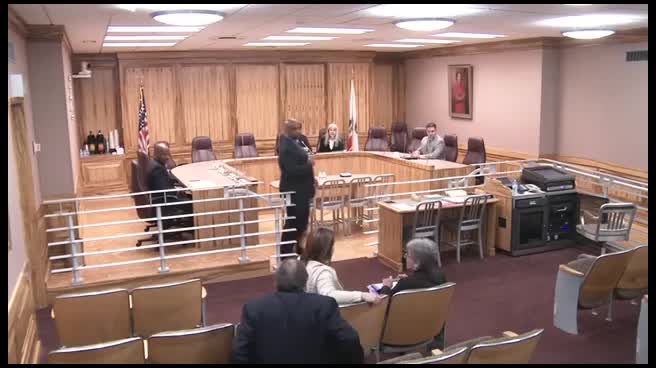 5MIN
Senate Standing Committee on Public Employment and Retirement
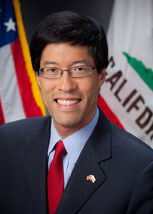
Bill Author
Bill Co-Author(s):