SB 295: Pipeline safety: inspections.
- Session Year: 2015-2016
- House: Senate
- Latest Version Date: 2015-10-08
Under the Elder California Pipeline Safety Act of 1981, the State Fire Marshal exercises safety regulatory jurisdiction over intrastate pipelines used for the transportation of hazardous or highly volatile liquid substances. The act authorizes the State Fire Marshal to exercise safety regulatory jurisdiction over portions of interstate pipelines located within the state and subject to an agreement between the United States Secretary of Transportation and the State Fire Marshal. The act authorizes the State Fire Marshal to enter, inspect, and examine, at reasonable times and in a reasonable manner, the records and properties of any pipeline operator that are required to be inspected and examined to determine whether the pipeline operator is in compliance with the act.
This bill would require, commencing January 1, 2017, the State Fire Marshal, or an officer or employee authorized by the State Fire Marshal, to annually inspect all intrastate pipelines and operators of intrastate pipelines under the jurisdiction of the State Fire Marshal, and would require the State Fire Marshal to adopt regulations implementing this provision by that date. The bill would prohibit the State Fire Marshal from becoming an inspection agent for specified interstate pipelines unless all regulatory and enforcement authority over those pipelines is transferred to the State Fire Marshal from the federal Pipeline and Hazardous Materials Safety Administration. The bill would require the State Fire Marshal to revise specified fees assessed to cover the costs associated with this measure.
Under the Elder California Pipeline Safety Act of 1981, the State Fire Marshal exercises safety regulatory jurisdiction over intrastate pipelines used for the transportation of hazardous or highly volatile liquid substances. The act authorizes the State Fire Marshal to exercise safety regulatory jurisdiction over portions of interstate pipelines located within the state and subject to an agreement between the United States Secretary of Transportation and the State Fire Marshal. The act authorizes the State Fire Marshal to enter, inspect, and examine, at reasonable times and in a reasonable manner, the records and properties of any pipeline operators that are required to be inspected and examined to determine whether the pipeline operator is in compliance with the act.
This bill would require require, commencing January 1, 2017, the State Fire Marshal, or an officer or employee authorized by the State Fire Marshal, to annually inspect all intrastate pipelines and operators of intrastate pipelines under the jurisdiction of the State Fire Marshal. Marshal, and would require the State Fire Marshal to adopt regulations implementing this provision by that date. The bill would require prohibit the State Fire Marshal, to the maximum extent possible, to become Marshal from becoming an inspection agent by entering into an agreement with for specified interstate pipelines unless all regulatory and enforcement authority over those pipelines is transferred to the State Fire Marshal from the federal Pipeline and Hazardous Materials Safety Administration, as specified. Administration. The bill would require the State Fire Marshal to revise specified fees assessed to cover the costs associated with this measure.
Under the Elder California Pipeline Safety Act of 1981, the State Fire Marshal exercises safety regulatory jurisdiction over intrastate pipelines used for the transportation of hazardous or highly volatile liquid substances. The act authorizes the State Fire Marshal to exercise safety regulatory jurisdiction over portions of interstate pipelines located within the state and subject to an agreement between the United States Secretary of Transportation and the State Fire Marshal. The act requires those pipelines over 10 years of age to be hydrostatically tested every 3 or 5 years, as provided, except that high-risk pipelines, as designated by the State Fire Marshall, are to be tested every 2 years or annually, as provided. authorizes the State Fire Marshal to enter, inspect, and examine, at reasonable times and in a reasonable manner, the records and properties of any pipeline operators that are required to be inspected and examined to determine whether the pipeline operator is in compliance with the act.
This bill would require the State Fire Marshal, or an officer or employee authorized by the State Fire Marshal, to annually inspect all intrastate pipelines and operators of intrastate pipelines under the jurisdiction of the State Fire Marshal. The bill would require pipelines over 5 years of age to be hydrostatically tested every 2 or 3 years, as provided, and would require all designated high-risk pipelines to be tested annually. The bill would require the State Fire Marshall, Marshal, to the maximum extent possible, to become an inspection agent by entering into an agreement with the federal Pipeline and Hazardous Materials Safety Administration, as specified. The bill would require the State Fire Marshall Marshal to revise specified fees assessed to cover the costs associated with this measure. The bill would also delete obsolete provisions.
Under the Elder California Pipeline Safety Act of 1981, the State Fire Marshal exercises safety regulatory jurisdiction over intrastate pipelines used for the transportation of hazardous or highly volatile liquid substances. The act authorizes the State Fire Marshal to exercise safety regulatory jurisdiction over portions of interstate pipelines located within the state and subject to an agreement between the United States Secretary of Transportation and the State Fire Marshal. The act requires those pipelines over 10 years of age to be hydrostatically tested every 3 or 5 years, as provided, except that high-risk pipelines, as designated by the State Fire Marshall, are to be tested every 2 years or annually, as provided.
This bill would require the State Fire Marshal, or an officer or employee authorized by the State Fire Marshal, to annually inspect all operators of intrastate pipelines under the jurisdiction of the State Fire Marshal. The bill would require pipelines over 5 years of age to be hydrostatically tested every 2 or 3 years, as provided, and would require all designated high-risk pipelines to be tested annually. The bill would require the State Fire Marshall, to the maximum extent possible, to become an inspection agent by entering into an agreement with the federal Pipeline and Hazardous Materials Safety Administration, as specified. The bill would require the State Fire Marshall to revise specified fees assessed to cover the costs associated with this measure. The bill would also delete obsolete provisions.
The Personal Income Tax Law and the Corporation Tax Law allow various credits against the taxes imposed by those laws, including, for taxable years beginning on or after January 1, 2014, and before January 1, 2017, a credit equal to a certain percentage of a contribution to the College Access Tax Credit Fund for specified education purposes, as provided.
This bill would extend the allowance of these credits to taxable years beginning before January 1, 2018.
This bill would take effect immediately as a tax levy.
(a)Commencing January 1, 2017, the State Fire Marshal, or an officer or employee authorized by the State Fire Marshal, shall annually inspect all intrastate pipelines and operators of intrastate pipelines under the jurisdiction of the State Fire Marshal to ensure compliance with applicable laws and regulations. By January 1, 2017, the State Fire Marshal shall adopt regulations implementing this subdivision.
(b)For portions of interstate pipelines that are not under the jurisdiction of the State Fire Marshal pursuant to Section 51010.6, the State Fire Marshal shall not become an inspection agent for those pipelines unless all regulatory and enforcement authority over those pipelines is transferred to the State Fire Marshal from the federal Pipeline and Hazardous Materials Safety Administration.
(c)The State Fire Marshal shall revise the fee assessed pursuant to Section 51019 to a level sufficient to cover the costs associated with the implementation of this section.
(a)The Commencing January 1, 2017, the State Fire Marshal, or an officer or employee authorized by the State Fire Marshal, shall annually inspect all intrastate pipelines and operators of intrastate pipelines under the jurisdiction of the State Fire Marshal to ensure compliance with applicable laws and regulations. By January 1, 2017, the State Fire Marshal shall adopt regulations implementing this subdivision.
(b)For portions of interstate pipelines that are not under the jurisdiction of the State Fire Marshal pursuant to Section 51010.6, the State Fire Marshal shall, to the maximum extent possible, shall not become an inspection agent through entering into an interstate inspection agent agreement with for those pipelines unless all regulatory and enforcement authority over those pipelines is transferred to the State Fire Marshal from the federal Pipeline and Hazardous Materials Safety Administration.
(c)The State Fire Marshal shall revise the fee assessed pursuant to Section 51019 to a level sufficient to cover the costs associated with the implementation of this section.
(a)Every newly constructed pipeline, existing pipeline, or part of a pipeline system that has been relocated or replaced, and every pipeline that transports a hazardous liquid substance or highly volatile liquid substance, shall be tested in accordance with Subpart E (commencing with Section 195.300) of Part 195 of Title 49 of the Code of Federal Regulations.
(b)Every pipeline not provided with properly sized automatic pressure relief devices or properly designed pressure limiting devices shall be hydrostatically tested annually.
(c)Every pipeline over five years of age and not provided with effective cathodic protection shall be hydrostatically tested every two years, except for those on the State Fire Marshals list of higher risk pipelines, which shall be hydrostatically tested annually.
(d)Every pipeline over five years of age and provided with effective cathodic protection shall be hydrostatically tested every three years, except for those on the State Fire Marshals list of higher risk pipelines which shall be hydrostatically tested annually.
(e)Piping within a refined products bulk loading facility served by pipeline shall be tested hydrostatically at 125 percent of maximum allowable operating pressure utilizing the product ordinarily transported in that piping if that piping is operated at a stress level of 20 percent or less of the specified minimum yield strength of the pipe. The frequency for pressure testing these pipelines shall be every five years for those pipelines with effective cathodic protection and every three years for those pipelines without effective cathodic protection. If that piping is observable, visual inspection may be the method of testing.
(f)The State Fire Marshal shall study indicators and precursors of serious pipeline accidents, and, in consultation with the Pipeline Safety Advisory Committee, shall develop criteria for identifying which hazardous liquid pipelines pose the greatest risk to people and the environment due to the likelihood of, and likely seriousness of, an accident due to corrosion or defect. The study shall give due consideration to research done by the industry, the federal government, academia, and to any other information which the State Fire Marshal shall deem relevant, including, but not limited to, recent leak history, pipeline location, and materials transported. Beginning January 1, 1992, using the criteria identified in that study, the State Fire Marshal shall maintain a list of higher risk pipelines, which exceed a standard of risk to be determined by the State Fire Marshal, and which shall be tested as required in subdivisions (c) and (d) as long as they remain on the list.
(g)In addition to the requirements of subdivisions (a) to (e), inclusive, the State Fire Marshal may require any pipeline subject to this chapter to be subjected to a pressure test, or any other test or inspection, at any time, in the interest of public safety.
(h)Test methods other than the hydrostatic tests required by subdivisions (b), (c), (d), and (e), including inspection by instrumented internal inspection devices, may be approved by the State Fire Marshal on an individual basis. If the State Fire Marshal approves an alternative to a pressure test in an individual case, the State Fire Marshal may require that the alternative test be given more frequently than the testing frequencies specified in subdivisions (b), (c), (d), and (e).
(i)The State Fire Marshal shall adopt regulations to establish what the State Fire Marshal deems to be an appropriate frequency for tests and inspections, including instrumented internal inspections, which, when permitted as a substitute for tests required under subdivisions (b), (c), and (d), do not damage pipelines or require them to be shut down for the testing period. That testing shall in no event be less frequent than is required by subdivisions (b), (c), and (d). Each time one of these tests is required on a pipeline, it shall be approved on the same individual basis as under subdivision (h). If it is not approved, a hydrostatic test shall be carried out at the time the alternative test would have been carried out, and subsequent tests shall be carried out in accordance with the time intervals prescribed by subdivision (b), (c), or (d), as applicable.
SEC. 2.SECTION 1.Section 51015.1 is added to the Government Code, to read:51015.1.(a)The State Fire Marshal, or an officer or employee authorized by the State Fire Marshal, shall annually inspect all intrastate pipelines and operators of intrastate pipelines under the jurisdiction of the State Fire Marshal to ensure compliance with applicable laws and regulations.
(b)For portions of interstate pipelines that are not under the jurisdiction of the State Fire Marshal pursuant to Section 51010.6, the State Fire Marshal shall, to the maximum extent possible, become an inspection agent through entering into an interstate inspection agent agreement with the federal Pipeline and Hazardous Materials Safety Administration.
(c)The State Fire Marshall Marshal shall revise the fee assessed pursuant to Section 51019 to a level sufficient to cover the costs associated with the implementation of this section and Section 51013.5, as amended by the act adding this section.
(a)Every newly constructed pipeline, existing pipeline, or part of a pipeline system that has been relocated or replaced, and every pipeline that transports a hazardous liquid substance or highly volatile liquid substance, shall be tested in accordance with Subpart E (commencing with Section 195.300) of Part 195 of Title 49 of the Code of Federal Regulations.
(b)Every pipeline not provided with properly sized automatic pressure relief devices or properly designed pressure limiting devices shall be hydrostatically tested annually.
(c)Every pipeline over 10 five years of age and not provided with effective cathodic protection shall be hydrostatically tested every three two years, except for those on the State Fire Marshals list of higher risk pipelines, which shall be hydrostatically tested annually.
(d)Every pipeline over 10 five years of age and provided with effective cathodic protection shall be hydrostatically tested every five three years, except for those on the State Fire Marshals list of higher risk pipelines which shall be hydrostatically tested every two years. annually.
(e)Piping within a refined products bulk loading facility served by pipeline shall be tested hydrostatically at 125 percent of maximum allowable operating pressure utilizing the product ordinarily transported in that piping if that piping is operated at a stress level of 20 percent or less of the specified minimum yield strength of the pipe. The frequency for pressure testing these pipelines shall be every five years for those pipelines with effective cathodic protection and every three years for those pipelines without effective cathodic protection. If that piping is observable, visual inspection may be the method of testing.
(f)Beginning on July 1, 1990, and continuing until the regulations adopted by the State Fire Marshal pursuant to subdivision (g) take effect, each pipeline within the State Fire Marshals jurisdiction which satisfies any of the following sets of criteria shall be placed on the State Fire Marshals list of higher risk pipelines until five years pass without a reportable leak due to corrosion or defect on that pipeline. Initially, pipelines on that list shall be tested by the next scheduled test date, or within two years of being placed on the list, whichever is first. On July 1, 1990, pipeline operators shall provide the State Fire Marshal with a list of all their pipelines which satisfy the criteria in this subdivision as of July 1, 1990. If any pipeline becomes eligible for the list of higher risk pipelines after that date, the pipeline company shall report that fact to the State Fire Marshal within 30 days, and the pipeline shall be placed on the list retroactively to the date on which it became eligible for listing. Pipelines which are found to belong on the list, but are not so reported by the operator to the State Fire Marshal, shall be placed on the list retroactively. Operators failing to properly report their pipelines shall be subject to penalties under Section 51018.6. Pipelines not covered under the risk criteria developed pursuant to subdivision (g) shall be deleted from the list when regulations are adopted pursuant to that subdivision. For purposes of this subdivision, a leak which is traceable to an external force, but for which corrosion is partly responsible, shall be deemed caused by corrosion, defect refers to manufacturing or construction defects, and leak or reportable leak means a rupture required to be reported pursuant to Section 51018. As long as all pipelines are tested in their entirety at least as frequently as standard risk pipelines under subdivisions (c) and (d), it shall suffice for additional tests on higher risk pipelines to cover 20 pipeline miles in all directions along an operators pipeline from the position of the leak or leaks which led to the inclusion or retention of that pipeline on the higher risk list. The interim list shall include pipelines which meet any of the following criteria:
(1)Have suffered two or more reportable leaks, not including leaks during a certified hydrostatic pressure test, due to corrosion or defect in the prior three years.
(2)Have suffered three or more reportable leaks, not including leaks during a certified hydrostatic pressure test, due to corrosion, defects, or external forces, but not all due to external forces, in the prior three years.
(3)Have suffered a reportable leak, except during a certified hydrostatic pressure test, due to corrosion or defect of more than 50,000 gallons, or 10,000 gallons in a standard metropolitan statistical area, in the prior three years; or have suffered a leak due to corrosion or defect which the State Fire Marshal finds has resulted in more than 42 gallons of a hazardous liquid within the State Fire Marshals jurisdiction entering a waterway in the prior three years; or have suffered a reportable leak of a hazardous liquid with a flashpoint of less than 140 degrees Fahrenheit, or 60 degrees centigrade, in the prior three years.
(4)Are less than 50 miles long, and have experienced a reportable leak, except during a certified hydrostatic pressure test, due to corrosion or a defect in the prior three years. For the purposes of this paragraph, the length of a pipeline with more than two termini shall be the longest distance between two termini along the pipeline.
(5)Have experienced a reportable leak in the prior five years due to corrosion or defect, except during a certified hydrostatic pressure test, on a section of pipe more than 50 years old. For pipelines which fall in this category, and no other category of higher risk pipeline, additional tests required by this subdivision shall be required only on segments of the pipe more than 50 years old as long as all pipe more than 50 years old which is within 20 pipeline miles from the leak in all directions along an operators pipeline is tested.
(g)
(f)The State Fire Marshal shall study indicators and precursors of serious pipeline accidents, and, in consultation with the Pipeline Safety Advisory Committee, shall develop criteria for identifying which hazardous liquid pipelines pose the greatest risk to people and the environment due to the likelihood of, and likely seriousness of, an accident due to corrosion or defect. The study shall give due consideration to research done by the industry, the federal government, academia, and to any other information which the State Fire Marshal shall deem relevant, including, but not limited to, recent leak history, pipeline location, and materials transported. Beginning January 1, 1992, using the criteria identified in that study, the State Fire Marshal shall maintain a list of higher risk pipelines, which exceed a standard of risk to be determined by the State Fire Marshal, and which shall be tested as required in subdivisions (c) and (d) as long as they remain on the list. By January 1, 1992, after public hearings, the State Fire Marshal shall adopt regulations to implement this subdivision.
(h)
(g)In addition to the requirements of subdivisions (a) to (e), inclusive, the State Fire Marshal may require any pipeline subject to this chapter to be subjected to a pressure test, or any other test or inspection, at any time, in the interest of public safety.
(i)
(h)Test methods other than the hydrostatic tests required by subdivisions (b), (c), (d), and (e), including inspection by instrumented internal inspection devices, may be approved by the State Fire Marshal on an individual basis. If the State Fire Marshal approves an alternative to a pressure test in an individual case, the State Fire Marshal may require that the alternative test be given more frequently than the testing frequencies specified in subdivisions (b), (c), (d), and (e).
(j)
(i)The State Fire Marshal shall adopt regulations before January 1, 1992, to establish what the State Fire Marshal deems to be an appropriate frequency for tests and inspections, including instrumented internal inspections, which, when permitted as a substitute for tests required under subdivisions (b), (c), and (d), do not damage pipelines or require them to be shut down for the testing period. That testing shall in no event be less frequent than is required by subdivisions (b), (c), and (d). Each time one of these tests is required on a pipeline, it shall be approved on the same individual basis as under subdivision (i). (h). If it is not approved, a hydrostatic test shall be carried out at the time the alternative test would have been carried out, and subsequent tests shall be carried out in accordance with the time intervals prescribed by subdivision (b), (c), or (d), as applicable.
SEC. 2.Section 51015.1 is added to the Government Code, to read:51015.1.(a)The State Fire Marshal, or an officer or employee authorized by the State Fire Marshal, shall annually inspect all operators of intrastate pipelines under the jurisdiction of the State Fire Marshal to ensure compliance with applicable laws and regulations.
(b)For portions of interstate pipelines that are not under the jurisdiction of the State Fire Marshal pursuant to Section 51010.6, the State Fire Marshal shall, to the maximum extent possible, become an inspection agent through entering into an interstate inspection agent agreement with the federal Pipeline and Hazardous Materials Safety Administration.
(c)The State Fire Marshall shall revise the fee assessed pursuant to Section 51019 to a level sufficient to cover the costs associated with the implementation of this section and Section 51013.5, as amended by the act adding this section.
SECTION 1.Section 17053.86 of the Revenue and Taxation Code is amended to read:17053.86.(a)(1)For each taxable year beginning on or after January 1, 2014, and before January 1, 2018, there shall be allowed as a credit against the net tax, as defined in Section 17039, an amount equal to the following:
(A)For each taxable year beginning on and after January 1, 2014, and before January 1, 2016, 60 percent of the amount contributed by the taxpayer for the 2014 or 2015 taxable year to the College Access Tax Credit Fund, as allocated and certified by the California Educational Facilities Authority.
(B)For each taxable year beginning on and after January 1, 2016, and before January 1, 2017, 55 percent of the amount contributed by the taxpayer for the 2016 taxable year to the College Access Tax Credit Fund, as allocated and certified by the California Educational Facilities Authority.
(C)For each taxable year beginning on and after January 1, 2017, and before January 1, 2018, 50 percent of the amount contributed by the taxpayer for the 2017 taxable year to the College Access Tax Credit Fund, as allocated and certified by the California Educational Facilities Authority.
(2)Contributions shall be made only in cash.
(b)(1)The aggregate amount of credit that may be allocated and certified pursuant to this section and Section 23686 shall be an amount equal to the sum of all of the following:
(A)Five hundred million dollars ($500,000,000) in credits for the 2014 calendar year and each calendar year thereafter.
(B)The amount of previously unallocated and uncertified credits.
(2)(A)For purposes of this section, the California Educational Facilities Authority shall do all of the following:
(i)On or after January 1, 2014, and before January 1, 2018, allocate and certify tax credits to taxpayers under this section.
(ii)Establish a procedure for taxpayers to contribute to the College Access Tax Credit Fund and to obtain from the California Educational Facilities Authority a certification for the credit allowed by this section. The procedure shall require the California Educational Facilities Authority to certify the contribution amount eligible for credit within 45 days following receipt of the contribution.
(iii)Provide to the Franchise Tax Board a copy of each credit certificate issued for the calendar year by March 1 of the calendar year immediately following the year in which those certificates are issued.
(B)(i)The California Educational Facilities Authority shall adopt any regulations necessary to implement this paragraph.
(ii)Chapter 3.5 (commencing with Section 11340) of Part 1 of Division 3 of Title 2 of the Government Code does not apply to any regulation adopted by the California Educational Facilities Authority pursuant to clause (i).
(c)(1)In the case where the credit allowed by this section exceeds the net tax, the excess may be carried over to reduce the net tax in the following year, and succeeding five years if necessary, until the credit is exhausted.
(2)A deduction shall not be allowed under this part for amounts taken into account under this section in calculating the credit allowed by this section.
(d)(1)The College Access Tax Credit Fund is hereby created as a special fund in the State Treasury. All revenue in this special fund shall be allocated as follows:
(A)First to the General Fund in an amount equal to the aggregate amount of certified credits allowed pursuant to this section and Section 23686 for the taxable year. Funds allocated to the General Fund shall be considered General Fund revenues for purposes of Sections 8 and 8.5 of Article XVI of the California Constitution.
(B)Second, upon appropriation, as follows:
(i)To the Franchise Tax Board, the California Educational Facilities Authority, the Controller, and the Student Aid Commission for reimbursement of all administrative costs incurred by those agencies in connection with their duties under this section, Section 23686, and Section 69432.7 of the Education Code.
(ii)To the Student Aid Commission for purposes of awarding Cal Grants to students pursuant to Section 69431.7 of the Education Code.
(2)The tax credit allowed by subdivision (a) of this section and subdivision (a) of Section 23686 for donations to the College Access Tax Credit Fund shall be known as the College Access Tax Credit.
(e)This section shall remain in effect only until December 1, 2018, and as of that date is repealed.
SEC. 2.Section 23686 of the Revenue and Taxation Code is amended to read:23686.(a)(1)For each taxable year beginning on or after January 1, 2014, and before January 1, 2018, there shall be allowed as a credit against the tax, as defined in Section 23036, an amount equal to the following:
(A)For each taxable year beginning on and after January 1, 2014, and before January 1, 2016, 60 percent of the amount contributed by the taxpayer for the 2014 or 2015 taxable year to the College Access Tax Credit Fund, as allocated and certified by the California Educational Facilities Authority.
(B)For each taxable year beginning on and after January 1, 2016, and before January 1, 2017, 55 percent of the amount contributed by the taxpayer for the 2016 taxable year to the College Access Tax Credit Fund, as allocated and certified by the California Educational Facilities Authority.
(C)For each taxable year beginning on and after January 1, 2017, and before January 1,2018, 50 percent of the amount contributed by the taxpayer for the 2017 taxable year to the College Access Tax Credit Fund, as allocated and certified by the California Educational Facilities Authority.
(2)Contributions shall be made only in cash.
(b)(1)The aggregate amount of credit that may be allocated and certified pursuant to this section and Section 17053.86 shall be an amount equal to the sum of all of the following:
(A)Five hundred million dollars ($500,000,000) in credits for the 2014 calendar year and each calendar year thereafter.
(B)The amount of previously unallocated and uncertified credits.
(2)(A)For purposes of this section, the California Educational Facilities Authority shall do all of the following:
(i)On or after January 1, 2014, and before January 1, 2018, allocate and certify tax credits to taxpayers under this section.
(ii)Establish a procedure for taxpayers to contribute to the College Access Tax Credit Fund and to obtain from the California Educational Facilities Authority a certification for the credit allowed by this section. The procedure shall require the California Educational Facilities Authority to certify the contribution amount eligible for credit within 45 days following receipt of the contribution.
(iii)Provide to the Franchise Tax Board a copy of each credit certificate issued for the calendar year by March 1 of the calendar year immediately following the year in which those certificates are issued.
(B)(i)The California Educational Facilities Authority shall adopt any regulations necessary to implement this paragraph.
(ii)Chapter 3.5 (commencing with Section 11340) of Part 1 of Division 3 of Title 2 of the Government Code does not apply to any regulation adopted by the California Educational Facilities Authority pursuant to clause (i).
(c)(1)In the case where the credit allowed by this section exceeds the tax, the excess may be carried over to reduce the tax in the following year, and succeeding five years if necessary, until the credit is exhausted.
(2)A deduction shall not be allowed under this part for amounts taken into account under this section in calculating the credit allowed by this section.
(d)This section shall remain in effect only until December 1, 2018, and as of that date is repealed.
SEC. 3.This act provides for a tax levy within the meaning of Article IV of the Constitution and shall go into immediate effect.
(a)(1)For each taxable years year beginning on or after January 1, 2014, and before January 1, 2017, 2018, there shall be allowed as a credit against the net tax, as defined in Section 17039, an amount equal to the following:
(A)For each taxable year beginning on and after January 1, 2014, and before January 1, 2015, 2016, 60 percent of the amount contributed by the taxpayer for the 2014 or 2015 taxable year to the College Access Tax Credit Fund, as allocated and certified by the California Educational Facilities Authority.
(B)For each taxable year beginning on and after January 1, 2015, 2016, and before January 1, 2016, 2017, 55 percent of the amount contributed by the taxpayer for the 2015 2016 taxable year to the College Access Tax Credit Fund, as allocated and certified by the California Educational Facilities Authority.
(C)For each taxable year beginning on and after January 1, 2016, 2017, and before January 1, 2017, 2018, 50 percent of the amount contributed by the taxpayer for the 2016 2017 taxable year to the College Access Tax Credit Fund, as allocated and certified by the California Educational Facilities Authority.
(2)Contributions shall be made only in cash.
(b)(1)The aggregate amount of credit that may be allocated and certified pursuant to this section and Section 23686 shall be an amount equal to the sum of all of the following:
(A)Five hundred million dollars ($500,000,000) in credits for the 2014 calendar year and each calendar year thereafter.
(B)The amount of previously unallocated and uncertified credits.
(2)(A)For purposes of this section, the California Educational Facilities Authority shall do all of the following:
(i)On or after January 1, 2014, and before January 1, 2017, 2018, allocate and certify tax credits to taxpayers under this section.
(ii)Establish a procedure for taxpayers to contribute to the College Access Tax Credit Fund and to obtain from the California Educational Facilities Authority a certification for the credit allowed by this section. The procedure shall require the California Educational Facilities Authority to certify the contribution amount eligible for credit within 45 days following receipt of the contribution.
(iii)Provide to the Franchise Tax Board a copy of each credit certificate issued for the calendar year by March 1 of the calendar year immediately following the year in which those certificates are issued.
(B)(i)The California Educational Facilities Authority shall adopt any regulations necessary to implement this paragraph.
(ii)Chapter 3.5 (commencing with Section 11340) of Part 1 of Division 3 of Title 2 of the Government Code does not apply to any regulation adopted by the California Educational Facilities Authority pursuant to clause (i).
(c)(1)In the case where the credit allowed by this section exceeds the net tax, the excess may be carried over to reduce the net tax in the following year, and succeeding five years if necessary, until the credit is exhausted.
(2)A deduction shall not be allowed under this part for amounts taken into account under this section in calculating the credit allowed by this section.
(d)(1)The College Access Tax Credit Fund is hereby created as a special fund in the State Treasury. All revenue in this special fund shall be allocated as follows:
(A)First to the General Fund in an amount equal to the aggregate amount of certified credits allowed pursuant to this section and Section 23686 for the taxable year. Funds allocated to the General Fund shall be considered General Fund revenues for purposes of Sections 8 and 8.5 of Article XVI of the California Constitution.
(B)Second, upon appropriation, as follows:
(i)To the Franchise Tax Board, the California Educational Facilities Authority, the Controller, and the Student Aid Commission for reimbursement of all administrative costs incurred by those agencies in connection with their duties under this section, Section 23686, and Section 69432.7 of the Education Code.
(ii)To the Student Aid Commission for purposes of awarding Cal Grants to students pursuant to Section 69431.7 of the Education Code.
(2)The tax credit allowed by subdivision (a) of this section and subdivision (a) of Section 23686 for donations to the College Access Tax Credit Fund shall be known as the College Access Tax Credit.
(e)This section shall remain in effect only until December 1, 2017, 2018, and as of that date is repealed.
SEC. 2.Section 23686 of the Revenue and Taxation Code is amended to read:23686.(a)(1)For each taxable year beginning on or after January 1, 2014, and before January 1, 2017, 2018, there shall be allowed as a credit against the tax, as defined in Section 23036, an amount equal to the following:
(A)For taxable years each taxable year beginning on and after January 1, 2014, and before January 1, 2015, 2016, 60 percent of the amount contributed by the taxpayer for the 2014 or 2015 taxable year to the College Access Tax Credit Fund, as allocated and certified by the California Educational Facilities Authority.
(B)For taxable years each taxable year beginning on and after January 1, 2015, 2016, and before January 1, 2016, 2017, 55 percent of the amount contributed by the taxpayer for the 2015 2016 taxable year to the College Access Tax Credit Fund, as allocated and certified by the California Educational Facilities Authority.
(C)For taxable years each taxable year beginning on and after January 1, 2016, 2017, and before January 1, 2017,2018, 50 percent of the amount contributed by the taxpayer for the 2016 2017 taxable year to the College Access Tax Credit Fund, as allocated and certified by the California Educational Facilities Authority.
(2)Contributions shall be made only in cash.
(b)(1)The aggregate amount of credit that may be allocated and certified pursuant to this section and Section 17053.86 shall be an amount equal to the sum of all of the following:
(A)Five hundred million dollars ($500,000,000) in credits for the 2014 calendar year and each calendar year thereafter.
(B)The amount of previously unallocated and uncertified credits.
(2)(A)For purposes of this section, the California Educational Facilities Authority shall do all of the following:
(i)On or after January 1, 2014, and before January 1, 2017, 2018, allocate and certify tax credits to taxpayers under this section.
(ii)Establish a procedure for taxpayers to contribute to the College Access Tax Credit Fund and to obtain from the California Educational Facilities Authority a certification for the credit allowed by this section. The procedure shall require the California Educational Facilities Authority to certify the contribution amount eligible for credit within 45 days following receipt of the contribution.
(iii)Provide to the Franchise Tax Board a copy of each credit certificate issued for the calendar year by March 1 of the calendar year immediately following the year in which those certificates are issued.
(B)(i)The California Educational Facilities Authority shall adopt any regulations necessary to implement this paragraph.
(ii)Chapter 3.5 (commencing with Section 11340) of Part 1 of Division 3 of Title 2 of the Government Code does not apply to any regulation adopted by the California Educational Facilities Authority pursuant to clause (i).
(c)(1)In the case where the credit allowed by this section exceeds the tax, the excess may be carried over to reduce the tax in the following year, and succeeding five years if necessary, until the credit is exhausted.
(2)A deduction shall not be allowed under this part for amounts taken into account under this section in calculating the credit allowed by this section.
(d)This section shall remain in effect only until December 1, 2017, 2018, and as of that date is repealed.
SEC. 3.This act provides for a tax levy within the meaning of Article IV of the Constitution and shall go into immediate effect.
|
Date
|
Status
|
|---|---|
| Sep 2, 2015 | From committee: Be re-referred to Com. on G.O. pursuant to Senate Rule 29.10(d). (Ayes 5. Noes 0. Page 2390.) Re-referred to Com. on G.O. |
| Jul 15, 2015 | From committee: Do pass and re-refer to Com. on G.O. (Ayes 6. Noes 1.) (July 14). Re-referred to Com. on G.O. |
| Aug 17, 2015 | (Received at desk July 17 pursuant to JR 61(a)(10)) |
| Aug 17, 2015 | From committee: Do pass as amended and re-refer to Com. on APPR. (Ayes 18. Noes 0.) (July 15). |
| Aug 18, 2015 | Read second time and amended. Re-referred to Com. on APPR. |
| Aug 19, 2015 | From committee with author's amendments. Read second time and amended. Re-referred to Com. on APPR. |
| Aug 26, 2015 | August 26 set for first hearing. Placed on APPR. suspense file. |
| Aug 27, 2015 | Joint Rule 62(a) suspended. |
| Aug 28, 2015 | From committee: Do pass. (Ayes 16. Noes 1.) (August 27). |
| Aug 31, 2015 | Read second time. Ordered to third reading. |
| Sep 1, 2015 | In Senate. Concurrence in Assembly amendments pending. |
| Sep 1, 2015 | Read third time. Passed. Ordered to the Senate. |
| Sep 1, 2015 | Read third time. Passed. (Ayes 73. Noes 1. Page 2724.) Ordered to the Senate. |
| Jul 13, 2015 | Joint Rule 62(a) suspended. (Page 2348.) |
| Sep 2, 2015 | Re-referred to Com. on G.O. pursuant to Senate Rule 29.10(d). |
| Sep 2, 2015 | Re-referred to Com. on RLS. pursuant to Senate Rule 29.10(d). |
| Sep 3, 2015 | From committee: That the Assembly amendments be concurred in. (Ayes 10. Noes 1. Page 2488.) |
| Sep 3, 2015 | From committee: That the Assembly amendments be concurred in. (Ayes 10. Noes 1.) |
| Sep 3, 2015 | Set for hearing September 3. |
| Sep 10, 2015 | Assembly amendments concurred in. (Ayes 26. Noes 8.) Ordered to engrossing and enrolling. |
| Sep 10, 2015 | Assembly amendments concurred in. (Ayes 27. Noes 9. Page 2683.) Ordered to engrossing and enrolling. |
| Sep 10, 2015 | Assembly amendments concurred in. (Ayes 27. Noes 9.) Ordered to engrossing and enrolling. |
| Sep 11, 2015 | Enrolled and presented to the Governor at 10:45 p.m. |
| Oct 8, 2015 | Approved by the Governor. |
| Oct 8, 2015 | Chaptered by Secretary of State. Chapter 607, Statutes of 2015. |
| May 20, 2015 | Ordered to special consent calendar. |
| Feb 24, 2015 | From printer. May be acted upon on or after March 26. |
| Mar 5, 2015 | Referred to Com. on GOV. & F. |
| Apr 21, 2015 | April 29 set for first hearing canceled at the request of author. |
| Apr 21, 2015 | Set for hearing April 29. |
| Apr 24, 2015 | Set for hearing May 6. |
| May 6, 2015 | From committee: Do pass and re-refer to Com. on APPR. with recommendation: To consent calendar. (Ayes 7. Noes 0. Page 919.) (May 6). Re-referred to Com. on APPR. |
| May 6, 2015 | From committee: Do pass and re-refer to Com. on APPR. with recommendation: To consent calendar. (Ayes 7. Noes 0.) (May 6). Re-referred to Com. on APPR. |
| May 8, 2015 | Set for hearing May 18. |
| May 18, 2015 | From committee: Do pass. (Ayes 7. Noes 0. Page 1033.) (May 18). |
| May 18, 2015 | From committee: Do pass. (Ayes 7. Noes 0.) (May 18). |
| May 19, 2015 | Read second time. Ordered to third reading. |
| Feb 23, 2015 | Introduced. Read first time. To Com. on RLS. for assignment. To print. |
| May 22, 2015 | In Assembly. Read first time. Held at Desk. |
| May 22, 2015 | Read third time. Passed. (Ayes 38. Noes 0. Page 1074.) Ordered to the Assembly. |
| May 22, 2015 | Read third time. Passed. (Ayes 38. Noes 0.) Ordered to the Assembly. |
| Jun 18, 2015 | Referred to Com. on REV. & TAX. |
| Jun 24, 2015 | From committee with author's amendments. Read second time and amended. Re-referred to Com. on REV. & TAX. |
| Jun 24, 2015 | June 29 set for first hearing canceled at the request of author. |
| Jun 29, 2015 | Re-referred to Com. on RLS. pursuant to Assembly Rule 96. |
| Jul 2, 2015 | From committee: Be re-referred to Coms. on G.O. and E.S. & T.M. (Ayes 10. Noes 0.) (July 2). Re-referred to Com. on G.O. |
| Jul 6, 2015 | Re-referred to Coms. on E.S. & T.M. and G.O. pursuant to Assembly Rule 96. |
| Jul 13, 2015 | Assembly Rule 56 suspended. (Page 2348.) |
| Jul 13, 2015 | Joint Rule 62(a) suspended. |
|
Date
|
Description
|
Location
|
Votes
|
|
|---|---|---|---|---|
| Sep 10, 2015 | Unfinished Business SB295 Jackson Concurrence | Senate Floor |
Passed |
|
| Sep 3, 2015 | That the Assembly amendments be concurred in | Senate Standing Committee on Governmental Organization |
Passed |
|
| Sep 1, 2015 | SB 295 Jackson Senate Third Reading By WILLIAMS | Assembly Floor |
Passed |
|
| Aug 27, 2015 | Do pass. | Assembly Standing Committee on Appropriations |
Passed |
|
| Jul 15, 2015 | Do pass as amended and be re-referred to the Committee on [Appropriations] | Assembly Standing Committee on Governmental Organization |
Passed |
|
| Jul 14, 2015 | Do pass and be re-referred to the Committee on [Governmental Organization] | Assembly Standing Committee on Environmental Safety and Toxic Materials |
Passed |
|
| Jul 2, 2015 | Be re-referred to the Committee on [Governmental Organization] | Assembly Standing Committee on Rules |
Passed |
|
| May 22, 2015 | Special Consent #2 SB295 De León | Senate Floor |
Passed |
|
| May 18, 2015 | Do pass | Senate Standing Committee on Appropriations |
Passed |
|
| May 6, 2015 | Do pass, but first be re-referred to the Committee on [Appropriations] with the recommendation: To Consent Calendar | Senate Standing Committee on Governance and Finance |
Passed |
This list shows positions taken on this bill by organizations on the date displayed, which is linked to the original source.
Positions by individuals are not included.
|
Organization
|
Position
|
Date
|
|---|---|---|
| Asian Pacific Environmental Network | ** Support | Sep 3, 2015 |
| Audubon California | ** Support | Sep 3, 2015 |
| Azul | ** Support | Sep 3, 2015 |
| California Coastal Commission | ** Support | Sep 3, 2015 |
| California Coastal Protection Network | ** Support | Sep 3, 2015 |
| California Independent Petroleum Association | ** Against | Jul 15, 2015 |
| California League of Conversation Voters | ** Support | Sep 3, 2015 |
| California Professional Firefighters | ** Support | Sep 3, 2015 |
| Center For Biological Diversity, Inc. | ** Support | Sep 3, 2015 |
| Clean Water Action | ** Support | Sep 3, 2015 |
| Defenders Of Wildlife | ** Support | Sep 3, 2015 |
| Environment California | ** Support | Sep 3, 2015 |
| Environmental Action Committee of West Marin | ** Support | Sep 3, 2015 |
| Environmental Defense Center | ** Support | Sep 3, 2015 |
| Environmental Working Group | ** Support | Sep 3, 2015 |
| G.O. | ** Against | Jul 15, 2015 |
| Heal The Bay | ** Support | Sep 3, 2015 |
| National Parks Conservation Association | ** Support | Sep 3, 2015 |
| Natural Resources Defense Council | ** Support | Sep 3, 2015 |
| Santa Barbara Channelkeeper | ** Support | Sep 3, 2015 |
| Santa Barbara County Board of Supervisors | ** Support | Sep 3, 2015 |
| Surfrider Foundation | ** Support | Sep 3, 2015 |
| Surfrider Foundation Santa Barbara Chapter | ** Support | Sep 3, 2015 |
| Surfrider Foundation South Bay Chapter | ** Support | Sep 3, 2015 |
| Venoco, Inc. | ** Support | Sep 3, 2015 |
| Western States Petroleum Association | ** Support | Sep 1, 2015 |
| Wildcoast | ** Support | Sep 3, 2015 |
SB 295
Page 5
|
Office of Senate Floor Analyses (916) 651-1520 Fax: (916) 327-4478 |
UNFINISHED BUSINESS
Bill No: SB 295
Amended: 8/19/15
PRIOR VOTES NOT RELEVANT
SENATE GOVERNMENTAL ORG. COMMITTEE: 10-1, 9/3/15 (pursuant to Senate Rule 29.10)
AYES: Hall, Berryhill, Block, Glazer, Hernandez, Hill, Hueso, Lara, McGuire, Vidak
NOES: Runner
NO VOTE RECORDED: Gaines, Galgiani
ASSEMBLY FLOOR: 73-1, 9/1/15 - See last page for vote
SUBJECT: Pipeline safety: inspections
DIGEST: This bill requires the State Fire Marshall (SFM), or an officer or employee authorized by the SFM, beginning on January 1, 2017, to annually inspect all intrastate pipelines and operators of intrastate pipelines under the jurisdiction of the SFM and requires the SFM to adopt regulations implementing this provision by that date.
Assembly Amendments delete the Senate version of the bill that dealt with the College Access Tax Credit Fund and instead requires the SFM, or an officer or employee authorized by the SFM, beginning on January 1, 2017, to annually inspect all intrastate pipelines and operators of intrastate pipelines under the jurisdiction of the SFM and would require the SFM to adopt regulations implementing this provision by that date.
Existing law:
Specifies, under the Elder California Pipeline Safety Act of 1981 (Act), that the SFM exercises safety regulatory jurisdiction over intrastate pipelines used for the transportation of hazardous or highly volatile liquid substances.
Authorizes the SFM to exercise safety regulatory jurisdiction over portions of interstate pipelines located within the state and subject to an agreement between the United States Secretary of Transportation and the SFM.
Authorizes the SFM to enter, inspect, and examine, at reasonable times and in a reasonable manner, the records and properties of any pipeline operators that are required to be inspected and examined to determine whether the pipeline operator is in compliance with the Act.
This bill:
Requires the SFM, or an officer or employee authorized by the SFM, beginning on January 1, 2017, to annually inspect all intrastate pipelines and operators of intrastate pipelines under the jurisdiction of the SFM to ensure compliance with applicable laws and regulations.
Requires the SFM, by January 1, 2017, to adopt regulations implementing the provisions of this bill.
Specifies that for portions of interstate pipelines that are not under the jurisdiction of the SFM, the SFM shall not become an inspection agent for those pipelines unless all regulatory and enforcement authority over those pipelines is transferred to the SFM from the federal Pipeline and Hazardous Material Safety Administration.
Requires the SMF to revise fees to a level sufficient to cover the costs of the annual inspections.
Background
Purpose of the bill. According to the author, “on May 19 of this year tragedy struck again when an onshore pipeline carrying crude oil ruptured and spilled over 100,000 gallons of oil, over 20,000 gallons of which ended up in the ocean off the Santa Barbara coastline. To date this spill has caused significant negative impacts to the ocean, local beaches, wildlife, and the local economy. The pipeline that ruptured, line 901, was being inspected every other year. If line 901 had been inspected annually the corrosion would likely have been detected before it ruptured and this disaster would have been avoided.”
Refugio Oil Spill. The Refugio oil spill occurred on May 19, 2015, just north of the Refugio State Beach in Santa Barbara County, California. The spill came from a ruptured pipeline owned by Plains All American Pipeline. The final tally found $142,800 U.S. gallons leaked from the pipeline. The immediate oil spill area stretched over nine miles of California coastline, and tar balls have washed up as far as one hundred miles from the spill site.
On May 20, 2015, Governor Brown issued an emergency proclamation for Santa Barbara County due to the effects of the oil spill. Refugio State Beach and El Capitan State Beach were closed for over a month because of the oil spill. About 100 live birds and mammals were rescued and expected to be returned to the wild. Another 260 dead birds and mammals were found in the spill area. However, the full impact will never be known since animals may travel a long distance before succumbing to their injuries.
The Office of the SFM's Pipeline Safety Division. The SFM regulates the safety of approximately 5,500 miles of intrastate hazardous liquid transportation pipelines and acts as an agent of the federal Office of Pipeline Safety concerning the inspection of more than 2,000 miles of interstate pipelines. Pipeline Safety staff inspect, test, and investigate to ensure compliance with all federal and state pipeline safety laws and regulations. Hazardous liquid pipelines are also periodically tested for integrity using procedures approved by the SFM. The program has been certified by the federal government since 1981.
Prior/Related Legislation
AB 2201 (Bradford, Chapter 481, Statutes of 2012) raised the civil penalties associated with violations of the Act. Specifically, it raises the civil penalties for each day that a violation of the Act persists from $10,000 to $200,000, and raises the civil penalties for any related series of violations of the Act from $500,000 to $2 million.
FISCAL EFFECT: Appropriation: No Fiscal Com.: Yes Local: No
According to the Assembly Appropriations Committee:
One-time costs of approximately $3.3 million (special fund) to establish regulations and administer the inspection program in the first year.
Ongoing annual costs of approximately $2.4 million (special fund) to administer the inspection program.
Unknown potential increase in fees charged to pipeline operators and independent hydrostatic testing firms. The current fee schedule for pipeline operations is $6,000 per pipeline operator and $550 per mile of pipeline operated for intrastate pipelines. There is also a fee on the registration of the independent hydrostatic testing firms. Fee revenues have not been raised since 2007. The special fund into which these fees are placed had a significant fund balance of $8.8 million at the end of 2014-15.
Asian Pacific Environmental Network
Audubon California
Azul
California Coastal Commission
California Coastal Protection Network
California League of Conversation Voters
California Professional Firefighters
Center for Biological Diversity
Clean Water Action
Defenders of Wildlife
Environment California
Environmental Action Committee of West Marin
Environmental Defense Center
Environmental Working Group
Heal the Bay
National Parks Conservation Association
Natural Resources Defense Council
Santa Barbara Channelkeeper
Santa Barbara County Board of Supervisors
Surfrider Foundation
Surfrider Foundation Santa Barbara Chapter
Surfrider Foundation South Bay Chapter
Venoco, Inc.
Wildcoast
OPPOSITION: (Verified 8/31/15)
None received
ARGUMENTS IN SUPPORT: Supporters of the bill argued that SB 295 helps reduce the risk of another catastrophic oil spill to our sensitive coast and ocean environment by required the SFM to annually inspect all intrastate pipeline operators. In addition, supporters argue that this bill increases the frequency of hydrostatic pipeline testing, and it requires the SFM to increase the fees assessed on pipeline operators to pay for the increased inspections.
ASSEMBLY FLOOR: 73-1, 9/1/15
AYES: Achadjian, Alejo, Travis Allen, Baker, Bigelow, Bloom, Bonilla, Bonta, Brown, Burke, Calderon, Campos, Chang, Chau, Chávez, Chiu, Chu, Cooley, Cooper, Dababneh, Dahle, Daly, Dodd, Eggman, Frazier, Cristina Garcia, Eduardo Garcia, Gatto, Gipson, Gomez, Gonzalez, Gordon, Gray, Grove, Hadley, Roger Hernández, Holden, Irwin, Jones, Jones-Sawyer, Kim, Lackey, Levine, Linder, Lopez, Low, Maienschein, Mathis, Mayes, McCarty, Medina, Melendez, Mullin, Nazarian, O'Donnell, Olsen, Perea, Quirk, Rendon, Ridley-Thomas, Rodriguez, Salas, Santiago, Steinorth, Mark Stone, Thurmond, Ting, Wagner, Weber, Wilk, Williams, Wood, Atkins
NOES: Gallagher
NO VOTE RECORDED: Brough, Beth Gaines, Harper, Obernolte, Patterson, Waldron
Prepared by: Felipe Lopez / G.O. / (916) 651-1530
9/3/15 17:18:46
SB 295
Page 5
|
Office of Senate Floor Analyses (916) 651-1520 Fax: (916) 327-4478 |
UNFINISHED BUSINESS
Bill No: SB 295
Amended: 8/19/15
ASSEMBLY FLOOR: 73-1, 9/1/15 - See last page for vote
SUBJECT: Pipeline safety: inspections
DIGEST: This bill requires the State Fire Marshall (SFM), or an officer or employee authorized by the SFM, beginning on January 1, 2017, to annually inspect all intrastate pipelines and operators of intrastate pipelines under the jurisdiction of the SFM and requires the SFM to adopt regulations implementing this provision by that date.
Assembly Amendments delete the Senate version of the bill that dealt with the College Access Tax Credit Fund and instead requires the SFM, or an officer or employee authorized by the SFM, beginning on January 1, 2017, to annually inspect all intrastate pipelines and operators of intrastate pipelines under the jurisdiction of the SFM and would require the SFM to adopt regulations implementing this provision by that date.
Existing law:
Specifies, under the Elder California Pipeline Safety Act of 1981 (Act), that the SFM exercises safety regulatory jurisdiction over intrastate pipelines used for the transportation of hazardous or highly volatile liquid substances.
Authorizes the SFM to exercise safety regulatory jurisdiction over portions of interstate pipelines located within the state and subject to an agreement between the United States Secretary of Transportation and the SFM.
Authorizes the SFM to enter, inspect, and examine, at reasonable times and in a reasonable manner, the records and properties of any pipeline operators that are required to be inspected and examined to determine whether the pipeline operator is in compliance with the Act.
This bill:
Requires the SFM, or an officer or employee authorized by the SFM, beginning on January 1, 2017, to annually inspect all intrastate pipelines and operators of intrastate pipelines under the jurisdiction of the SFM to ensure compliance with applicable laws and regulations.
Requires the SFM, by January 1, 2017, to adopt regulations implementing the provisions of this bill.
Specifies that for portions of interstate pipelines that are not under the jurisdiction of the SFM, the SFM shall not become an inspection agent for those pipelines unless all regulatory and enforcement authority over those pipelines is transferred to the SFM from the federal Pipeline and Hazardous Material Safety Administration.
Requires the SMF to revise fees to a level sufficient to cover the costs of the annual inspections.
Background
Purpose of the bill. According to the author, “on May 19 of this year tragedy struck again when an onshore pipeline carrying crude oil ruptured and spilled over 100,000 gallons of oil, over 20,000 gallons of which ended up in the ocean off the Santa Barbara coastline. To date this spill has caused significant negative impacts to the ocean, local beaches, wildlife, and the local economy. The pipeline that ruptured, line 901, was being inspected every other year. If line 901 had been inspected annually the corrosion would likely have been detected before it ruptured and this disaster would have been avoided.”
Refugio Oil Spill. The Refugio oil spill occurred on May 19, 2015, just north of the Refugio State Beach in Santa Barbara County, California. The spill came from a ruptured pipeline owned by Plains All American Pipeline. The final tally found $142,800 U.S. gallons leaked from the pipeline. The immediate oil spill area stretched over nine miles of California coastline, and tar balls have washed up as far as one hundred miles from the spill site.
On May 20, 2015, Governor Brown issued an emergency proclamation for Santa Barbara County due to the effects of the oil spill. Refugio State Beach and El Capitan State Beach were closed for over a month because of the oil spill. About 100 live birds and mammals were rescued and expected to be returned to the wild. Another 260 dead birds and mammals were found in the spill area. However, the full impact will never be known since animals may travel a long distance before succumbing to their injuries.
The Office of the SFM's Pipeline Safety Division. The SFM regulates the safety of approximately 5,500 miles of intrastate hazardous liquid transportation pipelines and acts as an agent of the federal Office of Pipeline Safety concerning the inspection of more than 2,000 miles of interstate pipelines. Pipeline Safety staff inspect, test, and investigate to ensure compliance with all federal and state pipeline safety laws and regulations. Hazardous liquid pipelines are also periodically tested for integrity using procedures approved by the SFM. The program has been certified by the federal government since 1981.
Prior/Related Legislation
AB 2201 (Bradford, Chapter 481, Statutes of 2012) raised the civil penalties associated with violations of the Act. Specifically, it raises the civil penalties for each day that a violation of the Act persists from $10,000 to $200,000, and raises the civil penalties for any related series of violations of the Act from $500,000 to $2 million.
FISCAL EFFECT: Appropriation: No Fiscal Com.: Yes Local: No
According to the Assembly Appropriations Committee:
One-time costs of approximately $3.3 million (special fund) to establish regulations and administer the inspection program in the first year.
Ongoing annual costs of approximately $2.4 million (special fund) to administer the inspection program.
Unknown potential increase in fees charged to pipeline operators and independent hydrostatic testing firms. The current fee schedule for pipeline operations is $6,000 per pipeline operator and $550 per mile of pipeline operated for intrastate pipelines. There is also a fee on the registration of the independent hydrostatic testing firms. Fee revenues have not been raised since 2007. The special fund into which these fees are placed had a significant fund balance of $8.8 million at the end of 2014-15.
Asian Pacific Environmental Network
Audubon California
Azul
California Coastal Commission
California Coastal Protection Network
California League of Conversation Voters
California Professional Firefighters
Center for Biological Diversity
Clean Water Action
Defenders of Wildlife
Environment California
Environmental Action Committee of West Marin
Environmental Defense Center
Environmental Working Group
Heal the Bay
National Parks Conservation Association
Natural Resources Defense Council
Santa Barbara Channelkeeper
Santa Barbara County Board of Supervisors
Surfrider Foundation
Surfrider Foundation Santa Barbara Chapter
Surfrider Foundation South Bay Chapter
Venoco, Inc.
Wildcoast
OPPOSITION: (Verified 8/31/15)
None received
ARGUMENTS IN SUPPORT: Supporters of the bill argued that SB 295 helps reduce the risk of another catastrophic oil spill to our sensitive coast and ocean environment by required the SFM to annually inspect all intrastate pipeline operators. In addition, supporters argue that this bill increases the frequency of hydrostatic pipeline testing, and it requires the SFM to increase the fees assessed on pipeline operators to pay for the increased inspections.
ASSEMBLY FLOOR: 73-1, 9/1/15
AYES: Achadjian, Alejo, Travis Allen, Baker, Bigelow, Bloom, Bonilla, Bonta, Brown, Burke, Calderon, Campos, Chang, Chau, Chávez, Chiu, Chu, Cooley, Cooper, Dababneh, Dahle, Daly, Dodd, Eggman, Frazier, Cristina Garcia, Eduardo Garcia, Gatto, Gipson, Gomez, Gonzalez, Gordon, Gray, Grove, Hadley, Roger Hernández, Holden, Irwin, Jones, Jones-Sawyer, Kim, Lackey, Levine, Linder, Lopez, Low, Maienschein, Mathis, Mayes, McCarty, Medina, Melendez, Mullin, Nazarian, O'Donnell, Olsen, Perea, Quirk, Rendon, Ridley-Thomas, Rodriguez, Salas, Santiago, Steinorth, Mark Stone, Thurmond, Ting, Wagner, Weber, Wilk, Williams, Wood, Atkins
NOES: Gallagher
NO VOTE RECORDED: Brough, Beth Gaines, Harper, Obernolte, Patterson, Waldron
Prepared by: Felipe Lopez / G.O. / (916) 651-1530
9/2/15 10:21:14
SB 295
Page 5
|
Office of Senate Floor Analyses (916) 651-1520 Fax: (916) 327-4478 |
UNFINISHED BUSINESS
Bill No: SB 295
Amended: 8/19/15
ASSEMBLY FLOOR: 73-1, 9/1/15 - See last page for vote
SUBJECT: Pipeline safety: inspections
DIGEST: This bill requires the State Fire Marshall (SFM), or an officer or employee authorized by the SFM, beginning on January 1, 2017, to annually inspect all intrastate pipelines and operators of intrastate pipelines under the jurisdiction of the SFM and requires the SFM to adopt regulations implementing this provision by that date.
Assembly Amendments delete the Senate version of the bill that dealt with the College Access Tax Credit Fund and instead requires the SFM, or an officer or employee authorized by the SFM, beginning on January 1, 2017, to annually inspect all intrastate pipelines and operators of intrastate pipelines under the jurisdiction of the SFM and would require the SFM to adopt regulations implementing this provision by that date.
Existing law:
Specifies, under the Elder California Pipeline Safety Act of 1981 (Act), that the SFM exercises safety regulatory jurisdiction over intrastate pipelines used for the transportation of hazardous or highly volatile liquid substances.
Authorizes the SFM to exercise safety regulatory jurisdiction over portions of interstate pipelines located within the state and subject to an agreement between the United States Secretary of Transportation and the SFM.
Authorizes the SFM to enter, inspect, and examine, at reasonable times and in a reasonable manner, the records and properties of any pipeline operators that are required to be inspected and examined to determine whether the pipeline operator is in compliance with the Act.
This bill:
Requires the SFM, or an officer or employee authorized by the SFM, beginning on January 1, 2017, to annually inspect all intrastate pipelines and operators of intrastate pipelines under the jurisdiction of the SFM to ensure compliance with applicable laws and regulations.
Requires the SFM, by January 1, 2017, to adopt regulations implementing the provisions of this bill.
Specifies that for portions of interstate pipelines that are not under the jurisdiction of the SFM, the SFM shall not become an inspection agent for those pipelines unless all regulatory and enforcement authority over those pipelines is transferred to the SFM from the federal Pipeline and Hazardous Material Safety Administration.
Requires the SMF to revise fees to a level sufficient to cover the costs of the annual inspections.
Background
Purpose of the bill. According to the author, “on May 19 of this year tragedy struck again when an onshore pipeline carrying crude oil ruptured and spilled over 100,000 gallons of oil, over 20,000 gallons of which ended up in the ocean off the Santa Barbara coastline. To date this spill has caused significant negative impacts to the ocean, local beaches, wildlife, and the local economy. The pipeline that ruptured, line 901, was being inspected every other year. If line 901 had been inspected annually the corrosion would likely have been detected before it ruptured and this disaster would have been avoided.”
Refugio Oil Spill. The Refugio oil spill occurred on May 19, 2015, just north of the Refugio State Beach in Santa Barbara County, California. The spill came from a ruptured pipeline owned by Plains All American Pipeline. The final tally found $142,800 U.S. gallons leaked from the pipeline. The immediate oil spill area stretched over nine miles of California coastline, and tar balls have washed up as far as one hundred miles from the spill site.
On May 20, 2015, Governor Brown issued an emergency proclamation for Santa Barbara County due to the effects of the oil spill. Refugio State Beach and El Capitan State Beach were closed for over a month because of the oil spill. About 100 live birds and mammals were rescued and expected to be returned to the wild. Another 260 dead birds and mammals were found in the spill area. However, the full impact will never be known since animals may travel a long distance before succumbing to their injuries.
The Office of the SFM's Pipeline Safety Division. The SFM regulates the safety of approximately 5,500 miles of intrastate hazardous liquid transportation pipelines and acts as an agent of the federal Office of Pipeline Safety concerning the inspection of more than 2,000 miles of interstate pipelines. Pipeline Safety staff inspect, test, and investigate to ensure compliance with all federal and state pipeline safety laws and regulations. Hazardous liquid pipelines are also periodically tested for integrity using procedures approved by the SFM. The program has been certified by the federal government since 1981.
Prior/Related Legislation
AB 2201 (Bradford, Chapter 481, Statutes of 2012) raised the civil penalties associated with violations of the Act. Specifically, it raises the civil penalties for each day that a violation of the Act persists from $10,000 to $200,000, and raises the civil penalties for any related series of violations of the Act from $500,000 to $2 million.
FISCAL EFFECT: Appropriation: No Fiscal Com.: Yes Local: No
According to the Assembly Appropriations Committee:
One-time costs of approximately $3.3 million (special fund) to establish regulations and administer the inspection program in the first year.
Ongoing annual costs of approximately $2.4 million (special fund) to administer the inspection program.
Unknown potential increase in fees charged to pipeline operators and independent hydrostatic testing firms. The current fee schedule for pipeline operations is $6,000 per pipeline operator and $550 per mile of pipeline operated for intrastate pipelines. There is also a fee on the registration of the independent hydrostatic testing firms. Fee revenues have not been raised since 2007. The special fund into which these fees are placed had a significant fund balance of $8.8 million at the end of 2014-15.
Asian Pacific Environmental Network
Audubon California
Azul
California Coastal Commission
California Coastal Protection Network
California League of Conversation Voters
California Professional Firefighters
Center for Biological Diversity
Clean Water Action
Defenders of Wildlife
Environment California
Environmental Action Committee of West Marin
Environmental Defense Center
Environmental Working Group
Heal the Bay
National Parks Conservation Association
Natural Resources Defense Council
Santa Barbara Channelkeeper
Santa Barbara County Board of Supervisors
Surfrider Foundation
Surfrider Foundation Santa Barbara Chapter
Surfrider Foundation South Bay Chapter
Venoco, Inc.
Western States Petroleum Association
Wildcoast
OPPOSITION: (Verified 8/31/15)
None received
ARGUMENTS IN SUPPORT: Supporters of the bill argued that SB 295 helps reduce the risk of another catastrophic oil spill to our sensitive coast and ocean environment by required the SFM to annually inspect all intrastate pipeline operators. In addition, supporters argue that this bill increases the frequency of hydrostatic pipeline testing, and it requires the SFM to increase the fees assessed on pipeline operators to pay for the increased inspections.
ASSEMBLY FLOOR: 73-1, 9/1/15
AYES: Achadjian, Alejo, Travis Allen, Baker, Bigelow, Bloom, Bonilla, Bonta, Brown, Burke, Calderon, Campos, Chang, Chau, Chávez, Chiu, Chu, Cooley, Cooper, Dababneh, Dahle, Daly, Dodd, Eggman, Frazier, Cristina Garcia, Eduardo Garcia, Gatto, Gipson, Gomez, Gonzalez, Gordon, Gray, Grove, Hadley, Roger Hernández, Holden, Irwin, Jones, Jones-Sawyer, Kim, Lackey, Levine, Linder, Lopez, Low, Maienschein, Mathis, Mayes, McCarty, Medina, Melendez, Mullin, Nazarian, O'Donnell, Olsen, Perea, Quirk, Rendon, Ridley-Thomas, Rodriguez, Salas, Santiago, Steinorth, Mark Stone, Thurmond, Ting, Wagner, Weber, Wilk, Williams, Wood, Atkins
NOES: Gallagher
NO VOTE RECORDED: Brough, Beth Gaines, Harper, Obernolte, Patterson, Waldron
Prepared by: Felipe Lopez / G.O. / (916) 651-1530
9/1/15 21:12:37
SB 295
Page 3
SENATE THIRD READING
SB 295
(Jackson)
As Amended August 19, 2015
Majority vote
SENATE VOTE: 38-0
Committee |
Votes |
Ayes |
Noes |
Environmental Safety |
6-1 |
Alejo, Dahle, Gonzalez, Gray, McCarty, Ting |
Gallagher |
Governmental Organization |
18-0 |
Gray, Linder, Alejo, Bigelow, Campos, Cooley, Cooper, Daly, Cristina Garcia, Eduardo Garcia, Gipson, Roger Hernández, Levine, Mayes, Perea, Salas, Steinorth, Wilk |
Gallagher |
Appropriations |
16-1 |
Gomez, Bigelow, Bloom, Bonta, Calderon, Chang, Nazarian, Eggman, Eduardo Garcia, Holden, Jones, Quirk, Rendon, Wagner, Weber, Wood |
Gallagher |
SUMMARY: Expands the State Fire Marshal's responsibilities for regulating intrastate pipelines safety. Specifically, this bill:
Requires, commencing January 1, 2017, the State Fire Marshal, or an officer or employee authorized by the State Fire Marshal, to annually inspect all intrastate pipelines and operators of intrastate pipelines under the jurisdiction of the State Fire Marshal to ensure compliance with applicable laws and regulations.
Requires, by January 1, 2017, the State Fire Marshal, to adopt regulations.
Prohibits the State Fire Marshal from becoming an inspection agent for the portions of intrastate pipelines that are not under the jurisdiction of the State Fire Marshal unless all regulatory and enforcement authority over those pipelines is transferred to the State Fire Marshal from the federal Pipeline and Hazardous Materials Safety Administration (PHMSA).
Requires the State Fire Marshal to revise the fee assessed to a level sufficient to cover the costs associated with implementation.
FISCAL EFFECT: According to the Assembly Appropriations Committee, this bill may result in one-time costs of approximately $3.3 million to establish regulations and administer the inspection program in the first year; ongoing annual costs of approximately $2.4 million to administer the inspection program; and unknown potential increases in fees charged to pipeline operators and independent hydrostatic testing firms.
COMMENTS:
Need for this bill: According to the author, "On May 19 of this year tragedy struck when an onshore pipeline carrying crude oil ruptured and spilled more than 100,000 gallons of oil, more than 20,000 gallons of which ended up in the ocean off the Santa Barbara Coastline. To date, this spill has caused significant negative impacts to the ocean, local beaches, wildlife, and the local economy. Although the investigation into the response and the oil spill is ongoing, we do know that corrosion was responsible for the rupture. Before the spill, the last completed inspection was in 2013. The pipeline was again inspected in 2015, but at the time of the accident the results of the inspection had not been analyzed.
"The pipeline that ruptured – Line 901 – was being inspected every other year. If Line 901 had been inspected annually the corrosion would likely have been detected before it ruptured and this disaster would have been avoided. Because Line 901 is federally regulated, SB 295 addresses these shortcomings by directing the State Fire Marshall to seek the authority to inspect federally regulated pipelines and to inspect all pipelines annually.
"Most importantly, oil pipeline owners should be financially responsible to ensure their pipelines operate safely and meet applicable laws and regulations, not taxpayers, which is why SB 295 requires fee increases on pipeline owners to pay for more inspections."
Refugio oil spill: On May 20, 2015, Governor Brown issued an emergency proclamation for Santa Barbara County due to the effects of the oil spill described by the author. Refugio State Beach and El Capitan State Beach have been closed for more than a month because of the oil spill. Fisheries from Canada de Algeria to Coal Oil Point remain closed, which has negatively impacted several commercial fisheries – including lobster, crab, shrimp, halibut, urchin, squid, whelk, and sea cucumber. The Oiled Wildlife Care Network has recovered 192 dead birds and 103 dead marine mammals from the spill to date. Dead marine mammals recovered include dolphins, sea lions and seals. Sensitive habitat of the California least tern and the snowy plover, birds protected by the Endangered Species Act, has been damaged. Hotels, tour outfits and other tourism businesses have experienced cancelations and decreased bookings due to the spill. More than 1,000 workers from local, state and federal agencies have been working to clean up the beaches. Since May 20, approximately 14,267 gallons of oily water have been recovered.
On May 21, 2015, PHMSA issued a Correct Action Order to require Plans All American Pipeline, the owner of the ruptured pipeline, to take certain corrective actions to protect the public, property, and the environment from potential hazards associated with Line 901 in Santa Barbara County. The Correct Action Order also found that Line 901 was a 24-inch diameter line that was installed in 1987 and the section that ruptured had extensive corrosion. The deepest metal loss at each area ranged between 54% to 74% of the original pipeline wall thickness. The failure site wall thickness had degraded to an estimate one-sixteenth of an inch.
Intrastate vs. Interstate Pipelines: The United States Department of Transportation PHMSA has exclusive federal authority over interstate pipeline facilities (49 United States Code Section 60101, et seq.). Interstate pipeline is defined as a pipeline or that part of a pipeline that is used in the transportation of hazardous liquid or carbon dioxide in interstate or foreign commerce. Typically, these lines cross state borders, of begin in federal waters. Also, A Federal Energy Regulatory Commission (FERC) filing by the operator can be the determining factor. The two pipelines in Santa Barbara County have a FERC filing.
Office of the State Fire Marshal has safety regulatory and enforcement authority over intrastate hazardous liquid pipelines pursuant to the Elder California Pipeline Safety Act of 1981 (Government Code Section 51010, et seq.). Intrastate pipeline is defined as means a pipeline or that part of a pipeline to which this part applies that is not an interstate pipeline. Those pipelines are located entirely within state borders including offshore state waters.
Analysis Prepared by: Paige Brokaw / E.S. & T.M. / (916) 319-3965 FN: 0001642
Date of Hearing: August 26, 2015
ASSEMBLY COMMITTEE ON APPROPRIATIONS
Jimmy Gomez, Chair
SB 295
(Jackson) – As Amended August 19, 2015
Policy Committee: |
Rules |
Vote: |
10 - 0 |
|
Environmental Safety and Toxic Materials |
|
6 - 1 |
|
Governmental Organization |
|
18 - 0 |
Urgency: No State Mandated Local Program: No Reimbursable: No
SUMMARY:
This bill beginning January 1, 2017, requires the State Fire Marshal to annually inspect all intrastate pipelines and pipeline operators under its jurisdiction to ensure compliance with applicable laws and regulations. Additionally, this bill:
Requires the State Fire Marshal to adopt regulations for annual inspections by January 1, 2017.
Prohibits the State Fire Marshal from becoming an inspection agent for interstate pipelines unless the federal Pipeline and Hazardous Materials Safety Administration transfers regulatory and enforcement authority to the State Fire Marshal.
Requires the State Fire Marshal to revise fees to a level sufficient to cover the costs of the annual inspections.
FISCAL EFFECT:
One-time costs of approximately $3.3 million (special fund) to establish regulations and administer the inspection program in the first year.
Ongoing annual costs of approximately $2.4 million (special fund) to administer the inspection program.
Unknown potential increases in fees charged to pipeline operators and independent hydrostatic testing firms.
The current fee schedule for pipeline operations is $6,000 per pipeline operator and $550 per mile of pipeline operated for intrastate pipelines. There is also a fee on the registration of the independent hydrostatic testing firms.
Fee revenues have not been raised since 2007. The special fund into which these fees are placed had a significant fund balance of $8.8 million at the end of 2014-15.
COMMENTS:
Purpose. According to the author, oil pipeline owners should be required to ensure their pipelines operate safely and meet applicable laws and regulations.
According to proponents, this bill will protect Californians against a repeat of the May 2015 Refugio oil spill where an onshore pipeline carrying crude oil ruptured and spilled over 100,000 gallons of oil. The pipeline that ruptured was being inspected biennially.
By providing an annual inspection schedule, any pipeline corrosion will be detected earlier, thus preventing future ruptures.
Background. The Lempert-Keene-Seastrand Oil Spill Prevention and Response Act (Act) requires the Governor to establish a state oil spill contingency plan and establishes oil spill prevention, response, containment, and cleanup programs.
Under the Act, the Oil Spill Administrator promulgates regulations that provide for the best achievable protection of waters and natural resources of the state.
This bill revises the Act to provide further inspection and financial responsibility.
Analysis Prepared by: Jennifer Galehouse / APPR. / (916) 319-2081
SB 295
Page 6
Date of Hearing: July 15, 2015
ASSEMBLY COMMITTEE ON GOVERNMENTAL ORGANIZATION
Adam Gray, Chair
SB 295
(Jackson) – As Amended June 24, 2015
SENATE VOTE: Not Relevant
SUBJECT: Pipeline safety: inspections.
SUMMARY: Increases the frequency of intrastate pipeline inspections. Specifically, this bill:
1) Changes from 10 years to 5 years the age of the pipeline that is not provided with effective cathodic protection that is to be hydrostatically tested on a periodic basis, and increases that periodic basis from every 3 years to every 2 years.
2) Changes from 10 years to 5 years the age of the pipeline that is provided with effective cathodic protection that is to be hydrostatically tested on a periodic basis, and increases that periodic basis from every 5 years to every 3 years.
3) Increases from every 2 years to annually the testing frequency on those pipelines that are provided with effective cathodic protection that are on the State Fire Marshal's (SFM) list of higher risk pipelines.
4) Deletes language made obsolete by SFM's active regulations.
5) Requires SFM, or an officer or employee authorized by the SFM, to annually inspect all operators of intrastate pipelines under the jurisdiction of the SFM to ensure compliance with applicable laws and regulations.
6) Requires SFM, to the maximum extent possible, to become an inspection agent by entering into an interstate inspection agent agreement with the federal Pipeline and Hazardous Materials Safety Administration for authority to inspect portions of interstate pipelines that are not under the jurisdiction of the State Fire Marshal.
7) Requires SFM to revise the fee assessed to a level sufficient to cover the costs associated with implementation.
EXISTING LAW:
1) Pursuant to the Elder California Pipeline Safety Act of 1981:
a. Requires SFM to adopt hazardous liquid pipeline safety regulations in compliance with the federal law relating to hazardous liquid pipeline safety, including, but not limited to, compliance orders, penalties, and inspection and maintenance provisions. (Government Code (GO) §51011)
b. Requires each pipeline operator to file with SFM an inspection, maintenance, improvement, or replacement assessment for older pipelines built before January 1, 1960 and any pipeline installed on or after January 1, 1960, for which regular internal inspections cannot be conducted, or which shows diminished integrity due to corrosion or inadequate cathodic protection. (GO §51012.4)
c. Requires every newly constructed pipeline, existing pipeline, or part of a pipeline system that has been relocated or replaced, and every pipeline that transports a hazardous liquid substance or highly volatile liquid substance, to be tested in accordance with federal regulations and every pipeline more than 10 years of age and not provided with effective cathodic protection to be hydrostatically tested every three years, except for those on the SFM's list of higher risk pipelines, which shall be hydrostatically tested annually. (GO §51013.5)
d. Defines "hydrostatic testing" as the application of internal pressure above the normal or maximum operating pressure to a segment of pipeline, under no-flow conditions for a fixed period of time, utilizing a liquid test medium. (GO §51010.5 (c))
e. Authorizes SFM to assess and collect from every pipeline operator an annual administrative fee. (GO §51019)
2) Pursuant to the Lempert-Keene-Seastrand Oil Spill Prevention and Response Act:
a. States that because of the inadequacy of existing cleanup and response measures and technology, the emphasis must be put on prevention, if the risk and consequences of oil spills are to be minimized, and that improvements in the design, construction, and operation of rail tank cars, tank trucks, tank ships, terminals, and pipelines; improvements in marine safety; maintenance of emergency response stations and personnel; and stronger inspection and enforcement efforts are necessary to reduce the risks of and from a major oil spill. (GO §8670.2 (f)-(g))
b. Requires the Governor to appoint an oil spill response coordinator (GO §86703.4) who has the primary authority to direct prevention, removal, abatement, response, containment, and cleanup efforts with regard to all aspects of any oil spill in waters of the state, in accordance with any applicable facility or vessel contingency plan and the California oil spill contingency plan. (GO §8670.7)
c. Requires the Governor to establish a state oil spill contingency plan (GO §8574.1 et seq.), establishes oil spill response and contingency planning requirements (GO §8670.1 et seq.), and establishes oil spill prevention, response, containment, and cleanup programs. (Public Resources Code §8750 et seq.)
FISCAL EFFECT: Unknown
COMMENTS:
Purpose of the Bill: According to the author, "On May 19 of this year tragedy struck when an onshore pipeline carrying crude oil ruptured and spilled more than 100,000 gallons of oil, more than 20,000 gallons of which ended up in the ocean off the Santa Barbara Coastline. To date, this spill has caused significant negative impacts to the ocean, local beaches, wildlife, and the local economy. Although the investigation into the response and the oil spill is ongoing, we do know that corrosion was responsible for the rupture. Before the spill, the last completed inspection was in 2013. The pipeline was again inspected in 2015, but at the time of the accident the results of the inspection had not been analyzed.
The pipeline that ruptured—Line 901—was being inspected every other year. If Line 901 had been inspected annually the corrosion would likely have been detected before it ruptured and this disaster would have been avoided. Because Line 901 is federally regulated, SB 295 addresses these shortcomings by directing the State Fire Marshall to seek the authority to inspect federally regulated pipelines and to inspect all pipelines annually.
Increasing the frequency of hydrostatic testing will also help reduce the risk of oil spills caused by pipeline failure. Hydrostatic tests are performed by pressurizing pipelines beyond their operating pressure. It has been reported that the operating pressure of line 901 was 650 pounds per square inch (psi); the failure occurred when the pressure spiked to 700 psi, or 107.7 percent of its operating pressure. The State Fire Marshall pressurizes pipelines to 125 percent during hydrostatic testing, well above the 107.7 percent that caused line 901 to fail. A hydrostatic test would likely have ruptured Line 901, spilling nothing.
Most importantly, oil pipeline owners should be financially responsible to ensure their pipelines operate safely and meet applicable laws and regulations, not taxpayers, which is why SB 295 requires fee increases on pipeline owners to pay for more inspections."
Refugio Oil Spill: On May 19, 2015, a pipeline owned by Houston-based Plains All American Pipeline ruptured, spilling up to 101,000 gallons of heavy crude oil along the Gaviota coast in Santa Barbara County. It is estimated that as much as 21,000 gallons of the oil went down a storm culvert onto cliffs and into the Pacific Ocean. The immediate oil spill area stretched over nine miles of California coastline, and tar balls have washed up as far as one hundred miles from the spill site. The pipeline that ruptured, known as Line 901, is a common carrier pipeline that transports oil that was produced on platforms offshore in both state and federal waters to be refined in Santa Maria or Kern County.
On May 20, 2015, Governor Brown issued an emergency proclamation for Santa Barbara County due to the effects of the oil spill. Refugio State Beach and El Capitan State Beach have been closed for over a month because of the oil spill. Fisheries from Canada de Alegria to Coal Oil Point remain closed, which has negatively impacted several commercial fisheries — including lobster, crab, shrimp, halibut, urchin, squid, whelk, and sea cucumber. The Oiled Wildlife Care Network has recovered 192 dead birds and 106 dead marine mammals from the spill to date. Dead marine mammals recovered included dolphins, sea lions and seals. Sensitive habitat of the California Least Tern and the Snowy Plover, birds protected by the Endangered Species Act, has been damaged. Hotels, tour outfits and other tourism businesses have experienced cancelations and decreased bookings due to the spill. More than 1,000 workers from local, state and federal agencies have been working to clean up the beaches. Since May 20, approximately 132 volunteers have participated in clean-up efforts. 14,267 gallons of oily water have been recovered to date.
Lempert-Keene-Seastrand Oil Spill Prevention and Response Act (Act): On March 24, 1989, the Exxon Valdez spilled approximately 11 million gallons of crude oil in Alaska. Less than a year later on February 7, 1990 the American Trader spilled approximately 416,598 gallons of crude oil off Huntington Beach in Southern California. These events inspired the California Legislature to enact legislation in 1990 called the Lempert-Keene-Seastrand Oil Spill Prevention and Response Act.
The Act covers all aspects of marine oil spill prevention and response in California. It established an Administrator who is given very broad powers to implement the provisions of the Act. The Act also gave the State Lands Commission certain authority over marine terminals. In 1991, the Office of Spill Prevention and Response (OSPR) opened, headed by the Administrator.
The Act created an Administrator who is appointed by the Governor, subject to the advice and consent of the Senate, and serves at the pleasure of the Governor. Subject to the Governor, the Administrator has the primary authority in California to direct prevention, removal, abatement, response, containment, and cleanup efforts with regard to all aspects of any oil spill in marine waters of the state. The Governor, through the Administrator, must provide the best achievable protection of the coast and marine waters.
The Administrator is also a Chief Deputy Director of the California Department of Fish & Wildlife, and as such the Administrator has been delegated the additional responsibilities of carrying out the statewide water pollution enforcement authority of the Department of Fish & Wildlife.
In 2014, Governor Edmund G. Brown Jr. expanded the OSPR program to cover all statewide surface waters at risk of oil spills from any source, including pipelines and the increasing shipments of oil transported by railroads. This expansion provided critical administrative funding for industry preparedness, spill response, and continued coordination with local, state and federal government along with industry and non-governmental organizations. SB 861(Senate Committee on Budget) authorized the expansion and provided the additional statutory and regulatory authority, for the prevention, preparedness and response activities in the new inland areas of responsibility. Key objectives are:
Target critical locations to stage spill responders and equipment for the best response to rail and pipeline incidents;
Develop effective regulations in close collaboration with local government, non-governmental organizations, and industry;
Implement regulations that will guide industry, local and state government, and the public and build relationships with local governments through workshops and presentations;
Create inland response plans that have the depth and breadth of the marine Area Contingency Plans; and,
Work with communities to build a strong response spill team.
Intrastate vs. Interstate Pipelines: The U.S. Department of Transportation Pipeline and Hazardous Materials Safety Administration (PHMSA) has exclusive federal authority over interstate pipeline facilities (49 USC § 60101, et seq.). Interstate pipeline is defined as a pipeline or that part of a pipeline that is used in the transportation of hazardous liquid or carbon dioxide in interstate or foreign commerce. Typically, these lines cross state borders, of begin in federal waters. Also, A Federal Energy Regulatory Commission (FERC) filing by the operator can be the determining factor. The two pipelines in Santa Barbara County have a FERC filing.
Office of the State Fire Marshal (OSFM) has safety regulatory and enforcement authority over intrastate hazardous liquid pipelines pursuant to the Elder California Pipeline Safety Act of 1981 (Gov. Code, § 51010, et seq.). Intrastate pipeline is defined as means a pipeline or that part of a pipeline to which this part applies that is not an interstate pipeline. Those pipelines are located entirely within state borders including offshore state waters.
SB 295 requires the SFM, to the maximum extent possible, become an inspection agent through entering into an interstate inspection agent agreement with the federal PHMSA.
Pipeline Testing:
Hydrostatic Testing - This test involves filling the pipe system with a liquid, usually water, which may be dyed to aid in visual leak detection, and pressurization of the vessel to the specified test pressure. The test for oil pipelines are done at 125% of pressure over an 8 hour period. Pressure tightness can be tested by shutting off the supply valve and observing whether there is a pressure loss. The location of a leak can be visually identified more easily if the water contains a colorant. Strength is usually tested by measuring permanent deformation of the container. Hydrostatic testing is the most common method employed for testing pipes.
Pipe Line Inspection Gauge (a.k.a. “Smart Pig”) - Smart Pigs are inspection devices that record information about the internal conditions of a pipeline. The device is inserted into the pipeline and is pushed along by the flowing product. They may measure several different things from inside of the pipeline, including restrictions and deformations of the pipe, as well as metal loss. Smart Pigging is effective at detecting pre-leak situations.
Should SB 295 become law, it would increase the frequency of hydrostatic testing from 5 years to 3 years for pipes with cathodic protection; and from 3 years to 2 years for pipes without cathodic protection. Some concerns have been raised by industry that increasing the frequency of these high pressure tests could be counterproductive because it could weaken the integrity of the pipes.
Support: According to the California Professional Firefighters, "Ultimately SB 295, through the implementation of such required inspections, will better protect Californians against a repeat of the May 2015 tragedy where an onshore pipeline carrying crude oil ruptured and spilled over 100,000 gallons of oil …The pipeline that ruptured was being inspected biennially. However, if it has been on an annual inspection schedule, the pipeline's corrosion would have been detected before rupturing and this disaster would have been avoided."
Opposition: According to the Western States Petroleum Association, "A key concern with SB 295 is a mandate for intrastate pipeline operators to conduct more frequent hydrostatic testing of pipelines without considering the drawbacks and unintended consequences it can have on crude oil pipelines … SB 295 would not lower the risk of pipeline spills and may actually have more unintended consequences of placing pipelines at risk by requiring more frequent hydrostatic testing since this method cannot determine where any defects are located along the pipeline system. Not only that, requiring more hydrostatic testing raises significant questions about increased water use, disposal and treatment costs, and lost throughput by taking product out of the pipeline without any determinable level of increased safety. On the other hand, in-line inspection tools provide a complete listing of the defects in the pipeline and their location in an electronic format which can be used as a baseline for future inspections and to calculate corrosion rates."
Author amendments: The author will propose amendments in committee in response to concerns raised about pipelines being weakened through more frequent hydrostatic testing. The amendments will:
Requires the State Fire Marshal to approve other pressure tests, specifically “Smart Pigging”, in lieu of hydrostatic testing.
Should operator use other pressure tests, they shall occur twice as frequently (Annually for non-cathodic and every 18 months for cathodic pipes) as than hydrostatic tests.
This amendment shall not apply to State Fire Marshal’s list of higher risk pipelines.
REGISTERED SUPPORT / OPPOSITION:
Support
Asian Pacific Environmental Network
Audubon California
Azul
California Coastal Commission
California Coastal Protection Network
California Professional Firefighters
Center for Biological Diversity
Clean Water Action
Defenders of Wildlife
Environment California
Environmental Action Committee of West Marin
Environmental Defense Center
Environmental Working Group
Heal the Bay
National Parks Conservation Association
Natural Resources Defense Council
Santa Barbara Channelkeeper
Surfrider Foundation
Surfrider Foundation, Santa Barbara Chapter
Surfrider Foundation, South Bay Chapter
WILDCOAST
Opposition
Western States Petroleum Association
Analysis Prepared by: Kenton Stanhope / G.O. / (916) 319-2531
SB 295
Page 5
Date of Hearing: July 14, 2015
ASSEMBLY COMMITTEE ON ENVIRONMENTAL SAFETY AND TOXIC MATERIALS
Luis Alejo, Chair
SB 295
(Jackson) – As Amended June 24, 2015
SENATE VOTE: Not relevant
SUBJECT: Pipeline safety: inspections.
SUMMARY: Increases the frequency of intrastate pipeline inspections. Specifically, this bill:
Changes from 10 years to 5years the age of the pipeline that is not provided with effective cathodic protection that is to be hydrostatically tested on a periodic basis, and increases that periodic basis from every 3 years to every 2 years.
Changes from 10 years to 5 years the age of the pipeline that is provided with effective cathodic protection that is to be hydrostatically tested on a periodic basis, and increases that periodic basis from every 5 years to every 3 years.
Increases from every 2 years to annually the testing frequency on those pipelines that are provided with effective cathodic protection that are on the State Fire Marshal's list of higher risk pipelines.
Deletes language made obsolete by the State Fire Marshal's active regulations.
Requires the State Fire Marshal, or an officer or employee authorized by the State Fire Marshal, to annually inspect all operators of intrastate pipelines under the jurisdiction of the State Fire Marshal to ensure compliance with applicable laws and regulations.
Requires the State Fire Marshal, to the maximum extent possible, to become an inspection agent by entering into an interstate inspection agent agreement with the federal Pipeline and Hazardous Materials Safety Administration for authority to inspect portions of interstate pipelines that are not under the jurisdiction of the State Fire Marshal.
Requires the State Fire Marshal to revise the fee assessed to a level sufficient to cover the costs associated with implementation.
EXISTING LAW:
Pursuant to the Elder California Pipeline Safety Act of 1981:
Requires the State Fire Marshal to adopt hazardous liquid pipeline safety regulations in compliance with the federal law relating to hazardous liquid pipeline safety, including, but not limited to, compliance orders, penalties, and inspection and maintenance provisions. (Government Code (GO) §51011)
Requires each pipeline operator to file with the State Fire Marshal an inspection, maintenance, improvement, or replacement assessment for older pipelines built before January 1, 1960 and any pipeline installed on or after January 1, 1960, for which regular internal inspections cannot be conducted, or which shows diminished integrity due to corrosion or inadequate cathodic protection. (GO §51012.4)
Requires every newly constructed pipeline, existing pipeline, or part of a pipeline system that has been relocated or replaced, and every pipeline that transports a hazardous liquid substance or highly volatile liquid substance, to be tested in accordance with federal regulations and every pipeline more than 10 years of age and not provided with effective cathodic protection to be hydrostatically tested every three years, except for those on the State Fire Marshal's list of higher risk pipelines, which shall be hydrostatically tested annually. (GO §51013.5)
Defines "hydrostatic testing" as the application of internal pressure above the normal or maximum operating pressure to a segment of pipeline, under no-flow conditions for a fixed period of time, utilizing a liquid test medium. (GO §51010.5 (c))
Authorizes the State Fire Marshal to assess and collect from every pipeline operator an annual administrative fee. (GO §51019)
Pursuant to the Lempert-Keene-Seastrand Oil Spill Prevention and Response Act:
States that because of the inadequacy of existing cleanup and response measures and technology, the emphasis must be put on prevention, if the risk and consequences of oil spills are to be minimized, and that improvements in the design, construction, and operation of rail tank cars, tank trucks, tank ships, terminals, and pipelines; improvements in marine safety; maintenance of emergency response stations and personnel; and stronger inspection and enforcement efforts are necessary to reduce the risks of and from a major oil spill. (GO §8670.2 (f)-(g))
Requires the Governor to appoint an oil spill response coordinator (GO §86703.4) who has the primary authority to direct prevention, removal, abatement, response, containment, and cleanup efforts with regard to all aspects of any oil spill in waters of the state, in accordance with any applicable facility or vessel contingency plan and the California oil spill contingency plan. (GO §8670.7)
Requires the Governor to establish a state oil spill contingency plan (GO §8574.1 et seq.), establishes oil spill response and contingency planning requirements (GO §8670.1 et seq.), and establishes oil spill prevention, response, containment, and cleanup programs. (Public Resources Code §8750 et seq.)
FISCAL EFFECT: Unknown.
COMMENTS:
Need for the bill: According to the author, "On May 19 of this year tragedy struck when an onshore pipeline carrying crude oil ruptured and spilled more than 100,000 gallons of oil, more than 20,000 gallons of which ended up in the ocean off the Santa Barbara Coastline. To date, this spill has caused significant negative impacts to the ocean, local beaches, wildlife, and the local economy. Although the investigation into the response and the oil spill is ongoing, we do know that corrosion was responsible for the rupture. Before the spill, the last completed inspection was in 2013. The pipeline was again inspected in 2015, but at the time of the accident the results of the inspection had not been analyzed.
"The pipeline that ruptured—Line 901—was being inspected every other year. If Line 901 had been inspected annually the corrosion would likely have been detected before it ruptured and this disaster would have been avoided. Because Line 901 is federally regulated, SB 295 addresses these shortcomings by directing the State Fire Marshall to seek the authority to inspect federally regulated pipelines and to inspect all pipelines annually.
"Increasing the frequency of hydrostatic testing will also help reduce the risk of oil spills caused by pipeline failure. Hydrostatic tests are performed by pressurizing pipelines beyond their operating pressure. It has been reported that the operating pressure of line 901 was 650 pounds per square inch (psi); the failure occurred when the pressure spiked to 700 psi, or 107.7 percent of its operating pressure. The State Fire Marshall pressurizes pipelines to 125 percent during hydrostatic testing, well above the 107.7 percent that caused line 901 to fail. A hydrostatic test would likely have ruptured Line 901, spilling nothing.
"Most importantly, oil pipeline owners should be financially responsible to ensure their pipelines operate safely and meet applicable laws and regulations, not taxpayers, which is why SB 295 requires fee increases on pipeline owners to pay for more inspections."
Refugio oil spill: On May 20, 2015, Governor Brown issued an emergency proclamation for Santa Barbara County due to the effects of the oil spill described by the author. Refugio State Beach and El Capitan State Beach have been closed for more than a month because of the oil spill. Fisheries from Canada de Algeria to Coal Oil Point remain closed, which has negatively impacted several commercial fisheries – including lobster, crab, shrimp, halibut, urchin, squid, whelk, and sea cucumber. The Oiled Wildlife Care Network has recovered 192 dead birds and 103 dead marine mammals from the spill to date. Dead marine mammals recovered include dolphins, sea lions and seals. Sensitive habitat of the California least tern and the snowy plover, birds protected by the Endangered Species Act, has been damaged. Hotels, tour outfits and other tourism businesses have experienced cancelations and decreased bookings due to the spill. More than 1,000 workers from local, state and federal agencies have been working to clean up the beaches. Since May 20, approximately 14,267 gallons of oily water have been recovered.
On May 21, 2015, the Pipeline and Hazardous Material Safety Administration (PHMA) issued a Correct Action Order to require Plans All American Pipeline, the owner of the ruptured pipeline, to take certain corrective actions to protect the public, property, and the environment from potential hazards associated with Line 901 in Santa Barbara County. The Correct Action Order also found that Line 901 was a 24-inch diameter line that was installed in 1987 and the section that ruptured had extensive corrosion. The deepest metal loss at each area ranged between 54%-74% of the original pipeline wall thickness. The failure site wall thickness had degraded to an estimate 1/16 of an inch.
Oil spill prevention and response: The Lempert-Keene-Seastrand Oil Spill Prevention and Response Act (Act) requires the Governor to establish a state oil spill contingency plan, establishes oil spill response and contingency planning requirements, and establishes oil spill prevention, response, containment, and cleanup programs. Under the Act, the oil spill administrator promulgates regulations that provide for the best achievable protection of waters and natural resources of the state. The regulations permit the development, application, and use of an oil spill contingency plan for vessels, pipelines, terminals, and facilities within a single company or organization, and across companies and organizations. Each oil spill contingency plan must provide for appropriate financial or contractual arrangements for all necessary equipment and services for the response, containment, and cleanup of a reasonable worst case oil spill scenario for each area the plan addresses.
Plains All American Pipeline has an Oil Spill Contingency Plan and will pay for the more than $92 million in cleanup costs that have been incurred so far.
Arguments in support: According to the California Professional Firefighters, "Ultimately SB 295, through the implementation of such required inspections, will better protect Californians against a repeat of the May 2015 tragedy where an onshore pipeline carrying crude oil ruptured and spilled over 100,000 gallons of oil …The pipeline that ruptured was being inspected biennially. However, if it has been on an annual inspection schedule, the pipeline's corrosion would have been detected before rupturing and this disaster would have been avoided."
Arguments in opposition: According to the Western States Petroleum Association, "A key concern with SB 295 is a mandate for intrastate pipeline operators to conduct more frequent hydrostatic testing of pipelines without considering the drawbacks and unintended consequences it can have on crude oil pipelines … SB 295 would not lower the risk of pipeline spills and may actually have more unintended consequences of placing pipelines at risk by requiring more frequent hydrostatic testing since this method cannot determine where any defects are located along the pipeline system. Not only that, requiring more hydrostatic testing raises significant questions about increased water use, disposal and treatment costs, and lost throughput by taking product out of the pipeline without any determinable level of increased safety. On the other hand, in-line inspection tools provide a complete listing of the defects in the pipeline and their location in an electronic format which can be used as a baseline for future inspections and to calculate corrosion rates."
Related legislation: AB 864 (Williams, 2015), which is pending before the Senate Natural Resources & Water Committee, would require the operators of pipelines in environmentally and ecologically sensitive areas of state waters or along the coasts of those areas to use the best achievable technologies to reduce the amount of oil released in an oil spill to protect the state waters and wildlife, and to include a description of the use of those technologies in their oil spill contingency plans.
Double referral: This bill is double referred to the Assembly Government Organization Committee.
REGISTERED SUPPORT / OPPOSITION:
Support
Asian Pacific Environmental Network
Azul
California Coastal Commission
California Coastal Protection Network
California Professional Firefighters
Center for Biological Diversity
Clean Water Action
Defenders of Wildlife
Environment California
Environmental Action Committee of West Marin
Environmental Defense Center
Environmental Working Group
Heal the Bay
National Parks Conservation Association
Natural Resources Defense Council
Santa Barbara Channelkeeper
Surfrider Foundation
Surfrider Foundation, Santa Barbara Chapter
Surfrider Foundation, South Bay Chapter
WILDCOAST
Opposition
California Independent Petroleum Association
Western States Petroleum Association
Analysis Prepared by: Paige Brokaw / E.S. & T.M. / (916) 319-3965
SB 295
Page 4
|
Office of Senate Floor Analyses (916) 651-1520 Fax: (916) 327-4478 |
THIRD READING
Bill No: SB 295
Introduced: 2/23/15
SENATE GOVERNANCE & FIN. COMMITTEE: 7-0, 5/6/15
AYES: Hertzberg, Nguyen, Beall, Hernandez, Lara, Moorlach, Pavley
SENATE APPROPRIATIONS COMMITTEE: 7-0, 5/18/15
AYES: Lara, Bates, Beall, Hill, Leyva, Mendoza, Nielsen
SUBJECT: College Access Tax Credit Fund
DIGEST: This bill extends the College Access Tax Credit Fund sunset date to January 1, 2018, and increases the credit percentage.
Existing law:
Allows taxpayers to receive an income or franchise tax credit for a specified percentage of cash contributions made to the College Access Tax Credit Fund (Fund).
Provides that the yearly maximum allocation amount is $500 million plus any carryover of unused funds from the prior year.
Specifies the percentages used to calculate the credit as follows:
60% of the amount contributed during the 2014 taxable year,
55% of the amount contributed during the 2015 taxable year,
50% of the amount contributed during the 2016 taxable year.
Requires the California Educational Facilities Authority to allocate and certify the income tax credit to personal and corporate taxpayers and provide the Franchise Tax Board (FTB) a copy of each credit certificate immediately following the year of issue. The cash contributions are used to fund the Cal Grant B program.
This bill:
Extends Fund repeal date to December 1, 2018.
Increases the credit percentage amounts as follows:
60% of the amount contributed during the 2015 taxable year,
55% of the amount contributed during the 2016 taxable year,
50% of the amount contributed during the 2017 taxable year.
Comments
Program to date. In 2014, the Fund received a total of $6,199,289 in donations. The California Educational Facilities Authority allocated $3,719,573 in tax credits. While receiving over $6 million in donations will help many students fund the ever rising cost of college, the Fund’s yearly maximum allocation amount is $500 million. The program may need more time to maximize incoming donations as the program becomes more established.
No double dipping. The credit does not allow any deductions for amounts taken into account in the calculation of the credit, but a deduction may be made on a taxpayer’s federal return. For example, Jane Doe contributes $10,000 to the Fund, thus she is entitled to a $6,000 credit (60% × $10,000). Jane may claim a $6,000 credit on her California tax return. She can also claim a $10,000 charitable contribution on her federal return. However, she will not be able to claim a charitable contribution on her California return.
The research is in. Phillip Blackman (associate director of development at the Penn State Dickinson School of Law) and Kirk Stark (Professor and Vice Dean at the UCLA School of Law) wrote a report “Capturing Federal Dollars with State Charitable Tax Credits” where they outline the extensive benefits of this type of credit, with very little cost to the state. They use their research to show a significant benefit to a federal Alternative Minimum Tax (AMT) taxpayer; specifically:
An AMT taxpayer making a $100,000 donation to the CATCF [College Access Tax Credit Fund] special fund has a net out-of-pocket cost of only $12,000—that is, $100,000 minus $28,000 (in federal tax savings) minus $60,000 (in state tax savings). Clearly, the tax savings for that type of donation are far more than the tax savings normally arising from charitable gifts. AMT payers willing to make a gross gift of $1 to Cal Grants will be reimbursed a total of $0.88, consisting of $0.60 from the state of California and $0.28 from the federal governments. As structured, S.B. 798 is a powerful ‘‘matching grant’’ program that if enacted is likely to generate significant new funds for the Cal Grants program. Indeed, the matching rates are so generous that it is also likely to draw charitable dollars away from other worthy causes. Even so, it is worth noting that the program could be made even more attractive to potential donors. The most obvious way to do that would be to increase the credit percentage. Any credit percentage greater than 72 percent would ensure that donors experience no out-of-pocket costs for their donations. In states with charitable tax credit programs already in place, tax planners are beginning to catch on. One website describing Arizona’s tax credit for school tuition organizations notes that if you are subject to the AMT, the tax benefits received exceed the out-of-pocket cost.
The report considers that this “may be too good to be true,” but for the recent IRS ruling, and considers this tax credit a way to increase federal funds that does not rely on Congressional actions.
Mr. Blackman and Professor Stark go even farther, suggesting that the credit would be more lucrative if it were transferable or allowed against sales taxes.
Redirection or new money? This bill encourages giving to the state’s Cal Grant program through a 60%, 55%, and 50% credit against contributions, the most generous tax credit the state has ever allowed. Such a credit is sure to entice taxpayers to contribute but the credit may be so great that it redirects contributions from charities that currently receive them to this program. Instead of making a donation to UCLA, for example, a taxpayer may choose to use this tax credit instead therefore creating a greater need for a public university which is at partially funded by the general fund. Will this result in new revenue or simply redirect charitable funds from some charities to Cal Grants? The study’s authors (Comment #3) believe that donations to schools are largely from alumni and that these dollars will remain intact.
FISCAL EFFECT: Appropriation: No Fiscal Com.: Yes Local: No
According to the Senate Appropriations Committee, FTB estimates that this bill will result in an annual revenue loss of $50 million in 2015-16, $85 million in 2016-17, and $65 million in 2017-18. This bill requires funds to be transferred from the Fund to the General Fund such that the net impact of College Access Tax Credits on the General Fund would be zero. Administrative expenses of all affected state entities would be backfilled by the Fund.
The Institute for College Access & Success
OPPOSITION: (Verified 5/20/15)
None received
Prepared by: Myriam Bouaziz / GOV. & F. / (916) 651-4119
5/21/15 10:15:37
**** END ****
SB 295 (De León) Page 3 of 3
SENATE COMMITTEE ON APPROPRIATIONS
Senator Ricardo Lara, Chair
2015 - 2016 Regular Session
SB 295 (De León) - College Access Tax Credit Fund
|
|
Version: February 23, 2015 |
Policy Vote: GOV. & F. 7 - 0 |
Urgency: No |
Mandate: No |
Hearing Date: May 18, 2015 |
Consultant: Robert Ingenito |
This bill does not meet the criteria for referral to the Suspense File.
Bill Summary:
SB 295 would (1) extend the College Access Tax Credit Fund (CATCF) sunset date to January 1, 2018, and (2) increase the credit percentage.
Fiscal Impact:
The Franchise Tax Board (FTB) estimates that the bill would result in General Fund revenue losses of $50 million in 2015-16, $85 million in 2016-17, and $65 million in 2017-18.
Estimated revenue gains beyond current law in the hundreds of millions of dollars over the three-year period, to be deposited into CATCF.
Costs to the California Educational Facilities Authority (CEFA) in the range of $108,000 in 2017-18, and $126,000 in 2018-19 to administer the certification of tax credits for contributions.
FTB administrative costs would be minor and absorbable.
The bill would require funds to be transferred from CATCF to the General Fund such that the net impact of College Access Tax Credits on the General Fund would be zero. Administrative expenses of all affected state entities would be backfilled by CATCF.
Background:
Current state law allows taxpayers to receive a tax credit for a specified percentage of cash contributions made to CATCF. The yearly maximum allocation amount is $500 million plus any carryover of unused funds from the prior year, and the specified percentage used to calculate the credit is:
60 percent of the amount contributed during the 2014 taxable year.
55 percent of the amount contributed during the 2015 taxable year.
50 percent of the amount contributed during the 2016 taxable year.
CEFA is required to allocate and certify the income tax credit to personal and corporate taxpayers and provide FTB a copy of each credit certificate immediately following the year of issue. The cash contributions are used to find the Cal Grant B program.
State law precludes any deductions for amounts taken into account in the calculation of the credit. Applications for the tax credit are processed on a first come, first served basis. There is no maximum contribution limit.
Under current law the credit would be repealed as of December 1, 2017.
Proposed Law:
This bill would (1) extend the CATCF repeal date to December 1, 2018, and (2) increase the credit percentage amounts as follows:
60 percent of the amount contributed during the 2015 taxable year.
55 percent of the amount contributed during the 2016 taxable year.
50 percent of the amount contributed during the 2017 taxable year.
Related Legislation:
SB 798 (De Leon, Chapter 367, Statutes of 2014) created the College Access Tax Credit, an income tax credit for cash contributions made to an education special fund with an aggregate credit cap of $500 million per calendar year.
Staff Comments:
SB 295 would encourage taxpayers to contribute to the state’s Cal Grant program through a generous tax credit against contributions. Depending on the credit amount available in each of the years in which it is available, and depending on how a taxpayer files taxes and the tax bracket that applies, a taxpayer could receive close to 90 percent of his or her donation back in state tax credits and federal tax deductions combined. For example, if a taxpayer subject to the Federal Alternative Minimum Tax (AMT) donates $1,000 to CATCF in 2015, he or she would receive a $600 state tax credit. The taxpayer would also receive a federal tax deduction for the $1,000 contribution, reducing federal tax liability by $280 (assuming a 28% marginal rate). AMT filers are not eligible for state tax deductions related to charitable contributions. On balance, the taxpayer would receive $880 in reduced tax liability for a $1,000 contribution, and only be out of pocket a net $120.
The tax benefit related to this bill could result in reduced contributions directly to education institutions, such as the University of California and others, and could result in decreased charitable giving to other causes. As such, this credit could result in a redirection of charitable giving, rather than providing “new” money for Cal Grants. The extent of this potential substitution effect is unknown.
-- END --
SB 295 (De León) 2/23/15 Page 4 of 4
SENATE COMMITTEE ON GOVERNANCE AND FINANCE
Senator Robert M. Hertzberg, Chair
2015 - 2016 Regular
Bill No: |
SB 295 |
Hearing Date: |
5/6/15 |
Author: |
De León |
Tax Levy: |
Yes |
Version: |
2/23/15 |
Fiscal: |
Yes |
Consultant: |
Bouaziz |
||
COLLEGE ACCESS TAX CREDIT FUND
Extends the College Access Tax Credit Fund sunset date to January 1, 2018 and increases the credit percentage.
Background and Existing Law
State law allows taxpayers to receive an income or franchise tax credit for a specified percentage of cash contributions made to the College Access Tax Credit Fund (Fund). The yearly maximum allocation amount is $500 million plus any carryover of unused funds from the prior year.
The specified percentage used to calculate the credit is:
60 percent of the amount contributed during the 2014 taxable year,
55 percent of the amount contributed during the 2015 taxable year,
50 percent of the amount contributed during the 2016 taxable year.
The California Educational Facilities Authority is required to allocate and certify the income tax credit to personal and corporate taxpayers and provide the Franchise Tax Board (FTB) a copy of each credit certificate immediately following the year of issue. The cash contributions are used to find the Cal Grant B program.
State law precludes any deductions for amounts taken into account in the calculation of the credit. Applications for the tax credit are processed on a first come, first served basis. There is no maximum contribution limit.
The credit would be repealed by its own terms as of December 1, 2017.
Proposed Law
Senate Bill 295 extends the College Access Tax Credit Fund repeal date to December 1, 2018. SB 295 also increases the credit percentage amounts as follows:
60 percent of the amount contributed during the 2015 taxable year,
55 percent of the amount contributed during the 2016 taxable year,
50 percent of the amount contributed during the 2017 taxable year.
State Revenue Impact
FTB estimates that the credit will result in a revenue loss of $50 million in fiscal year 2015-16; $85 million in 2016-17 and $65 million in 2017-18.
FTB notes that the estimate shows the impact on income and corporation tax collections. SB 295 requires funds to be transferred from the College Access Tax Credit Fund to the General Fund, to fully offset the tax credit’s impact on the General Fund.
Comments
1. Purpose of the bill. According to the author, “This bill seeks to continue to increase Cal Grant B Access Award amounts for California’s lowest income students, to improve academic achievement and graduation rates through $500 Million in available tax credits in the College Access Tax Credit Fund by leveraging federal tax deductions for charitable contributions. This tax credit has been fully vetted by a University of California Los Angeles report which concludes that the members of legislature are custodians of California’s welfare, particularly in an era of state budgetary distress and should take advantage of Internal Revenue Service (IRS) rules and regulations to benefit the state. This tax credit differs from most others in that the state does not lose money to incentivize a behavior. Rather, the taxpayer makes a donation to the state and then a credit is given. For every dollar donated to the Fund in the first year, the individual taxpayer or the corporate donor would receive 60 cents back from the state and the Fund would receive 40 cents plus interest. The Franchise Tax Board (FTB) predicts that the College Access Tax Credit Fund would be fully subscribed due to the high incentive to taxpayers because according to IRS rules the taxpayer would also be able to take a donation deduction on their Federal Taxes. The taxpayer would get back on every dollar donated a total of 80 cents to over 95 cents depending on how they file.
California is a so-called donor state, only receiving around 78-cents for every dollar state taxpayers send to Washington. It’s time to leverage Federal dollars to help offset skyrocketing college tuition. For each of the three years of the program, the California Student Aid Commission (CSAC) would have on average an extra $300 Million, after the tax credits are paid to taxpayers, and after all administrative costs are paid for, to increase the underfunded Cal Grant B Access Awards for over 170,000 California students at our for profit and not-for-profit private institutions, and all three sectors of our public institutions. College graduates are a critical part of the engine that drives California’s economy. They are the future innovators; educators, engineers, lawyers, scientists, doctors, architects, executives, and so on that help make California the 9th largest economy in the world.
The taxpayers of California make a tremendous investment in its college graduates. There is not a single public college or university student, whether they are on direct financial aid or not, who doesn’t have their education at least partially underwritten by the taxpayers of California. We must make sure that we are getting maximum benefit from that investment.
When the Cal Grant B Access Award was first established in 1969, the amount granted per student for the year was $960 to pay for books, housing and transportation. 43 years later that amount has grown to only $1,473 for the year – not even close to keeping up with inflation—that figure should be $5,900. What results is that many students must work one or even two jobs to help pay the bills, which delays graduation and impacts the students’ ability to maximize their learning experience. This not only shortchanges the students but it shortchanges the California taxpayers, who are investing in their education for much longer than the four years it should take students to complete their degree and start contributing to the economy as graduates.”
2. Program to date. In 2014, the College Access Tax Credit Fund received a total of $6,199,289 in donations. The California Educational Facilities Authority allocated $3,719,573 in tax credits. While receiving over $6 million in donations will help many students fund the ever rising cost of college, the Fund’s yearly maximum allocation amount is $500 million. The program may need more time to maximize incoming donations as the program becomes more established.
3. No double dipping. The credit does not allow any deductions for amounts taken into account in the calculation of the credit, but a deduction may be made on a taxpayer’s federal return. For example, Jane Doe contributes $10,000 to the Fund, thus she is entitled to a $6,000 credit (60% × $10,000). Jane may claim a $6,000 credit on her California tax return. She can also claim a $10,000 charitable contribution on her federal return. However, she will not be able to claim a charitable contribution on her California return.
4. The research is in. Phillip Blackman (associate director of development at the Penn State Dickinson School of Law) and Kirk Stark (Professor and Vice Dean at the UCLA School of Law) wrote a report “Capturing Federal Dollars with State Charitable Tax Credits” where they outline the extensive benefits of this type of credit, with very little cost to the state. They use their research to show a significant benefit to an AMT taxpayer; specifically,
An AMT taxpayer making a $100,000 donation to the CATCF special fund has a net out-of-pocket cost of only $12,000—that is, $100,000 minus $28,000 (in federal tax savings) minus $60,000 (in state tax savings). Clearly, the tax savings for that type of donation are far more than the tax savings normally arising from charitable gifts. AMT payers willing to make a gross gift of $1 to Cal Grants will be reimbursed a total of $0.88, consisting of $0.60 from the state of California and $0.28 from the federal governments. As structured, S.B. 798 is a powerful ‘‘matching grant’’ program that if enacted is likely to generate significant new funds for the Cal Grants program. Indeed, the matching rates are so generous that it is also likely to draw charitable dollars away from other worthy causes. Even so, it is worth noting that the program could be made even more attractive to potential donors. The most obvious way to do that would be to increase the credit percentage. Any credit percentage greater than 72 percent would ensure that donors experience no out-of-pocket costs for their donations. In states with charitable tax credit programs already in place, tax planners are beginning to catch on. One website describing Arizona’s tax credit for school tuition organizations notes that if you are subject to the AMT, the tax benefits received exceed the out-of-pocket cost.
The report considers that this “may be too good to be true,” but for the recent IRS ruling, and considers this tax credit a way to increase federal funds that does not rely on Congressional actions.
Mr. Blackman and Professor Stark go even farther, suggesting that the credit would be more lucrative if it were transferable or allowed against sales taxes.
5. Redirection or new money? This bill encourages giving to the state’s Cal Grant program through a 60%, 55%, and 50% credit against contributions, the most generous tax credit the state has ever allowed. Such a credit is sure to entice taxpayers to contribute but the credit may be so great that it redirects contributions from charities that currently receive them to this program. Instead of making a donation to UCLA, for example, a taxpayer may choose to use this tax credit instead therefore creating a greater need for a public university which is at partially funded by the general fund. Will this result in new revenue or simply redirect charitable funds from some charities to Cal Grants? The study’s authors (comment 3) believe that donations to schools are largely from alumni and that these dollars will remain intact.
Support and Opposition
(4/30/15)
Support: Unknown.
Opposition: Unknown.
-- END --
Discussed in Hearing
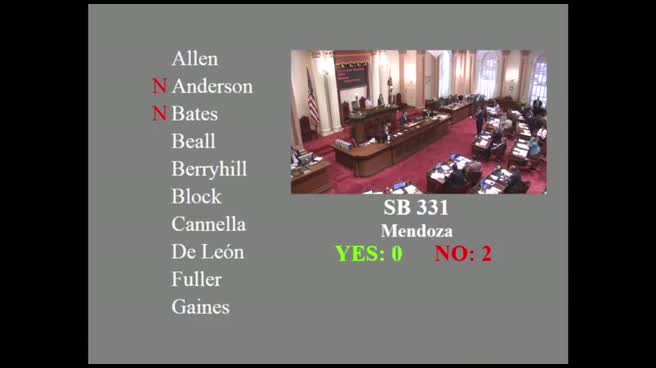 3MIN
Senate Floor
 1MIN
Senate Standing Committee on Governmental Organization
 1MIN
Assembly Floor
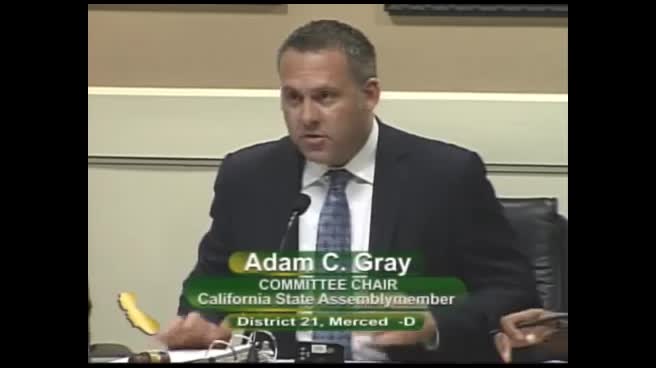 10MIN
Assembly Standing Committee on Governmental Organization
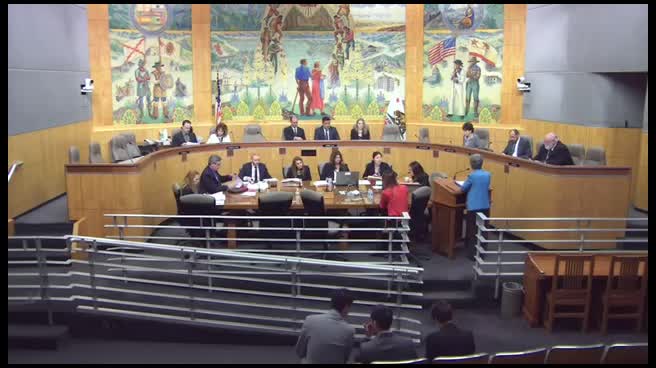 2MIN
Senate Standing Committee on Appropriations

Bill Co-Author(s):
