SB 303: Controlled substances: destruction of seized marijuana.
- Session Year: 2015-2016
- House: Senate
- Latest Version Date: 2015-10-09
Existing law, the California Uniform Controlled Substances Act, includes provisions authorizing the forfeiture and seizure of property involved in, or purchased with the proceeds from, a controlled substance offense. Existing law authorizes the destruction of seized substances suspected to be controlled substances in excess of 10 pounds in gross weight, subject to specified requirements. Under existing law, prior to destruction of a suspected controlled substance, the law enforcement agency is required to take photographs reasonably demonstrating the total amount of the substance to be destroyed and at least 5 random and representative samples, for evidentiary purposes, from the total amount of suspected controlled substances to be destroyed, in addition to the 10 pounds the law enforcement agency is required to retain.
This bill would authorize the law enforcement agency to destroy seized substances suspected to be growing or harvested marijuana in excess of 2 pounds, or the amount of marijuana a medical marijuana patient or designated caregiver is authorized to possess by ordinance in the city or county where the marijuana was seized, whichever is greater, subject to specified requirements. The bill would also require the law enforcement agency to retain at least one 2-pound sample and 5 random and representative samples consisting of leaves or buds, for evidentiary purposes, from the total amount to be destroyed. The bill would additionally require that the law enforcement agency take videos that reasonably and accurately demonstrate the total amount of the suspected controlled substance to be destroyed.
Existing law, the California Uniform Controlled Substances Act, includes provisions authorizing the forfeiture and seizure of property involved in, or purchased with the proceeds from, a controlled substance offense. Existing law authorizes the destruction of seized substances suspected to be controlled substances in excess of 10 pounds in gross weight, subject to specified requirements. Under existing law, prior to destruction of a suspected controlled substance, the law enforcement agency is required to take at least 5 random and representative samples, for evidentiary purposes, from the total amount of suspected controlled substances to be destroyed, in addition to the 10 pounds the law enforcement agency is required to retain.
This bill would authorize the law enforcement agency to destroy seized substances suspected to be growing or harvested marijuana in excess of 2 pounds, or the amount of marijuana a medical marijuana patient or designated caregiver is authorized to possess by ordinance in the city or county where the marijuana was seized, whichever is greater, subject to specified requirements. The bill would also require the law enforcement agency to retain at least one 2-pound sample and 5 random and representative samples consisting of leaves or buds, for evidentiary purposes, from the total amount to be destroyed.
Existing law, the Uniform Controlled Substances Act, includes provisions authorizing the forfeiture and seizure of property involved in, or purchased with the proceeds from, a controlled substance offense. Existing law authorizes the destruction of seized substances suspected to be controlled substances in excess of 10 pounds in gross weight, subject to specified requirements. Under existing law, prior to destruction of a suspected controlled substance, the law enforcement agency is required to take at least 5 random and representative samples, for evidentiary purposes, from the total amount of suspected controlled substances to be destroyed, in addition to the 10 pounds the law enforcement agency is required to retain.
This bill would authorize the law enforcement agency to destroy seized substances suspected to be growing or harvested marijuana in excess of 2 pounds, subject to specified requirements. The bill would also require the law enforcement agency to retain at least one 2-pound sample and 5 random and representative samples consisting of leaves or buds, for evidentiary purposes, from the total amount to be destroyed.
Notwithstanding Sections 11473 and 11473.5, at any time after seizure by a law enforcement agency of a suspected controlled substance, except in the case of growing or harvested marijuana, that amount in excess of 10 pounds in gross weight may be destroyed without a court order by the chief of the law enforcement agency or a designated subordinate. In the case of growing or harvested marijuana, that amount in excess of two pounds, or the amount of marijuana a medical marijuana patient or designated caregiver is authorized to possess by ordinance in the city or county where the marijuana was seized, whichever is greater, may be destroyed without a court order by the chief of the law enforcement agency or a designated subordinate. Destruction shall not take place pursuant to this section until all of the following requirements are satisfied:
(a) At least five random and representative samples have been taken, for evidentiary purposes, from the total amount of suspected controlled substances to be destroyed. These samples shall be in addition to the 10 pounds required above. When the suspected controlled substance consists of growing or harvested marijuana plants, at least one 2-pound sample or a sample in the amount of medical marijuana a medical marijuana patient or designated caregiver is authorized to possess by ordinance in the city or county where the marijuana was seized, whichever is greater, shall be retained. This sample may include stalks, branches, or leaves. In addition, five representative samples of leaves or buds shall be retained for evidentiary purposes from the total amount of suspected controlled substances to be destroyed.
(b) Photographs and videos have been taken that reasonably and accurately demonstrate the total amount of the suspected controlled substance to be destroyed.
(c) The gross weight of the suspected controlled substance has been determined, either by actually weighing the suspected controlled substance or by estimating that weight after dimensional measurement of the total suspected controlled substance.
(d) The chief of the law enforcement agency has determined that it is not reasonably possible to preserve the suspected controlled substance in place, or to remove the suspected controlled substance to another location. In making this determination, the difficulty of transporting and storing the suspected controlled substance to another site and the storage facilities may be taken into consideration.
Subsequent to any destruction of a suspected controlled substance pursuant to this section, an affidavit shall be filed within 30 days in the court that has jurisdiction over any pending criminal proceedings pertaining to that suspected controlled substance, reciting the applicable information required by subdivisions (a), (b), (c), and (d) together with information establishing the location of the suspected controlled substance, and specifying the date and time of the destruction. In the event that there are no criminal proceedings pending that pertain to that suspected controlled substance, the affidavit may be filed in any court within the county that would have jurisdiction over a person against whom those criminal charges might be filed.
Notwithstanding Sections 11473 and 11473.5, at any time after seizure by a law enforcement agency of a suspected controlled substance, except in the case of growing or harvested marijuana, that amount in excess of 10 pounds in gross weight may be destroyed without a court order by the chief of the law enforcement agency or a designated subordinate. In the case of growing or harvested marijuana, that amount in excess of 2 two pounds, or the amount of marijuana a medical marijuana patient or designated caregiver is authorized to possess by ordinance in the city or county where the marijuana was seized, whichever is greater, may be destroyed without a court order by the chief of the law enforcement agency or a designated subordinate. Destruction shall not take place pursuant to this section until all of the following requirements are satisfied:
(a) At least five random and representative samples have been taken, for evidentiary purposes, from the total amount of suspected controlled substances to be destroyed. These samples shall be in addition to the 10 pounds required above. When the suspected controlled substance consists of growing or harvested marijuana plants, at least one 2-pound sample or a sample in the amount of medical marijuana a medical marijuana patient or designated caregiver is authorized to possess by ordinance in the city or county where the marijuana was seized, whichever is greater, shall be retained. This sample may include stalks, branches, or leaves. In addition, five representative samples of leaves or buds shall be retained for evidentiary purposes from the total amount of suspected controlled substances to be destroyed.
(b) Photographs and videos have been taken which that reasonably and accurately demonstrate the total amount of the suspected controlled substance to be destroyed.
(c) The gross weight of the suspected controlled substance has been determined, either by actually weighing the suspected controlled substance or by estimating that weight after dimensional measurement of the total suspected controlled substance.
(d) The chief of the law enforcement agency has determined that it is not reasonably possible to preserve the suspected controlled substance in place, or to remove the suspected controlled substance to another location. In making this determination, the difficulty of transporting and storing the suspected controlled substance to another site and the storage facilities may be taken into consideration.
Subsequent to any destruction of a suspected controlled substance pursuant to this section, an affidavit shall be filed within 30 days in the court which that has jurisdiction over any pending criminal proceedings pertaining to that suspected controlled substance, reciting the applicable information required by subdivisions (a), (b), (c), and (d) together with information establishing the location of the suspected controlled substance, and specifying the date and time of the destruction. In the event that there are no criminal proceedings pending which that pertain to that suspected controlled substance, the affidavit may be filed in any court within the county which that would have jurisdiction over a person against whom those criminal charges might be filed.
Notwithstanding Sections 11473 and 11473.5, at any time after seizure by a law enforcement agency of a suspected controlled substance, except in the case of growing or harvested marijuana, that amount in excess of 10 pounds in gross weight, and in the case of growing or harvesting marijuana, only that amount in excess of 2 pounds, weight may be destroyed without a court order by the chief of the law enforcement agency or a designated subordinate. In the case of growing or harvested marijuana, that amount in excess of 2 pounds, or the amount of marijuana a medical marijuana patient or designated caregiver is authorized to possess by ordinance in the city or county where the marijuana was seized, whichever is greater, may be destroyed without a court order by the chief of the law enforcement agency or a designated subordinate. Destruction shall not take place pursuant to this section until all of the following requirements are satisfied:
(a) At least five random and representative samples have been taken, for evidentiary purposes, from the total amount of suspected controlled substances to be destroyed. These samples shall be in addition to the 10 pounds required above. When the suspected controlled substance consists of growing or harvested marijuana plants, at least one 2-pound sample (which may include stalks, branches, or leaves) and five representative samples consisting of leaves or buds shall be retained for evidentiary purposes from the total amount of suspected controlled substances to be destroyed. or a sample in the amount of medical marijuana a medical marijuana patient or designated caregiver is authorized to possess by ordinance in the city or county where the marijuana was seized, whichever is greater, shall be retained. This sample may include stalks, branches, or leaves. In addition, five representative samples of leaves or buds shall be retained for evidentiary purposes from the total amount of suspected controlled substances to be destroyed.
(b) Photographs have been taken which reasonably demonstrate the total amount of the suspected controlled substance to be destroyed.
(c) The gross weight of the suspected controlled substance has been determined, either by actually weighing the suspected controlled substance or by estimating that weight after dimensional measurement of the total suspected controlled substance.
(d) The chief of the law enforcement agency has determined that it is not reasonably possible to preserve the suspected controlled substance in place, or to remove the suspected controlled substance to another location. In making this determination, the difficulty of transporting and storing the suspected controlled substance to another site and the storage facilities may be taken into consideration.
Subsequent to any destruction of a suspected controlled substance pursuant to this section, an affidavit shall be filed within 30 days in the court which has jurisdiction over any pending criminal proceedings pertaining to that suspected controlled substance, reciting the applicable information required by subdivisions (a), (b), (c), and (d) together with information establishing the location of the suspected controlled substance, and specifying the date and time of the destruction. In the event that there are no criminal proceedings pending which pertain to that suspected controlled substance, the affidavit may be filed in any court within the county which would have jurisdiction over a person against whom those criminal charges might be filed.
Notwithstanding Sections 11473 and 11473.5, at any time after seizure by a law enforcement agency of a suspected controlled substance, that amount in excess of 10 pounds in gross weight, and in the case of growing or harvesting marijuana, only that amount in excess of 2 pounds, may be destroyed without a court order by the chief of the law enforcement agency or a designated subordinate. Destruction shall not take place pursuant to this section until all of the following requirements are satisfied:
(a) At least five random and representative samples have been taken, for evidentiary purposes, from the total amount of suspected controlled substances to be destroyed. These samples shall be in addition to the 10 pounds required above. When the suspected controlled substance consists of growing or harvested marijuana plants, at least one 10 pound 2-pound sample (which may include stalks, branches, or leaves) and five representative samples consisting of leaves or buds shall be retained for evidentiary purposes from the total amount of suspected controlled substances to be destroyed.
(b) Photographs have been taken which reasonably demonstrate the total amount of the suspected controlled substance to be destroyed.
(c) The gross weight of the suspected controlled substance has been determined, either by actually weighing the suspected controlled substance or by estimating that weight after dimensional measurement of the total suspected controlled substance.
(d) The chief of the law enforcement agency has determined that it is not reasonably possible to preserve the suspected controlled substance in place, or to remove the suspected controlled substance to another location. In making this determination, the difficulty of transporting and storing the suspected controlled substance to another site and the storage facilities may be taken into consideration.
Subsequent to any destruction of a suspected controlled substance pursuant to this section, an affidavit shall be filed within 30 days in the court which has jurisdiction over any pending criminal proceedings pertaining to that suspected controlled substance, reciting the applicable information required by subdivisions (a), (b), (c), and (d) together with information establishing the location of the suspected controlled substance, and specifying the date and time of the destruction. In the event that there are no criminal proceedings pending which pertain to that suspected controlled substance, the affidavit may be filed in any court within the county which would have jurisdiction over a person against whom those criminal charges might be filed.
|
Date
|
Status
|
|---|---|
| Jul 9, 2015 | Re-referred to Com. on APPR. pursuant to Joint Rule 10.5. |
| Oct 9, 2015 | Chaptered by Secretary of State. Chapter 713, Statutes of 2015. |
| Oct 9, 2015 | Approved by the Governor. |
| Sep 3, 2015 | Enrolled and presented to the Governor at 5:45 p.m. |
| Sep 1, 2015 | Assembly amendments concurred in. (Ayes 39. Noes 0.) Ordered to engrossing and enrolling. |
| Sep 1, 2015 | Assembly amendments concurred in. (Ayes 39. Noes 0. Page 2368.) Ordered to engrossing and enrolling. |
| Aug 31, 2015 | Read third time. Passed. (Ayes 79. Noes 0. Page 2689.) Ordered to the Senate. |
| Aug 31, 2015 | Read third time. Passed. Ordered to the Senate. |
| Aug 31, 2015 | In Senate. Concurrence in Assembly amendments pending. |
| Aug 27, 2015 | Ordered to third reading. |
| Aug 27, 2015 | From consent calendar on motion of Assembly Member Waldron. |
| Aug 20, 2015 | Read second time. Ordered to consent calendar. |
| Aug 19, 2015 | From committee: Do pass. Ordered to consent calendar. (Ayes 17. Noes 0.) (August 19). |
| Jul 9, 2015 | Read second time. Ordered to third reading. |
| Feb 23, 2015 | Introduced. Read first time. To Com. on RLS. for assignment. To print. |
| Jul 8, 2015 | Read second time and amended. Ordered to second reading. |
| Jul 7, 2015 | From committee: Do pass as amended. (Ayes 7. Noes 0.) (June 30). |
| Jun 16, 2015 | June 16 hearing postponed by committee. |
| May 22, 2015 | Referred to Com. on PUB. S. |
| May 7, 2015 | Read third time. Passed. (Ayes 35. Noes 0.) Ordered to the Assembly. |
| May 7, 2015 | Read third time. Passed. (Ayes 35. Noes 0. Page 926.) Ordered to the Assembly. |
| May 7, 2015 | In Assembly. Read first time. Held at Desk. |
| Apr 27, 2015 | Read second time and amended. Ordered to third reading. |
| Apr 23, 2015 | From committee: Do pass as amended. (Ayes 6. Noes 0.) (April 14). |
| Apr 23, 2015 | From committee: Do pass as amended. (Ayes 6. Noes 0. Page 595.) (April 14). |
| Mar 24, 2015 | Set for hearing April 14. |
| Mar 5, 2015 | Referred to Com. on PUB. S. |
| Feb 24, 2015 | From printer. May be acted upon on or after March 26. |
|
Date
|
Description
|
Location
|
Votes
|
|
|---|---|---|---|---|
| Sep 1, 2015 | Unfinished Business SB303 Hueso Concurrence | Senate Floor |
Passed |
|
| Aug 31, 2015 | SB 303 Hueso Senate Third Reading By GARCIA, E. | Assembly Floor |
Passed |
|
| Aug 19, 2015 | Do pass. To Consent Calendar. | Assembly Standing Committee on Appropriations |
Passed |
|
| Jun 30, 2015 | Do pass as amended. | Assembly Standing Committee on Public Safety |
Passed |
|
| May 7, 2015 | Senate 3rd Reading SB303 Hueso | Senate Floor |
Passed |
|
| Apr 14, 2015 | Do pass as amended | Senate Standing Committee on Public Safety |
Passed |
This list shows positions taken on this bill by organizations on the date displayed, which is linked to the original source.
Positions by individuals are not included.
|
Organization
|
Position
|
Date
|
|---|---|---|
| California District Attorneys Association | ** Support | Aug 31, 2015 |
| California Narcotic Officers' Association | ** Support | Aug 31, 2015 |
| California State Sheriffs' Association | ** Support | Aug 31, 2015 |
| Drug Policy Alliance | ** Against | Aug 31, 2015 |
| Imperial County Sheriff | ** Support | Aug 31, 2015 |
| Imperial County Sheriff's Office | ** Support | Aug 31, 2015 |
| Peace Officers Research Association Of California | ** Support | Aug 31, 2015 |
SB 303
Page 5
|
Office of Senate Floor Analyses (916) 651-1520 Fax: (916) 327-4478 |
UNFINISHED BUSINESS
Bill No: SB 303
Amended: 7/8/15
SENATE PUBLIC SAFETY COMMITTEE: 6-0, 4/14/15
AYES: Hancock, Anderson, Leno, McGuire, Monning, Stone
NO VOTE RECORDED: Liu
SENATE FLOOR: 35-0, 5/7/15
AYES: Allen, Anderson, Bates, Beall, Berryhill, Block, Cannella, De León, Gaines, Galgiani, Hall, Hancock, Hernandez, Hertzberg, Hill, Hueso, Huff, Jackson, Lara, Leno, McGuire, Mendoza, Monning, Moorlach, Morrell, Nguyen, Nielsen, Pan, Pavley, Roth, Runner, Stone, Vidak, Wieckowski, Wolk
NO VOTE RECORDED: Fuller, Leyva, Liu, Mitchell
ASSEMBLY FLOOR: 79-0, 8/31/15 - See last page for vote
SUBJECT: Controlled substances: destruction of seized marijuana
SOURCE: Peace Officers Research Association of California
DIGEST: This bill allows, in the case of growing or harvested marijuana, a law enforcement agency to destroy without a court order that amount in excess of 2 pounds, or the amount of marijuana a medical marijuana patient or designated caregiver is authorized to possess by ordinance in the city or county where the marijuana was seized, whichever is greater.
Assembly Amendments require law enforcement to photograph and video any controlled substance before it is destroyed so as to reasonably demonstrate the entire amount of the substance seized and destroyed.
Existing law provides that law enforcement may, without a court order, destroy seized controlled substances in excess of 10 pounds, where the following circumstances are present:
At least five random samples are taken and preserved in addition to the 10 pound.
In the cases of marijuana, at least one 10-pound sample and five representative samples consisting of leaves or buds shall be retained for evidence.
Photographs of the material to be destroyed must be taken.
The gross weight of the entire material must be determined.
The chief law enforcement officer has determined that it is not reasonably possible to keep all of the material or to store it in another place.
Within 30 days of destruction of the material, an affidavit demonstrating compliance with this section must be filed in the court with jurisdiction over any criminal proceeding associated with the material.
If no criminal action is pending, the affidavit may be filed in any court in the county that would have jurisdiction over a criminal action involving the material. (Health & Saf. Code § 11479.)
This bill:
Allows a law enforcement agency, without a court order, to destroy a specified amount of growing or harvested marijuana that has been seized by the agency.
Specifically provides that a law enforcement agency may destroy all but two pounds of marijuana or the amount of medical marijuana a patient is allowed to possess by local ordinance, whichever is greater.
Requires the law enforcement agency, before destroying a specified amount of a seized controlled substance, to photograph and video the controlled substance so as to reasonably demonstrate how much of the substance was seized and destroyed.
Background
The laws and practices in various counties concerning return of marijuana to a qualified patient and compensation to a patient for destruction of marijuana do not appear to be consistent or clear. The most widely-known case is Garden Grove v. Superior Court (Kha) (2007) 157 Cal.App.4th 355. In Garden Grove, city police made a vehicle stop of Felix Kha. The arresting officers took ¾ of an ounce of marijuana from Kha. Marijuana possession charges were dropped when Kha established that he had a valid medical marijuana recommendation. Kha sought return of this marijuana, the city refused to do so and the Court of Appeal eventually ordered the city to return the marijuana. (Id. at pp. 386-392.)
In County of Butte v. Superior Court (Williams) (2009) 175 Cal.App.4th 729, sheriff’s deputies threated to arrest David Williams, a qualified medical marijuana patient and a member of a medical marijuana collective, if he did not destroy all but 12 of the collective’s 41 plants. Williams sued the county, alleging unreasonable search and seizure, violations of California civil rights law (Civ. Code § 52.1) and conversion – a form of theft or wrongful destruction. The county sought summary dismissal of the suit, arguing that it did not present a cognizable claim. The appellate court ordered the suit to proceed. Committee staff has been unable to find any appellate decisions – including unpublished decisions – applying the Butte County v. Superior Court decision. However, an appellate decision would only be issued if one of the parties to a case appealed the order. Counties and cities may have accepted the decision in Butte County v. Superior Court that lawsuits for compensation for seized marijuana could go forward. Allowing the case to proceed does not mean that the person seeking compensation will win the case and be compensated. The county or city could still defend their actions when the case is fully litigated. Or, counties and cities could have settled the suits, thus avoiding the substantial costs of litigation.
Assembly amendments require a law enforcement agency to photograph and video the controlled substances the agency seizes and destroys. This will allow the parties in a criminal case or other proceeding to reasonably verify the amount of a controlled substance at issue in the case or proceeding.
FISCAL EFFECT: Appropriation: No Fiscal Com.: Yes Local: No
According to the Assembly Appropriations Committee:
Minor additional costs to local law enforcement agencies to videotape the evidence, offset by significant savings associated with reducing by almost 80 percent the amount of marijuana that is stored as evidence in criminal proceedings.
California District Attorneys Association
Imperial County Sheriff
OPPOSITION: (Verified 8/31/15)
Drug Policy Alliance
American Civil Liberties Union
ARGUMENTS IN SUPPORT:
The author argues:
“Law enforcement offices are required by law to store 10 pounds marijuana and 5 additional representative samples for evidence. According to a June report by the California Attorney General’s Office, nine counties in California: Shasta, Glenn, Mendocino, Sacramento, Merced, Madera, Fresno, Ventura, and Los Angeles currently possess over 1,000 pounds of marijuana. This can be very burdensome on these agencies because most facilities were not intended to store such large quantities- forcing these agencies to create additional storage facilities onsite resulting in significant costs to law enforcement.
“In addition to the lack of adequate storage facilities to store the marijuana held for evidence, it is also a serious threat to the health of law enforcement personnel. Because marijuana is a plant, it begins to develop spores and mold within a short period of time. This leads to difficulty breathing and other harmful side effects as a result of frequent handling of the storage items inside these evidence rooms.”
ARGUMENTS IN OPPOSITION:
The Drug Policy Alliance argues:
“Drug Policy Alliance opposes SB 303, an act to authorize the law enforcement agency to destroy seized substances suspected to be marijuana in excess of 2 pounds, subject to specified requirements and require the law enforcement agency to retain at least one 2-pound sample and 5 random and representative samples consisting of leaves or buds, for evidentiary purposes, from the total amount to be destroyed.
“As introduced, the bill would allow law enforcement agencies to destroy medical marijuana, legally possessed by a bona fide patient or caregiver before the defendant has the opportunity to provide evidence that shows that they are allowed under California law to cultivate or possess medical marijuana. Medical marijuana is a lifesaving therapy for thousands of Californians who suffer debilitating illnesses. Their rights should not be trammeled upon because some law enforcement officials find it inconvenient to store ten pounds of evidence—evidence that may not only be property, but may in fact be medicine.”
ASSEMBLY FLOOR: 79-0, 8/31/15
AYES: Achadjian, Alejo, Travis Allen, Baker, Bigelow, Bloom, Bonta, Brough, Brown, Burke, Calderon, Campos, Chang, Chau, Chávez, Chiu, Chu, Cooley, Cooper, Dababneh, Dahle, Daly, Dodd, Eggman, Frazier, Beth Gaines, Gallagher, Cristina Garcia, Eduardo Garcia, Gatto, Gipson, Gomez, Gonzalez, Gordon, Gray, Grove, Hadley, Harper, Roger Hernández, Holden, Irwin, Jones, Jones-Sawyer, Kim, Lackey, Levine, Linder, Lopez, Low, Maienschein, Mathis, Mayes, McCarty, Medina, Melendez, Mullin, Nazarian, Obernolte, O'Donnell, Olsen, Patterson, Perea, Quirk, Rendon, Ridley-Thomas, Rodriguez, Salas, Santiago, Steinorth, Mark Stone, Thurmond, Ting, Wagner, Waldron, Weber, Wilk, Williams, Wood, Atkins
NO VOTE RECORDED: Bonilla
Prepared by: Jerome McGuire / PUB. S. /
8/31/15 18:01:15
**** END ****
SB 303
Page 3
SENATE THIRD READING
SB 303
(Hueso)
As Amended July 8, 2015
Majority vote
SENATE VOTE: 35-0
Committee |
Votes |
Ayes |
Noes |
Public Safety |
7-0 |
Quirk, Melendez, Jones-Sawyer, Lackey, Lopez, Low, Santiago |
|
SUMMARY:
Permits the destruction of excess seized marijuana by law enforcement agencies, subject to specified evidentiary and preservation requirements. Specifically, this bill:
Authorizes law enforcement agencies to destroy seized marijuana in excess of two pounds, or the amount of marijuana a medical marijuana patient or designated caregiver is authorized to possess by ordinance in the city or county where the marijuana was seized, whichever is greater, subject to specified requirements.
Requires a law enforcement agency to retain at least one two pound sample and five random and representative samples consisting of leaves or buds, for evidentiary purposes, from the total amount to be destroyed.
Specifies that law enforcement should take video of the marijuana seized prior to destruction of the evidence and further specifies that they should accurately demonstrate the total amount to be destroyed.
EXISTING LAW:
Provides that controlled substances and devices or paraphernalia for using or administering controlled substances that are possessed in violation of relevant statutes may be seized by law enforcement officers. A search warrant may be issued for seizure.
Provides that, except as provided in the controlled substance assets and instrumentalities forfeiture law, all controlled substances, and instruments or paraphernalia associated with the controlled substances, seized as a result of a case that ended with the defendant’s conviction, shall be destroyed by the court of conviction.
Provides that all controlled substances, and instruments or paraphernalia associated with the controlled substances, seized as found property or as a result of a case that ended without trial, dismissal or conviction, shall be destroyed unless the court finds that the defendant lawfully possessed the property.
Provides that an order for destruction of controlled substances and associated instruments and paraphernalia may be carried out by a police or sheriff's agency, the Department of Justice, Highway Patrol or Department of Alcoholic Beverage Control.
Provides that controlled substances listed in Schedule I possessed, sold or transferred in violation of the controlled substances control statutes, and plants from which controlled substances are derived, are contraband, which must be seized and forfeited to the state.
Provides as an exception to the other statutes concerning seizure and destruction of controlled substances provides that law enforcement may, without a court order, destroy seized controlled substances in excess of 10 pounds, where the following circumstances are present:
At least five random samples are taken and preserved in addition to the 10 pounds;
In the cases of marijuana, at least one 10-pound sample and five representative samples consisting of leaves or buds shall be retained for evidence;
Photographs of the material to be destroyed must be taken;
The gross weight of the entire material must be determined;
The chief law enforcement officer has determined that it is not reasonably possible to keep all of the material or to store it in another place;
Within 30 days of destruction of the material, an affidavit demonstrating compliance with this section must be filed in the court with jurisdiction over any criminal proceeding associated with the material; and,
If no criminal action is pending, the affidavit may be filed in any court in the county that would have jurisdiction over a criminal action involving the material.
FISCAL EFFECT:
According to the Assembly Appropriations Committee, minor additional costs to local law enforcement agencies to videotape the evidence. These costs are offset by significant savings associated with reducing by almost 80% the amount of marijuana that is stored as evidence in criminal proceedings..
COMMENTS:
According to the author, "Law enforcement offices are required by law to store 10 pounds marijuana and 5 additional representative samples for evidence. According to a June report by the California Attorney General's Office, nine counties in California: Shasta, Glenn, Mendocino, Sacramento, Merced, Madera, Fresno, Ventura, and Los Angeles currently possess over 1,000 pounds of marijuana. This can be very burdensome on these agencies because most facilities were not intended to store such large quantities- forcing these agencies to create additional storage facilities onsite resulting in significant costs to law enforcement.
"In addition to the lack of adequate storage facilities to store the marijuana held for evidence, it is also a serious threat to the health of law enforcement personnel. Because marijuana is a plant, it begins to develop spores and mold within a short period of time. This leads to difficulty breathing and other harmful side effects as a result of frequent handling of the storage items inside these evidence rooms.
"By reducing the amount of evidence marijuana stored from 10 pounds to 2 pounds, or the amount of marijuana a medical marijuana patient is authorized to possess by the city or county where the marijuana was seized, law enforcement will be not only save funding for storage but the reduced amounts but will allow for easier storage and safekeeping of the marijuana, thereby decreasing impacts to officers health and safety."
Analysis Prepared by: Gabriel Caswell / PUB. S. / (916) 319-3744 FN: 0001112
Date of Hearing: August 19, 2015
ASSEMBLY COMMITTEE ON APPROPRIATIONS
Jimmy Gomez, Chair
SB 303
(Hueso) – As Amended July 8, 2015
Policy Committee: |
Public Safety |
Vote: |
7 - 0 |
|
|
|
|
|
|
|
|
Urgency: No State Mandated Local Program: No Reimbursable: No
SUMMARY:
This bill authorizes law enforcement agencies to destroy, without a court order, seized marijuana in excess of two pounds, or the amount of marijuana a medical marijuana patient or designated caregiver is authorized to possess by ordinance in the city or county where the marijuana was seized, whichever is greater, subject to specified requirements. One such requirement is that photographs and videos be taken that reasonable and accurately demonstrate the amount of substance to be destroyed.
FISCAL EFFECT:
Minor additional costs to local law enforcement agencies to videotape the evidence. These costs are offset by significant savings associated with reducing by almost 80 percent the amount of marijuana that is stored as evidence in criminal proceedings.
COMMENTS:
Purpose/Background. According to the author, the amounts of marijuana currently stored by local law enforcement agencies can be burdensome for some of the larger counties, nine of which currently store over 1,000 pounds. In addition to the storage facility issues, there are health issues for law enforcement personnel who are exposed to marijuana spores and mold in evidence rooms.
Reducing the amount of evidence marijuana stored from 10 pounds to 2 pounds, or the amount of marijuana a medical marijuana patient is authorized to possess by the city or county where the marijuana was seized, will reduce storage costs and allow for easier storage and safekeeping of the marijuana, thereby decreasing impacts to officers health and safety.
Argument in Support: According to the Peace Officers Research Association of California, "Currently, California law states that a law enforcement agency must store 10 pounds of cannabis and take five random samples from the entire seizure. The storage requirement has become a burden on agencies and evidence storage facilities, as evidence lockers were not built to house such large quantities of marijuana. Furthermore the marijuana itself can contain dangerous pesticides and often begins to decompose or mold, causing health risks to officers coming in contact with it."
Argument in Opposition: According to Drug Policy Alliance¸ "The Drug Policy Alliance believes the court has an important role under current law to balance the interests of law enforcement and defendants, which SB 303 would undermine. As currently amended, the bill would allow law enforcement agencies to destroy medical marijuana, legally possessed by a bona fide patient or caregiver before the defendant has the opportunity to provide evidence that shows that they are allowed under California law to cultivate or possess medical marijuana. Medical marijuana is a life-saving therapy for thousands of Californians who suffer debilitating illnesses. Their rights should not be trammeled upon because some law enforcement officials find it inconvenient to seek a court order to destroy marijuana, or to store marijuana. Marijuana is not only property; it is not only evidence; for many it is medicine. Let the courts keep their role in deciding if law enforcement should destroy cannabis."
Prior Legislation: SB 1193 (Evans), of the 2011-2012 Legislative Session, reduced the sample size that law enforcement must maintain as evidence in criminal cases related to the unlawful possession or cultivation of marijuana, and provides for the return of seized marijuana when a case is dismissed or a defendant acquitted. SB 1193 was moved to the inactive file on the Assembly Floor.
Analysis Prepared by: Pedro R. Reyes / APPR. / (916) 319-2081
SB 303
Page 5
Date of Hearing: June 30, 2015
Counsel: Gabriel Caswell
ASSEMBLY COMMITTEE ON PUBLIC SAFETY
Bill Quirk, Chair
SB 303
(Hueso) – As Amended April 27, 2015
As Proposed to be Amended in Committee
SUMMARY:
Permits the destruction of excess seized marijuana by law enforcement agencies, subject to specified evidentiary and preservation requirements. Specifically, this bill:
Authorizes law enforcement agencies to destroy seized marijuana in excess of 2-pounds, or the amount of marijuana a medical marijuana patient or designated caregiver is authorized to possess by ordinance in the city or county where the marijuana was seized, whichever is greater, subject to specified requirements.
Requires a law enforcement agency to retain at least one 2-pound sample and five random and representative samples consisting of leaves or buds, for evidentiary purposes, from the total amount to be destroyed.
Specifies that law enforcement should take video of the marijuana seized prior to destruction of the evidence and further specifies that they should accurately demonstrate the total amount to be destroyed.
EXISTING LAW:
Provides that controlled substances and devices or paraphernalia for using or administering controlled substances that are possessed in violation of relevant statutes may be seized by law enforcement officers. A search warrant may be issued for seizure. (Health & Saf. Code, § 11472.)
Provides that, except as provided in the controlled substance assets and instrumentalities forfeiture law, all controlled substances, and instruments or paraphernalia associated with the controlled substances, seized as a result of a case that ended with the defendant’s conviction, shall be destroyed by the court of conviction. (Health & Saf. Code, § 11473.)
Provides that all controlled substances, and instruments or paraphernalia associated with the controlled substances, seized as found property or as a result of a case that ended without trial, dismissal or conviction, shall be destroyed unless the court finds that the defendant lawfully possessed the property. (Health & Saf. Code, § 11473.5.)
Provides that an order for destruction of controlled substances and associated instruments and paraphernalia may be carried out by a police or sheriff’s agency, the Department of Justice, Highway Patrol or Department of Alcoholic Beverage Control. (Health & Saf. Code, § 11474.)
Provides that controlled substances listed in Schedule I (Health and Saf. Code, § 11054) possessed, sold or transferred in violation of the controlled substances control statutes, and plants from which controlled substances are derived, are contraband, which must be seized and forfeited to the state. (Health & Saf. Code, § 11475.)
Provides as an exception to the other statutes concerning seizure and destruction of controlled substances provides that law enforcement may, without a court order, destroy seized controlled substances in excess of 10 pounds, where the following circumstances are present: (Health & Saf. Code, § 11479.)
At least five random samples are taken and preserved in addition to the 10 pounds;
In the cases of marijuana, at least one 10-pound sample and five representative samples consisting of leaves or buds shall be retained for evidence;
Photographs of the material to be destroyed must be taken;
The gross weight of the entire material must be determined;
The chief law enforcement officer has determined that it is not reasonably possible to keep all of the material or to store it in another place;
Within 30 days of destruction of the material, an affidavit demonstrating compliance with this section must be filed in the court with jurisdiction over any criminal proceeding associated with the material; and,
If no criminal action is pending, the affidavit may be filed in any court in the county that would have jurisdiction over a criminal action involving the material.
FISCAL EFFECT:
Unknown
COMMENTS:
Author's Statement: According to the author, "Law enforcement offices are required by law to store 10 pounds marijuana and 5 additional representative samples for evidence. According to a June report by the California Attorney General’s Office, nine counties in California: Shasta, Glenn, Mendocino, Sacramento, Merced, Madera, Fresno, Ventura, and Los Angeles currently possess over 1,000 pounds of marijuana. This can be very burdensome on these agencies because most facilities were not intended to store such large quantities- forcing these agencies to create additional storage facilities onsite resulting in significant costs to law enforcement.
"In addition to the lack of adequate storage facilities to store the marijuana held for evidence, it is also a serious threat to the health of law enforcement personnel. Because marijuana is a plant, it begins to develop spores and mold within a short period of time. This leads to difficulty breathing and other harmful side effects as a result of frequent handling of the storage items inside these evidence rooms.
"By reducing the amount of evidence marijuana stored from 10
pounds to 2 pounds, or the amount of marijuana a medical marijuana
patient is authorized to possess by the city or county where the
marijuana was seized, law enforcement will be not only save funding
for storage but the reduced amounts but will allow for easier storage
and safekeeping of the marijuana, thereby decreasing impacts to
officers health and safety."
Existing Practices Regarding to the Return of Marijuana: The laws and practices in various counties concerning return of marijuana to a qualified patient and compensation to a patient for destruction of marijuana do not appear to be consistent or clear. The most widely-known case is Garden Grove v. Superior Court (Kha) (2007) 157 Cal.App.4th 355. In Garden Grove, city police made a vehicle stop of Felix Kha. The arresting officers took ¾ of an ounce of marijuana from Kha. Marijuana possession charges were dropped when Kha established that he had a valid medical marijuana recommendation. Kha sought return of this marijuana, the city refused to do so and the Court of Appeal eventually ordered the city to return the marijuana. (Id. at pp. 386-392.)
In County of Butte v. Superior Court (Williams) (2009) 175 Cal.App.4th 729, sheriff’s deputies threatened to arrest David Williams, a qualified medical marijuana patient and a member of a medical marijuana collective, if he did not destroy all but 12 of the collective’s 41 plants. Williams sued the county, alleging unreasonable search and seizure, violations of California civil rights law (Civ. Code, § 52.1) and conversion – a form of theft or wrongful destruction. The county sought summary dismissal of the suit, arguing that it did not present a cognizable claim. The appellate court ordered the suit to proceed. Committee staff has been unable to find any appellate decisions – including unpublished decisions – applying the Butte County v. Superior Court decision. However, an appellate decision would only be issued if one of the parties to a case appealed the order. Counties and cities may have accepted the decision in Butte County v. Superior Court that lawsuits for compensation for seized marijuana could go forward. Allowing the case to proceed does not mean that the person seeking compensation will win the case and be compensated. The county or city could still defend their actions when the case is fully litigated. Or, as noted below, counties and cities could have settled the suits, thus avoiding the substantial costs of litigation.
In connection with a related bill in 2014, SB 1193 (Evans), the sponsor provided committee staff with examples of cases in which government entities were required to compensate patients for medical marijuana that was destroyed by a law enforcement agency. For example, in a San Luis Obispo County matter, the sheriff’s office paid medical marijuana patient Kimberly Marshall $20,000 to compensate her for destroyed marijuana. Marshall had a recommendation allowing her to possess up to six pounds of dried marijuana buds. Marshall’s attorney filed suit against the county, apparently under the Government Claims Act, and won a settlement. (Gov. Code, §§ 830-998.3.)
Issues Regarding Storage of Large Quantities of Marijuana and the Differences Between this Legislation and SB 1193 (Evans): SB 1193 (Evans), of the 2013-2014 legislative session was sponsored by PORAC – the Peace Officers Research Association of California. According to PORAC, officers have become increasingly concerned about storing large quantities of seized marijuana as evidence. Existing law requires a law enforcement agency to keep at least 10 pounds of seized marijuana, in addition to taking samples of the material and photographing the entire amount that the agency seized. In counties with extensive marijuana growing operations, keeping 10 pounds from numerous cases can amount to a great deal of marijuana, straining the ability of an agency to find space for secure storage.
More important for rank and file officers are health concerns. Officers who come into contact with or proximity to stored marijuana are concerned about inhaling pesticides used on the crops and mold that can grow on the plant material. PORAC thus proposed reducing the amount of marijuana an agency must hold, while offering specified protections for persons who have valid authority to use medical marijuana. PORAC has noted that courts have ordered compensation be paid to medical marijuana patients whose marijuana was destroyed during storage; SB l193 (Evans) would have essentially codified and standardized that practice. Senator Evans moved her bill to the inactive file when the Assembly Appropriations Committee amended her bill to remove provisions which permitted the return of lawfully possessed marijuana to authorized patients and caregivers upon acquittal or dismissal of a criminal case. Additionally, the amendments removed the provisions which provided compensation to patients and caregivers for marijuana which was destroyed.
This bill contains a provision which allows for preservation of seized marijuana in an amount of 2-pounds, or the amount of marijuana a medical marijuana patient or designated caregiver is authorized to possess by ordinance in the city or county where the marijuana was seized, whichever is greater. However, this bill does not contain a provision which allows compensation for destruction of otherwise lawfully seized marijuana. In People v. Kelly, (2010) 47 Cal. 4th 1008, the California Supreme Court ruled that patients could lawfully possess marijuana in excess of state imposed guidelines if their physician specifically states that they need more than the imposed limitations. Therefore, a patient may lawfully possess more marijuana than state imposed guidelines mandate.
Argument in Support: According to the Peace Officers Research Association of California, "Currently, California law states that a law enforcement agency must store 10 pounds of cannabis and take five random samples from the entire seizure. The storage requirement has become a burden on agencies and evidence storage facilities, as evidence lockers were not built to house such large quantities of marijuana. Furthermore the marijuana itself can contain dangerous pesticides and often begins to decompose or mold, causing health risks to officers coming in contact with it."
Argument in Opposition: According to Drug Policy Alliance¸ "The Drug Policy Alliance believes the court has an important role under current law to balance the interests of law enforcement and defendants, which SB 303 would undermine. As currently amended, the bill would allow law enforcement agencies to destroy medical marijuana, legally possessed by a bona fide patient or caregiver before the defendant has the opportunity to provide evidence that shows that they are allowed under California law to cultivate or possess medical marijuana. Medical marijuana is a life-saving therapy for thousands of Californians who suffer debilitating illnesses. Their rights should not be trammeled upon because some law enforcement officials find it inconvenient to seek a court order to destroy marijuana, or to store marijuana. Marijuana is not only property; it is not only evidence; for many it is medicine. Let the courts keep their role in deciding if law enforcement should destroy cannabis.
"We supported the substantively similar SB 1193 by Senator Evans last year, after a compromise was struck by the Senator’s office that accomplished the goals of the sponsor, but also protected the fundamental medical and property rights of medical marijuana patients. Drug Policy Alliance testified in support of the amended bill in Assembly Public Safety on June 24th, 2014. DPA was forced to oppose SB 1193 when Assembly Appropriations stripped the section that required that any medical marijuana or property seized that was lawfully possessed by a defendant be returned to the defendant if the case is dismissed or the defendant is acquitted based on a defense or protection provided in the Compassionate Use Act of 1996, or that the defendant be compensated for the loss of their lawfully possessed medical marijuana and property. Senator Evans kept to her word, and did not move it forward without the patient protections.
"SB 303 as currently amended does not include any of the patient
protection aspects that allowed us to support Senator Evan’s bill.
We trust the author’s good intent, but we must oppose SB 303
(Hueso) unless amended to include patient protections."
Prior Legislation: SB 1193 (Evans), of the 2011-2012 Legislative Session, reduced the sample size that law enforcement must maintain as evidence in criminal cases related to the unlawful possession or cultivation of marijuana, and provides for the return of seized marijuana when a case is dismissed or a defendant acquitted. SB 1193 was moved to the inactive file on the Assembly Floor.
REGISTERED SUPPORT / OPPOSITION:
Support
Imperial County Sheriff's Office (Co-Sponsor)
Peace Officers Research Association of California (Co-Sponsor)
California District Attorneys Association
California Narcotic Officers' Association
California State Sheriffs' Association
Opposition
American Civil Liberties Union
Drug Policy Alliance
Analysis Prepared by: Gabriel Caswell / PUB. S. / (916) 319-3744
SB 303
Page 5
Date of Hearing: June 16, 2015
Counsel: Gabriel Caswell
ASSEMBLY COMMITTEE ON PUBLIC SAFETY
Bill Quirk, Chair
SB 303
(Hueso) – As Amended April 27, 2015
SUMMARY:
Permits the destruction of excess seized marijuana by law enforcement agencies, subject to specified evidentiary and preservation requirements. Specifically, this bill:
Authorizes law enforcement agencies to destroy seized marijuana in excess of 2-pounds, or the amount of marijuana a medical marijuana patient or designated caregiver is authorized to possess by ordinance in the city or county where the marijuana was seized, whichever is greater, subject to specified requirements.
The bill would also require the law enforcement agency to retain at least one 2-pound sample and five random and representative samples consisting of leaves or buds, for evidentiary purposes, from the total amount to be destroyed.
EXISTING LAW:
Provides that controlled substances and devices or paraphernalia for using or administering controlled substances that are possessed in violation of relevant statutes may be seized by law enforcement officers. A search warrant may be issued for seizure. (Health & Saf. Code, § 11472.)
Provides that, except as provided in the controlled substance assets and instrumentalities forfeiture law, all controlled substances, and instruments or paraphernalia associated with the controlled substances, seized as a result of a case that ended with the defendant’s conviction, shall be destroyed by the court of conviction. (Health & Saf. Code, § 11473.)
Provides that all controlled substances, and instruments or paraphernalia associated with the controlled substances, seized as found property or as a result of a case that ended without trial, dismissal or conviction, shall be destroyed unless the court finds that the defendant lawfully possessed the property. (Health & Saf. Code, § 11473.5.)
Provides that an order for destruction of controlled substances and associated instruments and paraphernalia may be carried out by a police or sheriff’s agency, the Department of Justice, Highway Patrol or Department of Alcoholic Beverage Control. (Health & Saf. Code, § 11474.)
Provides that controlled substances listed in Schedule I (Health and Saf. Code, § 11054) possessed, sold or transferred in violation of the controlled substances control statutes, and plants from which controlled substances are derived, are contraband, which must be seized and forfeited to the state. (Health & Saf. Code, § 11475.)
Provides as an exception to the other statutes concerning seizure and destruction of controlled substances provides that law enforcement may, without a court order, destroy seized controlled substances in excess of 10 pounds, where the following circumstances are present: (Health & Saf. Code, § 11479.)
At least five random samples are taken and preserved in addition to the 10 pounds;
In the cases of marijuana, at least one 10-pound sample and five representative samples consisting of leaves or buds shall be retained for evidence;
Photographs of the material to be destroyed must be taken;
The gross weight of the entire material must be determined;
The chief law enforcement officer has determined that it is not reasonably possible to keep all of the material or to store it in another place;
Within 30 days of destruction of the material, an affidavit demonstrating compliance with this section must be filed in the court with jurisdiction over any criminal proceeding associated with the material; and,
If no criminal action is pending, the affidavit may be filed in any court in the county that would have jurisdiction over a criminal action involving the material.
FISCAL EFFECT:
Unknown
COMMENTS:
Author's Statement: According to the author, "Law enforcement offices are required by law to store 10 pounds marijuana and 5 additional representative samples for evidence. According to a June report by the California Attorney General’s Office, nine counties in California: Shasta, Glenn, Mendocino, Sacramento, Merced, Madera, Fresno, Ventura, and Los Angeles currently possess over 1,000 pounds of marijuana. This can be very burdensome on these agencies because most facilities were not intended to store such large quantities- forcing these agencies to create additional storage facilities onsite resulting in significant costs to law enforcement.
"In addition to the lack of adequate storage facilities to store the marijuana held for evidence, it is also a serious threat to the health of law enforcement personnel. Because marijuana is a plant, it begins to develop spores and mold within a short period of time. This leads to difficulty breathing and other harmful side effects as a result of frequent handling of the storage items inside these evidence rooms.
"By reducing the amount of evidence marijuana stored from 10 pounds to 2 pounds, or the amount of marijuana a medical marijuana patient is authorized to possess by the city or county where the marijuana was seized, law enforcement will be not only save funding for storage but the reduced amounts but will allow for easier storage and safekeeping of the marijuana, thereby decreasing impacts to officers health and safety."
Existing Practices Regarding to the Return of Marijuana: The laws and practices in various counties concerning return of marijuana to a qualified patient and compensation to a patient for destruction of marijuana do not appear to be consistent or clear. The most widely-known case is Garden Grove v. Superior Court (Kha) (2007) 157 Cal.App.4th 355. In Garden Grove, city police made a vehicle stop of Felix Kha. The arresting officers took ¾ of an ounce of marijuana from Kha. Marijuana possession charges were dropped when Kha established that he had a valid medical marijuana recommendation. Kha sought return of this marijuana, the city refused to do so and the Court of Appeal eventually ordered the city to return the marijuana. (Id. at pp. 386-392.)
In County of Butte v. Superior Court (Williams) (2009) 175 Cal.App.4th 729, sheriff’s deputies threatened to arrest David Williams, a qualified medical marijuana patient and a member of a medical marijuana collective, if he did not destroy all but 12 of the collective’s 41 plants. Williams sued the county, alleging unreasonable search and seizure, violations of California civil rights law (Civ. Code, § 52.1) and conversion – a form of theft or wrongful destruction. The county sought summary dismissal of the suit, arguing that it did not present a cognizable claim. The appellate court ordered the suit to proceed. Committee staff has been unable to find any appellate decisions – including unpublished decisions – applying the Butte County v. Superior Court decision. However, an appellate decision would only be issued if one of the parties to a case appealed the order. Counties and cities may have accepted the decision in Butte County v. Superior Court that lawsuits for compensation for seized marijuana could go forward. Allowing the case to proceed does not mean that the person seeking compensation will win the case and be compensated. The county or city could still defend their actions when the case is fully litigated. Or, as noted below, counties and cities could have settled the suits, thus avoiding the substantial costs of litigation.
In connection with a related bill in 2014, SB 1193 (Evans), the sponsor provided committee staff with examples of cases in which government entities were required to compensate patients for medical marijuana that was destroyed by a law enforcement agency. For example, in a San Luis Obispo County matter, the sheriff’s office paid medical marijuana patient Kimberly Marshall $20,000 to compensate her for destroyed marijuana. Marshall had a recommendation allowing her to possess up to six pounds of dried marijuana buds. Marshall’s attorney filed suit against the county, apparently under the Government Claims Act, and won a settlement. (Gov. Code, §§ 830-998.3.)
Issues Regarding Storage of Large Quantities of Marijuana and the Differences Between this Legislation and SB 1193 (Evans): SB 1193 (Evans), of the 2013-2014 legislative session was sponsored by PORAC – the Peace Officers Research Association of California. According to PORAC, officers have become increasingly concerned about storing large quantities of seized marijuana as evidence. Existing law requires a law enforcement agency to keep at least 10 pounds of seized marijuana, in addition to taking samples of the material and photographing the entire amount that the agency seized. In counties with extensive marijuana growing operations, keeping 10 pounds from numerous cases can amount to a great deal of marijuana, straining the ability of an agency to find space for secure storage.
More important for rank and file officers are health concerns. Officers who come into contact with or proximity to stored marijuana are concerned about inhaling pesticides used on the crops and mold that can grow on the plant material. PORAC thus proposed reducing the amount of marijuana an agency must hold, while offering specified protections for persons who have valid authority to use medical marijuana. PORAC has noted that courts have ordered compensation be paid to medical marijuana patients whose marijuana was destroyed during storage; SB l193 (Evans) would have essentially codified and standardized that practice. Senator Evans moved her bill to the inactive file when the Assembly Appropriations Committee amended her bill to remove provisions which permitted the return of lawfully possessed marijuana to authorized patients and caregivers upon acquittal or dismissal of a criminal case. Additionally, the amendments removed the provisions which provided compensation to patients and caregivers for marijuana which was destroyed.
This bill contains a provision which allows for preservation of seized marijuana in an amount of 2-pounds, or the amount of marijuana a medical marijuana patient or designated caregiver is authorized to possess by ordinance in the city or county where the marijuana was seized, whichever is greater. However, this bill does not contain a provision which allows compensation for destruction of otherwise lawfully seized marijuana. In People v. Kelly, (2010) 47 Cal. 4th 1008, the California Supreme Court ruled that patients could lawfully possess marijuana in excess of state imposed guidelines if their physician specifically states that they need more than the imposed limitations. Therefore, a patient may lawfully possess more marijuana than state imposed guidelines mandate.
Argument in Support: According to the Peace Officers Research Association of California, "Currently, California law states that a law enforcement agency must store 10 pounds of cannabis and take five random samples from the entire seizure. The storage requirement has become a burden on agencies and evidence storage facilities, as evidence lockers were not built to house such large quantities of marijuana. Furthermore the marijuana itself can contain dangerous pesticides and often begins to decompose or mold, causing health risks to officers coming in contact with it."
Argument in Opposition: According to Drug Policy Alliance¸ "The Drug Policy Alliance believes the court has an important role under current law to balance the interests of law enforcement and defendants, which SB 303 would undermine. As currently amended, the bill would allow law enforcement agencies to destroy medical marijuana, legally possessed by a bona fide patient or caregiver before the defendant has the opportunity to provide evidence that shows that they are allowed under California law to cultivate or possess medical marijuana. Medical marijuana is a life-saving therapy for thousands of Californians who suffer debilitating illnesses. Their rights should not be trammeled upon because some law enforcement officials find it inconvenient to seek a court order to destroy marijuana, or to store marijuana. Marijuana is not only property; it is not only evidence; for many it is medicine. Let the courts keep their role in deciding if law enforcement should destroy cannabis.
"We supported the substantively similar SB 1193 by Senator Evans last year, after a compromise was struck by the Senator’s office that accomplished the goals of the sponsor, but also protected the fundamental medical and property rights of medical marijuana patients. Drug Policy Alliance testified in support of the amended bill in Assembly Public Safety on June 24th, 2014. DPA was forced to oppose SB 1193 when Assembly Appropriations stripped the section that required that any medical marijuana or property seized that was lawfully possessed by a defendant be returned to the defendant if the case is dismissed or the defendant is acquitted based on a defense or protection provided in the Compassionate Use Act of 1996, or that the defendant be compensated for the loss of their lawfully possessed medical marijuana and property. Senator Evans kept to her word, and did not move it forward without the patient protections.
"SB 303 as currently amended does not include any of the patient
protection aspects that allowed us to support Senator Evan’s bill.
We trust the author’s good intent, but we must oppose SB 303
(Hueso) unless amended to include patient protections."
Prior Legislation: SB 1193 (Evans), of the 2011-2012 legislative session, reduced the sample size that law enforcement must maintain as evidence in criminal cases related to the unlawful possession or cultivation of marijuana, and provides for the return of seized marijuana when a case is dismissed or a defendant acquitted. SB 1193 was moved to the inactive file on the Assembly Floor.
REGISTERED SUPPORT / OPPOSITION:
Support
Imperial County Sheriff's Office (Co-Sponsor)
Peace Officers Research Association of California (Co-Sponsor)
California District Attorneys Association
California Narcotic Officers' Association
California State Sheriffs' Association
Opposition
American Civil Liberties Union
Drug Policy Alliance
Analysis Prepared by: Gabriel Caswell / PUB. S. / (916) 319-3744
SB 303
Page 4
|
Office of Senate Floor Analyses (916) 651-1520 Fax: (916) 327-4478 |
THIRD READING
Bill No: SB 303
Amended: 4/27/15
SENATE PUBLIC SAFETY COMMITTEE: 6-0, 4/14/15
AYES: Hancock, Anderson, Leno, McGuire, Monning, Stone
NO VOTE RECORDED: Liu
SUBJECT: Controlled substances: destruction of seized marijuana
DIGEST: This bill allows, in the case of growing or harvested marijuana, a law enforcement agency to destroy without a court order that amount in excess of 2 pounds, or the amount of marijuana a medical marijuana patient or designated caregiver is authorized to possess by ordinance in the city or county where the marijuana was seized, whichever is greater.
ANALYSIS: Existing law, as an exception to other statutes concerning seizure and destruction of controlled substances, provides that law enforcement may, without a court order, destroy seized controlled substances in excess of 10 pounds, where the following circumstances are present:
At least five random samples are taken and preserved in addition to the 10 pound.
In the cases of marijuana, at least one 10-pound sample and five representative samples consisting of leaves or buds shall be retained for evidence.
Photographs of the material to be destroyed must be taken.
The gross weight of the entire material must be determined.
The chief law enforcement officer has determined that it is not reasonably possible to keep all of the material or to store it in another place.
Within 30 days of destruction of the material, an affidavit demonstrating compliance with this section must be filed in the court with jurisdiction over any criminal proceeding associated with the material.
If no criminal action is pending, the affidavit may be filed in any court in the county that would have jurisdiction over a criminal action involving the material. (Health & Saf. Code § 11479.)
This bill allows, in the case of growing or harvested marijuana, a law enforcement agency to destroy without a court order that amount in excess of 2 pounds, or the amount of marijuana a medical marijuana patient or designated caregiver is authorized to possess by ordinance in the city or county where the marijuana was seized, whichever is greater.
Background
The laws and practices in various counties concerning return of marijuana to a qualified patient and compensation to a patient for destruction of marijuana do not appear to be consistent or clear. The most widely-known case is Garden Grove v. Superior Court (Kha) (2007) 157 Cal.App.4th 355. In Garden Grove, city police made a vehicle stop of Felix Kha. The arresting officers took ¾ of an ounce of marijuana from Kha. Marijuana possession charges were dropped when Kha established that he had a valid medical marijuana recommendation. Kha sought return of this marijuana, the city refused to do so and the Court of Appeal eventually ordered the city to return the marijuana. (Id. at pp. 386-392.)
In County of Butte v. Superior Court (Williams) (2009) 175 Cal.App.4th 729, sheriff’s deputies threated to arrest David Williams, a qualified medical marijuana patient and a member of a medical marijuana collective, if he did not destroy all but 12 of the collective’s 41 plants. Williams sued the county, alleging unreasonable search and seizure, violations of California civil rights law (Civ. Code § 52.1) and conversion – a form of theft or wrongful destruction. The county sought summary dismissal of the suit, arguing that it did not present a cognizable claim. The appellate court ordered the suit to proceed. Committee staff has been unable to find any appellate decisions – including unpublished decisions – applying the Butte County v. Superior Court decision. However, an appellate decision would only be issued if one of the parties to a case appealed the order. Counties and cities may have accepted the decision in Butte County v. Superior Court that lawsuits for compensation for seized marijuana could go forward. Allowing the case to proceed does not mean that the person seeking compensation will win the case and be compensated. The county or city could still defend their actions when the case is fully litigated. Or, counties and cities could have settled the suits, thus avoiding the substantial costs of litigation.
FISCAL EFFECT: Appropriation: No Fiscal Com.: No Local: No
California District Attorneys Association
Imperial County Sheriff
OPPOSITION: (Verified 4/28/15)
Drug Policy Alliance
American Civil Liberties Union
ARGUMENTS IN SUPPORT:
The author states in part:
Law enforcement offices are required by law to store 10 pounds marijuana and 5 additional representative samples for evidence. According to a June report by the California Attorney General’s Office, nine counties in California: Shasta, Glenn, Mendocino, Sacramento, Merced, Madera, Fresno, Ventura, and Los Angeles currently possess over 1,000 pounds of marijuana. This can be very burdensome on these agencies because most facilities were not intended to store such large quantities- forcing these agencies to create additional storage facilities onsite resulting in significant costs to law enforcement.
In addition to the lack of adequate storage facilities to store the marijuana held for evidence, it is also a serious threat to the health of law enforcement personnel. Because marijuana is a plant, it begins to develop spores and mold within a short period of time. This leads to difficulty breathing and other harmful side effects as a result of frequent handling of the storage items inside these evidence rooms.
ARGUMENTS IN OPPOSITION:
Opponents argue in part:
Drug Policy Alliance opposes SB 303, an act to authorize the law enforcement agency to destroy seized substances suspected to be marijuana in excess of 2 pounds, subject to specified requirements and require the law enforcement agency to retain at least one 2-pound sample and 5 random and representative samples consisting of leaves or buds, for evidentiary purposes, from the total amount to be destroyed.
As introduced, the bill would allow law enforcement agencies to destroy medical marijuana, legally possessed by a bona fide patient or caregiver before the defendant has the opportunity to provide evidence that shows that they are allowed under California law to cultivate or possess medical marijuana. Medical marijuana is a lifesaving therapy for thousands of Californians who suffer debilitating illnesses. Their rights should not be trammeled upon because some law enforcement officials find it inconvenient to store ten pounds of evidence—evidence that may not only be property, but may in fact be medicine.
Prepared by: Jerome McGuire / PUB. S. /
5/6/15 17:19:35
**** END ****
SB 303
Page 3
|
Office of Senate Floor Analyses (916) 651-1520 Fax: (916) 327-4478 |
THIRD READING
Bill No: SB 303
Amended: 4/27/15
SENATE PUBLIC SAFETY COMMITTEE: 6-0, 4/14/15
AYES: Hancock, Anderson, Leno, McGuire, Monning, Stone
NO VOTE RECORDED: Liu
SUBJECT: Controlled substances: destruction of seized marijuana
DIGEST: This bill allows, in the case of growing or harvested marijuana, a law enforcement agency to destroy without a court order that amount in excess of 2 pounds, or the amount of marijuana a medical marijuana patient or designated caregiver is authorized to possess by ordinance in the city or county where the marijuana was seized, whichever is greater.
ANALYSIS: Existing law, as an exception to other statutes concerning seizure and destruction of controlled substances, provides that law enforcement may, without a court order, destroy seized controlled substances in excess of 10 pounds, where the following circumstances are present:
At least five random samples are taken and preserved in addition to the 10 pound.
In the cases of marijuana, at least one 10-pound sample and five representative samples consisting of leaves or buds shall be retained for evidence.
Photographs of the material to be destroyed must be taken.
The gross weight of the entire material must be determined.
The chief law enforcement officer has determined that it is not reasonably possible to keep all of the material or to store it in another place.
Within 30 days of destruction of the material, an affidavit demonstrating compliance with this section must be filed in the court with jurisdiction over any criminal proceeding associated with the material.
If no criminal action is pending, the affidavit may be filed in any court in the county that would have jurisdiction over a criminal action involving the material. (Health & Saf. Code § 11479.)
This bill allows, in the case of growing or harvested marijuana, a law enforcement agency to destroy without a court order that amount in excess of 2 pounds, or the amount of marijuana a medical marijuana patient or designated caregiver is authorized to possess by ordinance in the city or county where the marijuana was seized, whichever is greater.
NOTE: See Senate Public Safety Committee analysis for a complete discussion of this bill.
FISCAL EFFECT: Appropriation: No Fiscal Com.: No Local: No
California District Attorneys Association
Imperial County Sheriff
OPPOSITION: (Verified 4/28/15)
Drug Policy Alliance
American Civil Liberties Union
ARGUMENTS IN SUPPORT:
The author states in part:
Law enforcement offices are required by law to store 10 pounds marijuana and 5 additional representative samples for evidence. According to a June report by the California Attorney General’s Office, nine counties in California: Shasta, Glenn, Mendocino, Sacramento, Merced, Madera, Fresno, Ventura, and Los Angeles currently possess over 1,000 pounds of marijuana. This can be very burdensome on these agencies because most facilities were not intended to store such large quantities- forcing these agencies to create additional storage facilities onsite resulting in significant costs to law enforcement.
In addition to the lack of adequate storage facilities to store the marijuana held for evidence, it is also a serious threat to the health of law enforcement personnel. Because marijuana is a plant, it begins to develop spores and mold within a short period of time. This leads to difficulty breathing and other harmful side effects as a result of frequent handling of the storage items inside these evidence rooms.
ARGUMENTS IN OPPOSITION:
Opponents argue in part:
Drug Policy Alliance opposes SB 303, an act to authorize the law enforcement agency to destroy seized substances suspected to be marijuana in excess of 2 pounds, subject to specified requirements and require the law enforcement agency to retain at least one 2-pound sample and 5 random and representative samples consisting of leaves or buds, for evidentiary purposes, from the total amount to be destroyed.
As introduced, the bill would allow law enforcement agencies to destroy medical marijuana, legally possessed by a bona fide patient or caregiver before the defendant has the opportunity to provide evidence that shows that they are allowed under California law to cultivate or possess medical marijuana. Medical marijuana is a lifesaving therapy for thousands of Californians who suffer debilitating illnesses. Their rights should not be trammeled upon because some law enforcement officials find it inconvenient to store ten pounds of evidence—evidence that may not only be property, but may in fact be medicine.
Prepared by: Jerome McGuire / PUB. S. /
4/29/15 16:07:37
**** END ****
SB 303 (Hueso ) Page 5 of 5
SENATE COMMITTEE ON PUBLIC SAFETY
Senator Loni Hancock, Chair
2015 - 2016 Regular
Bill No: SB 303 Hearing Date: April 14, 2015
Author: |
Hueso |
||
Version: |
February 23, 2015 |
||
Urgency: |
No |
Fiscal: |
No |
Consultant: |
JM |
||
Subject: Controlled Substances: Destruction of Seized Marijuana
HISTORY
Source: Peace Officers Research Association of California
Prior Legislation: SB 1193 (Evans) – 2013, died on the Assembly Floor
Support: California District Attorneys Association; Imperial County Sheriff
Opposition: Drug Policy Alliance; American Civil Liberties Union
PURPOSE
The purpose of this bill is to allow a law enforcement agency to destroy all but two pounds of seized marijuana, if the agency complies with existing requirements that it weigh the entire amount seized, take representative samples and photograph the marijuana.
Existing law provides that controlled substances and devices or paraphernalia for using or administering controlled substances that are possessed in violation of relevant statutes may be seized by law enforcement officers. A search warrant may be issued for seizure. (Health & Saf. Code § 11472.)
Existing law provides that, except as provided in the controlled substance assets and instrumentalities forfeiture law, all controlled substances, and instruments or paraphernalia associated with the controlled substances, seized as a result of a case that ended with the defendant’s conviction, shall be destroyed by the court of conviction. (Health & Saf. Code § 11473.)
Existing law provides that all controlled substances, and instruments or paraphernalia associated with the controlled substances, seized as found property or as a result of a case that ended without trial, dismissal or conviction, shall be destroyed unless the court finds that the defendant lawfully possessed the property. (Health & Saf. Code § 11473.5.)
Existing law provides that an order for destruction of controlled substances and associated instruments and paraphernalia may be carried out by a police or sheriff’s agency, the Department of Justice, Highway Patrol or Department of Alcoholic Beverage Control. (Health & Saf. Code § 11474.)
Existing law provides that controlled substances listed in Schedule I (Health and Saf. Code § 11054) possessed, sold or transferred in violation of the controlled substances control statutes, and plants from which controlled substances are derived, are contraband, which must be seized and forfeited to the state. (Health & Saf. Code § 11475.)
Existing law, as an exception to the other statutes concerning seizure and destruction of controlled substances, provides that law enforcement may, without a court order, destroy seized controlled substances in excess of 10 pounds, where the following circumstances are present:
At least five random samples are taken and preserved in addition to the 10 pound.
In the cases of marijuana, at least one 10-pound sample and five representative samples consisting of leaves or buds shall be retained for evidence.
Photographs of the material to be destroyed must be taken.
The gross weight of the entire material must be determined.
The chief law enforcement officer has determined that it is not reasonably possible to keep all of the material or to store it in another place.
Within 30 days of destruction of the material, an affidavit demonstrating compliance with this section must be filed in the court with jurisdiction over any criminal proceeding associated with the material.
If no criminal action is pending, the affidavit may be filed in any court in the county that would have jurisdiction over a criminal action involving the material. (Health & Saf. Code § 11479.)
This bill provides that a law enforcement agency may destroy any amount of growing or harvested marijuana exceeding two pounds if the requirements for weighing, photographing and taking samples of the marijuana are met.
RECEIVERSHIP/OVERCROWDING CRISIS AGGRAVATION
For the past eight years, this Committee has scrutinized legislation referred to its jurisdiction for any potential impact on prison overcrowding. Mindful of the United States Supreme Court ruling and federal court orders relating to the state’s ability to provide a constitutional level of health care to its inmate population and the related issue of prison overcrowding, this Committee has applied its “ROCA” policy as a content-neutral, provisional measure necessary to ensure that the Legislature does not erode progress in reducing prison overcrowding.
On February 10, 2014, the federal court ordered California to reduce its in-state adult institution population to 137.5% of design capacity by February 28, 2016, as follows:
143% of design bed capacity by June 30, 2014;
141.5% of design bed capacity by February 28, 2015; and,
137.5% of design bed capacity by February 28, 2016.
In February of this year the administration reported that as “of February 11, 2015, 112,993 inmates were housed in the State’s 34 adult institutions, which amounts to 136.6% of design bed capacity, and 8,828 inmates were housed in out-of-state facilities. This current population is now below the court-ordered reduction to 137.5% of design bed capacity.”( Defendants’ February 2015 Status Report In Response To February 10, 2014 Order, 2:90-cv-00520 KJM DAD PC, 3-Judge Court, Coleman v. Brown, Plata v. Brown (fn. omitted).
While significant gains have been made in reducing the prison population, the state now must stabilize these advances and demonstrate to the federal court that California has in place the “durable solution” to prison overcrowding “consistently demanded” by the court. (Opinion Re: Order Granting in Part and Denying in Part Defendants’ Request For Extension of December 31, 2013 Deadline, NO. 2:90-cv-0520 LKK DAD (PC), 3-Judge Court, Coleman v. Brown, Plata v. Brown (2-10-14). The Committee’s consideration of bills that may impact the prison population therefore will be informed by the following questions:
Whether a proposal erodes a measure which has contributed to reducing the prison population;
Whether a proposal addresses a major area of public safety or criminal activity for which there is no other reasonable, appropriate remedy;
Whether a proposal addresses a crime which is directly dangerous to the physical safety of others for which there is no other reasonably appropriate sanction;
Whether a proposal corrects a constitutional problem or legislative drafting error; and
Whether a proposal proposes penalties which are proportionate, and cannot be achieved through any other reasonably appropriate remedy.
COMMENTS
1. Need for This Bill
According to the author:
Law enforcement offices are required by law to store 10 pounds marijuana and 5 additional representative samples for evidence. According to a June report by the California Attorney General’s Office, nine counties in California: Shasta, Glenn, Mendocino, Sacramento, Merced, Madera, Fresno, Ventura, and Los Angeles currently possess over 1,000 pounds of marijuana. This can be very burdensome on these agencies because most facilities were not intended to store such large quantities- forcing these agencies to create additional storage facilities onsite resulting in significant costs to law enforcement.
In addition to the lack of adequate storage facilities to store the marijuana held for evidence, it is also a serious threat to the health of law enforcement personnel. Because marijuana is a plant, it begins to develop spores and mold within a short period of time. This leads to difficulty breathing and other harmful side effects as a result of frequent handling of the storage items inside these evidence rooms.
By reducing the amount of evidence marijuana stored from 10 pounds to 2 pounds, law enforcement will be not only save funding for storage but the reduced amounts but will allow for easier storage and safekeeping of the marijuana, thereby decreasing impacts to officers health and safety.
2. Return of Marijuana and Compensation under Existing Law and Practice
The laws and practices in various counties concerning return of marijuana to a qualified patient and compensation to a patient for destruction of marijuana do not appear to be consistent or clear. The most widely-known case is Garden Grove v. Superior Court (Kha) (2007) 157 Cal.App.4th 355. In Garden Grove, city police made a vehicle stop of Felix Kha. The arresting officers took ¾ of an ounce of marijuana from Kha. Marijuana possession charges were dropped when Kha established that he had a valid medical marijuana recommendation. Kha sought return of this marijuana, the city refused to do so and the Court of Appeal eventually ordered the city to return the marijuana. (Id. at pp. 386-392.)
In County of Butte v. Superior Court (Williams) (2009) 175 Cal.App.4th 729, sheriff’s deputies threated to arrest David Williams, a qualified medical marijuana patient and a member of a medical marijuana collective, if he did not destroy all but 12 of the collective’s 41 plants. Williams sued the county, alleging unreasonable search and seizure, violations of California civil rights law (Civ. Code § 52.1) and conversion – a form of theft or wrongful destruction. The county sought summary dismissal of the suit, arguing that it did not present a cognizable claim. The appellate court ordered the suit to proceed. Committee staff has been unable to find any appellate decisions – including unpublished decisions – applying the Butte County v. Superior Court decision. However, an appellate decision would only be issued if one of the parties to a case appealed the order. Counties and cities may have accepted the decision in Butte County v. Superior Court that lawsuits for compensation for seized marijuana could go forward. Allowing the case to proceed does not mean that the person seeking compensation will win the case and be compensated. The county or city could still defend their actions when the case is fully litigated. Or, as noted below, counties and cities could have settled the suits, thus avoiding the substantial costs of litigation.
In connection with a related bill in 2014, the sponsor provided committee staff with examples of cases in which government entities were required to compensate patients for medical marijuana that was destroyed by a law enforcement agency. For example, in a San Luis Obispo County matter, the sheriff’s office paid medical marijuana patient Kimberly Marshall $20,000 to compensate her for destroyed marijuana. Marshall had a recommendation allowing her to possess up to six pounds of dried marijuana buds. Marshall’s attorney filed suit against the county, apparently under the Government Claims Act, and won a settlement. (Gov. Code §§ 830-998.3.)
IF PROVISIONS ARE NOT MADE FOR THE COMPENSATION OF LEGITIMATE MEDICAL MARIJUANA PATIENTS AND CAREGIVERS WHOSE MARIJUANA AND RELATED EQUIPMENT WERE DESTROYED PURSUANT TO THIS BILL,WILL LAW ENFORCEMENT AGENCIES BE SUBJECT TO LITIGATION AND JUDGMENTS REQUIRING COMPENSATION IN NUMEROUS INDIVIDUALLY FILED CASES?
3. Argument in Support
The Peace Officers Research Association of California argues in support:
Currently, California law states that a law enforcement agency must store 10 pounds of cannabis and take five random samples from the entire seizure. The storage requirement has become a burden on agencies and evidence storage facilities, as evidence lockers were not built to house such large quantities of marijuana. Furthermore the marijuana itself can contain dangerous pesticides and often begins to decompose or mold, causing health risks to officers coming in contact with it.
4. Argument in Opposition
The Drug Policy Alliance argues in opposition:
Drug Policy Alliance opposes SB 303, an act to authorize the law enforcement agency to destroy seized substances suspected to be marijuana in excess of 2 pounds, subject to specified requirements and require the law enforcement agency to retain at least one 2-pound sample and 5 random and representative samples consisting of leaves or buds, for evidentiary purposes, from the total amount to be destroyed.
As introduced, the bill would allow law enforcement agencies to destroy medical marijuana, legally possessed by a bona fide patient or caregiver before the defendant has the opportunity to provide evidence that shows that they are allowed under California law to cultivate or possess medical marijuana. Medical marijuana is a lifesaving therapy for thousands of Californians who suffer debilitating illnesses. Their rights should not be trammeled upon because some law enforcement officials find it inconvenient to store ten pounds of evidence—evidence that may not only be property, but may in fact be medicine.
-- END –
Discussed in Hearing
View Older Hearings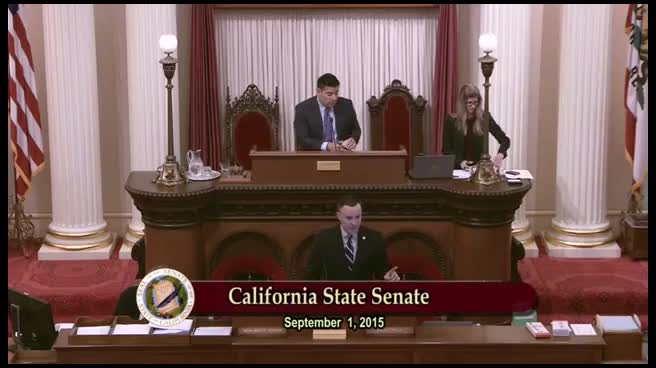
Bill Author

Bill Co-Author(s):