SB 343: Corrections: inmates.
- Session Year: 2015-2016
- House: Senate
- Latest Version Date: 2015-10-11
Existing law requires the Secretary of the Department of Corrections and Rehabilitation to implement a literacy program in every state prison. In implementing these programs, existing law requires the Secretary of the Department of Corrections and Rehabilitation to give strong consideration to computer-assisted training and other innovations that have proven to be effective in reducing illiteracy among disadvantaged adults.
This bill would require the Department of Corrections and Rehabilitation to also give strong consideration to the use of libraries and librarians for that literacy program.
Existing law permits the Secretary of the Department of Corrections and Rehabilitation to establish and maintain classes for inmates. Existing law provides for funding of this program, upon appropriation by the Legislature, at a rate of $40 per inmate. Existing law requires this rate to increase or decrease in the same proportion as the median salaries for full-time high school teachers in the public schools of the state have increased or decreased since the 195657 fiscal year.
This bill would repeal the provisions regarding the setting of the rates for funding of these classes.
Existing law requires the Department of Corrections and Rehabilitation to determine and implement a system of incentives to increase inmate participation in, and completion of, academic and vocational education including, but are not limited to, a specified literacy level, a high school diploma or equivalent, or a particular vocational job skill.
This bill would add completion of a community college or 4-year academic degree to the list of included academic and vocational education.
Existing law requires the Secretary of the Department of Corrections and Rehabilitation to implement a literacy program in every state prison. In implementing these programs, existing law requires the Secretary of the Department of Corrections and Rehabilitation to give strong consideration to computer-assisted training and other innovations that have proven to be effective in reducing illiteracy among disadvantaged adults.
This bill would also require the Department of Corrections and Rehabilitation to give strong consideration to the use of libraries and librarians for that literacy program.
Existing law permits the Secretary of the Department of Corrections and Rehabilitation to establish and maintain classes for inmates. Existing law provides for funding of this program, upon appropriation by the Legislature, at a rate of $40 per inmate. Existing law requires this rate to increase or decrease in the same proportion as the median salaries for full-time high school teachers in the public schools of the state have increased or decreased since the 195657 fiscal year.
This bill would repeal the provisions regarding the setting of the rates for funding of these classes.
Existing law requires the Department of Corrections and Rehabilitation to determine and implement a system of incentives to increase inmate participation in, and completion of, academic and vocational education including, but are not limited to, a specified literacy level, a high school diploma or equivalent, or a particular vocational job skill.
This bill would add completion of a community college or 4 year 4-year academic degree to the list of included academic and vocational education.
Existing law makes an inmate placed in a Security Housing Unit for specified crimes or because of gang association or membership, or placed in a Psychiatric Services Unit, ineligible to earn credits towards reducing his or her sentence during the time the inmate is in the Security Housing Unit.
This bill would, notwithstanding that prohibition, permit the Department of Corrections and Rehabilitation to establish regulations to allow specified inmates to earn credits, as specified.
Existing law requires the Secretary of the Department of Corrections and Rehabilitation to implement a literacy program in every state prison. In implementing these programs, existing law requires the Secretary of the Department of Corrections and Rehabilitation to give strong consideration to computer-assisted training and other innovations that have proven to be effective in reducing illiteracy among disadvantaged adults.
This bill would also require the Department of Corrections and Rehabilitation to give strong consideration to the use of libraries and librarians for that literacy program.
Existing law permits the Secretary of the Department of Corrections and Rehabilitation to establish and maintain classes for inmates. Existing law provides for funding of this program, upon appropriation by the Legislature, at a rate of $40 per inmate. Existing law requires this rate to increase or decrease in the same proportion as the median salaries for full-time high school teachers in the public schools of the state have increased or decreased since the 195657 fiscal year.
This bill would repeal the provisions regarding the setting of the rates for funding of these classes.
Existing law requires the Department of Corrections and Rehabilitation to determine and implement a system of incentives to increase inmate participation in, and completion of, academic and vocational education including, but are not limited to, a specified literacy level, a high school diploma or equivalent, or a particular vocational job skill.
This bill would add completion of a community college or 4 year academic degree to the list of included academic and vocational education.
(a)The Secretary of the Department of Corrections and Rehabilitation shall implement in every state prison literacy programs that are designed to ensure that upon parole inmates are able to achieve the goals contained in this section. The department shall prepare an implementation plan for this program, and shall request the necessary funds to implement this program as follows:
(1)The department shall offer academic programming throughout an inmates incarceration that shall focus on increasing the reading ability of an inmate to at least a 9th grade level.
(2)For an inmate reading at a 9th grade level or higher, the department shall focus on helping the inmate obtain a general education development certificate, or its equivalent, or a high school diploma.
(3)The department shall offer college programs through voluntary education programs or their equivalent.
(4)While the department shall offer education to target populations, priority shall be given to those with a criminogenic need for education, those who have a need based on their educational achievement level, or other factors as determined by the department.
(b)In complying with the requirements of this section, the department shall give strong consideration to the use of libraries and librarians, computer-assisted training, and other innovations that have proven to be effective in reducing illiteracy among disadvantaged adults.
SEC. 2.Section 2054 of the Penal Code is amended to read:2054.(a)The Secretary of the Department of Corrections and Rehabilitation may establish and maintain classes for inmates by utilizing personnel of the Department of Corrections and Rehabilitation, or by entering into an agreement with the governing board of a school district or private school or the governing boards of school districts under which the district shall maintain classes for such inmates. The governing board of a school district or private school may enter into such an agreement regardless of whether the institution or facility at which the classes are to be established and maintained is within or without the boundaries of the school district.
(b)Any agreement entered into between the Secretary of the Department of Corrections and Rehabilitation and a school district or private school pursuant to this section may require the Department of Corrections and Rehabilitation to reimburse the school district or private school for the cost to the district or private school of maintaining such classes. Cost as used in this section includes contributions required of any school district to the State Teachers Retirement System, but such cost shall not include an amount in excess of the amount expended by the district for salaries of the teachers for such classes, increased by one-fifth. Salaries of such teachers for the purposes of this section shall not exceed the salaries as set by the governing board for teachers in other classes for adults maintained by the district, or private schools.
(c)Attendance or average daily attendance in classes established pursuant to this section or in classes in trade and industrial education or vocational training for adult inmates of institutions or facilities under the jurisdiction of the Department of Corrections and Rehabilitation shall not be reported to the State Department of Education for apportionment and no apportionment from the State School Fund shall be made on account of average daily attendance in such classes.
(d)No school district or private school shall provide for the academic education of adult inmates of state institutions or facilities under the jurisdiction of the Department of Corrections and Rehabilitation except in accordance with this section.
SEC. 3.Section 2054.1 of the Penal Code is repealed.SEC. 4.Section 2054.2 of the Penal Code is amended to read:2054.2.The Department of Corrections and Rehabilitation shall determine and implement a system of incentives to increase inmate participation in, and completion of, academic and vocational education, consistent with the inmates educational needs as identified in the assessment performed pursuant to Section 3020, including, but not limited to, a literacy level specified in Section 2053.1, a high school diploma or equivalent, completion of a community college or four-year academic degree, or a particular vocational job skill. These incentives may be consistent with other incentives provided to inmates who participate in work programs.
(a)The Secretary of the Department of Corrections and Rehabilitation shall implement in every state prison literacy programs that are designed to ensure that upon parole inmates are able to achieve the goals contained in this section. The department shall prepare an implementation plan for this program, and shall request the necessary funds to implement this program as follows:
(1)The department shall offer academic programming throughout an inmates incarceration that shall focus on increasing the reading ability of an inmate to at least a 9th grade level.
(2)For an inmate reading at a 9th grade level or higher, the department shall focus on helping the inmate obtain a general education development certificate, or its equivalent, or a high school diploma.
(3)The department shall offer college programs through voluntary education programs or their equivalent.
(4)While the department shall offer education to target populations, priority shall be given to those with a criminogenic need for education, those who have a need based on their educational achievement level, or other factors as determined by the department.
(b)In complying with the requirements of this section, the department shall give strong consideration to the use of libraries and librarians, computer-assisted training, and other innovations that have proven to be effective in reducing illiteracy among disadvantaged adults.
SEC. 2.Section 2054 of the Penal Code is amended to read:2054.(a)The Secretary of the Department of Corrections and Rehabilitation may establish and maintain classes for inmates by utilizing personnel of the Department of Corrections and Rehabilitation, or by entering into an agreement with the governing board of a school district or private school or the governing boards of school districts under which the district shall maintain classes for such inmates. The governing board of a school district or private school may enter into such an agreement regardless of whether the institution or facility at which the classes are to be established and maintained is within or without the boundaries of the school district.
(b)Any agreement entered into between the Secretary of the Department of Corrections and Rehabilitation and a school district or private school pursuant to this section may require the Department of Corrections and Rehabilitation to reimburse the school district or private school for the cost to the district or private school of maintaining such classes. Cost as used in this section includes contributions required of any school district to the State Teachers Retirement System, but such cost shall not include an amount in excess of the amount expended by the district for salaries of the teachers for such classes, increased by one-fifth. Salaries of such teachers for the purposes of this section shall not exceed the salaries as set by the governing board for teachers in other classes for adults maintained by the district, or private schools.
(c)Attendance or average daily attendance in classes established pursuant to this section or in classes in trade and industrial education or vocational training for adult inmates of institutions or facilities under the jurisdiction of the Department of Corrections and Rehabilitation shall not be reported to the State Department of Education for apportionment and no apportionment from the State School Fund shall be made on account of average daily attendance in such classes.
(d)No school district or private school shall provide for the academic education of adult inmates of state institutions or facilities under the jurisdiction of the Department of Corrections and Rehabilitation except in accordance with this section.
SEC. 3.Section 2054.1 of the Penal Code is repealed.SEC. 4.Section 2054.2 of the Penal Code is amended to read:2054.2.The Department of Corrections and Rehabilitation shall determine and implement a system of incentives to increase inmate participation in, and completion of, academic and vocational education, consistent with the inmates educational needs as identified in the assessment performed pursuant to Section 3020, including, but not limited to, a literacy level specified in Section 2053.1, a high school diploma or equivalent, completion of a community college or four year four-year academic degree, or a particular vocational job skill. These incentives may be consistent with other incentives provided to inmates who participate in work programs.
SEC. 5.Section 2933.6 of the Penal Code is amended to read:2933.6.(a)Notwithstanding any other law, except as provided in subdivision (d), a person who is placed in a Security Housing Unit, Psychiatric Services Unit, Behavioral Management Unit, or an Administrative Segregation Unit for misconduct described in subdivision (b) or upon validation as a prison gang member or associate is ineligible to earn credits pursuant to Section 2933 or 2933.05 during the time he or she is in the Security Housing Unit, Psychiatric Services Unit, Behavioral Management Unit, or the Administrative Segregation Unit for that misconduct.
(b)This section applies to the following offenses:
(1)Murder, attempted murder, and solicitation of murder. For purposes of this paragraph, solicitation of murder shall be proven by the testimony of two witnesses, or of one witness and corroborating circumstances.
(2)Manslaughter.
(3)Assault or battery causing serious bodily injury.
(4)Assault or battery on a peace officer or other nonprisoner which results in physical injury.
(5)Assault with a deadly weapon or caustic substance.
(6)Rape, attempted rape, sodomy, attempted sodomy, oral copulation, or attempted oral copulation accomplished against the victims will.
(7)Taking a hostage.
(8)Escape or attempted escape with force or violence.
(9)Escape from any departmental prison or institution other than a camp or reentry facility.
(10)Possession or manufacture of a deadly weapon or explosive device.
(11)Arson involving damage to a structure.
(12)Possession of flammable, explosive material with intent to burn any structure or property.
(13)Solicitation of assault with a deadly weapon or assault by means of force likely to produce great bodily injury, arson, or a forcible sex act.
(14)Intentional destruction of state property in excess of four hundred dollars ($400) during a riot or disturbance.
(c)Subdivision (a) of this section does not apply if the administrative finding of the misconduct is overturned or if the person is criminally prosecuted for the misconduct and is found not guilty.
(d)Notwithstanding subdivision (a), the Department of Corrections and Rehabilitation may establish regulations to allow specified inmates placed in a Security Housing Unit, Psychiatric Services Unit, Behavioral Management Unit, or an Administrative Segregation Unit to earn credits pursuant to Section 2933 or 2933.05, or credits as otherwise specified in regulation, during the time he or she is in the Security Housing Unit, Psychiatric Services Unit, Behavioral Management Unit, or the Administrative Segregation Unit. The regulations shall establish separate classifications of serious disciplinary infractions to determine the rate of to restoration of credits, the time period required before forfeited credits or a portion thereof may be restored, and the percentage of forfeited credits that may be restored for those time periods, not to exceed those percentages authorized for general population inmates. The regulations shall provide for credit earning for inmates who successfully complete specific program performance objectives.
(a)The Secretary of the Department of Corrections and Rehabilitation shall implement in every state prison literacy programs that are designed to ensure that upon parole inmates are able to achieve the goals contained in this section. The department shall prepare an implementation plan for this program, and shall request the necessary funds to implement this program as follows:
(1)The department shall offer academic programming throughout an inmates incarceration that shall focus on increasing the reading ability of an inmate to at least a 9th grade level.
(2)For an inmate reading at a 9th grade level or higher, the department shall focus on helping the inmate obtain a general education development certificate, or its equivalent, or a high school diploma.
(3)The department shall offer college programs through voluntary education programs or their equivalent.
(4)While the department shall offer education to target populations, priority shall be given to those with a criminogenic need for education, those who have a need based on their educational achievement level, or other factors as determined by the department.
(b)In complying with the requirements of this section, the department shall give strong consideration to the use of libraries and librarians, computer-assisted training, and other innovations that have proven to be effective in reducing illiteracy among disadvantaged adults.
SEC. 2.Section 2054 of the Penal Code is amended to read:2054.(a)The Secretary of the Department of Corrections and Rehabilitation may establish and maintain classes for inmates by utilizing personnel of the Department of Corrections and Rehabilitation, or by entering into an agreement with the governing board of a school district or private school or the governing boards of school districts under which the district shall maintain classes for such inmates. The governing board of a school district or private school may enter into such an agreement regardless of whether the institution or facility at which the classes are to be established and maintained is within or without the boundaries of the school district.
(b)Any agreement entered into between the Secretary of the Department of Corrections and Rehabilitation and a school district or private school pursuant to this section may require the Department of Corrections and Rehabilitation to reimburse the school district or private school for the cost to the district or private school of maintaining such classes. Cost as used in this section includes contributions required of any school district to the State Teachers Retirement System, but such cost shall not include an amount in excess of the amount expended by the district for salaries of the teachers for such classes, increased by one-fifth. Salaries of such teachers for the purposes of this section shall not exceed the salaries as set by the governing board for teachers in other classes for adults maintained by the district, or private schools.
(c)Attendance or average daily attendance in classes established pursuant to this section or in classes in trade and industrial education or vocational training for adult inmates of institutions or facilities under the jurisdiction of the Department of Corrections and Rehabilitation shall not be reported to the State Department of Education for apportionment and no apportionment from the State School Fund shall be made on account of average daily attendance in such classes.
(d)No school district or private school shall provide for the academic education of adult inmates of state institutions or facilities under the jurisdiction of the Department of Corrections and Rehabilitation except in accordance with this section.
SEC. 3.Section 2054.1 of the Penal Code is repealed.SEC. 4.Section 2054.2 of the Penal Code is amended to read:2054.2.The Department of Corrections and Rehabilitation shall determine and implement a system of incentives to increase inmate participation in, and completion of, academic and vocational education, consistent with the inmates educational needs as identified in the assessment performed pursuant to Section 3020, including, but not limited to, a literacy level specified in Section 2053.1, a high school diploma or equivalent, completion of a community college or four year academic degree, or a particular vocational job skill. These incentives may be consistent with other incentives provided to inmates who participate in work programs.
SEC. 5.Section 2933.6 of the Penal Code is amended to read:2933.6.(a)Notwithstanding any other law, except as provided in subdivision (d), a person who is placed in a Security Housing Unit, Psychiatric Services Unit, Behavioral Management Unit, or an Administrative Segregation Unit for misconduct described in subdivision (b) or upon validation as a prison gang member or associate is ineligible to earn credits pursuant to Section 2933 or 2933.05 during the time he or she is in the Security Housing Unit, Psychiatric Services Unit, Behavioral Management Unit, or the Administrative Segregation Unit for that misconduct.
(b)This section applies to the following offenses:
(1)Murder, attempted murder, and solicitation of murder. For purposes of this paragraph, solicitation of murder shall be proven by the testimony of two witnesses, or of one witness and corroborating circumstances.
(2)Manslaughter.
(3)Assault or battery causing serious bodily injury.
(4)Assault or battery on a peace officer or other nonprisoner which results in physical injury.
(5)Assault with a deadly weapon or caustic substance.
(6)Rape, attempted rape, sodomy, attempted sodomy, oral copulation, or attempted oral copulation accomplished against the victims will.
(7)Taking a hostage.
(8)Escape or attempted escape with force or violence.
(9)Escape from any departmental prison or institution other than a camp or reentry facility.
(10)Possession or manufacture of a deadly weapon or explosive device.
(11)Arson involving damage to a structure.
(12)Possession of flammable, explosive material with intent to burn any structure or property.
(13)Solicitation of assault with a deadly weapon or assault by means of force likely to produce great bodily injury, arson, or a forcible sex act.
(14)Intentional destruction of state property in excess of four hundred dollars ($400) during a riot or disturbance.
(c)This Subdivision (a) of this section does not apply if the administrative finding of the misconduct is overturned or if the person is criminally prosecuted for the misconduct and is found not guilty.
(d)Notwithstanding subdivision (a), the Department of Corrections and Rehabilitation may establish regulations to allow specified inmates placed in a Security Housing Unit, Psychiatric Services Unit, Behavioral Management Unit, or an Administrative Segregation Unit to earn credits pursuant to Section 2933 or 2933.05, or credits as otherwise specified in regulation, during the time he or she is in the Security Housing Unit, Psychiatric Services Unit, Behavioral Management Unit, or the Administrative Segregation Unit. The regulations shall establish separate classifications of serious disciplinary infractions to determine the rate of to restoration of credits, the time period required before forfeited credits or a portion thereof may be restored, and the percentage of forfeited credits that may be restored for those time periods, not to exceed those percentages authorized for general population inmates. The regulations shall provide for credit earning for inmates who successfully complete specific program performance objectives.
(a)The Secretary of the Department of Corrections and Rehabilitation shall implement in every state prison literacy programs that are designed to ensure that upon parole inmates are able to achieve the goals contained in this section. The department shall prepare an implementation plan for this program, and shall request the necessary funds to implement this program as follows:
(1)The department shall offer academic programming throughout an inmates incarceration that shall focus on increasing the reading ability of an inmate to at least a 9th grade level.
(2)For an inmate reading at a 9th grade level or higher, the department shall focus on helping the inmate obtain a general education development certificate, or its equivalent, or a high school diploma.
(3)The department shall offer college programs through voluntary education programs or their equivalent.
(4)While the department shall offer education to target populations, priority shall be given to those with a criminogenic need for education, those who have a need based on their educational achievement level, or other factors as determined by the department.
(b)In complying with the requirements of this section, the department shall give strong consideration to the use of libraries and librarians, computer-assisted training training, and other innovations that have proven to be effective in reducing illiteracy among disadvantaged adults.
SEC. 2.Section 2054 of the Penal Code is amended to read:2054.(a)The Director of Corrections Secretary of the Department of Corrections and Rehabilitation may establish and maintain classes for inmates by utilizing personnel of the Department of Corrections, Corrections and Rehabilitation, or by entering into an agreement with the governing board of a school district or private school or the governing boards of school districts under which the district shall maintain classes for such inmates. The governing board of a school district or private school may enter into such an agreement regardless of whether the institution or facility at which the classes are to be established and maintained is within or without the boundaries of the school district.
Any
(b)Any agreement entered into between the Director of Corrections Secretary of the Department of Corrections and Rehabilitation and a school district or private school pursuant to this section may require the Department of Corrections and Rehabilitation to reimburse the school district or private school for the cost to the district or private school of maintaining such classes. Cost as used herein in this section includes contributions required of any school district to the State Teachers Retirement System, but such cost shall not include an amount in excess of the amount expended by the district for salaries of the teachers for such classes, increased by one-fifth. Salaries of such teachers for the purposes of this section shall not exceed the salaries as set by the governing board for teachers in other classes for adults maintained by the district, or private schools.
Attendance
(c)Attendance or average daily attendance in classes established pursuant to this section or in classes in trade and industrial education or vocational training for adult inmates of institutions or facilities under the jurisdiction of the Department of Corrections and Rehabilitation shall not be reported to the State Department of Education for apportionment and no apportionment from the State School Fund shall be made on account of average daily attendance in such classes.
No
(d)No school district or private school shall provide for the academic education of adult inmates of state institutions or facilities under the jurisdiction of the Department of Corrections and Rehabilitation except in accordance with this section.
The Legislature hereby declares that for each fiscal year funds for the support of the academic education program for inmates of the institutions or facilities under the jurisdiction of the Department of Corrections shall be provided, upon appropriation by the Legislature, to the Department of Corrections at the rate of forty dollars ($40) multiplied by the total number of inmates which the Department of Corrections estimates will be in such institutions or facilities on December 31st of the fiscal year, except as provided in Section 2054.1.
SEC. 3.Section 2054.1 of the Penal Code is repealed.2054.1.The rate specified in Section 2054 shall be further increased or decreased in the same proportion as the median salaries for full-time high school teachers in the public schools of this State have increased or decreased since the 1956-57 Fiscal Year.
Median salaries as used herein is the amount which the Superintendent of Public Instruction reports will be paid to full-time high school teachers in the public schools of this State during the fiscal year. Such reports shall be based upon information compiled by the Department of Education on salaries of certificated employees in the public schools of this State.
This section applies only to the program of academic education for inmates.
SEC. 4.Section 2054.2 of the Penal Code is amended to read:2054.2.The Department of Corrections and Rehabilitation shall determine and implement a system of incentives to increase inmate participation in, and completion of, academic and vocational education, consistent with the inmates educational needs as identified in the assessment performed pursuant to Section 3020, including, but not limited to, a literacy level specified in Section 2053.1, a high school diploma or equivalent, completion of a community college or four year academic degree, or a particular vocational job skill. These incentives may be consistent with other incentives provided to inmates who participate in work programs.
|
Date
|
Status
|
|---|---|
| Jun 2, 2015 | Read third time. Passed. (Ayes 39. Noes 1. Page 1253.) Ordered to the Assembly. |
| Oct 11, 2015 | Chaptered by Secretary of State. Chapter 798, Statutes of 2015. |
| Oct 11, 2015 | Approved by the Governor. |
| Sep 9, 2015 | Enrolled and presented to the Governor at 4:30 p.m. |
| Sep 9, 2015 | (Corrected September 8) |
| Sep 3, 2015 | Read third time. Passed. (Ayes 76. Noes 0. Page 2853.) Ordered to the Senate. |
| Sep 3, 2015 | Read third time. Passed. Ordered to the Senate. |
| Sep 3, 2015 | In Senate. Ordered to engrossing and enrolling. |
| Aug 31, 2015 | Read second time. Ordered to third reading. |
| Aug 28, 2015 | From committee: Do pass. (Ayes 16. Noes 1.) (August 27). |
| Jul 8, 2015 | July 8 set for first hearing. Placed on APPR. suspense file. |
| Jul 8, 2015 | July 8 set for first hearing. Placed on suspense file. |
| Jul 1, 2015 | From committee: Do pass and re-refer to Com. on APPR. (Ayes 7. Noes 0.) (June 30). Re-referred to Com. on APPR. |
| Jun 15, 2015 | Referred to Com. on PUB. S. |
| Jun 2, 2015 | Read third time. Passed. (Ayes 39. Noes 1.) Ordered to the Assembly. |
| Feb 24, 2015 | Introduced. Read first time. To Com. on RLS. for assignment. To print. |
| Jun 2, 2015 | In Assembly. Read first time. Held at Desk. |
| Jun 1, 2015 | Read second time and amended. Ordered to third reading. |
| May 28, 2015 | From committee: Do pass as amended. (Ayes 5. Noes 2.) (May 28). |
| May 28, 2015 | From committee: Do pass as amended. (Ayes 5. Noes 2. Page 1152.) (May 28). |
| May 23, 2015 | Set for hearing May 28. |
| May 4, 2015 | May 4 hearing: Placed on APPR. suspense file. |
| Apr 24, 2015 | Set for hearing May 4. |
| Apr 22, 2015 | From committee: Do pass and re-refer to Com. on APPR. (Ayes 6. Noes 1. Page 729.) (April 21). Re-referred to Com. on APPR. |
| Apr 9, 2015 | From committee with author's amendments. Read second time and amended. Re-referred to Com. on PUB. S. |
| Mar 18, 2015 | Set for hearing April 21. |
| Mar 16, 2015 | April 7 set for first hearing canceled at the request of author. |
| Mar 10, 2015 | Set for hearing April 7. |
| Mar 5, 2015 | Referred to Com. on PUB. S. |
| Feb 25, 2015 | From printer. May be acted upon on or after March 27. |
|
Date
|
Description
|
Location
|
Votes
|
|
|---|---|---|---|---|
| Sep 3, 2015 | SB 343 Hancock Senate Third Reading By SANTIAGO | Assembly Floor |
Passed |
|
| Aug 27, 2015 | Do pass. | Assembly Standing Committee on Appropriations |
Passed |
|
| Jun 30, 2015 | Do pass and be re-referred to the Committee on [Appropriations] | Assembly Standing Committee on Public Safety |
Passed |
|
| Jun 2, 2015 | Senate 3rd Reading SB343 Hancock | Senate Floor |
Passed |
|
| May 28, 2015 | Do pass as amended | Senate Standing Committee on Appropriations |
Passed |
|
| May 4, 2015 | Placed on suspense file | Senate Standing Committee on Appropriations |
Passed |
|
| Apr 21, 2015 | Do pass, but first be re-referred to the Committee on [Appropriations] | Senate Standing Committee on Public Safety |
Passed |
This list shows positions taken on this bill by organizations on the date displayed, which is linked to the original source.
Positions by individuals are not included.
|
Organization
|
Position
|
Date
|
|---|---|---|
| California Public Defenders Association | ** Support | Sep 3, 2015 |
| City of Carson | * Support | Jul 2, 2018 |
| Legal Services for Prisoners with Children | ** Support | Sep 3, 2015 |
| Service Employees International Union Local 1000 | ** Support | Jun 2, 2015 |
SB 343
Page 3
SENATE THIRD READING
SB 343
(Hancock)
As Amended June 1, 2015
Majority vote
SENATE VOTE: 39-1
Committee |
Votes |
Ayes |
Noes |
Public Safety |
7-0 |
Quirk, Melendez, Jones-Sawyer, Lackey, Lopez, Low, Santiago |
|
Appropriations |
16-1 |
Gomez, Bigelow, Bloom, Bonta, Calderon, Chang, Nazarian, Eggman, Eduardo Garcia, Holden, Jones, Quirk, Rendon, Wagner, Weber, Wood |
Gallagher |
SUMMARY: Requires the California Department of Corrections and Rehabilitation (CDCR) to strongly consider the use of libraries and librarians in its literacy programs. Specifically, this bill:
Requires CDCR, in complying with its goals to reduce illiteracy, to give strong consideration to the use of libraries and librarians in its prison literacy programs.
Repeals provisions of law concerning the fiscal formula for supporting the academic education program for inmates.
Includes the completion of a community college or four-year academic degree by an inmate in the existing requirement that CDCR incentivize inmate participation in educational programming.
EXISTING LAW:
Requires CDCR to implement literacy programs designed to ensure that upon release inmates are able to achieve specified goals, such as, increasing reading levels to at least a ninth-grade level, obtaining a general education development certificate or its equivalent, or a high school diploma.
Requires CDCR, in complying with its goals to reduce illiteracy, to give strong consideration to computer-assisted training.
Provides for $40 per inmate for each fiscal year to be provided, upon appropriation, to CDCR to support academic programs for inmates.
Specifies proportional increases or decreases to the funding level in relation to median salaries for full-time high school teachers.
Requires CDCR to determine and implement a system of incentives to increase inmate participation in academic and vocational education.
FISCAL EFFECT: According to the Assembly Appropriations Committee:
Potential future moderate cost pressure (General Fund) on CDCR to the extent the consideration of the use of libraries and librarians in CDCR literacy programs results in the future funding for additional materials, training, and staff. If three institutions hire a librarian each, the cost to CDCR would exceed $200,000.
Potential unknown savings (General Fund) if the inmate education incentives encourage inmates to pursue and obtain a college education, which may allow for their earlier release, thereby reducing incarceration costs and the likelihood of recidivism.
COMMENTS: According to the author, "SB 343 requires the CDCR to strongly consider integrating its libraries and correctional librarians into the department's prisoner literacy program. Prison libraries foster literacy, self-improvement, insight, pro-social behavior, the ability to navigate an information age society and provide valuable parole planning resources."
Educational Programs in Prisons: According to the CDCR Web site, "As part of CDCR's Division of Rehabilitative Programs, the Office of Correctional Education (OCE) offers various academic and education programs at each of California's adult state prisons. The goal of OCE is to provide offenders with needed education and career training as part of a broader CDCR effort to increase public safety and reduce recidivism." (<http://www.cdcr.ca.gov/rehabilitation/oce.html>.)
One of the services offered through the OCE is library services. The CDCR Web site states the following in regard to its library services: "Library services are offered at all institutions, and provide inmates with an extensive collection of recreational fiction and non-fiction books as well as reference reading materials; e.g. selected periodicals, encyclopedias, selected Career Technical Education and College level textbooks, and basic literacy materials recommended by the American Library Association and the American Correctional Association. Additionally, institution libraries provide legal research materials, as required by the courts, along with rehabilitative support services which include resources on employment, community reentry, and life skills." (<http://www.cdcr.ca.gov/rehabilitation/library-services.html>.)
California Rehabilitation Oversight Board (C-ROB) Recommendations: C-ROB is required to regularly examine and annually report to the Governor and the Legislature regarding rehabilitative programming provided to inmates and parolees by CDCR. (Penal Code Section 6141.) In its last report issued September 2014, C-ROB noted the following regarding CDCR libraries:
"The current vacancy rate for CDCR librarians is approximately 25 percent. Libraries are a fundamental program support area for literacy, reentry resources, continuing education, tutoring, legal research, and recreational reading. Many librarians from non-reentry institutions have independently created reentry binders for inmates containing information on housing, employments, social services agencies, family services, and other reentry information specific to counties in California. Not all institutions offer this type of service, yet inmates are released from non-reentry institutions on a regular basis. Libraries are a logical nexus to find information specific to the county the inmate will be released, regardless of whether the inmate is released under county supervision or assigned to a parole agent. (Sept. 15, 2014 Annual Report, p. 13, <http://www.oig.ca.gov/media/crob/reports/C-ROB_Annual_Report_September_15_2014.pdf>.) The C-ROB report noted that there were 87 budgeted librarian positions, but only 68 filled. (Id. at p. 40.) C-ROB recommended that CDCR "develop a strategy to address the chronic staffing shortages of CDCR librarians across the state." (Ibid.) "The strategy should address recruitment and retention of qualified librarians and plans to increase librarian positions to provide access to library programs." (Ibid.)
Analysis Prepared by: Sandy Uribe / PUB. S. / (916) 319-3744 FN: 0001610
Date of Hearing: July 8, 2015
ASSEMBLY COMMITTEE ON APPROPRIATIONS
Jimmy Gomez, Chair
SB 343
(Hancock) – As Amended June 1, 2015
Policy Committee: |
Public Safety |
Vote: |
7 - 0 |
|
|
|
|
|
|
|
|
Urgency: No State Mandated Local Program: No Reimbursable: No
SUMMARY:
This bill requires the California Department of Corrections and Rehabilitation (CDCR), in complying with its goals to reduce illiteracy, to give strong consideration to the use of libraries and librarians in its prison literacy programs. This bill also includes the completion of a community college or four-year academic degree by an inmate in the existing requirement that CDCR incentivize inmate participation in educational programming. Finally, this bill deletes an obsolete section of law related to the amount CDCR spends on academic education.
FISCAL EFFECT:
Potential future moderate cost pressure (GF) on CDCR to the extent the consideration of the use of libraries and librarians in CDCR literacy programs results in the future funding for additional materials, training, and staff. If three institutions hire a librarian each, the cost to CDCR would exceed $200,000.
Potential unknown savings (GF) if the inmate education incentives encourage inmates to pursue and obtain a college education, which may allow for their earlier release, thereby reducing incarceration costs and the likelihood of recidivism.
COMMENTS:
Purpose. According to the author, "SB 343 requires the CDCR to strongly consider integrating its libraries and correctional librarians into the department's prisoner literacy program. Prison libraries foster literacy, self-improvement, insight, pro-social behavior, the ability to navigate an information age society and provide valuable parole planning resources."
Background. Current law requires CDCR to implement literacy programs designed to ensure that upon release inmates are able to achieve specified goals, such as, increasing reading ability to at least a ninth-grade level, obtaining a general education development certificate or its equivalent, or a high school diploma. It also requires CDCR, in complying with its goals to reduce illiteracy, to give strong consideration to computer-assisted training.
According to the CDCR Website, "As part of CDCR's Division of Rehabilitative Programs, the Office of Correctional Education (OCE) offers various academic and education programs at each of California's adult state prisons. The goal of OCE is to provide offenders with needed education and career training as part of a broader CDCR effort to increase public safety and reduce recidivism." The CDCR Website further states, "Library services are offered at all institutions, and provide inmates with an extensive collection of recreational fiction and non-fiction books as well as reference reading materials; e.g. selected periodicals, encyclopedias, selected Career Technical Education and College level textbooks, and basic literacy materials recommended by the American Library Association and the American Correctional Association. Additionally, institution libraries provide legal research materials, as required by the courts, along with rehabilitative support services which include resources on employment, community reentry, and life skills."
Argument in Support: According to SEIU Local 1000, the sponsor of this bill, "This bill recognizes the role of librarians in literacy and reintegration activities that are taking place in prisons and includes libraries as a location where these activities occur. This helps inmates recognize that upon release, they can use public libraries as a resource for finding jobs and medical care through the use of their publicly available computers. Librarians also work with inmates to make tapes or videos of the prisoner reading stories to their children that can be mailed home for them, and thus continue a family bond that can be critical for reintegration in the family when they return to civilian life. Libraries are already doing this work, but without recognition as a part of the staff that rehabilitates prisoners."
Prior Legislation: SB 1391 (Hancock), Chapter 695, Statutes of 2014, allows California Community Colleges to receive full funding for credit-course instruction offered in correctional institutions and seeks to expand the offering of such courses.
Analysis Prepared by: Pedro Reyes / APPR. / (916) 319-2081
SB 343
Page 3
Date of Hearing: June 30, 2015
Counsel: Sandy Uribe
ASSEMBLY COMMITTEE ON PUBLIC SAFETY
Bill Quirk, Chair
SB 343
(Hancock) – As Amended June 1, 2015
SUMMARY:
Requires the California Department of Corrections and Rehabilitation
(CDCR) to strongly consider the use of libraries and librarians in
its literacy programs. Specifically, this bill:
Requires CDCR, in complying with its goals to reduce illiteracy, to give strong consideration to the use of libraries and librarians in its prison literacy programs.
Repeals provisions of law concerning the fiscal formula for supporting the academic education program for inmates.
Includes the completion of a community college or four-year academic degree by an inmate in the existing requirement that CDCR incentivize inmate participation in educational programming.
EXISTING LAW:
Requires CDCR to implement literacy programs designed to ensure that upon release inmates are able to achieve specified goals, such as, increasing reading levels to at least a ninth-grade level, obtaining a general education development certificate or its equivalent, or a high school diploma. (Pen. Code, § 2053.1.)
Requires CDCR, in complying with its goals to reduce illiteracy, to give strong consideration to computer-assisted training. (Pen. Code, § 2053.1.)
Provides for $40 per inmate for each fiscal year to be provided, upon appropriation, to CDCR to support academic programs for inmates. (Pen. Code, § 2054, subd. (d).)
Specifies proportional increases or decreases to the funding level in relation to median salaries for full-time high school teachers. (Pen. Code, § 2054.1.)
Requires CDCR to determine and implement a system of incentives to increase inmate participation in academic and vocational education. (Pen. Code, § 2054.2.)
FISCAL EFFECT: Unknown
COMMENTS:
Author's Statement: According to the author, "SB 343 requires the CDCR to strongly consider integrating its libraries and correctional librarians into the department's prisoner literacy program. Prison libraries foster literacy, self-improvement, insight, pro-social behavior, the ability to navigate an information age society and provide valuable parole planning resources."
Educational Programs in Prisons: According to the CDCR Website, "As part of CDCR's Division of Rehabilitative Programs, the Office of Correctional Education (OCE) offers various academic and education programs at each of California's adult state prisons. The goal of OCE is to provide offenders with needed education and career training as part of a broader CDCR effort to increase public safety and reduce recidivism." (<http://www.cdcr.ca.gov/rehabilitation/oce.html>.)
One of the services offered through the OCE is library services. The CDCR Website states the following in regard to its library services: "Library services are offered at all institutions, and provide inmates with an extensive collection of recreational fiction and non-fiction books as well as reference reading materials; e.g. selected periodicals, encyclopedias, selected Career Technical Education and College level textbooks, and basic literacy materials recommended by the American Library Association and the American Correctional Association. Additionally, institution libraries provide legal research materials, as required by the courts, along with rehabilitative support services which include resources on employment, community reentry, and life skills." (<http://www.cdcr.ca.gov/rehabilitation/library-services.html>.)
California Rehabilitation Oversight Board (C-ROB) Recommendations: C-ROB is required to regularly examine and annually report to the Governor and the Legislature regarding rehabilitative programming provided to inmates and parolees by CDCR. (Pen. Code, § 6141.) In its last report issued September 2014, C-ROB noted the following regarding CDCR libraries:
"The current vacancy rate for CDCR librarians is approximately
25 percent. Libraries are a fundamental program support area for
literacy, reentry resources, continuing education, tutoring, legal
research, and recreational reading. Many librarians from non-reentry
institutions have independently created reentry binders for inmates
containing information on housing, employments, social services
agencies, family services, and other reentry information specific to
counties in California. Not all institutions offer this type of
service, yet inmates are released from non-reentry institutions on a
regular basis. Libraries are a logical nexus to find information
specific to the county the inmate will be released, regardless of
whether the inmate is released under county supervision or assigned
to a parole agent. (Sept. 15, 2014 Annual Report, p. 13,
<http://www.oig.ca.gov/media/crob/reports/C-ROB_Annual_Report_September_15_2014.pdf>.)
The C-ROB report noted that there were 87 budgeted librarian
positions, but only 68 filled. (Id. at p. 40.) C-ROB
recommended that CDCR "develop a strategy to address the chronic
staffing shortages of CDCR librarians across the state."
(Ibid.) "The strategy should address recruitment and
retention of qualified librarians and plans to increase librarian
positions to provide access to library programs." (Ibid.)
Argument in Support: According to SEIU Local 1000, the sponsor of this bill, "This bill recognizes the role of librarians in literacy and reintegration activities that are taking place in prisons and includes libraries as a location where these activities occur. This helps inmates recognize that upon release, they can use public libraries as a resource for finding jobs and medical care through the use of their publicly available computers. Librarians also work with inmates to make tapes or videos of the prisoner reading stories to their children that can be mailed home for them, and thus continue a family bond that can be critical for reintegration in the family when they return to civilian life. Libraries are already doing this work, but without recognition as a part of the staff that rehabilitates prisoners."
Prior Legislation: SB 1391 (Hancock), Chapter 695, Statutes of 2014, allows California Community Colleges to receive full funding for credit-course instruction offered in correctional institutions and seeks to expand the offering of such courses.
REGISTERED SUPPORT / OPPOSITION:
Support
SEIU Local 1000
(Sponsor)
California Public Defenders Association
Legal
Services for Prisoners with Children
Opposition
None
Analysis Prepared by: Sandy Uribe / PUB. S. / (916) 319-3744
SB 343
Page 5
|
Office of Senate Floor Analyses (916) 651-1520 Fax: (916) 327-4478 |
THIRD READING
Bill No: SB 343
Amended: 6/1/15
SENATE PUBLIC SAFETY COMMITTEE: 6-1, 4/21/15
AYES: Hancock, Anderson, Leno, Liu, McGuire, Monning
NOES: Stone
SENATE APPROPRIATIONS COMMITTEE: 5-2, 5/28/15
AYES: Lara, Beall, Hill, Leyva, Mendoza
NOES: Bates, Nielsen
SOURCE: Service Employees International Union Local 1000
DIGEST: This bill requires the California Department of Corrections and Rehabilitation (CDCR) to give strong consideration to the use of libraries and librarians in effective literacy programs in prison and to include completion of a community college or four-year academic degree in the existing requirement that CDCR incentivize inmate participation in educational programming.
Existing law:
1) Provides that the Secretary of CDCR “shall implement in every state prison literacy programs that are designed to ensure that upon parole inmates are able to achieve the goals contained in this section….” (Penal Code § 2053.1.)
2) Provides, in Penal Code section 2053.1, that CDCR must prepare an implementation plan for this program, and shall request the necessary funds to implement this program as follows:
The CDCR must offer academic programming throughout an inmate’s incarceration that shall focus on increasing the reading ability of an inmate to at least a 9th grade level.
For an inmate reading at a 9th grade level or higher, the CDCR must focus on helping the inmate obtain a general education development certificate, or its equivalent, or a high school diploma.
The CDCR must offer college programs through voluntary education programs or their equivalent.
While the CDCR must offer education to target populations, priority shall be given to those with a criminogenic need for education, those who have a need based on their educational achievement level, or other factors as determined by the CDCR.
3) Requires that “in complying with the requirements of this section, the CDCR shall give strong consideration to computer-assisted training and other innovations that have proven to be effective in reducing illiteracy among disadvantaged adults.” (Penal Code § 2053.1.)
4) Provides a formula for each fiscal year to determine funds to support academic programs for inmates and specifies proportional increases and decreases in relation to median salaries for full-time high school teachers as of 1956-57. (Penal Code § 2054.1.)
5) Provides that CDCR “shall determine and implement a system of incentives to increase inmate participation in, and completion of, academic and vocational education consistent with the inmate’s educational needs as identified in the assessment performed (as specified), including, but not limited to, a literacy level (as specified), a high school diploma or equivalent, or a particular vocational job skill.” (Penal Code § 2054.2.)
This bill:
1) Revises this provision to also reference the use of libraries and librarians.
2) Repeals provisions from this section concerning the fiscal formula for supporting the academic education program for inmates, as specified.
3) Includes the “completion of a community college or four year academic degree” in this provision.
Background
According to the executive summary of "Degrees of Freedom: Expanding College Opportunities for Incarcerated and Formerly Incarcerated Californians":
It is estimated that over 50,000 individuals will be released from California’s prisons in the next two years, and thousands more will be released from county jails. Proposition 47, now being implemented throughout the state, may result in the release of thousands more. Without intervention, many of these individuals are likely to return to custody in a repeat cycle of incarceration. There is a way to stop this revolving door: a recent RAND study shows that participants in prison college programs have 51 percent lower odds of recidivating than those who do not participate and, after release, the odds of obtaining employment are higher for those who participated in education. It is time to take advantage of that knowledge by making high-quality college opportunities available for the state’s currently and formerly incarcerated residents.
California is an innovative state, with the largest public higher education system in the nation. The state has 112 community colleges, the vast majority of which are located near a prison, jail or community with high concentrations of formerly incarcerated residents. These colleges enroll 74 percent of all undergraduate students in California. They are affordable gateways with existing support structures and experience in helping educationally disadvantaged students succeed.
Moreover, California has a history as a leader in correctional education. In 1979, in-person college courses were available in every prison in California. Nine of 19 California State University campuses provided on-ramp programs designed to support these students as they transitioned into the college environment, and 15 community colleges had programs that supported students with criminal histories on their campuses. Since then, the prison population in California has grown by more than 700%, but access to college inside prisons has not keep pace. In 1976, 8.6 percent of state prison inmates were enrolled in college courses, and by 2013 the number of inmate students enrolled in college had shrunk nearly in half to 4.4 percent. Not only has enrollment dropped, but quality has suffered as well. Statewide, in-prison college programs were decimated in the early 1990s and replaced with low-quality correspondence-based distance education.
(Mukamal, Debbie, Rebecca Silbert, and Rebecca Taylor, Degrees of Freedom: Expanding College Opportunities for Incarcerated and Formerly Incarcerated Californians, Stanford Law School; Berkeley Law, Feb. 2015.)
FISCAL EFFECT: Appropriation: No Fiscal Com.: Yes Local: No
According to the Senate Appropriations Committee, the fiscal impact includes potential future cost pressure (General Fund) to the extent the consideration of the use of libraries and libraries in CDCR literacy programs results in the future funding for additional materials, training, and staff.
Service Employees International Union Local 1000 (source)
The California Public Defenders Association
Legal Services for Prisoners with Children
OPPOSITION: (Verified 5/28/15)
None received
ARGUMENTS IN SUPPORT:
According to the California Public Defenders Association:
This bill would amend several Penal Code sections to require the California Department of Corrections and Rehabilitation (CDCR) to give strong consideration to the use of libraries and librarians in its literacy programs and add community and four year college programs to the list of vocational and educational
programs. . .
These are smart, money saving reforms that will protect public and prison safety and promote human dignity. Numerous studies have documented that literacy is an invaluable tool toward reducing re-offense and helping prisoners successfully reintegrate into the community. Money spent on educating prisoners in an investment in community safety.
Prepared by: Linda Tenerowicz / PUB. S. /
6/1/15 19:28:13
**** END ****
SB 343 (Hancock) Page 3 of 3
SENATE COMMITTEE ON APPROPRIATIONS
Senator Ricardo Lara, Chair
2015 - 2016 Regular Session
SB 343 (Hancock) - Corrections: inmates
|
|
Version: April 9, 2015 |
Policy Vote: PUB. S. 6 - 1 |
Urgency: No |
Mandate: No |
Hearing Date: May 28, 2015 |
Consultant: Jolie Onodera |
SUSPENSE FILE. AS AMENDED.
Bill Summary:
SB 343 would do the following:
Require the Department of Corrections and Rehabilitation (CDCR) to give strong consideration to the use of libraries and librarians in its literacy programs in prisons.
Repeal the provisions of law specifying the fiscal formula to be used to fund, upon legislative appropriation, the statewide academic education program for inmates.
Include completion of a community college or four-year academic degree in the existing requirement that CDCR incentivize inmate participation in educational programming.
Authorize CDCR to allow certain inmates in segregated housing to earn good time credits for educational programming, as specified.
Fiscal Impact (as approved May 28, 2015):
Potential future cost pressure (General Fund) to the extent the consideration of the use of libraries and libraries in CDCR literacy programs results in the future funding for additional materials, training, and staff.
Background:
Existing law requires the Secretary of the CDCR to implement in every state prison literacy programs that are designed to ensure that upon parole inmates are able to achieve specified goals such as increasing reading ability, obtaining a general education development certificate, or its equivalent, or a high school diploma. In pursuit of those goals, CDCR is required to give strong consideration to computer-assisted training, and other innovations that have proven to be effective in reducing illiteracy among disadvantaged adults. (Penal Code (PC) § 2053.1.)
Existing law provides for $40 per inmate for each fiscal year to be provided, upon appropriation, to CDCR to support academic programs for inmates, and specifies proportional increases or decreases to the funding level in relation to median salaries for full-time high school teachers since FY 1956-57. (PC § 2054.1.)
Existing law provides that CDCR “shall determine and implement a system of incentives to increase inmate participation in, and completion of, academic and vocational education consistent with the inmate’s educational needs as identified in the assessment performed (as specified), including, but not limited to, a literacy level (as specified), a high school diploma or equivalent, or a particular vocational job skill.” (PC § 2054.2.)
Existing law generally provides that a person who is placed in segregated housing (Secured Housing Unit (SHU), Psychiatric Services Unit (PSU), Behavioral Management Unit (BMU), or Administrative Segregation Unit) is ineligible to earn good time credits, as specified. (PC § 2933.6.)
Proposed Law:
This bill:
Requires the CDCR to give strong consideration to the use of libraries and librarians in its literacy programs in prisons.
Repeals the provisions of law specifying the fiscal formula to be used to fund, upon legislative appropriation, the statewide academic education program for inmates.
Includes completion of a community college or four-year academic degree in the existing requirement that CDCR incentivize inmate participation in educational programming.
Authorizes CDCR to allow certain inmates in segregated housing to earn good time credits for educational programming through the establishment of regulations that do the following:
Establish separate classifications of serious disciplinary infractions to determine the rate of restoration of credits;
Specify the time period required before forfeited credits or a portion thereof may be restored;
Specify the percentage of forfeited credits that may be restored for those time periods, not to exceed those percentages authorized for general population inmates;
Provide for credit earning for inmates who successfully complete specific program performance objectives.
Related Legislation: SB 759 (Anderson) 2015 would require CDCR to collect specified data regarding inmates subject to a term in a SHU. The bill would require the Inspector General to use the data to prepare reports for the Legislature on specified criteria pertaining to inmates in a SHU and PSU. This bill would also authorize CDCR to establish regulations to allow specified inmates placed in segregated housing to earn credits while placed in segregated housing. This bill recently passed out of the Senate Committee on Public Safety.
Prior Legislation:
SB 1391 (Hancock) Chapter 695/2014 allows California Community Colleges to receive full funding for credit-course instruction offered in correctional institutions and seeks to expand the offering of such courses.
Staff Comments:
This bill requires CDCR to give strong consideration to the use of libraries and librarians proven to be effective in reducing illiteracy. The CDCR has indicated this may require CDCR to adjust duty statements for library staff to include skills, engagement, and activity within the literacy program. Formalizing these duty statements may require additional training and development for library staff, however, the costs associated with this additional training and development are unknown.
The mandate to create a system of incentives to encourage participation in academic programs leading to completion of a community college or four year academic degree compliments existing law and is not anticipated to have a significant fiscal impact on CDCR. Adjustment of the inmate education incentives may encourage inmates to pursue and obtain a college education, which may allow for their earlier release, thereby reducing incarceration costs and the likelihood of recidivism.
The CDCR has indicated no fiscal impact associated with repealing the provisions of law specifying the fiscal formula to be used to fund, upon legislative appropriation, the statewide academic education program for inmates.
This bill authorizes CDCR to allow certain inmates in segregated housing to earn credits for educational programming. Depending on the eventual content of the programs in these regulations, this expansion could potentially require CDCR to hire additional teaching staff and secure additional facilities in order to accommodate additional students. The magnitude of these costs is unknown at this time, but could be substantial. Staff notes any up-front costs could potentially be offset in future years in whole or in part to the extent the credit-earning ability leads to earlier releases from prison and reduced recidivism.
The CDCR would incur one-time costs associated with promulgating regulations to allow specified inmates placed in a SHU, PSU, BMU, or an Administrative Segregation Unit to earn credits during the time he or she is housed in the respective units. CDCR estimates a cost of approximately $100,000 for the promulgation of regulations.
Author amendments (as adopted May 28, 2015): Delete Section 5 of the bill, which required CDCR to establish regulations to allow specified inmates placed in a Security Housing Unit, Psychiatric Services Unit, Behavioral Management Unit, or an Administrative Segregation Unit to earn credits.
-- END --
SB 343 (Hancock) Page 3 of 3
SENATE COMMITTEE ON APPROPRIATIONS
Senator Ricardo Lara, Chair
2015 - 2016 Regular Session
SB 343 (Hancock) - Corrections: inmates
|
|
Version: April 9, 2015 |
Policy Vote: PUB. S. 6 - 1 |
Urgency: No |
Mandate: No |
Hearing Date: May 4, 2015 |
Consultant: Jolie Onodera |
This bill meets the criteria for referral to the Suspense File.
Bill Summary:
SB 343 would do the following:
Require the Department of Corrections and Rehabilitation (CDCR) to give strong consideration to the use of libraries and librarians in its literacy programs in prisons.
Repeal the provisions of law specifying the fiscal formula to be used to fund, upon legislative appropriation, the statewide academic education program for inmates.
Include completion of a community college or four-year academic degree in the existing requirement that CDCR incentivize inmate participation in educational programming.
Authorize CDCR to allow certain inmates in segregated housing to earn good time credits for educational programming, as specified.
Fiscal Impact:
Potential future cost pressure (General Fund) to the extent the consideration of the use of libraries and libraries in CDCR literacy programs results in the future funding for additional materials, training, and staff.
Potential one-time costs of $100,000 (General Fund) to the extent regulations are developed for the provision of good-time credits for inmates in segregated housing. To the extent regulations are promulgated and implemented, CDCR could potentially incur substantial new costs for staff, custody, and programming for these inmates. The implementation of good time credits could also result in significant future cost savings (General Fund) to the extent the credit-earning ability leads to earlier releases from prison and reduced recidivism.
Background:
Existing law requires the Secretary of the CDCR to implement in every state prison literacy programs that are designed to ensure that upon parole inmates are able to achieve specified goals such as increasing reading ability, obtaining a general education development certificate, or its equivalent, or a high school diploma. In pursuit of those goals, CDCR is required to give strong consideration to computer-assisted training, and other innovations that have proven to be effective in reducing illiteracy among disadvantaged adults. (Penal Code (PC) § 2053.1.)
Existing law provides for $40 per inmate for each fiscal year to be provided, upon appropriation, to CDCR to support academic programs for inmates, and specifies proportional increases or decreases to the funding level in relation to median salaries for full-time high school teachers since FY 1956-57. (PC § 2054.1.)
Existing law provides that CDCR “shall determine and implement a system of incentives to increase inmate participation in, and completion of, academic and vocational education consistent with the inmate’s educational needs as identified in the assessment performed (as specified), including, but not limited to, a literacy level (as specified), a high school diploma or equivalent, or a particular vocational job skill.” (PC § 2054.2.)
Existing law generally provides that a person who is placed in segregated housing (Secured Housing Unit (SHU), Psychiatric Services Unit (PSU), Behavioral Management Unit (BMU), or Administrative Segregation Unit) is ineligible to earn good time credits, as specified. (PC § 2933.6.)
Proposed Law:
This bill:
Requires the CDCR to give strong consideration to the use of libraries and librarians in its literacy programs in prisons.
Repeals the provisions of law specifying the fiscal formula to be used to fund, upon legislative appropriation, the statewide academic education program for inmates.
Includes completion of a community college or four-year academic degree in the existing requirement that CDCR incentivize inmate participation in educational programming.
Authorizes CDCR to allow certain inmates in segregated housing to earn good time credits for educational programming through the establishment of regulations that do the following:
Establish separate classifications of serious disciplinary infractions to determine the rate of restoration of credits;
Specify the time period required before forfeited credits or a portion thereof may be restored;
Specify the percentage of forfeited credits that may be restored for those time periods, not to exceed those percentages authorized for general population inmates;
Provide for credit earning for inmates who successfully complete specific program performance objectives.
Related Legislation: SB 759 (Anderson) 2015 would require CDCR to collect specified data regarding inmates subject to a term in a SHU. The bill would require the Inspector General to use the data to prepare reports for the Legislature on specified criteria pertaining to inmates in a SHU and PSU. This bill would also authorize CDCR to establish regulations to allow specified inmates placed in segregated housing to earn credits while placed in segregated housing. This bill recently passed out of the Senate Committee on Public Safety.
Prior Legislation:
SB 1391 (Hancock) Chapter 695/2014 allows California Community Colleges to receive full funding for credit-course instruction offered in correctional institutions and seeks to expand the offering of such courses.
Staff Comments:
This bill requires CDCR to give strong consideration to the use of libraries and librarians proven to be effective in reducing illiteracy. The CDCR has indicated this may require CDCR to adjust duty statements for library staff to include skills, engagement, and activity within the literacy program. Formalizing these duty statements may require additional training and development for library staff, however, the costs associated with this additional training and development are unknown.
The mandate to create a system of incentives to encourage participation in academic programs leading to completion of a community college or four year academic degree compliments existing law and is not anticipated to have a significant fiscal impact on CDCR. Adjustment of the inmate education incentives may encourage inmates to pursue and obtain a college education, which may allow for their earlier release, thereby reducing incarceration costs and the likelihood of recidivism.
The CDCR has indicated no fiscal impact associated with repealing the provisions of law specifying the fiscal formula to be used to fund, upon legislative appropriation, the statewide academic education program for inmates.
This bill authorizes CDCR to allow certain inmates in segregated housing to earn credits for educational programming. Depending on the eventual content of the programs in these regulations, this expansion could potentially require CDCR to hire additional teaching staff and secure additional facilities in order to accommodate additional students. The magnitude of these costs is unknown at this time, but could be substantial. Staff notes any up-front costs could potentially be offset in future years in whole or in part to the extent the credit-earning ability leads to earlier releases from prison and reduced recidivism.
The CDCR would incur one-time costs associated with promulgating regulations to allow specified inmates placed in a SHU, PSU, BMU, or an Administrative Segregation Unit to earn credits during the time he or she is housed in the respective units. CDCR estimates a cost of approximately $100,000 for the promulgation of regulations.
-- END --
SB 343 (Hancock ) Page 5 of 5
SENATE COMMITTEE ON PUBLIC SAFETY
Senator Loni Hancock, Chair
2015 - 2016 Regular
Bill No: SB 343 Hearing Date: April 21, 2015
Author: |
Hancock |
||
Version: |
April 9, 2015 |
||
Urgency: |
No |
Fiscal: |
Yes |
Consultant: |
LT |
||
Subject: Corrections: Inmates
HISTORY
Source: Service Employees International Union
Prior Legislation: SB 1391 (Hancock)—Ch.695 Stats. 2014
Support: Legal Services for Prisoners with Children; The California Public Defenders Association
Opposition: None known
PURPOSE
The purpose of this bill is to (1) require the Department of Corrections and Rehabilitation (CDCR) to give strong consideration to the use of libraries and librarians in effective literacy programs in prison; (2) include completion of a community college or four-year academic degree in the existing requirement that CDCR incentivize inmate participation in educational programming; and (3) authorize CDCR to allow certain inmates in segregated housing to earn good time credits for educational programming, as specified.
Existing law provides that the Secretary of the Department of Corrections and Rehabilitation (“CDCR”) “shall implement in every state prison literacy programs that are designed to ensure that upon parole inmates are able to achieve the goals contained in this section….” (Penal Code § 2053.1.)
Existing law provides that CDCR shall prepare an implementation plan for this program, and shall request the necessary funds to implement this program as follows:
(1) The department shall offer academic programming throughout an inmate’s incarceration that shall focus on increasing the reading ability of an inmate to at least a 9th grade level.
(2) For an inmate reading at a 9th grade level or higher, the department shall focus on helping the inmate obtain a general education development certificate, or its equivalent, or a high school diploma.
(3) The department shall offer college programs through voluntary education programs or their equivalent.
(4) While the department shall offer education to target populations, priority shall be given to those with a criminogenic need for education, those who have a need based on their educational achievement level, or other factors as determined by the department.
Existing law requires that “in complying with the requirements of this section, the department shall give strong consideration to computer-assisted training and other innovations that have proven to be effective in reducing illiteracy among disadvantaged adults.” (Penal Code § 2053.1.)
This bill would revise this provision to also reference the use of libraries and librarians.
Existing law provides a formula for each fiscal year to determine funds to support academic programs for inmates and specifies proportional increases and decreases in relation to median salaries for full-time high school teachers as of 1956-57. (Penal Code § 2054.1.)
This bill would repeal provisions from this section concerning the fiscal formula for supporting the academic education program for inmates, as specified.
This bill makes additional non-substantive revisions to this section.
Existing law provides that CDCR “shall determine and implement a system of incentives to increase inmate participation in, and completion of, academic and vocational education consistent with the inmate’s educational needs as identified in the assessment performed (as specified), including, but not limited to, a literacy level (as specified), a high school diploma or equivalent, or a particular vocational job skill.” (Penal Code § 2054.2.)
This bill would include the “completion of a community college or four year academic degree” in this provision.
Existing law generally provides that a person who is placed in segregated housing is ineligible to earn good time credits, as specified. (Penal Code § 2933.6.)
This bill would authorize CDCR “to allow specified inmates placed in a Security Housing Unit, Psychiatric Services Unit, Behavioral Management Unit, or an Administrative Segregation Unit to earn credits pursuant to Section 2933 or 2933.05, or credits as otherwise specified in regulation, during the time he or she is in the Security Housing Unit, Psychiatric Services Unit, Behavioral Management Unit, or the Administrative Segregation Unit. The regulations shall establish separate classifications of serious disciplinary infractions to determine the rate of to restoration of credits, the time period required before forfeited credits or a portion thereof may be restored, and the percentage of forfeited credits that may be restored for those time periods, not to exceed those percentages authorized for general population inmates. The regulations shall provide for credit earning for inmates who successfully complete specific program performance objectives.”
RECEIVERSHIP/OVERCROWDING CRISIS AGGRAVATION
For the past eight years, this Committee has scrutinized legislation referred to its jurisdiction for any potential impact on prison overcrowding. Mindful of the United States Supreme Court ruling and federal court orders relating to the state’s ability to provide a constitutional level of health care to its inmate population and the related issue of prison overcrowding, this Committee has applied its “ROCA” policy as a content-neutral, provisional measure necessary to ensure that the Legislature does not erode progress in reducing prison overcrowding.
On February 10, 2014, the federal court ordered California to reduce its in-state adult institution population to 137.5% of design capacity by February 28, 2016, as follows:
143% of design bed capacity by June 30, 2014;
141.5% of design bed capacity by February 28, 2015; and,
137.5% of design bed capacity by February 28, 2016.
In February of this year the administration reported that as “of February 11, 2015, 112,993 inmates were housed in the State’s 34 adult institutions, which amounts to 136.6% of design bed capacity, and 8,828 inmates were housed in out-of-state facilities. This current population is now below the court-ordered reduction to 137.5% of design bed capacity.”( Defendants’ February 2015 Status Report In Response To February 10, 2014 Order, 2:90-cv-00520 KJM DAD PC, 3-Judge Court, Coleman v. Brown, Plata v. Brown (fn. omitted).
While significant gains have been made in reducing the prison population, the state now must stabilize these advances and demonstrate to the federal court that California has in place the “durable solution” to prison overcrowding “consistently demanded” by the court. (Opinion Re: Order Granting in Part and Denying in Part Defendants’ Request For Extension of December 31, 2013 Deadline, NO. 2:90-cv-0520 LKK DAD (PC), 3-Judge Court, Coleman v. Brown, Plata v. Brown (2-10-14). The Committee’s consideration of bills that may impact the prison population therefore will be informed by the following questions:
Whether a proposal erodes a measure which has contributed to reducing the prison population;
Whether a proposal addresses a major area of public safety or criminal activity for which there is no other reasonable, appropriate remedy;
Whether a proposal addresses a crime which is directly dangerous to the physical safety of others for which there is no other reasonably appropriate sanction;
Whether a proposal corrects a constitutional problem or legislative drafting error; and
Whether a proposal proposes penalties which are proportionate, and cannot be achieved through any other reasonably appropriate remedy.
COMMENTS
1. Stated Need for This Bill
The author states:
Libraries in the past have been seen as a legal resource for inmates who want to appeal their case. However libraries have evolved to a place where they provide literacy services to the inmate population. For example, they run programs to tape or video inmates reading children’s stories that can be sent to their children. This allows inmates to start reading simple books and along the way teach them to read for themselves. The libraries provide resources that inmates can use upon their release and teach them how to use the library and their computers so that when they are released they can use public libraries to access services. This section encourages inmates who have already completed a GED or have a high school diploma to take higher education courses leading to an AA or four year degree by increasing the milestones that could be earned for higher education degree completion.
2. What This Bill Would Do
This bill would do the following with regard to inmate education:
Authorize CDCR to develop regulations to allow certain inmates in segregated housing to earn good time credit through academic programming;
Incentivize educational programming through community college or four-year academic degree programs, as specified; and
Give strong consideration to libraries and librarians in CDCR’s literacy programs.
3. Background—Importance of Prison Education
According to the executive summary of "Degrees of Freedom: Expanding College Opportunities for Incarcerated and Formerly Incarcerated Californians":
It is estimated that over 50,000 individuals will be released from California’s prisons in the next two years, and thousands more will be released from county jails. Proposition 47, now being implemented throughout the state, may result in the release of thousands more. Without intervention, many of these individuals are likely to return to custody in a repeat cycle of incarceration. There is a way to stop this revolving door: a recent RAND study shows that participants in prison college programs have 51 percent lower odds of recidivating than those who do not participate and, after release, the odds of obtaining employment are higher for those who participated in education. It is time to take advantage of that knowledge by making high-quality college opportunities available for the state’s currently and formerly incarcerated residents.
California is an innovative state, with the largest public higher education system in the nation. The state has 112 community colleges, the vast majority of which are located near a prison, jail or community with high concentrations of formerly incarcerated residents. These colleges enroll 74 percent of all undergraduate students in California. They are affordable gateways with existing support structures and experience in helping educationally disadvantaged students succeed.
Moreover, California has a history as a leader in correctional education. In 1979, in-person college courses were available in every prison in California. Nine of 19 California State University campuses provided on-ramp programs designed to support these students as they transitioned into the college environment, and 15 community colleges had programs that supported students with criminal histories on their campuses. Since then, the prison population in California has grown by more than 700%, but access to college inside prisons has not keep pace. In 1976, 8.6 percent of state prison inmates were enrolled in college courses, and by 2013 the number of inmate students enrolled in college had shrunk nearly in half to 4.4 percent. Not only has enrollment dropped, but quality has suffered as well. Statewide, in-prison college programs were decimated in the early 1990s and replaced with low-quality correspondence-based distance education. 1
-- END –
1 Mukamal, Debbie, Rebecca Silbert, and Rebecca Taylor. "Degrees of Freedom: Expanding College Opportunities for Incarcerated and Formerly Incarcerated Californians." Stanford Law School; Berkeley Law, Feb. 2015. Web.
Discussed in Hearing
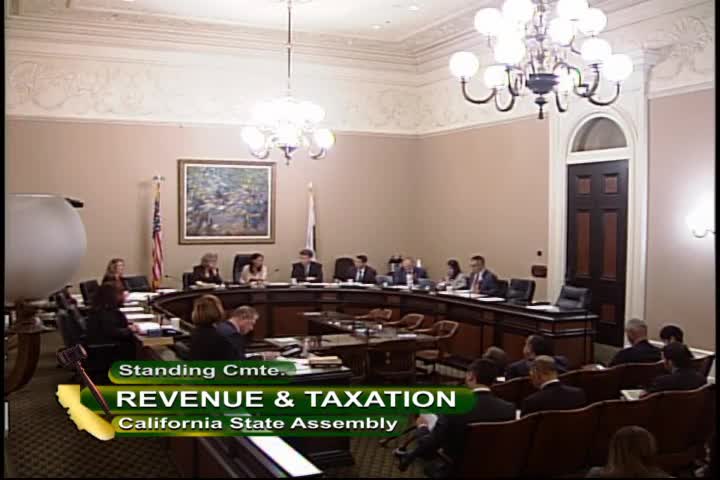 4MIN
Assembly Standing Committee on Revenue and Taxation
 1MIN
Assembly Floor
 3MIN
Senate Floor
Bill Author

Bill Co-Author(s):