SB 347: Firearms: prohibited persons.
- Session Year: 2015-2016
- House: Senate
- Latest Version Date: 2015-09-10
Existing law generally prohibits a person who has been convicted of certain specified misdemeanors from possessing a firearm within 10 years of the conviction. Under existing law, a violation of this prohibition is a crime, punishable by imprisonment in a county jail not exceeding one year or in the state prison for 16 months, or 2 or 3 years, by a fine not exceeding $1,000, or by both that imprisonment and fine.
This bill would add to the list of misdemeanors, the conviction for which is subject to the above prohibition on possessing a firearm within 10 years of the conviction, the petty theft of a firearm, and convictions on or after January 1, 2016, for the misdemeanor offenses of carrying ammunition onto school grounds and receiving stolen property consisting of a firearm. The bill would make other technical, nonsubstantive changes. Because a violation of these provisions would be a crime, and because this bill would expand the application of the crime to a larger class of potential offenders, this bill would impose a state-mandated local program.
The California Constitution requires the state to reimburse local agencies and school districts for certain costs mandated by the state. Statutory provisions establish procedures for making that reimbursement.
This bill would provide that no reimbursement is required by this act for a specified reason.
Existing law generally prohibits a person who has been convicted of certain specified misdemeanors from possessing a firearm within 10 years of the conviction. Under existing law, a violation of this prohibition is a crime, punishable by imprisonment in a county jail not exceeding one year or in the state prison for 16 months, or 2 or 3 years, by a fine not exceeding $1,000, or by both that imprisonment and fine.
This bill would add to the list of misdemeanors, the conviction for which is subject to the above prohibition on possessing a firearm within 10 years of the conviction, misdemeanor offenses of violating the 10-year prohibition on possessing a firearm specified above and the petty theft of a firearm, and convictions on or after January 1, 2016, for the misdemeanor offenses of transferring a handgun without a firearms license, selling or giving possession of ammunition to a minor, selling handgun ammunition to a person under 21 years of age, possession of ammunition by a person prohibited from possessing a firearm, furnishing ammunition to a person prohibited from possessing ammunition, carrying ammunition onto school grounds, grounds and receiving stolen property consisting of a firearm, carrying a loaded or concealed weapon if the person has been previously convicted of a crime against a person or property, or of a narcotics or dangerous drug violation, or if the firearm is not registered. firearm. The bill would make other technical, nonsubstantive changes. Because a violation of these provisions would be a crime, and because this bill would expand the application of the crime to a larger class of potential offenders, this bill would impose a state-mandated local program.
The California Constitution requires the state to reimburse local agencies and school districts for certain costs mandated by the state. Statutory provisions establish procedures for making that reimbursement.
This bill would provide that no reimbursement is required by this act for a specified reason.
Existing law generally prohibits a person who has been convicted of certain specified misdemeanors from possessing a firearm within 10 years of the conviction. Under existing law, a violation of this prohibition is a crime, punishable by imprisonment in a county jail not exceeding one year or in the state prison for 16 months, or 2 or 3 years, by a fine not exceeding $1,000, or by both that imprisonment and fine.
This bill would add to the list of misdemeanors, the conviction for which is subject to the above prohibition on possessing a firearm within 10 years of the conviction, misdemeanor offenses of violating the 10-year prohibition on possessing a firearm specified above and petty theft of a firearm, and convictions on or after January 1, 2016, for the misdemeanor offenses of transferring a handgun without a firearms license, selling or giving possession of ammunition to a minor, selling handgun ammunition to a person under 21 years of age, possession of ammunition by a person prohibited from possessing a firearm, furnishing ammunition to a person prohibited from possessing ammunition, carrying ammunition onto school grounds, receiving stolen property consisting of a firearm, carrying a loaded or concealed weapon if the person has been previously convicted of a crime against a person or property, or of a narcotics or dangerous drug violation, or if the firearm is not registered. The bill would make other technical, nonsubstantive changes. Because a violation of these provisions would be a crime, and because this bill would expand the application of the crime to a larger class of potential offenders, this bill would impose a state-mandated local program.
The California Constitution requires the state to reimburse local agencies and school districts for certain costs mandated by the state. Statutory provisions establish procedures for making that reimbursement.
This bill would provide that no reimbursement is required by this act for a specified reason.
Existing law generally prohibits a person who has been convicted of certain specified misdemeanors from possessing a firearm within 10 years of the conviction. Under existing law, a violation of this prohibition is a crime, punishable by imprisonment in a county jail not exceeding one year or in the state prison for 16 months, or 2 or 3 years, by a fine not exceeding $1,000, or by both that imprisonment and fine.
This bill would add to the list of misdemeanors, the conviction for which is subject to the above prohibition on possessing a firearm within 10 years of the conviction, misdemeanor offenses of violating the 10-year prohibition on possessing a firearm specified above, above and petty theft of a firearm, and convictions on or after January 1, 2016, for the misdemeanor offenses of transferring a firearm handgun without a firearms license, selling or giving possession of ammunition to a minor, selling handgun ammunition to a person under 21 years of age, possession of ammunition by a person prohibited from possessing a firearm, furnishing ammunition to a person prohibited from possessing ammunition, carrying ammunition onto school grounds, petty theft of a firearm, receiving stolen property consisting of a firearm, carrying a loaded or concealed weapon if the person has been previously convicted of a crime against a person or property, or of a narcotics or dangerous drug violation, or if the firearm is not registered. The bill would make other technical, nonsubstantive changes. Because a violation of these provisions would be a crime, and because this bill would expand the application of the crime to a larger class of potential offenders, this bill would impose a state-mandated local program.
The California Constitution requires the state to reimburse local agencies and school districts for certain costs mandated by the state. Statutory provisions establish procedures for making that reimbursement.
This bill would provide that no reimbursement is required by this act for a specified reason.
Existing law generally prohibits a person who has been convicted of certain specified misdemeanors from possessing a firearm within 10 years of the conviction. Under existing law, a violation of this prohibition is a crime, punishable by imprisonment in a county jail not exceeding one year or in the state prison for 16 months, or 2 or 3 years, by a fine not exceeding $1,000, or by both that imprisonment and fine.
This bill would add to the list of misdemeanors, the conviction for which is subject to the above prohibition on possessing a firearm within 10 years of the conviction, misdemeanor offenses of violating the 10-year prohibition on possessing a firearm specified above, transferring a firearm without a firearms license, selling or giving possession of ammunition to a minor, selling handgun ammunition to a person under 21 years of age, possession of ammunition by a person prohibited from possessing a firearm, furnishing ammunition to a person prohibited from possessing ammunition, carrying ammunition onto school grounds, petty theft of a firearm, receiving stolen property consisting of a firearm, carrying a loaded or concealed weapon if the person has been previously convicted of a crime against a person or property, or of a narcotics or dangerous drug violation, or if the firearm is not registered. Because a violation of these provisions would be a crime, and because this bill would expand the application of the crime to a larger class of potential offenders, this bill would impose a state-mandated local program.
The California Constitution requires the state to reimburse local agencies and school districts for certain costs mandated by the state. Statutory provisions establish procedures for making that reimbursement.
This bill would provide that no reimbursement is required by this act for a specified reason.
Existing law generally prohibits a person who has been convicted of certain specified misdemeanors from possessing a firearm within 10 years of the conviction. Under existing law, a violation of this prohibition is a crime, punishable by imprisonment in a county jail not exceeding one year or in the state prison for 16 months, or 2 or 3 years, by a fine not exceeding $1,000, or by both that imprisonment and fine.
This bill would add to the list of misdemeanors, the conviction for which is subject to the above prohibition on possessing a firearm within 10 years of the conviction, misdemeanor offenses of transferring a firearm without a firearms license, selling or giving possession of ammunition to a minor, selling handgun ammunition to a person under 21 years of age, possession of ammunition by a person prohibited from possessing a firearm, furnishing ammunition to a person prohibited from possessing ammunition, carrying ammunition onto school grounds, petty theft of a firearm, receiving stolen property consisting of a firearm, carrying a loaded or concealed weapon if the person has been previously convicted of a crime against a person or property, or of a narcotics or dangerous drug violation, or if the firearm is not registered. Because a violation of these provisions would be a crime, and because this bill would expand the application of the crime to a larger class of potential offenders, this bill would impose a state-mandated local program.
The California Constitution requires the state to reimburse local agencies and school districts for certain costs mandated by the state. Statutory provisions establish procedures for making that reimbursement.
This bill would provide that no reimbursement is required by this act for a specified reason.
(a)Except as provided in Section 29855 or subdivision (a) of Section 29800, any person who has been convicted of a misdemeanor violation of Section 71, 76, 136.1, 136.5, or 140, subdivision (d) of Section 148, Section 171b, paragraph (1) of subdivision (a) of Section 171c, Section 171d, 186.28, 240, 241, 242, 243, 243.4, 244.5, 245, 245.5, 246.3, 247, 273.5, 273.6, 417, 417.6, 422, 626.9, 646.9, or 830.95, subdivision (a) of former Section 12100, as that section read at any time from when it was enacted by Section 3 of Chapter 1386 of the Statutes of 1988 to when it was repealed by Section 18 of Chapter 23 of the Statutes of 1994, Section 17500, 17510, 25300, 25800, 30315, or 32625, subdivision (b) or (d) of Section 26100, or Section 27510, or Section 8100, 8101, or 8103 of the Welfare and Institutions Code, any firearm-related offense pursuant to Sections 871.5 and 1001.5 of the Welfare and Institutions Code, Section 490.2 if the property taken was a firearm, or of the conduct punished in subdivision (c) of Section 27590, and who, within 10 years of the conviction, owns, purchases, receives, or has in possession or under custody or control, any firearm is guilty of a public offense, which shall be punishable by imprisonment in a county jail not exceeding one year or in the state prison, by a fine not exceeding one thousand dollars ($1,000), or by both that imprisonment and fine.
(b)Any person who has been convicted on or after January 1, 2016, of a misdemeanor violation of Section 496 if the property consists of a firearm, or Section 30310, and who, within 10 years of the conviction, owns, purchases, receives, or has in possession or under custody or control, any firearm, is guilty of a public offense, which shall be punishable by imprisonment in a county jail not exceeding one year or in the state prison, by a fine not exceeding one thousand dollars ($1,000), or by both that imprisonment and fine.
(c)The court, on forms prescribed by the Department of Justice, shall notify the department of persons subject to this section. However, the prohibition in this section may be reduced, eliminated, or conditioned as provided in Section 29855 or 29860.
SEC. 2.No reimbursement is required by this act pursuant to Section 6 of Article XIIIB of the California Constitution because the only costs that may be incurred by a local agency or school district will be incurred because this act creates a new crime or infraction, eliminates a crime or infraction, or changes the penalty for a crime or infraction, within the meaning of Section 17556 of the Government Code, or changes the definition of a crime within the meaning of Section 6 of Article XIIIB of the California Constitution.
(a)(1)A person shall not sell, lease, or transfer a handgun unless the person has been issued a license pursuant to Article 1 (commencing with Section 26700) and Article 2 (commencing with Section 26800) of Chapter 2.
(2)A person shall not sell, lease, or transfer a firearm that is not a handgun unless the person has been issued a license pursuant to Article 1 (commencing with Section 26700) and Article 2 (commencing with Section 26800) of Chapter 2.
(b)Any person violating this article is guilty of a misdemeanor.
SEC. 2.SECTION 1.Section 29805 of the Penal Code is amended to read:29805.(a)Except as provided in Section 29855 or subdivision (a) of Section 29800, any person who has been convicted of a misdemeanor violation of this section, Section 71, 76, 136.1, 136.5, or 140, subdivision (d) of Section 148, Section 171b, paragraph (1) of subdivision (a) of Section 171c, Section 171d, 186.28, 240, 241, 242, 243, 243.4, 244.5, 245, 245.5, 246.3, 247, 273.5, 273.6, 417, 417.6, 422, 626.9, 646.9, or 830.95, subdivision (a) of former Section 12100, as that section read at any time from when it was enacted by Section 3 of Chapter 1386 of the Statutes of 1988 to when it was repealed by Section 18 of Chapter 23 of the Statutes of 1994, Section 17500, 17510, 25300, 25800, 30315, or 32625, subdivision (b) or (d) of Section 26100, or Section 27510, or Section 8100, 8101, or 8103 of the Welfare and Institutions Code, any firearm-related offense pursuant to Sections 871.5 and 1001.5 of the Welfare and Institutions Code, Section 490.2 if the property taken was a firearm, or of the conduct punished in subdivision (c) of Section 27590, and who, within 10 years of the conviction, owns, purchases, receives, or has in possession or under custody or control, any firearm is guilty of a public offense, which shall be punishable by imprisonment in a county jail not exceeding one year or in the state prison, by a fine not exceeding one thousand dollars ($1,000), or by both that imprisonment and fine.
(b)Any person who has been convicted on or after January 1, 2016, of a misdemeanor violation of Section 496 if the property consists of a firearm, Section 25400 that is punishable pursuant to paragraph (5) or (6) of subdivision (c) of Section 25400, Section 25850 that is punishable pursuant to paragraph (5) or (6) of subdivision (c) of Section 25850, paragraph (1) of subdivision (a) of Section 26500, paragraph (3) of subdivision (a) of Section 30300, subdivision (a) of Section 30305, Section 30306 involving a violation of subdivision (a) of Section 30305, or Section 30310, and who, within 10 years of the conviction, owns, purchases, receives, or has in possession or under custody or control, any firearm, is guilty of a public offense, which shall be punishable by imprisonment in a county jail not exceeding one year or in the state prison, by a fine not exceeding one thousand dollars ($1,000), or by both that imprisonment and fine.
(c)The court, on forms prescribed by the Department of Justice, shall notify the department of persons subject to this section. However, the prohibition in this section may be reduced, eliminated, or conditioned as provided in Section 29855 or 29860.
SEC. 3.SEC. 2.No reimbursement is required by this act pursuant to Section 6 of Article XIIIB of the California Constitution because the only costs that may be incurred by a local agency or school district will be incurred because this act creates a new crime or infraction, eliminates a crime or infraction, or changes the penalty for a crime or infraction, within the meaning of Section 17556 of the Government Code, or changes the definition of a crime within the meaning of Section 6 of Article XIIIB of the California Constitution.
(a)(1)A person shall not sell, lease, or transfer a handgun unless the person has been issued a license pursuant to Article 1 (commencing with Section 26700) and Article 2 (commencing with Section 26800) of Chapter 2.
(2)A person shall not sell, lease, or transfer a firearm that is not a handgun unless the person has been issued a license pursuant to Article 1 (commencing with Section 26700) and Article 2 (commencing with Section 26800) of Chapter 2.
(b)Any person violating this article is guilty of a misdemeanor.
SEC. 2.Section 29805 of the Penal Code is amended to read:29805.(a)Except as provided in Section 29855 or subdivision (a) of Section 29800, any person who has been convicted of a misdemeanor violation of this section, Section 71, 76, 136.1, 136.5, or 140, subdivision (d) of Section 148, Section 171b, paragraph (1) of subdivision (a) of Section 171c, Section 171d, 186.28, 240, 241, 242, 243, 243.4, 244.5, 245, 245.5, 246.3, 247, 273.5, 273.6, 417, 417.6, 422, 626.9, 646.9, or 830.95, subdivision (a) of former Section 12100, as that section read at any time from when it was enacted by Section 3 of Chapter 1386 of the Statutes of 1988 to when it was repealed by Section 18 of Chapter 23 of the Statutes of 1994, Section 17500, 17510, 25300, 25800, 30315, or 32625, subdivision (b) or (d) of Section 26100, or Section 27510, or Section 8100, 8101, or 8103 of the Welfare and Institutions Code, any firearm-related offense pursuant to Sections 871.5 and 1001.5 of the Welfare and Institutions Code, Section 490.2 if the property taken was a firearm, or of the conduct punished in subdivision (c) of Section 27590, or, for a conviction on or after January 1, 2016, for a violation of Section 496 if the property consists of a firearm, Section 25400 that is punishable pursuant to paragraph (5) or (6) of subdivision (c) of Section 25400, Section 25850 that is punishable pursuant to paragraph (5) or (6) of subdivision (c) of Section 25850, paragraph (1) of subdivision (a) of Section 26500, Section 30300, 30305, 30306, or 30310, and who, within 10 years of the conviction, owns, purchases, receives, or has in possession or under custody or control, any firearm is guilty of a public offense, which shall be punishable by imprisonment in a county jail not exceeding one year or in the state prison, by a fine not exceeding one thousand dollars ($1,000), or by both that imprisonment and fine. The court, on forms prescribed by the Department of Justice, shall notify the department of persons subject to this section. However, the prohibition in this section may be reduced, eliminated, or conditioned as provided in Section 29855 or 29860.
(b)Any person who has been convicted on or after January 1, 2016, of a misdemeanor violation of Section 496 if the property consists of a firearm, Section 25400 that is punishable pursuant to paragraph (5) or (6) of subdivision (c) of Section 25400, Section 25850 that is punishable pursuant to paragraph (5) or (6) of subdivision (c) of Section 25850, paragraph (1) of subdivision (a) of Section 26500, paragraph (3) of subdivision (a) of Section 30300, subdivision (a) of Section 30305, Section 30306 involving a violation of subdivision (a) of Section 30305, or Section 30310, and who, within 10 years of the conviction, owns, purchases, receives, or has in possession or under custody or control, any firearm, is guilty of a public offense, which shall be punishable by imprisonment in a county jail not exceeding one year or in the state prison, by a fine not exceeding one thousand dollars ($1,000), or by both that imprisonment and fine.
(c)The court, on forms prescribed by the Department of Justice, shall notify the department of persons subject to this section. However, the prohibition in this section may be reduced, eliminated, or conditioned as provided in Section 29855 or 29860.
SEC. 3.No reimbursement is required by this act pursuant to Section 6 of Article XIIIB of the California Constitution because the only costs that may be incurred by a local agency or school district will be incurred because this act creates a new crime or infraction, eliminates a crime or infraction, or changes the penalty for a crime or infraction, within the meaning of Section 17556 of the Government Code, or changes the definition of a crime within the meaning of Section 6 of Article XIIIB of the California Constitution.
(a)No person (1)A person shall not sell, lease, or transfer firearms a handgun unless the person has been issued a license pursuant to Article 1 (commencing with Section 26700) and Article 2 (commencing with Section 26800) of Chapter 2.
(2)A person shall not sell, lease, or transfer a firearm that is not a handgun unless the person has been issued a license pursuant to Article 1 (commencing with Section 26700) and Article 2 (commencing with Section 26800) of Chapter 2.
(b)Any person violating this article is guilty of a misdemeanor.
SECTION 1.SEC. 2.Section 29805 of the Penal Code is amended to read:29805.Except as provided in Section 29855 or subdivision (a) of Section 29800, any person who has been convicted of a misdemeanor violation of this section, Section 71, 76, 136.1, 136.5, or 140, subdivision (d) of Section 148, Section 171b, paragraph (1) of subdivision (a) of Section 171c, Section 171d, 186.28, 240, 241, 242, 243, 243.4, 244.5, 245, 245.5, 246.3, 247, 273.5, 273.6, 417, 417.6, 422, 626.9, 646.9, or 830.95, subdivision (a) of former Section 12100, as that section read at any time from when it was enacted by Section 3 of Chapter 1386 of the Statutes of 1988 to when it was repealed by Section 18 of Chapter 23 of the Statutes of 1994, Section 17500, 17510, 25300, 25800, 26500, 30300, 30305, 30306, 30310, 30315, or 32625, subdivision (b) or (d) of Section 26100, or Section 27510, or Section 8100, 8101, or 8103 of the Welfare and Institutions Code, any firearm-related offense pursuant to Sections 871.5 and 1001.5 of the Welfare and Institutions Code, Section 490.2 if the property taken was a firearm, Section 496 if the property consists of a firearm, Section 25400 that is punishable pursuant to paragraph (5) or (6) of subdivision (c) of Section 25400, Section 25850 that is punishable pursuant to paragraph (5) or (6) of subdivision (c) of Section 25850, or of the conduct punished in subdivision (c) of Section 27590, or, for a conviction on or after January 1, 2016, for a violation of Section 496 if the property consists of a firearm, Section 25400 that is punishable pursuant to paragraph (5) or (6) of subdivision (c) of Section 25400, Section 25850 that is punishable pursuant to paragraph (5) or (6) of subdivision (c) of Section 25850, paragraph (1) of subdivision (a) of Section 26500, Section 30300, 30305, 30306, or 30310, and who, within 10 years of the conviction, owns, purchases, receives, or has in possession or under custody or control, any firearm is guilty of a public offense, which shall be punishable by imprisonment in a county jail not exceeding one year or in the state prison, by a fine not exceeding one thousand dollars ($1,000), or by both that imprisonment and fine. The court, on forms prescribed by the Department of Justice, shall notify the department of persons subject to this section. However, the prohibition in this section may be reduced, eliminated, or conditioned as provided in Section 29855 or 29860.
SEC. 2.SEC. 3.No reimbursement is required by this act pursuant to Section 6 of Article XIIIB of the California Constitution because the only costs that may be incurred by a local agency or school district will be incurred because this act creates a new crime or infraction, eliminates a crime or infraction, or changes the penalty for a crime or infraction, within the meaning of Section 17556 of the Government Code, or changes the definition of a crime within the meaning of Section 6 of Article XIIIB of the California Constitution.
Except as provided in Section 29855 or subdivision (a) of Section 29800, any person who has been convicted of a misdemeanor violation of this section, Section 71, 76, 136.1, 136.5, or 140, subdivision (d) of Section 148, Section 171b, paragraph (1) of subdivision (a) of Section 171c, Section 171d, 186.28, 240, 241, 242, 243, 243.4, 244.5, 245, 245.5, 246.3, 247, 273.5, 273.6, 417, 417.6, 422, 626.9, 646.9, or 830.95, subdivision (a) of former Section 12100, as that section read at any time from when it was enacted by Section 3 of Chapter 1386 of the Statutes of 1988 to when it was repealed by Section 18 of Chapter 23 of the Statutes of 1994, Section 17500, 17510, 25300, 25800, 26500, 30300, 30305, 30306, 30310, 30315, or 32625, subdivision (b) or (d) of Section 26100, or Section 27510, or Section 8100, 8101, or 8103 of the Welfare and Institutions Code, any firearm-related offense pursuant to Sections 871.5 and 1001.5 of the Welfare and Institutions Code, Section 490.2 if the property taken was a firearm, Section 496 if the property consists of a firearm, Section 25400 that is punishable pursuant to paragraph (5) or (6) of subdivision (c) of Section 25400, Section 25850 that is punishable pursuant to paragraph (5) or (6) of subdivision (c) of Section 25850, or of the conduct punished in subdivision (c) of Section 27590, and who, within 10 years of the conviction, owns, purchases, receives, or has in possession or under custody or control, any firearm is guilty of a public offense, which shall be punishable by imprisonment in a county jail not exceeding one year or in the state prison, by a fine not exceeding one thousand dollars ($1,000), or by both that imprisonment and fine. The court, on forms prescribed by the Department of Justice, shall notify the department of persons subject to this section. However, the prohibition in this section may be reduced, eliminated, or conditioned as provided in Section 29855 or 29860.
SEC. 2.No reimbursement is required by this act pursuant to Section 6 of Article XIIIB of the California Constitution because the only costs that may be incurred by a local agency or school district will be incurred because this act creates a new crime or infraction, eliminates a crime or infraction, or changes the penalty for a crime or infraction, within the meaning of Section 17556 of the Government Code, or changes the definition of a crime within the meaning of Section 6 of Article XIIIB of the California Constitution.
Except as provided in Section 29855 or subdivision (a) of Section 29800, any person who has been convicted of a misdemeanor violation of Section 71, 76, 136.1, 136.5, or 140, subdivision (d) of Section 148, Section 171b, paragraph (1) of subdivision (a) of Section 171c, Section 171d, 186.28, 240, 241, 242, 243, 243.4, 244.5, 245, 245.5, 246.3, 247, 273.5, 273.6, 417, 417.6, 422, 626.9, 646.9, or 830.95, subdivision (a) of former Section 12100, as that section read at any time from when it was enacted by Section 3 of Chapter 1386 of the Statutes of 1988 to when it was repealed by Section 18 of Chapter 23 of the Statutes of 1994, Section 17500, 17510, 25300, 25800, 26500, 30300, 30305, 30306, 30310, 30315, or 32625, subdivision (b) or (d) of Section 26100, or Section 27510, or Section 8100, 8101, or 8103 of the Welfare and Institutions Code, any firearm-related offense pursuant to Sections 871.5 and 1001.5 of the Welfare and Institutions Code, Section 490.2 if the property taken was a firearm, Section 496 if the property consists of a firearm, Section 25400 that is punishable pursuant to paragraph (5) or (6) of subdivision (c) of Section 25400, Section 25850 that is punishable pursuant to paragraph (5) or (6) of subdivision (c) of Section 25850, or of the conduct punished in subdivision (c) of Section 27590, and who, within 10 years of the conviction, owns, purchases, receives, or has in possession or under custody or control, any firearm is guilty of a public offense, which shall be punishable by imprisonment in a county jail not exceeding one year or in the state prison, by a fine not exceeding one thousand dollars ($1,000), or by both that imprisonment and fine. The court, on forms prescribed by the Department of Justice, shall notify the department of persons subject to this section. However, the prohibition in this section may be reduced, eliminated, or conditioned as provided in Section 29855 or 29860.
SEC. 2.No reimbursement is required by this act pursuant to Section 6 of Article XIIIB of the California Constitution because the only costs that may be incurred by a local agency or school district will be incurred because this act creates a new crime or infraction, eliminates a crime or infraction, or changes the penalty for a crime or infraction, within the meaning of Section 17556 of the Government Code, or changes the definition of a crime within the meaning of Section 6 of Article XIIIB of the California Constitution.
|
Date
|
Status
|
|---|---|
| Sep 10, 2015 | Assembly amendments concurred in. (Ayes 23. Noes 14.) Ordered to engrossing and enrolling. |
| Aug 19, 2015 | August 19 set for first hearing. Placed on APPR. suspense file. |
| Aug 28, 2015 | From committee: Do pass. (Ayes 12. Noes 5.) (August 27). |
| Aug 31, 2015 | Read second time. Ordered to third reading. |
| Sep 2, 2015 | Ordered to third reading. |
| Sep 2, 2015 | Read third time and amended. |
| Sep 8, 2015 | In Senate. Concurrence in Assembly amendments pending. |
| Sep 8, 2015 | Read third time. Passed. Ordered to the Senate. |
| Sep 8, 2015 | Read third time. Passed. (Ayes 46. Noes 30. Page 2969.) Ordered to the Senate. |
| Jul 8, 2015 | Read second time and amended. Re-referred to Com. on APPR. |
| Sep 10, 2015 | Assembly amendments concurred in. (Ayes 24. Noes 14. Page 2683.) Ordered to engrossing and enrolling. |
| Sep 10, 2015 | Assembly amendments concurred in. (Ayes 24. Noes 14.) Ordered to engrossing and enrolling. |
| Sep 11, 2015 | Enrolled and presented to the Governor at 10:45 p.m. |
| Oct 3, 2015 | In Senate. Consideration of Governor's veto pending. |
| Oct 3, 2015 | Vetoed by the Governor. |
| Apr 25, 2016 | Last day to consider Governors veto pursuant to Joint Rule 58.5. |
| Apr 25, 2016 | Last day to consider Governor’s veto pursuant to Joint Rule 58.5. |
| Jun 1, 2015 | From committee: Do pass as amended. (Ayes 5. Noes 1. Page 1152.) (May 28). |
| Feb 25, 2015 | From printer. May be acted upon on or after March 27. |
| Mar 5, 2015 | Referred to Com. on PUB. S. |
| Mar 18, 2015 | Set for hearing April 14. |
| Apr 20, 2015 | From committee: Do pass as amended and re-refer to Com. on APPR. (Ayes 4. Noes 2. Page 595.) (April 14). |
| Apr 21, 2015 | Read second time and amended. Re-referred to Com. on APPR. |
| Apr 24, 2015 | Set for hearing May 4. |
| May 4, 2015 | May 4 hearing: Placed on APPR. suspense file. |
| May 23, 2015 | Set for hearing May 28. |
| Feb 24, 2015 | Introduced. Read first time. To Com. on RLS. for assignment. To print. |
| Jun 1, 2015 | From committee: Do pass as amended. (Ayes 5. Noes 1.) (May 28). |
| Jun 2, 2015 | Read second time and amended. Ordered to third reading. |
| Jun 3, 2015 | Read third time. Passed. (Ayes 24. Noes 15. Page 1291.) Ordered to the Assembly. |
| Jun 3, 2015 | Read third time. Passed. (Ayes 24. Noes 15.) Ordered to the Assembly. |
| Jun 4, 2015 | In Assembly. Read first time. Held at Desk. |
| Jun 15, 2015 | Referred to Com. on PUB. S. |
| Jul 7, 2015 | From committee: Do pass as amended and re-refer to Com. on APPR. (Ayes 5. Noes 2.) (June 30). |
|
Date
|
Description
|
Location
|
Votes
|
|
|---|---|---|---|---|
| Sep 10, 2015 | Unfinished Business SB347 Jackson Concurrence | Senate Floor |
Passed |
|
| Sep 8, 2015 | SB 347 Jackson Senate Third Reading By EGGMAN | Assembly Floor |
Passed |
|
| Aug 27, 2015 | Do pass. | Assembly Standing Committee on Appropriations |
Passed |
|
| Jun 30, 2015 | Do pass as amended and be re-referred to the Committee on [Appropriations] | Assembly Standing Committee on Public Safety |
Passed |
|
| Jun 3, 2015 | Senate 3rd Reading SB347 Jackson | Senate Floor |
Passed |
|
| May 28, 2015 | Do pass as amended | Senate Standing Committee on Appropriations |
Passed |
|
| May 4, 2015 | Placed on suspense file | Senate Standing Committee on Appropriations |
Passed |
|
| Apr 14, 2015 | Do pass as amended, but first amend, and re-refer to the Committee on [Appropriations] | Senate Standing Committee on Public Safety |
Passed |
This list shows positions taken on this bill by organizations on the date displayed, which is linked to the original source.
Positions by individuals are not included.
|
Organization
|
Position
|
Date
|
|---|---|---|
| California Attorneys For Criminal Justice | ** Against | Sep 8, 2015 |
| California Chapters of The Brady Campaign to Prevent Gun Violence | ** Support | Sep 8, 2015 |
| California Public Defenders Association | ** Against | Sep 8, 2015 |
| California Rifle And Pistol Association, Inc. | ** Against | Sep 8, 2015 |
| California Sportsman's Lobby, Inc. | ** Against | Sep 8, 2015 |
| California State Lodge, Fraternal Order of Police | ** Support | Sep 8, 2015 |
| California Waterfowl Association | ** Against | Sep 8, 2015 |
| Coalition Against Gun Violence | ** Support | Sep 8, 2015 |
| Courage Campaign | ** Support | Sep 8, 2015 |
| Firearms Policy Coalition | ** Against | Sep 8, 2015 |
| Friends Committee on Legislation in California | ** Support | Sep 8, 2015 |
| Gun Owners of California | ** Against | Sep 8, 2015 |
| Law Center to Prevent Gun Violence | ** Support | Sep 8, 2015 |
| Long Beach Police Officers Association | ** Support | Sep 8, 2015 |
| Los Angeles County Professional Peace Officers Association | ** Support | Sep 8, 2015 |
| National Rifle Association of America | ** Against | Sep 8, 2015 |
| Outdoor Sportsmen'S Coalition Of California | ** Against | Sep 8, 2015 |
| Outdoor Sportsmen's Coalition of California Safari Club International | ** Against | Sep 2, 2015 |
| Physicians for Social Responsibility, Sacramento Chapter | ** Support | Sep 8, 2015 |
| Safari Club International | ** Against | Sep 8, 2015 |
| San Francisco Bay Area Physicians for Social Responsibility | ** Support | Sep 8, 2015 |
| Santa Ana Police Officers Association | ** Support | Sep 8, 2015 |
| Santa Barbara Police Department Violence Prevention Coalition | ** Support | Sep 2, 2015 |
| Santa Barbara, County Of | ** Support | Sep 8, 2015 |
| Shasta County Sheriff | ** Against | Sep 2, 2015 |
| Shasta County Sheriff, Tom Bosenko | ** Against | Sep 8, 2015 |
| Violence Prevention Coalition of Greater Los Angeles | ** Support | Sep 8, 2015 |
| Violence Prevention Coalition of Orange County | ** Support | Sep 8, 2015 |
| Youth Alive | ** Support | Sep 8, 2015 |
SB 347
Page 7
|
Office of Senate Floor Analyses (916) 651-1520 Fax: (916) 327-4478 |
SB 347 |
VETO
Bill No: SB 347
Amended: 9/2/15
SENATE PUBLIC SAFETY COMMITTEE: 4-2, 4/14/15
AYES: Hancock, Leno, McGuire, Monning
NOES: Anderson, Stone
NO VOTE RECORDED: Liu
SENATE APPROPRIATIONS COMMITTEE: 5-1, 5/28/15
AYES: Lara, Beall, Hill, Leyva, Mendoza
NOES: Nielsen
NO VOTE RECORDED: Bates
SENATE FLOOR: 24-15, 6/3/15
AYES: Allen, Beall, Block, De León, Galgiani, Glazer, Hall, Hancock, Hernandez, Hertzberg, Hill, Jackson, Lara, Leno, Leyva, Liu, McGuire, Mendoza, Mitchell, Monning, Pan, Pavley, Wieckowski, Wolk
NOES: Anderson, Bates, Berryhill, Cannella, Fuller, Gaines, Huff, Moorlach, Morrell, Nguyen, Nielsen, Roth, Runner, Stone, Vidak
NO VOTE RECORDED: Hueso
SENATE FLOOR: 24-14, 9/10/15
AYES: Allen, Beall, Block, De León, Galgiani, Glazer, Hall, Hancock, Hernandez, Hill, Hueso, Jackson, Lara, Leno, Leyva, Liu, McGuire, Mendoza, Mitchell, Monning, Pan, Pavley, Wieckowski, Wolk
NOES: Anderson, Bates, Berryhill, Cannella, Fuller, Gaines, Huff, Moorlach, Morrell, Nguyen, Nielsen, Roth, Stone, Vidak
NO VOTE RECORDED: Hertzberg, Runner
ASSEMBLY FLOOR: 46-30, 9/8/15 - See last page for vote
SUBJECT: Firearms: prohibited persons
DIGEST: This bill adds specified offenses to the list of misdemeanors that result in the defendant being prohibited from possessing a firearm for 10 years.
Existing law:
Requires that firearms dealers obtain certain identifying information from firearms purchasers and forward that information, via electronic transfer to Department of Justice (DOJ) to perform a background check on the purchaser to determine whether he or she is prohibited from possessing a firearm. (Penal Code § 28160-28220.)
Requires that, upon receipt of the purchaser’s information, DOJ shall examine its records, as well as those records that it is authorized to request from the State Department of Mental Health pursuant to Section 8104 of the Welfare and Institutions Code, in order to determine if the purchaser is prohibited from purchasing a firearm. (Penal Code § 28220.)
Requires firearms to be centrally registered at time of transfer or sale by way of transfer forms centrally compiled by DOJ. DOJ is required to keep a registry from data sent to DOJ indicating who owns what firearm by make, model, and serial number and the date thereof. (Penal Code § 11106(a) and (c).)
Requires the Attorney General to establish and maintain an online database to be known as Armed Prohibited Persons System (APPS). The purpose of the file is to cross-reference persons who have ownership or possession of a firearm on or after January 1, 1991, as indicated by a record in the Consolidated Firearms Information System (CFIS), and who, subsequent to the date of that ownership or possession of a firearm, fall within a class of persons who are prohibited from owning or possessing a firearm. The information contained in APPS shall only be available to specified entities through the California Law Enforcement Telecommunications System, for the purpose of determining if persons are armed and prohibited from possessing firearms. (Penal Code § 30000.)
Provides, in Section 933(g) of Title 18 of the United States Code, that certain people are prohibited from owning or possessing a firearm, as specified.
Provides, in Penal Code Sections 29800, 23515 and 29805, that certain people are subject to a lifetime ban on owning or possessing a firearm, including:
Anyone convicted of a felony;
Anyone addicted to a narcotic drug;
Any juvenile convicted of a violent crime with a gun and tried in adult court;
Any person convicted of a federal crime that would be a felony in California and sentenced to more than 30 days in prison, or a fine of more than $1,000;
Anyone convicted of certain violent misdemeanors, e.g., assault with a firearm, inflicting corporal injury on a spouse or significant other, or brandishing a firearm in the presence of a police officer.
Makes it a felony for a person subject to a lifetime ban to own or possess a firearm, as specified. (Id.)
Provides that anyone convicted of numerous misdemeanors involving violence or threats of violence is subject to a 10-year prohibition on prohibition on possession of a firearm. (Penal Code § 29805.)
Makes it a wobbler (can be charged as a felony or misdemeanor) for a person subject to a 10-year prohibition to own or possess a firearm, as specified. (Id.)
States that any person taken into custody, assessed, and admitted to a designated facility due to that person being found to be a danger to themselves or others as a result of a mental disorder, is prohibited from possessing a firearm during treatment and for five years from the date of their discharge. (Welfare and Institutions Code §§ 8100 and 8103(f).)
Makes it a wobbler (can be charged as a felony or misdemeanor) for a person subject to a five-year prohibition to own or possess a firearm, as specified. (Id.)
States that persons who are bound by a temporary restraining order or injunction or a protective order issued under the Family Code or the Welfare and Institutions Code, may be prohibited from firearms ownership for the duration of that court order. (Penal Code § 29825.)
Makes it a wobbler (can be charged as a felony or misdemeanor) or a misdemeanor for a person subject to a temporary restraining order or injunction or a protective order issued under the Family Code or the Welfare and Institutions Code, as specified, to own or possess a firearm, as specified. (Id.)
This bill:
Adds the following misdemeanor offenses to the list of crimes that result in a 10-year prohibition on possession of a firearm:
Theft of a firearm (Penal Code § 490.2);
Receipt of stolen property, if the property is a firearm (Penal Code § 496); and,
Bringing ammunition on school grounds (Penal Code § 30310).
States that, with the exception of misdemeanor firearm theft, its provisions apply prospectively.
Background
As detailed above, current state and federal laws prohibit persons who have been convicted of specific crimes from owning or possessing firearms. For example, anyone convicted of any felony offense is prohibited for life from firearms ownership under both federal and state law. (18 U.S.C. § 922(g); Penal Code § 29800.) California goes further and imposes a 10-year firearms prohibition on persons convicted of numerous misdemeanor offenses that involve either violence or the threat of violence. (Penal Code § 29805.) Additionally, anyone who has been found to be a danger to themselves or others due to mental illness is subject to a five-year prohibition (Welfare and Institutions Code §§ 8100, 8103(f)), and people under domestic violence restraining orders are subject to a prohibition for the duration of that court order. (Penal Code § 29825.)
According to the author:
[S]tudies demonstrate the need to strengthen our firearms regulations. In particular, certain firearm-related misdemeanors should have been originally included in the 10-year ban on firearm purchases.
To this end, this bill expands the number of misdemeanor convictions resulting in a 10-year prohibition.
FISCAL EFFECT: Appropriation: No Fiscal Com.: Yes Local: Yes
According to the Assembly Appropriations Committee:
Annual ongoing costs of over $220,000 (Dealer's Record of Sale Fund) to DOJ to address the additional workload and enhance CFIS and the Automated Firearms System.
Unknown nonreimbursable local law enforcement and incarceration costs offset to a degree by increased fine revenue.
SUPPORT: (Verified 10/26/15)
California Chapters of the Brady Campaign to Prevent Gun Violence
California State Lodge, Fraternal Order of Police
City of Santa Barbara
Coalition Against Gun Violence
Courage Campaign
Friends Committee on Legislation in California
Law Center to Prevent Gun Violence
Long Beach Police Officers Association
Los Angeles Chapter of the Brady Campaign to Prevent Gun Violence
Los Angeles County Professional Peace Officers Association
Physicians for Social Responsibility, Sacramento Chapter
Sacramento County Deputy Sheriff’s Association
San Francisco Bay Area Physicians for Social Responsibility
Santa Ana Police Officers Association
Violence Prevention Coalition of Greater Los Angeles
Violence Prevention Coalition of Orange County
Youth ALIVE
Five individuals
OPPOSITION: (Verified 10/26/15)
California Attorneys for Criminal Justice
California Public Defenders Association
California Rifle and Pistol Association, Inc.
California Sportsman’s Lobby
California Waterfowl Association
Firearms Policy Coalition
Gun Owners of California
National Rifle Association of America
Outdoor Sportsmen’s Coalition of California
Shasta County Sheriff, Tom Bosenko
Safari Club International
Two individuals
GOVERNOR'S VETO MESSAGE:
I am returning the following nine bills without my signature:
Assembly Bill 144
Assembly Bill 849
Senate Bill 168
Senate Bill 170
Senate Bill 271
Senate Bill 333
Senate Bill 347
Senate Bill 716
Senate Bill 722
Each of these bills creates a new crime - usually by finding a novel way to characterize and criminalize conduct that is already proscribed. This multiplication and particularization of criminal behavior creates increasing complexity without commensurate benefit.
Over the last several decades, California's criminal code has grown to more than 5,000 separate provisions, covering almost every conceivable form of human misbehavior. During the same period, our jail and prison populations have exploded.
Before we keep going down this road, I think we should pause and reflect on how our system of criminal justice could be made more human, more just and more cost-effective.
ASSEMBLY FLOOR: 46-30, 9/8/15
AYES: Alejo, Bloom, Bonilla, Bonta, Brown, Burke, Calderon, Campos, Chau, Chiu, Chu, Cooper, Dababneh, Daly, Dodd, Eggman, Cristina Garcia, Eduardo Garcia, Gatto, Gipson, Gomez, Gonzalez, Gordon, Roger Hernández, Holden, Irwin, Jones-Sawyer, Levine, Lopez, Low, McCarty, Medina, Mullin, Nazarian, O'Donnell, Quirk, Rendon, Ridley-Thomas, Santiago, Mark Stone, Thurmond, Ting, Weber, Williams, Wood, Atkins
NOES: Achadjian, Travis Allen, Baker, Bigelow, Brough, Chang, Dahle, Frazier, Beth Gaines, Gallagher, Gray, Grove, Hadley, Harper, Jones, Kim, Lackey, Linder, Maienschein, Mathis, Mayes, Melendez, Obernolte, Olsen, Patterson, Salas, Steinorth, Wagner, Waldron, Wilk
NO VOTE RECORDED: Chávez, Cooley, Perea, Rodriguez
Prepared by: Jessica Devencenzi / PUB. S. /
11/4/15 13:34:18
**** END ****
SB 347
Page 6
|
Office of Senate Floor Analyses (916) 651-1520 Fax: (916) 327-4478 |
UNFINISHED BUSINESS
Bill No: SB 347
Amended: 9/2/15
SENATE PUBLIC SAFETY COMMITTEE: 4-2, 4/14/15
AYES: Hancock, Leno, McGuire, Monning
NOES: Anderson, Stone
NO VOTE RECORDED: Liu
SENATE APPROPRIATIONS COMMITTEE: 5-1, 5/28/15
AYES: Lara, Beall, Hill, Leyva, Mendoza
NOES: Nielsen
NO VOTE RECORDED: Bates
SENATE FLOOR: 24-15, 6/3/15
AYES: Allen, Beall, Block, De León, Galgiani, Glazer, Hall, Hancock, Hernandez, Hertzberg, Hill, Jackson, Lara, Leno, Leyva, Liu, McGuire, Mendoza, Mitchell, Monning, Pan, Pavley, Wieckowski, Wolk
NOES: Anderson, Bates, Berryhill, Cannella, Fuller, Gaines, Huff, Moorlach, Morrell, Nguyen, Nielsen, Roth, Runner, Stone, Vidak
NO VOTE RECORDED: Hueso
ASSEMBLY FLOOR: 46-30, 9/8/15 - See last page for vote
SUBJECT: Firearms: prohibited persons
DIGEST: This bill adds specified offenses to the list of misdemeanors that result in the defendant being prohibited from possessing a firearm for 10 years.
Assembly Amendments limit the specified offenses to include: (1) bringing or carrying ammunition onto school grounds; (2) petty theft if the property taken was a firearm; and, (3) buying or receiving stolen property if the property consists of a firearm.
Existing law:
Requires that firearms dealers obtain certain identifying information from firearms purchasers and forward that information, via electronic transfer to Department of Justice (DOJ) to perform a background check on the purchaser to determine whether he or she is prohibited from possessing a firearm. (Penal Code § 28160-28220.)
Requires that, upon receipt of the purchaser’s information, DOJ shall examine its records, as well as those records that it is authorized to request from the State Department of Mental Health pursuant to Section 8104 of the Welfare and Institutions Code, in order to determine if the purchaser is prohibited from purchasing a firearm. (Penal Code § 28220.)
Requires firearms to be centrally registered at time of transfer or sale by way of transfer forms centrally compiled by DOJ. DOJ is required to keep a registry from data sent to DOJ indicating who owns what firearm by make, model, and serial number and the date thereof. (Penal Code § 11106(a) and (c).)
Requires the Attorney General to establish and maintain an online database to be known as Armed Prohibited Persons System (APPS). The purpose of the file is to cross-reference persons who have ownership or possession of a firearm on or after January 1, 1991, as indicated by a record in the Consolidated Firearms Information System (CFIS), and who, subsequent to the date of that ownership or possession of a firearm, fall within a class of persons who are prohibited from owning or possessing a firearm. The information contained in APPS shall only be available to specified entities through the California Law Enforcement Telecommunications System, for the purpose of determining if persons are armed and prohibited from possessing firearms. (Penal Code § 30000.)
Provides, in Section 933(g) of Title 18 of the United States Code, that certain people are prohibited from owning or possessing a firearm, as specified.
Provides, in Penal Code Sections 29800, 23515 and 29805, that certain people are subject to a lifetime ban on owning or possessing a firearm, including:
Anyone convicted of a felony;
Anyone addicted to a narcotic drug;
Any juvenile convicted of a violent crime with a gun and tried in adult court;
Any person convicted of a federal crime that would be a felony in California and sentenced to more than 30 days in prison, or a fine of more than $1,000;
Anyone convicted of certain violent misdemeanors, e.g., assault with a firearm, inflicting corporal injury on a spouse or significant other, or brandishing a firearm in the presence of a police officer.
Makes it a felony for a person subject to a lifetime ban to own or possess a firearm, as specified. (Id.)
Provides that anyone convicted of numerous misdemeanors involving violence or threats of violence is subject to a 10-year prohibition on prohibition on possession of a firearm. (Penal Code § 29805.)
Makes it a wobbler (can be charged as a felony or misdemeanor) for a person subject to a 10-year prohibition to own or possess a firearm, as specified. (Id.)
States that any person taken into custody, assessed, and admitted to a designated facility due to that person being found to be a danger to themselves or others as a result of a mental disorder, is prohibited from possessing a firearm during treatment and for five years from the date of their discharge. (Welfare and Institutions Code §§ 8100 and 8103(f).)
Makes it a wobbler (can be charged as a felony or misdemeanor) for a person subject to a five-year prohibition to own or possess a firearm, as specified. (Id.)
States that persons who are bound by a temporary restraining order or injunction or a protective order issued under the Family Code or the Welfare and Institutions Code, may be prohibited from firearms ownership for the duration of that court order. (Penal Code § 29825.)
Makes it a wobbler (can be charged as a felony or misdemeanor) or a misdemeanor for a person subject to a temporary restraining order or injunction or a protective order issued under the Family Code or the Welfare and Institutions Code, as specified, to own or possess a firearm, as specified. (Id.)
This bill:
Adds the following misdemeanor offenses to the list of crimes that result in a 10-year prohibition on possession of a firearm:
Theft of a firearm (Penal Code § 490.2);
Receipt of stolen property, if the property is a firearm (Penal Code § 496); and,
Bringing ammunition on school grounds (Penal Code § 30310).
States that, with the exception of misdemeanor firearm theft, its provisions apply prospectively.
Background
As detailed above, current state and federal laws prohibit persons who have been convicted of specific crimes from owning or possessing firearms. For example, anyone convicted of any felony offense is prohibited for life from firearms ownership under both federal and state law. (18 U.S.C. § 922(g); Penal Code § 29800.) California goes further and imposes a 10-year firearms prohibition on persons convicted of numerous misdemeanor offenses that involve either violence or the threat of violence. (Penal Code § 29805.) Additionally, anyone who has been found to be a danger to themselves or others due to mental illness is subject to a five-year prohibition (Welfare and Institutions Code §§ 8100, 8103(f)), and people under domestic violence restraining orders are subject to a prohibition for the duration of that court order. (Penal Code § 29825.)
According to the author:
[S]tudies demonstrate the need to strengthen our firearms regulations. In particular, certain firearm-related misdemeanors should have been originally included in the 10-year ban on firearm purchases.
To this end, this bill expands the number of misdemeanor convictions resulting in a 10-year prohibition.
FISCAL EFFECT: Appropriation: No Fiscal Com.: Yes Local: Yes
According to the Assembly Appropriations Committee:
Annual ongoing costs of over $220,000 (Dealer's Record of Sale Fund) to DOJ to address the additional workload and enhance CFIS and the Automated Firearms System.
Unknown nonreimbursable local law enforcement and incarceration costs offset to a degree by increased fine revenue.
SUPPORT: (Verified 9/8/15)
California Chapters of the Brady Campaign to Prevent Gun Violence
California State Lodge, Fraternal Order of Police
City of Santa Barbara
Coalition Against Gun Violence
Courage Campaign
Friends Committee on Legislation in California
Law Center to Prevent Gun Violence
Long Beach Police Officers Association
Los Angeles Chapter of the Brady Campaign to Prevent Gun Violence
Los Angeles County Professional Peace Officers Association
Physicians for Social Responsibility, Sacramento Chapter
Sacramento County Deputy Sheriff’s Association
San Francisco Bay Area Physicians for Social Responsibility
Santa Ana Police Officers Association
Violence Prevention Coalition of Greater Los Angeles
Violence Prevention Coalition of Orange County
Youth ALIVE
Five individuals
OPPOSITION: (Verified 9/8/15)
California Attorneys for Criminal Justice
California Public Defenders Association
California Rifle and Pistol Association, Inc.
California Sportsman’s Lobby
California Waterfowl Association
Firearms Policy Coalition
Gun Owners of California
National Rifle Association of America
Outdoor Sportsmen’s Coalition of California
Shasta County Sheriff, Tom Bosenko
Safari Club International
Two individuals
AYES: Alejo, Bloom, Bonilla, Bonta, Brown, Burke, Calderon, Campos, Chau, Chiu, Chu, Cooper, Dababneh, Daly, Dodd, Eggman, Cristina Garcia, Eduardo Garcia, Gatto, Gipson, Gomez, Gonzalez, Gordon, Roger Hernández, Holden, Irwin, Jones-Sawyer, Levine, Lopez, Low, McCarty, Medina, Mullin, Nazarian, O'Donnell, Quirk, Rendon, Ridley-Thomas, Santiago, Mark Stone, Thurmond, Ting, Weber, Williams, Wood, Atkins
NOES: Achadjian, Travis Allen, Baker, Bigelow, Brough, Chang, Dahle, Frazier, Beth Gaines, Gallagher, Gray, Grove, Hadley, Harper, Jones, Kim, Lackey, Linder, Maienschein, Mathis, Mayes, Melendez, Obernolte, Olsen, Patterson, Salas, Steinorth, Wagner, Waldron, Wilk
NO VOTE RECORDED: Chávez, Cooley, Perea, Rodriguez
Prepared by: Jessica Devencenzi / PUB. S. /
9/8/15 21:55:25
**** END ****
SB 347
Page 2
SENATE THIRD READING
SB 347
(Jackson)
As Amended September 2, 2015
Majority vote
SENATE VOTE: 24-15
Committee |
Votes |
Ayes |
Noes |
Public Safety |
5-2 |
Quirk, Jones-Sawyer, Lopez, Low, Santiago |
Melendez, Lackey |
Appropriations |
12-5 |
Gomez, Bloom, Bonta, Calderon, Nazarian, Eggman, Eduardo Garcia, Holden, Quirk, Rendon, Weber, Wood |
Bigelow, Chang, Gallagher, Jones, Wagner |
SUMMARY:
Adds specified offenses to the list of misdemeanors that result in the defendant being prohibited from possessing a firearm for 10 years. Specifically, this bill adds the following misdemeanor offenses to the list of crimes that result in a 10-year prohibition on possession of a firearm:
Bringing or carrying ammunition onto school grounds.
Petty theft if the property taken was a firearm.
Buying or receiving stolen property if the property consists of a firearm.
EXISTING LAW:
Provides that a violation of a lifetime ban on possession of a firearm is a felony.
Provides that anyone convicted of numerous misdemeanors involving violence or threats of violence are subject to a ten-year ban on possession of a firearm. Provides that a violation of these provisions is an alternate felony/misdemeanor.
FISCAL EFFECT:
According to the Assembly Appropriations Committee, this bill:
Annual ongoing costs of over $220,000 (Dealer's Record of Sale Fund) to the Department of Justice to address the additional workload and enhance the Consolidated Firearms Information System and the Automated Firearms System.
Unknown nonreimbursable local law enforcement and incarceration costs offset to a degree by increased fine revenue.
COMMENTS:
According to the author, "Firearms laws are a critical component of the state's responsibility to ensure public safety. According to FBI statistics, in 2013 there were a total of 1,745 murders in California and 1,224 of those were firearm related. In order to prevent gun violence we have adopted policies to prohibit the purchase of guns by persons believed to be high-risk for future criminal activity.
"Federal law makes it unlawful to purchase or possess firearms by people who fall within certain categories such as convicted felons, domestic abusers, and people with specific kinds of mental health histories. California law also imposes prohibitions that can last for various lengths of time including a lifetime ban. Anyone convicted of numerous misdemeanors involving violence or threats of violence is prohibited from owning or possessing a firearm for 10 years.
"In 2001, California was the first in the nation to create the Armed Prohibited Persons System (APPS) as a response to high-profile murder cases involving people prohibited from owning firearms. The Department of Justice (DOJ) operates the APPS, which cross-references the database of criminal convictions and other prohibited persons with the state’s firearms registration database known as Automated Firearms System (AFS). The end result is a database of persons who lawfully purchased/acquired firearms and assault weapons and subsequently became prohibited as a result of a criminal conviction, restraining order, felony arrest warrant, and/or a mental health assessment/adjudication.
"Still, many individuals with a history of criminal activity legally purchase firearms every year. It is well established that persons with a history of even a single prior arrest are, as a group, substantially more likely than persons with no such history to engage in criminal behavior in the future. In fact, studies have shown that handgun purchasers who have had a single prior conviction for a nonviolent firearm-related offense are seven times as likely to be charge with new nonviolent firearm offenses, four times as likely to be charged with new violent offenses, and five times as likely to be charged with murder, rape, robbery, or aggravated assault than a person with no prior convictions.
"These studies demonstrate the need to strengthen our firearms regulations. In particular, certain firearm-related misdemeanors that should have been originally included in the 10-year ban on firearm purchases. It is vital that we protect our communities by reducing unnecessary gun violence."
Analysis Prepared by: Gabriel Caswell / PUB. S. / (916) 319-3744 FN: 0001965
SB 347
Page 3
SENATE THIRD READING
SB 347
(Jackson)
As Amended July 8, 2015
Majority vote
SENATE VOTE: 24-15
Committee |
Votes |
Ayes |
Noes |
Public Safety |
5-2 |
Quirk, Jones-Sawyer, Lopez, Low, Santiago |
Melendez, Lackey |
Appropriations |
12-5 |
Gomez, Bloom, Bonta, Calderon, Nazarian, Eggman, Eduardo Garcia, Holden, Quirk, Rendon, Weber, Wood |
Bigelow, Chang, Gallagher, Jones, Wagner |
SUMMARY:
Adds specified offenses to the list of misdemeanors that result in the defendant being prohibited from possessing a firearm for ten years. Specifically, this bill: adds the following misdemeanor offenses to the list of crimes that result in a 10-year prohibition on possession of a firearm:
Dealing in handguns without a license.
Selling any ammunition to a person under 21 years of age.
Prohibited person owning or possessing ammunition.
Supplying ammunition to a prohibited person.
Bringing or carrying ammunition onto school grounds.
Petty theft if property taken was a firearm.
Buying or receiving stolen property if the property consists of a firearm.
Carrying a concealed firearm if the person has been convicted of a crime against a person or property, or of a narcotics or dangerous drug violation.
Carrying a loaded firearm if the person has been convicted of a crime against a person or property, or of a narcotics or dangerous drug violation.
Violating the 10-year prohibition on possessing a firearm.
EXISTING LAW:
Provides that a violation of a lifetime ban on possession of a firearm is a felony.
Provides that anyone convicted of numerous misdemeanors involving violence or threats of violence are subject to a ten-year ban on possession of a firearm. Provides that a violation of these provisions is an alternate felony/misdemeanor.
FISCAL EFFECT:
According to the Assembly Appropriations Committee:
Annual ongoing costs of over $220,000 (Dealer's Record of Sale Fund) to the Department of Justice to address the additional workload and enhance the Consolidated Firearms Information System and the Automated Firearms System.
Unknown nonreimbursable local law enforcement and incarceration costs offset to a degree by increased fine revenue.
COMMENTS:
According to the author, "Firearms laws are a critical component of the state's responsibility to ensure public safety. According to FBI statistics, in 2013 there were a total of 1,745 murders in California and 1,224 of those were firearm related. In order to prevent gun violence we have adopted policies to prohibit the purchase of guns by persons believed to be high-risk for future criminal activity.
"Federal law makes it unlawful to purchase or possess firearms by people who fall within certain categories such as convicted felons, domestic abusers, and people with specific kinds of mental health histories. California law also imposes prohibitions that can last for various lengths of time including a lifetime ban. Anyone convicted of numerous misdemeanors involving violence or threats of violence is prohibited from owning or possessing a firearm for 10 years.
"In 2001, California was the first in the nation to create the Armed Prohibited Persons System (APPS) as a response to high-profile murder cases involving people prohibited from owning firearms. The Department of Justice (DOJ) operates the APPS, which cross-references the database of criminal convictions and other prohibited persons with the state’s firearms registration database known as Automated Firearms System (AFS). The end result is a database of persons who lawfully purchased/acquired firearms and assault weapons and subsequently became prohibited as a result of a criminal conviction, restraining order, felony arrest warrant, and/or a mental health assessment/adjudication.
"Still, many individuals with a history of criminal activity legally purchase firearms every year. It is well established that persons with a history of even a single prior arrest are, as a group, substantially more likely than persons with no such history to engage in criminal behavior in the future. In fact, studies have shown that handgun purchasers who have had a single prior conviction for a nonviolent firearm-related offense are seven times as likely to be charge with new nonviolent firearm offenses, four times as likely to be charged with new violent offenses, and five times as likely to be charged with murder, rape, robbery, or aggravated assault than a person with no prior convictions.
"These studies demonstrate the need to strengthen our firearms regulations. In particular, certain firearm-related misdemeanors that should have been originally included in the 10-year ban on firearm purchases. It is vital that we protect our communities by reducing unnecessary gun violence."
Analysis Prepared by: Gabriel Caswell / PUB. S. / (916) 319-3744 FN: 0001611
Date of Hearing: August 19, 2015
ASSEMBLY COMMITTEE ON APPROPRIATIONS
Jimmy Gomez, Chair
SB 347
(Jackson) – As Amended July 8, 2015
Policy Committee: |
Public Safety |
Vote: |
5 - 2 |
|
|
|
|
|
|
|
|
Urgency: No State Mandated Local Program: Yes Reimbursable: No
SUMMARY:
This bill adds specified offenses to the list of misdemeanors that result in the defendant being prohibited from possessing a firearm for ten years; a violation of this prohibition is an alternate felony/misdemeanor and/or a fine of up to $1,000.
FISCAL EFFECT:
Annual ongoing costs of over $220,000 (Dealer's Record of Sale Fund) to the Department of Justice to address the additional workload and enhance the Consolidated Firearms Information System and the Automated Firearms System.
Unknown nonreimbursable local law enforcement and incarceration costs offset to a degree by increased fine revenue.
COMMENTS:
Purpose. According to the author, "Firearms laws are a critical component of the state’s responsibility to ensure public safety. According to FBI statistics, in 2013 there were a total of 1,745 murders in California and 1,224 of those were firearm related. In order to prevent gun violence we have adopted policies to prohibit the purchase of guns by persons believed to be high-risk for future criminal activity."
"Still, many individuals with a history of criminal activity legally purchase firearms every year. It is well established that persons with a history of even a single prior arrest are, as a group, substantially more likely than persons with no such history to engage in criminal behavior in the future. In fact, studies have shown that handgun purchasers who have had a single prior conviction for a nonviolent firearm-related offense are 7 times as likely to be charge with new nonviolent firearm offenses, 4 times as likely to be charged with new violent offenses, and 5 times as likely to be charged with murder, rape, robbery, or aggravated assault than a person with no prior convictions."
"These studies demonstrate the need to strengthen our firearms regulations. In particular, certain firearm-related misdemeanors that should have been originally included in the 10-year ban on firearm purchases. It is vital that we protect our communities by reducing unnecessary gun violence."
Background. Current state and federal laws prohibit persons who have been convicted of specific crimes from owning or possessing firearms. For example, anyone convicted of any felony offense is prohibited for life from firearms ownership under both federal and state law.
California goes further and imposes a 10-year firearms prohibition on persons convicted of numerous misdemeanor offenses that involve either violence or the threat of violence. Additionally, anyone who has been found to be a danger to themselves or others due to mental illness is subject to a five-year prohibition, and people under domestic violence restraining orders are subject to a prohibition for the duration of that court order.
Argument in Support: According to the California Chapters of the Brady Campaign to Prevent Gun Violence, "Public safety would be furthered by the addition of the temporary firearm prohibitions under SB 347 as research shows that handgun purchasers with prior misdemeanor convictions are at increased risk of future criminal activity, including violent crimes. Specifically, a person in California convicted of one nonviolent firearm offense is over 7 times more likely to commit another nonviolent firearm offense, over 4 times more likely to commit a violent offense, and over five times more likely to commit a Violent Crime Index Offense (murder or non-negligent manslaughter, forcible rape, robbery, or aggravated assault). A temporary firearm prohibition for these at risk individuals would make them unable to pass a background check when attempting to purchase a firearm and place them in the Armed and Prohibited Persons System if they already possess a gun."
Argument in Opposition: According to the Shasta County Sheriff, "The addition of these misdemeanor offenses to the prohibited category that include the 'transfer' of firearms or ammunition could entrap family members that are giving firearms to relatives and are unaware of the requirements for firearms transfers through licensed dealers. The addition of the 'giving possession' of ammunition to 'minors' to the prohibited category could criminalize the simple act of a family member providing ammunition to other family members that are hunting or recreationally shooting."
"There are provisions of SB 347 that add to the list of prohibiting misdemeanors carrying a 'loaded' and 'concealed' firearm as defined in PC 25400 and 25400(c)(6). This will lead to the prosecution of a person that makes the simple mistake of not locking or securing a handgun when they are transporting it in a vehicle."
Prior Legislation: SB 755 (Wolk), of the 2013-2014 legislative session, added specified offenses to the list of misdemeanors that result in a 10-year prohibition on firearms possession, and adds certain misdemeanors related to substance abuse for which a violation of two or more within a three-year period would have resulted in a 10-year prohibition on firearms possession. SB 755 was vetoed by the governor.
Analysis Prepared by: Pedro R. Reyes / APPR. / (916) 319-2081
SB 347
Page 8
Date of Hearing: June 30, 2015
Counsel: Gabriel Caswell
ASSEMBLY COMMITTEE ON PUBLIC SAFETY
Bill Quirk, Chair
SB 347
(Jackson) – As Amended June 2, 2015
As Proposed to be Amended in Committee
SUMMARY:
Adds specified offenses to the list of misdemeanors that result in the defendant being prohibited from possessing a firearm for ten years. Specifically, this bill: adds the following misdemeanor offenses to the list of crimes that result in a ten-year prohibition on possession of a firearm:
Dealing in handguns without a license.
Selling any ammunition to a person under 21 years of age.
Prohibited person owning or possessing ammunition.
Supplying ammunition to a prohibited person.
Bringing or carrying ammunition onto school grounds.
Petty theft if property taken was a firearm.
Buying or receiving stolen property if the property consists of a firearm.
Carrying a concealed firearm if the person has been convicted of a crime against a person or property, or of a narcotics or dangerous drug violation.
Carrying a loaded firearm if the person has been convicted of a crime against a person or property, or of a narcotics or dangerous drug violation.
Violating the 10-year prohibition on possessing a firearm.
EXISTING LAW:
Provides that certain people are prohibited from owning or possessing a firearm for life, including: (Pen. Code, §§ 29800, 23515 and 29805.)
Anyone convicted of a felony;
Anyone addicted to a narcotic drug;
Any juvenile convicted of a violent crime with a gun and tried in adult court;
Any person convicted of a federal crime that would be a felony in California and sentenced to more than 30 days in prison, or a fine of more than $1,000;
Anyone convicted of certain violent misdemeanors, e.g., assault with a firearm; inflicting corporal injury on a spouse or significant other, or brandishing a firearm in the presence of a police officer.
Provides that a violation of a lifetime ban on possession of a firearm is a felony. (Pen. Code, §§ 29800, 23515 and 29805.)
Provides that anyone convicted of numerous misdemeanors involving violence or threats of violence are subject to a ten-year ban on possession of a firearm. Provides that a violation of these provisions is an alternate felony/misdemeanor. (Pen. Code, § 29805.)
Provides that any person taken into custody, assessed, and admitted to a designated facility due to that person being found to be a danger to themselves or others as a result of a mental disorder, is prohibited from possessing a firearm during treatment and for five years from the date of their discharge. Provides that a violation of these provisions is an alternate felony/misdemeanor. (Welf. and Inst. Code, §§ 8100 and 8103(f).)
Provides that persons who are bound by a temporary restraining order or injunction or a protective order issued under the Family Code or the Welfare and Institutions Code, may be prohibited from firearms ownership for the duration of that court order. Provides that the violation of these provisions is a wobbler or a misdemeanor, as specified. (Pen. Code, § 29825.)
Requires that firearms dealers obtain certain identifying information from firearms purchasers and forward that information, via electronic transfer to Department of Justice (DOJ) to perform a background check on the purchaser to determine whether he or she is prohibited from possessing a firearm. (Pen. Code, § 28160-28220.)
Requires that, upon receipt of the purchaser’s information, DOJ shall examine its records, as well as those records that it is authorized to request from the State Department of Mental Health pursuant to Section 8104 of the Welfare and Institutions Code, in order to determine if the purchaser is prohibited from purchasing a firearm. (Pen. Code, § 28220.)
Requires firearms to be centrally registered at time of transfer or sale by way of transfer forms centrally compiled by the DOJ. DOJ is required to keep a registry from data sent to DOJ indicating who owns what firearm by make, model, and serial number and the date thereof. (Pen. Code, § 11106(a) and (c).)
Requires the Attorney General to establish and maintain an online database to be known as Armed Prohibited Persons System (APPS). The purpose of the file is to cross-reference persons who have ownership or possession of a firearm on or after January 1, 1991, as indicated by a record in the Consolidated Firearms Information System (CFIS), and who, subsequent to the date of that ownership or possession of a firearm, fall within a class of persons who are prohibited from owning or possessing a firearm. The information contained in APPS shall only be available to specified entities through the California Law Enforcement Telecommunications System, for the purpose of determining if persons are armed and prohibited from possessing firearms. (Pen. Code, § 30000.)
Provides that the Prohibited Armed Persons File database shall function as follows: (Pen. Code, § 30000.)
Upon entry into the Automated Criminal History System of a disposition for a conviction of any felony, a conviction for any firearms-prohibiting charge specified in Chapter 2 (commencing with Section 29800), a conviction for an offense described in Chapter 3 (commencing with Section 29900), a firearms prohibition pursuant to Section 8100 or 8103 of the Welfare and Institutions Code, or any firearms possession prohibition identified by the federal National Instant Criminal Background Check System, DOJ shall determine if the subject has an entry in CFIS indicating possession or ownership of a firearm on or after January 1, 1991 or an assault weapon registration, or a .50 BMG rifle registration;
Upon an entry into any department automated information system that is used for the identification of persons who are prohibited by state or federal law from acquiring, owning, or possessing firearms, the department shall determine if the subject has an entry in CFIS indicating ownership or possession of a firearm on or after January 1, 1991, or an assault weapon registration, or a .50 BMG rifle registration;
If the department determines that, pursuant to subdivision (a) or (b), the subject has an entry in the CFIS indicating possession or ownership of a firearm on or after January 1, 1991 or an assault weapon registration, or a .50 BMG rifle registration, the following information shall be entered into APPS:
The subject’s name;
The subject’s date of birth;
The subject’s physical description;
Any other identifying information regarding the subject that is deemed necessary by the Attorney General;
The basis of the firearms possession prohibition; and,
A description of all firearms owned or possessed by the subject, as reflected by the Consolidated Firearms Information System.
Provides, under federal law, that certain people are prohibited from owning or possessing a firearm: (18 USC § 922(g).) Any person who:
Has been convicted in any court of, a crime punishable by imprisonment for a term exceeding one year;
Is a fugitive from justice;
Is an unlawful user of or addicted to any controlled substance, as defined;
Has been adjudicated as a mental defective or who has been committed to a mental institution;
Being an alien is illegally or unlawfully in the United States; or except as specified, has been admitted to the United States under a nonimmigrant visa, as defined;
Has been discharged from the Armed Forces under dishonorable conditions;
Having been a citizen of the United States, has renounced his citizenship;
Is subject to a court order that:
was issued after a hearing of which such person received actual notice, and at which such person had an opportunity to participate;
restrains such person from harassing, stalking, or threatening an intimate partner of such person or child of such intimate partner or person, or engaging in other conduct that would place an intimate partner in reasonable fear of bodily injury to the partner or child; and
includes a finding that such person represents a credible threat to the physical safety of such intimate partner or child; or
by its terms explicitly prohibits the use, attempted use, or threatened use of physical force against such intimate partner or child that would reasonably be expected to cause bodily injury; or
Has been convicted in any court of a misdemeanor crime of domestic violence.
FISCAL EFFECT:
Unknown
COMMENTS:
Author's Statement: According to the author, "Firearms laws are a critical component of the state’s responsibility to ensure public safety. According to FBI statistics, in 2013 there were a total of 1,745 murders in California and 1,224 of those were firearm related. In order to prevent gun violence we have adopted policies to prohibit the purchase of guns by persons believed to be high-risk for future criminal activity.
"Federal law makes it unlawful to purchase or possess firearms by people who fall within certain categories such as convicted felons, domestic abusers, and people with specific kinds of mental health histories. California law also imposes prohibitions that can last for various lengths of time including a lifetime ban. Anyone convicted of numerous misdemeanors involving violence or threats of violence is prohibited from owning or possessing a firearm for 10 years.
"In 2001, California was the first in the nation to create the Armed Prohibited Persons System (APPS) as a response to high-profile murder cases involving people prohibited from owning firearms. The Department of Justice (DOJ) operates the APPS, which cross-references the database of criminal convictions and other prohibited persons with the state’s firearms registration database known as Automated Firearms System (AFS). The end result is a database of persons who lawfully purchased/acquired firearms and assault weapons and subsequently became prohibited as a result of a criminal conviction, restraining order, felony arrest warrant, and/or a mental health assessment/adjudication.
"Still, many individuals with a history of criminal activity legally purchase firearms every year. It is well established that persons with a history of even a single prior arrest are, as a group, substantially more likely than persons with no such history to engage in criminal behavior in the future.1 In fact, studies have shown that handgun purchasers who have had a single prior conviction for a nonviolent firearm-related offense are 7 times as likely to be charge with new nonviolent firearm offenses, 4 times as likely to be charged with new violent offenses, and 5 times as likely to be charged with murder, rape, robbery, or aggravated assault than a person with no prior convictions.2
"These studies demonstrate the need to strengthen our firearms regulations. In particular, certain firearm-related misdemeanors that should have been originally included in the 10-year ban on firearm purchases. It is vital that we protect our communities by reducing unnecessary gun violence."
Firearms Prohibitions for Misdemeanor Offenses: As detailed above, current state and federal laws prohibit persons who have been convicted of specific crimes from owning or possessing firearms. For example, anyone convicted of any felony offense is prohibited for life from firearms ownership under both federal and state law. [18 U.S.C. Section 922(g); Pen. Code, Section 29800.] California goes further and imposes a 10-year firearms prohibition on persons convicted of numerous misdemeanor offenses that involve either violence or the threat of violence. (Pen. Code, Section 29805.) Additionally, anyone who has been found to be a danger to themselves or others due to mental illness is subject to a five-year prohibition [Welfare and Institutions Code Sections 8100, 8103(f)], and people under domestic violence restraining orders are subject to a prohibition for the duration of that court order. (Pen. Code, Section 29825.)
This bill would expand the number of misdemeanor convictions resulting in a 10-year prohibition by adding a number of offenses involving misdemeanor firearms and ammunition violations. This bill would expand the existing firearms prohibitions by creating a class of misdemeanor offenses.
SB 755 (Wolk), 2014: SB 755 (Wolk), of the 2013-2014 legislative session, added specified offenses to the list of misdemeanors that result in a 10-year prohibition on firearms possession, and adds certain misdemeanors related to substance abuse for which a violation of two or more within a three-year period will result in a 10-year prohibition on firearms possession. SB 755 was vetoed by the governor. The governor issued the following message with his veto:
"This bill adds substance-abuse offenses
and court orders to undergo mental health outpatient treatment to
criteria that result in a 10-year prohibition on firearms
possession.
"I am not persuaded that it is necessary
to bar gun ownership on the basis of crimes that are non-felonies,
non-violent and do not involve misuse of a firearm."
Argument in Support: According to the California Chapters of the Brady Campaign to Prevent Gun Violence, "In furtherance of our goal to reduce firearm violence in our communities, the California Brady Campaign has designated Senate Bill 347 as a priority bill and is in strong support.
"The Brady Campaign believes that a key strategy for reducing gun violence is to keep firearms out of the hands of individuals who, based on their condition or past behavior, are determined to be at risk of future acts of violence. Such individuals include criminals, domestic abusers, persons who are dangerously mentally ill and children; under existing law these individuals cannot purchase or possess firearms. With its strong gun laws, California does a better job than other states of keeping firearms out of dangerous hands and consequently, our firearm death rate has dropped significantly. In fact, between 1990 and 2013, California reduced its firearm mortality rate by 51.6 percent, which was double the reduction made in the rest of the country (25.2%). Nonetheless, over 6,000 people are shot in California each year and nearly half of them die.
"Under existing law, convicted felons are subject to a permanent firearm prohibition and persons who has been convicted of certain violent misdemeanors are prohibited from possessing or purchasing a firearm within 10 years of the conviction, yet many criminals are still able to legally purchase firearms in California. SB 347 adds specified firearm and ammunition-related offenses to the list of misdemeanor convictions that carry a 10 year firearm prohibition. These offenses include selling or furnishing ammunition to a person prohibited from possessing ammunition, including minors, and the possession of ammunition by a prohibited person. Dealing in handguns without a license and carrying a loaded or concealed weapon in certain cases, as well as other offenses, would also cause the 10 year firearm prohibition.
"Public safety would be furthered by the addition of the temporary firearm prohibitions under SB 347 as research shows that handgun purchasers with prior misdemeanor convictions are at increased risk of future criminal activity, including violent crimes. Specifically, a person in California convicted of one nonviolent firearm offense is over 7 times more likely to commit another nonviolent firearm offense, over 4 times more likely to commit a violent offense, and over five times more likely to commit a Violent Crime Index Offense (murder or non-negligent manslaughter, forcible rape, robbery, or aggravated assault).i A temporary firearm prohibition for these at risk individuals would make them unable to pass a background check when attempting to purchase a firearm and place them in the Armed and Prohibited Persons System if they already possess a gun.
"Irresponsible gun owners who break firearm laws should be held accountable and be subject to a temporary firearm prohibition. This is a logical and appropriate consequence that supports the Brady Campaign’s core mission of keeping weapons out of dangerous hands. Accordingly, the California Brady Campaign Chapters are in strong support of SB 347 and request your AYE vote."
Argument in Opposition: According to the Shasta County Sheriff, "Existing law generally prohibits a person who has been convicted of certain specified misdemeanors from possessing a firearm within 10 years of the conviction. Under existing law, a violation of this prohibition is a crime, punishable by imprisonment in a county jail not exceeding one year or in the state prison for 16 months, or 2, or 3 years, by a fine not exceeding $1,000, or by both fine and imprisonment.
"SB 347 would add to the list of misdemeanors, the conviction for which is subject to the above prohibition on possessing a firearm within 10 years of the conviction, misdemeanor offenses of transferring a firearm without a firearms license, selling or giving possession of ammunition to a minor, selling handgun ammunition to a person under 21 years of age, carrying ammunition onto school grounds, carrying a loaded or concealed weapon if the firearm is not registered. The addition of these misdemeanor offenses to the prohibited category that include the 'transfer' of firearms or ammunition could entrap family members that are giving firearms to relative and are unaware of the requirements for firearms transfers through licensed dealers. The addition of the 'giving possession' of ammunition to 'minors' to the prohibited category could criminalize the simple act of a family member providing ammunition to other family members that are hunting or recreationally shooting.
"There are provisions of SB 347 that add to the list of
prohibiting misdemeanors carrying a 'loaded' and 'concealed' firearm
as defined in PC 25400 and 25400(c)(6). This will lead to the
prosecution of a person that makes the simple mistake of not locking
or securing a handgun when they are transporting it in a vehicle."
Prior Legislation: SB 755 (Wolk), of the 2013-2014 legislative session, added specified offenses to the list of misdemeanors that result in a 10-year prohibition on firearms possession, and adds certain misdemeanors related to substance abuse for which a violation of two or more within a three-year period will result in a 10-year prohibition on firearms possession. SB 755 was vetoed by the governor.
REGISTERED SUPPORT / OPPOSITION:
Support
California Chapters of the Brady Campaign
California State Lodge, Fraternal Order of Police
Coalition Against Gun Violence
Courage Campaign
Friends Committee on Legislation of California
Law Center to Prevent Gun Violence
Long Beach Police Officers Association
Los Angeles County Professional Peace Officers Association
Physicians for Social Responsibility, Sacramento Chapter
Physicians for Social Responsibility, San Francisco Chapter
Sacramento County Deputy Sheriffs' Association
Santa Ana Police Officers Association
Santa Barbara Police Department
Violence Prevention Coalition
Youth Alive
5 private individuals
Opposition
California Attorneys for Criminal Justice
California Public Defenders Association
California Rifle and Pistol Association
California Sportsmen's Lobby, Inc.
California Waterfowl
Firearms Policy Coalition
Gun Owners of California
National Rifle Association of America
Outdoor Sportsmen's Coalition of California
Safari Club International
Shasta County Sheriff
Analysis Prepared by: Gabriel Caswell / PUB. S. / (916) 319-3744
1 Wintemute GJ. Prior Misdemeanor Convictions as a Risk Factor for Later Violent and Firearm-Related Criminal Activity Among Authorized Purchasers of Handguns. Journal of the American Medical Association 1998; 280: 2083-2087.
2 Wintemute GJ. Prior Misdemeanor Convictions as a Risk Factor for Later Violent and Firearm-Related Criminal Activity Among Authorized Purchasers of Handguns. Journal of the American Medical Association 1998; 280: 2083-2087.
SB 347
Page 8
|
Office of Senate Floor Analyses (916) 651-1520 Fax: (916) 327-4478 |
THIRD READING
Bill No: SB 347
Amended: 6/2/15
SENATE PUBLIC SAFETY COMMITTEE: 4-2, 4/14/15
AYES: Hancock, Leno, McGuire, Monning
NOES: Anderson, Stone
NO VOTE RECORDED: Liu
SENATE APPROPRIATIONS COMMITTEE: 5-1, 5/28/15
AYES: Lara, Beall, Hill, Leyva, Mendoza
NOES: Nielsen
NO VOTE RECORDED: Bates
SUBJECT: Firearms: prohibited persons
DIGEST: This bill adds specified offenses to the list of misdemeanors that result in a 10-year prohibition on firearms possession.
Existing law:
Requires that firearms dealers obtain certain identifying information from firearms purchasers and forward that information, via electronic transfer to Department of Justice (DOJ) to perform a background check on the purchaser to determine whether he or she is prohibited from possessing a firearm. (Penal Code § 28160-28220.)
Requires that, upon receipt of the purchaser’s information, DOJ shall examine its records, as well as those records that it is authorized to request from the State Department of Mental Health pursuant to Section 8104 of the Welfare and Institutions Code, in order to determine if the purchaser is prohibited from purchasing a firearm. (Penal Code § 28220.)
Requires firearms to be centrally registered at time of transfer or sale by way of transfer forms centrally compiled by DOJ. DOJ is required to keep a registry from data sent to DOJ indicating who owns what firearm by make, model, and serial number and the date thereof. (Penal Code § 11106(a) and (c).)
Requires the Attorney General to establish and maintain an online database to be known as Armed Prohibited Persons System (APPS). The purpose of the file is to cross-reference persons who have ownership or possession of a firearm on or after January 1, 1991, as indicated by a record in the Consolidated Firearms Information System (CFIS), and who, subsequent to the date of that ownership or possession of a firearm, fall within a class of persons who are prohibited from owning or possessing a firearm. The information contained in APPS shall only be available to specified entities through the California Law Enforcement Telecommunications System, for the purpose of determining if persons are armed and prohibited from possessing firearms. (Penal Code § 30000.)
Provides, in Section 933(g) of Title 18 of the United States Code, that certain people are prohibited from owning or possessing a firearm, as specified.
Provides, in Penal Code Sections 29800, 23515 and 29805, that certain people are subject to a lifetime ban on owning or possessing a firearm, including:
Anyone convicted of a felony;
Anyone addicted to a narcotic drug;
Any juvenile convicted of a violent crime with a gun and tried in adult court;
Any person convicted of a federal crime that would be a felony in California and sentenced to more than 30 days in prison, or a fine of more than $1,000;
Anyone convicted of certain violent misdemeanors, e.g., assault with a firearm, inflicting corporal injury on a spouse or significant other, or brandishing a firearm in the presence of a police officer.
Makes it a felony for a person subject to a lifetime ban to own or possess a firearm, as specified. (Id.)
Provides that anyone convicted of numerous misdemeanors involving violence or threats of violence is subject to a 10-year prohibition on prohibition on possession of a firearm. (Penal Code § 29805.)
Makes it a wobbler (can be charged as a felony or misdemeanor) for a person subject to a 10-year prohibition to own or possess a firearm, as specified. (Id.)
States that any person taken into custody, assessed, and admitted to a designated facility due to that person being found to be a danger to themselves or others as a result of a mental disorder, is prohibited from possessing a firearm during treatment and for five years from the date of their discharge. (Welfare and Institutions Code §§ 8100 and 8103(f).)
Makes it a wobbler (can be charged as a felony or misdemeanor) for a person subject to a five-year prohibition to own or possess a firearm, as specified. (Id.)
States that persons who are bound by a temporary restraining order or injunction or a protective order issued under the Family Code or the Welfare and Institutions Code, may be prohibited from firearms ownership for the duration of that court order. (Penal Code § 29825.)
Makes it a wobbler (can be charged as a felony or misdemeanor) or a misdemeanor for a person subject to a temporary restraining order or injunction or a protective order issued under the Family Code or the Welfare and Institutions Code, as specified, to own or possess a firearm, as specified. (Id.)
This bill:
Adds the following misdemeanor offenses to those for which a conviction results in a 10-year prohibition on possession of a firearm:
Theft of a firearm (Penal Code § 490.2);
Receipt of stolen property, if the property is a firearm (Penal Code § 496);
Sale of a handgun without a license (Penal Code § 26500);
Prohibited misdemeanant in possession of a firearms (Penal Code §29805);
Sale of ammunition to an underage person (Penal Code § 30300);
Possession of ammunition by a person prohibited from possessing a firearm (Penal Code § 30305);
Sale or supplying ammunition to a person prohibited from possessing a firearm (Penal Code § 30306);
Bringing ammunition on school grounds (Penal Code § 30310);
Carrying a concealed firearm where the person has been convicted of a drug offense or of a crime against a person or property (Penal Code § 25400(c)(5));
Carrying a concealed firearm where the firearm was loaded and not registered to the person in possession (Penal Code § 25400(c)(6));
Carrying a loaded firearm in public where the person has been convicted of a drug offense or of a crime against a person or property (Penal Code § 25850(c)(5)); and,
Carrying a loaded firearm in public where the firearm was not registered to the person in possession. (Penal Code § 25850(c)(6).)
States that, with the exception of misdemeanor firearm theft and being a prohibited misdemeanant in possession of a firearm, its provisions apply prospectively.
Background
As detailed above, current state and federal laws prohibit persons who have been convicted of specific crimes from owning or possessing firearms. For example, anyone convicted of any felony offense is prohibited for life from firearms ownership under both federal and state law. (18 U.S.C. § 922(g); Penal Code § 29800.) California goes further and imposes a 10-year firearms prohibition on persons convicted of numerous misdemeanor offenses that involve either violence or the threat of violence. (Penal Code § 29805.) Additionally, anyone who has been found to be a danger to themselves or others due to mental illness is subject to a five-year prohibition (Welfare and Institutions Code §§ 8100, 8103(f)), and people under domestic violence restraining orders are subject to a prohibition for the duration of that court order. (Penal Code § 29825.)
According to the author:
[S]tudies demonstrate the need to strengthen our firearms regulations. In particular, certain firearm-related misdemeanors should have been originally included in the 10-year ban on firearm purchases.
To this end, this bill expands the number of misdemeanor convictions resulting in a 10-year prohibition by adding a number of firearm related misdemeanors, including the sale of a handgun without a license, sale of ammunition to an underage person, and carrying a concealed firearm where the firearm was loaded and not registered to the person in possession.
FISCAL EFFECT: Appropriation: No Fiscal Com.: Yes Local: Yes
According to the Senate Appropriations Committee, the fiscal impact includes:
State prisons: Potential increase in state costs potentially in excess of hundreds of thousands of dollars (General Fund) annually for additional commitments to state prison under the expanded list of crimes subject to the 10-year firearms ban resulting in felony convictions. Any cost savings due to a greater number of wobbler offenses prospectively being charged as misdemeanors instead of felonies are estimated to result in local savings, as the applicable wobbler offenses specify jail felonies pursuant to Penal Code § 1170(h). To the extent the prohibition is applied retroactively would significantly increase the potential fiscal impact to the state.
County jails: Potentially major increases and decreases in non-reimbursable local costs in the millions of dollars (Local) as a result of: 1) new admissions to jail for violations of the 10-year firearms ban under the expanded list of applicable crimes resulting in misdemeanor convictions; and, 2) reductions in jail terms for wobbler offenses that otherwise would have been charged as jail felonies that are instead charged as misdemeanors with shorter jail sentences. To the extent the prohibition is applied retroactively would significantly increase the potential fiscal impact to counties. To the extent local agencies incur a net increase in overall costs, a subvention of funds could be required from the State (General Fund).
Department of Justice (DOJ): Potentially significant increase in DOJ administration and enforcement costs of about $200,000 (Special Fund) for increases to the APPS list resulting from the expanded application of the firearms prohibition.
California Chapters of the Brady Campaign to Prevent Gun Violence
California State Lodge, Fraternal Order of Police
City of Santa Barbara
Coalition Against Gun Violence
Courage Campaign
Friends Committee on Legislation in California
Law Center to Prevent Gun Violence
Long Beach Police Officers Association
Los Angeles Chapter of the Brady Campaign to Prevent Gun Violence
Los Angeles County Professional Peace Officers Association
Physicians for Social Responsibility, Sacramento Chapter
Sacramento County Deputy Sheriff’s Association
San Francisco Bay Area Physicians for Social Responsibility
Santa Ana Police Officers Association
Violence Prevention Coalition
Youth ALIVE
Five Individuals
OPPOSITION: (Verified 5/30/15)
California Attorneys for Criminal Justice
California Public Defenders Association
California Rifle and Pistol Association, Inc.
California Sportsman’s Lobby
Firearms Policy Coalition
Gun Owners of California
National Rifle Association of America
Outdoor Sportsmen’s Coalition of California
Safari Club International
Two Individuals
ARGUMENTS IN SUPPORT:
The California Chapters of the Brady Campaign to Prevent Gun Violence states:
Under existing law, convicted felons are subject to a permanent firearm prohibition and persons who has been convicted of certain specified violent misdemeanors are prohibited from possessing or purchasing a firearm
within 10 years of the conviction, yet many criminals are still able to legally purchase firearms in California. SB 347 adds a number of firearm and ammunition-related offenses to the list of misdemeanor convictions that carry a 10 year firearm prohibition. These offenses include selling or furnishing ammunition to a person prohibited from possessing ammunition, including minors, and the possession of ammunition by a prohibited person. Dealing in firearms without a license and carrying a loaded or concealed weapon in certain cases, as well as other offenses, would also cause the 10 year firearm prohibition.
Public safety would be furthered by the addition of the temporary firearm prohibitions under SB 347 as research shows that handgun purchasers with prior misdemeanor convictions are at increased risk of future criminal activity, including violent crimes. Specifically, a person in California convicted of one nonviolent firearm offense is over 7 times more likely to commit another nonviolent firearm offense, over 4 times more likely to commit a violent offense, and over five times more likely to commit a Violent Crime Index Offense (murder or non-negligent manslaughter, forcible rape, robbery, or aggravated assault). [Footnote omitted.] A temporary firearm prohibition for these at risk individuals would make them unable to pass a background check when attempting to purchase a firearm and place them in the Armed and Prohibited Persons System if they already possess a
ARGUMENTS IN OPPOSITION:
According to the National Rifle Association of America:
Existing law generally prohibits a person who has been convicted of certain specified misdemeanors from possessing a firearm within 10 years of the conviction. Under existing law, a violation of this prohibition is a crime, punishable by imprisonment in a county jail not exceeding one year or in the state prison for 16 months, or 2 or 3 years, by a fine not exceeding $1,000, or both a fine that imprisonment and a fine.
S.B. 347 would add to the list of misdemeanors, the conviction for which is subject to the above prohibition on possessing a firearm with 10 years of the conviction, misdemeanor offenses of transferring a firearm without a firearms license, selling or giving possession of ammunition to a minor, selling handgun ammunition to a person under 21 years of age, carrying ammunition onto school grounds, carrying a loaded or concealed weapon if the firearm is not registered. The addition of these misdemeanor offenses to the prohibited category that include the “transfer” of firearms or ammunition could entrap family members that are giving firearms to relatives and are unaware of the requirements for firearms transfers through licensed dealers. The addition of the “giving possession” of ammunition to “minors” to the prohibited category could criminalize the act of a family member providing ammunition to other family members that are hunting or recreationally shooting.
There are provisions of SB 347 that adds to the list of prohibiting misdemeanors carrying a “loaded” and “concealed” firearms as defined in P.C. 25400 and 25400(c)(6) this will lead to the prosecution of a person that makes the simple mistake of not locking/securing a handgun when they are transporting it in a vehicle. There are millions of “unregistered” lawfully owned and possessed handguns in California. This simply mistake/violation may not be associated with any violent criminal activity or involve the misuse of a firearm and should not lead to punishing a citizen with the loss of their Second Amendment Rights.
The changing of the penalties in current law to increase the penalties for these current misdemeanors will lead to significantly increased court actions with defendants choosing to go to trial to stop the stripping away of their firearms rights.
Prepared by: Jessica Devencenzi / PUB. S. /
6/2/15 22:10:18
**** END ****
SB 347 (Jackson) Page 4 of 4
SENATE COMMITTEE ON APPROPRIATIONS
Senator Ricardo Lara, Chair
2015 - 2016 Regular Session
SB 347 (Jackson) - Firearms: prohibited persons
|
|
Version: April 21, 2015 |
Policy Vote: PUB. S. 4 - 2 |
Urgency: No |
Mandate: Yes |
Hearing Date: May 28, 2015 |
Consultant: Jolie Onodera |
SUSPENSE FILE. AS AMENDED.
Bill Summary:
SB 347 would add specified offenses to the list of misdemeanors that result in a 10-year prohibition on firearms possession.
Fiscal Impact (as approved May 28, 2015):
State prisons: Potential increase in state costs potentially in excess of hundreds of thousands of dollars (General Fund) annually for additional commitments to state prison under the expanded list of crimes subject to the 10-year firearms ban resulting in felony convictions. Any cost savings due to a greater number of wobbler offenses prospectively being charged as misdemeanors instead of felonies are estimated to result in local savings, as the applicable wobbler offenses specify jail felonies pursuant to PC § 1170(h). To the extent the prohibition is applied retroactively would significantly increase the potential fiscal impact to the state.
County jails: Potentially major increases and decreases in non-reimbursable local costs in the millions of dollars (Local) as a result of: 1) new admissions to jail for violations of the 10-year firearms ban under the expanded list of applicable crimes resulting in misdemeanor convictions; and, 2) reductions in jail terms for wobbler offenses that otherwise would have been charged as jail felonies that are instead charged as misdemeanors with shorter jail sentences. To the extent the prohibition is applied retroactively would significantly increase the potential fiscal impact to counties. To the extent local agencies incur a net increase in overall costs, a subvention of funds could be required from the State (General Fund*).
Department of Justice (DOJ): Potentially significant increase in DOJ administration and enforcement costs of about $200,000 (Special Fund**) for increases to the Armed Prohibited Persons System (APPS) list resulting from the expanded application of the firearms prohibition.
*Proposition 30 (2012) provides that legislation enacted after September 30, 2012, that has an overall effect of increasing the costs already borne by a local agency for public safety services, as defined, are not subject to mandate reimbursement, however, apply to local agencies only to the extent the State provides annual funding for the cost increase. Legislation creating a new crime or changing the definition of an existing crime is exempt from this funding provision, however, legislation changing the penalty for a crime is not similarly exempted. It is not clear that expanding the application of the 10-year firearms ban to a larger class of individuals would constitute a change in the definition of a crime. To the extent it is determined that the provisions of this bill instead change the penalty for the specified misdemeanor crimes by applying the firearms ban to those misdemeanor convictions, any net increase in costs to local agencies attributable to provisions of this legislation could potentially require annual funding from the State.
**Dealers’ Record of Sale (DROS) Special Account
Background:
Existing law prohibits persons who have been convicted of specified crimes from owning or possessing firearms. Under both federal and state law, for example, any individual convicted of a felony offense is prohibited for life from firearms ownership. Existing state law also imposes a 10-year firearms prohibition on any person convicted of numerous misdemeanor offenses involving violence or the threat of violence. A violation of this provision is an alternate felony-misdemeanor (wobbler), punishable by imprisonment in a state prison for 16 months, two, or three years, or in a county jail for up to one year, a fine not exceeding $1,000, or both. (Penal Code (PC) § 29805.)
Proposed Law:
This bill expands the list of misdemeanor offenses subject to the 10-year firearms prohibition in existing law to include the following:
Theft, if the property is a firearm (PC § 490.2);
Receipt of stolen property, if the property is a firearm (PC § 496);
Sale of a firearm without a license (PC § 26500);
Sale of ammunition to an underage person (PC § 30300);
Possession of ammunition by a person prohibited from possessing a firearm (PC § 30305);
Sale or supplying ammunition to a person prohibited from possessing a firearm (PC § 30306);
Bringing ammunition on school grounds (PC § 30310);
Carrying a concealed firearm where the person has been convicted of a drug offense or of a crime against a person or property (PC § 25400(c)(5));
Carrying a concealed firearm where the firearm was loaded and not registered to the person in possession (PC § 25400(c)(6));
Carrying a loaded firearm in public where the person has been convicted of a drug offense or of a crime against a person or property (PC § 25850(c)(5));
Carrying a loaded firearm in public where the firearm was not registered to the person in possession. (PC § 25850(c)(6)); and
Prohibited person in possession of a firearm. (PC § 29805).
Prior Legislation:
SB 755 (Wolk) 2014 was similar but broader in scope than this measure. This bill was vetoed by the Governor with the following message:
I am returning Senate Bill 755 without my signature. This bill adds substance-abuse offenses and court orders to undergo mental health outpatient treatment to criteria that result in a 10-year prohibition on firearms possession. I am not persuaded that it is necessary to bar gun ownership on the basis of crimes that are non-felonies, non-violent and do not involve misuse of a firearm.
Staff Comments:
By expanding the list of misdemeanors subject to the 10-year firearms prohibition, this bill could result in future increases in commitments to state prison for violations of the firearms ban resulting in felony convictions. Data from the DOJ indicates over 3,000 misdemeanor convictions per year on average over the last three years (2012-2014) for the enumerated crimes in this bill. Staff notes the offense of “receipt of stolen property,” which constitutes 93 percent of total convictions, cannot be broken out specifically to stolen property of a firearm, however.
Data from the CDCR indicates that only 20 individuals per year have been committed to state prison on average over the past three years (2012-2014) for a violation of the 10-year prohibition on firearms possession for existing crimes subject to the ban. While it is unknown how many additional individuals will be committed to state prison under this provision of law, future costs could potentially be significant given the size of the applicable population, especially if the application is determined to be retroactive. For every 10 new commitments to state prison, costs would be $340,000 per year, assuming the in-state contract bed cost of $34,000 per year. To the extent the number of individuals impacted is greater or fewer, costs would be affected accordingly.
Local jails will potentially incur significant increases and decreases in local costs under the provisions of this measure. New commitments to county jail for misdemeanor violations of the 10-year firearms ban under the expanded list of applicable crimes will result in increased costs of an unknown, but potentially significant amount.
Staff notes that most of the enumerated offenses specified in this measure are alternate felony/misdemeanors, with felony convictions subject to punishment pursuant to PC § 1170(h). Unless the defendant has been formerly convicted of a serious or violent felony, or a felony requiring sex offender registration, the felony sentence will be served in county jail. Data from the DOJ indicates over 7,000 felony convictions per year on average attributable to the offenses specified in this measure. To the extent some percentage of felony convictions resulting in county jail sentences are instead charged as misdemeanors, local jails would realize cost savings due to shorter jail sentences. While the net impact to local agencies cannot be known with certainty and would vary by county, it is estimated the amount of potential savings to county jails could be substantial given the number of felony convictions annually.
Under 2011 Realignment Legislation, the state provided funding to the counties to place offenders in county jail for specified felonies that previously would have required a state prison sentence. Pursuant to Proposition 30 (2012), legislation enacted after September 30, 2012, that has an overall effect of increasing the costs already borne by a local agency for programs or levels of service mandated by the 2011 Realignment Legislation apply to local agencies only to the extent that the state provides annual funding for the cost increase. Proposition 30 specifies that legislation defining a new crime or changing the definition of an existing crime is not subject to this provision, however, legislation changing the penalty for a crime is not similarly exempted. It is not clear that expanding the application of the 10-year firearms ban to a larger class of individuals would constitute a change in the definition of a crime. To the extent it is determined that the provisions of this bill instead change the penalty for the specified misdemeanor crimes by applying the 10-year firearms ban to those misdemeanor convictions, any net increase in costs to local agencies could potentially require annual funding from the State (General Fund).
Staff notes that it is unclear whether the firearms prohibition would apply retroactively to those persons convicted of applicable misdemeanors prior to the effective date of this bill should it be enacted. As a result, the estimated fiscal impacts to the state and counties could vary widely.
Similarly, to the extent the firearms prohibition is applied retroactively to prior misdemeanor convictions could result in a significant increase in DOJ administration and enforcement costs (Special Fund*) to input and address new listings on APPS.
The Three-Judge Court has ordered the State to reduce its prison population to 137.5 percent of the prison system’s design capacity by February 28, 2016. Pursuant to its February 10, 2014 order, the Court has ordered the CDCR to implement several population reduction measures, prohibited an increase in the population of inmates housed in out-of-state facilities, and indicated the Court will maintain jurisdiction over the State for as long as necessary to ensure that the State’s compliance with the 137.5 percent final benchmark is durable, and that such durability is firmly established. Any future increases to the State's prison population challenge the ability of the State to reach and maintain such a “durable solution,” and could require the State to pursue one of several options, including contracting-out for additional bed space or releasing current inmates early onto parole.
Author amendments (as adopted May 28, 2015): Clarify specified provisions are to be applied prospectively.
Committee amendments (as adopted May 28, 2015): Narrow the applicable crime of dealing without a license to handguns only.
-- END --
SB 347 (Jackson) Page 4 of 4
SENATE COMMITTEE ON APPROPRIATIONS
Senator Ricardo Lara, Chair
2015 - 2016 Regular Session
SB 347 (Jackson) - Firearms: prohibited persons
|
|
Version: April 21, 2015 |
Policy Vote: PUB. S. 4 - 2 |
Urgency: No |
Mandate: Yes |
Hearing Date: May 4, 2015 |
Consultant: Jolie Onodera |
This bill meets the criteria for referral to the Suspense File.
Bill Summary:
SB 347 would add specified offenses to the list of misdemeanors that result in a 10-year prohibition on firearms possession.
Fiscal Impact:
State prisons: Potential increase in state costs potentially in excess of hundreds of thousands of dollars (General Fund) annually for additional commitments to state prison under the expanded list of crimes subject to the 10-year firearms ban resulting in felony convictions. Any cost savings due to a greater number of wobbler offenses prospectively being charged as misdemeanors instead of felonies are estimated to result in local savings, as the applicable wobbler offenses specify jail felonies pursuant to PC § 1170(h). To the extent the prohibition is applied retroactively would significantly increase the potential fiscal impact to the state.
County jails: Potentially major increases and decreases in non-reimbursable local costs in the millions of dollars (Local) as a result of: 1) new admissions to jail for violations of the 10-year firearms ban under the expanded list of applicable crimes resulting in misdemeanor convictions; and, 2) reductions in jail terms for wobbler offenses that otherwise would have been charged as jail felonies that are instead charged as misdemeanors with shorter jail sentences. To the extent the prohibition is applied retroactively would significantly increase the potential fiscal impact to counties. To the extent local agencies incur a net increase in overall costs, a subvention of funds could be required from the State (General Fund*).
Department of Justice (DOJ): Potentially significant increase in DOJ administration and enforcement costs of about $200,000 (Special Fund**) for increases to the Armed Prohibited Persons System (APPS) list resulting from the expanded application of the firearms prohibition.
*Proposition 30 (2012) provides that legislation enacted after September 30, 2012, that has an overall effect of increasing the costs already borne by a local agency for public safety services, as defined, are not subject to mandate reimbursement, however, apply to local agencies only to the extent the State provides annual funding for the cost increase. Legislation creating a new crime or changing the definition of an existing crime is exempt from this funding provision, however, legislation changing the penalty for a crime is not similarly exempted. It is not clear that expanding the application of the 10-year firearms ban to a larger class of individuals would constitute a change in the definition of a crime. To the extent it is determined that the provisions of this bill instead change the penalty for the specified misdemeanor crimes by applying the firearms ban to those misdemeanor convictions, any net increase in costs to local agencies attributable to provisions of this legislation could potentially require annual funding from the State.
**Dealers’ Record of Sale (DROS) Special Account
Background:
Existing law prohibits persons who have been convicted of specified crimes from owning or possessing firearms. Under both federal and state law, for example, any individual convicted of a felony offense is prohibited for life from firearms ownership. Existing state law also imposes a 10-year firearms prohibition on any person convicted of numerous misdemeanor offenses involving violence or the threat of violence. A violation of this provision is an alternate felony-misdemeanor (wobbler), punishable by imprisonment in a state prison for 16 months, two, or three years, or in a county jail for up to one year, a fine not exceeding $1,000, or both. (Penal Code (PC) § 29805.)
Proposed Law:
This bill expands the list of misdemeanor offenses subject to the 10-year firearms prohibition in existing law to include the following:
Theft, if the property is a firearm (PC § 490.2);
Receipt of stolen property, if the property is a firearm (PC § 496);
Sale of a firearm without a license (PC § 26500);
Sale of ammunition to an underage person (PC § 30300);
Possession of ammunition by a person prohibited from possessing a firearm (PC § 30305);
Sale or supplying ammunition to a person prohibited from possessing a firearm (PC § 30306);
Bringing ammunition on school grounds (PC § 30310);
Carrying a concealed firearm where the person has been convicted of a drug offense or of a crime against a person or property (PC § 25400(c)(5));
Carrying a concealed firearm where the firearm was loaded and not registered to the person in possession (PC § 25400(c)(6));
Carrying a loaded firearm in public where the person has been convicted of a drug offense or of a crime against a person or property (PC § 25850(c)(5));
Carrying a loaded firearm in public where the firearm was not registered to the person in possession. (PC § 25850(c)(6)); and
Prohibited person in possession of a firearm. (PC § 29805).
Prior Legislation:
SB 755 (Wolk) 2014 was similar but broader in scope than this measure. This bill was vetoed by the Governor with the following message:
I am returning Senate Bill 755 without my signature. This bill adds substance-abuse offenses and court orders to undergo mental health outpatient treatment to criteria that result in a 10-year prohibition on firearms possession. I am not persuaded that it is necessary to bar gun ownership on the basis of crimes that are non-felonies, non-violent and do not involve misuse of a firearm.
Staff Comments:
By expanding the list of misdemeanors subject to the 10-year firearms prohibition, this bill could result in future increases in commitments to state prison for violations of the firearms ban resulting in felony convictions. Data from the DOJ indicates over 3,000 misdemeanor convictions per year on average over the last three years (2012-2014) for the enumerated crimes in this bill. Staff notes the offense of “receipt of stolen property,” which constitutes 93 percent of total convictions, cannot be broken out specifically to stolen property of a firearm, however.
Data from the CDCR indicates that only 20 individuals per year have been committed to state prison on average over the past three years (2012-2014) for a violation of the 10-year prohibition on firearms possession for existing crimes subject to the ban. While it is unknown how many additional individuals will be committed to state prison under this provision of law, future costs could potentially be significant given the size of the applicable population, especially if the application is determined to be retroactive. For every 10 new commitments to state prison, costs would be $340,000 per year, assuming the in-state contract bed cost of $34,000 per year. To the extent the number of individuals impacted is greater or fewer, costs would be affected accordingly.
Local jails will potentially incur significant increases and decreases in local costs under the provisions of this measure. New commitments to county jail for misdemeanor violations of the 10-year firearms ban under the expanded list of applicable crimes will result in increased costs of an unknown, but potentially significant amount.
Staff notes that most of the enumerated offenses specified in this measure are alternate felony/misdemeanors, with felony convictions subject to punishment pursuant to PC § 1170(h). Unless the defendant has been formerly convicted of a serious or violent felony, or a felony requiring sex offender registration, the felony sentence will be served in county jail. Data from the DOJ indicates over 7,000 felony convictions per year on average attributable to the offenses specified in this measure. To the extent some percentage of felony convictions resulting in county jail sentences are instead charged as misdemeanors, local jails would realize cost savings due to shorter jail sentences. While the net impact to local agencies cannot be known with certainty and would vary by county, it is estimated the amount of potential savings to county jails could be substantial given the number of felony convictions annually.
Under 2011 Realignment Legislation, the state provided funding to the counties to place offenders in county jail for specified felonies that previously would have required a state prison sentence. Pursuant to Proposition 30 (2012), legislation enacted after September 30, 2012, that has an overall effect of increasing the costs already borne by a local agency for programs or levels of service mandated by the 2011 Realignment Legislation apply to local agencies only to the extent that the state provides annual funding for the cost increase. Proposition 30 specifies that legislation defining a new crime or changing the definition of an existing crime is not subject to this provision, however, legislation changing the penalty for a crime is not similarly exempted. It is not clear that expanding the application of the 10-year firearms ban to a larger class of individuals would constitute a change in the definition of a crime. To the extent it is determined that the provisions of this bill instead change the penalty for the specified misdemeanor crimes by applying the 10-year firearms ban to those misdemeanor convictions, any net increase in costs to local agencies could potentially require annual funding from the State (General Fund).
Staff notes that it is unclear whether the firearms prohibition would apply retroactively to those persons convicted of applicable misdemeanors prior to the effective date of this bill should it be enacted. As a result, the estimated fiscal impacts to the state and counties could vary widely.
Similarly, to the extent the firearms prohibition is applied retroactively to prior misdemeanor convictions could result in a significant increase in DOJ administration and enforcement costs (Special Fund*) to input and address new listings on APPS.
The Three-Judge Court has ordered the State to reduce its prison population to 137.5 percent of the prison system’s design capacity by February 28, 2016. Pursuant to its February 10, 2014 order, the Court has ordered the CDCR to implement several population reduction measures, prohibited an increase in the population of inmates housed in out-of-state facilities, and indicated the Court will maintain jurisdiction over the State for as long as necessary to ensure that the State’s compliance with the 137.5 percent final benchmark is durable, and that such durability is firmly established. Any future increases to the State's prison population challenge the ability of the State to reach and maintain such a “durable solution,” and could require the State to pursue one of several options, including contracting-out for additional bed space or releasing current inmates early onto parole.
-- END --
SB 347 (Jackson ) Page 8 of 8
SENATE COMMITTEE ON PUBLIC SAFETY
Senator Loni Hancock, Chair
2015 - 2016 Regular
Bill No: SB 347 Hearing Date: April 14, 2015
Author: |
Jackson |
||
Version: |
February 24, 2015 |
||
Urgency: |
No |
Fiscal: |
Yes |
Consultant: |
JRD |
||
Subject: Firearms: Prohibited Persons
HISTORY
Source: Author
Prior Legislation: SB 755 (Wolk)—2013, vetoed
SB 819 (Leno) – Chap. 743, Stats. 2011
AB 302 (Beall) – Chap. 344, Stats. 2010
AB 161 (Steinberg) – Chap. 754, Stats. 2003
AB 950 (Brulte) – Chap. 944, Stats. 2001
Support: California Chapters of the Brady Campaign to Prevent Gun Violence; Friends Committee on Legislation in California; Law Center to Prevent Gun Violence; City of Santa Barbara; Physicians for Social Responsibility, Sacramento Chapter; San Francisco Bay Area Physicians for Social Responsibility; Youth ALIVE;
2 Individuals
Opposition: The California Sportsman Lobby; Gun Owners of California; Safari Club International; Outdoor Sportsmen’s Coalition of California
PURPOSE
The purpose of this bill is to add specified offenses to the list of misdemeanors that result in a 10-year prohibition on firearms possession.
Existing law requires that firearms dealers obtain certain identifying information from firearms purchasers and forward that information, via electronic transfer to Department of Justice (DOJ) to perform a background check on the purchaser to determine whether he or she is prohibited from possessing a firearm. (Penal Code § 28160-28220.)
Existing law requires that, upon receipt of the purchaser’s information, DOJ shall examine its records, as well as those records that it is authorized to request from the State Department of Mental Health pursuant to Section 8104 of the Welfare and Institutions Code, in order to determine if the purchaser is prohibited from purchasing a firearm. (Penal Code § 28220.)
Existing law requires firearms to be centrally registered at time of transfer or sale by way of transfer forms centrally compiled by the DOJ. DOJ is required to keep a registry from data sent to DOJ indicating who owns what firearm by make, model, and serial number and the date thereof. (Penal Code § 11106(a) and (c).)
Existing law requires the Attorney General to establish and maintain an online database to be known as Armed Prohibited Persons System (APPS). The purpose of the file is to cross-reference persons who have ownership or possession of a firearm on or after January 1, 1991, as indicated by a record in the Consolidated Firearms Information System (CFIS), and who, subsequent to the date of that ownership or possession of a firearm, fall within a class of persons who are prohibited from owning or possessing a firearm. The information contained in APPS shall only be available to specified entities through the California Law Enforcement Telecommunications System, for the purpose of determining if persons are armed and prohibited from possessing firearms. (Penal Code § 30000.)
Existing
law provides that the
Prohibited Armed Persons File database shall function as follows:
Upon entry into the Automated Criminal History System of a disposition for a conviction of any felony, a conviction for any firearms-prohibiting charge specified in Chapter 2 (commencing with Section 29800), a conviction for an offense described in Chapter 3 (commencing with Section 29900), a firearms prohibition pursuant to Section 8100 or 8103 of the Welfare and Institutions Code, or any firearms possession prohibition identified by the federal National Instant Criminal Background Check System, DOJ shall determine if the subject has an entry in CFIS indicating possession or ownership of a firearm on or after January 1, 1991 or an assault weapon registration, or a .50 BMG rifle registration;
Upon an entry into any department automated information system that is used for the identification of persons who are prohibited by state or federal law from acquiring, owning, or possessing firearms, the department shall determine if the subject has an entry in CFIS indicating ownership or possession of a firearm on or after January 1, 1991, or an assault weapon registration, or a .50 BMG rifle registration;
If the department determines that, pursuant to subdivision (a) or (b), the subject has an entry in the CFIS indicating possession or ownership of a firearm on or after January 1, 1991 or an assault weapon registration, or a .50 BMG rifle registration, the following information shall be entered into APPS:
The subject’s name;
The subject’s date of birth;
The subject’s physical description;
Any other identifying information regarding the subject that is deemed necessary
by the Attorney General;
The basis of the firearms possession prohibition; and,
A description of all firearms owned or possessed by the subject, as reflected by
the Consolidated Firearms Information System.
(Penal Code § 30000.)
Current federal law provides that certain people are prohibited from owning or possessing a firearm:
Any person who:
Has been convicted in any court of, a crime punishable by imprisonment for a term exceeding one year;
Is a fugitive from justice;
Is an unlawful user of or addicted to any controlled substance, as defined;
Has been adjudicated as a mental defective or who has been committed to a mental institution;
Being an alien —
is illegally or unlawfully in the United States; or
except as specified, has been admitted to the United States under a nonimmigrant visa, as defined;
Has been discharged from the Armed Forces under dishonorable conditions;
Having been a citizen of the United States, has renounced his citizenship;
Is subject to a court order that —
was issued after a hearing of which such person received actual notice, and at which such person had an opportunity to participate;
restrains such person from harassing, stalking, or threatening an intimate partner of such person or child of such intimate partner or person, or engaging in other conduct that would place an intimate partner in reasonable fear of bodily injury to the partner or child; and
includes a finding that such person represents a credible threat to the physical safety of such intimate partner or child; or
by its terms explicitly prohibits the use, attempted use, or threatened use of physical force against such intimate partner or child that would reasonably be expected to cause bodily injury; or
Has been convicted in any court of a misdemeanor crime of domestic violence.
(18 USC § 922(g).)
Current California law provides that certain people are prohibited from owning or possessing a firearm, including:
Lifetime Ban
Anyone convicted of a felony;
Anyone addicted to a narcotic drug;
Any juvenile convicted of a violent crime with a gun and tried in adult court;
Any person convicted of a federal crime that would be a felony in California and sentenced to more than 30 days in prison, or a fine of more than $1,000;
Anyone convicted of certain violent misdemeanors, e.g., assault with a firearm; inflicting corporal injury on a spouse or significant other, or brandishing a firearm in the presence of a police officer.
(Penal Code §§ 29800, 23515 and 29805.)
Existing law provides that a violation of these provisions is a felony. (Id.)
Ten Year Ban
Anyone convicted of numerous misdemeanors involving violence or threats of violence. (Penal Code § 29805.)
Existing law provides that a violation of these provisions is a wobbler, as specified. (Id.)
Five Year Ban
Any person taken into custody, assessed, and admitted to a designated facility due to that person being found to be a danger to themselves or others as a result of a mental disorder, is prohibited from possessing a firearm during treatment and for five years from the date of their discharge. (Welfare and Institutions Code §§ 8100 and 8103(f).)
Existing law provides that a violation of these provisions is a wobbler, as specified. (Id.)
Temporary Bans
Persons who are bound by a temporary restraining order or injunction or a protective order issued under the Family Code or the Welfare and Institutions Code, may be prohibited from firearms ownership for the duration of that court order. (Penal Code § 29825.)
Existing law provides that the violation of these provisions is a wobbler or a misdemeanor, as specified. (Id.)
This bill would add the following misdemeanor offenses to those for which a conviction results in a 10-year prohibition on possession of a firearm:
Theft of a firearm (Penal Code § 490.2);
Receipt of stolen property, if the property is a firearm (Penal Code § 496);
Sale of a firearm without a license (Penal Code § 26500);
Sale of ammunition to an underage person (Penal Code § 30300);
Possession of ammunition by a person prohibited from possessing a firearm (Penal Code § 30305);
Sale or supplying ammunition to a person prohibited from possessing a firearm (Penal Code § 30306);
Bringing ammunition on school grounds (Penal Code § 30310);
Carrying a concealed firearm where the person has been convicted of a drug offense or of a crime against a person or property (Penal Code § 25400(c)(5));
Carrying a concealed firearm where the firearm was loaded and not registered to the person in possession (Penal Code § 25400(c)(6));
Carrying a loaded firearm in public where the person has been convicted of a drug offense or of a crime against a person or property (Penal Code § 25850(c)(5)); and
Carrying a loaded firearm in public where the firearm was not registered to the person in possession. (Penal Code § 25850(c)(6).)
RECEIVERSHIP/OVERCROWDING CRISIS AGGRAVATION
For the past eight years, this Committee has scrutinized legislation referred to its jurisdiction for any potential impact on prison overcrowding. Mindful of the United States Supreme Court ruling and federal court orders relating to the state’s ability to provide a constitutional level of health care to its inmate population and the related issue of prison overcrowding, this Committee has applied its “ROCA” policy as a content-neutral, provisional measure necessary to ensure that the Legislature does not erode progress in reducing prison overcrowding.
On February 10, 2014, the federal court ordered California to reduce its in-state adult institution population to 137.5% of design capacity by February 28, 2016, as follows:
143% of design bed capacity by June 30, 2014;
141.5% of design bed capacity by February 28, 2015; and,
137.5% of design bed capacity by February 28, 2016.
In February of this year the administration reported that as “of February 11, 2015, 112,993 inmates were housed in the State’s 34 adult institutions, which amounts to 136.6% of design bed capacity, and 8,828 inmates were housed in out-of-state facilities. This current population is now below the court-ordered reduction to 137.5% of design bed capacity.”( Defendants’ February 2015 Status Report In Response To February 10, 2014 Order, 2:90-cv-00520 KJM DAD PC, 3-Judge Court, Coleman v. Brown, Plata v. Brown (fn. omitted).
While significant gains have been made in reducing the prison population, the state now must stabilize these advances and demonstrate to the federal court that California has in place the “durable solution” to prison overcrowding “consistently demanded” by the court. (Opinion Re: Order Granting in Part and Denying in Part Defendants’ Request For Extension of December 31, 2013 Deadline, NO. 2:90-cv-0520 LKK DAD (PC), 3-Judge Court, Coleman v. Brown, Plata v. Brown (2-10-14). The Committee’s consideration of bills that may impact the prison population therefore will be informed by the following questions:
Whether a proposal erodes a measure which has contributed to reducing the prison population;
Whether a proposal addresses a major area of public safety or criminal activity for which there is no other reasonable, appropriate remedy;
Whether a proposal addresses a crime which is directly dangerous to the physical safety of others for which there is no other reasonably appropriate sanction;
Whether a proposal corrects a constitutional problem or legislative drafting error; and
Whether a proposal proposes penalties which are proportionate, and cannot be achieved through any other reasonably appropriate remedy.
COMMENTS
1. Need for This Bill
According to the author:
Firearms laws are a critical component of the state’s responsibility to ensure public safety. According to FBI statistics, in 2013 there were a total of 1,745 murders in California and 1,224 of those were firearm related. In order to prevent gun violence we have adopted policies to prohibit the purchase of guns by persons believed to be high-risk for future criminal activity.
Federal law makes it unlawful to purchase or possess firearms by people who fall within certain categories such as convicted felons, domestic abusers, and people with specific kinds of mental health histories. California law also imposes prohibitions that can last for various lengths of time including a lifetime ban. Anyone convicted of numerous misdemeanors involving violence or threats of violence is prohibited from owning or possessing a firearm for 10 years.
In 2001, California was the first in the nation to create the Armed Prohibited Persons System (APPS) as a response to high-profile murder cases involving people prohibited from owning firearms. The Department of Justice (DOJ) operates the APPS, which cross-references the database of criminal convictions and other prohibited persons with the state’s firearms registration database known as Automated Firearms System (AFS). The end result is a database of persons who lawfully purchased/acquired firearms and assault weapons and subsequently became prohibited as a result of a criminal conviction, restraining order, felony arrest warrant, and/or a mental health assessment/adjudication.
Still, many individuals with a history of criminal activity legally purchase firearms every year. It is well established that persons with a history of even a single prior arrest are, as a group, substantially more likely than persons with no such history to engage in criminal behavior in the future.
2. Firearms Prohibitions for Misdemeanor Offenses
As detailed above, current state and federal laws prohibit persons who have been convicted of specific crimes from owning or possessing firearms. For example, anyone convicted of any felony offense is prohibited for life from firearms ownership under both federal and state law. (18 U.S.C. § 922(g); Penal Code § 29800.) California goes further and imposes a 10-year firearms prohibition on persons convicted of numerous misdemeanor offenses that involve either violence or the threat of violence. (Penal Code § 29805.) Additionally, anyone who has been found to be a danger to themselves or others due to mental illness is subject to a five-year prohibition (Welfare and Institutions Code §§ 8100, 8103(f)), and people under domestic violence restraining orders are subject to a prohibition for the duration of that court order. (Penal Code § 29825.)
According to a study published in the Journal of American Medical Association:
Handgun purchasers with only 1 prior misdemeanor conviction and no convictions for offenses involving firearms or violence were nearly 5 times as likely as those with no prior criminal history to be charged with new offenses involving firearms or violence.
(Wintemute GJ. Prior Misdemeanor Convictions as a Risk Factor for Later Violent and Firearm Related Criminal Activity Among Authorized Purchasers of Handguns. Journal of the American Medical Association 1998; 280: 2083-2087.)
According to the author:
[S]tudies demonstrate the need to strengthen our firearms regulations. In particular, certain firearm-related misdemeanors should have been originally included in the 10-year ban on firearm purchases.
To this end, this bill would expand the number of misdemeanor convictions resulting in a 10-year prohibition by adding a number of firearm related misdemeanors, including the sale of a firearm without a license, sale of ammunition to an underage person, and carrying a concealed firearm where the firearm was loaded and not registered to the person in possession.
SHOULD THE NUMBER OF MISDEMEANOR CONVICTIONS RESULTING IN A 10-YEAR FIREARM PROHIBITION BE EXPANDED?
3. Proposed Amendments
The bill will be amended to add a misdemeanor conviction of Penal Code section 29805 (prohibited person in possession of a firearm) to the list of misdemeanors that result in a 10-year prohibition on firearms possession.
4. Argument in Support
The California Chapters of the Brady Campaign to Prevent Gun Violence states,
Under existing law, convicted felons are subject to a permanent firearm prohibition and persons who has been convicted of certain specified violent misdemeanors are prohibited from possessing or purchasing a firearm within 10 years of the conviction, yet many criminals are still able to legally purchase firearms in California. SB 347 adds a number of firearm and ammunition-related offenses to the list of misdemeanor convictions that carry a 10 year firearm prohibition. These offenses include selling or furnishing ammunition to a person prohibited from possessing ammunition, including minors, and the possession of ammunition by a prohibited person. Dealing in firearms without a license and carrying a loaded or concealed weapon in certain cases, as well as other offenses, would also cause the 10 year firearm prohibition.
Public safety would be furthered by the addition of the temporary firearm prohibitions under SB 347 as research shows that handgun purchasers with prior misdemeanor convictions are at increased risk of future criminal activity, including violent crimes. Specifically, a person in California convicted of one nonviolent firearm offense is over 7 times more likely to commit another nonviolent firearm offense, over 4 times more likely to commit a violent offense, and over five times more likely to commit a Violent Crime Index Offense (murder or non-negligent manslaughter, forcible rape, robbery, or aggravated assault).i A temporary firearm prohibition for these at risk individuals would make them unable to pass a background check when attempting to purchase a firearm and place them in the Armed and Prohibited Persons System if they already possess a gun.
5. Argument in Opposition
The Outdoor Sportsmen’s Coalition of California (OSCC) states:
The existing provision of state law that mandates a ten year prohibition on the possession of firearms for committing various misdemeanors (29085 pc) has thus far been limited to misdemeanors that are of a violent nature against another person.
SB 347 would abandon this principle by including a number of misdemeanors that do not themselves constitute violence against others.
Hunters are all firearms owners. The loss of lawful firearms possession as proposed in SB 347 also means the loss of hunting for ten years.
The offenses of concern to OSCC are not the kind of violations that should result in the loss of firearms possession for ten years. Existing penalties are sufficient.
Accordingly, the Outdoor Sportsmen’s Coalition of California is opposed to the enactment of the bill.
-- END --
i Wintemute GJ. Prior Misdemeanor Convictions as a Risk Factor for Later Violent and Firearm0Related Criminal Activity Among Authorized Purchasers of Handguns. Journal of the American Medical Association 1998; 280: 2083-2087.
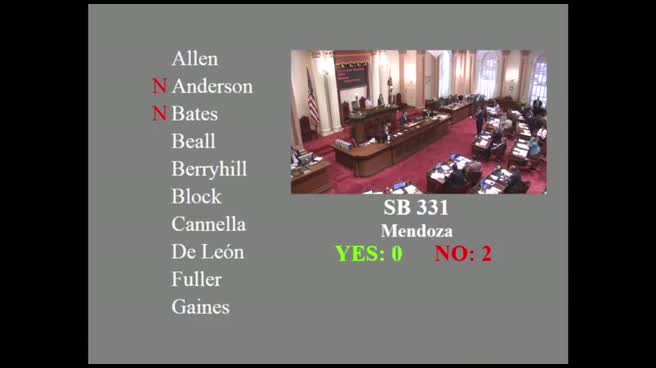
Bill Author

Bill Co-Author(s):