SB 352: Elder abuse.
- Session Year: 2015-2016
- House: Senate
- Latest Version Date: 2015-09-08
Existing law makes it a crime for a person who knows or reasonably should know that a person is an elder or dependent adult to willfully cause or permit the person or health of the elder or dependent adult to be injured, or willfully cause or permit the elder or dependent adult to be placed in a situation in which his or her person or health is endangered. Existing law specifies penalties for a person who violates any provision of law proscribing theft, embezzlement, forgery, fraud, or specified identity theft provisions of law when the victim is an elder or dependent adult. Existing law makes it a crime to falsely imprison an elder or dependent adult by the use of violence, menace, fraud, or deceit.
This bill would require a sentencing court, upon a persons conviction for violating these provisions, to consider issuing an order restraining the defendant from any contact with the victim, whether the defendant is sentenced to state prison or county jail, or if imposition of sentence is suspended and the defendant is placed on probation, which may be valid for up to 10 years, as determined by the court. By expanding the scope of the crime of violating a protective order, this bill would impose a state-mandated local program.
This bill would also make a conforming change.
The California Constitution requires the state to reimburse local agencies and school districts for certain costs mandated by the state. Statutory provisions establish procedures for making that reimbursement.
This bill would provide that no reimbursement is required by this act for a specified reason.
Existing law makes it a crime for a person who knows or reasonably should know that a person is an elder or dependent adult to willfully cause or permit the person or health of the elder or dependent adult to be injured, or willfully cause or permit the elder or dependent adult to be placed in a situation in which his or her person or health is endangered. Existing law specifies penalties for a person who violates any provision of law proscribing theft, embezzlement, forgery, fraud, or specified identify theft provisions of law when the victim is an elder or dependent adult. Existing law makes it a crime to falsely imprison an elder or dependent adult by the use of violence, menace, fraud, or deceit.
This bill would require a sentencing court, upon a persons conviction for violating these provisions, to consider issuing an order restraining the defendant from any contact with the victim, whether the defendant is sentenced to state prison or county jail, or if imposition of sentence is suspended and the defendant is placed on probation, which may be valid for up to 10 years, as determined by the court. By expanding the scope of the crime of violating a protective order, this bill would impose a state-mandated local program.
This bill would also make a conforming change.
The California Constitution requires the state to reimburse local agencies and school districts for certain costs mandated by the state. Statutory provisions establish procedures for making that reimbursement.
This bill would provide that no reimbursement is required by this act for a specified reason.
Existing law makes it a crime for a person who knows or reasonably should know that a person is an elder or dependent adult to willfully cause or permit the person or health of the elder or dependent adult to be injured, or willfully cause or permit the elder or dependent adult to be placed in a situation in which his or her person or health is endangered. Existing law specifies penalties for a person who violates any provision of law proscribing theft, embezzlement, forgery, fraud, or specified identify theft provisions of law when the victim is an elder or dependent adult. Existing law makes a crime to falsely imprison an elder or dependent adult by the use of violence, menace, fraud, or deceit.
This bill would require a sentencing court, upon a persons conviction for violating these provisions, to consider issuing an order restraining the defendant from any contact with the victim, whether the defendant is sentenced to state prison or county jail, or if imposition of sentence is suspended and the defendant is placed on probation, which may be valid for up to 10 years, as determined by the court. By expanding the scope of the crime of violating a protective order, this bill would impose a state-mandated program.
The California Constitution requires the state to reimburse local agencies and school districts for certain costs mandated by the state. Statutory provisions establish procedures for making that reimbursement.
This bill would provide that no reimbursement is required by this act for a specified reason.
(a)Except as provided in subdivisions (b), (c), and (d), a person guilty of any of the following contempts of court is guilty of a misdemeanor:
(1)Disorderly, contemptuous, or insolent behavior committed during the sitting of a court of justice, in the immediate view and presence of the court, and directly tending to interrupt its proceedings or to impair the respect due to its authority.
(2)Behavior specified in paragraph (1) that is committed in the presence of a referee, while actually engaged in a trial or hearing, pursuant to the order of a court, or in the presence of any jury while actually sitting for the trial of a cause, or upon an inquest or other proceeding authorized by law.
(3)A breach of the peace, noise, or other disturbance directly tending to interrupt the proceedings of the court.
(4)Willful disobedience of the terms as written of any process or court order or out-of-state court order, lawfully issued by a court, including orders pending trial.
(5)Resistance willfully offered by any person to the lawful order or process of a court.
(6)The contumacious and unlawful refusal of a person to be sworn as a witness or, when so sworn, the like refusal to answer a material question.
(7)The publication of a false or grossly inaccurate report of the proceedings of a court.
(8)Presenting to a court having power to pass sentence upon a prisoner under conviction, or to a member of the court, an affidavit, testimony, or representation of any kind, verbal or written, in aggravation or mitigation of the punishment to be imposed upon the prisoner, except as provided in this code.
(9)Willful disobedience of the terms of an injunction that restrains the activities of a criminal street gang or any of its members, lawfully issued by a court, including an order pending trial.
(b)(1)A person who is guilty of contempt of court under paragraph (4) of subdivision (a) by willfully contacting a victim by telephone or mail, or directly, and who has been previously convicted of a violation of Section 646.9 shall be punished by imprisonment in a county jail for not more than one year, by a fine of five thousand dollars ($5,000), or by both that fine and imprisonment.
(2)For the purposes of sentencing under this subdivision, each contact shall constitute a separate violation of this subdivision.
(3)The present incarceration of a person who makes contact with a victim in violation of paragraph (1) is not a defense to a violation of this subdivision.
(c)(1)Notwithstanding paragraph (4) of subdivision (a), a willful and knowing violation of a protective order or stay-away court order described as follows shall constitute contempt of court, a misdemeanor, punishable by imprisonment in a county jail for not more than one year, by a fine of not more than one thousand dollars ($1,000), or by both that imprisonment and fine:
(A)An order issued pursuant to Section 136.2.
(B)An order issued pursuant to paragraph (2) of subdivision (a) of Section 1203.097.
(C)An order issued after a conviction in a criminal proceeding involving elder or dependent adult abuse, as defined in Section 368.
(D)An order issued pursuant to Section 1201.3.
(E)An order described in paragraph (3).
(2)If a violation of paragraph (1) results in a physical injury, the person shall be imprisoned in a county jail for at least 48 hours, whether a fine or imprisonment is imposed, or the sentence is suspended.
(3)Paragraphs (1) and (2) apply to the following court orders:
(A)An order issued pursuant to Section 6320 or 6389 of the Family Code.
(B)An order excluding one party from the family dwelling or from the dwelling of the other.
(C)An order enjoining a party from specified behavior that the court determined was necessary to effectuate the orders described in paragraph (1).
(4)A second or subsequent conviction for a violation of an order described in paragraph (1) occurring within seven years of a prior conviction for a violation of any of those orders and involving an act of violence or a credible threat of violence, as provided in subdivision (c) of Section 139, is punishable by imprisonment in a county jail not to exceed one year, or in the state prison for 16 months or two or three years.
(5)The prosecuting agency of each county shall have the primary responsibility for the enforcement of the orders described in paragraph (1).
(d)(1)A person who owns, possesses, purchases, or receives a firearm knowing he or she is prohibited from doing so by the provisions of a protective order as defined in Section 136.2 of this code, Section 6218 of the Family Code, or Section 527.6 or 527.8 of the Code of Civil Procedure, shall be punished under Section 29825.
(2)A person subject to a protective order described in paragraph (1) shall not be prosecuted under this section for owning, possessing, purchasing, or receiving a firearm to the extent that firearm is granted an exemption pursuant to subdivision (h) of Section 6389 of the Family Code.
(e)(1)If probation is granted upon conviction of a violation of subdivision (c), the court shall impose probation consistent with Section 1203.097.
(2)If probation is granted upon conviction of a violation of subdivision (c), the conditions of probation may include, in lieu of a fine, one or both of the following requirements:
(A)That the defendant make payments to a battered womens shelter, up to a maximum of one thousand dollars ($1,000).
(B)That the defendant provide restitution to reimburse the victim for reasonable costs of counseling and other reasonable expenses that the court finds are the direct result of the defendants offense.
(3)For an order to pay a fine, make payments to a battered womens shelter, or pay restitution as a condition of probation under this subdivision or subdivision (c), the court shall make a determination of the defendants ability to pay. In no event shall an order to make payments to a battered womens shelter be made if it would impair the ability of the defendant to pay direct restitution to the victim or court-ordered child support.
(4)If the injury to a married person is caused in whole, or in part, by the criminal acts of his or her spouse in violation of subdivision (c), the community property shall not be used to discharge the liability of the offending spouse for restitution to the injured spouse required by Section 1203.04, as operative on or before August 2, 1995, or Section 1202.4, or to a shelter for costs with regard to the injured spouse and dependents required by this subdivision, until all separate property of the offending spouse is exhausted.
(5)A person violating an order described in subdivision (c) may be punished for any substantive offenses described under Section 136.1 or 646.9. A finding of contempt shall not be a bar to prosecution for a violation of Section 136.1 or 646.9. However, a person held in contempt for a violation of subdivision (c) shall be entitled to credit for any punishment imposed as a result of that violation against any sentence imposed upon conviction of an offense described in Section 136.1 or 646.9. A conviction or acquittal for a substantive offense under Section 136.1 or 646.9 shall be a bar to a subsequent punishment for contempt arising out of the same act.
SEC. 2.Section 368 of the Penal Code is amended to read:368.(a)The Legislature finds and declares that crimes against elders and dependent adults are deserving of special consideration and protection, not unlike the special protections provided for minor children, because elders and dependent adults may be confused, on various medications, mentally or physically impaired, or incompetent, and therefore less able to protect themselves, to understand or report criminal conduct, or to testify in court proceedings on their own behalf.
(b)(1)Any person who knows or reasonably should know that a person is an elder or dependent adult and who, under circumstances or conditions likely to produce great bodily harm or death, willfully causes or permits any elder or dependent adult to suffer, or inflicts thereon unjustifiable physical pain or mental suffering, or having the care or custody of any elder or dependent adult, willfully causes or permits the person or health of the elder or dependent adult to be injured, or willfully causes or permits the elder or dependent adult to be placed in a situation in which his or her person or health is endangered, is punishable by imprisonment in a county jail not exceeding one year, or by a fine not to exceed six thousand dollars ($6,000), or by both that fine and imprisonment, or by imprisonment in the state prison for two, three, or four years.
(2)If, in the commission of an offense described in paragraph (1), the victim suffers great bodily injury, as defined in Section 12022.7, the defendant shall receive an additional term in the state prison as follows:
(A)Three years if the victim is under 70 years of age.
(B)Five years if the victim is 70 years of age or older.
(3)If, in the commission of an offense described in paragraph (1), the defendant proximately causes the death of the victim, the defendant shall receive an additional term in the state prison as follows:
(A)Five years if the victim is under 70 years of age.
(B)Seven years if the victim is 70 years of age or older.
(c)Any person who knows or reasonably should know that a person is an elder or dependent adult and who, under circumstances or conditions other than those likely to produce great bodily harm or death, willfully causes or permits any elder or dependent adult to suffer, or inflicts thereon unjustifiable physical pain or mental suffering, or having the care or custody of any elder or dependent adult, willfully causes or permits the person or health of the elder or dependent adult to be injured or willfully causes or permits the elder or dependent adult to be placed in a situation in which his or her person or health may be endangered, is guilty of a misdemeanor. A second or subsequent violation of this subdivision is punishable by a fine not to exceed two thousand dollars ($2,000), or by imprisonment in a county jail not to exceed one year, or by both that fine and imprisonment.
(d)Any person who is not a caretaker who violates any provision of law proscribing theft, embezzlement, forgery, or fraud, or who violates Section 530.5 proscribing identity theft, with respect to the property or personal identifying information of an elder or a dependent adult, and who knows or reasonably should know that the victim is an elder or a dependent adult, is punishable as follows:
(1)By a fine not exceeding two thousand five hundred dollars ($2,500), or by imprisonment in a county jail not exceeding one year, or by both that fine and imprisonment, or by a fine not exceeding ten thousand dollars ($10,000), or by imprisonment pursuant to subdivision (h) of Section 1170 for two, three, or four years, or by both that fine and imprisonment, when the moneys, labor, goods, services, or real or personal property taken or obtained is of a value exceeding nine hundred fifty dollars ($950).
(2)By a fine not exceeding one thousand dollars ($1,000), by imprisonment in a county jail not exceeding one year, or by both that fine and imprisonment, when the moneys, labor, goods, services, or real or personal property taken or obtained is of a value not exceeding nine hundred fifty dollars ($950).
(e)Any caretaker of an elder or a dependent adult who violates any provision of law proscribing theft, embezzlement, forgery, or fraud, or who violates Section 530.5 proscribing identity theft, with respect to the property or personal identifying information of that elder or dependent adult, is punishable as follows:
(1)By a fine not exceeding two thousand five hundred dollars ($2,500), or by imprisonment in a county jail not exceeding one year, or by both that fine and imprisonment, or by a fine not exceeding ten thousand dollars ($10,000), or by imprisonment pursuant to subdivision (h) of Section 1170 for two, three, or four years, or by both that fine and imprisonment, when the moneys, labor, goods, services, or real or personal property taken or obtained is of a value exceeding nine hundred fifty dollars ($950).
(2)By a fine not exceeding one thousand dollars ($1,000), by imprisonment in a county jail not exceeding one year, or by both that fine and imprisonment, when the moneys, labor, goods, services, or real or personal property taken or obtained is of a value not exceeding nine hundred fifty dollars ($950).
(f)Any person who commits the false imprisonment of an elder or a dependent adult by the use of violence, menace, fraud, or deceit is punishable by imprisonment pursuant to subdivision (h) of Section 1170 for two, three, or four years.
(g)As used in this section, elder means any person who is 65 years of age or older.
(h)As used in this section, dependent adult means any person who is between the ages of 18 and 64, who has physical or mental limitations which restrict his or her ability to carry out normal activities or to protect his or her rights, including, but not limited to, persons who have physical or developmental disabilities or whose physical or mental abilities have diminished because of age. Dependent adult includes any person between the ages of 18 and 64 who is admitted as an inpatient to a 24-hour health facility, as defined in Sections 1250, 1250.2, and 1250.3 of the Health and Safety Code.
(i)As used in this section, caretaker means any person who has the care, custody, or control of, or who stands in a position of trust with, an elder or a dependent adult.
(j)Nothing in this section shall preclude prosecution under both this section and Section 187 or 12022.7 or any other provision of law. However, a person shall not receive an additional term of imprisonment under both paragraphs (2) and (3) of subdivision (b) for any single offense, nor shall a person receive an additional term of imprisonment under both Section 12022.7 and paragraph (2) or (3) of subdivision (b) for any single offense.
(k)In any case in which a person is convicted of violating these provisions, the court may require him or her to receive appropriate counseling as a condition of probation. Any defendant ordered to be placed in a counseling program shall be responsible for paying the expense of his or her participation in the counseling program as determined by the court. The court shall take into consideration the ability of the defendant to pay, and no defendant shall be denied probation because of his or her inability to pay.
(l)Upon conviction for a violation of subdivision (b), (c), (d), (e), or (f), the sentencing court shall also consider issuing an order restraining the defendant from any contact with the victim, which may be valid for up to 10 years, as determined by the court. It is the intent of the Legislature that the length of any restraining order be based upon the seriousness of the facts before the court, the probability of future violations, and the safety of the victim and his or her immediate family. This protective order may be issued by the court whether the defendant is sentenced to state prison or county jail, or if imposition of sentence is suspended and the defendant is placed on probation.
SEC. 3.No reimbursement is required by this act pursuant to Section 6 of Article XIIIB of the California Constitution because the only costs that may be incurred by a local agency or school district will be incurred because this act creates a new crime or infraction, eliminates a crime or infraction, or changes the penalty for a crime or infraction, within the meaning of Section 17556 of the Government Code, or changes the definition of a crime within the meaning of Section 6 of Article XIIIB of the California Constitution.
(a)Except as provided in subdivisions (b), (c), and (d), a person guilty of any of the following contempts of court is guilty of a misdemeanor:
(1)Disorderly, contemptuous, or insolent behavior committed during the sitting of a court of justice, in the immediate view and presence of the court, and directly tending to interrupt its proceedings or to impair the respect due to its authority.
(2)Behavior specified in paragraph (1) that is committed in the presence of a referee, while actually engaged in a trial or hearing, pursuant to the order of a court, or in the presence of any jury while actually sitting for the trial of a cause, or upon an inquest or other proceeding authorized by law.
(3)A breach of the peace, noise, or other disturbance directly tending to interrupt the proceedings of the court.
(4)Willful disobedience of the terms as written of any process or court order or out-of-state court order, lawfully issued by a court, including orders pending trial.
(5)Resistance willfully offered by any person to the lawful order or process of a court.
(6)The contumacious and unlawful refusal of a person to be sworn as a witness or, when so sworn, the like refusal to answer a material question.
(7)The publication of a false or grossly inaccurate report of the proceedings of a court.
(8)Presenting to a court having power to pass sentence upon a prisoner under conviction, or to a member of the court, an affidavit, testimony, or representation of any kind, verbal or written, in aggravation or mitigation of the punishment to be imposed upon the prisoner, except as provided in this code.
(9)Willful disobedience of the terms of an injunction that restrains the activities of a criminal street gang or any of its members, lawfully issued by a court, including an order pending trial.
(b)(1)A person who is guilty of contempt of court under paragraph (4) of subdivision (a) by willfully contacting a victim by telephone or mail, or directly, and who has been previously convicted of a violation of Section 646.9 shall be punished by imprisonment in a county jail for not more than one year, by a fine of five thousand dollars ($5,000), or by both that fine and imprisonment.
(2)For the purposes of sentencing under this subdivision, each contact shall constitute a separate violation of this subdivision.
(3)The present incarceration of a person who makes contact with a victim in violation of paragraph (1) is not a defense to a violation of this subdivision.
(c)(1)Notwithstanding paragraph (4) of subdivision (a), a willful and knowing violation of a protective order or stay-away court order described as follows shall constitute contempt of court, a misdemeanor, punishable by imprisonment in a county jail for not more than one year, by a fine of not more than one thousand dollars ($1,000), or by both that imprisonment and fine:
(A)An order issued pursuant to Section 136.2.
(B)An order issued pursuant to paragraph (2) of subdivision (a) of Section 1203.097.
(C)An order issued as a condition of probation after a conviction in a criminal proceeding involving elder or dependent adult abuse, as defined in Section 368.
(D)An order issued pursuant to Section 1201.3.
(E)An order described in paragraph (3).
(2)If a violation of paragraph (1) results in a physical injury, the person shall be imprisoned in a county jail for at least 48 hours, whether a fine or imprisonment is imposed, or the sentence is suspended.
(3)Paragraphs (1) and (2) apply to the following court orders:
(A)An order issued pursuant to Section 6320 or 6389 of the Family Code.
(B)An order excluding one party from the family dwelling or from the dwelling of the other.
(C)An order enjoining a party from specified behavior that the court determined was necessary to effectuate the orders described in paragraph (1).
(4)A second or subsequent conviction for a violation of an order described in paragraph (1) occurring within seven years of a prior conviction for a violation of any of those orders and involving an act of violence or a credible threat of violence, as provided in subdivision (c) of Section 139, is punishable by imprisonment in a county jail not to exceed one year, or in the state prison for 16 months or two or three years.
(5)The prosecuting agency of each county shall have the primary responsibility for the enforcement of the orders described in paragraph (1).
(d)(1)A person who owns, possesses, purchases, or receives a firearm knowing he or she is prohibited from doing so by the provisions of a protective order as defined in Section 136.2 of this code, Section 6218 of the Family Code, or Section 527.6 or 527.8 of the Code of Civil Procedure, shall be punished under Section 29825.
(2)A person subject to a protective order described in paragraph (1) shall not be prosecuted under this section for owning, possessing, purchasing, or receiving a firearm to the extent that firearm is granted an exemption pursuant to subdivision (h) of Section 6389 of the Family Code.
(e)(1)If probation is granted upon conviction of a violation of subdivision (c), the court shall impose probation consistent with Section 1203.097.
(2)If probation is granted upon conviction of a violation of subdivision (c), the conditions of probation may include, in lieu of a fine, one or both of the following requirements:
(A)That the defendant make payments to a battered womens shelter, up to a maximum of one thousand dollars ($1,000).
(B)That the defendant provide restitution to reimburse the victim for reasonable costs of counseling and other reasonable expenses that the court finds are the direct result of the defendants offense.
(3)For an order to pay a fine, make payments to a battered womens shelter, or pay restitution as a condition of probation under this subdivision or subdivision (c), the court shall make a determination of the defendants ability to pay. In no event shall an order to make payments to a battered womens shelter be made if it would impair the ability of the defendant to pay direct restitution to the victim or court-ordered child support.
(4)If the injury to a married person is caused in whole, or in part, by the criminal acts of his or her spouse in violation of subdivision (c), the community property shall not be used to discharge the liability of the offending spouse for restitution to the injured spouse required by Section 1203.04, as operative on or before August 2, 1995, or Section 1202.4, or to a shelter for costs with regard to the injured spouse and dependents required by this subdivision, until all separate property of the offending spouse is exhausted.
(5)A person violating an order described in subdivision (c) may be punished for any substantive offenses described under Section 136.1 or 646.9. A finding of contempt shall not be a bar to prosecution for a violation of Section 136.1 or 646.9. However, a person held in contempt for a violation of subdivision (c) shall be entitled to credit for any punishment imposed as a result of that violation against any sentence imposed upon conviction of an offense described in Section 136.1 or 646.9. A conviction or acquittal for a substantive offense under Section 136.1 or 646.9 shall be a bar to a subsequent punishment for contempt arising out of the same act.
SECTION 1.SEC. 2.Section 368 of the Penal Code is amended to read:368.(a)The Legislature finds and declares that crimes against elders and dependent adults are deserving of special consideration and protection, not unlike the special protections provided for minor children, because elders and dependent adults may be confused, on various medications, mentally or physically impaired, or incompetent, and therefore less able to protect themselves, to understand or report criminal conduct, or to testify in court proceedings on their own behalf.
(b)(1)Any person who knows or reasonably should know that a person is an elder or dependent adult and who, under circumstances or conditions likely to produce great bodily harm or death, willfully causes or permits any elder or dependent adult to suffer, or inflicts thereon unjustifiable physical pain or mental suffering, or having the care or custody of any elder or dependent adult, willfully causes or permits the person or health of the elder or dependent adult to be injured, or willfully causes or permits the elder or dependent adult to be placed in a situation in which his or her person or health is endangered, is punishable by imprisonment in a county jail not exceeding one year, or by a fine not to exceed six thousand dollars ($6,000), or by both that fine and imprisonment, or by imprisonment in the state prison for two, three, or four years.
(2)If If, in the commission of an offense described in paragraph (1), the victim suffers great bodily injury, as defined in Section 12022.7, the defendant shall receive an additional term in the state prison as follows:
(A)Three years if the victim is under 70 years of age.
(B)Five years if the victim is 70 years of age or older.
(3)If If, in the commission of an offense described in paragraph (1), the defendant proximately causes the death of the victim, the defendant shall receive an additional term in the state prison as follows:
(A)Five years if the victim is under 70 years of age.
(B)Seven years if the victim is 70 years of age or older.
(c)Any person who knows or reasonably should know that a person is an elder or dependent adult and who, under circumstances or conditions other than those likely to produce great bodily harm or death, willfully causes or permits any elder or dependent adult to suffer, or inflicts thereon unjustifiable physical pain or mental suffering, or having the care or custody of any elder or dependent adult, willfully causes or permits the person or health of the elder or dependent adult to be injured or willfully causes or permits the elder or dependent adult to be placed in a situation in which his or her person or health may be endangered, is guilty of a misdemeanor. A second or subsequent violation of this subdivision is punishable by a fine not to exceed two thousand dollars ($2,000), or by imprisonment in a county jail not to exceed one year, or by both that fine and imprisonment.
(d)Any person who is not a caretaker who violates any provision of law proscribing theft, embezzlement, forgery, or fraud, or who violates Section 530.5 proscribing identity theft, with respect to the property or personal identifying information of an elder or a dependent adult, and who knows or reasonably should know that the victim is an elder or a dependent adult, is punishable as follows:
(1)By a fine not exceeding two thousand five hundred dollars ($2,500), or by imprisonment in a county jail not exceeding one year, or by both that fine and imprisonment, or by a fine not exceeding ten thousand dollars ($10,000), or by imprisonment pursuant to subdivision (h) of Section 1170 for two, three, or four years, or by both that fine and imprisonment, when the moneys, labor, goods, services, or real or personal property taken or obtained is of a value exceeding nine hundred fifty dollars ($950).
(2)By a fine not exceeding one thousand dollars ($1,000), by imprisonment in a county jail not exceeding one year, or by both that fine and imprisonment, when the moneys, labor, goods, services, or real or personal property taken or obtained is of a value not exceeding nine hundred fifty dollars ($950).
(e)Any caretaker of an elder or a dependent adult who violates any provision of law proscribing theft, embezzlement, forgery, or fraud, or who violates Section 530.5 proscribing identity theft, with respect to the property or personal identifying information of that elder or dependent adult, is punishable as follows:
(1)By a fine not exceeding two thousand five hundred dollars ($2,500), or by imprisonment in a county jail not exceeding one year, or by both that fine and imprisonment, or by a fine not exceeding ten thousand dollars ($10,000), or by imprisonment pursuant to subdivision (h) of Section 1170 for two, three, or four years, or by both that fine and imprisonment, when the moneys, labor, goods, services, or real or personal property taken or obtained is of a value exceeding nine hundred fifty dollars ($950).
(2)By a fine not exceeding one thousand dollars ($1,000), by imprisonment in a county jail not exceeding one year, or by both that fine and imprisonment, when the moneys, labor, goods, services, or real or personal property taken or obtained is of a value not exceeding nine hundred fifty dollars ($950).
(f)Any person who commits the false imprisonment of an elder or a dependent adult by the use of violence, menace, fraud, or deceit is punishable by imprisonment pursuant to subdivision (h) of Section 1170 for two, three, or four years.
(g)As used in this section, elder means any person who is 65 years of age or older.
(h)As used in this section, dependent adult means any person who is between the ages of 18 and 64, who has physical or mental limitations which restrict his or her ability to carry out normal activities or to protect his or her rights, including, but not limited to, persons who have physical or developmental disabilities or whose physical or mental abilities have diminished because of age. Dependent adult includes any person between the ages of 18 and 64 who is admitted as an inpatient to a 24-hour health facility, as defined in Sections 1250, 1250.2, and 1250.3 of the Health and Safety Code.
(i)As used in this section, caretaker means any person who has the care, custody, or control of, or who stands in a position of trust with, an elder or a dependent adult.
(j)Nothing in this section shall preclude prosecution under both this section and Section 187 or 12022.7 or any other provision of law. However, a person shall not receive an additional term of imprisonment under both paragraphs (2) and (3) of subdivision (b) for any single offense, nor shall a person receive an additional term of imprisonment under both Section 12022.7 and paragraph (2) or (3) of subdivision (b) for any single offense.
(k)In any case in which a person is convicted of violating these provisions, the court may require him or her to receive appropriate counseling as a condition of probation. Any defendant ordered to be placed in a counseling program shall be responsible for paying the expense of his or her participation in the counseling program as determined by the court. The court shall take into consideration the ability of the defendant to pay, and no defendant shall be denied probation because of his or her inability to pay.
(l)Upon conviction for a violation of subdivision (b), (c), (d), (e), or (f), the sentencing court shall also consider issuing an order restraining the defendant from any contact with the victim, which may be valid for up to 10 years, as determined by the court. It is the intent of the Legislature that the length of any restraining order be based upon the seriousness of the facts before the court, the probability of future violations, and the safety of the victim and his or her immediate family. This protective order may be issued by the court whether the defendant is sentenced to state prison or county jail, or if imposition of sentence is suspended and the defendant is placed on probation.
SEC. 2.SEC. 3.No reimbursement is required by this act pursuant to Section 6 of Article XIIIB of the California Constitution because the only costs that may be incurred by a local agency or school district will be incurred because this act creates a new crime or infraction, eliminates a crime or infraction, or changes the penalty for a crime or infraction, within the meaning of Section 17556 of the Government Code, or changes the definition of a crime within the meaning of Section 6 of Article XIIIB of the California Constitution.
(a)The Legislature finds and declares that crimes against elders and dependent adults are deserving of special consideration and protection, not unlike the special protections provided for minor children, because elders and dependent adults may be confused, on various medications, mentally or physically impaired, or incompetent, and therefore less able to protect themselves, to understand or report criminal conduct, or to testify in court proceedings on their own behalf.
(b)(1)Any person who knows or reasonably should know that a person is an elder or dependent adult and who, under circumstances or conditions likely to produce great bodily harm or death, willfully causes or permits any elder or dependent adult to suffer, or inflicts thereon unjustifiable physical pain or mental suffering, or having the care or custody of any elder or dependent adult, willfully causes or permits the person or health of the elder or dependent adult to be injured, or willfully causes or permits the elder or dependent adult to be placed in a situation in which his or her person or health is endangered, is punishable by imprisonment in a county jail not exceeding one year, or by a fine not to exceed six thousand dollars ($6,000), or by both that fine and imprisonment, or by imprisonment in the state prison for two, three, or four years.
(2)If in the commission of an offense described in paragraph (1), the victim suffers great bodily injury, as defined in Section 12022.7, the defendant shall receive an additional term in the state prison as follows:
(A)Three years if the victim is under 70 years of age.
(B)Five years if the victim is 70 years of age or older.
(3)If in the commission of an offense described in paragraph (1), the defendant proximately causes the death of the victim, the defendant shall receive an additional term in the state prison as follows:
(A)Five years if the victim is under 70 years of age.
(B)Seven years if the victim is 70 years of age or older.
(c)Any person who knows or reasonably should know that a person is an elder or dependent adult and who, under circumstances or conditions other than those likely to produce great bodily harm or death, willfully causes or permits any elder or dependent adult to suffer, or inflicts thereon unjustifiable physical pain or mental suffering, or having the care or custody of any elder or dependent adult, willfully causes or permits the person or health of the elder or dependent adult to be injured or willfully causes or permits the elder or dependent adult to be placed in a situation in which his or her person or health may be endangered, is guilty of a misdemeanor. A second or subsequent violation of this subdivision is punishable by a fine not to exceed two thousand dollars ($2,000), or by imprisonment in a county jail not to exceed one year, or by both that fine and imprisonment.
(d)Any person who is not a caretaker who violates any provision of law proscribing theft, embezzlement, forgery, or fraud, or who violates Section 530.5 proscribing identity theft, with respect to the property or personal identifying information of an elder or a dependent adult, and who knows or reasonably should know that the victim is an elder or a dependent adult, is punishable as follows:
(1)By a fine not exceeding two thousand five hundred dollars ($2,500), or by imprisonment in a county jail not exceeding one year, or by both that fine and imprisonment, or by a fine not exceeding ten thousand dollars ($10,000), or by imprisonment pursuant to subdivision (h) of Section 1170 for two, three, or four years, or by both that fine and imprisonment, when the moneys, labor, goods, services, or real or personal property taken or obtained is of a value exceeding nine hundred fifty dollars ($950).
(2)By a fine not exceeding one thousand dollars ($1,000), by imprisonment in a county jail not exceeding one year, or by both that fine and imprisonment, when the moneys, labor, goods, services, or real or personal property taken or obtained is of a value not exceeding nine hundred fifty dollars ($950).
(e)Any caretaker of an elder or a dependent adult who violates any provision of law proscribing theft, embezzlement, forgery, or fraud, or who violates Section 530.5 proscribing identity theft, with respect to the property or personal identifying information of that elder or dependent adult, is punishable as follows:
(1)By a fine not exceeding two thousand five hundred dollars ($2,500), or by imprisonment in a county jail not exceeding one year, or by both that fine and imprisonment, or by a fine not exceeding ten thousand dollars ($10,000), or by imprisonment pursuant to subdivision (h) of Section 1170 for two, three, or four years, or by both that fine and imprisonment, when the moneys, labor, goods, services, or real or personal property taken or obtained is of a value exceeding nine hundred fifty dollars ($950).
(2)By a fine not exceeding one thousand dollars ($1,000), by imprisonment in a county jail not exceeding one year, or by both that fine and imprisonment, when the moneys, labor, goods, services, or real or personal property taken or obtained is of a value not exceeding nine hundred fifty dollars ($950).
(f)Any person who commits the false imprisonment of an elder or a dependent adult by the use of violence, menace, fraud, or deceit is punishable by imprisonment pursuant to subdivision (h) of Section 1170 for two, three, or four years.
(g)As used in this section, elder means any person who is 65 years of age or older.
(h)As used in this section, dependent adult means any person who is between the ages of 18 and 64, who has physical or mental limitations which restrict his or her ability to carry out normal activities or to protect his or her rights, including, but not limited to, persons who have physical or developmental disabilities or whose physical or mental abilities have diminished because of age. Dependent adult includes any person between the ages of 18 and 64 who is admitted as an inpatient to a 24-hour health facility, as defined in Sections 1250, 1250.2, and 1250.3 of the Health and Safety Code.
(i)As used in this section, caretaker means any person who has the care, custody, or control of, or who stands in a position of trust with, an elder or a dependent adult.
(j)Nothing in this section shall preclude prosecution under both this section and Section 187 or 12022.7 or any other provision of law. However, a person shall not receive an additional term of imprisonment under both paragraphs (2) and (3) of subdivision (b) for any single offense, nor shall a person receive an additional term of imprisonment under both Section 12022.7 and paragraph (2) or (3) of subdivision (b) for any single offense.
(k)In any case in which a person is convicted of violating these provisions, the court may require him or her to receive appropriate counseling as a condition of probation. Any defendant ordered to be placed in a counseling program shall be responsible for paying the expense of his or her participation in the counseling program as determined by the court. The court shall take into consideration the ability of the defendant to pay, and no defendant shall be denied probation because of his or her inability to pay.
(l)Upon conviction for a violation of subdivision (b), (c), (d), (e), or (f), the sentencing court shall also consider issuing an order restraining the defendant from any contact with the victim, which may be valid for up to 10 years, as determined by the court. It is the intent of the Legislature that the length of any restraining order be based upon the seriousness of the facts before the court, the probability of future violations, and the safety of the victim and his or her immediate family. This protective order may be issued by the court whether the defendant is sentenced to state prison or county jail, or if imposition of sentence is suspended and the defendant is placed on probation.
SEC. 2.No reimbursement is required by this act pursuant to Section 6 of Article XIIIB of the California Constitution because the only costs that may be incurred by a local agency or school district will be incurred because this act creates a new crime or infraction, eliminates a crime or infraction, or changes the penalty for a crime or infraction, within the meaning of Section 17556 of the Government Code, or changes the definition of a crime within the meaning of Section 6 of Article XIIIB of the California Constitution.
|
Date
|
Status
|
|---|---|
| May 28, 2015 | Referred to Com. on PUB. S. |
| Sep 8, 2015 | Chaptered by Secretary of State. Chapter 279, Statutes of 2015. |
| Sep 8, 2015 | Approved by the Governor. |
| Aug 26, 2015 | Enrolled and presented to the Governor at 4:30 p.m. |
| Aug 20, 2015 | Assembly amendments concurred in. (Ayes 38. Noes 0.) Ordered to engrossing and enrolling. |
| Aug 19, 2015 | Ordered to special consent calendar. |
| Jul 16, 2015 | Read third time. Passed. (Ayes 79. Noes 0. Page 2433.) Ordered to the Senate. |
| Jul 16, 2015 | Read third time. Passed. Ordered to the Senate. |
| Jul 16, 2015 | In Senate. Concurrence in Assembly amendments pending. |
| Jul 9, 2015 | Read second time. Ordered to consent calendar. |
| Jul 8, 2015 | From committee: Do pass. Ordered to consent calendar. (Ayes 14. Noes 0.) (July 8). |
| Jun 17, 2015 | Read second time and amended. Re-referred to Com. on APPR. |
| Jun 16, 2015 | From committee: Do pass as amended and re-refer to Com. on APPR. with recommendation: To consent calendar. (Ayes 7. Noes 0.) (June 16). |
| Feb 24, 2015 | Introduced. Read first time. To Com. on RLS. for assignment. To print. |
| May 18, 2015 | Read third time. Passed. (Ayes 36. Noes 0.) Ordered to the Assembly. |
| May 18, 2015 | Read third time. Passed. (Ayes 36. Noes 0. Page 1021.) Ordered to the Assembly. |
| May 18, 2015 | In Assembly. Read first time. Held at Desk. |
| May 12, 2015 | Read second time. Ordered to third reading. |
| May 11, 2015 | From committee: Be ordered to second reading pursuant to Senate Rule 28.8. |
| May 1, 2015 | Set for hearing May 11. |
| Apr 29, 2015 | From committee: Do pass and re-refer to Com. on APPR. (Ayes 7. Noes 0.) (April 28). Re-referred to Com. on APPR. |
| Apr 29, 2015 | From committee: Do pass and re-refer to Com. on APPR. (Ayes 7. Noes 0. Page 822.) (April 28). Re-referred to Com. on APPR. |
| Apr 2, 2015 | Set for hearing April 28. |
| Mar 5, 2015 | Referred to Com. on PUB. S. |
| Feb 25, 2015 | From printer. May be acted upon on or after March 27. |
|
Date
|
Description
|
Location
|
Votes
|
|
|---|---|---|---|---|
| Aug 20, 2015 | Special Consent #6 SB352 Block | Senate Floor |
Passed |
|
| Jul 16, 2015 | SB 352 Block Consent Calendar Second Day Regular Session | Assembly Floor |
Passed |
|
| Jul 8, 2015 | Do pass. To Consent Calendar. | Assembly Standing Committee on Appropriations |
Passed |
|
| Jun 16, 2015 | Do pass as amended, and be re-referred to the Committee on [Appropriations] with recommendation: To Consent Calendar | Assembly Standing Committee on Public Safety |
Passed |
|
| May 18, 2015 | Senate 3rd Reading SB352 Block | Senate Floor |
Passed |
|
| Apr 28, 2015 | Do pass, but first be re-referred to the Committee on [Appropriations] | Senate Standing Committee on Public Safety |
Passed |
This list shows positions taken on this bill by organizations on the date displayed, which is linked to the original source.
Positions by individuals are not included.
|
Organization
|
Position
|
Date
|
|---|---|---|
| California Advocates for Nursing Home Reform | ** Support | May 18, 2015 |
| California District Attorneys Association | ** Support | May 18, 2015 |
| California Retired Teachers Association | ** Support | May 18, 2015 |
| California State Sheriffs' Association | ** Support | May 18, 2015 |
| San Diego District Attorney's Office | ** Support | May 18, 2015 |
SB 352
Page 4
|
Office of Senate Floor Analyses (916) 651-1520 Fax: (916) 327-4478 |
UNFINISHED BUSINESS
Bill No: SB 352
Amended: 6/17/15
SENATE PUBLIC SAFETY COMMITTEE: 7-0, 4/28/15
AYES: Hancock, Anderson, Leno, Liu, McGuire, Monning, Stone
SENATE APPROPRIATIONS COMMITTEE: Senate Rule 28.8
SENATE FLOOR: 36-0, 5/18/15
AYES: Allen, Anderson, Bates, Beall, Block, Cannella, De León, Fuller, Gaines, Galgiani, Hancock, Hernandez, Hertzberg, Hill, Hueso, Huff, Jackson, Lara, Leno, Leyva, Liu, McGuire, Mendoza, Mitchell, Monning, Moorlach, Morrell, Nguyen, Nielsen, Pan, Roth, Runner, Stone, Vidak, Wieckowski, Wolk
NO VOTE RECORDED: Berryhill, Hall, Pavley
ASSEMBLY FLOOR: 79-0, 7/16/15 (Consent) - See last page for vote
SOURCE: San Diego District Attorney’s Office
DIGEST: This bill requires a sentencing court to consider issuing a protective order upon a conviction of elder abuse.
Assembly Amendments are technical.
Existing law:
Defines “dependent adult” as any person who is between the ages of 18 and 64, who has physical or mental limitations which restrict his or her ability to carry out normal activities or to protect his or her rights, including, but not limited to, persons who have physical or developmental disabilities or whose physical or mental abilities have diminished because of age. (Penal Code § 368(h).)
Defines “elder” as any person who is 65 years of age or older. (Penal Code § 368(g).)
Provides that any person who knows or reasonably should know that a person is an elder or dependent adult and who, under circumstance or conditions likely to produce great bodily harm or death, willfully causes or permits any elder or dependent adult to suffer, or inflicts thereon unjustifiable physical pain or mental suffering, or having the care or custody of any elder or dependent adult, willfully causes or permits the person or health of the elder or dependent adult to be injured or willfully cause or permits the elder or adult to be placed in a situation in which his or her person or health is endangered, is punishable by imprisonment in the county jail or two three or four years in state prison or a fine not to exceed $6,000 or both fine and imprisonment. (Penal Code § 368 (b))
Provides that any person who knows or reasonably should know that a person is an elder or dependent adult and who, under circumstances or conditions other than those likely to produce great bodily harm or death, willfully causes or permits any elder or dependent adult to suffer, or inflicts thereon unjustifiable physical pain or mental suffering, or having the care or custody of any elder or dependent willfully causes or permits the elder or dependent adult to be placed in a situation in which his or her person or health may be endangered, is guilty of a misdemeanor. A second or subsequent violation is punishable by a fine not to exceed $1,000 or imprisonment in county jail not to exceed one year, or by both that fine and imprisonment. (Penal Code § 368 (c))
Establishes fines and other punishment for theft, embezzlement, forgery, or fraud, and identity theft and identity crimes against and elder or dependent adult. (Penal Code § 368 (d))
Allows for a protective order for an elder or dependent adult who has suffered abuse. (Welfare and Institutions Code § 15657.03)
This bill:
Provides that upon conviction for a violation of Penal Code Section 368 (b), (c), (d), (e) or (f) the sentencing court shall consider issuing an order restraining the defendant from any contact with the victim for up to 10 years.
Provides that in determining the length of any restraining order the court shall consider the seriousness of the facts before it, the probability of future violations, and the safety of the victim and his or her immediate family.
Background
Under existing law, an elder or dependent adult who has suffered abuse can seek a protective order under the Welfare and Institutions Code. The order does not require a conviction and can be for no more than five years. (Welfare and Institutions Code § 15657.03)
This bill requires the court to consider issuing an order restraining a defendant convicted of elder abuse from any contact with the victim. The restraining order may be valid for up to 10 years and in determining the length of time the court shall consider the seriousness of the facts of the case, the probability of future violations and the safety of the victim and his or her immediate family. The protective order may be issued whether the defendant served time in jail, prison or has his or her sentence suspended or is placed on probation. The order is post-conviction so unlike pre-conviction orders, the defendant has been found guilty of the acts that have been alleged.
FISCAL EFFECT: Appropriation: No Fiscal Com.: Yes Local: Yes
San Diego District Attorney’s Office (source)
Association for Deputy District Attorneys
California Advocates for Nursing Home Reform
California District Attorneys Association
California Retired Teachers Association
California State Sheriffs’ Association
OPPOSITION: (Verified 7/28/15)
None received
ASSEMBLY FLOOR: 79-0, 7/16/15
AYES: Achadjian, Alejo, Travis Allen, Baker, Bigelow, Bloom, Bonilla, Bonta, Brough, Brown, Burke, Calderon, Campos, Chang, Chau, Chávez, Chiu, Chu, Cooley, Cooper, Dababneh, Dahle, Daly, Dodd, Eggman, Frazier, Beth Gaines, Gallagher, Cristina Garcia, Eduardo Garcia, Gatto, Gipson, Gomez, Gonzalez, Gray, Grove, Hadley, Harper, Roger Hernández, Holden, Irwin, Jones, Jones-Sawyer, Kim, Lackey, Levine, Linder, Lopez, Low, Maienschein, Mathis, Mayes, McCarty, Medina, Melendez, Mullin, Nazarian, Obernolte, O'Donnell, Olsen, Patterson, Perea, Quirk, Rendon, Ridley-Thomas, Rodriguez, Salas, Santiago, Steinorth, Mark Stone, Thurmond, Ting, Wagner, Waldron, Weber, Wilk, Williams, Wood, Atkins
NO VOTE RECORDED: Gordon
Prepared by: Mary Kennedy / PUB. S. /
8/13/15 13:20:38
**** END ****
Date of Hearing: July 8, 2015
ASSEMBLY COMMITTEE ON APPROPRIATIONS
Jimmy Gomez, Chair
SB 352
(Block) – As Amended June 17, 2015
Policy Committee: |
Public Safety |
Vote: |
7 - 0 |
|
|
|
|
|
|
|
|
Urgency: No State Mandated Local Program: Yes Reimbursable: No
SUMMARY:
This bill requires the court to consider issuing a restraining order for up to 10 years when a defendant is convicted for an offense involving abuse of an elder or a dependent adult, regardless of the sentence imposed.
FISCAL EFFECT:
Unknown, likely minor state and local costs to the extent this bill results in longer restraining orders, which could result in additional probation and parole violations and/or contempt proceedings.
COMMENTS:
Purpose. According to the author, "With 4.2 million individuals over the age of 65 years, California has the highest number of aging adults in the nation. Currently, loopholes in the law restrict a prosecutor's ability to protect victims of elder abuse through the use of post-conviction criminal protective orders. This loophole leaves our most vulnerable crime victims with an unnecessary level of exposure to revictimization. Elders are also among the least equipped victims able to pursue protection through civil remedies such as temporary restraining orders since they are often complicated, costly and time consuming to obtain."
"Although great progress was made with the recent passage of SB 910 (Pavley), which provided protection to victims whose perpetrator is related within two degrees of consanguinity, more could be done to protect elders. SB 352 expands the protection of elders in the following cases where current law falls short:
"Where the victim is unrelated to a defendant which is
most prevalent in cases involving caretakers who are abusive
physically, financially, or through neglect;
"Where
the defendant is a relative of the victim but not within two degrees
of consanguinity, leaving elders exposed to perpetrators who may be
cousins, aunts/uncles, great-grandchildren, nieces/nephews;
step-children; etc.
"Where the defendant gets
sentenced to probation and the defendant and victim are not related
within two degrees of consanguinity. This scenario is most common
when there is elder abuse committed by caretakers."
"SB 352 will close this dangerous loophole in the law that makes
our elder victims vulnerable to further abuse and anxiety."
Background. Current law authorizes the trial court in a criminal case to issue protective orders when there is a good cause belief that harm to, or intimidation or dissuasion of a victim or witness has occurred or is reasonably likely to occur. Current law also provides that a person violating a protective order may be punished for any substantive offense described in provisions of law related to intimidation of witnesses or victims, or for contempt of court.
In all cases in which a criminal defendant has been convicted of a crime of domestic violence, as defined in relevant sections of the Family Code, or any crime that requires the defendant to register as a sex offender, the court, at the time of sentencing, shall consider issuing an order restraining the defendant from any contact with the victim. The order may be valid for up to 10 years, as determined by the court.
This bill extends the court's authority to issue no-contact orders lasting up to 10 years in cases involving the abuse of an elder or dependent adult.
Argument in Support: According to the San Diego County District Attorney, the sponsor of this bill, "Senate Bill 352 … closes a loophole that restricts a prosecutor's use of a post-conviction criminal protective order in certain situations. Current law allows for post-conviction use of protective orders in cases where the suspect and victim are related within two degrees of consanguinity. However, in cases where suspect and victim are not related within those two degrees, the protective order is not enforceable."
Related Legislation: SB 307 (Pavley), enrolled June 25, 2015, authorizes restraining orders to be issued by a court for specified crimes when a defendant's sentence includes a period of mandatory supervision.
Prior Legislation:
AB 307 (Campos), Chapter 291, Statutes of 2013, allows a court to issue a protective order for up to 10 years when a defendant is convicted of specified sex crimes, regardless of the sentence imposed.
SB 723 (Pavley), Chapter 155, Statutes of 2011, allows a court to issue a protective order for up to 10 years when a defendant is convicted for an offense involving domestic violence, regardless of the sentence imposed.
SB 834 (Florez), Chapter 627, Statutes of 2010, allows a court to issue a protective order for up to 10 years in sex cases involving a minor victim.
Analysis Prepared by: Pedro R. Reyes / APPR. / (916) 319-2081
SB 352
Page 5
Date of Hearing: June 16, 2015
Counsel: Sandy Uribe
ASSEMBLY COMMITTEE ON PUBLIC SAFETY
Bill Quirk, Chair
SB 352
(Block)
– As Introduced February 24, 2015
As
Proposed to be Amended in Committee
SUMMARY:
Requires the court to consider issuing a restraining order for up to
10 years when a defendant is convicted for an offense involving abuse
of an elder or a dependent adult, regardless of the sentence imposed.
Specifically, this bill:
Requires the court to consider issuing a restraining order lasting up to ten years when a defendant is convicted of a violation of any of the following crimes:
Infliction of unjustifiable physical pain or mental suffering upon an elder or dependent adult, or willfully causing or permitting such a person to suffer or become endangered;
Theft, identity theft, embezzlement, forgery, or fraud of an elder or dependent adult;
False imprisonment of an elder or dependent adult by violence, menace, fraud or deceit.
States that the length of the restraining order should be based on the seriousness of the facts in the case, the probability of future violations, and the safety of the victim and his or her immediate family.
States that the protective order may be issued regardless of whether the defendant is sentenced to state prison, county jail, or to probation.
Makes a conforming cross reference to the statute describing the punishment for violation of a restraining order.
EXISTING LAW:
Authorizes the trial court in a criminal case to issue protective orders when there is a good cause belief that harm to, or intimidation or dissuasion of a victim or witness has occurred or is reasonably likely to occur. (Pen. Code, § 136.2, subd. (a).)
Provides that a person violating a protective order may be punished for any substantive offense described in provisions of law related to intimidation of witnesses or victims, or for contempt of court. (Pen. Code, § 136.2, subd. (b).)
Makes it a crime for a person who knows, or should have known, that another person is an elder or dependent adult to inflict unjustifiable physical pain or mental suffering, or willfully cause or permit that person to suffer, or to steal or embezzle from that person, or to falsely imprison such a person by the use of violence, menace, fraud or deceit. (Pen. Code, § 368.)
Defines "elder" as any person who is 65 years of age or older. (Pen. Code, § 368, subd. (g).)
Defines "dependent adult" as any person who is between the ages of 18 and 64, who has physical or mental limitations which restrict his or her ability to carry out normal activities or to protect his or her rights, including, but not limited to, persons who have physical or developmental disabilities or whose physical or mental disabilities have been diminished because of age," or "any person between the ages of 18 and 64 who is admitted as an inpatient to a 24-hour health facility." (Pen. Code, § 368, subd. (h).)
Authorizes a court to issue, upon petition by an elder or dependent adult who has suffered abuse, as defined, a civil protective orders restraining a party from committing certain acts, or removing a party from the residence of the abused elder or dependent adult. The order does not require a conviction and can be for no more than five years. (Welf. & Inst. Code, § 15657.03.)
Provides in all cases in which a criminal defendant has been convicted of a crime of domestic violence, as defined in relevant sections of the Family Code, or any crime that requires the defendant to register as a sex offender, the court, at the time of sentencing, shall consider issuing an order restraining the defendant from any contact with the victim. The order may be valid for up to 10 years, as determined by the court. (Pen. Code, § 136.2, subd. (i)(1).)
States that a violation of specified restraining orders, including an order issued as a condition of probation in elder or dependent abuse case, is considered contempt of court and punishable as a misdemeanor. (Pen. Code, § 166, subd. (c)(1)(C).)
FISCAL EFFECT: Unknown.
COMMENTS:
Author's Statement: According to the author, "With 4.2 million individuals over the age of 65 years, California has the highest number of aging adults in the nation. Currently, loopholes in the law restrict a prosecutor's ability to protect victims of elder abuse through the use of post-conviction criminal protective orders. This loophole leaves our most vulnerable crime victims with an unnecessary level of exposure to revictimization. Elders are also among the least equipped victims able to pursue protection through civil remedies such as temporary restraining orders since they are often complicated, costly and time consuming to obtain.
"Although great progress was made with the recent passage of SB 910 (Pavley), which provided protection to victims whose perpetrator is related within two degrees of consanguinity, more could be done to protect elders. SB 352 expands the protection of elders in the following cases where current law falls short:
"Where the victim is unrelated to a defendant which is most prevalent in cases involving caretakers who are abusive physically, financially, or through neglect;
"Where the defendant is a relative of the victim but not within two degrees of consanguinity leaving elders exposed to perpetrators who may be cousins, aunts/uncles, great-grandchildren, nieces/nephews; step-children; etc.
"Where the defendant gets sentenced to probation and the defendant and victim are not related within two degrees of consanguinity. This scenario is most common when there is elder abuse committed by caretakers.
"SB 352 will close this dangerous loophole in the law that makes our elder victims vulnerable to further abuse and anxiety."
Criminal Protective Orders: As a general matter, the court can issue a protective order in any criminal proceeding pursuant to Penal Code Section 136.2 where it finds good cause belief that harm to, or intimidation or dissuasion of, a victim or witness has occurred or is reasonably likely to occur. Protective orders issued under this statute are valid only during the pendency of the criminal proceedings. (People v. Ponce (2009) 173 Cal.App.4th 378, 382.)
When criminal proceedings have concluded, the court has authority to issue protective orders as a condition of probation. For example, when domestic violence criminal proceedings have concluded, the court can issue a "no-contact order" as a condition of probation. (Pen. Code, § 1203.097.)
Finally, in some cases in which probation has not been granted, the court also has the authority to issue post-conviction protective orders. The court is authorized to issue no-contact orders for up to 10 years when a defendant has been convicted of willful infliction of corporal injury to a spouse, former spouse, cohabitant, former cohabitant, or the mother or father of the defendant's child. The court can also issue no-contact orders lasting up to 10 years in cases involving a domestic-violence-related offense, rape, spousal rape, statutory rape, or any crime requiring sex offender registration. (Pen. Code, § 136.2, subd. (i)(1).) The same is true of stalking cases (Pen. Code, §646.9, subd. (k)). Similarly, in cases involving a criminal conviction or juvenile adjudication for a sex offense in which the victim was a minor, the court may issue an order "that would prohibit … harassing, intimidating, or threatening the victim or the victim's family members or spouse." (Pen. Code, § 1201.3, subd. (a).)
This bill extends the court's authority to issue no-contact orders lasting up to 10 years in cases involving the abuse of an elder or dependent adult.
Criminal Contempt: Disobedience of a court order may be punished as criminal contempt. The crime of contempt is a general intent crime. It is proven by showing that the defendant intended to commit the prohibited act, without any additional showing that he or she intended "to do some further act or achieve some additional consequence." (People v. Greenfield (1982) 134 Cal.App.3d Supp. 1, 4.) Nevertheless, a violation must also be willful, which in the case of a court order encompasses both intent to disobey the order, and disregard of the duty to obey the order." (In re Karpf (1970) 10 Cal.App.3d 355, 372.)
Criminal contempt under Penal Code Section 166 is a misdemeanor, and so proceedings under the statute are conducted like any other misdemeanor offense. (In re McKinney (1968) 70 Cal.2d 8, 10; In re Kreitman (1995) 40 Cal.App.4th 750, 755.) The criminal contempt power is vested in the prosecution; the trial court has no power to institute criminal contempt proceedings under the Penal Code. (In re McKinney, supra, 70 Cal.2d at p. 13.) A defendant charged with the crime of contempt “is entitled to the full panoply of substantive and due process rights.” (People v. Kalnoki (1992) 7 Cal.App.4th Supp. 8, 11.) Therefore, the defendant has the right to a jury trial, regardless of the sentence imposed. (People v. Earley (2004) 122 Cal.App.4th 542, 550.)
Argument in Support: According to the San Diego County District Attorney, the sponsor of this bill, "Senate Bill 352 … closes a loophole that restricts a prosecutor's use of a post-conviction criminal protective order in certain situations. Current law allows for post-conviction use of protective orders in cases where the suspect and victim are related within two degrees of consanguinity. However, in cases where suspect and victim are not related within those two degrees, the protective order is not enforceable. This creates a very dangerous situation for vulnerable victims once the defendant is released from custody. SB 352 will also add a box to check pursuant to the new section on the form CR-161- 'Criminal Protective Order – Other than Domestic Violence.' This will ensure that these orders are specific to elder abuse victims post-conviction.
"The thrust of SB 352 is to add a provision to PC 368 that mirrors the language in PC 273.5 (j) (Domestic Violence) and PC 646.9(k)(1) (Stalking) and closes this critical loophole in the law that makes our elder victims vulnerable to further abuse and anxiety."
Related Legislation: SB 307 (Pavley) authorizes restraining orders to be issued by a court for specified crimes when a defendant's sentence includes a period of mandatory supervision. SB 307 is pending hearing in this committee today.
Prior Legislation:
AB 307 (Campos), Chapter 291, Statutes of 2013, allows a court to issue a protective order for up to 10 years when a defendant is convicted of specified sex crimes, regardless of the sentence imposed.
SB 723 (Pavley), Chapter 155, Statutes of 2011, allows a court to issue a protective order for up to 10 years when a defendant is convicted for an offense involving domestic violence, regardless of the sentence imposed.
SB 834 (Florez), Chapter 627, Statutes of 2010, allows a court to issue a protective order for up to 10 years in sex cases involving a minor victim.
AB 289 (Spitzer), Chapter 582, Statutes of 2007, allows a court to issue a protective order for 10 years upon a defendant's conviction for stalking.
REGISTERED SUPPORT / OPPOSITION:
Support
San Diego County
District Attorney (Sponsor)
Association of Deputy District
Attorneys
California Advocates for Nursing Home
Reform
California Commission on Aging
California District
Attorneys Association
California Police Chiefs
Association
California Retired Teachers Association
California
School Employees Association
California State Sheriffs'
Association
Judicial Council of California
Marin County
Board of Supervisors
National Association of Social Workers
Opposition
None
Analysis Prepared by: Sandy Uribe / PUB. S. / (916) 319-3744
SB 352
Page 3
|
Office of Senate Floor Analyses (916) 651-1520 Fax: (916) 327-4478 |
THIRD READING
Bill No: SB 352
Introduced: 2/24/15
SENATE PUBLIC SAFETY COMMITTEE: 7-0, 4/28/15
AYES: Hancock, Anderson, Leno, Liu, McGuire, Monning, Stone
SENATE APPROPRIATIONS COMMITTEE: Senate Rule 28.8
SOURCE: San Diego District Attorney’s Office
DIGEST: This bill requires a sentencing court to consider issuing a protective order upon a conviction of elder abuse.
Existing law:
Defines “dependent adult” as any person who is between the ages of 18 and 64, who has physical or mental limitations which restrict his or her ability to carry out normal activities or to protect his or her rights, including, but not limited to, persons who have physical or developmental disabilities or whose physical or mental abilities have diminished because of age. (Penal Code § 368(h).)
Defines “elder” as any person who is 65 years of age or older. (Penal Code § 368(g).)
Provides that any person who knows or reasonably should know that a person is an elder or dependent adult and who, under circumstance or conditions likely to produce great bodily harm or death, willfully causes or permits any elder or dependent adult to suffer, or inflicts thereon unjustifiable physical pain or mental suffering, or having the care or custody of any elder or dependent adult, willfully causes or permits the person or health of the elder or dependent adult to be injured or willfully cause or permits the elder or adult to be placed in a situation in which his or her person or health is endangered, is punishable by imprisonment in the county jail or two three or four years in state prison or a fine not to exceed $6,000 or both fine and imprisonment. (Penal Code § 368 (b))
Provides that any person who knows or reasonably should know that a person is an elder or dependent adult and who, under circumstances or conditions other than those likely to produce great bodily harm or death, willfully causes or permits any elder or dependent adult to suffer, or inflicts thereon unjustifiable physical pain or mental suffering, or having the care or custody of any elder or dependent willfully causes or permits the elder or dependent adult to be placed in a situation in which his or her person or health may be endangered, is guilty of a misdemeanor. A second or subsequent violation is punishable by a fine not to exceed $1,000 or imprisonment in county jail not to exceed one year, or by both that fine and imprisonment. (Penal Code § 368 (c))
Establishes fines and other punishment for theft, embezzlement, forgery, or fraud, and identity theft and identity crimes against and elder or dependent adult. (Penal Code § 368 (d))
Allows for a protective order for an elder or dependent adult who has suffered abuse. (Welfare and Institutions Code § 15657.03)
This bill:
Provides that upon conviction for a violation of Penal Code Section 368 (b), (c), (d), (e) or (f) the sentencing court shall consider issuing an order restraining the defendant from any contact with the victim for up to 10 years.
Provides that in determining the length of any restraining order the court shall consider the seriousness of the facts before it, the probability of future violations, and the safety of the victim and his or her immediate family.
Background
Under existing law, an elder or dependent adult who has suffered abuse can seek a protective order under the Welfare and Institutions Code. The order does not require a conviction and can be for no more than five years. (Welfare and Institutions Code § 15657.03)
This bill requires the court to consider issuing an order restraining a defendant convicted of elder abuse from any contact with the victim. The restraining order may be valid for up to 10 years and in determining the length of time the court shall consider the seriousness of the facts of the case, the probability of future violations and the safety of the victim and his or her immediate family. The protective order may be issued whether the defendant served time in jail, prison or has his or her sentence suspended or is placed on probation. The order is post-conviction so unlike pre-conviction orders, the defendant has been found guilty of the acts that have been alleged.
FISCAL EFFECT: Appropriation: No Fiscal Com.: Yes Local: Yes
San Diego District Attorney’s Office (source)
Association for Deputy District Attorneys
California Advocates for Nursing Home Reform
California District Attorneys Association
California Retired Teachers Association
California State Sheriffs’ Association
OPPOSITION: (Verified 5/11/15)
Prepared by: Mary Kennedy / PUB. S. /
5/15/15 11:46:21
**** END ****
SB 352 (Block ) Page 6 of 6
SENATE COMMITTEE ON PUBLIC SAFETY
Senator Loni Hancock, Chair
2015 - 2016 Regular
Bill No: SB 352 Hearing Date: April 28, 2015
Author: |
Block |
||
Version: |
February 24, 2015 |
||
Urgency: |
No |
Fiscal: |
Yes |
Consultant: |
MK |
||
Subject: Elder Abuse
HISTORY
Source: San Diego District Attorney’s Office
Prior Legislation: AB 332 (Butler) Ch. 336, Stats. 2011
Support: Association for Deputy District Attorneys; California District Attorneys Association; California Advocates for Nursing Home Reform; California Retired Teachers Association; California State Sheriffs’ Association
Opposition: None known
PURPOSE
The purpose of this bill is to have the court consider issuing a protective order upon a conviction of elder abuse.
Existing law defines “dependent adult” as any person who is between the ages of 18 and 64, who has physical or mental limitations which restrict his or her ability to carry out normal activities or to protect his or her rights, including, but not limited to, persons who have physical or developmental disabilities or whose physical or mental abilities have diminished because of age. (Penal Code § 368(h).)
Existing law defines “elder” as any person who is 65 years of age or older. (Penal Code § 368(g).)
Existing law provides that any person who knows or reasonably should know that a person is an elder or dependent adult and who, under circumstance or conditions likely to produce great bodily harm or death, willfully causes or permits any elder or dependent adult to suffer, or inflicts thereon unjustifiable physical pain or mental suffering, or having the care or custody of any elder or dependent adult, willfully causes or permits the person or health of the elder or dependent adult to be injured or willfully cause or permits the elder or adult to be placed in a situation in which his or her person or health is endangered, is punishable by imprisonment in the county jail or two three or four years in state prison or a fine not to exceed $6,000 or both fine and imprisonment. (Penal Code § 368 (b))
Existing law provides that any person who knows or reasonably should know that a person is an elder or dependent adult and who, under circumstances or conditions other than those likely to produce great bodily harm or death, willfully causes or permits any elder or dependent adult to suffer, or inflicts thereon unjustifiable physical pain or mental suffering, or having the care or custody of any elder or dependent willfully causes or permits the elder or dependent adult to be placed in a situation in which his or her person or health may be endangered, is guilty of a misdemeanor. A second or subsequent violation is punishable by a fine not to exceed $1,000 or imprisonment in county jail not to exceed one year, or by both that fine and imprisonment. (Penal Code § 368 (c))
Existing law establishes fines and other punishment for theft, embezzlement, forgery, or fraud, and identity theft and identity crimes against and elder or dependent adult, as follows:
A person who is not a caretaker, and who knows or reasonably should know that the victim is an elder or a dependent adult, and the value of the labor, goods, services, funds, or real and/or personal property taken does not exceed $950 may be punished by a fine not exceeding $1,000 and/or by imprisonment in a county jail not exceeding one year. (Penal Code § 368 (d)(2).)
A person who is not a caretaker, and who knows or reasonably should know that the victim is an elder or a dependent adult, and the value of the labor, goods, services, funds, or real and/or personal property taken exceeds $950 may be punished by up to one year in a county jail or 2, 3 or 4 years in the county jail and a fine up to $10,000 or by imprisonment in the county jail not exceeding one year and a fine up to $2,500. (Penal Code § 368 (d)(1).)
A person who is a caretaker, and the value of the labor, goods, services, funds, or real and/or personal property taken does not exceed $950 may be punished by a fine not exceeding $1,000 and/or by imprisonment in a county jail not exceeding one year. (Penal Code § 368 (e)(2).)
A person who is a caretaker, and the value of the labor, goods, services, funds, or real and/or personal property taken exceeds $950 may be punished by up to one year in a county jail or 2, 3 or 4 years in the county jail and a fine up to $10,000 or by imprisonment in the county jail not exceeding one year and a fine up to $2,500. (Penal Code § 368 (e)(1).)
Existing law allows for a protective order for an elder or dependent adult who has suffered abuse. (Welfare and Institutions Code § 15657.03)
Existing law provides that any person who commits the false imprisonment of an elder or dependent adult by use of violence, menace, fraud or deceit is guilty of a felony punishable in county jail for 2, 3 or 4 years.
This bill would provide that upon conviction for a violation of Penal Code Section 368 (b), (c), (d), (e) or (f) the sentencing court shall consider issuing an order restraining the defendant from any contact with the victim for up to 10 years.
This bill provides that in determining the length of any restraining order the court shall consider the seriousness of the facts before it, the probability of future violations, and the safety of the victim and his or her immediate family.
RECEIVERSHIP/OVERCROWDING CRISIS AGGRAVATION
For the past eight years, this Committee has scrutinized legislation referred to its jurisdiction for any potential impact on prison overcrowding. Mindful of the United States Supreme Court ruling and federal court orders relating to the state’s ability to provide a constitutional level of health care to its inmate population and the related issue of prison overcrowding, this Committee has applied its “ROCA” policy as a content-neutral, provisional measure necessary to ensure that the Legislature does not erode progress in reducing prison overcrowding.
On February 10, 2014, the federal court ordered California to reduce its in-state adult institution population to 137.5% of design capacity by February 28, 2016, as follows:
143% of design bed capacity by June 30, 2014;
141.5% of design bed capacity by February 28, 2015; and,
137.5% of design bed capacity by February 28, 2016.
In February of this year the administration reported that as “of February 11, 2015, 112,993 inmates were housed in the State’s 34 adult institutions, which amounts to 136.6% of design bed capacity, and 8,828 inmates were housed in out-of-state facilities. This current population is now below the court-ordered reduction to 137.5% of design bed capacity.”( Defendants’ February 2015 Status Report In Response To February 10, 2014 Order, 2:90-cv-00520 KJM DAD PC, 3-Judge Court, Coleman v. Brown, Plata v. Brown (fn. omitted).
While significant gains have been made in reducing the prison population, the state now must stabilize these advances and demonstrate to the federal court that California has in place the “durable solution” to prison overcrowding “consistently demanded” by the court. (Opinion Re: Order Granting in Part and Denying in Part Defendants’ Request For Extension of December 31, 2013 Deadline, NO. 2:90-cv-0520 LKK DAD (PC), 3-Judge Court, Coleman v. Brown, Plata v. Brown (2-10-14). The Committee’s consideration of bills that may impact the prison population therefore will be informed by the following questions:
Whether a proposal erodes a measure which has contributed to reducing the prison population;
Whether a proposal addresses a major area of public safety or criminal activity for which there is no other reasonable, appropriate remedy;
Whether a proposal addresses a crime which is directly dangerous to the physical safety of others for which there is no other reasonably appropriate sanction;
Whether a proposal corrects a constitutional problem or legislative drafting error; and
Whether a proposal proposes penalties which are proportionate, and cannot be achieved through any other reasonably appropriate remedy.
COMMENTS
1. Need for This Bill
According to the author:
California has the highest number of aging adults in the nation, with 4.2 million individuals over the age of 65 years. Currently, loopholes exist in the law that restrict a prosecutor’s ability to protect victims of Elder Abuse by using post-conviction Criminal Protective Orders. This leaves our most vulnerable crime victims with an unnecessary level of exposure to their perpetrators. This segment of our population is ill equipped to pursue protection through civil remedies such as Temporary Restraining Orders.
SB 352 seeks to protect victims of elder abuse through the use of the post-conviction Criminal Protective Orders that are currently available to victims of domestic violence and stalking. The protective orders allow up to 10 years of protection. Including victims of elder abuse under these special protections is consistent with the Legislature’s handling of offenses that target elder adults due to their potential vulnerability. Elder adults are particularly vulnerable after their perpetrators have been convicted, sentenced and released on parole. This measure will extend a level of protection that is needed in those instances.
2. Elder Abuse
Existing law makes it a crime for a person who knows or should have known that a person is an elder or dependent adult to willfully cause or permit the person or health of that elder adult to be injured or for that person to be placed in a situation in which his or her person or health is endangered. Existing law also specifies penalties for a person who violates any law on theft, embezzlement, forgery, fraud or identity theft when the victim is an elder with increased penalties for higher monetary amounts. Existing law also makes it a crime to falsely imprison an elder or dependent adult by use of violence, menace, fraud or deceit.
3. Protective Order for Eder Abuse
Under existing law, an elder or dependent adult who has suffered abuse can seek a protective order under the Welfare and Institutions Code. The order does not require a conviction and can be for no more than five years. (Welfare and Institutions Code § 15657.03)
This bill would require the court to consider issuing an order restraining a defendant convicted of elder abuse from any contact with the victim. The restraining order may be valid for up to 10 years and in determining the length of time the court shall consider the seriousness of the facts of the case, the probability of future violations and the safety of the victim and his or her immediate family. The protective order may be issued whether the defendant served time in jail, prison or has his or her sentence suspended or is placed on probation. The order is post-conviction so unlike pre-conviction orders, the defendant has been found guilty of the acts that have been alleged.
The San Diego District Attorney’s Office is the sponsor of the bill and believes that existing orders are not adequate in many elder abuse cases:
The thrust of SB 352 is to add a provision to PC 368 that mirrors the language in PC 273.5 (j) (Domestic Violence) and PC 646.9(k)(l) (Stalking) and closes this critical loophole in the law that makes our elder victims vulnerable to further abuse and anxiety. Currently, before a conviction while a case is pending, a Criminal Protective Order is filed offering our elder victims a firm sense of security. However, there are loopholes in the law that restricts a prosecutor’s ability to protect victims of Elder Abuse through the use of post-conviction Criminal Protective Orders. Current law strips these victims of that sense of security post-conviction unnecessarily. This leaves our most vulnerable crime victims with an unnecessary level of exposure to their perpetrators. SB 352 shall put victims of Elder Abuse in the same category as Domestic Violence and Stalking Victims by extending the reach of criminal protective orders to every class of Elder Abuse victim.
A recent San Diego case illustrates why this law is needed. An 83-year-old victim had been living with her adult son and his defendant girlfriend. The defendant was the full time caregiver for the elderly and very frail victim. In November 2014, neighbors reported seeing the defendant pushing the victim across the street screaming at her. The defendant was seen pulling the victim by the arm and pushing her into the house. Police were dispatched and arrived in time to actually witness the defendant standing over the victim screaming at the elderly woman. The defendant then grabbed the victim by her clothing, and violently lifted her off the ground and dropped her again. The defendant was charged with one counts of felony elder abuse, which was reduced to a misdemeanor by the judge. The defendant was given 3 years summary probation (no supervision) and ordered to report to a 52 week elder abuse program. Under current law, in this particular situation, although a “stay away” is listed as a term of probation, it lacks an enforcement protocol. If, in the future, law enforcement is called to this home again, there will be no record of a restraining order in the eWARRANTS system.
By 2050, people age 65 and older are expected to comprise 20% of the total U.S. population. The fastest growing segment of American’s population consists of those 85 and up. In 2010, there were 5.8 million people aged 85 or older. By 2050, it is projected that there will be 19 million people aged 85 or older. This segment of our population is least equipped to pursue protection through civil remedies such as temporary restraining orders.
Several classes of elder abuse victims remain unprotected under the current law:
Where the defendant is unrelated to a defendant which is most prevalent in the large volumes of cases involving caretakers who abuse both physically; financially; or through neglect;
Where defendant is a relative of victim but not within two degrees of consanguinity leaving elders exposed to perpetrators who may be cousins, aunts/uncles, great-grandchildren, nieces/nephews; step-children; etc.
Where the defendant gets sentenced to probation and the defendant and victim are not related within two degrees of consanguinity. This scenario is most common when we have elder abuse committed by caretakers.
This bill does not require the court to order a protective order but requires that they consider such an order. Should courts be required to consider a protective order in these types of elder abuse cases?
-- END –
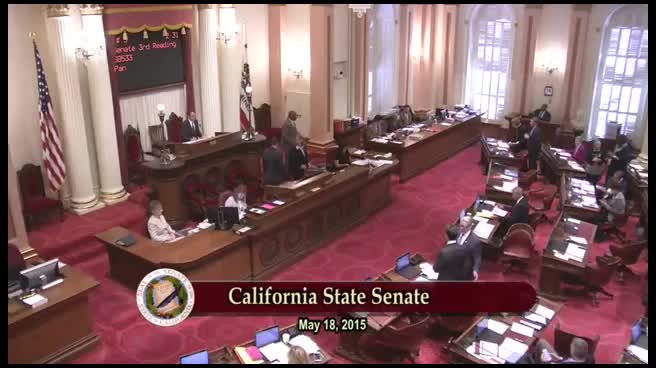
Bill Author

Bill Co-Author(s):