SB 385: Primary drinking water standards: hexavalent chromium: compliance plan.
- Session Year: 2015-2016
- House: Senate
- Latest Version Date: 2015-09-04
The California Safe Drinking Water Act provides for the operation of public water systems and imposes on the State Water Resources Control Board various duties and responsibilities for the regulation and control of drinking water in the State of California. The act requires the state board to adopt primary drinking water standards for contaminants in drinking water based upon specified criteria, and required a primary drinking water standard to be established for hexavalent chromium by January 1, 2004. Existing law authorizes the state board to grant a variance from primary drinking water standards to a public water system. Existing law makes certain violations of the act a crime.
This bill would authorize, until January 1, 2020, the state board, at the request of a public water system that prepares and submits a compliance plan to the state board, to grant a period of time to achieve compliance with the primary drinking water standard for hexavalent chromium by approving the compliance plan, as prescribed. This bill would require a public water system to provide specified notice regarding the compliance plan to the persons served by the public water system and the public water system to send written status reports to the state board. This bill would prohibit a public water system from being deemed in violation of the primary drinking water standard for hexavalent chromium while implementing an approved compliance plan or while state board action on its proposed and submitted compliance plan is pending.
The bill would authorize the state board to direct revisions to a compliance plan if the board makes certain determinations and would prohibit a public water system from being granted a period of time to achieve compliance under certain circumstances, including if the public water system does not submit a revised compliance plan or the revised compliance plan is disapproved. The bill would authorize the state board to implement, interpret, or make specific these provisions by means of criteria, published on its Internet Web site. To the extent that a public water system, when requesting approval of a compliance plan or submitting a report pursuant to these provisions, would make any false statement or representation, this bill would expand the scope of a crime and impose a state-mandated local program.
The California Constitution requires the state to reimburse local agencies and school districts for certain costs mandated by the state. Statutory provisions establish procedures for making that reimbursement.
This bill would provide that no reimbursement is required by this act for a specified reason.
This bill would declare that it is to take effect immediately as an urgency statute.
The California Safe Drinking Water Act provides for the operation of public water systems and imposes on the State Water Resources Control Board various duties and responsibilities for the regulation and control of drinking water in the State of California. The act requires the state board to adopt primary drinking water standards for contaminants in drinking water based upon specified criteria, and required a primary drinking water standard to be established for hexavalent chromium by January 1, 2004. Existing law authorizes the state board to grant a variance from primary drinking water standards to a public water system. Existing law makes certain violations of the act a crime.
This bill would authorize, until January 1, 2020, the state board, at the request of a public water system that prepares and submits a compliance plan to the state board, to grant a period of time to achieve compliance with the primary drinking water standard for hexavalent chromium by approving the compliance plan, as prescribed. This bill would require a public water system to provide specified notice regarding the compliance plan to its customers the persons served by the public water system and the public water system to send written status reports to the state board. This bill would prohibit a public water system from being deemed in violation of the primary drinking water standard for hexavalent chromium while implementing an approved compliance plan or while state board action on its proposed and submitted compliance plan is pending.
The bill would authorize the state board to direct revisions to a compliance plan if the board makes certain determinations and would prohibit a public water system from being granted a period of time to achieve compliance under certain circumstances, including if the public water system does not submit a revised compliance plan or the revised compliance plan is disapproved. The bill would authorize the state board to implement, interpret, or make specific these provisions by means of criteria, published on its Internet Web site. To the extent that a public water system, when requesting approval of a compliance plan or submitting a report pursuant to these provisions, would make any false statement or representation, this bill would expand the scope of a crime and impose a state-mandated local program.
The California Constitution requires the state to reimburse local agencies and school districts for certain costs mandated by the state. Statutory provisions establish procedures for making that reimbursement.
This bill would provide that no reimbursement is required by this act for a specified reason.
This bill would declare that it is to take effect immediately as an urgency statute.
The California Safe Drinking Water Act provides for the operation of public water systems and imposes on the State Water Resources Control Board various duties and responsibilities for the regulation and control of drinking water in the State of California. The act requires the state board to adopt primary drinking water standards for contaminants in drinking water based upon specified criteria, and required a primary drinking water standard to be established for hexavalent chromium by January 1, 2004. Existing law authorizes the state board to grant a variance from primary drinking water standards to a public water system. Existing law makes certain violations of the act a crime.
This bill would authorize, until January 1, 2020, the state board, at the request of a public water system that prepares and submits a compliance plan to the state board, to grant a period of time to achieve compliance with the primary drinking water standard for hexavalent chromium by approving the compliance plan, as prescribed. This bill would require a public water system to provide specified notice regarding the compliance plan to its customers and the public water system to send written status reports to the state board. This bill would prohibit a public water system from being deemed in violation of the primary drinking water standard for hexavalent chromium while implementing an approved compliance plan or while state board action on its proposed and submitted compliance plan is pending.
The bill would authorize the state board to direct revisions to a compliance plan if the board makes certain determinations and would prohibit a public water system from being granted a period of time to achieve compliance under certain circumstances, including if the public water system does not submit a revised compliance plan or the revised compliance plan is disapproved. The bill would authorize the state board to implement, interpret, or make specific these provisions by means of criteria, published on its Internet Web site. To the extent that a public water system, when requesting approval of a compliance plan or submitting a report pursuant to these provisions, would make any false statement or representation, this bill would expand the scope of a crime and impose a state-mandated local program.
The California Constitution requires the state to reimburse local agencies and school districts for certain costs mandated by the state. Statutory provisions establish procedures for making that reimbursement.
This bill would provide that no reimbursement is required by this act for a specified reason.
This bill would declare that it is to take effect immediately as an urgency statute.
The California Safe Drinking Water Act provides for the operation of public water systems and imposes on the State Water Resources Control Board various duties and responsibilities for the regulation and control of drinking water in the State of California. The act requires the state board to adopt primary drinking water standards for contaminants in drinking water based upon specified criteria, and required a primary drinking water standard to be established for hexavalent chromium by January 1, 2004. Existing law authorizes the state board to grant a variance from primary drinking water standards to a public water system. Existing law makes certain violations of the act a crime.
This bill would authorize, until January 1, 2020, the state board, at the request of a public water system that prepares and submits a compliance plan to the state board, to grant a variance from period of time to achieve compliance with the primary drinking water standard for hexavalent chromium if the public water system prepares and submits a by approving the compliance plan, the state board approves the compliance plan, the plan, as prescribed. This bill would require a public water system provides to provide specified notice requirements regarding the compliance plan to its customers, customers and the public water system sends annual to send written status reports to the state board that updates the status of the approved compliance plan. The bill would require the compliance plan to describe the actions the public water system is taking and will take to comply with the primary drinking water standard for hexavalent chromium by the earliest feasible date, include the public water systems best estimate of the funding required for compliance, and the actions the public water system will take to secure funding. board. This bill would prohibit a public water system from being deemed in violation of the primary drinking water standard for hexavalent chromium while implementing an approved compliance plan or while state board action on its proposed and submitted compliance plan is pending.
The bill would authorize the state board to direct revisions to the a compliance plan or previously approved compliance plan, if the board makes certain determinations and would make a variance ineffective prohibit a public water system from being granted a period of time to achieve compliance under certain circumstances, including if the public water system does not submit a revised compliance plan or the revised compliance plan is disapproved. The bill would authorize the state board to adopt emergency regulations to implement these provisions, to be in effect for no more than 2 years implement, interpret, or make specific these provisions by means of criteria, published on its Internet Web site. To the extent that a public water system, when requesting approval of a variance compliance plan or submitting a report pursuant to these provisions, would violate certain provisions of the act make any false statement or representation, this bill would expand the scope of a crime and impose a state-mandated local program.
The California Constitution requires the state to reimburse local agencies and school districts for certain costs mandated by the state. Statutory provisions establish procedures for making that reimbursement.
This bill would provide that no reimbursement is required by this act for a specified reason.
This bill would declare that it is to take effect immediately as an urgency statute.
The California Safe Drinking Water Act provides for the operation of public water systems and imposes on the State Water Resources Control Board various duties and responsibilities for the regulation and control of drinking water in the State of California. The act requires the state board to adopt primary drinking water standards for contaminants in drinking water based upon specified criteria, and required a primary drinking water standard to be established for hexavalent chromium by January 1, 2004. Existing law authorizes the state board to grant a variance from primary drinking water standards to a public water system. Existing law makes certain violations of the act a crime.
This bill would authorize, until January 1, 2020, the state board, at the request of a public water system, to grant a variance from the primary drinking water standard for hexavalent chromium if the public water system prepares and submits a compliance plan, the state board approves the compliance plan, the public water system provides specified notice requirements regarding the compliance plan to its customers, and the public water system sends annual reports to the state board that updates the status of the approved compliance plan. The bill would require the compliance plan to describe the actions the public water system is taking and will take to comply with the primary drinking water standard for hexavalent chromium by the earliest feasible date, include the public water systems best estimate of the funding required for compliance, and the actions the public water system will take to secure funding.
The bill would authorize the state board to direct revisions to the compliance plan or previously approved compliance plan, if the board makes certain determinations and would make a variance ineffective under certain circumstances, including if the public water system does not submit a revised compliance plan or the revised compliance plan is disapproved. The bill would authorize the state board to adopt emergency regulations to implement these provisions, to be in effect for no more than 2 years. To the extent that a public water system, when requesting a variance or submitting a report pursuant to these provisions, would violate certain provisions of the act, this bill would expand the scope of a crime and impose a state-mandated local program.
The California Constitution requires the state to reimburse local agencies and school districts for certain costs mandated by the state. Statutory provisions establish procedures for making that reimbursement.
This bill would provide that no reimbursement is required by this act for a specified reason.
This bill would declare that it is to take effect immediately as an urgency statute.
(a)At the request of any public water system that prepares and submits a compliance plan to the state board, the state board may grant a period of time to achieve compliance with the primary drinking water standard for hexavalent chromium by the state boards written approval of the compliance plan.
(b)(1)A compliance plan shall include all of the following:
(A)A compelling reason why it is not feasible for the system to presently comply with the primary drinking water standard for hexavalent chromium.
(B)A summary of the public water systems review of available funding sources, the best available technology or technologies for treatment, and other options to achieve and maintain compliance with the primary drinking water standard for hexavalent chromium by the earliest feasible date.
(C)A description of the actions the public water system is taking and will take by milestone dates to comply with the primary drinking water standard for hexavalent chromium by the earliest feasible date. The actions may include, but are not limited to, planning, designing, permitting, financing, constructing, testing, and activating treatment facilities or other capital improvements. The compliance plan shall include the public water systems best estimate of the funding required for compliance and the actions that the public water system will take to secure the funding. In no event shall the earliest feasible date extend beyond January 1, 2020.
(2)The state board may do either of the following:
(A)Approve a compliance plan.
(B)Provide written comments on the compliance plan to the public water system. The comments may include requiring the public water systems compliance, prior to January 1, 2020, with the primary drinking water standard for hexavalent chromium if the earliest feasible date, based on review of the compliance plan and based on the public water systems specific circumstances identified in the plan, is prior to January 1, 2020. If the state board provides written comments, the public water system may submit a revised compliance plan that the state board may approve if the plan timely and adequately addresses any and all written comments provided by the state board.
(c)The public water system shall provide written notice regarding the compliance plan to the persons served by the public water system at least two times per year. The written notice shall meet the translation requirements provided in subdivision (h) of Section 116450 and shall include notice of all of the following:
(1)That the public water system is implementing the compliance plan that has been approved by the state board and that demonstrates the public water system is taking the needed feasible actions to comply with the primary drinking water standard for hexavalent chromium. The notice shall summarize those actions in a form and manner determined by the state board. For notices after the initial notice, the public water system shall update information demonstrating progress implementing the compliance plan.
(2)That the persons served by the public water system have access to alternative drinking water and that the public water system shall provide information on that drinking water. The notice shall identify where that information may be obtained.
(3)Basic information describing hexavalent chromium, including the level found in drinking water provided by the public water system, the maximum contaminant level for hexavalent chromium, and the possible effects of hexavalent chromium on human health as specified in Appendix 64465-D of Section 64465 of Title 22 of the California Code of Regulations.
(d)Following the state boards approval of the compliance plan, the public water system shall submit a written status report to the state board, at a frequency and by a deadline or deadlines set by the state board, for the state boards approval, that updates the status of actions specified in the state board-approved compliance plan and that specifies any changes to the compliance plan that are needed to achieve compliance with the primary drinking water standard for hexavalent chromium by the earliest feasible date. State board approval of a written status report that includes proposed changes to the compliance plan shall be deemed approval of the proposed changes to the compliance plan and the resulting revised plan.
(e)A public water system shall not be deemed in violation of the primary drinking water standard for hexavalent chromium while implementing an approved compliance plan. A public water system that has submitted a compliance plan for approval shall not be deemed in violation of the primary drinking water standard for hexavalent chromium while state board action on the proposed and submitted compliance plan is pending.
(f)(1)At any time, the state board may direct revisions to a compliance plan or disapprove a compliance plan if the state board determines that the actions and timelines addressed in the compliance plan are inadequate to achieve compliance by the earliest feasible date. At any time, the state board may disapprove a written status report if the state board determines that the written status report fails to demonstrate that the public water system is complying with the approved compliance plan by the milestone dates. In these instances, the state board shall provide the public water system with written notice specifying the reason for the required revisions or disapproval and the deficiencies that shall be addressed in a resubmitted compliance plan or written status report.
(2)A previously approved compliance plan that the state board requires to be revised, or a written status report that is disapproved by the state board, may be revised and resubmitted by the public water system for state board approval within 60 days of receipt of the notice required by paragraph (1). During the 60 days, a public water system shall not be deemed in violation of the primary drinking water standard for hexavalent chromium. A public water system shall not be granted a period of time to achieve compliance with the primary drinking water standard for hexavalent chromium if the public water system fails to submit a revised compliance plan or revised written status report within 60 days of receiving the notice, or submits a revised compliance plan or revised written status report that is subsequently disapproved.
(3)A compliance plan approved by the state board pursuant to this section shall continue in effect until the earliest feasible compliance date, as specified by the compliance plan, or until the water system fails to retain state board approval of the compliance plan.
(g)The state board may implement, interpret, or make specific the provisions of this section by means of criteria, published on its Internet Web site. This action by the state board shall not be subject to the rulemaking requirements of the Administrative Procedure Act (Chapter 3.5 (commencing with Section 11340) of Part 1 of Division 3 of Title 2 of the Government Code).
(h)This section does not affect the states requirements for establishing drinking water standards for contaminants in drinking water. This section does not apply to any contaminants other than hexavalent chromium. This section is intended to address the specific circumstance that, for some public water systems, compliance with the states hexavalent chromium drinking water standard requires the design, financing, and construction of capital improvements. These major compliance actions necessitate a period of time for compliance.
(i)This section shall remain in effect only until January 1, 2020, and as of that date is repealed, unless a later enacted statute, that is enacted before January 1, 2020, deletes or extends that date.
SEC. 2.No reimbursement is required by this act pursuant to Section 6 of Article XIIIB of the California Constitution because the only costs that may be incurred by a local agency or school district will be incurred because this act creates a new crime or infraction, eliminates a crime or infraction, or changes the penalty for a crime or infraction, within the meaning of Section 17556 of the Government Code, or changes the definition of a crime within the meaning of Section 6 of Article XIIIB of the California Constitution.
SEC. 3.This act is an urgency statute necessary for the immediate preservation of the public peace, health, or safety within the meaning of Article IV of the Constitution and shall go into immediate effect. The facts constituting the necessity are:
The states regulation setting the new maximum contaminant level for hexavalent chromium VI went into effect on July 1, 2014. The regulation required that the initial compliance monitoring under the regulation be performed by January 1, 2015. Some public water systems need to take major compliance actions, such as designing, financing, and constructing water treatment facilities, to comply with the new regulation. To avoid the systems being deemed in violation of the regulation in 2015, and for a limited time period thereafter, it is necessary for this act, which authorizes a period of time to achieve compliance, to take effect immediately.
(a)At the request of any public water system that prepares and submits a compliance plan to the state board, the state board may grant a period of time to achieve compliance with the primary drinking water standard for hexavalent chromium by approving the state boards written approval of the compliance plan.
(b)(1)A compliance plan shall include all of the following:
(A)A compelling reason why it is not feasible for the system to presently comply with the primary drinking water standard for hexavalent chromium.
(B)A summary of the public water systems review of available funding sources, the best available technology or technologies for treatment, and other options to achieve and maintain compliance with the primary drinking water standard for hexavalent chromium by the earliest feasible date.
(C)A description of the actions the public water system is taking and will take by milestone dates to comply with the primary drinking water standard for hexavalent chromium by the earliest feasible date. The actions may include, but are not limited to, planning, designing, permitting, financing, constructing, testing, and activating treatment facilities or other capital improvements. The compliance plan shall include the public water systems best estimate of the funding required for compliance and the actions that the public water system will take to secure the funding. In no event shall the earliest feasible date extend beyond January 1, 2020.
(2)The state board may approve do either of the following:
(A)Approve a compliance plan or provide plan.
(B)Provide written comments on the compliance plan to the public water system. The state board may approve a compliance plan if the public water system The comments may include requiring the public water systems compliance, prior to January 1, 2020, with the primary drinking water standard for hexavalent chromium if the earliest feasible date, based on review of the compliance plan and based on the public water systems specific circumstances identified in the plan, is prior to January 1, 2020. If the state board provides written comments, the public water system may submit a revised compliance plan that the state board may approve if the plan timely and adequately addresses any and all written comments provided by the state board.
(3)The state board may, upon review of a compliance plan and based on the public water systems specific circumstances identified in the plan, require compliance with the primary drinking water standard for hexavalent chromium before January 1, 2020.
(c)The public water system shall provide written notice regarding the compliance plan to its customers the persons served by the public water system at least two times per year. The written notice shall meet the translation requirements provided in subdivision (h) of Section 116450 and shall include notice of all of the following:
(1)That the public water system is implementing the compliance plan that has been approved by the state board and that demonstrates the public water system is taking the needed feasible actions to comply with the primary drinking water standard for hexavalent chromium. The notice shall summarize those actions in a form and manner determined by the state board. For notices after the initial notice, the public water system shall update information demonstrating progress implementing the compliance plan.
(2)That the public water systems customers have persons served by the public water system have access to alternative drinking water and that the public water system may shall provide information on that drinking water. The notice shall identify where the customer can obtain that information. that information may be obtained.
(3)Basic information describing hexavalent chromium, including the level found in drinking water provided by the public water system, the maximum contaminant level for hexavalent chromium, and the possible effects of hexavalent chromium on human health as specified in Appendix 64465-D of Section 64465 of Title 22 of the California Code of Regulations.
(d)Following the state boards approval of the compliance plan, the public water system shall submit a written status report to the state board, at a frequency and by a deadline or deadlines set by the state board, for the state boards approval, that updates the status of actions specified in the state board-approved compliance plan and that specifies any changes to the compliance plan that are needed to achieve compliance with the primary drinking water standard for hexavalent chromium by the earliest feasible date. State board approval of a written status report that includes proposed changes to the compliance plan shall be deemed approval of those the proposed changes to the compliance plan. plan and the resulting revised plan.
(e)A public water system shall not be deemed in violation of the primary drinking water standard for hexavalent chromium while implementing an approved compliance plan. A public water system that has submitted a compliance plan for approval shall not be deemed in violation of the primary drinking water standard for hexavalent chromium while state board action on the proposed and submitted compliance plan is pending.
(f)(1)At any time, the state board may direct revisions to a compliance plan or disapprove a compliance plan if the state board determines that the compliance plan is insufficient. actions and timelines addressed in the compliance plan are inadequate to achieve compliance by the earliest feasible date. At any time, the state board may disapprove a written status report if the state board determines that the written status report fails to demonstrate that the public water system is complying with the approved compliance plan by the milestone dates. In these instances, the state board shall provide the public water system with written notice specifying the reason for the required revisions or disapproval and the deficiencies that shall be addressed in a resubmitted compliance plan or written status report.
(2)A previously approved compliance plan that the state board requires to be revised, or a written status report that is disapproved by the state board, may be revised and resubmitted by the public water system for state board approval within 60 days of receipt of the notice required by paragraph (1). During the 60 days, a public water system shall not be deemed in violation of the primary drinking water standard for hexavalent chromium. A public water system shall not be granted a period of time to achieve compliance with the primary drinking water standard for hexavalent chromium if the public water system fails to submit a revised compliance plan or revised written status report within 60 days of receiving the notice, or submits a revised compliance plan or revised written status report that is subsequently disapproved.
(3)A compliance plan approved by the state board pursuant to this section shall continue in effect until the earliest feasible compliance date, as specified by the compliance plan, or until the state board determines that the compliance plan is no longer in effect pursuant to this subdivision. water system fails to retain state board approval of the compliance plan.
(g)The state board may implement, interpret, or make specific the provisions of this section by means of criteria, published on its Internet Web site. This action by the state board shall not be subject to the rulemaking requirements of the Administrative Procedure Act (Chapter 3.5 (commencing with Section 11340) of Part 1 of Division 3 of Title 2 of the Government Code).
(h)This section does not affect the states requirements for establishing drinking water standards for contaminants in drinking water. This section does not apply to any contaminants other than hexavalent chromium. This section is intended to address the specific circumstance that that, for some public water systems, compliance with the states hexavalent chromium drinking water standard requires the design, financing, and construction of capital improvements. These major compliance actions necessitate a period of time for compliance.
(i)This section shall remain in effect only until January 1, 2020, and as of that date is repealed, unless a later enacted statute, that is enacted before January 1, 2020, deletes or extends that date.
SEC. 2.No reimbursement is required by this act pursuant to Section 6 of Article XIIIB of the California Constitution because the only costs that may be incurred by a local agency or school district will be incurred because this act creates a new crime or infraction, eliminates a crime or infraction, or changes the penalty for a crime or infraction, within the meaning of Section 17556 of the Government Code, or changes the definition of a crime within the meaning of Section 6 of Article XIIIB of the California Constitution.
SEC. 3.This act is an urgency statute necessary for the immediate preservation of the public peace, health, or safety within the meaning of Article IV of the Constitution and shall go into immediate effect. The facts constituting the necessity are:
The states regulation setting the new maximum contaminant level for hexavalent chromium VI went into effect on July 1, 2014. The regulation required that the initial compliance monitoring under the regulation be performed by January 1, 2015. Some public water systems need to take major compliance actions, such as designing, financing, and constructing water treatment facilities, to comply with the new regulation. To avoid the systems being deemed in violation of the regulation in 2015, and for a limited time period thereafter, it is necessary for this act, which authorizes a period of time to achieve compliance, to take effect immediately.
(a)At the request of any public water system that prepares and submits a compliance plan to the state board, the state board may grant a period of time to achieve compliance with the primary drinking water standard for hexavalent chromium by approving the compliance plan.
(b)(1)A compliance plan shall include all of the following:
(A)A compelling reason why it is not feasible for the system to presently comply with the primary drinking water standard for hexavalent chromium.
(B)A summary of the public water systems review of available funding sources, the best available technology or technologies for treatment, and other options to achieve and maintain compliance with the primary drinking water standard for hexavalent chromium by the earliest feasible date.
(C)A description of the actions the public water system is taking and will take by milestone dates to comply with the primary drinking water standard for hexavalent chromium by the earliest feasible date. The actions may include, but are not limited to, planning, designing, permitting, financing, constructing, testing, and activating treatment facilities or other capital improvements. The compliance plan shall include the public water systems best estimate of the funding required for compliance and the actions that the public water system will take to secure the funding. In no event shall the earliest feasible date extend beyond January 1, 2020.
(2)The state board may approve a compliance plan or provide written comments on the compliance plan to the public water system. The state board may approve a compliance plan if the public water system timely and adequately addresses any and all written comments provided by the state board.
(3)The state board may, upon review of a compliance plan and based on the public water systems specific circumstances identified in the plan, require compliance with the primary drinking water standard for hexavalent chromium before January 1, 2020.
(c)The public water system shall provide written notice regarding the compliance plan to its customers at least two times per year. The written notice shall meet the translation requirements provided in subdivision (h) of Section 116450 and shall include notice of all of the following:
(1)That the public water system is implementing the compliance plan that has been approved by the state board and that demonstrates the public water system is taking the needed feasible actions to comply with the primary drinking water standard for hexavalent chromium. The notice shall summarize those actions in a form and manner determined by the state board. For notices after the initial notice, the public water system shall update information demonstrating progress implementing the compliance plan.
(2)That the public water systems customers have alternative drinking water and that the public water system may provide information on that drinking water. The notice shall identify where the customer can obtain that information.
(3)Basic information describing hexavalent chromium, including the level found in drinking water provided by the public water system, the maximum contaminant level for hexavalent chromium, and the possible effects of hexavalent chromium on human health as specified in Appendix 64465-D of Section 64465 of Title 22 of the California Code of Regulations.
(d)Following the state boards approval of the compliance plan, the public water system shall submit a written status report to the state board, at a frequency and by a deadline or deadlines set by the state board, for the state boards approval, that updates the status of actions specified in the state board-approved compliance plan and that specifies any changes to the compliance plan that are needed to achieve compliance with the primary drinking water standard for hexavalent chromium by the earliest feasible date. State board approval of a written status report that includes proposed changes to the compliance plan shall be deemed approval of those changes to the compliance plan.
(e)A public water system shall not be deemed in violation of the primary drinking water standard for hexavalent chromium while implementing an approved compliance plan. A public water system that has submitted a compliance plan for approval shall not be deemed in violation of the primary drinking water standard for hexavalent chromium while state board action on the proposed and submitted compliance plan is pending.
(f)(1)At any time, the state board may direct revisions to a compliance plan or disapprove a compliance plan if the state board determines that the compliance plan is insufficient. At any time, the state board may disapprove a written status report if the state board determines that the written status report fails to demonstrate that the public water system is complying with the approved compliance plan by the milestone dates. In these instances, the state board shall provide the public water system with written notice specifying the reason for the required revisions or disapproval and the deficiencies that shall be addressed in a resubmitted compliance plan or written status report.
(2)A previously approved compliance plan that the state board requires to be revised, or a written status report that is disapproved by the state board, may be revised and resubmitted by the public water system for state board approval within 60 days of receipt of the notice required by paragraph (1). During the 60 days, a public water system shall not be deemed in violation of the primary drinking water standard for hexavalent chromium. A public water system shall not be granted a period of time to achieve compliance with the primary drinking water standard for hexavalent chromium if the public water system fails to submit a revised compliance plan or revised written status report within 60 days of receiving the notice, or submits a revised compliance plan or revised written status report that is subsequently disapproved.
(3)A compliance plan approved by the state board pursuant to this section shall continue in effect until the earliest feasible compliance date, as specified by the compliance plan, or until the state board determines that the compliance plan is no longer in effect pursuant to this subdivision.
(g)The state board may implement, interpret, or make specific the provisions of this section by means of criteria, published on its Internet Web site. This action by the state board shall not be subject to the rulemaking requirements of the Administrative Procedure Act (Chapter 3.5 (commencing with Section 11340) of Part 1 of Division 3 of Title 2 of the Government Code).
(h)This section does not affect the states requirements for establishing drinking water standards for contaminants in drinking water. This section does not apply to any contaminants other than hexavalent chromium. This section is intended to address the specific circumstance that for some public water systems, compliance with the states hexavalent chromium drinking water standard requires the design, financing, and construction of capital improvements. These major compliance actions necessitate a period of time for compliance.
(i)This section shall remain in effect only until January 1, 2020, and as of that date is repealed, unless a later enacted statute, that is enacted before January 1, 2020, deletes or extends that date.
SEC. 2.No reimbursement is required by this act pursuant to Section 6 of Article XIIIB of the California Constitution because the only costs that may be incurred by a local agency or school district will be incurred because this act creates a new crime or infraction, eliminates a crime or infraction, or changes the penalty for a crime or infraction, within the meaning of Section 17556 of the Government Code, or changes the definition of a crime within the meaning of Section 6 of Article XIIIB of the California Constitution.
SEC. 3.This act is an urgency statute necessary for the immediate preservation of the public peace, health, or safety within the meaning of Article IV of the Constitution and shall go into immediate effect. The facts constituting the necessity are:
The states regulation setting the new maximum contaminant level for hexavalent chromium VI went into effect on July 1, 2014. The regulation required that the initial compliance monitoring under the regulation be performed by January 1, 2015. Some public water systems need to take major compliance actions, such as designing, financing, and constructing water treatment facilities, to comply with the new regulation. To avoid the systems being deemed in violation of the regulation in 2015, and for a limited time period thereafter, it is necessary for this act, which authorizes a period of time to achieve compliance, to take effect immediately.
(a)At the request of any public water system that prepares and submits a compliance plan to the state board, the state board may grant a variance from period of time to achieve compliance with the primary drinking water standard for hexavalent chromium, if all of the following conditions are met: by approving the compliance plan.
(1)(A)The public water system has prepared and submitted a compliance plan, as described in subparagraph (B), to the state board for approval.
(B)The
(b)(1)A compliance plan shall describe include all of the following:
(A)A compelling reason why it is not feasible for the system to presently comply with the primary drinking water standard for hexavalent chromium.
(B)A summary of the public water systems review of available funding sources, the best available technology or technologies for treatment, and other options to achieve and maintain compliance with the primary drinking water standard for hexavalent chromium by the earliest feasible date.
(C)A description of the actions the public water system is taking and will take by milestone dates to comply with the primary drinking water standard for hexavalent chromium by the earliest feasible date. The actions may include, but are not limited to, planning, designing, permitting, financing, constructing, testing, and activating treatment facilities or other capital improvements. The compliance plan shall include the public water systems best estimate of the funding required for compliance and the actions that the public water system will take to secure the funding. In no event shall the earliest feasible date exceed five years from the date on which compliance otherwise would be required. extend beyond January 1, 2020.
(2)The state board has reviewed the compliance plan, identified any changes needed to ensure compliance with the primary drinking water standard for hexavalent chromium by the earliest feasible date, and approved the plan. The state board shall ensure that the public water system has reviewed available funding sources, cleanup and treatment technologies, and other options to achieve and maintain compliance of the primary drinking water standard by the earliest feasible date.
(2)The state board may approve a compliance plan or provide written comments on the compliance plan to the public water system. The state board may approve a compliance plan if the public water system timely and adequately addresses any and all written comments provided by the state board.
(3)The state board may, upon review of a compliance plan and based on the public water systems specific circumstances identified in the plan, require compliance with the primary drinking water standard for hexavalent chromium before January 1, 2020.
(3)
(c)The public water system provides shall provide written notice regarding the compliance plan to its customers at least two times per year. The written notice shall meet the translation requirements provided in subdivision (h) of Section 116450 and shall include notice of all of the following:
(A)
(1)That the public water system is implementing the compliance plan that has been approved by the state board and that demonstrates the public water system is taking the needed feasible actions to comply with the primary drinking water standard for hexavalent chromium. The notice shall summarize those actions in a form and manner determined by the state board. For notices after the initial notice, the public water system shall update information demonstrating progress implementing the compliance plan.
(B)
(2)That the public water systems customers have an alternative to consuming tap water and that the public water system can drinking water and that the public water system may provide information on that alternative. drinking water. The notice shall identify where the customer can obtain that information.
(4)Every 12 months following
(d)Following the state boards approval of the compliance plan, the public water system shall submit a written status report to the state board, at a frequency and by a deadline or deadlines set by the state board, for the state boards approval, that updates the status of actions specified in the state board-approved compliance plan and that specifies any changes to the compliance plan that are needed to achieve compliance with the primary drinking water standard for hexavalent chromium by the earliest feasible date. Approval of a report with changes to the compliance plan shall result in an approved revised compliance plan. State board approval of a written status report that includes proposed changes to the compliance plan shall be deemed approval of those changes to the compliance plan.
(b)
(e)A public water system that has requested, or has been granted, a variance pursuant to this section shall not be deemed in violation of the primary drinking water standard for hexavalent chromium while the request for a variance is pending or while the variance is in effect. shall not be deemed in violation of the primary drinking water standard for hexavalent chromium while implementing an approved compliance plan. A public water system that has submitted a compliance plan for approval shall not be deemed in violation of the primary drinking water standard for hexavalent chromium while state board action on the proposed and submitted compliance plan is pending.
(c)
(f)(1)At any time, the state board may direct revisions to a compliance plan or disapprove a compliance plan if the state board determines that the compliance plan is insufficient or insufficient. At any time, the state board may disapprove an annual a written status report if the state board determines that the annual written status report fails to demonstrate that the public water system is complying with the approved compliance plan by the milestone dates. In these instances, the state board shall provide the public water system with written notice specifying the reason for the required revisions or disapproval and the deficiencies that shall be addressed before the compliance plan is resubmitted. in a resubmitted compliance plan or written status report.
(d)
(2)A previously approved compliance plan that the state board requires to be revised, or an annual a written status report that is disapproved by the state board, may be revised and resubmitted by the public water system for state board approval within 60 days of receipt of the notice required by subdivision (c). A paragraph (1). During the 60 days, a public water system shall not be deemed in violation of the primary drinking water standard for hexavalent chromium for 60 days following receipt of this notice. A variance granted pursuant to subdivision (a) shall not be effective for any chromium. A public water system that shall not be granted a period of time to achieve compliance with the primary drinking water standard for hexavalent chromium if the public water system fails to submit a revised compliance plan or revised annual written status report within 60 days of receiving the notice, or that submits a revised compliance plan or revised annual written status report that is subsequently disapproved.
(e)(1)Except as provided in paragraph (2), the state board may adopt emergency regulations in accordance Section 11346.1 of the Government Code in order to implement this section.
(2)The emergency regulations shall remain in effect for a period not to exceed two years during which time the state board shall go back and adopt the regulations in conformity with the provisions of Chapter 3.5 (commencing with Section 11340) of Part 1 of Division 3 of Title 2 of the Government Code.
(3)A compliance plan approved by the state board pursuant to this section shall continue in effect until the earliest feasible compliance date, as specified by the compliance plan, or until the state board determines that the compliance plan is no longer in effect pursuant to this subdivision.
(g)The state board may implement, interpret, or make specific the provisions of this section by means of criteria, published on its Internet Web site. This action by the state board shall not be subject to the rulemaking requirements of the Administrative Procedure Act (Chapter 3.5 (commencing with Section 11340) of Part 1 of Division 3 of Title 2 of the Government Code).
(h)This section does not affect the states requirements for establishing drinking water standards for contaminants in drinking water. This section does not apply to any contaminants other than hexavalent chromium. This section is intended to address the specific circumstance that for some public water systems, compliance with the states hexavalent chromium drinking water standard requires the design, financing, and construction of capital improvements. These major compliance actions necessitate a period of time for compliance.
(f)(1)
(i)This section shall remain in effect only until January 1, 2020, and as of that date is repealed, unless a later enacted statute, that is enacted before January 1, 2020, deletes or extends that date.
(2)A variance granted by the state board pursuant to this section before January 1, 2020, shall continue in effect until the state board determines that the variance is no longer in effect pursuant to subdivision (d) or until the earliest feasible compliance date, as specified by the compliance plan.
SEC. 2.No reimbursement is required by this act pursuant to Section 6 of Article XIIIB of the California Constitution because the only costs that may be incurred by a local agency or school district will be incurred because this act creates a new crime or infraction, eliminates a crime or infraction, or changes the penalty for a crime or infraction, within the meaning of Section 17556 of the Government Code, or changes the definition of a crime within the meaning of Section 6 of Article XIIIB of the California Constitution.
SEC. 3.This act is an urgency statute necessary for the immediate preservation of the public peace, health, or safety within the meaning of Article IV of the Constitution and shall go into immediate effect. The facts constituting the necessity are:
The states regulation setting the new maximum contaminant level for hexavalent chromium VI went into effect on July 1, 2014. The regulation required that the initial compliance monitoring under the regulation be performed by January 1, 2015. Public Some public water systems need to take major compliance actions, such as designing, financing, and constructing water treatment facilities, to comply with the new regulation. To avoid the systems being deemed in violation of the regulation in 2015, and for a limited time period thereafter, it is necessary for this act, which authorizes a time-limited variance, period of time to achieve compliance, to take effect immediately.
(a)At the request of any public water system, the state board may grant a variance from the primary drinking water standard for hexavalent chromium, if all of the following conditions are met:
(1)(A)The public water system has prepared and submitted a compliance plan, as described in subparagraph (B), to the state board for approval.
(B)The compliance plan shall describe the actions the public water system is taking and will take by milestone dates to comply with the primary drinking water standard for hexavalent chromium by the earliest feasible date. The actions may include, but are not limited to, planning, designing, permitting, financing, constructing, testing, and activating treatment facilities or other capital improvements. The compliance plan shall include the public water systems best estimate of the funding required for compliance and the actions that the public water system will take to secure the funding. In no event shall the earliest feasible date exceed five years from the date on which compliance otherwise would be required.
(2)The state board has reviewed the compliance plan, identified any changes needed to ensure compliance with the primary drinking water standard for hexavalent chromium by the earliest feasible date, and approved the plan. The state board shall ensure that the public water system has reviewed available funding sources, cleanup and treatment technologies, and other options to achieve and maintain compliance of the primary drinking water standard by the earliest feasible date.
(3)The public water system provides written notice regarding the compliance plan to its customers at least two times per year. The written notice shall meet the translation requirements provided in subdivision (h) of Section 116450 and shall include notice of all of the following:
(A)That the public water system is implementing the compliance plan that has been approved by the state board and that demonstrates the public water system is taking the needed feasible actions to comply with the primary drinking water standard for hexavalent chromium. The notice shall summarize those actions in a form and manner determined by the state board. For notices after the initial notice, the public water system shall update information demonstrating progress implementing the compliance plan.
(B)That the public water systems customers have an alternative to consuming tap water and that the public water system can provide information on that alternative. The notice shall identify where the customer can obtain that information.
(4)Every 12 months following the state boards approval of the compliance plan, the public water system shall submit a written report to the state board, for the state boards approval, that updates the status of actions specified in the state board-approved compliance plan and that specifies any changes to the compliance plan that are needed to achieve compliance with the primary drinking water standard for hexavalent chromium by the earliest feasible date. Approval of a report with changes to the compliance plan shall result in an approved revised compliance plan.
(b)A public water system that has requested, or has been granted, a variance pursuant to this section shall not be deemed in violation of the primary drinking water standard for hexavalent chromium while the request for a variance is pending or while the variance is in effect.
(c)At any time, the state board may direct revisions to a compliance plan if the state board determines that the compliance plan is insufficient or may disapprove an annual report if the state board determines that the annual report fails to demonstrate that the public water system is complying with the approved compliance plan by the milestone dates. In these instances, the state board shall provide the public water system with written notice specifying the reason for the required revisions or disapproval and the deficiencies that shall be addressed before the compliance plan is resubmitted.
(d)A previously approved compliance plan that the state board requires to be revised, or an annual report that is disapproved by the state board, may be revised and resubmitted by the public water system for state board approval within 60 days of receipt of the notice required by subdivision (c). A public water system shall not be deemed in violation of the primary drinking water standard for hexavalent chromium for 60 days following receipt of this notice. A variance granted pursuant to subdivision (a) shall not be effective for any public water system that fails to submit a revised compliance plan or revised annual report within 60 days of receiving the notice, or that submits a revised compliance plan or revised annual report that is subsequently disapproved.
(e)(1)Except as provided in paragraph (2), the state board may adopt emergency regulations in accordance Section 11346.1 of the Government Code in order to implement this section.
(2)The emergency regulations shall remain in effect for a period not to exceed two years during which time the state board shall go back and adopt the regulations in conformity with the provisions of Chapter 3.5 (commencing with Section 11340) of Part 1 of Division 3 of Title 2 of the Government Code.
(f)(1)This section shall remain in effect only until January 1, 2020, and as of that date is repealed, unless a later enacted statute, that is enacted before January 1, 2020, deletes or extends that date.
(2)A variance granted by the state board pursuant to this section before January 1, 2020, shall continue in effect until the state board determines that the variance is no longer in effect pursuant to subdivision (d) or until the earliest feasible compliance date, as specified by the compliance plan.
SEC. 2.No reimbursement is required by this act pursuant to Section 6 of Article XIIIB of the California Constitution because the only costs that may be incurred by a local agency or school district will be incurred because this act creates a new crime or infraction, eliminates a crime or infraction, or changes the penalty for a crime or infraction, within the meaning of Section 17556 of the Government Code, or changes the definition of a crime within the meaning of Section 6 of Article XIIIB of the California Constitution.
SEC. 3.This act is an urgency statute necessary for the immediate preservation of the public peace, health, or safety within the meaning of Article IV of the Constitution and shall go into immediate effect. The facts constituting the necessity are:
The states regulation setting the new maximum contaminant level for hexavalent chromium VI went into effect on July 1, 2014. The regulation required that the initial compliance monitoring under the regulation be performed by January 1, 2015. Public water systems need to take major compliance actions, such as designing, financing, and constructing water treatment facilities, to comply with the new regulation. To avoid the systems being deemed in violation of the regulation in 2015, and for a limited time period thereafter, it is necessary for this act, which authorizes a time-limited variance, to take effect immediately.
|
Date
|
Status
|
|---|---|
| May 28, 2015 | Read third time. Urgency clause adopted. Passed. (Ayes 39. Noes 0. Page 1120.) Ordered to the Assembly. |
| Sep 4, 2015 | Chaptered by Secretary of State. Chapter 272, Statutes of 2015. |
| Sep 4, 2015 | Approved by the Governor. |
| Aug 26, 2015 | Enrolled and presented to the Governor at 4:30 p.m. |
| Aug 24, 2015 | Assembly amendments concurred in. (Ayes 40. Noes 0.) Ordered to engrossing and enrolling. |
| Aug 24, 2015 | Assembly amendments concurred in. (Ayes 40. Noes 0. Page 2142.) Ordered to engrossing and enrolling. |
| Aug 20, 2015 | Read third time. Urgency clause adopted. Passed. (Ayes 79. Noes 0. Page 2534.) Ordered to the Senate. |
| Aug 20, 2015 | Read third time. Urgency clause adopted. Passed. Ordered to the Senate. |
| Aug 20, 2015 | In Senate. Concurrence in Assembly amendments pending. |
| Jul 16, 2015 | Read second time. Ordered to consent calendar. |
| Jul 15, 2015 | From committee: Do pass. Ordered to consent calendar. (Ayes 16. Noes 0.) (July 15). |
| Jul 7, 2015 | From committee: Do pass and re-refer to Com. on APPR. with recommendation: To consent calendar. (Ayes 10. Noes 0.) (July 7). Re-referred to Com. on APPR. |
| Jul 1, 2015 | From committee: Do pass and re-refer to Com. on JUD. with recommendation: To consent calendar. (Ayes 7. Noes 0.) (June 30). Re-referred to Com. on JUD. |
| Jun 18, 2015 | From committee with author's amendments. Read second time and amended. Re-referred to Com. on E.S. & T.M. |
| Jun 4, 2015 | Referred to Coms. on E.S. & T.M. and JUD. |
| May 28, 2015 | Read third time. Urgency clause adopted. Passed. (Ayes 39. Noes 0.) Ordered to the Assembly. |
| Feb 24, 2015 | Introduced. Read first time. To Com. on RLS. for assignment. To print. |
| May 28, 2015 | In Assembly. Read first time. Held at Desk. |
| May 27, 2015 | Read second time. Ordered to third reading. |
| May 26, 2015 | From committee: Be ordered to second reading pursuant to Senate Rule 28.8. |
| May 21, 2015 | Set for hearing May 26. |
| May 19, 2015 | Read second time and amended. Re-referred to Com. on APPR. |
| May 18, 2015 | From committee: Do pass as amended and re-refer to Com. on APPR. (Ayes 7. Noes 0. Page 983.) (May 12). |
| May 6, 2015 | Set for hearing May 12. |
| May 5, 2015 | May 5 set for first hearing canceled at the request of author. |
| Apr 24, 2015 | Set for hearing May 5. |
| Apr 16, 2015 | From committee: Do pass and re-refer to Com. on JUD. (Ayes 7. Noes 0. Page 649.) (April 15). Re-referred to Com. on JUD. |
| Apr 7, 2015 | From committee with author's amendments. Read second time and amended. Re-referred to Com. on E.Q. |
| Mar 17, 2015 | Set for hearing April 15. |
| Mar 12, 2015 | Referred to Coms. on E.Q. and JUD. |
| Feb 25, 2015 | From printer. May be acted upon on or after March 27. |
|
Date
|
Description
|
Location
|
Votes
|
|
|---|---|---|---|---|
| Aug 24, 2015 | Unfinished Business SB385 Hueso Urgency Clause Concurrence | Senate Floor |
Passed |
|
| Aug 20, 2015 | SB 385 Hueso Consent Calendar Second Day Regular Session | Assembly Floor |
Passed |
|
| Jul 15, 2015 | Do pass. To Consent Calendar. | Assembly Standing Committee on Appropriations |
Passed |
|
| Jul 7, 2015 | Do pass and be re-referred to the Committee on [Appropriations] with recommendation: To Consent Calendar | Assembly Standing Committee on Judiciary |
Passed |
|
| Jun 30, 2015 | Do pass and be re-referred to the Committee on [Judiciary] with recommendation: To Consent Calendar | Assembly Standing Committee on Environmental Safety and Toxic Materials |
Passed |
|
| May 28, 2015 | Senate 3rd Reading SB385 Hueso Urgency Clause | Senate Floor |
Passed |
|
| May 12, 2015 | Do pass as amended, but first amend, and re-refer to the Committee on [Appropriations] | Senate Standing Committee on Judiciary |
Passed |
|
| Apr 15, 2015 | Do pass, but first be re-referred to the Committee on [Judiciary] | Senate Standing Committee on Environmental Quality |
Passed |
This list shows positions taken on this bill by organizations on the date displayed, which is linked to the original source.
Positions by individuals are not included.
|
Organization
|
Position
|
Date
|
|---|---|---|
| American Water Works Association | ** Support | Aug 24, 2015 |
| Association Of California Water Agencies | ** Support | Aug 24, 2015 |
| California Municipal Utilities Association | ** Support | Aug 24, 2015 |
| California Special Districts Association | ** Support | Aug 24, 2015 |
| California Water Association | ** Support | Aug 24, 2015 |
| Central Water Agency | ** Support | Aug 24, 2015 |
| City of Cathedral City | ** Support | Aug 24, 2015 |
| City Of La Quinta | ** Support | Aug 24, 2015 |
| Clean Water Action | * Support | May 12, 2015 |
| Coachella Valley Association of Governments | ** Support | Aug 24, 2015 |
| Coachella Valley Water District | ** Support | Aug 24, 2015 |
| Consumer Attorneys Of California | ** Support | Aug 24, 2015 |
| Desert Valleys Builders Association | ** Support | Aug 24, 2015 |
| Desert Water Agency | ** Support | Aug 24, 2015 |
| Heber Public Utilities District | ** Support | Aug 24, 2015 |
| Hidden Valley Lake Community Services District | ** Support | Aug 24, 2015 |
| Indio Water Authority | ** Support | Aug 24, 2015 |
| Indio, City Of | ** Support | Aug 24, 2015 |
| Mission Springs Water District | ** Support | Aug 24, 2015 |
| Mojave Water Agency | ** Support | Aug 24, 2015 |
| Rancho Marcelino Water & Service Company | ** Support | Aug 24, 2015 |
| Regional Water Authority | ** Support | Aug 24, 2015 |
| Rio Linda / Elverta Community Water District | * Indeterminate | Apr 15, 2015 |
| Rio Linda-Elverta Water District | ** Support | Aug 24, 2015 |
| Sacramento Suburban Water District | ** Support | Aug 24, 2015 |
| San Diego County Water Authority | ** Support | Aug 24, 2015 |
| Santa Ynez River Water Conservation District | ** Support | Aug 24, 2015 |
| Soquel Creek Water District | ** Support | Aug 24, 2015 |
| The Metropolitan Water District Of Southern California | ** Support | Aug 24, 2015 |
| u American Water Works Association | ** Support | May 28, 2015 |
| Upper San Gabriel Valley Municipal Water District | ** Support | Aug 24, 2015 |
| Watsonville, City Of | ** Support | Aug 24, 2015 |
SB 385
Page 6
|
Office of Senate Floor Analyses (916) 651-1520 Fax: (916) 327-4478 |
UNFINISHED BUSINESS
Bill No: SB 385
Amended: 6/18/15
SENATE ENVIRONMENTAL QUALITY COMMITTEE: 7-0, 4/15/15
AYES: Wieckowski, Gaines, Bates, Hill, Jackson, Leno, Pavley
SENATE JUDICIARY COMMITTEE: 7-0, 5/12/15
AYES: Jackson, Moorlach, Anderson, Hertzberg, Leno, Monning, Wieckowski
SENATE APPROPRIATIONS COMMITTEE: Senate Rule 28.8
SENATE FLOOR: 39-0, 5/28/15
AYES: Allen, Anderson, Bates, Beall, Block, Cannella, De León, Fuller, Gaines, Galgiani, Glazer, Hall, Hancock, Hernandez, Hertzberg, Hill, Hueso, Huff, Jackson, Lara, Leno, Leyva, Liu, McGuire, Mendoza, Mitchell, Monning, Moorlach, Morrell, Nguyen, Nielsen, Pan, Pavley, Roth, Runner, Stone, Vidak, Wieckowski, Wolk
NO VOTE RECORDED: Berryhill
ASSEMBLY FLOOR: 79-0, 8/20/15 (Consent) - See last page for vote
SUBJECT: Primary drinking water standards: hexavalent chromium: compliance plan
DIGEST: This bill allows the State Water Resources Control Board (SWRCB) to grant a public water system additional time to meet the drinking water standard for hexavalent chromium by approving a compliance plan.
Assembly Amendments (1) specify that public water systems shall notify all persons served by the public water system twice a year regarding the compliance plan, and (2) clarify the requirements of the compliance plan.
Existing federal law, under the federal Safe Drinking Water Act (SDWA) of 1974:
Regulates the nation’s public drinking water supply.
Requires the United States Environmental Protection Agency (US EPA) to set national health-based standards for drinking water.
Authorizes states to apply to US EPA for primacy to implement SDWA within their jurisdictions, if they can show that they will adopt standards at least as stringent as US EPA’s and ensure compliance. California is a primacy state.
Existing state law, under the California Safe Drinking Water Act of 1996:
Requires the Office of Environmental Health Hazard Assessment (OEHHA) to perform risk assessments and adopt public health goals (PHGs) for contaminants in drinking water based exclusively on public health considerations.
Requires the SWRCB, Division of Drinking Water (Division), formerly within the Department of Public Health (DPH), to establish, regulate, and enforce primary drinking water standards or MCLs.
Whereas PHGs are to be based solely on scientific and public health considerations, drinking water standards adopted by the Division are to consider economic factors and technical feasibility. Each primary drinking water standard MCL adopted by the Division shall be set at a level that is as close as feasible to the corresponding PHG, with emphasis on the protection of public health. Each primary drinking standard adopted by the Division is required to be set at a level that is as close as feasible to the corresponding PHG, with emphasis on the protection of public health. MCLs established by the Division must be at least as stringent as the federal MCL, if one exists.
Authorizes the Division to issue citations for the failure to comply with a requirement of the California Safe Drinking Water Act or any regulation, standard, permit or order issued thereunder. That citation often contains a specific directive for required corrective action.
Requires the State Department of Health Services (succeeded by the DPH and then SWRCB) to adopt a primary drinking water standard for hexavalent chromium by January 1, 2004.
This bill allows the SWRCB to grant a public water system additional time to meet the drinking water standard for hexavalent chromium by approving a compliance plan. Specifically, this bill:
Outlines the mandatory components of a compliance plan that may be submitted to the SWRCB by a public water system requesting an extension.
Authorizes the SWRCB to review, provide comment and approve the compliance plan, and determine the earliest feasible compliance date prior to January 1, 2020.
Requires a public water system to provide customers with specified written notices at least twice a year. Requires the public water system to submit written status reports to the SWRCB, as specified.
Specifies that during the compliance plan implementation period, the public water system shall not be deemed in violation of the drinking water standard.
Background
Chromium
is a natural element that occurs in two basic forms: chromium-3 and
chromium-6. Chromium-3 is an essential nutrient with a daily amount
of 50-200 micrograms/day for adults. While at very high doses it may
have acute health effects, there is no evidence that it is
carcinogenic. Chromium-6, on the other hand, is a known carcinogen.
Hexavalent chromium, also called chromium 6, came to the public’s attention with the 2000 release of the movie Erin Brockovich, which told the story of the hexavalent chromium contamination of the drinking water in Hinkley, California.
Hexavalent chromium is a heavy metal used in producing pigments, leather tanning, electroplating, metal processing, wood preservation, and in alloys such as stainless steel. It was also used to inhibit corrosion in cooling towers --‐ the use that contaminated Hinkley’s water by the Pacific Gas and Electric Company.
Drinking water sources can become contaminated by leaks and discharges from industrial facilities and hazardous waste sites.
Since that time hexavalent chromium has been detected in 2,475 California drinking water sources. These sources are spread throughout 51 out of 58 counties.
In order to protect public health, and because the federal government had not adopted an MCL for hexavalent chromium, the California Legislature passed SB 351 (Ortiz, Chapter 602, Statutes of 2001), requiring the development of a state drinking water standard for hexavalent chromium by January 2004.
Where does hexavalent chromium come from? Hexavalent chromium can be naturally occurring. In addition to natural sources, hexavalent chromium enters drinking water sources through discharges of dye and paint pigments, wood preservatives, chrome plating wastes, and leaching from hazardous waste sites. Communities near chromium waste disposal sites or chromium manufacturing and processing plants are at particular risk of exposure. Probably the most impacted people are workers exposed on the job.
What are the health effects of hexavalent chromium? Hexavalent chromium is a carcinogen and a reproductive toxicant for both males and females. As a result, it was added to California’s Proposition 65 list of toxic substances in December 2008. Exposure to hexavalent chromium occurs through breathing, ingestion, and contact with the skin. Although most of the known health impacts are related to inhalation, there is now strong data linking ingestion of hexavalent chromium, such as through drinking water, to severe health effects. In addition to cancer and reproductive harm, short and long-term exposures can lead to eye and respiratory irritation, asthma attacks, nasal ulcers, dermal burns, anemia, acute gastroenteritis, vertigo, gastrointestinal hemorrhage, convulsions, ulcers, and damage or failure of the liver and kidneys.
Hexavalent Chromium PHG. In 2013, OEHHA published a PHG for hexavalent chromium of 0.02 parts per billion or micrograms per liter (μg/L) in drinking water. OEHHA reviewed the available data on the toxicity of hexavalent chromium and has identified the PHG level as protective against all identified toxic effects from both oral and inhalation exposure to hexavalent chromium that may be present in drinking water.
Hexavalent Chromium MCL. As part of the rulemaking process, in August 2013, DPH proposed an MCL for chromium-6 of 0.010 milligram per liter (equivalent to 10 μg/L). The public comment period closed in October 2013. DPH reviewed the comments submitted by interested parties and responded to them in the final statement of reasons, which is part of the final hexavalent MCL regulations package.
On April 15, 2014, DPH submitted the hexavalent chromium MCL regulations package to the Office of Administrative Law (OAL) for its review for compliance with the Administrative Procedure Act. On May 28, OAL approved the regulations, which were effective on July 1, 2014.
Enforcement of an MCL. National drinking water standards are legally enforceable by the regulatory agencies. Both US EPA and states can take enforcement actions against water systems not meeting safety standards. US EPA and states may issue administrative orders, take legal actions and issue fines.
In the case of the MCL for hexavalent chromium, because it is a California specific MCL, SWRCB would have enforcement responsibility. Should a water system be found out of compliance with the MCL, SWRCB would likely take enforcement action that would include an administrative order with specific direction to the water system on actions needed to come into compliance.
FISCAL EFFECT: Appropriation: No Fiscal Com.: Yes Local: Yes
According to the Assembly Appropriations Committee, there are minor and absorbable costs.
SUPPORT: (Verified 8/20/15)
American Water Works Association
Association of California Water Agencies
California Municipal Utilities Association
California Special Districts Association
California Water Association
Central Water Agency
City of Cathedral City
City of Indio
City of La Quinta
City of Rancho Mirage
City of Watsonville
Coachella Valley Association of Governments
Coachella Valley Water District
Consumer Attorneys of California
Desert Valleys Builders Association
Desert Water Agency
Heber Public Utilities District
Hidden Valley Lake Community Services District
Indio Water Authority
Metropolitan Water District of Southern California
Mission Springs Water District
Mojave Water Agency
Rancho Marcelino Water & Service Company
Regional Water Authority
Rio Linda-Elverta Water District
Sacramento Suburban Water District
San Diego County Water Authority
Santa Ynez River Water Conservation District
Soquel Creek Water District
Upper San Gabriel Valley Municipal Water District
OPPOSITION: (Verified 8/20/15)
None received
ASSEMBLY FLOOR: 79-0, 8/20/15
AYES: Achadjian, Alejo, Travis Allen, Baker, Bigelow, Bloom, Bonilla, Bonta, Brough, Brown, Burke, Calderon, Campos, Chang, Chau, Chávez, Chiu, Cooley, Cooper, Dababneh, Dahle, Daly, Dodd, Eggman, Frazier, Beth Gaines, Gallagher, Cristina Garcia, Eduardo Garcia, Gatto, Gipson, Gomez, Gonzalez, Gordon, Gray, Grove, Hadley, Harper, Roger Hernández, Holden, Irwin, Jones, Jones-Sawyer, Kim, Lackey, Levine, Linder, Lopez, Low, Maienschein, Mathis, Mayes, McCarty, Medina, Melendez, Mullin, Nazarian, Obernolte, O'Donnell, Olsen, Patterson, Perea, Quirk, Rendon, Ridley-Thomas, Rodriguez, Salas, Santiago, Steinorth, Mark Stone, Thurmond, Ting, Wagner, Waldron, Weber, Wilk, Williams, Wood, Atkins
NO VOTE RECORDED: Chu
Prepared by: Rachel Machi Wagoner / E.Q. / (916) 651-4108
8/21/15 16:10:39
Date of Hearing: July 15, 2015
ASSEMBLY COMMITTEE ON APPROPRIATIONS
Jimmy Gomez, Chair
SB 385
(Hueso) – As Amended June 18, 2015
Policy Committee: |
Environmental Safety and Toxic Materials |
Vote: |
7 - 0 |
|
Judiciary |
|
10 - 0 |
|
|
|
|
Urgency: Yes State Mandated Local Program: Yes Reimbursable: No
SUMMARY:
This urgency bill allows the State Water Resources Control Board (SWRCB) to grant a public water system additional time to meet the drinking water standard for hexavalent chromium by approving a compliance plan. Specifically, this bill:
Outlines the mandatory components of a compliance plan that may be submitted to the SWRCB by a public water system requesting an extension.
Authorizes the SWRCB to review, provide comment and approve the compliance plan, and determine the earliest feasible compliance date prior to January 1, 2020.
Requires a public water system to provide customers with specified written notices at least twice a year. Requires the public water system to submit written status reports to the SWRCB, as specified.
Specifies that during the compliance plan implementation period, the public water system shall not be deemed in violation of the drinking water standard.
FISCAL EFFECT:
Minor and absorbable costs.
COMMENTS:
Purpose. The regulation establishing the drinking water standard for hexavalent chromium required public water systems to begin monitoring for hexavalent chromium by January 1, 2015 – six months after the regulation went into effect. According to the bill’s sponsor, the Association of California Water Agencies (ACWA), this short timeframe does not recognize the complex steps water systems must take to come into compliance, which might involve constructing expensive new treatment facilities.
This bill provides a time-limited process for a water system to achieve compliance without being deemed in violation, as long as strict safeguards are met.
Background. The SWRCB is responsible for adopting standards for contaminants in drinking water, and owners of public water systems are required to comply with these standards. The Maximum Contaminant Level (MCL), set by the US Environmental Protection Agency (US EPA) for drinking water quality, is the maximum amount of a substance that is allowed in public drinking water systems under the federal Safe Drinking Water Act.
Hexavalent chromium – an inorganic contaminant that can increase cancer risks – has been found in a number of California’s public drinking water sources. US EPA has not yet set an MCL for hexavalent chromium. However, in California, a newly adopted MCL for hexavalent chromium of 0.01 mg/l (10 parts per billion) became effective in July 2014. This regulation requires public water systems to initiate monitoring for hexavalent chromium on or before January 1, 2015.
The public water systems argue that additional time is necessary to obtain financing and design and construct treatment systems. This urgency bill establishes a time-limited process for assisting public water systems to achieve compliance with the state’s MCL hexavalent chromium regulations.
Related Legislation. SB 351 (Orbitz), Chap. 602, Stats. 2001) directed the Department of Health Services to establish a primary drinking water standard for hexavalent chromium on or before January 1, 2004.
Analysis Prepared by: Nikita Koraddi/ Jennifer Galehouse / APPR. / (916) 319-2081
SB 385
Page 9
Date of Hearing: July 7, 2015
ASSEMBLY COMMITTEE ON JUDICIARY
Mark Stone, Chair
SB 385
(Hueso) – As Amended June 18, 2015
PROPOSED CONSENT
SENATE VOTE: 39-0
SUBJECT: PRIMARY DRINKING WATER STANDARDS: HEXAVALENT CHROMIUM: COMPLIANCE PLAN
KEY ISSUE: SHOULD PUBLIC WATER SYSTEMS BE GRANTED ADDITIONAL TIME BY THE STATE WATER RESOURCES CONTROL BOARD TO MEET THE BOARD’S STANDARD FOR THE MAXIMUM CONTAMINANT LEVEL ALLOWED FOR HEXAVALENT CHROMIUM IN DRINKING WATER, IF THE PUBLIC WATER SYSTEM MAKES A REQUEST AND PROVIDES a PLAN TO THE STATE WATER RESOURCES CONTROL BOARD FOR ACHIEVEING COMPLIANCE WITH THE STANDARD bY NO LATER THAN December 31, 2020?
SYNOPSIS
This bill allows public water systems to apply to the State Water Resources Control Board (SWRCB) for additional time to meet the compliance standards for monitoring the maximum contaminant level for Hexavalent Chromium. The SWRCB is responsible for the establishment, regulation and enforcement of “primary drinking water standards.” Primary drinking water standards include all drinking water requirements set forth in the California Safe Drinking Water Act and the regulations adopted by the SWRCB. The authority for drinking water programs was transferred from the Department of Public Health to the State Water Resources Control Board on July 1, 2014. Hexavalent Chromium (chromium-6), is an inorganic contaminant that can increase a person’s risk of getting cancer which has been detected in public drinking water sources in a large numerous of California counties. The Maximum Contaminant Level (MCL), set by the U.S. Environmental Protection Agency (EPA) for drinking water quality, is the maximum amount of a substance that is allowed in public drinking systems under the federal Safe Drinking Water Act. The EPA has not yet set an MCL for chromium-6. However, the Department of Public Health (DPH) proposed its own maximum level (State MCL) for chromium-6 at 0.010 milligram per liter (which is equivalent to 10 parts per billion (ppb)) in August 2013. The proposed regulation for the State MCL for chromium-6 was approved in May 2014 and became effective on July 1, 2014. The regulation requires public water systems that are classified as community systems to initiate monitoring for chromium-6 on or before January 1, 2015.
Almost every public water system in the state affected by this new State MCL for chromium-6 has expressed a series of concerns about their ability to meet the new State MCL for that contaminant. One of the first concerns of the agencies is that the six-month time frame between the effective date of the regulation and the compliance date was insufficient for them to establish the required infrastructure needed to perform the initial and subsequent monitoring that the regulation requires. Another concern raised by the public water systems is that until the regulations were approved, there was no way to determine whether or not an individual public water system would be affected by the newly-established State MCL. Another issue raised was that because there had not previously been a standard in place, the public water systems had no way to determine what their individual system would need to do in order to achieve compliance with a new standard. The public water systems that are included in the new monitoring requirements argue that they need an extension of time to design treatment systems, obtain financing, and construct the treatment system, all of which could take up to five years and cost millions of dollars.
This bill establishes a process for assisting public water systems to achieve compliance with the State MCL chromium-6 regulations. In order to apply for an extension, this bill requires a public water system to submit a compliance plan to the SWRCB. The SWRCB may approve the plan and grant the request for an extension of time, or return the plan with comments for revisions to the plan. This bill requires a public water system that has been granted an extension to provide written notice regarding the compliance plan to the persons served by the public water system at least twice per year, and to provide status reports to the SWRCB at the frequency rate that the SWRCB establishes for that individual water system. When the SWRCB grants an extension, it will require that the public water system achieve compliance with the State MCL at the earliest feasible date, but no extension will be granted for compliance beyond January 1, 2020. This bill would also prohibit a public water system from being deemed in violation of the State MCL for chromium-6 while implementing an approved compliance plan, or while SWRCB action on its proposed plan is pending. This bill is sponsored by the Association of California Water Agencies, and supported by numerous water authorities, cities and special districts. There is no known opposition to the bill.
SUMMARY: Allows the State Water Resources Control Board (SWRCB) to extend the compliance period for public water systems to meet the primary standard for maximum contaminant levels for hexavalent chromium in drinking water. Specifically, this bill:
Allows a public water system to request an extension of time from SWRCB to achieve compliance with the maximum contaminant level for chromium-6. The request must include a compliance plan that is prepared and submitted by the public water system and provided to the state water board.
Allows the SWRCB to grant an extension to a request by a public water system by providing written approval of the agency’s compliance plan.
Requires the compliance plan to include:
A compelling reason why it is not feasible for the system to comply with the primary drinking water standard for chromium-6;
A summary of the public water system’s review of available funding sources, the best available technology or technologies for treatment, and other options to achieve and maintain compliance with the primary drinking water standard for chromium-6 by the earliest feasible date;
A description of the actions the public water system is taking and will take by milestone dates to comply with the primary drinking water standard for chromium-6 by the earliest feasible date, which shall not extend beyond January 1, 2020.
Allows the state water board to approve a compliance plan or provide written comments on the compliance plan to the public water system. Based on the review of the plan and the public water system’s specific circumstances identified in the plan, allows the state water board to require compliance with the primary drinking water standard for chromium-6 at the earliest feasible date, before January 1, 2020.
Authorizes the SWRCB to direct revisions to a compliance plan or disapprove a compliance plan if it determines that the compliance plan is insufficient.
Requires that a public water system provides written notice regarding the compliance plan to the persons served by the public water system at least two times per year, as specified.
Requires the written notice to include the following:
An explanation that the public water system is implementing the compliance plan that has been approved by the SWRCB after finding that the public water system is taking the needed feasible actions to comply with the primary drinking water standard for chromium-6;
An explanation that the persons served by the public water system have alternative drinking water and that the public water system may provide information on that drinking water;
Basic information describing chromium-6, including the level found in the system’s drinking water, the maximum contaminant level, and the possible effects of the contaminant on human health.
Requires the public water system to submit written status reports to the SWRCB that update the status of actions in the compliance plan and that specify any changes to the compliance plan needed to achieve compliance by the earliest feasible date.
Provides that a public water system shall not be deemed in violation of the primary drinking water standard for chromium-6 while implementing an approved compliance plan, or while a public water system’s proposed and submitted compliance plan is pending before the SWRCB.
Establishes that this as an urgency act based on the necessity to provide adequate time to complete drinking water system improvements before these systems are determined to be out of compliance with existing drinking water standards.
EXISTING LAW:
Establishes the California Safe Drinking Water Act, which declares that every citizen of California has the right to pure and safe drinking water. (Health and Safety Code Section 116270 et seq. All subsequent citations refer to the Health and Safety Code, unless otherwise indicated.)
Directs the SWRCB to adopt primary drinking water standards for contaminants in drinking water that are based upon set criteria, and specifies that such standards shall not be less stringent than the national primary drinking water standards adopted by the United States Environmental Protection Agency. Existing law states that each primary drinking water standard adopted shall be set at a level that is as close as feasible to a corresponding public health goal placing primary emphasis on the protection of public health, as specified. (Section 116365.)
Defines “primary drinking water standards” to mean the maximum levels of contaminants that, in the judgment of the SWRCB, may have an adverse effect on the health of persons. (Section 116275.)
Provides that the SWRCB commence the process for adopting a primary drinking water standard for chromium-6 that complies with the criteria established under Section 116365, and that it shall establish a primary drinking water standard for chromium-6 on or before January 1, 2004. (Section 116365.5.)
Provides that any person who owns a public water system shall, among other things, ensure that the system complies with primary and secondary drinking water standards, and provides a reliable and adequate supply of pure, wholesome, healthful, and potable water. (Section 116555.)
Provides that the SWRCB shall be responsible for ensuring that all public water systems are operated in compliance with the California Safe Drinking Water Act. (Section 116325.)
Authorizes the SWRCB to exempt any public water system from any maximum contaminant level or treatment technique requirement if it finds, among other things, that the granting of the exemption will not result in an unreasonable risk to health. (Section 116425.)
Authorizes the SWRCB to grant a variance or variances from primary drinking water standards to a public water system, provided any variance granted conforms to the requirements established under the federal Safe Drinking Water Act. (Section 116430.)
Defines Maximum Contaminant Level (MCL) as the maximum permissible level of a contaminant in water which is delivered to any user of a public water system. (40 C.F.R. Section 141.2 (1992).)
Provides, until July 1, 2016, each public water system that requests an exemption, plan review, variance, or waiver of any applicable requirement, must reimburse the SWRCB for actual costs incurred by the SWRCB in processing the request. (Section 116580.)
Provides that anything done, maintained, or suffered as a result of failure to comply with any primary drinking water standard is a public nuisance dangerous to health, and may be enjoined or summarily abated in the manner provided by law. (Section 116670.)
Provides, effective July 1, 2014, pursuant to SWRCB regulations, the MCL for chromium-6 of 0.010 milligram per liter, equivalent to 10 μg/L or 10 parts per billion (ppb). (Cal. Code Regs., tit. 22, Section 64432.)
FISCAL EFFECT: As currently in print this bill is keyed fiscal.
COMMENTS: The federal Safe Drinking Water Act of 1974 requires the Environmental Protection Agency (EPA) to set national health-based standards for drinking water. (42 U.S.C. 300f-300j.) The SWRCB has the responsibility to adopt primary drinking water standards for contaminants in drinking water that must be at least as stringent as the national standards adopted by the EPA. The standards adopted by the SWRCB must be as close as feasible to a public health goal, placing primary emphasis on the protection of public health. (Section 116365.)
Existing law required the development of a State MCL by the Department of Public Health for chromium-6 by January 2004 (Section 116365.5). Normally, the state standard would be aligned to meet or exceed the federal standard for a MCL as developed by the EPA. However, the EPA has not yet set a MCL for chromium-6. Therefore, the California Department of Public Health (CDPH) proposed a State MCL for chromium-6 of 0.010 milligram per liter in August 2013, and submitted the proposed chorium-6 MCL in its’ regulations packet to the Office of Administrative Law (OAL) in April 2014. On June 20, 2014, the Department of Public Health sent a memorandum to all public water systems announcing the new state MCL for chromium-6, effective July 1, 2014. The memorandum provided a general overview of the new requirements, including the fact that applicable public water systems would be required to initiate monitoring for chromium-6 on or before January 1, 2015. The regulations for the State MCL for chromium-6 were approved by the OAL and became effective on July 1, 2014, making California the first state to establish its own MCL for chorium-6 in the United States. January 1, 2015 was the deadline for applicable public water systems to initiate monitoring for chromium-6. The authority for drinking water programs was transferred from CDPH to the SWRCB on July 1, 2014.
Although the EPA has not yet set a federal MCL for chromium-6, on January 11, 2011 the EPA issued a memorandum entitled “Guidance for Public Water Systems on Enhanced Monitoring for Chromium-6 (Hexavalent Chromium) in Drinking Water” to state drinking water agencies, public water system owners and manages, and drinking water program managers in every region in the country. The EPA memorandum stated that the agency was:
[P]roviding guidance to all public water systems to see how a system could enhance chromium monitoring through additional sampling and analysis specifically for chromium-6. The agency strongly encourages water systems to consider the recommendations provided on our website.
The impetus for the EPA memorandum was the release of the toxicity studies that were conducted by the National Toxicology Program in 2008. The EPA concluded that the study indicated that the potential risk to human health from Chromium-6 was greater than previously thought. The EPA began a peer review to assess the new health data and stated that it would review the conclusion and other relevant information to determine if a new standard needed to be set for the Safe Drinking Water Act.
What is Chromium-6? Hexavalent chromium, or chromium-6, is an inorganic contaminant that has been found in drinking water in numerous California counties. According to the EPA’s website, chromium-6 is an odorless and tasteless metallic element that can occur naturally or by discharge of dye and paint pigments, wood preservatives, and chrome plating wastes among other sources. (http://water.epa.gov/drink/contaminants/basicinformation/chromium.) According to a report by the National Institute of Health, posted on the U.S. Department of Health and Human Services website, there is strong evidence that chromium-6 causes cancer in laboratory animals when it is consumed in drinking water. A two-year study by the National Toxicology Program showed that animals given chromium-6 developed malignant tumors. (http://www.nih.gov/news/pr/may2007/niehs-16.htm.) According to Appendix 6445-D of the California Code of Regulations Section 64465, entitled Health Effects Language Chart of Inorganic Contaminants, “Some people who drink water containing hexavalent chromium [chromium-6] in excess of the MCL over many years may have an increased risk of getting cancer.”
California is the First State to Set Monitoring Standards for Chormium-6. In 2001, the California Department of Public Health (CDPH) adopted a regulation that added chromium-6 to the list of chemicals about which public water systems were required to test and report. Based on the findings from the tests, reports, and other findings by the CDPH, a new State MCL for chromium-6 was adopted in July 2014. In that same month, the governor transferred the authority for regulating and enforcing the state’s Safe Drinking Water Act from CDPH to the SWRCB. California is the first state to adopt regulations to monitor the MCL for chromium-6. According to the SWRCB:
From 2000-2012, approximately 2,400 sources reported hexavalent chromium at peak concentrations of greater than 1.0 ppb, with two-thirds of the peak detections between 1 and 5 ppb. A total of 93 sources were reported in excess of the 10 ppb drinking water standard. This monitoring showed that the presence of hexavalent chromium was more widespread than previously thought, reflecting its natural distribution in water supplies. Since small public water systems with less than 150 connections were not required to perform this monitoring prior to MCL establishment, the number of sources expected to contain detections of hexavalent chromium can be expected to increase. (State Water Resources Control Board, Safe Drinking Water Plan, June 2015.)
The regulations requiring public water systems to monitor and ensure that their public drinking water complies with the newly-established State MCL for chorium-6 became effective on July 1, 2014 and were made enforceable for public water systems as of January 1, 2015. The State MCL for chromium-6 pursuant to SWRCB regulations is 0.010 milligram per liter, equivalent to 10 μg/L or 10 parts per billion (ppb). (Cal. Code Regs, tit. 22, Section 64432.)
Why Are Public Water Systems Unprepared to Achieve Compliance? Based upon the EPA’s 2011 memorandum to public water agencies, as mentioned above, and SWRCB’s 2015 Safe Drinking Water Plan (Plan), it appears that the potential danger of chromium-6 in public drinking water is well documented. According to the 2015 Plan, the testing for the presence of chromium-6 conducted from 2000 to 2012 revealed a total of 93 sources of chromium-6 that exceed the new State MCL. It was the results of this monitoring that the SWRCB cites in its 2015 Plan that demonstrated chromium-6 was more widespread than previously suspected. That same Plan explained that small public water systems with less than 150 connections were not required to monitor their systems for the presence of chromium-6. That means that those water systems have no basis to determine whether the water in their water system contain chromium-6 in levels that would exceed the State MCL. Therefore, it should come as no surprise to the SWRCB that many public water systems are not prepared to comply with the new MCL monitoring requirements and will need additional time to comply. In addition, the costs of the infrastructure required to achieve compliance and the time it will take to get the infrastructure in place are both substantial. According to the letters received by the Committee from many of the supporters of this bill, as well as from the sponsor, the costs to achieve compliance will be difficult for many of the local water agencies that are impacted by the State MCL chromium-6 to bear.
Need for the Bill. When the new regulations became effective, many public water systems argued that the six months from July1, 2014 to January 1, 2015 was not sufficient to allow for the installation of appropriate treatment systems necessary for them to comply with the new MCL chorium-6 regulations.
According to the sponsors of the bill, the Association of California Water Agencies:
Public water systems are committed to meeting the standard, which is the first of its kind in the nation, but the timeline provided for compliance does not recognize the complex steps water systems must take to achieve the standard. The steps involved – from designing appropriate treatment systems to securing financing to building and testing new treatment facilities – can take up to five years or more and cost millions of dollars.
For some public water systems, construction of extensive new treatment facilities is needed to comply with the chromium-6 MCL. The regulation establishing the standard required public water systems to begin monitoring for chromium-6 by Jan. 1, 2015, just six months after the regulation went into effect. Many affected water systems will be deemed in violation of the new standard in 2015 even though it was not feasible to install appropriate treatment systems to comply with the MCL within the time period provided. In some cases, land may need to be acquired, water rates may need to be raised, and financing may need to be secured before construction of facilities can even begin.
SB 385 would provide a time-limited process for a water system to work toward compliance without being deemed in violation as long as strict safeguards are met.
This bill creates a process for non-complying public water systems to request additional time for compliance from the SWRCB and avoid being in violation of the new standards.
Process for Extending the Time to Comply. The SWRCB is authorized, under existing law, to grant variances from primary drinking water standards to a public water system. (Section 116430.) Under the provisions of this bill, in order to apply for an extension to comply with existing law, a public water system is required to submit a request to the SWRCB with a proposed compliance plan. The SWRCB is then required to review the plan and either accept the compliance plan as submitted, or provide comments on the proposed plan for the public water system to work through and then resubmit the plan. When the compliance plan is accepted, the public water system is required to provide written notice regarding the compliance plan, at least twice per year to the persons who are served by the public water system. The public water system is also required to submit compliance status reports to the SWRCB on a timeline established by the SWRCB for that individual water system. A public water system may not be cited for compliance violations while implementing an accepted compliance plan, or while the SWRCB is considering the water system’s compliance plan. Extensions may only be granted to those water systems that provide plans to achieve compliance by December 31, 2020.
Impact on Public Water System Consumers. The purpose of monitoring a public water system is to determine if there are identifiable contaminants in the water that flows through the system. If identifiable contaminants are discovered, then the water system must comply with law and regulations that have been established to address the presence of that contaminant to ensure that safe clean drinking water is being provided to the public. Chromium-6 has been identified as a harmful contaminant in drinking water in the state. Regulations have been established to ensure that the levels of its presence in drinking water are as low as feasible in a public water system. Since some systems will need up to five years to achieve compliance with existing standards, some Californians will be exposed to chromium-6 in their drinking water for an additional five years. However, the provisions of this bill will help the public by requiring water systems that are not in compliance with the State MCL for chromium-6 to submit their plans for compliance to the SWRCB in order to receive an extension to achieve compliance with the State MCL regulation. This bill also helps public water systems meet compliance milestones, as determined by the SWRCB, and it provides notice to the customers of the public water system about the system’s progress in its compliance plan at least twice per year. Also, under the provisions of this bill, the SWRCB will require each water system to provide notice to everyone served by the public water system of the following: (1) the fact that the system has implemented a plan to comply with the state MCL for chromium-6; (2) basic information about chromium-6, the levels of the contaminant found in the system’s water, and the potential harmful health effects of chromium-6 in drinking water; and (3) the alternatives to the system’s drinking water that are available to the public.
Recent Prior Legislation: SB 351 ((Ortiz), Chap. 602, Stats. 2001) directed the Department of Health Services to establish a primary drinking water standard for hexavalent chromium on or before January 1, 2004.
REGISTERED SUPPORT / OPPOSITION:
Support
Association of California Water Agencies
American Water Works Association
California Municipal Utilities Association
California Special Districts Association
California Water Association
Central Water Agency
City of Cathedral City
City of Indio
City of Rancho Mirage
City of Watsonville
Coachella Valley Association of Governments
Coachella Valley Water District
Consumer Attorneys of California
Desert Valleys Builders Association
Desert Water Agency
Heber Public Utilities District
Hidden Valley Lake Community Services District
Indio Water Authority
Metropolitan Water District of Southern California
Mission Springs Water District
Rancho Marcelino Water & Service Company
Regional Water Authority
Rio Linda-Elverta Water District
Sacramento Suburban Water District
San Diego County Water Authority
Santa Ynez River Water Conservation District
Soquel Creek Water District
Upper San Gabriel Valley Municipal Water District
Opposition
None on file
Analysis Prepared by: Khadijah Hargett / JUD. / (916) 319-2334
SB 385
Page 5
Date of Hearing: June 30, 2015
ASSEMBLY COMMITTEE ON ENVIRONMENTAL SAFETY AND TOXIC MATERIALS
Luis Alejo, Chair
SB 385
(Hueso) – As Amended June 18, 2015
SENATE VOTE: 39-0
SUBJECT: Primary drinking water standards: hexavalent chromium: compliance plan.
SUMMARY: Provides that the State Water Resources Control Board (State Water Board) may approve a compliance plan for a public water agency to meet the drinking water standard for hexavalent chromium. Specifically, this bill:
Provides that at the request of any public water system that prepares and submits a compliance plan to the State Water Board, the State Water Board may grant a period of time to achieve compliance with the primary drinking water standard for hexavalent chromium by approving the compliance plan. Provides that a compliance plan must provide:
A compelling reason why it is not feasible for the system to presently comply with the primary drinking water standard for hexavalent chromium;
A summary of the public water system’s review of available funding sources, the best available technology or technologies for treatment, and other options to achieve and maintain compliance with the primary drinking water standard for hexavalent chromium by the earliest feasible date; and,
A description of the actions the public water system is taking and will take by milestone dates to comply with the primary drinking water standard for hexavalent chromium by the earliest feasible date, which shall not extend beyond January 1, 2020.
Provides that the State Water Board may approve a compliance plan or provide written comments on the compliance plan to the public water system, and upon review of a compliance plan and based on the public water system’s specific circumstances identified in the plan, require compliance with the primary drinking water standard for hexavalent chromium before January 1, 2020.
Authorizes the State Water Board to direct revisions to a compliance plan or disapprove a compliance plan if it determines that the compliance plan is insufficient.
Requires that a public water system provides written notice regarding the compliance plan to the persons served by the public water system at least two times per year, as specified. Requires that the written notice includes:
That the public water system is implementing the compliance plan that has been approved by the State Water Board and that demonstrates the public water system is taking the needed feasible actions to comply with the primary drinking water standard for hexavalent chromium; and,
That the persons served by the public water system have alternative drinking water and that the public water system may provide information on that drinking water.
Requires the public water system to submit written status reports to the State Water Board that update the status of actions in the compliance plan and that specify any changes to the compliance plan needed to achieve compliance with the primary drinking water standard for hexavalent chromium by the earliest feasible date.
Provides that a public water system shall not be deemed in violation of the primary drinking water standard for hexavalent chromium while implementing an approved compliance plan, or while a public water system’s proposed and submitted compliance plan is pending before the State Water Board.
Establishes this as an urgency act based on the necessity to provide adequate time to complete drinking water system improvements before being found to be out of compliance with drinking water standards.
EXISTING LAW:
Directs the State Water Board to adopt primary drinking water standards for contaminants in drinking water that are based upon set criteria, and specifies that such standards shall not be less stringent than the national primary drinking water standards adopted by the United States Environmental Protection Agency. Requires that primary drinking water standard adopted shall be set at a level that is as close as feasible to a corresponding public health goal, placing primary emphasis on the protection of public health.
Provides that any person who owns a public water system shall, among other things, ensure that the system complies with primary and secondary drinking water standards, and provides a reliable and adequate supply of pure, wholesome, healthful, and potable water.
Authorizes the State Water Board to exempt any public water system from any maximum contaminant level or treatment technique requirement if it finds, among other things, that the granting of the exemption will not result in an unreasonable risk to health.
Authorizes the State Water Board to grant a variance or variances from primary drinking water standards to a public water system, provided any variance granted conforms to the requirements established under the federal Safe Drinking Water Act.
Requires the State Water Board to commence the process for adopting a primary drinking water standard for hexavalent chromium, and that it shall establish a primary drinking water standard (MCL) for hexavalent chromium, on or before January 1, 2004.
Requires the State Water Board to be responsible for ensuring that all public water systems are operated in compliance with the California Safe Drinking Water Act.
Provides, effective on July 1, 2014, pursuant to State Water Board regulations, the MCL for hexavalent chromium of 0.010 milligram per liter (equivalent to 10 μg/L).
FISCAL EFFECT: Not known.
COMMENTS:
Need for the bill: According to the sponsors of the bill, the Association of California Water Agencies (ACWA), “Public water systems are committed to meeting the standard, which is the first of its kind in the nation, but the timeline provided for compliance does not recognize the complex steps water systems must take to achieve the standard. The steps involved – from designing appropriate treatment systems to securing financing to building and testing new treatment facilities – can take up to five years or more and cost millions of dollars.
“For some public water systems, construction of extensive new treatment facilities is needed to comply with the chromium-6 MCL. The regulation establishing the standard required public water systems to begin monitoring for chromium-6 by Jan. 1, 2015, just six months after the regulation went into effect. Many affected water systems will be deemed in violation of the new standard in 2015 even though it was not feasible to install appropriate treatment systems to comply with the MCL within the time period provided. In some cases, land may need to be acquired, water rates may need to be raised, and financing may need to be secured before construction of facilities can even begin.
“SB 385 would provide a time-limited process for a water system to work toward compliance without being deemed in violation as long as strict safeguards are met.”
Chromium in the environment: Chromium is a metallic element which generally occurs in small quantities associated with other metals, particularly iron. Chromium is used to harden steel, in the manufacture of stainless steel, and in the production of a number of industrially alloys which are used in making of pigments, in leather tanning for welding and plating produces. The metal is present in the atmosphere in particulate form and is naturally found in crustal rock (basalts and serpentine) and soil. An important source of chromium in soil is probably disposal of commercial products. Chromium enters environmental waters from anthropogenic sources such as electroplating factories, leather tanneries and textile manufacturing facilities. Chromium also enters groundwater by leaching from soil.
Health effects of hexavalent chromium: According the California Office of Environmental Health Hazard Assessment (OEHHA) The National Toxicology Program study found significant numbers of gastrointestinal tumors in male and female rats and mice that consumed drinking water with hexavalent chromium. In addition, OEHHA’s analysis of data collected from China found increased rates of stomach cancer in people exposed to high levels of chromium from drinking water. Scientific studies have found a higher than average rate of lung and gastrointestinal cancers in workers who inhaled chromium on the job. There is substantial evidence that chromium 6 can damage DNA.1
Regulation of hexavalent chromium in California drinking water: Hexavalent chromium has been found in drinking water supplies, both as a naturally occurring contaminant and as an industrial contaminant. To address this contamination, a primary drinking water standard, known as a MCL, of 0.01 mg/l (10 parts per billion) was adopted that is specific for hexavalent chromium.
A newly adopted MCL for hexavalent chromium was effective July 2014. Because of its widespread natural occurrence, hexavalent chromium is expected to join those contaminants that are detected most often. However, the extent of any MCL violations for hexavalent chromium will only be known after the required monitoring period has been completed in 2015.
In 2001, the California Department of Public Health adopted a regulation that added hexavalent chromium to the list of chemicals that public water systems were required to test and report. Of the ~4,400 community systems and non-transient non-community systems which have ~12,000 drinking water sources, those that are vulnerable to contamination are subject to monitoring. Systems with fewer than 150 service connections may be exempted from the monitoring requirement. Results of monitoring from over 7,000 drinking water sources showed hexavalent chromium at or above the 1.0 ppb in about one-third of them.
According to the State Water Board, from 2000-2012, approximately 2,400 sources reported hexavalent chromium at peak concentrations of greater than 1.0 ppb, with two-thirds of the peak detections between 1 and 5 ppb. A total of 93 sources were reported in excess of the 10 ppb drinking water standard. This monitoring showed that the presence of hexavalent chromium was more widespread than previously thought, reflecting its natural distribution in water supplies. Since small public water systems with less than 150 connections were not required to perform this monitoring prior to MCL establishment, the number of sources expected to contain detections of hexavalent chromium can be expected to increase.2
Limitations on enforcement and civil actions: Existing law provides a number of remedies for parties harmed by a public water system’s failure to supply water that meets California’s primary drinking water standards. In the event public officials fail to enforce compliance with primary drinking water standards, Code of Civil Procedure Section 1085 empowers private citizens to seek a writ of mandate from a court directing the State Water Board or another responsible public entity to enforce compliance with the standard. Consequently, private litigants may be able to state a cause of action against a public water system based on its failure to adhere to a primary drinking water standard under a number of other legal theories.
This bill provides that a public water system shall not be deemed in violation of the primary drinking water standard for hexavalent chromium while implementing a compliance plan approved by the State Water Board. This provision in the bill would eliminate some of the remedies both public and private actors have under existing law to force compliance with the new drinking water standard.
Double referral: This bill was double referred to the Assembly Committee on Judiciary.
REGISTERED SUPPORT / OPPOSITION
Support:
Association of California Water Agencies
American Water Works Association
California Municipal Utilities Association
California Special Districts Association
California Water Association
Central Water Agency
City of Cathedral City
City of Indio
City of Rancho Mirage
City of Watsonville
Coachella Valley Association of Governments
Coachella Valley Water District
Consumer Attorneys of California
Desert Valleys Builders Association
Desert Water Agency
Heber Public Utilities District
Hidden Valley Lake Community Services District
Indio Water Authority
Metropolitan Water District of Southern California
Mission Springs Water District
Rancho Marcelino Water & Service Company
Regional Water Authority
Rio Linda-Elverta Water District
Sacramento Suburban Water District
San Diego County Water Authority
Santa Ynez River Water Conservation District
Soquel Creek Water District
Upper San Gabriel Valley Municipal Water District
Opposition
None on file.
Analysis Prepared by: Bob Fredenburg / E.S. & T.M. / (916) 319-3965
1 Public Health Goals For Chemicals In Drinking Water Hexavalent Chromium (Cr Vi), Pesticide And Environmental Toxicology Branch, Office Of Environmental Health Hazard Assessment, California Environmental Protection Agency, July 2011
2 Safe Drinking Water Plan, State Water Resources Control Board, June 2015.
SB 385
Page 6
|
Office of Senate Floor Analyses (916) 651-1520 Fax: (916) 327-4478 |
THIRD READING
Bill No: SB 385
Amended: 5/19/15
SENATE ENVIRONMENTAL QUALITY COMMITTEE: 7-0, 4/15/15
AYES: Wieckowski, Gaines, Bates, Hill, Jackson, Leno, Pavley
SENATE JUDICIARY COMMITTEE: 7-0, 5/12/15
AYES: Jackson, Moorlach, Anderson, Hertzberg, Leno, Monning, Wieckowski
SENATE APPROPRIATIONS COMMITTEE: Senate Rule 28.8
SUBJECT: Primary drinking water standards: hexavalent chromium: compliance plan
SOURCE: Association of California Water Agencies
DIGEST: This bill allows water systems to apply to the State Water Resources Control Board (SWRCB) for an extended compliance period for the maximum contaminant level (MCL) for hexavalent chromium (Chrom 6).
Existing federal law, under the federal Safe Drinking Water Act (SDWA) of 1974:
Regulates the nation’s public drinking water supply.
Requires the United States Environmental Protection Agency (US EPA) to set national health-based standards for drinking water.
Authorizes states to apply to US EPA for primacy to implement SDWA within their jurisdictions, if they can show that they will adopt standards at least as stringent as US EPA’s and ensure compliance. California is a primacy state.
Existing state law, under the California Safe Drinking Water Act of 1996:
Requires the Office of Environmental Health Hazard Assessment (OEHHA) to perform risk assessments and adopt public health goals (PHGs) for contaminants in drinking water based exclusively on public health considerations.
Requires SWRCB, Division of Drinking Water (Division), formerly within the Department of Public Health (DPH), to establish, regulate, and enforce primary drinking water standards or MCLs.
Whereas PHGs are to be based solely on scientific and public health considerations, drinking water standards adopted by the Division are to consider economic factors and technical feasibility. Each primary drinking water standard MCL adopted by the Division shall be set at a level that is as close as feasible to the corresponding PHG, with emphasis on the protection of public health. Each primary drinking standard adopted by the Division is required to be set at a level that is as close as feasible to the corresponding PHG, with emphasis on the protection of public health. MCLs established by the Division must be at least as stringent as the federal MCL, if one exists.
Authorizes the Division to issue citations for the failure to comply with a requirement of the California Safe Drinking Water Act or any regulation, standard, permit or order issued thereunder. That citation often contains a specific directive for required corrective action.
Requires the State Department of Health Services (succeeded by the California Department of DPH and then SWRCB) to adopt a primary drinking water standard for hexavalent chromium by January 1, 2004.
This bill:
Authorizes, until January 1, 2020, SWRCB, at the request of a public water system that prepares and submits a compliance plan to SWRCB, to grant a period of time to achieve compliance with the MCL for hexavalent chromium by approving the compliance plan, as prescribed.
Requires a public water system to provide specified notice regarding the compliance plan to its customers and the public water system to send written status reports to SWRCB.
Provides that a public water system is not deemed in violation of the MCL for hexavalent chromium while implementing an approved compliance plan or while SWRCB action on its proposed and submitted compliance plan is pending.
Authorizes SWRCB to direct revisions to a compliance plan if SWRCB makes certain determinations and prohibits a public water system from being granted a period of time to achieve compliance under certain circumstances, including if the public water system does not submit a revised compliance plan or the revised compliance plan is disapproved.
Authorizes SWRCB to implement, interpret, or make specific these provisions by means of criteria, published on its Internet Web site.
Background
Chromium
is a natural element that occurs in two basic forms: chromium-3 and
chromium-6. Chromium-3 is an essential nutrient with a daily amount
of 50-200 micrograms/day for adults. While at very high doses it may
have acute health effects, there is no evidence that it is
carcinogenic. Chromium-6, on the other hand, is a known carcinogen.
Hexavalent chromium, also called chromium 6, came to the public’s attention with the 2000 release of the movie Erin Brockovich, which told the story of the hexavalent chromium contamination of the drinking water in Hinkley, California.
Hexavalent chromium is a heavy metal used in producing pigments, leather tanning, electroplating, metal processing, wood preservation, and in alloys such as stainless steel. It was also used to inhibit corrosion in cooling towers --‐ the use that contaminated Hinkley’s water by the Pacific Gas and Electric Company.
Drinking water sources can become contaminated by leaks and discharges from industrial facilities and hazardous waste sites.
Since that time hexavalent chromium has been detected in 2,475 California drinking water sources. These sources are spread throughout 51 out of 58 counties.
In order to protect public health, and because the federal government had not adopted an MCL for hexavalent chromium, the California Legislature passed SB 351 (Ortiz, Chapter 602, Statutes of 2001), requiring the development of a state drinking water standard for hexavalent chromium by January 2004.
Where does hexavalent chromium come from? Hexavalent chromium can be naturally occurring. In addition to natural sources, hexavalent chromium enters drinking water sources through discharges of dye and paint pigments, wood preservatives, chrome plating wastes, and leaching from hazardous waste sites. Communities near chromium waste disposal sites or chromium manufacturing and processing plants are at particular risk of exposure. Probably the most impacted people are workers exposed on the job.
What are the health effects of hexavalent chromium? Hexavalent chromium is a carcinogen and a reproductive toxicant for both males and females. As a result, it was added to California’s Proposition 65 list of toxic substances in December 2008. Exposure to hexavalent chromium occurs through breathing, ingestion, and contact with the skin. Although most of the known health impacts are related to inhalation, there is now strong data linking ingestion of hexavalent chromium, such as through drinking water, to severe health effects. In addition to cancer and reproductive harm, short and long-term exposures can lead to eye and respiratory irritation, asthma attacks, nasal ulcers, dermal burns, anemia, acute gastroenteritis, vertigo, gastrointestinal hemorrhage, convulsions, ulcers, and damage or failure of the liver and kidneys.
Hexavalent Chromium PHG. In 2013, OEHHA published a PHG for hexavalent chromium of 0.02 parts per billion or micrograms per liter (μg/L) in drinking water. OEHHA reviewed the available data on the toxicity of hexavalent chromium and has identified the PHG level as protective against all identified toxic effects from both oral and inhalation exposure to hexavalent chromium that may be present in drinking water.
Hexavalent Chromium MCL. As part of the rulemaking process, in August 2013 DPH proposed an MCL for chromium-6 of 0.010 milligram per liter (equivalent to 10 μg/L). The public comment period closed in October 2013. DPH reviewed the comments submitted by interested parties and responded to them in the final statement of reasons, which is part of the final hexavalent MCL regulations package.
On April 15, 2014, DPH submitted the hexavalent chromium MCL regulations package to the Office of Administrative Law (OAL) for its review for compliance with the Administrative Procedure Act. On May 28, OAL approved the regulations, which were effective on July 1, 2014.
Enforcement of an MCL. National drinking water standards are legally enforceable by the regulatory agencies. Both US EPA and states can take enforcement actions against water systems not meeting safety standards. US EPA and states may issue administrative orders, take legal actions and issue fines.
In the case of the MCL for hexavalent chromium, because it is a California specific MCL, SWRCB would have enforcement responsibility. Should a water system be found out of compliance with the MCL, SWRCB would likely take enforcement action that would include an administrative order with specific direction to the water system on actions needed to come into compliance.
FISCAL EFFECT: Appropriation: No Fiscal Com.: Yes Local: Yes
Association of California Water Agencies (source)
American Water Works Association
California Municipal Utilities Association
California Special Districts Association
California Water Association
Central Water Agency
City of Cathedral City
City of Indio
City of Rancho Mirage
City of Watsonville
Coachella Valley Association of Governments
Coachella Valley Water District
Consumer Attorneys of California
Desert Valleys Builders Association
Desert Water Agency
Heber Public Utilities District
Hidden Valley Lake Community Services District
Indio Water Authority
Metropolitan Water District of Southern California
Mission Springs Water District
Rancho Marcelino Water & Service Company
Regional Water Authority
Rio Linda-Elverta Water District
Sacramento Suburban Water District
San Diego County Water Authority
Santa Ynez River Water Conservation District
Soquel Creek Water District
Upper San Gabriel Valley Municipal Water District
OPPOSITION: (Verified 5/26/15)
None received
ARGUMENTS IN SUPPORT: According to the sponsor, “Public water systems are committed to meeting the standard, which is the first of its kind in the nation, but the timeline provided for compliance does not recognize the complex steps water systems must take to achieve the standard. The steps involved – from designing appropriate treatment systems to securing financing to building and testing new treatment facilities – can take up to five years or more and cost millions of dollars.
“To address this challenge, ACWA is sponsoring SB 385 by Sen. Ben Hueso (D-San Diego). The bill would authorize SWRCB to grant a time-limited compliance period to public water systems that meet strict conditions and demonstrate they are taking needed steps to comply with the standard by the earliest feasible date.
“For some public water systems, construction of extensive new treatment facilities is needed to comply with the chromium-6 MCL. The regulation establishing the standard required public water systems to begin monitoring for chromium-6 by Jan. 1, 2015, just six months after the regulation went into effect. Many affected water systems will be deemed in violation of the new standard in 2015 even though it was not feasible to install appropriate treatment systems to comply with the MCL within the time period provided. In some cases, land may need to be acquired, water rates may need to be raised, and financing may need to be secured before construction of facilities can even begin.
“SB 385 would provide a time-limited process for a water system to work toward compliance without being deemed in violation as long as strict safeguards are met.”
Prepared by: Rachel Machi Wagoner / E.Q. / (916) 651-4108
5/27/15 13:54:18
SB 385 (Hueso)
Page 10 of 10
Senator Hannah-Beth Jackson, Chair
2015 - 2016 Regular Session
SB 385 (Hueso)
Version: April 7, 2015
Hearing Date: May 12, 2015
Fiscal: Yes
Urgency: Yes
TH
SUBJECT
Primary Drinking Water Standards: Hexavalent Chromium: Compliance Plan
DESCRIPTION
This bill would authorize the State Water Resources Control Board (State Board) to grant a public water system a period of time to achieve compliance with drinking water standards for hexavalent chromium, not to extend beyond January 1, 2020. To qualify, a public water system would be required to prepare and submit a compliance plan to the State Board for approval. This bill would require a public water system to provide specified notices to consumers regarding the compliance plan, as well as status reports to the State Board. This bill would also prohibit a public water system from being deemed in violation of the primary drinking water standard for hexavalent chromium while implementing an approved compliance plan or while state board action on its proposed and submitted compliance plan is pending.
BACKGROUND
Hexavalent chromium -- also known as Chrome VI -- is an oxidized state of the element Chromium that naturally occurs in the water in some areas of California. Geochemical research has concluded that the natural concentration of Chrome VI in certain groundwater sources exceeds 50 micrograms per litre. (See John Izbicki et al., Chromium, Chromium Isotopes and Selected Trace Elements, Western Mojave Desert, USA, Applied Geochemistry 23 (2008) 1325–1352.) Other areas experience high Chrome VI groundwater concentrations due to anthropogenic (human) activities. (Id.) The California Department of Public Health (CDPH) has concluded that “[t]he presence of hexavalent chromium found in drinking water sources is attributed to both its natural occurrence and industrial use,” and that “[n]aturally occurring hexavalent chromium may be present in groundwater at levels up to, and in some cases exceeding, 100 [micrograms per litre].” (CDPH, Hexavalent Chromium MCL Initial Statement of Reasons <www.cdph.ca.gov/services/DPOPP/regs/Documents/DPH-11-005HCMCLISOR.pdf> [as of Apr. 30, 2015].) While Chrome VI has been known to cause certain cancers when inhaled, recent research from the National Toxicology Program demonstrates that the compound is also carcinogenic in drinking water. (Scientific American, Chromium in Drinking Water Causes Cancer <http://www.scientificamerican.com/article/chromium-water-cancer/> [as of Apr. 30, 2015].)
California began regulating the content of chromium in drinking water in 1977 when it adopted the 50 micrograms per litre standard established by the Environmental Protection Agency (EPA) in its National Interim Drinking Water Standard. In 2000, the Legislature began re-examining this standard in light of increased public awareness and concern about hexavalent chromium. SB 2127 (Schiff, Ch. 868, Stats. 2000) directed the Department of Health Services to measure the levels of hexavalent chromium in the drinking water drawn from the San Fernando Basin aquifer, and to assess the exposures and risks to the public due to the levels of hexavalent chromium present. The following year, the Legislature passed SB 351 (Ortiz, Ch. 602, Stats. 2001), which directed the Department of Health Services to establish a primary drinking water standard for hexavalent chromium on or before January 1, 2004. After years of study and consultation, in July 2011 the Office of Environmental Health Hazard Assessment set a public health goal (PHG) for hexavalent chromium in drinking water at 0.02 micrograms per litre, which represents a de minimis lifetime cancer risk from exposure to hexavalent chromium in drinking water. (CDPH, Hexavalent Chromium MCL Initial Statement of Reasons.) Using this PHG, in April 2014 the Department of Public Health (formerly Health Services) set a primary drinking water standard for hexavalent chromium at 10 micrograms per litre, which became effective on July 1, 2014. This more stringent standard may require some public water systems to design, build, and obtain financing for new water filtration equipment.
In order to give water systems time to construct the needed infrastructure, this bill would authorize the State Board to grant a period of time to achieve compliance with the new primary drinking water standard for hexavalent chromium if certain criteria are met. This bill would also provide that a public water system shall not be deemed in violation of the primary drinking water standard for hexavalent chromium while implementing an approved compliance plan, or while a proposed and submitted compliance plan is pending with the State Board.
CHANGES TO EXISTING LAW
Existing law declares it to be the established policy of the state that every human being has the right to safe, clean, affordable, and accessible water adequate for human consumption, cooking, and sanitary purposes. (Wat. Code Sec. 106.3.)
Existing law, the California Safe Drinking Water Act, declares that every citizen of California has the right to pure and safe drinking water. (Health & Saf. Code Sec. 116270.)
Existing law directs the State Water Resources Control Board (State Board) to adopt primary drinking water standards for contaminants in drinking water that are based upon set criteria, and specifies that such standards shall not be less stringent than the national primary drinking water standards adopted by the United States Environmental Protection Agency. Existing law states that each primary drinking water standard adopted shall be set at a level that is as close as feasible to a corresponding public health goal placing primary emphasis on the protection of public health, as specified. (Health & Saf. Code Sec. 116365.)
Existing law defines “primary drinking water standards” to mean the maximum levels of contaminants that, in the judgment of the State Board, may have an adverse effect on the health of persons. (Health & Saf. Code Sec. 116275.)
Existing law provides that the State Board shall commence the process for adopting a primary drinking water standard for hexavalent chromium that complies with the criteria established under Section 116365, and that it shall establish a primary drinking water standard for hexavalent chromium on or before January 1, 2004. (Health & Saf. Code Sec. 116365.5.)
Existing law provides that any person who owns a public water system shall, among other things, ensure that the system complies with primary and secondary drinking water standards, and provides a reliable and adequate supply of pure, wholesome, healthful, and potable water. (Health & Saf. Code Sec. 116555.)
Existing law provides that the State Board shall be responsible for ensuring that all public water systems are operated in compliance with the California Safe Drinking Water Act and any regulations adopted thereunder. (Health & Saf. Code Sec. 116325.)
Existing law provides that anything done, maintained, or suffered as a result of failure to comply with any primary drinking water standard is a public nuisance dangerous to health, and may be enjoined or summarily abated in the manner provided by law. (Health & Saf. Code Sec. 116670.)
Existing law provides that the State Board may exempt any public water system from any maximum contaminant level or treatment technique requirement if it finds, among other things, that the granting of the exemption will not result in an unreasonable risk to health. (Health & Saf. Code Sec. 116425.)
Existing law provides that the State Board may grant a variance or variances from primary drinking water standards to a public water system, provided any variance granted conforms to the requirements established under the federal Safe Drinking Water Act. (Health & Saf. Code Sec. 116430.)
This bill states that at the request of any public water system that prepares and submits a compliance plan to the State Board, the board may grant a period of time to achieve compliance with the primary drinking water standard for hexavalent chromium by approving the compliance plan. This bill provides that a compliance plan must provide:
a compelling reason why it is not feasible for the system to presently comply with the primary drinking water standard for hexavalent chromium;
a summary of the public water system’s review of available funding sources, the best available technology or technologies for treatment, and other options to achieve and maintain compliance with the primary drinking water standard for hexavalent chromium by the earliest feasible date; and
a description of the actions the public water system is taking and will take by milestone dates to comply with the primary drinking water standard for hexavalent chromium by the earliest feasible date, which shall not extend beyond January 1, 2020.
This bill states that the State Board may approve a compliance plan or provide written comments on the compliance plan to the public water system, and upon review of a compliance plan and based on the public water system’s specific circumstances identified in the plan, require compliance with the primary drinking water standard for hexavalent chromium before January 1, 2020. This bill provides that the State Board, at any time, may direct revisions to a compliance plan or disapprove a compliance plan if the state board determines that the compliance plan is insufficient.
This bill provides that a public water system shall provide written notice regarding the compliance plan to its customers at least two times per year, as specified. The written notice shall state:
that the public water system is implementing the compliance plan that has been approved by the state board and that demonstrates the public water system is taking the needed feasible actions to comply with the primary drinking water standard for hexavalent chromium; and
that the public water system’s customers have alternative drinking water and that the public water system may provide information on that drinking water.
This bill states that the public water system shall submit written status reports to the State Board, as specified, that update the status of actions specified in the board-approved compliance plan and that specify any changes to the compliance plan needed to achieve compliance with the primary drinking water standard for hexavalent chromium by the earliest feasible date. This bill provides that the State Board, at any time, may disapprove a written status report if the board determines that the written status report fails to demonstrate that the public water system is complying with the approved compliance plan by the milestone dates.
This bill states that a public water system shall not be deemed in violation of the primary drinking water standard for hexavalent chromium while implementing an approved compliance plan, or while a public water system’s proposed and submitted compliance plan is pending before the State Board.
COMMENT
Stated need for the bill
The author writes:
California’s drinking water standard for chromium-6 took effect on July 1, 2014. The first of its kind in the nation, California’s standard established a maximum contaminant level (MCL) of 10 parts per billion (ppb) for chromium-6 in drinking water. Chromium-6 is a chemical compound that can occur naturally in the environment or be introduced from industrial activities such as corrosion control or metal plating.
For some public water systems, construction of extensive new treatment facilities is needed to comply with the chromium-6 MCL. The regulation establishing the standard required public water systems to begin monitoring for chromium-6 by Jan. 1, 2015, just six months after the regulation went into effect. Many affected [water] systems will be deemed in violation of the new standard in 2015 even though it was not feasible to install appropriate treatment systems to comply with the MCL within the time period provided. The steps involved – from designing treatment systems to securing financing to building and testing new treatment facilities – can require up to five years or more and cost millions of dollars.
Some water systems have been working to identify and test cost-effective treatment technologies for chromium-6. But until the MCL was finalized in July 2014, it was not possible to know how much treatment, if any, would be required for individual systems affected by chromium-6. Some systems may not have needed additional treatment facilities if the standard had been set at a higher number. For systems that do need to install treatment, land may need to [be] acquired, water rates may need to be raised, and financing may need to be secured before construction of facilities can even begin. These are significant steps that take time.
SB 385 would not change the requirement to comply with the standard or delay when compliance is achieved. Affected water systems will take the same steps toward compliance with the MCL that they would take without SB 385. The bill would simply provide a limited period of time for a water system to work toward achieving compliance without being deemed in violation as long as strict safeguards are met. Among these safeguard provisions is a requirement that water customers be informed of the compliance plan and progress toward compliance, as well as [be] provided with information about another source of drinking water until compliance is reached.
Delayed Compliance Period
This bill would authorize the State Water Resources Control Board (State Board) to grant public water systems additional time to comply with the new 10 micrograms per litre primary drinking water standard for hexavalent chromium. The bill would require public water systems seeking extra time to submit an application to the State Board that provides a compelling reason why the system cannot presently comply with the new standard, along with a compliance plan detaining how the system will come into compliance by the earliest feasible date. The bill specifies that a public water system granted additional time must submit periodic status reports to the State Board for its review and approval, that additional time granted shall not extend beyond January 1, 2020, and that specified notices must be sent to the water system’s consumers regarding compliance efforts and the availability of alternative drinking water. This bill would provide that a public water system shall not be deemed in violation of the primary drinking water standard for hexavalent chromium while implementing an approved compliance plan, or while such a plan is pending review by the State Board.
Several stakeholders have stated that they need this additional compliance period to build the infrastructure necessary to meet the new drinking water standard. According to the Indio Water Authority:
[t]hirteen of [its] twenty . . . active wells have chromium-6 levels above the new MCL regulation. Building facilities to treat these wells will cost approximately $40,000,000 with annual operation and maintenance costs of $2,000,000. The new chromium-6 MCL regulation was announced April 2014 and went into effect less than three months later, which did not provide Indio Water Authority adequate time to construct the necessary treatment facilities. . . . Our community will significantly benefit from the passage of SB 385 by providing the necessary time to design and construct chromium-6 treatment at the thirteen well locations.
Limitations on Civil Actions
Existing law provides a number of remedies for parties harmed by a public water system’s failure to supply water that meets California’s primary drinking water standards. The Safe Drinking Water Act (Act) authorizes both the State Board and county public health officers to bring administrative enforcement actions against public water systems for violations of the Act, and allows for remedies ranging from permit revocation to citations and injunctive relief. (See Health & Saf. Code Sec. 116650 et seq.) The Act also provides that “anything done, maintained, or suffered as a result of failure to comply with any primary drinking water standard is a public nuisance dangerous to health, and may be enjoined or summarily abated in the manner provided by law,” including by entities other than the State Board and county public health officers. (Health & Saf. Code Sec. 116670.) Code of Civil Procedure Section 731, for example, authorizes a district attorney, county counsel, or city attorney of any county or city in which a public nuisance exists to bring an abatement action on behalf of the people of the State of California, including public nuisances caused by the failure of a public water system to meet primary drinking water standards. In the event public officials fail to enforce compliance with primary drinking water standards, Code of Civil Procedure Section 1085 empowers private citizens to seek a writ of mandate from a court directing the State Board or another responsible public entity to enforce compliance with the standard. Additionally, the Act expressly provides that its remedies are “cumulative and shall not be construed as restricting any remedy, provisional or otherwise, provided by law for the benefit of any party, and no judgment under this chapter shall preclude any party from obtaining additional relief based upon the same facts.” (Health & Saf. Code Sec. 116745.) Consequently, private litigants may be able to state a cause of action against a public water system based on its failure to adhere to a primary drinking water standard under a number of other legal theories.
This bill would expressly provide that a public water system shall not be deemed in violation of the primary drinking water standard for hexavalent chromium while implementing a compliance plan approved by the State Board. This provision in the bill would necessarily eliminate some of the remedies both public and private actors have under existing law to force compliance with the new drinking water standard. The policy question for this Committee to consider is whether placing such limitations on existing remedies is appropriate while water systems design and build treatment infrastructure to meet the new standard. Staff notes that, while California has not previously authorized additional time to meet new primary drinking water standards under state law, the federal Safe Drinking Water Act does allow for the Administrator of the Environmental Protection Agency to delay implementation of new national primary drinking water regulations up to five years after their promulgation if he or she “determines that additional time is necessary for capital improvements.” (See 42 U.S.C. Sec. 300g-1.)
Notice to Consumers
This bill provides that if the State Board grants a public water system a period of time to achieve compliance with drinking water standards for hexavalent chromium, it must provide specified written notices regarding its compliance plan to its customers at least two times per year. The bill states that these notices shall be translated into appropriate languages as required under the Safe Drinking Water Act, and provides that the notices must include information stating that the public water system is implementing a compliance plan that has been approved by the State Board, as well as information regarding how to obtain alternative drinking water. However, the bill does not expressly require these notices to include any information about hexavalent chromium or the potential health impacts that may result from consuming water containing hexavalent chromium. Other sections of the Safe Drinking Water Act requiring consumer notification, such as when a public water system fails to comply with a primary drinking water standard, generally provide that such notifications “shall include identification of the contaminant, information on possible effects of the contaminant on human health, and information on specific measures that should be taken by persons or populations who might be more acutely affected than the general population.” (Health & Saf. Code Sec. 116450.) Even if a public water system operating under a compliance plan pursuant to this bill would not be deemed out of compliance with the hexavalent chromium primary drinking water standard, as a matter of public policy, it is arguably preferable to ensure that consumers are fully informed about the quality of their drinking water, including the potential health impacts of consuming hexavalent chromium.
To ensure that consumers are well informed about the quality of their drinking water while a hexavalent chromium compliance plan is in place, the author offers the following amendment:
On page 4, between lines 35 and 36, insert: “(3) Basic information describing hexavalent chromium, including the level found in drinking water provided by the public water system, the maximum contaminant level for hexavalent chromium, and the possible effects of hexavalent chromium on human health as specified in Appendix 64465 D of Article 18 of Chapter 15 of Division 4 of Title 22 of the California Code of Regulations.”
Support: California Municipal Utilities Association; California Special Districts Association; California Water Association; Cathedral City; City of Indio; City of Rancho Mirage; City of Watsonville; Coachella Valley Association of Governments; Coachella Valley Water District; Consumer Attorneys of California; Desert Water Agency; Hidden Valley Lake Community Services District; Indio Water Authority; Metropolitan Water District of Southern California; Mission Springs Water District; Rancho Marcelino Water & Service Company; Regional Water Authority; Rio Linda/Elverta Community Water District; Sacramento Suburban Water District; San Diego County Water Authority; Santa Ynez River Water Conservation District; Soquel Creek Water District; Upper San Gabriel Valley Municipal Water District
Opposition: None Known
HISTORY
Source: Association of California Water Agencies
Related Pending Legislation: None Known
Prior Legislation:
SB 351 (Ortiz, Ch. 602, Stats. 2001) directed the Department of Health Services to establish a primary drinking water standard for hexavalent chromium on or before January 1, 2004.
SB 472 (Soto, 2001) would have required the State Department of Health Services to determine the levels of hexavalent chromium in the drinking water supplied by the public water systems in the Chino Basin aquifer and, in consultation with the Office of Environmental Health Hazard Assessment, assess the exposures and risks to the public due to the levels of hexavalent chromium determined. This bill died on the Senate Appropriations Committee Suspense File.
SB 1201 (Romero, 2001) would have required the State Department of Health Services to determine the levels of hexavalent chromium in the drinking water supplied by the public water systems in the San Gabriel Basin aquifer and, in consultation with the Office of Environmental Health Hazard Assessment, assess the exposures and risks to the public due to the levels of hexavalent chromium determined. This bill was set for hearing in the Senate Environmental Quality Committee, but the hearing was cancelled at the author’s request.
AB 393 (Romero, 2001) would have required the State Department of Health Services to determine the levels of hexavalent chromium in the drinking water supplied by the public water systems in the San Gabriel Basin aquifer and, in consultation with the Office of Environmental Health Hazard Assessment, assess the exposures and risks to the public due to the levels of hexavalent chromium determined. This bill was referred to the Assembly Environmental Safety and Toxic Materials Committee, but was not set for hearing.
AB 1646 (Richman, 2001) would have required the State Department of Health Services to reduce the maximum allowable limit of Chromium VI in drinking water to 0.2 parts per billion. This bill was referred to the Assembly Environmental Safety and Toxic Materials Committee, but was not set for hearing.
SB 2127 (Schiff, Ch. 868, Stats. 2000) required the State Department of Health Services to determine the levels of hexavalent chromium in the drinking water supplied by the public water systems in the San Fernando Basin aquifer and, in consultation with the Office of Environmental Health Hazard Assessment, assess the exposures and risks to the public due to the levels of hexavalent chromium determined.
Prior Vote: Senate Environmental Quality Committee (Ayes 7, Noes 0)
**************
SB 385 (Hueso)
Page 10 of 10
Senator Hannah-Beth Jackson, Chair
2015 - 2016 Regular Session
SB 385 (Hueso)
Version: April 7, 2015
Hearing Date: May 5, 2015
Fiscal: Yes
Urgency: Yes
TH
SUBJECT
Primary Drinking Water Standards: Hexavalent Chromium: Compliance Plan
DESCRIPTION
This bill would authorize the State Water Resources Control Board (State Board) to grant a public water system a period of time to achieve compliance with drinking water standards for hexavalent chromium, not to extend beyond January 1, 2020. To qualify, a public water system would be required to prepare and submit a compliance plan to the State Board for approval. This bill would require a public water system to provide specified notices to consumers regarding the compliance plan, as well as status reports to the State Board. This bill would also prohibit a public water system from being deemed in violation of the primary drinking water standard for hexavalent chromium while implementing an approved compliance plan or while state board action on its proposed and submitted compliance plan is pending.
BACKGROUND
Hexavalent chromium -- also known as Chrome VI -- is an oxidized state of the element Chromium that naturally occurs in the water in some areas of California. Geochemical research has concluded that the natural concentration of Chrome VI in certain groundwater sources exceeds 50 micrograms per litre. (See John Izbicki et. al., Chromium, Chromium Isotopes and Selected Trace Elements, Western Mojave Desert, USA, Applied Geochemistry 23 (2008) 1325–1352.) Other areas experience high Chrome VI groundwater concentrations due to anthropogenic (human) activities. (Id.) The California Department of Public Health (CDPH) has concluded that “[t]he presence of hexavalent chromium found in drinking water sources is attributed to both its natural occurrence and industrial use,” and that “[n]aturally occurring hexavalent chromium may be present in groundwater at levels up to, and in some cases exceeding, 100 [micrograms per litre].” (CDPH, Hexavalent Chromium MCL Initial Statement of Reasons <www.cdph.ca.gov/services/DPOPP/regs/Documents/DPH-11-005HCMCLISOR.pdf> [as of Apr. 30, 2015].) While Chrome VI has been known to cause certain cancers when inhaled, recent research from the National Toxicology Program demonstrates that the compound is also carcinogenic in drinking water. (Scientific American, Chromium in Drinking Water Causes Cancer <http://www.scientificamerican.com/article/chromium-water-cancer/> [as of Apr. 30, 2015].)
California began regulating the content of chromium in drinking water in 1977 when it adopted the 50 micrograms per litre standard established by the Environmental Protection Agency (EPA) in its National Interim Drinking Water Standard. In 2000, the Legislature began re-examining this standard in light of increased public awareness and concern about hexavalent chromium. SB 2127 (Schiff, Ch. 868, Stats. 2000) directed the Department of Health Services to measure the levels of hexavalent chromium in the drinking water drawn from the San Fernando Basin aquifer, and to assess the exposures and risks to the public due to the levels of hexavalent chromium present. The following year, the Legislature passed SB 351 (Ortiz, Ch. 602, Stats. 2001), which directed the Department of Health Services to establish a primary drinking water standard for hexavalent chromium on or before January 1, 2004. After years of study and consultation, in July 2011 the Office of Environmental Health Hazard Assessment set a public health goal (PHG) for hexavalent chromium in drinking water at 0.02 micrograms per litre, which represents a de minimis lifetime cancer risk from exposure to hexavalent chromium in drinking water. (CDPH, Hexavalent Chromium MCL Initial Statement of Reasons.) Using this PHG, in April 2014 the Department of Public Health (formerly Health Services) set a primary drinking water standard for hexavalent chromium at 10 micrograms per litre, which became effective on July 1, 2014. This more stringent standard may require some public water systems to design, build, and obtain financing for new water filtration equipment.
In order to give water systems time to construct the needed infrastructure, this bill would authorize the State Board to grant a period of time to achieve compliance with the new primary drinking water standard for hexavalent chromium if certain criteria are met. This bill would also provide that a public water system shall not be deemed in violation of the primary drinking water standard for hexavalent chromium while implementing an approved compliance plan, or while a proposed and submitted compliance plan is pending with the State Board.
CHANGES TO EXISTING LAW
Existing law declares it to be the established policy of the state that every human being has the right to safe, clean, affordable, and accessible water adequate for human consumption, cooking, and sanitary purposes. (Wat. Code Sec. 106.3.)
Existing law, the California Safe Drinking Water Act, declares that every citizen of California has the right to pure and safe drinking water. (Health & Saf. Code Sec. 116270.)
Existing law directs the State Water Resources Control Board (State Board) to adopt primary drinking water standards for contaminants in drinking water that are based upon set criteria, and specifies that such standards shall not be less stringent than the national primary drinking water standards adopted by the United States Environmental Protection Agency. Existing law states that each primary drinking water standard adopted shall be set at a level that is as close as feasible to a corresponding public health goal placing primary emphasis on the protection of public health, as specified. (Health & Saf. Code Sec. 116365.)
Existing law defines “primary drinking water standards” to mean the maximum levels of contaminants that, in the judgment of the State Board, may have an adverse effect on the health of persons. (Health & Saf. Code Sec. 116275.)
Existing law provides that the State Board shall commence the process for adopting a primary drinking water standard for hexavalent chromium that complies with the criteria established under Section 116365, and that it shall establish a primary drinking water standard for hexavalent chromium on or before January 1, 2004. (Health & Saf. Code Sec. 116365.5.)
Existing law provides that any person who owns a public water system shall, among other things, ensure that the system complies with primary and secondary drinking water standards, and provides a reliable and adequate supply of pure, wholesome, healthful, and potable water. (Health & Saf. Code Sec. 116555.)
Existing law provides that the State Board shall be responsible for ensuring that all public water systems are operated in compliance with the California Safe Drinking Water Act and any regulations adopted thereunder. (Health & Saf. Code Sec. 116325.)
Existing law provides that anything done, maintained, or suffered as a result of failure to comply with any primary drinking water standard is a public nuisance dangerous to health, and may be enjoined or summarily abated in the manner provided by law. (Health & Saf. Code Sec. 116670.)
Existing law provides that the State Board may exempt any public water system from any maximum contaminant level or treatment technique requirement if it finds, among other things, that the granting of the exemption will not result in an unreasonable risk to health. (Health & Saf. Code Sec. 116425.)
Existing law provides that the State Board may grant a variance or variances from primary drinking water standards to a public water system, provided any variance granted conforms to the requirements established under the federal Safe Drinking Water Act. (Health & Saf. Code Sec. 116430.)
This bill states that at the request of any public water system that prepares and submits a compliance plan to the State Board, the board may grant a period of time to achieve compliance with the primary drinking water standard for hexavalent chromium by approving the compliance plan. This bill provides that a compliance plan must provide:
a compelling reason why it is not feasible for the system to presently comply with the primary drinking water standard for hexavalent chromium;
a summary of the public water system’s review of available funding sources, the best available technology or technologies for treatment, and other options to achieve and maintain compliance with the primary drinking water standard for hexavalent chromium by the earliest feasible date; and
a description of the actions the public water system is taking and will take by milestone dates to comply with the primary drinking water standard for hexavalent chromium by the earliest feasible date, which shall not extend beyond January 1, 2020.
This bill states that the State Board may approve a compliance plan or provide written comments on the compliance plan to the public water system, and upon review of a compliance plan and based on the public water system’s specific circumstances identified in the plan, require compliance with the primary drinking water standard for hexavalent chromium before January 1, 2020. This bill provides that the State Board, at any time, may direct revisions to a compliance plan or disapprove a compliance plan if the state board determines that the compliance plan is insufficient.
This bill provides that a public water system shall provide written notice regarding the compliance plan to its customers at least two times per year, as specified. The written notice shall state:
that the public water system is implementing the compliance plan that has been approved by the state board and that demonstrates the public water system is taking the needed feasible actions to comply with the primary drinking water standard for hexavalent chromium; and
that the public water system’s customers have alternative drinking water and that the public water system may provide information on that drinking water.
This bill states that the public water system shall submit written status reports to the State Board, as specified, that update the status of actions specified in the board-approved compliance plan and that specify any changes to the compliance plan needed to achieve compliance with the primary drinking water standard for hexavalent chromium by the earliest feasible date. This bill provides that the State Board, at any time, may disapprove a written status report if the board determines that the written status report fails to demonstrate that the public water system is complying with the approved compliance plan by the milestone dates.
This bill states that a public water system shall not be deemed in violation of the primary drinking water standard for hexavalent chromium while implementing an approved compliance plan, or while a public water system’s proposed and submitted compliance plan is pending before the State Board.
COMMENT
Stated need for the bill
The author writes:
California’s drinking water standard for chromium-6 took effect on July 1, 2014. The first of its kind in the nation, California’s standard established a maximum contaminant level (MCL) of 10 parts per billion (ppb) for chromium-6 in drinking water. Chromium-6 is a chemical compound that can occur naturally in the environment or be introduced from industrial activities such as corrosion control or metal plating.
For some public water systems, construction of extensive new treatment facilities is needed to comply with the chromium-6 MCL. The regulation establishing the standard required public water systems to begin monitoring for chromium-6 by Jan. 1, 2015, just six months after the regulation went into effect. Many affected [water] systems will be deemed in violation of the new standard in 2015 even though it was not feasible to install appropriate treatment systems to comply with the MCL within the time period provided. The steps involved – from designing treatment systems to securing financing to building and testing new treatment facilities – can require up to five years or more and cost millions of dollars.
Some water systems have been working to identify and test cost-effective treatment technologies for chromium-6. But until the MCL was finalized in July 2014, it was not possible to know how much treatment, if any, would be required for individual systems affected by chromium-6. Some systems may not have needed additional treatment facilities if the standard had been set at a higher number. For systems that do need to install treatment, land may need to [be] acquired, water rates may need to be raised, and financing may need to be secured before construction of facilities can even begin. These are significant steps that take time.
SB 385 would not change the requirement to comply with the standard or delay when compliance is achieved. Affected water systems will take the same steps toward compliance with the MCL that they would take without SB 385. The bill would simply provide a limited period of time for a water system to work toward achieving compliance without being deemed in violation as long as strict safeguards are met. Among these safeguard provisions is a requirement that water customers be informed of the compliance plan and progress toward compliance, as well as [be] provided with information about another source of drinking water until compliance is reached.
Delayed Compliance Period
This bill would authorize the State Water Resources Control Board (State Board) to grant public water systems additional time to comply with the new 10 micrograms per litre primary drinking water standard for hexavalent chromium. The bill would require public water systems seeking extra time to submit an application to the State Board that provides a compelling reason why the system cannot presently comply with the new standard, along with a compliance plan detaining how the system will come into compliance by the earliest feasible date. The bill specifies that a public water system granted additional time must submit periodic status reports to the State Board for its review and approval, that additional time granted shall not extend beyond January 1, 2020, and that specified notices must be sent to the water system’s consumers regarding compliance efforts and the availability of alternative drinking water. This bill would provide that a public water system shall not be deemed in violation of the primary drinking water standard for hexavalent chromium while implementing an approved compliance plan, or while such a plan is pending review by the State Board.
Several stakeholders have stated that they need this additional compliance period to build the infrastructure necessary to meet the new drinking water standard. According to the Indio Water Authority:
[t]hirteen of [its] twenty . . . active wells have chromium-6 levels above the new MCL regulation. Building facilities to treat these wells will cost approximately $40,000,000 with annual operation and maintenance costs of $2,000,000. The new chromium-6 MCL regulation was announced April 2014 and went into effect less than three months later, which did not provide Indio Water Authority adequate time to construct the necessary treatment facilities. . . . Our community will significantly benefit from the passage of SB 385 by providing the necessary time to design and construct chromium-6 treatment at the thirteen well locations.
Limitations on Civil Actions
Existing law provides a number of remedies for parties harmed by a public water system’s failure to supply water that meets California’s primary drinking water standards. The Safe Drinking Water Act (Act) authorizes both the State Board and county public health officers to bring administrative enforcement actions against public water systems for violations of the Act, and allows for remedies ranging from permit revocation to citations and injunctive relief. (See Health & Saf. Code Sec. 116650 et seq.) The Act also provides that “anything done, maintained, or suffered as a result of failure to comply with any primary drinking water standard is a public nuisance dangerous to health, and may be enjoined or summarily abated in the manner provided by law,” including by entities other than the State Board and county public health officers. (Health & Saf. Code Sec. 116670.) Code of Civil Procedure Section 731, for example, authorizes a district attorney, county counsel, or city attorney of any county or city in which a public nuisance exists to bring an abatement action on behalf of the people of the State of California, including public nuisances caused by the failure of a public water system to meet primary drinking water standards. In the event public officials fail to enforce compliance with primary drinking water standards, Code of Civil Procedure Section 1085 empowers private citizens to seek a writ of mandate from a court directing the State Board or another responsible public entity to enforce compliance with the standard. Additionally, the Act expressly provides that its remedies are “cumulative and shall not be construed as restricting any remedy, provisional or otherwise, provided by law for the benefit of any party, and no judgment under this chapter shall preclude any party from obtaining additional relief based upon the same facts.” (Health & Saf. Code Sec. 116745.) Consequently, private litigants may be able to state a cause of action against a public water system based on its failure to adhere to a primary drinking water standard under a number of other legal theories.
This bill would expressly provide that a public water system shall not be deemed in violation of the primary drinking water standard for hexavalent chromium while implementing a compliance plan approved by the State Board. This provision in the bill would necessarily eliminate some of the remedies both public and private actors have under existing law to force compliance with the new drinking water standard. The policy question for this Committee to consider is whether placing such limitations on existing remedies is appropriate while water systems design and build treatment infrastructure to meet the new standard. Staff notes that, while California has not previously authorized additional time to meet new primary drinking water standards under state law, the federal Safe Drinking Water Act does allow for the Administrator of the Environmental Protection Agency to delay implementation of new national primary drinking water regulations up to five years after their promulgation if he or she “determines that additional time is necessary for capital improvements.” (See 42 U.S.C. Sec. 300g-1.)
Notice to Consumers
This bill provides that if the State Board grants a public water system a period of time to achieve compliance with drinking water standards for hexavalent chromium, it must provide specified written notices regarding its compliance plan to its customers at least two times per year. The bill states that these notices shall be translated into appropriate languages as required under the Safe Drinking Water Act, and provides that the notices must include information stating that the public water system is implementing a compliance plan that has been approved by the State Board, as well as information regarding how to obtain alternative drinking water. However, the bill does not expressly require these notices to include any information about hexavalent chromium or the potential health impacts that may result from consuming water containing hexavalent chromium. Other sections of the Safe Drinking Water Act requiring consumer notification, such as when a public water system fails to comply with a primary drinking water standard, generally provide that such notifications “shall include identification of the contaminant, information on possible effects of the contaminant on human health, and information on specific measures that should be taken by persons or populations who might be more acutely affected than the general population.” (Health & Saf. Code Sec. 116450.) Even if a public water system operating under a compliance plan pursuant to this bill would not be deemed out of compliance with the hexavalent chromium primary drinking water standard, as a matter of public policy, it is arguably preferable to ensure that consumers are fully informed about the quality of their drinking water, including the potential health impacts of consuming hexavalent chromium.
To ensure that consumers are well informed about the quality of their drinking water while a hexavalent chromium compliance plan is in place, the author offers the following amendment:
On page 4, between lines 35 and 36, insert “(3) Basic information describing hexavalent chromium, including the quantity found in drinking water provided by the public water system, its possible effects on human health, and information on specific measures, if any, that should be taken by persons or populations who might be more acutely affected than the general population.”
Support: California Municipal Utilities Association; California Special Districts Association; California Water Association; Cathedral City; City of Indio; City of Rancho Mirage; City of Watsonville; Coachella Valley Association of Governments; Coachella Valley Water District; Consumer Attorneys of California; Desert Water Agency; Hidden Valley Lake Community Services District; Indio Water Authority; Mission Springs Water District; Rancho Marcelino Water & Service Company; Regional Water Authority; Rio Linda/Elverta Community Water District; Sacramento Suburban Water District; Santa Ynez River Water Conservation District; Soquel Creek Water District; Upper San Gabriel Valley Municipal Water District
Opposition: None Known
HISTORY
Source: Association of California Water Agencies
Related Pending Legislation: None Known
Prior Legislation:
SB 351 (Ortiz, Ch. 602, Stats. 2001) directed the Department of Health Services to establish a primary drinking water standard for hexavalent chromium on or before January 1, 2004.
SB 472 (Soto, 2001) would have required the State Department of Health Services to determine the levels of hexavalent chromium in the drinking water supplied by the public water systems in the Chino Basin aquifer and, in consultation with the Office of Environmental Health Hazard Assessment, assess the exposures and risks to the public due to the levels of hexavalent chromium determined. This bill died on the Senate Appropriations Committee Suspense File.
SB 1201 (Romero, 2001) would have required the State Department of Health Services to determine the levels of hexavalent chromium in the drinking water supplied by the public water systems in the San Gabriel Basin aquifer and, in consultation with the Office of Environmental Health Hazard Assessment, assess the exposures and risks to the public due to the levels of hexavalent chromium determined. This bill was set for hearing in the Senate Environmental Quality Committee, but the hearing was cancelled at the author’s request.
AB 393 (Romero, 2001) would have required the State Department of Health Services to determine the levels of hexavalent chromium in the drinking water supplied by the public water systems in the San Gabriel Basin aquifer and, in consultation with the Office of Environmental Health Hazard Assessment, assess the exposures and risks to the public due to the levels of hexavalent chromium determined. This bill was referred to the Assembly Environmental Safety and Toxic Materials Committee, but was not set for hearing.
AB 1646 (Richman, 2001) would have required the State Department of Health Services to reduce the maximum allowable limit of Chromium VI in drinking water to 0.2 parts per billion. This bill was referred to the Assembly Environmental Safety and Toxic Materials Committee, but was not set for hearing.
SB 2127 (Schiff, Ch. 868, Stats. 2000) required the State Department of Health Services to determine the levels of hexavalent chromium in the drinking water supplied by the public water systems in the San Fernando Basin aquifer and, in consultation with the Office of Environmental Health Hazard Assessment, assess the exposures and risks to the public due to the levels of hexavalent chromium determined.
Prior Vote: Senate Environmental Quality Committee (Ayes 7, Noes 0)
**************
SB 385 (Hueso) Page 7 of 7
SENATE COMMITTEE ON ENVIRONMENTAL QUALITY
Senator Bob Wieckowski, Chair
2015 - 2016 Regular
Bill No: SB 385 Hearing Date: 4/15/2015
Author: |
Hueso |
||
Version: |
4/7/2015 |
||
Urgency: |
Yes |
Fiscal: |
Yes |
Consultant: |
Rachel Machi Wagoner |
||
Subject: Primary drinking water standards: hexavalent chromium: compliance plan
ANALYSIS:
Existing federal law: under the federal Safe Drinking Water Act (SDWA) of 1974,
Regulates the nation’s public drinking water supply.
Requires the United States Environmental Protection Agency (US EPA) to set national health-based standards for drinking water.
Authorizes states to apply to US EPA for primacy to implement SDWA within their jurisdictions, if they can show that they will adopt standards at least as stringent as US EPA’s and ensure compliance. California is a primacy state.
Existing state law: under the California Safe Drinking Water Act of 1996:
Requires the Office of Environmental Health Hazard Assessment (OEHHA) to perform risk assessments and adopt public health goals (PHGs) for contaminants in drinking water based exclusively on public health considerations.
Requires the State Water Resources Control Board (SWRCB), Division of Drinking Water (Division), formerly within the Department of Public Health (DPH) to establish, regulate and enforce primary drinking water standards (State Maximum Contaminant Levels, or MCLs).
Whereas PHGs are to be based solely on scientific and public health considerations, drinking water standards adopted by the Division are to consider economic factors and technical feasibility. Each primary drinking water standard MCL adopted by the Division shall be set at a level that is as close as feasible to the corresponding PHG, with emphasis on the protection of public health. Each primary drinking standard adopted by the Division is required to be set at a level that is as close as feasible to the corresponding PHG, with emphasis on the protection of public health. MCLs established by the Division must be at least as stringent as the federal MCL, if one exists.
Authorizes the Division to issue citations for the failure to comply with a requirement of the California Safe Drinking Water Act or any regulation, standard, permit or order issued thereunder. That citation often contains a specific directive for required corrective action.
Requires the State Department of Health Services (succeeded by the California Department or DPH and then SWRCB) to adopt a primary drinking water standard for hexavalent chromium by January 1, 2004.
This bill:
Authorizes, until January 1, 2020, SWRCB, at the request of a public water system that prepares and submits a compliance plan to SWRCB, to grant a period of time to achieve compliance with the MCL for hexavalent chromium by approving the compliance plan, as prescribed.
Requires a public water system to provide specified notice regarding the compliance plan to its customers and the public water system to send written status reports to SWRCB.
Provides that a public water system is not deemed in violation of the MCL for hexavalent chromium while implementing an approved compliance plan or while SWRCB action on its proposed and submitted compliance plan is pending.
Authorizes SWRCB to direct revisions to a compliance plan if SWRCB makes certain determinations and would prohibit a public water system from being granted a period of time to achieve compliance under certain circumstances, including if the public water system does not submit a revised compliance plan or the revised compliance plan is disapproved.
Authorizes SWRCB to implement, interpret, or make specific these provisions by means of criteria, published on its Internet Web site.
Background
Chromium
is a natural element that occurs in two basic forms: chromium-3 and
chromium-6. Chromium-3 is an essential nutrient with a daily amount
of 50-200 micrograms/day for adults. While at very high doses it may
have acute health effects, there is no evidence that it is
carcinogenic. Chromium-6, on the other hand, is a known carcinogen.
Hexavalent chromium, also called chromium 6, came to the public’s attention with the 2000 release of the movie Erin Brockovich, which told the story of the hexavalent chromium contamination of the drinking water in Hinkley, California.
Hexavalent chromium is a heavy metal used in producing pigments, leather tanning, electroplating, metal processing, wood preservation, and in alloys such as stainless steel. It was also used to inhibit corrosion in cooling towers --‐ the use that contaminated Hinkley’s water by the Pacific Gas and Electric Company.
Drinking water sources can become contaminated by leaks and discharges from industrial facilities and hazardous waste sites.
Since that time hexavalent chromium has been detected in 2,475 California drinking water sources. These sources are spread throughout 51 out of 58 counties.
In order to protect public health, and because the federal government had not adopted an MCL for hexavalent chromium, the California Legislature passed SB 351 (Ortiz) Chapter 602, Statutes of 2001, requiring the development of a state drinking water standard for hexavalent chromium by January 2004.
Where does hexavalent chromium come from?
Hexavalent chromium can be naturally occurring. In addition to natural sources, hexavalent chromium enters drinking water sources through discharges of dye and paint pigments, wood preservatives, chrome plating wastes, and leaching from hazardous waste sites. Communities near chromium waste disposal sites or chromium manufacturing and processing plants are at particular risk of exposure. Probably the most impacted people are workers exposed on the job.
What are the health effects of hexavalent chromium?
Hexavalent chromium is a carcinogen and a reproductive toxicant for both males and females. As a result, it was added to California’s Proposition 65 list of toxic substances in December 2008. Exposure to hexavalent chromium occurs through breathing, ingestion, and contact with the skin. Although most of the known health impacts are related to inhalation, there is now strong data linking ingestion of hexavalent chromium, such as through drinking water, to severe health effects. In addition to cancer and reproductive harm, short and long-term exposures can lead to eye and respiratory irritation, asthma attacks, nasal ulcers, dermal burns, anemia, acute gastroenteritis, vertigo, gastrointestinal hemorrhage, convulsions, ulcers, and damage or failure of the liver and kidneys.
Hexavalent Chromium PHG.
In 2013, OEHHA published a PHG for hexavalent chromium of 0.02 parts per billion (ppb) or micrograms per liter (μg/L) in drinking water. OEHHA reviewed the available data on the toxicity of hexavalent chromium and has identified the PHG level as protective against all identified toxic effects from both oral and inhalation exposure to hexavalent chromium that may be present in drinking water.
Hexavalent Chromium MCL.
As part of the rulemaking process, in August 2013 DPH proposed an MCL for chromium-6 of 0.010 milligram per liter (equivalent to 10 μg/L). The public comment period closed in October 2013. DPH reviewed the comments submitted by interested parties and responded to them in the final statement of reasons, which is part of the final hexavalent MCL regulations package.
On April 15, 2014, DPH submitted the hexavalent chromium MCL regulations package to the Office of Administrative Law (OAL) for its review for compliance with the Administrative Procedure Act. On May 28, OAL approved the regulations, which were effective on July 1, 2014.
Enforcement of an MCL.
National drinking water standards are legally enforceable by the regulatory agencies. Both US EPA and states can take enforcement actions against water systems not meeting safety standards. US EPA and states may issue administrative orders, take legal actions and issue fines.
In the case of the MCL for hexavalent chromium, because it is a California specific MCL, SWRCB would have enforcement responsibility. Should a water system be found out of compliance with the MCL, SWRCB would likely take enforcement action that would include an administrative order with specific direction to the water system on actions needed to come into compliance.
Comments
Purpose of Bill.
According to the author, “this bill will ensure that all Californians have access to much safer drinking water. SB 385 recognizes the steps that must be taken and creates a path of transparency for water systems to be in compliance. High levels of Chromium-6 in our water are unacceptable and I will push for the water systems to work towards achieving their goals in a timely manner.”
The author states, “California’s first in the nation drinking water standard for Chromium-6 took effect on July 1, 2014. Some water systems have been working for years to identify and test cost effective treatment technologies for chromium-6. Many affected water systems will be deemed in violation of the new standard in 2015 even though it is not feasible to install appropriate treatment systems to comply with the standard within the time provided. For systems that do need to install treatment, land may need to be acquired, water rates may need to be raised, and financing may need to be secured before construction facilities can even begin.”
Related/Prior Legislation
SB 351 (Ortiz) Chapter 602, Statutes of 2001, required the State Department of Health Services to adopt a primary drinking water standard for hexavalent chromium by January 1, 2004. Requires a report on the progress of developing the standard to the Legislature by January 1, 2003.
Double Referral to Senate Judiciary Committee.
If
this measure is approved by the Senate Environmental Quality
Committee, the do pass motion must include the action to re-refer the
bill to the Senate Judiciary Committee.
SOURCE:
Association of California Water Agencies
SUPPORT:
American Water Works Association
Central Water Agency
City of Cathedral City
City of Indio
City of Rancho Mirage
City of Watsonville
California Municipal Utilities Association
California Water Association
Coachella Valley Water District
Consumer Attorneys of California
Desert Valleys Builders Association
Hidden Valley Lake Community Services District
Mission Springs Water District
Rio Linda-Elverta Water District
Sacramento Suburban Water District
San Diego County Water Authority
Santa Ynez River Water Conservation District
Soquel Creek Water District
OPPOSITION:
None on file.
ARGUMENTS IN SUPPORT:
According to the sponsors, “Public water systems are committed to meeting the standard, which is the first of its kind in the nation, but the timeline provided for compliance does not recognize the complex steps water systems must take to achieve the standard. The steps involved – from designing appropriate treatment systems to securing financing to building and testing new treatment facilities – can take up to five years or more and cost millions of dollars.
“To address this challenge, ACWA is sponsoring SB 385 by Sen. Ben Hueso (D-San Diego). The bill would authorize the State Water Resources Control Board (SWRCB) to grant a time-limited compliance period to public water systems that meet strict conditions and demonstrate they are taking needed steps to comply with the standard by the earliest feasible date.
“For some public water systems, construction of extensive new treatment facilities is needed to comply with the chromium-6 MCL. The regulation establishing the standard required public water systems to begin monitoring for chromium-6 by Jan. 1, 2015, just six months after the regulation went into effect. Many affected water systems will be deemed in violation of the new standard in 2015 even though it was not feasible to install appropriate treatment systems to comply with the MCL within the time period provided. In some cases, land may need to be acquired, water rates may need to be raised, and financing may need to be secured before construction of facilities can even begin.
“SB 385 would provide a time-limited process for a water system to work toward compliance without being deemed in violation as long as strict safeguards are met.”
-- END --
Discussed in Hearing
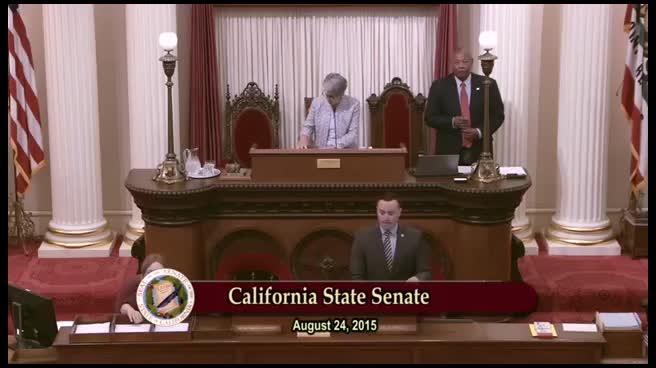 2MIN
Senate Floor
 3MIN
Senate Floor
 8MIN
Senate Standing Committee on Judiciary
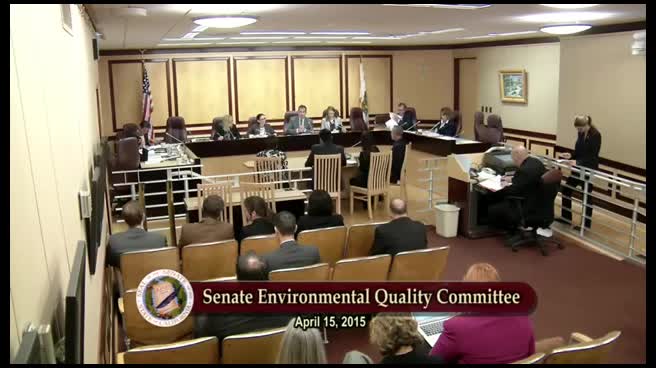 16MIN
Senate Standing Committee on Environmental Quality
Bill Author