SB 415: Voter participation.
- Session Year: 2015-2016
- House: Senate
- Latest Version Date: 2015-09-01
Existing law generally requires all state, county, municipal, district, and school district elections be held on an established election date. Existing law also establishes certain dates for statewide elections. Existing law requires any state, county, municipal, district, and school district election held on a statewide election date to be consolidated with a statewide election, except as provided.
This bill, commencing January 1, 2018, would prohibit a political subdivision, as defined, from holding an election other than on a statewide election date if holding an election on a nonconcurrent date has previously resulted in voter turnout for a regularly scheduled election in that political subdivision being at least 25% less than the average voter turnout within the political subdivision for the previous 4 statewide general elections, except as specified.
This bill would require a court to implement appropriate remedies upon a violation of this prohibition. The bill would authorize a voter who resides in a political subdivision where a violation is alleged to file an action in superior court to enforce this prohibition, and it would allow a prevailing plaintiff other than the state or political subdivision to collect a reasonable attorneys fee and litigation expenses, as provided.
Existing law generally requires all state, county, municipal, district, and school district elections be held on an established election date. Existing law also establishes certain dates for statewide elections. Existing law requires any state, county, municipal, district, and school district election held on a statewide election date to be consolidated with a statewide election, except as provided.
This bill, commencing January 1, 2018, would prohibit a political subdivision, as defined, from holding an election other than on a statewide election date if holding an election on a non-concurrent date has previously resulted in voter turnout for a regularly- scheduled election in that political subdivision being at least 25% less than the average voter turnout within the political subdivision for the previous 4 statewide general elections, except as specified.
This bill would require a court to implement appropriate remedies upon a violation of this prohibition. The bill would authorize a voter who resides in a political subdivision where a violation is alleged to file an action in Superior Court to enforce this prohibition, and it would allow a prevailing plaintiff other than the state or political subdivision to collect a reasonable attorneys fee and litigation expenses, as provided.
Existing law generally requires all state, county, municipal, district, and school district elections be held on an established election date. Existing law also establishes certain dates for statewide elections. Existing law requires any state, county, municipal, district, and school district election held on a statewide election date to be consolidated with a statewide election, except as provided.
This bill, commencing January 1, 2018, would prohibit a political subdivision, as defined, from holding an election other than on a statewide election date if holding an election on a non-concurrent date has previously resulted in voter turnout for a regularly-scheduled election in that political subdivision being at least five percent 25% less than the average voter turnout within the political subdivision for the previous four 4 statewide general elections.
This bill would require a court to implement appropriate remedies upon a violation of this prohibition. This The bill would permit authorize a voter who resides in a political subdivision where a violation is alleged to enforce this prohibition, and it would allow a prevailing plaintiff other than the state or political subdivision to collect a reasonable attorneys fee and litigation expenses, as provided.
Existing law generally requires all state, county, municipal, district, and school district elections be held on an established election date. Existing law also establishes certain dates for statewide elections. Existing law requires any state, county, municipal, district, and school district election held on a statewide election date to be consolidated with a statewide election, except as provided.
This bill, commencing January 1, 2018, would prohibit a political subdivision, as defined, from holding an election other than on a statewide election date if holding an election on a non-concurrent date has previously resulted in voter turnout for a regularly-scheduled election in that political subdivision being at least five percent less than the average voter turnout within the political subdivision for the previous four statewide general elections.
This bill would require a court to implement appropriate remedies upon a violation of this prohibition. This bill would permit a voter who resides in a political subdivision where a violation is alleged to enforce this prohibition, and it would allow a prevailing plaintiff other than the state or political subdivision to collect a reasonable attorneys fee and litigation expenses, as provided.
By requiring counties to change the conduct of their elections in certain circumstances, this bill would impose a state-mandated local program.
The California Constitution requires the state to reimburse local agencies and school districts for certain costs mandated by the state. Statutory provisions establish procedures for making that reimbursement.
This bill would provide that, if the Commission on State Mandates determines that the bill contains costs mandated by the state, reimbursement for those costs shall be made pursuant to these statutory provisions.
Existing law generally requires all state, county, municipal, district, and school district elections be held on an established election date. Existing law also establishes certain dates for statewide elections. Existing law requires any state, county, municipal, district, and school district election held on a statewide election date to be consolidated with a statewide election, except as provided.
This bill would prohibit a political subdivision, as defined, from holding an election other than on a statewide election date if holding an election on a non-concurrent date has previously resulted in voter turnout for a regularly-scheduled election in that political subdivision being at least five percent less than the average voter turnout within the political subdivision for the previous four statewide general elections.
This bill would require a court to implement appropriate remedies upon a violation of this prohibition. This bill would permit a voter who resides in a political subdivision where a violation is alleged to enforce this prohibition, and it would allow a prevailing plaintiff other than the state or political subdivision to collect a reasonable attorneys fee and litigation expenses, as provided.
By requiring counties to change the conduct of their elections in certain circumstances, this bill would impose a state-mandated local program.
The California Constitution requires the state to reimburse local agencies and school districts for certain costs mandated by the state. Statutory provisions establish procedures for making that reimbursement.
This bill would provide that, if the Commission on State Mandates determines that the bill contains costs mandated by the state, reimbursement for those costs shall be made pursuant to these statutory provisions.
Existing law establishes election dates in each year, which are the second Tuesday of April in each even-numbered year, the first Tuesday after the first Monday in March of each odd-numbered year, the first Tuesday after the first Monday in June in each year, and the first Tuesday after the first Monday in November of each year. Existing law requires the statewide direct primary election and the statewide general election to be held on the established dates in June and November of each even-numbered year. Existing law requires that county, municipal, district, and school district elections be held on one or more of the established election dates, as specified.
This bill would state the intent of the Legislature to enact legislation that would prohibit a political subdivision from holding an election on a date other than the date of a statewide direct primary election or statewide general election if doing so would result in a significant decrease in voter turnout as compared to the voter turnout at a statewide election.
This chapter shall be known and may be cited as the California Voter Participation Rights Act.
14051.As used in this chapter:
(a)Political subdivision means a geographic area of representation created for the provision of government services, including, but not limited to, a city, a school district, a community college district, or other district organized pursuant to state law.
(b)Significant decrease in voter turnout means the voter turnout for a regularly scheduled election in a political subdivision is at least 25 percent less than the average voter turnout within that political subdivision for the previous four statewide general elections.
(c)Voter turnout means the percentage of voters who are eligible to cast ballots within a given political subdivision who voted.
14052.(a)Except as provided in subdivision (b), a political subdivision shall not hold an election other than on a statewide election date if holding an election on a nonconcurrent date has previously resulted in a significant decrease in voter turnout.
(b)A political subdivision may hold an election other than on a statewide election date if, by January 1, 2018, the political subdivision has adopted a plan to consolidate a future election with a statewide election not later than the November 8, 2022, statewide general election.
14053.Upon a finding of a violation of subdivision (a) of Section 14052, the court shall implement appropriate remedies, including the imposition of concurrent election dates for future elections and the upgrade of voting equipment or systems to do so. In imposing remedies pursuant to this section, a court may also require a county board of supervisors to approve consolidation pursuant to Section 10402.5.
14054.In an action to enforce subdivision (a) of Section 14052, the court shall allow the prevailing plaintiff other than the state or political subdivision of the state, a reasonable attorneys fee consistent with the standards established in Serrano v. Priest (1977) 20 Cal.3d 25, 48-49, and litigation expenses including, but not limited to, expert witness fees and expenses as part of the costs. A prevailing defendant shall not recover any costs, unless the court finds the action to be frivolous, unreasonable, or without foundation.
14055.A voter who resides in a political subdivision where a violation of subdivision (a) of Section 14052 is alleged may file an action pursuant to that section in the superior court of the county in which the political subdivision is located.
14056.This chapter does not apply to special elections.
14057.This chapter shall become operative on January 1, 2018.
This chapter shall be known and may be cited as the California Voter Participation Rights Act.
14051.As used in this chapter:
(a)Political subdivision means a geographic area of representation created for the provision of government services, including, but not limited to, a city, a school district, a community college district, or other district organized pursuant to state law.
(b)Significant decrease in voter turnout means the voter turnout for a regularly scheduled election in a political subdivision is at least 25 percent less than the average voter turnout within that political subdivision for the previous four statewide general elections.
(c)Voter turnout means the percentage of voters who are eligible to cast ballots within a given political subdivision who voted.
14052.A (a)Except as provided in subdivision (b), a political subdivision shall not hold an election other than on a statewide election date if holding an election on a nonconcurrent date has previously resulted in a significant decrease in voter turnout.
(b)A political subdivision may hold an election other than on a statewide election date if, by January 1, 2018, the political subdivision has adopted a plan to consolidate a future election with a statewide election not later than the November 8, 2022, statewide general election.
14053.Upon a finding of a violation of subdivision (a) of Section 14052, the court shall implement appropriate remedies, including the imposition of concurrent election dates for future elections and the upgrade of voting equipment or systems to do so. In imposing remedies pursuant to this section, a court may also require a county board of supervisors to approve consolidation pursuant to Section 10402.5.
14054.In an action to enforce subdivision (a) of Section 14052, the court shall allow the prevailing plaintiff other than the state or political subdivision of the state, a reasonable attorneys fee consistent with the standards established in Serrano v. Priest (1977) 20 Cal.3d 25, 48-49, and litigation expenses including, but not limited to, expert witness fees and expenses as part of the costs. A prevailing defendant shall not recover any costs, unless the court finds the action to be frivolous, unreasonable, or without foundation.
14055.A voter who resides in a political subdivision where a violation of subdivision (a) of Section 14052 is alleged may file an action pursuant to that section in the superior court of the county in which the political subdivision is located.
14056.This chapter does not apply to special elections.
14057.This chapter shall become operative on January 1, 2018.
This chapter shall be known and may be cited as the California Voter Participation Rights Act.
14051.As used in this chapter:
(a)Political subdivision means a geographic area of representation created for the provision of government services, including, but not limited to, a city, a school district, a community college district, or other district organized pursuant to state law.
(b)Significant decrease in voter turnout means the voter turnout for a regularly scheduled election in a political subdivision is at least five 25 percent less than the average voter turnout within that political subdivision for the previous four statewide general elections.
(c)Voter turnout means the percentage of voters who are eligible to cast ballots within a given political subdivision who voted.
14052.A political subdivision shall not hold an election other than on a statewide election date if holding an election on a nonconcurrent date has previously resulted in a significant decrease in voter turnout.
14053.Upon a finding of a violation of Section 14052, the court shall implement appropriate remedies, including the imposition of concurrent election dates for future elections and the upgrade of voting equipment or systems to do so. In imposing remedies pursuant to this section, a court may also require a county board of supervisors to approve consolidation pursuant to Section 10402.5.
14054.In an action to enforce Section 14052, the court shall allow the prevailing plaintiff other than the state or political subdivision thereof, of the state, a reasonable attorneys fee consistent with the standards established in Serrano v. Priest (1977) 20 Cal.3d 25, 48-49, and litigation expenses including, but not limited to, expert witness fees and expenses as part of the costs. A prevailing defendant shall not recover any costs, unless the court finds the action to be frivolous, unreasonable, or without foundation.
14055.A voter who resides in a political subdivision where a violation of Section 14052 is alleged may file an action pursuant to that section in the superior court of the county in which the political subdivision is located.
14056.This chapter does not apply to special elections.
14057.This chapter shall become operative on January 1, 2018.
This act chapter shall be known and may be cited as the California Voter Participation Rights Act.
14051.As used in this chapter:
(a)Political subdivision means a geographic area of representation created for the provision of government services, including, but not limited to, a city, a school district, a community college district, or other district organized pursuant to state law.
(b)Significant decrease in voter turnout means the voter turnout for a regularly-scheduled election in a political subdivision is at least five percent less than the average voter turnout within that political subdivision for the previous four statewide general elections.
(c)Voter turnout means the percentage of voters who are eligible to cast ballots within a given political subdivision who voted.
14052.A political subdivision shall not hold an election other than on a statewide election date if holding an election on a non-concurrent date has previously resulted in a significant decrease in voter turnout.
14053.Upon a finding of a violation of Section 14052, the court shall implement appropriate remedies, including the imposition of concurrent election dates for future elections and the upgrade of voting equipment or systems to do so. In imposing remedies pursuant to this section, a court may also require a county board of supervisors to approve consolidation pursuant to Section 10402.5.
14054.In an action to enforce Section 14052, the court shall allow the prevailing plaintiff other than the state or political subdivision thereof, a reasonable attorneys fee consistent with the standards established in Serrano v. Priest (1977) 20 Cal.3d 25, 48-49, and litigation expenses including, but not limited to, expert witness fees and expenses as part of the costs. A prevailing defendant shall not recover any costs, unless the court finds the action to be frivolous, unreasonable, or without foundation.
14055.A voter who resides in a political subdivision where a violation of Section 14052 is alleged may file an action pursuant to that section in the superior court of the county in which the political subdivision is located.
14056.This chapter shall does not apply to special elections.
14057.This chapter shall become operative on January 1, 2018.
SEC. 2.This act shall become operative on January 1, 2018.
SEC. 3.If the Commission on State Mandates determines that this act contains costs mandated by the state, reimbursement to local agencies and school districts for those costs shall be made pursuant to Part 7 (commencing with Section 17500) of Division 4 of Title 2 of the Government Code.
This act shall be known and may be cited as the California Voter Participation Rights Act.
14051.As used in this chapter:
(a)Political subdivision means a geographic area of representation created for the provision of government services, including, but not limited to, a city, a school district, a community college district, or other district organized pursuant to state law.
(b)Significant decrease in voter turnout means the voter turnout for a regularly-scheduled election in a political subdivision is at least five percent less than the average voter turnout within that political subdivision for the previous four statewide general elections.
(c)Voter turnout means the percentage of voters who are eligible to cast ballots within a given political subdivision who voted.
14052.A political subdivision shall not hold an election other than on a statewide election date if holding an election on a non-concurrent date has previously resulted in a significant decrease in voter turnout.
14053.Upon a finding of a violation of Section 14052, the court shall implement appropriate remedies, including the imposition of concurrent election dates for future elections and the upgrade of voting equipment or systems to do so. In imposing remedies pursuant to this section, a court may also require a county board of supervisors to approve consolidation pursuant to Section 10402.5.
14054.In an action to enforce Section 14052, the court shall allow the prevailing plaintiff other than the state or political subdivision thereof, a reasonable attorneys fee consistent with the standards established in Serrano v. Priest (1977) 20 Cal.3d 25, 48-49, and litigation expenses including, but not limited to, expert witness fees and expenses as part of the costs. A prevailing defendant shall not recover any costs, unless the court finds the action to be frivolous, unreasonable, or without foundation.
14055.A voter who resides in a political subdivision where a violation of Section 14052 is alleged may file an action pursuant to that section in the superior court of the county in which the political subdivision is located.
14056.This chapter shall not apply to special elections.
SEC. 2.This act shall become operative on January 1, 2018.
SEC. 3.If the Commission on State Mandates determines that this act contains costs mandated by the state, reimbursement to local agencies and school districts for those costs shall be made pursuant to Part 7 (commencing with Section 17500) of Division 4 of Title 2 of the Government Code.
SECTION 1.It is the intent of the Legislature to enact legislation to prohibit a political subdivision from holding an election on a date other than the date of a statewide direct primary election or statewide general election if doing so would result in a significant decrease in voter turnout as compared to the voter turnout at a statewide election.
It is the intent of the Legislature to enact legislation to prohibit a political subdivision from holding an election on a date other than the date of a statewide direct primary election or statewide general election if doing so would result in a significant decrease in voter turnout as compared to the voter turnout at a statewide election.
|
Date
|
Status
|
|---|---|
| May 7, 2015 | Read third time. Passed. (Ayes 24. Noes 13.) Ordered to the Assembly. |
| Sep 1, 2015 | Chaptered by Secretary of State. Chapter 235, Statutes of 2015. |
| Sep 1, 2015 | Approved by the Governor. |
| Aug 20, 2015 | Enrolled and presented to the Governor at 4:15 p.m. |
| Aug 17, 2015 | Assembly amendments concurred in. (Ayes 26. Noes 12.) Ordered to engrossing and enrolling. |
| Aug 17, 2015 | Assembly amendments concurred in. (Ayes 26. Noes 12. Page 2048.) Ordered to engrossing and enrolling. |
| Jul 16, 2015 | Read third time. Passed. (Ayes 45. Noes 30. Page 2426.) Ordered to the Senate. |
| Jul 16, 2015 | In Senate. Concurrence in Assembly amendments pending. |
| Jul 2, 2015 | Read second time. Ordered to third reading. |
| Jul 1, 2015 | From committee: Do pass. (Ayes 4. Noes 1.) (July 1). |
| Jun 23, 2015 | From committee with author's amendments. Read second time and amended. Re-referred to Com. on E. & R. |
| May 22, 2015 | Referred to Com. on E. & R. |
| Feb 25, 2015 | Introduced. Read first time. To Com. on RLS. for assignment. To print. |
| May 7, 2015 | Read third time. Passed. (Ayes 24. Noes 13. Page 927.) Ordered to the Assembly. |
| May 7, 2015 | In Assembly. Read first time. Held at Desk. |
| Apr 28, 2015 | Read second time and amended. Ordered to third reading. |
| Apr 27, 2015 | From committee: Do pass as amended. (Ayes 4. Noes 1. Page 723.) (April 21). |
| Apr 15, 2015 | From committee with author's amendments. Read second time and amended. Re-referred to Com. on E. & C.A. |
| Apr 10, 2015 | Set for hearing April 21. |
| Apr 9, 2015 | Re-referred to Com. on E. & C.A. |
| Apr 6, 2015 | From committee with author's amendments. Read second time and amended. Re-referred to Com. on RLS. |
| Mar 5, 2015 | Referred to Com. on RLS. |
| Feb 26, 2015 | From printer. May be acted upon on or after March 28. |
|
Date
|
Description
|
Location
|
Votes
|
|
|---|---|---|---|---|
| Aug 17, 2015 | Unfinished Business SB415 Hueso Concurrence | Senate Floor |
Passed |
|
| Jul 16, 2015 | SB 415 Hueso Senate Third Reading By ALEJO | Assembly Floor |
Passed |
|
| Jul 1, 2015 | Do pass. | Assembly Standing Committee on Elections and Redistricting |
Passed |
|
| May 7, 2015 | Senate 3rd Reading SB415 Hueso | Senate Floor |
Passed |
|
| Apr 21, 2015 | Do pass as amended | Senate Standing Committee on Elections and Constitutional Amendments |
Passed |
This list shows positions taken on this bill by organizations on the date displayed, which is linked to the original source.
Positions by individuals are not included.
|
Organization
|
Position
|
Date
|
|---|---|---|
| California Common Cause | ** Support | Aug 17, 2015 |
| Desert Water Agency | ** Against | Aug 17, 2015 |
| Southwest Voter Registration Education Project | ** Support | Aug 17, 2015 |
SB 415
Page 8
|
Office of Senate Floor Analyses (916) 651-1520 Fax: (916) 327-4478 |
UNFINISHED BUSINESS
Bill No: SB 415
Amended: 6/23/15
SENATE ELECTIONS & C.A. COMMITTEE: 4-1, 4/21/15
AYES: Allen, Hancock, Hertzberg, Liu
NOES: Anderson
SENATE FLOOR: 24-13, 5/7/15
AYES: Allen, Beall, Block, De León, Galgiani, Hall, Hancock, Hernandez, Hertzberg, Hill, Hueso, Jackson, Lara, Leno, Leyva, McGuire, Mendoza, Mitchell, Monning, Pan, Pavley, Roth, Wieckowski, Wolk
NOES: Anderson, Bates, Berryhill, Cannella, Gaines, Huff, Moorlach, Morrell, Nguyen, Nielsen, Runner, Stone, Vidak
NO VOTE RECORDED: Fuller, Liu
ASSEMBLY FLOOR: 45-30, 7/16/15 - See last page for vote
DIGEST: This bill prohibits a local government, beginning January 1, 2018, from holding an election on any date other than a statewide election date if doing so in the past has resulted in turnout that is at least 25 percent below the average turnout in that jurisdiction in the last four statewide general elections, as specified
Assembly Amendments permit a political subdivision to continue to hold elections on dates other than statewide election dates after January 1, 2018, notwithstanding the provisions of this bill, if the political subdivision adopts a plan not later than January 1, 2018, to consolidate future elections with the statewide election not later than the November 8, 2022, statewide election.
Existing law:
Provides that the following dates are "established election dates":
a) The second Tuesday of April in each even-numbered year;
b) The first Tuesday after the first Monday in March of each odd-numbered year;
c) The first Tuesday after the first Monday in June in each year; and,
d) The first Tuesday after the first Monday in November in each year.
Requires all state, county, municipal, district, and school district elections to be held on an established election date, except as specified. Provides that the following types of elections, among others, are not required to be held on an established election date:
a) Any special election called by the Governor;
b) Elections held in chartered cities or chartered counties in which the charter provisions are inconsistent with state election laws;
c) School governing board elections conducted pursuant to specified provisions of law;
d) Elections required or permitted to be held by a school district located in a charter city or county when the election is consolidated with a regular city or county election held in a jurisdiction that includes 95 percent or more of the school district’s population;
e) County, municipal, district, and school district initiative, referendum, or recall elections;
f) Any election conducted solely by mailed ballot pursuant to specified provisions of law; and,
g) Elections held pursuant to specified provisions of law on the question of whether to authorize school bonds.
Requires a general law city to hold its general municipal election on an established election date or on the second Tuesday in April of each odd-numbered year, except as specified.
Requires a school district, community college district, or county board of education to hold the regular election to select governing board members on the first Tuesday after the first Monday of November in each odd-numbered year, or at the same time as the statewide direct primary election, the statewide general election, or the general municipal election, except as specified.
Requires the general district election held to elect members of the governing board of a special district to be held on the first Tuesday after the first Monday in November of each odd-numbered year, unless the principal act of the district provides for the general district election to be held on a different established election date, or on an established mailed ballot election date, as specified. Permits a special district to adopt a resolution requiring its general district election to be held on the same day as the statewide general election, upon approval of the county board of supervisors, as specified.
Permits a county or a city to provide for its own governance through the adoption of a charter by a majority vote of its electors voting on the question.
Permits a city charter to provide for the conduct of city elections. Grants plenary authority, subject to limited restrictions, for a city's charter to provide for the manner in which and the method by which municipal officers are elected.
Provides that a legally adopted city charter supersedes all laws inconsistent with that charter with respect to municipal affairs.
This bill:
1) Prohibits a political subdivision from holding an election other than on a statewide election date if holding an election on a non-concurrent date has previously resulted in turnout that is at least 25% less than the average voter turnout within that political subdivision for the previous four statewide general elections. Permits a voter who resides in a political subdivision where a violation of this requirement is alleged to file an action in the superior court in the county in which the political subdivision is located.
2) Permits a political subdivision to continue to hold elections on dates other than statewide election dates after January 1, 2018, notwithstanding the provisions of this bill, if the political subdivision adopts a plan not later than January 1, 2018, to consolidate future elections with the statewide election not later than the November 8, 2022, statewide election.
3) Requires a court, upon finding a violation of this bill, to implement appropriate remedies, including the imposition of concurrent election dates for future elections and the upgrade of voting equipment or systems to do so. Permits a court to require a county board of supervisors to approve the consolidation of elections, as specified, when imposing remedies.
4) Permits a prevailing plaintiff party in an action brought pursuant to this bill, other than the state or a political subdivision of the state, to recover reasonable attorney's fees and litigation expenses, including, but not limited to, expert witness fees and expenses as part of the costs, as specified. Prohibits a prevailing defendant party from recovering any costs unless the court finds the action to be frivolous, unreasonable, or without foundation.
5) Provides that the provisions of this bill do not apply to special elections.
6) Provides that this bill shall become operative on January 1, 2018.
Background
History of Established Election Dates: In 1973, the Legislature approved and Governor Reagan signed SB 230 (Biddle), Chapter 1146, Statutes of 1973, which created "regular election dates" (which subsequently were renamed "established election dates"). The concept behind having a regular election schedule that governed when most elections would be held was that such a schedule would encourage election consolidations, thereby potentially reducing election costs, and could encourage greater voter participation because voters would become used to voting on these regular election dates. SB 230 created five established election dates in each two-year cycle—three in even-numbered years (in March, June, and November), and two in odd-numbered years (in March and November).
One year after established election dates were first created, AB 4180 (Keysor), Chapter 1386, Statutes of 1974, added an additional established election date in May of odd-numbered years. The rationale for adding an established election date was that the eight-month gap between established election dates in March and November of odd-numbered years delayed many special local elections from taking place in a timely manner, including elections to fill vacancies, annexation elections, bond elections, and tax rate elections. Since that time, the exact dates that are established election dates have fluctuated, often moving to reflect changes in the date of the statewide primary election held in even-numbered years, though generally there have been at least three established election dates in each year.
Having multiple established election dates in each year, but specifying that many types of elections must be held on an established election date, reflects an attempt to balance the desire to hold most elections on a predictable, regular schedule, while still providing the flexibility to ensure that elections can occur in a timely manner when necessary.
On-Cycle vs. Off-Cycle Elections: Although existing law generally requires that regularly scheduled county elections be held at the same time as statewide elections, other local jurisdictions (e.g., cities, school districts, and special districts) have greater flexibility when deciding when to hold regularly scheduled elections that are held to elect governing board members. Elections that are held at the same time as statewide elections are often referred to as "on-cycle" elections, while elections held at other times are often referred to as "off-cycle" elections.
The degree to which local governments hold their elections on-cycle or off-cycle varies significantly throughout the state. Roughly 30 percent of the counties in California do not have regularly-scheduled off-cycle elections, because all the local jurisdictions in those counties hold their governing board elections at the same time as statewide elections. In other counties, large numbers of cities, school districts, and special districts hold their governing board elections off-cycle in November of odd-numbered years. A smaller number of local jurisdictions hold their regularly scheduled governing board elections on other permitted off-cycle dates.
Charter Cities: As noted above, the California Constitution gives cities and counties the ability to adopt charters, which give those jurisdictions greater autonomy over local affairs. Charter cities, in particular, are granted a great deal of autonomy over the rules governing the election of municipal officers. In fact, the Constitution grants "plenary authority," subject to limited restrictions, for a city charter to provide "the manner in which, the method by which, the times at which, and the terms for which the several municipal officers and employees…shall be elected or appointed." The Constitution further provides that properly adopted city charters "shall supersede all laws inconsistent" with the charter.
Los Angeles County and Limitations on Election Consolidations: Existing law requires all state, county, municipal, district, and school district elections that are held on a statewide election date to be consolidated with the statewide election, except that the Los Angeles County Board of Supervisors is allowed to deny a request for consolidation of an election with the statewide election if the voting system used by the county cannot accommodate the additional election. This unique provision allowing Los Angeles County to deny consolidation requests was created through the passage of SB 693 (Robbins, Chapter 897, Statutes of 1985), in response to attempts by a number of cities in Los Angeles to move their municipal elections to the same day as statewide elections. Los Angeles County sought the ability to deny consolidation requests because its voting system could accommodate only a limited number of contests at each election, and the county was concerned that the move by cities to hold their elections at the same time as the statewide election would exceed the capacity of that voting system. Los Angeles County still uses a variant of the voting system that it used in 1985, though the county is currently developing a new voting system. One of the principles that the county has articulated to guide the development of its new voting system is having a system that has "sufficient technical and physical capacity to accommodate…consolidation of elections with local districts and municipalities." That voting system, however, may not be available for use countywide before 2020.
Some local jurisdictions have already taken steps to move the date of their elections in anticipation of Los Angeles County's new voting system. Earlier this year, voters in the city of Los Angeles and in the Los Angeles Unified School District approved ballot measures to move those jurisdictions' general elections so that they are held at the same time as statewide elections, beginning in 2020. Arguments in support of those measures indicated that such a timeline would allow local elections to be consolidated with federal and state elections.
While this bill will go into effect on January 1, 2018, recent amendments taken by the author allow a political subdivision to continue to hold its elections on dates other than statewide election dates after January 1, 2018, notwithstanding the provisions of this bill, if the political subdivision adopts a plan not later than January 1, 2018 to consolidate future elections with the statewide election beginning no later than November 2022. Based on Los Angeles County's current timeline for deploying its new voting system, these amendments should allow political subdivisions in that county to continue holding off-cycle elections until the county is able to accommodate additional election consolidations.
Special Elections: This bill explicitly provides that its provisions do not apply to special elections. As a result, special elections that are conducted by a political subdivision to fill a vacancy on that subdivision's governing board, or to vote on a local ballot measure, will not be required to occur at the same time as statewide elections, even if the turnout at special elections in the jurisdiction regularly is significantly lower than the turnout in that jurisdiction at statewide elections.
Related/Prior Legislation
AB 254 (R. Hernández) requires general law cities, school districts, community college districts, and special districts to hold their general elections and certain special elections at the same time as the statewide primary or statewide general election, or in June or November of odd-numbered years, beginning in 2020. AB 254 is currently in Senate Appropriations Committee.
FISCAL EFFECT: Appropriation: No Fiscal Com.: No Local: No
California Common Cause
Southwest Voter Registration Education Project
Desert Water Agency
ARGUMENTS IN SUPPORT: According to California Common Cause: One of the greatest barometers for waning civic engagement in American politics is declining voter turnout in federal, state, and municipal elections. There are many potential contributing factors: general cynicism about government and elected officials, a decline in investment in civics education, and an increasingly transient society.
Yet there is one major contributing factor to low voter turnout – the timing of elections – that could be addressed with a relatively simple policy change. The Public Policy Institute of California surveyed 350 California cities and found that simply moving an election to be synchronized with the even year state elections can result in a 21-36 percent boost in voter turnout for municipal and other local elections. SB 415 accomplishes this goal by prohibiting municipalities from holding off-cycle elections if doing so results in a significant (25% or more) decline in voter turnout.
ARGUMENTS IN OPPOSITION: The Desert Water Agency (DWA) writes: DWA holds an election for its governing board in November of odd-numbered years. The Agency was asked many years ago by the Riverside County Elections Department to change…its election schedule due to the large size of the ballot when all elections were consolidated on a statewide election date. The November 2013 election turnout for DWA was 32.32%; the November 2014 statewide turnout for Riverside County was 34.52%. In comparison, voter turnout in Riverside County in the 2012 presidential election was nearly 75%, which would significantly skew the comparative analysis called for by SB 415 (an average of the previous four statewide elections).
Nevertheless, combining the DWA election with the statewide election would not likely result in greater voter participation….[A] review of voter analytics shows that voters are less likely to cast a vote as they move down the ballot, a phenomenon known as "roll-off." While this effect might be due to fatigue, it also might be due to the fact that contest saliency generally decreases with ballot positions. Voter fatigue would likely counteract any benefit of forcing local agencies to change election dates as they would fall to the end of a crowded ballot.
ASSEMBLY FLOOR: 45-30, 7/16/15
AYES: Alejo, Bloom, Bonilla, Bonta, Brown, Burke, Calderon, Campos, Chau, Chiu, Chu, Cooper, Dababneh, Daly, Dodd, Eggman, Frazier, Cristina Garcia, Eduardo Garcia, Gatto, Gipson, Gomez, Gonzalez, Roger Hernández, Holden, Jones-Sawyer, Levine, Lopez, Low, McCarty, Medina, Perea, Quirk, Rendon, Ridley-Thomas, Rodriguez, Salas, Santiago, Mark Stone, Thurmond, Ting, Weber, Williams, Wood, Atkins
NOES: Achadjian, Travis Allen, Baker, Bigelow, Brough, Chang, Chávez, Dahle, Beth Gaines, Gallagher, Grove, Hadley, Harper, Irwin, Jones, Kim, Lackey, Linder, Maienschein, Mathis, Mayes, Melendez, Obernolte, O'Donnell, Olsen, Patterson, Steinorth, Wagner, Waldron, Wilk
NO VOTE RECORDED: Cooley, Gordon, Gray, Mullin, Nazarian
Prepared by: Frances Tibon Estoista / E. & C.A. / (916) 651-4106
8/13/15 13:52:39
SB 415
Page 2
SENATE THIRD READING
SB 415
(Hueso)
As Amended June 23, 2015
Majority vote
SENATE VOTE: 24-13
Committee |
Votes |
Ayes |
Noes |
Elections |
4-1 |
Ridley-Thomas, Gatto, Gordon, Perea |
Grove |
SUMMARY: Prohibits a local government, beginning January 1, 2018, from holding an election on any date other than a statewide election date if doing so in the past has resulted in turnout that is at least 25% below the average turnout in that jurisdiction in the last four statewide general elections, as specified. Specifically, this bill:
Prohibits a political subdivision from holding an election other than on a statewide election date if holding an election on a non-concurrent date has previously resulted in turnout that is at least 25% less than the average voter turnout within that political subdivision for the previous four statewide general elections. Permits a voter who resides in a political subdivision where a violation of this requirement is alleged to file an action in the superior court in the county in which the political subdivision is located.
Permits a political subdivision to continue to hold elections on dates other than statewide election dates after January 1, 2018, notwithstanding the provisions of this bill, if the political subdivision adopts a plan not later than January 1, 2018, to consolidate future elections with the statewide election not later than the November 8, 2022, statewide election.
Requires a court, upon finding a violation of this bill, to implement appropriate remedies, including the imposition of concurrent election dates for future elections and the upgrade of voting equipment or systems to do so. Permits a court to require a county board of supervisors to approve the consolidation of elections, as specified, when imposing remedies.
Permits a prevailing plaintiff party in an action brought pursuant to this bill, other than the state or a political subdivision of the state, to recover reasonable attorney's fees and litigation expenses, including, but not limited to, expert witness fees and expenses as part of the costs, as specified. Prohibits a prevailing defendant party from recovering any costs unless the court finds the action to be frivolous, unreasonable, or without foundation.
Provides that the provisions of this bill do not apply to special elections.
Provides that this bill shall become operative on January 1, 2018.
FISCAL EFFECT: Unknown. This bill is keyed non-fiscal by the Legislative Counsel.
COMMENTS: According to the author, "Voter turnout in local elections held on odd-numbered years has been abysmal. On average, less than 30% of registered voters have come out to vote in local odd-year elections. As a result of low voter turnout, the voting population often does not look like the general public as a whole and neither does the city council. While there is no silver bullet, one way to increase voter turnout in local elections is to hold them concurrently with statewide and federal elections, where voter turnout is often twice as high. Elections held on the same date can help reduce voter fatigue and make voting more habit forming, while saving local government on administrative costs."
Although existing law generally requires that regularly scheduled county elections be held at the same time as statewide elections, other local jurisdictions (e.g., cities, school districts, and special districts) have greater flexibility when deciding when to hold regularly scheduled elections that are held to elect governing board members. Elections that are held at the same time as statewide elections are often referred to as "on-cycle" elections, while elections held at other times are often referred to as "off-cycle" elections.
The California Constitution gives cities and counties the ability to adopt charters, which give those jurisdictions greater autonomy over local affairs. Charter cities, in particular, are granted a great deal of autonomy over the rules governing the election of municipal officers. By potentially compelling charter cities to change the dates of their regularly scheduled municipal elections, this bill goes to the heart of the autonomy granted to charter cities in the California Constitution to determine the times at which municipal officers are elected. This bill does not explicitly address the question of whether it is intended to be applicable to charter cities, however, so it is unclear whether those cities would be subject to a lawsuit under this bill.
Although this bill establishes a legal process for voters in a jurisdiction to challenge the timing of that jurisdiction's regularly scheduled elections if there is a "significant decrease in turnout" relative to turnout in statewide elections in that same jurisdiction, in practice, this bill may force almost all local jurisdictions to hold their regularly scheduled elections at the same time as statewide elections. Although the exact number of local governmental entities that would be affected by this bill is unknown, a review of recent election results suggests that most local jurisdictions that hold regularly scheduled elections at a time other than at the same time as statewide elections would be forced to change the dates of their elections under this bill. Of more than five dozen cities whose election results were examined as part of this review, just two cities had turnout in their most recent regularly scheduled municipal election that was less than 25% lower than the average turnout in the city from the prior four statewide general elections. It is likely that turnout at off-cycle school district and special district elections also regularly falls below the threshold set by this bill under which local jurisdictions could be forced to move to conducting elections at the same time as statewide elections.
AB 254 (Roger Hernández) of the current legislative session, which is pending in the Senate Appropriations Committee, requires general law cities, school districts, community college districts, and special districts to hold their general elections and certain special elections at the same time as the statewide primary or statewide general election, or in June or November of odd-numbered years, beginning in 2020. AB 254 was approved by the Assembly on a 44-31 vote.
Please see the policy committee analysis for a full discussion of this bill.
Analysis Prepared by: Ethan Jones / E. & R. / (916) 319-2094 FN: 0001119
SB 415
Page 8
Date of Hearing: July 1, 2015
ASSEMBLY COMMITTEE ON ELECTIONS AND REDISTRICTING
Sebastian Ridley-Thomas, Chair
SB 415
(Hueso) – As Amended June 23, 2015
SENATE VOTE: 24-13
SUBJECT: Voter participation.
SUMMARY: Prohibits a local government, beginning January 1, 2018, from holding an election on any date other than a statewide election date if doing so in the past has resulted in turnout that is at least 25 percent below the average turnout in that jurisdiction in the last four statewide general elections, as specified. Specifically, this bill:
Defines the following terms, for the purposes of this bill:
"Political subdivision" to mean a geographic area of representation created for the provision of government services, including, but not limited to, a city, school district, community college district, or other district organized pursuant to state law;
"Significant decrease in voter turnout" to mean the voter turnout for a regularly scheduled election in a political subdivision is at least 25 percent less than the average voter turnout within that political subdivision for the previous four statewide general elections;
"Voter turnout" to mean the percentage of voters who are eligible to cast ballots within a given political subdivision who voted.
Prohibits a political subdivision from holding an election other than on a statewide election date if holding an election on a nonconcurrent date has previously resulted in a significant decrease in voter turnout. Permits a voter who resides in a political subdivision where a violation of this requirement is alleged to file an action in the superior court in the county in which the political subdivision is located.
Permits a political subdivision to continue to hold elections on dates other than statewide election dates after January 1, 2018, notwithstanding the provisions of this bill, if the political subdivision adopts a plan not later than January 1, 2018 to consolidate future elections with the statewide election not later than the November 8, 2022 statewide election.
Requires a court, upon finding a violation of the provisions of this bill, to implement appropriate remedies, including the imposition of concurrent election dates for future elections and the upgrade of voting equipment or systems to do so. Permits a court to require a county board of supervisors to approve the consolidation of elections, as specified, when imposing remedies.
Permits a prevailing plaintiff party in an action brought pursuant to this bill, other than the state or a political subdivision of the state, to recover reasonable attorney's fees and litigation expenses, including, but not limited to, expert witness fees and expenses as part of the costs, as specified. Prohibits a prevailing defendant party from recovering any costs unless the court finds the action to be frivolous, unreasonable, or without foundation.
Provides that the provisions of this bill do not apply to special elections.
Provides that this bill shall become operative on January 1, 2018.
EXISTING LAW:
Provides that the following dates are "established election dates":
The second Tuesday of April in each even-numbered year;
The first Tuesday after the first Monday in March of each odd-numbered year;
The first Tuesday after the first Monday in June in each year; and,
The first Tuesday after the first Monday in November in each year.
Requires all state, county, municipal, district, and school district elections to be held on an established election date, except as specified. Provides that the following types of elections, among others, are not required to be held on an established election date:
Any special election called by the Governor;
Elections held in chartered cities or chartered counties in which the charter provisions are inconsistent with state election laws;
School governing board elections conducted pursuant to specified provisions of law;
Elections required or permitted to be held by a school district located in a charter city or county when the election is consolidated with a regular city or county election held in a jurisdiction that includes 95 percent or more of the school district’s population;
County, municipal, district, and school district initiative, referendum, or recall elections;
Any election conducted solely by mailed ballot pursuant to specified provisions of law; and,
Elections held pursuant to specified provisions of law on the question of whether to authorize school bonds.
Requires a general law city to hold its general municipal election on an established election date or on the second Tuesday in April of each odd-numbered year, except as specified.
Requires a school district, community college district, or county board of education to hold the regular election to select governing board members on the first Tuesday after the first Monday of November in each odd-numbered year, or at the same time as the statewide direct primary election, the statewide general election, or the general municipal election, except as specified.
Requires the general district election held to elect members of the governing board of a special district to be held on the first Tuesday after the first Monday in November of each odd-numbered year, unless the principal act of the district provides for the general district election to be held on a different established election date, or on an established mailed ballot election date, as specified. Permits a special district to adopt a resolution requiring its general district election to be held on the same day as the statewide general election, upon approval of the county board of supervisors, as specified.
Permits a county or a city to provide for its own governance through the adoption of a charter by a majority vote of its electors voting on the question.
Permits a city charter to provide for the conduct of city elections. Grants plenary authority, subject to limited restrictions, for a city's charter to provide for the manner in which and the method by which municipal officers are elected.
Provides that a legally adopted city charter supersedes all laws inconsistent with that charter with respect to municipal affairs.
FISCAL EFFECT: Unknown. This bill is keyed non-fiscal by the Legislative Counsel.
COMMENTS:
Purpose of the Bill: According to the author:
Voter turnout in local elections held on odd-numbered years has been abysmal. On average, less than 30% of registered voters have come out to vote in local odd-year elections. As a result of low voter turnout, the voting population often does not look like the general public as a whole and neither does the city council. While there is no silver bullet, one way to increase voter turnout in local elections is to hold them concurrently with statewide and federal elections, where voter turnout is often twice as high.
Elections held on the same date can help reduce voter fatigue and make voting more habit forming, while saving local government on administrative costs. For example, the City of San Diego in 2012 spent 42 cents per voter on elections and saw a 70% voter turnout. The City of Los Angeles in 2011 spent $39.35 per voter for a voter turnout of 14.1%.
This bill will give citizens the right to challenge local government for holding costly elections with little voter turnout.
History of Established Election Dates: In 1973, the Legislature approved and Governor Reagan signed SB 230 (Biddle), Chapter 1146, Statutes of 1973, which created "regular election dates" (which subsequently were renamed "established election dates"). The concept behind having a regular election schedule that governed when most elections would be held was that such a schedule would encourage election consolidations, thereby potentially reducing election costs, and could encourage greater voter participation because voters would become used to voting on these regular election dates. SB 230 created five established election dates in each two-year cycle—three in even-numbered years (in March, June, and November), and two in odd-numbered years (in March and November).
One year after established election dates were first created, AB 4180 (Keysor), Chapter 1386, Statutes of 1974, added an additional established election date in May of odd-numbered years. The rationale for adding an established election date was that the eight-month gap between established election dates in March and November of odd-numbered years delayed many special local elections from taking place in a timely manner, including elections to fill vacancies, annexation elections, bond elections, and tax rate elections. Since that time, the exact dates that are established election dates have fluctuated, often moving to reflect changes in the date of the statewide primary election held in even-numbered years, though generally there have been at least three established election dates in each year.
Having multiple established election dates in each year, but specifying that many types of elections must be held on an established election date, reflects an attempt to balance the desire to hold most elections on a predictable, regular schedule, while still providing the flexibility to ensure that elections can occur in a timely manner when necessary.On-Cycle vs. Off-Cycle Elections: Although existing law generally requires that regularly scheduled county elections be held at the same time as statewide elections, other local jurisdictions (e.g., cities, school districts, and special districts) have greater flexibility when deciding when to hold regularly scheduled elections that are held to elect governing board members. Elections that are held at the same time as statewide elections are often referred to as "on-cycle" elections, while elections held at other times are often referred to as "off-cycle" elections.
The degree to which local governments hold their elections on-cycle or off-cycle varies significantly throughout the state. Roughly 30 percent of the counties in California do not have regularly-scheduled off-cycle elections, because all the local jurisdictions in those counties hold their governing board elections at the same time as statewide elections. In other counties, large numbers of cities, school districts, and special districts hold their governing board elections off-cycle in November of odd-numbered years. A smaller number of local jurisdictions hold their regularly scheduled governing board elections on other permitted off-cycle dates.
Charter Cities: As noted above, the California Constitution gives cities and counties the ability to adopt charters, which give those jurisdictions greater autonomy over local affairs. Charter cities, in particular, are granted a great deal of autonomy over the rules governing the election of municipal officers. In fact, the Constitution grants "plenary authority," subject to limited restrictions, for a city charter to provide "the manner in which, the method by which, the times at which, and the terms for which the several municipal officers and employees…shall be elected or appointed." The Constitution further provides that properly adopted city charters "shall supersede all laws inconsistent" with the charter.
Notwithstanding the authority granted to charter cities with respect to municipal affairs, California courts have found that a charter city's authority over municipal affairs is not absolute. In determining whether a state law that affects municipal affairs may be made applicable to charter cities, however, the Supreme Court generally has held that a state law can be made applicable in charter cities only if the state law addresses a matter of statewide concern, is reasonably related to resolving the statewide concern, and is narrowly tailored to avoid unnecessary interference with municipal affairs. State Building and Construction Trades Council of California v. City of Vista (2012) 54 Cal.4th 547.
By potentially compelling charter cities to change the dates of their regularly scheduled municipal elections, this bill goes to the heart of the autonomy granted to charter cities in the California Constitution to determine the times at which municipal officers are elected. This bill does not explicitly address the question of whether it is intended to be applicable to charter cities, however, so it is unclear whether those cities would be subject to a lawsuit under this bill. (Counties are generally required to elect their public officials at the same time as statewide elections, so this bill generally would not affect counties, whether they are charter counties or general law counties. The only exception is San Francisco, which is a charter city and county, and thus has the autonomy of a charter city.)
Unlike general law cities, which conduct single-round elections in which the candidate who receives a plurality of the vote is deemed elected, many charter cities have chosen to conduct two-round elections, in which a runoff is held between the top two candidates if no candidate receives a majority of the vote in the first round. If this bill is found to be applicable to charter cities, it is unclear which election would be relevant for the purposes of determining whether the city has experienced a "substantial decrease in voter turnout" by holding its elections on a date other than a statewide election date. Would the first round election, the runoff election, or both be examined when determining whether a city experienced a substantial decrease in turnout?
Substantial Limitation on Off-Cycle Elections: Although this bill establishes a legal process for voters in a jurisdiction to challenge the timing of that jurisdiction's regularly scheduled elections if there is a "significant decrease in turnout" relative to turnout in statewide elections in that same jurisdiction, in practice, this bill may force almost all local jurisdictions to hold their regularly scheduled elections at the same time as statewide elections. Although the exact number of local governmental entities that would be affected by this bill is unknown, a review of recent election results by committee staff suggests that most local jurisdictions that hold regularly scheduled elections at a time other than at the same time as statewide elections would be forced to change the dates of their elections under this bill. Of more than five dozen cities whose election results were examined as part of this review, just two cities had turnout in their most recent regularly scheduled municipal election that was less than 25 percent lower than the average turnout in the city from the prior four statewide general elections. It is likely that turnout at off-cycle school district and special district elections also regularly falls below the threshold set by this bill under which local jurisdictions could be forced to move to conducting elections at the same time as statewide elections.
Canceled Elections & Logistical Issue: Various provisions of existing law generally permit local elections to be canceled in situations where there are no contested races, if certain conditions are met. For example, if a district is scheduled to elect three governing board members at an upcoming election, and only three candidates file to run for those three seats on the governing board, state law generally allows for the election to be canceled, and for the three candidates who filed to be appointed to the district's governing board. Because of this policy, it is not uncommon for local jurisdictions to cancel their regularly scheduled elections to elect governing board members. In some cases, a local jurisdiction's election may be canceled for multiple consecutive election cycles. In such a situation, it is unclear how the provisions of this bill would apply. If a local government has not conducted an election for several years, will local election results from several years prior be used to determine whether a violation of this bill exists?
Los Angeles County and Limitations on Election Consolidations: Existing law requires all state, county, municipal, district, and school district elections that are held on a statewide election date to be consolidated with the statewide election, except that the Los Angeles County Board of Supervisors is allowed to deny a request for consolidation of an election with the statewide election if the voting system used by the county cannot accommodate the additional election. This unique provision allowing Los Angeles County to deny consolidation requests was created through the passage of SB 693 (Robbins), Chapter 897, Statutes of 1985, in response to attempts by a number of cities in Los Angeles to move their municipal elections to the same day as statewide elections. Los Angeles County sought the ability to deny consolidation requests because its voting system could accommodate only a limited number of contests at each election, and the county was concerned that the move by cities to hold their elections at the same time as the statewide election would exceed the capacity of that voting system. Los Angeles County still uses a variant of the voting system that it used in 1985, though the county is currently developing a new voting system. One of the principles that the county has articulated to guide the development of its new voting system is having a system that has "sufficient technical and physical capacity to accommodate…consolidation of elections with local districts and municipalities." That voting system, however, may not be available for use countywide before 2020.
Some local jurisdictions have already taken steps to move the date of their elections in anticipation of Los Angeles County's new voting system. Earlier this year, voters in the city of Los Angeles and in the Los Angeles Unified School District approved ballot measures to move those jurisdictions' general elections so that they are held at the same time as statewide elections, beginning in 2020. Arguments in support of those measures indicated that such a timeline would allow local elections to be consolidated with federal and state elections.
While this bill would go into effect on January 1, 2018, recent amendments taken by the author would allow a political subdivision to continue to hold its elections on dates other than statewide election dates after January 1, 2018, notwithstanding the provisions of this bill, if the political subdivision adopts a plan not later than January 1, 2018 to consolidate future elections with the statewide election beginning no later than November 2022. Based on Los Angeles County's current timeline for deploying its new voting system, these amendments should allow political subdivisions in that county to continue holding off-cycle elections until the county is able to accommodate additional election consolidations.
Special Elections: This bill explicitly provides that its provisions do not apply to special elections. As a result, special elections that are conducted by a political subdivision to fill a vacancy on that subdivision's governing board, or to vote on a local ballot measure, will not be required to occur at the same time as statewide elections, even if the turnout at special elections in the jurisdiction regularly is significantly lower than the turnout in that jurisdiction at statewide elections.
Arguments in Support: In support of this bill, California Common Cause writes:
One of the greatest barometers for waning civic engagement in
American politics is declining voter turnout in federal, state, and
municipal elections. There are many potential contributing factors:
general cynicism about government and elected officials, a decline in
investment in civics education, and an increasingly transient
society.
Yet there is one major contributing factor to
low voter turnout –the timing of elections –that could be
addressed with a relatively simple policy change. The Public Policy
Institute of California surveyed 350 California cities and found that
simply moving an election to be synchronized with the even year state
elections can result in a 21-36 percent boost in voter turnout for
municipal and other local elections. Senate Bill 415 accomplishes
this goal by prohibiting municipalities from holding off-cycle
elections if doing so results in a significant (25% or more) decline
in voter turnout.
Arguments in Opposition: The Desert Water Agency (DWA), which opposes this bill, writes:
DWA holds an election for its governing board in November of
odd-numbered years. The Agency was asked many years ago by the
Riverside County Elections Department to change…its election
schedule due to the large size of the ballot when all elections were
consolidated on a statewide election date. The November 2013
election turnout for DWA was 32.32%; the November 2014 statewide
turnout for Riverside County was 34.52%. In comparison, voter
turnout in Riverside County in the 2012 presidential election was
nearly 75%, which would significantly skew the comparative analysis
called for by SB 415 (an average of the previous four statewide
elections).
Nevertheless, combining the DWA election with
the statewide election would not likely result in greater voter
participation….[A] review of voter analytics shows that voters are
less likely to cast a vote as they move down the ballot, a phenomenon
known as "roll-off." While this effect might be due to
fatigue, it also might be due to the fact that contest saliency
generally decreases with ballot positions. Voter fatigue would
likely counteract any benefit of forcing local agencies to change
election dates as they would fall to the end of a crowded ballot.
Related Legislation: AB 254 (R. Hernández), which was scheduled to be heard in the Senate Elections and Constitutional Amendments Committee on June 30, 2015 (after this analysis was prepared, but before the scheduled hearing for this bill), requires general law cities, school districts, community college districts, and special districts to hold their general elections and certain special elections at the same time as the statewide primary or statewide general election, or in June or November of odd-numbered years, beginning in 2020. AB 254 was approved by this committee on a 5-2 vote, and was approved by the Assembly on a 44-31 vote.
REGISTERED SUPPORT / OPPOSITION:
Support
California Common Cause
Opposition
Desert Water Agency
Analysis Prepared by: Ethan Jones / E. & R. / (916) 319-2094
SB 415
Page 5
|
Office of Senate Floor Analyses (916) 651-1520 Fax: (916) 327-4478 |
THIRD READING
Bill No: SB 415
Amended: 4/28/15
SENATE ELECTIONS & C.A. COMMITTEE: 4-1, 4/21/15
AYES: Allen, Hancock, Hertzberg, Liu
NOES: Anderson
DIGEST: This bill prohibits a local political subdivision from holding an election on a date other than on a statewide election date if it has previously resulted in voter turnout that was at least 25% lower than the average turnout within that political subdivision for the previous four statewide general elections. This bill authorizes a voter who resides in a political subdivision where a violation is alleged to file an action to enforce this prohibition and requires a court to implement specified remedies including a change of election dates.
Existing law:
Provides that the following dates are "established election dates:"
The second Tuesday of April in each even-numbered year;
The first Tuesday after the first Monday in March of each odd-numbered year;
The first Tuesday after the first Monday in June in each year; and,
The first Tuesday after the first Monday in November in each year.
Requires all state, county, municipal, district, and school district elections to be held on an established election date, except as specified.
Provides, generally, that any local political subdivision may submit a resolution to the relevant county board of supervisors that its regular elections be held on the same day as a statewide election. The board of supervisors must approve the resolution unless it finds that the ballot style, voting equipment, or computer capacity is such that additional elections or materials cannot be handled.
This bill:
Creates the California Voter Participation Rights Act, which prohibits a political subdivision from holding an election other than on a statewide election date if holding an election on a non-concurrent date has previously resulted in a significant decrease in voter turnout.
Defines “significant decrease in voter turnout” as the voter turnout for a regularly-scheduled election in a political subdivision that is at least 25% less than the average voter turnout within that political subdivision for the previous four statewide general elections.
Authorizes a voter who resides in a political subdivision where a violation is alleged to file an action in the superior court of the county in which the political subdivision is located.
Requires, upon finding of a violation, the court to implement appropriate remedies, including the imposition of concurrent election dates for future elections and the upgrade of voting equipment or systems to do so. In imposing remedies, a court may also require a county board of supervisors to approve consolidation.
Defines “political subdivision” as a geographic area of representation created for the provision of government services, including, but not limited to, a city, a school district, a community college district, or other district organized pursuant to state law.
Defines “voter turnout” as the percentage of voters who are eligible to cast ballots within a given political subdivision who voted (i.e., registered voters within the affected jurisdiction).
Requires the court to allow the prevailing plaintiff other than the state or political subdivision thereof, reasonable attorney’s fees and litigation expenses including, but not limited to, expert witness fees and expenses as part of the costs. Also requires prevailing defendant to not recover any costs, unless the court finds the action to be frivolous, unreasonable, or without foundation.
Does not apply to special elections.
Becomes operative on January 1, 2018.
Background
History of established election dates. In 1973, the Legislature approved and Governor Reagan signed SB 230 (Biddle, Chapter 1146, Statutes of 1973), which created "regular election dates" (which subsequently were renamed "established election dates"). The concept behind having a regular election schedule that governed when most elections would be held was that such a schedule would encourage election consolidations, thereby potentially reducing election costs, and could encourage greater voter participation because voters would become used to voting on these regular election dates. SB 230 created five established election dates in each two-year cycle—three in even-numbered years (in March, June, and November), and two in odd-numbered years (in March and November).
One year after established election dates were first created, AB 4180 (Keysor, Chapter 1386, Statutes of 1974) added an additional established election date in May of odd-numbered years. The rationale for adding an established election date was that the eight-month gap between established election dates in March and November of odd-numbered years delayed many special local elections from taking place in a timely manner, including elections to fill vacancies, annexation elections, bond elections, and tax rate elections. Since that time, the exact dates that are established election dates have fluctuated, often moving to reflect changes in the date of the statewide primary election held in even-numbered years, though generally there have been at least three established election dates in each year.
Having multiple established election dates in each year, but specifying that many types of elections must be held on an established election date, reflects an attempt to balance the desire to hold most elections on a predictable, regular schedule, while still providing the flexibility to ensure that elections can occur in a timely manner when necessary.
General election turnout vs. off-year local election turnout. According to statistics published by the Secretary of State, average turnout among registered voters for the last four statewide general elections was 63.39%. Conversely, the average turnout for off-year local elections is usually much lower. For instance, turnout of registered voters for the March 3, 2015 municipal election conducted in the City of Los Angeles was only 9.9%. The November 5, 2013 municipal election in the City and County of San Francisco was significantly better than Los Angeles but still only 29.3% of registered voters.
FISCAL EFFECT: Appropriation: No Fiscal Com.: No Local: No
California Common Cause
OPPOSITION: (Verified 4/27/15)
Desert Water Agency
ARGUMENTS IN SUPPORT: According to the author:
Voter turnout in local elections held on odd-numbered years has been abysmal. On average, less than 30% of registered voters have come out to vote in local odd-year elections. As a result of low voter turnout, the voting population often does not look like the general public as a whole and neither does the city council. While there is no silver bullet, one way to increase voter turnout in local elections is to hold them concurrently with statewide and federal elections, where voter turnout is often twice as high.
Elections held on the same date can help reduce voter fatigue and make voting more habit forming, while saving local government on administrative costs. For example, the City of San Diego in 2012 spent 42 cents per voter on elections and saw a 70% voter turnout. The City of Los Angeles in 2011 spent $39.35 per voter for a voter turnout of 14.1%.
This bill is attempting to remedy the low voter turnout of local elections held in off-cycle election years by giving individuals the right to challenge local government for holding costly elections with little voter turnout.
ARGUMENTS IN OPPOSTION: The Desert Water Agency states in opposition, “Ballots with more races on the ballot require more effort on the part of citizens. Voter attention to the work of the Agency and voter participation in its elections are of paramount importance. The enactment of SB 415 might force the Agency to change its election date to the statewide election date. Voter fatigue would likely counteract any benefit of forcing such a change as Agency elections would fall toward the end of a crowded ballot.”
Prepared by: Frances Tibon Estoista/ E. & C.A. / (916) 651-4106
5/1/15 14:26:38
SB 415
Page 5
|
Office of Senate Floor Analyses (916) 651-1520 Fax: (916) 327-4478 |
THIRD READING
Bill No: SB 415
Amended: 4/28/15
SENATE ELECTIONS & C.A. COMMITTEE: 4-1, 4/21/15
AYES: Allen, Hancock, Hertzberg, Liu
NOES: Anderson
DIGEST: This bill prohibits a local political subdivision from holding an election on a date other than on a statewide election date if it has previously resulted in voter turnout that was at least 25% lower than the average turnout within that political subdivision for the previous four statewide general elections. This bill authorizes a voter who resides in a political subdivision where a violation is alleged to file an action to enforce this prohibition and requires a court to implement specified remedies including a change of election dates.
Existing law:
Provides that the following dates are "established election dates:"
The second Tuesday of April in each even-numbered year;
The first Tuesday after the first Monday in March of each odd-numbered year;
The first Tuesday after the first Monday in June in each year; and,
The first Tuesday after the first Monday in November in each year.
Requires all state, county, municipal, district, and school district elections to be held on an established election date, except as specified.
Provides, generally, that any local political subdivision may submit a resolution to the relevant county board of supervisors that its regular elections be held on the same day as a statewide election. The board of supervisors must approve the resolution unless it finds that the ballot style, voting equipment, or computer capacity is such that additional elections or materials cannot be handled.
This bill:
Creates the California Voter Participation Rights Act, which prohibits a political subdivision from holding an election other than on a statewide election date if holding an election on a non-concurrent date has previously resulted in a significant decrease in voter turnout.
Defines “significant decrease in voter turnout” as the voter turnout for a regularly-scheduled election in a political subdivision that is at least 25% less than the average voter turnout within that political subdivision for the previous four statewide general elections.
Authorizes a voter who resides in a political subdivision where a violation is alleged to file an action in the superior court of the county in which the political subdivision is located.
Requires, upon finding of a violation, the court to implement appropriate remedies, including the imposition of concurrent election dates for future elections and the upgrade of voting equipment or systems to do so. In imposing remedies, a court may also require a county board of supervisors to approve consolidation.
Defines “political subdivision” as a geographic area of representation created for the provision of government services, including, but not limited to, a city, a school district, a community college district, or other district organized pursuant to state law.
Defines “voter turnout” as the percentage of voters who are eligible to cast ballots within a given political subdivision who voted (i.e., registered voters within the affected jurisdiction).
Requires the court to allow the prevailing plaintiff other than the state or political subdivision thereof, reasonable attorney’s fees and litigation expenses including, but not limited to, expert witness fees and expenses as part of the costs. Also requires prevailing defendant to not recover any costs, unless the court finds the action to be frivolous, unreasonable, or without foundation.
Does not apply to special elections.
Becomes operative on January 1, 2018.
BACKGROUND
History of established election dates. In 1973, the Legislature approved and Governor Reagan signed SB 230 (Biddle, Chapter 1146, Statutes of 1973), which created "regular election dates" (which subsequently were renamed "established election dates"). The concept behind having a regular election schedule that governed when most elections would be held was that such a schedule would encourage election consolidations, thereby potentially reducing election costs, and could encourage greater voter participation because voters would become used to voting on these regular election dates. SB 230 created five established election dates in each two-year cycle—three in even-numbered years (in March, June, and November), and two in odd-numbered years (in March and November).
One year after established election dates were first created, AB 4180 (Keysor, Chapter 1386, Statutes of 1974) added an additional established election date in May of odd-numbered years. The rationale for adding an established election date was that the eight-month gap between established election dates in March and November of odd-numbered years delayed many special local elections from taking place in a timely manner, including elections to fill vacancies, annexation elections, bond elections, and tax rate elections. Since that time, the exact dates that are established election dates have fluctuated, often moving to reflect changes in the date of the statewide primary election held in even-numbered years, though generally there have been at least three established election dates in each year.
Having multiple established election dates in each year, but specifying that many types of elections must be held on an established election date, reflects an attempt to balance the desire to hold most elections on a predictable, regular schedule, while still providing the flexibility to ensure that elections can occur in a timely manner when necessary.
General election turnout vs. off-year local election turnout. According to statistics published by the Secretary of State, average turnout among registered voters for the last four statewide general elections was 63.39%. Conversely, the average turnout for off-year local elections is usually much lower. For instance, turnout of registered voters for the March 3, 2015 municipal election conducted in the City of Los Angeles was only 9.9%. The November 5, 2013 municipal election in the City and County of San Francisco was significantly better than Los Angeles but still only 29.3% of registered voters.
FISCAL EFFECT: Appropriation: No Fiscal Com.: No Local: No
California Common Cause
OPPOSITION: (Verified 4/27/15)
Desert Water Agency
ARGUMENTS IN SUPPORT: According to the author:
Voter turnout in local elections held on odd-numbered years has been abysmal. On average, less than 30% of registered voters have come out to vote in local odd-year elections. As a result of low voter turnout, the voting population often does not look like the general public as a whole and neither does the city council. While there is no silver bullet, one way to increase voter turnout in local elections is to hold them concurrently with statewide and federal elections, where voter turnout is often twice as high.
Elections held on the same date can help reduce voter fatigue and make voting more habit forming, while saving local government on administrative costs. For example, the City of San Diego in 2012 spent 42 cents per voter on elections and saw a 70% voter turnout. The City of Los Angeles in 2011 spent $39.35 per voter for a voter turnout of 14.1%.
This bill is attempting to remedy the low voter turnout of local elections held in off-cycle election years by giving individuals the right to challenge local government for holding costly elections with little voter turnout.
ARGUMENTS IN OPPOSTION: The Desert Water Agency states in opposition, “Ballots with more races on the ballot require more effort on the part of citizens. Voter attention to the work of the Agency and voter participation in its elections are of paramount importance. The enactment of SB 415 might force the Agency to change its election date to the statewide election date. Voter fatigue would likely counteract any benefit of forcing such a change as Agency elections would fall toward the end of a crowded ballot.”
Prepared by: Frances Tibon Estoista/ E. & C.A. / (916) 651-4106
4/29/15 16:07:29
SB 415 (Hueso) Page 4 of 4
SENATE COMMITTEE ON
ELECTIONS AND CONSTITUTIONAL AMENDMENTS
Senator Benjamin Allen, Chair
2015 - 2016 Regular
Bill No: SB 415 Hearing Date: 4/21/15
Author: |
Hueso |
||
Version: |
4/15/15 |
||
Urgency: |
No |
Fiscal: |
No |
Consultant: |
Frances Tibon Estoista |
||
Subject: Voter participation
DIGEST
This bill prohibits a local political subdivision from holding an election on a date other than on a statewide election date if it has previously resulted in voter turnout that was at least 5% lower than the average turnout within that political subdivision for the previous four statewide general elections. This bill permits a voter who resides in a political subdivision where a violation is alleged to file an action to enforce this prohibition and requires a court to implement specified remedies including a change of election dates.
ANALYSIS
Existing law:
1. Provides that the following dates are "established election dates":
A. The second Tuesday of April in each even-numbered year;
B. The first Tuesday after the first Monday in March of each odd-numbered year;
C. The first Tuesday after the first Monday in June in each year; and,
D. The first Tuesday after the first Monday in November in each year.
2. Requires all state, county, municipal, district, and school district elections to be held on an established election date, except as specified.
3. Generally provides that any local political subdivision may submit a resolution to the relevant county board of supervisors that its regular elections be held on the same day as a statewide election. The board of supervisors must approve the resolution unless it finds that the ballot style, voting equipment, or computer capacity is such that additional elections or materials cannot be handled.
This bill:
1. Creates the California Voter Participation Rights Act which prohibits a political subdivision from holding an election other than on a statewide election date if holding an election on a non-concurrent date has previously resulted in a significant decrease in voter turnout.
2. Defines “significant decrease in voter turnout” as the voter turnout for a regularly-scheduled election in a political subdivision that is at least 5% less than the average voter turnout within that political subdivision for the previous four statewide general elections.
3. Permits a voter who resides in a political subdivision where a violation is alleged to file an action in the superior court of the county in which the political subdivision is located.
4. Requires upon finding of a violation, the court to implement appropriate remedies, including the imposition of concurrent election dates for future elections and the upgrade of voting equipment or systems to do so. In imposing remedies, a court may also require a county board of supervisors to approve consolidation.
5. Defines “political subdivision” as a geographic area of representation created for the provision of government services, including, but not limited to, a city, a school district, a community college district, or other district organized pursuant to state law.
6. Defines “voter turnout” as the percentage of voters who are eligible to cast ballots within a given political subdivision who voted (i.e., registered voters within the affected jurisdiction).
7. Requires the court to allow the prevailing plaintiff other than the state or political subdivision thereof, reasonable attorney’s fees and litigation expenses including, but not limited to, expert witness fees and expenses as part of the costs. Also requires prevailing defendant to not recover any costs, unless the court finds the action to be frivolous, unreasonable, or without foundation.
8. Does not apply to special elections.
9. Becomes operative on January 1, 2018.
BACKGROUND
History of Established Election Dates: In 1973, the Legislature approved and Governor Reagan signed SB 230 (Biddle), Chapter 1146, Statutes of 1973, which created "regular election dates" (which subsequently were renamed "established election dates"). The concept behind having a regular election schedule that governed when most elections would be held was that such a schedule would encourage election consolidations, thereby potentially reducing election costs, and could encourage greater voter participation because voters would become used to voting on these regular election dates. SB 230 created five established election dates in each two-year cycle—three in even-numbered years (in March, June, and November), and two in odd-numbered years (in March and November).
One year after established election dates were first created, AB 4180 (Keysor), Chapter 1386, Statutes of 1974, added an additional established election date in May of odd-numbered years. The rationale for adding an established election date was that the eight-month gap between established election dates in March and November of odd-numbered years delayed many special local elections from taking place in a timely manner, including elections to fill vacancies, annexation elections, bond elections, and tax rate elections. Since that time, the exact dates that are established election dates have fluctuated, often moving to reflect changes in the date of the statewide primary election held in even-numbered years, though generally there have been at least three established election dates in each year.
Having multiple established election dates in each year, but specifying that many types of elections must be held on an established election date, reflects an attempt to balance the desire to hold most elections on a predictable, regular schedule, while still providing the flexibility to ensure that elections can occur in a timely manner when necessary.
COMMENTS
1. According to the author: Voter turnout in local elections
held on odd-numbered years has been abysmal. On average, less than
30% of registered voters have come out to vote in local odd-year
elections. As a result of low voter turnout, the voting population
often does not look like the general public as a whole and neither
does the city council. While there is no silver bullet, one way to
increase voter turnout in local elections is to hold them
concurrently with statewide and federal elections, where voter
turnout is often twice as high.
Elections held on the same
date can help reduce voter fatigue and make voting more habit
forming, while saving local government on administrative costs. For
example, the City of San Diego in 2012 spent 42 cents per voter on
elections and saw a 70% voter turnout. The City of Los Angeles in
2011 spent $39.35 per voter for a voter turnout of 14.1%.
This
bill is attempting to remedy the low voter turnout of local elections
held in off-cycle election years by giving individuals the right to
challenge local government for holding costly elections with little
voter turnout.
2. Is the 5% Trigger Too Low? According to statistics published by the Secretary of State, average turnout among registered voters for the last four statewide general elections was 63.39%. Conversely, the average turnout for off-year local elections is usually much lower. For instance, turnout of registered voters for the March 3, 2015 municipal election conducted in the City of Los Angeles was only 9.9%. The November 5, 2013 municipal election in the City and County of San Francisco was significantly better than Los Angeles but still only 29.3% of registered voters. Under this bill, a local political subdivision with turnout that is just short of being within 5% of the recent average statewide general election turnout (e.g., 58%) could be forced to change its election dates. Should this 5% trigger be increased to truly reflect turnout in political subdivisions that is significantly lower than statewide general election turnout?
RELATED/PRIOR ELECTION
AB 2550 (R. Hernández) of 2014 among other things, would have required general municipal and general district elections held on or after July 1, 2015, to be held on the first Tuesday after the first Monday in June of even-numbered years, or on the first Tuesday after the first Monday in November of each odd-numbered or even-numbered year, subject to certain exceptions. That bill died on Suspense in Assembly Appropriations Committee.
AB 254 (R. Hernández) of 2015 requires all cities, school districts, community college districts, and special districts, as of January 1, 2020, to hold their general elections at the same time as the statewide primary or statewide general election, i.e. in even-numbered years, or on the first Tuesday after the first Monday in June or November of odd-numbered years. The bill is currently on the Assembly Appropriations Committee Suspense file.
POSITIONS
Sponsor: Author
Support: None received
Oppose: Desert Water Agency
-- END --
Discussed in Hearing
 2MIN
Senate Floor
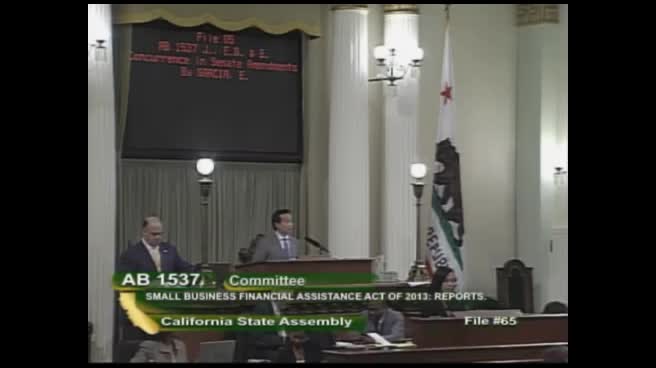 7MIN
Assembly Floor
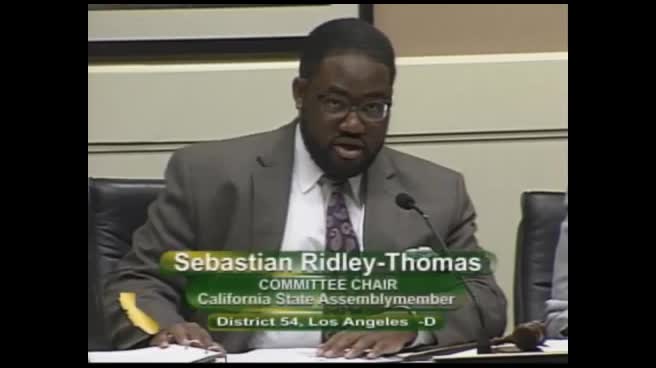 27MIN
Assembly Standing Committee on Elections and Redistricting
 2MIN
Senate Floor
Bill Author