SB 424: Law enforcement: communications.
- Session Year: 2015-2016
- House: Senate
- Latest Version Date: 2015-08-10
Existing law establishes various prohibitions against eavesdropping and recording or intercepting certain communications. A violation of these prohibitions is a crime. Existing law provides that specified law enforcement officers are not prohibited by those provisions from overhearing or recording any communication that they could lawfully overhear or record prior to the January 1, 1968, effective date of those prohibitions.
This bill would similarly provide that the provisions prohibiting eavesdropping and recording or intercepting certain communications do not prohibit any chief of police, assistant chief of police, or police officer of a university or college campus, as specified, acting within the scope of his or her authority, from overhearing or recording any communication that he or she could lawfully overhear or record prior to January 1, 1968, in any criminal investigation related to sexual assault or other sexual offense. The bill would also provide that those provisions also shall not prohibit those officers from using or operating body-worn cameras. The bill would also state that these provisions shall not be used to impinge upon the lawful exercise of constitutionally protected rights of freedom of speech or assembly, or the constitutionally protected right of personal privacy.
Existing law establishes various prohibitions against eavesdropping and recording or intercepting certain communications. A violation of these prohibitions is a crime. Existing law provides that specified law enforcement officers are not prohibited by those provisions from overhearing or recording any communication that they could lawfully overhear or record prior to the January 1, 1968, effective date of those prohibitions.
This bill would include similarly provide that the provisions prohibiting eavesdropping and recording or intercepting certain communications do not prohibit any POST-certified chief of police, assistant chief of police, or police officer of a university or college campus in the list of law enforcement officers to whom the prohibitions described above do not apply. acting within the scope of his or her authority, from overhearing or recording any communication that he or she could lawfully overhear or record prior to January 1, 1968, in any criminal investigation related to sexual assault or other sexual offense. The bill would also provide that those provisions also shall not prohibit those officers from using or operating body-worn cameras. The bill would also state that these provisions shall not be used to impinge upon the lawful exercise of constitutionally protected rights of freedom of speech or assembly, or the constitutionally protected right of personal privacy.
Existing law establishes various prohibitions against eavesdropping and recording or intercepting certain communications. A violation of these prohibitions is a crime. Existing law provides that specified law enforcement officers are not prohibited by those provisions from overhearing or recording any communication that they could lawfully overhear or record prior to the January 1, 1968, effective date of those prohibitions.
This bill would include any POST-certified chief of police, assistant chief of police, or police officer of a university or college campus in the list of law enforcement officers to whom the prohibitions described above do not apply.
(a)Nothing in Section 631, 632, 632.5, 632.6, or 632.7 prohibits any POST-certified chief of police, assistant chief of police, or police officer of a university or college campus acting within the scope of his or her authority, from overhearing or recording any communication that he or she could lawfully overhear or record prior to January 1, 1968, in any criminal investigation related to sexual assault or other sexual offense.
(b)Nothing in Section 631, 632, 632.5, 632.6, or 632.7 shall prohibit any POST-certified chief of police, assistant chief of police, or police officer of a university or college campus from using or operating body-worn cameras.
(c)This section shall not be construed to affect Section 633.
(d)This section shall not be used to impinge upon the lawful exercise of constitutionally protected rights of freedom of speech or assembly, or the constitutionally protected right of personal privacy.
SECTION 1.Section 633 of the Penal Code is amended to read:633.(a)Nothing in Section 631, 632, 632.5, 632.6, or 632.7 prohibits the Attorney General, any district attorney, or any assistant, deputy, or investigator of the Attorney General or any district attorney, any officer of the California Highway Patrol, any chief of police, assistant chief of police, or police officer of a city or city and county, any sheriff, undersheriff, or deputy sheriff regularly employed and paid in that capacity by a county, police officer of the County of Los Angeles, any POST-certified chief of police, assistant chief of police, or police officer of a university or college campus, or any person acting pursuant to the direction of one of these law enforcement officers acting within the scope of his or her authority, from overhearing or recording any communication that they could lawfully overhear or record prior to January 1, 1968.
(b)Nothing in Section 631, 632, 632.5, 632.6, or 632.7 renders inadmissible any evidence obtained by the persons specified in subdivision (a) by means of overhearing or recording any communication that they could lawfully overhear or record prior to January 1, 1968.
(a)Nothing in Section 631, 632, 632.5, 632.6, or 632.7 prohibits the Attorney General, any district attorney, or any assistant, deputy, or investigator of the Attorney General or any district attorney, any officer of the California Highway Patrol, any chief of police, assistant chief of police, or police officer of a city or city and county, any sheriff, undersheriff, or deputy sheriff regularly employed and paid in that capacity by a county, police officer of the County of Los Angeles, any POST-certified chief of police, assistant chief of police, or police officer of a university or college campus, or any person acting pursuant to the direction of one of these law enforcement officers acting within the scope of his or her authority, from overhearing or recording any communication that they could lawfully overhear or record prior to the effective date of this chapter. January 1, 1968.
Nothing
(b)Nothing in Section 631, 632, 632.5, 632.6, or 632.7 renders inadmissible any evidence obtained by the above-named persons specified in subdivision (a) by means of overhearing or recording any communication that they could lawfully overhear or record prior to the effective date of this chapter. January 1, 1968.
|
Date
|
Status
|
|---|---|
| May 28, 2015 | From committee: Do pass. (Ayes 7. Noes 0. Page 1153.) (May 28). |
| Aug 10, 2015 | Chaptered by Secretary of State. Chapter 159, Statutes of 2015. |
| Aug 10, 2015 | Approved by the Governor. |
| Jul 30, 2015 | Enrolled and presented to the Governor at 10 a.m. |
| Jul 16, 2015 | Read third time. Passed. (Ayes 79. Noes 0. Page 2431.) Ordered to the Senate. |
| Jul 16, 2015 | In Senate. Ordered to engrossing and enrolling. |
| Jul 9, 2015 | Read second time. Ordered to consent calendar. |
| Jul 8, 2015 | From committee: Do pass. Ordered to consent calendar. (Ayes 11. Noes 0.) (July 7). |
| Jul 1, 2015 | From committee: Do pass and re-refer to Com. on P. & C.P. with recommendation: To consent calendar. (Ayes 7. Noes 0.) (June 30). Re-referred to Com. on P. & C.P. |
| Jun 18, 2015 | Referred to Coms. on PUB. S. and P. & C.P. |
| Jun 2, 2015 | Read third time. Passed. (Ayes 35. Noes 0. Page 1244.) Ordered to the Assembly. |
| Jun 2, 2015 | In Assembly. Read first time. Held at Desk. |
| May 28, 2015 | Read second time. Ordered to third reading. |
| May 28, 2015 | From committee: Do pass. (Ayes 7. Noes 0.) (May 28). |
| Feb 25, 2015 | Introduced. Read first time. To Com. on RLS. for assignment. To print. |
| May 23, 2015 | Set for hearing May 28. |
| May 11, 2015 | May 11 hearing: Placed on APPR. suspense file. |
| May 1, 2015 | Set for hearing May 11. |
| Apr 29, 2015 | From committee: Do pass and re-refer to Com. on APPR. (Ayes 7. Noes 0.) (April 28). Re-referred to Com. on APPR. |
| Apr 29, 2015 | From committee: Do pass and re-refer to Com. on APPR. (Ayes 7. Noes 0. Page 822.) (April 28). Re-referred to Com. on APPR. |
| Apr 23, 2015 | Set for hearing April 28. |
| Apr 22, 2015 | April 28 hearing postponed by committee. |
| Apr 21, 2015 | From committee with author's amendments. Read second time and amended. Re-referred to Com. on PUB. S. |
| Apr 14, 2015 | Set for hearing April 28. |
| Apr 7, 2015 | April 14 set for first hearing canceled at the request of author. |
| Mar 20, 2015 | Set for hearing April 14. |
| Mar 5, 2015 | Referred to Coms. on PUB. S. and APPR. |
| Feb 26, 2015 | From printer. May be acted upon on or after March 28. |
|
Date
|
Description
|
Location
|
Votes
|
|
|---|---|---|---|---|
| Jul 16, 2015 | SB 424 Pan Consent Calendar Second Day Regular Session | Assembly Floor |
Passed |
|
| Jul 7, 2015 | Do pass. To Consent Calendar. | Assembly Standing Committee on Privacy and Consumer Protection |
Passed |
|
| Jun 30, 2015 | Do pass and be re-referred to the Committee on [Privacy and Consumer Protection] with recommendation: To Consent Calendar | Assembly Standing Committee on Public Safety |
Passed |
|
| Jun 2, 2015 | Senate 3rd Reading SB424 Pan | Senate Floor |
Passed |
|
| May 28, 2015 | Do pass | Senate Standing Committee on Appropriations |
Passed |
|
| May 11, 2015 | Placed on suspense file | Senate Standing Committee on Appropriations |
Passed |
|
| Apr 28, 2015 | Do pass, but first be re-referred to the Committee on [Appropriations] | Senate Standing Committee on Public Safety |
Passed |
This list shows positions taken on this bill by organizations on the date displayed, which is linked to the original source.
Positions by individuals are not included.
|
Organization
|
Position
|
Date
|
|---|---|---|
| ACLU | ** Against | Jun 2, 2015 |
| Association For Los Angeles Deputy Sheriffs | ** Support | Jun 2, 2015 |
| California Association Of Code Enforcement Officers | ** Support | Jun 2, 2015 |
| California Attorneys For Criminal Justice | ** Against | Jun 2, 2015 |
| California College And University Police Chiefs Association | ** Support | Jun 2, 2015 |
| California Correctional Supervisors Organization, Inc. | ** Support | Jun 2, 2015 |
| Los Angeles Police Protective League | ** Support | Jun 2, 2015 |
| Riverside Sheriffs' Association | ** Support | Jun 2, 2015 |
SB 424
Page 4
Date of Hearing: July 7, 2015
ASSEMBLY COMMITTEE ON PRIVACY AND CONSUMER PROTECTION
Mike Gatto, Chair
SB 424
(Pan) – As Amended April 21, 2015
SENATE VOTE: 35-0
SUBJECT: Law enforcement: communications
SUMMARY: Authorizes university and college peace officers to overhear or record conversations in sexual assault investigations as other law enforcement officials do, and authorizes their use of body-worn cameras generally. Specifically, this bill:
Clarifies that existing restrictions on electronic surveillance do not prohibit any Police Officer Standardized Training (POST)-certified chief of police, assistant chief of police, or police officer of a university or college campus acting within the scope of his or her authority, from overhearing or recording any communication that he or she could lawfully overhear or record in any criminal investigation related to sexual assault or other sexual offense.
Clarifies that existing restrictions on electronic surveillance do not prohibit any POST-certified chief of police, assistant chief of police, or police officer of a university or college campus from using or operating body-worn cameras.
Clarifies that these provisions do not affect the existing statutory authority for law enforcement acting within the scope of its authority to overhear or record any communication, as specified.
Declares that these provisions may not be used to impinge upon the lawful exercise of constitutionally protected rights of freedom of speech or assembly, or the constitutionally protected right of personal privacy.
EXISTING LAW:
Declares the intent of the Legislature to protect the right of privacy of the people of California and recognizes that law enforcement agencies have a legitimate need to employ modern listening devices and techniques to investigate criminal conduct. (Penal Code (PC) Section 630)
Generally prohibits wiretapping, eavesdropping, and using electronic devices to record or amplify a confidential communication, and further provides that any evidence so obtained is inadmissible in any judicial, administrative, or legislative proceeding. (PC 631, 632, 632.5, 632.6, and 632.7.)
Authorizes one party to a confidential communication to record the communication for the purpose of obtaining evidence reasonably believed to relate to the commission by another party to the communication of the crime of extortion, kidnapping, bribery, any felony involving violence against the person, or a violation of the law against obscene, threatening, or annoying phone calls, and further provides that any evidence so obtained is admissible in a prosecution for such crimes. (PC 633.5)
Provides that, notwithstanding prohibitions on eavesdropping and other surveillance techniques, upon the request of a victim of domestic violence who is seeking a domestic violence restraining order, a judge issuing the order may include a provision in the order that permits the victim to record any prohibited communication made to him or her by the perpetrator. (PC 633.6)
Exempts the Attorney General, any district attorney, specified peace officers such as city police and county sheriffs, and a person acting under the direction of an exempt agency from the prohibitions against wiretapping and other related activities to the extent that they may overhear or record any communication that they were lawfully authorized to overhear or record prior to the enactment of the prohibitions, and further provides that any evidence so obtained is admissible in any judicial, administrative, or legislative proceeding. (PC 633)
Limits the authority of a member of the California State University (CSU) Police Department to the CSU campuses, an area within one mile of the exterior boundaries of each campus, and other CSU owned or operated properties. (Education Code (EDUC) Section 89560)
Limits the authority of a member of the University of California (UC) Police Department to the UC campuses, an area within one mile of the exterior boundaries of each campus, and other properties owned or operated by the Regents of the UC. (EDUC 92600)
FISCAL EFFECT: None. This measure has been keyed nonfiscal by the Legislative Counsel.
COMMENTS:
Purpose of this bill. This bill is intended to clarify that college and university law enforcement officers may overhear or record conversations as other law enforcement officials might as part of a criminal investigation of a sexual offense, and may also utilize body-worn cameras for any lawful purpose. SB 424 is sponsored by the California College and University Police Chiefs Association.
Author's statement. According to the author, existing law "allows sworn officers to record the statements of suspects without notifying them, which would otherwise be prohibited under state wiretapping laws. This is most often utilized during suspect interviews/interrogations, in-car recordings of suspects in custody, and in a pretext phone call situation. A pretext phone call is the recording of a conversation between a victim and a known suspect arranged by law enforcement to gain admissions or other incriminating statements. This technique provides some of the best evidence in cases of date rape and other crimes involving no independent witnesses."
"Unfortunately, POST certified officers who protect campuses such as the California State University and University of California systems were not among those [authorized], while virtually all other police entities in the state were included. The exact cause of this omission is difficult to ascertain, however, it is clear today that college and university law enforcement entities need the ability to obtain these recordings as dictated by their investigations. Not only does this omission undermine effective law enforcement, it has the effect of prohibiting use of Body Worn Cameras by college and university officers in some circumstances."
"In addition to crimes like active shooter and sexual assault,
college and university police agencies deal with the same array of
criminal activity that takes place in a non-campus environment.
Campuses are not cocooned bubbles and criminal activity truly knows
no jurisdictional boundaries. Over the most recent two year period,
there were nearly six thousand serious crimes committed on our
campuses. These crimes, which are required to be reported pursuant
to the Clery Act, include murder, manslaughter, sexual assaults,
robbery, aggravated assaults, burglary, vehicle thefts and
arson."
"College and University police agencies
meet the same POST requirements of city police and county sheriffs;
they face the same law enforcement challenges. They should have the
same tools with which to address those challenges."
Arguments in support. According to the sponsor, the California College and University Police Chiefs Association, "SB 424 does two things: It allows sworn, POST-certified college and university police agencies to record statements of suspects in the investigation of campus sexual assault and sexual offense cases. Sadly, sexual assaults take place disproportionately on college and university campuses. Further, it is estimated that the perpetrator is known to the victim 80% of the time. As amended, SB 424 will enable college and university police agencies to do “pretext” calls between the victim and the alleged perpetrator. These provisions were discussed and agreed to by the Council of University of California Faculty Associations."
"Second, SB 424 makes clear that body worn cameras may be used by sworn POST certified college and university police agencies. The California College and University Police Chiefs Association embraces the concept of body worn cameras and believes they will constitute a major advancement in the continued professionalism of police services. Ironically, however, current law prohibits those officers from using body worn cameras. SB 424 will rectify that statutory glitch and permit the use of body worn cameras by sworn POST certified college and university police agencies."
Related Legislation. AB 65 (Alejo) redirects funds from the Driver Training Penalty Assessment Fund and allocates that money to the Board of State and Community Corrections to be used to fund local law enforcement agencies to operate a body-worn camera program. AB 65 was held on the Suspense File in the Assembly Appropriations Committee.
AB 66 (Weber) establishes mandatory requirements and recommended
guidelines for the use of body-worn cameras by peace officers and the
handling of the resulting video and audio data. AB 66 passed this
Committee on a 6-0 vote, and was held in the Assembly Appropriations
Committee.
AB 69 (Rodriguez) specifies a set of best
practices that a law enforcement agency, department or entity
establishing policies and procedures for the implementation and
operation of a body-worn camera system must consider. AB 69 passed
this Committee on an 11-0 vote, and is set for hearing in the Senate
Public Safety Committee on July 14, 2015.
AB 1246 (Quirk) prohibits the disclosure of a recording made by a body-worn camera, except to the person whose image is recorded by the body worn camera. AB 1246 was held in the Assembly Public Safety Committee.
SB 178 (Leno) creates the California Electronic Communications
Privacy Act (CalECPA), which generally requires law enforcement
entities to obtain a search warrant before accessing data on an
electronic device or from an online service provider. SB 178 passed
this Committee on a 9-0 vote, and is set for hearing in the Assembly
Public Safety Committee on July 14, 2015.
Previous legislation. AB 992 (Spitzer), of 2005, would have authorized UC peace officers and CSU peace officers to overhear or record communications in any criminal investigation related to a sex assault or other sexual offense. AB 992 failed passage in the Senate Public Safety Committee.
AB 1884 (Spitzer), of 2004, would have authorized city attorneys prosecuting misdemeanor consumer cases to record or overhear communications in the same manner as other law enforcement officials. This bill was vetoed by Governor Schwarzenegger, stating that "[i]f an investigation is of sufficient importance as to merit electronic eavesdropping, a city attorney may seek the cooperation and assistance of those agencies which have the authority to do so."
Double-referral. This bill was double-referred to the Assembly Public Safety Committee, where it was heard on June 30, 2015, and passed out on a 7-0 vote.
REGISTERED SUPPORT / OPPOSITION:
Support
California College and University Police Chiefs Association (SPONSOR)
Opposition
None on file.
Analysis Prepared by: Hank Dempsey / P. & C.P. / (916) 319-2200
SB 424
Page 4
Date of Hearing: June 30, 2015
Chief Counsel: Gregory Pagan
ASSEMBLY COMMITTEE ON PUBLIC SAFETY
Bill Quirk, Chair
SB 424
(Pan) – As Amended April 21, 2015
SUMMARY:
Allows a university or college police officer to eavesdrop in any
criminal investigation relating to sexual assault or other sexual
offense, and to wear body worn-cameras. Specifically, this bill:
Authorizes any POST-certified chief of police, assistant chief of police, or police officer of a university or college campus acting within the scope of his or her authority, to overhear or record any communication in any criminal investigation related to sexual assault or other sexual offense.
Provides that that nothing in existing privacy statutes shall prohibit any POST-certified chief of police, assistant chief of police, or police officer of a university or college campus from using or operating body-worn cameras.
States that that the provisions of this bill shall not be used to impinge upon the lawful exercise of constitutionally protected rights of free speech, or the constitutionally protected right of personal privacy.
EXISTING LAW:
Establishes that a member of the University of California (UC) Police Department whose primary duty is the enforcement of the law within the specified jurisdictional areas is a peace officer. (Pen. Code, § 830.2 subd. (b).)
Limits the authority of a member of the UC Police Department to the UC campuses, and an area within one mile of the exterior boundaries of each campus, and other properties owned or operated by the Regents of the University of California. (Ed. Code, § 92600.)
Establishes that a member of the California State University (CSU) Police Department whose primary duty is the enforcement of the law within the specified jurisdictional areas is a peace officer. (Pen. Code, § 830.2 subd (c).)
Limits the authority of a member of the CSU Police Department to the CSU campuses, an area within one mile of the exterior boundaries of each campus, and other CSU owned or operated properties. (Ed. Code, § 89560.)
States that the Legislature hereby declares that advances in science and technology have led to the development of new devices and techniques for the purpose of eavesdropping upon private communications and that the invasion of privacy resulting from the continual and increasing use of such devices and techniques has created a serious threat to the free exercise of personal liberties and cannot be tolerated in a free and civilized society. The Legislature by this chapter intends to protect the right of privacy of the people of this state. The Legislature recognizes that law enforcement agencies have a legitimate need to employ modern listening devices and techniques in the investigation of criminal conduct and the apprehension of lawbreakers. Therefore, it is not the intent of the Legislature to place greater restraints on the use of listening devices and techniques by law enforcement agencies than existed prior to the effective date of this chapter. (Pen. Code, § 630.)
Generally prohibits wiretapping, eavesdropping, and using electronic devices to record or amplify a confidential communication. Provides that any evidence so obtained is inadmissible in any judicial, administrative, or legislative proceeding. (Pen. Code, §§ 631, 632, 632.5, 632.6, and 632.7.)
Exempts the Attorney General, any district attorney, specified peace officers such as city police and county sheriffs, and a person acting under the direction of an exempt agency from the prohibitions against wiretapping and other related activities to the extent that they may overhear or record any communication that they were lawfully authorized to overhear or record prior to the enactment of the prohibitions. Provides that any evidence so obtained is admissible in any judicial, administrative, or legislative proceeding. (Pen. Code, § 633.)
Permits one party to a confidential communication to record the communication for the purpose of obtaining evidence reasonably believed to relate to the commission by another party to the communication of the crime of extortion, kidnapping, bribery, any felony involving violence against the person, or a violation of the law against obscene, threatening, or annoying phone calls. Provides that any evidence so obtained is admissible in a prosecution for such crimes. (Penal Code Section 633.5)
FISCAL EFFECT: Unknown
COMMENTS:
Author's Statement: According to the author, "Penal Code Section 633 allows sworn officers to record the statements of suspects without notifying them, which would otherwise be prohibited under state wiretapping laws. This is most often utilized during suspect interviews/interrogations, in-car recordings of suspects in custody, and in a pretext phone call situation. A pretext phone call is the recording of a conversation between a victim and a known suspect arranged by law enforcement to gain admissions or other incriminating statements. This technique provides some of the best evidence in cases of date rape and other crimes involving no independent witnesses.
"Unfortunately, POST certified officers who protect campuses such as the California State University and University of California systems were not among those listed within PC 633, while virtually all other police entities in the state were included. The exact cause of this omission is difficult to ascertain, however, it is clear today that college and university law enforcement entities need the ability to obtain these recordings as dictated by their investigations. Not only does this omission undermine effective law enforcement, it has the effect of prohibiting use of Body Worn Cameras by college and university officers in some circumstances.
"The California College and University Police Chiefs Association’s members have a significant responsibility for protecting a large at-risk population. College and University chiefs of police in California are responsible for providing front-line public safety protection for three million students and employees on their campuses.
"College and university police departments meet the same POST training and certification requirements of every municipal police and county sheriff agency and, just like those agencies, engage in ongoing training to continually enhance their knowledge and professionalism.
"Although not generally realized, officers in a college and university environment are charged with the handling of some of the most serious events in our society. According to a study by the Federal Bureau of Investigation, there were 39 incidents that occurred in an educational environment in the United States between 2000 and 2013. These incidents at school and college campuses accounted for some of the highest casualty counts in the nation. College and university police officers are also responsible for investigating sexual assaults against students, which is a burgeoning problem given the availability of alcohol, the pernicious presence of controlled substances used to facilitate a sexual assault and a newfound absence of parental supervision.
"In
addition to crimes like active shooter and sexual assault, college
and university police agencies deal with the same array of criminal
activity that takes place in a non-campus environment. Campuses are
not cocooned bubbles and criminal activity truly knows no
jurisdictional boundaries. Over the most recent two year period,
there were nearly six thousand serious crimes committed on our
campuses. These crimes, which are required to be reported pursuant
to the Clery Act, include murder, manslaughter, sexual assaults,
robbery, aggravated assaults, burglary, vehicle thefts and arson."
Legislative History and Intent: Current law declares that "advances in science and technology have led to the development of new devices and techniques for the purpose of eavesdropping upon private communications and that the invasion of privacy resulting from the continual and increasing use of such devices and techniques has created a serious threat to the free exercise of personal liberties and cannot be tolerated in a free and civilized society." (Penal Code Section 630.) Current law also recognizes that "law enforcement agencies have a legitimate need to employ modern listening devices and techniques in the investigation of criminal conduct and the apprehension of lawbreakers." (Id.) The Legislature crafted Penal Code Section 633 to balance the two concerns by only granting authority to eavesdrop and record to limited law enforcement agencies. Does expanding exempt law enforcement agencies to include university peace officers maintain the balance of these public policy concerns?
As noted above, various sections of the Penal Code generally prohibit eavesdropping and recording communications without the consent of all parties to the communication. Penal Code Section 633 permits specified law enforcement agencies to overhear and record any communication that they could lawfully overhear or record prior to the enactment of these prohibitions. The type of communications that law enforcement agencies could lawfully overhear and record without a court order, as defined by decisional law, are communications with no expectation of privacy or with the consent of one party. (See Katz v. United States, 389 U.S. 347 (1967); United States v. White, 401 U.S. 745 (1971).) In practice, this permits the specified law enforcement agencies to record communications by an undercover officer, an informant wearing a "body-wire," or recording telephone conversations with the officer or informant.
Prior Legislation:
AB 992 (Spitzer), of the 2005-2006 Legislative Session, added peace officers employed by the UC and CSU to the list of specified law enforcement agencies exempt from prohibitions against overhearing and recording communications without an individual's consent. AB 992 failed passage in the Senate Public Safety Committee.
AB 1884 (Spitzer), of the 2003-2004 Legislative Session, added city attorneys prosecuting state law misdemeanor cases to the list of law enforcement officers who are authorized to record or overhear communications. AB 1884 was vetoed by the Governor.
REGISTERED SUPPORT / OPPOSITION:
Support
Association
for Los Angeles Deputy Sheriffs
California Association of Code Enforcement Officers
California College and University Police Chiefs Association
California Narcotics Officers Association
California Police
Chiefs Association
Los Angeles Police Protective
league
Riverside Sheriffs Association
Opposition
None
Analysis Prepared by: Gregory Pagan / PUB. S. / (916) 319-3744
SB 424
Page 5
|
Office of Senate Floor Analyses (916) 651-1520 Fax: (916) 327-4478 |
THIRD READING
Bill No: SB 424
Amended: 4/21/15
SENATE PUBLIC SAFETY COMMITTEE: 7-0, 4/28/15
AYES: Hancock, Anderson, Leno, Liu, McGuire, Monning, Stone
SENATE APPROPRIATIONS COMMITTEE: 7-0, 5/28/15
AYES: Lara, Bates, Beall, Hill, Leyva, Mendoza, Nielsen
SUBJECT: Law enforcement: communications
SOURCE: California College and University Police Chiefs Association
DIGEST: This bill allows university and college peace officers to eavesdrop in any criminal investigation related to sexual assault or other sexual offense and to wear body-worn cameras.
Existing law:
Establishes that a member of the University of California (UC) Police Department whose primary duty is the enforcement of the law within the specified jurisdictional areas is a peace officer. (Penal Code § 830.2(b).)
Limits the authority of a member of the UC Police Department to the UC campuses, an area within one mile of the exterior boundaries of each campus, and other properties owned or operated by the Regents of the University of California. (Education Code § 92600.)
Establishes that a member of the California State University (CSU) Police Department whose primary duty is the enforcement of the law within the specified jurisdictional areas is a peace officer. (Penal Code § 830.2(c).)
Limits the authority of a member of the CSU Police Department to the CSU campuses, an area within one mile of the exterior boundaries of each campus, and other CSU owned or operated properties. (Education Code § 89560.)
Declares legislative intent to protect the right of privacy of the People of California and recognizes that law enforcement agencies have a legitimate need to employ modern listening devices and techniques to investigate criminal conduct. (Penal Code § 630.)
Generally prohibits wiretapping, eavesdropping, and using electronic devices to record or amplify a confidential communication. It further provides that any evidence so obtained is inadmissible in any judicial, administrative, or legislative proceeding. (Penal Code §§ 631, 632, 632.5, 632.6, and 632.7.)
Permits one party to a confidential communication to record the communication for the purpose of obtaining evidence reasonably believed to relate to the commission by another party to the communication of the crime of extortion, kidnapping, bribery, any felony involving violence against the person, or a violation of the law against obscene, threatening, or annoying phone calls. Existing law further provides that any evidence so obtained is admissible in a prosecution for such crimes. (Penal Code § 633.5.)
Provides that notwithstanding prohibitions to eavesdropping, etcetera, upon the request of a victim of domestic violence who is seeking a domestic violence restraining order, a judge issuing the order may include a provision in the order that permits the victim to record any prohibited communication made to him or her by the perpetrator. (Penal Code § 633.6.)
Exempts the Attorney General, any district attorney, specified peace officers such as city police and county sheriffs, and a person acting under the direction of an exempt agency from the prohibitions against wiretapping and other related activities to the extent that they may overhear or record any communication that they were lawfully authorized to overhear or record prior to the enactment of the prohibitions. Any evidence so obtained is admissible in any judicial, administrative, or legislative proceeding. (Penal Code § 633.)
This bill:
Provides that nothing prohibits POST (Peace Officer Standards and Training)-certified peace officers of a university or college campus from eavesdropping in any criminal investigation related to sexual assault or other sexual offense.
Provides that nothing prohibits POST-certified peace officers of a university or college campus from using or operating body-worn cameras.
Provides that this section shall not be used to impinge upon the lawful exercise of constitutionally protected rights of freedom of speech or assembly, or the constitutionally protected right of person privacy.
Background
Penal Code section 631 et seq. sets forth a comprehensive statutory scheme protecting the right of privacy by prohibiting unlawful wiretapping and other forms of illegal electronic eavesdropping. Unless a specific exception applies, persons may not intercept, record, or listen to confidential communications whether on a conventional, cordless, or cellular telephone.
A significant exception is described in Penal Code section 633. The Attorney General, any district attorney, specified peace officers, and any person acting pursuant to the direction of a law enforcement officer may lawfully overhear or record certain communications.
This bill allows university and college peace officers to eavesdrop in any criminal investigation related to sexual assault. This bill also allows these police forces to use body cameras. Eavesdropping allows them to authorize another to make a pretext call, for example, in a sexual assault case permitting the victim to tape the accused perpetrator in a conversation where she gets him to admit there was no consent.
FISCAL EFFECT: Appropriation: No Fiscal Com.: No Local: No
According to the Senate Appropriations Committee, potential major future cost pressure in the millions of dollars (General Fund) to the extent the UC, California Community Colleges, and the CSU elect to utilize the authority provided in this bill, resulting in one-time and ongoing expenditures for resources, training, equipment, and storage.
California College and University Police Chiefs Association (source)
Association for Los Angeles Deputy Sheriffs
California Association of Code Enforcement Officers
California Correctional Supervisors Organization
California Narcotic Officers Association
Los Angeles Police Protective League
Riverside Sheriffs’ Association
OPPOSITION: (Verified 5/28/15)
ACLU
California Attorneys for Criminal Justice
ARGUMENTS IN SUPPORT: In support of their position that it is appropriate to include university and college peace officers in the exception to eavesdropping, the sponsor makes the following points:
College and university police departments meet the same POST training and certification requirements of every municipal police and county sheriff agency and, just like those agencies, engage in ongoing training to continually enhance their knowledge and professionalism.
Although not generally realized, officers in a college and university environment are charged with the handling of some of the most serious events in our society. According to a study by the Federal Bureau of Investigation, there were 39 incidents that occurred in an educational environment in the United States between 2000 and 2013. These incidents at school and college campuses accounted for some of the highest casualty counts in the nation.
College and university police officers are also responsible for investigating sexual assaults against students, which is a burgeoning problem given the availability of alcohol, the pernicious presence of controlled substances used to facilitate a sexual assault and a newfound absence of parental supervision.
In addition to crimes like active shooter and sexual assault, college and university police agencies deal with the same array of criminal activity that takes place in a non-campus environment. Campuses are not cocooned bubbles and criminal activity truly knows no jurisdictional boundaries. Over the most recent two year period, there were nearly six thousand serious crimes committed on our campuses. These crimes, which are required to be reported pursuant to the Clery Act, include murder, manslaughter, sexual assaults, robbery, aggravated assaults, burglary, vehicle thefts and arson.
ARGUMENTS IN OPPOSITION: The ACLU opposes this bill stating:
We do not believe the authority to engage in eavesdropping should be extended. Restrictions on the use of eavesdropping apparatus were originally enacted to ensure that such activities would be undertaken only in absolutely justifiable situations and under strict control. We have consistently opposed all previous efforts to expand this authority.
University and college campuses are environments in which the free exchange of views and ideas play a critical role. Freedom of speech and expression must be carefully and thoughtfully protected. These freedoms foster the advancement of knowledge, and help provide students and faculty with a sense of safety and comfort. Giving campus police officers broad powers of surveillance could end up having a chilling effect on these freedoms, and could lead to adversarial relationships between campus police, faculty and the student body.
Campus law enforcement often lacks the training, supervision, and accountability to help ensure the powers granted by SB 424 would be used in a constitutionally acceptable manner. If an investigation is of sufficient importance to merit electronic eavesdropping, campus police should seek cooperation and assistance of those agencies that presently have the authority to do so. Creating further encouragement and incentive to engage in electronic surveillance is inconsistent with the legitimate expectation of privacy surrounding our personal and confidential communications.
Prepared by: Mary Kennedy / PUB. S. /
5/31/15 12:01:00
**** END ****
SB 424 (Pan) Page 3 of 3
SENATE COMMITTEE ON APPROPRIATIONS
Senator Ricardo Lara, Chair
2015 - 2016 Regular Session
SB 424 (Pan) - Law enforcement: communications
|
|
Version: April 21, 2015 |
Policy Vote: PUB. S. 7 - 0 |
Urgency: No |
Mandate: No |
Hearing Date: May 11, 2015 |
Consultant: Jolie Onodera |
This bill meets the criteria for referral to the Suspense File.
Bill Summary:
SB 424 would authorize peace officers of a university or college campus to eavesdrop in any criminal investigation related to sexual assault or other sexual offenses, and to use or operate body-worn cameras.
Fiscal Impact:
Potential major future cost pressure in the millions of dollars (General Fund) to the extent the University of California, California Community Colleges, and the California State University elect to utilize the authority provided in this measure, resulting in one-time and ongoing expenditures for resources, training, equipment, and storage.
Background:
Existing law declares legislative intent to protect the right of privacy of the People of California and recognizes that law enforcement agencies have a legitimate need to employ modern listening devices and techniques to investigate criminal conduct. (Penal Code (PC) § 630.)
Existing law generally prohibits wiretapping, eavesdropping, and using electronic devices to record or amplify a confidential communication. It further provides that any evidence so obtained is inadmissible in any judicial, administrative, or legislative proceeding. (PC §§ 631, 632, 632.5, 632.6, 632.7.)
Existing law exempts the Attorney General, any district attorney, specified peace officers such as city police and county sheriffs, and a person acting under the direction of an exempt agency from the prohibitions against wiretapping and other related activities to the extent that they may overhear or record any communication that they were lawfully authorized to overhear or record prior to the enactment of the prohibitions. Existing law provides that any evidence so obtained is admissible in any judicial, administrative, or legislative proceeding. (PC § 633.)
Proposed Law:
This bill would authorize peace officers of a university or college campus to eavesdrop in any criminal investigation related to sexual assault or other sexual offense, and to use or operate body-worn cameras. Specifically, this bill
Provides that nothing in specified provisions of existing law prohibits any POST-certified chief of police, assistant chief prohibits any POST-certified chief of police, assistant chief of police, or police officer of a university or college campus acting within the scope of his or her authority, from overhearing or recording any communication that he or she could lawfully overhear or record prior to January 1, 1968, in any criminal investigation related to sexual assault or other sexual offense.
Provides that nothing in specified provisions of existing law shall prohibit any POST-certified chief of police, assistant chief of police, or police officer of a university or college campus from using or operating body-worn cameras.
Provides that the provisions of this bill are not be construed to affect Section 633.
Provides that this section shall not be used to impinge upon the lawful exercise of constitutionally protected rights of freedom of speech or assembly, or the constitutionally protected right of person privacy.
Related Legislation:
SB 175 (Huff) 2015 would require every law enforcement department and agency that elects to require its peace officers to wear body-worn cameras to develop a policy relating to the use of those cameras, as specified. This bill is pending referral in the Assembly.
Prior Legislation: AB 992 (Spitzer) 2005 would have added the University of California peace officers and California State University peace officers to overhear or record communications in any criminal investigation related to a sex assault or other sexual offense. This bill failed passage in the Senate Committee on Public Safety.
AB 1884 (Spitzer) 2004 would have added city attorneys prosecuting misdemeanor cases to the list of law enforcement officers who are authorized to record or overhear communications. This bill was vetoed by the Governor with the following message:
I am returning Assembly Bill 1884 without my signature. I strongly support the need to provide law enforcement with as many tools as necessary to adequately protect the citizens of California. The process in current law ensures that if a prosecutor decides there is a need to broach a person’s privacy in an investigation there is a process in place which balances the need of the investigation against a person’s right to privacy. If an investigation is of sufficient importance as to merit electronic eavesdropping, a city attorney may seek the cooperation and assistance of those agencies which presently have the authority to do so.
City attorneys who prosecute misdemeanor cases are a vital component in the criminal justice system. While this bill would eliminate one extra step they currently must go through to obtain permission to record and use communications in an investigation, it is not a process that should be streamlined.
Staff Comments:
By authorizing specified peace officers of a university or college campus to overhear or record communications in criminal investigations related to sexual assault or other sexual offenses, and to use or operate body-worn cameras, the provisions of this create major future cost pressure to the extent University of California, California Community Colleges, and the California State University elect to utilize the authority provided in this measure, resulting in one-time and ongoing expenditures for resources, training, equipment, and storage. The potential future costs are unknown, but potentially in the hundreds of thousands to millions of dollars statewide.
According to a recent article by the Pew Charitable Trust entitled “States Struggle to Pay for Police Body Cameras,” (May 1, 2015):
As the nationwide push intensifies for police to wear body cameras, states and cities have encountered one consistent roadblock to adopting the technology: the cost.
The price of a single camera ranges widely, from less than $100 to more than $1,000, based on the size of the purchase (larger police departments often get a discount) and whether the deal includes data storage services. But managing and storing the video costs many times the price of the cameras themselves. And because the technology is so new, it’s likely that it will have to be replaced fairly quickly, which would require additional expenditures. …
The Police Executive Research Forum survey found most agencies spent between $800 and $1,200 per camera to purchase them, a daunting price tag for departments already strapped for cash.
But it is the ongoing costs that are the real challenge. The New Orleans Police Department plans to purchase 350 body cameras, but is budgeting $1.2 million over five years, mostly for data storage. Other departments, the police forum found, expect to spend $2 million for a few years of data storage.
Many states are debating the issues that surround police cameras without tackling the funding question, said Richard Williams, a criminal justice policy specialist with the NCSL. In many instances, he said, lawmakers are focused how long departments should have to keep video, and if or when recordings should be made public. …
Miller, with the Police Executive Research Forum, said those issues are important, but that for police departments, cost is the overriding concern.
Officers could potentially record millions of videos a year, any number of which could be used as part of a criminal proceeding, a public records request or for another official purpose. The cost of downloading, logging, handling and storing all that video can be staggering. …
“Most of the agencies that we worked with say the biggest issue is the backend data storage,” she said. “It can cost hundreds of thousands of dollars to store video each year.”
-- END --
SB 424 (Pan ) Page 5 of 5
SENATE COMMITTEE ON PUBLIC SAFETY
Senator Loni Hancock, Chair
2015 - 2016 Regular
Bill No: SB 424 Hearing Date: April 28, 2015
Author: |
Pan |
||
Version: |
April 21, 2015 |
||
Urgency: |
No |
Fiscal: |
No |
Consultant: |
MK |
||
Subject: Law Enforcement: Communications
HISTORY
Source: California College and University Police Chiefs Association
Prior Legislation: AB 992 (Spitzer) - failed Senate Public Safety, 2005
AB 1884 (Spitzer) – vetoed, 2004
AB 860 (Unruh) - Chapter 1509, Stats. 1967
Support: The Association for Los Angeles Deputy Sheriffs; California Association of Code Enforcement Officers; California Correctional Supervisors Organization; California Narcotic Officers Association; Los Angeles Police Protective League; Riverside Sheriffs Association
Opposition: ACLU; California Attorneys for Criminal Justice
PURPOSE
The purpose of this bill is to allow university and college peace officers to eavesdrop in any criminal investigation related to sexual assault or other sexual offense and to wear body-worn cameras.
Existing law establishes that a member of the UC Police Department whose primary duty is the enforcement of the law within the specified jurisdictional areas is a peace officer. (Penal Code § 830.2(b).)
Existing law limits the authority of a member of the UC Police Department to the UC campuses, an area within one mile of the exterior boundaries of each campus, and other properties owned or operated by the Regents of the University of California. (Education Code § 92600.)
Existing law establishes that a member of the CSU Police Department whose primary duty is the enforcement of the law within the specified jurisdictional areas is a peace officer. (Penal Code § 830.2(c).)
Existing law limits the authority of a member of the CSU Police Department to the CSU campuses, an area within one mile of the exterior boundaries of each campus, and other CSU owned or operated properties. (Education Code § 89560.)
Existing law declares legislative intent to protect the right of privacy of the People of California and recognizes that law enforcement agencies have a legitimate need to employ modern listening devices and techniques to investigate criminal conduct. (Penal Code § 630.)
Existing law generally prohibits wiretapping, eavesdropping, and using electronic devices to record or amplify a confidential communication. It further provides that any evidence so obtained is inadmissible in any judicial, administrative, or legislative proceeding. (Penal Code §§ 631, 632, 632.5, 632.6, and 632.7.)
Existing law permits one party to a confidential communication to record the communication for the purpose of obtaining evidence reasonably believed to relate to the commission by another party to the communication of the crime of extortion, kidnapping, bribery, any felony involving violence against the person, or a violation of the law against obscene, threatening, or annoying phone calls. Existing law further provides that any evidence so obtained is admissible in a prosecution for such crimes. (Penal Code § 633.5.)
Existing law provides that notwithstanding prohibitions to eavesdropping, etcetera, upon the request of a victim of domestic violence who is seeking a domestic violence restraining order, a judge issuing the order may include a provision in the order that permits the victim to record any prohibited communication made to him or her by the perpetrator. (Penal Code § 633.6.)
Existing law exempts the Attorney General, any district attorney, specified peace officers such as city police and county sheriffs, and a person acting under the direction of an exempt agency from the prohibitions against wiretapping and other related activities to the extent that they may overhear or record any communication that they were lawfully authorized to overhear or record prior to the enactment of the prohibitions. Existing law provides that any evidence so obtained is admissible in any judicial, administrative, or legislative proceeding. (Penal Code § 633.)
This bill provides that nothing prohibits POST-certified peace officers of a university or college campus from eavesdropping in any criminal investigation related to sexual assault or other sexual offense.
This bill provides that nothing prohibits POST-certified peace officers of a university or college campus from using or operating body-worn cameras.
This bill provides that this section shall not be used to impinge upon the lawful exercise of constitutionally protected rights of freedom of speech or assembly, or the constitutionally protected right of person privacy.
COMMENTS
Need for This Bill
According to the author:
Penal Code 663 allows sworn officer to record the statements of suspects without notifying them, which would otherwise be prohibited under state wiretapping laws. This is most often utilized during suspect interviews/interrogations, in-car recordings of suspects in custody, and in a pretext phone call situation. A pretext phone call is the recording of a conversation between a victim and a known suspect arranged by law enforcement to gain admissions or other incriminating statements. This technique provides some of the best evidence in cases of date rape and other crimes involving no independent witnesses.
Unfortunately, POST certified officers who protect campuses such as the California State University and University of California systems were not among those listed within PC 633 while virtually all other police entities in the state are included. The exact cause of this omission is difficult to ascertain, however, it is clear today that college and university law enforcement entities need the ability to obtain these recordings as dictated by their investigations. Not only does this omission undermine effective law enforcement, it has the effect of prohibiting use of Body Worn Cameras by college and university officers in some circumstances.
The California College and University Police Chiefs Association’s members have a significant responsibility for protecting a large at-risk population. College and University chiefs of police in California are responsible for providing front-line public safety protection for three million students and employees on their campuses.
College and university police departments meet the same POST training certification requirements of every municipal police and county sheriff agency and, just like those agencies, engage in ongoing training to continually enhance their knowledge and professionalism.
Although not generally realized, officers in a college and university environment are charged with the handling of some of the most serious events in our society. According to a study by the Federal Bureau of Investigation, there were 39 incidents that occurred in an educational environment in the United States between 2000 and 2013. These incidents at school and college campuses accounted for some of the highest casualty counts in the nation. College and university police officers are also responsible for investigating sexual assaults against students, which is a burgeoning problem given the availability of alcohol, the pernicious presence of controlled substances used to facilitate a sexual assault and a newfound absence of parental supervision.
In addition to crimes like active shooter and sexual assault, college and university police agencies deal with the same array of criminal activity that takes place in a non-campus environment. Campuses are not cocooned bubble and criminal activity truly knows no jurisdictional boundaries. Over the most recent two year period, there were nearly six thousand serious crimes committed on our campuses. These crimes, which are required to be reported pursuant to the Clery Act, include murder, manslaughter, sexual assaults, robbery, aggravated assaults, burglary, vehicle thefts and arson.
College and University police agencies meet the same POST requirements of city police and county sheriffs; they face the same law enforcement challenges. They should have the same tools with which to address those challenges. This proposed legislation will accomplish that objective.
Exception to Prohibition on Unlawful Eavesdropping
Penal Code section 631 et seq. sets forth a comprehensive statutory scheme protecting the right of privacy by prohibiting unlawful wiretapping and other forms of illegal electronic eavesdropping. Unless a specific exception applies, persons may not intercept, record, or listen to confidential communications whether on a conventional, cordless, or cellular telephone.
A significant exception is described in Penal Code section 633. The Attorney General, any district attorney, specified peace officers, and any person acting pursuant to the direction of a law enforcement officer may lawfully overhear or record certain communications.
Allowing University and College Peace Officers to Eavesdrop and Wear Body Cameras
This bill would allow university and college peace officers to eavesdrop in any criminal investigation related to sexual assault. The bill would also allow these police forces to use body cameras. Eavesdropping would allow them to authorize another to make a pretext call, for example, in a sexual assault case permitting the victim to tape the accused perpetrator in a conversation where she gets him to admit there was no consent. As noted in the author’s statement, the sponsor states that the POST trained police forces of universities and colleges in California investigate a wide range of crimes on their campuses including sex offenses and they believe the ability to eavesdrop and to wear body cameras will facilitate their investigations.
In support of their position that it is appropriate to include University and College Peace Officers in the exception to eavesdropping, the sponsor makes the following points:
College and university police departments meet the same POST training and certification requirements of every municipal police and county sheriff agency and, just like those agencies, engage in ongoing training to continually enhance their knowledge and professionalism.
Although not generally realized, officers in a college and university environment are charged with the handling of some of the most serious events in our society. According to a study by the Federal Bureau of Investigation, there were 39 incidents that occurred in an educational environment in the United States between 2000 and 2013. These incidents at school and college campuses accounted for some of the highest casualty counts in the nation.
College and university police officers are also responsible for investigating sexual assaults against students, which is a burgeoning problem given the availability of alcohol, the pernicious presence of controlled substances used to facilitate a sexual assault and a newfound absence of parental supervision.
In addition to crimes like active shooter and sexual assault, college and university police agencies deal with the same array of criminal activity that takes place in a non-campus environment. Campuses are not cocooned bubbles and criminal activity truly knows no jurisdictional boundaries. Over the most recent two year period, there were nearly six thousand serious crimes committed on our campuses. These crimes, which are required to be reported pursuant to the Clery Act, include murder, manslaughter, sexual assaults, robbery, aggravated assaults, burglary, vehicle thefts and arson.
4. Opposition
The ACLU opposes this bill stating:
We do not believe the authority to engage in eavesdropping should be extended. Restrictions on the use of eavesdropping apparatus were originally enacted to ensure that such activities would be undertaken only in absolutely justifiable situations and under strict control. We have consistently opposed all previous efforts to expand this authority.
University and college campuses are environments in which the free exchange of views and ideas play a critical role. Freedom of speech and expression must be carefully and thoughtfully protected. These freedoms foster the advancement of knowledge, and help provide students and faculty with a sense of safety and comfort. Giving campus police officers broad powers of surveillance could end up having a chilling effect on these freedoms, and could lead to adversarial relationships between campus police, faculty and the student body.
Campus law enforcement often lacks the training, supervision, and accountability to help ensure the powers granted by SB 424 would be used in a constitutionally acceptable manner. If an investigation is of sufficient importance to merit electronic eavesdropping, campus police should seek cooperation and assistance of those agencies that presently have the authority to do so. Creating further encouragement and incentive to engage in electronic surveillance is inconsistent with the legitimate expectation of privacy surrounding our personal and confidential communications.
-- END –
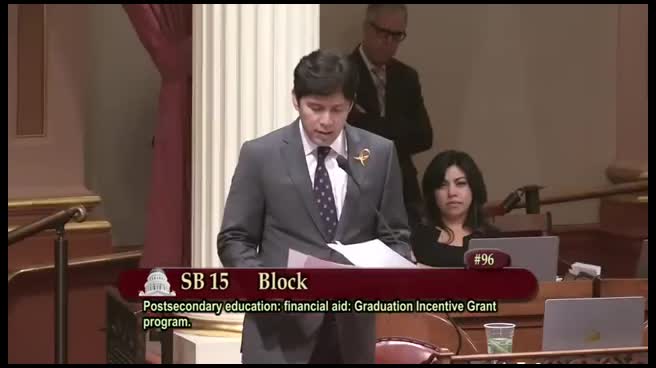
Bill Author

Bill Co-Author(s):