SB 466: Registered nurses: Board of Registered Nursing.
- Session Year: 2015-2016
- House: Senate
- Latest Version Date: 2015-10-04
The Nursing Practice Act provides for the licensure and regulation of registered nurses by the Board of Registered Nursing within the Department of Consumer Affairs. Existing law requires the board to appoint an executive officer to perform duties delegated by the board. Existing law repeals those provisions establishing the board and the executive officer position on January 1, 2016.
This bill would extend the repeal date to January 1, 2018.
The act authorizes the board to take disciplinary action against a certified or licensed nurse or to deny an application for a certificate or license for certain reasons, including unprofessional conduct. Existing law establishes the California State Auditors Office, which is headed by the California State Auditor, to conduct financial and performance audits as directed by statute.
This bill would require the board, by February 1, 2016, to contract with the California State Auditors Office to conduct a performance audit of the boards enforcement program, as specified. The bill would require the board to reimburse the office for the cost of the performance audit. The bill would require the office to report the results of the audit to the Governor, the department, and the appropriate policy committees of the Legislature by January 1, 2017. The bill would require the boards staff and management to cooperate with the office and provide the office with access to data, case files, employees, and information.
The act authorizes any person who has served on active duty in the medical corps of the Armed Forces of the United States and who successfully completed the course of instruction to qualify him or her for rating as a medical service technicianindependent duty, or other equivalent rating, and whose service in the Armed Forces was under honorable conditions to submit the record of that training to the board for evaluation. The act requires the board to grant a license to that person if he or she meets specified qualifications and the board determines that his or her education would give reasonable assurance of competence to practice as a registered nurse in this state. The act requires the board to maintain records of those applicants, including, but not limited to, applicants who are rejected from examination.
This bill would repeal those provisions.
The act requires the board to maintain a list of approved schools or programs of nursing in this state, as specified, and provides that an approved school or program of nursing is one that has been approved by the board and meets certain academic requirements. The act requires the board to deny an application for approval of, and to revoke the approval given to, any school of nursing that does not give student applicants credit for previous education and the opportunity to obtain credit for other acquired knowledge by the use of challenge examinations or other methods of evaluation.
This bill would require the board to deny or revoke approval of a school of nursing that does not give student applicants credit in the field of nursing for military education and experience by the use of challenge examinations or other methods of evaluation. The bill would require the board, by January 1, 2017, to adopt regulations requiring schools seeking approval to have a process to evaluate and grant credit, as defined, for military education and experience. The bill would require the board to review a schools policies and practices regarding granting credit for military education and experience at least once every 5 years to ensure consistency in evaluation and application across schools. The bill would require the board to post on its Internet Web site information related to the acceptance of military coursework and experience at each approved school.
The Nursing Practice Act provides for the licensure and regulation of registered nurses by the Board of Registered Nursing within the Department of Consumer Affairs. Existing law requires the board to appoint an executive officer to perform duties delegated by the board. Existing law repeals those provisions establishing the board and the executive officer position on January 1, 2016.
This bill would extend the repeal date to January 1, 2018.
The act authorizes the board to take disciplinary action against a certified or licensed nurse or to deny an application for a certificate or license for certain reasons, including unprofessional conduct. Existing law establishes the California State Auditors Office, which is headed by the California State Auditor, to conduct financial and performance audits as directed by statute.
This bill would require the board, by February 1, 2016, to contract with the California State Auditors Office to conduct a performance audit of the boards enforcement program, as specified. The bill would require the board to reimburse the office for the cost of the performance audit. The bill would require the office to report the results of the audit to the Governor, the department, and the appropriate policy committees of the Legislature by January 1, 2017. The bill would require the boards staff and management to cooperate with the office and provide the office with access to data, case files, employees, and information.
The act authorizes any person who has served on active duty in the medical corps of the Armed Forces of the United States and who successfully completed the course of instruction to qualify him or her for rating as a medical service technicianindependent duty, or other equivalent rating, and whose service in the Armed Forces was under honorable conditions to submit the record of that training to the board for evaluation. The act requires the board to grant a license to that person if he or she meets specified qualifications and the board determines that his or her education would give reasonable assurance of competence to practice as a registered nurse in this state. The act requires the board to maintain records of those applicants, including, but not limited to, applicants who are rejected from examination.
This bill would repeal those provisions.
The act requires the board to maintain a list of approved schools or programs of nursing in this state, as specified, and provides that an approved school or program of nursing is one that has been approved by the board and meets certain academic requirements. The act requires the board to deny an application for approval of, and to revoke the approval given to, any school of nursing that does not give student applicants credit for previous education and the opportunity to obtain credit for other acquired knowledge by the use of challenge examinations or other methods of evaluation.
This bill would require the board to deny or revoke approval of a school of nursing that does not give student applicants credit in the field of nursing for military education and experience by the use of challenge examinations or other methods of evaluation. The bill would require the board, by January 1, 2017, to adopt regulations requiring schools seeking approval to have a process to evaluate and grant credit, as defined, for military education and experience. The bill would require the board to review a schools policies and practices regarding granting credit for military education and experience at least every 5 years to ensure consistency in evaluation and application across schools. The bill would require the board to post on its Internet Web site information related to the acceptance of military coursework and experience at each approved school.
The Nursing Practice Act provides for the licensure and regulation of registered nurses by the Board of Registered Nursing within the Department of Consumer Affairs, and Affairs. Existing law requires the board to appoint an executive officer to perform duties delegated by the board. The Existing law repeals the board and the executive officer position on January 1, 2016.
This bill would extend the repeal date to January 1, 2018.
The act authorizes the board to take disciplinary action against a certified or licensed nurse or to deny an application for a certificate or license for certain reasons, including unprofessional conduct. Existing law establishes the California State Auditors Office, which is headed by the California State Auditor, to conduct financial and performance audits as directed by statute.
This bill would require the Director of the Department of Consumer Affairs to appoint a board enforcement program monitor no later than March 31, 2016, as specified. The bill would require the enforcement program monitor to monitor and evaluate the nursing disciplinary system and procedures and specifically concentrate recommendations on improving the enforcement program, including, but not limited to, ensuring consistency in the application of board sanctions or discipline imposed on licensees. The bill would require the program enforcement monitor to submit an initial written report 6 months after he or she begins the review process and every 6 months after the initial report to the board, the Director of Consumer Affairs, and the Legislature, as specified, and would require a final written report to be submitted by December 31, 2018, as specified. The bill would make these provisions inoperative on March 31, 2018, and would repeal these provisions on January 1, 2019. require the board, by February 1, 2016, to contract with the California State Auditors Office to conduct a performance audit of the boards enforcement program, as specified. The bill would require the board to reimburse the office for the cost of the performance audit. The bill would require the office to report the results of the audit to the Governor, the department, and the appropriate policy committees of the Legislature by January 1, 2017. The bill would require the boards staff and management to cooperate with the office and provide the office with access to data, case files, employees, and information.
The act authorizes any person who has served on active duty in the medical corps of the Armed Forces of the United States and who successfully completed the course of instruction to qualify him or her for rating as a medical service technicianindependent duty, or other equivalent rating, and whose service in the Armed Forces was under honorable conditions to submit the record of that training to the board for evaluation. The act requires the board to grant a license to that person if he or she meets specified qualifications and the board determines that his or her education would give reasonable assurance of competence to practice as a registered nurse in this state. The act requires the board to maintain records of those applicants, including, but not limited to, applicants who are rejected from examination.
This bill would repeal these those provisions.
The act requires the board to maintain a list of approved schools or programs of nursing in this state, as specified, and provides that an approved school or program of nursing is one that has been approved by the board and meets certain academic requirements. The act requires the board to deny an application for approval of, and to revoke the approval given to, any school of nursing that does not give student applicants credit for previous education and the opportunity to obtain credit for other acquired knowledge by the use of challenge examinations or other methods of evaluation.
This bill would require the board to deny or revoke approval of a school of nursing that does not give student applicants credit in the field of nursing for military education and experience by the use of challenge examinations or other methods of evaluation. The bill would require the board, by January 1, 2017, to promulgate adopt regulations requiring schools seeking approval to have a process to evaluate and grant credit, as defined, for military education and experience. The bill would require the board to review a schools policies and practices regarding granting credit for military education and experience at least every 5 years to ensure consistency in evaluation and application across schools. The bill would require the board to post on its Internet Web site information related to the acceptance of military coursework and experience at each approved school.
The Nursing Practice Act provides for the licensure and regulation of registered nurses by the Board of Registered Nursing within the Department of Consumer Affairs, and requires the board to appoint an executive officer to perform duties delegated by the board. The act authorizes the board to take disciplinary action against a certified or licensed nurse or to deny an application for a certificate or license for certain reasons, including unprofessional conduct.
This bill would require the Director of the Department of Consumer Affairs to appoint a board enforcement program monitor no later than March 31, 2016, as specified. The bill would require the enforcement program monitor to monitor and evaluate the nursing disciplinary system and procedures and specifically concentrate recommendations on improving the overall efficiency and consistency of the enforcement program, including, but not limited to, assuring ensuring consistency in the application of board sanctions or discipline imposed on licensees. The bill would require the program enforcement monitor to submit an initial written report 6 months after he or she begins the review process and every 6 months after the initial report to the board, the Director of Consumer Affairs, and the Legislature, as specified, and would require a final written report to be submitted by December 31, 2018, as specified. The bill would make these provisions inoperative on March 31, 2018, and would repeal these provisions on January 1, 2019.
The act authorizes any person who has served on active duty in the medical corps of the Armed Forces of the United States and who successfully completed the course of instruction to qualify him or her for rating as a medical service technicianindependent duty, or other equivalent rating, and whose service in the Armed Forces was under honorable conditions to submit the record of that training to the board for evaluation. The act requires the board to grant a license to that person if he or she meets specified qualifications and the board determines that his or her education would give reasonable assurance of competence to practice as a registered nurse in this state. The act requires the board to maintain records of those applicants, including, but not limited to, applicants who are rejected from examination.
This bill would repeal these provisions.
The act requires the board to maintain a list of approved schools or programs of nursing in this state, as specified, and provides that an approved school or program of nursing is one that has been approved by the board and meets certain academic requirements. The act requires the board to deny an application for approval of, and to revoke the approval given to, any school of nursing that does not give student applicants credit for previous education and the opportunity to obtain credit for other acquired knowledge by the use of challenge examinations or other methods of evaluation.
This bill would require the board to deny or revoke approval of a school of nursing that does not give student applicants credit in the field of nursing for military education and experience by the use of challenge examinations or other methods of evaluation. The bill would require the board, by January 1, 2017, to promulgate regulations requiring schools seeking approval to have a process to evaluate and grant credit, as defined, for military education and experience. The bill would require the board to review a schools policies and practices regarding granting credit for military education and experience at least every 5 years to ensure consistency in evaluation and application across schools. The bill would require the board to post on its Internet Web site information related to the acceptance of military coursework and experience at each approved school.
The Nursing Practice Act provides for the licensure and regulation of registered nurses by the Board of Registered Nursing within the Department of Consumer Affairs, and requires the board to appoint an executive officer to perform duties delegated by the board. The act authorizes the board to take disciplinary action against a certified or licensed nurse or to deny an application for a certificate or license for certain reasons, including unprofessional conduct.
This bill would require the Director of the Department of Consumer Affairs to appoint a board enforcement program monitor no later than March 31, 2016, as specified. The bill would require the enforcement program monitor to monitor and evaluate the nursing disciplinary system and procedures and specifically concentrate on improving the overall efficiency and consistency of the enforcement program, including, but not limited to, assuring consistency in the application of sanctions or discipline imposed on licensees. The bill would make these provisions inoperative on March 31, 2018, and would repeal these provisions on January 1, 2019.
The act authorizes any person who has served on active duty in the medical corps of the Armed Forces of the United States and who successfully completed the course of instruction to qualify him or her for rating as a medical service technicianindependent duty, or other equivalent rating, and whose service in the Armed Forces was under honorable conditions to submit the record of that training to the board for evaluation. The act requires the board to grant a license to that person if he or she meets specified qualifications and the board determines that his or her education would give reasonable assurance of competence to practice as a registered nurse in this state. The act requires the board to maintain records of those applicants, including, but not limited to, applicants who are rejected from examination.
This bill would repeal these provisions.
The act requires the board to maintain a list of approved schools or programs of nursing in this state, as specified, and provides that an approved school or program of nursing is one that has been approved by the board and meets certain academic requirements. The act requires the board to deny an application for approval of, and to revoke the approval given to, any school of nursing that does not give student applicants credit for previous education and the opportunity to obtain credit for other acquired knowledge by the use of challenge examinations or other methods of evaluation.
This bill would instead require the board to deny or revoke approval of a school of nursing that does not give student applicants credit in the field of nursing for previous military education and the opportunity to obtain credit for other clinical and theoretical knowledge acquired through experience by the use of challenge examinations or other methods of evaluation. The bill would require the board, by January 1, 2017, to promulgate regulations requiring schools seeking approval to have a process to evaluate and grant credit credit, as defined, for military education and clinical and theoretical knowledge acquired through prior experience. The bill would require the board to review a schools policies and practices regarding granting credit for previously acquired military education and clinical and theoretical knowledge at least once every 4 experience at least every 5 years to ensure consistency in evaluation and application across schools. The bill would require the board to post on its Internet Web site information related to the acceptance of military coursework and experience at each approved school. The bill would also require the board, by January 1, 2018, to prepare a report to the Legislature examining the barriers to California licensure for practitioners who cannot meet California licensure requirements due to insufficient academic or clinical preparation, but who are licensed and practicing in other states.
The Nursing Practice Act provides for the licensure and regulation of registered nurses by the Board of Registered Nursing within the Department of Consumer Affairs, and requires the board to appoint an executive officer to perform duties delegated by the board. The act authorizes the board to take disciplinary action against a certified or licensed nurse or to deny an application for a certificate or license for certain reasons, including unprofessional conduct.
This bill would require the Director of the Department of Consumer Affairs to appoint a board enforcement program monitor no later than March 31, 2016, as specified. The bill would require the enforcement program monitor to monitor and evaluate the nursing disciplinary system and procedures and specifically concentrate on improving the overall efficiency and consistency of the enforcement program, including, but not limited to, assuring consistency in the application of sanctions or discipline imposed on licensees. The bill would make these provisions inoperative on March 31, 2018, and would repeal these provisions on January 1, 2019.
The act authorizes any person who has served on active duty in the medical corps of the Armed Forces of the United States and who successfully completed the course of instruction to qualify him or her for rating as a medical service technicianindependent duty, or other equivalent rating, and whose service in the Armed Forces was under honorable conditions to submit the record of that training to the board for evaluation. The act requires the board to grant a license to that person if he or she meets specified qualifications and the board determines that his or her education would give reasonable assurance of competence to practice as a registered nurse in this state. The act requires the board to maintain records of those applicants, including, but not limited to, applicants who are rejected from examination.
This bill would revise and recast this provision to authorize a person who has successfully completed the course of education, training, or experience to qualify him or her for rating as a medical service technicianindependent duty, or other equivalent rating to submit that record for evaluation, and would require the board to provide that person with a list of coursework, if any, that the applicant must complete to be eligible for licensure. This bill would require the board to issue a license to that person if he or she meets specified qualifications and the board determines that his or her education, training, or experience would give reasonable assurance of competence to practice as a registered nurse in the state. The bill would delete the requirement on the board to maintain records of certain applicants. The bill, on or before January 1, 2017, would also require the board to issue regulations in conjunction with the Military Department that identify the Armed Forces education, training, or experience that is equivalent or transferable to the curriculum required for licensure by the board.
The act requires the board to maintain a list of approved schools or programs of nursing in this state, as specified, and provides that an approved school or program of nursing is one that has been approved by the board and meets certain academic requirements. The act requires the board to deny an application for approval of, and to revoke the approval given to, any school of nursing that does not give student applicants credit for previous education and the opportunity to obtain credit for other acquired knowledge by the use of challenge examinations or other methods of evaluation.
This bill would instead require the board to deny or revoke approval of a school of nursing that does not give student applicants credit for previous education and the opportunity to obtain credit for other clinical and theoretical knowledge acquired through experience by the use of challenge examinations or other methods of evaluation. The bill would require the board, by January 1, 2017, to promulgate regulations detailing acceptable evaluation criteria for clinical and theoretical knowledge acquired through prior experience. The bill would also authorize the board to determine, upon review and recommendation, that an applicant for licensure as a registered nurse who acquires his or her education or a portion thereof at a school that is not approved or has been previously disapproved by the board is eligible for a registered nurse license if the applicant meets specified criteria, including, but not limited to, that he or she was previously licensed as a vocational nurse. requiring schools seeking approval to have a process to evaluate and grant credit for education and clinical and theoretical knowledge acquired through prior experience. The bill would require the board to review a schools policies and practices regarding granting credit for previously acquired education and clinical and theoretical knowledge at least once every 4 years to ensure consistency in evaluation and application across schools. The bill would require the board to post on its Internet Web site information related to the acceptance of military coursework and experience at each approved school. The bill would also require the board, by January 1, 2018, to prepare a report to the Legislature examining the barriers to California licensure for practitioners who cannot meet California licensure requirements due to insufficient academic or clinical preparation, but who are licensed and practicing in other states.
The Nursing Practice Act provides for the licensure and regulation of registered nurses by the Board of Registered Nursing within the Department of Consumer Affairs, and requires the board to appoint an executive officer to perform duties delegated by the board. The act repeals the authority of the board and its executive officer on January 1, 2016. The act authorizes the board to take disciplinary action against a certified or licensed nurse or to deny an application for a certificate or license for certain reasons, including unprofessional conduct.
This bill would extend the repeal date to January 1, 2020. require the Director of the Department of Consumer Affairs to appoint a board enforcement program monitor no later than March 31, 2016, as specified. The bill would require the enforcement program monitor to monitor and evaluate the nursing disciplinary system and procedures and specifically concentrate on improving the overall efficiency and consistency of the enforcement program, including, but not limited to, assuring consistency in the application of sanctions or discipline imposed on licensees. The bill would make these provisions inoperative on March 31, 2018, and would repeal these provisions on January 1, 2019.
The act authorizes any person who has served on active duty in the medical corps of the Armed Forces of the United States and who successfully completed the course of instruction to qualify him or her for rating as a medical service technicianindependent duty, or other equivalent rating, and whose service in the Armed Forces was under honorable conditions to submit the record of that training to the board for evaluation. The act requires the board to grant a license to that person if he or she meets specified qualifications and the board determines that his or her education would give reasonable assurance of competence to practice as a registered nurse in this state. The act requires the board to maintain records of those applicants, including, but not limited to, applicants who are rejected from examination.
This bill would revise and recast this provision to authorize a person who has successfully completed the course of education, training, or experience to qualify him or her for rating as a medical service technicianindependent duty, or other equivalent rating to submit that record for evaluation, and would require the board to provide that person with a list of coursework, if any, that the applicant must complete to be eligible for licensure. This bill would require the board to issue a license to that person if he or she meets specified qualifications and the board determines that his or her education, training, or experience would give reasonable assurance of competence to practice as a registered nurse in the state. The bill would delete the requirement on the board to maintain records of certain applicants. The bill, on or before January 1, 2017, would also require the board to issue regulations in conjunction with the Military Department that identify the Armed Forces education, training, or experience that is equivalent or transferable to the curriculum required for licensure by the board.
The act requires the board to maintain a list of approved schools or programs of nursing in this state, as specified, and provides that an approved school or program of nursing is one that has been approved by the board and meets certain academic requirements. The act requires the board to deny an application for approval of, and to revoke the approval given to, any school of nursing that does not give student applicants credit for previous education and the opportunity to obtain credit for other acquired knowledge by the use of challenge examinations or other methods of evaluation.
This bill would instead require the board to deny or revoke approval of a school of nursing that does not give student applicants credit for previous education and the opportunity to obtain credit for other clinical and theoretical knowledge acquired through experience by the use of challenge examinations or other methods of evaluation. The bill would require the board, by January 1, 2017, to promulgate regulations detailing acceptable evaluation criteria for clinical and theoretical knowledge acquired through prior experience. The bill would also authorize the board to determine, upon review and recommendation, that an applicant for licensure as a registered nurse who acquires his or her education or a portion thereof at a school that is not approved or has been previously disapproved by the board is eligible for a registered nurse license if the applicant meets specified criteria, including, but not limited to, that he or she was previously licensed as a vocational nurse.
The Nursing Practice Act provides for the licensure and regulation of registered nurses by the Board of Registered Nursing within the Department of Consumer Affairs, and requires the board to appoint an executive officer to perform duties delegated by the board. The act repeals the authority of the board and its executive officer on January 1, 2016.
This bill would extend the repeal date to January 1, 2020.
(a)There is in the Department of Consumer Affairs the Board of Registered Nursing consisting of nine members.
(b)For purposes of this chapter, board, or the board, refers to the Board of Registered Nursing. Any reference in state law to the Board of Nurse Examiners of the State of California or the California Board of Nursing Education and Nurse Registration shall be construed to refer to the Board of Registered Nursing.
(c)The board shall have all authority vested in the previous board under this chapter. The board may enforce all disciplinary actions undertaken by the previous board.
(d)This section shall remain in effect only until January 1, 2018, and as of that date, is repealed, unless a later enacted statute that is enacted before January 1, 2018, deletes or extends that date. Notwithstanding any other law, the repeal of this section renders the board subject to review by the appropriate policy committees of the Legislature.
SEC. 2.Section 2708 of the Business and Professions Code is amended to read:2708.(a)The board shall appoint an executive officer who shall perform the duties delegated by the board and who shall be responsible to it for the accomplishment of those duties.
(b)The executive officer shall be a nurse currently licensed under this chapter and shall possess other qualifications as determined by the board.
(c)The executive officer shall not be a member of the board.
(d)This section shall remain in effect only until January 1, 2018, and as of that date is repealed, unless a later enacted statute, that is enacted before January 1, 2018, deletes or extends that date.
SEC. 3.Section 2718 is added to the Business and Professions Code, to read:2718.(a)(1)By February 1, 2016, the board shall contract with the office to conduct a performance audit of the boards enforcement program. The board shall reimburse the office for the cost of the performance audit. The office shall report the results of the audit, with any recommendations, to the Governor, the department, and the appropriate policy committees of the Legislature by January 1, 2017.
(2)The performance audit shall include, but not be limited to, an evaluation of all the following:
(A)The quality and consistency of, and compliance with, complaint processing and investigation.
(B)The consistency and adequacy of the application of board sanctions or discipline imposed on licensees.
(C)The accuracy and consistency in implementing the laws and rules affecting discipline, including adherence to the Division of Investigation Case Acceptance Guidelines (Consumer Protection Enforcement Initiative Model), as revised July 1, 2014.
(D)The timeframes for completing complaint processing, investigation, and resolution.
(E)Staff concerns regarding licensee disciplinary matters or procedures.
(F)The appropriate utilization of licensed professionals to investigate complaints.
(G)The adequacy of the boards cooperation with other state agencies charged with enforcing related laws and regulations regarding nurses.
(H)Any existing backlog, the reason for the backlog, and the timeframe for eliminating the backlog.
(I)The adequacy of board staffing, training, and fiscal resources to perform its enforcement functions.
(b)Board staff and management shall cooperate with the office and shall provide the office with access to data, case files, employees, and information as the office may, in its discretion, require for the purposes of this section.
(c)For the purposes of this section, office means the California State Auditors Office.
SEC. 4.Section 2736.5 of the Business and Professions Code is repealed.SEC. 5.Section 2786 of the Business and Professions Code is amended to read:2786.(a)An approved school of nursing, or an approved nursing program, is one that has been approved by the board, gives the course of instruction approved by the board, covering not less than two academic years, is affiliated or conducted in connection with one or more hospitals, and is an institution of higher education. For purposes of this section, institution of higher education includes, but is not limited to, community colleges offering an associate of arts or associate of science degree and private postsecondary institutions offering an associate of arts, associate of science, or baccalaureate degree or an entry-level masters degree, and is an institution that is not subject to the California Private Postsecondary Education Act of 2009 (Chapter 8 (commencing with Section 94800) of Part 59 of Division 10 of Title 3 of the Education Code).
(b)A school of nursing that is affiliated with an institution that is subject to the California Private Postsecondary Education Act of 2009 (Chapter 8 (commencing with Section 94800) of Part 59 of Division 10 of Title 3 of the Education Code), may be approved by the board to grant an associate of arts or associate of science degree to individuals who graduate from the school of nursing or to grant a baccalaureate degree in nursing with successful completion of an additional course of study as approved by the board and the institution involved.
(c)The board shall determine by regulation the required subjects of instruction to be completed in an approved school of nursing for licensure as a registered nurse and shall include the minimum units of theory and clinical experience necessary to achieve essential clinical competency at the entry level of the registered nurse. The boards regulations shall be designed to require all schools to provide clinical instruction in all phases of the educational process, except as necessary to accommodate military education and experience as specified in Section 2786.1.
(d)The board shall perform or cause to be performed an analysis of the practice of the registered nurse no less than every five years. Results of the analysis shall be utilized to assist in the determination of the required subjects of instruction, validation of the licensing examination, and assessment of the current practice of nursing.
SEC. 6.Section 2786.1 is added to the Business and Professions Code, to read:2786.1.(a)The board shall deny the application for approval made by, and shall revoke the approval given to, any school of nursing that does not give student applicants credit in the field of nursing for military education and experience by the use of challenge examinations or other methods of evaluation.
(b)The board shall adopt regulations by January 1, 2017, requiring schools to have a process to evaluate and grant credit for military education and experience. The regulations shall be adopted pursuant to the Administrative Procedure Act (Chapter 3.5 (commencing with Section 11340) of Part 1 of Division 3 of Title 2 of the Government Code). The word credit, as used in this subdivision, is limited to credit for licensure only. The board is not authorized to prescribe the credit that an approved school of nursing shall give toward an academic certificate or degree.
(c)The board shall review a schools policies and practices regarding granting credit for military education and experience at least once every five years to ensure consistency in evaluation and application across schools. The board shall post on its Internet Web site information related to the acceptance of military coursework and experience at each approved school.
(a)There is in the Department of Consumer Affairs the Board of Registered Nursing consisting of nine members.
(b)For purposes of this chapter, board, or the board, refers to the Board of Registered Nursing. Any reference in state law to the Board of Nurse Examiners of the State of California or the California Board of Nursing Education and Nurse Registration shall be construed to refer to the Board of Registered Nursing.
(c)The board shall have all authority vested in the previous board under this chapter. The board may enforce all disciplinary actions undertaken by the previous board.
(d)This section shall remain in effect only until January 1, 2018, and as of that date, is repealed, unless a later enacted statute that is enacted before January 1, 2018, deletes or extends that date. Notwithstanding any other law, the repeal of this section renders the board subject to review by the appropriate policy committees of the Legislature.
SEC. 2.Section 2708 of the Business and Professions Code is amended to read:2708.(a)The board shall appoint an executive officer who shall perform the duties delegated by the board and who shall be responsible to it for the accomplishment of those duties.
(b)The executive officer shall be a nurse currently licensed under this chapter and shall possess other qualifications as determined by the board.
(c)The executive officer shall not be a member of the board.
(d)This section shall remain in effect only until January 1, 2018, and as of that date is repealed, unless a later enacted statute, that is enacted before January 1, 2018, deletes or extends that date.
SEC. 3.Section 2718 is added to the Business and Professions Code, to read:2718.(a)(1)By February 1, 2016, the board shall contract with the office to conduct a performance audit of the boards enforcement program. The board shall reimburse the office for the cost of the performance audit. The office shall report the results of the audit, with any recommendations, to the Governor, the department, and the appropriate policy committees of the Legislature by January 1, 2017.
(2)The performance audit shall include, but not be limited to, an evaluation of all the following:
(A)The quality and consistency of, and compliance with, complaint processing and investigation.
(B)The consistency and adequacy of the application of board sanctions or discipline imposed on licensees.
(C)The accuracy and consistency in implementing the laws and rules affecting discipline, including adherence to the Division of Investigation Case Acceptance Guidelines (Consumer Protection Enforcement Initiative Model), as revised July 1, 2014.
(D)The timeframes for completing complaint processing, investigation, and resolution.
(E)Staff concerns regarding licensee disciplinary matters or procedures.
(F)The appropriate utilization of licensed professionals to investigate complaints.
(G)The adequacy of the boards cooperation with other state agencies charged with enforcing related laws and regulations regarding nurses.
(H)Any existing backlog, the reason for the backlog, and the timeframe for eliminating the backlog.
(I)The adequacy of board staffing, training, and fiscal resources to perform its enforcement functions.
(b)Board staff and management shall cooperate with the office and shall provide the office with access to data, case files, employees, and information as the office may, in its discretion, require for the purposes of this section.
(c)For the purposes of this section, office means the California State Auditors Office.
SEC. 4.Section 2736.5 of the Business and Professions Code is repealed.SEC. 5.Section 2786 of the Business and Professions Code is amended to read:2786.(a)An approved school of nursing, or an approved nursing program, is one that has been approved by the board, gives the course of instruction approved by the board, covering not less than two academic years, is affiliated or conducted in connection with one or more hospitals, and is an institution of higher education. For purposes of this section, institution of higher education includes, but is not limited to, community colleges offering an associate of arts or associate of science degree and private postsecondary institutions offering an associate of arts, associate of science, or baccalaureate degree or an entry-level masters degree, and is an institution that is not subject to the California Private Postsecondary Education Act of 2009 (Chapter 8 (commencing with Section 94800) of Part 59 of Division 10 of Title 3 of the Education Code).
(b)A school of nursing that is affiliated with an institution that is subject to the California Private Postsecondary Education Act of 2009 (Chapter 8 (commencing with Section 94800) of Part 59 of Division 10 of Title 3 of the Education Code), may be approved by the board to grant an associate of arts or associate of science degree to individuals who graduate from the school of nursing or to grant a baccalaureate degree in nursing with successful completion of an additional course of study as approved by the board and the institution involved.
(c)The board shall determine by regulation the required subjects of instruction to be completed in an approved school of nursing for licensure as a registered nurse and shall include the minimum units of theory and clinical experience necessary to achieve essential clinical competency at the entry level of the registered nurse. The boards regulations shall be designed to require all schools to provide clinical instruction in all phases of the educational process. process, except as necessary to accommodate military education and experience as specified in Section 2786.1.
(d)The board shall perform or cause to be performed an analysis of the practice of the registered nurse no less than every five years. Results of the analysis shall be utilized to assist in the determination of the required subjects of instruction, validation of the licensing examination, and assessment of the current practice of nursing.
SEC. 6.Section 2786.1 is added to the Business and Professions Code, to read:2786.1.(a)The board shall deny the application for approval made by, and shall revoke the approval given to, any school of nursing that does not give student applicants credit in the field of nursing for military education and experience by the use of challenge examinations or other methods of evaluation.
(b)The board shall adopt regulations by January 1, 2017, requiring schools to have a process to evaluate and grant credit for military education and experience. The regulations shall be adopted pursuant to the Administrative Procedure Act (Chapter 3.5 (commencing with Section 11340) of Part 1 of Division 3 of Title 2 of the Government Code). The word credit, as used in this subdivision, is limited to credit for licensure only. The board is not authorized to prescribe the credit that an approved school of nursing shall give toward an academic certificate or degree.
(c)The board shall review a schools policies and practices regarding granting credit for military education and experience at least once every five years to ensure consistency in evaluation and application across schools. The board shall post on its Internet Web site information related to the acceptance of military coursework and experience at each approved school.
(a)The Director of Consumer Affairs shall appoint a board enforcement program monitor no later than March 31, 2016. The director may retain an independent contractor for this appointment by a personal services contract. The Legislature hereby finds that the services described in this section are a new state function, pursuant to Section 19130 of the Government Code.
(b)The director shall advertise the availability of the enforcement program monitor position. The requirements of the position shall include, but not be limited to, performance audit experience and familiarity with state laws, regulations, and administrative procedures pertaining to the board. The enforcement program monitor shall not have a pecuniary interest, outside of the direct compensation referenced in this section, in reviewing the board or any recommendations made pursuant to this section.
(c)(1)The enforcement program monitor shall monitor and evaluate the nursing disciplinary system and procedures and specifically concentrate recommendations on improving the enforcement program. The enforcement program monitor shall develop recommendations that acknowledge the boards right to exercise reasonable discretion in applying disciplinary standards to particular circumstances and in deciding individual cases.
(2)The monitoring duty shall be on a continuing basis for a period of no more than two years from the date of the enforcement program monitors appointment and shall include, but not be limited to, the following areas:
(A)Improving the quality and consistency of complaint processing and investigation.
(B)Ensuring consistency in the application of board sanctions or discipline imposed on licensees.
(C)Ensuring the accurate and consistent implementation of the laws and rules affecting discipline, including adherence to the Division of Investigation Case Acceptance Guidelines (Consumer Protection Enforcement Initiative Model), as revised July 1, 2014.
(D)Reducing the timeframes for completing complaint processing and investigation.
(E)Addressing staff concerns regarding disciplinary matters or procedures.
(F)Reviewing the appropriate use of licensed professionals to investigate complaints.
(G)Reviewing the boards cooperation with other governmental entities charged with enforcing related laws and regulations regarding nurses.
(H)Generally assessing the adequacy of staffing, operations, and fiscal resources of other governmental entities as they affect the boards enforcement functions and identifying any delays caused by these other entities.
(I)Assessing the adequacy of board staffing and fiscal resources to perform its enforcement functions.
(3)In fulfilling the monitoring duties described in subparagraphs (A) through (H), inclusive, of paragraph (2), the enforcement program monitor shall perform those duties consistent with paragraph (1).
(4)The enforcement program monitor shall exercise no authority over the boards discipline operations or staff. However, the board and its staff shall cooperate with the enforcement program monitor, and the board shall provide data, information, and case files requested by the enforcement program monitor to perform all of his or her duties.
(5)The enforcement program monitor shall have access to all records and full and complete data in all official matters that are in possession of the board and the boards members, officers, and employees.
(d)The enforcement program monitor shall submit an initial written report of his or her findings and recommendations to the board within six months after the enforcement program monitor begins the review process, and shall submit a report every six months after the initial report with a final report to be submitted on or before December 31, 2018. The board shall be given 30 days to review and prepare a response to each written report beginning from the time the report is submitted to the board. After the 30 days expire, the program enforcement monitor shall submit each written report to the department and the Legislature. The enforcement program monitor shall make his or her reports and the boards response to the reports available to the public when the reports are submitted to the department and the Legislature. The enforcement program monitor shall make every effort to provide the board with an opportunity throughout the entire review process to reply to any facts, findings, issues, or recommendations in his or her reports with which the board may disagree.
(e)The final report shall include final findings and recommendations on the topics addressed in the prior reports submitted by the program enforcement monitor pursuant to subdivision (c) and in compliance with the process described in subdivision (d).
(f)The board shall pay for all of the costs associated with the employment of an enforcement program monitor.
(g)This section shall become inoperative on March 31, 2018, and as of January 1, 2019, is repealed.
SECTION 1.Section 2701 of the Business and Professions Code is amended to read:2701.(a)There is in the Department of Consumer Affairs the Board of Registered Nursing consisting of nine members.
(b)For purposes of this chapter, board, or the board, refers to the Board of Registered Nursing. Any reference in state law to the Board of Nurse Examiners of the State of California or the California Board of Nursing Education and Nurse Registration shall be construed to refer to the Board of Registered Nursing.
(c)The board shall have all authority vested in the previous board under this chapter. The board may enforce all disciplinary actions undertaken by the previous board.
(d)This section shall remain in effect only until January 1, 2016, 2018, and as of that date, is repealed, unless a later enacted statute that is enacted before January 1, 2016, 2018, deletes or extends that date. Notwithstanding any other provision of law, the repeal of this section renders the board subject to review by the appropriate policy committees of the Legislature.
SEC. 2.Section 2708 of the Business and Professions Code is amended to read:2708.(a)The board shall appoint an executive officer who shall perform the duties delegated by the board and who shall be responsible to it for the accomplishment of those duties.
(b)The executive officer shall be a nurse currently licensed under this chapter and shall possess other qualifications as determined by the board.
(c)The executive officer shall not be a member of the board.
(d)Notwithstanding any other provision of law, the person serving on December 31, 2011, as executive officer of the board shall serve as an interim executive officer until the board appoints a permanent executive officer. The board may appoint this interim executive officer as the permanent executive officer.
(e)
(d)This section shall remain in effect only until January 1, 2016, 2018, and as of that date is repealed, unless a later enacted statute, that is enacted before January 1, 2016, 2018, deletes or extends that date.
SEC. 3.Section 2718 is added to the Business and Professions Code, to read:2718.(a)(1)By February 1, 2016, the board shall contract with the office to conduct a performance audit of the boards enforcement program. The board shall reimburse the office for the cost of the performance audit. The office shall report the results of the audit, with any recommendations, to the Governor, the department, and the appropriate policy committees of the Legislature by January 1, 2017.
(2)The performance audit shall include, but not be limited to, an evaluation of all the following:
(A)The quality and consistency of, and compliance with, complaint processing and investigation.
(B)The consistency and adequacy of the application of board sanctions or discipline imposed on licensees.
(C)The accuracy and consistency in implementing the laws and rules affecting discipline, including adherence to the Division of Investigation Case Acceptance Guidelines (Consumer Protection Enforcement Initiative Model), as revised July 1, 2014.
(D)The timeframes for completing complaint processing, investigation, and resolution.
(E)Staff concerns regarding licensee disciplinary matters or procedures.
(F)The appropriate utilization of licensed professionals to investigate complaints.
(G)The adequacy of the boards cooperation with other state agencies charged with enforcing related laws and regulations regarding nurses.
(H)Any existing backlog, the reason for the backlog, and the timeframe for eliminating the backlog.
(I)The adequacy of board staffing, training, and fiscal resources to perform its enforcement functions.
(b)Board staff and management shall cooperate with the office and shall provide the office with access to data, case files, employees, and information as the office may, in its discretion, require for the purposes of this section.
(c)For the purposes of this section, office means the California State Auditors Office.
SEC. 2.SEC. 4.Section 2736.5 of the Business and Professions Code is repealed.SEC. 3.SEC. 5.Section 2786 of the Business and Professions Code is amended to read:2786.(a)An approved school of nursing, or an approved nursing program, is one that has been approved by the board, gives the course of instruction approved by the board, covering not less than two academic years, is affiliated or conducted in connection with one or more hospitals, and is an institution of higher education. For purposes of this section, institution of higher education includes, but is not limited to, community colleges offering an associate of arts or associate of science degree and private postsecondary institutions offering an associate of arts, associate of science, or baccalaureate degree or an entry-level masters degree, and is an institution that is not subject to the California Private Postsecondary Education Act of 2009 (Chapter 8 (commencing with Section 94800) of Part 59 of Division 10 of Title 3 of the Education Code).
(b)A school of nursing that is affiliated with an institution that is subject to the California Private Postsecondary Education Act of 2009 (Chapter 8 (commencing with Section 94800) of Part 59 of Division 10 of Title 3 of the Education Code), may be approved by the board to grant an associate of arts or associate of science degree to individuals who graduate from the school of nursing or to grant a baccalaureate degree in nursing with successful completion of an additional course of study as approved by the board and the institution involved.
(c)The board shall determine by regulation the required subjects of instruction to be completed in an approved school of nursing for licensure as a registered nurse and shall include the minimum units of theory and clinical experience necessary to achieve essential clinical competency at the entry level of the registered nurse. The boards regulations may shall be designed to require all schools to provide clinical instruction in the educational process.
(d)The board shall perform or cause to be performed an analysis of the practice of the registered nurse no less than every five years. Results of the analysis shall be utilized to assist in the determination of the required subjects of instruction, validation of the licensing examination, and assessment of the current practice of nursing.
SEC. 4.SEC. 6.Section 2786.1 is added to the Business and Professions Code, to read:2786.1.(a)The board shall deny the application for approval made by, and shall revoke the approval given to, any school of nursing that does not give student applicants credit in the field of nursing for military education and experience by the use of challenge examinations or other methods of evaluation.
(b)The board shall promulgate adopt regulations by January 1, 2017, requiring schools to have a process to evaluate and grant credit for military education and experience. The regulations shall be adopted pursuant to the Administrative Procedure Act (Chapter 3.5 (commencing with Section 11340) of Part 1 of Division 3 of Title 2 of the Government Code). The word credit, as used in the preceding sentence, this subdivision, is limited to credit for licensure only. The board is not authorized to prescribe the credit that an approved school of nursing shall give toward an academic certificate or degree.
(c)The board shall review a schools policies and practices regarding granting credit for military education and experience at least once every five years to ensure consistency in evaluation and application across schools. The board shall post on its Internet Web site information related to the acceptance of military coursework and experience at each approved school.
(a)(1)The Director of Consumer Affairs shall appoint a board enforcement program monitor no later than March 31, 2016. The director may retain an independent contractor for this appointment by a personal services contract. The Legislature hereby finds that the services described in this section are a new state function, pursuant to Section 19130 of the Government Code.
(2)The director shall supervise the enforcement program monitor and may terminate or dismiss the enforcement program monitor from the appointment.
(b)The director shall advertise the availability of the enforcement program monitor position. The requirements of the position shall include, but not be limited to, performance audit experience and familiarity with state laws, regulations, and administrative procedures pertaining to the board. The enforcement program monitor shall not have a pecuniary interest, outside of the direct compensation referenced in this section, in reviewing the board or any recommendations made pursuant to this section.
(b)
(c)(1)The enforcement program monitor shall monitor and evaluate the nursing disciplinary system and procedures and specifically concentrate recommendations on improving the overall efficiency and consistency of the enforcement program. The director shall specify further duties of the program monitor. The enforcement program monitor shall develop recommendations that acknowledge the boards right to exercise reasonable discretion in applying disciplinary standards to particular circumstances and in deciding individual cases.
(2)The monitoring duty shall be on a continuing basis for a period of no more than two years from the date of the enforcement program monitors appointment and shall include, but not be limited to, the following areas:
(A)Improving the quality and consistency of complaint processing and investigation.
(B)Assuring Ensuring consistency in the application of board sanctions or discipline imposed on licensees.
(C)The Ensuring the accurate and consistent implementation of the laws and rules affecting discipline, including adhering adherence to the Consumer Protection Enforcement Initiative complaint priority guidelines as described in the memorandum dated August 31, 2009, by Brian J. Stiger titled Complaint Prioritization Guidelines for Health Care Agencies. Division of Investigation Case Acceptance Guidelines (Consumer Protection Enforcement Initiative Model), as revised July 1, 2014.
(D)Reducing the timeframes for completing complaint processing and investigation.
(D) Staff
(E)Addressing staff concerns regarding disciplinary matters or procedures.
(E)Appropriate
(F)Reviewing the appropriate use of licensed professionals to investigate complaints.
(F)The
(G)Reviewing the boards cooperation with other governmental entities charged with enforcing related laws and regulations regarding nurses.
(H)Generally assessing the adequacy of staffing, operations, and fiscal resources of other governmental entities as they affect the boards enforcement functions and identifying any delays caused by these other entities.
(I)Assessing the adequacy of board staffing and fiscal resources to perform its enforcement functions.
(3)In fulfilling the monitoring duties described in subparagraphs (A) through (H), inclusive, of paragraph (2), the enforcement program monitor shall perform those duties consistent with paragraph (1).
(3)
(4)The enforcement program monitor shall exercise no authority over the boards discipline operations or staff. However, the board and its staff shall cooperate with the enforcement program monitor, and the board shall provide data, information, and case files requested by the enforcement program monitor to perform all of his or her duties.
(4)
(5)The director shall assist the enforcement program monitor in the performance of his or her duties, and the enforcement program monitor shall have the same investigative authority as the director. access to all records and full and complete data in all official matters that are in possession of the board and the boards members, officers, and employees.
(c)
(d)The enforcement program monitor shall submit an initial written report of his or her findings and conclusions to the board, the department, and the Legislature no later than September 1, 2016, and every six months thereafter, and be available to make oral reports to each, if requested to do so. The enforcement program monitor may also provide additional information to either the department or the Legislature at his or her discretion or at the request of either the department or the recommendations to the board within six months after the enforcement program monitor begins the review process, and shall submit a report every six months after the initial report with a final report to be submitted on or before December 31, 2018. The board shall be given 30 days to review and prepare a response to each written report beginning from the time the report is submitted to the board. After the 30 days expire, the program enforcement monitor shall submit each written report to the department and the Legislature. The enforcement program monitor shall make his or her reports and the boards response to the reports available to the public or the media. when the reports are submitted to the department and the Legislature. The enforcement program monitor shall make every effort to provide the board with an opportunity throughout the entire review process to reply to any facts, findings, issues, or conclusions recommendations in his or her reports with which the board may disagree.
(e)The final report shall include final findings and recommendations on the topics addressed in the prior reports submitted by the program enforcement monitor pursuant to subdivision (c) and in compliance with the process described in subdivision (d).
(d)
(f)The board shall pay for all of the costs associated with the employment of an enforcement program monitor.
(e)
(g)This section shall become inoperative on March 31, 2018, and as of January 1, 2019, is repealed.
SEC. 2.Section 2736.5 of the Business and Professions Code is repealed.SEC. 3.Section 2786 of the Business and Professions Code is amended to read:2786.(a)An approved school of nursing, or an approved nursing program, is one that has been approved by the board, gives the course of instruction approved by the board, covering not less than two academic years, is affiliated or conducted in connection with one or more hospitals, and is an institution of higher education. For purposes of this section, institution of higher education includes, but is not limited to, community colleges offering an associate of arts or associate of science degree and private postsecondary institutions offering an associate of arts, associate of science, or baccalaureate degree or an entry-level masters degree, and is an institution that is not subject to the California Private Postsecondary Education Act of 2009 (Chapter 8 (commencing with Section 94800) of Part 59 of Division 10 of Title 3 of the Education Code).
(b)A school of nursing that is affiliated with an institution that is subject to the California Private Postsecondary Education Act of 2009 (Chapter 8 (commencing with Section 94800) of Part 59 of Division 10 of Title 3 of the Education Code), may be approved by the board to grant an associate of arts or associate of science degree to individuals who graduate from the school of nursing or to grant a baccalaureate degree in nursing with successful completion of an additional course of study as approved by the board and the institution involved.
(c)The board shall determine by regulation the required subjects of instruction to be completed in an approved school of nursing for licensure as a registered nurse and shall include the minimum units of theory and clinical experience necessary to achieve essential clinical competency at the entry level of the registered nurse. The boards regulations may be designed to require all schools to provide clinical instruction in the educational process.
(d)The board shall perform or cause to be performed an analysis of the practice of the registered nurse no less than every five years. Results of the analysis shall be utilized to assist in the determination of the required subjects of instruction, validation of the licensing examination, and assessment of the current practice of nursing.
SEC. 4.Section 2786.1 is added to the Business and Professions Code, to read:2786.1.(a)The board shall deny the application for approval made by, and shall revoke the approval given to, any school of nursing that does not give student applicants credit in the field of nursing for military education and experience by the use of challenge examinations or other methods of evaluation.
(b)The board shall promulgate regulations by January 1, 2017, requiring schools to have a process to evaluate and grant credit for military education and experience. The word credit, as used in the preceding sentence, is limited to credit for licensure only. The board is not authorized to prescribe the credit that an approved school of nursing shall give toward an academic certificate or degree.
(c)The board shall review a schools policies and practices regarding granting credit for military education and experience at least once every five years to ensure consistency in evaluation and application across schools. The board shall post on its Internet Web site information related to the acceptance of military coursework and experience at each approved school.
(a)(1)The Director of Consumer Affairs shall appoint a board enforcement program monitor no later than March 31, 2016. The director may retain an independent contractor for this appointment by a personal services contract. The Legislature hereby finds that the services described in this section are a new state function, pursuant to Section 19130 of the Government Code.
(2)The director shall supervise the enforcement program monitor and may terminate or dismiss the enforcement program monitor from the appointment.
(b)(1)The enforcement program monitor shall monitor and evaluate the nursing disciplinary system and procedures and specifically concentrate on improving the overall efficiency and consistency of the enforcement program. The director shall specify further duties of the program monitor.
(2)The monitoring duty shall be on a continuing basis for a period of no more than two years from the date of the enforcement program monitors appointment and shall include, but not be limited to, the following areas:
(A)Improving the quality and consistency of complaint processing and investigation.
(B)Assuring consistency in the application of sanctions or discipline imposed on licensees.
(C)The accurate and consistent implementation of the laws and rules affecting discipline, including adhering to the Consumer Protection Enforcement Initiative complaint priority guidelines as described in the memorandum dated August 31, 2009, by Brian J. Stiger titled Complaint Prioritization Guidelines for Health Care Agencies.
(D)Staff concerns regarding disciplinary matters or procedures.
(E)Appropriate use of licensed professionals to investigate complaints.
(F)The boards cooperation with other governmental entities charged with enforcing related laws and regulations regarding nurses.
(3)The enforcement program monitor shall exercise no authority over the boards discipline operations or staff. However, the board and its staff shall cooperate with the enforcement program monitor, and the board shall provide data, information, and case files requested by the enforcement program monitor to perform all of his or her duties.
(4)The director shall assist the enforcement program monitor in the performance of his or her duties, and the enforcement program monitor shall have the same investigative authority as the director.
(c)The enforcement program monitor shall submit an initial written report of his or her findings and conclusions to the board, the department, and the Legislature no later than September 1, 2016, and every six months thereafter, and be available to make oral reports to each, if requested to do so. The enforcement program monitor may also provide additional information to either the department or the Legislature at his or her discretion or at the request of either the department or the Legislature. The enforcement program monitor shall make his or her reports available to the public or the media. The enforcement program monitor shall make every effort to provide the board with an opportunity to reply to any facts, findings, issues, or conclusions in his or her reports with which the board may disagree.
(d)The board shall pay for all of the costs associated with the employment of an enforcement program monitor.
(e)This section shall become inoperative on March 31, 2018, and as of January 1, 2019, is repealed.
SEC. 2.Section 2736.7 is added to the Business and Professions Code, to read:2736.7.(a)The board shall, by January 1, 2018, prepare a report to be submitted to the Legislature examining barriers to California licensure for practitioners who cannot meet California licensure requirements due to insufficient academic or clinical preparation, but who are licensed and practicing in other states.
(b)The report required by this section shall be submitted in compliance with Section 9795 of the Government Code.
(c)Pursuant to Section 10231.5 of the Government Code, this section is repealed on January 1, 2022.
SEC. 2.Section 2736.5 of the Business and Professions Code is repealed.2736.5.(a)Any person who has served on active duty in the medical corps of any of the Armed Forces of the United States and who has successfully completed the course of instruction required to qualify him or her for rating as a medical service technicianindependent duty, or other equivalent rating in his particular branch of the Armed Forces, and whose service in the Armed Forces has been under honorable conditions, may submit the record of such training to the board for evaluation.
(b)If such person meets the qualifications of paragraphs (1) and (3) of subdivision (a) of Section 2736, and if the board determines that his or her education would give reasonable assurance of competence to practice as a registered nurse in this state, he or she shall be granted a license upon passing the standard examination for such licensure.
(c)The board shall, by regulation, establish criteria for evaluating the education of applicants under this section.
(d)The board shall maintain records of the following categories of applicants under this section:
(1)Applicants who are rejected for examination, and the areas of such applicants preparation which are the causes of rejection.
(2)Applicants who are qualified by their military education alone to take the examination, and the results of their examinations.
(3)Applicants who are qualified to take the examination by their military education plus supplementary education, and the results of their examinations.
(e)The board shall attempt to contact by mail or other means individuals meeting the requirements of subdivision (a) who have been or will be discharged or separated from the Armed Forces of the United States, in order to inform them of the application procedure provided by this section. The board may enter into an agreement with the federal government in order to secure the names and addresses of such individuals.
SEC. 3.Section 2786 of the Business and Professions Code is amended to read:2786.(a)An approved school of nursing, or an approved nursing program, is one that has been approved by the board, gives the course of instruction approved by the board, covering not less than two academic years, is affiliated or conducted in connection with one or more hospitals, and is an institution of higher education. For purposes of this section, institution of higher education includes, but is not limited to, community colleges offering an associate of arts or associate of science degree and private postsecondary institutions offering an associate of arts, associate of science, or baccalaureate degree or an entry-level masters degree, and is an institution that is not subject to the California Private Postsecondary Education Act of 2009 (Chapter 8 (commencing with Section 94800) of Part 59 of Division 10 of Title 3 of the Education Code).
(b)A school of nursing that is affiliated with an institution that is subject to the California Private Postsecondary Education Act of 2009 (Chapter 8 (commencing with Section 94800) of Part 59 of Division 10 of Title 3 of the Education Code), may be approved by the board to grant an associate of arts or associate of science degree to individuals who graduate from the school of nursing or to grant a baccalaureate degree in nursing with successful completion of an additional course of study as approved by the board and the institution involved.
(c)The board shall determine by regulation the required subjects of instruction to be completed in an approved school of nursing for licensure as a registered nurse and shall include the minimum units of theory and clinical experience necessary to achieve essential clinical competency at the entry level of the registered nurse. The boards regulations may be designed to require all schools to provide clinical instruction in the educational process.
(d)The board shall perform or cause to be performed an analysis of the practice of the registered nurse no less than every five years. Results of the analysis shall be utilized to assist in the determination of the required subjects of instruction, validation of the licensing examination, and assessment of the current practice of nursing.
SEC. 4.Section 2786.6 of the Business and Professions Code is amended to read:2786.6.(a)The board shall deny the application for approval made by, and shall revoke the approval given to, any school of nursing that either:
(1)Does not give to student applicants credit, in the field of nursing, for previous education and the opportunity to obtain credit for other clinical and theoretical knowledge acquired through prior experience by the use of challenge examinations or other methods of evaluation.
(2)Is operated by a community college and discriminates against an applicant for admission to a school solely on the grounds that the applicant is seeking to fulfill the units of nursing required by Section 2736.6.
(b)The board shall promulgate regulations by January 1, 2017, requiring schools to have a process to evaluate and grant credit for previous education and clinical and theoretical knowledge acquired through prior experience, including that gained from military service. The word credit, as used in the preceding sentence, is limited to credit for licensure only. The board is not authorized to prescribe the credit that an approved school of nursing shall give toward an academic certificate or degree.
(c)The board shall review a schools policies and practices regarding granting credit for previous education and clinical and theoretical knowledge acquired through prior experience at least once every four years to ensure consistency in evaluation and application across schools. The board shall post on its Internet Web site information related to the acceptance of military coursework and experience at each approved school.
SEC. 4.Section 2786.1 is added to the Business and Professions Code, to read:2786.1.(a)The board shall deny the application for approval made by, and shall revoke the approval given to, any school of nursing that does not give student applicants credit in the field of nursing for military education and experience by the use of challenge examinations or other methods of evaluation.
(b)The board shall promulgate regulations by January 1, 2017, requiring schools to have a process to evaluate and grant credit for military education and experience. The word credit, as used in the preceding sentence, is limited to credit for licensure only. The board is not authorized to prescribe the credit that an approved school of nursing shall give toward an academic certificate or degree.
(c)The board shall review a schools policies and practices regarding granting credit for military education and experience at least once every five years to ensure consistency in evaluation and application across schools. The board shall post on its Internet Web site information related to the acceptance of military coursework and experience at each approved school.
(a)(1)The Director of Consumer Affairs shall appoint a board enforcement program monitor no later than March 31, 2016. The director may retain an independent contractor for this appointment by a personal services contract. The Legislature hereby finds that the services described in this section are a new state function, pursuant to Section 19130 of the Government Code.
(2)The director shall supervise the enforcement program monitor and may terminate or dismiss the enforcement program monitor from the appointment.
(b)(1)The enforcement program monitor shall monitor and evaluate the nursing disciplinary system and procedures and specifically concentrate on improving the overall efficiency and consistency of the enforcement program. The director shall specify further duties of the program monitor.
(2)The monitoring duty shall be on a continuing basis for a period of no more than two years from the date of the enforcement program monitors appointment and shall include, but not be limited to, the following areas:
(A)Improving the quality and consistency of complaint processing and investigation.
(B)Assuring consistency in the application of sanctions or discipline imposed on licensees.
(C)The accurate and consistent implementation of the laws and rules affecting discipline, including adhering to the Consumer Protection Enforcement Initiative complaint priority guidelines as described in the memorandum dated August 31, 2009, by Brian J. Stiger titled Complaint Prioritization Guidelines for Health Care Agencies.
(D)Staff concerns regarding disciplinary matters or procedures.
(E)Appropriate use of licensed professionals to investigate complaints.
(F)The boards cooperation with other governmental entities charged with enforcing related laws and regulations regarding nurses.
(3)The enforcement program monitor shall exercise no authority over the boards discipline operations or staff. However, the board and its staff shall cooperate with the enforcement program monitor, and the board shall provide data, information, and case files requested by the enforcement program monitor to perform all of his or her duties.
(4)The director shall assist the enforcement program monitor in the performance of his or her duties, and the enforcement program monitor shall have the same investigative authority as the director.
(c)The enforcement program monitor shall submit an initial written report of his or her findings and conclusions to the board, the department, and the Legislature no later than September 1, 2016, and every six months thereafter, and be available to make oral reports to each, if requested to do so. The enforcement program monitor may also provide additional information to either the department or the Legislature at his or her discretion or at the request of either the department or the Legislature. The enforcement program monitor shall make his or her reports available to the public or the media. The enforcement program monitor shall make every effort to provide the board with an opportunity to reply to any facts, findings, issues, or conclusions in his or her reports with which the board may disagree.
(d)The board shall pay for all of the costs associated with the employment of an enforcement program monitor.
(e)This section shall become inoperative on March 31, 2018, and as of January 1, 2019, is repealed.
SEC. 2.Section 2736.5 of the Business and Professions Code is amended to read:2736.5.(a)Any person who has served on active duty in the medical corps of any of the Armed Forces of the United States and who has successfully completed the course of education, training, or experience required to qualify him or her for rating as a medical service technicianindependent duty, or other equivalent rating in his or her particular branch of the Armed Forces, and whose service in the Armed Forces has been under honorable conditions, may submit the record of that education, training, or experience to the board for evaluation toward licensure.
(b)After making an evaluation pursuant to subdivision (a), the board shall provide an applicant with a list of coursework, if any, that the applicant must complete to be eligible for licensure.
(c)If an applicant meets the qualifications of subdivision (a) and paragraphs (1) and (3) of subdivision (a) of Section 2736, and if the board determines that his or her education, training, or experience would give reasonable assurance of competence to practice as a registered nurse in this state, he or she shall be granted a license upon passing the standard examination for licensure.
(d)The board shall, by regulation, establish criteria for evaluating the education, training, or experience of applicants under this section.
(e)On or before January 1, 2017, the board shall, by regulation and in conjunction with the Military Department, identify the Armed Forces education, training, or experience that is equivalent or transferable to the curriculum required for licensure by the board.
SEC. 3.Section 2736.7 is added to the Business and Professions Code, to read:2736.7.Upon review and recommendation, the board may determine that an applicant for licensure as a registered nurse who acquired his or her education or a portion thereof at a school that is not approved or has been previously disapproved by the board is eligible for a registered nurse license if the applicant meets all of the following criteria:
(a)Was previously licensed as a licensed vocational nurse.
(b)Has successfully completed a nursing education program accredited by the Accreditation Commission for Education in Nursing, Commission on Collegiate Nursing Education, or other accreditation entity approved by the board.
(c)Has not held a healing arts license that has been the subject of disciplinary action by a healing arts board of this state or by another state, federal territory, or Canadian province.
(d)Holds an unencumbered registered nursing license issued by another state licensing board or agency.
(e)Has continuously practiced as a licensed registered nurse for the equivalent of five full-time years in an acute care hospital setting before the date of application.
(f)Demonstrates clinical experience as a registered nurse in medical-surgical, including geriatrics, psychiatric-mental health, obstetrics, and pediatrics.
(g)Has not been the subject of a disciplinary action by a nursing licensing authority or of adverse judgments or settlements resulting from the practice of nursing that the board determines constitutes a pattern of negligence or incompetence.
(h)Is not subject to denial of licensure under Division 1.5 (commencing with Section 475).
SEC. 2.Section 2736.7 is added to the Business and Professions Code, to read:2736.7.(a)The board shall, by January 1, 2018, prepare a report to be submitted to the Legislature examining barriers to California licensure for practitioners who cannot meet California licensure requirements due to insufficient academic or clinical preparation, but who are licensed and practicing in other states.
(b)The report required by this section shall be submitted in compliance with Section 9795 of the Government Code.
(c)Pursuant to Section 10231.5 of the Government Code, this section is repealed on January 1, 2022.
SEC. 4.SEC. 3.Section 2786 of the Business and Professions Code is amended to read:2786.(a)An approved school of nursing, or an approved nursing program, is one that has been approved by the board, gives the course of instruction approved by the board, covering not less than two academic years, is affiliated or conducted in connection with one or more hospitals, and is an institution of higher education. For purposes of this section, institution of higher education includes, but is not limited to, community colleges offering an associate of arts or associate of science degree and private postsecondary institutions offering an associate of arts, associate of science, or baccalaureate degree or an entry-level masters degree, and is an institution that is not subject to the California Private Postsecondary Education Act of 2009 (Chapter 8 (commencing with Section 94800) of Part 59 of Division 10 of Title 3 of the Education Code).
(b)A school of nursing that is affiliated with an institution that is subject to the California Private Postsecondary Education Act of 2009 (Chapter 8 (commencing with Section 94800) of Part 59 of Division 10 of Title 3 of the Education Code), may be approved by the board to grant an associate of arts or associate of science degree to individuals who graduate from the school of nursing or to grant a baccalaureate degree in nursing with successful completion of an additional course of study as approved by the board and the institution involved.
(c)The board shall determine by regulation the required subjects of instruction to be completed in an approved school of nursing for licensure as a registered nurse and shall include the minimum units of theory and clinical experience necessary to achieve essential clinical competency at the entry level of the registered nurse. The boards standards shall regulations may be designed to require all schools to provide clinical instruction in the educational process.
(d)The board shall perform or cause to be performed an analysis of the practice of the registered nurse no less than every five years. Results of the analysis shall be utilized to assist in the determination of the required subjects of instruction, validation of the licensing examination, and assessment of the current practice of nursing.
SEC. 5.SEC. 4.Section 2786.6 of the Business and Professions Code is amended to read:2786.6.(a)The board shall deny the application for approval made by, and shall revoke the approval given to, any school of nursing that either:
(1)Does not give to student applicants credit, in the field of nursing, for previous education and the opportunity to obtain credit for other clinical and theoretical knowledge acquired through prior experience by the use of challenge examinations or other methods of evaluation.
(2)Is operated by a community college and discriminates against an applicant for admission to a school solely on the grounds that the applicant is seeking to fulfill the units of nursing required by Section 2736.6.
(b)The board shall prescribe, by regulation, the education for which credit is to be given and the amount of credit that is to be given for each type of education, including clinical and theoretical knowledge acquired through prior experience. promulgate regulations by January 1, 2017, requiring schools to have a process to evaluate and grant credit for previous education and clinical and theoretical knowledge acquired through prior experience, including that gained from military service. The word credit, as used in the preceding sentence, is limited to credit for licensure only. The board is not authorized to prescribe the credit that an approved school of nursing shall give toward an academic certificate or degree. The board shall promulgate regulations detailing acceptable evaluation criteria for clinical and theoretical knowledge acquired through prior experience by January 1, 2017.
(c)The board shall review a schools policies and practices regarding granting credit for previous education and clinical and theoretical knowledge acquired through prior experience at least once every four years to ensure consistency in evaluation and application across schools. The board shall post on its Internet Web site information related to the acceptance of military coursework and experience at each approved school.
(a)(1)The Director of Consumer Affairs shall appoint a board enforcement program monitor no later than March 31, 2016. The director may retain an independent contractor for this appointment by a personal services contract. The Legislature hereby finds that the services described in this section are a new state function, pursuant to Section 19130 of the Government Code.
(2)The director shall supervise the enforcement program monitor and may terminate or dismiss the enforcement program monitor from the appointment.
(b)(1)The enforcement program monitor shall monitor and evaluate the nursing disciplinary system and procedures and specifically concentrate on improving the overall efficiency and consistency of the enforcement program. The director shall specify further duties of the program monitor.
(2)The monitoring duty shall be on a continuing basis for a period of no more than two years from the date of the enforcement program monitors appointment and shall include, but not be limited to, the following areas:
(A)Improving the quality and consistency of complaint processing and investigation.
(B)Assuring consistency in the application of sanctions or discipline imposed on licensees.
(C)The accurate and consistent implementation of the laws and rules affecting discipline, including adhering to the Consumer Protection Enforcement Initiative complaint priority guidelines as described in the memorandum dated August 31, 2009, by Brian J. Stiger titled Complaint Prioritization Guidelines for Health Care Agencies.
(D)Staff concerns regarding disciplinary matters or procedures.
(E)Appropriate use of licensed professionals to investigate complaints.
(F)The boards cooperation with other governmental entities charged with enforcing related laws and regulations regarding nurses.
(3)The enforcement program monitor shall exercise no authority over the boards discipline operations or staff. However, the board and its staff shall cooperate with the enforcement program monitor, and the board shall provide data, information, and case files requested by the enforcement program monitor to perform all of his or her duties.
(4)The director shall assist the enforcement program monitor in the performance of his or her duties, and the enforcement program monitor shall have the same investigative authority as the director.
(c)The enforcement program monitor shall submit an initial written report of his or her findings and conclusions to the board, the department, and the Legislature no later than September 1, 2016, and every six months thereafter, and be available to make oral reports to each, if requested to do so. The enforcement program monitor may also provide additional information to either the department or the Legislature at his or her discretion or at the request of either the department or the Legislature. The enforcement program monitor shall make his or her reports available to the public or the media. The enforcement program monitor shall make every effort to provide the board with an opportunity to reply to any facts, findings, issues, or conclusions in his or her reports with which the board may disagree.
(d)The board shall pay for all of the costs associated with the employment of an enforcement program monitor.
(e)This section shall become inoperative on March 31, 2018, and as of January 1, 2019, is repealed.
SEC. 2.Section 2736.5 of the Business and Professions Code is amended to read:2736.5.(a)Any person who has served on active duty in the medical corps of any of the Armed Forces of the United States and who has successfully completed the course of instruction education, training, or experience required to qualify him or her for rating as a medical service technicianindependent duty, or other equivalent rating in his or her particular branch of the Armed Forces, and whose service in the Armed Forces has been under honorable conditions, may submit the record of such training that education, training, or experience to the board for evaluation. evaluation toward licensure.
(b)After making an evaluation pursuant to subdivision (a), the board shall provide an applicant with a list of coursework, if any, that the applicant must complete to be eligible for licensure.
(b)
(c)If such person an applicant meets the qualifications of subdivision (a) and paragraphs (1) and (3) of subdivision (a) of Section 2736, and if the board determines that his or her education education, training, or experience would give reasonable assurance of competence to practice as a registered nurse in this state, he or she shall be granted a license upon passing the standard examination for such licensure.
(c)
(d)The board shall, by regulation, establish criteria for evaluating the education education, training, or experience of applicants under this section.
(d)The board shall maintain records of the following categories of applicants under this section:
(1)Applicants who are rejected for examination, and the areas of such applicants preparation which are the causes of rejection.
(2)Applicants who are qualified by their military education alone to take the examination, and the results of their examinations.
(3)Applicants who are qualified to take the examination by their military education plus supplementary education, and the results of their examinations.
(e)The board shall attempt to contact by mail or other means individuals meeting the requirements of subdivision (a) who have been or will be discharged or separated from the Armed Forces of the United States, in order to inform them of the application procedure provided by this section. The board may enter into an agreement with the federal government in order to secure the names and addresses of such individuals.
(e)On or before January 1, 2017, the board shall, by regulation and in conjunction with the Military Department, identify the Armed Forces education, training, or experience that is equivalent or transferable to the curriculum required for licensure by the board.
SEC. 3.Section 2736.7 is added to the Business and Professions Code, to read:2736.7.Upon review and recommendation, the board may determine that an applicant for licensure as a registered nurse who acquired his or her education or a portion thereof at a school that is not approved or has been previously disapproved by the board is eligible for a registered nurse license if the applicant meets all of the following criteria:
(a)Was previously licensed as a licensed vocational nurse.
(b)Has successfully completed a nursing education program accredited by the Accreditation Commission for Education in Nursing, Commission on Collegiate Nursing Education, or other accreditation entity approved by the board.
(c)Has not held a healing arts license that has been the subject of disciplinary action by a healing arts board of this state or by another state, federal territory, or Canadian province.
(d)Holds an unencumbered registered nursing license issued by another state licensing board or agency.
(e)Has continuously practiced as a licensed registered nurse for the equivalent of five full-time years in an acute care hospital setting before the date of application.
(f)Demonstrates clinical experience as a registered nurse in medical-surgical, including geriatrics, psychiatric-mental health, obstetrics, and pediatrics.
(g)Has not been the subject of a disciplinary action by a nursing licensing authority or of adverse judgments or settlements resulting from the practice of nursing that the board determines constitutes a pattern of negligence or incompetence.
(h)Is not subject to denial of licensure under Division 1.5 (commencing with Section 475).
SEC. 4.Section 2786 of the Business and Professions Code is amended to read:2786.(a)An approved school of nursing, or an approved nursing program, is one that has been approved by the board, gives the course of instruction approved by the board, covering not less than two academic years, is affiliated or conducted in connection with one or more hospitals, and is an institution of higher education. For purposes of this section, institution of higher education includes, but is not limited to, community colleges offering an associate of arts or associate of science degree and private postsecondary institutions offering an associate of arts, associate of science, or baccalaureate degree or an entry-level masters degree, and is an institution that is not subject to the California Private Postsecondary Education Act of 2009 (Chapter 8 (commencing with Section 94800) of Part 59 of Division 10 of Title 3 of the Education Code).
(b)A school of nursing that is affiliated with an institution that is subject to the California Private Postsecondary Education Act of 2009 (Chapter 8 (commencing with Section 94800) of Part 59 of Division 10 of Title 3 of the Education Code), may be approved by the board to grant an associate of arts or associate of science degree to individuals who graduate from the school of nursing or to grant a baccalaureate degree in nursing with successful completion of an additional course of study as approved by the board and the institution involved.
(c)The board shall determine by regulation the required subjects of instruction to be completed in an approved school of nursing for licensure as a registered nurse and shall include the minimum units of theory and clinical experience necessary to achieve essential clinical competency at the entry level of the registered nurse. The boards standards shall be designed to require all schools to provide clinical instruction in all phases of the educational process.
(d)The board shall perform or cause to be performed an analysis of the practice of the registered nurse no less than every five years. Results of the analysis shall be utilized to assist in the determination of the required subjects of instruction, validation of the licensing examination, and assessment of the current practice of nursing.
SEC. 5.Section 2786.6 of the Business and Professions Code is amended to read:2786.6.(a)The board shall deny the application for approval made by, and shall revoke the approval given to, any school of nursing which: that either:
(a)
(1)Does not give to student applicants credit, in the field of nursing, for previous education and the opportunity to obtain credit for other acquired clinical and theoretical knowledge acquired through prior experience by the use of challenge examinations or other methods of evaluation; or, evaluation.
(b)
(2)Is operated by a community college and discriminates against an applicant for admission to a school solely on the grounds that the applicant is seeking to fulfill the units of nursing required by Section 2736.6.
The
(b)The board shall prescribe, by regulation, the education for which credit is to be given and the amount of credit which that is to be given for each type of education. education, including clinical and theoretical knowledge acquired through prior experience. The word credit, as used in the preceding sentence, is limited to credit for licensure only. The board is not authorized to prescribe the credit which that an approved school of nursing shall give toward an academic certificate or degree. The board shall promulgate regulations detailing acceptable evaluation criteria for clinical and theoretical knowledge acquired through prior experience by January 1, 2017.
SECTION 1.Section 2701 of the Business and Professions Code is amended to read:2701.(a)There is in the Department of Consumer Affairs the Board of Registered Nursing consisting of nine members.
(b)For purposes of this chapter, board, or the board, refers to the Board of Registered Nursing. Any reference in state law to the Board of Nurse Examiners of the State of California or the California Board of Nursing Education and Nurse Registration shall be construed to refer to the Board of Registered Nursing.
(c)The board shall have all authority vested in the previous board under this chapter. The board may enforce all disciplinary actions undertaken by the previous board.
(d)This section shall remain in effect only until January 1, 2020, and as of that date, is repealed, unless a later enacted statute that is enacted before January 1, 2020, deletes or extends that date. Notwithstanding any other provision of law, the repeal of this section renders the board subject to review by the appropriate policy committees of the Legislature.
SEC. 2.Section 2708 of the Business and Professions Code is amended to read:2708.(a)The board shall appoint an executive officer who shall perform the duties delegated by the board and who shall be responsible to it for the accomplishment of those duties.
(b)The executive officer shall be a nurse currently licensed under this chapter and shall possess other qualifications as determined by the board.
(c)The executive officer shall not be a member of the board.
(d)Notwithstanding any other law, the person serving on December 31, 2011, as executive officer of the board shall serve as an interim executive officer until the board appoints a permanent executive officer. The board may appoint this interim executive officer as the permanent executive officer.
(e)This section shall remain in effect only until January 1, 2020, and as of that date is repealed, unless a later enacted statute, that is enacted before January 1, 2020, deletes or extends that date.
(a)There is in the Department of Consumer Affairs the Board of Registered Nursing consisting of nine members.
(b)For purposes of this chapter, board, or the board, refers to the Board of Registered Nursing. Any reference in state law to the Board of Nurse Examiners of the State of California or the California Board of Nursing Education and Nurse Registration shall be construed to refer to the Board of Registered Nursing.
(c)The board shall have all authority vested in the previous board under this chapter. The board may enforce all disciplinary actions undertaken by the previous board.
(d)This section shall remain in effect only until January 1, 2016, 2020, and as of that date, is repealed, unless a later enacted statute that is enacted before January 1, 2016, 2020, deletes or extends that date. Notwithstanding any other provision of law, the repeal of this section renders the board subject to review by the appropriate policy committees of the Legislature.
SEC. 2.Section 2708 of the Business and Professions Code is amended to read:2708.(a)The board shall appoint an executive officer who shall perform the duties delegated by the board and who shall be responsible to it for the accomplishment of those duties.
(b)The executive officer shall be a nurse currently licensed under this chapter and shall possess other qualifications as determined by the board.
(c)The executive officer shall not be a member of the board.
(d)Notwithstanding any other provision of law, the person serving on December 31, 2011, as executive officer of the board shall serve as an interim executive officer until the board appoints a permanent executive officer. The board may appoint this interim executive officer as the permanent executive officer.
(e)This section shall remain in effect only until January 1, 2016, 2020, and as of that date is repealed, unless a later enacted statute, that is enacted before January 1, 2016, 2020, deletes or extends that date.
|
Date
|
Status
|
|---|---|
| Sep 1, 2015 | Read third time and amended. |
| Jul 7, 2015 | July 7 set for first hearing canceled at the request of author. |
| Aug 17, 2015 | (Received at desk July 17 pursuant to JR 61(a)(10)) |
| Aug 17, 2015 | From committee: Do pass as amended and re-refer to Com. on APPR. (Ayes 14. Noes 0.) (July 14). |
| Aug 18, 2015 | Read second time and amended. Re-referred to Com. on APPR. |
| Aug 26, 2015 | August 26 set for first hearing. Placed on APPR. suspense file. |
| Aug 27, 2015 | Joint Rule 62(a) suspended. |
| Aug 28, 2015 | From committee: Do pass. (Ayes 17. Noes 0.) (August 27). |
| Aug 28, 2015 | Read second time. Ordered to third reading. |
| Sep 1, 2015 | Ordered to third reading. |
| Jun 18, 2015 | Referred to Com. on B. & P. |
| Sep 3, 2015 | In Senate. Concurrence in Assembly amendments pending. |
| Sep 3, 2015 | Read third time. Passed. Ordered to the Senate. |
| Sep 3, 2015 | Read third time. Passed. (Ayes 80. Noes 0. Page 2848.) Ordered to the Senate. |
| Sep 4, 2015 | Assembly amendments concurred in. (Ayes 40. Noes 0. Page 2498.) Ordered to engrossing and enrolling. |
| Sep 4, 2015 | Assembly amendments concurred in. (Ayes 40. Noes 0.) Ordered to engrossing and enrolling. |
| Sep 10, 2015 | Enrolled and presented to the Governor at 3:30 p.m. |
| Oct 4, 2015 | Approved by the Governor. |
| Oct 4, 2015 | Chaptered by Secretary of State. Chapter 489, Statutes of 2015. |
| May 18, 2015 | May 18 hearing: Placed on APPR. suspense file. |
| Feb 26, 2015 | From printer. May be acted upon on or after March 28. |
| Mar 5, 2015 | Referred to Com. on B., P. & E.D. |
| Mar 26, 2015 | Set for hearing April 27. |
| Apr 20, 2015 | From committee with author's amendments. Read second time and amended. Re-referred to Com. on B., P. & E.D. |
| Apr 23, 2015 | From committee with author's amendments. Read second time and amended. Re-referred to Com. on B., P. & E.D. |
| Apr 29, 2015 | From committee: Do pass as amended and re-refer to Com. on APPR. (Ayes 9. Noes 0. Page 793.) (April 27). |
| Apr 30, 2015 | Read second time and amended. Re-referred to Com. on APPR. |
| May 8, 2015 | Set for hearing May 18. |
| Feb 25, 2015 | Introduced. Read first time. To Com. on RLS. for assignment. To print. |
| May 23, 2015 | Set for hearing May 28. |
| May 28, 2015 | From committee: Do pass. (Ayes 7. Noes 0. Page 1154.) (May 28). |
| May 28, 2015 | From committee: Do pass. (Ayes 7. Noes 0.) (May 28). |
| May 28, 2015 | Read second time. Ordered to third reading. |
| Jun 1, 2015 | Read third time. Passed. (Ayes 40. Noes 0. Page 1203.) Ordered to the Assembly. |
| Jun 1, 2015 | Read third time. Passed. (Ayes 40. Noes 0.) Ordered to the Assembly. |
| Jun 2, 2015 | In Assembly. Read first time. Held at Desk. |
| Jun 18, 2015 | From committee with author's amendments. Read second time and amended. Re-referred to Com. on B. & P. |
|
Date
|
Description
|
Location
|
Votes
|
|
|---|---|---|---|---|
| Sep 4, 2015 | Unfinished Business SB466 Hill Concurrence | Senate Floor |
Passed |
|
| Sep 3, 2015 | SB 466 Hill Senate Third Reading By BONILLA | Assembly Floor |
Passed |
|
| Aug 27, 2015 | Do pass. | Assembly Standing Committee on Appropriations |
Passed |
|
| Jul 14, 2015 | Do pass as amended and be re-referred to the Committee on [Appropriations] | Assembly Standing Committee on Business and Professions |
Passed |
|
| Jun 1, 2015 | Senate 3rd Reading SB466 Hill | Senate Floor |
Passed |
|
| May 28, 2015 | Do pass | Senate Standing Committee on Appropriations |
Passed |
|
| May 18, 2015 | Placed on suspense file | Senate Standing Committee on Appropriations |
Passed |
|
| Apr 27, 2015 | Do pass as amended, but first amend, and re-refer to the Committee on [Appropriations] | Senate Standing Committee on Business, Professions and Economic Development |
Passed |
This list shows positions taken on this bill by organizations on the date displayed, which is linked to the original source.
Positions by individuals are not included.
SB 466
Page 6
|
Office of Senate Floor Analyses (916) 651-1520 Fax: (916) 327-4478 |
UNFINISHED BUSINESS
Bill No: SB 466
Amended: 9/1/15
SENATE BUS, PROF. & ECON. DEV. COMMITTEE: 9-0, 4/27/15
AYES: Hill, Bates, Berryhill, Block, Galgiani, Hernandez, Jackson, Mendoza, Wieckowski
SENATE APPROPRIATIONS COMMITTEE: 7-0, 5/28/15
AYES: Lara, Bates, Beall, Hill, Leyva, Mendoza, Nielsen
SENATE FLOOR: 40-0, 6/1/15
AYES: Allen, Anderson, Bates, Beall, Berryhill, Block, Cannella, De León, Fuller, Gaines, Galgiani, Glazer, Hall, Hancock, Hernandez, Hertzberg, Hill, Hueso, Huff, Jackson, Lara, Leno, Leyva, Liu, McGuire, Mendoza, Mitchell, Monning, Moorlach, Morrell, Nguyen, Nielsen, Pan, Pavley, Roth, Runner, Stone, Vidak, Wieckowski, Wolk
ASSEMBLY FLOOR: 80-0, 9/3/15 - See last page for vote
SUBJECT: Registered nurses: Board of Registered Nursing
DIGEST: This bill extends the sunset date on the Board of Registered Nursing (BRN) until January 1, 2018, requires the California State Auditor’s Office (Auditor) to conduct an audit of the BRN’s enforcement program, requires BRN to promulgate regulations to ensure that schools grant credit for military education and experience, and makes technical changes.
Assembly Amendments replace the enforcement monitor with an audit by the State Auditor, extends the sunset of the BRN until 2018, and makes other technical changes.
Existing law:
Establishes the BRN until January 1, 2016, to license and regulate the practice of nursing. (Business and Professions Code (BPC) § 2701)
Requires the BRN’s rules and regulations to provide for methods of evaluating education, training, and experience obtained in military service if such training is applicable to the requirements of the particular profession or vocation regulated by the board. (BPC § 710)
Requires the BRN to evaluate for registered nurse (RN) licensure the training record submitted by any person who has served on active duty in the medical corps of any of the Armed Forces and completed the course of instruction required to qualify him or her for rating as a medical service technician--independent duty, or other equivalent rating in his particular branch, and whose service in the Armed Forces has been under honorable conditions.
(BPC § 2736.5)
Requires the BRN to deny or revoke the application for approval for any nursing school which does not give student applicants credit in the field of nursing for previous education and the opportunity to obtain credit for other acquired knowledge by the use of challenge examinations or other methods of evaluation. Requires the BRN to prescribe, by regulation, the education for which credit is to be given and the amount of credit which is to be given for each type of education. The word "credit" is limited to credit for licensure only, and the BRN is not authorized to prescribe the credit which an approved school of nursing shall give toward an academic certificate or degree. (BPC § 2786.6)
This
bill:
Extends the sunset date on the BRN and its executive officer until January 1, 2018.
Deletes existing provisions of law that requires the BRN to evaluate for RN licensure the training record submitted by any person who has served on active duty in the medical corps of any of the Armed Forces, and completed the course of instruction required to qualify him or her for rating as a medical service technician--independent duty, or other equivalent rating in his particular branch, and whose service in the armed forces has been under honorable conditions.
Requires the BRN to contract with the Auditor by February 1, 2016, to conduct a performance audit of the BRN’s enforcement program.
Requires the Auditor to report the results of the audit, with any recommendations, to the Governor, the Department of Consumer Affairs, and the appropriate policy committees of the Legislature by January 1, 2017.
Requires the BRN’s educational regulations to be designed to require all schools to provide clinical instruction in all phases of the educational process, except as necessary to accommodate military education and experience, as specified.
Requires the BRN to deny the application for approval made by, and revoke the approval given to, any school of nursing that does not give student applicants credit in the field of nursing for military education and experience by the use of challenge examinations or other methods of evaluation.
Requires the BRN to adopt regulations by January 1, 2017, requiring schools to have a process to evaluate and grant credit for military education and experience.
Requires the BRN to review a school’s policies and practices regarding granting credit for military education and experience at least once every five years to ensure consistency in evaluation and application across schools. The board shall post on its Internet Web site information related to the acceptance of military coursework and experience at each approved school.
Background
In 2015, the Senate Business, Professions and Economic Development Committee and the Assembly Business and Professions Committee conducted joint oversight hearings to review 12 regulatory entities, including the BRN.
Issue: Consideration of Military Experience. The BRN is required by law to evaluate and credit military experience and training towards RN licensure. Until 2000, there were parallel training requirements in the military and civilian worlds to qualify for the RN license examination. The BRN adopted regulations in 1976 and 1985 that specifically identified military titles and supplemental experience that would be exhaustive of the BRN requirements. In 2000, the BRN determined that the military coursework had changed and was no longer directly transferrable. The BRN then updated the regulations for evaluating military training to be broadly descriptive, which made identifying any specific relevant military coursework difficult. The BRN has not evaluated military coursework since, although the board reports they were told by military representatives in 2010 that the military does not have a directly comparable RN training program.
The BRN has effectively delegated the duty of identifying eligible military coursework to approved RN programs, for which the BRN is required to approve the curriculum. However, according to the Executive Officer (EO) of the BRN, the Board does not know to what extent, if any, schools are providing credit for military experience and education. The EO stated that the BRN has never spoken to schools about accepting military coursework and experience for credit, nor has the BRN suggested which military coursework may be transferrable.
This bill requires the board to promulgate regulations to ensure that schools have a process to evaluate and grant credit for previous education and experience acquired through military service, and requires the BRN to review schools’ policies and practices at least once every five years to ensure consistency in evaluation and application across schools. This bill also requires the BRN to post on its Web site information related to the acceptance of military coursework and experience at each approved school.
Issue: Enforcement Concerns. Administrative Law Judges rely on the Disciplinary Guidelines adopted by the BRN when issuing disciplinary orders for violations of the Nursing Practice Act, but these guidelines have not been substantially updated in 13 years. As a result of this, and enforcement staff’s lack of coordination and communication, stakeholders note a wide range of disciplinary case outcomes.
BRN noted in its response to the background paper that it plans to present revised guidelines at its June 2015 board meeting. This is a positive step, but systemic problems still remain. It has been reported that BRN advises enforcement case managers to treat every discipline matter on a case-by-case basis, which, while certain nuances are inevitable, the wide variation in disciplinary decisions reported for seemingly similar offenses is concerning. BRN’s continuing overages in its Attorney General allowance also indicate an enforcement program in need of restructure.
This bill will require the BRN to contract with the Auditor to conduct a performance audit of the BRN’s enforcement program by January 1, 2017.
FISCAL EFFECT: Appropriation: No Fiscal Com.: Yes Local: No
According to the Assembly Appropriations Committee:
Costs of $37.3 million annually for two years to continue the operation of the BRN (BRN Fund).
Minor one-time costs to issue regulations, and one-time costs to review school polices for compliance with military training requirements of approximately $400,000 per year for two years (BRN Fund). Ongoing costs to maintain compliance and update policies appear as if they should be absorbable.
Staff costs to the Auditor, likely in the range of low hundreds of thousands (Reimbursements from BRN Fund).
None received
None received
ASSEMBLY FLOOR: 80-0, 9/3/15
AYES: Achadjian, Alejo, Travis Allen, Baker, Bigelow, Bloom, Bonilla, Bonta, Brough, Brown, Burke, Calderon, Campos, Chang, Chau, Chávez, Chiu, Chu, Cooley, Cooper, Dababneh, Dahle, Daly, Dodd, Eggman, Frazier, Beth Gaines, Gallagher, Cristina Garcia, Eduardo Garcia, Gatto, Gipson, Gomez, Gonzalez, Gordon, Gray, Grove, Hadley, Harper, Roger Hernández, Holden, Irwin, Jones, Jones-Sawyer, Kim, Lackey, Levine, Linder, Lopez, Low, Maienschein, Mathis, Mayes, McCarty, Medina, Melendez, Mullin, Nazarian, Obernolte, O'Donnell, Olsen, Patterson, Perea, Quirk, Rendon, Ridley-Thomas, Rodriguez, Salas, Santiago, Steinorth, Mark Stone, Thurmond, Ting, Wagner, Waldron, Weber, Wilk, Williams, Wood, Atkins
Prepared by: Sarah Huchel / B., P. & E.D. / (916) 651-4104
9/3/15 18:47:44
SB 466
Page 4
SENATE THIRD READING
SB 466
(Hill)
As Amended September 1, 2015
Majority vote
SENATE VOTE: 40-0
Committee |
Votes |
Ayes |
Noes |
Business & Professions |
14-0 |
Bonilla, Jones, Baker, Bloom, Burke, Campos, Chang, Dodd, Eggman, Gatto, Mullin, Ting, Wilk, Wood |
|
Appropriations |
17-0 |
Gomez, Bigelow, Bloom, Bonta, Calderon, Chang, Nazarian, Eggman, Gallagher, Eduardo Garcia, Holden, Jones, Quirk, Rendon, Wagner, Weber, Wood |
|
SUMMARY: Implements the recommendations from the Board of Registered Nursing's (BRN) Sunset Review Oversight Hearings, including requiring the California State Auditor's Office to conduct a performance audit of the board's enforcement program and extending the BRN's sunset date by two years. Specifically, this bill:
Defines "office" as the California State Auditor's Office.
Requires the BRN, by February 1, 2016, to contract with the office to conduct a performance audit of the BRN's enforcement program. The BRN must reimburse the office for the cost of the audit. The office must report the results of the audit, with any recommendations, to the Governor, the Department of Consumer Affairs (DCA), and the appropriate policy committees of the Legislature by January 1, 2017.
Provides that the performance audit shall include an evaluation of the following:
The quality and consistency of, and compliance with, complaint processing and investigation;
The consistency and adequacy of the application of board sanctions or discipline imposed on licensees;
The accuracy and consistency in implementing the laws and rules affecting discipline, including adherence to the Division of Investigation Case Acceptance Guidelines (Consumer Protection Enforcement Initiative Model), as revised July 1, 2014;
The timeframes for completing complaint processing, investigation, and resolution;
Staff concerns regarding licensee disciplinary matters or procedures;
The appropriate utilization of licensed professionals to investigate complaints;
The adequacy of the board's cooperation with other state agencies charged with enforcing related laws and regulations regarding nurses;
Any existing backlog, the reason for the backlog, and the timeframe for eliminating the backlog; and,
The adequacy of board staffing, training, and fiscal resources to perform its enforcement functions.
Requires the BRN staff and management to cooperate with the office and to provide the office with access to data, case files, employees, and information as the office may require.
Inserts the phrase "all phases of" back into the existing requirement that the BRN develop regulations requiring schools to provide clinical instruction in all phases of the educational process.
Provides an exception to the above clinical instruction requirement to accommodate military experience and education as specified in Business and Professions Code Section 2786.1.
Repeals the provisions relating to the BRN's evaluation and licensure of an applicant who has served on active duty in the medical corps of the armed forces, including:
The requirement that the BRN grant a license if the person meets specified qualifications and the BRN determines that the education would give reasonable assurance of competence to practice as a registered nurse in this state;
The requirement that the BRN promulgate regulations establishing criteria for evaluating the education of the applicants; and,
The requirement that the BRN maintain records of specified applicants.
Requires the BRN to deny the application for approval made by, and revoke the approval given to, any school of nursing that does not give student applicants credit in the field of nursing for military education and experience by the use of challenge examinations or other methods of evaluation.
Requires the BRN to promulgate regulations by January 1, 2017, requiring schools to have a process to evaluate and grant credit for military education and experience. The term "credit" is limited to credit for licensure only – the BRN may not prescribe the credit that an approved school of nursing must give toward an academic certificate or degree.
Requires the BRN to review a school's policies and practices regarding granting credit for military education and experience at least once every five years to ensure consistency in evaluation and application across schools. The BRN must post on its Web site information related to the acceptance of military coursework and experience at each approved school.
Extends the BRN's sunset dates from January 1, 2016, to January 1, 2018.
FISCAL EFFECT: According to the Assembly Appropriations Committee, this bill will result in costs of $37.3 million annually for two years to continue the operation of the BRN. This bill will also result in minor one-time costs to issue regulations, and one-time costs to review school polices for compliance with military training requirements of approximately $400,000 per year for two years. There will also be ongoing costs to maintain compliance and update policies appear as if they should be absorbable. Lastly, there will be staff costs to the state auditor's office, likely in the range of low hundreds of thousands.
COMMENTS:
Purpose. This bill is author sponsored. According to the author, "The Sunset Report identified many issues, and the [BRN] is actively working to resolve many of them. I look forward to seeing the [audit] reports and maintaining engagement with the [BRN] to protect California consumers."
Background. In March of this year, the Assembly Business and Professions Committee and the Senate Business, Professions and Economic Development Committee (Committees) conducted joint oversight hearings to review 12 regulatory entities: California Accountancy Board, California Architects Board and Landscape Architects Committee, California State Athletic Commission, Board of Barbering and Cosmetology, Cemetery and Funeral Bureau, Contractors State License Board, Dental Board of California, Board for Professional Engineers, Land Surveyors and Geologists, BRN, Bureau of Security and Investigative Services, and BVNPT.
This bill is one of several sunset bills that are intended to implement the legislative changes recommended by Committee staff. The recommendations are reflected in the background papers prepared by Committee staff for each agency and program reviewed.
Experiential Learning. Current law requires the BRN to require approved schools to "give student applicants credit, in the field of nursing, for previous education and the opportunity to obtain credit for other acquired knowledge by the use of challenge examinations or other methods of evaluation." It also requires the BRN to develop regulations to determine the types of education and “the amount of credit which is to be given for each type of education," which appears to include education beyond the classroom.
However, instead of making its own determination, the BRN promulgated regulations delegating the responsibility to determine credit to the approved schools. Despite the delegation, the BRN has stated that it does not believe any schools grant credit or allow testing to prove skills or knowledge based on prior professional experience.
Therefore, this bill requires the BRN to promulgate regulations requiring schools to have a process to evaluate and grant credit for previous education and clinical and theoretical knowledge acquired through prior experience. This bill also requires the BRN to review school policies and practices at least once every four years to ensure consistency in evaluation and application across schools.
Military Experience. Existing law requires the BRN to evaluate and credit military experience and training towards a RN license. However, the BRN does not currently do so, and it does not require schools to do so either. Therefore, this bill requires the BRN to require schools to evaluate and credit military experience and makes conforming changes.
JLAC Audit. The recent sunset oversight hearings revealed issues within the BRN. Therefore, a short-term audit may help to provide a review of the BRN's operations in order to ensure that any remaining issues are resolved. Therefore, this bill will require the State Auditor to conduct an audit of the BRN.
Analysis Prepared by: Vincent Chee / B. & P. / (916) 319-3301 FN: 0001841
SB 466
Page 3
SENATE THIRD READING
SB 466
(Hill)
As Amended August 18, 2015
Majority vote
SENATE VOTE: 40-0
Committee |
Votes |
Ayes |
Noes |
Business & Professions |
14-0 |
Bonilla, Jones, Baker, Bloom, Burke, Campos, Chang, Dodd, Eggman, Gatto, Mullin, Ting, Wilk, Wood |
|
Appropriations |
17-0 |
Gomez, Bigelow, Bloom, Bonta, Calderon, Chang, Nazarian, Eggman, Gallagher, Eduardo Garcia, Holden, Jones, Quirk, Rendon, Wagner, Weber, Wood |
|
SUMMARY: Implements the recommendations from the Board of Registered Nursing's (BRN) Sunset Review Oversight Hearings, including requiring the California State Auditor's Office to conduct a performance audit of the board's enforcement program and extending the BRN’s sunset date by two years. Specifically, this bill:
Defines "office" as the California State Auditor's Office.
Requires the BRN, by February 1, 2016, to contract with the office to conduct a performance audit of the BRN's enforcement program. The BRN must reimburse the office for the cost of the audit. The office must report the results of the audit, with any recommendations, to the Governor, the Department of Consumer Affairs (DCA), and the appropriate policy committees of the Legislature by January 1, 2017.
Provides that the performance audit shall include an evaluation of the following:
The quality and consistency of, and compliance with, complaint processing and investigation;
The consistency and adequacy of the application of board sanctions or discipline imposed on licensees;
The accuracy and consistency in implementing the laws and rules affecting discipline, including adherence to the Division of Investigation Case Acceptance Guidelines (Consumer Protection Enforcement Initiative Model), as revised July 1, 2014;
The timeframes for completing complaint processing, investigation, and resolution;
Staff concerns regarding licensee disciplinary matters or procedures;
The appropriate utilization of licensed professionals to investigate complaints;
The adequacy of the board's cooperation with other state agencies charged with enforcing related laws and regulations regarding nurses;
Any existing backlog, the reason for the backlog, and the timeframe for eliminating the backlog; and,
The adequacy of board staffing, training, and fiscal resources to perform its enforcement functions.
Requires the BRN staff and management to cooperate with the office and to provide the office with access to data, case files, employees, and information as the office may require.
Deletes the phrase "all phases" from the requirement that the BRN develop regulations requiring schools to provide clinical instruction in all phases of the educational process.
Repeals the provisions relating to the BRN's evaluation and licensure of an applicant who has served on active duty in the medical corps of the armed forces, including:
The requirement that the BRN grant a license if the person meets specified qualifications and the BRN determines that the education would give reasonable assurance of competence to practice as a registered nurse in this state;
The requirement that the BRN promulgate regulations establishing criteria for evaluating the education of the applicants; and,
The requirement that the BRN maintain records of specified applicants.
Requires the BRN to deny the application for approval made by, and revoke the approval given to, any school of nursing that does not give student applicants credit in the field of nursing for military education and experience by the use of challenge examinations or other methods of evaluation.
Requires the BRN to promulgate regulations by January 1, 2017, requiring schools to have a process to evaluate and grant credit for military education and experience. The term "credit" is limited to credit for licensure only – the BRN may not prescribe the credit that an approved school of nursing must give toward an academic certificate or degree.
Requires the BRN to review a school's policies and practices regarding granting credit for military education and experience at least once every five years to ensure consistency in evaluation and application across schools. The BRN must post on its Web site information related to the acceptance of military coursework and experience at each approved school.
Extends the BRN's sunset dates from January 1, 2016, to January 1, 2018.
FISCAL EFFECT: According to the Assembly Appropriations Committee, this bill will result in costs of $37.3 million annually for two years to continue the operation of the BRN. The bill will also result in minor one-time costs to issue regulations, and one-time costs to review school polices for compliance with military training requirements of approximately $400,000 per year for two years. There will also be ongoing costs to maintain compliance and update policies appear as if they should be absorbable. Lastly, there will be staff costs to the state auditor's office, likely in the range of low hundreds of thousands.
COMMENTS:
Purpose. This bill is author sponsored. According to the author, "The Sunset Report identified many issues, and the [BRN] is actively working to resolve many of them. I look forward to seeing the [audit] reports and maintaining engagement with the [BRN] to protect California consumers."
Background. In March of this year, the Assembly Business and Professions Committee and the Senate Business, Professions and Economic Development Committee (Committees) conducted joint oversight hearings to review 12 regulatory entities: California Accountancy Board, California Architects Board and Landscape Architects Committee, California State Athletic Commission, Board of Barbering and Cosmetology, Cemetery and Funeral Bureau, Contractors State License Board, Dental Board of California, Board for Professional Engineers, Land Surveyors and Geologists, BRN, Bureau of Security and Investigative Services, and BVNPT.
This bill is one of several sunset bills that are intended to implement the legislative changes recommended by Committee staff. The recommendations are reflected in the background papers prepared by Committee staff for each agency and program reviewed.
Experiential Learning. Current law requires the BRN to require approved schools to "give student applicants credit, in the field of nursing, for previous education and the opportunity to obtain credit for other acquired knowledge by the use of challenge examinations or other methods of evaluation." It also requires the BRN to develop regulations to determine the types of education and “the amount of credit which is to be given for each type of education," which appears to include education beyond the classroom.
However, instead of making its own determination, the BRN promulgated regulations delegating the responsibility to determine credit to the approved schools. Despite the delegation, the BRN has stated that it does not believe any schools grant credit or allow testing to prove skills or knowledge based on prior professional experience.
Therefore, this bill requires the BRN to promulgate regulations requiring schools to have a process to evaluate and grant credit for previous education and clinical and theoretical knowledge acquired through prior experience. This bill also requires the BRN to review school policies and practices at least once every four years to ensure consistency in evaluation and application across schools.
Military Experience. Existing law requires the BRN to evaluate and credit military experience and training towards a RN license. However, the BRN does not currently do so, and it does not require schools to do so either. Therefore, this bill requires the BRN to require schools to evaluate and credit military experience and makes conforming changes.
JLAC Audit. The recent sunset oversight hearings revealed issues within the BRN. Therefore, a short-term audit may help to provide a review of the BRN’s operations in order to ensure that any remaining issues are resolved. Therefore, this bill will require the State Auditor to conduct an audit of the BRN.
Analysis Prepared by: Vincent Chee / B. & P. / (916) 319-3301 FN: 0001658
SB 466
Page 10
Date of Hearing: July 14, 2015
ASSEMBLY COMMITTEE ON BUSINESS AND PROFESSIONS
Susan Bonilla, Chair
SB 466
(Hill) – As Amended June 18, 2015
SENATE VOTE: 40-0
SUBJECT: Nursing: Board of Registered Nursing.
SUMMARY: Implements the Board of Registered Nursing’s (BRN) Sunset Review Oversight Hearings, including clarifying the law related to crediting experiential learning, requiring a board monitor to oversee the BRN’s enforcement program, and requiring the BRN to deny schools that do not provide credit for military experience.
EXISTING LAW:
Establishes, until January 1, 2016, the BRN within the Department of Consumer Affairs (DCA) to license and regulate the practice of nursing. (Business and Professions Code (BPC) § 2701)
Authorizes the BRN, until January 1, 2016, to appoint an executive officer to perform the duties delegated by the BRN. The executive officer must be a registered nurse (RN) licensed by the BRN and have other qualifications as determined by the BRN. (BPC § 2708)
Requires the BRN to provide for methods of evaluating education, training, and experience obtained in the armed services. (BPC § 35)
Requires the BRN’s rules and regulations to provide for methods of evaluating education, training, and experience obtained in military service if the training is applicable to the BRN’s requirements. (BPC § 710)
Requires the Chancellor of the California Community Colleges, by July 1, 2015, to determine which courses credit should be awarded for prior military experience. The Chancellor must use common course descriptors and the American Council on Education standards. (Education Code § 66025.7)
Requires the BRN to evaluate the training record submitted by an applicant who (1) has served on active duty in the medical corps of any of the Armed Forces, (2) completed the course of instruction required to qualify the applicant for rating as a medical service technician, independent duty, or other equivalent rating in the particular branch, and (3) whose service in the armed forces has been under honorable conditions. (BPC § 2736.5)
Permits a person who has served on active duty in the medical corps of any of the armed forces, in which no less than an aggregate of 12 months was spent in rendering bedside patient care, and who has completed the basic course of instruction in nursing required by his or her particular branch of the armed forces, and whose service in the armed forces has been under honorable conditions, to sit for an licensed vocational nurse (LVN) license exam. (BPC § 2873.5)
Establishes grounds for the denial of a license based on certain factors, including:
Knowingly making a false statement of material fact, or knowingly omitting to state a material fact, in an application for a license;
Conviction of a crime;
Commission of any act involving dishonesty, fraud or deceit with the intent to substantially benefit himself or another, or substantially injure another; and,
Commission of any act which, if done by a licentiate of the business or profession in question, would be grounds for suspension or revocation of license. (BPC § 475)
Requires the BRN to determine, by regulation, the subjects an applicant must complete at an approved school, including the minimum units of theory and clinical experience necessary to achieve essential clinical competency at the entry level of a RN. The BRN's standards must require all schools to provide clinical instruction in all phases of the educational process. (BPC § 2786 (c))
Requires the BRN to deny or revoke the approval of a school that does not give (1) nursing credit for previous education and (2) an opportunity to obtain credit for other acquired knowledge by the use of challenge examinations or other methods of evaluation. (BPC § 2786.6(a))
Requires the BRN to require, by regulation, the education for which credit is to be given and the amount of credit which is to be given for each type of education. "Credit" means credit for licensure only. The BRN may not prescribe the credit which an approved school may give toward an academic certificate or degree. (BPC § 2786.6(b))
THIS BILL:
Requires the Director of Consumer Affairs to appoint a board enforcement program monitor no later than March 31, 2016. The director may retain an independent contractor for the appointment by a personal services contract.
Declares that the enforcement program monitor services are a new state function, pursuant to § 19130 of the Government Code.
Requires the director to:
Advertise the availability of the enforcement program monitor position.
Include in the requirements for the position performance audit experience and familiarity with state laws, regulations, and administrative procedures pertaining to the BRN.
Ensure the enforcement program monitor does not have a pecuniary interest, outside of the direct compensation for services, in reviewing the BRN or any recommendations made.
Requires the enforcement program monitor to:
Monitor and evaluate the nursing disciplinary system and procedures and specifically concentrate recommendations on improving the enforcement program.
Develop recommendations that acknowledge the BRN’s right to exercise reasonable discretion in applying disciplinary standards to particular circumstances and in deciding individual cases.
Requires the monitoring duty to be on a continuing basis for a period of no more than two years from the date of the enforcement program monitor’s appointment. The duty must include the following areas:
Improving the quality and consistency of complaint processing and investigation.
Ensuring consistency in the application of BRN sanctions or discipline imposed on licensees.
Ensuring the accurate and consistent implementation of the laws and rules affecting discipline, including adherence to the Division of Investigation Case Acceptance Guidelines, Consumer Protection Enforcement Initiative Model (CPEI), as revised July 1, 2014.
Reducing the timeframes for completing complaint processing and investigation.
Addressing staff concerns regarding disciplinary matters or procedures.
Reviewing the appropriate use of licensed professionals to investigate complaints.
Reviewing the board’s cooperation with other governmental entities charged with enforcing related laws and regulations regarding nurses.
Generally assessing the adequacy of staffing, operations, and fiscal resources of other governmental entities as they affect the board’s enforcement functions and identifying any delays caused by these other entities.
Assessing the adequacy of BRN staffing and fiscal resources to perform its enforcement functions.
Requires the enforcement program monitor to perform the monitoring duties as a state function.
Requires the enforcement program monitor to exercise no authority over the BRN’s discipline operations or staff. However, the BRN and its staff must cooperate with the enforcement program monitor, and the BRN must provide data, information, and case files requested by the enforcement program monitor to perform the monitoring duties.
Declares that the enforcement program monitor shall have access to all records and full and complete data in all official matters that are in possession of the BRN and the BRN’s members, officers, and employees.
Requires the enforcement program monitor to submit an initial written report of his or her findings and recommendations to the BRN within six months after the enforcement program monitor begins the review process, and shall submit a report every six months after the initial report with a final report to be submitted on or before December 31, 2018. The BRN shall be given 30 days to review and prepare a response to each written report beginning from the time the report is submitted to the BRN. After the 30 days expire, the program enforcement monitor shall submit each written report to the department and the Legislature. The enforcement program monitor shall make the reports and the BRN’s response to the reports available to the public when the reports are submitted to the department and the Legislature. The enforcement program monitor shall make every effort to provide the BRN with an opportunity throughout the entire review process to reply to any facts, findings, issues, or recommendations in his or her reports with which the BRN may disagree.
Requires the final report to include final findings and recommendations on the topics addressed in the prior reports submitted by the program enforcement monitor.
Requires the BRN to pay for all of the costs associated with the employment of an enforcement program monitor.
Makes the enforcement monitor provisions inoperative on March 31, 2018, and repeals them January 1, 2019.
Makes permissive, rather than mandatory, the requirement that the BRN develop regulations designed to require all schools to provide clinical instruction as part of the educational process.
Deletes the phrase “all phases” from the requirement that the BRN develop standards requiring schools to provide clinical instruction in all phases of the educational process.
Deletes existing provisions of law that requires the BRN to evaluate for RN licensure the training record submitted by any person who has served on active duty in the medical corps of any of the Armed Forces, and completed the course of instruction required to qualify him or her for rating as a medical service technician—independent duty, or other equivalent rating in his particular branch, and whose service in the armed forces has been under honorable conditions.
Requires the BRN to deny the application for approval made by, and revoke the approval given to, any school of nursing that does not give student applicants credit in the field of nursing for military education and experience by the use of challenge examinations or other methods of evaluation.
Requires the BRN to promulgate regulations by January 1, 2017, requiring schools to have a process to evaluate and grant credit for military education and experience. The word “credit,” as used in the preceding sentence, is limited to credit for licensure only. The BRN will not be authorized to prescribe the credit that an approved school of nursing must give toward an academic certificate or degree.
Requires the BRN to review a school’s policies and practices regarding granting credit for military education and experience at least once every five years to ensure consistency in evaluation and application across schools. The BRN must post on its website information related to the acceptance of military coursework and experience at each approved school.
FISCAL EFFECT: According to the Senate Appropriations Committee analysis, dated May 28, 2015, this bill will have one-time costs of about $350,000 over three years to contract for an enforcement program monitor. This bill will also have ongoing costs of about $400,000 per year for evaluations of educational standards.
COMMENTS:
Purpose. This bill is author sponsored. According to the author, “The Sunset Report identified many issues, and the [BRN] is actively working to resolve many of them. I look forward to seeing the Enforcement Monitor’s reports and maintaining engagement with the [BRN] to protect California consumers.”
Background. In March of this year, the Assembly Business and Professions Committee and the Senate Business, Professions and Economic Development Committee (Committees) conducted joint oversight hearings to review 12 regulatory entities: California Accountancy Board, California Architects Board and Landscape Architects Committee, California State Athletic Commission, Board of Barbering and Cosmetology, Cemetery and Funeral Bureau, Contractors State License Board, Dental Board of California, Board for Professional Engineers, Land Surveyors and Geologists, BRN, Bureau of Security and Investigative Services, and BVNPT.
This bill is one of several sunset bills that are intended to implement the legislative changes recommended by Committee staff. The recommendations are reflected in the background papers prepared by Committee staff for each agency and program reviewed.
Experiential Learning. Current law requires the BRN to require approved schools to "give student applicants credit, in the field of nursing, for previous education and the opportunity to obtain credit for other acquired knowledge by the use of challenge examinations or other methods of evaluation." It also requires the BRN to develop regulations to determine the types of education and “the amount of credit which is to be given for each type of education," which appears to include education beyond the classroom.
However, instead of making its own determination, the BRN promulgated regulations delegating the responsibility to determine credit to the approved schools. Despite the delegation, the BRN has stated that it does not believe any schools grant credit or allow testing to prove skills or knowledge based on prior professional experience.
Therefore, this bill requires the BRN to promulgate regulations requiring schools to have a process to evaluate and grant credit for previous education and clinical and theoretical knowledge acquired through prior experience. This bill also requires the BRN to review school policies and practices at least once every four years to ensure consistency in evaluation and application across schools.
Military Experience. Existing law requires the BRN to evaluate and credit military experience and training towards a RN license. In response, in 1976 and 1985 the BRN adopted regulations that identified military titles and supplemental experience that would be exhaustive of the BRN requirements.
However, in 2000 the BRN determined that the military coursework had changed and was no longer directly transferrable. The BRN then updated the regulations for evaluating military training in an overly-broad manner, which made identifying specific relevant military coursework difficult. The BRN has not evaluated military coursework since, although the BRN states that it was told by military representatives in 2010 that the military does not have a directly comparable RN training program.
Therefore, the BRN has effectively delegated the duty of identifying eligible military coursework to approved RN programs, for which the BRN is required to approve the curriculum. However, the BRN has never spoken to schools about accepting military coursework and experience for credit, nor has the BRN suggested which military coursework may be transferrable.
Instead of approving military education or experience directly, the BRN requires military applicants to become a licensed vocational nurse (LVN) under the Board of Vocational Nurses and Psychiatric Technicians (BVNPT). For military applicants, the BVNPT identifies which courses the applicant still needs to be eligible for the LVN licensing exam. After becoming licensed as an LVN, the applicant must then apply to a school that offers an LVN to RN bridge program. The LVN bridge program provides the RN coursework missing from LVN program and allows the applicant to sit for the RN exam.
Enforcement Concerns and Enforcement Monitor. According to the author, the BRN is not meeting its CPEI enforcement targets. After the release of the 2015 Sunset Report, a staff member, an attorney who represented multiple licensees, and 1 sanctioned licensee, contacted the author with information that raised concerns about the BRN’s enforcement program. Because the BRN has not demonstrated consistency in its administration of discipline or adherence to its disciplinary guidelines, this bill requires that a monitor observe the BRN’s enforcement program until March 31, 2016.
An enforcement monitor offers an opportunity for an objective third party, experienced with the operation of state agencies, to investigate and evaluate the operations of a state licensing entity over a period of time (typically 2 years). The monitor provides a long-term, in-depth look at the operations of the entity. This allows the Legislature an opportunity to determine how well a licensing agency is performing its mission and provides periodic reports on the findings and recommendations for resolving problems that the monitor observes.
Five times in the recent past, the Senate Business, Professions and Economic Development Committee utilized an enforcement monitor to review the operations of boards and bureaus and to make recommendations to the Legislature for needed changes and improvements. In every situation, the monitor was agreed on by both the DCA and the Administration. In some circumstances, the DCA also recommended the monitor.
The Senate Committee on Business, Professions and Economic Development has noted that the monitors at the Contractors State License Board (CSLB), the Board of Dental Examiners (BDE), the Medical Board of California (MBC), the Bureau of Automotive Repair (BAR), and the Bureau of Private Postsecondary and Vocational Education (BPPVE) have been effective. The five prior instances are discussed in more detail under the prior related legislation section below.
Current Related Legislation. AB 178 (Bonilla) of this legislative session would, among other things, remove the requirement that the executive officer the BVNPT be an LVN and require that the DCA appoint a board monitor to oversee the operations of the BVNPT. STATUS: This bill is pending in the Senate Appropriations Committee.
Prior Related Legislation. SB 538 (Price) of 2011 would have, among other things, extended the BRN’s sunset date and provided the BRN’s investigators the authority of peace officers to improve enforcement efforts. NOTE: This bill was vetoed by Governor Brown.
SB 1544 (Figueroa), Chapter 740, Statutes of 2004, placed a monitor within the BPPVE from 2005 to 2007. The bill also required the monitor to report back to the Legislature and DCA by October 1, 2005 and provide other reports as needed to April 1, 2006. The monitor was the result of the Joint Sunset Review Committee recommendation that a “BPPVE Operations and Administrative Monitor” be appointed by the DCA. The monitor’s reports were the basis for changes to the BPPVE Act in AB 48 (Portantino), Chapter 310, Statutes of 2009.
SB 1542 (Figueroa), Chapter 572, Statutes of 2004, placed a monitor within the BAR from 2005 to 2007. The bill also required the monitor to report back to the Legislature and the DCA every six months until December 31, 2006. The monitor was the result of the 2003 Joint Sunset Review Committee recommendation that an “Administrative and Enforcement Monitor” be appointed by the Secretary of State and Consumer Services Agency to the BAR. The monitor’s reports resulted in changes to the BAR’s operations over several years.
SB 1950 (Figueroa), Chapter 1085, Statutes of 2002, placed a monitor within the MBC from 2003-2005. The bill also required the monitor to report back to the Legislature and the DCA no later than October 1, 2003, and then every six months after. The monitor was the result of the 2002 recommendation from the DCA and the Joint Sunset Review Committee to appoint an “Enforcement Program Monitor” to the MBC because of serious problems and issues identified by the Joint Committee regarding the MBC’s enforcement program. The DCA also agreed with the Committee that the monitor should review the MBC’s Diversion Program and evaluate whether the program should be continued and if changes were necessary. The monitor’s reports resulted in changes to the MBC’s enforcement program and the elimination of the Diversion Program.
SB 26 (Figueroa), Chapter 615, Statutes of 2001, placed a monitor within the BDE (now the Dental Board of California) from 2002 to 2004. The bill also required the monitor to report back to the Legislature and the DCA no later than September 1, 2002, and then every six months after. The monitor was the result of the 2001 recommendation by both the DCA and the Joint Sunset Review Committee to appoint an “Enforcement Monitor” because of issues related to the BDE’s enforcement program. As a result of the monitor’s reports, the BDE was “reconstituted” with new board members and the major changes were made to the enforcement program and other BDE programs.
SB 2029 (Figueroa), Chapter 1005, Statutes of 2000, placed a monitor within the CSLB from 2001 to 2003. The bill also required the monitor to report back to the Legislature and the DCA on August 1, 2001 and then every six months after. The monitor was the result of problems identified by the Joint Sunset Review Committee in 1999. Therefore, both the Committee and the DCA agreed to appoint a CSLB “Enforcement Program Monitor.” The monitor’s reports resulted in changes to the enforcement program and other CSLB programs.
ARGUMENTS IN SUPPORT:
None on file.
ARGUMENTS IN OPPOSITION:
The BRN writes, “The [BRN], at its May Meeting, voted to oppose [this bill] for the following reasons:
The bill does not have a continuation date for the BRN. There are boards and bureaus, currently, going through sunset review that take over 3 and 4 years to complete complaints, but have been granted continuation dates and have not been required to have an Enforcement Program Monitor; and
The [BRN] feels, strongly, that an Enforcement Program Monitor is not needed or warranted because; [sic] the BRN has made tremendous Enforcement Program improvements since the last Sunset Review in 2011. The BRN has added Special Investigators to conduct investigations and reorganized the Enforcement Division to create five major work units including Complaint Intake, Investigations, Discipline, Probation, and Diversion. Many procedural changes have been implemented to streamline internal processes and cross training of staff to be more efficient. Board members continue to be consistent in applying the laws relative to disciplinary matters, since they make the final decision on all disciplinary cases. All of these advances have contributed to the progress that the BRN has made in completing complaints within 22 months.”
The California Nurses Association writes that it is opposed to this bill unless it is amended to (1) extend the BRN to 2018, (2) require the BRN to appoint an executive officer who is an RN licensed by the BRN to perform the duties delegated by the BRN, and (3) remove the enforcement monitor provisions.
The Service Employees International Union California writes that it is opposed to the version of this bill that was amended April 30, 2015 unless it is amended to (1) extend the BRN until 2020, (2) require, rather than permit, the BRN to require clinical instruction in all phases of the educational process, (3) delete the provisions requiring the BRN to deny schools that that do not give students credit for military education and experience, and (4) replace the enforcement monitor with stakeholder meetings.
POLICY ISSUES FOR CONSIDERATION:
Military Credit. At this time, the BRN does not provide a direct way to apply military credit to its RN programs. Therefore, given BRN’s mandate to determine ways to credit military experience and education, the committee may wish consider whether the indirect BVNPT route for veterans is sufficient to fulfill the mandate.
Board Enforcement Program Monitor. While the recent sunset oversight hearings revealed issues within the BRN, given the recent retirement of the executive officer, the commitment of the new BRN President to address the sunset issues, and the possible financial burden the cost of the board enforcement monitor may have on the board and its licensees, the need for the enforcement monitor is questionable.
Due to the recent changes to the BRN’s management, some of the issues raised in the background paper may be resolved. However, a short-term audit may help to provide a review of the BRN’s operations in order to ensure that any remaining issues are resolved. Therefore, the author should amend the bill to remove the requirement for an enforcement monitor and instead require the State Auditor to conduct an audit of the BRN.
AMENDMENTS:
As noted above, the author should amend the bill to strike the enforcement monitor language and instead request that the State Auditor conduct and audit of the BRN as follows:
Pages 3-6, strike out section 1, inclusive, and insert:
(a) (1) By March 31, 2016, the board shall contract with the California State Auditor’s Office to conduct a performance audit of the board’s enforcement program. The California State Auditor’s office shall report the results of the audit, with any recommendations, to the Department, the Governor, and the appropriate policy committees of the Legislature by March 31, 2018.
(2) The performance audit shall include, but not be limited to, an evaluation of the following:
(A) The quality and consistency of complaint processing and investigation.
(B) The consistency in the application of board sanctions or discipline imposed on licensees.
(C) The accurate and consistent implementation of the laws and rules affecting discipline, including adherence to the Division of Investigation Case Acceptance Guidelines (Consumer Protection Enforcement Initiative Model), as revised July 1, 2014.
(D) The timeframes for completing complaint processing and investigation.
(E) Staff concerns regarding disciplinary matters or procedures.
(F) The appropriate use of licensed professionals to investigate complaints.
(G) The board’s cooperation with other governmental entities charged with enforcing related laws and regulations regarding nurses.
(H) The general adequacy of staffing, operations, and fiscal resources of other governmental entities as they affect the board’s enforcement functions and identifying any delays caused by these other entities.
(I) The adequacy of board staffing and fiscal resources to perform its enforcement functions.
(b) Board staff and management shall cooperate with the California State Auditor’s Office and shall provide the agency with access to data, case files, employees, and information as the agency may, in its discretion, require for the purposes of this section.
The author should amend the bill to make the requirement that the BRN develop regulations designed to require schools to provide clinical instruction the educational process mandatory, rather than permissive:
Page 6, line 29, strike out “may” and insert:
shall
During Sunset Review, issues with the BRN were noted that necessitate a shorter sunset date. Therefore, in order to ensure that the BRN continues to regulate its licensing population, the author should amend the bill to add a two-year sunset date:
Insert:
Section 2701 is amended to read:
(a) There is in the Department of Consumer Affairs the Board of Registered Nursing consisting of nine members.
(b) For purposes of this chapter, “board,” or “the board,” refers to the Board of Registered Nursing. Any reference in state law to the Board of Nurse Examiners of the State of California or the California Board of Nursing Education and Nurse Registration shall be construed to refer to the Board of Registered Nursing.
(c) The board shall have all authority vested in the previous board under this chapter. The board may enforce all disciplinary actions undertaken by the previous board.
(d) This section shall remain in effect only until January 1, 2016,
2018, and as of that date, is repealed, unless a later
enacted statute that is enacted before January 1, 2016,
2018, deletes or extends that date. Notwithstanding any
other provision of law, the repeal of this section renders the board
subject to review by the appropriate policy committees of the
Legislature.
REGISTERED SUPPORT:
None on file.
REGISTERED OPPOSITION:
California Board of Registered Nursing
California Nurses Association
Service Employees International Union California (4/30/15 version)
Analysis Prepared by: Vincent Chee / B. & P. / (916) 319-3301
Date of Hearing: August 26, 2015
ASSEMBLY COMMITTEE ON APPROPRIATIONS
Jimmy Gomez, Chair
SB 466
(Hill) – As Amended August 18, 2015
Policy Committee: |
Business and Professions |
Vote: |
14 - 0 |
|
|
|
|
|
|
|
|
Urgency: No State Mandated Local Program: No Reimbursable: No
SUMMARY:
This bill extends the sunset for the Board of Registered Nursing (BRN), and contains provisions addressing issues identified during the BRN Sunset Review Oversight Hearings. Specifically, this bill:
Extends the sunset date of the BRN and its Executive Officer for two years, until January 1, 2018.
Requires the BRN to contract with the State Auditor's office to conduct a performance audit of the board’s enforcement program.
Requires the BRN to deny approval for schools that do not provide credit for military experience, requires regulations to this effect, and requires the board to review such policies once every five years and make related information publicly available.
FISCAL EFFECT:
Costs of $37.3 million annually for two years to continue the operation of the BRN (BRN Fund).
Minor one-time costs to issue regulations, and one-time costs to review school polices for compliance with military training requirements of approximately $400,000 per year for two years (BRN Fund). Ongoing costs to maintain compliance and update policies appear as if they should be absorbable.
Staff costs to the state auditor's office, likely in the range of low hundreds of thousands (Reimbursements from BRN Fund).
COMMENTS:
Purpose. This bill is intended to extend the BRN's sunset, and to address issues raised in the sunset review report. Concerns have been raised about the fairness and effectiveness of the BRN's enforcement program; this bill requires an audit be conducted. In addition, BRN is required by law to evaluate and credit military experience and training toward RN licensure. BRN has effectively has delegated this duty to schools it approves, but does not ensure schools comply with this requirement. This bill requires BRN to deny schools that do not provide credit for military experience.
Analysis Prepared by: Lisa Murawski / APPR. / (916) 319-2081
SB 466
Page 7
|
Office of Senate Floor Analyses (916) 651-1520 Fax: (916) 327-4478 |
THIRD READING
Bill No: SB 466
Amended: 4/30/15
SENATE BUS, PROF. & ECON. DEV. COMMITTEE: 9-0, 4/27/15
AYES: Hill, Bates, Berryhill, Block, Galgiani, Hernandez, Jackson, Mendoza, Wieckowski
SENATE APPROPRIATIONS COMMITTEE: 7-0, 5/28/15
AYES: Lara, Bates, Beall, Hill, Leyva, Mendoza, Nielsen
SUBJECT: Nursing: Board of Registered Nursing
DIGEST: This bill mandates the hiring of an enforcement program monitor (EPM) to oversee the Board of Registered Nursing’s (BRN) enforcement program for two years and requires approved nursing schools to have a process to evaluate and grant credit for military education and experience.
Existing law:
Establishes the BRN until January 1, 2016, to license and regulate the practice of nursing. (Business and Professions Code (BPC) § 2701)
Requires the BRN’s rules and regulations to provide for methods of evaluating education, training, and experience obtained in military service if such training is applicable to the requirements of the particular profession or vocation regulated by the board. (BPC § 710)
Requires the BRN to evaluate for registered nurse (RN) licensure the training record submitted by any person who has served on active duty in the medical corps of any of the Armed Forces and completed the course of instruction required to qualify him or her for rating as a medical service technician--independent duty, or other equivalent rating in his particular branch, and whose service in the Armed Forces has been under honorable conditions. (BPC § 2736.5)
Requires the BRN to determine by regulation the required subjects of instruction to be completed in an approved school of nursing for licensure as a registered nurse and shall include the minimum units of theory and clinical experience necessary to achieve essential clinical competency at the entry level of the RN. The BRN's standards shall be designed to require all schools to provide clinical instruction in all phases of the educational process. (BPC § 2786 (c))
Requires the BRN to deny or revoke the application for approval for any nursing school which does not give student applicants credit in the field of nursing for previous education and the opportunity to obtain credit for other acquired knowledge by the use of challenge examinations or other methods of evaluation. Requires the BRN to prescribe, by regulation, the education for which credit is to be given and the amount of credit which is to be given for each type of education. The word "credit" is limited to credit for licensure only, and the BRN is not authorized to prescribe the credit which an approved school of nursing shall give toward an academic certificate or degree. (BPC § 2786.6)
States that an approved nursing program shall have a process for a student to obtain credit for previous education or for other acquired knowledge in the field of nursing through equivalence, challenge examinations, or other methods of evaluation. The program shall make the information available in published documents, such as college catalog or student handbook, and online.
(16 California Code of Regulations § 1430)
This
bill:
Deletes existing provisions of law that requires the BRN to evaluate for RN licensure the training record submitted by any person who has served on active duty in the medical corps of any of the Armed Forces, and completed the course of instruction required to qualify him or her for rating as a medical service technician--independent duty, or other equivalent rating in his particular branch, and whose service in the Armed Forces has been under honorable conditions.
Makes permissive, rather than mandatory, that the BRN develop regulations designed to require all schools to provide clinical instruction in all phases of the educational process.
Requires the BRN to deny the application for approval made by, and revoke the approval given to, any school of nursing that does not give student applicants credit in the field of nursing for military education and experience by the use of challenge examinations or other methods of evaluation.
Requires the BRN to promulgate regulations by January 1, 2017, requiring schools to have a process to evaluate and grant credit for military education and experience.
States that “credit,” as used in this bill, is limited to credit for licensure only. The BRN is not authorized to prescribe the credit that an approved school of nursing shall give toward an academic certificate or degree.
Requires the BRN to review a school’s policies and practices regarding granting credit for military education and experience at least once every five years to ensure consistency in evaluation and application across schools.
Requires the BRN to post on its Internet Web site information related to the acceptance of military coursework and experience at each approved school.
Requires the Director of the Department of Consumer Affairs (DCA) to appoint an EPM to the BRN no later than March 31, 2016.
Requires the EPM to monitor and evaluate the BRN’s disciplinary system and procedures for two years, with specific concentration on:
Improving the quality and consistency of complaint processing and investigation.
Assuring consistency in the application of sanctions or discipline imposed on licensees.
The accurate and consistent implementation of the laws and rules affecting discipline, including adhering to the Consumer Protection Enforcement Initiative complaint priority guidelines as described in the memorandum dated August 31, 2009, by Brian J. Stiger titled “Complaint Prioritization Guidelines for Health Care Agencies.”
Staff concerns regarding disciplinary matters or procedures, appropriate utilization of licensed professionals to investigate complaints, the BRN’s cooperation with other governmental entities charged with enforcing related laws and regulations regarding nurses.
Prohibits the EPM from exercising authority over the BRN’s discipline operations or staff. However, the BRN and its staff shall cooperate with him or her, and the BRN shall provide data, information, and case files as requested by the EPM to perform all of his or her duties.
Requires the Director to assist the EPM in the performance of his or her duties, and states that the EPM shall have the same investigative authority as the Director.
Requires the EPM to submit an initial written report of his or her findings and conclusions to the BRN, the DCA, and the Legislature no later than September 1, 2016, and every six months thereafter, and be available to make oral reports to each, if requested to do so. The EPM may also provide additional information to either the DCA or the Legislature at his or her discretion, or at the request of either the DCA or the Legislature. The EPM shall make his or her reports available to the public or the media and shall make every effort to provide the BRN with an opportunity to reply to any facts, findings, issues, or conclusions in his or her reports with which the BRN may disagree.
Requires the BRN to pay for all of the costs associated with EPM’s employment.
Background
BRN’s sunset review. The BRN is a state governmental agency established by law to protect the public by regulating the practice of RNs. The BRN is responsible for implementation and enforcement of the Nursing Practice Act, the laws related to nursing education, licensure, practice, and discipline. The Nursing Practice Act created a nine-member Board which serves as the BRN decision-making body. The Senate Committee on Business, Professions and Economic Development and the Assembly Business and Professions Committee conducted a sunset review of the BRN in March 2015 and identified 22 issues. This bill directs changes for two areas of concern.
Consideration of military experience. The BRN is required by law to evaluate and credit military experience and training towards RN licensure. Until 2000, there were parallel training requirements in the military and civilian worlds to qualify for the RN license examination. In 2000, the BRN determined that the military coursework had changed and was no longer directly transferrable. The BRN has not evaluated military coursework since.
The BRN has effectively delegated the duty of identifying eligible military coursework to approved RN programs, for which the BRN is required to approve the curriculum. However, according to the EO of the BRN, the BRN does not know to what extent, if any, schools are providing credit for military experience and education. The EO stated that the BRN has never spoken to schools about accepting military coursework and experience for credit, nor has the BRN suggested which military coursework may be transferrable. This raises a concern about compliance, because those schools may not have sufficient incentives to accept military credit because it would cause students to spend less time and money (especially lucrative GI Bill funding) on their programs.
This bill requires the BRN to promulgate regulations to ensure that schools have a process to evaluate and grant credit for previous education and clinical and theoretical knowledge acquired through military service, and requires the BRN to review schools’ policies and practices at least once every five years to ensure consistency in evaluation and application across schools. This bill also requires the BRN to post on its Web site information related to the acceptance of military coursework and experience at each approved school.
Enforcement program concerns. Administrative law judges rely on the Disciplinary Guidelines adopted by BRN when issuing disciplinary orders for violations of the Nursing Practice Act, but these guidelines have not been substantially updated in 13 years. As a result of this, and enforcement staff’s lack of coordination and communication, stakeholders note a wide range of disciplinary case outcomes.
BRN noted in its response to the background paper that it plans to present revised guidelines at its June 2015 board meeting. This is a positive step, but systemic problems still remain. It has been reported that BRN advises enforcement case managers to treat every discipline matter on a case-by-case basis, which, while certain nuances are inevitable, the wide variation in disciplinary decisions reported for seemingly similar offenses is concerning. BRN’s continuing overages in its Attorney General allowance also indicate an enforcement program in need of restructure.
This bill requires the Director of the Department of Consumer Affairs to hire an EPM to evaluate the BRN’s enforcement program and procedures for two years.
FISCAL EFFECT: Appropriation: No Fiscal Com.: Yes Local: No
According to the Senate Appropriations Committee:
One-time costs of about $350,000 over three years, to contract for an enforcement program monitor (Board of Registered Nursing Fund).
Ongoing costs of about $400,000 per year for evaluations of educational standards (Board of Registered Nursing Fund).
None received
OPPOSITION: (Verified 5/28/15)
California State Council of the Service Employees International Union (SEIU California)
ARGUMENTS IN OPPOSITION: SEIU California writes, “The BRN was allowed to sunset in 2011 when Governor Brown vetoed the sunset extension bill passed by the legislature, as it was in conflict with his pension reform plans. It was finally reconstituted in 2012, and has been in operation since, with the Board fully appointed as of February 2014. This bill fails to propose extending the Board beyond its sunset at the end of 2015. No policy justification is given for this decision. SEIU believes strongly that it is in the interests of public safety, and protecting the practice of nursing through licensure, education standards, and enforcement to continue the Board through to 2020, as is proposed with the other Boards up for review in 2015.”
Prepared by: Sarah Huchel / B., P. & E.D. / (916) 651-4104
5/30/15 17:55:11
SB 466 (Hill) Page 2 of 2
SENATE COMMITTEE ON APPROPRIATIONS
Senator Ricardo Lara, Chair
2015 - 2016 Regular Session
SB 466 (Hill) - Nursing: Board of Registered Nursing
|
|
Version: April 30, 2015 |
Policy Vote: B., P. & E.D. 9 - 0 |
Urgency: No |
Mandate: No |
Hearing Date: May 28, 2015 |
Consultant: Brendan McCarthy |
SUSPENSE FILE.
Bill Summary:
SB 466 would require the Director of Consumer Affairs to appoint a board enforcement monitor to monitor and evaluate the enforcement program under the Board of Registered Nursing. The bill would require changes to the current requirements for crediting nursing education and experience acquired in the military.
Fiscal Impact (as approved on May 28, 2015):
One-time costs of about $350,000 over three years, to contract for an enforcement program monitor (Board of Registered Nursing Fund).
Ongoing costs of about $400,000 per year for evaluations of educational standards (Board of Registered Nursing Fund).
Background:
Under current law, the Board of Registered Nursing licenses and enforces licensing requirements for the practice of nursing. Under current law, the Board is required to establish education and training requirements for nurses, including requirements for applicants who have received nursing training and experience in the military.
Current law sunsets the statutory authority for the Board of Registered Nursing at the end of 2015. (This statutory sunset applies only the Board itself. The current statutory provisions governing the practice of nursing, in general, do not have a statutory sunset.)
Proposed Law:
SB 466 would require the Director of Consumer Affairs to appoint a board enforcement monitor to monitor and evaluate the enforcement program under the Board of Registered Nursing. The enforcement monitor would have no authority over disciplinary actions by the Board.
The bill would require changes to the current requirements for crediting nursing education and experience acquired in the military. Specifically, the bill would delete an existing provision law that requires the Board to evaluate the education and training records submitted by an applicant who served in the military. The bill would require the Board deny the application for approval of any nursing school that does not award credit for related military service by the use of examinations. The bill would require the Board to develop regulations by January 1, 2017, requiring schools to have a process for evaluating military experience.
Related Legislation:
AB 705 (Blumenfeld, 2013) would have required the Board of Registered Nursing to develop regulations regarding military training and experience that is transferable to coursework required for licensure by a registered nurse. That bill was held in the Assembly Appropriations Committee.
SB 26 (Figueroa, Statutes of 2001) required an enforcement monitor for the Dental Board for a period of two years.
Staff Comments:
Current law sunsets the existence of the Board of Registered Nursing on January 1, 2016. This bill does not extend that sunset date. However, the remainder of the Nursing Practice Act does not have a statutory sunset. If the Board is allowed to sunset at the end of 2015, the existing licensing and regulatory requirements would remain in place. At the end of 2011, the Board was eliminated due to an un-extended sunset. (SB 538, Price, 2011) would have extended the sunset date. That bill was vetoed by Governor Brown due to issues relating to the establishment of peace officer positions within the Board. The Board was subsequently reconstituted in February 2012 pursuant to SB 98 (Committee on Budget, Statutes of 2012).
-- END --
SB 466 (Hill) Page 2 of 2
SENATE COMMITTEE ON APPROPRIATIONS
Senator Ricardo Lara, Chair
2015 - 2016 Regular Session
SB 466 (Hill) - Nursing: Board of Registered Nursing
|
|
Version: April 30, 2015 |
Policy Vote: B., P. & E.D. 9 - 0 |
Urgency: No |
Mandate: No |
Hearing Date: May 18, 2015 |
Consultant: Brendan McCarthy |
This bill meets the criteria for referral to the Suspense File.
Bill Summary:
SB 466 would require the Director of Consumer Affairs to appoint a board enforcement monitor to monitor and evaluate the enforcement program under the Board of Registered Nursing. The bill would require changes to the current requirements for crediting nursing education and experience acquired in the military.
Fiscal Impact:
One-time costs up to $150,000 per year for two years, to contract for an enforcement program monitor (Board of Registered Nursing Fund).
One-time costs up to $150,000 to develop and adopt regulations regarding nursing school credit for military training and experience (Board of Registered Nursing Fund).
Background:
Under current law, the Board of Registered Nursing licenses and enforces licensing requirements for the practice of nursing. Under current law, the Board is required to establish education and training requirements for nurses, including requirements for applicants who have received nursing training and experience in the military.
Current law sunsets the statutory authority for the Board of Registered Nursing at the end of 2015. (This statutory sunset applies only the Board itself. The current statutory provisions governing the practice of nursing, in general, do not have a statutory sunset.)
Proposed Law:
SB 466 would require the Director of Consumer Affairs to appoint a board enforcement monitor to monitor and evaluate the enforcement program under the Board of Registered Nursing. The enforcement monitor would have no authority over disciplinary actions by the Board.
The bill would require changes to the current requirements for crediting nursing education and experience acquired in the military. Specifically, the bill would delete an existing provision law that requires the Board to evaluate the education and training records submitted by an applicant who served in the military. The bill would require the Board deny the application for approval of any nursing school that does not award credit for related military service by the use of examinations. The bill would require the Board to develop regulations by January 1, 2017, requiring schools to have a process for evaluating military experience.
Related Legislation:
AB 705 (Blumenfeld, 2013) would have required the Board of Registered Nursing to develop regulations regarding military training and experience that is transferable to coursework required for licensure by a registered nurse. That bill was held in the Assembly Appropriations Committee.
SB 26 (Figueroa, Statutes of 2001) required an enforcement monitor for the Dental Board for a period of two years.
Staff Comments:
Current law sunsets the existence of the Board of Registered Nursing on January 1, 2016. This bill does not extend that sunset date. However, the remainder of the Nursing Practice Act does not have a statutory sunset. If the Board is allowed to sunset at the end of 2015, the existing licensing and regulatory requirements would remain in place. At the end of 2011, the Board was eliminated due to an un-extended sunset. (SB 538, Price, 2011) would have extended the sunset date. That bill was vetoed by Governor Brown due to issues relating to the establishment of peace officer positions within the Board. The Board was subsequently reconstituted in February 2012 pursuant to SB 98 (Committee on Budget, Statutes of 2012).
-- END --
SB 466 (Hill) Page 13 of 13
SENATE COMMITTEE ON
BUSINESS, PROFESSIONS AND ECONOMIC DEVELOPMENT
Senator Jerry Hill, Chair
2015 - 2016 Regular
Bill No: SB 466 Hearing Date: April 27, 2015
Author: |
Hill |
||
Version: |
April 23, 2015 |
||
Urgency: |
No |
Fiscal: |
Yes |
Consultant: |
Sarah Huchel |
||
Subject: Nursing: Board of Registered Nursing.
SUMMARY:
Amends the Nursing Practice Act consistent with recommendations from the Board of Registered Nursing’s (BRN) Sunset Review, including clarifying law related to crediting experiential learning and requiring a monitor for the BRN’s enforcement program.
Existing law:
Establishes the BRN until January 1, 2016 to license and regulate the practice of nursing. (Business and Professions Code (BPC) § 2701)
Authorizes the BRN to appoint an executive officer who shall perform the duties delegated by the BRN and who shall be responsible to it for the accomplishment of those duties. This authority expires on January 1, 2016. (BPC § 2708)
Authorizes the BRN to adopt, amend, or repeal such rules and regulations as may be reasonably necessary to carry out the Act. (BPC § 2715)
Requires the BRN to provide for methods of evaluating education, training, and experience obtained in the armed services. (BPC § 35)
Requires the BRN’s rules and regulations to provide for methods of evaluating education, training, and experience obtained in military service if such training is applicable to the requirements of the particular profession or vocation regulated by the board. (BPC § 710)
Requires, by July 1, 2015, the Chancellor of the California Community Colleges, using common course descriptors and pertinent standards of the American Council on Education, to determine for which courses credit should be awarded for prior military experience. (Education Code § 66025.7)
Requires the BRN to evaluate for registered nurse (RN) licensure the training record submitted by any person who has served on active duty in the medical corps of any of the Armed Forces and completed the course of instruction required to qualify him or her for rating as a medical service technician--independent duty, or other equivalent rating in his particular branch, and whose service in the armed forces has been under honorable conditions. (BPC § 2736.5)
Permits a person who has served on active duty in the medical corps of any of the armed forces, in which no less than an aggregate of 12 months was spent in rendering bedside patient care, and who has completed the basic course of instruction in nursing required by his or her particular branch of the armed forces, and whose service in the armed forces has been under honorable conditions, to sit for an licensed vocational nurse (LVN) license exam. (BPC § 2873.5)
Establishes grounds for the denial of a license based on certain factors, including:
Knowingly making a false statement of material fact, or knowingly omitting to state a material fact, in an application for a license.
Conviction of a crime.
Commission of any act involving dishonesty, fraud or deceit with the intent to substantially benefit himself or another, or substantially injure another.
Commission of any act which, if done by a licentiate of the business or profession in question, would be grounds for suspension or revocation of license.
(BPC § 475)
Requires the BRN to determine by regulation the required subjects of instruction to be completed in an approved school of nursing for licensure as a registered nurse and shall include the minimum units of theory and clinical experience necessary to achieve essential clinical competency at the entry level of the RN. The BRN's standards shall be designed to require all schools to provide clinical instruction in all phases of the educational process. (BPC § 2786 (c))
Requires the BRN to deny or revoke the application for approval for any nursing school which does not give student applicants credit in the field of nursing for previous education and the opportunity to obtain credit for other acquired knowledge by the use of challenge examinations or other methods of evaluation. Requires the BRN to prescribe, by regulation, the education for which credit is to be given and the amount of credit which is to be given for each type of education. The word "credit" is limited to credit for licensure only, and the BRN is not authorized to prescribe the credit which an approved school of nursing shall give toward an academic certificate or degree. (BPC § 2786.6)
States that an approved nursing program shall have a process for a student to obtain credit for previous education or for other acquired knowledge in the field of nursing through equivalence, challenge examinations, or other methods of evaluation. The program shall make the information available in published documents, such as college catalog or student handbook, and online.
(16 California Code of Regulations (CCR) § 1430)
Permits the BRN to issue a license without examination to an applicant who is licensed or registered as a nurse in a state, district or territory of the United States or Canada having, in the opinion of the BRN, requirements for licensing or registration equal to or higher than those in California at the time the application is filed with BRN, and the applicant has passed an examination for the license or registration that is, in BRN's opinion, comparable to BRN's examination, as specified. (BPC § 2732.1 (b))
Allows the BRN to grant a license to a RN applicant who has successfully completed courses of instruction in a school or nursing program outside of this state which, in the opinion of the BRN at the time the application is filed, are equivalent to the minimum requirements of the BRN for licensure established for an accredited program in this state. (BPC § 2736 (a)(2))
This
bill:
Deletes existing provisions of law that requires the BRN to evaluate for RN licensure the training record submitted by any person who has served on active duty in the medical corps of any of the Armed Forces, and completed the course of instruction required to qualify him or her for rating as a medical service technician--independent duty, or other equivalent rating in his particular branch, and whose service in the armed forces has been under honorable conditions.
Requires the BRN to prepare a report to the Legislature by January 1, 2018 examining barriers to California licensure for practitioners who cannot meet California licensure requirements due to insufficient academic and/or clinical preparation, but who are licensed and practicing in other states.
Makes permissive, rather than mandatory, that the BRN develop regulations designed to require all schools to provide clinical instruction in all phases of the educational process.
Clarifies current law requiring the BRN to deny approval for an RN school if the school does not give student applicants credit for previous education and the opportunity to obtain credit for other clinical and theoretical knowledge acquired through prior experience.
Requires the BRN to promulgate regulations by January 1, 2017 requiring schools to have a process to evaluate and grant credit for previous education and clinical and theoretical knowledge acquired through prior experience, including that gained from military service.
Requires the BRN to review schools’ policies and practice regarding granting credit for previous education and clinical and theoretical knowledge acquired through prior experience at least once every four years to ensure consistency in evaluation and application across schools.
Requires the BRN to post on its Web site information related to the acceptance of military coursework and experience at each approved school.
Requires the Director of the Department of Consumer Affairs (DCA) to appoint an enforcement program monitor (EPM) to the BRN no later than March 31, 2016.
Requires the EPM to monitor and evaluate the BRN’s disciplinary system and procedures for two years, with specific concentration on:
Improving the quality and consistency of complaint processing and investigation.
Assuring consistency in the application of sanctions or discipline imposed on licensees.
The accurate and consistent implementation of the laws and rules affecting discipline, including adhering to CPEI complaint priority guidelines as described in the memorandum dated August 31, 2009 by Brian J. Stiger titled “Complaint Prioritization Guidelines for Health Care Agencies.”
Staff concerns regarding disciplinary matters or procedures, appropriate utilization of licensed professionals to investigate complaints, the BRN’s cooperation with other governmental entities charged with enforcing related laws and regulations regarding nurses.
Prohibits the EPM from exercising authority over the BRN’s discipline operations or staff. However, the BRN and its staff shall cooperate with him or her, and the BRN shall provide data, information, and case files as requested by the EPM to perform all of his or her duties.
Requires the Director to assist the EPM in the performance of his or her duties, and states that the EPM shall have the same investigative authority as the Director.
Requires the EPM to submit an initial written report of his or her findings and conclusions to the BRN, the DCA, and the Legislature no later than September 1, 2016, and every six months thereafter, and be available to make oral reports to each, if requested to do so. The EPM may also provide additional information to either the DCA or the Legislature at his or her discretion, or at the request of either the DCA or the Legislature. The EPM shall make his or her reports available to the public or the media and shall make every effort to provide the BRN with an opportunity to reply to any facts, findings, issues, or conclusions in his or her reports with which the BRN may disagree.
Requires the BRN to pay for all of the costs associated with EPM’s employment.
FISCAL EFFECT:
Unknown. This bill has been keyed “fiscal” by Legislative Counsel.
COMMENTS:
Purpose. This bill is sponsored by the Author. This bill is one of five "sunset bills" the Author is sponsoring this session. According to the Author, this bill will resolve statutory interpretation concerns between the Senate Committee on Business, Professions, and Economic Development and the BRN, requires the appointment of an Enforcement Program Monitor, and requires the BRN to prepare a report to the Legislature examining barriers to California licensure for practitioners who cannot meet California licensure requirements but who are licensed and practicing in other states.
Oversight Hearings and Sunset Review of Licensing Boards and Programs.
In 2015, the Senate Business, Professions and Economic Development Committee and the Assembly Business and Professions Committee (Committees) conducted joint oversight hearings to review 12 regulatory entities: California Accountancy Board; California Architects Board and Landscape Architects Committee; California State Athletic Commission; Board of Barbering and Cosmetology; Cemetery and Funeral Bureau; Contractors State License Board; Dental Board of California; Board for Professional Engineers, Land Surveyors and Geologists; Board of Registered Nursing; Bureau of Security and Investigative Services and; Board of Vocational Nursing and Psychiatric Technicians.
The Committees began their review of the aforementioned licensing agencies in March and conducted two days of Sunset Review Oversight Hearings. This bill and the accompanying sunset bills, are intended to implement legislative changes as recommended by staff of the Committees and which are reflected in the Background Papers prepared by Committee staff for each agency and program reviewed by the Committees for this year.
Background. The BRN is a state governmental agency established by law to protect the public by regulating the practice of RNs. The BRN is responsible for implementation and enforcement of the Nursing Practice Act: the laws related to nursing education, licensure, practice, and discipline. The Nursing Practice Act created a nine-member Board which serves as the BRN decision-making body.
California first tasked the University of California, Board of Regents with regulating nurses in 1905. The BRN’s functional predecessor, the Bureau of Registration of Nurses, was created in 1913, becoming the current BRN in 1975. The Board had been continuously in existence under various titles until December 31, 2011 when it was allowed to sunset. The sunset was the culmination of a series of events stemming from a 2009 newspaper story critical of BRN’s enforcement efforts, “When Caregivers Harm: Problem Nurses Stay on the Job as Patients Suffer.” The investigative report charged that the BRN often took years to act on complaints of egregious misconduct, resulting in nurses with histories of drug abuse, negligence, violence, and incompetence continuing to provide care. When BRN did act, it often took more than three years to investigate and discipline licensees.
In the wake of the Los Angeles Times revelations, the Executive Officer (EO) of the BRN resigned and Governor Schwarzenegger replaced four board members and appointed two long-time vacancies. The BRN’s Supervising Nursing Education Consultant, Louise Bailey, became the EO. To adequately empower the BRN to make the needed changes, the Legislature passed SB 538 (Price) in 2011. The bill authorized the BRN’s investigators to have the authority of peace officers in order to more effectively provide enforcement, in addition to extending the BRN’s sunset and making a number of other changes. Establishing peace officer status and the attendant pension benefits was contrary to Governor Brown’s pension reform plans and he vetoed the bill, eliminating BRN at the end of 2011.
The BRN became the Registered Nursing Program (Program) under an interagency agreement with DCA that provided for the continued administration of the Act “in an uninterrupted and stable manner until legislation re-establishing the Board takes effect.” The Program allowed the BRN staff to continue to operate administratively with Ms. Bailey directing activities as the Registered Nursing Program Manager.
The Board was reconstituted on February 14, 2012 and declared Ms. Bailey as the interim EO. She was voted unanimously as the permanent EO on July 27, 2012.
The BRN did not get a quorum of board members, however, until May 2012, and the first Board meeting was held on June 21, 2012. Because of this delay, numerous actions that required Board input were backlogged. The BRN’s member positions were completely filled by February 2014.
Review of the BRN: Issues Identified and Recommended Changes. The following are some of the major issues pertaining to the BRN along with background information concerning the particular issue. Recommendations were made by Committee staff regarding the particular issue areas which need to be addressed.
Issue: Consideration of Military Experience.
Background: The BRN is required by law to evaluate and credit military experience and training towards RN licensure. Until 2000, there were parallel training requirements in the military and civilian worlds to qualify for the RN license examination. The BRN adopted regulations in 1976 and 1985 that specifically identified military titles and supplemental experience that would be exhaustive of the BRN requirements. In 2000, the BRN determined that the military coursework had changed and was no longer directly transferrable. The BRN then updated the regulations for evaluating military training to be broadly descriptive, which made identifying any specific relevant military coursework difficult. The BRN has not evaluated military coursework since, although the Board reports they were told by military representatives in 2010 that the military does not have a directly comparable RN training program.
The BRN has effectively delegated the duty of identifying eligible military coursework to approved RN programs, for which the BRN is required to approve the curriculum. However, according to the EO of the BRN, the Board does not know to what extent, if any, schools are providing credit for military experience and education. The EO stated that the BRN has never spoken to schools about accepting military coursework and experience for credit, nor has the BRN suggested which military coursework may be transferrable. This raises a concern about compliance, because those schools may not have sufficient incentives to accept military credit because it would cause students to spend less time and money (especially lucrative GI Bill funding) on their programs.
In lieu of the BRN providing any direct assistance to military applicants, the BRN directs applicants to the Board of Vocational Nurses and Psychiatric Technicians (BVNPT). The BVNPT has identified a direct pathway to licensure as a vocational nurse from military service. If a military applicant is lacking coursework, the BVNPT identifies which courses they need to be eligible to sit for the licensing exam. The BRN noted that after gaining LVN licensure – credited in part to their military training – the military applicant could take a LVN to RN "bridge" program, which supplements the applicant's LVN training to be eligible for the RN exam.
The BRN insists that they are helping military applicants by rerouting them towards the LVN licensure so they can get a job as soon as possible, but if a military applicant wants to become an RN directly, the BRN has little information to give. The BRN does not have any information regarding what additional coursework applicants may need based on their military transcripts, about which schools (if any) give credit to military education and experience, and which schools give more credit to military coursework than others.
The Senate Committee recommended that the BRN follow current law and provide a comprehensive evaluation of military credentials toward licensure, but the BRN declined to do so in its April 13, 2015 response to the Background Paper prepared by Committee staff. The BRN believes that because there is no exact military classification that is directly transferable to an RN license, it is not responsible for evaluating any military training or experience, and referral towards an LVN license is sufficient. The BRN has even updated its website instructing military applicants to either make an appointment with an RN school for the school to evaluate the applicant’s credentials or seek a LVN license.
Recommendation and Proposed Statutory Change: The BRN should provide a much more comprehensive evaluation of veterans’ experience for potential licensure including evaluating prior military credentials and experience and determining what coursework may be applicable.
This bill requires the Board to promulgate regulations to ensure that schools have a process to evaluate and grant credit for previous education and clinical and theoretical knowledge acquired through military service, and requires the BRN to review schools’ policies and practices at least once every four years to ensure consistency in evaluation and application across schools. This bill also requires the BRN to post on its Web site information related to the acceptance of military coursework and experience at each approved school.
Issue: Experiential Learning.
Background: Current law states that the BRN shall require approved schools to "give student applicants credit, in the field of nursing, for previous education and the opportunity to obtain credit for other acquired knowledge by the use of challenge examinations or other methods of evaluation." This code section also directs the BRN to develop regulations to determine "the amount of credit which is to be given for each type of education," presumably accommodating education beyond the classroom.
However, the BRN promulgated regulations that delegated the responsibility to determine credit to approved schools, and the BRN states that they do not believe any schools grant credit or allow testing to prove skills or knowledge based on prior professional experience.
Recommendation and Proposed Statutory Change: The BRN should develop guidelines for approved schools to credit experiential knowledge and ensure that such guidelines are followed.
This bill requires the BRN to promulgate regulations requiring schools to have a process to evaluate and grant credit for previous education and clinical and theoretical knowledge acquired through prior experience. This bill also requires the BRN to review schools’ policies and practices at least once every four years to ensure consistency in evaluation and application across schools.
Issue: Practicing Licensees Who are Not Eligible for California Licensure.
Background: Current law requires candidates for California RN licensure to meet exact California educational requirements. While most candidates can meet this requirement, there may be some who, due to training acquired out of the country or otherwise, may not be eligible for licensure even though they may be practicing successfully in another state.
Recommendation and Proposed Statutory Change: The BRN should work with the Legislature to determine minimum safety requirements towards California licensure for graduates of unapproved educational programs.
This bill requires the BRN to prepare a report to the Legislature by January 1, 2018 examining barriers to California licensure for practitioners who cannot meet California licensure requirements due to insufficient academic and/or clinical preparation, but who are licensed and practicing in other states.
Issue: Enforcement Concerns.
Background: Administrative Law Judges rely on the Disciplinary Guidelines adopted by BRN when issuing disciplinary orders for violations of the Nursing Practice Act, but these guidelines have not been substantially updated in
13 years. As a result of this, and enforcement staff’s lack of coordination and communication, stakeholders note a wide range of disciplinary case outcomes.
BRN noted in its response to the background paper that it plans to present revised guidelines at its June 2015 board meeting. This is a positive step, but systemic problems still remain. It has been reported that BRN advises enforcement case managers to treat every discipline matter on a case-by-case basis, which, while certain nuances are inevitable, the wide variation in disciplinary decisions reported for seemingly similar offenses is concerning. BRN’s continuing overages in its AG allowance also indicate an enforcement program in need of restructure.
Recommendation and Proposed Statutory Change: The BRN should complete a review the Disciplinary Guidelines and submit the revision to the Office of Administrative Law (OAL) by the end of 2015.
This bill will require the Director of DCA to appoint an EPM to monitor and evaluate the BRN’s disciplinary system and procedures for two years, with specific concentration on:
Improving the quality and consistency of complaint processing and investigation.
Assuring consistency in the application of sanctions or discipline imposed on licensees.
The accurate and consistent implementation of the laws and rules affecting discipline, including adhering to CPEI complaint priority guidelines as described in the memorandum dated August 31, 2009 by Brian J. Stiger titled “Complaint Prioritization Guidelines for Health Care Agencies.”
Staff concerns regarding disciplinary matters or procedures, appropriate utilization of licensed professionals to investigate complaints, the BRN’s cooperation with other governmental entities charged with enforcing related laws and regulations regarding nurses.
Related Legislation This Year. SB 465 (Hill) extends the operation of the Contractors’ State License Board until 2020 and makes various changes to the Contractors’ State License Law. (Status: The bill will also be considered by this Committee at today’s hearing.)
SB 467 (Hill) extends the operation of the California Board of Accountancy until 2020 and makes changes to the DCA. (Status: The bill will also be considered by this Committee at today’s hearing.)
SB 468 (Hill) extends the operation of the Bureau of Security and Investigative Services and the Alarm Company Act, Locksmith Act, Private Investigator Act, Private Security Services Act, Proprietary Security Services Act, and Collateral Recovery Act until January 1, 2020. Subjects the Bureau to review by the appropriate committees of the Legislature and makes various changes to provisions in the aforementioned Acts to improve the oversight, enforcement and regulation by the Bureau of licensees under each Act. (Status: The bill will also be considered by this Committee at today’s hearing.)
SB 469 (Hill) extends the operation of the California State Athletic Commission until 2020. Makes changes to the laws governing the Commission’s operations and the Commission’s oversight of professional and amateur boxing, professional and amateur kickboxing, all forms and combinations of full contact martial arts contests, including mixed martial arts and matches or exhibitions conducted, held or given in California. (Status: The bill will also be considered by this Committee at today’s hearing.)
AB 177 (Bonilla) extends the operation of the Board for Professional Engineers, Land Surveyors and Geologists and California Architects Board and Landscape Architects Committee until January 1, 2020. (Status: The bill is pending in the Assembly Committee on Business and Professions.)
AB 178 (Bonilla) extends the operation of the Board of Vocational Nursing and Psychiatric Technicians until January 1, 2020. (Status: The bill is pending in the Assembly Committee on Business and Professions.)
AB 179 (Assembly Committee on Business and Professions) extends the operation of the Dental Board of California until January 1, 2020. (Status: The bill is pending in the Assembly Committee on Business and Professions.)
AB 180 (Assembly Committee on Business and Professions) extends the operation of the Cemetery and Funeral Bureau until January 1, 2020. (Status: The bill is pending in the Assembly Committee on Business and Professions.)
AB 181 (Assembly Committee on Business and Professions) extends the operation of the Board of Barbering and Cosmetology until January 1, 2020. (Status: The bill is pending in the Assembly Committee on Business and Professions.)
AB 1306 (Burke) requires the BRN to create and appoint a Nurse-Midwifery Advisory Council consisting of certified nurse-midwives in good standing with experience in hospital and nonhospital practice settings, a nurse-midwife educator who has demonstrated familiarity with consumer needs, collegial practice and accompanied liability, and related educational standards in the delivery of maternal-child health care, and a consumer of midwifery care. The Council shall make recommendations to the BRN on all matters related to nurse-midwifery practice, education, and other matters as specified by the board. The Council shall meet regularly, but at least twice a year. (Status: This bill is scheduled to be heard in the Assembly Business and Professions Committee on April 28, 2015.)
Prior Related Legislation. AB 705 (Blumenfeld, 2013) required the BRN to promulgate regulations that identify the military education, training, and experience that is equivalent or transferable to coursework required for licensure as a registered nurse (RN) and, upon receipt of an applicant's record of education, training, and experience completed in the Armed Forces, provide the applicant with a list of coursework, if any, that the applicant must complete for license eligibility. (Status: this bill was held in Assembly Appropriations Committee.)
AB 2183 (Bocanegra, 2013) required the BRN to adopt specific criteria, with a primary emphasis on applicants who possess licensed clinical experience, for determining the equivalency of course instruction when assessing the qualifications of a RN applicant who is already licensed or registered as a nurse outside of this state and who is filing for licensure by endorsement. (Status: This bill was held in Assembly Appropriations Committee.)
SB 26 (Figueroa, Chapter 615, Statutes of 2001) required an enforcement monitor be placed in the Dental Board of California for a period of two years.
Proposed Author’s Amendments. The Author is proposing the following to address stakeholder concerns :
Delete Section 2 of the bill requiring the Board to prepare a report examining barriers to California licensure for practitioners who cannot meet California licensure requirements due to insufficient academic or clinical preparation, but who are licensed and practicing in other states.
On page 6, strike lines 36 through 40.
On page 7, strike lines 1 through 4.
34 SEC. 2. Section 2736.7 is added to the Business and
Professions
line 35 Code, to read:
line 36 2736.7. (a) The board shall, by January 1, 2018,
prepare a
line 37 report to be submitted to the Legislature examining
barriers to
line 38 California licensure for practitioners who cannot
meet California
line 39 licensure requirements due to insufficient academic
or clinical
line 40 preparation, but who are licensed and practicing in
other states.
line 1 (b) The report required by this section shall be
submitted in
line 2 compliance with Section 9795 of the Government Code.
line 3 (c) Pursuant to Section 10231.5 of the Government
Code, this
line 4 section is repealed on January 1, 2022.
Delete Section 4 of the bill relating to requiring schools to provide credit for “other acquired knowledge” and revert to existing law.
On page 8, strike lines 6 through 38.
On page 9, strike lines 1 and 2.
SEC. 4. Section 2786.6 of the Business and Professions Code
line 7 is amended to read:
line 8 2786.6. (a) The board shall deny the application for
approval
line 9 made by, and shall revoke the approval given to, any
school of
line 10 nursing that either:
line 11 (1) Does not give to student applicants credit, in
the field of
line 12 nursing, for previous education and the opportunity
to obtain credit
line 13 for other clinical and theoretical knowledge acquired
through prior
line 14 experience by the use of challenge examinations or
other methods
line 15 of evaluation.
line 16 (2) Is operated by a community college and
discriminates against
line 17 an applicant for admission to a school solely on the
grounds that
line 18 the applicant is seeking to fulfill the units of
nursing required by
line 19 Section 2736.6.
line 20 (b) The board shall prescribe, by regulation, the
education for
line 21 which credit is to be given and the amount of credit
that is to be
line 22 given for each type of education, including clinical
and theoretical
line 23 knowledge acquired through prior experience.
promulgate
line 24 regulations by January 1, 2017, requiring schools to
have a process
line 25 to evaluate and grant credit for previous education
and clinical
line 26 and theoretical knowledge acquired through prior
experience,
line 27 including that gained from military service. The word
“credit,” as
line 28 used in the preceding sentence, is limited to credit
for licensure
line 29 only. The board is not authorized to prescribe the
credit that an
line 30 approved school of nursing shall give toward an
academic
line 31 certificate or degree. The board shall promulgate
regulations
line 32 detailing acceptable evaluation criteria for clinical
and theoretical
line 33 knowledge acquired through prior experience by
January 1, 2017.
line 34 (c) The board shall review a school’s policies and
practices
line 35 regarding granting credit for previous education and
clinical and
line 36 theoretical knowledge acquired through prior
experience at least
line 37 once every four years to ensure consistency in
evaluation and
line 38 application across schools. The board shall post on
its Internet
line 1 Web site information related to the acceptance of
military
line 2 coursework and experience at each approved school.
Strike BPC § 2736.5 of current law relating to evaluating military credit and replace with language to better describe necessary steps the Board should take to reflect military experience and education.
On page 8, after “nursing” in line 4, insert “SEC. 4 Business and Professions Code Section 2736.5 is repealed.
SEC 5. Section 2736.5 is added to the Business and Professions Code to read:
(a) The board shall deny the application for approval made by, and shall revoke the approval given to, any school of nursing that does not give student applicants credit, in the field of nursing, for military education and experience by the use of challenge examinations or other methods of evaluation; or, evaluation.
(b) The board shall promulgate regulations requiring schools to have a process to evaluate and grant credit for military education and experience, by January 1, 2017. The word “credit,” as used in the preceding sentence, is limited to credit for licensure only. The board is not authorized to prescribe the credit which that an approved school of nursing shall give toward an academic certificate or degree.
(c) The board shall review schools’ policies and practice regarding granting credit for military education and experience at least once every five years to ensure consistency in evaluation and application across schools. The Board shall post on its Web site information related to the acceptance of military coursework and experience at each approved school.”
SUPPORT AND OPPOSITION:
Support: None on file as of April 21, 2015
Opposition: None on file as of April 21, 2015
-- END --
Discussed in Hearing
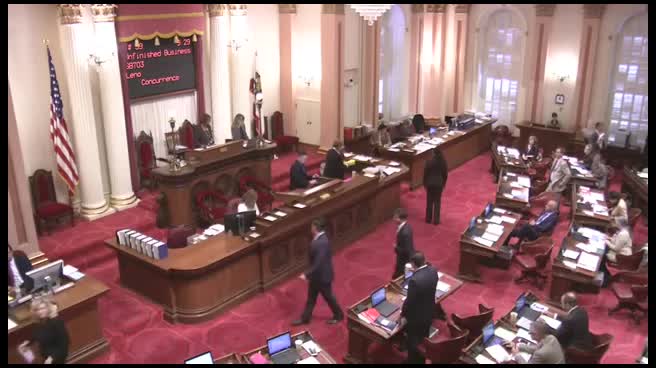 1MIN
Senate Floor
 54SEC
Assembly Floor
 1MIN
Assembly Floor
 1MIN
Senate Floor
Bill Author

Bill Co-Author(s):
