SB 478: Child Abuse and Neglect Reporting Act: mandated reporters: pilot program.
- Session Year: 2015-2016
- House: Senate
- Latest Version Date: 2015-10-04
The Child Abuse and Neglect Reporting Act requires a mandated reporter, as defined, to make a report to a specified agency whenever the mandated reporter, in his or her professional capacity or within the scope of his or her employment, has knowledge of or observes a child whom the mandated reporter knows or reasonably suspects has been the victim of child abuse or neglect. Existing law further requires the mandated reporter to make an initial report by telephone to the agency immediately or as soon as is practicably possible, and to prepare and send, fax, or electronically transmit a written followup report within 36 hours of receiving the information concerning the incident.
This bill, until January 1, 2021, would authorize certain county welfare agencies to develop a pilot program for Internet-based reporting of child abuse and neglect, as specified. The bill would impose specified standards on a county that participates in the pilot program. The bill would also require the State Department of Social Services to consult with the County Welfare Directors Association of California and the county welfare agencies of the individual counties to determine which counties may be involved in the pilot program. The bill would require the department to oversee and administer the pilot program, and require a county that chooses to participate in the pilot program to hire an evaluator to monitor implementation of the program. The bill would require a county that participates in the pilot program to develop outcome measures that determine the effectiveness of the pilot program of the county, as specified, and report to specified committees of the Legislature on or before January 1, 2020, on the effectiveness of the pilot program. The bill would authorize the department to conclude the pilot program prior to January 1, 2021, if the evaluation and monitoring indicate that implementation of the program compromises the safety of children.
The Child Abuse and Neglect Reporting Act requires a mandated reporter, as defined, to make a report to a specified agency whenever the mandated reporter, in his or her professional capacity or within the scope of his or her employment, has knowledge of or observes a child whom the mandated reporter knows or reasonably suspects has been the victim of child abuse or neglect. Existing law further requires the mandated reporter to make an initial report by telephone to the agency immediately or as soon as is practicably possible, and to prepare and send, fax, or electronically transmit a written followup report within 36 hours of receiving the information concerning the incident.
This bill, until January 1, 2021, would authorize certain county welfare agencies to develop a pilot program for Internet-based reporting of child abuse and neglect, as specified. The bill would impose specified standards on counties participating a county that participates in the pilot program. The bill would also require the State Department of Social Services to consult with the County Welfare Directors Association of California and the county welfare agencies of the individual counties to determine which counties may be involved in the pilot program. The bill would require the department to oversee and administer the pilot program, and require counties a county that choose chooses to participate in the pilot program to hire an evaluator to monitor implementation of the program. The bill would require a county that participates in the pilot program to develop outcome measures that determine the effectiveness of the pilot program of the county, as specified, and report to specified committees of the Legislature on or before January 1, 2020, on the effectiveness of the pilot program. The bill would authorize the department to conclude the pilot program prior to January 1, 2021, if the evaluation and monitoring indicate that implementation of the program compromises the safety of children.
The Child Abuse and Neglect Reporting Act requires a mandated reporter, as defined, to make a report to a specified agency whenever the mandated reporter, in his or her professional capacity or within the scope of his or her employment, has knowledge of or observes a child whom the mandated reporter knows or reasonably suspects has been the victim of child abuse or neglect. Existing law further requires the mandated reporter to make an initial report by telephone to the agency immediately or as soon as is practicably possible, and to prepare and send, fax, or electronically transmit a written followup report within 36 hours of receiving the information concerning the incident.
This bill, until January 1, 2021, would authorize certain county welfare agencies to develop a pilot program for Internet-based reporting of child abuse and neglect, as specified. The bill would impose specified standards on counties participating in the pilot program. The bill would also require the State Department of Social Services to consult with the County Welfare Directors Association of California and the county welfare agencies of the individual counties to determine which counties may be involved in the pilot program. The bill would require the department to oversee and administer the pilot program, and require counties that choose to participate to hire an evaluator to monitor implementation of the program. The bill would authorize the department to conclude the pilot program prior to January 1, 2021, if the evaluation and monitoring indicate that implementation of the program compromises the safety of children.
The Child Abuse and Neglect Reporting Act requires a mandated reporter, as defined, to make a report to a specified agency whenever the mandated reporter, in his or her professional capacity or within the scope of his or her employment, has knowledge of or observes a child whom the mandated reporter knows or reasonably suspects has been the victim of child abuse or neglect. Existing law further requires the mandated reporter to make an initial report by telephone to the agency immediately or as soon as is practicably possible, and to prepare and send, fax, or electronically transmit a written followup report within 36 hours of receiving the information concerning the incident.
This bill, until January 1, 2021, would authorize certain county welfare agencies to develop a pilot program for Internet-based reporting of child abuse and neglect, as specified. The bill would also require the State Department of Social Services to consult with the County Welfare Directors Association of California and the county welfare agencies of the individual counties to determine which counties may be involved in the pilot program.
The Child Abuse and Neglect Reporting Act requires a mandated reporter, as defined, to make a report to a specified agency whenever the mandated reporter, in his or her professional capacity or within the scope of his or her employment, has knowledge of or observes a child whom the mandated reporter knows or reasonably suspects has been the victim of child abuse or neglect. Existing law further requires the mandated reporter to make an initial report by telephone to the agency immediately or as soon as is practicably possible, and to prepare and send, fax, or electronically transmit a written followup report within 36 hours of receiving the information concerning the incident.
This bill, until January 1, 2021, would authorize certain county welfare agencies to develop a pilot program for Internet-based reporting of child abuse and neglect, as specified. The bill would also require the State Department of Social Services to consult with the County Welfare Directors Association and the county welfare agencies of the individual counties to determine which counties may be involved in the pilot program.
(a)A county welfare agency, as determined in Section 10612.5 of the Welfare and Institutions Code, may develop a pilot program for Internet-based reporting of child abuse and neglect. The pilot program may receive reports by mandated reporters, as specified in paragraph (5), of suspected child abuse or neglect and shall meet all of the following conditions:
(1)The suspected child abuse or neglect does not indicate that the child is subject to an immediate risk of abuse, neglect, or exploitation or that the child is in imminent danger of severe harm or death.
(2)The agency provides an Internet form that includes standardized safety assessment qualifying questions in order to obtain necessary information required to assess the need for child welfare services and a response. The State Department of Social Services shall provide guidance through written directives to counties participating in the pilot program to incorporate qualifying questions in the online report that would indicate the need to redirect the mandated reporter to perform a telephone report.
(3)The mandated reporter is required to complete all required fields, including identity and contact information of the mandated reporter, in order to submit the report.
(4)The agency provides an Internet-based reporting system that has appropriate security protocols to preserve the confidentiality of the reports and any documents or photographs submitted through the system.
(5)The system can only be used by mandated reporters who are any of the following:
(A)A peace officer, as defined in Chapter 4.5 (commencing with Section 830) of Title 3 of Part 2.
(B)A probation officer or social worker, as defined in Section 215 of the Welfare and Institutions Code.
(C)A school teacher, counselor, or administrator.
(D)A physician and surgeon, psychologist, licensed nurse, or clinical social worker licensed pursuant to Division 2 (commencing with Section 500) of the Business and Professions Code.
(E)A coroner.
(6)Nothing in this section shall be construed as changing current statutory or regulatory requirements regarding timely review, assessment, and response to reports of possible abuse or neglect.
(b)(1)In a county where the pilot program is active, a mandated reporter listed in paragraph (5) of subdivision (a) may use the Internet-based reporting tool in lieu of the required initial telephone report required by subdivision (a) of Section 11166. A mandated reporter listed in paragraph (5) of subdivision (a) submitting an Internet-based report in accordance with this subdivision shall, as soon as practically possible, cooperate with the agency on any requests for additional information if needed to investigate the report, subject to applicable confidentiality requirements.
(2)In a county where the pilot program is active, a mandated reporter who submits the initial report through the Internet-based reporting tool in lieu of the required initial telephone report is not required to submit the written followup report required pursuant to subdivision (a) of Section 11166.
(c)This section shall remain in effect only until January 1, 2021, and as of that date is repealed, unless a later enacted statute, that is enacted before January 1, 2021, deletes or extends that date.
SEC. 2.Section 10612.5 is added to the Welfare and Institutions Code, to read:10612.5.(a)The department shall consult with the County Welfare Directors Association of California and any interested county welfare agencies to determine which counties may be involved in the pilot program established pursuant to Section 11166.02 of the Penal Code. The pilot program may operate in up to 10 counties.
(b)The department shall oversee and administer the pilot program through the issuance of written directives that shall have the same force and effect as regulations. The directives shall be exempt from the rulemaking provisions of the Administrative Procedure Act (Chapter 3.5 (commencing with Section 11340) of Part 1 of Division 3 of Title 2 of the Government Code).
(c)A county that chooses to participate in the pilot program shall hire an evaluator to monitor the implementation of the program in accordance with directives issued by the department pursuant to subdivision (b).
(d)(1)In addition to any requirements set forth by the department under this section, a county that participates in the pilot program shall, in collaboration with the County Welfare Directors Association of California and the department, develop outcome measures to determine the effectiveness of the pilot program of the county during the duration of the pilot program, which may include the following:
(A)The number of reports provided by telephone and any increase or decrease in the usage of telephone reports.
(B)The number of reports provided through the Internet-based reporting system and any increase or decrease in usage of the system.
(C)Any increase or decrease in the number of emergency or nonemergency telephone reports.
(D)Any increase or decrease in the overall number of emergency or nonemergency reports.
(2)A county that participates in the pilot program shall, on or before January 1, 2020, provide information to the Assembly Committee on Human Services and the Senate Committee on Human Services pertaining to the effectiveness of the pilot program based on the outcome measures developed pursuant to this subdivision.
(e)The department may conclude the pilot program on a county-by-county basis prior to January 1, 2021, if the evaluation and monitoring indicate the pilot program is compromising the safety of children.
(f)This section shall remain in effect only until January 1, 2021, and as of that date is repealed, unless a later enacted statute, that is enacted before January 1, 2021, deletes or extends that date.
(a)A county welfare agency, as determined in Section 10612.5 of the Welfare and Institutions Code, may develop a pilot program for Internet-based reporting of child abuse and neglect. The pilot program may receive reports by mandated reporters, as specified in paragraph (5), of suspected child abuse or neglect and shall meet all of the following conditions:
(1)The suspected child abuse or neglect does not indicate that the child is subject to an immediate risk of abuse, neglect, or exploitation or that the child is in imminent danger of severe harm or death.
(2)The agency provides an Internet form that includes standardized safety assessment qualifying questions in order to obtain necessary information required to assess the need for child welfare services and a response. The State Department of Social Services shall provide guidance through written directives to counties participating in the pilot program to incorporate qualifying questions in the online report that would indicate the need to redirect the mandated reporter to perform a telephone report.
(3)The mandated reporter is required to complete all required fields, including identity and contact information of the mandated reporter, in order to submit the report.
(4)The agency provides an Internet-based reporting system that has appropriate security protocols to preserve the confidentiality of the reports and any documents or photographs submitted through the system.
(5)The system can only be used by mandated reporters who are any of the following:
(A)A peace officer, as defined in Chapter 4.5 (commencing with Section 830) of Title 3 of Part 2.
(B)A probation officer or social worker, as defined in Section 215 of the Welfare and Institutions Code.
(C)A school teacher, counselor, or administrator.
(D)A physician and surgeon, psychologist, licensed nurse, or clinical social worker licensed pursuant to Division 2 (commencing with Section 500) of the Business and Professions Code.
(E)A coroner.
(6)Nothing in this section shall be construed as changing current statutory or regulatory requirements regarding timely review, assessment, and response to reports of possible abuse or neglect.
(b)(1)In a county where the pilot program is active, a mandated reporter listed in paragraph (5) of subdivision (a) may use the Internet-based reporting tool in lieu of the required initial telephone report required by subdivision (a) of Section 11166. A mandated reporter listed in paragraph (5) of subdivision (a) submitting an Internet-based report in accordance with this subdivision shall, as soon as practically possible, cooperate with the agency on any requests for additional information if needed to investigate the report, subject to applicable confidentiality requirements.
(2)In a county where the pilot program is active, a mandated reporter who submits the initial report through the Internet-based reporting tool in lieu of the required initial telephone report is not required to submit the written followup report required pursuant to subdivision (a) of Section 11166.
(c)This section shall remain in effect only until January 1, 2021, and as of that date is repealed, unless a later enacted statute, that is enacted before January 1, 2021, deletes or extends that date.
SEC. 2.Section 10612.5 is added to the Welfare and Institutions Code, to read:10612.5.(a)The department shall consult with the County Welfare Directors Association of California and any interested county welfare agencies to determine which counties may be involved in the pilot program established pursuant to Section 11166.02 of the Penal Code. The pilot program may operate in up to 10 counties.
(b)The department shall oversee and administer the pilot program through the issuance of written directives that shall have the same force and effect as regulations. The directives shall be exempt from the rulemaking provisions of the Administrative Procedure Act (Chapter 3.5 (commencing with Section 11340) of Part 1 of Division 3 of Title 2 of the Government Code).
(c)A county that chooses to participate in the pilot program shall hire an evaluator to monitor the implementation of the program in accordance with directives issued by the department pursuant to subdivision (b).
(d)(1)A In addition to any requirements set forth by the department under this section, a county that participates in the pilot program shall, in collaboration with the County Welfare Directors Association of California, California and the department, develop outcome measures to determine the effectiveness of the pilot program of the county during the duration of the pilot program, which may include the following:
(A)The number of reports provided by telephone and any increase or decrease in the usage of telephone reports.
(B)The number of reports provided through the Internet-based reporting system and any increase or decrease in usage of the system.
(C)Any increase or decrease in the number of emergency or nonemergency telephone reports.
(D)Any increase or decrease in the overall number of emergency or nonemergency reports.
(2)A county that participates in the pilot program shall, on or before January 1, 2020, provide information to the Assembly Committee on Human Services and the Senate Committee on Human Services pertaining to the effectiveness of the pilot program based on the outcome measures developed pursuant to this subdivision.
(e)The department may conclude the pilot program on a county-by-county basis prior to January 1, 2021, if the evaluation and monitoring indicate the pilot program is compromising the safety of children.
(f)This section shall remain in effect only until January 1, 2021, and as of that date is repealed, unless a later enacted statute, that is enacted before January 1, 2021, deletes or extends that date.
(a)A county welfare agency, as determined in Section 10612.5 of the Welfare and Institutions Code, may develop a pilot program for Internet-based reporting of child abuse and neglect. The pilot program may receive reports by mandated reporters, as specified in paragraph (5), of suspected child abuse or neglect and shall meet all of the following conditions:
(1)The suspected child abuse or neglect does not indicate that the child is subject to an immediate risk of abuse, neglect, or exploitation or that the child is in imminent danger of severe harm or death.
(2)The agency provides an Internet form that includes standardized safety assessment qualifying questions in order to obtain necessary information required to assess the need for child welfare services and a response. The State Department of Social Services shall provide guidance through written directives to counties participating in the pilot program to incorporate qualifying questions in the online report that would indicate the need to redirect the mandated reporter to perform a telephone report.
(3)The mandated reporter is required to complete all required fields, including identity and contact information of the mandated reporter, in order to submit the report.
(4)The agency provides an Internet-based reporting system that has appropriate security protocols to preserve the confidentiality of the reports and any documents or photographs submitted through the system.
(5)The system can only be used by mandated reporters who are any of the following:
(A)A peace officer, as defined in Chapter 4.5 (commencing with Section 830) of Title 3 of Part 2.
(B)A probation officer or social worker, as defined in Section 215 of the Welfare and Institutions Code.
(C)A school teacher, counselor, or administrator.
(D)A physician and surgeon, psychologist, licensed nurse, or clinical social worker licensed pursuant to Division 2 (commencing with Section 500) of the Business and Professions Code.
(E)A coroner.
(6)Nothing in this section shall be construed as changing current statutory or regulatory requirements regarding timely review, assessment, and response to reports of possible abuse or neglect.
(b)(1)In a county where the pilot program is active, a mandated reporter listed in paragraph (5) of subdivision (a) may use the Internet-based reporting tool in lieu of the required initial telephone report required by subdivision (a) of Section 11166. A mandated reporter listed in paragraph (5) of subdivision (a) submitting an Internet-based report in accordance with this subdivision shall, as soon as practically possible, cooperate with the agency on any requests for additional information if needed to investigate the report, subject to applicable confidentiality requirements.
(2)In a county where the pilot program is active, a mandated reporter who submits the initial report through the Internet-based reporting tool in lieu of the required initial telephone report is not required to submit the written followup report required pursuant to subdivision (a) of Section 11166.
(c)This section shall remain in effect only until January 1, 2021, and as of that date is repealed, unless a later enacted statute, that is enacted before January 1, 2021, deletes or extends that date.
SEC. 2.Section 10612.5 is added to the Welfare and Institutions Code, to read:10612.5.(a)The department shall consult with the County Welfare Directors Association of California and any interested county welfare agencies to determine which counties may be involved in the pilot program established pursuant to Section 11166.02 of the Penal Code. The pilot program may operate in up to 10 counties.
(b)The department shall oversee and administer the pilot program through the issuance of written directives that shall have the same force and effect as regulations. The directives shall be exempt from the rulemaking provisions of the Administrative Procedure Act (Chapter 3.5 (commencing with Section 11340) of Part 1 of Division 3 of Title 2 of the Government Code).
(c)A county that chooses to participate in the pilot program shall hire an evaluator to monitor the implementation of the program in accordance with directives issued by the department pursuant to subdivision (b).
(d)(1)A county that participates in the pilot program shall, in collaboration with the County Welfare Directors Association of California, develop outcome measures to determine the effectiveness of the pilot program of the county during the duration of the pilot program, which may include the following:
(A)The number of reports provided by telephone and any increase or decrease in the usage of telephone reports.
(B)The number of reports provided through the Internet-based reporting system and any increase or decrease in usage of the system.
(C)Any increase or decrease in the number of emergency or nonemergency telephone reports.
(D)Any increase or decrease in the overall number of emergency or nonemergency reports.
(2)A county that participates in the pilot program shall, on or before January 1, 2020, provide information to the Assembly Committee on Human Services and the Senate Committee on Human Services pertaining to the effectiveness of the pilot program based on the outcome measures developed pursuant to this subdivision.
(d)
(e)The department may conclude the pilot program on a county-by-county basis prior to January 1, 2021, if the evaluation and monitoring indicate the pilot program is compromising the safety of children.
(e)
(f)This section shall remain in effect only until January 1, 2021, and as of that date is repealed, unless a later enacted statute, that is enacted before January 1, 2021, deletes or extends that date.
(a)A county welfare agency, as determined in Section 10612.5 of the Welfare and Institutions Code, may develop a pilot program for Internet-based reporting of child abuse and neglect. The pilot program may receive reports by mandated reporters, as specified in paragraph (5), of suspected child abuse or neglect and shall meet all of the following conditions:
(1)The suspected child abuse or neglect does not indicate that the child is subject to an immediate risk of abuse, neglect, or exploitation or that the child is in imminent danger of severe harm or death.
(2)The agency provides an Internet form that includes standardized safety assessment qualifying questions in order to obtain necessary information required to assess the need for child welfare services and a response. The State Department of Social Services shall provide guidance through written directives to counties participating in the pilot program to incorporate qualifying questions in the online report that would indicate the need to redirect the mandated reporter to perform a telephone report.
(3)The mandated reporter is required to complete all required fields, including identity and contact information of the mandated reporter, in order to submit the report.
(4)The mandated reporter is required to cooperate with any requests by the agency for additional information, if needed, to investigate the report, subject to applicable confidentiality requirements.
(4)The agency provides an Internet-based reporting system that has appropriate security protocols to preserve the confidentiality of the reports and any documents or photographs submitted through the system.
(5)The system can only be used by mandated reporters who are any of the following:
(A)A peace officer, as defined in Chapter 4.5 (commencing with Section 830) of Title 3 of Part 2.
(B)A probation officer. officer or social worker, as defined in Section 215 of the Welfare and Institutions Code.
(C)A school teacher, counselor, or administrator.
(D)A physician and surgeon, or licensed nurse. psychologist, licensed nurse, or clinical social worker licensed pursuant to Division 2 (commencing with Section 500) of the Business and Professions Code.
(E)A coroner.
(6)Nothing in this section shall be construed as changing current statutory or regulatory requirements regarding timely review, assessment, and response to reports of possible abuse or neglect.
(b)(1)In a county where the pilot program is active, a mandated reporter listed in paragraph (5) of subdivision (a) may use the Internet-based reporting tool in lieu of the required initial telephone report required by subdivision (a) of Section 11166. A mandated reporter listed in paragraph (5) of subdivision (a) submitting an Internet-based report in accordance with this subdivision shall, as soon as practically possible, cooperate with the agency on any requests for additional information if needed to investigate the report, subject to applicable confidentiality requirements.
(2)In a county where the pilot program is active, a mandated reporter who submits the initial report through the Internet-based reporting tool in lieu of the required initial telephone report is not required to submit the written follow-up report required pursuant to subdivision (a) of Section 11166.
(c)This section shall remain in effect only until January 1, 2021, and as of that date is repealed, unless a later enacted statute, that is enacted before January 1, 2021, deletes or extends that date.
SEC. 2.Section 10612.5 is added to the Welfare and Institutions Code, to read:10612.5.(a)The department shall consult with the County Welfare Directors Association of California and any interested county welfare agencies to determine which counties may be involved in the pilot program established pursuant to Section 11166.02 of the Penal Code. The pilot program may operate in up to 10 counties.
(b)The department shall oversee and administer the pilot program through the issuance of written directives that shall have the same force and effect as regulations. The directives shall be exempt from the rulemaking provisions of the Administrative Procedure Act (Chapter 3.5 (commencing with Section 11340) of Part 1 of Division 3 of Title 2 of the Government Code).
(c)A county that chooses to participate in the pilot program shall hire an evaluator to monitor the implementation of the program in accordance with directives issued by the department pursuant to subdivision (b).
(d)The department may conclude the pilot program on a county-by-county basis prior to January 1, 2021, if the evaluation and monitoring indicate the pilot program is compromising the safety of children.
(b)
(e)This section shall remain in effect only until January 1, 2021, and as of that date is repealed, unless a later enacted statute, that is enacted before January 1, 2021, deletes or extends that date.
(a)A county welfare agency, as determined in Section 10612.5 of the Welfare and Institutions Code, may develop a pilot program for Internet-based reporting of child abuse and neglect. The pilot program may operate in a specific region to receive reports of suspected child abuse or neglect and shall meet all of the following conditions:
(1)The suspected child abuse or neglect does not indicate that the child is subject to an immediate risk of abuse, neglect, or exploitation or that the child is in imminent danger of severe harm or death.
(2)The agency provides an Internet form that includes qualifying questions in order to obtain necessary information required to assess the need for child welfare services and a response.
(3)The mandated reporter is required to complete all required fields, including identity and contact information of the mandated reporter, in order to submit the report.
(4)The mandated reporter is required to cooperate with any requests by the agency for additional information, if needed, to investigate the report. report, subject to applicable confidentiality requirements.
(5)The system can only be used by mandated reporters who are any of the following:
(A)A peace officer, as defined in Chapter 4.5 (commencing with Section 830) of Title 3 of Part 2.
(B)A probation officer.
(C)A school teacher, counselor, or administrator.
(D)A physician and surgeon, psychiatrist, psychologist, licensed nurse, marriage and family therapist, or clinical social worker licensed pursuant to Division 2 (commencing with Section 500) of the Business and Professions Code. surgeon, or licensed nurse.
(E)A coroner.
(b)In an area a county where the pilot program is active, a mandated reporter listed in paragraph (5) of subdivision (a) may use the Internet-based reporting tool in lieu of or in addition to the required initial telephone report required by subdivision (a) of Section 11166.
(c)This section shall remain in effect only until January 1, 2021, and as of that date is repealed, unless a later enacted statute, that is enacted before January 1, 2021, deletes or extends that date.
SEC. 2.Section 10612.5 is added to the Welfare and Institutions Code, to read:10612.5.(a)The department shall consult with the County Welfare Directors Association of California and any interested county welfare agencies to determine which counties may be involved in the pilot program established pursuant to Section 11166.02 of the Penal Code. The pilot program may operate in up to 10 counties.
(b)This section shall remain in effect only until January 1, 2021, and as of that date is repealed, unless a later enacted statute, that is enacted before January 1, 2021, deletes or extends that date.
(a)A county welfare agency, as determined in Section 10612.5 of the Welfare and Institutions Code, may develop a pilot program for Internet-based reporting of child abuse and neglect. The pilot program may operate in a specific region to receive reports of suspected child abuse or neglect and shall meet all of the following conditions:
(1)The suspected child abuse or neglect does not indicate that the child is subject to an immediate risk of abuse, neglect, or exploitation or that the child is in imminent danger of severe harm or death.
(2)The agency provides an Internet form that includes qualifying questions in order to obtain necessary information required to assess the need for child welfare services and a response.
(3)The mandated reporter is required to complete all required fields, including identity and contact information of the mandated reporter, in order to submit the report.
(4)The mandated reporter is required to cooperate with any requests by the agency for additional information, if needed, to investigate the report.
(5)The system can only be used by mandated reporters who are any of the following:
(A)A peace officer, as defined in Chapter 4.5 (commencing with Section 830) of Title 3 of Part 2.
(B)A probation officer.
(C)A school teacher, counselor, or administrator.
(D)A physician and surgeon, psychiatrist, psychologist, licensed nurse, marriage and family therapist, or clinical social worker licensed pursuant to Division 2 (commencing with Section 500) of the Business and Professions Code.
(E)A coroner.
(b)In an area where the pilot program is active, a mandated reporter listed in paragraph (5) of subdivision (a) may use the Internet-based reporting tool in lieu of or in addition to the required initial telephone report required by subdivision (a) of Section 11166.
(c)This section shall remain in effect only until January 1, 2021, and as of that date is repealed, unless a later enacted statute, that is enacted before January 1, 2021, deletes or extends that date.
SEC. 2.Section 10612.5 is added to the Welfare and Institutions Code, to read:10612.5.(a)The department shall consult with the County Welfare Directors Association and any interested county welfare agencies to determine which counties may be involved in the pilot program established pursuant to Section 11166.02 of the Penal Code.
(b)This section shall remain in effect only until January 1, 2021, and as of that date is repealed, unless a later enacted statute, that is enacted before January 1, 2021, deletes or extends that date.
|
Date
|
Status
|
|---|---|
| Jul 9, 2015 | From committee with author's amendments. Read second time and amended. Re-referred to Com. on HUM. S. |
| Oct 4, 2015 | Chaptered by Secretary of State. Chapter 490, Statutes of 2015. |
| Oct 4, 2015 | Approved by the Governor. |
| Sep 9, 2015 | Enrolled and presented to the Governor at 4:30 p.m. |
| Sep 3, 2015 | Assembly amendments concurred in. (Ayes 39. Noes 0. Page 2443.) Ordered to engrossing and enrolling. |
| Sep 3, 2015 | Assembly amendments concurred in. (Ayes 37. Noes 0.) Ordered to engrossing and enrolling. |
| Sep 2, 2015 | Read third time. Passed. (Ayes 78. Noes 0. Page 2813.) Ordered to the Senate. |
| Sep 2, 2015 | Read third time. Passed. Ordered to the Senate. |
| Sep 2, 2015 | In Senate. Concurrence in Assembly amendments pending. |
| Aug 31, 2015 | Read second time. Ordered to consent calendar. |
| Aug 27, 2015 | Read second time and amended. Ordered to second reading. |
| Aug 26, 2015 | From committee: Do pass as amended. Ordered to consent calendar. (Ayes 17. Noes 0.) (August 26). |
| Aug 18, 2015 | Read second time and amended. Re-referred to Com. on APPR. |
| Aug 17, 2015 | From committee: Do pass as amended and re-refer to Com. on APPR. with recommendation: To consent calendar. (Ayes 7. Noes 0.) (July 14). |
| Aug 17, 2015 | (Received at desk July 17 pursuant to JR 61(a)(10)) |
| Feb 26, 2015 | Introduced. Read first time. To Com. on RLS. for assignment. To print. |
| Jun 18, 2015 | Referred to Com. on HUM. S. |
| Jun 2, 2015 | Read third time. Passed. (Ayes 40. Noes 0.) Ordered to the Assembly. |
| Jun 2, 2015 | Read third time. Passed. (Ayes 40. Noes 0. Page 1255.) Ordered to the Assembly. |
| Jun 2, 2015 | In Assembly. Read first time. Held at Desk. |
| Jun 1, 2015 | Read second time and amended. Ordered to third reading. |
| May 28, 2015 | From committee: Do pass as amended. (Ayes 7. Noes 0.) (May 28). |
| May 28, 2015 | From committee: Do pass as amended. (Ayes 7. Noes 0. Page 1154.) (May 28). |
| May 23, 2015 | Set for hearing May 28. |
| Apr 27, 2015 | April 27 hearing: Placed on APPR. suspense file. |
| Apr 17, 2015 | Set for hearing April 27. |
| Apr 15, 2015 | From committee: Do pass and re-refer to Com. on APPR. (Ayes 6. Noes 0. Page 595.) (April 14). Re-referred to Com. on APPR. |
| Mar 24, 2015 | Set for hearing April 14. |
| Mar 12, 2015 | Referred to Com. on PUB. S. |
| Feb 27, 2015 | From printer. May be acted upon on or after March 29. |
|
Date
|
Description
|
Location
|
Votes
|
|
|---|---|---|---|---|
| Sep 3, 2015 | Unfinished Business SB478 Huff Concurrence | Senate Floor |
Passed |
|
| Sep 2, 2015 | SB 478 Huff Consent Calendar Second Day Regular Session | Assembly Floor |
Passed |
|
| Aug 26, 2015 | Do pass as amended. To Consent Calendar. | Assembly Standing Committee on Appropriations |
Passed |
|
| Jul 14, 2015 | Do pass as amended, and be re-referred to the Committee on [Appropriations] with recommendation: To Consent Calendar | Assembly Standing Committee on Human Services |
Passed |
|
| Jun 2, 2015 | Senate 3rd Reading SB478 Huff | Senate Floor |
Passed |
|
| May 28, 2015 | Do pass as amended | Senate Standing Committee on Appropriations |
Passed |
|
| Apr 27, 2015 | Placed on suspense file | Senate Standing Committee on Appropriations |
Passed |
|
| Apr 14, 2015 | Do pass, but first be re-referred to the Committee on [Appropriations] | Senate Standing Committee on Public Safety |
Passed |
This list shows positions taken on this bill by organizations on the date displayed, which is linked to the original source.
Positions by individuals are not included.
|
Organization
|
Position
|
Date
|
|---|---|---|
| California State Association Of Counties | ** Support | Sep 3, 2015 |
| Children's Law Center of CA | ** Support | Sep 3, 2015 |
| County Welfare Directors Association of California | ** Support | Sep 3, 2015 |
| County Welfare Directors Association of California , co-sponsor | ** Support | Sep 3, 2015 |
| Junior Leagues of California State Public Affairs Committee | ** Support | Sep 3, 2015 |
| LIUNA Locals 777 & 792 | ** Support | Sep 3, 2015 |
| Los Angeles County | ** Support | Sep 3, 2015 |
| Los Angeles County Board of Supervisors, co-sponsor | ** Support | Sep 3, 2015 |
| Los Angeles County Sheriff'S Department | ** Support | Sep 3, 2015 |
| Urban Counties Caucus | ** Support | Sep 3, 2015 |
SB 478
Page 7
|
Office of Senate Floor Analyses (916) 651-1520 Fax: (916) 327-4478 |
UNFINISHED BUSINESS
Bill No: SB 478
Amended: 8/27/15
SENATE PUBLIC SAFETY COMMITTEE: 6-0, 4/14/15
AYES: Hancock, Anderson, Leno, McGuire, Monning, Stone
NO VOTE RECORDED: Liu
SENATE APPROPRIATIONS COMMITTEE: 7-0, 5/28/15
AYES: Lara, Bates, Beall, Hill, Leyva, Mendoza, Nielsen
SENATE FLOOR: 40-0, 6/2/15
AYES: Allen, Anderson, Bates, Beall, Berryhill, Block, Cannella, De León, Fuller, Gaines, Galgiani, Glazer, Hall, Hancock, Hernandez, Hertzberg, Hill, Hueso, Huff, Jackson, Lara, Leno, Leyva, Liu, McGuire, Mendoza, Mitchell, Monning, Moorlach, Morrell, Nguyen, Nielsen, Pan, Pavley, Roth, Runner, Stone, Vidak, Wieckowski, Wolk
ASSEMBLY FLOOR: 79-0, 9/02/15 (Consent) - See last page for vote
SUBJECT: Child Abuse and Neglect Reporting Act: mandated reporters: pilot program
SOURCE: County Welfare Directors Association of California
Los Angeles County
DIGEST: This bill authorizes a 5-year pilot program for Internet-based reporting of child abuse and neglect in up to 10 counties, as specified.
Assembly Amendments 1) delete a requirement that the mandated reporter cooperate with any requests by the agency for additional information, if needed, to investigate the report, subject to applicable confidentiality requirements, and instead provide that, “A mandated reporter . . . submitting an Internet-based report . . . shall, as soon as practically possible, cooperate with the agency on any requests for additional information if needed to investigate the report, subject to applicable confidentiality requirements”; 2) add conditions a county welfare agency must meet to participate in the pilot program, as specified; 3) expand the kinds of mandated reporters who can use the piloted system, as specified; 4) require the Department of Social Services (“DSS”) to oversee and administer the program, as specified; 5) require participating counties to hire an evaluator for the program, as specified; 6) authorize a participating county to end the pilot if the evaluation and monitoring indicate the pilot program is compromising the safety of children; and, 7) require participating counties to develop outcome measures, as specified.
Existing law:
Establishes the Child Abuse and Neglect Reporting Act ("CANRA"), which generally is intended to protect children from abuse and neglect. (Penal Code § 11164.)
Enumerates 44 categories of mandatory child abuse reporters. (Penal Code § 11165.7.)
Requires mandated reporters to make reports of suspected child abuse or neglect, as specified. (Penal Code § 11165.9.)
Generally requires mandated reporters to make a report to a specified agency “whenever the mandated reporter, in his or her professional capacity or within the scope of his or her employment, has knowledge of or observes a child whom the mandated reporter knows or reasonably suspects has been the victim of child abuse or neglect. The mandated reporter shall make an initial report by telephone to the agency immediately or as soon as is practicably possible, and shall prepare and send, fax, or electronically transmit a written follow-up report within 36 hours of receiving the information concerning the incident. The mandated reporter may include with the report any non-privileged documentary evidence the mandated reporter possesses relating to the incident.” (Penal Code § 11166.)
Requires that reports of suspected child abuse or neglect be made “to any police department or sheriff’s department, not including a school district police or security department, county probation department, if designated by the county to receive mandated reports, or the county welfare department. . . .” (Penal Code § 11165.9.)
This bill:
Authorizes a county welfare agency to develop a pilot program for Internet-based reporting of child abuse and neglect, as specified, meeting all of the following conditions:
The suspected child abuse or neglect does not indicate that the child is subject to an immediate risk of abuse, neglect, or exploitation or that the child is in imminent danger of severe harm or death;
The agency provides an Internet form, as specified;
The mandated reporter is required to complete all required fields, including identity and contact information of the mandated reporter, in order to submit the report.
The agency provides an Internet-based reporting system that has appropriate security protocols to preserve the confidentiality of the reports and any documents or photographs submitted through the system.
Requires that this system can only be used by mandated reporters who are any of the following:
A peace officer, as specified.
A probation officer or social worker, as specified.
A school teacher, counselor, or administrator.
A physician and surgeon, psychologist, licensed nurse, or clinical social worker, as specified.
A coroner.
Expressly provides that nothing in these provisions shall be construed as changing specified current statutory or regulatory requirements.
Provides that participating authorized mandated reporters may use the Internet-based reporting tool in lieu of the required initial telephone report required under current law, and shall, as soon as practically possible, cooperate with the agency on any requests for additional information if needed to investigate the report, subject to applicable confidentiality requirements.
Provides that participating mandated reporters who submit the initial report through the Internet-based reporting tool in lieu of the required initial telephone report is not required to submit a written followup report, as specified.
Requires DSS to consult with the County Welfare Directors Association of California and any interested county welfare agencies to determine which counties may be involved in the pilot program, which may operate in up to 10 counties.
Requires DSS to oversee and administer the pilot program, as specified.
Requires a county that participates in the pilot to hire an evaluator to monitor the implementation of the program, as specified.
Requires participating counties, in collaboration with the County Welfare Directors Association of California and DSS, to develop outcome measures to determine the effectiveness of the pilot program of the county during the duration of the pilot program, which may include the following:
The number of reports provided by telephone and any increase or decrease in the usage of telephone reports.
The number of reports provided through the Internet-based reporting system and any increase or decrease in usage of the system.
Any increase or decrease in the number of emergency or nonemergency telephone reports.
Any increase or decrease in the overall number of emergency or nonemergency reports.
Requires a participating county, on or before January 1, 2020, provide information to the Assembly Committee on Human Services and the Senate Committee on Human Services pertaining to the effectiveness of the pilot program based on the outcome measures developed pursuant to the bill’s provisions.
Authorizes CSS to conclude the pilot program on a county-by-county basis prior to January 1, 2021, if the evaluation and monitoring indicate the pilot program is compromising the safety of children.
Sunsets these provisions January 1, 2021.
Background
Existing law establishes the CANRA, which requires a mandated reporter, as defined, to make a report to a specified agency whenever the mandated reporter, in his or her professional capacity or within the scope of his or her employment, has knowledge of or observes a child whom the mandated reporter knows or reasonably suspects has been the victim of child abuse or neglect. (Penal Code (PC) § 11166(a).) Existing law enumerates 44 categories of mandated reporters of child abuse or neglect. (PC § 11165.7.)
Existing law requires the mandated reporter to make an initial report by telephone to the agency immediately or as soon as is practicably possible, and to prepare and send, fax, or electronically transmit a written follow-up report within 36 hours of receiving the information concerning the incident. (PC § 11166(a).)
Existing law specifies that reports of suspected child abuse or neglect shall be made to a police department or sheriff’s department, not including a school district police or security department, a county probation department, if designated by the county to receive mandated reports, or a county welfare department. These agencies are required to accept a report of suspected child abuse or neglect whether offered by a mandated reporter or another person, or referred by another agency, even if the agency to whom the report is being made lacks subject matter or geographical jurisdiction to investigate the reported case, unless the agency can immediately electronically transfer the call to an agency with proper jurisdiction. (PC §11165.9.)
When an agency takes a report about a case of suspected child abuse or neglect in which that agency lacks jurisdiction, the agency is required to immediately refer the case by telephone, fax, or electronic transmission to an agency with proper jurisdiction. Agencies that are required to receive reports of suspected child abuse or neglect may not refuse to accept a report of suspected child abuse or neglect from a mandated reporter or another person unless otherwise authorized, and are required to maintain a record of all reports received. (PC §11165.9.)
FISCAL EFFECT: Appropriation: No Fiscal Com.: Yes Local: No
According to the Assembly Appropriations Committee:
Minor costs, likely less than $75,000 (GF) annually to DSS to oversee and administer the program.
Minor one-time costs (GF) to DSS to consult with the County Welfare Directors Association of California and any interested county welfare agencies to determine county involvement in the pilot program.
Because the program is optional for counties, any costs incurred by participating agencies are not reimbursable by the State.
Los Angeles County (co-source)
County Welfare Directors Association of California (co-source)
California State Association of Counties
LIUNA Locals 777 & 792
Junior Leagues of California State Public Affairs Committee
Urban Counties Caucus
None received
ARGUMENTS IN SUPPORT: The author states:
The Child Protective Hotline and emergency response system that sends social workers to investigate allegations of abuse and neglect is the first touch point between the public and the county agency responsible for ensuring the safety of thousands of vulnerable children. Los Angeles County is the largest in the state, with 2.4 million children and youth between the ages of 0-20 years. Currently the Department of Child and Family Services (DCFS) employs 7,500 workers, 3,200 of which are children’s social workers. According to the DCFS current budget report, over 214,000 calls were made to the Child Protection Hotline last year.
While DCFS has made great improvements to call/wait times on the telephonic system, historically some years have seen tremendous spikes in the amount of calls placed. 1998 was likely the worst year in which some peak-hour waits lasted anywhere from 45 minutes to 4 hours! Every possible resource is given to ensure that any hotline calls are investigated and the information is shared appropriately with law enforcement and child advocates. Yet, it is clear that child abuse and neglect cases go up with the poverty and unemployment rates. Due to its sheer size, the workload for Los Angeles County social workers can be incredibly daunting at critical times when resources become strained.
This pilot program is absolutely essential for the well-being of so many at-risk kids. By virtually eliminating wait times, an online reporting system will increase efficiencies at every level of the non-emergency and emergency response services. SB 478 will be an excellent resource to help county social workers assess and respond to child abuse and neglect cases in a timely manner.
ASSEMBLY FLOOR: 79-0, 9/02/15
AYES: Achadjian, Alejo, Travis Allen, Baker, Bigelow, Bloom, Bonilla, Bonta, Brough, Brown, Burke, Calderon, Campos, Chang, Chau, Chávez, Chiu, Chu, Cooley, Cooper, Dababneh, Dahle, Daly, Dodd, Eggman, Frazier, Beth Gaines, Gallagher, Cristina Garcia, Eduardo Garcia, Gatto, Gipson, Gomez, Gonzalez, Gordon, Gray, Grove, Hadley, Harper, Roger Hernández, Holden, Irwin, Jones, Kim, Lackey, Levine, Linder, Lopez, Low, Maienschein, Mathis, Mayes, McCarty, Medina, Melendez, Mullin, Nazarian, Obernolte, O'Donnell, Olsen, Patterson, Perea, Quirk, Rendon, Ridley-Thomas, Rodriguez, Salas, Santiago, Steinorth, Mark Stone, Thurmond, Ting, Wagner, Waldron, Weber, Wilk, Williams, Wood, Atkins
NO VOTE RECORDED: Jones-Sawyer
Prepared by: Alison Anderson / PUB. S. /
9/2/15 17:36:37
**** END ****
SB 478
Page 7
|
Office of Senate Floor Analyses (916) 651-1520 Fax: (916) 327-4478 |
SB 478 |
UNFINISHED BUSINESS
Bill No: SB 478
Amended: 8/27/15
SENATE PUBLIC SAFETY COMMITTEE: 6-0, 4/14/15
AYES: Hancock, Anderson, Leno, McGuire, Monning, Stone
NO VOTE RECORDED: Liu
SENATE APPROPRIATIONS COMMITTEE: 7-0, 5/28/15
AYES: Lara, Bates, Beall, Hill, Leyva, Mendoza, Nielsen
SENATE FLOOR: 40-0, 6/2/15
AYES: Allen, Anderson, Bates, Beall, Berryhill, Block, Cannella, De León, Fuller, Gaines, Galgiani, Glazer, Hall, Hancock, Hernandez, Hertzberg, Hill, Hueso, Huff, Jackson, Lara, Leno, Leyva, Liu, McGuire, Mendoza, Mitchell, Monning, Moorlach, Morrell, Nguyen, Nielsen, Pan, Pavley, Roth, Runner, Stone, Vidak, Wieckowski, Wolk
ASSEMBLY FLOOR: 79-0, 9/02/15 (Consent) - See last page for vote
SUBJECT: Child Abuse and Neglect Reporting Act: mandated reporters: pilot program
SOURCE: County Welfare Directors Association of California
Los Angeles County
DIGEST: This bill authorizes a 5-year pilot program for Internet-based reporting of child abuse and neglect in up to 10 counties, as specified.
Assembly Amendments 1) delete a requirement that the mandated reporter cooperate with any requests by the agency for additional information, if needed, to investigate the report, subject to applicable confidentiality requirements, and instead provide that, “A mandated reporter . . . submitting an Internet-based report . . . shall, as soon as practically possible, cooperate with the agency on any requests for additional information if needed to investigate the report, subject to applicable confidentiality requirements”; 2) add conditions a county welfare agency must meet to participate in the pilot program, as specified; 3) expand the kinds of mandated reporters who can use the piloted system, as specified; 4) require the Department of Social Services (“DSS”) to oversee and administer the program, as specified; 5) require participating counties to hire an evaluator for the program, as specified; 6) authorize a participating county to end the pilot if the evaluation and monitoring indicate the pilot program is compromising the safety of children; and, 7) require participating counties to develop outcome measures, as specified.
Existing law:
Establishes the Child Abuse and Neglect Reporting Act ("CANRA"), which generally is intended to protect children from abuse and neglect. (Penal Code § 11164.)
Enumerates 44 categories of mandatory child abuse reporters. (Penal Code § 11165.7.)
Requires mandated reporters to make reports of suspected child abuse or neglect, as specified. (Penal Code § 11165.9.)
Generally requires mandated reporters to make a report to a specified agency “whenever the mandated reporter, in his or her professional capacity or within the scope of his or her employment, has knowledge of or observes a child whom the mandated reporter knows or reasonably suspects has been the victim of child abuse or neglect. The mandated reporter shall make an initial report by telephone to the agency immediately or as soon as is practicably possible, and shall prepare and send, fax, or electronically transmit a written follow-up report within 36 hours of receiving the information concerning the incident. The mandated reporter may include with the report any non-privileged documentary evidence the mandated reporter possesses relating to the incident.” (Penal Code § 11166.)
Requires that reports of suspected child abuse or neglect be made “to any police department or sheriff’s department, not including a school district police or security department, county probation department, if designated by the county to receive mandated reports, or the county welfare department. . . .” (Penal Code § 11165.9.)
This bill:
Authorizes a county welfare agency to develop a pilot program for Internet-based reporting of child abuse and neglect, as specified, meeting all of the following conditions:
The suspected child abuse or neglect does not indicate that the child is subject to an immediate risk of abuse, neglect, or exploitation or that the child is in imminent danger of severe harm or death;
The agency provides an Internet form, as specified;
The mandated reporter is required to complete all required fields, including identity and contact information of the mandated reporter, in order to submit the report.
The agency provides an Internet-based reporting system that has appropriate security protocols to preserve the confidentiality of the reports and any documents or photographs submitted through the system.
Requires that this system can only be used by mandated reporters who are any of the following:
A peace officer, as specified.
A probation officer or social worker, as specified.
A school teacher, counselor, or administrator.
A physician and surgeon, psychologist, licensed nurse, or clinical social worker, as specified.
A coroner.
Expressly provides that nothing in these provisions shall be construed as changing specified current statutory or regulatory requirements.
Provides that participating authorized mandated reporters may use the Internet-based reporting tool in lieu of the required initial telephone report required under current law, and shall, as soon as practically possible, cooperate with the agency on any requests for additional information if needed to investigate the report, subject to applicable confidentiality requirements.
Provides that participating mandated reporters who submit the initial report through the Internet-based reporting tool in lieu of the required initial telephone report is not required to submit a written followup report, as specified.
Requires DSS to consult with the County Welfare Directors Association of California and any interested county welfare agencies to determine which counties may be involved in the pilot program, which may operate in up to 10 counties.
Requires DSS to oversee and administer the pilot program, as specified.
Requires a county that participates in the pilot to hire an evaluator to monitor the implementation of the program, as specified.
Requires participating counties, in collaboration with the County Welfare Directors Association of California and DSS, to develop outcome measures to determine the effectiveness of the pilot program of the county during the duration of the pilot program, which may include the following:
The number of reports provided by telephone and any increase or decrease in the usage of telephone reports.
The number of reports provided through the Internet-based reporting system and any increase or decrease in usage of the system.
Any increase or decrease in the number of emergency or nonemergency telephone reports.
Any increase or decrease in the overall number of emergency or nonemergency reports.
Requires a participating county, on or before January 1, 2020, provide information to the Assembly Committee on Human Services and the Senate Committee on Human Services pertaining to the effectiveness of the pilot program based on the outcome measures developed pursuant to the bill’s provisions.
Authorizes CSS to conclude the pilot program on a county-by-county basis prior to January 1, 2021, if the evaluation and monitoring indicate the pilot program is compromising the safety of children.
Sunsets these provisions January 1, 2021.
Background
Existing law establishes the CANRA, which requires a mandated reporter, as defined, to make a report to a specified agency whenever the mandated reporter, in his or her professional capacity or within the scope of his or her employment, has knowledge of or observes a child whom the mandated reporter knows or reasonably suspects has been the victim of child abuse or neglect. (Penal Code (PC) § 11166(a).) Existing law enumerates 44 categories of mandated reporters of child abuse or neglect. (PC § 11165.7.)
Existing law requires the mandated reporter to make an initial report by telephone to the agency immediately or as soon as is practicably possible, and to prepare and send, fax, or electronically transmit a written follow-up report within 36 hours of receiving the information concerning the incident. (PC § 11166(a).)
Existing law specifies that reports of suspected child abuse or neglect shall be made to a police department or sheriff’s department, not including a school district police or security department, a county probation department, if designated by the county to receive mandated reports, or a county welfare department. These agencies are required to accept a report of suspected child abuse or neglect whether offered by a mandated reporter or another person, or referred by another agency, even if the agency to whom the report is being made lacks subject matter or geographical jurisdiction to investigate the reported case, unless the agency can immediately electronically transfer the call to an agency with proper jurisdiction. (PC §11165.9.)
When an agency takes a report about a case of suspected child abuse or neglect in which that agency lacks jurisdiction, the agency is required to immediately refer the case by telephone, fax, or electronic transmission to an agency with proper jurisdiction. Agencies that are required to receive reports of suspected child abuse or neglect may not refuse to accept a report of suspected child abuse or neglect from a mandated reporter or another person unless otherwise authorized, and are required to maintain a record of all reports received. (PC §11165.9.)
FISCAL EFFECT: Appropriation: No Fiscal Com.: Yes Local: No
According to the Assembly Appropriations Committee:
Minor costs, likely less than $75,000 (GF) annually to DSS to oversee and administer the program.
Minor one-time costs (GF) to DSS to consult with the County Welfare Directors Association of California and any interested county welfare agencies to determine county involvement in the pilot program.
Because the program is optional for counties, any costs incurred by participating agencies are not reimbursable by the State.
Los Angeles County (co-source)
County Welfare Directors Association of California (co-source)
California State Association of Counties
LIUNA Locals 777 & 792
Junior Leagues of California State Public Affairs Committee
Urban Counties Caucus
None received
ARGUMENTS IN SUPPORT: The author states:
The Child Protective Hotline and emergency response system that sends social workers to investigate allegations of abuse and neglect is the first touch point between the public and the county agency responsible for ensuring the safety of thousands of vulnerable children. Los Angeles County is the largest in the state, with 2.4 million children and youth between the ages of 0-20 years. Currently the Department of Child and Family Services (DCFS) employs 7,500 workers, 3,200 of which are children’s social workers. According to the DCFS current budget report, over 214,000 calls were made to the Child Protection Hotline last year.
While DCFS has made great improvements to call/wait times on the telephonic system, historically some years have seen tremendous spikes in the amount of calls placed. 1998 was likely the worst year in which some peak-hour waits lasted anywhere from 45 minutes to 4 hours! Every possible resource is given to ensure that any hotline calls are investigated and the information is shared appropriately with law enforcement and child advocates. Yet, it is clear that child abuse and neglect cases go up with the poverty and unemployment rates. Due to its sheer size, the workload for Los Angeles County social workers can be incredibly daunting at critical times when resources become strained.
This pilot program is absolutely essential for the well-being of so many at-risk kids. By virtually eliminating wait times, an online reporting system will increase efficiencies at every level of the non-emergency and emergency response services. SB 478 will be an excellent resource to help county social workers assess and respond to child abuse and neglect cases in a timely manner.
ASSEMBLY FLOOR: 79-0, 9/02/15
AYES: Achadjian, Alejo, Travis Allen, Baker, Bigelow, Bloom, Bonilla, Bonta, Brough, Brown, Burke, Calderon, Campos, Chang, Chau, Chávez, Chiu, Chu, Cooley, Cooper, Dababneh, Dahle, Daly, Dodd, Eggman, Frazier, Beth Gaines, Gallagher, Cristina Garcia, Eduardo Garcia, Gatto, Gipson, Gomez, Gonzalez, Gordon, Gray, Grove, Hadley, Harper, Roger Hernández, Holden, Irwin, Jones, Kim, Lackey, Levine, Linder, Lopez, Low, Maienschein, Mathis, Mayes, McCarty, Medina, Melendez, Mullin, Nazarian, Obernolte, O'Donnell, Olsen, Patterson, Perea, Quirk, Rendon, Ridley-Thomas, Rodriguez, Salas, Santiago, Steinorth, Mark Stone, Thurmond, Ting, Wagner, Waldron, Weber, Wilk, Williams, Wood, Atkins
NO VOTE RECORDED: Jones-Sawyer
Prepared by: Alison Anderson / PUB. S. /
9/2/15 17:43:48
**** END ****
Date of Hearing: August 26, 2015
ASSEMBLY COMMITTEE ON APPROPRIATIONS
Jimmy Gomez, Chair
SB 478
(Huff) – As Amended August 18, 2015
Policy Committee: |
Human Services |
Vote: |
7 - 0 |
|
|
|
|
|
|
|
|
Urgency: No State Mandated Local Program: No Reimbursable: No
SUMMARY:
This bill authorizes specified county welfare agencies to develop a five-year pilot program for Internet-based reporting of child abuse and neglect. The bill requires the Department of Social Services (DSS) to oversee and administer the pilot, and requires participating counties to develop outcome measures and report to the Legislature on the effectiveness of the pilot program.
FISCAL EFFECT:
Minor costs, likely less than $75,000 (GF) annually to DSS to oversee and administer the program.
Minor one-time costs (GF) to DSS to consult with the County Welfare Directors Association of California and any interested county welfare agencies to determine county involvement in the pilot program.
Because the program is optional for counties, any costs incurred by participating agencies are not reimbursable by the State.
COMMENTS:
Purpose. State law requires any individual identified as a mandated reporter to make an initial report of child abuse or neglect immediately by telephone, which must be followed by a written report within 36 hours. While the requirement to report by telephone ideally means that the agency receiving the referral will be able to ask necessary questions and assess whether the allegations necessitate an immediate response, some calls are placed on hold for long periods of time, often resulting in dropped calls. Additionally, there is no process through which to triage calls based on urgency, as all referrals come in through the same county hotline.
According to the author, "This pilot program is absolutely essential for the well-being of so many at-risk kids. By virtually eliminating wait times, an online reporting system will increase efficiencies at every level of the non-emergency and emergency response services. [This bill] will be an excellent resource to help county social workers assess and respond to child abuse and neglect cases in a timely manner.”
Background. The Child Abuse and Neglect Reporting Act (CANRA) requires a mandated reporter, as defined, to make a report to a specified agency whenever the mandated reporter, in his or her professional capacity or within the scope of his or her employment, has knowledge of or observes a child whom the mandated reporter knows or reasonably suspects has been the victim of child abuse or neglect. Existing law enumerates 44 categories of mandated reporters of child abuse or neglect.
The mandated reporter must make an initial report by telephone to the agency immediately or as soon as is practicably possible, and to send, fax, or electronically transmit a written follow-up report within 36 hours of receiving the information concerning the incident.
Reports of suspected child abuse or neglect must be made to a police department or sheriff’s department, not including a school district police or security department, a county probation department if designated by the county to receive mandated reports, or a county welfare department. These agencies are required to accept a report of suspected child abuse or neglect whether offered by a mandated reporter or another person, or referred by another agency, even if the agency lacks jurisdiction to investigate the reported case, unless the agency can immediately electronically transfer the call to an agency with proper jurisdiction.
When an agency takes a report about a case of suspected child abuse or neglect in which that agency lacks jurisdiction, the agency is required to immediately refer the case by telephone, fax, or electronic transmission to an agency with proper jurisdiction. Agencies that are required to receive reports of suspected child abuse or neglect may not refuse to accept a report of suspected child abuse or neglect from a mandated reporter or another person unless otherwise authorized, and are required to maintain a record of all reports received.
Online abuse and neglect reporting systems are currently used in eight other states (Arizona, Delaware, Florida, Kansas, Kentucky, Mississippi, Tennessee and Texas), which have reported increased efficiencies in their child abuse response systems.
Related Legislation. SB 332 (Block) 2015 would have authorized school district police departments to receive mandated reports of suspected child abuse or neglect. This bill was held on the Senate Appropriations Committee's Suspense File.
Prior Legislation.
AB 776 (Chu) Chapter 713, Statutes of 2005, authorized the filing of a one-time alternate faxed or electronic mandated reporting form on suspected child abuse in lieu of the initial telephone report, as specified. DSS was required to submit a report to the Legislature at the end of the three-year operative period or January 1, 2009, to provide data about the use of the alternative method of reporting. The use of the new reporting form was contingent upon the completion of necessary modifications to the electronic reporting system which did not occur within the timeframes provided.
Analysis Prepared by: Jennifer Swenson / APPR. / (916) 319-2081
SB 478
Page 5
Date of Hearing: July 14, 2015
ASSEMBLY COMMITTEE ON HUMAN SERVICES
Kansen Chu, Chair
SB 478
(Huff) – As Amended July 9, 2015
SENATE VOTE: 40-0
SUBJECT: Child Abuse and Neglect Reporting Act: mandated reporters: pilot program.
SUMMARY: Establishes a five-year pilot program to allow for internet reporting of child abuse and neglect by specified mandated reporters.
Specifically, this bill:
Authorizes specified county welfare agencies to develop a pilot program for Internet-based reporting of child abuse and neglect. Additionally, allows the pilot program to receive reports of suspected child abuse and neglect and requires the program to meet the following conditions:
The suspected child abuse or neglect reported through the Internet-based system does not indicate that the child is subject to immediate risk, as specified, or imminent danger of severe harm or death;
The Internet form contains standard safety assessment qualifying questions that allow the agency to obtain necessary information required to assess the need for child welfare services and a response, and to determine whether the mandated reporter should be redirected to make a report by telephone, as specified;
The form requires a mandated reporter to complete all required fields, including his or her identity and contact information, in order to submit the report;
The agency provides an Internet-based reporting system that has appropriate security protocols to preserve the confidentiality of the reports and any documents or photographs submitted through the system; and
Use of the system is limited to the following mandated reporters: a peace officer, as specified; a probation officer or social worker, as specified; a school teacher, counselor, or administrator; a physician and surgeon, psychologist, licensed nurse, or clinical social worker, as specified; or a coroner.
Authorizes one of the aforementioned mandated reporters, in a county where the pilot program is active, to use the Internet-based reporting tool in lieu of the initial telephone report required under current law. Requires a mandated reporter using the Internet-based system to, as soon as practically possible, cooperate with the agency on any requests for additional information if needed to investigate the report, subject to applicable confidentiality requirements.
Eliminates the requirement to submit a written follow-up report, as specified, for an authorized mandated reporter who uses the Internet-based reporting system in lieu of a telephone report for an initial report of child abuse or neglect.
Authorizes the pilot program to operate in up to 10 counties and requires the Department of Social Services (DSS) to consult the County Welfare Directors Association of California and any interested county welfare agencies to determine which counties may be involved in the pilot program.
Requires DSS to oversee and administer the pilot program through the issuance of written directives, as specified, and requires a county that chooses to participate in the pilot program to hire an evaluator to monitor the implementation of the program in accordance with the DSS directives.
Authorizes DSS to conclude the pilot program on a county-by-county basis prior to the end of the pilot if the evaluation and monitoring indicate the pilot program is compromising the safety of children.
Establishes a January 1, 2021 sunset date for the pilot program and other provisions of this bill.
Provides that nothing included in the pilot program shall be construed as changing current statutory or regulatory requirements regarding timely review, assessments, and response to reports of possible abuse or neglect.
EXISTING LAW:
Establishes the Child Abuse and Neglect Reporting Act (CANRA), for the general purpose of protecting children from abuse and neglect. (PC 11164 et seq.)
Enumerates 44 categories of mandated reporters of child abuse, including teachers, clergy members, peace officers, animal control officers, therapists, and other individuals whose professions may or may not include routine interactions with children. (PC 11165.7)
Requires mandated reporters to report suspected child abuse or neglect to any police department or sheriff’s department, county probation department, as specified, or the county welfare department and specifies procedures for the agencies receiving the reports to ensure it is transmitted to the proper jurisdiction, when the agency lacks jurisdiction. Prohibits agencies that are required to receive reports of suspected child abuse or neglect from refusing to accept a report from a mandated reporter or other person, as specified, and requires the receiving agency to maintain a record of all reports received. (PC 11165.9)
Requires a mandated reporter, as defined, to make a report to one of the aforementioned agencies whenever the mandated reporter, in his or her professional capacity or within the scope of his or her employment, has knowledge of or observes a child whom he or she knows or reasonably suspects has been the victim of child abuse or neglect. Requires a mandated reporter to make an initial report by telephone immediately or as soon as is practicably possible, and requires the mandated reporter to prepare and send a written follow-up report via fax or electronic transmission, within 36 hours of receiving the information concerning the incident. (PC 11166 (a))
Requires a mandated reporter to immediately, or as soon as is practicably possible, submit a one-time automated written report on a form provided by the Department of Justice (DOJ) if, after reasonable efforts, the mandated reporter is unable to submit an initial report by telephone. Requires the automated one-time report to contain a section that allows the mandated reporter to state the reason the initial telephone call was not able to be completed and requires that information to be captured in the Child Welfare Services/Case Management System (CWS/CMS), as specified. (PC 11166(b))
Provides that no mandated reporter who reports a suspected incident of child abuse or neglect shall be held civilly or criminally liable for any report required or authorized by CANRA. (PC 11172(a))
Provides for statewide coordinated training for county child protective services social workers and other members of the child welfare delivery system, as specified. (WIC 16206)
FISCAL EFFECT: Unknown.
COMMENTS:
Child abuse reporting: Child Protective Services (CPS), which is a component within county welfare agencies and part of the state’s much broader Child Welfare Services system, is the primary system charged with intervening and investigating reported instances of child abuse and neglect, and taking the appropriate steps to ensure a child’s continued safety. When it is suspected that a child is a victim of physical, sexual, or emotional abuse, or neglect or exploitation that results in harm to the health and safety of the child, any person may report that abuse or neglect to CPS. Additionally, certain individuals, such as physicians and teachers, are considered mandated reporters and are required by law to immediately report any suspicion or identification of child abuse or neglect to local law enforcement or CPS. After the referral is made – that is, the alleged abuse or neglect is reported – a CPS social worker is required to immediately investigate the referral to determine its validity. This process begins with gathering information from the person making the referral to determine what is being alleged and whether an in-person response is needed. If an in-person intervention reveals that abuse or neglect likely occurred, the social worker may remove the child in question from the family and place him or her into temporary custody. The ultimate goal is to keep the child in his or her own home when it is safe, or to develop and alternate plan as quickly as possible if the child is at risk.
Need for this bill: Under state law, any individual identified as a mandated reporter is required to make an initial report of child abuse or neglect immediately by telephone, which must be followed by a written report within 36 hours. While the requirement to report by telephone ideally means that the agency receiving the referral will be able to ask necessary questions and assess whether the allegations necessitate an immediate response, some calls are placed on hold for long periods of time, often resulting in dropped calls. Additionally, there is no process through which to triage calls based on urgency, as all referrals come in through the same county hotline.
Online abuse and neglect reporting systems are currently used in eight other states (Arizona, Delaware, Florida, Kansas, Kentucky, Mississippi, Tennessee and Texas), which have reported increased efficiencies in their child abuse response systems. By allowing even limited access to an alternate reporting system for non-emergency cases, this bill allows the mandated reporters identified to continue to comply with their statutorily-mandated reporting duties while freeing up county social worker time to respond to more pressing referrals.
According to the author:
“The Child Protective Hotline and emergency response system that sends social workers to investigate allegations of abuse and neglect is the first touch point between the public and the county agency responsible for ensuring the safety of thousands of vulnerable children. Los Angeles County is the largest in the state, with 2.4 million children and youth between the ages of 0-20 years. Currently the Department of Child and Family Services (DCFS) employs 7,500 workers, 3,200 of which are children’s social workers. According to the DCFS current budget report, over 214,000 calls were made to the Child Protection Hotline last year.
While DCFS has made great improvements to call/wait times on the telephonic system, historically some years have seen tremendous spikes in the amount of calls placed, with mandated reporters waiting for long periods of time and sometimes several hours to get through. Every possible resource is being used to ensure that any hotline calls are investigated and the information is shared appropriately with law enforcement and child advocates. Yet, it is clear that child abuse and neglect cases go up with the poverty and unemployment rates. Due to its sheer size, the workload for Los Angeles County social workers can be incredibly daunting at critical times when resources become strained. The goal with the online reporting system will be to help to ensure that long wait times remain in the past.
This pilot program is absolutely essential for the well-being of so many at-risk kids. By virtually eliminating wait times, an online reporting system will increase efficiencies at every level of the non-emergency and emergency response services. [This bill] will be an excellent resource to help county social workers assess and respond to child abuse and neglect cases in a timely manner.”
RECOMMENDED AMENDMENTS:
Should this bill be signed into law, the pilot program it establishes for the optional use of an Internet-based reporting system in lieu of reports of child abuse by telephone will be implemented in January 2016 and sunset, unless further action is taken, in January 2021. While the Legislature could decide to temporarily or permanently extend the authority granted in the pilot, this bill does not require the outcomes of the pilot to be captured or reported prior to the pilot program’s potential extension or termination. In order to allow the Legislature to make an informed decision about whether to ultimately allow the pilot to end or to extend the authority for an Internet-based child abuse reporting system, committee staff recommends this bill be amended to do the following:
Require participating counties and the County Welfare Directors Association of California to develop outcome measures to determine the effectiveness of the pilot program for each county, which may include:
The total number of referrals provided by telephone and any increase or decrease in usage over time;
The number of referrals provided through the Internet-based reporting system and any increase or decrease in usage of the system over time;
Any increases or decreases in the number of emergency or non-emergency referrals provided by telephone; and
Any increases or decreases in the overall number of emergency or non-emergency referrals.
Require participating counties to, on or before January 1, 2020, provide information to the Legislature pertaining to the outcome measures developed.
REGISTERED SUPPORT / OPPOSITION:
Support
County Welfare Directors Association of California (CWDA), co-sponsor
Los Angeles County Board of Supervisors, co-sponsor
Children’s Law Center of CA
California State Association of Counties (CSAC)
Junior Leagues of California State Public Affairs Committee (CalSPAC)
Los Angeles County Sheriff’s Department
Urban Counties Caucus (UCC)
Opposition
None on file.
Analysis Prepared by: Myesha Jackson / HUM. S. / (916) 319-2089
SB 478
Page 6
|
Office of Senate Floor Analyses (916) 651-1520 Fax: (916) 327-4478 |
THIRD READING
Bill No: SB 478
Amended: 6/1/15
SENATE PUBLIC SAFETY COMMITTEE: 6-0, 4/14/15
AYES: Hancock, Anderson, Leno, McGuire, Monning, Stone
NO VOTE RECORDED: Liu
SENATE APPROPRIATIONS COMMITTEE: 7-0, 5/28/15
AYES: Lara, Bates, Beall, Hill, Leyva, Mendoza, Nielsen
SUBJECT: Child Abuse and Neglect Reporting Act: mandated reporters: pilot program
County Welfare Directors Association of California
DIGEST: This bill authorizes a 5-year pilot program for Internet-based reporting of child abuse and neglect in up to 10 counties, as specified.
Existing law:
Establishes the Child Abuse and Neglect Reporting Act ("CANRA"), which generally is intended to protect children from abuse and neglect. (Penal Code § 11164.)
Enumerates 44 categories of mandatory child abuse reporters. (Penal Code § 11165.7.)
Requires mandated reporters to make reports of suspected child abuse or neglect, as specified. (Penal Code § 11165.9.)
Generally requires mandated reporters to make a report to a specified agency “whenever the mandated reporter, in his or her professional capacity or within the scope of his or her employment, has knowledge of or observes a child whom the mandated reporter knows or reasonably suspects has been the victim of child abuse or neglect. The mandated reporter shall make an initial report by telephone to the agency immediately or as soon as is practicably possible, and shall prepare and send, fax, or electronically transmit a written follow-up report within 36 hours of receiving the information concerning the incident. The mandated reporter may include with the report any non-privileged documentary evidence the mandated reporter possesses relating to the incident.” (Penal Code § 11166.)
Requires that reports of suspected child abuse or neglect be made “to any police department or sheriff’s department, not including a school district police or security department, county probation department, if designated by the county to receive mandated reports, or the county welfare department. . . . ” (Penal Code § 11165.9.)
This bill:
Authorizes a county welfare agency, as specified below, to “develop a pilot program for Internet-based reporting of child abuse and neglect.”
Requires the Department of Social Services to “consult with the County Welfare Directors Association of California and any interested county welfare agencies to determine which counties may be involved in the pilot.”
Authorizes the pilot program to operate in up to 10 counties.
Authorizes the pilot program to “receive reports of suspected child abuse or neglect,” and requires the program to meet all of the following conditions:
The suspected child abuse or neglect does not indicate that the child is subject to an immediate risk of abuse, neglect, or exploitation or that the child is in imminent danger of severe harm or death.
The agency provides an Internet form that includes qualifying questions in order to obtain necessary information required to assess the need for child welfare services and a response.
The mandated reporter is required to complete all required fields, including identity and contact information of the mandated reporter, in order to submit the report.
The mandated reporter is required to cooperate with any requests by the agency for additional information, if needed, to investigate the report, subject to applicable confidentiality requirements.
The system can only be used by mandated reporters who are any of the following:
i) A peace officer, as specified;
ii) A probation officer;
iii) A school teacher, counselor, or administrator;
iv) A physician, surgeon, or licensed nurse; or
v) A coroner.
Provides that in a county where the pilot program is active, a mandated child abuse or neglect reporter may use the Internet-based reporting tool in lieu of the required initial telephone report.
Background
Existing law establishes the CANRA, which requires a mandated reporter, as defined, to make a report to a specified agency whenever the mandated reporter, in his or her professional capacity or within the scope of his or her employment, has knowledge of or observes a child whom the mandated reporter knows or reasonably suspects has been the victim of child abuse or neglect. (Penal Code (PC) § 11166(a).) Existing law enumerates 44 categories of mandated reporters of child abuse or neglect. (PC § 11165.7.)
Existing law requires the mandated reporter to make an initial report by telephone to the agency immediately or as soon as is practicably possible, and to prepare and send, fax, or electronically transmit a written follow-up report within 36 hours of receiving the information concerning the incident. (PC § 11166(a).)
Existing law specifies that reports of suspected child abuse or neglect shall be made to a police department or sheriff’s department, not including a school district police or security department, a county probation department, if designated by the county to receive mandated reports, or a county welfare department. These agencies are required to accept a report of suspected child abuse or neglect whether offered by a mandated reporter or another person, or referred by another agency, even if the agency to whom the report is being made lacks subject matter or geographical jurisdiction to investigate the reported case, unless the agency can immediately electronically transfer the call to an agency with proper jurisdiction. (PC §11165.9.)
When an agency takes a report about a case of suspected child abuse or neglect in which that agency lacks jurisdiction, the agency is required to immediately refer the case by telephone, fax, or electronic transmission to an agency with proper jurisdiction. Agencies that are required to receive reports of suspected child abuse or neglect may not refuse to accept a report of suspected child abuse or neglect from a mandated reporter or another person unless otherwise authorized, and are required to maintain a record of all reports received. (PC §11165.9.)
FISCAL EFFECT: Appropriation: No Fiscal Com.: Yes Local: No
According to the Senate Appropriations Committee:
Interagency reporting workload impact: potential increases/decreases in local agency costs, potentially state-reimbursable (General Fund), across all local agencies involved in the ICAN reporting process. While the use of an internet-based reporting tool in a pilot county could potentially reduce the level of child welfare agency workload necessary to accept and refer suspected child abuse reports via telephone, to the extent fewer reports are initiated by telephone could conversely generate additional workload for follow-up information required, and/or restrict the ability of the receiving agency from immediately electronically transferring a call to another agency, thereby increasing the number of reports that must be accepted, referred/retained, and recorded by a receiving agency. The statewide cost estimate adopted by the Commission on State Mandates for the Interagency Child Abuse and Neglect Investigation Reports (00-TC-22) reflects a prospective cost of $2.6 million annually for ICAN-related activities. The 2015-16 May Revision proposes to suspend the ICAN mandate, rendering its provisions optional for local agencies in FY 2015-16, thereby allowing the deferral of payment of $90.4 million in prior-year claims. To the extent the ICAN mandate is ultimately not suspended, however, any increase in local costs could be reimbursable by the state (General Fund).
Internet-based reporting tool: unknown, potentially significant one-time and ongoing non-reimbursable county welfare agency costs to develop, test, and operate an internet-reporting tool. The May Revision proposes a $4 million General Fund grant program to fund ICAN activities carried out by county welfare and probation departments in counties that choose to participate. As a result, these local costs could potentially be funded with General Fund to the extent the ICAN mandate is suspended and the grant program is funded in the final Budget. To the extent other local agencies (city/county police, sheriff’s departments, county probation departments) within a pilot county that are required to accept mandated reports incur increased costs (as the bill authorizes mandated reporters to utilize the reporting tool in the pilot area, but does not specifically restrict reporting to child welfare agencies), these costs could potentially be found to be reimbursable by the state (General Fund) if the ICAN mandate is not suspended.
Department of Social Services (DSS) consultation: minor one-time costs (General Fund) for the DSS to consult with specified agencies to determine county involvement in the pilot program.
Los Angeles County (co-source)
County Welfare Directors Association of California (co-source)
California State Association of Counties
LIUNA Locals 777 & 792
Junior Leagues of California State Public Affairs Committee
Urban Counties Caucus
OPPOSITION: (Verified 5/29/15)
None received
ARGUMENTS IN SUPPORT:
The author states:
The Child Protective Hotline and emergency response system that sends social workers to investigate allegations of abuse and neglect is the first touch point between the public and the county agency responsible for ensuring the safety of thousands of vulnerable children. Los Angeles County is the largest in the state, with 2.4 million children and youth between the ages of 0-20 years. Currently the Department of Child and Family Services (DCFS) employs 7,500 workers, 3,200 of which are children’s social workers. According to the DCFS current budget report, over 214,000 calls were made to the Child Protection Hotline last year.
While DCFS has made great improvements to call/wait times on the telephonic system, historically some years have seen tremendous spikes in the amount of calls placed. 1998 was likely the worst year in which some peak-hour waits lasted anywhere from 45 minutes to 4 hours! Every possible resource is given to ensure that any hotline calls are investigated and the information is shared appropriately with law enforcement and child advocates. Yet, it is clear that child abuse and neglect cases go up with the poverty and unemployment rates. Due to its sheer size, the workload for Los Angeles County social workers can be incredibly daunting at critical times when resources become strained.
This pilot program is absolutely essential for the well-being of so many at-risk kids. By virtually eliminating wait times, an online reporting system will increase efficiencies at every level of the non-emergency and emergency response services. SB 478 will be an excellent resource to help county social workers assess and respond to child abuse and neglect cases in a timely manner.
Prepared by: Alison Anderson / PUB. S. /
6/1/15 17:36:31
**** END ****
SB 478 (Huff) Page 5 of 5
SENATE COMMITTEE ON APPROPRIATIONS
Senator Ricardo Lara, Chair
2015 - 2016 Regular Session
SB 478 (Huff) - Child Abuse and Neglect Reporting Act: mandated reporters: pilot program
|
|
Version: February 26, 2015 |
Policy Vote: PUB. S. 6 - 0 |
Urgency: No |
Mandate: No |
Hearing Date: May 28, 2015 |
Consultant: Jolie Onodera |
SUSPENSE FILE. AS AMENDED.
Bill Summary:
SB 478 would authorize a county welfare agency to develop a five-year pilot program for internet-based reporting of child abuse and neglect, to be used by specified mandated reporters in lieu of or in addition to the initial telephone report requirement under existing law. This bill would require the Department of Social Services (DSS) to consult with specified agencies to determine which counties may be involved in the pilot program.
Fiscal Impact (as approved May 28, 2015):
Interagency reporting workload impact: potential increases/decreases in local agency costs, potentially state-reimbursable (General Fund), across all local agencies involved in the ICAN reporting process. While the use of an internet-based reporting tool in a pilot county could potentially reduce the level of child welfare agency workload necessary to accept and refer suspected child abuse reports via telephone, to the extent fewer reports are initiated by telephone could conversely generate additional workload for follow-up information required, and/or restrict the ability of the receiving agency from immediately electronically transferring a call to another agency, thereby increasing the number of reports that must be accepted, referred/retained, and recorded by a receiving agency. The statewide cost estimate adopted by the Commission on State Mandates for the Interagency Child Abuse and Neglect Investigation Reports (00-TC-22) reflects a prospective cost of $2.6 million annually for ICAN-related activities. The 2015-16 May Revision proposes to suspend the ICAN mandate, rendering its provisions optional for local agencies in FY 2015-16, thereby allowing the deferral of payment of $90.4 million in prior-year claims. To the extent the ICAN mandate is ultimately not suspended, however, any increase in local costs could be reimbursable by the state (General Fund).
Internet-based reporting tool: unknown, potentially significant one-time and ongoing non-reimbursable county welfare agency costs to develop, test, and operate an internet-reporting tool. The May Revision proposes a $4 million General Fund grant program to fund ICAN activities carried out by county welfare and probation departments in counties that choose to participate. As a result, these local costs could potentially be funded with General Fund to the extent the ICAN mandate is suspended and the grant program is funded in the final Budget. To the extent other local agencies (city/county police, sheriff’s departments, county probation departments) within a pilot county that are required to accept mandated reports incur increased costs (as the bill authorizes mandated reporters to utilize the reporting tool in the pilot area, but does not specifically restrict reporting to child welfare agencies), these costs could potentially be found to be reimbursable by the state (General Fund) if the ICAN mandate is not suspended.
DSS consultation: minor one-time costs (General Fund) for the DSS to consult with specified agencies to determine county involvement in the pilot program.
Background:
Existing law establishes the Child Abuse and Neglect Reporting Act (CANRA), which requires a mandated reporter, as defined, to make a report to a specified agency whenever the mandated reporter, in his or her professional capacity or within the scope of his or her employment, has knowledge of or observes a child whom the mandated reporter knows or reasonably suspects has been the victim of child abuse or neglect. (Penal Code (PC) § 11166(a).) Existing law enumerates 44 categories of mandated reporters of child abuse or neglect. (PC § 11165.7.)
Existing law requires the mandated reporter to make an initial report by telephone to the agency immediately or as soon as is practicably possible, and to prepare and send, fax, or electronically transmit a written follow-up report within 36 hours of receiving the information concerning the incident. (PC § 11166(a).)
Existing law specifies that reports of suspected child abuse or neglect shall be made to a police department or sheriff’s department, not including a school district police or security department, a county probation department, if designated by the county to receive mandated reports, or a county welfare department. These agencies are required to accept a report of suspected child abuse or neglect whether offered by a mandated reporter or another person, or referred by another agency, even if the agency to whom the report is being made lacks subject matter or geographical jurisdiction to investigate the reported case, unless the agency can immediately electronically transfer the call to an agency with proper jurisdiction. (PC §11165.9.)
When an agency takes a report about a case of suspected child abuse or neglect in which that agency lacks jurisdiction, the agency is required to immediately refer the case by telephone, fax, or electronic transmission to an agency with proper jurisdiction. Agencies that are required to receive reports of suspected child abuse or neglect may not refuse to accept a report of suspected child abuse or neglect from a mandated reporter or another person unless otherwise authorized, and are required to maintain a record of all reports received. (PC §11165.9.)
Proposed Law:
This bill would authorize a county welfare agency to develop a five-year pilot program for internet-based reporting of child abuse and neglect, as follows:
Requires the DSS to consult with the County Welfare Directors Association and any interested county welfare agencies to determine which counties may be involved in the pilot program.
Specifies the pilot program may operate in a specific region to receive reports of suspected child abuse or neglect, subject to all of the following conditions:
The suspected child abuse or neglect does not indicate that the child is subject to an immediate risk of abuse, neglect, or exploitation or that the child is in imminent danger of severe harm or death.
The agency provides an internet form that includes qualifying questions in order to obtain necessary information required to assess the need for child welfare services and a response.
The mandated reporter is required to complete all required fields, including identity and contact information of the mandated reporter, in order to submit the report.
The mandated reporter is required to cooperate with any requests by the agency for additional information, if needed, to investigate the report.
The system can only be used by the following mandated reporters:
A peace officer, as specified.
A probation officer.
A school teacher, counselor, or administrator.
A physician and surgeon, psychiatrist, psychologist, licensed nurse, marriage and family therapist, or clinical social worker, as specified.
A coroner.
Specifies in an area where the pilot program is active, the specified mandated reporter may use the internet-based reporting tool in lieu of or in addition to the required initial telephone report required under existing law.
Specifies the pilot shall remain in effect only until January 1, 2021, unless a later enacted statute, as specified, deletes or extends that date.
Related Legislation: SB 332 (Block) 2015 would authorize school district police departments to receive mandated reports of suspected child abuse or neglect. This bill is scheduled to be heard today by this Committee.
Prior Legislation:
AB 776 (Chu) Chapter 713/2005 authorized the filing of a one-time alternate faxed or electronic mandated reporting form on suspected child abuse in lieu of the initial telephone report, as specified. The DSS was required to submit a report to the Legislature at the end of the three-year operative period or January 1, 2009, to provide data about the use of the alternative method of reporting.
The use of the new reporting form was contingent upon the completion of necessary modifications to the CWS/CMS system. Ultimately, DSS determined it was not possible to complete the CWS/CMS modifications within the timeframes provided, and a statewide survey was taken of the counties to obtain input on the issue. In its report, Suspected Child Abuse One-Time Reporting Form (January 2009), the DSS reported the following major consensus of survey results among 25 counties that completed the survey, as follows:
That the current system of receiving a phone call for an initial report of child abuse is preferred over an initial report via fax or email. This is due to the difficulties in contacting the mandated reporter and the possible problems in not being able to determine details about a situation over the phone.
That mandated reporters need more and better training, particularly about providing information in reporting suspected child abuse.
That the counties are comfortable with the current system using the SS 8572 with an initial phone call.
That there is concern about putting children at risk with a reporting system that allows for an initial fax or email of suspected child abuse without a phone call.
That depending on the size of the county and the population being served, there are times when a mandated reporter may have difficulty in contacting a particular county agency.
Staff Comments:
By authorizing county welfare agencies to revise the process for mandated reporting of suspected child abuse or neglect, this bill could potentially result in fiscal impacts to not only the participating child welfare agency, but to other local agencies involved in the child abuse reporting process under the ICAN mandate.
The statewide cost estimate adopted by the CSM for the Interagency Child Abuse and Neglect Investigation Reports (00-TC-22) reflects total costs of $90.4 million through FY 2012-13, and prospective costs of $2.6 million annually for ICAN-related activities including distributing forms, accepting and referring initial child abuse reports, cross-reporting between local agencies and to the district attorney’s office, reporting to licensing agencies, completing investigations and forwarding substantiated reports to the DOJ (for county probation and county welfare departments only), and records retention.
Staff notes the 2015-16 Governor’s Budget proposes to suspend the ICAN mandate, rendering its provisions optional for local agencies in FY 2015-16, thereby allowing the deferral of payment of $90.4 million in prior-year claims. To the extent the ICAN mandate is ultimately not suspended, however, any increase in local costs could be reimbursable by the state (General Fund) under the existing ICAN mandate decision.
As the provisions of this measure allow specified mandated reporters to utilize the internet-based reporting tool in lieu of or in addition to the required initial telephone report, it is unclear if a greater number of suspected child abuse reports would potentially be accepted, referred, and recorded, resulting in additional state-reimbursable costs (for example, if a mandated reporter submitted an electronic report to a child welfare agency as well as telephoned the local law enforcement agency).
While the use of an internet-based reporting tool in a pilot county could potentially reduce the level of child welfare agency workload necessary to accept and refer suspected child abuse reports via telephone, to the extent fewer reports are initiated by telephone could conversely generate additional workload for a receiving agency for follow-up information required, and/or restrict the ability of a receiving agency from immediately electronically transferring a call to another agency with jurisdiction, thereby increasing the number of reports that must be accepted, referred/retained, and recorded by a receiving agency.
A county welfare agency opting into the pilot would potentially incur significant one-time and ongoing non-reimbursable costs (Local/Federal) to develop and operate the internet-reporting tool, as well as provide staff training on the process. However, as the Governor’s Budget proposes a $4 million General Fund grant program to fund ICAN activities carried out by county welfare and probation departments in counties that choose to participate, these local agency costs could potentially be funded with General Fund to the extent the ICAN mandate is ultimately suspended and the grant program is funded in the final Budget.
This bill authorizes specified mandated reporters to use the internet-based reporting tool “in an area where the pilot program is active”. As the bill does not specifically restrict the use of the tool to submit initial reports to a county welfare agency, it is unclear if other receiving agencies in the area where the pilot program is active could be required to accept reports through the internet-reporting tool. To the extent other local agencies required to accept mandated reports (city and county police and sheriff’s departments, county probation departments) incur increased costs for revising processes and training associated with the tool, these costs could potentially be found to be reimbursable by the state (General Fund). The magnitude of costs would be dependent on the number of county agencies participating in the pilot, which is unknown and not limited in number.
Author amendments (as adopted May 28, 2015):
Clarify the pilot is to operate in a county versus a region or area.
Delete the potential duplication of mandated reporting via telephone and electronic reporting.
Remove psychiatrists and psychologists as mandated reporters for the pilot.
Limit the pilot to 10 counties.
Add coauthors.
Make other technical changes.
-- END --
SB 478 (Huff) Page 5 of 5
SENATE COMMITTEE ON APPROPRIATIONS
Senator Ricardo Lara, Chair
2015 - 2016 Regular Session
SB 478 (Huff) - Child Abuse and Neglect Reporting Act: mandated reporters: pilot program
|
|
Version: February 26, 2015 |
Policy Vote: PUB. S. 6 - 0 |
Urgency: No |
Mandate: No |
Hearing Date: April 27, 2015 |
Consultant: Jolie Onodera |
This bill meets the criteria for referral to the Suspense File.
Bill Summary:
SB 478 would authorize a county welfare agency to develop a five-year pilot program for internet-based reporting of child abuse and neglect, to be used by specified mandated reporters in lieu of or in addition to the initial telephone report requirement under existing law. This bill would require the Department of Social Services (DSS) to consult with specified agencies to determine which counties may be involved in the pilot program.
Fiscal Impact:
Increase in mandated reports: potential increase in local agency costs to the extent the utilization of an internet-based reporting tool in addition to a telephone report results in a greater number of reports accepted, referred, and cross-reported. The statewide cost estimate adopted by the Commission on State Mandates for the Interagency Child Abuse and Neglect Investigation Reports (00-TC-22) reflects a prospective cost of $2.6 million annually for ICAN-related activities. The 2015-16 Governor’s Budget proposes to suspend the ICAN mandate, rendering its provisions optional for local agencies in FY 2015-16, thereby allowing the deferral of payment of $90.4 million in prior-year claims. To the extent the ICAN mandate is ultimately not suspended, however, any increase in local costs could be reimbursable by the state (General Fund).
Interagency reporting workload impact: potential increases/decreases in local agency costs, potentially state-reimbursable (General Fund), across all local agencies involved in the ICAN reporting process. While the use of an internet-based reporting tool in a pilot county could potentially reduce the level of child welfare agency workload necessary to accept and refer suspected child abuse reports via telephone, to the extent fewer reports are initiated by telephone could conversely generate additional workload for follow-up information required, and/or restrict the ability of the receiving agency from immediately electronically transferring a call to another agency, thereby increasing the number of reports that must be accepted, referred/retained, and recorded by a receiving agency.
Internet-based reporting tool: unknown, potentially significant one-time and ongoing non-reimbursable county welfare agency costs to develop, test, and operate an internet-reporting tool. The Governor’s Budget proposes a $4 million General Fund grant program to fund ICAN activities carried out by county welfare and probation departments in counties that choose to participate. As a result, these local costs could potentially be funded with General Fund to the extent the ICAN mandate is suspended and the grant program is funded in the final Budget. To the extent other local agencies (city/county police, sheriff’s departments, county probation departments) within a pilot area/region that are required to accept mandated reports incur increased costs (as the bill authorizes mandated reporters to utilize the reporting tool in the pilot area, but does not specifically restrict reporting to child welfare agencies), these costs could potentially be found to be reimbursable by the state (General Fund) if the ICAN mandate is not suspended.
DSS consultation: minor one-time costs (General Fund) for the DSS to consult with specified agencies to determine county involvement in the pilot program.
Background:
Existing law establishes the Child Abuse and Neglect Reporting Act (CANRA), which requires a mandated reporter, as defined, to make a report to a specified agency whenever the mandated reporter, in his or her professional capacity or within the scope of his or her employment, has knowledge of or observes a child whom the mandated reporter knows or reasonably suspects has been the victim of child abuse or neglect. (Penal Code (PC) § 11166(a).) Existing law enumerates 44 categories of mandated reporters of child abuse or neglect. (PC § 11165.7.)
Existing law requires the mandated reporter to make an initial report by telephone to the agency immediately or as soon as is practicably possible, and to prepare and send, fax, or electronically transmit a written follow-up report within 36 hours of receiving the information concerning the incident. (PC § 11166(a).)
Existing law specifies that reports of suspected child abuse or neglect shall be made to a police department or sheriff’s department, not including a school district police or security department, a county probation department, if designated by the county to receive mandated reports, or a county welfare department. These agencies are required to accept a report of suspected child abuse or neglect whether offered by a mandated reporter or another person, or referred by another agency, even if the agency to whom the report is being made lacks subject matter or geographical jurisdiction to investigate the reported case, unless the agency can immediately electronically transfer the call to an agency with proper jurisdiction. (PC §11165.9.)
When an agency takes a report about a case of suspected child abuse or neglect in which that agency lacks jurisdiction, the agency is required to immediately refer the case by telephone, fax, or electronic transmission to an agency with proper jurisdiction. Agencies that are required to receive reports of suspected child abuse or neglect may not refuse to accept a report of suspected child abuse or neglect from a mandated reporter or another person unless otherwise authorized, and are required to maintain a record of all reports received. (PC §11165.9.)
Proposed Law:
This bill would authorize a county welfare agency to develop a five-year pilot program for internet-based reporting of child abuse and neglect, as follows:
Requires the DSS to consult with the County Welfare Directors Association and any interested county welfare agencies to determine which counties may be involved in the pilot program.
Specifies the pilot program may operate in a specific region to receive reports of suspected child abuse or neglect, subject to all of the following conditions:
The suspected child abuse or neglect does not indicate that the child is subject to an immediate risk of abuse, neglect, or exploitation or that the child is in imminent danger of severe harm or death.
The agency provides an internet form that includes qualifying questions in order to obtain necessary information required to assess the need for child welfare services and a response.
The mandated reporter is required to complete all required fields, including identity and contact information of the mandated reporter, in order to submit the report.
The mandated reporter is required to cooperate with any requests by the agency for additional information, if needed, to investigate the report.
The system can only be used by the following mandated reporters:
A peace officer, as specified.
A probation officer.
A school teacher, counselor, or administrator.
A physician and surgeon, psychiatrist, psychologist, licensed nurse, marriage and family therapist, or clinical social worker, as specified.
A coroner.
Specifies in an area where the pilot program is active, the specified mandated reporter may use the internet-based reporting tool in lieu of or in addition to the required initial telephone report required under existing law.
Specifies the pilot shall remain in effect only until January 1, 2021, unless a later enacted statute, as specified, deletes or extends that date.
Related Legislation: SB 332 (Block) 2015 would authorize school district police departments to receive mandated reports of suspected child abuse or neglect. This bill is scheduled to be heard today by this Committee.
Prior Legislation:
AB 776 (Chu) Chapter 713/2005 authorized the filing of a one-time alternate faxed or electronic mandated reporting form on suspected child abuse in lieu of the initial telephone report, as specified. The DSS was required to submit a report to the Legislature at the end of the three-year operative period or January 1, 2009, to provide data about the use of the alternative method of reporting.
The use of the new reporting form was contingent upon the completion of necessary modifications to the CWS/CMS system. Ultimately, DSS determined it was not possible to complete the CWS/CMS modifications within the timeframes provided, and a statewide survey was taken of the counties to obtain input on the issue. In its report, Suspected Child Abuse One-Time Reporting Form (January 2009), the DSS reported the following major consensus of survey results among 25 counties that completed the survey, as follows:
That the current system of receiving a phone call for an initial report of child abuse is preferred over an initial report via fax or email. This is due to the difficulties in contacting the mandated reporter and the possible problems in not being able to determine details about a situation over the phone.
That mandated reporters need more and better training, particularly about providing information in reporting suspected child abuse.
That the counties are comfortable with the current system using the SS 8572 with an initial phone call.
That there is concern about putting children at risk with a reporting system that allows for an initial fax or email of suspected child abuse without a phone call.
That depending on the size of the county and the population being served, there are times when a mandated reporter may have difficulty in contacting a particular county agency.
Staff Comments:
By authorizing county welfare agencies to revise the process for mandated reporting of suspected child abuse or neglect, this bill could potentially result in fiscal impacts to not only the participating child welfare agency, but to other local agencies involved in the child abuse reporting process under the ICAN mandate.
The statewide cost estimate adopted by the CSM for the Interagency Child Abuse and Neglect Investigation Reports (00-TC-22) reflects total costs of $90.4 million through FY 2012-13, and prospective costs of $2.6 million annually for ICAN-related activities including distributing forms, accepting and referring initial child abuse reports, cross-reporting between local agencies and to the district attorney’s office, reporting to licensing agencies, completing investigations and forwarding substantiated reports to the DOJ (for county probation and county welfare departments only), and records retention.
Staff notes the 2015-16 Governor’s Budget proposes to suspend the ICAN mandate, rendering its provisions optional for local agencies in FY 2015-16, thereby allowing the deferral of payment of $90.4 million in prior-year claims. To the extent the ICAN mandate is ultimately not suspended, however, any increase in local costs could be reimbursable by the state (General Fund) under the existing ICAN mandate decision.
As the provisions of this measure allow specified mandated reporters to utilize the internet-based reporting tool in lieu of or in addition to the required initial telephone report, it is unclear if a greater number of suspected child abuse reports would potentially be accepted, referred, and recorded, resulting in additional state-reimbursable costs (for example, if a mandated reporter submitted an electronic report to a child welfare agency as well as telephoned the local law enforcement agency).
While the use of an internet-based reporting tool in a pilot county could potentially reduce the level of child welfare agency workload necessary to accept and refer suspected child abuse reports via telephone, to the extent fewer reports are initiated by telephone could conversely generate additional workload for a receiving agency for follow-up information required, and/or restrict the ability of a receiving agency from immediately electronically transferring a call to another agency with jurisdiction, thereby increasing the number of reports that must be accepted, referred/retained, and recorded by a receiving agency.
A county welfare agency opting into the pilot would potentially incur significant one-time and ongoing non-reimbursable costs (Local/Federal) to develop and operate the internet-reporting tool, as well as provide staff training on the process. However, as the Governor’s Budget proposes a $4 million General Fund grant program to fund ICAN activities carried out by county welfare and probation departments in counties that choose to participate, these local agency costs could potentially be funded with General Fund to the extent the ICAN mandate is ultimately suspended and the grant program is funded in the final Budget.
This bill authorizes specified mandated reporters to use the internet-based reporting tool “in an area where the pilot program is active”. As the bill does not specifically restrict the use of the tool to submit initial reports to a county welfare agency, it is unclear if other receiving agencies in the area where the pilot program is active could be required to accept reports through the internet-reporting tool. To the extent other local agencies required to accept mandated reports (city and county police and sheriff’s departments, county probation departments) incur increased costs for revising processes and training associated with the tool, these costs could potentially be found to be reimbursable by the state (General Fund). The magnitude of costs would be dependent on the number of county agencies participating in the pilot, which is unknown and not limited in number.
-- END --
SB 478 (Huff ) Page 4 of 4
SENATE COMMITTEE ON PUBLIC SAFETY
Senator Loni Hancock, Chair
2015 - 2016 Regular
Bill No: SB 478 Hearing Date: April 14, 2015
Author: |
Huff |
||
Version: |
February 26, 2015 |
||
Urgency: |
No |
Fiscal: |
Yes |
Consultant: |
AA |
||
Subject: Child Abuse and Neglect Reporting Act: Mandated Reporters: Internet Reporting Pilot Program
HISTORY
Source: Los Angeles County; County Welfare Directors Association of California
Prior Legislation: None known
Support: Junior Leagues of California State Public Affairs Committee
Opposition: None known
PURPOSE
The purpose of this bill is to authorize a 5-year pilot program for Internet-based reporting of child abuse and neglect.
Current law establishes the Child Abuse and Neglect Reporting Act ("CANRA"), which generally is intended to protect children from abuse and neglect. (Penal Code § 11164.)
Current law enumerates 44 categories of mandatory child abuse reporters. (Penal Code § 11165.7.)
Current law requires mandated reporters to make reports of suspected child abuse or neglect, as specified. (Penal Code § 11165.9.)
Current law generally requires mandated reporters to make a report to a specified agency “whenever the mandated reporter, in his or her professional capacity or within the scope of his or her employment, has knowledge of or observes a child whom the mandated reporter knows or reasonably suspects has been the victim of child abuse or neglect. The mandated reporter shall make an initial report by telephone to the agency immediately or as soon as is practicably possible, and shall prepare and send, fax, or electronically transmit a written follow-up report within 36 hours of receiving the information concerning the incident. The mandated reporter may include with the report any non-privileged documentary evidence the mandated reporter possesses relating to the incident.” (Penal Code § 11166.)
Current law requires that reports of suspected child abuse or neglect be made “to any police department or sheriff’s department, not including a school district police or security department, county probation department, if designated by the county to receive mandated reports, or the county welfare department. . . . “ (Penal Code § 11165.9.)
Pilot Program for Internet Reporting
This bill would authorize a county welfare agency, as specified below, to “develop a pilot program for Internet-based reporting of child abuse and neglect.”
This bill would require the Department of Social Services to “consult with the County Welfare Directors Association and any interested county welfare agencies to determine which counties may be involved in the pilot.”
This bill would authorize the pilot program to “operate in a specific region to receive reports of suspected child abuse or neglect,” and would require the program to meet all of the following conditions:
The suspected child abuse or neglect does not indicate that the child is subject to an immediate risk of abuse, neglect, or exploitation or that the child is in imminent danger of severe harm or death.
The agency provides an Internet form that includes qualifying questions in order to obtain necessary information required to assess the need for child welfare services and a response.
The mandated reporter is required to complete all required fields, including identity and contact information of the mandated reporter, in order to submit the report.
The mandated reporter is required to cooperate with any requests by the agency for additional information, if needed, to investigate the report.
The system can only be used by mandated reporters who are any of the following:
A peace officer, as specified;
A probation officer;
A school teacher, counselor, or administrator;
A physician and surgeon, psychiatrist, psychologist, licensed nurse, marriage and family therapist, or clinical social worker licensed as specified; or
A coroner.
This bill would provide that in an area where the pilot program is active, a mandated child abuse or neglect reporter may use the Internet-based reporting tool in lieu of or in addition to the required initial telephone report.
RECEIVERSHIP/OVERCROWDING CRISIS AGGRAVATION
For the past eight years, this Committee has scrutinized legislation referred to its jurisdiction for any potential impact on prison overcrowding. Mindful of the United States Supreme Court ruling and federal court orders relating to the state’s ability to provide a constitutional level of health care to its inmate population and the related issue of prison overcrowding, this Committee has applied its “ROCA” policy as a content-neutral, provisional measure necessary to ensure that the Legislature does not erode progress in reducing prison overcrowding.
On February 10, 2014, the federal court ordered California to reduce its in-state adult institution population to 137.5% of design capacity by February 28, 2016, as follows:
143% of design bed capacity by June 30, 2014;
141.5% of design bed capacity by February 28, 2015; and
137.5% of design bed capacity by February 28, 2016.
In February of this year the administration reported that as “of February 11, 2015, 112,993 inmates were housed in the State’s 34 adult institutions, which amounts to 136.6% of design bed capacity, and 8,828 inmates were housed in out-of-state facilities. This current population is now below the court-ordered reduction to 137.5% of design bed capacity.”( Defendants’ February 2015 Status Report In Response To February 10, 2014 Order, 2:90-cv-00520 KJM DAD PC, 3-Judge Court, Coleman v. Brown, Plata v. Brown (fn. omitted).
While significant gains have been made in reducing the prison population, the state now must stabilize these advances and demonstrate to the federal court that California has in place the “durable solution” to prison overcrowding “consistently demanded” by the court. (Opinion Re: Order Granting in Part and Denying in Part Defendants’ Request For Extension of December 31, 2013 Deadline, NO. 2:90-cv-0520 LKK DAD (PC), 3-Judge Court, Coleman v. Brown, Plata v. Brown (2-10-14). The Committee’s consideration of bills that may impact the prison population therefore will be informed by the following questions:
Whether a proposal erodes a measure which has contributed to reducing the prison population;
Whether a proposal addresses a major area of public safety or criminal activity for which there is no other reasonable, appropriate remedy;
Whether a proposal addresses a crime which is directly dangerous to the physical safety of others for which there is no other reasonably appropriate sanction;
Whether a proposal corrects a constitutional problem or legislative drafting error; and
Whether a proposal proposes penalties which are proportionate, and cannot be achieved through any other reasonably appropriate remedy.
COMMENTS
1. Stated Need for This Bill
The author states:
The Child Protective Hotline and emergency response system that sends social workers to investigate allegations of abuse and neglect is the first touch point between the public and the county agency responsible for ensuring the safety of thousands of vulnerable children. Los Angeles County is the largest in the state, with 2.4 million children and youth between the ages of 0-20 years. Currently the Department of Child and Family Services (DCFS) employs 7,500 workers, 3,200 of which are children’s social workers. According to the DCFS current budget report, over 214,000 calls were made to the Child Protection Hotline last year.
While DCFS has made great improvements to call/wait times on the telephonic system, historically some years have seen tremendous spikes in the amount of calls placed. 1998 was likely the worst year in which some peak-hour waits lasted anywhere from 45 minutes to 4 hours! Every possible resource is given to ensure that any hotline calls are investigated and the information is shared appropriately with law enforcement and child advocates. Yet, it is clear that child abuse and neglect cases go up with the poverty and unemployment rates. Due to its sheer size, the workload for Los Angeles County social workers can be incredibly daunting at critical times when resources become strained.
This pilot program is absolutely essential for the well-being of so many at-risk kids. By virtually eliminating wait times, an online reporting system will increase efficiencies at every level of the non-emergency and emergency response services. SB 478 will be an excellent resource to help county social workers assess and respond to child abuse and neglect cases in a timely manner.
2. What This Bill Would Do
As explained above, this bill would authorize a 5-year pilot program to provide an Internet-based system for making mandated child abuse or neglect reports. The bill provides that participating counties shall be determined by the Department of Social Services in consultation with the County Welfare Directors Association and interested county welfare agencies. The bill excludes situations where a child is in imminent risk, and also limits the pilot to five categories of mandated reporters, listed above. This form of reporting could be in lieu of the reporting now required by law.
3. Background
In Los Angeles County, mandated reporters who have made a verbal report to the Child Protection Hotline may complete a Suspected Child Abuse Form online. However, before doing so mandated reports must make a verbal report to the Child Protection Hotline and obtain the referral number of the verbal report from the hotline staff. Once a reporter has made a verbal report to the Hotline, the reporter may complete an online report, and will not be required to mail a report to the Hotline. (See https://mandreptla. org/on-lineRep.htm.) This bill would provide legislative authority for a pilot program to allow for making the initial report electronically.
-- END –
Discussed in Hearing
View Older Hearings
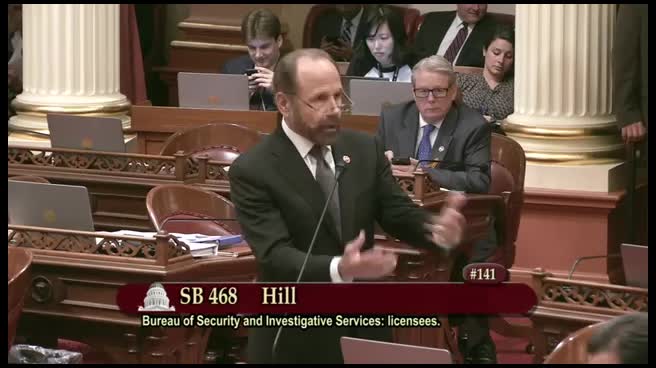
Bill Author