SB 494: Emergency services: seismic safety and earthquake-related programs.
- Session Year: 2015-2016
- House: Senate
- Latest Version Date: 2015-10-11
Existing law creates, within the office of the Governor, the Office of Emergency Services which, under the Director of Emergency Services, coordinates disaster response, emergency planning, emergency preparedness, disaster recovery, disaster mitigation, and homeland security activities. Existing law requires, subject to the identification of funding by January 1, 2016, various entities, including the Office of Emergency Services, through a public-private partnership, to develop a comprehensive statewide earthquake early warning system in California that includes certain features, including the installation of field sensors. Existing law repeals this early warning system requirement on January 1, 2016, if the funding is not identified. It also requires the office to file with the Secretary of State a determination that funding was not identified by January 1, 2016.
This bill would instead require the identification of funding for the earthquake early warning system to occur by July 1, 2016, and would make conforming changes.
This bill would create the California Earthquake Safety Fund and would require moneys in the fund, upon appropriation by the Legislature, be used for seismic safety and earthquake-related programs, including the earthquake early warning system described above. The bill would authorize the fund to accept federal funds, funds from revenue bonds, local funds, and funds from private sources for purposes of carrying out its provisions, and would make conforming changes.
Existing law creates, within the office of the Governor, the Office of Emergency Services which, under the Director of Emergency Services, coordinates disaster response, emergency planning, emergency preparedness, disaster recovery, disaster mitigation, and homeland security activities. Existing law requires requires, subject to the identification of funding by January 1, 2016, various entities, including the Office of Emergency Services, through a public-private partnership, to develop a comprehensive statewide earthquake early warning system in California that includes certain features, including the installation of field sensors. Existing law repeals this early warning system requirement on January 1, 2016, if the funding is not identified. It also requires the office to file with the Secretary of State a determination that funding was not identified by January 1, 2016.
This bill would instead require the identification of funding for the earthquake early warning system to occur by July 1, 2016, and would make conforming changes.
This bill would create the California Earthquake Safety Fund and would require moneys in the fund, upon appropriation by the Legislature, be used for seismic safety and earthquake-related programs, including the earthquake early warning system described above. The bill would authorize the fund to accept federal funds, funds from revenue bonds, local funds, and funds from private sources for purposes of carrying out its provisions, and would make conforming changes.
Existing law creates, within the office of the Governor, the Office of Emergency Services which, under the Director of Emergency Services, coordinates disaster response, emergency planning, emergency preparedness, disaster recovery, disaster mitigation, and homeland security activities. Existing law requires various entities, including the Office of Emergency Services, through a public-private partnership, to develop a comprehensive statewide earthquake early warning system in California that includes certain features, including the installation of field sensors.
This bill would create the California Earthquake Safety Fund and would require moneys in the fund, upon appropriation by the Legislature, be used for seismic safety and earthquake-related programs, including the earthquake early warning system described above. The bill would authorize the fund to accept grants, contributions, and appropriations from public agencies, private foundations, entities, or individuals federal funds, funds from revenue bonds, local funds, and funds from private sources for purposes of carrying out its provisions. provisions, and would make conforming changes.
Existing law creates, within the office of the Governor, the Office of Emergency Services which, under the Director of Emergency Services, coordinates disaster response, emergency planning, emergency preparedness, disaster recovery, disaster mitigation, and homeland security activities. Existing law requires various entities, including the Office of Emergency Services, through a public-private partnership, to develop a comprehensive statewide earthquake early warning system in California that includes certain features, including the installation of field sensors.
This bill would create the California Earthquake Safety Fund and would require moneys in the fund, upon appropriation by the Legislature, be used for seismic safety and earthquake-related programs, including the earthquake early warning system described above. The bill would authorize the fund to accept grants, contributions, and appropriations from public agencies, private foundations, entities, or individuals for purposes of carrying out its provisions.
Existing law creates, within the office of the Governor, the Office of Emergency Services which, under the Director of Emergency Services, coordinates disaster response, emergency planning, emergency preparedness, disaster recovery, disaster mitigation, and homeland security activities. Existing law requires various entities, including the Office of Emergency Services, through a public-private partnership, to develop a comprehensive statewide earthquake early warning system in California that includes certain features, including the installation of field sensors.
This bill would declare that it is the intent of the Legislature to enact legislation that would further the implementation goals of the statewide earthquake early warning system. create the California Earthquake Safety Fund and would require moneys in the fund, upon appropriation by the Legislature, be used for seismic safety and earthquake-related programs, including the earthquake early warning system described above. The bill would authorize the fund to accept grants, contributions, and appropriations from public agencies, private foundations, entities, or individuals for purposes of carrying out its provisions.
Existing law requires various entities, including the Office of Emergency Services, through a public-private partnership, to develop a comprehensive statewide earthquake early warning system in California that includes certain features, including the installation of field sensors.
This bill would declare that it is the intent of the Legislature to enact legislation that would further the implementation goals of the statewide earthquake early warning system.
(a)The Office of Emergency Services, in collaboration with the California Institute of Technology (Caltech), the California Geological Survey, the University of California, the United States Geological Survey, the Alfred E. Alquist Seismic Safety Commission, and other stakeholders, shall develop a comprehensive statewide earthquake early warning system in California through a public-private partnership, which shall include, but not be limited to, the following features:
(1)Installation of field sensors.
(2)Improvement of field telemetry.
(3)Construction and testing of central processing and notification centers.
(4)Establishment of warning notification distribution paths to the public.
(5)Integration of earthquake early warning education with general earthquake preparedness efforts.
(b)In consultation with stakeholders, the Office of Emergency Services shall develop an approval mechanism to review compliance with earthquake early warning standards as they are developed. The development of the approval mechanism shall include input from a broad representation of earthquake early warning stakeholders. The approval mechanism shall accomplish all of the following:
(1)Ensure the standards are appropriate.
(2)Determine the degree to which the standards apply to providers and components of the system.
(3)Determine methods to ensure compliance with the standards.
(4)Determine requirements for participation in the system.
(c)The Office of Emergency Services shall identify funding for the system described in subdivision (a) through single or multiple sources of revenue that shall be limited to federal funds, funds from revenue bonds, local funds, and funds from private sources. The Office of Emergency Services shall not identify the General Fund as a funding source for the purpose of establishing the system described in subdivision (a), beyond the components or programs that are currently funded.
(d)Subdivisions (a) and (b) shall not become operative until the Office of Emergency Services identifies funding pursuant to subdivision (c).
(e)(1)If funding is not identified pursuant to subdivision (c) by July 1, 2016, this section is repealed unless a later enacted statute, that is enacted before January 1, 2017, deletes or extends that date.
(2)The Office of Emergency Services shall file with the Secretary of State its determination that funding was not identified pursuant to subdivision (c) by July 1, 2016.
SEC. 2.Section 8587.9 is added to the Government Code, to read:8587.9.(a)The Legislature finds and declares that there is a critical need for a consistent and coordinated approach to seismic safety and earthquake-related programs in the State of California through the Governors Office of Emergency Services. These programs may include, but are not limited to, earthquake response, recovery, warning, mitigation, planning, research, preparedness, training and exercises, hazard grants, public information, and education. This approach includes the coordination of state agencies and departments that have responsibilities to monitor and respond to, and to recover from, earthquakes and to assist the citizens and businesses in California. In order to facilitate the requirements of Section 8587.8, the Legislature establishes the California Earthquake Safety Fund within the State Treasury.
(b)(1)The California Earthquake Safety Fund is hereby created in the State Treasury. Upon appropriation by the Legislature, the moneys in the fund shall be used for seismic safety and earthquake-related programs, including the statewide earthquake early warning system described in Section 8587.8.
(2)Pursuant to subdivision (c) of Section 8587.8, the California Earthquake Safety Fund may accept federal funds, funds from revenue bonds, local funds, and funds from private sources for purposes of carrying out the provisions of this section.
(a)The Office of Emergency Services, in collaboration with the California Institute of Technology (Caltech), the California Geological Survey, the University of California, the United States Geological Survey, the Alfred E. Alquist Seismic Safety Commission, and other stakeholders, shall develop a comprehensive statewide earthquake early warning system in California through a public-private partnership, which shall include, but not be limited to, the following features:
(1)Installation of field sensors.
(2)Improvement of field telemetry.
(3)Construction and testing of central processing and notification centers.
(4)Establishment of warning notification distribution paths to the public.
(5)Integration of earthquake early warning education with general earthquake preparedness efforts.
(b)In consultation with stakeholders, the Office of Emergency Services shall develop an approval mechanism to review compliance with earthquake early warning standards as they are developed. The development of the approval mechanism shall include input from a broad representation of earthquake early warning stakeholders. The approval mechanism shall accomplish all of the following:
(1)Ensure the standards are appropriate.
(2)Determine the degree to which the standards apply to providers and components of the system.
(3)Determine methods to ensure compliance with the standards.
(4)Determine requirements for participation in the system.
(c)The Office of Emergency Services shall identify funding for the system described in subdivision (a) through single or multiple sources of revenue that shall be limited to federal funds, funds from revenue bonds, local funds, and funds from private sources. The Office of Emergency Services shall not identify the General Fund as a funding source for the purpose of establishing the system described in subdivision (a), beyond the components or programs that are currently funded.
(d)Subdivisions (a) and (b) shall not become operative until the Office of Emergency Services identifies funding pursuant to subdivision (c).
(e)(1)If funding is not identified pursuant to subdivision (c) by January July 1, 2016, this section is repealed unless a later enacted statute, that is enacted before January 1, 2016, 2017, deletes or extends that date.
(2)The Office of Emergency Services shall file with the Secretary of State its determination that funding was not identified pursuant to subdivision (c) by January July 1, 2016.
SEC. 2.Section 8587.9 is added to the Government Code, to read:8587.9.(a)The Legislature finds and declares that there is a critical need for a consistent and coordinated approach to seismic safety and earthquake-related programs in the State of California through the Governors Office of Emergency Services. These programs may include, but are not limited to, earthquake response, recovery, warning, mitigation, planning, research, preparedness, training and exercises, hazard grants, public information, and education. This approach includes the coordination of state agencies and departments that have responsibilities to monitor and respond to, and to recover from, earthquakes and to assist the citizens and businesses in California. In order to facilitate the requirements of Section 8587.8, the Legislature establishes the California Earthquake Safety Fund within the State Treasury.
(b)(1)The California Earthquake Safety Fund is hereby created in the State Treasury. Upon appropriation by the Legislature, the moneys in the fund shall be used for seismic safety and earthquake-related programs, including the statewide earthquake early warning system described in Section 8587.8.
(2)Pursuant to subdivision (c) of Section 8587.8, the California Earthquake Safety Fund may accept federal funds, funds from revenue bonds, local funds, and funds from private sources for purposes of carrying out the provisions of this section.
(a)The Office of Emergency Services, in collaboration with the California Institute of Technology (Caltech), the California Geological Survey, the University of California, the United States Geological Survey, the Alfred E. Alquist Seismic Safety Commission, and other stakeholders, shall develop a comprehensive statewide earthquake early warning system in California through a public-private partnership, which shall include, but not be limited to, the following features:
(1)Installation of field sensors.
(2)Improvement of field telemetry.
(3)Construction and testing of central processing and notification centers.
(4)Establishment of warning notification distribution paths to the public.
(5)Integration of earthquake early warning education with general earthquake preparedness efforts.
(b)In consultation with stakeholders, the Office of Emergency Services shall develop an approval mechanism to review compliance with earthquake early warning standards as they are developed. The development of the approval mechanism shall include input from a broad representation of earthquake early warning stakeholders. The approval mechanism shall accomplish all of the following:
(1)Ensure the standards are appropriate.
(2)Determine the degree to which the standards apply to providers and components of the system.
(3)Determine methods to ensure compliance with the standards.
(4)Determine requirements for participation in the system.
(c)The Office of Emergency Services shall identify funding for the system described in subdivision (a) through single or multiple sources of revenue that shall be limited to federal funds, funds from revenue bonds, local funds, and funds from private grants. sources. The Office of Emergency Services shall not identify the General Fund as a funding source for the purpose of establishing the system described in subdivision (a), beyond the components or programs that are currently funded.
(d)Subdivisions (a) and (b) shall not become operative until the Office of Emergency Services identifies funding pursuant to subdivision (c).
(e)(1)If funding is not identified pursuant to subdivision (c) by January 1, 2016, this section is repealed unless a later enacted statute, that is enacted before January 1, 2016, deletes or extends that date.
(2)The Office of Emergency Services shall file with the Secretary of State its determination that funding was not identified pursuant to subdivision (c) by January 1, 2016.
SECTION 1.SEC. 2.Section 8587.9 is added to the Government Code, to read:8587.9.(a)The Legislature finds and declares that there is a critical need for a consistent and coordinated approach to seismic safety and earthquake-related programs in the State of California through the Governors Office of Emergency Services. These programs may include, but are not limited to, earthquake response, recovery, warning, mitigation, planning, research, preparedness, training and exercises, hazard grants, public information, and education. This approach includes the coordination of state agencies and departments that have responsibilities to monitor and respond to, and to recover from, earthquakes and to assist the citizens and businesses in California. In order to facilitate the requirements of Section 8587.8, the Legislature establishes the California Earthquake Safety Fund within the State Treasury.
(b)(1)The California Earthquake Safety Fund is hereby created in the State Treasury. Upon appropriation by the Legislature, the moneys in the fund shall be used for seismic safety and earthquake-related programs, including the statewide earthquake early warning system described in Section 8587.8.
(2)The Pursuant to subdivision (c) of Section 8587.8, the California Earthquake Safety Fund may accept grants, contributions, and appropriations from public agencies, private foundations, entities, or individuals federal funds, funds from revenue bonds, local funds, and funds from private sources for purposes of carrying out the provisions of this section.
(a)The Legislature finds and declares that there is a critical need for a consistent and coordinated approach to seismic safety and earthquake-related programs in the State of California through the Governors Office of Emergency Services. These programs may include, but are not limited to, earthquake response, recovery, warning, mitigation, planning, research, preparedness, training and exercises, hazard grants, public information, and education. This approach includes the coordination of state agencies and departments that have responsibilities to monitor and respond to, and to recover from, earthquakes and to assist the citizens and businesses in California. In order to facilitate the requirements of Section 8587.8, the Legislature establishes the California Earthquake Safety Fund within the State Treasury.
(b)(1)The California Earthquake Safety Fund is hereby created in the State Treasury. Upon appropriation by the Legislature, the moneys in the fund shall be used for seismic safety and earthquake-related programs, including the statewide earthquake early warning system described in Section 8587.8.
(2)The California Earthquake Safety Fund may accept grants, contributions, and appropriations from public agencies, private foundations, entities, or individuals for purposes of carrying out the provisions of this section.
It is the intent of the Legislature to enact legislation that would further the implementation goals of the statewide earthquake early warning system.
SECTION 1.Section 8587.9 is added to the Government Code, to read:8587.9.(a)The Legislature finds and declares that there is a critical need for a consistent and coordinated approach to seismic safety and earthquake-related programs in the State of California through the Governors Office of Emergency Services. These programs may include, but are not limited to, earthquake response, recovery, warning, mitigation, planning, research, preparedness, training and exercises, hazard grants, public information, and education. This approach includes the coordination of state agencies and departments that have responsibilities to monitor and respond to, and to recover from, earthquakes and to assist the citizens and businesses in California. In order to facilitate the requirements of Section 8587.8, the Legislature establishes the Earthquake Safety Fund within the State Treasury.
(b)(1)The California Earthquake Safety Fund is hereby created in the State Treasury. Upon appropriation by the Legislature, the moneys in the fund shall be used for seismic safety and earthquake-related programs, including the statewide earthquake early warning system described in Section 8587.8.
(2)The California Earthquake Safety Fund may accept grants, contributions, and appropriations from public agencies, private foundations, entities, or individuals for purposes of carrying out the provisions of this section.
It is the intent of the Legislature to enact legislation that would further the implementation goals of the statewide earthquake early warning system.
|
Date
|
Status
|
|---|---|
| Sep 8, 2015 | In Senate. Concurrence in Assembly amendments pending. |
| Jul 8, 2015 | July 8 set for first hearing canceled at the request of author. |
| Jul 16, 2015 | From committee: Do pass and re-refer to Com. on APPR. (Ayes 18. Noes 0.) (July 15). Re-referred to Com. on APPR. |
| Aug 19, 2015 | From committee: Do pass. Ordered to consent calendar. (Ayes 17. Noes 0.) (August 19). |
| Aug 20, 2015 | Read second time. Ordered to consent calendar. |
| Aug 24, 2015 | From consent calendar on motion of Assembly Member Cristina Garcia. |
| Aug 24, 2015 | Ordered to third reading. |
| Sep 3, 2015 | Ordered to third reading. |
| Sep 3, 2015 | Read third time and amended. |
| Jun 11, 2015 | Referred to Com. on G.O. |
| Sep 8, 2015 | Read third time. Passed. Ordered to the Senate. |
| Sep 8, 2015 | Read third time. Passed. (Ayes 79. Noes 0. Page 2950.) Ordered to the Senate. |
| Sep 10, 2015 | Assembly amendments concurred in. (Ayes 39. Noes 0.) Ordered to engrossing and enrolling. |
| Sep 10, 2015 | Assembly amendments concurred in. (Ayes 40. Noes 0. Page 2667.) Ordered to engrossing and enrolling. |
| Sep 10, 2015 | Assembly amendments concurred in. (Ayes 40. Noes 0.) Ordered to engrossing and enrolling. |
| Sep 15, 2015 | Enrolled and presented to the Governor at 9:30 a.m. |
| Oct 11, 2015 | Approved by the Governor. |
| Oct 11, 2015 | Chaptered by Secretary of State. Chapter 799, Statutes of 2015. |
| May 11, 2015 | May 11 hearing postponed by committee. |
| Feb 27, 2015 | From printer. May be acted upon on or after March 29. |
| Mar 12, 2015 | Referred to Com. on RLS. |
| Apr 6, 2015 | From committee with author's amendments. Read second time and amended. Re-referred to Com. on RLS. |
| Apr 16, 2015 | Re-referred to Com. on G.O. |
| Apr 17, 2015 | Set for hearing April 28. |
| Apr 22, 2015 | From committee with author's amendments. Read second time and amended. Re-referred to Com. on G.O. |
| Apr 28, 2015 | From committee: Do pass and re-refer to Com. on APPR. with recommendation: To consent calendar. (Ayes 7. Noes 0. Page 796.) (April 28). Re-referred to Com. on APPR. |
| May 1, 2015 | Set for hearing May 11. |
| Feb 26, 2015 | Introduced. Read first time. To Com. on RLS. for assignment. To print. |
| May 12, 2015 | Set for hearing May 18. |
| May 13, 2015 | From committee with author's amendments. Read second time and amended. Re-referred to Com. on APPR. |
| May 18, 2015 | From committee: Be ordered to second reading pursuant to Senate Rule 28.8 and ordered to consent calendar. |
| May 19, 2015 | Read second time. Ordered to consent calendar. |
| May 22, 2015 | In Assembly. Read first time. Held at Desk. |
| May 22, 2015 | Read third time. Passed. (Ayes 38. Noes 0. Page 1072.) Ordered to the Assembly. |
| May 22, 2015 | Read third time. Passed. (Ayes 38. Noes 0.) Ordered to the Assembly. |
|
Date
|
Description
|
Location
|
Votes
|
|
|---|---|---|---|---|
| Sep 10, 2015 | Unfinished Business SB494 Hill Concurrence | Senate Floor |
Passed |
|
| Sep 8, 2015 | SB 494 Hill Senate Third Reading By COOLEY | Assembly Floor |
Passed |
|
| Aug 19, 2015 | Do pass. To Consent Calendar. | Assembly Standing Committee on Appropriations |
Passed |
|
| Jul 15, 2015 | Do pass and be re-referred to the Committee on [Appropriations] | Assembly Standing Committee on Governmental Organization |
Passed |
|
| May 22, 2015 | Consent Calendar 2nd SB494 Hill | Senate Floor |
Passed |
|
| Apr 28, 2015 | Do pass, but first be re-referred to the Committee on [Appropriations] with the recommendation: To Consent Calendar | Senate Standing Committee on Governmental Organization |
Passed |
This list shows positions taken on this bill by organizations on the date displayed, which is linked to the original source.
Positions by individuals are not included.
|
Organization
|
Position
|
Date
|
|---|---|---|
| Eric Garcetti, Mayor, City of Los Angeles | ** Support | Sep 10, 2015 |
SB 494
Page 4
|
Office of Senate Floor Analyses (916) 651-1520 Fax: (916) 327-4478 |
UNFINISHED BUSINESS
Bill No: SB 494
Amended: 9/3/15
SENATE GOVERNMENTAL ORG. COMMITTEE: 7-0, 4/28/15
AYES: Hall, Block, Hernandez, Hill, Hueso, Lara, McGuire
NO VOTE RECORDED: Berryhill, Gaines, Galgiani, Vidak
SENATE APPROPRIATIONS COMMITTEE: Senate Rule 28.8
SENATE FLOOR: 38-0, 5/22/15 (Consent)
AYES: Allen, Anderson, Bates, Beall, Berryhill, Block, Cannella, De León, Gaines, Galgiani, Hall, Hancock, Hernandez, Hertzberg, Hill, Hueso, Huff, Jackson, Lara, Leno, Leyva, Liu, McGuire, Mendoza, Mitchell, Monning, Moorlach, Morrell, Nguyen, Nielsen, Pan, Pavley, Roth, Runner, Stone, Vidak, Wieckowski, Wolk
NO VOTE RECORDED: Fuller
ASSEMBLY FLOOR: 79-0, 9/8/15 - See last page for vote
SUBJECT: Emergency services: seismic safety and earthquake-related programs
DIGEST: This bill creates the California Earthquake Safety Fund to be used for seismic safety and earthquake-related programs, including the earthquake early warning system and requires the identification of funding of the earthquake early warning system to occur by July 1, 2016.
Assembly Amendments require the identification of funding of the earthquake early warning system to occur by July 1, 2016 and make conforming changes.
Existing law:
Creates, within the office of the Governor, the Office of Emergency Services (OES) which, under the Director of Emergency Services, coordinates disaster response, emergency planning, emergency preparedness, disaster recovery, disaster mitigation, and homeland security activities.
Requires various entities, including OES, through a public-private partnership, to develop a comprehensive statewide earthquake early warning system in California, as specified.
Requires the OES to identify funding for an earthquake early warning system through single or multiple sources of revenues that shall be limited to federal funds, funds from revenue bonds, local funds, and private grants.
Prohibits General Fund moneys to be used for the establishment of an earthquake early warning system.
Specifies that if funding is not identified by January 1, 2016, the provisions relating to the establishment of an earthquake early warning system should be repealed.
Requires the OES to file with the Secretary of State a determination that funding was not identified by January 1, 2016.
This bill:
Creates the California Earthquake Safety Fund in the State Treasury.
Specifies that upon appropriation by the Legislature, the moneys in the fund shall be used for seismic safety and earthquake-related programs, including the statewide earthquake early warning system.
Specifies that the California Earthquake Safety Fund may accept federal funds, funds from revenue bonds, local funds, and funds from private sources.
Requires the identification of funding of the earthquake early warning system to occur by July 1, 2016 and makes conforming changes.
Background
Purpose of the bill. According to the author, while existing law requires OES to develop a comprehensive statewide earthquake early warning system, it does not establish a state fund capable of accepting grants or contributions to implement the earthquake early warning system in California.
The author argues that SB 494 would establish the California Earthquake Safety Fund to help fund and coordinate seismic safety and earthquake-related programs, including the statewide earthquake early warning system.
Prior/Related Legislation
SB 31 (Padilla, Chapter 342, Statutes of 2013) required OES, in collaboration with various entities, to develop a comprehensive statewide earthquake early warning system in California.
FISCAL EFFECT: Appropriation: No Fiscal Com.: Yes Local: No
According to the Assembly Appropriations Committee, negligible fiscal impact to the Office of Emergency Services (OES), which oversees earthquake preparedness programs; minor and absorbable costs to the State Treasurer to establish the new fund. Any cost pressure to implement the earthquake early warning system will not result in General Fund costs as current law prohibits OES from using General Fund resources for the program.
Eric Garcetti, Mayor, City of Los Angeles
None received
ARGUMENTS IN SUPPORT: Supporters argue that SB 494 will make California better prepared by creating the California Earthquake Safety Fund which will facilitate the private public partnership necessary to fund earthquake preparedness programs including a statewide seismic early warning system.
ASSEMBLY FLOOR: 79-0, 9/08/15
AYES: Achadjian, Alejo, Travis Allen, Baker, Bigelow, Bloom, Bonilla, Bonta, Brough, Brown, Burke, Calderon, Campos, Chang, Chau, Chiu, Chu, Cooley, Cooper, Dababneh, Dahle, Daly, Dodd, Eggman, Frazier, Beth Gaines, Gallagher, Cristina Garcia, Eduardo Garcia, Gatto, Gipson, Gomez, Gonzalez, Gordon, Gray, Grove, Hadley, Harper, Roger Hernández, Holden, Irwin, Jones, Jones-Sawyer, Kim, Lackey, Levine, Linder, Lopez, Low, Maienschein, Mathis, Mayes, McCarty, Medina, Melendez, Mullin, Nazarian, Obernolte, O'Donnell, Olsen, Patterson, Perea, Quirk, Rendon, Ridley-Thomas, Rodriguez, Salas, Santiago, Steinorth, Mark Stone, Thurmond, Ting, Wagner, Waldron, Weber, Wilk, Williams, Wood, Atkins
NO VOTE RECORDED: Chávez
Prepared by: Felipe Lopez / G.O. / (916) 651-1530
9/9/15 9:51:53
**** END ****
SB 494
Page 3
SENATE THIRD READING
SB 494
(Hill)
As Amended September 3, 2015
Majority vote
SENATE VOTE: 38-0
Committee |
Votes |
Ayes |
Noes |
Governmental Organization |
18-0 |
Gray, Linder, Alejo, Bigelow, Campos, Cooley, Cooper, Daly, Cristina Garcia, Eduardo Garcia, Gipson, Roger Hernández, Levine, Mayes, Perea, Salas, Steinorth, Wilk |
|
Appropriations |
17-0 |
Gomez, Bigelow, Bloom, Bonta, Calderon, Chang, Daly, Eggman, Gallagher, Eduardo Garcia, Holden, Jones, Quirk, Rendon, Wagner, Weber, Wood |
|
SUMMARY: Creates the California Earthquake Safety Fund to be used for seismic safety and earthquake-related programs, including the earthquake early warning system. Specifically, this bill:
1) Creates the California Earthquake Safety Fund in the State Treasury.
2) Specifies that upon appropriation by the Legislature, the moneys in the fund shall be used for seismic safety and earthquake-related programs, including the statewide earthquake early warning system.
3) Specifies that the California Earthquake Safety Fund may accept federal funds, funds from revenue bonds, local funds, and funds from private sources.
4) Extends the sunset provision for the Governor's Office of Emergency Services (OES) to identify funding for the California Early Earthquake Warning System (CEEWS) to July 1, 2016.
5) Extends the CEEWS sunset date in statute to January 1, 2017 – should funding not be identified by July 1, 2016.
EXISTING LAW:
1) Creates, within the office of the Governor, the OES which, under the Director of Emergency Services, coordinates disaster response, emergency planning, emergency preparedness, disaster recovery, disaster mitigation, and homeland security activities.
2) Requires various entities, including OES, through a public-private partnership, to develop a comprehensive statewide earthquake early warning system in California, as specified.
3) Requires OES to identify funding for an earthquake early warning system through single or multiple sources of revenues that shall be limited to federal funds, funds from revenue bonds, local funds, and private grants.
4) Prohibits General Fund moneys to be used for the establishment of an earthquake early warning system.
5) Specifies that if funding is not identified by January 1, 2016, the provisions relating to the establishment of an earthquake early warning system should be repealed.
FISCAL EFFECT: According to the Appropriation Committee Analysis, this bill will have negligible fiscal impact to the OES, which oversees earthquake preparedness programs; minor and absorbable costs to the State Treasurer to establish the new fund. Any cost pressure to implement the earthquake early warning system will not result in General Fund costs as current law prohibits OES from using General Fund resources for the program.
COMMENTS:
Purpose of the bill: According to the author, while existing law requires OES to develop a comprehensive statewide earthquake early warning system, it does not establish a state fund capable of accepting grants or contributions to implement the earthquake early warning system in California.
The author argues that this bill would establish the California Earthquake Safety Fund to help fund and coordinate seismic safety and earthquake-related programs, including the statewide earthquake early warning system.
Earthquake Early Warning Systems: When an earthquake occurs seismic waves radiate from the epicenter like waves on a pond – it is these waves we feel as earthquake shaking which causes damage to structures. The technology exists to detect moderate to large earthquakes so quickly that a warning can be sent to locations outside the area where the earthquake begins before these destructive waves arrive. The amount of warning time at a particular location depends on the distance from the earthquake epicenter. Locations very close to the earthquake epicenter will receive relatively little or no warning whereas locations far removed from the earthquake epicenter would receive more warning time but may not experience damaging shaking. For those locations in between, the warning time could range from seconds to minutes.
Currently, there are two approaches to earthquake early warning – the "single station" (or on-site) approach and the "network" approach. In the single-station approach, a single sensor detects the arrival of the faster but weaker seismic wave (P-wave) and warns before the arrival of the slower, more destructive seismic wave (S-wave). This approach is relatively simple, but some would argue it is less accurate and more prone to false alerts compared to the network approach.
The network approach utilizes many seismic sensors that are distributed across a wide area where earthquakes are likely to occur. This network of sensors sends data to a central site where ground motion signals are analyzed, earthquakes are detected and warnings are issued. The network approach is considered to be slower, but more reliable than the on-site approach. This is because it uses information from many stations to confirm that the ground motion detected is actually from an earthquake and not from some other source of vibration.
SB 135 (Padilla), Chapter 342, Statutes of 2013, required OES to develop an earthquake early warning (EEW) system in California. OES must first identify funding sources for the system that are not general fund. OES has primary role/lead in implementing EEW system. They have set up a working group composed of departments, agencies and other stakeholders to establish best practices for an EEW system, as well as identifying funding.
Prior/Related Legislation: SB 31 (Padilla), Chapter 342, Statutes of 2013, required OES, in collaboration with various entities, to develop a comprehensive statewide earthquake early warning system in California.
AB 928 (Blakeslee) of the 2009-10 Regular Session. The bill would have required the High-Speed Rail Authority to develop an earthquake early warning system and coordinate development of that system with the Cal-EMA, the Department of Education, and the Public Utilities Commission. The bill would have required the earthquake early warning system to be designed to protect the lives of high-speed train passengers and schoolchildren, and critical infrastructure by providing advanced earthquake warning and by enabling preventive measures seconds before an earthquake. (Held in Assembly Governmental Organization Committee)
SB 1278 (Alquist), Chapter 532, Statutes of 2006. The bill, among other things, renamed the Seismic Safety Commission the Alfred E. Alquist Seismic Safety Commission, placed the commission within the State and Consumer Services Agency, as an independent unit, and increased the membership of the commission from 17 members to 20 members.
Analysis Prepared by: Kenton Stanhope / G.O. / (916) 319-2531 FN: 0002042
SB 494
Page 3
SENATE THIRD READING
SB 494
(Hill)
As Amended May 13, 2015
Majority vote
SENATE VOTE: 38-0
Committee |
Votes |
Ayes |
Noes |
Governmental Organization |
18-0 |
Gray, Linder, Alejo, Bigelow, Campos, Cooley, Cooper, Daly, Cristina Garcia, Eduardo Garcia, Gipson, Roger Hernández, Levine, Mayes, Perea, Salas, Steinorth, Wilk |
|
Appropriations |
17-0 |
Gomez, Bigelow, Bloom, Bonta, Calderon, Chang, Daly, Eggman, Gallagher, Eduardo Garcia, Holden, Jones, Quirk, Rendon, Wagner, Weber, Wood |
|
SUMMARY: Creates the California Earthquake Safety Fund to be used for seismic safety and earthquake-related programs, including the earthquake early warning system. Specifically, this bill:
Creates the California Earthquake Safety Fund in the State Treasury.
Specifies that upon appropriation by the Legislature, the moneys in the fund shall be used for seismic safety and earthquake-related programs, including the statewide earthquake early warning system.
Specifies that the California Earthquake Safety Fund may accept federal funds, funds from revenue bonds, local funds, and funds from private sources.
EXISTING LAW:
Creates, within the office of the Governor, the Office of Emergency Services (OES) which, under the Director of Emergency Services, coordinates disaster response, emergency planning, emergency preparedness, disaster recovery, disaster mitigation, and homeland security activities.
Requires various entities, including OES, through a public-private partnership, to develop a comprehensive statewide earthquake early warning system in California, as specified.
Requires OES to identify funding for an earthquake early warning system through single or multiple sources of revenues that shall be limited to federal funds, funds from revenue bonds, local funds, and private grants.
Prohibits General Fund moneys to be used for the establishment of an earthquake early warning system.
Specifies that if funding is not identified by January 1, 2016, the provisions relating to the establishment of an earthquake early warning system should be repealed.
FISCAL EFFECT: According to the Assembly Appropriations Committee, this bill will have negligible fiscal impact to the Office of Emergency Services (OES), which oversees earthquake preparedness programs; minor and absorbable costs to the State Treasurer to establish the new fund. Any cost pressure to implement the earthquake early warning system will not result in General Fund costs as current law prohibits OES from using General Fund resources for the program.
COMMENTS:
Purpose of the bill: According to the author, while existing law requires OES to develop a comprehensive statewide earthquake early warning system, it does not establish a state fund capable of accepting grants or contributions to implement the earthquake early warning system in California.
The author argues that this bill would establish the California Earthquake Safety Fund to help fund and coordinate seismic safety and earthquake-related programs, including the statewide earthquake early warning system.
Earthquake Early Warning Systems: When an earthquake occurs, seismic waves radiate from the epicenter like waves on a pond – it is these waves we feel as earthquake shaking which causes damage to structures. The technology exists to detect moderate to large earthquakes so quickly that a warning can be sent to locations outside the area where the earthquake begins before these destructive waves arrive. The amount of warning time at a particular location depends on the distance from the earthquake epicenter. Locations very close to the earthquake epicenter will receive relatively little or no warning whereas locations far removed from the earthquake epicenter would receive more warning time but may not experience damaging shaking. For those locations in between, the warning time could range from seconds to minutes.
Currently, there are two approaches to earthquake early warning – the "single station" (or on-site) approach and the "network" approach. In the single-station approach, a single sensor detects the arrival of the faster but weaker seismic wave (P-wave) and warns before the arrival of the slower, more destructive seismic wave (S-wave). This approach is relatively simple, but some would argue it is less accurate and more prone to false alerts compared to the network approach.
The network approach utilizes many seismic sensors that are distributed across a wide area where earthquakes are likely to occur. This network of sensors sends data to a central site where ground motion signals are analyzed, earthquakes are detected and warnings are issued. The network approach is considered to be slower, but more reliable than the on-site approach. This is because it uses information from many stations to confirm that the ground motion detected is actually from an earthquake and not from some other source of vibration.
SB 135 (Padilla), Chapter 342, Statutes of 2013, required OES to develop an earthquake early warning system in California. OES must first identify funding sources for the system that are not general fund. OES has primary role/lead in implementing earthquake early warning system. They have set up a working group composed of departments, agencies and other stakeholders to establish best practices for an earthquake early warning system, as well as identifying funding.
Prior/Related Legislation: SB 31 (Padilla), Chapter 342, Statutes of 2013, required OES, in collaboration with various entities, to develop a comprehensive statewide earthquake early warning system in California.
AB 928 (Blakeslee) of the 2009-10 Regular Session. The bill would have required the High-Speed Rail Authority to develop an earthquake early warning system and coordinate development of that system with the Cal-EMA, the Department of Education, and the Public Utilities Commission. The bill would have required the earthquake early warning system to be designed to protect the lives of high-speed train passengers and schoolchildren, and critical infrastructure by providing advanced earthquake warning and by enabling preventive measures seconds before an earthquake. (Held in the Assembly Governmental Organization Committee)
SB 1278 (Alquist), Chapter 532, Statutes of 2006. The bill, among other things, renamed the Seismic Safety Commission the Alfred E. Alquist Seismic Safety Commission, placed the commission within the State and Consumer Services Agency, as an independent unit, and increased the membership of the commission from 17 members to 20 members.
Analysis Prepared by: Kenton Stanhope / G.O. / (916) 319-2531 FN: 0001522
Date of Hearing: August 19, 2015
ASSEMBLY COMMITTEE ON APPROPRIATIONS
Jimmy Gomez, Chair
SB 494
(Hill) – As Amended May 13, 2015
Policy Committee: |
Governmental Organization |
Vote: |
18 - 0 |
Urgency: No State Mandated Local Program: No Reimbursable: No
SUMMARY:
This bill creates the California Earthquake Safety Fund to be used for seismic safety and earthquake-related programs, including the statewide earthquake early warning system. Funds for the earthquake early warning system may include federal, revenue bond, local, and private funds, and the new earthquake fund will be authorized to accept funds only from those sources.
FISCAL EFFECT:
Negligible fiscal impact to the Office of Emergency Services (OES), which oversees earthquake preparedness programs; minor and absorbable costs to the State Treasurer to establish the new fund. Any cost pressure to implement the earthquake early warning system will not result in General Fund costs as current law prohibits OES from using General Fund resources for the program.
COMMENTS:
1) Purpose. According to the author, existing law requires OES to develop a comprehensive statewide earthquake early warning system, but does not establish a fund for accepting grants or contributions to implement the program. The author asserts the California Earthquake Safety Fund will help OES implement safety and earthquake-related programs.
2) Seconds Before The Big One. Technology exists that can detect moderate and large earthquakes in time to send a warning signal prior to the arrival of destructive seismic waves. Depending on a particular location's distance from the epicenter, the advanced warning could range from a few seconds to a minute, allowing certain critical systems such as power stations, transport, and hospitals to cease or modify activities to minimize damage. It could also allow OES to notify affected people directly via mobile text, TV, radio, and the internet.
The best-known earthquake early warning system operates in Japan, which has over 1,000 sensors and a centralized processing center that analyzes sensor data and distributes warning information. During the 2011 Tohoku earthquake and tsunami, the system provided approximately 80 seconds of advanced warning to residents of Tokyo and is credited with significantly reducing damage and loss of life.
3) Modest Ambitions. SB 135 (Padilla, Statutes of 2013) required OES to develop an earthquake early warning system in California, though it required OES to fund the program from sources other than the General Fund. As the state increasingly looks to reprioritize long-term capital projects, the Legislature may wish to consider whether earthquake early warning ought to receive greater focus and resources.
Analysis Prepared by: Joel Tashjian / APPR. / (916) 319-2081
SB 494
Page 3
Date of Hearing: July 15, 2015
ASSEMBLY COMMITTEE ON GOVERNMENTAL ORGANIZATION
Adam Gray, Chair
SB 494
(Hill) – As Amended May 13, 2015
SENATE VOTE: 38-0
SUBJECT: Emergency services: seismic safety and earthquake-related programs.
SUMMARY: This bill creates the California Earthquake Safety Fund to be used for seismic safety and earthquake-related programs, including the earthquake early warning system. Specifically, this bill:
1) Creates the California Earthquake Safety Fund in the State Treasury.
2) Specifies that upon appropriation by the Legislature, the moneys in the fund shall be used for seismic safety and earthquake-related programs, including the statewide earthquake early warning system.
3) Specifies that the California Earthquake Safety Fund may accept federal funds, funds from revenue bonds, local funds, and funds from private sources.
EXISTING LAW:
1) Creates, within the office of the Governor, the Office of Emergency Services (OES) which, under the Director of Emergency Services, coordinates disaster response, emergency planning, emergency preparedness, disaster recovery, disaster mitigation, and homeland security activities.
2) Requires various entities, including OES, through a public-private partnership, to develop a comprehensive statewide earthquake early warning system in California, as specified.
3) Requires OES to identify funding for an earthquake early warning system through single or multiple sources of revenues that shall be limited to federal funds, funds from revenue bonds, local funds, and private grants.
4) Prohibits General Fund moneys to be used for the establishment of an earthquake early warning system.
5) Specifies that if funding is not identified by January 1, 2016, the provisions relating to the establishment of an earthquake early warning system should be repealed.
FISCAL EFFECT: Unknown
COMMENTS:
Purpose of the bill: According to the author, while existing law requires OES to develop a comprehensive statewide earthquake early warning system, it does not establish a state fund capable of accepting grants or contributions to implement the earthquake early warning system in California.
The author argues that SB 494 would establish the California Earthquake Safety Fund to help fund and coordinate seismic safety and earthquake-related programs, including the statewide earthquake early warning system.
Earthquake Early Warning Systems: When an earthquake occurs seismic waves radiate from the epicenter like waves on a pond – it is these waves we feel as earthquake shaking which causes damage to structures. The technology exists to detect moderate to large earthquakes so quickly that a warning can be sent to locations outside the area where the earthquake begins before these destructive waves arrive. The amount of warning time at a particular location depends on the distance from the earthquake epicenter. Locations very close to the earthquake epicenter will receive relatively little or no warning whereas locations far removed from the earthquake epicenter would receive more warning time but may not experience damaging shaking. For those locations in between, the warning time could range from seconds to minutes.
Currently, there are two approaches to earthquake early warning – the “single station” (or on-site) approach and the “network” approach. In the single-station approach, a single sensor detects the arrival of the faster but weaker seismic wave (P-wave) and warns before the arrival of the slower, more destructive seismic wave (S-wave). This approach is relatively simple, but some would argue it is less accurate and more prone to false alerts compared to the network approach.
The network approach utilizes many seismic sensors that are distributed across a wide area where earthquakes are likely to occur. This network of sensors sends data to a central site where ground motion signals are analyzed, earthquakes are detected and warnings are issued. The network approach is considered to be slower, but more reliable than the on-site approach. This is because it uses information from many stations to confirm that the ground motion detected is actually from an earthquake and not from some other source of vibration.
SB 135 (Padilla, Chapter 342, Statutes of 2013) required OES to develop an earthquake early warning (EEW) system in California. OES must first identify funding sources for the system that are not general fund. OES has primary role/lead in implementing EEW system. They have set up a working group composed of departments, agencies and other stakeholders to establish best practices for an EEW system, as well as identifying funding.
Support: Supporters argue that SB 494 will make California better prepared by creating the California Earthquake Safety Fund which will facilitate the private public partnership necessary to fund earthquake preparedness programs including a statewide seismic early warning system.
Prior/Related Legislation: SB 31 (Padilla, Chapter 342, Statutes of 2013) required OES, in collaboration with various entities, to develop a comprehensive statewide earthquake early warning system in California.
AB 928 (Blakeslee) 2009-2010 Legislation Session. The bill would have required the High-Speed Rail Authority to develop an earthquake early warning system and coordinate development of that system with the Cal-EMA, the Department of Education, and the Public Utilities Commission. The bill would have required the earthquake early warning system to be designed to protect the lives of high-speed train passengers and schoolchildren, and critical infrastructure by providing advanced earthquake warning and by enabling preventive measures seconds before an earthquake. (Held in Assembly Governmental Organization Committee)
SB 1278 (Alquist), Chapter 532, Statutes of 2006. The bill, among other things, renamed the Seismic Safety Commission the Alfred E. Alquist Seismic Safety Commission, placed the commission within the State and Consumer Services Agency, as an independent unit, and increased the membership of the commission from 17 members to 20 members.
REGISTERED SUPPORT / OPPOSITION:
Support
Eric Garcetti, Mayor, City of Los Angeles
Opposition
None on file
Analysis Prepared by: Kenton Stanhope / G.O. / (916) 319-2531
SB 494
Page 3
Date of Hearing: July 8, 2015
ASSEMBLY COMMITTEE ON GOVERNMENTAL ORGANIZATION
Adam Gray, Chair
SB 494
(Hill) – As Amended May 13, 2015
SENATE VOTE: 38-0
SUBJECT: Emergency services: seismic safety and earthquake-related programs.
SUMMARY: This bill creates the California Earthquake Safety Fund to be used for seismic safety and earthquake-related programs, including the earthquake early warning system. Specifically, this bill:
1) Creates the California Earthquake Safety Fund in the State Treasury.
2) Specifies that upon appropriation by the Legislature, the moneys in the fund shall be used for seismic safety and earthquake-related programs, including the statewide earthquake early warning system.
3) Specifies that the California Earthquake Safety Fund may accept federal funds, funds from revenue bonds, local funds, and funds from private sources.
EXISTING LAW:
1) Creates, within the office of the Governor, the Office of Emergency Services (OES) which, under the Director of Emergency Services, coordinates disaster response, emergency planning, emergency preparedness, disaster recovery, disaster mitigation, and homeland security activities.
2) Requires various entities, including OES, through a public-private partnership, to develop a comprehensive statewide earthquake early warning system in California, as specified.
3) Requires OES to identify funding for an earthquake early warning system through single or multiple sources of revenues that shall be limited to federal funds, funds from revenue bonds, local funds, and private grants.
4) Prohibits General Fund moneys to be used for the establishment of an earthquake early warning system.
5) Specifies that if funding is not identified by January 1, 2016, the provisions relating to the establishment of an earthquake early warning system should be repealed.
FISCAL EFFECT: Unknown
COMMENTS:
Purpose of the bill: According to the author, while existing law requires OES to develop a comprehensive statewide earthquake early warning system, it does not establish a state fund capable of accepting grants or contributions to implement the earthquake early warning system in California.
The author argues that SB 494 would establish the California Earthquake Safety Fund to help fund and coordinate seismic safety and earthquake-related programs, including the statewide earthquake early warning system.
Earthquake Early Warning Systems: When an earthquake occurs seismic waves radiate from the epicenter like waves on a pond – it is these waves we feel as earthquake shaking which causes damage to structures. The technology exists to detect moderate to large earthquakes so quickly that a warning can be sent to locations outside the area where the earthquake begins before these destructive waves arrive. The amount of warning time at a particular location depends on the distance from the earthquake epicenter. Locations very close to the earthquake epicenter will receive relatively little or no warning whereas locations far removed from the earthquake epicenter would receive more warning time but may not experience damaging shaking. For those locations in between, the warning time could range from seconds to minutes.
Currently, there are two approaches to earthquake early warning – the “single station” (or on-site) approach and the “network” approach. In the single-station approach, a single sensor detects the arrival of the faster but weaker seismic wave (P-wave) and warns before the arrival of the slower, more destructive seismic wave (S-wave). This approach is relatively simple, but some would argue it is less accurate and more prone to false alerts compared to the network approach.
The network approach utilizes many seismic sensors that are distributed across a wide area where earthquakes are likely to occur. This network of sensors sends data to a central site where ground motion signals are analyzed, earthquakes are detected and warnings are issued. The network approach is considered to be slower, but more reliable than the on-site approach. This is because it uses information from many stations to confirm that the ground motion detected is actually from an earthquake and not from some other source of vibration.
SB 135 (Padilla, Chapter 342, Statutes of 2013) required OES to develop an earthquake early warning (EEW) system in California. OES must first identify funding sources for the system that are not general fund. OES has primary role/lead in implementing EEW system. They have set up a working group composed of departments, agencies and other stakeholders to establish best practices for an EEW system, as well as identifying funding.
Support: Supporters argue that SB 494 will make California better prepared by creating the California Earthquake Safety Fund which will facilitate the private public partnership necessary to fund earthquake preparedness programs including a statewide seismic early warning system.
Prior/Related Legislation: SB 31 (Padilla, Chapter 342, Statutes of 2013) required OES, in collaboration with various entities, to develop a comprehensive statewide earthquake early warning system in California.
AB 928 (Blakeslee) 2009-2010 Legislation Session. The bill would have required the High-Speed Rail Authority to develop an earthquake early warning system and coordinate development of that system with the Cal-EMA, the Department of Education, and the Public Utilities Commission. The bill would have required the earthquake early warning system to be designed to protect the lives of high-speed train passengers and schoolchildren, and critical infrastructure by providing advanced earthquake warning and by enabling preventive measures seconds before an earthquake. (Held in Assembly Governmental Organization Committee)
SB 1278 (Alquist), Chapter 532, Statutes of 2006. The bill, among other things, renamed the Seismic Safety Commission the Alfred E. Alquist Seismic Safety Commission, placed the commission within the State and Consumer Services Agency, as an independent unit, and increased the membership of the commission from 17 members to 20 members.
REGISTERED SUPPORT / OPPOSITION:
Support
Eric Garcetti, Mayor, City of Los Angeles
Opposition
None on file
Analysis Prepared by: Kenton Stanhope / G.O. / (916) 319-2531
SB 494
Page 3
|
Office of Senate Floor Analyses (916) 651-1520 Fax: (916) 327-4478 |
CONSENT
Bill No: SB 494
Amended: 5/13/15
SENATE GOVERNMENTAL ORG. COMMITTEE: 7-0, 4/28/15
AYES: Hall, Block, Hernandez, Hill, Hueso, Lara, McGuire
NO VOTE RECORDED: Berryhill, Gaines, Galgiani, Vidak
SENATE APPROPRIATIONS COMMITTEE: Senate Rule 28.8
SUBJECT: Emergency services: seismic safety and earthquake-related programs
DIGEST: This bill creates the California Earthquake Safety Fund to be used for seismic safety and earthquake-related programs, including the earthquake early warning system.
ANALYSIS:
Existing law:
Creates, within the office of the Governor, the Office of Emergency Services (OES) which, under the Director of Emergency Services, coordinates disaster response, emergency planning, emergency preparedness, disaster recovery, disaster mitigation, and homeland security activities.
Requires various entities, including OES, through a public-private partnership, to develop a comprehensive statewide earthquake early warning system in California, as specified.
Requires OES to identify funding for an earthquake early warning system through single or multiple sources of revenues that shall be limited to federal funds, funds from revenue bonds, local funds, and private grants.
Prohibits General Fund moneys to be used for the establishment of an earthquake early warning system.
Specifies that if funding is not identified by January 1, 2016, the provisions relating to the establishment of an earthquake early warning system should be repealed.
This bill:
Creates the California Earthquake Safety Fund in the State Treasury.
Specifies that upon appropriation by the Legislature, the moneys in the fund shall be used for seismic safety and earthquake-related programs, including the statewide earthquake early warning system.
Specifies that the California Earthquake Safety Fund may accept federal funds, funds from revenue bonds, local funds, and funds from private sources.
Background
Purpose of the bill. According to the author, while existing law requires OES to develop a comprehensive statewide earthquake early warning system, it does not establish a state fund capable of accepting grants or contributions to implement the earthquake early warning system in California.
The author argues that SB 494 would establish the California Earthquake Safety Fund to help fund and coordinate seismic safety and earthquake-related programs, including the statewide earthquake early warning system.
Prior/Related Legislation
SB 31 (Padilla, Chapter 342, Statutes of 2013) required OES, in collaboration with various entities, to develop a comprehensive statewide earthquake early warning system in California.
FISCAL EFFECT: Appropriation: No Fiscal Com.: Yes Local: No
SUPPORT: (Verified 5/19/15)
Eric Garcetti, Mayor, City of Los Angeles
OPPOSITION: (Verified 5/19/15)
None received
ARGUMENTS IN SUPPORT: Supporters argue that AB 494 will make California better prepared by creating the California Earthquake Safety Fund which will facilitate the private public partnership necessary to fund earthquake preparedness programs including a statewide seismic early warning system.
Prepared by: Felipe Lopez / G.O. / (916) 651-1530
5/20/15 10:49:50
**** END ****
SB 494
Page 3
|
Office of Senate Floor Analyses (916) 651-1520 Fax: (916) 327-4478 |
CONSENT
Bill No: SB 494
Amended: 5/13/15
SENATE GOVERNMENTAL ORG. COMMITTEE: 7-0, 4/28/15
AYES: Hall, Block, Hernandez, Hill, Hueso, Lara, McGuire
NO VOTE RECORDED: Berryhill, Gaines, Galgiani, Vidak
SENATE APPROPRIATIONS COMMITTEE: Senate Rule 28.8
SUBJECT: Emergency services: seismic safety and earthquake-related programs
DIGEST: This bill creates the California Earthquake Safety Fund to be used for seismic safety and earthquake-related programs, including the earthquake early warning system.
ANALYSIS:
Existing law:
Creates, within the office of the Governor, the Office of Emergency Services (OES) which, under the Director of Emergency Services, coordinates disaster response, emergency planning, emergency preparedness, disaster recovery, disaster mitigation, and homeland security activities.
Requires various entities, including OES, through a public-private partnership, to develop a comprehensive statewide earthquake early warning system in California, as specified.
Requires OES to identify funding for an earthquake early warning system through single or multiple sources of revenues that shall be limited to federal funds, funds from revenue bonds, local funds, and private grants.
Prohibits General Fund moneys to be used for the establishment of an earthquake early warning system.
Specifies that if funding is not identified by January 1, 2016, the provisions relating to the establishment of an earthquake early warning system should be repealed.
This bill:
Creates the California Earthquake Safety Fund in the State Treasury.
Specifies that upon appropriation by the Legislature, the moneys in the fund shall be used for seismic safety and earthquake-related programs, including the statewide earthquake early warning system.
Specifies that the California Earthquake Safety Fund may accept federal funds, funds from revenue bonds, local funds, and funds from private sources.
Background
Purpose of the bill. According to the author, while existing law requires OES to develop a comprehensive statewide earthquake early warning system, it does not establish a state fund capable of accepting grants or contributions to implement the earthquake early warning system in California.
The author argues that SB 494 would establish the California Earthquake Safety Fund to help fund and coordinate seismic safety and earthquake-related programs, including the statewide earthquake early warning system.
Prior/Related Legislation
SB 31 (Padilla, Chapter 342, Statutes of 2013) required OES, in collaboration with various entities, to develop a comprehensive statewide earthquake early warning system in California.
FISCAL EFFECT: Appropriation: No Fiscal Com.: Yes Local: No
SUPPORT: (Verified 5/19/15)
Eric Garcetti, Mayor, City of Los Angeles
OPPOSITION: (Verified 5/19/15)
None received
ARGUMENTS IN SUPPORT: Supporters argue that SB 494 will make California better prepared by creating the California Earthquake Safety Fund which will facilitate the private public partnership necessary to fund earthquake preparedness programs including a statewide seismic early warning system.
Prepared by: Felipe Lopez / G.O. / (916) 651-1530
5/21/15 14:02:17
**** END ****
SB 494 (Hill) Page 5 of 5
SENATE COMMITTEE ON GOVERNMENTAL ORGANIZATION
Senator Isadore Hall, III
Chair
2015 - 2016 Regular
Bill No: SB 494 Hearing Date: 4/28/2015
Author: |
Hill |
||
Version: |
4/22/2015 |
||
Urgency: |
No |
Fiscal: |
Yes |
Consultant: |
Felipe Lopez |
||
SUBJECT: Emergency services: seismic safety and earthquake-related programs.
DIGEST: This bill creates the California Earthquake Safety Fund to be used for seismic safety and earthquake-related programs, including the earthquake early warning system.
ANALYSIS:
Existing law:
Creates, within the office of the Governor, the Office of Emergency Services (OES) which, under the Director of Emergency Services, coordinates disaster response, emergency planning, emergency preparedness, disaster recovery, disaster mitigation, and homeland security activities.
Requires various entities, including OES, through a public-private partnership, to develop a comprehensive statewide earthquake early warning system in California, as specified.
Requires OES to identify funding for an earthquake early warning system through single or multiple sources of revenues that shall be limited to federal funds, funds from revenue bonds, local funds, and private grants.
Prohibits General Fund moneys to be used for the establishment of an earthquake early warning system.
Specifies that if funding is not identified by January 1, 2016, the provisions relating to the establishment of an earthquake early warning system should be repealed.
This bill:
Creates the California Earthquake Safety Fund in the State Treasury.
Specifies that upon appropriation by the Legislature, the moneys in the fund shall be used for seismic safety and earthquake-related programs, including the statewide earthquake early warning system.
Specifies that the California Earthquake Safety Fund may accept grants, contributions, and appropriations from public agencies, private foundations, entities, or individuals.
Background
Purpose of the bill: According to the author, while existing law requires OES to develop a comprehensive statewide earthquake early warning system, it does not establish a state fund capable of accepting grants or contributions to implement the earthquake early warning system in California.
The author argues that SB 494 would establish the California Earthquake Safety Fund to help fund and coordinate seismic safety and earthquake-related programs, including the statewide earthquake early warning system.
California's Earthquake Overview: California is a hotbed for earthquake activity. Ninety percent of the world's earthquakes and approximately eighty percent of the world's largest earthquakes occur along the Pacific Ring of Fire - a 25,000-mile horseshoe shaped area in the Pacific Ocean, which extends from the Western coast of South and North America to Eastern Asia, Australia and New Zealand. The Pacific Ring of Fire includes the very active San Andreas Fault zone in California.
In January 2013, the Californian Institute of Technology and the Japan Agency for Marine Earth Science and Technology published a study concluding for the first time that a statewide California earthquake involving both the Los Angeles and San Francisco metropolitan areas may be possible.
On August 24, 2014 at roughly 3:20 a.m. local time, an earthquake occurred in and around the city of Napa, California. The epicenter was located south of Napa, approximately 3.7 miles northwest of the American Canyon near the West Napa Fault. The earthquake, measuring a 6.0 on the magnitude scale, was the largest earthquake in the Bay Area since the 1989 Loma Prieta earthquake. The Napa earthquake resulted in one death and approximately 200 people injured. Shortly after, Governor Jerry Brown declared a state of emergency due to the damage and the possibility of damage resulting from aftershocks. It is estimated that the earthquake caused over $400 million in damage.
A silver lining of the earthquake was the success of earthquake warning systems in providing warning times to nearby communities. An experimental earthquake warning system being developed by the UC Berkeley Seismological Laboratory issued a warning 5 seconds before the earthquake arrived in Berkeley. Similarly, Seismic Warning Systems, Inc. had installed on-site warning systems at five fire stations in Vallejo in 2002. These systems commanded the bay doors to open at these fire stations before the Earthquake arrived.
How do Earthquake Early Warning Systems Work: While earthquakes cannot be predicted or prevented, using advanced science and technology has in the past-detected seismic activity and provided advanced warning. The objective of earthquake early warning systems is to rapidly detect the occurrence of an earthquake, estimate the level of ground shaking to be expected, issue a warning before significant ground shaking begins, and estimate the location and the magnitude of the earthquake. This is not the same as earthquake prediction, which currently is not possible.
When an earthquake occurs, the earthquake produces different types of shock waves, which travel at different speeds. The fastest and weakest of these waves are called P-waves. Technology exists that can detect the energy from P-waves to estimate the location and the magnitude of the earthquake. This method can provide warning before the more destructive S-wave arrives. The S-wave is responsible for most of the strong shaking that usually creates the most damage during earthquakes.
The amount of warning time at a particular location depends on the distance from the earthquake epicenter. Locations very close to the earthquake epicenter will receive relatively little or no warning whereas locations far removed from the earthquake epicenter would receive more warning time but may not experience damaging shaking.
Studies on earthquake early warning methods in California concluded that the warning time would range from a few seconds to a few tens of seconds, depending on the distance from the earthquake epicenter. However, very large earthquakes emanating from the San Andreas Fault could produce significantly more warning time because the affected area would be much larger.
Regardless of the warning time, earthquake early warning systems can provide adequate time to slow down and stop trains, stop cars from entering tunnels, automatically shut down dangerous machinery, and countless other benefits. Taking such actions before an earthquake arrives can reduce damage and casualties during and after an earthquake.
Earthquake early warning systems are currently in place in Japan and Mexico and many other countries throughout the world are currently in the process of developing such systems.
Overview of SB 135: In 2013 the California Legislature passed and the Governor signed SB 135 (Chapter 342, Statutes of 2013), which requires the California Governor's Office of Emergency Services (Cal OES), in collaboration with various entities, to develop a comprehensive statewide earthquake early warning system in California. The bill further requires Cal OES to identify funding for the system but specifically prohibits general fund money to be used. SB 135 also specifies that if funding is not identified by January 1, 2016, the provisions of the bill will be repealed.
Cal OES is currently in the process of identifying funding for the project. Cal OES has set up a working group composed of the United State Geological Survey, the California Geological Survey, California Seismic Safety Commission, UC Berkeley Seismological Laboratory, California Institute of Technology as well as other interest groups to establish best practices for an earthquake early warning system in California. The working group meets throughout the year and is in the process of establishing an implementation plan that will describe the system requirements, minimum standards, management structure, cost estimates and funding sources, and public education guidelines.
The California Geological Survey (CGS) estimates its costs associated with developing the system would be approximately $23 million in the first year and approximately $16 million annually thereafter. These costs include realigning CGS' ground stations, purchasing additional instrumentation, upgrading existing instrumentation and communications networks, and staffing the system 24 hours a day, seven days a week.
Federal Action: In addition, the federal government is currently working on an earthquake early warning system that would cover all the western states, including California. In December 2014, the United States Congress approved a $5 million dollar allocation in order to expand funding for development of the system. In February 2015, President Obama proposed spending an additional $5 million in the upcoming federal budget on the West Coast's earthquake early warning network.
Prior/Related Legislation
SB 31 (Padilla), Chapter 342, Statutes of 2013. The bill required OES, in collaboration with various entities, to develop a comprehensive statewide earthquake early warning system in California.
AB 928 (Blakeslee), 2009-2010 Legislative Session. The bill would have required the High-Speed Rail Authority to develop an earthquake early warning system and coordinate development of that system with various state agencies. (Held in Assembly Governmental Organization Committee)
FISCAL EFFECT: Appropriation: No Fiscal Com.: Yes Local: No
SUPPORT:
None received
OPPOSITION:
None received
Discussed in Hearing
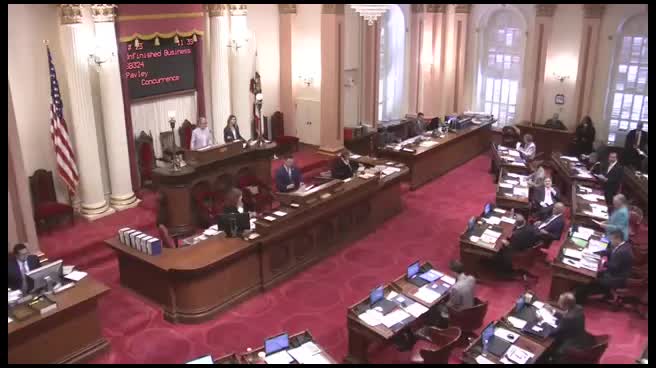 46SEC
Senate Floor
 56SEC
Assembly Floor
 51SEC
Assembly Floor
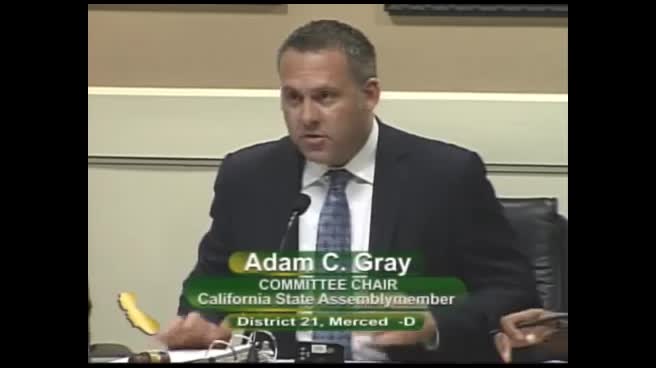 5MIN
Assembly Standing Committee on Governmental Organization
Bill Author

Bill Co-Author(s):
