SB 517: Supervised persons: release.
- Session Year: 2015-2016
- House: Senate
- Latest Version Date: 2015-07-06
Existing law allows a probation officer, parole officer, or peace officer to arrest a person without warrant or other process during the period that a person is released on probation, conditional sentence or summary probation, or mandatory supervision, or when the person is subject to revocation of postrelease community supervision or parole supervision, if the officer has probable cause to believe that the supervised person is violating the terms of his or her supervision.
This bill would allow a court to order the release of a supervised person from custody under any terms and conditions the court deems appropriate whenever a supervised person is arrested, with or without a warrant or the filing of a petition for revocation of supervision, unless the supervised person is otherwise serving a period of flash incarceration. The bill would make conforming changes to other provisions of existing law dealing with the arrest of supervised persons.
(a)At any time during the period of supervision of a person (1) released on probation under the care of a probation officer pursuant to this chapter, (2) released on conditional sentence or summary probation not under the care of a probation officer, (3) placed on mandatory supervision pursuant to subparagraph (B) of paragraph (5) of subdivision (h) of Section 1170, (4) subject to revocation of postrelease community supervision pursuant to Section 3455, or (5) subject to revocation of parole supervision pursuant to Section 3000.08, if any probation officer, parole officer, or peace officer has probable cause to believe that the supervised person is violating any term or condition of his or her supervision, the officer may, without warrant or other process and at any time until the final disposition of the case, rearrest the supervised person and bring him or her before the court or the court may, in its discretion, issue a warrant for his or her rearrest. Notwithstanding Section 3056, and unless the supervised person is otherwise serving a period of flash incarceration, whenever a supervised person who is subject to this section is arrested, with or without a warrant or the filing of a petition for revocation as described in subdivision (b), the court may order the release of a supervised person from custody under any terms and conditions the court deems appropriate. Upon rearrest, or upon the issuance of a warrant for rearrest, the court may revoke and terminate the supervision of the person if the interests of justice so require and the court, in its judgment, has reason to believe from the report of the probation or parole officer or otherwise that the person has violated any of the conditions of his or her supervision, has become abandoned to improper associates or a vicious life, or has subsequently committed other offenses, regardless of whether he or she has been prosecuted for those offenses. However, the court shall not terminate parole pursuant to this section. Supervision shall not be revoked for failure of a person to make restitution imposed as a condition of supervision unless the court determines that the defendant has willfully failed to pay and has the ability to pay. Restitution shall be consistent with a persons ability to pay. The revocation, summary or otherwise, shall serve to toll the running of the period of supervision.
(b)(1)Upon its own motion or upon the petition of the supervised person, the probation or parole officer, or the district attorney, the court may modify, revoke, or terminate supervision of the person pursuant to this subdivision, except that the court shall not terminate parole pursuant to this section. The court in the county in which the person is supervised has jurisdiction to hear the motion or petition, or for those on parole, either the court in the county of supervision or the court in the county in which the alleged violation of supervision occurred. A person supervised on parole or postrelease community supervision pursuant to Section 3455 may not petition the court pursuant to this section for early release from supervision, and a petition under this section shall not be filed solely for the purpose of modifying parole. This section does not prohibit the court in the county in which the person is supervised or in which the alleged violation of supervision occurred from modifying a persons parole when acting on the courts own motion or a petition to revoke parole. The court shall give notice of its motion, and the probation or parole officer or the district attorney shall give notice of his or her petition to the supervised person, his or her attorney of record, and the district attorney or the probation or parole officer, as the case may be. The supervised person shall give notice of his or her petition to the probation or parole officer and notice of any motion or petition shall be given to the district attorney in all cases. The court shall refer its motion or the petition to the probation or parole officer. After the receipt of a written report from the probation or parole officer, the court shall read and consider the report and either its motion or the petition and may modify, revoke, or terminate the supervision of the supervised person upon the grounds set forth in subdivision (a) if the interests of justice so require.
(2)The notice required by this subdivision may be given to the supervised person upon his or her first court appearance in the proceeding. Upon the agreement by the supervised person in writing to the specific terms of a modification or termination of a specific term of supervision, any requirement that the supervised person make a personal appearance in court for the purpose of a modification or termination shall be waived. Prior to the modification or termination and waiver of appearance, the supervised person shall be informed of his or her right to consult with counsel, and if indigent the right to secure court appointed counsel. If the supervised person waives his or her right to counsel a written waiver shall be required. If the supervised person consults with counsel and thereafter agrees to a modification, revocation, or termination of the term of supervision and waiver of personal appearance, the agreement shall be signed by counsel showing approval for the modification or termination and waiver.
(c)Upon any revocation and termination of probation the court may, if the sentence has been suspended, pronounce judgment for any time within the longest period for which the person might have been sentenced. However, if the judgment has been pronounced and the execution thereof has been suspended, the court may revoke the suspension and order that the judgment shall be in full force and effect. In either case, the person shall be delivered over to the proper officer to serve his or her sentence, less any credits herein provided for.
(d)In any case of revocation and termination of probation, including, but not limited to, cases in which the judgment has been pronounced and the execution thereof has been suspended, upon the revocation and termination, the court may, in lieu of any other sentence, commit the person to the Department of Corrections and Rehabilitation, Division of Juvenile Facilities if he or she is otherwise eligible for that commitment.
(e)If probation has been revoked before the judgment has been pronounced, the order revoking probation may be set aside for good cause upon motion made before pronouncement of judgment. If probation has been revoked after the judgment has been pronounced, the judgment and the order which revoked the probation may be set aside for good cause within 30 days after the court has notice that the execution of the sentence has commenced. If an order setting aside the judgment, the revocation of probation, or both is made after the expiration of the probationary period, the court may again place the person on probation for that period and with those terms and conditions as it could have done immediately following conviction.
(f)As used in this section, the following definitions shall apply:
(1)Court means a judge, magistrate, or revocation hearing officer described in Section 71622.5 of the Government Code.
(2)Probation officer means a probation officer as described in Section 1203 or an officer of the agency designated by the board of supervisors of a county to implement postrelease community supervision pursuant to Section 3451.
(3)Supervised person means a person who satisfies any of the following:
(A)He or she is released on probation subject to the supervision of a probation officer.
(B)He or she is released on conditional sentence or summary probation not under the care of a probation officer.
(C)He or she is subject to mandatory supervision pursuant to subparagraph (B) of paragraph (5) of subdivision (h) of Section 1170.
(D)He or she is subject to revocation of postrelease community supervision pursuant to Section 3455.
(E)He or she is subject to revocation of parole pursuant to Section 3000.08.
(g)This section does not affect the authority of the supervising agency to impose intermediate sanctions, including flash incarceration, to persons supervised on parole pursuant to Section 3000.8 or postrelease community supervision pursuant to Part 3 (commencing with Section 3450) of Title 2.05.
SEC. 2.Section 3000.08 of the Penal Code is amended to read:3000.08.(a)A person released from state prison prior to or on or after July 1, 2013, after serving a prison term, or whose sentence has been deemed served pursuant to Section 2900.5, for any of the following crimes is subject to parole supervision by the Department of Corrections and Rehabilitation and the jurisdiction of the court in the county in which the parolee is released, resides, or in which an alleged violation of supervision has occurred, for the purpose of hearing petitions to revoke parole and impose a term of custody:
(1)A serious felony as described in subdivision (c) of Section 1192.7.
(2)A violent felony as described in subdivision (c) of Section 667.5.
(3)A crime for which the person was sentenced pursuant to paragraph (2) of subdivision (e) of Section 667 or paragraph (2) of subdivision (c) of Section 1170.12.
(4)Any crime for which the person is classified as a high-risk sex offender.
(5)Any crime for which the person is required, as a condition of parole, to undergo treatment by the State Department of State Hospitals pursuant to Section 2962.
(b)Notwithstanding any other law, all other offenders released from prison shall be placed on postrelease supervision pursuant to Title 2.05 (commencing with Section 3450).
(c)At any time during the period of parole of a person subject to this section, if any parole agent or peace officer has probable cause to believe that the parolee is violating any term or condition of his or her parole, the agent or officer may, without warrant or other process and at any time until the final disposition of the case, arrest the person and bring him or her before the court, or the court may, in its discretion, issue a warrant for that persons arrest pursuant to Section 1203.2. Notwithstanding Section 3056, and unless the parolee is otherwise serving a period of flash incarceration, whenever a supervised person who is subject to this section is arrested, with or without a warrant or the filing of a petition for revocation as described in subdivision (f), the court may order the release of the parolee from custody under any terms and conditions the court deems appropriate.
(d)Upon review of the alleged violation and a finding of good cause that the parolee has committed a violation of law or violated his or her conditions of parole, the supervising parole agency may impose additional and appropriate conditions of supervision, including rehabilitation and treatment services and appropriate incentives for compliance, and impose immediate, structured, and intermediate sanctions for parole violations, including flash incarceration in a city or a county jail. Periods of flash incarceration, as defined in subdivision (e) are encouraged as one method of punishment for violations of a parolees conditions of parole. This section does not preclude referrals to a reentry court pursuant to Section 3015.
(e)Flash incarceration is a period of detention in a city or a county jail due to a violation of a parolees conditions of parole. The length of the detention period can range between one and 10 consecutive days. Shorter, but if necessary more frequent, periods of detention for violations of a parolees conditions of parole shall appropriately punish a parolee while preventing the disruption in a work or home establishment that typically arises from longer periods of detention.
(f)If the supervising parole agency has determined, following application of its assessment processes, that intermediate sanctions up to and including flash incarceration are not appropriate, the supervising parole agency shall, pursuant to Section 1203.2, petition either the court in the county in which the parolee is being supervised or the court in the county in which the alleged violation of supervision occurred, to revoke parole. At any point during the process initiated pursuant to this section, a parolee may waive, in writing, his or her right to counsel, admit the parole violation, waive a court hearing, and accept the proposed parole modification or revocation. The petition shall include a written report that contains additional information regarding the petition, including the relevant terms and conditions of parole, the circumstances of the alleged underlying violation, the history and background of the parolee, and any recommendations. The Judicial Council shall adopt forms and rules of court to establish uniform statewide procedures to implement this subdivision, including the minimum contents of supervision agency reports. Upon a finding that the person has violated the conditions of parole, the court shall have authority to do any of the following:
(1)Return the person to parole supervision with modifications of conditions, if appropriate, including a period of incarceration in county jail.
(2)Revoke parole and order the person to confinement in the county jail.
(3)Refer the person to a reentry court pursuant to Section 3015 or other evidence-based program in the courts discretion.
(g)Confinement pursuant to paragraphs (1) and (2) of subdivision (f) shall not exceed a period of 180 days in the county jail.
(h)Notwithstanding any other law, if Section 3000.1 or paragraph (4) of subdivision (b) of Section 3000 applies to a person who is on parole and the court determines that the person has committed a violation of law or violated his or her conditions of parole, the person on parole shall be remanded to the custody of the Department of Corrections and Rehabilitation and the jurisdiction of the Board of Parole Hearings for the purpose of future parole consideration.
(i)Notwithstanding subdivision (a), any of the following persons released from state prison shall be subject to the jurisdiction of, and parole supervision by, the Department of Corrections and Rehabilitation for a period of parole up to three years or the parole term the person was subject to at the time of the commission of the offense, whichever is greater:
(1)The person is required to register as a sex offender pursuant to Chapter 5.5 (commencing with Section 290) of Title 9 of Part 1, and was subject to a period of parole exceeding three years at the time he or she committed a felony for which they were convicted and subsequently sentenced to state prison.
(2)The person was subject to parole for life pursuant to Section 3000.1 at the time of the commission of the offense that resulted in a conviction and state prison sentence.
(j)Parolees subject to this section who have a pending adjudication for a parole violation on July 1, 2013, are subject to the jurisdiction of the Board of Parole Hearings. Parole revocation proceedings conducted by the Board of Parole Hearings prior to July 1, 2013, if reopened on or after July 1, 2013, are subject to the jurisdiction of the Board of Parole Hearings.
(k)Except as described in subdivision (c), any person who is convicted of a felony that requires community supervision and who still has a period of state parole to serve shall discharge from state parole at the time of release to community supervision.
(l)Any person released to parole supervision pursuant to subdivision (a) shall, regardless of any subsequent determination that the person should have been released pursuant to subdivision (b), remain subject to subdivision (a) after having served 60 days under supervision pursuant to subdivision (a).
SEC. 3.Section 3056 of the Penal Code is amended to read:3056.(a)Prisoners on parole shall remain under the supervision of the department but shall not be returned to prison except as provided in subdivision (b) or as provided by subdivision (c) of Section 3000.09. A parolee awaiting a parole revocation hearing may be housed in a county jail while awaiting revocation proceedings. If a parolee is housed in a county jail, he or she shall be housed in the county in which he or she was arrested or the county in which a petition to revoke parole has been filed or, if there is no county jail in that county, in the housing facility with which that county has contracted to house jail inmates. Additionally, except as provided by subdivision (c) of Section 3000.09, upon revocation of parole, a parolee may be housed in a county jail for a maximum of 180 days per revocation. When housed in county facilities, parolees shall be under the sole legal custody and jurisdiction of local county facilities. A parolee shall remain under the sole legal custody and jurisdiction of the local county or local correctional administrator, even if placed in an alternative custody program in lieu of incarceration, including, but not limited to, work furlough and electronic home detention. When a parolee is under the legal custody and jurisdiction of a county facility awaiting parole revocation proceedings or upon revocation, he or she shall not be under the parole supervision or jurisdiction of the department. Unless otherwise serving a period of flash incarceration, whenever a parolee who is subject to this section has been arrested, with or without a warrant or the filing of a petition for revocation with the court, the court may order the release of the parolee from custody under any terms and conditions the court deems appropriate. When released from the county facility or county alternative custody program following a period of custody for revocation of parole or because no violation of parole is found, the parolee shall be returned to the parole supervision of the department for the duration of parole.
(b)Inmates paroled pursuant to Section 3000.1 may be returned to prison following the revocation of parole by the Board of Parole Hearings until July 1, 2013, and thereafter by a court pursuant to Section 3000.08.
(c)A parolee who is subject to subdivision (a) but who is under 18 years of age may be housed in a facility of the Division of Juvenile Facilities.
SEC. 4.Section 3455 of the Penal Code is amended to read:3455.(a)If the supervising county agency has determined, following application of its assessment processes, that intermediate sanctions as authorized in subdivision (b) of Section 3454 are not appropriate, the supervising county agency shall petition the court pursuant to Section 1203.2 to revoke, modify, or terminate postrelease community supervision. At any point during the process initiated pursuant to this section, a person may waive, in writing, his or her right to counsel, admit the violation of his or her postrelease community supervision, waive a court hearing, and accept the proposed modification of his or her postrelease community supervision. The petition shall include a written report that contains additional information regarding the petition, including the relevant terms and conditions of postrelease community supervision, the circumstances of the alleged underlying violation, the history and background of the violator, and any recommendations. The Judicial Council shall adopt forms and rules of court to establish uniform statewide procedures to implement this subdivision, including the minimum contents of supervision agency reports. Upon a finding that the person has violated the conditions of postrelease community supervision, the revocation hearing officer shall have authority to do all of the following:
(1)Return the person to postrelease community supervision with modifications of conditions, if appropriate, including a period of incarceration in a county jail.
(2)Revoke and terminate postrelease community supervision and order the person to confinement in a county jail.
(3)Refer the person to a reentry court pursuant to Section 3015 or other evidence-based program in the courts discretion.
(b)(1)At any time during the period of postrelease community supervision, if a peace officer has probable cause to believe a person subject to postrelease community supervision is violating any term or condition of his or her release, the officer may, without a warrant or other process, arrest the person and bring him or her before the supervising county agency established by the county board of supervisors pursuant to subdivision (a) of Section 3451. Additionally, an officer employed by the supervising county agency may seek a warrant and a court or its designated hearing officer appointed pursuant to Section 71622.5 of the Government Code shall have the authority to issue a warrant for that persons arrest.
(2)The court or its designated hearing officer shall have the authority to issue a warrant for a person who is the subject of a petition filed under this section who has failed to appear for a hearing on the petition or for any reason in the interests of justice, or to remand to custody a person who does appear at a hearing on the petition for any reason in the interests of justice.
(3)Unless a person subject to postrelease community supervision is otherwise serving a period of flash incarceration, whenever a person who is subject to this section is arrested, with or without a warrant or the filing of a petition for revocation, the court may order the release of the person under supervision from custody under any terms and conditions the court deems appropriate.
(c)The revocation hearing shall be held within a reasonable time after the filing of the revocation petition. Except as provided in paragraph (3) of subdivision (b), based upon a showing of a preponderance of the evidence that a person under supervision poses an unreasonable risk to public safety, or that the person may not appear if released from custody, or for any reason in the interests of justice, the supervising county agency shall have the authority to make a determination whether the person should remain in custody pending the first court appearance on a petition to revoke postrelease community supervision, and upon that determination, may order the person confined pending his or her first court appearance.
(d)Confinement pursuant to paragraphs (1) and (2) of subdivision (a) shall not exceed a period of 180 days in a county jail for each custodial sanction.
(e)A person shall not remain under supervision or in custody pursuant to this title on or after three years from the date of the persons initial entry onto postrelease community supervision, except when his or her supervision is tolled pursuant to Section 1203.2 or subdivision (b) of Section 3456.
(a)At any time during the period of supervision of a person (1) released on probation under the care of a probation officer pursuant to this chapter, (2) released on conditional sentence or summary probation not under the care of a probation officer, (3) placed on mandatory supervision pursuant to subparagraph (B) of paragraph (5) of subdivision (h) of Section 1170, (4) subject to revocation of postrelease community supervision pursuant to Section 3455, or (5) subject to revocation of parole supervision pursuant to Section 3000.08, if any probation officer, parole officer, or peace officer has probable cause to believe that the supervised person is violating any term or condition of his or her supervision, the officer may, without warrant or other process and at any time until the final disposition of the case, rearrest the supervised person and bring him or her before the court or the court may, in its discretion, issue a warrant for his or her rearrest. Notwithstanding Section 3056, and unless the supervised person is otherwise serving a period of flash incarceration, whenever a supervised person who is subject to this section is arrested, with or without a warrant or the filing of a petition for revocation as described in subdivision (b), the court may order the release of a supervised person from custody under any terms and conditions the court deems appropriate. Upon such rearrest, or upon the issuance of a warrant for rearrest, the court may revoke and terminate the supervision of the person if the interests of justice so require and the court, in its judgment, has reason to believe from the report of the probation or parole officer or otherwise that the person has violated any of the conditions of his or her supervision, has become abandoned to improper associates or a vicious life, or has subsequently committed other offenses, regardless of whether he or she has been prosecuted for such those offenses. However, the court shall not terminate parole pursuant to this section. Supervision shall not be revoked for failure of a person to make restitution imposed as a condition of supervision unless the court determines that the defendant has willfully failed to pay and has the ability to pay. Restitution shall be consistent with a persons ability to pay. The revocation, summary or otherwise, shall serve to toll the running of the period of supervision.
(b)(1)Upon its own motion or upon the petition of the supervised person, the probation or parole officer, or the district attorney, the court may modify, revoke, or terminate supervision of the person pursuant to this subdivision, except that the court shall not terminate parole pursuant to this section. The court in the county in which the person is supervised has jurisdiction to hear the motion or petition, or for those on parole, either the court in the county of supervision or the court in the county in which the alleged violation of supervision occurred. A person supervised on parole or postrelease community supervision pursuant to Section 3455 may not petition the court pursuant to this section for early release from supervision, and a petition under this section shall not be filed solely for the purpose of modifying parole. Nothing in this section shall This section does not prohibit the court in the county in which the person is supervised or in which the alleged violation of supervision occurred from modifying a persons parole when acting on the courts own motion or a petition to revoke parole. The court shall give notice of its motion, and the probation or parole officer or the district attorney shall give notice of his or her petition to the supervised person, his or her attorney of record, and the district attorney or the probation or parole officer, as the case may be. The supervised person shall give notice of his or her petition to the probation or parole officer and notice of any motion or petition shall be given to the district attorney in all cases. The court shall refer its motion or the petition to the probation or parole officer. After the receipt of a written report from the probation or parole officer, the court shall read and consider the report and either its motion or the petition and may modify, revoke, or terminate the supervision of the supervised person upon the grounds set forth in subdivision (a) if the interests of justice so require.
(2)The notice required by this subdivision may be given to the supervised person upon his or her first court appearance in the proceeding. Upon the agreement by the supervised person in writing to the specific terms of a modification or termination of a specific term of supervision, any requirement that the supervised person make a personal appearance in court for the purpose of a modification or termination shall be waived. Prior to the modification or termination and waiver of appearance, the supervised person shall be informed of his or her right to consult with counsel, and if indigent the right to secure court appointed counsel. If the supervised person waives his or her right to counsel a written waiver shall be required. If the supervised person consults with counsel and thereafter agrees to a modification, revocation, or termination of the term of supervision and waiver of personal appearance, the agreement shall be signed by counsel showing approval for the modification or termination and waiver.
(c)Upon any revocation and termination of probation the court may, if the sentence has been suspended, pronounce judgment for any time within the longest period for which the person might have been sentenced. However, if the judgment has been pronounced and the execution thereof has been suspended, the court may revoke the suspension and order that the judgment shall be in full force and effect. In either case, the person shall be delivered over to the proper officer to serve his or her sentence, less any credits herein provided for.
(d)In any case of revocation and termination of probation, including, but not limited to, cases in which the judgment has been pronounced and the execution thereof has been suspended, upon the revocation and termination, the court may, in lieu of any other sentence, commit the person to the Department of Corrections and Rehabilitation, Division of Juvenile Facilities if he or she is otherwise eligible for such that commitment.
(e)If probation has been revoked before the judgment has been pronounced, the order revoking probation may be set aside for good cause upon motion made before pronouncement of judgment. If probation has been revoked after the judgment has been pronounced, the judgment and the order which revoked the probation may be set aside for good cause within 30 days after the court has notice that the execution of the sentence has commenced. If an order setting aside the judgment, the revocation of probation, or both is made after the expiration of the probationary period, the court may again place the person on probation for that period and with those terms and conditions as it could have done immediately following conviction.
(f)As used in this section, the following definitions shall apply:
(1)Court means a judge, magistrate, or revocation hearing officer described in Section 71622.5 of the Government Code.
(2)Probation officer means a probation officer as described in Section 1203 or an officer of the agency designated by the board of supervisors of a county to implement postrelease community supervision pursuant to Section 3451.
(3)Supervised person means a person who satisfies any of the following:
(A)He or she is released on probation subject to the supervision of a probation officer.
(B)He or she is released on conditional sentence or summary probation not under the care of a probation officer.
(C)He or she is subject to mandatory supervision pursuant to subparagraph (B) of paragraph (5) of subdivision (h) of Section 1170.
(D)He or she is subject to revocation of postrelease community supervision pursuant to Section 3455.
(E)He or she is subject to revocation of parole pursuant to Section 3000.08.
(g)Nothing in this section affects This section does not affect the authority of the supervising agency to impose intermediate sanctions, including flash incarceration, to persons supervised on parole pursuant to Section 3000.8 or postrelease community supervision pursuant to Part 3 (commencing with Section 3450) of Title 2.05.
SEC. 2.Section 3000.08 of the Penal Code is amended to read:3000.08.(a)A person released from state prison prior to or on or after July 1, 2013, after serving a prison term, or whose sentence has been deemed served pursuant to Section 2900.5, for any of the following crimes is subject to parole supervision by the Department of Corrections and Rehabilitation and the jurisdiction of the court in the county in which the parolee is released, resides, or in which an alleged violation of supervision has occurred, for the purpose of hearing petitions to revoke parole and impose a term of custody:
(1)A serious felony as described in subdivision (c) of Section 1192.7.
(2)A violent felony as described in subdivision (c) of Section 667.5.
(3)A crime for which the person was sentenced pursuant to paragraph (2) of subdivision (e) of Section 667 or paragraph (2) of subdivision (c) of Section 1170.12.
(4)Any crime for which the person is classified as a high-risk sex offender.
(5)Any crime for which the person is required, as a condition of parole, to undergo treatment by the State Department of State Hospitals pursuant to Section 2962.
(b)Notwithstanding any other law, all other offenders released from prison shall be placed on postrelease supervision pursuant to Title 2.05 (commencing with Section 3450).
(c)At any time during the period of parole of a person subject to this section, if any parole agent or peace officer has probable cause to believe that the parolee is violating any term or condition of his or her parole, the agent or officer may, without warrant or other process and at any time until the final disposition of the case, arrest the person and bring him or her before the court, or the court may, in its discretion, issue a warrant for that persons arrest pursuant to Section 1203.2. Notwithstanding Section 3056, and unless the parolee is otherwise serving a period of flash incarceration, whenever a supervised person who is subject to this section is arrested, with or without a warrant or the filing of a petition for revocation as described in subdivision (f), the court may order the release of the parolee from custody under any terms and conditions the court deems appropriate.
(d)Upon review of the alleged violation and a finding of good cause that the parolee has committed a violation of law or violated his or her conditions of parole, the supervising parole agency may impose additional and appropriate conditions of supervision, including rehabilitation and treatment services and appropriate incentives for compliance, and impose immediate, structured, and intermediate sanctions for parole violations, including flash incarceration in a city or a county jail. Periods of flash incarceration, as defined in subdivision (e) are encouraged as one method of punishment for violations of a parolees conditions of parole. This section does not preclude referrals to a reentry court pursuant to Section 3015.
(e)Flash incarceration is a period of detention in a city or a county jail due to a violation of a parolees conditions of parole. The length of the detention period can range between one and 10 consecutive days. Shorter, but if necessary more frequent, periods of detention for violations of a parolees conditions of parole shall appropriately punish a parolee while preventing the disruption in a work or home establishment that typically arises from longer periods of detention.
(f)If the supervising parole agency has determined, following application of its assessment processes, that intermediate sanctions up to and including flash incarceration are not appropriate, the supervising parole agency shall, pursuant to Section 1203.2, petition either the court in the county in which the parolee is being supervised or the court in the county in which the alleged violation of supervision occurred, to revoke parole. At any point during the process initiated pursuant to this section, a parolee may waive, in writing, his or her right to counsel, admit the parole violation, waive a court hearing, and accept the proposed parole modification or revocation. The petition shall include a written report that contains additional information regarding the petition, including the relevant terms and conditions of parole, the circumstances of the alleged underlying violation, the history and background of the parolee, and any recommendations. The Judicial Council shall adopt forms and rules of court to establish uniform statewide procedures to implement this subdivision, including the minimum contents of supervision agency reports. Upon a finding that the person has violated the conditions of parole, the court shall have authority to do any of the following:
(1)Return the person to parole supervision with modifications of conditions, if appropriate, including a period of incarceration in county jail.
(2)Revoke parole and order the person to confinement in the county jail.
(3)Refer the person to a reentry court pursuant to Section 3015 or other evidence-based program in the courts discretion.
(g)Confinement pursuant to paragraphs (1) and (2) of subdivision (f) shall not exceed a period of 180 days in the county jail.
(h)Notwithstanding any other law, if Section 3000.1 or paragraph (4) of subdivision (b) of Section 3000 applies to a person who is on parole and the court determines that the person has committed a violation of law or violated his or her conditions of parole, the person on parole shall be remanded to the custody of the Department of Corrections and Rehabilitation and the jurisdiction of the Board of Parole Hearings for the purpose of future parole consideration.
(i)Notwithstanding subdivision (a), any of the following persons released from state prison shall be subject to the jurisdiction of, and parole supervision by, the Department of Corrections and Rehabilitation for a period of parole up to three years or the parole term the person was subject to at the time of the commission of the offense, whichever is greater:
(1)The person is required to register as a sex offender pursuant to Chapter 5.5 (commencing with Section 290) of Title 9 of Part 1, and was subject to a period of parole exceeding three years at the time he or she committed a felony for which they were convicted and subsequently sentenced to state prison.
(2)The person was subject to parole for life pursuant to Section 3000.1 at the time of the commission of the offense that resulted in a conviction and state prison sentence.
(j)Parolees subject to this section who have a pending adjudication for a parole violation on July 1, 2013, are subject to the jurisdiction of the Board of Parole Hearings. Parole revocation proceedings conducted by the Board of Parole Hearings prior to July 1, 2013, if reopened on or after July 1, 2013, are subject to the jurisdiction of the Board of Parole Hearings.
(k)Except as described in subdivision (c), any person who is convicted of a felony that requires community supervision and who still has a period of state parole to serve shall discharge from state parole at the time of release to community supervision.
(l)Any person released to parole supervision pursuant to subdivision (a) shall, regardless of any subsequent determination that the person should have been released pursuant to subdivision (b), remain subject to subdivision (a) after having served 60 days under supervision pursuant to subdivision (a).
(m)This section shall become operative on July 1, 2013.
SEC. 3.Section 3056 of the Penal Code is amended to read:3056.(a)Prisoners on parole shall remain under the supervision of the department but shall not be returned to prison except as provided in subdivision (b) or as provided by subdivision (c) of Section 3000.09. A parolee awaiting a parole revocation hearing may be housed in a county jail while awaiting revocation proceedings. If a parolee is housed in a county jail, he or she shall be housed in the county in which he or she was arrested or the county in which a petition to revoke parole has been filed or, if there is no county jail in that county, in the housing facility with which that county has contracted to house jail inmates. Additionally, except as provided by subdivision (c) of Section 3000.09, upon revocation of parole, a parolee may be housed in a county jail for a maximum of 180 days per revocation. When housed in county facilities, parolees shall be under the sole legal custody and jurisdiction of local county facilities. A parolee shall remain under the sole legal custody and jurisdiction of the local county or local correctional administrator, even if placed in an alternative custody program in lieu of incarceration, including, but not limited to, work furlough and electronic home detention. When a parolee is under the legal custody and jurisdiction of a county facility awaiting parole revocation proceedings or upon revocation, he or she shall not be under the parole supervision or jurisdiction of the department. Unless otherwise serving a period of flash incarceration, whenever a parolee who is subject to this section has been arrested, with or without a warrant or the filing of a petition for revocation with the court, the court may order the release of the parolee from custody under any terms and conditions the court deems appropriate. When released from the county facility or county alternative custody program following a period of custody for revocation of parole or because no violation of parole is found, the parolee shall be returned to the parole supervision of the department for the duration of parole.
(b)Inmates paroled pursuant to Section 3000.1 may be returned to prison following the revocation of parole by the Board of Parole Hearings until July 1, 2013, and thereafter by a court pursuant to Section 3000.08.
(c)A parolee who is subject to subdivision (a) but who is under 18 years of age may be housed in a facility of the Division of Juvenile Facilities.
SEC. 4.Section 3455 of the Penal Code is amended to read:3455.(a)If the supervising county agency has determined, following application of its assessment processes, that intermediate sanctions as authorized in subdivision (b) of Section 3454 are not appropriate, the supervising county agency shall petition the court pursuant to Section 1203.2 to revoke, modify, or terminate postrelease community supervision. At any point during the process initiated pursuant to this section, a person may waive, in writing, his or her right to counsel, admit the violation of his or her postrelease community supervision, waive a court hearing, and accept the proposed modification of his or her postrelease community supervision. The petition shall include a written report that contains additional information regarding the petition, including the relevant terms and conditions of postrelease community supervision, the circumstances of the alleged underlying violation, the history and background of the violator, and any recommendations. The Judicial Council shall adopt forms and rules of court to establish uniform statewide procedures to implement this subdivision, including the minimum contents of supervision agency reports. Upon a finding that the person has violated the conditions of postrelease community supervision, the revocation hearing officer shall have authority to do all of the following:
(1)Return the person to postrelease community supervision with modifications of conditions, if appropriate, including a period of incarceration in a county jail.
(2)Revoke and terminate postrelease community supervision and order the person to confinement in the a county jail.
(3)Refer the person to a reentry court pursuant to Section 3015 or other evidence-based program in the courts discretion.
(b)(1)At any time during the period of postrelease community supervision, if any a peace officer has probable cause to believe a person subject to postrelease community supervision is violating any term or condition of his or her release, the officer may, without a warrant or other process, arrest the person and bring him or her before the supervising county agency established by the county board of supervisors pursuant to subdivision (a) of Section 3451. Additionally, an officer employed by the supervising county agency may seek a warrant and a court or its designated hearing officer appointed pursuant to Section 71622.5 of the Government Code shall have the authority to issue a warrant for that persons arrest.
(2)The court or its designated hearing officer shall have the authority to issue a warrant for any a person who is the subject of a petition filed under this section who has failed to appear for a hearing on the petition or for any reason in the interests of justice, or to remand to custody a person who does appear at a hearing on the petition for any reason in the interests of justice.
(3)Unless a person subject to postrelease community supervision is otherwise serving a period of flash incarceration, whenever a person who is subject to this section is arrested, with or without a warrant or the filing of a petition for revocation, the court may order the release of the person under supervision from custody under any terms and conditions the court deems appropriate.
(c)The revocation hearing shall be held within a reasonable time after the filing of the revocation petition. Based Except as provided in paragraph (3) of subdivision (b), based upon a showing of a preponderance of the evidence that a person under supervision poses an unreasonable risk to public safety, or that the person may not appear if released from custody, or for any reason in the interests of justice, the supervising county agency shall have the authority to make a determination whether the person should remain in custody pending the first court appearance on a petition to revoke postrelease community supervision, and upon that determination, may order the person confined pending his or her first court appearance.
(d)Confinement pursuant to paragraphs (1) and (2) of subdivision (a) shall not exceed a period of 180 days in the a county jail for each custodial sanction.
(e)A person shall not remain under supervision or in custody pursuant to this title on or after three years from the date of the persons initial entry onto postrelease community supervision, except when his or her supervision is tolled pursuant to Section 1203.2 or subdivision (b) of Section 3456.
|
Date
|
Status
|
|---|---|
| May 18, 2015 | Referred to Com. on PUB. S. |
| Jul 6, 2015 | Chaptered by Secretary of State. Chapter 61, Statutes of 2015. |
| Jul 6, 2015 | Approved by the Governor. |
| Jun 26, 2015 | Enrolled and presented to the Governor at 11:45 a.m. |
| Jun 25, 2015 | Read third time. Passed. (Ayes 76. Noes 0. Page 2147.) Ordered to the Senate. |
| Jun 25, 2015 | Read third time. Passed. Ordered to the Senate. |
| Jun 25, 2015 | In Senate. Ordered to engrossing and enrolling. |
| Jun 17, 2015 | Read second time. Ordered to third reading. |
| Jun 16, 2015 | From committee: Do pass. (Ayes 7. Noes 0.) (June 16). |
| Feb 26, 2015 | Introduced. Read first time. To Com. on RLS. for assignment. To print. |
| Apr 20, 2015 | Read third time. Passed. (Ayes 34. Noes 1. Page 668.) Ordered to the Assembly. |
| Apr 20, 2015 | In Assembly. Read first time. Held at Desk. |
| Apr 16, 2015 | Read second time. Ordered to third reading. |
| Apr 15, 2015 | From committee: Do pass. (Ayes 6. Noes 0. Page 595.) (April 14). |
| Mar 27, 2015 | Set for hearing April 14. |
| Mar 12, 2015 | Referred to Com. on PUB. S. |
| Feb 27, 2015 | From printer. May be acted upon on or after March 29. |
|
Date
|
Description
|
Location
|
Votes
|
|
|---|---|---|---|---|
| Jun 25, 2015 | SB 517 Monning Senate Third Reading By QUIRK | Assembly Floor |
Passed |
|
| Jun 16, 2015 | Do pass. | Assembly Standing Committee on Public Safety |
Passed |
|
| Apr 20, 2015 | Senate 3rd Reading SB517 Monning | Senate Floor |
Passed |
|
| Apr 14, 2015 | Do pass | Senate Standing Committee on Public Safety |
Passed |
This list shows positions taken on this bill by organizations on the date displayed, which is linked to the original source.
Positions by individuals are not included.
|
Organization
|
Position
|
Date
|
|---|---|---|
| California Attorneys For Criminal Justice | ** Support | Jun 16, 2015 |
| California Judges Association | ** Support | Jun 16, 2015 |
| California Police Chiefs Association | ** Support | Jun 16, 2015 |
| California Public Defenders Association | * Support | Jun 16, 2015 |
| California Public Defenders Association | * Indeterminate | Jun 16, 2015 |
| Californians for Safety and Justice | ** Support | Jun 16, 2015 |
| Judicial Council | * Indeterminate | Jun 16, 2015 |
| Judicial Council of California | * Support | Jun 16, 2015 |
| Legal Services for Prisoners with Children | ** Support | Jun 16, 2015 |
SB 517
Page 3
SENATE THIRD READING
SB 517
(Monning)
As Introduced February 26, 2015
Majority vote
SENATE VOTE: 34-1
Committee |
Votes |
Ayes |
Noes |
Public Safety |
7-0 |
Quirk, Melendez, Jones-Sawyer, Lackey, Lopez, Low, Santiago |
|
SUMMARY: Authorizes a court to release from custody a person on probation, mandatory supervision, postrelease community supervision (PRCS), or parole, who is alleged to have violated the terms of supervision under any terms and conditions the court deems appropriate unless the person is serving a period of flash incarceration.
EXISTING LAW:
Requires all persons paroled before October 1, 2011, to remain under the supervision of the California Department of Corrections and Rehabilitation (CDCR) until jurisdiction is terminated by operation of law or until parole is discharged.
Requires the following persons released from state prison on or after July 1, 2013, to be subject to parole under the supervision of CDCR:
A person who committed a serious felony listed in Penal Code Section 1192.7(c);
A person who committed a violent felony listed in Penal Code Section 667.5(c);
A person serving a sentence under the "Three Strikes" law;
A person classified as a high-risk sex offender;
A person determined to be a mentally disordered offender;
A person required to register as a sex offender and subject to a parole term exceeding three years at the time of the commission of the offense for which he or she is being released; and,
A person subject to lifetime parole at the time of the commission of the offense for which he or she is being released.
States that all other offenders released from prison on or after July 1, 2013, to be placed on PRCS under the supervision of a county agency, such as a probation department.
Limits PRCS to three years.
Provides for intermediate sanctions for violating the terms of PRCS, including "flash incarceration" for up to 10 days.
Specifies that if PRCS is revoked, the offender may be incarcerated in the county jail for a period not to exceed 180 days for each custodial sanction.
Prohibits the return of an offender who violates conditions of PRCS to prison.
Specifies that a parolee held in custody for a pending parole violation before October 1, 2011, may be returned to state prison for the violation for period not to exceed 12 months.
Specifies that a parolee held in custody for a pending parole violation on or after October 1, 2011, will be returned to county jail, rather than state prison, for up to 180 days of incarceration per revocation.
Authorizes a county agency responsible for PRCS to determine additional appropriate conditions of supervision consistent with public safety, including continuous electronic monitoring, order the provision of appropriate rehabilitation and treatment services, determine appropriate incentives, and determine and order appropriate responses to alleged violations, which can include, but shall not be limited to, immediate, structured, and intermediate sanctions up to and including referral to a reentry court, or flash incarceration in a county jail. Periods of flash incarceration are encouraged as one method of punishment for violations of an offender’s condition of post release supervision.
Defines "flash incarceration" as a period of detention in county jail due to a violation of an offender’s conditions of post release supervision. The length of the detention period can range between one and 10 consecutive days. Flash incarceration is a tool that may be used by each county agency responsible for post release supervision. Shorter, but if necessary more frequent, periods of detention for violations of an offender's post release supervision conditions shall appropriately punish an offender while preventing the disruption in a work or home establishment that typically arises from longer term revocations.
FISCAL EFFECT: Unknown. This bill has been keyed non-fiscal by the Legislative Counsel.
COMMENTS: According to the author, "Prior to the implementation of criminal justice realignment under AB 109 (Budget Committee), Chapter 15, Statutes of 2011, the California Department of Corrections and Rehabilitation had the authority to issue arrest warrants for parole violations along with issuing and recalling parole holds. While the courts were given the statutory authority to issue arrest warrants for parole violations under realignment, the legislation failed to give explicit statutory authority for the courts to recall a parole hold. Without this statutory authority, a supervising parole or probation officer has the sole authority over custody decisions of a supervised individual in jail on a parole hold.
"When a supervised person is rearrested and placed in custody, the supervising officer can either impose sanctions on the offender, such as flash incarceration, or petition the courts to have their parole revoked. Until that happens, however, the courts have no statutory authority to release the individual from the parole hold. Additionally, an October 2014 appellate court decision, Williams v. Superior Court (2014) 230 Cal.App.4th 636, now requires the supervising officer to act within 10 days of placing a supervised person on a parole hold, by either imposing sanctions or initiating revocation proceedings with the courts.
"SB 517 will provide the courts with discretion when determining the custody status of an individual on probation, parole, or post release community supervision who is placed in county jail on a parole hold for violating their terms of supervision. This measure will correct an oversight of realignment and ensure that courts have the same authority CDCR had prior to realignment."
Analysis Prepared by: Gregory Pagan / PUB. S. / (916) 319-3744 FN: 0000960
SB 517
Page 3
Date of Hearing: June 16, 2015
Chief Counsel: Gregory Pagan
ASSEMBLY COMMITTEE ON PUBLIC SAFETY
Bill Quirk, Chair
SB 517
(Monning) – As Introduced February 26, 2015
SUMMARY: Authorizes a court to release from custody a person on probation, mandatory supervision, postrelease community supervision (PRCS), or parole, who is alleged to have violated the terms of supervision under any terms and conditions the court deems appropriate unless the person is serving a period of flash incarceration.
EXISTING LAW:
Requires all persons paroled before October 1, 2011 to remain under the supervision of the California Department of Corrections and Rehabilitation (CDCR) until jurisdiction is terminated by operation of law or until parole is discharged. (Pen. Code, § 3000.09.)
Requires the following persons released from state prison on or after July 1, 2013 to be subject to parole under the supervision of CDCR:
A person who committed a serious felony listed in Penal Code Section 1192.7(c);
A person who committed a violent felony listed in Penal Code Section 667.5(c);
A person serving a sentence under the "Three Strikes" law;
A person classified as a high-risk sex offender;
A person determined to be a mentally disordered offender;
A person required to register as a sex offender and subject to a parole term exceeding three years at the time of the commission of the offense for which he or she is being released; and,
A person subject to lifetime parole at the time of the commission of the offense for which he or she is being released. (Pen. Code, § 3000.08, subd. (a) and (i).)
States that all other offenders released from prison on or after July 1, 2013, to be placed on PRCS under the supervision of a county agency, such as a probation department. (Pen. Code, § 3000.08(b).)
Limits PRCS to three years. (Pen. Code, § 3451, subd. (a).)
Provides for intermediate sanctions for violating the terms of PRCS, including "flash incarceration" for up to 10 days. (Pen. Code, § 3454.)
Specifies that if PRCS is revoked, the offender may be incarcerated in the county jail for a period not to exceed 180 days for each custodial sanction. (Pen. Code, § 3455, subd. (d).)
Prohibits the return of an offender who violates conditions of PRCS to prison. (Pen. Code, § 3458.)
Specifies that a parolee held in custody for a pending parole violation before October 1, 2011, may be returned to state prison for the violation for period not to exceed 12 months. (Pen Code § 3057, subd. (a).)
Specifies that a parolee held in custody for a pending parole violation on or after October 1, 2011 will be returned to county jail, rather than state prison, for up to 180 days of incarceration per revocation. (Pen. Code § 3056, subd. (a).)
Authorizes a county agency responsible for PRCS to determine additional appropriate conditions of supervision consistent with public safety, including continuous electronic monitoring, order the provision of appropriate rehabilitation and treatment services, determine appropriate incentives, and determine and order appropriate responses to alleged violations, which can include, but shall not be limited to, immediate, structured, and intermediate sanctions up to and including referral to a reentry court, or flash incarceration in a county jail. Periods of flash incarceration are encouraged as one method of punishment for violations of an offender’s condition of post release supervision. (Pen. Code, § 3454, subd. (b).)
Defines "flash incarceration" as a period of detention in county jail due to a violation of an offender’s conditions of post release supervision. The length of the detention period can range between one and 10 consecutive days. Flash incarceration is a tool that may be used by each county agency responsible for post release supervision. Shorter, but if necessary more frequent, periods of detention for violations of an offender’s post release supervision conditions shall appropriately punish an offender while preventing the disruption in a work or home establishment that typically arises from longer term revocations. (Pen. Code § 3454, subd. (c).)
FISCAL EFFECT: Unknown
COMMENTS:
Author's Statement: According to the author, "Prior to the implementation of criminal justice realignment under AB 109, the California Department of Corrections and Rehabilitation had the authority to issue arrest warrants for parole violations along with issuing and recalling parole holds. While the courts were given the statutory authority to issue arrest warrants for parole violations under realignment, the legislation failed to give explicit statutory authority for the courts to recall a parole hold. Without this statutory authority, a supervising parole or probation officer has the sole authority over custody decisions of a supervised individual in jail on a parole hold.
"When a supervised person is rearrested and placed in custody, the supervising officer can either impose sanctions on the offender, such as flash incarceration, or petition the courts to have their parole revoked. Until that happens, however, the courts have no statutory authority to release the individual from the parole hold. Additionally, an October 2014 appellate court decision, Williams v. Superior Court (2014) 230 Cal.App.4th 636, now requires the supervising officer to act within 10 days of placing a supervised person on a parole hold, by either imposing sanctions or initiating revocation proceedings with the courts.
"SB 517 will provide the courts with discretion when determining the custody status of an individual on probation, parole, or post release community supervision who is placed in county jail on a parole hold for violating their terms of supervision. This measure will correct an oversight of realignment and ensure that courts have the same authority CDCR had prior to realignment."
REGISTERED SUPPORT / OPPOSITION:
Support
Judicial Council of
California (Sponsor)
California Attorneys for Criminal
Justice
California Judges Association
California Public
Defenders Association
California Police Chiefs Association
Californians for
Safety and Justice
Legal Services for Prisoners with Children
Opposition
None
Analysis Prepared by: Gregory Pagan / PUB. S. / (916) 319-3744
SB 517
Page 3
|
Office of Senate Floor Analyses (916) 651-1520 Fax: (916) 327-4478 |
THIRD READING
Bill No: SB 517
Introduced: 2/26/15
SENATE PUBLIC SAFETY COMMITTEE: 6-0, 4/14/15
AYES: Hancock, Anderson, Leno, McGuire, Monning, Stone
NO VOTE RECORDED: Liu
SUBJECT: Supervised persons: release
SOURCE: Judicial Council of California
DIGEST: This bill authorizes a court to release a person on mandatory supervision, post release community supervision or parole who has been alleged to have violated a condition of supervision, unless the supervised person is serving a term of flash incarceration.
Existing law:
Requires certain persons released from prison on or after October 1, 2011, be subject to parole under the supervision of the California Department of Corrections (CDCR), as specified.
Requires certain offenders released from prison on or after October 1, 2011, to be placed on post release community supervision (PRCS) under the supervision of probation, as specified. (Pen. Code § 3000.08(b).)
Limits PRCS to three years. (Pen. Code § 3451(a).)
Provides for intermediate sanctions for violating the terms of PRCS, including "flash incarceration" for up to 10 days. (Pen. Code § 3454.)
Specifies that if PRCS is revoked, the offender may be incarcerated in the county jail for a period not to exceed 180 days for each custodial sanction. (Pen. Code § 3455, subd. (d).)
Prohibits the return of an offender to prison for the violation of conditions of PRCS. (Pen. Code § 3458.)
Specifies that a parolee held in custody for a pending parole violation on or after October 1, 2011, will be returned to county jail, rather than state prison, for up to 180 days of incarceration per revocation. (Pen. Code § 3056, subd. (a).)
Generally authorizes the use of a penalty known as “flash incarceration” for felons who have been released from prison, are subject to supervision by state parole or county probation, and are believed to have violated a condition of their supervision. (Penal Code §§ 3008.8, 3450.)
Authorizes county agencies responsible for supervising persons subject to PRCS to manage them in the community, as specified.
Authorizes the use of flash incarceration on parolees, who are supervised by state parole. (Pen. Code § 3008.08, subds. (d), (e) and (f).)
This bill:
Provides that if a person under supervision is alleged to have violated the terms of probation, mandatory supervision, post release community supervision or parole, the court may order release of the person under any terms and conditions the court deems appropriate.
Provides that the authority and discretion of the court to release a person facing a revocation hearing does not apply if the person is serving a period of flash incarceration.
NOTE: Please see the policy committee analysis for a full discussion of this bill.
FISCAL EFFECT: Appropriation: No Fiscal Com.: No Local: No
Judicial Council of California (source)
California Attorneys for Criminal Justice
California Public Defenders Association
California Judges Association
Legal Services for Prisoners with Children
OPPOSITION: (Verified 4/16/15)
None received
ARGUMENTS IN SUPPORT: The author states in part: “SB 517 will provide the courts with discretion when determining the custody status of an individual on probation, parole, or post release community supervision who is placed in county jail on a parole hold for violating their terms of supervision. This measure will correct an oversight of realignment and ensure that courts have the same authority CDCR had prior to realignment.”
Prepared by: Alison Anderson / PUB. S. /
4/17/15 14:25:03
**** END ****
SB 517 (Monning ) Page 5 of 5
SENATE COMMITTEE ON PUBLIC SAFETY
Senator Loni Hancock, Chair
2015 - 2016 Regular
Bill No: SB 517 Hearing Date: April 14, 2015
Author: |
Monning |
||
Version: |
February 26, 2015 |
||
Urgency: |
No |
Fiscal: |
No |
Consultant: |
JM |
||
Subject: Supervised Persons: Release
HISTORY
Source: Judicial Council of California
Prior Legislation: AB 109 (Committee on Budget) Ch. 15, Stats. 2011
AB 117 (Committee on Budget) Ch. 39, Stats. 2011
Support: Legal Services for Prisoners with Children; California Public Defenders Association, California Judges Association
Opposition: None known
PURPOSE
The purpose of this bill is to authorize a court to release a person on mandatory supervision, post release community supervision or parole who has been alleged to have violated a condition of supervision, unless the supervised person is serving a term of flash incarceration.
Existing
law requires all
persons paroled before October 1, 2011 to remain under the
supervision of the California Department of Corrections and
Rehabilitation (CDCR) until jurisdiction is terminated by operation
of law or until parole is discharged. (Pen. Code § 3000.09.)
Existing
law requires the
following persons released from prison on or after October 1, 2011,
be subject to parole under the supervision of CDCR:
A person who committed a serious felony listed in Penal Code Section 1192.7(c);
A person who committed a violent felony listed in Penal Code Section 667.5(c);
A person serving a Three-Strikes sentence;
A high risk sex offender;
A mentally disordered offender;
A person required to register as a sex offender and subject to a parole term exceeding three years at the time of the commission of the offense for which he or she is being released; and,
A person subject to lifetime parole at the time of the commission of the offense for which he or she is being released. (Pen. Code § 3000.08, subd. (a) and (c).)
Existing
law requires all other
offenders released from prison on or after October 1, 2011, to be
placed on PRCS under the supervision of a county agency, such as a
probation department. (Pen. Code § 3000.08(b).)
Existing
law limits a PRCS term
to three years. (Pen. Code § 3451(a).)
Existing
law provides for
intermediate sanctions for violating the terms of PRCS, including
"flash incarceration" for up to 10 days. (Pen. Code §
3454.)
Existing
law specifies that if
PRCS is revoked, the offender may be incarcerated in the county jail
for a period not to exceed 180 days for each custodial sanction.
(Pen. Code § 3455, subd. (d).)
Existing
law prohibits the
return of an offender who violates conditions of PRCS to prison.
(Pen. Code § 3458.)
Existing
law specifies that a
parolee held in custody for a pending parole violation before October
1, 2011, may be returned to state prison for the violation for period
not to exceed 12 months. (Pen Code § 3057, subd. (a).)
Existing law specifies that a parolee held in custody for a pending parole violation on or after October 1, 2011 will be returned to county jail, rather than state prison, for up to 180 days of incarceration per revocation. (Pen. Code § 3056, subd. (a).)
Existing law generally authorizes the use of a penalty known as “flash incarceration”1 for felons who have been released from prison, are subject to supervision by state parole or county probation, and are believed to have violated a condition of their supervision. (Penal Code
§§ 3008.8, 3450.)
Existing law specifically authorizes county agencies responsible for supervising persons subject to postrelease community supervision2 (“PRCS”) to do the following:
… [D]etermine and order appropriate responses to alleged violations, which can include, but shall not be limited to, immediate, structured, and intermediate sanctions up to and including referral to a reentry court . . . , or flash incarceration in a county jail. Periods of flash incarceration are encouraged as one method of punishment for violations of an offender’s condition of postrelease supervision.
(c) “Flash incarceration” is a period of detention in county jail due to a violation of an offender’s conditions of postrelease supervision. The length of the detention period can range between one and 10 consecutive days. Flash incarceration is a tool that may be used by each county agency responsible for postrelease supervision. Shorter, but if necessary more frequent, periods of detention for violations of an offender’s postrelease supervision conditions shall appropriately punish an offender while preventing the disruption in a work or home establishment that typically arises from longer term revocations. (Pen. Code § 3454(b) and (c) (emphasis added).)
Existing law authorizes the use of flash incarceration on parolees, who are supervised by state parole. (Pen. Code § 3008.08, subds. (d), (e) and (f).)
Existing law provides that “flash incarceration” can be served in a city jail. (Pen. Code § 3000.08, subds. (d)-(e).)
This bill provides that if a person under supervision is alleged to have violated the terms of probation, mandatory supervision, post release community supervision or parole, the court may order release of the person under any terms and conditions the court deems appropriate.
This bill provides that the authority and discretion of the court to release a person facing a revocation hearing does not apply if the person is serving a period of flash incarceration.
RECEIVERSHIP/OVERCROWDING CRISIS AGGRAVATION
For the past eight years, this Committee has scrutinized legislation referred to its jurisdiction for any potential impact on prison overcrowding. Mindful of the United States Supreme Court ruling and federal court orders relating to the state’s ability to provide a constitutional level of health care to its inmate population and the related issue of prison overcrowding, this Committee has applied its “ROCA” policy as a content-neutral, provisional measure necessary to ensure that the Legislature does not erode progress in reducing prison overcrowding.
On February 10, 2014, the federal court ordered California to reduce its in-state adult institution population to 137.5% of design capacity by February 28, 2016, as follows:
143% of design bed capacity by June 30, 2014;
141.5% of design bed capacity by February 28, 2015; and,
137.5% of design bed capacity by February 28, 2016.
In February of this year the administration reported that as “of February 11, 2015, 112,993 inmates were housed in the State’s 34 adult institutions, which amounts to 136.6% of design bed capacity, and 8,828 inmates were housed in out-of-state facilities. This current population is now below the court-ordered reduction to 137.5% of design bed capacity.”( Defendants’ February 2015 Status Report In Response To February 10, 2014 Order, 2:90-cv-00520 KJM DAD PC, 3-Judge Court, Coleman v. Brown, Plata v. Brown (fn. omitted).
While significant gains have been made in reducing the prison population, the state now must stabilize these advances and demonstrate to the federal court that California has in place the “durable solution” to prison overcrowding “consistently demanded” by the court. (Opinion Re: Order Granting in Part and Denying in Part Defendants’ Request For Extension of December 31, 2013 Deadline, NO. 2:90-cv-0520 LKK DAD (PC), 3-Judge Court, Coleman v. Brown, Plata v. Brown (2-10-14). The Committee’s consideration of bills that may impact the prison population therefore will be informed by the following questions:
Whether a proposal erodes a measure which has contributed to reducing the prison population;
Whether a proposal addresses a major area of public safety or criminal activity for which there is no other reasonable, appropriate remedy;
Whether a proposal addresses a crime which is directly dangerous to the physical safety of others for which there is no other reasonably appropriate sanction;
Whether a proposal corrects a constitutional problem or legislative drafting error; and
Whether a proposal proposes penalties which are proportionate, and cannot be achieved through any other reasonably appropriate remedy.
COMMENTS
Need for This Bill
According to the author:
Prior to the implementation of criminal justice realignment under AB 109, the California Department of Corrections and Rehabilitation had the authority to issue arrest warrants for parole violations along with issuing and recalling parole holds. While the courts were given the statutory authority to issue arrest warrants for parole violations under realignment, the legislation failed to give explicit statutory authority for the courts to recall a parole hold. Without this statutory authority, a supervising parole or probation officer has the sole authority over custody decisions of a supervised individual in jail on a parole hold.
When a supervised person is rearrested and placed in custody, the supervising officer can either impose sanctions on the offender, such as flash incarceration, or petition the courts to have their parole revoked. Until that happens, however, the courts have no statutory authority to release the individual from the parole hold. Additionally, an October 2014 appellate court decision, Williams v. Superior Court (2014) 230 Cal.App.4th 636, now requires the supervising officer to act within 10 days of placing a supervised person on a parole hold, by either imposing sanctions or initiating revocation proceedings with the courts.
SB 517 will provide the courts with discretion when determining the custody status of an individual on probation, parole, or post release community supervision who is placed in county jail on a parole hold for violating their terms of supervision. This measure will correct an oversight of realignment and ensure that courts have the same authority CDCR had prior to realignment.
Changes to Parole and Other Forms of Supervision as a Result of Criminal Justice Realignment
Prior
to realignment in 2011, inmates released from prison were placed on
parole and supervised in the community by parole agents of the
Department of Corrections and Rehabilitation (CDCR). If it was
alleged that a parolee had violated a condition of parole, he or she
would have a revocation proceeding before the Board of Parole
Hearings (BPH). If parole was revoked, the offender would be
returned to state prison for violating parole.
Realignment
shifted the supervision of some released prison inmates from CDCR
parole agents to local probation departments. Parole under the
jurisdiction of CDCR for inmates released from prison on or after
October 1, 2011 is limited to those defendants whose term was for a
serious or violent felony; were serving a Three-Strikes sentence; are
classified as high-risk sex offenders; who are required to undergo
treatment as mentally disordered offenders; or who, while on certain
paroles, commit new offenses. All other inmates released from prison
are subject to up to three years of postrelease community supervision
(PRCS) under local supervision. (Pen. Code §§ 3000.08, subds.
(a)-(c) and 3451, subd. (a).)
Realignment also changed
where an offender is incarcerated for violating parole or PRCS. Most
individuals can no longer be returned to state prison for violating a
term of supervision; offenders serve the revocation term in county
jail. There is a 180-day limit to incarceration. The only offenders
who are eligible for return to prison for violating parole are
life-term inmates paroled pursuant to Penal Code Section 3000.1
(e.g., murderers, specific life term sex offenses). (Pen. Code §§
3056, subd. (a), 3455, subd. (c) and 3458.)
Additionally,
realignment changed the process for revocation hearings, but this
change is being implemented in phases. Until July 1, 2013,
individuals supervised on parole by state agents continue to have
revocation hearings before the BPH. After July 1, 2013, the trial
courts will assume responsibility for holding all revocation hearings
for those individuals who remain under the jurisdiction of CDCR. In
contrast, since the inception of realignment, individuals placed on
PRCS stopped appearing before the BPH for revocation hearings. Their
revocation hearings are handled by the trial court. PRCS currently
provides for lesser or "intermediate" sanctions before PRCS
is revoked for a violation. This includes "flash incarceration"
for up to 10 days. (Pen. Code § 3454.) Intermediate sanctions,
including flash incarceration, will also be available for state
parolees after July 1, 2013. (Pen. Code § 3000.08(d).)
-- END –
1 Existing law, as enacted by the criminal justice realignment of 2011, includes legislative findings and declarations which, among other things, defines “community-based punishment” to mean “evidence-based correctional sanctions and programming encompassing a range of custodial and noncustodial responses to criminal or noncompliant offender activity. Intermediate sanctions may be provided by local public safety entities directly or through public or private correctional service providers and include, but are not limited to, the following: . . . Short-term ‘flash’ incarceration in jail for a period of not more than 10 days. . . .” (Pen. Code § 3450.)
2 “Postrelease Community Supervision (“PRCS”) generally provides that certain felons released from prison “shall, upon release from prison and for a period not exceeding three years immediately following release, be subject to community supervision provided by a county agency designated by each county’s board of supervisors which is consistent with evidence-based practices, including, but not limited to, supervision policies, procedures, programs, and practices demonstrated by scientific research to reduce recidivism among individuals under postrelease supervision.” (Pen. Code § 3451.)
Discussed in Hearing
 1MIN
Assembly Floor
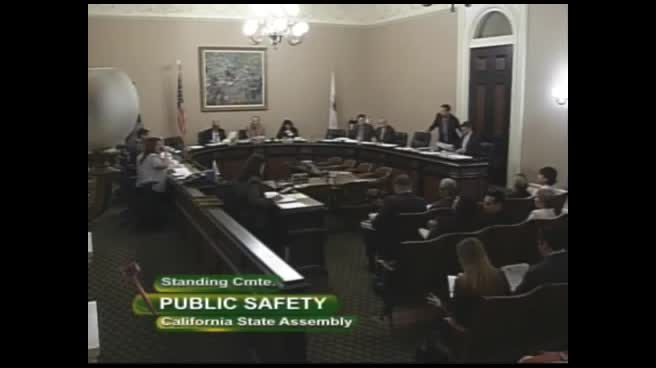 3MIN
Assembly Standing Committee on Public Safety
 4MIN
Senate Floor
Bill Author

Bill Co-Author(s):