SB 586: Children's services.
- Session Year: 2015-2016
- House: Senate
- Latest Version Date: 2016-09-25
The California Childrens Services (CCS) program is a statewide program providing medically necessary services required by physically handicapped children whose parents are unable to pay for those services. The State Department of Health Care Services administers the CCS program. Counties, based on population size, are also charged with administering the program, either independently or jointly with the department. The services covered by the CCS program include expert diagnosis, medical treatment, surgical treatment, hospital care, physical therapy, occupational therapy, special treatment, materials, and the supply of appliances and their upkeep, maintenance, and transportation. Funding for the program comes from county, state, and federal sources. In order to be eligible for the CCS program, an applicant must be under 21 years of age, have or be suspected of having a condition covered by the program, and meet certain financial eligibility standards established by the department.
Existing law prohibits services covered by the CCS program from being incorporated into a Medi-Cal managed care contract entered into after August 1, 1994, until January 1, 2017, except with respect to contracts entered into for county organized health systems or Regional Health Authority in specified counties.
This bill would exempt contracts entered into under the Whole Child Model program, described below, from that prohibition and would extend to January 1, 2022, and until the evaluation required under the Whole Child Model program has been completed, the termination of the prohibition against CCS-covered services being incorporated in a Medi-Cal managed care contract entered into after August 1, 1994.
The bill would authorize the department, no sooner than July 1, 2017, to establish a Whole Child Model program, under which managed care plans served by a county organized health system or Regional Health Authority in designated counties would provide CCS services to Medi-Cal eligible CCS children and youth. The bill would limit the number of managed care plans under a county organized health system or Regional Health Authority that are eligible to participate in the program. The bill would require the department to implement the program, as specified, and would require a managed care plan to obtain written approval from the department and establish a local stakeholder process, as prescribed. The bill would prohibit the department from approving the application of a managed care plan until the Director of Health Care Services has verified the readiness of the managed care plan to address the unique needs of CCS-eligible beneficiaries, including, among other things, that the managed care contractor demonstrates the availability of an appropriate provider network to serve the needs of children and youth with CCS conditions and complies with all CCS program guidelines.
The bill would prohibit the department from implementing the program in any county until it has developed specific CCS monitoring and oversight standards for managed care plans. The bill would require the department to establish, through December 31, 2021, a statewide Whole Child Model program stakeholder advisory group comprised of specified stakeholders, including representatives from health plans and family resource centers, or modify an existing stakeholder advisory group and would require the department to consult with the Whole Child Model program stakeholder advisory group on the implementation of the program, as specified. The bill would impose various requirements on a Medi-Cal managed care plan serving children and youth with CCS-eligible conditions under the CCS program, including, but not limited to, coordinating services, as specified; providing appropriate access to care, services, and information, including continuity of care requirements; and providing for case management, care coordination, provider referral, and service authorization services. The bill would require a Medi-Cal managed care plan participating in the Whole Child Model program to ensure provision of case management, care coordination, provider referral, and service authorization services to children and youth, as prescribed, but would authorize the department to waive this requirement if the plan demonstrates that it cannot meet the requirement because it would result in substantially increased program costs, as specified. This bill would require a managed care plan to provide a timely process for accepting and acting upon complaints and grievances of CCS-eligible children and youth. The bill would require a specified stakeholder process to address proposed changes to CCS medical eligibility requirements. The bill would require the department to contract with an independent entity to conduct an evaluation to assess health plan performance and the outcomes and the experience of CCS-eligible children and youth participating in the program, and would require the department to provide a report on the results of this evaluation to the Legislature no later than January 1, 2021.
This bill would provide that its provisions are not intended to permit any reduction in benefits or eligibility levels under the existing CCS program. The bill would require the department, by July 1, 2020, to adopt regulations and, commencing July 1, 2018, would require the department to provide a status report to the Legislature until regulations have been adopted. The bill would authorize the Director of Health Care Services to enter into exclusive or nonexclusive contracts on a bid, nonbid, or negotiated basis and amend existing managed care contracts to provide or arrange for services provided under the bill.
By imposing new duties on counties with respect to the transition and implementation of CCS program services, this bill would impose a state-mandated local program.
The California Constitution requires the state to reimburse local agencies and school districts for certain costs mandated by the state. Statutory provisions establish procedures for making that reimbursement.
This bill would provide that, if the Commission on State Mandates determines that the bill contains costs mandated by the state, reimbursement for those costs shall be made pursuant to these statutory provisions.
The California Childrens Services (CCS) program is a statewide program providing medically necessary services required by physically handicapped children whose parents are unable to pay for those services. The State Department of Health Care Services administers the CCS program. Counties, based on population size, are also charged with administering the program, either independently or jointly with the department. The services covered by the CCS program include expert diagnosis, medical treatment, surgical treatment, hospital care, physical therapy, occupational therapy, special treatment, materials, and the supply of appliances and their upkeep, maintenance, and transportation. Funding for the program comes from county, state, and federal sources. In order to be eligible for the CCS program, an applicant must be under 21 years of age, have or be suspected of having a condition covered by the program, and meet certain financial eligibility standards established by the department.
Existing law prohibits services covered by the CCS program from being incorporated into a Medi-Cal managed care contract entered into after August 1, 1994, until January 1, 2017, except with respect to contracts entered into for county organized health systems or Regional Health Authority in specified counties.
This bill would exempt contracts entered into under the Whole Child Model program, described below, from that prohibition and would extend to January 1, 2022, and until the evaluation required under the Whole Child Model program has been completed, the termination of the prohibition against CCS covered CCS-covered services being incorporated in a Medi-Cal managed care contract entered into after August 1, 1994.
The bill would authorize the department, no sooner than July 1, 2017, to establish a Whole Child Model program, under which managed care plans served by a county organized health system or Regional Health Authority in designated counties would provide CCS services under a capitated payment model to Medi-Cal eligible CCS children and youth. The bill would limit the number of managed care plans under a county organized health system or Regional Health Authority that are eligible to participate in the program. The bill would require the department to implement the program, as specified, and would require a managed care plan to obtain written approval from the department written approval of its application of interest and establish a local stakeholder process, as prescribed. The bill would prohibit the department from approving the application of a managed care plan until the Director of Health Care Services has verified the readiness of the managed care plan to address the unique needs of CCS-eligible beneficiaries, including, among other things, that the managed care contractor demonstrates the availability of an appropriate provider network to serve the needs of children and youth with CCS conditions and complies with all CCS program guidelines.
The bill would prohibit the department from implementing the program in any county until it has developed specific CCS monitoring and oversight standards for managed care plans. The bill would require the department to establish, through December 31, 2021, a statewide Whole Child Model program stakeholder advisory group comprised of specified stakeholders, including representatives from health plans and family resource centers, or modify an existing stakeholder advisory group and would require the department to consult with the Whole Child Model program stakeholder advisory group on the implementation of the program, as specified. The bill would impose various requirements on a Medi-Cal managed care plan serving children and youth with CCS-eligible conditions under the CCS program, including, but not limited to, coordinating services, as specified, specified; providing appropriate access to care, services, and information, including continuity of care requirements; and providing for case management, care coordination, provider referral, and service authorization services, and providing services. The bill would require a Medi-Cal managed care plan participating in the Whole Child Model program to ensure provision of case management, care coordination, provider referral, and service authorization services to children and youth, as prescribed, but would authorize the department to waive this requirement if the plan demonstrates that it cannot meet the requirement because it would result in substantially increased program costs, as specified. This bill would require a managed care plan to provide a timely process for accepting and acting upon complaints and grievances of CCS-eligible children and youth. The bill would require a specified stakeholder process to address proposed changes to CCS medical eligibility requirements. The bill would require the department to contract with an independent entity to conduct an evaluation to assess health plan performance and the outcomes and the experience of CCS-eligible children and youth participating in the program, and would require the department to provide a report on the results of this evaluation to the Legislature no later than January 1, 2021. This
This bill would provide that its provisions are not intended to permit any reduction in benefits or eligibility levels under the existing CCS program. The bill would require the department, by July 1, 2021, 2020, to adopt regulations and, commencing July 1, 2017, July 1, 2018, would require the department to provide a status report to the Legislature until regulations have been adopted. The bill would authorize the Director of Health Care Services to enter into exclusive or nonexclusive contracts on a bid, nonbid, or negotiated basis and amend existing managed care contracts to provide or arrange for services provided under the bill.
By imposing new duties on counties with respect to the transaction transition and implementation of CCS program services, this bill would impose a state-mandated local program.
The California Constitution requires the state to reimburse local agencies and school districts for certain costs mandated by the state. Statutory provisions establish procedures for making that reimbursement.
This bill would provide that, if the Commission on State Mandates determines that the bill contains costs mandated by the state, reimbursement for those costs shall be made pursuant to these statutory provisions.
The California Childrens Services (CCS) program is a statewide program providing medically necessary services required by physically handicapped children whose parents are unable to pay for those services. The State Department of Health Care Services administers the CCS program. Counties, based on population size, are also charged with administering the program, either independently or jointly with the department. The services covered by the CCS program include expert diagnosis, medical treatment, surgical treatment, hospital care, physical therapy, occupational therapy, special treatment, materials, and the supply of appliances and their upkeep, maintenance, and transportation. Funding for the program comes from county, state, and federal sources. In order to be eligible for the CCS program, an applicant must be under 21 years of age, have or be suspected of having a condition covered by the program, and meet certain financial eligibility standards established by the department.
Existing law prohibits services covered by the CCS program from being incorporated into a Medi-Cal managed care contract entered into after August 1, 1994, until January 1, 2017, except with respect to contracts entered into for county organized health systems or Regional Health Authority in specified counties.
This bill would exempt contracts entered into under the Whole Child Model program, described below, from that prohibition and would extend to January 1, 2022, and until the evaluation required under the Whole Child Model program has been completed, the termination of the prohibition against CCS covered services being incorporated in a Medi-Cal managed care contract entered into after August 1, 1994.
The bill would authorize the department, no sooner than July 1, 2017, to establish a Whole Child Model program, under which managed care plans served by a county organized health system or Regional Health Authority in designated counties would provide CCS services under a capitated payment model to Medi-Cal eligible CCS children and youth. The bill would limit the number of managed care plans under a county organized health system or Regional Health Authority that are eligible to participate in the program. The bill would require the department to establish an application process implement the program, as specified, and would require a managed care plan to provide the department with a written obtain from the department written approval of its application of interest that contains specified information, including evidence that the managed care plan received written support from specified individuals and entities, including CCS providers, as defined, that serve a preponderance of CCS children and youth in the county. and establish a local stakeholder process, as prescribed. The bill would prohibit the department from approving the application of a managed care plan until the Director of Health Care Services has verified the readiness of the managed care plan to address the unique needs of CCS-eligible beneficiaries, including, among other things, that the managed care contractor demonstrates the availability of an appropriate provider network to serve the needs of children and youth with CCS conditions and complies with all CCS program guidelines.
The bill would prohibit the department from implementing the program in any county until it has developed specific CCS monitoring and oversight standards for managed care plans. The bill would require the department to establish establish, through December 31, 2021, a statewide Whole Child Model stakeholder advisory group comprised of specified stakeholders, including representatives from health plans and family resource centers, or modify an existing stakeholder advisory group and would require the department to consult with the Whole Child Model stakeholder advisory group on the implementation of the program, as specified. The bill would impose various requirements on a Medi-Cal managed care plan serving children and youth with CCS-eligible conditions under the CCS program, including, but not limited to, coordinating services, as specified, providing appropriate access to care, services, and information, providing for case management, care coordination, provider referral, and service authorization services, and providing a timely process for accepting and acting upon complaints and grievances of CCS-eligible children and youth. The bill would require the department to contract with an independent entity to conduct an evaluation to assess health plan performance and the outcomes and the experience of CCS-eligible children and youth participating in the program, and would require the department to provide a report on the results of this evaluation to the Legislature no later than January 1, 2023. 2021. This bill would provide that its provisions are not intended to permit any reduction in benefits or eligibility levels under the existing CCS program. The bill would require the department, by July 1, 2021, to adopt regulations and, commencing July 1, 2017, would require the department to provide a status report to the Legislature until regulations have been adopted. The bill would authorize the Director of Health Care Services to enter into exclusive or nonexclusive contracts on a bid, nonbid, or negotiated basis and amend existing managed care contracts to provide or arrange for services provided under the bill.
By imposing new duties on counties with respect to the transaction of CCS program services, this bill would impose a state-mandated local program.
The California Constitution requires the state to reimburse local agencies and school districts for certain costs mandated by the state. Statutory provisions establish procedures for making that reimbursement.
This bill would provide that, if the Commission on State Mandates determines that the bill contains costs mandated by the state, reimbursement for those costs shall be made pursuant to these statutory provisions.
The California Childrens Services (CCS) program is a statewide program providing medically necessary services required by physically handicapped children whose parents are unable to pay for those services. The State Department of Health Care Services administers the CCS program. Counties, based on population size, are also charged with administering the program, either independently or jointly with the department. The services covered by the CCS program include expert diagnosis, medical treatment, surgical treatment, hospital care, physical therapy, occupational therapy, special treatment, materials, and the supply of appliances and their upkeep, maintenance, and transportation. Funding for the program comes from county, state, and federal sources. In order to be eligible for the CCS program, an applicant must be under 21 years of age, have or be suspected of having a condition covered by the program, and meet certain financial eligibility standards established by the department.
Existing law prohibits services covered by the CCS program from being incorporated into a Medi-Cal managed care contract entered into after August 1, 1994, until January 1, 2017, except with respect to contracts entered into for county organized health systems or Regional Health Authority in specified counties.
This bill would exempt contracts entered into under the Whole Child Model program, described below, from that prohibition and would extend to January 1, 2025, 2022, and until the evaluation required under the Whole Child Model program has been completed, the termination of the prohibition against CCS covered services being incorporated in a Medi-Cal managed care contract entered into after August 1, 1994.
The bill would authorize the department, no sooner than July 1, 2017, to establish a Whole Child Model program, under which managed care plans under served by a county organized health systems system or Regional Health Authority that elect, and are selected, to participate in designated counties would provide CCS services under a capitated payment model to Medi-Cal and State Childrens Health Insurance Program (S-CHIP) eligible CCS children and youth. The bill would limit the number of managed care plans under a county organized health system or Regional Health Authority that are eligible to participate in the program. The bill would require the department to establish an application process and would require a managed care plan to provide the department with a written application of interest that contains specified information, including evidence that the managed care plan received written support from specified individuals and entities, including CCS providers, as defined, that serve a preponderance of CCS children and youth in the county. The bill would prohibit the department from approving the application of a managed care plan until the Director of Health Care Services has verified the readiness of the managed care plan to address the unique needs of CCS-eligible beneficiaries, including, among other things, that the managed care contractor demonstrates the availability of an appropriate provider network to serve the needs of children and youth with CCS conditions and complies with all CCS program guidelines.
The bill would prohibit the department from implementing the program in any county until it has developed and implemented specific CCS monitoring and oversight standards for managed care plans. The bill would require the department to establish a statewide Whole Child Model stakeholder advisory group comprised of specified stakeholders, including representatives from health plans and family resource centers, and would require the department to consult with the Whole Child Model stakeholder advisory group on the implementation of the program, as specified. The bill would impose various requirements on a Medi-Cal managed care plan serving children and youth with CCS-eligible conditions under the CCS program, including, but not limited to, coordinating services, as specified, providing appropriate access to care, services, and information, and providing a timely process for accepting and acting upon complaints and grievances of CCS-eligible children and youth. The bill would require the department to contract with an independent entity to conduct an evaluation to assess health plan performance and the outcomes and the experience of CCS-eligible children and youth participating in the program, and would require the department to provide a report on the results of this evaluation to the Legislature no later than January 1, 2023. This bill would provide that its provisions are not intended to permit any reduction in benefits or eligibility levels under the existing CCS program. The bill would require the department, by July 1, 2018, 2021, to adopt regulations and, commencing July 1, 2017, would require the department to provide a status report to the Legislature until regulations have been adopted. The bill would authorize the Director of Health Care Services to enter into exclusive or nonexclusive contracts on a bid, nonbid, or negotiated basis and amend existing managed care contracts to provide or arrange for services provided under the bill.
The California Childrens Services Program (CCS program) (CCS) program is a statewide program providing medically necessary services required by physically handicapped children whose parents are unable to pay for those services. The State Department of Health Care Services administers the CCS program. Counties, based on population size, are also charged with administering the program, either independently or jointly with the department. The services covered by the CCS program include expert diagnosis, medical treatment, surgical treatment, hospital care, physical therapy, occupational therapy, special treatment, materials, and the supply of appliances and their upkeep, maintenance, and transportation. Funding for the program comes from county, state, and federal sources. In order to be eligible for the CCS program, an applicant must be under 21 years of age, have or be suspected of having a condition covered by the program, and meet certain financial eligibility standards established by the department.
Existing law prohibits services covered by the California Childrens Services CCS program (CCS) from being incorporated into a Medi-Cal managed care contract entered into after August 1, 1994, until January 1, 2017, except with respect to contracts entered into for county organized health systems or Regional Health Authority in specified counties.
This bill would exempt contracts entered into under the Whole Child Model program, described below, from that prohibition and would extend to January 1, 2025, and until the evaluation required under the Whole Child Model program has been completed, the termination of the prohibition against CCS covered services being incorporated in a Medi-Cal managed care contract entered into after August 1, 1994.
The bill would authorize the department, no sooner than July 1, 2017, to establish a Whole Child Model program, under which managed care plans under county organized health systems or Regional Health Authority that elect, and are selected, to participate would provide CCS services under a capitated payment model to Medi-Cal and S-CHIP State Childrens Health Insurance Program (S-CHIP) eligible CCS children and youth. The bill would limit the number of managed care plans under a county organized health system or Regional Health Authority that are eligible to participate in the program. The bill would require the department to establish an application process and would require a managed care plan to provide the department with a written application of interest that contains specified information, including evidence that the managed care plan received written support from specified individuals and entities, including CCS providers, as defined, that serve a preponderance of CCS children and youth in the county. The bill would prohibit the department from approving the application of a managed care plan until the Director of Health Care Services has verified the readiness of the managed care plan to address the unique needs of CCS-eligible beneficiaries, including, among other things, that the managed care contractor demonstrates the availability of an appropriate provider network to serve the needs of children and youth with CCS conditions and complies with all CCS program guidelines.
The bill would prohibit the department from implementing the program in any county until it has developed and implemented specific CCS monitoring and oversight standards for managed care plans. The bill would require the department to establish a statewide Whole Child Model stakeholder advisory group comprised of specified stakeholders, including representatives from health plans and family resource centers, and would require the department to consult with the Whole Child Model stakeholder advisory group on the implementation of the program, as specified. The bill would require the department to contract with an independent entity to conduct an evaluation to assess health plan performance and the outcomes and the experience of CCS-eligible children and youth participating in the program, and would require the department to provide a report on the results of this evaluation to the Legislature no later than January 1, 2023. This bill would provide that its provisions are not intended to permit any reduction in benefits or eligibility levels under the existing CCS program. The bill would require the department, by July 1, 2018, to adopt regulations and, commencing July 1, 2017, would require the department to provide a status report to the Legislature until regulations have been adopted. The bill would authorize the Director of Health Care Services to enter into exclusive or nonexclusive contracts on a bid, nonbid, or negotiated basis and amend existing managed care contracts to provide or arrange for services provided under the bill.
The California Childrens Services Program (CCS program) is a statewide program providing medically necessary services required by physically handicapped children whose parents are unable to pay for those services. The State Department of Health Care Services administers the CCS program. Counties, based on population size, are also charged with administering the program, either independently or jointly with the department. The services covered by the CCS program include expert diagnosis, medical treatment, surgical treatment, hospital care, physical therapy, occupational therapy, special treatment, materials, and the supply of appliances and their upkeep, maintenance, and transportation. Funding for the program comes from county, state, and federal sources. In order to be eligible for the CCS program, an applicant must be under 21 years of age, have or be suspected of having a condition covered by the program, and meet certain financial eligibility standards established by the department.
Existing law prohibits services covered by the California Childrens Services program (CCS) from being incorporated into a Medi-Cal managed care contract entered into after August 1, 1994, until January 1, 2016, 2017, except with respect to contracts entered into for county organized health systems or Regional Health Authority in specified counties.
This bill would exempt KIDS contracts, contracts entered into under the Whole Child Model program, described below, from that prohibition, prohibition and would delete the January 1, 2016 time limit. extend to January 1, 2025, and until the evaluation required under the Whole Child Model program has been completed, the termination of the prohibition against CCS covered services being incorporated in a Medi-Cal managed care contract entered into after August 1, 1994.
This bill would require the department, no later than January 1, 2018, to contract with one or more Kids Integrated Delivery System (KIDS) networks, as defined, for the purpose of coordinating and managing the provision of Medi-Cal and CCS program services to eligible children, to ensure access to cost-effective quality care. The bill would define eligible child and other relevant terms in this regard. The bill would establish criteria the department would be required to consider in selecting a KIDS network and eligibility standards, as well as the qualifications and exclusions required for KIDS network contracts. The KIDS network would be required to coordinate, integrate, and provide or arrange for the full range of Medi-Cal and CCS services.
This bill would require the department to seek all necessary federal approvals to ensure federal financial participation for expenditures under these provisions, and would prohibit implementation of these provisions until federal financial participation is obtained. The bill would additionally authorize the department to seek federal approval to require all eligible children to enroll in an available KIDS network for the length of their CCS eligibility plus 6 months, and if the child remains eligible for Medi-Cal, for up to 12 months following termination of CCS eligibility.
The bill would authorize the department, no sooner than July 1, 2017, to establish a Whole Child Model program, under which managed care plans under county organized health systems or Regional Health Authority that elect, and are selected, to participate would provide CCS services under a capitated payment model to Medi-Cal and S-CHIP eligible CCS children and youth. The bill would limit the number of managed care plans under a county organized health system or Regional Health Authority that are eligible to participate in the program. The bill would require the department to establish an application process and would require a managed care plan to provide the department with a written application of interest that contains specified information, including evidence that the managed care plan received written support from specified individuals and entities, including CCS providers, as defined, that serve a preponderance of CCS children and youth in the county. The bill would prohibit the department from approving the application of a managed care plan until the Director of Health Care Services has verified the readiness of the managed care plan to address the unique needs of CCS-eligible beneficiaries, including, among other things, that the managed care contractor demonstrates the availability of an appropriate provider network to serve the needs of children and youth with CCS conditions and complies with all CCS program guidelines.
The bill would prohibit the department from implementing the program in any county until it has developed and implemented specific CCS monitoring and oversight standards for managed care plans. The bill would require the department to establish a statewide Whole Child Model stakeholder advisory group comprised of specified stakeholders, including representatives from health plans and family resource centers, and would require the department to consult with the Whole Child Model stakeholder advisory group on the implementation of the program, as specified. The bill would require the department to contract with an independent entity to conduct an evaluation to assess health plan performance and the outcomes and the experience of CCS-eligible children and youth participating in the program, and would require the department to provide a report on the results of this evaluation to the Legislature no later than January 1, 2023. The bill would require the department, by July 1, 2018, to adopt regulations and, commencing July 1, 2017, would require the department to provide a status report to the Legislature until regulations have been adopted.
The California Childrens Services Program (CCS program) is a statewide program providing medically necessary services required by physically handicapped children whose parents are unable to pay for those services. The State Department of Health Care Services administers the CCS program. Counties, based on population size, are also charged with administering the program, either independently or jointly with the department. The services covered by the CCS program include expert diagnosis, medical treatment, surgical treatment, hospital care, physical therapy, occupational therapy, special treatment, materials, and the supply of appliances and their upkeep, maintenance, and transportation. Funding for the program comes from county, state, and federal sources. In order to be eligible for the CCS program, an applicant must be under 21 years of age, have or be suspected of having a condition covered by the program, and meet certain financial eligibility standards established by the department.
Existing law prohibits services covered by the California Childrens Services program (CCS) from being incorporated into a Medi-Cal managed care contract entered into after August 1, 1994, until January 1, 2016, except with respect to contracts entered into for county organized health systems in specified counties.
This bill would exempt KIDS contracts, described below, from that prohibition, and would delete the January 1, 2016 time limit.
This bill would require the department, no later than January 1, 2018, to contract with one or more Kids Integrated Delivery System (KIDS) plans networks, as defined, for the purpose of coordinating and managing the provision of Medi-Cal and CCS program services to eligible children, to ensure access to cost-effective quality care. The bill would define eligible child and other relevant terms in this regard. The bill would establish criteria the department would be required to consider in selecting a KIDS plan network and eligibility standards, as well as the qualifications and exclusions required for KIDS plan network contracts. The KIDS plan network would be required to coordinate, integrate, and provide or arrange for the full range of Medi-Cal and CCS services.
This bill would require the department to seek all necessary federal approvals to ensure federal financial participation for expenditures under the bill these provisions, and would prohibit implementation of the bill these provisions until federal financial participation is obtained. The bill would additionally authorize the department to seek federal approval to require all eligible children to enroll in an available KIDS plan network for the length of their CCS eligibility plus 6 months, and if the child remains eligible for Medi-Cal, for up to 12 months following termination of CCS eligibility.
The California Childrens Services Program (CCS program) is a statewide program providing medically necessary services required by physically handicapped children whose parents are unable to pay for those services. The State Department of Health Care Services administers the CCS program. Counties, based on population size, are also charged with administering the program, either independently or jointly with the department. The services covered by the CCS program include expert diagnosis, medical treatment, surgical treatment, hospital care, physical therapy, occupational therapy, special treatment, materials, and the supply of appliances and their upkeep, maintenance, and transportation. Funding for the program comes from county, state, and federal sources. In order to be eligible for the CCS program, an applicant must be under 21 years of age, have or be suspected of having a condition covered by the program, and meet certain financial eligibility standards established by the department.
Existing law prohibits services covered by the California Childrens Services program (CCS) from being incorporated into a Medi-Cal managed care contract entered into after August 1, 1994, until January 1, 2016, except with respect to contracts entered into for county organized health systems in specified counties.
This bill would exempt KIDS contracts, described below, from that prohibition, and would delete the January 1, 2016 time limit.
This bill would require the department, no later than January 1, 2018, to contract with one or more Kids Integrated Delivery System (KIDS) plans, as defined, for the purpose of coordinating and managing the provision of Medi-Cal and CCS program services to eligible children, to ensure access to cost-effective quality care. The bill would define eligible child and other relevant terms in this regard. The bill would establish criteria the department would be required to consider in selecting a KIDS plan and eligibility standards, as well as the qualifications and exclusions required for KIDS plan contracts. The KIDS plan would be required to coordinate, integrate, and provide or arrange for the full range of Medi-Cal and CCS services.
This bill would require the department to seek all necessary federal approvals to ensure federal financial participation for expenditures under the bill and would prohibit implementation of the bill until federal financial participation is obtained. The bill would additionally authorize the department to seek federal approval to require all eligible children to enroll in an available KIDS plan for the length of their CCS eligibility plus 6 months, and if the child remains eligible for Medi-Cal, for up to 12 months following termination of CCS eligibility.
The Legislature finds and declares all of the following:
(a)The California Childrens Services (CCS) program is the nations oldest Title V Maternal and Child Health Services Block Grant program.
(b)The CCS program has provided critical access to specialized medical care for Californias most complex and fragile pediatric patients since 1927.
(c)The strong standards and credentialing created under the CCS program ensure that eligible children obtain care from experienced providers with appropriate pediatric-specific expertise.
(d)CCS providers form a regional backbone for all specialty pediatric care in California, benefiting children of every income level and insurance status.
(e)Over the past 20 years, coordinated and integrated health care delivery models have been shown to improve delivery of health care, reduce costs, and improve outcomes.
(f)As California expanded the reach of integrated delivery systems in Medi-Cal, CCS services were often excluded from managed care arrangements in recognition of the specialty nature of CCS services and the complicated health status of enrolled children.
(g)Accordingly, it is the intent of the Legislature to modernize the CCS program, through development of the Whole Child Model, focused on the unique needs of CCS-eligible children in counties served by county organized health systems to accomplish the following:
(1)Improve coordination and integration of services to meet the needs of the whole child, not just address the CCS-eligible condition.
(2)Retain CCS program standards to maintain access to high-quality specialty care for eligible children.
(3)Support active participation by parents and families, who are frequently the primary caregivers for CCS-eligible children.
(4)Establish specialized programs to manage and coordinate the care of CCS-enrolled children.
(5)Ensure that children with CCS-eligible conditions receive care in the most appropriate, least restrictive setting.
(6)Maintain existing patient-provider relationships, whenever possible.
(h)It is further the intent of the Legislature to protect the unique access to pediatric specialty services provided by CCS while promoting modern organized delivery systems to meet the medical care needs of eligible children.
(i)It is further the intent of the Legislature to continue the pediatric specialty expertise and statewide network of CCS providers by promoting contractual relationships between those providers and managed care plans. Accordingly, it is the intent of the Legislature that reimbursement under the Whole Child Model program be sufficient to attract and retain these specialists in the CCS program.
SEC. 2.Section 123835 of the Health and Safety Code is amended to read:123835.(a)The department shall keep the California Childrens Services (CCS) program abreast of advances in medical science, leading to the inclusion of other handicapping conditions and services within the limits of and consistent with the most beneficial use of funds appropriated for this purpose. With the approval of the agency administrator the department may carry out pilot studies to determine the need for, or the feasibility of, including other handicapping conditions and services in the program within the limits of available funds appropriated for the program.
(b)To the extent that any changes in CCS medical eligibility are proposed by the department, there shall be a stakeholder process that shall include both of the following:
(1)A draft of the proposed regulatory changes shall be shared publicly at least 120 days prior to the filing of a regulatory change. The proposed changes shall also be shared with the appropriate policy and fiscal committees of the Legislature and posted publicly on the departments Internet Web site.
(2)The department shall utilize existing stakeholder committees to receive input and comments on any proposed changes and shall provide written comments back after input is provided. This input may be provided to all stakeholders, including, but not limited to, advocates, clinical experts, associations, county CCS program administrators, families, and CCS providers.
SEC. 3.Section 123850 of the Health and Safety Code is amended to read:123850.(a)The board of supervisors of each county shall designate the county department of public health or the county department of social welfare as the designated agency to administer the California Childrens Services (CCS) program. Counties with total population under 200,000 persons may administer the county program independently or jointly with the department. Counties with a total population in excess of 200,000 persons shall administer the county program independently. Except as otherwise provided in this article, the director shall establish standards relating to the local administration and minimum services to be offered by counties in the conduct of the CCS program.
(b)(1)Upon a determination by the director that a Medi-Cal managed care plan and participating county have met all of the State Department of Health Care Services readiness requirements, the designated county agency and a Medi-Cal managed care health plan serving the county, as determined by the director, shall provide for the transition of CCS program services, except for services provided pursuant to subdivision (c), into the Medi-Cal managed care health plan contract in Whole Child Model counties pursuant to Article 2.985 (commencing with Section 14094.4) for children who are enrolled in the Medi-Cal managed care plan and CCS. For children enrolled in a Medi-Cal managed care plan and CCS in Whole Child Model counties pursuant to Article 2.985 (commencing with Section 14094.4), the case management, care coordination, provider referral, and service authorization administrative functions of the CCS program shall then be the responsibility of the Medi-Cal managed care health plan in accordance with Section 14094.13 and a written transition plan prepared by the designated county agency and the Medi-Cal managed care health plan. The director shall provide an implementation date for the transition and identify how the state shall continue to fulfill the requirements set forth in Sections 123855, 123925, and 123960. CCS program eligibility determination shall remain the responsibility of the designated county agency in accordance with the provisions of this article.
(2)The case management, care coordination, provider referral, and service authorization functions of the CCS program shall remain the responsibility of the county for CCS beneficiaries exempt from mandatory enrollment in the Medi-Cal managed care plan.
(c)The CCS Medical Therapy program shall remain responsible for the provision of medically necessary occupational and physical therapy services prescribed by the CCS Medical Therapy Unit Conference Team Physician or the CCS-paneled physician who is providing the medical direction for occupational and physical therapy services.
(d)Notwithstanding Chapter 3.5 (commencing with Section 11340) of Part 1 of Division 3 of Title 2 of the Government Code, the department may implement, interpret, or make specific this article, Article 2.97 (commencing with Section 14093) and Article 2.985 (commencing with Section 14094.4) of Chapter 7 of Part 3 of Division 9 of the Welfare and Institutions Code, and any applicable federal waivers and state plan amendments by means of all-county letters, plan letters, CCS numbered letters, plan or provider bulletins, or similar instructions, without taking regulatory action in order to implement the Whole Child Model established pursuant to Article 2.985 (commencing with Section 14094.4). By July 1, 2020, the department shall adopt regulations in accordance with the requirements of Chapter 3.5 (commencing with Section 11340) of Part 1 of Division 3 of Title 2 of the Government Code. Commencing January 1, 2018, the department shall provide a status report to the Legislature on a semiannual basis, in compliance with Section 9795 of the Government Code, until regulations have been adopted.
SEC. 4.Section 14093.06 of the Welfare and Institutions Code is amended to read:14093.06.(a)When a managed care contractor that is authorized to provide California Childrens Services (CCS) covered services pursuant to subdivision (a) of Section 14094.3 or Article 2.985 (commencing with Section 14094.4) expands a managed care plans CCS coverage area to other counties, the contractor shall comply with CCS program standards including, but not limited to, referral of newborns to the appropriate neonatal intensive care level, referral of children requiring pediatric intensive care to CCS-approved pediatric intensive care units, and referral of children with CCS eligible conditions to CCS-approved inpatient facilities and special care centers in accordance with subdivision (c) of Section 14093.05.
(b)The managed care contractor shall comply with CCS program medical eligibility regulations. Questions regarding interpretation of state CCS medical eligibility regulations, or disagreements between the county CCS program and the managed care contractor regarding interpretation of those regulations, shall be resolved by the local CCS program, in consultation with the state CCS program. The resolution determined by the CCS program shall be communicated in writing to the managed care contractor.
(c)In following the treatment plan developed in accordance with CCS program requirements, the managed care contractor shall ensure the timely referral of children with special health care needs to CCS-paneled providers who are board-certified in both pediatrics and in the appropriate pediatric subspecialty.
(d)The managed care contractor shall report expenditures and savings separately for CCS covered services and CCS eligible children, in accordance with paragraph (1) of subdivision (d) of Section 14093.05.
(e)All children who are enrolled with a managed care contractor who are seeking CCS program benefits shall retain all rights to CCS program appeals and fair hearings of denials of medical eligibility or of service authorizations. Information regarding the number, nature, and disposition of appeals and fair hearings shall be part of an annual report to the Legislature on managed care contractor compliance with CCS standards, regulations, and procedures. This report shall be made available to the public.
(f)The department, in consultation with stakeholder groups, shall develop unique pediatric plan performance standards and measurements, including, but not limited to, the health outcomes of children with special health care needs.
SEC. 5.Section 14094.2 of the Welfare and Institutions Code is amended to read:14094.2.(a)This article is not intended, and shall not be interpreted, to permit any reduction in benefits or eligibility levels under the CCS program. Any medically necessary service not available under the managed care contracts authorized under this article shall remain the responsibility of the state and county.
(b)(1)In Whole Child Model counties authorized pursuant to Article 2.985 (commencing with Section 14094.4), in order to ensure that CCS benefits are provided to enrollees with a CCS-eligible condition according to CCS program standards, there shall be oversight by the department for both services covered and not covered by the managed care contract.
(2)In counties not listed in Section 14094.5, in order to ensure that CCS benefits are provided to enrollees with a CCS-eligible condition according to CCS program standards, there shall be oversight by the department and local CCS program agencies for both services covered and not covered by the managed care contract.
SEC. 6.Section 14094.3 of the Welfare and Institutions Code is amended to read:14094.3.(a)Notwithstanding this article or Section 14093.05 or 14094.1, CCS covered services shall not be incorporated into any Medi-Cal managed care contract entered into after August 1, 1994, pursuant to Article 2.7 (commencing with Section 14087.3), Article 2.8 (commencing with Section 14087.5), Article 2.9 (commencing with Section 14088), Article 2.91 (commencing with Section 14089), Article 2.95 (commencing with Section 14092); or either Article 1 (commencing with Section 14200), or Article 7 (commencing with Section 14490) of Chapter 8, until January 1, 2022, and until the evaluation required pursuant to Section 14094.18 has been completed, except for contracts entered into pursuant to the Whole Child Model program, as described in Article 2.985 (commencing with Section 14094.4), or for county organized health systems or Regional Health Authority in the Counties of San Mateo, Santa Barbara, Solano, Yolo, Marin, and Napa.
(b)Notwithstanding any other provision of this chapter, providers serving children under the CCS program who are enrolled with a Medi-Cal managed care contractor but who are not enrolled in a pilot project pursuant to subdivision (c) shall continue to submit billing for CCS covered services on a fee-for-service basis until CCS covered services are incorporated into the Medi-Cal managed care contracts described in subdivision (a).
(c)(1)The department may authorize a pilot project in Solano County in which reimbursement for conditions eligible under the CCS program may be reimbursed on a capitated basis pursuant to Section 14093.05, and provided all CCS programs guidelines, standards, and regulations are adhered to, and the CCS programs case management is utilized.
(2)During the time period described in subdivision (a), the department may approve, implement, and evaluate limited pilot projects under the CCS program to test alternative managed care models tailored to the special health care needs of children under the CCS program. The pilot projects may include, but need not be limited to, coverage of different geographic areas, focusing on certain subpopulations, and the employment of different payment and incentive models. Pilot project proposals from CCS program-approved providers shall be given preference. All pilot projects shall utilize CCS program-approved standards and providers pursuant to Section 14094.1.
(d)For purposes of this section, CCS covered services include all program benefits administered by the program specified in Section 123840 of the Health and Safety Code regardless of the funding source.
(e)This section shall not be construed to exclude or restrict CCS-eligible children from enrollment with a managed care contractor, or from receiving from the managed care contractor with which they are enrolled primary and other health care unrelated to the treatment of the CCS-eligible condition.
SEC. 7.Article 2.985 (commencing with Section 14094.4) is added to Chapter 7 of Part 3 of Division 9 of the Welfare and Institutions Code, to read:2.985.Whole Child Model Program14094.4.For the purposes of this article, the following definitions shall apply:
(a)CCS provider means any of the following:
(1)A medical provider that is paneled by the CCS program to treat a CCS-eligible condition pursuant to Article 5 (commencing with Section 123800) of Chapter 3 of Part 2 of Division 106 of the Health and Safety Code.
(2)A licensed acute care hospital approved by the CCS program to treat a CCS-eligible condition.
(3)A special care center approved by the CCS program to treat a CCS-eligible condition.
(b)County organized health system or COHS means:
(1)A county organized health system contracting with the department to provide Medi-Cal services to beneficiaries pursuant to Article 2.8 (commencing with Section 14087.5).
(2)A regional health authority.
(c)Medi-Cal managed care plan means a COHS.
14094.5.No sooner than July 1, 2017, the department may establish a Whole Child Model program for Medi-Cal eligible CCS children and youth enrolled in a managed care plan served by a county organized health system or Regional Health Authority in the following counties: Del Norte, Humboldt, Lake, Lassen, Marin, Mendocino, Merced, Modoc, Monterey, Napa, Orange, San Luis Obispo, San Mateo, Santa Barbara, Santa Cruz, Shasta, Siskiyou, Solano, Sonoma, Trinity, and Yolo.
14094.6.The goals for the Whole Child Model program for children and youth under 21 years of age who meet the eligibility requirements of Section 123805 of the Health and Safety Code and are enrolled in a managed care plan under a county organized health system or Regional Health Authority shall include all of the following:
(a)Improving the coordination of primary and preventive services with specialty care services, medical therapy units, Early and Periodic Screening, Diagnosis, and Treatment (EPSDT), long-term services and supports (LTSS), regional center services, and home- and community-based services using a child and youth and family-centered approach.
(b)Maintaining or exceeding CCS program standards and specialty care access, including access to appropriate subspecialties.
(c)Providing for the continuity of child and youth access to expert, CCS dedicated case management and care coordination, provider referrals, and service authorizations.
(d)Improving the transition of youth from CCS to adult Medi-Cal managed systems of care through better coordination of medical and nonmedical services and supports and improved access to appropriate adult providers for youth who age out of CCS.
(e)Identifying, tracking, and evaluating the transition of children and youth from CCS to the Whole Child Model program to inform future CCS program improvements.
14094.65.This article shall not be construed to exclude or restrict the specialty of neonatology from reimbursement under the California Childrens Services (CCS) program, subject to the programs existing or applicable prior authorization requirements or utilization review. Neonatology shall be included in the CCS program.
14094.7.(a)No sooner than July 1, 2017, the department may implement the Whole Child Model program established under this section, pursuant to the criteria described in this article. The director shall provide notice to the Legislature, the federal Centers for Medicare and Medicaid Services, counties, CCS providers, and CCS families when each managed care plan, including a transition plan with the county CCS program, has been reviewed and certified as ready to enroll children based on the criteria described in this article.
(b)Prior to the implementation of the Whole Child Model, the department shall do all of the following:
(1)Develop specific CCS program monitoring and oversight standards for managed care plans that are subject to this article, including access monitoring, quality measures, and ongoing public data reporting.
(2)Establish a stakeholder process pursuant to Section 14094.17.
(3)Consult with the statewide stakeholder advisory group established pursuant to Section 14094.17 to develop and implement robust monitoring processes to ensure that managed care plans are in compliance with all of the provisions of this section. The department shall monitor managed care plan compliance with the provisions of this section on at least an annual basis and post CCS-specific monitoring dashboards on its Internet Web site on at least an annual basis.
(c)(1)In order to aid the transition of CCS services into Medi-Cal managed care plans participating in the Whole Child Model program, commencing January 1, 2017, and continuing through the completion of the transition of CCS enrollees into the Whole Child Model program, the department shall begin requesting and collecting from Medi-Cal managed care plans information about each health plans provider network, including, but not limited to, the contracting primary care, specialty care providers, and hospital facilities contracting with the Medi-Cal managed care plan.
(2)The department shall analyze the existing Medi-Cal managed care delivery system network and the CCS fee-for-service provider networks to determine the overlap of the provider networks in each county and shall furnish this information to the Medi-Cal managed care plan.
(d)A managed care plan shall not be approved to participate in the Whole Child Model program unless all of the following conditions have been satisfied:
(1)The managed care plan has obtained written approval from the director.
(2)The department has obtained any necessary federal approvals.
(3)The Medi-Cal managed care plan has established a local stakeholder process with the meaningful engagement of a diverse group of families that represent a range of conditions, disabilities, and demographics, and local providers, including, but not limited to, the parent centers, such as family resource centers, family empowerment centers, and parent training and information centers, that support families in the affected county.
(4)The director has verified the readiness of the managed care plan to address the unique needs of CCS-eligible beneficiaries, including, but not limited to, the requirements set forth in subdivision (b) of Section 14087.48, subdivisions (b) to (f), inclusive, of Section 14093.05, and all of the following:
(A)That the managed care contractor has demonstrated the availability of an appropriate provider network to serve the needs of children and youth with CCS conditions, including primary care physicians, pediatric specialists and subspecialists, professional, allied, and medical supportive personnel, licensed acute care hospitals, and special care centers.
(B)That the Medi-Cal managed care plan has established and maintains an updated and accessible listing of providers and their specialties and subspecialties and makes it available to CCS-eligible children and youth and their parents or guardians, at a minimum by phone, written material, and Internet Web site.
(C)That the Medi-Cal managed care plan has entered into an agreement with the county CCS program or the state, or both, for the transition of CCS care coordination and service authorization and how the plan will work with the CCS program to ensure continuity and consistency of CCS program expertise for that role, in accordance with this section.
(e)A Medi-Cal managed care plan, prior to implementation of the Whole Child Model program, shall review historical CCS fee-for-service utilization data for CCS-eligible children and youth upon transition of CCS services to managed care plans so that the managed care plans are better able to assist CCS-eligible children and youth and prioritize assessment and care planning.
14094.9.(a)The department shall develop a memorandum of understanding template, which shall be utilized by participating counties and health plans, and which shall include, but not be limited to, the standards relating to the local administration of, and minimum services to be provided by, counties and Medi-Cal managed care plans in the administration of the Whole Child Model program. The department shall consult with counties and Medi-Cal managed care plans in the development of the Whole Child Model program memorandum of understanding template.
(b)The department shall provide written notice to the county agency, as designated in Section 123850 of the Health and Safety Code, of the calculation for determining the administrative allocation to the county CCS program by means of county information notice. The department shall consult with the Whole Child Model program counties in determining the calculation for determining the administrative allocation.
14094.10.(a)Each Medi-Cal managed care plan participating in the Whole Child Model program shall establish an assessment process that, at a minimum, does all of the following:
(1)Assesses each CCS childs or youths risk level and needs by performing a risk assessment process using means such as telephonic or in-person communication, review of utilization and claims processing data, or by other means as determined by the department.
(2)Assesses, in accordance with the transition agreement with the county CCS program, the health care needs of CCS-eligible children and youth and coordinates their CCS specialty services, Medi-Cal primary care services and mild to moderate mental health services, specialty mental health as appropriate through the county specialty mental health plan, and Drug Medi-Cal services as appropriate through county substance use disorder program, and regional center services across all settings, including coordination of necessary services within and, when necessary, outside of the managed care plans provider network.
(3)Follows timeframes for reassessment of risk and, if necessary, circumstances or conditions that require redetermination of risk level, which shall be set by the department.
(b)The risk assessment process shall be performed in accordance with all applicable federal and state laws.
14094.11.A Medi-Cal managed care plan participating in the Whole Child Model program shall meet all of the following requirements:
(a)Ensure that each CCS-eligible child or youth receives case management, care coordination, provider referral, and service authorization services from an employee or contractor of the plan who has knowledge of, and receives adequate training on, the CCS program, and who has clinical experience with the CCS population, or clinical experience with pediatric patients with complex medical conditions.
(b)Work with the state or county CCS program, as appropriate, to ensure that, at a minimum, and in addition to other statutory and contractual requirements, care coordination and care management activities do all of the following:
(1)Reflect a CCS child or youth family-centered, outcome-based approach to care planning.
(2)Ensure families have access to ongoing information, education, and support so that they understand the care plan for their child or youth and their role in the individual care process, the benefits of mental health services, what self-determination means, and what services might be available.
(3)Adhere to the CCS childs or youths or the CCS childs or youths familys determination about the appropriate involvement of his or her medical providers and caregivers, according to the federal Health Insurance Portability and Accountability Act of 1996 (Public Law 104-191).
(4)Include individual care plans for CCS-eligible children and youth based on the results of the risk assessment process with a particular focus on CCS specialty care.
(5)Consider behavioral health needs of CCS-eligible children and youth and coordinate those services as part of the CCS childs or youths individual care plan, when appropriate, and facilitate a CCS childs or youths ability to access appropriate community resources and other agencies, including referrals, as necessary and appropriate, for behavioral services, such as specialty mental health services and substance use disorder services.
(6)Ensure that children and youth and their families have appropriate access to transportation and other support services necessary to receive treatment.
(c)Incorporate all of the following into the CCS childs or youths plan of care:
(1)Access for families so that families know where to go for ongoing information, education, and support in order that they understand the goals, treatment plan, and course of care for their child or youth and their role in the process, what it means to have primary or specialty care for their child or youth, when it is time to call a specialist, primary, urgent care, or emergency room, what an interdisciplinary team is, and what the community resources are.
(2)A primary or specialty care physician who is the primary clinician for the CCS-eligible child or youth and who provides core clinical management functions.
(3)Care management and care coordination for the CCS-eligible child or youth across the health care system, including transitions among levels of care and interdisciplinary care teams.
(4)Provision of information about qualified professionals, community resources, or other agencies for services or items outside the scope of responsibility of the managed care plan.
(d)Use clinical data to identify CCS-eligible children or youth at the care site with chronic illness or other significant health issues.
(e)Arrange for timely preventive, acute, and chronic illness treatment of CCS-eligible children or youth in the appropriate setting.
14094.12.A Medi-Cal managed care plan serving children and youth with CCS-eligible conditions under the CCS program shall do all of the following:
(a)Coordinate with each regional center operating within the plans service area to assist CCS-eligible children and youth with developmental disabilities and their families in understanding and accessing services and act as a central point of contact for questions related to health care access and care concerns, and problem resolution.
(b)Coordinate with the local CCS Medical Therapy Unit (MTU) to ensure appropriate access to MTU services. The Medi-Cal managed care plan shall enter into a memorandum of understanding or similar agreement with the county regarding coordination of MTU services and other non-MTU services provided by the plan.
(c)Ensure that families have access to ongoing information, education, and support so they understand the care plan, course of treatment, and expected outcomes for their child or youth, the assessment process, what it means, their role in the process, and what services their child or youth may be eligible for.
(d)Facilitate communication among a CCS childs or youths health care and personal care providers, including in-home supportive services and behavioral health providers, when appropriate, with the CCS-eligible child or youth, parent, or guardian.
(e)Facilitate timely access to primary care, specialty care, pharmacy, and other health services provided by CCS providers and facilities with clinical expertise in treating the enrollees specific CCS condition that are needed by the CCS child or youth, including referrals to address any physical or cognitive disabilities.
(f)Provide information for families about managed care processes and how to navigate a health plan, including their rights to appeal any service denials, and how to request continuity of care for pharmacy, specialized durable medical equipment, and health care providers pursuant to Section 14094.13.
(g)Establish a mechanism to provide information on how to access local family resource centers or family empowerment centers.
(h)Provide that communication to, and services for, the CCS-eligible children or youth and their families are available in alternative formats that are culturally, linguistically, and physically appropriate through means, including, but not limited to, assistive listening systems, sign language interpreters, captioning, written communication, plain language, and written translations in the applicable Medi-Cal threshold languages.
(i)Provide that materials are available and provided to inform CCS children and youth and their families of procedures for obtaining CCS specialty services and Medi-Cal primary care and mental health benefits, including grievance and appeals procedures that are offered by the managed care plan or are available through the Medi-Cal program.
(j)Identify and track children and youth with CCS-eligible conditions for the duration of the childs or youths participation in the Whole Child Model program and for children and youth who age into adult Medi-Cal systems and who continue to be enrolled in the same Medi-Cal managed care plan for at least three years into adulthood, to the extent feasible.
(k)(1)Comply with Medi-Cal due process requirements and provide timely processes for accepting and acting upon complaints and grievances, including procedures for appealing decisions regarding coverage or benefits. The grievance process shall comply with Section 14450 of this code, and Sections 1368 and 1368.01 of the Health and Safety Code and applicable federal law and regulations.
(2)Upon denial, denial of reauthorization, or termination of services, a notice of action shall be sent to the CCS-eligible child or youth, or person legally authorized to act on behalf of the child or youth. The notice of action shall include information about the option to file a Medi-Cal appeal and Medi-Cal due process rights.
(l)Comply with Section 1383.15 of the Health and Safety Code by allowing a child or youth or the parent or guardian of a child or youth to receive a second opinion from an appropriately qualified health care professional.
14094.13.(a)Each Medi-Cal managed care plan shall establish and maintain a process by which a CCS-eligible child or youth may maintain access to CCS providers that the child or youth has an existing relationship with for treatment of the childs or youths CCS condition for up to 12 months, under the following conditions:
(1)The CCS-eligible child or youth has seen the out-of-network CCS provider for a nonemergency visit at least once during the 12 months immediately preceding the date the Medi-Cal managed care plan assumed responsibility for the childs or youths CCS care under the Whole Child Model program.
(2)The CCS provider accepts the health plans rate for the service offered or the applicable Medi-Cal or CCS fee-for-service rate, whichever is higher, unless the CCS provider enters into an agreement on an alternative payment methodology mutually agreed to by the CCS provider and the Medi-Cal managed care plan.
(3)The managed care plan confirms that the provider meets applicable CCS standards and has no disqualifying quality of care issues.
(4)The CCS provider provides treatment information to the Medi-Cal managed care plan, to the extent authorized by the state and federal patient privacy provisions.
(b)Each Medi-Cal managed care plan shall establish and maintain a process by which a CCS-eligible child or youth may maintain access to specialized or customized durable medical equipment providers for up to 12 months under the conditions in paragraph (2):
(1)For the purposes of this subdivision, specialized or customized durable medical equipment means durable medical equipment that meets all of the following criteria:
(A)Is uniquely constructed from raw materials or substantially modified from the base material solely for the full-time use of the specific beneficiary according to a physicians description and orders.
(B)Is made to order or adapted to meet the specific needs of the beneficiary.
(C)Is uniquely constructed, adapted, or modified to permanently preclude the use of the equipment by another individual, and is so different from another item used for the same purpose that the two items cannot be grouped together for pricing purposes.
(2)(A)The CCS-eligible child or youth has an ongoing relationship with a durable medical equipment provider who has previously provided specialized or customized equipment, such as power wheelchairs, repairs, and replacement parts; prosthetic limbs; customized orthotic devices; and individualized assistive technology. This does not include generally available or noncustomized durable medical equipment.
(B)The durable medical equipment provider shall accept the health plans rate for the service offered or the applicable Medi-Cal or CCS fee-for-service rate, whichever is higher, unless the durable medical equipment provider enters into an agreement on an alternative payment methodology mutually agreed upon by the durable medical equipment provider and the Medi-Cal managed care plan.
(C)The durable medical equipment provider provides information to the Medi-Cal managed care plan as requested by the plan, to the extent authorized by state and federal patient privacy provisions.
(3)The department may extend the continuity of care duration period described in this subdivision for specialized or customized durable medical equipment that is under warranty as specified by the department.
(c)A managed care plan, at its discretion, may extend the continuity of care period beyond the length of time specified in subdivisions (a) and (b).
(d)(1)Each Medi-Cal managed care plan participating in the Whole Child Model program shall comply with continuity of care requirements in Section 1373.96 of the Health and Safety Code and Section 14185 of this code.
(2)Each Medi-Cal managed care plan shall permit a CCS-eligible child or youth transitioned into the Whole Child Model program to continue use of any currently prescribed prescription drug that is part of a prescribed therapy for the enrollees CCS-eligible condition or conditions immediately prior to the date of enrollment, whether or not the prescription drug is covered by the plan, until the Medi-Cal managed care plan and the childs or youths prescribing CCS provider has completed an assessment of the child or youth, created a treatment plan, and agrees with the Medi-Cal managed care plan that the particular prescription drug is no longer medically necessary, or the prescription drug is no longer prescribed by the enrollees CCS provider.
(e)Each Medi-Cal managed care plan participating in the Whole Child Model program shall ensure that children and youth are provided expert case management, care coordination, service authorization, and provider referral services. Each plan shall meet this requirement by, at the request of the child, youth, or his or her parent or guardian, allowing the child or youth to continue to receive case management and care coordination from his or her public health nurse. This election shall be made within 90 days of the transition of CCS services into the Medi-Cal managed care plan. A plan shall meet this requirement by either or both of the following:
(1)By entering into a memorandum of understanding with the county for case management and care coordination services to the child.
(2)By entering into a memorandum of understanding with the county for case management, care coordination, provider referral, and service authorization to all or some Whole Child Model program participants.
(f)At least 60 days before the transition of CCS services to the Medi-Cal managed care plan, a written notice shall be provided to all CCS children and youth whose CCS care will become the responsibility of the plan explaining their right to continue receiving case management and care coordination services pursuant to subdivision (e), including a written explanation of the process for that election. A reminder notification shall be sent 30 days prior to the start of the transition.
(g)In the event the county public health nurse leaves the CCS program or is no longer available to provide the services requested under this section, the Medi-Cal managed care plan shall transition the care coordination and case management of a child or youth to an employee or contractor of the plan who has received adequate training on the CCS program and who has clinical experience with the CCS population or pediatric patients with complex medical conditions.
(h)The department may waive the requirement of subdivision (e) if the Medi-Cal managed care plan demonstrates that it cannot meet the requirement because it would result in substantially increased program costs compared to the existing CCS program allocation as provided by the department through the annual Budget Act. The department shall confirm the information provided by the Medi-Cal managed care plan and meet with the county, affected labor organizations, and the plan in an attempt to reach a mutually agreeable contracting arrangement that fulfills the requirements of this section while also ensuring that the arrangement is not in excess of the current county program allocation.
(i)(1)A family or caregiver of a child or youth may appeal the continuity of care limitation in subdivision (a) to the director or his or her designee. When determining whether or not to grant the appeal, the director or his or her designee shall consider all of the following:
(A)Whether the noncontracting CCS provider has any relevant clinical experience or unique expertise that available contracting CCS providers do not have.
(B)If the noncontracting CCS provider is a special care center, whether or not any of the available contracting CCS providers is a special care center of the same type.
(C)The length of the ongoing relationship between the CCS provider and the child or youth.
(D)The proximity of the noncontracting CCS provider to the childs or youths home as compared to the proximity of the contracting CCS provider being put forth by the plan.
(2)The opinion of the director or his or her designee shall be final and binding upon the plan.
(j)This section shall not preclude the right of the CCS child or youth to appeal or be eligible for a fair hearing regarding the extension of a continuity of care period.
(k)Each Medi-Cal managed care plan participating in the Whole Child Model program shall notify the CCS child or youth, in writing, 60 days prior to the end of his or her authorized continuity of care period. The notice shall explain the right to petition the plan for an extension of the continuity of care period, the criteria the plan will use to evaluate the petition, and the appeals process if the plan denies the petition.
14094.14.(a)Each Medi-Cal managed care plan participating in the Whole Child Model program shall provide a mechanism for a CCS-eligible childs and youths parent or caregiver to request a specialist or clinic as a primary care provider.
(b)A CCS specialist or clinic may serve as a primary care provider if the specialist or clinic agrees to serve in a primary care provider role and is qualified to treat the required range of CCS-eligible conditions of the CCS child or youth.
14094.15.A Medi-Cal managed care plan shall meet all of the following requirements:
(a)Use all current and applicable CCS program guidelines, including CCS program regulations, CCS numbered letters, and CCS program information notices in developing criteria for use by the plans chief medical officer or the equivalent and other care management staff.
(b)In cases in which applicable CCS clinical guidelines do not exist, use evidence-based guidelines or treatment protocols that are medically appropriate given the childs CCS-eligible condition.
(c)Utilize only CCS providers to treat CCS conditions in any circumstance in which the childs CCS-eligible condition requires treatment from the provider types in paragraph (1), (2), or (3) of subdivision (a) of Section 14094.4, except a plan may use an out-of-state provider if an in-state CCS provider does not possess the clinical expertise to appropriately treat the CCS condition of the child or youth.
(d)Utilize a provider dispute resolution process that meets the standards established under Section 1371.38 of the Health and Safety Code.
14094.16.(a)The department shall pay any managed care plan participating in the Whole Child Model program a separate, actuarially sound rate specifically for CCS children and youth, to the extent that an actuarially sound rate can be developed for the managed care plans CCS population. When contracting with managed care plans, the department may allow the use of risk corridors or other methods to appropriately mitigate a plans risk for this population. If services are already established in the rate of a Medi-Cal managed care plan prior to January 1, 2016, the department shall not be required to create a separate rate for the Whole Child Model program.
(b)Medi-Cal managed care plans shall pay physician and surgeon provider services at rates that are equal to or exceed the applicable CCS fee-for-service rates, unless the physician and surgeon enters into an agreement on an alternative payment methodology mutually agreed to by the physician and surgeon and the Medi-Cal managed care plan
14094.17.(a)A Medi-Cal managed care plan participating in the Whole Child Model program shall create and maintain a clinical advisory committee composed of the managed care contractors chief medical officer or the equivalent, the county CCS medical director, and at least four CCS-paneled providers to advise on clinical issues relating to CCS conditions, including treatment authorization guidelines, and serve as clinical advisers on other clinical issues relating to CCS conditions.
(b)(1)Each Medi-Cal managed care plan participating in the Whole Child Model program shall establish a family advisory group for CCS families.
(2)Family representatives who serve on this advisory group may receive a reasonable per diem payment to enable in-person participation in the advisory group. A plan may conduct family advisory group meetings by teleconference or through other similar electronic means to facilitate family participation in the advisory group.
(3)A representative of this local group shall be invited to serve on the departments statewide stakeholder advisory group established pursuant to subdivision (c).
(c)(1)The department shall establish a statewide Whole Child Model program stakeholder advisory group, or modify an existing Whole Child Model program stakeholder advisory group, comprised of representatives of CCS providers, county CCS program administrators, health plans, family resource centers, regional centers, labor organizations, CCS case managers, CCS MTUs, and representatives from family advisory groups established pursuant to subdivision (b). Participation on the statewide stakeholder advisory group shall be voluntary, and members are not eligible for travel or other per diem payments.
(2)The department shall consult with the stakeholder advisory group on the implementation of the Whole Child Model program and shall consider the recommendations of the stakeholder advisory group in developing the monitoring processes and outcome measures by which the plans participating in the Whole Child Model program shall be monitored and evaluated.
(3)The statewide Whole Child Model program stakeholder advisory group established under this section shall terminate December 31, 2021.
14094.18.(a)(1)The department shall contract with an independent entity that has experience in performing robust program evaluations to conduct an evaluation to assess Medi-Cal managed care plan performance and the outcomes and the experience of CCS-eligible children and youth participating in the Whole Child Model program, including access to primary and specialty care, and youth transitions from Whole Child Model program to adult Medi-Cal coverage.
(2)The department shall provide a report on the results of this evaluation required pursuant to this section to the Legislature by no later than January 1, 2021. A report submitted to the Legislature pursuant to this subdivision shall be submitted in compliance with Section 9795 of the Government Code.
(b)The evaluation required by this section, at a minimum, shall evaluate the performance of the plans participating in the Whole Child Model program as compared to the performance of the CCS program prior to the implementation of the Whole Child Model program in those same counties. The evaluation shall evaluate whether the inclusion of CCS services in a managed care delivery system improves access to care, quality of care, and the patient experience by analyzing all of the following, and when possible, disaggregating the results, based on the childs or youths race, ethnicity, and primary language spoken at home:
(1)Access to specialty and primary care, and in particular, utilization of CCS-paneled providers.
(2)The type and location of CCS services and the extent to which CCS services are provided in-network compared to out of network.
(3)Utilization rates of inpatient admissions, outpatient services, durable medical equipment, behavioral health services, home health, pharmacy, and other ancillary services.
(4)Patient and family satisfaction.
(5)Appeals and grievances, including the number of petitions to the plan to extend the continuity of care period for durable medical equipment and CCS providers, the results of those appeals, whether any subsequent appeals were made to the department, and the results of those appeals to the department.
(6)Authorization of CCS-eligible services.
(7)Network and provider participation, including participation of pediatricians, pediatric specialists, and pediatric subspecialists, by specialty and subspecialty.
(8)The ability of a child or youth who ages out of CCS and remains in the same Medi-Cal managed care plan to retain his or her existing providers, to the extent possible or known.
(c)The evaluation required by this section shall also evaluate managed care plans participating in the Whole Child Model program as compared to the CCS program in counties where CCS services are not incorporated into managed care, and collect appropriate data to evaluate all of the following:
(1)The rate of new CCS enrollment in each county.
(2)The percentage of CCS-eligible children and youth with a diagnosis requiring a referral to a CCS special care center who have been seen by a CCS special care center.
(3)The percentage of CCS children and youth discharged from a hospital who had at least one followup contact or visit within 28 days after discharge.
(4)Appeals and grievances.
(d)The department shall consult with stakeholders, including, but not limited to, the Whole Child Model program stakeholder advisory group, regarding the scope and structure of the review.
14094.19.This article is not intended, and shall not be interpreted, to permit any reduction in benefits or eligibility levels under the CCS program.
14094.20.(a)Notwithstanding Chapter 3.5 (commencing with Section 11340) of Part 1 of Division 3 of Title 2 of the Government Code, the department, without taking regulatory action, shall implement, interpret, or make specific this article, Article 2.97 (commencing with Section 14093), Article 2.98 (commencing with Section 14094), and any applicable federal waivers and state plan amendments by means of all-county letters, plan letters, CCS numbered letters, plan or provider bulletins, or similar instructions until the time regulations are adopted. By July 1, 2020, the department shall adopt regulations in accordance with the requirements of Chapter 3.5 (commencing with Section 11340) of Part 1 of Division 3 of Title 2 of the Government Code. Commencing July 1, 2018, the department shall provide a status report to the Legislature on a semiannual basis, in compliance with Section 9795 of the Government Code, until regulations have been adopted.
(b)The director may enter into exclusive or nonexclusive contracts on a bid, nonbid, or negotiated basis and may amend existing managed care contracts to provide or arrange for services provided under this article. Contracts entered into or amended pursuant to this section shall be exempt from the provisions of Chapter 2 (commencing with Section 10290) of Part 2 of Division 2 of the Public Contract Code and Chapter 6 (commencing with Section 14825) of Part 5.5 of Division 3 of Title 2 of the Government Code, and shall be exempt from the review and approval of any division of the Department of General Services.
SEC. 8.If the Commission on State Mandates determines that this act contains costs mandated by the state, reimbursement to local agencies and school districts for those costs shall be made pursuant to Part 7 (commencing with Section 17500) of Division 4 of Title 2 of the Government Code.
The Legislature finds and declares all of the following:
(a)The California Childrens Services (CCS) program is the nations oldest Title V Maternal and Child Health Services Block Grant program.
(b)The CCS program has provided critical access to specialized medical care for Californias most complex and fragile pediatric patients since 1927.
(c)The strong standards and credentialing created under the CCS program ensure that eligible children obtain care from experienced providers with appropriate pediatric-specific expertise.
(d)CCS providers form a regional backbone for all specialty pediatric care in California, benefiting children of every income level and insurance status.
(e)Over the past 20 years, coordinated and integrated health care delivery models have been shown to improve delivery of health care, reduce costs, and improve outcomes.
(f)As California expanded the reach of integrated delivery systems in Medi-Cal, CCS services were often excluded from managed care arrangements in recognition of the specialty nature of CCS services and the complicated health status of enrolled children.
(g)Accordingly, it is the intent of the Legislature to modernize the CCS program, through development of the Whole Child Model, focused on the unique needs of CCS-eligible children in counties served by county organized health systems to accomplish the following:
(1)Improve coordination and integration of services to meet the needs of the whole child, not just address the CCS-eligible condition.
(2)Retain CCS program standards to maintain access to high-quality specialty care for eligible children.
(3)Support active participation by parents and families, who are frequently the primary caregivers for CCS-eligible children.
(4)Establish specialized programs to manage and coordinate the care of CCS-enrolled children.
(5)Ensure that children with CCS-eligible conditions receive care in the most appropriate, least restrictive setting.
(6)Maintain existing patient-provider relationships, whenever possible.
(h)It is further the intent of the Legislature to protect the unique access to pediatric specialty services provided by CCS while promoting modern organized delivery systems to meet the medical care needs of eligible children.
(i)It is further the intent of the Legislature to continue the pediatric specialty expertise and statewide network of CCS providers by promoting contractual relationships between those providers and managed care plans. Accordingly, it is the intent of the Legislature that reimbursement under the Whole Child Model program be sufficient to attract and retain these specialists in the CCS program.
SEC. 2.Section 123835 of the Health and Safety Code is amended to read:123835.(a)The department shall keep the California Childrens Services (CCS) program abreast of advances in medical science, leading to the inclusion of other handicapping conditions and services within the limits of and consistent with the most beneficial use of funds appropriated for this purpose. With the approval of the agency administrator the department may carry out pilot studies to determine the need for, or the feasibility of, including other handicapping conditions and services in the program within the limits of available funds appropriated for the program.
(b)To the extent that any changes in CCS medical eligibility are proposed by the department, there shall be a stakeholder process that shall include both of the following:
(1)A draft of the proposed regulatory changes shall be shared publicly at least 120 days prior to the filing of a regulatory change. The proposed changes shall also be shared with the appropriate policy and fiscal committees of the Legislature and posted publicly on the departments Internet Web site.
(2)The department shall utilize existing stakeholder committees to receive input and comments on any proposed changes and shall provide written comments back after input is provided. This input may be provided to all stakeholders, including, but not limited to, advocates, clinical experts, associations, county CCS program administrators, families, and CCS providers.
SEC. 2.SEC. 3.Section 123850 of the Health and Safety Code is amended to read:123850.(a)The board of supervisors of each county shall designate the county department of public health or the county department of social welfare as the designated agency to administer the California Childrens Services (CCS) program. Counties with total population under 200,000 persons may administer the county program independently or jointly with the department. Counties with a total population in excess of 200,000 persons shall administer the county program independently. Except as otherwise provided in this article, the director shall establish standards relating to the local administration and minimum services to be offered by counties in the conduct of the CCS program.
(b)(1)Upon a determination of readiness by the director, by the director that a Medi-Cal managed care plan and participating county have met all of the State Department of Health Care Services readiness requirements, the designated county agency and a Medi-Cal managed care health plan or plans serving the county, as determined by the director, shall provide for the transition of CCS program services, except for services provided pursuant to subdivision (c), into the Medi-Cal managed care health plan contract in Whole Child Model counties pursuant to Article 2.985 (commencing with Section 14094.4) for children who are enrolled in the Medi-Cal managed care plan and CCS. For children enrolled in a Medi-Cal managed care plan and CCS in Whole Child Model counties pursuant to Article 2.985 (commencing with Section 14094.4), the case management, care coordination, provider referral, and service authorization administrative functions of the CCS program shall then be the responsibility of the Medi-Cal managed care health plan in accordance with Section 14094.13 and a written transition plan prepared by the designated county agency and the Medi-Cal managed care health plan. The directors written determination director shall provide an implementation date for the transition, at which point the Medi-Cal managed care health plan is also responsible for fulfillment of transition and identify how the state shall continue to fulfill the requirements set forth in Sections 123855, 123925, and 123960. CCS program eligibility determination shall remain the responsibility of the designated county agency in accordance with the provisions of this article.
(2)The case management, care coordination, provider referral, and service authorization functions of the CCS program shall remain the responsibility of the county for CCS beneficiaries exempt from mandatory enrollment in the Medi-Cal managed care plan.
(c)The CCS Medical Therapy Unit program shall remain responsible for the provision of medically necessary occupational and physical therapy services prescribed by the CCS Medical Therapy Unit Conference Team Physician. Physician or the CCS-paneled physician who is providing the medical direction for occupational and physical therapy services.
(d)Notwithstanding Chapter 3.5 (commencing with Section 11340) of Part 1 of Division 3 of Title 2 of the Government Code, the department may implement, interpret, or make specific this article, Article 2.97 (commencing with Section 14093) and Article 2.985 (commencing with Section 14094.4) of Chapter 7 of Part 3 of Division 9 of the Welfare and Institutions Code, and any applicable federal waivers and state plan amendments by means of all-county letters, plan letters, CCS numbered letters, plan or provider bulletins, or similar instructions, without taking regulatory action in order to implement the Whole Child Model established pursuant to Article 2.985 (commencing with Section 14094.4). By July 1, 2020, the department shall adopt regulations in accordance with the requirements of Chapter 3.5 (commencing with Section 11340) of Part 1 of Division 3 of Title 2 of the Government Code. Commencing January 1, 2018, the department shall provide a status report to the Legislature on a semiannual basis, in compliance with Section 9795 of the Government Code, until regulations have been adopted.
SEC. 3.SEC. 4.Section 14093.06 of the Welfare and Institutions Code is amended to read:14093.06.(a)When a managed care contractor that is authorized to provide California Childrens Services (CCS) covered services pursuant to subdivision (a) of Section 14094.3 or Article 2.985 (commencing with Section 14094.4) expands a managed care plans CCS coverage area to other counties, the contractor shall comply with CCS program standards including, but not limited to, referral of newborns to the appropriate neonatal intensive care level, referral of children requiring pediatric intensive care to CCS-approved pediatric intensive care units, and referral of children with CCS eligible conditions to CCS-approved inpatient facilities and special care centers in accordance with subdivision (c) of Section 14093.05.
(b)(1)In Whole Child Model program counties authorized pursuant to Article 2.985 (commencing with Section 14094.4), the managed care contractor shall comply with CCS program medical eligibility regulations. Questions regarding interpretation of CCS program medical eligibility regulations, or disagreements between the CCS program and the managed care contractor regarding interpretation of those regulations, shall be resolved by the department. The resolution determined by the department shall be communicated in writing to the managed care contractor.
(2)Managed care contractors in counties not listed in Section 14094.5 shall comply with CCS program medical eligibility regulations. Questions regarding interpretation of CCS program medical eligibility regulations, or disagreements between the CCS program medical eligibility regulations, or disagreements between the county CCS program and the managed care contractor regarding interpretation of those regulations, shall be resolved by the local CCS program, in consultation with the department. The resolution determined by the department shall be communicated in writing to the managed care contractor.
(b)The managed care contractor shall comply with CCS program medical eligibility regulations. Questions regarding interpretation of state CCS medical eligibility regulations, or disagreements between the county CCS program and the managed care contractor regarding interpretation of those regulations, shall be resolved by the local CCS program, in consultation with the state CCS program. The resolution determined by the CCS program shall be communicated in writing to the managed care contractor.
(c)In following the treatment plan developed in accordance with CCS program requirements, the managed care contractor shall ensure the timely referral of children with special health care needs to CCS-paneled providers who are board-certified in both pediatrics and in the appropriate pediatric subspecialty.
(d)The managed care contractor shall report expenditures and savings separately for CCS covered services and CCS eligible children, in accordance with paragraph (1) of subdivision (d) of Section 14093.05.
(e)All children who are enrolled with a managed care contractor who are seeking CCS program benefits shall retain all rights to CCS program appeals and fair hearings of denials of medical eligibility or of service authorizations. Information regarding the number, nature, and disposition of appeals and fair hearings shall be part of an annual report to the Legislature on managed care contractor compliance with CCS standards, regulations, and procedures. This report shall be made available to the public.
(f)The department, in consultation with stakeholder groups, shall develop unique pediatric plan performance standards and measurements, including, but not limited to, the health outcomes of children with special health care needs.
SEC. 4.SEC. 5.Section 14094.2 of the Welfare and Institutions Code is amended to read:14094.2.(a)This article is not intended, and shall not be interpreted, to permit any reduction in benefits or eligibility levels under the CCS program. Any medically necessary service not available under the managed care contracts authorized under this article shall remain the responsibility of the state and county.
(b)(1)In Whole Child Model counties authorized pursuant to Article 2.985 (commencing with Section 14094.4), in order to ensure that CCS benefits are provided to enrollees with a CCS-eligible condition according to CCS program standards, there shall be oversight by the department for both services covered and not covered by the managed care contract.
(2)In counties not listed in Section 14094.5, in order to ensure that CCS benefits are provided to enrollees with a CCS-eligible condition according to CCS program standards, there shall be oversight by the department and local CCS program agencies for both services covered and not covered by the managed care contract.
(c)To the extent that any changes in CCS medical eligibility are proposed by the department, there shall be a stakeholder process that shall include both of the following:
(1)A draft of the proposed regulatory changes shall be shared publicly at least 120 days prior to the filing of a regulatory change. The proposed changes shall also be shared with the appropriate policy and fiscal committees of the Legislature as well as posted publicly on the departments Internet Web site.
(2)The department shall utilize existing stakeholder committees to receive input and comments on any proposed changes and provide written comments back after input is provided. This input may be provided to all stakeholders, including, but not limited to, advocates, clinical experts, associations, county CCS program administrators, families, and CCS providers.
SEC. 5.SEC. 6.Section 14094.3 of the Welfare and Institutions Code is amended to read:14094.3.(a)Notwithstanding this article or Section 14093.05 or 14094.1, CCS covered services shall not be incorporated into any Medi-Cal managed care contract entered into after August 1, 1994, pursuant to Article 2.7 (commencing with Section 14087.3), Article 2.8 (commencing with Section 14087.5), Article 2.9 (commencing with Section 14088), Article 2.91 (commencing with Section 14089), Article 2.95 (commencing with Section 14092); or either Article 1 (commencing with Section 14200), or Article 7 (commencing with Section 14490) of Chapter 8, until January 1, 2022, and until the evaluation required pursuant to Section 14094.18 has been completed, except for contracts entered into pursuant to the Whole Child Model program, as described in Article 2.985 (commencing with Section 14094.4), or for county organized health systems or Regional Health Authority in the Counties of San Mateo, Santa Barbara, Solano, Yolo, Marin, and Napa.
(b)Notwithstanding any other provision of this chapter, providers serving children under the CCS program who are enrolled with a Medi-Cal managed care contractor but who are not enrolled in a pilot project pursuant to subdivision (c) shall continue to submit billing for CCS covered services on a fee-for-service basis until CCS covered services are incorporated into the Medi-Cal managed care contracts described in subdivision (a).
(c)(1)The department may authorize a pilot project in Solano County in which reimbursement for conditions eligible under the CCS program may be reimbursed on a capitated basis pursuant to Section 14093.05, and provided all CCS programs guidelines, standards, and regulations are adhered to, and the CCS programs case management is utilized.
(2)During the time period described in subdivision (a), the department may approve, implement, and evaluate limited pilot projects under the CCS program to test alternative managed care models tailored to the special health care needs of children under the CCS program. The pilot projects may include, but need not be limited to, coverage of different geographic areas, focusing on certain subpopulations, and the employment of different payment and incentive models. Pilot project proposals from CCS program-approved providers shall be given preference. All pilot projects shall utilize CCS program-approved standards and providers pursuant to Section 14094.1.
(d)For purposes of this section, CCS covered services include all program benefits administered by the program specified in Section 123840 of the Health and Safety Code regardless of the funding source.
(e)This section shall not be construed to exclude or restrict CCS-eligible children from enrollment with a managed care contractor, or from receiving from the managed care contractor with which they are enrolled primary and other health care unrelated to the treatment of the CCS-eligible condition.
(f)This section shall not be construed to exclude or restrict the specialty of neonatology from reimbursement under the CCS program, subject to the programs existing or applicable prior authorization requirements or utilization review. Neonatology shall be included in the CCS program.
SEC. 6.SEC. 7.Article 2.985 (commencing with Section 14094.4) is added to Chapter 7 of Part 3 of Division 9 of the Welfare and Institutions Code, to read:2.985.Whole Child Model Program14094.4.For the purposes of this article, the following definitions shall apply:
(a)CCS Provider means all CCS provider means any of the following:
(1)A medical provider that is paneled by the CCS program to treat a CCS-eligible condition pursuant to Article 5 (commencing with Section 123800) of Chapter 3 of Part 2 of Division 106 of the Health and Safety Code.
(2)A licensed acute care hospital approved by the CCS program to treat a CCS-eligible condition.
(3)A special care center approved by the CCS program to treat a CCS-eligible condition.
(b)County organized health system or COHS means:
(1)A county organized health system contracting with the department to provide Medi-Cal services to beneficiaries pursuant to Article 2.8 (commencing with Section 14087.5).
(2)A regional health authority.
(c)Whole Child Model site means a managed care plan under a county organized health system or Regional Health Authority that is selected to participate in the Whole Child Model program under a capitated payment model.
(d)
(c)Medi-Cal managed care plan means a COHS.
14094.5.No sooner than July 1, 2017, the department may establish a Whole Child Model program for Medi-Cal eligible CCS children and youth enrolled in a managed care plan served by a county organized health system or Regional Health Authority in the following counties: Del Norte, Humboldt, Lake, Lassen, Marin, Mendocino, Merced, Modoc, Monterey, Napa, Orange, San Luis Obispo, San Mateo, Santa Barbara, Santa Cruz, Shasta, Siskiyou, Solano, Sonoma, Trinity, and Yolo.
14094.6.The goals for the Whole Child Model program for children and youth under 21 years of age who meet the eligibility requirements of Section 123805 of the Health and Safety Code and are enrolled in a managed care plan under a county organized health system or Regional Health Authority shall include all of the following:
(a)Improving the coordination of primary and preventive services with specialty care services, medical therapy units, Early and Periodic Screening, Diagnosis, and Treatment (EPSDT), long-term services and supports (LTSS), regional center services, and home- and community-based services using a child and youth and family-centered approach.
(b)Maintaining or exceeding CCS program standards and specialty care access, including access to appropriate subspecialties.
(c)Providing for the continuity of child and youth access to expert, CCS dedicated case management and care coordination, provider referrals, and service authorizations by giving parents, guardians, or the youth the option to continue receiving these services from his or her county public health nurse. authorizations.
(d)Improving the transition of youth from CCS to adult Medi-Cal managed systems of care through better coordination of medical and nonmedical services and supports and improved access to appropriate adult providers for youth who age out of CCS.
(e)Identifying, tracking, and evaluating the transition of children and youth from CCS to the Whole Child Model program to inform future CCS program improvements.
14094.65.This article shall not be construed to exclude or restrict the specialty of neonatology from reimbursement under the California Childrens Services (CCS) program, subject to the programs existing or applicable prior authorization requirements or utilization review. Neonatology shall be included in the CCS program.
14094.7.(a)No sooner than July 1, 2017, the department may implement the Whole Child Model program established under this section, pursuant to the criteria described in this article. The director shall provide notice to the Legislature, the federal Centers for Medicare and Medicaid Services, counties, CCS providers, and CCS families when each managed care plan, including a transition plan with the county CCS program, has been reviewed and certified as ready to enroll children based on the criteria described in this article.
(b)Prior to the implementation of the Whole Child Model, the department shall do both all of the following:
(1)Develop specific CCS program monitoring and oversight standards for managed care plans that are subject to this article, including access monitoring, quality measures, and ongoing public data reporting.
(2)Establish a stakeholder process pursuant to Section 14094.17. Consult
(3)Consult with the statewide stakeholder advisory group established pursuant to Section 14094.17 to develop and implement robust monitoring processes to ensure that managed care plans are in compliance with all of the provisions of this section. The department shall monitor managed care plan compliance with the provisions of this section on at least an annual basis and post CCS-specific monitoring dashboards on its Internet Web site on at least an annual basis.
(c)(1)In order to aid the transition of CCS services into Medi-Cal managed care plans participating in the Whole Child Model program, commencing January 1, 2017, and continuing through the completion of the transition of CCS enrollees into the Whole Child Model program, the department shall begin requesting and collecting from Medi-Cal managed care plans information about each health plans provider network, including, but not limited to, the contracting primary care, specialty care providers, and hospital facilities contracting with the Medi-Cal managed care plan.
(2)The department shall analyze the existing Medi-Cal managed care delivery system network and the CCS fee-for-service provider networks to determine the overlap of the provider networks in each county and shall furnish this information to the Medi-Cal managed care plan.
(d)A managed care plan shall not be approved to participate in the Whole Child Model program unless all of the following conditions have been satisfied:
(1)The managed care plan has obtained written approval from the director of its application of interest. director.
(2)The department has obtained any necessary federal approvals.
(3)The Medi-Cal managed care plan has established a local stakeholder process with the meaningful engagement of a diverse group of families that represent a range of conditions, disabilities, and demographics, and local providers, including, but not limited to, the parent centers, such as family resource centers, family empowerment centers, and parent training and information centers, that support families in the affected county.
(4)The director has verified the readiness of the managed care plan to address the unique needs of CCS-eligible beneficiaries, including, but not limited to, the requirements set forth in subdivision (b) of Section 14087.48, subdivisions (b) to (f), inclusive, of Section 14093.05, and all of the following:
(A)That the managed care contractor has demonstrated the availability of an appropriate provider network to serve the needs of children and youth with CCS conditions, including primary care physicians, pediatric specialists and subspecialists, professional, allied, and medical supportive personnel, and an adequate number of licensed acute care hospitals hospitals, and special care centers.
(B)That the Medi-Cal managed care plan has established and maintains an updated and accessible listing of providers and their specialties and subspecialties and makes it available to CCS-eligible children and youth and their parents or guardians, at a minimum by phone, written material, and Internet Web site.
(C)That the Medi-Cal managed care plan has entered into an agreement with the county CCS program or the state, or both, for the transition of CCS care coordination and service authorization and how the plan will work with the CCS program to ensure continuity and consistency of CCS program expertise for that role, in accordance with this section and subdivisions (e) and (f) of Section 14094.13. section.
(e)A Medi-Cal managed care plan, prior to implementation of the Whole Child Model program, shall review historical CCS fee-for-service utilization data for CCS-eligible children and youth upon transition of CCS services to managed care plans so that the managed care plans are better able to assist CCS-eligible children and youth and prioritize assessment and care planning.
14094.9.(a)The department shall develop a memorandum of understanding template, which shall be utilized by participating counties and health plans, and which shall include, but not be limited to, the standards relating to the local administration of, and minimum services to be provided by, counties and Medi-Cal managed care plans in the administration of the Whole Child Model program. The department shall consult with counties and Medi-Cal managed care plans in the development of the Whole Child Model program memorandum of understanding template.
(b)The department shall provide written notice to the county agency, as designated in Section 123850 of the Health and Safety Code, of the calculation for determining the administrative allocation to the county CCS program by means of county information notice. The department shall consult with the Whole Child Model program counties in determining the calculation for determining the administrative allocation.
14094.10.(a)Each Medi-Cal managed care plan participating in the Whole Child Model program shall establish an assessment process that, at a minimum, does all of the following:
(1)Assesses each CCS childs or youths risk level and needs by performing a risk assessment process using means such as telephonic or in-person communication, review of utilization and claims processing data, or by other means as determined by the department.
(2)Assesses, in accordance with the transition agreement with the county CCS program, the health care needs of CCS-eligible children and youth and coordinates their CCS specialty services, Medi-Cal primary care services and mild to moderate mental health services, specialty mental health as appropriate through the county specialty mental health plan, and Drug Medi-Cal services as appropriate through county substance use disorder program, and regional center services across all settings, including coordination of necessary services within and, when necessary, outside of the managed care plans provider network.
(3)Follows timeframes for reassessment of risk and, if necessary, circumstances or conditions that require redetermination of risk level, which shall be set by the department.
(b)The risk assessment process shall be performed in accordance with all applicable federal and state laws.
14094.11.A Medi-Cal managed care plan participating in the Whole Child Model program shall meet all of the following requirements:
(a)Ensure that each CCS-eligible child or youth receives case management, care coordination, provider referral, and service authorization services from an employee or contractor of the plan who has knowledge of and of, and receives adequate training on, the CCS program, and who has clinical experience with the CCS program pursuant to subdivision (e) of Section 14094.13. population, or clinical experience with pediatric patients with complex medical conditions.
(b)Work with the state or county CCS program, as appropriate, to ensure that, at a minimum, and in addition to other statutory and contractual requirements, care coordination and care management activities do all of the following:
(1)Reflect a CCS child or youth family-centered, outcome-based approach to care planning.
(2)Ensure families have access to ongoing information, education, and support so that they understand the care plan for their child or youth and their role in the individual care process, the benefits of mental health services, what self-determination means, and what services might be available.
(3)Adhere to the CCS childs or youths or the CCS childs or youths familys determination about the appropriate involvement of his or her medical providers and caregivers, according to the federal Health Insurance Portability and Accountability Act of 1996 (Public Law 104-191).
(4)Include individual care plans for CCS-eligible children and youth based on the results of the risk assessment process with a particular focus on CCS specialty care.
(5)Consider behavioral health needs of CCS-eligible children and youth and coordinate those services as part of the CCS childs or youths individual care plan, when appropriate, and facilitate a CCS childs or youths ability to access appropriate community resources and other agencies, including referrals, as necessary and appropriate, for behavioral services, such as specialty mental health services and substance use disorder services.
(6)Ensure that children and youth and their families have appropriate access to transportation and other support services necessary to receive treatment.
(c)Incorporate all of the following into the CCS childs or youths plan of care patterns and processes: care:
(1)Access for families so that families know where to go for ongoing information, education, and support in order that they understand the goals, treatment plan, and course of care for their child or youth and their role in the process, what it means to have primary or specialty care for their child or youth, when it is time to call a specialist, primary, urgent care, or emergency room, what an interdisciplinary team is, and what the community resources are.
(2)A primary or specialty care physician who is the primary clinician for the CCS-eligible child or youth and who provides core clinical management functions.
(3)Care management and care coordination for the CCS-eligible child or youth across the health care system, including transitions among levels of care and interdisciplinary care teams.
(4)Provision of information about qualified professionals, community resources, or other agencies for services or items outside the scope of responsibility of the managed care plan.
(5)
(d)Use of clinical data to identify CCS-eligible children or youth at the care site with chronic illness or other significant health issues.
(6)Timely
(e)Arrange for timely preventive, acute, and chronic illness treatment of CCS-eligible children or youth in the appropriate setting.
14094.12.A Medi-Cal managed care plan serving children and youth with CCS-eligible conditions under the CCS program shall do all of the following:
(a)Coordinate with each regional center operating within the plans service area to assist CCS-eligible children and youth with developmental disabilities and their families in understanding and accessing services and act as a central point of contact for questions related to health care access and care concerns, and problem resolution.
(b)Coordinate with the local CCS Medical Therapy Unit (MTU) to ensure appropriate access to MTU services. The Medi-Cal managed care plan shall enter into a memorandum of understanding or similar agreement with the county regarding coordination of MTU services and other non-MTU services provided by the plan.
(c)Ensure that families have access to ongoing information, education, and support so they understand the care plan, course of treatment, and expected outcomes for their child or youth, the assessment process, what it means, their role in the process, and what services their child or youth may be eligible for.
(d)Facilitate communication among a CCS childs or youths health care and personal care providers, including in-home supportive services and behavioral health providers, when appropriate, with the CCS-eligible child or youth, parent, or guardian.
(e)Facilitate timely access to primary care, specialty care, pharmacy, and other health services provided by CCS providers and facilities with clinical expertise in treating the enrollees specific CCS condition that are needed by the CCS child or youth, including referrals to address any physical or cognitive disabilities.
(f)Provide information for families about managed care processes and how to navigate a health plan, including their rights to appeal any service denials, and how to request continuity of care for pharmacy, specialized durable medical equipment equipment, and health care providers, and nurses providers pursuant to Section 14094.13.
(g)Establish a mechanism to provide information on how to access local family resource centers or family empowerment centers.
(h)Provide that communication to, and services for, the CCS-eligible children or youth and their families are available in alternative formats that are culturally, linguistically, and physically appropriate through means, including, but not limited to, assistive listening systems, sign language interpreters, captioning, written communication, plain language, and written translations in the applicable Medi-Cal threshold languages.
(i)Provide that materials are available and provided to inform CCS children and youth and their families of procedures for obtaining CCS specialty services and Medi-Cal primary care and mental health benefits, including grievance and appeals procedures that are offered by the managed care plan or are available through the Medi-Cal program.
(j)Identify and track children and youth with CCS-eligible conditions for the duration of the childs or youths participation in the Whole Child Model program and for children and youth who age into adult Medi-Cal systems and who continue to be enrolled in the same Medi-Cal managed care plan for at least three years into adulthood, to the extent feasible.
(k)(1)Comply with Medi-Cal due process and reauthorization requirements and provide timely processes for accepting and acting upon complaints and grievances, including procedures for appealing decisions regarding coverage or benefits. The grievance process shall comply with Section 14450 of this code, and Sections 1368 and 1368.01 of the Health and Safety Code. Code and applicable federal law and regulations.
(2)Upon denial, denial of reauthorization, or termination of services, a notice of action shall be sent to the CCS-eligible child or youth, or person legally authorized to act on behalf of the child or youth. The notice of action shall include information about the option to file a Medi-Cal appeal and Medi-Cal due process rights.
(3)If a child, youth, or his or her authorized person elects to participate in the process described in this section and disagrees with the decision of the designated CCS agency, the child, youth, or authorized person may appeal that decision, except when the service under dispute has been ordered or terminated by a CCS physician with responsibility for the medical supervision of the child or youth. If the child, youth, or authorized person disagrees with the CCS physician, he or she shall be provided with names of three expert physicians. The child, youth, or authorized person shall choose one of the expert physicians, and the physician shall evaluate the child or youth at CCS expense. The opinion of the expert physician shall be final.
(l)Annually publicly report on the number of CCS-eligible children and youth served in their county by type of condition and services used and the number of youth who aged out of the CCS program by type of condition, provided the required report does not contain individually identifiable information. If the required report would result in the publication of individually identifiable information, the plan shall not include that information in the required report.
(l)Comply with Section 1383.15 of the Health and Safety Code by allowing a child or youth or the parent or guardian of a child or youth to receive a second opinion from an appropriately qualified health care professional.
14094.13.(a)Each Medi-Cal managed care plan shall establish and maintain a process by which a CCS-eligible child or youth may maintain access to CCS providers that the child or youth has an existing relationship with for treatment of the childs or youths CCS condition for three years, up to 12 months, under the following conditions:
(1)The CCS-eligible child or youth has seen the out-of-network CCS provider for a nonemergency visit at least once during the 12 months immediately preceding the date the Medi-Cal managed care plan assumed responsibility for the childs or youths CCS care under the Whole Child Model program.
(2)The CCS provider shall accept accepts the health plans rate for the service offered or the applicable Medi-Cal or CCS fee-for-service rate, whichever is higher, unless the CCS provider enters into an agreement on an alternative payment methodology mutually agreed to by the CCS provider and the Medi-Cal managed care plan.
(3)The managed care plan confirms that the provider meets applicable CCS standards and has no disqualifying quality of care issues.
(4)The CCS provider provides treatment information to the Medi-Cal managed care plan, to the extent authorized by the state and federal patient privacy provisions.
(b)Each Medi-Cal managed care plan shall establish and maintain a process by which a CCS-eligible child or youth may maintain access to specialized or customized durable medical equipment providers for up to 12 months under the conditions in paragraph (2):
(1)For the purposes of this subdivision, specialized or customized durable medical equipment means durable medical equipment that meets all of the following criteria:
(A)Is uniquely constructed from raw materials or substantially modified from the base material solely for the full-time use of the specific beneficiary according to a physicians description and orders.
(B)Is made to order or adapted to meet the specific needs of the beneficiary.
(C)Is uniquely constructed, adapted, or modified to permanently preclude the use of the equipment by another individual, and is so different from another item used for the same purpose that the two items cannot be grouped together for pricing purposes.
(2)(A)The CCS-eligible child or youth has an ongoing relationship with a durable medical equipment provider who has previously provided specialized or customized equipment, such as power wheelchairs, repairs, and replacement parts; prosthetic limbs; customized orthotic devices; and individualized assistive technology. This does not include generally available or noncustomized durable medical equipment.
(B)The durable medical equipment provider shall accept the health plans rate for the service offered or the applicable Medi-Cal or CCS fee-for-service rate, whichever is higher, unless the durable medical equipment provider enters into an agreement on an alternative payment methodology mutually agreed upon by the durable medical equipment provider and the Medi-Cal managed care plan.
(C)The durable medical equipment provider provides information to the Medi-Cal managed care plan as requested by the plan, to the extent authorized by state and federal patient privacy provisions.
(3)The department may extend the continuity of care duration period described in this subdivision for highly specialized or customized durable medical equipment that is under warranty as specified by the department.
(c)A managed care plan, at its discretion, may extend the continuity of care period beyond the length of time specified in subdivisions (a) and (b).
(d)(1)Each Medi-Cal managed care plan participating in the Whole Child Model program shall comply with continuity of care requirements in Section 1373.96 of the Health and Safety Code. Code and Section 14185 of this code.
(2)Each Medi-Cal managed care plan shall permit a CCS-eligible child or youth enrolled as part of the Whole Child Program transitioned into the Whole Child Model program to continue use of any currently prescribed prescription drug that is part of a prescribed therapy for the enrollees CCS-eligible condition or conditions immediately prior to the date of enrollment, whether or not the prescription drug is covered by the plan, until the Medi-Cal managed care plan and the childs or youths prescribing CCS provider has completed an assessment of the child or youth, created a treatment plan, and agrees with the Medi-Cal managed care plan that the particular prescription drug is no longer medically necessary, or the prescription drug is no longer prescribed by the enrollees plan-contracting CCS provider.
(e)Each Medi-Cal managed care plan participating in the Whole Child Model program shall ensure that children and youth are provided expert case management, care coordination, service authorization, and provider referral. referral services. Each plan shall meet this requirement by, at the request of the child, youth, or his or her parent or guardian, allowing the child or youth to continue to receive case management, care coordination, provider referrals and service authorizations management and care coordination from his or her public health nurse. This election shall be made within 90 days of the transition of CCS services into the Medi-Cal managed care plan. A plan shall meet this requirement by either or both of the following:
(1)By entering into a memorandum of understanding with the county for case management, care coordination, provider referral, and service authorization management and care coordination services to the child.
(2)By collocating county public health nurses who provide case management and coordination within the Medi-Cal managed care plan.
(2)By entering into a memorandum of understanding with the county for case management, care coordination, provider referral, and service authorization to all or some Whole Child Model program participants.
(f)At least 60 days before the transition of CCS services to the Medi-Cal managed care plan, a written notice shall be provided to all CCS children and youth whose CCS care will become the responsibility of the plan explaining their right to continue receiving case management and care coordination services pursuant to subdivision (e), including a written explanation of the process for that election. A reminder notification shall be sent 30 days prior to the start of the transition.
(f)
(g)In the event the county public health nurse leaves the CCS program, program or is no longer available to provide the services requested under this section, the Medi-Cal managed care plan may shall transition the care coordination and case management of a child or youth to an employee or contractor of the plan who has education, knowledge, and experience with the CCS program and pediatric patients or who has knowledge and experience treating CCS-eligible conditions in pediatric patients. received adequate training on the CCS program and who has clinical experience with the CCS population or pediatric patients with complex medical conditions.
(h)The department may waive the requirement of subdivision (e) if the Medi-Cal managed care plan demonstrates that it cannot meet the requirement because it would result in substantially increased program costs compared to the existing CCS program allocation as provided by the department through the annual Budget Act. The department shall confirm the information provided by the Medi-Cal managed care plan and meet with the county, affected labor organizations, and the plan in an attempt to reach a mutually agreeable contracting arrangement that fulfills the requirements of this section while also ensuring that the arrangement is not in excess of the current county program allocation.
(g)
(i)(1)A family or caregiver of a child or youth may appeal the three-year continuity of care limitation in subdivision (a) to a panel of three CCS providers with relevant clinical experience and expertise who do not contract with the plan in order to continue to receive services from a noncontracting CCS provider who meets the criteria in subdivision (a). The family or caregiver shall choose one, who shall evaluate the child at CCS expense and make a decision on whether the child or youth can continue to receive continuity of care from the CCS-paneled provider, subject to the conditions in paragraphs (1) to (3), inclusive. The opinion of the expert physician shall be final and binding upon the plan. the director or his or her designee. When determining whether or not to grant the appeal, the director or his or her designee shall consider all of the following:
(A)Whether the noncontracting CCS provider has any relevant clinical experience or unique expertise that available contracting CCS providers do not have.
(B)If the noncontracting CCS provider is a special care center, whether or not any of the available contracting CCS providers is a special care center of the same type.
(C)The length of the ongoing relationship between the CCS provider and the child or youth.
(D)The proximity of the noncontracting CCS provider to the childs or youths home as compared to the proximity of the contracting CCS provider being put forth by the plan.
(2)The opinion of the director or his or her designee shall be final and binding upon the plan.
(j)This section shall not preclude the right of the CCS child or youth to appeal or be eligible for a fair hearing regarding the extension of a continuity of care period.
(k)Each Medi-Cal managed care plan participating in the Whole Child Model program shall notify the CCS child or youth, in writing, 60 days prior to the end of his or her authorized continuity of care period. The notice shall explain the right to petition the plan for an extension of the continuity of care period, the criteria the plan will use to evaluate the petition, and the appeals process if the plan denies the petition.
14094.14.(a)Each Medi-Cal managed care plan participating in the Whole Child Model program shall provide a mechanism for a CCS-eligible childs and youths parent or caregiver to request a specialist or clinic as a primary care provider.
(b)A CCS specialist or clinic may serve as a primary care provider if the specialist or clinic agrees to serve in a primary care provider role and is qualified to treat the required range of CCS-eligible conditions of the CCS child or youth.
14094.15.A Medi-Cal managed care plan shall meet all of the following requirements:
(a)Use all current and applicable CCS program guidelines, including CCS program regulations, CCS numbered letters, and CCS program information notices in developing criteria for use by the plans chief medical officer or the equivalent and other care management staff.
(b)In cases in which CCS program applicable CCS clinical guidelines do not exist, use evidence-based guidelines or treatment protocols that are medically appropriate given the childs CCS-eligible condition.
(c)Utilize only CCS providers to treat CCS conditions. conditions in any circumstance in which the childs CCS-eligible condition requires treatment from the provider types in paragraph (1), (2), or (3) of subdivision (a) of Section 14094.4, except a plan may use an out-of-state provider if an in-state CCS provider does not possess the clinical expertise to appropriately treat the CCS condition of the child or youth.
(d)Utilize a provider dispute resolution process that meets the standards established under Section 1371.38 of the Health and Safety Code.
14094.16.(a)The department shall pay any managed care plan participating in the Whole Child Model program a separate, actuarially sound rate specifically for CCS children and youth, as long as to the extent that an actuarially sound rate can be developed for the managed care plans CCS population. When contracting with managed care plans, the department may allow the use of risk corridors or other methods to appropriately mitigate a plans risk for this population. If services are already established in the rate of a Medi-Cal managed care plan prior to January 1, 2016, the department shall not be required to create a separate rate for the Whole Child Model program.
(b)Medi-Cal managed care plans shall pay physician and surgeon provider services at rates that are equal to or exceed the applicable CCS fee-for-service rates, unless the physician and surgeon enters into an agreement on an alternative payment methodology mutually agreed to by the physician and surgeon and the Medi-Cal managed care plan
14094.17.(a)A Medi-Cal managed care plan participating in the Whole Child Model program shall create and maintain a clinical advisory committee composed of the managed care contractors chief medical officer or the equivalent, the county CCS medical director, and at least four CCS-paneled providers to advise on clinical issues relating to CCS conditions, including treatment authorization guidelines, and serve as clinical advisers on other clinical issues relating to CCS conditions.
(b)(1)Each Medi-Cal managed care plan participating in the Whole Child Model program shall establish a family advisory group for CCS families.
(2)Family representatives who serve on this advisory group shall may receive a reasonable per diem payment to enable in-person participation in the advisory group. A plan may conduct family advisory group meetings by teleconference or through other similar electronic means to facilitate family participation in the advisory group.
(3)A representative of this local group shall be invited to serve on the departments statewide stakeholder advisory group established pursuant to subdivision (c).
(c)(1)The department shall establish a statewide Whole Child Model program stakeholder advisory group, or modify an existing Whole Child Model program stakeholder advisory group, comprised of representatives of CCS providers, county CCS program administrators, health plans, family resource centers, regional centers, labor organizations, CCS case managers, CCS MTUs, and representatives from family advisory groups established pursuant to subdivision (b). Participation on the statewide stakeholder advisory group shall be voluntary, and members are not eligible for travel or other per diem payments.
(2)The department shall consult with the stakeholder advisory group on the implementation of the Whole Child Model program and shall consider the recommendations of the stakeholder advisory group in developing the monitoring processes and outcome measures by which the plans participating in the Whole Child Model program shall be monitored and evaluated.
(3)The statewide Whole Child Model program stakeholder advisory group established under this section shall terminate December 31, 2021.
14094.18.(a)(1)The department shall contract with an independent entity that has experience in performing robust program evaluations to conduct an evaluation to assess Medi-Cal managed care plan performance and the outcomes and the experience of CCS-eligible children and youth participating in the Whole Child Model program, including access to primary and specialty care, and youth transitions from Whole Child Model program to adult Medi-Cal coverage.
(2)The department shall provide a report on the results of this evaluation required pursuant to this section to the Legislature by no later than January 1, 2021. A report submitted to the Legislature pursuant to this subdivision shall be submitted in compliance with Section 9795 of the Government Code.
(b)The evaluation required by this section, at a minimum, shall evaluate the performance of the plans participating in the Whole Child Model program as compared to the performance of the CCS program prior to the implementation of the Whole Child Model program in those same counties. The evaluation shall evaluate whether the inclusion of CCS services in a managed care delivery system improves access to care, quality of care, and the patient experience by analyzing all of the following by following, and when possible, disaggregating the results, based on the childs or youths race, ethnicity, and primary language spoken at home:
(1)Access to specialty and primary care, and in particular, utilization of CCS-paneled providers.
(2)The type and location of CCS services and the extent to which CCS services are provided in-network compared to out of network.
(3)Utilization rates of inpatient admissions, outpatient services, durable medical equipment, behavioral health services, home health, pharmacy, and other ancillary services.
(4)Patient and family satisfaction.
(5)Appeals, grievances, and complaints.
(5)Appeals and grievances, including the number of petitions to the plan to extend the continuity of care period for durable medical equipment and CCS providers, the results of those appeals, whether any subsequent appeals were made to the department, and the results of those appeals to the department.
(6)Authorization of CCS-eligible services.
(7)Access to adult providers, support, and ancillary services for youth who have aged into adult Medi-Cal coverage from the Whole Child Model program.
(8)For health plans with CCS incorporated into their contracts, network
(7)Network and provider participation, including participation of pediatricians, pediatric specialists, and pediatric subspecialists, by specialty and subspecialty.
(9)
(8)The ability of a child or youth who ages out of CCS and remains in the same Medi-Cal managed care plan to retain his or her existing providers. providers, to the extent possible or known.
(c)The evaluation required by this section shall also evaluate the performance of managed care plans participating in the Whole Child Model program as compared to the performance of the CCS program in counties where CCS services are not incorporated into managed care, and collect appropriate data to evaluate whether inclusion of CCS services in a managed care delivery system improves access to care, quality of care, and the patient experience, by analyzing all of the following:
(1)The rate of new CCS enrollment in each county.
(2)The percentage of CCS-eligible children and youth with a diagnosis requiring a referral to a CCS special care center who have been at seen by a CCS special care center.
(3)The percentage of CCS children and youth discharged from a hospital who had at least one followup contact or visit within 20 28 days after discharge.
(4)Appeals and grievances.
(d)The department shall consult with stakeholders, including, but not limited to, the Whole Child Model program stakeholder advisory group, regarding the scope and structure of the review.
14094.19.This article is not intended, and shall not be interpreted, to permit any reduction in benefits or eligibility levels under the CCS program.
14094.20.(a)Notwithstanding Chapter 3.5 (commencing with Section 11340) of Part 1 of Division 3 of Title 2 of the Government Code, the department, without taking regulatory action, shall implement, interpret, or make specific this article, Article 2.97 (commencing with Section 14093), Article 2.98 (commencing with Section 14094), and any applicable federal waivers and state plan amendments by means of all-county letters, plan letters, CCS numbered letters, plan or provider bulletins, or similar instructions until the time regulations are adopted. By July 1, 2021, 2020, the department shall adopt regulations in accordance with the requirements of Chapter 3.5 (commencing with Section 11340) of Part 1 of Division 3 of Title 2 of the Government Code. Commencing July 1, 2017, July 1, 2018, the department shall provide a status report to the Legislature on a semiannual basis, in compliance with Section 9795 of the Government Code, until regulations have been adopted.
(b)The director may enter into exclusive or nonexclusive contracts on a bid, nonbid, or negotiated basis and may amend existing managed care contracts to provide or arrange for services provided under this article. Contracts entered into or amended pursuant to this section shall be exempt from the provisions of Chapter 2 (commencing with Section 10290) of Part 2 of Division 2 of the Public Contract Code and Chapter 6 (commencing with Section 14825) of Part 5.5 of Division 3 of Title 2 of the Government Code, and shall be exempt from the review and approval of any division of the Department of General Services.
SEC. 7.SEC. 8.If the Commission on State Mandates determines that this act contains costs mandated by the state, reimbursement to local agencies and school districts for those costs shall be made pursuant to Part 7 (commencing with Section 17500) of Division 4 of Title 2 of the Government Code.
The Legislature finds and declares all of the following:
(a)The California Childrens Services (CCS) program is the nations oldest Title V Maternal and Child Health Services Block Grant program.
(b)The CCS program has provided critical access to specialized medical care for Californias most complex and fragile pediatric patients since 1927.
(c)The strong standards and credentialing created under the CCS program ensure that eligible children obtain care from experienced providers with appropriate pediatric-specific expertise.
(d)CCS providers form a regional backbone for all specialty pediatric care in California, benefiting children of every income level and insurance status.
(e)Over the past 20 years, coordinated and integrated health care delivery models have been shown to improve delivery of health care, reduce costs, and improve outcomes.
(f)As California expanded the reach of integrated delivery systems in Medi-Cal, CCS services were often excluded from managed care arrangements in recognition of the specialty nature of CCS services and the complicated health status of enrolled children.
(g)Accordingly, it is the intent of the Legislature to modernize the CCS program, through development of specialized integrated delivery systems the Whole Child Model, focused on the unique needs of CCS-eligible children, children in counties served by County Organized Health Systems to accomplish the following:
(1)Improve coordination and integration of services to meet the needs of the whole child, not just address the CCS-eligible condition.
(2)Retain CCS program standards to maintain access to high-quality specialty care for eligible children.
(3)Support active participation by parents and families, who are frequently the primary caregivers for CCS-eligible children.
(4)Establish specialized programs to manage and coordinate the care of CCS-enrolled children.
(5)Ensure that children with CCS-eligible conditions receive care in the most appropriate, least restrictive setting.
(6)Maintain existing patient-provider relationships, whenever possible.
(h)It is further the intent of the Legislature to protect the unique access to pediatric specialty services provided by CCS while promoting modern organized delivery systems to meet the medical care needs of eligible children.
(i)It is further the intent of the Legislature to continue the pediatric specialty expertise and statewide network of CCS providers by promoting contractual relationships between those providers and managed care plans. Accordingly, it is the intent of the Legislature that reimbursement under the Whole Child Model program be sufficient to attract and retain these specialists in the CCS program.
SEC. 2.Section 123850 of the Health and Safety Code is amended to read:123850.(a)The board of supervisors of each county shall designate the county department of public health or the county department of social welfare as the designated agency to administer the California Childrens Services Program. (CCS) program. Counties with total population under 200,000 persons may administer the county program independently or jointly with the department. Counties with a total population in excess of 200,000 persons shall administer the county program independently. Except as otherwise provided in this article, the director shall establish standards relating to the local administration and minimum services to be offered by counties in the conduct of the California Childrens Services Program. CCS program.
(b)(1)Upon determination of readiness by the director, the designated county agency and a Medi-Cal managed care health plan or plans serving the county, as determined by the director, shall provide for the transition of CCS program services, except for services provided pursuant to subdivision (c), into the Medi-Cal managed care health plan contract in Whole Child Model counties pursuant to Article 2.985 (commencing with Section 14094.4) for children who are enrolled in the Medi-Cal managed care plan and CCS. For children enrolled in a Medi-Cal managed care plan and CCS in Whole Child Model counties pursuant to Article 2.985 (commencing with Section 14094.4), the case management, care coordination, provider referral, and service authorization administrative functions of the CCS program shall then be the responsibility of the Medi-Cal managed care health plan in accordance with Section 14094.13 and a written transition plan prepared by the designated county agency and the Medi-Cal managed care health plan. The directors written determination shall provide an implementation date for the transition, at which point the Medi-Cal managed care health plan is also responsible for fulfillment of the requirements set forth in Sections 123855, 123925, and 123960. CCS program eligibility determination shall remain the responsibility of the designated county agency in accordance with the provisions of this article.
(2)The case management, care coordination, provider referral, and service authorization functions of the CCS program shall remain the responsibility of the county for CCS beneficiaries exempt from mandatory enrollment in the Medi-Cal managed care plan.
(c)The CCS Medical Therapy Unit shall remain responsible for the provision of medically necessary occupational and physical therapy services prescribed by the CCS Medical Therapy Unit Conference Team Physician.
(d)Notwithstanding Chapter 3.5 (commencing with Section 11340) of Part 1 of Division 3 of Title 2 of the Government Code, the department may implement, interpret, or make specific this article, Article 2.97 (commencing with Section 14093) and Article 2.985 (commencing with Section 14094.4) of Chapter 7 of Part 3 of Division 9 of the Welfare and Institutions Code, and any applicable federal waivers and state plan amendments by means of all-county letters, plan letters, CCS numbered letters, plan or provider bulletins, or similar instructions, without taking regulatory action in order to implement the Whole Child Model established pursuant to Article 2.985 (commencing with Section 14094.4). By July 1, 2020, the department shall adopt regulations in accordance with the requirements of Chapter 3.5 (commencing with Section 11340) of Part 1 of Division 3 of Title 2 of the Government Code. Commencing January 1, 2018, the department shall provide a status report to the Legislature on a semiannual basis, in compliance with Section 9795 of the Government Code, until regulations have been adopted.
SEC. 3.Section 14093.06 of the Welfare and Institutions Code is amended to read:14093.06.(a)When a managed care contractor authorized to provide California Childrens Services (CCS) covered services pursuant to subdivision (a) of Section 14094.3 expands to other counties, the contractor shall comply with CCS program standards including, but not limited to, referral of newborns to the appropriate neonatal intensive care level, referral of children requiring pediatric intensive care to CCS-approved pediatric intensive care units, and referral of children with CCS eligible conditions to CCS-approved inpatient facilities and special care centers in accordance with subdivision (c) of Section 14093.05.
(b)The (1)In Whole Child Model program counties authorized pursuant to Article 2.985 (commencing with Section 14094.4), the managed care contractor shall comply with CCS program medical eligibility regulations. Questions regarding interpretation of state CCS CCS program medical eligibility regulations, or disagreements between the county CCS program, CCS program and the managed care contractor regarding interpretation of those regulations, shall be resolved by the local CCS program, in consultation with the state CCS program. department. The resolution determined by the CCS program department shall be communicated in writing to the managed care contractor.
(2)Managed care contractors in counties not listed in Section 14094.5 shall comply with CCS program medical eligibility regulations. Questions regarding interpretation of CCS program medical eligibility regulations, or disagreements between the CCS program medical eligibility regulations, or disagreements between the county CCS program and the managed care contractor regarding interpretation of those regulations, shall be resolved by the local CCS program, in consultation with the department. The resolution determined by the department shall be communicated in writing to the managed care contractor.
(c)In following the treatment plan approved by the CCS program, developed in accordance with CCS program requirements, the managed care contractor shall ensure the timely referral of children with special health care needs to CCS-paneled providers who are board-certified in both pediatrics and in the appropriate pediatric subspecialty.
(d)The managed care contractor shall report expenditures and savings separately for CCS covered services and CCS eligible children, in accordance with paragraph (1) of subdivision (d) of Section 14093.05.
(e)All children who are enrolled with a managed care contractor who are seeking CCS program benefits shall retain all rights to CCS program appeals and fair hearings of denials of medical eligibility or of service authorizations. Information regarding the number, nature, and disposition of appeals and fair hearings shall be part of an annual report to the Legislature on managed care contractor compliance with CCS standards, regulations, and procedures. This report shall be made available to the public.
(f)The state, department, in consultation with stakeholder groups, shall develop unique pediatric plan performance standards and measurements, including, but not limited to, the health outcomes of children with special health care needs.
SEC. 4.Section 14094.2 of the Welfare and Institutions Code is amended to read:14094.2.(a)This article is not intended, and shall not be interpreted, to permit any reduction in benefits or eligibility levels under the CCS program. Any medically necessary service not available under the managed care contracts authorized under this article shall remain the responsibility of the state and county.
(b)In order to ensure that CCS benefits are provided to enrollees with a CCS eligible condition according to CCS program standards, there shall be oversight by the state and local CCS program agencies for both services covered and not covered by the managed care contract.
(b)(1)In Whole Child Model counties authorized pursuant to Article 2.985 (commencing with Section 14094.4), in order to ensure that CCS benefits are provided to enrollees with a CCS-eligible condition according to CCS program standards, there shall be oversight by the department for both services covered and not covered by the managed care contract.
(2)In counties not listed in Section 14094.5, in order to ensure that CCS benefits are provided to enrollees with a CCS-eligible condition according to CCS program standards, there shall be oversight by the department and local CCS program agencies for both services covered and not covered by the managed care contract.
(c)To the extent that any changes in CCS medical eligibility are proposed by the department, there shall be a stakeholder process that shall include both of the following:
(1)A draft of the proposed regulatory changes shall be shared publicly at least 120 days prior to the filing of a regulatory change. The proposed changes shall also be shared with the appropriate policy and fiscal committees of the Legislature as well as posted publicly on the departments Internet Web site.
(2)The department shall utilize existing stakeholder committees to receive input and comments on any proposed changes and provide written comments back after input is provided. This input may be provided to all stakeholders, including, but not limited to, advocates, clinical experts, associations, county CCS program administrators, families, and CCS providers.
SEC. 2.SEC. 5.Section 14094.3 of the Welfare and Institutions Code is amended to read:14094.3.(a)Notwithstanding this article or Section 14093.05 or 14094.1, CCS covered services shall not be incorporated into any Medi-Cal managed care contract entered into after August 1, 1994, pursuant to Article 2.7 (commencing with Section 14087.3), Article 2.8 (commencing with Section 14087.5), Article 2.9 (commencing with Section 14088), Article 2.91 (commencing with Section 14089), Article 2.95 (commencing with Section 14092); or either Article 1 (commencing with Section 14200), or Article 7 (commencing with Section 14490) of Chapter 8, until January 1, 2022, and until the evaluation required pursuant to Section 14094.18 has been completed, except for contracts entered into pursuant to the Whole Child Model program, as described in Article 2.985 (commencing with Section 14094.4), or for county organized health systems or Regional Health Authority in the Counties of San Mateo, Santa Barbara, Solano, Yolo, Marin, and Napa.
(b)Notwithstanding any other provision of this chapter, providers serving children under the CCS program who are enrolled with a Medi-Cal managed care contractor but who are not enrolled in a pilot project pursuant to subdivision (c) shall continue to submit billing for CCS covered services on a fee-for-service basis until CCS covered services are incorporated into the Medi-Cal managed care contracts described in subdivision (a).
(c)(1)The department may authorize a pilot project in Solano County in which reimbursement for conditions eligible under the CCS program may be reimbursed on a capitated basis pursuant to Section 14093.05, and provided all CCS programs guidelines, standards, and regulations are adhered to, and CCS programs case management is utilized.
(2)During the time period described in subdivision (a), the department may approve, implement, and evaluate limited pilot projects under the CCS program to test alternative managed care models tailored to the special health care needs of children under the CCS program. The pilot projects may include, but need not be limited to, coverage of different geographic areas, focusing on certain subpopulations, and the employment of different payment and incentive models. Pilot project proposals from CCS program-approved providers shall be given preference. All pilot projects shall utilize CCS program-approved standards and providers pursuant to Section 14094.1.
(d)For purposes of this section, CCS covered services include all program benefits administered by the program specified in Section 123840 of the Health and Safety Code regardless of the funding source.
(e)This section shall not be construed to exclude or restrict CCS-eligible children from enrollment with a managed care contractor, or from receiving from the managed care contractor with which they are enrolled primary and other health care unrelated to the treatment of the CCS-eligible condition.
(f)This section shall not be construed to exclude or restrict the specialty of neonatology from reimbursement under the CCS program, subject to the programs existing or applicable prior authorization requirements or utilization review. Neonatology shall be included in the CCS program.
SEC. 3.SEC. 6.Article 2.985 (commencing with Section 14094.4) is added to Chapter 7 of Part 3 of Division 9 of the Welfare and Institutions Code, to read:2.985.Whole Child Model Program14094.4.For the purposes of this article, the following definitions shall apply:
(a)CCS Provider means a medical provider that is paneled by the CCS program to treat a CCS-eligible condition pursuant to Article 5 (commencing with Section 123800) of Chapter 3 of Part 2 of Division 106 of the Health and Safety Code. all of the following:
(1)A medical provider that is paneled by the CCS program to treat a CCS-eligible condition pursuant to Article 5 (commencing with Section 123800) of Chapter 3 of Part 2 of Division 106 of the Health and Safety Code.
(2)A licensed acute care hospital approved by the CCS program to treat a CCS-eligible condition.
(3)A special care center approved by the CCS program to treat a CCS-eligible condition.
(b)County organized health system or COHS means:
(1)A county organized health system contracting with the department to provide Medi-Cal services to beneficiaries pursuant to Article 2.8 (commencing with Section 14087.5).
(2)A regional health authority.
(c)Whole Child Model site means a managed care plan under a county organized health system or Regional Health Authority that is selected to participate in the Whole Child Model program under a capitated payment model.
(d)Medi-Cal managed care plan means a COHS.
14094.5.No sooner than July 1, 2017, the department may establish a Whole Child Model program for Medi-Cal eligible CCS children and youth enrolled in a managed care plan served by a county organized health system or Regional Health Authority in the following counties: Del Norte, Humboldt, Lake, Lassen, Marin, Mendocino, Merced, Modoc, Monterey, Napa, Orange, San Luis Obispo, San Mateo, Santa Barbara, Santa Cruz, Shasta, Siskiyou, Solano, Sonoma, Trinity, and Yolo.
14094.6.The goals for the Whole Child Model program for children and youth under 21 years of age who meet the eligibility requirements of Section 123805 of the Health and Safety Code and are enrolled in a managed care plan under a county organized health system or Regional Health Authority shall include all of the following:
(a)Improving the coordination of primary and preventive services with specialty care services, medical therapy units, Early and Periodic Screening, Diagnosis, and Treatment (EPSDT), long-term services and supports (LTSS), regional center services, and home- and community-based services using a child and youth and family-centered approach.
(b)Maintaining or exceeding CCS program standards and specialty care access, including access to appropriate subspecialties.
(c)Ensuring Providing for the continuity of child and youth access to expert, CCS dedicated case management and care coordination, provider referrals, and service authorizations through contracting with or the employment of county CCS staff to perform these functions. by giving parents, guardians, or the youth the option to continue receiving these services from his or her county public health nurse.
(d)Improving the transition of youth from CCS to adult Medi-Cal managed systems of care through better coordination of medical and nonmedical services and supports and improved access to appropriate adult providers for youth who age out of CCS.
(e)Identifying, tracking, and evaluating the transition of children and youth from CCS to the Whole Child Model program to inform future CCS program improvements.
14094.7.(a)No sooner than July 1, 2017, the department shall establish an application process by which Medi-Cal managed care plans under a county organized health system or Regional Health Authority, including the county organized health systems and Regional Health Authority that have incorporated CCS covered services into their contracts pursuant to Section 14094.3, may participate in may implement the Whole Child Model program established under this section, pursuant to the criteria described in this article. The director shall provide notice to the Legislature, the federal Centers for Medicare and Medicaid Services, counties, CCS providers, and CCS families when each managed care plan, including a transition plan with the county CCS program, has been reviewed and certified as ready to enroll children based on the criteria described in this article.
(b)In order to apply to become a Whole Child Model site, a managed care plan under a county organized health system or Regional Health Authority shall provide a written application of interest that provides the director with evidence of all of the following:
(1)Written approval by the county board of supervisors to partner with the managed care plan for the integration of CCS medical and case management and service authorizations for CCS Medi-Cal beneficiaries into the managed care plan.
(2)Written support from the local bargaining units representing affected CCS worker classifications.
(3)Written support from CCS providers that serve a preponderance of the CCS children and youth in the county, home- and community-based services networks, and the regional center or centers that serve CCS children and youth in that county.
(4)Written support from the family resource center or family empowerment center serving the affected county.
(c)The department shall post its written approval of an application of interest on its Internet Web site at least 90 days before CCS services are incorporated into the managed care plan under the Whole Child Model program pursuant to this section.
(b)Prior to the implementation of the Whole Child Model, the department shall do both of the following:
(1)Develop specific CCS program monitoring and oversight standards for managed care plans that are subject to this article, including access monitoring, quality measures, and ongoing public data reporting.
(2)Establish a stakeholder process pursuant to Section 14094.17. Consult with the statewide stakeholder advisory group established pursuant to Section 14094.17 to develop and implement robust monitoring processes to ensure that managed care plans are in compliance with all of the provisions of this section. The department shall monitor managed care plan compliance with the provisions of this section on at least an annual basis and post CCS-specific monitoring dashboards on its Internet Web site on at least an annual basis.
(c)(1)In order to aid the transition of CCS services into Medi-Cal managed care plans participating in the Whole Child Model program, commencing January 1, 2017, and continuing through the completion of the transition of CCS enrollees into the Whole Child Model program, the department shall begin requesting and collecting from Medi-Cal managed care information about each health plans provider network, including, but not limited to, the contracting primary care, specialty care providers, and hospital facilities contracting with the Medi-Cal managed care plan.
(2)The department shall analyze the existing Medi-Cal managed care delivery system network and the CCS fee-for-service provider networks to determine the overlap of the provider networks in each county and shall furnish this information to the Medi-Cal managed care plan.
(d)A managed care plan shall not be approved to participate in the Whole Child Model program unless all of the following conditions have been satisfied:
(1)The managed care plan has obtained written approval from the director of its application of interest.
(2)The department has obtained any necessary federal approvals.
(3)The Medi-Cal managed care plan has established a local stakeholder process with the meaningful engagement of a diverse group of families that represent a range of conditions, disabilities, and demographics, and local providers, including, but not limited to, the parent centers, such as family resource centers, family empowerment centers, and parent training and information centers, that support families in the affected county.
(4)The director has verified the readiness of the managed care plan to address the unique needs of CCS-eligible beneficiaries, including, but not limited to, the requirements set forth in subdivision (b) of Section 14087.48, subdivisions (b) to (f), inclusive, of Section 14093.05, and all of the following:
(A)That the managed care contractor has demonstrated the availability of an appropriate provider network to serve the needs of children and youth with CCS conditions, including primary care physicians, pediatric specialists and subspecialists, professional, allied, and medical supportive personnel, and an adequate number of licensed acute care hospitals and special care centers.
(B)That the Medi-Cal managed care plan has established and maintains an updated and accessible listing of providers and their specialties and subspecialties and makes it available to CCS-eligible children and youth and their parents or guardians, at a minimum by phone, written material, and Internet Web site.
(C)That the Medi-Cal managed care plan has entered into an agreement with the county CCS program or the state, or both, for the transition of CCS care coordination and service authorization and how the plan will work with the CCS program to ensure continuity and consistency of CCS program expertise for that role, in accordance with this section and subdivisions (e) and (f) of Section 14094.13.
(e)A Medi-Cal managed care plan, prior to implementation of the Whole Child Model program, shall review historical CCS fee-for-service utilization data for CCS-eligible children and youth upon transition of CCS services to managed care plans so that the managed care plans are better able to assist CCS-eligible children and youth and prioritize assessment and care planning.
14094.8.(a)The department shall not implement the Whole Child Model program in any county until it has developed specific CCS program monitoring and oversight standards for managed care plans that are subject to this article, including access monitoring, quality measures, and ongoing public data reporting.
(b)The department shall consult with the statewide stakeholder advisory group established pursuant to Section 14094.17 to develop and implement robust monitoring processes to ensure that managed care plans are in compliance with all of the provisions of this section. The department shall monitor managed care plan compliance with the provisions of this section on at least an annual basis and post CCS-specific monitoring dashboards on its Internet Web site within 90 days.
(c)(1)In order to aid the transition of CCS services into Medi-Cal managed care plans participating in the Whole Child Model program, commencing January 1, 2017, and continuing through the completion of the transition of CCS enrollees into the Whole Child Model program, the department shall begin requesting and collecting from Medi-Cal managed care information about each health plans provider network, including, but not limited to, the contracting primary care, specialty care providers, and hospital facilities contracting with the Medi-Cal managed care plan.
(2)The department shall analyze the existing Medi-Cal managed care delivery system network and the CCS fee-for-service provider networks to determine the overlap of the provider networks in each county, and shall furnish this information to the Medi-Cal managed care plan.
14094.9.(a)A managed care plan shall not be approved to participate in the Whole Child Model program unless all of the following conditions have been satisfied:
(1)The managed care plan has obtained written approval from the director of its application of interest.
(2)The department has obtained any necessary federal approvals.
(3)At least three months prior to implementation of the Whole Child Model program in the county or counties served by the plan, the Medi-Cal managed care plan has established a local stakeholder process with the meaningful engagement of a diverse group of families that represent a range of conditions, disabilities, and demographics, and local providers, including, but not limited to, the parent centers, such as family resource centers, family empowerment centers, and parent training and information centers, that support families in the affected county.
(4)The director has verified the readiness of the managed care plan to address the unique needs of CCS-eligible beneficiaries, including, but not limited to, the requirements set forth in subdivision (b) of Section 14087.48, subdivisions (b) to (f), inclusive, of Section 14093.05, and all of the following:
(A)Timely and appropriate communication with affected CCS-eligible children and youth and their parents or guardians. Communication shall be tested for readability by a health literacy and readability professional and targeted at a 6th grade reading level. Plan communications to families and providers shall also be shared with the plans local family advisory group established pursuant to this article for feedback.
(B)That the managed care contractor demonstrates the availability of an appropriate provider network to serve the needs of children and youth with CCS conditions, including primary care physicians, pediatric specialists and subspecialists, professional, allied, and medical supportive personnel, and an adequate number of accessible facilities.
(C)That the Medi-Cal managed care plan has established and maintains an updated and accessible listing of providers and their specialties and subspecialties and makes it available to CCS-eligible children and youth and their parents or guardians, at a minimum by phone, written material, and Internet Web site.
(D)That the Medi-Cal managed care plan has entered into an agreement with the county CCS program or the state, or both, for the transition of CCS care coordination and service authorization and how the plan will work with the CCS program to ensure continuity and consistency of CCS program expertise for that role, in accordance with this section.
(b)A Medi-Cal managed care plan, prior to implementation of the Whole Child Model program, shall review historical CCS fee-for-service utilization data for CCS-eligible children and youth upon transition of CCS services to managed care plans so that the managed care plans are better able to assist CCS-eligible children and youth and prioritize assessment and care planning.
14094.9.(a)The department shall develop a memorandum of understanding template, which shall be utilized by participating counties and health plans, and which shall include, but not be limited to, the standards relating to the local administration of, and minimum services to be provided by, counties and Medi-Cal managed care plans in the administration of the Whole Child Model program. The department shall consult with counties and Medi-Cal managed care plans in the development of the Whole Child Model memorandum of understanding template.
(b)The department shall provide written notice to the county agency, as designated in Section 123850 of the Health and Safety Code, of the calculation for determining the administrative allocation to the county CCS program by means of county information notice. The department shall consult with the Whole Child Model program counties in determining the calculation for determining the administrative allocation.
14094.10.(a)Each Medi-Cal managed care plan participating in the Whole Child Model program shall establish an assessment process that, at a minimum, does all of the following:
(1)Assesses each CCS childs or youths risk level and needs by performing a risk assessment process using means such as telephonic or in-person communication, review of utilization and claims processing data, or by other means as determined by the department.
(2)Assesses, in accordance with the transition agreement with the county CCS program, the health care needs of CCS-eligible children and youth and coordinates their CCS specialty services, Medi-Cal primary care services, mental health and behavioral health benefits, services and mild to moderate mental health services, specialty mental health as appropriate through the county specialty mental health plan, and Drug Medi-Cal services as appropriate through county substance use disorder program, and regional center services across all settings, including coordination of necessary services within and, when necessary, outside of the managed care plans provider network.
(3)Follows timeframes for reassessment of risk and, if necessary, circumstances or conditions that require redetermination of risk level, which shall be set by the department.
(b)The risk assessment process shall be performed in accordance with all applicable federal and state laws.
14094.11.A Medi-Cal managed care plan participating in the Whole Child Model program shall meet all of the following requirements:
(a)Ensure that each CCS-eligible child or youth receives case management, care coordination, provider referral, and service authorization services from an employee of the plan who has knowledge of and clinical experience with the CCS program pursuant to subdivision (e) of Section 14094.13.
(a)
(b)Work with the state or county CCS program, as appropriate, to ensure that, at a minimum, and in addition to other statutory and contractual requirements, care coordination and care management activities do all of the following:
(1)Reflect a CCS child or youth family-centered, outcome-based approach to care planning.
(2)Ensure families have access to ongoing information, education, and support so that they understand the care plan for their child or youth and their role in the individual care process, the benefits of mental health services, what self-determination means, and what services might be available.
(3)Adhere to the CCS childs or youths or the CCS childs or youths familys determination about the appropriate involvement of his or her medical providers and caregivers, according to the federal Health Insurance Portability and Accountability Act of 1996 (Public Law 104-191).
(4)Are developed for the CCS child or youth across CCS specialty services, Medi-Cal primary care services, mental health and behavioral health benefits, regional center services, MTUs, and in-home supportive services (IHSS), including transitions among levels of care and between service locations.
(5)
(4)Include individual care plans for CCS-eligible children and youth based on the results of the risk assessment process with a particular focus on CCS specialty care.
(6)
(5)Consider behavioral health needs of CCS-eligible children and youth and coordinate those services with the county mental health department as part of the CCS childs or youths individual care plan, when appropriate, and facilitate a CCS childs or youths ability to access appropriate community resources and other agencies, including referrals, as necessary and appropriate, for behavioral services, such as specialty mental health services and substance use disorder services.
(7)
(6)Ensure that children and youth and their families have appropriate access to transportation and other support services necessary to receive treatment.
(b)
(c)Incorporate all of the following into the CCS childs or youths plan of care patterns and processes:
(1)Access for families so that families know where to go for ongoing information, education, and support in order that they understand the goals, treatment plan, and course of care for their child or youth and their role in the process, what it means to have primary or specialty care for their child or youth, when it is time to call a specialist, primary, urgent care, or emergency room, what an interdisciplinary team is, and what the community resources are.
(2)A primary or specialty care physician who is the primary clinician for the CCS-eligible child or youth and who provides core clinical management functions.
(3)Care management and care coordination for the CCS-eligible child or youth across the health care system, including transitions among levels of care and interdisciplinary care teams.
(4)Provision of information about qualified professionals, community resources, or other agencies for services or items outside the scope of responsibility of the managed care plan.
(5)Use of clinical data to identify CCS-eligible children or youth at the care site with chronic illness or other significant health issues.
(6)Timely preventive, acute, and chronic illness treatment of CCS-eligible children or youth in the appropriate setting.
14094.12.A Medi-Cal managed care plan serving children and youth with CCS-eligible conditions under the CCS program shall do all of the following:
(a)Coordinate with each regional center operating within the plans service area to assist CCS-eligible children and youth with developmental disabilities and their families in understanding and accessing services and act as a central point of contact for questions, questions related to health care access and care concerns, and problem resolution.
(b)Coordinate with the local CCS Medical Therapy Unit (MTU) to ensure appropriate access to MTU services. The Medi-Cal managed care plan shall enter into a memorandum of understanding or similar agreement with the county regarding coordination of MTU services and other non-MTU services provided by the plan.
(c)Ensure that families have access to ongoing information, education, and support so they understand the care plan, course of treatment, and expected outcomes for their child or youth, the assessment process, what it means, their role in the process, and what services their child or youth may be eligible for.
(d)Facilitate communication among a CCS childs or youths health care and personal care providers, including in-home supportive services and behavioral health providers, when appropriate, with the CCS-eligible child or youth, parent, or guardian.
(e)Facilitate timely access to primary care, specialty care, pharmacy, and other health services provided by CCS providers and facilities with clinical expertise in treating the enrollees specific CCS condition that are needed by the CCS child or youth, including referrals to address any physical or cognitive disabilities.
(f)Provide training information for families about managed care processes and how to navigate a health plan, including their rights to appeal any service denials. The managed care plan shall partner with a family empowerment center or family resource center in its service area to provide this training. denials, and how to request continuity of care for pharmacy, specialized durable medical equipment and health care providers, and nurses pursuant to Section 14094.13.
(g)Establish a mechanism to provide information, education, and peer support to parents of CCS-eligible children and youth through parent-to-parent liaisons or relationships with information on how to access local family resource centers or family empowerment centers.
(h)Provide that communication to, and services for, the CCS-eligible children or youth and their families are available in alternative formats that are culturally, linguistically, and physically appropriate through means, including, but not limited to, assistive listening systems, sign language interpreters, captioning, written communication, plain language, and written translations in at least the the applicable Medi-Cal threshold languages.
(i)Provide that materials are available and provided to inform CCS children and youth and their families of procedures for obtaining CCS specialty services and Medi-Cal primary care and mental health benefits, including grievance and appeals procedures that are offered by the managed care plan or are available through the Medi-Cal program.
(j)Identify and track children and youth with CCS-eligible conditions for the duration of the childs or youths participation in the Whole Child Model program and for children and youth who age into adult Medi-Cal systems, for at least 10 years into adulthood. systems and who continue to be enrolled in the same Medi-Cal managed care plan for at least three years into adulthood, to the extent feasible.
(k)(1)Provide Comply with Medi-Cal due process and reauthorization requirements and provide timely processes for accepting and acting upon complaints and grievances, including procedures for appealing decisions regarding coverage or benefits. The grievance process shall comply with Section 14450 of this code, and Sections 1368 and 1368.01 of the Health and Safety Code.
(2)Upon denial, denial of reauthorization, or termination of services, a notice of action shall be sent to the CCS-eligible child or youth, or person legally authorized to act on behalf of the child or youth. The notice of action shall include information about the option to file a Medi-Cal appeal and Medi-Cal due process rights.
(3)If a child, youth, or his or her authorized person elects to participate in the process described in this section and disagrees with the decision of the designated CCS agency, the child, youth, or authorized person may appeal that decision, except when the service under dispute has been ordered or terminated by a CCS physician with responsibility for the medical supervision of the child or youth. If the child, youth, or authorized person disagrees with the CCS physician, he or she shall be provided with names of three expert physicians. The child, youth, or authorized person shall choose one of the expert physicians, and the physician shall evaluate the child or youth at CCS expense. The opinion of the expert physician shall be final.
(l)Annually publicly report on the number of CCS-eligible children and youth served in their county by type of condition and services used and the number of youth who aged out of the CCS program by type of condition, provided the required report does not contain individually identifiable information. If the required report would result in the publication of individually identifiable information, the plan shall not include that information in the required report.
14094.13.(a)Each Medi-Cal managed care plan shall establish and maintain a process by which families a CCS-eligible child or youth may maintain access to any CCS providers CCS providers that the child or youth has an existing relationship with for treatment of the childs CCS condition, up to the length of the childs or youths CCS qualifying condition or 12 months, whichever is longer, for three years, under the following conditions:
(1)The CCS-eligible child or youth has an ongoing relationship with a provider who is a CCS-approved provider. seen the out-of-network CCS provider for a nonemergency visit at least once during the 12 months immediately preceding the date the Medi-Cal managed care plan assumed responsibility for the childs or youths CCS care under the Whole Child Model program.
(2)The CCS provider will shall accept the health plans rate for the service offered or the applicable Medi-Cal or CCS fee-for-service rate, whichever is higher, unless the physician and surgeon enter CCS provider enters into an agreement on an alternative payment methodology mutually agreed to by the physician and surgeon CCS provider and the Medi-Cal managed care plan.
(3)The managed care plan determines confirms that the provider meets applicable CCS standards and has no disqualifying quality of care issues, in accordance with guidance from the department, including all-plan letters and CCS numbered letters or other administrative communication. issues.
(4)The CCS provider provides treatment information to the Medi-Cal managed care plan, to the extent authorized by the state and federal patient privacy provisions.
(5)This section shall apply to out-of-network and out-of-county primary care and specialist providers.
(b)Each Medi-Cal managed care plan shall establish and maintain a process by which a CCS-eligible child or youth may maintain access to specialized or customized durable medical equipment providers for up to 12 months under the conditions in paragraph (2):
(1)For the purposes of this subdivision, specialized or customized durable medical equipment means durable medical equipment that meets all of the following criteria:
(A)Is uniquely constructed from raw materials or substantially modified from the base material solely for the full-time use of the specific beneficiary according to a physicians description and orders.
(B)Is made to order or adapted to meet the specific needs of the beneficiary.
(C)Is uniquely constructed, adapted, or modified to permanently preclude the use of the equipment by another individual, and is so different from another item used for the same purpose that the two items cannot be grouped together for pricing purposes.
(2)(A)The CCS-eligible child or youth has an ongoing relationship with a durable medical equipment provider who has previously provided specialized or customized equipment, such as power wheelchairs, repairs, and replacement parts; prosthetic limbs; customized orthotic devices; and individualized assistive technology. This does not include generally available or noncustomized durable medical equipment.
(B)The durable medical equipment provider shall accept the health plans rate for the service offered or the applicable Medi-Cal or CCS fee-for-service rate, whichever is higher, unless the durable medical equipment provider enters into an agreement on an alternative payment methodology mutually agreed upon by the durable medical equipment provider and the Medi-Cal managed care plan.
(C)The durable medical equipment provider provides information to the Medi-Cal managed care plan as requested by the plan, to the extent authorized by state and federal patient privacy provisions.
(3)The department may extend the continuity of care duration period described in this subdivision for highly specialized or customized durable medical equipment that is under warranty as specified by the department.
(b)
(c)A managed care plan, at its discretion, may extend the continuity of care period beyond the length of time specified in subdivision (a). subdivisions (a) and (b).
(c)
(d)(1)Each Medi-Cal managed care plan participating in the Whole Child Model program shall comply with continuity of care requirements in Section 1373.96 of the Health and Safety Code and Section 14185 of this code. Code.
(2)Each Medi-Cal managed care plan shall permit a CCS-eligible child or youth enrolled as part of the Whole Child Program to continue use of any prescription drug that is part of a prescribed therapy for the enrollees CCS-eligible condition or conditions immediately prior to the date of enrollment, whether or not the prescription drug is covered by the plan, until the prescription drug is no longer prescribed by the enrollees plan-contracting CCS provider.
(e)Each Medi-Cal managed care plan participating in the Whole Child Model program shall ensure that children and youth are provided expert case management, care coordination, service authorization, and provider referral. Each plan shall meet this requirement by, at the request of the child, youth, or his or her parent or guardian, allowing the child or youth to continue to receive case management, care coordination, provider referrals and service authorizations from his or her public health nurse. This election shall be made within 90 days of the transition of CCS services into the Medi-Cal managed care plan. A plan shall meet this requirement by either or both of the following:
(1)By entering into a memorandum of understanding with the county for case management, care coordination, provider referral, and service authorization services to the child.
(2)By collocating county public health nurses who provide case management and coordination within the Medi-Cal managed care plan.
(f)In the event the county public health nurse leaves the CCS program, the Medi-Cal managed care plan may transition the care coordination and case management of a child or youth to an employee of the plan who has education, knowledge, and experience with the CCS program and pediatric patients or who has knowledge and experience treating CCS-eligible conditions in pediatric patients.
(g)A family or caregiver of a child or youth may appeal the three-year continuity of care limitation in subdivision (a) to a panel of three CCS providers with relevant clinical experience and expertise who do not contract with the plan in order to continue to receive services from a noncontracting CCS provider who meets the criteria in subdivision (a). The family or caregiver shall choose one, who shall evaluate the child at CCS expense and make a decision on whether the child or youth can continue to receive continuity of care from the CCS-paneled provider, subject to the conditions in paragraphs (1) to (3), inclusive. The opinion of the expert physician shall be final and binding upon the plan.
14094.14.(a)Each Medi-Cal managed care plan participating in the Whole Child Model program shall provide a mechanism for a CCS-eligible childs and youths parent or caregiver to request a specialist or clinic as a primary care provider.
(b)A CCS specialist or clinic may serve as a primary care provider if the specialist or clinic agrees to serve in a primary care provider role and is qualified to treat the required range of CCS-eligible conditions of the CCS child or youth.
14094.15.A Medi-Cal managed care plan shall meet all of the following requirements:
(a)Comply with all Use all current and applicable CCS program guidelines, including CCS program regulations, CCS numbered letters, and CCS program information notices. notices in developing criteria for use by the plans chief medical officer or the equivalent and other care management staff.
(b)Base treatment decisions for CCS-related conditions on CCS program guidelines or, if those guidelines do not exist, on treatment protocols or recommendations of a national pediatric specialty society with expertise in the condition.
(c)Use clinical guidelines or other evidence-based medicine when applicable for treatment of the CCS-eligible childs or youths health care issues or timing of clinical preventive services.
(b)In cases in which CCS program guidelines do not exist, use evidence-based guidelines or treatment protocols that are medically appropriate given the childs CCS-eligible condition.
(d)
(c)Utilize only appropriately credentialed CCS-paneled CCS providers to treat CCS conditions.
(e)
(d)Utilize a provider dispute resolution process that meets the standards established under Section 1371.38 of the Health and Safety Code.
14094.16.(a)The department shall pay any managed care plan participating in the Whole Child Model program a separate, actuarially sound rate specifically for CCS children and youth. youth, as long as an actuarially sound rate can be developed for the managed care plans CCS population. When contracting with managed care plans, the department may allow the use of risk corridors or other methods to appropriately mitigate a plans risk for this population.
(b)A Medi-Cal managed care plan shall reimburse providers at rates sufficient to recruit and retain qualified providers with appropriate CCS expertise.
(c)
(b)Medi-Cal managed care plans shall pay physician and surgeon provider services at rates that are equal to or exceed the applicable CCS fee-for-service rates, unless the physician and surgeon enters into an agreement on an alternative payment methodology mutually agreed to by the physician and surgeon and the Medi-Cal managed care plan
14094.17.(a)A Medi-Cal managed care plan participating in the Whole Child Model program shall create and maintain a clinical advisory committee composed of the managed care contractors Chief Medical Officer, chief medical officer or the equivalent, the county CCS medical director, and at least four CCS-paneled providers to review treatment authorizations and other clinical issues relating to CCS conditions. advise on clinical issues relating to CCS conditions, including treatment authorization guidelines, and serve as clinical advisers on other clinical issues relating to CCS conditions.
(b)(1)Each Medi-Cal managed care plan participating in the Whole Child Model program shall establish a family advisory group for CCS families.
(2)Family representatives who serve on this advisory group shall receive ongoing information and training, travel reimbursement, child care, and other financial assistance as appropriate to enable participation in the advisory group. a reasonable per diem payment to enable in-person participation in the advisory group. A plan may conduct family advisory group meetings by teleconference or through other similar electronic means to facilitate family participation in the advisory group.
(3)A representative of this local group shall be invited to serve on the departments statewide stakeholder advisory group established pursuant to subdivision (c).
(c)(1)The department shall establish a statewide Whole Child Model program stakeholder advisory group, or modify an existing Whole Child Model program stakeholder advisory group, comprised of representatives of CCS providers, county CCS program administrators, health plans, family resource centers, family empowerment centers, regional centers, labor organizations, CCS case managers, CCS MTUs, and a representative from each of the local representatives from family advisory groups established pursuant to subdivision (b).
(2)The department shall consult with the stakeholder advisory group on the implementation of the Whole Child Model program and shall incorporate consider the recommendations of the stakeholder advisory group in developing the monitoring processes and outcome measures by which the plans participating in the Whole Child Model program shall be monitored and evaluated.
(3)The statewide Whole Child Model program stakeholder advisory group established under this section shall terminate December 31, 2021.
14094.18.(a)(1)The department shall contract with an independent entity that has experience in performing robust program evaluations to conduct an evaluation to assess Medi-Cal managed care plan performance and the outcomes and the experience of CCS-eligible children and youth participating in the Whole Child Model program, including access to primary and specialty care, and youth transitions from Whole Child Model program to adult Medi-Cal coverage.
(2)The department shall provide a report on the results of this evaluation required pursuant to this section to the Legislature by no later than January 1, 2023. 2021. A report submitted to the Legislature pursuant to this subdivision shall be submitted in compliance with Section 9795 of the Government Code.
(b)The evaluation required by this section, at a minimum, shall compare evaluate the performance of the plans participating in the Whole Child Model program as compared to the performance of the CCS program in counties where CCS is not incorporated into managed care and collect appropriate data to prior to the implementation of the Whole Child Model in those same counties. The evaluation shall evaluate whether the inclusion of CCS services in a managed care delivery system improves access to care, quality of care, and the patient experience by analyzing all of the following by the childs or youths race, ethnicity, and primary language spoken at home:
(1)Access to specialty and primary care, and in particular, utilization of CCS-paneled providers.
(2)The level of compliance with CCS clinical guidelines and the recommended guidelines of the American Academy of Pediatrics.
(3)
(2)The type and location of CCS services and, with respect to health plans that have CCS services incorporated in their contracts, and the extent to which CCS services are provided in-network compared to out of network.
(4)
(3)Utilization rates of inpatient admissions, outpatient services, durable medical equipment, behavioral health services, home health, pharmacy, and other ancillary services.
(5)
(4)Patient and family satisfaction.
(6)
(5)Appeals, grievances, and complaints.
(7)
(6)Authorization of CCS-eligible services.
(8)
(7)Access to adult providers, support, and ancillary services for youth who have aged into adult Medi-Cal coverage from the Whole Child Model program.
(9)
(8)For health plans with CCS incorporated into their contracts, network and provider participation, including participation of pediatricians, pediatric specialists, and pediatric subspecialists, by specialty and subspecialty.
(9)The ability of a child or youth who ages out of CCS and remains in the same Medi-Cal managed care plan to retain his or her existing providers.
(c)The evaluation required by this section shall also evaluate the performance of managed care plans participating in the Whole Child Model program as compared to the performance of the CCS program in counties where CCS services are not incorporated into managed care, and collect appropriate data to evaluate whether inclusion of CCS services in a managed care delivery system improves access to care, quality of care, and the patient experience, by analyzing all of the following:
(1)The rate of new CCS enrollment in each county.
(2)The percentage of CCS-eligible children and youth with a diagnosis requiring a referral to a CCS special care center who have been at a CCS special care center.
(3)The percentage of CCS children and youth discharged from a hospital who had at least one followup contact or visit within 20 days after discharge.
(c)
(d)The department shall consult with stakeholders, including, but not limited to, the Whole Child Model stakeholder advisory group, regarding the scope and structure of the review.
14094.19.This article is not intended, and shall not be interpreted, to permit any reduction in benefits or eligibility levels under the CCS program.
14094.20.(a)Notwithstanding Chapter 3.5 (commencing with Section 11340) of Part 1 of Division 3 of Title 2 of the Government Code, the department, without taking regulatory action, shall implement, interpret, or make specific this article, Article 2.97 (commencing with Section 14093), Article 2.98 (commencing with Section 14094), and any applicable federal waivers and state plan amendments by means of all-county letters, plan letters, CCS numbered letters, plan or provider bulletins, or similar instructions until the time regulations are adopted. By July 1, 2021, the department shall adopt regulations in accordance with the requirements of Chapter 3.5 (commencing with Section 11340) of Part 1 of Division 3 of Title 2 of the Government Code. Commencing July 1, 2017, the department shall provide a status report to the Legislature on a semiannual basis, in compliance with Section 9795 of the Government Code, until regulations have been adopted.
(b)The director may enter into exclusive or nonexclusive contracts on a bid, nonbid, or negotiated basis and may amend existing managed care contracts to provide or arrange for services provided under this article. Contracts entered into or amended pursuant to this section shall be exempt from the provisions of Chapter 2 (commencing with Section 10290) of Part 2 of Division 2 of the Public Contract Code and Chapter 6 (commencing with Section 14825) of Part 5.5 of Division 3 of Title 2 of the Government Code, and shall be exempt from the review and approval of any division of the Department of General Services.
SEC. 7.If the Commission on State Mandates determines that this act contains costs mandated by the state, reimbursement to local agencies and school districts for those costs shall be made pursuant to Part 7 (commencing with Section 17500) of Division 4 of Title 2 of the Government Code.
The Legislature finds and declares all of the following:
(a)The California Childrens Services (CCS) program is the nations oldest Title V Maternal and Child Health Services Block Grant program.
(b)The CCS program has provided critical access to specialized medical care for Californias most complex and fragile pediatric patients since 1927.
(c)The strong standards and credentialing created under the CCS program ensure that eligible children obtain care from experienced providers with appropriate pediatric-specific expertise.
(d)CCS providers form a regional backbone for all specialty pediatric care in California, benefiting children of every income level and insurance status.
(e)Over the past 20 years, coordinated and integrated health care delivery models have been shown to improve delivery of health care, reduce costs, and improve outcomes.
(f)As California expanded the reach of integrated delivery systems in Medi-Cal, CCS services were often excluded from managed care arrangements in recognition of the specialty nature of CCS services and the complicated health status of enrolled children.
(g)Accordingly, it is the intent of the Legislature to modernize the CCS program, through development of specialized integrated delivery systems focused on the unique needs of CCS-eligible children, to accomplish the following:
(1)Improve coordination and integration of services to meet the needs of the whole child, not just address the CCS-eligible condition.
(2)Retain CCS program standards to maintain access to high-quality specialty care for eligible children.
(3)Support active participation by parents and families, who are frequently the primary caregivers for CCS-eligible children.
(4)Establish specialized programs to manage and coordinate the care of CCS-enrolled children.
(5)Ensure that children with CCS-eligible conditions receive care in the most appropriate, least restrictive setting.
(6)Maintain existing patient-provider relationships, whenever possible.
(h)It is further the intent of the Legislature to protect the unique access to pediatric specialty services provided by CCS while promoting modern organized delivery systems to meet the medical care needs of eligible children.
(i)It is further the intent of the Legislature to continue the pediatric specialty expertise and statewide network of CCS providers by promoting contractual relationships between those providers and managed care plans. Accordingly, it is the intent of the Legislature that reimbursement under the Whole Child Model program be sufficient to attract and retain these specialists in the CCS program.
SEC. 2.Section 14094.3 of the Welfare and Institutions Code is amended to read:14094.3.(a)Notwithstanding this article or Section 14093.05 or 14094.1, CCS covered services shall not be incorporated into any Medi-Cal managed care contract entered into after August 1, 1994, pursuant to Article 2.7 (commencing with Section 14087.3), Article 2.8 (commencing with Section 14087.5), Article 2.9 (commencing with Section 14088), Article 2.91 (commencing with Section 14089), Article 2.95 (commencing with Section 14092); or either Article 1 (commencing with Section 14200), or Article 7 (commencing with Section 14490) of Chapter 8, until January 1, 2025, 2022, and until the evaluation required pursuant to Section 14094.18 has been completed, except for contracts entered into pursuant to the Whole Child Model program, as described in Article 2.985 (commencing with Section 14094.4), or for county organized health systems or Regional Health Authority in the Counties of San Mateo, Santa Barbara, Solano, Yolo, Marin, and Napa.
(b)Notwithstanding any other provision of this chapter, providers serving children under the CCS program who are enrolled with a Medi-Cal managed care contractor but who are not enrolled in a pilot project pursuant to subdivision (c) shall continue to submit billing for CCS covered services on a fee-for-service basis until CCS covered services are incorporated into the Medi-Cal managed care contracts described in subdivision (a).
(c)(1)The department may authorize a pilot project in Solano County in which reimbursement for conditions eligible under the CCS program may be reimbursed on a capitated basis pursuant to Section 14093.05, and provided all CCS programs guidelines, standards, and regulations are adhered to, and CCS programs case management is utilized.
(2)During the time period described in subdivision (a), the department may approve, implement, and evaluate limited pilot projects under the CCS program to test alternative managed care models tailored to the special health care needs of children under the CCS program. The pilot projects may include, but need not be limited to, coverage of different geographic areas, focusing on certain subpopulations, and the employment of different payment and incentive models. Pilot project proposals from CCS program-approved providers shall be given preference. All pilot projects shall utilize CCS program-approved standards and providers pursuant to Section 14094.1.
(d)For purposes of this section, CCS covered services include all program benefits administered by the program specified in Section 123840 of the Health and Safety Code regardless of the funding source.
(e)Nothing in this section shall This section shall not be construed to exclude or restrict CCS-eligible children from enrollment with a managed care contractor, or from receiving from the managed care contractor with which they are enrolled primary and other health care unrelated to the treatment of the CCS-eligible condition.
(f)This section shall not be construed to exclude or restrict the specialty of neonatology from reimbursement under the CCS program, subject to the programs existing or applicable prior authorization requirements or utilization review. Neonatology shall be included in the CCS program.
SEC. 3.Article 2.985 (commencing with Section 14094.4) is added to Chapter 7 of Part 3 of Division 9 of the Welfare and Institutions Code, to read:2.985.Whole Child Model Program14094.4.For the purposes of this article, the following definitions shall apply:
(a)CCS Provider means a medical provider that is approved paneled by the CCS program to treat a CCS-eligible condition pursuant to Article 5 (commencing with Section 123800) of Chapter 3 of Part 2 of Division 106 of the Health and Safety Code.
(b)County organized health system or COHS means:
(1)A county organized health system contracting with the department to provide Medi-Cal services to beneficiaries pursuant to Article 2.8 (commencing with Section 14087.5).
(2)A regional health authority.
(c)Whole Child Model site means a managed care plan under a county organized health system or Regional Health Authority that is selected to participate in the Whole Child Model program under a capitated payment model.
(d)Medi-Cal managed care plan means a COHS.
14094.5.No sooner than July 1, 2017, the department may establish a Whole Child Model program for Medi-Cal and State Childrens Health Insurance Program (S-CHIP) eligible CCS children and youth enrolled in a managed care plan under served by a county organized health system or Regional Health Authority in up to __ counties. the following counties: Del Norte, Humboldt, Lake, Lassen, Marin, Mendocino, Merced, Modoc, Monterey, Napa, Orange, San Luis Obispo, San Mateo, Santa Barbara, Santa Cruz, Shasta, Siskiyou, Solano, Sonoma, Trinity, and Yolo.
14094.6.The goals for the Whole Child Model program for children and youth under 21 years of age who meet the eligibility requirements of Section 123805 of the Health and Safety Code and are enrolled in a managed care plan under a county organized health system or Regional Health Authority shall include all of the following:
(a)Improving the coordination of primary and preventive services with specialty care services, medical therapy units, Early and Periodic Screening, Diagnosis, and Treatment (EPSDT), long-term services and supports (LTSS), and regional center services, and home- and community-based services using a child and youth and family-centered approach.
(b)Maintaining or exceeding CCS program standards and specialty care access, including access to appropriate subspecialties.
(c)Ensuring the continuity of child and youth access to expert, CCS dedicated case management and care coordination, provider referrals, and service authorizations through contracting with or the employment of county CCS staff to perform these functions.
(d)Improving the transition of youth from CCS to adult Medi-Cal managed systems of care through better coordination of medical and nonmedical services and supports and improved access to appropriate adult providers for youth who age out of CCS.
(e)Identifying, tracking, and evaluating the transition of children and youth from CCS to the Whole Child Model program to inform future CCS program improvements.
14094.7.(a)No sooner than July 1, 2017, the department shall establish an application process by which up to __ Medi-Cal managed care plans under a county organized health system, system or Regional Health Authority, including the county organized health systems and Regional Health Authority that have incorporated CCS covered services into their contracts pursuant to Section 14094.3, may participate in the Whole Child Model program established under this section, pursuant to the criteria described in this section. article. The director shall consult with provide notice to the Legislature, the federal Centers for Medicare and Medicaid Services, counties, CCS providers, and CCS families when determining the implementation date for this section. each managed care plan, including a transition plan with the county CCS program, has been reviewed and certified as ready to enroll children based on the criteria described in this article.
(b)In order to apply to become a Whole Child Model site, a managed care plan under a county organized health system or Regional Health Authority shall provide a written application of interest that provides the director with evidence of all of the following:
(1)Written approval by the county board of supervisors to partner with the managed care plan for the integration of CCS medical and case management and service authorizations for CCS Medi-Cal beneficiaries into the managed care plan.
(2)Written support from the local bargaining units representing affected CCS worker classifications.
(3)Written support from CCS providers that serve a preponderance of the CCS children and youth in the county, home- and community-based services networks, and the regional center or centers that serve CCS children and youth in that county.
(4)Written support from the family resource center or family empowerment center serving the affected county.
(c)The department shall post its written approval of an application of interest on its Internet Web site at least 90 days before CCS services are incorporated into the managed care plan under the Whole Child Model program pursuant to this section.
14094.8.(a)The department shall not implement the Whole Child Model program in any county until it has developed and implemented specific CCS program monitoring and oversight standards for managed care plans that are subject to this article, including access monitoring, quality measures, and ongoing public data reporting.
(b)The department shall work consult with the statewide stakeholder advisory group established pursuant to this article Section 14094.17 to develop and implement robust monitoring processes to ensure that managed care plans are in compliance with all of the provisions of this section. The department shall monitor managed care plan compliance with the provisions of this section on at least an annual basis and post all monitoring data CCS-specific monitoring dashboards on its Internet Web site within 90 days.
(c)(1)In order to aid the transition of CCS services into Medi-Cal managed care plans participating in the Whole Child Model program, commencing January 1, 2017, and continuing through the completion of the transition of CCS enrollees into the Whole Child Model program, the department shall begin requesting and collecting from Medi-Cal managed care information about each health plans provider network, including, but not limited to, the contracting primary care, specialty care providers, and hospital facilities contracting with the Medi-Cal managed care plan.
(2)The department shall analyze the existing Medi-Cal managed care delivery system network and the CCS fee-for-service provider networks to determine the overlap of the provider networks in each county, and shall furnish this information to the Medi-Cal managed care plan.
14094.9.(a)A managed care plan shall not be approved to participate in the Whole Child Model program unless all of the following conditions have been satisfied:
(1)The managed care plan has obtained written approval from the director of its application of interest.
(2)The department has obtained all any necessary federal approvals and waivers. approvals.
(3)At least three months prior to implementation of the Whole Child Model program in the county or counties served by the plan, the Medi-Cal managed care plan has established a local stakeholder process with the meaningful engagement of a diverse group of families that represent a range of conditions, disabilities, and demographics, and local providers, including, but not limited to, the parent centers, such as family resource centers, family empowerment centers, and parent training and information centers, that support families in the affected county.
(4)The director has verified the readiness of the managed care plan to address the unique needs of CCS-eligible beneficiaries, including, but not limited to, the requirements set forth in subdivision (b) of Section 14087.48, subdivisions (b) to (f), inclusive, of Section 14093.05, and all of the following:
(A)Timely and appropriate communication with affected CCS-eligible children and youth and their parents or guardians. Communication shall be tested for readability by a health literacy and readability professional and targeted at a 6th grade reading level. Plan communications to families and providers shall also be shared with the plans local family advisory group established pursuant to this article for feedback.
(B)That the managed care contractor demonstrates the availability of an appropriate provider network to serve the needs of children and youth with CCS conditions, including primary care physicians, pediatric specialists and subspecialists, professional, allied, and medical supportive personnel, and an adequate number of accessible facilities.
(C)That the Medi-Cal managed care plan has established and maintains an updated and accessible listing of providers and their specialties and subspecialties and makes it available to CCS-eligible children and youth and their parents or guardians, at a minimum by phone, written material, and Internet Web site.
(D)That the Medi-Cal managed care plan has entered into an agreement with the county CCS program or the state, or both, for the provision transition of CCS care coordination and service authorization and how the plan will work with the CCS program to ensure continuity and consistency of CCS program expertise for that role, in accordance with this section.
(b)A Medi-Cal managed care plan, prior to implementation of the Whole Child Model program, shall review historical CCS fee-for-service utilization data for CCS-eligible children and youth upon transition of CCS services to managed care plans so that the managed care plans are better able to assist CCS-eligible children and youth and prioritize assessment and care planning.
14094.10.(a)Each Medi-Cal managed care plan participating in the Whole Child Model program shall establish an assessment process that, at a minimum, does all of the following:
(1)Assesses each CCS childs or youths risk level and needs by performing a risk assessment process using means such as telephonic or in-person communication, review of utilization and claims processing data, or by other means as determined by the department.
(2)Assesses, in accordance with the transition agreement with the county CCS program, the care needs of CCS-eligible children and youth and coordinates their CCS specialty services, Medi-Cal primary care services, mental health and behavioral health benefits, and regional center services across all settings, including coordination of necessary services within and, when necessary, outside of the managed care health plans provider network.
(3)Follows timeframes for reassessment of risk and, if necessary, circumstances or conditions that require redetermination of risk level, which shall be set by the department.
(b)The risk assessment process shall be performed in accordance with all applicable federal and state laws.
14094.11.A Medi-Cal managed care plan participating in the Whole Child Model program shall meet all of the following requirements:
(a)Work with the state or county CCS program, as appropriate, to ensure that, at a minimum, and in addition to other statutory and contractual requirements, care coordination and care management activities do all of the following:
(1)Reflect a CCS child or youth family-centered, outcome-based approach to care planning.
(2)Ensure families have access to ongoing information, education, and support so that they understand the care plan for their child or youth and their role in the individual care process, the benefits of mental health services, what self-determination means, and what services might be available.
(3)Adhere to the CCS childs or youths or the CCS childs or youths familys determination about the appropriate involvement of his or her medical providers and caregivers, according to the federal Health Insurance Portability and Accountability Act of 1996 (Public Law 104-191).
(4)Are developed for the CCS child or youth across CCS specialty services, Medi-Cal primary care services, mental health and behavioral health benefits, regional center services, MTUs, and in-home supportive services (IHSS), including transitions among levels of care and between service locations.
(5)Include individual care plans for CCS-eligible children and youth based on the results of the risk assessment process with a particular focus on CCS specialty care.
(6)Consider behavioral health needs of CCS-eligible children and youth and coordinate those services with the county mental health department as part of the CCS childs or youths individual care plan, when appropriate, and facilitate a CCS childs or youths ability to access appropriate community resources and other agencies, including referrals, as necessary and appropriate, for behavioral services, such as mental health services.
(7)Ensure that children and youth and their families have appropriate access to transportation and other support services necessary to receive treatment.
(b)Incorporate all of the following into the CCS childs or youths plan of care patterns and processes:
(1)Access for families so that families know where to go for ongoing information, education, and support in order that they understand the goals, treatment plan, and course of care for their child or youth and their role in the process, what it means to have primary or specialty care for their child or youth, when it is time to call a specialist, primary, urgent care, or emergency room, what an interdisciplinary team is, and what the community resources are.
(2)A primary or specialty care physician who is the primary clinician for the CCS-eligible child or youth and who provides core clinical management functions.
(3)Care management and care coordination for the CCS-eligible child or youth across the health care system, including transitions among levels of care and interdisciplinary care teams.
(4)Provision of referrals to information about qualified professionals, community resources, or other agencies for services or items outside the scope of responsibility of the managed care health plan.
(5)Use of clinical data to identify CCS-eligible children or youth at the care site with chronic illness or other significant health issues.
(6)Timely preventive, acute, and chronic illness treatment of CCS-eligible children or youth in the appropriate setting.
14094.12.A Medi-Cal managed care plan serving children and youth with CCS-eligible conditions under the CCS program shall do all of the following:
(a)Coordinate with each regional center operating within the plans service area to assist CCS-eligible children and youth with developmental disabilities and their families in understanding and accessing services and act as a central point of contact for questions, access and care concerns, and problem resolution.
(b)Coordinate with the local CCS Medical Therapy Unit (MTU) to ensure appropriate access to MTU services. The Medi-Cal managed care plan shall enter into a memorandum of understanding or similar agreement with the county regarding coordination of MTU services and other non-MTU services provided by the plan.
(c)Ensure that families have access to ongoing information, education, and support so they understand the care plan, course of treatment, and expected outcomes for their child or youth, the assessment process, what it means, their role in the process, and what services their child or youth may be eligible for.
(d)Facilitate communication among a CCS childs or youths health care and personal care providers, including in-home supportive services and behavioral health providers, when appropriate, with the CCS-eligible child or youth, parent, or guardian.
(e)Facilitate timely access to primary care, specialty care, medications, pharmacy, and other health services needed by the CCS child or youth, including referrals to address any physical or cognitive barriers to access. disabilities.
(f)Provide training for families about managed care processes and how to navigate a health plan, including their rights to appeal any service denials. The managed care plan shall partner with a family empowerment center or family resource center in its service area to provide this training.
(g)Establish a mechanism to provide information, education, and peer support to parents of CCS-eligible children and youth through parent-to-parent liaisons or relationships with local family resource centers or family empowerment centers.
(h)Provide that communication to, and services for, the CCS-eligible children or youth and their families are available in alternative formats that are culturally, linguistically, and physically appropriate through means, including, but not limited to, assistive listening systems, sign language interpreters, captioning, written communication, plain language, and written translations in at least the Medi-Cal threshold languages.
(i)Provide that materials are available and provided to inform CCS children and youth and their families of procedures for obtaining CCS specialty services and Medi-Cal primary care and mental health benefits, including grievance and appeals procedures that are offered by the managed care plan or are available through the Medi-Cal program.
(j)Identify and track children and youth with CCS-eligible conditions for the duration of the childs or youths participation in the Whole Child Model program and for children and youth who age into adult Medi-Cal systems, for at least 10 years into adulthood.
(k)(1)Provide timely processes for accepting and acting upon complaints and grievances, including procedures for appealing decisions regarding coverage or benefits. The grievance process shall comply with Section 14450 of this code, and Sections 1368 and 1368.01 of the Health and Safety Code.
(2)Upon denial, denial of reauthorization, or termination of services, a notice of action shall be sent to the CCS-eligible child or youth, or person legally authorized to act on behalf of the child or youth. The notice of action shall include information about the option to file a Medi-Cal appeal and Medi-Cal due process rights.
(3)If a child, youth, or his or her authorized person elects to participate in the process described in this section and disagrees with the decision of the designated CCS agency, the child, youth, or authorized person may appeal that decision, except when the service under dispute has been ordered or terminated by a CCS physician with responsibility for the medical supervision of the child or youth. If the child, youth, or authorized person disagrees with the CCS physician, he or she shall be provided with names of three expert physicians. The child, youth, or authorized person shall choose one of the expert physicians, and the physician shall evaluate the child or youth at CCS expense. The opinion of the expert physician shall be final.
(l)Annually publicly report on the number of CCS-eligible children and youth served in their county by type of condition and services used and the number of youth who aged out of the CCS program by type of condition, provided the required report does not contain individually identifiable information. If the required report would result in the publication of individually identifiable information, the plan shall not include that information in the required report.
14094.13.(a)Each Medi-Cal managed care plan shall establish and maintain a process by which families may maintain access to any CCS providers for treatment of the childs CCS condition, up to the length of the childs or youths CCS qualifying condition or 12 months, whichever is longer, under the following conditions:
(1)The CCS-eligible child or youth has an ongoing relationship with a provider who is a CCS-approved provider.
(2)The provider will accept the health plans rate for the service offered or the applicable Medi-Cal or CCS fee-for-service rate, whichever is higher, unless the physician and surgeon enter into an agreement on an alternative payment methodology mutually agreed to by the physician and surgeon and the Medi-Cal managed care plan.
(3)The managed care plan determines that the provider meets applicable CCS standards and has no disqualifying quality of care issues, in accordance with guidance from the department, including all-plan letters and CCS numbered letters or other administrative communication.
(4)The provider provides treatment information to the Medi-Cal managed care plan, to the extent authorized by the state and federal patient privacy provisions.
(5)This section shall apply to out-of-network and out-of-county primary care and specialist providers.
(b)A managed care plan, at its discretion, may extend the continuity of care period beyond the length of time specified in subdivision (a).
(c)Each Medi-Cal managed care plan participating in the Whole Child Model program shall comply with continuity of care requirements in Section 1373.96 of the Health and Safety Code and Section 14185 of this code.
14094.14.(a)Each Medi-Cal managed care plan participating in the Whole Child Model program shall provide a mechanism for a CCS-eligible childs and youths parent or caregiver to request a specialist or clinic as a primary care provider.
(b)A CCS specialist or clinic may serve as a primary care provider if the specialist or clinic agrees to serve in a primary care provider role and is qualified to treat the required range of CCS-eligible conditions of the CCS child or youth.
14094.15.A Medi-Cal managed care plan shall meet all of the following requirements:
(a)Comply with all CCS program guidelines, including CCS program regulations, CCS numbered letters, and CCS program information notices.
(b)Base treatment decisions for CCS-related conditions on CCS program guidelines or, if those guidelines do not exist, on treatment protocols or recommendations of a national pediatric specialty society with expertise in the condition.
(c)Use clinical guidelines or other evidence-based medicine when applicable for treatment of the CCS-eligible childs or youths health care issues or timing of clinical preventive services.
(d)Utilize only appropriately credentialed CCS-paneled providers to treat CCS conditions.
(e)Utilize a provider dispute resolution process that meets the standards established under Section 1371.38 of the Health and Safety Code.
14094.16.(a)The department shall pay any managed care plan participating in the Whole Child Model program a separate, actuarially sound rate specifically for CCS children and youth. When contracting with managed care plans, the department may allow the use of risk corridors or other methods to appropriately mitigate a plans risk for this population.
(b)A Medi-Cal managed care plan shall reimburse providers at rates sufficient to recruit and retain qualified providers with appropriate CCS expertise.
(c)Medi-Cal managed care plans shall pay physician and surgeon provider services at rates that are equal to or exceed the applicable CCS fee-for-service rates, unless the physician and surgeon enters into an agreement on an alternative payment methodology mutually agreed to by the physician and surgeon and the Medi-Cal managed care plan
14094.17.(a)A Medi-Cal managed care plan participating in the Whole Child Model program shall create and maintain a clinical advisory committee composed of the managed care contractors Chief Medical Officer, the county CCS medical director, and at least four CCS-paneled providers to review treatment authorizations and other clinical issues relating to CCS conditions.
(b)(1)Each Medi-Cal managed care plan participating in the Whole Child Model program shall establish a family advisory group for CCS families.
(2)Family representatives who serve on this advisory group shall receive ongoing information and training, travel reimbursement, child care, and other financial assistance as appropriate to enable participation in the advisory group.
(3)A representative of this local group shall serve on the departments statewide stakeholder advisory group established pursuant to subdivision (c).
(c)(1)The department shall establish a statewide Whole Child Model program stakeholder advisory group, comprised of representatives of CCS providers, county CCS program administrators, health plans, family resource centers, family empowerment centers, CCS case managers, CCS MTUs, and a representative from each of the local family advisory groups established pursuant to subdivision (b).
(2)The department shall consult with the stakeholder advisory group on the implementation of the Whole Child Model program and shall incorporate the recommendations of the stakeholder advisory group in developing the monitoring processes and outcome measures by which the plans participating in the Whole Child Model plans program shall be monitored and evaluated.
14094.18.(a)(1)The department shall contract with an independent entity that has experience in performing robust program evaluations to conduct an evaluation to assess Medi-Cal managed care plan performance and the outcomes and the experience of CCS-eligible children and youth participating in the Whole Child Model program, including access to primary and specialty care, and youth transitions from Whole Child Model program to adult Medi-Cal coverage.
(2)The department shall provide a report on the results of this evaluation required pursuant to this section to the Legislature by no later than January 1, 2023. A report submitted to the Legislature pursuant to this subdivision shall be submitted in compliance with Section 9795 of the Government Code.
(b)The evaluation required by this section, at a minimum, shall compare the performance of the plans participating in the Whole Child Model program to the performance of the CCS program in counties where CCS is not incorporated into managed care and collect appropriate data to evaluate whether the inclusion of CCS services in a managed care delivery system improves access to care, quality of care, and the patient experience by analyzing all of the following by the childs or youths race, ethnicity, and primary language spoken at home:
(1)Access to specialty and primary care, and in particular, utilization of CCS-paneled providers.
(2)The level of compliance with CCS clinical guidelines and the recommended guidelines of the American Academy of Pediatrics.
(3)The type and location of CCS services and, with respect to health plans that have CCS services incorporated in their contracts, the extent to which CCS services are provided in-network compared to out of network.
(4)Utilization rates of inpatient admissions, outpatient services, durable medical equipment, behavioral health services, home health, pharmacy, and other ancillary services.
(5)Patient and family satisfaction.
(6)Appeals, grievances, and complaints.
(7)Authorization of CCS-eligible services.
(8)Access to adult providers, support, and ancillary services for youth who have aged into adult Medi-Cal coverage from the Whole Child Model program.
(9)For health plans with CCS incorporated into their contracts, network and provider participation, including participation of pediatricians, pediatric specialists, and pediatric subspecialists, by specialty and subspecialty.
(c)The department shall consult with stakeholders, including, but not limited to, the Whole Child Model stakeholder advisory group, regarding the scope and structure of the review.
14094.19.This article is not intended, and shall not be interpreted, to permit any reduction in benefits or eligibility levels under the CCS program.
14094.20.(a)Notwithstanding Chapter 3.5 (commencing with Section 11340) of Part 1 of Division 3 of Title 2 of the Government Code, the department, without taking regulatory action, shall implement, interpret, or make specific this article, Article 2.97 (commencing with Section 14093), Article 2.98 (commencing with Section 14094), and any applicable federal waivers and state plan amendments by means of all-county letters, plan letters, CCS numbered letters, plan or provider bulletins, or similar instructions until the time regulations are adopted. By July 1, 2019, 2021, the department shall adopt regulations in accordance with the requirements of Chapter 3.5 (commencing with Section 11340) of Part 1 of Division 3 of Title 2 of the Government Code. Commencing July 1, 2017, the department shall provide a status report to the Legislature on a semiannual basis, in compliance with Section 9795 of the Government Code, until regulations have been adopted.
(b)The director may enter into exclusive or nonexclusive contracts on a bid, nonbid, or negotiated basis and may amend existing managed care contracts to provide or arrange for services provided under this article. Contracts entered into or amended pursuant to this section shall be exempt from the provisions of Chapter 2 (commencing with Section 10290) of Part 2 of Division 2 of the Public Contract Code and Chapter 6 (commencing with Section 14825) of Part 5.5 of Division 3 of Title 2 of the Government Code, and shall be exempt from the review and approval of any division of the Department of General Services.
The Legislature finds and declares all of the following:
(a)The California Childrens Services (CCS) program is the nations oldest Title V Maternal and Child Health Services Block Grant program.
(b)The CCS program has provided critical access to specialized medical care for Californias most complex and fragile pediatric patients since 1927.
(c)The strong standards and credentialing created under the CCS program ensure that eligible children obtain care from experienced providers with appropriate pediatric-specific expertise.
(d)CCS providers form a regional backbone for all specialty pediatric care in California, benefiting children of every income level and insurance status.
(e)Over the past 20 years, coordinated and integrated health care delivery models have been shown to improve delivery of health care, reduce costs, and improve outcomes.
(f)As California expanded the reach of integrated delivery systems in Medi-Cal, CCS services were often excluded from managed care arrangements in recognition of the specialty nature of CCS services and the complicated health status of enrolled children.
(g)Accordingly, it is the intent of the Legislature to modernize the CCS program, through development of specialized integrated delivery systems focused on the unique needs of CCS-eligible children, to accomplish the following:
(1)Improve coordination and integration of services to meet the needs of the whole child, not just address the CCS-eligible condition.
(2)Retain CCS program standards to maintain access to high-quality specialty care for eligible children.
(3)Support active participation by parents and families, who are frequently the primary caregivers for CCS-eligible children.
(4)Establish specialized programs to manage and coordinate the care of CCS-enrolled children.
(5)Ensure that children with CCS-eligible conditions receive care in the most appropriate, least restrictive setting.
(6)Maintain existing patient-provider relationships, whenever possible.
(h)It is further the intent of the Legislature to protect the unique access to pediatric specialty services provided by CCS while promoting modern organized delivery systems to meet the medical care needs of eligible children.
SEC. 2.Section 14094.3 of the Welfare and Institutions Code is amended to read:14094.3.(a)Notwithstanding this article or Section 14093.05 or 14094.1, CCS covered services shall not be incorporated into any Medi-Cal managed care contract entered into after August 1, 1994, pursuant to Article 2.7 (commencing with Section 14087.3), Article 2.8 (commencing with Section 14087.5), Article 2.9 (commencing with Section 14088), Article 2.91 (commencing with Section 14089), Article 2.95 (commencing with Section 14092); or either Article 1 (commencing with Section 14200), or Article 7 (commencing with Section 14490) of Chapter 8, until January 1, 2025, and until the evaluation required pursuant to subdivision (j) of Section 14094.4 Section 14094.18 has been completed, except for contracts entered into pursuant to the Whole Child Model program, as described in Section 14094.4, Article 2.985 (commencing with Section 14094.4), or for county organized health systems or Regional Health Authority in the Counties of San Mateo, Santa Barbara, Solano, Yolo, Marin, and Napa.
(b)Notwithstanding any other provision of this chapter, providers serving children under the CCS program who are enrolled with a Medi-Cal managed care contractor but who are not enrolled in a pilot project pursuant to subdivision (c) shall continue to submit billing for CCS covered services on a fee-for-service basis until CCS covered services are incorporated into the Medi-Cal managed care contracts described in subdivision (a).
(c)(1)The department may authorize a pilot project in Solano County in which reimbursement for conditions eligible under the CCS program may be reimbursed on a capitated basis pursuant to Section 14093.05, and provided all CCS programs guidelines, standards, and regulations are adhered to, and CCS programs case management is utilized.
(2)During the time period described in subdivision (a), the department may approve, implement, and evaluate limited pilot projects under the CCS program to test alternative managed care models tailored to the special health care needs of children under the CCS program. The pilot projects may include, but need not be limited to, coverage of different geographic areas, focusing on certain subpopulations, and the employment of different payment and incentive models. Pilot project proposals from CCS program-approved providers shall be given preference. All pilot projects shall utilize CCS program-approved standards and providers pursuant to Section 14094.1.
(d)For purposes of this section, CCS covered services include all program benefits administered by the program specified in Section 123840 of the Health and Safety Code regardless of the funding source.
(e)Nothing in this section shall be construed to exclude or restrict CCS-eligible children from enrollment with a managed care contractor, or from receiving from the managed care contractor with which they are enrolled primary and other health care unrelated to the treatment of the CCS-eligible condition.
SEC. 3.Section 14094.4 is added to the Welfare and Institutions Code, to read:14094.4.(a)For the purposes of this section, the following definitions shall apply:
(1)CCS Provider means a provider that is approved by the CCS program to treat a CCS-eligible condition pursuant to Article 5 (commencing with Section 123800) of Chapter 3 of Part 2 of Division 106 of the Health and Safety Code.
(2)County organized health system or COHS means a county organized health system contracting with the department to provide Medi-Cal services to beneficiaries pursuant to Article 2.8 (commencing with Section 14087.5).
(3)Whole Child Model site means a managed care plan under a county organized health system or Regional Health Authority that is selected to participate in the Whole Child Model program under a capitated payment model.
(b)The department may establish a Whole Child Model program for Medi-Cal and S-CHIP eligible CCS children and youth enrolled in a managed care plan under a county organized health system or Regional Health Authority in up to __ counties no sooner than July 1, 2017.
(c)The goals for the Whole Child Model program for children and youth under 21 years of age who meet the eligibility requirements of Section 123805 of the Health and Safety Code and are enrolled in a managed care plan under a county organized health system or Regional Health Authority shall include all of the following:
(1)Improving the coordination of primary and preventive services with specialty care services, medical therapy units, Early and Periodic Screening, Diagnosis, and Treatment (EPSDT), long-term services and supports (LTSS), and regional center services, and home- and community-based services using a child and youth and family-centered approach.
(2)Maintaining or exceeding CCS program standards and specialty care access, including access to appropriate subspecialties.
(3)Ensuring the continuity of child and youth access to expert, CCS dedicated case management and care coordination, provider referrals, and service authorizations through contracting with or the employment of county CCS staff to perform these functions.
(4)Improving the transition of youth from CCS to adult Medi-Cal managed systems of care through better coordination of medical and nonmedical services and supports and improved access to appropriate adult providers for youth who age out of CCS.
(5)Identifying, tracking, and evaluating the transition of children and youth from CCS to the Whole Child Model program to inform future CCS program improvements.
(d)(1)No sooner than July 1, 2017, the department shall establish an application process by which up to __ managed care plans under a county organized health system, including the county organized health systems and Regional Health Authority that have incorporated CCS covered services into their contracts pursuant to Section 14094.3, may participate in the Whole Child Model program established under this section, pursuant to the criteria described in this section. The director shall consult with the Legislature, the federal Centers for Medicare and Medicaid Services, counties, CCS providers, and CCS families when determining the implementation date for this section.
(2)In order to apply to become a Whole Child Model site, a managed care plan under a county organized health system or Regional Health Authority shall provide a written application of interest that provides the director with evidence of all of the following:
(A)Written approval by the county board of supervisors to partner with the managed care plan for the integration of CCS medical and case management and service authorizations for CCS Medi-Cal beneficiaries into the managed care plan.
(B)Written support from the local bargaining units representing affected CCS worker classifications.
(C)Written support from CCS providers that serve a preponderance of the CCS children and youth in the county, home- and community-based services networks, and the regional center or centers that serve CCS children and youth in that county.
(D)Establishment and demonstration of a local stakeholder process with the meaningful engagement of a diverse group of families that represent a range of conditions, disabilities, and demographics, and local providers, including, but not limited to, the parent centers, such as family resource centers, family empowerment centers, and parent training and information centers, that support families in the affected county.
(E)Written support from the family resource center or family empowerment center serving the affected county.
(3)The department shall post its written approval of an application of interest on its Internet Web site at least 90 days before CCS services are incorporated into the managed care plan under the Whole Child Model program pursuant to this section.
(e)A managed care plan shall not be approved to participate in the Whole Child Model program unless all of the following conditions have been satisfied:
(1)The managed care plan has obtained written approval from the director of its application of interest.
(2)The department has obtained all necessary federal approvals and waivers.
(3)The director has verified the readiness of the managed care plan to address the unique needs of CCS-eligible beneficiaries, including, but not limited to, the requirements set forth in subdivision (b) of Section 14087.48, subdivisions (b) to (f), inclusive, of Section 14093.05, and all of the following:
(A)Timely and appropriate communication with affected CCS-eligible children and youth and their parents or guardians. Communication shall be tested for readability by a health literacy and readability professional and targeted at a 6th grade reading level. Plan communications to families and providers shall also be shared with the plans local family advisory group established pursuant to clause (xx) of subparagraph (E) for feedback and approval.
(B)That the managed care contractor demonstrates the availability of an appropriate provider network to serve the needs of children and youth with CCS conditions, including primary care physicians, pediatric specialists and subspecialists, professional, allied, and medical supportive personnel, and an adequate number of accessible facilities within each CCS service area.
(C)That the managed care contractor has established and maintains an updated and accessible listing of providers and their specialties and subspecialties and makes it available to CCS-eligible children and youth and their parents or guardians, at a minimum by phone, written material, and Internet Web site.
(D)That the managed care contractor has entered into an agreement with the county CCS program or the state, or both, for the provision of CCS care coordination and service authorization and how the plan will work with the CCS program to ensure continuity and consistency of CCS program expertise for that role, in accordance with this section.
(E)That the managed care contractor serving children and youth with CCS-eligible conditions under the CCS program shall do all of the following:
(i)Comply with continuity of care requirements in Section 1373.96 of the Health and Safety Code and Section 14185.
(ii)Coordinate with each regional center operating within the plans service area to assist CCS-eligible children and youth with developmental disabilities and their families in understanding and accessing services and act as a central point of contact for questions, access and care concerns, and problem resolution.
(iii)Coordinate with the local CCS Medical Therapy Unit (MTU) to ensure appropriate access to MTU services.
(iv)Create and maintain a clinical advisory committee composed of the managed care contractors Chief Medical Officer, the county CCS medical director, and at least four CCS-paneled providers to review treatment authorizations and other clinical issues relating to CCS conditions.
(v)(I)Establish and maintain a process by which families may maintain access to any CCS providers for up to the length of the childs or youths CCS qualifying condition or 12 months, whichever is longer, under the following conditions:
(ia)The CCS-eligible child or youth has an ongoing relationship with a provider who is a CCS-approved provider.
(ib)The provider will accept the health plans rate for the service offered or the applicable Medi-Cal or CCS fee-for-service rate, whichever is higher.
(ic)The managed care plan determines that the provider meets applicable CCS standards and has no disqualifying quality of care issues, in accordance with guidance from the department, including all-plan letters and CCS numbered letters or other administrative communication.
(id)The provider shall provide treatment information to the health plan, to the extent authorized by the state and federal patient privacy provisions.
(II)This clause shall apply to out-of-network and out-of-county primary care and specialist providers.
(III)A managed care plan, at its discretion, may extend the continuity of care period beyond the length of time specified in this clause.
(vi)Facilitate communication among a CCS childs or youths health care and personal care providers, including in-home supportive services and behavioral health providers, when appropriate, with the CCS-eligible child or youth, parent, or guardian.
(vii)Facilitate timely access to primary care, specialty care, medications, and other health services needed by the CCS child or youth, including referrals to address any physical or cognitive barriers to access.
(viii)Provide training for families about managed care processes and how to navigate a health plan, including their rights to appeal any service denials. The managed care plan shall partner with a family empowerment center or family resource center in its service area to provide this training.
(ix)Provide a mechanism for a CCS-eligible childs and youths parent or caregiver to request a specialist or clinic as a primary care provider. A specialist or clinic may serve as a primary care provider if the specialist or clinic agrees to serve in a primary care provider role and is qualified to treat the required range of CCS-eligible conditions of the CCS child or youth.
(x)Provide that communication to, and services for, the CCS-eligible children or youth and their families are available in alternative formats that are culturally, linguistically, and physically appropriate through means, including, but not limited to, assistive listening systems, sign language interpreters, captioning, written communication, plain language, and written translations in at least the Medi-Cal threshold languages.
(xi)Provide that materials are available and provided to inform CCS children and youth and their families of procedures for obtaining CCS specialty services and Medi-Cal primary care and mental health benefits, including grievance and appeals procedures that are offered by the managed care plan or are available through the Medi-Cal program.
(xii)Identify and track children and youth with CCS-eligible conditions for the duration of the childs or youths participation in the Whole Child Model program and for children and youth who age into adult Medi-Cal systems, for at least 10 years into adulthood.
(xiii)Provide timely processes for accepting and acting upon complaints, grievances, and disenrollment requests, including procedures for appealing decisions regarding coverage or benefits. The grievance process shall comply with Section 14450, and Sections 1368 and 1368.01 of the Health and Safety Code.
(xiv)Establish an assessment process that, at a minimum, does all of the following:
(I)Ensures that families have access to ongoing information, education, and support so they understand the care plan, course of treatment, and expected outcomes for their child or youth, the assessment process, what it means, their role in the process, and what services their child or youth may be eligible for.
(II)Assesses each CCS childs or youths risk level and needs by performing a risk assessment process using means such as telephonic or in-person communication, review of utilization and claims processing data, or by other means as determined by the department. The risk assessment process shall be performed in accordance with all applicable federal and state laws.
(III)Assesses, in accordance with the agreement with the county CCS program specified in paragraph (3) of subdivision (b), the care needs of CCS-eligible children and youth and coordinates their CCS specialty services, Medi-Cal primary care services, mental health and behavioral health benefits, and regional center services across all settings, including coordination of necessary services within and, when necessary, outside of the managed care health plans provider network.
(IV)Reviews historical CCS fee-for-service utilization data for CCS-eligible children and youth upon transition of CCS services to managed care contractors so that the managed care plans are better able to assist CCS-eligible children and youth and prioritize assessment and care planning.
(V)Follows timeframes for reassessment of risk pursuant to this clause and, if necessary, circumstances or conditions that require redetermination of risk level, which shall be set by the department.
(xv)Work with the state or county CCS program, as appropriate, to ensure that, at a minimum, and in addition to other statutory and contractual requirements, care coordination and care management activities do all of the following:
(I)Reflect a CCS child or youth family-centered, outcome-based approach to care planning.
(II)Ensure families have access to ongoing information, education, and support so that they understand the vision of care for their child or youth and their role in the individual care process, the benefits of mental health services, what self-determination means, and what services might be available.
(III)Adhere to the CCS childs or youths or the CCS childs or youths familys determination about the appropriate involvement of his or her medical providers and caregivers, according to the federal Health Insurance Portability and Accountability Act of 1996 (Public Law 104-191).
(IV)Are developed for the CCS child or youth across CCS specialty services, Medi-Cal primary care services, mental health and behavioral health benefits, regional center services, MTUs, and in-home supportive services (IHSS), including transitions among levels of care and between service locations.
(V)Include individual care plans for CCS-eligible children and youth based on the results of the risk assessment process with a particular focus on CCS specialty care.
(VI)Consider behavioral health needs of CCS-eligible children and youth and coordinate those services with the county mental health department as part of the CCS childs or youths individual care plan, when appropriate, and facilitate a CCS childs or youths ability to access appropriate community resources and other agencies, including referrals, as necessary and appropriate, for behavioral services, such as mental health services.
(VII)Ensure that children and youth and their families have appropriate access to transportation and other support services necessary to receive treatment.
(xvi)Incorporate all of the following into the CCS childs or youths plan of care patterns and processes:
(I)Access for families so that families know where to go for ongoing information, education, and support in order that they understand the goals, treatment plan, and course of care for their child or youth and their role in the process, what it means to have primary or specialty care for their child or youth, when it is time to call a specialist, primary, urgent care, or emergency room, what an interdisciplinary team is, and what the community resources are.
(II)A primary or specialty care physician who is the primary clinician for the CCS-eligible child or youth and who provides core clinical management functions.
(III)Care management and care coordination for the CCS-eligible child or youth across the health care system, including transitions among levels of care and interdisciplinary care teams.
(IV)Provision of referrals to qualified professionals, community resources, or other agencies for services or items outside the scope of responsibility of the managed care health plan.
(V)Use of clinical data to identify CCS-eligible children or youth at the care site with chronic illness or other significant health issues.
(VI)Timely preventive, acute, and chronic illness treatment of CCS-eligible children or youth in the appropriate setting.
(VII)Use of clinical guidelines or other evidence-based medicine when applicable for treatment of the CCS-eligible childs or youths health care issues or timing of clinical preventive services.
(xvii)Comply with all CCS program guidelines, including CCS program regulations, CCS numbered letters, and CCS program information notices.
(xviii)Base treatment decisions for CCS-related conditions on CCS program guidelines or, if those guidelines do not exist, on treatment protocols or recommendations of the national pediatric specialty society with expertise in the condition.
(xix)Establish a mechanism to provide information, education, and peer support to parents of CCS-eligible children and youth through parent-to-parent liaisons or relationships with local family resource centers or family empowerment centers.
(xx)Establish a family advisory group for CCS families. Family representatives who serve on this advisory group shall receive ongoing information and training, travel reimbursement, child care, and other financial assistance as appropriate to enable participation in the advisory group. A representative of this local group shall serve on the departments statewide stakeholder advisory group established pursuant to subdivision (i).
(xxi)Reimburse providers at rates sufficient to recruit and retain qualified providers with appropriate CCS expertise. Managed care plans shall pay physician and surgeon provider services at rates that are equal to or exceed the applicable CCS fee-for-service rates.
(xxii)Utilize only appropriately credentialed CCS-paneled providers to treat CCS conditions.
(xxiii)Utilize a provider dispute resolution process that meets the standards established under Section 1371.38 of the Health and Safety Code.
(xxiv)Annually publicly report on the number of CCS-eligible children and youth served in their county by type of condition and services used and the number of youth who aged out of the CCS program by type of condition.
(f)The department shall pay any managed care plan participating in the Whole Child Model program a separate, actuarially sound rate specifically for CCS children and youth. When contracting with managed care plans, the department may allow the use of risk corridors or other methods to appropriately mitigate a plans risk for this population.
(g)In implementing this section, the department may alter the medical home elements described in clause (xvi) of subparagraph (E) of paragraph (3) of subdivision (e) as necessary to secure the increased federal financial participation associated with the provision of medical assistance in conjunction with a health home, as made available under the federal Patient Protection and Affordable Care Act (Public Law 111-148), as amended by the federal Health Care and Education Reconciliation Act of 2010 (Public Law 111-152), and codified in Section 1945 of Title XIX of the federal Social Security Act. The department shall notify the appropriate policy and fiscal committees of the Legislature of its intent to alter medical home elements under this section at least five days in advance of taking this action.
(h)The department shall not implement the Whole Child Model program in any county until it has developed and implemented specific CCS program monitoring and oversight standards for managed care plans that are subject to this section, including access monitoring, quality measures, and ongoing public data reporting. The department shall work with the stakeholder advisory group established pursuant to subdivision (i) to develop and implement robust monitoring processes to ensure that managed care plans are in compliance with all of the provisions of this section. The department shall monitor managed care plan compliance with the provisions of this section on at least an annual basis and post all monitoring data on its Internet Web site within 90 days.
(i)The department shall establish a statewide Whole Child Model stakeholder advisory group, comprised of representatives of CCS providers, county CCS program administrators, health plans, family resource centers, family empowerment centers, CCS case managers, CCS MTUs, and a representative from each of the local family advisory groups established pursuant to clause (xx) of subparagraph (E) of paragraph (3) of subdivision (e). The department shall consult with the stakeholder advisory group on the implementation of the Whole Child Model and shall incorporate the recommendations of the stakeholder advisory group in developing the monitoring processes and outcome measures by which the Whole Child Model plans shall be monitored and evaluated.
(j)The department shall contract with an independent entity that has experience in performing robust program evaluations to conduct an evaluation to assess health plan performance and the outcomes and the experience of CCS-eligible children and youth participating in the Whole Child Model program, including access to primary and specialty care, and youth transitions from Whole Child Model program to adult Medi-Cal coverage, and shall provide a report on the results of this evaluation to the Legislature by no later than January 1, 2023. A report submitted to the Legislature pursuant to this subdivision shall be submitted in compliance with Section 9795 of the Government Code. The department shall consult with stakeholders, including, but not limited to, the Whole Child Model stakeholder advisory group, regarding the scope and structure of the review. This evaluation, at a minimum, shall compare the performance of the plans participating in the Whole Child Model program to the performance of the CCS program in counties where CCS is not incorporated into managed care and collect appropriate data to evaluate whether the inclusion of CCS services in a managed care delivery system improves access to care, quality of care, and the patient experience by analyzing all of the following by the childs or youths race, ethnicity, and primary language spoken at home:
(1)Access to specialty and primary care, and in particular, utilization of CCS-paneled providers.
(2)The level of compliance with CCS clinical guidelines and the recommended guidelines of the American Academy of Pediatrics.
(3)The type and location of CCS services and, with respect to health plans that have CCS services incorporated in their contracts, the extent to which CCS services are provided in-network compared to out of network.
(4)Utilization rates of inpatient admissions, outpatient services, durable medical equipment, behavioral health services, home health, pharmacy, and other ancillary services.
(5)Patient and family satisfaction.
(6)Appeals, grievances, and complaints.
(7)Authorization of CCS-eligible services.
(8)Access to adult providers, support, and ancillary services for youth who have aged into adult Medi-Cal coverage from the Whole Child Model program.
(9)For health plans with CCS incorporated into their contracts, network and provider participation, including participation of pediatricians, pediatric specialists, and pediatric subspecialists, by specialty and subspecialty.
(k)Notwithstanding Chapter 3.5 (commencing with Section 11340) of Part 1 of Division 3 of Title 2 of the Government Code, the department, without taking regulatory action, shall implement, interpret, or make specific this article, Article 2.97 (commencing with Section 14093), Article 2.98 (commencing with Section 14094), and any applicable federal waivers and state plan amendments by means of all-county letters, plan letters, CCS numbered letters, plan or provider bulletins, or similar instructions until the time regulations are adopted. By July 1, 2018, the department shall adopt regulations in accordance with the requirements of Chapter 3.5 (commencing with Section 11340) of Part 1 of Division 3 of Title 2 of the Government Code. Commencing July 1, 2017, the department shall provide a status report to the Legislature on a semiannual basis, in compliance with Section 9795 of the Government Code, until regulations have been adopted.
SEC. 3.Article 2.985 (commencing with Section 14094.4) is added to Chapter 7 of Part 3 of Division 9 of the Welfare and Institutions Code, to read:2.985.Whole Child Model Program14094.4.For the purposes of this article, the following definitions shall apply:
(a)CCS Provider means a provider that is approved by the CCS program to treat a CCS-eligible condition pursuant to Article 5 (commencing with Section 123800) of Chapter 3 of Part 2 of Division 106 of the Health and Safety Code.
(b)County organized health system or COHS means:
(1)A county organized health system contracting with the department to provide Medi-Cal services to beneficiaries pursuant to Article 2.8 (commencing with Section 14087.5).
(2)A regional health authority.
(c)Whole Child Model site means a managed care plan under a county organized health system or Regional Health Authority that is selected to participate in the Whole Child Model program under a capitated payment model.
(d)Medi-Cal managed care plan means a COHS.
14094.5.No sooner than July 1, 2017, the department may establish a Whole Child Model program for Medi-Cal and State Childrens Health Insurance Program (S-CHIP) eligible CCS children and youth enrolled in a managed care plan under a county organized health system or Regional Health Authority in up to __ counties.
14094.6.The goals for the Whole Child Model program for children and youth under 21 years of age who meet the eligibility requirements of Section 123805 of the Health and Safety Code and are enrolled in a managed care plan under a county organized health system or Regional Health Authority shall include all of the following:
(a)Improving the coordination of primary and preventive services with specialty care services, medical therapy units, Early and Periodic Screening, Diagnosis, and Treatment (EPSDT), long-term services and supports (LTSS), and regional center services, and home- and community-based services using a child and youth and family-centered approach.
(b)Maintaining or exceeding CCS program standards and specialty care access, including access to appropriate subspecialties.
(c)Ensuring the continuity of child and youth access to expert, CCS dedicated case management and care coordination, provider referrals, and service authorizations through contracting with or the employment of county CCS staff to perform these functions.
(d)Improving the transition of youth from CCS to adult Medi-Cal managed systems of care through better coordination of medical and nonmedical services and supports and improved access to appropriate adult providers for youth who age out of CCS.
(e)Identifying, tracking, and evaluating the transition of children and youth from CCS to the Whole Child Model program to inform future CCS program improvements.
14094.7.(a)No sooner than July 1, 2017, the department shall establish an application process by which up to __ Medi-Cal managed care plans under a county organized health system, including the county organized health systems and Regional Health Authority that have incorporated CCS covered services into their contracts pursuant to Section 14094.3, may participate in the Whole Child Model program established under this section, pursuant to the criteria described in this section. The director shall consult with the Legislature, the federal Centers for Medicare and Medicaid Services, counties, CCS providers, and CCS families when determining the implementation date for this section.
(b)In order to apply to become a Whole Child Model site, a managed care plan under a county organized health system or Regional Health Authority shall provide a written application of interest that provides the director with evidence of all of the following:
(1)Written approval by the county board of supervisors to partner with the managed care plan for the integration of CCS medical and case management and service authorizations for CCS Medi-Cal beneficiaries into the managed care plan.
(2)Written support from the local bargaining units representing affected CCS worker classifications.
(3)Written support from CCS providers that serve a preponderance of the CCS children and youth in the county, home- and community-based services networks, and the regional center or centers that serve CCS children and youth in that county.
(4)Written support from the family resource center or family empowerment center serving the affected county.
(c)The department shall post its written approval of an application of interest on its Internet Web site at least 90 days before CCS services are incorporated into the managed care plan under the Whole Child Model program pursuant to this section.
14094.8.(a)The department shall not implement the Whole Child Model program in any county until it has developed and implemented specific CCS program monitoring and oversight standards for managed care plans that are subject to this article, including access monitoring, quality measures, and ongoing public data reporting.
(b)The department shall work with the statewide stakeholder advisory group established pursuant to this article to develop and implement robust monitoring processes to ensure that managed care plans are in compliance with all of the provisions of this section. The department shall monitor managed care plan compliance with the provisions of this section on at least an annual basis and post all monitoring data on its Internet Web site within 90 days.
(c)(1)In order to aid the transition of CCS services into Medi-Cal managed care plans participating in the Whole Child Model program, commencing January 1, 2017, and continuing through the completion of the transition of CCS enrollees into the Whole Child Model program, the department shall begin requesting and collecting from Medi-Cal managed care information about each health plans provider network, including, but not limited to, the contracting primary care, specialty care providers, and hospital facilities contracting with the Medi-Cal managed care plan.
(2)The department shall analyze the existing Medi-Cal managed care delivery system network and the CCS fee-for-service provider networks to determine the overlap of the provider networks in each county, and shall furnish this information to the Medi-Cal managed care plan.
14094.9.(a)A managed care plan shall not be approved to participate in the Whole Child Model program unless all of the following conditions have been satisfied:
(1)The managed care plan has obtained written approval from the director of its application of interest.
(2)The department has obtained all necessary federal approvals and waivers.
(3)At least three months prior to implementation of the Whole Child Model program in the county or counties served by the plan, the Medi-Cal managed care plan has established a local stakeholder process with the meaningful engagement of a diverse group of families that represent a range of conditions, disabilities, and demographics, and local providers, including, but not limited to, the parent centers, such as family resource centers, family empowerment centers, and parent training and information centers, that support families in the affected county.
(4)The director has verified the readiness of the managed care plan to address the unique needs of CCS-eligible beneficiaries, including, but not limited to, the requirements set forth in subdivision (b) of Section 14087.48, subdivisions (b) to (f), inclusive, of Section 14093.05, and all of the following:
(A)Timely and appropriate communication with affected CCS-eligible children and youth and their parents or guardians. Communication shall be tested for readability by a health literacy and readability professional and targeted at a 6th grade reading level. Plan communications to families and providers shall also be shared with the plans local family advisory group established pursuant to this article for feedback.
(B)That the managed care contractor demonstrates the availability of an appropriate provider network to serve the needs of children and youth with CCS conditions, including primary care physicians, pediatric specialists and subspecialists, professional, allied, and medical supportive personnel, and an adequate number of accessible facilities.
(C)That the Medi-Cal managed care plan has established and maintains an updated and accessible listing of providers and their specialties and subspecialties and makes it available to CCS-eligible children and youth and their parents or guardians, at a minimum by phone, written material, and Internet Web site.
(D)That the Medi-Cal managed care plan has entered into an agreement with the county CCS program or the state, or both, for the provision of CCS care coordination and service authorization and how the plan will work with the CCS program to ensure continuity and consistency of CCS program expertise for that role, in accordance with this section.
(b)A Medi-Cal managed care plan, prior to implementation of the Whole Child Model program, shall review historical CCS fee-for-service utilization data for CCS-eligible children and youth upon transition of CCS services to managed care plans so that the managed care plans are better able to assist CCS-eligible children and youth and prioritize assessment and care planning.
14094.10.(a)Each Medi-Cal managed care plan participating in the Whole Child Model program shall establish an assessment process that, at a minimum, does all of the following:
(1)Assesses each CCS childs or youths risk level and needs by performing a risk assessment process using means such as telephonic or in-person communication, review of utilization and claims processing data, or by other means as determined by the department.
(2)Assesses, in accordance with the agreement with the county CCS program, the care needs of CCS-eligible children and youth and coordinates their CCS specialty services, Medi-Cal primary care services, mental health and behavioral health benefits, and regional center services across all settings, including coordination of necessary services within and, when necessary, outside of the managed care health plans provider network.
(3)Follows timeframes for reassessment of risk and, if necessary, circumstances or conditions that require redetermination of risk level, which shall be set by the department.
(b)The risk assessment process shall be performed in accordance with all applicable federal and state laws.
14094.11.A Medi-Cal managed care plan participating in the Whole Child Model program shall meet all of the following requirements:
(a)Work with the state or county CCS program, as appropriate, to ensure that, at a minimum, and in addition to other statutory and contractual requirements, care coordination and care management activities do all of the following:
(1)Reflect a CCS child or youth family-centered, outcome-based approach to care planning.
(2)Ensure families have access to ongoing information, education, and support so that they understand the care plan for their child or youth and their role in the individual care process, the benefits of mental health services, what self-determination means, and what services might be available.
(3)Adhere to the CCS childs or youths or the CCS childs or youths familys determination about the appropriate involvement of his or her medical providers and caregivers, according to the federal Health Insurance Portability and Accountability Act of 1996 (Public Law 104-191).
(4)Are developed for the CCS child or youth across CCS specialty services, Medi-Cal primary care services, mental health and behavioral health benefits, regional center services, MTUs, and in-home supportive services (IHSS), including transitions among levels of care and between service locations.
(5)Include individual care plans for CCS-eligible children and youth based on the results of the risk assessment process with a particular focus on CCS specialty care.
(6)Consider behavioral health needs of CCS-eligible children and youth and coordinate those services with the county mental health department as part of the CCS childs or youths individual care plan, when appropriate, and facilitate a CCS childs or youths ability to access appropriate community resources and other agencies, including referrals, as necessary and appropriate, for behavioral services, such as mental health services.
(7)Ensure that children and youth and their families have appropriate access to transportation and other support services necessary to receive treatment.
(b)Incorporate all of the following into the CCS childs or youths plan of care patterns and processes:
(1)Access for families so that families know where to go for ongoing information, education, and support in order that they understand the goals, treatment plan, and course of care for their child or youth and their role in the process, what it means to have primary or specialty care for their child or youth, when it is time to call a specialist, primary, urgent care, or emergency room, what an interdisciplinary team is, and what the community resources are.
(2)A primary or specialty care physician who is the primary clinician for the CCS-eligible child or youth and who provides core clinical management functions.
(3)Care management and care coordination for the CCS-eligible child or youth across the health care system, including transitions among levels of care and interdisciplinary care teams.
(4)Provision of referrals to qualified professionals, community resources, or other agencies for services or items outside the scope of responsibility of the managed care health plan.
(5)Use of clinical data to identify CCS-eligible children or youth at the care site with chronic illness or other significant health issues.
(6)Timely preventive, acute, and chronic illness treatment of CCS-eligible children or youth in the appropriate setting.
14094.12.A Medi-Cal managed care plan serving children and youth with CCS-eligible conditions under the CCS program shall do all of the following:
(a)Coordinate with each regional center operating within the plans service area to assist CCS-eligible children and youth with developmental disabilities and their families in understanding and accessing services and act as a central point of contact for questions, access and care concerns, and problem resolution.
(b)Coordinate with the local CCS Medical Therapy Unit (MTU) to ensure appropriate access to MTU services. The Medi-Cal managed care plan shall enter into a memorandum of understanding or similar agreement with the county regarding coordination of MTU services and services provided by the plan.
(c)Ensure that families have access to ongoing information, education, and support so they understand the care plan, course of treatment, and expected outcomes for their child or youth, the assessment process, what it means, their role in the process, and what services their child or youth may be eligible for.
(d)Facilitate communication among a CCS childs or youths health care and personal care providers, including in-home supportive services and behavioral health providers, when appropriate, with the CCS-eligible child or youth, parent, or guardian.
(e)Facilitate timely access to primary care, specialty care, medications, and other health services needed by the CCS child or youth, including referrals to address any physical or cognitive barriers to access.
(f)Provide training for families about managed care processes and how to navigate a health plan, including their rights to appeal any service denials. The managed care plan shall partner with a family empowerment center or family resource center in its service area to provide this training.
(g)Establish a mechanism to provide information, education, and peer support to parents of CCS-eligible children and youth through parent-to-parent liaisons or relationships with local family resource centers or family empowerment centers.
(h)Provide that communication to, and services for, the CCS-eligible children or youth and their families are available in alternative formats that are culturally, linguistically, and physically appropriate through means, including, but not limited to, assistive listening systems, sign language interpreters, captioning, written communication, plain language, and written translations in at least the Medi-Cal threshold languages.
(i)Provide that materials are available and provided to inform CCS children and youth and their families of procedures for obtaining CCS specialty services and Medi-Cal primary care and mental health benefits, including grievance and appeals procedures that are offered by the managed care plan or are available through the Medi-Cal program.
(j)Identify and track children and youth with CCS-eligible conditions for the duration of the childs or youths participation in the Whole Child Model program and for children and youth who age into adult Medi-Cal systems, for at least 10 years into adulthood.
(k)Provide timely processes for accepting and acting upon complaints and grievances, including procedures for appealing decisions regarding coverage or benefits. The grievance process shall comply with Section 14450 of this code, and Sections 1368 and 1368.01 of the Health and Safety Code.
(l)Annually publicly report on the number of CCS-eligible children and youth served in their county by type of condition and services used and the number of youth who aged out of the CCS program by type of condition, provided the required report does not contain individually identifiable information. If the required report would result in the publication of individually identifiable information, the plan shall not include that information in the required report.
14094.13.(a)Each Medi-Cal managed care plan shall establish and maintain a process by which families may maintain access to any CCS providers for treatment of the childs CCS condition, up to the length of the childs or youths CCS qualifying condition or 12 months, whichever is longer, under the following conditions:
(1)The CCS-eligible child or youth has an ongoing relationship with a provider who is a CCS-approved provider.
(2)The provider will accept the health plans rate for the service offered or the applicable Medi-Cal or CCS fee-for-service rate, whichever is higher, unless the physician and surgeon enter into an agreement on an alternative payment methodology mutually agreed to by the physician and surgeon and the Medi-Cal managed care plan.
(3)The managed care plan determines that the provider meets applicable CCS standards and has no disqualifying quality of care issues, in accordance with guidance from the department, including all-plan letters and CCS numbered letters or other administrative communication.
(4)The provider provides treatment information to the Medi-Cal managed care plan, to the extent authorized by the state and federal patient privacy provisions.
(5)This section shall apply to out-of-network and out-of-county primary care and specialist providers.
(b)A managed care plan, at its discretion, may extend the continuity of care period beyond the length of time specified in subdivision (a).
(c)Each Medi-Cal managed care plan participating in the Whole Child Model program shall comply with continuity of care requirements in Section 1373.96 of the Health and Safety Code and Section 14185 of this code.
14094.14.(a)Each Medi-Cal managed care plan participating in the Whole Child Model program shall provide a mechanism for a CCS-eligible childs and youths parent or caregiver to request a specialist or clinic as a primary care provider.
(b)A CCS specialist or clinic may serve as a primary care provider if the specialist or clinic agrees to serve in a primary care provider role and is qualified to treat the required range of CCS-eligible conditions of the CCS child or youth.
14094.15.A Medi-Cal managed care plan shall meet all of the following requirements:
(a)Comply with all CCS program guidelines, including CCS program regulations, CCS numbered letters, and CCS program information notices.
(b)Base treatment decisions for CCS-related conditions on CCS program guidelines or, if those guidelines do not exist, on treatment protocols or recommendations of a national pediatric specialty society with expertise in the condition.
(c)Use clinical guidelines or other evidence-based medicine when applicable for treatment of the CCS-eligible childs or youths health care issues or timing of clinical preventive services.
(d)Utilize only appropriately credentialed CCS-paneled providers to treat CCS conditions.
(e)Utilize a provider dispute resolution process that meets the standards established under Section 1371.38 of the Health and Safety Code.
14094.16.(a)The department shall pay any managed care plan participating in the Whole Child Model program a separate, actuarially sound rate specifically for CCS children and youth. When contracting with managed care plans, the department may allow the use of risk corridors or other methods to appropriately mitigate a plans risk for this population.
(b)A Medi-Cal managed care plan shall reimburse providers at rates sufficient to recruit and retain qualified providers with appropriate CCS expertise.
(c)Medi-Cal managed care plans shall pay physician and surgeon provider services at rates that are equal to or exceed the applicable CCS fee-for-service rates, unless the physician and surgeon enters into an agreement on an alternative payment methodology mutually agreed to by the physician and surgeon and the Medi-Cal managed care plan
14094.17.(a)A Medi-Cal managed care plan participating in the Whole Child Model program shall create and maintain a clinical advisory committee composed of the managed care contractors Chief Medical Officer, the county CCS medical director, and at least four CCS-paneled providers to review treatment authorizations and other clinical issues relating to CCS conditions.
(b)(1)Each Medi-Cal managed care plan participating in the Whole Child Model program shall establish a family advisory group for CCS families.
(2)Family representatives who serve on this advisory group shall receive ongoing information and training, travel reimbursement, child care, and other financial assistance as appropriate to enable participation in the advisory group.
(3)A representative of this local group shall serve on the departments statewide stakeholder advisory group established pursuant to subdivision (c).
(c)(1)The department shall establish a statewide Whole Child Model program stakeholder advisory group, comprised of representatives of CCS providers, county CCS program administrators, health plans, family resource centers, family empowerment centers, CCS case managers, CCS MTUs, and a representative from each of the local family advisory groups established pursuant to subdivision (b).
(2)The department shall consult with the stakeholder advisory group on the implementation of the Whole Child Model program and shall incorporate the recommendations of the stakeholder advisory group in developing the monitoring processes and outcome measures by which the Whole Child Model plans shall be monitored and evaluated.
14094.18.(a)(1)The department shall contract with an independent entity that has experience in performing robust program evaluations to conduct an evaluation to assess Medi-Cal managed care plan performance and the outcomes and the experience of CCS-eligible children and youth participating in the Whole Child Model program, including access to primary and specialty care, and youth transitions from Whole Child Model program to adult Medi-Cal coverage.
(2)The department shall provide a report on the results of this evaluation required pursuant to this section to the Legislature by no later than January 1, 2023. A report submitted to the Legislature pursuant to this subdivision shall be submitted in compliance with Section 9795 of the Government Code.
(b)The evaluation required by this section, at a minimum, shall compare the performance of the plans participating in the Whole Child Model program to the performance of the CCS program in counties where CCS is not incorporated into managed care and collect appropriate data to evaluate whether the inclusion of CCS services in a managed care delivery system improves access to care, quality of care, and the patient experience by analyzing all of the following by the childs or youths race, ethnicity, and primary language spoken at home:
(1)Access to specialty and primary care, and in particular, utilization of CCS-paneled providers.
(2)The level of compliance with CCS clinical guidelines and the recommended guidelines of the American Academy of Pediatrics.
(3)The type and location of CCS services and, with respect to health plans that have CCS services incorporated in their contracts, the extent to which CCS services are provided in-network compared to out of network.
(4)Utilization rates of inpatient admissions, outpatient services, durable medical equipment, behavioral health services, home health, pharmacy, and other ancillary services.
(5)Patient and family satisfaction.
(6)Appeals, grievances, and complaints.
(7)Authorization of CCS-eligible services.
(8)Access to adult providers, support, and ancillary services for youth who have aged into adult Medi-Cal coverage from the Whole Child Model program.
(9)For health plans with CCS incorporated into their contracts, network and provider participation, including participation of pediatricians, pediatric specialists, and pediatric subspecialists, by specialty and subspecialty.
(c)The department shall consult with stakeholders, including, but not limited to, the Whole Child Model stakeholder advisory group, regarding the scope and structure of the review.
14094.19.This article is not intended, and shall not be interpreted, to permit any reduction in benefits or eligibility levels under the CCS program.
14094.20.(a)Notwithstanding Chapter 3.5 (commencing with Section 11340) of Part 1 of Division 3 of Title 2 of the Government Code, the department, without taking regulatory action, shall implement, interpret, or make specific this article, Article 2.97 (commencing with Section 14093), Article 2.98 (commencing with Section 14094), and any applicable federal waivers and state plan amendments by means of all-county letters, plan letters, CCS numbered letters, plan or provider bulletins, or similar instructions until the time regulations are adopted. By July 1, 2019, the department shall adopt regulations in accordance with the requirements of Chapter 3.5 (commencing with Section 11340) of Part 1 of Division 3 of Title 2 of the Government Code. Commencing July 1, 2017, the department shall provide a status report to the Legislature on a semiannual basis, in compliance with Section 9795 of the Government Code, until regulations have been adopted.
(b)The director may enter into exclusive or nonexclusive contracts on a bid, nonbid, or negotiated basis and may amend existing managed care contracts to provide or arrange for services provided under this article. Contracts entered into or amended pursuant to this section shall be exempt from the provisions of Chapter 2 (commencing with Section 10290) of Part 2 of Division 2 of the Public Contract Code and Chapter 6 (commencing with Section 14825) of Part 5.5 of Division 3 of Title 2 of the Government Code, and shall be exempt from the review and approval of any division of the Department of General Services.
The Legislature finds and declares all of the following:
(a)The California Childrens Services (CCS) program is the nations oldest Title V Maternal and Child Health Services Block Grant program.
(b)The CCS program has provided critical access to specialized medical care for Californias most complex and fragile pediatric patients since 1927.
(c)The strong standards and credentialing created under the CCS program ensure that eligible children obtain care from experienced providers with appropriate pediatric-specific expertise.
(d)CCS providers form a regional backbone for all specialty pediatric care in California, benefiting children of every income level and insurance status.
(e)Over the past 20 years, coordinated and integrated health care delivery models have been shown to improve delivery of health care, reduce costs, and improve outcomes.
(f)As California expanded the reach of integrated delivery systems in Medi-Cal, CCS services were often excluded from managed care arrangements in recognition of the specialty nature of CCS services and the complicated health status of enrolled children.
(g)Accordingly, it is the intent of the Legislature to modernize the CCS program, through development of specialized integrated delivery systems focused on the unique needs of CCS-eligible children, to accomplish the following:
(1)Improve coordination and integration of services to meet the needs of the whole child, not just address the CCS-eligible condition.
(2)Retain CCS program standards to maintain access to high-quality specialty care for eligible children.
(3)Support active participation by parents and families, who are frequently the primary caregivers for CCS-eligible children.
(4)Establish specialized programs to manage and coordinate the care of CCS-enrolled children.
(5)Ensure that children with CCS-eligible conditions receive care in the most appropriate, least restrictive setting.
(6)Maintain existing patient-provider relationships, whenever possible.
(h)It is further the intent of the Legislature to protect the unique access to pediatric specialty services provided by CCS while promoting modern organized delivery systems to meet the medical care needs of eligible children.
SEC. 2.Section 14094.24 is added to the Welfare and Institutions Code, to read:14094.24.(a)The following definitions shall apply for purposes of this section:
(1)CCS tertiary hospital means a hospital that is designated as a tertiary hospital pursuant to the Standards for Tertiary Hospitals set forth in the California Childrens Services Manual of Procedures.
(2)Kids Integrated Delivery System (KIDS) means a network approved by the department to coordinate and manage the provision of Medi-Cal and CCS services for eligible children, on a county or regional basis, consistent with managed care principles, techniques, and practices, to ensure access to cost-effective, quality care for enrolled children.
(3)Eligible child means either of the following:
(A)A minor child under 21 years of age, who is eligible for both Medi-Cal and the California Childrens Services Program (Article 5 (commencing with Section 123800) of Chapter 3 of Part 2 of Division 106 of the Health and Safety Code), excluding those children eligible under the program for neonatal intensive care services.
(B)An individual up to 26 years of age, if the individual was previously treated for a CCS-eligible condition in the 12 months prior to his or her 21st birthday, is eligible for full-scope Medi-Cal services, and voluntarily chooses to remain in a KIDS network that accepts individuals up to age 26 pursuant to its contract with the department.
(4)Enrollee means an eligible child enrolled in a KIDS network and who receives Medi-Cal and CCS services through the KIDS network.
(b)Consistent with Sections 14093.05 and 14093.06 and the requirements of this chapter, no later than January 1, 2018, in counties or regions where there is no demonstration project pursuant to Section 14094.3, the department shall select and enter into contracts with one or more KIDS networks, to provide comprehensive health care services to eligible children. In order to contract with the department pursuant to this section, a KIDS network shall meet all of the following criteria:
(1)Demonstrate experience in effectively serving eligible children and providing services in compliance with CCS program standards and requirements.
(2)Include in the KIDS network a sufficient number of CCS-paneled providers, including board-certified pediatricians, CCS-approved special care centers, and other providers who have been providing services to eligible children in the proposed KIDS network service area to ensure continuity of care, timely access to quality services, and the least disruption to existing patient-provider relationships.
(3)Develop the KIDS network through a local collaborative stakeholder process that includes, but is not limited to, families of eligible children, local consumer advocates, CCS providers, and staff of the CCS program in the county or counties in the proposed KIDS network service area.
(4)Incorporate specific strategies to actively engage families as partners in decisions affecting the health care and well-being of children enrolled in the KIDS network.
(5)Be anchored by a hospital that is designated as a CCS tertiary hospital, or by a CCS provider in partnership with a CCS tertiary hospital.
(c)A KIDS network shall do all of the following:
(1)Contract with the department to coordinate, integrate, and provide or arrange for the full range of Medi-Cal and CCS services to eligible children enrolled in the KIDS network pursuant to this subdivision.
(A)A KIDS network contract shall exclude, at a minimum, specialty mental health services provided by county mental health plans and neonatal intensive care services. A KIDS contract may exclude other Medi-Cal services, as determined by the department, including, but not limited to, long-term care, transplantation, and dental services.
(B)Benefits of the medical therapy program may be provided or coordinated by a KIDS network, in collaboration and consultation with the designated county CCS agency or agencies in the KIDS network service area.
(2)Operate under a contract with the department that satisfies the requirements of this chapter, including Sections 14093.05 and 14093.06.
(3)Provide services to enrollees through a team-based, patient-centered health home model, ensure that enrolled children receive services in the most appropriate and least restrictive setting, and adopt effective strategies to manage and coordinate care and services for enrolled children.
(4)Report and comply with quality measures, including, but not limited to, Medi-Cal Healthcare Effectiveness Data and Information Set (HEDIS) measures appropriate for enrolled children, the national Pediatric Quality Measurement System (PQMS) for childrens hospitals, and other quality measures developed by the department in consultation with stakeholders.
(5)Participate in a nationally recognized pediatric patient safety organization.
(6)Establish and maintain a family advisory council composed of families of eligible children and convene the advisory council at least quarterly.
(d)(1)Contracts with KIDS networks may include opportunities to share in the risk of providing services to KIDS enrollees, pursuant to an agreement between the department and the KIDS network. Any shared savings that result from the implementation of these arrangements shall be reinvested in services provided to children enrolled in the KIDS network.
(2)The department shall not enter into risk-sharing arrangements with a KIDS network for specific covered services unless the KIDS plan is responsible for the management and authorization of those services.
(3)Payments to a KIDS network that agrees to accept risk-sharing shall be actuarially sound.
(e)Eligibility for enrollment in a KIDS network shall be determined in accordance with all of the following:
(1)Children shall be deemed eligible for enrollment in a KIDS network based on eligibility for the CCS program pursuant to Section 14005.26, except as provided by paragraph (2).
(2)A child receiving neonatal intensive care unit (NICU) services shall not be eligible for enrollment until the child is discharged from the NICU and meets the other requirements of this subdivision.
(3)(A)To the extent that the department obtains federal approval to require eligible children to enroll in an available KIDS network in order to receive Medi-Cal and CCS services, eligible children shall be enrolled on a mandatory basis pursuant to this section and the provisions of this chapter applicable to Medi-Cal managed care plan enrollments.
(B)Enrollment in a KIDS network shall be, at a minimum, for the period of a childs CCS eligibility plus an additional six months, provided that the child remains eligible for Medi-Cal. KIDS network enrollees who continue to remain eligible for Medi-Cal may remain in the KIDS network for up to 12 months following the termination of CCS eligibility if the KIDS program and the parent, guardian or person responsible for care of the child agree that it is in the best interests of the child.
(C)Pursuant to this section, and subject to necessary federal approvals, if a KIDS network becomes newly available in a service area, the department shall determine, in consultation with counties, KIDS networks, local KIDS family advisory councils, and existing Medi-Cal managed care plans in the service area, the timing and process for enrollment in KIDS networks to ensure a smooth transition for eligible children.
(D)If there is more than one KIDS network in the county or region in which the child lives, the parent, guardian, or person responsible for the care of the eligible child may select the KIDS network in which the child will be enrolled. If the family does not select a KIDS plan, the child shall be assigned to a KIDS network in a manner that ensures the least disruption in existing patient-provider relationships.
(E)Upon enrollment of an eligible child in a KIDS network, the parent, guardian, or person responsible for the care of the child shall be informed that the child may choose to continue an established patient-provider relationship if his or her treating provider is a primary care provider or clinic contracting with the KIDS, has the available capacity, and agrees to continue to treat that eligible child. KIDS networks shall comply with the continuity of care requirements in Section 1373.96 of the Health and Safety Code.
(4)Within 30 days of notice that a child is no longer eligible for a KIDS network pursuant to this section, a child who continues to be eligible for Medi-Cal shall be enrolled in the Medi-Cal delivery system in the county in which he or she resides. The department shall ensure that families receive information about the Medi-Cal delivery systems available in their county and the process for enrolling in and selecting among the available options. Children disenrolling from a KIDS network because they are no longer eligible shall be enrolled in county Medi-Cal delivery systems as follows:
(A)If there is a Medi-Cal managed care plan in the county of the childs residence, the child shall be enrolled in the managed care plan. In counties where there is more than one Medi-Cal managed care plan, if the family does not choose a plan for the child within 30 days of notice of disenrollment from the KIDS, the child shall be enrolled into the Medi-Cal managed care health plan that contains his or her primary care provider. If the primary care provider participates in more than one managed care health plan in the county, the child shall be assigned to one of the health plans containing his or her primary care provider in accordance with the assignment process applicable in the county.
(B)In a county that is not a managed care county, children no longer eligible for the KIDS network shall be provided services under the Medi-Cal fee-for-service delivery system.
(5)The department shall instruct KIDS networks, counties, and managed care plans, by means of all-county and all-plan letters or similar instruction, as to the processes to be used to enroll and disenroll children in KIDS networks and to reenroll eligible children in local Medi-Cal coverage options, to ensure each child experiences a smooth transition among coverage types with no gap in coverage or care.
(6)A child who is enrolled in a KIDS network shall retain all rights to CCS program appeals and fair hearings of denials of medical eligibility or of service authorizations, as well as all due process and fair hearing rights under the Medi-Cal program.
(f)The department shall seek all necessary federal approvals to ensure federal financial participation in expenditures under this section. This section shall not be implemented until necessary federal approvals have been obtained.
(g)The department may seek federal approval to require all eligible children to enroll in an available KIDS network during the length of their eligibility for CCS plus an additional six months, and, if the child remains eligible for Medi-Cal, to voluntarily remain in the KIDS for up to 12 months following termination of CCS eligibility.
SEC. 3.Section 14094.3 of the Welfare and Institutions Code is amended to read:14094.3.(a)Notwithstanding this article or Section 14093.05 or 14094.1, CCS covered services shall not be incorporated into any Medi-Cal managed care contract entered into after August 1, 1994, pursuant to Article 2.7 (commencing with Section 14087.3), Article 2.8 (commencing with Section 14087.5), Article 2.9 (commencing with Section 14088), Article 2.91 (commencing with Section 14089), Article 2.95 (commencing with Section 14092); or either Article 2 (commencing with Section 14200), or Article 7 (commencing with Section 14490) of Chapter 8, except for either or both of the following:
(1) Contracts entered into for county organized health systems or Regional Health Authority in the Counties of San Mateo, Santa Barbara, Solano, Yolo, Marin, and Napa.
(2)Contracts entered into pursuant to Section 14094.24.
(b)Notwithstanding any other provision of this chapter, providers serving children under the CCS program who are enrolled with a Medi-Cal managed care contractor but who are not enrolled in a pilot project pursuant to subdivision (c) shall continue to submit billing for CCS covered services on a fee-for-service basis until CCS covered services are incorporated into the Medi-Cal managed care contracts described in subdivision (a).
(c)(1)The department may authorize a pilot project in Solano County in which reimbursement for conditions eligible under the CCS program may be reimbursed on a capitated basis pursuant to Section 14093.05, and provided all CCS programs guidelines, standards, and regulations are adhered to, and CCS programs case management is utilized.
(2)During the time period described in subdivision (a), the department may approve, implement, and evaluate limited pilot projects under the CCS program to test alternative managed care models tailored to the special health care needs of children under the CCS program. The pilot projects may include, but need not be limited to, coverage of different geographic areas, focusing on certain subpopulations, and the employment of different payment and incentive models. Pilot project proposals from CCS program-approved providers shall be given preference. All pilot projects shall utilize CCS program-approved standards and providers pursuant to Section 14094.1.
(d)For purposes of this section, CCS covered services include all program benefits administered by the program specified in Section 123840 of the Health and Safety Code regardless of the funding source.
(e)Nothing in this section shall be construed to exclude or restrict CCS eligible children from enrollment with a managed care contractor, or from receiving from the managed care contractor with which they are enrolled primary and other health care unrelated to the treatment of the CCS eligible condition.
SEC. 2.Section 14094.3 of the Welfare and Institutions Code is amended to read:14094.3.(a)Notwithstanding this article or Section 14093.05 or 14094.1, CCS covered services shall not be incorporated into any Medi-Cal managed care contract entered into after August 1, 1994, pursuant to Article 2.7 (commencing with Section 14087.3), Article 2.8 (commencing with Section 14087.5), Article 2.9 (commencing with Section 14088), Article 2.91 (commencing with Section 14089), Article 2.95 (commencing with Section 14092); or either Article 1 (commencing with Section 14200), or Article 7 (commencing with Section 14490) of Chapter 8, until January 1, 2017, 2025, and until the evaluation required pursuant to subdivision (j) of Section 14094.4 has been completed, except for contracts entered into pursuant to the Whole Child Model program, as described in Section 14094.4, or for county organized health systems or Regional Health Authority in the Counties of San Mateo, Santa Barbara, Solano, Yolo, Marin, and Napa.
(b)Notwithstanding any other provision of this chapter, providers serving children under the CCS program who are enrolled with a Medi-Cal managed care contractor but who are not enrolled in a pilot project pursuant to subdivision (c) shall continue to submit billing for CCS covered services on a fee-for-service basis until CCS covered services are incorporated into the Medi-Cal managed care contracts described in subdivision (a).
(c)(1)The department may authorize a pilot project in Solano County in which reimbursement for conditions eligible under the CCS program may be reimbursed on a capitated basis pursuant to Section 14093.05, and provided all CCS programs guidelines, standards, and regulations are adhered to, and CCS programs case management is utilized.
(2)During the time period described in subdivision (a), the department may approve, implement, and evaluate limited pilot projects under the CCS program to test alternative managed care models tailored to the special health care needs of children under the CCS program. The pilot projects may include, but need not be limited to, coverage of different geographic areas, focusing on certain subpopulations, and the employment of different payment and incentive models. Pilot project proposals from CCS program-approved providers shall be given preference. All pilot projects shall utilize CCS program-approved standards and providers pursuant to Section 14094.1.
(d)For purposes of this section, CCS covered services include all program benefits administered by the program specified in Section 123840 of the Health and Safety Code regardless of the funding source.
(e)Nothing in this section shall be construed to exclude or restrict CCS eligible CCS-eligible children from enrollment with a managed care contractor, or from receiving from the managed care contractor with which they are enrolled primary and other health care unrelated to the treatment of the CCS eligible CCS-eligible condition.
SEC. 3.Section 14094.4 is added to the Welfare and Institutions Code, to read:14094.4.(a)For the purposes of this section, the following definitions shall apply:
(1)CCS Provider means a provider that is approved by the CCS program to treat a CCS-eligible condition pursuant to Article 5 (commencing with Section 123800) of Chapter 3 of Part 2 of Division 106 of the Health and Safety Code.
(2)County organized health system or COHS means a county organized health system contracting with the department to provide Medi-Cal services to beneficiaries pursuant to Article 2.8 (commencing with Section 14087.5).
(3)Whole Child Model site means a managed care plan under a county organized health system or Regional Health Authority that is selected to participate in the Whole Child Model program under a capitated payment model.
(b)The department may establish a Whole Child Model program for Medi-Cal and S-CHIP eligible CCS children and youth enrolled in a managed care plan under a county organized health system or Regional Health Authority in up to __ counties no sooner than July 1, 2017.
(c)The goals for the Whole Child Model program for children and youth under 21 years of age who meet the eligibility requirements of Section 123805 of the Health and Safety Code and are enrolled in a managed care plan under a county organized health system or Regional Health Authority shall include all of the following:
(1)Improving the coordination of primary and preventive services with specialty care services, medical therapy units, Early and Periodic Screening, Diagnosis, and Treatment (EPSDT), long-term services and supports (LTSS), and regional center services, and home- and community-based services using a child and youth and family-centered approach.
(2)Maintaining or exceeding CCS program standards and specialty care access, including access to appropriate subspecialties.
(3)Ensuring the continuity of child and youth access to expert, CCS dedicated case management and care coordination, provider referrals, and service authorizations through contracting with or the employment of county CCS staff to perform these functions.
(4)Improving the transition of youth from CCS to adult Medi-Cal managed systems of care through better coordination of medical and nonmedical services and supports and improved access to appropriate adult providers for youth who age out of CCS.
(5)Identifying, tracking, and evaluating the transition of children and youth from CCS to the Whole Child Model program to inform future CCS program improvements.
(d)(1)No sooner than July 1, 2017, the department shall establish an application process by which up to __ managed care plans under a county organized health system, including the county organized health systems and Regional Health Authority that have incorporated CCS covered services into their contracts pursuant to Section 14094.3, may participate in the Whole Child Model program established under this section, pursuant to the criteria described in this section. The director shall consult with the Legislature, the federal Centers for Medicare and Medicaid Services, counties, CCS providers, and CCS families when determining the implementation date for this section.
(2)In order to apply to become a Whole Child Model site, a managed care plan under a county organized health system or Regional Health Authority shall provide a written application of interest that provides the director with evidence of all of the following:
(A)Written approval by the county board of supervisors to partner with the managed care plan for the integration of CCS medical and case management and service authorizations for CCS Medi-Cal beneficiaries into the managed care plan.
(B)Written support from the local bargaining units representing affected CCS worker classifications.
(C)Written support from CCS providers that serve a preponderance of the CCS children and youth in the county, home- and community-based services networks, and the regional center or centers that serve CCS children and youth in that county.
(D)Establishment and demonstration of a local stakeholder process with the meaningful engagement of a diverse group of families that represent a range of conditions, disabilities, and demographics, and local providers, including, but not limited to, the parent centers, such as family resource centers, family empowerment centers, and parent training and information centers, that support families in the affected county.
(E)Written support from the family resource center or family empowerment center serving the affected county.
(3)The department shall post its written approval of an application of interest on its Internet Web site at least 90 days before CCS services are incorporated into the managed care plan under the Whole Child Model program pursuant to this section.
(e)A managed care plan shall not be approved to participate in the Whole Child Model program unless all of the following conditions have been satisfied:
(1)The managed care plan has obtained written approval from the director of its application of interest.
(2)The department has obtained all necessary federal approvals and waivers.
(3)The director has verified the readiness of the managed care plan to address the unique needs of CCS-eligible beneficiaries, including, but not limited to, the requirements set forth in subdivision (b) of Section 14087.48, subdivisions (b) to (f), inclusive, of Section 14093.05, and all of the following:
(A)Timely and appropriate communication with affected CCS-eligible children and youth and their parents or guardians. Communication shall be tested for readability by a health literacy and readability professional and targeted at a 6th grade reading level. Plan communications to families and providers shall also be shared with the plans local family advisory group established pursuant to clause (xx) of subparagraph (E) for feedback and approval.
(B)That the managed care contractor demonstrates the availability of an appropriate provider network to serve the needs of children and youth with CCS conditions, including primary care physicians, pediatric specialists and subspecialists, professional, allied, and medical supportive personnel, and an adequate number of accessible facilities within each CCS service area.
(C)That the managed care contractor has established and maintains an updated and accessible listing of providers and their specialties and subspecialties and makes it available to CCS-eligible children and youth and their parents or guardians, at a minimum by phone, written material, and Internet Web site.
(D)That the managed care contractor has entered into an agreement with the county CCS program or the state, or both, for the provision of CCS care coordination and service authorization and how the plan will work with the CCS program to ensure continuity and consistency of CCS program expertise for that role, in accordance with this section.
(E)That the managed care contractor serving children and youth with CCS-eligible conditions under the CCS program shall do all of the following:
(i)Comply with continuity of care requirements in Section 1373.96 of the Health and Safety Code and Section 14185.
(ii)Coordinate with each regional center operating within the plans service area to assist CCS-eligible children and youth with developmental disabilities and their families in understanding and accessing services and act as a central point of contact for questions, access and care concerns, and problem resolution.
(iii)Coordinate with the local CCS Medical Therapy Unit (MTU) to ensure appropriate access to MTU services.
(iv)Create and maintain a clinical advisory committee composed of the managed care contractors Chief Medical Officer, the county CCS medical director, and at least four CCS-paneled providers to review treatment authorizations and other clinical issues relating to CCS conditions.
(v)(I)Establish and maintain a process by which families may maintain access to any CCS providers for up to the length of the childs or youths CCS qualifying condition or 12 months, whichever is longer, under the following conditions:
(ia)The CCS-eligible child or youth has an ongoing relationship with a provider who is a CCS-approved provider.
(ib)The provider will accept the health plans rate for the service offered or the applicable Medi-Cal or CCS fee-for-service rate, whichever is higher.
(ic)The managed care plan determines that the provider meets applicable CCS standards and has no disqualifying quality of care issues, in accordance with guidance from the department, including all-plan letters and CCS numbered letters or other administrative communication.
(id)The provider shall provide treatment information to the health plan, to the extent authorized by the state and federal patient privacy provisions.
(II)This clause shall apply to out-of-network and out-of-county primary care and specialist providers.
(III)A managed care plan, at its discretion, may extend the continuity of care period beyond the length of time specified in this clause.
(vi)Facilitate communication among a CCS childs or youths health care and personal care providers, including in-home supportive services and behavioral health providers, when appropriate, with the CCS-eligible child or youth, parent, or guardian.
(vii)Facilitate timely access to primary care, specialty care, medications, and other health services needed by the CCS child or youth, including referrals to address any physical or cognitive barriers to access.
(viii)Provide training for families about managed care processes and how to navigate a health plan, including their rights to appeal any service denials. The managed care plan shall partner with a family empowerment center or family resource center in its service area to provide this training.
(ix)Provide a mechanism for a CCS-eligible childs and youths parent or caregiver to request a specialist or clinic as a primary care provider. A specialist or clinic may serve as a primary care provider if the specialist or clinic agrees to serve in a primary care provider role and is qualified to treat the required range of CCS-eligible conditions of the CCS child or youth.
(x)Provide that communication to, and services for, the CCS-eligible children or youth and their families are available in alternative formats that are culturally, linguistically, and physically appropriate through means, including, but not limited to, assistive listening systems, sign language interpreters, captioning, written communication, plain language, and written translations in at least the Medi-Cal threshold languages.
(xi)Provide that materials are available and provided to inform CCS children and youth and their families of procedures for obtaining CCS specialty services and Medi-Cal primary care and mental health benefits, including grievance and appeals procedures that are offered by the managed care plan or are available through the Medi-Cal program.
(xii)Identify and track children and youth with CCS-eligible conditions for the duration of the childs or youths participation in the Whole Child Model program and for children and youth who age into adult Medi-Cal systems, for at least 10 years into adulthood.
(xiii)Provide timely processes for accepting and acting upon complaints, grievances, and disenrollment requests, including procedures for appealing decisions regarding coverage or benefits. The grievance process shall comply with Section 14450, and Sections 1368 and 1368.01 of the Health and Safety Code.
(xiv)Establish an assessment process that, at a minimum, does all of the following:
(I)Ensures that families have access to ongoing information, education, and support so they understand the care plan, course of treatment, and expected outcomes for their child or youth, the assessment process, what it means, their role in the process, and what services their child or youth may be eligible for.
(II)Assesses each CCS childs or youths risk level and needs by performing a risk assessment process using means such as telephonic or in-person communication, review of utilization and claims processing data, or by other means as determined by the department. The risk assessment process shall be performed in accordance with all applicable federal and state laws.
(III)Assesses, in accordance with the agreement with the county CCS program specified in paragraph (3) of subdivision (b), the care needs of CCS-eligible children and youth and coordinates their CCS specialty services, Medi-Cal primary care services, mental health and behavioral health benefits, and regional center services across all settings, including coordination of necessary services within and, when necessary, outside of the managed care health plans provider network.
(IV)Reviews historical CCS fee-for-service utilization data for CCS-eligible children and youth upon transition of CCS services to managed care contractors so that the managed care plans are better able to assist CCS-eligible children and youth and prioritize assessment and care planning.
(V)Follows timeframes for reassessment of risk pursuant to this clause and, if necessary, circumstances or conditions that require redetermination of risk level, which shall be set by the department.
(xv)Work with the state or county CCS program, as appropriate, to ensure that, at a minimum, and in addition to other statutory and contractual requirements, care coordination and care management activities do all of the following:
(I)Reflect a CCS child or youth family-centered, outcome-based approach to care planning.
(II)Ensure families have access to ongoing information, education, and support so that they understand the vision of care for their child or youth and their role in the individual care process, the benefits of mental health services, what self-determination means, and what services might be available.
(III)Adhere to the CCS childs or youths or the CCS childs or youths familys determination about the appropriate involvement of his or her medical providers and caregivers, according to the federal Health Insurance Portability and Accountability Act of 1996 (Public Law 104-191).
(IV)Are developed for the CCS child or youth across CCS specialty services, Medi-Cal primary care services, mental health and behavioral health benefits, regional center services, MTUs, and in-home supportive services (IHSS), including transitions among levels of care and between service locations.
(V)Include individual care plans for CCS-eligible children and youth based on the results of the risk assessment process with a particular focus on CCS specialty care.
(VI)Consider behavioral health needs of CCS-eligible children and youth and coordinate those services with the county mental health department as part of the CCS childs or youths individual care plan, when appropriate, and facilitate a CCS childs or youths ability to access appropriate community resources and other agencies, including referrals, as necessary and appropriate, for behavioral services, such as mental health services.
(VII)Ensure that children and youth and their families have appropriate access to transportation and other support services necessary to receive treatment.
(xvi)Incorporate all of the following into the CCS childs or youths plan of care patterns and processes:
(I)Access for families so that families know where to go for ongoing information, education, and support in order that they understand the goals, treatment plan, and course of care for their child or youth and their role in the process, what it means to have primary or specialty care for their child or youth, when it is time to call a specialist, primary, urgent care, or emergency room, what an interdisciplinary team is, and what the community resources are.
(II)A primary or specialty care physician who is the primary clinician for the CCS-eligible child or youth and who provides core clinical management functions.
(III)Care management and care coordination for the CCS-eligible child or youth across the health care system, including transitions among levels of care and interdisciplinary care teams.
(IV)Provision of referrals to qualified professionals, community resources, or other agencies for services or items outside the scope of responsibility of the managed care health plan.
(V)Use of clinical data to identify CCS-eligible children or youth at the care site with chronic illness or other significant health issues.
(VI)Timely preventive, acute, and chronic illness treatment of CCS-eligible children or youth in the appropriate setting.
(VII)Use of clinical guidelines or other evidence-based medicine when applicable for treatment of the CCS-eligible childs or youths health care issues or timing of clinical preventive services.
(xvii)Comply with all CCS program guidelines, including CCS program regulations, CCS numbered letters, and CCS program information notices.
(xviii)Base treatment decisions for CCS-related conditions on CCS program guidelines or, if those guidelines do not exist, on treatment protocols or recommendations of the national pediatric specialty society with expertise in the condition.
(xix)Establish a mechanism to provide information, education, and peer support to parents of CCS-eligible children and youth through parent-to-parent liaisons or relationships with local family resource centers or family empowerment centers.
(xx)Establish a family advisory group for CCS families. Family representatives who serve on this advisory group shall receive ongoing information and training, travel reimbursement, child care, and other financial assistance as appropriate to enable participation in the advisory group. A representative of this local group shall serve on the departments statewide stakeholder advisory group established pursuant to subdivision (i).
(xxi)Reimburse providers at rates sufficient to recruit and retain qualified providers with appropriate CCS expertise. Managed care plans shall pay physician and surgeon provider services at rates that are equal to or exceed the applicable CCS fee-for-service rates.
(xxii)Utilize only appropriately credentialed CCS-paneled providers to treat CCS conditions.
(xxiii)Utilize a provider dispute resolution process that meets the standards established under Section 1371.38 of the Health and Safety Code.
(xxiv)Annually publicly report on the number of CCS-eligible children and youth served in their county by type of condition and services used and the number of youth who aged out of the CCS program by type of condition.
(f)The department shall pay any managed care plan participating in the Whole Child Model program a separate, actuarially sound rate specifically for CCS children and youth. When contracting with managed care plans, the department may allow the use of risk corridors or other methods to appropriately mitigate a plans risk for this population.
(g)In implementing this section, the department may alter the medical home elements described in clause (xvi) of subparagraph (E) of paragraph (3) of subdivision (e) as necessary to secure the increased federal financial participation associated with the provision of medical assistance in conjunction with a health home, as made available under the federal Patient Protection and Affordable Care Act (Public Law 111-148), as amended by the federal Health Care and Education Reconciliation Act of 2010 (Public Law 111-152), and codified in Section 1945 of Title XIX of the federal Social Security Act. The department shall notify the appropriate policy and fiscal committees of the Legislature of its intent to alter medical home elements under this section at least five days in advance of taking this action.
(h)The department shall not implement the Whole Child Model program in any county until it has developed and implemented specific CCS program monitoring and oversight standards for managed care plans that are subject to this section, including access monitoring, quality measures, and ongoing public data reporting. The department shall work with the stakeholder advisory group established pursuant to subdivision (i) to develop and implement robust monitoring processes to ensure that managed care plans are in compliance with all of the provisions of this section. The department shall monitor managed care plan compliance with the provisions of this section on at least an annual basis and post all monitoring data on its Internet Web site within 90 days.
(i)The department shall establish a statewide Whole Child Model stakeholder advisory group, comprised of representatives of CCS providers, county CCS program administrators, health plans, family resource centers, family empowerment centers, CCS case managers, CCS MTUs, and a representative from each of the local family advisory groups established pursuant to clause (xx) of subparagraph (E) of paragraph (3) of subdivision (e). The department shall consult with the stakeholder advisory group on the implementation of the Whole Child Model and shall incorporate the recommendations of the stakeholder advisory group in developing the monitoring processes and outcome measures by which the Whole Child Model plans shall be monitored and evaluated.
(j)The department shall contract with an independent entity that has experience in performing robust program evaluations to conduct an evaluation to assess health plan performance and the outcomes and the experience of CCS-eligible children and youth participating in the Whole Child Model program, including access to primary and specialty care, and youth transitions from Whole Child Model program to adult Medi-Cal coverage, and shall provide a report on the results of this evaluation to the Legislature by no later than January 1, 2023. A report submitted to the Legislature pursuant to this subdivision shall be submitted in compliance with Section 9795 of the Government Code. The department shall consult with stakeholders, including, but not limited to, the Whole Child Model stakeholder advisory group, regarding the scope and structure of the review. This evaluation, at a minimum, shall compare the performance of the plans participating in the Whole Child Model program to the performance of the CCS program in counties where CCS is not incorporated into managed care and collect appropriate data to evaluate whether the inclusion of CCS services in a managed care delivery system improves access to care, quality of care, and the patient experience by analyzing all of the following by the childs or youths race, ethnicity, and primary language spoken at home:
(1)Access to specialty and primary care, and in particular, utilization of CCS-paneled providers.
(2)The level of compliance with CCS clinical guidelines and the recommended guidelines of the American Academy of Pediatrics.
(3)The type and location of CCS services and, with respect to health plans that have CCS services incorporated in their contracts, the extent to which CCS services are provided in-network compared to out of network.
(4)Utilization rates of inpatient admissions, outpatient services, durable medical equipment, behavioral health services, home health, pharmacy, and other ancillary services.
(5)Patient and family satisfaction.
(6)Appeals, grievances, and complaints.
(7)Authorization of CCS-eligible services.
(8)Access to adult providers, support, and ancillary services for youth who have aged into adult Medi-Cal coverage from the Whole Child Model program.
(9)For health plans with CCS incorporated into their contracts, network and provider participation, including participation of pediatricians, pediatric specialists, and pediatric subspecialists, by specialty and subspecialty.
(k)Notwithstanding Chapter 3.5 (commencing with Section 11340) of Part 1 of Division 3 of Title 2 of the Government Code, the department, without taking regulatory action, shall implement, interpret, or make specific this article, Article 2.97 (commencing with Section 14093), Article 2.98 (commencing with Section 14094), and any applicable federal waivers and state plan amendments by means of all-county letters, plan letters, CCS numbered letters, plan or provider bulletins, or similar instructions until the time regulations are adopted. By July 1, 2018, the department shall adopt regulations in accordance with the requirements of Chapter 3.5 (commencing with Section 11340) of Part 1 of Division 3 of Title 2 of the Government Code. Commencing July 1, 2017, the department shall provide a status report to the Legislature on a semiannual basis, in compliance with Section 9795 of the Government Code, until regulations have been adopted.
The Legislature finds and declares all of the following:
(a)The California Childrens Services (CCS) program is the nations oldest Title V Maternal and Child Health Services Block Grant program.
(b)The CCS program has provided critical access to specialized medical care for Californias most complex and fragile pediatric patients since 1927.
(c)The strong standards and credentialing created under the CCS program ensure that eligible children obtain care from experienced providers with appropriate pediatric-specific expertise.
(d)CCS providers form a regional backbone for all specialty pediatric care in California, benefiting children of every income level and insurance status.
(e)Over the past 20 years, coordinated and integrated health care delivery models have been shown to improve delivery of health care, reduce costs, and improve outcomes.
(f)As California expanded the reach of integrated delivery systems in Medi-Cal, CCS services were often excluded from managed care arrangements in recognition of the specialty nature of CCS services and the complicated health status of enrolled children.
(g)Accordingly, it is the intent of the Legislature to modernize the CCS program, through development of specialized integrated delivery systems focused on the unique needs of CCS-eligible children, to accomplish the following:
(1)Improve coordination and integration of services to meet the needs of the whole child, not just address the CCS-eligible condition.
(2)Retain CCS program standards to maintain access to high-quality specialty care for eligible children.
(3)Support active participation by parents and families, who are frequently the primary caregivers for CCS-eligible children.
(4)Established Establish specialized programs to manage and coordinate the care of CCS-enrolled children.
(5)Ensure that children with CCS-eligible conditions receive care in the most appropriate, least restrictive setting.
(6)Maintain existing patient-provider relationships, whenever possible.
(h)It is further the intent of the Legislature to protect the unique access to pediatric specialty services provided by CCS while promoting modern organized delivery systems to meet the medical care needs of eligible children.
SEC. 2.Section 14094.24 is added to the Welfare and Institutions Code, to read:14094.24.(a)The following definitions shall apply for purposes of this section:
(1)Childrens hospital means a hospital identified in Sections 10727 and 10728.
(1)CCS tertiary hospital means a hospital that is designated as a tertiary hospital pursuant to the Standards for Tertiary Hospitals set forth in the California Childrens Services Manual of Procedures.
(2)Kids Integrated Delivery System (KIDS) means an entity selected a network approved by the department to coordinate and manage the provision of Medi-Cal and CCS services for eligible children, on a county or regional basis, consistent with managed care principles, techniques, and practices, to ensure access to cost-effective, quality care for enrolled children. A KIDS plan may include either of the following organizational models:
(A)An entity coordinated through a childrens hospital with a shared governance structure comprised of providers who are held jointly accountable for achieving measured quality improvements and reductions in the rate of spending growth for Medi-Cal services for enrolled children.
(B)An entity coordinated by a CCS-approved provider with a shared governance structure comprised of providers, including participation by at least one childrens hospital, who are held jointly accountable for achieving measured quality improvements and reductions in the rate of spending growth for Medi-Cal services for enrolled children.
(3)Eligible child means either of the following:
(A)A minor child under 21 years of age, who is eligible for both Medi-Cal and the California Childrens Services Program (Article 5 (commencing with Section 123800) of Chapter 3 of Part 2 of Division 106 of the Health and Safety Code), excluding those children eligible under the program for neonatal intensive care services.
(B)An individual up to 26 years of age, if the individual was previously treated for a CCS-eligible condition in the 12 months prior to his or her 21st birthday, is eligible for full-scope Medi-Cal services, and voluntarily chooses to remain in a KIDS plan network that accepts individuals up to age 26 pursuant to its contract with the department.
(4)Enrollee means an eligible child enrolled in a KIDS plan network and who receives Medi-Cal and CCS services through the KIDS plan. network.
(b)Consistent with Sections 14093.05 and 14093.06 and the requirements of this chapter, no later than January 1, 2018, in counties or regions where there is no demonstration project pursuant to Section 14094.3, the department shall select and enter into contracts with one or more KIDS plans, networks, to provide comprehensive health care services to eligible children. In the selection process, the department shall give special consideration to entities that meet all of the following criteria: order to contract with the department pursuant to this section, a KIDS network shall meet all of the following criteria:
(1)Demonstrates Demonstrate experience in effectively serving eligible children and providing services in compliance with CCS program standards and requirements.
(2)Includes Include in the KIDS plan network a sufficient number of CCS-paneled providers, including board-certified pediatricians, CCS-approved special care centers, and other providers who have been providing services to eligible children in the proposed KIDS plan network service area to ensure continuity of care, timely access to quality services, and the least disruption to existing patient-provider relationships.
(3)Develops Develop the KIDS plan network through a local collaborative stakeholder process that includes, but is not limited to, families of eligible children, local consumer advocates, CCS providers, and staff of the CCS program in the county or counties in the proposed KIDS plan network service area.
(4)Incorporates Incorporate specific strategies to actively engage families as partners in decisions affecting the health care and well-being of children enrolled in the KIDS plan. network.
(5)Be anchored by a hospital that is designated as a CCS tertiary hospital, or by a CCS provider in partnership with a CCS tertiary hospital.
(c)A KIDS plan network shall do all of the following:
(1)Contract with the department to coordinate, integrate, and provide or arrange for the full range of Medi-Cal and CCS services to eligible children enrolled in the KIDS plan network pursuant to this subdivision.
(A)A KIDS plan network contract shall exclude, at a minimum, specialty mental health services provided by county mental health plans and neonatal intensive care services. A KIDS contract may exclude other Medi-Cal services, as determined by the department, including, but not limited to, long-term care, transplantation, and dental services.
(B)Benefits of the medical therapy program may be provided or coordinated by a KIDS plan, network, in collaboration and consultation with the designated county CCS agency or agencies in the KIDS plan network service area.
(2)Operate under a contract with the department that satisfies the requirements of this chapter, including Sections 14093.05 and 14093.06.
(3)Provide services to enrollees through a team-based, patient-centered health home model, ensure that enrolled children receive services in the most appropriate and least restrictive setting, and adopt effective strategies to manage and coordinate care and services for enrolled children.
(4)Report and comply with quality measures, including, but not limited to, Medi-Cal Healthcare Effectiveness Data and Information Set (HEDIS) measures appropriate for enrolled children, the national Pediatric Quality Measurement System (PQMS) for childrens hospitals, and other quality measures developed by the department in consultation with stakeholders.
(5)Participate in a nationally recognized pediatric patient safety organization.
(6)Comply with readiness criteria, network adequacy standards, and other appropriate standards applicable to Medi-Cal managed care plans, as determined by the department in consultation with stakeholders, and any terms of the federal approvals obtained by the department.
(7)
(6)Establish and maintain a family advisory council composed of families of eligible children and convene the advisory council at least quarterly.
(d)(1)Contracts with KIDS plans networks may include opportunities to share in the risk of providing services to KIDS enrollees, pursuant to an agreement between the department and the KIDS plan. network. Any shared savings that result from the implementation of these arrangements shall be reinvested in services provided to children enrolled in the KIDS plan. network.
(2)The department shall not enter into risk-sharing arrangements with a KIDS plan network for specific covered services unless the KIDS plan is responsible for the management and authorization of those services.
(3)Payments to a KIDS plan network that agrees to accept risk-sharing shall be actuarially sound.
(e)Eligibility for enrollment in a KIDS plan network shall be determined in accordance with all of the following:
(1)Children shall be deemed eligible for enrollment in a KIDS plan network based on eligibility for the CCS program pursuant to Section 14005.26, except as provided by paragraph (2).
(2)A child receiving neonatal intensive care unit (NICU) services shall not be eligible for enrollment until the child is discharged from the NICU and meets the other requirements of this subdivision.
(3)(A)To the extent that the department obtains federal approval to require eligible children to enroll in an available KIDS plan network in order to receive Medi-Cal and CCS services, eligible children shall be enrolled on a mandatory basis pursuant to this section and the provisions of this chapter applicable to Medi-Cal managed care plan enrollments.
(B)Enrollment in a KIDS plan network shall be, at a minimum, for the period of a childs CCS eligibility plus an additional six months, provided that the child remains eligible for Medi-Cal. KIDS plan network enrollees who continue to remain eligible for Medi-Cal may remain in the KIDS plan network for up to 12 months following the termination of CCS eligibility if the KIDS program and the parent, guardian or person responsible for care of the child agree that it is in the best interests of the child.
(C)Pursuant to this section, and subject to necessary federal approvals, if a KIDS plan network becomes newly available in a service area, or if a child becomes newly eligible for a KIDS plan, the child shall be enrolled in the available KIDS plan. The the department shall determine, in consultation with counties, KIDS plans, networks, local KIDS family advisory councils, and existing Medi-Cal managed care plans in the service area and area, the timing and process for enrollment in KIDS plans networks to ensure a smooth transition for eligible children.
(D)If there is more than one KIDS plan network in the county or region in which the child lives, the parent, guardian, or person responsible for the care of the eligible child may select the KIDS plan network in which the child will be enrolled. If the family does not select a KIDS plan, the child shall be assigned to a KIDS plan network in a manner that ensures the least disruption in existing patient-provider relationships.
(E)Upon enrollment of an eligible child in a KIDS plan, network, the parent, guardian, or person responsible for the care of the child shall be informed that the child may choose to continue an established patient-provider relationship if his or her treating provider is a primary care provider or clinic contracting with the KIDS, has the available capacity, and agrees to continue to treat that eligible child. KIDS plans networks shall comply with the continuity of care requirements in Section 1373.96 of the Health and Safety Code.
(4)Within 30 days of notice that a child is no longer eligible for a KIDS plan network pursuant to this section, a child who continues to be eligible for Medi-Cal shall be enrolled in the Medi-Cal delivery system in the county in which he or she resides. The department shall ensure that families receive information about the Medi-Cal delivery systems available in their county and the process for enrolling in and selecting among the available options. Children disenrolling from a KIDS plan network because they are no longer eligible shall be enrolled in county Medi-Cal delivery systems as follows:
(A)If there is a Medi-Cal managed care plan in the county of the childs residence, the child shall be enrolled in the managed care plan. In counties where there is more than one Medi-Cal managed care plan, if the family does not choose a plan for the child within 30 days of notice of disenrollment from the KIDS, the child shall be enrolled into the Medi-Cal managed care health plan that contains his or her primary care provider. If the primary care provider participates in more than one managed care health plan in the county, the child shall be assigned to one of the health plans containing his or her primary care provider in accordance with the assignment process applicable in the county.
(B)In a county that is not a managed care county, children no longer eligible for the KIDS plan network shall be provided services under the Medi-Cal fee-for-service delivery system.
(5)The department shall instruct KIDS plans, networks, counties, and managed care plans, by means of all-county and all-plan letters or similar instruction, as to the processes to be used to enroll and disenroll children in KIDS plans networks and to reenroll eligible children in local Medi-Cal coverage options, to ensure each child experiences a smooth transition among coverage types with no gap in coverage or care.
(6)A child who is enrolled in a KIDS plan network shall retain all rights to CCS program appeals and fair hearings of denials of medical eligibility or of service authorizations. authorizations, as well as all due process and fair hearing rights under the Medi-Cal program.
(f)The department shall seek all necessary federal approvals to ensure federal financial participation in expenditures under this section. This section shall not be implemented until necessary federal approvals have been obtained.
(g)The department may seek federal approval to require all eligible children to enroll in an available KIDS plan network during the length of their eligibility for CCS plus an additional six months, and, if the child remains eligible for Medi-Cal, to voluntarily remain in the KIDS for up to 12 months following termination of CCS eligibility.
SEC. 3.Section 14094.3 of the Welfare and Institutions Code is amended to read:14094.3.(a)Notwithstanding this article or Section 14093.05 or 14094.1, CCS covered services shall not be incorporated into any Medi-Cal managed care contract entered into after August 1, 1994, pursuant to Article 2.7 (commencing with Section 14087.3), Article 2.8 (commencing with Section 14087.5), Article 2.9 (commencing with Section 14088), Article 2.91 (commencing with Section 14089), Article 2.95 (commencing with Section 14092); or either Article 2 (commencing with Section 14200), or Article 7 (commencing with Section 14490) of Chapter 8, except for either or both of the following:
(1) Contracts entered into for county organized health systems or Regional Health Authority in the Counties of San Mateo, Santa Barbara, Solano, Yolo, Marin, and Napa.
(2)Contracts entered into pursuant to Section 14094.24.
(b)Notwithstanding any other provision of this chapter, providers serving children under the CCS program who are enrolled with a Medi-Cal managed care contractor but who are not enrolled in a pilot project pursuant to subdivision (c) shall continue to submit billing for CCS covered services on a fee-for-service basis until CCS covered services are incorporated into the Medi-Cal managed care contracts described in subdivision (a).
(c)(1)The department may authorize a pilot project in Solano County in which reimbursement for conditions eligible under the CCS program may be reimbursed on a capitated basis pursuant to Section 14093.05, and provided all CCS programs guidelines, standards, and regulations are adhered to, and CCS programs case management is utilized.
(2)During the time period described in subdivision (a), the department may approve, implement, and evaluate limited pilot projects under the CCS program to test alternative managed care models tailored to the special health care needs of children under the CCS program. The pilot projects may include, but need not be limited to, coverage of different geographic areas, focusing on certain subpopulations, and the employment of different payment and incentive models. Pilot project proposals from CCS program-approved providers shall be given preference. All pilot projects shall utilize CCS program-approved standards and providers pursuant to Section 14094.1.
(d)For purposes of this section, CCS covered services include all program benefits administered by the program specified in Section 123840 of the Health and Safety Code regardless of the funding source.
(e)Nothing in this section shall be construed to exclude or restrict CCS eligible children from enrollment with a managed care contractor, or from receiving from the managed care contractor with which they are enrolled primary and other health care unrelated to the treatment of the CCS eligible condition.
The Legislature finds and declares all of the following:
(a)The California Childrens Services (CCS) program is the nations oldest Title V Maternal and Child Health Services Block Grant program.
(b)The CCS program has provided critical access to specialized medical care for Californias most complex and fragile pediatric patients since 1927.
(c)The strong standards and credentialing created under the CCS program ensure that eligible children obtain care from experienced providers with appropriate pediatric-specific expertise.
(d)CCS providers form a regional backbone for all specialty pediatric care in California, benefitting children of every income level and insurance status.
(e)Over the past 20 years, coordinated and integrated health care delivery models have been shown to improve delivery of health care, reduce costs, and improve outcomes.
(f)As California expanded the reach of integrated delivery systems in Medi-Cal, CCS services were often excluded from managed care arrangements in recognition of the specialty nature of CCS services and the complicated health status of enrolled children.
(g)Accordingly, it is the intent of the Legislature to modernize the CCS program, through development of specialized integrated delivery systems focused on the unique needs of CCS-eligible children, to accomplish the following:
(1)Improve coordination and integration of services to meet the needs of the whole child, not just address the CCS-eligible condition.
(2)Retain CCS program standards to maintain access to high-quality specialty care for eligible children.
(3)Support active participation by parents and families, who are frequently the primary caregivers for CCS-eligible children.
(4)Established specialized programs to manage and coordinate the care of CCS-enrolled children.
(h)It is further the intent of the Legislature to protect the unique access to pediatric specialty services provided by CCS while promoting modern organized delivery systems to meet the medical care needs of eligible children.
SEC. 2.Section 14094.24 is added to the Welfare and Institutions Code, to read:14094.24.(a)The following definitions shall apply for purposes of this section:
(1)Childrens hospital means a hospital identified in Sections 10727 and 10728.
(2)Kids Integrated Delivery System (KIDS) means an entity selected by the department to coordinate and manage the provision of Medi-Cal and CCS services for eligible children, on a county or regional basis, consistent with managed care principles, techniques, and practices, to ensure access to cost-effective, quality care for enrolled children. A KIDS plan may include either of the following organizational models:
(A)An entity coordinated through a childrens hospital with a shared governance structure comprised of providers who are held jointly accountable for achieving measured quality improvements and reductions in the rate of spending growth for Medi-Cal services for enrolled children.
(B)An entity coordinated by a CCS-approved provider with a shared governance structure comprised of providers, including participation by at least one childrens hospital, who are held jointly accountable for achieving measured quality improvements and reductions in the rate of spending growth for Medi-Cal services for enrolled children.
(3)Eligible child means either of the following:
(A)A minor child under 21 years of age, who is eligible for both Medi-Cal and the California Childrens Services Program (Article 5 (commencing with Section 123800) of Chapter 3 of Part 2 of Division 106 of the Health and Safety Code), excluding those children eligible under the program for neonatal intensive care services.
(B)An individual up to 26 years of age, if the individual was previously treated for a CCS-eligible condition in the twelve months prior to his or her 21st birthday, is eligible for full-scope Medi-Cal services, and voluntarily chooses to remain in a KIDS plan that accepts individuals up to age 26 pursuant to its contract with the department.
(4)Enrollee means an eligible child enrolled in a KIDS plan and who receives Medi-Cal and CCS services through the KIDS plan.
(b)Consistent with Sections 14093.05 and 14093.06 and the requirements of this chapter, no later than January 1, 2018, in counties or regions where there is no demonstration project pursuant to Section 14094.3, the department shall select and enter into contracts with one or more KIDS plans, to provide comprehensive health care services to eligible children. In the selection process, the department shall give special consideration to entities that meet all of the following criteria:
(1)Demonstrates experience in effectively serving eligible children and providing services in compliance with CCS program standards and requirements.
(2)Includes in the KIDS plan a sufficient number of CCS-paneled providers, including board-certified pediatricians, CCS-approved special care centers, and other providers who have been providing services to eligible children in the proposed KIDS plan service area to ensure continuity of care, timely access to quality services, and the least disruption to existing patient-provider relationships.
(3)Develops the KIDS plan through a local collaborative stakeholder process that includes, but is not limited to, families of eligible children, local consumer advocates, CCS providers, and staff of the CCS program in the county or counties in the proposed KIDS plan service area.
(4)Incorporates specific strategies to actively engage families as partners in decisions affecting the health care and well-being of children enrolled in the KIDS plan.
(c)A KIDS plan shall do all of the following:
(1)Contract with the department to coordinate, integrate, and provide or arrange for the full range of Medi-Cal and CCS services to eligible children enrolled in the KIDS plan pursuant to this subdivision.
(A)A KIDS plan contract shall exclude, at a minimum, specialty mental health services provided by county mental health plans and neonatal intensive care services. A KIDS contract may exclude other Medi-Cal services, as determined by the department, including, but not limited to, long-term care, transplantation, and dental services.
(B)Benefits of the Medical Therapy Program may be provided or coordinated by a KIDS plan, in collaboration and consultation with the designated county CCS agency or agencies in the KIDS plan service area.
(2)Operate under a contract with the department that satisfies the requirements of this chapter, including Sections 14093.05 and 14093.06.
(3)Provide services to enrollees through a team-based, patient-centered health home model, ensure that enrolled children receive services in the most appropriate and least restrictive setting, and adopt effective strategies to manage and coordinate care and services for enrolled children.
(4)Report and comply with quality measures, including, but not limited to, Medi-Cal Healthcare Effectiveness Data and Information Set (HEDIS) measures appropriate for enrolled children, the national Pediatric Quality Measurement System (PQMS) for childrens hospitals, and other quality measures developed by the department in consultation with stakeholders.
(5)Participate in a nationally recognized pediatric patient safety organization.
(6)Comply with readiness criteria, network adequacy standards, and other appropriate standards applicable to Medi-Cal managed care plans, as determined by the department in consultation with stakeholders, and any terms of the federal approvals obtained by the department.
(7)Establish and maintain a family advisory council composed of families of eligible children and convene the advisory council at least quarterly.
(d)(1)Contracts with KIDS plans may include opportunities to share in the risk of providing services to KIDS enrollees, pursuant to an agreement between the department and the KIDS plan. Any shared savings that result from the implementation of these arrangements shall be reinvested in services provided to children enrolled in the KIDS plan.
(2)The department shall not enter into risk-sharing arrangements with a KIDS plan for specific covered services unless the KIDS plan is responsible for the management and authorization of those services.
(3)Payments to a KIDS plan that agrees to accept risk-sharing shall be actuarially sound.
(e)Eligibility for enrollment in a KIDS plan shall be determined in accordance with all of the following:
(1)Children shall be deemed eligible for enrollment in a KIDS plan based on eligibility for the CCS program pursuant to Section 14005.26, except as provided by paragraph (2).
(2)A child receiving neonatal intensive care unit (NICU) services shall not be eligible for enrollment until the child is discharged from the NICU and meets the other requirements of this subdivision.
(3)(A)To the extent that the department obtains federal approval to require eligible children to enroll in an available KIDS plan in order to receive Medi-Cal and CCS services, eligible children shall be enrolled on a mandatory basis pursuant to this section and the provisions of this chapter applicable to Medi-Cal managed care plan enrollments.
(B)Enrollment in a KIDS plan shall be, at a minimum, for the period of a childs CCS eligibility plus an additional six months, provided that the child remains eligible for Medi-Cal. KIDS plan enrollees who continue to remain eligible for Medi-Cal may remain in the KIDS plan for up to 12 months following the termination of CCS eligibility if the KIDS program and the parent, guardian or person responsible for care of the child agree that it is in the best interests of the child.
(C)Pursuant to this section, and subject to necessary federal approvals, if a KIDS plan becomes newly available in a service area, or if a child becomes newly eligible for a KIDS plan, the child shall be enrolled in the available KIDS plan. The department shall determine, in consultation with counties, KIDS plans, local KIDS family advisory councils, and existing Medi-Cal managed care plans in the service area and the timing and process for enrollment in KIDS plans to ensure a smooth transition for eligible children.
(D)If there is more than one KIDS plan in the county or region in which the child lives, the parent, guardian, or person responsible for the care of the eligible child may select the KIDS plan in which the child will be enrolled. If the family does not select a KIDS plan, the child shall be assigned to a KIDS plan in a manner that ensures the least disruption in existing patient-provider relationships.
(E)Upon enrollment of an eligible child in a KIDS plan, the parent, guardian, or person responsible for the care of the child shall be informed that the child may choose to continue an established patient-provider relationship if his or her treating provider is a primary care provider or clinic contracting with the KIDS, has the available capacity, and agrees to continue to treat that eligible child. KIDS plans shall comply with the continuity of care requirements in Section 1373.96 of the Health and Safety Code.
(4)Within 30 days of notice that a child is no longer eligible for a KIDS plan pursuant to this section, a child who continues to be eligible for Medi-Cal shall be enrolled in the Medi-Cal delivery system in the county in which he or she resides. The department shall ensure that families receive information about the Medi-Cal delivery systems available in their county and the process for enrolling in and selecting among the available options. Children disenrolling from a KIDS plan because they are no longer eligible shall be enrolled in county Medi-Cal delivery systems as follows:
(A)If there is a Medi-Cal managed care plan in the county of the childs residence, the child shall be enrolled in the managed care plan. In counties where there is more than one Medi-Cal managed care plan, if the family does not choose a plan for the child within 30 days of notice of disenrollment from the KIDS, the child shall be enrolled into the Medi-Cal managed care health plan that contains his or her primary care provider. If the primary care provider participates in more than one managed care health plan in the county, the child shall be assigned to one of the health plans containing his or her primary care provider in accordance with the assignment process applicable in the county.
(B)In a county that is not a managed care county, children no longer eligible for the KIDS plan shall be provided services under the Medi-Cal fee-for-service delivery system.
(5)The department shall instruct KIDS plans, counties, and managed care plans, by means of all-county and all-plan letters or similar instruction, as to the processes to be used to enroll and disenroll children in KIDS plans and to re-enroll eligible children in local Medi-Cal coverage options, to ensure each child experiences a smooth transition among coverage types with no gap in coverage or care.
(6)A child who is enrolled in a KIDS plan shall retain all rights to CCS program appeals and fair hearings of denials of medical eligibility or of service authorizations.
(f)The department shall seek all necessary federal approvals to ensure federal financial participation in expenditures under this section. This section shall not be implemented until necessary federal approvals have been obtained.
(g)The department may seek federal approval to require all eligible children to enroll in an available KIDS plan during the length of their eligibility for CCS plus an additional six months, and, if the child remains eligible for Medi-Cal, to voluntarily remain in the KIDS for up to 12 months following termination of CCS eligibility.
SEC. 3.Section 14094.3 of the Welfare and Institutions Code is amended to read:14094.3.(a)Notwithstanding this article or Section 14093.05 or 14094.1, CCS covered services shall not be incorporated into any Medi-Cal managed care contract entered into after August 1, 1994, pursuant to Article 2.7 (commencing with Section 14087.3), Article 2.8 (commencing with Section 14087.5), Article 2.9 (commencing with Section 14088), Article 2.91 (commencing with Section 14089), Article 2.95 (commencing with Section 14092); or either Article 2 (commencing with Section 14200), or Article 7 (commencing with Section 14490) of Chapter 8, until January 1, 2016, except for contracts entered into for county organized health systems or Regional Health Authority in the Counties of San Mateo, Santa Barbara, Solano, Yolo, Marin, and Napa. either or both of the following:
(1) Contracts entered into for county organized health systems or Regional Health Authority in the Counties of San Mateo, Santa Barbara, Solano, Yolo, Marin, and Napa.
(2)Contracts entered into pursuant to Section 14094.24.
(b)Notwithstanding any other provision of this chapter, providers serving children under the CCS program who are enrolled with a Medi-Cal managed care contractor but who are not enrolled in a pilot project pursuant to subdivision (c) shall continue to submit billing for CCS covered services on a fee-for-service basis until CCS covered services are incorporated into the Medi-Cal managed care contracts described in subdivision (a).
(c)(1)The department may authorize a pilot project in Solano County in which reimbursement for conditions eligible under the CCS program may be reimbursed on a capitated basis pursuant to Section 14093.05, and provided all CCS programs guidelines, standards, and regulations are adhered to, and CCS programs case management is utilized.
(2)During the time period described in subdivision (a), the department may approve, implement, and evaluate limited pilot projects under the CCS program to test alternative managed care models tailored to the special health care needs of children under the CCS program. The pilot projects may include, but need not be limited to, coverage of different geographic areas, focusing on certain subpopulations, and the employment of different payment and incentive models. Pilot project proposals from CCS program-approved providers shall be given preference. All pilot projects shall utilize CCS program-approved standards and providers pursuant to Section 14094.1.
(d)For purposes of this section, CCS covered services include all program benefits administered by the program specified in Section 123840 of the Health and Safety Code regardless of the funding source.
(e)Nothing in this section shall be construed to exclude or restrict CCS eligible children from enrollment with a managed care contractor, or from receiving from the managed care contractor with which they are enrolled primary and other health care unrelated to the treatment of the CCS eligible condition.
|
Date
|
Status
|
|---|---|
| Aug 23, 2016 | Read third time. Passed. Ordered to the Senate. |
| Aug 2, 2016 | From committee with author's amendments. Read second time and amended. Re-referred to Com. on APPR. |
| Aug 3, 2016 | August 3 set for first hearing canceled at the request of author. |
| Aug 10, 2016 | August 10 set for second hearing. Placed on APPR. suspense file. |
| Aug 11, 2016 | Joint Rule 62(a) suspended. |
| Aug 12, 2016 | From committee: Do pass. (Ayes 20. Noes 0.) (August 11). |
| Aug 15, 2016 | Read second time. Ordered to third reading. |
| Aug 19, 2016 | Ordered to third reading. |
| Aug 19, 2016 | Read third time and amended. |
| Aug 19, 2016 | Read third time and amended. (Ayes 73. Noes 0. Page 5956.) |
| Aug 23, 2016 | In Senate. Concurrence in Assembly amendments pending. |
| Jun 30, 2016 | Read second time and amended. Re-referred to Com. on APPR. |
| Aug 23, 2016 | Read third time. Passed. (Ayes 80. Noes 0. Page 6079.) Ordered to the Senate. |
| Aug 24, 2016 | From committee: Be re-referred to Com. on HEALTH pursuant to Senate Rule 29.10(d). (Ayes 5. Noes 0.) Re-referred to Com. on HEALTH. |
| Aug 24, 2016 | Re-referred to Com. on RLS. pursuant to Senate Rule 29.10(d). |
| Aug 25, 2016 | From committee: That the Assembly amendments be concurred in. (Ayes 9. Noes 0. Page 5437.) |
| Aug 25, 2016 | From committee: That the Assembly amendments be concurred in. (Ayes 9. Noes 0.) |
| Aug 25, 2016 | Set for hearing August 25. |
| Aug 29, 2016 | Assembly amendments concurred in. (Ayes 38. Noes 0.) Ordered to engrossing and enrolling. |
| Aug 29, 2016 | Assembly amendments concurred in. (Ayes 39. Noes 0. Page 5474.) Ordered to engrossing and enrolling. |
| Sep 8, 2016 | Enrolled and presented to the Governor at 5 p.m. |
| May 28, 2015 | Read second time. Ordered to third reading. |
| Feb 27, 2015 | From printer. May be acted upon on or after March 29. |
| Mar 12, 2015 | Referred to Com. on HEALTH. |
| Mar 25, 2015 | Set for hearing April 22. |
| Apr 27, 2015 | From committee: Do pass as amended and re-refer to Com. on APPR. (Ayes 8. Noes 0. Page 758.) (April 22). |
| Apr 28, 2015 | Read second time and amended. Re-referred to Com. on APPR. |
| May 1, 2015 | Set for hearing May 11. |
| May 11, 2015 | May 11 hearing: Placed on APPR. suspense file. |
| May 23, 2015 | Set for hearing May 28. |
| May 28, 2015 | From committee: Do pass. (Ayes 7. Noes 0. Page 1156.) (May 28). |
| May 28, 2015 | From committee: Do pass. (Ayes 7. Noes 0.) (May 28). |
| Feb 26, 2015 | Introduced. Read first time. To Com. on RLS. for assignment. To print. |
| Jun 1, 2015 | Read third time. Passed. (Ayes 40. Noes 0. Page 1207.) Ordered to the Assembly. |
| Jun 1, 2015 | Read third time. Passed. (Ayes 40. Noes 0.) Ordered to the Assembly. |
| Jun 2, 2015 | In Assembly. Read first time. Held at Desk. |
| Jun 18, 2015 | Referred to Com. on HEALTH. |
| Jul 14, 2015 | July 14 set for first hearing canceled at the request of author. |
| May 4, 2016 | From committee with author's amendments. Read second time and amended. Re-referred to Com. on HEALTH. |
| Jun 8, 2016 | From committee with author's amendments. Read second time and amended. Re-referred to Com. on HEALTH. |
| Jun 21, 2016 | June 21 set for second hearing canceled at the request of author. |
| Jun 29, 2016 | From committee: Do pass as amended and re-refer to Com. on APPR. (Ayes 18. Noes 0.) (June 28). |
|
Date
|
Description
|
Location
|
Votes
|
|
|---|---|---|---|---|
| Aug 29, 2016 | Unfinished Business SB586 Hernandez Concurrence | Senate Floor |
Passed |
|
| Aug 25, 2016 | That the Assembly amendments be concurred in | Senate Standing Committee on Health |
Passed |
|
| Aug 23, 2016 | SB 586 Hernandez Senate Third Reading By WOOD | Assembly Floor |
Passed |
|
| Aug 19, 2016 | SB 586 Hernandez Senate Third Reading By A & A.R. Amendment Set #1 | Assembly Floor |
Passed |
|
| Aug 11, 2016 | Do pass. | Assembly Standing Committee on Appropriations |
Passed |
|
| Jun 28, 2016 | Do pass as amended and be re-referred to the Committee on [Appropriations] | Assembly Standing Committee on Health |
Passed |
|
| Jun 1, 2015 | Senate 3rd Reading SB586 Hernandez | Senate Floor |
Passed |
|
| May 28, 2015 | Do pass | Senate Standing Committee on Appropriations |
Passed |
|
| May 11, 2015 | Placed on suspense file | Senate Standing Committee on Appropriations |
Passed |
|
| Apr 22, 2015 | Do pass as amended, but first amend, and re-refer to the Committee on [Appropriations] | Senate Standing Committee on Health |
Passed |
This list shows positions taken on this bill by organizations on the date displayed, which is linked to the original source.
Positions by individuals are not included.
|
Organization
|
Position
|
Date
|
|---|---|---|
| Alta California Regional Center | ** Support | Aug 29, 2016 |
| American Academy Of Pediatrics, California | ** Support | Aug 29, 2016 |
| American Nurses Association California | ** Support | Aug 29, 2016 |
| Apoyo de Padres Para Padres | ** Support | Aug 29, 2016 |
| Arc Of California; The | ** Support | Aug 29, 2016 |
| Arthritis Foundation | ** Support | Aug 29, 2016 |
| Association Of Regional Center Agencies | * Neutral | Jun 28, 2016 |
| California Association For Health Services At Home | ** Against | Jun 1, 2015 |
| California Association Of Health Plans | * Indeterminate | Apr 22, 2015 |
| California Children's Health Coverage Coalition | ** Support | Jun 28, 2016 |
| California Children'S Hospital Association | ** Support | Aug 29, 2016 |
| California Chronic Care Coalition | ** Support | Aug 29, 2016 |
| California Coverage & Health Initiatives | ** Support | Jun 28, 2016 |
| California Down Syndrome Advocacy Coalition | ** Support | Aug 29, 2016 |
| California Hepatitis C Task Force | ** Support | Aug 29, 2016 |
| California Hospital Association | * Indeterminate | Apr 22, 2015 |
| California March Of Dimes Birth Defects Foundation | * Support | Jun 28, 2016 |
| California Medical Association, Inc. | ** Against | Jun 1, 2015 |
| California Rheumatology Alliance | ** Support | Aug 29, 2016 |
| California Society Of Health-System Pharmacists | ** Support | Aug 29, 2016 |
| California Wic Association | ** Support | Jun 1, 2015 |
| Caloptima | * Indeterminate | Apr 22, 2015 |
| CAPG Physician Groups | * Indeterminate | Apr 22, 2015 |
| Cha Children's Pediatric Health System | * Support | Jun 28, 2016 |
| Children Now | ** Support | Aug 29, 2016 |
| Children'S Defense Fund - California | ** Support | Aug 29, 2016 |
| Children'S Hospital Oakland | * Support | Jun 28, 2016 |
| Children's Hospital of Los Angeles | ** Support | Jun 1, 2015 |
| Children's Hospital of Orange County Children's | ** Support | Jun 1, 2015 |
| Children's Hospital of Orange County Physician Network | ** Support | Jun 1, 2015 |
| Children'S Specialty Care Coalition | ** Support | Aug 29, 2016 |
| chronic care | * Support | Jun 28, 2016 |
| Club 21 | ** Support | Jun 28, 2016 |
| Club 21 Learning and Resource Center | ** Support | Aug 29, 2016 |
| County Organized Health Systems | * Support | Jun 28, 2016 |
| Cystic Fibrosis Foundation | * Support | Jun 28, 2016 |
| Diabetes Health Magazine | ** Support | Aug 29, 2016 |
| Disability Rights California | ** Support | Aug 29, 2016 |
| Down Syndrome Connection of the Bay Area | ** Support | Aug 29, 2016 |
| Down Syndrome Information Alliance | ** Support | Aug 29, 2016 |
| Epilepsy California | ** Support | Aug 29, 2016 |
| Exceptional Family Center | ** Support | Aug 29, 2016 |
| Fair Allocations in Research Foundation | ** Support | Aug 29, 2016 |
| Hemophilia Council Of California | ** Support | Aug 29, 2016 |
| International Foundation for Autoimmune Arthritis | ** Support | Aug 29, 2016 |
| Jacob's Heart Children's Cancer Support Services | * Support | Jun 28, 2016 |
| Kaiser Permanante | * Indeterminate | Apr 22, 2015 |
| Kaiser Permanente | * Against | Apr 22, 2015 |
| Liuna Local 777 | ** Support | Aug 29, 2016 |
| Lucille Packard Children's Hospital Stanford | ** Support | Jun 1, 2015 |
| March of Dimes | ** Support | Jun 28, 2016 |
| National Association of Hepatitis Task Forces | ** Support | Aug 29, 2016 |
| National Association of Social Workers California Chapter | * Support | Jun 28, 2016 |
| National Association Of Social Workers, California Chapter | * Support | Jun 28, 2016 |
| National Down Syndrome Society | ** Support | Aug 29, 2016 |
| Native Sons of the Golden West | ** Support | Aug 29, 2016 |
| PICO-California | ** Support | Jun 28, 2016 |
| Rady Children's Hospital San Diego | ** Support | Jun 1, 2015 |
| San Luis Obispo County Employees Association | ** Support | Aug 29, 2016 |
| SEIU 721 | * Support | Jun 28, 2016 |
| SEIU California State Council | * Support | Jun 28, 2016 |
| Sutter Health | * Indeterminate | Apr 22, 2015 |
| The Children's Partnership | * Support | Jun 28, 2016 |
| Together We Grow | ** Support | Jun 1, 2015 |
| Tuberous Sclerosis Alliance | ** Support | Aug 29, 2016 |
| Tuberous Sclerosis Foundation | ** Support | Jun 28, 2016 |
| United Ways Of California | * Support | Jun 28, 2016 |
| Valley Children's Primary Medical Group, Inc. | ** Support | Jun 1, 2015 |
| Western Center On Law And Poverty Inc. | * Support | Jun 28, 2016 |
Office of Senate Floor Analyses (916) 651-1520 Fax: (916) 327-4478 | SB 586 |
UNFINISHED BUSINESS
Bill No: SB 586
Amended: 8/19/16
SENATE HEALTH COMMITTEE: 8-0, 4/22/15
AYES: Hernandez, Nguyen, Mitchell, Monning, Nielsen, Pan, Roth, Wolk
NO VOTE RECORDED: Hall
SENATE APPROPRIATIONS COMMITTEE: 7-0, 5/28/15
AYES: Lara, Bates, Beall, Hill, Leyva, Mendoza, Nielsen
SENATE HEALTH COMMITTEE: 9-0, 8/25/16 (Pursuant to Senate Rule 29.10)
AYES: Hernandez, Nguyen, Hall, Mitchell, Monning, Nielsen, Pan, Roth, Wolk
SENATE FLOOR: 40-0, 6/1/15
AYES: Allen, Anderson, Bates, Beall, Berryhill, Block, Cannella, De León, Fuller, Gaines, Galgiani, Glazer, Hall, Hancock, Hernandez, Hertzberg, Hill, Hueso, Huff, Jackson, Lara, Leno, Leyva, Liu, McGuire, Mendoza, Mitchell, Monning, Moorlach, Morrell, Nguyen, Nielsen, Pan, Pavley, Roth, Runner, Stone, Vidak, Wieckowski, Wolk
ASSEMBLY FLOOR: 80-0, 8/23/16 - See last page for vote
DIGEST: This bill allows the Department of Health Care Services to establish a Whole Child Model for children enrolled in both Medi-Cal and the California Children’s Services (CCS) Program in 21 counties served by four county organized health systems, instead of the existing arrangement in most counties where CCS services are “carved out” from the Medi-Cal managed care plan. Continues the CCS carve out in the remaining 37 counties until January 1, 2022.
Assembly Amendments insert the above described provisions and delete the prior version of this bill, which would have established a Kids Integrated Delivery System (KIDS) network to provide CCS and Medi-Cal services to children eligible for the CCS and Medi-Cal, which would have allowed an individual meeting specific criteria to remain in a KIDS network, and provisions that would have made the CCS “carve out” of CCS services from Medi-Cal managed care permanent, except for existing carved out counties and areas served by the proposed KIDS.
Existing law:
- Establishes the Medi-Cal Program, administered by the Department of Health Care Services (DHCS), which provides comprehensive health benefits to low-income children up to 266 percent of the federal poverty level (FPL), parents and adults up to 138 percent of the FPL, pregnant women, and elderly, blind or disabled persons, who meet specified eligibility criteria.
- Establishes the CCS Program to provide specified medical care and therapy services to children with eligible conditions.
- Prohibits CCS covered services from being be incorporated into any Medi-Cal managed care contract entered into after August 1, 1994 until January 1, 2017, except for contracts entered into for county organized health systems (COHS) or Regional Health Authority in the Counties of San Mateo, Santa Barbara, Solano, Yolo, Marin, and Napa. This is known as the CCS “carve out.”
This bill:
- Authorizes DHCS, no sooner than July 1, 2017, to establish a “Whole Child Model” (WCM) program for Medi-Cal enrolled children who are also enrolled in CCS in 21 counties served by four COHS plans. Those counties are as follows: Del Norte, Humboldt, Lake, Lassen, Marin, Mendocino, Merced, Modoc, Monterey, Napa, Orange, San Luis Obispo, San Mateo, Santa Barbara, Santa Cruz, Shasta, Siskiyou, Solano, Sonoma, Trinity, and Yolo.
- Extends the CCS “carve out” from Medi-Cal managed care in the remaining counties until January 1, 2022.
- Requires the case management, care coordination, provider referral, and service authorization administrative functions of the CCS program in WCM counties to be the responsibility of the plan in accordance with the continuity of care requirements of this bill and a written transition plan prepared by the designated county agency and the plan.
- Establishes requirements for DHCS as part of WCM, including the following:
- Request information about each plan’s provider network;
- Analyze the existing plan delivery system network and the CCS FFS provider networks to determine the overlap of the provider networks;
- Develop specific CCS program monitoring and oversight standards for plans, including access monitoring, quality measures, and ongoing public data reporting;
- Establish a stakeholder process, and consult with the statewide stakeholder advisory group to develop and implement robust monitoring processes;
- Monitor plan compliance, and post CCS-specific monitoring dashboards on its web site on at least an annual basis;
- Consult with the WCM counties in determining the calculation for determining the county administrative allocation;
- Consult with counties and plans in the development of the WMC program memorandum of understanding (MOU) template, which is to be used by counties and plans;
- Pay any plan participating in the WCM program a separate, actuarially sound rate specifically for CCS children and youth, to the extent that an actuarially sound rate can be developed for the plan’s CCS population, except in counties where CCS services are already carved in and paid through a blended rate;
- Contract with an independent entity that has experience in performing robust program evaluations to conduct an evaluation to assess plan performance and the outcomes and the experience of CCS-eligible children and youth participating in the WMC; and,
- Establish a stakeholder process to the extent DHCS proposes any changes in CCS medical eligibility.
- Prohibits a plan from being approved to participate in the WCM program unless specified conditions have been satisfied, including DHCS approval, plan readiness, an appropriate provider network and an agreement with the county CCS program or the state for the transition of CCS care coordination and service authorization and how the plan will work with the CCS program to ensure continuity and consistency of CCS program expertise for that role.
- Establishes requirements for COHS participating in the WCM, including the following:
- Review, prior to implementation, historical CCS FFS utilization data for CCS-eligible children and youth upon transition of CCS services;
- Perform an assessment process that assesses each CCS child’s risk level and needs;
- Coordinate a child’s CCS services with other services;
- Ensure each CCS child receive case management, care coordination, provider referral and service authorization from an employee or contractor of the plan who has knowledge of, and receive adequate training on the CCS program, and who has clinical experience with the CCS population or with pediatric patients with complex medical conditions;
- Pay physician services at rates that are equal to or exceed the applicable CCS FFS rates, unless the physician enters into an agreement on an alternative payment methodology mutually agreed to by the physician and the plan;
- Use clinical data to identify CCS-eligible children or youth at the care site with chronic illness or other significant health issues;
- Arrange for timely preventive, acute, and chronic illness treatment of CCS-eligible children or youth in the appropriate setting;
- Ensure that families have access to ongoing information, education, and support so they understand the care plan, course of treatment, and expected outcomes for their child or youth, the assessment process, what it means, their role in the process, and what services their child or youth may be eligible for;
- Facilitate timely access to primary care, specialty care, pharmacy, and other health services provided by CCS providers and facilities with clinical expertise in treating the enrollee’s specific CCS condition that are needed by the CCS child or youth;
- Comply with Medi-Cal due process requirements and provide timely processes for accepting and acting upon complaints and grievances;
- Allow a child or youth or the parent or guardian of a child or youth to receive a second opinion from an appropriately qualified health care professional;
- Provide a mechanism for a CCS-eligible child’s and youth’s parent or caregiver to request a specialist or clinic as a primary care provider;
- Use all current and applicable CCS program guidelines, including CCS program regulations, CCS numbered letters, and CCS program information notices in developing criteria for use by the plan;
- Use evidence-based guidelines or treatment protocols that are medically appropriate given the child’s CCS-eligible condition in case in which applicable CCS clinical guidelines do not exist;
- Utilize only CCS providers to treat CCS conditions in any circumstance in which the child’s CCS-eligible condition requires treatment from a CCS provider, as defined, except a plan may use an out-of-state provider if an in-state CCS provider does not possess the clinical expertise to appropriately treat the CCS condition;
- Utilize a provider dispute resolution process that meets the standards established under the Knox-Keene Act;
- Create and maintain a clinical advisory committee to advise on clinical issues relating to CCS conditions, including treatment authorization guidelines, and serve as clinical advisers on other clinical issues relating to CCS conditions;
- Establish a family advisory group for CCS families;
- Establish and maintain a process by which a CCS-eligible child or youth may maintain access to a CCS providers that the child has an existing relationship with for treatment of the child’s CCS condition for up to 12 months, under specified conditions, to specialized or customized durable medical equipment providers for up to 12 months, and for currently prescribed prescription drugs until specified conditions are met;
- Ensure that children and youth are provided expert case management, care coordination, service authorization, and provider referral services;
- Requires each plan to meet this requirement by allowing the child to continue to receive case management and care coordination from his or her public health nurse by making an election within 90 days of the transition of CCS services into the plan. Requires a plan to meet this requirement by entering into a MOU with the county for case management and care coordination services, by entering into a MOU with the county for case management, care coordination, provider referral, and service authorization to all or some WCM program participants; and,
- Provide a written notice at least 60 days before the transition of CCS services to the plan explaining their right to continue receiving case management and care coordination services;
- Exempts a plan from the continuity of care obligation in the event the county public health nurse leaves the CCS program or is no longer available to provide the services requested. Requires in such a circumstance the plan to transition the care coordination and case management of a child or youth to an employee or contractor of the plan who has received adequate training on the CCS program and who has clinical experience with the CCS population or pediatric patients with complex medical conditions.
- Permits DHCS to waive the public health nurse continuity of care requirement if the plan demonstrates that it cannot meet the requirement because it would result in substantially increased program costs compared to the existing CCS program allocation as provided by DHCS through the annual Budget Act. Requires DHCS to confirm the information provided by the plan and meet with the county, affected labor organizations, and the plan in an attempt to reach a mutually agreeable contracting arrangement that fulfills the requirements of this bill, while also ensuring that the arrangement is not in excess of the current county program allocation.
- Permits a family or caregiver of a child or youth to appeal the continuity of care limitation to DHCS, and requires the DHCS director to take into account specified factors in determining whether or not to grant the appeal.
- Requires plans to notify the CCS child or youth, in writing, 60 days prior to the end of his or her authorized continuity of care period, explaining the right to petition the plan for an extension of the continuity of care period, the criteria the plan will use to evaluate the petition, and the appeals process if the plan denies the petition.
- Prohibits this bill from being construed to exclude or restrict the specialty of neonatology from reimbursement under CCS, subject to the program’s existing or applicable prior authorization requirements or utilization review. Requires neonatology to be included in the CCS program.
Comments
- Author’s statement. According to the author, this bill authorizes a WCM for CCS under which four COHS plans would provide both CCS and Medi-Cal services to children enrolled in Medi-Cal and CCS, instead of the existing arrangement in most counties where CCS services are carved out from the Medi-Cal managed care plan. The Administration has indicated it will not continue the existing CCS carve out without some CCS children being enrolled in an organized delivery system. This bill contains a number of provisions to ensure the expertise and quality of care in CCS is preserved as part of the transition to the WCM, including requirements for plan readiness, time-limited continuity of care, ensuring CCS benefits are provided according to CCS program standards; requiring Medi-Cal managed care plans to facilitate timely access to services by CCS providers and facilities with clinical expertise in treating the enrollee’s specific CCS condition; requiring DHCS to pay plans participating in the WCM in a new area a separate, actuarially sound rate specifically for CCS children and youth; requiring a “rate floor” for CCS providers; and requiring an independent evaluation that compares CCS services in WCM counties before and after CCS services are carved into the plan, and that compares the WCM counties to other counties where CCS is not carved into the plan.
FISCAL EFFECT: Appropriation: No Fiscal Com.: Yes Local: Yes
According to the Assembly Appropriations Committee:
- This bill largely aligns with existing administrative plans to implement a WCM program. However, there are several required activities that will result in costs (GF/federal), including monitoring and oversight standards: $500,000 per year.; a stakeholder advisory group: $50,000 per year; and an independent evaluation: $300,000-$500,000 one-time.
- The requirements for managed care plans to pay providers at existing rates results in unknown fiscal impact. To the extent access to care could be maintained with lower payment rates, this may lead to potential unrealized savings.
- Extending the carve-out in non-COHS counties results in an unknown, potentially significant fiscal impact to the extent it reduces flexibility to provide care in a more cost-efficient manner. However, there are currently no plans to eliminate the CCS services carve-out for non-COHS counties, so it essentially continues current practice.
Alta California Regional Center
American Academy of Pediatrics, California
American Nurses Association California
Apoyo de Padres Para Padres
Arthritis Foundation
California Children’s Hospital Association
California Chronic Care Coalition
California Down Syndrome Advocacy Coalition
California Hepatitis C Task Force
California Rheumatology Alliance
California Society of Health-System Pharmacists
Children Now
Children’s Defense Fund - California
Children’s Specialty Care Coalition
Club 21 Learning and Resource Center
Diabetes Health Magazine
Disability Rights California
Down Syndrome Connection of the Bay Area
Down Syndrome Information Alliance
Epilepsy California
Exceptional Family Center
Fair Allocations in Research Foundation
Hemophilia Council of California
International Foundation for Autoimmune Arthritis
LIUNA Local 777
National Association of Hepatitis Task Forces
National Down Syndrome Society
Native Sons of the Golden West
San Luis Obispo County Employees Association
SEIU California
The Arc of California
Tuberous Sclerosis Alliance
United Cerebral Palsy
UPEC LIUNA 792
OPPOSITION: (Verified 8/22/16)
None received
ARGUMENTS IN SUPPORT: This bill is supported by provider, consumer, labor groups to help ensure that the re-design of CCS WCM program proceeds smoothly, with adequate safeguards in place to preserve the quality of care CCS-eligible children and youth receive. Supporters argue this bill sets forth a thoughtful, patient-centered framework that preserves the positive aspects of the CCS program while reducing fragmentation of care delivery to better serve children with complex medical needs and their families.
ASSEMBLY FLOOR: 80-0, 8/23/16
AYES: Achadjian, Alejo, Travis Allen, Arambula, Atkins, Baker, Bigelow, Bloom, Bonilla, Bonta, Brough, Brown, Burke, Calderon, Campos, Chang, Chau, Chávez, Chiu, Chu, Cooley, Cooper, Dababneh, Dahle, Daly, Dodd, Eggman, Frazier, Beth Gaines, Gallagher, Cristina Garcia, Eduardo Garcia, Gatto, Gipson, Gomez, Gonzalez, Gordon, Gray, Grove, Hadley, Harper, Roger Hernández, Holden, Irwin, Jones, Jones-Sawyer, Kim, Lackey, Levine, Linder, Lopez, Low, Maienschein, Mathis, Mayes, McCarty, Medina, Melendez, Mullin, Nazarian, Obernolte, O'Donnell, Olsen, Patterson, Quirk, Ridley-Thomas, Rodriguez, Salas, Santiago, Steinorth, Mark Stone, Thurmond, Ting, Wagner, Waldron, Weber, Wilk, Williams, Wood, Rendon
Prepared by: Scott Bain / HEALTH / (916) 651-4111
8/25/16 14:09:56
**** END ****
SENATE COMMITTEE ON HEALTH
Senator Ed Hernandez, O.D., Chair
BILL NO: SB 586
AUTHOR: | Hernandez | ||
VERSION: | August 19, 2016 | ||
HEARING DATE: | August 25, 2016 | ||
CONSULTANT: | Scott Bain | ||
PURSUANT TO SENATE RULE 29.10
SUBJECT: Children’s services
SUMMARY:
This bill allows the Department of Health Care Services to establish a Whole Child Model for children enrolled in both Medi-Cal and the California Children’s Services (CCS) Program in 21 counties served by four county organized health systems, instead of the existing arrangement in most counties where CCS services are “carved out” from the Medi-Cal managed care plan. Continues the CCS carve out in the remaining 37 counties until January 1, 2022.
Assembly Amendments insert the above described provisions and delete the prior version of this bill, which would have established a Kids Integrated Delivery System (KIDS) network to provide CCS and Medi-Cal services to children eligible for both CCS and Medi-Cal, which would have allowed an individual meeting specific criteria to remain in a KIDS network, and provisions that would have made the CCS “carve out” of CCS services from Medi-Cal managed care permanent, except for existing carved out counties and areas served by the proposed KIDS.
Existing law:
- Establishes the Medi-Cal Program, administered by the Department of Health Care Services (DHCS), which provides comprehensive health benefits to low-income children in families with incomes up to 266 percent of the federal poverty level (FPL), parents and adults up to 138 percent of the FPL, pregnant women, and elderly, blind or disabled persons, who meet specified eligibility criteria.
- Establishes the CCS Program to provide specified medical care and therapy services to children with eligible conditions.
- Prohibits CCS covered services from being be incorporated into any Medi-Cal managed care contract entered into after August 1, 1994 until January 1, 2017, except for contracts entered into for county organized health systems (COHS) or Regional Health Authority in the Counties of San Mateo, Santa Barbara, Solano, Yolo, Marin, and Napa. This is known as the CCS “carve out.”
This bill:
- Authorizes DHCS, no sooner than July 1, 2017, to establish a “Whole Child Model” (WCM) program for Medi-Cal enrolled children who are also enrolled in CCS in 21 counties served by four COHS plans. Those counties are as follows: Del Norte, Humboldt, Lake, Lassen, Marin, Mendocino, Merced, Modoc, Monterey, Napa, Orange, San Luis Obispo, San Mateo, Santa Barbara, Santa Cruz, Shasta, Siskiyou, Solano, Sonoma, Trinity, and Yolo.
- Extends the CCS “carve out” from Medi-Cal managed care in the remaining counties until January 1, 2022.
- Requires the case management, care coordination, provider referral, and service authorization administrative functions of the CCS program in WCM counties to be the responsibility of the plan in accordance with the continuity of care requirements of this bill and a written transition plan prepared by the designated county agency and the plan.
- Establishes requirements for DHCS as part of WCM, including the following:
- Request information about each plan’s provider network;
- Analyze the existing plan delivery system network and the CCS FFS provider networks to determine the overlap of the provider networks;
- Develop specific CCS program monitoring and oversight standards for plans, including access monitoring, quality measures, and ongoing public data reporting;
- Establish a stakeholder process, and consult with the statewide stakeholder advisory group to develop and implement robust monitoring processes;
- Monitor plan compliance, and post CCS-specific monitoring dashboards on its web site on at least an annual basis;
- Consult with the WCM counties in determining the calculation for determining the county administrative allocation;
- Consult with counties and plans in the development of the WMC program memorandum of understanding (MOU) template, which is to be used by counties and plans;
- Pay any plan participating in the WCM program a separate, actuarially sound rate specifically for CCS children and youth, to the extent that an actuarially sound rate can be developed for the plan’s CCS population, except in counties where CCS services are already carved in and paid through a blended rate;
- Contract with an independent entity that has experience in performing robust program evaluations to conduct an evaluation to assess plan performance and the outcomes and the experience of CCS-eligible children and youth participating in the WMC; and,
- Establish a stakeholder process to the extent DHCS proposes any changes in CCS medical eligibility.
- Prohibits a plan from being approved to participate in the WCM program unless specified conditions have been satisfied, including DHCS approval, plan readiness, an appropriate provider network and an agreement with the county CCS program or the state for the transition of CCS care coordination and service authorization and how the plan will work with the CCS program to ensure continuity and consistency of CCS program expertise for that role.
- Establishes requirements for COHS participating in the WCM, including the following:
- Review, prior to implementation, historical CCS FFS utilization data for CCS-eligible children and youth upon transition of CCS services;
- Perform an assessment process that assesses each CCS child’s risk level and needs;
- Coordinate a child’s CCS services with other services;
- Ensure each CCS child receive case management, care coordination, provider referral and service authorization from an employee or contractor of the plan who has knowledge of, and receive adequate training on the CCS program, and who has clinical experience with the CCS population or with pediatric patients with complex medical conditions;
- Pay physician services at rates that are equal to or exceed the applicable CCS FFS rates, unless the physician enters into an agreement on an alternative payment methodology mutually agreed to by the physician and the plan;
- Use clinical data to identify CCS-eligible children or youth at the care site with chronic illness or other significant health issues;
- Arrange for timely preventive, acute, and chronic illness treatment of CCS-eligible children or youth in the appropriate setting;
- Ensure that families have access to ongoing information, education, and support so they understand the care plan, course of treatment, and expected outcomes for their child or youth, the assessment process, what it means, their role in the process, and what services their child or youth may be eligible for;
- Facilitate timely access to primary care, specialty care, pharmacy, and other health services provided by CCS providers and facilities with clinical expertise in treating the enrollee’s specific CCS condition that are needed by the CCS child or youth;
- Comply with Medi-Cal due process requirements and provide timely processes for accepting and acting upon complaints and grievances;
- Allow a child or youth or the parent or guardian of a child or youth to receive a second opinion from an appropriately qualified health care professional;
- Provide a mechanism for a CCS-eligible child’s and youth’s parent or caregiver to request a specialist or clinic as a primary care provider;
- Use all current and applicable CCS program guidelines, including CCS program regulations, CCS numbered letters, and CCS program information notices in developing criteria for use by the plan;
- Use evidence-based guidelines or treatment protocols that are medically appropriate given the child’s CCS-eligible condition in case in which applicable CCS clinical guidelines do not exist;
- Utilize only CCS providers to treat CCS conditions in any circumstance in which the child’s CCS-eligible condition requires treatment from a CCS provider, as defined, except a plan may use an out-of-state provider if an in-state CCS provider does not possess the clinical expertise to appropriately treat the CCS condition;
- Utilize a provider dispute resolution process that meets the standards established under the Knox-Keene Act;
- Create and maintain a clinical advisory committee to advise on clinical issues relating to CCS conditions, including treatment authorization guidelines, and serve as clinical advisers on other clinical issues relating to CCS conditions;
- Establish a family advisory group for CCS families;
- Establish and maintain a process by which a CCS-eligible child or youth may maintain access to a CCS providers that the child has an existing relationship with for treatment of the child’s CCS condition for up to 12 months, under specified conditions, to specialized or customized durable medical equipment providers for up to 12 months, and for currently prescribed prescription drugs until specified conditions are met;
- Ensure that children and youth are provided expert case management, care coordination, service authorization, and provider referral services. Requires each plan to meet the requirement by allowing the child to continue to receive case management and care coordination from his or her public health nurse by making an election within 90 days of the transition of CCS services into the plan. Requires a plan to meet this requirement by entering into a MOU with the county for case management and care coordination services, by entering into a MOU with the county for case management, care coordination, provider referral, and service authorization to all or some WCM program participants; and,
- Provide a written notice at least 60 days before the transition of CCS services to the plan explaining their right to continue receiving case management and care coordination services;
- Exempts a plan from the continuity of care obligation in the event the county public health nurse leaves the CCS program or is no longer available to provide the services requested. Requires in such a circumstance the plan to transition the care coordination and case management of a child or youth to an employee or contractor of the plan who has received adequate training on the CCS program and who has clinical experience with the CCS population or pediatric patients with complex medical conditions.
- Permits DHCS to waive the public health nurse continuity of care requirement if the plan demonstrates that it cannot meet the requirement because it would result in substantially increased program costs compared to the existing CCS program allocation as provided by DHCS through the annual Budget Act. Requires DHCS to confirm the information provided by the plan and meet with the county, affected labor organizations, and the plan in an attempt to reach a mutually agreeable contracting arrangement that fulfills the requirements of this bill, while also ensuring that the arrangement is not in excess of the current county program allocation.
- Permits a family or caregiver of a child or youth to appeal the continuity of care limitation to DHCS, and requires the DHCS director to take into account specified factors in determining whether or not to grant the appeal.
- Requires plans to notify the CCS child or youth, in writing, 60 days prior to the end of his or her authorized continuity of care period, explaining the right to petition the plan for an extension of the continuity of care period, the criteria the plan will use to evaluate the petition, and the appeals process if the plan denies the petition.
- Prohibits this bill from being construed to exclude or restrict the specialty of neonatology from reimbursement under CCS, subject to the program’s existing or applicable prior authorization requirements or utilization review. Requires neonatology to be included in the CCS program.
FISCAL EFFECT:
Appropriation: No Fiscal Com.: Yes Local: Yes
According to the Assembly Appropriations Committee:
- This bill largely aligns with existing administrative plans to implement a WCM program. However, there are several required activities that will result in costs (GF/federal), including
- Monitoring and oversight standards: $500,000 per year;
- A stakeholder advisory group: $50,000 per year; and
- An independent evaluation: $300,000-$500,000 one-time.
- The requirements for managed care plans to pay providers at existing rates results in unknown fiscal impact. To the extent access to care could be maintained with lower payment rates, this may lead to potential unrealized savings.
- Extending the carve-out in non-COHS counties results in an unknown, potentially significant fiscal impact to the extent it reduces flexibility to provide care in a more cost-efficient manner. However, there are currently no plans to eliminate the CCS services carve-out for non-COHS counties, so it essentially continues current practice.
Comments
- Author’s statement. According to the author, this bill authorizes a WCM for CCS under which four COHS plans would provide both CCS and Medi-Cal services to children enrolled in Medi-Cal and CCS, instead of the existing arrangement in most counties where CCS services are carved out from the Medi-Cal managed care plan. The Administration has indicated it will not continue the existing CCS carve out without some CCS children being enrolled in an organized delivery system. This bill contains a number of provisions to ensure the expertise and quality of care in CCS is preserved as part of the transition to the WCM, including requirements for plan readiness; time-limited continuity of care; ensuring CCS benefits are provided according to CCS program standards; requiring Medi-Cal managed care plans to facilitate timely access to services by CCS providers and facilities with clinical expertise in treating the enrollee’s specific CCS condition; requiring DHCS to pay plans participating in the WCM in a new area a separate, actuarially sound rate specifically for CCS children and youth; requiring a “rate floor” for CCS providers; and requiring an independent evaluation that compares CCS services in WCM counties before and after CCS services are carved into the plan, and that compares the WCM counties to other counties where CCS.
- Background on CCS. Established in 1927 to help children obtain treatment for services that were amenable to surgery, the CCS program serves the state’s most medically fragile pediatric population. CCS provides diagnostic and treatment services, medical case management, and physical and occupational therapy services to children under 21 years of age with CCS-eligible conditions (e.g., cancer, sickle cell, congenital heart defects, severe genetic diseases, chronic and severe medical conditions, and traumatic injuries) from families unable to afford catastrophic health care costs. The CCS program is administered as a partnership between county health departments and DHCS. Counties determine medical, financial and residential eligibility for CCS, and in counties with populations greater than 200,000 individuals, county staff perform case management and care coordination activities for CCS children residing within their county.
In order to ensure appropriate medical care is delivered, the CCS program has developed rigorous standards for providers and facilities. The CCS program currently serves approximately 184,000 children, 93% of whom are also eligible for Medi-Cal. There are 27,510 children enrolled in both CCS and Medi-Cal in the 21 counties who would be affected by the WCM proposal under this bill. - CCS and Medi-Cal managed care. Most Medi-Cal beneficiaries, including most children, are required to enroll in Medi-Cal managed care plans. However, for children who are enrolled in both Medi-Cal and CCS, CCS services are “carved-out” of Medi-Cal managed care. This is known as the “CCS carve out.” Under the carve-out, medical services provided through the CCS program for the child’s CCS condition are reimbursed by DHCS on a FFS basis, rather than through the Medi-Cal managed care plan. The carve out was originally enacted in 1994 and has been extended multiple times, including last session by AB 187 (Bonta), Chapter 738, Statutes of 2015. There are five counties (Marin, Napa Santa Barbara, Solano, and Yolo) where the Medi-Cal managed care plan pays CCS claims, but CCS care coordination and case management continue to be performed by the county. A sixth county (San Mateo County) has a CCS pilot where county workers are co-located within the Health Plan of San Mateo (the COHS serving San Mateo County) under an MOU between the county and the plan.
- Support. This bill is supported by provider, consumer, labor groups to help ensure that the re-design of CCS WCM program proceeds smoothly, with adequate safeguards in place to preserve the quality of care CCS-eligible children and youth receive. Supporters argue this bill sets forth a thoughtful, patient-centered framework that preserves the positive aspects of the CCS program while reducing fragmentation of care delivery to better serve children with complex medical needs and their
Support:
Alta California Regional Center
American Academy of Pediatrics, California
American Nurses Association California
Apoyo de Padres Para Padres
Arthritis Foundation
California Children’s Hospital Association
California Chronic Care Coalition
California Down Syndrome Advocacy Coalition
California Hepatitis C Task Force
California Rheumatology Alliance
California Society of Health-System Pharmacists
Children Now
Children’s Defense Fund - California
Children’s Specialty Care Coalition
Club 21 Learning and Resource Center
Diabetes Health Magazine
Down Syndrome Connection of the Bay Area
Down Syndrome Information Alliance
Epilepsy California
Exceptional Family Center
Fair Allocations in Research Foundation
Hemophilia Council of California
International Foundation for Autoimmune Arthritis
LIUNA Local 777
National Association of Hepatitis Task Forces
National Down Syndrome Society
Native Sons of the Golden West
San Luis Obispo County Employees Association
SEIU California
The Arc of California
Tuberous Sclerosis Alliance
United Cerebral Palsy
UPEC LIUNA 792
Opposition:
None received
-- END --
SENATE THIRD READING
STR Bill Id:SB 586
Author:(Hernandez)
As Amended Ver:August 19, 2016
Majority vote
SENATE VOTE: 40-0
Committee | Votes | Ayes | Noes |
Health | 18-0 | Wood, Maienschein, Bonilla, Burke, Campos, Chiu, Gomez, Roger Hernández, Lackey, Nazarian, Olsen, Patterson, Ridley-Thomas, Rodriguez, Santiago, Steinorth, McCarty, Waldron | |
Appropriations | 20-0 | Gonzalez, Bigelow, Bloom, Bonilla, Bonta, Calderon, Chang, Daly, Eggman, Gallagher, Eduardo Garcia, Holden, Jones, Obernolte, Quirk, Santiago, Wagner, Weber, Wood, McCarty |
SUMMARY: Extends the sunset date on the California Children's Services (CCS) "carve out" to 2022, and establishes the Whole Child Model (WCM) program for CCS eligible children under the age of 21 in counties with county organized health systems for delivery of Medi-Cal managed care (COHS counties). Specifically, this bill:
- Prohibits CCS covered services from being incorporated into any Medi-Cal managed care (MCMC) contract (known as the CCS "carve out") entered into after August 1, 1994, until January 1, 2022, with the exception of contracts entered into by county organized health systems (COHS) or regional health authority (RHA) in the Counties of San Mateo, Santa Barbara, Solano, Yolo, Marin, and Napa.
- Permits Department of Health Care Services (DHCS), no sooner than July 1, 2017, to establish a WCM program for Medi-Cal and State Children's Health Insurance Program (S-CHIP) eligible CCS children and youth enrolled in a managed care plan under a COHS or RHA in the Counties of Del Norte, Humboldt, Lake, Lassen, Marin, Mendocino, Merced, Modoc, Monterey, Napa, Orange, San Luis Obispo, San Mateo, Santa Barbara, Santa Cruz, Shasta, Siskiyou, Solano, Sonoma, Trinity, and Yolo.
- Establishes the goals for the WCM program for children and youth under 21 years of age who meet CCS eligibility requirements and are enrolled in a managed care plan under a COHS or RHA, including all of the following:
- Improving the coordination of primary and preventive services with specialty care services, medical therapy units (MTU), Early and Periodic Screening, Diagnosis, and Treatment (EPSDT), long-term services and supports (LTSS), and regional center services, and home- and community-based services using a child and youth and family-centered approach;
- Maintaining or exceeding CCS program standards and specialty care access, including access to appropriate subspecialties;
- Providing for the continuity of child and youth access to expert, CCS dedicated case management and care coordination, provider referrals, and service authorizations.
- Improving the transition of youth from CCS to adult Medi-Cal managed care systems through better coordination of medical and nonmedical services and supports and improved access to appropriate adult providers for youth who age out of CCS; and,
- Identifying, tracking, and evaluating the transition of children and youth from CCS to the WCM program to inform future CCS program improvements.
- Requires neonatology to be included in the CCS program and specifies that the specialty of neonatology is not excluded or restricted from reimbursement under the CCS program, subject to the program's existing or applicable prior authorization requirements or utilization review.
DHCS and MCMC Requirements Prior to Implementation of WCM
- Requires the director to provide notice to the Legislature, the federal Centers for Medicare and Medicaid Services (CMS), counties, CCS providers, and CCS families when each managed care plan, including a transition plan with the county CCS program, has been reviewed and certified as ready to enroll children based on specified criteria.
- Requires DHCS, prior to the implementation of the WCM, to develop specific CCS program monitoring and oversight standards for managed care plans, including access monitoring, quality measures, and ongoing public data reporting, and establish a stakeholder process.
- Requires DHCS, in order to aid the transition of CCS services into MCMC plans participating in the WCM program, commencing January 1, 2017, and continuing through the completion of the transition of CCS enrollees into the WCM program, to begin requesting and collecting from MCMC plans information about each health plan's provider network, and requires DHCS to analyze the existing MCMC delivery system network and the CCS fee-for-service (FFS) provider networks to determine the overlap of the provider networks in each county, and to furnish this information to the MCMC.
- Prohibits a MCMC plan from being approved to participate in the WCM program unless certain conditions have been satisfied, as specified.
- Requires a MCMC plan, prior to implementation of the WCM program, to review historical CCS FFS utilization data for CCS-eligible children and youth upon transition of CCS services to managed care plans so that the managed care plans are better able to assist CCS-eligible children and youth and prioritize assessment and care planning.
- Requires DHCS to develop a memorandum of understanding (MOU) template, to be utilized by participating counties and health plans, and which includes, but is not limited to, the standards relating to the local administration of, and minimum services to be provided by, counties and MCMC plans in the administration of the WCM program. Requires DHCS to consult with counties and MCMC plans in the development of the WCM program MOU template.
- Requires DHCS to provide written notice to the appropriate county agency of the calculation for determining the administrative allocation to the county CCS program by means of county information notice and requires DHCS to consult with the WCM program counties in determining the calculation for determining the administrative allocation.
- Requires each MCMC participating in the WCM program to establish an assessment process of CCS beneficiary risk level and care needs, as specified.
Plan of Care and Care Coordination Requirements
- Requires MCMC plans participating in the WCM program to meet all of the following requirements:
- Ensure that each CCS-eligible child or youth receives case management, care coordination, provider referral, and service authorization services from an employee or contractor of the plan who has knowledge of and receives adequate training on the CCS program, and who has clinical experience with the CCS population, or clinical experience with pediatric patients with complex medical conditions.
- Work with the state or county CCS program, as appropriate, to ensure that, at a minimum, and in addition to other statutory and contractual requirements, care coordination and care management activities do all of the following:
- Reflect an outcome-based approach to care planning;
- Ensure families have access to ongoing information, education, and support so that they understand the care plan for their child or youth and their role in the individual care process, the benefits of mental health services, what self-determination means, and what services might be available;
- Adhere to the CCS beneficiary's or their family's determination about the appropriate involvement of medical providers and caregivers;
- Are developed across CCS specialty services, Medi-Cal primary care services, mental health and behavioral health benefits, regional center services, medical therapy units (MTUs), and in-home supportive services (IHSS), including transitions among levels of care and between service locations;
- Include individual care plans for beneficiaries based on the results of the risk assessment process with a particular focus on CCS specialty care;
- Consider behavioral health needs of beneficiaries and coordinate those services with the county mental health department as part of the CCS beneficiary's individual care plan, when appropriate, and facilitate access to appropriate community resources and other agencies, including referrals, as necessary and appropriate, for behavioral services, such as mental health services; and,
- Ensure access to transportation and other support services necessary to receive treatment.
- Incorporate all of the following into the CCS beneficiary's plan of care:
- Access for families so that they know where to go for ongoing information, education, and support to understand the goals, treatment plan, and course of care for their child or youth and their role in the process, what it means to have primary or specialty care for their child or youth, when it is time to call a specialist, primary care provider, urgent care, or emergency room, what an interdisciplinary team is, and what the community resources are;
- A primary or specialty care physician who is the primary clinician and who provides core clinical management functions;
- Care management and care coordination across the health care system, including transitions among levels of care and interdisciplinary care teams;
- Provision of referrals to qualified professionals, community resources, or other agencies for services or items outside the scope of responsibility of the managed care health plan;
- Use clinical data to identify beneficiaries with chronic illness or other significant health issues; and,
- Arrange for timely preventive, acute, and chronic illness treatment of CCS-eligible children or youth in the appropriate setting.
- Establishes on-going requirements for MCMC plans that ensure appropriate coordination with regional care centers and MTUs, access to necessary information for families, timely access to care, communication in culturally appropriate formats, access to information about grievance and appeals procedures in accordance with applicable federal law and regulations, compliance with Medi-Cal due process requirements coordination as appropriate and other information as specified.
CCS Provider Continuity of Care
- Requires each MCMC plan to establish and maintain a process by which a CCS-eligible child or youth may maintain access to CCS providers that the child or youth has an existing relationship with for treatment of the child's or youth's CCS condition for one year, under the following conditions:
- The CCS-eligible child or youth has seen the out-of-network CCS provider for a nonemergency visit at least once during the 12 months immediately preceding the date the MCMC plan assumed responsibility for the child's or youth's CCS care under the WCM program;
- The provider accepts the health plan's rate for the service offered or the applicable Medi-Cal or CCS FFS rate, whichever is higher, unless the CCS provider enters into an agreement on an alternative payment methodology mutually agreed to by the CCS provider and the MCMC plan;
- The managed care plan confirms that the provider meets applicable CCS standards and has no disqualifying quality of care issues; and,
- The CCS provider provides treatment information to the MCMC plan, to the extent authorized by the state and federal patient privacy provisions.
DME Continuity of Care
- Requires each MCMC to establish and maintain a process by which a CCS-eligible beneficiary can maintain access to specialized or customized durable medical equipment (DME) providers for up to 12 months under the following conditions:
- The CCS-eligible beneficiary has an ongoing relationship with a DME provider who has previously provided specialized or customized equipment, such as power wheelchairs, repairs, and replacement parts; prosthetic limbs; customized orthotic devices; and individualized assistive technology. This does not include generally available or noncustomized DME;
- Requires the DME provider to accept the health plan's rate for the service offered or the applicable Medi-Cal or CCS FFS rate, whichever is higher, unless the DME provider enters into an agreement on an alternative payment methodology mutually agreed upon by the DME provider and the MCMC plan; and,
- The DME provider provides information to the MCMC plan as requested by the plan, to the extent authorized by state and federal patient privacy provisions.
- Defines "specialized or customized durable medical equipment" as DME that meets all of the following criteria:
- Is uniquely constructed from raw materials or substantially modified from the base material solely for the full-time use of the specific beneficiary according to a physician's description and orders;
- Is made to order or adapted to meet the specific needs of the beneficiary; and,
- Is uniquely constructed, adapted, or modified to permanently preclude the use of the equipment by another individual, and is so different from another item used for the same purpose that the two items cannot be grouped together for pricing purposes.
- Permits DHCS to extend the continuity of care duration for specialized or customized DME that is under warranty.
Prescription Drug Continuity of Care
- Requires each MCMC plan to permit a CCS-eligible child or youth enrolled as part of the WCM program to continue use of any prescription drug that is part of a currently prescribed therapy for the enrollee's CCS-eligible condition or conditions immediately prior to the date of enrollment, whether or not the prescription drug is covered by the plan, until the MCMC plan and the CCS beneficiary's prescribing CCS provider have completed an assessment of the beneficiary, created a treatment plan, and agree that the particular prescription drug is no longer medically necessary, or until the prescription drug is no longer prescribed by the beneficiary's CCS provider
Case Manager Continuity of Care
- Requires each MCMC plan participating in the WCM program to ensure that children and youth are provided expert case management, care coordination, service authorization, and provider referral services. Requires each MCMC plan to meet this requirement by, at the request of the child, youth, or his or her parent or guardian, allowing the child or youth to continue to receive case management, and care coordination from his or her public health nurse. Requires this election to be made within 90 days of the transition of CCS services into the MCMC plan. Requires a MCMC to meet this requirement by either or both of the following:
- By entering into a MOU with the county for case management, and care coordination, to the child; or,
- By entering into a memorandum of understanding with the county for case management, care coordination, provider referral, and service authorization to all or some WCM program participants.
- Permits the MCMC plan, in the event the county public health nurse leaves the CCS program or is no longer available to provide the services requested, to transition the care coordination and case management of a child or youth to an employee or contractor of the plan who has received adequate training on the CCS program and who has clinical experience with the CCS population or pediatric patients with complex medical conditions.
- Permits DHCS to waive the requirement of 20) above if the MCMC plan demonstrates that it cannot meet the requirement because it would result in substantially increased program costs compared to the existing CCS program allocation as provided by DHCS, as specified.
MCMC Plan Care Guidelines Regarding Credentialed Providers
- Requires a MCMC plan to meet all of the following requirements:
- Use all current and applicable CCS program guidelines, including CCS program regulations, CCS numbered letters, and CCS program information notices in developing criteria for use by the plan's chief medical officer or the equivalent and other care management staff;
- In cases in which applicable clinical guidelines do not exist, use evidence-based guidelines or treatment protocols that are medically appropriate given the child's CCS-eligible condition;
- Utilize only CCS providers to treat CCS conditions in any circumstances in which the child's CCS-eligible condition requires treatment from a CCS provider; and,
- Utilize a provider dispute resolution process that includes the following requirements:
- Includes health plan contracts with providers that contain provisions requiring a fast, fair, and cost-effective dispute resolution mechanism under which providers may submit disputes to the plan, and require the plan to inform its providers upon contracting with the plan, or upon change to these provisions, of the procedures for processing and resolving disputes, including the location and telephone number where information regarding disputes may be submitted;
- Is accessible to non-contracting providers for the purpose of resolving billing and claims disputes; and,
- A health care service plan to annually submit a report to DHCS regarding its dispute resolution mechanism that includes information on the number of providers who utilized the dispute resolution mechanism and a summary of the disposition of those disputes.
Rates Paid to MCMC Plans and Rates Paid to Providers
- Requires DHCS to pay any managed care plan participating in the WCM program a separate, actuarially sound rate specifically for CCS children and youth, to the extent that an actuarially sound rate can be developed for the managed care plan's CCS population. Permits DHCS, when contracting with managed care plans, to allow the use of risk corridors or other methods to appropriately mitigate a plan's risk for this population. Provides an exception to the requirement of an actuarially sound rate if services are already established in the rate of a MCMC plan prior to January 1, 2016.
- Requires MCMC plans to pay physician and surgeon provider services at rates that are equal to or exceed the applicable CCS FFS rates, unless the physician and surgeon enters into an agreement on an alternative payment methodology mutually agreed to by the physician and surgeon and the MCMC plan.
State and MCMC Plan Advisory Committees
- Requires a MCMC plan participating in the WCM program to create and maintain a clinical advisory committee composed of the managed care contractor's chief medical officer or the equivalent, the county CCS medical director, and at least four CCS-paneled providers to advise on clinical issues relating to CCS conditions, including treatment authorization guidelines, and serve as clinical advisers on other clinical issues relating to CCS conditions.
- Requires each MCMC plan participating in the WCM program to establish a family advisory group for CCS families and requires family representatives who serve on this advisory group to receive a reasonable per diem payment to enable in-person participation in the advisory group.
- Requires DHCS to establish a statewide WCM program stakeholder advisory group (SAG), or modify an existing Whole Child Model program stakeholder advisory group, comprised of representatives of CCS providers, county CCS program administrators, health plans, family resource centers, regional centers, labor organizations, CCS case managers, CCS MTUs, and representatives from family advisory groups. Specifies that participation on the SAG group is voluntary, and that advisory group members are not eligible for travel or other per diem payments.
- Sunsets the statewide WCM program SAG on December 31, 2021.
Evaluation
- Requires DHCS to contract with an independent entity that has experience in performing robust program evaluations to conduct an evaluation to assess MCMC plan performance and the outcomes and the experience of CCS-eligible children and youth participating in the WCM program, including access to primary and specialty care, and youth transitions from WCM program to adult Medi-Cal coverage.
- Requires DHCS to provide a report on the results of this evaluation to the Legislature by no later than January 1, 2021.
- Requires the evaluation to evaluate the performance of the plans participating in the WCM program as compared to the performance of the CCS program prior to the implementation of the WCM program in those same counties and whether the inclusion of CCS services in a managed care delivery system improves access to care, quality of care, and the patient experience, as specified.
- Requires the evaluation to also evaluate the performance of managed care plans participating in the WCM program as compared to the performance of the CCS program in counties where CCS services are not incorporated into managed care, and collect appropriate data to evaluate whether inclusion of CCS services in a managed care delivery system improves access to care, quality of care, and the patient experience, by analyzing all of the following:
- The rate of new CCS enrollment in each county;
- The percentage of CCS-eligible children and youth with a diagnosis requiring a referral to a CCS special care center who have been seen by CCS special care center;
- The percentage of CCS children and youth discharged from a hospital who had at least one followup contact or visit within 20 days after discharge; and,
- Appeals and grievances.
Regulations and Use of Contract Authority
- Requires DHCS, without taking regulatory action, to implement, or interpret any applicable federal waivers and state plan amendments by means of all-county letters, plan letters, CCS numbered letters, plan or provider bulletins, or similar instructions until the time regulations are adopted.
- Requires DHCS, by July 1, 2020, to adopt regulations. Requires DHCS, commencing July 1, 2018, to provide a status report to the Legislature on a semiannual basis, until regulations have been adopted and permits the Director to enter into exclusive or nonexclusive contracts on a bid, nonbid, or negotiated basis and to amend existing managed care plan contracts to provide or arrange for services, as specified.
EXISTING LAW:
- Prohibits CCS covered services from being incorporated into any MCMC contract entered into after August 1, 1994 until January 1, 2017, with the exception of contracts entered into by a COHS or RHA in the Counties of San Mateo, Santa Barbara, Solano, Yolo, Marin, and Napa.
- Specifies that CCS covered services means any or all of the following, regardless of the funding sources:
- Expert diagnosis;
- Medical treatment;
- Surgical treatment;
- Hospital care;
- Physical therapy;
- Occupational therapy;
- Special treatment;
- Materials;
- Appliances and their upkeep, maintenance, care and transportation; and,
- Maintenance, transportation, or care incidental to any other form of "services."
- Requires managed care contractors serving CCS-eligible children to maintain and follow standards of care established by the program, including the use of paneled providers and CCS-approved special care centers and to follow treatment plans approved by the program, including specified services and providers of services. .
FISCAL EFFECT: According to the Assembly Appropriations Committee:
- This bill largely aligns with existing administrative plans to implement a WCM program. However, there are several required activities that will result in costs (General Fund/federal):
- Monitoring and oversight standards: $500,000 per year.
- Stakeholder advisory group: $50,000 per year.
- Independent evaluation: $300,000-$500,000 one-time.
- The requirements for managed care plans to pay providers at existing rates results in unknown fiscal impact. To the extent access to care could be maintained with lower payment rates, this may lead to potential unrealized savings.
- Extending the carve-out result in non-COHS counties results in an unknown, potentially significant fiscal impact to the extent it reduces flexibility to provide care in a more cost-efficient manner. However, there are no plans to "carve in" CCS services for non-COHS counties.
COMMENTS: According to the author, this bill authorizes the creation of a WCM in counties served by a Medi-Cal COHS. CCS has been carved out of MCMC since 1994 because the Legislature recognized this population required a unique approach. In over two decades since that time, the CCS carve-out has been extended numerous times, and the state has engaged in periodic efforts to pilot CCS alternative arrangements. The current carve out ends December 31, 2016, and the Administration has signaled that they will support an extension of the carve-out only if it is accompanied by a plan for an organized delivery system that combines CCS-services in a WCM. This bill responds to that call by establishing a WCM in COHS MCMC plans. This bill extends the carve-out in non-COHS counties, ensures there is an incentive to continue to identify CCS-eligible children and adequately funds their care by requiring a stand-alone capitation payment paid to MCMC plans, ensures access to physician specialists by requiring a payment floor for CCS physician services, provides extended continuity of care so that children can continue to see their current providers, ensures continuity and consistency of CCS program expertise in care coordination and service authorization, requires an evaluation of the WCM, and ensures family involvement in the WCM at both the state and local level.
Originally established in 1927, the CCS program provides diagnostic and treatment services, medical case management, and physical and occupational therapy services to children under age 21 with CCS-eligible medical conditions. Some examples of CCS-eligible conditions include chronic medical conditions such as cystic fibrosis, hemophilia, cerebral palsy, heart disease, cancer, traumatic injuries, and certain infectious diseases. CCS also provides medical therapy services that are delivered at public schools. As of January 2012, there were 190,507 children enrolled in CCS. According to DHCS, 90% of CCS enrollees are also eligible for Medi-Cal and 10% were CCS-only or were covered by other insurance. The Medi-Cal program reimburses providers for Medi-Cal eligible beneficiaries.
In 1994, legislation was enacted to provide that CCS-covered services for CCS-eligible children would not be incorporated into managed care, termed a "carve out" and would be provided and paid for on a FFS basis through the CCS program. The carve-out was approved for three years and authorized pilot projects to test alternative managed care models tailored to the special health care needs of CCS program, including using different payment and incentive models. No pilot projects were ever approved. The carve out has been extended repeatedly since then, usually for three or four year periods. The first extension allowed the COHS in the counties of San Mateo, Santa Barbara, Solano, and Napa to include CCS services. Later extensions allowed Yolo and Marin counties to include CCS services
- MCMC. MCMC contracts for health care services through established networks of organized systems of care, which emphasize primary and preventive care. Managed care plans are intended to be a cost-effective use of health care resources that improve health care access and assure quality of care. According to DHCS, approximately 10.3 million Medi-Cal beneficiaries in all 58 California counties receive their health care through six main models of managed care: Two-Plan, COHS, Geographic Managed Care, Regional Model, Imperial, and San Benito. Medi-Cal providers who wish to provide services to managed care enrollees must participate in the managed care plan's provider network.
- COHS. This bill permits DHCS, beginning July 1, 2017, to establish a WCM program for Medi-Cal eligible CCS children enrolled in a managed care plan under a COHS, one of the six models of managed care, as discussed above. Each COHS is created by a county board of supervisors and governed by an independent commission. In COHS counties, a single plan serves all Medi-Cal beneficiaries who are enrolled in managed care. There are currently six COHS, operating in 22 counties, as follows:
COHS | Counties | Number of enrollees as of May 2015 |
CalOptima | Orange | 746,767 |
CenCal Health | Santa Barbara San Luis Obispo | 163,264 |
Central California Alliance for Health | Santa Cruz, Monterey, Merced | 331,148 |
Gold Coast Health Plan | Ventura | 190,750 |
Health Plan of San Mateo | San Mateo | 106,080 |
Partnership Health Plan of California | Del Norte, Humboldt, Lake, Lassen, Marin, Mendocino, Modoc, Napa, Shasta, Siskiyou, Solano, Sonoma, Trinity, and Yolo Counties | 542,890 |
Total COHS Enrollment | 2,080,899 | |
MCMC plans are generally subject to: a) consumer protections provided by the California Knox-Keene Health Care Service Plan Act of 1975 (Knox-Keene) and overseen by the Department of Managed Health Care (DMHC); b) federal and state rules and regulations for Medi-Cal; and, c) terms set forth and agreed upon in contracts between the plans and DHCS.
However, unlike other MCMC plans, COHS plans are not required to obtain Knox Keene licensure for their Medi-Cal lines of business, and unless they choose to obtain a Knox-Keene license, they are not directly regulated by the DMHC. Rather than operating under specific statutory mandates, the county is bound by the rules, terms, and conditions negotiated by the contract. Despite the exemption, one COHS, the Health Plan of San Mateo, voluntarily obtained a Knox-Keene license. Additionally, all other COHS, except for Gold Coast Health Plan, have obtained a Knox-Keene license for other, non-Medi-Cal lines of business.
- DHCS Proposal. In September of 2014, DHCS implemented a stakeholder process to investigate potential improvements or changes to the CCS program, in partnership with the University of California, Los Angeles Center for Health Policy Research. The CCS Redesign Stakeholder Advisory Board (RSAB) is composed of individuals from various organizations and backgrounds with expertise in both the CCS program and care for children and youth with special health care needs, and meets on a bi-monthly bases. In August of 2015, DHCS released proposed bill language, based in part on feedback received by the RSAB. This language was the starting point for extensive negotiations between DHCS, stakeholders, and legislative staff on the future of the CCS program. Some of the key issues on which there is still disagreement include whether or not sign-off from affected entities prior to implementation of WCM should be required, the relationship between the plans and the counties regarding case management, care coordination, provider referral and service authorization, the role and responsibilities of county CCS workers regarding care coordination and management services they currently provide, the duration of continuity of care provisions, standards for care, whether there should be a stand-alone rate paid to plans for children enrolled in CCS, and tracking outcomes and health for CCS children for 10 years.
The California Children's Hospital Association (CCHA), the California Chronic Care Coalition, Children Now, Hemophilia Council of California and other supporters state that the WCM has the potential to improve the coordination of services for children along the whole continuum of medical care, but as with any major health care transition, it also has the potential to cause disruptions to care delivery. CCHA is particularly concerned that the transition could jeopardize long-standing relationships between CCS-eligible children and the providers who currently treat them, and upset the State's high quality pediatric specialty network. In addition, integrating the CCS program with managed care does not necessarily guarantee that coordination will occur. CCHA states that this bill sets forth a comprehensive framework for implementing the WCM that will help ensure a smoother transition and preserve the positive aspects of the CCS program while creating an integrated delivery system tailored to the needs of children with complex medical conditions and their families. In particular, CCHA believes several components of this bill are particularly critical to ensuring CCS-eligible children and youth continue to receive the highest quality of care through the WCM.
Disability Rights California (DRC) states that the CCS program is critically important to their clients and constituents. It is the means by which disabled individuals receive the health care services that enable them to live and to progress to realize their potential including progressing towards greater independence and quality of life. Access to CCS program paneled physicians and the hospitals in which they work as well as registered nurse case management is critical. Because a number of DRC clients and constituents have low incidence disabilities, access to CCS program paneled providers who are out of county is important in order to ensure access to CCS program providers with experience and expertise to address their particular medical condition. Of particular importance for DRC clients and constituents with the most severe and complex disabilities have access to special care centers. DRC also stresses the importance of due process procedures and access to the Medicaid EPSDT medical necessity standard.
Analysis Prepared by: Paula Villescaz / HEALTH / (916) 319-2097 FN: 0004646
SENATE THIRD READING
STR Bill Id:SB 586
Author:(Hernandez)
As Amended Ver:August 2, 2016
Majority vote
SENATE VOTE: 40-0
Committee | Votes | Ayes | Noes |
Health | 18-0 | Wood, Maienschein, Bonilla, Burke, Campos, Chiu, Gomez, Roger Hernández, Lackey, Nazarian, Olsen, Patterson, Ridley-Thomas, Rodriguez, Santiago, Steinorth, McCarty, Waldron | |
Appropriations | 20-0 | Gonzalez, Bigelow, Bloom, Bonilla, Bonta, Calderon, Chang, Daly, Eggman, Gallagher, Eduardo Garcia, Holden, Jones, Obernolte, Quirk, Santiago, Wagner, Weber, Wood, McCarty |
|
SUMMARY: Extends the sunset date on the California Children's Services (CCS) "carve out" to 2021, and establishes the Whole Child Model (WCM) program for CCS eligible children under the age of 21 in counties with county organized health systems for delivery of Medi-Cal managed care (COHS counties). Specifically, this bill:
- Prohibits CCS covered services from being incorporated into any Medi-Cal managed care (MCMC) contract (known as the CCS "carve out") entered into after August 1, 1994, until January 1, 2021, with the exception of contracts entered into by county organized health systems (COHS) or regional health authority (RHA) in the Counties of San Mateo, Santa Barbara, Solano, Yolo, Marin, and Napa.
- Permits Department of Health Care Services (DHCS), no sooner than July 1, 2017, to establish a WCM program for Medi-Cal and State Children's Health Insurance Program (S-CHIP) eligible CCS children and youth enrolled in a managed care plan under a COHS or RHA in the Counties of Del Norte, Humboldt, Lake, Lassen, Marin, Mendocino, Merced, Modoc, Monterey, Napa, Orange, San Luis Obispo, San Mateo, Santa Barbara, Santa Cruz, Shasta, Siskiyou, Solano, Sonoma, Trinity, and Yolo.
- Establishes the goals for the WCM program for children and youth under 21 years of age who meet CCS eligibility requirements and are enrolled in a managed care plan under a COHS or RHA, including all of the following:
- Improving the coordination of primary and preventive services with specialty care services, medical therapy units (MTU), Early and Periodic Screening, Diagnosis, and Treatment (EPSDT), long-term services and supports (LTSS), and regional center services, and home- and community-based services using a child and youth and family-centered approach;
- Maintaining or exceeding CCS program standards and specialty care access, including access to appropriate subspecialties;
- Ensuring the continuity of child and youth access to expert, CCS dedicated case management and care coordination, provider referrals, and service authorizations through contracting with or the employment of county CCS staff to perform these functions.
- Improving the transition of youth from CCS to adult Medi-Cal managed care systems through better coordination of medical and nonmedical services and supports and improved access to appropriate adult providers for youth who age out of CCS; and,
- Identifying, tracking, and evaluating the transition of children and youth from CCS to the WCM program to inform future CCS program improvements.
- Requires neonatology to be included in the CCS program and specifies that the specialty of neonatology is not excluded or restricted from reimbursement under the CCS program, subject to the program's existing or applicable prior authorization requirements or utilization review.
DHCS and MCMC Requirements Prior to Implementation of WCM
- Requires the director to provide notice to the Legislature, the federal Centers for Medicare and Medicaid Services (CMS), counties, CCS providers, and CCS families when each managed care plan, including a transition plan with the county CCS program, has been reviewed and certified as ready to enroll children based on specified criteria.
- Requires DHCS, prior to the implementation of the WCM, to develop specific CCS program monitoring and oversight standards for managed care plans, including access monitoring, quality measures, and ongoing public data reporting, and establish a stakeholder process.
- Requires DHCS, in order to aid the transition of CCS services into MCMC plans participating in the WCM program, commencing January 1, 2017, and continuing through the completion of the transition of CCS enrollees into the WCM program, to begin requesting and collecting from MCMC plans information about each health plan's provider network, and requires DHCS to analyze the existing MCMC delivery system network and the CCS fee-for-service (FFS) provider networks to determine the overlap of the provider networks in each county, and to furnish this information to the MCMC.
- Prohibits a MCMC plan from being approved to participate in the WCM program unless certain conditions have been satisfied, as specified.
- Requires a MCMC plan, prior to implementation of the WCM program, to review historical CCS FFS utilization data for CCS-eligible children and youth upon transition of CCS services to managed care plans so that the managed care plans are better able to assist CCS-eligible children and youth and prioritize assessment and care planning.
- Requires DHCS to develop a memorandum of understanding (MOU) template, to be utilized by participating counties and health plans, and which includes, but is not limited to, the standards relating to the local administration of, and minimum services to be provided by, counties and MCMC plans in the administration of the WCM program. Requires DHCS to consult with counties and MCMC plans in the development of the WCM MOU template.
- Requires DHCS to provide written notice to the appropriate county agency of the calculation for determining the administrative allocation to the county CCS program by means of county information notice and requires DHCS to consult with the WCM program counties in determining the calculation for determining the administrative allocation.
- Requires each MCMC participating in the WCM program to establish an assessment process of CCS beneficiary risk level and care needs, as specified.
Plan of Care and Care Coordination Requirements
- Requires MCMC plans participating in the WCM program to meet all of the following requirements:
- Ensure that each CCS-eligible child or youth receives case management, care coordination, provider referral, and service authorization services from an employee of the plan who has knowledge of and clinical experience with the CCS program.
- Work with the state or county CCS program, as appropriate, to ensure that, at a minimum, and in addition to other statutory and contractual requirements, care coordination and care management activities do all of the following:
- Reflect an outcome-based approach to care planning;
- Ensure families have access to ongoing information, education, and support so that they understand the care plan for their child or youth and their role in the individual care process, the benefits of mental health services, what self-determination means, and what services might be available;
- Adhere to the CCS beneficiary's or their family's determination about the appropriate involvement of medical providers and caregivers;
- Are developed across CCS specialty services, Medi-Cal primary care services, mental health and behavioral health benefits, regional center services, medical therapy units (MTUs), and in-home supportive services (IHSS), including transitions among levels of care and between service locations;
- Include individual care plans for beneficiaries based on the results of the risk assessment process with a particular focus on CCS specialty care;
- Consider behavioral health needs of beneficiaries and coordinate those services with the county mental health department as part of the CCS beneficiary's individual care plan, when appropriate, and facilitate access to appropriate community resources and other agencies, including referrals, as necessary and appropriate, for behavioral services, such as mental health services; and,
- Ensure access to transportation and other support services necessary to receive treatment.
- Incorporate all of the following into the CCS beneficiary's plan of care patterns and processes:
- Access for families so that they know where to go for ongoing information, education, and support to understand the goals, treatment plan, and course of care for their child or youth and their role in the process, what it means to have primary or specialty care for their child or youth, when it is time to call a specialist, primary care provider, urgent care, or emergency room, what an interdisciplinary team is, and what the community resources are;
- A primary or specialty care physician who is the primary clinician and who provides core clinical management functions;
- Care management and care coordination across the health care system, including transitions among levels of care and interdisciplinary care teams;
- Provision of referrals to qualified professionals, community resources, or other agencies for services or items outside the scope of responsibility of the managed care health plan;
- Use of clinical data to identify beneficiaries with chronic illness or other significant health issues; and,
- Timely preventive, acute, and chronic illness treatment of CCS-eligible children or youth in the appropriate setting.
- Establishes on-going requirements for MCMC plans that ensure appropriate coordination with regional care centers and MTUs, access to necessary information for families, timely access to care, communication in culturally appropriate formats, access to information about grievance and appeals procedures, compliance with Medi-Cal due process requirements coordination as appropriate and other information as specified.
CCS Provider Continuity of Care
- Requires each MCMC plan to establish and maintain a process by which a CCS-eligible child or youth may maintain access to CCS providers that the child or youth has an existing relationship with for treatment of the child's or youth's CCS condition for three years, under the following conditions:
- The CCS-eligible child or youth has seen the out-of-network CCS provider for a nonemergency visit at least once during the 12 months immediately preceding the date the MCMC plan assumed responsibility for the child's or youth's CCS care under the WCM program;
- The provider must accept the health plan's rate for the service offered or the applicable Medi-Cal or CCS FFS rate, whichever is higher, unless the CCS provider enters into an agreement on an alternative payment methodology mutually agreed to by the CCS provider and the MCMC plan;
- The managed care plan confirms that the provider meets applicable CCS standards and has no disqualifying quality of care issues; and,
- The CCS provider provides treatment information to the MCMC plan, to the extent authorized by the state and federal patient privacy provisions.
DME Continuity of Care
- Requires each MCMC to establish and maintain a process by which a CCS-eligible beneficiary can maintain access to specialized or customized durable medical equipment (DME) providers for up to 12 months under the following conditions:
- The CCS-eligible beneficiary has an ongoing relationship with a DME provider who has previously provided specialized or customized equipment, such as power wheelchairs, repairs, and replacement parts; prosthetic limbs; customized orthotic devices; and individualized assistive technology. This does not include generally available or noncustomized DME;
- Requires the DME provider to accept the health plan's rate for the service offered or the applicable Medi-Cal or CCS FFS rate, whichever is higher, unless the DME provider enters into an agreement on an alternative payment methodology mutually agreed upon by the DME provider and the MCMC plan; and,
- The DME provider provides information to the MCMC plan as requested by the plan, to the extent authorized by state and federal patient privacy provisions.
- Defines "specialized or customized durable medical equipment" as DME that meets all of the following criteria:
- Is uniquely constructed from raw materials or substantially modified from the base material solely for the full-time use of the specific beneficiary according to a physician's description and orders;
- Is made to order or adapted to meet the specific needs of the beneficiary; and,
- Is uniquely constructed, adapted, or modified to permanently preclude the use of the equipment by another individual, and is so different from another item used for the same purpose that the two items cannot be grouped together for pricing purposes.
- Permits DHCS to extend the continuity of care duration for highly specialized or customized DME that is under warranty.
Prescription Drug Continuity of Care
- Requires each MCMC plan to permit a CCS-eligible child or youth enrolled as part of the WCM program to continue use of any prescription drug that is part of a prescribed therapy for the enrollee's CCS-eligible condition or conditions immediately prior to the date of enrollment, whether or not the prescription drug is covered by the plan, until the prescription drug is no longer prescribed by the enrollee's plan-contracting CCS provider.
Case Manager Continuity of Care
- Requires each MCMC plan participating in the WCM program to ensure that children and youth are provided expert case management, care coordination, service authorization, and provider referral. Requires each MCMC plan to meet this requirement by, at the request of the child, youth, or his or her parent or guardian, allowing the child or youth to continue to receive case management, care coordination, provider referrals and service authorizations from his or her public health nurse. Requires this election to be made within 90 days of the transition of CCS services into the MCMC plan. Requires a MCMC to meet this requirement by either or both of the following:
- By entering into a MOU with the county for case management, care coordination, provider referral, and service authorization services to the child; or,
- By collocating county public health nurses who provide case management and coordination within the MCMC plan.
- Permits the MCMC plan, in the event the county public health nurse leaves the CCS program, to transition the care coordination and case management of a child or youth to an employee of the plan who has education, knowledge, and experience with the CCS program and pediatric patients or who has knowledge and experience treating CCS-eligible conditions in pediatric patients.
MCMC Plan Care Guidelines Regarding Credentialed Providers
- Requires a MCMC plan to meet all of the following requirements:
- Use all current and applicable CCS program guidelines, including CCS program regulations, CCS numbered letters, and CCS program information notices in developing criteria for use by the plan's chief medical officer or the equivalent and other care management staff;
- In cases in which CCS program guidelines do not exist, use evidence-based guidelines or treatment protocols that are medically appropriate given the child's CCS-eligible condition;
- Utilize only CCS providers to treat CCS conditions; and,
- Utilize a provider dispute resolution process that includes the following requirements:
- Includes health plan contracts with providers that contain provisions requiring a fast, fair, and cost-effective dispute resolution mechanism under which providers may submit disputes to the plan, and require the plan to inform its providers upon contracting with the plan, or upon change to these provisions, of the procedures for processing and resolving disputes, including the location and telephone number where information regarding disputes may be submitted;
- Is accessible to non-contracting providers for the purpose of resolving billing and claims disputes; and,
- A health care service plan to annually submit a report to DHCS regarding its dispute resolution mechanism that includes information on the number of providers who utilized the dispute resolution mechanism and a summary of the disposition of those disputes.
Rates Paid to MCMC Plans and Rates Paid to Providers
- Requires DHCS to pay any managed care plan participating in the WCM program a separate, actuarially sound rate specifically for CCS children and youth, as long as an actuarially sound rate can be developed for the managed care plan's CCS population. Permits DHCS, when contracting with managed care plans, to allow the use of risk corridors or other methods to appropriately mitigate a plan's risk for this population.
- Requires MCMC plans to pay physician and surgeon provider services at rates that are equal to or exceed the applicable CCS FFS rates, unless the physician and surgeon enters into an agreement on an alternative payment methodology mutually agreed to by the physician and surgeon and the MCMC plan.
State and MCMC Plan Advisory Committees
- Requires a MCMC plan participating in the WCM program to create and maintain a clinical advisory committee composed of the managed care contractor's chief medical officer or the equivalent, the county CCS medical director, and at least four CCS-paneled providers to advise on clinical issues relating to CCS conditions, including treatment authorization guidelines, and serve as clinical advisers on other clinical issues relating to CCS conditions.
- Requires each MCMC plan participating in the WCM program to establish a family advisory group for CCS families and requires family representatives who serve on this advisory group to receive a reasonable per diem payment to enable in-person participation in the advisory group.
- Requires DHCS to establish a statewide WCM program stakeholder advisory group (SAG), or modify an existing Whole Child Model program stakeholder advisory group, comprised of representatives of CCS providers, county CCS program administrators, health plans, family resource centers, regional centers, labor organizations, CCS case managers, CCS MTUs, and representatives from family advisory groups.
- Sunsets the statewide WCM program SAG on December 31, 2021.
Evaluation
- Requires DHCS to contract with an independent entity that has experience in performing robust program evaluations to conduct an evaluation to assess MCMC plan performance and the outcomes and the experience of CCS-eligible children and youth participating in the WCM program, including access to primary and specialty care, and youth transitions from WCM program to adult Medi-Cal coverage.
- Requires DHCS to provide a report on the results of this evaluation to the Legislature by no later than January 1, 2021.
- Requires the evaluation to evaluate the performance of the plans participating in the WCM program as compared to the performance of the CCS program prior to the implementation of the WCM in those same counties and whether the inclusion of CCS services in a managed care delivery system improves access to care, quality of care, and the patient experience, as specified.
- Requires the evaluation to also evaluate the performance of managed care plans participating in the WCM program as compared to the performance of the CCS program in counties where CCS services are not incorporated into managed care, and collect appropriate data to evaluate whether inclusion of CCS services in a managed care delivery system improves access to care, quality of care, and the patient experience, by analyzing all of the following:
- The rate of new CCS enrollment in each county;
- The percentage of CCS-eligible children and youth with a diagnosis requiring a referral to a CCS special care center who have been at a CCS special care center; and,
- The percentage of CCS children and youth discharged from a hospital who had at least one followup contact or visit within 20 days after discharge.
Regulations and Use of Contract Authority
- Requires DHCS, without taking regulatory action, to implement, or interpret any applicable federal waivers and state plan amendments by means of all-county letters, plan letters, CCS numbered letters, plan or provider bulletins, or similar instructions until the time regulations are adopted.
- Requires DHCS, by July 1, 2019, to adopt regulations. Requires DHCS, commencing July 1, 2017, to provide a status report to the Legislature on a semiannual basis, until regulations have been adopted and permits the Director to enter into exclusive or nonexclusive contracts on a bid, nonbid, or negotiated basis and to amend existing managed care plan contracts to provide or arrange for services, as specified.
EXISTING LAW:
- Prohibits CCS covered services from being incorporated into any MCMC contract entered into after August 1, 1994 until January 1, 2017, with the exception of contracts entered into by a COHS or RHA in the Counties of San Mateo, Santa Barbara, Solano, Yolo, Marin, and Napa.
- Specifies that CCS covered services means any or all of the following, regardless of the funding sources:
- Expert diagnosis;
- Medical treatment;
- Surgical treatment;
- Hospital care;
- Physical therapy;
- Occupational therapy;
- Special treatment;
- Materials;
- Appliances and their upkeep, maintenance, care and transportation; and,
- Maintenance, transportation, or care incidental to any other form of "services."
- Requires managed care contractors serving CCS-eligible children to maintain and follow standards of care established by the program, including the use of paneled providers and CCS-approved special care centers and to follow treatment plans approved by the program, including specified services and providers of services. .
FISCAL EFFECT: According to the Assembly Appropriations Committee:
- This bill largely aligns with existing administrative plans to implement a WCM program. However, there are several required activities that will result in costs (General Fund/federal):
- Monitoring and oversight standards: $500,000 per year.
- Stakeholder advisory group: $50,000 per year.
- Independent evaluation: $300,000-$500,000 one-time.
- The requirements for managed care plans to pay providers at existing rates results in unknown fiscal impact. To the extent access to care could be maintained with lower payment rates, this may lead to potential unrealized savings.
- Extending the carve-out result in non-COHS counties results in an unknown, potentially significant fiscal impact to the extent it reduces flexibility to provide care in a more cost-efficient manner. However, there are no plans to "carve in" CCS services for non-COHS counties.
COMMENTS: According to the author, this bill authorizes the creation of a WCM in counties served by a Medi-Cal COHS. CCS has been carved out of MCMC since 1994 because the Legislature recognized this population required a unique approach. In over two decades since that time, the CCS carve-out has been extended numerous times, and the state has engaged in periodic efforts to pilot CCS alternative arrangements. The current carve out ends December 31, 2016, and the Administration has signaled that they will support an extension of the carve-out only if it is accompanied by a plan for an organized delivery system that combines CCS-services in a WCM. This bill responds to that call by establishing a WCM in COHS MCMC plans. This bill extends the carve-out in non-COHS counties, ensures there is an incentive to continue to identify CCS-eligible children and adequately funds their care by requiring a stand-alone capitation payment paid to MCMC plans, ensures access to physician specialists by requiring a payment floor for CCS physician services, provides extended continuity of care so that children can continue to see their current providers, ensures continuity and consistency of CCS program expertise in care coordination and service authorization, requires an evaluation of the WCM, and ensures family involvement in the WCM at both the state and local level.
Originally established in 1927, the CCS program provides diagnostic and treatment services, medical case management, and physical and occupational therapy services to children under age 21 with CCS-eligible medical conditions. Some examples of CCS-eligible conditions include chronic medical conditions such as cystic fibrosis, hemophilia, cerebral palsy, heart disease, cancer, traumatic injuries, and certain infectious diseases. CCS also provides medical therapy services that are delivered at public schools. As of January 2012, there were 190,507 children enrolled in CCS. According to DHCS, 90% of CCS enrollees are also eligible for Medi-Cal and 10% were CCS-only or were covered by other insurance. The Medi-Cal program reimburses providers for Medi-Cal eligible beneficiaries.
In 1994, legislation was enacted to provide that CCS-covered services for CCS-eligible children would not be incorporated into managed care, termed a "carve out" and would be provided and paid for on a FFS basis through the CCS program. The carve-out was approved for three years and authorized pilot projects to test alternative managed care models tailored to the special health care needs of CCS program, including using different payment and incentive models. No pilot projects were ever approved. The carve out has been extended repeatedly since then, usually for three or four year periods. The first extension allowed the COHS in the counties of San Mateo, Santa Barbara, Solano, and Napa to include CCS services. Later extensions allowed Yolo and Marin counties to include CCS services
- MCMC. MCMC contracts for health care services through established networks of organized systems of care, which emphasize primary and preventive care. Managed care plans are intended to be a cost-effective use of health care resources that improve health care access and assure quality of care. According to DHCS, approximately 10.3 million Medi-Cal beneficiaries in all 58 California counties receive their health care through six main models of managed care: Two-Plan, COHS, Geographic Managed Care, Regional Model, Imperial, and San Benito. Medi-Cal providers who wish to provide services to managed care enrollees must participate in the managed care plan's provider network.
- COHS. This bill permits DHCS, beginning July 1, 2017, to establish a WCM program for Medi-Cal eligible CCS children enrolled in a managed care plan under a COHS, one of the six models of managed care, as discussed above. Each COHS is created by a county board of supervisors and governed by an independent commission. In COHS counties, a single plan serves all Medi-Cal beneficiaries who are enrolled in managed care. There are currently six COHS, operating in 22 counties, as follows:
COHS | Counties | Number of enrollees as of May 2015 |
CalOptima | Orange | 746,767 |
CenCal Health | Santa Barbara San Luis Obispo | 163,264 |
Central California Alliance for Health | Santa Cruz, Monterey, Merced | 331,148 |
Gold Coast Health Plan | Ventura | 190,750 |
Health Plan of San Mateo | San Mateo | 106,080 |
Partnership Health Plan of California | Del Norte, Humboldt, Lake, Lassen, Marin, Mendocino, Modoc, Napa, Shasta, Siskiyou, Solano, Sonoma, Trinity, and Yolo Counties | 542,890 |
Total COHS Enrollment | 2,080,899 | |
MCMC plans are generally subject to: a) consumer protections provided by the California Knox-Keene Health Care Service Plan Act of 1975 (Knox-Keene) and overseen by the Department of Managed Health Care (DMHC); b) federal and state rules and regulations for Medi-Cal; and, c) terms set forth and agreed upon in contracts between the plans and DHCS.
However, unlike other MCMC plans, COHS plans are not required to obtain Knox Keene licensure for their Medi-Cal lines of business, and unless they choose to obtain a Knox-Keene license, they are not directly regulated by the DMHC. Rather than operating under specific statutory mandates, the county is bound by the rules, terms, and conditions negotiated by the contract. Despite the exemption, one COHS, the Health Plan of San Mateo, voluntarily obtained a Knox-Keene license. Additionally, all other COHS, except for Gold Coast Health Plan, have obtained a Knox-Keene license for other, non-Medi-Cal lines of business.
- DHCS Proposal. In September of 2014, DHCS implemented a stakeholder process to investigate potential improvements or changes to the CCS program, in partnership with the University of California, Los Angeles Center for Health Policy Research. The CCS Redesign Stakeholder Advisory Board (RSAB) is composed of individuals from various organizations and backgrounds with expertise in both the CCS program and care for children and youth with special health care needs, and meets on a bi-monthly bases. In August of 2015, DHCS released proposed bill language, based in part on feedback received by the RSAB. This language was the starting point for extensive negotiations between DHCS, stakeholders, and legislative staff on the future of the CCS program. Some of the key issues on which there is still disagreement include whether or not sign-off from affected entities prior to implementation of WCM should be required, the relationship between the plans and the counties regarding case management, care coordination, provider referral and service authorization, the role and responsibilities of county CCS workers regarding care coordination and management services they currently provide, the duration of continuity of care provisions, standards for care, whether there should be a stand-alone rate paid to plans for children enrolled in CCS, and tracking outcomes and health for CCS children for 10 years.
The California Children's Hospital Association (CCHA), the California Chronic Care Coalition, Children Now, Hemophilia Council of California and other supporters state that the WCM has the potential to improve the coordination of services for children along the whole continuum of medical care, but as with any major health care transition, it also has the potential to cause disruptions to care delivery. CCHA is particularly concerned that the transition could jeopardize long-standing relationships between CCS-eligible children and the providers who currently treat them, and upset the State's high quality pediatric specialty network. In addition, integrating the CCS program with managed care does not necessarily guarantee that coordination will occur. CCHA states that this bill sets forth a comprehensive framework for implementing the WCM that will help ensure a smoother transition and preserve the positive aspects of the CCS program while creating an integrated delivery system tailored to the needs of children with complex medical conditions and their families. In particular, CCHA believes several components of this bill are particularly critical to ensuring CCS-eligible children and youth continue to receive the highest quality of care through the WCM.
Disability Rights California (DRC) states that the CCS program is critically important to their clients and constituents. It is the means by which disabled individuals receive the health care services that enable them to live and to progress to realize their potential including progressing towards greater independence and quality of life. Access to CCS program paneled physicians and the hospitals in which they work as well as registered nurse case management is critical. Because a number of DRC clients and constituents have low incidence disabilities, access to CCS program paneled providers who are out of county is important in order to ensure access to CCS program providers with experience and expertise to address their particular medical condition. Of particular importance for DRC clients and constituents with the most severe and complex disabilities have access to special care centers. DRC also stresses the importance of due process procedures and access to the Medicaid EPSDT medical necessity standard.
Analysis Prepared by: Paula Villescaz / HEALTH / (916) 319-2097 FN: 0004071
Date of Hearing: August 10, 2016
ASSEMBLY COMMITTEE ON APPROPRIATIONS
Lorena Gonzalez, Chair
SBPCA Bill Id:SB 586
Author:(Hernandez) – As Amended Ver:August 2, 2016
Policy Committee: | Health | Vote: | 18 - 0 |
Urgency: No State Mandated Local Program: Yes Reimbursable: No
SUMMARY:
This bill extends the California Children's Services (CCS) “carve out” for most counties until January 1, 2022, and establishes the Whole Child Model (WCM) program for CCS-eligible children in counties with county organized health systems for delivery of Medi-Cal managed care (COHS counties). Specifically, this bill:
- Authorizes a WCM pilot no sooner than July 1, 2017, in specified counties, and establishes goals for the pilot.
- Requires monitoring and oversight standards, data reporting and analysis, and a stakeholder process.
- Establishes readiness standards, an assessment process, and other requirements for COHS plans.
- Delineates responsibility of various functions between COHS plans and existing CCS staff, including maintaining medical therapy as a county function.
- Requires any DHCS-proposed changes in CCS medical eligibility to trigger notification to the legislature and a stakeholder process, as specified.
- Requires DHCS to develop a memorandum of understanding (MOU) template to be used by participating counties and health plans, and requires notice to, and consultation with, the counties in determining their administrative allocation for the CCS program.
- Specifies an appeals process in the case of disagreements with respect to CCS services.
- Establishes continuity of care provisions that maintain existing treatment relationships for three years under specified conditions, and continuity of care for durable medical equipment for one year.
- Allows enrollees to continue receiving case management from a public health nurse with whom they have an existing relationship, and allows COHS plans to implement this by collocating county public health nurses with the plan or establishing an MOU with the county.
- Requires the department to pay any managed care plan participating in the Whole Child Model program a separate, actuarially sound rate specifically for CCS children and youth, as long as an actuarially sound rate can be developed for the managed care plan’s CCS population.
- Requires COHS plans to pay physician provider services at rates that are equal to or exceed the applicable CCS fee-for-service rates, unless the physician enters into an agreement on an alternative payment methodology mutually agreed to by the physician and surgeon and the Medi-Cal managed care plan.
- Requires a robust independent program evaluation by January 1, 2021.
FISCAL EFFECT:
- This bill largely aligns with existing administrative plans to implement a WCM program. However, there are several required activities that will result in costs (GF/federal):
- Monitoring and oversight standards: $500,000 per year.
- Stakeholder advisory group: $50,000 per year.
- Independent evaluation: $300,000-$500,000 one-time.
- The requirements for managed care plans to pay providers at existing rates results in unknown fiscal impact. To the extent access to care could be maintained with lower payment rates, this may lead to potential unrealized savings.
- Extending the carve-out in non-COHS counties results in an unknown, potentially significant fiscal impact to the extent it reduces flexibility to provide care in a more cost-efficient manner. However, there are currently no plans to eliminate the CCS services carve-out for non-COHS counties, so it essentially continues current practice.
COMMENTS:
- Purpose. According to the author, this bill authorizes the creation of a WCM in counties served by a Medi-Cal COHS. CCS has been carved out of managed care since 1993 because the Legislature recognized this population required a unique approach. In over two decades since that time, the CCS carve-out has been extended numerous times, and the state has engaged in periodic efforts to pilot CCS alternative arrangements. The current carve out ends December 31, 2016, and the administration has signaled that they will support an extension of the carve-out only if it is accompanied by a plan for an organized delivery system that combines CCS-services in a WCM. This bill responds to that call by establishing a WCM in COHS plans. This bill extends the carve-out in non-COHS counties, ensures there is an incentive to continue to identify CCS-eligible children and adequately funds their care by requiring a stand-alone capitation payment paid to MCMC plans, ensures access to physician specialists by requiring a payment floor for CCS physician services, provides extended continuity of care so that children can continue to see their current providers, ensures continuity and consistency of CCS program expertise in care coordination and service authorization, requires an evaluation of the WCM, and ensures family involvement in the WCM at both the state and local level.
- Background. The California Children’s Services Program (CCS) provides diagnostic and treatment services, medical case management, and physical and occupational therapy services to children under 21 years of age with CCS-eligible conditions (e.g., severe genetic diseases, chronic and severe medical conditions, and traumatic injuries) from families unable to afford catastrophic health care costs. Established in 1927 to help children obtain treatment for services that were amenable to surgery, the CCS program currently serves approximately 180,000 children, 90% of whom are also eligible for Medi-Cal. Most Medi-Cal beneficiaries, including children, are required to enroll in Medi-Cal managed care plans. However, for children who are enrolled in both MediCal and CCS, CCS services are “carved-out” of Medi-Cal managed care in most counties until January 1, 2017.
- Eligibility. A child eligible for CCS must be a resident of California, have a CCS-eligible condition, and be in a family with an adjusted gross income (AGI) of $40,000 or less in the most recent tax year. Children in families with higher incomes may still be eligible for CCS if the estimated cost of care to the family in one year is expected to exceed 20% of the family's adjusted gross income.
- Funding. The CCS program is administered as a partnership between county health departments and DHCS. Counties pay a portion of the nonfederal share of cost. The CCS program is funded by several different fund sources depending upon the enrollment status of the child (for example, Medi-Cal versus state-only CCS) and the types of services received (for example, diagnosis and treatment versus medical therapy). CCS reimburses providers mostly through the fee-for-service system, and at rates that are substantially higher than standard Medi-Cal rates.
- Recent Administrative Initiatives. CCS has been lauded for high standards and service levels, as well as access to specialists, but it creates a fragmented delivery system of care to the eligible child, since only the CCS-eligible condition is treated by the program. Other health care needs are generally managed by a managed care plan in which the child is dually enrolled. In order to improve care coordination and implement a patient and family-centered approach, DHCS engaged stakeholders since the fall of 2014 to investigate potential improvements or changes to the CCS program.
In mid-2015, the Department of Health Care Services (DHCS) released its proposal for the CCS program based on a WCM initiative under which a CCS-eligible child would receive all of their care through the Medi-Cal managed care plan, rather than continuing to receive care for their CCS-eligible conditions outside the plan. For counties outside the “whole-child model” DHCS proposed a three-year carve-out extension (until at least January 2019).
This bill largely aligns with the department's existing WCM initiative, but includes a number of statutory protections that stakeholders value, such as a floor on provider rates, continuity of care protections, an evaluation, and numerous requirements on participating COHS plans.
- Prior Legislation. AB 187 (Bonta), Chapter 738, Statutes of 2015, was the most recent sunset extension on the prohibition on incorporating CCS covered services into managed care.
Analysis Prepared by: Lisa Murawski / APPR. / (916) 319-2081
Date of Hearing: June 28, 2016
ASSEMBLY COMMITTEE ON HEALTH
Jim Wood, Chair
SBPCA Bill Id:SB 586
Author:(Hernandez) – As Amended Ver:June 8, 2016
SENATE VOTE: 40-0
SUBJECT: Children’s services.
SUMMARY: Extends the sunset date on the California Children's Services (CCS) “carve out” to 2025, and establishes the Whole Child Model (WCM) program for CCS eligible children under the age of 21. Specifically, this bill:
- Prohibits CCS covered services from being incorporated into any Medi-Cal managed care (MCMC) contract (known as the CCS "carve out") entered into after August 1, 1994 until January 1, 2025, with the exception of contracts entered into by county organized health systems (COHS) or regional health authority (RHA) in the Counties of San Mateo, Santa Barbara, Solano, Yolo, Marin, and Napa.
- Defines a CCS Provider as a provider that is approved by the CCS program to treat a CCS-eligible condition.
- Defines a COHS as county organized health system contracting with the Department of Health Care Services (DHCS) to provide Medi-Cal services to beneficiaries or a RHA.
- Defines a WCM site as a managed care plan under a COHS that is selected to participate in the WCM program under a capitated payment model.
Establishing the WCM and WCM goals
- Permits DHCS, no sooner than July 1, 2017, to establish a WCM program for Medi-Cal and State Children’s Health Insurance Program (S-CHIP) eligible CCS children and youth enrolled in a managed care plan under a COHS or RHA in an undefined number of counties.
- Establishes the goals for the WCM program for children and youth under 21 years of age who meet CCS eligibility requirements and are enrolled in a managed care plan under a COHS or RHA, including all of the following:
- Improving the coordination of primary and preventive services with specialty care services, medical therapy units (MTU), Early and Periodic Screening, Diagnosis, and Treatment (EPSDT), long-term services and supports (LTSS), and regional center services, and home- and community-based services using a child and youth and family-centered approach;
- Maintaining or exceeding CCS program standards and specialty care access, including access to appropriate subspecialties;
- Ensuring the continuity of child and youth access to expert, CCS dedicated case management and care coordination, provider referrals, and service authorizations through contracting with or the employment of county CCS staff to perform these functions.
- Improving the transition of youth from CCS to adult Medi-Cal managed care systems through better coordination of medical and nonmedical services and supports and improved access to appropriate adult providers for youth who age out of CCS; and,
- Identifying, tracking, and evaluating the transition of children and youth from CCS to the WCM program to inform future CCS program improvements.
Application Process for COHS
- Requires DHCS, no sooner than July 1, 2017, to establish an application process by which an undefined number of MCMC plans under a COHS may participate in the WCM program. Requires the DHCS Director (Director) to consult with the Legislature, the federal Centers for Medicare and Medicaid Services, counties, CCS providers, and CCS families when determining the implementation date.
- Requires a managed care plan under a COHS or RHA, in order to apply to become a WCM site, to provide a written application of interest that provides the Director with evidence of the following:
- Written approval by the county board of supervisors to partner with the managed care plan for the integration of CCS medical and case management and service authorizations for CCS Medi-Cal beneficiaries into the managed care plan;
- Written support from the local bargaining units representing affected CCS worker classifications;
- Written support from CCS providers that serve a preponderance of the CCS children and youth in the county, home- and community-based services networks, and the regional center or centers that serve CCS children and youth in that county; and,
- Written support from the family resource center or family empowerment center serving the affected county.
DHCS Requirements Prior to Implementation of WCM
- Requires DHCS to post its written approval of an application of interest on its Internet Website at least 90 days before CCS services are incorporated into the managed care plan under the WCM program.
- Prohibits DHCS from implementing the WCM in any county until DHCS has developed and implemented specific CCS program monitoring and oversight standards for managed care plans, including access monitoring, quality measures, and ongoing public data reporting.
- Requires DHCS to work with the statewide stakeholder advisory group (SAG) to develop and implement robust monitoring processes to ensure that managed care plans are in compliance with all of the CCS requirements. Requires DHCS to monitor managed care plan compliance on at least an annual basis and post all monitoring data on its Internet Website within 90 days.
- Requires DHCS, in order to aid the transition of CCS services into MCMC plans participating in the WCM program, commencing January 1, 2017, and continuing through the completion of the transition of CCS enrollees into the WCM program, to begin requesting and collecting from MCMC plans information about each health plan’s provider network, including, but not limited to, the contracting primary care, specialty care providers, and hospital facilities contracting with the MCMC.
- Requires DHCS to analyze the existing MCMC delivery system network and the CCS fee-for-service (FFS) provider networks to determine the overlap of the provider networks in each county, and to furnish this information to the MCMC.
Up-front Requirements on DHCS and MCMC plans
- Prohibits a MCMC plan from participating in the WCM program unless all of the following conditions have been satisfied:
- The MCMC plan has obtained written approval from the Director of its application of interest;
- DHCS has obtained all necessary federal approvals and waivers;
- At least three months prior to implementation of the WCM program in the county or counties served by the plan, the MCMC plan has established a local stakeholder process with the meaningful engagement of a diverse group of families that represent a range of conditions, disabilities, and demographics, and local providers, including, but not limited to, the parent centers, such as family resource centers, family empowerment centers, and parent training and information centers, that support families in the affected county;
- The Director has verified the readiness of the managed care plan to address the unique needs of CCS-eligible beneficiaries, including, but not limited to, all of the following:
- Timely and appropriate communication with affected CCS-eligible children and youth and their parents or guardians. Requires communication to be tested for readability and targeted at a 6th grade reading level. Requires plan communications to families and providers to be shared with the plan’s local family advisory group for feedback;
- That the managed care contractor demonstrates the availability of an appropriate provider network to serve the needs of children and youth with CCS conditions, including primary care physicians, pediatric specialists and subspecialists, professional, allied, and medical supportive personnel, and an adequate number of accessible facilities;
- That the MCMC plan has established and maintains an updated and accessible listing of providers and their specialties and subspecialties and makes it available to CCS-eligible children and youth and their parents or guardians, at a minimum by phone, written material, and on its Internet Website;
- That the MCMC plan has entered into an agreement with the county CCS program or the state, or both, for the provision of CCS care coordination and service authorization and how the plan will work with the CCS program to ensure continuity; and, consistency of CCS program expertise for that role, as specified; and,
- Requires a MCMC plan, prior to implementation of the WCM program, to review historical CCS FFS utilization data for CCS-eligible children and youth upon transition of CCS services to MCMC plans so that the MCMC plans are better able to assist CCS-eligible children and youth and prioritize assessment and care planning.
- Requires each MCMC participating in the WCM program to establish an assessment process that, at a minimum, does all of the following:
- Assesses each CCS child’s or youth’s risk level and needs by performing a risk assessment process using means such as telephonic or in-person communication, review of utilization and claims processing data, or by other means as determined by DHCS;
- Assesses, in accordance with the agreement with the county CCS program, the care needs of CCS-eligible children and youth and coordinates their CCS specialty services, Medi-Cal primary care services, mental health and behavioral health benefits, and regional center services across all settings, including coordination of necessary services within and, when necessary, outside of the MCMC's provider network; and,
- Follows timeframes for reassessment of risk and, if necessary, circumstances or conditions that require redetermination of risk level, to be set by DHCS.
Plan of Care and Care Coordination Requirements
- Requires MCMC plans participating in the WCM program to meet all of the following requirements:
- Work with the state or county CCS program, as appropriate, to ensure that, at a minimum, and in addition to other statutory and contractual requirements, care coordination and care management activities do all of the following:
- Reflect an outcome-based approach to care planning;
- Ensure families have access to ongoing information, education, and support so that they understand the care plan for their child or youth and their role in the individual care process, the benefits of mental health services, what self-determination means, and what services might be available;
- Adhere to the CCS beneficiary's or their family’s determination about the appropriate involvement of medical providers and caregivers;
- Are developed across CCS specialty services, Medi-Cal primary care services, mental health and behavioral health benefits, regional center services, medical therapy units (MTUs), and in-home supportive services (IHSS), including transitions among levels of care and between service locations;
- Include individual care plans for beneficiaries based on the results of the risk assessment process with a particular focus on CCS specialty care;
- Consider behavioral health needs of beneficiaries and coordinate those services with the county mental health department as part of the CCS beneficiary's individual care plan, when appropriate, and facilitate access to appropriate community resources and other agencies, including referrals, as necessary and appropriate, for behavioral services, such as mental health services; and,
- Ensure access to transportation and other support services necessary to receive treatment.
- Incorporate all of the following into the CCS beneficiary's plan of care patterns and processes:
- Access for families so that they know where to go for ongoing information, education, and support to understand the goals, treatment plan, and course of care for their child or youth and their role in the process, what it means to have primary or specialty care for their child or youth, when it is time to call a specialist, primary care provider, urgent care, or emergency room, what an interdisciplinary team is, and what the community resources are;
- A primary or specialty care physician who is the primary clinician and who provides core clinical management functions;
- Care management and care coordination across the health care system, including transitions among levels of care and interdisciplinary care teams;
- Provision of referrals to qualified professionals, community resources, or other agencies for services or items outside the scope of responsibility of the managed care health plan;
- Use of clinical data to identify beneficiaries with chronic illness or other significant health issues; and,
- Timely preventive, acute, and chronic illness treatment of CCS-eligible children or youth in the appropriate setting.
- Work with the state or county CCS program, as appropriate, to ensure that, at a minimum, and in addition to other statutory and contractual requirements, care coordination and care management activities do all of the following:
On-Going Requirements on MCMC Plans
- Requires a MCMC plan to do all of the following:
- Coordinate with each regional center operating within the plan’s service area to assist CCS-eligible beneficiaries with developmental disabilities and their families in understanding and accessing services and act as a central point of contact for questions, access and care concerns, and problem resolution;
- Coordinate with the local CCS MTU to ensure appropriate access to MTU services. Requires the MCMC plan to enter into a memorandum of understanding or similar agreement with the county regarding coordination of MTU services and services provided by the plan;
- Ensure that families have access to ongoing information, education, and support so they understand the care plan, course of treatment, and expected outcomes, the assessment process, what it means, their role in the process, and what services their child or youth may be eligible for;
- Facilitate communication among health care and personal care providers, including IHSS and behavioral health providers, when appropriate;
- Facilitate timely access to primary care, specialty care, medications, and other health services, including referrals to address any physical or cognitive barriers to access;
- Provide training for families about managed care processes and how to navigate a health plan, including their rights to appeal any service denials. Requires the MCMC plan to partner with a family empowerment center or family resource center in its service area to provide this training;
- Establish a mechanism to provide information, education, and peer support through parent-to-parent liaisons or relationships with local family resource centers or family empowerment centers;
- Provide that communication and services are available in alternative formats that are culturally, linguistically, and physically appropriate through means, including, but not limited to, assistive listening systems, sign language interpreters, captioning, written communication, plain language, and written translations in at least the Medi-Cal threshold languages;
- Provide that materials are available and provided to inform CCS children and youth and their families of procedures for obtaining CCS specialty services and Medi-Cal primary care and mental health benefits, including grievance and appeals procedures that are offered by the managed care plan or are available through the Medi-Cal program;
- Identify and track children and youth with CCS-eligible conditions for the duration of the child’s or youth’s participation in the WCM program and for children and youth who age into adult Medi-Cal systems, for at least 10 years into adulthood;
- Provide timely processes for accepting and acting upon complaints and grievances, including procedures for appealing decisions regarding coverage or benefits; and,
- Annually publicly report on the number of CCS-eligible children and youth served in their county by type of condition and services used and the number of youth who aged out of the CCS program by type of condition, provided the required report does not contain individually identifiable information. Specifies that if the required report would result in the publication of individually identifiable information, the plan cannot include that information in the report.
Continuity of Care
- Requires each MCMC plan to establish and maintain a process by which families may maintain access to any CCS providers for treatment of the child’s CCS condition, up to the length of the child’s or youth’s CCS qualifying condition or 12 months, whichever is longer, under the following conditions:
- The CCS-eligible child or youth has an ongoing relationship with a provider who is a CCS-approved provider;
- The provider will accept the health plan’s rate for the service offered or the applicable Medi-Cal or CCS FFS rate, whichever is higher, unless the physician and surgeon enter into an agreement on an alternative payment methodology mutually agreed to by the physician and surgeon and the MCMC plan;
- The managed care plan determines that the provider meets applicable CCS standards and has no disqualifying quality of care issues, in accordance with guidance from DHCS, including all-plan letters and CCS numbered letters or other administrative communication;
- The provider provides treatment information to the MCMC plan, to the extent authorized by the state and federal patient privacy provisions; and,
- Specifies that these requirements apply to out-of-network and out-of-county primary care and specialist providers.
- Permits a managed care plan, at its discretion, to extend the continuity of care period beyond 12 months.
- Requires each MCMC plan participating in the WCM program to comply with continuity of care requirements.
Designation of a Specialist as a Primary Care Provider (PCP)
- Requires each MCMC participating in the WCM program to provide a mechanism to request a specialist or clinic as a PCP.
- Permits a CCS specialist or clinic to serve as a PCP if the specialist or clinic agrees to serve in a PCP role and is qualified to treat the required range of CCS-eligible conditions.
MCMC Plan Care – Guidelines/Credentialed Providers
- Requires a MCMC plan to meet all of the following requirements:
- Comply with all CCS program guidelines, including CCS program regulations, CCS numbered letters, and CCS program information notices;
- Base treatment decisions for CCS-related conditions on CCS program guidelines or, if those guidelines do not exist, on treatment protocols or recommendations of a national pediatric specialty society with expertise in the condition;
- Use clinical guidelines or other evidence-based medicine when applicable for treatment of the CCS-eligible child’s or youth’s health care issues or timing of clinical preventive services;
- Utilize only appropriately credentialed CCS-paneled providers to treat CCS conditions; and,
- Utilize a provider dispute resolution process that includes the following requirements:
- Includes health plan contracts with providers that contain provisions requiring a fast, fair, and cost-effective dispute resolution mechanism under which providers may submit disputes to the plan, and require the plan to inform its providers upon contracting with the plan, or upon change to these provisions, of the procedures for processing and resolving disputes, including the location and telephone number where information regarding disputes may be submitted;
- Is accessible to non-contracting providers for the purpose of resolving billing and claims disputes; and,
- A health care service plan to annually submit a report to DHCS regarding its dispute resolution mechanism that includes information on the number of providers who utilized the dispute resolution mechanism and a summary of the disposition of those disputes.
Rates Paid to MCMC Plans and Rates Paid to Providers
- Requires DHCS to pay any managed care plan participating in the WCM program a separate, actuarially sound rate specifically for CCS children and youth. Permits DHCS, when contracting with managed care plans, to allow the use of risk corridors or other methods to appropriately mitigate a plan’s risk for this population.
- Requires a MCMC plan to reimburse providers at rates sufficient to recruit and retain providers with appropriate CCS expertise.
- Requires MCMC plans to pay physician and surgeon provider services at rates that are equal to or exceed the applicable CCS FFS rates, unless the physician and surgeon enters into an agreement on an alternative payment methodology mutually agreed to by the physician and surgeon and the MCMC plan.
State and MCMC Plan Advisory Committees
- Requires a MCMC plan participating in the WCM program to create and maintain a clinical advisory committee composed of the managed care contractor’s Chief Medical Officer, the county CCS medical director, and at least four CCS-paneled providers to review treatment authorizations and other clinical issues relating to CCS conditions.
- Requires each MCMC plan participating in the WCM program to establish a family advisory group for CCS families, including:
- Family representatives who serve on this advisory group to receive ongoing information and training, travel reimbursement, child care, and other financial assistance as appropriate to enable participation in the advisory group; and,
- A representative of this local group to serve on DHCS's statewide SAG pursuant to 29) below.
- Requires DHCS to establish a statewide WCM program SAG, comprised of representatives of CCS providers, county CCS program administrators, health plans, family resource centers, family empowerment centers, CCS case managers, CCS MTUs, and a representative from each of the local family advisory groups.
- Requires DHCS to consult with the SAG on the implementation of the WCM program and to incorporate the recommendations of the SAG in developing the monitoring processes and outcome measures by which the WCM plans will be monitored and evaluated.
Evaluation
- Requires DHCS to contract with an independent entity that has experience in performing robust program evaluations to conduct an evaluation to assess MCMC plan performance and the outcomes and the experience of CCS-eligible children and youth participating in the WCM program, including access to primary and specialty care, and youth transitions from WCM program to adult Medi-Cal coverage.
- Requires DHCS to provide a report on the results of this evaluation to the Legislature by no later than January 1, 2023.
- Requires the evaluation to compare the performance of the plans participating in the WCM program to the performance of the CCS program in counties where CCS is not incorporated into managed care and collect appropriate data to evaluate whether the inclusion of CCS services in a managed care delivery system improves access to care, quality of care, and the patient experience, as specified.
- Access to specialty and primary care, and in particular, utilization of CCS-paneled providers;
- The level of compliance with CCS clinical guidelines and the recommended guidelines of the American Academy of Pediatrics;
- The type and location of CCS services and, with respect to health plans that have CCS services incorporated in their contracts, the extent to which CCS services are provided in-network compared to out of network;
- Utilization rates of inpatient admissions, outpatient services, durable medical equipment, behavioral health services, home health, pharmacy, and other ancillary services;
- Patient and family satisfaction;
- Appeals, grievances, and complaints;
- Authorization of CCS-eligible services;
- Access to adult providers, support, and ancillary services for youth who have aged into adult Medi-Cal coverage from the WCM program; and,
- For health plans with CCS incorporated into their contracts, network and provider participation, including participation of pediatricians, pediatric specialists, and pediatric subspecialists, by specialty and subspecialty.
- Requires DHCS to consult with stakeholders, including, but not limited to, the WCM SAG, regarding the scope and structure of the review.
- Specifies that nothing in this bill is intended, and should not be interpreted, to permit any reduction in benefits or eligibility levels under the CCS program.
Regulations, and Use of Contract Authority
- Requires DHCS, without taking regulatory action, to implement, or interpret any applicable federal waivers and state plan amendments by means of all-county letters, plan letters, CCS numbered letters, plan or provider bulletins, or similar instructions until the time regulations are adopted.
- Requires DHCS, by July 1, 2019, to adopt regulations. Requires DHCS, commencing July 1, 2017, to provide a status report to the Legislature on a semiannual basis, until regulations have been adopted.
- Permits the Director to enter into exclusive or nonexclusive contracts on a bid, nonbid, or negotiated basis and to amend existing managed care plan contracts to provide or arrange for services provided under this bill. Exempts their contracts the review and approval by the Department of General Services.
EXISTING LAW:
- Requires DHCS to establish and administer a program of services for physically defective or handicapped persons under the age of 21 years, in cooperation with the federal government through its appropriate agency or instrumentality, for the purpose of developing, extending, and improving services. Requires DHCS to receive all funds made available by the federal government, the state, its political subdivisions, or from other sources. Authorizes DHCS to supervise those services included in the state plan that are not directly administered by the state. Requires DHCS to cooperate with medical, health, nursing and welfare groups and organizations concerned with the program, and any agency of the state charged with the administration of laws providing for vocational rehabilitation of physically handicapped children.
- Defines a handicapped child as a physically defective or handicapped person under the age of 21 years who is in need of services. Specifies that phenylketonuria, hyaline membrane disease, cystic fibrosis, and hemophilia are included in these conditions.
- Prohibits CCS covered services from being incorporated into any MCMC contract entered into after August 1, 1994 until January 1, 2017, with the exception of contracts entered into by a COHS or RHA in the Counties of San Mateo, Santa Barbara, Solano, Yolo, Marin, and Napa.
- Authorizes DHCS to establish a pilot project in Solano County in which reimbursement for conditions eligible under the CCS program may be reimbursed on a capitated basis and provided all CCS program’s guidelines, standards, and regulations are adhered to, and CCS program’s case management is utilized.
- Authorizes DHCS to approve, implement, and evaluate limited pilot projects under the CCS program to test alternative managed care models tailored to the special health care needs of children under the CCS program including, but not limited to, coverage of different geographic areas, focusing on certain subpopulations, and the employment of different payment and incentive models, as specified.
- Requires providers serving children under the CCS program who are enrolled with a MCMC contractor but who are not enrolled in a pilot project pursuant to continue to submit billing for CCS covered services on a FFS basis until CCS covered services are incorporated into the MCMC contracts.
- Specifies that CCS covered services means any or all of the following, regardless of the funding sources:
- Expert diagnosis;
- Medical treatment;
- Surgical treatment;
- Hospital care;
- Physical therapy;
- Occupational therapy;
- Special treatment;
- Materials;
- Appliances and their upkeep, maintenance, care and transportation; and,
- Maintenance, transportation, or care incidental to any other form of “services.”
- Specifies that CCS-eligible children cannot be restricted or excluded from enrollment with a managed care contractor, or from receiving from the managed care contractor with which they are enrolled, primary and other health care unrelated to the treatment of the CCS eligible condition.
- Requires DHCS or a designated county agency to cooperate with, or arrange through, local public or private agencies and providers of medical care to seek out handicapped children, bringing them expert diagnosis near their homes.
- Requires financial eligibility for treatment services under this to be limited to persons in families with an adjusted gross income of $40,000 or less in the most recent tax year, as calculated for California state income tax purposes. Permits the financial documentation required to enroll in Medi-Cal to be used instead of the person’s California state income tax return. Permits the Director to authorize treatment services for persons in families with higher incomes if the estimated cost of care to the family in one year is expected to exceed 20% of the family’s adjusted gross income.
- Exempts necessary medical therapy treatment services under the CCS Program rendered in the public schools from financial eligibility standards and enrollment fee requirements when rendered to any handicapped child whose educational or physical development would be impeded without the services.
- Requires managed care contractors serving CCS-eligible children to maintain and follow standards of care established by the program, including the use of paneled providers and CCS-approved special care centers and to follow treatment plans approved by the program, including specified services and providers of services.
- Requires DHCS, if there are insufficient paneled providers willing to enter into contracts with the managed care contractor, to establish new providers willing to contract. If a paneled provider cannot be found, the managed care contractor must seek program approval to use a specific non-paneled provider with appropriate qualifications.
- Requires managed care contractors to report expenditures and savings separately for CCS covered services and CCS-eligible children.
- Requires a separate actuarially sound rate for CCS children if the managed care contractor is paid according to a capitated or risk-based payment methodology.
- Permits, with the approval of the state CCS program director, a managed care pilot project to utilize an alternative rate structure for CCS eligible children.
- Requires the state and county to be responsible for any authorized medically necessary service not available under the managed care contracts.
- Requires oversight by the state and local CCS program agencies for both services covered and not covered by the managed care contract.
FISCAL EFFECT: This bill, as amended, has not yet been analyzed by a fiscal committee.
COMMENTS:
- PURPOSE OF THIS BILL. According to the author, this bill authorizes the creation of a WCM in counties served by a Medi-Cal COHS. CCS has been carved out of MCMC since 1993 because the Legislature recognized this population required a unique approach. In over two decades since that time, the CCS carve-out has been extended numerous times, and the state has engaged in periodic efforts to pilot CCS alternative arrangements. The current carve out ends December 31, 2016, and the Administration has signaled that they will support an extension of the carve-out only if it is accompanied by a plan for an organized delivery system that combines CCS-services in a WCM. This bill responds to that call by establishing a WCM in COHS MCMC plans. This bill extends the carve-out in non-COHS counties, ensures there is an incentive to continue to identify CCS-eligible children and adequately funds their care by requiring a stand-alone capitation payment paid to MCMC plans, ensures access to physician specialists by requiring a payment floor for CCS physician services, provides extended continuity of care so that children can continue to see their current providers, ensures continuity and consistency of CCS program expertise in care coordination and service authorization, requires an evaluation of the WCM, and ensures family involvement in the WCM at both the state and local level.
- BACKGROUND. Originally established in 1927, the CCS program provides diagnostic and treatment services, medical case management, and physical and occupational therapy services to children under age 21 with CCS-eligible medical conditions. Some examples of CCS-eligible conditions include chronic medical conditions such as cystic fibrosis, hemophilia, cerebral palsy, heart disease, cancer, traumatic injuries, and certain infectious diseases. CCS also provides medical therapy services that are delivered at public schools.
The CCS program is administered as a partnership between county health departments and DHCS. As of January 2012, there were 190,507 children enrolled in CCS. According to DHCS, 90% of CCS enrollees are also eligible for Medi-Cal and 10% were CCS-only or were covered by other insurance. The Medi-Cal program reimburses providers for Medi-Cal eligible beneficiaries.
CCS is a statewide program. In counties with populations greater than 200,000 (independent counties), county staff perform all case management activities for eligible children residing within their county. This includes determining all phases of program eligibility, evaluating needs for specific services, determining the appropriate provider(s), and authorizing for medically necessary care. For counties with populations under 200,000 (dependent counties), the Children's Medical Services Branch of DHCS provides medical case management and eligibility and benefits determination through its regional offices located in Sacramento, San Francisco, and Los Angeles. CCS authorizes and pays for specific medical services and equipment provided by CCS-approved specialists.
In 1994, legislation was enacted to provide that CCS-covered services for CCS-eligible children would not be incorporated into managed care, termed a "carve out" and would be provided and paid for on a FFS basis through the CCS program for three years and authorized pilot projects to test alternative managed care models tailored to the special health care needs of CCS program, including using different payment and incentive models. No pilot projects were ever approved.
The carve out has been extended repeatedly since then, usually for three or four year periods. The first extension allowed the COHS in the counties of San Mateo, Santa Barbara, Solano, and Napa to include CCS services. Later extensions allowed Yolo and Marin counties to include CCS services
- MCMC. MCMC contracts for health care services through established networks of organized systems of care, which emphasize primary and preventive care. Managed care plans are intended to be a cost-effective use of health care resources that improve health care access and assure quality of care. According to DHCS, approximately 10.3 million Medi-Cal beneficiaries in all 58 California counties receive their health care through six main models of managed care: Two-Plan, COHS, Geographic Managed Care, Regional Model, Imperial, and San Benito. Medi-Cal providers who wish to provide services to managed care enrollees must participate in the managed care plan’s provider network.
- COHS. This bill permits DHCS, beginning July 1, 2017, to establish a WCM program for Medi-Cal eligible CCS children enrolled in a managed care plan under a COHS, one of the six models of managed care, as discussed above. Each COHS is created by a county board of supervisors and governed by an independent commission. In COHS counties, a single plan serves all Medi-Cal beneficiaries who are enrolled in managed care. There are currently six COHS, operating in 22 counties, as follows:
COHS | Counties | Number of enrollees as of May 2015 |
CalOptima | Orange | 746,767 |
CenCal Health | Santa Barbara San Luis Obispo | 163,264 |
Central California Alliance for Health | Santa Cruz, Monterey, Merced | 331,148 |
Gold Coast Health Plan | Ventura | 190,750 |
Health Plan of San Mateo | San Mateo | 106,080 |
Partnership Health Plan of California | Del Norte, Humboldt, Lake, Lassen, Marin, Mendocino, Modoc, Napa, Shasta, Siskiyou, Solano, Sonoma, Trinity, and Yolo Counties | 542,890 |
Total COHS Enrollment | 2,080,899 | |
MCMC plans are generally subject to: i) consumer protections provided by the California Knox-Keene Health Care Service Plan Act of 1975 (Knox-Keene) and overseen by the Department of Managed Health Care (DMHC); ii) federal and state rules and regulations for Medi-Cal; and, iii) terms set forth and agreed upon in contracts between the plans and DHCS.
However, unlike other MCMC plans, COHS plans are not required to obtain Knox Keene licensure for their Medi-Cal lines of business, and unless they choose to obtain a Knox-Keene license, they are not directly regulated by the DMHC. Rather than operating under specific statutory mandates, the county is bound by the rules, terms, and conditions negotiated by the contract. Despite the exemption, one COHS, the Health Plan of San Mateo, voluntarily obtained a Knox-Keene license. Additionally, all other COHS, except for Gold Coast Health Plan, have obtained a Knox-Keene license for other, non-Medi-Cal lines of business.
- CCS PILOTS. SB 208 (Steinberg), Chapter 714, Statutes of 2010, requires DHCS to seek proposals to test alternative managed care models either statewide or on a more limited geographic basis and not limited to the provision of CCS services. SB 208 requires the models to be established by January 1, 2012, and requires they be selected from among the models developed by the Children with Special Health Care Needs Technical Workgroup. There was no specified number of pilots and no ending date.
Five CCS pilots were authorized under the 2010 Medi-Cal Section 1115 Waiver, focused on exploring new service delivery models that would improve the CCS Program and meet both stakeholder and the state’s needs. The proposed pilots varied by types of providers participating, enrollment criteria, and eligibility criteria. Traditionally designed as research and demonstration programs to test innovative program improvements and to facilitate coverage expansions to populations not otherwise eligible, they are also used to modify benefits structures and financing mechanisms. Ultimately, only two pilot projects were undertaken, the Health Plan of San Mateo (HPSM) Managed Care Organization (MCO) pilot and the Rady Children’s Hospital Provider Based MCO pilot. The Medi-Cal 2020 Waiver program includes extended authorization for the CCS pilot programs authorized in 2010.
- Rady Children’s Hospital San Diego Pilot. The county CCS program determines if CCS children meet the criteria to be in the accountable care organization demonstration project based on five qualifying health conditions: cystic fibrosis; sickle cell; hemophilia; acute lymphoid leukemia; and, diabetes. The pilot was scheduled to launch in the spring of 2015, and it was estimated that 625 children would be eligible. As of January 2016 the pilot has not launched.
- HPSM Pilot. The HPSM pilot is a partnership between San Mateo County CCS and the HPSM. The goal of the pilot is to improve care and services for CCS kids by coordinating care between specialists and primary care doctors; and coordinating referrals and authorizations between CCS and HPSM. In the HPSM pilot, a dedicated case manager oversees a child's total care. This includes coordinating social and mental health services for caregivers, in addition to a child's medical services. In April, 2013, around 1,400 children were enrolled in the HPSM pilot. The chart below delineates the responsibilities of the county and the plan:
San Mateo County | HPSM |
• Provides care coordination and utilization review • Public Health Nurse Care Coordinator provides whole child care coordination and utilization review • Determines medical, financial, and residential eligibility for CCS Program • Performs enrollment & disenrollment into CCS program and the pilot • Provides oversight of all County CCS Staff • Continue to operate CCS MTU services at 3 sites (outside the pilot) | • Contracts with State for pilot • Medical oversight of whole child care coordination and utilization review • Processes and pays claims for the whole-child • Provider network contracts and provider relations • Grievances & appeals • Pharmacy • Mental health services • Member services & Marketing • Facilities |
These models were required to meet specified standards including establishing a network that includes CCS-approved providers and maintain the current system of regionalized pediatric specialty and subspecialty services. Additionally, DHCS was required to conduct a simultaneous evaluation, to assess the effectiveness of each model in improving the delivery of health care services for these children and specify the measures for the evaluation. These measures included, but were not limited to, the following:
- The types of services and expenditures for services;
- Improvement in the coordination of care for children;
- Improvement in the quality of care;
- Improvement in the value of care provided;
- The rate of growth of expenditures; and,
- Parent/Provider satisfaction.
As of January, 2016, none of these evaluations had been completed.
- DHCS Proposal. In September of 2014, DHCS implemented a stakeholder process to investigate potential improvements or changes to the CCS program, in partnership with the University of California, Los Angeles Center for Health Policy Research. The CCS Redesign Stakeholder Advisory Board (RSAB) is composed of individuals from various organizations and backgrounds with expertise in both the CCS program and care for children and youth with special health care needs, and meets on a bi-monthly bases. In August of 2015, DHCS released proposed bill language, based in part on feedback received by the RSAB. This language was the starting point for extensive negotiations between DHCS, stakeholders, and legislative staff on the future of the CCS program. Some of the key issues on which there is still disagreement include whether or not sign-off from affected entities prior to implementation of WCM should be required, the relationship between the plans and the counties regarding case management, care coordination, provider referral and service authorization, the role and responsibilities of county CCS workers regarding care coordination and management services they currently provide, the duration of continuity of care provisions, standards for care, whether there should be a stand-alone rate paid to plans for children enrolled in CCS, and tracking outcomes and health for CCS children for 10 years.
- SUPPORT. The California Children's Hospital Association (CCHA), the California Chronic Care Coalition, Children Now, Hemophilia Council of California and other supporters state that the WCM has the potential to improve the coordination of services for children along the whole continuum of medical care, but as with any major health care transition, it also has the potential to cause disruptions to care delivery. CCHA is particularly concerned that the transition could jeopardize long-standing relationships between CCS-eligible children and the providers who currently treat them, and upset the State’s high quality pediatric specialty network. In addition, integrating the CCS program with managed care does not necessarily guarantee that coordination will occur. CCHA states that this bill sets forth a comprehensive framework for implementing the WCM that will help ensure a smoother transition and preserve the positive aspects of the CCS program while creating an integrated delivery system tailored to the needs of children with complex medical conditions and their families. In particular, CCHA believes several components of this bill are particularly critical to ensuring CCS-eligible children and youth continue to receive the highest quality of care through the WCM.
Supporters state this bill maintains CCS Program Standards in WCM counties which ensures that children obtain care from experienced providers with appropriate pediatric-specific expertise. For example, the program requires that cardiac surgery on neonates can only be performed by appropriately credentialed, board-certified pediatric cardiac surgeons. Similarly, the WCM requires that a pulmonary special care center must include a social worker and a dietician, to help address the psycho-social and dietary needs of patients with cystic fibrosis. CCS clinical standards form the core of the program and are one of the reasons for its success. Supporters believe it is imperative that managed care plans should not be permitted to use their own utilization review criteria in place of CCS treatment standards.
This bill requires that a robust evaluation be completed after the initial phase of implementation, in order to learn what is working and what improvements may be necessary. CCHA believes this evaluation should be undertaken by an entity that is independent from DHCS, and should be concluded and presented to the Legislature prior to any further expansion of the WCM. This bill requires such an evaluation and asks that it measure 1) the extent to which the model affected access to primary care and CCS specialty care, 2) whether or not the model improved patient and family satisfaction and, 3) whether or not the model improved efficiency and outcomes.
This bill requires that DHCS pay managed care plans a separate capitation rate for CCS children, rather than a blended capitation rate for all children. CCHA strongly supports the approach in this bill because it will ensure that children and youth with CCS-eligible conditions are identified early and properly tracked so their health outcomes can be monitored and evaluated over time. It is important to note that DHCS currently pays separate rates for other special-needs populations, including disabled populations, dual-eligibles, and certain children.
- SUPPORT IF AMENDED. Disability Rights California (DRC) states that the CCS program is critically important to their clients and constituents. It is the means by which disabled individuals receive the health care services that enable them to live and to progress to realize their potential including progressing towards greater independence and quality of life. Access to CCS program paneled physicians and the hospitals in which they work as well as registered nurse case management is critical. Because a number of DRC clients and constituents have low incidence disabilities, access to CCS program paneled providers who are out of county is important in order to ensure access to CCS program providers with experience and expertise to address their particular medical condition. Of particular importance for DRC clients and constituents with the most severe and complex disabilities have access to special care centers. DRC also stresses the importance of due process procedures and access to the Medicaid EPSDT medical necessity standard.
- PREVIOUS LEGISLATION.
- AB 187 (Bonta), Chapter 738, Statutes of 2015, extends the sunset date on the prohibition on incorporating CCS covered services in a MCMC contract until DHCS has completed evaluations of CCS pilot programs.
- AB 301 (Pan), Chapter 460, Statutes of 2011, extends the sunset date from January 1, 2012, to January 1, 2016 on the CCS carve-out.
- SB 208 implements the new 2010 Medi-Cal Section 1115 Waiver, and requires DHCS to establish a pilot project and seek proposals to test four models exploring potential options to redesign the CCS program.
- AB 2379 (Chan), Chapter 333, Statutes of 2007, extends the sunset date from August 1, 2008, to January 1, 2012 on the CCS carve-out.
- SB 1103 (Committee on Budget and Fiscal Review), Chapter 228, Statutes of 2004, extends the sunset on the carve-out from August 1, 2005 to September 1, 2008.
- AB 3049 (Committee on Health), Chapter 536, Statutes of 2002, extends the sunset on the carve-out from August 1, 2003 to August 1, 2005 and added COHS in Yolo and Marin counties to the list of exceptions to the carve-out.
- AB 1107 (Cedillo), Chapter 146, Statutes of 1999, extends the sunset on the carve-out until August 1, 2003.
- AB 469 (Papan) of 1999 would have allowed Medi-Cal beneficiaries in the CCS Program to disenroll from mandatory managed care if certain conditions are met. AB 469 was vetoed by then Governor Davis.
- SB 391 (Solis), Chapter 294, Statutes of 1997, extended the CCS carve-out until August 1, 2000, except for contracts entered into for COHS in the counties of San Mateo, Santa Barbara, Solano, and Napa.
- SB 1371 required that CCS-eligible services be carved out of any MCMC contract until three years after the effective date of the contract.
- POLICY COMMENT. As currently drafted, this bill does not address what entity is responsible for a variety of specialized services including Neonatal Intensive Care Unit services, High-Risk Infant Follow-Up, EPSDT supplemental services related to a CCS condition, medically necessary occupational and physical therapy services, and specialty mental health services. The author may wish to consider language clarifying whether the plans, counties, or state CCS program is responsible for these services as appropriate.
- SUGGESTED AMENDMENTS.
- Itemizing COHS Counties. Currently this bill permits DHCS, no sooner than July 1, 2017, to establish a WCM program in counties that operate a COHS managed care plan and in an undefined number of counties. The Committee may wish to clarify that beginning July 1, 2017 only COHS counties, including Del Norte, Humboldt, Lake, Lassen, Marin, Mendocino, Merced, Modoc, Monterey, Napa, Orange, San Luis Obispo, San Mateo, Santa Barbara, Santa Cruz, Shasta, Siskiyou, Solano, Sonoma, Trinity, and Yolo counties, are eligible to participate in the WCM.
- Appeals process. This suggested amendment is at the request of stakeholders seeking clarification of the appeals process available to families under the WCM. Not all COHS counties are subject to Knox-Keene regulations and the appeals and reviews that come with that licensing structure. Additionally, an existing process exists in regulation for purposes of resolving CCS disputes but it is unclear if that would only continue to apply under the WCM. The Committee may wish to consider an amendment clarifying that the appeals process currently required by law for health care service plans applies for "carved-in" counties, and the current CCS appeals process in regulation applies for "carved-out" counties.
- Carve-out Date. Currently this bill extends the CCS carve-out until 2025. This has been a subject of negotiation between stakeholders, the author and DHCS. DHCS' original proposal included a carve-out date through 2019, and DHCS has proposed January 1, 2021 in most recent amendments. The Committee may wish to consider extending the carve-out through January 1, 2022, which would be the second year of a two-year legislative session.
- Technical Amendments. The Committee, at the request of DHCS, and stakeholders, may wish to recommend to the author various clarifying and technical amendments throughout the bill.
REGISTERED SUPPORT / OPPOSITION:
Support
Alta California Regional Center
American Academy of Pediatrics, California
American Nurses Association California
Apoyo de Padres Para Padres
Arthritis Foundation
California Children’s Health Coverage Coalition
California Children’s Hospital Association
California Chronic Care Coalition
California Coverage & Health Initiatives
California Down Syndrome Advocacy Coalition
California Hepatitis C Task Force
California Society of Health-System Pharmacists
California State Council of the Service Employees International Union
Children Now
Children’s Defense Fund - California
Children’s Defense Fund
Cystic Fibrosis Foundation
Children’s Specialty Care Coalition
Club 21
Diabetes Health Magazine
Down Syndrome Connection of the Bay Area
Down Syndrome Information Alliance
Exceptional Family Center
Fair Allocations in Research Foundation
Hemophilia Council of California
International Foundation for Autoimmune Arthritis
LIUNA Locals 777
March of Dimes
National Association of Hepatitis Task Forces
National Association of Social Workers, California Chapter
National Down Syndrome Society
Native Sons of the Golden West
PICO-California
San Luis Obispo County Employees Association (SLOCEA)
The Arc of California
Tuberous Sclerosis Foundation
United Cerebral Palsy
UPEC LiUNA 792
Western Center on Law and Poverty
Opposition
None on file.
Analysis Prepared by: Paula Villescaz / HEALTH / (916) 319-2097
SB 586
Page 11
|
Office of Senate Floor Analyses (916) 651-1520 Fax: (916) 327-4478 |
THIRD READING
Bill No: SB 586
Amended: 4/28/15
SENATE HEALTH COMMITTEE: 8-0, 4/22/15
AYES: Hernandez, Nguyen, Mitchell, Monning, Nielsen, Pan, Roth, Wolk
NO VOTE RECORDED: Hall
SENATE APPROPRIATIONS COMMITTEE: 7-0, 5/28/15
AYES: Lara, Bates, Beall, Hill, Leyva, Mendoza, Nielsen
SOURCE: California Children’s Hospital Association
DIGEST: This bill requires the Department of Health Care Services (DHCS) to enter into contracts with one or more Kids Integrated Delivery System (KIDS) network authorized by this bill to provide the full range of California Children’s Services Program (CCS) and Medi-Cal services to children eligible for the CCS and Medi-Cal. This bill allows an individual on Medi-Cal who is up to 26 years of age who was previously treated for a CCS-eligible condition in the twelve months prior to his or her 21st birthday to remain in a KIDS network that accepts individuals up to age 26 under its contract with DHCS. This bill makes permanent, the CCS “carve out” of CCS services from Medi-Cal managed care, except for existing counties and for the newly created KIDS established by this bill.
Existing law:
Establishes the Medi-Cal Program, administered by DHCS, which provides comprehensive health benefits to low-income children up to 266 percent of the federal poverty level (FPL), parents and adults up to 138 percent of the FPL, pregnant women, and elderly, blind or disabled persons, who meet specified eligibility criteria.
Establishes the CCS Program to provide specified medical care and therapy services to children with eligible conditions.
Authorizes the state to contract for comprehensive managed health care services for Medi-Cal beneficiaries, and to require mandatory enrollment of Medi-Cal beneficiaries in specified eligibility categories into managed care plans.
Prohibits CCS covered services from being be incorporated into any Medi-Cal managed care contract entered into after August 1, 1994 until January 1, 2016, except for contracts entered into for county organized health systems or Regional Health Authority in the Counties of San Mateo, Santa Barbara, Solano, Yolo, Marin, and Napa. This is known as the CCS “carve out.”
Requires the Director of DHCS to establish, by January 1, 2012, organized health care delivery models for CCS-eligible children. Requires these models to be chosen from the following:
An enhanced primary care case management program;
A provider-based accountable care organization;
A specialty health care plan; or,
A Medi-Cal managed care plan that includes payment and coverage for CCS-eligible conditions.
This bill:
Permanently extends the CCS “carve out” from Medi-Cal managed care except for either or both of the following:
Contracts entered into for county organized health systems or Regional Health Authority in San Mateo, Santa Barbara, Solano, Yolo, Marin, and Napa counties; or,
Contracts entered into under this bill establishing a KIDS.
Requires, no later than January 1, 2018, in counties or regions where there is no CCS demonstration project, DHCS to select and enter into contracts with one or more KIDS networks, to provide comprehensive health care services to eligible children.
Defines a “KIDS” as a network approved by DHCS to coordinate and manage the provision of Medi-Cal and CCS services for eligible children, on a county or regional basis, consistent with managed care principles, techniques, and practices, to ensure access to cost-effective, quality care for enrolled children.
Defines an “eligible child” for the purposes of KIDS to mean either of the following:
A minor child under 21 years of age, who is eligible for both Medi-Cal and CCS, except for those children eligible under CCS for neonatal intensive care services; and,
An individual up to 26 years of age, if the individual was previously treated for a CCS-eligible condition in the twelve months prior to his or her 21st birthday, is eligible for full-scope Medi-Cal services, and voluntarily chooses to remain in a KIDS network that accepts individuals up to age 26 under its contract with DHCS.
Requires a KIDS network to contract with DHCS to coordinate, integrate, and provide or arrange for the full range of Medi-Cal and CCS services to eligible children enrolled in the KIDS network.
Requires a KIDS network contract to exclude, at a minimum, specialty mental health services provided by county mental health plans and neonatal intensive care (NICU) services. Permits a KIDS contract to exclude other Medi-Cal services, as determined by DHCS, including, but not limited to, long-term care, transplantation, and dental services.
Permits benefits of the CCS Medical Therapy Program to be provided or coordinated by a KIDS network, in collaboration and consultation with the designated county CCS agency or agencies in the KIDS network service area.
Requires a KIDS network to:
Provide services to enrollees through a team-based, patient-centered health home model, ensure that enrolled children receive services in the most appropriate and least restrictive setting, and adopt effective strategies to manage and coordinate care and services for enrolled children;
Report and comply with quality measures, including, but not limited to, Medi-Cal Healthcare Effectiveness Data and Information Set (HEDIS) measures appropriate for enrolled children, the national Pediatric Quality Measurement System for children’s hospitals, and other quality measures developed by DHCS in consultation with stakeholders;
Participate in a nationally recognized pediatric patient safety organization; and,
Establish and maintain a family advisory council composed of families of eligible children and convene the advisory council at least quarterly.
Requires a KIDS network to meet specified criteria, including an entity that demonstrates experience in effectively serving eligible children and providing services in compliance with CCS program standards and requirements, that includes in the plan a sufficient number of CCS-paneled providers to ensure continuity of care and timely access to quality services, that develops the KIDS network through a local collaborative stakeholder process, that incorporates specific strategies to actively engage families as partners in decisions affecting the health care and well-being of children enrolled in the KIDS network, and that is anchored by a hospital that is designated as a CCS tertiary hospital or by a CCS provider in partnership with a CCS tertiary hospital.
Permits contracts with KIDS networks to include opportunities to share in the risk of providing services to KIDS enrollees under an agreement between DHCS and the KIDS network. Requires any shared savings that result from these arrangements to be reinvested in services provided to children enrolled in the KIDS network.
Prohibits DHCS from entering into risk-sharing arrangements with a KIDS network for specific covered services unless the KIDS network is responsible for the management and authorization of those services.
Requires payments to a KIDS network that agrees to accept risk-sharing to be actuarially sound.
Requires eligibility for enrollment in a KIDS network to be determined in accordance with all of the following:
Requires children to be deemed eligible for enrollment in a KIDS network based on eligibility for the CCS program, except a child receiving NICU services is eligible for enrollment until the child is discharged from the NICU and meets other requirements; and,
Requires eligible children to be enrolled on a mandatory basis, to the extent that DHCS obtains federal approval to require eligible children to enroll in an available KIDS network in order to receive Medi-Cal and CCS services.
Requires enrollment in a KIDS network to be, at a minimum, for the period of a child’s CCS eligibility plus an additional six months, provided that the child remains eligible for Medi-Cal.
Allows KIDS network enrollees who continue to remain eligible for Medi-Cal to remain in the KIDS network for up to 12 months following the termination of CCS eligibility if the KIDS program and the parent, guardian or person responsible for care of the child agree that it is in the best interests of the child.
Requires DHCS, subject to necessary federal approvals, if a KIDS network becomes newly available in a service area, to determine, in consultation with counties, KIDS networks, local KIDS family advisory councils, and existing Medi-Cal managed care plans in the service area, the timing and process for enrollment in KIDS networks to ensure a smooth transition for eligible children.
Permits the parent, guardian, or person responsible for the care of the eligible child to select the KIDS network in which the child will be enrolled if there is more than one KIDS network in the county or region in which the child lives. Requires the child to be assigned to a KIDS network in a manner that ensures the least disruption in existing patient-provider relationships if the family does not select a KIDS network.
Requires, upon enrollment of an eligible child in a KIDS network, the parent, guardian, or person responsible for the care of the child to be informed that the child may choose to continue an established patient-provider relationship if his or her treating provider is a primary care provider or clinic contracting with the KIDS, has the available capacity, and agrees to continue to treat that eligible child. Requires KIDS networks to comply with a continuity of care requirement applicable to health networks.
Requires, within 30 days of notice that a child is no longer eligible for a KIDS network, a child who continues to be eligible for Medi-Cal to be enrolled in the Medi-Cal delivery system in the county in which he or she resides. Requires DHCS to ensure that families receive information about the Medi-Cal delivery systems available in their county and the process for enrolling in and selecting among the available options.
Requires children, when they are disenrolling from a KIDS network because they are no longer eligible, to be enrolled in Medi-Cal delivery systems as follows:
Requires the child to be enrolled in the Medi-Cal managed care plan if there is a Medi-Cal managed care plan in the county of the child’s residence;
Requires, if the family does not choose a plan for the child within 30 days of notice of disenrollment from the KIDS in counties where there is more than one Medi-Cal managed care plan, the child to be enrolled into the Medi-Cal managed care health plan that contains his or her primary care provider. Requires the child to be assigned to one of the health plans containing his or her primary care provider in accordance with the assignment process applicable in the county if the primary care provider participates in more than one managed care health plan in the county; and,
Requires, in a county that is not a managed care county, children no longer eligible for KIDS to be provided services under the Medi-Cal fee-for-service (FFS) delivery system.
Requires DHCS to instruct KIDS networks, counties, and managed care plans, by means of all-county and all-plan letters or similar instruction, as to the processes to be used to enroll and disenroll children in KIDS networks and to re-enroll eligible children in local Medi-Cal coverage options, to ensure each child experiences a smooth transition among coverage types with no gap in coverage or care.
Requires that a child who is enrolled in a KIDS network to retain all rights to CCS program appeals and fair hearings of denials of medical eligibility or of service authorizations.
Requires DHCS to seek all necessary federal approvals to ensure federal financial participation in expenditures under this section. Prohibits the KIDS provisions of this bill from being implemented until necessary federal approvals have been obtained.
Permits DHCS to seek federal approval to require all eligible children to enroll in an available KIDS network during the length of their eligibility for CCS plus an additional six months. Permits a child to voluntarily remain in the KIDS for up to 12 months following termination of CCS eligibility if the child remains Medi-Cal-eligible.
Makes legislative findings and declarations regarding CCS, and states legislative intent to modernize the CCS program through development of specialized integrated delivery systems focused on the unique needs of CCS-eligible children, and to protect the unique access to pediatric specialty services provided by CCS while promoting modern organized delivery systems to meet the medical care needs of eligible children.
Comments
Author’s statement. According to the author, this bill authorizes the creation of KIDS to improve and modernize the CCS program. CCS provides diagnosis, treatment, and case management to approximately 180,000 medically fragile children under the age of 21 with complex medical needs who meet certain eligibility criteria. CCS has been carved out of Medi-Cal managed care since 1993 because the Legislature recognized this population required a unique approach. In the twenty-three years since that time, the carve-out has been extended numerous times, and the state has engaged in periodic, unsuccessful, efforts to modernize the program. December 31, 2015 marks the end of the current carve-out and the Administration has clearly signaled that they will support an extension of the carve-out only if it is accompanied by a plan for a more organized delivery system. This bill provides that system. This bill extends the carve-out, preserves the CCS standards of care, and creates networks responsible for providing or coordinating all medical care services to CCS children through a patient-centered medical home, thus improving coordination between primary and specialty care services for beneficiaries. Additionally, the bill requires CCS providers to work collaboratively with each other and families, in order to ensure CCS children continue to receive access to the highest quality care.
CCS. The CCS program provides diagnostic and treatment services, medical case management, and physical and occupational therapy health care services to children under 21 years of age with CCS-eligible conditions (e.g., severe genetic diseases, chronic medical conditions, infectious diseases producing major sequelae, and traumatic injuries) from families unable to afford catastrophic health care costs. A child eligible for CCS must be a resident of California, have a CCS-eligible condition, and be in a family with an adjusted gross income of $40,000 or less in the most recent tax year. Children in families with higher incomes may still be eligible for CCS if the estimated cost of care to the family in one year is expected to exceed 20 percent of the family's adjusted gross income. As of January, 2010, there were 178,530 children enrolled in CCS. According to DHCS, 90 percent of CCS enrollees are also eligible for Medi-Cal and 10 percent were CCS-only or were covered by other insurance.
Medi-Cal Managed Care and the CCS carve-out. Most Medi-Cal beneficiaries, including children, are required to enroll in Medi-Cal managed care plans. However, for children who are enrolled in both Medi-Cal and CCS, CCS services were carved out of Medi-Cal managed care pursuant to SB 1371 (Bergeson, Chapter 917, Statutes of 1994). Under the carve out, CCS-covered services for CCS-eligible children are not incorporated into Medi-Cal managed care, and are instead provided and paid for on a FFS basis through the CCS Program. The initial carve out under SB 1371 was for three years. The CCS carve out has been extended repeatedly since then, usually for three or four year periods. The first extension allowed the COHS in the counties of San Mateo, Santa Barbara, Solano, and Napa to include CCS services. Later extensions also allowed Yolo and Marin counties to include CCS services. DHCS indicates the division of payment and care between CCS and the primary Medi-Cal managed care plan has posed challenges, including delays in care for children, fragmentation and a lack of coordination, and increased cost to the state.
Medi-Cal Waiver and CCS Pilots. SB 208 (Steinberg, Chapter 714, Statutes of 2010), was one of two bills in 2010 implementing the 2010 Medi-Cal waiver renewal. One provision of SB 208 was a requirement that the DHCS director establish, by January 1, 2012, organized health care delivery models for CCS-eligible children, from four specified models. Five demonstration applicants (San Mateo Health Plan, Alameda County, LA Care, Children’s Hospital Orange County, and Rady Children’s Hospital in San Diego) were approved in 2011, but only the San Mateo Health Plan pilot has been implemented. The Rady Children’s Hospital in San Diego is for a subset of CCS-eligible children with specified conditions but it has not been implemented.
CCS Redesign Stakeholder Advisory Board. DHCS has implemented a stakeholder process to investigate potential improvements or changes to the CCS program in partnership with the UCLA Center for Health Policy Research. A CCS Redesign Stakeholder Advisory Board (RSAB) composed of individuals from various organizations and backgrounds with expertise in both the CCS program and care for children and youth with special health care needs, was assembled in September of 2014 to lead this process.
FISCAL EFFECT: Appropriation: No Fiscal Com.: Yes Local: No
According to the Senate Appropriations Committee:
One-time administrative costs, likely in the low millions, to design the program requirements, adopt regulations, and negotiate contracts with KIDS networks (General Fund and federal funds).
Unknown impact on overall Medi-Cal expenditures for services provided to CCS-eligible Medi-Cal beneficiaries (General Fund and federal funds). There are several factors that will impact the overall costs or savings to the state under the bill.
California Children’s Hospital Association (sponsor)
California WIC Association
Children’s Hospital of Los Angeles
Children’s Hospital and Research Center Oakland
Children’s Hospital of Orange County Children’s
Children’s Hospital of Orange County Physician Network
Children’s Specialty Care Coalition
Lucille Packard Children’s Hospital Stanford
Rady Children’s Hospital San Diego
Together We Grow
Valley Children’s Healthcare, Inc.
Valley Children’s Primary Medical Group, Inc.
Western Center on Law & Poverty
OPPOSITION: (Verified 5/27/15)
American Academy of Pediatrics
California Association for Health Services at Home
California Medical Association
ARGUMENTS IN SUPPORT:
This
bill is sponsored by the California Children’s Hospital Association
(CCHA), which argues this bill would protect
CCS and create KIDS to modernize the delivery system. CCHA argues the
KIDS networks will use a whole child approach to health care,
improving coordination between primary and specialty care services
while retaining the high quality health care available through CCS
because the CCS program will only remain statutorily carved out of
Medi-Cal managed care until the end of 2015. CCHA argues this bill is
a thoughtful, provider driven, patient-centered approach that
preserves the positive aspects of the CCS program while creating a
delivery system tailored to the needs of children with complex
medical needs and their families. CCHA states KIDS networks would be
responsible for providing primary and specialty medical care services
to enrolled children through a team-based, patient-centered health
home model in the least restrictive, most appropriate setting. CCHA
argues this bill would ensure that CCS standards are retained to
ensure pediatric expertise, preserve access to high quality
providers, and ensure that families are involved in decisions around
the medical care provided to their children. Under this bill, CCS
providers would be required to work together in order to improve care
coordination and health outcomes, and the regional system of care
comprised of CCS hospitals, physicians, and special care centers
benefit not only those children who receive services through CCS as
these same providers form the regional backbone for all pediatric
specialty care in California for children who are privately insured
as well as those receiving government-subsidized care.
The California Association of Physician Groups (CAPG) writes in support that this bill is a thoughtful, provider driven, patient-centered approach that that preserves the positive aspects of the CCS program while creating a delivery system tailored to the needs of children with complex medical needs and their families. CAPG states this bill protects the unique regional CCS system of providers and standards that ensure children in CCS have access to hospitals, doctors, and special care centers with the expertise to care for them by requiring KIDS networks to provide whole child care through a team-based, patient-centered health home model in the least restrictive, most appropriate setting.
ARGUMENTS IN OPPOSITION: The American Academy of Pediatrics, California (AAPC) writes in opposition that children with CCS-eligible conditions are among the most vulnerable in the state, and the state should not decide upon a specific model for redesign of this essential system of care in advance of data currently being collected and a robust stakeholder process that is underway. AAPC argues that changing to a new model requires policies/elements that cannot be fully understood until the pilots and stakeholder process are complete and recommendations are available to those involved. The California Medical Association, which has taken an oppose unless amended on this measure, makes similar arguments as AAPC, and indicates it would remove its opposition to this bill if it were amended to extend the current managed care carve out for an additional year while the stakeholder board completes its work and the state reports back on data from the pilot projects.
The California Association for Health Services at Home (CAHSAH) argues that it is concerned about the impact of managed care expansions on home and community-based services, especially given the problems that have already occurred with the Coordinated Care Initiative (CCI). CAHSAH argues managed care entities do not understand the home health services of this unique population, and they have experienced denials of care and delayed authorizations that were approved under Medi-Cal FFS. CAHSAH argues managed care delivery systems reimbursement rates must take into account the acuity level differences in this population, the need for a long-term guarantee of coverage to beneficiaries, timely authorizations of care, that managed care case managers understand the full nature of services available under Medi-Cal, and that the managed care delivery system address provider grievances and resolution of those grievances using the same medically necessity criteria used FFS Medi-Cal.
Prepared by: Scott Bain / HEALTH /
5/31/15 12:49:04
**** END ****
SB 586 (Hernandez) Page 3 of 3
SENATE COMMITTEE ON APPROPRIATIONS
Senator Ricardo Lara, Chair
2015 - 2016 Regular Session
SB 586 (Hernandez) - Children’s services
|
|
Version: April 28, 2015 |
Policy Vote: HEALTH 8 - 0 |
Urgency: No |
Mandate: No |
Hearing Date: May 11, 2015 |
Consultant: Brendan McCarthy |
This bill meets the criteria for referral to the Suspense File.
Bill Summary:
SB 586 would eliminate the existing sunset of the “carve out” of the California Children’s Services (CCS) program from Medi-Cal managed care. Instead, the bill would require the Department of Health Care Services to enter into contracts with one or more Kids Integrated Delivery Systems (KIDS) to provide integrated care that includes both existing CCS benefits and all other health care services provided under the Medi-Cal program.
Fiscal Impact:
One-time administrative costs, likely in the low millions, to design the program requirements, adopt regulations, and negotiate contracts with KIDS plans (General Fund and federal funds).
Unknown impact on overall Medi-Cal expenditures for services provided to CCS-eligible Medi-Cal beneficiaries (General Fund and federal funds). There are several factors that will impact the overall costs or savings to the state under the bill. (See below.)
Background:
Under state and federal law, the Department of Health Care Services operates the Medi-Cal program, which provides health care coverage to low income individuals, families, and children. Medi-Cal provides coverage to childless adults and parents with household incomes up to 138 percent of the federal poverty level and to children with household incomes up to 266 percent of the federal poverty level. The federal government provides matching funds that vary from 50 percent to 90 percent of expenditures depending on the category of beneficiary.
In addition, the Department operates the California Children’s Services program which provides diagnosis, treatment, and case management to children under age 21 who have complex medical needs. (90% of CCS enrollees are Medi-Cal eligible. About 10% are eligible only for CCS services, paid for with county funds). Under current law, the CCS program is “carved out” of Medi-Cal managed care, meaning that the program is operated on a fee-for-service basis. (CCS eligible children receive services related to their CCS eligible condition through the program, but receive other health care services through Medi-Cal managed care.) Under current law, the carve out expires at the end of 2015, at which time the Department could transition the CCS population fully into managed care.
Current law allows the Department to establish pilot projects for integrated care for CCS enrollees. Five demonstration projects have been approved, but only one has been implemented (operated by the San Mateo Health Plan).
The Department has been conducting a stakeholder process to seek input on the future of the CCS program. The Department has indicated that it would like to move the CCS program away from the fee-for-service system to a more integrated care model.
Proposed Law:
SB 586 would eliminate the existing sunset of the “carve out” of the California Children’s Services (CCS) program from Medi-Cal managed care. Instead, the bill would require the Department of Health Care Services to enter into contracts with one or more Kids Integrated Delivery Systems to provide integrated care that includes both existing CCS benefits and all other health care services provided under the Medi-Cal program.
Specific provisions of the bill would:
Define the eligible population, including individuals from age 21 to 26 who were formerly eligible for CCS;
Require, by January 1, 2018, the Department to enter into contract with one or more KIDS networks to provide comprehensive medical care to eligible children;
Specify the requirements for participation as a KIDS network, including a requirement that the KIDS network include a CCS tertiary hospital;
Specify the services to be provided and excluded from the contract;
Authorize the contracts to include opportunities for risk sharing between the state and the KIDS network, with a requirement that shared savings be reinvested in services;
Allow an enrollee to continue to receive care from a KIDS network for 12 months following termination of eligibility for CCS (providing the individual is still eligible for Medi-Cal).
Related Legislation:
AB 187 (Bonta) would extend the CCS carve out until an evaluation of certain CCS pilot projects have been completed.
Staff Comments: Under current law, the “carve out” of CCS benefits from Medi-Cal managed care is set to expire at the end of 2015. After that, the Department could transition CCS eligible beneficiaries from the current system into Medi-Cal managed care. Historically, the state has assumed that shifting Medi-Cal beneficiaries into managed care will reduce costs, relative to the fee-for-service system, due to better coordination of care and less utilization of high-cost services. Whether that would occur under current law is highly uncertain, however, given the serious health issues experienced by CCS-eligible children.
This bill does not simply eliminate the carve out, but would replace it with a new system, under which the state would contract with KIDS networks to provide both CCS services and the non-CCS benefits that beneficiaries currently receive. The KIDS networks would not be fully capitated managed care plans, but would share some risk with the state for the costs to provide services. In theory, KIDS networks could reduce costs through better care coordination. However, since this is a new model of delivering care to a population with complex medical needs, it is difficult to predict whether savings would occur. Additionally, the bill states that any “shared savings” from such an arrangement shall be reinvested in services. It is not clear whether this requirement would apply to total cost savings or whether it would apply only to the share of savings accruing to the KIDS network under the contract.
In addition, the bill would authorize a formerly CCS eligible child to remain within the KIDS network until age 26 (providing the individual was still eligible for Medi-Cal). The universe of such individuals is not likely to be large and it is not known yet whether the overall cost to provide care through a KIDS network would be greater or less than in a traditional Medi-Cal managed care plan.
Total expenditures in the CCS program are over $2.2 billion per year. If the contracts with KIDS networks are structured to allow the state to retain a portion of savings due to better care coordination (and such savings actually occur), state savings could be substantial.
-- END --
SB 586 (Hernandez) Page 11 of 11
SENATE COMMITTEE ON HEALTH
Senator Ed Hernandez, O.D., Chair
BILL NO: SB 586
AUTHOR: |
Hernandez |
||
VERSION: |
February 26, 2015 |
||
HEARING DATE: |
April 22, 2015 |
|
|
CONSULTANT: |
Scott Bain |
||
SUBJECT: Children’s services
SUMMARY:
Requires the Department of Health
Care Services (DHCS) to enter into contracts with one or more
Kids Integrated Delivery System (KIDS) authorized by this bill
to provide the full range of California Children’s Services Program
(CCS) and Medi-Cal services to children eligible for the CCS and
Medi-Cal. Allows an individual on Medi-Cal who is up to 26 years of
age who was previously treated for a CCS-eligible condition in the
twelve months prior to his or her 21st birthday to remain in a KIDS
plan that accepts individuals up to age 26 under its contract with
DHCS. Makes permanent, the
CCS “carve out” of CCS services from Medi-Cal managed care,
except for existing counties and for the newly created KIDS
established by this bill.
Existing law:
Establishes the Medi-Cal Program, administered by DHCS, which provides comprehensive health benefits to low-income children up to 266 percent of the federal poverty level (FPL), parents and adults up to 138 percent of the FPL, pregnant women, and elderly, blind or disabled persons, who meet specified eligibility criteria.
Establishes the CCS Program to provide specified medical care and therapy services to children with eligible conditions.
Authorizes the state to contract for comprehensive managed health care services for Medi-Cal beneficiaries, and to require mandatory enrollment of Medi-Cal beneficiaries in specified eligibility categories into managed care plans.
Prohibits CCS covered services from being be incorporated into any Medi-Cal managed care contract entered into after August 1, 1994 until January 1, 2016, except for contracts entered into for county organized health systems or Regional Health Authority in the Counties of San Mateo, Santa Barbara, Solano, Yolo, Marin, and Napa. This is known as the CCS “carve out.”
Requires the Director of DHCS to establish, by January 1, 2012, organized health care delivery models for CCS-eligible children. Requires these models to be chosen from the following:
An enhanced primary care case management program;
A provider-based accountable care organization;
A specialty health care plan; or,
A Medi-Cal managed care plan that includes payment and coverage for CCS-eligible conditions.
This bill:
Permanently extends the CCS “carve out” from Medi-Cal managed care except for either or both of the following:
Contracts entered into for county organized health systems or Regional Health Authority in San Mateo, Santa Barbara, Solano, Yolo, Marin, and Napa counties; or,
Contracts entered into under this bill establishing a KIDS.
Requires, no later than January 1, 2018, in counties or regions where there is no CCS demonstration project, DHCS to select and enter into contracts with one or more Kids Integrated Delivery System (KIDS), to provide comprehensive health care services to eligible children.
Defines a “KIDS” as an entity selected by DHCS to coordinate and manage the provision of Medi-Cal and CCS services for eligible children, on a county or regional basis, consistent with managed care principles, techniques, and practices, to ensure access to cost-effective, quality care for enrolled children. Permits KIDS plan to include either of the following organizational models:
An entity coordinated through a children’s hospital with a shared governance structure comprised of providers who are held jointly accountable for achieving measured quality improvements and reductions in the rate of spending growth for Medi-Cal services for enrolled children; or,
An entity coordinated by a CCS-approved provider with a shared governance structure comprised of providers, including participation by at least one children’s hospital, who are held jointly accountable for achieving measured quality improvements and reductions in the rate of spending growth for Medi-Cal services for enrolled children.
Defines an “eligible child” for the purposes of KIDS to mean either of the following:
A minor child under 21 years of age, who is eligible for both Medi-Cal and CCS, except for those children eligible under CCS for neonatal intensive care services; and,
An individual up to 26 years of age, if the individual was previously treated for a CCS-eligible condition in the twelve months prior to his or her 21st birthday, is eligible for full-scope Medi-Cal services, and voluntarily chooses to remain in a KIDS plan that accepts individuals up to age 26 under its contract with DHCS.
Requires a KIDS plan to contract with DHCS to coordinate, integrate, and provide or arrange for the full range of Medi-Cal and CCS services to eligible children enrolled in the KIDS plan.
Requires a KIDS plan contract to exclude, at a minimum, specialty mental health services provided by county mental health plans and neonatal intensive care (NICU) services. Permits a KIDS contract to exclude other Medi-Cal services, as determined by DHCS, including, but not limited to, long-term care, transplantation, and dental services;
Permits benefits of the CCS Medical Therapy Program to be provided or coordinated by a KIDS plan, in collaboration and consultation with the designated county CCS agency or agencies in the KIDS plan service area;
Requires a KIDS plan to:
Provide services to enrollees through a team-based, patient-centered health home model, ensure that enrolled children receive services in the most appropriate and least restrictive setting, and adopt effective strategies to manage and coordinate care and services for enrolled children;
Report and comply with quality measures, including, but not limited to, Medi-Cal Healthcare Effectiveness Data and Information Set (HEDIS) measures appropriate for enrolled children, the national Pediatric Quality Measurement System for children’s hospitals, and other quality measures developed by DHCS in consultation with stakeholders;
Participate in a nationally recognized pediatric patient safety organization;
Comply with readiness criteria, network adequacy standards, and other appropriate standards applicable to Medi-Cal managed care plans, as determined by DHCS in consultation with stakeholders, and any terms of the federal approvals obtained by DHCS; and,
Establish and maintain a family advisory council composed of families of eligible children and convene the advisory council at least quarterly.
Requires DHCS to give special consideration in the KIDS selection process to entities that meet specified criteria, including an entity that demonstrates experience in effectively serving eligible children and providing services in compliance with CCS program standards and requirements, that includes in the plan a sufficient number of CCS-paneled providers to ensure continuity of care and timely access to quality services, that develops the KIDS plan through a local collaborative stakeholder process, and that incorporates specific strategies to actively engage families as partners in decisions affecting the health care and well-being of children enrolled in the KIDS plan.
Permits contracts with KIDS plans to include opportunities to share in the risk of providing services to KIDS enrollees under an agreement between DHCS and the KIDS plan. Requires any shared savings that result from these arrangements to be reinvested in services provided to children enrolled in the KIDS plan.
Prohibits DHCS from entering into risk-sharing arrangements with a KIDS plan for specific covered services unless the KIDS plan is responsible for the management and authorization of those services.
Requires payments to a KIDS plan that agrees to accept risk-sharing to be actuarially sound.
Requires eligibility for enrollment in a KIDS plan to be determined in accordance with all of the following:
Requires children to be deemed eligible for enrollment in a KIDS plan based on eligibility for the CCS program, except a child receiving NICU services is be eligible for enrollment until the child is discharged from the NICU and meets other requirements; and,
Requires eligible children to be enrolled on a mandatory basis, to the extent that DHCS obtains federal approval to require eligible children to enroll in an available KIDS plan in order to receive Medi-Cal and CCS services.
Requires enrollment in a KIDS plan to be, at a minimum, for the period of a child’s CCS eligibility plus an additional six months, provided that the child remains eligible for Medi-Cal.
Allows KIDS plan enrollees who continue to remain eligible for Medi-Cal to remain in the KIDS plan for up to 12 months following the termination of CCS eligibility if the KIDS program and the parent, guardian or person responsible for care of the child agree that it is in the best interests of the child.
Requires the child to be enrolled in the available KIDS plan, if a KIDS plan becomes newly available in a service area, or if a child becomes newly eligible for a KIDS plan.
Requires DHCS to determine, in consultation with counties, KIDS plans, local KIDS family advisory councils, and existing Medi-Cal managed care plans in the service area, the timing and process for enrollment in KIDS plans to ensure a smooth transition for eligible children.
Permits the parent, guardian, or person responsible for the care of the eligible child to select the KIDS plan in which the child will be enrolled if there is more than one KIDS plan in the county or region in which the child lives. Requires the child to be assigned to a KIDS plan in a manner that ensures the least disruption in existing patient-provider relationships if the family does not select a KIDS plan.
Requires, upon enrollment of an eligible child in a KIDS plan, the parent, guardian, or person responsible for the care of the child to be informed that the child may choose to continue an established patient-provider relationship if his or her treating provider is a primary care provider or clinic contracting with the KIDS, has the available capacity, and agrees to continue to treat that eligible child. Requires KIDS plans to comply with a continuity of care requirement applicable to health plans.
Requires, within 30 days of notice that a child is no longer eligible for a KIDS plan, a child who continues to be eligible for Medi-Cal to be enrolled in the Medi-Cal delivery system in the county in which he or she resides. Requires DHCS to ensure that families receive information about the Medi-Cal delivery systems available in their county and the process for enrolling in and selecting among the available options.
Requires, when children are disenrolling from a KIDS plan because they are no longer eligible, children to be enrolled in Medi-Cal delivery systems as follows:
Requires the child to be enrolled in the Medi-Cal managed care plan if there is a Medi-Cal managed care plan in the county of the child’s residence;
Requires, if the family does not choose a plan for the child within 30 days of notice of disenrollment from the KIDS in counties where there is more than one Medi-Cal managed care plan, the child to be enrolled into the Medi-Cal managed care health plan that contains his or her primary care provider. Requires the child to be assigned to one of the health plans containing his or her primary care provider in accordance with the assignment process applicable in the county if the primary care provider participates in more than one managed care health plan in the county; and,
Requires, in a county that is not a managed care county, children no longer eligible for KIDS to be provided services under the Medi-Cal fee-for-service (FFS) delivery system.
Requires DHCS to instruct KIDS plans, counties, and managed care plans, by means of all-county and all-plan letters or similar instruction, as to the processes to be used to enroll and disenroll children in KIDS plans and to re-enroll eligible children in local Medi-Cal coverage options, to ensure each child experiences a smooth transition among coverage types with no gap in coverage or care.
Requires that a child who is enrolled in a KIDS plan to retain all rights to CCS program appeals and fair hearings of denials of medical eligibility or of service authorizations.
Requires DHCS to seek all necessary federal approvals to ensure federal financial participation in expenditures under this section. Prohibits the KIDS provisions of this bill from being implemented until necessary federal approvals have been obtained.
Permits DHCS to seek federal approval to require all eligible children to enroll in an available KIDS plan during the length of their eligibility for CCS plus an additional six months. Permits a child to voluntarily remain in the KIDS for up to 12 months following termination of CCS eligibility if the child remains Medi-Cal-eligible.
Makes legislative findings and declarations regarding CCS, and states legislative intent to modernize the CCS program through development of specialized integrated delivery systems focused on the unique needs of CCS-eligible children, and to protect the unique access to pediatric specialty services provided by CCS while promoting modern organized delivery systems to meet the medical care needs of eligible children.
FISCAL EFFECT:
This bill has not been analyzed by a fiscal committee.
COMMENTS:
Author’s statement. According to the author, this bill authorizes the creation of KIDS to improve and modernize the CCS program. CCS provides diagnosis, treatment, and case management to approximately 180,000 medically fragile children under the age of 21 with complex medical needs who meet certain eligibility criteria. CCS has been carved out of Medi-Cal managed care since 1993 because the Legislature recognized this population required a unique approach. In the twenty-three years since that time, the carve-out has been extended numerous times, and the state has engaged in periodic, unsuccessful, efforts to modernize the program. December 31, 2015 marks the end of the current carve-out and the Administration has clearly signaled that they will support an extension of the carve-out only if it is accompanied by a plan for a more organized delivery system. This bill provides that system. This bill extends the carve-out, preserves the CCS standards of care, and creates networks responsible for providing or coordinating all medical care services to CCS children through a patient-centered medical home, thus improving coordination between primary and specialty care services for beneficiaries. Additionally, the bill requires CCS providers to work collaboratively with each other and families, in order to ensure CCS children continue to receive access to the highest quality care.
CCS. The CCS program provides diagnostic and treatment services, medical case management, and physical and occupational therapy health care services to children under 21 years of age with CCS-eligible conditions (e.g., severe genetic diseases, chronic medical conditions, infectious diseases producing major sequelae, and traumatic injuries) from families unable to afford catastrophic health care costs. A child eligible for CCS must be a resident of California, have a CCS-eligible condition, and be in a family with an adjusted gross income of $40,000 or less in the most recent tax year. Children in families with higher incomes may still be eligible for CCS if the estimated cost of care to the family in one year is expected to exceed 20 percent of the family's adjusted gross income.
The CCS program is administered as a partnership between county health departments and DHCS. In counties with populations greater than 200,000 (independent counties), county staff perform all case management activities for eligible children residing within their county. This includes determining all phases of program eligibility, evaluating needs for specific services, determining the appropriate provider(s), and authorizing for medically necessary care. For counties with populations under 200,000 (dependent counties), the Children's Medical Services Branch of DHCS provides medical case management and eligibility and benefits determination through its regional offices. CCS authorizes and pays for specific medical services and equipment provided by CCS-approved specialists. CCS rates for physician services provided under CCS are reimbursed at rates which are 39.7 percent greater than applicable Medi-Cal rate. CCS hospital inpatient rates are the same as those in Medi-Cal.
As of January, 2010, there were 178,530 children enrolled in CCS. According to DHCS, 90 percent of CCS enrollees are also eligible for Medi-Cal and 10 percent were CCS-only or were covered by other insurance.Medi-Cal managed care and the CCS carve out. Most Medi-Cal beneficiaries, including children, are required to enroll in Medi-Cal managed care plans. However, for children who are enrolled in both Medi-Cal and CCS, CCS services were carved out of Medi-Cal managed care pursuant to SB 1371 (Bergeson), Chapter 917, Statutes of 1994. Under the carve out, CCS-covered services for CCS-eligible children are not incorporated into Medi-Cal managed care, and are instead provided and paid for on a FFS basis through the CCS Program. The initial carve out under SB 1371 was for three years. The CCS carve out has been extended repeatedly since then, usually for three or four year periods. The first extension allowed the COHS in the counties of San Mateo, Santa Barbara, Solano, and Napa to include CCS services. Later extensions also allowed Yolo and Marin counties to include CCS services. DHCS indicates the division of payment and care between CCS and the primary Medi-Cal managed care plan has posed challenges, including delays in care for children, fragmentation and a lack of coordination, and increased cost to the state.
Medi-Cal Waiver and CCS pilots. SB 208 (Steinberg), Chapter 714, Statutes of 2010, was one of two bills in 2010 implementing the 2010 Medi-Cal waiver renewal. One provision of SB 208 was a requirement that the DHCS director establish, by January 1, 2012, organized health care delivery models for CCS-eligible children, from four specified models. Five demonstration applicants (San Mateo Health Plan, Alameda County, LA Care, Children’s Hospital Orange County, and Rady Children’s Hospital in San Diego) were approved in 2011, but only the San Mateo Health Plan pilot has been implemented. The Rady Children’s Hospital in San Diego is for a subset of CCS-eligible children with specified conditions but it has not been implemented.
CCS Redesign Stakeholder Advisory Board. DHCS has implemented a stakeholder process to investigate potential improvements or changes to the CCS program in partnership with the UCLA Center for Health Policy Research. A CCS Redesign Stakeholder Advisory Board (RSAB) composed of individuals from various organizations and backgrounds with expertise in both the CCS program and care for children and youth with special health care needs, was assembled in September of 2014 to lead this process. According to DHCS, the CCS RSAB goals are to:
Implement Patient and Family Centered Approach: provide comprehensive treatment, and focus on the whole-child rather than only their CCS eligible conditions.
Improve Care Coordination through an Organized Delivery System: provide enhanced care coordination among primary, specialty, inpatient, outpatient, mental health, and behavioral health services through an organized delivery system that improves the care experience of the patient and family.
Maintain Quality: ensure providers and organized delivery systems meet quality standards and outcome measures specific to the CCS population.
Streamline Care Delivery: improve the efficiency and effectiveness of the CCS health care delivery system.
Build on Lessons Learned: consider lessons learned from current pilots and prior reform efforts, as well as delivery system changes for other Medi-Cal populations.
Cost-Effective: ensure costs are no more than the projected cost that would otherwise occur for CCS children, including all state-funded delivery systems. Consider simplification of the funding structure and value-based payments, to support a coordinated service delivery approach.
Related legislation. AB 187 (Bonta), would extend the CCS carve out until DHCS has completed evaluations of the CCS pilot programs established under SB 208.
Prior legislation.
AB 301 (Pan), Chapter 460, Statutes of 2011, extended the CCS carve out sunset date from January 1, 2012, to January 1, 2016.
SB 208 (Steinberg), Chapter 714, Statutes of 2010, implemented the new 2010 Medi-Cal Section 1115 Waiver, and required DHCS to establish a pilot project and seek proposals to test four models exploring potential options to redesign the CCS Program.
AB 2379 (Chan), Chapter 333, Statutes of 2007, extended the CCS carve out sunset date from August 1, 2008, to January 1, 2012.
SB 1103 (Committee on Budget and Fiscal Review), Chapter 228, Statutes of 2004, extended the sunset on the carve-out from August 1, 2005 to September 1, 2008.
AB 3049 (Committee on Health), Chapter 536, Statutes of 2002, extended the CCS carve out sunset on the carve-out from August 1, 2003 to August 1, 2005 and added COHS in Yolo and Marin counties to the list of exceptions to the carve-out.
AB 1107 (Cedillo), Chapter 146, Statutes of 1999, extended the CCS carve out sunset date until August 1, 2003.
AB 469 (Papan) of 1999 would have allowed Medi-Cal beneficiaries in the CCS Program to disenroll from mandatory managed care if certain conditions are met. AB 469 was vetoed by then Governor Davis.
SB 391 (Solis), Chapter 294, Statutes of 1997, extended the CCS carve-out until August 1, 2000, except for contracts entered into for COHS in the counties of San Mateo, Santa Barbara, Solano, and Napa.
SB 1371 (Bergeson), Chapter 917, Statutes of 1994, required that CCS-eligible services be carved out of any Medi-Cal managed care contract until three years after the effective date of the contract.
Support. This bill is sponsored by the California Children’s Hospital Association (CCHA), which argues this bill would protect CCS and create KIDS to modernize the delivery system. CCHA argues the KIDS networks will use a whole child approach to health care, improving coordination between primary and specialty care services while retaining the high quality health care available through CCS because the CCS program will only remain statutorily carved out of Medi-Cal managed care until the end of 2015. CCHA argues this bill is a thoughtful, provider driven, patient-centered approach that preserves the positive aspects of the CCS program while creating a delivery system tailored to the needs of children with complex medical needs and their families. CCHA states KIDS networks would be responsible for providing primary and specialty medical care services to enrolled children through a team-based, patient-centered health home model in the least restrictive, most appropriate setting. CCHA argues this bill would ensure that CCS standards are retained to ensure pediatric expertise, preserve access to high quality providers, and ensure that families are involved in decisions around the medical care provided to their children, CCS providers would be required to work together in order to improve care coordination and health outcomes, and the regional system of care comprised of CCS hospitals, physicians, and special care centers benefit not only those children who receive services through CCS as these same providers form the regional backbone for all pediatric specialty care in California for children who are privately insured as well as those receiving government-subsidized care.
Western Center on Law & Poverty (WCLP) writes in support that it hopes that coordinating the care of these vulnerable children with existing CCS providers and requirements for coordinating, integrating and arranging for both Medi-Cal and CCS services will provide better care than the current bifurcated system. WCLP argues the provision of the bill which allows an individual to continue to receive services through a KIDS plan up to the age of 26 is very important as when CCS-eligible children turn 21, they have a very difficult transition off of the program and difficulty forming an appropriate network of specialty providers. WCLP writes that this bill allows KIDS plans to have the opportunity to share in the risk of providing the services, and whether plans decide to assume risk or not, WCLP urges that the plans be subject to Knox-Keene requirements, preferably through licensure but at a minimum through contract. WCLP states Knox-Keene includes innumerable consumer protections from required benefits to grievance, appeal and Independent Medical Review procedures. WCLP also writes that it supports the request by Disability Rights California to ensure that Medi-Cal due process rights apply and it appreciates the author’s willingness to add language to that effect.
9. Support if Amended. Disability Rights California (DRC) writes it supports the provisions of this bill having all services delivered through a managed care plan consisting of CCS-paneled physicians and special care centers, continuing CCS eligibility up to age 26 as this option addresses the unique and very difficult transition problems faced by children “aging out” of CCS, and the provisions providing for continuing coverage through a KIDS. DRC argues Medi-Cal due process and fair hearing rights under the Medi-Cal program should apply, including Medicaid managed care regulations. DRC also urges any initial period of managed care not be at risk and be used as a means of establishing actuarial data. DRC concludes that if the KIDS are not Knox-Keene licensed, then relevant Knox-Keene consumer protections be incorporated into any contract.
10. Opposition. The American Academy of Pediatrics, California (AAPC) writes in opposition that children with CCS-eligible conditions are among the most vulnerable in the state, and the state should not decide upon a specific model for redesign of this essential system of care in advance of data currently being collected and a robust stakeholder process that is underway. AAPC argues that changing to a new model requires policies/elements that cannot be fully understood until the pilots and stakeholder process are complete and recommendations are available to those involved.
The California Association for
Health Services at Home (CAHSAH) argues that it is concerned about
the impact of managed care expansions on home and community-based
services, especially given the problems that have already occurred
with the Coordinated Care Initiative (CCI). CAHSAH argues managed
care entities do not understand the home health services of this
unique population, and they have experienced denials of care and
delayed authorizations that were approved under Medi-Cal FFS. CAHSAH
argues managed care delivery systems reimbursement rates must take
into account the acuity level differences in this population, the
need for a long-term guarantee of coverage to beneficiaries, timely
authorizations of care, that managed care case managers understand
the full nature of services available under Medi-Cal, and that the
managed care delivery system address provider grievances and
resolution of those grievances using the same medically necessity
criteria used FFS Medi-Cal.
11. Oppose unless amended. The California Medical Associations (CMA) states it believes that any redesign of CCS should be informed by both the state’s RSAB and by evaluation of data from the two pilot projects currently underway to assess the benefit and cost of directions for change for CCS. CMA argues it would be prudent to not move forward with this bill this year to allow those processes to play out. CMA indicates it would remove its opposition to the bill if it is amended to extend the current managed care carve out of CCS for an additional year while the stakeholder board completes its work and the state reports back on data from the pilot projects.
Kaiser Permanente (KP) writes this bill will unnecessarily disrupt the coordinated and centralized primary and specialty care its over 11,000 CCS-eligible kids already receive through its four CCS-certified tertiary medical facilities 64 CCS-certified special care centers. KP argues that, under this bill, it appears that in order to be allowed to continue to provide care to CCS children in KP, it would be required to contract with a free-standing children's hospital as part of a separate KIDS network. KP seeks an amendment to allow CCS children to remain in KP.
12. Concerns. The California Association of Health Plans (CAHP) writes expressing concern with the requirement that health care practitioners be CCS paneled providers as there is a backlog of approvals. CAHP argues the ability to panel providers should be given to children’s hospitals and DHCS. CAHP also expresses concern with continuity of care as children will be moving back and forth between KIDS and health plan networks. CAHP argues there is a need for a careful detailed analysis of CCS-eligible conditions to redefine medical eligibility for the CCS program to reduce children moving back and forth across networks. CAHP also argues there needs to be a stronger requirement for facilitated communications between DHCS, KIDS, counties and health plans to be fully outlined and understood as the lack of coordination between these systems is an issue today that is not sufficiently addressed in the bill as currently drafted. CAHP also states that it is unclear how children with chronic conditions will be transitioned out of the program at age 21 or 26 as transitions to appropriate adult specialists should be done in a collaborative manner in order to protect the individuals and ensure age appropriate care is provided.
13. Proposed author’s amendment. The author is offering amendment below to allow additional CCS providers with appropriate expertise to form KIDS networks:
(2) “Kids Integrated Delivery System (KIDS)” means an entity selected by the department to coordinate and manage the provision of Medi-Cal and CCS services for eligible children, on a county or regional basis, consistent with managed care principles, techniques, and practices, to ensure access to cost-effective, quality care for enrolled children. A KIDS plan may include either of the following organizational models:
(A) An entity coordinated through a children’s hospital with a shared governance structure comprised of providers who are held jointly accountable for achieving measured quality improvements and reductions in the rate of spending growth for Medi-Cal services for enrolled children.
(B) An entity coordinated by
a CCS-approved provider with a shared governance structure comprised
of providers, including participation by at least one children’s
hospital,
hospital or a
hospital that was designated, prior to January 1, 2016, as a CCS
tertiary hospital, and as of that date, holds a designation as a CCS
tertiary hospital pursuant to the Standards for Tertiary Hospitals
set forth in the California Children’s Services Manual of
Procedures, who
are held jointly accountable for achieving measured quality
improvements and reductions in the rate of spending growth for
Medi-Cal services for enrolled children.
SUPPORT AND OPPOSITION:
Support: California Children’s Hospital Association (sponsor)
California WIC Association
Children’s Hospital of Los Angeles
Children’s Hospital and Research Center Oakland
Children’s Hospital of Orange County (CHOC) Children’s
Children’s Hospital of Orange County (CHOC) Physician Network
Children’s Specialty Care Coalition
Lucille Packard Children’s Hospital Stanford
Together We Grow
Rady Children’s Hospital San Diego
Valley Children’s Healthcare, Inc.
Valley Children’s Primary
Medical Group, Inc.
Oppose: American Academy of Pediatrics
California Association for Health Services at Home
California Medical Association (unless amended)
Kaiser Permanente (unless amended)
-- END --
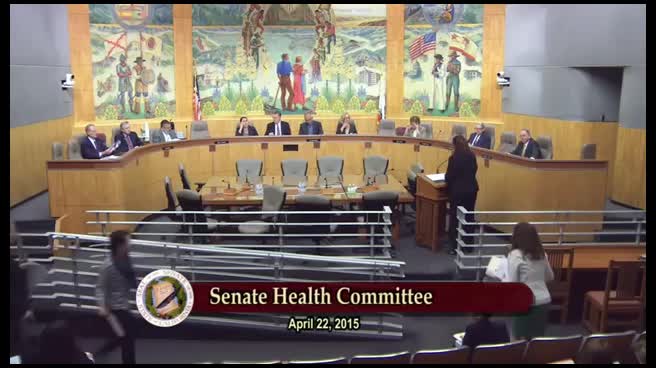
Bill Author