SB 590: Pharmacy: intern pharmacists.
- Session Year: 2015-2016
- House: Senate
- Latest Version Date: 2015-08-07
Existing law, the Pharmacy Law, establishes the California State Board of Pharmacy within the Department of Consumer Affairs and sets forth its powers and duties over the licensing and regulation of the practice of pharmacies, pharmacists, intern pharmacists, and pharmacy technicians. A knowing violation of these provisions is a crime.
Existing law requires an intern pharmacist to complete 1,500 hours of pharmacy practice or intern experience before applying for the pharmacist licensure examination. Existing law authorizes an applicant for examination who has been licensed as a pharmacist in any state for at least one year to submit certification to satisfy the required 1,500 hours of intern experience if that applicant has obtained a minimum of 900 hours of pharmacy practice experience in a pharmacy as a pharmacist.
This bill would instead require, for all applicants, that 900 hours of the 1,500 required pharmacy practice experience include experience in a pharmacy, including experience in both a community and institutional pharmacy practice setting.
Existing law requires the pharmacy practice to comply with the Standards of Curriculum established by the Accreditation Council for Pharmacy Education (ACPE) or with regulations adopted by the board. Existing law requires an intern pharmacist to submit proof of his or her experience under penalty of perjury.
This bill would require that an applicant for the licensure examination who has graduated after January 1, 2016, from an ACPE accredited college of pharmacy or school of pharmacy recognized by the board, be deemed by the board to have satisfied the required hours of pharmacy practice experience, as specified.
By expanding the scope of an existing crime, this bill would create a state-mandated local program.
The California Constitution requires the state to reimburse local agencies and school districts for certain costs mandated by the state. Statutory provisions establish procedures for making that reimbursement.
This bill would provide that no reimbursement is required by this act for a specified reason.
Existing law, the Pharmacy Law, establishes the California State Board of Pharmacy within the Department of Consumer Affairs and sets forth its powers and duties over the licensing and regulation of the practice of pharmacies, pharmacists, intern pharmacists, and pharmacy technicians. A knowing violation of these provisions is a crime.
Existing law requires an intern pharmacist to complete 1,500 hours of pharmacy practice or intern experience before applying for the pharmacist licensure examination. Existing law authorizes an applicant for examination who has been licensed as a pharmacist in any state for at least one year to submit certification to satisfy the required 1,500 hours or of intern experience if that applicant has obtained a minimum of 900 hours of pharmacy practice experience in a pharmacy as a pharmacist.
This bill would instead require, for all applicants, that 900 hours of the 1,500 required pharmacy practice experience include experience in a pharmacy, including experience in both a community and institutional pharmacy practice setting.
Existing law requires the pharmacy practice to comply with the Standards of Curriculum established by the Accreditation Council for Pharmacy Education (ACPE) or with regulations adopted by the board. Existing law requires an intern pharmacist to submit proof of his or her experience under penalty of perjury.
This bill would require that an applicant for the licensure examination who has graduated after January 1, 2016, from an ACPE-approved ACPE accredited college of pharmacy or department school of pharmacy of a university recognized by the board, be deemed by the board to have satisfied the 1,500 required hours of pharmacy practice experience. experience, as specified.
By expanding the scope of an existing crime, this bill would create a state-mandated local program.
The California Constitution requires the state to reimburse local agencies and school districts for certain costs mandated by the state. Statutory provisions establish procedures for making that reimbursement.
This bill would provide that no reimbursement is required by this act for a specified reason.
Existing law, the Pharmacy Law, establishes the California State Board of Pharmacy within the Department of Consumer Affairs and sets forth its powers and duties over the licensing and regulation of the practice of pharmacies, pharmacists, intern pharmacists, and pharmacy technicians. A knowing violation of these provisions is a crime.
Existing law requires an intern pharmacist to complete 1,500 hours of pharmacy practice or intern experience before applying for the pharmacist licensure examination. Existing law authorizes an applicant for examination who has been licensed as a pharmacist in any state for at least one year to submit certification to satisfy the required 1,500 hours or intern experience if that applicant has obtained a minimum of 900 hours of pharmacy practice experience in a pharmacy as a pharmacist.
This bill would instead require, for all applicants, that 900 hours of the 1,500 required pharmacy practice experience include experience in a pharmacy, including experience in both a community and institutional pharmacy practice setting.
Existing law requires the pharmacy practice to comply with the Standards of Curriculum established by the Accreditation Council for Pharmacy Education (ACPE) or with regulations adopted by the board. Existing law requires an intern pharmacist to submit proof of his or her experience under penalty of perjury.
This bill would require that an applicant for the licensure examination who has graduated after January 1, 2016, from an ACPE-approved college of pharmacy or department of pharmacy of a university recognized by the board, be deemed by the board to have satisfied the 1,500 hours of pharmacy practice experience.
By expanding the scope of an existing crime, this bill would create a state-mandated local program.
The California Constitution requires the state to reimburse local agencies and school districts for certain costs mandated by the state. Statutory provisions establish procedures for making that reimbursement.
This bill would provide that no reimbursement is required by this act for a specified reason.
(a)(1)An intern pharmacist shall complete 1,500 hours of pharmacy practice experience before applying for the pharmacist licensure examination.
(2)This pharmacy practice experience shall comply with the Standards of Curriculum established by the Accreditation Council for Pharmacy Education (ACPE) or with regulations adopted by the board.
(3)This pharmacy practice experience shall include 900 hours of pharmacy practice experience in a pharmacy as a pharmacist and shall include pharmacy practice experience in both a community and institutional pharmacy practice setting.
(b)An intern pharmacist shall submit proof of his or her pharmacy practice experience on board-approved affidavits, or another form specified by the board, which shall be certified under penalty of perjury by a pharmacist under whose supervision the experience was obtained or by the pharmacist-in-charge at the pharmacy while the pharmacist intern obtained the experience. Pharmacy practice experience earned in another state may be certified by the licensing agency of that state to document proof of those hours.
(c)An applicant for the examination who has been licensed as a pharmacist in any state for at least one year, as certified by the licensing agency of that state, may submit this certification to satisfy the required 1,500 hours of pharmacy practice experience, provided that the applicant has obtained a minimum of 900 hours of pharmacy practice experience in a pharmacy as a pharmacist and has pharmacy practice experience in both a community and institutional pharmacy practice setting. Certification of an applicants licensure in another state shall be submitted in writing and signed, under oath, by a duly authorized official of the state in which the license is held.
(d)An applicant for the examination who has graduated after January 1, 2016, from an ACPE accredited college of pharmacy or school of pharmacy recognized by the board shall be deemed to have satisfied the pharmacy practice experience requirements specified in subdivisions (a) and (b).
SEC. 2.No reimbursement is required by this act pursuant to Section 6 of Article XIIIB of the California Constitution because the only costs that may be incurred by a local agency or school district will be incurred because this act creates a new crime or infraction, eliminates a crime or infraction, or changes the penalty for a crime or infraction, within the meaning of Section 17556 of the Government Code, or changes the definition of a crime within the meaning of Section 6 of Article XIIIB of the California Constitution.
(a)(1)An intern pharmacist shall complete 1,500 hours of pharmacy practice experience before applying for the pharmacist licensure examination.
(2)This pharmacy practice experience shall comply with the Standards of Curriculum established by the Accreditation Council for Pharmacy Education (ACPE) or with regulations adopted by the board.
(3)This pharmacy practice experience shall include 900 hours of pharmacy practice experience in a pharmacy as a pharmacist and shall include pharmacy practice experience in both a community and institutional pharmacy practice setting.
(b)An intern pharmacist shall submit proof of his or her pharmacy practice experience on board-approved affidavits, or another form specified by the board, which shall be certified under penalty of perjury by a pharmacist under whose supervision the experience was obtained or by the pharmacist-in-charge at the pharmacy while the pharmacist intern obtained the experience. Pharmacy practice experience earned in another state may be certified by the licensing agency of that state to document proof of those hours.
(c)An applicant for the examination who has been licensed as a pharmacist in any state for at least one year, as certified by the licensing agency of that state, may submit this certification to satisfy the required 1,500 hours of pharmacy practice experience, provided that the applicant has obtained a minimum of 900 hours of pharmacy practice experience in a pharmacy as a pharmacist and has pharmacy practice experience in both a community and institutional pharmacy practice setting. Certification of an applicants licensure in another state shall be submitted in writing and signed, under oath, by a duly authorized official of the state in which the license is held.
(d)An applicant for the examination who has graduated after January 1, 2016, from an ACPE-approved ACPE accredited college of pharmacy or department school of pharmacy of a university recognized by the board shall be deemed to have satisfied the 1,500 hours of pharmacy practice experience. experience requirements specified in subdivisions (a) and (b).
SEC. 2.No reimbursement is required by this act pursuant to Section 6 of Article XIIIB of the California Constitution because the only costs that may be incurred by a local agency or school district will be incurred because this act creates a new crime or infraction, eliminates a crime or infraction, or changes the penalty for a crime or infraction, within the meaning of Section 17556 of the Government Code, or changes the definition of a crime within the meaning of Section 6 of Article XIIIB of the California Constitution.
(a)(1)An intern pharmacist shall complete 1,500 hours of pharmacy practice experience before applying for the pharmacist licensure examination.
(2)This pharmacy practice experience shall comply with the Standards of Curriculum established by the Accreditation Council for Pharmacy Education (ACPE) or with regulations adopted by the board.
(3)This pharmacy practice experience shall include 900 hours of pharmacy practice experience in a pharmacy as a pharmacist and shall include pharmacy practice experience in both a community and institutional pharmacy practice setting.
(b)An intern pharmacist shall submit proof of his or her pharmacy practice experience on board-approved affidavits, or another form specified by the board, which shall be certified under penalty of perjury by a pharmacist under whose supervision such the experience was obtained or by the pharmacist-in-charge at the pharmacy while the pharmacist intern obtained the experience. Intern hours Pharmacy practice experience earned in another state may be certified by the licensing agency of that state to document proof of those hours.
(c)An applicant for the examination who has been licensed as a pharmacist in any state for at least one year, as certified by the licensing agency of that state, may submit this certification to satisfy the required 1,500 hours of intern pharmacy practice experience, provided that the applicant has obtained a minimum of 900 hours of pharmacy practice experience in a pharmacy as a pharmacist. pharmacist and has pharmacy practice experience in both a community and institutional pharmacy practice setting. Certification of an applicants licensure in another state shall be submitted in writing and signed, under oath, by a duly authorized official of the state in which the license is held.
(d)An applicant for the examination who has graduated after January 1, 2016, from an ACPE-approved college of pharmacy or department of pharmacy of a university recognized by the board shall be deemed to have satisfied the 1,500 hours of pharmacy practice experience.
SEC. 2.No reimbursement is required by this act pursuant to Section 6 of Article XIIIB of the California Constitution because the only costs that may be incurred by a local agency or school district will be incurred because this act creates a new crime or infraction, eliminates a crime or infraction, or changes the penalty for a crime or infraction, within the meaning of Section 17556 of the Government Code, or changes the definition of a crime within the meaning of Section 6 of Article XIIIB of the California Constitution.
TextPage 1.|
Date
|
Status
|
|---|---|
| Apr 23, 2015 | Read second time. Ordered to third reading. |
| Aug 7, 2015 | Chaptered by Secretary of State. Chapter 147, Statutes of 2015. |
| Aug 7, 2015 | Approved by the Governor. |
| Jul 30, 2015 | Enrolled and presented to the Governor at 10 a.m. |
| Jul 16, 2015 | Read third time. Passed. (Ayes 79. Noes 0. Page 2434.) Ordered to the Senate. |
| Jul 16, 2015 | Read third time. Passed. Ordered to the Senate. |
| Jul 16, 2015 | In Senate. Ordered to engrossing and enrolling. |
| Jul 9, 2015 | Read second time. Ordered to consent calendar. |
| Jul 8, 2015 | From committee: Do pass. Ordered to consent calendar. (Ayes 14. Noes 0.) (July 8). |
| Jun 23, 2015 | From committee: Do pass and re-refer to Com. on APPR. with recommendation: To consent calendar. (Ayes 14. Noes 0.) (June 23). Re-referred to Com. on APPR. |
| Jun 15, 2015 | June 16 hearing postponed by committee. |
| May 18, 2015 | Referred to Com. on B. & P. |
| Apr 30, 2015 | Read third time. Passed. (Ayes 37. Noes 0. Page 837.) Ordered to the Assembly. |
| Apr 30, 2015 | In Assembly. Read first time. Held at Desk. |
| Feb 26, 2015 | (Corrected March 16). |
| Apr 22, 2015 | Read third time and amended. |
| Apr 22, 2015 | Ordered to second reading. |
| Apr 21, 2015 | Read second time. Ordered to consent calendar. |
| Apr 21, 2015 | Ordered to third reading. |
| Apr 21, 2015 | From consent calendar on motion of Senator Stone. |
| Apr 20, 2015 | From committee: Be ordered to second reading pursuant to Senate Rule 28.8 and ordered to consent calendar. |
| Apr 10, 2015 | Set for hearing April 20. |
| Apr 6, 2015 | From committee: Do pass and re-refer to Com. on APPR. with recommendation: To consent calendar. (Ayes 9. Noes 0. Page 506.) (April 6). Re-referred to Com. on APPR. |
| Mar 18, 2015 | Set for hearing April 6. |
| Mar 12, 2015 | Referred to Com. on B., P. & E.D. |
| Feb 27, 2015 | From printer. May be acted upon on or after March 29. |
| Feb 26, 2015 | Introduced. Read first time. To Com. on RLS. for assignment. To print. |
|
Date
|
Description
|
Location
|
Votes
|
|
|---|---|---|---|---|
| Jul 16, 2015 | SB 590 Stone Consent Calendar Second Day Regular Session | Assembly Floor |
Passed |
|
| Jul 8, 2015 | Do pass. To Consent Calendar. | Assembly Standing Committee on Appropriations |
Passed |
|
| Jun 23, 2015 | Do pass and be re-referred to the Committee on [Appropriations] with recommendation: To Consent Calendar | Assembly Standing Committee on Business and Professions |
Passed |
|
| Apr 30, 2015 | Senate 3rd Reading SB590 Stone | Senate Floor |
Passed |
|
| Apr 6, 2015 | Do pass, but first be re-referred to the Committee on [Appropriations] with the recommendation: To Consent Calendar | Senate Standing Committee on Business, Professions and Economic Development |
Passed |
This list shows positions taken on this bill by organizations on the date displayed, which is linked to the original source.
Positions by individuals are not included.
|
Organization
|
Position
|
Date
|
|---|---|---|
| California Pharmacists Association | ** Support | Apr 30, 2015 |
Date of Hearing: July 8, 2015
ASSEMBLY COMMITTEE ON APPROPRIATIONS
Jimmy Gomez, Chair
SB 590
(Stone) – As Amended April 22, 2015
Policy Committee: |
Business and Professions |
Vote: |
14 - 0 |
|
|
|
|
|
|
|
|
Urgency: No State Mandated Local Program: Yes Reimbursable: No
SUMMARY:
This bill aligns statute with existing regulations related to required pharmacy practice experience for pharmacy interns, and authorizes the Board of Pharmacy (Board) to deem those who graduate after January 1, 2016, from a college or school of pharmacy, as specified, as having satisfied pharmacy practice experience requirements.
FISCAL EFFECT:
Negligible state fiscal effect.
COMMENTS:
Purpose. Pharmacy law establishes the requirements for pharmacist license applicants, including the number of pharmacy practice hours that must be earned prior to applying for the pharmacist licensure examination. This bill's primary purpose is to streamline the application processes by allowing the board to accept graduation from an accredited or approved school of pharmacy as sufficient to meet the intern hour requirements for pharmacy practice experience hours, since such schools already include the hours as part of the curriculum. The bill is sponsored by the Board of Pharmacy.
Analysis Prepared by: Lisa Murawski / APPR. / (916) 319-2081
SB 590
Page 4
Date of Hearing: June 23, 2015
ASSEMBLY COMMITTEE ON BUSINESS AND PROFESSIONS
Susan Bonilla, Chair
SB 590
(Stone) – As Amended April 22, 2015
SENATE VOTE: 37-0
SUBJECT: Pharmacy: intern pharmacists.
SUMMARY: Authorizes the Board of Pharmacy (Board) to deem those who graduate after January 1, 2016, from a college or school of pharmacy, as specified, as having satisfied pharmacy practice experience requirements.
EXISTING LAW:
Requires the Board to license and regulate the practice of pharmacy. (Business and Professions Code (BPC) § 4000 et seq.)
Defines an “intern pharmacist” as a person licensed by the Board for a period of one to six years if he or she is enrolled in a school of pharmacy recognized by the Board, two years if he or she is a graduate of a school of pharmacy recognized by the Board who has applied to become licensed as a pharmacist, two years if he or she is a foreign graduate who meets educational requirements, or one year if he or she has failed the pharmacist license exam four times and has reenrolled in a school of pharmacy, as specified. (BPC § 4030)
Provides that an intern pharmacist may perform all functions of a pharmacist at the discretion of and under the direct supervision and control of a pharmacist whose license is in good standing with the Board. (BPC § 4114)
Requires an intern pharmacist to complete 1,500 hours of pharmacy practice that complies with the Standards of Curriculum established by the Accreditation Council for Pharmacy Education (ACPE) or with regulations adopted by the Board before applying for the pharmacist licensure examination. (BPC § 4209)
Requires an intern pharmacist to submit proof of his or her experience on Board-approved affidavits, or another form specified by the Board, to be certified under penalty of perjury by a pharmacist under whose supervision such experience was obtained or by the pharmacist-in-charge at the pharmacy while the pharmacist intern obtained the experience. Allows intern hours earned in another state to be certified by the licensing agency of that state to document proof of those hours. (BPC § 4209)
Authorizes an applicant who has been licensed as a pharmacist in any state for at least one year, as certified by the licensing agency of that state, to submit the certification above to satisfy the required 1,500 hours of intern experience, provided that the applicant has obtained a minimum of 900 hours of pharmacy practice experience in a pharmacy as a pharmacist. Provides that certification of an applicant’s licensure in another state shall be submitted in writing and signed, under oath, by a duly authorized official of the state in which the license is held. (BPC § 4209)
THIS BILL:
Deems an applicant for the pharmacist licensure examination who graduates after January 1, 2016, from an ACPE-accredited college of pharmacy or school of pharmacy recognized by the Board as having satisfied the pharmacy practice experience requirements.
Specifies that 900 hours of the required 1,500 hours of pharmacy practice experience include experience in a pharmacy as a pharmacist and in both a community and institutional pharmacy practice setting.
Provides that no reimbursement is required by this bill pursuant to Section 6 of Article XIIB of the California Constitution because the only costs that may be incurred by a local agency or school district will be incurred because this act creates a new crime or infraction, eliminates a crime or infraction, or changes the penalty for a crime or infraction.
Makes clarifying and conforming changes.
FISCAL EFFECT: According to the Senate Appropriations Committee, pursuant to Senate Rule 28.8, negligible state costs.
COMMENTS:
Purpose. This bill is sponsored by the Board. According to the author, "[This bill] is a simple bill that is sponsored by the [Board]. As a consumer protection agency, one of the key functions of the [Board] is to ensure that applicants seeking licensure satisfy at least the minimum requirements for licensure set forth in law."
Background. Pharmacy law establishes the requirements for pharmacist applicants, including the number of pharmacy practice hours that must be earned prior to applying for the pharmacist licensure examination. Currently, intern pharmacists must complete 1,500 hours of pharmacy practice hours that comply with the Standards of Curriculum established by the ACPE or with regulations adopted by the Board. Intern pharmacists are required to submit proof of experience on Board-approved affidavits, or another form specified by the Board, which are signed under penalty of perjury by the supervising pharmacist. Board regulations (16 California Code of Regulations 1728) already require those 1,500 hours to include a minimum of 900 hours of pharmacy practice experience obtained in a pharmacy, experience in both a community pharmacy and institutional pharmacy settings, and experience to satisfy the requirements for both introductory and advanced pharmacy practice experiences established by the ACPE.
Currently, the ACPE standards and guidelines require schools to ensure that students complete a minimum of 1,740 hours of pharmacy practice experience (300 hours of introductory and 1,440 hours of advanced pharmacy practice experience) under the supervision of approved preceptors. In addition, in California, recognized schools of pharmacy are either those that are accredited by the ACPE or otherwise recognized by the Board. According to the Board, the only schools recognized by the Board that are not ACPE-accredited are those that are waiting to complete the ACPE-accreditation process.
In 2014, after hearing from various stakeholders and examining the issue, the Board determined it should revise its current process for the reporting of pharmacy practice experience for individuals graduating from an ACPE-accredited school of pharmacy. Because students graduating from ACPE-accredited schools are already meeting intern hour requirements, accepting graduation from an ACPE-accredited school or school otherwise recognized by the Board as proof of fulfillment of pharmacy practice experience hours streamlines the application process.
Prior Related Legislation. SB 1575 (Committee on Business, Professions and Economic Development), Chapter 799, Statutes of 2012, clarified the application process for intern hours for applicants who earned intern hours in another state or who have been licensed as a pharmacist in another state.
SB 1913 (Committee on Business and Professions), Chapter 695, Statutes of 2004, established the licensure of intern pharmacists and set forth specified requirements that an intern pharmacist must meet, and conditions under which an intern pharmacist license may be issued, as well as authorized an intern pharmacist to perform all functions of a pharmacist at the discretion of, and under the supervision of, a pharmacist whose license is in good standing with the board.
ARGUMENTS IN SUPPORT:
According to the Board, "As written, this bill will streamline the application process for individuals seeking licensure as pharmacists who are recent graduates of accredited schools of pharmacy or other schools or pharmacy recognized by the board without compromising the board's consumer protection mandate."
According to the University of California, "Out-of-state graduates pursuing a license to practice as a pharmacist in California simply need to inform the Board that they graduated from an accredited school of pharmacy…We believe that the process should be the same for graduates of any accredited school of pharmacy, regardless of whether it is located in California or another state. Furthermore, the attestation required for California graduates is labor-intensive for the interns, the supervising pharmacists, as well as the Board."
According to the California Pharmacists Association, "Given that each school of pharmacy carefully monitors the pharmacy practice experience of students, the burdensome affidavit requirement is not necessary."
ARGUMENTS IN OPPOSITION:
None on file.
REGISTERED SUPPORT:
Board of Pharmacy (sponsor)
California Pharmacists Association
University of California
REGISTERED OPPOSITION:
None on file.
Analysis Prepared by: Eunie Linden / B. & P. / (916) 319-3301
SB 590
Page 4
|
Office of Senate Floor Analyses (916) 651-1520 Fax: (916) 327-4478 |
THIRD READING
Bill No: SB 590
Amended: 4/22/15
SENATE BUS, PROF. & ECON. DEV. COMMITTEE: 9-0, 4/6/15
AYES: Hill, Bates, Berryhill, Block, Galgiani, Hernandez, Jackson, Mendoza, Wieckowski
SENATE APPROPRIATIONS COMMITTEE: Senate Rule 28.8
SUBJECT: Pharmacy: intern pharmacists
DIGEST: This bill clarifies the means by which intern pharmacist applicants for licensure and examination can provide pharmacy practice experience to the Board of Pharmacy.
Senate Floor Amendments of 4/22/15 are technical.
Existing law:
Establishes the practice of pharmacy and provides for the licensing and regulation of pharmacies and pharmacists by the Board of Pharmacy (Board). (Business and Professions Code (BPC) § 4000 et seq.)
Defines “intern pharmacist” as a person licensed by the Board for a period of one to six years if he or she is enrolled in a school of pharmacy recognized by the Board, two years if he or she is a graduate of a school of pharmacy recognized by the Board who has applied to become licensed as a pharmacist, two years if he or she is a foreign graduate, or one year if he or she has failed the pharmacist license exam four times and has remained enrolled in a school of pharmacy. (BPC § 4030)
Provides that an intern pharmacist may perform all functions of a pharmacist at the discretion of and under the direct supervision and control of a pharmacist whose license is in good standing with the Board. Specifies that a pharmacist may not supervise more than two intern pharmacists at any one time.
(BPC § 4114)
Requires an intern pharmacist to complete 1,500 hours of pharmacy practice that complies with the Standards of Curriculum established by the Accreditation Council for Pharmacy Education (ACPE) or with regulations adopted by the Board before applying for the pharmacist licensure examination. (BPC § 4209)
Requires an intern pharmacist to submit proof of his or her experience on Board-approved affidavits, or another form specified by the Board, which shall be certified under penalty of perjury by a pharmacist under whose supervision such experience was obtained or by the pharmacist-in-charge at the pharmacy while the pharmacist intern obtained the experience. Allows intern hours earned in another state to be certified by the licensing agency of that state to document proof of those hours. (Id.)
Authorizes an applicant for the examination who has been licensed as a pharmacist in any state for at least one year, as certified by the licensing agency of that state, to submit the certification above to satisfy the required 1,500 hours of intern experience, provided that the applicant has obtained a minimum of 900 hours of pharmacy practice experience in a pharmacy as a pharmacist. Provides that certification of an applicant’s licensure in another state shall be submitted in writing and signed, under oath, by a duly authorized official of the state in which the license is held. (Id.)
This
bill:
Makes clarifying changes by adding “experience” to all references of pharmacy practice required prior to examination and licensure for intern pharmacists and substitutes “intern hours” under current law for “pharmacy practice experience”.
Specifies that 900 hours of the pharmacy practice experience required by the Board prior to applying for the pharmacist licensure examination include experience in a pharmacy as a pharmacist in both a community and institutional pharmacy practice setting.
Specifies that 900 hours of the pharmacy practice experience required by the Board for applicants for the pharmacist licensure examination who have been licensed as a pharmacist in any state for at least one year, include experience in a pharmacy as a pharmacist in both a community and institutional pharmacy practice setting.
Provides that an applicant for the pharmacist licensure examination who has graduated after January 1, 2016 from an ACPE-approved college of pharmacy or department of pharmacy of a university recognized by the Board, shall be deemed to have satisfied the required 1500 hours of pharmacy practice experience.
Background
Existing law establishes parameters for pharmacy practice experience and how an applicant for a pharmacist license must comply with pharmacy practice requirements while Board regulations provide further specificity on pharmacy practice experience and in what settings the experience is to be obtained. In 2014, the Board had various discussions and determined it should revise its current process for the reporting of pharmacy practice experience for individuals who graduate from an ACPE school of pharmacy, specifically indicating a desire to accept the PharmD degree from an ACPE accredited school as documentation that an individual has completed the required pharmacy practice experience requirements.
Many student applicants have difficulty providing documentation of professional practice experience to the Board if they have gained experience in several pharmacies and different pharmacy settings as part of their pharmacy practice experience over a three to four year period, due to the requirement that such experience must be documented and signed under penalty of perjury by a pharmacist under whose supervision such experience was obtained (or by another designated pharmacist). The Author notes, that since all schools of pharmacy recognized by the Board meet the same standards of curriculum (including pharmacy practice experience) as outlined in the Pharmacy Law, the current method of documentation, which can be cumbersome for applicants, does not actually add value to the application process or enhance the Board’s consumer protection mandate.
FISCAL EFFECT: Appropriation: No Fiscal Com.: Yes Local: Yes
California Pharmacists Association
None received
ARGUMENTS IN SUPPORT: The California Pharmacists Association (CPhA) writes in support of this bill, stating that, “Given that each school of pharmacy carefully monitors the pharmacy practice experience of students, the burdensome affidavit requirement is not necessary…It is important to note that the pharmacy practice experience requirements remain unchanged; SB 590 only affects the documentation requirements for this experience.”
Prepared by: Sarah Mason / B., P. & E.D. / (916) 651-4104
4/24/15 15:45:11
**** END ****
SB 590 (Stone) Page 4 of 4
SENATE COMMITTEE ON
BUSINESS, PROFESSIONS AND ECONOMIC DEVELOPMENT
Senator Jerry Hill, Chair
2015 - 2016 Regular
Bill No: SB 590 Hearing Date: April 6, 2015
Author: |
Stone |
||
Version: |
February 26, 2015 |
||
Urgency: |
No |
Fiscal: |
Yes |
Consultant: |
Sarah Mason |
||
Subject: Pharmacy: intern pharmacists.
SUMMARY:
Clarifies the means by which intern pharmacist applicants for licensure and examination can provide pharmacy practice experience to the Board of Pharmacy.
Existing law:
Establishes the practice of pharmacy and provides for the licensing and regulation of pharmacies and pharmacists by the Board of Pharmacy (Board). (Business and Professions Code (BPC) § 4000 et seq.)
Defines “intern pharmacist” as a person licensed by the Board for a period of one to six years if he or she is enrolled in a school of pharmacy recognized by the Board, two years if he or she is a graduate of a school of pharmacy recognized by the Board who has applied to become licensed as a pharmacist, two years if he or she is a foreign graduate, or one year if he or she has failed the pharmacist license exam four times and has remained enrolled in a school of pharmacy. (BPC § 4030)
Provides that an intern pharmacist may perform all functions of a pharmacist at the discretion of and under the direct supervision and control of a pharmacist whose license is in good standing with the Board. Specifies that a pharmacist may not supervise more than two intern pharmacists at any one time. (BPC § 4114)
Requires an intern pharmacist to complete 1,500 hours of pharmacy practice that complies with the Standards of Curriculum established by the Accreditation Council for Pharmacy Education (ACPE) or with regulations adopted by the Board before applying for the pharmacist licensure examination. (BPC § 4209)
Requires an intern pharmacist to submit proof of his or her experience on Board-approved affidavits, or another form specified by the Board, which shall be certified under penalty of perjury by a pharmacist under whose supervision such experience was obtained or by the pharmacist-in-charge at the pharmacy while the pharmacist intern obtained the experience. Allows intern hours earned in another state to be certified by the licensing agency of that state to document proof of those hours. (Id.)
Authorizes an applicant for the examination who has been licensed as a pharmacist in any state for at least one year, as certified by the licensing agency of that state, to submit the certification above to satisfy the required 1,500 hours of intern experience, provided that the applicant has obtained a minimum of 900 hours of pharmacy practice experience in a pharmacy as a pharmacist. Provides that certification of an applicant’s licensure in another state shall be submitted in writing and signed, under oath, by a duly authorized official of the state in which the license is held. (Id.)
This
bill:
Makes clarifying changes by adding “experience” to all references of pharmacy practice required prior to examination and licensure for intern pharmacists and substitutes “intern hours” under current law for “pharmacy practice experience”.
Specifies that 900 hours of the pharmacy practice experience required by the Board prior to applying for the pharmacist licensure examination include experience in a pharmacy as a pharmacist in both a community and institutional pharmacy practice setting.
Specifies that 900 hours of the pharmacy practice experience required by the Board for applicants for the pharmacist licensure examination who have been licensed as a pharmacist in any state for at least one year, include experience in a pharmacy as a pharmacist in both a community and institutional pharmacy practice setting.
Provides that an applicant for the pharmacist licensure examination who has graduated after January 1, 2016 from an ACPE-approved college of pharmacy or department of pharmacy of a university recognized by the Board, shall be deemed to have satisfied the required 1500 hours of pharmacy practice experience.
FISCAL EFFECT: Unknown. This bill is keyed “fiscal” by Legislative Counsel.
COMMENTS:
Purpose. The Board of Pharmacy is the sponsor of this bill. According to the Author, many student applicants have difficulty providing documentation of professional practice experience to the Board if they have gained experience in several pharmacies and different pharmacy settings as part of their pharmacy practice experience over a three to four year period, due to the requirement that such experience must be documented and signed under penalty of perjury by a pharmacist under whose supervision such experience was obtained (or by another designated pharmacist). The Author notes, that since all schools of pharmacy recognized by the Board meet the same standards of curriculum (including pharmacy practice experience) as outlined in the Pharmacy Law, the current method of documentation, which can be cumbersome for applicants, does not actually add value to the application process or enhance the Board’s consumer protection mandate.
Background. Existing law establishes parameters for pharmacy practice experience and how an applicant for a pharmacist license must comply with pharmacy practice requirements while Board regulations provide further specificity on pharmacy practice experience and in what settings the experience is to be obtained. In 2014, the Board had various discussions and determined it should revise its current process for the reporting of pharmacy practice experience for individuals who graduate from an ACPE school of pharmacy, specifically indicating a desire to accept the PharmD degree from an ACPE accredited school as documentation that an individual has completed the required pharmacy practice experience requirements.
Related Legislation. SB 1039 (Hernandez, Chapter 319, Statutes of 2014) made changes to the authorized tasks of a pharmacy technician under the direct supervision or control of a pharmacist and authorized intern pharmacists to perform specified tasks.
SB 493 (Hernandez, Chapter 469, Statutes of 2013) updated Pharmacy Law to authorize pharmacists to perform certain functions according to specified requirements and established advanced practice pharmacist recognition.
SB 1575 (Committee on Business, Professions and Economic Development, Chapter 799, Statutes of 2012) streamlined the processing of applicants for the pharmacist licensure examination, and ensured that applicants who submit verification of intern hours worked from another state board of pharmacy have met the California requirements.
SB 1913 (Committee on Business and Professions, Chapter 695, Statutes of 2004) established the licensure of intern pharmacists and set forth specified requirements that an intern pharmacist must meet, and conditions under which an intern pharmacist license may be issued as well as authorizing an intern pharmacist to perform all functions of a pharmacist at the discretion of and under the supervision of a pharmacist whose license is in good standing with the board.
Arguments in Support. The California Pharmacists Association (CPhA) writes in support of this bill, stating that, “Given that each school of pharmacy carefully monitors the pharmacy practice experience of students, the burdensome affidavit requirement is not necessary…It is important to note that the pharmacy practice experience requirements remain unchanged; SB 590 only affects the documentation requirements for this experience.”
SUPPORT AND OPPOSITION:
Support:
California Pharmacists Association (CPhA)
Opposition:
None on file as of March 31, 2015.
-- END --
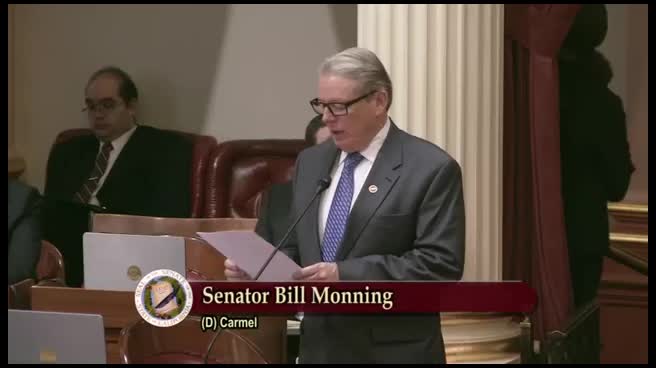
Bill Author

Bill Co-Author(s):