SB 594: Child custody.
- Session Year: 2015-2016
- House: Senate
- Latest Version Date: 2015-07-16
Existing law allows a court, in any contested hearing involving child custody or visitation rights, to appoint a child custody evaluator, as specified. Existing law requires the Judicial Council to adopt standards for the child custody evaluation.
This bill would specify that a child custody evaluation, investigation, or assessment, and any resulting report, may only be considered by the court if the evaluation, investigation, or assessment, and any resulting report, is conducted in accordance with the minimum requirements.
Existing law allows a court, in any contested hearing involving child custody or visitation rights, to appoint a child custody evaluator, as specified. Existing law requires the Judicial Council to adopt standards for the child custody evaluation.
This bill would specify that a child custody evaluation, investigation, or assessment, and any report conducted pursuant to that determination, resulting report, may only be considered by the court if the evaluation, investigation, or assessment assessment, and any resulting report, is conducted in accordance with the minimum requirements.
Existing law allows a court, in any contested hearing involving child custody or visitation rights, to appoint a child custody evaluator, as specified. Existing law requires the Judicial Council to adopt standards for the child custody evaluation.
This bill would specify that a child custody evaluation, investigation, or assessment, and any report conducted pursuant to that determination, may only be considered by the court if the evaluation, investigation, or assessment is conducted in accordance with the minimum requirements.
Existing law requires the court to require an evaluation, investigation, or assessment in any contested proceeding involving child custody or visitation rights when the court has appointed a child custody evaluator or has referred a case for a full or partial court-connected evaluation, investigation, or assessment, and the court determines that there is a serious allegation of child sexual abuse. Existing law establishes certain minimum requirements for the evaluation, investigation, or assessment. Existing law authorizes a mediator to submit a recommendation to the court as to the custody of, or visitation with, a child. A mediator acting in that capacity is called a child custody recommending counselor.
This bill would require the Judicial Council to, not later than January 1, 2016, develop a form that every investigator, evaluator, or child custody recommending counselor conducting an investigation would be required to submit to the court. The bill would require the form to delineate each requirement and require that the person conducting an investigation provide documentation in, or attached to, the form, showing that each task has been completed as required. The bill would provide that on or after January 1, 2016, an investigation that is not documented on the Judicial Council form would not meet the minimum requirements for an investigation as required by the provisions described above. The bill would require, on or after January 1, 2016, that documentation showing compliance with those requirements and the results of the investigation be submitted to the court on the form developed by the Judicial Council.
Existing law also requires a court, if it appears on the face of a petition, application, or other pleading to modify or obtain a temporary or permanent custody or visitation order that custody, visitation, or both are contested, to set the contested issues for mediation. Existing law provides that domestic violence cases shall be handled in accordance with a separate written protocol approved by the Judicial Council.
This bill would require the Judicial Council to, not later than January 1, 2016, develop a form to be used to help implement the separate written protocol approved by the Judicial Council.
Existing law requires the court to require an evaluation, investigation, or assessment in any contested proceeding involving child custody or visitation rights where when the court has appointed a child custody evaluator or has referred a case for a full or partial court-connected evaluation, investigation, or assessment, and the court determines that there is a serious allegation of child sexual abuse. Existing law establishes certain minimum requirements for the evaluation, investigation, or assessment. Existing law authorizes a mediator to submit a recommendation to the court as to the custody of, or visitation with, a child. A mediator acting in that capacity is called a child custody recommending counselor.
This bill would require the Judicial Council to, not later than January 1, 2016, develop a form that every investigator or evaluator investigator, evaluator, or child custody recommending counselor conducting an investigation would be required to submit to the court. The bill would require the form to delineate each requirement and require that the investigator or evaluator person conducting an investigation provide documentation in, or attached to, the form, showing that each task has been completed as required. The bill would provide that on or after January 1, 2016, an investigation that is not documented on the Judicial Council form would not meet the minimum requirements for an investigation as required by the provisions described above. The bill would require, on or after January 1, 2016, that documentation showing compliance with those requirements and the results of the investigation be submitted to the court on the form developed by the Judicial Council.
Existing law also requires a court, if it appears on the face of a petition, application, or other pleading to modify or obtain a temporary or permanent custody or visitation order that custody, visitation, or both are contested, to set the contested issues for mediation. Existing law provides that domestic violence cases shall be handled in accordance with a separate written protocol approved by the Judicial Council.
This bill would require the Judicial Council to, not later than January 1, 2016, develop a form to be used to help implement the separate written protocol approved by the Judicial Council.
Existing law requires the court to require an evaluation, investigation, or assessment in any contested proceeding involving child custody or visitation rights where the court has appointed a child custody evaluator or has referred a case for a full or partial court-connected evaluation, investigation, or assessment, and the court determines that there is a serious allegation of child sexual abuse. Existing law establishes certain minimum requirements for the evaluation, investigation, or assessment.
This bill would require the Judicial Council to, not later than January 1, 2016, develop a form that every investigator or evaluator conducting an investigation would be required to submit to the court. The bill would require the form to delineate each requirement and require that the investigator or evaluator provide documentation in, or attached to, the form, showing that each task has been completed as required. The bill would provide that on or after January 1, 2016, an investigation that is not documented on the Judicial Council form would not meet the minimum requirements for an investigation as required by the provisions described above. The bill would require, on or after January 1, 2016, that documentation showing compliance with those requirements and the results of the investigation be submitted to the court on the form developed by the Judicial Council.
Existing law also requires a court, if it appears on the face of a petition, application, or other pleading to modify or obtain a temporary or permanent custody or visitation order that custody, visitation, or both are contested, to set the contested issues for mediation. Existing law provides that domestic violence cases shall be handled in accordance with a separate written protocol approved by the Judicial Council.
This bill would require the Judicial Council to, not later than January 1, 2016, develop a form to be used to help implement the separate written protocol approved by the Judicial Council.
(a)In any contested proceeding involving child custody or visitation rights, the court may appoint a child custody evaluator to conduct a child custody evaluation in cases where the court determines it is in the best interests of the child. The child custody evaluation shall be conducted in accordance with the standards adopted by the Judicial Council pursuant to Section 3117, and all other standards adopted by the Judicial Council regarding child custody evaluations. If directed by the court, the court-appointed child custody evaluator shall file a written confidential report on his or her evaluation. At least 10 days before any hearing regarding custody of the child, the report shall be filed with the clerk of the court in which the custody hearing will be conducted and served on the parties or their attorneys, and any other counsel appointed for the child pursuant to Section 3150. A child custody evaluation, investigation, or assessment, and any resulting report, may be considered by the court only if it is conducted in accordance with the requirements set forth in the standards adopted by the Judicial Council pursuant to Section 3117; however, this does not preclude the consideration of a child custody evaluation report that contains nonsubstantive or inconsequential errors or both.
(b)The report shall not be made available other than as provided in subdivision (a) or Section 3025.5, or as described in Section 204 of the Welfare and Institutions Code or Section 1514.5 of the Probate Code. Any information obtained from access to a juvenile court case file, as defined in subdivision (e) of Section 827 of the Welfare and Institutions Code, is confidential and shall only be disseminated as provided by paragraph (4) of subdivision (a) of Section 827 of the Welfare and Institutions Code.
(c)The report may be received in evidence on stipulation of all interested parties and is competent evidence as to all matters contained in the report.
(d)If the court determines that an unwarranted disclosure of a written confidential report has been made, the court may impose a monetary sanction against the disclosing party. The sanction shall be in an amount sufficient to deter repetition of the conduct, and may include reasonable attorneys fees, costs incurred, or both, unless the court finds that the disclosing party acted with substantial justification or that other circumstances make the imposition of the sanction unjust. The court shall not impose a sanction pursuant to this subdivision that imposes an unreasonable financial burden on the party against whom the sanction is imposed. This subdivision shall become operative on January 1, 2010.
(e)The Judicial Council shall, by January 1, 2010, do the following:
(1)Adopt a form to be served with every child custody evaluation report that informs the report recipient of the confidentiality of the report and the potential consequences for the unwarranted disclosure of the report.
(2)Adopt a rule of court to require that, when a court-ordered child custody evaluation report is served on the parties, the form specified in paragraph (1) shall be included with the report.
(f)For purposes of this section, a disclosure is unwarranted if it is done either recklessly or maliciously, and is not in the best interests of the child.
(a)(1)In any contested proceeding involving child custody or visitation rights, the court may appoint a child custody evaluator to conduct a child custody evaluation in cases where the court determines it is in the best interests of the child. The child custody evaluation shall be conducted in accordance with the standards adopted by the Judicial Council pursuant to Section 3117, and all other standards adopted by the Judicial Council regarding child custody evaluations. If directed by the court, the court-appointed child custody evaluator shall file a written confidential report on his or her evaluation. At least 10 days before any hearing regarding custody of the child, the report shall be filed with the clerk of the court in which the custody hearing will be conducted and served on the parties or their attorneys, and any other counsel appointed for the child pursuant to Section 3150. A child custody evaluation, investigation, or assessment, and any resulting report report, may be considered by the court only if it is conducted in accordance with the minimum requirements set forth in the standards adopted by the Judicial Council pursuant to Section 3117. 3117; however, this does not preclude the consideration of a child custody evaluation report that contains nonsubstantive or inconsequential errors or both.
(2)This subdivision does not preclude the consideration of a child custody evaluation report that contains harmless procedural errors, technical errors, or both.
(b)The report shall not be made available other than as provided in subdivision (a) or Section 3025.5, or as described in Section 204 of the Welfare and Institutions Code or Section 1514.5 of the Probate Code. Any information obtained from access to a juvenile court case file, as defined in subdivision (e) of Section 827 of the Welfare and Institutions Code, is confidential and shall only be disseminated as provided by paragraph (4) of subdivision (a) of Section 827 of the Welfare and Institutions Code.
(c)The report may be received in evidence on stipulation of all interested parties and is competent evidence as to all matters contained in the report.
(d)If the court determines that an unwarranted disclosure of a written confidential report has been made, the court may impose a monetary sanction against the disclosing party. The sanction shall be in an amount sufficient to deter repetition of the conduct, and may include reasonable attorneys fees, costs incurred, or both, unless the court finds that the disclosing party acted with substantial justification or that other circumstances make the imposition of the sanction unjust. The court shall not impose a sanction pursuant to this subdivision that imposes an unreasonable financial burden on the party against whom the sanction is imposed. This subdivision shall become operative on January 1, 2010.
(e)The Judicial Council shall, by January 1, 2010, do the following:
(1)Adopt a form to be served with every child custody evaluation report that informs the report recipient of the confidentiality of the report and the potential consequences for the unwarranted disclosure of the report.
(2)Adopt a rule of court to require that, when a court-ordered child custody evaluation report is served on the parties, the form specified in paragraph (1) shall be included with the report.
(f)For purposes of this section, a disclosure is unwarranted if it is done either recklessly or maliciously, and is not in the best interests of the child.
(a)(1)In any contested proceeding involving child custody or visitation rights, the court may appoint a child custody evaluator to conduct a child custody evaluation in cases where the court determines it is in the best interests of the child. The child custody evaluation shall be conducted in accordance with the standards adopted by the Judicial Council pursuant to Section 3117, and all other standards adopted by the Judicial Council regarding child custody evaluations. If directed by the court, the court-appointed child custody evaluator shall file a written confidential report on his or her evaluation. At least 10 days before any hearing regarding custody of the child, the report shall be filed with the clerk of the court in which the custody hearing will be conducted and served on the parties or their attorneys, and any other counsel appointed for the child pursuant to Section 3150. A child custody evaluation, investigation, or assessment, and any resulting report conducted pursuant to that determination shall may be considered by the court only if the evaluation, investigation, or assessment it is conducted in accordance with the minimum requirements set forth in this section in determining custody or visitation rights. the standards adopted by the Judicial Council pursuant to Section 3117.
(2)This subdivision does not preclude the consideration of a child custody evaluation report that contains harmless procedural errors, technical errors, or both.
(b)The report shall not be made available other than as provided in subdivision (a) or Section 3025.5, or as described in Section 204 of the Welfare and Institutions Code or Section 1514.5 of the Probate Code. Any information obtained from access to a juvenile court case file, as defined in subdivision (e) of Section 827 of the Welfare and Institutions Code, is confidential and shall only be disseminated as provided by paragraph (4) of subdivision (a) of Section 827 of the Welfare and Institutions Code.
(c)The report may be received in evidence on stipulation of all interested parties and is competent evidence as to all matters contained in the report.
(d)If the court determines that an unwarranted disclosure of a written confidential report has been made, the court may impose a monetary sanction against the disclosing party. The sanction shall be in an amount sufficient to deter repetition of the conduct, and may include reasonable attorneys fees, costs incurred, or both, unless the court finds that the disclosing party acted with substantial justification or that other circumstances make the imposition of the sanction unjust. The court shall not impose a sanction pursuant to this subdivision that imposes an unreasonable financial burden on the party against whom the sanction is imposed. This subdivision shall become operative on January 1, 2010.
(e)The Judicial Council shall, by January 1, 2010, do the following:
(1)Adopt a form to be served with every child custody evaluation report that informs the report recipient of the confidentiality of the report and the potential consequences for the unwarranted disclosure of the report.
(2)Adopt a rule of court to require that, when a court-ordered child custody evaluation report is served on the parties, the form specified in paragraph (1) shall be included with the report.
(f)For purposes of this section, a disclosure is unwarranted if it is done either recklessly or maliciously, and is not in the best interests of the child.
(a)In any contested proceeding involving child custody or visitation rights, the court may appoint a child custody evaluator to conduct a child custody evaluation in cases where the court determines it is in the best interests of the child. The child custody evaluation shall be conducted in accordance with the standards adopted by the Judicial Council pursuant to Section 3117, and all other standards adopted by the Judicial Council regarding child custody evaluations. If directed by the court, the court-appointed child custody evaluator shall file a written confidential report on his or her evaluation. At least 10 days before any hearing regarding custody of the child, the report shall be filed with the clerk of the court in which the custody hearing will be conducted and served on the parties or their attorneys, and any other counsel appointed for the child pursuant to Section 3150. The report may be considered by the court. A child custody evaluation, investigation, or assessment, and any report conducted pursuant to that determination shall be considered by the court only if the evaluation, investigation, or assessment is conducted in accordance with the minimum requirements set forth in this section in determining custody or visitation rights.
(b)The report shall not be made available other than as provided in subdivision (a) or Section 3025.5, or as described in Section 204 of the Welfare and Institutions Code or Section 1514.5 of the Probate Code. Any information obtained from access to a juvenile court case file, as defined in subdivision (e) of Section 827 of the Welfare and Institutions Code, is confidential and shall only be disseminated as provided by paragraph (4) of subdivision (a) of Section 827 of the Welfare and Institutions Code.
(c)The report may be received in evidence on stipulation of all interested parties and is competent evidence as to all matters contained in the report.
(d)If the court determines that an unwarranted disclosure of a written confidential report has been made, the court may impose a monetary sanction against the disclosing party. The sanction shall be in an amount sufficient to deter repetition of the conduct, and may include reasonable attorneys fees, costs incurred, or both, unless the court finds that the disclosing party acted with substantial justification or that other circumstances make the imposition of the sanction unjust. The court shall not impose a sanction pursuant to this subdivision that imposes an unreasonable financial burden on the party against whom the sanction is imposed. This subdivision shall become operative on January 1, 2010.
(e)The Judicial Council shall, by January 1, 2010, do the following:
(1)Adopt a form to be served with every child custody evaluation report that informs the report recipient of the confidentiality of the report and the potential consequences for the unwarranted disclosure of the report.
(2)Adopt a rule of court to require that, when a court-ordered child custody evaluation report is served on the parties, the form specified in paragraph (1) shall be included with the report.
(f)For purposes of this section, a disclosure is unwarranted if it is done either recklessly or maliciously, and is not in the best interests of the child.
SECTION 1.Section 3111 of the Family Code is amended to read:3111.(a)In any contested proceeding involving child custody or visitation rights, the court may appoint a child custody evaluator to conduct a child custody evaluation in cases when the court determines it is in the best interests of the child. The child custody evaluation shall be conducted in accordance with the standards adopted by the Judicial Council pursuant to Section 3117, and all other standards adopted by the Judicial Council regarding child custody evaluations. If directed by the court, the court-appointed child custody evaluator shall file a written confidential report on his or her evaluation, which shall be submitted on, or attached to, the completed form developed pursuant to Section 3117.5. At least 10 days before any hearing regarding custody of the child, the report shall be filed with the clerk of the court in which the custody hearing will be conducted and served on the parties or their attorneys, and any other counsel appointed for the child pursuant to Section 3150. The report may be considered by the court if, (1) it is submitted on, or attached to, the completed Judicial Council form, and, (2) it documents compliance with the minimum state-mandated standards applicable to the scope of the evaluation.
(b)The report shall not be made available other than as provided in subdivision (a) or Section 3025.5, or as described in Section 204 of the Welfare and Institutions Code or Section 1514.5 of the Probate Code. Any information obtained from access to a juvenile court case file, as defined in subdivision (e) of Section 827 of the Welfare and Institutions Code, is confidential and shall only be disseminated as provided by paragraph (4) of subdivision (a) of Section 827 of the Welfare and Institutions Code.
(c)The report may be received in evidence on stipulation of all interested parties and is competent evidence as to all matters contained in the report.
(d)If the court determines that an unwarranted disclosure of a written confidential report has been made, the court may impose a monetary sanction against the disclosing party. The sanction shall be in an amount sufficient to deter repetition of the conduct, and may include reasonable attorneys fees, costs incurred, or both, unless the court finds that the disclosing party acted with substantial justification or that other circumstances make the imposition of the sanction unjust. The court shall not impose a sanction pursuant to this subdivision that imposes an unreasonable financial burden on the party against whom the sanction is imposed. This subdivision shall become operative on January 1, 2010.
(e)The Judicial Council shall, by January 1, 2010, do both of the following:
(1)Adopt a form to be served with every child custody evaluation report that informs the report recipient of the confidentiality of the report and the potential consequences for the unwarranted disclosure of the report.
(2)Adopt a rule of court to require that, when a court-ordered child custody evaluation report is served on the parties, the form specified in paragraph (1) shall be included with the report.
(f)For purposes of this section, a disclosure is unwarranted if it is done either recklessly or maliciously, and is not in the best interests of the child.
SEC. 2.Section 3117.5 is added to the Family Code, to read:3117.5.(a)The Judicial Council shall, no later than January 1, 2016, develop a form to be used by every investigator or evaluator conducting a child custody evaluation. The form shall delineate each requirement of, and incorporate any standards established by, Sections 3117 and 3118. The form shall also incorporate all other standards adopted under this code regarding child custody evaluations, and require that the investigator or evaluator provide documentation in, or attached to, the form showing that each task has been completed as required. For purposes of this section, a child custody evaluation means an investigation and analysis of the health, safety, welfare, and best interest of a child with regard to disputed custody and visitation issues conducted pursuant to Section 3111, 3118, or 3183 of this code, Section 730 of the Evidence Code, or Article 1 (commencing with Section 2032.010) of Chapter 15 of Title 4 of Part 4 of the Code of Civil Procedure. The child custody evaluation form shall be consistent with Sections 3011, 3020, and 3044.
(b)Child custody evaluations filed with the court on and after January 1, 2016, shall be submitted on, or attached to, the report form developed pursuant to subdivision (a). The evaluation report may be considered by the court if, (1) it is submitted on, or attached to, the completed Judicial Council form, and, (2) it documents compliance with the minimum state-mandated standards applicable to the scope of the evaluation.
SEC. 3.Section 3118 of the Family Code is amended to read:3118.(a)In any contested proceeding involving child custody or visitation rights, where the court has appointed a child custody evaluator or has referred a case for a full or partial court-connected evaluation, investigation, or assessment, and the court determines that there is a serious allegation of child sexual abuse, the court shall require an evaluation, investigation, or assessment pursuant to this section. When the court has determined that there is a serious allegation of child sexual abuse, any child custody evaluation, investigation, or assessment conducted subsequent to that determination shall be considered by the court only if the evaluation, investigation, or assessment is conducted in accordance with the minimum requirements set forth in this section in determining custody or visitation rights, except as specified in paragraph (1). For purposes of this section, a serious allegation of child sexual abuse means an allegation of child sexual abuse, as defined in Section 11165.1 of the Penal Code, that is based in whole or in part on statements made by the child to law enforcement, a child welfare services agency investigator, any person required by statute to report suspected child abuse, or any other court-appointed personnel, or that is supported by substantial independent corroboration as provided for in subdivision (b) of Section 3011. When an allegation of child abuse arises in any other circumstances in any proceeding involving child custody or visitation rights, the court may require an evaluator or investigator to conduct an evaluation, investigation, or assessment pursuant to this section. The order appointing a child custody evaluator or investigator pursuant to this section shall provide that the evaluator or investigator have access to all juvenile court records pertaining to the child who is the subject of the evaluation, investigation, or assessment. The order shall also provide that any juvenile court records or information gained from those records remain confidential and shall only be released as specified in Section 3111.
(1)This section does not apply to any emergency court-ordered partial investigation that is conducted for the purpose of assisting the court in determining what immediate temporary orders may be necessary to protect and meet the immediate needs of a child. This section does apply when the emergency is resolved and the court is considering permanent child custody or visitation orders.
(2)This section does not prohibit a court from considering evidence relevant to determining the safety and protection needs of the child.
(3)Any evaluation, investigation, or assessment conducted pursuant to this section shall be conducted by an evaluator or investigator who meets the qualifications set forth in Section 3110.5.
(b)The evaluator or investigator shall, at a minimum, do all of the following:
(1)Consult with the agency providing child welfare services and law enforcement regarding the allegations of child sexual abuse, and obtain recommendations from these professionals regarding the childs safety and the childs need for protection.
(2)Review and summarize the child welfare services agency file. No document contained in the child welfare services agency file may be photocopied, but a summary of the information in the file, including statements made by the children and the parents, and the recommendations made or anticipated to be made by the child welfare services agency to the juvenile court, may be recorded by the evaluator or investigator, except for the identity of the reporting party. The evaluators or investigators notes summarizing the child welfare services agency information shall be stored in a file separate from the evaluators or investigators file and may only be released to either party under order of the court.
(3)Obtain from a law enforcement investigator all available information obtained from criminal background checks of the parents and any suspected perpetrator that is not a parent, including information regarding child abuse, domestic violence, or substance abuse.
(4)Review the results of a multidisciplinary child interview team (hereafter MDIT) interview if available, or if not, or if the evaluator or investigator believes the MDIT interview is inadequate for purposes of the evaluation, investigation, or assessment, interview the child or request an MDIT interview, and shall wherever possible avoid repeated interviews of the child.
(5)Request a forensic medical examination of the child from the appropriate agency, or include in the report required by paragraph (6) a written statement explaining why the examination is not needed.
(6)File a confidential written report with the clerk of the court in which the custody hearing will be conducted and which shall be served on the parties or their attorneys at least 10 days prior to the hearing. This report may not be made available other than as provided in this subdivision. This report shall include, but is not limited to, the following:
(A)Documentation of material interviews, including any MDIT interview of the child or the evaluator or investigator, written documentation of interviews with both parents by the evaluator or investigator, and interviews with other witnesses who provided relevant information.
(B)A summary of any law enforcement investigators investigation, including information obtained from the criminal background check of the parents and any suspected perpetrator that is not a parent, including information regarding child abuse, domestic violence, or substance abuse.
(C)Relevant background material, including, but not limited to, a summary of a written report from any therapist treating the child for suspected child sexual abuse, excluding any communication subject to Section 1014 of the Evidence Code, reports from other professionals, and the results of any forensic medical examination and any other medical examination or treatment that could help establish or disprove whether the child has been the victim of sexual abuse.
(D)The written recommendations of the evaluator or investigator regarding the therapeutic needs of the child and how to ensure the safety of the child.
(E)A summary of the following information: whether the child and his or her parents are or have been the subject of a child abuse investigation and the disposition of that investigation; the name, location, and telephone number of the childrens services worker; the status of the investigation and the recommendations made or anticipated to be made regarding the childs safety; and any dependency court orders or findings that might have a bearing on the custody dispute.
(F)Any information regarding the presence of domestic violence or substance abuse in the family that has been obtained from a child protective agency in accordance with paragraphs (1) and (2), a law enforcement agency, medical personnel or records, prior or currently treating therapists, excluding any communication subject to Section 1014 of the Evidence Code, or from interviews conducted or reviewed for this evaluation, investigation, or assessment.
(G)Which, if any, family members are known to have been deemed eligible for assistance from the Victims of Crime Program due to child abuse or domestic violence.
(H)Any other information the evaluator or investigator believes would be helpful to the court in determining what is in the best interests of the child.
(I)On and after January 1, 2016, documentation showing compliance with all requirements of this section and the results of the investigation shall be submitted to the court on, or attached to, the completed form developed pursuant to Section 3117.5 by the Judicial Council.
(c)If the evaluator or investigator obtains information as part of a family court mediation, that information shall be maintained in the family court file, which is not subject to subpoena by either party. If, however, the members of the family are the subject of an ongoing child welfare services investigation, or the evaluator or investigator has made a child welfare services referral, the evaluator or investigator shall so inform the family law judicial officer in writing and this information shall become part of the family law file. This subdivision may not be construed to authorize or require a mediator to disclose any information not otherwise authorized or required by law to be disclosed.
(d)In accordance with subdivision (d) of Section 11167 of the Penal Code, the evaluator or investigator may not disclose any information regarding the identity of any person making a report of suspected child abuse. Nothing in this section is intended to limit any disclosure of information by any agency that is otherwise required by law or court order.
(e)The evaluation, investigation, or assessment standards set forth in this section represent minimum requirements of evaluation and the court shall order further evaluation beyond these minimum requirements when necessary to determine the safety needs of the child.
(f)If the court orders an evaluation, investigation, or assessment pursuant to this section, the court shall consider whether the best interests of the child require that a temporary order be issued that limits visitation with the parent against whom the allegations have been made to situations in which a third person specified by the court is present or whether visitation will be suspended or denied in accordance with Section 3011.
(g)An evaluation, investigation, or assessment pursuant to this section shall be suspended if a petition is filed to declare the child a dependent child of the juvenile court pursuant to Section 300 of the Welfare and Institutions Code, and all information gathered by the evaluator or investigator shall be made available to the juvenile court.
(h)This section may not be construed to authorize a court to issue any orders in a proceeding pursuant to this division regarding custody or visitation with respect to a minor child who is the subject of a dependency hearing in juvenile court or to otherwise supersede Section 302 of the Welfare and Institutions Code.
(i)On and after January 1, 2016, documentation showing compliance with all requirements of this section and the results of the investigation shall be submitted to the court on, or attached to, the completed form developed pursuant to Section 3117.5 by the Judicial Council.
SEC. 4.Section 3170 of the Family Code is amended to read:3170.(a)If it appears on the face of a petition, application, or other pleading to obtain or modify a temporary or permanent custody or visitation order that custody, visitation, or both are contested, the court shall set the contested issues for mediation.
(b)(1)Domestic violence cases shall be handled by Family Court Services in accordance with a separate written protocol approved by the Judicial Council. The Judicial Council shall adopt guidelines for services, other than services provided under this chapter, that courts or counties may offer to parents who have been unable to resolve their disputes. These services may include, but are not limited to, parent education programs, booklets, video recordings, or referrals to additional community resources.
(2)The Judicial Council shall, no later than January 1, 2016, develop a form to be used to help implement the written protocol for handling domestic violence cases.
SEC. 5.Section 3183 of the Family Code is amended to read:3183.(a)Except as provided in Section 3188, the mediator may, consistent with local court rules, submit a recommendation to the court as to the custody of or visitation with the child, if the mediator has first provided the parties and their attorneys, including counsel for any minor children, with the recommendations in writing in advance of the hearing. The court shall make an inquiry at the hearing as to whether the parties and their attorneys have received the recommendations in writing. If the mediator is authorized to submit a recommendation to the court pursuant to this subdivision, the mediation and recommendation process shall be referred to as child custody recommending counseling and the mediator shall be referred to as a child custody recommending counselor. Mediators who make those recommendations are considered mediators for purposes of Chapter 11 (commencing with Section 3160), and shall be subject to all requirements for mediators for all purposes under this code and the California Rules of Court. On and after January 1, 2012, all court communications and information regarding the child custody recommending counseling process shall reflect the change in the name of the process and the name of the providers.
(b)A child custody recommending counselor who makes child custody and visitation recommendations to the court is considered a child custody evaluator for purposes of Chapter 11 (commencing with Section 3160) and is considered a child custody evaluator for purposes of Chapter 6 (commencing with Section 3110). A child custody recommending counselor shall be subject to all requirements for mediators and custody evaluators for all purposes under this code and the California Rules of Court. Commencing January 1, 2016, a child custody recommending counselors report shall be submitted on, or attached to, the completed form developed pursuant to Section 3117.5. The recommendation report may be considered by the court if, (1) it is submitted on, or attached to, the completed Judicial Council form, and, (2) it documents compliance with the minimum state-mandated child custody evaluation standards applicable to the scope of the evaluation.
(c)If the parties have not reached agreement as a result of the mediation proceedings, the mediator may recommend to the court that an investigation be conducted pursuant to Chapter 6 (commencing with Section 3110) or that other services be offered to assist the parties to effect a resolution of the controversy before a hearing on the issues.
(d)In appropriate cases, the mediator may recommend that restraining orders be issued, pending determination of the controversy, to protect the well-being of the child involved in the controversy.
(a)In any contested proceeding involving child custody or visitation rights, the court may appoint a child custody evaluator to conduct a child custody evaluation in cases where when the court determines it is in the best interests of the child. The child custody evaluation shall be conducted in accordance with the standards adopted by the Judicial Council pursuant to Section 3117, and all other standards adopted by the Judicial Council regarding child custody evaluations. If directed by the court, the court-appointed child custody evaluator shall file a written confidential report on his or her evaluation on the form developed pursuant to Section 3117.5. evaluation, which shall be submitted on, or attached to, the completed form developed pursuant to Section 3117.5. At least 10 days before any hearing regarding custody of the child, the report shall be filed with the clerk of the court in which the custody hearing will be conducted and served on the parties or their attorneys, and any other counsel appointed for the child pursuant to Section 3150. The report may be considered by the court. court if, (1) it is submitted on, or attached to, the completed Judicial Council form, and, (2) it documents compliance with the minimum state-mandated standards applicable to the scope of the evaluation.
(b)The report shall not be made available other than as provided in subdivision (a) or Section 3025.5, or as described in Section 204 of the Welfare and Institutions Code or Section 1514.5 of the Probate Code. Any information obtained from access to a juvenile court case file, as defined in subdivision (e) of Section 827 of the Welfare and Institutions Code, is confidential and shall only be disseminated as provided by paragraph (4) of subdivision (a) of Section 827 of the Welfare and Institutions Code.
(c)The report may be received in evidence on stipulation of all interested parties and is competent evidence as to all matters contained in the report.
(d)If the court determines that an unwarranted disclosure of a written confidential report has been made, the court may impose a monetary sanction against the disclosing party. The sanction shall be in an amount sufficient to deter repetition of the conduct, and may include reasonable attorneys fees, costs incurred, or both, unless the court finds that the disclosing party acted with substantial justification or that other circumstances make the imposition of the sanction unjust. The court shall not impose a sanction pursuant to this subdivision that imposes an unreasonable financial burden on the party against whom the sanction is imposed. This subdivision shall become operative on January 1, 2010.
(e)The Judicial Council shall, by January 1, 2010, do both of the following:
(1)Adopt a form to be served with every child custody evaluation report that informs the report recipient of the confidentiality of the report and the potential consequences for the unwarranted disclosure of the report.
(2)Adopt a rule of court to require that, when a court-ordered child custody evaluation report is served on the parties, the form specified in paragraph (1) shall be included with the report.
(f)For purposes of this section, a disclosure is unwarranted if it is done either recklessly or maliciously, and is not in the best interests of the child.
SEC. 2.Section 3117.5 is added to the Family Code, to read:3117.5.(a)The Judicial Council shall, no later than January 1, 2016, develop a form to be used by every investigator or evaluator conducting a child custody evaluation. The form shall delineate each requirement required by Section 3118 of, and incorporate any standards established by, Sections 3117 and 3118. The form shall also incorporate all other standards adopted under this code regarding child custody evaluations, and require that the investigator or evaluator provide documentation in, or attached to, the form showing that each task has been completed as required. For purposes of this section, a child custody evaluation means an investigation and analysis of the health, safety, welfare, and best interest of a child with regard to disputed custody and visitation issues conducted pursuant to Sections 3111 or Section 3111, 3118, or 3183 of this code, Section 730 of the Evidence Code, or Article 1 (commencing with Section 2032.010) of Chapter 15 of Title 4 of Part 4 of the Code of Civil Procedure. The child custody evaluation form shall be consistent with Sections 3011, 3020, and 3044.
(b)Child custody evaluations filed with the court on and after January 1, 2016, shall be submitted on on, or attached to, the report form developed pursuant to subdivision (a). The evaluation report may be considered by the court if, (1) it is submitted on, or attached to, the completed Judicial Council form, and, (2) it documents compliance with the minimum state-mandated standards applicable to the scope of the evaluation.
SEC. 3.Section 3118 of the Family Code is amended to read:3118.(a)In any contested proceeding involving child custody or visitation rights, where the court has appointed a child custody evaluator or has referred a case for a full or partial court-connected evaluation, investigation, or assessment, and the court determines that there is a serious allegation of child sexual abuse, the court shall require an evaluation, investigation, or assessment pursuant to this section. When the court has determined that there is a serious allegation of child sexual abuse, any child custody evaluation, investigation, or assessment conducted subsequent to that determination shall be considered by the court only if the evaluation, investigation, or assessment is conducted in accordance with the minimum requirements set forth in this section in determining custody or visitation rights, except as specified in paragraph (1). For purposes of this section, a serious allegation of child sexual abuse means an allegation of child sexual abuse, as defined in Section 11165.1 of the Penal Code, that is based in whole or in part on statements made by the child to law enforcement, a child welfare services agency investigator, any person required by statute to report suspected child abuse, or any other court-appointed personnel, or that is supported by substantial independent corroboration as provided for in subdivision (b) of Section 3011. When an allegation of child abuse arises in any other circumstances in any proceeding involving child custody or visitation rights, the court may require an evaluator or investigator to conduct an evaluation, investigation, or assessment pursuant to this section. The order appointing a child custody evaluator or investigator pursuant to this section shall provide that the evaluator or investigator have access to all juvenile court records pertaining to the child who is the subject of the evaluation, investigation, or assessment. The order shall also provide that any juvenile court records or information gained from those records remain confidential and shall only be released as specified in Section 3111.
(1)This section does not apply to any emergency court-ordered partial investigation that is conducted for the purpose of assisting the court in determining what immediate temporary orders may be necessary to protect and meet the immediate needs of a child. This section does apply when the emergency is resolved and the court is considering permanent child custody or visitation orders.
(2)This section does not prohibit a court from considering evidence relevant to determining the safety and protection needs of the child.
(3)Any evaluation, investigation, or assessment conducted pursuant to this section shall be conducted by an evaluator or investigator who meets the qualifications set forth in Section 3110.5.
(b)The evaluator or investigator shall, at a minimum, do all of the following:
(1)Consult with the agency providing child welfare services and law enforcement regarding the allegations of child sexual abuse, and obtain recommendations from these professionals regarding the childs safety and the childs need for protection.
(2)Review and summarize the child welfare services agency file. No document contained in the child welfare services agency file may be photocopied, but a summary of the information in the file, including statements made by the children and the parents, and the recommendations made or anticipated to be made by the child welfare services agency to the juvenile court, may be recorded by the evaluator or investigator, except for the identity of the reporting party. The evaluators or investigators notes summarizing the child welfare services agency information shall be stored in a file separate from the evaluators or investigators file and may only be released to either party under order of the court.
(3)Obtain from a law enforcement investigator all available information obtained from criminal background checks of the parents and any suspected perpetrator that is not a parent, including information regarding child abuse, domestic violence, or substance abuse.
(4)Review the results of a multidisciplinary child interview team (hereafter MDIT) interview if available, or if not, or if the evaluator or investigator believes the MDIT interview is inadequate for purposes of the evaluation, investigation, or assessment, interview the child or request an MDIT interview, and shall wherever possible avoid repeated interviews of the child.
(5)Request a forensic medical examination of the child from the appropriate agency, or include in the report required by paragraph (6) a written statement explaining why the examination is not needed.
(6)File a confidential written report with the clerk of the court in which the custody hearing will be conducted and which shall be served on the parties or their attorneys at least 10 days prior to the hearing. This report may not be made available other than as provided in this subdivision. This report shall include, but is not limited to, the following:
(A)Documentation of material interviews, including any MDIT interview of the child or the evaluator or investigator, written documentation of interviews with both parents by the evaluator or investigator, and interviews with other witnesses who provided relevant information.
(B)A summary of any law enforcement investigators investigation, including information obtained from the criminal background check of the parents and any suspected perpetrator that is not a parent, including information regarding child abuse, domestic violence, or substance abuse.
(C)Relevant background material, including, but not limited to, a summary of a written report from any therapist treating the child for suspected child sexual abuse, excluding any communication subject to Section 1014 of the Evidence Code, reports from other professionals, and the results of any forensic medical examination and any other medical examination or treatment that could help establish or disprove whether the child has been the victim of sexual abuse.
(D)The written recommendations of the evaluator or investigator regarding the therapeutic needs of the child and how to ensure the safety of the child.
(E)A summary of the following information: whether the child and his or her parents are or have been the subject of a child abuse investigation and the disposition of that investigation; the name, location, and telephone number of the childrens services worker; the status of the investigation and the recommendations made or anticipated to be made regarding the childs safety; and any dependency court orders or findings that might have a bearing on the custody dispute.
(F)Any information regarding the presence of domestic violence or substance abuse in the family that has been obtained from a child protective agency in accordance with paragraphs (1) and (2), a law enforcement agency, medical personnel or records, prior or currently treating therapists, excluding any communication subject to Section 1014 of the Evidence Code, or from interviews conducted or reviewed for this evaluation, investigation, or assessment.
(G)Which, if any, family members are known to have been deemed eligible for assistance from the Victims of Crime Program due to child abuse or domestic violence.
(H)Any other information the evaluator or investigator believes would be helpful to the court in determining what is in the best interests of the child.
(I)On and after January 1, 2016, documentation showing compliance with all requirements of this section and the results of the investigation shall be submitted to the court on the on, or attached to, the completed form developed pursuant to Section 3117.5 by the Judicial Council.
(c)If the evaluator or investigator obtains information as part of a family court mediation, that information shall be maintained in the family court file, which is not subject to subpoena by either party. If, however, the members of the family are the subject of an ongoing child welfare services investigation, or the evaluator or investigator has made a child welfare services referral, the evaluator or investigator shall so inform the family law judicial officer in writing and this information shall become part of the family law file. This subdivision may not be construed to authorize or require a mediator to disclose any information not otherwise authorized or required by law to be disclosed.
(d)In accordance with subdivision (d) of Section 11167 of the Penal Code, the evaluator or investigator may not disclose any information regarding the identity of any person making a report of suspected child abuse. Nothing in this section is intended to limit any disclosure of information by any agency that is otherwise required by law or court order.
(e)The evaluation, investigation, or assessment standards set forth in this section represent minimum requirements of evaluation and the court shall order further evaluation beyond these minimum requirements when necessary to determine the safety needs of the child.
(f)If the court orders an evaluation, investigation, or assessment pursuant to this section, the court shall consider whether the best interests of the child require that a temporary order be issued that limits visitation with the parent against whom the allegations have been made to situations in which a third person specified by the court is present or whether visitation will be suspended or denied in accordance with Section 3011.
(g)An evaluation, investigation, or assessment pursuant to this section shall be suspended if a petition is filed to declare the child a dependent child of the juvenile court pursuant to Section 300 of the Welfare and Institutions Code, and all information gathered by the evaluator or investigator shall be made available to the juvenile court.
(h)This section may not be construed to authorize a court to issue any orders in a proceeding pursuant to this division regarding custody or visitation with respect to a minor child who is the subject of a dependency hearing in juvenile court or to otherwise supersede Section 302 of the Welfare and Institutions Code.
(i)On and after January 1, 2016, documentation showing compliance with all requirements of this section and the results of the investigation shall be submitted to the court on, or attached to, the completed form developed pursuant to Section 3117.5 by the Judicial Council.
SEC. 4.Section 3170 of the Family Code is amended to read:3170.(a)If it appears on the face of a petition, application, or other pleading to obtain or modify a temporary or permanent custody or visitation order that custody, visitation, or both are contested, the court shall set the contested issues for mediation.
(b)(1)Domestic violence cases shall be handled by Family Court Services in accordance with a separate written protocol approved by the Judicial Council. The Judicial Council shall adopt guidelines for services, other than services provided under this chapter, that courts or counties may offer to parents who have been unable to resolve their disputes. These services may include, but are not limited to, parent education programs, booklets, video recordings, or referrals to additional community resources.
(2)The Judicial Council shall, no later than January 1, 2016, develop a form to be used to help implement the written protocol for handling domestic violence cases.
SEC. 5.Section 3183 of the Family Code is amended to read:3183.(a)Except as provided in Section 3188, the mediator may, consistent with local court rules, submit a recommendation to the court as to the custody of or visitation with the child, if the mediator has first provided the parties and their attorneys, including counsel for any minor children, with the recommendations in writing in advance of the hearing. The court shall make an inquiry at the hearing as to whether the parties and their attorneys have received the recommendations in writing. If the mediator is authorized to submit a recommendation to the court pursuant to this subdivision, the mediation and recommendation process shall be referred to as child custody recommending counseling and the mediator shall be referred to as a child custody recommending counselor. Mediators who make those recommendations are considered mediators for purposes of Chapter 11 (commencing with Section 3160), and shall be subject to all requirements for mediators for all purposes under this code and the California Rules of Court. On and after January 1, 2012, all court communications and information regarding the child custody recommending counseling process shall reflect the change in the name of the process and the name of the providers.
(b)A child custody recommending counselor who makes child custody and visitation recommendations to the court is considered a child custody evaluator for purposes of Chapter 11 (commencing with Section 3160) and is considered a child custody evaluator for purposes of Chapter 6 (commencing with Section 3110). A child custody recommending counselor shall be subject to all requirements for mediators and custody evaluators for all purposes under this code and the California Rules of Court. Commencing January 1, 2016, a child custody recommending counselors report shall be submitted on, or attached to, the completed form developed pursuant to Section 3117.5. The recommendation report may be considered by the court if, (1) it is submitted on, or attached to, the completed Judicial Council form, and, (2) it documents compliance with the minimum state-mandated child custody evaluation standards applicable to the scope of the evaluation.
(b)
(c)If the parties have not reached agreement as a result of the mediation proceedings, the mediator may recommend to the court that an investigation be conducted pursuant to Chapter 6 (commencing with Section 3110) or that other services be offered to assist the parties to effect a resolution of the controversy before a hearing on the issues.
(c)
(d)In appropriate cases, the mediator may recommend that restraining orders be issued, pending determination of the controversy, to protect the well-being of the child involved in the controversy.
(a)In any contested proceeding involving child custody or visitation rights, the court may appoint a child custody evaluator to conduct a child custody evaluation in cases where the court determines it is in the best interests of the child. The child custody evaluation shall be conducted in accordance with the standards adopted by the Judicial Council pursuant to Section 3117, and all other standards adopted by the Judicial Council regarding child custody evaluations. If directed by the court, the court-appointed child custody evaluator shall file a written confidential report on his or her evaluation. evaluation on the form developed pursuant to Section 3117.5. At least 10 days before any hearing regarding custody of the child, the report shall be filed with the clerk of the court in which the custody hearing will be conducted and served on the parties or their attorneys, and any other counsel appointed for the child pursuant to Section 3150. The report may be considered by the court.
(b)The report shall not be made available other than as provided in subdivision (a) or Section 3025.5, or as described in Section 204 of the Welfare and Institutions Code or Section 1514.5 of the Probate Code. Any information obtained from access to a juvenile court case file, as defined in subdivision (e) of Section 827 of the Welfare and Institutions Code, is confidential and shall only be disseminated as provided by paragraph (4) of subdivision (a) of Section 827 of the Welfare and Institutions Code.
(c)The report may be received in evidence on stipulation of all interested parties and is competent evidence as to all matters contained in the report.
(d)If the court determines that an unwarranted disclosure of a written confidential report has been made, the court may impose a monetary sanction against the disclosing party. The sanction shall be in an amount sufficient to deter repetition of the conduct, and may include reasonable attorneys fees, costs incurred, or both, unless the court finds that the disclosing party acted with substantial justification or that other circumstances make the imposition of the sanction unjust. The court shall not impose a sanction pursuant to this subdivision that imposes an unreasonable financial burden on the party against whom the sanction is imposed. This subdivision shall become operative on January 1, 2010.
(e)The Judicial Council shall, by January 1, 2010, do the following:
(1)Adopt a form to be served with every child custody evaluation report that informs the report recipient of the confidentiality of the report and the potential consequences for the unwarranted disclosure of the report.
(2)Adopt a rule of court to require that, when a court-ordered child custody evaluation report is served on the parties, the form specified in paragraph (1) shall be included with the report.
(f)For purposes of this section, a disclosure is unwarranted if it is done either recklessly or maliciously, and is not in the best interests of the child.
SEC. 2.Section 3117.5 is added to the Family Code, to read:3117.5.(a)The Judicial Council shall, no later than January 1, 2016, develop a form to be used by every investigator or evaluator conducting a child custody evaluation. The form shall delineate each requirement required by Section 3118 and require that the investigator or evaluator provide documentation in, or attached to, the form showing that each task has been completed as required. For purposes of this section, a child custody evaluation means an investigation and analysis of the health, safety, welfare, and best interest of a child with regard to disputed custody and visitation issues conducted pursuant to Sections 3111 or 3118, Section 730 of the Evidence Code, or Article 1 of Chapter 15 of Title 4 of Part 4 of the Code of Civil Procedure.
(b)Child custody evaluations filed with the court on and after January 1, 2016, shall be submitted on the report form developed pursuant to subdivision (a).
SEC. 3.Section 3118 of the Family Code is amended to read:3118.(a)In any contested proceeding involving child custody or visitation rights, where the court has appointed a child custody evaluator or has referred a case for a full or partial court-connected evaluation, investigation, or assessment, and the court determines that there is a serious allegation of child sexual abuse, the court shall require an evaluation, investigation, or assessment pursuant to this section. When the court has determined that there is a serious allegation of child sexual abuse, any child custody evaluation, investigation, or assessment conducted subsequent to that determination shall be considered by the court only if the evaluation, investigation, or assessment is conducted in accordance with the minimum requirements set forth in this section in determining custody or visitation rights, except as specified in paragraph (1). For purposes of this section, a serious allegation of child sexual abuse means an allegation of child sexual abuse, as defined in Section 11165.1 of the Penal Code, that is based in whole or in part on statements made by the child to law enforcement, a child welfare services agency investigator, any person required by statute to report suspected child abuse, or any other court-appointed personnel, or that is supported by substantial independent corroboration as provided for in subdivision (b) of Section 3011. When an allegation of child abuse arises in any other circumstances in any proceeding involving child custody or visitation rights, the court may require an evaluator or investigator to conduct an evaluation, investigation, or assessment pursuant to this section. The order appointing a child custody evaluator or investigator pursuant to this section shall provide that the evaluator or investigator have access to all juvenile court records pertaining to the child who is the subject of the evaluation, investigation, or assessment. The order shall also provide that any juvenile court records or information gained from those records remain confidential and shall only be released as specified in Section 3111.
(1)This section does not apply to any emergency court-ordered partial investigation that is conducted for the purpose of assisting the court in determining what immediate temporary orders may be necessary to protect and meet the immediate needs of a child. This section does apply when the emergency is resolved and the court is considering permanent child custody or visitation orders.
(2)This section does not prohibit a court from considering evidence relevant to determining the safety and protection needs of the child.
(3)Any evaluation, investigation, or assessment conducted pursuant to this section shall be conducted by an evaluator or investigator who meets the qualifications set forth in Section 3110.5.
(b)The evaluator or investigator shall, at a minimum, do all of the following:
(1)Consult with the agency providing child welfare services and law enforcement regarding the allegations of child sexual abuse, and obtain recommendations from these professionals regarding the childs safety and the childs need for protection.
(2)Review and summarize the child welfare services agency file. No document contained in the child welfare services agency file may be photocopied, but a summary of the information in the file, including statements made by the children and the parents, and the recommendations made or anticipated to be made by the child welfare services agency to the juvenile court, may be recorded by the evaluator or investigator, except for the identity of the reporting party. The evaluators or investigators notes summarizing the child welfare services agency information shall be stored in a file separate from the evaluators or investigators file and may only be released to either party under order of the court.
(3)Obtain from a law enforcement investigator all available information obtained from criminal background checks of the parents and any suspected perpetrator that is not a parent, including information regarding child abuse, domestic violence, or substance abuse.
(4)Review the results of a multidisciplinary child interview team (hereafter MDIT) interview if available, or if not, or if the evaluator or investigator believes the MDIT interview is inadequate for purposes of the evaluation, investigation, or assessment, interview the child or request an MDIT interview, and shall wherever possible avoid repeated interviews of the child.
(5)Request a forensic medical examination of the child from the appropriate agency, or include in the report required by paragraph (6) a written statement explaining why the examination is not needed.
(6)File a confidential written report with the clerk of the court in which the custody hearing will be conducted and which shall be served on the parties or their attorneys at least 10 days prior to the hearing. This report may not be made available other than as provided in this subdivision. This report shall include, but is not limited to, the following:
(A)Documentation of material interviews, including any MDIT interview of the child or the evaluator or investigator, written documentation of interviews with both parents by the evaluator or investigator, and interviews with other witnesses who provided relevant information.
(B)A summary of any law enforcement investigators investigation, including information obtained from the criminal background check of the parents and any suspected perpetrator that is not a parent, including information regarding child abuse, domestic violence, or substance abuse.
(C)Relevant background material, including, but not limited to, a summary of a written report from any therapist treating the child for suspected child sexual abuse, excluding any communication subject to Section 1014 of the Evidence Code, reports from other professionals, and the results of any forensic medical examination and any other medical examination or treatment that could help establish or disprove whether the child has been the victim of sexual abuse.
(D)The written recommendations of the evaluator or investigator regarding the therapeutic needs of the child and how to ensure the safety of the child.
(E)A summary of the following information: whether the child and his or her parents are or have been the subject of a child abuse investigation and the disposition of that investigation; the name, location, and telephone number of the childrens services worker; the status of the investigation and the recommendations made or anticipated to be made regarding the childs safety; and any dependency court orders or findings that might have a bearing on the custody dispute.
(F)Any information regarding the presence of domestic violence or substance abuse in the family that has been obtained from a child protective agency in accordance with paragraphs (1) and (2), a law enforcement agency, medical personnel or records, prior or currently treating therapists, excluding any communication subject to Section 1014 of the Evidence Code, or from interviews conducted or reviewed for this evaluation, investigation, or assessment.
(G)Which, if any, family members are known to have been deemed eligible for assistance from the Victims of Crime Program due to child abuse or domestic violence.
(H)Any other information the evaluator or investigator believes would be helpful to the court in determining what is in the best interests of the child.
(I)On and after January 1, 2016, documentation showing compliance with all requirements of this section and the results of the investigation shall be submitted to the court on the form developed pursuant to Section 3117.5 by the Judicial Council.
(c)If the evaluator or investigator obtains information as part of a family court mediation, that information shall be maintained in the family court file, which is not subject to subpoena by either party. If, however, the members of the family are the subject of an ongoing child welfare services investigation, or the evaluator or investigator has made a child welfare services referral, the evaluator or investigator shall so inform the family law judicial officer in writing and this information shall become part of the family law file. This subdivision may not be construed to authorize or require a mediator to disclose any information not otherwise authorized or required by law to be disclosed.
(d)In accordance with subdivision (d) of Section 11167 of the Penal Code, the evaluator or investigator may not disclose any information regarding the identity of any person making a report of suspected child abuse. Nothing in this section is intended to limit any disclosure of information by any agency that is otherwise required by law or court order.
(e)The evaluation, investigation, or assessment standards set forth in this section represent minimum requirements of evaluation and the court shall order further evaluation beyond these minimum requirements when necessary to determine the safety needs of the child.
(f)If the court orders an evaluation, investigation, or assessment pursuant to this section, the court shall consider whether the best interests of the child require that a temporary order be issued that limits visitation with the parent against whom the allegations have been made to situations in which a third person specified by the court is present or whether visitation will be suspended or denied in accordance with Section 3011.
(g)An evaluation, investigation, or assessment pursuant to this section shall be suspended if a petition is filed to declare the child a dependent child of the juvenile court pursuant to Section 300 of the Welfare and Institutions Code, and all information gathered by the evaluator or investigator shall be made available to the juvenile court.
(h)This section may not be construed to authorize a court to issue any orders in a proceeding pursuant to this division regarding custody or visitation with respect to a minor child who is the subject of a dependency hearing in juvenile court or to otherwise supersede Section 302 of the Welfare and Institutions Code.
SEC. 4.Section 3170 of the Family Code is amended to read:3170.(a)If it appears on the face of a petition, application, or other pleading to obtain or modify a temporary or permanent custody or visitation order that custody, visitation, or both are contested, the court shall set the contested issues for mediation.
(b)(1)Domestic violence cases shall be handled by Family Court Services in accordance with a separate written protocol approved by the Judicial Council. The Judicial Council shall adopt guidelines for services, other than services provided under this chapter, that courts or counties may offer to parents who have been unable to resolve their disputes. These services may include, but are not limited to, parent education programs, booklets, video recordings, or referrals to additional community resources.
(2)The Judicial Council shall, no later than January 1, 2016, develop a form to be used to help implement the written protocol for handling domestic violence cases.
|
Date
|
Status
|
|---|---|
| May 18, 2015 | Read third time. Passed. (Ayes 36. Noes 0.) Ordered to the Assembly. |
| Jul 16, 2015 | Chaptered by Secretary of State. Chapter 130, Statutes of 2015. |
| Jul 16, 2015 | Approved by the Governor. |
| Jul 8, 2015 | Enrolled and presented to the Governor at 4:30 p.m. |
| Jul 6, 2015 | Assembly amendments concurred in. (Ayes 39. Noes 0.) Ordered to engrossing and enrolling. |
| Jul 6, 2015 | Assembly amendments concurred in. (Ayes 39. Noes 0. Page 1791.) Ordered to engrossing and enrolling. |
| Jul 1, 2015 | Ordered to special consent calendar. |
| Jun 29, 2015 | Read third time. Passed. (Ayes 76. Noes 0. Page 2178.) Ordered to the Senate. |
| Jun 29, 2015 | Read third time. Passed. Ordered to the Senate. |
| Jun 29, 2015 | In Senate. Concurrence in Assembly amendments pending. |
| Jun 24, 2015 | Read second time. Ordered to consent calendar. |
| Jun 23, 2015 | From committee: Do pass. Ordered to consent calendar. (Ayes 10. Noes 0.) (June 23). |
| Jun 11, 2015 | From committee with author's amendments. Read second time and amended. Re-referred to Com. on JUD. |
| Jun 9, 2015 | June 16 hearing postponed by committee. |
| May 28, 2015 | Referred to Com. on JUD. |
| Feb 27, 2015 | Introduced. To Com. on RLS. for assignment. To print. |
| May 18, 2015 | Read third time. Passed. (Ayes 36. Noes 0. Page 1025.) Ordered to the Assembly. |
| May 18, 2015 | In Assembly. Read first time. Held at Desk. |
| May 13, 2015 | Read second time and amended. Ordered to third reading. |
| May 12, 2015 | From committee: Do pass as amended. (Ayes 7. Noes 0.) (May 5). |
| May 12, 2015 | From committee: Do pass as amended. (Ayes 7. Noes 0. Page 921.) (May 5). |
| Apr 30, 2015 | Set for hearing May 5. |
| Apr 28, 2015 | April 28 set for first hearing canceled at the request of author. |
| Apr 27, 2015 | From committee with author's amendments. Read second time and amended. Re-referred to Com. on JUD. |
| Apr 21, 2015 | Set for hearing April 28. |
| Apr 13, 2015 | From committee with author's amendments. Read second time and amended. Re-referred to Com. on JUD. |
| Mar 12, 2015 | Referred to Com. on JUD. |
| Mar 2, 2015 | Read first time. |
| Mar 2, 2015 | From printer. May be acted upon on or after April 1. |
|
Date
|
Description
|
Location
|
Votes
|
|
|---|---|---|---|---|
| Jul 6, 2015 | Special Consent #4 SB594 Wieckowski | Senate Floor |
Passed |
|
| Jun 29, 2015 | SB 594 Wieckowski Consent Calendar Second Day Regular Session | Assembly Floor |
Passed |
|
| Jun 23, 2015 | Do pass. To Consent Calendar. | Assembly Standing Committee on Judiciary |
Passed |
|
| May 18, 2015 | Senate 3rd Reading SB594 Wieckowski | Senate Floor |
Passed |
|
| May 5, 2015 | Do pass as amended | Senate Standing Committee on Judiciary |
Passed |
This list shows positions taken on this bill by organizations on the date displayed, which is linked to the original source.
Positions by individuals are not included.
|
Organization
|
Position
|
Date
|
|---|---|---|
| Association of Certified Family Law Specialists | ** Against | May 18, 2015 |
| Association of Family Conciliation Courts | ** Against | May 18, 2015 |
| California Partnership To End Domestic Violence | ** Support | May 18, 2015 |
| California Protective Parents Association | ** Support | May 18, 2015 |
| California Psychological Association | ** Against | May 18, 2015 |
| Center for Judicial Excellence | ** Support | May 18, 2015 |
| Crime Victims United Of California | ** Support | May 18, 2015 |
| Domestic Violence Legal Empowerment and Appeals Project | ** Support | May 18, 2015 |
| Family Violence and Sexual Assault Institute | ** Support | May 18, 2015 |
| Incest Survivors' Speakers Bureau | ** Support | May 18, 2015 |
| Judicial Council of California | ** Against | May 18, 2015 |
| Justice for Children | ** Support | May 18, 2015 |
SB 594
Page 4
|
Office of Senate Floor Analyses (916) 651-1520 Fax: (916) 327-4478 |
UNFINISHED BUSINESS
Bill No: SB 594
Amended: 6/11/15
SENATE JUDICIARY COMMITTEE: 7-0, 5/5/15
AYES: Jackson, Moorlach, Anderson, Hertzberg, Leno, Monning, Wieckowski
SENATE FLOOR: 36-0, 5/18/15
AYES: Allen, Anderson, Bates, Beall, Block, Cannella, De León, Fuller, Gaines, Galgiani, Hancock, Hernandez, Hertzberg, Hill, Hueso, Huff, Jackson, Lara, Leno, Leyva, Liu, McGuire, Mendoza, Mitchell, Monning, Moorlach, Morrell, Nguyen, Nielsen, Pan, Roth, Runner, Stone, Vidak, Wieckowski, Wolk
NO VOTE RECORDED: Berryhill, Hall, Pavley
ASSEMBLY FLOOR: 76-0, 6/29/15 (Consent) - See last page for vote
DIGEST: This bill specifies that a child custody evaluation, investigation, or assessment, and any resulting report, may only be considered by the court if the evaluation, investigation, or assessment, and any resulting report, is conducted in accordance with the minimum requirements.
Assembly Amendments make clarifying changes.
Existing law:
Provides that the health, safety, and welfare of children is the court’s primary concern when determining the best interests of a child for custody and visitation orders. (Fam. Code Sec. 3020.)
Authorizes the court, in a contested child custody or visitation proceeding to appoint an evaluator to conduct a child custody evaluation, from whom the court may require a written, confidential report on the evaluation that is filed with the clerk and served on the parties or their counsel and any minor’s counsel. (Fam. Code Sec. 3111.)
Requires that the confidential child custody report only be made available to the parties or their counsel, any minor’s counsel, a court, child protective services, a probation officer, or a guardianship investigator. (Fam. Code Sec. 3111.)
Provides that the confidential child custody report may not be disclosed except to specified persons. (Fam. Code Sec. 3025.5.)
Establishes qualifications for child custody evaluators and requires initial and continuing domestic violence training for child custody mediators, investigators, and evaluators. (Fam. Code Secs. 1816, 3110.5, 3117.)
Requires that local rules include a complaint procedure for mediators and evaluators. (Cal. Rules of Ct., Rules 5.210, 5.220.)
This bill:
Provides that a child custody evaluation, investigation, or assessment, and any resulting report, may be considered by the court only if it is conducted in accordance with the requirements set forth in the standards adopted by the Judicial Council pursuant to Family Code Section 3117.
Provides that the above provision does not preclude the consideration of a child custody evaluation report that contains nonsubstantive or inconsequential errors or both.
Background
In a contested child custody or visitation proceeding, the court may appoint a child custody evaluator to conduct a child custody evaluation if the court determines it is in the best interests of the child. Evaluations contain highly personal, sensitive, and confidential information. In most cases, an evaluation will consist of several interviews and may include psychological testing. Interviews are conducted with all adults involved with the child, including parents, stepparents, and sometimes other relatives who have a significant role in the child’s life. Psychological testing provides an additional source of information that cannot be obtained through interviews alone. The testing may further demonstrate the family dynamics and expose any potential mental health or parenting problems. These reports can take six to nine months to complete and are generally paid for by the parties.
Although the evaluation may be delegated to a number of different types of experts, impartial objectivity is a non-negotiable requirement and courts are required to make an inquiry if the facts reveal that an evaluator may be biased against one party. (See Marriage of Adams & Jack A. (2012) 209 Cal. 4th 1543, 1563.) In addition, because custody evaluators are not judicial officers, they cannot make binding factual determinations or decisions on a custody or visitation issue. At best, the evaluator’s report is probative of relevant facts the court must consider and weigh along with all other evidence in the case. However, recognizing that evaluations are generally given great weight by the judge in deciding custody and visitation issues, the Judicial Council has adopted Rules of Court establishing uniform standards of practice for court-ordered custody evaluations. Additional standards regarding evaluator qualifications and testimony are prescribed by statute. (See Fam. Code Secs. 3110.5, 3115.) This bill seeks to ensure that evaluator reports are complete by prohibiting the court from considering a report that does not comply with minimum requirements under the law.
FISCAL EFFECT: Appropriation: No Fiscal Com.: No Local: No
California Partnership to End Domestic Violence
California Protective Parents Association
Center for Judicial Excellence
Child Abuse Prevention Center
Coalition of California Welfare Rights Organizations
Crime Victims United of California
Domestic Violence Legal Empowerment and Appeals Project
Family Violence and Sexual Assault Institute
Incest Survivors’ Speakers Bureau of California
Justice for Children
Legislative Coalition to Prevent Child Abuse
Los Angeles County District Attorney’s Office
Service Employees International Union
OPPOSITION: (Verified 6/30/15)
None Received
ARGUMENTS IN SUPPORT: The Los Angeles County District Attorney's Office writes in support of this bill:
There has been compelling testimony that children may have been placed with abusive parents as a result of shoddy custody evaluation reports. This is of particular concern in cases of suspected incest. SB 594 would provide that the reports can only be used where minimum requirements set by Judicial Council are met.
The consequences of child abuse and child sexual abuse have been well documented. The resultant trauma can affect a child for the remainder of his or her life and often impacts future generations. It is essential that child custody evaluations follow minimum standards.
ASSEMBLY FLOOR: 76-0, 6/29/15
AYES: Achadjian, Alejo, Travis Allen, Baker, Bigelow, Bloom, Bonilla, Bonta, Brough, Burke, Calderon, Campos, Chang, Chau, Chávez, Chiu, Chu, Cooley, Cooper, Dababneh, Dahle, Daly, Dodd, Eggman, Frazier, Beth Gaines, Gallagher, Cristina Garcia, Eduardo Garcia, Gatto, Gipson, Gomez, Gonzalez, Gordon, Gray, Grove, Hadley, Harper, Roger Hernández, Holden, Irwin, Jones, Jones-Sawyer, Kim, Lackey, Levine, Linder, Lopez, Maienschein, Mathis, Mayes, McCarty, Medina, Melendez, Mullin, Nazarian, Obernolte, Olsen, Patterson, Quirk, Rendon, Ridley-Thomas, Rodriguez, Salas, Santiago, Steinorth, Mark Stone, Thurmond, Ting, Wagner, Waldron, Weber, Wilk, Williams, Wood, Atkins
NO VOTE RECORDED: Brown, Low, O'Donnell, Perea
Prepared by: Nichole Rapier / JUD. / (916) 651-4113
6/30/15 14:57:39
**** END ****
SB 594
Page 5
Date of Hearing: June 23, 2015
ASSEMBLY COMMITTEE ON JUDICIARY
Mark Stone, Chair
SB 594
(Wieckowski) – As Amended June 11, 2015
PROPOSED CONSENT
SENATE VOTE: 36-0
SUBJECT: CHILD CUSTODY EVALUATIONS
KEY ISSUE: SHOULD CHILD CUSTODY EVALUATIONS ONLY BE ADMITTED IN COURT IF THEY COMPLY WITH EXISTING STATUTORY AND REGULATORY REQUIREMENTS, UNLESS THE NONCOMPLIANCE IS NONSUBSTANTIVE OR INCONSEQUENTIAL?
SYNOPSIS
Child custody evaluations are used in the most contentious child custody cases and involve thorough clinical interviews and observations of the child, the parents, and others to determine which custody arrangement is in the best interests of the child. These in-depth evaluations can take many months to complete, cost thousands of dollars and can greatly influence the court's ultimate custody determination. This bill, crafted in response to a recent appellate court case that upheld a trial court’s consideration of a child custody evaluation, even though the evaluation contained significant errors (In re Marriage of Winternitz (2015) 235 Cal.App.4th 644), seeks to exclude child custody evaluations from consideration by a court if the evaluations fail to comply with minimum statutory and regulatory requirements. However, to make sure that essentially compliant reports are not unnecessarily excluded and to address concerns raised about a previous version of the bill, this bill now permits a court to consider an evaluation if it contains only nonsubstantive or inconsequential errors. As a result, all opposition has been removed.
The author states that this bill is necessary to enhance administrative efficiency and improve child protection, particularly for the vast majority of unrepresented family law litigants. Supporters include the California Partnership to End Domestic Violence, the Center for Judicial Excellence, the Child Abuse Prevention Center, and the Los Angeles County District Attorney’s Office.
SUMMARY: Provides that a court may only consider a child custody evaluation if it complies with existing requirements. Specifically, this bill provides that any child custody evaluation, investigation, or assessment and any resulting report may only be considered by the court if it is conducted in accordance with the requirements set by the Judicial Council, however allows a court to consider a child custody evaluation that contains nonsubstantive or inconsequential errors, or both.
EXISTING LAW:
Provides that the health, safety and welfare of children is the court’s primary concern when determining the best interests of a child for custody and visitation orders. (Family Code Section 3020.)
Authorizes the court, in a contested child custody or visitation proceeding, to appoint an evaluator to conduct a child custody evaluation, from whom the court may require a written, confidential report on the evaluation that is filed with the clerk and served on the parties or their counsel and any minor’s counsel. (Family Code Section 3111.)
Requires that the confidential child custody report only be made available to specified individuals, including the parties and their counsel, the court, child protective services, a probation officer, and the evaluator's licensing entity. (Id.; Section 3025.5.)
Establishes qualifications for child custody evaluators and requires initial and continuing domestic violence training for child custody mediators, investigators, and evaluators. (Family Code Sections 1816, 3110.5.)
Requires the Judicial Council to develop standards for child custody evaluations. Requires evaluations to include, among other things:
An explanation of the purpose, scope, procedures used and costs;
Specified data collection and analysis;
Disclosure of the sources of the information gathered and the time spent by the evaluator in the course of preparing the evaluation;
Discussion of the quality of the child’s attachment to each parent and that parent’s social environment, and the child’s reactions to separation, divorce or parental conflict; and
All relevant information, even evidence which does not support the evaluator's conclusion. (Family Code Section 3117; California Rules of Court, Rule 5.220.)
Requires that local rules of court include a complaint procedure for child custody evaluators. (California Rules of Court, Rule 5.220.)
FISCAL EFFECT: As currently in print this bill is keyed non-fiscal.
COMMENTS: In a contentious child custody case, a court can decide to order a child custody evaluation to help the judge decide the outcome of the case. The evaluation is prepared by an evaluator, who may be a psychologist or other expert and who must meet the education, experience and training standards established by the Judicial Council, as required by the Legislature. This bill, crafted in response to a recent appellate court case that upheld a trial court’s considerations of a child custody evaluation, even though the evaluation contained significant errors, seeks to exclude those child custody evaluations from consideration by a court where the evaluations fail to comply with minimum statutory and regulatory requirements. However, to make sure that essentially compliant reports are not unnecessarily excluded, this bill permits a court to consider an evaluation that contains only nonsubstantive or inconsequential errors.
In support of this bill, the author and supporters write:
Unfortunately, state-mandated uniform standards of practice and procedure designed to ensure the safety of families in general, and domestic violence and child sexual abuse victims in particular, are not always being fully implemented by professionals, often due to confusion or lack of knowledge about those standards. This can result in a lack of uniform application of the law by the courts, which have no efficient way to determine whether child custody professionals providing reports to them are aware of and have complied with state-mandated practices and procedures.
Improperly prepared reports pose great risk to the safety of families and children, as they are routinely utilized as powerful evidence bearing on the best interest of the children. Because an estimated 85% of family court litigants are self-represented, they are unable to mount legal challenges to child custody reports that are not conducted properly.
Senate Bill 594 will establish consistent compliance with state mandated minimum standards under existing law that guide child custody professionals when conducting child custody evaluations, investigations, and assessments to enhance administrative efficiency and improve child protection.
Contested Child Custody Cases and Child Custody Evaluations. In contested child custody or visitation proceedings, the court may appoint a child custody evaluator to conduct an evaluation if the court determines it is in the best interests of the child. In most cases, an evaluation will consist of several interviews and may include psychological testing. Interviews are conducted with all adults involved with the child, including parents, stepparents, and sometimes other relatives who have significant roles in the child’s life. Psychological testing provides an additional source of information that cannot be obtained through interviews alone. The testing may further demonstrate the family dynamics and expose any potential mental health or parenting problems. These reports can take six months to a year to complete, can cost thousands, if not tens of thousands, of dollars, and are generally paid for by the parties. They also contain highly personal, sensitive, and confidential information.
Although the evaluation may be delegated to a number of different types of experts, impartial objectivity is a non-negotiable requirement and courts are required to make an inquiry if the facts reveal that an evaluator may be biased against one party. (See Marriage of Adams & Jack A. (2012) 209 Cal.App.4th 1543, 1563.) In addition, because custody evaluators are not judicial officers, they cannot make binding factual determinations or decisions on a custody or visitation issue. At best, the evaluator’s report is probative of relevant facts the court must consider and weigh along with all other evidence in the case. However, it is widely acknowledged that custody evaluations are given great weight by judges deciding contested custody cases. (Id., quoting Hogoboom and King, Cal. Practice Guide: Family Law, 7-83 - 7-84 (Rutter Group 2012).) Recognizing this, the Legislature directed the Judicial Council to adopt Rules of Court establishing uniform standards of practice for court-ordered custody evaluations, which the Judicial Council did. (Section 3117; Rule of Court, Rule 5.220.) Additional standards regarding evaluator qualifications and testimony are prescribed by statute and rule of court. (See Sections 3110.5, 3115; Rule of Court, Rule 5.225.)
A Recent Appellate Court Case Permitted Courts Broad Discretion to Consider Custody Evaluations Even if They Do Not Comply with Statutory and Regulatory Requirements. Today, a trial court has broad discretion to decide whether to admit a child custody evaluation and that discretion is subject to little appellate review. In In re Marriage of Winternitz (2015) 235 Cal.App.4th 644, a trial court denied a mother's right to move away and switched custody to the father, based in part on an evaluation that even the evaluator admitted contained mistakes. The appellate court found that the evaluator, Dr. Simon, admitted that:
[H]e did not produce all of his telephone records because of difficulties in his office, including one person quitting and another person being fired; the last four years of his telephone records were missing from his office; he had “problems galore” in his office and that in the past six to eight weeks, he has started to “wade through the variety of errors” in his records; and he made a mistake by not informing counsel that some of his records were missing.
Near the end of cross-examination, after Mother's counsel had questioned Dr. Simon about various errors and flaws, including raising his voice to Mother at one point during an interview, counsel asked him whether someone might question his neutrality. Dr. Simon responded:
"There were mistakes made in this evaluation in terms of procedure. That is correct. I've testified to that. And I take those mistakes very seriously, and I hold myself accountable for them. Would I have a question about whether I was neutral if I was on your side of the ledger? Yes, I would. I absolutely would have that question." (Id. at 650.)
The evaluator, however, went on to state that he believed that despite his errors he was neutral in the case. The trial court determined that even though the mother's objection to the evaluation were valid, they were not sufficient to keep the report out. The court admitted the report into evidence and switched custody to the father, as the report recommended. The appellate court reviewing on an abuse of discretion standard, upheld the trial court's actions, stating:
Ultimately, it was for the family court to assess the credibility of all the witnesses, including Dr. Simon. (People v. Mercer (1999) 70 Cal.App.4th 463, 466 [82 Cal. Rptr. 2d 723] [credibility of the experts and their conclusions were matters for trier of fact].) As an appellate court, we do not second-guess such evidentiary assessments. Accordingly, the family court did not err when it refused to strike Dr. Simon's report. (Id. at 653.)
Thus, even though the evaluator acknowledged not complying with minimum statutory and regulatory requirements, the court admitted the report into evidence and followed its recommendation, and the appellate court did not review whether those decisions were appropriate because they involved evidentiary assessments within the purview of the trial court.
This bill does not eliminate judicial discretion, but it does seek to ensure that child custody evaluations, which, as discussed above, are given great weight in court, comply with the established minimum requirements in law. Thus the bill requires compliance with existing Family Code and Rules of Court, but, as discussed below, allows in reports if their noncompliance is limited to nonsubstantive or inconsequential errors.
This Bill Represents a Compromise with All the Stakeholders. The author has worked closely with the stakeholders, including family law practitioners, psychologists, and the Judicial Council, and amended the bill based on their comments. As amended, the bill permits evaluations to be considered by the court even if they fail to comply with the minimum statutory requirements and the requirements set forth in Judicial Council rules, provided that the noncompliance is nonsubstantive or inconsequential. As a result, there is no known opposition to the bill in its current form.
ARGUMENTS IN SUPPORT: The Los Angeles County District Attorney's Office writes in support of the bill:
There has been compelling testimony that children may have been placed with abusive parents as a result of shoddy custody evaluation reports. This is of particular concern in cases of suspected incest. SB 594 would provide that the reports can only be used where minimum requirements set by Judicial Council are met.
The consequences of child abuse and child sexual abuse have been well documented. The resultant trauma can affect a child for the remainder of his or her life and often impacts future generations. It is essential that child custody evaluations follow minimum standards.
Prior Legislation: AB 1843 (Jones and Gordon), Chap. 283, Stats. 2014 authorized the disclosure of a confidential child custody evaluation to the licensing entity of the evaluator.
REGISTERED SUPPORT / OPPOSITION:
Support
California Partnership to End Domestic Violence
California Protective Parents Association
Center for Judicial Excellence
Child Abuse Prevention Center
Coalition of California Welfare Rights Organizations
Crime Victims United of California
Domestic Violence Legal Empowerment and Appeals Project
Family Violence and Sexual Assault Institute
Incest Survivors’ Speakers Bureau of California
Justice for Children
Legislative Coalition to Prevent Child Abuse
Los Angeles County District Attorney’s Office
Service Employees International Union
One individual
Opposition (to the current version of the bill)
None of file
Analysis Prepared by: Leora Gershenzon and Estevan Villarreal / JUD. / (916) 319-2334
SB 594
Page 4
|
Office of Senate Floor Analyses (916) 651-1520 Fax: (916) 327-4478 |
THIRD READING
Bill No: SB 594
Amended: 5/13/15
SENATE JUDICIARY COMMITTEE: 7-0, 5/5/15
AYES: Jackson, Moorlach, Anderson, Hertzberg, Leno, Monning, Wieckowski
DIGEST: This bill provides that a child custody evaluation, investigation, or assessment, and any report conducted pursuant to that determination may be considered by the court only if it is conducted in accordance with the minimum requirements set forth in existing law and case law. This bill does not preclude consideration of a custody evaluation report that contains harmless procedural and/or technical errors.
Existing law:
Provides that the health, safety, and welfare of children is the court’s primary concern when determining the best interests of a child for custody and visitation orders. (Fam. Code Sec. 3020.)
Authorizes the court, in a contested child custody or visitation proceeding to appoint an evaluator to conduct a child custody evaluation, from whom the court may require a written, confidential report on the evaluation that is filed with the clerk and served on the parties or their counsel and any minor’s counsel. (Fam. Code Sec. 3111.)
Requires that the confidential child custody report only be made available to the parties or their counsel, any minor’s counsel, a court, child protective services, a probation officer, or a guardianship investigator. (Fam. Code Sec. 3111.)
This bill:
Provides that a child custody evaluation, investigation, or assessment, and any resulting report may be considered by the court only if it is conducted in accordance with the minimum requirements set forth in Family Code Section 3111.
Provides that the above requirement does not preclude the consideration of a custody evaluation report that contains harmless procedural and/or technical errors.
Background
In a contested child custody or visitation proceeding, the court may appoint a child custody evaluator to conduct a child custody evaluation if the court determines it is in the best interests of the child. Evaluations contain highly personal, sensitive, and confidential information. In most cases, an evaluation will consist of several interviews and may include psychological testing. Interviews are conducted with all adults involved with the child, including parents, stepparents, and sometimes other relatives who have a significant role in the child’s life. Psychological testing provides an additional source of information that cannot be obtained through interviews alone. The testing may further demonstrate the family dynamics and expose any potential mental health or parenting problems. These reports can take six to nine months to complete and are generally paid for by the parties.
Although the evaluation may be delegated to a number of different types of experts, impartial objectivity is a non-negotiable requirement and courts are required to make an inquiry if the facts reveal that an evaluator may be biased against one party. (See Marriage of Adams & Jack A. (2012) 209 Cal. 4th 1543, 1563.) In addition, because custody evaluators are not judicial officers, they cannot make binding factual determinations or decisions on a custody or visitation issue. At best, the evaluator’s report is probative of relevant facts the court must consider and weigh along with all other evidence in the case. However, recognizing that evaluations are generally given great weight by the judge in deciding custody and visitation issues, the Judicial Council has adopted Rules of Court establishing uniform standards of practice for court-ordered custody evaluations. Additional standards regarding evaluator qualifications and testimony are prescribed by statute. (See Fam. Code Secs. 3110.5, 3115.) This bill seeks to ensure that evaluator reports are complete by prohibiting the court from considering a report that does not comply with minimum requirements under the law.
Prior Legislation
AB 1843 (Jones, Chapter 283, Statutes of 2014) authorized the disclosure of a child custody evaluation to the evaluator’s licensing entity for the purpose of investigating allegations of unprofessional conduct.
SB 1284 (Morrow, Chapter 102, Statutes of 2004) clarified procedures for ensuring that confidential reports containing psychological evaluations of a child, recommendations regarding custody of and visitation with a child, and written statements of issues and are placed in the confidential portion of the court’s files.
FISCAL EFFECT: Appropriation: No Fiscal Com.: No Local: No
Domestic Violence Legal Empowerment and Appeals Project
Center for Judicial Excellence
California Partnership to End Domestic Violence
California Protective Parents Association
Crime Victims United of California
Family Violence and Sexual Assault Institute
Incest Survivors’ Speakers Bureau
Justice for Children
Five individuals
OPPOSITION: (Verified 5/13/15)
Association of Certified Family Law Specialists
Association of Family Conciliation Courts
California Psychological Association
Judicial Council of California
ARGUMENTS IN SUPPORT: The Center for Judicial Excellence
writes:
State-mandated uniform standards of practice
and procedure that were designed to ensure the safety of families in
general, and domestic violence and child sexual abuse victims in
particular, are not always followed or adhered to, often because of
evaluators’ confusion or lack of knowledge about these complex
standards. This can result in a lack of uniform application of the
law by the courts. Judges currently have no effective way to
determine whether the child custody professionals they have assigned
to these cases are informed about and complying with the various
state-mandated practices and procedures. Improperly prepared
evaluation reports pose grave risks to the safety of California
families and children. Family court judges routinely rely on these
reports, often more than any other evidence in a case, as they work
to create outcomes that respect and reflect the best interests of the
children they are charged to protect.
ARGUMENTS IN OPPOSITION: The Association of Family Conciliation Courts (AFCC), in opposition, writes:
The stated goal of this [bill] is to increase/ensure the quality of evaluations done in custody cases. The Board of Directors of AFCC and our members share the ultimate goal of quality and productive custody evaluations. The proposed legislation does not provide such an assurance. It basically mandates that if an evaluator is found to have not confirmed … that they did a step/act mandated by the code, the whole report is automatically inadmissible, regardless of how relevant in any way that particular step/act is to the ultimate issue/recommendation. … In reviewing a report from an evaluator, the court should be able to determine exactly what the evaluator did/did not consider/do in completing the assigned task. … [This bill] would totally eliminate the court’s necessary discretion to consider any error in the process as “harmless” regarding the underlying issues and ultimate recommendation. Courts have the power to reject any evaluation that the court concludes is so poorly done as to be of no assistance or that it concludes is so tainted by the bias of the evaluator as to render that evaluator’s opinion worthless.
Prepared by: Nichole Rapier / JUD. / (916) 651-4113
5/13/15 17:26:19
**** END ****
SB 594 (Wieckowski)
Page 7 of 7
Senator Hannah-Beth Jackson, Chair
2015 - 2016 Regular Session
SB 594 (Wieckowski)
Version: April 27, 2015
Hearing Date: May 5, 2015
Fiscal: No
Urgency: No
NR
SUBJECT
Child custody
DESCRIPTION
This bill would require that a child custody evaluation, investigation, assessment, or report conducted pursuant to a contested hearing involving child custody, may only be considered by the court if the evaluation, investigation, or assessment is conducted in accordance with the minimum requirements provided under existing law.
BACKGROUND
In a contested child custody or visitation proceeding, the court may appoint a child custody evaluator to conduct a child custody evaluation if the court determines it is in the best interests of the child. Evaluations contain highly personal, sensitive, and confidential information. In most cases, an evaluation will consist of several interviews and may include psychological testing. Interviews are conducted with all adults involved with the child, including parents, stepparents, and sometimes other relatives who have a significant role in the child’s life. Psychological testing provides an additional source of information that cannot be obtained through interviews alone. The testing may further demonstrate the family dynamics and expose any potential mental health or parenting problems. These reports can take six to nine months to complete and are generally paid for by the parties.
Although the evaluation may be delegated to a number of different types of experts, impartial objectivity is a non-negotiable requirement and courts are required to make an inquiry if the facts reveal that an evaluator may be biased against one party. (See Marriage of Adams & Jack A. (2012) 209 Cal.4th 1543, 1563.) In addition, because custody evaluators are not judicial officers, they cannot make binding factual determinations or decisions on a custody or visitation issue. At best, the evaluator’s report is probative of relevant facts the court must consider and weigh along with all other evidence in the case. However, recognizing that evaluations are generally given great weight by the judge in deciding custody and visitation issues, the Judicial Council has adopted Rules of Court establishing uniform standards of practice for court-ordered custody evaluations. Additional standards regarding evaluator qualifications and testimony are prescribed by statute. (See Fam. Code Secs. 3110.5, 3115.) This bill seeks to ensure that evaluator reports are complete by prohibiting the court from considering a report that does not comply with minimum requirements under the law.
CHANGES TO EXISTING LAW
Existing law provides that the health, safety, and welfare of children is the court’s primary concern when determining the best interests of a child for custody and visitation orders. (Fam. Code Sec. 3020.)
Existing law authorizes the court, in a contested child custody or visitation proceeding to appoint an evaluator to conduct a child custody evaluation, from whom the court may require a written, confidential report on the evaluation that is filed with the clerk and served on the parties or their counsel and any minor’s counsel. (Fam. Code Sec. 3111.)
Existing law requires that the confidential child custody report only be made available to the parties or their counsel, any minor’s counsel, a court, child protective services, a probation officer, or a guardianship investigator. (Fam. Code Sec. 3111.)
Existing law provides that the confidential child custody report may not be disclosed except to the following:
a party to the proceeding and his or her attorney;
a federal or state law enforcement officer, licensing entity, judicial officer, court employee, or family court facilitator of the superior court of the county in which the action was filed, or an employee or agent of that facilitator, acting within the scope of his or her duties;
minor’s counsel appointed for the child; or
any other person upon order of the court for good cause. (Fam. Code Sec. 3025.5.)
Existing law establishes qualifications for child custody evaluators and requires initial and continuing domestic violence training for child custody mediators, investigators, and evaluators. (Fam. Code Secs. 1816, 3110.5, 3117.)
Existing law requires that local rules include a complaint procedure for mediators and evaluators. (Cal. Rules of Ct., Rules 5.210, 5.220.)
This bill would provide that a child custody evaluation, investigation, or assessment, and any report conducted pursuant to that determination shall be considered by the court only if the evaluation, investigation, or assessment is conducted in accordance with the minimum requirements set forth in this section in determining custody or visitation rights.
COMMENT
Stated need for the bill
According to the author:
Unfortunately, state-mandated uniform standards of practice and procedure designed to ensure the safety of families in general, and domestic violence and child sexual abuse victims in particular, are not always being fully implemented by professionals, often due to confusion or lack of knowledge about those standards. This can result in a lack of uniform application of the law by the courts, which have no efficient way to determine whether child custody professionals providing reports to them are aware of and have complied with state-mandated practices and procedures. Improperly prepared reports pose great risks to the safety of families and children, as they are routinely utilized as powerful evidence bearing on the best interest of the children. Because an estimated 85 percent of family court litigants are self-represented, they are unable to mount legal challenges to child custody reports that are not conducted properly.
Would prohibit court from weighing probative value of report with harmless procedural errors
A court may appoint a child custody evaluator to assist in making a custody determination if in the best interest of the child. Existing Rules of Court extensively outline what information the evaluator is supposed to gather, how he or she should conduct herself or himself during the process, and how the information should be presented to the parties and the court.
Specifically, these procedural rules require that all evaluations include a written explanation of the purpose of the evaluation, the procedures used, and the scope of the report. Data collection and analysis must allow the evaluator to observe each party in comparable ways and “to substantiate interpretations and conclusions regarding each child’s developmental needs; the quality of attachment to each parent and that parent’s social environment; and the reactions to the separation, divorce, or parental conflict.” The evaluator must consider the health, safety, welfare, and best interest of the child and strive to minimize the potential for psychological trauma to children during the evaluation process. (Rule of Ct. 5.220.)
This bill, largely in response to a recent appellate decision which held that it was not an abuse of discretion for the trial court to consider an evaluator’s report even though the evaluator did not strictly comply with all legal requirements, would prohibit a court from considering an evaluator’s report if the evaluation was not conducted in accordance with the minimum requirements. (In re Marriage of Winternitz, 235 Cal.App.4th 644.) In that case the court noted:
Generally, once it is established that a witness has adequate credentials to qualify as an expert, questions as to the degree of his or her expertise go to weight not admissibility. For example, the fact that a witness did not document all work, took some inaccurate notes or deviated from protocol are all matters going to weight, not admissibility. Additionally, lapses in professionalism affect only the weight of the evidence. (Id. at 653)
According to the author, some stakeholders claim that this case represents a dramatic departure from current established law, “flies in the face of the mandatory nature of evaluation standards, and would create a case-by-case free-for-all that very few parents can afford to challenge.” The Center for Judicial Excellence, writes in support that this bill “would greatly improve child safety and court efficiency by promoting uniform and complete investigations that comply with mandatory minimum standards of practice; enhancing interagency cooperation, and providing guidance and accountability for professionals who issue child custody and visitation reports and recommendations.”
The Association of Family Conciliation Courts (AFCC), in opposition, argues that this bill would have the effect of forcing the court to reject a report for even a harmless, procedural error. AFCC writes:
The stated goal of this [bill] is to increase/ensure the quality of evaluations done in custody cases. The Board of Directors of AFCC and our members share the ultimate goal of quality and productive custody evaluations. The proposed legislation does not provide such an assurance. It basically mandates that if an evaluator is found to have not confirmed … that they did a step/act mandated by the code, the whole report is automatically inadmissible, regardless of how relevant in any way that particular step/act is to the ultimate issue/recommendation. … In reviewing a report from an evaluator, the court should be able to determine exactly what the evaluator did/did not consider/do in completing the assigned task. … [This bill] would totally eliminate the court’s necessary discretion to consider any error in the process as “harmless” regarding the underlying issues and ultimate recommendation. Courts have the power to reject any evaluation that the court concludes is so poorly done as to be of no assistance or that it concludes is so tainted by the bias of the evaluator as to render that evaluator’s opinion worthless.
The Association of Certified Family Specialists (ACFLS), also in opposition, writes, “ACFLS supported the publication of In re Marriage of Winternitz. The Winternitz Court found that while a report and evaluator’s testimony may come in as evidence despite procedural deficiencies made by the evaluator, the Court has the discretion to give the proper weight to the testimony and evidence presented. This proposed legislation would take that discretion away from the Court.”
In order to address the issue raised by the opposition, the following amendment would prohibit a court from considering a report that does not substantially comply with established standards, but would also ensure that the court has the discretion to consider a report that contains harmless, procedural errors. Arguably, this amendment strikes an appropriate balance and will allow courts to consider evidence from a report, even if that report does not fully comply with existing law, in an effort to best protect the interest of the children at issue.
Suggested amendment:
Family Code Section 3111 is amended to read:
(a) In any contested proceeding involving child custody or visitation rights, the court may appoint a child custody evaluator to conduct a child custody evaluation in cases where the court determines it is in the best interests of the child. The child custody evaluation shall be conducted in accordance with the standards adopted by the Judicial Council pursuant to Section 3117, and all other standards adopted by the Judicial Council regarding child custody evaluations. If directed by the court, the court-appointed child custody evaluator shall file a written confidential report on his or her evaluation. At least 10 days before any hearing regarding custody of the child, the report shall be filed with the clerk of the court in which the custody hearing will be conducted and served on the parties or their attorneys, and any other counsel appointed for the child pursuant to Section 3150. A child custody evaluation, investigation, or assessment, and any resulting report may be considered by the court only if it is conducted in accordance with the minimum requirements set forth in this section. This section does not preclude consideration of a custody evaluation report that contains harmless procedural and/or technical errors.
Licensing entities investigate allegations of unprofessional conduct
The author writes that this bill is needed to ensure “uniform statewide compliance and that ALL protocols and requirements when conducting child custody evaluations are met.” However, the California Psychological Association (CPA), in opposition to this bill, argues that “there are meaningful protections and avenues for consumer redress in the system. All consumers of psychological services can submit complaints about the conduct or actions of licensed psychologists to the California Board of Psychology. Just last year, AB 1843 (Jones and Gordon, Ch. 283, Stats. 2014) was signed into law that allows for greater access to custody reports by the licensing boards.”
AB 1843, brought in response to concerns regarding the unprofessional conduct of some child custody evaluators and negotiated by a large group of stakeholders, authorized the disclosure of a child custody evaluation to the evaluator’s licensing entity for the purpose of investigating allegations of unprofessional conduct. This Committee noted in it’s analysis of that bill that “while existing law requires courts to have a process by which parties may complain about mediators and evaluators, arguably it is not the role of the court to independently review all allegations that a parent may have about an evaluator. Thus, the complaints made by parties to the court regarding an evaluator largely go to the weight the court may give the evaluation in determining custody.”
CPA further notes that a significant challenge in completing full evaluations is a lack of access to requested information in a timely manner, and suggests, along with AFCC, requiring strict timelines by which child welfare offices and law enforcement must provide copies of records regarding the investigation to the evaluator.
Staff notes that stakeholders, both in support and opposition of this bill, have expressed a desire to improve the current process by which child custody evaluations are completed. Accordingly, the author may wish to continue working with stakeholders on this issue.
Support: California Protective Parents Association; Center for Judicial Excellence; Domestic Violence Legal Empowerment and Appeals Project; Incest Survivors Speakers Bureau; one individual
Opposition: Association of Certified Family Law Specialists; Association of Family Conciliation Courts; California Psychological Association; Judicial Council of California
HISTORY
Source: Author
Related Pending Legislation: None Known
Prior Legislation:
AB 1843 (Jones and Gordon, Chapter 283, Statutes of 2014) see Comment 3.
SB 1284 (Morrow, Chapter 102, Statutes of 2004) clarified procedures for ensuring that confidential reports containing psychological evaluations of a child, recommendations regarding custody of and visitation with a child, and written statements of issues and are placed in the confidential portion of the court's files.
**************
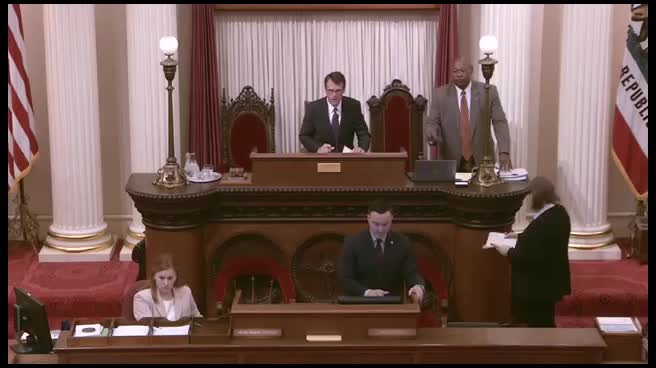
Bill Author
Bill Co-Author(s):