SB 598: Sales and use taxes: consumer designation: all volunteer fire department.
- Session Year: 2015-2016
- House: Senate
- Latest Version Date: 2015-09-02
The Sales and Use Tax Law, among other things, imposes a tax on retailers measured by the gross receipts from their sales of tangible personal property sold at retail in this state, and specifies that certain sellers of tangible personal property are consumers, and not retailers, of the tangible personal property they sell.
This bill would provide, until January 1, 2021, that an all volunteer fire department, as defined, is a consumer, and not a retailer, of all tangible personal property sold by it, if the profits are used solely and exclusively in furtherance of the purposes of the all volunteer fire department, subject to specified limitations, so that the retail sale subject to tax is the sale of tangible personal property to the all volunteer fire department.
The Bradley-Burns Uniform Local Sales and Use Tax Law authorizes counties and cities to impose local sales and use taxes in conformity with the Sales and Use Tax Law, and existing law authorizes districts, as specified, to impose transactions and use taxes generally in accordance with the Transactions and Use Tax Law, which conforms to the Sales and Use Tax Law. Amendments to state sales and use taxes are incorporated into these laws.
Section 2230 of the Revenue and Taxation Code provides that the state will reimburse counties and cities for revenue losses caused by the enactment of sales and use tax exemptions.
This bill would provide that, notwithstanding Section 2230 of the Revenue and Taxation Code, no appropriation is made and the state shall not reimburse local agencies for sales and use tax revenues lost by them pursuant to this bill.
This bill would take effect immediately as a tax levy, but its operative date would depend on its effective date.
The Sales and Use Tax Law, among other things, imposes a tax on retailers measured by the gross receipts from their sales of tangible personal property sold at retail in this state, and specifies that certain sellers of tangible personal property are consumers, and not retailers, of the tangible personal property they sell.
This bill would provide, until January 1, 2021, that an all volunteer fire department, as defined, is a consumer, and not a retailer, of all tangible personal property sold by it, if the profits are used solely and exclusively in furtherance of the purposes of the all volunteer fire department, subject to specified limitations, so that the retail sale subject to tax is the sale of tangible personal property to the all volunteer fire department.
The Bradley-Burns Uniform Local Sales and Use Tax Law authorizes counties and cities to impose local sales and use taxes in conformity with the Sales and Use Tax Law, and existing law authorizes districts, as specified, to impose transactions and use taxes generally in accordance with the Transactions and Use Tax Law, which conforms to the Sales and Use Tax Law. Amendments to state sales and use taxes are incorporated into these laws.
Section 2230 of the Revenue and Taxation Code provides that the state will reimburse counties and cities for revenue losses caused by the enactment of sales and use tax exemptions.
This bill would provide that, notwithstanding Section 2230 of the Revenue and Taxation Code, no appropriation is made and the state shall not reimburse local agencies for sales and use tax revenues lost by them pursuant to this bill.
This bill would take effect immediately as a tax levy, but its operative date would depend on its effective date.
The Sales and Use Tax Law, among other things, imposes a tax on retailers measured by the gross receipts from their sales of tangible personal property sold at retail in this state, and specifies that certain sellers of tangible personal property are consumers, and not retailers, of the tangible personal property they sell.
This bill would provide, until January 1, 2026, 2021, that an all volunteer fire department, as defined, is a consumer, and not a retailer, of all tangible personal property sold by it, if the profits are used solely and exclusively in furtherance of the purposes of the all volunteer fire department, subject to specified limitations, so that the retail sale subject to tax is the sale of tangible personal property to the all volunteer fire department.
The Bradley-Burns Uniform Local Sales and Use Tax Law authorizes counties and cities to impose local sales and use taxes in conformity with the Sales and Use Tax Law, and existing law authorizes districts, as specified, to impose transactions and use taxes generally in accordance with the Transactions and Use Tax Law, which conforms to the Sales and Use Tax Law. Amendments to state sales and use taxes are incorporated into these laws.
Section 2230 of the Revenue and Taxation Code provides that the state will reimburse counties and cities for revenue losses caused by the enactment of sales and use tax exemptions.
This bill would provide that, notwithstanding Section 2230 of the Revenue and Taxation Code, no appropriation is made and the state shall not reimburse local agencies for sales and use tax revenues lost by them pursuant to this bill.
This bill would take effect immediately as a tax levy, but its operative date would depend on its effective date.
The Sales and Use Tax Law, among other things, imposes a tax on retailers measured by the gross receipts from their sales of tangible personal property sold at retail in this state, and specifies that certain sellers of tangible personal property are consumers, and not retailers, of the tangible personal property they sell.
This bill would provide, until January 1, 2026, that an all volunteer fire department, as defined, is a consumer, and not a retailer, of all tangible personal property sold by it, if the profits are used solely and exclusively in furtherance of the purposes of the all volunteer fire department, subject to specified limitations, so that the retail sale subject to tax is the sale of tangible personal property to the all volunteer fire department.
The Bradley-Burns Uniform Local Sales and Use Tax Law authorizes counties and cities to impose local sales and use taxes in conformity with the Sales and Use Tax Law, and existing law authorizes districts, as specified, to impose transactions and use taxes generally in accordance with the Transactions and Use Tax Law, which conforms to the Sales and Use Tax Law. Amendments to state sales and use taxes are incorporated into these laws.
Section 2230 of the Revenue and Taxation Code provides that the state will reimburse counties and cities for revenue losses caused by the enactment of sales and use tax exemptions.
This bill would provide that, notwithstanding Section 2230 of the Revenue and Taxation Code, no appropriation is made and the state shall not reimburse local agencies for sales and use tax revenues lost by them pursuant to this bill.
This bill would take effect immediately as a tax levy, but its operative date would depend on its effective date.
The Sales and Use Tax Law, among other things, imposes a tax on retailers measured by the gross receipts from their sales of tangible personal property sold at retail in this state, and specifies that certain sellers of tangible personal property are consumers, and not retailers, of the tangible personal property they sell.
This bill would provide that an all volunteer fire department, as defined, is a consumer, and not a retailer, of all tangible personal property sold by it, if the profits are used solely and exclusively in furtherance of the purposes of the all volunteer fire department, so that the retail sale subject to tax is the sale of tangible personal property to the all volunteer fire department.
The Bradley-Burns Uniform Local Sales and Use Tax Law authorizes counties and cities to impose local sales and use taxes in conformity with the Sales and Use Tax Law, and existing law authorizes districts, as specified, to impose transactions and use taxes in accordance with the Transactions and Use Tax Law, which conforms to the Sales and Use Tax Law. Amendments to state sales and use taxes are incorporated into these laws.
Section 2230 of the Revenue and Taxation Code provides that the state will reimburse counties and cities for revenue losses caused by the enactment of sales and use tax exemptions.
This bill would provide that, notwithstanding Section 2230 of the Revenue and Taxation Code, no appropriation is made and the state shall not reimburse local agencies for sales and use tax revenues lost by them pursuant to this bill.
This bill would take effect immediately as a tax levy, but its operative date would depend on its effective date.
(a)An all volunteer fire department is a consumer of, and shall not be considered a retailer within the provisions of this part of all tangible personal property sold by it, including, but not limited to, hot prepared food products and clothing, if the profits are used solely and exclusively in furtherance of the purposes of the all volunteer fire department.
(b)For purposes of this section, an all volunteer fire department means an organization that meets all of the following requirements:
(1)No member shall be paid a regular salary, but a member may be compensated on an hourly or per incident basis.
(2)The purpose of the organization is to protect the lives, property, and environment within a designated geographical area from fires, disasters, and emergency incidents through education, prevention, training, and emergency response.
(3)The organization is regularly organized for volunteer fire department purposes and qualifies as an exempt organization, either under Section 23701d or 23701f of this code or under Section 501(c)(3) or 501(c)(4) of the Internal Revenue Code, having official recognition and full or partial support of the government of the county, city, or district in which the volunteer fire department is located, and that has functions having an exclusive connection with the prevention and extinguishing of fires within the area of the county, city, or district extending official recognition for the benefit of the public generally and to lessen the burdens of the entity of government that would otherwise be obligated to furnish that fire protection.
(c)This section shall not apply if an all volunteer fire department, in each of the two preceding calendar years, has gross receipts from the sale of tangible personal property of one hundred thousand dollars ($100,000) or more.
(d)This section shall remain in effect only until January 1, 2021, and as of that date is repealed.
SEC. 2.Notwithstanding Section 2230 of the Revenue and Taxation Code, no appropriation is made by this act and the state shall not reimburse any local agency for any sales and use tax revenues lost by it under this act.
SEC. 3.This act provides for a tax levy within the meaning of Article IV of the Constitution and shall go into immediate effect. However, the provisions of this act shall become operative on the first day of the first calendar quarter commencing more than 90 days after the effective date of this act.
(a)An all volunteer fire department is a consumer of, and shall not be considered a retailer within the provisions of this part of all tangible personal property sold by it, including, but not limited to, hot prepared food products and clothing, if the profits are used solely and exclusively in furtherance of the purposes of the all volunteer fire department.
(b)For purposes of this section, an all volunteer fire department means an organization that meets all of the following requirements:
(1)No member shall be paid a regular salary, but a member may be compensated on an hourly or per incident basis.
(2)The purpose of the organization is to protect the lives, property, and environment within a designated geographical area from fires, disasters, and emergency incidents through education, prevention, training, and emergency response.
(3)The organization is regularly organized for volunteer fire department purposes and qualifies as an exempt organization, either under Section 23701d or 23701f of this code or under Section 501(c)(3) or 501(c)(4) of the Internal Revenue Code, having official recognition and full or partial support of the government of the county, city, or district in which the volunteer fire department is located, and that has functions having an exclusive connection with the prevention and extinguishing of fires within the area of the county, city, or district extending official recognition for the benefit of the public generally and to lessen the burdens of the entity of government that would otherwise be obligated to furnish that fire protection.
(c)This section shall not apply if an all volunteer fire department, in each of the two preceding calendar years, has gross receipts from the sale of tangible personal property of one hundred thousand dollars ($100,000) or more.
(d)This section shall remain in effect only until January 1, 2021, and as of that date is repealed.
SEC. 2.Notwithstanding Section 2230 of the Revenue and Taxation Code, no appropriation is made by this act and the state shall not reimburse any local agency for any sales and use tax revenues lost by it under this act.
SEC. 3.This act provides for a tax levy within the meaning of Article IV of the Constitution and shall go into immediate effect. However, the provisions of this act shall become operative on the first day of the first calendar quarter commencing more than 90 days after the effective date of this act.
(a)An all volunteer fire department is a consumer of, and shall not be considered a retailer within the provisions of this part of all tangible personal property sold by it, including, but not limited to, hot prepared food products and clothing, if the profits are used solely and exclusively in furtherance of the purposes of the all volunteer fire department.
(b)For purposes of this section, an all volunteer fire department means an organization that meets all of the following requirements:
(1)All members No member shall not be paid a regular salary, but a member may be compensated on an hourly or per incident basis.
(2)The purpose of the organization is to protect the lives, property, and environment within a designated geographical area from fires, disasters, and emergency incidents through education, prevention, training, and emergency response.
(3)Is The organization is regularly organized for volunteer fire department purposes that and qualifies as an exempt organization, either under Section 23701d or 23701f of this code or under Section 501(c)(3) or 501(c)(4) of the Internal Revenue Code, having official recognition and full or partial support of the government of the county, city, or district in which the volunteer fire department is located, and that has functions having an exclusive connection with the prevention and extinguishing of fires within the area of the county, city, or district extending official recognition for the benefit of the public generally and to lessen the burdens of the entity of government which that would otherwise be obligated to furnish that fire protection.
(c)This section shall not apply if an all volunteer fire department, in each of the two preceding calendar years, has gross receipts from the sale of tangible personal property of one hundred thousand dollars ($100,000) or more.
(d)This section shall remain in effect only until January, January 1, 2026, 2021, and as of that date is repealed.
SEC. 2.Notwithstanding Section 2230 of the Revenue and Taxation Code, no appropriation is made by this act and the state shall not reimburse any local agency for any sales and use tax revenues lost by it under this act.
SEC. 3.This act provides for a tax levy within the meaning of Article IV of the Constitution and shall go into immediate effect. However, the provisions of this act shall become operative on the first day of the first calendar quarter commencing more than 90 days after the effective date of this act.
(a)An all volunteer fire department is a consumer of, and shall not be considered a retailer within the provisions of this part of all tangible personal property sold by it, including, but not limited to, hot prepared food products and clothing, if the profits are used solely and exclusively in furtherance of the purposes of the all volunteer fire department.
(b)For purposes of this section, an all volunteer fire department means an organization that meets all of the following requirements:
(1)All members shall not be paid a regular salary, but may be compensated on an hourly or per incident basis.
(2)The purpose of the organization is to protect the lives, property, and environment within a designated geographical area from fires, disasters, and emergency incidents through education, prevention, training, and emergency response.
(3)Is regularly organized for volunteer fire department purposes that qualifies as an exempt organization, either under Section 23701d or 23701f of this code or under Section 501(c)(3) or 501(c)(4) of the Internal Revenue Code, having official recognition and full or partial support of the government of the county, city, or district in which the volunteer fire department is located, and that has functions having an exclusive connection with the prevention and extinguishing of fires within the area of the county, city, or district extending official recognition for the benefit of the public generally and to lessen the burdens of the entity of government which would otherwise be obligated to furnish that fire protection.
(c)This section shall not apply if an all volunteer fire department, in each of the two preceding calendar years, has receipts from the sale of tangible personal property of one hundred thousand dollars ($100,000) or more.
(d)This section shall remain in effect only until January, 1, 2026, and as of that date is repealed.
SEC. 2.Notwithstanding Section 2230 of the Revenue and Taxation Code, no appropriation is made by this act and the state shall not reimburse any local agency for any sales and use tax revenues lost by it under this act.
SEC. 3.This act provides for a tax levy within the meaning of Article IV of the Constitution and shall go into immediate effect. However, the provisions of this act shall become operative on the first day of the first calendar quarter commencing more than 90 days after the effective date of this act.
(a)An all volunteer fire department is a consumer of, and shall not be considered a retailer within the provisions of this part of all tangible personal property sold by it, including, but not limited to, hot prepared food products and clothing, if the profits are used solely and exclusively in furtherance of the purposes of the all volunteer fire department.
(b)For purposes of this section, an all volunteer fire department means an organization that meets all of the following requirements:
(1)All members shall not be paid a regular salary, but may be compensated on an hourly or per incident basis.
(2)The purpose of the organization is to protect the lives, property, and environment within a designated geographical area from fires, disasters, and emergency incidents through education, prevention, training, and emergency response.
(3)Is regularly organized for volunteer fire department purposes that qualifies as an exempt organization, either under Section 23701d or 23701f of this code or under Section 501(c)(3) or 501(c)(4) of the Internal Revenue Code, having official recognition and full or partial support of the government of the county, city, or district in which the volunteer fire department is located, and that has functions having an exclusive connection with the prevention and extinguishing of fires within the area of the county, city, or district extending official recognition for the benefit of the public generally and to lessen the burdens of the entity of government which would otherwise be obligated to furnish that fire protection.
SEC. 2.Notwithstanding Section 2230 of the Revenue and Taxation Code, no appropriation is made by this act and the state shall not reimburse any local agency for any sales and use tax revenues lost by it under this act.
SEC. 3.This act provides for a tax levy within the meaning of Article IV of the Constitution and shall go into immediate effect. However, the provisions of this act shall become operative on the first day of the first calendar quarter commencing more than 90 days after the effective date of this act.
|
Date
|
Status
|
|---|---|
| May 18, 2015 | Referred to Com. on REV. & TAX. |
| Sep 2, 2015 | Chaptered by Secretary of State. Chapter 248, Statutes of 2015. |
| Sep 2, 2015 | Approved by the Governor. |
| Aug 26, 2015 | Enrolled and presented to the Governor at 4:30 p.m. |
| Aug 20, 2015 | Assembly amendments concurred in. (Ayes 38. Noes 0.) Ordered to engrossing and enrolling. |
| Aug 19, 2015 | Ordered to special consent calendar. |
| Jul 16, 2015 | Read third time. Passed. (Ayes 79. Noes 0. Page 2434.) Ordered to the Senate. |
| Jul 16, 2015 | Read third time. Passed. Ordered to the Senate. |
| Jul 16, 2015 | In Senate. Concurrence in Assembly amendments pending. |
| Jul 9, 2015 | Read second time. Ordered to consent calendar. |
| Jul 8, 2015 | From committee: Do pass. Ordered to consent calendar. (Ayes 14. Noes 0.) (July 8). |
| Jun 29, 2015 | Read second time and amended. Re-referred to Com. on APPR. |
| Jun 25, 2015 | From committee: Do pass as amended and re-refer to Com. on APPR. (Ayes 9. Noes 0.) (June 22). |
| Feb 27, 2015 | Introduced. To Com. on RLS. for assignment. To print. |
| Apr 30, 2015 | Read third time. Passed. (Ayes 35. Noes 0.) Ordered to the Assembly. |
| Apr 30, 2015 | Read third time. Passed. (Ayes 35. Noes 0. Page 840.) Ordered to the Assembly. |
| Apr 30, 2015 | In Assembly. Read first time. Held at Desk. |
| Apr 28, 2015 | Read second time. Ordered to third reading. |
| Apr 27, 2015 | From committee: Be ordered to second reading pursuant to Senate Rule 28.8. |
| Apr 17, 2015 | Set for hearing April 27. |
| Apr 15, 2015 | Read second time and amended. Re-referred to Com. on APPR. |
| Apr 14, 2015 | From committee: Do pass as amended and re-refer to Com. on APPR. (Ayes 7. Noes 0. Page 524.) (April 8). |
| Mar 24, 2015 | Set for hearing April 8. |
| Mar 12, 2015 | Referred to Com. on GOV. & F. |
| Mar 2, 2015 | Read first time. |
| Mar 2, 2015 | From printer. May be acted upon on or after April 1. |
|
Date
|
Description
|
Location
|
Votes
|
|
|---|---|---|---|---|
| Aug 20, 2015 | Special Consent #6 SB598 Hill | Senate Floor |
Passed |
|
| Jul 16, 2015 | SB 598 Hill Consent Calendar Second Day Regular Session | Assembly Floor |
Passed |
|
| Jul 8, 2015 | Do pass. To Consent Calendar. | Assembly Standing Committee on Appropriations |
Passed |
|
| Jun 22, 2015 | Do pass as amended and be re-referred to the Committee on [Appropriations] | Assembly Standing Committee on Revenue and Taxation |
Passed |
|
| Apr 30, 2015 | Senate 3rd Reading SB598 Hill | Senate Floor |
Passed |
|
| Apr 8, 2015 | Do pass as amended, but first amend, and re-refer to the Committee on [Appropriations] | Senate Standing Committee on Governance and Finance |
Passed |
This list shows positions taken on this bill by organizations on the date displayed, which is linked to the original source.
Positions by individuals are not included.
|
Organization
|
Position
|
Date
|
|---|---|---|
| Ben Lomond Fire Protection District | ** Support | Apr 30, 2015 |
| Butte Valley Fire Protection District | ** Support | Apr 30, 2015 |
| California Fire Chiefs Association | ** Support | Apr 30, 2015 |
| California State Firefighters' Association | ** Support | Apr 30, 2015 |
| Fire District Association of California | ** Support | Apr 30, 2015 |
| La Honda Fire Brigade | ** Support | Apr 30, 2015 |
| Pliocene Ridge Community Services District | ** Support | Apr 30, 2015 |
| San Mateo; County Of | ** Support | Apr 30, 2015 |
| Wildland Residents Association | ** Support | Apr 30, 2015 |
SB 598
Page 4
|
Office of Senate Floor Analyses (916) 651-1520 Fax: (916) 327-4478 |
UNFINISHED BUSINESS
Bill No: SB 598
Amended: 6/29/15
SENATE GOVERNANCE & FIN. COMMITTEE: 7-0, 4/8/15
AYES: Hertzberg, Nguyen, Bates, Beall, Hernandez, Lara, Pavley
SENATE APPROPRIATIONS COMMITTEE: Senate Rule 28.8
SENATE FLOOR: 35-0, 4/30/15
AYES: Allen, Anderson, Bates, Beall, Berryhill, Block, Cannella, De León, Fuller, Gaines, Galgiani, Hall, Hancock, Hertzberg, Hill, Hueso, Huff, Jackson, Lara, Leno, Leyva, Liu, McGuire, Mendoza, Mitchell, Monning, Moorlach, Nguyen, Nielsen, Pan, Pavley, Roth, Stone, Wieckowski, Wolk
NO VOTE RECORDED: Hernandez, Morrell, Runner, Vidak
ASSEMBLY FLOOR: 79-0, 7/16/15 (Consent) - See last page for vote
SUBJECT: Sales and use taxes: consumer designation: all volunteer fire department
DIGEST: This bill designates volunteer fire departments as consumers under the Sales and Use Tax Law.
Assembly Amendments move forward this bill’s sunset date from January 1, 2026 to January 1, 2021, and made technical and grammatical changes.
Existing law:
1) Imposes the sales tax on every retailer engaged in business in this state that sells tangible personal property, and requires them to collect the appropriate tax from the consumer at purchase. Sales tax applies whenever a retail sale is made, unless it is a resale in the regular course of business.
2) Provides that retailers must generally obtain a seller’s permit, and report to the Board of Equalization (BOE) any sales tax collected from purchasers quarterly on a return. Nonprofits, public agencies, and charities are generally treated the same way as any other retailer, and don’t have blanket exemptions from collecting and remitting the tax, unless otherwise exempted.
3) Designates certain sellers as “consumers,” meaning that the law considers the tax paid when they purchase property, and the seller neither obtains a permit, nor collects the tax from the purchaser at sale before remitting to BOE.
4) Specifies that “consumers” include, among others:
Licensed medical and veterinary professionals dispensing specified products during the course of performing professional services,
Qualified itinerant vendors,
The Department of Transportation’s leases and sales of automobiles, and
Nonprofit organizations that intermittently or irregularly sell food, nonalcoholic beverages, and other property made by the organization’s members.
This bill:
1) Designates volunteer fire departments as consumers under the
Sales and Use Tax Law for all its sales of tangible personal
property, so long as its profits are solely and exclusively used to
further the department’s purposes.
2) Requires volunteer fire departments, in order to qualify for consumer status, to:
Pay its members hourly or per incident, not with a regular salary,
Have as its purpose the protection of life, property, and the environment within a designated geographic area from fires, disasters, and emergency incidents through education, prevention, training, and emergency response,
Be organized as a tax exempt organization for state and federal purposes, and
Meet the definition of “volunteer fire department,” used in the welfare exemption from property tax.
3) Provides that consumer treatment does not apply to volunteer fire departments with more than $100,000 in receipts from the sale of tangible personal property in each of the last two calendar years.
4) Sunsets on January 1, 2021.
FISCAL EFFECT: Appropriation: No Fiscal Com.: Yes Local: No
According to the Assembly Appropriations Committee, SB 598 results in revenue losses of $42,000 annually.
Ben Lomond Fire Protection District
Butte Valley Fire Protection District
California Fire Chiefs Association
California State Firefighters’ Association
County of San Mateo
Fire District Association of California
La Honda Fire Brigade
Pliocene Ridge Community Services District
Wildland Residents Association
OPPOSITION: (Verified 8/13/15)
None received
ARGUMENTS IN SUPPORT: According to the author, “ SB 598 is the winner of my annual ‘Ought to Be a Law Contest’ winner. All-volunteer fire departments across the state solely rely on fundraisers to buy lifesaving equipment. The La Honda Fire Brigade in my district is no different. Their livelihood relies exclusively on volunteers, from the 14 individuals who serve as firefighters, to the board members who organize fundraising efforts like the annual pancake breakfast and crab cioppino dinner. Unfortunately any fundraisers dealing with selling hot/prepared food or tangible goods are subject to California sales tax. SB 598 would simply exempt All-volunteer fire departments from having to pay sales tax on their fundraising efforts. All of the money raised would be able to stay with them. If they are able to raise $1000 at a pancake breakfast – they will keep the full $1000 and not have to send $92.50 (San Mateo County has a sales tax rate of 9.25%) to the State. Everyday these volunteers put their lives on the line and provide an important resource to the communities they serve. We should help them any way we can and allowing them to keep all of their fundraising dollars is an important first step.
ASSEMBLY FLOOR: 79-0, 7/16/15
AYES: Achadjian, Alejo, Travis Allen, Baker, Bigelow, Bloom, Bonilla, Bonta, Brough, Brown, Burke, Calderon, Campos, Chang, Chau, Chávez, Chiu, Chu, Cooley, Cooper, Dababneh, Dahle, Daly, Dodd, Eggman, Frazier, Beth Gaines, Gallagher, Cristina Garcia, Eduardo Garcia, Gatto, Gipson, Gomez, Gonzalez, Gray, Grove, Hadley, Harper, Roger Hernández, Holden, Irwin, Jones, Jones-Sawyer, Kim, Lackey, Levine, Linder, Lopez, Low, Maienschein, Mathis, Mayes, McCarty, Medina, Melendez, Mullin, Nazarian, Obernolte, O'Donnell, Olsen, Patterson, Perea, Quirk, Rendon, Ridley-Thomas, Rodriguez, Salas, Santiago, Steinorth, Mark Stone, Thurmond, Ting, Wagner, Waldron, Weber, Wilk, Williams, Wood, Atkins
NO VOTE RECORDED: Gordon
Prepared by: Colin Grinnell / GOV. & F. / (916) 651-4119
8/13/15 13:52:33
**** END ****
Date of Hearing: July 8, 2015
ASSEMBLY COMMITTEE ON APPROPRIATIONS
Jimmy Gomez, Chair
SB 598
(Hill) – As Amended June 29, 2015
Policy Committee: |
Revenue and Taxation |
Vote: |
9 - 0 |
Urgency: Yes State Mandated Local Program: No Reimbursable: No
SUMMARY:
This bill designates, until January 1, 2021, all-volunteer fire departments as consumers, and not retailers, under the Sales and Use Tax Law, of tangible personal property they sell if the profits are used solely and exclusively in furtherance of the fire departments' purposes. The bill stipulates the preferential tax status shall not apply if the all-volunteer fire department has gross receipts from the sale of tangible personal property of $100,000 or more in each of the two preceding calendar years. The bill further specifies it shall become operative on the first day of the first calendar quarter commencing more than 90 days after the bill's effective date.
FISCAL EFFECT:
1) Minor and absorbable costs to the Board of Equalization (BOE) to administer the changes to procedures and systems, and notify affected fire departments and other persons.
2) Estimated revenue decreases for the state and local jurisdictions of approximately $42,000 per year, approximately half of which is from the General Fund.
COMMENTS:
1) Purpose. According to the author, all-volunteer fire departments often rely on fundraisers to purchase equipment and pay for station maintenance and operational expenses. Many of these fundraisers involve selling hot food and beverages, such as pancake breakfasts and barbeques, and/or tangible goods such as t-shirts. Currently, the sale of these items attracts sales and use tax, requiring the fire departments to collect and remit taxes to the BOE. SB 598 would relieve all-volunteer fire departments from this burden, saving on administrative costs.
2) Nonprofit Sales Tax. In general, nonprofits are required to collect and remit sales and use tax to the same extent as any other retailer. As a result, nonprofits, including charities, engaged in selling tangible personal property must obtain sellers' permits and report sales and use tax to the BOE.
California law does, however, designate certain nonprofit and charitable organizations as consumers, rather than retailers, under the sales and use tax law. This is done on a case-by-case basis through statute, and current consumer designees include certain nonprofit veterans' organizations, nonprofit youth organizations, parent teacher associations, and schools and school districts. According to the BOE, statutory consumer status is usually conferred to minimize reporting burdens for the specified organizations and minimize revenue losses associated with a complete SUT exemption.
3) Spartoli Voluntarii. All-volunteer fire departments protect lives and property within defined geographical areas from fires, disasters, and other emergency incidents through education, prevention, training, and emergency response. According to the California State Firefighters' Association, the state has approximately 250 all-volunteer departments served by approximately 25,000 volunteer firefighters. Volunteers are not paid a regular wage but may be compensated on an hourly or per-incident basis.
The all-volunteer fire departments primarily serve rural areas and often operate on limited budgets funded through public finances, grants, and charitable fundraising activities. The BOE indicates it seldom audits these fire departments due to their low sales volume and lack of complexity.
Analysis Prepared by: Joel Tashjian / APPR. / (916) 319-2081
SB 598
Page 6
Date of Hearing: June 22, 2015
ASSEMBLY COMMITTEE ON REVENUE AND TAXATION
Philip Ting, Chair
SB 598
(Hill) – As Amended April 15, 2015
Majority vote. Tax levy. Fiscal committee.
SENATE VOTE: 35-0
SUBJECT: Sales and use taxes: consumer designation: all volunteer fire department
SUMMARY: Designates an all-volunteer fire department (AVFD) as a consumer, and not a retailer, of all tangible personal property (TPP) it sells if the profits are used solely and exclusively in furtherance of the AVFD's purposes. Specifically, this bill:
Designates, for purposes of the Sales and Use Tax (SUT) Law, an AVFD as a consumer of all TPP it sells, including hot prepared food products and clothing, if the profits are used solely and exclusively in furtherance of the purposes of the AVFD.
Defines an "AVFD" as an organization that meets all the following requirements:
All members shall not be paid a regular salary, but may be compensated on an hourly or per incident basis;
The organization's purpose is to protect the lives, property, and environment within a designated geographical area from fires, disasters, and emergency incidents through education, prevention, training, and emergency response;
The organization is regularly organized for volunteer fire department purposes that qualifies [sic] as an exempt organization, either under Revenue and Taxation Code (R&TC) Section 23701d or 23701f or under Internal Revenue Code (IRC) Section 501(c)(3) or 501(c)(4);
The organization enjoys official recognition and full or partial support of the government of the county, city, or district in which the volunteer fire department is located; and,
The organization's functions have an exclusive connection with the prevention and extinguishing of fires within the area of the county, city, or district extending official recognition for the benefit of the public generally and to lessen the burdens of the entity of government that would otherwise be obligated to furnish that fire protection.
Provides that this preferential tax status shall not apply if an AVFD, in each of the two preceding calendar years, has receipts from the sale of TPP of $100,000 or more.
Provides that this section shall remain in effect until January 1, 2026, and is repealed as of that date.
Provides that, notwithstanding existing law, the state shall not reimburse any local agency for any SUT revenues lost as a result of this bill.
Takes immediate effect as a tax levy, but only becomes operative on the first day of the first calendar quarter commencing more than 90 days after the bill's effective date.
EXISTING LAW:
Imposes a sales tax on retailers for the privilege of selling TPP, absent a specific exemption. The tax is based upon the retailer's gross receipts from TPP sales in California.
Imposes a complimentary use tax on the storage, use, or other consumption of TPP purchased out-of-state and brought into California. The use tax is imposed on the purchaser; and unless the purchaser pays the use tax to an out-of-state retailer registered to collect California's use tax, the purchaser remains liable for the tax. The use tax is set at the same rate as the state's sales tax and must generally be remitted to the State Board of Equalization (BOE).
Designates the following entities as consumers, and not retailers, of specified TPP they use or furnish in the performance of their professional services:
Licensed optometrists, physicians, pharmacists, and registered dispensing opticians (R&TC Section 6018);
Licensed veterinarians (R&TC Section 6018.1);
Licensed chiropractors (R&TC Section 6018.4);
Specified garment cleaning establishments that received no more than 20% of their total gross receipts from the alteration of garments during the preceding calendar year (R&TC Section 6018.6);
Licensed hearing aid dispensers (R&TC Section 6018.7); and,
Producers of X-ray films or photographs used to diagnose human medical or dental conditions (R&TC Section 6020).
Provides a property tax exemption for the property of a volunteer fire department that is used exclusively for volunteer fire department purposes, provided the department qualifies for exemption under R&TC Section 23701d or 23701f or under IRC Section 501(c)(3) or 501(c)(4). (R&TC Section 213.7).
FISCAL EFFECT: The BOE estimates that this bill would reduce state and local revenues by $42,000 annually.
COMMENTS:
The author has provided the following statement in support of this bill:
SB 598 is the winner of my annual "Ought to Be a Law Contest" winner. All-volunteer fire departments across the state solely rely on fundraisers to buy lifesaving equipment. The La Honda Fire Brigade in my district is no different. Their livelihood relies exclusively on volunteers, from the 14 individuals who serve as firefighters, to the board members who organize fundraising efforts like the annual pancake breakfast and crab cioppino dinner. Unfortunately any fundraisers dealing with selling hot/prepared food or tangible goods are subject to California sales tax. SB 598 would simply exempt All-volunteer fire departments from having to pay sales tax on their fundraising efforts. All of the money raised would be able to stay with them. If they are able to raise $1000 at a pancake breakfast – they will keep the full $1000 and not have to send $92.50 (San Mateo County has a sales tax rate of 9.25%) to the State. Everyday these volunteers put their lives on the line and provide an important resource to the communities they serve. We should help them any way we can and allowing them to keep all of their fundraising dollars is an important first step.
This bill is supported by the California State Firefighters' Association, which notes:
Currently, California's All-Volunteer Fire Departments (AVFDs) have to pay sales tax for fundraising activities like pancake breakfasts, BBQ's and T-shirt sales. Sales tax on fundraising activities siphons critical dollars from the Departments' primary mission to protect Californian lives and property.
An [AVFD] is an organization whose purpose is to protect the lives and property within a geographical area from fires, disasters, and emergency incidents through education, prevention, training, and emergency response. We estimate that [29%] of California's 835 fire departments are [AVFDs]. Approximately 25,000 volunteer firefighters currently serve California. Volunteers are not paid a regular wage but may be compensated on an hourly or per incident basis.
California's volunteer fire departments truly are the safety-net for our state. Volunteers are an important part of our emergency services often supporting other areas throughout the state when called upon during major incidents.
The BOE notes the following in its staff analysis of this bill:
Effect of the bill: "[AVFDs] that make sales of taxable food, clothing, or other [TPP] will not be required to report sales tax on those sales, hold a BOE-issued seller's permit, or file sales tax returns. Instead, they will only be required to pay tax reimbursement on the cost of the taxable items they intend to sell for fund-raising purposes."
This bill does not materially impact the BOE's tax audit or administrative functions: "According to the author's office, about 250 [AVFDs] exist in California. However, generally, the BOE seldom audits [AVFDs] due to their low sales volume and lack of complexity."
Committee Staff Comments
What is a "tax expenditure"? Existing law provides various credits, deductions, exclusions, and exemptions for particular taxpayer groups. In the late 1960s, U.S. Treasury officials began arguing that these features of the tax law should be referred to as "expenditures" since they are generally enacted to accomplish some governmental purpose and there is a determinable cost associated with each (in the form of foregone revenues).
How is a tax expenditure different from a direct expenditure? As the Department of Finance notes in its annual Tax Expenditure Report, there are several key differences between tax expenditures and direct expenditures. First, tax expenditures are reviewed less frequently than direct expenditures once they are put in place. While this affords taxpayers greater financial predictability, it can also result in tax expenditures remaining a part of the tax code without demonstrating any public benefit. Second, there is generally no control over the amount of revenue losses associated with any given tax expenditure. Finally, it should also be noted that, once enacted, it takes a two-thirds vote to rescind an existing tax expenditure absent a sunset date. This effectively results in a "one-way ratchet" whereby tax expenditures can be conferred by majority vote, but cannot be rescinded, irrespective of their efficacy or cost, without a supermajority vote.
An overview of the SUT Law: California's SUT Law imposes a sales tax on retailers for the privilege of selling TPP, absent a specific exemption. The tax is based upon a retailer's gross receipts from TPP sales in California. The SUT Law also imposes a mirror "use tax" on the storage, use, or other consumption of TPP purchased out-of-state and brought into California. The use tax is imposed on the purchaser; and unless the purchaser pays the use tax to an out-of-state retailer registered to collect California's use tax, the purchaser remains liable for the tax. The use tax is set at the same rate as the state's sales tax and must generally be remitted to the BOE.
The SUT represents the state's second largest source of General Fund (GF) revenues. Nevertheless, the past 60 years have seen a dramatic reduction in the state's reliance on the SUT and a corresponding increase in its reliance on personal income tax revenues. In fiscal year (FY) 2014-15, SUT revenues are estimated to comprise 23% of the state's GF revenues, down from nearly 60% in FY 1950-51.
What accounts for the state's reduced reliance on SUT revenues? The SUT Law was enacted in a very different era. In the 1930s, California's economy was largely dominated by manufacturing, and residents mostly bought and sold tangible goods. Thus, in establishing the base for a new consumption tax, it made sense to impose the tax on sales of TPP, defined as personal property that may be "seen, weighed, measured, felt, or touched." Over the past 80 years, however, California's economy has seen dramatic growth in the service and information sectors, resulting in a significant erosion of the SUT base. For example, the Commission on the 21st Century Economy noted that spending on taxable goods represented 34.6% of personal income in 2008, down from 55.4% in 1980. As a result, tax experts and economists from across the political spectrum argue that California should expand its SUT base.
It could be argued that, while well-intentioned, additional SUT preferences further erode an already shrinking SUT base. This, in turn, increases fiscal pressures to maintain or even increase California's relatively high SUT rate. High rates arguably promote non-compliance and encourage out-of-state purchases, placing California retailers at a competitive disadvantage. High rates also risk impacting consumer decision-making, which runs counter to widely accepted principles of sound tax policy.
How does the SUT Law generally apply to nonprofit organizations? The law does not generally exempt from the SUT sales by nonprofit organizations, persons engaged in charitable work, or those who enjoy certain income or property tax benefits. Therefore, nonprofit organizations' TPP sales are generally subject to tax to the same extent as any other retailer's sales. Generally, persons engaged in the business of selling TPP must obtain a seller's permit and report SUT on a BOE-prescribed return.
California law does, however, designate certain charitable organizations as consumers, rather than retailers, under the SUT Law. Statutorily, this is done on a case-by-case basis. For example, R&TC Section 6359.3 confers consumer status on nonprofit veterans' organizations with respect to United States flags sold, provided the profits are used exclusively in furtherance of the organization's purposes. R&TC Section 6360, in turn, confers consumer status on specified charities with respect to bracelets distributed to commemorate American prisoners of war. Once again, any profits must be used solely and exclusively in furtherance of the organization's purposes. As one last example, R&TC Section 6361.1 confers consumer status on qualified organizations that sell handcrafted items made by individuals with developmental disabilities or children with severe emotional disturbances. The price of each item sold must not exceed $20.
AVFDs: There are numerous AVFDs throughout California. These entities, which primarily serve rural areas, protect lives and property by fighting fires and responding to other emergency incidents. These organizations often operate on limited budgets, with funds obtained through public financial support, fundraising activities, and grants. For example, the La Honda Fire Brigade notes that its cash expense budget for the year is $44,500, and that SUTs paid in 2013 and 2014 were $1,946 and $1,985. The La Honda Fire Brigade further notes that if it were relieved of this SUT liability, it would use those funds for capital asset acquisition, station maintenance, and operational expenses.
What would this bill do? This bill would designate an AVFD as a consumer, rather than a retailer, of TPP it sells if the profits are used solely and exclusively in furtherance of the AVFD's purposes. Therefore, an AVFD would not be liable for sales tax on its retail sales of food products, clothing, or other items. Rather, an AVFD would be regarded as a consumer of the TPP it sells. Thus, AVFDs would be required to pay tax reimbursement on the purchase price of any taxable items acquired for resale in their fundraising activities. As the BOE notes, statutory "consumer status" is generally conferred to minimize reporting burdens for specified organizations, while minimizing the revenue losses associated with a complete SUT exemption. The BOE notes that, "Other statutory consumers classified in law include [Parent Teacher Associations], nonprofit veterans' organizations, nonprofit youth organizations, various charitable organizations, [and] schools and school districts . . . ."
This bill seeks to enable AVFDs to maximize scarce resources by exempting their own fundraising sales from the SUT. AVFDs rely primarily on membership drives and fundraising activities to support their operational budgets.
The Committee may wish to consider whether providing preferential tax treatment to AVFDs may inadvertently set a precedent for future organizations seeking consumer status due to the beneficial nature of their work or the administrative burdens inherent in complying with the law.
Providing greater statutory clarity: Some of the language contained in this bill could benefit from greater clarity. For example, this bill provides that to qualify as an AVFD "[a]ll members shall not be paid a regular salary, but may be compensated on an hourly or per incident basis." Does this mean that no member of the AVFD may be paid a regular salary? If an AVFD contained five members, with only one receiving a regular salary, clearly all members would not be paid a regular salary. Would this AVFD potentially qualify for consumer status? The author may wish to consider amendments providing greater definitional clarity.
Sunset dates: Absent a sunset date, tax expenditure programs like the one this bill proposes cannot be revoked without a supermajority vote. Thus, this Committee has a longstanding practice of including sunset dates in tax expenditure bills to allow the Legislature periodically to review the cost and efficacy of such expenditures. This bill currently contains a 10-year sunset. In keeping with Committee practice, the author may wish to consider shortening the sunset date to five years.
Recommended technical amendments: Committee staff suggests the following technical amendments to this bill:
On page 2, strike lines 12 and 13, and insert "(1) No member shall be paid a regular salary, but a member may be compensated on an hourly or per incident basis.";
On page 2, in line 19, strike "that" and insert "and";
On page 3, in line 2, strike "which" and insert "that";
On page 3, in line 6, strike "receipts" and insert "gross receipts"; and,
On page 3, in line 8, strike "January," and insert "January".
REGISTERED SUPPORT / OPPOSITION:
Support
California State Firefighters' Association
County of San Mateo
La Honda Fire Brigade
Opposition
None on file
Analysis Prepared by: M. David Ruff / REV. & TAX. / (916) 319-2098
SB 598
Page 4
|
Office of Senate Floor Analyses (916) 651-1520 Fax: (916) 327-4478 |
THIRD READING
Bill No: SB 598
Amended: 4/15/15
SENATE GOVERNANCE & FIN. COMMITTEE: 7-0, 4/8/15
AYES: Hertzberg, Nguyen, Bates, Beall, Hernandez, Lara, Pavley
SENATE APPROPRIATIONS COMMITTEE: Senate Rule 28.8
SUBJECT: Sales and use taxes: consumer designation: all volunteer fire department
DIGEST: This bill designates volunteer fire departments as consumers under the Sales and Use Tax Law.
Existing law:
Imposes the sales tax on every retailer engaged in business in this state that sells tangible personal property, and requires them to collect the appropriate tax from the consumer at purchase. Sales tax applies whenever a retail sale is made, unless it is a resale in the regular course of business.
Provides that, generally, retailers must obtain a seller’s permit, and report to the Board of Equalization (BOE) any sales tax collected from purchasers quarterly on a return. Nonprofits, public agencies, and charities are generally treated the same way as any other retailer, and don’t have blanket exemptions from collecting and remitting the tax, unless otherwise exempted.
Designates certain sellers as “consumers,” meaning that the law considers the tax paid when they purchase property, and the seller neither obtains a permit, nor collects the tax from the purchaser at sale before remitting to BOE.
Specifies that “consumers” include:
Licensed medical and veterinary professionals dispensing specified products during the course of performing professional services,
Qualified itinerant vendors,
The Department of Transportation’s leases and sales of automobiles, and
Nonprofit organizations that intermittently or irregularly sell food, nonalcoholic beverages, and other property made by the organization’s members.
This bill:
Designates volunteer fire departments as consumers under the Sales and Use Tax Law for all its sales of tangible personal property, so long as its profits are solely and exclusively used to further the department’s purposes.
Requires volunteer fire departments, in order to qualify, to:
Pay its members hourly or per incident, not with a regular salary,
Have as its purpose the protection of life, property, and the environment within a designated geographic area from fires, disasters, and emergency incidents through education, prevention, training, and emergency response,
Be organized as a tax exempt organization for state and federal purposes, and
Meet the definition of “volunteer fire department,” used in the welfare exemption from property tax.
Provides that consumer treatment does not apply to volunteer fire departments with more than $100,000 in receipts from the sale of tangible personal property in each of the last two calendar years.
Sunsets on January 1, 2026.
Background
Many parts of California rely on volunteer fire departments to provide fire prevention and emergency response, especially in rural areas. These departments are mostly comprised of residents who voluntarily band together to provide these vital public services, and many have grown over time into present day fire districts. A volunteer fire department is currently eligible for the welfare exemption from property tax for property it owns that’s used for departmental purposes. While some districts are funded and overseen by counties, many districts must solicit donations and sell items at fundraisers. However, selling property in California requires registering with BOE, and collecting and remitting a tax, which can be a burden for districts that must provide services with less administrative support than larger agencies. Formed in 1950, the La Honda Volunteer Fire Brigade wants volunteer fire departments added to the list of “consumers,” thereby removing requirements the Sales and Use Tax Law places on retailers.
FISCAL EFFECT: Appropriation: No Fiscal Com.: Yes Local: No
Ben Lomond Fire Protection District
Butte Valley Fire Protection District
California Fire Chiefs Association
California State Firefighters’ Association
County of San Mateo
Fire District Association of California
La Honda Fire Brigade
Pliocene Ridge Community Services District
Wildland Residents Association
OPPOSITION: (Verified 4/29/15)
None received
ARGUMENTS IN SUPPORT: According to the author, “All volunteer fire departments across the state solely rely on fundraisers to buy lifesaving equipment. The La Honda Fire Brigade in my district is no different. Their livelihood relies exclusively on volunteers, from the 14 individuals who serve as firefighters, to the board members who organize fundraising efforts like the annual pancake breakfast and crab cioppino dinner. Unfortunately any fundraisers dealing with selling hot/prepared food or tangible goods are subject to California sales tax. SB 598 would simply exempt All-volunteer fire departments from having to pay sales tax on their fundraising efforts. All of the money raised would be able to stay with them. If they are able to raise $1000 at a pancake breakfast – they will keep the full $1000 and not have to send $92.50 (San Mateo County has a sales tax rate of 9.25%) to the State. Everyday these volunteers put their lives on the line and provide an important resource to the communities they serve. We should help them any way we can and allowing them to keep all of their fundraising dollars is an important first step.”
Prepared by: Colin Grinnell / GOV. & F. / (916) 651-4119
4/29/15 16:07:42
**** END ****
SB 598 (Hill) 2/27/15 Page 3 of 3
SENATE COMMITTEE ON GOVERNANCE AND FINANCE
Senator Robert M. Hertzberg, Chair
2015 - 2016 Regular
Bill No: |
SB 598 |
Hearing Date: |
4/8/15 |
Author: |
Hill |
Tax Levy: |
Yes |
Version: |
2/27/15 |
Fiscal: |
Yes |
Consultant: |
Grinnell |
||
SALES AND USE TAXES: CONSUMER DESIGNATION: ALL VOLUNTEER FIRE DEPARTMENTt
Designates volunteer fire departments as consumers for the Sales and Use Tax.
Background and Existing Law
State law imposes the sales tax on every retailer engaged in business in this state that sells tangible personal property, and requires them to collect the appropriate tax from the consumer at purchase. Sales tax applies whenever a retail sale is made, unless it is a resale in the regular course of business. The Legislature added the use tax in 1935 in response to complaints from in-state retailers that California residents would evade the sales tax it enacted in 1933 by purchasing property out-of-state, but use it here.
Generally, retailers must obtain a seller’s permit, and report to Board of Equalization (BOE) any sales tax collected from purchasers quarterly on a return. Nonprofits, public agencies, and charities are generally treated the same way as any other retailer, and don’t have blanket exemptions from collecting and remitting the tax, unless otherwise exempted. However, state law designates certain sellers as “consumers,” meaning that the law considers the tax paid when they purchase property, and the seller neither obtains a permit, nor collects the tax from the purchaser at sale before remitting to BOE.
“Consumers” include:
Licensed medical and veterinary professionals dispensing specified products during the course of performing professional services,
Qualified itinerant vendors,
The Department of Transportation’s leases and sales of automobiles, and
Nonprofit organizations that intermittently or irregularly sell food, nonalcoholic beverages, and other property made by the organization’s members.
Many parts of California rely on volunteer fire departments to provide fire prevention and emergency response, especially in rural areas. These departments are mostly comprised of residents who voluntarily band together to provide these vital public services, and many have grown over time into present day fire districts. A volunteer fire department is currently eligible for the welfare exemption from property tax for property it owns that’s used for departmental purposes. While some districts are funded and overseen by counties, many districts must solicit donations and sell items at fundraisers. However, selling property in California requires registering with BOE, and collecting and remitting a tax, which can be a burden for districts that must provide services with less administrative support than larger agencies. Formed in 1950, the La Honda Volunteer Fire Brigade wants volunteer fire departments added to the list of “consumers,” thereby removing requirements the Sales and Use Tax Law places on retailers.
Proposed Law
Senate Bill 598 designates volunteer fire departments as consumers under the Sales and Use Tax Law for all its sales of tangible personal property, so long as its profits are solely and exclusively used to further the department’s purposes. To qualify, a volunteer fire department must:
Pay its members hourly or per incident, not with a regular salary,
Have as its purpose the protection of life, property, and the environment within a designated geographic area from fires, disasters, and emergency incidents through education, prevention, training, and emergency response,
Be organized as a tax exempt organization for state and federal purposes, and
Meet the definition of “volunteer fire department,” used in the welfare exemption from property tax.
State Revenue Impact
According to BOE, SB 598 results in annual state and local sales and use tax revenue losses of $42,000.
Comments
1. Purpose of the bill. According to the author, “SB 598 is the winner of my annual ‘Ought to Be a Law Contest’ winner. All volunteer fire departments across the state solely rely on fundraisers to buy lifesaving equipment. The La Honda Fire Brigade in my district is no different. Their livelihood relies exclusively on volunteers, from the 14 individuals who serve as firefighters, to the board members who organize fundraising efforts like the annual pancake breakfast and crab cioppino dinner. Unfortunately any fundraisers dealing with selling hot/prepared food or tangible goods are subject to California sales tax. SB 598 would simply exempt All-volunteer fire departments from having to pay sales tax on their fundraising efforts. All of the money raised would be able to stay with them. If they are able to raise $1000 at a pancake breakfast – they will keep the full $1000 and not have to send $92.50 (San Mateo County has a sales tax rate of 9.25%) to the State. Everyday these volunteers put their lives on the line and provide an important resource to the communities they serve. We should help them any way we can and allowing them to keep all of their fundraising dollars is an important first step.”
2. Why not us? The Sales and Use Tax Law generally applies equal treatment regardless of whether a public or private entity buys or sells property, and applies its standards to all retailers regardless of its size. Collecting and remitting the tax is a burden, but it’s necessary to ensure adequate funding of public services, and promote equity between competitors. While volunteer fire districts argue that complying with current requirements diverts funds for better uses, the same could be said for many other organizations. The Committee may wish to consider which characteristics, such as size, charitable purpose, or administrative burden, should qualify an organization for relief from the collection and remission requirements.
3. How does this work? Currently, a volunteer fire department must obtain a seller’s permit from BOE if it wants to sell items at a fundraiser, and can also obtain a resale certificate. If the department wants to hold a barbeque fundraiser, it would show the resale certificate to the supplier when purchasing hot dogs and hamburgers, and the supplier wouldn’t charge the department the sales tax at purchase. When the department sold the food at the fundraiser, it would collect from the purchaser an amount of tax equal to the combined state and local rate for that jurisdiction times the purchase price, and remit the total tax amount from all its sales to BOE. The department would have to collect and remit the tax even if someone donated the hot dogs and hamburgers. Under SB 598, the department would pay the supplier the tax instead, and need not collect and remit tax from its sales at the barbeque fundraiser.
4. Be careful. SB 598’s consumer status for volunteer fire districts is likely appropriate for small departments, but not for larger, more sophisticated agencies selling more valuable items, who can more easily comply with collections requirements. Additionally, it’s sensible to relieve a collection burden for the district conducting occasional fundraiser, but selling larger items like fire trucks tax free could give rise to tax avoidance. The Committee may wish to consider placing an annual cap on the gross receipts of sales of property a volunteer fire department can have in a year to maintain consumer status.
5. Sunset? California tax law contains many specific provisions for specified groups or individuals, and the Legislature can generally enact them by majority vote of both houses; however, should a future Legislature wish to limit or repeal any of these laws, Section Three of Article XIIIA of the California Constitution generally requires a 2/3 vote. One way to compel an assessment in the future of SB 598’s effects is to insert a sunset provision, which repeals the law at a specified future date. Those seeking to extend the law will have to convince a future Legislature to extend the provision using information gathered during the bill’s effective period. The Committee may wish to consider inserting a sunset provision into SB 598.
Support and Opposition
(4/2/15)
Support: County of San Mateo, La Honda Volunteer Fire Brigade.
Opposition: Unknown.
-- END --
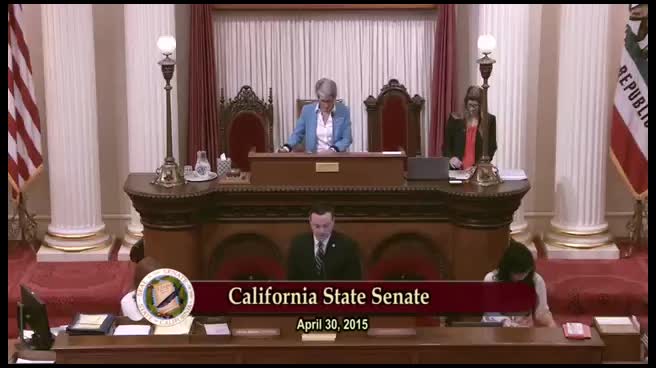
Bill Author
Bill Co-Author(s):