SB 621: Mentally ill offender crime reduction grants.
- Session Year: 2015-2016
- House: Senate
- Latest Version Date: 2015-10-03
Existing law requires the Board of State and Community Corrections to administer mentally ill offender crime reduction grants on a competitive basis to counties that expand or establish a continuum of timely and effective responses to reduce crime and criminal justice costs related to mentally ill juvenile and adult offenders. Existing law requires an application for a mentally ill offender crime reduction grant to describe a 4-year plan for the programs, services, or strategies to be provided under the grant, and authorizes the funds from a mentally ill offender crime reduction grant to be used to fund specialized alternative custody programs that offer appropriate mental health and treatment services.
This bill would additionally authorize the funds from a mentally ill offender crime reduction grant to be used to fund specialized diversion programs that offer appropriate mental health and treatment services.
(a)The application submitted by a county shall describe a four-year plan for the programs, services, or strategies to be provided under the grant. The board shall award grants that provide funding for three years. Funding shall be used to supplement, rather than supplant, funding for existing programs. Funds may be used to fund specialized alternative custody and diversion programs that offer appropriate mental health treatment and services.
(b)A grant shall not be awarded unless the applicant makes available resources in accordance with the instructions of the board in an amount equal to at least 25 percent of the amount of the grant. Resources may include in-kind contributions from participating agencies.
(c)In awarding grants, priority or preference shall be given to those grant applications that include documented match funding that exceeds 25 percent of the total grant amount.
|
Date
|
Status
|
|---|---|
| Jun 1, 2015 | Read third time. Passed. (Ayes 40. Noes 0.) Ordered to the Assembly. |
| Oct 3, 2015 | Chaptered by Secretary of State. Chapter 473, Statutes of 2015. |
| Oct 3, 2015 | Approved by the Governor. |
| Sep 8, 2015 | Enrolled and presented to the Governor at 4:30 p.m. |
| Sep 2, 2015 | Read third time. Passed. (Ayes 80. Noes 0. Page 2782.) Ordered to the Senate. |
| Sep 2, 2015 | Read third time. Passed. Ordered to the Senate. |
| Sep 2, 2015 | In Senate. Ordered to engrossing and enrolling. |
| Aug 28, 2015 | Read second time. Ordered to third reading. |
| Aug 28, 2015 | From committee: Do pass. (Ayes 17. Noes 0.) (August 27). |
| Aug 19, 2015 | August 19 set for second hearing. Placed on APPR. suspense file. |
| Jul 8, 2015 | July 8 set for first hearing canceled at the request of author. |
| Jul 1, 2015 | From committee: Do pass and re-refer to Com. on APPR. with recommendation: To consent calendar. (Ayes 7. Noes 0.) (June 30). Re-referred to Com. on APPR. |
| Jun 18, 2015 | Referred to Com. on PUB. S. |
| Jun 2, 2015 | In Assembly. Read first time. Held at Desk. |
| Feb 27, 2015 | Introduced. To Com. on RLS. for assignment. To print. |
| Jun 1, 2015 | Read third time. Passed. (Ayes 40. Noes 0. Page 1208.) Ordered to the Assembly. |
| May 28, 2015 | Read second time. Ordered to third reading. |
| May 28, 2015 | From committee: Do pass. (Ayes 7. Noes 0.) (May 28). |
| May 28, 2015 | From committee: Do pass. (Ayes 7. Noes 0. Page 1157.) (May 28). |
| May 23, 2015 | Set for hearing May 28. |
| Apr 20, 2015 | April 20 hearing: Placed on APPR. suspense file. |
| Apr 10, 2015 | Set for hearing April 20. |
| Apr 7, 2015 | From committee: Do pass and re-refer to Com. on APPR. (Ayes 7. Noes 0. Page 508.) (April 7). Re-referred to Com. on APPR. |
| Mar 20, 2015 | Set for hearing April 7. |
| Mar 12, 2015 | Referred to Com. on PUB. S. |
| Mar 2, 2015 | Read first time. |
| Mar 2, 2015 | From printer. May be acted upon on or after April 1. |
|
Date
|
Description
|
Location
|
Votes
|
|
|---|---|---|---|---|
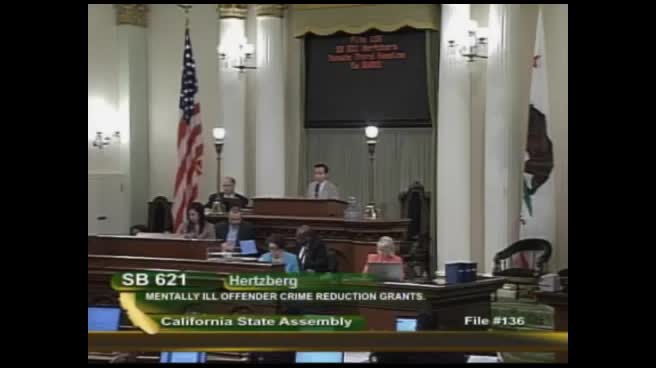
| Sep 2, 2015 | SB 621 Hertzberg Senate Third Reading By BURKE | Assembly Floor |
Passed |
|
| Aug 27, 2015 | Do pass. | Assembly Standing Committee on Appropriations |
Passed |
|
| Jun 30, 2015 | Do pass and be re-referred to the Committee on [Appropriations] with recommendation: To Consent Calendar | Assembly Standing Committee on Public Safety |
Passed |
|
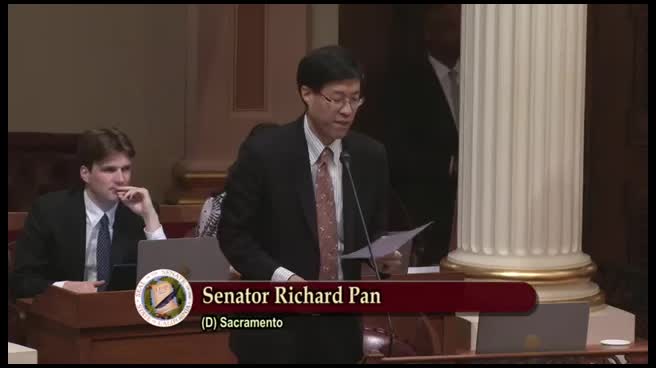
| Jun 1, 2015 | Senate 3rd Reading SB621 Hertzberg | Senate Floor |
Passed |
|
| May 28, 2015 | Do pass | Senate Standing Committee on Appropriations |
Passed |
|
| Apr 20, 2015 | Placed on suspense file | Senate Standing Committee on Appropriations |
Passed |
|
| Apr 7, 2015 | Do pass, but first be re-referred to the Committee on [Appropriations] | Senate Standing Committee on Public Safety |
Passed |
This list shows positions taken on this bill by organizations on the date displayed, which is linked to the original source.
Positions by individuals are not included.
|
Organization
|
Position
|
Date
|
|---|---|---|
| Alameda County Board of Supervisors | ** Support | Sep 2, 2015 |
| American Civil Liberties Union of California | ** Support | Jun 1, 2015 |
| California Attorneys For Criminal Justice | ** Support | Sep 2, 2015 |
| California Catholic Conference of Bishops | ** Support | Sep 2, 2015 |
| California Council Of Community Mental Health Agencies | ** Support | Sep 2, 2015 |
| California District Attorneys Association | ** Support | Sep 2, 2015 |
| California Medical Association, Inc. | ** Support | Sep 2, 2015 |
| California Probation, Parole, and Correctional Association | ** Support | Sep 2, 2015 |
| California Professional Firefighters | ** Support | Sep 2, 2015 |
| California Public Defenders Association | ** Support | Sep 2, 2015 |
| California State Association Of Counties | ** Support | Sep 2, 2015 |
| Chief Probation Officers Of California | ** Support | Sep 2, 2015 |
| Contra Costa County Board of Supervisors | ** Support | Sep 2, 2015 |
| County Behavioral Health Directors Association | ** Support | Jun 1, 2015 |
| County Welfare Directors Association of California | ** Support | Sep 2, 2015 |
| Crime Victims Action Alliance | ** Support | Sep 2, 2015 |
| Disability Rights California | ** Support | Sep 2, 2015 |
| Fraternal Order of Police, California State Lodge | ** Support | Sep 2, 2015 |
| Legal Services for Prisoners with Children | ** Support | Sep 2, 2015 |
| Long Beach Police Officers Association | ** Support | Sep 2, 2015 |
| Los Angeles County Board of Supervisors | ** Support | Sep 2, 2015 |
| Los Angeles County Professional Peace Officers Association | ** Support | Sep 2, 2015 |
| Los Angeles District Attorney | ** Support | Sep 2, 2015 |
| Marin County Board of Supervisors | ** Support | Sep 2, 2015 |
| Mental Health America of California | ** Support | Sep 2, 2015 |
| National Alliance of Mental Illness | * Indeterminate | Apr 20, 2015 |
| National Alliance on Mental Illness | ** Support | Sep 2, 2015 |
| Sacramento County Deputy Sheriffs' Association | ** Support | Sep 2, 2015 |
| Santa Ana Police Officers Association | ** Support | Sep 2, 2015 |
SB 621
Page 2
SENATE THIRD READING
SB 621
(Hertzberg)
As Introduced February 27, 2015
Majority vote
SENATE VOTE: 40-0
Committee |
Votes |
Ayes |
Noes |
Public Safety |
7-0 |
Quirk, Melendez, Jones-Sawyer, Lackey, Lopez, Low, Santiago |
|
Appropriations |
17-0 |
Gomez, Bigelow, Bloom, Bonta, Calderon, Chang, Nazarian, Eggman, Gallagher, Eduardo Garcia, Holden, Jones, Quirk, Rendon, Wagner, Weber, Wood |
|
SUMMARY: Authorizes the funds from Mentally Ill Offender Crime Reduction Program to be used for diversion programs that offer appropriate mental health and treatment services.
EXISTING LAW:
Establishes the Board of State and Community Corrections (BSCC) commencing July 1, 2012.
States that the mission of the BSCC includes providing statewide leadership, coordination, and technical assistance to promote effective state and local efforts and partnerships in California's adult and juvenile criminal justice system, including addressing gang problems. This mission shall reflect the principle of aligning fiscal policy and correctional practices, including, but not limited to prevention, intervention, suppression, supervision, and incapacitation, to promote a justice investment strategy that fits each county and is consistent with the integrated statewide goal of improved public safety through cost-effective, promising, and evidence-based strategies for managing criminal justice populations.
Requires the BSCC to administer mentally ill offender crime reduction grants on a competitive basis to counties that expand or establish a continuum of timely and effective responses to reduce crime and criminal justice costs related to mentally ill offenders.
Specifies that the grants must be divided equally between adult and juvenile mentally ill offender crime reduction grants, and requires the grants to support prevention, intervention, supervision, and incarceration-based services and strategies to reduce recidivism and to improve outcomes for mentally ill juvenile and adult offenders.
Defines "mentally ill offenders" for purposes of the grant program as seriously emotionally disturbed children or adolescents; adults who have a serious mental disorder; and, adults who require or are at risk of requiring acute psychiatric inpatient care, residential treatment, or outpatient crisis intervention because of a mental disorder with symptoms of psychosis, suicidality, or violence.
Requires the BSCC to establish minimum requirements, funding criteria, and procedures for awarding grants.
Provides that an "application submitted by a county shall describe a four-year plan for the programs, services, or strategies to be provided under the grant. The board shall award grants that provide funding for three years. Funding shall be used to supplement, rather than supplant, funding for existing programs. Funds may be used to fund specialized alternative custody programs that offer appropriate mental health treatment and services."
FISCAL EFFECT: According to the Assembly Appropriations Committee:
Major future cost pressure to the BSCC in the millions of dollars (General Fund/Special Fund) to the extent adding diversion programs as an authorized use of Mentally Ill Offender Crime Reduction (MIOCR) grant funds results in additional funding appropriated and subsequently awarded for these programs.
To the extent the level of existing MIOCR grant funding remains unchanged or decreases in future years, expanding the authorized use of funds could result in a shift of grant awards to diversion programs, thereby reducing available grant funding for alternative custody programs. The Budget Act of 2014 included $18 million appropriation for the MIOCR grant program, but the Budget Act of 2015 only appropriated $1.7 million; both appropriations are for three year grants.
COMMENTS: According to the author, "The Mentally Ill Offender Crime Reduction Grant Program supports the implementation and evaluation of locally developed demonstration projects designed to reduce recidivism among persons with mental illness.
"The MIOCR Grant Program recognizes the cooperation between law enforcement, corrections, mental health, and other agencies is critical to improve California's response to mentally ill offenders. Projects are to be collaborative and address locally identified gaps in jail and community-based services for persons with a serious mental illness.
"In an effort to reinvest in treatment and prevention at the local level, SB 621 promotes cost-effective approaches to meet the long-term needs of adults and juveniles with mental disorders who are offenders. This bill will clarify that counties should receive the resources they need to divert mentally ill low-level offenders to treatment rather than jail, with follow-up services for those released from jail to keep them from reoffending."
Analysis Prepared by: Sandy Uribe / PUB. S. / (916) 319-3744 FN: 0001617
Date of Hearing: August 19, 2015
ASSEMBLY COMMITTEE ON APPROPRIATIONS
Jimmy Gomez, Chair
SB 621
(Hertzberg) – As Introduced February 27, 2015
Policy Committee: |
Public Safety |
Vote: |
7 - 0 |
|
|
|
|
|
|
|
|
Urgency: No State Mandated Local Program: No Reimbursable: No
SUMMARY:
This bill expands the authorized use of funds for the Mentally Ill Offender Crime Reduction (MIOCR) grant program to include “diversion programs” that offer appropriate mental health treatment and services.
FISCAL EFFECT:
Major future cost pressure to the Board of State and Community Corrections (BSCC) in the millions of dollars (General Fund/Special Fund) to the extent adding diversion programs as an authorized use of MIOCR grant funds results in additional funding appropriated and subsequently awarded for these programs.
To the extent the level of existing MIOCR grant funding remains unchanged or decreases in future years, expanding the authorized use of funds could result in a shift of grant awards to diversion programs, thereby reducing available grant funding for alternative custody programs. The Budget Act of 2014 included $18 million appropriation for the MIOCR grant program, but the Budget Act of 2015 only appropriated $1.7 million; both appropriations are for three year grants.
COMMENTS:
Purpose. According to the author, "The Mentally Ill Offender Crime Reduction Grant Program supports the implementation and evaluation of locally developed demonstration projects designed to reduce recidivism among persons with mental illness."
"The MIOCR Grant Program recognizes that cooperation between law enforcement, corrections, mental health, and other agencies is critical to improve California’s response to mentally ill offenders. Projects are to be collaborative and address locally identified gaps in jail and community-based services for persons with a serious mental illness."
"In an effort to reinvest in treatment and prevention at the local level, SB 621 promotes cost-effective approaches to meet the long-term needs of adults and juveniles with mental disorders who are offenders. This bill will clarify that counties should receive the resources they need to divert mentally ill low-level offenders to treatment rather than jail, with follow-up services for those released from jail to keep them from reoffending."Background. Pursuant to SB 1054 (Steinberg), Chapter 436, Statutes of 2014, the Board of State and Community Corrections (BSCC) is to administer MIOCR grants on a competitive basis to counties that expand or establish a continuum of timely and effective responses to reduce crime and criminal justice costs related to mentally ill offenders. Under existing law, the grants are to be divided equally between adult and juvenile MIOCR grants in accordance with the funds appropriated for each type of grant. The grants are required to support prevention, intervention, supervision, and incarceration-based services and strategies to reduce recidivism and to improve outcomes for mentally ill juvenile and adult offenders.
Current law also specifies that the BSCC shall award grants that provide funding for three years based on four-year program plans submitted by counties, and that funding must be used to supplement, rather than supplant, funding for existing programs. Counties are required to contribute resources of at least 25 percent of the amount of the grant, which may include in-kind contributions. In awarding grants, priority or preference is to be given to those grant applications that include documented match funding that exceeds 25 percent of the grant. Existing law further specifies that funds may be used to fund specialized alternative custody programs that offer appropriate mental health treatment and services.
Pretrial Diversion Programs: Diversion is the suspension of criminal proceedings for a prescribed time period with certain conditions. A defendant may not be required to admit guilt as a prerequisite for placement in a pretrial diversion program. If diversion is successfully completed, the criminal charges are dismissed and the defendant may, with certain exceptions, legally answer that he or she has never been arrested or charged for the diverted offense. If diversion is not successfully completed, the criminal proceedings resume, however a hearing to terminate diversion is required.
Argument in Support: According to the Los Angeles District Attorney, the sponsor of this bill, "[A]t the moment, the sheriff is housing more than 300 inmates who are considered to have severe to acute mental illnesses, even though they only have dedicated bed space for 40 severe/acute mentally ill inmates.
"In an attempt to address this situation, District Attorney Lacey has embarked on an effort to create the largest mental health criminal diversion program in the nation…."
"One of the major obstacles to implementing the District Attorney's comprehensive mental health diversion program is funding. Our office believes that specifically authorizing the BSCC to award MIOCR grants to counties for mental health diversion programs will assist our efforts to establish the largest mental health diversion program in the nation."
Staff notes that the creation of the largest mental health diversion program in the nation will require significant additional resources, or the redirection of existing resources.
Analysis Prepared by: Pedro R.Reyes / APPR. / (916) 319-2081
SB 621
Page 4
Date of Hearing: June 30, 2015
Counsel: Sandy Uribe
ASSEMBLY COMMITTEE ON PUBLIC SAFETY
Bill Quirk, Chair
SB 621
(Hertzberg) – As Introduced February 27, 2015
SUMMARY: Authorizes the funds from Mentally Ill Offender Crime Reduction Program to be used for diversion programs that offer appropriate mental health and treatment services.
EXISTING LAW:
Establishes the Board of State and Community Corrections (BSCC) commencing July 1, 2012. (Pen. Code, § 6024, subd. (a).)
States that the mission of the BSCC includes providing statewide leadership, coordination, and technical assistance to promote effective state and local efforts and partnerships in California's adult and juvenile criminal justice system, including addressing gang problems. This mission shall reflect the principle of aligning fiscal policy and correctional practices, including, but not limited to prevention, intervention, suppression, supervision, and incapacitation, to promote a justice investment strategy that fits each county and is consistent with the integrated statewide goal of improved public safety through cost-effective, promising, and evidence-based strategies for managing criminal justice populations. (Pen. Code, § 6024, subd. (b).)
Requires the BSCC to administer mentally ill offender crime reduction grants on a competitive basis to counties that expand or establish a continuum of timely and effective responses to reduce crime and criminal justice costs related to mentally ill offenders. (Pen. Code, § 6045, subd. (a).)
Specifies that the grants must be divided equally between adult and juvenile mentally ill offender crime reduction grants, and requires the grants to support prevention, intervention, supervision, and incarceration-based services and strategies to reduce recidivism and to improve outcomes for mentally ill juvenile and adult offenders. (Pen. Code, § 6045, subd. (a).)
Defines "mentally ill offenders" for purposes of the grant program as seriously emotionally disturbed children or adolescents; adults who have a serious mental disorder; and, adults who require or are at risk of requiring acute psychiatric inpatient care, residential treatment, or outpatient crisis intervention because of a mental disorder with symptoms of psychosis, suicidality, or violence. (Pen. Code, § 6045, subd. (b).)
Requires the BSCC to establish minimum requirements, funding criteria, and procedures for awarding grants. (Pen. Code, § 6045.6.)
Provides that an "application submitted by a county shall describe a four-year plan for the programs, services, or strategies to be provided under the grant. The board shall award grants that provide funding for three years. Funding shall be used to supplement, rather than supplant, funding for existing programs. Funds may be used to fund specialized alternative custody programs that offer appropriate mental health treatment and services." (Pen. Code, § 6045.4, subd. (a).)
FISCAL EFFECT: Unknown
COMMENTS:
Author's Statement: According to the author, "The Mentally Ill Offender Crime Reduction Grant Program supports the implementation and evaluation of locally developed demonstration projects designed to reduce recidivism among persons with mental illness.
"The MIOCR Grant Program recognizes the cooperation between law enforcement, corrections, mental health, and other agencies is critical to improve California’s response to mentally ill offenders. Projects are to be collaborative and address locally identified gaps in jail and community-based services for persons with a serious mental illness.
"In an effort to reinvest in treatment and prevention at the local level, SB 621 promotes cost-effective approaches to meet the long-term needs of adults and juveniles with mental disorders who are offenders. This bill will clarify that counties should receive the resources they need to divert mentally ill low-level offenders to treatment rather than jail, with follow-up services for those released from jail to keep them from reoffending."
Mentally Ill Offender Crime Reduction Program: In 1998, the Legislature passed SB 1485 (Rosenthal) establishing the Mentally Ill Offender Crime Reduction Program. Under SB 1485, the Board of Corrections (which was replaced by the BSCC) awarded grants to support the development, implementation, and evaluation of projects that demonstrated locally-identified strategies for reducing recidivism among mentally-ill offenders. Before the program was defunded in 2008, grant-funded projects delivered targeted, enhanced services and/or interventions while fostering interagency collaboration between mental health and criminal justice agencies. The program encompassed 30 projects in 26 counties. While the 30 projects were unique in that each was designed to deal with the specific service gaps and needs of its jurisdiction, all used their grants to maximize local resources, incorporate evidence-based best practices, and design service-delivery systems that would enhance local capabilities. (California Board of Corrections, Mentally Ill Offender Crime Reduction Grant Program: Overview of Statewide Evaluation Findings (Mar. 2005) <http://www.bdcorr.ca.gov/cppd/miocrg/reports/miocrg_report_presentation.pdf>.)
An evaluation of the Mentally Ill Offender Crime Reduction Program in 2005 indicated generally favorable outcomes. The Board's analysis of the local research findings confirmed that the enhanced treatment and support services offered through the program made a positive difference. The statewide research showed that program participants, compared to those receiving treatment as usual, were: "1) more comprehensively diagnosed and evaluated regarding their mental functioning and therapeutic needs; 2) more quickly and reliably provided with services designed to ameliorate the effects of mental illness; 3) provided with more complete after-jail systems of care designed to ensure adequate treatment and support; and, 4) monitored more closely to ensure that additional illegal behavior, mental deterioration, and other areas of concern were quickly addressed." (Ibid.) As a result, program "participants were booked less often, convicted less often, and convicted of less serious offenses when they were convicted than individuals receiving [treatment as usual (TAU)]. In addition, fewer participants served time in jail and, when they did serve time, they were in jail for fewer days than were TAU participants." (Ibid.)
Last year, SB 1054 (Steinberg) – Chapter 436, Statutes of 2014, reestablished the Mentally Ill Offender Crime Reduction Program with some differences from its previous incarnation. Most importantly for purposes of this bill, SB 1054 allows grants to be awarded to specialized alternative custody programs that offer appropriate mental health treatment and services. Previous legislation prevented the use of grants towards programs providing an alternative to incarceration. This bill explicitly includes diversion programs offering mental health treatment and services among the programs eligible for funding under the program.
BSCC Background: "Chapter 36, Statutes of 2011 (SB 92, Committee on Budget and Fiscal Review), established the BSCC, effective July 1, 2012. From 2005 through 2012, the BSCC was the Correction Standards Authority, a division of CDCR. Prior to that it was the Board of Corrections, an independent state department. The BSCC is responsible for administering various criminal justice grant programs and ensuring compliance with state and federal standards in the operation of local correctional facilities. It is also responsible for providing technical assistance to local authorities and collecting data related to the outcomes of criminal justice policies and practices." (LAO, The 2013-14 Budget: The Governor's Criminal Justice Proposals, p. 44 (Feb. 15, 2013).)
Pretrial Diversion Programs: Diversion is the suspension of criminal proceedings for a prescribed time period with certain conditions. A defendant may not be required to admit guilt as a prerequisite for placement in a pretrial diversion program. If diversion is successfully completed, the criminal charges are dismissed and the defendant may, with certain exceptions, legally answer that he or she has never been arrested or charged for the diverted offense. If diversion is not successfully completed, the criminal proceedings resume, however a hearing to terminate diversion is required.
Argument in Support: According to the Los Angeles District Attorney, the sponsor of this bill, "[A]t the moment, the sheriff is housing more than 300 inmates who are considered to have severe to acute mental illnesses, even though they only have dedicated bed space for 40 severe/acute mentally ill inmates.
"In an attempt to address this situation, District Attorney Lacey has embarked on an effort to create the largest mental health criminal diversion program in the nations…."
"One of the major obstacles to implementing the District Attorney's comprehensive mental health diversion program is funding. Our office believes that specifically authorizing the BSCC to award MIOCR grants to counties for mental health diversion programs will assist our efforts to establish the largest mental health diversion program in the nation."
Prior Legislation:
SB 1054 (Steinberg), Chapter 436, Statutes of 2014, provides grants to counties to develop and implement a comprehensive, cost-effective strategy to reduce the rate of recidivism and re-incarceration of mentally ill offenders.
SB 92 (Budget and Fiscal Review Committee), Chapter 36, Statutes of 2011, starting July 1, 2012, eliminated the Corrections Standards Authority, and assigned its former duties to the newly-created 12-member BSCC and assigns additional duties, as provided.
REGISTERED SUPPORT / OPPOSITION:
Support
Los Angeles District
Attorney (Sponsor)
Alameda County Board of Supervisors
American
Civil Liberties Union
American Association for Marriage and
Family Therapy, California Division
California Attorneys for
Criminal Justice
California Catholic Conference of
Bishops
California Council of Community Mental Health
Agencies
California District Attorneys Association
California
Medical Association
California Probation, Parole, and
Correctional Association
California Professional
Firefighters
California Public Defenders Association
California
State Association of Counties
Chief Probation Officers of
California
Contra Costa County Board of Supervisors
County
Welfare Directors Association of California
Crime Victims Action
Alliance
Disability Rights California
Fraternal Order of
Police, California State Lodge
Legal Services for Prisoners with
Children
Long Beach Police Officers Association
Los Angeles
County Board of Supervisors
Los Angeles County Professional
Peace Officers Association
Marin County Board of
Supervisors
Mental Health America of California
National
Alliance on Mental Illness
Sacramento County Deputy Sheriffs'
Association
Santa Ana Police Officers Association
Opposition
None
Analysis Prepared by: Sandy Uribe / PUB. S. / (916) 319-3744
SB 621
Page 4
|
Office of Senate Floor Analyses (916) 651-1520 Fax: (916) 327-4478 |
THIRD READING
Bill No: SB 621
Introduced: 2/27/15
SENATE PUBLIC SAFETY COMMITTEE: 7-0, 4/7/15
AYES: Hancock, Anderson, Leno, Liu, McGuire, Monning, Stone
SENATE APPROPRIATIONS COMMITTEE: 7-0, 5/28/15
AYES: Lara, Bates, Beall, Hill, Leyva, Mendoza, Nielsen
SUBJECT: Mentally ill offender crime reduction grants
SOURCE: Los Angeles District Attorney’s Office
DIGEST: This bill explicitly includes a reference to “diversion” programs that offer appropriate mental health treatment and services among the programs for which Mentally Ill Offender Crime Reduction funds may be used.
Existing law:
Establishes the Board of State and Community Corrections (BSCC) as an independent entity of the California Department of Corrections and Rehabilitation (CDCR). (Penal Code § 6024(a).)
Provides that it is the mission of the BSCC to provide statewide leadership, coordination, and technical assistance to promote effective state and local efforts and partnerships in California’s adult and juvenile criminal justice system. (Penal Code § 6024(b).)
Requires BSCC to “administer mentally ill offender crime reduction grants on a competitive basis to counties that expand or establish a continuum of timely and effective responses to reduce crime and criminal justice costs related to mentally ill offenders. The grants administered under this article by the board shall be divided equally between adult and juvenile mentally ill offender crime reduction grants in accordance with the funds appropriated for each type of grant. The grants shall support prevention, intervention, supervision, and incarceration-based services and strategies to reduce recidivism and to improve outcomes for mentally ill juvenile and adult offenders.” (Penal Code § 6045(a).)
Provides that the “application submitted by a county shall describe a four-year plan for the programs, services, or strategies to be provided under the grant. The board shall award grants that provide funding for three years. Funding shall be used to supplement, rather than supplant, funding for existing programs. Funds may be used to fund specialized alternative custody programs that offer appropriate mental health treatment and services. . . . (Penal Code § 6045.4)
This bill expressly includes the word “diversion” as a kind of program authorized to receive these funds.
Background
Last year’s budget allocated $18 million -- $9 million for adult offenders and $9 million for juvenile offenders -- to the Mentally Ill Offender Crime Reduction Program (MIOCR) as authorized by the passage of SB 1054 (Steinberg, Chapter 436, Statutes of 2014). MIOCR originated in 1998, when the Legislature passed SB 1485 (Rosenthal). Under SB 1485, the Board of Corrections (what is now the BSCC) awarded grants to support the development, implementation, and evaluation of projects that demonstrated locally identified strategies for reducing recidivism among mentally ill offenders.
An evaluation of the MIOCRG (Mentally Ill Offender Crime Reduction Grant) program in 2005 indicated generally favorable outcomes:
The Board’s analysis of the local research findings confirms that the enhanced treatment and support services offered through the MIOCRG program made a positive difference. The statewide research shows that program participants were: 1) more comprehensively diagnosed and evaluated regarding their mental functioning and therapeutic needs, 2) more quickly and reliably provided with services designed to ameliorate the effects of mental illness, 3) provided with more complete after-jail systems of care designed to ensure adequate treatment and support, and 4) monitored more closely to ensure that additional illegal behavior, mental deterioration, and other areas of concern were quickly addressed. As a result, MIOCRG participants were booked less often, convicted less often, and convicted of less serious offenses when they were convicted than were those receiving treatment as usual (TAU). Fewer participants served time in jail and, when they did serve time, they were in jail for fewer days than were TAU participants. MIOCRG participants improved in ‘Quality of Life’ outcomes including Global Assessment of Functioning (GAF) scores, reduced substance use/abuse, having housing, and economic self-sufficiency.
The Budget Act of 2014 included $18 million appropriated to the BSCC from the Recidivism Reduction Fund for the MIOCR grant program. The BSCC has indicated 35 applications for MIOCR projects requesting nearly $32.6 million in grant funds have been received. While no grants have been awarded to date, the BSCC has indicated award recommendations will be presented to the BSCC Board in June 2015.
FISCAL EFFECT: Appropriation: No Fiscal Com.: Yes Local: No
According to the Senate Appropriations Committee:
Major future cost pressure in the millions of dollars (General Fund/Special Fund) to the extent adding diversion programs as an authorized use of MIOCR grant funds results in additional funding appropriated and subsequently awarded for these programs.
To the extent the level of existing MIOCR grant funding remains unchanged or decreases in future years, expanding the authorized use of funds could result in a shift of grant awards to diversion programs, thereby reducing available grant funding for alternative custody programs.
Los Angeles District Attorney’s Office (source)
American Association for Marriage and Family Therapy, California Division
American Civil Liberties Union of California
California Attorneys for Criminal Justice
California District Attorneys Association
California Fraternal Order of Police
California Probation Parole and Correctional Association
California State Association of Counties
Chief Probation Officers of California
Contra Costa County Board of Supervisors
County Behavioral Health Directors Association
Disability Rights California
Legal Services for Prisoners with Children
Long Beach Police Officers Association
Los Angeles County Board of Supervisors
Los Angeles County Professional Peace Officers Association
Marin County Board of Supervisors
Mental Health America of California
National Alliance on Mental Illness California
Sacramento County Deputy Sheriffs’ Association
Santa Ana Police Officers Association
OPPOSITION: (Verified 5/28/15)
None received
ARGUMENTS IN SUPPORT:
The author states:
In an effort to reinvest in treatment and prevention at the local level, SB 621 promotes cost-effective approaches to meet the long-term needs of adults and juveniles with mental disorders who are offenders. This bill will give counties the resources they need to divert mentally ill low-level offenders to treatment rather than jail, with follow-up services for those released from jail to keep them from reoffending.
Prepared by: Alison Anderson / PUB. S. /
5/30/15 18:02:01
**** END ****
SB 621 (Hertzberg) Page 3 of 3
SENATE COMMITTEE ON APPROPRIATIONS
Senator Ricardo Lara, Chair
2015 - 2016 Regular Session
SB 621 (Hertzberg) - Mentally ill offender crime reduction grants
|
|
Version: February 27, 2015 |
Policy Vote: PUB. S. 7 - 0 |
Urgency: No |
Mandate: No |
Hearing Date: April 20, 2015 |
Consultant: Jolie Onodera |
This bill meets the criteria for referral to the Suspense File.
Bill Summary:
SB 621 would expand the authorized use of funds from the Mentally Ill Offender Crime Reduction (MIOCR) grant program to include “diversion programs” that offer appropriate mental health treatment and services.
Fiscal Impact:
Major future cost pressure in the millions of dollars (General Fund/Special Fund) to the extent adding diversion programs as an authorized use of MIOCR grant funds results in additional funding appropriated and subsequently awarded for these programs.
To the extent the level of existing MIOCR grant funding remains unchanged or decreases in future years, expanding the authorized use of funds could result in a shift of grant awards to diversion programs, thereby reducing available grant funding for alternative custody programs.
Background:
In 1998, the Legislature, under SB 1485 (Rosenthal) Chapter 501/1998, authorized the MIOCR grant program to fund innovative local programs targeting mentally ill offenders. The MIOCR grant program provided more than $80 million to 30 projects in 26 of California's 58 counties. Although an evaluation of the MIOCR grant program in 2005 indicated generally favorable outcomes, the program was defunded in 2008.
Pursuant to SB 1054 (Steinberg) Chapter 436/2014, the Board of State and Community Corrections (BSCC) is to administer MIOCR grants on a competitive basis to counties that expand or establish a continuum of timely and effective responses to reduce crime and criminal justice costs related to mentally ill offenders. Under existing law, the grants are to be divided equally between adult and juvenile MIOCR grants in accordance with the funds appropriated for each type of grant. The grants are required to support prevention, intervention, supervision, and incarceration-based services and strategies to reduce recidivism and to improve outcomes for mentally ill juvenile and adult offenders. (Penal Code (PC) § 6045.)
Existing law specifies that the BSCC shall award grants that provide funding for three years based on four-year program plans submitted by counties, and that funding must be used to supplement, rather than supplant, funding for existing programs. Counties are required to contribute resources of at least 25 percent of the amount of the grant, which may include in-kind contributions. In awarding grants, priority or preference is to be given to those grant applications that include documented match funding that exceeds 25 percent of the grant. Existing law further specifies that funds may be used to fund specialized alternative custody programs that offer appropriate mental health treatment and services. (PC § 6045.4.)
The Budget Act of 2014 included $18 million appropriated to the BSCC from the Recidivism Reduction Fund for the MIOCR grant program. The BSCC has indicated 35 applications for MIOCR projects requesting nearly $32.6 million in grant funds have been received. While no grants have been awarded to date, the BSCC has indicated award recommendations will be presented to the BSCC Board in June 2015.
Proposed Law:
This bill would expand the authorized use of funds for the MIOCR grant program to include “diversion programs” that offer appropriate mental health treatment and services.
Related Legislation:
SB 1054 (Steinberg) Chapter 436/2014 made technical amendments to the MIOCR grant program which was re-established in the Budget Act of 2014-15. SB 1054 shortened the timeframe of the MIOCR grant funding period from four years to three years, clarified the funds are to be divided equally between juvenile and adult programs, and revised the BSCC reporting requirement timeframes.
SB 1485 (Rosenthal) Chapter 501/1998 established the MIOCR grant program which required the Board of Corrections to administer and award grants on a competitive basis to counties that expand or establish a continuum of swift, certain, and graduated responses to reduce crime and criminal justice costs related to mentally ill offenders. The bill required funding for the program to be provided, upon appropriation by the Legislature, in the annual Budget Act.
Staff Comments:
Under current law, MIOCR grants are required to support various types of services, including but not limited to prevention services, to reduce recidivism and to improve outcomes for mentally ill juvenile and adult offenders. While diversion programs clearly fall under the category of prevention services, and are consistent with the intent of MIOCR grant program goals, existing law restricts the use of MIOCR grant funds to alternative custody programs.
Expanding the authorized use of MIOCR grant funds to include “diversion programs” would create future cost pressure in the millions of dollars to the extent additional funding is appropriated for these programs. While the $18 million included in the 2014 Budget was appropriated from the Recidivism Reduction Fund, these funds are limited, and any future appropriations would likely be from the General Fund unless other Special Funds are identified. To the extent the existing funding level of $18 million for the MIOCR grant program remains unchanged or decreases in future years, expanding the authorized use of funds to include diversion programs could result in a shift of grant awards to diversion programs, thereby reducing the amount of available grant funding potentially awarded to alternative custody programs.
-- END --
SB 621 (Hertzberg ) Page 4 of 4
SENATE COMMITTEE ON PUBLIC SAFETY
Senator Loni Hancock, Chair
2015 - 2016 Regular
Bill No: SB 621 Hearing Date: April 7, 2015
Author: |
Hertzberg |
||
Version: |
February 27, 2015 |
||
Urgency: |
No |
Fiscal: |
Yes |
Consultant: |
AA |
||
Subject: Mentally Ill Offender Crime Reduction Grants
HISTORY
Source: Los Angeles District Attorney’s Office
Prior Legislation: SB 1054 (Steinberg) – Chapter 436, Statutes of 2014
Support: California Probation; Parole and Correctional Association; Chief Probation Officers of California; National Alliance on Mental Illness California; Disability Rights California; Mental Health America of California; Los Angeles County Professional Peace Officers Association; Sacramento County Sheriffs’ Association; Santa Ana Police Officers Association; Long Beach Police Officers Association; Disability Rights California; Mental Health America of California; Board of Supervisors; California Attorneys for Criminal Justice; California Fraternal Order of Police; Legal Services for Prisoners with Children
Opposition: None known
PURPOSE
The purpose of this bill is to explicitly include a reference to “diversion” programs that offer appropriate mental health treatment and services among the programs for which Mentally Ill Offender Crime Reduction funds may be used.
Existing law establishes the Board of State and Community Corrections (BSCC) as an independent entity of the California Department of Corrections and Rehabilitation (CDCR). (Penal Code § 6024(a).)
Under existing law, it is the mission of the BSCC to provide statewide leadership, coordination, and technical assistance to promote effective state and local efforts and partnerships in California’s adult and juvenile criminal justice system. (Penal Code § 6024(b).)
Existing law requires BSCC to “administer mentally ill offender crime reduction grants on a competitive basis to counties that expand or establish a continuum of timely and effective responses to reduce crime and criminal justice costs related to mentally ill offenders. The grants administered under this article by the board shall be divided equally between adult and juvenile mentally ill offender crime reduction grants in accordance with the funds appropriated for each type of grant. The grants shall support prevention, intervention, supervision, and incarceration-based services and strategies to reduce recidivism and to improve outcomes for mentally ill juvenile and adult offenders.” (Penal Code § 6045(a).)
Existing law provides that the “application submitted by a county shall describe a four-year plan for the programs, services, or strategies to be provided under the grant. The board shall award grants that provide funding for three years. Funding shall be used to supplement, rather than supplant, funding for existing programs. Funds may be used to fund specialized alternative custody programs that offer appropriate mental health treatment and services. . . .(Penal Code § 6045.4)
This bill would expressly include the word “diversion” as a kind of program authorized to receive these funds.
RECEIVERSHIP/OVERCROWDING CRISIS AGGRAVATION
For the past eight years, this Committee has scrutinized legislation referred to its jurisdiction for any potential impact on prison overcrowding. Mindful of the United States Supreme Court ruling and federal court orders relating to the state’s ability to provide a constitutional level of health care to its inmate population and the related issue of prison overcrowding, this Committee has applied its “ROCA” policy as a content-neutral, provisional measure necessary to ensure that the Legislature does not erode progress in reducing prison overcrowding.
On February 10, 2014, the federal court ordered California to reduce its in-state adult institution population to 137.5% of design capacity by February 28, 2016, as follows:
143% of design bed capacity by June 30, 2014;
141.5% of design bed capacity by February 28, 2015; and,
137.5% of design bed capacity by February 28, 2016.
In February of this year the administration reported that as “of February 11, 2015, 112,993 inmates were housed in the State’s 34 adult institutions, which amounts to 136.6% of design bed capacity, and 8,828 inmates were housed in out-of-state facilities. This current population is now below the court-ordered reduction to 137.5% of design bed capacity.”( Defendants’ February 2015 Status Report In Response To February 10, 2014 Order, 2:90-cv-00520 KJM DAD PC, 3-Judge Court, Coleman v. Brown, Plata v. Brown (fn. omitted).
While significant gains have been made in reducing the prison population, the state now must stabilize these advances and demonstrate to the federal court that California has in place the “durable solution” to prison overcrowding “consistently demanded” by the court. (Opinion Re: Order Granting in Part and Denying in Part Defendants’ Request For Extension of December 31, 2013 Deadline, NO. 2:90-cv-0520 LKK DAD (PC), 3-Judge Court, Coleman v. Brown, Plata v. Brown (2-10-14). The Committee’s consideration of bills that may impact the prison population therefore will be informed by the following questions:
Whether a proposal erodes a measure which has contributed to reducing the prison population;
Whether a proposal addresses a major area of public safety or criminal activity for which there is no other reasonable, appropriate remedy;
Whether a proposal addresses a crime which is directly dangerous to the physical safety of others for which there is no other reasonably appropriate sanction;
Whether a proposal corrects a constitutional problem or legislative drafting error; and
Whether a proposal proposes penalties which are proportionate, and cannot be achieved through any other reasonably appropriate remedy.
COMMENTS
Stated Need for This Bill
The author states:
In an effort to reinvest in treatment and prevention at the local level, SB 621 promotes cost-effective approaches to meet the long-term needs of adults and juveniles with mental disorders who are offenders. This bill will give counties the resources they need to divert mentally ill low-level offenders to treatment rather than jail, with follow-up services for those released from jail to keep them from reoffending.
Background
Last year’s budget allocated $18 million -- $9 million for adult offenders and $9 million for juvenile offenders -- to the Mentally Ill Offender Crime Reduction Program (“MIOCR”) as authorized by the passage of SB 1054 (Steinberg). MIOCR originated in 1998, when the Legislature passed SB 1485 (Rosenthal). Under SB 1485, the Board of Corrections (what is now the BSCC) awarded grants to support the development, implementation, and evaluation of projects that demonstrated locally identified strategies for reducing recidivism among mentally ill offenders. Before the program was defunded in 2008, MIOCRG-funded projects delivered targeted, enhanced services and/or interventions while fostering interagency collaboration between mental health and criminal justice agencies:
The MIOCRG Program encompassed 30 projects in 26 counties … While the 30 demonstration projects were unique in that each was designed to deal with the specific service gaps and needs of its jurisdiction all used their grants to maximize local resources, incorporate evidence-based “best practices” and design service delivery systems that would enhance local capabilities.1
An evaluation of the MIOCRG program in 2005 indicated generally favorable outcomes:
The Board’s analysis of the local research findings confirms that the enhanced treatment and support services offered through the MIOCRG program made a positive difference. The statewide research shows that program participants were: 1) more comprehensively diagnosed and evaluated regarding their mental functioning and therapeutic needs, 2) more quickly and reliably provided with services designed to ameliorate the effects of mental illness, 3) provided with more complete after-jail systems of care designed to ensure adequate treatment and support, and 4) monitored more closely to ensure that additional illegal behavior, mental deterioration, and other areas of concern were quickly addressed. As a result, MIOCRG participants were booked less often, convicted less often, and convicted of less serious offenses when they were convicted than were those receiving treatment as usual (TAU). Fewer participants served time in jail and, when they did serve time, they were in jail for fewer days than were TAU participants. MIOCRG participants improved in ‘Quality of Life’ outcomes including Global Assessment of Functioning (GAF) scores, reduced substance use/abuse, having housing, and economic self-sufficiency.2
MIOCR Participants Group vs. Treatment as Usual (TAU) Group
All Bookings: 6% decrease
Felony Booking Offenses: 10% decrease
Any Conviction: 8% decrease
Felony Conviction Offense: 15% decrease
Jail Time: 5% reduction
Mean Jail Days: 1.5 days average reduction
Drug Problem: 19% decrease
Alcohol Problem: 23% decrease
GAF Score Improvement: 45% increase
Homelessness: 39% increase
Economic Self-Sufficiency: 32% increase
Earlier this year, the BSCC released requests for proposals for both adult and juvenile MIOCR programs. The due date for RFPs was Friday, April 3, 2015.
What This Bill Would Do
As noted above, this bill would explicitly include the word “diversion” in the MIOCR program statutory language concerning eligible types of programs. This is consistent with current law.
-- END –
1 California Board of Corrections. (2005). Mentally Ill Offender Crime Reduction Grant Program: Overview of Statewide Evaluation Findings. <http://www.bdcorr.ca.gov/cppd/miocrg/reports/miocrg_report_presentation.pdf>.
2 Id.
Discussed in Hearing
 2MIN
Assembly Floor
 1MIN
Senate Floor
 7MIN
Senate Standing Committee on Appropriations
Bill Author

Bill Co-Author(s):