SB 664: Water: urban water management planning.
- Session Year: 2015-2016
- House: Senate
- Latest Version Date: 2015-10-09
Existing law, the Urban Water Management Planning Act, requires every urban water supplier to prepare and adopt an urban water management plan for submission to the Department of Water Resources and other entities that includes specified content, including an urban water shortage contingency analysis. Existing law requires this analysis to include actions to be undertaken by the urban water supplier to prepare for, and implement during, a catastrophic interruption of water supplies, including an earthquake. Existing law requires an urban water supplier to update its plan at least once every 5 years on or before December 31, in years ending in 5 and 0, except that the 2015 plan is required to be updated and submitted to the department by July 1, 2016.
This bill would require an urban water supplier to include within its plan, beginning January 1, 2020, a seismic risk assessment and mitigation plan to assess the vulnerability of each of the various facilities of a water system and mitigate those vulnerabilities. This bill would authorize an urban water supplier to comply with this requirement by submitting a copy of the most recent adopted local hazard mitigation plan or multihazard mitigation plan under specified federal law that addresses seismic risk.
Existing law, the Urban Water Management Planning Act, requires every urban water supplier to prepare and adopt an urban water management plan for submission to the Department of Water Resources and other entities that includes specified content, including an urban water shortage contingency analysis. Existing law requires this analysis to include actions to be undertaken by the urban water supplier to prepare for, and implement during, a catastrophic interruption of water supplies, including an earthquake. Existing law requires an urban water supplier to update its plan at least once every 5 years on or before December 31, in years ending in 5 and 0, except that the 2015 plan is required to be updated and submitted to the department by July 1, 2016.
This bill would require an urban water supplier to include within its plan, beginning January 1, 2020, a seismic risk assessment and mitigation plan to assess the vulnerability of each of the various facilities of a water system and mitigate those vulnerabilities. This bill would authorize an urban water supplier to comply with this requirement by submitting a copy of an the most recent adopted local hazard mitigation plan or multihazard mitigation plan under specified federal law that addresses seismic risk.
Existing law, the Urban Water Management Planning Act, requires every urban water supplier to prepare and adopt an urban water management plan for submission to the Department of Water Resources and other entities that includes specified content, including an urban water shortage contingency analysis. Existing law requires this analysis to include actions to be undertaken by the urban water supplier to prepare for, and implement during, a catastrophic interruption of water supplies, including an earthquake. Existing law requires an urban water supplier to update its plan at least once every 5 years on or before December 31, in years ending in 5 and 0, except that the 2015 plan is required to be updated and submitted to the department by July 1, 2016.
This bill would require an urban water supplier to include within its plan, beginning January 1, 2020, a seismic risk assessment and mitigation plan to assess the vulnerability of each of the various facilities of a water system and mitigate those vulnerabilities. This bill would require the urban water supplier to submit the seismic risk assessment and mitigation plan by July 1, 2017. This bill would authorize an urban water supplier to comply with this requirement by submitting a copy of an adopted local hazard mitigation plan or multihazard mitigation plan under specified federal law that addresses seismic risk.
Existing law, the Urban Water Management Planning Act, requires every urban water supplier to prepare and adopt an urban water management plan for submission to the Department of Water Resources and other entities that includes specified content, including an urban water shortage contingency analysis. Existing law requires this analysis to include actions to be undertaken by the urban water supplier to prepare for, and implement during, a catastrophic interruption of water supplies, including an earthquake. Existing law requires an urban water supplier to update its plan at least once every 5 years on or before December 31, in years ending in 5 and 0, except that the 2015 plan is required to be updated and submitted to the department by July 1, 2016.
This bill would require an urban water supplier to include within its plan a seismic risk assessment and mitigation plan to assess the vulnerability of each of the various facilities of a water system and mitigate those vulnerabilities. This bill would require the urban water supplier to submit the seismic risk assessment and mitigation plan by July 1, 2017. This bill would authorize an urban water supplier to comply with this requirement by submitting a copy of an adopted local hazard mitigation plan or multihazard mitigation plan under specified federal law that addresses seismic risk.
Existing law, the Integrated Regional Water Management Planning Act, authorizes a regional water management group to prepare and adopt an integrated regional water management plan. The act requires an integrated regional water management plan to address specified water quality and water supply matters.
This bill would require an integrated regional water management plan to additionally address identification and consideration of the seismic vulnerability of water infrastructure within the boundaries of the plan.
Existing law establishes in the Natural Resources Agency the Department of Water Resources, which is under the control of the Director of Water Resources. Existing law provides for the appointment of the director by the Governor, subject to confirmation by the Senate.
This bill would make technical, nonsubstantive changes to that provision.
(a)In addition to the requirements of paragraph (3) of subdivision (a) of Section 10632, beginning January 1, 2020, the plan shall include a seismic risk assessment and mitigation plan to assess the vulnerability of each of the various facilities of a water system and mitigate those vulnerabilities.
(b)An urban water supplier shall update the seismic risk assessment and mitigation plan when updating its urban water management plan as required by Section 10621.
(c)An urban water supplier may comply with this section by submitting, pursuant to Section 10644, a copy of the most recent adopted local hazard mitigation plan or multihazard mitigation plan under the federal Disaster Mitigation Act of 2000 (Public Law 106-390) if the local hazard mitigation plan or multihazard mitigation plan addresses seismic risk.
(a)In addition to the requirements of paragraph (3) of subdivision (a) of Section 10632, beginning January 1, 2020, the plan shall include a seismic risk assessment and mitigation plan to assess the vulnerability of each of the various facilities of a water system and mitigate those vulnerabilities.
(b)An urban water supplier shall update the seismic risk assessment and mitigation plan when updating its urban water management plan as required by Section 10621.
(b)
(c)An urban water supplier may comply with this section by submitting, pursuant to Section 10644, a copy of an the most recent adopted local hazard mitigation plan or multihazard mitigation plan under the federal Disaster Mitigation Act of 2000 (Public Law 106-390) if the local hazard mitigation plan or multihazard mitigation plan addresses seismic risk.
(c)An urban water supplier shall update the seismic risk assessment and mitigation plan when updating its urban water management plan as required by Section 10621.
(a)In addition to the requirements of paragraph (3) of subdivision (a) of Section 10632, beginning January 1, 2020, the plan shall include a seismic risk assessment and mitigation plan to assess the vulnerability of each of the various facilities of a water system and mitigate those vulnerabilities.
(b)An urban water supplier may comply with this section by submitting, pursuant to Section 10644, a copy of an adopted local hazard mitigation plan or multihazard mitigation plan under the federal Disaster Mitigation Act of 2000 (Public Law 106-390) if the local hazard mitigation plan or multihazard mitigation plan addresses seismic risk.
(c)(1)An urban water supplier is not required to include the seismic risk assessment and mitigation plan in the urban water management plan update due on July 1, 2016.
(2)An urban water supplier shall submit, pursuant to Section 10644, the seismic risk assessment and mitigation plan by July 1, 2017.
(3)
(c)An urban water supplier shall update the seismic risk assessment and mitigation plan when updating its urban water management plan as required by Section 10621.
(a)In addition to the requirements of paragraph (3) of subdivision (a) of Section 10632, the plan shall include a seismic risk assessment and mitigation plan to assess the vulnerability of each of the various facilities of a water system and mitigate those vulnerabilities.
(b)An urban water supplier may comply with this section by submitting, pursuant to Section 10644, a copy of an adopted local hazard mitigation plan or multihazard mitigation plan under the federal Disaster Mitigation Act of 2000 (Public Law 106-390) if the local hazard mitigation plan or multihazard mitigation plan addresses seismic risk.
(c)(1)An urban water supplier is not required to include the seismic risk assessment and mitigation plan in the urban water management plan update due on July 1, 2016.
(2)An urban water supplier shall submit, pursuant to Section 10644, the seismic risk assessment and mitigation plan by July 1, 2017.
(3)An urban water supplier shall update the seismic risk assessment and mitigation plan when updating its urban water management plan as required by Section 10621.
SECTION 1.Section 10540 of the Water Code is amended to read:10540.(a)A regional water management group may prepare and adopt an integrated regional water management plan in accordance with this part.
(b)A regional water management group may coordinate its planning activities to address or incorporate all or part of any of the following actions of its members into its plan:
(1)Groundwater management planning pursuant to Part 2.75 (commencing with Section 10750) or other specific groundwater management authority.
(2)Urban water management planning pursuant to Part 2.6 (commencing with Section 10610).
(3)The preparation of a water supply assessment required pursuant to Part 2.10 (commencing with Section 10910).
(4)Agricultural water management planning pursuant to Part 2.8 (commencing with Section 10800).
(5)City and county general planning pursuant to Section 65350 of the Government Code.
(6)Stormwater resource planning that is undertaken pursuant to Part 2.3 (commencing with Section 10560).
(7)Other water resource management planning, including flood protection, watershed management planning, and multipurpose program planning.
(c)At a minimum, all plans shall address all of the following:
(1)Protection and improvement of water supply reliability, including identification of feasible agricultural and urban water use efficiency strategies.
(2)Identification and consideration of the drinking water quality of communities within the area of the plan.
(3)Protection and improvement of water quality within the area of the plan, consistent with the relevant basin plan.
(4)Identification of any significant threats to groundwater resources from overdrafting.
(5)Protection, restoration, and improvement of stewardship of aquatic, riparian, and watershed resources within the region.
(6)Protection of groundwater resources from contamination.
(7)Identification and consideration of the water-related needs of disadvantaged communities in the area within the boundaries of the plan.
(8)Identification and consideration of the seismic vulnerability of water infrastructure within the boundaries of the plan.
(d)This section does not obligate a local agency to fund the implementation of any project or program.
(a)A regional water management group may prepare and adopt an integrated regional water management plan in accordance with this part.
(b)A regional water management group may coordinate its planning activities to address or incorporate all or part of any of the following actions of its members into its plan:
(1)Groundwater management planning pursuant to Part 2.75 (commencing with Section 10750) or other specific groundwater management authority.
(2)Urban water management planning pursuant to Part 2.6 (commencing with Section 10610).
(3)The preparation of a water supply assessment required pursuant to Part 2.10 (commencing with Section 10910).
(4)Agricultural water management planning pursuant to Part 2.8 (commencing with Section 10800).
(5)City and county general planning pursuant to Section 65350 of the Government Code.
(6)Stormwater resource planning that is undertaken pursuant to Part 2.3 (commencing with Section 10560).
(7)Other water resource management planning, including flood protection, watershed management planning, and multipurpose program planning.
(c)At a minimum, all plans shall address all of the following:
(1)Protection and improvement of water supply reliability, including identification of feasible agricultural and urban water use efficiency strategies.
(2)Identification and consideration of the drinking water quality of communities within the area of the plan.
(3)Protection and improvement of water quality within the area of the plan, consistent with the relevant basin plan.
(4)Identification of any significant threats to groundwater resources from overdrafting.
(5)Protection, restoration, and improvement of stewardship of aquatic, riparian, and watershed resources within the region.
(6)Protection of groundwater resources from contamination.
(7)Identification and consideration of the water-related needs of disadvantaged communities in the area within the boundaries of the plan.
(8)Identification and consideration of the seismic vulnerability of water infrastructure within the boundaries of the plan.
(d)This section does not obligate a local agency to fund the implementation of any project or program.
SECTION 1.Section 120 of the Water Code is amended to read:120.(a)There is in the Natural Resources Agency the Department of Water Resources, which is under the control of an executive officer known as the Director of Water Resources.
(b)The director is appointed by the Governor, and holds office at the pleasure of the Governor. The appointment of the director is subject to confirmation by the Senate at the next regular or special session of the Legislature, and the refusal or failure of the Senate to confirm the appointment shall create a vacancy in the office.
(c)The director shall receive an annual salary as provided for by Chapter 6 (commencing with Section 11550) of Part 1 of Division 3 of Title 2 of the Government Code.
(a)There is in the Natural Resources Agency the Department of Water Resources, which is under the control of an executive officer known as the Director of Water Resources. The
(b)The director is appointed by the Governor, and holds office at the pleasure of the Governor. The appointment of the director is subject to confirmation by the Senate at the next regular or special session of the Legislature, and the refusal or failure of the Senate to confirm the appointment shall create a vacancy in the office. The
(c)The director shall receive an annual salary as provided for by Chapter 6 (commencing with Section 11550) of Part 1 of Division 3 of Title 2 of the Government Code and he is a member of the Governors Council. Code.
|
Date
|
Status
|
|---|---|
| Sep 1, 2015 | In Senate. Concurrence in Assembly amendments pending. |
| Jun 3, 2015 | Read third time. Passed. (Ayes 40. Noes 0.) Ordered to the Assembly. |
| Jun 4, 2015 | In Assembly. Read first time. Held at Desk. |
| Jun 18, 2015 | Referred to Com. on W., P., & W. |
| Jun 24, 2015 | From committee with author's amendments. Read second time and amended. Re-referred to Com. on W., P., & W. |
| Jun 30, 2015 | From committee: Do pass and re-refer to Com. on APPR. (Ayes 13. Noes 2.) (June 30). Re-referred to Com. on APPR. |
| Jul 15, 2015 | July 15 set for first hearing. Placed on APPR. suspense file. |
| Aug 28, 2015 | From committee: Do pass. (Ayes 16. Noes 1.) (August 27). |
| Aug 31, 2015 | Read second time. Ordered to third reading. |
| Jun 3, 2015 | Read third time. Passed. (Ayes 40. Noes 0. Page 1305.) Ordered to the Assembly. |
| Sep 1, 2015 | Read third time. Passed. Ordered to the Senate. |
| Sep 1, 2015 | Read third time. Passed. (Ayes 71. Noes 9. Page 2725.) Ordered to the Senate. |
| Sep 2, 2015 | Assembly amendments concurred in. (Ayes 40. Noes 0. Page 2424.) Ordered to engrossing and enrolling. |
| Sep 2, 2015 | Assembly amendments concurred in. (Ayes 40. Noes 0.) Ordered to engrossing and enrolling. |
| Sep 8, 2015 | Enrolled and presented to the Governor at 4:30 p.m. |
| Oct 9, 2015 | Approved by the Governor. |
| Oct 9, 2015 | Chaptered by Secretary of State. Chapter 681, Statutes of 2015. |
| Feb 27, 2015 | Introduced. To Com. on RLS. for assignment. To print. |
| Jun 2, 2015 | Read second time and amended. Ordered to third reading. |
| Jun 1, 2015 | From committee: Do pass as amended. (Ayes 7. Noes 0.) (May 28). |
| Jun 1, 2015 | From committee: Do pass as amended. (Ayes 7. Noes 0. Page 1158.) (May 28). |
| May 23, 2015 | Set for hearing May 28. |
| May 11, 2015 | May 11 hearing: Placed on APPR. suspense file. |
| May 5, 2015 | Set for hearing May 11. |
| Apr 30, 2015 | Read second time and amended. Re-referred to Com. on APPR. |
| Apr 29, 2015 | From committee: Do pass as amended and re-refer to Com. on APPR. (Ayes 8. Noes 0.) (April 28). |
| Apr 29, 2015 | From committee: Do pass as amended and re-refer to Com. on APPR. (Ayes 8. Noes 0. Page 821.) (April 28). |
| Apr 21, 2015 | Set for hearing April 28. |
| Apr 16, 2015 | Re-referred to Com. on N.R. & W. |
| Apr 6, 2015 | From committee with author's amendments. Read second time and amended. Re-referred to Com. on RLS. |
| Mar 12, 2015 | Referred to Com. on RLS. |
| Mar 2, 2015 | Read first time. |
| Mar 2, 2015 | From printer. May be acted upon on or after April 1. |
|
Date
|
Description
|
Location
|
Votes
|
|
|---|---|---|---|---|
| Sep 2, 2015 | Unfinished Business SB664 Hertzberg Concurrence | Senate Floor |
Passed |
|
| Sep 1, 2015 | SB 664 Hertzberg Senate Third Reading By LEVINE | Assembly Floor |
Passed |
|
| Aug 27, 2015 | Do pass. | Assembly Standing Committee on Appropriations |
Passed |
|
| Jun 30, 2015 | Do pass and be re-referred to the Committee on [Appropriations] | Assembly Standing Committee on Water, Parks, and Wildlife |
Passed |
|
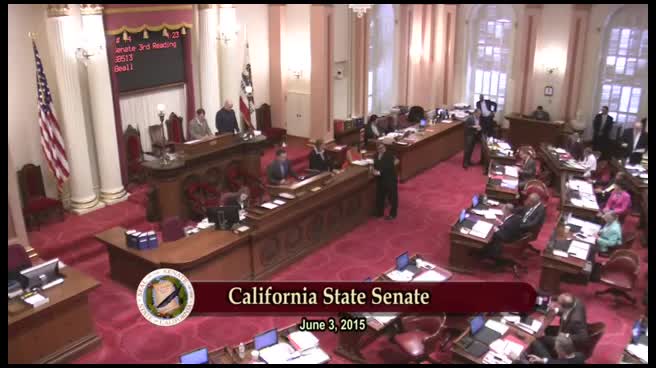
| Jun 3, 2015 | Senate 3rd Reading SB664 Hertzberg | Senate Floor |
Passed |
|
| May 28, 2015 | Do pass as amended | Senate Standing Committee on Appropriations |
Passed |
|
| May 11, 2015 | Placed on suspense file | Senate Standing Committee on Appropriations |
Passed |
|
| Apr 28, 2015 | Do pass as amended, but first amend, and re-refer to the Committee on [Appropriations] | Senate Standing Committee on Natural Resources and Water |
Passed |
This list shows positions taken on this bill by organizations on the date displayed, which is linked to the original source.
Positions by individuals are not included.
|
Organization
|
Position
|
Date
|
|---|---|---|
| Association Of California Water Agencies | ** Against | Sep 1, 2015 |
| California State Council Of Laborers | ** Support | Sep 1, 2015 |
| East Bay Municipal Utility District | ** Support | Sep 1, 2015 |
| Los Angeles County Democratic Party | ** Support | Sep 1, 2015 |
| Sierra Club California | ** Support | Sep 1, 2015 |
| Sierra Club of California | ** Support | Sep 1, 2015 |
| Sonoma County Water Agency | ** Support | Sep 1, 2015 |
SB 664
Page 5
|
Office of Senate Floor Analyses (916) 651-1520 Fax: (916) 327-4478 |
UNFINISHED BUSINESS
Bill No: SB 664
Amended: 6/24/15
SENATE NATURAL RES. & WATER COMMITTEE: 8-0, 4/28/15
AYES: Pavley, Stone, Allen, Hertzberg, Hueso, Jackson, Monning, Wolk
NO VOTE RECORDED: Vidak
SENATE APPROPRIATIONS COMMITTEE: 7-0, 5/28/15
AYES: Lara, Bates, Beall, Hill, Leyva, Mendoza, Nielsen
SENATE FLOOR: 40-0, 6/3/15
AYES: Allen, Anderson, Bates, Beall, Berryhill, Block, Cannella, De León, Fuller, Gaines, Galgiani, Glazer, Hall, Hancock, Hernandez, Hertzberg, Hill, Hueso, Huff, Jackson, Lara, Leno, Leyva, Liu, McGuire, Mendoza, Mitchell, Monning, Moorlach, Morrell, Nguyen, Nielsen, Pan, Pavley, Roth, Runner, Stone, Vidak, Wieckowski, Wolk
ASSEMBLY FLOOR: 71-9, 9/1/15 - See last page for vote
SUBJECT: Water: urban water management planning
DIGEST: This bill requires an urban water supplier to include a seismic risk assessment and mitigation plan for their water system in their urban water management plan.
Assembly Amendments were technical and nonsubstantive.
Existing law:
Requires every urban water agency to produce an Urban Water Management Plan (UWMP) every five years.
Requires the UWMP include, among other things, an urban water shortage contingency analysis that includes, among other things, actions to be undertaken by the urban water supplier to prepare for, and implement during, a catastrophic interruption of water supplies including, but not limited to, a regional power outage, an earthquake, or other disaster.
The Department of Water Resources’ (DWR) draft guidelines for the next update of UWMPs, state that the catastrophic supply interruption analysis should “[i]dentify what actions will be taken by a water supplier if there is a catastrophic reduction in water supplies.”
This bill:
Requires UWMPs, beginning with UWMPs due in 2020, to also include a seismic risk assessment and mitigation plan, which would assesses the vulnerability of each the various facilities of a water system and a capital improvement plan to mitigate those vulnerabilities.
Requires the seismic risk assessment and mitigation plan to be updated at the same time the UWMP is updated.
Allows, but not requires, an agency to comply with this requirement by submitting a copy of an adopted local hazard mitigation plan or multi-hazard mitigation plan as specified in the federal Disaster Mitigation Act of 2000 (P. L. 106-390) provided the local hazard mitigation plan or multi-hazard mitigation plan addresses seismic risk.
Comments
How Vulnerable Are California Water Supplies? It is not clear. There are studies that show that Delta levees are vulnerable to failure in a significant seismic event. And undoubtedly some water agencies have done their own assessment. However, there does not appear to be any systematic assessment of the seismic risk of the state’s water infrastructure.
How Expensive Are Seismic Upgrades? For some systems it can be very expensive. The San Francisco Public Utilities Commission has already spent billions of dollars to seismically upgrade their water system. And, just recently the Los Angeles Department of Water and Power identified $15 billion in potential need for seismic upgrades to water infrastructure.
What About Funding? By including the seismic risk assessment and mitigation plans in UWMPs, those system upgrades can be funded through integrated regional water management plans (IRWMP) and grants. Proposition 1 provides $510 million for IRWMP grants.
What Are Local Hazard Mitigation Plans? The Federal Emergency Management Agency (FEMA) provides a variety of types of non-emergency disaster assistance, including funding for mitigation projects. To qualify, State, tribal and local governments are required to develop a hazard mitigation plan. The Robert T. Stafford Disaster Relief and Emergency Assistance Act (Public Law 93-288), as amended by the Disaster Mitigation Act of 2000 (P. L. 106-390), provides the legal basis for state, local and tribal governments to undertake a risk-based approach to reducing risks from natural hazards through mitigation planning. Federal regulations require, among other things, that local plans include the following:
A risk assessment that provides the factual basis for activities proposed in the strategy to reduce losses from identified hazards. Local risk assessments must provide sufficient information to enable the jurisdiction to identify and prioritize appropriate mitigation actions to reduce losses from identified hazards.
A mitigation strategy that provides the jurisdiction's blueprint for reducing the potential losses identified in the risk assessment, based on existing authorities, policies, programs and resources, and its ability to expand on and improve these existing tools.
FISCAL EFFECT: Appropriation: No Fiscal Com.: Yes Local: No
According to the Assembly Appropriations Committee:
Potential cost pressures in the millions of dollars to various bond funds beginning in 2020 for seismic mitigation projects.
Projects in an UWMP may be included in an Integrated Regional Water Management Plan (IRWMPs). The creation and implementation of IRWMPs are eligible for funding under various water bonds, including Proposition 1. As this bill will indirectly allow for the inclusion of seismic upgrade projects in IWRMPs, this bill imposes additional cost pressures to fund such projects.
Minor and absorbable costs to the Department of Water Resources (DWR) to update their guidelines to reflect the new requirements.
California State Council of Laborers
East Bay Municipal Utility District
Sierra Club California
Sonoma County Water Agency
Association of California Water Agencies (ACWA)
ARGUMENTS IN SUPPORT: According to the author, “Public policymakers cannot ignore forecasts showing a greater than 99-percent chance of a 6.7 earthquake within the next 30 years. Much of California’s infrastructure, including key water-delivery systems, remains seismically unsafe and extremely vulnerable. With California entering the fourth year of the current and serious drought, scientists predict our changing climate will increase the frequency, length, and severity of droughts in California. The State must prioritize water security.”
“Although California has addressed seismic safety many times, including mandatory retrofits for schools and hospitals, voluntary upgrades, mapping hazardous faults, and cataloguing unsafe buildings, much of California’s infrastructure – including key water delivery systems – remains seismically unsafe and extremely vulnerable. SB 664 will help identify and address seismically vulnerable water infrastructure.”
ARGUMENTS IN OPPOSITION: The Association of California Water Agencies (ACWA) argues that UWMPs are not the proper vehicle to address seismic vulnerability. Seismic risk assessment and mitigation plans are costly and timely to produce, and may not need to be prepared every five years in accordance with the UWMP schedule. Rather than requiring a full assessment and mitigation plan, ACWA suggests amending the bill to require an agency to identify steps taken to assess and address seismic vulnerability in an UWMP.
ASSEMBLY FLOOR: 71-9, 9/01/15
AYES: Achadjian, Alejo, Travis Allen, Baker, Bigelow, Bloom, Bonilla, Bonta, Brown, Burke, Calderon, Campos, Chang, Chau, Chiu, Chu, Cooley, Cooper, Dababneh, Dahle, Daly, Dodd, Eggman, Frazier, Cristina Garcia, Eduardo Garcia, Gatto, Gipson, Gomez, Gonzalez, Gordon, Gray, Hadley, Roger Hernández, Holden, Irwin, Jones, Jones-Sawyer, Kim, Lackey, Levine, Linder, Lopez, Low, Maienschein, Mathis, Mayes, McCarty, Medina, Melendez, Mullin, Nazarian, O'Donnell, Perea, Quirk, Rendon, Ridley-Thomas, Rodriguez, Salas, Santiago, Steinorth, Mark Stone, Thurmond, Ting, Wagner, Waldron, Weber, Wilk, Williams, Wood, Atkins
NOES: Brough, Chávez, Beth Gaines, Gallagher, Grove, Harper, Obernolte, Olsen, Patterson
Prepared by: Dennis O'Connor / N.R. & W. / (916) 651-4116
9/1/15 20:15:45
**** END ****
SB 664
Page 2
SENATE THIRD READING
SB 664
(Hertzberg)
As Amended June 24, 2015
Majority vote
SENATE VOTE: 40-0
Committee |
Votes |
Ayes |
Noes |
Water |
13-2 |
Levine, Bigelow, Dababneh, Dahle, Dodd, Cristina Garcia, Gomez, Lopez, Mathis, Medina, Rendon, Salas, Williams |
Beth Gaines, Harper |
Appropriations |
16-1 |
Gomez, Bigelow, Bloom, Bonta, Calderon, Chang, Nazarian, Eggman, Eduardo Garcia, Holden, Jones, Quirk, Rendon, Wagner, Weber, Wood |
Gallagher |
SUMMARY: Requires an urban water supplier to include a seismic risk assessment and mitigation plan in its urban water management plan (UWMP) or allows an urban water supplier to submit its most recent federal disaster mitigation plan as an alternative if that plan addresses seismic risk.
EXISTING LAW:
Requires all urban water suppliers to prepare and adopt UWMPs, update them every five years, and submit them to the Department of Water Resources (DWR). Among other requirements, UWMPs must:
Provide a description of the service area of the supplier;
Identify and quantify water resources; and,
Make water use projections.
Requires UWMPs to be adopted or updated in years ending in "zero" and "five."
Specifies that compliance with the Urban Water Management Planning Act is a prerequisite to receiving state funding for water projects and programs.
Requires State, Tribal, and local governments to develop a hazard mitigation plan as a condition for receiving certain types of non-emergency disaster assistance.
FISCAL EFFECT: According to the Assembly Appropriations Committee analysis:
Potential cost pressures in the millions of dollars to various bond funds beginning in 2020 for seismic mitigation projects.
Projects in an UWMP may be included in an Integrated Regional Water Management Plan (IRWMP). The creation and implementation of IRWMPs are eligible for funding under various water bonds, including Proposition 1 (2014). As this bill will indirectly allow for the inclusion of seismic upgrade projects in IWRMPs, this bill imposes additional cost pressures to fund such projects.
Minor and absorbable costs to DWR to update their guidelines to reflect the new requirements.
COMMENTS: This bill requires UWMPs to assess seismic risks to the water system and either develop a mitigation plan for those risks or, as an alternative, submit their most recent local hazard mitigation plan or multihazard mitigation plan adopted in compliance with the federal Disaster Mitigation Act of 2000 (DMA 2000), if that plan addresses seismic risks. The DMA 2000 provides the legal basis for Federal Emergency Management Act mitigation planning requirements for state, local and Indian Tribal governments as a condition of mitigation grant assistance.
The author states that identifying seismic vulnerabilities and outlining measures to mitigate those risks is needed in order to strengthen California's water infrastructure, making communities across the State better prepared in the event of an earthquake. The author adds that many quakes have already resulted in substantial water system damage and challenge for delivering water for firefighting and drinking. The author cites to the 1994 Northridge Earthquake, which left 57 dead, more than 9,000 injured, and caused more than $40 billion in property damage. The author notes that due to the Northridge quake residents lined up to receive bottled water after local officials warned them not to drink the tap water following the rupture of several mains in the San Fernando Valley.
Other supporters state that earthquakes are a significant concern in California and can damage water infrastructure. Supporters add that by requiring UWMPs to include seismic risk assessment and mitigation plans, this bill will assist water agencies, the public, and the state in understanding the impact an earthquake may have on water supply to inform seismic safety and emergency preparedness decisions. Supporters add by requiring such information this bill will make seismic-related projects eligible to compete for potential IRWMP grant funding.
Opponents state that UWMPs are prepared every five years to support long-term resources planning and ensure adequate water supplies for existing and future demands therefore they are not the proper vehicle to address seismic vulnerability. Opponents add that seismic risk assessments and mitigation plans are costly and timely to produce and may not need to be prepared every five years under the UWMP schedule. Opponents caution that this bill could introduce new liability issues if, after an earthquake, capital improvement programs don't deliver what was articulated in mitigation plans.
Analysis Prepared by: Tina Leahy / W., P., & W. / (916) 319-2096 FN: 0001667
Date of Hearing: July 15, 2015
ASSEMBLY COMMITTEE ON APPROPRIATIONS
Jimmy Gomez, Chair
SB 664
(Hertzberg) – As Amended June 24, 2015
Policy Committee: |
Water, Parks and Wildlife |
Vote: |
13 - 2 |
|
|
|
|
|
|
|
|
Urgency: No State Mandated Local Program: No Reimbursable: No
SUMMARY:
This bill requires an urban water supplier to include a seismic risk assessment and mitigation plan in their Urban Water Management Plan (UWMP) beginning in 2020. This bill allows an urban water supplier to submit its most recent adopted local hazard mitigation plan or multi-hazard mitigation plan (under the federal Disaster Mitigation Act) as an alternative if the plan addresses seismic risk.
FISCAL EFFECT:
Potential cost pressures in the millions of dollars to various bond funds beginning in 2020 for seismic mitigation projects.
Projects in an UWMP may be included in an Integrated Regional Water Management Plan (IRWMPs). The creation and implementation of IRWMPs are eligible for funding under various water bonds, including Proposition 1. As this bill will indirectly allow for the inclusion of seismic upgrade projects in IWRMPs, this bill imposes additional cost pressures to fund such projects.
Minor and absorbable costs to the Department of Water Resources (DWR) to update their guidelines to reflect the new requirements.
COMMENTS:
Purpose. According to the author, many quakes have resulted in substantial water system damage and drinking and firefighting water delivery challenges. For example, after the 1994 Northridge Earthquake, which left 57 dead, more than 9,000 injured, and caused more than $40 billion in property damage, residents lined up to receive bottled water after local officials warned them not to drink the tap water following the rupture of several water mains in the San Fernando Valley
This bill will ensure urban water suppliers identify seismic vulnerabilities and potential actions to mitigate risks.
Background. Under the Urban Water Management Act, every urban water supplier is required to produce an Urban Water Management Plan (UWMP) every five years. Plans are required to include, among other things, an urban water shortage contingency analysis that includes actions to be undertaken by the urban water supplier to prepare for, and implement during, a catastrophic interruption of water supplies including, but not limited to, a regional power outage, an earthquake, or other disaster.
According to the DWR's draft guidelines for the next UWMP update, the catastrophic supply interruption analysis should identify what actions will be taken if there is a catastrophic reduction in water supplies.
Federal Law. The Federal Emergency Management Agency (FEMA) provides a variety of types of non-emergency disaster assistance, including funding for mitigation projects. To qualify, state, tribal and local governments are required to develop a hazard mitigation plan.
The Robert T. Stafford Disaster Relief and Emergency Assistance Act (Public Law 93-288), as amended by the Disaster Mitigation Act of 2000 (P. L. 106-390), provides the legal basis for state, local and tribal governments to undertake a risk-based approach to reducing risks from natural hazards through mitigation planning. Federal regulations require, among other things, require a risk assessment and a mitigation strategy.
Analysis Prepared by: Jennifer Galehouse / APPR. / (916) 319-2081
SB 664
Page 4
|
Office of Senate Floor Analyses (916) 651-1520 Fax: (916) 327-4478 |
THIRD READING
Bill No: SB 664
Amended: 6/2/15
SENATE NATURAL RES. & WATER COMMITTEE: 8-0, 4/28/15
AYES: Pavley, Stone, Allen, Hertzberg, Hueso, Jackson, Monning, Wolk
NO VOTE RECORDED: Vidak
SENATE APPROPRIATIONS COMMITTEE: 7-0, 5/28/15
AYES: Lara, Bates, Beall, Hill, Leyva, Mendoza, Nielsen
SUBJECT: Water: urban water management planning
DIGEST: This bill requires an urban water supplier to include a seismic risk assessment and mitigation plan for their water system in their urban water management plan.
Existing law:
Requires every urban water agency to produce an Urban Water Management Plan (UWMP) every five years.
Requires the UWMP include, among other things, an urban water shortage contingency analysis that includes, among other things, actions to be undertaken by the urban water supplier to prepare for, and implement during, a catastrophic interruption of water supplies including, but not limited to, a regional power outage, an earthquake, or other disaster.
The Department of Water Resources’ (DWR) draft guidelines for the next update of UWMPs, state that the catastrophic supply interruption analysis should “[i]dentify what actions will be taken by a water supplier if there is a catastrophic reduction in water supplies.”
This bill:
Requires UWMPs, beginning with UWMPs due in 2020, to also include a seismic risk assessment and mitigation plan, which would assesses the vulnerability of each the various facilities of a water system and a capital improvement plan to mitigate those vulnerabilities.
Allows, but not requires, an agency to comply with this requirement by submitting a copy of an adopted local hazard mitigation plan or multi-hazard mitigation plan as specified in the federal Disaster Mitigation Act of 2000 (P. L. 106-390) provided the local hazard mitigation plan or multi-hazard mitigation plan addresses seismic risk.
Requires the seismic risk assessment and mitigation plan to be updated at the same time the UWMP is updated.
Comments
How Vulnerable Are California Water Supplies? It is not clear. There are studies that show that Delta levees are vulnerable to failure in a significant seismic event. And undoubtedly some water agencies have done their own assessment. However, there does not appear to be any systematic assessment of the seismic risk of the state’s water infrastructure.
How Expensive Are Seismic Upgrades? For some systems it can be very expensive. The San Francisco Public Utilities Commission has already spent billions of dollars to seismically upgrade their water system. And, just recently the Los Angeles Department of Water and Power identified $15 billion in potential need for seismic upgrades to water infrastructure.
What About Funding? By including the seismic risk assessment and mitigation plans in UWMPs, those system upgrades can be funded through integrated regional water management plans (IRWMP) and grants. Proposition 1 provides $510 million for IRWMP grants.
What Are Local Hazard Mitigation Plans? The Federal Emergency Management Agency (FEMA) provides a variety of types of non-emergency disaster assistance, including funding for mitigation projects. To qualify, State, tribal and local governments are required to develop a hazard mitigation plan. The Robert T. Stafford Disaster Relief and Emergency Assistance Act (Public Law 93-288), as amended by the Disaster Mitigation Act of 2000 (P. L. 106-390), provides the legal basis for state, local and tribal governments to undertake a risk-based approach to reducing risks from natural hazards through mitigation planning. Federal regulations require, among other things, that local plans include the following:
A risk assessment that provides the factual basis for activities proposed in the strategy to reduce losses from identified hazards. Local risk assessments must provide sufficient information to enable the jurisdiction to identify and prioritize appropriate mitigation actions to reduce losses from identified hazards.
A mitigation strategy that provides the jurisdiction's blueprint for reducing the potential losses identified in the risk assessment, based on existing authorities, policies, programs and resources, and its ability to expand on and improve these existing tools.
FISCAL EFFECT: Appropriation: No Fiscal Com.: Yes Local: No
According to the Senate Appropriations Committee:
Minor and absorbable costs to the Department of Water Resources (DWR) to update their guidelines to reflect the new requirements under this bill.
Cost pressures in the millions of dollars to various bond funds (General Fund) beginning in 2020 for seismic mitigation projects.
California State Council of Laborers
East Bay Municipal Utility District
OPPOSITION: (Verified 5/29/15)
None received
ARGUMENTS IN SUPPORT: According to the author, “Public policymakers cannot ignore forecasts showing a greater than 99-percent chance of a 6.7 earthquake within the next 30 years. Much of California’s infrastructure, including key water-delivery systems, remains seismically unsafe and extremely vulnerable. With California entering the fourth year of the current and serious drought, scientists predict our changing climate will increase the frequency, length, and severity of droughts in California. The State must prioritize water security.”
“Although California has addressed seismic safety many times, including mandatory retrofits for schools and hospitals, voluntary upgrades, mapping hazardous faults, and cataloguing unsafe buildings, much of California’s infrastructure – including key water delivery systems – remains seismically unsafe and extremely vulnerable. SB 664 will help identify and address seismically vulnerable water infrastructure.”
Prepared by: Dennis O’Connor/ NRW/ (916) 651-4116
6/2/15 13:24:35
**** END ****
SB 664 (Hertzberg) Page 2 of 2
SENATE COMMITTEE ON APPROPRIATIONS
Senator Ricardo Lara, Chair
2015 - 2016 Regular Session
SB 664 (Hertzberg) - Water: urban water management planning.
|
|
Version: April 30, 2015 |
Policy Vote: N.R. & W. 8 - 0 |
Urgency: No |
Mandate: No (see staff comment) |
Hearing Date: May 28, 2015 |
Consultant: Marie Liu |
SUSPENSE FILE. AS AMENDED.
Bill Summary:
SB 664 would require an urban water supplier to include a seismic risk assessment and mitigation plan for their water system in their urban water management plan.
Fiscal Impact (as approved on May 28, 2015):
Minor and absorbable costs to the Department of Water Resources (DWR) to update their guidelines to reflect the new requirements under this bill.
Cost pressures in the millions of dollars to various bond funds (General Fund) beginning in 2020 for seismic mitigation projects.
Background:
Urban water suppliers are required under the Urban Water Management Act to produce an Urban Water Management Plan (UWMP) every five years (in years ending in five and zero). Projects in an UWMP can be included in an Integrated Regional Water Management Plan (IRWMPs).
The creation and Implementation of IRWMPs are eligible for funding under various water bonds, including most recently, Proposition 1.
Proposed Law:
This bill would require UWMPs to include a seismic risk assessment and mitigation plan to assess the vulnerability of its facilities and to mitigate those vulnerabilities. This bill would give the urban water suppliers until July 1, 2017 to submit the assessment for the 2015 plan.
Staff Comments:
As this bill will indirectly allow for the inclusion of seismic upgrade projects in IWRMPs, this bill imposes additional cost pressures on existing limited bond funds to fund such projects.
Staff notes that UWMP are required documents of urban water suppliers. Thus, this bill creates a state mandate by requiring additional information to be included in the UWMP. Water suppliers are likely to incur significant costs to comply with the bill’s requirements, especially given the relatively short frame to complete the first risk assessment. However, because water suppliers have fee authority to recover its costs from its customers, this mandate is not reimbursable.
Committee amendments (as adopted on May 28, 2015): Amend to require seismic risk assessments beginning in the 2020 plans.
-- END --
SB 664 (Hertzberg) Page 2 of 2
SENATE COMMITTEE ON APPROPRIATIONS
Senator Ricardo Lara, Chair
2015 - 2016 Regular Session
SB 664 (Hertzberg) - Water: urban water management planning.
|
|
Version: April 30, 2015 |
Policy Vote: N.R. & W. 8 - 0 |
Urgency: No |
Mandate: No (see staff comment) |
Hearing Date: May 11, 2015 |
Consultant: Marie Liu |
This bill meets the criteria for referral to the Suspense File.
Bill Summary:
SB 664 would require an urban water supplier to include a seismic risk assessment and mitigation plan for their water system in their urban water management plan.
Fiscal Impact:
Minor and absorbable costs to the Department of Water Resources (DWR) to update their guidelines to reflect the new requirements under this bill.
Cost pressures in the millions of dollars to various bond funds (General Fund) for seismic mitigation projects.
Background:
Urban water suppliers are required under the Urban Water Management Act to produce an Urban Water Management Plan (UWMP) every five years (in years ending in five and zero). Projects in an UWMP can be included in an Integrated Regional Water Management Plan (IRWMPs).
The creation and Implementation of IRWMPs are eligible for funding under various water bonds, including most recently, Proposition 1.
Proposed Law:
This bill would require UWMPs to include a seismic risk assessment and mitigation plan to assess the vulnerability of its facilities and to mitigate those vulnerabilities. This bill would give the urban water suppliers until July 1, 2017 to submit the assessment for the 2015 plan.
Staff Comments:
As this bill will indirectly allow for the inclusion of seismic upgrade projects in IWRMPs, this bill imposes additional cost pressures on existing limited bond funds to fund such projects.
Staff notes that UWMP are required documents of urban water suppliers. Thus, this bill creates a state mandate by requiring additional information to be included in the UWMP. Water suppliers are likely to incur significant costs to comply with the bill’s requirements, especially given the relatively short frame to complete the first risk assessment. However, because water suppliers have fee authority to recover its costs from its customers, this mandate is not reimbursable.
-- END --
SB 664 (Hertzberg) Page 3 of 3
SENATE COMMITTEE ON NATURAL RESOURCES AND WATER
Senator Fran Pavley, Chair
2015 - 2016 Regular
Bill No: SB 664 Hearing Date: April 28, 2015
Author: |
Hertzberg |
|
|
Version: |
April 6, 2015 >As proposed to be amended |
||
Urgency: |
No |
Fiscal: |
Yes |
Consultant: |
Dennis O'Connor |
||
Subject: Water: integrated regional water management planning
BACKGROUND AND EXISTING LAW
Under the Urban Water Management Act, every urban water agency is required to produce an Urban Water Management Plan (UWMP) every five years. Plans are required to include, among other things, an urban water shortage contingency analysis that includes, among other things, actions to be undertaken by the urban water supplier to prepare for, and implement during, a catastrophic interruption of water supplies including, but not limited to, a regional power outage, an earthquake, or other disaster.
According to the Department of Water Resources’ (DWR) draft guidelines for the next update of UWMPs, the catastrophic supply interruption analysis should “[i]dentify what actions will be taken by a water supplier if there is a catastrophic reduction in water supplies.”
The Federal Emergency Management Agency (FEMA) provides a variety of types of non-emergency disaster assistance, including funding for mitigation projects. To qualify, State, tribal and local governments are required to develop a hazard mitigation plan. The Robert T. Stafford Disaster Relief and Emergency Assistance Act (Public Law 93-288), as amended by the Disaster Mitigation Act of 2000 (P. L. 106-390), provides the legal basis for state, local and tribal governments to undertake a risk-based approach to reducing risks from natural hazards through mitigation planning. Federal regulations require, among other things, that local plans include the following:
A risk assessment that provides the factual basis for activities proposed in the strategy to reduce losses from identified hazards. Local risk assessments must provide sufficient information to enable the jurisdiction to identify and prioritize appropriate mitigation actions to reduce losses from identified hazards.
A mitigation strategy that provides the jurisdiction's blueprint for reducing the potential losses identified in the risk assessment, based on existing authorities, policies, programs and resources, and its ability to expand on and improve these existing tools.
PROPOSED LAW
This bill, as proposed to be amended (see proposed amendments below), would require UWMPs to also include a seismic risk assessment and mitigation plan, which would assesses the vulnerability of each the various facilities of a water system and a capital improvement plan to mitigate those vulnerabilities.
The bill would allow, but not require, an agency to comply with this requirement by submitting a copy of an adopted local hazard mitigation plan or multi-hazard mitigation plan as specified in the federal Disaster Mitigation Act of 2000 (P. L. 106-390) provided the local hazard mitigation plan or multi-hazard mitigation plan addresses seismic risk.
For the urban water management plan update due on July 1, 2016, the seismic risk assessment and mitigation plan would be due to DWR by July 1, 2017. The seismic risk assessment and mitigation plan would be a part of the UWMP for all subsequent updates of UWMPs.
ARGUMENTS IN SUPPORT
According to the author, “Public policymakers cannot ignore forecasts showing a greater than 99-percent chance of a 6.7 earthquake within the next 30 years. Much of California’s infrastructure, including key water-delivery systems, remains seismically unsafe and extremely vulnerable. With California entering the fourth year of the current and serious drought, scientists predict our changing climate will increase the frequency, length, and severity of droughts in California. The State must prioritize water security.”
“Although California has addressed seismic safety many times, including mandatory retrofits for schools and hospitals, voluntary upgrades, mapping hazardous faults, and cataloguing unsafe buildings, much of California’s infrastructure – including key water delivery systems – remains seismically unsafe and extremely vulnerable. SB 664 will help identify and address seismically vulnerable water infrastructure.”
ARGUMENTS IN OPPOSITION: None received
COMMENTS
How Vulnerable Are California Water Supplies? It is not clear. There are studies that show that Delta levees are vulnerable failure in a significant seismic event. And undoubtedly some water agencies have done their own assessment. However, there does not appear to be any systematic assessment of the seismic risk of the state’s water infrastructure.
How Expensive Are Seismic Upgrades? For some systems it can be very expensive. The San Francisco Public Utilities Commission has already spent billions of dollars to seismically upgrade their water system. And, just recently the Los Angeles Department of Water and Power identified $15 billion in potential need for seismic upgrades to water infrastructure.
What about Funding? By including the seismic risk assessment and mitigation plans in UWMPs, those system upgrades can be funded through integrated regional water management plans (IRWMP) and grants. Proposition 1 provides $510 M for IRWMP grants.
PROPOSED AMENDMENTS
Delete existing language and replace with:
SECTION 1. Section 10632.5 is added to the Water Code to read:
10632.5. (a) In addition to the requirements of paragraph (3), subdivision (a), of Section 10632, the plan shall include a seismic risk assessment and mitigation plan, which assesses the vulnerability of each the various facilities of a water system and a capital improvement plan to mitigate those vulnerabilities.
(b) An agency may comply with this section by submitting a copy of an adopted local hazard mitigation plan or multi-hazard mitigation plan as specified in the federal Disaster Mitigation Act of 2000 (P. L. 106-390) provided the local hazard mitigation plan or multi-hazard mitigation plan addresses seismic risk.
(c) (1) For the urban water management plan update due on July 1, 2016, the seismic risk assessment and mitigation plan described in subdivision (a) is due to the department by July 1, 2017.
(2) For urban water management plan updates due after July 1, 2016, the seismic risk assessment and mitigation plan described in subdivision (a) is due as required by Section 10621.
SUPPORT
East Bay Municipal Utility District
OPPOSITION
None Received
-- END --
Discussed in Hearing
View Older Hearings
Bill Author