SB 676: Disorderly conduct: invasion of privacy.
- Session Year: 2015-2016
- House: Senate
- Latest Version Date: 2015-09-09
Existing law provides that a person who photographs or records by any means the image of the intimate body part or parts of another identifiable person, under circumstances where the parties agree or understand that the image shall remain private, and the person subsequently distributes the image taken, with the intent to cause serious emotional distress, and the depicted person suffers serious emotional distress, is guilty of disorderly conduct, a misdemeanor.
Under existing law, matter that depicts a person under 18 years of age personally engaging in or personally simulating sexual conduct, as defined, and that is in the possession of any city, county, city and county, or state official or agency is subject to forfeiture pursuant to a petition for forfeiture brought in the county in which the matter is located. Existing law provides for forfeiture by a defendant of illegal telecommunications equipment, or a computer, computer system, or computer network, and any software or data that was used in committing specified crimes, including depiction of a person under 18 years of age personally engaging in or personally simulating sexual conduct.
This bill would make the forfeiture provisions described above applicable to illegal telecommunications equipment, or a computer, computer system, or computer network, and any software or data, when used in committing a violation of disorderly conduct related to invasion of privacy, as specified. The bill would also establish forfeiture proceedings for matter obtained through disorderly conduct by invasion of privacy, as specified.
Existing law provides that a person who photographs or records by any means the image of the intimate body part or parts of another identifiable person, under circumstances where the parties agree or understand that the image shall remain private, and the person subsequently distributes the image taken, with the intent to cause serious emotional distress, and the depicted person suffers serious emotional distress, is guilty of disorderly conduct, a misdemeanor.
Under existing law, matter that depicts a person under 18 years of age personally engaging in or personally simulating sexual conduct, as defined, and that is in the possession of any city, county, city and county, or state official or agency is subject to forfeiture pursuant to a petition for forfeiture brought in the county in which the matter is located. Existing law provides for forfeiture by a defendant of illegal telecommunications equipment, or a computer, computer system, or computer network, and any software or data that was used in committing specified crimes, including depiction of a person under 18 years of age personally engaging in or personally simulating sexual conduct.
This bill would apply those forfeiture provisions to violations of disorderly conduct related to invasion of privacy, as specified. make the forfeiture provisions described above applicable to illegal telecommunications equipment, or a computer, computer system, or computer network, and any software or data, when used in committing a violation of disorderly conduct related to invasion of privacy, as specified. The bill would also establish forfeiture proceedings for matter obtained through disorderly conduct by invasion of privacy, as specified.
Existing law provides that a person who photographs or records by any means the image of the intimate body part or parts of another identifiable person, under circumstances where the parties agree or understand that the image shall remain private, and the person subsequently distributes the image taken, with the intent to cause serious emotional distress, and the depicted person suffers serious emotional distress, is guilty of disorderly conduct, a misdemeanor.
This bill would recast those provisions to provide that a person who intentionally distributes the image of the intimate body part or parts of another identifiable person, or an image of the person depicted engaged in an act of sexual intercourse, sodomy, oral copulation, sexual penetration, or an image of masturbation by the person depicted or in which the person depicted participates, under circumstances in which the person distributing the image knows or should know that the depicted person had a reasonable expectation that the image would remain private, the person distributing the image knows or should know that distribution of the image will cause serious emotional distress, and the person depicted suffers that distress, is guilty of disorderly conduct. The bill would provide additional exceptions to the prohibition against that distribution.
By expanding the definition of an existing crime, this bill would impose a state-mandated local program.
Under existing law, matter that depicts a person under 18 years of age personally engaging in or personally simulating sexual conduct, as defined, and that is in the possession of any city, county, city and county, or state official or agency is subject to forfeiture pursuant to a petition for forfeiture brought in the county in which the matter is located. Existing law provides for forfeiture by a defendant of illegal telecommunications equipment, or a computer, computer system, or computer network, and any software or data that was used in committing specified crimes, including depiction of a person under 18 years of age personally engaging in or personally simulating sexual conduct.
This bill would apply those forfeiture provisions to the new provisions of disorderly conduct described above, and to the existing provisions violations of disorderly conduct related to invasion of privacy, as provided. privacy, as specified.
The California Constitution requires the state to reimburse local agencies and school districts for certain costs mandated by the state. Statutory provisions establish procedures for making that reimbursement.
This bill would provide that no reimbursement is required by this act for a specified reason.
Existing law provides that a person who photographs or records by any means the image of the intimate body part or parts of another identifiable person, under circumstances where the parties agree or understand that the image shall remain private, and the person subsequently distributes the image taken, with the intent to cause serious emotional distress, and the depicted person suffers serious emotional distress, is guilty of disorderly conduct, a misdemeanor. Existing law also includes other offenses involving invasion of privacy, including, for example, a person who looks through a hole or opening, into, or otherwise views, by means of any instrumentality, the interior of a bedroom, bathroom, changing room, fitting room, dressing room, or tanning booth, or the interior of any other area in which the occupant has a reasonable expectation of privacy, with the intent to invade the privacy of a person or persons inside.
This bill would provide that a person who intentionally distributes another persons personal identifying information associated with an image of an intimate body part of that other person, as defined, without the consent of the other person, recast those provisions to provide that a person who intentionally distributes the image of the intimate body part or parts of another identifiable person, or an image of the person depicted engaged in an act of sexual intercourse, sodomy, oral copulation, sexual penetration, or an image of masturbation by the person depicted or in which the person depicted participates, under circumstances in which the person distributing the image knows or should know that the depicted person had a reasonable expectation that the image would remain private, the person distributing the image knows or should know that distribution of the image will cause serious emotional distress, and the person depicted suffers that distress, is guilty of disorderly conduct. The bill would provide additional exceptions to the prohibition against that distribution.
By expanding the definition of an existing crime, this bill would impose a state-mandated local program.
Under existing law, matter that depicts a person under 18 years of age personally engaging in or personally simulating sexual conduct, as defined, and that is in the possession of any city, county, city and county, or state official or agency is subject to forfeiture pursuant to a petition for forfeiture brought in the county in which the matter is located. Existing law provides for forfeiture by a defendant of illegal telecommunications equipment, or a computer, computer system, or computer network, and any software or data that was used in committing specified crimes, including depiction of a person under 18 years of age personally engaging in or personally simulating sexual conduct.
This bill would apply those provisions to the new provisions of disorderly conduct described above, and to the existing provisions of disorderly conduct related to invasion of privacy, as provided.
The California Constitution requires the state to reimburse local agencies and school districts for certain costs mandated by the state. Statutory provisions establish procedures for making that reimbursement.
This bill would provide that no reimbursement is required by this act for a specified reason.
Existing law provides that a person who photographs or records by any means the image of the intimate body part or parts of another identifiable person, under circumstances where the parties agree or understand that the image shall remain private, and the person subsequently distributes the image taken, with the intent to cause serious emotional distress, and the depicted person suffers serious emotional distress, is guilty of disorderly conduct, a misdemeanor. Existing law also includes other offenses involving invasion of privacy, including, for example, a person who looks through a hole or opening, into, or otherwise views, by means of any instrumentality, the interior of a bedroom, bathroom, changing room, fitting room, dressing room, or tanning booth, or the interior of any other area in which the occupant has a reasonable expectation of privacy, with the intent to invade the privacy of a person or persons inside.
This bill would provide that a person who intentionally distributes another persons personal identifying information associated with an image of an intimate body part of that other person, as defined, without the consent of the other person, is guilty of disorderly conduct.
By expanding the definition of an existing crime, this bill would impose a state-mandated local program.
Under existing law, matter that depicts a person under 18 years of age personally engaging in or personally simulating sexual conduct, as defined, and that is in the possession of any city, county, city and county, or state official or agency is subject to forfeiture pursuant to a petition for forfeiture brought in the county in which the matter is located. Existing law provides for forfeiture by a defendant of illegal telecommunications equipment, or a computer, computer system, or computer network, and any software or data that was used in committing specified crimes, including depiction of a person under 18 years of age personally engaging in or personally simulating sexual conduct.
This bill would apply those provisions to the new provisions of disorderly conduct described above, and to the existing provisions of disorderly conduct related to invasion of privacy, as provided.
The California Constitution requires the state to reimburse local agencies and school districts for certain costs mandated by the state. Statutory provisions establish procedures for making that reimbursement.
This bill would provide that no reimbursement is required by this act for a specified reason.
(a)As used in this section:
(1)Property subject to forfeiture means any property of the defendant that is illegal telecommunications equipment as defined in subdivision (g) of Section 502.8, or a computer, computer system, or computer network, and any software or data residing thereon, if the telecommunications device, computer, computer system, or computer network was used in committing a violation of, or conspiracy to commit a violation of, subdivision (b) of Section 272, Section 288, 288.2, 311.1, 311.2, 311.3, 311.4, 311.5, 311.10, 311.11, 422, 470, 470a, 472, 475, 476, 480, 483.5, 484g, or subdivision (a), (b), or (d) of Section 484e, subdivision (a) of Section 484f, subdivision (b) or (c) of Section 484i, subdivision (c) of Section 502, or Section 502.7, 502.8, 529, 529a, or 530.5, 537e, 593d, 593e, 646.9, or subdivision (j) of Section 647, or was used as a repository for the storage of software or data obtained in violation of those provisions. Forfeiture shall not be available for any property used solely in the commission of an infraction. If the defendant is a minor, it also includes property of the parent or guardian of the defendant.
(2)Sentencing court means the court sentencing a person found guilty of violating or conspiring to commit a violation of subdivision (b) of Section 272, Section 288, 288.2, 311.1, 311.2, 311.3, 311.4, 311.5, 311.10, 311.11, 422, 470, 470a, 472, 475, 476, 480, 483.5, 484g, or subdivision (a), (b), or (d) of Section 484e, subdivision (d) of Section 484e, subdivision (a) of Section 484f, subdivision (b) or (c) of Section 484i, subdivision (c) of Section 502, or Section 502.7, 502.8, 529, 529a, 530.5, 537e, 593d, 593e, 646.9, or subdivision (j) of Section 647, or, in the case of a minor, found to be a person described in Section 602 of the Welfare and Institutions Code because of a violation of those provisions, the juvenile court.
(3)Interest means any property interest in the property subject to forfeiture.
(4)Security interest means an interest that is a lien, mortgage, security interest, or interest under a conditional sales contract.
(5)Value has the following meanings:
(A)When counterfeit items of computer software are manufactured or possessed for sale, the value of those items shall be equivalent to the retail price or fair market price of the true items that are counterfeited.
(B)When counterfeited but unassembled components of computer software packages are recovered, including, but not limited to, counterfeited computer diskettes, instruction manuals, or licensing envelopes, the value of those components of computer software packages shall be equivalent to the retail price or fair market price of the number of completed computer software packages that could have been made from those components.
(b)The sentencing court shall, upon petition by the prosecuting attorney, at any time following sentencing, or by agreement of all parties, at the time of sentencing, conduct a hearing to determine whether any property or property interest is subject to forfeiture under this section. At the forfeiture hearing, the prosecuting attorney shall have the burden of establishing, by a preponderance of the evidence, that the property or property interests are subject to forfeiture. The prosecuting attorney may retain seized property that may be subject to forfeiture until the sentencing hearing.
(c)(1)Prior to the commencement of a forfeiture proceeding, the law enforcement agency seizing the property subject to forfeiture shall make an investigation as to any person other than the defendant who may have an interest in it. At least 30 days before the hearing to determine whether the property should be forfeited, the prosecuting agency shall send notice of the hearing to any person who may have an interest in the property that arose before the seizure.
(2)A person claiming an interest in the property shall file a motion for the redemption of that interest at least 10 days before the hearing on forfeiture, and shall send a copy of the motion to the prosecuting agency and to the probation department.
(3)If a motion to redeem an interest has been filed, the sentencing court shall hold a hearing to identify all persons who possess valid interests in the property. No person shall hold a valid interest in the property if, by a preponderance of the evidence, the prosecuting agency shows that the person knew or should have known that the property was being used in violation of, or conspiracy to commit a violation of, subdivision (b) of Section 272, Section 288, 288.2, 311.1, 311.2, 311.3, 311.4, 311.5, 311.10, 311.11, 470, 470a, 472, 475, 476, 480, 483.5, 484g, or subdivision (a), (b), or (d) of Section 484e, subdivision (a) of Section 484f, subdivision (b) or (c) of Section 484i, subdivision (c) of Section 502, or Section 502.7, 502.8, 529, 529a, 530.5, 537e, 593d, 593e, 646.9, or subdivision (j) of Section 647, and that the person did not take reasonable steps to prevent that use, or if the interest is a security interest, the person knew or should have known at the time that the security interest was created that the property would be used for a violation.
(d)If the sentencing court finds that a person holds a valid interest in the property, the following provisions shall apply:
(1)The court shall determine the value of the property.
(2)The court shall determine the value of each valid interest in the property.
(3)If the value of the property is greater than the value of the interest, the holder of the interest shall be entitled to ownership of the property upon paying the court the difference between the value of the property and the value of the valid interest.
If the holder of the interest declines to pay the amount determined under paragraph (2), the court may order the property sold and designate the prosecutor or any other agency to sell the property. The designated agency shall be entitled to seize the property and the holder of the interest shall forward any documentation underlying the interest, including any ownership certificates for that property, to the designated agency. The designated agency shall sell the property and pay the owner of the interest the proceeds, up to the value of that interest.
(4)If the value of the property is less than the value of the interest, the designated agency shall sell the property and pay the owner of the interest the proceeds, up to the value of that interest.
(e)If the defendant was a minor at the time of the offense, this subdivision shall apply to property subject to forfeiture that is the property of the parent or guardian of the minor.
(1)The prosecuting agency shall notify the parent or guardian of the forfeiture hearing at least 30 days before the date set for the hearing.
(2)The computer or telecommunications device shall not be subject to forfeiture if the parent or guardian files a signed statement with the court at least 10 days before the date set for the hearing that the minor shall not have access to any computer or telecommunications device owned by the parent or guardian for two years after the date on which the minor is sentenced.
(3)If the minor is convicted of a violation of Section 288, 288.2, 311.1, 311.2, 311.3, 311.4, 311.5, 311.10, 311.11, 470, 470a, 472, 476, 480, or subdivision (b) of Section 484e, subdivision (d) of Section 484e, subdivision (a) of Section 484f, subdivision (b) of Section 484i, subdivision (c) of Section 502, or Section 502.7, 502.8, 529, 529a, 530.5, or subdivision (j) of Section 647, within two years after the date on which the minor is sentenced, and the violation involves a computer or telecommunications device owned by the parent or guardian, the original property subject to forfeiture, and the property involved in the new offense, shall be subject to forfeiture notwithstanding paragraph (2).
(4)Notwithstanding paragraph (1), (2), or (3), or any other provision of this chapter, if a minors parent or guardian makes full restitution to the victim of a crime enumerated in this chapter in an amount or manner determined by the court, the forfeiture provisions of this chapter do not apply to the property of that parent or guardian if the property was located in the familys primary residence during the commission of the crime.
(f)Notwithstanding any other provision of this chapter, the court may exercise its discretion to deny forfeiture where the court finds that the convicted defendant, or minor adjudicated to come within the jurisdiction of the juvenile court, is not likely to use the property otherwise subject to forfeiture for future illegal acts.
(g)If the defendant is found to have the only valid interest in the property subject to forfeiture, it shall be distributed as follows:
(1)First, to the victim, if the victim elects to take the property as full or partial restitution for injury, victim expenditures, or compensatory damages, as defined in paragraph (1) of subdivision (e) of Section 502. If the victim elects to receive the property under this paragraph, the value of the property shall be determined by the court and that amount shall be credited against the restitution owed by the defendant. The victim shall not be penalized for electing not to accept the forfeited property in lieu of full or partial restitution.
(2)Second, at the discretion of the court, to one or more of the following agencies or entities:
(A)The prosecuting agency.
(B)The public entity of which the prosecuting agency is a part.
(C)The public entity whose officers or employees conducted the investigation resulting in forfeiture.
(D)Other state and local public entities, including school districts.
(E)Nonprofit charitable organizations.
(h)If the property is to be sold, the court may designate the prosecuting agency or any other agency to sell the property at auction. The proceeds of the sale shall be distributed by the court as follows:
(1)To the bona fide or innocent purchaser or encumbrancer, conditional sales vendor, or mortgagee of the property up to the amount of his or her interest in the property, if the court orders a distribution to that person.
(2)The balance, if any, to be retained by the court, subject to the provisions for distribution under subdivision (g).
SEC. 2.Section 647.8 is added to the Penal Code, to read:647.8.(a)Matter that is obtained or distributed in violation of subdivision (j) of Section 647 and that is in the possession of any city, county, city and county, or state official or agency is subject to forfeiture pursuant to this section.
(b)An action to forfeit matter described in subdivision (a) may be brought by the Attorney General, the district attorney, county counsel, or the city attorney. Proceedings shall be initiated by a petition of forfeiture filed in the superior court of the county in which the matter is located.
(c)The prosecuting agency shall make service of process of a notice regarding that petition upon every individual who may have a property interest in the alleged proceeds. The notice shall state that any interested party may file a verified claim with the superior court stating the amount of his or her claimed interest and an affirmation or denial of the prosecuting agencys allegation. If the notice cannot be given by registered mail or personal delivery, the notice shall be published for at least three successive weeks in a newspaper of general circulation in the county where the property is located. All notices shall set forth the time within which a claim of interest in the property seized is required to be filed.
(d)(1)Any person claiming an interest in the property or proceeds may, at any time within 30 days from the date of the first publication of the notice of seizure, or within 30 days after receipt of actual notice, file with the superior court of the county in which the action is pending a verified claim stating his or her interest in the property or proceeds. A verified copy of the claim shall be given by the claimant to the Attorney General or district attorney, county counsel, or city attorney, as appropriate.
(2)If, at the end of the time set forth in paragraph (1), an interested person has not filed a claim, the court, upon motion, shall declare that the person has defaulted upon his or her alleged interest, and it shall be subject to forfeiture upon proof of compliance with subdivision (c).
(e)The burden is on the petitioner to prove beyond a reasonable doubt that matter is subject to forfeiture pursuant to this section.
(f)It is not necessary to seek or obtain a criminal conviction prior to the entry of an order for the destruction of matter pursuant to this section. Any matter described in subdivision (a) that is in the possession of any city, county, city and county, or state official or agency, including found property, or property obtained as the result of a case in which no trial was had or that has been disposed of by way of dismissal or otherwise than by way of conviction may be ordered destroyed.
(g)A court order for destruction of matter described in subdivision (a) may be carried out by a police or sheriffs department or by the Department of Justice. The court order shall specify the agency responsible for the destruction.
(h)As used in this section, matter means any picture, photograph, image, motion picture, video tape, film, filmstrip, negative, slide, photocopy, or other pictorial representation, recording, or electrical reproduction. Matter also means any data storage media that contains the image at issue, but does not include the computer, camera, telecommunication or electronic device, unless the matter consists solely of electronic information stored on a device that cannot be altered or erased.
(i)Prior for granting an order for destruction of matter pursuant to this section, the court may require the petitioner to demonstrate that the petition covers no more property than necessary to remove possession of the offending matter.
(j)It is a defense in any forfeiture proceeding that the matter seized was lawfully possessed in aid of legitimate scientific or educational purposes.
(a)As used in this section:
(1)Property subject to forfeiture means any property of the defendant that is illegal telecommunications equipment as defined in subdivision (g) of Section 502.8, or a computer, computer system, or computer network, and any software or data residing thereon, if the telecommunications device, computer, computer system, or computer network was used in committing a violation of, or conspiracy to commit a violation of, subdivision (b) of Section 272, Section 288, 288.2, 311.1, 311.2, 311.3, 311.4, 311.5, 311.10, 311.11, 422, 470, 470a, 472, 475, 476, 480, 483.5, 484g, or subdivision (a), (b), or (d) of Section 484e, subdivision (a) of Section 484f, subdivision (b) or (c) of Section 484i, subdivision (c) of Section 502, or Section 502.7, 502.8, 529, 529a, or 530.5, 537e, 593d, 593e, 646.9, or subdivision (j) of Section 647, or was used as a repository for the storage of software or data obtained in violation of those provisions. Forfeiture shall not be available for any property used solely in the commission of an infraction. If the defendant is a minor, it also includes property of the parent or guardian of the defendant.
(2)Sentencing court means the court sentencing a person found guilty of violating or conspiring to commit a violation of subdivision (b) of Section 272, Section 288, 288.2, 311.1, 311.2, 311.3, 311.4, 311.5, 311.10, 311.11, 422, 470, 470a, 472, 475, 476, 480, 483.5, 484g, or subdivision (a), (b), or (d) of Section 484e, subdivision (d) of Section 484e, subdivision (a) of Section 484f, subdivision (b) or (c) of Section 484i, subdivision (c) of Section 502, or Section 502.7, 502.8, 529, 529a, 530.5, 537e, 593d, 593e, 646.9, or subdivision (j) of Section 647, or, in the case of a minor, found to be a person described in Section 602 of the Welfare and Institutions Code because of a violation of those provisions, the juvenile court.
(3)Interest means any property interest in the property subject to forfeiture.
(4)Security interest means an interest that is a lien, mortgage, security interest, or interest under a conditional sales contract.
(5)Value has the following meanings:
(A)When counterfeit items of computer software are manufactured or possessed for sale, the value of those items shall be equivalent to the retail price or fair market price of the true items that are counterfeited.
(B)When counterfeited but unassembled components of computer software packages are recovered, including, but not limited to, counterfeited computer diskettes, instruction manuals, or licensing envelopes, the value of those components of computer software packages shall be equivalent to the retail price or fair market price of the number of completed computer software packages that could have been made from those components.
(b)The sentencing court shall, upon petition by the prosecuting attorney, at any time following sentencing, or by agreement of all parties, at the time of sentencing, conduct a hearing to determine whether any property or property interest is subject to forfeiture under this section. At the forfeiture hearing, the prosecuting attorney shall have the burden of establishing, by a preponderance of the evidence, that the property or property interests are subject to forfeiture. The prosecuting attorney may retain seized property that may be subject to forfeiture until the sentencing hearing.
(c)(1)Prior to the commencement of a forfeiture proceeding, the law enforcement agency seizing the property subject to forfeiture shall make an investigation as to any person other than the defendant who may have an interest in it. At least 30 days before the hearing to determine whether the property should be forfeited, the prosecuting agency shall send notice of the hearing to any person who may have an interest in the property that arose before the seizure.
(2)A person claiming an interest in the property shall file a motion for the redemption of that interest at least 10 days before the hearing on forfeiture, and shall send a copy of the motion to the prosecuting agency and to the probation department.
(3)If a motion to redeem an interest has been filed, the sentencing court shall hold a hearing to identify all persons who possess valid interests in the property. No person shall hold a valid interest in the property if, by a preponderance of the evidence, the prosecuting agency shows that the person knew or should have known that the property was being used in violation of, or conspiracy to commit a violation of, subdivision (b) of Section 272, Section 288, 288.2, 311.1, 311.2, 311.3, 311.4, 311.5, 311.10, 311.11, 470, 470a, 472, 475, 476, 480, 483.5, 484g, or subdivision (a), (b), or (d) of Section 484e, subdivision (a) of Section 484f, subdivision (b) or (c) of Section 484i, subdivision (c) of Section 502, or Section 502.7, 502.8, 529, 529a, 530.5, 537e, 593d, 593e, 646.9, or subdivision (j) of Section 647, and that the person did not take reasonable steps to prevent that use, or if the interest is a security interest, the person knew or should have known at the time that the security interest was created that the property would be used for a violation.
(d)If the sentencing court finds that a person holds a valid interest in the property, the following provisions shall apply:
(1)The court shall determine the value of the property.
(2)The court shall determine the value of each valid interest in the property.
(3)If the value of the property is greater than the value of the interest, the holder of the interest shall be entitled to ownership of the property upon paying the court the difference between the value of the property and the value of the valid interest.
If the holder of the interest declines to pay the amount determined under paragraph (2), the court may order the property sold and designate the prosecutor or any other agency to sell the property. The designated agency shall be entitled to seize the property and the holder of the interest shall forward any documentation underlying the interest, including any ownership certificates for that property, to the designated agency. The designated agency shall sell the property and pay the owner of the interest the proceeds, up to the value of that interest.
(4)If the value of the property is less than the value of the interest, the designated agency shall sell the property and pay the owner of the interest the proceeds, up to the value of that interest.
(e)If the defendant was a minor at the time of the offense, this subdivision shall apply to property subject to forfeiture that is the property of the parent or guardian of the minor.
(1)The prosecuting agency shall notify the parent or guardian of the forfeiture hearing at least 30 days before the date set for the hearing.
(2)The computer or telecommunications device shall not be subject to forfeiture if the parent or guardian files a signed statement with the court at least 10 days before the date set for the hearing that the minor shall not have access to any computer or telecommunications device owned by the parent or guardian for two years after the date on which the minor is sentenced.
(3)If the minor is convicted of a violation of Section 288, 288.2, 311.1, 311.2, 311.3, 311.4, 311.5, 311.10, 311.11, 470, 470a, 472, 476, 480, or subdivision (b) of Section 484e, subdivision (d) of Section 484e, subdivision (a) of Section 484f, subdivision (b) of Section 484i, subdivision (c) of Section 502, or Section 502.7, 502.8, 529, 529a, 530.5, or subdivision (j) of Section 647, within two years after the date on which the minor is sentenced, and the violation involves a computer or telecommunications device owned by the parent or guardian, the original property subject to forfeiture, and the property involved in the new offense, shall be subject to forfeiture notwithstanding paragraph (2).
(4)Notwithstanding paragraph (1), (2), or (3), or any other provision of this chapter, if a minors parent or guardian makes full restitution to the victim of a crime enumerated in this chapter in an amount or manner determined by the court, the forfeiture provisions of this chapter do not apply to the property of that parent or guardian if the property was located in the familys primary residence during the commission of the crime.
(f)Notwithstanding any other provision of this chapter, the court may exercise its discretion to deny forfeiture where the court finds that the convicted defendant, or minor adjudicated to come within the jurisdiction of the juvenile court, is not likely to use the property otherwise subject to forfeiture for future illegal acts.
(g)If the defendant is found to have the only valid interest in the property subject to forfeiture, it shall be distributed as follows:
(1)First, to the victim, if the victim elects to take the property as full or partial restitution for injury, victim expenditures, or compensatory damages, as defined in paragraph (1) of subdivision (e) of Section 502. If the victim elects to receive the property under this paragraph, the value of the property shall be determined by the court and that amount shall be credited against the restitution owed by the defendant. The victim shall not be penalized for electing not to accept the forfeited property in lieu of full or partial restitution.
(2)Second, at the discretion of the court, to one or more of the following agencies or entities:
(A)The prosecuting agency.
(B)The public entity of which the prosecuting agency is a part.
(C)The public entity whose officers or employees conducted the investigation resulting in forfeiture.
(D)Other state and local public entities, including school districts.
(E)Nonprofit charitable organizations.
(h)If the property is to be sold, the court may designate the prosecuting agency or any other agency to sell the property at auction. The proceeds of the sale shall be distributed by the court as follows:
(1)To the bona fide or innocent purchaser or encumbrancer, conditional sales vendor, or mortgagee of the property up to the amount of his or her interest in the property, if the court orders a distribution to that person.
(2)The balance, if any, to be retained by the court, subject to the provisions for distribution under subdivision (g).
SEC. 2.Section 647.8 is added to the Penal Code, to read:647.8.(a)Matter that is obtained or distributed in violation of subdivision (j) of Section 647 and that is in the possession of any city, county, city and county, or state official or agency is subject to forfeiture pursuant to this section.
(b)An action to forfeit matter described in subdivision (a) may be brought by the Attorney General, the district attorney, county counsel, or the city attorney. Proceedings shall be initiated by a petition of forfeiture filed in the superior court of the county in which the matter is located.
(c)The prosecuting agency shall make service of process of a notice regarding that petition upon every individual who may have a property interest in the alleged proceeds. The notice shall state that any interested party may file a verified claim with the superior court stating the amount of his or her claimed interest and an affirmation or denial of the prosecuting agencys allegation. If the notice cannot be given by registered mail or personal delivery, the notice shall be published for at least three successive weeks in a newspaper of general circulation in the county where the property is located. All notices shall set forth the time within which a claim of interest in the property seized is required to be filed.
(d)(1) Any person claiming an interest in the property or proceeds may, at any time within 30 days from the date of the first publication of the notice of seizure, or within 30 days after receipt of actual notice, file with the superior court of the county in which the action is pending a verified claim stating his or her interest in the property or proceeds. A verified copy of the claim shall be given by the claimant to the Attorney General or district attorney, county counsel, or city attorney, as appropriate.
(2)If, at the end of the time set forth in paragraph (1), an interested person has not filed a claim, the court, upon motion, shall declare that the person has defaulted upon his or her alleged interest, and it shall be subject to forfeiture upon proof of compliance with subdivision (c).
(e)The burden is on the petitioner to prove beyond a reasonable doubt that matter is subject to forfeiture pursuant to this section.
(f)It is not necessary to seek or obtain a criminal conviction prior to the entry of an order for the destruction of matter pursuant to this section. Any matter described in subdivision (a) that is in the possession of any city, county, city and county, or state official or agency, including found property, or property obtained as the result of a case in which no trial was had or that has been disposed of by way of dismissal or otherwise than by way of conviction may be ordered destroyed.
(g)A court order for destruction of matter described in subdivision (a) may be carried out by a police or sheriffs department or by the Department of Justice. The court order shall specify the agency responsible for the destruction.
(h)As used in this section, matter means any picture, photograph, image, motion picture, video tape, film, filmstrip, negative, slide, photocopy, or other pictorial representation, recording, or electrical reproduction. Matter also means any data storage media that contains the image at issue, but does not include the computer, camera, telecommunication or electronic device, unless the matter consists solely of electronic information stored on a device that cannot be altered or erased.
(i)Prior for granting an order for destruction of matter pursuant to this section, the court may require the petitioner to demonstrate that the petition covers no more property than necessary to remove possession of the offending matter.
(j)It is a defense in any forfeiture proceeding that the matter seized was lawfully possessed in aid of legitimate scientific or educational purposes.
(a)Matter that depicts a person under the age of 18 years personally engaging in or personally simulating sexual conduct as defined in Section 311.4, or that is obtained or distributed in violation of subdivision (j) of Section 647 and that is in the possession of any city, county, city and county, or state official or agency is subject to forfeiture pursuant to this section.
(b)An action to forfeit matter described in subdivision (a) may be brought by the Attorney General, the district attorney, county counsel, or the city attorney. Proceedings shall be initiated by a petition of forfeiture filed in the superior court of the county in which the matter is located.
(c)The prosecuting agency shall make service of process of a notice regarding that petition upon every individual who may have a property interest in the alleged proceeds. The notice shall state that any interested party may file a verified claim with the superior court stating the amount of their claimed interest and an affirmation or denial of the prosecuting agencys allegation. If the notice cannot be given by registered mail or personal delivery, the notice shall be published for at least three successive weeks in a newspaper of general circulation in the county where the property is located. All notices shall set forth the time within which a claim of interest in the property seized is required to be filed.
(d)(1)Any person claiming an interest in the property or proceeds may, at any time within 30 days from the date of the first publication of the notice of seizure, or within 30 days after receipt of actual notice, file with the superior court of the county in which the action is pending a verified claim stating his or her interest in the property or proceeds. A verified copy of the claim shall be given by the claimant to the Attorney General or district attorney, county counsel, or city attorney, as appropriate.
(2)If, at the end of the time set forth in paragraph (1), an interested person has not filed a claim, the court, upon motion, shall declare that the person has defaulted upon his or her alleged interest, and it shall be subject to forfeiture upon proof of compliance with subdivision (c).
(e)The burden is on the petitioner to prove beyond a reasonable doubt that matter is subject to forfeiture pursuant to this section.
(f)It is not necessary to seek or obtain a criminal conviction prior to the entry of an order for the destruction of matter pursuant to this section. Any matter described in subdivision (a) that is in the possession of any city, county, city and county, or state official or agency, including found property, or property obtained as the result of a case in which no trial was had or that has been disposed of by way of dismissal or otherwise than by way of conviction may be ordered destroyed.
(g)A court order for destruction of matter described in subdivision (a) may be carried out by a police or sheriffs department or by the Department of Justice. The court order shall specify the agency responsible for the destruction.
(h)As used in this section, matter means any book, magazine, newspaper, or other printed or written material or any picture, drawing, photograph, motion picture, or other pictorial representation, or any statue or other figure, or any recording, transcription or mechanical, chemical or electrical reproduction, or any other articles, equipment, machines, or materials. Matter also means any representation of information, data, or image, including, but not limited to, any film, filmstrip, photograph, negative, slide, photocopy, videotape, video laser disc, computer hardware, computer software, computer floppy disc, data storage media, CD-ROM, or computer-generated equipment or any other computer-generated image that contains or incorporates in any manner any film or filmstrip.
(i)This section does not apply to a depiction of a legally emancipated minor or to lawful conduct between spouses if one or both are under the age of 18.
(j)It is a defense in any forfeiture proceeding that the matter seized was lawfully possessed in aid of legitimate scientific or educational purposes.
SEC. 2.SECTION 1.Section 502.01 of the Penal Code is amended to read:502.01.(a)As used in this section:
(1)Property subject to forfeiture means any property of the defendant that is illegal telecommunications equipment as defined in subdivision (g) of Section 502.8, or a computer, computer system, or computer network, and any software or data residing thereon, if the telecommunications device, computer, computer system, or computer network was used in committing a violation of, or conspiracy to commit a violation of, subdivision (b) of Section 272, Section 288, 288.2, 311.1, 311.2, 311.3, 311.4, 311.5, 311.10, 311.11, 422, 470, 470a, 472, 475, 476, 480, 483.5, 484g, or subdivision (a), (b), or (d) of Section 484e, subdivision (a) of Section 484f, subdivision (b) or (c) of Section 484i, subdivision (c) of Section 502, or Section 502.7, 502.8, 529, 529a, or 530.5, 537e, 593d, 593e, 646.9, or subdivision (j) of Section 647, or was used as a repository for the storage of software or data obtained in violation of those provisions. Forfeiture shall not be available for any property used solely in the commission of an infraction. If the defendant is a minor, it also includes property of the parent or guardian of the defendant.
(2)Sentencing court means the court sentencing a person found guilty of violating or conspiring to commit a violation of subdivision (b) of Section 272, Section 288, 288.2, 311.1, 311.2, 311.3, 311.4, 311.5, 311.10, 311.11, 422, 470, 470a, 472, 475, 476, 480, 483.5, 484g, or subdivision (a), (b), or (d) of Section 484e, subdivision (d) of Section 484e, subdivision (a) of Section 484f, subdivision (b) or (c) of Section 484i, subdivision (c) of Section 502, or Section 502.7, 502.8, 529, 529a, 530.5, 537e, 593d, 593e, 646.9, or subdivision (j) of Section 647, or, in the case of a minor, found to be a person described in Section 602 of the Welfare and Institutions Code because of a violation of those provisions, the juvenile court.
(3)Interest means any property interest in the property subject to forfeiture.
(4)Security interest means an interest that is a lien, mortgage, security interest, or interest under a conditional sales contract.
(5)Value has the following meanings:
(A)When counterfeit items of computer software are manufactured or possessed for sale, the value of those items shall be equivalent to the retail price or fair market price of the true items that are counterfeited.
(B)When counterfeited but unassembled components of computer software packages are recovered, including, but not limited to, counterfeited computer diskettes, instruction manuals, or licensing envelopes, the value of those components of computer software packages shall be equivalent to the retail price or fair market price of the number of completed computer software packages that could have been made from those components.
(b)The sentencing court shall, upon petition by the prosecuting attorney, at any time following sentencing, or by agreement of all parties, at the time of sentencing, conduct a hearing to determine whether any property or property interest is subject to forfeiture under this section. At the forfeiture hearing, the prosecuting attorney shall have the burden of establishing, by a preponderance of the evidence, that the property or property interests are subject to forfeiture. The prosecuting attorney may retain seized property that may be subject to forfeiture until the sentencing hearing.
(c)(1)Prior to the commencement of a forfeiture proceeding, the law enforcement agency seizing the property subject to forfeiture shall make an investigation as to any person other than the defendant who may have an interest in it. At least 30 days before the hearing to determine whether the property should be forfeited, the prosecuting agency shall send notice of the hearing to any person who may have an interest in the property that arose before the seizure.
(2)A person claiming an interest in the property shall file a motion for the redemption of that interest at least 10 days before the hearing on forfeiture, and shall send a copy of the motion to the prosecuting agency and to the probation department.
(3)If a motion to redeem an interest has been filed, the sentencing court shall hold a hearing to identify all persons who possess valid interests in the property. No person shall hold a valid interest in the property if, by a preponderance of the evidence, the prosecuting agency shows that the person knew or should have known that the property was being used in violation of, or conspiracy to commit a violation of, subdivision (b) of Section 272, Section 288, 288.2, 311.1, 311.2, 311.3, 311.4, 311.5, 311.10, 311.11, 470, 470a, 472, 475, 476, 480, 483.5, 484g, or subdivision (a), (b), or (d) of Section 484e, subdivision (a) of Section 484f, subdivision (b) or (c) of Section 484i, subdivision (c) of Section 502, or Section 502.7, 502.8, 529, 529a, 530.5, 537e, 593d, 593e, 646.9, or subdivision (j) of Section 647, and that the person did not take reasonable steps to prevent that use, or if the interest is a security interest, the person knew or should have known at the time that the security interest was created that the property would be used for a violation.
(d)If the sentencing court finds that a person holds a valid interest in the property, the following provisions shall apply:
(1)The court shall determine the value of the property.
(2)The court shall determine the value of each valid interest in the property.
(3)If the value of the property is greater than the value of the interest, the holder of the interest shall be entitled to ownership of the property upon paying the court the difference between the value of the property and the value of the valid interest.
If the holder of the interest declines to pay the amount determined under paragraph (2), the court may order the property sold and designate the prosecutor or any other agency to sell the property. The designated agency shall be entitled to seize the property and the holder of the interest shall forward any documentation underlying the interest, including any ownership certificates for that property, to the designated agency. The designated agency shall sell the property and pay the owner of the interest the proceeds, up to the value of that interest.
(4)If the value of the property is less than the value of the interest, the designated agency shall sell the property and pay the owner of the interest the proceeds, up to the value of that interest.
(e)If the defendant was a minor at the time of the offense, this subdivision shall apply to property subject to forfeiture that is the property of the parent or guardian of the minor.
(1)The prosecuting agency shall notify the parent or guardian of the forfeiture hearing at least 30 days before the date set for the hearing.
(2)The computer or telecommunications device shall not be subject to forfeiture if the parent or guardian files a signed statement with the court at least 10 days before the date set for the hearing that the minor shall not have access to any computer or telecommunications device owned by the parent or guardian for two years after the date on which the minor is sentenced.
(3)If the minor is convicted of a violation of Section 288, 288.2, 311.1, 311.2, 311.3, 311.4, 311.5, 311.10, 311.11, 470, 470a, 472, 476, 480, or subdivision (b) of Section 484e, subdivision (d) of Section 484e, subdivision (a) of Section 484f, subdivision (b) of Section 484i, subdivision (c) of Section 502, or Section 502.7, 502.8, 529, 529a, 530.5, or subdivision (j) of Section 647, within two years after the date on which the minor is sentenced, and the violation involves a computer or telecommunications device owned by the parent or guardian, the original property subject to forfeiture, and the property involved in the new offense, shall be subject to forfeiture notwithstanding paragraph (2).
(4)Notwithstanding paragraph (1), (2), or (3), or any other provision of this chapter, if a minors parent or guardian makes full restitution to the victim of a crime enumerated in this chapter in an amount or manner determined by the court, the forfeiture provisions of this chapter do not apply to the property of that parent or guardian if the property was located in the familys primary residence during the commission of the crime.
(f)Notwithstanding any other provision of this chapter, the court may exercise its discretion to deny forfeiture where the court finds that the convicted defendant, or minor adjudicated to come within the jurisdiction of the juvenile court, is not likely to use the property otherwise subject to forfeiture for future illegal acts.
(g)If the defendant is found to have the only valid interest in the property subject to forfeiture, it shall be distributed as follows:
(1)First, to the victim, if the victim elects to take the property as full or partial restitution for injury, victim expenditures, or compensatory damages, as defined in paragraph (1) of subdivision (e) of Section 502. If the victim elects to receive the property under this paragraph, the value of the property shall be determined by the court and that amount shall be credited against the restitution owed by the defendant. The victim shall not be penalized for electing not to accept the forfeited property in lieu of full or partial restitution.
(2)Second, at the discretion of the court, to one or more of the following agencies or entities:
(A)The prosecuting agency.
(B)The public entity of which the prosecuting agency is a part.
(C)The public entity whose officers or employees conducted the investigation resulting in forfeiture.
(D)Other state and local public entities, including school districts.
(E)Nonprofit charitable organizations.
(h)If the property is to be sold, the court may designate the prosecuting agency or any other agency to sell the property at auction. The proceeds of the sale shall be distributed by the court as follows:
(1)To the bona fide or innocent purchaser or encumbrancer, conditional sales vendor, or mortgagee of the property up to the amount of his or her interest in the property, if the court orders a distribution to that person.
(2)The balance, if any, to be retained by the court, subject to the provisions for distribution under subdivision (g).
SEC. 2.Section 647.8 is added to the Penal Code, to read:647.8.(a)Matter that is obtained or distributed in violation of subdivision (j) of Section 647 and that is in the possession of any city, county, city and county, or state official or agency is subject to forfeiture pursuant to this section.
(b)An action to forfeit matter described in subdivision (a) may be brought by the Attorney General, the district attorney, county counsel, or the city attorney. Proceedings shall be initiated by a petition of forfeiture filed in the superior court of the county in which the matter is located.
(c)The prosecuting agency shall make service of process of a notice regarding that petition upon every individual who may have a property interest in the alleged proceeds. The notice shall state that any interested party may file a verified claim with the superior court stating the amount of his or her claimed interest and an affirmation or denial of the prosecuting agencys allegation. If the notice cannot be given by registered mail or personal delivery, the notice shall be published for at least three successive weeks in a newspaper of general circulation in the county where the property is located. All notices shall set forth the time within which a claim of interest in the property seized is required to be filed.
(d)(1) Any person claiming an interest in the property or proceeds may, at any time within 30 days from the date of the first publication of the notice of seizure, or within 30 days after receipt of actual notice, file with the superior court of the county in which the action is pending a verified claim stating his or her interest in the property or proceeds. A verified copy of the claim shall be given by the claimant to the Attorney General or district attorney, county counsel, or city attorney, as appropriate.
(2)If, at the end of the time set forth in paragraph (1), an interested person has not filed a claim, the court, upon motion, shall declare that the person has defaulted upon his or her alleged interest, and it shall be subject to forfeiture upon proof of compliance with subdivision (c).
(e)The burden is on the petitioner to prove beyond a reasonable doubt that matter is subject to forfeiture pursuant to this section.
(f)It is not necessary to seek or obtain a criminal conviction prior to the entry of an order for the destruction of matter pursuant to this section. Any matter described in subdivision (a) that is in the possession of any city, county, city and county, or state official or agency, including found property, or property obtained as the result of a case in which no trial was had or that has been disposed of by way of dismissal or otherwise than by way of conviction may be ordered destroyed.
(g)A court order for destruction of matter described in subdivision (a) may be carried out by a police or sheriffs department or by the Department of Justice. The court order shall specify the agency responsible for the destruction.
(h)As used in this section, matter means any picture, photograph, image, motion picture, video tape, film, film strip, negative, slide, photocopy, or other pictorial representation, recording, or electrical reproduction. Matter also means any data storage media that contains the image at issue, but does not include the computer, camera, telecommunication or electronic device, unless the matter consists solely of electronic information stored on a device that cannot be altered or erased.
(i)Prior for granting an order for destruction of matter pursuant to this section, the court may require the petitioner to demonstrate that the petition covers no more property than necessary to remove possession of the offending matter.
(j)It is a defense in any forfeiture proceeding that the matter seized was lawfully possessed in aid of legitimate scientific or educational purposes.
(a)Matter that depicts a person under the age of 18 years personally engaging in or personally simulating sexual conduct as defined in Section 311.4, or that is obtained or distributed in violation of subdivision (j) of Section 647 and that is in the possession of any city, county, city and county, or state official or agency is subject to forfeiture pursuant to this section.
(b)An action to forfeit matter described in subdivision (a) may be brought by the Attorney General, the district attorney, county counsel, or the city attorney. Proceedings shall be initiated by a petition of forfeiture filed in the superior court of the county in which the matter is located.
(c)The prosecuting agency shall make service of process of a notice regarding that petition upon every individual who may have a property interest in the alleged proceeds. The notice shall state that any interested party may file a verified claim with the superior court stating the amount of their claimed interest and an affirmation or denial of the prosecuting agencys allegation. If the notice cannot be given by registered mail or personal delivery, the notice shall be published for at least three successive weeks in a newspaper of general circulation in the county where the property is located. All notices shall set forth the time within which a claim of interest in the property seized is required to be filed.
(d)(1)Any person claiming an interest in the property or proceeds may, at any time within 30 days from the date of the first publication of the notice of seizure, or within 30 days after receipt of actual notice, file with the superior court of the county in which the action is pending a verified claim stating his or her interest in the property or proceeds. A verified copy of the claim shall be given by the claimant to the Attorney General or district attorney, county counsel, or city attorney, as appropriate.
(2)If, at the end of the time set forth in paragraph (1), an interested person has not filed a claim, the court, upon motion, shall declare that the person has defaulted upon his or her alleged interest, and it shall be subject to forfeiture upon proof of compliance with subdivision (c).
(e)The burden is on the petitioner to prove beyond a reasonable doubt that matter is subject to forfeiture pursuant to this section.
(f)It is not necessary to seek or obtain a criminal conviction prior to the entry of an order for the destruction of matter pursuant to this section. Any matter described in subdivision (a) that is in the possession of any city, county, city and county, or state official or agency, including found property, or property obtained as the result of a case in which no trial was had or that has been disposed of by way of dismissal or otherwise than by way of conviction may be ordered destroyed.
(g)A court order for destruction of matter described in subdivision (a) may be carried out by a police or sheriffs department or by the Department of Justice. The court order shall specify the agency responsible for the destruction.
(h)As used in this section, matter means any book, magazine, newspaper, or other printed or written material or any picture, drawing, photograph, motion picture, or other pictorial representation, or any statue or other figure, or any recording, transcription or mechanical, chemical or electrical reproduction, or any other articles, equipment, machines, or materials. Matter also means any representation of information, data, or image, including, but not limited to, any film, filmstrip, photograph, negative, slide, photocopy, videotape, video laser disc, computer hardware, computer software, computer floppy disc, data storage media, CD-ROM, or computer-generated equipment or any other computer-generated image that contains or incorporates in any manner any film or filmstrip.
(i)This section does not apply to a depiction of a legally emancipated minor or to lawful conduct between spouses if one or both are under the age of 18.
(j)It is a defense in any forfeiture proceeding that the matter seized was lawfully possessed in aid of legitimate scientific or educational purposes.
SEC. 2.Section 502.01 of the Penal Code is amended to read:502.01.(a)As used in this section:
(1)Property subject to forfeiture means any property of the defendant that is illegal telecommunications equipment as defined in subdivision (g) of Section 502.8, or a computer, computer system, or computer network, and any software or data residing thereon, if the telecommunications device, computer, computer system, or computer network was used in committing a violation of, or conspiracy to commit a violation of, subdivision (b) of Section 272, Section 288, 288.2, 311.1, 311.2, 311.3, 311.4, 311.5, 311.10, 311.11, 422, 470, 470a, 472, 475, 476, 480, 483.5, 484g, or subdivision (a), (b), or (d) of Section 484e, subdivision (a) of Section 484f, subdivision (b) or (c) of Section 484i, subdivision (c) of Section 502, or Section 502.7, 502.8, 529, 529a, or 530.5, 537e, 593d, 593e, 646.9, or subdivision (j) of Section 647, or was used as a repository for the storage of software or data obtained in violation of those provisions. Forfeiture shall not be available for any property used solely in the commission of an infraction. If the defendant is a minor, it also includes property of the parent or guardian of the defendant.
(2)Sentencing court means the court sentencing a person found guilty of violating or conspiring to commit a violation of subdivision (b) of Section 272, Section 288, 288.2, 311.1, 311.2, 311.3, 311.4, 311.5, 311.10, 311.11, 422, 470, 470a, 472, 475, 476, 480, 483.5, 484g, or subdivision (a), (b), or (d) of Section 484e, subdivision (d) of Section 484e, subdivision (a) of Section 484f, subdivision (b) or (c) of Section 484i, subdivision (c) of Section 502, or Section 502.7, 502.8, 529, 529a, 530.5, 537e, 593d, 593e, 646.9, or subdivision (j) of Section 647, or, in the case of a minor, found to be a person described in Section 602 of the Welfare and Institutions Code because of a violation of those provisions, the juvenile court.
(3)Interest means any property interest in the property subject to forfeiture.
(4)Security interest means an interest that is a lien, mortgage, security interest, or interest under a conditional sales contract.
(5)Value has the following meanings:
(A)When counterfeit items of computer software are manufactured or possessed for sale, the value of those items shall be equivalent to the retail price or fair market price of the true items that are counterfeited.
(B)When counterfeited but unassembled components of computer software packages are recovered, including, but not limited to, counterfeited computer diskettes, instruction manuals, or licensing envelopes, the value of those components of computer software packages shall be equivalent to the retail price or fair market price of the number of completed computer software packages that could have been made from those components.
(b)The sentencing court shall, upon petition by the prosecuting attorney, at any time following sentencing, or by agreement of all parties, at the time of sentencing, conduct a hearing to determine whether any property or property interest is subject to forfeiture under this section. At the forfeiture hearing, the prosecuting attorney shall have the burden of establishing, by a preponderance of the evidence, that the property or property interests are subject to forfeiture. The prosecuting attorney may retain seized property that may be subject to forfeiture until the sentencing hearing.
(c)(1)Prior to the commencement of a forfeiture proceeding, the law enforcement agency seizing the property subject to forfeiture shall make an investigation as to any person other than the defendant who may have an interest in it. At least 30 days before the hearing to determine whether the property should be forfeited, the prosecuting agency shall send notice of the hearing to any person who may have an interest in the property that arose before the seizure.
(2)A person claiming an interest in the property shall file a motion for the redemption of that interest at least 10 days before the hearing on forfeiture, and shall send a copy of the motion to the prosecuting agency and to the probation department.
(3)If a motion to redeem an interest has been filed, the sentencing court shall hold a hearing to identify all persons who possess valid interests in the property. No person shall hold a valid interest in the property if, by a preponderance of the evidence, the prosecuting agency shows that the person knew or should have known that the property was being used in violation of, or conspiracy to commit a violation of, subdivision (b) of Section 272, Section 288, 288.2, 311.1, 311.2, 311.3, 311.4, 311.5, 311.10, 311.11, 470, 470a, 472, 475, 476, 480, 483.5, 484g, or subdivision (a), (b), or (d) of Section 484e, subdivision (a) of Section 484f, subdivision (b) or (c) of Section 484i, subdivision (c) of Section 502, or Section 502.7, 502.8, 529, 529a, 530.5, 537e, 593d, 593e, 646.9, or subdivision (j) of Section 647, and that the person did not take reasonable steps to prevent that use, or if the interest is a security interest, the person knew or should have known at the time that the security interest was created that the property would be used for a violation.
(d)If the sentencing court finds that a person holds a valid interest in the property, the following provisions shall apply:
(1)The court shall determine the value of the property.
(2)The court shall determine the value of each valid interest in the property.
(3)If the value of the property is greater than the value of the interest, the holder of the interest shall be entitled to ownership of the property upon paying the court the difference between the value of the property and the value of the valid interest.
If the holder of the interest declines to pay the amount determined under paragraph (2), the court may order the property sold and designate the prosecutor or any other agency to sell the property. The designated agency shall be entitled to seize the property and the holder of the interest shall forward any documentation underlying the interest, including any ownership certificates for that property, to the designated agency. The designated agency shall sell the property and pay the owner of the interest the proceeds, up to the value of that interest.
(4)If the value of the property is less than the value of the interest, the designated agency shall sell the property and pay the owner of the interest the proceeds, up to the value of that interest.
(e)If the defendant was a minor at the time of the offense, this subdivision shall apply to property subject to forfeiture that is the property of the parent or guardian of the minor.
(1)The prosecuting agency shall notify the parent or guardian of the forfeiture hearing at least 30 days before the date set for the hearing.
(2)The computer or telecommunications device shall not be subject to forfeiture if the parent or guardian files a signed statement with the court at least 10 days before the date set for the hearing that the minor shall not have access to any computer or telecommunications device owned by the parent or guardian for two years after the date on which the minor is sentenced.
(3)If the minor is convicted of a violation of Section 288, 288.2, 311.1, 311.2, 311.3, 311.4, 311.5, 311.10, 311.11, 470, 470a, 472, 476, 480, or subdivision (b) of Section 484e, subdivision (d) of Section 484e, subdivision (a) of Section 484f, subdivision (b) of Section 484i, subdivision (c) of Section 502, or Section 502.7, 502.8, 529, 529a, 530.5, or subdivision (j) of Section 647, within two years after the date on which the minor is sentenced, and the violation involves a computer or telecommunications device owned by the parent or guardian, the original property subject to forfeiture, and the property involved in the new offense, shall be subject to forfeiture notwithstanding paragraph (2).
(4)Notwithstanding paragraph (1), (2), or (3), or any other provision of this chapter, if a minors parent or guardian makes full restitution to the victim of a crime enumerated in this chapter in an amount or manner determined by the court, the forfeiture provisions of this chapter do not apply to the property of that parent or guardian if the property was located in the familys primary residence during the commission of the crime.
(f)Notwithstanding any other provision of this chapter, the court may exercise its discretion to deny forfeiture where the court finds that the convicted defendant, or minor adjudicated to come within the jurisdiction of the juvenile court, is not likely to use the property otherwise subject to forfeiture for future illegal acts.
(g)If the defendant is found to have the only valid interest in the property subject to forfeiture, it shall be distributed as follows:
(1)First, to the victim, if the victim elects to take the property as full or partial restitution for injury, victim expenditures, or compensatory damages, as defined in paragraph (1) of subdivision (e) of Section 502. If the victim elects to receive the property under this paragraph, the value of the property shall be determined by the court and that amount shall be credited against the restitution owed by the defendant. The victim shall not be penalized for electing not to accept the forfeited property in lieu of full or partial restitution.
(2)Second, at the discretion of the court, to one or more of the following agencies or entities:
(A)The prosecuting agency.
(B)The public entity of which the prosecuting agency is a part.
(C)The public entity whose officers or employees conducted the investigation resulting in forfeiture.
(D)Other state and local public entities, including school districts.
(E)Nonprofit charitable organizations.
(h)If the property is to be sold, the court may designate the prosecuting agency or any other agency to sell the property at auction. The proceeds of the sale shall be distributed by the court as follows:
(1)To the bona fide or innocent purchaser or encumbrancer, conditional sales vendor, or mortgagee of the property up to the amount of his or her interest in the property, if the court orders a distribution to that person.
(2)The balance, if any, to be retained by the court, subject to the provisions for distribution under subdivision (g).
All matter omitted in this version of the bill appears in the bill as amended in the Senate April 20, 2015. (JR11)(a)Matter that depicts a person under the age of 18 years personally engaging in or personally simulating sexual conduct as defined in Section 311.4, or that is obtained or distributed in violation of subdivision (j) of Section 647 and that is in the possession of any city, county, city and county, or state official or agency is subject to forfeiture pursuant to this section.
(b)An action to forfeit matter described in subdivision (a) may be brought by the Attorney General, the district attorney, county counsel, or the city attorney. Proceedings shall be initiated by a petition of forfeiture filed in the superior court of the county in which the matter is located.
(c)The prosecuting agency shall make service of process of a notice regarding that petition upon every individual who may have a property interest in the alleged proceeds. The notice shall state that any interested party may file a verified claim with the superior court stating the amount of their claimed interest and an affirmation or denial of the prosecuting agencys allegation. If the notice cannot be given by registered mail or personal delivery, the notice shall be published for at least three successive weeks in a newspaper of general circulation in the county where the property is located. All notices shall set forth the time within which a claim of interest in the property seized is required to be filed.
(d)(1)Any person claiming an interest in the property or proceeds may, at any time within 30 days from the date of the first publication of the notice of seizure, or within 30 days after receipt of actual notice, file with the superior court of the county in which the action is pending a verified claim stating his or her interest in the property or proceeds. A verified copy of the claim shall be given by the claimant to the Attorney General or district attorney, county counsel, or city attorney, as appropriate.
(2)If, at the end of the time set forth in paragraph (1), an interested person has not filed a claim, the court, upon motion, shall declare that the person has defaulted upon his or her alleged interest, and it shall be subject to forfeiture upon proof of compliance with subdivision (c).
(e)The burden is on the petitioner to prove beyond a reasonable doubt that matter is subject to forfeiture pursuant to this section.
(f)It is not necessary to seek or obtain a criminal conviction prior to the entry of an order for the destruction of matter pursuant to this section. Any matter described in subdivision (a) that is in the possession of any city, county, city and county, or state official or agency, including found property, or property obtained as the result of a case in which no trial was had or that has been disposed of by way of dismissal or otherwise than by way of conviction may be ordered destroyed.
(g)A court order for destruction of matter described in subdivision (a) may be carried out by a police or sheriffs department or by the Department of Justice. The court order shall specify the agency responsible for the destruction.
(h)As used in this section, matter means any book, magazine, newspaper, or other printed or written material or any picture, drawing, photograph, motion picture, or other pictorial representation, or any statue or other figure, or any recording, transcription or mechanical, chemical or electrical reproduction, or any other articles, equipment, machines, or materials. Matter also means any representation of information, data, or image, including, but not limited to, any film, filmstrip, photograph, negative, slide, photocopy, videotape, video laser disc, computer hardware, computer software, computer floppy disc, data storage media, CD-ROM, or computer-generated equipment or any other computer-generated image that contains or incorporates in any manner any film or filmstrip.
(i)This section does not apply to a depiction of a legally emancipated minor or to lawful conduct between spouses if one or both are under the age of 18.
(j)It is a defense in any forfeiture proceeding that the matter seized was lawfully possessed in aid of legitimate scientific or educational purposes.
SEC. 2.Section 502.01 of the Penal Code is amended to read:502.01.(a)As used in this section:
(1)Property subject to forfeiture means any property of the defendant that is illegal telecommunications equipment as defined in subdivision (g) of Section 502.8, or a computer, computer system, or computer network, and any software or data residing thereon, if the telecommunications device, computer, computer system, or computer network was used in committing a violation of, or conspiracy to commit a violation of, subdivision (b) of Section 272, Section 288, 288.2, 311.1, 311.2, 311.3, 311.4, 311.5, 311.10, 311.11, 422, 470, 470a, 472, 475, 476, 480, 483.5, 484g, or subdivision (a), (b), or (d) of Section 484e, subdivision (a) of Section 484f, subdivision (b) or (c) of Section 484i, subdivision (c) of Section 502, or Section 502.7, 502.8, 529, 529a, or 530.5, 537e, 593d, 593e, 646.9, or subdivision (j) of Section 647, or was used as a repository for the storage of software or data obtained in violation of those provisions. Forfeiture shall not be available for any property used solely in the commission of an infraction. If the defendant is a minor, it also includes property of the parent or guardian of the defendant.
(2)Sentencing court means the court sentencing a person found guilty of violating or conspiring to commit a violation of subdivision (b) of Section 272, Section 288, 288.2, 311.1, 311.2, 311.3, 311.4, 311.5, 311.10, 311.11, 422, 470, 470a, 472, 475, 476, 480, 483.5, 484g, or subdivision (a), (b), or (d) of Section 484e, subdivision (d) of Section 484e, subdivision (a) of Section 484f, subdivision (b) or (c) of Section 484i, subdivision (c) of Section 502, or Section 502.7, 502.8, 529, 529a, 530.5, 537e, 593d, 593e, 646.9, or subdivision (j) of Section 647, or, in the case of a minor, found to be a person described in Section 602 of the Welfare and Institutions Code because of a violation of those provisions, the juvenile court.
(3)Interest means any property interest in the property subject to forfeiture.
(4)Security interest means an interest that is a lien, mortgage, security interest, or interest under a conditional sales contract.
(5)Value has the following meanings:
(A)When counterfeit items of computer software are manufactured or possessed for sale, the value of those items shall be equivalent to the retail price or fair market price of the true items that are counterfeited.
(B)When counterfeited but unassembled components of computer software packages are recovered, including, but not limited to, counterfeited computer diskettes, instruction manuals, or licensing envelopes, the value of those components of computer software packages shall be equivalent to the retail price or fair market price of the number of completed computer software packages that could have been made from those components.
(b)The sentencing court shall, upon petition by the prosecuting attorney, at any time following sentencing, or by agreement of all parties, at the time of sentencing, conduct a hearing to determine whether any property or property interest is subject to forfeiture under this section. At the forfeiture hearing, the prosecuting attorney shall have the burden of establishing, by a preponderance of the evidence, that the property or property interests are subject to forfeiture. The prosecuting attorney may retain seized property that may be subject to forfeiture until the sentencing hearing.
(c)(1)Prior to the commencement of a forfeiture proceeding, the law enforcement agency seizing the property subject to forfeiture shall make an investigation as to any person other than the defendant who may have an interest in it. At least 30 days before the hearing to determine whether the property should be forfeited, the prosecuting agency shall send notice of the hearing to any person who may have an interest in the property that arose before the seizure.
(2)A person claiming an interest in the property shall file a motion for the redemption of that interest at least 10 days before the hearing on forfeiture, and shall send a copy of the motion to the prosecuting agency and to the probation department.
(3)If a motion to redeem an interest has been filed, the sentencing court shall hold a hearing to identify all persons who possess valid interests in the property. No person shall hold a valid interest in the property if, by a preponderance of the evidence, the prosecuting agency shows that the person knew or should have known that the property was being used in violation of, or conspiracy to commit a violation of, subdivision (b) of Section 272, Section 288, 288.2, 311.1, 311.2, 311.3, 311.4, 311.5, 311.10, 311.11, 470, 470a, 472, 475, 476, 480, 483.5, 484g, or subdivision (a), (b), or (d) of Section 484e, subdivision (a) of Section 484f, subdivision (b) or (c) of Section 484i, subdivision (c) of Section 502, or Section 502.7, 502.8, 529, 529a, 530.5, 537e, 593d, 593e, 646.9, or subdivision (j) of Section 647, and that the person did not take reasonable steps to prevent that use, or if the interest is a security interest, the person knew or should have known at the time that the security interest was created that the property would be used for a violation.
(d)If the sentencing court finds that a person holds a valid interest in the property, the following provisions shall apply:
(1)The court shall determine the value of the property.
(2)The court shall determine the value of each valid interest in the property.
(3)If the value of the property is greater than the value of the interest, the holder of the interest shall be entitled to ownership of the property upon paying the court the difference between the value of the property and the value of the valid interest.
If the holder of the interest declines to pay the amount determined under paragraph (2), the court may order the property sold and designate the prosecutor or any other agency to sell the property. The designated agency shall be entitled to seize the property and the holder of the interest shall forward any documentation underlying the interest, including any ownership certificates for that property, to the designated agency. The designated agency shall sell the property and pay the owner of the interest the proceeds, up to the value of that interest.
(4)If the value of the property is less than the value of the interest, the designated agency shall sell the property and pay the owner of the interest the proceeds, up to the value of that interest.
(e)If the defendant was a minor at the time of the offense, this subdivision shall apply to property subject to forfeiture that is the property of the parent or guardian of the minor.
(1)The prosecuting agency shall notify the parent or guardian of the forfeiture hearing at least 30 days before the date set for the hearing.
(2)The computer or telecommunications device shall not be subject to forfeiture if the parent or guardian files a signed statement with the court at least 10 days before the date set for the hearing that the minor shall not have access to any computer or telecommunications device owned by the parent or guardian for two years after the date on which the minor is sentenced.
(3)If the minor is convicted of a violation of Section 288, 288.2, 311.1, 311.2, 311.3, 311.4, 311.5, 311.10, 311.11, 470, 470a, 472, 476, 480, or subdivision (b) of Section 484e, subdivision (d) of Section 484e, subdivision (a) of Section 484f, subdivision (b) of Section 484i, subdivision (c) of Section 502, or Section 502.7, 502.8, 529, 529a, 530.5, or subdivision (j) of Section 647, within two years after the date on which the minor is sentenced, and the violation involves a computer or telecommunications device owned by the parent or guardian, the original property subject to forfeiture, and the property involved in the new offense, shall be subject to forfeiture notwithstanding paragraph (2).
(4)Notwithstanding paragraph (1), (2), or (3), or any other provision of this chapter, if a minors parent or guardian makes full restitution to the victim of a crime enumerated in this chapter in an amount or manner determined by the court, the forfeiture provisions of this chapter do not apply to the property of that parent or guardian if the property was located in the familys primary residence during the commission of the crime.
(f)Notwithstanding any other provision of this chapter, the court may exercise its discretion to deny forfeiture where the court finds that the convicted defendant, or minor adjudicated to come within the jurisdiction of the juvenile court, is not likely to use the property otherwise subject to forfeiture for future illegal acts.
(g)If the defendant is found to have the only valid interest in the property subject to forfeiture, it shall be distributed as follows:
(1)First, to the victim, if the victim elects to take the property as full or partial restitution for injury, victim expenditures, or compensatory damages, as defined in paragraph (1) of subdivision (e) of Section 502. If the victim elects to receive the property under this paragraph, the value of the property shall be determined by the court and that amount shall be credited against the restitution owed by the defendant. The victim shall not be penalized for electing not to accept the forfeited property in lieu of full or partial restitution.
(2)Second, at the discretion of the court, to one or more of the following agencies or entities:
(A)The prosecuting agency.
(B)The public entity of which the prosecuting agency is a part.
(C)The public entity whose officers or employees conducted the investigation resulting in forfeiture.
(D)Other state and local public entities, including school districts.
(E)Nonprofit charitable organizations.
(h)If the property is to be sold, the court may designate the prosecuting agency or any other agency to sell the property at auction. The proceeds of the sale shall be distributed by the court as follows:
(1)To the bona fide or innocent purchaser or encumbrancer, conditional sales vendor, or mortgagee of the property up to the amount of his or her interest in the property, if the court orders a distribution to that person.
(2)The balance, if any, to be retained by the court, subject to the provisions for distribution under subdivision (g).
SEC. 3.Section 647 of the Penal Code is amended to read:647.Except as provided in subdivision (l), every person who commits any of the following acts is guilty of disorderly conduct, a misdemeanor:
(a)Who solicits anyone to engage in or who engages in lewd or dissolute conduct in any public place or in any place open to the public or exposed to public view.
(b)Who solicits or who agrees to engage in or who engages in any act of prostitution. A person agrees to engage in an act of prostitution when, with specific intent to so engage, he or she manifests an acceptance of an offer or solicitation to so engage, regardless of whether the offer or solicitation was made by a person who also possessed the specific intent to engage in prostitution. No agreement to engage in an act of prostitution shall constitute a violation of this subdivision unless some act, in addition to the agreement, is done within this state in furtherance of the commission of an act of prostitution by the person agreeing to engage in that act. As used in this subdivision, prostitution includes any lewd act between persons for money or other consideration.
(c)Who accosts other persons in any public place or in any place open to the public for the purpose of begging or soliciting alms.
(d)Who loiters in or about any toilet open to the public for the purpose of engaging in or soliciting any lewd or lascivious or any unlawful act.
(e)Who lodges in any building, structure, vehicle, or place, whether public or private, without the permission of the owner or person entitled to the possession or in control of it.
(f)Who is found in any public place under the influence of intoxicating liquor, any drug, controlled substance, toluene, or any combination of any intoxicating liquor, drug, controlled substance, or toluene, in a condition that he or she is unable to exercise care for his or her own safety or the safety of others, or by reason of his or her being under the influence of intoxicating liquor, any drug, controlled substance, toluene, or any combination of any intoxicating liquor, drug, or toluene, interferes with or obstructs or prevents the free use of any street, sidewalk, or other public way.
(g)When a person has violated subdivision (f), a peace officer, if he or she is reasonably able to do so, shall place the person, or cause him or her to be placed, in civil protective custody. The person shall be taken to a facility, designated pursuant to Section 5170 of the Welfare and Institutions Code, for the 72-hour treatment and evaluation of inebriates. A peace officer may place a person in civil protective custody with that kind and degree of force which would be lawful were he or she effecting an arrest for a misdemeanor without a warrant. A person who has been placed in civil protective custody shall not thereafter be subject to any criminal prosecution or juvenile court proceeding based on the facts giving rise to this placement. This subdivision shall not apply to the following persons:
(1)Any person who is under the influence of any drug, or under the combined influence of intoxicating liquor and any drug.
(2)Any person who a peace officer has probable cause to believe has committed any felony, or who has committed any misdemeanor in addition to subdivision (f).
(3)Any person who a peace officer in good faith believes will attempt escape or will be unreasonably difficult for medical personnel to control.
(h)Who loiters, prowls, or wanders upon the private property of another, at any time, without visible or lawful business with the owner or occupant. As used in this subdivision, loiter means to delay or linger without a lawful purpose for being on the property and for the purpose of committing a crime as opportunity may be discovered.
(i)Who, while loitering, prowling, or wandering upon the private property of another, at any time, peeks in the door or window of any inhabited building or structure, without visible or lawful business with the owner or occupant.
(j)(1)Any person who looks through a hole or opening, into, or otherwise views, by means of any instrumentality, including, but not limited to, a periscope, telescope, binoculars, camera, motion picture camera, camcorder, or mobile phone, the interior of a bedroom, bathroom, changing room, fitting room, dressing room, or tanning booth, or the interior of any other area in which the occupant has a reasonable expectation of privacy, with the intent to invade the privacy of a person or persons inside. This subdivision shall not apply to those areas of a private business used to count currency or other negotiable instruments.
(2)Any person who uses a concealed camcorder, motion picture camera, or photographic camera of any type, to secretly videotape, film, photograph, or record by electronic means, another, identifiable person under or through the clothing being worn by that other person, for the purpose of viewing the body of, or the undergarments worn by, that other person, without the consent or knowledge of that other person, with the intent to arouse, appeal to, or gratify the lust, passions, or sexual desires of that person and invade the privacy of that other person, under circumstances in which the other person has a reasonable expectation of privacy.
(3)(A)Any person who uses a concealed camcorder, motion picture camera, or photographic camera of any type, to secretly videotape, film, photograph, or record by electronic means, another, identifiable person who may be in a state of full or partial undress, for the purpose of viewing the body of, or the undergarments worn by, that other person, without the consent or knowledge of that other person, in the interior of a bedroom, bathroom, changing room, fitting room, dressing room, or tanning booth, or the interior of any other area in which that other person has a reasonable expectation of privacy, with the intent to invade the privacy of that other person.
(B)Neither of the following is a defense to the crime specified in this paragraph:
(i)The defendant was a cohabitant, landlord, tenant, cotenant, employer, employee, or business partner or associate of the victim, or an agent of any of these.
(ii)The victim was not in a state of full or partial undress.
(4)(A)Any person who intentionally distributes the image of the intimate body part or parts of another identifiable person, or an image of the person depicted engaged in an act of sexual intercourse, sodomy, oral copulation, sexual penetration, or an image of masturbation by the person depicted or in which the person depicted participates, under circumstances in which the persons agree or understand that the image shall person distributing the image knows or should know that the depicted person had a reasonable expectation that the image would remain private, the person distributing the image knows or should know that distribution of the image will cause serious emotional distress, and the person depicted suffers that distress.
(B)A person intentionally distributes an image described in subparagraph (A) when he or she personally distributes the image, or arranges, specifically requests, or intentionally causes another person to distribute that image.
(C)As used in this paragraph, intimate body part means any portion of the genitals, the anus and in the case of a female, also includes any portion of the breasts below the top of the areola, that is either uncovered or clearly visible through clothing.
(D)It shall not be a violation of this paragraph to distribute an image described in subparagraph (A) if any of the following applies:
(i)The distribution is made in the course of reporting an unlawful activity.
(ii)The distribution is made in compliance with a subpoena or other court order for use in a legal proceeding.
(iii)The distribution is made in the course of a lawful public proceeding.
(5)(A)A person who intentionally distributes another persons personal identifying information associated with an image of an intimate body part of that other person without the consent of the other person.
(B)As used in this paragraph, personal identifying information has the same meaning as defined in Section 530.55.
(C)As used in this paragraph, intimate body part has the same meaning as provided in subparagraph (C) of paragraph (4).
(D)It is not a violation of this paragraph to distribute information associated with an image as described in subparagraph (A) if any of the following apply:
(i)The distribution is made in the course of reporting an unlawful activity.
(ii)The distribution is made in compliance with a subpoena or other court order for use in a legal proceeding.
(iii)The distribution is made in the course of a lawful public proceeding.
(iv)The distribution is the republication of otherwise lawful public material.
(iv)The distribution is made in the course of a news account on a matter of legitimate public concern.
(v)The distribution is made in the course of providing medical services.
(6)
(5)This subdivision shall not preclude punishment under any section of law providing for greater punishment.
(k)(1)In any accusatory pleading charging a violation of subdivision (b), if the defendant has been once previously convicted of a violation of that subdivision, the previous conviction shall be charged in the accusatory pleading. If the previous conviction is found to be true by the jury, upon a jury trial, or by the court, upon a court trial, or is admitted by the defendant, the defendant shall be imprisoned in a county jail for a period of not less than 45 days and shall not be eligible for release upon completion of sentence, on probation, on parole, on work furlough or work release, or on any other basis until he or she has served a period of not less than 45 days in a county jail. In all cases in which probation is granted, the court shall require as a condition thereof that the person be confined in a county jail for at least 45 days. In no event does the court have the power to absolve a person who violates this subdivision from the obligation of spending at least 45 days in confinement in a county jail.
(2)In any accusatory pleading charging a violation of subdivision (b), if the defendant has been previously convicted two or more times of a violation of that subdivision, each of these previous convictions shall be charged in the accusatory pleading. If two or more of these previous convictions are found to be true by the jury, upon a jury trial, or by the court, upon a court trial, or are admitted by the defendant, the defendant shall be imprisoned in a county jail for a period of not less than 90 days and shall not be eligible for release upon completion of sentence, on probation, on parole, on work furlough or work release, or on any other basis until he or she has served a period of not less than 90 days in a county jail. In all cases in which probation is granted, the court shall require as a condition thereof that the person be confined in a county jail for at least 90 days. In no event does the court have the power to absolve a person who violates this subdivision from the obligation of spending at least 90 days in confinement in a county jail.
(3)In addition to any punishment prescribed by this section, a court may suspend, for not more than 30 days, the privilege of the person to operate a motor vehicle pursuant to Section 13201.5 of the Vehicle Code for any violation of subdivision (b) that was committed within 1,000 feet of a private residence and with the use of a vehicle. In lieu of the suspension, the court may order a persons privilege to operate a motor vehicle restricted, for not more than six months, to necessary travel to and from the persons place of employment or education. If driving a motor vehicle is necessary to perform the duties of the persons employment, the court may also allow the person to drive in that persons scope of employment.
(l)(1)A second or subsequent violation of subdivision (j) is punishable by imprisonment in a county jail not exceeding one year, or by a fine not exceeding two thousand dollars ($2,000), or by both that fine and imprisonment.
(2)If the victim of a violation of subdivision (j) was a minor at the time of the offense, the violation is punishable by imprisonment in a county jail not exceeding one year, or by a fine not exceeding two thousand dollars ($2,000), or by both that fine and imprisonment.
(m)(1)If a crime is committed in violation of subdivision (b) and the person who was solicited was a minor at the time of the offense, and if the defendant knew or should have known that the person who was solicited was a minor at the time of the offense, the violation is punishable by imprisonment in a county jail for not less than two days and not more than one year, or by a fine not exceeding ten thousand dollars ($10,000), or by both that fine and imprisonment.
(2)The court may, in unusual cases, when the interests of justice are best served, reduce or eliminate the mandatory two days of imprisonment in a county jail required by this subdivision. If the court reduces or eliminates the mandatory two days imprisonment, the court shall specify the reason on the record.
SEC. 4.No reimbursement is required by this act pursuant to Section 6 of Article XIIIB of the California Constitution because the only costs that may be incurred by a local agency or school district will be incurred because this act creates a new crime or infraction, eliminates a crime or infraction, or changes the penalty for a crime or infraction, within the meaning of Section 17556 of the Government Code, or changes the definition of a crime within the meaning of Section 6 of Article XIIIB of the California Constitution.
(a)Matter that depicts a person under the age of 18 years personally engaging in or personally simulating sexual conduct as defined in Section 311.4, or that is obtained or distributed in violation of subdivision (j) of Section 647 and that is in the possession of any city, county, city and county, or state official or agency is subject to forfeiture pursuant to this section.
(b)An action to forfeit matter described in subdivision (a) may be brought by the Attorney General, the district attorney, county counsel, or the city attorney. Proceedings shall be initiated by a petition of forfeiture filed in the superior court of the county in which the matter is located.
(c)The prosecuting agency shall make service of process of a notice regarding that petition upon every individual who may have a property interest in the alleged proceeds. The notice shall state that any interested party may file a verified claim with the superior court stating the amount of their claimed interest and an affirmation or denial of the prosecuting agencys allegation. If the notice cannot be given by registered mail or personal delivery, the notice shall be published for at least three successive weeks in a newspaper of general circulation in the county where the property is located. All notices shall set forth the time within which a claim of interest in the property seized is required to be filed.
(d)(1)Any person claiming an interest in the property or proceeds may, at any time within 30 days from the date of the first publication of the notice of seizure, or within 30 days after receipt of actual notice, file with the superior court of the county in which the action is pending a verified claim stating his or her interest in the property or proceeds. A verified copy of the claim shall be given by the claimant to the Attorney General or district attorney, county counsel, or city attorney, as appropriate.
(2)If, at the end of the time set forth in paragraph (1), an interested person has not filed a claim, the court, upon motion, shall declare that the person has defaulted upon his or her alleged interest, and it shall be subject to forfeiture upon proof of compliance with subdivision (c).
(e)The burden is on the petitioner to prove beyond a reasonable doubt that matter is subject to forfeiture pursuant to this section.
(f)It is not necessary to seek or obtain a criminal conviction prior to the entry of an order for the destruction of matter pursuant to this section. Any matter described in subdivision (a) that is in the possession of any city, county, city and county, or state official or agency, including found property, or property obtained as the result of a case in which no trial was had or that has been disposed of by way of dismissal or otherwise than by way of conviction may be ordered destroyed.
(g)A court order for destruction of matter described in subdivision (a) may be carried out by a police or sheriffs department or by the Department of Justice. The court order shall specify the agency responsible for the destruction.
(h)As used in this section, matter means any book, magazine, newspaper, or other printed or written material or any picture, drawing, photograph, motion picture, or other pictorial representation, or any statue or other figure, or any recording, transcription or mechanical, chemical or electrical reproduction, or any other articles, equipment, machines, or materials. Matter also means any representation of information, data, or image, including, but not limited to, any film, filmstrip, photograph, negative, slide, photocopy, videotape, video laser disc, computer hardware, computer software, computer floppy disc, data storage media, CD-ROM, or computer-generated equipment or any other computer-generated image that contains or incorporates in any manner any film or filmstrip.
(i)This section does not apply to a depiction of a legally emancipated minor or to lawful conduct between spouses if one or both are under the age of 18.
(j)It is a defense in any forfeiture proceeding that the matter seized was lawfully possessed in aid of legitimate scientific or educational purposes.
SEC. 2.Section 502.01 of the Penal Code is amended to read:502.01.(a)As used in this section:
(1)Property subject to forfeiture means any property of the defendant that is illegal telecommunications equipment as defined in subdivision (g) of Section 502.8, or a computer, computer system, or computer network, and any software or data residing thereon, if the telecommunications device, computer, computer system, or computer network was used in committing a violation of, or conspiracy to commit a violation of, subdivision (b) of Section 272, Section 288, 288.2, 311.1, 311.2, 311.3, 311.4, 311.5, 311.10, 311.11, 422, 470, 470a, 472, 475, 476, 480, 483.5, 484g, or subdivision (a), (b), or (d) of Section 484e, subdivision (a) of Section 484f, subdivision (b) or (c) of Section 484i, subdivision (c) of Section 502, or Section 502.7, 502.8, 529, 529a, or 530.5, 537e, 593d, 593e, or 646.9, or subdivision (j) of Section 647, or was used as a repository for the storage of software or data obtained in violation of those provisions. Forfeiture shall not be available for any property used solely in the commission of an infraction. If the defendant is a minor, it also includes property of the parent or guardian of the defendant.
(2)Sentencing court means the court sentencing a person found guilty of violating or conspiring to commit a violation of subdivision (b) of Section 272, Section 288, 288.2, 311.1, 311.2, 311.3, 311.4, 311.5, 311.10, 311.11, 422, 470, 470a, 472, 475, 476, 480, 483.5, 484g, or subdivision (a), (b), or (d) of Section 484e, subdivision (d) of Section 484e, subdivision (a) of Section 484f, subdivision (b) or (c) of Section 484i, subdivision (c) of Section 502, or Section 502.7, 502.8, 529, 529a, 530.5, 537e, 593d, 593e, or 646.9, or subdivision (j) of Section 647, or, in the case of a minor, found to be a person described in Section 602 of the Welfare and Institutions Code because of a violation of those provisions, the juvenile court.
(3)Interest means any property interest in the property subject to forfeiture.
(4)Security interest means an interest that is a lien, mortgage, security interest, or interest under a conditional sales contract.
(5)Value has the following meanings:
(A)When counterfeit items of computer software are manufactured or possessed for sale, the value of those items shall be equivalent to the retail price or fair market price of the true items that are counterfeited.
(B)When counterfeited but unassembled components of computer software packages are recovered, including, but not limited to, counterfeited computer diskettes, instruction manuals, or licensing envelopes, the value of those components of computer software packages shall be equivalent to the retail price or fair market price of the number of completed computer software packages that could have been made from those components.
(b)The sentencing court shall, upon petition by the prosecuting attorney, at any time following sentencing, or by agreement of all parties, at the time of sentencing, conduct a hearing to determine whether any property or property interest is subject to forfeiture under this section. At the forfeiture hearing, the prosecuting attorney shall have the burden of establishing, by a preponderance of the evidence, that the property or property interests are subject to forfeiture. The prosecuting attorney may retain seized property that may be subject to forfeiture until the sentencing hearing.
(c)(1)Prior to the commencement of a forfeiture proceeding, the law enforcement agency seizing the property subject to forfeiture shall make an investigation as to any person other than the defendant who may have an interest in it. At least 30 days before the hearing to determine whether the property should be forfeited, the prosecuting agency shall send notice of the hearing to any person who may have an interest in the property that arose before the seizure.
A
(2)A person claiming an interest in the property shall file a motion for the redemption of that interest at least 10 days before the hearing on forfeiture, and shall send a copy of the motion to the prosecuting agency and to the probation department.
If
(3)If a motion to redeem an interest has been filed, the sentencing court shall hold a hearing to identify all persons who possess valid interests in the property. No person shall hold a valid interest in the property if, by a preponderance of the evidence, the prosecuting agency shows that the person knew or should have known that the property was being used in violation of, or conspiracy to commit a violation of, subdivision (b) of Section 272, Section 288, 288.2, 311.1, 311.2, 311.3, 311.4, 311.5, 311.10, 311.11, 470, 470a, 472, 475, 476, 480, 483.5, 484g, or subdivision (a), (b), or (d) of Section 484e, subdivision (a) of Section 484f, subdivision (b) or (c) of Section 484i, subdivision (c) of Section 502, or Section 502.7, 502.8, 529, 529a, 530.5, 537e, 593d, 593e, or 646.9, or subdivision (j) of Section 647, and that the person did not take reasonable steps to prevent that use, or if the interest is a security interest, the person knew or should have known at the time that the security interest was created that the property would be used for a violation.
(d)If the sentencing court finds that a person holds a valid interest in the property, the following provisions shall apply:
(1)The court shall determine the value of the property.
(2)The court shall determine the value of each valid interest in the property.
(3)If the value of the property is greater than the value of the interest, the holder of the interest shall be entitled to ownership of the property upon paying the court the difference between the value of the property and the value of the valid interest.
If the holder of the interest declines to pay the amount determined under paragraph (2), the court may order the property sold and designate the prosecutor or any other agency to sell the property. The designated agency shall be entitled to seize the property and the holder of the interest shall forward any documentation underlying the interest, including any ownership certificates for that property, to the designated agency. The designated agency shall sell the property and pay the owner of the interest the proceeds, up to the value of that interest.
(4)If the value of the property is less than the value of the interest, the designated agency shall sell the property and pay the owner of the interest the proceeds, up to the value of that interest.
(e)If the defendant was a minor at the time of the offense, this subdivision shall apply to property subject to forfeiture that is the property of the parent or guardian of the minor.
(1)The prosecuting agency shall notify the parent or guardian of the forfeiture hearing at least 30 days before the date set for the hearing.
(2)The computer or telecommunications device shall not be subject to forfeiture if the parent or guardian files a signed statement with the court at least 10 days before the date set for the hearing that the minor shall not have access to any computer or telecommunications device owned by the parent or guardian for two years after the date on which the minor is sentenced.
(3)If the minor is convicted of a violation of Section 288, 288.2, 311.1, 311.2, 311.3, 311.4, 311.5, 311.10, 311.11, 470, 470a, 472, 476, 480, or subdivision (b) of Section 484e, subdivision (d) of Section 484e, subdivision (a) of Section 484f, subdivision (b) of Section 484i, subdivision (c) of Section 502, or Section 502.7, 502.8, 529, 529a, or 530.5, or subdivision (j) of Section 647, within two years after the date on which the minor is sentenced, and the violation involves a computer or telecommunications device owned by the parent or guardian, the original property subject to forfeiture, and the property involved in the new offense, shall be subject to forfeiture notwithstanding paragraph (2).
(4)Notwithstanding paragraph (1), (2), or (3), or any other provision of this chapter, if a minors parent or guardian makes full restitution to the victim of a crime enumerated in this chapter in an amount or manner determined by the court, the forfeiture provisions of this chapter do not apply to the property of that parent or guardian if the property was located in the familys primary residence during the commission of the crime.
(f)Notwithstanding any other provision of this chapter, the court may exercise its discretion to deny forfeiture where the court finds that the convicted defendant, or minor adjudicated to come within the jurisdiction of the juvenile court, is not likely to use the property otherwise subject to forfeiture for future illegal acts.
(g)If the defendant is found to have the only valid interest in the property subject to forfeiture, it shall be distributed as follows:
(1)First, to the victim, if the victim elects to take the property as full or partial restitution for injury, victim expenditures, or compensatory damages, as defined in paragraph (1) of subdivision (e) of Section 502. If the victim elects to receive the property under this paragraph, the value of the property shall be determined by the court and that amount shall be credited against the restitution owed by the defendant. The victim shall not be penalized for electing not to accept the forfeited property in lieu of full or partial restitution.
(2)Second, at the discretion of the court, to one or more of the following agencies or entities:
(A)The prosecuting agency.
(B)The public entity of which the prosecuting agency is a part.
(C)The public entity whose officers or employees conducted the investigation resulting in forfeiture.
(D)Other state and local public entities, including school districts.
(E)Nonprofit charitable organizations.
(h)If the property is to be sold, the court may designate the prosecuting agency or any other agency to sell the property at auction. The proceeds of the sale shall be distributed by the court as follows:
(1)To the bona fide or innocent purchaser or encumbrancer, conditional sales vendor, or mortgagee of the property up to the amount of his or her interest in the property, if the court orders a distribution to that person.
(2)The balance, if any, to be retained by the court, subject to the provisions for distribution under subdivision (g).
SEC. 3.Section 647 of the Penal Code is amended to read:647.Except as provided in subdivision (l), every person who commits any of the following acts is guilty of disorderly conduct, a misdemeanor:
(a)Who solicits anyone to engage in or who engages in lewd or dissolute conduct in any public place or in any place open to the public or exposed to public view.
(b)Who solicits or who agrees to engage in or who engages in any act of prostitution. A person agrees to engage in an act of prostitution when, with specific intent to so engage, he or she manifests an acceptance of an offer or solicitation to so engage, regardless of whether the offer or solicitation was made by a person who also possessed the specific intent to engage in prostitution. No agreement to engage in an act of prostitution shall constitute a violation of this subdivision unless some act, in addition to the agreement, is done within this state in furtherance of the commission of an act of prostitution by the person agreeing to engage in that act. As used in this subdivision, prostitution includes any lewd act between persons for money or other consideration.
(c)Who accosts other persons in any public place or in any place open to the public for the purpose of begging or soliciting alms.
(d)Who loiters in or about any toilet open to the public for the purpose of engaging in or soliciting any lewd or lascivious or any unlawful act.
(e)Who lodges in any building, structure, vehicle, or place, whether public or private, without the permission of the owner or person entitled to the possession or in control of it.
(f)Who is found in any public place under the influence of intoxicating liquor, any drug, controlled substance, toluene, or any combination of any intoxicating liquor, drug, controlled substance, or toluene, in a condition that he or she is unable to exercise care for his or her own safety or the safety of others, or by reason of his or her being under the influence of intoxicating liquor, any drug, controlled substance, toluene, or any combination of any intoxicating liquor, drug, or toluene, interferes with or obstructs or prevents the free use of any street, sidewalk, or other public way.
(g)When a person has violated subdivision (f), a peace officer, if he or she is reasonably able to do so, shall place the person, or cause him or her to be placed, in civil protective custody. The person shall be taken to a facility, designated pursuant to Section 5170 of the Welfare and Institutions Code, for the 72-hour treatment and evaluation of inebriates. A peace officer may place a person in civil protective custody with that kind and degree of force which would be lawful were he or she effecting an arrest for a misdemeanor without a warrant. A person who has been placed in civil protective custody shall not thereafter be subject to any criminal prosecution or juvenile court proceeding based on the facts giving rise to this placement. This subdivision shall not apply to the following persons:
(1)Any person who is under the influence of any drug, or under the combined influence of intoxicating liquor and any drug.
(2)Any person who a peace officer has probable cause to believe has committed any felony, or who has committed any misdemeanor in addition to subdivision (f).
(3)Any person who a peace officer in good faith believes will attempt escape or will be unreasonably difficult for medical personnel to control.
(h)Who loiters, prowls, or wanders upon the private property of another, at any time, without visible or lawful business with the owner or occupant. As used in this subdivision, loiter means to delay or linger without a lawful purpose for being on the property and for the purpose of committing a crime as opportunity may be discovered.
(i)Who, while loitering, prowling, or wandering upon the private property of another, at any time, peeks in the door or window of any inhabited building or structure, without visible or lawful business with the owner or occupant.
(j)(1)Any person who looks through a hole or opening, into, or otherwise views, by means of any instrumentality, including, but not limited to, a periscope, telescope, binoculars, camera, motion picture camera, camcorder, or mobile phone, the interior of a bedroom, bathroom, changing room, fitting room, dressing room, or tanning booth, or the interior of any other area in which the occupant has a reasonable expectation of privacy, with the intent to invade the privacy of a person or persons inside. This subdivision shall not apply to those areas of a private business used to count currency or other negotiable instruments.
(2)Any person who uses a concealed camcorder, motion picture camera, or photographic camera of any type, to secretly videotape, film, photograph, or record by electronic means, another, identifiable person under or through the clothing being worn by that other person, for the purpose of viewing the body of, or the undergarments worn by, that other person, without the consent or knowledge of that other person, with the intent to arouse, appeal to, or gratify the lust, passions, or sexual desires of that person and invade the privacy of that other person, under circumstances in which the other person has a reasonable expectation of privacy.
(3)(A)Any person who uses a concealed camcorder, motion picture camera, or photographic camera of any type, to secretly videotape, film, photograph, or record by electronic means, another, identifiable person who may be in a state of full or partial undress, for the purpose of viewing the body of, or the undergarments worn by, that other person, without the consent or knowledge of that other person, in the interior of a bedroom, bathroom, changing room, fitting room, dressing room, or tanning booth, or the interior of any other area in which that other person has a reasonable expectation of privacy, with the intent to invade the privacy of that other person.
(B)Neither of the following is a defense to the crime specified in this paragraph:
(i)The defendant was a cohabitant, landlord, tenant, cotenant, employer, employee, or business partner or associate of the victim, or an agent of any of these.
(ii)The victim was not in a state of full or partial undress.
(4)(A)Any person who intentionally distributes the image of the intimate body part or parts of another identifiable person, or an image of the person depicted engaged in an act of sexual intercourse, sodomy, oral copulation, sexual penetration, or an image of masturbation by the person depicted or in which the person depicted participates, under circumstances in which the persons agree or understand that the image shall remain private, the person distributing the image knows or should know that distribution of the image will cause serious emotional distress, and the person depicted suffers that distress.
(B)A person intentionally distributes an image described in subparagraph (A) when he or she personally distributes the image, or arranges, specifically requests, or intentionally causes another person to distribute that image.
(C)As used in this paragraph, intimate body part means any portion of the genitals, the anus and in the case of a female, also includes any portion of the breasts below the top of the areola, that is either uncovered or clearly visible through clothing.
(D)It shall not be a violation of this paragraph to distribute an image described in subparagraph (A) if any of the following applies:
(i)The distribution is made in the course of reporting an unlawful activity.
(ii)The distribution is made in compliance with a subpoena or other court order for use in a legal proceeding.
(iii)The distribution is made in the course of a lawful public proceeding.
(5)(A)A person who intentionally distributes another persons personal identifying information associated with an image of an intimate body part of that other person without the consent of the other person.
(B)As used in this paragraph, personal identifying information has the same meaning as defined in Section 530.55.
(C)As used in this paragraph, intimate body part has the same meaning as provided in subparagraph (C) of paragraph (4).
(D)It is not a violation of this paragraph to distribute information associated with an image as described in subparagraph (A) if any of the following apply:
(i)The distribution is made in the course of reporting an unlawful activity.
(ii)The distribution is made in compliance with a subpoena or other court order for use in a legal proceeding.
(iii)The distribution is made in the course of a lawful public proceeding.
(iv)The distribution is the republication of otherwise lawful public material.
(5)
(6)This subdivision shall not preclude punishment under any section of law providing for greater punishment.
(k)(1)In any accusatory pleading charging a violation of subdivision (b), if the defendant has been once previously convicted of a violation of that subdivision, the previous conviction shall be charged in the accusatory pleading. If the previous conviction is found to be true by the jury, upon a jury trial, or by the court, upon a court trial, or is admitted by the defendant, the defendant shall be imprisoned in a county jail for a period of not less than 45 days and shall not be eligible for release upon completion of sentence, on probation, on parole, on work furlough or work release, or on any other basis until he or she has served a period of not less than 45 days in a county jail. In all cases in which probation is granted, the court shall require as a condition thereof that the person be confined in a county jail for at least 45 days. In no event does the court have the power to absolve a person who violates this subdivision from the obligation of spending at least 45 days in confinement in a county jail.
In
(2)In any accusatory pleading charging a violation of subdivision (b), if the defendant has been previously convicted two or more times of a violation of that subdivision, each of these previous convictions shall be charged in the accusatory pleading. If two or more of these previous convictions are found to be true by the jury, upon a jury trial, or by the court, upon a court trial, or are admitted by the defendant, the defendant shall be imprisoned in a county jail for a period of not less than 90 days and shall not be eligible for release upon completion of sentence, on probation, on parole, on work furlough or work release, or on any other basis until he or she has served a period of not less than 90 days in a county jail. In all cases in which probation is granted, the court shall require as a condition thereof that the person be confined in a county jail for at least 90 days. In no event does the court have the power to absolve a person who violates this subdivision from the obligation of spending at least 90 days in confinement in a county jail.
In
(3)In addition to any punishment prescribed by this section, a court may suspend, for not more than 30 days, the privilege of the person to operate a motor vehicle pursuant to Section 13201.5 of the Vehicle Code for any violation of subdivision (b) that was committed within 1,000 feet of a private residence and with the use of a vehicle. In lieu of the suspension, the court may order a persons privilege to operate a motor vehicle restricted, for not more than six months, to necessary travel to and from the persons place of employment or education. If driving a motor vehicle is necessary to perform the duties of the persons employment, the court may also allow the person to drive in that persons scope of employment.
(l)(1)A second or subsequent violation of subdivision (j) is punishable by imprisonment in a county jail not exceeding one year, or by a fine not exceeding two thousand dollars ($2,000), or by both that fine and imprisonment.
(2)If the victim of a violation of subdivision (j) was a minor at the time of the offense, the violation is punishable by imprisonment in a county jail not exceeding one year, or by a fine not exceeding two thousand dollars ($2,000), or by both that fine and imprisonment.
(m)(1)If a crime is committed in violation of subdivision (b) and the person who was solicited was a minor at the time of the offense, and if the defendant knew or should have known that the person who was solicited was a minor at the time of the offense, the violation is punishable by imprisonment in a county jail for not less than two days and not more than one year, or by a fine not exceeding ten thousand dollars ($10,000), or by both that fine and imprisonment.
(2)The court may, in unusual cases, when the interests of justice are best served, reduce or eliminate the mandatory two days of imprisonment in a county jail required by this subdivision. If the court reduces or eliminates the mandatory two days imprisonment, the court shall specify the reason on the record.
SEC. 4.No reimbursement is required by this act pursuant to Section 6 of Article XIIIB of the California Constitution because the only costs that may be incurred by a local agency or school district will be incurred because this act creates a new crime or infraction, eliminates a crime or infraction, or changes the penalty for a crime or infraction, within the meaning of Section 17556 of the Government Code, or changes the definition of a crime within the meaning of Section 6 of Article XIIIB of the California Constitution.
|
Date
|
Status
|
|---|---|
| May 22, 2015 | Read third time. Passed. (Ayes 38. Noes 0. Page 1068.) Ordered to the Assembly. |
| Sep 9, 2015 | Chaptered by Secretary of State. Chapter 291, Statutes of 2015. |
| Sep 9, 2015 | Approved by the Governor. |
| Aug 28, 2015 | Enrolled and presented to the Governor at 3:45 p.m. |
| Aug 27, 2015 | Assembly amendments concurred in. (Ayes 40. Noes 0.) Ordered to engrossing and enrolling. |
| Aug 27, 2015 | Assembly amendments concurred in. (Ayes 40. Noes 0. Page 2206.) Ordered to engrossing and enrolling. |
| Aug 25, 2015 | Ordered to special consent calendar. |
| Aug 20, 2015 | Read third time. Passed. (Ayes 79. Noes 0. Page 2534.) Ordered to the Senate. |
| Aug 20, 2015 | Read third time. Passed. Ordered to the Senate. |
| Aug 20, 2015 | In Senate. Concurrence in Assembly amendments pending. |
| Jul 16, 2015 | Read second time. Ordered to consent calendar. |
| Jul 15, 2015 | From committee: Do pass. Ordered to consent calendar. (Ayes 16. Noes 0.) (July 15). |
| Jul 2, 2015 | Read second time and amended. Re-referred to Com. on APPR. |
| Jul 1, 2015 | From committee: Do pass as amended and re-refer to Com. on APPR. with recommendation: To consent calendar. (Ayes 7. Noes 0.) (June 30). |
| Jun 11, 2015 | Referred to Com. on PUB. S. |
| May 22, 2015 | Read third time. Passed. (Ayes 38. Noes 0.) Ordered to the Assembly. |
| Feb 27, 2015 | Introduced. To Com. on RLS. for assignment. To print. |
| May 22, 2015 | In Assembly. Read first time. Held at Desk. |
| May 19, 2015 | Read second time. Ordered to third reading. |
| May 18, 2015 | From committee: Be ordered to second reading pursuant to Senate Rule 28.8. |
| May 8, 2015 | Set for hearing May 18. |
| May 5, 2015 | Read second time and amended. Re-referred to Com. on APPR. |
| May 4, 2015 | From committee: Do pass as amended and re-refer to Com. on APPR. (Ayes 7. Noes 0. Page 823.) (April 28). |
| Apr 20, 2015 | From committee with author's amendments. Read second time and amended. Re-referred to Com. on PUB. S. |
| Apr 15, 2015 | Set for hearing April 28. |
| Apr 14, 2015 | Set for hearing April 21. |
| Apr 14, 2015 | April 21 set for second hearing canceled at the request of author. |
| Apr 7, 2015 | April 14 set for first hearing canceled at the request of author. |
| Mar 24, 2015 | Set for hearing April 14. |
| Mar 19, 2015 | Referred to Com. on PUB. S. |
| Mar 2, 2015 | Read first time. |
| Mar 2, 2015 | From printer. May be acted upon on or after April 1. |
|
Date
|
Description
|
Location
|
Votes
|
|
|---|---|---|---|---|
| Aug 27, 2015 | Special Consent #7 SB676 Cannella | Senate Floor |
Passed |
|
| Aug 20, 2015 | SB 676 Cannella Consent Calendar Second Day Regular Session | Assembly Floor |
Passed |
|
| Jul 15, 2015 | Do pass. To Consent Calendar. | Assembly Standing Committee on Appropriations |
Passed |
|
| Jun 30, 2015 | Do pass as amended, and be re-referred to the Committee on [Appropriations] with recommendation: To Consent Calendar | Assembly Standing Committee on Public Safety |
Passed |
|
| May 22, 2015 | Senate 3rd Reading SB676 Cannella | Senate Floor |
Passed |
|
| Apr 28, 2015 | Do pass as amended, but first amend, and re-refer to the Committee on [Appropriations] | Senate Standing Committee on Public Safety |
Passed |
This list shows positions taken on this bill by organizations on the date displayed, which is linked to the original source.
Positions by individuals are not included.
|
Organization
|
Position
|
Date
|
|---|---|---|
| Association For Los Angeles Deputy Sheriffs | ** Support | May 22, 2015 |
| Association of Deputy District Attorneys | ** Support | May 22, 2015 |
| California District Attorneys Association | ** Support | May 22, 2015 |
| California Police Chiefs Association | ** Support | May 22, 2015 |
| California State Sheriffs' Association | ** Support | May 22, 2015 |
| Crime Victims United Of California | ** Support | May 22, 2015 |
| Los Angeles Police Protective League | ** Support | May 22, 2015 |
| Peace Officers Research Association Of California | ** Support | May 22, 2015 |
SB 676
Page 5
|
Office of Senate Floor Analyses (916) 651-1520 Fax: (916) 327-4478 |
UNFINISHED BUSINESS
Bill No: SB 676
Amended: 7/2/15
SENATE PUBLIC SAFETY COMMITTEE: 7-0, 4/28/15
AYES: Hancock, Anderson, Leno, Liu, McGuire, Monning, Stone
SENATE FLOOR: 38-0, 5/22/15
AYES: Allen, Anderson, Bates, Beall, Berryhill, Block, Cannella, De León, Gaines, Galgiani, Hall, Hancock, Hernandez, Hertzberg, Hill, Hueso, Huff, Jackson, Lara, Leno, Leyva, Liu, McGuire, Mendoza, Mitchell, Monning, Moorlach, Morrell, Nguyen, Nielsen, Pan, Pavley, Roth, Runner, Stone, Vidak, Wieckowski, Wolk
NO VOTE RECORDED: Fuller
SENATE APPROPRIATIONS COMMITTEE: Senate Rule 28.8
ASSEMBLY FLOOR: 79-0, 8/20/15 (Consent) - See last page for vote
SUBJECT: Disorderly conduct: invasion of privacy
SOURCE: Office of the Attorney General
DIGEST: This bill requires pre-conviction forfeiture of an image and post-conviction equipment involved in the following offenses: distribution of a sexual image that the distributor and the person depicted have agreed or understood would remain private, surreptitious recording or viewing of a person in a place where the person has a reasonable expectation of privacy, and violating another person’s privacy rights by secretly recording the body or undergarments of an identifiable person.
Assembly Amendments limit items subject to forfeiture in cyber-porn revenge cases to the image used in the crime and a data storage device on which the image is found. The computer, camera or electronic device on which the image was stored is only subject to forfeiture if the image cannot be erased.
ANALYSIS: Existing law includes a number of misdemeanor crimes concerning violation of a person’s right to privacy by surreptitious viewing or recording, generally for sexual gratification. One such crime, commonly described as cyber-porn revenge, is committed under the following circumstances:
The defendant electronically distributed an image of another person’s intimate body part, or an image of the person engaged in specified sexual conduct.
The defendant and the person depicted agreed or understood that the image would remain private.
The defendant knew or should have known that the person depicted experience serious emotional distress or humiliation.
The person depicted did suffer serious emotional distress.
This misdemeanor is punishable by imprisonment in a county jail for up to one year, a fine of up to $1,000, or both. (Pen. Code § 647, subd. (j)(4).)
Provides that computer equipment used is a wide range of crimes is subject to forfeiture. The computer forfeiture law includes a procedure through which an innocent security holder in the equipment can redeem the property or receive compensation equivalent the security interest. (Pen. Code § 502.01.)
This bill:
Authorizes, upon conviction, forfeiture of computer or electronic equipment used in any of the crimes of non-consensual distribution of an intimate image, surreptitious recording or viewing of a person in a place where the person has a reasonable expectation of privacy, and violating another person’s privacy rights by secretly recording the body or undergarments of an identifiable person.
Authorizes pre-conviction forfeiture of an image involved in any of the crimes of non-consensual distribution of an intimate image, surreptitious recording or viewing of a person in a place where the person has a reasonable expectation of privacy, and violating another person’s privacy rights by secretly recording the body or undergarments of an identifiable person. A data storage device on which the image is held is subject to pre-conviction forfeiture, but the computer, camera or electronic device on which the image is stored cannot be forfeited unless the image consists solely of electronic information stored on a device that cannot be altered or erased.
Background
This bill authorizes pre-conviction forfeiture of images that were distributed in the commission of what is commonly called cyber-porn revenge and a number of other invasion of privacy crimes that are typically sexually motivated. Cyber-porn revenge is the distribution of a sexual image that the person depicted in the image and the distributor have agreed or understood shall remain private. The other offenses generally involve images obtained in violation of a person’s right to privacy because of the place where the image was taken or where the image is of the person’s body underneath outer clothing. The image forfeiture provision requires that the image be “in the possession of” a specified government entity. It thus appears that the image was likely seized in a criminal investigation. However, there appears to be no requirement that a prosecution has been initiated or a conviction obtained. Arguably, once an image is in the possession of a government entity, all copies of the image are subject to forfeiture.
However, the actual images involved in these offenses can also be found on myriad computers and servers, including those of an Internet service provider or an entity such as Facebook, Twitter or Tumblr. Unless the image provision applies to such entities, it will likely be ineffective; as one of the major harms of cyber-porn revenge and other sexual violation of privacy crimes is that an image is essentially uncontrollable once it is released onto the Internet. Assuming the forfeiture provision applies to all copies of the image, it could be very difficult to determine if all of the images have been confiscated. It is also unclear what process the Attorney General, district attorney, city attorney or county counsel would use to obtain the image or images from a third party that has a copy of the image in electronic form, or as a printed photograph or video.
This bill also authorizes relatively broad post-conviction forfeiture of computer equipment used in cyber-porn revenge and sexually motivated violation of privacy offenses. This forfeiture provision - Penal Code Section 502.01, subdivision (a)(1) - can be read to mean that all computer equipment, including a computer network, is subject to forfeiture, regardless of whether the defendant owns the property. A third party that did not aid and abet the defendant in committing the crime would argue that he, she or it (in the case of a business) is not subject to the jurisdiction of the court that sentenced the defendant. However, property owned by third parties, or as to which a third party has a security interest, is commonly seized in drug asset forfeiture. If such property is seized in a forfeiture action under Section 502.01, the innocent owner could be forced to appear in the forfeiture action and assert the ownership interest of the person or entity through a motion in redemption. (Pen. Code § 502, subd. (c).) Redeeming property or the value of the property is further complicated by the fact that Section 502.01, (c), is phrased only in terms of a security interest, not outright ownership. A person or entity that owns the property would likely argue that if the defendant had no ownership or leasehold interest in the property, the property is not subject to forfeiture. The determination of that issue is not clear, however.
In practice, computer forfeiture is an additional punishment, not prevention of a future crime. The convicted defendant could easily obtain another computer.
It is likely that defendants convicted of cyber-porn revenge will be placed on probation with equivalent conditions to the forfeiture provisions in this bill. The convicted defendant can then be monitored on probation and his probation revoked if he violates the conditions of probation. It appears that the forfeiture provisions in this bill will ensure that equipment used in the crime, and at least some illicit distributed images, will be forfeited upon the defendant’s conviction, regardless of whether or not the defendant is placed on probation.
FISCAL EFFECT: Appropriation: No Fiscal Com.: Yes Local: No
According to the Assembly Appropriations Committee, there are minor absorbable costs.
Office of the Attorney General (source)
Association for Los Angeles Deputy Sheriffs
Association of Deputy District Attorneys
California District Attorneys Association
California Police Chiefs Association
California State Sheriffs’ Association
Crime Victims United of California
Los Angeles Police Protective League
Peace Officers Research Association of California
Riverside Sheriffs Association
OPPOSITION: (Verified 8/21/15)
American Civil Liberties Union
AYES: Achadjian, Alejo, Travis Allen, Baker, Bigelow, Bloom, Bonilla, Bonta, Brough, Brown, Burke, Calderon, Campos, Chang, Chau, Chávez, Chiu, Cooley, Cooper, Dababneh, Dahle, Daly, Dodd, Eggman, Frazier, Beth Gaines, Gallagher, Cristina Garcia, Eduardo Garcia, Gatto, Gipson, Gomez, Gonzalez, Gordon, Gray, Grove, Hadley, Harper, Roger Hernández, Holden, Irwin, Jones, Jones-Sawyer, Kim, Lackey, Levine, Linder, Lopez, Low, Maienschein, Mathis, Mayes, McCarty, Medina, Melendez, Mullin, Nazarian, Obernolte, O'Donnell, Olsen, Patterson, Perea, Quirk, Rendon, Ridley-Thomas, Rodriguez, Salas, Santiago, Steinorth, Mark Stone, Thurmond, Ting, Wagner, Waldron, Weber, Wilk, Williams, Wood, Atkins
NO VOTE RECORDED: Chu
Prepared by: Jerome McGuire / PUB. S. /
8/21/15 13:39:36
**** END ****
Date of Hearing: July 15, 2015
ASSEMBLY COMMITTEE ON APPROPRIATIONS
Jimmy Gomez, Chair
SB 676
(Cannella) – As Amended July 2, 2015
Policy Committee: |
Public Safety |
Vote: |
7 - 0 |
|
|
|
|
|
|
|
|
Urgency: No State Mandated Local Program: No Reimbursable: No
SUMMARY:
This bill creates a process for pre-conviction forfeiture and destruction of images which are the subject of disorderly conduct cases, and allows computers and electronic devices used in the commission of those crimes to be subject to forfeiture after a conviction is obtained. Specifically, this bill:
States that matter, as defined, obtained or distributed in violation of specified disorderly conduct offenses, including "revenge porn," and which is in the possession of a government official or agency is subject to forfeiture.
Allows the Attorney General, district attorney, county counsel, or city attorney to initiate a forfeiture petition filed in the superior court in the county in which the matter is located.
Adds disorderly conduct offenses to the list of offenses for which a computer may be subject to forfeiture upon a criminal conviction.
FISCAL EFFECT:
Minor absorbable costs.
COMMENTS:
Purpose. According to the author, "Assuming they were not stolen, cyber exploitation images can remain the property of the distributing offender even after conviction. Without the ability to seek forfeiture and destruction of cyber exploitation images, it is difficult to remove the images from the Internet when they are reposted, even following a successful prosecution of the original poster. Similar to existing child pornography statute, this bill would state that upon conviction those images are subject to forfeiture to law enforcement for destruction. It would also allow a prosecuting agency to file a petition for forfeiture of matter already found to be cyber exploitation images that have been reposted by others."
Background. Current law authorizes pre-conviction forfeiture and destruction of matter that depicts persons under the age of 18 years personally engaging in or simulating sexual conduct when that matter is in the possession of a government entity. California law also authorizes the forfeiture of computer equipment and related software when a defendant is convicted of specified computer crimes, including computer access crimes, identity theft, forgeries and frauds, possession and distribution of child pornography, criminal threats, and stalking. This law is meant to take away the tools of the trade. The property that is forfeitable is limited to specified telecommunications equipment, a computer, computer system, network, software, or data residing on it.
This bill authorizes computer forfeiture upon conviction of specified disorderly conduct offenses, including revenge porn and making a concealed recording of a person in a state of undress or in his or her undergarments in an area where that person has a reasonable expectation of privacy under the theory that the electronic equipment is property which facilitated the commission of the crime.
As with child pornography cases, this bill provides a mechanism whereby a government agency can petition the court for the forfeiture of the offending image and its destruction before the defendant has been convicted. The rationale is to prevent the defendant from further distributing the image at issue.
Argument in Support: According to the California Department of Justice, the sponsor of this bill, "Cyber exploitation is not currently included in the list of computer crimes subject to forfeiture, and there is currently no effective mechanism for removing images that have been found to be in violation of cyber exploitation laws short of obtaining an entirely new criminal conviction for each additional distributor.
"SB 676 addresses this problem by first adding cyber exploitation to the list of computer crimes eligible for forfeiture following a conviction. Second, the bill provides law enforcement with a process for seeking a court order to remove and destroy reposted cyber exploitation images."Related Legislation:
AB 32 (Waldron), pending in Senate Public Safety, tolls the statute of limitations for illegally acquiring digital images of a person that displays an intimate body part of a person.
AB 1310 (Gatto), pending in Senate Appropriations, expands the jurisdiction of a criminal action for specified conduct, including "revenge porn" to include the county in which the offense occurred, the county in which the victim resided at the time the offense was committed, or the county in which the intimate image was used for an illegal purpose.
Analysis Prepared by: Pedro R. Reyes / APPR. / (916) 319-2081
SB 676
Page 7
Date of Hearing: June 30, 2015
Counsel: Sandy Uribe
ASSEMBLY COMMITTEE ON PUBLIC SAFETY
Bill Quirk, Chair
SB 676
(Cannella) – As Amended May 5, 2015
As Proposed to be Amended in Committee
SUMMARY:
Creates a process for pre-conviction forfeiture and destruction of
images which are the subject of disorderly conduct cases, and allows
computers and electronic devices used in the commission of those
crimes to be subject to forfeiture after a conviction is obtained.
Specifically, this bill:
States that matter obtained or distributed in violation of specified disorderly conduct offenses, including "revenge porn," and which is in the possession of a government official or agency is subject to forfeiture.
Allows the Attorney General, district attorney, county counsel, or city attorney to initiate a forfeiture petition filed in the superior court in the county in which the matter is located.
Requires the prosecutor to service notice of the petition upon all individual who have an interest in the property.
Allows a person claiming interest in the property to file a verified claim stating an interest in the property.
States that the burden of proof is on the petitioner to prove beyond a reasonable doubt that matter is subject to forfeiture under this section.
Provides that a criminal conviction is not necessary prior to the entry of an order for the destruction of matter under this section.
States that the destruction of the property may be carried out by a police or sheriff's department or the California Department of Justice, but that the court must specify which agency is responsible for the destruction.
Defines "matter" for purposes of these forfeiture proceedings as "any picture, photograph, image, motion picture, video tape, film, film strip, negative, slide, photocopy, or other pictorial representation, recording, or electrical reproduction." "Matter" also means any data storage media that contains the image at issue, but does not include the computer, camera, telecommunication or electronic device, unless the matter consists solely of electronic information stored on a device that cannot be altered or erased.
Authorizes the court to require the petitioner to demonstrate that the petition covers no more property than necessary to remove possession of the offending matter.
States that it is a defense to a forfeiture proceeding that the matter seized was lawfully possessed in aid of legitimate scientific or educational purposes.
Adds disorderly conduct offenses to the list of offenses for which a computer may be subject to forfeiture upon a criminal conviction.
EXISTING LAW:
Authorizes pre-conviction forfeiture and destruction of matter that depicts persons under the age of 18 years personally engaging in or simulating sexual conduct when that matter is in the possession of a government entity. (Pen. Code, § 312.3.)
Defines "matter" as "any book, magazine, newspaper, or other printed or written material or any picture, drawing, photograph, motion picture, or other pictorial representation, or any statue or other figure, or any recording, transcription or mechanical, chemical or electrical reproduction, or any other articles, equipment, machines, or materials." It also means "any representation of information, data, or image, including, but not limited to, any film, filmstrip, photograph, negative, slide, photocopy, videotape, video laser disc, computer hardware, computer software, computer floppy disc, data storage media, CD-ROM, or computer-generated equipment or any other computer-generated image that contains or incorporates in any manner any film or filmstrip." (Pen. Code, § 312.3, subd. (h).)
Authorizes post-conviction forfeiture of computers and telecommunications equipment used to commit specified computer crimes, including child pornography. (Pen. Code, § 502.01.)
Requires the prosecution to prove by a preponderance of the evidence that the computer was used in the commission of the crime. (Pen. Code, § 502.01, subd. (b).)
Prohibits the return of seized property to an individual with a valid interest in the property if that person knew or should have known that the property was used in the commission of specified offenses relating to obscene matter or child pornography, and all of the offenses for which forfeiture may be ordered. (Pen. Code, § 502.01, subd. (c)(3).)
Provides that if a minor uses a computer or telecommunication device owned by parents or guardians to commit a computer crime for which forfeiture is allowed, the parent or guardian can prevent forfeiture by affirming that the minor shall not have access to any such equipment for two years. (Pen. Code, § 502.01, subd. (e)(3).)
Gives the court discretion to deny forfeiture when the court finds that the perpetrator is not likely to use the property otherwise subject to forfeiture to commit future illegal acts. (Pen. Code, § 502.01, subd. (f).)
Provides that any person who intentionally distributes the image of the intimate body part or parts of another identifiable person, or an image of the person depicted engaged in a sexual act, under circumstances in which the persons agree or understand that the image shall remain private, the person distributing the image knows or should know that distribution of the image will cause serious emotional distress, and the person depicted suffers that distress, is guilty of a misdemeanor. (Pen. Code, § 647, subd. (j)(4)(A).)
Makes it a misdemeanor for any person who looks through a hole or opening, into, or otherwise views, by means of any instrumentality, including, but not limited to, a periscope, telescope, binoculars, camera, motion picture camera, camcorder, or mobile phone, the interior of a bedroom, bathroom, changing room, fitting room, dressing room, or tanning booth, or the interior of any other area in which the occupant has a reasonable expectation of privacy, with the intent to invade the privacy of a person or persons inside. (Pen. Code, § 647, subd. (j)(1).)
Makes it a misdemeanor for any person to use a device to secretly videotape or record by electronic means another identifiable person under or through his or her clothing, for the purpose of viewing that person’s body or undergarments without consent and under circumstances in which that person has a reasonable expectation of privacy, if the perpetrator commits the act with a prurient intent. (Pen. Code, § 647, subd. (j)(2).)
Makes it a misdemeanor for any person who uses a concealed instrumentality to secretly videotape or record another person who is in a state of full or partial undress, for the purpose of viewing that person’s body or undergarments without consent while that person is in a bedroom, bathroom, changing room, fitting room, dressing room, or tanning booth, or the interior of any other area in which that other person has a reasonable expectation of privacy, with the intent to invade the privacy of that individual. (Pen. Code, § 647, subd. (j)(3).)
FISCAL EFFECT: Unknown
COMMENTS:
Author's Statement: According to the author, "Assuming they were not stolen, cyber exploitation images can remain the property of the distributing offender even after conviction. Without the ability to seek forfeiture and destruction of cyber exploitation images, it is difficult to remove the images from the Internet when they are reposted, even following a successful prosecution of the original poster. Similar to existing child pornography statute, this bill would state that upon conviction those images are subject to forfeiture to law enforcement for destruction. It would also allow a prosecuting agency to file a petition for forfeiture of matter already found to be cyber exploitation images that have been reposted by others."
Current Forfeiture Provisions for Computer Crimes: Asset forfeiture is the process by which the government confiscates money and/or property that may represent proceeds of a crime or property used or involved in the commission of a crime. The role of asset forfeiture is to remove the tools of the trade from a criminal, to deprive the wrongdoer of the proceeds of the crime, and to recover property that may be used to compensate victims.
Property that the wrongdoer would not have had but for the crime can be forfeited as proceeds. For example, cash acquired through an unlawful activity such as drug dealing can be forfeited under the proceeds theory. Property used to commit the crime is called facilitating property. For example, a house where drugs are manufactured can be forfeited under the facilitating theory.
California law authorizes the forfeiture of computer equipment and related software when a defendant is convicted of specified computer crimes, including computer access crimes, identity theft, forgeries and frauds, possession and distribution of child pornography, criminal threats, and stalking. (Pen. Code, § 502.01, subd. (a)(1).) This law is meant to take away the tools of the trade. The property that is forfeitable is limited to specified telecommunications equipment, a computer, computer system, network, software, or data residing on it. (Pen. Code, § 502.01, subd. (a)(1).)
A criminal conviction is required, and the prosecutor must establish that the property is subject to forfeiture by a preponderance of the evidence. (Pen. Code, § 502.01, subd. (b).) After the prosecution files a petition for forfeiture, the sentencing court sets a hearing date to determine whether the computer equipment is forfeitable. (Ibid.) The computer-forfeiture law includes a procedure by which an innocent person claiming an interest in the equipment can retrieve the property or receive compensation equivalent to the security interest. (Pen. Code, § 502.01, subds. (c) & (d).) If the court determines the defendant's property is forfeitable, then the victim may receive the property as full or part restitution, if the victim so chooses. Alternatively, the court may distribute the property to the prosecuting agency or another public agency or non-profit organization. (Pen. Code, § 502.01, subd. (g).)
This bill authorizes computer forfeiture upon conviction of specified disorderly conduct offenses, including revenge porn and making a concealed recording of a person in a state of undress or in his or her undergarments in an area where that person has a reasonable expectation of privacy under the theory that the electronic equipment is property which facilitated the commission of the crime.
It should be noted, however, that in contrast to the forfeiture of money, a house, or a car, arguably computer forfeiture is not a deterrent for future crime, because many defendants can easily obtain another electronic device.
Confiscation of Images Before Conviction: As with child pornography cases, this bill provides a mechanism whereby a government agency can petition the court for the forfeiture of the offending image and its destruction before the defendant has been convicted. The rationale is to prevent the defendant from further distributing the image at issue.
As proposed to be amended, the matter that can be forfeited and destroyed includes "any picture, photograph, image, motion picture, video tape, film, film strip, negative, slide, photocopy, or other pictorial representation, recording, or electrical reproduction." It also includes "any data storage media that contains the image at issue, but does not include the computer, camera, telecommunication or electronic device, unless the matter consists solely of electronic information stored on a device that cannot be altered or erased." Additionally, before granting an order for destruction, the court may require the petitioner to establish that the petition covers no more property than necessary to remove possession of the offending matter. This language seeks to ensure that, whenever possible, the defendant's electronic devices are not forfeited before conviction in an effort to delete the images in question.
"Cyber Revenge" or "Revenge Porn": "Revenge porn" has received national attention in recent years, with legislation being proposed throughout the various states to address this unfortunate phenomenon. The National Conference of State Legislatures (NCSL), describes "revenge porn" as "the posting of nude or sexually explicit photographs or videos of people online without their consent, even if the photograph itself was taken with consent. A spurned spouse, girlfriend or boyfriend may get revenge by uploading photographs to websites, many of which are set up specifically for these kinds of photos or videos. The victim's name, address and links to social media profiles are often included with the images, and some websites charge a fee to have the materials removed." (See NCSL, State “Revenge Porn” Legislation <http://www.ncsl.org/research/telecommunications-and-information-technology/state-revenge-porn-legislation.aspx>.)
The California Department of Justice recently prosecuted two cases involving this conduct. In February 2015, Kevin Bollaert, who ran the website ugotposted.com, was convicted of 6 counts of extortion and 21 counts of identity theft for posting sexually-explicit photos online and demanding money from victims to remove the images. A court sentenced him to 18 years in prison. The case was the first criminal prosecution of a cyber-exploitation website operator in the country. (See Department of Justice April 3, 2015 press release, <https://oag.ca.gov/news/press-releases/attorney-general-kamala-d-harris-announces-18-year-prison-sentence-cyber.) In May 2015, Casey Meyering, who ran the revenge-porn site winbystate.com, pled no contest to extortion, attempted extortion, and conspiracy. He received a three-year sentence. (See Department of Justice June 8, 2015 press release, <https://oag.ca.gov/news/press-releases/attorney-general-kamala-d-harris-announces-three-year-sentence-cyber>.)
Notably, the Department of Justice did not use the new "revenge porn" statute, which does not apply to Website operators; but rather opted to prosecute using existing felony crimes. A spokesperson for Attorney General Harris who was quoted in Time Magazine, said this approach "one about landing 'a big fish, not all the little fish.' when it comes to revenge porn." (<http://nation.time.com/2013/12/10/a-new-strategy-for-prosecuting-revenge-porn/>.) It is unclear whether individuals who anonymously upload photos will also face prosecutions for disorderly conduct.
Obtaining Sexual Images Through Illegal Computer Hacking: "Revenge porn" can also refer to the actions of a person who hacks into a personal computer and then distributes or posts on the Internet the photographs or videos.
There have been instances of stolen images of celebrities being
distributed through the Internet. Notable recent incidents involved
actors Jennifer Lawrence, Kristen Dunst, and Kate Upton. Technology
experts speculate that the hacker may have exploited a flaw in
Apple's Find My iPhone service to access the celebrities' iCloud
storage.
(<http://www.cnn.com/2014/09/02/showbiz/hacked-nude-photos-five-things/>.)
While this conduct could not be prosecuted as extortion, it can be
prosecuted as illegal access to take or use data under Penal Code
section 502, subdivision (c).
The provisions of this bill
apply only to violations of Penal Code section 647, subdivision (j),
disorderly conduct, and so would not apply to the situation described
above. However, as a violation of unauthorized access to computer
data (Pen. Code, 502, subd. (c)), current computer forfeiture
provisions apply to this conduct. (See Pen. Code, §§ 502, subd.
(g) & 502.01, subd. (a)(1).)
Other Practical Considerations: It should be noted that the offending images might also be found on the computers and servers of a third party, such as in Internet service provider or a Website such as Facebook. In some cases Internet service providers and others who receive such images will voluntarily remove and/or destroy them. For example, Facebook's policy regarding Community Sexual Violence and Exploitation states, "To protect victims and survivors, we also remove photographs or videos depicting incidents of sexual violence and images shared in revenge or without permissions from the people in the images." (<https://www.facebook.com/communitystandards#>.) But there may be situations in which a court order is required for removal of the images. There is currently no provision that would permit a court to order the removal of non-consensual intimate images from the Internet.
Argument in Support: According to the California Department of Justice, the sponsor of this bill, "Cyber exploitation is not currently included in the list of computer crimes subject to forfeiture, and there is currently no effective mechanism for removing images that have been found to be in violation of cyber exploitation laws short of obtaining an entirely new criminal conviction for each additional distributor.
"SB 676 addresses this problem by first adding cyber exploitation to the list of computer crimes eligible for forfeiture following a conviction. Second, the bill provides law enforcement with a process for seeking a court order to remove and destroy reposted cyber exploitation images. This procedure, which is currently available for images depicting minors engaged in sexual activity, includes a number of due process safeguards: a prosecuting agency must first provide the individual hosting the images with thirty days notice, during which time the agency’s right to seek forfeiture may be contested in superior court. In cases where the distributor does file a claim of legitimate interest in hosting the images, the burden is on the prosecuting agency to prove that the images fall within Section 647’s definition of cyber exploitation. When the agency prevails or if the distributor does not challenge the petition, an order for destruction of the image may then be issued by the court and the destruction may be carried out by local law enforcement or the state Department of Justice."
Related Legislation:
AB 32 (Waldron) tolls the statute of limitations for illegally acquiring digital images of a person that display an intimate body part of a person. AB 32 is pending hearing in the Senate Public Safety Committee.
AB 1310 (Gatto) expands the jurisdiction of a criminal action for specified conduct, including "revenge porn" to include the county in which the offense occurred, the county in which the victim resided at the time the offense was committed, or the county in which the intimate image was used for an illegal purpose. AB 1310 is pending hearing in the Senate Public Safety Committee.
Prior Legislation:
SB 1255 (Canella), Chapter 863, Statutes of 2014, expanded the offense of revenge porn to include to include what is commonly known as a "selfie," an image someone takes of himself or herself.
AB 2643 (Wieckowski), Chapter 859, Statutes of 2014, created a private right of action against a person who intentionally or recklessly distributes a sexually explicit photograph or other image or recording of another person without the consent of that person.
SB 255 (Canella), Chapter 466, Statutes of 2013, created a new misdemeanor for the distribution of an image of an identifiable person's intimate body parts which had been taken with an understanding that the image would remain private, commonly referred to as "revenge porn."
AB 1499 (Liu), Chapter 751, Statutes of 2004, added child pornography offenses to the list of offenses for which a computer may be subject to forfeiture.
REGISTERED SUPPORT / OPPOSITION:
Support
California
Department of Justice (Sponsor)
Association for Los Angeles
Deputy Sheriffs
Association of Deputy District
Attorneys
California District Attorneys Association
California
Police Chiefs Association
California State Lodge, Fraternal
Order of Police
California State Sheriffs' Association
Crime
Victims United of California
Long Beach Police Officers
Association
Los Angeles Police Protective League
Los
Angeles County Profession Peace Officers Association
Riverside
Sheriffs Association
Sacramento County Deputy Sheriffs'
Association
Santa Ana Police Officers Association
Opposition
None
Analysis Prepared by: Sandy Uribe / PUB. S. / (916) 319-3744
SB 676
Page 4
|
Office of Senate Floor Analyses (916) 651-1520 Fax: (916) 327-4478 |
THIRD READING
Bill No: SB 676
Amended: 5/5/15
SENATE PUBLIC SAFETY COMMITTEE: 7-0, 4/28/15
AYES: Hancock, Anderson, Leno, Liu, McGuire, Monning, Stone
SENATE APPROPRIATIONS COMMITTEE: Senate Rule 28.8
SUBJECT: Disorderly conduct: invasion of privacy
DIGEST: This bill requires forfeiture of a distributed image and equipment used in the offense of distribution of a sexual image that the distributor and the person depicted have agreed or understood would remain private.
ANALYSIS: Existing law includes a misdemeanor that is committed under the following circumstances:
The defendant electronically distributed an image of another person’s intimate body part, or an image of the person engaged in specified sexual conduct.
The defendant and the person depicted agreed or understood that the image would remain private.
The defendant knew or should have known that the person depicted experience serious emotional distress or humiliation.
The person depicted did suffer serious emotional distress.
This misdemeanor is punishable by imprisonment in a county jail for up to one year, a fine of up to $1,000, or both. (Pen. Code § 647, subd. (j)(4).)
Provides that computer equipment used is a wide range of crimes is subject to forfeiture. The computer forfeiture law includes a procedure through which an innocent security holder in the equipment can redeem the property or receive compensation equivalent the security interest. (Pen. Code § 502.01.)
This bill provides that a computer or telecommunications device used in the crime of nonconsensual distribution of an image of an intimate body part or sexual conduct is subject to forfeiture. The property shall be given to the holder of a security interest, to the victim for restitution and “compensatory damages,” to the prosecuting agency, specified governmental entities or charitable organizations. The property may be sold and the proceeds distributed in a manner similar or equivalent to distribution of the actual property.
Background
This bill authorizes forfeiture of images that were distributed in the commission of what is commonly called cyber-porn revenge. Cyber-porn revenge is the distribution of a sexual image that the person depicted in the image and the distributor have agreed or understood shall remain private. The image forfeiture provision requires that the image be “in the possession of” a specified government entity. It thus appears that the image was likely seized in a criminal investigation. However, there appears to be no requirement that a prosecution have been initiated or a conviction obtained. Arguably, once an image is in the possession of a government entity, all copies of the image are subject to forfeiture.
However, the actual images can also be found on myriad computers and servers, including those of an Internet service provider or an entity such as Facebook, Twitter or Tumblr. Unless the image provision applies to such entities, it will likely be ineffective; as one of the major harms of cyber-porn revenge is that an image is essentially uncontrollable once it is released onto the Internet. Assuming the forfeiture provision applies to all copies of the image, it could be very difficult to determine if all of the images have been confiscated. It is also unclear what process the Attorney General, district attorney, city attorney or county counsel would use to obtain the image or images from a third party that has a copy of the image in electronic form, or as a printed photograph or video.
This bill also authorizes relatively broad forfeiture of computer equipment used in cyber-porn revenge. In contrast to the provisions concerning images, it does appear that a criminal conviction is required before computer or other electronic equipment used in cyber-porn revenge is subject to forfeiture pursuant to Penal Code Section 502.01. While Section 502.01 does not explicitly state that a conviction is required, the power to order forfeiture is vested in the “sentencing court,” meaning the court in which the defendant was conviction.
Section 502.01, subdivision (a)(1), can be read to mean that all computer equipment, including a computer network, is subject to forfeiture, regardless of whether the defendant owns the property. A third party that did not aid and abet the defendant in committing the crime would argue that he, she or it (in the case of a business) is not subject to the jurisdiction of the court that sentenced the defendant. However, property owned by third parties, or as to which a third party has a security interest, is commonly seized in drug asset forfeiture. If such property is seized in a forfeiture action under Section 502.01, the innocent owner could be forced to appear in the forfeiture action and assert the ownership interest of the person or entity through a motion in redemption. (Pen. Code § 502, subd. (c).) Redeeming property or the value of the property is further complicated by the fact that Section 502.01, (c), is phrased only in terms of a security interest, not outright ownership. A person or entity that owns the property would likely argue that if the defendant had no ownership or leasehold interest in the property, the property is not subject to forfeiture. The determination of that issue is not clear, however.
In practice, computer forfeiture is an additional punishment, not prevention of a future crime. The convicted defendant could easily obtain another computer.
It is likely that defendants convicted of cyber-porn revenge will be placed on probation with equivalent conditions to the forfeiture provisions in this bill. The convicted defendant can then be monitored on probation and his probation revoked if he violates the conditions of probation. It appears that the forfeiture provisions in this bill will ensure that equipment used in the crime, and at least some illicit distributed images, will be forfeited upon the defendant’s conviction, regardless of whether or not the defendant is placed on probation.
Finally, this bill authorizes forfeiture of material “obtained or distributed in violation of” the numerous crimes defined in subdivision (j) of Penal Code Section 647. Some of these crimes involve window-peeping, concealed recording of the naked body of an identifiable person, distributing a sexual image that the person depicted and the distributor have agreed would remain private, and the crime defined by this bill. Arguably, similar privacy interests are protected in all of the crimes defined in subdivision (j) of Section 647.
FISCAL EFFECT: Appropriation: No Fiscal Com.: Yes Local: No
Association for Los Angeles Deputy Sheriffs
Association of Deputy District Attorneys
California District Attorneys Association
California Police Chiefs Association
California State Sheriffs’ Association
Crime Victims United of California
Los Angeles Police Protective League
Peace Officers Research Association of California
Riverside Sheriffs Association
OPPOSITION: (Verified 5/19/15)
American Civil Liberties Union
ARGUMENTS IN SUPPORT: According to the author, “Current law applies a misdemeanor charge to the distribution of intimate images that were shared in a private agreement. However, those images, as the property of the distributing party, remain with the offender even after conviction. This bill would state that upon conviction those images and the computer equipment used in the crime are subject to forfeiture to law enforcement for destruction.”
Prepared by: Jerome McGuire / PUB. S. /
5/20/15 9:28:30
**** END ****
SB 676 (Cannella ) Page 10 of 10
SENATE COMMITTEE ON PUBLIC SAFETY
Senator Loni Hancock, Chair
2015 - 2016 Regular
Bill No: SB 676 Hearing Date: April 28, 2015
Author: |
Cannella |
||
Version: |
April 20, 2015 |
||
Urgency: |
No |
Fiscal: |
Yes |
Consultant: |
JM |
||
Subject: Disorderly Conduct: Invasion of Privacy
HISTORY
Source: Attorney General of California
Prior Legislation: SB 1255 (Cannella) Ch. 863, Stats. 2014
SB 255 (Cannella) Ch. 466 Stats. 2013
Support: Association of Deputy District Attorneys; Association for Los Angeles Deputy Sheriffs; California District Attorneys Association; California Police Chiefs Association; California State Sheriffs’ Association; Crime Victims United of California; Los Angeles Police Protective League; Peace Officers Research Association of California; Riverside Sheriffs Association
Opposition: American Civil Liberties Union; California Broadcasters Association; California Hospital Association; California Medical Association
PURPOSE
The purpose of this bill is to 1) provide that any person who distributes an image of an intimate body part of an identifiable person, or an image of an identifiable person engaged in a specified sex act is guilty of a misdemeanor if the distributor of the image “knew or should have known that the depicted person had a reasonable expectation that the image would remain private;”; and 2) allow or require forfeiture of the distributed image and equipment used in the offense.
Existing law provides that every person who, with intent to place another person in reasonable fear for his or her safety, or the safety of the other person’s immediate family, by means of an electronic communication device, and without consent of the other person, and for the purpose of causing that other person unwanted physical contact, injury, or harassment, by a third party, electronically distributes, publishes, e-mails, hyperlinks, or makes available for downloading, personal identifying information, including, but not limited to, a digital image of another person, or an electronic message of a harassing nature about another person, is guilty of a misdemeanor punishable by up to one year in the county jail, by a fine of not more than one thousand dollars ($1000), or by both that fine and imprisonment. (Pen. Code § 653.2, subd. (a).)
Existing law defines the term “electronic communication device” to include, but not be limited to telephones, cellular phones, computers, Internet Web pages or sites, Internet phones, hybrid cellular/Internet/wireless devices, personal digital assistants (PDA), video recorders, fax machines, or pagers. “Electronic communication” has the same meaning as the term is defined in Section 2510 (12) of Title 18 of the United States Code. (Pen. Code § 653.2, subd. (b).)
Existing law provides that a person who has “suffered harassment” may seek a temporary restraining order and an injunction to prevent such harassment. “Harassment” is defined thus:
[U]nlawful violence, a credible threat of violence, or a knowing and willful course of conduct directed at a specific person that seriously alarms, annoys, or harasses the person, and that serves no legitimate purpose. The course of conduct must be such as would cause a reasonable person to suffer substantial emotional distress, and must actually cause substantial emotional distress to the plaintiff. (Code. Civ. Proc. § 527.6.)
Existing law defines "obscene matter" as "matter, taken as a whole, that to the average person, applying contemporary statewide standards, appeals to the prurient interest, that, taken as a whole, depicts or describes sexual conduct in a patently offensive way, and that, taken as a whole, lacks serious literary, artistic, political, or scientific value." (Pen. Code § 311, subd. (a).)
Existing law includes a misdemeanor that is committed under the following circumstances:
The defendant electronically distributed an image of another person’s intimate body part, or an image of the person engaged in specified sexual conduct.
The defendant and the person depicted agreed or understood that the image would remain private.
The defendant knew or should have known that the person depicted experience serious emotional distress or humiliation.
The person depicted did suffer serious emotional distress.
This misdemeanor is punishable by imprisonment in a county jail for up to one year, a fine of up to $1,000, or both. (Pen. Code § 647, subd. (j)(4).)
Existing law defines an “intimate body part” as any portion of the genitals, the anus, and in the case of a female, any portion of the breasts below the areola. (Pen. Code § 647, subd. (j)(4)(C).)
This bill provides that any person who distributes an image of an intimate body part of an identifiable person, or an image of an identifiable person engaged in a specified sex act, is guilty of a misdemeanor if the distributor of the image “knew or should have known that the depicted person had a reasonable expectation that the image would remain private”, knew or should have known that the person depicted would suffer serious emotional distress, and the depicted person suffered such emotional distress.
This bill provides that the crime does not apply if the distribution was made in the course of a news account on a matter of legitimate public concern.
This bill provides that the crime does not apply if the distribution was made in the course of providing medical services.2
This bill provides that an image distributed so as to violate the ban on nonconsensual distribution of intimate body parts or sexual activity shall be subject to court ordered forfeiture and destruction.
This bill provides that a computer or telecommunications device used in the crime of nonconsensual distribution of an image of an intimate body part or sexual conduct is subject to forfeiture. The property shall be given to the holder of a security interest, to the victim for restitution and “compensatory damages,” to the prosecuting agency, specified governmental entities or charitable organizations. The property may be sold and the proceeds distributed in a manner similar or equivalent to distribution of the actual property.
RECEIVERSHIP/OVERCROWDING CRISIS AGGRAVATION
For the past eight years, this Committee has scrutinized legislation referred to its jurisdiction for any potential impact on prison overcrowding. Mindful of the United States Supreme Court ruling and federal court orders relating to the state’s ability to provide a constitutional level of health care to its inmate population and the related issue of prison overcrowding, this Committee has applied its “ROCA” policy as a content-neutral, provisional measure necessary to ensure that the Legislature does not erode progress in reducing prison overcrowding.
On February 10, 2014, the federal court ordered California to reduce its in-state adult institution population to 137.5% of design capacity by February 28, 2016, as follows:
143% of design bed capacity by June 30, 2014;
141.5% of design bed capacity by February 28, 2015; and,
137.5% of design bed capacity by February 28, 2016.
In February of this year the administration reported that as “of February 11, 2015, 112,993 inmates were housed in the State’s 34 adult institutions, which amounts to 136.6% of design bed capacity, and 8,828 inmates were housed in out-of-state facilities. This current population is now below the court-ordered reduction to 137.5% of design bed capacity.”( Defendants’ February 2015 Status Report In Response To February 10, 2014 Order, 2:90-cv-00520 KJM DAD PC, 3-Judge Court, Coleman v. Brown, Plata v. Brown (fn. omitted).
While significant gains have been made in reducing the prison population, the state now must stabilize these advances and demonstrate to the federal court that California has in place the “durable solution” to prison overcrowding “consistently demanded” by the court. (Opinion Re: Order Granting in Part and Denying in Part Defendants’ Request For Extension of December 31, 2013 Deadline, NO. 2:90-cv-0520 LKK DAD (PC), 3-Judge Court, Coleman v. Brown, Plata v. Brown (2-10-14). The Committee’s consideration of bills that may impact the prison population therefore will be informed by the following questions:
Whether a proposal erodes a measure which has contributed to reducing the prison population;
Whether a proposal addresses a major area of public safety or criminal activity for which there is no other reasonable, appropriate remedy;
Whether a proposal addresses a crime which is directly dangerous to the physical safety of others for which there is no other reasonably appropriate sanction;
Whether a proposal corrects a constitutional problem or legislative drafting error; and
Whether a proposal proposes penalties which are proportionate, and cannot be achieved through any other reasonably appropriate remedy.
COMMENTS
1. Need for This Bill
According to the author:
Current law applies a misdemeanor charge to the distribution of intimate images that were shared in a private agreement. However, those images, as the property of the distributing party, remain with the offender even after conviction. This bill would state that upon conviction those images are subject to forfeiture to law enforcement for destruction.
2. The Bill Arguably Creates a Form of Intellectual Property Right Under Which a Person Controls Distribution of any Image of his or her Intimate Body Part
The essence of the crime defined by this bill is distributing a sexual image of another person under circumstances where the defendant knew or should have known that the depicted person had a reasonable expectation that the image would remain private and the defendant knew or should have known that the depicted person would be distressed. The bill does not state how such a privacy interest would be created. The bill could be interpreted to mean the bill creates a right for one to control images of one’s intimate body parts and enforce that right through a criminal penalty. A right to control one’s image appears to be very close to copyright protection. Federal law preempts state law in the creation and enforcement of copyright. (17 U.S.C. §§ 101-810.)
3. Vagueness and Related Issues
Both the United States and California Constitutions guarantee that no person shall be deprived of life, liberty, or property without due process of law. Due process requires “a reasonable degree of certainty in legislation, especially in the criminal law …” (In re Newbern (1960) 53 Cal.2d
786, 792.) “[A] penal statute must define the criminal offense with sufficient definiteness that ordinary people can understand what conduct is prohibited and in a manner that does not encourage arbitrary and discriminatory enforcement.” (Kolender v. Lawson (1983) 461 U.S. 352, 357.)
It is not clear how a defendant charged with the crime defined by this bill would have known, or should have known, that a person depicted in a sexual image had a reasonable expectation of privacy in the image. Specifically, how would a potential defendant know if or determine that someone depicted in a sexual image had an expectation that the image would remain private? How would a potential defendant know that the expectation was reasonable? How would the defendant know, or why should the defendant know, that distribution of the image would cause any emotional distress, let alone serious emotional distress.
In very many cases, the defendant might not know who the depicted person is. He might well have no way to contact the person. A person would have to take the risk that he would be convicted of a crime each time he distributed a sexual image, as there would be no certain or clear way to determine the depicted person’s expectation or emotional state if the expectation was violated. This uncertainty also raises issues concerning the chilling of speech, as discussed below.
Further, it is not clear that the person depicted need be in California. The crime appears to be based on the defendant’s conduct in California, regardless of where the depicted person lived.
4. First Amendment Issues Generally
“If there is a bedrock principle underlying the First Amendment, it is that the government may not prohibit the expression of an idea simply because society finds the idea itself offensive or disagreeable.” (Texas v. Johnson (1989) 491 U.S. 397, 414.) Unless a particularly narrow exception applies, protection of expression under the First Amendment is not limited to certain subjects or ideas. A restriction on the “content” of expression, as distinguished from the time, place and manner of expressions is presumptively invalid. A content-based restriction on expressive conduct is subject to “strict scrutiny” and must promote a “compelling state interest” by the “least restrictive means” to achieve the compelling interest. (Sable Communications v. FCC (1989) 492 U.S. 115, 126.)
A content-based restriction on expression will be struck down as invalid on its face if it prohibits clearly protected speech, in addition to conduct that may validly be prohibited. Such a law is said to be unconstitutionally “overbroad.” (U.S. v. Stevens (2010) 130 S.Ct. 1577, 1587.) Stevens considered a federal statute that criminalized the sale or possession of “depictions of animal cruelty,” in order to prohibit fetishistic “crush videos” of the killing of animals for sexual gratification. Stevens was prosecuted for distribution of videos of dog fights and the government argued that the law was limited in intent to such depictions. The Supreme Court found that the statute was overbroad in that it might reach videos depicting hunting, arguably inhumane treatment of livestock, or activities legal in some jurisdictions but not others, such as cockfighting. (Id, at pp. 1588-1592.) The fact that speech is disturbing cannot be the determinant of whether it can be restricted or not.
In Reno v ACLU (1997) 521 U.S. 844, the United States Supreme Court applied First Amendment law and principles to the Internet. The case specifically concerned the constitutionality of the major federal law designed to protect or keep minors from indecent material on the Internet. The court held:
We are persuaded that the CDA lacks the precision that the First Amendment requires when a statute regulates the content of speech. In order to deny minors access to potentially harmful speech, the CDA effectively suppresses a large amount of speech that adults have a constitutional right to receive and to address to one another. That burden on adult speech is unacceptable if less restrictive alternatives would be at least as effective in achieving the legitimate purpose that the statute was enacted to serve.
In evaluating the free speech rights of adults, we have made it perfectly clear that [s]exual expression which is indecent but not obscene is protected by the First Amendment. [W]here obscenity is not involved, we have consistently held that the fact that protected speech may be offensive to some does not justify its suppression. Indeed, Pacifica itself admonished that "the fact that society may find speech offensive is not a sufficient reason for suppressing it. (Id., at pp. 874-875; internal quotations and citations omitted)
Distribution of images – including sexual images – is thus expressive speech protected under the First Amendment. The cases cited above thus provide that restrictions based on the content of this expressive conduct are presumptively invalid and must be justified, if at all, by a competing state interest. The interest advanced or protected by this bill is a privacy right in sexual images - a privacy right perhaps created in this bill – that is violated where the distributor knows or should know the depicted person reasonably expected that the image would remain private and the depicted person suffers serious emotional distress.
The bill appears to confer a per-se privacy interest for any person concerning sexual images of that person that could outweigh First Amendment protections. Under existing law, the person depicted and the distributor created a privacy expectation by agreeing or understanding that the image will remain private. This bill eliminates that provision. However, unlike existing law, this bill does not provide how a privacy interest would be created. The privacy interest is not specifically or explicitly stated, but is obviously implied by the element that the defendant knew or should have known that the person depicted had a reasonably expectation that the image shall remain private. As noted above, it can be argued that this bill would have a chilling effect on protected speech.
5. First Amendment Challenges Rejected in Cases Where Private Sexual Images Were Used to Stalk and Harass the Victim
There have been statements in stalking and harassment cases that distribution of so-called cyber revenge porn is not protected by the First Amendment. However, in these cases the distribution of the images was criminal because it was the method by which the defendant stalked and harassed the victim. As such, the “speech” could not be separated from the harassing conduct so as to be protected by the First Amendment. “Osinger's as-applied3 challenge is similarly unavailing given his intent to harass and intimidate a private individual by circulating sexually explicit publications that were never in the public domain.” (U.S. v. Osinger (9th Cir. 2014) 753 F. 3d 939, italics added/) Any findings in these cases that private sexual images are per se not protected speech appear to be dicta – a statement of finding not essential to the decision and not of precedential value.
6. This Bill Could be Interpreted as an Attempt to Define a new Form of Obscenity or a Special Form of Unprotected Sexually Oriented Expression
Material is obscene if “applying contemporary statewide standards [it] appeals to the prurient interest, that, taken as a whole, depicts or describes sexual conduct in a patently offensive way, and that, taken as a whole, lacks serious literary, artistic, political, or scientific value." (Pen. Code § 311, subd. (a).) Obscenity prosecutions are exceedingly rare, if not essentially unknown.
This bill concerns sexual images that are distributed in violation of a “reasonable” privacy interest – the origin of which is not clear. It can be inferred from context that a person would have a reasonable expectation of privacy in any sexual image of himself or herself, unless the depicted person distributed the image without limitation. It could be argued that this bill sets a standard that distribution of sexual images in violation of this reasonable expectation is obscene, as patently offensive and lacking any public interest or value. More specifically, it could be argued that distribution of such images is humiliating of and degrading to women, as women are typically the subjects of such images and men are the distributors. There is no public interest in solely private image, so distributing such an image without consent should not be protected speech and the harm it causes should be punished criminally.4 This is not inconsistent with arguments on this issue. If so interpreted, the bill would arguably set a novel standard.
However, in this regard it must be noted that some of the most prominent proponents of banning so-called revenge porn have stressed that such laws must be limited to specific circumstances where a privacy interest was intentionally violated. This bill creates a much more general standard. Noted activist and law professor Danielle Citron has concluded:
Some object to criminalizing invasions of sexual privacy because free speech will be chilled. That’s why it is crucial to craft narrow statutes that only punish individuals who knowingly and maliciously invade another’s privacy and trust. Other features of anti-revenge porn laws can ensure that defendants have clear notice about what constitutes criminal activity and exclude innocent behavior and images related to matters of public interest. (Italics added.)
Another way to understand the constitutionality of revenge porn statutes is through the lens of confidentiality law …[C]onfidentiality regulations are less troubling from a First Amendment perspective because they penalize the breach of an assumed or implied duty rather than the injury caused by the publication of words. Instead of prohibiting a certain kind of speech, confidentiality law enforces express or implied promises and shared expectations. 5
It should be noted that there is no explicit right of privacy under the United States Constitution. The California Constitution includes an explicit right to privacy. (Art. I, § 1.) The "penumbras" of specific rights in the United States Constitution include a right to privacy for matters relating to family and procreation. (Griswold v. Connecticut ( 1965) 381 US. 479, 481-486; Roe v. Wade (1973) 410 U.S. 113.) The United States Supreme Court has not clearly described a more general right to privacy, except as is created by the Fourth Amendment right to be free from unreasonable searches and seizures. (People v. Gonzales, supra, 56 Cal.4th535, 384.)
Assuming that the dissemination of private images with the intent to cause humiliation can be criminally prohibited, it can be argued that there is some public interest in, or at least great curiosity about, otherwise private sexual images. It appears to be self-evident that the public is interested in the sexual practices, sexual characteristics and sexual appearance of others, regardless of whether advocates of banning non-consensual distribution of private sexual images would describe the interest or curiosity as a “public interest,” or whether distributing private images with intent to humiliate can be criminalized. It was reported in a 2011 Forbes article that 13% of Internet searches were for sexual content and porn websites account for 4% of the total.6 Huffington post has reported that a Website called “Homegrown Video” catalogued all content submitted to the site for six months in 2013. The amateur pornography received by the site was uploaded from all across the United States, including 1/3 of the total from conservative southern states. In the conservative states, women uploaded 57% of the amateur content. Equivalent data was reported in a similar study the site “PornHub.”
Academic researchers would very likely have a great interest in photographs and other images that display or reveal the sexual practices in which people engage, regardless of what they might report in surveys or interviews. The Kinsey report and the research of Masters and Johnson appear to reflect such academic interest and curiosity. The public, not just other academics, were intensely interested in the Kinsey and Masters and Johnson studies. Those research projects became cultural phenomena.
7. Political Speech and Related Matters
Courts have long stated that political speech and speech concerning public issues are entitled to great protection under the First Amendment. (Burson v. Freeman (1992) 504 U.S. 191, Perry Ed. Assn. v. Perry Local Educators’ Assn. (1983) 460 U.S. 37, 45.) Political speech can be harsh, and one could conclude that political speech may be intended to humiliate the target of the communication or expressive conduct. The Weiner incident is one example. Anthony Wiener posted a semi-nude picture of himself on his public Twitter account. Although he quickly removed the images, political activists captured the images and re-posted them. Other images Weiner had sent to a woman in Texas were reposted on the Internet. False identities were used by activists to target Weiner. Weiner certainly did not authorize or consent to others, including political activist, reposting the images. Weiner expected the images to remain private and appears to have experienced emotional distress through the release of the images. Many of the persons who captured and reposted the images of Weiner could be described as having an intent to humiliate Wiener and cause him emotional distress.
8. Possible Extension to such Non-Consensual Distribution of Humiliating Images that are not Sexual and Equal Protection Issues
This bill concerns the use of sexual images to humiliate the person depicted. However, the bill could apply in other contexts, such as where the image is distributed with the intent to humiliate a person because he or she is obese, or whose appearance or depicted conduct could otherwise be subject to the same or greater level of ridicule than a sexual image. For example, an image of a person who has overdosed on a drug or become extremely intoxicated and vomited on himself or herself would likely be more humiliating than an unclothed image of the person.
Regulation of private sexual images on the basis that such images have no legitimate interest to the public or academic researchers would appear to open the door to courts weighing the validity of a wide range of images or descriptions of other private conduct.7 That is, if a prosecutor can argue that an image or description of a person is solely of interest to that person and those to whom the person revealed the image or description, distribution of the material could be prohibited as not protected by the First Amendment.
Criminalizing distribution of an image based on its sexual nature, while not penalizing distribution of other images, thus conceivably raises equal protection issues based on the banning of private sexual images, but no other humiliating images.
9. Civil Law Remedies for Intentional Infliction of Emotional Distress and First Amendment Protections
Civil law includes the tort (wrong against a private person or entity) of intentional infliction of emotional distress. Intentional infliction of emotional distress involves extreme and outrageous conduct by the defendant that causes the plaintiff severe or extreme emotional distress. (Hughes v. Pair (2009) 46 Cal.4th 1035, 1050-1051.) Nevertheless, even speech intended to create substantial emotional distress may be protected by the First Amendment, particularly where the subject of the speech concerns a public issue. Further, what constitutes a matter of public concern is not well defined. (Snyder v. Phelps (2011) 131 S. Ct. 1207, 1215-1216; Hustler Magazine v. Falwell (1988) 108 S. Ct. 876.)
10. Obtaining Sexual Images Through Illegal Computer Hacking
The most infamous purveyor of non-consensual personal sexual images on the Internet is Hunter Moore. Moore ran a website on which he and others posted nude photos that were often described as “revenge porn,” because posters were often men eager to humiliate former partners. Moore went far beyond simply posting images provided to him by others. He employed a man named Charles Evens to hack into e-mail accounts to obtain the images. Moore and Evens recently pleaded guilty in federal court to computer hacking crimes and identity theft.8
In January of 2012, the topless “selfie” photo of Kayla Laws appeared on the Moore’s site. Moore had hacked Laws’ e-mail account to obtain the image. Laws had taken the photo in October, 2011 and never shared it with anyone. Kayla Laws’ mother Charlotte Laws demanded that Moore take down Kayla’s photo. When he refused, she contacted other women whose images had appeared on Moore’s site and convinced the FBI to open an investigation. The investigation revealed the computer hacking that Moore and Evens had done to obtain many images.9
There have been numerous other instances of stolen images being distributed through the Internet. The most notable recent instances involved actors Jennifer Lawrence, Kristen Dunst and Kate Upton. There were reports and speculation that the Apple iCloud accounts had been accessed. In 2011, a Florida man was sentenced to a term of 10 years for hacking the e-mail accounts of actors Scarlett Johansson and Mila Kunis, and singer/actor Christina Aguilera.10
In addition to hacking issues, using the images of actors and other celebrities can constitute a violation of a celebrity’s copyright or publicity rights. Under California law an actor, singer or other celebrity generally has a right to control and gain from the commercial value of his or her image, voice and other characteristics. (Cal. Civ. Code § 3344.1.)
11. Forfeiture and Confiscation Issues
This bill authorizes forfeiture of equipment and property used in non-consensual distribution of intimate images. The bill also authorizes confiscation of offending images. How could one determine if all of the images have been confiscated? One of the major harms of cyber revenge is that the image is uncontrollable. In practice, computer forfeiture is an additional punishment, not prevention of a future crime. The convicted defendant could easily obtain another computer.
The bill authorizes forfeiture of material “obtained or distributed in violation of” the numerous crimes defined in subdivision (j) of Penal Code Section 647. Some of these crimes involve window-peeping, concealed recording of the naked body of an identifiable person, distributing a sexual image that the person depicted and the distributor have agreed would remain private, and the crime defined by this bill. The forfeiture provision further provides that the image be “in the possession of” a specified government entity. It thus appears that the image was likely seized in a criminal investigation. However, there appears to be no requirement that a prosecution have been initiated or a conviction obtained. The actual images can also be found on myriad computers and servers, including those of an Internet service provider or an entity such as Facebook, Twitter or Tumblr.
It appears that better results would flow from putting the defendant on probation with the condition that he destroy all images used in the crime and that he not obtain others. He could be monitored on probation and his probation revoked if he violated probation conditions.
COULD A DEFENDANT PLACED ON PROBATION BE MONITORED TO ENSURE COMPLIANCE WITH ORDERS THAT HE DESTROY IMPROPERLY DISTRIBUTED IMAGES AND THAT HE NOT USE ELECTRONIC EQUIPMENT IMROPERLY?
-- END –
1 The emotional distress element is in existing law.
2 The exceptions in current law for specified distributions of sexual images are not changed by this bill.
3 “As applied” refers to an argument that a law is not invalid on its face – the stalking statute in Osinger – but that application of the law to the defendant’s conduct is unconstitutional.
4 http://papers.ssrn.com/sol3/papers.cfm?abstract_id=2368946
5 http://www.forbes.com/sites/daniellecitron/2014/04/18/debunking-the-first-amendment-myths-surrounding-revenge-porn-laws/
6 http://www.forbes.com/sites/julieruvolo/2011/09/07/how-much-of-the-internet-is-actually-for-porn/
7 Obscenity is not limited to images, it can include writings. Child pornography is limited to images of actual minors. (Pen. Code § 311, subds. (b) and (h).
8 http://www.nytimes.com/aponline/2015/02/18/us/ap-us-revenge-porn.html
9 http://www.newyorker.com/tech/elements/the-downfall-of-the-most-hated-man-on-the-internet
10 http://www.cnn.com/2014/09/01/showbiz/jennifer-lawrence-photos/
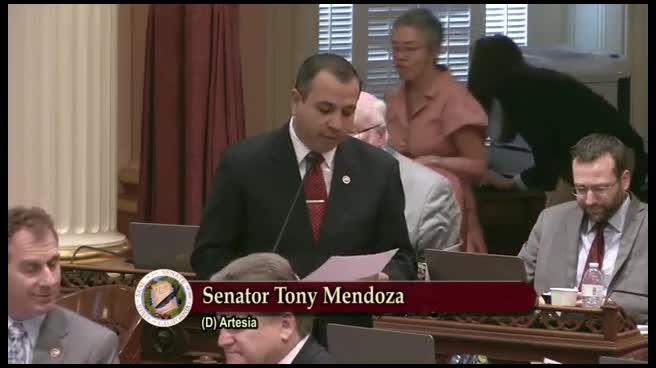
Bill Author

Bill Co-Author(s):