SB 683: Alcoholic beverage licenses: nonprofit sales license.
- Session Year: 2015-2016
- House: Senate
- Latest Version Date: 2016-09-24
Existing law, the Alcoholic Beverage Control Act, regulates the application for, the issuance of, the suspension of, and the conditions imposed upon, various alcoholic beverage licenses pursuant to which the licensees may exercise specified privileges in the state. Existing law authorizes the specified licenses to nonprofit organizations, as provided. Existing law also provides for various annual fees for the issuance of alcoholic beverage licenses depending upon the type of license issued.
This bill would authorize the Department of Alcoholic Beverage Control to issue a special nonprofit sales license to a nonprofit mutual benefit corporation, as described, that would authorize the licensee to, among other things, accept the transfer of, and take title to, up to 20,000 gallons of wine per year produced by the public university, as described, and sell transferred wine to consumers and licensees, as provided. The bill would impose an original fee and an annual renewal fee for the license, which would be deposited in the Alcohol Beverage Control Fund.
This bill would make legislative findings and declarations as to the necessity of a special statute for a county of the 28th class.
Existing law, the Alcoholic Beverage Control Act, regulates the application for, the issuance of, the suspension of, and the conditions imposed upon, various alcoholic beverage licenses pursuant to which the licensees may exercise specified privileges in the state. Existing law authorizes the specified licenses to nonprofit organizations, as provided. Existing law also provides for various annual fees for the issuance of alcoholic beverage licenses depending upon the type of license issued.
This bill would authorize the Department of Alcoholic Beverage Control to issue a special nonprofit sales license to a nonprofit mutual benefit corporation, as described, that would authorize the licensee to, among other things, accept the transfer of, and take title to, alcoholic beverages up to 20,000 gallons of wine per year produced by the public university, as described, and sell transferred, donated, and bequeathed alcoholic beverages transferred wine to consumers and licensees, as provided. The bill would impose an original fee and an annual renewal fee for the license, which would be deposited in the Alcohol Beverage Control Fund.
This bill would make legislative findings and declarations as to the necessity of a special statute for a county of the 28th class.
Existing law, the Alcoholic Beverage Control Act, regulates the application for, the issuance of, the suspension of, and the conditions imposed upon, various alcoholic beverage licenses pursuant to which the licensees may exercise specified privileges in the state. Existing law authorizes the specified licenses to nonprofit organizations, as provided. Existing law also provides for various annual fees for the issuance of alcoholic beverage licenses depending upon the type of license issued.
This bill would authorize the Department of Alcoholic Beverage Control to issue an onsale or offsale retail license to a nonprofit organization. a special nonprofit sales license to a nonprofit mutual benefit corporation, as described, that would authorize the licensee to, among other things, accept the transfer of, and take title to, alcoholic beverages produced by the public university, as described, and sell transferred, donated, and bequeathed alcoholic beverages to consumers and licensees, as provided. The bill would impose an original fee and an annual renewal fee for the license, which would be deposited in the Alcohol Beverage Control Fund.
This bill would make legislative findings and declarations as to the necessity of a special statute for a county of the 28th class.
Existing law, the Alcoholic Beverage Control Act, regulates the application for, the issuance of, the suspension of, and the conditions imposed upon, various alcoholic beverage licenses pursuant to which the licensees may exercise specified privileges in the state. Existing law authorizes the specified licenses to nonprofit organizations, as provided.
This bill would authorize the Department of Alcoholic Beverage Control to issue an onsale or offsale retail license to a nonprofit organization.
Existing law establishes the California State Library within the State Department of Education, places the State Library under the direction of the State Librarian, and sets forth the powers and duty of the State Librarian, including, but not limited to, collecting, preserving, and disseminating information regarding the history of the state, and purchasing and cataloging books, maps, engravings, paintings, furniture, and other materials and equipment necessary to carry out State Library programs and services.
This bill would require each state entity to conduct an inventory of every piece of art and every map or other item of historical significance in its possession and to prepare a catalogue of each item not previously catalogued. The bill would require the catalogue to be made available to the State Librarian.
Existing law declares that certain provisions relating to public library finance effects a state policy that each public library provide a minimum level of service, known as the foundation program, to the extent state funds are made available for that purpose. Existing law defines the foundation program as those elements of library service which are basic to its function as a provider of information, education, and cultural enrichment to all segments of the community, including, but not limited to, collection development and maintenance, lending services, information services, facility maintenance, and administration. Existing law excludes from the foundation program major capital improvements, which, for purposes of these provisions, is defined as the purchase of real property, the construction or improvement of buildings, and the purchase of equipment and the payment of fees or other costs in connection with the same.
This bill would include technology services in the definition of the foundation program. The bill would also exclude from the meaning of major capital improvements, the purchase of equipment and the payment of fees or other costs in connection with the same.
(a)The department may issue a special nonprofit sales license to a nonprofit mutual benefit corporation, as described in Section 23701a of the Revenue and Taxation Code, that has a board membership composed of the Dean of the College of Agricultural and Environmental Sciences, or his or her designee, the Chair of the Department of Viticulture and Enology, or his or her designee, and the Chair of the Department of Food Science and Technology, or his or her designee, of the public university located within the county of the 28th class that includes courses in viticulture and enology in its curriculum.
(b)A special nonprofit sales license authorizes the licensee to do all of the following:
(1)Accept the transfer of, and take title to, up to 20,000 gallons of wine per year produced by the public university described in subdivision (a), notwithstanding that the public university does not hold any license issued pursuant to this division. For purposes of this section, produced includes wine donated to, or purchased by, the public university for educational or experimental purposes and that are thereafter treated or processed by the public university.
(2)Sell wine received pursuant to paragraph (1) to consumers for consumption off the licensed premises or to other licensees authorized to sell wine.
(3)Give licensees samples of the wine it sells, subject to the limitations in subdivision (a) of Section 23386 and any department regulations.
(c)The special nonprofit sales license does not authorize the licensee to purchase or otherwise obtain wine from a licensee or other manufacturer or seller of wine, except as specified in this section.
(d)A public university, as described in subdivision (a), may transfer wine produced by the public university to a special nonprofit sales licensee.
(e)The original fee for the special nonprofit sales license shall be five hundred dollars ($500) and the annual renewal fee shall be one hundred dollars ($100). The original and annual renewal fee may be adjusted pursuant to subdivisions (b) and (c) of Section 23320.
SEC. 2.The Legislature finds and declares that a special law is necessary and that a general law cannot be made applicable within the meaning of Section 16 of Article IV of the California Constitution because of the unique conditions in a county of the 28th class.
(a)The department may issue a special nonprofit sales license to a nonprofit mutual benefit corporation, as described in Section 23701a of the Revenue and Taxation Code, that has a board membership composed of the Dean of the College of Agricultural and Environmental Sciences, or his or her designee, the Chair of the Department of Viticulture and Enology, or his or her designee, and the Chair of the Department of Food Science and Technology, or his or her designee, of the public university located within the county of the 28th class that includes courses in viticulture and enology in its curriculum.
(b)A special nonprofit sales license authorizes the licensee to do all of the following:
(1)Accept the transfer of, and take title to, up to 20,000 gallons of wine per year produced by the public university described in subdivision (a), notwithstanding that the public university does not hold any license issued pursuant to this division. For purposes of this section, produced includes wine donated to, or purchased by, the public university for educational or experimental purposes and that are thereafter treated or processed by the public university.
(2)Sell wine received pursuant to paragraph (1) to consumers for consumption off the licensed premises or to other licensees authorized to sell wine.
(3)Accept donations of services and products, excluding wine, promotion, and advertising, from any licensee. The donating licensee may donate services and products notwithstanding any other provision of this division.
(4)
(3)Give licensees samples of the wine it sells, subject to the limitations in subdivision (a) of Section 23386 and any department regulations.
(c)The special nonprofit sales license does not authorize the licensee to purchase or otherwise obtain wine from a licensee or other manufacturer or seller of wine, except as specified in this section.
(d)A public university, as described in subdivision (a), may transfer wine produced by the public university to a special nonprofit sales licensee.
(e)The original fee for the special nonprofit sales license shall be five hundred dollars ($500) and the annual renewal fee shall be one hundred dollars ($100). The original and annual renewal fee may be adjusted pursuant to subdivisions (b) and (c) of Section 23320.
SEC. 2.The Legislature finds and declares that a special law is necessary and that a general law cannot be made applicable within the meaning of Section 16 of Article IV of the California Constitution because of the unique conditions in a county of the 28th class.
(a)The department may issue a special nonprofit sales license to a nonprofit mutual benefit corporation, as described in Section 23701a of the Revenue and Taxation Code, that has a board membership composed of the Dean of the College of Agricultural and Environmental Sciences, or his or her designee, the Chair of the Department of Viticulture and Enology, or his or her designee, and the Chair of the Department of Food Science and Technology, or his or her designee, of the public university located within the county of the 28th class that includes courses in viticulture, enology, brewing, and distilling viticulture and enology in its curriculum.
(b)A special nonprofit sales license authorizes the licensee to do all of the following:
(1)Accept the transfer of, and take title to, alcoholic beverages up to 20,000 gallons of wine per year produced by the public university described in subdivision (a), notwithstanding that the public university does not hold any license issued pursuant to this division. For purposes of this section, produced includes alcoholic beverages wine donated to, or purchased by, the public university for educational or experimental purposes and that are thereafter treated or processed by the public university.
(2)Accept donations or bequests of bottled alcoholic beverages from any unlicensed person.
(3)
(2)Sell alcoholic beverages wine received pursuant to paragraphs (1) and (2) paragraph (1) to consumers for consumption off the licensed premises or to other licensees authorized to sell the alcoholic beverages sold. A bottle of an alcoholic beverage sold by the licensee shall have a permanently affixed label stating that the alcoholic beverage was donated or bequeathed to the licensee by an unlicensed person or was received from a public university. wine.
(4)
(3)Accept donations of services and products, excluding alcoholic beverages, wine, promotion, and advertising, from any licensee. The donating licensee may donate services and products notwithstanding any other provision of this division.
(5)
(4)Give licensees samples of the alcoholic beverages wine it sells, subject to the limitations in subdivision (a) of Section 23386 and any department regulations.
(c)The special nonprofit sales license does not authorize the licensee to purchase or otherwise obtain alcoholic beverages wine from a licensee or other manufacturer or seller of alcoholic beverages, wine, except as specified in this section.
(d)(1)An unlicensed person may donate or bequeath alcoholic beverages to a special nonprofit sales licensee.
(2)
(d)A public university, as described in subdivision (a), may transfer alcoholic beverages wine produced by the public university to a special nonprofit sales licensee.
(e)The original fee for the special nonprofit sales license shall be five hundred dollars ($500) and the annual renewal fee shall be one hundred dollars ($100). The original and annual renewal fee may be adjusted pursuant to subdivisions (b) and (c) of Section 23320.
SEC. 2.The Legislature finds and declares that a special law is necessary and that a general law cannot be made applicable within the meaning of Section 16 of Article IV of the California Constitution because of the unique conditions in a county of the 28th class.
(a)The department may issue a special nonprofit sales license to a nonprofit mutual benefit corporation, as described in Section 23701a of the Revenue and Taxation Code, that has a board membership composed of the Dean of the College of Agricultural and Environmental Sciences, or his or her designee, the Chair of the Department of Viticulture and Enology, or his or her designee, and the Chair of the Department of Food Science and Technology, or his or her designee, of the public university located within the county of the 28th class that includes courses in viticulture, enology, brewing, and distilling in its curriculum.
(b)A special nonprofit sales license authorizes the licensee to do all of the following:
(1)Accept the transfer of, and take title to, alcoholic beverages produced by the public university described in subdivision (a), notwithstanding that the public university does not hold any license issued pursuant to this division. For purposes of this section, produced includes alcoholic beverages donated to, or purchased by, the public university for educational or experimental purposes and that are thereafter treated or processed by the public university.
(2)Accept donations or bequests of bottled alcoholic beverages from any unlicensed person.
(3)Sell alcoholic beverages received pursuant to paragraphs (1) and (2) to consumers for consumption off the licensed premises or to other licensees authorized to sell the alcoholic beverages sold. A bottle of an alcoholic beverage sold by the licensee shall have a permanently affixed label stating that the alcoholic beverage was donated or bequeathed to the licensee by an unlicensed person or was received from a public university.
(4)Accept donations of services and products, excluding alcoholic beverages, from any licensee. The donating licensee may donate services and products notwithstanding any other provision of this division.
(5)Give licensees samples of the alcoholic beverages it sells, subject to the limitations in subdivision (a) of Section 23386 and any department regulations.
(c)The special nonprofit sales license does not authorize the licensee to purchase or otherwise obtain alcoholic beverages from a licensee or other manufacturer or seller of alcoholic beverages, except as specified in this section.
(d)(1)An unlicensed person may donate or bequeath alcoholic beverages to a special nonprofit sales licensee.
(2)A public university, as described in subdivision (a), may transfer alcoholic beverages produced by the public university to a special nonprofit sales licensee.
(e)The original fee for the special nonprofit sales license shall be five hundred dollars ($500) and the annual renewal fee shall be one hundred dollars ($100). The original and annual renewal fee may be adjusted pursuant to subdivisions (b) and (c) of Section 23320.
SEC. 2.The Legislature finds and declares that a special law is necessary and that a general law cannot be made applicable within the meaning of Section 16 of Article IV of the California Constitution because of the unique conditions in a county of the 28th class.
SECTION 1.Section 23320.2 is added to the Business and Professions Code, to read:23320.2.In addition to the licenses specified in Section 23320, the department may issue an onsale or offsale retail license to a nonprofit organization.
In addition to the licenses specified in Section 23320, the department may issue an onsale or offsale retail license to a nonprofit organization.
SECTION 1.Section 19321.5 is added to the Education Code, to read:19321.5.(a)Each state entity, including, but not limited to, the State Library, the State Archives, the State Lands Commission, the Department of Transportation, and the State Water Resources Control Board, shall conduct an inventory of every piece of art and every map or other item of historical significance belonging to the state in its possession and shall prepare a catalogue of each item not previously catalogued.
(b)The catalogue shall be made available to the State Librarian.
(c)It is the intent of the Legislature that the costs of the inventory and catalogue be absorbed by each state entity and paid through the use of general administrative funds legally available for these purposes.
(a)Each state entity, including, but not limited to, the State Library, the State Archives, the State Lands Commission, the Department of Transportation, and the State Water Resources Control Board, shall conduct an inventory of every piece of art and every map or other item of historical significance belonging to the state in its possession and shall prepare a catalogue of each item not previously catalogued.
(b)The catalogue shall be made available to the State Librarian.
(c)It is the intent of the Legislature that the costs of the inventory and catalogue be absorbed by each state entity and paid through the use of general administrative funds legally available for these purposes.
SECTION 1.Section 18015 of the Education Code is amended to read:18015.As used in this chapter:
(a)Public library means a library, or two or more libraries, operated as a single entity by one or more public jurisdictions and that serves the general public without distinction.
(b)Foundation program means those elements of library service that are basic to its function as a provider of information, education, and cultural enrichment to all segments of the community, including, but not limited to, collection development and maintenance, lending services, information and technology services, facility maintenance, and administration. The foundation program shall not include major capital improvements, which, for purposes of this chapter, shall be defined as the purchase of real property and the construction or improvement of buildings.
(c)Fiscal officer means, for a municipal library, the chief fiscal officer of the municipality; for a county library or a library district under the jurisdiction of the county board of supervisors, the chief fiscal officer of the county; and for an independent library district, the chief librarian of the district. In the case of a public library that provides foundation program service by contract to one or more jurisdictions in addition to the jurisdiction or jurisdictions with which it is affiliated, the chief fiscal officer of the jurisdiction with which it is primarily affiliated shall be deemed the fiscal officer for the public library for purposes of this chapter.
As used in this chapter:
(a)Public library means a library, or two or more libraries, operated as a single entity by one or more public jurisdictions and which serve that serves the general public without distinction.
(b)Foundation program means those elements of library service which that are basic to its function as a provider of information, education, and cultural enrichment to all segments of the community, including, but not limited to, collection development and maintenance, lending services, information and technology services, facility maintenance, and administration. The foundation program shall not include major capital improvements, which, for purposes of this chapter, shall be defined as the purchase of real property, property and the construction or improvement of buildings, and the purchase of equipment and the payment of fees or other costs in connection with the same. buildings.
(c)Fiscal officer means, for a municipal library, the chief fiscal officer of the municipality; for a county library or a library district under the jurisdiction of the county board of supervisors, the chief fiscal officer of the county; and for an independent library district, the chief librarian of the district. In the case of a public library which that provides foundation program service by contract to one or more jurisdictions in addition to the jurisdiction or jurisdictions with which it is affiliated, the chief fiscal officer of the jurisdiction with which it is primarily affiliated shall be deemed the fiscal officer for the public library for the purposes of this chapter.
|
Date
|
Status
|
|---|---|
| Aug 18, 2016 | Read third time. Passed. (Ayes 78. Noes 0. Page 5903.) Ordered to the Senate. |
| Jun 14, 2016 | From committee with author's amendments. Read second time and amended. Re-referred to Com. on G.O. |
| Jun 21, 2016 | From committee with author's amendments. Read second time and amended. Re-referred to Com. on G.O. |
| Jun 22, 2016 | June 22 hearing postponed by committee. |
| Jun 30, 2016 | From committee: Do pass and re-refer to Com. on APPR. (Ayes 19. Noes 0.) (June 30). Re-referred to Com. on APPR. |
| Aug 3, 2016 | From committee: Do pass. Ordered to consent calendar. (Ayes 20. Noes 0.) (August 3). |
| Aug 4, 2016 | Read second time. Ordered to consent calendar. |
| Aug 11, 2016 | From consent calendar on motion of Assembly Member Cooper. |
| Aug 11, 2016 | From consent calendar on motion of Assembly Member Waldron. |
| Aug 11, 2016 | Ordered to third reading. |
| Aug 18, 2016 | Read third time. Passed. Ordered to the Senate. |
| May 2, 2016 | From committee: Be re-referred to Com. on G.O. (Ayes 11. Noes 0.) (May 2). Re-referred to Com. on G.O. |
| Aug 19, 2016 | In Senate. Concurrence in Assembly amendments pending. |
| Aug 22, 2016 | From committee: Be re-referred to Com. on G.O. pursuant to Senate Rule 29.10(d). (Ayes 5. Noes 0. Page 5217.) Re-referred to Com. on G.O. |
| Aug 22, 2016 | From committee: Be re-referred to Com. on G.O. pursuant to Senate Rule 29.10(d). (Ayes 5. Noes 0.) Re-referred to Com. on G.O. |
| Aug 22, 2016 | Re-referred to Com. on RLS. pursuant to Senate Rule 29.10(d). |
| Aug 23, 2016 | From committee: That the Assembly amendments be concurred in. (Ayes 11. Noes 0. Page 5317.) |
| Aug 23, 2016 | From committee: That the Assembly amendments be concurred in. (Ayes 11. Noes 0.) |
| Aug 23, 2016 | Set for hearing August 23. |
| Aug 24, 2016 | Assembly amendments concurred in. (Ayes 39. Noes 0.) Ordered to engrossing and enrolling. |
| Aug 30, 2016 | Enrolled and presented to the Governor at 1:30 p.m. |
| Apr 30, 2015 | In Assembly. Read first time. Held at Desk. |
| Mar 2, 2015 | From printer. May be acted upon on or after April 1. |
| Mar 2, 2015 | Read first time. |
| Mar 19, 2015 | Referred to Com. on ED. |
| Mar 20, 2015 | Set for hearing April 8. |
| Apr 1, 2015 | April 8 set for first hearing canceled at the request of author. |
| Apr 2, 2015 | Set for hearing April 15. |
| Apr 16, 2015 | From committee: Do pass and re-refer to Com. on APPR. with recommendation: To consent calendar. (Ayes 8. Noes 0. Page 648.) (April 15). Re-referred to Com. on APPR. |
| Apr 17, 2015 | Set for hearing April 27. |
| Apr 27, 2015 | From committee: Be ordered to second reading pursuant to Senate Rule 28.8 and ordered to consent calendar. |
| Apr 28, 2015 | Read second time. Ordered to consent calendar. |
| Feb 27, 2015 | Introduced. To Com. on RLS. for assignment. To print. |
| Apr 30, 2015 | Read third time. Passed. (Ayes 34. Noes 0. Page 844.) Ordered to the Assembly. |
| Apr 30, 2015 | Read third time. Passed. (Ayes 34. Noes 0.) Ordered to the Assembly. |
| May 18, 2015 | Referred to Com. on ED. |
| Jun 11, 2015 | From committee with author's amendments. Read second time and amended. Re-referred to Com. on ED. |
| Jun 15, 2015 | Re-referred to Com. on RLS. pursuant to Assembly Rule 96. |
| Jun 25, 2015 | From committee: Be re-referred to Com. on A.,E.,S.,T., & I.M. (Ayes 11. Noes 0.) (June 25). Re-referred to Com. on A.,E.,S.,T., & I.M. |
| Jan 5, 2016 | From committee with author's amendments. Read second time and amended. Re-referred to Com. on A.,E.,S.,T., & I.M. |
| Mar 17, 2016 | Re-referred to Com. on RLS. pursuant to Assembly Rule 96. |
| Apr 20, 2016 | From committee with author's amendments. Read second time and amended. Re-referred to Com. on RLS. |
|
Date
|
Description
|
Location
|
Votes
|
|
|---|---|---|---|---|
| Aug 24, 2016 | Unfinished Business SB683 Wolk Concurrence | Senate Floor |
Passed |
|
| Aug 23, 2016 | That the Assembly amendments be concurred in | Senate Standing Committee on Governmental Organization |
Passed |
|
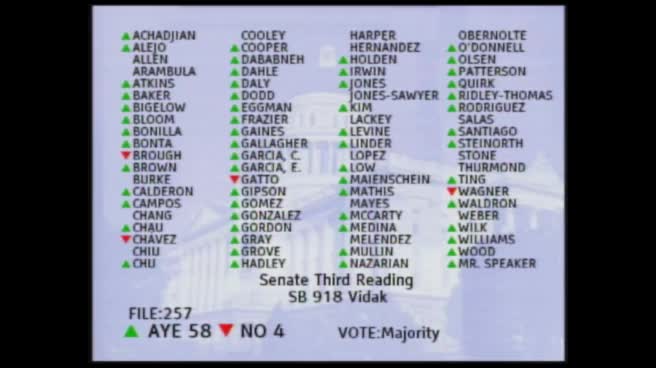
| Aug 18, 2016 | SB 683 Wolk Senate Third Reading By DODD | Assembly Floor |
Passed |
|
| Aug 3, 2016 | Do pass. To Consent Calendar. | Assembly Standing Committee on Appropriations |
Passed |
|
| Jun 30, 2016 | Do pass and be re-referred to the Committee on [Appropriations] | Assembly Standing Committee on Governmental Organization |
Passed |
|
| May 2, 2016 | Be re-referred to the Committee on [Governmental Organization] | Assembly Standing Committee on Rules |
Passed |
|
| Jun 25, 2015 | Be re-referred to the Committee on [Arts, Entertainment, Sports, Tourism, and Internet Media] | Assembly Standing Committee on Rules |
Passed |
|
| Apr 30, 2015 | Consent Calendar 2nd SB683 Wolk | Senate Floor |
Passed |
|
| Apr 15, 2015 | Do pass, but first be re-referred to the Committee on [Appropriations] with the recommendation: To Consent Calendar | Senate Standing Committee on Education |
Passed |
This list shows positions taken on this bill by organizations on the date displayed, which is linked to the original source.
Positions by individuals are not included.
|
Organization
|
Position
|
Date
|
|---|---|---|
| Alcohol Justice | ** Against | Aug 23, 2016 |
| California Alcohol Policy Alliance | ** Against | Aug 23, 2016 |
| California Association Of Winegrape Growers | ** Support | Aug 23, 2016 |
| California Labor Federation, Afl-Cio | * Support | Aug 23, 2016 |
| California State Firefighters' Association | * Support | Aug 23, 2016 |
| California Teamsters Public Affairs Council | * Support | Aug 23, 2016 |
| Family Winemakers Of California | ** Support | Aug 23, 2016 |
| Germain-Robin Distillery | ** Support | Aug 23, 2016 |
| Heitz Wine Cellars | ** Support | Aug 23, 2016 |
| IRONSTONE VINEYARDS | ** Support | Aug 23, 2016 |
| Ironstone Winery | ** Support | Jun 30, 2016 |
| Long Meadow Ranch & Affiliates | ** Support | Aug 23, 2016 |
| Moulds Family Vineyard | ** Support | Aug 23, 2016 |
| Napa Valley Grapegrowers | ** Support | Aug 23, 2016 |
| Paul Hobbs Winery | ** Support | Aug 23, 2016 |
| Ramey Wine Cellars | ** Support | Aug 23, 2016 |
| San Bernardino County Board of Supervisors | * Support | Aug 23, 2016 |
| San Manuel Band Of Mission Indians | * Support | Aug 23, 2016 |
| Santa Ynez Band Of Chumash Indians | * Support | Aug 23, 2016 |
| Treasury Wine Estates | ** Support | Aug 23, 2016 |
| u None received. | ** Against | Jun 30, 2016 |
| Unite Here | * Support | Aug 23, 2016 |
| Viejas Band of Kumeyaay Indians | * Support | Aug 23, 2016 |
| Wente Family Estates | ** Support | Aug 23, 2016 |
| Wine Institute | ** Support | Aug 23, 2016 |
Office of Senate Floor Analyses (916) 651-1520 Fax: (916) 327-4478 | SB |
UNFINISHED BUSINESS
Bill No: SB 683
:
PRIOR VOTES NOT RELEVANT
SENATE GOVERNMENTAL ORG. COMMITTEE: 11-0, 8/23/16 (pursuant to Senate Rule 29.10)
AYES: Hall, Berryhill, Bates, Block, Gaines, Galgiani, Glazer, Hill, Hueso, Lara, Vidak
NO VOTE RECORDED: Hernandez, McGuire
ASSEMBLY FLOOR: 78-0, 8/18/16 - See last page for vote
DIGEST: This bill grants the Department of Alcoholic Beverage Control (ABC) the authority to issue a special nonprofit sales license to a nonprofit mutual benefit corporation associated with the Department of Viticulture and Enology at the University of California Davis (UC Davis) and permits the licensee to, among other things, accept up to 20,000 gallons of wine produced by UC Davis and sell the wine to consumers or to other licensees authorized to sell wine.
Assembly Amendments gut and amend the contents of the bill relating to the State Library and add language that allows the Department of ABC to issue a special license, with certain privileges, to a nonprofit associated with the Department of Viticulture and Enology at UC Davis.
Existing law:
- Establishes the Department of ABC and grants it exclusive authority to administer the provisions of the ABC Act in accordance with laws enacted by the Legislature. This involves licensing individuals and businesses associated with the manufacture, importation and sale of alcoholic beverages in this state and the collection of license fees for this purpose.
- Separates the alcoholic beverage industry into three component parts of manufacturer, wholesaler, and retailer. The original policy rationale for this body of law was to prohibit the vertical integration of the alcohol industry and to protect the public from predatory marketing practices. Generally, other than exemptions granted by the Legislature, the holder of one type of license is not permitted to do business as another type of licensee within the “three-tier” system. This is known as the “tied-house” law.
- Prohibits, in general, an alcohol manufacturer, wholesaler, or any officer, director, or agent of any such person from owning, directly, or indirectly, any interest in any on-sale license, or from providing anything of value to retailers, be it free goods, services, or advertising.
- Allows wineries, breweries, distilled spirits manufacturers, and importers to donate their product(s) to certain nonprofit organizations (e.g., fraternal orders, social organizations, civic leagues, veterans' organizations, religious groups, horticultural organizations) for the purpose of assisting in fund-raising efforts.
- Allows students who are at least 18 years of age and enrolled in degree granting programs in enology or brewing at accredited public postsecondary educational institutions to taste, but not consume, an alcoholic beverage for educational purposes as part of the instruction in a course required for a degree.
- Allows nonprofit organizations that either promote home brewing or home winemaking, or that are primarily composed of home brewers or home winemakers, to sell beer or wine at fundraising events subject to specified conditions, including requiring an educational component to the event and limiting the nonprofit organization to two such events that sell wine or beer pursuant to this authorization per year.
- Provides for 58 counties and 58 "classes" of counties – one county to each class based on their 1970 Census populations. (Government Code Section 28020)
This bill:
- Authorizes the Department of ABC to issue a special nonprofit sales license to a nonprofit mutual benefit corporation that that has a board membership composed of the Dean of the College of Agricultural and Environmental Sciences, the Chair of the Department of Viticulture and Enology, and the Chair of the Department of Food Services Technology of the public university (UC Davis) located within the county of the 28th class (Yolo County) that includes courses in viticulture and enology in its curriculum.
- Provides that the special nonprofit sales license authorizes the licensee to do all of the following:
- Accept the transfer of, and take title to, up to 20,000 gallons of wine per year produced by the public university, notwithstanding that the public university does not hold any license issued pursuant to this division. Produced includes wine donated to, or purchased by, the public university for educational or experimental purposes and that are thereafter treated or processed by the public university.
- Sell wine received pursuant to item #2(a) above, to consumers for consumption off the licensed premises or to other licensees authorized to sell wine.
- Give licensees samples of the wine it sells, subject to the tasting limitations in current law and any Department of ABC regulations.
- Provides that the special nonprofit sales license does not authorize the licensee to purchase or otherwise obtain wine from a licensee or other manufacturer or seller of wine, except as specified in this bill.
- Provides that a public university, as defined above, may transfer wine produced by the public university to a special nonprofit sales licensee.
- Provides that the original fee for the special nonprofit sales license shall be $500 and the annual renewal fee shall be $100.
Background
Purpose of SB 683. According to the author’s office, this bill is intended to create a special nonprofit sales license within the ABC Act that will benefit the environment and the Department of Viticulture and Enology at UC Davis. UC Davis, through its College of Agricultural and Environmental Sciences, offers undergraduate and graduate degrees in the areas of grape growing and wine making. Currently, any product produced through the program is discarded.
The author's office states that “creating a specific nonprofit entity, separate from the university, will allow wine to be marketed, with the proceeds remitted to the department that created the product to support its mission of teaching, research and extension. SB 683 will also help prevent unnecessary and avoidable waste by allowing wine to be sold instead of discarded.”
Prior Legislation
AB 1989 (Chesbro, Chapter 239, Statutes of 2014) created a narrow exception to existing ABC Act provisions relating to consumption or possession of alcoholic beverages by underage persons by allowing students who are at least 18 years of age and enrolled in degree granting programs in enology or brewing at accredited public postsecondary educational institutions to taste, but not consume, an alcoholic beverage for educational purposes as part of the instruction in a course required for a degree.
FISCAL EFFECT: Appropriation: Fiscal Com.: Local:
According to the Assembly Appropriations Committee, no additional state costs.
California Association of Winegrape Growers
Family Winemakers of California
Germain-Robin Distillery
Heitz Wine Cellars
Ironstone Vineyards
Long Meadow Ranch & Affiliates
Moulds Family Vineyard
Napa Valley Vintners
Napa Valley Grapegrowers
Paul Hobbs Winery
Ramey Wine Cellars
St. George Spirits, Inc.
The Wine Group
Treasury Wine Estates
Wente Family Estates
Wine Institute
OPPOSITION: (Verified 8/22/16)
Alcohol Justice
California Alcohol Policy Alliance
ARGUMENTS IN SUPPORT: Proponents note that the UC Davis Department of Viticulture and Enology has played a vital role in providing the California wine industry and grape growers with the knowledge and techniques to continuously improve winemaking and farming methods. Their research has enabled California grape growers and winemakers to produce some of the best wines in the world. Allowing the university to recoup some of its operational costs would result in more funds for research to the benefit of the entire wine industry in California.
Proponents also contend that the current practice of disposing of wine products is unsustainable from an environmental point-of-view and that this bill makes fiscal sense. The privilege of selling the wine, predominantly in bulk, would enable the UC Davis Department of Viticulture and Enology to recoup some of the production costs it incurs and also funnel excess revenue into support for teaching, research, and extension.
ARGUMENTS IN OPPOSITION: Opponents claim that SB 683 will expand the number of alcohol license types and, in turn, increase the availability of alcohol. Opponents believe this new license type opens the door to additional entities that produce other alcohol products, thus creating greater problems in more communities, which will negatively impact public health and safety in California.
ASSEMBLY FLOOR: 78-0, 8/18/16
AYES: Achadjian, Alejo, Travis Allen, Arambula, Atkins, Baker, Bigelow, Bloom, Bonilla, Bonta, Brough, Brown, Burke, Calderon, Campos, Chang, Chau, Chávez, Chiu, Chu, Cooley, Cooper, Dababneh, Dahle, Daly, Dodd, Eggman, Frazier, Beth Gaines, Gallagher, Cristina Garcia, Eduardo Garcia, Gatto, Gipson, Gomez, Gonzalez, Gordon, Gray, Grove, Hadley, Holden, Irwin, Jones, Jones-Sawyer, Kim, Lackey, Levine, Linder, Lopez, Low, Maienschein, Mathis, Mayes, McCarty, Medina, Melendez, Mullin, Nazarian, Obernolte, O'Donnell, Olsen, Patterson, Quirk, Ridley-Thomas, Rodriguez, Salas, Santiago, Steinorth, Mark Stone, Thurmond, Ting, Wagner, Waldron, Weber, Wilk, Williams, Wood, Rendon
NO VOTE RECORDED: Harper, Roger Hernández
8/23/16 20:03:09
**** END ****
SENATE THIRD READING
STR Bill Id:SB 683
Author:(Wolk)
As Amended Ver:June 21, 2016
Majority vote
SENATE VOTE: Not relevant
Committee | Votes | Ayes | Noes |
Governmental Organization | 19-0 | Gray, Bigelow, Alejo, Bonta, Campos, Cooley, Cooper, Cristina Garcia, Eduardo Garcia, Gipson, Roger Hernández, Jones-Sawyer, Levine, Linder, Maienschein, Salas, Steinorth, Waldron, Wilk | |
Appropriations | 20-0 | Gonzalez, Bigelow, Bloom, Bonilla, Bonta, Calderon, Chang, Daly, Eggman, Gallagher, Eduardo Garcia, Holden, Jones, Obernolte, Quirk, Santiago, Wagner, Weber, Wood, Chau |
SUMMARY: Authorizes the Department of Alcoholic Beverage Control (ABC) to issue a special nonprofit sales license to a nonprofit mutual benefit corporation that is associated with the Department of Viticulture and Enology at the University of California (UC) Davis. This licensee may accept a transfer of, and take title to, up to 20,000 gallons of wine produced by the university, sell this wine to consumers for consumption off the licensed premises or to other licensees authorized to sell wine, and give licensees samples of the wine it sells. Specifically, this bill:
- Provides ABC may issue a special nonprofit sales license to a nonprofit mutual benefit corporation, as described, that has a board membership composed of the Dean of the College of Agricultural and Environmental Sciences, or his or her designee, the Chair of the Department of Viticulture and Enology, or his or her designee, and the Chair of the Department of Food Science and Technology, or his or her designee, of the public university located within the county of the 28th class that includes courses in viticulture and enology in its curriculum.
- Provides a special nonprofit sales license authorizes the licensee to do all of the following:
- Accept the transfer of, and take title to, up to 20,000 gallons of wine per year produced by the public university, as described, even though that the public university does not hold a license. For purposes of this bill, "produced" includes wine donated to, or purchased by, the public university for educational or experimental purposes and that are thereafter treated or processed by the public university.
- Sell wine to consumers for consumption off the licensed premises or to other licensees authorized to sell wine.
- Give licensees samples of the wine it sells, subject to specified limitations and any ABC regulations.
- Provides the special nonprofit sales license does not authorize the licensee to purchase or otherwise obtain wine from a licensee or other manufacturer or seller of wine, except as specified.
- Provides a public university, as described, may transfer wine produced by the public university to a special nonprofit sales licensee.
- Imposes an original fee for the special nonprofit sales license shall be $500 and the annual renewal fee shall be $100, as specified.
EXISTING LAW:
- The enactment of the 21st Amendment to the United States (U.S.) Constitution in 1933 repealed the 18th Amendment and ended the era of Prohibition. Accordingly, states were granted the authority to establish alcoholic beverage laws and administrative structures to regulate the sale and distribution of alcoholic beverages.
- Establishes ABC and grants it exclusive authority to administer the provisions of the Alcoholic Beverage Control Act (Act) in accordance with laws enacted by the Legislature. This involves licensing individuals and businesses associated with the manufacture, importation and sale of alcoholic beverages in this state and the collection of license fees for this purpose.
- Existing law, known as the "tied-house" law, separates the alcoholic beverage industry into three component parts of manufacturer, wholesaler, and retailer. The original policy rationale for this body of law was to prohibit the vertical integration of the alcohol industry and to protect the public from predatory marketing practices. Generally, other than exemptions granted by the Legislature, the holder of one type of license is not permitted to do business as another type of licensee within the "three-tier" system.
- Prohibits, in general, an alcohol manufacturer, wholesaler, or any officer, director, or agent of any such person from owning, directly, or indirectly, any interest in any on-sale license, or from providing anything of value to retailers, be it free goods, services, or advertising.
- Allows wineries, breweries, distilled spirits manufacturers, and importers to donate their product(s) to certain nonprofit organizations (e.g., fraternal orders, social organizations, civic leagues, veterans' organizations, religious groups, horticultural organizations) for the purpose of assisting in fund-raising efforts.
- Generally prohibits the sale or consumption of alcoholic beverages at a public schoolhouse or any grounds thereof. Existing law provides that this prohibition does not apply if the alcoholic beverage is possessed, consumed, or used during an event at a community center owned by a community services district, as provided.
- Allows students between the ages of 18 to 21, enrolled in winemaking and brewery science programs at the University of California, the California State University, and the California Community Colleges, to receive an exemption from current state age restrictions in order to fully participate in bona fide classes and programs where tasting of wine or beer is a necessary aspect of the class or program
- Allows nonprofit organizations that either promote home brewing or home winemaking, or that are primarily composed of home brewers or home winemakers, to sell beer or wine at fundraising events subject to specified conditions, including requiring an educational component to the event and limiting the nonprofit organization to "2 events" that sell wine or beer pursuant to this authorization per year.
FISCAL EFFECT: According to the Assembly Appropriations Committee, no additional state costs.
COMMENTS:
Background: California is a global leader in wine production – accounting for more than 90% of all U.S. wine produced. California is also the fourth largest producer in the world after France, Italy and Spain. When it comes to brewing, California is equally fortunate to have a robust array of beer makers – both large and small. In both instances, many of these products are made with the help of California college and university graduates who, in many cases, diligently complete the bulk of their career training in beer or wine production prior to reaching the age of 21.
On April 15, 1880, the California Legislature mandated the Regents of the University of California to establish a program providing for instruction and research in viticulture and enology. The current Department of Viticulture and Enology was established on the Davis campus in 1935 following the repeal of Prohibition. Today the department is unique in combining the sciences of viticulture and enology in a single research and teaching unit that encompasses all of the scientific disciplines that impact grape growing and winemaking. Marketplace interest in wine has further increased due to recent department research that point to various components in wine that may have beneficial human health effects.
Purpose of the bill: According to the author, this bill would allow ABC to offer a special non-profit sales license that will benefit the environment and the Department of Viticulture and Enology at UC Davis. UC Davis, through their College of Agricultural and Environmental Sciences, offers undergraduate and graduate degrees in the areas of grape growing and wine making. Currently, any product produced through the program is disposed of, essentially tossed down the drain. The dumping of wine creates unnecessary and avoidable waste and pollution in the form of high biological oxygen demand.
The author's office states that the creation of a specific non-profit entity, separate from the university, would allow wine to be marketed, with the proceeds to be remitted to the university departments that created the product to support its mission of teaching, research and extension.
In Support: The Wine Group states the UC Davis Department of Viticulture and Enology has played a vital role in providing the California wine industry and grape growers with the knowledge and techniques to continuously improve winemaking and farming methods. Their research has enabled California grape growers and winemakers to produce some of the best wines in the world. Allowing the university to recoup some of its operational costs would result in more funds for research to the benefit of the entire wine industry in California.
The Wine Institute states the current disposing of wine products is unsustainable from an environmental point-of-view. This bill makes fiscal sense. Selling the wine, predominantly in bulk, would enable the department to recover some of the costs it incurs while producing it. The department will then be able to use the revenue to support teaching, research, and extension.
Prior legislation: AB 1989 (Chesbro), Chapter 162, Statutes of 2014. Allows students between the ages of 18 to 21, enrolled in winemaking and brewery science programs at the University of California, the California State University, and the California Community Colleges, to receive an exemption from current state age restrictions in order to fully participate in bona fide classes and programs where tasting of wine or beer is a necessary aspect of the class or program.
AB 2609 (Nestande), Chapter 239, Statutes of 2014. Added a provision to the Act that allows nonprofit organizations established for the purpose of promoting home brewing to serve beer at fundraising events subject to specified conditions; and provides that home brewed beer or wine may only be provided or served within a clearly identified area.
SB 1531 (Wolk), Chapter 334, Statutes of 2012. Provides a narrow tied-house exception that allows the Napa Valley Opera House to accept wine and monetary donations from wineries located within the Counties of Napa, Sonoma, Lake, and Mendocino. This exemption sunsets on January 1, 2018.
SB 339 (Wolk), Chapter 702, Statutes of 2011. Added a new provision to the Act relating to the establishment of cooking schools as bona fide eating-places for the purpose of obtaining a license to sell beer and wine. The bill authorized the sale and consumption of alcoholic beverages at a city-owned community center, as specified.
AB 1643 (Smyth), Chapter 79, Statutes of 2010. Removes the prohibition against serving alcohol at a public kindergarten K-12 school housed on the campus of a college, as long as the event is held at a time when children are not present. In addition, the only allowable events at which alcohol can be served in this instance are fundraisers held to benefit a nonprofit corporation.
AB 172 (Smyth), Chapter 398, Statutes of 2009. Allows public colleges to serve alcoholic beverages during fundraisers in college facilities that are used to support school K-12 students, if the event is held at a time when students are not present at the facility.
AB 1598 (Price), Chapter 149, Statutes of 2007. Creates a new exception to the existing prohibition against the sale or consumption of alcoholic beverages on the grounds of a public school to enable culinary arts programs at a campus of a California Community College to buy, use, sell or consume wine or beer only in connection with a sponsored dinner, course of instruction, or meal demonstration.
SB 220 (Chesbro), Chapter 203, Statutes of 2005. Exempts from the prohibition wine produced by a bonded winery owned or operated as part of an instructional program in viticulture and enology.
Analysis Prepared by: Eric Johnson / G.O. / (916) 319-2531 FN: 0004110
Date of Hearing: August 3, 2016
ASSEMBLY COMMITTEE ON APPROPRIATIONS
Lorena Gonzalez, Chair
SBPCA Bill Id:SB 683
Author:(Wolk) – As Amended Ver:June 21, 2016
Policy Committee: | Governmental Organization | Vote: | 19 - 0 |
Urgency: No State Mandated Local Program: No Reimbursable: No
SUMMARY:
This bill authorizes the Department of Alcoholic Beverage Control (ABC) to issue a special nonprofit sales license to a nonprofit mutual benefit corporation that is associated with the Department of Viticulture and Enology at UC Davis. This licensee may accept a transfer of, and take title to, up to 20,000 gallons of wine produced by the university, sell this wine to consumers for consumption off the licensed premises or to other licensees authorized to sell wine, and give licensees samples of the wine it sells.
FISCAL EFFECT:
No additional state costs.
COMMENTS:
Background and Purpose. According to the author, this bill would allow ABC to offer a special non-profit sales license that will benefit the environment and the Department of Viticulture and Enology at UC Davis. UC Davis, through their College of Agricultural and Environmental Sciences, offers undergraduate and graduate degrees in the areas of grape growing and wine making. Currently, any product produced through the program is discarded.
The author's states that the creation of a specific non-profit entity, separate from the university, would allow wine to be marketed, with the proceeds to be remitted to the university departments that created the product to support its mission of teaching, research and extension. It would also help prevent unnecessary and avoidable waste by allowing wine to be sold instead of discarded.
Analysis Prepared by: Luke Reidenbach / APPR. / (916) 319-2081
Date of Hearing: June 30, 2016
ASSEMBLY COMMITTEE ON GOVERNMENTAL ORGANIZATION
Adam Gray, Chair
SBPCA Bill Id:SB 683
Author:(Wolk) – As Amended Ver:June 21, 2016
SENATE VOTE: 34-0
SUBJECT: Alcoholic beverage licenses: nonprofit sales license
SUMMARY: Authorizes the Department of Alcoholic Beverage Control (ABC) to issue a special non-profit sales license to a non-profit mutual benefit corporation that is associated with the Department of Viticulture and Enology at UC Davis. The designated licensee would be authorized to accept the transfer of, and take title to, up to 20,000 gallons of wine per year produced by the public university and sell transferred, donated, and bequeathed wine to consumers and licensees, as specified. Specifically, this bill:
1) Provides ABC may issue a special nonprofit sales license to a nonprofit mutual benefit corporation, as described, that has a board membership composed of the Dean of the College of Agricultural and Environmental Sciences, or his or her designee, the Chair of the Department of Viticulture and Enology, or his or her designee, and the Chair of the Department of Food Science and Technology, or his or her designee, of the public university located within the county of the 28th class that includes courses in viticulture and enology in its curriculum.
2) Provides a special nonprofit sales license authorizes the licensee to do all of the following:
a) Accept the transfer of, and take title to, up to 20,000 gallons of wine per year produced by the public university, as described, even though that the public university does not hold a license. For purposes of this bill, “produced” includes wine donated to, or purchased by, the public university for educational or experimental purposes and that are thereafter treated or processed by the public university.
b) Sell wine to consumers for consumption off the licensed premises or to other licensees authorized to sell wine.
c) Give licensees samples of the wine it sells, subject to specified limitations and any ABC regulations.
3) Provides the special nonprofit sales license does not authorize the licensee to purchase or otherwise obtain wine from a licensee or other manufacturer or seller of wine, except as specified.
4) Provides a public university, as described, may transfer wine produced by the public university to a special nonprofit sales licensee.
5) Imposes an original fee for the special nonprofit sales license shall be five hundred dollars ($500) and the annual renewal fee shall be one hundred dollars ($100), as specified.
EXISTING LAW:
1) The enactment of the 21st Amendment to the U.S. Constitution in 1933 repealed the 18th Amendment and ended the era of Prohibition. Accordingly, states were granted the authority to establish alcoholic beverage laws and administrative structures to regulate the sale and distribution of alcoholic beverages.
2) Establishes ABC and grants it exclusive authority to administer the provisions of the Alcoholic Beverage Control Act (Act) in accordance with laws enacted by the Legislature. This involves licensing individuals and businesses associated with the manufacture, importation and sale of alcoholic beverages in this state and the collection of license fees for this purpose.
3) Existing law, known as the “tied-house” law, separates the alcoholic beverage industry into three component parts of manufacturer, wholesaler, and retailer. The original policy rationale for this body of law was to prohibit the vertical integration of the alcohol industry and to protect the public from predatory marketing practices. Generally, other than exemptions granted by the Legislature, the holder of one type of license is not permitted to do business as another type of licensee within the “three-tier” system.
4) Prohibits, in general, an alcohol manufacturer, wholesaler, or any officer, director, or agent of any such person from owning, directly, or indirectly, any interest in any on-sale license, or from providing anything of value to retailers, be it free goods, services, or advertising.
5) Allows wineries, breweries, distilled spirits manufacturers, and importers to donate their product(s) to certain nonprofit organizations (e.g., fraternal orders, social organizations, civic leagues, veterans' organizations, religious groups, horticultural organizations) for the purpose of assisting in fund-raising efforts.
6) Generally prohibits the sale or consumption of alcoholic beverages at a public schoolhouse or any grounds thereof. Existing law provides that this prohibition does not apply if the alcoholic beverage is possessed, consumed, or used during an event at a community center owned by a community services district, as provided.
7) Allows students between the ages of 18 to 21, enrolled in winemaking and brewery science programs at the University of California, the California State University, and the California Community Colleges, to receive an exemption from current state age restrictions in order to fully participate in bona fide classes and programs where tasting of wine or beer is a necessary aspect of the class or program
8) Allows nonprofit organizations that either promote home brewing or home winemaking, or that are primarily composed of home brewers or home winemakers, to sell beer or wine at fundraising events subject to specified conditions, including requiring an educational component to the event and limiting the nonprofit organization to "2 events" that sell wine or beer pursuant to this authorization per year.
FISCAL EFFECT: Unknown
COMMENTS:
Background: California is a global leader in wine production — accounting for more than 90% of all U.S. wine produced. California is also the fourth largest producer in the world after France, Italy and Spain. When it comes to brewing, California is equally fortunate to have a robust array of beer makers – both large and small. In both instances, many of these products are made with the help of California college and university graduates who, in many cases, diligently complete the bulk of their career training in beer or wine production prior to reaching the age of 21.
On April 15, 1880, the California Legislature mandated the Regents of the University of California to establish a program providing for instruction and research in viticulture and enology. The current Department of Viticulture and Enology was established on the Davis campus in 1935 following the repeal of Prohibition. Today the department is unique in combining the sciences of viticulture and enology in a single research and teaching unit that encompasses all of the scientific disciplines that impact grape growing and winemaking. Marketplace interest in wine has further increased due to recent department research that point to various components in wine that may have beneficial human health effects.
Purpose of the bill: According to the author, this bill would allow ABC to offer a special non-profit sales license that will benefit the environment and the Department of Viticulture and Enology at UC Davis. UC Davis, through their College of Agricultural and Environmental Sciences, offers undergraduate and graduate degrees in the areas of grape growing and wine making. Currently, any product produced through the program is disposed of, essentially tossed down the drain. The dumping of wine creates unnecessary and avoidable waste and pollution in the form of high biological oxygen demand.
The author's office states that the creation of a specific non-profit entity, separate from the university, would allow wine to be marketed, with the proceeds to be remitted to the university departments that created the product to support its mission of teaching, research and extension.
In Support: The Wine Group states the UC Davis Department of Viticulture and Enology has played a vital role in providing the California wine industry and grape growers with the knowledge and techniques to continuously improve winemaking and farming methods. Their research has enabled California grape growers and winemakers to produce some of the best wines in the world. Allowing the university to recoup some of its operational costs would result in more funds for research to the benefit of the entire wine industry in California.
The Wine Institute states the current disposing of wine products is unsustainable from an environmental point-of-view. This bill makes fiscal sense. Selling the wine, predominantly in bulk, would enable the department to recover some of the costs it incurs while producing it. The department will then be able to use the revenue to support teaching, research, and extension.
Prior legislation: AB 1989 (Chesbro), Chapter 162, Statutes of 2014. Allows students between the ages of 18 to 21, enrolled in winemaking and brewery science programs at the University of California, the California State University, and the California Community Colleges, to receive an exemption from current state age restrictions in order to fully participate in bona fide classes and programs where tasting of wine or beer is a necessary aspect of the class or program.
AB 2609 (Nestande), Chapter 239, Statutes of 2014. Added a provision to the Act that allows nonprofit organizations established for the purpose of promoting home brewing to serve beer at fundraising events subject to specified conditions; and provides that home brewed beer or wine may only be provided or served within a clearly identified area.
SB 1531 (Wolk), Chapter 334, Statutes of 2012. Provides a narrow tied-house exception that allows the Napa Valley Opera House to accept wine and monetary donations from wineries located within the Counties of Napa, Sonoma, Lake, and Mendocino. This exemption sunsets on January 1, 2018.
SB 339 (Wolk), Chapter 702, Statutes of 2011. Added a new provision to the Act relating to the establishment of cooking schools as bona fide eating-places for the purpose of obtaining a license to sell beer and wine. The bill authorized the sale and consumption of alcoholic beverages at a city-owned community center, as specified.
AB 1643 (Smyth), Chapter 79, Statutes of 2010. Removes the prohibition against serving alcohol at a public kindergarten K-12 school housed on the campus of a college, as long as the event is held at a time when children are not present. In addition, the only allowable events at which alcohol can be served in this instance are fundraisers held to benefit a nonprofit corporation.
AB 172 (Smyth), Chapter 398, Statutes of 2009. Allows public colleges to serve alcoholic beverages during fundraisers in college facilities that are used to support school K-12 students, if the event is held at a time when students are not present at the facility.
AB 1598 (Price), Chapter 149, Statutes of 2007. Creates a new exception to the existing prohibition against the sale or consumption of alcoholic beverages on the grounds of a public school to enable culinary arts programs at a campus of a California Community College to buy, use, sell or consume wine or beer only in connection with a sponsored dinner, course of instruction, or meal demonstration.
SB 220 (Chesbro), Chapter 203, Statutes of 2005. Exempts from the prohibition wine produced by a bonded winery owned or operated as part of an instructional program in viticulture and enology.
REGISTERED SUPPORT / OPPOSITION:
Support
California Association of Winegrape Growers
Family Winemakers of California
Germain-Robin Distillery
Heitz Wine Cellars
Ironstone Winery
Long Meadow Ranch & Affiliates
Moulds Family Vineyard
Napa Valley Grapegrowers
Napa Valley Vintners
Paul Hobbs Winery
Ramey Wine Cellars
St. George Spirits, Inc.
The Wine Group
Treasury Wine Estates
Wente Family Estates
Wine Institute
Opposition
Alcohol Justice
California Alcohol Policy Alliance
Analysis Prepared by: Eric Johnson / G.O. / (916) 319-2531
SB 683
Page 2
|
Office of Senate Floor Analyses (916) 651-1520 Fax: (916) 327-4478 |
CONSENT
Bill No: SB 683
Introduced: 2/27/15
SENATE EDUCATION COMMITTEE: 8-0, 4/15/15
AYES: Liu, Huff, Block, Hancock, Leyva, Mendoza, Pan, Vidak
SENATE APPROPRIATIONS COMMITTEE: Senate Rule 28.8
SUBJECT: Public library services: foundation program
DIGEST: This bill modifies the definition of the “foundation program” thereby authorizing the use of funds for this purpose to include technology services provided by public libraries, for the purchase of equipment and payment of fees for major capital projects, and makes other technical changes .
ANALYSIS: Existing law declares that each public library provide a minimum level of service, known as the foundation program, to the extent state funds are made available. Existing law defines the foundation program as those elements of library services which are basic to its function as a provider of information, education, and cultural enrichment to all segments of the community, including but not limited to, collection development and maintenance, lending services, information services, facility maintenance, and administration. Existing law specifically excludes “major capital improvements” from the foundation program, defined as the purchase of real property, the construction or improvement of buildings and the purchase of the equipment and the payment of fees or other costs in connection with the same. (Education Code §18013 and 18015)
Existing law establishes the Public Library Fund for the purposes of funding the foundation program for public libraries. (EC § 18024)
This bill expands the use of funds for the purposes of the library foundation program. Specifically, this bill:
Adds technology to the list of services provided by public libraries deemed an element of the foundation program.
Deletes the exclusion of the cost of equipment and fees related to major capital projects from the foundation program thereby potentially expanding the elements of the foundation program to include these costs.
Makes other non-substantive technical changes.
NOTE: See the Senate Education Committee analysis for a full discussion of this bill.
FISCAL EFFECT: Appropriation: No Fiscal Com.: Yes Local: No
None received
OPPOSITION: (Verified 4/27/15)
None received
Prepared by: Olgalilia Ramirez / ED. / (916) 651-4105
4/28/15 15:31:14
**** END ****
SB 683 (Wolk) Page 3 of 3
SENATE COMMITTEE ON EDUCATION
Senator Carol Liu, Chair
2015 - 2016 Regular
Bill No: SB 683
Author: |
Wolk |
||
Version: |
February 27, 2015 Hearing Date: April 15, 2015 |
||
Urgency: |
No |
Fiscal: |
Yes |
Consultant: |
Olgalilia Ramirez |
||
Subject: Public library services: foundation program
SUMMARY
This bill modifies the definition of the “foundation program” thereby authorizing the use of funds for this purpose to include technology services provided by public libraries, for the purchase of equipment and payment of fees for major capital projects, and makes other technical changes.
BACKGROUND
Existing law declares that each public library provide a minimum level of service, known as the foundation program, to the extent state funds are made available. Existing law defines the foundation program as those elements of library services which are basic to its function as a provider of information, education, and cultural enrichment to all segments of the community, including but not limited to, collection development and maintenance, lending services, information services, facility maintenance, and administration. Existing law specifically excludes “major capital improvements” from the foundation program, defined as the purchase of real property, the construction or improvement of buildings and the purchase of the equipment and the payment of fees or other costs in connection with the same. (Education Code §18013 and 18015)
Existing law establishes the Public Library Fund for the purposes of funding the foundation program for public libraries. (EC § 18024)
ANALYSIS
This bill expands the use of funds for the purposes of the library foundation program. Specifically it:
Adds technology to the list of services provided by public libraries deemed an element of the foundation program.
Deletes the exclusion of the cost of equipment and fees related to major capital projects from the foundation program thereby potentially expanding the elements of the foundation program to include these costs.
Makes other non-substantive technical changes.
STAFF COMMENTS
Need for the bill. According to the author, this bill is a technical cleanup of Education Code section 18015 pertaining to public libraries. The library foundation program provided direct state aid to California public libraries for basic public library services. This bill, to the extent funding is available, makes technology services and equipment purchases and fees related to major capital improvements an acceptable use of these funds.
Federal Library Services and Technology Act. The Institute of Museum and Library Services (IMLS) supports libraries in the 50 states through funding from the federal Library Services and Technology Act (LSTA), which is administered in California by the State Librarian. The funds are used to promote, through a competitive grant process, improvements in services to all types of libraries; to facilitate access to, and sharing of, resources and services through the California State Library; and to achieve economical and effective delivery of service for the purpose of cultivating an educated and informed citizenry. In addition, LSTA funds are targeted for statewide library services and support a wide array of programs, from early learning to digital access and preservation. In order to clearly reflect this and other existing programs, this bill includes technology services as a basic function of public libraries under the foundation program.
Public Library Fund. The Public Library Foundation was established by legislation in 1982 by Senator Nielsen (Chapter 1498, Statutes of 1982). Under the Davis administration, funding for the program was greatly reduced and subsequently defunded under in fiscal year 2011-12. The stated intent of the program was to embody the State's interest in the general diffusion of information and knowledge through free public libraries; encourage lifelong learning; supplement the system of free public education; help libraries serve as sources of information and inspiration to persons of all ages, cultural backgrounds and economic status; and furnish a resource for continuing education. If the program were to receive state funding in the future this bill would clarify that funds can be spent on technology services.
Current law prohibits appropriation of these funds, to the extent funding is made available, for major capital improvements, defined as the purchase of real property, the construction or improvement of buildings and the purchase of the equipment and the payment of fees or other costs in connection with the same. Omitting fee payments and equipment purchases from the statute would give libraries greater flexibility to use Public Library Funds for those stated purposes.
SUPPORT
None received.
OPPOSITION
None received.
-- END --
Discussed in Hearing
 2MIN
Senate Floor
 3MIN
Senate Standing Committee on Governmental Organization
 1MIN
Assembly Floor
 8MIN