SB 725: Pupil testing: high school exit examination: exemption.
- Session Year: 2015-2016
- House: Senate
- Latest Version Date: 2015-08-26
Existing law requires the Superintendent of Public Instruction, with the approval of the State Board of Education, to develop a high school exit examination in English language arts and mathematics in accordance with state academic content standards. Existing law requires, commencing with the 200304 school year and each school year thereafter, each pupil completing grade 12 to successfully pass the high school exit examination as a condition of receiving a diploma of graduation or a condition of graduation from high school.
This bill would provide that the high school exit examination shall not be required as a condition of receiving a diploma of graduation or a condition of graduation from high school for a pupil completing grade 12 in 2015 and who has met all other high school graduation requirements.
This bill would declare that it is to take effect immediately as an urgency statute.
Existing law requires the Superintendent of Public Instruction, with the approval of the State Board of Education, to develop a high school exit examination in English language arts and mathematics in accordance with state academic content standards. Existing law requires, commencing with the 200304 school year and each school year thereafter, each pupil completing grade 12 to successfully pass the high school exit examination as a condition of receiving a diploma of graduation or a condition of graduation from high school.
This bill would provide that the high school exit examination shall not be required as a condition of receiving a diploma of graduation or a condition of graduation from high school for a pupil completing grade 12 in 2015 and who has met all other high school graduation requirements. To the extent that this requirement would impose additional duties on local educational agencies, the bill would impose a state-mandated local program.
The California Constitution requires the state to reimburse local agencies and school districts for certain costs mandated by the state. Statutory provisions establish procedures for making that reimbursement.
This bill would provide that, if the Commission on State Mandates determines that the bill contains costs mandated by the state, reimbursement for those costs shall be made pursuant to these statutory provisions.
Existing law required the State Board of Education, by June 1, 2001, to adopt content standards in the curriculum area of visual and performing arts pursuant to recommendations developed by the Superintendent of Public Instruction.
This bill would repeal those provisions and would require the Superintendent, in consultation with the state board, to convene an academic content standards advisory committee, comprised of 21 members, for the purpose of updating the content standards in visual and performing arts in the areas of dance, visual arts, theater, and music. The bill would provide for the appointment of committee members by the Governor, the Senate Committee on Rules, the Speaker of the Assembly, and the Superintendent, as specified. The bill would require the committee to review the visual and performing arts content standards, prepare updates to the content standards, and to recommend proposed updates to the state board. The bill would require the state board, on or before July 1, 2018, to either adopt or reject the updates proposed by the committee. The bill would make its provisions contingent upon the Legislature appropriating funds for its purposes in the annual Budget Act. The bill would repeal the bills provisions on January 1, 2019.
Existing law required the State Board of Education, by June 1, 2001, to adopt content standards in the curriculum area of visual and performing arts pursuant to recommendations developed by the Superintendent of Public Instruction.
This bill would repeal those provisions and would require the state board, by June 30, 2017, to adopt, reject, or modify visual and performing arts standards submitted by the Superintendent in accordance with specified requirements. The bill would require the Superintendent to convene a panel of visual and performing arts experts, a majority of whom would be credentialed visual and performing arts teachers, for the purpose of deliberating on and recommending visual and performing arts content standards for adoption by the state board. The bill would require the Superintendent to comply with specified procedural requirements, including holding public meetings, and would require the Superintendent to submit its recommended visual and performing arts standards to the state board on or before January 30, 2017. The bill would specify that the state board may adopt visual and performing arts content standards pursuant to the above-specified provisions only if the state board adopts a schedule recommended by the Superintendent for the regular update of academic content standards in all subjects for which academic content standards have been adopted. The bill would repeal the bills provisions on January 1, 2018. Superintendent, in consultation with the state board, to convene an academic content standards advisory committee, comprised of 21 members, for the purpose of updating the content standards in visual and performing arts in the areas of dance, visual arts, theater, and music. The bill would provide for the appointment of committee members by the Governor, the Senate Committee on Rules, the Speaker of the Assembly, and the Superintendent, as specified. The bill would require the committee to review the visual and performing arts content standards, prepare updates to the content standards, and to recommend proposed updates to the state board. The bill would require the state board, on or before July 1, 2018, to either adopt or reject the updates proposed by the committee. The bill would make its provisions contingent upon the Legislature appropriating funds for its purposes in the annual Budget Act. The bill would repeal the bills provisions on January 1, 2019.
Existing law required the State Board of Education, by June 1, 2001, to adopt content standards in the curriculum area of visual and performing arts pursuant to recommendations developed by the Superintendent of Public Instruction.
This bill would repeal those provisions and would require the state board, by June 30, 2017, to adopt, reject, or modify visual and performing arts standards submitted by the Superintendent in accordance with specified requirements. The bill would require the Superintendent to convene a panel of visual and performing arts experts, a majority of whom would be credentialed visual and performing arts teachers, for the purpose of deliberating on and recommending visual and performing arts content standards for adoption by the state board. The bill would require the Superintendent to comply with specified procedural requirements, including holding public meetings, and would require the Superintendent to submit its recommended visual and performing arts standards to the state board on or before January 30, 2017. The bill would specify that the state board may adopt visual and performing arts content standards pursuant to the above-specified provisions only if the state board adopts a schedule recommended by the Superintendent for the regular update of academic content standards in all subjects for which academic content standards have been adopted. The bill would repeal the bills provisions on January 1, 2018.
Existing law required the State Board of Education, by June 1, 2001, to adopt content standards in the curriculum area of visual and performing arts pursuant to recommendations developed by the Superintendent of Public Instruction.
This bill would repeal those provisions and would require the state board, by June 30, 2017, to adopt, reject, or modify visual and performing arts standards submitted by the Superintendent in accordance with specified requirements. The bill would require the Superintendent to convene a panel of visual and performing arts experts, a majority of whom would be credentialed visual and performing arts teachers, for the purpose of deliberating on and recommending visual and performing arts content standards for adoption by the state board. The bill would require the Superintendent to comply with specified procedural requirements, including holding public meetings, and would require the Superintendent to submit its recommended visual and performing arts standards to the state board on or before January 30, 2017. The bill would make the bills provisions inoperative on July 1, 2017, and would repeal them the bills provisions on January 1, 2018.
Existing law required the State Board of Education, by June 1, 2001, to adopt content standards in the curriculum area of visual and performing arts pursuant to recommendations developed by the Superintendent of Public Instruction.
This bill would repeal those provisions and would require the state board, by June 30, 2017, to adopt, reject, or modify visual and performing arts standards submitted by the Superintendent in accordance with specified requirements. The bill would require the Superintendent to convene a panel of visual and performing arts experts, a majority of whom would be credentialed visual and performing arts teachers, for the purpose of deliberating on and recommending visual and performing arts content standards for adoption by the state board. The bill would require the Superintendent to comply with specified procedural requirements, including holding public meetings, and would require the Superintendent to submit its recommended visual and performing arts standards to the state board on or before January 30, 2017. The bill would make the bills provisions inoperative on July 1, 2017, and would repeal them on January 1, 2018.
Notwithstanding any other law, the high school exit examination shall not be required as a condition of receiving a diploma of graduation or a condition of graduation from high school for a pupil completing grade 12 in 2015 and who has met all other high school graduation requirements.
SEC. 2.This act is an urgency statute necessary for the immediate preservation of the public peace, health, or safety within the meaning of Article IV of the Constitution and shall go into immediate effect. The facts constituting the necessity are:
In order to ensure that pupils who have not passed the high school exit examination but have met all other high school graduation requirements receive a high school diploma as soon as possible, it is necessary that this act take effect immediately.
Notwithstanding any other law, the high school exit examination shall not be required as a condition of receiving a diploma of graduation or a condition of graduation from high school for a pupil completing grade 12 in 2015 and who has met all other high school graduation requirements.
SEC. 2.If the Commission on State Mandates determines that this act contains costs mandated by the state, reimbursement to local agencies and school districts for those costs shall be made pursuant to Part 7 (commencing with Section 17500) of Division 4 of Title 2 of the Government Code.
SECTION 1.The Legislature finds and declares all of the following:
(a)Arts education helps prepare our pupils for the expectations of the 21st century workforce, which includes the ability to innovate, communicate, and collaborate. Employers across industry sectors stress the need for innovation and creativity skills that are developed by the arts.
(b)In California, 1.4 million jobs, approximately 10 percent of all jobs, are directly or indirectly related to or induced by the arts.
(c)Seven and eight-tenths percent of Californias gross domestic product is related to the creative industry.
(d)It is in the states best economic interest to provide pupils the most current and relevant instruction in visual and performing arts.
(e)The states current visual and performing arts content standards do not include connections to the Common Core State Standards or 21st century skills that are necessary to the careers of the future.
(f)Californias content standards for the visual and performing arts were last adopted 14 years ago in 2001.
(g)In the interim period, education has changed: pedagogy has improved and technology has been developed that impacts instruction in the visual and performing arts.
(h)There is nothing in current law that requires visual and performing arts content standards to be reviewed and updated.
(i)A standards-based, sequential visual and performing arts education should be accessible to all pupils in every school.
(j)Extensive research has demonstrated that arts education engages pupils in learning, contributes to higher test scores, and reduces truancy and dropout rates.
SEC. 2.Section 60605.1 of the Education Code is repealed.SEC. 3.Section 60605.1 is added to the Education Code, to read:60605.1.(a)The state board shall adopt visual and performing arts content standards only if the state board adopts a schedule recommended by the Superintendent for the regular update of academic content standards in all subjects for which academic content standards have been adopted by the state board pursuant to other legislation. The visual and performing arts content standards shall be adopted pursuant to the following requirements:
(1)The Superintendent, in consultation with the state board, shall convene an academic content standards advisory committee for the purpose of updating the content standards in visual and performing arts in the areas of dance, visual arts, theater, and music. The committee shall use the National Core Arts Standards developed by the National Coalition for Core Arts Standards as the basis for their deliberations.
(2)The committee shall consist of 21 members, appointed as follows:
(A)Ten members appointed by the Governor.
(B)Four members appointed by the Senate Committee on Rules.
(C)Four members appointed by the Speaker of the Assembly.
(D)Three members appointed by the Superintendent.
(3)Members of the committee shall serve at the pleasure of the appointing authority.
(4)At least one-half of the committee members appointed by each appointing authority shall be current public elementary or secondary school classroom teachers who have a professional credential under state law and meet the definition of highly qualified under federal law.
(b)It is the intent of the Legislature that all of the following occur:
(1)That the committee include representation from teachers of different grade level spans, including elementary, middle, and high school grades.
(2)That each member of the committee possesses a thorough knowledge of the academic content standards in the content area and grade level span in which he or she is appointed.
(3)That the committee membership reflects the diversity of the various ethnic groups, types of school districts, and regions in California.
(c)The committee shall review the content standards established for visual and performing arts, and shall recommend and prepare updates to the content standards as the committee deems necessary.
(d)In making its recommendations, the committee shall consider both of the following criteria:
(1)The extent to which the proposed updates reflect current and confirmed research in visual and performing arts.
(2)The impact the committee anticipates that the proposed updates will have on school districts, including the impact on existing curricula and assessments.
(e)The committee shall conduct at least two, and no more than six, in-person meetings that are open to the public and include opportunities for public input. The committee may convene additional meetings by teleconference or the Internet subject to the requirements of Article 9 (commencing with Section 11120) of Chapter 1 of Part 1 of Division 3 of Title 2 of the Government Code.
(f)Before the committee finalizes the proposed updates for recommendation to the state board, the department shall post the proposed updates on the departments Internet Web site for at least 60 days. The department shall include a link by which members of the public may submit comments on the proposed updates.
(g)Upon completing its review and recommendation of the proposed updates to the state board, the committee shall be dissolved.
(h)Members of the committee shall serve without compensation, except for actual and necessary travel expenses and substitute teacher costs.
(i)The committee shall submit the proposed updates to the state board on or before January 31, 2018.
(j)The state board shall do either of the following on or before July 1, 2018:
(1)Adopt the updates proposed by the committee.
(2)Reject the updates proposed by the committee.
(k)If the state board rejects the proposed updates, it shall provide a written explanation to the Superintendent, the Governor, and the Legislature of the reasons why the proposed updated standards were rejected.
(l)Nothing in this section shall be construed as mandating an assessment of pupils in visual or performing arts.
(m)The convening of an academic content standards advisory committee and the requirement for the state board to act on visual and performing arts content standards is contingent upon the Legislature appropriating funds for that purpose in the annual Budget Act.
(n)This section shall remain in effect only until January 1, 2019, and as of that date is repealed, unless a later enacted statute, that is enacted before January 1, 2019, deletes or extends that date.
The Legislature finds and declares all of the following:
(a)Arts education helps prepare our pupils for the expectations of the 21st century workforce, which includes the ability to innovate, communicate, and collaborate. Employers across industry sectors stress the need for innovation and creativity skills that are developed by the arts.
(b)In California, 1.4 million jobs, approximately 10 percent of all jobs, are directly or indirectly related to or induced by the arts.
(c)Seven and eight-tenths percent of Californias gross domestic product is related to the creative industry.
(d)It is in the states best economic interest to provide pupils the most current and relevant instruction in visual and performing arts.
(e)The states current visual and performing arts content standards do not include connections to the Common Core State Standards or 21st century skills that are necessary to the careers of the future.
(f)Californias content standards for the visual and performing arts were last adopted 14 years ago in 2001.
(g)In the interim period, education has changed: pedagogy has improved and technology has been developed that impacts instruction in the visual and performing arts.
(h)There is nothing in current law that requires visual and performing arts content standards to be reviewed and updated.
(i)A standards-based, sequential visual and performing arts education should be accessible to all pupils in every school.
(j)Extensive research has demonstrated that arts education engages pupils in learning, contributes to higher test scores, and reduces truancy and dropout rates.
SEC. 2.Section 60605.1 of the Education Code is repealed.SEC. 3.Section 60605.1 is added to the Education Code, to read:60605.1.(a)The state board shall adopt visual and performing arts content standards only if the state board adopts a schedule recommended by the Superintendent for the regular update of academic content standards in all subjects for which academic content standards have been adopted by the state board. board pursuant to other legislation. The visual and performing arts content standards shall be adopted pursuant to the following requirements:
(1)The Superintendent, in consultation with the state board, shall convene a panel of visual and performing arts experts. The Superintendent shall ensure that members of the expert panel represent the breadth of the visual and performing arts and includes, but is not limited to, elementary and secondary visual and performing arts teachers, school principals, school district or county office of education administrators, and university professors. A majority of the expert panel shall be made up of credentialed visual and performing arts teachers. The Superintendent and the expert panel shall recommend visual and performing arts content standards for adoption to the state board and an academic content standards advisory committee for the purpose of updating the content standards in visual and performing arts in the areas of dance, visual arts, theater, and music. The committee shall use the National Core Arts Standards developed by the National Coalition for Core Arts Standards as the basis for their deliberations.
(2)The Superintendent shall hold a minimum of two public meetings pursuant to the Bagley-Keene Open Meeting Act (Article 9 (commencing with Section 11120) of Chapter 1 of Part 1 of Division 3 of Title 2 of the Government Code) in order for the public to provide input on the visual and performing arts content standards that would be recommended pursuant to paragraph (1).
(3)The Superintendent shall submit the recommended visual and performing arts content standards to the state board on or before January 30, 2017.
(4)On or before June 30, 2017, the state board shall adopt, reject, or modify the visual and performing arts content standards submitted by the Superintendent.
(5)If the state board modifies the visual and performing arts content standards presented by the Superintendent, it shall provide written reasons for its modifications in a public meeting. The state board shall adopt its modifications to the visual and performing arts content standards at no sooner than the next regularly scheduled public meeting of the state board. The public meetings required by this paragraph shall be held pursuant to the Bagley-Keene Open Meeting Act (Article 9 (commencing with Section 11120) of Chapter 1 of Part 1 of Division 3 of Title 2 of the Government Code).
(2)The committee shall consist of 21 members, appointed as follows:
(A)Ten members appointed by the Governor.
(B)Four members appointed by the Senate Committee on Rules.
(C)Four members appointed by the Speaker of the Assembly.
(D)Three members appointed by the Superintendent.
(3)Members of the committee shall serve at the pleasure of the appointing authority.
(4)At least one-half of the committee members appointed by each appointing authority shall be current public elementary or secondary school classroom teachers who have a professional credential under state law and meet the definition of highly qualified under federal law.
(b)It is the intent of the Legislature that all of the following occur:
(1)That the committee include representation from teachers of different grade level spans, including elementary, middle, and high school grades.
(2)That each member of the committee possesses a thorough knowledge of the academic content standards in the content area and grade level span in which he or she is appointed.
(3)That the committee membership reflects the diversity of the various ethnic groups, types of school districts, and regions in California.
(c)The committee shall review the content standards established for visual and performing arts, and shall recommend and prepare updates to the content standards as the committee deems necessary.
(d)In making its recommendations, the committee shall consider both of the following criteria:
(1)The extent to which the proposed updates reflect current and confirmed research in visual and performing arts.
(2)The impact the committee anticipates that the proposed updates will have on school districts, including the impact on existing curricula and assessments.
(e)The committee shall conduct at least two, and no more than six, in-person meetings that are open to the public and include opportunities for public input. The committee may convene additional meetings by teleconference or the Internet subject to the requirements of Article 9 (commencing with Section 11120) of Chapter 1 of Part 1 of Division 3 of Title 2 of the Government Code.
(f)Before the committee finalizes the proposed updates for recommendation to the state board, the department shall post the proposed updates on the departments Internet Web site for at least 60 days. The department shall include a link by which members of the public may submit comments on the proposed updates.
(g)Upon completing its review and recommendation of the proposed updates to the state board, the committee shall be dissolved.
(h)Members of the committee shall serve without compensation, except for actual and necessary travel expenses and substitute teacher costs.
(i)The committee shall submit the proposed updates to the state board on or before January 31, 2018.
(j)The state board shall do either of the following on or before July 1, 2018:
(1)Adopt the updates proposed by the committee.
(2)Reject the updates proposed by the committee.
(k)If the state board rejects the proposed updates, it shall provide a written explanation to the Superintendent, the Governor, and the Legislature of the reasons why the proposed updated standards were rejected.
(b)
(l)Nothing in this section shall be construed as mandating an assessment of pupils in visual or performing arts.
(m)The convening of an academic content standards advisory committee and the requirement for the state board to act on visual and performing arts content standards is contingent upon the Legislature appropriating funds for that purpose in the annual Budget Act.
(c)
(n)This section shall remain in effect only until January 1, 2018, 2019, and as of that date is repealed, unless a later enacted statute, that is enacted before January 1, 2018, 2019, deletes or extends that date.
The Legislature finds and declares all of the following:
(a)Arts education helps prepare our pupils for the expectations of the 21st century workforce, which includes the ability to innovate, communicate, and collaborate. Employers across industry sectors stress the need for innovation and creativity skills that are developed by the arts.
(b)In California, 1.4 million jobs, approximately 10 percent of all jobs, are directly or indirectly related to or induced by the arts.
(c)Seven and eight-tenths percent of Californias gross domestic product is related to the creative industry.
(d)It is in the states best economic interest to provide pupils the most current and relevant instruction in visual and performing arts.
(e)The states current visual and performing arts content standards do not include connections to the Common Core State Standards or 21st century skills that are necessary to the careers of the future.
(f)Californias content standards for the visual and performing arts were last adopted 14 years ago in 2001.
(g)In the interim period, education has changed: pedagogy has improved and technology has been developed that impacts instruction in the visual and performing arts.
(h)There is nothing in current law that requires visual and performing arts content standards to be reviewed and updated.
(i)A standards-based, sequential visual and performing arts education should be accessible to all pupils in every school.
(j)Extensive research has demonstrated that arts education engages pupils in learning, contributes to higher test scores, and reduces truancy and dropout rates.
SEC. 2.Section 60605.1 of the Education Code is repealed.SEC. 3.Section 60605.1 is added to the Education Code, to read:60605.1.(a)The state board shall adopt visual and performing arts content standards only if the state board adopts a schedule recommended by the Superintendent for the regular update of academic content standards in all subjects for which academic content standards have been adopted by the state board. The visual and performing arts content standards shall be adopted pursuant to the following requirements:
(1)The Superintendent, in consultation with the state board, shall convene a panel of visual and performing arts experts. The Superintendent shall ensure that members of the expert panel represent the breadth of the visual and performing arts and includes, but is not limited to, elementary and secondary visual and performing arts teachers, school principals, school district or county office of education administrators, and university professors. A majority of the expert panel shall be made up of credentialed visual and performing arts teachers. The Superintendent and the expert panel shall recommend visual and performing arts content standards for adoption to the state board and shall use the National Core Arts Standards developed by the National Coalition for Core Arts Standards as the basis for their deliberations.
(2)The Superintendent shall hold a minimum of two public meetings pursuant to the Bagley-Keene Open Meeting Act (Article 9 (commencing with Section 11120) of Chapter 1 of Part 1 of Division 3 of Title 2 of the Government Code) in order for the public to provide input on the visual and performing arts content standards that would be recommended pursuant to paragraph (1).
(3)The Superintendent shall submit the recommended visual and performing arts content standards to the state board on or before January 30, 2017.
(4)On or before June 30, 2017, the state board shall adopt, reject, or modify the visual and performing arts content standards submitted by the Superintendent.
(5)If the state board modifies the visual and performing arts content standards presented by the Superintendent, it shall provide written reasons for its modifications in a public meeting. The state board shall adopt its modifications to the visual and performing arts content standards at no sooner than the next regularly scheduled public meeting of the state board. The public meetings required by this paragraph shall be held pursuant to the Bagley-Keene Open Meeting Act (Article 9 (commencing with Section 11120) of Chapter 1 of Part 1 of Division 3 of Title 2 of the Government Code).
(b)The Superintendent and the state board shall present to the Governor and the appropriate policy and fiscal committees of the Legislature a schedule and implementation plan for integrating the visual and performing arts content standards adopted pursuant to this section into the state educational system.
(c)
(b)Nothing in this section shall be construed as mandating an assessment of pupils in visual or performing arts.
(d)
(c)This section shall remain in effect only until January 1, 2018, and as of that date is repealed, unless a later enacted statute, that is enacted before January 1, 2018, deletes or extends that date.
The Legislature finds and declares all of the following:
(a)Arts education helps prepare our pupils for the expectations of the 21st century workforce, which includes the ability to innovate, communicate, and collaborate. Employers across industry sectors stress the need for innovation and creativity skills that are developed by the arts.
(b)In California, 1.4 million jobs, approximately 10 percent of all jobs, are directly or indirectly related to or induced by the arts.
(c)Seven and eight-tenths percent of Californias gross domestic product is related to the creative industry.
(d)It is in the states best economic interest to provide pupils the most current and relevant instruction in visual and performing arts.
(e)The states current visual and performing arts content standards do not include connections to the Common Core State Standards or 21st century skills that are necessary to the careers of the future.
(f)Californias content standards for the visual and performing arts were last adopted 14 years ago in 2001.
(g)In the interim period, education has changed: pedagogy has improved and technology has been developed that impacts instruction in the visual and performing arts.
(h)There is nothing in current law that requires visual and performing arts content standards to be reviewed and updated.
(i)A standards-based, sequential visual and performing arts education should be accessible to all pupils in every school.
(j)Extensive research has demonstrated that arts education engages pupils in learning, contributes to higher test scores, and reduces truancy and dropout rates.
SEC. 2.Section 60605.1 of the Education Code is repealed.SEC. 3.Section 60605.1 is added to the Education Code, to read:60605.1.(a)The state board shall adopt visual and performing arts content standards pursuant to the following requirements:
(1)The Superintendent, in consultation with the state board, shall convene a panel of visual and performing arts experts. The Superintendent shall ensure that members of the expert panel represent the breadth of the visual and performing arts and includes, but is not limited to, elementary and secondary visual and performing arts teachers, school principals, school district or county office of education administrators, and university professors. A majority of the expert panel shall be made up of credentialed visual and performing arts teachers. The Superintendent and the expert panel shall recommend visual and performing arts content standards for adoption to the state board and shall use the National Core Arts Standards developed by the National Coalition for Core Arts Standards as the basis for their deliberations.
(2)The Superintendent shall hold a minimum of two public meetings pursuant to the Bagley-Keene Open Meeting Act (Article 9 (commencing with Section 11120) of Chapter 1 of Part 1 of Division 3 of Title 2 of the Government Code) in order for the public to provide input on the visual and performing arts content standards that would be recommended pursuant to paragraph (1).
(3)The Superintendent shall submit the recommended visual and performing arts content standards to the state board on or before January 30, 2017.
(4)On or before June 30, 2017, the state board shall adopt, reject, or modify the visual and performing arts content standards submitted by the Superintendent.
(5)If the state board modifies the visual and performing arts content standards presented by the Superintendent, it shall provide written reasons for its modifications in a public meeting. The state board shall adopt its modifications to the visual and performing arts content standards at a subsequent public meeting no later than June 30, 2017. no sooner than the next regularly scheduled public meeting of the state board. The public meetings required by this paragraph shall be held pursuant to the Bagley-Keene Open Meeting Act (Article 9 (commencing with Section 11120) of Chapter 1 of Part 1 of Division 3 of Title 2 of the Government Code).
(b)The Superintendent and the state board shall present to the Governor and the appropriate policy and fiscal committees of the Legislature a schedule and implementation plan for integrating the visual and performing arts content standards adopted pursuant to this section into the state educational system.
(c)Nothing in this section shall be construed as mandating an assessment of pupils in visual or performing arts.
(d)This section shall become inoperative on July 1, 2017, and, as of January 1, 2018, is repealed, unless a later enacted statute, that becomes operative on or before January 1, 2018, deletes or extends the dates on which it becomes inoperative and is repealed.
(d)This section shall remain in effect only until January 1, 2018, and as of that date is repealed, unless a later enacted statute, that is enacted before January 1, 2018, deletes or extends that date.
The Legislature finds and declares all of the following:
(a)Arts education helps prepare our pupils for the expectations of the 21st century workforce, which includes the ability to innovate, communicate, and collaborate. Employers across industry sectors stress the need for innovation and creativity skills that are developed by the arts.
(b)In California, 1.4 million jobs, approximately 10 percent of all jobs, are directly or indirectly related to or induced by the arts.
(c)Seven and eight-tenths percent of Californias gross domestic product is related to the creative industry.
(d)It is in the states best economic interest to provide pupils the most current and relevant instruction in visual and performing arts.
(e)The states current visual and performing arts content standards do not include connections to the Common Core State Standards or 21st century skills that are necessary to the careers of the future.
(f)Californias content standards for the visual and performing arts were last adopted 14 years ago in 2001.
(g)In the interim period, education has changed: pedagogy has improved and technology has been developed that impacts instruction in the visual and performing arts.
(h)There is nothing in current law that requires visual and performing arts content standards to be reviewed and updated.
(i)A standards-based, sequential visual and performing arts education should be accessible to all pupils in every school.
(j)Extensive research has demonstrated that arts education engages pupils in learning, contributes to higher test scores, and reduces truancy and dropout rates.
SEC. 2.Section 60605.1 of the Education Code is repealed.60605.1.(a)No later than June 1, 2001, the State Board of Education shall adopt content standards, pursuant to recommendations developed by the Superintendent of Public Instruction, in the curriculum area of visual and performing arts.
(b)The content standards are intended to provide a framework for programs that a school may offer in the instruction of visual or performing arts. Nothing in this section shall be construed to require a school to follow the content standards.
(c)Nothing in this section shall be construed as mandating an assessment of pupils in visual or performing arts.
SEC. 3.Section 60605.1 is added to the Education Code, to read:60605.1.(a)The state board shall adopt visual and performing arts content standards pursuant to the following requirements:
(1)The Superintendent, in consultation with the state board, shall convene a panel of visual and performing arts experts. The Superintendent shall ensure that members of the expert panel represent the breadth of the visual and performing arts and includes, but is not limited to, elementary and secondary visual and performing arts teachers, school principals, school district or county office of education administrators, and university professors. A majority of the expert panel shall be made up of credentialed visual and performing arts teachers. The Superintendent and the expert panel shall recommend visual and performing arts content standards for adoption to the state board and shall use the National Core Arts Standards developed by the National Coalition for Core Arts Standards as the basis for their deliberations.
(2)The Superintendent shall hold a minimum of two public meetings pursuant to the Bagley-Keene Open Meeting Act (Article 9 (commencing with Section 11120) of Chapter 1 of Part 1 of Division 3 of Title 2 of the Government Code) in order for the public to provide input on the visual and performing arts content standards that would be recommended pursuant to paragraph (1).
(3)The Superintendent shall submit the recommended visual and performing arts content standards to the state board on or before January 30, 2017.
(4)On or before June 30, 2017, the state board shall adopt, reject, or modify the visual and performing arts content standards submitted by the Superintendent.
(5)If the state board modifies the visual and performing arts content standards presented by the Superintendent, it shall provide written reasons for its modifications in a public meeting. The state board shall adopt its modifications to the visual and performing arts content standards at a subsequent public meeting no later than June 30, 2017. The public meetings required by this paragraph shall be held pursuant to the Bagley-Keene Open Meeting Act (Article 9 (commencing with Section 11120) of Chapter 1 of Part 1 of Division 3 of Title 2 of the Government Code).
(b)The Superintendent and the state board shall present to the Governor and the appropriate policy and fiscal committees of the Legislature a schedule and implementation plan for integrating the visual and performing arts content standards adopted pursuant to this section into the state educational system.
(c)Nothing in this section shall be construed as mandating an assessment of pupils in visual or performing arts.
(d)This section shall become inoperative on July 1, 2017, and, as of January 1, 2018, is repealed, unless a later enacted statute, that becomes operative on or before January 1, 2018, deletes or extends the dates on which it becomes inoperative and is repealed.
|
Date
|
Status
|
|---|---|
| Aug 20, 2015 | Read third time and amended. |
| Jul 16, 2015 | From committee: Do pass and re-refer to Com. on APPR. (Ayes 7. Noes 0.) (July 15). Re-referred to Com. on APPR. |
| Aug 18, 2015 | From committee with author's amendments. Read second time and amended. Re-referred to Com. on APPR. |
| Aug 19, 2015 | From committee: Do pass. (Ayes 17. Noes 0.) (August 19). |
| Aug 20, 2015 | Assembly Rule 63 suspended. |
| Aug 20, 2015 | Assembly Rule 69 suspended. |
| Aug 20, 2015 | In Senate. Concurrence in Assembly amendments pending. |
| Aug 20, 2015 | Ordered to third reading. |
| Aug 20, 2015 | Read second time. Ordered to third reading. |
| Jul 7, 2015 | From committee with author's amendments. Read second time and amended. Re-referred to Com. on ED. |
| Aug 20, 2015 | Read third time. Urgency clause adopted. Passed. Ordered to the Senate. |
| Aug 20, 2015 | Read third time. Urgency clause adopted. Passed. (Ayes 77. Noes 0. Page 2521.) Ordered to the Senate. |
| Aug 24, 2015 | Assembly amendments concurred in. (Ayes 38. Noes 0. Page 2143.) Ordered to engrossing and enrolling. |
| Aug 24, 2015 | Assembly amendments concurred in. (Ayes 38. Noes 0.) Ordered to engrossing and enrolling. |
| Aug 24, 2015 | Enrolled and presented to the Governor at 4 p.m. |
| Aug 24, 2015 | Urgency clause adopted. |
| Aug 26, 2015 | Approved by the Governor. |
| Aug 26, 2015 | Chaptered by Secretary of State. Chapter 225, Statutes of 2015. |
| May 23, 2015 | Set for hearing May 28. |
| Mar 2, 2015 | From printer. May be acted upon on or after April 1. |
| Mar 2, 2015 | Read first time. |
| Mar 19, 2015 | Referred to Com. on ED. |
| Apr 10, 2015 | Set for hearing April 22. |
| Apr 27, 2015 | From committee: Do pass as amended and re-refer to Com. on APPR. with recommendation: To consent calendar. (Ayes 9. Noes 0. Page 723.) (April 22). |
| Apr 28, 2015 | Read second time and amended. Re-referred to Com. on APPR. |
| May 8, 2015 | Set for hearing May 18. |
| May 18, 2015 | May 18 hearing: Placed on APPR. suspense file. |
| Feb 27, 2015 | Introduced. To Com. on RLS. for assignment. To print. |
| Jun 1, 2015 | From committee: Do pass as amended. (Ayes 7. Noes 0. Page 1159.) (May 28). |
| Jun 1, 2015 | From committee: Do pass as amended. (Ayes 7. Noes 0.) (May 28). |
| Jun 2, 2015 | Read second time and amended. Ordered to third reading. |
| Jun 3, 2015 | Read third time. Passed. (Ayes 40. Noes 0. Page 1306.) Ordered to the Assembly. |
| Jun 3, 2015 | Read third time. Passed. (Ayes 40. Noes 0.) Ordered to the Assembly. |
| Jun 4, 2015 | In Assembly. Read first time. Held at Desk. |
| Jun 18, 2015 | Referred to Com. on ED. |
| Jul 1, 2015 | July 1 set for first hearing canceled at the request of author. |
|
Date
|
Description
|
Location
|
Votes
|
|
|---|---|---|---|---|
| Aug 24, 2015 | Unfinished Business SB725 Hancock Urgency Clause Concurrence | Senate Floor |
Passed |
|
| Aug 20, 2015 | SB 725 Hancock Third Reading Urgency By O'DONNELL | Assembly Floor |
Passed |
|
| Aug 19, 2015 | Do pass. | Assembly Standing Committee on Appropriations |
Passed |
|
| Jul 15, 2015 | Do pass and be re-referred to the Committee on [Appropriations] | Assembly Standing Committee on Education |
Passed |
|
| Jun 3, 2015 | Senate 3rd Reading SB725 Hancock | Senate Floor |
Passed |
|
| May 28, 2015 | Do pass as amended | Senate Standing Committee on Appropriations |
Passed |
|
| May 18, 2015 | Placed on suspense file | Senate Standing Committee on Appropriations |
Passed |
|
| Apr 22, 2015 | Do pass as amended, but first amend, and re-refer to the Committee on [Appropriations] with the recommendation: To Consent Calendar | Senate Standing Committee on Education |
Passed |
This list shows positions taken on this bill by organizations on the date displayed, which is linked to the original source.
Positions by individuals are not included.
|
Organization
|
Position
|
Date
|
|---|---|---|
| American Choral Directors Association | ** Support | Jul 15, 2015 |
| Association Of California School Administrators | ** Support | Aug 24, 2015 |
| California Alliance For Arts Education | ** Support | Jul 15, 2015 |
| California Alliance for Jazz | ** Support | Jul 15, 2015 |
| California Art Education Association | * Support | Jul 15, 2015 |
| California Arts Education Association | * Support | Jul 15, 2015 |
| California Arts Project | * Support | Jul 15, 2015 |
| California Band Directors Association | ** Support | Jul 15, 2015 |
| California Chapter of the American String Teachers Association | ** Support | Jul 15, 2015 |
| California Chapter of the Educational Theatre Association | ** Support | Jul 15, 2015 |
| California Dance Education Association | ** Support | Jul 15, 2015 |
| California Dance Educator Association | * Support | Jul 15, 2015 |
| California Educational Theatre Association | ** Support | Jul 15, 2015 |
| California Federation Of Teachers | * Support | Jul 15, 2015 |
| California Music Educators Association | * Support | Jul 15, 2015 |
| California Orchestra Directors Association | ** Support | Jul 15, 2015 |
| California School Boards Association | ** Support | Jul 15, 2015 |
| California State PTA | * Support | Jul 15, 2015 |
| California State University, Channel Islands, School of Education | ** Support | Jul 15, 2015 |
| California Teachers Association | * Support | Jul 15, 2015 |
| California Thespians | ** Support | Jul 15, 2015 |
| College Park High School Choir Program | ** Support | Jul 15, 2015 |
| Common Sense Kids Action | ** Support | Jul 15, 2015 |
| Drama Teachers Association of Southern California | ** Support | Jul 15, 2015 |
| El Cerrito High School, Visual Art Department Chair | ** Support | Jul 15, 2015 |
| Elk Grove Unified School District | * Support | Jul 15, 2015 |
| Livermore High School Theatre | ** Support | Jul 15, 2015 |
| Los Angeles Area Chamber Of Commerce | ** Support | Aug 24, 2015 |
| Luna Dance Institute | ** Support | Jul 15, 2015 |
| Music Association of California Community Colleges | ** Support | Jul 15, 2015 |
| National Association for Music Merchants | ** Support | Jul 15, 2015 |
| Performing Arts Workshop | ** Support | Jul 15, 2015 |
| Quincy Jones Productions | ** Support | Jul 15, 2015 |
| Rancho Bernardo High School Instrumental Music Program | ** Support | Jul 15, 2015 |
| San Diego Music Studio | ** Support | Jul 15, 2015 |
| San Jose City College, Theatre Arts Department | ** Support | Jul 15, 2015 |
| SIATech | ** Support | Aug 24, 2015 |
| Southern California Vocal Association | ** Support | Jul 15, 2015 |
| St. Patrick-St. Vincent High Schools | ** Support | Jul 15, 2015 |
| u None received. | ** Against | Jul 15, 2015 |
| West Contra Costa Unified School District | ** Support | Jul 15, 2015 |
| World Projects | ** Support | Jul 15, 2015 |
SB 725
Page 5
|
Office of Senate Floor Analyses (916) 651-1520 Fax: (916) 327-4478 |
UNFINISHED BUSINESS
Bill No: SB 725
Amended: 8/20/15
SENATE EDUCATION COMMITTEE: 9-0, 4/22/15
AYES: Liu, Runner, Block, Hancock, Leyva, Mendoza, Monning, Pan, Vidak
SENATE APPROPRIATIONS COMMITTEE: 7-0, 5/28/15
AYES: Lara, Bates, Beall, Hill, Leyva, Mendoza, Nielsen
SENATE FLOOR: 40-0, 6/3/15
AYES: Allen, Anderson, Bates, Beall, Berryhill, Block, Cannella, De León, Fuller, Gaines, Galgiani, Glazer, Hall, Hancock, Hernandez, Hertzberg, Hill, Hueso, Huff, Jackson, Lara, Leno, Leyva, Liu, McGuire, Mendoza, Mitchell, Monning, Moorlach, Morrell, Nguyen, Nielsen, Pan, Pavley, Roth, Runner, Stone, Vidak, Wieckowski, Wolk
ASSEMBLY FLOOR: 77-1, 8/20/15 - See last page for vote
SUBJECT: Pupil testing: high school exit examination: exemption
DIGEST: This bill, an urgency measure, exempts from the requirement to pass the California High School Exit Examination students in the Class of 2015 who have met all other high school graduation requirements.
Assembly Amendments (1) delete the contents of the bill relative to academic content standards in visual and performing arts, and insert language to exempt students in the Class of 2015 from the requirement to pass the high school exit exam as a condition of graduation if the student has met all other graduation requirements; and (2) add an urgency clause.
Existing law:
Requires the Superintendent of Public Instruction (SPI) to develop, and the State Board of Education (SBE) to adopt, a high school exit examination in English language arts and mathematics in accordance with the academic content standards adopted by the SBE. (Education Code § 60850)
Requires pupils to successfully pass the high school exit exam as a condition of receiving a diploma of graduation, in addition to completing state and local graduation requirements. (EC §§ 60851, 51225.3 and 51224.5)
Establishes the Academic Content Standards Commission for the purpose of developing the California Common Core Standards in English language arts and mathematics, and requires the SBE to reject or adopt those standards by August 2, 2010. (EC § 60605.8)
Revamps the state’s assessment system by eliminating several assessments that were aligned to prior academic content standards, transitioning to assessments that are aligned to the common core standards in English language arts and mathematics, and requiring existing assessments for English language development and primary language to be revised for alignment with the common core standards. (EC § 60640)
Requires the SPI, by March 1, 2016, to submit to the SBE, the appropriate legislative policy and fiscal committee and the Director of Finance, recommendations on expanding the California Assessment of Student Performance and Progress to include additional assessments. The SPI is required to consult with specified stakeholders, and make recommendations regarding assessments including the grade level, content, and type of assessment. (EC § 60640(c))
This bill:
Prohibits the high school exit exam from being required as a condition of receiving a diploma of graduation or a condition of graduation from high school for a student completing grade 12 in 2015 and who has met all other high school graduation requirements.
Includes in urgency clause in order to ensure that pupils who have not passed the high school exit exam but have met all other high school graduation requirements receive a high school diploma as soon as possible.
Comments
Contract
issues. According to the California Department of Education
(CDE), the contract for the California High School Exit Examination
(CAHSEE) will expire on October 31, 2015. Pursuant to this contract,
the last administration of the CAHSEE was in May 2015. The CDE
maintains that the Department of General Services is prohibiting the
CDE from extending the contract for the CAHSEE, and instead is
requiring the CDE to issue a Request for Proposal. This process can
be time consuming; even if initiated immediately, a new contract
would not have been in place to ensure administration of the CAHSEE
in July, October and possibly November 2015 test dates.
The
2015 Budget Act includes language to specifically authorize the CDE
to extend the CAHSEE contract for one year, contingent upon the
continuation of the CAHSEE requirement. This language was necessary
in the event that legislation fails passage or is amended to keep the
CAHSEE requirement in place for future school years. However, the
CDE also maintains that renewing the contract at this point will also
miss the October and possibly November 2015 test dates.
Absent
any action, the CAHSEE will remain a high school graduation
requirement yet is no longer being administered to students.
Students who need to pass the CAHSEE to earn a diploma have no
opportunity to do so. It is estimated that approximately 5,000
students have met all coursework requirements to graduate but have
not passed the CAHSEE.
Purpose
of the high school exit exam. According to independent
evaluations conducted by the Human Resources Research Organization
(HumRRO), California’s high school exit exam has served a valuable
purpose by ensuring students demonstrate competency on standards,
providing remediation opportunities prior to grade 12, and helping to
overall narrow the achievement gap between subgroups. The findings
of HumRRO’s 2014 Biennial Report include:
Performance on the CAHSEE continues to improve, but remains low for English learners and students with disabilities.
CAHSEE passage rates for students with disabilities have been mixed, and the availability of an exemption or waiver to the requirement appears to influence passing rates.
Graduation rates have continued to improve and dropout rates continue to decrease. Over time, more students persisted into grade 12 and beyond.
A very strong relationship was discovered between CAHSEE achievement and college enrollment.
Preliminary screening of the CAHSEE item bank indicated limited alignment to the Common Core Standards and, for mathematics, alignment of some items to the common core standards at a lower grade level.
[http://www.cde.ca.gov/ta/tg/hs/documents/cahsee14biennlrpt.pdf#search=cahsee%20contract&view=FitH&pagemode=none]
Alignment
with curricular standards. The SBE adopted the California Common
Core Standards in English language arts and mathematics in August
2010. The CAHSEE is aligned to English language arts and mathematics
standards that were adopted by the SBE in 1997. The CAHSEE has not
been updated for alignment with current academic content standards.
AB 484 (Bonilla, Chapter 489, Statutes of 2013) revamped the state’s
assessment system to, among other things, transition to assessments
that are aligned to the common core standards, including
subject-matter exams, the English language development test and the
primary language assessment.
The 2014 Biennial Report
provided by HumRRO states that the evaluators observed review
meetings held by the exit exam contractor to evaluate the 16,000
items the contractor considered to be associated with the common core
standards. According to HumRRO, approximately half of those items
were judged not aligned when evaluated directly to common core
standards, and an additional number of mathematics items were judged
to align to common core standards at an earlier grade than the
California content standard did. HumRRO reports that these results
indicate that the exit exam item bank would need to be substantially
revised (e.g., replacing or modifying a significant number of items)
to align to the common core standards.
FISCAL EFFECT: Appropriation: No Fiscal Com.: Yes Local: No
According to the Assembly Appropriations Committee, this bill imposes unknown, likely minor costs to local education agencies to modify graduation policies to reflect the removal of the CAHSEE as a requirement for graduation from high school.
Association of California School Administrators
Los Angeles Area Chamber of Commerce
SIATech
OPPOSITION: (Verified 8/21/15)
None received
ARGUMENTS IN SUPPORT: According to SIATech, “we have a growing list of students who are caught in a Catch 22 where SIATech cannot issue a diploma because it is legally impossible to take and pass the CAHSEE. Our students are former dropouts, very low income, and ‘risk immersed.’ They do not have the option of waiting at home for a semester. They have made incredible personal journeys to earn their diplomas and move on into living wage careers. It would be truly tragic for the Department’s [CDE] action to inadvertently ruin the opportunities they have earned.”
ASSEMBLY FLOOR: 77-1, 8/20/15
AYES: Achadjian, Alejo, Baker, Bigelow, Bloom, Bonilla, Bonta, Brough, Brown, Burke, Calderon, Campos, Chang, Chau, Chávez, Chiu, Cooley, Cooper, Dababneh, Dahle, Daly, Dodd, Eggman, Frazier, Beth Gaines, Gallagher, Cristina Garcia, Eduardo Garcia, Gatto, Gipson, Gomez, Gonzalez, Gordon, Gray, Grove, Hadley, Roger Hernández, Holden, Irwin, Jones, Jones-Sawyer, Kim, Lackey, Levine, Linder, Lopez, Low, Maienschein, Mathis, Mayes, McCarty, Medina, Melendez, Mullin, Nazarian, Obernolte, O'Donnell, Olsen, Patterson, Perea, Quirk, Rendon, Ridley-Thomas, Rodriguez, Salas, Santiago, Steinorth, Mark Stone, Thurmond, Ting, Wagner, Waldron, Weber, Wilk, Williams, Wood, Atkins
NOES: Travis Allen
NO VOTE RECORDED: Chu, Harper
Prepared by: Lynn Lorber / ED. / (916) 651-4105
8/21/15 16:06:57
SB 725
Page 2
(Without Reference to File)
SENATE THIRD READING
SB 725
(Hancock)
As Amended August 20, 2015
2/3 vote. Urgency
SENATE VOTE: 40-0
Committee |
Votes |
Ayes |
Noes |
Education |
7-0 |
O'Donnell, Chávez, Kim, McCarty, Santiago, Thurmond, Weber |
|
Appropriations |
17-0 |
Gomez, Bigelow, Bloom, Bonta, Calderon, Chang, Daly, Eggman, Gallagher, Eduardo Garcia, Holden, Jones, Quirk, Rendon, Wagner, Weber, Wood |
|
SUMMARY: Provides that the California High School Exit Examination (CAHSEE) shall not be required as a condition of receiving a diploma of graduation or a condition of graduation from high school for a pupil completing grade 12 in 2015 and who has met all other high school graduation requirements. Contains an urgency clause allowing the provisions of this bill to take effect immediately.
FISCAL EFFECT: According to the Assembly Appropriations Committee, unknown, likely minor costs to local education agencies to modify graduation policies to reflect the removal of the CAHSEE as a requirement for receiving a diploma of graduation or as a condition of graduation from high school in 2015.
COMMENTS: Current law requires students to pass the CAHSEE as a condition of receiving a high school diploma, in addition to completing all other state and local graduation requirements. At this time, the contract for the CAHSEE has not been renewed, which has eliminated an opportunity for students to take the exam. The last administration of the CAHSEE was in May. Accordingly, students who have not yet passed the exam no longer have the opportunity to do so. According to the author's office, about 5,000 California students have met all other requirements to graduate from high school, but will not receive their diplomas because they have not passed the CAHSEE. Not having a diploma will impair the ability of many of these students to attend a college or university, acquire an apprenticeship, find employment, or enter into military service. The purpose of this bill is to avoid these consequences.
Related legislation. The CAHSEE is aligned to academic content standards that were adopted over a decade ago and not to the current Common Core State Standards. Accordingly, SB 172 (Liu), which is pending in the Assembly Appropriations Committee, suspends the CAHSEE until 2018-19 and requires the Superintendent of Public Instruction to convene an advisory committee to make recommendations regarding the continuation of the CAHSEE and alternative pathways to satisfy high school graduation requirements. Although SB 172 exempts students in the class of 2015 from the exit exam requirement, it would not take effect until January 1, 2016, which would not solve the immediate problem.
Analysis Prepared by: Rick Pratt / ED. / (916) 319-2087 FN: 0001410
Date of Hearing: August 19, 2015
ASSEMBLY COMMITTEE ON APPROPRIATIONS
Jimmy Gomez, Chair
SB 725
(Hancock) – As Amended August 18, 2015
Policy Committee: |
Education |
Vote: |
7 - 0 |
|
|
|
|
|
|
|
|
Urgency: No State Mandated Local Program: Yes Reimbursable: Yes
SUMMARY:
This bill specifies the California high school exit exam (CAHSEE) is not required as a condition of receiving a diploma of graduation or a condition of graduation from high school for a pupil completing grade 12 in 2015, and who has met all other high school graduation requirements.
FISCAL EFFECT:
Unknown, likely minor costs to local education agencies to modify graduation policies to reflect the removal of the CAHSEE as a requirement for receiving a diploma of graduation or as a condition of graduation from high school in 2015.
COMMENTS:
Purpose. Current law requires pupils to successfully pass the CAHSEE as a condition of receiving a diploma of graduation, in addition to completing state and local graduation requirements.
The last administration of the CAHSEE was in May 2015 and the state does not plan to administer the test again because the contract has expired. The contract was not renewed because pending legislation, SB 172 (Liu), proposes to cancel the test in the 2014-15, 2015-16 and 2017-18 school years while an advisory committee determines future alternatives. Accordingly, the exam is no longer available for class of 2015 test takers who failed the May administration and cannot retake the test.
This bill removes the CAHSEE as a requirement for high school graduation for the 2015 year only. This addresses the immediate need of those students that do not have the opportunity to take the test and allows local education agencies to provide students with a high school diploma if they have met all other graduation requirements.
The California Department of Education estimates approximately 5,000 students have met all coursework requirements to graduate but have not passed the CAHSEE.
Related legislation. SB 172 (Liu), pending on Suspense in this committee, suspends the CAHSEE requirement for the 2014-15 through the 2017-18 school years, inclusive and requires the Superintendent of Public Instruction (SPI) to convene an advisory panel to
provide recommendations on the continuation of the CAHSEE and on alternative pathways to satisfy the high school graduation requirements.
Analysis Prepared by: Misty Feusahrens / APPR. / (916) 319-2081
SB 725
Page 7
Date of Hearing: July 15, 2015
ASSEMBLY COMMITTEE ON EDUCATION
Patrick O'Donnell, Chair
SB 725
(Hancock) – As Amended July 7, 2015
SENATE VOTE: 40-0
SUBJECT: Pupil instruction and services: visual and performing arts content standards.
SUMMARY: Requires the State Board of Education (SBE) to adopt revised state content standards in visual and performing arts (VAPA), if the SBE also adopts a schedule for the regular update of content standards. Specifically, this bill:
Makes findings and declarations relative to the importance of instruction in VAPA.
Requires the SBE to adopt visual and performing arts standards only if the SBE adopts a schedule recommended by the Superintendent of Public Instruction (SPI) for the regular update of academic content standards, pursuant to other legislation.
Requires that the SPI, in consultation with the SBE, to convene an academic standards advisory committee for the purpose of updating standards in the areas of dance, visual arts, theater, and music.
Requires that the committee, in its deliberations, use as the basis the National Core Arts Standards developed by the National Coalition for Core Arts Standards.
Requires that the advisory committee consist of 21 members, appointed as follows:
Ten members appointed by the Governor
Four members appointed by the Senate Committee on Rules
Four members appointed by the Speaker of the Assembly
Three members appointed by the SPI
States that members of an academic content standards advisory committee serve at the pleasure of the appointing authority.
Requires that not less than one-half of the members appointed by each of the appointing authorities be current public school elementary or secondary classroom teachers who have a professional credential under state law, and meet the definition of “highly qualified” under federal law.
States the intent of the Legislature that:
The Committee include representation from teachers of different grade level spans, including elementary, middle, and high school grades.
Members of the committee possess a thorough knowledge of the academic content standards in the content area and grade level span in which they are appointed.
The committee membership reflect the diversity of the various ethnic groups, types of school districts, and regions in California.
Requires the committee to review the content standards established in its particular subject matter and prepare updates to the standards as it deems necessary.
Requires that, when making its recommendation, the committee consider both of the following criteria:
The extent to which its proposed updates reflect current and confirmed research in the subject area under consideration.
The impact that the proposed updates will have upon school districts and existing curricula and assessments.
Requires the committee to conduct at least two, and no more than six, in-person meetings that are open to the public and include opportunities for public input. States that the committee may convene additional meetings by teleconference or the Internet.
Requires that, upon completing this review, the terms of the members of the committee cease.
Requires that members of an academic content standards advisory committee serve without compensation, except for actual and necessary travel expenses and substitute teacher costs.
Requires the committee to recommend the standards to the SBE by January 31, 2018, which must either adopt the proposed updates or reject them by July 31, 2018.
Requires that, if the SBE rejects the standards it provide a specific written explanation to the Superintendent, the Governor, and the Legislature of the reasons why the proposed standards were rejected.
Requires that, before final action, the California Department of Education (CDE) post on its website the updates proposed by the committee for a minimum of 60 days, and requires the CDE to include a link by which members of the public may submit comments on the proposed updates.
Makes the convening of an advisory committee and the requirement that the SBE to act on VAPA standards contingent upon the Legislature appropriating funds for that purpose in the annual Budget Act.
States that nothing in this section shall be construed as mandating an assessment of pupils in visual or performing arts.
States that this section shall remain in effect only until January 1, 2019, and as of that date is repealed, unless a later enacted statute, that is enacted before January 1, 2019, deletes or extends that date.
EXISTING LAW:
Requires, no later than June 1, 2001, the SBE to adopt content standards, pursuant to recommendations developed by the SPI, in the curriculum area of visual and performing arts.
States that these standards are intended to provide a framework for programs that a school may offer in the instruction of visual or performing arts, and that this authorization shall not be construed to require a school to follow the content standards or mandating an assessment of students in VAPA.
Requires that students take a course in either VAPA, foreign language, or career technical education in order to graduate from high school.
Requires the SBE to adopt or reject content standards in language arts and mathematics and requires that at least 85% of those standards to be those developed by the Common Core State Standards Initiative consortium.
Establishes, through policy of the University of California (UC) and the California State University (CSU), A-G requirements for admission to the UC and CSU, which include one year of VAPA.
FISCAL EFFECT: According to the Senate Appropriations Committee, to the extent the SBE adopts a schedule to regularly update content standards, this bill creates costs to the California Department of Education (CDE) of $1.2 million General Fund over two years. This estimate includes costs for the advisory committee as specified in this bill, and for additional staff (5.7 positions) to support committees and draft the standards. Updating visual and performing arts content standards could create a cost pressure in future years to update corresponding curriculum frameworks, instructional materials, professional development, and assessments.
COMMENTS:
Need for the bill. According to the author’s office, “California’s current visual and performing arts standards were approved in 2001, and in the past 14 years education has seen a major shift to problem solving, creativity, critical thinking and visual learning. Teachers need standards that reflect 21st Century learning skills. California has creative industries that represent more than $270 billion in our economy. These design, entertainment, media, and technology sectors require employees with present-day visual arts skills and knowledge. SB 725 will update VAPA standards that are well overdue for modernizing so that they are connected with both the Common Core State Standards and the skills needed for the careers of the future.”
Should VAPA be next? This bill would have the effect of making the VAPA standards be the next set of standards to be updated (if a schedule for the regular updating of standards is adopted by the SBE).
Apart from History-Social Science (for which a new framework is under development), the VAPA standards adopted in 2001 are the oldest set of state standards. The most recent adoption (original or last update) of content standards in each subject area is shown below, with future standards shown in italics:
1998: History-Social Science
2001: Visual and Performing Arts
2005: Physical Education
2008: Health Education
2009: World Languages
2010: English Language Arts
2010: Mathematics
2012: English Language Development
2013: Career Technical Education
2013: Science
2015: English Language Development (aligned to new Mathematics, Science standards)
2019: Computer Science (first standards)
According to the author, California’s 2001 standards are not reflective of many changes in the field of VAPA, and create a mixed message for educators in the field. The College Board, in a report cited below, notes that “arts educators commonly report expectations in their districts that arts teaching and learning practices will be aligned with the goals and objectives of the Common Core,” but California’s standards are not aligned with the Common Core state standards. The author states that teaching credential candidates being trained in preparation programs are being trained with the new National Core Arts Standards because they are aligned to the Common Core state standards, but when hired to teach in the public schools are expected to teach – and are evaluated on the basis of - the state’s standards. The state must also adopt instructional materials aligned to the 2001 standards. The Committee may also wish to consider that the VAPA curriculum framework is due to be revised in 2020, and an update to content standards is needed prior, or the new framework will reflect outdated standards.
Need for a predictable schedule for school districts and educators. Unlike state curriculum frameworks, the SBE has no statutory authority for the updating of content standards. As demonstrated below, legislation proposing standards updates has been introduced and has failed in various subjects numerous times. The result for the field is an unpredictable system of updating curriculum, which has implications for nearly every part of the instructional system, including pre-service preparation, instruction, instructional materials, professional development, assessment, and evaluation. AB 740 (Weber) of this Session would require the SBE to adopt a schedule for revising the content standards which would provide some consistency and predictability for the field. The Committee may wish to consider that this bill has been amended to be consistent with AB 740, and its implementation is contingent upon a process which is required by AB 740.
National Core Arts Standards. This bill requires that the advisory committee, when making recommendations on updates to the VAPA standards, use the National Core Arts Standards (NCAS) as the basis for its deliberations.
The NCAS were developed by the National Coalition for Core Arts Standards and finalized in 2014. The Coalition membership included eight organizations representing the breadth of arts education, including representatives of state agencies. The standards cover five areas of arts instruction (dance, visual arts, theater, music, and media arts), with four “process” categories common to all arts instruction: creating, performing/presenting/producing, responding, and connecting. For each of these processes there are several “anchor standards” (eleven in total) which cut across the different forms of the arts. According to press reports, three states have adopted these standards and another ten are considering them for adoption.
What’s different? The primary way in which the NCAS differ from the California’s current VAPA standards is in the alignment of the standards with the Common Core state standards. Consistent with the Common Core standards, the NCAS place greater emphasis on critical thinking and deeper inquiry. For example, according to a report by EdSource, in the area of music the NCAS encourage students to arrange, compose and improvise, instead of relying solely on teachers’ instructions, and some content, such as how to read a music score, is taught earlier. The new standards also reflect changes in technology, encouraging students to take advantage of new means of composing, producing, and performing music. Overall, the NCAS are viewed as more rigorous than California’s current standards.
To measure the extent to which the NCAS are aligned to the Common Core state standards, the National Coalition for Core Arts Standards engaged the College Board to perform a comparison between the NCAS anchor standards and the Common Core’s anchor standards, as well as the Common Core Standards for Mathematical Practice. This review concluded that “meaningful connections to the Common Core are found throughout all of NCAS Anchor Standards, including those associated with creating as well as those concerned with performing or presenting, in addition to responding and connecting. The arts standards connect to all segments of the Common Core, extending beyond the standards for reading to include writing, speaking and listening, and the Standards for Mathematical Practice.”
Media arts. California’s VAPA standards cover four areas: dance, visual art, music, and theater. The NCAS cover a fifth area – media arts. California’s current Career Technical Education standards, adopted in 2013, also covers media arts in its Arts, Media, and Entertainment section, in the Design, Visual, and Media Arts Pathway, though in a very different manner than the National Core Arts Standards. This bill limits the work of the advisory committee to the four areas currently covered by the state’s VAPA standards.
Trend from state-developed to adoption of independently-developed standards. When California began adopting content standards in the 1990’s, standards were developed by individual states. The result was significant variation among states in what was expected of students. Beginning with the Common Core State Standards, states have shifted to the adoption of standards which were developed by national organizations with input from experts and practitioners from around the country. This was the case with English Language Arts and Mathematics (Common Core State Standards, developed by the National Governors Association and the Council of Chief State School Officers), Science (Next Generation Science Standards, developed by the National Academy of Sciences, the National Science Teachers Association, and other organizations), and has been proposed this year for World Languages (World Readiness Standards for Learning Languages, developed by a coalition of numerous organizations) and Visual and Performing Arts (National Core Arts Standards, developed by the National Coalition for Core Arts Standards). For English Language Arts, Mathematics, and Science, California adopted the independently-developed standards with minor modifications.
Related legislation this session. AB 740 (Weber) of this Session would require the SPI, by January 1, 2017, to recommend to the SBE a schedule for the regular update of academic content standards. This bill grants the SBE the authority to convene academic content standards advisory committees to update the standards, and requires that the SBE adopt or reject them. AB 740 is pending in the Senate.
AB 711 (Santiago) would have required the SBE to adopt national content standards by June 1, 2017, which are in accordance with the World-Readiness Standards for Learning Languages, pursuant to the recommendations of the SPI. This bill was held in the Assembly Appropriations Committee.
Prior legislation. SB 1057 (Corbett) of the 2013-14 Session would have created a process to update the history-social science content standards. This bill was vetoed by the Governor, who expressed a concern that the Instructional Quality Commission did not have a role in the proposed revision process, among other issues.
AB 1033 (Feuer) of the 2011-12 Session would have established a content standards review commission, if the SPI and the SBE jointly found a need to revise or modify the academic content standards. The SBE could adopt or reject the recommendations. This bill was held in the Assembly Appropriations Committee.
AB 124 (Fuentes), Chapter 605, Statutes of 2011, requires the SPI, in consultation with the SBE, to convene a group of experts in English language instruction, curriculum, and assessment to align the English language development standards to English language arts content standards. The SBE could adopt, reject, or modify the recommendations.
SB 300 (Hancock), Chapter 624, Statutes of 2011, requires the SPI to convene a group of science experts to recommend science content standards which the SBE could adopt, reject, or modify.
AB 97 (Torlakson) of the 2009-10 Session would have established the Academic Content Standards Commission for Science and History-Social Science consisting of 21 appointed members to review and update the standards, and required the SBE to adopt or reject the recommendations of the commission. This bill was vetoed.
SB 1 X5 (Steinberg) Chapter 2, Statutes of 2010, requires the SBE to adopt or reject content standards in language arts and mathematics and requires that at least 85% of those standards to be those developed by the Common Core State Standards Initiative consortium.
AB 1454 (Richardson) of the 2007-08 Session would have required the SPI to convene content standards review panels in English language arts and mathematics and required the SBE to adopt or reject the recommendations of the review panel. This bill was held in the Senate Education Committee.
AB 1100 (Mullin) of the 2005-06 Session would have authorized the SPI to appoint a content standards review panel in each subject area two years prior to the curriculum framework adoption for each subject area, and specifying that the panel review and revise the content standards. This bill was held in the Assembly Appropriations Committee.
AB 2744 (Goldberg) of the 2003-04 Session would have established a process for the updating of academic content standards by requiring the SPI to convene content standards review panels in each subject area and requiring the SBE to adopt or reject the recommendations of each panel. This bill was vetoed.
AB 642 (Mullin) of the 2003-04 Session would have required the SPI to periodically review and update academic content standards for the SBE to adopt or reject. This bill was vetoed.
SB 1367 (Karnette) of the 2001-02 Session would have required the SBE to periodically review and update core curriculum content standards. This bill was vetoed.
REGISTERED SUPPORT / OPPOSITION:
Support
California Art Education Association (sponsor)
California Dance Education Association (sponsor)
California Educational Theatre Association (sponsor)
California Music Educators Association (sponsor)
Drama Teachers Association of Southern California (sponsor)
Association of California School Administrators
California Alliance for Arts Education
California Federation of Teachers
California Orchestra Directors Association
California School Boards Association
California State PTA
California Teachers Association
California Thespians
Common Sense Kids Action
National Association for Music Merchants
Quincy Jones Productions
Southern California Vocal Association
Opposition
None on file
Analysis Prepared by: Tanya Lieberman / ED. / (916) 319-2087
SB 725
Page 6
|
Office of Senate Floor Analyses (916) 651-1520 Fax: (916) 327-4478 |
THIRD READING
Bill No: SB 725
Amended: 6/2/15
SENATE EDUCATION COMMITTEE: 9-0, 4/22/15
AYES: Liu, Runner, Block, Hancock, Leyva, Mendoza, Monning, Pan, Vidak
SENATE APPROPRIATIONS COMMITTEE: 7-0, 5/28/15
AYES: Lara, Bates, Beall, Hill, Leyva, Mendoza, Nielsen
SUBJECT: Pupil instruction and services: visual and performing arts content standards
SOURCE: California Arts Education Association
California Music Educators Association
DIGEST: This bill requires the State Board of Education (SBE) to adopt content standards in visual and performing arts by June 30, 2017, only if the SBE adopts a schedule for the regular update of academic content standards in all subjects.
ANALYSIS: Existing law requires or authorizes the SBE to adopt the following academic content standards:
The California Common Core Standards in English language arts and mathematics were adopted on August 2, 2010. (Education Code § 60605.8)
English language development standards that are aligned with the common core standards in English language arts in November 7, 2012. (Former EC § 60811.3)
A modification of the previously adopted common core standards in mathematics in January 2013. (EC § 60605.11)
Revised Career Technical Education Model Curriculum Standards on January 16, 2013. (EC § 51226)
The Next Generation Science Standards on September 4, 2013. (Former EC § 60605.85)
English language development standards that are aligned with the common core standards in mathematics and science. Existing law requires the Superintendent of Public Instruction (SPI) to submit recommendations to the SBE by January 2015, and requires the SBE to adopt updated standards by August 1, 2015. However, according to the California Department of Education’s (CDE) Web site, the panel of experts has just recently been convened, and it is anticipated that the SPI will provide recommendations to the SBE in July 2015; it is unclear if adoption by the SBE expected later than the statutory deadline of August 1, 2015. (EC § 60811.4)
The Instructional Quality Commission is required to consider developing and recommending to the SBE standards in computer science by July 31, 2019. (EC § 60605.4)
This bill:
Requires the SBE to adopt visual and performing arts content standards only if the SBE adopts a schedule recommended by the SPI for the regular update of academic content standards in all subjects for which academic content standards have been adopted by the SBE.
Requires the visual and performing arts standards to be adopted pursuant to the following requirements:
Requires the SPI, in consultation with the SBE, to convene a panel of visual and performing arts experts.
Requires the SPI to ensure that members of the expert panel represent the breadth of the visual and performing arts and include, but is not limited to, elementary and secondary visual and performing arts teachers, school principals, school district or county office of education administrators, and university professors.
Requires the majority of the expert panel to be made up of credentialed visual and performing arts teachers.
Requires the SPI and expert panel to recommend visual and performing arts content standards for adoption to the SBE and use the National Core Arts Standards developed by the National Coalition for Core Arts Standards as the basis for their deliberations.
Requires the SPI to hold at least two public meetings in order for the public to provide input on the visual and performing arts content standards.
Requires the SPI to submit the recommended visual and performing arts standards to the SBE by January 30, 2017.
Requires the SBE, by June 30, 2017, to adopt, reject, or modify the visual and performing arts standards submitted by the SPI.
Requires the SBE, if it modifies the visual and performing arts standards, to provide written reasons for its modifications in a public meeting, and requires the SBE to adopt its modifications to the standards no sooner than the next regularly scheduled public meeting of the SBE.
States that nothing in this bill is to be construed as mandating an assessment of students in visual or performing arts.
States legislative findings and declarations relative to the value of arts education.
Sunsets the provisions of this bill on January 1, 2018.
Background
Academic content standards define the knowledge, concepts, and skills that students should acquire at each grade level. Curricular frameworks are the blueprint for implementing the standards, and include criteria by which instructional materials are evaluated.
Standards in several subject areas were adopted by the SBE beginning in the late 1990s; standards in visual and performing arts were adopted in January 2001. There is no statutory authority for the review or updating of standards. A schedule once existed for the review and update of frameworks and instructional materials in many subject areas, but those processes were suspended on July 28, 2009 due to budget constraints. Specific authority has since been provided to develop new standards in specific subjects (statutory authority was also provided to develop frameworks and instructional materials in some of these subjects).
Comments
Arts before
computer science. Recently enacted legislation requires the
consideration of the development of content standards in computer
science, by
July 31, 2019. This bill requires the development
and adoption of standards in visual and performing arts by June 30,
2017. High school graduation requirements include one course in
visual or performing arts, foreign language, or career technical
education. Standards for visual and performing arts are outdated.
Computer science is a newly-added subject area, relative to academic
content standards, and is not a stand-along state required course
required for high school graduation.
Another approach. Current legislation (AB 740, Weber) requires the SPI, by January 1, 2017, to recommend to the SBE a schedule for the regular update of academic content standards in all subjects for which standards have been adopted by the SBE. AB 740 requires the schedule to be aligned to the eight-year cycle of curriculum framework updates and instructional materials adoptions that had been used by the CDE and SBE and remains in statute.
FISCAL EFFECT: Appropriation: No Fiscal Com.: Yes Local: No
According to the Senate Appropriations Committee:
To the extent the SBE adopts a schedule to regularly update content standards, this bill creates costs to the CDE of $1.2 million General Fund over two years. This estimate includes costs for the advisory committee as specified in this bill, and for additional staff (5.7 positions) to support committees and draft the standards.
Updating visual and performing arts content standards could create a cost pressure in future years to update corresponding curriculum frameworks, instructional materials, professional development, and assessments.
California Art Education Association (co-source)
California Music Educators Association (co-source)
American Choral Directors Association
California Alliance for Arts Education
California Alliance for Jazz
California Band Directors Association
California Chapter of the American String Teachers Association
California Chapter of the Educational Theatre Association
California Dance Education Association
California Educational Theatre Association
California Federation of Teachers
California Orchestra Directors Association
California State PTA
California State University, Channel Islands, School of Education
California Teachers Association
California Thespians
College Park High School Choir Program
El Cerrito High School, Visual Art Department Chair
Livermore High School Theatre
Luna Dance Institute
Music Association of California Community Colleges
National Association for Music Merchants
Performing Arts Workshop
Quincy Jones Productions
Rancho Bernardo High School Instrumental Music Program
San Diego Music Studio
San Jose City College, Division of Humanities and Social Science, Director of Dance
San Jose City College, Theatre Arts Department
Southern California Vocal Association
St. Patrick-St. Vincent High Schools
West Contra Costa Unified School District
World Projects
None received
ARGUMENTS IN SUPPORT: According to this bill’s co-sponsor, California Art Education Association, California’s current visual and performing arts standards were approved in 2001, and in the past 15 years education has seen a major shift to problem solving, creativity, critical thinking and visual learning. Teachers need standards that reflect 21st Century learning skills. California has creative industries that represent more than $270 billion in our economy. These design, entertainment, media, and technology sectors require employees with visual arts skills and knowledge.
Prepared by: Lynn Lorber / ED. / (916) 651-4105
6/3/15 9:03:43
**** END ****
SB 725 (Hancock) Page 3 of 3
SENATE COMMITTEE ON APPROPRIATIONS
Senator Ricardo Lara, Chair
2015 - 2016 Regular Session
SB 725 (Hancock) - Pupil instruction and services: visual and performing arts content standards.
|
|
Version: April 28, 2015 |
Policy Vote: ED. 9 - 0 |
Urgency: No |
Mandate: No |
Hearing Date: May 28, 2015 |
Consultant: Jillian Kissee |
SUSPENSE FILE. AS AMENDED.
Bill Summary:
This bill requires, by June 30, 2017, the State Board of Education (Board) to adopt, reject, or modify visual and performing arts content standards submitted by the Superintendent of Public Instruction (Superintendent).
Fiscal Impact (as approved on May 28, 2015):
To the extent the Board adopts a schedule to regularly update content standards, this bill creates costs to the California Department of Education (CDE) of $1.2 million General Fund over two years. This estimate includes costs for the advisory committee as specified in this bill, and for additional staff (5.7 positions) to support committees and draft the standards.
Updating visual and performing arts content standards could create a cost pressure in future years to update corresponding curriculum frameworks, instructional materials, professional development, and assessments.
Background:
Academic content standards define the knowledge, concepts, and skills that students should acquire at each grade level. Curricular frameworks are the blueprint for implementing the standards, and include criteria by which instructional materials are evaluated.
Standards
in several subject areas were adopted by the Board beginning in the
late 1990s; standards in visual and performing arts were adopted in
January 2001. There is no statutory authority for the review or
updating of standards. A schedule once existed for the review and
update of frameworks and instructional materials in many subject
areas, but those processes were suspended on July 28, 2009 due to
budget constraints. Specific authority has since been provided to
develop new standards in specific subjects (statutory authority was
also provided to develop frameworks and instructional materials in
some of these subjects).
Proposed Law:
This bill requires, by June 30, 2017, the Board to adopt, reject, or
modify visual and performing arts content standards submitted by the
Superintendent. Specifically, this bill:
Requires the Board to adopt visual and performing arts content standards pursuant to the following requirements:
Requires the Superintendent, in consultation with the Board, to convene a panel of visual and performing arts experts, as specified.
Requires the Superintendent and expert panel to recommend visual and performing arts content standards for adoption to the Board and use the National Core Arts Standards developed by the National Coalition for Core Arts Standards as the basis for their deliberations.
Requires the Superintendent to hold at least two public meetings in order for the public to provide input on the visual and performing arts content standards.
Requires the Superintendent to submit the recommended visual and performing arts standards to the Board by January 30, 2017.
Requires the Board, by June 30, 2017, to adopt, reject, or modify the visual and performing arts standards submitted by the Superintendent.
Requires the Board, if it modifies the visual and performing arts standards, to provide written reasons for its modifications in a public meeting and requires the Board to adopt the modifications, no sooner than, at the next regularly scheduled public Board meeting.
Requires the Superintendent and the Board to present to the Governor and appropriate policy and fiscal committees of the Legislature a schedule and implementation plan for integrating the visual and performing arts content standards into the state educational system.
States that nothing in this bill is to be construed as mandating an assessment of students in visual or performing arts.
Related Legislation:
AB 740 (Weber, 2015) requires the Superintendent, by January 1, 2017, to recommend to the Board a schedule for the regular update of academic content standards in all subjects for which standards have been adopted by the Board. AB 740 is pending in the Assembly Appropriations Committee.
AB 711 (Santiago, 2015) requires the Board to adopt World Languages content standards that are in accordance with the World-Readiness Standards for Learning Languages. AB 711 is pending in the Assembly Appropriations Committee.
SB 652 (Allen, 2015) delays by one year, until January 31, 2017, the date by which the Board is required to consider the adoption of a revised framework for science. SB 652 is pending in this committee.
SB 1057 (Corbett) requires the Superintendent to recommended history-social science content standards to the Board on or before March 30, 2018, and requires the Board to adopt, reject, or modify the history-social science content standards by July 30, 2018.
Committee amendments (as adopted on May 28, 2015): Amendments: (1) make implementation of this bill contingent upon the Board adopting a schedule for the regular update of academic content standards and (2) eliminate the requirement that the Superintendent and Board present to the Governor and Legislature a schedule and plan to implement standards into the educational system.
-- END --
SB 725 (Hancock) Page 3 of 3
SENATE COMMITTEE ON APPROPRIATIONS
Senator Ricardo Lara, Chair
2015 - 2016 Regular Session
SB 725 (Hancock) - Pupil instruction and services: visual and performing arts content standards.
|
|
Version: April 28, 2015 |
Policy Vote: ED. 9 - 0 |
Urgency: No |
Mandate: No |
Hearing Date: May 18, 2015 |
Consultant: Jillian Kissee |
This bill meets the criteria for referral to the Suspense File.
Bill Summary:
This bill requires, by June 30, 2017, the State Board of Education (Board) to adopt, reject, or modify visual and performing arts content standards submitted by the Superintendent of Public Instruction (Superintendent).
Fiscal Impact:
The California Department of Education (CDE) indicates that this bill will result in costs of approximately $1.2 million General Fund over two years. This estimate includes costs for the advisory committee, as required by this bill, and for additional staff (5.7 positions) to support committees and draft the standards.
This bill creates a significant cost pressure to update corresponding curriculum frameworks, instructional materials, professional development, and assessments to integrate the content standards into the educational system.
Background:
Academic content standards define the knowledge, concepts, and skills that students should acquire at each grade level. Curricular frameworks are the blueprint for implementing the standards, and include criteria by which instructional materials are evaluated.
Standards
in several subject areas were adopted by the Board beginning in the
late 1990s; standards in visual and performing arts were adopted in
January 2001. There is no statutory authority for the review or
updating of standards. A schedule once existed for the review and
update of frameworks and instructional materials in many subject
areas, but those processes were suspended on July 28, 2009 due to
budget constraints. Specific authority has since been provided to
develop new standards in specific subjects (statutory authority was
also provided to develop frameworks and instructional materials in
some of these subjects).
Proposed Law:
This bill requires, by June 30, 2017, the Board to adopt, reject, or
modify visual and performing arts content standards submitted by the
Superintendent. Specifically, this bill:
Requires the Board to adopt visual and performing arts content standards pursuant to the following requirements:
Requires the Superintendent, in consultation with the Board, to convene a panel of visual and performing arts experts, as specified.
Requires the Superintendent and expert panel to recommend visual and performing arts content standards for adoption to the Board and use the National Core Arts Standards developed by the National Coalition for Core Arts Standards as the basis for their deliberations.
Requires the Superintendent to hold at least two public meetings in order for the public to provide input on the visual and performing arts content standards.
Requires the Superintendent to submit the recommended visual and performing arts standards to the Board by January 30, 2017.
Requires the Board, by June 30, 2017, to adopt, reject, or modify the visual and performing arts standards submitted by the Superintendent.
Requires the Board, if it modifies the visual and performing arts standards, to provide written reasons for its modifications in a public meeting and requires the Board to adopt the modifications, no sooner than, at the next regularly scheduled public Board meeting.
Requires the Superintendent and the Board to present to the Governor and appropriate policy and fiscal committees of the Legislature a schedule and implementation plan for integrating the visual and performing arts content standards into the state educational system.
States that nothing in this bill is to be construed as mandating an assessment of students in visual or performing arts.
Related Legislation:
AB 740 (Weber, 2015) requires the Superintendent, by January 1, 2017, to recommend to the Board a schedule for the regular update of academic content standards in all subjects for which standards have been adopted by the Board. AB 740 is pending in the Assembly Appropriations Committee.
AB 711 (Santiago, 2015) requires the Board to adopt World Languages content standards that are in accordance with the World-Readiness Standards for Learning Languages. AB 711 is pending in the Assembly Appropriations Committee.
SB 652 (Allen, 2015) delays by one year, until January 31, 2017, the date by which the Board is required to consider the adoption of a revised framework for science. SB 652 is pending in this committee.
SB 1057 (Corbett) requires the Superintendent to recommended history-social science content standards to the Board on or before March 30, 2018, and requires the Board to adopt, reject, or modify the history-social science content standards by July 30, 2018.
-- END --
SB 725 (Hancock) Page 6 of 6
SENATE COMMITTEE ON EDUCATION
Senator Carol Liu, Chair
2015 - 2016 Regular
Bill No: SB 725
Author: |
Hancock |
||
Version: |
February 27, 2015 Hearing Date: April 22, 2015 |
||
Urgency: |
No |
Fiscal: |
Yes |
Consultant: |
Lynn Lorber |
||
Subject: Pupil instruction and services: visual and performing arts content standards
SUMMARY
This bill requires the State Board of Education to adopt content standards in visual and performing arts by June 30, 2017.
BACKGROUND
Academic content standards define the knowledge, concepts, and skills that students should acquire at each grade level. Curricular frameworks are the blueprint for implementing the standards, and include criteria by which instructional materials are evaluated.
Standards in several subject areas were adopted by the State Board of Education (SBE) beginning in the late 1990s; standards in visual and performing arts were adopted in January 2001. There is no statutory authority for the review or updating of standards. A schedule once existed for the review and update of frameworks and instructional materials in many subject areas, but those processes were suspended on July 28, 2009 due to budget constraints. Specific authority has since been provided to develop new standards in specific subjects (statutory authority was also provided to develop frameworks and instructional materials in some of these subjects):
The State Board of Education has adopted, or is scheduled to adopt, the following standards:
The California Common Core Standards in English language arts and mathematics were adopted on August 2, 2010. (Education Code § 60605.8)
English language development standards that are aligned with the common core standards in English language arts in November 7, 2012.
(Former
EC § 60811.3)
A modification of the previously adopted common core standards in mathematics in January 2013. (EC § 60605.11)
Revised Career Technical Education Model Curriculum Standards on January 16, 2013. (EC § 51226)
The Next Generation Science Standards on September 4, 2013.
(Former
EC § 60605.85)
English language development standards that are aligned with the common core standards in mathematics and science. Current law requires the Superintendent of Public Instruction (SPI) to submit recommendations to the State Board of Education (SBE) by January 2015, and requires the SBE to adopt updated standards by August 1, 2015. However, according to the California Department of Education’s website, the panel of experts has just recently been convened, and it is anticipated that the SPI will provide recommendations to the SBE in July 2015; it is unclear if adoption by the SBE expected later than the statutory deadline of August 1, 2015. (EC § 60811.4)
The Instructional Quality Commission is required to consider developing and recommending to the SBE standards in computer science by July 31, 2019.
(EC § 60605.4)
ANALYSIS
This bill requires the State Board of Education (SBE) to adopt content standards in visual and performing arts by June 30, 2017. Specifically, this bill:
Requires the SBE to adopt visual and performing arts content standards pursuant to the following requirements:
Requires the Superintendent of Public Instruction (SPI), in consultation with the SBE, to convene a panel of visual and performing arts experts.
Requires the SPI to ensure that members of the expert panel represent the breadth of the visual and performing arts and include, but is not limited to, elementary and secondary visual and performing arts teachers, school principals, school district or county office of education administrators, and university professors.
Requires the majority of the expert panel to be made up of credentialed visual and performing arts teachers.
Requires the SPI and expert panel to recommend visual and performing arts content standards for adoption to the SBE and use the National Core Arts Standards developed by the National Coalition for Core Arts Standards as the basis for their deliberations.
Requires the SPI to hold at least two public meetings in order for the public to provide input on the visual and performing arts content standards.
Requires the SPI to submit the recommended visual and performing arts standards to the SBE by January 30, 2017.
Requires the SBE, by June 30, 2017, to adopt, reject, or modify the visual and performing arts standards submitted by the SPI.
Requires the State Board of Education (SBE), if it modifies the visual and performing arts standards, to provide written reasons for its modifications in a public meeting, and requires the SBE to adopt its modifications to the standards at a subsequent public meeting by June 30, 2017.
Requires the Superintendent of Public Instruction (SPI) and SBE to present to the Governor and appropriate policy and fiscal committees of the Legislature a schedule and implementation plan for integrating the visual and performing arts content standards into the state educational system.
States that nothing in this bill is to be construed as mandating an assessment of students in visual or performing arts.
States Legislative findings and declarations relative to the value of arts education.
Sunsets the provisions of this bill on July 1, 2017.
STAFF
COMMENTS
Need for the bill. According to the author, “Extensive research demonstrates the connection between visual and performing arts education and student engagement. Arts education contributes to higher test scores and reduced truancy and dropout rates. It has been fourteen years since California last adopted content standards for Visual and Performing Arts (VAPA). The National Coalition for Core Arts Standards has developed performance based VAPA standards more closely aligned to the core curriculum and integrated into 21st century career skills. Students should not be asked to wait any longer for an updated VAPA curriculum.”
Arts before computer science? Recently enacted legislation requires the consideration of the development of content standards in computer science, by July 31, 2019. This bill requires the development and adoption of standards in visual and performing arts by June 30, 2017. High school graduation requirements include one course in visual or performing arts, foreign language, or career technical education. Standards for visual and performing arts are outdated. Computer science is a newly-added subject area, relative to academic content standards, and is not a stand-along state required course required for high school graduation. Should updated standards in visual and performing arts be adopted prior to the adoption of standards in computer science?
Capacity of the California Department of Education. The California Department of Education, Instructional Quality Commission, or State Board of Education are currently tasked, by statute, with the following activities related to standards and frameworks:
Authority is provided to the California Department of Education (CDE) to resume the revision of the History-Social Science framework that was suspended in July 2009. The Instructional Quality Commission is in the process of completing this work, but has encountered difficulty in finalizing this framework and has requested funding in the Budget for an independent review of their work.
The Superintendent of Public Instruction (SPI) is required to recommend English language development standards that are aligned with the common core standards in mathematics and science for adoption by the State Board of Education (SBE). Adoption of these standards is expected in or after July 2015.
Requires the SBE to consider, by January 31, 2016, the adoption of a revised framework in science, based on the recently-adopted Next Generation Science Standards. Current legislation seeks to delay this adoption by one year.
Requires the Instructional Quality Commission to consider, by July 31, 2019, developing and recommending the adoption of standards in computer science.
There are several activities currently underway that have successive
timelines for adoption by the SBE. The California Department of
Education (CDE) has requested funding for an independent review of
the proposed revision of the framework in history-social science, and
current legislation seeks to delay by one year the consideration of
the adoption of a revised framework in science. Is it reasonable to
expect that the SPI can recommend visual and performing arts
standards by January 30, 2017, and the SBE to adopt the standards by
June 30, 2017?
Another approach. Current legislation (AB 740, Weber) requires the SPI, by January 1, 2017, to recommend to the SBE a schedule for the regular update of academic content standards in all subjects for which standards have been adopted by the SBE. AB 740 requires the schedule to be aligned to the eight-year cycle of curriculum framework updates and instructional materials adoptions that had been used by the CDE and SBE and remains in statute. If both this bill and AB 740 process, the author may wish to consider approaching the adoption of updated standards more broadly.
Technical amendment needed. This bill requires the SBE, if it modifies the visual and performing arts standards, to provide written reasons for its modifications in a public meeting, and requires the SBE to adopt its modifications to the standards at a subsequent public meeting by June 30, 2017. However, that is the same date that the SBE is required to initially act on the standards. Adoption of modified standards should be adopted at a public meeting subsequent to June 30. The full schedule of 2017 meeting dates for the SBE is
not posted, and therefore, staff recommends an amendment to
change this date to “no sooner than the next regularly scheduled
public meeting of the State Board of Education.”
Fiscal impact. According to the Assembly Appropriations Committee’s analysis of similar prior legislation, this bill could impose a cost of between $850,000 and $1 million.
Related and prior legislation.
RELATED LEGISLATION
AB 740 (Weber, 2015) requires the Superintendent of Public Instruction (SPI), by January 1, 2017, to recommend to the State Board of Education (SBE) a schedule for the regular update of academic content standards in all subjects for which standards have been adopted by the SBE. AB 740 is pending in the Assembly Appropriations Committee.
AB 711 (Santiago, 2015) requires the SBE to adopt World Languages content standards that are in accordance with the World-Readiness Standards for Learning Languages by June 1, 2017. AB 711 is pending in the Assembly Appropriations Committee.
SB 652 (Allen, 2015) delays by one year, until January 31, 2017, the date by which the SBE is required to consider the adoption of a revised framework for science. SB 652 is scheduled to be heard by this Committee on April 29.
PRIOR LEGISLATION
SB 1057 (Corbett) requires the SPI to recommended history-social science content standards to the SBE on or before March 30, 2018, and requires the SBE to adopt, reject, or modify the history-social science content standards by July 30, 2018.
SUPPORT
American Choral Directors Association
California Alliance for Arts Education
California Alliance for Jazz
California Arts Education Association
California Band Directors Association
California Chapter of the American String Teachers Association
California Chapter of the Educational Theatre Association
California Dance Education Association
California Educational Theatre Association
California Federation of Teachers
California Music Educators Association
California Orchestra Directors Association
California State University, Channel Islands, School of Education
California Teachers Association
College Park High School Choir Program
El Cerrito High School, Visual Art Department Chair
Livermore High School Theatre
Luna Dance Institute
Music Association of California Community Colleges
National Association for Music Merchants
Performing Arts Workshop
Quincy Jones Productions
Rancho Bernardo High School Instrumental Music Program
San Diego Music Studio
San Jose City College, Division of Humanities and Social Science, Director of Dance
San Jose City College, Theatre Arts Department
Southern California Vocal Association
West Contra Costa Unified School District
Numerous individuals
OPPOSITION
None received.
-- END --
Discussed in Hearing
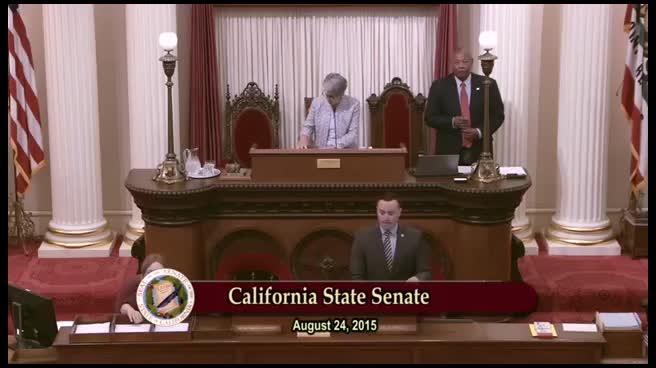 8MIN
Senate Floor
 10MIN
Assembly Floor
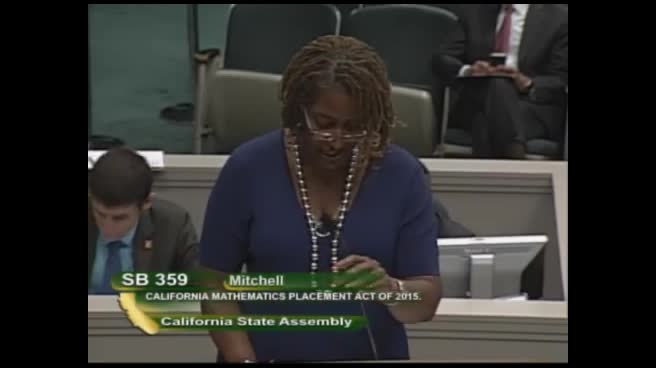 5MIN
Assembly Standing Committee on Appropriations
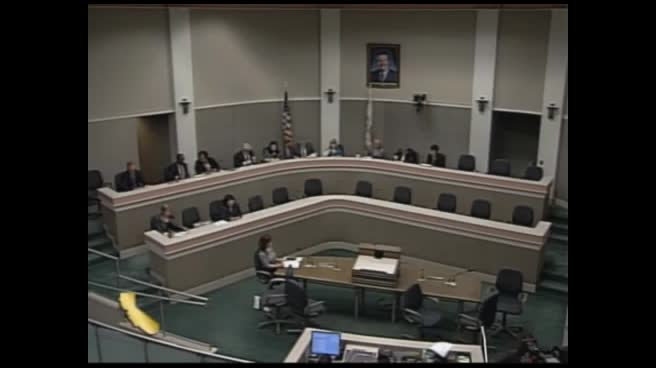 10MIN
Assembly Standing Committee on Education
Bill Author

Bill Co-Author(s):