SB 734: Environmental quality: Jobs and Economic Improvement Through Environmental Leadership Act of 2011.
- Session Year: 2015-2016
- House: Senate
- Latest Version Date: 2016-08-26
(1)The California Environmental Quality Act (CEQA) requires a lead agency, as defined, to prepare, or cause to be prepared, and certify the completion of an environmental impact report on a project that it proposes to carry out or approve that may have a significant effect on the environment or to adopt a negative declaration if it finds that the project will not have that effect. CEQA also requires a lead agency to prepare a mitigated negative declaration for a project that may have a significant effect on the environment if revisions in the project would avoid or mitigate that effect and there is no substantial evidence that the project, as revised, would have a significant effect on the environment.
The Jobs and Economic Improvement Through Environmental Leadership Act of 2011 authorizes the Governor, until January 1, 2016, to certify projects meeting certain requirements, including the requirement that the project creates high-wage, highly skilled jobs that pay prevailing wages and living wages, for streamlining benefits provided by that act. The act provides that if a lead agency fails to approve a project certified by the Governor before January 1, 2017, then the certification expires and is no longer valid. The act requires a lead agency to prepare the record of proceedings for the certified project concurrent with the preparation of the environmental documents. The act is repealed by its own terms on January 1, 2017.
This bill would extend the authority of the Governor to certify a project to January 1, 2018. The bill would provide that the certification expires and is no longer valid if the lead agency fails to approve a certified project before January 1, 2019. If a project is certified by the Governor, the bill would require contractors and subcontractors to pay to all construction workers employed in the execution of the project at least the general prevailing rate of per diem wages and would provide for the enforcement of this requirement. The bill would repeal the act on January 1, 2019. Because the bill would extend the obligation of the lead agency to prepare concurrently the record of proceedings, this bill would impose a state-mandated local program.
This bill would, notwithstanding any other law, require a multifamily residential project certified pursuant to the act to provide private vehicle parking spaces that are priced and rented or purchased separately from dwelling units, except as provided.
(2)The California Constitution requires the state to reimburse local agencies and school districts for certain costs mandated by the state. Statutory provisions establish procedures for making that reimbursement.
This bill would provide that no reimbursement is required by this act for a specified reason.
(3)This bill would declare that it is to take effect immediately as an urgency statute.
(1)The California Environmental Quality Act (CEQA) requires a lead agency, as defined, to prepare, or cause to be prepared, and certify the completion of an environmental impact report on a project that it proposes to carry out or approve that may have a significant effect on the environment or to adopt a negative declaration if it finds that the project will not have that effect. CEQA also requires a lead agency to prepare a mitigated negative declaration for a project that may have a significant effect on the environment if revisions in the project would avoid or mitigate that effect and there is no substantial evidence that the project, as revised, would have a significant effect on the environment.
The Jobs and Economic Improvement Through Environmental Leadership Act of 2011 authorizes the Governor, until January 1, 2016, to certify projects meeting certain requirements, including the requirement that the project creates high-wage, highly skilled jobs that pay prevailing wages and living wages, for streamlining benefits provided by that act. The act provides that if a lead agency fails to approve a project certified by the Governor before January 1, 2017, then the certification expires and is no longer valid. The act requires a lead agency to prepare the record of proceedings for the certified project concurrent with the preparation of the environmental documents. The act is repealed by its own terms on January 1, 2017.
This bill would extend the authority of the Governor to certify a project to January 1, 2018. The bill would provide that the certification expires and is no longer valid if the lead agency fails to approve a certified project before January 1, 2019. If a project is certified by the Governor, the bill would require contractors and subcontractors to pay to all construction workers employed in the execution of the project at least the general prevailing rate of per diem wages and would provide for the enforcement of this requirement. The bill would repeal the act on January 1, 2019. Because the bill would extend the obligation of the lead agency to prepare concurrently the record of proceedings, this bill would impose a state-mandated local program.
(2)The California Constitution requires the state to reimburse local agencies and school districts for certain costs mandated by the state. Statutory provisions establish procedures for making that reimbursement.
This bill would provide that no reimbursement is required by this act for a specified reason.
(3)This bill would declare that it is to take effect immediately as an urgency statute.
Existing law requires the Natural Resources Agency, in fiscal years for which funding is provided, to develop and maintain a database of lands and easements that have been acquired by the departments and boards within the agency. Existing law, in conjunction with the database, requires the agency to do certain things, including to establish a uniform open process to ensure that information is readily available to the general public, local, state, and federal agencies, adjacent landowners, and other interested parties regarding any state hearings to approve proposed state land acquisitions.
This bill would require the agency to implement the above uniform open process to include, but not be limited to, at least 30 days for public comment, to provide public transparency.
Existing law requires the Natural Resources Agency, in fiscal years for which funding is provided, to develop and maintain a database of lands and easements that have been acquired by the departments and boards within the agency. Existing law, in conjunction with the database, requires the agency to do certain things, including to establish a uniform open process to ensure that information is readily available to the general public, local, state, and federal agencies, adjacent landowners, and other interested parties regarding any state hearings to approve proposed state land acquisitions.
This bill would require the agency to also implement the above uniform open process, process to include, but not be limited to, at least 30 days for public comment, to provide public transparency.
Existing law requires that the above provisions be implemented only during those fiscal years for which funding is provided for these purposes in the annual Budget Act or in other measures.
This bill would delete this requirement.
Existing law requires the Natural Resources Agency to develop and maintain a database of lands and easements that have been acquired by the departments and boards within the agency. Existing law, in conjunction with the database, requires the agency to do certain things, including to establish a uniform open process to ensure that information is readily available to the general public, local, state, and federal agencies, adjacent landowners, and other interested parties regarding any state hearings to approve proposed state land acquisitions.
This bill would require the agency to also implement the above uniform open process, to include, but not be limited to, at least 30 days for public comment, to provide public transparency.
Existing law requires that the above provisions be implemented only during those fiscal years for which funding is provided for these purposes in the annual Budget Act or in other measures.
This bill would delete this requirement.
The Legislature finds and declares all of the following:
(a)The California Environmental Quality Act (Division 13 (commencing with Section 21000) of the Public Resources Code) requires that the environmental impacts of development projects be identified and mitigated.
(b)The act also guarantees the public an opportunity to review and comment on the environmental impacts of a project and to participate meaningfully in the development of mitigation measures for potentially significant environmental impacts.
(c)There are large projects under consideration in various regions of the state that would replace old and outmoded facilities with new job-creating facilities to meet those regions needs while also establishing new, cutting-edge environmental benefits to those regions.
(d)These projects are privately financed or financed from revenues generated from the projects themselves and do not require taxpayer financing.
(e)These projects further will generate thousands of full-time jobs during construction and thousands of additional permanent jobs once they are constructed and operating.
(f)These projects also present an unprecedented opportunity to implement nation-leading innovative measures that will significantly reduce traffic, air quality, and other significant environmental impacts, and fully mitigate the greenhouse gas emissions resulting from passenger vehicle trips attributed to the project.
(g)These pollution reductions will be the best in the nation compared to other comparable projects in the United States.
(h)The purpose of this chapter is to provide unique and unprecedented streamlining benefits under the California Environmental Quality Act for projects that provide the benefits described above for a limited period of time to put people to work as soon as possible.
SEC. 2.Section 21181 of the Public Resources Code is amended to read:21181.This chapter does not apply to a project if the Governor does not certify the project as an environmental leadership development project eligible for streamlining pursuant to this chapter prior to January 1, 2018.
SEC. 3.Section 21183 of the Public Resources Code is amended to read:21183.The Governor may certify a leadership project for streamlining pursuant to this chapter if all the following conditions are met:
(a)The project will result in a minimum investment of one hundred million dollars ($100,000,000) in California upon completion of construction.
(b)(1)The project creates high-wage, highly skilled jobs that pay prevailing wages and living wages and provide construction jobs and permanent jobs for Californians, and helps reduce unemployment. For purposes of this subdivision, jobs that pay prevailing wages means that all construction workers employed in the execution of the project will receive at least the general prevailing rate of per diem wages for the type of work and geographic area, as determined by the Director of Industrial Relations pursuant to Sections 1773 and 1773.9 of the Labor Code. If the project is certified for streamlining, the project applicant shall include this requirement in all contracts for the performance of the work.
(2)(A)If the project is certified pursuant to this chapter, contractors and subcontractors shall pay to all construction workers employed in the execution of the project at least the general prevailing rate of per diem wages.
(B)Except as provided in subparagraph (C), the obligation of the contractors and subcontractors to pay prevailing wages pursuant to subparagraph (A) may be enforced by the Labor Commissioner through the issuance of a civil wage and penalty assessment pursuant to Section 1741 of the Labor Code, which may be reviewed pursuant to Section 1742 of the Labor Code, within 18 months after the completion of the project, or by an underpaid worker through an administrative complaint or civil action. If a civil wage and penalty assessment is issued, the contractor, subcontractor, and surety on a bond or bonds issued to secure the payment of wages covered by the assessment shall be liable for liquidated damages pursuant to Section 1742.1 of the Labor Code.
(C)Subparagraph (B) does not apply if all contractors and subcontractors performing work on the project are subject to a project labor agreement that requires the payment of prevailing wages to all construction workers employed in the execution of the project and provides for enforcement of that obligation through an arbitration procedure. For purposes of this subparagraph, project labor agreement has the same meaning as set forth in paragraph (1) of subdivision (b) of Section 2500 of the Public Contract Code.
(c)The project does not result in any net additional emission of greenhouse gases, including greenhouse gas emissions from employee transportation, as determined by the State Air Resources Board pursuant to Division 25.5 (commencing with Section 38500) of the Health and Safety Code.
(d)The project applicant has entered into a binding and enforceable agreement that all mitigation measures required pursuant to this division to certify the project under this chapter shall be conditions of approval of the project, and those conditions will be fully enforceable by the lead agency or another agency designated by the lead agency. In the case of environmental mitigation measures, the applicant agrees, as an ongoing obligation, that those measures will be monitored and enforced by the lead agency for the life of the obligation.
(e)The project applicant agrees to pay the costs of the Court of Appeal in hearing and deciding any case, including payment of the costs for the appointment of a special master if deemed appropriate by the court, in a form and manner specified by the Judicial Council, as provided in the Rules of Court adopted by the Judicial Council pursuant to Section 21185.
(f)The project applicant agrees to pay the costs of preparing the administrative record for the project concurrent with review and consideration of the project pursuant to this division, in a form and manner specified by the lead agency for the project.
SEC. 4.Section 21184.5 is added to the Public Resources Code, to read:21184.5.(a)Notwithstanding any other law, except as provided in subdivision (b), a multifamily residential project certified under this chapter shall provide unbundled parking, such that private vehicle parking spaces are priced and rented or purchased separately from dwelling units.
(b)Subdivision (a) shall not apply if the dwelling units are subject to affordability restrictions in law that prescribe rent or sale prices, and the cost of parking spaces cannot be unbundled from the cost of dwelling units.
SEC. 5.Section 21189.1 of the Public Resources Code is amended to read:21189.1.If, prior to January 1, 2019, a lead agency fails to approve a project certified by the Governor pursuant to this chapter, then the certification expires and is no longer valid.
SEC. 6.Section 21189.3 of the Public Resources Code is amended to read:21189.3.This chapter shall remain in effect until January 1, 2019, and as of that date is repealed unless a later enacted statute extends or repeals that date.
SEC. 7.No reimbursement is required by this act pursuant to Section 6 of Article XIIIB of the California Constitution because a local agency or school district has the authority to levy service charges, fees, or assessments sufficient to pay for the program or level of service mandated by this act, within the meaning of Section 17556 of the Government Code.
SEC. 8.This act is an urgency statute necessary for the immediate preservation of the public peace, health, or safety within the meaning of Article IV of the Constitution and shall go into immediate effect. The facts constituting the necessity are:
In order to reauthorize the Governor to certify projects as environmental leadership development projects in 2016 and prevent a one-year gap in this authorization, it is necessary that this act take effect immediately.
The Legislature finds and declares all of the following:
(a)The overall unemployment rate in California is 12 percent, and in certain regions of the state that rate exceeds 13 percent.
(b)
(a)The California Environmental Quality Act (Division 13 (commencing with Section 21000) of the Public Resources Code) requires that the environmental impacts of development projects be identified and mitigated.
(c)
(b)The act also guarantees the public an opportunity to review and comment on the environmental impacts of a project and to participate meaningfully in the development of mitigation measures for potentially significant environmental impacts.
(d)
(c)There are large projects under consideration in various regions of the state that would replace old and outmoded facilities with new job-creating facilities to meet those regions needs while also establishing new, cutting-edge environmental benefits to those regions.
(e)
(d)These projects are privately financed or financed from revenues generated from the projects themselves and do not require taxpayer financing.
(f)
(e)These projects further will generate thousands of full-time jobs during construction and thousands of additional permanent jobs once they are constructed and operating.
(g)
(f)These projects also present an unprecedented opportunity to implement nation-leading innovative measures that will significantly reduce traffic, air quality, and other significant environmental impacts, and fully mitigate the greenhouse gas emissions resulting from passenger vehicle trips attributed to the project.
(h)
(g)These pollution reductions will be the best in the nation compared to other comparable projects in the United States.
(i)
(h)The purpose of this act chapter is to provide unique and unprecedented streamlining benefits under the California Environmental Quality Act for projects that provide the benefits described above for a limited period of time to put people to work as soon as possible.
SECTION 1.SEC. 2.Section 21181 of the Public Resources Code is amended to read:21181.This chapter does not apply to a project if the Governor does not certify the project as an environmental leadership development project eligible for streamlining pursuant to this chapter prior to January 1, 2018.
SEC. 2.SEC. 3.Section 21183 of the Public Resources Code is amended to read:21183.The Governor may certify a leadership project for streamlining pursuant to this chapter if all the following conditions are met:
(a)The project will result in a minimum investment of one hundred million dollars ($100,000,000) in California upon completion of construction.
(b)(1)The project creates high-wage, highly skilled jobs that pay prevailing wages and living wages and provide construction jobs and permanent jobs for Californians, and helps reduce unemployment. For purposes of this subdivision, jobs that pay prevailing wages means that all construction workers employed in the execution of the project will receive at least the general prevailing rate of per diem wages for the type of work and geographic area, as determined by the Director of Industrial Relations pursuant to Sections 1773 and 1773.9 of the Labor Code. If the project is certified for streamlining, the project applicant shall include this requirement in all contracts for the performance of the work.
(2)(A)If the project is certified pursuant to this chapter, contractors and subcontractors shall pay to all construction workers employed in the execution of the project at least the general prevailing rate of per diem wages.
(B)Except as provided in subparagraph (C), the obligation of the contractors and subcontractors to pay prevailing wages pursuant to subparagraph (A) may be enforced by the Labor Commissioner through the issuance of a civil wage and penalty assessment pursuant to Section 1741 of the Labor Code, which may be reviewed pursuant to Section 1742 of the Labor Code, within 18 months after the completion of the project, or by an underpaid worker through an administrative complaint or civil action. If a civil wage and penalty assessment is issued, the contractor, subcontractor, and surety on a bond or bonds issued to secure the payment of wages covered by the assessment shall be liable for liquidated damages pursuant to Section 1742.1 of the Labor Code.
(C)Subparagraph (B) does not apply if all contractors and subcontractors performing work on the project are subject to a project labor agreement that requires the payment of prevailing wages to all construction workers employed in the execution of the project and provides for enforcement of that obligation through an arbitration procedure. For purposes of this subparagraph, project labor agreement has the same meaning as set forth in paragraph (1) of subdivision (b) of Section 2500 of the Public Contract Code.
(c)The project does not result in any net additional emission of greenhouse gases, including greenhouse gas emissions from employee transportation, as determined by the State Air Resources Board pursuant to Division 25.5 (commencing with Section 38500) of the Health and Safety Code.
(d)The project applicant has entered into a binding and enforceable agreement that all mitigation measures required pursuant to this division to certify the project under this chapter shall be conditions of approval of the project, and those conditions will be fully enforceable by the lead agency or another agency designated by the lead agency. In the case of environmental mitigation measures, the applicant agrees, as an ongoing obligation, that those measures will be monitored and enforced by the lead agency for the life of the obligation.
(e)The project applicant agrees to pay the costs of the Court of Appeal in hearing and deciding any case, including payment of the costs for the appointment of a special master if deemed appropriate by the court, in a form and manner specified by the Judicial Council, as provided in the Rules of Court adopted by the Judicial Council pursuant to Section 21185.
(f)The project applicant agrees to pay the costs of preparing the administrative record for the project concurrent with review and consideration of the project pursuant to this division, in a form and manner specified by the lead agency for the project.
SEC. 4.Section 21184.5 is added to the Public Resources Code, to read:21184.5.(a)Notwithstanding any other law, except as provided in subdivision (b), a multifamily residential project certified under this chapter shall provide unbundled parking, such that private vehicle parking spaces are priced and rented or purchased separately from dwelling units.
(b)Subdivision (a) shall not apply if the dwelling units are subject to affordability restrictions in law that prescribe rent or sale prices, and the cost of parking spaces cannot be unbundled from the cost of dwelling units.
SEC. 3.SEC. 5.Section 21189.1 of the Public Resources Code is amended to read:21189.1.If, prior to January 1, 2019, a lead agency fails to approve a project certified by the Governor pursuant to this chapter, then the certification expires and is no longer valid.
SEC. 4.SEC. 6.Section 21189.3 of the Public Resources Code is amended to read:21189.3.This chapter shall remain in effect until January 1, 2019, and as of that date is repealed unless a later enacted statute extends or repeals that date.
SEC. 5.SEC. 7.No reimbursement is required by this act pursuant to Section 6 of Article XIIIB of the California Constitution because a local agency or school district has the authority to levy service charges, fees, or assessments sufficient to pay for the program or level of service mandated by this act, within the meaning of Section 17556 of the Government Code.
SEC. 6.SEC. 8.This act is an urgency statute necessary for the immediate preservation of the public peace, health, or safety within the meaning of Article IV of the Constitution and shall go into immediate effect. The facts constituting the necessity are:
In order to reauthorize the Governor to certify projects as environmental leadership development projects in 2016 and prevent a one-year gap in this authorization, it is necessary that this act take effect immediately.
Amended DatePage 1.This chapter does not apply to a project if the Governor does not certify a the project as an environmental leadership development project eligible for streamlining provided pursuant to this chapter prior to January 1, 2016. 2018.
SEC. 2.Section 21183 of the Public Resources Code is amended to read:21183.The Governor may certify a leadership project for streamlining pursuant to this chapter if all the following conditions are met:
(a)The project will result in a minimum investment of one hundred million dollars ($100,000,000) in California upon completion of construction.
(b)(1)The project creates high-wage, highly skilled jobs that pay prevailing wages and living wages and provide construction jobs and permanent jobs for Californians, and helps reduce unemployment. For purposes of this subdivision, jobs that pay prevailing wages means that all construction workers employed in the execution of the project will receive at least the general prevailing rate of per diem wages for the type of work and geographic area, as determined by the Director of Industrial Relations pursuant to Sections 1773 and 1773.9 of the Labor Code. If the project is certified for streamlining, the project applicant shall include this requirement in all contracts for the performance of the work.
(2)(A)If the project is certified pursuant to this chapter, contractors and subcontractors shall pay to all construction workers employed in the execution of the project at least the general prevailing rate of per diem wages.
(B)Except as provided in subparagraph (C), the obligation of the contractors and subcontractors to pay prevailing wages pursuant to subparagraph (A) may be enforced by the Labor Commissioner through the issuance of a civil wage and penalty assessment pursuant to Section 1741 of the Labor Code, which may be reviewed pursuant to Section 1742 of the Labor Code, within 18 months after the completion of the project, or by an underpaid worker through an administrative complaint or civil action. If a civil wage and penalty assessment is issued, the contractor, subcontractor, and surety on a bond or bonds issued to secure the payment of wages covered by the assessment shall be liable for liquidated damages pursuant to Section 1742.1 of the Labor Code.
(C)Subparagraph (B) does not apply if all contractors and subcontractors performing work on the project are subject to a project labor agreement that requires the payment of prevailing wages to all construction workers employed in the execution of the project and provides for enforcement of that obligation through an arbitration procedure. For purposes of this subparagraph, project labor agreement has the same meaning as set forth in paragraph (1) of subdivision (b) of Section 2500 of the Public Contract Code.
(c)The project does not result in any net additional emission of greenhouse gases, including greenhouse gas emissions from employee transportation, as determined by the State Air Resources Board pursuant to Division 25.5 (commencing with Section 38500) of the Health and Safety Code.
(d)The project applicant has entered into a binding and enforceable agreement that all mitigation measures required pursuant to this division to certify the project under this chapter shall be conditions of approval of the project, and those conditions will be fully enforceable by the lead agency or another agency designated by the lead agency. In the case of environmental mitigation measures, the applicant agrees, as an ongoing obligation, that those measures will be monitored and enforced by the lead agency for the life of the obligation.
(e)The project applicant agrees to pay the costs of the Court of Appeal in hearing and deciding any case, including payment of the costs for the appointment of a special master if deemed appropriate by the court, in a form and manner specified by the Judicial Council, as provided in the Rules of Court adopted by the Judicial Council pursuant to subdivision (f) of Section 21185.
(f)The project applicant agrees to pay the costs of preparing the administrative record for the project concurrent with review and consideration of the project pursuant to this division, in a form and manner specified by the lead agency for the project.
SEC. 3.Section 21189.1 of the Public Resources Code is amended to read:21189.1.If, prior to January 1, 2017, 2019, a lead agency fails to approve a project certified by the Governor pursuant to this chapter, then the certification expires and is no longer valid.
SEC. 4.Section 21189.3 of the Public Resources Code is amended to read:21189.3.This chapter shall remain in effect until January 1, 2017, 2019, and as of that date is repealed unless a later enacted statute extends or repeals that date.
SEC. 5.No reimbursement is required by this act pursuant to Section 6 of Article XIIIB of the California Constitution because a local agency or school district has the authority to levy service charges, fees, or assessments sufficient to pay for the program or level of service mandated by this act, within the meaning of Section 17556 of the Government Code.
SEC. 6.This act is an urgency statute necessary for the immediate preservation of the public peace, health, or safety within the meaning of Article IV of the Constitution and shall go into immediate effect. The facts constituting the necessity are:
In order to reauthorize the Governor to certify projects as environmental leadership development projects in 2016 and prevent a one-year gap in this authorization, it is necessary that this act take effect immediately.
SECTION 1.Section 12805.2 of the Government Code is amended to read:12805.2.(a)The Natural Resources Agency, in consultation with each department, board, conservancy, and commission within the agency, shall develop and maintain a database of lands and easements that have been acquired by the departments, boards, commissions, and conservancies within the Natural Resources Agency. The database shall include, but need not be limited to, all of the following:
(1)The name of the owner of the land or easement.
(2)The location of the land or easement.
(3)The statutory authority for the acquisition of the land or easement.
(b)In conjunction with the database described in subdivision (a), the Natural Resources Agency shall do all of the following:
(1)On or before September 1, 2002, and each year thereafter, request that all departments, boards, commissions, and conservancies within the Natural Resources Agency provide the Secretary of the Natural Resources Agency with information on any acquisitions of land or funding that was directed to the acquisition of land, undertaken by the department, board, commission, or conservancy.
(2)To the extent that the information is available, on or before January 10, 2003, and each year thereafter, require that all departments, boards, commissions, and conservancies within the Natural Resources Agency provide the Secretary of the Natural Resources Agency with general information, including a general geographic description of land acquisition priorities and potential funding sources during the next fiscal year.
(3)To the extent feasible, review and evaluate any available information from federal agencies pertaining to its land acquisition activities to coordinate and better understand the impact on California state proposals.
(4)Provide a report to the Governor and the Legislature on or before December 31, 2003, and each year thereafter, that does both of the following:
(A)Describes the amount of land acquired by each department, board, commission, and conservancy within the Natural Resources Agency during the past year and the amount of money spent for the acquisition.
(B)Projects the approximate amount of land that will be acquired by the Natural Resources Agency during the following year.
(5)Provide the report described in paragraph (4) to the Secretary of Food and Agriculture and the Director of Conservation.
(6)Establish and implement a uniform open process, that shall include, but is not limited to, at least 30 days for public comment, to provide public transparency and ensure that information is readily available to the general public, local, state, and federal agencies, adjacent landowners, and other interested parties of record regarding any state hearings to approve proposed state land acquisitions.
(7)Develop strategies with local, state, and federal agencies so that a revenue stream is established to ensure management plans are adequately funded for all new acquisitions.
(c)This section shall be implemented only during those fiscal years for which funding is provided for the purposes of this section in the annual Budget Act or in another measure.
(a)The Natural Resources Agency, in consultation with each department, board, conservancy, and commission within the agency, shall develop and maintain a database of lands and easements that have been acquired by the departments, boards, commissions, and conservancies within the Natural Resources Agency. The database shall include, but need not be limited to, all of the following:
(1)The name of the owner of the land or easement.
(2)The location of the land or easement.
(3)The statutory authority for the acquisition of the land or easement.
(b)In conjunction with the database described in subdivision (a), the Natural Resources Agency shall do all of the following:
(1)On or before September 1, 2002, and each year thereafter, request that all departments, boards, commissions, and conservancies within the Natural Resources Agency provide the Secretary of the Natural Resources Agency with information on any acquisitions of land or funding that was directed to the acquisition of land, undertaken by the department, board, commission, or conservancy.
(2)To the extent that the information is available, on or before January 10, 2003, and each year thereafter, require that all departments, boards, commissions, and conservancies within the Natural Resources Agency provide the Secretary of the Natural Resources Agency with general information, including a general geographic description of land acquisition priorities and potential funding sources during the next fiscal year.
(3)To the extent feasible, review and evaluate any available information from federal agencies pertaining to its land acquisition activities to coordinate and better understand the impact on California state proposals.
(4)Provide a report to the Governor and the Legislature on or before December 31, 2003, and each year thereafter, that does both of the following:
(A)Describes the amount of land acquired by each department, board, commission, and conservancy within the Natural Resources Agency during the past year and the amount of money spent for the acquisition.
(B)Projects the approximate amount of land that will be acquired by the Natural Resources Agency during the following year.
(5)Provide the report described in paragraph (4) to the Secretary of Food and Agriculture and the Director of Conservation.
(6)Establish and implement a uniform open process, that shall include, but is not limited to, at least 30 days for public comment, to provide public transparency and ensure that information is readily available to the general public, local, state, and federal agencies, adjacent landowners, and other interested parties of record regarding any state hearings to approve proposed state land acquisitions.
(7)Develop strategies with local, state, and federal agencies so that a revenue stream is established to ensure management plans are adequately funded for all new acquisitions.
(c)This section shall be implemented only during those fiscal years for which funding is provided for the purposes of this section in the annual Budget Act or in another measure.
(a)The Natural Resources Agency, in consultation with each department, board, conservancy, and commission within the agency, shall develop and maintain a database of lands and easements that have been acquired by the departments and boards, boards, commissions, and conservancies within the Natural Resources Agency. The database shall include, but need not be limited to, all of the following:
(1)The name of the owner of the land or easement.
(2)The location of the land or easement.
(3)The statutory authority for the acquisition of the land or easement.
(b)In conjunction with the database described in subdivision (a), the Natural Resources Agency shall do all of the following:
(1)On or before September 1, 2002, and each year thereafter, request that all departments, boards, commissions, and conservancies within the Natural Resources Agency provide the Secretary of the Natural Resources Agency with information on any acquisitions of land or funding that was directed to the acquisition of land, undertaken by the department, board, commission, or conservancy.
(2)To the extent that the information is available, on or before January 10, 2003, and each year thereafter, require that all departments, boards, commissions, and conservancies within the Natural Resources Agency provide the Secretary of the Natural Resources Agency with general information, including a general geographic description of land acquisition priorities and potential funding sources during the next fiscal year.
(3)To the extent feasible, review and evaluate any available information from federal agencies pertaining to its land acquisition activities to coordinate and better understand the impact on California state proposals.
(4)Provide a report to the Governor and the Legislature on or before December 31, 2003, and each year thereafter, that does both of the following:
(A)Describes the amount of land acquired by each department, board, commission, and conservancy within the Natural Resources Agency during the past year and the amount of money spent for the acquisition.
(B)Projects the approximate amount of land that will be acquired by the Natural Resources Agency during the following year.
(5)Provide the report described in paragraph (4) to the Secretary of Food and Agriculture and the Director of Conservation.
(6)Establish and implement a uniform open process, that shall include, but is not limited to, at least 30 days for public comment, to provide public transparency and ensure that information is readily available to the general public, local, state, and federal agencies, adjacent landowners, and other interested parties of record regarding any state hearings to approve proposed state land acquisitions.
(7)Develop strategies with local, state, and federal agencies so that a revenue stream is established to ensure management plans are adequately funded for all new acquisitions.
(c)This section shall be implemented only during those fiscal years for which funding is provided for the purposes of this section in the annual Budget Act or in another measure.
|
Date
|
Status
|
|---|---|
| Aug 4, 2016 | Read third time. Urgency clause adopted. Passed. (Ayes 61. Noes 10. Page 5706.) Ordered to the Senate. |
| Sep 11, 2015 | Ordered to inactive file on request of Assembly Member Holden. |
| May 5, 2016 | Notice of intention to remove from inactive file given by Assembly Member Calderon. |
| May 9, 2016 | From inactive file. |
| May 9, 2016 | Ordered to third reading. |
| May 12, 2016 | Re-referred to Com. on NAT. RES. pursuant to Assembly Rule 97. |
| May 19, 2016 | From committee with author's amendments. Read second time and amended. Re-referred to Com. on NAT. RES. |
| Jun 16, 2016 | From committee: Do pass as amended and re-refer to Com. on APPR. (Ayes 5. Noes 3.) (June 13). |
| Jun 21, 2016 | (Corrected June 21). |
| Jun 21, 2016 | Read second time and amended. Re-referred to Com. on APPR. |
| Jun 22, 2016 | From committee: Do pass. (Ayes 14. Noes 5.) (June 22). |
| Jun 23, 2016 | Read second time. Ordered to third reading. |
| Aug 4, 2016 | In Senate. Concurrence in Assembly amendments pending. |
| Aug 4, 2016 | Read third time. Urgency clause adopted. Passed. Ordered to the Senate. |
| Aug 31, 2015 | Ordered to third reading. |
| Aug 8, 2016 | From committee: Be re-referred to Com. on E.Q. pursuant to Senate Rule 29.10(d). (Ayes 5. Noes 0. Page 4819.) Re-referred to Com. on E.Q. |
| Aug 8, 2016 | From committee: Be re-referred to Com. on E.Q. pursuant to Senate Rule 29.10(d). (Ayes 5. Noes 0.) Re-referred to Com. on E.Q. |
| Aug 8, 2016 | Re-referred to Com. on RLS. pursuant to Senate Rule 29.10(d). |
| Aug 9, 2016 | Set for hearing August 10. |
| Aug 10, 2016 | From committee: That the Assembly amendments be concurred in. (Ayes 4. Noes 1. Page 4848.) |
| Aug 10, 2016 | From committee: That the Assembly amendments be concurred in. (Ayes 4. Noes 1.) |
| Aug 11, 2016 | Assembly amendments concurred in. (Ayes 27. Noes 0.) Ordered to engrossing and enrolling. |
| Aug 11, 2016 | Assembly amendments concurred in. (Ayes 28. Noes 0. Page 4865.) Ordered to engrossing and enrolling. |
| Aug 11, 2016 | Urgency clause adopted. |
| Aug 16, 2016 | Enrolled and presented to the Governor at 11:30 a.m. |
| Aug 26, 2016 | Approved by the Governor. |
| Aug 26, 2016 | Chaptered by Secretary of State. Chapter 210, Statutes of 2016. |
| May 23, 2015 | Set for hearing May 28. |
| Mar 2, 2015 | From printer. May be acted upon on or after April 1. |
| Mar 2, 2015 | Read first time. |
| Mar 19, 2015 | Referred to Com. on N.R. & W. |
| Apr 2, 2015 | Set for hearing April 14. |
| Apr 6, 2015 | April 14 set for first hearing canceled at the request of author. |
| Apr 9, 2015 | Set for hearing April 28. |
| Apr 15, 2015 | April 28 hearing postponed by committee. |
| Apr 22, 2015 | Set for hearing April 28. |
| Apr 29, 2015 | From committee: Do pass and re-refer to Com. on APPR. with recommendation: To consent calendar. (Ayes 8. Noes 0. Page 821.) (April 28). Re-referred to Com. on APPR. |
| Apr 29, 2015 | From committee: Do pass and re-refer to Com. on APPR. with recommendation: To consent calendar. (Ayes 8. Noes 0.) (April 28). Re-referred to Com. on APPR. |
| May 5, 2015 | Set for hearing May 11. |
| May 11, 2015 | May 11 hearing: Placed on APPR. suspense file. |
| Feb 27, 2015 | Introduced. To Com. on RLS. for assignment. To print. |
| Jun 1, 2015 | From committee: Do pass as amended. (Ayes 7. Noes 0. Page 1159.) (May 28). |
| Jun 1, 2015 | From committee: Do pass as amended. (Ayes 7. Noes 0.) (May 28). |
| Jun 2, 2015 | Read second time and amended. Ordered to third reading. |
| Jun 4, 2015 | In Assembly. Read first time. Held at Desk. |
| Jun 4, 2015 | Read third time. Passed. (Ayes 37. Noes 0. Page 1332.) Ordered to the Assembly. |
| Jun 4, 2015 | Read third time. Passed. (Ayes 37. Noes 0.) Ordered to the Assembly. |
| Jun 18, 2015 | Referred to Com. on NAT. RES. |
| Jul 14, 2015 | From committee: Do pass and re-refer to Com. on APPR. with recommendation: To consent calendar. (Ayes 9. Noes 0.) (July 13). Re-referred to Com. on APPR. |
| Aug 19, 2015 | August 19 hearing postponed by committee. |
| Aug 26, 2015 | From committee: Do pass. Ordered to consent calendar. (Ayes 17. Noes 0.) (August 26). |
| Aug 27, 2015 | Read second time. Ordered to consent calendar. |
| Aug 31, 2015 | From consent calendar on motion of Assembly Member Holden. |
|
Date
|
Description
|
Location
|
Votes
|
|
|---|---|---|---|---|
| Aug 11, 2016 | Unfinished Business SB734 Galgiani Urgency Clause Concurrence | Senate Floor |
Passed |
|
| Aug 10, 2016 | That the Assembly amendments be concurred in | Senate Standing Committee on Environmental Quality |
Passed |
|
| Aug 4, 2016 | SB 734 Galgiani Third Reading Urgency By GRAY | Assembly Floor |
Passed |
|
| Jun 22, 2016 | Do pass. | Assembly Standing Committee on Appropriations |
Passed |
|
| Jun 13, 2016 | Do pass as amended and be re-referred to the Committee on [Appropriations] | Assembly Standing Committee on Natural Resources |
Passed |
|
| Aug 26, 2015 | Do pass. To Consent Calendar. | Assembly Standing Committee on Appropriations |
Passed |
|
| Jul 13, 2015 | Do pass and be re-referred to the Committee on [Appropriations] with recommendation: To Consent Calendar | Assembly Standing Committee on Natural Resources |
Passed |
|
| Jun 4, 2015 | Senate 3rd Reading SB734 De León | Senate Floor |
Passed |
|
| May 28, 2015 | Do pass as amended | Senate Standing Committee on Appropriations |
Passed |
|
| May 11, 2015 | Placed on suspense file | Senate Standing Committee on Appropriations |
Passed |
|
| Apr 28, 2015 | Do pass, but first be re-referred to the Committee on [Appropriations] with the recommendation: To Consent Calendar | Senate Standing Committee on Natural Resources and Water |
Passed |
This list shows positions taken on this bill by organizations on the date displayed, which is linked to the original source.
Positions by individuals are not included.
|
Organization
|
Position
|
Date
|
|---|---|---|
| 5827 West Sunset | * Support | Jun 22, 2016 |
| 5875 Sunset | * Support | Aug 10, 2016 |
| Air Conditioning Trade Association | ** Against | Aug 10, 2016 |
| American Fire Sprinkler Association | ** Against | Aug 10, 2016 |
| Associated Builders and Contractors - San Diego Chapter | ** Against | Aug 10, 2016 |
| California Chamber Of Commerce | * Support | Aug 10, 2016 |
| California League Of Conservation Voters | ** Against | Aug 10, 2016 |
| Friends of the Hollywood Central Park | * Support | Aug 10, 2016 |
| Hollywood Central Park | * Support | Aug 10, 2016 |
| Judicial Council | * Against | Aug 10, 2016 |
| Judicial Council of California | * Against | Aug 10, 2016 |
| Plumbing-Heating-Cooling Contractors Association of California | ** Against | Aug 10, 2016 |
| Sierra Club California | ** Against | Aug 10, 2016 |
| State Building & Construction Trades Council Of California | * Support | Aug 10, 2016 |
| u Western Electrical Contractors Association | * Against | Aug 10, 2016 |
| Western Electrical Contractors Association | * Against | Aug 10, 2016 |
Office of Senate Floor Analyses (916) 651-1520 Fax: (916) 327-4478 | SB |
UNFINISHED BUSINESS
Bill No: SB 734
:
PRIOR VOTES NOT RELEVANT
SENATE ENVIRONMENTAL QUALITY COMMITTEE: 4-1, 8/10/16 (Pursuant to Senate Rule 29.10)
AYES: Wieckowski, Gaines, Hill, Leno
NOES: Bates
NO VOTE RECORDED: Jackson, Pavley
ASSEMBLY FLOOR: 61-10, 8/4/16 - See last page for vote
SOURCE: State Building and Construction Trades Council
DIGEST: This bill extends for two years the expedited California Environmental Quality Act (CEQA) judicial review procedures established by the Jobs and Economic Improvement Through Environmental Leadership Act (AB 900, Buchanan and Gordon, Chapter 354, Statutes of 2011).
Assembly Amendments delete the Senate version of the bill relating to state land acquisitions, and insert the current language.
Existing law:
- Requires, under CEQA, lead agencies with the principal responsibility for carrying out or approving a proposed discretionary project to prepare a negative declaration, mitigated declaration, or environmental impact report (EIR) for this action, unless the project is exempt from CEQA (CEQA includes various statutory exemptions, as well as categorical exemptions in the CEQA guidelines). (Public Resources Code (PRC) §21000 et seq.).
- Establishes CEQA administrative and judicial review procedures for an “environmental leadership development project”, under the Jobs and Economic Improvement Through Environmental Leadership Act of 2011, which is part of CEQA.
This bill:
- Extends the operation of AB 900 by two years, so that the Governor must certify a project prior to January 1, 2018, the project must be approved prior to January 1, 2019, and AB 900 sunsets January 1, 2019.
- Adds the following prevailing wage conditions and enforcement provisions:
- Requires contractors and subcontractors to pay to all construction workers employed in the execution of the project at least the general prevailing rate of per diem wages.
- Provides that this obligation may be enforced by the Labor Commissioner through the issuance of a civil wage and penalty assessment pursuant to relevant provisions of the Labor Code, unless all contractors and subcontractors performing work on the project are subject to a project labor agreement that requires the payment of prevailing wages and provides for enforcement through an arbitration procedure.
- Requires a multifamily residential project certified under AB 900 to provide unbundled parking, such that private vehicle parking spaces are priced and rented or purchased separately from dwelling units, except for units subject to affordability restrictions in law that prescribe rent or sale prices, where the cost of parking spaces cannot be unbundled from the cost of dwelling units.
Background
- Previous, related bills.
- AB 900 and SB 292. AB 900 (Buchanan and Gordon) and SB 292 (Padilla, Chapter 353, Statutes of 2011) established expedited CEQA judicial review procedures for a limited number of projects. For AB 900, it was large-scale projects meeting extraordinary environmental standards and providing significant jobs and investment. For SB 292, it was a proposed downtown Los Angeles football stadium and convention center project achieving specified traffic and air quality mitigations. The stadium project subject to SB 292 has not proceeded.
For these eligible projects, the bills provided for original jurisdiction by the Court of Appeal and a compressed schedule requiring the court to render a decision on any lawsuit within 175 days. This promised to reduce the existing judicial review timeline by 100 days or more, while creating new burdens for the courts and litigants to meet the shortened schedule.
AB 900’s provision granting original jurisdiction to the Court of Appeal was invalidated in 2013 by a decision in Alameda Superior Court in Planning and Conservation League v. State of California. - SB 743 (Steinberg, Chapter 386, Statutes of 2013). Subsequent to the Alameda Superior Court holding mentioned above, SB 743 repealed the provision that gave original jurisdiction to the Court of Appeal and required Judicial Council to adopt a rule of court mandating lawsuits and any appeals to be resolved within 270 days.
Also, SB 743 (Steinberg) established special CEQA procedures modeled on SB 292 for the Sacramento Kings arena project. Like SB 292, SB 743 applied to a single project and included specified traffic and air quality mitigations. CEQA lawsuits were filed against the Kings arena, and the lawsuits, including appeals, were resolved 267 days after certification of the record.
- AB 900 and SB 292. AB 900 (Buchanan and Gordon) and SB 292 (Padilla, Chapter 353, Statutes of 2011) established expedited CEQA judicial review procedures for a limited number of projects. For AB 900, it was large-scale projects meeting extraordinary environmental standards and providing significant jobs and investment. For SB 292, it was a proposed downtown Los Angeles football stadium and convention center project achieving specified traffic and air quality mitigations. The stadium project subject to SB 292 has not proceeded.
- AB 900 projects to date. Six projects have been certified under AB 900. The deadline for AB 900 certification under current law has passed (which was January 1, 2016). According to the Office of Planning and Research, the following projects have had AB 900 applications submitted:
- McCoy Solar Energy Project (January 12, 2012).
- Apple Campus 2 (April 19, 2012).
- Soitec Solar Energy Project (January 7, 2013).
- 8150 Sunset Boulevard (January 31, 2014).
- Event Center and Mixed-Use Development at Mission Bay Blocks (The Golden State Warriors Arena) (February 17, 2014).
- Qualcomm Stadium Reconstruction Project (August 25, 2015).
Comments
- Purpose of bill. According to the author, “California is continually recovering from and preparing for future economic devastation. SB 734 will help large job producing green projects avoid delay and keep Californians working by extending the Governor’s authority to certify a project to January 1, 2018.”
- Golden State Warriors Arena and two lawsuits. The proposed Golden State Warriors Arena and related development at Mission Bay in San Francisco, which has received AB 900 certification, has been challenged under CEQA. The case, Mission Bay Alliance et al. v Office of Community Investment and Infrastructure, was filed March 11, 2016. One of the plaintiffs, Mission Bay Alliance, which is a coalition of UCSF stakeholders, donors, faculty, and physicians, argues that the 18,500-seat arena would congest area streets with traffic, slowing down access to the University of California, San Francisco (UCSF) Medical Center at Mission Bay, which is located across the street from the proposed arena. In addition, the plaintiff contends that the basketball arena in Mission Bay is at odds with the cluster of life science research and health care facilities that have been built in the neighborhood. On July 18, 2016, a trial court ruled in favor of the project sponsor, the Warriors; the decision has been appealed.
The above lawsuit is one of two legal challenges filed by the Mission Bay Alliance in regards to the Warriors arena; the second of which is not CEQA-related. In the other lawsuit, filed in Alameda County, the plaintiffs seek to invalidate an agreement between UCSF and the Warriors, which included a $10 million Mission Bay Transportation Improvement Fund for controlling traffic flow in the area. The plaintiffs contend that the UCSF chancellor went beyond his authority in reaching this agreement without University of California Regents approval. This second lawsuit has yet to be decided.
The Warriors team has stated that the lawsuits have delayed the opening of the arena by a year, to 2019. One lawsuit has special, fast-tracking CEQA-related litigation privileges and the other does not. Although AB 900 may speed up the litigation process for the CEQA case, the second lawsuit demonstrates that CEQA is not the only body of law for which there is to sue; rather, there is a cavalry of non-CEQA-related causes of action from which a plaintiff may choose and that are subject to standard civil procedure rules. AB 900 cannot expedite or insulate a project from non-CEQA-related litigation and does not guarantee that a project will be completed faster. - Should we expect more from AB 900 projects? SB 743 (Steinberg) required the Kings arena to be certified Leadership in Energy and Environmental Design (LEED) Gold, as well as minimize traffic and air quality impacts through project design or mitigation measures, including reducing to at least zero the net greenhouse gas (GHG) emissions from private automobile trips to the arena, achieve reductions in GHG emissions from automobiles and light trucks that will exceed the GHG emission reduction targets for 2020 and 2035 adopted for the Sacramento region pursuant to SB 375 (Steinberg, Chapter 728, Statutes of 2008), and achieve a 15% reduction in vehicle-miles traveled per attendee.
In contrast to SB 743, AB 900 requires lower LEED Silver certification, a 10% improvement in transportation efficiency over comparable projects, and zero net GHG emissions, with no requirement that the GHG emission reductions be from local sources.
In comparing the requirements of SB 743 and AB 900, a question arises as to whether it would be more environmentally beneficial to the state to require AB 900 projects to meet similar standards as required in SB 743. - Equal justice for all? Court calendar preference and guaranteed time frames. Current law requires the courts to give CEQA-related cases preference over “all other civil actions… so that the action or proceeding shall be quickly heard and determined.” (PRC §21167.1). In addition to this existing mandate, SB 734 provides that the courts must complete the judicial review process in a given time frame for certain CEQA-related actions or proceedings when specified criteria are met.
As a consequence, such mandates on a court delay access for other cases as well as potentially exacerbating a court’s backlog on civil documents such as filing a new civil complaint, processing answers and cross complaints, or processing a demurrer or summary judgment. As Judicial Council notes, “[S]etting an extremely tight timeline for deciding these cases has the practical effect of pushing other cases on the courts’ dockets to the back of the line. This means that other cases, including cases that have statutorily mandated calendar preferences, such as juvenile cases, criminal cases, and civil cases in which a party is at risk of dying, will take longer to decide.”
This bill requires a court to make room on its calendar, potentially pushing other cases aside, to ensure that specified time frames are met on certain CEQA cases. Calendar preferences and guaranteed time frames create additional demands and burden on our courts that have very limited resources and a never-ending supply of cases to hear. - Projects queuing up. Although this bill is not specific to any particular projects, proponents of SB 734 have identified four projects that may apply for AB 900 certification if this bill is enacted:
- 6701 Sunset/Crossroads in Hollywood – Nine new mixed-use buildings, including residential, hotel, commercial office, retail, and restaurant uses, including up to 308 hotel rooms and 950 residential units, 84 of which will be affordable to low-income households (to replace 84 rent-controlled units the project will demolish).
- Yucca-Argyle Project in Hollywood – Mixed-use project with hotel, residential, and commercial uses, including 260 hotel rooms and 191 residential units, 39 of which will be affordable to low-income households.
- Barlow Hospital Project in Echo Park – Hospital replacement and residential development on a 25-acre site near Dodgers Stadium, including 400 new single-family homes, with no commitments to affordable housing to date.
- Hollywood Central Park – A 38-acre regional street level park created by capping US 101 between Hollywood and Santa Monica Boulevards.
FISCAL EFFECT: Appropriation: Fiscal Com.: Local:
According to the Assembly Appropriations Committee, absorbable state costs.
State Building and Construction Trades Council (source)
California Chamber of Commerce
OPPOSITION: (Verified 8/10/16)
Air Conditioning Trade Association
American Fire Sprinkler Association
Associated Builders and Contractors – San Diego Chapter
California League of Conservation Voters
Judicial Council of California
Plumbing-Heating-Cooling Contractors Association of California
Sierra Club California
Western Electrical Contractors Association
ASSEMBLY FLOOR: 61-10, 8/4/16
AYES: Achadjian, Alejo, Arambula, Atkins, Baker, Bigelow, Bonilla, Bonta, Brown, Burke, Calderon, Campos, Chang, Chau, Chiu, Chu, Cooper, Dababneh, Daly, Dodd, Eggman, Frazier, Gallagher, Eduardo Garcia, Gatto, Gipson, Gomez, Gordon, Gray, Hadley, Holden, Irwin, Jones, Jones-Sawyer, Lackey, Levine, Linder, Lopez, Low, Mathis, Mayes, McCarty, Medina, Mullin, Nazarian, O'Donnell, Olsen, Quirk, Ridley-Thomas, Rodriguez, Salas, Santiago, Steinorth, Thurmond, Ting, Wagner, Weber, Wilk, Williams, Wood, Rendon
NOES: Travis Allen, Brough, Dahle, Beth Gaines, Grove, Harper, Melendez, Obernolte, Patterson, Mark Stone
NO VOTE RECORDED: Bloom, Chávez, Cooley, Cristina Garcia, Gonzalez, Roger Hernández, Kim, Maienschein, Waldron
8/10/16 16:16:52
**** END ****
SENATE COMMITTEE ON ENVIRONMENTAL QUALITY
Senator Wieckowski, Chair
2015 - 2016 Regular
Bill No: SB 734
Author: | Galgiani | ||
Version: | 6/21/2016 | Hearing Date: | 8/10/2016 |
Urgency: | Yes | Fiscal: | Yes |
Consultant: | Joanne Roy | ||
SUBJECT: Environmental quality: Jobs and Economic Improvement Through Environmental Leadership Act of 2011.
ANALYSIS:
Existing law, under the California Environmental Quality Act (CEQA):
- Requires lead agencies with the principal responsibility for carrying out or approving a proposed discretionary project to prepare a negative declaration, mitigated declaration, or environmental impact report (EIR) for this action, unless the project is exempt from CEQA (CEQA includes various statutory exemptions, as well as categorical exemptions in the CEQA guidelines). (Public Resources Code (PRC) §21000 et seq.).
- Sets requirements relating to preparation, review, comment, approval and certification of environmental documents, as well as procedures relating to an action or proceeding to attack, review, set aside, void, or annul various actions of a public agency on the grounds of noncompliance with CEQA.
- Requires courts to give CEQA-related actions or proceedings preference over all other civil actions so that the action or proceeding is quickly heard and determined. (PRC §21167.1).
- Under the Jobs and Economic Improvement Through Environmental Leadership Act of 2011 (AB 900, Buchanan, Gordon, Chapter 354, Statutes of 2011), which is part of CEQA, establishes CEQA administrative and judicial review procedures for an “environmental leadership development project.” Among the provisions of AB 900 (PRC §21178 et seq.):
- Establishes procedures for expedited judicial review (i.e., requiring the courts to resolve lawsuits within 270 days) for “environmental leadership” projects certified by the Governor and meeting specified conditions, including LEED silver-certified infill site projects, clean renewable energy projects, and clean energy manufacturing projects.
- Defines “environmental leadership” project as a CEQA project that is one of the following:
- A residential, retail, commercial, sports, cultural, entertainment, or recreational use project that is certified as LEED silver or better by the United States Green Building Council and, where applicable, that achieves a 10% greater standard for transportation efficiency than for comparable projects.
- Requires that these projects be located on an infill site.
- Requires a project that is within a metropolitan planning organization for which a sustainable communities strategy (SCS) or alternative planning strategy (APS) is in effect, to be consistent with specified policies in either the SCS or APS, which, if implemented, would achieve greenhouse gas emission (GHG) reduction targets.
- Requires that these projects be located on an infill site.
- A clean renewable energy project that generates electricity exclusively through wind or solar, but not including waste incineration or conversion.
- A clean energy manufacturing project that manufactures products, equipment, or components used for renewable energy generation, energy efficiency, or for the production of clean alternative fuel vehicles.
- A residential, retail, commercial, sports, cultural, entertainment, or recreational use project that is certified as LEED silver or better by the United States Green Building Council and, where applicable, that achieves a 10% greater standard for transportation efficiency than for comparable projects.
- Allows a person proposing to construct a leadership project to apply to the Governor for certification that the leadership project is eligible for streamlining. Requires the person to supply evidence and materials that the Governor deems necessary to make a decision on the application. Requires any evidence or materials be made available to the public at least 15 days before the Governor certifies a project pursuant to AB 900.
- Authorizes the Governor to certify a leadership project if the Governor finds the project meets all of the following conditions:
- The project will result in a minimum investment of $100 million in California upon completion of construction.
- The project creates high-wage, highly skilled jobs that pay prevailing wages and living wages, provides construction jobs and permanent jobs for Californians, and helps reduce unemployment.
- The project does not result in any net additional GHG emissions, including emissions from employee transportation, as determined by the Air Resources Board pursuant to the California Global Warming Solutions Act of 2006.
- The project applicant has entered into a binding and enforceable agreement that all mitigation measures required under CEQA shall be conditions of approval of the project, and those conditions will be fully enforceable by the lead agency or another agency designated by the lead agency. In the case of environmental mitigation measures, the applicant agrees, as an ongoing obligation, that those measures will be monitored and enforced by the lead agency for the life of the obligation.
- The project applicant agrees to pay the costs of the Court of Appeal in hearing and deciding any case, including payment of the costs for the appointment of a special master if deemed appropriate by the court, in a form and manner specified by the Judicial Council.
- The project applicant agrees to pay the costs of preparing the administrative record for the project concurrent with review and consideration of the project pursuant to CEQA, in a form and manner specified by the lead agency for the project.
- Requires the Governor, prior to certifying a project, to make a determination that each of the conditions specified above has been met. These findings are not subject to judicial review.
- If the Governor determines that a leadership project is eligible for streamlining, requires the Governor to submit that determination, and any supporting information, to the Joint Legislative Budget Committee (JLBC) for review and concurrence or non-concurrence.
- Requires the JLBC to concur or non-concur in writing within 30 days of receiving the Governor’s determination.
- Deems the leadership project certified if the JLBC fails to concur or non-concur on a determination by the Governor within 30 days of the submittal.
- Authorizes the Governor to issue guidelines regarding application and certification of projects pursuant to AB 900. These guidelines are not subject to the rulemaking provisions of the Administrative Procedure Act.
- Requires the Judicial Council to adopt a rule of court to establish procedures that require resolution within 270 days, including any appeals, of a lawsuit challenging the certification of the EIR or any project approvals for a certified environmental leadership project.
- Prohibits AB 900 from applying to a leadership project if the applicant fails to notify a lead agency prior to the release of the draft EIR for public comment.
- Sets requirements for preparation and certification of the administrative record for a leadership project certified by the Governor.
- Requires the draft and final EIR to include a specified notice in no less than 12-point type regarding the draft and final EIR being subject to AB 900.
- Provides that provisions of AB 900 are severable.
- Provides that nothing in AB 900 affects the duty of any party to comply with CEQA, except as otherwise provided in AB 900.
- Prohibits AB 900 from applying to a leadership project if the Governor does not certify the project prior to January 1, 2016.
- Provides that certification of the leadership project expires and is no longer valid if the lead agency fails to approve the project prior to January 1, 2017.
- Requires the Judicial Council to report to the Legislature on or before January 1, 2017, on the effects of AB 900 on the administration of justice.
- Sunsets January 1, 2017.
- Establishes procedures for expedited judicial review (i.e., requiring the courts to resolve lawsuits within 270 days) for “environmental leadership” projects certified by the Governor and meeting specified conditions, including LEED silver-certified infill site projects, clean renewable energy projects, and clean energy manufacturing projects.
This bill, as approved by the Senate, required the Natural Resources Agency to allow at least 30 days for public comment regarding proposed state land acquisitions, including easements.
Assembly amendments (May 19, 2016 version of the bill) and the basis for referral back to the Committee on Environmental Quality pursuant to Senate Rule 29.10, delete the provisions related to state land acquisitions, and instead do the following:
- Extends the operation of AB 900 by two years, so that the Governor must certify a project prior to January 1, 2018, the project must be approved prior to January 1, 2019, and AB 900 sunsets January 1, 2019.
- Adds the following prevailing wage conditions and enforcement provisions:
- Requires contractors and subcontractors to pay to all construction workers employed in the execution of the project at least the general prevailing rate of per diem wages.
- Provides that this obligation may be enforced by the Labor Commissioner through the issuance of a civil wage and penalty assessment pursuant to relevant provisions of the Labor Code, unless all contractors and subcontractors performing work on the project are subject to a project labor agreement that requires the payment of prevailing wages and provides for enforcement through an arbitration procedure.
- Requires a multifamily residential project certified under AB 900 to provide unbundled parking, such that private vehicle parking spaces are priced and rented or purchased separately from dwelling units, except for units subject to affordability restrictions in law that prescribe rent or sale prices, where the cost of parking spaces cannot be unbundled from the cost of dwelling units.
Background
- Overview of CEQA process. CEQA provides a process for evaluating the environmental effects of a project, and includes statutory exemptions, as well as categorical exemptions in the CEQA guidelines. If a project is not exempt from CEQA, an initial study is prepared to determine whether a project may have a significant effect on the environment. If the initial study shows that there would not be a significant effect on the environment, the lead agency must prepare a negative declaration. If the initial study shows that the project may have a significant effect on the environment, the lead agency must prepare an EIR.
Generally, an EIR must accurately describe the proposed project, identify and analyze each significant environmental impact expected to result from the proposed project, identify mitigation measures to reduce those impacts to the extent feasible, and evaluate a range of reasonable alternatives to the proposed project. Prior to approving any project that has received environmental review, an agency must make certain findings. If mitigation measures are required or incorporated into a project, the agency must adopt a reporting or monitoring program to ensure compliance with those measures.
If a mitigation measure would cause one or more significant effects in addition to those that would be caused by the proposed project, the effects of the mitigation measure must be discussed but in less detail than the significant effects of the proposed project. - What is analyzed in an environmental review? Pursuant to CEQA, an environmental review analyzing the significant direct and indirect environmental impacts of a proposed project may include water quality, surface and subsurface hydrology, land use and agricultural resources, transportation and circulation, air quality and greenhouse gas emissions, terrestrial and aquatic biological resources, aesthetics, geology and soils, recreation, public services and utilities such as water supply and wastewater disposal, and cultural resources. The analysis must also evaluate the cumulative impacts of any past, present, and reasonably foreseeable projects/activities within study areas that are applicable to the resources being evaluated. A study area for a proposed project must not be limited to the footprint of the project because many environmental impacts of a development extend beyond the identified project boundary. Also, CEQA stipulates that the environmental impacts must be measured against existing physical conditions within the project area, not future, allowable conditions.
- CEQA provides hub for multi-disciplinary regulatory process. CEQA assists in moving a project through the multi-disciplinary, regulatory process because responsible agencies may rely on the lead agency’s environmental documentation in acting on the aspect of the project that requires its approval and must prepare its own findings regarding the project. A variety of issues, many of which involve permitting and/or regulatory program requirements, should be coordinated and analyzed together as a whole. CEQA provides a comprehensive analysis of a project’s impacts in those subject areas.
- Previous, related bills.
- AB 900 and SB 292. AB 900 (Buchanan, Gordon) and SB 292 (Padilla, Chapter 353, Statutes of 2011) established expedited CEQA judicial review procedures for a limited number of projects. For AB 900, it was large-scale projects meeting extraordinary environmental standards and providing significant jobs and investment. For SB 292, it was a proposed downtown Los Angeles football stadium and convention center project achieving specified traffic and air quality mitigations. The stadium project subject to SB 292 has not proceeded.
For these eligible projects, the bills provided for original jurisdiction by the Court of Appeal and a compressed schedule requiring the court to render a decision on any lawsuit within 175 days. This promised to reduce the existing judicial review timeline by 100 days or more, while creating new burdens for the courts and litigants to meet the shortened schedule.
AB 900’s provision granting original jurisdiction to the Court of Appeal was invalidated in 2013 by a decision in Alameda Superior Court in Planning and Conservation League v. State of California. - SB 743 (Steinberg, Chapter 386, Statutes of 2013). Subsequent to the Alameda Superior Court holding mentioned above, SB 743 repealed the provision that gave original jurisdiction to the Court of Appeal and required Judicial Council to adopt a rule of court mandating lawsuits and any appeals to be resolved within 270 days.
Also, SB 743 (Steinberg) established special CEQA procedures modeled on SB 292 for the Sacramento Kings arena project. Like SB 292, SB 743 applied to a single project and included specified traffic and air quality mitigations. CEQA lawsuits were filed against the Kings arena, and the lawsuits, including appeals, were resolved 267 days after certification of the record.
- AB 900 and SB 292. AB 900 (Buchanan, Gordon) and SB 292 (Padilla, Chapter 353, Statutes of 2011) established expedited CEQA judicial review procedures for a limited number of projects. For AB 900, it was large-scale projects meeting extraordinary environmental standards and providing significant jobs and investment. For SB 292, it was a proposed downtown Los Angeles football stadium and convention center project achieving specified traffic and air quality mitigations. The stadium project subject to SB 292 has not proceeded.
- AB 900 projects to date. Six projects have been certified under AB 900. The deadline for AB 900 certification under current law has passed (which was January 1, 2016). According to the Office of Planning and Research, the following projects have had AB 900 applications submitted:
- McCoy Solar Energy Project (January 12, 2012)
- Apple Campus 2 (April 19, 2012)
- Soitec Solar Energy Project (January 7, 2013)
- 8150 Sunset Boulevard (January 31, 2014)
- Event Center and Mixed-Use Development at Mission Bay Blocks (The Golden State Warriors Arena) (February 17, 2014)
- Qualcomm Stadium Reconstruction Project (August 25, 2015).
- Unbundled parking. Unbundled parking is the practice of selling or leasing parking spaces separate from the purchase or lease of a commercial or residential use. According to the University of California Transportation Center policy brief, The Price of Unwanted Parking (2010), “When a city requires on-site parking for all new housing, housing costs rise while the price of driving falls. This results in less housing and more driving. Minimum parking requirements are particularly troublesome for old, dense inner city neighborhoods – where land is expensive, and lot sizes are small and irregular – parking can be extraordinarily expensive, if not impossible to provide on-site.” Transportation and affordable housing advocates tend to favor unbundling parking from housing in order to provide a disincentive to owning more vehicles while potentially reducing housing costs and increasing supply.
Comments
- Purpose of bill. According to the author, “California is continually recovering from and preparing for future economic devastation. SB 734 will help large job producing green projects avoid delay and keep Californians working by extending the Governor’s authority to certify a project to January 1, 2018.”
- Golden State Warriors Arena and two lawsuits. The proposed Golden State Warriors Arena and related development at Mission Bay in San Francisco, which has received AB 900 certification, has been challenged under CEQA. The case, Mission Bay Alliance et al. v Office of Community Investment and Infrastructure, was filed March 11, 2016. One of the plaintiffs, Mission Bay Alliance, which is a coalition of UCSF stakeholders, donors, faculty, and physicians, argues that the 18,500-seat arena would congest area streets with traffic, slowing down access to the UCSF Medical Center at Mission Bay, which is located across the street from the proposed arena. In addition, the plaintiff contends that the basketball arena in Mission Bay is at odds with the cluster of life science research and health care facilities that have been built in the neighborhood. On July 18, 2016, a trial court ruled in favor of the project sponsor, the Warriors; the decision has been appealed.
The above lawsuit is one of two legal challenges filed by the Mission Bay Alliance in regards to the Warriors arena; the second of which is not CEQA-related. In the other lawsuit, filed in Alameda County, the plaintiffs seek to invalidate an agreement between UCSF and the Warriors, which included a $10 million Mission Bay Transportation Improvement Fund for controlling traffic flow in the area. The plaintiffs contend that the UCSF chancellor went beyond his authority in reaching this agreement without UC Regents approval. This second lawsuit has yet to be decided.
The Warriors team has stated that the lawsuits have delayed the opening of the arena by a year, to 2019. One lawsuit has special, fast-tracking CEQA-related litigation privileges and the other does not. Although AB 900 may speed up the litigation process for the CEQA case, the second lawsuit demonstrates that CEQA is not the only body of law for which there is to sue; rather, there is a cavalry of non-CEQA-related causes of action from which a plaintiff may choose and that are subject to standard civil procedure rules. AB 900 cannot expedite or insulate a project from non-CEQA-related litigation and does not guarantee that a project will be completed faster. - Should we expect more from AB 900 projects? SB 743 (Steinberg) required the Kings arena to be certified Leadership in Energy and Environmental Design (LEED) Gold, as well as minimize traffic and air quality impacts through project design or mitigation measures, including reducing to at least zero the net GHG emissions from private automobile trips to the arena, achieve reductions in GHG emissions from automobiles and light trucks that will exceed the GHG emission reduction targets for 2020 and 2035 adopted for the Sacramento region pursuant to SB 375 (Steinberg, Chapter 728, Statutes of 2008), and achieve a 15% reduction in vehicle-miles traveled (VMT) per attendee.
In contrast to SB 743, AB 900 requires lower LEED Silver certification, a 10% improvement in transportation efficiency over comparable projects, and zero net GHG emissions, with no requirement that the GHG emission reductions be from local sources.
In comparing the requirements of SB 743 and AB 900, a question arises as to whether it would be more environmentally beneficial to the state to require AB 900 projects to meet similar standards as required in SB 743. - Equal justice for all? Court calendar preference and guaranteed time frames. Current law requires the courts to give CEQA-related cases preference over “all other civil actions… so that the action or proceeding shall be quickly heard and determined.” (PRC §21167.1). In addition to this existing mandate, SB 734 provides that the courts must complete the judicial review process in a given time frame for certain CEQA-related actions or proceedings when specified criteria are met.
As a consequence, such mandates on a court delay access for other cases as well as potentially exacerbating a court’s backlog on civil documents such as filing a new civil complaint, processing answers and cross complaints, or processing a demurrer or summary judgment. As Judicial Council notes, “[S]etting an extremely tight timeline for deciding these cases has the practical effect of pushing other cases on the courts’ dockets to the back of the line. This means that other cases, including cases that have statutorily mandated calendar preferences, such as juvenile cases, criminal cases, and civil cases in which a party is at risk of dying, will take longer to decide.”
This bill requires a court to make room on its calendar, potentially pushing other cases aside, to ensure that specified time frames are met on certain CEQA cases. Calendar preferences and guaranteed time frames create additional demands and burden on our courts that have very limited resources and a never-ending supply of cases to hear. - Projects queuing up. Although this bill is not specific to any particular projects, proponents of SB 734 have identified four projects that may apply for AB 900 certification if this bill is enacted:
- 6701 Sunset/Crossroads in Hollywood – Nine new mixed-use buildings, including residential, hotel, commercial office, retail, and restaurant uses, including up to 308 hotel rooms and 950 residential units, 84 of which will be affordable to low-income households (to replace 84 rent-controlled units the project will demolish).
- Yucca-Argyle Project in Hollywood – Mixed-use project with hotel, residential, and commercial uses, including 260 hotel rooms and 191 residential units, 39 of which will be affordable to low-income households.
- Barlow Hospital Project in Echo Park – Hospital replacement and residential development on a 25-acre site near Dodgers Stadium, including 400 new single-family homes, with no commitments to affordable housing to date.
- Hollywood Central Park – A 38-acre regional street level park created by capping US 101 between Hollywood and Santa Monica Boulevards.
SOURCE:
State Building and Construction Trades Council
SUPPORT:
California Chamber of Commerce
OPPOSITION:
Air Conditioning Trade Association
American Fire Sprinkler Association
Associated Builders and Contractors – San Diego Chapter
California League of Conservation Voters
Judicial Council of California
Plumbing-Heating-Cooling Contractors Association of California
Sierra Club California
Western Electrical Contractors Association
-- END --
SENATE THIRD READING
STR Bill Id:SB 734
Author:(Galgiani)
As Amended Ver:June 21, 2016
2/3 vote. Urgency
SENATE VOTE: 37-0
Committee | Votes | Ayes | Noes |
Natural Resources | 9-0 | Williams, Dahle, Cristina Garcia, Hadley, Harper, McCarty, Rendon, Mark Stone, Wood | |
Appropriations | 17-0 | Gomez, Bigelow, Bloom, Bonta, Calderon, Chang, Gordon, Eggman, Gallagher, Eduardo Garcia, Holden, Jones, Quirk, Rendon, Wagner, Weber, Wood | |
Natural Resources | 5-3 | Williams, Cristina Garcia, Gomez, McCarty, Wood | Jones, Harper, Mark Stone |
Appropriations | 14-5 | Gonzalez, Bloom, Bonilla, Bonta, Calderon, Daly, Eggman, Eduardo Garcia, Roger Hernández, Holden, Quirk, Santiago, Weber, Wood | Bigelow, Gallagher, Jones, Obernolte, Wagner |
SUMMARY: Extends for two years the expedited California Environmental Quality Act (CEQA) judicial review procedures established by the Jobs and Economic Improvement Through Environmental Leadership Act (AB 900 (Buchanan), Chapter 354, Statutes of 2011). Specifically, this bill:
- Extends the operation of AB 900 by two years, so that the Governor must certify a project prior to January 1, 2018, the project must be approved prior to January 1, 2019, and AB 900 sunsets January 1, 2019.
- Adds the following prevailing wage conditions and enforcement provisions:
- Requires contractors and subcontractors to pay to all construction workers employed in the execution of the project at least the general prevailing rate of per diem wages.
- Provides that this obligation may be enforced by the Labor Commissioner through the issuance of a civil wage and penalty assessment pursuant to relevant provisions of the Labor Code, unless all contractors and subcontractors performing work on the project are subject to a project labor agreement that requires the payment of prevailing wages and provides for enforcement through an arbitration procedure.
- Requires a multifamily residential project certified under AB 900 to provide unbundled parking, such that private vehicle parking spaces are priced and rented or purchased separately from dwelling units, except for units subject to affordability restrictions in law that prescribe rent or sale prices, where the cost of parking spaces cannot be unbundled from the cost of dwelling units.
EXISTING LAW:
- Pursuant to CEQA, requires a lead agency with the principal responsibility for carrying out or approving a proposed discretionary project to evaluate the environmental effects of its action and prepare a negative declaration, mitigated negative declaration, or environmental impact report (EIR). If an initial study shows that the project may have a significant effect on the environment, the lead agency must prepare an EIR. CEQA authorizes judicial review of the agency's decision to carry out or approve the project. Challenges alleging improper determination that a project may have a significant effect on the environment, or alleging an EIR doesn't comply with CEQA, must be filed in the Superior Court within 30 days of filing of the notice of approval. The courts are required to give CEQA actions preference over all other civil actions.
- Pursuant to AB 900, establishes procedures for expedited judicial review (i.e., requiring the courts to resolve lawsuits within 270 days) for "environmental leadership" projects certified by the Governor and meeting specified conditions, including Leadership in Energy and Environmental Design (LEED) silver-certified infill site projects, clean renewable energy projects, and clean energy manufacturing projects.
- Defines "environmental leadership" project as a CEQA project that is one of the following:
- A residential, retail, commercial, sports, cultural, entertainment, or recreational use project that is certified as LEED silver or better by the United States Green Building Council and, where applicable, that achieves a 10% greater standard for transportation efficiency than for comparable projects.
- Requires that these projects be located on an infill site.
- Requires a project that is within a metropolitan planning organization for which a sustainable communities strategy (SCS) or alternative planning strategy (APS) is in effect, to be consistent with specified policies in either the SCS or APS, which, if implemented, would achieve greenhouse gas emission (GHG) reduction targets.
- A clean renewable energy project that generates electricity exclusively through wind or solar, but not including waste incineration or conversion.
- A clean energy manufacturing project that manufactures products, equipment, or components used for renewable energy generation, energy efficiency, or for the production of clean alternative fuel vehicles.
- A residential, retail, commercial, sports, cultural, entertainment, or recreational use project that is certified as LEED silver or better by the United States Green Building Council and, where applicable, that achieves a 10% greater standard for transportation efficiency than for comparable projects.
- Allows a person proposing to construct a leadership project to apply to the Governor for certification that the leadership project is eligible for streamlining. Requires the person to supply evidence and materials that the Governor deems necessary to make a decision on the application. Requires any evidence or materials be made available to the public at least 15 days before the Governor certifies a project pursuant to AB 900.
- Authorizes the Governor to certify a leadership project if the Governor finds the project meets all of the following conditions:
- The project will result in a minimum investment of $100 million in California upon completion of construction.
- The project creates high-wage, highly skilled jobs that pay prevailing wages and living wages, provides construction jobs and permanent jobs for Californians, and helps reduce unemployment.
- The project does not result in any net additional GHG emissions, including emissions from employee transportation, as determined by the Air Resources Board pursuant to the California Global Warming Solutions Act of 2006.
- The project applicant has entered into a binding and enforceable agreement that all mitigation measures required under CEQA shall be conditions of approval of the project, and those conditions will be fully enforceable by the lead agency or another agency designated by the lead agency. In the case of environmental mitigation measures, the applicant agrees, as an ongoing obligation, that those measures will be monitored and enforced by the lead agency for the life of the obligation.
- The project applicant agrees to pay the costs of the Court of Appeal in hearing and deciding any case, including payment of the costs for the appointment of a special master if deemed appropriate by the court, in a form and manner specified by the Judicial Council.
- The project applicant agrees to pay the costs of preparing the administrative record for the project concurrent with review and consideration of the project pursuant to CEQA, in a form and manner specified by the lead agency for the project.
- Requires the Governor, prior to certifying a project, to make a determination that each of the conditions specified above has been met. These findings are not subject to judicial review.
- If the Governor determines that a leadership project is eligible for streamlining, requires the Governor to submit that determination, and any supporting information, to the Joint Legislative Budget Committee (JLBC) for review and concurrence or non-concurrence.
- Requires the JLBC to concur or non-concur in writing within 30 days of receiving the Governor's determination.
- Deems the leadership project certified if the JLBC fails to concur or non-concur on a determination by the Governor within 30 days of the submittal.
- Authorizes the Governor to issue guidelines regarding application and certification of projects pursuant to AB 900. These guidelines are not subject to the rulemaking provisions of the Administrative Procedure Act.
- Requires the Judicial Council to adopt a rule of court to establish procedures that require resolution within 270 days, including any appeals, of a lawsuit challenging the certification of the EIR or any project approvals for a certified environmental leadership project.
- Prohibits AB 900 from applying to a leadership project if the applicant fails to notify a lead agency prior to the release of the draft EIR for public comment.
- Sets requirements for preparation and certification of the administrative record for a leadership project certified by the Governor.
- Requires the draft and final EIR to include a specified notice in no less than 12-point type regarding the draft and final EIR being subject to AB 900.
- Provides that provisions of AB 900 are severable.
- Provides that nothing in AB 900 affects the duty of any party to comply with CEQA, except as otherwise provided in AB 900.
- Prohibits AB 900 from applying to a leadership project if the Governor does not certify the project prior to January 1, 2016.
- Provides that certification of the leadership project expires and is no longer valid if the lead agency fails to approve the project prior to January 1, 2017.
- Requires the Judicial Council to report to the Legislature on or before January 1, 2017, on the effects of AB 900 on the administration of justice.
- Sunsets January 1, 2017.
- Defines "environmental leadership" project as a CEQA project that is one of the following:
FISCAL EFFECT: According to the Assembly Appropriations Committee, absorbable state costs.
COMMENTS: CEQA provides a process for evaluating the environmental effects of applicable projects undertaken or approved by public agencies. If a project is not exempt from CEQA, an initial study is prepared to determine whether the project may have a significant effect on the environment. If the initial study shows that there would not be a significant effect on the environment, the lead agency must prepare a negative declaration. If the initial study shows that the project may have a significant effect on the environment, the lead agency must prepare an EIR.
Generally, an EIR must accurately describe the proposed project, identify and analyze each significant environmental impact expected to result from the proposed project, identify mitigation measures to reduce those impacts to the extent feasible, and evaluate a range of reasonable alternatives to the proposed project. If mitigation measures are required or incorporated into a project, the agency must adopt a reporting or monitoring program to ensure compliance with those measures.
CEQA actions taken by public agencies can be challenged in Superior Court once the agency approves or determines to carry out the project. CEQA appeals are subject to unusually short statutes of limitations. Under current law, court challenges of CEQA decisions generally must be filed within 30 to 35 days, depending on the type of decision. The courts are required to give CEQA actions preference over all other civil actions. The petitioner must request a hearing within 90 days of filing the petition and, generally, briefing must be completed within 90 days of the request for hearing. There is no deadline specified for the court to render a decision.
In 2011, AB 900 and SB 292 (Padilla), Chapter 353, Statutes of 2011, established expedited CEQA judicial review procedures for a limited number of projects. For AB 900, it was large-scale projects meeting extraordinary environmental standards and providing significant jobs and investment. For SB 292, it was a proposed downtown Los Angeles football stadium and convention center project achieving specified traffic and air quality mitigations. For these eligible projects, the bills provided for original jurisdiction by the Court of Appeal and a compressed schedule requiring the court to render a decision on any lawsuit within 175 days. This promised to reduce the existing judicial review timeline by 100 days or more, while creating new burdens for the courts and litigants to meet the compressed schedule. AB 900's provision granting original jurisdiction to the Court of Appeal was invalidated in 2013 by a decision in Alameda Superior Court in Planning and Conservation League v. State of California. The stadium project subject to SB 292 has not proceeded. In 2013, SB 743 (Steinberg), Chapter 386, Statutes of 2013, established special CEQA procedures modeled on SB 292 for the Sacramento Kings arena project. Like SB 292, SB 743 applied to a single project and included specified traffic and air quality mitigations. CEQA lawsuits were filed against the Kings arena, and the lawsuits, including appeals, were resolved 267 days after certification of the record.
To date, six projects have been certified under AB 900. Only one, the proposed Golden State Warriors arena and related development at Mission Bay in San Francisco, has been challenged under CEQA. The case, Mission Bay Alliance et al. v Office of Community Investment and Infrastructure, was filed March 11, 2016. A hearing is scheduled June 17 in San Francisco Superior Court.
The deadline for AB 900 certification under current law has passed (it was January 1, 2016). The following six projects were certified prior to AB 900's expiration:
- McCoy Solar Energy Project in Riverside County.
- Apple Campus 2 in Cupertino.
- Soitec Solar Energy Project in San Diego County.
- 8150 Sunset Boulevard, a mixed-use commercial and residential project in Hollywood.
- Event Center and Mixed-Use Development at Mission Bay Blocks (i.e., Warriors Arena) in San Francisco.
- Qualcomm Stadium Reconstruction Project in San Diego.
To date, it appears that only the Apple Campus 2 has received final approval and proceeded to construction as proposed.
Although this bill provides a blanket extension of AB 900 and is not specific to any particular projects, proponents have identified four projects that would apply for AB 900 certification if the bill is enacted:
- 6701 Sunset/Crossroads in Hollywood – Nine new mixed-use buildings, including residential, hotel, commercial office, retail, and restaurant uses, including up to 308 hotel rooms and 950 residential units, 84 of which will be affordable to low-income households (to replace 84 rent-controlled units the project will demolish).
- Yucca-Argyle Project in Hollywood – Mixed-use project with hotel, residential, and commercial uses, including 260 hotel rooms and 191 residential units, 39 of which will be affordable to low-income households.
- Barlow Hospital Project in Echo Park – Hospital replacement and residential development on a 25-acre site near Dodgers Stadium, including 400 new single-family homes, with no commitments to affordable housing to date.
- Hollywood Central Park – A 38-acre regional street level park created by capping US 101 between Hollywood and Santa Monica Boulevards.
It's an open question whether the idea of limiting the scope and time of judicial review of favored projects was ever good policy, even for one project. The practical benefit of this approach to developers is debatable, and it's unclear whether that benefit outweighs the potential sacrifice to effective environmental review and the increased burden on the courts. The only project that seems to have used and possibly benefited from the judicial review procedures enacted since 2011 is the Sacramento Kings arena project. It should be noted that SB 743 required the Kings arena to be certified LEED Gold, as well as minimize traffic and air quality impacts through project design or mitigation measures, including reducing to at least zero the net GHG emissions from private automobile trips to the arena, achieve reductions in GHG emissions from automobiles and light trucks that will exceed the GHG emission reduction targets for 2020 and 2035 adopted for the Sacramento region pursuant to SB 375 (Steinberg), Chapter 728, Statutes of 2008 and achieve a 15% reduction in vehicle-miles traveled (VMT) per attendee. In contrast, AB 900 requires the lower LEED Silver certification, a 10% improvement in transportation efficiency over comparable projects, and zero net GHG emissions, with no requirement that the GHG emission reductions be from local sources.
Analysis Prepared by: Lawrence Lingbloom / NAT. RES. / (916) 319-2092 FN: 0003525
Date of Hearing: June 22, 2016
ASSEMBLY COMMITTEE ON APPROPRIATIONS
Lorena Gonzalez, Chair
SBPCA Bill Id:SB 734
Author:(Galgiani) – As Amended Ver:June 21, 2016
Policy Committee: | Natural Resources | Vote: | 5-3 |
Urgency: Yes State Mandated Local Program: Yes Reimbursable: No
SUMMARY:
This bill extends the expedited California Environmental Quality Act (CEQA) judicial review procedures established by the Jobs and Economic Improvement Through Environmental Leadership Act (AB 900, Chapter 345, Statutes of 2011) by two years. Specifically, this bill:
- Extends the operation of AB 900 by two years, so that the Governor must certify a project prior to January 1, 2018 and the project must be approved prior to January 1, 2019, when the bill sunsets.
- Requires contractors and subcontractors to pay at least the general prevailing rate of per diem wages to all construction workers employed in the execution of the project.
- Allows the Labor Commissioner to enforce prevailing wage requirements through the issuance of a civil wage and penalty assessment unless all contractors and subcontractors performing work on the project are subject to a project labor agreement, as specified.
- Requires multifamily residential projects to provide vehicle parking spaces priced, rented or purchased separately, unless the housing units are subject to affordability restrictions.
FISCAL EFFECT:
Absorbable state costs.
COMMENTS:
- Purpose. According to the author, litigation for large projects is currently taking up to three years, not including appeals. The author further states that the associated jobs and housing are not being created or are being delayed. By extending the expedited judicial review procedures, this bill will help large projects avoid significant delays.
- Background. In 2011, AB 900 (Buchanan) and SB 292 (Padilla) established expedited CEQA judicial review procedures for a limited number of projects. AB 900 applied to large-scale projects meeting certain environmental standards and providing significant jobs and investment. SB 292 applied to a proposed downtown Los Angeles football stadium and convention center project achieving specified traffic and air quality mitigations.
For eligible projects, both bills designated the Court of Appeal with original jurisdiction and required the Court to render a decision on any lawsuit within 175 days. This compressed schedule was intended to reduce the existing judicial review timeline by 100 days or more.
The provision in AB 900 granting original jurisdiction to the Court of Appeal was invalidated in 2013 by a decision in Alameda Superior Court in Planning and Conservation League v. State of California. The stadium project subject to SB 292 has not proceeded.
To date, six projects have been certified under AB 900. Only one, the proposed Golden State Warriors arena and related development at Mission Bay in San Francisco, has been challenged under CEQA. The case, Mission Bay Alliance et al. v Office of Community Investment and Infrastructure, was filed March 11, 2016. A hearing is scheduled June 17, 2016, in San Francisco Superior Court.
In 2013, SB 743 (Steinberg) established special CEQA procedures modeled after SB 292 for the Sacramento Kings arena project. Like SB 292, SB 743 applied to a single project and included specified traffic and air quality mitigations. CEQA lawsuits were filed against the Kings arena, and the lawsuits, including appeals, were resolved 267 days after certification of the record.
- Potential Projects. Although this bill provides a blanket extension of AB 900 and is not specific to any particular project, proponents have identified four projects that would likely apply for AB 900 certification if the bill is enacted:
- 6701 Sunset/Crossroads in Hollywood – Nine new mixed-use buildings including up to 308 hotel rooms and 950 residential units, 84 of which will be affordable to low-income households (to replace 84 rent-controlled units the project will demolish).
- Yucca-Argyle Project in Hollywood – Mixed-use project with hotel, residential, and commercial uses, including 260 hotel rooms and 191 residential units, 39 of which will be affordable to low-income households.
- Barlow Hospital Project in Echo Park – Hospital replacement and residential development on a 25-acre site near Dodgers Stadium, including 400 new single-family homes.
- Hollywood Central Park – A 38-acre regional street level park created by capping US 101 between Hollywood and Santa Monica Boulevards.
Analysis Prepared by: Jennifer Galehouse / APPR. / (916) 319-2081
Date of Hearing: June 13, 2016
ASSEMBLY COMMITTEE ON NATURAL RESOURCES
Das Williams, Chair
SBPCA Bill Id:SB 734
Author:(Galgiani) – As Amended Ver:May 19, 2016
SENATE VOTE: 37-0 (not relevant)
SUBJECT: Environmental quality: Jobs and Economic Improvement Through Environmental Leadership Act of 2011
SUMMARY: Extends for two years the expedited California Environmental Quality Act (CEQA) judicial review procedures established by the Jobs and Economic Improvement Through Environmental Leadership Act (AB 900, Chapter 354, Statutes of 2011).
EXISTING LAW:
- Pursuant to CEQA, requires a lead agency with the principal responsibility for carrying out or approving a proposed discretionary project to evaluate the environmental effects of its action and prepare a negative declaration, mitigated negative declaration, or environmental impact report (EIR). If an initial study shows that the project may have a significant effect on the environment, the lead agency must prepare an EIR. CEQA authorizes judicial review of the agency's decision to carry out or approve the project. Challenges alleging improper determination that a project may have a significant effect on the environment, or alleging an EIR doesn't comply with CEQA, must be filed in the Superior Court within 30 days of filing of the notice of approval. The courts are required to give CEQA actions preference over all other civil actions.
- Pursuant to AB 900, establishes procedures for expedited judicial review (i.e., requiring the courts to resolve lawsuits within 270 days) for "environmental leadership" projects certified by the Governor and meeting specified conditions, including LEED silver-certified infill site projects, clean renewable energy projects, and clean energy manufacturing projects.
- Defines "environmental leadership" project as a CEQA project that is one of the following:
- A residential, retail, commercial, sports, cultural, entertainment, or recreational use project that is certified as LEED silver or better by the United States Green Building Council and, where applicable, that achieves a 10% greater standard for transportation efficiency than for comparable projects.
- Requires that these projects be located on an infill site.
- Requires a project that is within a metropolitan planning organization for which a sustainable communities strategy (SCS) or alternative planning strategy (APS) is in effect, to be consistent with specified policies in either the SCS or APS, which, if implemented, would achieve greenhouse gas emission (GHG) reduction targets.
- Requires that these projects be located on an infill site.
- A clean renewable energy project that generates electricity exclusively through wind or solar, but not including waste incineration or conversion.
- A clean energy manufacturing project that manufactures products, equipment, or components used for renewable energy generation, energy efficiency, or for the production of clean alternative fuel vehicles.
- A residential, retail, commercial, sports, cultural, entertainment, or recreational use project that is certified as LEED silver or better by the United States Green Building Council and, where applicable, that achieves a 10% greater standard for transportation efficiency than for comparable projects.
- Allows a person proposing to construct a leadership project to apply to the Governor for certification that the leadership project is eligible for streamlining. Requires the person to supply evidence and materials that the Governor deems necessary to make a decision on the application. Requires any evidence or materials be made available to the public at least 15 days before the Governor certifies a project pursuant to AB 900.
- Authorizes the Governor to certify a leadership project if the Governor finds the project meets all of the following conditions:
- The project will result in a minimum investment of $100 million in California upon completion of construction.
- The project creates high-wage, highly skilled jobs that pay prevailing wages and living wages, provides construction jobs and permanent jobs for Californians, and helps reduce unemployment.
- The project does not result in any net additional GHG emissions, including emissions from employee transportation, as determined by the Air Resources Board pursuant to the California Global Warming Solutions Act of 2006.
- The project applicant has entered into a binding and enforceable agreement that all mitigation measures required under CEQA shall be conditions of approval of the project, and those conditions will be fully enforceable by the lead agency or another agency designated by the lead agency. In the case of environmental mitigation measures, the applicant agrees, as an ongoing obligation, that those measures will be monitored and enforced by the lead agency for the life of the obligation.
- The project applicant agrees to pay the costs of the Court of Appeal in hearing and deciding any case, including payment of the costs for the appointment of a special master if deemed appropriate by the court, in a form and manner specified by the Judicial Council.
- The project applicant agrees to pay the costs of preparing the administrative record for the project concurrent with review and consideration of the project pursuant to CEQA, in a form and manner specified by the lead agency for the project.
- Requires the Governor, prior to certifying a project, to make a determination that each of the conditions specified above has been met. These findings are not subject to judicial review.
- If the Governor determines that a leadership project is eligible for streamlining, requires the Governor to submit that determination, and any supporting information, to the Joint Legislative Budget Committee (JLBC) for review and concurrence or non-concurrence.
- Requires the JLBC to concur or non-concur in writing within 30 days of receiving the Governor's determination.
- Deems the leadership project certified if the JLBC fails to concur or non-concur on a determination by the Governor within 30 days of the submittal.
- Authorizes the Governor to issue guidelines regarding application and certification of projects pursuant to AB 900. These guidelines are not subject to the rulemaking provisions of the Administrative Procedure Act.
- Requires the Judicial Council to adopt a rule of court to establish procedures that require resolution within 270 days, including any appeals, of a lawsuit challenging the certification of the EIR or any project approvals for a certified environmental leadership project.
- Prohibits AB 900 from applying to a leadership project if the applicant fails to notify a lead agency prior to the release of the draft EIR for public comment.
- Sets requirements for preparation and certification of the administrative record for a leadership project certified by the Governor.
- Requires the draft and final EIR to include a specified notice in no less than 12-point type regarding the draft and final EIR being subject to AB 900.
- Provides that provisions of AB 900 are severable.
- Provides that nothing in AB 900 affects the duty of any party to comply with CEQA, except as otherwise provided in AB 900.
- Prohibits AB 900 from applying to a leadership project if the Governor does not certify the project prior to January 1, 2016.
- Provides that certification of the leadership project expires and is no longer valid if the lead agency fails to approve the project prior to January 1, 2017.
- Requires the Judicial Council to report to the Legislature on or before January 1, 2017, on the effects of AB 900 on the administration of justice.
- Sunsets January 1, 2017.
- Defines "environmental leadership" project as a CEQA project that is one of the following:
THIS BILL:
- Extends the operation of AB 900 by two years, so that the Governor must certify a project prior to January 1, 2018, the project must be approved prior to January 1, 2019, and AB 900 sunsets January 1, 2019.
- Adds the following prevailing wage conditions and enforcement provisions:
- Requires contractors and subcontractors to pay to all construction workers employed in the execution of the project at least the general prevailing rate of per diem wages.
- Provides that this obligation may be enforced by the Labor Commissioner through the issuance of a civil wage and penalty assessment pursuant to relevant provisions of the Labor Code, unless all contractors and subcontractors performing work on the project are subject to a project labor agreement that requires the payment of prevailing wages and provides for enforcement through an arbitration procedure.
FISCAL EFFECT: Unknown
COMMENTS:
- Background. CEQA provides a process for evaluating the environmental effects of applicable projects undertaken or approved by public agencies. If a project is not exempt from CEQA, an initial study is prepared to determine whether the project may have a significant effect on the environment. If the initial study shows that there would not be a significant effect on the environment, the lead agency must prepare a negative declaration. If the initial study shows that the project may have a significant effect on the environment, the lead agency must prepare an EIR.
Generally, an EIR must accurately describe the proposed project, identify and analyze each significant environmental impact expected to result from the proposed project, identify mitigation measures to reduce those impacts to the extent feasible, and evaluate a range of reasonable alternatives to the proposed project. If mitigation measures are required or incorporated into a project, the agency must adopt a reporting or monitoring program to ensure compliance with those measures.
CEQA actions taken by public agencies can be challenged in Superior Court once the agency approves or determines to carry out the project. CEQA appeals are subject to unusually short statutes of limitations. Under current law, court challenges of CEQA decisions generally must be filed within 30 to 35 days, depending on the type of decision. The courts are required to give CEQA actions preference over all other civil actions. The petitioner must request a hearing within 90 days of filing the petition and, generally, briefing must be completed within 90 days of the request for hearing. There is no deadline specified for the court to render a decision.
In 2011, AB 900 (Buchanan) and SB 292 (Padilla) established expedited CEQA judicial review procedures for a limited number of projects. For AB 900, it was large-scale projects meeting extraordinary environmental standards and providing significant jobs and investment. For SB 292, it was a proposed downtown Los Angeles football stadium and convention center project achieving specified traffic and air quality mitigations. For these eligible projects, the bills provided for original jurisdiction by the Court of Appeal and a compressed schedule requiring the court to render a decision on any lawsuit within 175 days. This promised to reduce the existing judicial review timeline by 100 days or more, while creating new burdens for the courts and litigants to meet the compressed schedule. AB 900's provision granting original jurisdiction to the Court of Appeal was invalidated in 2013 by a decision in Alameda Superior Court in Planning and Conservation League v. State of California. The stadium project subject to SB 292 has not proceeded. In 2013, SB 743 (Steinberg) established special CEQA procedures modeled on SB 292 for the Sacramento Kings arena project. Like SB 292, SB 743 applied to a single project and included specified traffic and air quality mitigations. CEQA lawsuits were filed against the Kings arena, and the lawsuits, including appeals, were resolved 267 days after certification of the record.
To date, six projects have been certified under AB 900. Only one, the proposed Golden State Warriors arena and related development at Mission Bay in San Francisco, has been challenged under CEQA. The case, Mission Bay Alliance et al. v Office of Community Investment and Infrastructure, was filed March 11, 2016. A hearing is scheduled June 17 in San Francisco Superior Court.
- Author's statement:
SB 734 extends the Environmental Leadership Development Projects application process and adds to existing law that if the project is certified, contractors and subcontractors shall pay prevailing wage to its workers if a project labor agreement is not in place (AB 900 always required payment of prevailing wages-SB 734 just strengthens it). SB 734 also extends the sunset of this chapter to 2019. It also states that if, prior to January 1, 2019, a lead agency fails to approve a project certified by the Governor pursuant to this chapter, the certification expires.
SB 734 would help large job producing green projects to avoid significant delays in breaking ground. Litigation for such projects is currently taking up to 3 years, not including appeals, and jobs and housing are not being created or are being delayed due to this process.
- The six AB 900 projects. The deadline for AB 900 certification under current law has passed (it was January 1, 2016). The following six projects were certified prior to AB 900's expiration:
- McCoy Solar Energy Project in Riverside County.
- Apple Campus 2 in Cupertino.
- Soitec Solar Energy Project in San Diego County.
- 8150 Sunset Boulevard, a mixed-use commercial and residential project in Hollywood.
- Event Center and Mixed-Use Development at Mission Bay Blocks (i.e., Warriors Arena) in San Francisco.
- Qualcomm Stadium Reconstruction Project in San Diego.
To date, it appears that only the Apple Campus 2 has received final approval and proceeded to construction as proposed.
- More projects in the wings. Although this bill provides a blanket extension of AB 900 and is not specific to any particular projects, proponents have identified four projects that would apply for AB 900 certification if the bill is enacted:
- 6701 Sunset/Crossroads in Hollywood – Nine new mixed-use buildings, including residential, hotel, commercial office, retail, and restaurant uses, including up to 308 hotel rooms and 950 residential units, 84 of which will be affordable to low-income households (to replace 84 rent-controlled units the project will demolish).
- Yucca-Argyle Project in Hollywood – Mixed-use project with hotel, residential, and commercial uses, including 260 hotel rooms and 191 residential units, 39 of which will be affordable to low-income households.
- Barlow Hospital Project in Echo Park – Hospital replacement and residential development on a 25-acre site near Dodgers Stadium, including 400 new single-family homes, with no commitments to affordable housing to date.
- Hollywood Central Park – A 38-acre regional street level park created by capping US 101 between Hollywood and Santa Monica Boulevards.
- Should the AB 900 model be extended? It's an open question whether the idea of limiting the scope and time of judicial review of favored projects was ever good policy, even for one project. The practical benefit of this approach to developers is debatable, and it's unclear whether that benefit outweighs the potential sacrifice to effective environmental review and the increased burden on the courts. The only project that seems to have used and possibly benefited from the judicial review procedures enacted since 2011 is the Sacramento Kings arena project. It should be noted that SB 743 required the Kings arena to be certified Leadership in Energy and Environmental Design (LEED) Gold, as well as minimize traffic and air quality impacts through project design or mitigation measures, including reducing to at least zero the net GHG emissions from private automobile trips to the arena, achieve reductions in GHG emissions from automobiles and light trucks that will exceed the GHG emission reduction targets for 2020 and 2035 adopted for the Sacramento region pursuant to SB 375, and achieve a 15% reduction in vehicle-miles traveled (VMT) per attendee. In contrast, AB 900 requires the lower LEED Silver certification, a 10% improvement in transportation efficiency over comparable projects, and zero net GHG emissions, with no requirement that the GHG emission reductions be from local sources.
REGISTERED SUPPORT / OPPOSITION:
Support
California Chamber of Commerce
Opposition
California League of Conservation Voters
Judicial Council of California
Sierra Club California
Analysis Prepared by: Lawrence Lingbloom / NAT. RES. / (916) 319-2092
SB 734
Page 2
SENATE THIRD READING
SB 734
(De León)
As Amended June 2, 2015
Majority vote
SENATE VOTE: 37-0
Committee |
Votes |
Ayes |
Noes |
Natural Resources |
9-0 |
Williams, Dahle, Cristina Garcia, Hadley, Harper, McCarty, Rendon, Mark Stone, Wood |
|
Appropriations |
17-0 |
Gomez, Bigelow, Bloom, Bonta, Calderon, Chang, Gordon, Eggman, Gallagher, Eduardo Garcia, Holden, Jones, Quirk, Rendon, Wagner, Weber, Wood |
|
SUMMARY: Requires the Natural Resources Agency (NRA) to allow at least 30 days for public comment regarding proposed state land acquisitions, including easements.
EXISTING LAW:
Establishes NRA and various entities within NRA, including the Wildlife Conservation Board (WCB), the Department of Parks and Recreation, the Department of Conservation, and the California Coastal Conservancy, which, among others, can purchase land or conservation easements on behalf of the state.
Requires NRA to collect and disseminate information about prospective land and easement acquisition activities by the state, subject to funds being provided for these purposes by the Legislature.
FISCAL EFFECT: According to the Assembly Appropriations Committee, this bill has minor, if any, state costs.
COMMENTS: According to the author, this bill would increase transparency on land and conservation easement acquisitions by adding at least 30 days advance notice for public comment to the uniform open process established to ensure that information will be readily-available regarding hearings where state land acquisitions will be approved. This bill also deletes the provision that does not require implementation if funds are not available and makes additional technical and clarifying changes to existing law.
Existing law requires NRA to maintain a uniform, open process so that information related to prospective land acquisitions is readily available to the general public, local, state, and federal agencies, adjacent landowners and other interested parties. However, there does not appear to be a single readily available source of information of all prospective acquisitions by the agency and the state entities under its jurisdiction. Such information is only readily available on completed land and conservation easement acquisitions.
Currently, NRA maintains a bond accountability database with information on how existing natural resources bond funding, such as Proposition 84 (2006), has been allocated. Information on acquisitions through earlier bonds is also available from NRA, as is a registry of conservation easements. This registry includes a public search function and, according to the agency, is updated when funding is available to do so.
Advance public notice requirements for relevant acquisitions vary among existing programs, which makes it difficult for the public to monitor. Generally, if a land or conservation easement acquisition constitutes a project under the California Environmental Quality Act, there are applicable public notice and comment requirements. Additionally, depending upon the program and funding source, the acquirer may have to meet public notice and meeting requirements. For example, WCB provides its preliminary agenda on its Web site and notifies certain stakeholders at least 30 days in advance of a hearing where acquisitions may be considered. The final agenda is released at least 10 days ahead of the hearing to satisfy the open meeting requirements of the Bagley-Keene Open Meetings Act. There are also extensive notice requirements both before and after acquisition under the Williamson Act for agricultural lands. Moreover, when an acquisition requires action by local government entity, additional notice provisions would be applicable. Depending upon the program, land acquisitions may not result in 30 days' notice to the public.
Analysis Prepared by: Elizabeth MacMillan / NAT. RES. / (916) 319-2092 FN: 0001798
Date of Hearing: August 26, 2015
ASSEMBLY COMMITTEE ON APPROPRIATIONS
Jimmy Gomez, Chair
SB 734
(De León) – As Amended June 2, 2015
Policy Committee: |
Natural Resources |
Vote: |
9 - 0 |
|
|
|
|
|
|
|
|
Urgency: No State Mandated Local Program: No Reimbursable: No
SUMMARY:
This bill requires the Natural Resources Agency (NRA) to allow at least 30 days for public comment regarding proposed state land acquisitions, including easements.
FISCAL EFFECT:
Minor, if any, additional state costs.
COMMENTS:
Purpose. According to the author, this bill will increase transparency on land and conservation easement acquisitions by adding at least 30 days advance notice for public comment to the uniform open process established to ensure that information will be readily-available regarding hearings where state land acquisitions will be approved.
Background. Advance public notice requirements for relevant acquisitions vary among existing programs, which makes it difficult for the public to monitor. Generally, if a land or conservation easement acquisition constitutes a project under the California Environmental Quality Act, there are applicable public notice and comment requirements.
Additionally, depending upon the program and funding source, the acquirer may have to meet public notice and meeting requirements. For example, WCB provides its preliminary agenda on its website and notifies certain stakeholders at least 30 days in advance of a hearing where acquisitions may be considered. The final agenda is released at least 10 days ahead of the hearing to satisfy the open meeting requirements of the Bagley-Keene Open Meetings Act.
There are also extensive notice requirements both before and after acquisition under the Williamson Act for agricultural lands. Moreover, when an acquisition requires action by local government entity, additional notice provisions are applicable.
Analysis Prepared by: Jennifer Galehouse / APPR. / (916) 319-2081
SB 734
Page 2
Date of Hearing: July 13, 2015
ASSEMBLY COMMITTEE ON NATURAL RESOURCES
Das Williams, Chair
SB 734
(De León) – As Amended June 2, 2015
SENATE VOTE: 37-0
SUBJECT: State lands acquisitions: public transparency
SUMMARY: Requires the Natural Resources Agency (NRA) to allow at least 30 days for public comment regarding proposed state land acquisitions, including easements.
EXISTING LAW:
Establishes NRA and various entities within NRA, including the Wildlife Conservation Board (WCB), the Department of Parks and Recreation, the Department of Conservation, and the California Coastal Conservancy, which, among others, can purchase land or conservation easements on behalf of the state.
Requires NRA to collect and disseminate information about prospective land and easement acquisition activities by the state, subject to funds being provided for these purposes by the Legislature, and requires that:
NRA develop and maintain a database of lands and easements that have been acquired by the departments and boards within NRA;
All departments, boards, commissions and conservancies within NRA provide information annually to the agency’s secretary on land acquisitions and funding, and, as specified, on prospective acquisitions;
NRA review and evaluate, as specified, any information available from federal agencies pertaining to federal land acquisitions;
A uniform, open process be established to ensure that information is readily available to the general public, local, state, and federal agencies, adjacent landowners and other interested parties of record, regarding any state hearings to approve proposed state land acquisitions; and,
Specified reporting requirements are met.
FISCAL EFFECT: Unknown
COMMENTS:
This bill. According to the author, this bill would increase transparency on land and conservation easement acquisitions by adding at least 30 days advance notice for public comment to the uniform open process established to ensure that information will be readily-available regarding hearings where state land acquisitions will be approved. The bill also deletes the provision that does not require implementation if funds are not available and makes additional technical and clarifying changes to existing law.
Background. Existing law requires NRA to maintain a uniform, open process so that information related to prospective land acquisitions is readily available to the general public, local, state, and federal agencies, adjacent landowners and other interested parties. However, there does not appear to be a single readily available source of information of all prospective acquisitions by the agency and the state entities under its jurisdiction. Such information is only readily available on completed land and conservation easement acquisitions.
Currently, NRA maintains a bond accountability database with information on how existing natural resources bond funding, such as Proposition 84, has been allocated. Information on acquisitions through earlier bonds is also available from NRA, as is a registry of conservation easements. This registry includes a public search function and, according to the agency, is updated when funding is available to do so.
Advance public notice requirements for relevant acquisitions vary among existing programs, which makes it difficult for the public to monitor. Generally, if a land or conservation easement acquisition constitutes a project under the California Environmental Quality Act, there are applicable public notice and comment requirements. Additionally, depending upon the program and funding source, the acquirer may have to meet public notice and meeting requirements. For example, WCB provides its preliminary agenda on its website and notifies certain stakeholders at least 30 days in advance of a hearing where acquisitions may be considered. The final agenda is released at least 10 days ahead of the hearing to satisfy the open meeting requirements of the Bagley-Keene Open Meetings Act. There are also extensive notice requirements both before and after acquisition under the Williamson Act for agricultural lands. Moreover, when an acquisition requires action by local government entity, additional notice provisions would be applicable. Depending upon the program, land acquisitions may not result in 30 days' notice to the public.
REGISTERED
SUPPORT / OPPOSITION:
Support
None on file
Opposition
None on file
Analysis Prepared by: Elizabeth MacMillan / NAT. RES. / (916) 319-2092
SB 734
Page 4
|
Office of Senate Floor Analyses (916) 651-1520 Fax: (916) 327-4478 |
THIRD READING
Bill No: SB 734
Amended: 6/2/15
SENATE NATURAL RES. & WATER COMMITTEE: 8-0, 4/28/15
AYES: Pavley, Stone, Allen, Hertzberg, Hueso, Jackson, Monning, Wolk
NO VOTE RECORDED: Vidak
SENATE APPROPRIATIONS COMMITTEE: 7-0, 5/28/15
AYES: Lara, Bates, Beall, Hill, Leyva, Mendoza, Nielsen
SUBJECT: State lands acquisitions: public transparency
DIGEST: This bill requires the Natural Resources Agency (agency) to allow at least 30 days for public comment regarding proposed state land acquisitions, including easements.
Existing law:
Provides that the agency contains ten conservancies, three councils, six departments, five boards, twelve commissions, and museums and other related entities, among others. Some of these entities, such as the Wildlife Conservation Board, the Department of Parks and Recreation, the Department of Conservation, and the California Coastal Conservancy, among others, can purchase land or conservation easements on behalf of the state.
Requires that the agency to collect and disseminate information about prospective land and easement acquisition activities by the state, subject to funds being provided for these purposes by the Legislature. (Government Code (GOV) §12805.2). This includes that:
The agency develop and maintain a database of lands and easements that have been acquired by the departments and boards within the agency,
All departments, boards, commissions and conservancies within the agency provide information annually to the agency’s secretary on land acquisitions and funding, and, as specified, on prospective acquisitions,
The agency review and evaluate, as specified, any information available from federal agencies pertaining to federal land acquisitions,
A uniform open process be established to ensure that information is readily available to the general public, local, state, and federal agencies, adjacent landowners and other interested parties of record, regarding any state hearings to approve proposed state land acquisitions, and
Certain reporting requirements are met.
This bill requires the agency to allow at least 30 days for public comment regarding proposed state land acquisitions, including easements. This bill also contains technical and clarifying changes to statute.
Comments
There does not appear to be a single readily-available source of information of all prospective acquisitions by the agency and the state entities under its jurisdiction. Information is readily-available on completed land and conservation easement acquisitions. The agency currently maintains a bond accountability database (http://www.bondaccountability.ca.gov/Bonds/) with information on how existing natural resources bond funding, such as Proposition 84, have been allocated. Information on acquisitions through earlier bonds is also available from the agency. There is also a registry of conservation easements available on the agency’s Web site (http://easements.resources.ca.gov/). This registry includes a public search function and, according to the agency, is updated when funding is available to do so. Additionally, maps of state-owned lands are available. For example, a map of the Wildlife Conservation Board’s acquisitions is available online (https://map.dfg.ca.gov/bios/?al=ds672).
Advance public notice requirements for relevant acquisitions vary among existing programs. Generally speaking, should a land or conservation easement acquisition constitute a project under the California Environmental Quality Act, there are applicable public notice and comment requirements. Additionally, depending upon the program and funding source, the acquirer may have to meet public notice and meeting requirements as well. For example, the Wildlife Conservation Board’s standard practice is to provide its preliminary agenda on its website and notify certain stakeholders at least 30 days in advance of a Board hearing where acquisitions may be considered. The final agenda is also released at least 10 days ahead of the Board hearing to satisfy the open meeting requirements of the Bagley-Keene act. There are also extensive notice requirements both before and after acquisition under the Williamson Act in regards to certain agricultural lands. Should the acquisition require any action by local government, for example, a county board of supervisors or planning commission, additional notice provisions would be applicable. Depending upon the program, less than 30 days advance notice may be provided under existing law.
FISCAL EFFECT: Appropriation: No Fiscal Com.: Yes Local: No
According to the Senate Appropriations Committee, this bill cost pressures of $150,000 and ongoing cost of $50,000 annually to the General Fund to the Natural Resources Agency to create, then manage the registry of state land acquisitions.
None received
None received
ARGUMENTS IN SUPPORT: According to the author, SB 734 seeks to provide a single portal for the public and all interested stakeholders to find out about and comment on land acquisitions by the state. The goal is to increase public transparency. Considerable information on land and conservation easement purchases is available after the fact, particularly if state bond funds are used. It can be difficult for the public and stakeholders, given the number of programs involved, to keep track of all potential acquisitions in advance. It is also important to explicitly require that public comment be allowed. Again, while many acquisition programs and procedures provide the opportunity for public comment already, it is important to ensure that all do and to facilitate the public’s ability to comment.
Prepared by: Katharine Moore / N.R. & W. / (916) 651-4116
6/2/15 22:30:06
**** END ****
SB 734 (De León) Page 2 of 2
SENATE COMMITTEE ON APPROPRIATIONS
Senator Ricardo Lara, Chair
2015 - 2016 Regular Session
SB 734 (De León) - State lands acquisitions: public transparency.
|
|
Version: February 27, 2015 |
Policy Vote: N.R. & W. 8 - 0 |
Urgency: No |
Mandate: No |
Hearing Date: May 28, 2015 |
Consultant: Marie Liu |
SUSPENSE FILE. AS AMENDED.
Bill Summary:
SB 734 would require the Natural Resources Agency (agency) to maintain a database of lands and easements acquired the agency, regardless of whether funding is allocated for this purpose in the annual Budget Act. This bill would also require that the agency allow at least 30 days for public comment regarding proposed state land acquisitions.
Fiscal Impact (as approved on May 28, 2015): Cost pressures of $150,000 and ongoing cost of $50,000 annually to the General Fund to the Natural Resources Agency to create, then manage the registry.
Background: Existing law (Gov §12805.2) requires the secretary of the agency to develop and maintain a database of lands and easements that have been acquired by its departments and boards. The departments, boards, commissions, and conservancies within the agency are also responsible for annually providing the agency with general information regarding land acquisition priorities and potential funding sources during the next fiscal year. The agency is required to have a uniform open process to ensure information is available to the general public regarding potential acquisitions. These requirements are only in effect for those fiscal years which funding is available.
Existing law requires the secretary to maintain a central registry of all conservation easements held or required by the state on or after 2000 (PRC §5096.520).
At least since 2006, the agency has been maintaining online records of all bond spending, including for fee title acquisitions and easements.
Proposed Law:
This bill would require the agency to maintain a database of lands and easements and to take various actions regarding future potential purposes regardless of whether funding is appropriated for this purpose. This bill would also require that the agency allow at least 30 days for public comment regarding proposed state land acquisitions.
Staff Comments:
To consolidate the various databases of information on acquisitions, the agency estimates that it would need $150,000 for one-year with $50,000 annually to maintain the central database.
Staff estimates that providing at least 30 days of public access to information about prospective purposes is likely to have minimal, if any costs.
Author amendments (as adopted on May 28, 2015): Amend to restore the provision in current law that only requires the database to be maintained when there is funding available.
-- END --
SB 734 (De León) Page 2 of 2
SENATE COMMITTEE ON APPROPRIATIONS
Senator Ricardo Lara, Chair
2015 - 2016 Regular Session
SB 734 (De León) - State lands acquisitions: public transparency.
|
|
Version: February 27, 2015 |
Policy Vote: N.R. & W. 8 - 0 |
Urgency: No |
Mandate: No |
Hearing Date: May 11, 2015 |
Consultant: Marie Liu |
This bill meets the criteria for referral to the Suspense File.
Bill Summary:
SB 734 would require the Natural Resources Agency (agency) to maintain a database of lands and easements acquired the agency, regardless of whether funding is allocated for this purpose in the annual Budget Act. This bill would also require that the agency allow at least 30 days for public comment regarding proposed state land acquisitions.
Fiscal Impact:
One-time costs of $150,000 and ongoing cost of $50,000 annually from the General Fund to the Natural Resources Agency create, then manage the registry.
Background: Existing law (Gov §12805.2) requires the secretary of the agency to develop and maintain a database of lands and easements that have been acquired by its departments and boards. The departments, boards, commissions, and conservancies within the agency are also responsible for annually providing the agency with general information regarding land acquisition priorities and potential funding sources during the next fiscal year. The agency is required to have a uniform open process to ensure information is available to the general public regarding potential acquisitions. These requirements are only in effect for those fiscal years which funding is available.
Existing law requires the secretary to maintain a central registry of all conservation easements held or required by the state on or after 2000 (PRC §5096.520).
At least since 2006, the agency has been maintaining online records of all bond spending, including for fee title acquisitions and easements.
Proposed Law:
This bill would require the agency to maintain a database of lands and easements and to take various actions regarding future potential purposes regardless of whether funding is appropriated for this purpose. This bill would also require that the agency allow at least 30 days for public comment regarding proposed state land acquisitions.
Staff Comments:
To consolidate the various databases of information on acquisitions, the agency estimates that it would need $150,000 for one-year with $50,000 annually to maintain the central database.
Staff estimates that providing at least 30 days of public access to information about prospective purposes is likely to have minimal, if any costs.
-- END --
SB 734 (De León) Page 3 of 3
SENATE COMMITTEE ON NATURAL RESOURCES AND WATER
Senator Fran Pavley, Chair
2015 - 2016 Regular
Bill No: SB 734 Hearing Date: April 28, 2015
Author: |
De León |
|
|
Version: |
February 27, 2015 |
||
Urgency: |
No |
Fiscal: |
Yes |
Consultant: |
Katharine Moore |
||
Subject: State lands acquisitions: public transparency
BACKGROUND AND EXISTING LAW
According to its website, the California Natural Resources Agency (agency) contains ten conservancies, three councils, six departments, five boards, twelve commissions, and museums and other related entities, among others. Some of these entities, such as the Wildlife Conservation Board, the Department of Parks and Recreation, the Department of Conservation, and the California Coastal Conservancy, among others, can purchase land or conservation easements on behalf of the state.
In response, in part, to a then-recent audit of land management planning and acquisition in State Parks and the Department of Fish and Wildlife, AB 1414 (Dickerson, c. 8, Statutes of 2002) provided specific direction to the agency to collect and disseminate information about prospective land and easement acquisition activities by the state (Government Code (GOV) §12805.2). As a result, existing law – subject to funds being provided for these purposes by the Legislature – requires, among other provisions, that:
the agency develop and maintain a database of lands and easements that have been acquired by the departments and boards within the agency.
all departments, boards, commissions and conservancies within the agency provide information annually to the agency’s secretary on land acquisitions and funding, and, as specified, on prospective acquisitions.
the agency review and evaluate, as specified, any information available from federal agencies pertaining to federal land acquisitions.
the agency meet certain reporting requirements
an uniform open process be established to ensure that information is readily available to the general public, local, state, and federal agencies, adjacent landowners and other interested parties of record, regarding any state hearings to approve proposed state land acquisitions.
PROPOSED LAW
This bill would:
increase transparency on land and conservation easement acquisitions by entities within the agency by adding at least 30 days advance notice for public comment, as specified, to the uniform open process established to ensure that information will be readily-available regarding hearings where state land acquisitions will be approved;
delete the provision that does not require implementation if funds are not available; and
make additional technical and clarifying changes to existing law.
ARGUMENTS IN SUPPORT
SB 734 seeks to provide a single portal for the public and all interested stakeholders to find out about and comment on land acquisitions by the state. The goal is to increase public transparency. Considerable information on land and conservation easement purchases is available after the fact, particularly if state bond funds are used. It can be difficult for the public and stakeholders, given the number of programs involved, to keep track of all potential acquisitions in advance. It is also important to explicitly require that public comment be allowed. Again, while many acquisition programs and procedures provide the opportunity for public comment already, it is important to ensure that all do and to facilitate the public’s ability to comment.
ARGUMENTS IN OPPOSITION
None received
COMMENTS
There does not appear to be a single readily-available source of information of all prospective acquisitions by the agency and the state entities under its jurisdiction. Information is readily-available on completed land and conservation easement acquisitions. The agency currently maintains a bond accountability database (http://www.bondaccountability.ca.gov/Bonds/) with information on how existing natural resources bond funding, such as Proposition 84, have been allocated. Information on acquisitions through earlier bonds is also available from the agency. There is also a registry of conservation easements available on the agency’s website (http://easements.resources.ca.gov/). This registry includes a public search function and, according to the agency, is updated when funding is available to do so. Additionally, maps of state-owned lands are available. For example, a map of the Wildlife Conservation Board’s acquisitions is available online (https://map.dfg.ca.gov/bios/?al=ds672).
Advance public notice requirements for relevant acquisitions vary among existing programs. Generally speaking, should a land or conservation easement acquisition constitute a project under the California Environmental Quality Act, there are applicable public notice and comment requirements. Additionally, depending upon the program and funding source, the acquirer may have to meet public notice and meeting requirements as well. For example, the Wildlife Conservation Board’s standard practice is to provide its preliminary agenda on its website and notify certain stakeholders at least 30 days in advance of a Board hearing where acquisitions may be considered. The final agenda is also released at least 10 days ahead of the Board hearing to satisfy the open meeting requirements of the Bagley-Keene act. There are also extensive notice requirements both before and after acquisition under the Williamson Act in regards to certain agricultural lands. Should the acquisition require any action by local government, for example, a county board of supervisors or planning commission, additional notice provisions would be applicable. Depending upon the program, less than 30 days advance notice may be provided under existing law.
SUPPORT
None Received
OPPOSITION
None Received
-- END --
Discussed in Hearing
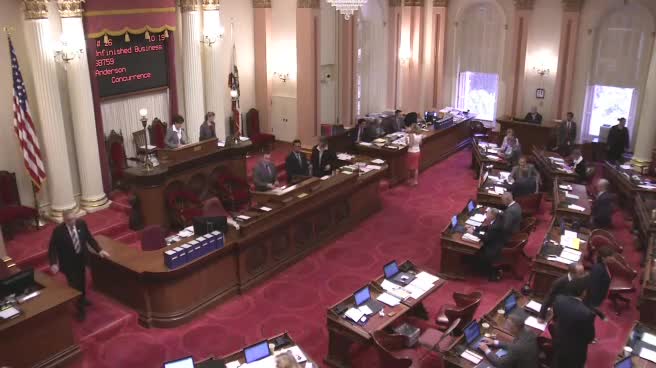 4MIN
Senate Floor
 24MIN
Senate Standing Committee on Environmental Quality
 2MIN
Assembly Floor
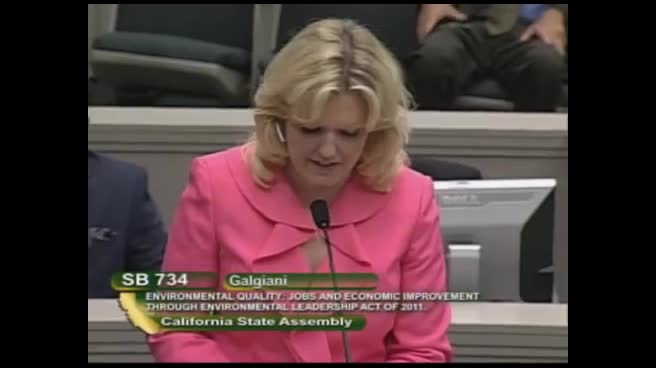 2MIN
Assembly Standing Committee on Appropriations
 13MIN
Assembly Standing Committee on Natural Resources
 1MIN
Senate Floor

Bill Co-Author(s):