SB 739: Charter schools: sited outside boundaries: prohibition.
- Session Year: 2015-2016
- House: Senate
- Latest Version Date: 2016-09-06
(1)Existing law authorizes a charter school that is unable to locate within the jurisdiction or geographic boundaries of the chartering school district to establish one site outside the boundaries of the school district, but within the county in which that school district is located, if the school district where the charter school proposes to operate is notified in advance of the charter petition approval, the county superintendent of schools and the Superintendent of Public Instruction are notified of the location of the charter school before it commences operations, and either the charter school has attempted to locate a single site or facility to house the entire program, but such a site or facility is unavailable in the area in which the charter school chooses to locate or the site is needed for temporary use during a construction or expansion project.
This bill would prohibit the governing board of a school district from authorizing new charter schools to locate outside the boundaries of the school district if the school district is assigned a negative certification, as specified. The bill would also make conforming changes, correct references, and make various nonsubstantive changes.
(2)This bill would incorporate changes to Section 47605 of the Education Code proposed by both this bill and SB 322, which would become operative only if both bills are enacted and become effective on or before January 1, 2017, and this bill is chaptered last. The bill would also incorporate changes to Section 47605.1 of the Education Code proposed by both this bill and AB 2659, which would become operative only if both bills are enacted and become effective on or before January 1, 2017, and this bill is chaptered last.
Existing
(1)Existing law authorizes a charter school that is unable to locate within the jurisdiction or geographic boundaries of the chartering school district to establish one site outside the boundaries of the school district, but within the county in which that school district is located, if the school district where the charter school proposes to operate is notified in advance of the charter petition approval, the county superintendent of schools and the Superintendent of Public Instruction are notified of the location of the charter school before it commences operations, and either the charter school has attempted to locate a single site or facility to house the entire program, but such a site or facility is unavailable in the area in which the charter school chooses to locate or the site is needed for temporary use during a construction or expansion project.
This bill would prohibit the governing board of a school district from authorizing new charter schools to locate outside the boundaries of the school district if the school district is assigned a negative certification, as specified. The bill would also make conforming changes, correct references, and make various nonsubstantive changes.
(2)This bill would incorporate changes to Section 47605 of the Education Code proposed by both this bill and SB 322, which would become operative only if both bills are enacted and become effective on or before January 1, 2017, and this bill is chaptered last. The bill would also incorporate changes to Section 47605.1 of the Education Code proposed by this bill and AB 2659, which would become operative only if both bills are enacted and become effective on or before January 1, 2017, and this bill is chaptered last.
Existing law authorizes a charter school that is unable to locate within the jurisdiction or geographic boundaries of the chartering school district to establish one site outside the boundaries of the school district, but within the county in which that school district is located, if the school district where the charter school proposes to operate is notified in advance of the charter petition approval, the county superintendent of schools and the Superintendent of Public Instruction are notified of the location of the charter school before it commences operations, and either the charter school has attempted to locate a single site or facility to house the entire program, but such a site or facility is unavailable in the area in which the charter school chooses to locate or the site is needed for temporary use during a construction or expansion project.
This bill would authorize the Superintendent to study and report to the Legislature by December 31, 2016, the number of charter schools that are sited outside the boundaries of the chartering school district. The bill would authorize the report to include specified findings and recommendations.
This bill would prohibit the governing board of a school district from authorizing new charter schools to locate outside the boundaries of the school district if the school district is assigned a negative certification, as specified. The bill would also make conforming changes, correct references, and make various nonsubstantive changes.
Existing law authorizes a charter school that is unable to locate within the jurisdiction or geographic boundaries of the chartering school district to establish one site outside the boundaries of the school district, but within the county in which that school district is located, if the school district where the charter school proposes to operate is notified in advance of the charter petition approval, the county superintendent of schools and the Superintendent of Public Instruction are notified of the location of the charter school before it commences operations, and either the charter school has attempted to locate a single site or facility to house the entire program, but such a site or facility is unavailable in the area in which the school chooses to locate or the site is needed for temporary use during a construction or expansion project.
This bill would authorize the Superintendent to study and report to the Legislature by December 31, 2016, the number of charter schools that are sited outside the boundaries of the chartering school district. The bill would authorize the report to include specified findings and recommendations.
(a)(1)Except as set forth in paragraph (2), a petition for the establishment of a charter school within a school district may be circulated by one or more persons seeking to establish the charter school. A petition for the establishment of a charter school shall identify a single charter school that will operate within the geographic boundaries of that school district. A charter school may propose to operate at multiple sites within the school district, as long as each location is identified in the charter school petition. The petition may be submitted to the governing board of the school district for review after either of the following conditions is met:
(A)The petition is signed by a number of parents or legal guardians of pupils that is equivalent to at least one-half of the number of pupils that the charter school estimates will enroll in the charter school for its first year of operation.
(B)The petition is signed by a number of teachers that is equivalent to at least one-half of the number of teachers that the charter school estimates will be employed at the charter school during its first year of operation.
(2)A petition that proposes to convert an existing public school to a charter school that would not be eligible for a loan pursuant to subdivision (c) of Section 41365 may be circulated by one or more persons seeking to establish the charter school. The petition may be submitted to the governing board of the school district for review after the petition is signed by not less than 50 percent of the permanent status teachers currently employed at the public school to be converted.
(3)A petition shall include a prominent statement that a signature on the petition means that the parent or legal guardian is meaningfully interested in having his or her child or ward attend the charter school, or in the case of a teachers signature, means that the teacher is meaningfully interested in teaching at the charter school. The proposed charter shall be attached to the petition.
(4)After receiving approval of its petition, a charter school that proposes to establish operations at one or more additional sites shall request a material revision to its charter and shall notify the authority that granted its charter of those additional locations. The authority that granted its charter shall consider whether to approve those additional locations at an open, public meeting. If the additional locations are approved, there shall be a material revision to the charter schools charter.
(5)(A)A charter school that is unable to locate within the jurisdiction of the chartering school district may establish one site outside the boundaries of the school district, but within the county in which that school district is located, if the school district within the jurisdiction of which the charter school proposes to operate is notified in advance of the charter petition approval, the county superintendent of schools and the Superintendent are notified of the location of the charter school before it commences operations, and either of the following circumstances exists:
(i)The charter school has attempted to locate a single site or facility to house the entire program, but a site or facility is unavailable in the area in which the charter school chooses to locate.
(ii)The site is needed for temporary use during a construction or expansion project.
(B)Notwithstanding subparagraph (A), the governing board of a school district shall not authorize new charter schools to locate outside the boundaries of the school district if the school district is assigned a negative certification pursuant to paragraph (1) of subdivision (a) of Section 42131.
(6)Commencing January 1, 2003, a petition to establish a charter school shall not be approved to serve pupils in a grade level that is not served by the school district of the governing board considering the petition, unless the petition proposes to serve pupils in all of the grade levels served by that school district.
(b)No later than 30 days after receiving a petition, in accordance with subdivision (a), the governing board of the school district shall hold a public hearing on the provisions of the charter, at which time the governing board of the school district shall consider the level of support for the petition by teachers employed by the school district, other employees of the school district, and parents. Following review of the petition and the public hearing, the governing board of the school district shall either grant or deny the charter within 60 days of receipt of the petition, provided, however, that the date may be extended by an additional 30 days if both parties agree to the extension. In reviewing petitions for the establishment of charter schools pursuant to this section, the chartering authority shall be guided by the intent of the Legislature that charter schools are and should become an integral part of the California educational system and that the establishment of charter schools should be encouraged. The governing board of the school district shall grant a charter for the operation of a charter school under this part if it is satisfied that granting the charter is consistent with sound educational practice. The governing board of the school district shall not deny a petition for the establishment of a charter school unless it makes written factual findings, specific to the particular petition, setting forth specific facts to support one or more of the following findings:
(1)The charter school presents an unsound educational program for the pupils to be enrolled in the charter school.
(2)The petitioners are demonstrably unlikely to successfully implement the program set forth in the petition.
(3)The petition does not contain the number of signatures required by subdivision (a).
(4)The petition does not contain an affirmation of each of the conditions described in subdivision (d).
(5)The petition does not contain reasonably comprehensive descriptions of all of the following:
(A)(i)A description of the educational program of the charter school, designed, among other things, to identify those whom the charter school is attempting to educate, what it means to be an educated person in the 21st century, and how learning best occurs. The goals identified in that program shall include the objective of enabling pupils to become self-motivated, competent, and lifelong learners.
(ii)A description, for the charter school, of annual goals, for all pupils and for each subgroup of pupils identified pursuant to Section 52052, to be achieved in the state priorities, as described in subdivision (d) of Section 52060, that apply for the grade levels served, or the nature of the program operated, by the charter school, and specific annual actions to achieve those goals. A charter petition may identify additional school priorities, the goals for the school priorities, and the specific annual actions to achieve those goals.
(iii)If the proposed charter school will serve high school pupils, a description of the manner in which the charter school will inform parents about the transferability of courses to other public high schools and the eligibility of courses to meet college entrance requirements. Courses offered by the charter school that are accredited by the Western Association of Schools and Colleges may be considered transferable and courses approved by the University of California or the California State University as creditable under the A to G admissions criteria may be considered to meet college entrance requirements.
(B)The measurable pupil outcomes identified for use by the charter school. Pupil outcomes, for purposes of this part, means the extent to which all pupils of the charter school demonstrate that they have attained the skills, knowledge, and attitudes specified as goals in the charter schools educational program. Pupil outcomes shall include outcomes that address increases in pupil academic achievement both schoolwide and for all groups of pupils served by the charter school, as that term is defined in subparagraph (B) of paragraph (3) of subdivision (a) of Section 47607. The pupil outcomes shall align with the state priorities, as described in subdivision (d) of Section 52060, that apply for the grade levels served, or the nature of the program operated, by the charter school.
(C)The method by which pupil progress in meeting those pupil outcomes is to be measured. To the extent practicable, the method for measuring pupil outcomes for state priorities shall be consistent with the way information is reported on a school accountability report card.
(D)The governance structure of the charter school, including, but not limited to, the process to be followed by the charter school to ensure parental involvement.
(E)The qualifications to be met by individuals to be employed by the charter school.
(F)The procedures that the charter school will follow to ensure the health and safety of pupils and staff. These procedures shall include the requirement that each employee of the charter school furnish it with a criminal record summary as described in Section 44237.
(G)The means by which the charter school will achieve a racial and ethnic balance among its pupils that is reflective of the general population residing within the territorial jurisdiction of the school district to which the charter petition is submitted.
(H)Admission requirements, if applicable.
(I)The manner in which annual, independent financial audits shall be conducted, which shall employ generally accepted accounting principles, and the manner in which audit exceptions and deficiencies shall be resolved to the satisfaction of the chartering authority.
(J)The procedures by which pupils can be suspended or expelled.
(K)The manner by which staff members of the charter schools will be covered by the State Teachers Retirement System, the Public Employees Retirement System, or federal social security.
(L)The public school attendance alternatives for pupils residing within the school district who choose not to attend charter schools.
(M)A description of the rights of an employee of the school district upon leaving the employment of the school district to work in a charter school, and of any rights of return to the school district after employment at a charter school.
(N)The procedures to be followed by the charter school and the entity granting the charter to resolve disputes relating to provisions of the charter.
(O)A declaration of whether or not the charter school shall be deemed the exclusive public school employer of the employees of the charter school for purposes of Chapter 10.7 (commencing with Section 3540) of Division 4 of Title 1 of the Government Code.
(P)A description of the procedures to be used if the charter school closes. The procedures shall ensure a final audit of the charter school to determine the disposition of all assets and liabilities of the charter school, including plans for disposing of any net assets and for the maintenance and transfer of pupil records.
(c)(1)Charter schools shall meet all statewide standards and conduct the pupil assessments required pursuant to Sections 60605 and 60851 and any other statewide standards authorized in statute or pupil assessments applicable to pupils in noncharter public schools.
(2)Charter schools shall, on a regular basis, consult with their parents, legal guardians, and teachers regarding the charter schools educational programs.
(d)(1)In addition to any other requirement imposed under this part, a charter school shall be nonsectarian in its programs, admission policies, employment practices, and all other operations, shall not charge tuition, and shall not discriminate against a pupil on the basis of the characteristics listed in Section 220. Except as provided in paragraph (2), admission to a charter school shall not be determined according to the place of residence of the pupil, or of his or her parent or legal guardian, within this state, except that an existing public school converting partially or entirely to a charter school under this part shall adopt and maintain a policy giving admission preference to pupils who reside within the former attendance area of that public school.
(2)(A)A charter school shall admit all pupils who wish to attend the charter school.
(B)If the number of pupils who wish to attend the charter school exceeds the charter schools capacity, attendance, except for existing pupils of the charter school, shall be determined by a public random drawing. Preference shall be extended to pupils currently attending the charter school and pupils who reside in the school district except as provided for in Section 47614.5. Other preferences may be permitted by the chartering authority on an individual school basis and only if consistent with the law.
(C)In the event of a drawing, the chartering authority shall make reasonable efforts to accommodate the growth of the charter school and in no event shall take any action to impede the charter school from expanding enrollment to meet pupil demand.
(3)If a pupil is expelled or leaves the charter school without graduating or completing the school year for any reason, the charter school shall notify the superintendent of the school district of the pupils last known address within 30 days, and shall, upon request, provide that school district with a copy of the cumulative record of the pupil, including a transcript of grades or report card, and health information. This paragraph applies only to pupils subject to compulsory full-time education pursuant to Section 48200.
(e)The governing board of a school district shall not require an employee of the school district to be employed in a charter school.
(f)The governing board of a school district shall not require a pupil enrolled in the school district to attend a charter school.
(g)The governing board of a school district shall require that the petitioner or petitioners provide information regarding the proposed operation and potential effects of the charter school, including, but not limited to, the facilities to be used by the charter school, the manner in which administrative services of the charter school are to be provided, and potential civil liability effects, if any, upon the charter school and upon the school district. The description of the facilities to be used by the charter school shall specify where the charter school intends to locate. The petitioner or petitioners also shall be required to provide financial statements that include a proposed first-year operational budget, including startup costs, and cashflow and financial projections for the first three years of operation.
(h)In reviewing petitions for the establishment of charter schools within the school district, the governing board of the school district shall give preference to petitions that demonstrate the capability to provide comprehensive learning experiences to pupils identified by the petitioner or petitioners as academically low achieving pursuant to the standards established by the department under Section 54032, as it read before July 19, 2006.
(i)Upon the approval of the petition by the governing board of the school district, the petitioner or petitioners shall provide written notice of that approval, including a copy of the petition, to the applicable county superintendent of schools, the department, and the state board.
(j)(1)If the governing board of a school district denies a petition, the petitioner may elect to submit the petition for the establishment of a charter school to the county board of education. The county board of education shall review the petition pursuant to subdivision (b). If the petitioner elects to submit a petition for establishment of a charter school to the county board of education and the county board of education denies the petition, the petitioner may file a petition for establishment of a charter school with the state board, and the state board may approve the petition, in accordance with subdivision (b). A charter school that receives approval of its petition from a county board of education or from the state board on appeal shall be subject to the same requirements concerning geographic location to which it would otherwise be subject if it received approval from the entity to which it originally submitted its petition. A charter petition that is submitted to either a county board of education or to the state board shall meet all otherwise applicable petition requirements, including the identification of the proposed site or sites where the charter school will operate.
(2)In assuming its role as a chartering agency, the state board shall develop criteria to be used for the review and approval of charter school petitions presented to the state board. The criteria shall address all elements required for charter approval, as identified in subdivision (b), and shall define reasonably comprehensive, as used in paragraph (5) of subdivision (b), in a way that is consistent with the intent of this part. Upon satisfactory completion of the criteria, the state board shall adopt the criteria on or before June 30, 2001.
(3)A charter school for which a charter is granted by either the county board of education or the state board based on an appeal pursuant to this subdivision shall qualify fully as a charter school for all funding and other purposes of this part.
(4)If either the county board of education or the state board fails to act on a petition within 120 days of receipt, the decision of the governing board of the school district to deny the petition shall be subject to judicial review.
(5)The state board shall adopt regulations implementing this subdivision.
(6)Upon the approval of the petition by the county board of education, the petitioner or petitioners shall provide written notice of that approval, including a copy of the petition, to the department and the state board.
(k)(1)The state board may, by mutual agreement, designate its supervisorial and oversight responsibilities for a charter school approved by the state board to any local educational agency in the county in which the charter school is located or to the governing board of the school district that first denied the petition.
(2)The designated local educational agency shall have all monitoring and supervising authority of a chartering agency, including, but not limited to, powers and duties set forth in Section 47607, except the power of revocation, which shall remain with the state board.
(3)A charter school that is granted its charter through an appeal to the state board and elects to seek renewal of its charter shall, before expiration of the charter, submit its petition for renewal to the governing board of the school district that initially denied the charter. If the governing board of the school district denies the charter schools petition for renewal, the charter school may petition the state board for renewal of its charter.
(l)Teachers in charter schools shall hold a Commission on Teacher Credentialing certificate, permit, or other document equivalent to that which a teacher in other public schools would be required to hold. These documents shall be maintained on file at the charter school and are subject to periodic inspection by the chartering authority. It is the intent of the Legislature that charter schools be given flexibility with regard to noncore, noncollege preparatory courses.
(m)A charter school shall transmit a copy of its annual, independent financial audit report for the preceding fiscal year, as described in subparagraph (I) of paragraph (5) of subdivision (b), to its chartering entity, the Controller, the county superintendent of schools of the county in which the charter school is sited, unless the county board of education of the county in which the charter school is sited is the chartering entity, and the department by December 15 of each year. This subdivision does not apply if the audit of the charter school is encompassed in the audit of the chartering entity pursuant to Section 41020.
SEC. 1.5.Section 47605 of the Education Code is amended to read:47605.(a)(1)Except as set forth in paragraph (2), a petition for the establishment of a charter school within a school district may be circulated by one or more persons seeking to establish the charter school. A petition for the establishment of a charter school shall identify a single charter school that will operate within the geographic boundaries of that school district. A charter school may propose to operate at multiple sites within the school district if each location is identified in the charter school petition. The petition may be submitted to the governing board of the school district for review after either of the following conditions is met:
(A)The petition is signed by a number of parents or legal guardians of pupils that is equivalent to at least one-half of the number of pupils that the charter school estimates will enroll in the charter school for its first year of operation.
(B)The petition is signed by a number of teachers that is equivalent to at least one-half of the number of teachers that the charter school estimates will be employed at the charter school during its first year of operation.
(2)A petition that proposes to convert an existing public school to a charter school that would not be eligible for a loan pursuant to subdivision (c) of Section 41365 may be circulated by one or more persons seeking to establish the charter school. The petition may be submitted to the governing board of the school district for review after the petition is signed by not less than 50 percent of the permanent status teachers currently employed at the public school to be converted.
(3)A petition shall include a prominent statement that a signature on the petition means that the parent or legal guardian is meaningfully interested in having his or her child or ward attend the charter school, or in the case of a teachers signature, means that the teacher is meaningfully interested in teaching at the charter school. The proposed charter shall be attached to the petition.
(4)After receiving approval of its petition, a charter school that proposes to establish operations at one or more additional sites shall request a material revision to its charter and shall notify the authority that granted its charter of those additional locations. The authority that granted its charter shall consider whether to approve those additional locations at an open, public meeting. If the additional locations are approved, there shall be a material revision to the charter schools charter.
(5)(A)A charter school that is unable to locate within the jurisdiction of the chartering school district may establish one site outside the boundaries of the school district, but within the county in which that school district is located, if the school district within the jurisdiction of which the charter school proposes to operate is notified in advance of the charter petition approval, the county superintendent of schools and the Superintendent are notified of the location of the charter school before it commences operations, and either of the following circumstances exists:
(i)The charter school has attempted to locate a single site or facility to house the entire program, but a site or facility is unavailable in the area in which the charter school chooses to locate.
(ii)The site is needed for temporary use during a construction or expansion project.
(B)Notwithstanding subparagraph (A), the governing board of a school district shall not authorize new charter schools to locate outside the boundaries of the school district if the school district is assigned a negative certification pursuant to paragraph (1) of subdivision (a) of Section 42131.
(6)Commencing January 1, 2003, a petition to establish a charter school shall not be approved to serve pupils in a grade level that is not served by the school district of the governing board considering the petition, unless the petition proposes to serve pupils in all of the grade levels served by that school district.
(b)No later than 30 days after receiving a petition, in accordance with subdivision (a), the governing board of the school district shall hold a public hearing on the provisions of the charter, at which time the governing board of the school district shall consider the level of support for the petition by teachers employed by the school district, other employees of the school district, and parents. Following review of the petition and the public hearing, the governing board of the school district shall either grant or deny the charter within 60 days of receipt of the petition, provided, however, that the date may be extended by an additional 30 days if both parties agree to the extension. In reviewing petitions for the establishment of charter schools pursuant to this section, the chartering authority shall be guided by the intent of the Legislature that charter schools are and should become an integral part of the California educational system and that the establishment of charter schools should be encouraged. The governing board of the school district shall grant a charter for the operation of a charter school under this part if it is satisfied that granting the charter is consistent with sound educational practice. The governing board of the school district shall not deny a petition for the establishment of a charter school unless it makes written factual findings, specific to the particular petition, setting forth specific facts to support one or more of the following findings:
(1)The charter school presents an unsound educational program for the pupils to be enrolled in the charter school.
(2)The petitioners are demonstrably unlikely to successfully implement the program set forth in the petition.
(3)The petition does not contain the number of signatures required by subdivision (a).
(4)The petition does not contain an affirmation of each of the conditions described in subdivision (d).
(5)The petition does not contain reasonably comprehensive descriptions of all of the following:
(A)(i)The educational program of the charter school, designed, among other things, to identify those whom the charter school is attempting to educate, what it means to be an educated person in the 21st century, and how learning best occurs. The goals identified in that program shall include the objective of enabling pupils to become self-motivated, competent, and lifelong learners.
(ii)The annual goals for the charter school for all pupils and for each subgroup of pupils identified pursuant to Section 52052, to be achieved in the state priorities, as described in subdivision (d) of Section 52060, that apply for the grade levels served, or the nature of the program operated, by the charter school, and specific annual actions to achieve those goals. A charter petition may identify additional school priorities, the goals for the school priorities, and the specific annual actions to achieve those goals.
(iii)If the proposed charter school will serve high school pupils, the manner in which the charter school will inform parents about the transferability of courses to other public high schools and the eligibility of courses to meet college entrance requirements. Courses offered by the charter school that are accredited by the Western Association of Schools and Colleges may be considered transferable and courses approved by the University of California or the California State University as creditable under the A to G admissions criteria may be considered to meet college entrance requirements.
(B)The measurable pupil outcomes identified for use by the charter school. Pupil outcomes, for purposes of this part, means the extent to which all pupils of the charter school demonstrate that they have attained the skills, knowledge, and attitudes specified as goals in the charter schools educational program. Pupil outcomes shall include outcomes that address increases in pupil academic achievement both schoolwide and for all groups of pupils served by the charter school, as that term is defined in subparagraph (B) of paragraph (3) of subdivision (a) of Section 47607. The pupil outcomes shall align with the state priorities, as described in subdivision (d) of Section 52060, that apply for the grade levels served, or the nature of the program operated, by the charter school.
(C)The method by which pupil progress in meeting those pupil outcomes is to be measured. To the extent practicable, the method for measuring pupil outcomes for state priorities shall be consistent with the way information is reported on a school accountability report card.
(D)The governance structure of the charter school, including, but not limited to, the process to be followed by the charter school to ensure parental involvement.
(E)The qualifications to be met by individuals to be employed by the charter school.
(F)The procedures that the charter school will follow to ensure the health and safety of pupils and staff. These procedures shall include the requirement that each employee of the charter school furnish it with a criminal record summary as described in Section 44237.
(G)The means by which the charter school will achieve a racial and ethnic balance among its pupils that is reflective of the general population residing within the territorial jurisdiction of the school district to which the charter petition is submitted.
(H)Admission policies and procedures, consistent with subdivision (d).
(I)The manner in which annual, independent financial audits shall be conducted, which shall employ generally accepted accounting principles, and the manner in which audit exceptions and deficiencies shall be resolved to the satisfaction of the chartering authority.
(J)The procedures by which pupils can be suspended or expelled, consistent with subdivision (d), which, at a minimum, shall also do the following:
(i)Identify a list of acts for which a pupil enrolled in the charter school may be suspended or expelled.
(ii)Identify suspension and expulsion procedures, including the maximum length of time for which a pupil may be suspended. The procedures shall also accommodate the rights of pupils with disabilities, consistent with federal law.
(K)The manner by which staff members of the charter schools will be covered by the State Teachers Retirement System, the Public Employees Retirement System, or federal social security.
(L)The public school attendance alternatives for pupils residing within the school district who choose not to attend charter schools.
(M)The rights of an employee of the school district upon leaving the employment of the school district to work in a charter school, and of any rights of return to the school district after employment at a charter school.
(N)The procedures to be followed by the charter school and the entity granting the charter to resolve disputes relating to provisions of the charter.
(O)The procedures to be used if the charter school closes. The procedures shall ensure a final audit of the charter school to determine the disposition of all assets and liabilities of the charter school, including plans for disposing of any net assets and for the maintenance and transfer of pupil records.
(6)The petition does not contain a declaration of whether or not the charter school shall be deemed the exclusive public employer of the employees of the charter school for purposes of Chapter 10.7 (commencing with Section 3540) of Division 4 of Title 1 of the Government Code.
(c)(1)Charter schools shall meet all statewide standards and conduct the pupil assessments required pursuant to Sections 60605 and 60851 and any other statewide standards authorized in statute or pupil assessments applicable to pupils in noncharter public schools.
(2)Charter schools shall, on a regular basis, consult with their parents, legal guardians, and teachers regarding the charter schools educational programs.
(d)(1)In addition to any other requirement imposed under this part, a charter school shall be nonsectarian in its programs, admission policies, employment practices, and all other operations, shall not charge tuition, and shall not discriminate against a pupil on the basis of the characteristics listed in Section 220. Except as provided in paragraph (2), admission to a charter school shall not be determined according to the place of residence of the pupil, or of his or her parent or legal guardian, within this state, except that an existing public school converting partially or entirely to a charter school under this part shall adopt and maintain a policy giving admission preference to pupils who reside within the former attendance area of that public school.
(2)(A)A charter school shall admit all pupils who wish to attend the charter school.
(B)If the number of pupils who wish to attend the charter school exceeds the charter schools capacity, attendance, except for existing pupils of the charter school, shall be determined by a public random drawing. Preference shall be extended to pupils currently attending the charter school and pupils who reside in the school district except as provided for in Section 47614.5. Additionally, other preferences may be permitted by the chartering authority on an individual charter school basis, in accordance with all of the following:
(i)Each type of preference shall be approved by the charter school at a public hearing.
(ii)Preferences shall be consistent with federal law, the California Constitution, and Section 200.
(iii)Preferences shall not result in limiting enrollment access for pupils with disabilities, academically low-achieving pupils, English learners, neglected or delinquent pupils, homeless pupils, or pupils who are economically disadvantaged, as determined by eligibility for any free or reduced-price meal program.
(iv)In accordance with Section 49011, preferences shall not require mandatory parental volunteer hours as a criterion for admission or continued enrollment.
(C)In the event of a drawing, the chartering authority shall make reasonable efforts to accommodate the growth of the charter school and shall not take any action to impede the charter school from expanding enrollment to meet pupil demand.
(3)Charter school suspension and expulsion procedures shall meet the following minimum requirements:
(A)The procedures shall comply with federal and state constitutional due process requirements, which include providing notice and an opportunity to be heard.
(B)For expulsions, the procedures shall ensure all of the following:
(i)The pupil is entitled to a formal hearing to determine if the pupil shall be expelled.
(ii)The pupil shall be provided written notice of the hearing, which, at a minimum, shall identify the date and place of the hearing, a statement of the specific facts and charges upon which the proposed expulsion is based, a copy of the disciplinary rules that relate to the alleged violation, and notice of the procedures that will govern the hearing, including those specified in clause (iii).
(iii)At the hearing, the pupil or the pupils parent or guardian, or the pupils educational rights holder if the pupil is a foster child or youth or a homeless child or youth, has a right to appear in person or to be represented by an attorney licensed to practice law in California or by a nonattorney adviser, to inspect and obtain copies of all documents to be used at the hearing, to confront and question all witnesses who testify at the hearing, to question all other evidence presented, and to present oral and documentary evidence on the pupils behalf, including through witnesses. A record of the hearing shall be made so that a reasonably accurate and complete written transcription of the proceedings can be made.
(iv)If the individual, panel, or board conducting the formal hearing determines that the pupil shall be expelled, the individual, panel, or board shall issue a written decision identifying the basis for the decision, including all facts in support of the decision, which shall be based upon substantial evidence relevant to the charges adduced at the formal hearing and shall not consist solely of hearsay evidence.
(v)Written notice of any decision to expel shall be sent by the charter school to the pupil or the pupils parent or guardian, or the pupils educational rights holder if the pupil is a foster child or youth or a homeless child or youth, and shall include notice of the right to appeal the expulsion to the county board of education, as provided for in clause (vi), and notice of the educational placement to be provided to the pupil during the time of expulsion, as provided for in clause (viii).
(vi)A pupil may appeal the expulsion to the county board of education with jurisdiction in the county in which the charter school is located.
(vii)The charter school shall ensure no loss of instructional days for the pupil pending final determination of the expulsion, including an appeal, if one is filed, by providing the pupil access to educational programming.
(viii)Upon final determination to expel a pupil, the charter school shall ensure the pupil is provided access to educational programing until the charter school has confirmed the pupil has been provided a suitable educational placement.
(4)A pupil shall not be removed, involuntarily dismissed, disenrolled, or terminated from a charter school unless the charter school has complied with all of the procedures specified in subparagraph (B) of paragraph (3).
(5)Nothing in this section is intended to restrict or otherwise limit the rights available to pupils in charter schools under other federal and state law. All such protections shall apply with full force and effect.
(6)If a pupil is expelled or leaves the charter school without graduating or completing the school year for any reason, the charter school shall notify the superintendent of the school district of the pupils last known address within 30 days, and shall, upon request, provide that school district with a copy of the cumulative record of the pupil, including a transcript of grades or report card, and health information. This paragraph applies only to pupils subject to compulsory full-time education pursuant to Section 48200.
(e)The governing board of a school district shall not require an employee of the school district to be employed in a charter school.
(f)The governing board of a school district shall not require a pupil enrolled in the school district to attend a charter school.
(g)The governing board of a school district shall require that the petitioner or petitioners provide information regarding the proposed operation and potential effects of the charter school, including, but not limited to, the facilities to be used by the charter school, the manner in which administrative services of the charter school are to be provided, and potential civil liability effects, if any, upon the charter school and upon the school district. The description of the facilities to be used by the charter school shall specify where the charter school intends to locate. The petitioner or petitioners also shall be required to provide financial statements that include a proposed first-year operational budget, including startup costs, and cashflow and financial projections for the first three years of operation.
(h)In reviewing petitions for the establishment of charter schools within the school district, the governing board of the school district shall give preference to petitions that demonstrate the capability to provide comprehensive learning experiences to pupils identified by the petitioner or petitioners as academically low achieving pursuant to the standards established by the department under Section 54032, as that section read before July 19, 2006.
(i)Upon the approval of the petition by the governing board of the school district, the petitioner or petitioners shall provide written notice of that approval, including a copy of the petition, to the applicable county superintendent of schools, the department, and the state board.
(j)(1)If the governing board of a school district denies a petition, the petitioner may elect to submit the petition for the establishment of a charter school to the county board of education. The county board of education shall review the petition pursuant to subdivision (b). If the petitioner elects to submit a petition for establishment of a charter school to the county board of education and the county board of education denies the petition, the petitioner may file a petition for establishment of a charter school with the state board, and the state board may approve the petition, in accordance with subdivision (b). A charter school that receives approval of its petition from a county board of education or from the state board on appeal shall be subject to the same requirements concerning geographic location to which it would otherwise be subject if it received approval from the entity to which it originally submitted its petition. A charter petition that is submitted to either a county board of education or to the state board shall meet all otherwise applicable petition requirements, including the identification of the proposed site or sites where the charter school will operate.
(2)In assuming its role as a chartering agency, the state board shall develop criteria to be used for the review and approval of charter school petitions presented to the state board. The criteria shall address all elements required for charter approval, as identified in subdivision (b), and shall define reasonably comprehensive, as used in paragraph (5) of subdivision (b), in a way that is consistent with the intent of this part. Upon satisfactory completion of the criteria, the state board shall adopt the criteria on or before June 30, 2001.
(3)A charter school for which a charter is granted by either the county board of education or the state board based on an appeal pursuant to this subdivision shall qualify fully as a charter school for all funding and other purposes of this part.
(4)If either the county board of education or the state board fails to act on a petition within 120 days of receipt, the decision of the governing board of the school district to deny the petition shall be subject to judicial review.
(5)The state board shall adopt regulations implementing this subdivision.
(6)Upon the approval of the petition by the county board of education, the petitioner or petitioners shall provide written notice of that approval, including a copy of the petition, to the department and the state board.
(k)(1)The state board may, by mutual agreement, designate its supervisorial and oversight responsibilities for a charter school approved by the state board to any local educational agency in the county in which the charter school is located or to the governing board of the school district that first denied the petition.
(2)The designated local educational agency shall have all monitoring and supervising authority of a chartering agency, including, but not limited to, powers and duties set forth in Section 47607, except the power of revocation, which shall remain with the state board.
(3)A charter school that is granted its charter through an appeal to the state board and elects to seek renewal of its charter shall, before expiration of the charter, submit its petition for renewal to the governing board of the school district that initially denied the charter. If the governing board of the school district denies the charter schools petition for renewal, the charter school may petition the state board for renewal of its charter.
(l)Teachers in charter schools shall hold a Commission on Teacher Credentialing certificate, permit, or other document equivalent to that which a teacher in other public schools would be required to hold. These documents shall be maintained on file at the charter school and are subject to periodic inspection by the chartering authority. It is the intent of the Legislature that charter schools be given flexibility with regard to noncore, noncollege preparatory courses.
(m)A charter school shall transmit a copy of its annual, independent financial audit report for the preceding fiscal year, as described in subparagraph (I) of paragraph (5) of subdivision (b), to its chartering entity, the Controller, the county superintendent of schools of the county in which the charter school is sited, unless the county board of education of the county in which the charter school is sited is the chartering entity, and the department by December 15 of each year. This subdivision does not apply if the audit of the charter school is encompassed in the audit of the chartering entity pursuant to Section 41020.
(n)A charter school may encourage parental involvement, but shall notify the parents and guardians of applicant pupils and currently enrolled pupils that parental involvement is not a requirement for acceptance to, or continued enrollment at, the charter school.
SEC. 2.Section 47605.1 of the Education Code is amended to read:47605.1.(a)(1)Notwithstanding any other law, a charter school that is granted a charter from the governing board of a school district or county office of education after July 1, 2002, and commences providing educational services to pupils on or after July 1, 2002, shall locate in accordance with the geographic and site limitations of this part.
(2)Notwithstanding any other law, a charter school that is granted a charter by the state board after July 1, 2002, and commences providing educational services to pupils on or after July 1, 2002, based on the denial of a petition by the governing board of a school district or county board of education, as described in paragraphs (1) and (2) of subdivision (j) of Section 47605, may locate only within the geographic boundaries of the chartering entity that initially denied the petition for the charter.
(3)A charter school that receives approval of its charter from the governing board of a school district, a county office of education, or the state board before July 1, 2002, but does not commence operations until after January 1, 2003, shall be subject to the geographic limitations of this part, in accordance with subdivision (e).
(b)Nothing in this section is intended to affect the admission requirements contained in subdivision (d) of Section 47605.
(c)Notwithstanding any other law, a charter school may establish a resource center, meeting space, or other satellite facility located in a county adjacent to that in which the charter school is authorized if the following conditions are met:
(1)The facility is used exclusively for the educational support of pupils who are enrolled in nonclassroom-based independent study of the charter school.
(2)The charter school provides its primary educational services in, and a majority of the pupils it serves are residents of, the county in which the charter school is authorized.
(d)(1)Notwithstanding subdivision (a) of this section or subdivision (a) of Section 47605, a charter school that is unable to locate within the geographic boundaries of the chartering school district may establish one site outside the boundaries of the school district, but within the county within which that school district is located, if the school district where the charter school proposes to operate is notified in advance of the charter petition approval, the county superintendent of schools is notified of the location of the charter school before it commences operations, and either of the following circumstances exist:
(A)The charter school has attempted to locate a single site or facility to house the entire program but such a facility or site is unavailable in the area in which the charter school chooses to locate.
(B)The site is needed for temporary use during a construction or expansion project.
(2)Notwithstanding paragraph (1), the governing board of a school district shall not authorize new charter schools to locate outside the boundaries of the school district if the school district is assigned a negative certification pursuant to paragraph (1) of subdivision (a) of Section 42131.
(e)(1)For a charter school that was granted approval of its charter before July 1, 2002, and provided educational services to pupils before July 1, 2002, this section shall only apply to any new educational services or schoolsites established or acquired by the charter school on or after July 1, 2002.
(2)For a charter school that was granted approval of its charter before July 1, 2002, but did not provide educational services to pupils before July 1, 2002, this section shall only apply upon the expiration of a charter that is in existence on January 1, 2003.
(3)Notwithstanding other implementation timelines in this section, by June 30, 2005, or upon the expiration of a charter that is in existence on January 1, 2003, whichever is later, all charter schools shall be required to comply with this section for schoolsites at which education services are provided to pupils before or after July 1, 2002, regardless of whether the charter school initially received approval of its charter school petition before July 1, 2002. To achieve compliance with this section, a charter school shall be required to receive approval of a charter petition in accordance with this section and Section 47605.
(4)Nothing in this section is intended to affect the authority of a governmental entity to revoke a charter that is granted on or before the effective date of this section.
(f)A charter school that submits its petition directly to a county board of education, as authorized by Section 47605.5 or 47605.6, may establish charter school operations only within the geographical boundaries of the county in which that county board of education has jurisdiction.
(g)Notwithstanding any other law, the jurisdictional limitations set forth in this section do not apply to a charter school that provides instruction exclusively in partnership with any of the following:
(1)The federal Workforce Investment Act of 1998 (29 U.S.C. Sec. 2801 et seq.).
(2)Federally affiliated YouthBuild programs.
(3)Federal job corps training or instruction provided pursuant to a memorandum of understanding with the federal provider.
(4)The California Conservation Corps or local conservation corps certified by the California Conservation Corps pursuant to Section 14507.5 or 14406 of the Public Resources Code.
(5)Instruction provided to juvenile court school pupils pursuant to subdivision (b) of Section 42238.18 or pursuant to Section 1981 for individuals who are placed in a residential facility.
SEC. 2.5.Section 47605.1 of the Education Code is amended to read:47605.1.(a)(1)Notwithstanding any other law, a charter school that is granted a charter from the governing board of a school district or county office of education after July 1, 2002, and commences providing educational services to pupils on or after July 1, 2002, shall locate in accordance with the geographic and site limitations of this part.
(2)Notwithstanding any other law, a charter school that is granted a charter by the state board after July 1, 2002, and commences providing educational services to pupils on or after July 1, 2002, based on the denial of a petition by the governing board of a school district or county board of education, as described in paragraphs (1) and (2) of subdivision (j) of Section 47605, may locate only within the geographic boundaries of the chartering entity that initially denied the petition for the charter.
(3)A charter school that receives approval of its charter from the governing board of a school district, a county office of education, or the state board before July 1, 2002, but does not commence operations until after January 1, 2003, shall be subject to the geographic limitations of this part, in accordance with subdivision (e).
(b)This section is not intended to affect the admission requirements contained in subdivision (d) of Section 47605.
(c)Notwithstanding any other law, a charter school may establish a resource center, meeting space, or other satellite facility located in a county adjacent to that in which the charter school is authorized if the following conditions are met:
(1)The facility is used exclusively for the educational support of pupils who are enrolled in nonclassroom-based independent study of the charter school.
(2)The charter school provides its primary educational services in, and a majority of the pupils it serves are residents of, the county in which the charter school is authorized.
(d)(1)Notwithstanding subdivision (a) of this section or subdivision (a) of Section 47605, a charter school that is unable to locate within the geographic boundaries of the chartering school district may establish one site outside the boundaries of the school district, but within the county within which that school district is located, if the school district in which the charter school proposes to operate is notified in advance of the charter petition approval, the county superintendent of schools is notified of the location of the charter school before it commences operations, and either of the following circumstances exist:
(A)The charter school has attempted to locate a single site or facility to house the entire program, but such a facility or site is unavailable in the area in which the charter school chooses to locate.
(B)The site is needed for temporary use during a construction or expansion project.
(2)Notwithstanding paragraph (1), the governing board of a school district shall not authorize new charter schools to locate outside the boundaries of the school district if the school district is assigned a negative certification pursuant to paragraph (1) of subdivision (a) of Section 42131.
(e)(1)For a charter school that was granted approval of its charter before July 1, 2002, and provided educational services to pupils before July 1, 2002, this section only applies to new educational services or schoolsites established or acquired by the charter school on or after July 1, 2002.
(2)For a charter school that was granted approval of its charter before July 1, 2002, but did not provide educational services to pupils before July 1, 2002, this section only applies upon the expiration of a charter that is in existence on January 1, 2003.
(3)Notwithstanding other implementation timelines in this section, by June 30, 2005, or upon the expiration of a charter that is in existence on January 1, 2003, whichever is later, all charter schools shall be required to comply with this section for schoolsites at which educational services are provided to pupils before or after July 1, 2002, regardless of whether the charter school initially received approval of its charter school petition before July 1, 2002. To achieve compliance with this section, a charter school shall be required to receive approval of a charter petition in accordance with this section and Section 47605.
(4)This section is not intended to affect the authority of a governmental entity to revoke a charter that is granted on or before the effective date of this section.
(f)A charter school that submits its petition directly to a county board of education, as authorized by Section 47605.5 or 47605.6, may establish charter school operations only within the geographical boundaries of the county in which that county board of education has jurisdiction.
(g)Notwithstanding any other law, the jurisdictional limitations set forth in this section do not apply to a charter school that provides instruction exclusively in partnership with any of the following:
(1)The federal Workforce Innovation and Opportunity Act (29 U.S.C. Sec. 3101 et seq.).
(2)Federally affiliated YouthBuild programs.
(3)Federal job corps training or instruction provided pursuant to a memorandum of understanding with the federal provider.
(4)The California Conservation Corps or local conservation corps certified by the California Conservation Corps pursuant to Section 14507.5 or 14406 of the Public Resources Code.
(5)Instruction provided to juvenile court school pupils pursuant to subdivision (b) of Section 42238.18 or pursuant to Section 1981 for individuals who are placed in a residential facility.
SEC. 3.(a)Section 1.5 of this bill incorporates amendments to Section 47605 of the Education Code proposed by both this bill and Senate Bill 322. It shall only become operative if (1) both bills are enacted and become effective on or before January 1, 2017, (2) each bill amends Section 47605 of the Education Code, and (3) this bill is enacted after Senate Bill 322, in which case Section 1 of this bill shall not become operative.
(b)Section 2.5 of this bill incorporates amendments to Section 47605.1 of the Education Code proposed by both this bill and Assembly Bill 2659. It shall only become operative if (1) both bills are enacted and become effective on or before January 1, 2017, (2) each bill amends Section 47605.1 of the Education Code, and (3) this bill is enacted after Assembly Bill 2659, in which case Section 2 of this bill shall not become operative.
(a)(1)Except as set forth in paragraph (2), a petition for the establishment of a charter school within a school district may be circulated by one or more persons seeking to establish the charter school. A petition for the establishment of a charter school shall identify a single charter school that will operate within the geographic boundaries of that school district. A charter school may propose to operate at multiple sites within the school district, as long as each location is identified in the charter school petition. The petition may be submitted to the governing board of the school district for review after either of the following conditions is met:
(A)The petition is signed by a number of parents or legal guardians of pupils that is equivalent to at least one-half of the number of pupils that the charter school estimates will enroll in the charter school for its first year of operation.
(B)The petition is signed by a number of teachers that is equivalent to at least one-half of the number of teachers that the charter school estimates will be employed at the charter school during its first year of operation.
(2)A petition that proposes to convert an existing public school to a charter school that would not be eligible for a loan pursuant to subdivision (c) of Section 41365 may be circulated by one or more persons seeking to establish the charter school. The petition may be submitted to the governing board of the school district for review after the petition is signed by not less than 50 percent of the permanent status teachers currently employed at the public school to be converted.
(3)A petition shall include a prominent statement that a signature on the petition means that the parent or legal guardian is meaningfully interested in having his or her child or ward attend the charter school, or in the case of a teachers signature, means that the teacher is meaningfully interested in teaching at the charter school. The proposed charter shall be attached to the petition.
(4)After receiving approval of its petition, a charter school that proposes to establish operations at one or more additional sites shall request a material revision to its charter and shall notify the authority that granted its charter of those additional locations. The authority that granted its charter shall consider whether to approve those additional locations at an open, public meeting. If the additional locations are approved, there shall be a material revision to the charter schools charter.
(5)(A)A charter school that is unable to locate within the jurisdiction of the chartering school district may establish one site outside the boundaries of the school district, but within the county in which that school district is located, if the school district within the jurisdiction of which the charter school proposes to operate is notified in advance of the charter petition approval, the county superintendent of schools and the Superintendent are notified of the location of the charter school before it commences operations, and either of the following circumstances exists:
(i)The charter school has attempted to locate a single site or facility to house the entire program, but a site or facility is unavailable in the area in which the charter school chooses to locate.
(ii)The site is needed for temporary use during a construction or expansion project.
(B)Notwithstanding subparagraph (A), the governing board of a school district shall not authorize new charter schools to locate outside the boundaries of the school district if the school district is assigned a negative certification pursuant to paragraph (1) of subdivision (a) of Section 42131.
(6)Commencing January 1, 2003, a petition to establish a charter school shall not be approved to serve pupils in a grade level that is not served by the school district of the governing board considering the petition, unless the petition proposes to serve pupils in all of the grade levels served by that school district.
(b)No later than 30 days after receiving a petition, in accordance with subdivision (a), the governing board of the school district shall hold a public hearing on the provisions of the charter, at which time the governing board of the school district shall consider the level of support for the petition by teachers employed by the school district, other employees of the school district, and parents. Following review of the petition and the public hearing, the governing board of the school district shall either grant or deny the charter within 60 days of receipt of the petition, provided, however, that the date may be extended by an additional 30 days if both parties agree to the extension. In reviewing petitions for the establishment of charter schools pursuant to this section, the chartering authority shall be guided by the intent of the Legislature that charter schools are and should become an integral part of the California educational system and that the establishment of charter schools should be encouraged. The governing board of the school district shall grant a charter for the operation of a charter school under this part if it is satisfied that granting the charter is consistent with sound educational practice. The governing board of the school district shall not deny a petition for the establishment of a charter school unless it makes written factual findings, specific to the particular petition, setting forth specific facts to support one or more of the following findings:
(1)The charter school presents an unsound educational program for the pupils to be enrolled in the charter school.
(2)The petitioners are demonstrably unlikely to successfully implement the program set forth in the petition.
(3)The petition does not contain the number of signatures required by subdivision (a).
(4)The petition does not contain an affirmation of each of the conditions described in subdivision (d).
(5)The petition does not contain reasonably comprehensive descriptions of all of the following:
(A)(i)A description of the educational program of the charter school, designed, among other things, to identify those whom the charter school is attempting to educate, what it means to be an educated person in the 21st century, and how learning best occurs. The goals identified in that program shall include the objective of enabling pupils to become self-motivated, competent, and lifelong learners.
(ii)A description, for the charter school, of annual goals, for all pupils and for each subgroup of pupils identified pursuant to Section 52052, to be achieved in the state priorities, as described in subdivision (d) of Section 52060, that apply for the grade levels served, or the nature of the program operated, by the charter school, and specific annual actions to achieve those goals. A charter petition may identify additional school priorities, the goals for the school priorities, and the specific annual actions to achieve those goals.
(iii)If the proposed charter school will serve high school pupils, a description of the manner in which the charter school will inform parents about the transferability of courses to other public high schools and the eligibility of courses to meet college entrance requirements. Courses offered by the charter school that are accredited by the Western Association of Schools and Colleges may be considered transferable and courses approved by the University of California or the California State University as creditable under the A to G admissions criteria may be considered to meet college entrance requirements.
(B)The measurable pupil outcomes identified for use by the charter school. Pupil outcomes, for purposes of this part, means the extent to which all pupils of the charter school demonstrate that they have attained the skills, knowledge, and attitudes specified as goals in the charter schools educational program. Pupil outcomes shall include outcomes that address increases in pupil academic achievement both schoolwide and for all groups of pupils served by the charter school, as that term is defined in subparagraph (B) of paragraph (3) of subdivision (a) of Section 47607. The pupil outcomes shall align with the state priorities, as described in subdivision (d) of Section 52060, that apply for the grade levels served, or the nature of the program operated, by the charter school.
(C)The method by which pupil progress in meeting those pupil outcomes is to be measured. To the extent practicable, the method for measuring pupil outcomes for state priorities shall be consistent with the way information is reported on a school accountability report card.
(D)The governance structure of the charter school, including, but not limited to, the process to be followed by the charter school to ensure parental involvement.
(E)The qualifications to be met by individuals to be employed by the charter school.
(F)The procedures that the charter school will follow to ensure the health and safety of pupils and staff. These procedures shall include the requirement that each employee of the charter school furnish it with a criminal record summary as described in Section 44237.
(G)The means by which the charter school will achieve a racial and ethnic balance among its pupils that is reflective of the general population residing within the territorial jurisdiction of the school district to which the charter petition is submitted.
(H)Admission requirements, if applicable.
(I)The manner in which annual, independent financial audits shall be conducted, which shall employ generally accepted accounting principles, and the manner in which audit exceptions and deficiencies shall be resolved to the satisfaction of the chartering authority.
(J)The procedures by which pupils can be suspended or expelled.
(K)The manner by which staff members of the charter schools will be covered by the State Teachers Retirement System, the Public Employees Retirement System, or federal social security.
(L)The public school attendance alternatives for pupils residing within the school district who choose not to attend charter schools.
(M)A description of the rights of an employee of the school district upon leaving the employment of the school district to work in a charter school, and of any rights of return to the school district after employment at a charter school.
(N)The procedures to be followed by the charter school and the entity granting the charter to resolve disputes relating to provisions of the charter.
(O)A declaration of whether or not the charter school shall be deemed the exclusive public school employer of the employees of the charter school for purposes of Chapter 10.7 (commencing with Section 3540) of Division 4 of Title 1 of the Government Code.
(P)A description of the procedures to be used if the charter school closes. The procedures shall ensure a final audit of the charter school to determine the disposition of all assets and liabilities of the charter school, including plans for disposing of any net assets and for the maintenance and transfer of pupil records.
(c)(1)Charter schools shall meet all statewide standards and conduct the pupil assessments required pursuant to Sections 60605 and 60851 and any other statewide standards authorized in statute or pupil assessments applicable to pupils in noncharter public schools.
(2)Charter schools shall, on a regular basis, consult with their parents, legal guardians, and teachers regarding the charter schools educational programs.
(d)(1)In addition to any other requirement imposed under this part, a charter school shall be nonsectarian in its programs, admission policies, employment practices, and all other operations, shall not charge tuition, and shall not discriminate against a pupil on the basis of the characteristics listed in Section 220. Except as provided in paragraph (2), admission to a charter school shall not be determined according to the place of residence of the pupil, or of his or her parent or legal guardian, within this state, except that an existing public school converting partially or entirely to a charter school under this part shall adopt and maintain a policy giving admission preference to pupils who reside within the former attendance area of that public school.
(2)(A)A charter school shall admit all pupils who wish to attend the charter school.
(B)If the number of pupils who wish to attend the charter school exceeds the charter schools capacity, attendance, except for existing pupils of the charter school, shall be determined by a public random drawing. Preference shall be extended to pupils currently attending the charter school and pupils who reside in the school district except as provided for in Section 47614.5. Other preferences may be permitted by the chartering authority on an individual school basis and only if consistent with the law.
(C)In the event of a drawing, the chartering authority shall make reasonable efforts to accommodate the growth of the charter school and in no event shall take any action to impede the charter school from expanding enrollment to meet pupil demand.
(3)If a pupil is expelled or leaves the charter school without graduating or completing the school year for any reason, the charter school shall notify the superintendent of the school district of the pupils last known address within 30 days, and shall, upon request, provide that school district with a copy of the cumulative record of the pupil, including a transcript of grades or report card, and health information. This paragraph applies only to pupils subject to compulsory full-time education pursuant to Section 48200.
(e)The governing board of a school district shall not require an employee of the school district to be employed in a charter school.
(f)The governing board of a school district shall not require a pupil enrolled in the school district to attend a charter school.
(g)The governing board of a school district shall require that the petitioner or petitioners provide information regarding the proposed operation and potential effects of the charter school, including, but not limited to, the facilities to be used by the charter school, the manner in which administrative services of the charter school are to be provided, and potential civil liability effects, if any, upon the charter school and upon the school district. The description of the facilities to be used by the charter school shall specify where the charter school intends to locate. The petitioner or petitioners also shall be required to provide financial statements that include a proposed first-year operational budget, including startup costs, and cashflow and financial projections for the first three years of operation.
(h)In reviewing petitions for the establishment of charter schools within the school district, the governing board of the school district shall give preference to petitions that demonstrate the capability to provide comprehensive learning experiences to pupils identified by the petitioner or petitioners as academically low achieving pursuant to the standards established by the department under Section 54032, as it read before July 19, 2006.
(i)Upon the approval of the petition by the governing board of the school district, the petitioner or petitioners shall provide written notice of that approval, including a copy of the petition, to the applicable county superintendent of schools, the department, and the state board.
(j)(1)If the governing board of a school district denies a petition, the petitioner may elect to submit the petition for the establishment of a charter school to the county board of education. The county board of education shall review the petition pursuant to subdivision (b). If the petitioner elects to submit a petition for establishment of a charter school to the county board of education and the county board of education denies the petition, the petitioner may file a petition for establishment of a charter school with the state board, and the state board may approve the petition, in accordance with subdivision (b). A charter school that receives approval of its petition from a county board of education or from the state board on appeal shall be subject to the same requirements concerning geographic location to which it would otherwise be subject if it received approval from the entity to which it originally submitted its petition. A charter petition that is submitted to either a county board of education or to the state board shall meet all otherwise applicable petition requirements, including the identification of the proposed site or sites where the charter school will operate.
(2)In assuming its role as a chartering agency, the state board shall develop criteria to be used for the review and approval of charter school petitions presented to the state board. The criteria shall address all elements required for charter approval, as identified in subdivision (b), and shall define reasonably comprehensive, as used in paragraph (5) of subdivision (b), in a way that is consistent with the intent of this part. Upon satisfactory completion of the criteria, the state board shall adopt the criteria on or before June 30, 2001.
(3)A charter school for which a charter is granted by either the county board of education or the state board based on an appeal pursuant to this subdivision shall qualify fully as a charter school for all funding and other purposes of this part.
(4)If either the county board of education or the state board fails to act on a petition within 120 days of receipt, the decision of the governing board of the school district to deny the petition shall be subject to judicial review.
(5)The state board shall adopt regulations implementing this subdivision.
(6)Upon the approval of the petition by the county board of education, the petitioner or petitioners shall provide written notice of that approval, including a copy of the petition, to the department and the state board.
(k)(1)The state board may, by mutual agreement, designate its supervisorial and oversight responsibilities for a charter school approved by the state board to any local educational agency in the county in which the charter school is located or to the governing board of the school district that first denied the petition.
(2)The designated local educational agency shall have all monitoring and supervising authority of a chartering agency, including, but not limited to, powers and duties set forth in Section 47607, except the power of revocation, which shall remain with the state board.
(3)A charter school that is granted its charter through an appeal to the state board and elects to seek renewal of its charter shall, before expiration of the charter, submit its petition for renewal to the governing board of the school district that initially denied the charter. If the governing board of the school district denies the charter schools petition for renewal, the charter school may petition the state board for renewal of its charter.
(l)Teachers in charter schools shall hold a Commission on Teacher Credentialing certificate, permit, or other document equivalent to that which a teacher in other public schools would be required to hold. These documents shall be maintained on file at the charter school and are subject to periodic inspection by the chartering authority. It is the intent of the Legislature that charter schools be given flexibility with regard to noncore, noncollege preparatory courses.
(m)A charter school shall transmit a copy of its annual, independent financial audit report for the preceding fiscal year, as described in subparagraph (I) of paragraph (5) of subdivision (b), to its chartering entity, the Controller, the county superintendent of schools of the county in which the charter school is sited, unless the county board of education of the county in which the charter school is sited is the chartering entity, and the department by December 15 of each year. This subdivision does not apply if the audit of the charter school is encompassed in the audit of the chartering entity pursuant to Section 41020.
SEC. 1.5.Section 47605 of the Education Code is amended to read:47605.(a)(1)Except as set forth in paragraph (2), a petition for the establishment of a charter school within a school district may be circulated by one or more persons seeking to establish the charter school. A petition for the establishment of a charter school shall identify a single charter school that will operate within the geographic boundaries of that school district. A charter school may propose to operate at multiple sites within the school district if each location is identified in the charter school petition. The petition may be submitted to the governing board of the school district for review after either of the following conditions is met:
(A)The petition is signed by a number of parents or legal guardians of pupils that is equivalent to at least one-half of the number of pupils that the charter school estimates will enroll in the charter school for its first year of operation.
(B)The petition is signed by a number of teachers that is equivalent to at least one-half of the number of teachers that the charter school estimates will be employed at the charter school during its first year of operation.
(2)A petition that proposes to convert an existing public school to a charter school that would not be eligible for a loan pursuant to subdivision (c) of Section 41365 may be circulated by one or more persons seeking to establish the charter school. The petition may be submitted to the governing board of the school district for review after the petition is signed by not less than 50 percent of the permanent status teachers currently employed at the public school to be converted.
(3)A petition shall include a prominent statement that a signature on the petition means that the parent or legal guardian is meaningfully interested in having his or her child or ward attend the charter school, or in the case of a teachers signature, means that the teacher is meaningfully interested in teaching at the charter school. The proposed charter shall be attached to the petition.
(4)After receiving approval of its petition, a charter school that proposes to establish operations at one or more additional sites shall request a material revision to its charter and shall notify the authority that granted its charter of those additional locations. The authority that granted its charter shall consider whether to approve those additional locations at an open, public meeting. If the additional locations are approved, they there shall be a material revision to the charter schools charter.
(5)(A)A charter school that is unable to locate within the jurisdiction of the chartering school district may establish one site outside the boundaries of the school district, but within the county in which that school district is located, if the school district within the jurisdiction of which the charter school proposes to operate is notified in advance of the charter petition approval, the county superintendent of schools and the Superintendent are notified of the location of the charter school before it commences operations, and either of the following circumstances exists:
(A)
(i)The charter school has attempted to locate a single site or facility to house the entire program, but a site or facility is unavailable in the area in which the charter school chooses to locate.
(B)
(ii)The site is needed for temporary use during a construction or expansion project.
(B)Notwithstanding subparagraph (A), the governing board of a school district shall not authorize new charter schools to locate outside the boundaries of the school district if the school district is assigned a negative certification pursuant to paragraph (1) of subdivision (a) of Section 42131.
(6)Commencing January 1, 2003, a petition to establish a charter school may shall not be approved to serve pupils in a grade level that is not served by the school district of the governing board considering the petition, unless the petition proposes to serve pupils in all of the grade levels served by that school district.
(b)No later than 30 days after receiving a petition, in accordance with subdivision (a), the governing board of the school district shall hold a public hearing on the provisions of the charter, at which time the governing board of the school district shall consider the level of support for the petition by teachers employed by the school district, other employees of the school district, and parents. Following review of the petition and the public hearing, the governing board of the school district shall either grant or deny the charter within 60 days of receipt of the petition, provided, however, that the date may be extended by an additional 30 days if both parties agree to the extension. In reviewing petitions for the establishment of charter schools pursuant to this section, the chartering authority shall be guided by the intent of the Legislature that charter schools are and should become an integral part of the California educational system and that the establishment of charter schools should be encouraged. The governing board of the school district shall grant a charter for the operation of a charter school under this part if it is satisfied that granting the charter is consistent with sound educational practice. The governing board of the school district shall not deny a petition for the establishment of a charter school unless it makes written factual findings, specific to the particular petition, setting forth specific facts to support one or more of the following findings:
(1)The charter school presents an unsound educational program for the pupils to be enrolled in the charter school.
(2)The petitioners are demonstrably unlikely to successfully implement the program set forth in the petition.
(3)The petition does not contain the number of signatures required by subdivision (a).
(4)The petition does not contain an affirmation of each of the conditions described in subdivision (d).
(5)The petition does not contain reasonably comprehensive descriptions of all of the following:
(A)(i)The educational program of the charter school, designed, among other things, to identify those whom the charter school is attempting to educate, what it means to be an educated person in the 21st century, and how learning best occurs. The goals identified in that program shall include the objective of enabling pupils to become self-motivated, competent, and lifelong learners.
(ii)The annual goals for the charter school for all pupils and for each subgroup of pupils identified pursuant to Section 52052, to be achieved in the state priorities, as described in subdivision (d) of Section 52060, that apply for the grade levels served, or the nature of the program operated, by the charter school, and specific annual actions to achieve those goals. A charter petition may identify additional school priorities, the goals for the school priorities, and the specific annual actions to achieve those goals.
(iii)If the proposed charter school will serve high school pupils, the manner in which the charter school will inform parents about the transferability of courses to other public high schools and the eligibility of courses to meet college entrance requirements. Courses offered by the charter school that are accredited by the Western Association of Schools and Colleges may be considered transferable and courses approved by the University of California or the California State University as creditable under the A to G A to G admissions criteria may be considered to meet college entrance requirements.
(B)The measurable pupil outcomes identified for use by the charter school. Pupil outcomes, for purposes of this part, means the extent to which all pupils of the charter school demonstrate that they have attained the skills, knowledge, and attitudes specified as goals in the charter schools educational program. Pupil outcomes shall include outcomes that address increases in pupil academic achievement both schoolwide and for all groups of pupils served by the charter school, as that term is defined in subparagraph (B) of paragraph (3) of subdivision (a) of Section 47607. The pupil outcomes shall align with the state priorities, as described in subdivision (d) of Section 52060, that apply for the grade levels served, or the nature of the program operated, by the charter school.
(C)The method by which pupil progress in meeting those pupil outcomes is to be measured. To the extent practicable, the method for measuring pupil outcomes for state priorities shall be consistent with the way information is reported on a school accountability report card.
(D)The governance structure of the charter school, including, but not limited to, the process to be followed by the charter school to ensure parental involvement.
(E)The qualifications to be met by individuals to be employed by the charter school.
(F)The procedures that the charter school will follow to ensure the health and safety of pupils and staff. These procedures shall include the requirement that each employee of the charter school furnish it with a criminal record summary as described in Section 44237.
(G)The means by which the charter school will achieve a racial and ethnic balance among its pupils that is reflective of the general population residing within the territorial jurisdiction of the school district to which the charter petition is submitted.
(H)Admission requirements, if applicable. policies and procedures, consistent with subdivision (d).
(I)The manner in which annual, independent financial audits shall be conducted, which shall employ generally accepted accounting principles, and the manner in which audit exceptions and deficiencies shall be resolved to the satisfaction of the chartering authority.
(J)The procedures by which pupils can be suspended or expelled. expelled, consistent with subdivision (d), which, at a minimum, shall also do the following:
(i)Identify a list of acts for which a pupil enrolled in the charter school may be suspended or expelled.
(ii)Identify suspension and expulsion procedures, including the maximum length of time for which a pupil may be suspended. The procedures shall also accommodate the rights of pupils with disabilities, consistent with federal law.
(K)The manner by which staff members of the charter schools will be covered by the State Teachers Retirement System, the Public Employees Retirement System, or federal social security.
(L)The public school attendance alternatives for pupils residing within the school district who choose not to attend charter schools.
(M)The rights of an employee of the school district upon leaving the employment of the school district to work in a charter school, and of any rights of return to the school district after employment at a charter school.
(N)The procedures to be followed by the charter school and the entity granting the charter to resolve disputes relating to provisions of the charter.
(O)The procedures to be used if the charter school closes. The procedures shall ensure a final audit of the charter school to determine the disposition of all assets and liabilities of the charter school, including plans for disposing of any net assets and for the maintenance and transfer of pupil records.
(6)The petition does not contain a declaration of whether or not the charter school shall be deemed the exclusive public employer of the employees of the charter school for purposes of Chapter 10.7 (commencing with Section 3540) of Division 4 of Title 1 of the Government Code.
(c)(1)Charter schools shall meet all statewide standards and conduct the pupil assessments required pursuant to Sections 60605 and 60851 and any other statewide standards authorized in statute or pupil assessments applicable to pupils in noncharter public schools.
(2)Charter schools shall, on a regular basis, consult with their parents, legal guardians, and teachers regarding the charter schools educational programs.
(d)(1)In addition to any other requirement imposed under this part, a charter school shall be nonsectarian in its programs, admission policies, employment practices, and all other operations, shall not charge tuition, and shall not discriminate against a pupil on the basis of the characteristics listed in Section 220. Except as provided in paragraph (2), admission to a charter school shall not be determined according to the place of residence of the pupil, or of his or her parent or legal guardian, within this state, except that an existing public school converting partially or entirely to a charter school under this part shall adopt and maintain a policy giving admission preference to pupils who reside within the former attendance area of that public school.
(2)(A)A charter school shall admit all pupils who wish to attend the charter school.
(B)If the number of pupils who wish to attend the charter school exceeds the charter schools capacity, attendance, except for existing pupils of the charter school, shall be determined by a public random drawing. Preference shall be extended to pupils currently attending the charter school and pupils who reside in the school district except as provided for in Section 47614.5. Other Additionally, other preferences may be permitted by the chartering authority on an individual school basis and only if consistent with the law. charter school basis, in accordance with all of the following:
(i)Each type of preference shall be approved by the charter school at a public hearing.
(ii)Preferences shall be consistent with federal law, the California Constitution, and Section 200.
(iii)Preferences shall not result in limiting enrollment access for pupils with disabilities, academically low-achieving pupils, English learners, neglected or delinquent pupils, homeless pupils, or pupils who are economically disadvantaged, as determined by eligibility for any free or reduced-price meal program.
(iv)In accordance with Section 49011, preferences shall not require mandatory parental volunteer hours as a criterion for admission or continued enrollment.
(C)In the event of a drawing, the chartering authority shall make reasonable efforts to accommodate the growth of the charter school and shall not take any action to impede the charter school from expanding enrollment to meet pupil demand.
(3)Charter school suspension and expulsion procedures shall meet the following minimum requirements:
(A)The procedures shall comply with federal and state constitutional due process requirements, which include providing notice and an opportunity to be heard.
(B)For expulsions, the procedures shall ensure all of the following:
(i)The pupil is entitled to a formal hearing to determine if the pupil shall be expelled.
(ii)The pupil shall be provided written notice of the hearing, which, at a minimum, shall identify the date and place of the hearing, a statement of the specific facts and charges upon which the proposed expulsion is based, a copy of the disciplinary rules that relate to the alleged violation, and notice of the procedures that will govern the hearing, including those specified in clause (iii).
(iii)At the hearing, the pupil or the pupils parent or guardian, or the pupils educational rights holder if the pupil is a foster child or youth or a homeless child or youth, has a right to appear in person or to be represented by an attorney licensed to practice law in California or by a nonattorney adviser, to inspect and obtain copies of all documents to be used at the hearing, to confront and question all witnesses who testify at the hearing, to question all other evidence presented, and to present oral and documentary evidence on the pupils behalf, including through witnesses. A record of the hearing shall be made so that a reasonably accurate and complete written transcription of the proceedings can be made.
(iv)If the individual, panel, or board conducting the formal hearing determines that the pupil shall be expelled, the individual, panel, or board shall issue a written decision identifying the basis for the decision, including all facts in support of the decision, which shall be based upon substantial evidence relevant to the charges adduced at the formal hearing and shall not consist solely of hearsay evidence.
(v)Written notice of any decision to expel shall be sent by the charter school to the pupil or the pupils parent or guardian, or the pupils educational rights holder if the pupil is a foster child or youth or a homeless child or youth, and shall include notice of the right to appeal the expulsion to the county board of education, as provided for in clause (vi), and notice of the educational placement to be provided to the pupil during the time of expulsion, as provided for in clause (viii).
(vi)A pupil may appeal the expulsion to the county board of education with jurisdiction in the county in which the charter school is located.
(vii)The charter school shall ensure no loss of instructional days for the pupil pending final determination of the expulsion, including an appeal, if one is filed, by providing the pupil access to educational programming.
(viii)Upon final determination to expel a pupil, the charter school shall ensure the pupil is provided access to educational programing until the charter school has confirmed the pupil has been provided a suitable educational placement.
(4)A pupil shall not be removed, involuntarily dismissed, disenrolled, or terminated from a charter school unless the charter school has complied with all of the procedures specified in subparagraph (B) of paragraph (3).
(5)Nothing in this section is intended to restrict or otherwise limit the rights available to pupils in charter schools under other federal and state law. All such protections shall apply with full force and effect.
(3)
(6)If a pupil is expelled or leaves the charter school without graduating or completing the school year for any reason, the charter school shall notify the superintendent of the school district of the pupils last known address within 30 days, and shall, upon request, provide that school district with a copy of the cumulative record of the pupil, including a transcript of grades or report card, and health information. This paragraph applies only to pupils subject to compulsory full-time education pursuant to Section 48200.
(e)The governing board of a school district shall not require an employee of the school district to be employed in a charter school.
(f)The governing board of a school district shall not require a pupil enrolled in the school district to attend a charter school.
(g)The governing board of a school district shall require that the petitioner or petitioners provide information regarding the proposed operation and potential effects of the charter school, including, but not limited to, the facilities to be used by the charter school, the manner in which administrative services of the charter school are to be provided, and potential civil liability effects, if any, upon the charter school and upon the school district. The description of the facilities to be used by the charter school shall specify where the charter school intends to locate. The petitioner or petitioners shall also shall be required to provide financial statements that include a proposed first-year operational budget, including startup costs, and cashflow and financial projections for the first three years of operation.
(h)In reviewing petitions for the establishment of charter schools within the school district, the governing board of the school district shall give preference to petitions that demonstrate the capability to provide comprehensive learning experiences to pupils identified by the petitioner or petitioners as academically low achieving pursuant to the standards established by the department under Section 54032, as that section read before July 19, 2006.
(i)Upon the approval of the petition by the governing board of the school district, the petitioner or petitioners shall provide written notice of that approval, including a copy of the petition, to the applicable county superintendent of schools, the department, and the state board.
(j)(1)If the governing board of a school district denies a petition, the petitioner may elect to submit the petition for the establishment of a charter school to the county board of education. The county board of education shall review the petition pursuant to subdivision (b). If the petitioner elects to submit a petition for establishment of a charter school to the county board of education and the county board of education denies the petition, the petitioner may file a petition for establishment of a charter school with the state board, and the state board may approve the petition, in accordance with subdivision (b). A charter school that receives approval of its petition from a county board of education or from the state board on appeal shall be subject to the same requirements concerning geographic location to which it would otherwise be subject if it received approval from the entity to which it originally submitted its petition. A charter petition that is submitted to either a county board of education or to the state board shall meet all otherwise applicable petition requirements, including the identification of the proposed site or sites where the charter school will operate.
(2)In assuming its role as a chartering agency, the state board shall develop criteria to be used for the review and approval of charter school petitions presented to the state board. The criteria shall address all elements required for charter approval, as identified in subdivision (b), and shall define reasonably comprehensive comprehensive, as used in paragraph (5) of subdivision (b) (b), in a way that is consistent with the intent of this part. Upon satisfactory completion of the criteria, the state board shall adopt the criteria on or before June 30, 2001.
(3)A charter school for which a charter is granted by either the county board of education or the state board based on an appeal pursuant to this subdivision shall qualify fully as a charter school for all funding and other purposes of this part.
(4)If either the county board of education or the state board fails to act on a petition within 120 days of receipt, the decision of the governing board of the school district to deny a the petition shall be subject to judicial review.
(5)The state board shall adopt regulations implementing this subdivision.
(6)Upon the approval of the petition by the county board of education, the petitioner or petitioners shall provide written notice of that approval, including a copy of the petition petition, to the department and the state board.
(k)(1)The state board may, by mutual agreement, designate its supervisorial and oversight responsibilities for a charter school approved by the state board to any local educational agency in the county in which the charter school is located or to the governing board of the school district that first denied the petition.
(2)The designated local educational agency shall have all monitoring and supervising authority of a chartering agency, including, but not limited to, powers and duties set forth in Section 47607, except the power of revocation, which shall remain with the state board.
(3)A charter school that is granted its charter through an appeal to the state board and elects to seek renewal of its charter shall, before expiration of the charter, submit its petition for renewal to the governing board of the school district that initially denied the charter. If the governing board of the school district denies the charter schools petition for renewal, the charter school may petition the state board for renewal of its charter.
(l)Teachers in charter schools shall hold a Commission on Teacher Credentialing certificate, permit, or other document equivalent to that which a teacher in other public schools would be required to hold. These documents shall be maintained on file at the charter school and are subject to periodic inspection by the chartering authority. It is the intent of the Legislature that charter schools be given flexibility with regard to noncore, noncollege preparatory courses.
(m)A charter school shall transmit a copy of its annual, independent financial audit report for the preceding fiscal year, as described in subparagraph (I) of paragraph (5) of subdivision (b), to its chartering entity, the Controller, the county superintendent of schools of the county in which the charter school is sited, unless the county board of education of the county in which the charter school is sited is the chartering entity, and the department by December 15 of each year. This subdivision does not apply if the audit of the charter school is encompassed in the audit of the chartering entity pursuant to Section 41020.
(n)A charter school may encourage parental involvement, but shall notify the parents and guardians of applicant pupils and currently enrolled pupils that parental involvement is not a requirement for acceptance to, or continued enrollment at, the charter school.
SEC. 2.Section 47605.1 of the Education Code is amended to read:47605.1.(a)(1)Notwithstanding any other law, a charter school that is granted a charter from the governing board of a school district or county office of education after July 1, 2002, and commences providing educational services to pupils on or after July 1, 2002, shall locate in accordance with the geographic and site limitations of this part.
(2)Notwithstanding any other law, a charter school that is granted a charter by the state board after July 1, 2002, and commences providing educational services to pupils on or after July 1, 2002, based on the denial of a petition by the governing board of a school district or county board of education, as described in paragraphs (1) and (2) of subdivision (j) of Section 47605, may locate only within the geographic boundaries of the chartering entity that initially denied the petition for the charter.
(3)A charter school that receives approval of its charter from the governing board of a school district, a county office of education, or the state board before July 1, 2002, but does not commence operations until after January 1, 2003, shall be subject to the geographic limitations of this part, in accordance with subdivision (e).
(b)Nothing in this section is intended to affect the admission requirements contained in subdivision (d) of Section 47605.
(c)Notwithstanding any other law, a charter school may establish a resource center, meeting space, or other satellite facility located in a county adjacent to that in which the charter school is authorized if the following conditions are met:
(1)The facility is used exclusively for the educational support of pupils who are enrolled in nonclassroom-based independent study of the charter school.
(2)The charter school provides its primary educational services in, and a majority of the pupils it serves are residents of, the county in which the charter school is authorized.
(d)(1)Notwithstanding subdivision (a) of this section or subdivision (a) of Section 47605, a charter school that is unable to locate within the geographic boundaries of the chartering school district may establish one site outside the boundaries of the school district, but within the county within which that school district is located, if the school district where the charter school proposes to operate is notified in advance of the charter petition approval, the county superintendent of schools is notified of the location of the charter school before it commences operations, and either of the following circumstances exist:
(A)The charter school has attempted to locate a single site or facility to house the entire program but such a facility or site is unavailable in the area in which the charter school chooses to locate.
(B)The site is needed for temporary use during a construction or expansion project.
(2)Notwithstanding paragraph (1), the governing board of a school district shall not authorize new charter schools to locate outside the boundaries of the school district if the school district is assigned a negative certification pursuant to paragraph (1) of subdivision (a) of Section 42131.
(e)(1)For a charter school that was granted approval of its charter before July 1, 2002, and provided educational services to pupils before July 1, 2002, this section shall only apply to any new educational services or schoolsites established or acquired by the charter school on or after July 1, 2002.
(2)For a charter school that was granted approval of its charter before July 1, 2002, but did not provide educational services to pupils before July 1, 2002, this section shall only apply upon the expiration of a charter that is in existence on January 1, 2003.
(3)Notwithstanding other implementation timelines in this section, by June 30, 2005, or upon the expiration of a charter that is in existence on January 1, 2003, whichever is later, all charter schools shall be required to comply with this section for schoolsites at which education services are provided to pupils before or after July 1, 2002, regardless of whether the charter school initially received approval of its charter school petition before July 1, 2002. To achieve compliance with this section, a charter school shall be required to receive approval of a charter petition in accordance with this section and Section 47605.
(4)Nothing in this section is intended to affect the authority of a governmental entity to revoke a charter that is granted on or before the effective date of this section.
(f)A charter school that submits its petition directly to a county board of education, as authorized by Section 47605.5 or 47605.6, may establish charter school operations only within the geographical boundaries of the county in which that county board of education has jurisdiction.
(g)Notwithstanding any other law, the jurisdictional limitations set forth in this section do not apply to a charter school that provides instruction exclusively in partnership with any of the following:
(1)The federal Workforce Investment Act of 1998 (29 U.S.C. Sec. 2801 et seq.).
(2)Federally affiliated Youth Build programs.
(3)Federal job corps training or instruction provided pursuant to a memorandum of understanding with the federal provider.
(4)The California Conservation Corps or local conservation corps certified by the California Conservation Corps pursuant to Section 14507.5 or 14406 of the Public Resources Code.
(5)Instruction provided to juvenile court school pupils pursuant to subdivision (b) of Section 42238.18 or pursuant to Section 1981 for individuals who are placed in a residential facility.
SEC. 2.5.Section 47605.1 of the Education Code is amended to read:47605.1.(a)(1)Notwithstanding any other law, a charter school that is granted a charter from the governing board of a school district or county office of education after July 1, 2002, and commences providing educational services to pupils on or after July 1, 2002, shall locate in accordance with the geographic and site limitations of this part.
(2)Notwithstanding any other law, a charter school that is granted a charter by the state board after July 1, 2002, and commences providing educational services to pupils on or after July 1, 2002, based on the denial of a petition by the governing board of a school district or county board of education, as described in paragraphs (1) and (2) of subdivision (j) of Section 47605, may locate only within the geographic boundaries of the chartering entity that initially denied the petition for the charter.
(3)A charter school that receives approval of its charter from a the governing board of a school district, a county office of education, or the state board before July 1, 2002, but does not commence operations until after January 1, 2003, shall be subject to the geographic limitations of the this part, in accordance with subdivision (e).
(b)This section is not intended to affect the admission requirements contained in subdivision (d) of Section 47605.
(c)Notwithstanding any other law, a charter school may establish a resource center, meeting space, or other satellite facility located in a county adjacent to that in which the charter school is authorized if the following conditions are met:
(1)The facility is used exclusively for the educational support of pupils who are enrolled in nonclassroom-based independent study of the charter school.
(2)The charter school provides its primary educational services in, and a majority of the pupils it serves are residents of, the county in which the charter school is authorized.
(d)(1)Notwithstanding subdivision (a) of this section or subdivision (a) of Section 47605, a charter school that is unable to locate within the geographic boundaries of the chartering school district may establish one site outside the boundaries of the school district, but within the county within which that school district is located, if the school district in which the charter school proposes to operate is notified in advance of the charter petition approval, the county superintendent of schools is notified of the location of the charter school before it commences operations, and either of the following circumstances exist:
(1)The
(A)The charter school has attempted to locate a single site or facility to house the entire program, but such a facility or site is unavailable in the area in which the charter school chooses to locate.
(2)
(B)The site is needed for temporary use during a construction or expansion project.
(2)Notwithstanding paragraph (1), the governing board of a school district shall not authorize new charter schools to locate outside the boundaries of the school district if the school district is assigned a negative certification pursuant to paragraph (1) of subdivision (a) of Section 42131.
(e)(1)For a charter school that was granted approval of its charter before July 1, 2002, and provided educational services to pupils before July 1, 2002, this section only applies to new educational services or schoolsites established or acquired by the charter school on or after July 1, 2002.
(2)For a charter school that was granted approval of its charter before July 1, 2002, but did not provide educational services to pupils before July 1, 2002, this section only applies upon the expiration of a charter that is in existence on January 1, 2003.
(3)Notwithstanding other implementation timelines in this section, by June 30, 2005, or upon the expiration of a charter that is in existence on January 1, 2003, whichever is later, all charter schools shall be required to comply with this section for schoolsites at which education educational services are provided to pupils before or after July 1, 2002, regardless of whether the charter school initially received approval of its charter school petition before July 1, 2002. To achieve compliance with this section, a charter school shall be required to receive approval of a charter petition in accordance with this section and Section 47605.
(4)This section is not intended to affect the authority of a governmental entity to revoke a charter that is granted on or before the effective date of this section.
(f)A charter school that submits its petition directly to a county board of education, as authorized by Sections Section 47605.5 or 47605.6, may establish charter school operations only within the geographical boundaries of the county in which that county board of education has jurisdiction.
(g)Notwithstanding any other law, the jurisdictional limitations set forth in this section do not apply to a charter school that provides instruction exclusively in partnership with any of the following:
(1)The federal Workforce Investment Act of 1998 Innovation and Opportunity Act (29 U.S.C. Sec. 2801 3101 et seq.).
(2)Federally affiliated YouthBuild programs.
(3)Federal job corps training or instruction provided pursuant to a memorandum of understanding with the federal provider.
(4)The California Conservation Corps or local conservation corps certified by the California Conservation Corps pursuant to Sections Section 14507.5 or 14406 of the Public Resources Code.
(5)Instruction provided to juvenile court school pupils pursuant to subdivision (b) of Section 42238.18 or pursuant to Section 1981 for individuals who are placed in a residential facility.
SEC. 3.(a)Section 1.5 of this bill incorporates amendments to Section 47605 of the Education Code proposed by both this bill and Senate Bill 322. It shall only become operative if (1) both bills are enacted and become effective on or before January 1, 2017, (2) each bill amends Section 47605 of the Education Code, and (3) this bill is enacted after Senate Bill 322, in which case Section 1 of this bill shall not become operative.
(b)Section 2.5 of this bill incorporates amendments to Section 47605.1 of the Education Code proposed by both this bill and Assembly Bill 2659. It shall only become operative if (1) both bills are enacted and become effective on or before January 1, 2017, (2) each bill amends Section 47605.1 of the Education Code, and (3) this bill is enacted after Assembly Bill 2659, in which case Section 2 of this bill shall not become operative.
(a)The Superintendent may study and report to the Legislature by December 31, 2016, the number of charter schools that are sited outside the boundaries of the chartering school district pursuant to paragraph (5) of subdivision (a) of Section 47605.
(1)The Superintendents report may make findings, including, but not necessarily limited to, all of the following:
(A)The number and location of charter schools sited outside the boundaries of the chartering school district.
(B)The reason pursuant to subparagraphs (A) and (B) of paragraph (5) of subdivision (a) of Section 47605 that a charter school is located outside the boundaries of the chartering school district.
(C)Whether the superintendent of the school district where the charter school is located was notified in advance of the charter petition approval pursuant to paragraph (5) of subdivision (a) of Section 47605.
(2)The Superintendents report may make recommendations, including, but not necessarily limited to, the authority of state or local entities to enforce charter law.
(b)(1)A report submitted pursuant to subdivision (a) shall be submitted in compliance with Section 9795 of the Government Code.
(2)Pursuant to Section 10231.5 of the Government Code, this section is repealed on December 31, 2020.
SEC. 2.SECTION 1.Section 47605 of the Education Code is amended to read:47605.(a)(1)Except as set forth in paragraph (2), a petition for the establishment of a charter school within a school district may be circulated by one or more persons seeking to establish the charter school. A petition for the establishment of a charter school shall identify a single charter school that will operate within the geographic boundaries of that school district. A charter school may propose to operate at multiple sites within the school district, as long as each location is identified in the charter school petition. The petition may be submitted to the governing board of the school district for review after either of the following conditions is met:
(A)The petition is signed by a number of parents or legal guardians of pupils that is equivalent to at least one-half of the number of pupils that the charter school estimates will enroll in the charter school for its first year of operation.
(B)The petition is signed by a number of teachers that is equivalent to at least one-half of the number of teachers that the charter school estimates will be employed at the charter school during its first year of operation.
(2)A petition that proposes to convert an existing public school to a charter school that would not be eligible for a loan pursuant to subdivision (c) of Section 41365 may be circulated by one or more persons seeking to establish the charter school. The petition may be submitted to the governing board of the school district for review after the petition is signed by not less than 50 percent of the permanent status teachers currently employed at the public school to be converted.
(3)A petition shall include a prominent statement that a signature on the petition means that the parent or legal guardian is meaningfully interested in having his or her child or ward attend the charter school, or in the case of a teachers signature, means that the teacher is meaningfully interested in teaching at the charter school. The proposed charter shall be attached to the petition.
(4)After receiving approval of its petition, a charter school that proposes to establish operations at one or more additional sites shall request a material revision to its charter and shall notify the authority that granted its charter of those additional locations. The authority that granted its charter shall consider whether to approve those additional locations at an open, public meeting. If the additional locations are approved, there shall be a material revision to the charter schools charter.
(5)(A)A charter school that is unable to locate within the jurisdiction of the chartering school district may establish one site outside the boundaries of the school district, but within the county in which that school district is located, if the school district within the jurisdiction of which the charter school proposes to operate is notified in advance of the charter petition approval, the county superintendent of schools and the Superintendent are notified of the location of the charter school before it commences operations, and either of the following circumstances exists:
(i)The charter school has attempted to locate a single site or facility to house the entire program, but a site or facility is unavailable in the area in which the charter school chooses to locate.
(ii)The site is needed for temporary use during a construction or expansion project.
(B)Notwithstanding subparagraph (A), the governing board of a school district shall not authorize new charter schools to locate outside the boundaries of the school district if the school district is assigned a negative certification pursuant to paragraph (1) of subdivision (a) of Section 42131.
(6)Commencing January 1, 2003, a petition to establish a charter school shall not be approved to serve pupils in a grade level that is not served by the school district of the governing board considering the petition, unless the petition proposes to serve pupils in all of the grade levels served by that school district.
(b)No later than 30 days after receiving a petition, in accordance with subdivision (a), the governing board of the school district shall hold a public hearing on the provisions of the charter, at which time the governing board of the school district shall consider the level of support for the petition by teachers employed by the school district, other employees of the school district, and parents. Following review of the petition and the public hearing, the governing board of the school district shall either grant or deny the charter within 60 days of receipt of the petition, provided, however, that the date may be extended by an additional 30 days if both parties agree to the extension. In reviewing petitions for the establishment of charter schools pursuant to this section, the chartering authority shall be guided by the intent of the Legislature that charter schools are and should become an integral part of the California educational system and that the establishment of charter schools should be encouraged. The governing board of the school district shall grant a charter for the operation of a charter school under this part if it is satisfied that granting the charter is consistent with sound educational practice. The governing board of the school district shall not deny a petition for the establishment of a charter school unless it makes written factual findings, specific to the particular petition, setting forth specific facts to support one or more of the following findings:
(1)The charter school presents an unsound educational program for the pupils to be enrolled in the charter school.
(2)The petitioners are demonstrably unlikely to successfully implement the program set forth in the petition.
(3)The petition does not contain the number of signatures required by subdivision (a).
(4)The petition does not contain an affirmation of each of the conditions described in subdivision (d).
(5)The petition does not contain reasonably comprehensive descriptions of all of the following:
(A)(i)A description of the educational program of the charter school, designed, among other things, to identify those whom the charter school is attempting to educate, what it means to be an educated person in the 21st century, and how learning best occurs. The goals identified in that program shall include the objective of enabling pupils to become self-motivated, competent, and lifelong learners.
(ii)A description, for the charter school, of annual goals, for all pupils and for each subgroup of pupils identified pursuant to Section 52052, to be achieved in the state priorities, as described in subdivision (d) of Section 52060, that apply for the grade levels served, or the nature of the program operated, by the charter school, and specific annual actions to achieve those goals. A charter petition may identify additional school priorities, the goals for the school priorities, and the specific annual actions to achieve those goals.
(iii)If the proposed charter school will serve high school pupils, a description of the manner in which the charter school will inform parents about the transferability of courses to other public high schools and the eligibility of courses to meet college entrance requirements. Courses offered by the charter school that are accredited by the Western Association of Schools and Colleges may be considered transferable and courses approved by the University of California or the California State University as creditable under the A to G A to G admissions criteria may be considered to meet college entrance requirements.
(B)The measurable pupil outcomes identified for use by the charter school. Pupil outcomes, for purposes of this part, means the extent to which all pupils of the charter school demonstrate that they have attained the skills, knowledge, and attitudes specified as goals in the charter schools educational program. Pupil outcomes shall include outcomes that address increases in pupil academic achievement both schoolwide and for all groups of pupils served by the charter school, as that term is defined in subparagraph (B) of paragraph (3) of subdivision (a) of Section 47607. The pupil outcomes shall align with the state priorities, as described in subdivision (d) of Section 52060, that apply for the grade levels served, or the nature of the program operated, by the charter school.
(C)The method by which pupil progress in meeting those pupil outcomes is to be measured. To the extent practicable, the method for measuring pupil outcomes for state priorities shall be consistent with the way information is reported on a school accountability report card.
(D)The governance structure of the charter school, including, but not limited to, the process to be followed by the charter school to ensure parental involvement.
(E)The qualifications to be met by individuals to be employed by the charter school.
(F)The procedures that the charter school will follow to ensure the health and safety of pupils and staff. These procedures shall include the requirement that each employee of the charter school furnish it with a criminal record summary as described in Section 44237.
(G)The means by which the charter school will achieve a racial and ethnic balance among its pupils that is reflective of the general population residing within the territorial jurisdiction of the school district to which the charter petition is submitted.
(H)Admission requirements, if applicable.
(I)The manner in which annual, independent financial audits shall be conducted, which shall employ generally accepted accounting principles, and the manner in which audit exceptions and deficiencies shall be resolved to the satisfaction of the chartering authority.
(J)The procedures by which pupils can be suspended or expelled.
(K)The manner by which staff members of the charter schools will be covered by the State Teachers Retirement System, the Public Employees Retirement System, or federal social security.
(L)The public school attendance alternatives for pupils residing within the school district who choose not to attend charter schools.
(M)A description of the rights of an employee of the school district upon leaving the employment of the school district to work in a charter school, and of any rights of return to the school district after employment at a charter school.
(N)The procedures to be followed by the charter school and the entity granting the charter to resolve disputes relating to provisions of the charter.
(O)A declaration of whether or not the charter school shall be deemed the exclusive public school employer of the employees of the charter school for purposes of Chapter 10.7 (commencing with Section 3540) of Division 4 of Title 1 of the Government Code.
(P)A description of the procedures to be used if the charter school closes. The procedures shall ensure a final audit of the charter school to determine the disposition of all assets and liabilities of the charter school, including plans for disposing of any net assets and for the maintenance and transfer of pupil records.
(c)(1)Charter schools shall meet all statewide standards and conduct the pupil assessments required pursuant to Sections 60605 and 60851 and any other statewide standards authorized in statute or pupil assessments applicable to pupils in noncharter public schools.
(2)Charter schools shall, on a regular basis, consult with their parents, legal guardians, and teachers regarding the charter schools educational programs.
(d)(1)In addition to any other requirement imposed under this part, a charter school shall be nonsectarian in its programs, admission policies, employment practices, and all other operations, shall not charge tuition, and shall not discriminate against a pupil on the basis of the characteristics listed in Section 220. Except as provided in paragraph (2), admission to a charter school shall not be determined according to the place of residence of the pupil, or of his or her parent or legal guardian, within this state, except that an existing public school converting partially or entirely to a charter school under this part shall adopt and maintain a policy giving admission preference to pupils who reside within the former attendance area of that public school.
(2)(A)A charter school shall admit all pupils who wish to attend the charter school.
(B)If the number of pupils who wish to attend the charter school exceeds the charter schools capacity, attendance, except for existing pupils of the charter school, shall be determined by a public random drawing. Preference shall be extended to pupils currently attending the charter school and pupils who reside in the school district except as provided for in Section 47614.5. Other preferences may be permitted by the chartering authority on an individual school basis and only if consistent with the law.
(C)In the event of a drawing, the chartering authority shall make reasonable efforts to accommodate the growth of the charter school and in no event shall take any action to impede the charter school from expanding enrollment to meet pupil demand.
(3)If a pupil is expelled or leaves the charter school without graduating or completing the school year for any reason, the charter school shall notify the superintendent of the school district of the pupils last known address within 30 days, and shall, upon request, provide that school district with a copy of the cumulative record of the pupil, including a transcript of grades or report card, and health information. This paragraph applies only to pupils subject to compulsory full-time education pursuant to Section 48200.
(e)The governing board of a school district shall not require an employee of the school district to be employed in a charter school.
(f)The governing board of a school district shall not require a pupil enrolled in the school district to attend a charter school.
(g)The governing board of a school district shall require that the petitioner or petitioners provide information regarding the proposed operation and potential effects of the charter school, including, but not limited to, the facilities to be used by the charter school, the manner in which administrative services of the charter school are to be provided, and potential civil liability effects, if any, upon the charter school and upon the school district. The description of the facilities to be used by the charter school shall specify where the charter school intends to locate. The petitioner or petitioners also shall be required to provide financial statements that include a proposed first-year operational budget, including startup costs, and cashflow and financial projections for the first three years of operation.
(h)In reviewing petitions for the establishment of charter schools within the school district, the governing board of the school district shall give preference to petitions that demonstrate the capability to provide comprehensive learning experiences to pupils identified by the petitioner or petitioners as academically low achieving pursuant to the standards established by the department under Section 54032, as it read before July 19, 2006.
(i)Upon the approval of the petition by the governing board of the school district, the petitioner or petitioners shall provide written notice of that approval, including a copy of the petition, to the applicable county superintendent of schools, the department, and the state board.
(j)(1)If the governing board of a school district denies a petition, the petitioner may elect to submit the petition for the establishment of a charter school to the county board of education. The county board of education shall review the petition pursuant to subdivision (b). If the petitioner elects to submit a petition for establishment of a charter school to the county board of education and the county board of education denies the petition, the petitioner may file a petition for establishment of a charter school with the state board, and the state board may approve the petition, in accordance with subdivision (b). A charter school that receives approval of its petition from a county board of education or from the state board on appeal shall be subject to the same requirements concerning geographic location to which it would otherwise be subject if it received approval from the entity to which it originally submitted its petition. A charter petition that is submitted to either a county board of education or to the state board shall meet all otherwise applicable petition requirements, including the identification of the proposed site or sites where the charter school will operate.
(2)In assuming its role as a chartering agency, the state board shall develop criteria to be used for the review and approval of charter school petitions presented to the state board. The criteria shall address all elements required for charter approval, as identified in subdivision (b), and shall define reasonably comprehensive, as used in paragraph (5) of subdivision (b), in a way that is consistent with the intent of this part. Upon satisfactory completion of the criteria, the state board shall adopt the criteria on or before June 30, 2001.
(3)A charter school for which a charter is granted by either the county board of education or the state board based on an appeal pursuant to this subdivision shall qualify fully as a charter school for all funding and other purposes of this part.
(4)If either the county board of education or the state board fails to act on a petition within 120 days of receipt, the decision of the governing board of the school district to deny the petition shall be subject to judicial review.
(5)The state board shall adopt regulations implementing this subdivision.
(6)Upon the approval of the petition by the county board of education, the petitioner or petitioners shall provide written notice of that approval, including a copy of the petition, to the department and the state board.
(k)(1)The state board may, by mutual agreement, designate its supervisorial and oversight responsibilities for a charter school approved by the state board to any local educational agency in the county in which the charter school is located or to the governing board of the school district that first denied the petition.
(2)The designated local educational agency shall have all monitoring and supervising authority of a chartering agency, including, but not limited to, powers and duties set forth in Section 47607, except the power of revocation, which shall remain with the state board.
(3)A charter school that is granted its charter through an appeal to the state board and elects to seek renewal of its charter shall, before expiration of the charter, submit its petition for renewal to the governing board of the school district that initially denied the charter. If the governing board of the school district denies the charter schools petition for renewal, the charter school may petition the state board for renewal of its charter.
(l)Teachers in charter schools shall hold a Commission on Teacher Credentialing certificate, permit, or other document equivalent to that which a teacher in other public schools would be required to hold. These documents shall be maintained on file at the charter school and are subject to periodic inspection by the chartering authority. It is the intent of the Legislature that charter schools be given flexibility with regard to noncore, noncollege preparatory courses.
(m)A charter school shall transmit a copy of its annual, independent financial audit report for the preceding fiscal year, as described in subparagraph (I) of paragraph (5) of subdivision (b), to its chartering entity, the Controller, the county superintendent of schools of the county in which the charter school is sited, unless the county board of education of the county in which the charter school is sited is the chartering entity, and the department by December 15 of each year. This subdivision does not apply if the audit of the charter school is encompassed in the audit of the chartering entity pursuant to Section 41020.
SEC. 3.SEC. 2.Section 47605.1 of the Education Code is amended to read:47605.1.(a)(1)Notwithstanding any other law, a charter school that is granted a charter from the governing board of a school district or county office of education after July 1, 2002, and commences providing educational services to pupils on or after July 1, 2002, shall locate in accordance with the geographic and site limitations of this part.
(2)Notwithstanding any other law, a charter school that is granted a charter by the state board after July 1, 2002, and commences providing educational services to pupils on or after July 1, 2002, based on the denial of a petition by the governing board of a school district or county board of education, as described in paragraphs (1) and (2) of subdivision (j) of Section 47605, may locate only within the geographic boundaries of the chartering entity that initially denied the petition for the charter.
(3)A charter school that receives approval of its charter from the governing board of a school district, a county office of education, or the state board before July 1, 2002, but does not commence operations until after January 1, 2003, shall be subject to the geographic limitations of this part, in accordance with subdivision (e).
(b)Nothing in this section is intended to affect the admission requirements contained in subdivision (d) of Section 47605.
(c)Notwithstanding any other law, a charter school may establish a resource center, meeting space, or other satellite facility located in a county adjacent to that in which the charter school is authorized if the following conditions are met:
(1)The facility is used exclusively for the educational support of pupils who are enrolled in nonclassroom-based independent study of the charter school.
(2)The charter school provides its primary educational services in, and a majority of the pupils it serves are residents of, the county in which the charter school is authorized.
(d)(1)Notwithstanding subdivision (a) of this section or subdivision (a) of Section 47605, a charter school that is unable to locate within the geographic boundaries of the chartering school district may establish one site outside the boundaries of the school district, but within the county within which that school district is located, if the school district where the charter school proposes to operate is notified in advance of the charter petition approval, the county superintendent of schools is notified of the location of the charter school before it commences operations, and either of the following circumstances exist:
(A)The charter school has attempted to locate a single site or facility to house the entire program but such a facility or site is unavailable in the area in which the charter school chooses to locate.
(B)The site is needed for temporary use during a construction or expansion project.
(2)Notwithstanding paragraph (1), the governing board of a school district shall not authorize new charter schools to locate outside the boundaries of the school district if the school district is assigned a negative certification pursuant to paragraph (1) of subdivision (a) of Section 42131.
(e)(1)For a charter school that was granted approval of its charter before July 1, 2002, and provided educational services to pupils before July 1, 2002, this section shall only apply to any new educational services or schoolsites established or acquired by the charter school on or after July 1, 2002.
(2)For a charter school that was granted approval of its charter before July 1, 2002, but did not provide educational services to pupils before July 1, 2002, this section shall only apply upon the expiration of a charter that is in existence on January 1, 2003.
(3)Notwithstanding other implementation timelines in this section, by June 30, 2005, or upon the expiration of a charter that is in existence on January 1, 2003, whichever is later, all charter schools shall be required to comply with this section for schoolsites at which education services are provided to pupils before or after July 1, 2002, regardless of whether the charter school initially received approval of its charter school petition before July 1, 2002. To achieve compliance with this section, a charter school shall be required to receive approval of a charter petition in accordance with this section and Section 47605.
(4)Nothing in this section is intended to affect the authority of a governmental entity to revoke a charter that is granted on or before the effective date of this section.
(f)A charter school that submits its petition directly to a county board of education, as authorized by Section 47605.5 or 47605.6, may establish charter school operations only within the geographical boundaries of the county in which that county board of education has jurisdiction.
(g)Notwithstanding any other law, the jurisdictional limitations set forth in this section do not apply to a charter school that provides instruction exclusively in partnership with any of the following:
(1)The federal Workforce Investment Act of 1998 (29 U.S.C. Sec. 2801 et seq.).
(2)Federally affiliated Youth Build programs.
(3)Federal job corps training or instruction provided pursuant to a memorandum of understanding with the federal provider.
(4)The California Conservation Corps or local conservation corps certified by the California Conservation Corps pursuant to Section 14507.5 or 14406 of the Public Resources Code.
(5)Instruction provided to juvenile court school pupils pursuant to subdivision (b) of Section 42238.18 or pursuant to Section 1981 for individuals who are placed in a residential facility.
(a)The Superintendent may study and report to the Legislature by December 31, 2016, the number of charter schools that are sited outside the boundaries of the chartering school district pursuant to paragraph (5) of subdivision (a) of Section 47605.
(1)The Superintendents report may make findings, including, but not necessarily limited to, all of the following:
(A)The number and location of charter schools sited outside the boundaries of the chartering school district.
(B)The reason pursuant to subparagraphs (A) and (B) of paragraph (5) of subdivision (a) of Section 47605 that a charter school is located outside the boundaries of the chartering school district.
(C)Whether the superintendent of the school district where the charter school is located was notified in advance of the charter petition approval pursuant to paragraph (5) of subdivision (a) of Section 47605.
(2)The Superintendents report may make recommendations, including, but not necessarily limited to, the authority of state or local entities to enforce charter law.
(b)(1)A report submitted pursuant to subdivision (a) shall be submitted in compliance with Section 9795 of the Government Code.
(2)Pursuant to Section 10231.5 of the Government Code, this section is repealed on December 31, 2020.
SEC. 2.Section 47605 of the Education Code is amended to read:47605.(a)(1)Except as set forth in paragraph (2), a petition for the establishment of a charter school within a school district may be circulated by one or more persons seeking to establish the charter school. A petition for the establishment of a charter school shall identify a single charter school that will operate within the geographic boundaries of that school district. A charter school may propose to operate at multiple sites within the school district, as long as each location is identified in the charter school petition. The petition may be submitted to the governing board of the school district for review after either of the following conditions is met:
(A)The petition is signed by a number of parents or legal guardians of pupils that is equivalent to at least one-half of the number of pupils that the charter school estimates will enroll in the charter school for its first year of operation.
(B)The petition is signed by a number of teachers that is equivalent to at least one-half of the number of teachers that the charter school estimates will be employed at the charter school during its first year of operation.
(2)A petition that proposes to convert an existing public school to a charter school that would not be eligible for a loan pursuant to subdivision (b) (c) of Section 41365 may be circulated by one or more persons seeking to establish the charter school. The petition may be submitted to the governing board of the school district for review after the petition is signed by not less than 50 percent of the permanent status teachers currently employed at the public school to be converted.
(3)A petition shall include a prominent statement that a signature on the petition means that the parent or legal guardian is meaningfully interested in having his or her child or ward attend the charter school, or in the case of a teachers signature, means that the teacher is meaningfully interested in teaching at the charter school. The proposed charter shall be attached to the petition.
(4)After receiving approval of its petition, a charter school that proposes to establish operations at one or more additional sites shall request a material revision to its charter and shall notify the authority that granted its charter of those additional locations. The authority that granted its charter shall consider whether to approve those additional locations at an open, public meeting. If the additional locations are approved, they there shall be a material revision to the charter schools charter.
(5)(A)A charter school that is unable to locate within the jurisdiction of the chartering school district may establish one site outside the boundaries of the school district, but within the county in which that school district is located, if the school district within the jurisdiction of which the charter school proposes to operate is notified in advance of the charter petition approval, the county superintendent of schools and the Superintendent are notified of the location of the charter school before it commences operations, and either of the following circumstances exists:
(A)
(i)The charter school has attempted to locate a single site or facility to house the entire program, but a site or facility is unavailable in the area in which the charter school chooses to locate.
(B)
(ii)The site is needed for temporary use during a construction or expansion project.
(B)Notwithstanding subparagraph (A), the governing board of a school district shall not authorize new charter schools to locate outside the boundaries of the school district if the school district is assigned a negative certification pursuant to paragraph (1) of subdivision (a) of Section 42131.
(6)Commencing January 1, 2003, a petition to establish a charter school may shall not be approved to serve pupils in a grade level that is not served by the school district of the governing board considering the petition, unless the petition proposes to serve pupils in all of the grade levels served by that school district.
(b)No later than 30 days after receiving a petition, in accordance with subdivision (a), the governing board of the school district shall hold a public hearing on the provisions of the charter, at which time the governing board of the school district shall consider the level of support for the petition by teachers employed by the school district, other employees of the school district, and parents. Following review of the petition and the public hearing, the governing board of the school district shall either grant or deny the charter within 60 days of receipt of the petition, provided, however, that the date may be extended by an additional 30 days if both parties agree to the extension. In reviewing petitions for the establishment of charter schools pursuant to this section, the chartering authority shall be guided by the intent of the Legislature that charter schools are and should become an integral part of the California educational system and that the establishment of charter schools should be encouraged. The governing board of the school district shall grant a charter for the operation of a charter school under this part if it is satisfied that granting the charter is consistent with sound educational practice. The governing board of the school district shall not deny a petition for the establishment of a charter school unless it makes written factual findings, specific to the particular petition, setting forth specific facts to support one or more of the following findings:
(1)The charter school presents an unsound educational program for the pupils to be enrolled in the charter school.
(2)The petitioners are demonstrably unlikely to successfully implement the program set forth in the petition.
(3)The petition does not contain the number of signatures required by subdivision (a).
(4)The petition does not contain an affirmation of each of the conditions described in subdivision (d).
(5)The petition does not contain reasonably comprehensive descriptions of all of the following:
(A)(i)A description of the educational program of the charter school, designed, among other things, to identify those whom the charter school is attempting to educate, what it means to be an educated person in the 21st century, and how learning best occurs. The goals identified in that program shall include the objective of enabling pupils to become self-motivated, competent, and lifelong learners.
(ii)A description, for the charter school, of annual goals, for all pupils and for each subgroup of pupils identified pursuant to Section 52052, to be achieved in the state priorities, as described in subdivision (d) of Section 52060, that apply for the grade levels served, or the nature of the program operated, by the charter school, and specific annual actions to achieve those goals. A charter petition may identify additional school priorities, the goals for the school priorities, and the specific annual actions to achieve those goals.
(iii)If the proposed charter school will serve high school pupils, a description of the manner in which the charter school will inform parents about the transferability of courses to other public high schools and the eligibility of courses to meet college entrance requirements. Courses offered by the charter school that are accredited by the Western Association of Schools and Colleges may be considered transferable and courses approved by the University of California or the California State University as creditable under the A to G admissions criteria may be considered to meet college entrance requirements.
(B)The measurable pupil outcomes identified for use by the charter school. Pupil outcomes, for purposes of this part, means the extent to which all pupils of the charter school demonstrate that they have attained the skills, knowledge, and attitudes specified as goals in the charter schools educational program. Pupil outcomes shall include outcomes that address increases in pupil academic achievement both schoolwide and for all groups of pupils served by the charter school, as that term is defined in subparagraph (B) of paragraph (3) of subdivision (a) of Section 47607. The pupil outcomes shall align with the state priorities, as described in subdivision (d) of Section 52060, that apply for the grade levels served, or the nature of the program operated, by the charter school.
(C)The method by which pupil progress in meeting those pupil outcomes is to be measured. To the extent practicable, the method for measuring pupil outcomes for state priorities shall be consistent with the way information is reported on a school accountability report card.
(D)The governance structure of the charter school, including, but not limited to, the process to be followed by the charter school to ensure parental involvement.
(E)The qualifications to be met by individuals to be employed by the charter school.
(F)The procedures that the charter school will follow to ensure the health and safety of pupils and staff. These procedures shall include the requirement that each employee of the charter school furnish the school it with a criminal record summary as described in Section 44237.
(G)The means by which the charter school will achieve a racial and ethnic balance among its pupils that is reflective of the general population residing within the territorial jurisdiction of the school district to which the charter petition is submitted.
(H)Admission requirements, if applicable.
(I)The manner in which annual, independent financial audits shall be conducted, which shall employ generally accepted accounting principles, and the manner in which audit exceptions and deficiencies shall be resolved to the satisfaction of the chartering authority.
(J)The procedures by which pupils can be suspended or expelled.
(K)The manner by which staff members of the charter schools will be covered by the State Teachers Retirement System, the Public Employees Retirement System, or federal social security.
(L)The public school attendance alternatives for pupils residing within the school district who choose not to attend charter schools.
(M)A description of the rights of any an employee of the school district upon leaving the employment of the school district to work in a charter school, and of any rights of return to the school district after employment at a charter school.
(N)The procedures to be followed by the charter school and the entity granting the charter to resolve disputes relating to provisions of the charter.
(O)A declaration of whether or not the charter school shall be deemed the exclusive public school employer of the employees of the charter school for purposes of Chapter 10.7 (commencing with Section 3540) of Division 4 of Title 1 of the Government Code.
(P)A description of the procedures to be used if the charter school closes. The procedures shall ensure a final audit of the charter school to determine the disposition of all assets and liabilities of the charter school, including plans for disposing of any net assets and for the maintenance and transfer of pupil records.
(c)(1)Charter schools shall meet all statewide standards and conduct the pupil assessments required pursuant to Sections 60605 and 60851 and any other statewide standards authorized in statute or pupil assessments applicable to pupils in noncharter public schools.
(2)Charter schools shall, on a regular basis, consult with their parents, legal guardians, and teachers regarding the charter schools educational programs.
(d)(1)In addition to any other requirement imposed under this part, a charter school shall be nonsectarian in its programs, admission policies, employment practices, and all other operations, shall not charge tuition, and shall not discriminate against any a pupil on the basis of the characteristics listed in Section 220. Except as provided in paragraph (2), admission to a charter school shall not be determined according to the place of residence of the pupil, or of his or her parent or legal guardian, within this state, except that an existing public school converting partially or entirely to a charter school under this part shall adopt and maintain a policy giving admission preference to pupils who reside within the former attendance area of that public school.
(2)(A)A charter school shall admit all pupils who wish to attend the charter school.
(B)If the number of pupils who wish to attend the charter school exceeds the charter schools capacity, attendance, except for existing pupils of the charter school, shall be determined by a public random drawing. Preference shall be extended to pupils currently attending the charter school and pupils who reside in the school district except as provided for in Section 47614.5. Other preferences may be permitted by the chartering authority on an individual school basis and only if consistent with the law.
(C)In the event of a drawing, the chartering authority shall make reasonable efforts to accommodate the growth of the charter school and in no event shall take any action to impede the charter school from expanding enrollment to meet pupil demand.
(3)If a pupil is expelled or leaves the charter school without graduating or completing the school year for any reason, the charter school shall notify the superintendent of the school district of the pupils last known address within 30 days, and shall, upon request, provide that school district with a copy of the cumulative record of the pupil, including a transcript of grades or report card, and health information. This paragraph applies only to pupils subject to compulsory full-time education pursuant to Section 48200.
(e)The governing board of a school district shall not require any an employee of the school district to be employed in a charter school.
(f)The governing board of a school district shall not require any a pupil enrolled in the school district to attend a charter school.
(g)The governing board of a school district shall require that the petitioner or petitioners provide information regarding the proposed operation and potential effects of the charter school, including, but not limited to, the facilities to be used by the charter school, the manner in which administrative services of the charter school are to be provided, and potential civil liability effects, if any, upon the charter school and upon the school district. The description of the facilities to be used by the charter school shall specify where the charter school intends to locate. The petitioner or petitioners also shall also be required to provide financial statements that include a proposed first-year operational budget, including startup costs, and cashflow and financial projections for the first three years of operation.
(h)In reviewing petitions for the establishment of charter schools within the school district, the governing board of the school district shall give preference to petitions that demonstrate the capability to provide comprehensive learning experiences to pupils identified by the petitioner or petitioners as academically low achieving pursuant to the standards established by the department under Section 54032, as it read before July 19, 2006.
(i)Upon the approval of the petition by the governing board of the school district, the petitioner or petitioners shall provide written notice of that approval, including a copy of the petition, to the applicable county superintendent of schools, the department, and the state board.
(j)(1)If the governing board of a school district denies a petition, the petitioner may elect to submit the petition for the establishment of a charter school to the county board of education. The county board of education shall review the petition pursuant to subdivision (b). If the petitioner elects to submit a petition for establishment of a charter school to the county board of education and the county board of education denies the petition, the petitioner may file a petition for establishment of a charter school with the state board, and the state board may approve the petition, in accordance with subdivision (b). A charter school that receives approval of its petition from a county board of education or from the state board on appeal shall be subject to the same requirements concerning geographic location to which it would otherwise be subject if it received approval from the entity to which it originally submitted its petition. A charter petition that is submitted to either a county board of education or to the state board shall meet all otherwise applicable petition requirements, including the identification of the proposed site or sites where the charter school will operate.
(2)In assuming its role as a chartering agency, the state board shall develop criteria to be used for the review and approval of charter school petitions presented to the state board. The criteria shall address all elements required for charter approval, as identified in subdivision (b) (b), and shall define reasonably comprehensive comprehensive, as used in paragraph (5) of subdivision (b) (b), in a way that is consistent with the intent of this part. Upon satisfactory completion of the criteria, the state board shall adopt the criteria on or before June 30, 2001.
(3)A charter school for which a charter is granted by either the county board of education or the state board based on an appeal pursuant to this subdivision shall qualify fully as a charter school for all funding and other purposes of this part.
(4)If either the county board of education or the state board fails to act on a petition within 120 days of receipt, the decision of the governing board of the school district to deny a the petition shall, thereafter, shall be subject to judicial review.
(5)The state board shall adopt regulations implementing this subdivision.
(6)Upon the approval of the petition by the county board of education, the petitioner or petitioners shall provide written notice of that approval, including a copy of the petition petition, to the department and the state board.
(k)(1)The state board may, by mutual agreement, designate its supervisorial and oversight responsibilities for a charter school approved by the state board to any local educational agency in the county in which the charter school is located or to the governing board of the school district that first denied the petition.
(2)The designated local educational agency shall have all monitoring and supervising authority of a chartering agency, including, but not limited to, powers and duties set forth in Section 47607, except the power of revocation, which shall remain with the state board.
(3)A charter school that is granted its charter through an appeal to the state board and elects to seek renewal of its charter shall, before expiration of the charter, submit its petition for renewal to the governing board of the school district that initially denied the charter. If the governing board of the school district denies the charter schools petition for renewal, the charter school may petition the state board for renewal of its charter.
(l)Teachers in charter schools shall hold a Commission on Teacher Credentialing certificate, permit, or other document equivalent to that which a teacher in other public schools would be required to hold. These documents shall be maintained on file at the charter school and are subject to periodic inspection by the chartering authority. It is the intent of the Legislature that charter schools be given flexibility with regard to noncore, noncollege preparatory courses.
(m)A charter school shall transmit a copy of its annual, independent financial audit report for the preceding fiscal year, as described in subparagraph (I) of paragraph (5) of subdivision (b), to its chartering entity, the Controller, the county superintendent of schools of the county in which the charter school is sited, unless the county board of education of the county in which the charter school is sited is the chartering entity, and the department by December 15 of each year. This subdivision does not apply if the audit of the charter school is encompassed in the audit of the chartering entity pursuant to Section 41020.
SEC. 3.Section 47605.1 of the Education Code is amended to read:47605.1.(a)(1)Notwithstanding any other law, a charter school that is granted a charter from the governing board of a school district or county office of education after July 1, 2002, and commences providing educational services to pupils on or after July 1, 2002, shall locate in accordance with the geographic and site limitations of this part.
(2)Notwithstanding any other law, a charter school that is granted a charter by the state board after July 1, 2002, and commences providing educational services to pupils on or after July 1, 2002, based on the denial of a petition by the governing board of a school district or county board of education, as described in paragraphs (1) and (2) of subdivision (j) of Section 47605, may locate only within the geographic boundaries of the chartering entity that initially denied the petition for the charter.
(3)A charter school that receives approval of its charter from a the governing board of a school district, a county office of education, or the state board before July 1, 2002, but does not commence operations until after January 1, 2003, shall be subject to the geographic limitations of the this part, in accordance with subdivision (e).
(b)Nothing in this section is intended to affect the admission requirements contained in subdivision (d) of Section 47605.
(c)Notwithstanding any other law, a charter school may establish a resource center, meeting space, or other satellite facility located in a county adjacent to that in which the charter school is authorized if the following conditions are met:
(1)The facility is used exclusively for the educational support of pupils who are enrolled in nonclassroom-based independent study of the charter school.
(2)The charter school provides its primary educational services in, and a majority of the pupils it serves are residents of, the county in which the charter school is authorized.
(d)(1)Notwithstanding subdivision (a) of this section or subdivision (a) of Section 47605, a charter school that is unable to locate within the geographic boundaries of the chartering school district may establish one site outside the boundaries of the school district, but within the county within which that school district is located, if the school district where the charter school proposes to operate is notified in advance of the charter petition approval, the county superintendent of schools is notified of the location of the charter school before it commences operations, and either of the following circumstances exist:
(1)
(A)The charter school has attempted to locate a single site or facility to house the entire program but such a facility or site is unavailable in the area in which the charter school chooses to locate.
(2)
(B)The site is needed for temporary use during a construction or expansion project.
(2)Notwithstanding paragraph (1), the governing board of a school district shall not authorize new charter schools to locate outside the boundaries of the school district if the school district is assigned a negative certification pursuant to paragraph (1) of subdivision (a) of Section 42131.
(e)(1)For a charter school that was granted approval of its charter before July 1, 2002, and provided educational services to pupils before July 1, 2002, this section shall only apply to any new educational services or schoolsites established or acquired by the charter school on or after July 1, 2002.
(2)For a charter school that was granted approval of its charter before July 1, 2002, but did not provide educational services to pupils before July 1, 2002, this section shall only apply upon the expiration of a charter that is in existence on January 1, 2003.
(3)Notwithstanding other implementation timelines in this section, by June 30, 2005, or upon the expiration of a charter that is in existence on January 1, 2003, whichever is later, all charter schools shall be required to comply with this section for schoolsites at which education services are provided to pupils before or after July 1, 2002, regardless of whether the charter school initially received approval of its charter school petition before July 1, 2002. To achieve compliance with this section, a charter school shall be required to receive approval of a charter petition in accordance with this section and Section 47605.
(4)Nothing in this section is intended to affect the authority of a governmental entity to revoke a charter that is granted on or before the effective date of this section.
(f)A charter school that submits its petition directly to a county board of education, as authorized by Sections Section 47605.5 or 47605.6, may establish charter school operations only within the geographical boundaries of the county in which that county board of education has jurisdiction.
(g)Notwithstanding any other law, the jurisdictional limitations set forth in this section do not apply to a charter school that provides instruction exclusively in partnership with any of the following:
(1)The federal Workforce Investment Act of 1998 (29 U.S.C. Sec. 2801 et seq.).
(2)Federally affiliated Youth Build programs.
(3)Federal job corps training or instruction provided pursuant to a memorandum of understanding with the federal provider.
(4)The California Conservation Corps or local conservation corps certified by the California Conservation Corps pursuant to Sections Section 14507.5 or 14406 of the Public Resources Code.
(5)Instruction provided to juvenile court school pupils pursuant to subdivision (b) of Section 42238.18 or pursuant to Section 1981 for individuals who are placed in a residential facility.
(a)The Superintendent may study and report to the Legislature by December 31, 2016, the number of charter schools that are sited outside the boundaries of the chartering school district pursuant to paragraph (5) of subdivision (a) of Section 47605.
(1)The Superintendents report may make findings, including, but not necessarily limited to, all of the following:
(A)The number and location of charter schools sited outside the boundaries of the chartering school district.
(B)The reason pursuant to subparagraphs (A) and (B) of paragraph (5) of subdivision (a) of Section 47605 that a charter school is located outside the boundaries of the chartering school district.
(C)Whether the superintendent of the school district where the charter school is located was notified in advance of the charter petition approval pursuant to paragraph (5) of subdivision (a) of Section 47605.
(2)The Superintendents report may make recommendations, including, but not necessarily limited to, the authority of state or local entities to enforce charter law.
(b)(1)A report submitted pursuant to subdivision (a) shall be submitted in compliance with Section 9795 of the Government Code.
(2)Pursuant to Section 10231.5 of the Government Code, this section is repealed on December 31, 2020.
|
Date
|
Status
|
|---|---|
| May 11, 2015 | Read third time. Passed. (Ayes 23. Noes 11.) Ordered to the Assembly. |
| Sep 9, 2016 | Enrolled and presented to the Governor at 3:30 p.m. |
| Aug 31, 2016 | Assembly amendments concurred in. (Ayes 25. Noes 13.) Ordered to engrossing and enrolling. |
| Aug 31, 2016 | Assembly amendments concurred in. (Ayes 25. Noes 13. Page 5572.) Ordered to engrossing and enrolling. |
| Aug 30, 2016 | In Senate. Concurrence in Assembly amendments pending. |
| Aug 29, 2016 | Read third time. Passed. (Ayes 51. Noes 26. Page 6365.) Ordered to the Senate. |
| Aug 29, 2016 | Read third time. Passed. Ordered to the Senate. |
| Aug 25, 2016 | Read third time and amended. |
| Aug 25, 2016 | Ordered to third reading. |
| Aug 11, 2016 | Read second time. Ordered to third reading. |
| Aug 10, 2016 | From committee: Do pass. (Ayes 14. Noes 5.) (August 10). |
| Aug 3, 2016 | August 3 set for second hearing canceled at the request of author. |
| Aug 19, 2015 | August 19 set for first hearing canceled at the request of author. |
| Jun 18, 2015 | From committee: Do pass and re-refer to Com. on APPR. (Ayes 6. Noes 0.) (June 17). Re-referred to Com. on APPR. |
| Jun 1, 2015 | Referred to Com. on ED. |
| Feb 27, 2015 | Introduced. To Com. on RLS. for assignment. To print. |
| May 11, 2015 | Read third time. Passed. (Ayes 23. Noes 11. Page 949.) Ordered to the Assembly. |
| May 11, 2015 | In Assembly. Read first time. Held at Desk. |
| May 6, 2015 | Read second time and amended. Ordered to third reading. |
| May 5, 2015 | From committee: Do pass as amended. (Ayes 5. Noes 2.) (May 4). |
| May 5, 2015 | From committee: Do pass as amended. (Ayes 5. Noes 2. Page 885.) (May 4). |
| Apr 24, 2015 | Set for hearing May 4. |
| Apr 16, 2015 | From committee: Do pass and re-refer to Com. on APPR. (Ayes 7. Noes 1. Page 648.) (April 15). Re-referred to Com. on APPR. |
| Apr 10, 2015 | Set for hearing April 15. |
| Apr 9, 2015 | Re-referred to Com. on ED. |
| Apr 6, 2015 | From committee with author's amendments. Read second time and amended. Re-referred to Com. on RLS. |
| Mar 19, 2015 | Referred to Com. on RLS. |
| Mar 2, 2015 | Read first time. |
| Mar 2, 2015 | From printer. May be acted upon on or after April 1. |
|
Date
|
Description
|
Location
|
Votes
|
|
|---|---|---|---|---|
| Aug 31, 2016 | Unfinished Business SB739 Pavley Concurrence | Senate Floor |
Passed |
|
| Aug 29, 2016 | SB 739 Pavley Senate Third Reading By O'DONNELL | Assembly Floor |
Passed |
|
| Aug 10, 2016 | Do pass. | Assembly Standing Committee on Appropriations |
Passed |
|
| Jun 17, 2015 | Do pass and be re-referred to the Committee on [Appropriations] | Assembly Standing Committee on Education |
Passed |
|
| May 11, 2015 | Senate 3rd Reading SB739 Pavley | Senate Floor |
Passed |
|
| May 4, 2015 | Do pass as amended | Senate Standing Committee on Appropriations |
Passed |
|
| Apr 15, 2015 | Do pass, but first be re-referred to the Committee on [Appropriations] | Senate Standing Committee on Education |
Passed |
This list shows positions taken on this bill by organizations on the date displayed, which is linked to the original source.
Positions by individuals are not included.
|
Organization
|
Position
|
Date
|
|---|---|---|
| American Federation Of State, County And Municipal Employees, Afl-Cio | ** Support | Aug 31, 2016 |
| Association Of California School Administrators | ** Support | Aug 31, 2016 |
| California Charter Schools Association | ** Against | Aug 31, 2016 |
| California School Board Association | * Support | Aug 10, 2016 |
| California School Employees Association, AFL-CIO | ** Support | Aug 31, 2016 |
| California Teachers Association | ** Support | Aug 31, 2016 |
| Castaic Union Elementary School District | ** Support | Aug 10, 2016 |
| Castaic Union School District | ** Support | Aug 31, 2016 |
| Charter Schools Development Center | ** Against | Aug 31, 2016 |
| Los Angeles Unified School District | * Support | Aug 10, 2016 |
| Newhall Elementary School District | ** Support | Aug 10, 2016 |
| Newhall School District | ** Support | Aug 31, 2016 |
| San Diego Unified School District | ** Support | Aug 31, 2016 |
| Santa Clarita Superintendents | * Support | Aug 10, 2016 |
| Saugus Springs Union Elementary School District | ** Support | Aug 10, 2016 |
| Saugus Union School District | ** Support | Aug 31, 2016 |
| School Employers Association Of California | ** Support | Aug 10, 2016 |
| Sulphur Springs School District | ** Support | Aug 31, 2016 |
| Sulphur Springs Union Elementary School District | ** Support | Aug 10, 2016 |
| William S. Hart Union High School District | ** Support | Aug 31, 2016 |
Office of Senate Floor Analyses (916) 651-1520 Fax: (916) 327-4478 | SB |
VETO
Bill No: SB 739
:
SENATE EDUCATION COMMITTEE: 7-1, 4/15/15
AYES: Liu, Huff, Block, Hancock, Leyva, Mendoza, Pan
NOES: Vidak
SENATE APPROPRIATIONS COMMITTEE: 5-2, 5/4/15
AYES: Lara, Beall, Hill, Leyva, Mendoza
NOES: Bates, Nielsen
SENATE FLOOR: 23-11, 5/11/15
AYES: Allen, Beall, Block, Galgiani, Hall, Hancock, Hernandez, Hertzberg, Hill, Hueso, Jackson, Lara, Leno, Leyva, McGuire, Mendoza, Mitchell, Monning, Pan, Pavley, Roth, Wieckowski, Wolk
NOES: Bates, Berryhill, Gaines, Huff, Moorlach, Morrell, Nguyen, Nielsen, Runner, Stone, Vidak
NO VOTE RECORDED: Anderson, Cannella, De León, Fuller, Liu
SENATE FLOOR: 25-13, 8/31/16
AYES: Allen, Beall, Block, De León, Glazer, Hall, Hancock, Hernandez, Hertzberg, Hill, Hueso, Jackson, Lara, Leno, Leyva, Liu, McGuire, Mendoza, Mitchell, Monning, Pan, Pavley, Roth, Wieckowski, Wolk
NOES: Anderson, Bates, Berryhill, Cannella, Fuller, Gaines, Huff, Moorlach, Morrell, Nguyen, Nielsen, Stone, Vidak
NO VOTE RECORDED: Galgiani
ASSEMBLY FLOOR: 51-26, 8/29/16 - See last page for vote
SOURCE: Castaic Union School District
Newhall School District
Saugus Union School District
Sulphur Springs School District
William S. Hart Union High School District
DIGEST: This bill prohibits a school district from authorizing a new charter school to locate outside of its jurisdiction if it is assigned a negative budget certification.
Existing law:
- Provides for the establishment of charter schools in California for the purpose, among other things, to improve student learning and expand learning experiences for pupils who are identified as academically low achieving, by a school district, a county board of education, or the State Board of Education.
- Exempts charter schools from many of the statutes and regulations that apply to schools and school districts, except where specifically noted otherwise.
- Requires that charter schools:
- Are nonsectarian in their programs, admission policies, employment practices, and all other operations;
- Not charge tuition; and
- Not discriminate against any pupil on the basis of the characteristics, as specified.
- Provides that admission to a charter school may not be determined according to the place of residence of the pupil, or of his or her parent or legal guardian, within the state, except that an existing public school converting to a charter school must adopt and maintain a policy giving admissions preference to pupils who reside within the former attendance area of that public school.
- Authorizes a charter school that is unable to locate within the jurisdiction of the authorizing school district to establish one site outside the boundaries of the school district, but within the same county, if the following conditions are satisfied:
- The school district in which the charter school proposes to operate is notified in advance of the charter petition approval;
- The county superintendent of schools and the Superintendent of Public Instruction are notified of the location of the charter school before it commences operations; and either of the following circumstances exists:
- The charter school has attempted to locate a single site or facility to house the entire program, but a site or facility is unavailable in the area in which the charter school chooses to locate.
- The site is needed for temporary use during a construction or expansion project.
This bill prohibits the governing board of a school district from authorizing a new charter school to locate outside the boundaries of the school district if the school district is assigned a negative certification, as specified.
Background
According to the California Department of Education, there were over 1,100 charter schools with an enrollment of approximately 514,000 pupils operating in the state in 2013-14. Parents, teachers, or community members may initiate a charter petition, which is typically presented to and approved by a local school district governing board. The law also allows, under certain circumstances, for county boards of education and the State Board of Education to authorize charter schools. The specific goals for a charter school are detailed in the agreement between the authorizing entity and the charter developer. The charter petition is also required to include a description of the educational program of the school and several other policies and procedures relating to employees, pupils, and finances. Current law establishes procedures for the renewal of charter schools, not to exceed five years.
Charter schools are exempt from most laws governing school districts and schools in order to allow the charter school the flexibility to innovate and be responsive to the educational needs of the student population served. Charter schools are required however, to have credentialed teachers in core and college preparatory courses, meet statewide standards, and consult with parents, guardians, and teachers regarding the school’s programs.
Comments
Need for the bill. Existing law allows a charter school to locate a facility in a school district other than the one it is authorized by under a very limited number of circumstances. However, according to the author’s office, when this occurs, school districts and charter schools often have differing interpretations of state law, difficulty in ensuring accountability, and lacking clear lines of communication. The author’s office indicates there have been some high-profile cases in which cash-strapped school districts have authorized charter schools outside of the district in order to generate revenue through “oversight fees.” While these situations have brought more attention to this issue, there is limited information regarding the number of charter schools located outside the boundaries of their authorizing district. This bill seeks to shed some light on the consequences, whether intended or unintended, of charter schools locating outside the boundaries of their authorizing school districts.
FISCAL EFFECT: Appropriation: Fiscal Com.: Local:
According to the Assembly Appropriations Committee, there would likely be minor, if any, state costs associated prohibiting school districts from authorizing a charter school outside district boundaries. There are currently two school districts with a negative budget certification for the 2015-16 fiscal year that could potentially be impacted by this bill. The districts affected by this bill will change annually depending on individual district financial health.
Castaic Union School District (co-source)
Newhall School District (co-source)
Saugus Union School District (co-source)
Sulphur Springs School District (co-source)
William S. Hart Union High School District (co-source)
American Federation of State, County and Municipal Employees, AFL-CIO
Association of California School Administrators
California School Employees Association, AFL-CIO
California Teachers Association
San Diego Unified School District
OPPOSITION: (Verified 10/12/16)
California Charter Schools Association
Charter Schools Development Center
GOVERNOR'S VETO MESSAGE:
I am returning Senate Bill 739 without my signature.
This bill would prohibit a school district that has a negative budget certification from authorizing a charter school to operate outside of their attendance boundaries.
This bill attempts to address an issue, currently being reviewed by the State Auditor, whereby school districts authorize multiple charter schools outside of district boundaries to collect oversite fees.
Let's review the audit when it's released next spring to better determine the scope of the issue and what, if any, policy changes are necessary.
ASSEMBLY FLOOR: 51-26, 8/29/16
AYES: Alejo, Arambula, Atkins, Bloom, Bonilla, Bonta, Brown, Burke, Calderon, Campos, Chau, Chávez, Chiu, Chu, Cooley, Cooper, Dababneh, Dodd, Eggman, Frazier, Cristina Garcia, Eduardo Garcia, Gatto, Gipson, Gomez, Gonzalez, Gordon, Gray, Roger Hernández, Holden, Irwin, Jones-Sawyer, Lopez, Low, Maienschein, McCarty, Medina, Mullin, O'Donnell, Quirk, Ridley-Thomas, Rodriguez, Salas, Santiago, Mark Stone, Thurmond, Ting, Weber, Williams, Wood, Rendon
NOES: Achadjian, Travis Allen, Baker, Bigelow, Chang, Dahle, Beth Gaines, Gallagher, Grove, Hadley, Harper, Jones, Kim, Lackey, Levine, Linder, Mathis, Mayes, Melendez, Obernolte, Olsen, Patterson, Steinorth, Wagner, Waldron, Wilk
NO VOTE RECORDED: Brough, Daly, Nazarian
10/17/16 13:53:44
**** END ****
Office of Senate Floor Analyses (916) 651-1520 Fax: (916) 327-4478 | SB |
UNFINISHED BUSINESS
Bill No: SB 739
:
SENATE EDUCATION COMMITTEE: 7-1, 4/15/15
AYES: Liu, Huff, Block, Hancock, Leyva, Mendoza, Pan
NOES: Vidak
SENATE APPROPRIATIONS COMMITTEE: 5-2, 5/4/15
AYES: Lara, Beall, Hill, Leyva, Mendoza
NOES: Bates, Nielsen
SENATE FLOOR: 23-11, 5/11/15
AYES: Allen, Beall, Block, Galgiani, Hall, Hancock, Hernandez, Hertzberg, Hill, Hueso, Jackson, Lara, Leno, Leyva, McGuire, Mendoza, Mitchell, Monning, Pan, Pavley, Roth, Wieckowski, Wolk
NOES: Bates, Berryhill, Gaines, Huff, Moorlach, Morrell, Nguyen, Nielsen, Runner, Stone, Vidak
NO VOTE RECORDED: Anderson, Cannella, De León, Fuller, Liu
ASSEMBLY FLOOR: 51-26, 8/29/16 - See last page for vote
SOURCE: Castaic Union School District
Newhall School District
Saugus Union School District
Sulphur Springs School District
William S. Hart Union High School District
DIGEST: This bill prohibits a school district from authorizing a new charter school to locate outside of its jurisdiction if it is assigned a negative budget certification.
Assembly Amendments make conforming changes to avoid chaptering issues with Senate Bill 322 (Leno) and AB 2659 (Committee on Education).
Existing law:
- Provides for the establishment of charter schools in California for the purpose, among other things, to improve student learning and expand learning experiences for pupils who are identified as academically low achieving, by a school district, a county board of education, or the State Board of Education.
- Exempts charter schools from many of the statutes and regulations that apply to schools and school districts, except where specifically noted otherwise.
- Requires that charter schools:
- Are nonsectarian in their programs, admission policies, employment practices, and all other operations;
- Not charge tuition; and
- Not discriminate against any pupil on the basis of the characteristics, as specified.
- Provides that admission to a charter school may not be determined according to the place of residence of the pupil, or of his or her parent or legal guardian, within the state, except that an existing public school converting to a charter school must adopt and maintain a policy giving admissions preference to pupils who reside within the former attendance area of that public school.
- Authorizes a charter school that is unable to locate within the jurisdiction of the authorizing school district to establish one site outside the boundaries of the school district, but within the same county, if the following conditions are satisfied:
- The school district in which the charter school proposes to operate is notified in advance of the charter petition approval;
- The county superintendent of schools and the Superintendent of Public Instruction are notified of the location of the charter school before it commences operations; and either of the following circumstances exists:
- The charter school has attempted to locate a single site or facility to house the entire program, but a site or facility is unavailable in the area in which the charter school chooses to locate.
- The site is needed for temporary use during a construction or expansion project.
This bill prohibits the governing board of a school district from authorizing a new charter school to locate outside the boundaries of the school district if the school district is assigned a negative certification, as specified.
Background
According to the California Department of Education, there were over 1,100 charter schools with an enrollment of approximately 514,000 pupils operating in the state in 2013-14. Parents, teachers, or community members may initiate a charter petition, which is typically presented to and approved by a local school district governing board. The law also allows, under certain circumstances, for county boards of education and the State Board of Education to authorize charter schools. The specific goals for a charter school are detailed in the agreement between the authorizing entity and the charter developer. The charter petition is also required to include a description of the educational program of the school and several other policies and procedures relating to employees, pupils, and finances. Current law establishes procedures for the renewal of charter schools, not to exceed five years.
Charter schools are exempt from most laws governing school districts and schools in order to allow the charter school the flexibility to innovate and be responsive to the educational needs of the student population served. Charter schools are required however, to have credentialed teachers in core and college preparatory courses, meet statewide standards, and consult with parents, guardians, and teachers regarding the school’s programs.
Comments
Need for the bill. Existing law allows a charter school to locate a facility in a school district other than the one it is authorized by under a very limited number of circumstances. However, according to the author’s office, when this occurs, school districts and charter schools often have differing interpretations of state law, difficulty in ensuring accountability, and lacking clear lines of communication. The author’s office indicates there have been some high-profile cases in which cash-strapped school districts have authorized charter schools outside of the district in order to generate revenue through “oversight fees.” While these situations have brought more attention to this issue, there is limited information regarding the number of charter schools located outside the boundaries of their authorizing district. This bill seeks to shed some light on the consequences, whether intended or unintended, of charter schools locating outside the boundaries of their authorizing school districts.
FISCAL EFFECT: Appropriation: Fiscal Com.: Local:
According to the Assembly Appropriations Committee, there would likely be minor, if any, state costs associated prohibiting school districts from authorizing a charter school outside district boundaries. There are currently two school districts with a negative budget certification for the 2015-16 fiscal year that could potentially be impacted by this bill. The districts affected by this bill will change annually depending on individual district financial health.
Castaic Union School District (co-source)
Newhall School District (co-source)
Saugus Union School District (co-source)
Sulphur Springs School District (co-source)
William S. Hart Union High School District (co-source)
American Federation of State, County and Municipal Employees, AFL-CIO
Association of California School Administrators
California School Employees Association, AFL-CIO
California Teachers Association
San Diego Unified School District
OPPOSITION: (Verified 8/29/16)
California Charter Schools Association
Charter Schools Development Center
ASSEMBLY FLOOR: 51-26, 8/29/16
AYES: Alejo, Arambula, Atkins, Bloom, Bonilla, Bonta, Brown, Burke, Calderon, Campos, Chau, Chávez, Chiu, Chu, Cooley, Cooper, Dababneh, Dodd, Eggman, Frazier, Cristina Garcia, Eduardo Garcia, Gatto, Gipson, Gomez, Gonzalez, Gordon, Gray, Roger Hernández, Holden, Irwin, Jones-Sawyer, Lopez, Low, Maienschein, McCarty, Medina, Mullin, O'Donnell, Quirk, Ridley-Thomas, Rodriguez, Salas, Santiago, Mark Stone, Thurmond, Ting, Weber, Williams, Wood, Rendon
NOES: Achadjian, Travis Allen, Baker, Bigelow, Chang, Dahle, Beth Gaines, Gallagher, Grove, Hadley, Harper, Jones, Kim, Lackey, Levine, Linder, Mathis, Mayes, Melendez, Obernolte, Olsen, Patterson, Steinorth, Wagner, Waldron, Wilk
NO VOTE RECORDED: Brough, Daly, Nazarian
8/30/16 20:24:31
**** END ****
SENATE THIRD READING
STR Bill Id:SB 739
Author:(Pavley)
As Amended Ver:August 25, 2016
Majority vote
SENATE VOTE: 23-11
Committee | Votes | Ayes | Noes |
Education | 6-0 | O'Donnell, Chávez, McCarty, Santiago, Thurmond, Weber |
|
Appropriations | 14-5 | Gonzalez, Bloom, Bonilla, Bonta, Calderon, Daly, Eggman, Eduardo Garcia, Holden, Quirk, Santiago, Weber, Wood, Chu | Bigelow, Gallagher, Jones, Obernolte, Wagner |
SUMMARY: Prohibits the governing board of a school district to authorize new charter schools to locate outside the boundaries of the school district if the school district is assigned a negative budget certification.
EXISTING LAW:
- Specifies that a charter school that is unable to locate within the jurisdiction of the chartering school district may establish one site outside the boundaries of the authorizer, but within the county in which that school district is located, if the school district within the jurisdiction of which the charter school proposes to operate is notified in advance of the charter petition approval, the county superintendent of schools and the Superintendent are notified of the location of the charter school before it commences operations, and either of the following circumstances exists:
- The school has attempted to locate a single site or facility to house the entire program, but a site or facility is unavailable in the area in which the school chooses to locate.
- The site is needed for temporary use during a construction or expansion project. (Education Code Section 47605 and 47605.1)
- Requires the governing board of each school district to certify, in writing, within 45 days after the close of the period being reported, whether the school district is able to meet its financial obligations for the remainder of the fiscal year and, based on current forecasts, for the subsequent fiscal year. These certifications shall be based upon the governing board of the school district's assessment, on the basis of standards and criteria for fiscal stability adopted by the state board, of the school district budget, as revised to reflect current information regarding the adopted State Budget, school district property tax revenues, and ending balances for the preceding fiscal year. The certifications shall be classified as positive, qualified, or negative, as prescribed by the Superintendent for purposes of determining subsequent actions by the Superintendent, the Controller, or the County Superintendent of Schools. A negative certification shall be assigned to any school district that, based upon current projections, will be unable to meet its financial obligations for the remainder of the fiscal year or the subsequent fiscal year. A qualified certification shall be assigned to any school district that, based upon current projections, may not meet its financial obligations for the current fiscal year or two subsequent fiscal years. A positive certification shall be assigned to any school district that, based upon current projections, will meet its financial obligations for the current fiscal year and subsequent two fiscal years. (Education Code Section 42131)
FISCAL EFFECT: According to the Assembly Appropriations Committee, likely minor, if any, state costs associated prohibiting school districts from authorizing a charter school outside district boundaries. There are currently two school districts with a negative budget certification for the 2015-16 fiscal year that could potentially be impacted by this bill. The districts affected by this bill will change annually depending on individual district financial health.
COMMENTS: Background on Charters: According to the California Department of Education (CDE), in the 2013-14 academic year there were 1,125 schools charter schools in California, with an enrollment of over 514,000 students. Some charter schools are new, while others are conversions from existing public schools. Charter schools are part of the state's public education system and are funded by public dollars. A charter school is usually created or organized by a group of teachers, parents and community leaders, a community-based organization, or an education management organization. Charter schools are authorized by school district boards, county boards of education or the state board of education. A charter school is generally exempt from most laws governing school districts, except where specifically noted in the law. Specific goals and operating procedures for the charter school are detailed in an agreement (or "charter") between the sponsoring board and charter organizers.
This bill prohibits a school district from authorizing new charter schools outside their district boundaries if the school district receives a negative budget certification. Two arguments are presented as rationale for this bill. First, that a school district with a negative budget certification is experiencing an urgent budget crisis and is ill equipped to take on the oversight responsibilities of new charter schools, especially those located a distance away. And second, that there could be a perverse incentive for school districts with a negative budget certification to approve new charter schools located outside their district boundaries in order to increase district revenues through oversight fees.
According to the author, California law gives school districts and county offices of education the authority to authorize and oversee charter schools operating within their boundaries. In most cases, charter schools are located within the boundaries of the local educational agency that authorized the school. However, current law allows a charter school to locate a facility in a school district other than the one it is authorized by under a very limited number of circumstances. Unfortunately, there have been a number of high-profile cases in which cash-strapped school districts have authorized charter schools outside of the district in order to generate revenue through "oversight fees." In the Santa Clarita area, the Acton-Agua Dulce Unified School District authorized a charter school that was subsequently located in another school district that had previously denied the school. In return, the school then paid a 3.5% oversight fee to the school district. Though the situation in Santa Clarita has brought more attention to this statewide problem, other school districts, including Los Angeles Unified, Culver City Unified, Beverly Hills Unified, Pomona Unified, and San Diego Unified have all had charter schools located within their boundaries by other school districts. This bill restricts school districts in negative certification (at risk of not meeting financial obligations) from locating charter schools outside of their district boundaries. This will remove incentives for school districts to use charter authorization as a means to generate revenues.
How Common is Negative Budget Certification?: According to data from the Interim Reports filed with the California Department of Education, there were four districts in 2014-15, eight districts in 2013-14, and eight districts in 2012-13 that received a negative certification. This means that the school district will be unable to meet its financial obligations for the remainder of the fiscal year or the subsequent fiscal year. The district mentioned above, Acton-Aqua Dulce Unified School District was assigned a negative budget certification in 2013-14.
Arguments in Support: The California School Employees Association supports the bill and states, "Districts with negative certification are likely to be ill equipped to provide the necessary oversight and support for charters that they authorize beyond the boundaries of the school district. This bill will also have a positive consequence of disincentivizing the authorization of charters outside of district boundaries, solely to collect a portion of the charter school's average daily attendance funding."
Arguments in Opposition: The California Charter Schools Association Advocates opposes the bill and states, "This bill grows out of a situation in the Santa Clarity Valley region of the author's district in which a school district (Acton-Aqua Dulce Unified School District) was viewed as "out of control" because it was authorizing too many charter schools, including one that sought to site a single school facility in a neighboring school district under current law. At the time the perceived offenses by Acton-Aqua Dulce occurred, the district was in negative certification by the state. Curiously, the author's solution to the situation with Action-Aqua Dulce is too late because the district is no longer in negative certification. So, SB 739 would have no impact on the charter school authorizing activities of Acton-Agua Dulce."
Analysis Prepared by: Chelsea Kelley / ED. / (916) 319-2087 FN: 0004913
SENATE THIRD READING
STR Bill Id:
Author:()
As Amended Ver:
Majority vote
SENATE VOTE: 23-11
Committee | Votes | Ayes | Noes |
Education | 6-0 | O'Donnell, Chávez, McCarty, Santiago, Thurmond, Weber | |
Appropriations | 14-5 | Gonzalez, Bloom, Bonilla, Bonta, Calderon, Daly, Eggman, Eduardo Garcia, Holden, Quirk, Santiago, Weber, Wood, Chu | Bigelow, Gallagher, Jones, Obernolte, Wagner |
SUMMARY: Prohibits the governing board of a school district to authorize new charter schools to locate outside the boundaries of the school district if the school district is assigned a negative budget certification.
EXISTING LAW:
- Specifies that a charter school that is unable to locate within the jurisdiction of the charter school district may establish one site outside the boundaries of the authorizer, but within the county in which that school district is located, if the school district within the jurisdiction of which the charter school proposes to operate is notified in advance of the charter petition approval, the county superintendent of schools and the Superintendent are notified of the location of the charter school before it commences operations, and either of the following circumstances exists:
- The school has attempted to locate a single site or facility to house the entire program, but a site or facility is unavailable in the area in which the school chooses to locate.
- The site is needed for temporary use during a construction or expansion project. (Education Code 47605 and 47605.1)
- Requires the governing board of each school district to certify, in writing, within 45 days after the close of the period being reported, whether the school district is able to meet its financial obligations for the remainder of the fiscal year and, based on current forecasts, for the subsequent fiscal year. These certifications shall be based upon the governing board of the school district's assessment, on the basis of standards and criteria for fiscal stability adopted by the state board, of the school district budget, as revised to reflect current information regarding the adopted State Budget, school district property tax revenues, and ending balances for the preceding fiscal year. The certifications shall be classified as positive, qualified, or negative, as prescribed by the Superintendent for purposes of determining subsequent actions by the Superintendent, the Controller, or the County Superintendent of Schools. A negative certification shall be assigned to any school district that, based upon current projections, will be unable to meet its financial obligations for the remainder of the fiscal year or the subsequent fiscal year. A qualified certification shall be assigned to any school district that, based upon current projections, may not meet its financial obligations for the current fiscal year or two subsequent fiscal years. A positive certification shall be assigned to any school district that, based upon current projections, will meet its financial obligations for the current fiscal year and subsequent two fiscal years. (Education Code 42131)
FISCAL EFFECT: According to the Assembly Appropriations Committee, likely minor, if any, state costs associated prohibiting school districts from authorizing a charter school outside district boundaries. There are currently two school districts with a negative budget certification for the 2015-16 fiscal year that could potentially be impacted by this bill. The districts affected by this bill will change annually depending on individual district financial health.
COMMENTS: Background on Charters: According to the California Department of Education (CDE), in the 2013-14 academic year there were 1,125 schools charter schools in California, with an enrollment of over 514,000 students. Some charter schools are new, while others are conversions from existing public schools. Charter schools are part of the state's public education system and are funded by public dollars. A charter school is usually created or organized by a group of teachers, parents and community leaders, a community-based organization, or an education management organization. Charter schools are authorized by school district boards, county boards of education or the state board of education. A charter school is generally exempt from most laws governing school districts, except where specifically noted in the law. Specific goals and operating procedures for the charter school are detailed in an agreement (or "charter") between the sponsoring board and charter organizers.
This bill prohibits a school district from authorizing new charter schools outside their district boundaries if the school district receives a negative budget certification. Two arguments are presented as rationale for this bill. First, that a school district with a negative budget certification is experiencing an urgent budget crisis and is ill equipped to take on the oversight responsibilities of new charter schools, especially those located a distance away. And second, that there could be a perverse incentive for school districts with a negative budget certification to approve new charter schools located outside their district boundaries in order to increase district revenues through oversight fees.
According to the author, California law gives school districts and county offices of education the authority to authorize and oversee charter schools operating within their boundaries. In most cases, charter schools are located within the boundaries of the local educational agency that authorized the school. However, current law allows a charter school to locate a facility in a school district other than the one it is authorized by under a very limited number of circumstances. Unfortunately, there have been a number of high-profile cases in which cash-strapped school districts have authorized charter schools outside of the district in order to generate revenue through "oversight fees." In the Santa Clarita area, the Acton-Agua Dulce Unified School District authorized a charter school that was subsequently located in another school district that had previously denied the school. In return, the school then paid a 3.5% oversight fee to the school district. Though the situation in Santa Clarita has brought more attention to this statewide problem, other school districts, including Los Angeles Unified, Culver City Unified, Beverly Hills Unified, Pomona Unified, and San Diego Unified have all had charter schools located within their boundaries by other school districts. This bill restricts school districts in negative certification (at risk of not meeting financial obligations) from locating charter schools outside of their district boundaries. This will remove incentives for school districts to use charter authorization as a means to generate revenues.
How Common is Negative Budget Certification?: According to data from the Interim Reports filed with the California Department of Education, there were four districts in 2014-15, eight districts in 2013-14, and eight districts in 2012-13 that received a negative certification. This means that the school district will be unable to meet its financial obligations for the remainder of the fiscal year or the subsequent fiscal year. The district mentioned above, Acton-Aqua Dulce Unified School District was assigned a negative budget certification in 2013-14.
Arguments in Support: The California School Employees Association supports the bill and states, "Districts with negative certification are likely to be ill equipped to provide the necessary oversight and support for charters that they authorize beyond the boundaries of the school district. This bill will also have a positive consequence of disincentivizing the authorization of charters outside of district boundaries, solely to collect a portion of the charter school's average daily attendance funding."
Arguments in Opposition: The California Charter Schools Association Advocates opposes the bill and states, "This bill grows out of a situation in the Santa Clarity Valley region of the author's district in which a school district (Acton-Aqua Dulce Unified School District) was viewed as "out of control" because it was authorizing too many charter schools, including one that sought to site a single school facility in a neighboring school district under current law. At the time the perceived offenses by Acton-Aqua Dulce occurred, the district was in negative certification by the state. Curiously, the author's solution to the situation with Action-Aqua Dulce is too late because the district is no longer in negative certification. So, SB 739 would have no impact on the charter school authorizing activities of Acton-Agua Dulce."
Analysis Prepared by: Chelsea Kelley / ED. / (916) 319-2087 FN: 0004088
Date of Hearing: August 10, 2016
ASSEMBLY COMMITTEE ON APPROPRIATIONS
Lorena Gonzalez, Chair
SBPCA Bill Id:SB 739
Author:(Pavley) – As Amended Ver:May 6, 2015
Policy Committee: | Education | Vote: | 6 - 0 |
Urgency: No State Mandated Local Program: No Reimbursable: No
SUMMARY:
SUMMARY:
This bill prohibits the governing board of a school district from authorizing new charter schools located outside the boundaries of the school district if the school district is assigned a negative budget certification.
FISCAL EFFECT:
Likely minor, if any, state costs associated prohibiting school districts from authorizing a charter school outside district boundaries. There are currently two school districts with a negative budget certification for the 2015-16 fiscal year that could potentially be impacted by this bill. The districts affected by this bill will change annually depending on individual district financial health.
COMMENTS:
- Background. The majority of charter schools are located within the boundary of the school district that authorizes the operation of the charter school. Current law authorizes a charter school to establish one site outside of the chartering school district if the charter is unable to locate within the boundaries of the chartering school district due to unavailability of facilities or the need for a temporary location (e.g. construction or expansion of the permanent site.)
Current law authorizes the chartering authority to charge the charter school for the actual costs of supervisorial oversight, not to exceed 3%. The Acton-Agua Dulce Unified School District (Acton-Agua Dulce USD) authorized a charter school that was subsequently located in another school district that had previously denied the school. In return, the school paid an excessive oversight fee of 3.5% to the school district. The Acton-Agua Dulce USD also received a negative fiscal certification for the 2013-14 fiscal year, meaning the district was unable to meet its financial obligations for the remainder of the current year or for the subsequent fiscal year. The district continued to authorize charter schools and charge large oversight fees, in part, as an effort to help balance the district budget.
- Purpose. This bill prohibits a school district from authorizing new charter schools outside their district boundaries if the school district receives a negative budget certification. According to the author, this bill also attempts to address the potential perverse incentive for a district with a negative budget certification to approve new charter schools located outside their district boundaries in order to increase district revenues through oversight fees.
- Comments. A negative certification is assigned to a school district or county office of education when it is determined that, based upon current projections, the school district or county office of education will not meet its financial obligations for the current year and the following fiscal year. Committee staff notes this bill would not currently impact Acton-Agua Dulce USD since the district no longer carries a negative budget certification. According to the most recent negative certification report (2nd interim 2015-16 report), only two districts would be impacted by this bill: Loleta Union Elementary School District and Julian Union High School District. The districts affected by this bill will change annually. Generally, in good economic times, number of districts to certify a negative status hovers between two to seven districts (out of nearly 1,000 school districts). During the great recession, the number of negative certified school districts peaked to 19 for the 2008-09 fiscal year.
- Prior related legislation. SB 1263 (Pavley) of 2014 would have authorized a charter school to locate outside the jurisdiction of the chartering school district with written approval from the school district where the charter school chooses to operate. The bill also prohibited a school district with a negative certification from authorizing new charter schools located outside of their jurisdiction. Governor Brown vetoed the bill and issued the following message:
"This bill seeks to reverse the application of a limited exemption in law that allows a charter school petitioner to locate a single school site outside of its authorizing school district, under specific circumstances. This bill would instead require the charter school to first get permission from the host district where it intends to locate.
Unfortunately, it appears that some districts and charter schools have gone against the spirit of the law and the exemption has instead become the rule. This has led to litigation and strained relationships among districts and charter schools.
While this bill attempts to solve a real problem, I am not comfortable with the retroactive language that could force existing charter schools to change locations.
I have assembled a team to examine this situation and come back with solutions that minimize disruption to students and parents."
Analysis Prepared by: Misty Feusahrens / APPR. / (916) 319-2081
SB 739
Page 4
Date of Hearing: June 17, 2015
ASSEMBLY COMMITTEE ON EDUCATION
Patrick O'Donnell, Chair
SB 739
(Pavley) – As Amended May 6, 2015
SENATE VOTE: 23-11
SUBJECT: Charter schools: sited outside boundaries: prohibition
SUMMARY: Prohibits the governing board of a school district to authorize new charter schools to locate outside the boundaries of the school district if the school district is assigned a negative budget certification.
EXISTING LAW:
Specifies that a charter school that is unable to locate within the jurisdiction of the chartering school district may establish one site outside the boundaries of the authorizer, but within the county in which that school district is located, if the school district within the jurisdiction of which the charter school proposes to operate is notified in advance of the charter petition approval, the county superintendent of schools and the Superintendent are notified of the location of the charter school before it commences operations, and either of the following circumstances exists:
The school has attempted to locate a single site or facility to house the entire program, but a site or facility is unavailable in the area in which the school chooses to locate.
The site is needed for temporary use during a construction or expansion project. (Education Code 47605 and 47605.1)
Requires the governing board of each school district to certify, in writing, within 45 days after the close of the period being reported, whether the school district is able to meet its financial obligations for the remainder of the fiscal year and, based on current forecasts, for the subsequent fiscal year. These certifications shall be based upon the governing board of the school district’s assessment, on the basis of standards and criteria for fiscal stability adopted by the state board, of the school district budget, as revised to reflect current information regarding the adopted State Budget, school district property tax revenues, and ending balances for the preceding fiscal year. The certifications shall be classified as positive, qualified, or negative, as prescribed by the Superintendent for purposes of determining subsequent actions by the Superintendent, the Controller, or the County Superintendent of Schools. A negative certification shall be assigned to any school district that, based upon current projections, will be unable to meet its financial obligations for the remainder of the fiscal year or the subsequent fiscal year. A qualified certification shall be assigned to any school district that, based upon current projections, may not meet its financial obligations for the current fiscal year or two subsequent fiscal years. A positive certification shall be assigned to any school district that, based upon current projections, will meet its financial obligations for the current fiscal year and subsequent two fiscal years. (Education Code 42131)
FISCAL EFFECT: According to the Senate Appropriations Committee, the prohibition of a school district assigned a negative certification to authorize new charter schools outside of the school district’s jurisdiction, is not expected to result in a significant increase in state costs.
COMMENTS: Background on Charters: According to the California Department of Education (CDE), in the 2013-14 academic year there were 1,125 schools charter schools in California, with an enrollment of over 514,000 students. Some charter schools are new, while others are conversions from existing public schools. Charter schools are part of the state's public education system and are funded by public dollars. A charter school is usually created or organized by a group of teachers, parents and community leaders, a community-based organization, or an education management organization. Charter schools are authorized by school district boards, county boards of education or the state board of education. A charter school is generally exempt from most laws governing school districts, except where specifically noted in the law. Specific goals and operating procedures for the charter school are detailed in an agreement (or "charter") between the sponsoring board and charter organizers.
This bill prohibits a school district from authorizing new charter schools outside their district boundaries if the school district receives a negative budget certification. Two arguments are presented as rationale for this bill. First, that a school district with a negative budget certification is experiencing an urgent budget crisis and is ill equipped to take on the oversight responsibilities of new charter schools, especially those located a distance away. And second, that there could be a perverse incentive for school districts with a negative budget certification to approve new charter schools located outside their district boundaries in order to increase district revenues through oversight fees.
According to the author, California law gives school districts and county offices of education the authority to authorize and oversee charter schools operating within their boundaries. In most cases, charter schools are located within the boundaries of the local educational agency that authorized the school. However, current law allows a charter school to locate a facility in a school district other than the one it is authorized by under a very limited number of circumstances. Unfortunately, there have been a number of high-profile cases in which cash-strapped school districts have authorized charter schools outside of the district in order to generate revenue through “oversight fees.” In the Santa Clarita area, the Acton-Agua Dulce Unified School District authorized a charter school that was subsequently located in another school district that had previously denied the school. In return, the school then paid a 3.5% oversight fee to the school district. Though the situation in Santa Clarita has brought more attention to this statewide problem, other school districts, including Los Angeles Unified, Culver City Unified, Beverly Hills Unified, Pomona Unified, and San Diego Unified have all had charter schools located within their boundaries by other school districts. SB 739 restricts school districts in negative certification (at risk of not meeting financial obligations) from locating charter schools outside of their district boundaries. This will remove incentives for school districts to use charter authorization as a means to generate revenues.
How Common is Negative Budget Certification?: According to data from the Interim Reports filed with the California Department of Education, there were four districts in 2014-15, eight districts in 2013-14, and eight districts in 2012-13 that received a negative certification. This means that the school district will be unable to meet its financial obligations for the remainder of the fiscal year or the subsequent fiscal year. The district mentioned above, Acton-Aqua Dulce Unified School District was assigned a negative budget certification in 2013-14.
Arguments in Support: The California School Employees Association supports the bill and states, "Districts with negative certification are likely to be ill equipped to provide the necessary oversight and support for charters that they authorize beyond the boundaries of the school district. This bill will also have a positive consequence of disincentivizing the authorization of charters outside of district boundaries, solely to collect a portion of the charter school's average daily attendance funding."
Arguments in Opposition: The California Charter Schools Association Advocates opposes the bill and states, "This bill grows out of a situation in the Santa Clarity Valley region of the author's district in which a school district (Acton-Aqua Dulce Unified School District) was viewed as "out of control" because it was authorizing too many charter schools, including one that sought to site a single school facility in a neighboring school district under current law. At the time the perceived offenses by Acton-Aqua Dulce occurred, the district was in negative certification by the state. Curiously, the author's solution to the situation with Action-Aqua Dulce is too late because the district is no longer in negative certification. So, SB 739 would have no impact on the charter school authorizing activities of Acton-Agua Dulce."
Previous Legislation: SB 1263 (Pavley) from 2014, which was vetoed by the Governor, would have authorized a charter school to locate outside the jurisdiction of the chartering school district with written approval from the school district within the jurisdiction of which the charter school chooses to operate and for purposes of construction, as specified; authorized existing charter schools that are located outside the jurisdiction of the chartering school district to continue operation if they were approved prior to April 1, 2013, and are in operation with students enrolled and attending before September 15, 2014; and, prohibited a school district with a negative certification from authorizing new charter schools located outside of their jurisdiction. Governor's veto message:
This
bill seeks to reverse the application of a limited exemption in law
that allows a charter school petitioner to locate a single school
site outside of its authorizing school district, under specific
circumstances. This bill would instead require the charter school to
first get permission from the host district where it intends to
locate.
Unfortunately, it appears that some districts and
charter schools have gone against the spirit of the law and the
exemption has instead become the rule. This has led to
litigation and strained relationships among districts and charter
schools.
While this bill attempts to solve a real
problem, I am not comfortable with the retroactive language that
could force existing charter schools to change locations.
I
have assembled a team to examine this situation and come back with
solutions that minimize disruption to students and parents.
AB 2954 (Liu) from 2006, which was vetoed by the Governor, would have added "negative fiscal impact" as a reason for a school district to deny a charter school petition and authorizes a condition for approval of a petition as it relates to providing free and reduced priced meals. Governor's veto message:
While I understand the plight of school districts faced with fiscal challenges of declining enrollment and other management issues, I cannot condone allowing them to deny parents and students their rights to petition for the establishment of a charter school. In essence, this bill would grant school districts the authority to punish charter petitioners because of problems caused by their own fiscal management issues or their unwillingness to make tough decisions, or both.
In addition, allowing school districts to require, as a condition of approval, that the petition describe how the charter school will provide free and reduced-priced meals to eligible pupils would simply provide districts with another pretext on which to deny a charter. Charter schools are generally exempt from most laws and regulations governing school districts and they should continue to be exempt from this one.
In sum, this bill runs counter to the intent of charter schools, which is to provide parents and students with other options within the public school system and to stimulate competition that improves the quality not only of charter schools, but of non-charter schools as well.
REGISTERED SUPPORT / OPPOSITION:
Support
American Federation of State, County and Municipal Employees
Association of California School Administrators
California School Employees Association
California Teachers Association
Castaic Union Elementary School District
Los Angeles Unified School District
Newhall Elementary School District
Saugus Springs Union Elementary School District
School Employers Association of California
Sulphur Springs Union Elementary School District
William S. Hart Union High School District
Opposition
California Charter Schools Association Advocates
Analysis Prepared by: Chelsea Kelley / ED. / (916) 319-2087
SB 739
Page 4
|
Office of Senate Floor Analyses (916) 651-1520 Fax: (916) 327-4478 |
THIRD READING
Bill No: SB 739
Amended: 5/6/15
SENATE EDUCATION COMMITTEE: 7-1, 4/15/15
AYES: Liu, Huff, Block, Hancock, Leyva, Mendoza, Pan
NOES: Vidak
SENATE APPROPRIATIONS COMMITTEE: 5-2, 5/4/15
AYES: Lara, Beall, Hill, Leyva, Mendoza
NOES: Bates, Nielsen
SUBJECT: Charter schools: sited outside boundaries: report: prohibition
SOURCE: Castaic Union School District
Newhall School District
Saugus Union School District
Sulphur Springs School District
William S. Hart Union High School District
DIGEST: This bill prohibits a school district from authorizing a new charter school to locate outside of its jurisdiction if it is assigned a negative certification.
Existing law:
Provides for the establishment of charter schools in California for the purpose, among other things, to improve student learning and expand learning experiences for pupils who are identified as academically low achieving, by a school district, a county board of education, or the State Board of Education.
Exempts charter schools from many of the statutes and regulations that apply to schools and school districts, except where specifically noted otherwise.
Requires that charter schools:
Are nonsectarian in their programs, admission policies, employment practices, and all other operations;
Not charge tuition; and
Not discriminate against any pupil on the basis of the characteristics, as specified.
Provides that admission to a charter school may not be determined according to the place of residence of the pupil, or of his or her parent or legal guardian, within the state, except that an existing public school converting to a charter school must adopt and maintain a policy giving admissions preference to pupils who reside within the former attendance area of that public school.
Authorizes a charter school that is unable to locate within the jurisdiction of the authorizing school district to establish one site outside the boundaries of the school district, but within the same county, if the following conditions are satisfied:
The school district in which the charter school proposes to operate is notified in advance of the charter petition approval;
The county superintendent of schools and the Superintendent of Public Instruction are notified of the location of the charter school before it commences operations; and either of the following circumstances exists:
The charter school has attempted to locate a single site or facility to house the entire program, but a site or facility is unavailable in the area in which the charter school chooses to locate.
The site is needed for temporary use during a construction or expansion project.
This bill prohibits the governing board of a school district from authorizing a new charter school to locate outside the boundaries of the school district if the school district is assigned a negative certification, as specified.
Background
According to the California Department of Education, there were over 1,100 charter schools with an enrollment of approximately 514,000 pupils operating in the state in 2013-14. Parents, teachers, or community members may initiate a charter petition, which is typically presented to and approved by a local school district governing board. The law also allows, under certain circumstances, for county boards of education and the State Board of Education to authorize charter schools. The specific goals for a charter school are detailed in the agreement between the authorizing entity and the charter developer. The charter petition is also required to include a description of the educational program of the school and several other policies and procedures relating to employees, pupils, and finances. Current law establishes procedures for the renewal of charter schools, not to exceed five years.
Charter schools are exempt from most laws governing school districts and schools in order to allow the charter school the flexibility to innovate and be responsive to the educational needs of the student population served. Charter schools are required however, to have credentialed teachers in core and college preparatory courses, meet statewide standards, and consult with parents, guardians, and teachers regarding the school’s programs.
Comments
Need for the bill. Existing law allows a charter school to locate a facility in a school district other than the one it is authorized by under a very limited number of circumstances. However, according to the author’s office, when this occurs, school districts and charter schools often have differing interpretations of state law, difficulty in ensuring accountability, and lacking clear lines of communication. The author’s office indicates there have been some high-profile cases in which cash-strapped school districts have authorized charter schools outside of the district in order to generate revenue through “oversight fees.” While these situations have brought more attention to this issue, there is limited information regarding the number of charter schools located outside the boundaries of their authorizing district. This bill seeks to shed some light on the consequences, whether intended or unintended, of charter schools locating outside the boundaries of their authorizing school districts.
FISCAL EFFECT: Appropriation: No Fiscal Com.: Yes Local: No
According to the Senate Appropriations Committee, the prohibition of a school district assigned a negative certification to authorize new charter schools outside of the school district’s jurisdiction is not expected to result in a significant increase in state costs.
Castaic Union School District (co-source)
Newhall School District (co-source)
Saugus Union School District (co-source)
Sulphur Springs School District (co-source)
William S. Hart Union High School District (co-source)
California Teachers Association
San Diego Unified School District
California Charter Schools Association
Charter Schools Development Center
Prepared by: Lenin Del Castillo / ED. / (916) 651-4105
5/6/15 16:16:32
**** END ****
SB 739 (Pavley) Page 2 of 2
SENATE COMMITTEE ON APPROPRIATIONS
Senator Ricardo Lara, Chair
2015 - 2016 Regular Session
SB 739 (Pavley) - Charter schools: sited outside boundaries: report: prohibition
|
|
Version: April 6, 2015 |
Policy Vote: ED. 7 - 1 |
Urgency: No |
Mandate: No |
Hearing Date: May 4, 2015 |
Consultant: Jillian Kissee |
This bill does not meet the criteria for referral to the Suspense File.
Bill Summary:
This bill prohibits a school district from authorizing a new charter school to locate outside of its jurisdiction if it is assigned a negative certification. Additionally, this bill authorizes the Superintendent of Public Instruction (Superintendent) to perform a study and make recommendations on the number of charter schools that are sited outside the boundaries of their chartering school districts.
Fiscal Impact:
The California Department of Education (CDE) indicates that this bill creates one-time costs of about $276,000 General Fund for two positions to conduct the study authorized by this bill. In addition, there may be additional cost pressures to implement any recommendations proposed by CDE.
The prohibition of a school district assigned a negative certification to authorize new charter schools outside of the school district’s jurisdiction, is not expected to result in a significant increase in state costs.
Background:
Under existing law, the Charter Schools Act of 1992 provides for the establishment of charter schools in California for the purpose, among other things, to improve student learning and expand learning experiences for pupils who are identified as academically low achieving. Charter schools are public schools that provide instruction in any combination of grades kindergarten through grade 12. Except where specifically noted otherwise, California law exempts charter schools from many of the statutes and regulations that apply to schools and school districts.
A charter school may
be authorized by a school district, a county board of education, or
the State Board of Education, as specified. A chartering authority
may charge for the actual costs of supervisorial oversight of a
charter school, not to exceed a certain amount, known as an
“oversight fee.” These fees support functions such as assessing
the fiscal condition of the charter school.
Current law provides that charter schools unable to locate within the jurisdiction of the authorizing school district, may establish one site outside the boundaries of the school district, but within the same county, if: (1) the charter school has attempted to locate a single site to house the entire program but it is unavailable in the area the charter school chooses to locate and (2) the site is needed for temporary use during a construction project. In addition, the school district in which the charter school proposes to operate must be notified in advance of the charter petition approval and the county superintendent of schools and the Superintendent must be notified of the location of the charter school before it begins operations.
Local education agencies (LEAs) are required to file two reports during the fiscal year (interim reports) on the status of the LEA's fiscal health. The interim reports must include a certification of whether or not the LEA is able to meet its financial obligations. A negative certification is assigned when a district will be unable to meet its financial obligations for the remainder of the current year or for the subsequent fiscal year.
According to the author’s office, this bill is intended to remove potential incentives for a school district under financial distress to authorize charter schools as a means to generate revenue through oversight fees.
Proposed Law:
This bill would prohibit a school district from authorizing new charter schools to locate outside of its jurisdiction if it is assigned a negative certification.
This bill would also authorize the Superintendent to study the number of charter schools located outside the boundaries of the chartering school district and report to the Legislature on its findings by December 31, 2016. This bill authorizes the Superintendent to make findings on the frequency and location of charters located outside of the boundaries of the chartering school district; the reason for the charter schools’ locations; and whether the school district where the charter school is located was notified in advance of the charter petition approval. Finally, the bill allows the Superintendent to make recommendations on the authority of state or local entities to enforce charter law.
Related Legislation:
SB 1263 (Pavley, 2014) would have, among other things, authorized a charter school to locate outside the jurisdiction of the chartering school district with written approval from the host school district where it intends to locate. This bill was eventually vetoed by the Governor citing concerns that it could force existing charter schools to relocate. The Governor also indicated in the veto message that he has assembled a team to examine the issues that the bill was trying to address and the team will come back with solutions that minimize disruption to students and parents.
Proposed Author Amendments:
The author has proposed an amendment to delete Section 1 of the bill to reduce potential costs.
SB 739 (Pavley) Page 5 of 5
SENATE COMMITTEE ON EDUCATION
Senator Carol Liu, Chair
2015 - 2016 Regular
Bill No: SB 739
Author: |
Pavley |
||
Version: |
April 6, 2015 Hearing Date: April 15, 2015 |
||
Urgency: |
No |
Fiscal: |
Yes |
Consultant: |
Lenin Del Castillo |
||
Subject: Charter schools: sited outside boundaries: report: prohibition
SUMMARY
This bill would prohibit a school district from authorizing a new charter school to locate outside of its jurisdiction if it is assigned a negative certification. Additionally, this bill would authorize the Superintendent of Public Instruction (SPI) to perform a study and make recommendations on the number of charter schools that are sited outside the boundaries of their chartering school district.
BACKGROUND
Under existing law, the Charter Schools Act of 1992 provides for the establishment of charter schools in California for the purpose, among other things, to improve student learning and expand learning experiences for pupils who are identified as academically low achieving. Charter schools are public schools that provide instruction in any combination of grades kindergarten through grade 12. A charter school may be authorized by a school district, a county board of education, or the State Board of Education, as specified. Some charter schools are new while others are conversions from existing schools. Except where specifically noted otherwise, California law exempts charter schools from many of the statutes and regulations that apply to schools and school districts.
According to the State Department of Education, there were over 1,100 charter schools with an enrollment of approximately 514,000 pupils operating in the state in 2013-14.
Parents,
teachers, or community members may initiate a charter petition, which
is typically presented to and approved by a local school district
governing board. The law also allows, under certain circumstances,
for county boards of education and the State Board of Education to
authorize charter schools. The specific goals for a charter school
are detailed in the agreement (charter) between the authorizing
entity and the charter developer. The
charter petition is also required to include a description of the
educational program of the school and several other policies and
procedures relating to employees, pupils, and finances. Current law
establishes procedures for the renewal of charter schools, not to
exceed five years.
Current law requires that charter schools: 1) are nonsectarian in their programs, admission policies, employment practices, and all other operations; 2) not charge tuition; and 3) not discriminate against any pupil on the basis of the characteristics, as specified. Admission to a charter school may not be determined according to the place of residence of the pupil, or of his or her parent or legal guardian. Additionally, a charter school is required to admit all pupils who wish to attend the school. However, if the number of pupils who wish to attend the charter school exceeds the school's capacity, attendance is determined by a public random drawing. (Education Code § 47605)
ANALYSIS
This bill:
Authorizes the Superintendent of Public Instruction (SPI) to study and report to the Legislature by December 31, 2016, the number of charter schools that are sited outside the boundaries of the chartering school district, as specified.
Provides that the report may make findings, including, but not limited to, all of the following:
The number and location of charter schools sited outside the boundaries
of the chartering school district.
The reason that a charter school is located outside the boundaries of the
chartering school district, as specified.
Whether the superintendent of the school district where the charter school
is located was notified in advance of the charter petition approval, as specified.
Provides that the report may make recommendations, including, but not limited to, the authority of state or local entities to enforce charter law.
Provides that the report be submitted in compliance with Government Code § 9795.
Prohibits the governing board of a school district from authorizing a new charter school to locate outside the boundaries of the school district if the school district is assigned a negative certification, as specified.
STAFF
COMMENTS
Need for the bill. Existing law allows a charter school to locate a facility in a school district other than the one it is authorized by under a very limited number of circumstances. However, according to the author’s office, when this occurs, school districts and charter schools often have differing interpretations of state law, difficulty in ensuring accountability, and lacking clear lines of communication. The author’s office indicates there have been some high-profile cases in which cash-strapped school districts have authorized charter schools outside of the district in order to generate revenue through “oversight fees.” While these situations have brought more attention to this issue, there is limited information regarding the number of charter schools located outside the boundaries of their authorizing district. This bill seeks to shed some light on the consequences, whether intended or unintended, of charter schools locating outside the boundaries of their authorizing school districts.
Locating outside the boundaries of its authorizer. A charter school that is unable to locate within the jurisdiction of the authorizing school district may establish one site outside the boundaries of the school district, but within the same county, if the following conditions are satisfied:
The school district in which the charter school proposes to operate is notified in advance of the charter petition approval;
The county superintendent of schools and the Superintendent of Public Instruction (SPI) are notified of the location of the charter school before it commences operations; and either of the following circumstances exists:
The charter school has attempted to locate a single site or facility to house the entire program, but a site or facility is unavailable in the area in which the charter school chooses to locate.
The site is needed for temporary use during a construction or expansion project.
Negative certification. Local education agencies (LEAs) are required to file two reports during the fiscal year (interim reports) on the status of the LEA's fiscal health. The first report is due December 15 and the second report is due March 17. The interim reports must include a certification of whether or not the LEA is able to meet its financial obligations. The certifications are classified as positive, qualified, or negative. A positive certification is assigned when the district will meet its financial obligations for the current and two subsequent fiscal years. A qualified certification is assigned when the district may not meet its financial obligations for the current or two subsequent fiscal years. A negative certification is assigned when a district will be unable to meet its financial obligations for the remainder of the current year or for the subsequent fiscal year. This bill prohibits a school district with a negative certification from authorizing a charter school to be located outside their jurisdiction. This is intended to remove a potential incentive for a school district under financial distress to authorize charter schools as a means to generate revenue.
However, the bill does not apply to county offices of education that have a negative certification. As the bill moves forward, the author may wish to consider whether a county office of education with a negative certification should also be prohibited from authorizing a charter school located outside of its jurisdiction.
Would the bill affect existing schools? This bill’s provisions would not apply retroactively (only prospectively) and hence, not affect any existing charter school that was previously authorized by a school district under negative certification. Additionally, the bill would not apply if a district is assigned a negative certification subsequent to authorizing a charter school. Further, the bill’s prohibition would not apply to a charter school operating within a school district’s boundaries.
Current oversight for charter authorizers. Existing law requires a charter school to promptly respond to all reasonable inquiries, including, but not limited to, inquiries regarding its financial records, from its chartering authority, the county office of education that has jurisdiction over the school’s chartering authority, or from the Superintendent of Public Instruction and to consult with these entities regarding any inquiries. Each chartering authority is also required to do all of the following with respect to a charter school under its authority:
Identify at least one staff member as a contact person for the charter school.
Visit each charter school annually.
Ensure that each charter school complies with all reports required of charter schools by law.
Monitor the fiscal condition of each charter school under its authority.
Provide timely notification to the State Department of Education if any of the following circumstances occur or will occur with regard to a charter school for which it is the chartering authority:
A renewal of the charter is granted or denied.
The charter is revoked.
The charter school will cease operation for any reason.
Existing law requires each charter school to annually prepare and submit reports to its chartering authority and county superintendent of schools or only to the county superintendent of schools if the county board of education is the chartering authority. These reports include a preliminary budget, interim financial reports, and audits. Current law also requires the chartering authority to use any financial information it obtains from the charter school, including, but not limited to, the reports required by this section, to assess the fiscal condition of the charter school.
Related and previous legislation.
SB 1263 (Pavley, 2014) would have authorized a charter school to locate outside the jurisdiction of the chartering school district with written approval from the school district within the jurisdiction of which the charter school chooses to operate and for purposes of construction. SB 1263 bill passed this Committee but was eventually vetoed by the Governor with the following message:
This
bill seeks to reverse the application of a limited exemption in law
that allows a charter school petitioner to locate a single school
site outside of its authorizing school district, under specific
circumstances. This bill would instead require the charter school to
first get permission from the host district where it intends to
locate.
Unfortunately,
it appears that some districts and charter schools have gone against
the spirit of the law and the exemption has instead become the
rule. This has led to litigation and strained relationships
among districts and charter schools.
While this bill
attempts to solve a real problem, I am not comfortable with the
retroactive language that could force existing charter schools to
change locations.
I have assembled a team to examine this
situation and come back with solutions that minimize
disruption to students and parents.
SUPPORT
Castaic Union School District
Newhall School District
San Diego Unified School District
Saugus Union School District
Sulphur Springs School District
William S. Hart Union High School District
OPPOSITION
California Charter Schools Association
Charter Schools Development Center
-- END --
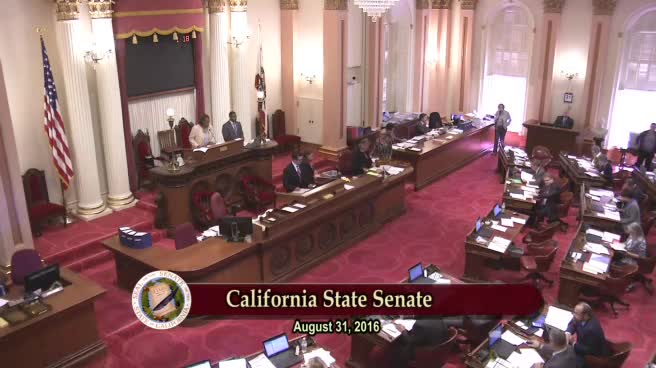
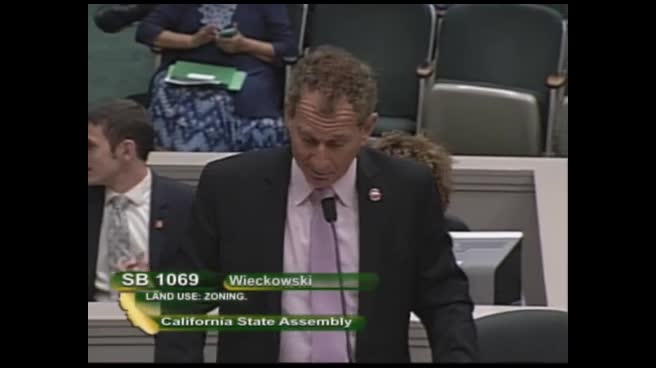
Bill Author

Bill Co-Author(s):