SB 745: Telecommunications: universal service: California Advanced Services Fund.
- Session Year: 2015-2016
- House: Senate
- Latest Version Date: 2016-09-27
Existing law, the federal Telecommunications Act of 1996, establishes a program of cooperative federalism for the regulation of telecommunications to attain the goal of local competition, while implementing specific, predictable, and sufficient federal and state mechanisms to preserve and advance universal service, consistent with certain universal service principles. The universal service principles include the principle that consumers in all regions of the nation, including low-income consumers and those in rural, insular, and high-cost areas, should have access to telecommunications and information services, including interexchange services and advanced telecommunications and information services, that are reasonably comparable to those services provided in urban areas and that are available at rates that are reasonably comparable to rates charged for similar services in urban areas. The act authorizes each state to adopt regulations to provide for additional definitions and standards to preserve and advance universal service within the state, only to the extent that they adopt additional specific, predictable, and sufficient mechanisms that do not rely on or burden federal universal service support mechanisms.
Under existing law, the Public Utilities Commission has regulatory authority over public utilities, including telephone corporations, as defined. Existing law establishes the California Advanced Services Fund, referred to as the CASF, in the State Treasury. Existing law requires the commission to develop, implement, and administer the CASF to encourage deployment of high-quality advanced communications services to all Californians that will promote economic growth, job creation, and the substantial social benefits of advanced information and communications technologies, as provided in specified decisions of the commission and in the CASF statute.
Existing law establishes the Rural and Urban Regional Broadband Consortia Grant Account within the CASF. Existing law provides that moneys in the Rural and Urban Regional Broadband Consortia Grant Account are available for grants to eligible consortia to fund the cost of broadband deployment activities other than the capital cost of facilities, as specified by the commission, and provides that an eligible consortium may include representatives of organizations, including local and regional government, public safety, elementary and secondary education, health care, libraries, postsecondary education, community-based organizations, tourism, parks and recreation, agricultural, and business.
This bill would specifically include representatives of workforce organizations and air pollution control or air quality management districts amongst the persons that can be included in an eligible consortium.
Existing law establishes the Broadband Public Housing Account within the CASF. Existing law provides that moneys in that account are available for, among other things, grants and loans to publicly supported communities to finance projects to connect to broadband networks.
This bill would require the commission, in its review of applications for grants and loans for this purpose, to prioritize unserved housing developments, as defined.
Existing law transferred moneys from other accounts within the CASF to the Broadband Public Housing Account for various specified purposes and provided that those transferred moneys not awarded by December 31, 2016, would be returned to the accounts from which they were transferred.
This bill would postpone the return of those moneys until December 31, 2020. By authorizing the granting of moneys remaining in the Broadband Public Housing Account until that date, this bill would make an appropriation.
Existing law requires the commission to annually report to the Legislature on the expenditures of CASF funds, as specified, including the geographic regions of the state affected by those expenditures in the prior year.
This bill would require the commissions report to the Legislature to include that information by county, details on efforts to leverage non-CASF funds, the status of each project funded through the CASF, whether the project has been completed, and, if applicable, the expected completion date of the project.
Existing law, the federal Telecommunications Act of 1996, establishes a program of cooperative federalism for the regulation of telecommunications to attain the goal of local competition, while implementing specific, predictable, and sufficient federal and state mechanisms to preserve and advance universal service, consistent with certain universal service principles. The universal service principles include the principle that consumers in all regions of the nation, including low-income consumers and those in rural, insular, and high-cost areas, should have access to telecommunications and information services, including interexchange services and advanced telecommunications and information services, that are reasonably comparable to those services provided in urban areas and that are available at rates that are reasonably comparable to rates charged for similar services in urban areas. The act authorizes each state to adopt regulations to provide for additional definitions and standards to preserve and advance universal service within the state, only to the extent that they adopt additional specific, predictable, and sufficient mechanisms that do not rely on or burden federal universal service support mechanisms.
Under existing law, the Public Utilities Commission has regulatory authority over public utilities, including telephone corporations, as defined. Existing law establishes the California Advanced Services Fund, referred to as the CASF, in the State Treasury. Existing law requires the commission to develop, implement, and administer the CASF to encourage deployment of high-quality advanced communications services to all Californians that will promote economic growth, job creation, and substantial social benefits of advanced information and communications technologies, as provided in specified decisions of the commission and in the CASF statute.
Existing law establishes the Rural and Urban Regional Broadband Consortia Grant Account within the CASF. Existing law provides that moneys in the Rural and Urban Regional Broadband Consortia Grant Account are available for grants to eligible consortia to fund the cost of broadband deployment activities other than the capital cost of facilities, as specified by the commission, and provides that an eligible consortium may include representatives of organizations, including local and regional government, public safety, elementary and secondary education, health care, libraries, postsecondary education, community-based organizations, tourism, parks and recreation, agricultural, and business.
This bill would specifically include representatives of workforce organizations and air pollution control or air quality management districts amongst the persons that can be included in an eligible consortium.
Existing law establishes the Broadband Public Housing Account within the CASF. Existing law provides that moneys in that account are available for, among other things, grants and loans to publicly supported communities to finance projects to connect to broadband networks.
This bill would require the commission, in its review of applications for grants and loans for this purpose, to prioritize unserved housing developments, as defined.
Existing law transferred moneys from other accounts within the CASF to the Broadband Public Housing Account for various specified purposes and provided those transferred moneys not awarded by December 31, 2016, would be returned to the accounts from which they were transferred.
This bill would extend that date until December 31, 2020. By authorizing the granting of moneys remaining in the Broadband Public Housing Account until that date, this bill would make an appropriation.
Existing law requires the commission to annually report to the Legislature on the expenditures of CASF funds, as specified, including the geographic regions of the state affected by those expenditures in the prior year.
This bill would require the commissions report to the Legislature to include that information by county and details on efforts to leverage non-CASF funds, the status of each project funded through the CASF, whether the project has been completed, and, if applicable, the expected completion date of the project.
Existing law, the federal Telecommunications Act of 1996, establishes a program of cooperative federalism for the regulation of telecommunications to attain the goal of local competition, while implementing specific, predictable, and sufficient federal and state mechanisms to preserve and advance universal service, consistent with certain universal service principles. The universal service principles include the principle that consumers in all regions of the nation, including low-income consumers and those in rural, insular, and high-cost areas, should have access to telecommunications and information services, including interexchange services and advanced telecommunications and information services, that are reasonably comparable to those services provided in urban areas and that are available at rates that are reasonably comparable to rates charged for similar services in urban areas. The act authorizes each state to adopt regulations to provide for additional definitions and standards to preserve and advance universal service within the state, only to the extent that they adopt additional specific, predictable, and sufficient mechanisms that do not rely on or burden federal universal service support mechanisms.
Under existing law, the Public Utilities Commission has regulatory authority over public utilities, including telephone corporations, as defined. Existing law establishes the California Advanced Services Fund, referred to as the CASF, in the State Treasury. Existing law requires the commission to develop, implement, and administer the CASF to encourage deployment of high-quality advanced communications services to all Californians that will promote economic growth, job creation, and substantial social benefits of advanced information and communications technologies, as provided in specified decisions of the commission and in the CASF statute.
Existing law establishes the Rural and Urban Regional Broadband Consortia Grant Account within the CASF. Existing law provides that moneys in the Rural and Urban Regional Broadband Consortia Grant Account are available for grants to eligible consortia to fund the cost of broadband deployment activities other than the capital cost of facilities, as specified by the commission, and provides that an eligible consortium may include representatives of organizations, including local and regional government, public safety, elementary and secondary education, health care, libraries, postsecondary education, community-based organizations, tourism, parks and recreation, agricultural, and business.
This bill would specifically include representatives of workforce organizations and air pollution control or air quality management districts amongst the persons that can be included in an eligible consortium.
Existing law establishes the Broadband Public Housing Account within the CASF. Existing law provides that moneys in that account are available for, among other things, grants and loans to publicly supported communities to finance projects to connect to broadband networks.
This bill would require the commission, in its review of applications for grants and loans for this purpose, to prioritize unwired housing developments and provide that a wired housing development would be an eligible applicant only if the commission determines that the project would provide broadband Internet service at no greater cost for comparable speed and quality than is commercially available before the project. unserved housing developments, as defined.
Existing law transferred moneys from other accounts within the CASF to the Broadband Public Housing Account for various specified purposes and provided those transferred moneys not awarded by December 31, 2016, would be returned to the accounts from which they were transferred.
This bill would extend that date until December 31, 2020. By authorizing the granting of moneys remaining in the Broadband Public Housing Account until that date, this bill would make an appropriation.
Existing law requires the commission to annually report to the Legislature on the expenditures of CASF funds, as specified, including the geographic regions of the state affected by those expenditures in the prior year.
This bill would require the commissions report to the Legislature to include that information by county and details on efforts to leverage non-CASF funds, the status of each project funded through the CASF, whether the project has been completed, and, if applicable, the expected completion date of the project.
Existing law, the federal Telecommunications Act of 1996, establishes a program of cooperative federalism for the regulation of telecommunications to attain the goal of local competition, while implementing specific, predictable, and sufficient federal and state mechanisms to preserve and advance universal service, consistent with certain universal service principles. The universal service principles include the principle that consumers in all regions of the nation, including low-income consumers and those in rural, insular, and high-cost areas, should have access to telecommunications and information services, including interexchange services and advanced telecommunications and information services, that are reasonably comparable to those services provided in urban areas and that are available at rates that are reasonably comparable to rates charged for similar services in urban areas. The act authorizes each state to adopt regulations to provide for additional definitions and standards to preserve and advance universal service within the state, only to the extent that they adopt additional specific, predictable, and sufficient mechanisms that do not rely on or burden federal universal service support mechanisms.
Under existing law, the Public Utilities Commission has regulatory authority over public utilities, including telephone corporations, as defined. Existing law establishes the California Advanced Services Fund, referred to as the CASF, in the State Treasury. Existing law requires the commission to develop, implement, and administer the CASF to encourage deployment of high-quality advanced communications services to all Californians that will promote economic growth, job creation, and substantial social benefits of advanced information and communications technologies, as provided in specified decisions of the commission and in the CASF statute. Existing
Existing law establishes the Rural and Urban Regional Broadband Consortia Grant Account within the CASF. Existing law provides that moneys in the Rural and Urban Regional Broadband Consortia Grant Account are available for grants to eligible consortia to fund the cost of broadband deployment activities other than the capital cost of facilities, as specified by the commission, and provides that an eligible consortium may include representatives of organizations, including local and regional government, public safety, elementary and secondary education, health care, libraries, postsecondary education, community-based organizations, tourism, parks and recreation, agricultural, and business.
This bill would specifically include representatives of workforce organizations and air pollution control or air quality management districts amongst the persons that can be included in an eligible consortium.
Existing law establishes the Broadband Public Housing Account within the CASF. Existing law provides that moneys in that account are available for, among other things, grants and loans to publicly supported communities to finance projects to connect to broadband networks.
This bill would require the commission, in its review of applications for grants and loans for this purpose, to prioritize unwired housing developments and provide that a wired housing development would be an eligible applicant only if the commission determines that the project would provide broadband Internet service at no greater cost for comparable speed and quality than is commercially available before the project.
Existing law transferred moneys from other accounts within the CASF to the Broadband Public Housing Account for various specified purposes and provided those transferred moneys not awarded by December 31, 2016, would be returned to the accounts from which they were transferred.
This bill would extend that date until December 31, 2020. By authorizing the granting of moneys remaining in the Broadband Public Housing Account until that date, this bill would make an appropriation.
Existing law requires the commission to annually report to the Legislature on the expenditures of CASF funds, as specified, including the geographic regions of the state affected by those expenditures in the prior year.
This bill would require the commissions report to the Legislature to include that information by county and to include details on efforts to leverage non-CASF funds. funds, the status of each project funded through the CASF, whether the project has been completed, and, if applicable, the expected completion date of the project.
Existing law, the federal Telecommunications Act of 1996, establishes a program of cooperative federalism for the regulation of telecommunications to attain the goal of local competition, while implementing specific, predictable, and sufficient federal and state mechanisms to preserve and advance universal service, consistent with certain universal service principles. The universal service principles include the principle that consumers in all regions of the nation, including low-income consumers and those in rural, insular, and high-cost areas, should have access to telecommunications and information services, including interexchange services and advanced telecommunications and information services, that are reasonably comparable to those services provided in urban areas and that are available at rates that are reasonably comparable to rates charged for similar services in urban areas. The act authorizes each state to adopt regulations to provide for additional definitions and standards to preserve and advance universal service within the state, only to the extent that they adopt additional specific, predictable, and sufficient mechanisms that do not rely on or burden federal universal service support mechanisms.
Under existing law, the Public Utilities Commission has regulatory authority over public utilities, including telephone corporations, as defined. Existing law establishes the California Advanced Services Fund, referred to as the CASF, in the State Treasury. Existing law requires the commission to develop, implement, and administer the CASF to encourage deployment of high-quality advanced communications services to all Californians that will promote economic growth, job creation, and substantial social benefits of advanced information and communications technologies, as provided in specified decisions of the commission and in the CASF statute. Existing law establishes 4 accounts, the Broadband Infrastructure Grant Account, the Rural and Urban Regional Broadband Consortia Grant Account, the Broadband Infrastructure Revolving Loan Account, and the Broadband Public Housing Account within the CASF. Existing law provides that moneys in the Rural and Urban Regional Broadband Consortia Grant Account are available for grants to eligible consortia to fund the cost of broadband deployment activities other than the capital cost of facilities, as specified by the commission, and provides that an eligible consortium may include representatives of organizations, including local and regional government, public safety, elementary and secondary education, health care, libraries, postsecondary education, community-based organizations, tourism, parks and recreation, agricultural, and business.
This bill would specifically include representatives of workforce organizations and air pollution control or air quality management districts amongst the persons that can be included in an eligible consortium.
Existing law requires the commission to annually report to the Legislature on the expenditures of CASF funds, as specified, including the geographic regions of the state affected by those expenditures in the prior year.
This bill would require the commissions report to the Legislature to include that information by county and to include details on efforts to leverage non-CASF funds.
Existing law, the federal Telecommunications Act of 1996, establishes a program of cooperative federalism for the regulation of telecommunications to attain the goal of local competition, while implementing specific, predictable, and sufficient federal and state mechanisms to preserve and advance universal service, consistent with certain universal service principles. The universal service principles include the principle that consumers in all regions of the nation, including low-income consumers and those in rural, insular, and high-cost areas, should have access to telecommunications and information services, including interexchange services and advanced telecommunications and information services, that are reasonably comparable to those services provided in urban areas and that are available at rates that are reasonably comparable to rates charged for similar services in urban areas. The act authorizes each state to adopt regulations to provide for additional definitions and standards to preserve and advance universal service within the state, only to the extent that they adopt additional specific, predictable, and sufficient mechanisms that do not rely on or burden federal universal service support mechanisms.
Under existing law, the Public Utilities Commission has regulatory authority over public utilities, including telephone corporations, as defined. Existing law establishes the California Advanced Services Fund, referred to as the CASF, in the State Treasury. Existing law requires the commission to develop, implement, and administer the CASF to encourage deployment of high-quality advanced communications services to all Californians that will promote economic growth, job creation, and substantial social benefits of advanced information and communications technologies, as provided in specified decisions of the commission and in the CASF statute. Existing law establishes 4 accounts, the Broadband Infrastructure Grant Account, the Rural and Urban Regional Broadband Consortia Grant Account, the Broadband Infrastructure Revolving Loan Account, and the Broadband Public Housing Account within the CASF. Existing law provides that moneys in the Rural and Urban Regional Broadband Consortia Grant Account are available for grants to eligible consortia to fund the cost of broadband deployment activities other than the capital cost of facilities, as specified by the commission, and provides that an eligible consortium may include representatives of organizations, including local and regional government, public safety, elementary and secondary education, health care, libraries, postsecondary education, community-based organizations, tourism, parks and recreation, agricultural, and business.
This bill would specifically include representatives of workforce organizations and air pollution control or air quality management districts amongst the persons that can be included in an eligible consortium.
(a)The commission shall develop, implement, and administer the California Advanced Services Fund program to encourage deployment of high-quality advanced communications services to all Californians that will promote economic growth, job creation, and the substantial social benefits of advanced information and communications technologies, consistent with this section.
(b)(1)The goal of the program is, no later than December 31, 2015, to approve funding for infrastructure projects that will provide broadband access to no less than 98 percent of California households.
(2)In approving infrastructure projects, the commission shall give priority to projects that provide last-mile broadband access to households that are unserved by an existing facilities-based broadband provider. The commission shall provide each applicant, and any party challenging an application, the opportunity to demonstrate actual levels of broadband service in the project area, which the commission shall consider in reviewing the application.
(c)The commission shall establish the following accounts within the fund:
(1)The Broadband Infrastructure Grant Account.
(2)The Rural and Urban Regional Broadband Consortia Grant Account.
(3)The Broadband Infrastructure Revolving Loan Account.
(4)The Broadband Public Housing Account.
(d)(1)All moneys collected by the surcharge authorized by the commission pursuant to Decision 07-12-054 shall be transmitted to the commission pursuant to a schedule established by the commission. The commission shall transfer the moneys received to the Controller for deposit in the California Advanced Services Fund. Moneys collected on and after January 1, 2011, shall be deposited in the following amounts in the following accounts:
(A)One hundred ninety million dollars ($190,000,000) into the Broadband Infrastructure Grant Account.
(B)Fifteen million dollars ($15,000,000) into the Rural and Urban Regional Broadband Consortia Grant Account.
(C)Ten million dollars ($10,000,000) into the Broadband Infrastructure Revolving Loan Account.
(2)All interest earned on moneys in the fund shall be deposited in the fund.
(3)The commission shall not collect moneys, by imposing the surcharge described in paragraph (1) for deposit in the fund, in an amount that exceeds one hundred million dollars ($100,000,000) before January 1, 2011. On and after January 1, 2011, the commission may collect an additional sum not to exceed two hundred fifteen million dollars ($215,000,000), for a sum total of moneys collected by imposing the surcharge described in paragraph (1) not to exceed three hundred fifteen million dollars ($315,000,000). The commission may collect the additional sum beginning with the calendar year starting on January 1, 2011, and continuing through the 2020 calendar year, in an amount not to exceed twenty-five million dollars ($25,000,000) per year, unless the commission determines that collecting a higher amount in any year will not result in an increase in the total amount of all surcharges collected from telephone customers that year.
(e)(1)All moneys in the California Advanced Services Fund shall be available, upon appropriation by the Legislature, to the commission for the program administered by the commission pursuant to this section, including the costs incurred by the commission in developing, implementing, and administering the program and the fund.
(2)Notwithstanding any other law and for the sole purpose of providing matching funds pursuant to the federal American Recovery and Reinvestment Act of 2009 (Public Law 111-5), any entity eligible for funding pursuant to that act shall be eligible to apply to participate in the program administered by the commission pursuant to this section, if that entity otherwise satisfies the eligibility requirements under that program. Nothing in this section shall impede the ability of an incumbent local exchange carrier, as defined by subsection (h) of Section 251 of Title 47 of the United States Code, that is regulated under a rate of return regulatory structure, to recover, in rate base, California infrastructure investment not provided through federal or state grant funds for facilities that provide broadband service and California intrastate voice service.
(3)Notwithstanding subdivision (b) of Section 270, an entity that is not a telephone corporation shall be eligible to apply to participate in the program administered by the commission pursuant to this section to provide access to broadband to an unserved or underserved household, as defined in commission Decision 12-02-015, if the entity otherwise meets the eligibility requirements and complies with program requirements established by the commission. These requirements shall include all of the following:
(A)That projects under this paragraph provide last-mile broadband access to households that are unserved by an existing facilities-based broadband provider and only receive funding to provide broadband access to households that are unserved or underserved, as defined in commission Decision 12-02-015.
(B)That funding for a project providing broadband access to an underserved household shall not be approved until after any existing facilities-based provider has an opportunity to demonstrate to the commission that it will, within a reasonable timeframe, upgrade existing service. An existing facilities-based provider may, but is not required to, apply for funding under this section to make that upgrade.
(C)That the commission shall provide each applicant, and any party challenging an application, the opportunity to demonstrate actual levels of broadband service in the project area, which the commission shall consider in reviewing the application.
(D)That a local governmental agency may be eligible for an infrastructure grant only if the infrastructure project is for an unserved household or business, the commission has conducted an open application process, and no other eligible entity applied.
(E)That the commission shall establish a service list of interested parties to be notified of California Advanced Services Fund applications.
(f)Moneys in the Rural and Urban Regional Broadband Consortia Grant Account shall be available for grants to eligible consortia to fund the cost of broadband deployment activities other than the capital cost of facilities, as specified by the commission. An eligible consortium may include, as specified by the commission, representatives of organizations, including, but not limited to, local and regional government, public safety, elementary and secondary education, health care, libraries, postsecondary education, community-based organizations, tourism, parks and recreation, agricultural, business, workforce organizations, and air pollution control or air quality management districts, and is not required to have as its lead fiscal agent an entity with a certificate of public convenience and necessity.
(g)Moneys in the Broadband Infrastructure Revolving Loan Account shall be available to finance capital costs of broadband facilities not funded by a grant from the Broadband Infrastructure Grant Account. The commission shall periodically set interest rates on the loans based on surveys of existing financial markets.
(h)(1)For purposes of this subdivision, the following terms have the following meanings:
(A)Publicly subsidized means either that the housing development receives financial assistance from the United States Department of Housing and Urban Development pursuant to an annual contribution contract or is financed with low-income housing tax credits, tax-exempt mortgage revenue bonds, general obligation bonds, or local, state, or federal loans or grants and the rents of the occupants, who are lower income households, do not exceed those prescribed by deed restrictions or regulatory agreements pursuant to the terms of the financing or financial assistance.
(B)Publicly supported community means a publicly subsidized multifamily housing development that is wholly owned by either of the following:
(i)A public housing agency that has been chartered by the state, or by any city or county in the state, and has been determined to be an eligible public housing agency by the United States Department of Housing and Urban Development.
(ii)An incorporated nonprofit organization as described in Section 501(c)(3) of the Internal Revenue Code (26 U.S.C. Sec. 501(c)(3)) that is exempt from taxation under Section 501(a) of that code (26 U.S.C. Sec. 501(a)), and that has received public funding to subsidize the construction or maintenance of housing occupied by residents whose annual income qualifies as low or very low income according to federal poverty guidelines.
(2)Notwithstanding subdivision (b) of Section 270, moneys in the Broadband Public Housing Account shall be available for the commission to award grants and loans pursuant to this subdivision to an eligible publicly supported community if that entity otherwise meets eligibility requirements and complies with program requirements established by the commission.
(3)(A)Not more than twenty million dollars ($20,000,000) shall be available for grants and loans to a publicly supported community to finance a project to connect a broadband network to that publicly supported community. A publicly supported community may be an eligible applicant only if the publicly supported community can verify to the commission that the publicly supported community has not denied a right of access to any broadband provider that is willing to connect a broadband network to the facility for which the grant or loan is sought and the publically supported community is unserved.
(B)(i)In its review of applications received pursuant to subparagraph (A), the commission shall award grants only to unserved housing developments.
(ii)For purposes of this subparagraph, a housing development is unserved when at least one housing unit within the housing development is not offered broadband Internet service.
(4)(A)Not more than five million dollars ($5,000,000) shall be available for grants and loans to a publicly supported community to support programs designed to increase adoption rates for broadband services for residents of that publicly supported community. A publicly supported community may be eligible for funding for a broadband adoption program only if the residential units in the facility to be served have access to broadband services or will have access to broadband services at the time the funding for adoption is implemented.
(B)A publicly supported community may contract with other nonprofit or public agencies to assist in implementation of a broadband adoption program.
(5)To the extent feasible, the commission shall approve projects for funding from the Broadband Public Housing Account in a manner that reflects the statewide distribution of publicly supported communities.
(6)In reviewing a project application under this subdivision, the commission shall consider the availability of other funding sources for that project, any financial contribution from the broadband service provider to the project, the availability of any other public or private broadband adoption or deployment program, including tax credits and other incentives, and whether the applicant has sought funding from, or participated in, any reasonably available program. The commission may require an applicant to provide match funding, and shall not deny funding for a project solely because the applicant is receiving funding from another source.
(7)(A)To provide funding for the purposes of this subdivision, the commission shall transfer to the Broadband Public Housing Account twenty million dollars ($20,000,000) from the Broadband Infrastructure Grant Account and five million dollars ($5,000,000) from the Broadband Infrastructure Revolving Loan Account. Any moneys in the Broadband Public Housing Account that have not been awarded pursuant to this subdivision by December 31, 2020, shall be transferred back to the Broadband Infrastructure Grant Account and Broadband Infrastructure Revolving Loan Account in proportion to the amount transferred from the respective accounts.
(B)The commission shall transfer funds pursuant to subparagraph (A) only if the commission is otherwise authorized to collect funds for purposes of this section in excess of the total amount authorized pursuant to paragraph (3) of subdivision (d).
SEC. 2.Section 914.7 of the Public Utilities Code is amended to read:914.7.(a)By April 1 of each year, the commission shall provide a report to the Legislature that includes all of the following information:
(1)The amount of funds expended from the California Advanced Services Fund in the prior year.
(2)The recipients of funds expended from the California Advanced Services Fund in the prior year.
(3)The geographic regions of the state affected by funds expended from the California Advanced Services Fund in the prior year, including information by county.
(4)The expected benefits to be derived from the funds expended from the California Advanced Services Fund in the prior year.
(5)Details on the status of each project funded through the California Advanced Services Fund, whether the project has been completed, and, if applicable, the expected completion date of the project.
(6)Actual broadband adoption levels from the funds expended from the California Advanced Services Fund in the prior year.
(7)The amount of funds expended from the California Advanced Services Fund used to match federal funds.
(8)Additional details on efforts to leverage non-California Advanced Services Fund funds.
(9)An update on the expenditures from the California Advanced Services Fund and broadband adoption levels, and an accounting of remaining unserved and underserved households and areas of the state.
(10)The status of the California Advanced Services Fund balance and the projected amount to be collected in each year through 2020 to fund approved projects.
(b)Pursuant to Section 10231.5 of the Government Code, this section is repealed on January 1, 2022.
(a)The commission shall develop, implement, and administer the California Advanced Services Fund program to encourage deployment of high-quality advanced communications services to all Californians that will promote economic growth, job creation, and the substantial social benefits of advanced information and communications technologies, consistent with this section.
(b)(1)The goal of the program is, no later than December 31, 2015, to approve funding for infrastructure projects that will provide broadband access to no less than 98 percent of California households.
(2)In approving infrastructure projects, the commission shall give priority to projects that provide last-mile broadband access to households that are unserved by an existing facilities-based broadband provider. The commission shall provide each applicant, and any party challenging an application, the opportunity to demonstrate actual levels of broadband service in the project area, which the commission shall consider in reviewing the application.
(c)The commission shall establish the following accounts within the fund:
(1)The Broadband Infrastructure Grant Account.
(2)The Rural and Urban Regional Broadband Consortia Grant Account.
(3)The Broadband Infrastructure Revolving Loan Account.
(4)The Broadband Public Housing Account.
(d)(1)All moneys collected by the surcharge authorized by the commission pursuant to Decision 07-12-054 shall be transmitted to the commission pursuant to a schedule established by the commission. The commission shall transfer the moneys received to the Controller for deposit in the California Advanced Services Fund. Moneys collected on and after January 1, 2011, shall be deposited in the following amounts in the following accounts:
(A)One hundred ninety million dollars ($190,000,000) into the Broadband Infrastructure Grant Account.
(B)Fifteen million dollars ($15,000,000) into the Rural and Urban Regional Broadband Consortia Grant Account.
(C)Ten million dollars ($10,000,000) into the Broadband Infrastructure Revolving Loan Account.
(2)All interest earned on moneys in the fund shall be deposited in the fund.
(3)The commission shall not collect moneys, by imposing the surcharge described in paragraph (1) for deposit in the fund, in an amount that exceeds one hundred million dollars ($100,000,000) before January 1, 2011. On and after January 1, 2011, the commission may collect an additional sum not to exceed two hundred fifteen million dollars ($215,000,000), for a sum total of moneys collected by imposing the surcharge described in paragraph (1) not to exceed three hundred fifteen million dollars ($315,000,000). The commission may collect the additional sum beginning with the calendar year starting on January 1, 2011, and continuing through the 2020 calendar year, in an amount not to exceed twenty-five million dollars ($25,000,000) per year, unless the commission determines that collecting a higher amount in any year will not result in an increase in the total amount of all surcharges collected from telephone customers that year.
(e)(1)All moneys in the California Advanced Services Fund shall be available, upon appropriation by the Legislature, to the commission for the program administered by the commission pursuant to this section, including the costs incurred by the commission in developing, implementing, and administering the program and the fund.
(2)Notwithstanding any other law and for the sole purpose of providing matching funds pursuant to the federal American Recovery and Reinvestment Act of 2009 (Public Law 111-5), any entity eligible for funding pursuant to that act shall be eligible to apply to participate in the program administered by the commission pursuant to this section, if that entity otherwise satisfies the eligibility requirements under that program. Nothing in this section shall impede the ability of an incumbent local exchange carrier, as defined by subsection (h) of Section 251 of Title 47 of the United States Code, that is regulated under a rate of return regulatory structure, to recover, in rate base, California infrastructure investment not provided through federal or state grant funds for facilities that provide broadband service and California intrastate voice service.
(3)Notwithstanding subdivision (b) of Section 270, an entity that is not a telephone corporation shall be eligible to apply to participate in the program administered by the commission pursuant to this section to provide access to broadband to an unserved or underserved household, as defined in commission Decision 12-02-015, if the entity otherwise meets the eligibility requirements and complies with program requirements established by the commission. These requirements shall include all of the following:
(A)That projects under this paragraph provide last-mile broadband access to households that are unserved by an existing facilities-based broadband provider and only receive funding to provide broadband access to households that are unserved or underserved, as defined in commission Decision 12-02-015.
(B)That funding for a project providing broadband access to an underserved household shall not be approved until after any existing facilities-based provider has an opportunity to demonstrate to the commission that it will, within a reasonable timeframe, upgrade existing service. An existing facilities-based provider may, but is not required to, apply for funding under this section to make that upgrade.
(C)That the commission shall provide each applicant, and any party challenging an application, the opportunity to demonstrate actual levels of broadband service in the project area, which the commission shall consider in reviewing the application.
(D)That a local governmental agency may be eligible for an infrastructure grant only if the infrastructure project is for an unserved household or business, the commission has conducted an open application process, and no other eligible entity applied.
(E)That the commission shall establish a service list of interested parties to be notified of California Advanced Services Fund applications.
(f)Moneys in the Rural and Urban Regional Broadband Consortia Grant Account shall be available for grants to eligible consortia to fund the cost of broadband deployment activities other than the capital cost of facilities, as specified by the commission. An eligible consortium may include, as specified by the commission, representatives of organizations, including, but not limited to, local and regional government, public safety, elementary and secondary education, health care, libraries, postsecondary education, community-based organizations, tourism, parks and recreation, agricultural, business, workforce organizations, and air pollution control or air quality management districts, and is not required to have as its lead fiscal agent an entity with a certificate of public convenience and necessity.
(g)Moneys in the Broadband Infrastructure Revolving Loan Account shall be available to finance capital costs of broadband facilities not funded by a grant from the Broadband Infrastructure Grant Account. The commission shall periodically set interest rates on the loans based on surveys of existing financial markets.
(h)(1)For purposes of this subdivision, the following terms have the following meanings:
(A)Publicly subsidized means either that the housing development receives financial assistance from the United States Department of Housing and Urban Development pursuant to an annual contribution contract or is financed with low-income housing tax credits, tax-exempt mortgage revenue bonds, general obligation bonds, or local, state, or federal loans or grants and the rents of the occupants, who are lower income households, do not exceed those prescribed by deed restrictions or regulatory agreements pursuant to the terms of the financing or financial assistance.
(B)Publicly supported community means a publicly subsidized multifamily housing development that is wholly owned by either of the following:
(i)A public housing agency that has been chartered by the state, or by any city or county in the state, and has been determined to be an eligible public housing agency by the United States Department of Housing and Urban Development.
(ii)An incorporated nonprofit organization as described in Section 501(c)(3) of the Internal Revenue Code (26 U.S.C. Sec. 501(c)(3)) that is exempt from taxation under Section 501(a) of that code (26 U.S.C. Sec. 501(a)), and that has received public funding to subsidize the construction or maintenance of housing occupied by residents whose annual income qualifies as low or very low income according to federal poverty guidelines.
(2)Notwithstanding subdivision (b) of Section 270, moneys in the Broadband Public Housing Account shall be available for the commission to award grants and loans pursuant to this subdivision to an eligible publicly supported community if that entity otherwise meets eligibility requirements and complies with program requirements established by the commission.
(3)(A)Not more than twenty million dollars ($20,000,000) shall be available for grants and loans to a publicly supported community to finance a project to connect a broadband network to that publicly supported community. A publicly supported community may be an eligible applicant only if the publicly supported community can verify to the commission that the publicly supported community has not denied a right of access to any broadband provider that is willing to connect a broadband network to the facility for which the grant or loan is sought. sought and the publically supported community is unserved.
(B)(i)In its review of applications received pursuant to subparagraph (A), the commission shall prioritize award grants only to unserved housing developments.
(ii)For purposes of this subparagraph, a housing development is unserved when at least one housing unit within the housing development is not offered broadband Internet service.
(4)(A)Not more than five million dollars ($5,000,000) shall be available for grants and loans to a publicly supported community to support programs designed to increase adoption rates for broadband services for residents of that publicly supported community. A publicly supported community may be eligible for funding for a broadband adoption program only if the residential units in the facility to be served have access to broadband services or will have access to broadband services at the time the funding for adoption is implemented.
(B)A publicly supported community may contract with other nonprofit or public agencies to assist in implementation of a broadband adoption program.
(5)To the extent feasible, the commission shall approve projects for funding from the Broadband Public Housing Account in a manner that reflects the statewide distribution of publicly supported communities.
(6)In reviewing a project application under this subdivision, the commission shall consider the availability of other funding sources for that project, any financial contribution from the broadband service provider to the project, the availability of any other public or private broadband adoption or deployment program, including tax credits and other incentives, and whether the applicant has sought funding from, or participated in, any reasonably available program. The commission may require an applicant to provide match funding, and shall not deny funding for a project solely because the applicant is receiving funding from another source.
(7)(A)To provide funding for the purposes of this subdivision, the commission shall transfer to the Broadband Public Housing Account twenty million dollars ($20,000,000) from the Broadband Infrastructure Grant Account and five million dollars ($5,000,000) from the Broadband Infrastructure Revolving Loan Account. Any moneys in the Broadband Public Housing Account that have not been awarded pursuant to this subdivision by December 31, 2020, shall be transferred back to the Broadband Infrastructure Grant Account and Broadband Infrastructure Revolving Loan Account in proportion to the amount transferred from the respective accounts.
(B)The commission shall transfer funds pursuant to subparagraph (A) only if the commission is otherwise authorized to collect funds for purposes of this section in excess of the total amount authorized pursuant to paragraph (3) of subdivision (d).
SEC. 2.Section 914.7 of the Public Utilities Code is amended to read:914.7.(a)By April 1 of each year, the commission shall provide a report to the Legislature that includes all of the following information:
(1)The amount of funds expended from the California Advanced Services Fund in the prior year.
(2)The recipients of funds expended from the California Advanced Services Fund in the prior year.
(3)The geographic regions of the state affected by funds expended from the California Advanced Services Fund in the prior year, including information by county.
(4)The expected benefits to be derived from the funds expended from the California Advanced Services Fund in the prior year.
(5)Details on the status of each project funded through the California Advanced Services Fund, whether the project has been completed, and, if applicable, the expected completion date of the project.
(6)Actual broadband adoption levels from the funds expended from the California Advanced Services Fund in the prior year.
(7)The amount of funds expended from the California Advanced Services Fund used to match federal funds.
(8)Additional details on efforts to leverage non-California Advanced Services Fund funds.
(9)An update on the expenditures from the California Advanced Services Fund and broadband adoption levels, and an accounting of remaining unserved and underserved households and areas of the state.
(10)The status of the California Advanced Services Fund balance and the projected amount to be collected in each year through 2020 to fund approved projects.
(b)Pursuant to Section 10231.5 of the Government Code, this section is repealed on January 1, 2022.
(a)The commission shall develop, implement, and administer the California Advanced Services Fund program to encourage deployment of high-quality advanced communications services to all Californians that will promote economic growth, job creation, and the substantial social benefits of advanced information and communications technologies, consistent with this section.
(b)(1)The goal of the program is, no later than December 31, 2015, to approve funding for infrastructure projects that will provide broadband access to no less than 98 percent of California households.
(2)In approving infrastructure projects, the commission shall give priority to projects that provide last-mile broadband access to households that are unserved by an existing facilities-based broadband provider. The commission shall provide each applicant, and any party challenging an application, the opportunity to demonstrate actual levels of broadband service in the project area, which the commission shall consider in reviewing the application.
(c)The commission shall establish the following accounts within the fund:
(1)The Broadband Infrastructure Grant Account.
(2)The Rural and Urban Regional Broadband Consortia Grant Account.
(3)The Broadband Infrastructure Revolving Loan Account.
(4)The Broadband Public Housing Account.
(d)(1)All moneys collected by the surcharge authorized by the commission pursuant to Decision 07-12-054 shall be transmitted to the commission pursuant to a schedule established by the commission. The commission shall transfer the moneys received to the Controller for deposit in the California Advanced Services Fund. Moneys collected on and after January 1, 2011, shall be deposited in the following amounts in the following accounts:
(A)One hundred ninety million dollars ($190,000,000) into the Broadband Infrastructure Grant Account.
(B)Fifteen million dollars ($15,000,000) into the Rural and Urban Regional Broadband Consortia Grant Account.
(C)Ten million dollars ($10,000,000) into the Broadband Infrastructure Revolving Loan Account.
(2)All interest earned on moneys in the fund shall be deposited in the fund.
(3)The commission shall not collect moneys, by imposing the surcharge described in paragraph (1) for deposit in the fund, in an amount that exceeds one hundred million dollars ($100,000,000) before January 1, 2011. On and after January 1, 2011, the commission may collect an additional sum not to exceed two hundred fifteen million dollars ($215,000,000), for a sum total of moneys collected by imposing the surcharge described in paragraph (1) not to exceed three hundred fifteen million dollars ($315,000,000). The commission may collect the additional sum beginning with the calendar year starting on January 1, 2011, and continuing through the 2020 calendar year, in an amount not to exceed twenty-five million dollars ($25,000,000) per year, unless the commission determines that collecting a higher amount in any year will not result in an increase in the total amount of all surcharges collected from telephone customers that year.
(e)(1)All moneys in the California Advanced Services Fund shall be available, upon appropriation by the Legislature, to the commission for the program administered by the commission pursuant to this section, including the costs incurred by the commission in developing, implementing, and administering the program and the fund.
(2)Notwithstanding any other law and for the sole purpose of providing matching funds pursuant to the federal American Recovery and Reinvestment Act of 2009 (Public Law 111-5), any entity eligible for funding pursuant to that act shall be eligible to apply to participate in the program administered by the commission pursuant to this section, if that entity otherwise satisfies the eligibility requirements under that program. Nothing in this section shall impede the ability of an incumbent local exchange carrier, as defined by subsection (h) of Section 251 of Title 47 of the United States Code, that is regulated under a rate of return regulatory structure, to recover, in rate base, California infrastructure investment not provided through federal or state grant funds for facilities that provide broadband service and California intrastate voice service.
(3)Notwithstanding subdivision (b) of Section 270, an entity that is not a telephone corporation shall be eligible to apply to participate in the program administered by the commission pursuant to this section to provide access to broadband to an unserved or underserved household, as defined in commission Decision 12-02-015, if the entity otherwise meets the eligibility requirements and complies with program requirements established by the commission. These requirements shall include all of the following:
(A)That projects under this paragraph provide last-mile broadband access to households that are unserved by an existing facilities-based broadband provider and only receive funding to provide broadband access to households that are unserved or underserved, as defined in commission Decision 12-02-015.
(B)That funding for a project providing broadband access to an underserved household shall not be approved until after any existing facilities-based provider has an opportunity to demonstrate to the commission that it will, within a reasonable timeframe, upgrade existing service. An existing facilities-based provider may, but is not required to, apply for funding under this section to make that upgrade.
(C)That the commission shall provide each applicant, and any party challenging an application, the opportunity to demonstrate actual levels of broadband service in the project area, which the commission shall consider in reviewing the application.
(D)That a local governmental agency may be eligible for an infrastructure grant only if the infrastructure project is for an unserved household or business, the commission has conducted an open application process, and no other eligible entity applied.
(E)That the commission shall establish a service list of interested parties to be notified of California Advanced Services Fund applications.
(f)Moneys in the Rural and Urban Regional Broadband Consortia Grant Account shall be available for grants to eligible consortia to fund the cost of broadband deployment activities other than the capital cost of facilities, as specified by the commission. An eligible consortium may include, as specified by the commission, representatives of organizations, including, but not limited to, local and regional government, public safety, elementary and secondary education, health care, libraries, postsecondary education, community-based organizations, tourism, parks and recreation, agricultural, business, workforce organizations, and air pollution control or air quality management districts, and is not required to have as its lead fiscal agent an entity with a certificate of public convenience and necessity.
(g)Moneys in the Broadband Infrastructure Revolving Loan Account shall be available to finance capital costs of broadband facilities not funded by a grant from the Broadband Infrastructure Grant Account. The commission shall periodically set interest rates on the loans based on surveys of existing financial markets.
(h)(1)For purposes of this subdivision, the following terms have the following meanings:
(A)Publicly subsidized means either that the housing development receives financial assistance from the United States Department of Housing and Urban Development pursuant to an annual contribution contract or is financed with low-income housing tax credits, tax-exempt mortgage revenue bonds, general obligation bonds, or local, state, or federal loans or grants and the rents of the occupants, who are lower income households, do not exceed those prescribed by deed restrictions or regulatory agreements pursuant to the terms of the financing or financial assistance.
(B)Publicly supported community means a publicly subsidized multifamily housing development that is wholly owned by either of the following:
(i)A public housing agency that has been chartered by the state, or by any city or county in the state, and has been determined to be an eligible public housing agency by the United States Department of Housing and Urban Development.
(ii)An incorporated nonprofit organization as described in Section 501(c)(3) of the Internal Revenue Code (26 U.S.C. Sec. 501(c)(3)) that is exempt from taxation under Section 501(a) of that code (26 U.S.C. Sec. 501(a)), and that has received public funding to subsidize the construction or maintenance of housing occupied by residents whose annual income qualifies as low or very low income according to federal poverty guidelines.
(2)Notwithstanding subdivision (b) of Section 270, moneys in the Broadband Public Housing Account shall be available for the commission to award grants and loans pursuant to this subdivision to an eligible publicly supported community if that entity otherwise meets eligibility requirements and complies with program requirements established by the commission.
(3)(A)Not more than twenty million dollars ($20,000,000) shall be available for grants and loans to a publicly supported community to finance a project to connect a broadband network to that publicly supported community. A publicly supported community may be an eligible applicant only if the publicly supported community can verify to the commission that the publicly supported community has not denied a right of access to any broadband provider that is willing to connect a broadband network to the facility for which the grant or loan is sought.
(B)(i)In its review of applications received pursuant to subparagraph (A), the commission shall prioritize unwired unserved housing developments. A wired housing development shall be an eligible applicant only if the commission determines that the project would provide broadband Internet service at no greater cost for comparable speed and quality than is commercially available before the project.
(ii)For purposes of this subparagraph, a housing development is wired when it is possible to subscribe to a commercially available broadband Internet service, such as Digital Subscriber Line (DSL), cable modem, or another protocol, utilizing existing wired facilities. A housing development is unwired unserved when at least one housing unit within the housing development is not wired. offered broadband Internet service.
(4)(A)Not more than five million dollars ($5,000,000) shall be available for grants and loans to a publicly supported community to support programs designed to increase adoption rates for broadband services for residents of that publicly supported community. A publicly supported community may be eligible for funding for a broadband adoption program only if the residential units in the facility to be served have access to broadband services or will have access to broadband services at the time the funding for adoption is implemented.
(B)A publicly supported community may contract with other nonprofit or public agencies to assist in implementation of a broadband adoption program.
(5)To the extent feasible, the commission shall approve projects for funding from the Broadband Public Housing Account in a manner that reflects the statewide distribution of publicly supported communities.
(6)In reviewing a project application under this subdivision, the commission shall consider the availability of other funding sources for that project, any financial contribution from the broadband service provider to the project, the availability of any other public or private broadband adoption or deployment program, including tax credits and other incentives, and whether the applicant has sought funding from, or participated in, any reasonably available program. The commission may require an applicant to provide match funding, and shall not deny funding for a project solely because the applicant is receiving funding from another source.
(7)(A)To provide funding for the purposes of this subdivision, the commission shall transfer to the Broadband Public Housing Account twenty million dollars ($20,000,000) from the Broadband Infrastructure Grant Account and five million dollars ($5,000,000) from the Broadband Infrastructure Revolving Loan Account. Any moneys in the Broadband Public Housing Account that have not been awarded pursuant to this subdivision by December 31, 2020, shall be transferred back to the Broadband Infrastructure Grant Account and Broadband Infrastructure Revolving Loan Account in proportion to the amount transferred from the respective accounts.
(B)The commission shall transfer funds pursuant to subparagraph (A) only if the commission is otherwise authorized to collect funds for purposes of this section in excess of the total amount authorized pursuant to paragraph (3) of subdivision (d).
SEC. 2.Section 914.7 of the Public Utilities Code is amended to read:914.7.(a)By April 1 of each year, the commission shall provide a report to the Legislature that includes all of the following information:
(1)The amount of funds expended from the California Advanced Services Fund in the prior year.
(2)The recipients of funds expended from the California Advanced Services Fund in the prior year.
(3)The geographic regions of the state affected by funds expended from the California Advanced Services Fund in the prior year, including information by county.
(4)The expected benefits to be derived from the funds expended from the California Advanced Services Fund in the prior year.
(5)Details on the status of each project funded through the California Advanced Services Fund, whether the project has been completed, and, if applicable, the expected completion date of the project.
(6)Actual broadband adoption levels from the funds expended from the California Advanced Services Fund in the prior year.
(7)The amount of funds expended from the California Advanced Services Fund used to match federal funds.
(8)Additional details on efforts to leverage non-California Advanced Services Fund funds.
(9)An update on the expenditures from the California Advanced Services Fund and broadband adoption levels, and an accounting of remaining unserved and underserved households and areas of the state.
(10)The status of the California Advanced Services Fund balance and the projected amount to be collected in each year through 2020 to fund approved projects.
(b)Pursuant to Section 10231.5 of the Government Code, this section is repealed on January 1, 2022.
(a)The commission shall develop, implement, and administer the California Advanced Services Fund program to encourage deployment of high-quality advanced communications services to all Californians that will promote economic growth, job creation, and the substantial social benefits of advanced information and communications technologies, consistent with this section.
(b)(1)The goal of the program is, no later than December 31, 2015, to approve funding for infrastructure projects that will provide broadband access to no less than 98 percent of California households.
(2)In approving infrastructure projects, the commission shall give priority to projects that provide last-mile broadband access to households that are unserved by an existing facilities-based broadband provider. The commission shall provide each applicant, and any party challenging an application, the opportunity to demonstrate actual levels of broadband service in the project area, which the commission shall consider in reviewing the application.
(c)The commission shall establish the following accounts within the fund:
(1)The Broadband Infrastructure Grant Account.
(2)The Rural and Urban Regional Broadband Consortia Grant Account.
(3)The Broadband Infrastructure Revolving Loan Account.
(4)The Broadband Public Housing Account.
(d)(1)All moneys collected by the surcharge authorized by the commission pursuant to Decision 07-12-054 shall be transmitted to the commission pursuant to a schedule established by the commission. The commission shall transfer the moneys received to the Controller for deposit in the California Advanced Services Fund. Moneys collected on and after January 1, 2011, shall be deposited in the following amounts in the following accounts:
(A)One hundred ninety million dollars ($190,000,000) into the Broadband Infrastructure Grant Account.
(B)Fifteen million dollars ($15,000,000) into the Rural and Urban Regional Broadband Consortia Grant Account.
(C)Ten million dollars ($10,000,000) into the Broadband Infrastructure Revolving Loan Account.
(2)All interest earned on moneys in the fund shall be deposited in the fund.
(3)The commission shall not collect moneys, by imposing the surcharge described in paragraph (1) for deposit in the fund, in an amount that exceeds one hundred million dollars ($100,000,000) before January 1, 2011. On and after January 1, 2011, the commission may collect an additional sum not to exceed two hundred fifteen million dollars ($215,000,000), for a sum total of moneys collected by imposing the surcharge described in paragraph (1) not to exceed three hundred fifteen million dollars ($315,000,000). The commission may collect the additional sum beginning with the calendar year starting on January 1, 2011, and continuing through the 2020 calendar year, in an amount not to exceed twenty-five million dollars ($25,000,000) per year, unless the commission determines that collecting a higher amount in any year will not result in an increase in the total amount of all surcharges collected from telephone customers that year.
(e)(1)All moneys in the California Advanced Services Fund shall be available, upon appropriation by the Legislature, to the commission for the program administered by the commission pursuant to this section, including the costs incurred by the commission in developing, implementing, and administering the program and the fund.
(2)Notwithstanding any other law and for the sole purpose of providing matching funds pursuant to the federal American Recovery and Reinvestment Act of 2009 (Public Law 111-5), any entity eligible for funding pursuant to that act shall be eligible to apply to participate in the program administered by the commission pursuant to this section, if that entity otherwise satisfies the eligibility requirements under that program. Nothing in this section shall impede the ability of an incumbent local exchange carrier, as defined by subsection (h) of Section 251 of Title 47 of the United States Code, that is regulated under a rate of return regulatory structure, to recover, in rate base, California infrastructure investment not provided through federal or state grant funds for facilities that provide broadband service and California intrastate voice service.
(3)Notwithstanding subdivision (b) of Section 270, an entity that is not a telephone corporation shall be eligible to apply to participate in the program administered by the commission pursuant to this section to provide access to broadband to an unserved or underserved household, as defined in commission Decision 12-02-015, if the entity otherwise meets the eligibility requirements and complies with program requirements established by the commission. These requirements shall include all of the following:
(A)That projects under this paragraph provide last-mile broadband access to households that are unserved by an existing facilities-based broadband provider and only receive funding to provide broadband access to households that are unserved or underserved, as defined in commission Decision 12-02-015.
(B)That funding for a project providing broadband access to an underserved household shall not be approved until after any existing facilities-based provider has an opportunity to demonstrate to the commission that it will, within a reasonable timeframe, upgrade existing service. An existing facilities-based provider may, but is not required to, apply for funding under this section to make that upgrade.
(C)That the commission shall provide each applicant, and any party challenging an application, the opportunity to demonstrate actual levels of broadband service in the project area, which the commission shall consider in reviewing the application.
(D)That a local governmental agency may be eligible for an infrastructure grant only if the infrastructure project is for an unserved household or business, the commission has conducted an open application process, and no other eligible entity applied.
(E)That the commission shall establish a service list of interested parties to be notified of California Advanced Services Fund applications.
(f)Moneys in the Rural and Urban Regional Broadband Consortia Grant Account shall be available for grants to eligible consortia to fund the cost of broadband deployment activities other than the capital cost of facilities, as specified by the commission. An eligible consortium may include, as specified by the commission, representatives of organizations, including, but not limited to, local and regional government, public safety, elementary and secondary education, health care, libraries, postsecondary education, community-based organizations, tourism, parks and recreation, agricultural, business, workforce organizations, and air pollution control or air quality management districts, and is not required to have as its lead fiscal agent an entity with a certificate of public convenience and necessity.
(g)Moneys in the Broadband Infrastructure Revolving Loan Account shall be available to finance capital costs of broadband facilities not funded by a grant from the Broadband Infrastructure Grant Account. The commission shall periodically set interest rates on the loans based on surveys of existing financial markets.
(h)(1)For purposes of this subdivision, the following terms have the following meanings:
(A)Publicly subsidized means either that the housing development receives financial assistance from the United States Department of Housing and Urban Development pursuant to an annual contribution contract or is financed with low-income housing tax credits, tax-exempt mortgage revenue bonds, general obligation bonds, or local, state, or federal loans or grants and the rents of the occupants, who are lower income households, do not exceed those prescribed by deed restrictions or regulatory agreements pursuant to the terms of the financing or financial assistance.
(B)Publicly supported community means a publicly subsidized multifamily housing development that is wholly owned by either of the following:
(i)A public housing agency that has been chartered by the state, or by any city or county in the state, and has been determined to be an eligible public housing agency by the United States Department of Housing and Urban Development.
(ii)An incorporated nonprofit organization as described in Section 501(c)(3) of the Internal Revenue Code (26 U.S.C. Sec. 501(c)(3)) that is exempt from taxation under Section 501(a) of that code (26 U.S.C. Sec. 501(a)), and that has received public funding to subsidize the construction or maintenance of housing occupied by residents whose annual income qualifies as low or very low income according to federal poverty guidelines.
(2)Notwithstanding subdivision (b) of Section 270, moneys in the Broadband Public Housing Account shall be available for the commission to award grants and loans pursuant to this subdivision to an eligible publicly supported community if that entity otherwise meets eligibility requirements and complies with program requirements established by the commission.
(3)(A)Not more than twenty million dollars ($20,000,000) shall be available for grants and loans to a publicly supported community to finance a project to connect a broadband network to that publicly supported community. A publicly supported community may be an eligible applicant only if the publicly supported community can verify to the commission that the publicly supported community has not denied a right of access to any broadband provider that is willing to connect a broadband network to the facility for which the grant or loan is sought.
(B)(i)In its review of applications received pursuant to subparagraph (A), the commission shall prioritize unwired housing developments. A wired housing development shall be an eligible applicant only if the commission determines that the project would provide broadband Internet service at no greater cost for comparable speed and quality than is commercially available before the project.
(ii)For purposes of this subparagraph, a housing development is wired when it is possible to subscribe to a commercially available broadband Internet service, such as Digital Subscriber Line (DSL), cable modem, or another protocol, utilizing existing wired facilities. A housing development is unwired when at least one housing unit within the housing development is not wired.
(4)(A)Not more than five million dollars ($5,000,000) shall be available for grants and loans to a publicly supported community to support programs designed to increase adoption rates for broadband services for residents of that publicly supported community. A publicly supported community may be eligible for funding for a broadband adoption program only if the residential units in the facility to be served have access to broadband services or will have access to broadband services at the time the funding for adoption is implemented.
(B)A publicly supported community may contract with other nonprofit or public agencies to assist in implementation of a broadband adoption program.
(5)To the extent feasible, the commission shall approve projects for funding from the Broadband Public Housing Account in a manner that reflects the statewide distribution of publicly supported communities.
(6)In reviewing a project application under this subdivision, the commission shall consider the availability of other funding sources for that project, any financial contribution from the broadband service provider to the project, the availability of any other public or private broadband adoption or deployment program, including tax credits and other incentives, and whether the applicant has sought funding from, or participated in, any reasonably available program. The commission may require an applicant to provide match funding, and shall not deny funding for a project solely because the applicant is receiving funding from another source.
(7)(A)To provide funding for the purposes of this subdivision, the commission shall transfer to the Broadband Public Housing Account twenty million dollars ($20,000,000) from the Broadband Infrastructure Grant Account and five million dollars ($5,000,000) from the Broadband Infrastructure Revolving Loan Account. Any moneys in the Broadband Public Housing Account that have not been awarded pursuant to this subdivision by December 31, 2016, 2020, shall be transferred back to the Broadband Infrastructure Grant Account and Broadband Infrastructure Revolving Loan Account in proportion to the amount transferred from the respective accounts.
(B)The commission shall transfer funds pursuant to subparagraph (A) only if the commission is otherwise authorized to collect funds for purposes of this section in excess of the total amount authorized pursuant to paragraph (3) of subdivision (d).
SEC. 2.Section 914.7 of the Public Utilities Code is amended to read:914.7.(a)By January April 1 of each year, the commission shall provide a report to the Legislature that includes all of the following information:
(1)The amount of funds expended from the California Advanced Services Fund in the prior year.
(2)The recipients of funds expended from the California Advanced Services Fund in the prior year.
(3)The geographic regions, including information by county, regions of the state affected by funds expended from the California Advanced Services Fund in the prior year. year, including information by county.
(4)The expected benefits to be derived from the funds expended from the California Advanced Services Fund in the prior year.
(5)Details on the status of each project funded through the California Advanced Service Fund, whether the project has been completed, and, if applicable, the expected completion date of the project.
(5)
(6)Actual broadband adoption levels from the funds expended from the California Advanced Services Fund in the prior year.
(6)
(7)The amount of funds expended from the California Advanced Services Fund used to match federal funds.
(7)
(8)Additional details on efforts to leverage non-California Advanced Services Fund funds.
(8)
(9)An update on the expenditures from the California Advanced Services Fund and broadband adoption levels, and an accounting of remaining unserved and underserved households and areas of the state.
(9)
(10)The status of the California Advanced Services Fund balance and the projected amount to be collected in each year through 2020 to fund approved projects.
(b)Pursuant to Section 10231.5 of the Government Code, this section is repealed on January 1, 2021. 2022.
(a)The commission shall develop, implement, and administer the California Advanced Services Fund program to encourage deployment of high-quality advanced communications services to all Californians that will promote economic growth, job creation, and the substantial social benefits of advanced information and communications technologies, consistent with this section.
(b)(1)The goal of the program is, no later than December 31, 2015, to approve funding for infrastructure projects that will provide broadband access to no less than 98 percent of California households.
(2)In approving infrastructure projects, the commission shall give priority to projects that provide last-mile broadband access to households that are unserved by an existing facilities-based broadband provider. The commission shall provide each applicant, and any party challenging an application, the opportunity to demonstrate actual levels of broadband service in the project area, which the commission shall consider in reviewing the application.
(c)The commission shall establish the following accounts within the fund:
(1)The Broadband Infrastructure Grant Account.
(2)The Rural and Urban Regional Broadband Consortia Grant Account.
(3)The Broadband Infrastructure Revolving Loan Account.
(4)The Broadband Public Housing Account.
(d)(1)All moneys collected by the surcharge authorized by the commission pursuant to Decision 07-12-054 shall be transmitted to the commission pursuant to a schedule established by the commission. The commission shall transfer the moneys received to the Controller for deposit in the California Advanced Services Fund. Moneys collected on and after January 1, 2011, shall be deposited in the following amounts in the following accounts:
(A)One hundred ninety million dollars ($190,000,000) into the Broadband Infrastructure Grant Account.
(B)Fifteen million dollars ($15,000,000) into the Rural and Urban Regional Broadband Consortia Grant Account.
(C)Ten million dollars ($10,000,000) into the Broadband Infrastructure Revolving Loan Account.
(2)All interest earned on moneys in the fund shall be deposited in the fund.
(3)The commission shall not collect moneys, by imposing the surcharge described in paragraph (1) for deposit in the fund, in an amount that exceeds one hundred million dollars ($100,000,000) before January 1, 2011. On and after January 1, 2011, the commission may collect an additional sum not to exceed two hundred fifteen million dollars ($215,000,000), for a sum total of moneys collected by imposing the surcharge described in paragraph (1) not to exceed three hundred fifteen million dollars ($315,000,000). The commission may collect the additional sum beginning with the calendar year starting on January 1, 2011, and continuing through the 2020 calendar year, in an amount not to exceed twenty-five million dollars ($25,000,000) per year, unless the commission determines that collecting a higher amount in any year will not result in an increase in the total amount of all surcharges collected from telephone customers that year.
(e)(1)All moneys in the California Advanced Services Fund shall be available, upon appropriation by the Legislature, to the commission for the program administered by the commission pursuant to this section, including the costs incurred by the commission in developing, implementing, and administering the program and the fund.
(2)Notwithstanding any other law and for the sole purpose of providing matching funds pursuant to the federal American Recovery and Reinvestment Act of 2009 (Public Law 111-5), any entity eligible for funding pursuant to that act shall be eligible to apply to participate in the program administered by the commission pursuant to this section, if that entity otherwise satisfies the eligibility requirements under that program. Nothing in this section shall impede the ability of an incumbent local exchange carrier, as defined by subsection (h) of Section 251 of Title 47 of the United States Code, that is regulated under a rate of return regulatory structure, to recover, in rate base, California infrastructure investment not provided through federal or state grant funds for facilities that provide broadband service and California intrastate voice service.
(3)Notwithstanding subdivision (b) of Section 270, an entity that is not a telephone corporation shall be eligible to apply to participate in the program administered by the commission pursuant to this section to provide access to broadband to an unserved or underserved household, as defined in commission Decision 12-02-015, if the entity otherwise meets the eligibility requirements and complies with program requirements established by the commission. These requirements shall include all of the following:
(A)That projects under this paragraph provide last-mile broadband access to households that are unserved by an existing facilities-based broadband provider and only receive funding to provide broadband access to households that are unserved or underserved, as defined in commission Decision 12-02-015.
(B)That funding for a project providing broadband access to an underserved household shall not be approved until after any existing facilities-based provider has an opportunity to demonstrate to the commission that it will, within a reasonable timeframe, upgrade existing service. An existing facilities-based provider may, but is not required to, apply for funding under this section to make that upgrade.
(C)That the commission shall provide each applicant, and any party challenging an application, the opportunity to demonstrate actual levels of broadband service in the project area, which the commission shall consider in reviewing the application.
(D)That a local governmental agency may be eligible for an infrastructure grant only if the infrastructure project is for an unserved household or business, the commission has conducted an open application process, and no other eligible entity applied.
(E)That the commission shall establish a service list of interested parties to be notified of California Advanced Services Fund applications.
(f)Moneys in the Rural and Urban Regional Broadband Consortia Grant Account shall be available for grants to eligible consortia to fund the cost of broadband deployment activities other than the capital cost of facilities, as specified by the commission. An eligible consortium may include, as specified by the commission, representatives of organizations, including, but not limited to, local and regional government, public safety, elementary and secondary education, health care, libraries, postsecondary education, community-based organizations, tourism, parks and recreation, agricultural, and business, business, workforce organizations, and air pollution control or air quality management districts, and is not required to have as its lead fiscal agent an entity with a certificate of public convenience and necessity.
(g)Moneys in the Broadband Infrastructure Revolving Loan Account shall be available to finance capital costs of broadband facilities not funded by a grant from the Broadband Infrastructure Grant Account. The commission shall periodically set interest rates on the loans based on surveys of existing financial markets.
(h)(1)For purposes of this subdivision, the following terms have the following meanings:
(A)Publicly subsidized means either that the housing development receives financial assistance from the United States Department of Housing and Urban Development pursuant to an annual contribution contract or is financed with low-income housing tax credits, tax-exempt mortgage revenue bonds, general obligation bonds, or local, state, or federal loans or grants and the rents of the occupants, who are lower income households, do not exceed those prescribed by deed restrictions or regulatory agreements pursuant to the terms of the financing or financial assistance.
(B)Publicly supported community means a publicly subsidized multifamily housing development that is wholly owned by either of the following:
(i)A public housing agency that has been chartered by the state, or by any city or county in the state, and has been determined to be an eligible public housing agency by the United States Department of Housing and Urban Development.
(ii)An incorporated nonprofit organization as described in Section 501(c)(3) of the Internal Revenue Code (26 U.S.C. Sec. 501(c)(3)) that is exempt from taxation under Section 501(a) of that code (16 (26 U.S.C. Sec. 501(a)), and that has received public funding to subsidize the construction or maintenance of housing occupied by residents whose annual income qualifies as low or very low income according to federal poverty guidelines.
(2)Notwithstanding subdivision (b) of Section 270, moneys in the Broadband Public Housing Account shall be available for the commission to award grants and loans pursuant to this subdivision to an eligible publicly supported community if that entity otherwise meets eligibility requirements and complies with program requirements established by the commission.
(3)Not more than twenty million dollars ($20,000,000) shall be available for grants and loans to a publicly supported community to finance a project to connect a broadband network to that publicly supported community. A publicly supported community may be an eligible applicant only if the publicly supported community can verify to the commission that the publicly supported community has not denied a right of access to any broadband provider that is willing to connect a broadband network to the facility for which the grant or loan is sought.
(4)(A)Not more than five million dollars ($5,000,000) shall be available for grants and loans to a publicly supported community to support programs designed to increase adoption rates for broadband services for residents of that publicly supported community. A publicly supported community may be eligible for funding for a broadband adoption program only if the residential units in the facility to be served have access to broadband services or will have access to broadband services at the time the funding for adoption is implemented.
(B)A publicly supported community may contract with other nonprofit or public agencies to assist in implementation of a broadband adoption program.
(5)To the extent feasible, the commission shall approve projects for funding from the Broadband Public Housing Account in a manner that reflects the statewide distribution of publicly supported communities.
(6)In reviewing a project application under this subdivision, the commission shall consider the availability of other funding sources for that project, any financial contribution from the broadband service provider to the project, the availability of any other public or private broadband adoption or deployment program, including tax credits and other incentives, and whether the applicant has sought funding from, or participated in, any reasonably available program. The commission may require an applicant to provide match funding, and shall not deny funding for a project solely because the applicant is receiving funding from another source.
(7)(A)To provide funding for the purposes of this subdivision, the commission shall transfer to the Broadband Public Housing Account twenty million dollars ($20,000,000) from the Broadband Infrastructure Grant Account and five million dollars ($5,000,000) from the Broadband Revolving Loan Account. Any moneys in the Broadband Public Housing Account that have not been awarded pursuant to this subdivision by December 31, 2016, shall be transferred back to the Broadband Infrastructure Grant Account and Broadband Infrastructure Revolving Loan Account in proportion to the amount transferred from the respective accounts.
(B)The commission shall transfer funds pursuant to subparagraph (A) only if the commission is otherwise authorized to collect funds for purposes of this section in excess of the total amount authorized pursuant to paragraph (3) of subdivision (d).
SEC. 2.Section 914.7 of the Public Utilities Code is amended to read:914.7.(a)By January 1 of each year, the commission shall provide a report to the Legislature that includes all of the following information:
(1)The amount of funds expended from the California Advanced Services Fund in the prior year.
(2)The recipients of funds expended from the California Advanced Services Fund in the prior year.
(3)The geographic regions regions, including information by county, of the state affected by funds expended from the California Advanced Services Fund in the prior year.
(4)The expected benefits to be derived from the funds expended from the California Advanced Services Fund in the prior year.
(5)Actual broadband adoption levels from the funds expended from the California Advanced Services Fund in the prior year.
(6)The amount of funds expended from the California Advanced Services Fund used to match federal funds.
(7)Additional details on efforts to leverage non-California Advanced Services Fund funds.
(7)
(8)An update on the expenditures from the California Advanced Services Fund and broadband adoption levels, and an accounting of remaining unserved and underserved households and areas of the state.
(8)
(9)The status of the California Advanced Services Fund balance and the projected amount to be collected in each year through 2020 to fund approved projects.
(b)Pursuant to Section 10231.5 of the Government Code, this section is repealed on January 1, 2021.
All matter omitted in this version of the bill appears in the bill as introduced in the Senate, February 27, 2015. (JR11)(a)The commission shall develop, implement, and administer the California Advanced Services Fund program to encourage deployment of high-quality advanced communications services to all Californians that will promote economic growth, job creation, and the substantial social benefits of advanced information and communications technologies, consistent with this section.
(b)(1)The goal of the program is, no later than December 31, 2015, to approve funding for infrastructure projects that will provide broadband access to no less than 98 percent of California households.
(2)In approving infrastructure projects, the commission shall give priority to projects that provide last-mile broadband access to households that are unserved by an existing facilities-based broadband provider. The commission shall provide each applicant, and any party challenging an application, the opportunity to demonstrate actual levels of broadband service in the project area, which the commission shall consider in reviewing the application.
(c)The commission shall establish the following accounts within the fund:
(1)The Broadband Infrastructure Grant Account.
(2)The Rural and Urban Regional Broadband Consortia Grant Account.
(3)The Broadband Infrastructure Revolving Loan Account.
(4)The Broadband Public Housing Account.
(d)(1)All moneys collected by the surcharge authorized by the commission pursuant to Decision 07-12-054 shall be transmitted to the commission pursuant to a schedule established by the commission. The commission shall transfer the moneys received to the Controller for deposit in the California Advanced Services Fund. Moneys collected on and after January 1, 2011, shall be deposited in the following amounts in the following accounts:
(A)One hundred ninety million dollars ($190,000,000) into the Broadband Infrastructure Grant Account.
(B)Ten million dollars ($10,000,000) into the Rural and Urban Regional Broadband Consortia Grant Account.
(C)Fifteen million dollars ($15,000,000) into the Broadband Infrastructure Revolving Loan Account.
(2)All interest earned on moneys in the fund shall be deposited in the fund.
(3)The commission shall not collect moneys, by imposing the surcharge described in paragraph (1) for deposit in the fund, in an amount that exceeds one hundred million dollars ($100,000,000) before January 1, 2011. On and after January 1, 2011, the commission may collect an additional sum not to exceed two hundred fifteen million dollars ($215,000,000), for a sum total of moneys collected by imposing the surcharge described in paragraph (1) not to exceed three hundred fifteen million dollars ($315,000,000). The commission may collect the additional sum beginning with the calendar year starting on January 1, 2011, and continuing through the 2020 calendar year, in an amount not to exceed twenty-five million dollars ($25,000,000) per year, unless the commission determines that collecting a higher amount in any year will not result in an increase in the total amount of all surcharges collected from telephone customers that year.
(e)(1)All moneys in the California Advanced Services Fund shall be available, upon appropriation by the Legislature, to the commission for the program administered by the commission pursuant to this section, including the costs incurred by the commission in developing, implementing, and administering the program and the fund.
(2)Notwithstanding any other law and for the sole purpose of providing matching funds pursuant to the federal American Recovery and Reinvestment Act of 2009 (Public Law 111-5), any entity eligible for funding pursuant to that act shall be eligible to apply to participate in the program administered by the commission pursuant to this section, if that entity otherwise satisfies the eligibility requirements under that program. Nothing in this section shall impede the ability of an incumbent local exchange carrier, as defined by subsection (h) of Section 251 of Title 47 of the United States Code, that is regulated under a rate of return regulatory structure, to recover, in rate base, California infrastructure investment not provided through federal or state grant funds for facilities that provide broadband service and California intrastate voice service.
(3)Notwithstanding subdivision (b) of Section 270, an entity that is not a telephone corporation shall be eligible to apply to participate in the program administered by the commission pursuant to this section to provide access to broadband to an unserved or underserved household, as defined in commission Decision 12-02-015, if the entity otherwise meets the eligibility requirements and complies with program requirements established by the commission. These requirements shall include all of the following:
(A)That projects under this paragraph provide last-mile broadband access to households that are unserved by an existing facilities-based broadband provider and only receive funding to provide broadband access to households that are unserved or underserved, as defined in commission Decision 12-02-015.
(B)That funding for a project providing broadband access to an underserved household shall not be approved until after any existing facilities-based provider has an opportunity to demonstrate to the commission that it will, within a reasonable timeframe, upgrade existing service. An existing facilities-based provider may, but is not required to, apply for funding under this section to make that upgrade.
(C)That the commission shall provide each applicant, and any party challenging an application, the opportunity to demonstrate actual levels of broadband service in the project area, which the commission shall consider in reviewing the application.
(D)That a local governmental agency may be eligible for an infrastructure grant only if the infrastructure project is for an unserved household or business, the commission has conducted an open application process, and no other eligible entity applied.
(E)That the commission shall establish a service list of interested parties to be notified of California Advanced Services Fund applications.
(f)Moneys in the Rural and Urban Regional Broadband Consortia Grant Account shall be available for grants to eligible consortia to fund the cost of broadband deployment activities other than the capital cost of facilities, as specified by the commission. An eligible consortium may include, as specified by the commission, representatives of organizations, including, but not limited to, local and regional government, public safety, elementary and secondary education, health care, libraries, postsecondary education, community-based organizations, tourism, parks and recreation, agricultural, and business, workforce organizations, and air pollution control or air quality management districts, and is not required to have as its lead fiscal agent an entity with a certificate of public convenience and necessity.
(g)Moneys in the Broadband Infrastructure Revolving Loan Account shall be available to finance capital costs of broadband facilities not funded by a grant from the Broadband Infrastructure Grant Account. The commission shall periodically set interest rates on the loans based on surveys of existing financial markets.
(h)(1)For purposes of this subdivision, the following terms have the following meanings:
(A)Publicly subsidized means either that the housing development receives financial assistance from the United States Department of Housing and Urban Development pursuant to an annual contribution contract or is financed with low-income housing tax credits, tax-exempt mortgage revenue bonds, general obligation bonds, or local, state, or federal loans or grants and the rents of the occupants, who are lower income households, do not exceed those prescribed by deed restrictions or regulatory agreements pursuant to the terms of the financing or financial assistance.
(B)Publicly supported community means a publicly subsidized multifamily housing development that is wholly owned by either of the following:
(i)A public housing agency that has been chartered by the state, or by any city or county in the state, and has been determined to be an eligible public housing agency by the United States Department of Housing and Urban Development.
(ii)An incorporated nonprofit organization as described in Section 501(c)(3) of the Internal Revenue Code (26 U.S.C. Sec. 501(c)(3)) that is exempt from taxation under Section 501(a) of that code (16 U.S.C. Sec. 501(a)), and that has received public funding to subsidize the construction or maintenance of housing occupied by residents whose annual income qualifies as low or very low income according to federal poverty guidelines.
(2)Notwithstanding subdivision (b) of Section 270, moneys in the Broadband Public Housing Account shall be available for the commission to award grants and loans pursuant to this subdivision to an eligible publicly supported community if that entity otherwise meets eligibility requirements and complies with program requirements established by the commission.
(3)Not more than twenty million dollars ($20,000,000) shall be available for grants and loans to a publicly supported community to finance a project to connect a broadband network to that publicly supported community. A publicly supported community may be an eligible applicant only if the publicly supported community can verify to the commission that the publicly supported community has not denied a right of access to any broadband provider that is willing to connect a broadband network to the facility for which the grant or loan is sought.
(4)(A)Not more than five million dollars ($5,000,000) shall be available for grants and loans to a publicly supported community to support programs designed to increase adoption rates for broadband services for residents of that publicly supported community. A publicly supported community may be eligible for funding for a broadband adoption program only if the residential units in the facility to be served have access to broadband services or will have access to broadband services at the time the funding for adoption is implemented.
(B)A publicly supported community may contract with other nonprofit or public agencies to assist in implementation of a broadband adoption program.
(5)To the extent feasible, the commission shall approve projects for funding from the Broadband Public Housing Account in a manner that reflects the statewide distribution of publicly supported communities.
(6)In reviewing a project application under this subdivision, the commission shall consider the availability of other funding sources for that project, any financial contribution from the broadband service provider to the project, the availability of any other public or private broadband adoption or deployment program, including tax credits and other incentives, and whether the applicant has sought funding from, or participated in, any reasonably available program. The commission may require an applicant to provide match funding, and shall not deny funding for a project solely because the applicant is receiving funding from another source.
(7)(A)To provide funding for the purposes of this subdivision, the commission shall transfer to the Broadband Public Housing Account twenty million dollars ($20,000,000) from the Broadband Infrastructure Grant Account and five million dollars ($5,000,000) from the Broadband Revolving Loan Account. Any moneys in the Broadband Public Housing Account that have not been awarded pursuant to this subdivision by December 31, 2016, shall be transferred back to the Broadband Infrastructure Grant Account and Broadband Infrastructure Revolving Loan Account in proportion to the amount transferred from the respective accounts.
(B)The commission shall transfer funds pursuant to subparagraph (A) only if the commission is otherwise authorized to collect funds for purposes of this section in excess of the total amount authorized pursuant to paragraph (3) of subdivision (d).
(i)(1)The commission shall conduct two interim financial audits and a final financial audit and two interim performance audits and a final performance audit of the implementation and effectiveness of the California Advanced Services Fund to ensure that funds have been expended in accordance with the approved terms of the grant awards and loan agreements and this section. The commission shall report its interim findings to the Legislature by April 1, 2011, and April 1, 2017. The commission shall report its final findings to the Legislature by April 1, 2021. The reports shall also include an update to the maps in the final report of the California Broadband Task Force and data on the types and numbers of jobs created as a result of the program administered by the commission pursuant to this section.
(2)(A)The requirement for submitting a report imposed under paragraph (1) is inoperative on January 1, 2022, pursuant to Section 10231.5 of the Government Code.
(B)A report to be submitted pursuant to paragraph (1) shall be submitted in compliance with Section 9795 of the Government Code.
(j)(1)Beginning on January 1, 2012, and annually thereafter, the commission shall provide a report to the Legislature that includes all of the following information:
(A)The amount of funds expended from the California Advanced Services Fund in the prior year.
(B)The recipients of funds expended from the California Advanced Services Fund in the prior year.
(C)The geographic regions of the state affected by funds expended from the California Advanced Services Fund in the prior year.
(D)The expected benefits to be derived from the funds expended from the California Advanced Services Fund in the prior year.
(E)Actual broadband adoption levels from the funds expended from the California Advanced Services Fund in the prior year.
(F)The amount of funds expended from the California Advanced Services Fund used to match federal funds.
(G)An update on the expenditures from California Advanced Services Fund and broadband adoption levels, and an accounting of remaining unserved and underserved households and areas of the state.
(H)The status of the California Advanced Services Fund balance and the projected amount to be collected in each year through 2020 to fund approved projects.
(2)(A)The requirement for submitting a report imposed under paragraph (1) is inoperative on January 1, 2021, pursuant to Section 10231.5 of the Government Code.
(B)A report to be submitted pursuant to paragraph (1) shall be submitted in compliance with Section 9795 of the Government Code.
|
Date
|
Status
|
|---|---|
| Aug 19, 2016 | Ordered to third reading. |
| Jun 2, 2016 | June 8 set for first hearing canceled at the request of author. |
| Jun 20, 2016 | From committee with author's amendments. Read second time and amended. Re-referred to Com. on U. & C. |
| Jun 30, 2016 | From committee: Do pass as amended and re-refer to Com. on APPR. (Ayes 10. Noes 4.) (June 29). |
| Aug 1, 2016 | Read second time and amended. Re-referred to Com. on APPR. |
| Aug 10, 2016 | August 10 set for first hearing. Placed on APPR. suspense file. |
| Aug 11, 2016 | Joint Rule 62(a) suspended. |
| Aug 12, 2016 | From committee: Do pass. (Ayes 11. Noes 4.) (August 11). |
| Aug 15, 2016 | Read second time. Ordered to third reading. |
| Apr 28, 2016 | Referred to Com. on U. & C. |
| Aug 19, 2016 | Read third time and amended. |
| Aug 19, 2016 | Read third time and amended. (Ayes 73. Noes 0. Page 5957.) |
| Aug 23, 2016 | In Senate. Concurrence in Assembly amendments pending. |
| Aug 23, 2016 | Read third time. Passed. Ordered to the Senate. |
| Aug 23, 2016 | Read third time. Passed. (Ayes 54. Noes 26. Page 6080.) Ordered to the Senate. |
| Aug 24, 2016 | Assembly amendments concurred in. (Ayes 28. Noes 10.) Ordered to engrossing and enrolling. |
| Aug 30, 2016 | Enrolled and presented to the Governor at 1:30 p.m. |
| Feb 27, 2015 | Introduced. To Com. on RLS. for assignment. To print. |
| Jan 26, 2016 | In Assembly. Read first time. Held at Desk. |
| Jan 25, 2016 | Read third time. Passed. (Ayes 36. Noes 1. Page 2943.) Ordered to the Assembly. |
| Jan 20, 2016 | Read second time. Ordered to third reading. |
| Jan 19, 2016 | From committee: Do pass. (Ayes 7. Noes 0. Page 2916.) (January 19). |
| Jan 14, 2016 | Set for hearing January 19. |
| Jan 13, 2016 | From committee: Do pass and re-refer to Com. on APPR. (Ayes 9. Noes 0. Page 2895.) (January 13). Re-referred to Com. on APPR. |
| Jan 5, 2016 | Set for hearing January 13. |
| Jan 4, 2016 | From committee with author's amendments. Read second time and amended. Re-referred to Com. on E., U., & C. |
| Apr 23, 2015 | April 27 hearing postponed by committee. |
| Apr 21, 2015 | Set for hearing April 27. |
| Apr 20, 2015 | April 21 hearing postponed by committee. |
| Mar 24, 2015 | Set for hearing April 21. |
| Mar 19, 2015 | Referred to Com. on E., U., & C. |
| Mar 2, 2015 | Read first time. |
| Mar 2, 2015 | From printer. May be acted upon on or after April 1. |
|
Date
|
Description
|
Location
|
Votes
|
|
|---|---|---|---|---|
| Aug 24, 2016 | Unfinished Business SB745 Hueso Concurrence | Senate Floor |
Passed |
|
| Aug 23, 2016 | SB 745 Hueso Senate Third Reading By GIPSON | Assembly Floor |
Passed |
|
| Aug 19, 2016 | SB 745 Hueso Senate Third Reading Amendment Set #1 | Assembly Floor |
Passed |
|
| Aug 11, 2016 | Do pass. | Assembly Standing Committee on Appropriations |
Passed |
|
| Jun 29, 2016 | Do pass as amended and be re-referred to the Committee on [Appropriations] | Assembly Standing Committee on Utilities and Commerce |
Passed |
|
| Jan 25, 2016 | Senate 3rd Reading SB745 Hueso | Senate Floor |
Passed |
|
| Jan 19, 2016 | Do pass | Senate Standing Committee on Appropriations |
Passed |
|
| Jan 13, 2016 | Do pass, but first be re-referred to the Committee on [Appropriations] | Senate Standing Committee on Energy, Utilities and Communications |
Passed |
This list shows positions taken on this bill by organizations on the date displayed, which is linked to the original source.
Positions by individuals are not included.
|
Organization
|
Position
|
Date
|
|---|---|---|
| California Cable and Telecommunication Association | ** Support | Aug 23, 2016 |
Office of Senate Floor Analyses (916) 651-1520 Fax: (916) 327-4478 | SB |
UNFINISHED BUSINESS
Bill No: SB 745
:
SENATE ENERGY, U. & C. COMMITTEE: 9-0, 1/13/16
AYES: Hueso, Cannella, Hertzberg, Hill, Lara, McGuire, Morrell, Pavley, Wolk
NO VOTE RECORDED: Fuller, Leyva
SENATE APPROPRIATIONS COMMITTEE: 7-0, 1/19/16
AYES: Lara, Bates, Beall, Hill, Leyva, Mendoza, Nielsen
SENATE FLOOR: 36-1, 1/25/16
AYES: Allen, Beall, Berryhill, Block, Cannella, De León, Fuller, Galgiani, Glazer, Hall, Hancock, Hernandez, Hertzberg, Hill, Hueso, Huff, Jackson, Lara, Leno, Leyva, Liu, McGuire, Mendoza, Mitchell, Monning, Moorlach, Morrell, Nguyen, Nielsen, Pan, Pavley, Roth, Runner, Vidak, Wieckowski, Wolk
NOES: Anderson
NO VOTE RECORDED: Bates, Gaines, Stone
ASSEMBLY FLOOR: 54-26, 8/23/16 - See last page for vote
DIGEST: This bill makes changes to the California Advanced Services Fund (CASF) program for broadband service. Specifically, this bill extends the date remaining funds from the Public Housing Account are transferred back to other Accounts from December 31, 2016, to December 31, 2020, and limits eligibility to unserved public housing developments. This bill makes additional changes, including information required in the California Public Utilities Commission (CPUC) annual report to the Legislature, and others.
Assembly Amendments extend the date by four years (from 2016 to 2020) by when remaining funds must be transferred from the CASF Public Housing Account to the CASF Infrastructure Grant Fund Account and limits the eligible entities to unserved public housing developments, as defined.
Existing law:
- Establishes the CASF as one of several California universal service program funds established in the State Treasury. (Public Utilities Code §270)
- Requires the CPUC to develop, implement, and administer the CASF program to encourage deployment of high-quality advanced communications services to all Californians that will promote economic growth, job creation and substantial social benefits of advanced information and communications technologies. (Public Utilities Code §281)
- Establishes the goal of the CASF program to approve funding for infrastructure projects that will provide broadband access to no less than 98 percent of Californians. (Public Utilities Code §281)
- Requires the CPUC to establish four accounts within CASF program, including the Broadband Infrastructure Grant Account, the Rural and Urban Regional Broadband Consortia Grant Account, the Broadband Infrastructure Revolving Loan Account, and the Broadband Public Housing Account. (Public Utilities Code §281)
- Requires that monies collected in the Rural and Urban Regional Broadband Consortia Grant Account are available to eligible consortia to fund the costs of broadband deployment activities other than capital costs of the facilities and identifies eligible members and representatives who can participate in the consortium. (Public Utilities Code §281)
- Requires the CPUC to transfer to the Public Housing Account $20 million from the Infrastructure Account and $5 million from the Revolving Loan Account. Any moneys in the Public Housing Account that have not been awarded by December 31, 2016, shall be transferred back to the Infrastructure Account and the Revolving Loan Account in proportion to the amount transferred from the respective accounts. (Public Utilities Code §281)
- Requires the CPUC to submit a report to the Legislature by January 1 of each year with specified information about CASF activities and efforts. (Public Utilities Code §914.7)
This bill:
- Extends the date remaining funds from the CASF Public Housing Account are transferred back to other CASF Accounts from December 31, 2016, to December 31, 2020.
- Requires the CPUC, in its review of applications for funds from the CASF Public Housing Account, to award grants only to unserved housing developments.
- Extends the due date on the CPUC annual report to the Legislature from January 1 of each year to April 1 of each year, and requires the CPUC to provide additional information including county information and specified details on the status of each CASF funded project.
- Authorizes representatives of workforce organizations and air pollution control or air quality management districts to be included as an eligible participant within a regional consortium in the CASF Rural and Urban Regional Broadband Consortia Grant Account (Consortia Account).
- Requires the CPUC, in its review of applications for funds from the CASF Broadband Public Housing Account (Public Housing Account), to provide awards to unserved housing developments, defined as when at least one housing unit within the development is not offered broadband internet service.
Background
Addressing the digital divide. In 2007, the CPUC established the CASF which was subsequently codified in law by SB 1193 (Padilla, Chapter 393, Statutes of 2008) as a new universal service program to encourage deployment of broadband services to all Californians that will promote economic growth, job creation, and substantial social benefits of advanced information and communications technologies. The CASF provides grants to bridge the "digital divide" in areas that are unserved and underserved by broadband service in the state. CASF is funded by a surcharge rate on revenues collected by telecommunications carriers from end-users of intrastate services. With initial authorized funding of $100 million, the CASF supports projects that will: 1) provide broadband services to "unserved" areas that are currently without broadband access and 2) build out facilities in "underserved" areas. An "unserved" area is an area that is not served by any form of wireline or wireless facilities-based broadband, such that internet connectivity is available only through dial-up service. An "underserved" area is an area where broadband is available, but no wireline or wireless facilities-based provider offers service at advertised data transfer speeds of at least six megabits per second download and 1.5 megabits per second upload. Statute requires the CPUC to prioritize CASF investments to unserved areas, followed by underserved areas. SB 1040 (Padilla, Chapter 317, Statutes of 2010) extended CASF indefinitely, established subaccounts within CASF, and increased CASF funding to $225 million. SB 740 (Padilla, Chapter 522, Statutes of 2013) authorized an additional $90 million funding for a CASF grant subaccount. Currently, the CASF program has a total authorized funding of $315 million to be collected in surcharges through the year 2020. In 2013, AB 1299 (Bradford, Chapter 507, Statutes of 2013) required the CPUC to fund grants for the deployment and adoption of broadband services in publicly supported communities using the Broadband Public Housing Account (Housing Account) established within the California Advanced Services Fund (CASF), utilizing $25 million mostly from the CASF Infrastructure Grant Account.
SB 745. This bill requires remaining funds as of December 31, 2020 – instead of December 31, 2016 – in the CASF Public Housing Account to be transferred back to CASF Infrastructure Account. As such, the CPUC would be able to continue to award grants and financing to projects for public housing entities that are currently unserved with broadband for an additional four years. The CPUC has awarded approximately 100 projects from the Public Housing Account. However, they are currently reviewing nearly 300 project proposals. By extending the date by four years, these projects and others can be assessed and awarded with the funding, should their applications meet the program’s criteria. Statute requires the CPUC to provide an annual report to the Legislature on the status of CASF activities and efforts. The statute requires the report to include information about the amount of funds expended in the previous year, to list the recipients of the funds, the geographic regions of the state affected/benefitted by the funds, actual broadband adoption levels and other information. This bill requires the CPUC to include more detailed information to understand broadband deployment by county. While some county-level information is included in the CPUC report, including some information about projects funded, the information is not uniformly displayed at the county level. The most recent annual report by the CPUC noted the importance of leveraging non-CASF resources. According to the report: “regional consortia leaders have identified a strong need for CASF project development and grant preparation assistance, including technical consultation and partnership facilitation between regional stakeholders.” This bill requires the CPUC to include in the annual report to the Legislature specific efforts of the CASF Program to leverage non-CASF resources as it embarks on exploring expanded roles and analysis to leverage resources and support projects where broadband gaps exist. While these efforts have only recently begun, it will be important for the Legislature to understand what is being explored and any resulting challenges and opportunities.
Related/Prior Legislation
SB 1040 (Padilla, Chapter 317, Statutes of 2010) extended CASF indefinitely and expanded it to include three accounts: 1) Broadband Infrastructure Grant Account, 2) Broadband Infrastructure Revolving Loan Account, and 3) Rural and Urban Regional Broadband Consortia Grant Account. The bill also increased CASF funding to $225 million ($100 million additional for the Infrastructure Grant Account, $15 million to the Revolving Loan Account, and $10 million to the Consortia Grant Account).
SB 1193 (Padilla, Chapter 393, Statutes of 2008) codified CASF as a new universal service program in the Public Utilities Code to encourage the deployment of broadband.
AB 1299 (Bradford, Chapter 507, Statutes of 2013) required the CPUC to fund grants for the deployment and adoption of broadband services in publicly supported communities using the Broadband Public Housing Account (Housing Account) established within CASF, as specified.
FISCAL EFFECT: Appropriation: Fiscal Com.: Local:
According to the Assembly Appropriations Committee, increased costs of approximately $260,000 (CASF) to present county-by county-data on project progress and provide detailed information of efforts to leverage non-CASF funds in annual reports. Staff would also be required to process the additional applications and conduct administrative tasks related to grant oversight and reimbursement for applications from workforce organizations and air quality districts.
California Cable and Telecommunication Association
OPPOSITION: (Verified 8/23/16)
None received
ARGUMENTS IN SUPPORT: According to the author, addressing the digital divide is imperative to ensuring all Californians have full and equal access to the economic, educational, social, and health opportunities available on the Internet, now a primary mechanism for many of society’s activities. Improved broadband access and availability is an important strategy in the state’s efforts to bridge the divide, and the CASF program is a key component of the strategy. Extending the date by when funds from the Public Housing Account are reverted to the other accounts provides residents of eligible public housing developments the opportunity to benefit from the state’s efforts to address the digital divide. Additionally, more detailed information at the county-level and information about efforts to leverage non-CASF resources will be beneficial to inform our efforts to better address the existing challenges and opportunities to help California residents connect to broadband services.
ASSEMBLY FLOOR: 54-26, 8/23/16
AYES: Achadjian, Alejo, Arambula, Atkins, Bloom, Bonilla, Bonta, Brown, Burke, Calderon, Campos, Chau, Chiu, Chu, Cooley, Cooper, Dababneh, Daly, Dodd, Eggman, Frazier, Cristina Garcia, Eduardo Garcia, Gatto, Gipson, Gomez, Gonzalez, Gordon, Gray, Hadley, Roger Hernández, Holden, Irwin, Jones-Sawyer, Levine, Lopez, Low, McCarty, Medina, Mullin, Nazarian, O'Donnell, Quirk, Ridley-Thomas, Rodriguez, Salas, Santiago, Mark Stone, Thurmond, Ting, Weber, Williams, Wood, Rendon
NOES: Travis Allen, Baker, Bigelow, Brough, Chang, Chávez, Dahle, Beth Gaines, Gallagher, Grove, Harper, Jones, Kim, Lackey, Linder, Maienschein, Mathis, Mayes, Melendez, Obernolte, Olsen, Patterson, Steinorth, Wagner, Waldron, Wilk
8/23/16 19:58:23
**** END ****
SENATE THIRD READING
STR Bill Id:SB 745
Author:(Hueso)
As Amended Ver:August 19, 2016
Majority vote
SENATE VOTE: 36-1
Committee | Votes | Ayes | Noes |
Utilities | 10-4 | Gatto, Burke, Eggman, Cristina Garcia, Eduardo Garcia, Roger Hernández, Quirk, Santiago, Ting, Williams | Patterson, Chávez, Dahle, Obernolte |
Appropriations | 11-4 | Gonzalez, Bloom, Bonilla, Bonta, Eggman, Eduardo Garcia, Quirk, Santiago, Weber, Wood, McCarty | Bigelow, Chang, Jones, Obernolte |
SUMMARY: Makes various changes to the California Advanced Services Fund (CASF). Specifically, this bill:
- Requires the California Public Utilities Commission (CPUC), in its review of applications for funds from the CASF Broadband Public Housing Account (Public Housing Account), to award grants only to unserved housing developments.
- Limits the eligibility to apply for CASF funds from the Public Housing Account to unserved publically supported communities.
- Specifies that a housing development is unserved when at least one housing unit within the housing development is not offered broadband internet service.
- Extends the date remaining funds from the Public Housing Account are transferred back to other CASF Accounts from December 31, 2016, to December 31, 2020.
- Extends the due date on the CPUC annual report to the Legislature from January 1 of each year to April 1 of each year.
- Requires the CPUC to provide additional information in its annual report, including county information and specified details on the status of each CASF funded project.
- Authorizes representatives of workforce organizations and air pollution control or air quality management districts to be included as an eligible consortium for funds in the CASF Rural and Urban Regional Broadband Consortia Grant Account (Consortia Account).
FISCAL EFFECT: According to the Assembly Appropriations Committee, the CPUC anticipates increased costs of approximately $260,000 to present county-by county-data on project progress and provide detailed information of efforts to leverage non-CASF funds in annual reports. Staff would also be required to process the additional applications and conduct administrative tasks related to grant oversight and reimbursement for applications from workforce organizations and air quality districts.
COMMENTS:
- Author's Statement: According to the author, "Improving the information available to policymakers about the efforts and activities of the CASF program will help to further our efforts to improve access for more Californians. More detailed information at the county-level and information about efforts to leverage non-CASF resources will be beneficial to inform policymakers as to the existing challenges and opportunities. The funds in the Public Housing program are beneficial to low-income residents who would otherwise be without broadband service – and therefore, opportunities for employment, economic development, health improvements, services, etc."
- Background: The CASF was statutorily established by the Legislature through SB 1193 (Padilla), Chapter 393, Statutes of 2008, to help promote the deployment of broadband infrastructure in unserved and underserved areas of the state. The goal of the program was to reach areas of the state that had dial-up internet connectivity. The CASF is funded through a surcharge collected on all telecommunications end-users. As of June 2016, the CASF surcharge rate is at 0.464%.
- CASF Accounts: CASF funding is allocated into four accounts, the Broadband Infrastructure Grant Account (Infrastructure Account), the Consortia Account, the Broadband Infrastructure Revolving Loan Account (Revolving Loan Account), and the Public Housing Account. The Infrastructure Account funds the capital costs of broadband infrastructure projects in unserved and underserved areas in California. The Consortia Account provides funding for the cost of broadband deployment activities, other than the capital cost of facilities. The Revolving Loan Account supplements financing for projects also receiving CASF grant funding. The Public Housing Account supports projects to deploy local area networks and to increase adoption rates in publicly supported housing communities. Currently, the CPUC is authorized to collect $315 million for the CASF through 2020, but not to exceed $25 million per year, unless the CPUC determines that collecting a higher amount in any year will not result in an increase in the total amount of all surcharges collected from telephone customers that year.
- CASF Broadband Public Housing Account: In 2013, the Legislature passed AB 1299 (Bradford), Chapter 507, Statutes of 2013, which established the Public Housing Account within the CASF. As of December 2015, there remains approximately $22 million remaining in the Public Housing Account. Any remaining funds in the Public Housing Account that haven't been awarded by December 31, 2016, is to be transferred back to Infrastructure Account and Revolving Loan Account.
This bill extends the date remaining funds from the Public Housing Account are transferred back to other CASF Accounts from December 31, 2016, to December 31, 2020.
- Resolution T-17515: In 2015, the Housing Authority of the County of San Bernardino (HACSB), Community Housing Works (CHW), and Eden Housing, Inc. (Eden), submitted applications for CASF funding. The projects were challenged by two Internet Service Providers (ISP) on the grounds that an ISP was already providing service to those publically supported communities. The subsequent review of the challenge concluded that nearly all of the public housing application locations were wired. HACSB, CHW, and Eden responded to the challengers by asserting that "although the units may have wiring to support broadband Internet service, residents do not subscribe to that service because they cannot afford the service." In June 2016, the CPUC approved $239,793 for the HACSB, CHW, and Eden projects.
This bill limits the eligibility to apply for CASF funds from the Public Housing Account to unserved publically supported communities and requires the CPUC to award grants only to unserved housing developments for funds from the Public Housing Account.
- CASF Annual Report: Under current law, the CPUC is required to provide an annual report to the Legislature on January 1 of each year on the status of the CASF. This bill extends the due date on the CPUC annual report to the Legislature from January 1 of each year to April 1 of each year. In addition, this bill requires the CPUC to include more specified information in its annual report.
- Regional Consortia: Under current law, moneys from the Consortia Account are available only to eligible consortia's to fund the cost of broadband deployment activities other than the capital cost of facilities. This bill would add representatives of workforce organizations and air pollution control or air quality management districts as eligible consortia that may apply for Consortia Account funds.
Analysis Prepared by: Edmond Cheung / U. & C. / (916) 319-2083 FN: 0004723
SENATE THIRD READING
STR Bill Id:SB 745
Author:(Hueso)
As Amended Ver:August 1, 2016
Majority vote
SENATE VOTE: 36-1
Committee | Votes | Ayes | Noes |
Utilities | 10-4 | Gatto, Burke, Eggman, Cristina Garcia, Eduardo Garcia, Roger Hernández, Quirk, Santiago, Ting, Williams | Patterson, Chávez, Dahle, Obernolte |
Appropriations | 11-4 | Gonzalez, Bloom, Bonilla, Bonta, Eggman, Eduardo Garcia, Quirk, Santiago, Weber, Wood, McCarty | Bigelow, Chang, Jones, Obernolte |
SUMMARY: Makes various changes to the California Advanced Services Fund (CASF). Specifically, this bill:
- Requires the California Public Utilities Commission (CPUC), in its review of applications for funds from the CASF Broadband Public Housing Account (Public Housing Account), to prioritize unserved housing developments.
- Specifies that a housing development is unserved when at least one housing unit within the housing development is not offered broadband internet service.
- Extends the date remaining funds from the Public Housing Account are transferred back to other CASF Accounts from December 31, 2016, to December 31, 2020.
- Extends the due date on the CPUC annual report to the Legislature from January 1 of each year to April 1 of each year.
- Requires the CPUC to provide additional information in its annual report, including county information and specified details on the status of each CASF funded project.
- Authorizes representatives of workforce organizations and air pollution control or air quality management districts to be included as an eligible consortium for funds in the CASF Rural and Urban Regional Broadband Consortia Grant Account (Consortia Account).
FISCAL EFFECT: According to the Assembly Appropriations Committee, the CPUC anticipates increased costs of approximately $260,000 to present county-by county-data on project progress and provide detailed information of efforts to leverage non-CASF funds in annual reports. Staff would also be required to process the additional applications and conduct administrative tasks related to grant oversight and reimbursement for applications from workforce organizations and air quality districts.
COMMENTS:
- Author's Statement: According to the author, "Improving the information available to policymakers about the efforts and activities of the CASF program will help to further our efforts to improve access for more Californians. More detailed information at the county-level and information about efforts to leverage non-CASF resources will be beneficial to inform policymakers as to the existing challenges and opportunities. The funds in the Public Housing program are beneficial to low-income residents who would otherwise be without broadband service – and therefore, opportunities for employment, economic development, health improvements, services, etc."
- Background: The CASF was statutorily established by the Legislature through SB 1193 (Padilla), Chapter 393, Statutes of 2008, to help promote the deployment of broadband infrastructure in unserved and underserved areas of the state. The goal of the program was to reach areas of the state that had dial-up internet connectivity. The CASF is funded through a surcharge collected on all telecommunications end-users. As of June 2016, the CASF surcharge rate is at 0.464%.
- CASF Accounts: CASF funding is allocated into four accounts, the Broadband Infrastructure Grant Account (Infrastructure Account), the Consortia Account, the Broadband Infrastructure Revolving Loan Account (Revolving Loan Account), and the Public Housing Account. The Infrastructure Account funds the capital costs of broadband infrastructure projects in unserved and underserved areas in California. The Consortia Account provides funding for the cost of broadband deployment activities, other than the capital cost of facilities. The Revolving Loan Account supplements financing for projects also receiving CASF grant funding. The Public Housing Account supports projects to deploy local area networks and to increase adoption rates in publicly supported housing communities. Currently, the CPUC is authorized to collect $315 million for the CASF through 2020, but not to exceed $25 million per year, unless the CPUC determines that collecting a higher amount in any year will not result in an increase in the total amount of all surcharges collected from telephone customers that year.
- CASF Broadband Public Housing Account: In 2013, the Legislature passed AB 1299 (Bradford), Chapter 507, Statutes of 2013, which established the Public Housing Account within the CASF. As of December 2015, there remains approximately $22 million remaining in the Public Housing Account. Any remaining funds in the Public Housing Account that haven't been awarded by December 31, 2016, is to be transferred back to Infrastructure Account and Revolving Loan Account.
This bill extends the date remaining funds from the Public Housing Account are transferred back to other CASF Accounts from December 31, 2016, to December 31, 2020.
- Resolution T-17515: In 2015, the Housing Authority of the County of San Bernardino (HACSB), Community Housing Works (CHW), and Eden Housing, Inc. (Eden), submitted applications for CASF funding. The projects were challenged by two Internet Service Providers (ISP) on the grounds that an ISP was already providing service to those publically supported communities. The subsequent review of the challenge concluded that nearly all of the public housing application locations were wired. HACSB, CHW, and Eden responded to the challengers by asserting that "although the units may have wiring to support broadband Internet service, residents do not subscribe to that service because they cannot afford the service." In June 2016, the CPUC approved $239,793 for the HACSB, CHW, and Eden projects.
This bill requires the CPUC to prioritize unserved housing developments for funds from the Public Housing Account.
- CASF Annual Report: Under current law, the CPUC is required to provide an annual report to the Legislature on January 1 of each year on the status of the CASF. This bill extends the due date on the CPUC annual report to the Legislature from January 1 of each year to April 1 of each year. In addition, this bill requires the CPUC to include more specified information in its annual report.
- Regional Consortia: Under current law, moneys from the Consortia Account are available only to eligible consortia's to fund the cost of broadband deployment activities other than the capital cost of facilities. This bill would add representatives of workforce organizations and air pollution control or air quality management districts as eligible consortia that may apply for Consortia Account funds.
Analysis Prepared by: Edmond Cheung / U. & C. / (916) 319-2083 FN: 0004095
Date of Hearing: August 10, 2016
ASSEMBLY COMMITTEE ON APPROPRIATIONS
Lorena Gonzalez, Chair
SBPCA Bill Id:SB 745
Author:(Hueso) – As Amended Ver:August 1, 2016
Policy Committee: | Utilities and Commerce | Vote: | 10 - 4 |
Urgency: No State Mandated Local Program: No Reimbursable: No
SUMMARY:
This bill makes various changes to the grant programs provided by the California Advanced Services Fund (CASF) and the program reporting requirements. Specifically, this bill:
- Authorizes representatives of workforce organizations and air pollution control or air quality management districts to be included as an eligible consortium for funds in the CASF Rural and Urban Regional Broadband Consortia Grant Account (Consortia Account).
- Requires the California Public Utilities Commission (PUC), in its review of applications for funds from the CASF Broadband Public Housing Account (Public Housing Account), to prioritize unserved housing developments, defined as when at least one housing unit within the development is not offered broadband internet service.
- Extends the date remaining funds from the Public Housing Account are transferred back to other CASF Accounts from December 31, 2016, to December 31, 2020.
- Extends the due date on the PUC annual report to the Legislature from January 1 of each year to April 1 of each year, and requires the PUC to provide additional information including county information and specified details on the status of each CASF funded project.
FISCAL EFFECT:
The PUC anticipates increased costs of approximately $260,000 (CASF) to present county-by county-data on project progress and provide detailed information of efforts to leverage non-CASF funds in annual reports. Staff would also be required to process the additional applications and conduct administrative tasks related to grant oversight and reimbursement for applications from workforce organizations and air quality districts.
COMMENTS:
- Purpose. This bill explicitly adds representatives from workforce organizations and air pollution control or air quality management districts as eligible for grants and prioritizes undeserved housing developments under the CASF. Additionally, this bill expands the information required in the PUC's annual report to provide details on efforts to leverage non-CASF funds and provide county-level expenditure information.
- Background. The CASF was established to encourage the deployment of broadband services to all Californians to promote economic growth, job creation, and the social benefits associated with advanced information and communications technologies. It is funded by a surcharge rate on the revenues collected by telecommunications carriers from the end-users of intrastate services.
CASF funding is allocated into four accounts, the Infrastructure Account, the Consortia Account, the Revolving Loan Account, and the Public Housing Account. The Infrastructure Account funds the capital costs of broadband infrastructure projects in unserved and underserved areas in California. The Consortia Account provides funding for the cost of broadband deployment activities, other than the capital cost of facilities. The Revolving Loan Account supplements financing for projects also receiving CASF grant funding. The Public Housing Account supports projects to deploy local area networks and to increase adoption rates in publicly supported housing communities.
Currently, the PUC is authorized to collect $315 million for the CASF through 2020, but not to exceed $25 million per year, unless the PUC determines that collecting a higher amount in any year will not result in an increase in the total amount of all surcharges collected from telephone customers that year. As of December 2015 the status of each CASF account is as follows:
Infrastructure Account: Authorized to collect $270 million for funding for the capital costs of broadband infrastructure projects. Fifty-two projects have been approved and 20 projects are still pending/under review. Approximately $121.3 million has been awarded from the account.
Revolving Loan Account: Authorized to collect $5 million to provide supplemental financing for projects that are also applying for funds from the Infrastructure Grant Account. Approximately $627,000 has been awarded from the account.
Consortia Account: Authorizes $15 million to fund the cost of broadband deployment activities other than the capital cost of facilities. Approximately $9.3 million has been awarded from the account.
Public Housing Account: Authorizes $25 million to provide grants and loans dedicated to broadband access and adoption in publicly supported housing communities. Ninety-nine projects have been approved and 271 projects are still pending/under review. Approximately $2.5 million has been awarded from the account.
Analysis Prepared by: Jennifer Galehouse / APPR. / (916) 319-2081
Date of Hearing: June 29, 2016
ASSEMBLY COMMITTEE ON UTILITIES AND COMMERCE
Mike Gatto, Chair
SBPCA Bill Id:SB 745
Author:(Hueso) – As Amended Ver:June 20, 2016
SENATE VOTE: 36-1
SUBJECT: Telecommunications: universal service: California Advanced Services Fund
SUMMARY: Makes various changes to the California Advanced Services Fund (CASF). Specifically, this bill:
- Requires the California Public Utilities Commission (CPUC), in its review of applications for funds from the CASF Broadband Public Housing Account (Public Housing Account), to prioritize unwired housing developments.
- Expands eligibility to wired housing developments for Public Housing Account funds, if the CPUC determines that the projects would provide broadband Internet service at no greater cost for comparable speed and quality than is commercially available before the project.
- Specifies that a housing development is wired when it is possible to subscribe to a commercially available broadband Internet service, such as Digital Subscriber Line, cable modem, or another protocol, utilizing existing wired facilities.
- Specifies that a housing development is unwired when at least one housing unit within the housing development is not wired.
- Extends the date remaining funds from the Public Housing Account are transferred back to other CASF Accounts from December 31, 2016 to December 31, 2020.
- Extends the due date on the CPUC annual report to the Legislature from January 1 of each year to April 1 of each year.
- Requires the CPUC to provide additional information in its annual report, including county information and specified details on the status of each CASF funded project.
- Authorizes representatives of workforce organizations and air pollution control or air quality management districts to be included as an eligible consortium for funds in the CASF Rural and Urban Regional Broadband Consortia Grant Account (Consortia Account).
EXISTING LAW:
- Establishes the CASF in the State Treasury, and requires that monies in those funds are the proceeds of rates and held in trust for the benefit of ratepayers, and to compensate telephone corporations for their costs of providing universal service, and expended only to accomplish specified telecommunications universal service programs, upon appropriation in the annual Budget Act or upon supplemental appropriation. (Public Utilities Code Section 270)
- Requires the CPUC to develop, implement, and administer the CASF to encourage deployment of high-quality advanced communications services to all Californians that will promote economic growth, job creation, and substantial social benefits of advanced information and communications technologies, as provided in specific decisions of the CPUC and in the CASF statute. (Public Utilities Code Section 281)
- Requires that $190 million, collected by a surcharge authorized by the CPUC, after January 1, 2011, to be deposited into the Broadband Infrastructure Grant Account (Infrastructure Account). (Public Utilities Code Section 281)
- Requires that $15 million, collected by a surcharge authorized by the CPUC, after January 1, 2011, is to be deposited into the Consortia Account. (Public Utilities Code Section 281)
- Require that $10 million, collected by a surcharge authorized by the CPUC, after January 1, 2011, to be deposited into the Broadband Infrastructure Revolving Loan Account (Revolving Loan Account). (Public Utilities Code Section 281)
- Requires the CPUC to transfer to the Public Housing Account $20 million from the Infrastructure Account and $5 million from the Revolving Loan Account. Any moneys in the Public Housing Account that have not been awarded by December 31, 2016, shall be transferred back to the Infrastructure Account and the Revolving Loan Account in proportion to the amount transferred from the respective accounts. (Public Utilities Code Section 281)
- Authorizes the CPUC to collect an additional sum not to exceed $315 million through the 2020 calendar year, but not to exceed $25 million per year, unless the CPUC determines that collecting a higher amount in any year will not result in an increase in the total amount of all surcharges collected from telephone customers that year. (Public Utilities Code Section 281)
- Requires the CPUC to give priority to projects that provide last-mile broadband access to households that are unserved by an existing facilities based broadband provider. (Public Utilities Code Section 281)
FISCAL EFFECT: Unknown.
COMMENTS:
- Author's Statement: "Addressing the digital divide is imperative to ensuring all Californians have full and equal access to the economic, educational, social, and health opportunities available on the internet, now a primary mechanism for many of society's activities. Improved broadband access and availability is an important strategy in the state's efforts to bridge the divide, and the CASF program is a key component of the strategy. Improving the information available to policymakers about the efforts and activities of the CASF program will help to further our efforts to improve access for more Californians. More detailed information at the county-level and information about efforts to leverage non-CASF resources will be beneficial to inform policymakers as to the existing challenges and opportunities. The funds in the Public Housing program are beneficial to low-income residents who would otherwise be without broadband service – and therefore, opportunities for employment, economic development, health improvements, services, etc."
- Background: The CASF was created by the CPUC and statutorily established by the Legislature through SB 1193 (Padilla), Chapter 393, Statutes of 2008, to help promote the deployment of broadband infrastructure in unserved and underserved areas of the state.
The goal of the program was to reach areas of the state that had dial-up internet connectivity. Recognizing that consumers, including schools, libraries, health and medical facilities, etc. have a range of broadband access needs, the CPUC adopted a 6Mbps/1.5Mbps speed standard as a benchmark for evaluating proposals. The CPUC believed that such benchmark speeds provided a minimum necessary to effectively work from home. According to the Federal Communications Commission, for most activities, including HD-quality streaming, a download speed of 4Mbps is adequate.
In 2010, SB 1040 (Padilla), Chapter 317, Statutes of 2010, expanded the program by authorizing telecommunications carriers to collect an additional $125 million from its initial $100 million allocation. Furthermore, SB 740 (Padilla), Chapter 522, Statutes of 2013, further expanded CASF eligibility to any commercial provider of broadband access, or any nonprofit entity, including government entities or community anchor institutions that elect to provide facilities based broadband service, prioritized projects that provide last-mile broadband access to households that are unserved by an existing facilities based broadband provider, and specified a goal for the CASF to approve funding for infrastructure projects that will provide broadband access to no less than 98% of California households by December 31, 2015. The CASF is funded through a surcharge collected on all telecommunications end-users. As of June 2016, the CASF surcharge rate is at 0.464%.
- CASF Accounts: CASF funding is allocated into four accounts, the Infrastructure Account, the Consortia Account, the Revolving Loan Account, and the Public Housing Account. The Infrastructure Account funds the capital costs of broadband infrastructure projects in unserved and underserved areas in California. The Consortia Account provides funding for the cost of broadband deployment activities, other than the capital cost of facilities. The Revolving Loan Account supplements financing for projects also receiving CASF grant funding. The Public Housing Account supports projects to deploy local area networks and to increase adoption rates in publicly supported housing communities.
- Unserved vs. Underserved: The CPUC authorizes CASF grants for projects in both unserved and underserved areas, with priority going to unserved areas. An unserved area is an area where no broadband service is available, (except through dial-up or satellite service). The CPUC defines an underserved area as an area where broadband service is slower than 6 megabits per second (Mbps)/1.5Mbps. The CPUC prioritized CASF expenditures to unserved areas where no facilities based provider offered broadband service, followed by underserved areas where no facilities based providers offered broadband service at specific speeds.
- Current Status of the CASF: Currently, the CPUC is authorized to collect $315 million for the CASF through 2020, but not to exceed $25 million per year, unless the CPUC determines that collecting a higher amount in any year will not result in an increase in the total amount of all surcharges collected from telephone customers that year. As of December 2015 the status of each CASF account is as follows:
Infrastructure Account: Authorized to collect $270 million for funding for the capital costs of broadband infrastructure projects. Fifty-two projects have been approved and 20 projects are still pending/under review. Approximately $121,293,776 has been awarded from the account.
Revolving Loan Account: Authorized to collect $5 million to provide supplemental financing for projects that are also applying for funds from the Infrastructure Grant Account. Approximately $626,654 has been awarded from the account.
Consortia Account: Authorizes $15 million to fund the cost of broadband deployment activities other than the capital cost of facilities. Approximately $9,263,476 has been awarded from the account.
Public Housing Account: Authorizes $25 million to provide grants and loans dedicated to broadband access and adoption in publicly supported housing communities. Ninety-nine projects have been approved and 271 projects are still pending/under review. Approximately $2,506,628 awarded.
- CASF Broadband Public Housing Account: In 2013, the Legislature passed AB 1299 (Bradford), Chapter 507, Statutes of 2013, which established the Public Housing Account within the CASF. The Public Housing Account was created to award grants and loans to finance projects to connect broadband networks to publicly support communities. The Public Housing Account grew out of the need to fund publicly subsided housing units in California that lacked broadband connections. The Legislature held hearings in which representatives citied the lack of reliable broadband connectivity due to the cost of building or upgrading the infrastructure and maintaining the network and inside wiring, along with cable providers being denied access to public housing to install services, as primary causes for the lack of broadband connection in publicly subsided housing units.
AB 1299 transferred $20 million from the Infrastructure Account and $5 million from the Revolving Loan Account to the Public Housing Account. Twenty million dollars from the Public Housing Account is to be used to finance projects to connect broadband networks to publicly supported communities, and $5 million is to be awarded to support programs designed to increase adoption rates for broadband services. As of December 2015, there remains approximately $22 million remaining in the Public Housing Account. Any remaining funds in the Public Housing Account that hasn’t been awarded by December 31, 2016, is to be transferred back to Infrastructure Account and Revolving Loan Account.
- Resolution T-17515: In 2015, the Housing Authority of the County of San Bernardino (HACSB), Community Housing Works (CHW), and Eden Housing, Inc. (Eden), submitted applications for CASF funding. The 12 project application was to provide broadband services for 548 living units in the publicly supported communities. The 12 projects were challenged by two Internet Service Providers (ISP), Charter and Comcast, on the grounds that an ISP was already providing service to those publically supported communities. The subsequent review of the challenge concluded that nearly all of the public housing application locations were wired. HACSB, CHW, and Eden responded to the challengers by asserting that "although the units may have wiring to support broadband Internet service, residents do not subscribe to that service because they cannot afford the service." In June 2016, the CPUC approved $239,793 for the HACSB, CHW, and Eden projects.
This bill requires the CPUC to prioritize unwired housing developments for funds from the Public Housing Account. This bill also authorizes wired housing developments to be eligible for Public Housing Account funds, if the CPUC determines that the projects would provide broadband Internet service at no greater cost for comparable speed and quality than is commercially available before the project. Furthermore, this bill extends the date in which money is transferred from the Public Housing Account back to the Infrastructure Account and Revolving Loan Account from December 31, 2016, to December 31, 2020.
By authorizing wired housing developments to be eligible for Public Housing Account funds, this bill would potentially greatly expand the number of eligible projects for CASF grant monies. Such expansion could promote overbuilding and reduce funds available to support unserved communities and unwired housing development.
The author may wish to consider an amendment to ensure that CASF funds from the Public Housing Account are prioritized for unserved housing development, to be consistent with current CPUC priorities and to ensure that funds are not used to overbuilt existing housing developments with broadband services.
- CASF Annual Report: Under current law, the CPUC is required to provide an annual report to the Legislature on January 1 of each year on the status of the CASF, including information on the amount of funds expended, the recipients of the funds, the geographic regions affected by the funds, the expected benefits of the funds, actual broadband adoption levels from the funds, and the amount of funds expended used to match federal funds.
This bill extends the due date on the CPUC annual report to the Legislature from January 1 of each year to April 1 of each year. In addition, this bill requires the CPUC to include more information in its annual report, including the geographic regions of the state affected by funds including, information by county, details on the status of each project, whether the project has been completed, and/or the expected the completion date, and additional details on efforts to leverage non-CASF funds.
- Regional Consortia: Under current law, moneys from the Consortia Account are available only to eligible consortia's to fund the cost of broadband deployment activities other than the capital cost of facilities. An eligible consortium may include, as specified by the CPUC, representatives of organizations, including, local and regional government, public safety, elementary and secondary education, health care, libraries, post-secondary education, community-based organizations, tourism, parks and recreation, agricultural and business.
This bill would add representatives of workforce organizations and air pollution control or air quality management districts as eligible consortia that may apply for Consortia Account funds. According to the author, workforce organizations include one-stop career centers that provide opportunities and access to employment and training. In addition, air quality agencies are developing new information resources via broadband connections which provide residents with improved access to air quality, including real time air monitoring. These agencies can contribute to the efforts of local consortium to help bridge the digital divide.
- Suggested Amendment:
281 (h) (3) (B) (i) In its review of applications received pursuant to subparagraph (A), the commission shall prioritize unwired unserved housing developments. A wired housing development shall be an eligible applicant only if the commission determines that the project would provide broadband Internet service at no greater cost for comparable speed and quality than is commercially available before the project.
(ii) For purposes of this subparagraph, a housing development is wired when it is possible to subscribe to a commercially available broadband Internet service, such as Digital Subscriber Line (DSL), cable modem, or another protocol, utilizing existing wired facilities. A housing development is unwired unserved when at least one housing unit within the housing development is not wired offered broadband Internet service.
- Prior Legislation:
AB 1299 (Bradford), Chapter 507, Statutes of 2013: Establishes the Public Housing Account within the CASF to fund grants for the deployment and adoption of broadband services in publicly supported communities.
REGISTERED SUPPORT / OPPOSITION:
Support
None on file.
Opposition
None on file.
Analysis Prepared by: Edmond Cheung / U. & C. / (916) 319-2083
Office of Senate Floor Analyses (916) 651-1520 Fax: (916) 327-4478 | SB |
THIRD READING
Bill No: SB 745
:
SENATE ENERGY, U. & C. COMMITTEE: 9-0, 1/13/16
AYES: Hueso, Cannella, Hertzberg, Hill, Lara, McGuire, Morrell, Pavley, Wolk
NO VOTE RECORDED: Fuller, Leyva
SENATE APPROPRIATIONS COMMITTEE: 7-0, 1/19/16
AYES: Lara, Bates, Beall, Hill, Leyva, Mendoza, Nielsen
DIGEST: This bill requires the California Public Utilities Commission (CPUC) to provide additional information in its annual report to the Legislature of the California Advanced Services Fund (CASF), including county-level data and efforts to leverage other resources. This bill also provides for the explicit inclusion of workforce organization representatives in regional consortia.
Existing law:
- Establishes the CASF as one of several California universal service program funds established in the State Treasury. (Public Utilities Code §270)
- Requires the CPUC to develop, implement, and administer the CASF program to encourage deployment of high-quality advanced communications services to all Californians that will promote economic growth, job creation and substantial social benefits of advanced information and communications technologies. (Public Utilities Code §281)
- Establishes the goal of the CASF program to approve funding for infrastructure projects that will provide broadband access to no less than 98% of Californians. (Public Utilities Code §281)
- Requires the CPUC to establish four accounts within CASF program, including the Broadband Infrastructure Grant Account, the Rural and Urban Regional Broadband Consortia Grant Account, the Broadband Infrastructure Revolving Loan Account, and the Broadband Public Housing Account. (Public Utilities Code §281)
- Requires that monies collected in the Rural and Urban Regional Broadband Consortia Grant Account are available to eligible consortia to fund the costs of broadband deployment activities other than capital costs of the facilities and identifies eligible members and representatives who can participate in the consortium. (Public Utilities Code §281)
- Requires the CPUC to submit a report to the Legislature by January 1 of each year with specified information about CASF activities and efforts. (Public Utilities Code §914.7)
This bill:
- Requires the CPUC to include additional information in its annual report to the Legislature on the status of the CASF, specifically detailed information by county and efforts to leverage funds from non-CASF funding.
- Explicitly includes representatives from workforce organizations and air quality agencies as eligible members of regional broadband consortium.
Background
In 2007, the CPUC established the CASF which was subsequently codified in law by SB 1193 (Padilla, Chapter 393, Statutes of 2008) as a new universal service program to encourage deployment of broadband services to all Californians that will promote economic growth, job creation, and substantial social benefits of advanced information and communications technologies. The CASF provides grants to bridge the "digital divide" in areas that are unserved and underserved by broadband service in the state.
CASF is funded by a surcharge rate on revenues collected by telecommunications carriers from end-users of intrastate services. With initial authorized funding of $100 million, the CASF supports projects that will 1) provide broadband services to "unserved" areas that are currently without broadband access and 2) build out facilities in "underserved" areas. An "unserved" area is an area that is not served by any form of wireline or wireless facilities-based broadband, such that internet connectivity is available only through dial-up service. An "underserved" area is an area where broadband is available, but no wireline or wireless facilities-based provider offers service at advertised data transfer speeds of at least six
megabits per second download and 1.5 megabits per second upload. Statute requires the CPUC to prioritize CASF investments to unserved areas, followed by underserved areas.
SB 1040 (Padilla, Chapter 317, Statutes of 2010) extended CASF indefinitely, established subaccounts within CASF, and increased CASF funding to $225 million. SB 740 (Padilla, Chapter 522, Statutes of 2013) authorized an additional $90 million funding for a CASF grant subaccount. Currently, the CASF program has a total authorized funding of $315 million to be collected in surcharges through the year 2020.
California statute requires the CPUC to provide an annual report to the Legislature on the status of CASF activities and efforts. The statute requires the report to include information about the amount of funds expended in the previous year, to list the recipients of the funds, the geographic regions of the state affected/benefitted by the funds, actual broadband adoption levels and other information.
This bill requires the CPUC to include more detailed information to understand broadband deployment by county. While some county-level information is included in the report, including some information about projects funded, the information is not uniformly displayed at the county level. The most recent annual report by the CPUC, published in April 2015, noted the importance of leveraging non-CASF resources. According to the report: “regional consortia leaders have identified a strong need for CASF project development and grant preparation assistance, including technical consultation and partnership facilitation between regional stakeholders.” This bill requires the CPUC to include in the annual report to the Legislature specific efforts of the CASF Program to leverage non-CASF resources as it embarks on exploring expanded roles and analysis to leverage resources and support projects where broadband gaps exist. While these efforts have only recently begun, it will be important for the Legislature to understand what is being explored and any resulting challenges and opportunities.
Related/Prior Legislation
SB 1040 (Padilla, Chapter 317, Statutes of 2010) extended CASF indefinitely and expanded it to include three accounts: 1) Broadband Infrastructure Grant Account, 2) Broadband Infrastructure Revolving Loan Account, and 3) Rural and Urban Regional Broadband Consortia Grant Account. The bill also increased CASF funding to $225 million ($100 million additional for the Infrastructure Grant Account, $15 million to the Revolving Loan Account, and $10 million to the Consortia Grant Account).
SB 1193 (Padilla, Chapter 393, Statutes of 2008) codified CASF as a new universal service program in the Public Utilities Code to encourage the deployment of broadband.
FISCAL EFFECT: Appropriation: Fiscal Com.: Local:
According to the Senate Appropriations Committee, workload increases likely in the tens of thousands of dollars from the CASF for additional reporting requirements.
The CPUC notes that there are currently 17 consortia, most of which contain multiple counties. To report on expenditures and impacts by county instead of region will take coordination with the consortia to provide additional information and data tracking. The CPUC estimates that this additional work load would be approximately $90,000 annually for one PY. Senate Appropriations Committee staff believes that these costs are likely to be an upper limit and should decrease with time once new data collection processes are established.
None received
OPPOSITION: (Verified 1/19/16)
None received
ARGUMENTS IN SUPPORT: According to the author, addressing the digital divide is imperative to ensuring all Californians have full and equal access to the economic, educational, social, and health opportunities available on the Internet, now a primary mechanism for many of society’s activities. Improved broadband access and availability is an important strategy in the state’s efforts to bridge the divide, and the CASF program is key component of the strategy. More detailed information at the county-level and information about efforts to leverage non-CASF resources will be beneficial to inform our efforts to better address the existing challenges and opportunities.
1/20/16 15:40:03
**** END ****
SENATE COMMITTEE ON APPROPRIATIONS
Senator Ricardo Lara, Chair
2015 - 2016 Regular Session
SB 745 (Hueso) - Telecommunications: universal service: California Advanced Services Fund
Version: January 4, 2016 | Policy Vote: E., U., & C. 9 - 0 |
Urgency: No | Mandate: No |
Hearing Date: January 19, 2016 | Consultant: Marie Liu |
This bill does not meet the criteria for referral to the Suspense File.
Bill Summary:
SB 745 would expand the types of consortium that are specifically eligible for grants from the California Advanced Services Fund (CASF) and would require the California Public Utilities Commission (CPUC) to provide additional information in its annual report to the Legislature.
Fiscal Impact:
Workload increases likely in the tens of thousands of dollars from the CASF (special) for additional reporting requirements.
Background:
The CASF was established to encourage deployment of broadband services to all Californians that will promote economic growth, job creation, and substantial social benefits of advanced information and communications technologies. It is funded by a surcharge rate on revenues collected by telecommunications carriers from end-users of intrastate services. The CASF is split into four accounts, one of which is the Rural and Urban Regional Broadband Consortia Grant Account, which funds grants to eligible consortia to fund the cost of broadband deployment activities other than the capital cost of facilities. Eligible consortia are specified by the CPUC and may include, but are not limited to, representatives from the following types of organizations: local and regional government, public safety, elementary and secondary education, health care, libraries, postsecondary education, community-based organizations, tourism, parks and recreation, agricultural, and business.
Existing law requires the CPUC to annually report to the Legislature on the status of the CASF activities. Required information includes the amount of funds expended, the recipients of expended funds, the geographic regions affected by funds expended, and the expected benefits from the expenditures.
Proposed Law:
This bill would explicitly add representatives from workforce organizations and air pollution control or air quality management districts as eligible members of eligible consortium for grants from the Rural and urban Regional Broadband Consortia Grant Account.
This bill would also expand the required information in the CPUC’s annual report to the Legislature on CASF activities to provide details on efforts to leverage non-CASF funds. The report would also be required to provide information regarding impacts of expenditures on a county level in addition to a regional level.
Staff Comments:
The CPUC notes that there are currently 17 consortia, most of which contain multiple counties. To report on expenditures and impacts by county instead of region will take coordination with the consortia to provide additional information and data tracking. The CPUC estimates that this additional work load would be approximately $90,000 annually for one PY. Staff believes that these costs are likely to be an upper limit and should decrease with time once new data collection processes are established.
-- END --
SENATE COMMITTEE ON ENERGY, UTILITIES AND COMMUNICATIONS
Senator Ben Hueso, Chair
2015 - 2016 Regular
Bill No: Hearing Date: 1/13/2016
Author: | |||
Version: | 6 Amended | ||
Urgency: | Fiscal: | Yes | |
Consultant: | |||
SUBJECT:
DIGEST: This bill requires the California Public Utilities Commission (CPUC) to provide additional information in its annual report to the Legislature of the California Advanced Services Fund (CASF), including county-level data and efforts to leverage other resources. This bill also provides for the explicit inclusion of workforce organization representatives in regional consortia.
ANALYSIS:
Existing law:
- Establishes the CASF as one of several California universal service program funds established in the State Treasury. (Public Utilities Code §270)
- Requires the CPUC to develop, implement, and administer the CASF program to encourage deployment of high-quality advanced communications services to all Californians that will promote economic growth, job creation and substantial social benefits of advanced information and communications technologies. (Public Utilities Code §281)
- Establishes the goal of the CASF program to approve funding for infrastructure projects that will provide broadband access to no less than 98% of Californians. (Public Utilities Code §281)
- Requires the CPUC to establish four accounts within CASF program, including the Broadband Infrastructure Grant Account, the Rural and Urban Regional Broadband Consortia Grant Account, the Broadband Infrastructure Revolving Loan Account, and the Broadband Public Housing Account. (Public Utilities Code §281)
- Requires that monies collected in the Rural and Urban Regional Broadband Consortia Grant Account are available to eligible consortia to fund the costs of broadband deployment activities other than capital costs of the facilities and identifies eligible members and representatives who can participate in the consortium. (Public Utilities Code §281)
- Requires the CPUC to submit a report to the Legislature by January 1 of each year with specified information about CASF activities and efforts. (Public Utilities Code §914.7)
This bill:
- Requires the CPUC to include additional information in its annual report to the Legislature on the status of the CASF, specifically detailed information by county and efforts to leverage funds from non-CASF funding.
- Explicitly includes representatives from workforce organizations and air quality agencies as eligible members of eligible broadband regional consortium.
Background
In 2007, the CPUC established the CASF which was subsequently codified in law by SB 1193 (Padilla, Chapter 393, Statutes of 2008) as a new universal service program to encourage deployment of broadband services to all Californians that will promote economic growth, job creation, and substantial social benefits of advanced information and communications technologies. The CASF provides grants to bridge the "digital divide" in unserved and underserved areas in the state.
CASF is funded by a surcharge rate on revenues collected by telecommunications carriers from end-users of intrastate services. With initial authorized funding of $100 million, the CASF supports projects that will 1) provide broadband services to "unserved" areas that are currently without broadband access and 2) build out facilities in "underserved" areas. An "unserved" area is an area that is not served by any form of wireline or wireless facilities-based broadband, such that internet connectivity is available only through dial-up service. An "underserved" area is an area where broadband is available, but no wireline or wireless facilities-based provider offers service at advertised data transfer speeds of at least six
megabits per second download and 1.5 megabits per second upload. Statute requires the CPUC to prioritize CASF investments to unserved areas, followed by underserved areas.
SB 1040 (Padilla, Chapter 317, Statutes of 2010) extended CASF indefinitely, established subaccounts within CASF, and increased CASF funding to $225 million. SB 740 (Padilla, Chapter 522, Statutes of 2013) authorized an additional $90 million funding for a CASF grant subaccount. Currently, the CASF program has a total authorized funding of $315 million to be collected in surcharges through the year 2020.
California statute requires the CPUC to provide an annual report to the legislature on the status of CASF activities and efforts. The statute requires the report to include information about the amount of funds expended in the previous year, to list the recipients of the funds, the geographic regions of the state affected/benefited by the funds, actual broadband adoption levels and other information.
This bill requires the CPUC to include more detailed information to understand broadband deployment by county. While some county-level information is included in the report, including some information about projects funded, the information included is not uniformly displayed at the county level. The most recent annual report by the CPUC, published in April 2015, noted the importance of leveraging non-CASF resources. According to the report: “regional consortia leaders have identified a strong need for CASF project development and grant preparation assistance, including technical consultation and partnership facilitation between regional stakeholders.” This bill requires the CPUC to include in the annual report to the legislature specific efforts of the CASF Program to leverage non-CASF resources as it embarks on exploring expanded roles and analysis to leverage resources and support projects where broadband gaps exist. While these efforts have only recently begun, it will be important for the legislature to understand what is being explored and any resulting challenges and opportunities.
Prior/Related Legislation
SB 1193 (Padilla, Chapter 393, Statutes of 2008) codified CASF as a new universal service program in the Public Utilities Code to encourage the deployment of broadband.
SB 1040 (Padilla, Chapter 317, Statutes of 2010) extended CASF indefinitely and expanded it to include three accounts: 1) Broadband Infrastructure Grant Account, 2) Broadband Infrastructure Revolving Loan Account, and 3) Rural and Urban Regional Broadband Consortia Grant Account. The bill also increased CASF funding to $225 million ($100 million additional for the Infrastructure Grant Account, $15 million to the Revolving Loan Account, and $10 million to the Consortia Grant Account).
FISCAL EFFECT: Appropriation: Fiscal Com.: Local:
SUPPORT:
None received
OPPOSITION:
None received
ARGUMENTS IN SUPPORT: Addressing the digital divide is imperative to ensuring all Californians have full and equal access to the economic, educational, social, and health opportunities available on the internet, now a primary mechanism for many of society’s activities. Improved broadband access and availability is an important strategy in the state’s efforts bridge the divide, and the CASF program is key component of the strategy. Improving the information available to policymakers about the efforts and activities of the CASF program will help to further our efforts to improve access for more Californians. More detailed information at the county-level and information about efforts to leverage non-CASF resources will be beneficial to inform policymakers as to the existing challenges and opportunities.
-- END --
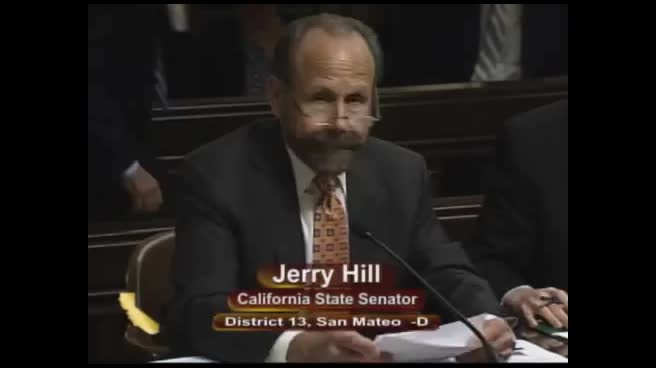
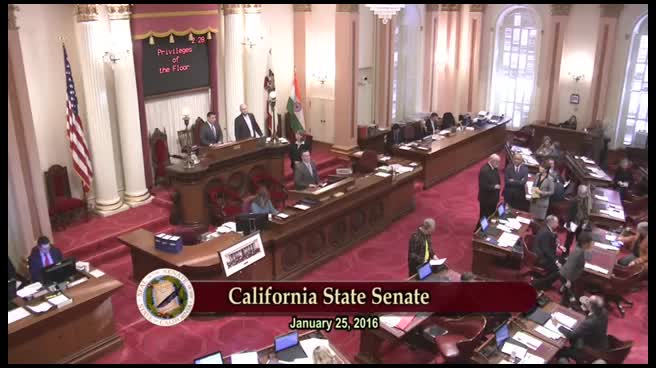
Bill Author

Bill Co-Author(s):