SB 750: English language education: English learners.
- Session Year: 2015-2016
- House: Senate
- Latest Version Date: 2015-10-08
(1)Existing law requires each school district that has one or more pupils who are English learners, and, to the extent required by federal law, a county office of education and a charter school, to assess the English language development of each of those pupils in order to determine the pupils level of proficiency. Existing law requires the State Department of Education, with the approval of the State Board of Education, to establish procedures for conducting the assessment and for the reclassification of a pupil from English learner to English proficient.
Existing law defines long-term English learner as an English learner who is enrolled in any of grades 6 to 12, inclusive, has been enrolled in schools in the United States for more than 6 years, has remained at the same English language proficiency level for 2 or more consecutive years as determined by a specified English language development test, or any successor test, and scores far below basic or below basic on a certain English language arts standards-based achievement test, or any successor test.
This bill would revise that definition to instead mean, except as specified, an English learner who is enrolled in any of grades 6 to 12, inclusive, who has been enrolled in schools in the United States for 6 years or more, has remained at the same English language proficiency level for 2 or more consecutive prior years, or has regressed to a lower English language proficiency level, as determined by the specified English language development test, or a score determined by the Superintendent of Public Instruction on any successor test, and, for a pupil in any of grades 6 to 9, inclusive, scored far below basic or below basic on the specified English language arts standards-based achievement test, or a score determined by the Superintendent on any successor test. The bill would encourage the Superintendent to revisit the score determined for any successor test after 3 years of assessment data on the successor test.
(2)Existing law defines an English learner at risk of becoming a long-term English learner as an English learner who is enrolled in any of grades 5 to 11, inclusive, in schools in the United States for 4 years, scores at the intermediate level or below on the specified English language development test, or any successor test, and scores in the 4th year at the below basic or far below basic level on a certain English language arts standards-based achievement test, or any successor test.
This bill would revise that definition to instead mean, except as specified, an English learner who is enrolled in any of grades 3 to 12, inclusive, in schools in the United States for 4 to 5 years, scored at the intermediate level or below on the specified English language development test, or a score determined by the Superintendent on any successor test, and, for a pupil in any of grades 3 to 9, inclusive, scored in the 4th or 5th year at the below basic or far below basic level on the specified English language arts standards-based achievement test, or a score determined by the Superintendent on any successor test. The bill would encourage the Superintendent to revisit the score determined for any successor test after 3 years of assessment data on the successor test.
(3)Existing law requires the department to annually ascertain and provide to school districts and schools the number of pupils in each school district and school, as specified, who are, or are at risk of becoming, long-term English learners.
This bill would also require the department to post on the departments Internet Web site the number of long-term English learners and English learners at risk of becoming long-term English learners in the state.
(1)Existing law requires each school district that has one or more pupils who are English learners, and, to the extent required by federal law, a county office of education and a charter school, to assess the English language development of each of those pupils in order to determine the pupils level of proficiency. Existing law requires the State Department of Education, with the approval of the State Board of Education, to establish procedures for conducting the assessment and for the reclassification of a pupil from English learner to English proficient.
Existing law defines long-term English learner as an English learner who is enrolled in any of grades 6 to 12, inclusive, has been enrolled in schools in the United States for more than 6 years, has remained at the same English language proficiency level for 2 or more consecutive years as determined by a specified English language development test, or any successor test, and scores far below basic or below basic on a certain English language arts standards-based achievement test, or any successor test.
This bill would revise that definition to instead mean, except as specified, an English learner who is enrolled in any of grades 6 to 12, inclusive, who has been enrolled in schools in the United States for 6 years or more, has remained at the same English language proficiency level for 2 or more consecutive prior years, or has regressed to a lower English language proficiency level, as determined by the specified English language development test, or a score determined by the Superintendent of Public Instruction on any successor test, and, for a pupil in any of grades 6 to 9, inclusive, scored far below basic or below basic on the specified English language arts standards-based achievement test, or an equivalent a score determined by the Superintendent on any successor test. The bill would encourage the Superintendent to revisit the score determined for any successor test after 3 years of assessment data on the successor test.
(2)Existing law defines an English learner at risk of becoming a long-term English learner as an English learner who is enrolled in any of grades 5 to 11, inclusive, in schools in the United States for 4 years, scores at the intermediate level or below on the specified English language development test, or any successor test, and scores in the 4th year at the below basic or far below basic level on a certain English language arts standards-based achievement test, or any successor test.
This bill would revise that definition to instead mean, except as specified, an English learner who is enrolled in any of grades 3 to 12, inclusive, in schools in the United States for 4 to 5 years, scored at the intermediate level or below on the specified English language development test, or a score determined by the Superintendent on any successor test, and, for a pupil in any of grades 3 to 9, inclusive, scored in the 4th or 5th year at the below basic or far below basic level on the specified English language arts standards-based achievement test, or an equivalent a score determined by the Superintendent on any successor test. The bill would encourage the Superintendent to revisit the score determined for any successor test after 3 years of assessment data on the successor test.
(3)Existing law requires the department to annually ascertain and provide to school districts and schools the number of pupils in each school district and school, as specified, who are, or are at risk of becoming, long-term English learners.
This bill would also require the department to post on the departments Internet Web site the number of long-term English learners and English learners at risk of becoming long-term English learners in the state.
(4)Existing law requires the Superintendent of Public Instruction to award a State Seal of Biliteracy. Existing law provides that the State Seal of Biliteracy certifies attainment of a high level of proficiency by a graduating high school pupil in one or more languages, in addition to English, and certifies that the graduate meets specified criteria, including, but not limited to, passing the California Standards Test in English language arts administered in grade 11 at the proficient level or above.
This bill would add to that criterium relating to the California Standards Test in English language arts the alternative option of scoring a level 3 or higher on the California Assessment of Student Performance and Progress in English language arts administered in grade 11, or an equivalent score on any successor test.
(1)Existing law requires each school district that has one or more pupils who are English learners, and, to the extent required by federal law, a county office of education and a charter school, to assess the English language development of each of those pupils in order to determine the pupils level of proficiency. Existing law requires the State Department of Education, with the approval of the State Board of Education, to establish procedures for conducting the assessment and for the reclassification of a pupil from English learner to English proficient.
Existing law defines long-term English learner as an English learner who is enrolled in any of grades 6 to 12, inclusive, has been enrolled in schools in the United States for more than 6 years, has remained at the same English language proficiency level for 2 or more consecutive years as determined by a specified English language development test, or any successor test, and scores far below basic or below basic on a certain English language arts standards-based achievement test, or any successor test.
This bill would revise that definition to instead mean, except as specified, an English learner who is enrolled in any of grades 6 to 12, inclusive, who has been enrolled in schools in the United States for 6 years or more, has remained at the same English language proficiency level for 2 or more consecutive prior years, or has regressed to a lower English language proficiency level, as determined by the specified English language development test, or any successor test, and, for a pupil in any of grades 6 to 9, inclusive, scored far below basic or below basic on the specified English language arts standards-based achievement test, or an equivalent score on any successor test.
(2)Existing law defines an English learner at risk of becoming a long-term English learner as an English learner who is enrolled in any of grades 5 to 11, inclusive, in schools in the United States for 4 years, scores at the intermediate level or below on the specified English language development test, or any successor test, and scores in the 4th year at the below basic or far below basic level on a certain English language arts standards-based achievement test, or any successor test.
This bill would revise that definition to instead mean, except as specified, an English learner who is enrolled in any of grades 3 to 12, inclusive, in schools in the United States for 4 to 5 years, scored at the intermediate level or below on the specified English language development test, or any successor test, and, for a pupil in any of grades 3 to 9, inclusive, scored in the 4th or 5th year at the below basic or far below basic level on the specified English language arts standards-based achievement test, or an equivalent score on any successor test.
(3)Existing law requires the department to annually ascertain and provide to school districts and schools the number of pupils in each school district and school, as specified, who are, or are at risk of becoming, long-term English learners.
This bill would also require the department to post the number of long-term English learners and English learners at risk of becoming long-term English learners in the state.
(4)Existing law requires the Superintendent of Public Instruction to award a State Seal of Biliteracy. Existing law provides that the State Seal of Biliteracy certifies attainment of a high level of proficiency by a graduating high school pupil in one or more languages, in addition to English, and certifies that the graduate meets specified criteria. criteria, including, but not limited to, passing the California Standards Test in English language arts administered in grade 11 at the proficient level or above.
This bill would add to that criteria criterium relating to the California Standards Test in English language arts the alternative option of scoring a level 3 or higher on the California Assessment of Student Performance and Progress in English language arts administered in grade 11, or an equivalent score on any successor test.
(1)Existing law requires each school district that has one or more pupils who are English learners, and, to the extent required by federal law, a county office of education and a charter school, to assess the English language development of each of those pupils in order to determine the pupils level of proficiency. Existing law requires the State Department of Education, with the approval of the State Board of Education, to establish procedures for conducting the assessment and for the reclassification of a pupil from English learner to English proficient.
Existing law defines long-term English learner as an English learner who is enrolled in any of grades 6 to 12, inclusive, has been enrolled in schools in the United States for more than 6 years, has remained at the same English language proficiency level for 2 or more consecutive years as determined by a specified English language development test, or any successor test, and scores far below basic or below basic on a certain English language arts standards-based achievement test, or any successor test.
This bill would revise that definition to instead include mean, except as specified, an English learner who is enrolled in any of grades 6 to 12, inclusive, who has been enrolled in schools in the United States for 6 years or more, has remained at the same English language proficiency level for 2 or more consecutive years prior years, or has regressed to a lower English language proficiency level, as determined by the specified English language development test, or any successor test, or has regressed to a lower English language proficiency level, and scores and, for a pupil in any of grades 6 to 9, inclusive, scored far below basic or below basic on the specified English language arts standards-based achievement test, or an equivalent score on any successor test.
(2)Existing law defines an English learner at risk of becoming a long-term English learner as an English learner who is enrolled in any of grades 5 to 11, inclusive, in schools in the United States for 4 years, scores at the intermediate level or below on the specified English language development test, or any successor test, and scores in the fourth 4th year at the below basic or far below basic level on a certain English language arts standards-based achievement test, or any successor test.
This bill would revise that definition to instead include mean, except as specified, an English learner who is enrolled in any of grades 3 to 12, inclusive, in schools in the United States for 4 to 5 years, scores scored at the intermediate level or below on the specified English language development test, or any successor test, and scores and, for a pupil in any of grades 3 to 9, inclusive, scored in the fourth 4th or fifth 5th year at the below basic or far below basic level on the specified English language arts standards-based achievement test administered, test, or an equivalent score on any successor test.
(3)Existing law requires the department to annually ascertain and provide to school districts and schools the number of pupils in each school district and school, as specified, who are, or are at risk of becoming, long-term English learners.
This bill would also require the department to post the number of long-term English learners and English learners at risk of becoming long-term English learners in the state.
(4)Existing law requires the Superintendent of Public Instruction to award a State Seal of Biliteracy. Existing law provides that the State Seal of Biliteracy certifies attainment of a high level of proficiency by a graduating high school pupil in one or more languages, in addition to English, and certifies that the graduate meets specified criteria, including, but not limited to, passing the California Standards Test in English language arts administered in grade 11 at the proficient level or above. criteria.
This bill would require the Superintendent, in the event that scores of the California Standards Test in English language arts or any successor test are not made available, to designate alternate equivalent criteria for eligibility for the State Seal of Biliteracy, as specified. add to that criteria scoring a level 3 or higher on the California Assessment of Student Performance and Progress in English language arts administered in grade 11, or an equivalent score on any successor test.
(1)Existing law requires each school district that has one or more pupils who are English learners, and, to the extent required by federal law, a county office of education and a charter school, to assess the English language development of each of those pupils in order to determine the pupils level of proficiency. Existing law requires the State Department of Education, with the approval of the State Board of Education, to establish procedures for conducting the assessment and for the reclassification of a pupil from English learner to English proficient.
Existing law defines long-term English learner as an English learner who is enrolled in any of grades 6 to 12, inclusive, has been enrolled in schools in the United States for more than 6 years, has remained at the same English language proficiency level for 2 or more consecutive years as determined by a specified English language development test, or any successor test, and scores far below basic or below basic on a certain English language arts standards-based achievement test, or any successor test.
This bill would revise that definition to instead include an English learner who has been enrolled in schools in the United States for 6 years or more, has remained at the same English language proficiency level for 2 or more consecutive years as determined by the specified English language development test, or any successor test, or has regressed to a lower English language proficiency level, and scores far below basic or below basic on the specified English language arts standards-based achievement test, or an equivalent score on any successor test.
(2)Existing law defines an English learner at risk of becoming a long-term English learner as an English learner who is enrolled in any of grades 5 to 11, inclusive, in schools in the United States for 4 years, scores at the intermediate level or below on the specified English language development test, or any successor test, and scores in the fourth year at the below basic or far below basic level on a certain English language arts standards-based achievement test, or any successor test.
This bill would revise that definition to instead include an English learner who is enrolled in any of grades 3 to 12, inclusive, in schools in the United States for 4 to 5 years, scores at the intermediate level or below on the specified English language development test, or any successor test, and scores in the fourth or fifth year at the below basic or far below basic level on the specified English language arts standards-based achievement test administered, or an equivalent score on any successor test.
(3)Existing law requires the department to annually ascertain and provide to school districts and schools the number of pupils in each school district and school, as specified, who are, or are at risk of becoming, long-term English learners.
This bill would also require the department to post the number of long-term English learners and English learners at risk of becoming long-term English learners in the state.
(4)Existing law requires the Superintendent of Public Instruction to award a State Seal of Biliteracy. Existing law provides that the State Seal of Biliteracy certifies attainment of a high level of proficiency by a graduating high school pupil in one or more languages, in addition to English, and certifies that the graduate meets specified criteria, including, but not limited to, passing the California Standards Test in English language arts administered in grade 11 at the proficient level or above.
This bill would require the Superintendent, in the event that scores of the California Standards Test in English language arts or any successor test are not made available, to designate alternate equivalent criteria for eligibility for the State Seal of Biliteracy, as specified.
For purposes of this article, the following terms have the following meanings:
(a)(1)Long-term English learner means an English learner to which all of the following apply:
(A)Is enrolled in any of grades 6 to 12, inclusive.
(B)Has been enrolled in schools in the United States for six years or more.
(C)Has remained at the same English language proficiency level for two or more consecutive prior years, or has regressed to a lower English language proficiency level, as determined by the English language development test identified or developed pursuant to Section 60810, or a score determined by the Superintendent on any successor test.
(D)For a pupil in any of grades 6 to 9, inclusive, has scored far below basic or below basic on the prior years English language arts standards-based achievement test administered pursuant to Section 60640, or a score determined by the Superintendent on any successor test.
(2)A pupil for which the required testing results are not available for either subparagraph (C) or (D) of paragraph (1) shall not have that criteria applied and such pupil shall not be excluded based on that criteria.
(b)(1)English learner at risk of becoming a long-term English learner means an English learner to which all of the following apply:
(A)Is enrolled in any of grades 3 to 12, inclusive.
(B)Has been enrolled in schools in the United States for four to five years.
(C)Has scored at the intermediate level or below on the prior years English language development test identified or developed pursuant to Section 60810, or a score determined by the Superintendent on any successor test.
(D)For a pupil in any of grades 3 to 9, inclusive, has scored in the fourth or fifth year at the below basic or far below basic level on the prior years English language arts standards-based achievement test administered pursuant to Section 60640, or a score determined by the Superintendent on any successor test.
(2)A pupil for which the required testing results are not available for either subparagraph (C) or (D) of paragraph (1) shall not have that criteria applied and such pupil shall not be excluded based on that criteria.
(3)The Superintendent is encouraged to revisit a score determined for any successor test pursuant to subparagraphs (C) and (D) of paragraph (1) of subdivision (a) and subparagraphs (C) and (D) of paragraph (1) of this subdivision after three years of assessment data on the successor test.
SEC. 2.Section 313.2 of the Education Code is amended to read:313.2.(a)The department shall annually ascertain the number of pupils in each school district and school, including a school that is within the jurisdiction of a county office of education and a charter school, who are, or are at risk of becoming, long-term English learners, as those terms are defined in Section 313.1.
(b)The department shall annually provide the information described in subdivision (a) to school districts and schools and post on the departments Internet Web site the number of long-term English learners and English learners at risk of becoming long-term English learners in the state.
For purposes of this article, the following terms have the following meanings:
(a)(1)Long-term English learner means an English learner to which all of the following apply:
(A)Is enrolled in any of grades 6 to 12, inclusive.
(B)Has been enrolled in schools in the United States for six years or more.
(C)Has remained at the same English language proficiency level for two or more consecutive prior years, or has regressed to a lower English language proficiency level, as determined by the English language development test identified or developed pursuant to Section 60810, or a score determined by the Superintendent on any successor test.
(D)For a pupil in any of grades 6 to 9, inclusive, has scored far below basic or below basic on the prior years English language arts standards-based achievement test administered pursuant to Section 60640, or an equivalent a score determined by the Superintendent on any successor test.
(2)A pupil for which the required testing results are not available for either subparagraph (C) or (D) of paragraph (1) shall not have that criteria applied and such pupil shall not be excluded based on that criteria.
(b)(1)English learner at risk of becoming a long-term English learner means an English learner to which all of the following apply:
(A)Is enrolled in any of grades 3 to 12, inclusive.
(B)Has been enrolled in schools in the United States for four to five years.
(C)Has scored at the intermediate level or below on the prior years English language development test identified or developed pursuant to Section 60810, or a score determined by the Superintendent on any successor test.
(D)For a pupil in any of grades 3 to 9, inclusive, has scored in the fourth or fifth year at the below basic or far below basic level on the prior years English language arts standards-based achievement test administered pursuant to Section 60640, or an equivalent a score determined by the Superintendent on any successor test.
(2)A pupil for which the required testing results are not available for either subparagraph (C) or (D) of paragraph (1) shall not have that criteria applied and such pupil shall not be excluded based on that criteria.
(3)The Superintendent is encouraged to revisit a score determined for any successor test pursuant to subparagraphs (C) and (D) of paragraph (1) of subdivision (a) and subparagraphs (C) and (D) of paragraph (1) of this subdivision after three years of assessment data on the successor test.
SEC. 2.Section 313.2 of the Education Code is amended to read:313.2.(a)The department shall annually ascertain the number of pupils in each school district and school, including a school that is within the jurisdiction of a county office of education and a charter school, who are, or are at risk of becoming, long-term English learners, as those terms are defined in Section 313.1.
(b)The department shall annually provide the information described in subdivision (a) to school districts and schools and post on the departments Internet Web site the number of long-term English learners and English learners at risk of becoming long-term English learners in the state.
SEC. 3.Section 51461 of the Education Code is amended to read:51461.(a)The State Seal of Biliteracy certifies attainment of a high level of proficiency by a graduating high school pupil in one or more languages, in addition to English, and certifies that the graduate meets all of the following criteria:
(1)Completion of all English language arts requirements for graduation with an overall grade point average of 2.0 or above in those classes.
(2)Passing the California Standards Test in English language arts administered in grade 11 at the proficient level or above or scoring a level 3 or higher on the California Assessment of Student Performance and Progress in English language arts administered in grade 11 pursuant to Section 60640, or an equivalent score on any successor test.
(3)Proficiency in one or more languages other than English, demonstrated through one of the following methods:
(A)Passing a foreign language Advanced Placement examination with a score of 3 or higher or an International Baccalaureate examination with a score of 4 or higher.
(B)Successful completion of a four-year high school course of study in a foreign language, and attaining an overall grade point average of 3.0 or above in that course of study.
(C)If no Advanced Placement examination or off-the-shelf language test exists and the school district can certify to the Superintendent that the test meets the rigor of a four-year high school course of study in that foreign language, passing a school district language examination that, at a minimum, assesses speaking, reading, and writing in a language other than English at the proficient level or higher. If a school district offers a language examination in a language in which an Advanced Placement examination or off-the-shelf language test exists, the school district language examination shall be approved by the Superintendent for the purpose of determining proficiency in a language other than English.
(D)Passing the SAT II foreign language examination with a score of 600 or higher.
(b)If the primary language of a pupil in any of grades 9 to 12, inclusive, is other than English, he or she shall do both of the following in order to qualify for the State Seal of Biliteracy:
(1)Attain the early advanced proficiency level on the English language development test. For purposes of this paragraph, a participating school district may administer the English language development test an additional time as necessary.
(2)Meet the requirements of subdivision (a).
(c)For languages in which an Advanced Placement test is not available, the Superintendent may provide a listing of equivalent summative tests that school districts may use in place of an Advanced Placement test for purposes of subparagraph (A) of paragraph (3) of subdivision (a). A school district may provide the Superintendent with a list of equivalent summative tests that the district uses in place of an Advanced Placement test for purposes of subparagraph (A) of paragraph (3) of subdivision (a). The Superintendent may use lists received from school districts in developing his or her list of equivalent summative tests.
(d)For purposes of this article, foreign language means a language other than English, and includes American Sign Language.
For purposes of this article, the following terms have the following meanings:
(a)(1)Long-term English learner means an English learner to which all of the following apply:
(A)Is enrolled in any of grades 6 to 12, inclusive.
(B)Has been enrolled in schools in the United States for six years or more.
(C)Has remained at the same English language proficiency level for two or more consecutive prior years, or has regressed to a lower English language proficiency level, as determined by the English language development test identified or developed pursuant to Section 60810, or any successor test.
(D)For a pupil in any of grades 6 to 9, inclusive, has scored far below basic or below basic on the prior years English language arts standards-based achievement test administered pursuant to Section 60640, or an equivalent score on any successor test.
(2)A pupil for which the required testing results are not available for either subparagraph (C) or (D) of paragraph (1) shall not have that criteria applied and such pupil shall not be excluded based on that criteria.
(b)(1)English learner at risk of becoming a long-term English learner means an English learner to which all of the following apply:
(A)Is enrolled in any of grades 3 to 12, inclusive.
(B)Has been enrolled in schools in the United States for four to five years.
(C)Has scored at the intermediate level or below on the prior years English language development test identified or developed pursuant to Section 60810, or any successor test.
(D)For a pupil in any of grades 3 to 9, inclusive, has scored in the fourth or fifth year at the below basic or far below basic level on the prior years English language arts standards-based achievement test administered pursuant to Section 60640, or an equivalent score on any successor test.
(2)A pupil for which the required testing results are not available for either subparagraph (C) or (D) of paragraph (1) shall not have that criteria applied and such pupil shall not be excluded based on that criteria.
SEC. 2.Section 313.2 of the Education Code is amended to read:313.2.(a)The department shall annually ascertain the number of pupils in each school district and school, including a school that is within the jurisdiction of a county office of education and a charter school, who are, or are at risk of becoming, long-term English learners, as those terms are defined in Section 313.1.
(b)The department shall annually provide the information described in subdivision (a) to school districts and schools and post the number of long-term English learners and English learners at risk of becoming long-term English learners in the state.
SEC. 3.Section 51461 of the Education Code is amended to read:51461.(a)The State Seal of Biliteracy certifies attainment of a high level of proficiency by a graduating high school pupil in one or more languages, in addition to English, and certifies that the graduate meets all of the following criteria:
(1)Completion of all English language arts requirements for graduation with an overall grade point average of 2.0 or above in those classes.
(2)Passing the California Standards Test in English language arts administered in grade 11 at the proficient level or above.
(3)Scoring above or scoring a level 3 or higher on the California Assessment of Student Performance and Progress in English language arts administered in grade 11 pursuant to Section 60640, or an equivalent score on any successor test.
(4)
(3)Proficiency in one or more languages other than English, demonstrated through one of the following methods:
(A)Passing a foreign language Advanced Placement examination with a score of 3 or higher or an International Baccalaureate examination with a score of 4 or higher.
(B)Successful completion of a four-year high school course of study in a foreign language, and attaining an overall grade point average of 3.0 or above in that course of study.
(C)If no Advanced Placement examination or off-the-shelf language test exists and the school district can certify to the Superintendent that the test meets the rigor of a four-year high school course of study in that foreign language, passing a school district language examination that, at a minimum, assesses speaking, reading, and writing in a language other than English at the proficient level or higher. If a school district offers a language examination in a language in which an Advanced Placement examination or off-the-shelf language test exists, the school district language examination shall be approved by the Superintendent for the purpose of determining proficiency in a language other than English.
(D)Passing the SAT II foreign language examination with a score of 600 or higher.
(b)If the primary language of a pupil in any of grades 9 to 12, inclusive, is other than English, he or she shall do both of the following in order to qualify for the State Seal of Biliteracy:
(1)Attain the early advanced proficiency level on the English language development test. For purposes of this paragraph, a participating school district may administer the English language development test an additional time as necessary.
(2)Meet the requirements of subdivision (a).
(c)For languages in which an Advanced Placement test is not available, the Superintendent may provide a listing of equivalent summative tests that school districts may use in place of an Advanced Placement test for purposes of subparagraph (A) of paragraph (4) (3) of subdivision (a). A school district may provide the Superintendent with a list of equivalent summative tests that the district uses in place of an Advanced Placement test for purposes of subparagraph (A) of paragraph (4) (3) of subdivision (a). The Superintendent may use lists received from school districts in developing his or her list of equivalent summative tests.
(d)For purposes of this article, foreign language means a language other than English, and includes American Sign Language.
For purposes of this article, the following terms have the following meanings:
(a)(1)Long-term English learner means an English learner who is enrolled to which all of the following apply:
(A)Is enrolled in any of grades 6 to 12, inclusive, has inclusive.
(B)Has been enrolled in schools in the United States for six years or more, has more.
(C)Has remained at the same English language proficiency level for two or more consecutive years prior years, or has regressed to a lower English language proficiency level, as determined by the English language development test identified or developed pursuant to Section 60810, or any successor test, or has regressed to a lower English language proficiency level, and scores test.
(D)For a pupil in any of grades 6 to 9, inclusive, has scored far below basic or below basic on the prior years English language arts standards-based achievement test administered pursuant to Section 60640, or an equivalent score on any successor test.
(2)A pupil for which the required testing results are not available for either subparagraph (C) or (D) of paragraph (1) shall not have that criteria applied and such pupil shall not be excluded based on that criteria.
(b)(1)English learner at risk of becoming a long-term English learner means an English learner who is to which all of the following apply:
(A)Is enrolled in any of grades 3 to 12, inclusive, in inclusive.
(B)Has been enrolled in schools in the United States for four to five years, scores years.
(C)Has scored at the intermediate level or below on the prior years English language development test identified or developed pursuant to Section 60810, or any successor test, and scores test.
(D)For a pupil in any of grades 3 to 9, inclusive, has scored in the fourth or fifth year at the below basic or far below basic level on the prior years English language arts standards-based achievement test administered pursuant to Section 60640, or an equivalent score on any successor test.
(2)A pupil for which the required testing results are not available for either subparagraph (C) or (D) of paragraph (1) shall not have that criteria applied and such pupil shall not be excluded based on that criteria.
SEC. 2.Section 313.2 of the Education Code is amended to read:313.2.(a)The department shall annually ascertain the number of pupils in each school district and school, including a school that is within the jurisdiction of a county office of education and a charter school, who are, or are at risk of becoming, long-term English learners, as those terms are defined in Section 313.1.
(b)The department shall annually provide the information described in subdivision (a) to school districts and schools and post the number of long-term English learners and English learners at risk of becoming long-term English learners in the state.
SEC. 3.Section 51461 of the Education Code is amended to read:51461.(a)The State Seal of Biliteracy certifies attainment of a high level of proficiency by a graduating high school pupil in one or more languages, in addition to English, and certifies that the graduate meets all of the following criteria:
(1)Completion of all English language arts requirements for graduation with an overall grade point average of 2.0 or above in those classes.
(2)(A)Passing the California Standards Test in English language arts administered in grade 11 at the proficient level or above.
(B)In the event that scores of the California Standards Test in English language arts or any successor test are not made available, the Superintendent shall designate alternate equivalent criteria for eligibility for the State Seal of Biliteracy. This criteria shall be used only for the duration of the unavailability of these assessment scores.
(3)Scoring a level 3 or higher on the California Assessment of Student Performance and Progress in English language arts administered in grade 11 pursuant to Section 60640, or an equivalent score on any successor test.
(3)
(4)Proficiency in one or more languages other than English, demonstrated through one of the following methods:
(A)Passing a foreign language Advanced Placement examination with a score of 3 or higher or an International Baccalaureate examination with a score of 4 or higher.
(B)Successful completion of a four-year high school course of study in a foreign language, and attaining an overall grade point average of 3.0 or above in that course of study.
(C)If no Advanced Placement examination or off-the-shelf language test exists and the school district can certify to the Superintendent that the test meets the rigor of a four-year high school course of study in that foreign language, passing a school district language examination that, at a minimum, assesses speaking, reading, and writing in a language other than English at the proficient level or higher. If a school district offers a language examination in a language in which an Advanced Placement examination or off-the-shelf language test exists, the school district language examination shall be approved by the Superintendent for the purpose of determining proficiency in a language other than English.
(D)Passing the SAT II foreign language examination with a score of 600 or higher.
(b)If the primary language of a pupil in any of grades 9 to 12, inclusive, is other than English, he or she shall do both of the following in order to qualify for the State Seal of Biliteracy:
(1)Attain the early advanced proficiency level on the English language development test. For purposes of this paragraph, a participating school district may administer the English language development test an additional time as necessary.
(2)Meet the requirements of subdivision (a).
(c)For languages in which an Advanced Placement test is not available, the Superintendent may provide a listing of equivalent summative tests that school districts may use in place of an Advanced Placement test for purposes of subparagraph (A) of paragraph (3) (4) of subdivision (a). A school district may provide the Superintendent with a list of equivalent summative tests that the district uses in place of an Advanced Placement test for purposes of subparagraph (A) of paragraph (3) (4) of subdivision (a). The Superintendent may use lists received from school districts in developing his or her list of equivalent summative tests.
(d)For purposes of this article, foreign language means a language other than English, and includes American Sign Language.
For purposes of this article, the following terms have the following meanings:
(a)Long-term English learner means an English learner who is enrolled in any of grades 6 to 12, inclusive, has been enrolled in schools in the United States for more than six years, six years or more, has remained at the same English language proficiency level for two or more consecutive years as determined by the English language development test identified or developed pursuant to Section 60810, or any successor test, or has regressed to a lower English language proficiency level, and scores far below basic or below basic on the English language arts standards-based achievement test administered pursuant to Section 60640, or an equivalent score on any successor test.
(b)English learner at risk of becoming a long-term English learner means an English learner who is enrolled in any of grades 5 to 11, 3 to 12, inclusive, in schools in the United States for four to five years, scores at the intermediate level or below on the English language development test identified or developed pursuant to Section 60810, or any successor test, and scores in the fourth or fifth year at the below basic or far below basic level on the English language arts standards-based achievement test administered pursuant to Section 60640, or an equivalent score on any successor test.
SEC. 2.Section 313.2 of the Education Code is amended to read:313.2.(a)The department shall annually ascertain the number of pupils in each school district and school, including a school that is within the jurisdiction of a county office of education and a charter school, who are, or are at risk of becoming, long-term English learners, as those terms are defined in Section 313.1.
(b)The department shall annually provide the information described in subdivision (a) to school districts and schools. schools and post the number of long-term English learners and English learners at risk of becoming long-term English learners in the state.
SEC. 3.Section 51461 of the Education Code is amended to read:51461.(a)The State Seal of Biliteracy certifies attainment of a high level of proficiency by a graduating high school pupil in one or more languages, in addition to English, and certifies that the graduate meets all of the following criteria:
(1)Completion of all English language arts requirements for graduation with an overall grade point average of 2.0 or above in those classes.
(2)(A)Passing the California Standards Test in English language arts administered in grade 11 at the proficient level or above.
(B)In the event that scores of the California Standards Test in English language arts or any successor test are not made available, the Superintendent shall designate alternate equivalent criteria for eligibility for the State Seal of Biliteracy. This criteria shall be used only for the duration of the unavailability of these assessment scores.
(3)Proficiency in one or more languages other than English, demonstrated through one of the following methods:
(A)Passing a foreign language Advanced Placement examination with a score of 3 or higher or an International Baccalaureate examination with a score of 4 or higher.
(B)Successful completion of a four-year high school course of study in a foreign language, and attaining an overall grade point average of 3.0 or above in that course of study.
(C)If no Advanced Placement examination or off-the-shelf language test exists and the school district can certify to the Superintendent that the test meets the rigor of a four-year high school course of study in that foreign language, passing a school district language examination that, at a minimum, assesses speaking, reading, and writing in a language other than English at the proficient level or higher. If a school district offers a language examination in a language in which an Advanced Placement examination or off-the-shelf language test exists, the school district language examination shall be approved by the Superintendent for the purpose of determining proficiency in a language other than English.
(D)Passing the SAT II foreign language examination with a score of 600 or higher.
(b)If the primary language of a pupil in any of grades 9 to 12, inclusive, is other than English, he or she shall do both of the following in order to qualify for the State Seal of Biliteracy:
(1)Attain the early advanced proficiency level on the English language development test. For purposes of this paragraph, a participating school district may administer the English language development test an additional time as necessary.
(2)Meet the requirements of subdivision (a).
(c)For languages in which an Advanced Placement test is not available, the Superintendent may provide a listing of equivalent summative tests that school districts may use in place of an Advanced Placement test for purposes of subparagraph (A) of paragraph (3) of subdivision (a). A school district may provide the Superintendent with a list of equivalent summative tests that the district uses in place of an Advanced Placement test for purposes of subparagraph (A) of paragraph (3) of subdivision (a). The Superintendent may use lists received from school districts in developing his or her list of equivalent summative tests.
(d)For purposes of this article, foreign language means a language other than English, and includes American Sign Language.
|
Date
|
Status
|
|---|---|
| Jul 8, 2015 | From committee: Do pass. Ordered to consent calendar. (Ayes 14. Noes 0.) (July 8). |
| Oct 8, 2015 | Chaptered by Secretary of State. Chapter 660, Statutes of 2015. |
| Oct 8, 2015 | Approved by the Governor. |
| Sep 10, 2015 | Enrolled and presented to the Governor at 3:30 p.m. |
| Sep 4, 2015 | Assembly amendments concurred in. (Ayes 40. Noes 0.) Ordered to engrossing and enrolling. |
| Sep 4, 2015 | Assembly amendments concurred in. (Ayes 40. Noes 0. Page 2501.) Ordered to engrossing and enrolling. |
| Sep 3, 2015 | Read third time. Passed. (Ayes 79. Noes 0. Page 2855.) Ordered to the Senate. |
| Sep 3, 2015 | Read third time. Passed. Ordered to the Senate. |
| Sep 3, 2015 | In Senate. Concurrence in Assembly amendments pending. |
| Sep 1, 2015 | Read third time and amended. |
| Sep 1, 2015 | Ordered to third reading. |
| Jul 13, 2015 | Ordered to third reading. |
| Jul 13, 2015 | From consent calendar. |
| Jul 9, 2015 | Read second time. Ordered to consent calendar. |
| Feb 27, 2015 | Introduced. To Com. on RLS. for assignment. To print. |
| Jun 18, 2015 | From committee: Do pass and re-refer to Com. on APPR. with recommendation: To consent calendar. (Ayes 7. Noes 0.) (June 17). Re-referred to Com. on APPR. |
| Jun 1, 2015 | Referred to Com. on ED. |
| May 18, 2015 | Read third time. Passed. (Ayes 36. Noes 0. Page 1019.) Ordered to the Assembly. |
| May 18, 2015 | In Assembly. Read first time. Held at Desk. |
| May 12, 2015 | Read second time and amended. Ordered to third reading. |
| May 11, 2015 | From committee: Be ordered to second reading pursuant to Senate Rule 28.8 and be amended. |
| Apr 24, 2015 | Set for hearing May 4. |
| Apr 15, 2015 | Read second time and amended. Re-referred to Com. on APPR. |
| Apr 14, 2015 | From committee: Do pass as amended and re-refer to Com. on APPR. (Ayes 8. Noes 0. Page 523.) (April 8). |
| Mar 20, 2015 | Set for hearing April 8. |
| Mar 19, 2015 | Referred to Com. on ED. |
| Mar 2, 2015 | Read first time. |
| Mar 2, 2015 | From printer. May be acted upon on or after April 1. |
|
Date
|
Description
|
Location
|
Votes
|
|
|---|---|---|---|---|
| Sep 4, 2015 | Unfinished Business SB750 Mendoza Concurrence | Senate Floor |
Passed |
|
| Sep 3, 2015 | SB 750 Mendoza Senate Third Reading By BLOOM | Assembly Floor |
Passed |
|
| Jul 8, 2015 | Do pass. To Consent Calendar. | Assembly Standing Committee on Appropriations |
Passed |
|
| Jun 17, 2015 | Do pass and be re-referred to the Committee on [Appropriations] with recommendation: To Consent Calendar | Assembly Standing Committee on Education |
Passed |
|
| May 18, 2015 | Senate 3rd Reading SB750 Mendoza | Senate Floor |
Passed |
|
| Apr 8, 2015 | Do pass as amended, but first amend, and re-refer to the Committee on [Appropriations] | Senate Standing Committee on Education |
Passed |
This list shows positions taken on this bill by organizations on the date displayed, which is linked to the original source.
Positions by individuals are not included.
|
Organization
|
Position
|
Date
|
|---|---|---|
| Association Of California School Administrators | * Support | Apr 8, 2015 |
| California Association For Bilingual Education | ** Support | Sep 1, 2015 |
| California Immigrant Policy Center | ** Support | Sep 1, 2015 |
| California Language Teachers' Association | ** Support | Sep 1, 2015 |
| California School Boards Association | ** Support | Sep 1, 2015 |
| California Teachers Association | ** Support | Sep 1, 2015 |
| Californians Together | ** Support | Sep 1, 2015 |
| Families In Schools | ** Support | Sep 1, 2015 |
| Los Angeles Unified School District | ** Support | Sep 1, 2015 |
| Public Advocates | ** Support | Sep 1, 2015 |
| Superintendent of Public Instruction, Tom Torlakson | ** Support | Apr 8, 2015 |
| u None received. | ** Against | Apr 8, 2015 |
SB 750
Page 6
|
Office of Senate Floor Analyses (916) 651-1520 Fax: (916) 327-4478 |
UNFINISHED BUSINESS
Bill No: SB 750
Amended: 9/1/15
SENATE EDUCATION COMMITTEE: 8-0, 4/8/15
AYES: Liu, Huff, Block, Hancock, Leyva, Mendoza, Pan, Vidak
SENATE APPROPRIATIONS COMMITTEE: Senate Rule 28.8
SENATE FLOOR: 36-0, 5/18/15
AYES: Allen, Anderson, Bates, Beall, Block, Cannella, De León, Fuller, Gaines, Galgiani, Hancock, Hernandez, Hertzberg, Hill, Hueso, Huff, Jackson, Lara, Leno, Leyva, Liu, McGuire, Mendoza, Mitchell, Monning, Moorlach, Morrell, Nguyen, Nielsen, Pan, Roth, Runner, Stone, Vidak, Wieckowski, Wolk
NO VOTE RECORDED: Berryhill, Hall, Pavley
ASSEMBLY FLOOR: 79-0, 9/3/15 - See last page for vote
SUBJECT: English language education: English learners
DIGEST: This bill modifies the definitions of a “long-term English learner” and “an English learner at risk of becoming a long-term English learner,” and expands the notification requirements of the California Department of Education (CDE) regarding these students
Assembly Amendments delete provisions relative to the State Seal of Biliteracy, grant the Superintendent of Public Instruction (SPI) the authority to determine the appropriate scores for identifying these categories of English learners on the successor test to the current English language proficiency and California English language arts standards tests, and encourages the SPI to revisit these scores after three years of assessment data on the successor test.
Existing law:
Defines a “Long-term English learner” as an English learner who meets all of the following:
Is enrolled in any of grades 6 to 12, inclusive.
Has been enrolled in schools in the United States for more than six years.
Remains at the same English language proficiency level for two or more consecutive years.
Scores far below basic or below basic on the adopted English language arts standards-based achievement test.
Defines an “English learner at risk of becoming a long-term English learner” as an English learner who meets all of the following:
Is enrolled in any of grades 5-11 inclusive.
Has been enrolled in schools in the United States for four years.
Scores at the intermediate level or below on the state adopted English language proficiency test.
Scores at the far below basic or below basic on the adopted English language arts standards-based achievement test. (Education Code § 313.1)
Requires that the CDE annually ascertain and report the number of students who are, or are at risk of becoming, long-term English learners and to provide this information to districts and schools. (EC § 313.2)
This bill:
Expands the definition of a “long-term English learner.” More specifically, it:
Includes students who have been enrolled in school for six years or more (rather than more than six years).
Includes students who have regressed to a lower English language proficiency level, if these students also score far below basic or below basic on the state adopted English language arts standards-based achievement test, and authorizes the SPI to determine the appropriate scores on any successor English language proficiency and English language arts standards based achievement tests for this purpose.
Makes other technical grade level and testing year corrections.
Expands the definition of “an English learner at risk of becoming a long-term English learner.” More specifically, it:
Expands the grade level of students who could be so classified from grades 5-11 to grades 3-12.
Expands the number of years of U.S. school enrollment from four to five years.
Makes other technical grade level and testing year corrections.
Authorizes the SPI to determine the appropriate scores on any successor English language proficiency and English language arts standards based achievement tests for the purpose of identifying of “an English learner at risk of becoming a long-term English learner.”
Prohibits the exclusion of students from the report of “long-term English learners” or “English learners at risk of becoming a long-term English learners” based upon an absence of English language standards test results.
Encourages the SPI to revisit the determined successor test scores for these purposes after three years of assessment data on the successor test.
Expands the CDE notice requirements to include the posting of the statewide number of “long-term English learners” and “English learners at risk of becoming long-term” on the department’s Internet website.
Comments
Need for the bill. This bill attempts to address several issues identified by the CDE around the implementation of the Long-term English Learner statutes. The provisions of this bill are intended to update testing requirements to reflect newly adopted state standards and assessments and align the statute with data reporting timelines.
Long-Term English Learners. A 2010 report by Californians Together, Reparable Harm: Fulfilling the Unkept Promise of Educational Opportunity for California's Long-Term English Learners, presented survey data collected from 40 school districts. Major findings of the survey included the following:
The majority (59%) of secondary school English learners are “Long-Term English Learners” (defined as being in U.S. schools for more than six years without sufficient English proficiency to be reclassified).
California school districts that do not have a shared definition of “Long-Term English Learners.”
Several contributing factors include: no receipt of language development programs, being given elementary school curricula and materials that were not designed to meet English Learner needs, weak language development program models, inconsistent programs, social and linguistic isolation, and other things.
Few districts have designated programs or formal approaches designed for “Long-Term English Learners.”
In 2012, the Legislature enacted statute to begin the process of identifying “Long-Term English Learners to ensure that they do not become “invisible” and do no fall through the cracks regarding instruction.
English learners. The CDE provides the following information on English learners in California's public schools:
In the 2013-14 school year, there were approximately 1.4 million English learners in California public schools, constituting 22.7 percent of the total enrollment.
73 percent of English learners are enrolled in the elementary grades (K-6) with the remaining 27 percent enrolled in grades 7-12.
Although English learner data is collected for 60 language groups, 95 percent speak one of the top 10 languages in the state, which include Spanish (84.24 percent), Vietnamese, Pilipino (Filipino or Tagalog), Cantonese, Mandarin, Arabic, Hmong, Korean, Punjabi, and Russian.
During 2013-14, the CDE administered the California English Language Development Test to 1.4 million students, 1.15 million of whom were tested under the annual assessment window.
In 2012-13 and 2013-14, approximately 12 percent of English learners were reclassified as English proficient. Prior to that, approximately 11 percent of English learners were annually reclassified, with the notable exception that in 2011-12, 16.3 percent were reclassified.
FISCAL EFFECT: Appropriation: No Fiscal Com.: Yes Local: No
According to the Assembly Appropriations Committee, minor/absorbable costs to the CDE to modify and expand data collection and reporting relative to long-term English learners and at-risk long-term English learners.
None received
None received
ASSEMBLY FLOOR: 79-0, 9/3/15
AYES: Achadjian, Alejo, Travis Allen, Baker, Bigelow, Bloom, Bonilla, Bonta, Brough, Brown, Burke, Calderon, Campos, Chang, Chau, Chávez, Chiu, Chu, Cooley, Cooper, Dababneh, Dahle, Daly, Dodd, Eggman, Frazier, Beth Gaines, Gallagher, Cristina Garcia, Eduardo Garcia, Gatto, Gipson, Gomez, Gonzalez, Gordon, Gray, Grove, Hadley, Harper, Roger Hernández, Holden, Irwin, Jones, Kim, Lackey, Levine, Linder, Lopez, Low, Maienschein, Mathis, Mayes, McCarty, Medina, Melendez, Mullin, Nazarian, Obernolte, O'Donnell, Olsen, Patterson, Perea, Quirk, Rendon, Ridley-Thomas, Rodriguez, Salas, Santiago, Steinorth, Mark Stone, Thurmond, Ting, Wagner, Waldron, Weber, Wilk, Williams, Wood, Atkins
NO VOTE RECORDED: Jones-Sawyer
Prepared by: Kathleen Chavira / ED. / (916) 651-4105
9/4/15 10:30:48
**** END ****
SB 750
Page 6
|
Office of Senate Floor Analyses (916) 651-1520 Fax: (916) 327-4478 |
UNFINISHED BUSINESS
Bill No: SB 750
Amended: 9/1/15
SENATE EDUCATION COMMITTEE: 8-0, 4/8/15
AYES: Liu, Huff, Block, Hancock, Leyva, Mendoza, Pan, Vidak
SENATE APPROPRIATIONS COMMITTEE: Senate Rule 28.8
SENATE FLOOR: 36-0, 5/18/15
AYES: Allen, Anderson, Bates, Beall, Block, Cannella, De León, Fuller, Gaines, Galgiani, Hancock, Hernandez, Hertzberg, Hill, Hueso, Huff, Jackson, Lara, Leno, Leyva, Liu, McGuire, Mendoza, Mitchell, Monning, Moorlach, Morrell, Nguyen, Nielsen, Pan, Roth, Runner, Stone, Vidak, Wieckowski, Wolk
NO VOTE RECORDED: Berryhill, Hall, Pavley
ASSEMBLY FLOOR: 79-0, 9/3/15 - See last page for vote
SUBJECT: English language education: English learners
DIGEST: This bill modifies the definitions of a “long-term English learner” and “an English learner at risk of becoming a long-term English learner,” and expands the notification requirements of the California Department of Education (CDE) regarding these students
Assembly Amendments delete provisions relative to the State Seal of Biliteracy, grant the Superintendent of Public Instruction (SPI) the authority to determine the appropriate scores for identifying these categories of English learners on the successor test to the current English language proficiency and California English language arts standards tests, and encourages the SPI to revisit these scores after three years of assessment data on the successor test.
Existing law:
Defines a “Long-term English learner” as an English learner who meets all of the following:
Is enrolled in any of grades 6 to 12, inclusive.
Has been enrolled in schools in the United States for more than six years.
Remains at the same English language proficiency level for two or more consecutive years.
Scores far below basic or below basic on the adopted English language arts standards-based achievement test.
Defines an “English learner at risk of becoming a long-term English learner” as an English learner who meets all of the following:
Is enrolled in any of grades 5-11 inclusive.
Has been enrolled in schools in the United States for four years.
Scores at the intermediate level or below on the state adopted English language proficiency test.
Scores at the far below basic or below basic on the adopted English language arts standards-based achievement test. (Education Code § 313.1)
Requires that the CDE annually ascertain and report the number of students who are, or are at risk of becoming, long-term English learners and to provide this information to districts and schools. (EC § 313.2)
This bill:
Expands the definition of a “long-term English learner.” More specifically, it:
Includes students who have been enrolled in school for six years or more (rather than more than six years).
Includes students who have regressed to a lower English language proficiency level, if these students also score far below basic or below basic on the state adopted English language arts standards-based achievement test, and authorizes the SPI to determine the appropriate scores on any successor English language proficiency and English language arts standards based achievement tests for this purpose.
Makes other technical grade level and testing year corrections.
Expands the definition of “an English learner at risk of becoming a long-term English learner.” More specifically, it:
Expands the grade level of students who could be so classified from grades 5-11 to grades 3-12.
Expands the number of years of U.S. school enrollment from four to five years.
Makes other technical grade level and testing year corrections.
Authorizes the SPI to determine the appropriate scores on any successor English language proficiency and English language arts standards based achievement tests for the purpose of identifying of “an English learner at risk of becoming a long-term English learner.”
Prohibits the exclusion of students from the report of “long-term English learners” or “English learners at risk of becoming a long-term English learners” based upon an absence of English language standards test results.
Encourages the SPI to revisit the determined successor test scores for these purposes after three years of assessment data on the successor test.
Expands the CDE notice requirements to include the posting of the statewide number of “long-term English learners” and “English learners at risk of becoming long-term” on the department’s Internet website.
Comments
Need for the bill. This bill attempts to address several issues identified by the CDE around the implementation of the Long-term English Learner statutes. The provisions of this bill are intended to update testing requirements to reflect newly adopted state standards and assessments and align the statute with data reporting timelines.
Long-Term English Learners. A 2010 report by Californians Together, Reparable Harm: Fulfilling the Unkept Promise of Educational Opportunity for California's Long-Term English Learners, presented survey data collected from 40 school districts. Major findings of the survey included the following:
The majority (59%) of secondary school English learners are “Long-Term English Learners” (defined as being in U.S. schools for more than six years without sufficient English proficiency to be reclassified).
California school districts that do not have a shared definition of “Long-Term English Learners.”
Several contributing factors include: no receipt of language development programs, being given elementary school curricula and materials that were not designed to meet English Learner needs, weak language development program models, inconsistent programs, social and linguistic isolation, and other things.
Few districts have designated programs or formal approaches designed for “Long-Term English Learners.”
In 2012, the Legislature enacted statute to begin the process of identifying “Long-Term English Learners to ensure that they do not become “invisible” and do no fall through the cracks regarding instruction.
English learners. The CDE provides the following information on English learners in California's public schools:
In the 2013-14 school year, there were approximately 1.4 million English learners in California public schools, constituting 22.7 percent of the total enrollment.
73 percent of English learners are enrolled in the elementary grades (K-6) with the remaining 27 percent enrolled in grades 7-12.
Although English learner data is collected for 60 language groups, 95 percent speak one of the top 10 languages in the state, which include Spanish (84.24 percent), Vietnamese, Pilipino (Filipino or Tagalog), Cantonese, Mandarin, Arabic, Hmong, Korean, Punjabi, and Russian.
During 2013-14, the CDE administered the California English Language Development Test to 1.4 million students, 1.15 million of whom were tested under the annual assessment window.
In 2012-13 and 2013-14, approximately 12 percent of English learners were reclassified as English proficient. Prior to that, approximately 11 percent of English learners were annually reclassified, with the notable exception that in 2011-12, 16.3 percent were reclassified.
FISCAL EFFECT: Appropriation: No Fiscal Com.: Yes Local: No
Unknown with latest amendments.
None received
None received
ASSEMBLY FLOOR: 79-0, 9/3/15
AYES: Achadjian, Alejo, Travis Allen, Baker, Bigelow, Bloom, Bonilla, Bonta, Brough, Brown, Burke, Calderon, Campos, Chang, Chau, Chávez, Chiu, Chu, Cooley, Cooper, Dababneh, Dahle, Daly, Dodd, Eggman, Frazier, Beth Gaines, Gallagher, Cristina Garcia, Eduardo Garcia, Gatto, Gipson, Gomez, Gonzalez, Gordon, Gray, Grove, Hadley, Harper, Roger Hernández, Holden, Irwin, Jones, Kim, Lackey, Levine, Linder, Lopez, Low, Maienschein, Mathis, Mayes, McCarty, Medina, Melendez, Mullin, Nazarian, Obernolte, O'Donnell, Olsen, Patterson, Perea, Quirk, Rendon, Ridley-Thomas, Rodriguez, Salas, Santiago, Steinorth, Mark Stone, Thurmond, Ting, Wagner, Waldron, Weber, Wilk, Williams, Wood, Atkins
NO VOTE RECORDED: Jones-Sawyer
Prepared by: Kathleen Chavira / ED. / (916) 651-4105
9/3/15 19:00:52
**** END ****
SB 750
Page 2
SENATE THIRD READING
SB 750
(Mendoza)
As Amended September 1, 2015
Majority vote
SENATE VOTE: 36-0
Committee |
Votes |
Ayes |
Noes |
Education |
7-0 |
O'Donnell, Chávez, Kim, McCarty, Santiago, Thurmond, Weber |
|
Appropriations |
14-0 |
Gomez, Bigelow, Bloom, Bonta, Calderon, Chang, Eggman, Gallagher, Eduardo Garcia, Jones, Quirk, Rendon, Weber, Wood |
|
SUMMARY: Modifies the definitions of a "long-term English learner" (LTEL) and "an English learner at risk of becoming a long-term English learner" (ARLTEL), and expands state reporting requirements regarding these students. Specifically, this bill:
Changes the definition of a "long term English learner" by:
Including students who have been enrolled in school for six years or more (rather than more than six years)
Including students who have regressed to a lower English language proficiency level (in addition to scoring at the same level for two or more consecutive years)
Limiting the grades in which a student must score at below basic or far below basic on the English language arts assessment to grades 6-9 (instead of 6-12)
Stating that, if the assessment data above is not available for a student, that student shall not have that criteria applied and shall not be excluded based on those criteria.
Changes the definition of "an English learner at risk of becoming a long-term English learner" by:
Expanding the grade level of students who could be so classified from grades 5-11 to grades 3-12
Expanding the number of years of United States school enrollment from 4 to 5 years
Expanding the California Department of Education (CDE) notice requirements to include the posting of the statewide number of LTELs and ARLTELs
Provides authority to the Superintendent of Public Instruction (SPI) to determine proficiency levels on new state assessments of English language development and English language arts for the purpose of identifying LTELs and ARLTELs.
Encourages the SPI to revisit these proficiency levels after three years of data is available from new state assessments of English language development and English language arts.
Specifies that data on LTELs and ARLTELs is to be posted on the CDE's Web site.
Makes no changes to the statutes governing the State Seal of Biliteracy.
FISCAL EFFECT: According to the Assembly Appropriations Committee, minor/absorbable costs to the CDE to modify and expand data collection and reporting relative to LTELs and at-risk LTELs.
COMMENTS:
Need for this bill. According to the author, this bill is intended to addresses several technical issues identified by the CDE upon their implementation of the Long Term English Learner (LTEL) statute by adding the new California Assessment of Student Performance and Progress in English language arts.
Changes to the LTEL and ARLTEL code include provisions which align the code with the state’s assessment program (allowing for identification of LTELs when assessment data is not produced for a given grade level, and eliminating the use of the English language arts assessment in grades 10-12 because only 11th graders are tested), provide authority for the CDE to consider instances when a student’s English proficiency scores regress (rather than just stay the same), and expanding the definition of ARLTEL to include students in their 5th year of school so that they may be identified the year before they can become identified as LTEL.
First state data on LTELs now available. The first data available identifying the number and percentage of LTELs was produced by the CDE in draft form in December, 2014 and provided to school districts and county offices of education. The data on ARLTELs was not informative due to limitations in current law (including provisions which would be revised by this bill).
Of the approximately 471,000 English learners in grades 6-12 (who were not previously reclassified), approximately 339,000 have been in a United States school for more than six years.
Of the approximately 339,000 English learners who have been in United States schools for more than six years (and who have not been reclassified), approximately 90,000 are LTELs. This represents 26.5% of population which can be identified under current law (this percentage applies to the group of English learners who were not previously reclassified).
Analysis Prepared by: Tanya Lieberman / ED. / (916) 319-2087 FN: 0001882
SB 750
Page 2
SENATE THIRD READING
SB 750
(Mendoza)
As Amended May 12, 2015
Majority vote
SENATE VOTE: 36-0
Committee |
Votes |
Ayes |
Noes |
Education |
7-0 |
O'Donnell, Chávez, Kim, McCarty, Santiago, Thurmond, Weber |
|
Appropriations |
14-0 |
Gomez, Bigelow, Bloom, Bonta, Calderon, Chang, Eggman, Gallagher, Eduardo Garcia, Jones, Quirk, Rendon, Weber, Wood |
|
SUMMARY: Modifies the definitions of a "long-term English learner" (LTEL) and "an English learner at risk of becoming a long-term English learner" (ARLTEL), expands the notification requirements of the California Department of Education (CDE) regarding these students, and authorizes the use of alternate assessments for the purpose of the State Seal of Biliteracy (SSB). Specifically, this bill:
Changes the definition of a "long term English learner" by:
Including students who have been enrolled in school for six years or more (rather than more than six years)
Including students who have regressed to a lower English language proficiency level (in addition to scoring at the same level for two or more consecutive years)
Limiting the grades in which a student must score at below basic or far below basic on the English language arts assessment to grades 6-9 (instead of grades 6-12)
Stating that, if the assessment data above is not available for a student, that student shall not have that criteria applied and shall not be excluded based on those criteria.
Changes the definition of "an English learner at risk of becoming a long-term English learner" by:
Expanding the grade level of students who could be so classified from grades 5-11 to grades 3-12.
Expanding the number of years of United States school enrollment from four to five years.
Expanding the California Department of Education (CDE) notice requirements to include the posting of the statewide number of LTELs and ARLTELs.
Authorizes the use of alternate criteria for the purpose of the SSB by requiring the Superintendent of Public Instruction (SPI) to designate alternative equivalent criteria for eligibility for the SSB in the event that scores from the California Standards Test in English language arts or its successor are not available.
Requires the use of the alternative criteria only while the assessment scores are unavailable.
FISCAL EFFECT: According to the Assembly Appropriations Committee, minor/absorbable costs to the CDE to modify and expand data collection and reporting relative to LTELs and at-risk LTELs.
COMMENTS:
Need for the bill. According to the author, this bill is intended to addresses several technical issues identified by the CDE upon their implementation of the Long Term English Learner (LTEL) statute, and to update the criteria for the SSB by adding the new California Assessment of Student Performance and Progress in English language arts.
Changes to the LTEL and ARLTEL code include provisions which align the code with the state's assessment program (allowing for identification of LTELs when assessment data is not produced for a given grade level, and eliminating the use of the English language arts assessment in grades 10-12 because only 11th graders are tested), provide authority for the CDE to consider instances when a student's English proficiency scores regress (rather than just stay the same), and expanding the definition of ARLTEL to include students in their 5th year of school so that they may be identified the year before they can become identified as LTEL.
First state data on LTELs now available. The first data available identifying the number and percentage of LTELs was produced by the CDE in draft form in December, 2014 and provided to school districts and county offices of education. The data on ARLTELs was not informative due to limitations in current law (including provisions which would be revised by this bill).
Of the approximately 471,000 English learners in grades 6-12 (who were not previously reclassified), approximately 339,000 have been in a United States school for more than six years.
Of the approximately 339,000 English learners who have been in United States schools for more than six years (and who have not been reclassified), approximately 90,000 are LTELs. This represents 26.5% of population which can be identified under current law (note that this percentage applies to the group of English learners who were not previously reclassified).
SSB a growing trend. According to the CDE, since 2012 nearly 60,000 SSBs have been awarded to graduating seniors, and approximately 40% of those receiving the SSB are former EL students. California was the first state to adopt a seal of biliteracy.
Analysis Prepared by: Tanya Lieberman / ED. / (916) 319-2087 FN: 0001225
Date of Hearing: July 8, 2015
ASSEMBLY COMMITTEE ON APPROPRIATIONS
Jimmy Gomez, Chair
SB 750
(Mendoza) – As Amended May 12, 2015
Policy Committee: |
Education |
Vote: |
7 - 0 |
|
|
|
|
|
|
|
|
Urgency: No State Mandated Local Program: No Reimbursable: No
SUMMARY:
This bill modifies the definitions of a long-term English learner (LTEL) and an English learner at risk of becoming a long-term English learner (at-risk LTEL); expands the notification requirements of the California Department of Education (CDE) regarding these students; and aligns requirements for the State Seal of Biliteracy with changes to the state assessment system. Specifically, this bill:
Modifies the definition of a “long term English learner” (LTEL) to include students who have been enrolled in school for six years or more (rather than more than six years); includes students who have regressed to a lower English language proficiency level; and, limits the grades in which a student must score below basic or far below basic on the English language arts assessment to grades 6-9 (instead of 6-12).
Changes the definition of an at-risk LTEL by expanding the grade level of classified students from grades 5-11 to grades 3-12, expanding the number of years of U.S. school enrollment from 4 to 5 years, and expanding the CDE notice requirements to include posting of the statewide number of LTELs and at-risk LTELs.
FISCAL EFFECT:
Minor/absorbable costs to the California Department of Education (CDE) to modify and expand data collection and reporting relative to LTELs and at-risk LTELs.
COMMENTS:
Purpose. This bill, sponsored by the Superintendent of Public Instruction, addresses several technical issues identified by the CDE upon their implementation of the Long Term English Learner (LTEL) statute. The bill also ensures the new state assessments can be used for purposes of awarding the State Seal of Biliteracy.
Long-term English learners (LTEL). AB 2193 (Lara), Chapter 427, Statutes of 2012, created a uniform state definition of LTEL and at-risk LTEL, and requires CDE to identify and provide this information to school districts and schools. The goal is to provide uniform data that will inform strategies and best practices for addressing the needs of LTEL students. The first data identifying the number and percentage of LTELs was produced by the CDE in draft form in December of 2014. Some of the data reported was not informative due to limitations in law. This bill seeks to clarify and address those issues.
State Seal of Biliteracy. Existing law requires the Superintendent of Public Instruction to award a State Seal of Biliteracy which provides recognition to high school students who have demonstrated proficiency in speaking, reading, and writing in one or more languages in addition to English. Each school district, county office of education, or direct-funded charter school that confers the State Seal of Biliteracy is required to maintain appropriate records in order to identify students who have met the established criteria for the award. According to the CDE, the state has awarded nearly 60,000 seals since 2012 to graduating seniors, and approximately 40 percent of those receiving the seal are former English learner students.
Analysis Prepared by: Misty Feusahrens / APPR. / (916) 319-2081
SB 750
Page 5
Date of Hearing: June 17, 2015
ASSEMBLY COMMITTEE ON EDUCATION
Patrick O'Donnell, Chair
SB 750
(Mendoza) – As Amended May 12, 2015
SENATE VOTE: 36-0
SUBJECT: English language education: English learners: State Seal of Biliteracy.
SUMMARY: Modifies the definitions of a “long-term English learner” (LTEL) and “an English learner at risk of becoming a long-term English learner” (ARLTEL), expands the notification requirements of the California Department of Education (CDE) regarding these students, and authorizes the use of alternate assessments for the purpose of the State Seal of Biliteracy (SSB). Specifically, this bill:
Changes the definition of a “long term English learner” by:
including students who have been enrolled in school for six years or more (rather than more than six years)
including students who have regressed to a lower English language proficiency level (in addition to scoring at the same level for two or more consecutive years)
limiting the grades in which a student must score at below basic or far below basic on the English language arts assessment to grades 6-9 (instead of 6-12)
stating that, if the assessment data above is not available for a student, that student shall not have that criteria applied and shall not be excluded based on those criteria.
Changes the definition of “an English learner at risk of becoming a long-term English learner” by:
expanding the grade level of students who could be so classified from grades 5-11 to grades 3-12
expanding the number of years of U.S. school enrollment from 4 to 5 years
expanding the California Department of Education (CDE) notice requirements to include the posting of the statewide number of LTELs and ARLTELs
Authorizes the use of alternate criteria for the purpose of the SSB by requiring the Superintendent of Public Instruction (SPI) to designate alternative equivalent criteria for eligibility for the SSB in the event that scores from the California Standards Test in English language arts or its successor are not available.
Requires the use of the alternative criteria only while the assessment scores are unavailable.
EXISTING LAW:
Defines an LTEL as an English learner who:
is enrolled in any of grades 6 to 12
has been enrolled in schools in the United States for more than six years
remains at the same English language proficiency level for two or more consecutive years
scores far below basic or below basic on the adopted English language arts standards-based achievement test
Existing law defines an ARLTEL as an English learner who:
is enrolled in any of grades 5-11
has been enrolled in schools in the United States for 4 years
scores at the intermediate level or below on the state adopted English language proficiency test
scores at the far below basic or below basic on the adopted English language arts standards-based achievement test
Requires that the CDE annually ascertain and report the number of students who are, or are at risk of becoming, long-term English learners and to provide this information to school districts and schools.
Establishes the SSB, which provides recognition to high school students who have demonstrated proficiency in speaking, reading, and writing in one or more languages in addition to English. Each school district, county office of education, or direct-funded charter school that confers the SSB is required to maintain appropriate records in order to identify students who have met the established criteria for the award and to affix the SSB insignia to the diploma or transcript of each qualifying student.
Requires high school graduates to meet all of the following criteria to be eligible for the SSB:
complete all English language arts requirements for graduation with an overall grade point average of 2.0 or above in those classes.
pass the California Standards Test in English language arts administered in grade 11 at the proficient level or above.
demonstrate proficiency in one or more languages in addition to English, through one of the following methods:
pass a foreign language Advanced Placement (AP) examination with a score of 3 or higher or an International Baccalaureate examination with a score or 4 or higher.
successfully complete a four-year high school course of study in a world language, and attain an overall grade point average of 3.0 or above in that course of study.
pass a school district language examination that, at a minimum, assesses speaking, reading, and writing in a language other than English at the proficient level or higher, if no AP examination or off-the-shelf language test exists, and the school district can certify to the Superintendent of Public Instruction (SPI) that the test meets the rigor of a four-year high school course of study in that foreign (world) language. If a school district offers an examination in a language in which an AP examination or off-the-shelf language test does exist, the school district language examination must be approved by the SPI for the purpose of determining proficiency in a language other than English.
passing the Scholastic Assessment Test II foreign language examination with a score of 600 or higher.
FISCAL EFFECT: According to the Senate Appropriations Committee, pursuant to Senate Rule 28.8, negligible state costs.
COMMENTS:
Need for the bill. According to the author, this bill is intended to addresses several technical issues identified by the CDE upon their implementation of the Long Term English Learner (LTEL) statute, and to update the criteria for the State Seal of Biliteracy by adding the new California Assessment of Student Performance and Progress in English language arts.
Changes to the LTEL and ARLTEL code include provisions which align the code with the state’s assessment program (allowing for identification of LTELs when assessment data is not produced for a given grade level, and eliminating the use of the English language arts assessment in grades 10-12 because only 11th graders are tested), provide authority for the CDE to consider instances when a student’s English proficiency scores regress (rather than just stay the same), and expanding the definition of ARLTEL to include students in their 5th year of school so that they may be identified the year before they can become identified as LTEL.
First state data on LTELs now available. The first data available identifying the number and percentage of LTELs was produced by the CDE in draft form in December, 2014 and provided to school districts and county offices of education. These data indicate the following:
Of the approximately 471,000 English learners in grades 6-12 (who were not previously reclassified), approximately 339,000 have been in a U.S. school for more than six years.
Of the approximately 339,000 English learners who have been in U.S. schools for more than six years (and who have not been reclassified), approximately 90,000 are LTELs. This represents 26.5% of population which can be identified under current law (note that this percentage applies to the group of English learners who were not previously reclassified).
The data on ARLTELs was not informative due to limitations in current law (including provisions which would be revised by this bill).
Data for identification of LTELs limited as districts transition to new test data. Current law requires identification of LTELs and ARLTELs to be based in part on two of the criteria used in the reclassification of English learners: scores on the assessment of English language development, and scores on the assessment of English language arts.
These two assessments are currently in transition. The state’s new Common Core aligned English language arts assessment was fully administered for the first time this year, and the state has not produced assessment data in English language arts for two years. In addition, starting in 2017-18 the state will begin using a new Common Core aligned measure of English proficiency – the English Language Proficiency Assessments for California (ELPAC).
What will any new reclassification policy mean for the definition of LTEL? State law now recognizes three designations of students with respect to English proficiency: English learners, long term English learners, and reclassified English learners.
For several years the Legislature has heard that changes are necessary to the state’s reclassification system for English learners. A 2014 analysis by the Public Policy Institute of California found that more than 90 percent of districts in the analysis use more demanding criteria than are suggested by the State Board of Education’s reclassification guidelines.
SB 1108 (Padilla), Chapter 434, Statutes of 2012, required the CDE to undertake a review of the reclassification system, but funding was never provided for that purpose and the review did not take place. AB 491 (Gonzalez) of this session requires the CDE to recommend, and the State Board of Education to adopt, best practices for the reclassification of English learners by July 2022, when data from the new assessment of English language development will be available. If the state’s reclassification criteria do change, the Committee may wish to consider what relationship new criteria will have to the definition of a long term English learner.
State Seal of Biliteracy a growing trend. According to the CDE, since 2012 nearly 60,000 SSBs have been awarded to graduating seniors, and approximately 40 percent of those receiving the SSB are former EL students. California was the first state to adopt a seal of biliteracy.
Related legislation. AB 491 (Gonzalez) of this session requires the CDE to recommend, and the State Board of Education to adopt, best practices for the reclassification of English learners, by July 2022.
AB 2303 (Bloom, 2014), among other things, would have authorized the use of alternate assessments for the purpose of the State Seal of Biliteracy. AB 2303 died in the Senate Appropriations Committee.
REGISTERED SUPPORT / OPPOSITION:
Support
State Superintendent of Public Instruction Tom Torlakson (sponsor)
California Association for Bilingual Education
California Immigrant Policy Center
California Language Teachers Association
California School Boards Association
California Teachers Association
Californians Together
Families in Schools
Los Angeles Unified School District
Public Advocates
Opposition
None on file
Analysis Prepared by: Tanya Lieberman / ED. / (916) 319-2087
SB 750
Page 7
|
Office of Senate Floor Analyses (916) 651-1520 Fax: (916) 327-4478 |
THIRD READING
Bill No: SB 750
Amended: 5/12/15
SENATE EDUCATION COMMITTEE: 8-0, 4/8/15
AYES: Liu, Huff, Block, Hancock, Leyva, Mendoza, Pan, Vidak
SENATE APPROPRIATIONS COMMITTEE: Senate Rule 28.8
SUBJECT: English language education: English learners: State Seal of Biliteracy
DIGEST: This bill modifies the definitions of a “long-term English learner” and “an English learner at risk of becoming a long-term English learner,” expands the notification requirements of the California Department of Education (CDE) regarding these students, and authorizes the use of the California Assessment of Student Performance and Progress in English language arts for the purpose of the State Seal of Biliteracy (SSB), as specified.
Existing law:
Defines a “Long-term English learner” as an English learner who meets all of the following:
Is enrolled in any of grades 6 to 12, inclusive.
Has been enrolled in schools in the United States for more than six years.
Remains at the same English language proficiency level for two or more consecutive years.
Scores far below basic or below basic on the adopted English language arts standards-based achievement test.
Defines an “English learner at risk of becoming a long-term English learner” as an English learner who meets all of the following:
Is enrolled in any of grades 5-11 inclusive.
Has been enrolled in schools in the United States for four years.
Scores at the intermediate level or below on the state adopted English language proficiency test.
Scores at the far below basic or below basic on the adopted English language arts standards-based achievement test. (Education Code § 313.1)
Requires that the CDE annually ascertain and report the number of students who are, or are at risk of becoming, long-term English learners and to provide this information to districts and schools. (EC § 313.2)
Establishes the SSB which provides recognition to high school students who have demonstrated proficiency in speaking, reading, and writing in one or more languages in addition to English. Each school district, county office of education (COE), or direct-funded charter school that confers the SSB is required to maintain appropriate records in order to identify students who have met the established criteria for the award and to affix the SSB insignia to the diploma or transcript of each qualifying student. (EC § 51460)
Requires high school graduates to meet all of the following criteria to be eligible for the SSB:
Complete all English language arts requirements for graduation with an overall grade point average of 2.0 or above in those classes.
Pass the California Standards Test in English language arts (ELA) administered in grade 11 at the proficient level or above.
Demonstrate proficiency in one or more languages in addition to English, through one of the following methods:
Pass a foreign language Advanced Placement (AP) examination with a score of 3 or higher or an International Baccalaureate examination with a score or 4 or higher.
Successfully complete a four-year high school course of study in a foreign (world) language, and attain an overall grade point average of 3.0 or above in that course of study.
Pass a school district language examination that, at a minimum, assesses speaking, reading, and writing in a language other than English at the proficient level or higher, if no AP examination or off-the-shelf language test exists, and the school district can certify to the State Superintendent of Public Instruction (SSPI) that the test meets the rigor of a four-year high school course of study in that foreign (world) language. If a school district offers an examination in a language in which an AP examination or off-the-shelf language test does exist, the school district language examination must be approved by the SSPI for the purpose of determining proficiency in a language other than English.
Passing the Scholastic Assessment Test II foreign language examination with a score of 600 or higher. (EC § 51461)
Provides that if the primary language of a pupil in any of grades 9-12 inclusive is other than English, the student is also required to attain the early advanced proficiency level on the California English Language Development Test (CELDT) as well as meet criteria listed above in 5a, b, and c.
This bill:
Expands the definition of a “long-term English learner.” More specifically, it:
Includes students who have been enrolled in school for six years or more (rather than more than six years).
Includes students who have regressed to a lower English language proficiency level, if these students also score far below basic or below basic on the state adopted English language arts standards-based achievement test.
Makes other technical grade level and testing year corrections.
Expands the definition of “an English learner at risk of becoming a long-term English learner.” More specifically, it:
Expands the grade level of students who could be so classified from grades 5-11 to grades 3-12.
Expands the number of years of U.S. school enrollment from four to five years.
Makes other technical grade level and testing year corrections.
Prohibits the exclusion of students from the report of “long-term English learners” or “English learners at risk of becoming a long-term English learners” based upon an absence of English language standards test results.
Expands the CDE notice requirements to include the posting of the statewide number of “long-term English learners” and “English learners at risk of becoming long-term.”
Authorizes the use of alternate examinations for the purpose of the SSB. More specifically, it authorizes the use of any of the following:
The California Standards Test in ELA administered in grade 11 at the proficient level or above.
The California Assessment of Student Performance and Progress in English language arts administered in grade 11 at a score of level 3 or higher.
Any equivalent score on any successor test.
Comments
Need for the bill. This bill attempts to address several issues identified by the CDE around the implementation of the SSB and Long-term English Learner statutes. Respectively, the provisions of the bill are intended to update testing requirements to reflect newly adopted state standards and assessments and align the statute with data reporting timelines.
Long-term English Learners. A 2010 report by Californians Together, Reparable Harm: Fulfilling the Unkept Promise of Educational Opportunity for California's Long-Term English Learners, presented survey data collected from 40 school districts. Major findings of the survey included the following:
The majority (59%) of secondary school English learners are “Long-Term English Learners” (defined as being in U.S. schools for more than six years without sufficient English proficiency to be reclassified).
California school districts that do not have a shared definition of “Long-term English learners.”
Several contributing factors include: no receipt of language development programs, being given elementary school curricula and materials that were not designed to meet English Learner (EL) needs, weak language development program models, inconsistent programs, social and linguistic isolation, and other things.
Few districts have designated programs or formal approaches designed for “Long-Term English Learners.”
In 2012, the Legislature enacted statute to begin the process of identifying “long-term English learners to ensure that they do not become “invisible” and do no fall through the cracks regarding instruction.
State Seal of Biliteracy. The SSB, established by AB 815 (Brownley, Chapter 618, Statutes of 2011) became effective January 1, 2012. According to the author, in June of 2014, 217 local educational agencies provided 24,655 awards, more than double the number of seals awarded in the first year of implementation (2012).
In 2011, California joined the Smarter Balanced Assessment Consortium (SBAC) as a governing state for the purpose of developing assessments that are aligned to the common core standards, which were adopted by the State Board of Education on August 2010. As a condition of becoming a governing member state, California committed to administering the SBAC assessments to pupils beginning in the 2014-15 school year. Existing law requires districts, charter schools and COEs to administer field tests and pilot tests of the SBAC assessments only in the 2013-14 school year. (Education Code § 60640)
Under existing law, one of the requirements to receive the SSB is that a student pass the California Standards Test in ELA administered in grade 11 at the proficient level or above. This bill is attempting to ensure that any new state adopted standards aligned English language arts test can be used for the purposes of the SSB.
English learners. The CDE provides the following information on English learners in California's public schools:
In the 2013-14 school year, there were approximately 1.4 million English learners in California public schools, constituting 22.7 percent of the total enrollment.
73 percent of English learners are enrolled in the elementary grades (K-6) with the remaining 27 percent enrolled in grades 7-12.
Although English learner data is collected for 60 language groups, 95 percent speak one of the top ten languages in the state, which include Spanish (84.24 percent), Vietnamese, Pilipino (Filipino or Tagalog), Cantonese, Mandarin, Arabic, Hmong, Korean, Punjabi, and Russian.
During 2013-14, the CDE administered the CELDT to 1.4 million students, 1.15 million of whom were tested under the annual assessment window.
In 2012-13 and 2013-14, approximately 12 percent of English learners were reclassified as English proficient. Prior to that, approximately 11 percent of English learners were annually reclassified, with the notable exception that in 2011-12, 16.3 percent were reclassified.
FISCAL EFFECT: Appropriation: No Fiscal Com.: Yes Local: No
None received
OPPOSITION: (Verified 5/12/15)
None received
Prepared by: Kathleen Chavira / ED. / (916) 651-4105
5/13/15 17:26:16
**** END ****
SB 750 (Mendoza) Page 6 of 6
SENATE COMMITTEE ON EDUCATION
Senator Carol Liu, Chair
2015 - 2016 Regular
Bill No: SB 750
Author: |
Mendoza |
||
Version: |
February 27, 2015 Hearing Date: April 8, 2015 |
||
Urgency: |
No |
Fiscal: |
Yes |
Consultant: |
Kathleen Chavira |
||
Subject: English language education: English learners: State Seal of Biliteracy
SUMMARY
This bill modifies the definitions of a “long-term English learner” and “an English learner at risk of becoming a long-term English learner,” expands the notification requirements of the California Department of Education (CDE) regarding these students, and authorizes the use of alternate assessments for the purpose of the State Seal of Biliteracy (SSB), as specified.
BACKGROUND
Existing law defines a “Long-term English learner” as an English learner who meets all of the following:
Is enrolled in any of grades 6 to 12, inclusive.
Has been enrolled in schools in the United States for more than six years.
Remains at the same English language proficiency level for two or more consecutive years.
Scores far below basic or below basic on the adopted English language arts standards-based achievement test.
Existing law defines an “English learner at risk of becoming a long-term English learner” as an English learner who meets all of the following:
Is enrolled in any of grades 5-11 inclusive.
Has been enrolled in schools in the United States for 4 years.
Scores at the intermediate level or below on the state adopted English language proficiency test.
Scores at the far below basic or below basic on the adopted English language arts standards-based achievement test. (Education Code § 313.1)
Existing law requires that the CDE annually ascertain and report the number of students who are, or are at risk of becoming, long-term English learners and to provide this information to districts and schools. (EC § 313.2)
Existing law establishes the State Seal of Biliteracy which provides recognition to high school students who have demonstrated proficiency in speaking, reading, and writing in one or more languages in addition to English. Each school district, county office of education (COE), or direct-funded charter school that confers the SSB is required to maintain appropriate records in order to identify students who have met the established criteria for the award and to affix the SSB insignia to the diploma or transcript of each qualifying student. (EC § 51460)
Current law requires high school graduates to meet all of the following criteria to be eligible for the SSB:
Complete all English language arts requirements for graduation with an overall grade point average of 2.0 or above in those classes.
Pass the California Standards Test in English language arts administered in grade 11 at the proficient level or above.
Demonstrate proficiency in one or more languages in addition to English, through one of the following methods:
Pass a foreign language Advanced Placement (AP) examination with a score of 3 or higher or an International Baccalaureate examination with a score or 4 or higher.
Successfully complete a four-year high school course of study in a foreign (world) language, and attain an overall grade point average of 3.0 or above in that course of study.
Pass a school district language examination that, at a minimum, assesses speaking, reading, and writing in a language other than English at the proficient level or higher, if no AP examination or off-the-shelf language test exists, and the school district can certify to the State Superintendent of Public Instruction (SSPI) that the test meets the rigor of a four-year high school course of study in that foreign (world) language. If a school district offers an examination in a language in which an AP examination or off-the-shelf language test does exist, the school district language examination must be approved by the SSPI for the purpose of determining proficiency in a language other than English.
Passing the Scholastic Assessment Test II foreign language examination with a score of 600 or higher. (EC § 51461)
If the primary language of a pupil in any of grades 9-12 inclusive is other than English, the student is also required to attain the early advanced proficiency level on the California English Language Development Test (CELDT) as well as meet criteria listed above in 1, 2, and 3.
ANALYSIS
This bill:
Expands the definition of a “long term English learner.” More specifically it:
Includes students who have been enrolled in school for six years or more (rather than more than six years).
Includes students who have regressed to a lower English language proficiency level, if these students also score far below basic or below basic on the state adopted English language arts standards-based achievement test.
Expands the definition of “an English learner at risk of becoming a long-term English learner.” More specifically it:
Expands the grade level of students who could be so classified from grades 5-11 to grades 3-12.
Expands the number of years of US school enrollment from 4 to 5 years.
Expands the California Department of Education (CDE) notice requirements to include the posting of the statewide number of “long term English learners” and “English learners at risk of becoming long-term.”
Authorizes the use of alternate criteria for the purpose of the State Seal of Biliteracy. More specifically it:
Requires the Superintednet of Public Instruction (SPI) to designate alternative equivalent criteria for eligibility for the State Seal of Biliteracy in the event that scores from the California Standards Test in English language arts or its successor are not available.
Requires the use of the alternative criteria only while the assessment scores are unavailable.
STAFF
COMMENTS
Need for the bill. According to the author this bill attempts to address several issues identified by the California Department of Education around the implementation of the State Seal of Biliteracy and Long term English Learner statutes. Respectively, the provisions of the bill are intended to update testing requirements to reflect newly adopted state standards and assessments and align the statute with data reporting timelines.
Long-term English Learners. A 2010 report by Californians Together, Reparable Harm: Fulfilling the Unkept Promise of Educational Opportunity for California's Long-Term English Learners, presented survey data collected from 40 school districts. Major findings of the survey included the following:
The majority (59%) of secondary school English learners are "Long Term English Learners” (defined as being in US schools for more than six years without sufficient English proficiency to be reclassified).
California school districts that do not have a shared definition of “Long-term English learners.”
Several contributing factors include; no receipt of language development programs, being given elementary school curricula and materials that were not designed to meet English Learner (EL) needs, weak language development program models, inconsistent programs, social and linguistic isolation and other things.
Few districts have designated programs or formal approaches designed for “Long Term English Learners.”
In 2012 the Legislature enacted statute to begin the process of identifying “long-term English learners to ensure that they do not become “invisible” and do no fall through the cracks regarding instruction.
State Seal of Biliteracy. The State Seal of Biliteracy (SSB), established by AB 815 (Brownley, Chapter 618, Statutes of 2011) became effective January 1, 2012. According to the author, in June of 2014, 217 local educational agencies provided 24,655 awards, more than double the number of seals awarded in the first year of implementation (2012).
In 2011, California joined the Smarter Balanced Assessment Consortium (SBAC) as a governing state for the purpose of developing assessments that are aligned to the common core standards, which were adopted by the State Board on August 2010. As a condition of becoming a governing member state, California committed to administering the SBAC assessments to pupils beginning in the 2014-15 school year. Current law requires districts, charter schools and county offices of education to administer field tests and pilot tests of the SBAC assessments only in the 2013-14 school year. (Education Code § 60640)
As noted in the background of this analysis, one of the requirements to receive the SSB is that a student pass the California Standards Test in English language arts (ELA) administered in grade 11 at the proficient level or above. This bill is attempting to ensure that any new state adopted standards aligned English language arts test can be used for the purposes of the State Seal of Biliteracy.
As drafted, the bill could be interpreted to allow for the use of any criteria deemed to be equivalent for this purpose. In addition to potentially diluting the value of the State Seal of Biliteracy by use of an inconsistent and potentially, non-objective assessment of English proficiency, pursuant to Education Code 60640, the CDE reports that it has already identified both the new assessment and the equivalent level of proficiency.
Staff recommends the bill be amended on Page 4 to delete lines 15-20 and to insert, “Scoring a level 3 or higher on the California Assessment of Student Performance and Progress in English language arts administered in grade 11 pursuant to Section 60640, or an equivalent score on any successor test.”
Technical amendments. In order to accommodate data reporting timelines, the California Department of Education (CDE) has requested technical amendments to ensure a more accurate report of the number of long-term English learners students. Staff recommends the bill be amended to reflect the technical clarifications requested by the CDE by inserting “Students for which the required testing results are not available will not have that criteria applied and the student will not be excluded based upon that criteria.”
English learners. The CDE provides the following information on English learners in California's public schools:
In the 2013-14 school year there were approximately 1.4 million English learners in California public schools, constituting 22.7 percent of the total enrollment.
73 percent of English learners are enrolled in the elementary grades (K-6) with the remaining 27 percent enrolled in grades 7-12.
Although English learner data is collected for 60 language groups, 95 percent speak one of the top ten languages in the state, which include Spanish (84.24 percent), Vietnamese, Pilipino (Filipino or Tagalog), Cantonese, Mandarin, Arabic, Hmong, Korean, Punjabi, and Russian.
During 2013-14 the CDE administered the California English Language Development Test (CELDT) to 1.4million students, 1.15 million of whom were tested under the annual assessment window.
In 2012-13 and 2013-14, approximately 12 percent of English learners were reclassified as English proficient. Prior to that approximately 11 percent of English learners were annually reclassified, with the notable exception that in 2011-12, 16.3 percent were reclassified.
Related and prior Legislation. AB 2303 (Bloom, 2014), among other things, authorized the use of alternate assessments for the purpose of the State Seal of Biliteracy. AB 2303 passed this Committee by a vote of 5-1 but was subsequently held under submission in the Senate Appropriations Committee.
SUPPORT
California Association for Bilingual Education (CABE)
California Language Teachers Association
Californians Together
Public Advocates
Superintendent of Public Instruction, Tom Torlakson
OPPOSITION
None received.
-- END --
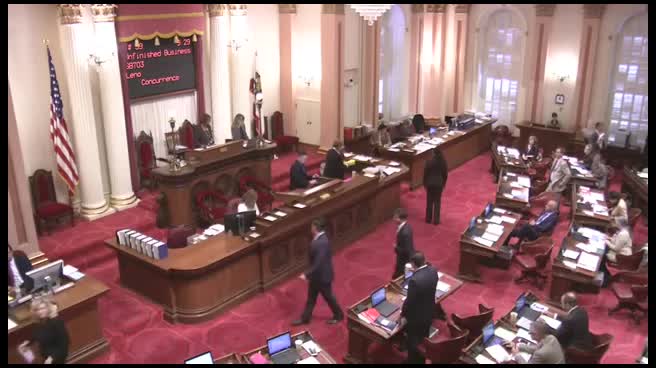
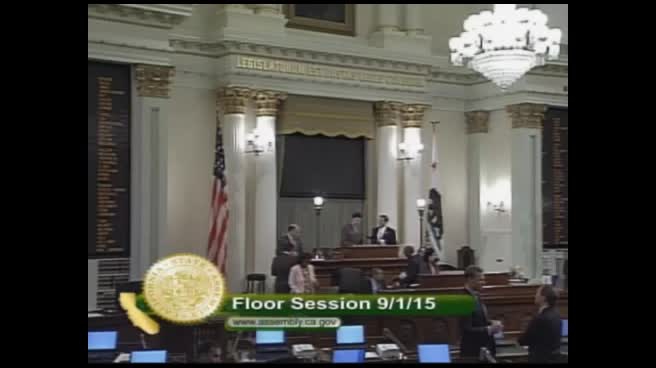
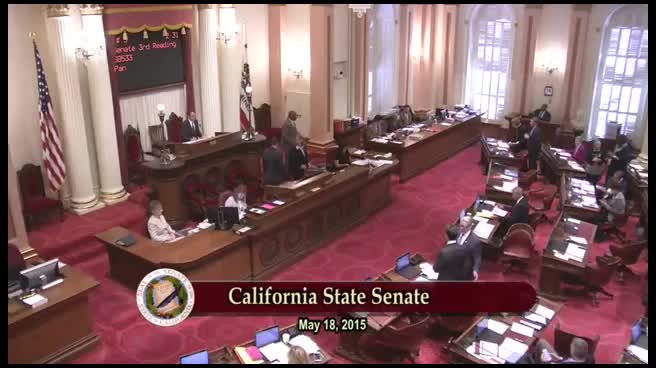
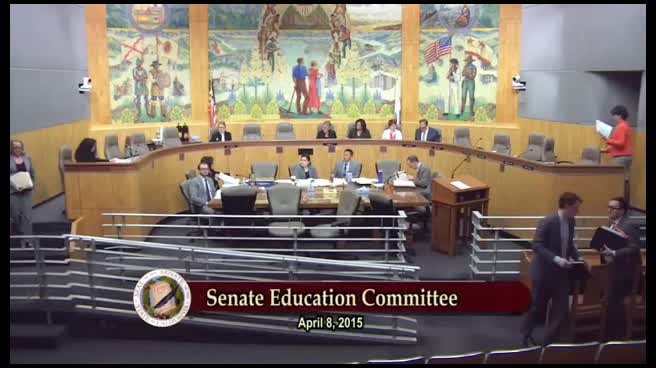
Bill Author
Bill Co-Author(s):