SB 773: Vehicles: registration fraud.
- Session Year: 2015-2016
- House: Senate
- Latest Version Date: 2016-09-28
Existing law prohibits a person from driving, moving, or leaving standing upon a highway, or in an offstreet public parking facility, any motor vehicle, trailer, semitrailer, pole or pipe dolly, or logging dolly, unless it is registered and the appropriate fees have been paid, except as specified. Existing law makes it a felony for a person who, with the intent to prejudice, damage, or defraud, alters, forges, counterfeits, or falsifies a registration card or who utters, publishes, passes, or attempts to pass, as true and genuine, a false, altered, forged, or counterfeited registration card knowing it to be false, altered, forged, or counterfeited.
This bill would, until January 1, 2021, request the University of California to conduct a study on motor vehicle registration fraud and failure to register a motor vehicle, and would require the study to include specified information, including quantification of the magnitude of the problem, the costs to the state and local governments in lost revenues, and recommended strategies for increasing compliance with registration requirements. The bill would require the Department of Motor Vehicles to enter into an agreement with the University of California to share its vehicle registration information for purposes of conducting the study and would require the Department of the California Highway Patrol to provide specified information to the University of California researchers who are conducting the study. The bill would request the University of California to post a report of the study on its Internet Web site no later than January 1, 2018.
Existing law specifies requirements for the form and display of month and year vehicle registration tabs.
This bill would require the Department of Motor Vehicles to post on its Internet Web site, and any other appropriate online venue used by the department for public outreach, detailed instructions for motorists that describe how to prevent theft of those tabs.
Existing law prohibits a person from driving, moving, or leaving standing upon a highway, or in an offstreet public parking facility, any motor vehicle, trailer, semitrailer, pole or pipe dolly, or logging dolly, unless it is registered and the appropriate fees have been paid, except as specified. Existing law makes it a felony for a person who, with the intent to prejudice, damage, or defraud, alters, forges, counterfeits, or falsifies a registration card or who utters, publishes, passes, or attempts to pass, as true and genuine, a false, altered, forged, or counterfeited registration card knowing it to be false, altered, forged, or counterfeited.
This bill would, until January 1, 2020, 2021, request the University of California to conduct a study on motor vehicle registration fraud and failure to register a motor vehicle, and would require the study to include specified information, including quantification of the magnitude of the problem, the costs to the state and local governments in lost revenues, and recommended strategies for increasing compliance with registration requirements. The bill would require the Department of Motor Vehicles to enter into an agreement with the University of California to share its vehicle registration information for purposes of conducting the study and would require the Department of the California Highway Patrol to provide specified information to the University of California researchers who are conducting the study. The bill would request the University of California to post a report of the study on its Internet Web site no later than January 1, 2017. 2018.
Existing law specifies requirements for the form and display of month and year vehicle registration tabs.
This bill would require the Department of Motor Vehicles to post on its Internet Web site, and any other appropriate online venue used by the department for public outreach, detailed instructions for motorists that describe how to prevent theft of those tabs.
Existing law prohibits a person from driving, moving, or leaving standing upon a highway, or in an offstreet public parking facility, any motor vehicle, trailer, semitrailer, pole or pipe dolly, or logging dolly, unless it is registered and the appropriate fees have been paid, except as specified. Existing law makes it a felony for a person who, with the intent to prejudice, damage, or defraud, alters, forges, counterfeits, or falsifies a registration card or who utters, publishes, passes, or attempts to pass, as true and genuine, a false, altered, forged, or counterfeited registration card knowing it to be false, altered, forged, or counterfeited.
This bill would, until January 1, 2020, request the University of California to conduct a study on motor vehicle registration fraud and failure to register a motor vehicle, and would require the study to include specified information, including quantification of the magnitude of the problem, the costs to the state and local governments in lost revenues, and recommended strategies for increasing compliance with registration requirements. The bill would require the Department of Motor Vehicles to enter into an agreement with the University of California to share its vehicle registration information for purposes of conducting the study and would require the Department of the California Highway Patrol to provide specified information to the University of California researchers who are conducting the study. The bill would request the University of California to post a report of the study on its Internet Web site no later than January 1, 2017.
Existing law specifies requirements for the form and display of month and year vehicle registration tabs.
This bill would require the Department of Motor Vehicles to post on its Internet Web site, and any other appropriate online venue used by the department for public outreach, detailed instructions for motorists that describe how to prevent theft of those tabs.
Existing law prohibits a person from driving, moving, or leaving standing upon a highway, or in an offstreet public parking facility, any motor vehicle, trailer, semitrailer, pole or pipe dolly, or logging dolly, unless it is registered and the appropriate fees have been paid, except as specified. Existing law makes it a felony for a person who, with the intent to prejudice, damage, or defraud, alters, forges, counterfeits, or falsifies a registration card or who utters, publishes, passes, or attempts to pass, as true and genuine, a false, altered, forged, or counterfeited registration card knowing it to be false, altered, forged, or counterfeited.
This bill would would, until January 1, 2020, request the University of California to conduct a study on motor vehicle registration fraud and failure to register a motor vehicle, and would require the study to include specified information, including quantification of the magnitude of the problem, the costs to the state and local governments in lost revenues, and recommended strategies for increasing compliance with registration requirements. The bill would require the Department of Motor Vehicles to enter into an agreement with the University of California to share its vehicle registration information for purposes of conducting the study and would require the Department of the California Highway Patrol to provide specified information to the University of California researchers who are conducting the study. The bill would request the University of California to post a report of the study on its Internet Web site no later than January 1, 2017.
Existing law prohibits a person from driving, moving, or leaving standing upon a highway, or in an offstreet public parking facility, any motor vehicle, trailer, semitrailer, pole or pipe dolly, or logging dolly, unless it is registered and the appropriate fees have been paid, except as specified. Existing law makes it a felony for a person who, with the intent to prejudice, damage, or defraud, alters, forges, counterfeits, or falsifies a registration card or who utters, publishes, passes, or attempts to pass, as true and genuine, a false, altered, forged, or counterfeited registration card knowing it to be false, altered, forged, or counterfeited.
This bill would request the University of California to conduct a study on motor vehicle registration fraud and failure to register a motor vehicle, and would require the study to include specified information, including quantification of the magnitude of the problem, the costs to the state and local governments in lost revenues, and recommended strategies for increasing compliance with registration requirements. The bill would require the Department of Motor Vehicles to enter into an agreement with the University of California to share its vehicle registration information for purposes of conducting the study and would require the Department of the California Highway Patrol to provide specified information to the University of California researchers who are conducting the study. The bill would request the University of California to post a report of the study on its Internet Web site no later than January 1, 2017.
Existing law prohibits a person from driving, moving, or leaving standing upon a highway, or in an offstreet public parking facility, any motor vehicle, trailer, semitrailer, pole or pipe dolly, or logging dolly, unless it is registered and the appropriate fees have been paid, except as specified. Existing law makes it a felony for a person who, with the intent to prejudice, damage, or defraud, alters, forges, counterfeit, counterfeits, or falsifies a registration card or who utters, publishes, passes, or attempts to pass, as true and genuine, a false, altered, forged, or counterfeited registration card knowing it to be false, altered, forged, or counterfeited.
This bill would request the University of California to conduct a study on motor vehicle registration fraud and failure to register a motor vehicle, and would require the study to include specified information, including, quantification of the magnitude of the problem, the costs to the state and local governments in lost revenues, and recommended strategies for increasing compliance with registration requirements. The bill would require the Department of Motor Vehicles, Vehicles and the Department of the California Highway Patrol, and other state agencies, as requested by the University of California, to fully cooperate with the University of California in conducing the study Patrol to provide specified information to the University of California researchers who are conducting the study. The bill would request the University of California to post a report of the study on its Internet Web site no later than January 1, 2017.
Existing law prohibits a person from driving, moving, or leaving standing upon a highway, or in an offstreet public parking facility, any motor vehicle, trailer, semitrailer, pole or pipe dolly, or logging dolly, unless it is registered and the appropriate fees have been paid, except as specified. Existing law makes it a felony for a person who, with the intent to prejudice, damage, or defraud, alters, forges, counterfeit, or falsifies a registration card or who utters, publishes, passes, or attempts to pass, as true and genuine, a false, altered, forged, or counterfeited registration card knowing it to be false, altered, forged, or counterfeited.
This bill would request the University of California to conduct a study on motor vehicle registration fraud and failure to register a motor vehicle, and would require the study to include specified information, including, quantification of the magnitude of the problem, the costs to the state and local governments in lost revenues, and recommended strategies for increasing compliance with registration requirements. The bill would require the Department of Motor Vehicles, the Department of the California Highway Patrol, and other state agencies, as requested by the University of California, to fully cooperate with the University of California in conducing the study. The bill would request the University of California to post a report of the study on its Internet Web site no later than January 1, 2017.
(a)The Legislature finds and declares all of the following:
(1)Motor vehicle registration fraud and failure to register a motor vehicle are both illegal and fundamentally unfair to the vast majority of Californians who comply with registration requirements. These crimes rob the state and local governments of millions of dollars of revenues needed for vital purposes, such as transportation projects, supporting the Department of the California Highway Patrol, deterring auto theft, enforcing laws prohibiting driving under the influence of alcohol or drugs, removing abandoned vehicles, and many other socially desirable programs.
(2)Motor vehicle registration fraud and failure to register a motor vehicle also have significant public health consequences and contribute disproportionately to motor vehicle emissions because many individuals committing registration fraud have gross emitting vehicles and are deliberately circumventing the inspection and maintenance program.
(3)Motor vehicle registration fraud and failure to register a motor vehicle also significantly increase insurance costs for law-abiding citizens.
(4)It is in the public interest to have motor vehicle owners comply with existing registration laws.
(b)Therefore, it is the intent of the Legislature to encourage motorists to register their vehicles in accordance with existing law.
SEC. 2.Section 4024 is added to the Vehicle Code, to read:4024.(a)The University of California is requested to conduct a study on motor vehicle registration fraud and failure to register a motor vehicle. The study shall include all of the following:
(1)Quantification of the magnitude of the problem.
(2)The strategies being used by motorists to commit motor vehicle registration fraud.
(3)The reasons for the behaviors of motorists who commit fraud in registration of, or who fail to register, their motor vehicles.
(4)The costs to the state and local governments in lost revenues.
(5)Increases in air pollution.
(6)Other costs and consequences of these behaviors.
(7)Recommended strategies for increasing compliance with registration requirements.
(b)The Department of Motor Vehicles shall enter into an agreement with the University of California to share its vehicle registration information with the University of California researchers for the purposes of conducting the study. The Department of the California Highway Patrol shall share information on its efforts to combat registration fraud, including the CHEATERS program, with the University of California researchers who are conducting the study.
(c)The University of California is requested to post a report of the study on its Internet Web site no later than January 1, 2018.
(d)This section shall remain in effect only until January 1, 2021, and as of that date is repealed, unless a later enacted statute, that is enacted before January 1, 2021, deletes or extends that date.
SEC. 3.Section 5204.5 is added to the Vehicle Code, to read:5204.5.The department shall post on its Internet Web site, and any other appropriate online venue used by the department for public outreach, detailed instructions for motorists that describe how to prevent theft of the tabs described in Section 5204.
(a)The Legislature finds and declares all of the following:
(1)Motor vehicle registration fraud and failure to register a motor vehicle are both illegal and fundamentally unfair to the vast majority of Californians who comply with registration requirements. These crimes rob the state and local governments of millions of dollars of revenues needed for vital purposes, such as transportation projects, supporting the Department of the California Highway Patrol, deterring auto theft, enforcing laws prohibiting driving under the influence of alcohol or drugs, removing abandoned vehicles, and many other socially desirable programs.
(2)Motor vehicle registration fraud and failure to register a motor vehicle also have significant public health consequences and contribute disproportionately to motor vehicle emissions because many individuals committing registration fraud have gross emitting vehicles and are deliberately circumventing the inspection and maintenance program.
(3)Motor vehicle registration fraud and failure to register a motor vehicle also significantly increase insurance costs for law-abiding citizens.
(4)It is in the public interest to have motor vehicle owners comply with existing registration laws.
(b)Therefore, it is the intent of the Legislature to encourage motorists to register their vehicles in accordance with existing law.
SEC. 2.Section 4024 is added to the Vehicle Code, to read:4024.(a)The University of California is requested to conduct a study on motor vehicle registration fraud and failure to register a motor vehicle. The study shall include all of the following:
(1)Quantification of the magnitude of the problem.
(2)The strategies being used by motorists to commit motor vehicle registration fraud.
(3)The reasons for the behaviors of motorists who commit fraud in registration of, or who fail to register, their motor vehicles.
(4)The costs to the state and local governments in lost revenues.
(5)Increases in air pollution.
(6)Other costs and consequences of these behaviors.
(7)Recommended strategies for increasing compliance with registration requirements.
(b)The Department of Motor Vehicles shall enter into an agreement with the University of California to share its vehicle registration information with the University of California researchers for the purposes of conducting the study. The Department of the California Highway Patrol shall share information on their its efforts to combat registration fraud, including the CHEATERS program, with the University of California researchers who are conducting the study.
(c)The University of California is requested to post a report of the study on its Internet Web site no later than January 1, 2017. 2018.
(d)This section shall remain in effect only until January 1, 2020, 2021, and as of that date is repealed, unless a later enacted statute, that is enacted before January 1, 2020, 2021, deletes or extends that date.
SEC. 3.Section 5204.5 is added to the Vehicle Code, to read:5204.5.The department shall post on its Internet Web site, and any other appropriate online venue used by the department for public outreach, detailed instructions for motorists that describe how to prevent theft of the tabs described in Section 5204.
(a)The Legislature finds and declares all of the following:
(1)Motor vehicle registration fraud and failure to register a motor vehicle are both illegal and fundamentally unfair to the vast majority of Californians who comply with registration requirements. These crimes rob the state and local governments of millions of dollars of revenues needed for vital purposes, such as transportation projects, supporting the Department of the California Highway Patrol, deterring auto theft, enforcing laws prohibiting driving under the influence of alcohol or drugs, removing abandoned vehicles, and many other socially desirable programs.
(2)Motor vehicle registration fraud and failure to register a motor vehicle also have significant public health consequences and contribute disproportionately to motor vehicle emissions because many individuals committing registration fraud have gross emitting vehicles and are deliberately circumventing the inspection and maintenance program.
(3)Motor vehicle registration fraud and failure to register a motor vehicle also significantly increase insurance costs for law-abiding citizens.
(4)It is in the public interest to have motor vehicle owners comply with existing registration laws.
(b)Therefore, it is the intent of the Legislature to encourage motorists to register their vehicles in accordance with existing law.
SEC. 2.Section 4024 is added to the Vehicle Code, to read:4024.(a)The University of California is requested to conduct a study on motor vehicle registration fraud and failure to register a motor vehicle. The study shall include all of the following:
(1)Quantification of the magnitude of the problem.
(2)The strategies being used by motorists to commit motor vehicle registration fraud.
(3)The reasons for the behaviors of motorists who commit fraud in registration of, or who fail to register, their motor vehicles.
(4)The costs to the state and local governments in lost revenues.
(5)Increases in air pollution.
(6)Other costs and consequences of these behaviors.
(7)Recommended strategies for increasing compliance with registration requirements.
(b)The Department of Motor Vehicles shall enter into an agreement with the University of California to share its vehicle registration information with the University of California researchers for the purposes of conducting the study. The Department of the California Highway Patrol shall share information on their efforts to combat registration fraud, including the CHEATERS program, with the University of California researchers who are conducting the study.
(c)The University of California is requested to post a report of the study on its Internet Web site no later than January 1, 2017.
(d)This section shall remain in effect only until January 1, 2020, and as of that date is repealed, unless a later enacted statute, that is enacted before January 1, 2020, deletes or extends that date.
(a)The Legislature finds and declares all of the following:
(1)Motor vehicle registration fraud and failure to register a motor vehicle are both illegal and fundamentally unfair to the vast majority of Californians who comply with registration requirements. These crimes rob the state and local governments of millions of dollars of revenues needed for vital purposes, such as transportation projects, supporting the Department of the California Highway Patrol, deterring auto theft, enforcing laws prohibiting driving under the influence of alcohol or drugs, removing abandoned vehicles, and many other socially desirable programs.
(2)Motor vehicle registration fraud and failure to register a motor vehicle also have significant public health consequences and contribute disproportionately to motor vehicle emissions because many individuals committing registration fraud have gross emitting vehicles and are deliberately circumventing the inspection and maintenance program.
(3)Motor vehicle registration fraud and failure to register a motor vehicle also significantly increase insurance costs for law-abiding citizens.
(4)It is in the public interest to have motor vehicle owners comply with existing registration laws.
(b)Therefore, it is the intent of the Legislature to encourage motorists to register their vehicles in accordance with existing law.
SEC. 2.Section 4024 is added to the Vehicle Code, to read:4024.(a)The University of California is requested to conduct a study on motor vehicle registration fraud and failure to register a motor vehicle. The study shall include all of the following:
(1)Quantification of the magnitude of the problem.
(2)The strategies being used by motorists to commit motor vehicle registration fraud.
(3)The reasons for the behaviors of motorists who commit fraud in registration of, or who fail to register, their motor vehicles.
(4)The costs to the state and local governments in lost revenues.
(5)Increases in air pollution.
(6)Other costs and consequences of these behaviors.
(7)Recommended strategies for increasing compliance with registration requirements.
(b)The Department of Motor Vehicles shall enter into an agreement with the University of California to share its existing database of vehicle registration records information with the University of California researchers who are for the purposes of conducting the study. The Department of the California Highway Patrol shall share information on their efforts to combat registration fraud, including the CHEATERS program, with the University of California researchers who are conducting the study.
(c)The University of California is requested to post a report of the study on its Internet Web site no later than January 1, 2017.
(a)The Legislature finds and declares all of the following:
(1)Motor vehicle registration fraud and failure to register a motor vehicle is are both illegal and fundamentally unfair to the vast majority of Californians who comply with registration requirements. It robs These crimes rob the state and local governments of millions of dollars of revenues needed for vital purposes, such as transportation projects, supporting the Department of the California Highway Patrol, deterring auto theft, enforcing laws prohibiting driving under the influence of alcohol or drugs, removing abandoned vehicles, and many other socially desirable programs.
(2)Motor vehicle registration fraud and failure to register a motor vehicle also has have significant public health consequences and contributes contribute disproportionately to motor vehicle emissions because many individuals committing registration fraud have gross emitting vehicles and are deliberately circumventing the inspection and maintenance program.
(3)Motor vehicle registration fraud and failure to register a motor vehicle also significantly increases increase insurance costs for law-abiding citizens.
(4)It is in the public interest to have motor vehicle owners comply with existing registration laws.
(b)Therefore, it is the intent of the Legislature to encourage motorists to register their vehicles in accordance with existing law.
SEC. 2.Section 4024 is added to the Vehicle Code, to read:4024.(a)The University of California is requested to conduct a study on motor vehicle registration fraud and failure to register a motor vehicle. The study shall include all of the following:
(1)Quantification of the magnitude of the problem.
(2)The strategies being used by motorists to commit motor vehicle registration fraud.
(3)The reasons for the behaviors of motorists who commit fraud in registrations registration of, or who fail to register their,, their motor vehicles.
(4)The costs to the state and local governments in lost revenues.
(5)Increases in air pollution.
(6)Other costs, and consequences of these behaviors.
(7)Recommended strategies for increasing compliance with registration requirements.
(b)The Department of Motor Vehicles, the Department of the California Highway Patrol, and other state agencies, as requested by the University of California, shall fully cooperate with the University of California in conducing the study.
(b)The Department of Motor Vehicles shall share its existing database of vehicle registration records with the University of California researchers who are conducting the study. The Department of the California Highway Patrol shall share information on their efforts to combat registration fraud, including the CHEATERS program, with the University of California researchers who are conducting the study.
(c)The University of California is requested to post a report of the study on its Internet Web site no later than January 1, 2017.
(a)The Legislature finds and declares all of the following:
(1)Motor vehicle registration fraud and failure to register a motor vehicle is both illegal and fundamentally unfair to the vast majority of Californians who comply with registration requirements. It robs the state and local governments of millions of dollars of revenues needed for vital purposes, such as transportation projects, supporting the Department of the California Highway Patrol, deterring auto theft, enforcing laws prohibiting driving under the influence of alcohol or drugs, removing abandoned vehicles, and many other socially desirable programs.
(2)Motor vehicle registration fraud and failure to register a motor vehicle also has significant public health consequences and contributes disproportionately to motor vehicle emissions because many individuals committing registration fraud have gross emitting vehicles and are deliberately circumventing the inspection and maintenance program.
(3)Motor vehicle registration fraud and failure to register a motor vehicle also significantly increases insurance costs for law-abiding citizens.
(4)It is in the public interest to have motor vehicle owners comply with existing registration laws.
(b)Therefore, it is the intent of the Legislature to encourage motorists to register their vehicles in accordance with existing law.
SEC. 2.Section 4024 is added to the Vehicle Code, to read:4024.(a)The University of California is requested to conduct a study on motor vehicle registration fraud and failure to register a motor vehicle. The study shall include all of the following:
(1)Quantification of the magnitude of the problem.
(2)The strategies being used by motorists to commit motor vehicle registration fraud.
(3)The reasons for the behaviors of motorists who commit fraud in registrations of, or fail to register their, motor vehicles.
(4)The costs to the state and local governments in lost revenues.
(5)Increases in air pollution.
(6)Other costs, and consequences of these behaviors.
(7)Recommended strategies for increasing compliance with registration requirements.
(b)The Department of Motor Vehicles, the Department of the California Highway Patrol, and other state agencies, as requested by the University of California, shall fully cooperate with the University of California in conducing the study.
(c)The University of California is requested to post a report of the study on its Internet Web site no later than January 1, 2017.
|
Date
|
Status
|
|---|---|
| Jun 2, 2015 | Read third time. Passed. (Ayes 40. Noes 0. Page 1260.) Ordered to the Assembly. |
| Sep 1, 2016 | Enrolled and presented to the Governor at 5 p.m. |
| Aug 26, 2016 | Assembly amendments concurred in. (Ayes 39. Noes 0.) Ordered to engrossing and enrolling. |
| Aug 26, 2016 | Assembly amendments concurred in. (Ayes 39. Noes 0. Page 5443.) Ordered to engrossing and enrolling. |
| Aug 25, 2016 | In Senate. Concurrence in Assembly amendments pending. |
| Aug 24, 2016 | Read third time. Passed. Ordered to the Senate. |
| Aug 15, 2016 | Read second time. Ordered to third reading. |
| Aug 12, 2016 | From committee: Do pass. (Ayes 20. Noes 0.) (August 11). |
| Jun 29, 2016 | June 29 set for first hearing. Placed on APPR. suspense file. |
| Jun 15, 2016 | Read second time and amended. Re-referred to Com. on APPR. |
| Jun 14, 2016 | From committee: Do pass as amended and re-refer to Com. on APPR. with recommendation: To consent calendar. (Ayes 15. Noes 0.) (June 13). |
| May 31, 2016 | From committee with author's amendments. Read second time and amended. Re-referred to Com. on TRANS. |
| Jun 29, 2015 | June 29 hearing postponed by committee. |
| Jun 23, 2015 | From committee with author's amendments. Read second time and amended. Re-referred to Com. on TRANS. |
| Jun 18, 2015 | Referred to Com. on TRANS. |
| Jun 2, 2015 | Read third time. Passed. (Ayes 40. Noes 0.) Ordered to the Assembly. |
| Feb 27, 2015 | Introduced. To Com. on RLS. for assignment. To print. |
| Jun 2, 2015 | In Assembly. Read first time. Held at Desk. |
| Jun 1, 2015 | Read second time and amended. Ordered to third reading. |
| May 28, 2015 | From committee: Do pass as amended. (Ayes 7. Noes 0.) (May 28). |
| May 28, 2015 | From committee: Do pass as amended. (Ayes 7. Noes 0. Page 1160.) (May 28). |
| May 23, 2015 | Set for hearing May 28. |
| May 11, 2015 | May 11 hearing: Placed on APPR. suspense file. |
| May 1, 2015 | Set for hearing May 11. |
| Apr 29, 2015 | From committee: Do pass and re-refer to Com. on APPR. with recommendation: To consent calendar. (Ayes 10. Noes 0.) (April 28). Re-referred to Com. on APPR. |
| Apr 29, 2015 | From committee: Do pass and re-refer to Com. on APPR. with recommendation: To consent calendar. (Ayes 10. Noes 0. Page 826.) (April 28). Re-referred to Com. on APPR. |
| Apr 21, 2015 | Set for hearing April 28. |
| Apr 16, 2015 | Re-referred to Com. on T. & H. |
| Apr 7, 2015 | From committee with author's amendments. Read second time and amended. Re-referred to Com. on RLS. |
| Mar 19, 2015 | Referred to Com. on RLS. |
| Mar 2, 2015 | Read first time. |
| Mar 2, 2015 | From printer. May be acted upon on or after April 1. |
|
Date
|
Description
|
Location
|
Votes
|
|
|---|---|---|---|---|
| Aug 26, 2016 | Unfinished Business SB773 Allen Concurrence | Senate Floor |
Passed |
|
| Aug 24, 2016 | SB 773 Allen Senate Third Reading By DODD | Assembly Floor |
Passed |
|
| Aug 11, 2016 | Do pass. | Assembly Standing Committee on Appropriations |
Passed |
|
| Jun 13, 2016 | Do pass as amended, and be re-referred to the Committee on [Appropriations] with recommendation: To Consent Calendar | Assembly Standing Committee on Transportation |
Passed |
|
| Jun 2, 2015 | Senate 3rd Reading SB773 Allen | Senate Floor |
Passed |
|
| May 28, 2015 | Do pass as amended | Senate Standing Committee on Appropriations |
Passed |
|
| May 11, 2015 | Placed on suspense file | Senate Standing Committee on Appropriations |
Passed |
|
| Apr 28, 2015 | Do pass, but first be re-referred to the Committee on [Appropriations] with the recommendation: To Consent Calendar | Senate Standing Committee on Transportation and Housing |
Passed |
This list shows positions taken on this bill by organizations on the date displayed, which is linked to the original source.
Positions by individuals are not included.
|
Organization
|
Position
|
Date
|
|---|---|---|
| 3M Company | ** Support | Aug 24, 2016 |
| Bay Area Air Quality Management District | ** Support | Aug 26, 2016 |
| California Air Pollution Control Officers' Association | ** Support | Aug 26, 2016 |
| California Public Parking Association | ** Support | Aug 26, 2016 |
| Metropolitan Transportation Commission | ** Support | Aug 26, 2016 |
| Natural Resources Defense Council | ** Support | Aug 24, 2016 |
| Valley Clean Air Now | ** Support | Aug 24, 2016 |
Office of Senate Floor Analyses (916) 651-1520 Fax: (916) 327-4478 | SB |
UNFINISHED BUSINESS
Bill No: SB 773
:
SENATE TRANS. & HOUSING COMMITTEE: 10-0, 4/28/15
AYES: Beall, Cannella, Bates, Gaines, Galgiani, Leyva, McGuire, Mendoza, Roth, Wieckowski
NO VOTE RECORDED: Allen
SENATE APPROPRIATIONS COMMITTEE: 7-0, 5/28/15
AYES: Lara, Bates, Beall, Hill, Leyva, Mendoza, Nielsen
SENATE FLOOR: 40-0, 6/2/15
AYES: Allen, Anderson, Bates, Beall, Berryhill, Block, Cannella, De León, Fuller, Gaines, Galgiani, Glazer, Hall, Hancock, Hernandez, Hertzberg, Hill, Hueso, Huff, Jackson, Lara, Leno, Leyva, Liu, McGuire, Mendoza, Mitchell, Monning, Moorlach, Morrell, Nguyen, Nielsen, Pan, Pavley, Roth, Runner, Stone, Vidak, Wieckowski, Wolk
ASSEMBLY FLOOR: 79-0, 8/24/16 - See last page for vote
SOURCE: Bay Area Air Quality Management District
DIGEST: This bill requests the University of California (UC) to conduct a study on motor vehicle registration fraud and failure to register a motor vehicle.
Assembly Amendments change the date by which the UC is requested to post the study on its Web site from 2017 to 2018, and change the sunset date of this bill from 2020 to 2021.
Existing law:
- Prohibits a person from driving, moving, or parking a motor vehicle on the highway or in a public parking facility unless it is registered with the state Department of Motor Vehicles (DMV). Registering a vehicle or renewing a vehicle registration is an easy process that a vehicle owner can typically complete quickly on the DMV’s Web site by providing the vehicle’s license plate number and paying annual taxes and fees associated with registration. Existing law does not require a person to show proof of a California driver’s license in order to register a vehicle.
- Requires all drivers and motor vehicle owners to carry evidence of financial responsibility, defined primarily as written evidence of valid automobile liability insurance. Existing law requires all insurance companies to report insurance status information to DMV for all private-use vehicles. DMV may suspend, cancel, or revoke the registration of a vehicle if it determines that insurance coverage has been cancelled, evidence of insurance coverage has not been submitted to DMV, or false insurance information has been submitted to DMV. Existing law does not require a person to show proof of a California driver’s license in order to obtain auto insurance.
- Establishes the Motor Vehicle Inspection Program, commonly referred to as the Smog Check Program. This program generally requires vehicle owners to have their vehicles tested every two years, coinciding with renewal of vehicle registration, with some exceptions, including gas-powered vehicles manufactured prior to 1976, alternatively fueled vehicles, and vehicles six model years of age or newer. The Smog Check Program provides, for eligible customers: an opportunity to renew a vehicle’s registration even if it does not pass a smog test, provided the owner has spent a certain amount on repairs; up to $500 toward emissions-related repairs; or a voucher in return for “retiring” (scrapping) the vehicle. In order to be eligible for a voucher, the vehicle owner must provide evidence that the vehicle has been registered during the prior two years without a substantial lapse.
- Requires an owner to register their vehicle within 20 days of accepting employment or establishing residency in California or be subject to specified penalties. Under the Californians Help Eliminate All the Evasive Registration Scofflaws program (CHEATERS), a person who sees an out-of-state license plate may report it anonymously to the California Highway Patrol (CHP) Web site. If there is sufficient information to prove that the owner or driver of the vehicle is a California resident, CHP sends a compliance letter to the owner requiring him or her to properly register the vehicle. This program has brought in roughly $1 million per year in vehicle registration revenues.
This bill:
- Requests the UC to conduct a study on motor vehicle registration fraud and failure to register a motor vehicle, and to post a report of the study on its Web site by January 1, 2018.
- Requires the study to include:
- Quantification of the magnitude of the problem.
- Strategies used by motorists to commit motor vehicle registration fraud.
- Reasons for behaviors of motorists who fraudulently or fail to register their motor vehicles.
- Costs to the state and local governments in lost revenues.
- Increases in air pollution.
- Other costs and consequences of those behaviors.
- Recommendations to increase compliance with registration requirements.
- Requires DMV to enter into an agreement with the UC researchers conducting the study to share vehicle registration information. Requires CHP to share information on its efforts to combat registration fraud, including the CHEATERS program, with the UC.
- Sunsets provision 1) - 3) above on January 1, 2021.
- Requires DMV to post on its Web site, and other appropriate online venues used by DMV for public outreach, detailed instructions to motorists describing how to prevent theft of vehicle registration license plate tabs.
Comments
- Purpose. The author states that drivers who bypass the Smog Check Program by failing to register their vehicles can disproportionately impact air quality. However, California lacks meaningful data on the scope and magnitude of the problem. This bill will enable the state to gain critical information related to unregistered cars and trucks, as well as policy recommendations on how best to remedy the situation. Along with air-quality impacts, registration fraud robs the state and local governments of millions of dollars of revenues needed for transportation projects, law-enforcement support, and other programs. Furthermore, it significantly increases insurance costs for law-abiding citizens because unregistered vehicles are rarely insured.
- How many unregistered vehicles are there? There are no official estimates of how many unregistered vehicles are currently on California roads. The author points to various studies which have found that somewhere between 1% and 8% of California’s 35 million cars and light trucks are unregistered.
- Is smog test failure the culprit? The Bay Area Air Quality Management District, the source of this bill, argues that a primary reason that drivers fail to register their vehicles, or fail to renew registration, is because the vehicle cannot pass a smog test. Although the state offers assistance to vehicle owners whose cars fail smog check, an owner must meet certain eligibility requirements, including providing evidence that the vehicle has been registered for the last two years without a substantial lapse. With just 25% of cars on the road being responsible for 75% of smog-forming emissions from all motor vehicles, tightening vehicle registration could help ensure that high-polluting vehicles are repaired or taken off the road.
- What about AB 60? AB 60 (Alejo, Chapter 524, Statutes of 2013) requires the DMV to issue an original driver’s license to an individual who is unable to submit satisfactory proof of legal presence in the U.S. The DMV began issuing these licenses on January 2, 2015. It is possible that now that many individuals can obtain a legal driver’s license who were unable to prior to this year, the state will see an increase in vehicle registration. However, since drivers are not required to show proof of a valid license in order to either obtain auto insurance or register a vehicle, it is unclear whether AB 60 will impact vehicle registration levels.
- Out-of-state plates. A July 2014 San Jose Mercury News article notes that the average cost of registering a vehicle in California is $143 per year, but registering a new vehicle can cost as much as $400 — more than twice what a driver would pay in Oregon and most nearby states. Some people are apparently choosing to register their car in a neighboring state in order to avoid California’s relatively high registration fees. This negatively impacts a major source of revenue for California and its local governments, which is why existing law requires an owner to register their vehicle within 20 days of accepting employment or establishing residency in California.
FISCAL EFFECT: Appropriation: No Fiscal Com.: Yes Local: No
According to the Assembly Appropriations Committee:
- One-time costs to UC, ranging from minor to the low hundreds of thousands of dollars in 2017. Costs would vary depending on the extent to which the study could be incorporated into existing research efforts and the extent to which multiple campuses would be involved in the study.
- Costs for DMV to provide vehicle registration records and to post the required information on its website would be minor and absorbable. Costs for the CHP to provide information on registration fraud efforts would also be minor and absorbable. [Motor Vehicle Account]
- To the extent the study would lead to cost-effective means of reducing vehicle registration fraud, the state and local governments could realize significant increased revenues. Based on average total registration fees, for every 100,000 vehicles avoiding such fees, the revenue loss totals about $17 million. (About 33 million vehicles were registered in California in 2014.)
Bay Area Air Quality Management District (source)
California Air Pollution Control Officers Association
California Public Parking Association
Metropolitan Transportation Commission
OPPOSITION: (Verified 8/24/16)
None received
ASSEMBLY FLOOR: 79-0, 8/24/16
AYES: Achadjian, Alejo, Travis Allen, Arambula, Atkins, Baker, Bigelow, Bloom, Bonilla, Bonta, Brown, Burke, Calderon, Campos, Chang, Chau, Chávez, Chiu, Chu, Cooley, Cooper, Dababneh, Dahle, Daly, Dodd, Eggman, Frazier, Beth Gaines, Gallagher, Cristina Garcia, Eduardo Garcia, Gatto, Gipson, Gomez, Gonzalez, Gordon, Gray, Grove, Hadley, Harper, Roger Hernández, Holden, Irwin, Jones, Jones-Sawyer, Kim, Lackey, Levine, Linder, Lopez, Low, Maienschein, Mathis, Mayes, McCarty, Medina, Melendez, Mullin, Nazarian, Obernolte, O'Donnell, Olsen, Patterson, Quirk, Ridley-Thomas, Rodriguez, Salas, Santiago, Steinorth, Mark Stone, Thurmond, Ting, Wagner, Waldron, Weber, Wilk, Williams, Wood, Rendon
NO VOTE RECORDED: Brough
Prepared by: Erin Riches / T. & H. / (916) 651-4121
8/25/16 17:30:44
**** END ****
SENATE THIRD READING
STR Bill Id:SB 773
Author:(Allen)
As Amended Ver:June 15, 2016
Majority vote
SENATE VOTE: 40-0
Committee | Votes | Ayes | Noes |
Transportation | 15-0 | Frazier, Linder, Baker, Bloom, Brown, Chu, Daly, Dodd, Eduardo Garcia, Gomez, Kim, Medina, Melendez, Nazarian, O'Donnell | |
Appropriations | 20-0 | Gonzalez, Bigelow, Bloom, Bonilla, Bonta, Calderon, Chang, Daly, Eggman, Gallagher, Eduardo Garcia, Holden, Jones, Obernolte, Quirk, Santiago, Wagner, Weber, Wood, McCarty |
|
SUMMARY: Requests the University of California (UC) to conduct a study on motor vehicle registration fraud. Specifically, this bill:
- Makes legislative findings and declarations regarding vehicle registration fraud and the negative impacts associated with vehicle registration fraud.
- Provides that the study is to include, but not be limited to, identifying the magnitude of vehicle registration fraud, methods used by motorist to commit vehicle registration fraud, and the cost to the state and local governments in lost revenues, effects on air pollution, and recommended strategies for increasing compliance with registration requirements.
- Requires the Department of Motor Vehicles (DMV) to enter into an agreement with UC to share vehicle registration information.
- Requires the Department of the California Highway Patrol (CHP) to share information related to efforts to combat registration fraud, including the California Help Eliminate All the Evasive Registration Scofflaws (CHEATERS) program.
- Requests UC to complete and post the study on its Web site no later than January 1, 2018.
- Requires DMV to post on its Internet Web site detailed instructions for motorists that describe how to prevent theft of vehicle registration tabs.
EXISTING LAW:
- Prohibits a person from driving, moving, or parking a motor vehicle on the highway or in a public parking facility unless it is registered with DMV.
- Requires that a registration fee of $43 be paid to DMV for an initial vehicle registration or registration renewal to fund the operations of DMV and CHP.
- Requires an owner to register their vehicle within 20 days of accepting employment or establishing residency in California.
- Establishes the Motor Vehicle Inspection Program, commonly referred to as the Smog Check Program, and requires vehicle owners to have their vehicles tested every two years.
- Establishes the CHEATERS program, administered by CHP, allowing a person who identifies an out-of-state license plate to anonymously report to the vehicle to CHP.
FISCAL EFFECT: According to the Assembly Appropriations Committee:
- One-time costs to UC, ranging from minor to the low hundreds of thousands of dollars in the 2017. Costs would vary depending on the extents to which the study could be incorporated into existing research efforts and to which multiple campuses would be involved in the study.
- Costs for DMV to provide vehicle registration records and to post the required information on its Web site would be minor and absorbable. Costs for the CHP to provide information on registration fraud efforts would also be minor and absorbable.
- To the extent the study would lead to cost effective means of reducing vehicle registration fraud, the state and local governments could realize increased revenues. Based on average total registration fees, for every 100,000 vehicles avoiding such fees, the revenue loss totals about $17 million. (About 33 million vehicles were registered in California in 2014.)
COMMENTS: Vehicle registration fraud continues to be a significant public policy issue for states across the country. Several states have attempted to crack down on registration fraud to avoid higher government fees and insurance premiums. For example, the Iowa Department of Transportation recently canceled more than 450 vehicle titles and registrations obtained using false or fictitious information and operating in New York City. Similarly, in California in 2014, using information provided through the CHEATERS hotline, CHP carried out an enforcement campaign targeting drivers with out-of-state license plates or expired license plate tags. Through this campaign, the state was ultimately able to collect $1.9 million in unpaid registration fees.
The Bay Area Air Quality Management District, the sponsor of this bill, notes that in addition to out-of-state vehicle fraud, motorists fail to register their vehicle or fail to renew registration because their vehicle cannot pass smog testing, resulting in unknown but likely deleterious effects on air quality. Although some studies have indicated the number of unregistered vehicles operating in state is somewhere between 1%-8%, no official data on this topic exists. As a result, the lack of accurate data impedes the state's ability to assess the negative impacts associated with this illegal activity on air quality, state and local government revenues, and insurance premiums.
With this bill, the author intends to gather data on the scope and magnitude of vehicle registration fraud and the number operating unregistered vehicles within the state. In turn, the study will develop effective policy recommendations that will potentially lead to recouping millions of dollars in lost revenue that can be used for vital services such as CHP enforcement, removing abandoned vehicles, and transportation projects.
Please see the policy committee analysis for full discussion of this bill.
Analysis Prepared by: Justin Behrens / TRANS. / (916) 319-2093 FN: 0004029
Date of Hearing: June 29, 2016
ASSEMBLY COMMITTEE ON APPROPRIATIONS
Lorena Gonzalez, Chair
SBPCA Bill Id:SB 773
Author:(Allen) – As Amended Ver:June 15, 2016
Policy Committee: | Transportation | Vote: | 15 - 0 |
Urgency: No State Mandated Local Program: No Reimbursable: No
SUMMARY:
This bill requests the University of California (UC) to conduct a study on motor vehicle registration fraud and post the results on its website by January 1, 2018. Specifically, this bill:
- Requests that UC conduct the study to identify the magnitude of vehicle registration fraud, methods used to commit vehicle registration fraud, the estimated loss of revenue to the state and local governments, effects on air pollution, and recommended strategies for increasing compliance with registration requirements.
- Requires the DMV to enter into an agreement with UC to share vehicle registration information and to post on its website instructions for motorists on how to prevent theft of vehicle registration tabs.
- Requires the CHP to share information related to efforts to combat registration fraud, including the California Help Eliminate All the Evasive Registration Scofflaws (CHEATERS) program.
FISCAL EFFECT:
- One-time costs to UC, ranging from minor to the low hundreds of thousands of dollars in the 2017. Costs would vary depending on the extent to which the study could be incorporated into existing research efforts and the extent to which multiple campuses would be involved in the study.
- Costs for DMV to provide vehicle registration records and to post the required information on its website would be minor and absorbable. Costs for the CHP to provide information on registration fraud efforts would also be minor and absorbable. [Motor Vehicle Account]
- To the extent the study would lead to cost effective means of reducing vehicle registration fraud, the state and local governments could realize significant increased revenues. Based on average total registration fees, for every 100,000 vehicles avoiding such fees, the revenue loss totals about $17 million. (About 33 million vehicles were registered in California in 2014.)
COMMENTS:
Background and Purpose. Vehicle registration fraud continues to be a significant public policy issue for states across the country. In California, the CHEATERS program allows a person who identifies an out-of-state license plate to anonymously report to the vehicle to CHP. In 2014, using information provided through the CHEATERS hotline, CHP carried out an enforcement campaign, which targeted drivers with out-of-state license plates or expired license plate tags lead to collection of $1.9 million in unpaid registration fees. Despite such efforts, the state lacks adequate data to determine the methods and magnitude of vehicle registration fraud within the state. The Bay Area Air Quality Management District, which is sponsoring this bill, notes that in addition to out-of-state vehicle fraud, motorists fail to register their vehicle or fail to renew registration because their vehicle cannot pass smog testing, resulting in unknown but likely deleterious effects on air quality.
The author intends to allow the state to gather data on the scope and magnitude of vehicle registration fraud and the number of unregistered vehicles operating within the state, along with recommendations to combat this problem.
Analysis Prepared by: Chuck Nicol / APPR. / (916) 319-2081
Date of Hearing: June 13, 2016
ASSEMBLY COMMITTEE ON TRANSPORTATION
Jim Frazier, Chair
SBPCA Bill Id:SB 773
Author:(Allen) – As Amended Ver:May 31, 2016
SENATE VOTE: 40-0
SUBJECT: Vehicles: registration fraud
SUMMARY: Requests the University of California (UC) to conduct a study on motor vehicle registration fraud. Specifically, this bill:
- Makes legislative findings and declarations regarding vehicle registration fraud and the negative impacts associated with vehicle registration fraud.
- Requests UC to conduct a study on motor vehicle registration fraud.
- Provides that the study is to include, but not be limited to, identifying the magnitude of vehicle registration fraud, methods used by motorist to commit vehicle registration fraud, and the cost to the state and local governments in lost revenues, effects on air pollution, and recommended strategies for increasing compliance with registration requirements.
- Requires the Department of Motor Vehicles (DMV) to enter into an agreement with UC to share vehicle registration information.
- Requires the Department of the California Highway Patrol (CHP) to share information related to efforts to combat registration fraud, including the California Help Eliminate All the Evasive Registration Scofflaws (CHEATERS) program.
- Requests UC to complete and post the study on its Internet Web site no later than January 1, 2017.
- Requires DMV to post on its Internet Web site detailed instructions for motorists that describe how to prevent theft of vehicle registration tabs.
EXISTING LAW:
- Prohibits a person from driving, moving, or parking a motor vehicle on the highway or in a public parking facility unless it is registered with DMV.
- Requires that a registration fee of $43 be paid to DMV for an initial vehicle registration or registration renewal to fund the operations of DMV and CHP related to enforcement of the statutes of the Vehicle Code.
- Requires all drivers and motor vehicle owners to carry evidence of financial responsibility. Further requires all insurance companies to report insurance status information to DMV for all private-use vehicles.
- Authorizes DMV to suspend, cancel, or revoke the registration of a vehicle if DMV determines that insurance coverage has been cancelled, evidence of insurance coverage has not been submitted to DMV, or false insurance information has been submitted to DMV.
- Requires an owner to register their vehicle within 20 days of accepting employment or establishing residency in California or be subject to specified penalties.
- Establishes the Motor Vehicle Inspection Program, commonly referred to as the Smog Check Program, and requires vehicle owners to have their vehicles tested every two years, coinciding with renewal of vehicle registration, with certain exceptions provided.
- Establishes CHEATERS program, administered by CHP, allowing a person who identifies an out-of-state license plate to anonymously report to the vehicle to CHP.
FISCAL EFFECT: Unknown
COMMENTS: Vehicle registration fraud continues to be a significant public policy issue for states across the country. States such as Iowa, New York, New Jersey, Illinois, and Wisconsin have attempted to crack down on vehicles illegally registered to avoid higher government fees and insurance premiums. For example, the Iowa Department of Transportation recently canceled more than 450 vehicle titles and registrations obtained using false or fictitious information and operating in New York City. Similarly, in California in 2014, using information provided through the CHEATERS hotline, CHP carried out an enforcement campaign targeting drivers with out-of-state license plates or expired license plate tags. Through this enforcement campaign, the state was ultimately able to collect $1.9 million in unpaid registration fees.
While the CHEATERS program allows motorists to voluntarily report vehicles with out-of-state license plates, the state currently lacks adequate data to determine the methods and magnitude of vehicle registration fraud within the state. The Bay Area Air Quality Management District, the sponsor of this bill, notes that in addition to out-of-state vehicle fraud, motorists fail to register their vehicle or fail to renew registration because their vehicle cannot pass smog testing, resulting in unknown but likely deleterious effects on air quality. Although some studies have indicated the number of unregistered vehicles operating in state is somewhere between 1%-8%, no official data exist of how many unregistered vehicles are currently operating on California roads that are associated with these illegal activities. As a result, the lack of accurate data impedes the state's ability to assess the negative impacts associated with this illegal activity on air quality, state and local government revenues, and insurance premiums.
With this bill, the author intends to allow the state to gather data on the scope and magnitude of vehicle registration fraud and the number operating unregistered vehicles within the state. The author notes that this bill will enable the state to gain critical information related to unregistered cars and trucks, as well as policy recommendations on how best to remedy the situation. In turn, the study will develop effective policy recommendations that will potentially lead to recouping millions of dollars in lost revenue that can be used for vital services such as CHP enforcement, removing abandoned vehicles, and transportation projects.
Proposed author’s amendments: Because this bill was introduced last year but not yet heard in this committee, the author proposes amending the bill in committee to the change the date that by which UC is requested to post a report of the study from January 1, 2017 to January 1, 2018 to allow adequate time to complete the study. The author also proposes amending the bill to change the sunset date of the bill’s provisions from January 1, 2020 to January 1, 2021, for the same reasons.
REGISTERED SUPPORT / OPPOSITION:
Support
Bay Area Air Quality Management District (Sponsor)
3M Company
California Air Pollution Control Officers Association
California Public Parking Association
Metropolitan Transportation Commission
Natural Resources Defense Council
Valley Clean Air Now
Opposition
None on file
Analysis Prepared by: Justin Behrens / TRANS. / (916) 319-2093
SB 773
Page 5
|
Office of Senate Floor Analyses (916) 651-1520 Fax: (916) 327-4478 |
THIRD READING
Bill No: SB 773
Amended: 6/1/15
SENATE TRANS. & HOUSING COMMITTEE: 10-0, 4/28/15
AYES: Beall, Cannella, Bates, Gaines, Galgiani, Leyva, McGuire, Mendoza, Roth, Wieckowski
NO VOTE RECORDED: Allen
SENATE APPROPRIATIONS COMMITTEE: 7-0, 5/28/15
AYES: Lara, Bates, Beall, Hill, Leyva, Mendoza, Nielsen
SUBJECT: Vehicles: registration fraud: study
SOURCE: Bay Area Air Quality Management District
DIGEST: This bill requests the University of California (UC) to conduct a study on motor vehicle registration fraud and failure to register a motor vehicle.
Existing law:
Prohibits a person from driving, moving, or parking a motor vehicle on the highway or in a public parking facility unless it is registered with the state Department of Motor Vehicles (DMV). Registering a vehicle or renewing a vehicle registration is an easy process that a vehicle owner can typically complete quickly on the DMV’s Web site by providing the vehicle’s license plate number and paying annual taxes and fees associated with registration. Existing law does not require a person to show proof of a California driver’s license in order to register a vehicle.
Requires all drivers and motor vehicle owners to carry evidence of financial responsibility, defined primarily as written evidence of valid automobile liability insurance. Existing law requires all insurance companies to report insurance status information to DMV for all private-use vehicles. DMV may suspend, cancel, or revoke the registration of a vehicle if it determines that insurance coverage has been cancelled, evidence of insurance coverage has not been submitted to DMV, or false insurance information has been submitted to DMV. Existing law does not require a person to show proof of a California driver’s license in order to obtain auto insurance.
Establishes the Motor Vehicle Inspection Program, commonly referred to as the Smog Check Program. This program generally requires vehicle owners to have their vehicles tested every two years, coinciding with renewal of vehicle registration, with some exceptions, including gas-powered vehicles manufactured prior to 1976, alternatively fueled vehicles, and vehicles six model years of age or newer. The Smog Check Program provides, for eligible customers: an opportunity to renew a vehicle’s registration even if it does not pass a smog test, provided the owner has spent a certain amount on repairs; up to $500 toward emissions-related repairs; or a voucher in return for “retiring” (scrapping) the vehicle. In order to be eligible for a voucher, the vehicle owner must provide evidence that the vehicle has been registered during the prior two years without a substantial lapse.
Requires an owner to register their vehicle within 20 days of accepting employment or establishing residency in California or be subject to specified penalties. Under the Californians Help Eliminate All the Evasive Registration Scofflaws program (CHEATERS), a person who sees an out-of-state license plate may report it anonymously to the California Highway Patrol (CHP) website. If there is sufficient information to prove that the owner or driver of the vehicle is a California resident, CHP sends a compliance letter to the owner requiring him or her to properly register the vehicle. This program has brought in roughly $1 million per year in vehicle registration revenues.
This bill:
Requests the UC to conduct a study on motor vehicle registration fraud and failure to register a motor vehicle, and to post a report of the study on its Web site by January 1, 2017.
Requires the study to include:
Quantification of the magnitude of the problem.
The strategies being used by motorists to commit motor vehicle registration fraud.
The reasons for the behaviors of motorists who commit fraud in registration of, or who fail to register, their motor vehicles.
The costs to the state and local governments in lost revenues.
Increases in air pollution.
Other costs and consequences of those behaviors.
Recommended strategies for increasing compliance with registration requirements.
Requires DMV to enter into an agreement with the UC researchers conducting the study to share vehicle registration information. Requires CHP to share information on its efforts to combat registration fraud, including the CHEATERS program, with UC.
Comments
Purpose. The author states that drivers who bypass the Smog Check Program by failing to register their vehicle can disproportionately impact air quality. However, California lacks meaningful data on the scope and magnitude of the problem. This bill will enable the state to gain critical information related to unregistered cars and trucks, as well as policy recommendations on how best to remedy the situation. Along with air quality impacts, registration fraud robs the state and local governments of millions of dollars of revenues needed for transportation projects, law enforcement support, and other programs. Furthermore, it significantly increases insurance costs for law-abiding citizens because unregistered vehicles are rarely insured.
How many unregistered vehicles are there? There are no official estimates of how many unregistered vehicles are currently on California roads. The author points to various studies which have found that somewhere between 1% and 8% of California’s 35 million cars and light trucks are unregistered.
Is smog test failure the culprit? The Bay Area Air Quality Management District, the source of this bill, argues that a primary reason that drivers fail to register their vehicles, or fail to renew registration, is because the vehicle cannot pass a smog test. Although the state offers assistance to vehicle owners whose cars fail smog check, an owner must meet certain eligibility requirements, including providing evidence that the vehicle has been registered for the last two years without a substantial lapse. With just 25% of cars on the road being responsible for 75% of smog-forming emissions from all motor vehicles, tightening vehicle registration could help ensure that high-polluting vehicles are repaired or taken off the road.
What about AB 60? AB 60 (Alejo, Chapter 524, Statutes of 2013) requires the DMV to issue an original driver’s license to an individual who is unable to submit satisfactory proof of legal presence in the U.S. The DMV began issuing these licenses on January 2, 2015. It is possible that now that many individuals can obtain a legal driver’s license who were unable to prior to this year, the state will see an increase in vehicle registration. However, since drivers are not required to show proof of a valid license in order to either obtain auto insurance or register a vehicle, it is unclear whether AB 60 will impact vehicle registration levels.
Out-of-state plates. A July 2014 San Jose Mercury News article notes that the average cost of registering a vehicle in California is $143 per year, but registering a new vehicle can cost as much as $400 — more than twice what a driver would pay in Oregon and most nearby states. Some people are apparently choosing to register their car in a neighboring state in order to avoid California’s relatively high registration fees. This negatively impacts a major source of revenue for California and its local governments, which is why existing law requires an owner to register their vehicle within 20 days of accepting employment or establishing residency in California.
FISCAL EFFECT: Appropriation: No Fiscal Com.: Yes Local: No
According to the Senate Appropriations Committee:
Unknown UC costs, ranging from minor to the low hundreds of thousands in the 2016 calendar year to perform the study. (General Fund)
Minor costs to DMV in 2015-16 to provide vehicle registration records. (Motor Vehicle Account)
Minor costs to CHP in 2015-16 to provide information on registration fraud efforts. (Motor Vehicle Account)
Bay Area Air Quality Management District (source)
California Air Pollution Control Officers Association
California Public Parking Association
Metropolitan Transportation Commission
OPPOSITION: (Verified 5/28/15)
None received
ARGUMENTS IN SUPPORT: The Bay Area Air Quality Management District, source of this bill, states that a significant number of motorists deliberately avoid the smog check program by either failing to register their vehicles, registering their vehicles in other states, or through other fraudulent schemes. Given that vehicles which have not passed a smog test produce emissions that are potentially several orders of magnitude greater than the average registered vehicle on the road, the public health impacts of unregistered vehicles can be extremely high. This bill will address this problem by helping to determine both the size of the unregistered vehicle fleet and strategies to increase vehicle registration compliance.
Prepared by: Erin Riches / T. & H. / (916) 651-4121
6/1/15 14:06:50
**** END ****
SB 773 (Allen) Page 3 of 3
SENATE COMMITTEE ON APPROPRIATIONS
Senator Ricardo Lara, Chair
2015 - 2016 Regular Session
SB 773 (Allen) - Vehicles: registration fraud: study
|
|
Version: April 7, 2015 |
Policy Vote: T. & H. 10 - 0 |
Urgency: No |
Mandate: No |
Hearing Date: May 28, 2015 |
Consultant: Mark McKenzie |
SUSPENSE FILE. AS AMENDED.
Bill Summary:
SB 773 would request the University of California (UC) to conduct a study on motor vehicle registration fraud and failure to register motor vehicles, and post a report on its website by January 1, 2017. The bill also requires the Department of Motor Vehicles (DMV) and the Department of the California Highway Patrol (CHP) to share specified information with UC researchers conducting the study.
Fiscal Impact (as approved on May 28, 2015):
Unknown UC costs, ranging from minor to the low hundreds of thousands in the 2016 calendar year to perform the study. (General Fund)
Minor costs to DMV in 2015-16 to provide vehicle registration records. (Motor Vehicle Account)
Minor costs to CHP in 2015-16 to provide information on registration fraud efforts. (Motor Vehicle Account)
Background:
Existing law prohibits a person from driving, moving, or parking a motor vehicle on the highway or in a public parking facility unless it is registered with the DMV. Existing law imposes the following annual fees on non-commercial vehicle registrations: a basic registration fee of $46; an additional $24 fee to support CHP; and a 0.65% Vehicle License Fee (VLF), which is an in-lieu personal property tax based on the taxable value of the vehicle. Trucks also pay an annual weight fee. Existing law also provides for additional vehicle fees (air quality fees, abandoned vehicle fees, etc.), which are imposed in certain jurisdictions to support specified local and regional programs.
Existing law establishes the Motor Vehicle Inspection Program, commonly referred to as the Smog Check Program. This program generally requires vehicle owners to have their vehicles tested every two years, coinciding with renewal of vehicle registration. Gas-powered vehicles manufactured prior to 1976, alternatively fueled vehicles, and vehicles six model years of age or newer are exempt from the program. The Smog Check Program allows eligible persons to renew a vehicle’s registration without passing a smog test, provided the owner has spent a specified amount on repairs. The program also provides cash vouchers for retiring a vehicle that cannot pass a smog test if it has been registered during the prior two years without a substantial lapse.
Existing law requires a vehicle owner to register his or her vehicle within 20 days of accepting employment or establishing residency in California. In addition, non-resident owners must register a vehicle based in California or used primarily on California highways. Under the Californians Help Eliminate All the Evasive Registration Scofflaws (CHEATERS) program, a person who sees an out-of-state license plate may report it anonymously to the CHP website. If there is sufficient information to prove that the owner or driver of the vehicle is a California resident, CHP sends a compliance letter to the owner requiring him or her to properly register the vehicle. This program has generated approximately $1 million per year in vehicle registration revenues.
Proposed Law:
SB 733 requests UC to conduct a study on motor vehicle registration fraud and failure to register a vehicle, and to post a report of the study on its website by January 1, 2017. The study must include the following information:
Quantification of the magnitude of the problem.
Strategies used by motorists to commit motor vehicle registration fraud.
Reasons why motorists commit motor vehicle registration fraud or fail to register their vehicles.
The costs to the state and local governments in lost revenues.
Increases in air pollution.
Other costs and consequences related to this behavior.
Recommended strategies for increasing compliance with vehicle registration requirements.
The bill also requires DMV to share its existing database of vehicle registration records with UC researchers conducting the study, and requires CHP to share information on its efforts to combat registration fraud, including the CHEATERS program, with UC researchers.
Staff Comments:
This bill would examine the magnitude of the problems related to vehicle registration fraud and the failure of vehicle owners to register their vehicles pursuant to the requirements in statute. Registration fraud can occur when unscrupulous persons steal DMV registration stickers, steal license plates, or counterfeit temporary registration paperwork, while others avoid registration by registering a vehicle out-of-state, providing a false address, or improperly using dealer plates. Many vehicles go unregistered because of an inability to pass a Smock check, while others may attempt to avoid California’s relatively higher vehicle registration fees compared to neighboring states.
According to DMV statistics, there were approximately 33 million fee-paid vehicle registrations in 2014, so even if a very small percentage of vehicles are avoiding proper registration and Smog Check requirements there could be significant losses of vehicle registration fee revenues and impacts to air quality. For every 100,000 vehicles that avoid registration, there are state and local revenue losses of over $17 million, using DMV’s average total fees of $172 per vehicle registration (which doesn’t include special local/regional fees).
The UC would incur costs to conduct research activities and report the results, including study design, coordination with other entities, data analysis, quantification of impacts, formulating recommendations, and drafting a report. To the extent that the bill’s study is consistent with ongoing academic research at UC, costs could be relatively minor, but if it were a multi-campus coordinated effort, costs could be in the low hundreds of thousands of dollars in the 2016 calendar year. DMV and CHP costs to share information and data are likely to be minor. The sharing of DMV vehicle registration database information may require a negotiated memorandum of understanding to ensure the confidentiality of personal information.
Author amendments (as adopted on May 28, 2015): Author’s amendments would require DMV to enter into an agreement with UC to share its vehicle registration information.
-- END --
SB 773 (Allen) Page 3 of 3
SENATE COMMITTEE ON APPROPRIATIONS
Senator Ricardo Lara, Chair
2015 - 2016 Regular Session
SB 773 (Allen) - Vehicles: registration fraud: study
|
|
Version: April 7, 2015 |
Policy Vote: T. & H. 10 - 0 |
Urgency: No |
Mandate: No |
Hearing Date: May 11, 2015 |
Consultant: Mark McKenzie |
This bill meets the criteria for referral to the Suspense File.
Bill Summary:
SB 773 would request the University of California (UC) to conduct a study on motor vehicle registration fraud and failure to register motor vehicles, and post a report on its website by January 1, 2017. The bill also requires the Department of Motor Vehicles (DMV) and the Department of the California Highway Patrol (CHP) to share specified information with UC researchers conducting the study.
Fiscal Impact:
Unknown UC costs, ranging from minor to the low hundreds of thousands in the 2016 calendar year to perform the study. (General Fund)
Minor costs to DMV in 2015-16 to provide vehicle registration records. (Motor Vehicle Account)
Minor costs to CHP in 2015-16 to provide information on registration fraud efforts. (Motor Vehicle Account)
Background:
Existing law prohibits a person from driving, moving, or parking a motor vehicle on the highway or in a public parking facility unless it is registered with the DMV. Existing law imposes the following annual fees on non-commercial vehicle registrations: a basic registration fee of $46; an additional $24 fee to support CHP; and a 0.65% Vehicle License Fee (VLF), which is an in-lieu personal property tax based on the taxable value of the vehicle. Trucks also pay an annual weight fee. Existing law also provides for additional vehicle fees (air quality fees, abandoned vehicle fees, etc.), which are imposed in certain jurisdictions to support specified local and regional programs.
Existing law establishes the Motor Vehicle Inspection Program, commonly referred to as the Smog Check Program. This program generally requires vehicle owners to have their vehicles tested every two years, coinciding with renewal of vehicle registration. Gas-powered vehicles manufactured prior to 1976, alternatively fueled vehicles, and vehicles six model years of age or newer are exempt from the program. The Smog Check Program allows eligible persons to renew a vehicle’s registration without passing a smog test, provided the owner has spent a specified amount on repairs. The program also provides cash vouchers for retiring a vehicle that cannot pass a smog test if it has been registered during the prior two years without a substantial lapse.
Existing law requires a vehicle owner to register his or her vehicle within 20 days of accepting employment or establishing residency in California. In addition, non-resident owners must register a vehicle based in California or used primarily on California highways. Under the Californians Help Eliminate All the Evasive Registration Scofflaws (CHEATERS) program, a person who sees an out-of-state license plate may report it anonymously to the CHP website. If there is sufficient information to prove that the owner or driver of the vehicle is a California resident, CHP sends a compliance letter to the owner requiring him or her to properly register the vehicle. This program has generated approximately $1 million per year in vehicle registration revenues.
Proposed Law:
SB 733 requests UC to conduct a study on motor vehicle registration fraud and failure to register a vehicle, and to post a report of the study on its website by January 1, 2017. The study must include the following information:
Quantification of the magnitude of the problem.
Strategies used by motorists to commit motor vehicle registration fraud.
Reasons why motorists commit motor vehicle registration fraud or fail to register their vehicles.
The costs to the state and local governments in lost revenues.
Increases in air pollution.
Other costs and consequences related to this behavior.
Recommended strategies for increasing compliance with vehicle registration requirements.
The bill also requires DMV to share its existing database of vehicle registration records with UC researchers conducting the study, and requires CHP to share information on its efforts to combat registration fraud, including the CHEATERS program, with UC researchers.
Staff Comments:
This bill would examine the magnitude of the problems related to vehicle registration fraud and the failure of vehicle owners to register their vehicles pursuant to the requirements in statute. Registration fraud can occur when unscrupulous persons steal DMV registration stickers, steal license plates, or counterfeit temporary registration paperwork, while others avoid registration by registering a vehicle out-of-state, providing a false address, or improperly using dealer plates. Many vehicles go unregistered because of an inability to pass a Smock check, while others may attempt to avoid California’s relatively higher vehicle registration fees compared to neighboring states.
According to DMV statistics, there were approximately 33 million fee-paid vehicle registrations in 2014, so even if a very small percentage of vehicles are avoiding proper registration and Smog Check requirements there could be significant losses of vehicle registration fee revenues and impacts to air quality. For every 100,000 vehicles that avoid registration, there are state and local revenue losses of over $17 million, using DMV’s average total fees of $172 per vehicle registration (which doesn’t include special local/regional fees).
The UC would incur costs to conduct research activities and report the results, including study design, coordination with other entities, data analysis, quantification of impacts, formulating recommendations, and drafting a report. To the extent that the bill’s study is consistent with ongoing academic research at UC, costs could be relatively minor, but if it were a multi-campus coordinated effort, costs could be in the low hundreds of thousands of dollars in the 2016 calendar year. DMV and CHP costs to share information and data are likely to be minor. The sharing of DMV vehicle registration database information may require a negotiated memorandum of understanding to ensure the confidentiality of personal information.
-- END --
SB 773 (Allen) Page 4 of 4
SENATE COMMITTEE ON TRANSPORTATION AND HOUSING
Senator Jim Beall, Chair
2015 - 2016 Regular
Bill No: SB 773 Hearing Date: 4/28/2015
Author: |
Allen |
||
Version: |
4/7/2015 |
||
Urgency: |
No |
Fiscal: |
Yes |
Consultant: |
Erin Riches |
||
SUBJECT: Vehicles: registration fraud: study
DIGEST: This bill requests the University of California to conduct a study on motor vehicle registration fraud and failure to register a motor vehicle.
ANALYSIS:
Existing law prohibits a person from driving, moving, or parking a motor vehicle on the highway or in a public parking facility unless it is registered with the state Department of Motor Vehicles (DMV). Registering a vehicle or renewing a vehicle registration is an easy process that a vehicle owner can typically complete quickly on the DMV’s website by providing the vehicle’s license plate number and paying annual taxes and fees associated with registration. Existing law does not require a person to show proof of a California driver’s license in order to register a vehicle.
Existing law requires all drivers and motor vehicle owners to carry evidence of financial responsibility, defined primarily as written evidence of valid automobile liability insurance. Existing law requires all insurance companies to report insurance status information to DMV for all private-use vehicles. DMV may suspend, cancel, or revoke the registration of a vehicle if it determines that insurance coverage has been cancelled, evidence of insurance coverage has not been submitted to DMV, or false insurance information has been submitted to DMV. Existing law does not require a person to show proof of a California driver’s license in order to obtain auto insurance.
Existing law establishes the Motor Vehicle Inspection Program, commonly referred to as the Smog Check Program. This program generally requires vehicle owners to have their vehicles tested every two years, coinciding with renewal of vehicle registration, with some exceptions, including gas-powered vehicles manufactured prior to 1976, alternatively fueled vehicles, and vehicles six model years of age or newer. The Smog Check Program provides, for eligible customers: an opportunity to renew a vehicle’s registration even if it does not pass a smog test, provided the owner has spent a certain amount on repairs; up to $500 toward emissions-related repairs; or a voucher in return for “retiring” (scrapping) the vehicle. In order to be eligible for a voucher, the vehicle owner must provide evidence that the vehicle has been registered during the prior two years without a substantial lapse.
Existing
law requires an owner to register their vehicle within 20 days of
accepting employment or establishing residency in California or be
subject to specified penalties. Under the Californians Help
Eliminate All the Evasive Registration Scofflaws program (CHEATERS),
a person who sees an out-of-state license plate may report it
anonymously to the California Highway Patrol (CHP) website. If there
is sufficient information to prove that the owner or driver of the
vehicle is a California resident, CHP sends a compliance letter to
the owner requiring him or her to properly register the vehicle.
This program has brought in roughly
$1 million per year in
vehicle registration revenues.
This bill:
Requests the University of California (UC) to conduct a study on motor vehicle registration fraud and failure to register a motor vehicle, and to post a report of the study on its website by January 1, 2017.
Requires the study to include:
Quantification of the magnitude of the problem
The strategies being used by motorists to commit motor vehicle registration fraud
The reasons for the behaviors of motorists who commit fraud in registration of, or who fail to register, their motor vehicles
The costs to the state and local governments in lost revenues
Increases in air pollution
Other costs and consequences of those behaviors
Recommended strategies for increasing compliance with registration requirements
Requires DMV to share its existing database with the UC researchers conducting the study. Requires CHP to share information on its efforts to combat registration fraud, including the CHEATERS program, with UC.
COMMENTS:
Purpose. The author states that drivers who bypass the Smog Check Program by failing to register their vehicle can disproportionately impact air quality. However, California lacks meaningful data on the scope and magnitude of the problem. This bill will enable the state to gain critical information related to unregistered cars and trucks, as well as policy recommendations on how best to remedy the situation. Along with air quality impacts, registration fraud robs the state and local governments of millions of dollars of revenues needed for transportation projects, law enforcement support, and other programs. Furthermore, it significantly increases insurance costs for law-abiding citizens because unregistered vehicles are rarely insured.
How many unregistered vehicles are there? There are no official estimates of how many unregistered vehicles are currently on California roads. The author points to various studies which have found that somewhere between 1% and 8% of California’s 35 million cars and light trucks are unregistered.
Is smog test failure the culprit? The Bay Area Air Quality Management District, sponsor of this bill, argues that a primary reason that drivers fail to register their vehicles, or fail to renew registration, is because the vehicle cannot pass a smog test. Although the state offers assistance to vehicle owners whose cars fail smog check, an owner must meet certain eligibility requirements, including providing evidence that the vehicle has been registered for the last two years without a substantial lapse. With just 25% of cars on the road being responsible for 75% of smog-forming emissions from all motor vehicles, tightening vehicle registration could help ensure that high-polluting vehicles are repaired or taken off the road.
What about AB 60? AB 60 (Alejo, Chapter 524, Statutes of 2013) requires the DMV to issue an original driver’s license to an individual who is unable to submit satisfactory proof of legal presence in the U.S. The DMV began issuing these licenses on January 2, 2015. It is possible that now that many individuals can obtain a legal driver’s license who were unable to prior to this year, the state will see an increase in vehicle registration. However, since drivers are not required to show proof of a valid license in order to either obtain auto insurance or register a vehicle, it is unclear whether AB 60 will impact vehicle registration levels.
Out-of-state plates. A July 2014 San Jose Mercury News article notes that the average cost of registering a vehicle in California is $143 per year, but registering a new vehicle can cost as much as $400 — more than twice what a driver would pay in Oregon and most nearby states. Some people are apparently choosing to register their car in a neighboring state in order to avoid California’s relatively high registration fees. This negatively impacts a major source of revenue for California and its local governments, which is why existing law requires an owner to register their vehicle within 20 days of accepting employment or establishing residency in California.
FISCAL EFFECT: Appropriation: No Fiscal Com.: Yes Local: No
POSITIONS: (Communicated to the committee before noon on Wednesday,
April 22, 2015.)
SUPPORT:
Bay Area Air Quality Management District (sponsor)
OPPOSITION:
None received
-- END --
Discussed in Hearing
View Older Hearings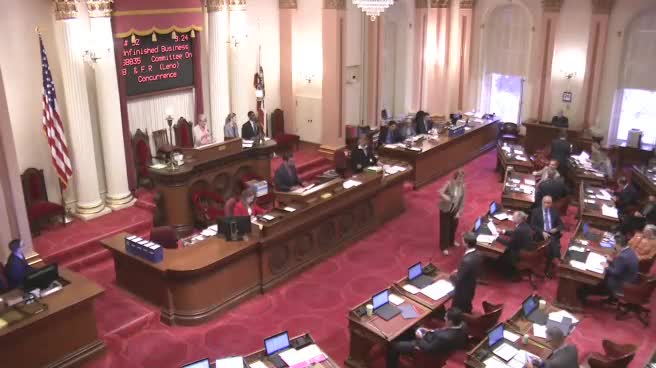
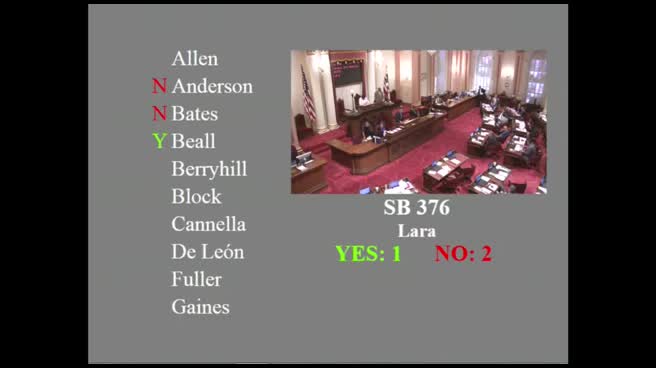
Bill Author

Bill Co-Author(s):