SB 777: The California Finance Lenders Law: application.
- Session Year: 2015-2016
- House: Senate
- Latest Version Date: 2016-09-22
Existing law, the California Finance Lenders Law, provides for the licensure and regulation of finance lenders and brokers. Existing law exempts from its provisions, among others, persons making 5 or fewer commercial loans in a 12-month period if the loans are incidental to the business of the person relying upon the exemption.
This bill would also exempt, until January 1, 2022, a person who makes one commercial loan in a 12-month period from regulation pursuant to the California Finance Lenders Law.
Existing law, the California Finance Lenders Law, provides for the licensure and regulation of finance lenders and brokers. Existing law exempts from its provisions, among others, persons making 5 or fewer commercial loans in a 12-month period if the loans are incidental to the business of the person relying upon the exemption.
This bill would also exempt exempt, until January 1, 2022, a person who makes one commercial loan in a 12-month period from regulation pursuant to the California Finance Lenders Law.
Existing law, the California Finance Lenders Law, provides for the licensure and regulation of finance lenders and brokers. Existing law exempts from its provisions, among others, persons making 5 or fewer commercial loans in a 12-month period if the loans are incidental to the business of the person relying upon the exemption.
This bill would also exempt a person who makes one commercial loan in a 12-month period from regulation pursuant to the California Finance Lenders Law.
Existing law, the Gambling Control Act, provides for the licensure and regulation of various legalized gambling activities and establishments by the California Gambling Control Commission and the investigation and enforcement of those activities and establishments by the Department of Justice. Existing law requires a corporation to comply with specified requirements in order to obtain a gambling license, including a requirement that the corporation register as a corporation with the department and supply specified supplemental information to the department with the application and upon request of the department, such as remuneration as compensation for services to specified individuals and the amount of remuneration to persons other than directors and officers in excess of $100,000. Existing law also requires that information to include a copy of the corporations annual federal income tax return, within 30 calendar days after that return is filed with the Internal Revenue Service.
This bill would specify that information on the extent of the remuneration as compensation for services of specified individuals includes bonuses. The bill would require supplying information on the amount of remuneration to persons other than directors and officers in excess of $95,000. The bill would also require the corporation to supply in its information a copy of its annual federal income tax return within 30 business days after that return is filed.
Existing law, the Gambling Control Act, provides for the licensure and regulation of various legalized gambling activities and establishments by the California Gambling Control Commission and the investigation and enforcement of those activities and establishments by the Department of Justice. Existing law requires a corporation to comply with specified requirements in order to obtain a gambling license, including a requirement that the corporation register as a corporation with the department and supply specified supplemental information to the department. information to the department with the application and upon request of the department, such as remuneration as compensation for services to specified individuals and the amount of remuneration to persons other than directors and officers in excess of $100,000. Existing law also requires that information to include a copy of the corporations annual federal income tax return, within 30 calendar days after that return is filed with the Internal Revenue Service.
This bill would make technical, nonsubstantive changes to that provision.
This bill would specify that information on the extent of the remuneration as compensation for services of specified individuals includes bonuses. The bill would require supplying information on the amount of remuneration to persons other than directors and officers in excess of $95,000. The bill would also require the corporation to supply in its information a copy of its annual federal income tax return within 30 business days after that return is filed.
Existing law, the Gambling Control Act, provides for the licensure and regulation of various legalized gambling activities and establishments by the California Gambling Control Commission and the investigation and enforcement of those activities and establishments by the Department of Justice. Existing law requires a corporation to comply with specified requirements in order to obtain a gambling license, including a requirement that the corporation register as a corporation with the department and supply specified supplemental information to the department.
This bill would make technical, nonsubstantive changes to that provision.
(a)This division does not apply to any person who makes one loan in a 12-month period if that loan is a commercial loan as defined in Section 22502.
(b)This section shall remain in effect only until January 1, 2022, and as of that date is repealed.
(a)This division does not apply to any person who makes one loan in a 12-month period if that loan is a commercial loan as defined in Section 22502.
(b)This section shall remain in effect only until January 1, 2022, and as of that date is repealed.
(a)This division does not apply to any person who makes one loan in a 12-month period if that loan is a commercial loan as defined in Section 22502.
(b)This section shall remain in effect only until January 1, 2022, and as of that date is repealed.
SECTION 1.Section 22050 of the Financial Code is amended to read:22050.(a)This division does not apply to any person doing business under any law of any state or of the United States relating to banks, trust companies, savings and loan associations, insurance premium finance agencies, credit unions, small business investment companies, community advantage lenders, California business and industrial development corporations when acting under federal law or other state authority, or licensed pawnbrokers when acting under the authority of that license.
Community advantage lender means an entity authorized by the United States Small Business Administration to deliver community advantage loans.
(b)This division does not apply to a check casher who holds a valid permit issued pursuant to Section 1789.37 of the Civil Code when acting under the authority of that permit, and shall not apply to a person holding a valid license issued pursuant to Section 23005 of the Financial Code when acting under the authority of that license.
(c)This division does not apply to a college or university making a loan for the purpose of permitting a person to pursue a program or course of study leading to a degree or certificate.
(d)This division does not apply to a broker-dealer acting pursuant to a certificate then in effect and issued pursuant to Section 25211 of the Corporations Code.
(e)This division does not apply to any person who makes five or fewer loans in a 12-month period, these loans are commercial loans as defined in Section 22502, and the loans are incidental to the business of the person relying upon the exemption.
(f)This division does not apply to any person who makes one loan in a 12-month period if that loan is a commercial loan as defined in Section 22502.
(g)This division does not apply to any public corporation as defined in Section 67510 of the Government Code, any public entity other than the state as defined in Section 811.2 of the Government Code, or any agency of any one or more of the foregoing, when making any loan so long as the public corporation, public entity, or agency of any one or more of the foregoing complies with all applicable federal and state laws and regulations.
(a)This division does not apply to any person doing business under any law of any state or of the United States relating to banks, trust companies, savings and loan associations, insurance premium finance agencies, credit unions, small business investment companies, community advantage lenders, California business and industrial development corporations when acting under federal law or other state authority, or licensed pawnbrokers when acting under the authority of that license.
Community advantage lender means an entity authorized by the United States Small Business Administration to deliver community advantage loans.
(b)This division does not apply to a check casher who holds a valid permit issued pursuant to Section 1789.37 of the Civil Code when acting under the authority of that permit, and shall not apply to a person holding a valid license issued pursuant to Section 23005 of the Financial Code when acting under the authority of that license.
(c)This division does not apply to a college or university making a loan for the purpose of permitting a person to pursue a program or course of study leading to a degree or certificate.
(d)This division does not apply to a broker-dealer acting pursuant to a certificate then in effect and issued pursuant to Section 25211 of the Corporations Code.
(e)This division does not apply to any person who makes five or fewer loans in a 12-month period, these loans are commercial loans as defined in Section 22502, and the loans are incidental to the business of the person relying upon the exemption.
(f)This division does not apply to any person who makes one loan in a 12-month period if that loan is a commercial loan as defined in Section 22502.
(f)
(g)This division does not apply to any public corporation as defined in Section 67510 of the Government Code, any public entity other than the state as defined in Section 811.2 of the Government Code, or any agency of any one or more of the foregoing, when making any loan so long as the public corporation, public entity, or agency of any one or more of the foregoing complies with all applicable federal and state laws and regulations.
SECTION 1.Section 19880 of the Business and Professions Code is amended to read:19880.In addition to the requirements of Section 19852, in order to be eligible to receive a gambling license as the owner of a gambling enterprise, a corporation shall comply with all of the following requirements:
(a)Maintain an office of the corporation in the gambling establishment.
(b)Comply with all of the requirements of the laws of this state pertaining to corporations.
(c)Maintain, in the corporations principal office in California or in the gambling establishment, a ledger that meets both of the following conditions:
(1)At all times reflects the ownership of record of every class of security issued by the corporation.
(2)Is available for inspection by the department at all reasonable times without notice.
(d)Supply supplemental forms and information, in accordance with Section 19865, with the initial license application, and thereafter only on request, to the department, which shall include, but not be limited to, all of the following:
(1)The organization, financial structure, and nature of the business to be operated, including the names, personal and criminal history, and fingerprints of all officers and directors, and the names, addresses, and number of shares held by all stockholders of record.
(2)The rights and privileges acquired by the holders of different classes of authorized securities, including debentures.
(3)The terms and conditions on which securities are to be offered.
(4)The terms and conditions on all outstanding loans, mortgages, trust deeds, pledges, or any other indebtedness or security interest.
(5)The extent of the equity security holdings in the corporation of all officers, directors, and underwriters, and their remuneration as compensation for services, in the form of salary, wages, fees, bonuses, or otherwise.
(6)The amount of remuneration to persons other than directors and officers in excess of ninety-five thousand dollars ($95,000) per annum.
(7)Bonus and profit-sharing arrangements.
(8)Management, consultant, and service contracts related to the operation of controlled gaming.
(9)Options existing, or to be created, in respect of their securities or other interests.
(10)Financial statements for at least three fiscal years preceding the year of registration, or, if the corporation has not been in existence for a period of three years, financial statements from the date of its formation. All financial statements shall be prepared in accordance with generally accepted accounting principles and audited by a licensee of the California Board of Accountancy.
(11)Any further financial data that the department, with the approval of the commission, may deem necessary or appropriate for the protection of the state.
(12)An annual profit-and-loss statement, an annual balance sheet, and a copy of its annual federal income tax return, within 30 business days after that return is filed with the Internal Revenue Service.
In addition to the requirements of Section 19852, in order to be eligible to receive a gambling license as the owner of a gambling enterprise, a corporation shall comply with all of the following requirements:
(a)Maintain an office of the corporation in the gambling establishment.
(b)Comply with all of the requirements of the laws of this state pertaining to corporations.
(c)Maintain, in the corporations principal office in California or in the gambling establishment, a ledger that meets both of the following conditions:
(1)At all times reflects the ownership of record of every class of security issued by the corporation.
(2)Is available for inspection by the department at all reasonable times without notice.
(d)Supply supplemental forms and information, in accordance with Section 19865, with the initial license application, and thereafter only on request, to the department, which shall include, but not be limited to, all of the following:
(1)The organization, financial structure, and nature of the business to be operated, including the names, personal and criminal history, and fingerprints of all officers and directors, and the names, addresses, and number of shares held by all stockholders of record.
(2)The rights and privileges acquired by the holders of different classes of authorized securities, including debentures.
(3)The terms and conditions on which securities are to be offered.
(4)The terms and conditions on all outstanding loans, mortgages, trust deeds, pledges, or any other indebtedness or security interest.
(5)The extent of the equity security holdings in the corporation of all officers, directors, and underwriters, and their remuneration as compensation for services, in the form of salary, wages, fees, bonuses, or otherwise.
(6)The amount of remuneration to persons other than directors and officers in excess of one hundred thousand dollars ($100,000) ninety-five thousand dollars ($95,000) per annum.
(7)Bonus and profit-sharing arrangements.
(8)Management, consultant, and service contracts related to the operation of controlled gaming.
(9)Options existing, or to be created, in respect of their securities or other interests.
(10)Financial statements for at least three fiscal years preceding the year of registration, or, if the corporation has not been in existence for a period of three years, financial statements from the date of its formation. All financial statements shall be prepared in accordance with generally accepted accounting principles and audited by a licensee of the California Board of Accountancy.
(11)Any further financial data that the department, with the approval of the commission, may deem necessary or appropriate for the protection of the state.
(12)An annual profit-and-loss statement, an annual balance sheet, and a copy of its annual federal income tax return, within 30 calendar business days after that return is filed with the Internal Revenue Service.
In addition to the requirements of Section 19852, in order to be eligible to receive a gambling license as the owner of a gambling enterprise, a corporation shall comply with all of the following requirements:
(a)Maintain an office of the corporation in the gambling establishment.
(b)Comply with all of the requirements of the laws of this state pertaining to corporations.
(c)Maintain, in the corporations principal office in California or in the gambling establishment, a ledger that meets both of the following conditions:
(1)At all times reflects the ownership of record of every class of security issued by the corporation.
(2)Is available for inspection by the department at all reasonable times without notice.
(d)Supply supplemental forms and information, in accordance with Section 19865, with the initial license application, and thereafter only on request, to the department, which shall include, but not be limited to, all of the following:
(1)The organization, financial structure, and nature of the business to be operated, including the names, personal and criminal history, and fingerprints of all officers and directors, and the names, addresses, and number of shares held by all stockholders of record.
(2)The rights and privileges acquired by the holders of different classes of authorized securities, including debentures.
(3)The terms on which securities are to be offered.
(4)The terms and conditions on all outstanding loans, mortgages, trust deeds, pledges, or any other indebtedness or security interest.
(5)The extent of the equity security holdings in the corporation of all officers, directors, and underwriters, and their remuneration as compensation for services, in the form of salary, wages, fees, or otherwise.
(6)The amount of remuneration to persons other than directors and officers in excess of one hundred thousand dollars ($100,000) per annum.
(7)Bonus and profit-sharing arrangements.
(8)Management, consultant, and service contracts related to the operation of controlled gaming.
(9)Options existing, or to be created, in respect of their securities or other interests.
(10)Financial statements for at least three fiscal years preceding the year of registration, or, if the corporation has not been in existence for a period of three years, financial statements from the date of its formation. All financial statements shall be prepared in accordance with generally accepted accounting principles and audited by a licensee of the California Board of Accountancy.
(11)Any further financial data that the department, with the approval of the commission, may deem necessary or appropriate for the protection of the state.
(12)An annual profit-and-loss statement and, an annual balance sheet, and a copy of its annual federal income tax return, within 30 calendar days after that return is filed with the Internal Revenue Service.
|
Date
|
Status
|
|---|---|
| Aug 24, 2016 | In Senate. Concurrence in Assembly amendments pending. |
| Aug 4, 2016 | Ordered to third reading. |
| Aug 4, 2016 | Re-referred to Com. on B. & F. pursuant to Assembly Rule 77.2. |
| Aug 4, 2016 | Read third time and amended. |
| Aug 10, 2016 | From committee: Do pass as amended and re-refer to Com. on APPR. (Ayes 11. Noes 0.) (August 9). |
| Aug 11, 2016 | Ordered to third reading. |
| Aug 11, 2016 | Read second time and amended. Re-referred to Com. on APPR. |
| Aug 11, 2016 | Withdrawn from committee. |
| Aug 18, 2016 | Read third time. Passed. Ordered to the Senate. |
| Aug 18, 2016 | Read third time. Passed. (Ayes 78. Noes 0. Page 5905.) Ordered to the Senate. |
| Aug 1, 2016 | Ordered to third reading. |
| Aug 25, 2016 | From committee: Be re-referred to Com. on B. & F.I. pursuant to Senate Rule 29.10(d). (Ayes 5. Noes 0. Page 5387.) Re-referred to Com. on B. & F.I. |
| Aug 25, 2016 | From committee: Be re-referred to Com. on B. & F.I. pursuant to Senate Rule 29.10(d). (Ayes 5. Noes 0.) Re-referred to Com. on B. & F.I. |
| Aug 25, 2016 | From committee: That the Assembly amendments be concurred in. (Ayes 7. Noes 0. Page 5436.) |
| Aug 25, 2016 | From committee: That the Assembly amendments be concurred in. (Ayes 7. Noes 0.) |
| Aug 25, 2016 | Re-referred to Com. on RLS. pursuant to Senate Rule 29.10(d). |
| Aug 29, 2016 | Assembly amendments concurred in. (Ayes 39. Noes 0. Page 5488.) Ordered to engrossing and enrolling. |
| Aug 29, 2016 | Assembly amendments concurred in. (Ayes 39. Noes 0.) Ordered to engrossing and enrolling. |
| Sep 8, 2016 | Enrolled and presented to the Governor at 5 p.m. |
| May 18, 2015 | In Assembly. Read first time. Held at Desk. |
| Mar 2, 2015 | From printer. May be acted upon on or after April 1. |
| Mar 2, 2015 | Read first time. |
| Mar 19, 2015 | Referred to Com. on RLS. |
| Apr 6, 2015 | From committee with author's amendments. Read second time and amended. Re-referred to Com. on RLS. |
| Apr 16, 2015 | Re-referred to Com. on G.O. |
| Apr 21, 2015 | Set for hearing May 12. |
| May 12, 2015 | From committee: Do pass. Ordered to consent calendar. (Ayes 9. Noes 0. Page 973.) (May 12). |
| May 12, 2015 | From committee: Do pass. Ordered to consent calendar. (Ayes 9. Noes 0.) (May 12). |
| May 13, 2015 | Read second time. Ordered to consent calendar. |
| Feb 27, 2015 | Introduced. To Com. on RLS. for assignment. To print. |
| May 18, 2015 | Read third time. Passed. (Ayes 36. Noes 0. Page 1029.) Ordered to the Assembly. |
| May 18, 2015 | Read third time. Passed. (Ayes 36. Noes 0.) Ordered to the Assembly. |
| Jun 4, 2015 | Referred to Com. on G.O. |
| Jul 9, 2015 | From committee: Do pass. (Ayes 18. Noes 0.) (July 8). |
| Jul 13, 2015 | Read second time. Ordered to third reading. |
| Aug 20, 2015 | Ordered to inactive file on request of Assembly Member Holden. |
| Jun 30, 2016 | Notice of intention to remove from inactive file given by Assembly Member Calderon. |
| Aug 1, 2016 | From inactive file. |
|
Date
|
Description
|
Location
|
Votes
|
|
|---|---|---|---|---|
| Aug 29, 2016 | Unfinished Business SB777 Lara Concurrence | Senate Floor |
Passed |
|
| Aug 25, 2016 | That the Assembly amendments be concurred in | Senate Standing Committee on Banking and Financial Institutions |
Passed |
|
| Aug 18, 2016 | SB 777 Lara Senate Third Reading By SANTIAGO | Assembly Floor |
Passed |
|
| Aug 9, 2016 | Do pass as amended and be re-referred to the Committee on [Appropriations] | Assembly 1st Extraordinary Session on Finance |
Passed |
|
| Jul 8, 2015 | Do pass. | Assembly Standing Committee on Governmental Organization |
Passed |
|
| May 18, 2015 | Consent Calendar 2nd SB777 Lara | Senate Floor |
Passed |
|
| May 12, 2015 | Do pass and be ordered to the Consent Calendar | Senate Standing Committee on Governmental Organization |
Passed |
This list shows positions taken on this bill by organizations on the date displayed, which is linked to the original source.
Positions by individuals are not included.
|
Organization
|
Position
|
Date
|
|---|---|---|
| Commerce Casino | ** Support | Jul 8, 2015 |
| Hawaiian Gardens Casino | ** Support | Jul 8, 2015 |
| Low Income Investment Fund | ** Support | Aug 29, 2016 |
| The East Los Angeles Community Union | ** Support | Aug 29, 2016 |
SENATE COMMITTEE ON
BANKING AND FINANCIAL INSTITUTIONS
Senator Steven Glazer, Chair
2015 - 2016 Regular
Bill No: SB 777 Hearing Date: August 25, 2016
Author: | Lara | ||
Version: | August 11, 2016 Amended | ||
Urgency: | No | Fiscal: | Yes |
Consultant: | Eileen Newhall | ||
Subject: The California Finance Lenders Law: application
SUMMARY
This bill exempts from the California Finance Lenders Law (CFLL), until January 1, 2022, an entity that makes one commercial loan in a 12-month period.
DESCRIPTION
- Provides that the CFLL does not apply to any person who makes one loan in a 12-month period, if that loan is a commercial loan, as defined in Financial Code Section 22502.
EXISTING LAW
- Defines a commercial loan, pursuant to the CFLL, as a loan with a principal amount of $5,000 or more, or any loan under an open-end credit program, the proceeds of which are intended by the borrower for use primarily for other than personal, family, or household purposes. Commercial loans may be secured or unsecured. For purposes of determining whether a loan is a commercial loan, the lender may rely on any written statement of intended purposes signed by the borrower (Financial Code Section 22502).
- Provides that the CFLL does not apply to any person who makes five or fewer commercial loans in a 12-month period, if the loans are incidental to the business of the person relying on the exemption (Financial Code Section 22050).
COMMENTS
- Purpose: This bill is sponsored by the East Los Angeles Community Union (TELACU) to restore a de minimis exemption to the CFLL that allows entities to make one commercial loan in a 12-month period without triggering a licensing requirement. Restoring the exemption is intended to allow TELACU and others that facilitate federal New Markets Tax Credit (NMTC) financing to continue creating subsidiaries that raise tax credit equity and make loans to qualifying borrowers, without having to obtain CFLL licenses for each of these subsidiaries.
- Senate Rule 29.10(d): The current contents of SB 657 were amended into the bill in the Assembly. Because this bill has not previously been heard in the Senate in its current form, it is back before this Committee pursuant to Senate Rule 29.10(d). Pursuant to Senate Rule 29.10(d), this Committee has two options when it considers SB 657: a) concur in the Assembly amendments, and return the bill to the Senate Floor; or b) hold the bill in Committee. The bill cannot be amended.
- Background: This bill would re-add language to the CFLL that was first added in 1997 (AB 289, Baca, Chapter 229, Statutes of 1997) and was deleted in 2013 (AB 1091, Skinner, Chapter 243, Statutes of 2013). AB 289 was sponsored by the Household Financial Group. Bill analyses prepared for AB 289 contain no explanation for the logic behind the addition of the exemption. However, it remained in the CFLL, unchanged, until 2013.
In 2013, AB 1091 replaced the one-loan de minimis exemption with a five-loan de minimis exemption, crafted in a slightly different manner. Instead of allowing entities to make one commercial loan in a 12-month period without triggering a licensing requirement, entities could make up to five commercial loans in a 12-month period without triggering a licensing requirement, as long as those loans were incidental to the business of the entity making the loans. Although AB 1091 had no sponsor and no official source, the language of the bill originated with the Department of Corporations (the predecessor department to the Department of Business Oversight; DBO). Bill analyses prepared for AB 1091 provide the purpose of the revised de minimis exemption as minimizing unnecessary over-regulation of businesses and exempting from the CFLL commercial financing transactions, which are structured as loans by entities that are not otherwise lenders.
As described below, the 2013 change to the de minimis exemption created unintended, negative consequences for entities that help facilitate loans eligible for federal NMTCs. By re-adding the one-loan de minimis exemption, this bill mitigates these negative consequences and returns to the CFLL an exemption that existed from 1998 through 2013. This bill leaves unchanged the newer five-loan de minimis exemption. A January 1, 2022 sunset date was added to this bill by the Assembly Banking and Finance Committee, to allow DBO and others time to investigate whether both de minimis exemptions should remain in the CFLL indefinitely. - Discussion: The CFLL exemption that this bill will restore has the potential to benefit several different types of entities (i.e., not only this bill’s sponsor). However, because the arguments in favor of this bill revolve around NMTCs, a brief description of the NMTC program and the way in which this bill will allow its sponsor to continue facilitating NMTC financing is provided immediately below.
The federal NMTC program was first authorized in 2000 on a temporary basis and has been periodically extended since that time. The NMTC program is currently scheduled to sunset in December, 2019, although legislation has been proposed to make the program permanent. The NMTC program was created to stimulate private investment and economic growth in low-income urban neighborhoods and rural communities that lack access to capital. NMTC financing can be used to support a wide variety of projects, including manufacturing, community facilities, health centers, retail operations, environmentally green projects, certain forms of residential housing, and industrial and commercial properties. It cannot be used to finance rental residential projects, farms, golf courses, country clubs, liquor stores, gambling facilities, or intangibles.
The NMTC program attracts capital by providing private investors with a sizeable federal tax credit for investments made in businesses or economic development projects that qualify for NMTC financing. The tax credit, which equals 39% of an investor’s total qualified investment, must be claimed over a seven-year period: 5% annually for the first three years, and 6% in each of the remaining four years. If an investor redeems a NMTC investment before the seven-year term, he or she must repay, with interest, all prior credits claimed. In this way, the program is intended to provide so-called “patient capital;” investors do not expect to be repaid in the short-term.
NMTC projects are typically funded, as follows: A community development entity (CDE), such as TELACU or the Low Income Investment Fund (LIIF), applies to the U.S. Department of the Treasury Community Development Financial Institutions (CDFI) Fund for an allocation of NMTC credits. The application process is quite competitive, and the tax credits are extremely oversubscribed; according to an expert in NMTC financing consulted in connection with this analysis, applications are submitted for approximately $30 billion to $35 billion in credit allocations annually, while only $3.5 billion in credits are authorized. Once the CDFI Fund allocates NMTC credits to a CDE, the CDE identifies entities that meet NMTC criteria and investors (typically banks) who wish to invest in those entities in exchange for tax credits. When a project is ready to be funded, the CDE creates a for-profit subsidiary (the entity that will be exempt from CFLL licensure under the provisions of this bill) to receive money from the investor, allocate tax credits to that investor over the seven-year period of the investment, disburse the proceeds of the investment to the intended recipient, and act as an asset manager for the project. Because CDEs typically split their tax credit allocations across multiple projects, project investors commonly require that their funds be segregated from the funds of others; the creation of an individual subsidiary to manage each separate NMTC project allows for that segregation. The creation of a specific entity to facilitate the flow of funds on NMTC projects is not only demanded by investors; it is required by law when the CDE is a non-profit, as is the case for TELACU and LIIF.
However, because the specific entity created by the CDE is formed specifically for the purpose of disbursing loan proceeds, its lending activities are not incidental to its business, and it is therefore not eligible for the CFLL exemption in current law. This bill will ensure that entities like TELACU and the LIIF can continue to facilitate NMTC projects, without having to obtain a separate CFLL license for each subsidiary established to fund an NMTC project. - Unintentional Drafting Error: As described above, this bill is intended to re-add the exemption that was deleted from the CFLL in 2013. However, when this bill was amended coming out of the Assembly Banking and Finance Committee in August, 2016, three important words were mistakenly omitted from the bill by the Legislative Counsel. Instead of exempting persons who make no more than one commercial loan in a 12-month period, this bill, as amended August 11, 2016, exempts persons who make one commercial loan in a 12-month period. The omission of these three words has the potential to create confusion regarding which entities are (and are not) eligible for the exemption. Because there was insufficient time to return this bill to the Assembly for corrective amendments prior to the deadline for amending bills, cleanup legislation may be required.
- Summary of Arguments in Support:
- TELACU is sponsoring SB 777 to ensure that California is awarded its fair share of federal NMTCs and that these NMTCs can continue to be invested in job-creating economic development projects. “TELACU, along with other organizations who invest in the revitalization of low-income communities, receives significant NMTC allocations from the United States Treasury Department. Since the Treasury Department awarded the first NMTC allocations in 2003, the NMTC has proven to be an effective, targeted, and cost-efficient financing tool for important community development investments highly valued by businesses, communities, and investors across the country. Given the success of the NMTC Program, TELACU has been able to more effectively redevelop communities, create more jobs, and increase economic activity. In order to continue these critical investments in low-income urban and rural communities, TELACU supports restoring the prior one-per-year exemption for commercial loans while maintaining the exemption recently established for up to five loans a year which are ‘incidental’ to the lenders business.”
- The LIIF supports the bill for the same reasons as TELACU. The LIIF is a CDFI that invests in projects with high social value, which are often unable able to access traditional financing. “In order to continue these critical investments in low income urban and rural communities, LIIF supports restoring the prior one-per-year CFLL exemption for commercial loans while maintaining the exemption recently established for up to five loans a year which are ‘incidental’ to the lenders business.”
- TELACU is sponsoring SB 777 to ensure that California is awarded its fair share of federal NMTCs and that these NMTCs can continue to be invested in job-creating economic development projects. “TELACU, along with other organizations who invest in the revitalization of low-income communities, receives significant NMTC allocations from the United States Treasury Department. Since the Treasury Department awarded the first NMTC allocations in 2003, the NMTC has proven to be an effective, targeted, and cost-efficient financing tool for important community development investments highly valued by businesses, communities, and investors across the country. Given the success of the NMTC Program, TELACU has been able to more effectively redevelop communities, create more jobs, and increase economic activity. In order to continue these critical investments in low-income urban and rural communities, TELACU supports restoring the prior one-per-year exemption for commercial loans while maintaining the exemption recently established for up to five loans a year which are ‘incidental’ to the lenders business.”
- Summary of Arguments in Opposition: None received.
- Prior and Related Legislation:
- AB 289 (Baca), Chapter 229, Statutes of 1997: Added a one-loan de minimis commercial loan exemption to the CFLL.
- AB 1091 (Skinner), Chapter 243, Statutes of 2013: Deleted the one-loan de minimis commercial loan exemption from the CFLL in favor of a five-loan de minimis commercial loan exemption, which requires the loans to be incidental to the business of the person relying on the exemption.
- AB 289 (Baca), Chapter 229, Statutes of 1997: Added a one-loan de minimis commercial loan exemption to the CFLL.
LIST OF REGISTERED SUPPORT/OPPOSITION
Support
The East Los Angeles Community Union (sponsor)
Low Income Investment Fund
Opposition
None received
-- END --
Office of Senate Floor Analyses (916) 651-1520 Fax: (916) 327-4478 | SB |
UNFINISHED BUSINESS
Bill No: SB 777
:
PRIOR VOTES NOT RELEVANT
SENATE BANKING & F.I. COMMITTEE: 7-0, 8/25/16 (Pursuant to Senate Rule 29.10
AYES: Glazer, Vidak, Galgiani, Hall, Hueso, Lara, Morrell
ASSEMBLY FLOOR: 78-0, 8/18/16 - See last page for vote
SOURCE: The East Los Angeles Community Union
DIGEST: This bill exempts from the California Finance Lenders Law (CFLL), until January 1, 2022, an entity that makes no more than one commercial loan in a 12-month period.
Assembly Amendments delete the Senate version of the bill relating to gambling and insert the current language.
Existing law:
- Defines a commercial loan, pursuant to the CFLL, as a loan with a principal amount of $5,000 or more, or any loan under an open-end credit program, the proceeds of which are intended by the borrower for use primarily for other than personal, family, or household purposes. Commercial loans may be secured or unsecured. For purposes of determining whether a loan is a commercial loan, the lender may rely on any written statement of intended purposes signed by the borrower (Financial Code Section 22502).
- Provides that the CFLL does not apply to any person who makes five or fewer commercial loans in a 12-month period, if the loans are incidental to the business of the person relying on the exemption (Financial Code Section 22050).
This bill provides that the CFLL does not apply to any person who makes one loan in a 12-month period, if that loan is a commercial loan, as defined in Financial Code Section 22502.
Background
This bill re-adds language to the CFLL that was first added in 1997 (AB 289, Baca, Chapter 229, Statutes of 1997) and was deleted in 2013 (AB 1091, Skinner, Chapter 243, Statutes of 2013). AB 289 was sponsored by the Household Financial Group. Bill analyses prepared for AB 289 contain no explanation for the logic behind the addition of the exemption. However, it remained in the CFLL, unchanged, until 2013.
In 2013, AB 1091 replaced the one-loan de minimis exemption with a five-loan de minimis exemption, crafted in a slightly different manner. Instead of allowing entities to make one commercial loan in a 12-month period without triggering a licensing requirement, entities could make up to five commercial loans in a 12-month period without triggering a licensing requirement, as long as those loans were incidental to the business of the entity making the loans. Although AB 1091 had no sponsor and no official source, the language of the bill originated with the Department of Corporations (the predecessor department to the Department of Business Oversight; DBO). Bill analyses prepared for AB 1091 provide the purpose of the revised de minimis exemption as minimizing unnecessary over-regulation of businesses and exempting from the CFLL commercial financing transactions, which are structured as loans, by entities that are not otherwise lenders.
As described below, the 2013 change to the de minimis exemption created unintended, negative consequences for entities that help facilitate loans eligible for federal New Markets Tax Credits (NMTCs). By re-adding the one-loan de minimis exemption, this bill mitigates these negative consequences and returns to the CFLL an exemption that existed from 1998 through 2013. This bill leaves unchanged the newer five-loan de minimis exemption. A January 1, 2022 sunset date was added to this bill by the Assembly Banking and Finance Committee, to allow DBO and others time to investigate whether both de minimis exemptions should remain in the CFLL indefinitely.
Comments
The CFLL exemption that this bill will restore has the potential to benefit several different types of entities (i.e., not only this bill’s sponsor). However, because the arguments in favor of this bill revolve around NMTCs, a brief description of the NMTC program and the way in which this bill will allow its sponsor to continue facilitating NMTC financing is provided immediately below.
The federal NMTC program was first authorized in 2000 on a temporary basis and has been periodically extended since that time. The NMTC program is currently scheduled to sunset in December, 2019, although legislation has been proposed to make the program permanent. The NMTC program was created to stimulate private investment and economic growth in low-income urban neighborhoods and rural communities that lack access to capital. NMTC financing can be used to support a wide variety of projects, including manufacturing, community facilities, health centers, retail operations, environmentally green projects, certain forms of residential housing, and industrial and commercial properties. It cannot be used to finance rental residential projects, farms, golf courses, country clubs, liquor stores, gambling facilities, or intangibles.
The NMTC program attracts capital by providing private investors with a sizeable federal tax credit for investments made in businesses or economic development projects that qualify for NMTC financing. The tax credit, which equals 39% of an investor’s total qualified investment, must be claimed over a seven-year period: 5% annually for the first three years, and 6% in each of the remaining four years. If an investor redeems a NMTC investment before the seven-year term, he or she must repay, with interest, all prior credits claimed. In this way, the program is intended to provide so-called “patient capital;” investors do not expect to be repaid in the short-term.
NMTC projects are typically funded, as follows: A community development entity (CDE), such as the East Los Angeles Community Union (TELACU) or the Low Income Investment Fund (LIIF), applies to the U.S. Department of the Treasury Community Development Financial Institutions (CDFI) Fund for an allocation of NMTC credits. The application process is quite competitive, and the tax credits are extremely oversubscribed; according to an expert in NMTC financing consulted in connection with this analysis, applications are submitted for approximately $30 billion to $35 billion in credit allocations annually, while only $3.5 billion in credits are authorized. Once the CDFI Fund allocates NMTC credits to a CDE, the CDE identifies entities that meet NMTC criteria and investors (typically banks) who wish to invest in those entities in exchange for tax credits. When a project is ready to be funded, the CDE creates a for-profit subsidiary (the entity that will be exempt from CFLL licensure under the provisions of this bill) to receive money from the investor, allocate tax credits to that investor over the seven-year period of the investment, disburse the proceeds of the investment to the intended recipient, and act as an asset manager for the project. Because CDEs typically split their tax credit allocations across multiple projects, project investors commonly require that their funds be segregated from the funds of others; the creation of an individual subsidiary to manage each separate NMTC project allows for that segregation. The creation of a specific entity to facilitate the flow of funds on NMTC projects is not only demanded by investors; it is required by law when the CDE is a non-profit, as is the case for TELACU and LIIF.
However, because the specific entity created by the CDE is formed specifically for the purpose of disbursing loan proceeds, its lending activities are not incidental to its business, and it is therefore not eligible for the CFLL exemption in current law. This bill will ensure that entities like TELACU and the LIIF can continue to facilitate NMTC projects, without having to obtain a separate CFLL license for each subsidiary established to fund an NMTC project.
Unintentional Drafting Error. As described above, this bill is intended to re-add the exemption that was deleted from the CFLL in 2013. However, when this bill was amended coming out of the Assembly Banking and Finance Committee in August, 2016, three important words were mistakenly omitted from the bill by the Legislative Counsel. Instead of exempting persons who make no more than one commercial loan in a 12-month period, this bill, as amended August 11, 2016, exempts persons who make one commercial loan in a 12-month period. The omission of these three words has the potential to create confusion regarding which entities are (and are not) eligible for the exemption. Because there was insufficient time to return this bill to the Assembly for corrective amendments prior to the deadline for amending bills, cleanup legislation may be required.
Related/Prior Legislation
AB 289 (Baca, Chapter 229, Statutes of 1997) added a one-loan de minimis commercial loan exemption to the CFLL.
AB 1091 (Skinner, Chapter 243, Statutes of 2013) deleted the one-loan de minimis commercial loan exemption from the CFLL in favor of a five-loan de minimis commercial loan exemption, which requires the loans to be incidental to the business of the person relying on the exemption.
FISCAL EFFECT: Appropriation: Fiscal Com.: Local:
Unknown.
The East Los Angeles Community Union (source)
Low Income Investment Fund
OPPOSITION: (Verified 8/15/16)
None received
ARGUMENTS IN SUPPORT: TELACU is sponsoring SB 777 to ensure that California is awarded its fair share of federal NMTCs and that these NMTCs can continue to be invested in job-creating economic development projects. “TELACU, along with other organizations who invest in the revitalization of low-income communities, receives significant NMTC allocations from the United States Treasury Department. Since the Treasury Department awarded the first NMTC allocations in 2003, the NMTC has proven to be an effective, targeted, and cost-efficient financing tool for important community development investments highly valued by businesses, communities, and investors across the country. Given the success of the NMTC Program, TELACU has been able to more effectively redevelop communities, create more jobs, and increase economic activity. In order to continue these critical investments in low-income urban and rural communities, TELACU supports restoring the prior one-per-year exemption for commercial loans while maintaining the exemption recently established for up to five loans a year which are ‘incidental’ to the lenders business.”
ASSEMBLY FLOOR: 78-0, 8/18/16
AYES: Achadjian, Alejo, Travis Allen, Arambula, Atkins, Baker, Bigelow, Bloom, Bonilla, Bonta, Brough, Brown, Burke, Calderon, Campos, Chang, Chau, Chávez, Chiu, Chu, Cooley, Cooper, Dababneh, Dahle, Daly, Dodd, Eggman, Frazier, Beth Gaines, Gallagher, Cristina Garcia, Eduardo Garcia, Gatto, Gipson, Gomez, Gonzalez, Gordon, Gray, Grove, Harper, Holden, Irwin, Jones, Jones-Sawyer, Kim, Lackey, Levine, Linder, Lopez, Low, Maienschein, Mathis, Mayes, McCarty, Medina, Melendez, Mullin, Nazarian, Obernolte, O'Donnell, Olsen, Patterson, Quirk, Ridley-Thomas, Rodriguez, Salas, Santiago, Steinorth, Mark Stone, Thurmond, Ting, Wagner, Waldron, Weber, Wilk, Williams, Wood, Rendon
NO VOTE RECORDED: Hadley, Roger Hernández
8/25/16 17:30:37
**** END ****
SENATE COMMITTEE ON
BANKING AND FINANCIAL INSTITUTIONS
Senator Steven Glazer, Chair
2015 - 2016 Regular
Bill No: Hearing Date: August 22, 2016
Author: | |||
Version: | Amended | ||
Urgency: | Fiscal: | ||
Consultant: | |||
Subject:
SUMMARY
This bill exempts from the California Finance Lenders Law (CFLL), until January 1, 2022, an entity that makes one commercial loan in a 12-month period.
DESCRIPTION
- Provides that the CFLL does not apply to any person who makes one loan in a 12-month period, if that loan is a commercial loan, as defined in Financial Code Section 22502.
EXISTING LAW
- Defines a commercial loan, pursuant to the CFLL, as a loan with a principal amount of $5,000 or more, or any loan under an open-end credit program, the proceeds of which are intended by the borrower for use primarily for other than personal, family, or household purposes. Commercial loans may be secured or unsecured. For purposes of determining whether a loan is a commercial loan, the lender may rely on any written statement of intended purposes signed by the borrower (Financial Code Section 22502).
- Provides that the CFLL does not apply to any person who makes five or fewer commercial loans in a 12-month period, if the loans are incidental to the business of the person relying on the exemption (Financial Code Section 22050).
COMMENTS
- Purpose: This bill is sponsored by the East Los Angeles Community Union (TELACU) to restore a de minimis exemption to the CFLL that allows entities to make one commercial loan in a 12-month period without triggering a licensing requirement. Restoring the exemption is intended to allow TELACU and others that facilitate federal New Markets Tax Credit (NMTC) financing to continue creating subsidiaries that raise tax credit equity and make loans to qualifying borrowers, without having to obtain CFLL licenses for each of these subsidiaries.
- Senate Rule 29.10(d): The current contents of SB 657 were amended into the bill in the Assembly. Because this bill has not previously been heard in the Senate in its current form, it is back before this Committee pursuant to Senate Rule 29.10(d). Pursuant to Senate Rule 29.10(d), this Committee has two options when it considers SB 657: a) concur in the Assembly amendments, and return the bill to the Senate Floor; or b) hold the bill in Committee. The bill cannot be amended.
- Background: This bill would re-add language to the CFLL that was first added in 1997 (AB 289, Baca, Chapter 229, Statutes of 1997) and was deleted in 2013 (AB 1091, Skinner, Chapter 243, Statutes of 2013). AB 289 was sponsored by the Household Financial Group. Bill analyses prepared for AB 289 contain no explanation for the logic behind the addition of the exemption. However, it remained in the CFLL, unchanged, until 2013.
In 2013, AB 1091 replaced the one-loan de minimis exemption with a five-loan de minimis exemption, crafted in a slightly different manner. Instead of allowing entities to make one commercial loan in a 12-month period without triggering a licensing requirement, entities could make up to five commercial loans in a 12-month period without triggering a licensing requirement, as long as those loans were incidental to the business of the entity making the loans. Although AB 1091 had no sponsor and no official source, the language of the bill originated with the Department of Corporations (the predecessor department to the Department of Business Oversight; DBO). Bill analyses prepared for AB 1091 provide the purpose of the revised de minimis exemption as minimizing unnecessary over-regulation of businesses and exempting from the CFLL commercial financing transactions, which are structured as loans by entities that are not otherwise lenders.
As described below, the 2013 change to the de minimis exemption created unintended, negative consequences for entities that help facilitate loans eligible for federal NMTCs. By re-adding the one-loan de minimis exemption, this bill mitigates these negative consequences and returns to the CFLL an exemption that existed from 1998 through 2013. This bill leaves unchanged the newer five-loan de minimis exemption. A January 1, 2022 sunset date was added to this bill by the Assembly Banking and Finance Committee, to allow DBO and others time to investigate whether both de minimis exemptions should remain in the CFLL indefinitely. - Discussion: The CFLL exemption that this bill will restore has the potential to benefit several different types of entities (i.e., not only this bill’s sponsor). However, because the arguments in favor of this bill revolve around NMTCs, a brief description of the NMTC program and the way in which this bill will allow its sponsor to continue facilitating NMTC financing is provided immediately below.
The federal NMTC program was first authorized in 2000 on a temporary basis and has been periodically extended since that time. The NMTC program is currently scheduled to sunset in December, 2019, although legislation has been proposed to make the program permanent. The NMTC program was created to stimulate private investment and economic growth in low-income urban neighborhoods and rural communities that lack access to capital. NMTC financing can be used to support a wide variety of projects, including manufacturing, community facilities, health centers, retail operations, environmentally green projects, certain forms of residential housing, and industrial and commercial properties. It cannot be used to finance rental residential projects, farms, golf courses, country clubs, liquor stores, gambling facilities, or intangibles.
The NMTC program attracts capital by providing private investors with a sizeable federal tax credit for investments made in businesses or economic development projects that qualify for NMTC financing. The tax credit, which equals 39% of an investor’s total qualified investment, must be claimed over a seven-year period: 5% annually for the first three years, and 6% in each of the remaining four years. If an investor redeems a NMTC investment before the seven-year term, he or she must repay, with interest, all prior credits claimed. In this way, the program is intended to provide so-called “patient capital;” investors do not expect to be repaid in the short-term.
NMTC projects are typically funded, as follows: A community development entity (CDE), such as TELACU or the Low Income Investment Fund (LIIF), applies to the U.S. Department of the Treasury Community Development Financial Institutions (CDFI) Fund for an allocation of NMTC credits. The application process is quite competitive, and the tax credits are extremely oversubscribed; according to an expert in NMTC financing consulted in connection with this analysis, applications are submitted for approximately $30 billion to $35 billion in credit allocations annually, while only $3.5 billion in credits are authorized. Once the CDFI Fund allocates NMTC credits to a CDE, the CDE identifies entities that meet NMTC criteria and investors (typically banks) who wish to invest in those entities in exchange for tax credits. When a project is ready to be funded, the CDE creates a for-profit subsidiary (the entity that will be exempt from CFLL licensure under the provisions of this bill) to receive money from the investor, allocate tax credits to that investor over the seven-year period of the investment, disburse the proceeds of the investment to the intended recipient, and act as an asset manager for the project. Because CDEs typically split their tax credit allocations across multiple projects, project investors commonly require that their funds be segregated from the funds of others; the creation of an individual subsidiary to manage each separate NMTC project allows for that segregation. The creation of a specific entity to facilitate the flow of funds on NMTC projects is not only demanded by investors; it is required by law when the CDE is a non-profit, as is the case for TELACU and LIIF.
However, because the specific entity created by the CDE is formed specifically for the purpose of disbursing loan proceeds, its lending activities are not incidental to its business, and it is therefore not eligible for the CFLL exemption in current law. This bill will ensure that entities like TELACU and the LIIF can continue to facilitate NMTC projects, without having to obtain a separate CFLL license for each subsidiary established to fund an NMTC project. - Unintentional Drafting Error: As described above, this bill is intended to re-add the exemption that was deleted from the CFLL in 2013. However, when this bill was amended coming out of the Assembly Banking and Finance Committee in August, 2016, three important words were mistakenly omitted from the bill by the Legislative Counsel. Instead of exempting persons who make no more than one commercial loan in a 12-month period, this bill, as amended August 11, 2016, exempts persons who make one commercial loan in a 12-month period. The omission of these three words has the potential to create confusion regarding which entities are (and are not) eligible for the exemption. Because there was insufficient time to return this bill to the Assembly for corrective amendments prior to the deadline for amending bills, cleanup legislation may be required.
- Summary of Arguments in Support:
- TELACU is sponsoring SB 777 to ensure that California is awarded its fair share of federal NMTCs and that these NMTCs can continue to be invested in job-creating economic development projects. “TELACU, along with other organizations who invest in the revitalization of low-income communities, receives significant NMTC allocations from the United States Treasury Department. Since the Treasury Department awarded the first NMTC allocations in 2003, the NMTC has proven to be an effective, targeted, and cost-efficient financing tool for important community development investments highly valued by businesses, communities, and investors across the country. Given the success of the NMTC Program, TELACU has been able to more effectively redevelop communities, create more jobs, and increase economic activity. In order to continue these critical investments in low-income urban and rural communities, TELACU supports restoring the prior one-per-year exemption for commercial loans while maintaining the exemption recently established for up to five loans a year which are ‘incidental’ to the lenders business.”
- The LIIF supports the bill for the same reasons as TELACU. The LIIF is a CDFI that invests in projects with high social value, which are often unable able to access traditional financing. “In order to continue these critical investments in low income urban and rural communities, LIIF supports restoring the prior one-per-year CFLL exemption for commercial loans while maintaining the exemption recently established for up to five loans a year which are ‘incidental’ to the lenders business.”
- TELACU is sponsoring SB 777 to ensure that California is awarded its fair share of federal NMTCs and that these NMTCs can continue to be invested in job-creating economic development projects. “TELACU, along with other organizations who invest in the revitalization of low-income communities, receives significant NMTC allocations from the United States Treasury Department. Since the Treasury Department awarded the first NMTC allocations in 2003, the NMTC has proven to be an effective, targeted, and cost-efficient financing tool for important community development investments highly valued by businesses, communities, and investors across the country. Given the success of the NMTC Program, TELACU has been able to more effectively redevelop communities, create more jobs, and increase economic activity. In order to continue these critical investments in low-income urban and rural communities, TELACU supports restoring the prior one-per-year exemption for commercial loans while maintaining the exemption recently established for up to five loans a year which are ‘incidental’ to the lenders business.”
- Summary of Arguments in Opposition: None received.
- Prior and Related Legislation:
- AB 289 (Baca), Chapter 229, Statutes of 1997: Added a one-loan de minimis commercial loan exemption to the CFLL.
- AB 1091 (Skinner), Chapter 243, Statutes of 2013: Deleted the one-loan de minimis commercial loan exemption from the CFLL in favor of a five-loan de minimis commercial loan exemption, which requires the loans to be incidental to the business of the person relying on the exemption.
- AB 289 (Baca), Chapter 229, Statutes of 1997: Added a one-loan de minimis commercial loan exemption to the CFLL.
LIST OF REGISTERED SUPPORT/OPPOSITION
Support
The East Los Angeles Community Union (sponsor)
Low Income Investment Fund
Opposition
None received
-- END --
Date of Hearing: August 9, 2016
ASSEMBLY COMMITTEE ON BANKING AND FINANCE
Matthew Dababneh, Chair
SBPCA Bill Id:SB 777
Author:(Lara) – As Amended Ver:August 4, 2016
SENATE VOTE: Vote not relevant
SUBJECT: The California Finance Lenders Law: application
SUMMARY: Exempts from the California Finance Lenders Law (CFLL) any person who makes one commercial loan in a 12-month period.
EXISTING LAW: Exempts from the CFLL any person who makes five or fewer loans in a 12-month period, if the loans are commercial and incidental to the business of the person relying upon the exemption. (Financial Code, Section 22050(e))
FISCAL EFFECT: Unknown
COMMENTS:
Need for the bill.
According to information provided by the author:
A person engaged in the business of lending in California is required to be licensed under the CFLL, unless an exemption from licensing applies.
The New Markets Tax Credit (NMTC) industry has only recently learned that a California Financial Lenders License (CFLL) exemption enacted effective in 2014 -- AB1091-Skinner (Stats.2013, c. 243, §1)-- changed the prior exception to the licensure requirement from one commercial loan in any year to five or fewer loans that are “incidental” to the lender’s business. It appears that the change was intended to make the exemption more useful without providing a means for a person to engage in an unlicensed business of making 5 commercial loans a year. For example, the change arguably benefits a venture capital firm mostly making equity investments but structuring a few investments as debt in a year, and finding that the existing bridge loan exemption for VC firms is too restrictive.
However the change was intended, it has resulted in big and unanticipated problem for the NMTC industry because NMTC transactions are carried out by creating a subsidiary which raises tax credit equity and makes a loan to a qualifying borrower. Unlike a venture capital fund, which might make a few loans incidental to its primary business of making equity investments, NMTC lenders are typically formed primarily for the purpose of making one loan in a low income community. That is the way the Federally-authorized NMTC program is designed. So the industry, which historically relied upon the” no more than one loan” exception, is encountering big problems with the “incidental” requirement of the new exemption as it is not possible to argue that the loan is incidental.
This is a big problem as it may make it virtually impossible for community service entities such as The East Los Angeles Community Union (TELACU) and San Francisco-based Low Income Investment Fund (LIIF) to close NMTC deals in California, at least in the short term, and may drive this valuable and scarce tax credit equity to other states, causing California to lose very significant Federally-funded tax credit financing targeted to California’s neediest communities.
History of NMTC:
The NMTC was authorized in the Community Renewal Tax Relief Act of 2000 (PL 106-554) as part of a bi-partisan effort to stimulate investment and economic growth in low income urban neighborhoods and rural communities that lack access to the capital needed to support and grow businesses, create jobs, and sustain healthy local economies.
Through the NMTC Program, tax credit authority is allocated to Community Development Entities (CDEs) through a competitive application process. CDEs are financial intermediaries through which private capital flows from an investor to a qualified business located in a low-income community. CDEs use their authority to offer tax credits to investors in exchange for equity in the CDE. Using the capital from these equity investments, CDEs can make loans and investments to businesses operating in low-income communities on better rates and terms and more flexible features than the market.
The NMTC program attracts capital to low income communities by providing private investors with a federal tax credit for investments made in businesses or economic development projects located in some of the most distressed communities in the nation – census tracts where the individual poverty rate is at least 20 percent or where median family income does not exceed 80 percent of the area median.
A NMTC investor receives a tax credit equal to 39 percent of the total Qualified Equity Investment (QEI) made in a CDE's and the Credit is realized over a seven-year period, 5 percent annually for the first three years and 6 percent in years four through seven. If an investor redeems a NMTC investment before the seven-year term has run its course, all credits taken to date will be recaptured with interest.
Banks can receive Community Reinvestment Act (CRA) consideration for their investments in CDEs, or for the pro rata portion of a loan originated by a CDE, based on the bank’s percentage of equity ownership in the CDE. A bank can also receive a partial credit for the investment and a partial credit for the loan. The investment in the CDE must benefit a bank’s assessment area or a broader state or regional area that includes its assessment area. In the case of leverage structure transactions, the equity investor and the leverage lender each may receive CRA consideration based on the pro rata share of their investment.
In a standard transaction, the NMTC is typically used to reduce the interest rate on the loan to the borrower, a Qualified active low-income community business (QALICB) below what the market would otherwise dictate. The transaction is structured as follows: An investor makes a QEI into a CDE (often through a sub-CDE created as a single-transaction entity), and the CDE then makes a Qualified low-income community investment (QLICI) (almost always a loan) to an eligible project (QALICB). The investor receives two cash streams over the seven-year compliance period: the interest payments on the loan to the QALICB, passed through the CDE, and the tax credits the investor claims on federal tax returns. The tax credit allows the CDE to offer the QALICB a considerable reduction in interest rates, while allowing the investor to receive market rate returns on the investment.
For example, in a $10 million QLICI the investor receives a tax credit of 39 percent on the $10 million, or $3.9 million. This works out to annual rate of return to the investor of approximately 5.6 percent as a result of the tax credits.
Background:
In 2013 the Legislature passed AB 1091 (Skinner), Chapter 214, Statutes of 2013 which established an exemption from the CFLL for entities making five or fewer commercial loans in a year if those loans were incidental to the business of the person relying on the exemption. Prior to the passage of AB 1091 the CFLL exemption for de minimis commercial lending activity was one commercial loan in a 12-month period. The change created by AB 1091 has now raised questions concerning whether lending activity relating to the NMTC program is "incidental" and therefore subject to the existing exemption. Since the existing CFLL exemption doesn’t work for NMTC loans, SB 777 would restore the previous exemption that allows a person to make one loan in a 12 month period in addition to keeping the existing exemption of five or fewer loan loans that are incidental.
Amendment:
The addition of the one loan per year exemption would provide two loan limit exemptions in the CFLL. It was intended, at the time, with the change created by AB1091 (Chapter 243, Statutes of 2013) that the five or fewer loans that are made incidental to the person's main business was a sufficient exemption. It was unanticipated that this change would harm the work of CDEs utilizing the NMTC program. Yet, at the same time, it is unclear how these two loan exemptions will coexist and what effect it may have on the broader market. Therefore, staff recommends a sunset date of January 1, 2020 for this exemption so that it can be reevaluated at a future date.
REGISTERED SUPPORT / OPPOSITION:
Support
The East Los Angeles Community Union (TELACU) - Sponsor
Opposition
None on file.
Analysis Prepared by: Mark Farouk / B. & F. / (916) 319-3081
SB 777
Page 3
SENATE THIRD READING
SB 777
(Lara)
As Amended April 6, 2015
Majority vote
SENATE VOTE: 36-0
Committee |
Votes |
Ayes |
Noes |
Governmental Organization |
18-0 |
Gray, Linder, Achadjian, Alejo, Bigelow, Campos, Cooley, Cooper, Daly, Eduardo Garcia, Jones-Sawyer, Levine, Mayes, Perea, Salas, Steinorth, Waldron, Wilk |
|
SUMMARY: Makes various changes to laws regarding corporate ownership of a gambling establishment. Specifically, this bill:
Specifies that, in order to be eligible to receive a gambling license as the owner of a gambling enterprise, a corporation shall supply information with the initial application to Department of Justice (DOJ) on bonuses paid as compensation for services to all officers, directors, and underwriters.
Requires that applicants must report the amount of remuneration to persons other than directors and officers in excess of $95,000 per year.
Requires the corporation to supply a copy of its annual federal income tax return within 30 business days after that return is filed.
EXISTING LAW:
1) Provides, under the Gambling Control Act (Act), for the licensure and regulation of various legalized gambling activities and establishments by the California Gambling Control Commission (CGCC) and the investigation and enforcement of those activities and establishments by DOJ.
2) Requires a corporation to comply with specified requirements in order to obtain a gambling license, including a requirement that the corporation register as a corporation with DOJ and supply specified supplemental information to DOJ with the initial application and upon request of DOJ, such as remuneration as compensation for services to specified individuals and the amount of remuneration to persons other than directors and officers in excess of $100,000.
3) Requires that information provided by a corporation to include a copy of the corporation's annual federal income tax return, within 30 calendar days after that return is filed with the Internal Revenue Service.
FISCAL EFFECT: Unknown. This bill is keyed non-fiscal by the Legislative Counsel.
COMMENTS:
Purpose of this bill: According to the author, this bill makes small technical changes to ensure that corporations supply accurate information when requested by DOJ. In addition, the author argues that this bill would permit annual profit-and-loss statements, annual balance sheets, and copies of annual federal income tax returns to be filed within 30 business days, rather than calendar days, after the federal income tax return is filed with the Internal Revenue Service. This bill provides corporations with more workdays to prepare financial statements and documents to ensure accuracy.
Finally, the author argues that by requiring information of those that earn more than $95,000 and those that get paid bonuses to be included in the initial application and thereafter by request, we are ensuring that DOJ has additional important financial documentation to ensure that corporations are suitable to hold a gambling license.
The Gambling Control Act: The Act, established in 1998, created a comprehensive scheme for statewide regulation of legal gambling under a bifurcated system of administration involving the Bureau of Gambling Control (Bureau) within the Attorney General's Office and the five-member CGCC appointed by the Governor. The CGCC is authorized to establish minimum regulatory standards for the gambling industry and to ensure that the state gambling licenses are not issued to or held by unsuitable or unqualified individuals.
The Bureau monitors the conduct of gaming operations to ensure compliance with state gambling laws and conducts extensive background investigations of applicants seeking a state gambling license. The Bureau also conducts background checks for all key employees and state gambling license and vendor applications.
The Bureau inspects premises where gambling is conducted, examines gambling equipment, audits papers, books, and records of the gambling establishment, investigates suspected violations of gambling laws, and is ultimately responsible for enforcing compliance with all state laws pertaining to gambling.
In support: Supporters state that this bill would include "bonus" compensation among the information to be supplied by corporate licensees to DOJ and which further allows the filing of corporate financial information within 30 "business" days rather than "calendar" days following the filing of a corporation's annual income tax return with the Internal Revenue Service. This bill provides DOJ with the ability to request important information and allows corporations an adequate time within which to file necessary documents with DOJ.
In opposition: None on file.
Prior legislation: AB 293 (Mendoza), Chapter 233, Statutes of 2009. Allowed limited liability companies and its officers, managers, members, or owners to be eligible for a state gambling license.
SB 289 (Vincent), Chapter 294, Statutes of 2007. Authorized the CGCC to deem a person suitable to hold a state gambling license even if the person has a specified financial interest in a business that conducts gambling activities outside the state that would violate California law if conducted within the state.
Analysis Prepared by: Kenton Stanhope / G.O. / (916) 319-2531 FN: 0001197
SB 777
Page 3
Date of Hearing: July 8, 2015
ASSEMBLY COMMITTEE ON GOVERNMENTAL ORGANIZATION
Adam Gray, Chair
SB 777
(Lara) – As Amended April 6, 2015
SENATE VOTE: 36-0
SUBJECT: Gambling Control Act: corporations.
SUMMARY: This bill makes various changes to laws regarding corporate ownership of a gambling establishment. Specifically, this bill:
1) Specifies that, in order to be eligible to receive a gambling license as the owner of a gambling enterprise, a corporation shall supply information with the initial application to DOJ on bonuses paid as compensation for services to all officers, directors, and underwriters.
2) Requires that applicants must report the amount of remuneration to persons other than directors and officers in excess of $95,000 per year.
3) Requires the corporation to supply a copy of its annual federal income tax return within 30 business days after that return is filed.
EXISTING LAW:
1) Provides, under the Gambling Control Act, for the licensure and regulation of various legalized gambling activities and establishments by the California Gambling Control Commission (CGCC) and the investigation and enforcement of those activities and establishments by DOJ.
2) Requires a corporation to comply with specified requirements in order to obtain a gambling license, including a requirement that the corporation register as a corporation with DOJ and supply specified supplemental information to DOJ with the initial application and upon request of DOJ, such as remuneration as compensation for services to specified individuals and the amount of remuneration to persons other than directors and officers in excess of $100,000.
3) Requires that information provided by a corporation to include a copy of the corporation’s annual federal income tax return, within 30 calendar days after that return is filed with the Internal Revenue Service.
FISCAL EFFECT: Unknown
COMMENTS:
Purpose of the bill: According to the author, this bill makes small technical changes to ensure that corporations supply accurate information when requested by DOJ. In addition, the author argues that this bill would permit annual profit-and-loss statements, annual balance sheets, and copies of annual federal income tax returns to be filed within 30 business days, rather than calendar days, after the federal income tax return is filed with the Internal Revenue Service. This bill provides corporations with more work days to prepare financial statements and documents to ensure accuracy.
Finally, the author argues that by requiring information of those that earn more than $95,000 and those that get paid bonuses to be included in the initial application and thereafter by request, we are ensuring that DOJ has additional important financial documentation to ensure that corporations are suitable to hold a gambling license.
The Gambling Control Act: The Gambling Control Act, established in 1998, created a comprehensive scheme for statewide regulation of legal gambling under a bifurcated system of administration involving the Bureau of Gambling Control (Bureau) within the Attorney General’s Office and the five-member CGCC appointed by the Governor. The CGCC is authorized to establish minimum regulatory standards for the gambling industry and to ensure that the state gambling licenses are not issued to or held by unsuitable or unqualified individuals.
The Bureau monitors the conduct of gaming operations to ensure compliance with state gambling laws and conducts extensive background investigations of applicants seeking a state gambling license. The Bureau also conducts background checks for all key employees and state gambling license and vendor applications.
The Bureau inspects premises where gambling is conducted, examines gambling equipment, audits papers, books, and records of the gambling establishment, investigates suspected violations of gambling laws, and is ultimately responsible for enforcing compliance with all state laws pertaining to gambling.
Support: The supporters state, SB 777 would include "bonus" compensation among the information to be supplied by corporate licensees to the Department of Justice and which further allows the filing of corporate financial information within 30 "business" days rather than "calendar" days following the filing of a corporation's annual income tax return with the Internal Revenue Service. This bill provides the Department of Justice with the ability to request important information and allows corporations an adequate time period within which to file necessary documents with the Department of Justice.
Prior/Related Legislation: AB 293 (Mendoza, Chapter 233, Statutes of 2009) allowed limited liability companies and its officers, managers, members, or owners to be eligible for a state gambling license.
SB 289 (Vincent, Chapter 294, Statutes of 2007) authorized the CGCC to deem a person suitable to hold a state gambling license even if the person has a specified financial interest in a business that conducts gambling activities outside the state that would violate California law if conducted within the state.
REGISTERED SUPPORT / OPPOSITION:
Support
Commerce Casino
Hawaiian Gardens Casino
Bicycle Hotel & Casino
Opposition
None on file
Analysis Prepared by: Kenton Stanhope / G.O. / (916) 319-2531
SB 777
Page 4
|
Office of Senate Floor Analyses (916) 651-1520 Fax: (916) 327-4478 |
CONSENT
Bill No: SB 777
Amended: 4/6/15
SENATE GOVERNMENTAL ORG. COMMITTEE: 9-0, 5/12/15
AYES: Hall, Berryhill, Galgiani, Hernandez, Hill, Hueso, Lara, McGuire, Vidak
NO VOTE RECORDED: Block, Gaines
SUBJECT: Gambling Control Act: corporations
DIGEST: This bill makes various changes to laws regarding corporate ownership of a gambling establishment. Specifically, the bill specifies that in order to be eligible to receive a gambling license as the owner of a gambling enterprise, a corporation shall supply information with the initial application to the Department of Justice (DOJ) on bonuses paid as compensation for services to all officers, directors, and underwriters; requires that applicants must report the amount of remuneration to persons other than directors and officers in excess of $95,000 per year; and requires that information provided by a corporation to include a copy of the corporation’s annual federal income tax return, within 30 business days after that return is filed with the Internal Revenue Service.
ANALYSIS:
Existing law:
Provides, under the Gambling Control Act, for the licensure and regulation of various legalized gambling activities and establishments by the California Gambling Control Commission (CGCC) and the investigation and enforcement of those activities and establishments by DOJ.
Requires a corporation to comply with specified requirements in order to obtain a gambling license, including a requirement that the corporation register as a corporation with DOJ and supply specified supplemental information to DOJ with the initial application and upon request of DOJ, such as remuneration as compensation for services to specified individuals and the amount of remuneration to persons other than directors and officers in excess of $100,000.
Requires that information provided by a corporation to include a copy of the corporation’s annual federal income tax return, within 30 calendar days after that return is filed with the Internal Revenue Service.
This bill:
Specifies that, in order to be eligible to receive a gambling license as the owner of a gambling enterprise, a corporation shall supply information with the initial application to DOJ on bonuses paid as compensation for services to all officers, directors, and underwriters.
Requires that applicants must report the amount of remuneration to persons other than directors and officers in excess of $95,000 per year.
Requires the corporation to supply a copy of its annual federal income tax return within 30 business days after that return is filed.
Background
Purpose of the bill. According to the author, this bill makes small technical changes to ensure that corporations supply accurate information when requested by DOJ. In addition, the author argues that this bill would permit annual profit-and-loss statements, annual balance sheets, and copies of annual federal income tax returns to be filed within 30 business days, rather than calendar days, after the federal income tax return is filed with the Internal Revenue Service. This bill provides corporations with more work days to prepare financial statements and documents to ensure accuracy.
Finally, the author argues that by requiring information of those that earn more than $95,000 and those that get paid bonuses to be included in the initial application and thereafter by request, we are ensuring that DOJ has additional important financial documentation to ensure that corporations are suitable to hold a gambling license.
The Gambling Control Act. The Gambling Control Act, established in 1998, created a comprehensive scheme for statewide regulation of legal gambling under a bifurcated system of administration involving the Bureau of Gambling Control (Bureau) within the Attorney General’s Office and the five-member CGCC appointed by the Governor. The CGCC is authorized to establish minimum regulatory standards for the gambling industry and to ensure that the state gambling licenses are not issued to or held by unsuitable or unqualified individuals.
The Bureau monitors the conduct of gaming operations to ensure compliance with state gambling laws and conducts extensive background investigations of applicants seeking a state gambling license. The Bureau also conducts background checks for all key employees and state gambling license and vendor applications.
The Bureau inspects premises where gambling is conducted, examines gambling equipment, audits papers, books, and records of the gambling establishment, investigates suspected violations of gambling laws, and is ultimately responsible for enforcing compliance with all state laws pertaining to gambling.
Prior/Related Legislation
AB 293 (Mendoza, Chapter 233, Statutes of 2009) allowed limited liability companies and its officers, managers, members, or owners to be eligible for a state gambling license.
SB 289 (Vincent, Chapter 294, Statutes of 2007) authorized the CGCC to deem a person suitable to hold a state gambling license even if the person has a specified financial interest in a business that conducts gambling activities outside the state that would violate California law if conducted within the state.
FISCAL EFFECT: Appropriation: No Fiscal Com.: No Local: No
SUPPORT:
(Verified 5/12/15)
None received
OPPOSITION: (Verified 5/12/15)
None received
Prepared by: Felipe Lopez / G.O. / (916) 651-1530
5/13/15 15:56:07
**** END ****
SB 777 (Lara) Page 3 of 3
SENATE COMMITTEE ON GOVERNMENTAL ORGANIZATION
Senator Isadore Hall, III
Chair
2015 - 2016 Regular
Bill No: SB 777 Hearing Date: 5/12/2015
Author: |
Lara |
||
Version: |
4/6/2015 |
||
Urgency: |
No |
Fiscal: |
No |
Consultant: |
Felipe Lopez |
||
SUBJECT: Gambling Control Act: corporations
DIGEST: This bill makes various changes to laws regarding corporate ownership of a gambling establishment. Specifically, the bill specifies that in order to be eligible to receive a gambling license as the owner of a gambling enterprise, a corporation shall supply information with the initial application to the Department of Justice (DOJ) on bonuses paid as compensation for services to all officers, directors, and underwriters; requires that applicants must report the amount of remuneration to persons other than directors and officers in excess of $95,000 per year; and requires that information provided by a corporation to include a copy of the corporation’s annual federal income tax return, within 30 business days after that return is filed with the Internal Revenue Service.
ANALYSIS:
Existing law:
Provides, under the Gambling Control Act, for the licensure and regulation of various legalized gambling activities and establishments by the California Gambling Control Commission (CGCC) and the investigation and enforcement of those activities and establishments by DOJ.
Requires a corporation to comply with specified requirements in order to obtain a gambling license, including a requirement that the corporation register as a corporation with DOJ and supply specified supplemental information to DOJ with the initial application and upon request of DOJ, such as remuneration as compensation for services to specified individuals and the amount of remuneration to persons other than directors and officers in excess of $100,000.
Requires that information provided by a corporation to include a copy of the corporation’s annual federal income tax return, within 30 calendar days after that return is filed with the Internal Revenue Service.
This bill:
Specifies that, in order to be eligible to receive a gambling license as the owner of a gambling enterprise, a corporation shall supply information with the initial application to DOJ on bonuses paid as compensation for services to all officers, directors, and underwriters.
Requires that applicants must report the amount of remuneration to persons other than directors and officers in excess of $95,000 per year.
Requires the corporation to supply a copy of its annual federal income tax return within 30 business days after that return is filed.
Background
Purpose of the bill: According to the author, this bill makes small technical changes to ensure that corporations supply accurate information when requested by DOJ. In addition, the author argues that this bill would permit annual profit-and-loss statements, annual balance sheets, and copies of annual federal income tax returns to be filed within 30 business days, rather than calendar days, after the federal income tax return is filed with the Internal Revenue Service. This bill provides corporations with more work days to prepare financial statements and documents to ensure accuracy.
Finally, the author argues that by requiring information of those that earn more than $95,000 and those that get paid bonuses to be included in the initial application and thereafter by request, we are ensuring that DOJ has additional important financial documentation to ensure that corporations are suitable to hold a gambling license.
The Gambling Control Act: The Gambling Control Act, established in 1998, created a comprehensive scheme for statewide regulation of legal gambling under a bifurcated system of administration involving the Bureau of Gambling Control (Bureau) within the Attorney General’s Office and the five-member CGCC appointed by the Governor. The CGCC is authorized to establish minimum regulatory standards for the gambling industry and to ensure that the state gambling licenses are not issued to or held by unsuitable or unqualified individuals.
The Bureau monitors the conduct of gaming operations to ensure compliance with state gambling laws and conducts extensive background investigations of applicants seeking a state gambling license. The Bureau also conducts background checks for all key employees and state gambling license and vendor applications.
The Bureau inspects premises where gambling is conducted, examines gambling equipment, audits papers, books, and records of the gambling establishment, investigates suspected violations of gambling laws, and is ultimately responsible for enforcing compliance with all state laws pertaining to gambling.
Prior/Related Legislation
AB 293 (Mendoza, Chapter 233, Statutes of 2009) allowed limited liability companies and its officers, managers, members, or owners to be eligible for a state gambling license.
SB 289 (Vincent, Chapter 294, Statutes of 2007) authorized the CGCC to deem a person suitable to hold a state gambling license even if the person has a specified financial interest in a business that conducts gambling activities outside the state that would violate California law if conducted within the state.
FISCAL EFFECT: Appropriation: No Fiscal Com.: No Local: No
SUPPORT:
None received
OPPOSITION:
None received
Discussed in Hearing
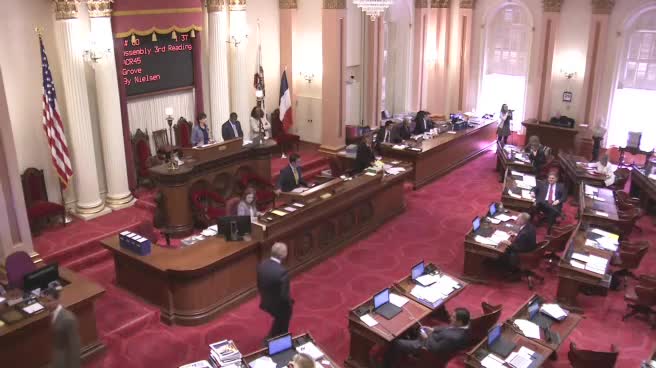 1MIN
Senate Floor
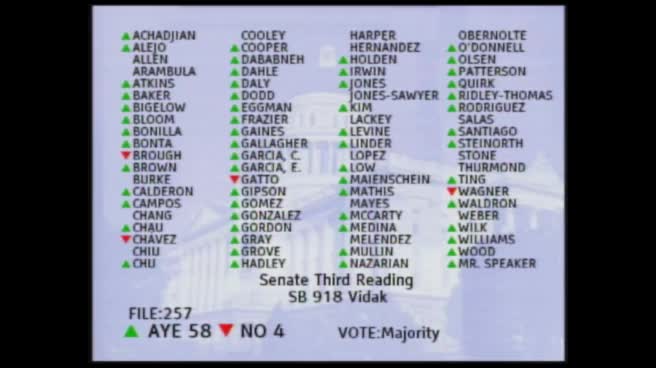 1MIN
Assembly Floor
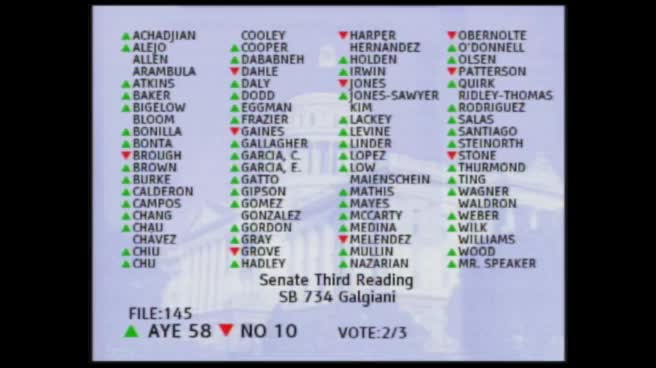 2MIN
Assembly Floor
 29MIN
Assembly Standing Committee on Governmental Organization
Bill Author

Bill Co-Author(s):