SB 817: Local government finance: property tax revenue allocations: vehicle license fee adjustments.
- Session Year: 2015-2016
- House: Senate
- Latest Version Date: 2016-09-02
Existing property tax law requires the county auditor, in each fiscal year, to allocate property tax revenue to local jurisdictions in accordance with specified formulas and procedures, and generally provides that each jurisdiction be allocated an amount equal to the total of the amount of revenue allocated to that jurisdiction in the prior fiscal year, subject to certain modifications, and that jurisdictions portion of the annual tax increment, as defined.
Existing property tax law also requires that, for purposes of determining property tax revenue allocations in each county for the 199293 and 199394 fiscal years, the amounts of property tax revenue deemed allocated in the prior fiscal year to the county, cities, and special districts be reduced in accordance with certain formulas. It requires that the revenues not allocated to the county, cities, and special districts as a result of these reductions be transferred to the Educational Revenue Augmentation Fund in that county for allocation to school districts, community college districts, and the county office of education.
Beginning with the 200405 fiscal year and for each fiscal year thereafter, existing law requires that each city, county, and city and county receive additional property tax revenues in the form of a vehicle license fee adjustment amount, as defined, from a Vehicle License Fee Property Tax Compensation Fund that exists in each county treasury. Existing law requires that these additional allocations be funded from ad valorem property tax revenues otherwise required to be allocated to educational entities.
This bill would modify these reduction and transfer provisions for a city incorporating after January 1, 2004, and on or before January 1, 2012, for the 201617 fiscal year and for each fiscal year thereafter, by providing for a vehicle license fee adjustment amount calculated on the basis of changes in assessed valuation.
By imposing additional duties upon local tax officials with respect to the allocation of ad valorem property tax revenues, this bill would impose a state-mandated local program.
The California Constitution requires the state to reimburse local agencies and school districts for certain costs mandated by the state. Statutory provisions establish procedures for making that reimbursement.
This bill would provide that, if the Commission on State Mandates determines that the bill contains costs mandated by the state, reimbursement for those costs shall be made pursuant to these statutory provisions.
This bill would incorporate additional changes to Section 97.70 of the Revenue and Taxation Code proposed by AB 448 that would become operative if this bill and AB 448 are both chaptered and this bill is chaptered last.
Existing law required, on and after July 1, 2004, and before July 1, 2011, that a specified portion of the motor vehicle license fee revenues deposited to the credit of the Motor Vehicle License Fee Account in the Transportation Tax Fund be allocated first to the County of Orange and next to each city and county meeting specified criteria, including each city that was incorporated from unincorporated territory after August 5, 2004. Existing law requires, on or after July 1, 2011, that the same portion of revenues be deposited into the Local Law Enforcement Services Account in the Local Revenue Fund 2011 for allocation to cities, counties, and cities and counties.
This bill would state the Legislatures intent to enact legislation that would restore funding to cities that were incorporated after 2004.
Notwithstanding any other law, for the 200405 fiscal year and for each fiscal year thereafter, all of the following apply:
(a)(1)(A)The auditor shall reduce the total amount of ad valorem property tax revenue that is otherwise required to be allocated to a countys Educational Revenue Augmentation Fund by the countywide vehicle license fee adjustment amount.
(B)If, for the fiscal year, after complying with Section 97.68 there is not enough ad valorem property tax revenue that is otherwise required to be allocated to a county Educational Revenue Augmentation Fund for the auditor to complete the allocation reduction required by subparagraph (A), the auditor shall additionally reduce the total amount of ad valorem property tax revenue that is otherwise required to be allocated to all school districts and community college districts in the county for that fiscal year by an amount equal to the difference between the countywide vehicle license fee adjustment amount and the amount of ad valorem property tax revenue that is otherwise required to be allocated to the county Educational Revenue Augmentation Fund for that fiscal year. This reduction for each school district and community college district in the county shall be the percentage share of the total reduction that is equal to the proportion that the total amount of ad valorem property tax revenue that is otherwise required to be allocated to the school district or community college district bears to the total amount of ad valorem property tax revenue that is otherwise required to be allocated to all school districts and community college districts in a county. For purposes of this subparagraph, school districts and community college districts do not include any districts that are excess tax school entities, as defined in Section 95.
(2)The countywide vehicle license fee adjustment amount shall be allocated to the Vehicle License Fee Property Tax Compensation Fund that shall be established in the treasury of each county.
(b)(1)The auditor shall allocate moneys in the Vehicle License Fee Property Tax Compensation Fund according to the following:
(A)Each city in a county shall receive its vehicle license fee adjustment amount.
(B)Each county and city and county shall receive its vehicle license fee adjustment amount.
(2)The auditor shall allocate one-half of the amount specified in paragraph (1) on or before January 31 of each fiscal year, and the other one-half on or before May 31 of each fiscal year.
(c)For purposes of this section, all of the following apply:
(1)Vehicle license fee adjustment amount for a particular city, county, or a city and county means, subject to an adjustment under paragraph (2) and Section 97.71, all of the following:
(A)For the 200405 fiscal year, an amount equal to the difference between the following two amounts:
(i)The estimated total amount of revenue that would have been deposited to the credit of the Motor Vehicle License Fee Account in the Transportation Tax Fund, including any amounts that would have been certified to the Controller by the auditor of the County of Ventura under subdivision (j) of Section 98.02, as that section read on January 1, 2004, for distribution under the law as it read on January 1, 2004, to the county, city and county, or city for the 200405 fiscal year if the fee otherwise due under the Vehicle License Fee Law (Part 5 (commencing with Section 10701) of Division 2) was 2 percent of the market value of a vehicle, as specified in Sections 10752 and 10752.1 as those sections read on January 1, 2004.
(ii)The estimated total amount of revenue that is required to be distributed from the Motor Vehicle License Fee Account in the Transportation Tax Fund to the county, city and county, and each city in the county for the 200405 fiscal year under Section 11005, as that section read on the operative date of the act that amended this clause.
(B)(i)Subject to an adjustment under clause (ii), for the 200506 fiscal year, the sum of the following two amounts:
(I)The difference between the following two amounts:
(ia)The actual total amount of revenue that would have been deposited to the credit of the Motor Vehicle License Fee Account in the Transportation Tax Fund, including any amounts that would have been certified to the Controller by the auditor of the County of Ventura under subdivision (j) of Section 98.02, as that section read on January 1, 2004, for distribution under the law as it read on January 1, 2004, to the county, city and county, or city for the 200405 fiscal year if the fee otherwise due under the Vehicle License Fee Law (Part 5 (commencing with Section 10701) of Division 2) was 2 percent of the market value of a vehicle, as specified in Sections 10752 and 10752.1 as those sections read on January 1, 2004.
(ib)The actual total amount of revenue that was distributed from the Motor Vehicle License Fee Account in the Transportation Tax Fund to the county, city and county, and each city in the county for the 200405 fiscal year under Section 11005, as that section read on the operative date of the act that amended this subsubclause.
(II)The product of the following two amounts:
(ia)The amount described in subclause (I).
(ib)The percentage change from the prior fiscal year to the current fiscal year in gross taxable assessed valuation within the jurisdiction of the entity, as reflected in the equalized assessment roll for those fiscal years. For the first fiscal year for which a change in a citys jurisdictional boundaries first applies, the percentage change in gross taxable assessed valuation from the prior fiscal year to the current fiscal year shall be calculated solely on the basis of the citys previous jurisdictional boundaries, without regard to the change in that citys jurisdictional boundaries. For each following fiscal year, the percentage change in gross taxable assessed valuation from the prior fiscal year to the current fiscal year shall be calculated on the basis of the citys current jurisdictional boundaries.
(iii)The amount described in clause (i) shall be adjusted as follows:
(I)If the amount described in subclause (I) of clause (i) for a particular city, county, or city and county is greater than the amount described in subparagraph (A) for that city, county, or city and county, the amount described in clause (i) shall be increased by an amount equal to this difference.
(II)If the amount described in subclause (I) of clause (i) for a particular city, county, or city and county is less than the amount described in subparagraph (A) for that city, county, or city and county, the amount described in clause (i) shall be decreased by an amount equal to this difference.
(C)For the 200607 fiscal year and for each fiscal year thereafter, the sum of the following two amounts:
(i)The vehicle license fee adjustment amount for the prior fiscal year, if Section 97.71 and clause (ii) of subparagraph (B) did not apply for that fiscal year, for that city, county, and city and county.
(ii)The product of the following two amounts:
(I)The amount described in clause (i).
(II)The percentage change from the prior fiscal year to the current fiscal year in gross taxable assessed valuation within the jurisdiction of the entity, as reflected in the equalized assessment roll for those fiscal years. For the first fiscal year for which a change in a citys jurisdictional boundaries first applies, the percentage change in gross taxable assessed valuation from the prior fiscal year to the current fiscal year shall be calculated solely on the basis of the citys previous jurisdictional boundaries, without regard to the change in that citys jurisdictional boundaries. For each following fiscal year, the percentage change in gross taxable assessed valuation from the prior fiscal year to the current fiscal year shall be calculated on the basis of the citys current jurisdictional boundaries.
(2)Notwithstanding paragraph (1), vehicle license fee adjustment amount, for a city incorporating after January 1, 2004, and on or before January 1, 2012, means the following:
(A)For the 201617 fiscal year, the quotient derived from the following fraction:
(i)The numerator is the product of the following two amounts:
(I)The sum of the most recent vehicle license fee adjustment amounts determined for all cities in the county.
(II)The population of the incorporating city.
(ii)The denominator is the sum of the populations of all cities in the county.
(B)For the 201718 fiscal year, and for each fiscal year thereafter, the sum of the following two amounts:
(i)The vehicle license fee adjustment amount for the prior fiscal year.
(ii)The product of the following two amounts:
(I)The amount described in clause (i).
(II)The percentage change from the prior fiscal year to the current fiscal year in gross taxable assessed valuation within the jurisdiction of the entity, as reflected in the equalized assessment roll for those fiscal years.
(3)For the 201314 fiscal year, the vehicle license fee adjustment amount that is determined under subparagraph (C) of paragraph (1) for the County of Orange shall be increased by fifty-three million dollars ($53,000,000). For the 201415 fiscal year and each fiscal year thereafter, the calculation of the vehicle license fee adjustment amount for the County of Orange under subparagraph (C) of paragraph (1) shall be based on a prior fiscal year amount that reflects the full amount of this one-time increase of fifty-three million dollars ($53,000,000).
(4)Countywide vehicle license fee adjustment amount means, for any fiscal year, the total sum of the amounts described in paragraphs (1), (2), and (3) for a county or city and county, and each city in the county.
(5)On or before June 30 of each fiscal year, the auditor shall report to the Controller the vehicle license fee adjustment amount for the county and each city in the county for that fiscal year.
(d)For the 200506 fiscal year and each fiscal year thereafter, the amounts determined under subdivision (a) of Section 96.1, or any successor to that provision, shall not reflect, for a preceding fiscal year, any portion of any allocation required by this section.
(e)For purposes of Section 15 of Article XI of the California Constitution, the allocations from a Vehicle License Fee Property Tax Compensation Fund constitute successor taxes that are otherwise required to be allocated to counties and cities, and as successor taxes, the obligation to make those transfers as required by this section shall not be extinguished nor disregarded in any manner that adversely affects the security of, or the ability of, a county or city to pay the principal and interest on any debts or obligations that were funded or secured by that citys or countys allocated share of motor vehicle license fee revenues.
(f)This section shall not be construed to do any of the following:
(1)Reduce any allocations of excess, additional, or remaining funds that would otherwise have been allocated to county superintendents of schools, cities, counties, and cities and counties pursuant to clause (i) of subparagraph (B) of paragraph (4) of subdivision (d) of Sections 97.2 and 97.3 or Article 4 (commencing with Section 98) had this section not been enacted. The allocations required by this section shall be adjusted to comply with this paragraph.
(2)Require an increased ad valorem property tax revenue allocation or increased tax increment allocation to a community redevelopment agency.
(3)Alter the manner in which ad valorem property tax revenue growth from fiscal year to fiscal year is otherwise determined or allocated in a county.
(4)Reduce ad valorem property tax revenue allocations required under Article 4 (commencing with Section 98).
(g)Tax exchange or revenue sharing agreements, entered into prior to the operative date of this section, between local agencies or between local agencies and nonlocal agencies are deemed to be modified to account for the reduced vehicle license fee revenues resulting from the act that added this section. These agreements are modified in that these reduced revenues are, in kind and in lieu thereof, replaced with ad valorem property tax revenue from a Vehicle License Fee Property Tax Compensation Fund or an Educational Revenue Augmentation Fund.
SEC. 1.5.Section 97.70 of the Revenue and Taxation Code is amended to read:97.70.Notwithstanding any other law, for the 200405 fiscal year and for each fiscal year thereafter, all of the following apply:
(a)(1)(A)The auditor shall reduce the total amount of ad valorem property tax revenue that is otherwise required to be allocated to a countys Educational Revenue Augmentation Fund by the countywide vehicle license fee adjustment amount.
(B)If, for the fiscal year, after complying with Section 97.68 there is not enough ad valorem property tax revenue that is otherwise required to be allocated to a county Educational Revenue Augmentation Fund for the auditor to complete the allocation reduction required by subparagraph (A), the auditor shall additionally reduce the total amount of ad valorem property tax revenue that is otherwise required to be allocated to all school districts and community college districts in the county for that fiscal year by an amount equal to the difference between the countywide vehicle license fee adjustment amount and the amount of ad valorem property tax revenue that is otherwise required to be allocated to the county Educational Revenue Augmentation Fund for that fiscal year. This reduction for each school district and community college district in the county shall be the percentage share of the total reduction that is equal to the proportion that the total amount of ad valorem property tax revenue that is otherwise required to be allocated to the school district or community college district bears to the total amount of ad valorem property tax revenue that is otherwise required to be allocated to all school districts and community college districts in a county. For purposes of this subparagraph, school districts and community college districts do not include any districts that are excess tax school entities, as defined in Section 95.
(2)The countywide vehicle license fee adjustment amount shall be allocated to the Vehicle License Fee Property Tax Compensation Fund that shall be established in the treasury of each county.
(b)(1)The auditor shall allocate moneys in the Vehicle License Fee Property Tax Compensation Fund according to the following:
(A)Each city in the county shall receive its vehicle license fee adjustment amount.
(B)Each county and city and county shall receive its vehicle license fee adjustment amount.
(2)The auditor shall allocate one-half of the amount specified in paragraph (1) on or before January 31 of each fiscal year, and the other one-half on or before May 31 of each fiscal year.
(c)For purposes of this section, all of the following apply:
(1)Vehicle license fee adjustment amount for a particular city, county, or a city and county means, subject to an adjustment under paragraph (2) and Section 97.71, all of the following:
(A)For the 200405 fiscal year, an amount equal to the difference between the following two amounts:
(i)The estimated total amount of revenue that would have been deposited to the credit of the Motor Vehicle License Fee Account in the Transportation Tax Fund, including any amounts that would have been certified to the Controller by the auditor of the County of Ventura under subdivision (j) of Section 98.02, as that section read on January 1, 2004, for distribution under the law as it read on January 1, 2004, to the county, city and county, or city for the 200405 fiscal year if the fee otherwise due under the Vehicle License Fee Law (Part 5 (commencing with Section 10701) of Division 2) was 2 percent of the market value of a vehicle, as specified in Sections 10752 and 10752.1 as those sections read on January 1, 2004.
(ii)The estimated total amount of revenue that is required to be distributed from the Motor Vehicle License Fee Account in the Transportation Tax Fund to the county, city and county, and each city in the county for the 200405 fiscal year under Section 11005, as that section read on the operative date of the act that amended this clause.
(B)(i)Subject to an adjustment under clause (ii), for the 200506 fiscal year, the sum of the following two amounts:
(I)The difference between the following two amounts:
(ia)The actual total amount of revenue that would have been deposited to the credit of the Motor Vehicle License Fee Account in the Transportation Tax Fund, including any amounts that would have been certified to the Controller by the auditor of the County of Ventura under subdivision (j) of Section 98.02, as that section read on January 1, 2004, for distribution under the law as it read on January 1, 2004, to the county, city and county, or city for the 200405 fiscal year if the fee otherwise due under the Vehicle License Fee Law (Part 5 (commencing with Section 10701) of Division 2) was 2 percent of the market value of a vehicle, as specified in Sections 10752 and 10752.1 as those sections read on January 1, 2004.
(ib)The actual total amount of revenue that was distributed from the Motor Vehicle License Fee Account in the Transportation Tax Fund to the county, city and county, and each city in the county for the 200405 fiscal year under Section 11005, as that section read on the operative date of the act that amended this subsubclause.
(II)The product of the following two amounts:
(ia)The amount described in subclause (I).
(ib)The percentage change from the prior fiscal year to the current fiscal year in gross taxable assessed valuation within the jurisdiction of the entity, as reflected in the equalized assessment roll for those fiscal years. For the first fiscal year for which a change in a citys jurisdictional boundaries first applies, the percentage change in gross taxable assessed valuation from the prior fiscal year to the current fiscal year shall be calculated solely on the basis of the citys previous jurisdictional boundaries, without regard to the change in that citys jurisdictional boundaries. For each following fiscal year, the percentage change in gross taxable assessed valuation from the prior fiscal year to the current fiscal year shall be calculated on the basis of the citys current jurisdictional boundaries.
(iii)The amount described in clause (i) shall be adjusted as follows:
(I)If the amount described in subclause (I) of clause (i) for a particular city, county, or city and county is greater than the amount described in subparagraph (A) for that city, county, or city and county, the amount described in clause (i) shall be increased by an amount equal to this difference.
(II)If the amount described in subclause (I) of clause (i) for a particular city, county, or city and county is less than the amount described in subparagraph (A) for that city, county, or city and county, the amount described in clause (i) shall be decreased by an amount equal to this difference.
(C)For the 200607 fiscal year, to the 201415 fiscal year, inclusive, the sum of the following two amounts:
(i)The vehicle license fee adjustment amount for the prior fiscal year, if Section 97.71 and clause (ii) of subparagraph (B) did not apply for that fiscal year, for that city, county, and city and county.
(ii)The product of the following two amounts:
(I)The amount described in clause (i).
(II)The percentage change from the prior fiscal year to the current fiscal year in gross taxable assessed valuation within the jurisdiction of the entity, as reflected in the equalized assessment roll for those fiscal years. For the first fiscal year for which a change in a citys jurisdictional boundaries first applies, the percentage change in gross taxable assessed valuation from the prior fiscal year to the current fiscal year shall be calculated solely on the basis of the citys previous jurisdictional boundaries, without regard to the change in that citys jurisdictional boundaries. For each following fiscal year, the percentage change in gross taxable assessed valuation from the prior fiscal year to the current fiscal year shall be calculated on the basis of the citys current jurisdictional boundaries.
(D)For the 201516 fiscal year, the sum of the following two amounts:
(i)The amount described in clause (i) of subparagraph (B) if Section 97.71 and clause (ii) of subparagraph (B) did not apply for that fiscal year, for that city, county, and city and county.
(ii)The product of the following two amounts:
(I)The amount described in clause (i).
(II)The percentage change from the 200405 fiscal year to the 201516 fiscal year, inclusive, in gross taxable assessed valuation within the jurisdiction of the entity, as reflected in the equalized assessment roll for those fiscal years.
(E)For the 201617 fiscal year and each fiscal year thereafter, the sum of the following two amounts:
(i)The vehicle license fee adjustment amount for the prior fiscal year.
(ii)The product of the following two amounts:
(I)The amount described in clause (i).
(II)The percentage change from the immediately preceding fiscal year to the current fiscal year in gross taxable assessed valuation within the jurisdiction of the entity, as reflected in the equalized assessment roll for those fiscal years.
(2)Notwithstanding paragraph (1), vehicle license fee adjustment amount, for a city incorporating after January 1, 2004, and on or before January 1, 2012, means the following:
(A)For the 201617 fiscal year, the quotient derived from the following fraction:
(i)The numerator is the product of the following two amounts:
(I)The sum of the most recent vehicle license fee adjustment amounts determined for all cities in the county.
(II)The population of the incorporating city.
(ii)The denominator is the sum of the populations of all cities in the county.
(B)For the 201718 fiscal year, and for each fiscal year thereafter, the sum of the following two amounts:
(i)The vehicle license fee adjustment amount for the prior fiscal year.
(ii)The product of the following two amounts:
(I)The amount described in clause (i).
(II)The percentage change from the prior fiscal year to the current fiscal year in gross taxable assessed valuation within the jurisdiction of the entity, as reflected in the equalized assessment roll for those fiscal years.
(3)For the 201314 fiscal year, the vehicle license fee adjustment amount that is determined under subparagraph (C) of paragraph (1) for the County of Orange shall be increased by fifty-three million dollars ($53,000,000). For the 201415 fiscal year and each fiscal year thereafter, the calculation of the vehicle license fee adjustment amount for the County of Orange under subparagraph (C), (D), or (E), as applicable, of paragraph (1) shall be based on a prior fiscal year amount that reflects the full amount of this one-time increase of fifty-three million dollars ($53,000,000).
(4)Countywide vehicle license fee adjustment amount means, for any fiscal year, the total sum of the amounts described in paragraphs (1), (2), and (3) for a county or city and county, and each city in the county.
(5)On or before June 30 of each fiscal year, the auditor shall report to the Controller the vehicle license fee adjustment amount for the county and each city in the county for that fiscal year.
(d)For the 200506 fiscal year and each fiscal year thereafter, the amounts determined under subdivision (a) of Section 96.1, or any successor to that provision, shall not reflect, for a preceding fiscal year, any portion of any allocation required by this section.
(e)For purposes of Section 15 of Article XI of the California Constitution, the allocations from a Vehicle License Fee Property Tax Compensation Fund constitute successor taxes that are otherwise required to be allocated to counties and cities, and as successor taxes, the obligation to make those transfers as required by this section shall not be extinguished nor disregarded in any manner that adversely affects the security of, or the ability of, a county or city to pay the principal and interest on any debts or obligations that were funded or secured by that citys or countys allocated share of motor vehicle license fee revenues.
(f)This section shall not be construed to do any of the following:
(1)Reduce any allocations of excess, additional, or remaining funds that would otherwise have been allocated to county superintendents of schools, cities, counties, and cities and counties pursuant to clause (i) of subparagraph (B) of paragraph (4) of subdivision (d) of Sections 97.2 and 97.3 or Article 4 (commencing with Section 98) had this section not been enacted. The allocations required by this section shall be adjusted to comply with this paragraph.
(2)Require an increased ad valorem property tax revenue allocation or increased tax increment allocation to a community redevelopment agency.
(3)Alter the manner in which ad valorem property tax revenue growth from fiscal year to fiscal year is otherwise determined or allocated in a county.
(4)Reduce ad valorem property tax revenue allocations required under Article 4 (commencing with Section 98).
(g)Tax exchange or revenue sharing agreements, entered into prior to the operative date of this section, between local agencies or between local agencies and nonlocal agencies are deemed to be modified to account for the reduced vehicle license fee revenues resulting from the act that added this section. These agreements are modified in that these reduced revenues are, in kind and in lieu thereof, replaced with ad valorem property tax revenue from a Vehicle License Fee Property Tax Compensation Fund or an Educational Revenue Augmentation Fund.
SEC. 2.Section 1.5 of this bill incorporates amendments to Section 97.70 of the Revenue and Taxation Code proposed by this bill and Assembly Bill 448. It shall only become operative if (1) both bills are enacted and become effective on or before January 1, 2017, (2) each bill amends Section 97.70 of the Revenue and Taxation Code, and (3) this bill is enacted after Assembly Bill 448, in which case Section 97.70 of the Revenue and Taxation Code, as amended by Assembly Bill 448, shall remain operative only until the operative date of this bill, at which time Section 1.5 of this bill shall become operative, and Section 1 of this bill shall not become operative.
SEC. 3.If the Commission on State Mandates determines that this act contains costs mandated by the state, reimbursement to local agencies and school districts for those costs shall be made pursuant to Part 7 (commencing with Section 17500) of Division 4 of Title 2 of the Government Code.
Notwithstanding any other law, for the 200405 fiscal year and for each fiscal year thereafter, all of the following apply:
(a)(1)(A)The auditor shall reduce the total amount of ad valorem property tax revenue that is otherwise required to be allocated to a countys Educational Revenue Augmentation Fund by the countywide vehicle license fee adjustment amount.
(B)If, for the fiscal year, after complying with Section 97.68 there is not enough ad valorem property tax revenue that is otherwise required to be allocated to a county Educational Revenue Augmentation Fund for the auditor to complete the allocation reduction required by subparagraph (A), the auditor shall additionally reduce the total amount of ad valorem property tax revenue that is otherwise required to be allocated to all school districts and community college districts in the county for that fiscal year by an amount equal to the difference between the countywide vehicle license fee adjustment amount and the amount of ad valorem property tax revenue that is otherwise required to be allocated to the county Educational Revenue Augmentation Fund for that fiscal year. This reduction for each school district and community college district in the county shall be the percentage share of the total reduction that is equal to the proportion that the total amount of ad valorem property tax revenue that is otherwise required to be allocated to the school district or community college district bears to the total amount of ad valorem property tax revenue that is otherwise required to be allocated to all school districts and community college districts in a county. For purposes of this subparagraph, school districts and community college districts do not include any districts that are excess tax school entities, as defined in Section 95.
(2)The countywide vehicle license fee adjustment amount shall be allocated to the Vehicle License Fee Property Tax Compensation Fund that shall be established in the treasury of each county.
(b)(1)The auditor shall allocate moneys in the Vehicle License Fee Property Tax Compensation Fund according to the following:
(A)Each city in the a county shall receive its vehicle license fee adjustment amount.
(B)Each county and city and county shall receive its vehicle license fee adjustment amount.
(2)The auditor shall allocate one-half of the amount specified in paragraph (1) on or before January 31 of each fiscal year, and the other one-half on or before May 31 of each fiscal year.
(c)For purposes of this section, all of the following apply:
(1)Vehicle license fee adjustment amount for a particular city, county, or a city and county means, subject to an adjustment under paragraph (2) and Section 97.71, all of the following:
(A)For the 200405 fiscal year, an amount equal to the difference between the following two amounts:
(i)The estimated total amount of revenue that would have been deposited to the credit of the Motor Vehicle License Fee Account in the Transportation Tax Fund, including any amounts that would have been certified to the Controller by the auditor of the County of Ventura under subdivision (j) of Section 98.02, as that section read on January 1, 2004, for distribution under the law as it read on January 1, 2004, to the county, city and county, or city for the 200405 fiscal year if the fee otherwise due under the Vehicle License Fee Law (Part 5 (commencing with Section 10701) of Division 2) was 2 percent of the market value of a vehicle, as specified in Sections 10752 and 10752.1 as those sections read on January 1, 2004.
(ii)The estimated total amount of revenue that is required to be distributed from the Motor Vehicle License Fee Account in the Transportation Tax Fund to the county, city and county, and each city in the county for the 200405 fiscal year under Section 11005, as that section read on the operative date of the act that amended this clause.
(B)(i)Subject to an adjustment under clause (ii), for the 200506 fiscal year, the sum of the following two amounts:
(I)The difference between the following two amounts:
(ia)The actual total amount of revenue that would have been deposited to the credit of the Motor Vehicle License Fee Account in the Transportation Tax Fund, including any amounts that would have been certified to the Controller by the auditor of the County of Ventura under subdivision (j) of Section 98.02, as that section read on January 1, 2004, for distribution under the law as it read on January 1, 2004, to the county, city and county, or city for the 200405 fiscal year if the fee otherwise due under the Vehicle License Fee Law (Part 5 (commencing with Section 10701) of Division 2) was 2 percent of the market value of a vehicle, as specified in Sections 10752 and 10752.1 as those sections read on January 1, 2004.
(ib)The actual total amount of revenue that was distributed from the Motor Vehicle License Fee Account in the Transportation Tax Fund to the county, city and county, and each city in the county for the 200405 fiscal year under Section 11005, as that section read on the operative date of the act that amended this subsubclause.
(II)The product of the following two amounts:
(ia)The amount described in subclause (I).
(ib)The percentage change from the prior fiscal year to the current fiscal year in gross taxable assessed valuation within the jurisdiction of the entity, as reflected in the equalized assessment roll for those fiscal years. For the first fiscal year for which a change in a citys jurisdictional boundaries first applies, the percentage change in gross taxable assessed valuation from the prior fiscal year to the current fiscal year shall be calculated solely on the basis of the citys previous jurisdictional boundaries, without regard to the change in that citys jurisdictional boundaries. For each following fiscal year, the percentage change in gross taxable assessed valuation from the prior fiscal year to the current fiscal year shall be calculated on the basis of the citys current jurisdictional boundaries.
(iii)The amount described in clause (i) shall be adjusted as follows:
(I)If the amount described in subclause (I) of clause (i) for a particular city, county, or city and county is greater than the amount described in subparagraph (A) for that city, county, or city and county, the amount described in clause (i) shall be increased by an amount equal to this difference.
(II)If the amount described in subclause (I) of clause (i) for a particular city, county, or city and county is less than the amount described in subparagraph (A) for that city, county, or city and county, the amount described in clause (i) shall be decreased by an amount equal to this difference.
(C)For the 200607 fiscal year and for each fiscal year thereafter, the sum of the following two amounts:
(i)The vehicle license fee adjustment amount for the prior fiscal year, if Section 97.71 and clause (ii) of subparagraph (B) did not apply for that fiscal year, for that city, county, and city and county.
(ii)The product of the following two amounts:
(I)The amount described in clause (i).
(II)The percentage change from the prior fiscal year to the current fiscal year in gross taxable assessed valuation within the jurisdiction of the entity, as reflected in the equalized assessment roll for those fiscal years. For the first fiscal year for which a change in a citys jurisdictional boundaries first applies, the percentage change in gross taxable assessed valuation from the prior fiscal year to the current fiscal year shall be calculated solely on the basis of the citys previous jurisdictional boundaries, without regard to the change in that citys jurisdictional boundaries. For each following fiscal year, the percentage change in gross taxable assessed valuation from the prior fiscal year to the current fiscal year shall be calculated on the basis of the citys current jurisdictional boundaries.
(2)Notwithstanding paragraph (1), vehicle license fee adjustment amount, for a city incorporating after January 1, 2004, and on or before January 1, 2012, means the following:
(A)For the 201617 fiscal year, the quotient derived from the following fraction:
(i)The numerator is the product of the following two amounts:
(I)The sum of the most recent vehicle license fee adjustment amounts determined for all cities in the county.
(II)The population of the incorporating city.
(ii)The denominator is the sum of the populations of all cities in the county.
(B)For the 201718 fiscal year, and for each fiscal year thereafter, the sum of the following two amounts:
(i)The vehicle license fee adjustment amount for the prior fiscal year.
(ii)The product of the following two amounts:
(I)The amount described in clause (i).
(II)The percentage change from the prior fiscal year to the current fiscal year in gross taxable assessed valuation within the jurisdiction of the entity, as reflected in the equalized assessment roll for those fiscal years.
(3)For the 201314 fiscal year, the vehicle license fee adjustment amount that is determined under subparagraph (C) of paragraph (1) for the County of Orange shall be increased by fifty-three million dollars ($53,000,000). For the 201415 fiscal year and each fiscal year thereafter, the calculation of the vehicle license fee adjustment amount for the County of Orange under subparagraph (C) of paragraph (1) shall be based on a prior fiscal year amount that reflects the full amount of this one-time increase of fifty-three million dollars ($53,000,000).
(4)Countywide vehicle license fee adjustment amount means, for any fiscal year, the total sum of the amounts described in paragraphs (1), (2), and (3) for a county or city and county, and each city in the county.
(5)On or before June 30 of each fiscal year, the auditor shall report to the Controller the vehicle license fee adjustment amount for the county and each city in the county for that fiscal year.
(d)For the 200506 fiscal year and each fiscal year thereafter, the amounts determined under subdivision (a) of Section 96.1, or any successor to that provision, shall not reflect, for a preceding fiscal year, any portion of any allocation required by this section.
(e)For purposes of Section 15 of Article XI of the California Constitution, the allocations from a Vehicle License Fee Property Tax Compensation Fund constitute successor taxes that are otherwise required to be allocated to counties and cities, and as successor taxes, the obligation to make those transfers as required by this section shall not be extinguished nor disregarded in any manner that adversely affects the security of, or the ability of, a county or city to pay the principal and interest on any debts or obligations that were funded or secured by that citys or countys allocated share of motor vehicle license fee revenues.
(f)This section shall not be construed to do any of the following:
(1)Reduce any allocations of excess, additional, or remaining funds that would otherwise have been allocated to county superintendents of schools, cities, counties, and cities and counties pursuant to clause (i) of subparagraph (B) of paragraph (4) of subdivision (d) of Sections 97.2 and 97.3 or Article 4 (commencing with Section 98) had this section not been enacted. The allocations required by this section shall be adjusted to comply with this paragraph.
(2)Require an increased ad valorem property tax revenue allocation or increased tax increment allocation to a community redevelopment agency.
(3)Alter the manner in which ad valorem property tax revenue growth from fiscal year to fiscal year is otherwise determined or allocated in a county.
(4)Reduce ad valorem property tax revenue allocations required under Article 4 (commencing with Section 98).
(g)Tax exchange or revenue sharing agreements, entered into prior to the operative date of this section, between local agencies or between local agencies and nonlocal agencies are deemed to be modified to account for the reduced vehicle license fee revenues resulting from the act that added this section. These agreements are modified in that these reduced revenues are, in kind and in lieu thereof, replaced with ad valorem property tax revenue from a Vehicle License Fee Property Tax Compensation Fund or an Educational Revenue Augmentation Fund.
SEC. 1.5.Section 97.70 of the Revenue and Taxation Code is amended to read:97.70.Notwithstanding any other law, for the 200405 fiscal year and for each fiscal year thereafter, all of the following apply:
(a)(1)(A)The auditor shall reduce the total amount of ad valorem property tax revenue that is otherwise required to be allocated to a countys Educational Revenue Augmentation Fund by the countywide vehicle license fee adjustment amount.
(B)If, for the fiscal year, after complying with Section 97.68 there is not enough ad valorem property tax revenue that is otherwise required to be allocated to a county Educational Revenue Augmentation Fund for the auditor to complete the allocation reduction required by subparagraph (A), the auditor shall additionally reduce the total amount of ad valorem property tax revenue that is otherwise required to be allocated to all school districts and community college districts in the county for that fiscal year by an amount equal to the difference between the countywide vehicle license fee adjustment amount and the amount of ad valorem property tax revenue that is otherwise required to be allocated to the county Educational Revenue Augmentation Fund for that fiscal year. This reduction for each school district and community college district in the county shall be the percentage share of the total reduction that is equal to the proportion that the total amount of ad valorem property tax revenue that is otherwise required to be allocated to the school district or community college district bears to the total amount of ad valorem property tax revenue that is otherwise required to be allocated to all school districts and community college districts in a county. For purposes of this subparagraph, school districts and community college districts do not include any districts that are excess tax school entities, as defined in Section 95.
(2)The countywide vehicle license fee adjustment amount shall be allocated to the Vehicle License Fee Property Tax Compensation Fund that shall be established in the treasury of each county.
(b)(1)The auditor shall allocate moneys in the Vehicle License Fee Property Tax Compensation Fund according to the following:
(A)Each city in the county shall receive its vehicle license fee adjustment amount.
(B)Each county and city and county shall receive its vehicle license fee adjustment amount.
(2)The auditor shall allocate one-half of the amount specified in paragraph (1) on or before January 31 of each fiscal year, and the other one-half on or before May 31 of each fiscal year.
(c)For purposes of this section, all of the following apply:
(1)Vehicle license fee adjustment amount for a particular city, county, or a city and county means, subject to an adjustment under paragraph (2) and Section 97.71, all of the following:
(A)For the 200405 fiscal year, an amount equal to the difference between the following two amounts:
(i)The estimated total amount of revenue that would have been deposited to the credit of the Motor Vehicle License Fee Account in the Transportation Tax Fund, including any amounts that would have been certified to the Controller by the auditor of the County of Ventura under subdivision (j) of Section 98.02, as that section read on January 1, 2004, for distribution under the law as it read on January 1, 2004, to the county, city and county, or city for the 200405 fiscal year if the fee otherwise due under the Vehicle License Fee Law (Part 5 (commencing with Section 10701) of Division 2) was 2 percent of the market value of a vehicle, as specified in Sections 10752 and 10752.1 as those sections read on January 1, 2004.
(ii)The estimated total amount of revenue that is required to be distributed from the Motor Vehicle License Fee Account in the Transportation Tax Fund to the county, city and county, and each city in the county for the 200405 fiscal year under Section 11005, as that section read on the operative date of the act that amended this clause.
(B)(i)Subject to an adjustment under clause (ii), for the 200506 fiscal year, the sum of the following two amounts:
(I)The difference between the following two amounts:
(ia)The actual total amount of revenue that would have been deposited to the credit of the Motor Vehicle License Fee Account in the Transportation Tax Fund, including any amounts that would have been certified to the Controller by the auditor of the County of Ventura under subdivision (j) of Section 98.02, as that section read on January 1, 2004, for distribution under the law as it read on January 1, 2004, to the county, city and county, or city for the 200405 fiscal year if the fee otherwise due under the Vehicle License Fee Law (Part 5 (commencing with Section 10701) of Division 2) was 2 percent of the market value of a vehicle, as specified in Sections 10752 and 10752.1 as those sections read on January 1, 2004.
(ib)The actual total amount of revenue that was distributed from the Motor Vehicle License Fee Account in the Transportation Tax Fund to the county, city and county, and each city in the county for the 200405 fiscal year under Section 11005, as that section read on the operative date of the act that amended this subsubclause.
(II)The product of the following two amounts:
(ia)The amount described in subclause (I).
(ib)The percentage change from the prior fiscal year to the current fiscal year in gross taxable assessed valuation within the jurisdiction of the entity, as reflected in the equalized assessment roll for those fiscal years. For the first fiscal year for which a change in a citys jurisdictional boundaries first applies, the percentage change in gross taxable assessed valuation from the prior fiscal year to the current fiscal year shall be calculated solely on the basis of the citys previous jurisdictional boundaries, without regard to the change in that citys jurisdictional boundaries. For each following fiscal year, the percentage change in gross taxable assessed valuation from the prior fiscal year to the current fiscal year shall be calculated on the basis of the citys current jurisdictional boundaries.
(iii)The amount described in clause (i) shall be adjusted as follows:
(I)If the amount described in subclause (I) of clause (i) for a particular city, county, or city and county is greater than the amount described in subparagraph (A) for that city, county, or city and county, the amount described in clause (i) shall be increased by an amount equal to this difference.
(II)If the amount described in subclause (I) of clause (i) for a particular city, county, or city and county is less than the amount described in subparagraph (A) for that city, county, or city and county, the amount described in clause (i) shall be decreased by an amount equal to this difference.
(C)For the 200607 fiscal year, to the 201415 fiscal year, inclusive, the sum of the following two amounts:
(i)The vehicle license fee adjustment amount for the prior fiscal year, if Section 97.71 and clause (ii) of subparagraph (B) did not apply for that fiscal year, for that city, county, and city and county.
(ii)The product of the following two amounts:
(I)The amount described in clause (i).
(II)The percentage change from the prior fiscal year to the current fiscal year in gross taxable assessed valuation within the jurisdiction of the entity, as reflected in the equalized assessment roll for those fiscal years. For the first fiscal year for which a change in a citys jurisdictional boundaries first applies, the percentage change in gross taxable assessed valuation from the prior fiscal year to the current fiscal year shall be calculated solely on the basis of the citys previous jurisdictional boundaries, without regard to the change in that citys jurisdictional boundaries. For each following fiscal year, the percentage change in gross taxable assessed valuation from the prior fiscal year to the current fiscal year shall be calculated on the basis of the citys current jurisdictional boundaries.
(D)For the 201516 fiscal year, the sum of the following two amounts:
(i)The amount described in clause (i) of subparagraph (B) if Section 97.71 and clause (ii) of subparagraph (B) did not apply for that fiscal year, for that city, county, and city and county.
(ii)The product of the following two amounts:
(I)The amount described in clause (i).
(II)The percentage change from the 200405 fiscal year to the 201516 fiscal year, inclusive, in gross taxable assessed valuation within the jurisdiction of the entity, as reflected in the equalized assessment roll for those fiscal years.
(E)For the 201617 fiscal year and each fiscal year thereafter, the sum of the following two amounts:
(i)The vehicle license fee adjustment amount for the prior fiscal year.
(ii)The product of the following two amounts:
(I)The amount described in clause (i).
(II)The percentage change from the immediately preceding fiscal year to the current fiscal year in gross taxable assessed valuation within the jurisdiction of the entity, as reflected in the equalized assessment roll for those fiscal years.
(2)Notwithstanding paragraph (1), vehicle license fee adjustment amount, for a city incorporating after January 1, 2004, and on or before January 1, 2012, means the following:
(A)For the 201617 fiscal year, the quotient derived from the following fraction:
(i)The numerator is the product of the following two amounts:
(I)The sum of the most recent vehicle license fee adjustment amounts determined for all cities in the county.
(II)The population of the incorporating city.
(ii)The denominator is the sum of the populations of all cities in the county.
(B)For the 201718 fiscal year, and for each fiscal year thereafter, the sum of the following two amounts:
(i)The vehicle license fee adjustment amount for the prior fiscal year.
(ii)The product of the following two amounts:
(I)The amount described in clause (i).
(II)The percentage change from the prior fiscal year to the current fiscal year in gross taxable assessed valuation within the jurisdiction of the entity, as reflected in the equalized assessment roll for those fiscal years.
(3)For the 201314 fiscal year, the vehicle license fee adjustment amount that is determined under subparagraph (C) of paragraph (1) for the County of Orange shall be increased by fifty-three million dollars ($53,000,000). For the 201415 fiscal year and each fiscal year thereafter, the calculation of the vehicle license fee adjustment amount for the County of Orange under subparagraph (C), (D), or (E), as applicable, of paragraph (1) shall be based on a prior fiscal year amount that reflects the full amount of this one-time increase of fifty-three million dollars ($53,000,000).
(4)Countywide vehicle license fee adjustment amount means, for any fiscal year, the total sum of the amounts described in paragraphs (1), (2), and (3) for a county or city and county, and each city in the county.
(5)On or before June 30 of each fiscal year, the auditor shall report to the Controller the vehicle license fee adjustment amount for the county and each city in the county for that fiscal year.
(d)For the 200506 fiscal year and each fiscal year thereafter, the amounts determined under subdivision (a) of Section 96.1, or any successor to that provision, shall not reflect, for a preceding fiscal year, any portion of any allocation required by this section.
(e)For purposes of Section 15 of Article XI of the California Constitution, the allocations from a Vehicle License Fee Property Tax Compensation Fund constitute successor taxes that are otherwise required to be allocated to counties and cities, and as successor taxes, the obligation to make those transfers as required by this section shall not be extinguished nor disregarded in any manner that adversely affects the security of, or the ability of, a county or city to pay the principal and interest on any debts or obligations that were funded or secured by that citys or countys allocated share of motor vehicle license fee revenues.
(f)This section shall not be construed to do any of the following:
(1)Reduce any allocations of excess, additional, or remaining funds that would otherwise have been allocated to county superintendents of schools, cities, counties, and cities and counties pursuant to clause (i) of subparagraph (B) of paragraph (4) of subdivision (d) of Sections 97.2 and 97.3 or Article 4 (commencing with Section 98) had this section not been enacted. The allocations required by this section shall be adjusted to comply with this paragraph.
(2)Require an increased ad valorem property tax revenue allocation or increased tax increment allocation to a community redevelopment agency.
(3)Alter the manner in which ad valorem property tax revenue growth from fiscal year to fiscal year is otherwise determined or allocated in a county.
(4)Reduce ad valorem property tax revenue allocations required under Article 4 (commencing with Section 98).
(g)Tax exchange or revenue sharing agreements, entered into prior to the operative date of this section, between local agencies or between local agencies and nonlocal agencies are deemed to be modified to account for the reduced vehicle license fee revenues resulting from the act that added this section. These agreements are modified in that these reduced revenues are, in kind and in lieu thereof, replaced with ad valorem property tax revenue from a Vehicle License Fee Property Tax Compensation Fund or an Educational Revenue Augmentation Fund.
SEC. 2.Section 1.5 of this bill incorporates amendments to Section 97.70 of the Revenue and Taxation Code proposed by this bill and Assembly Bill 448. It shall only become operative if (1) both bills are enacted and become effective on or before January 1, 2017, (2) each bill amends Section 97.70 of the Revenue and Taxation Code, and (3) this bill is enacted after Assembly Bill 448, in which case Section 97.70 of the Revenue and Taxation Code, as amended by Assembly Bill 448, shall remain operative only until the operative date of this bill, at which time Section 1.5 of this bill shall become operative, and Section 1 of this bill shall not become operative.
SEC. 3.If the Commission on State Mandates determines that this act contains costs mandated by the state, reimbursement to local agencies and school districts for those costs shall be made pursuant to Part 7 (commencing with Section 17500) of Division 4 of Title 2 of the Government Code.
Notwithstanding any other law, for the 200405 fiscal year and for each fiscal year thereafter, all of the following apply:
(a)(1)(A)The auditor shall reduce the total amount of ad valorem property tax revenue that is otherwise required to be allocated to a countys Educational Revenue Augmentation Fund by the countywide vehicle license fee adjustment amount.
(B)If, for the fiscal year, after complying with Section 97.68 there is not enough ad valorem property tax revenue that is otherwise required to be allocated to a county Educational Revenue Augmentation Fund for the auditor to complete the allocation reduction required by subparagraph (A), the auditor shall additionally reduce the total amount of ad valorem property tax revenue that is otherwise required to be allocated to all school districts and community college districts in the county for that fiscal year by an amount equal to the difference between the countywide vehicle license fee adjustment amount and the amount of ad valorem property tax revenue that is otherwise required to be allocated to the county Educational Revenue Augmentation Fund for that fiscal year. This reduction for each school district and community college district in the county shall be the percentage share of the total reduction that is equal to the proportion that the total amount of ad valorem property tax revenue that is otherwise required to be allocated to the school district or community college district bears to the total amount of ad valorem property tax revenue that is otherwise required to be allocated to all school districts and community college districts in a county. For purposes of this subparagraph, school districts and community college districts do not include any districts that are excess tax school entities, as defined in Section 95.
(2)The countywide vehicle license fee adjustment amount shall be allocated to the Vehicle License Fee Property Tax Compensation Fund that shall be established in the treasury of each county.
(b)(1)The auditor shall allocate moneys in the Vehicle License Fee Property Tax Compensation Fund according to the following:
(A)Each city in the county shall receive its vehicle license fee adjustment amount.
(B)Each county and city and county shall receive its vehicle license fee adjustment amount.
(2)The auditor shall allocate one-half of the amount specified in paragraph (1) on or before January 31 of each fiscal year, and the other one-half on or before May 31 of each fiscal year.
(c)For purposes of this section, all of the following apply:
(1)Vehicle license fee adjustment amount for a particular city, county, or a city and county means, subject to an adjustment under paragraph (2) and Section 97.71, all of the following:
(A)For the 200405 fiscal year, an amount equal to the difference between the following two amounts:
(i)The estimated total amount of revenue that would have been deposited to the credit of the Motor Vehicle License Fee Account in the Transportation Tax Fund, including any amounts that would have been certified to the Controller by the auditor of the County of Ventura under subdivision (j) of Section 98.02, as that section read on January 1, 2004, for distribution under the law as it read on January 1, 2004, to the county, city and county, or city for the 200405 fiscal year if the fee otherwise due under the Vehicle License Fee Law (Pt. (Part 5 (commencing with Section 10701) of Div. Division 2) was 2 percent of the market value of a vehicle, as specified in Section Sections 10752 and 10752.1 as those sections read on January 1, 2004.
(ii)The estimated total amount of revenue that is required to be distributed from the Motor Vehicle License Fee Account in the Transportation Tax Fund to the county, city and county, and each city in the county for the 200405 fiscal year under Section 11005, as that section read on the operative date of the act that amended this clause.
(B)(i)Subject to an adjustment under clause (ii), for the 200506 fiscal year, the sum of the following two amounts:
(I)The difference between the following two amounts:
(Ia)
(ia)The actual total amount of revenue that would have been deposited to the credit of the Motor Vehicle License Fee Account in the Transportation Tax Fund, including any amounts that would have been certified to the Controller by the auditor of the County of Ventura under subdivision (j) of Section 98.02, as that section read on January 1, 2004, for distribution under the law as it read on January 1, 2004, to the county, city and county, or city for the 200405 fiscal year if the fee otherwise due under the Vehicle License Fee Law (Part 5 (commencing with Section 10701) of Division 2) was 2 percent of the market value of a vehicle, as specified in Sections 10752 and 10752.1 as those sections read on January 1, 2004.
(Ib)
(ib)The actual total amount of revenue that was distributed from the Motor Vehicle License Fee Account in the Transportation Tax Fund to the county, city and county, and each city in the county for the 200405 fiscal year under Section 11005, as that section read on the operative date of the act that amended this sub-subclause. subsubclause.
(II)The product of the following two amounts:
(IIa)
(ia)The amount described in subclause (I).
(IIb)
(ib)The percentage change from the prior fiscal year to the current fiscal year in gross taxable assessed valuation within the jurisdiction of the entity, as reflected in the equalized assessment roll for those fiscal years. For the first fiscal year for which a change in a citys jurisdictional boundaries first applies, the percentage change in gross taxable assessed valuation from the prior fiscal year to the current fiscal year shall be calculated solely on the basis of the citys previous jurisdictional boundaries, without regard to the change in that citys jurisdictional boundaries. For each following fiscal year, the percentage change in gross taxable assessed valuation from the prior fiscal year to the current fiscal year shall be calculated on the basis of the citys current jurisdictional boundaries.
(ii)
(iii)The amount described in clause (i) shall be adjusted as follows:
(I)If the amount described in subclause (I) of clause (i) for a particular city, county, or city and county is greater than the amount described in subparagraph (A) for that city, county, or city and county, the amount described in clause (i) shall be increased by an amount equal to this difference.
(II)If the amount described in subclause (I) of clause (i) for a particular city, county, or city and county is less than the amount described in subparagraph (A) for that city, county, or city and county, the amount described in clause (i) shall be decreased by an amount equal to this difference.
(C)For the 200607 fiscal year and for each fiscal year thereafter, the sum of the following two amounts:
(i)The vehicle license fee adjustment amount for the prior fiscal year, if Section 97.71 and clause (ii) of subparagraph (B) did not apply for that fiscal year, for that city, county, and city and county.
(ii)The product of the following two amounts:
(I)The amount described in clause (i).
(II)The percentage change from the prior fiscal year to the current fiscal year in gross taxable assessed valuation within the jurisdiction of the entity, as reflected in the equalized assessment roll for those fiscal years. For the first fiscal year for which a change in a citys jurisdictional boundaries first applies, the percentage change in gross taxable assessed valuation from the prior fiscal year to the current fiscal year shall be calculated solely on the basis of the citys previous jurisdictional boundaries, without regard to the change in that citys jurisdictional boundaries. For each following fiscal year, the percentage change in gross taxable assessed valuation from the prior fiscal year to the current fiscal year shall be calculated on the basis of the citys current jurisdictional boundaries.
(2)Notwithstanding paragraph (1), vehicle license fee adjustment amount, for a city incorporating after January 1, 2004, and on or before January 1, 2012, means the following:
(A)For the 201617 fiscal year, the quotient derived from the following fraction:
(i)The numerator is the product of the following two amounts:
(I)The sum of the most recent vehicle license fee adjustment amounts determined for all cities in the county.
(II)The population of the incorporating city.
(ii)The denominator is the sum of the populations of all cities in the county.
(B)For the 201718 fiscal year, and for each fiscal year thereafter, the sum of the following two amounts:
(i)The vehicle license fee adjustment amount for the prior fiscal year.
(ii)The product of the following two amounts:
(I)The amount described in clause (i).
(II)The percentage change from the prior fiscal year to the current fiscal year in gross taxable assessed valuation within the jurisdiction of the entity, as reflected in the equalized assessment roll for those fiscal years.
(2)
(3)For the 201314 fiscal year, the vehicle license fee adjustment amount that is determined under subparagraph (C) of paragraph (1) for the County of Orange shall be increased by fifty-three million dollars ($53,000,000). For the 201415 fiscal year and each fiscal year thereafter, the calculation of the vehicle license fee adjustment amount for the County of Orange under subparagraph (C) of paragraph (1) shall be based on a prior fiscal year amount that reflects the full amount of this one-time increase of fifty-three million dollars ($53,000,000).
(3)
(4)Countywide vehicle license fee adjustment amount means, for any fiscal year, the total sum of the amounts described in paragraphs (1) (1), (2), and (2) (3) for a county or city and county, and each city in the county.
(4)
(5)On or before June 30 of each fiscal year, the auditor shall report to the Controller the vehicle license fee adjustment amount for the county and each city in the county for that fiscal year.
(d)For the 200506 fiscal year and each fiscal year thereafter, the amounts determined under subdivision (a) of Section 96.1, or any successor to that provision, shall not reflect, for a preceding fiscal year, any portion of any allocation required by this section.
(e)For purposes of Section 15 of Article XI of the California Constitution, the allocations from a Vehicle License Fee Property Tax Compensation Fund constitute successor taxes that are otherwise required to be allocated to counties and cities, and as successor taxes, the obligation to make those transfers as required by this section shall not be extinguished nor disregarded in any manner that adversely affects the security of, or the ability of, a county or city to pay the principal and interest on any debts or obligations that were funded or secured by that citys or countys allocated share of motor vehicle license fee revenues.
(f)This section shall not be construed to do any of the following:
(1)Reduce any allocations of excess, additional, or remaining funds that would otherwise have been allocated to county superintendents of schools, cities, counties, and cities and counties pursuant to clause (i) of subparagraph (B) of paragraph (4) of subdivision (d) of Sections 97.2 and 97.3 or Article 4 (commencing with Section 98) had this section not been enacted. The allocations required by this section shall be adjusted to comply with this paragraph.
(2)Require an increased ad valorem property tax revenue allocation or increased tax increment allocation to a community redevelopment agency.
(3)Alter the manner in which ad valorem property tax revenue growth from fiscal year to fiscal year is otherwise determined or allocated in a county.
(4)Reduce ad valorem property tax revenue allocations required under Article 4 (commencing with Section 98).
(g)Tax exchange or revenue sharing agreements, entered into prior to the operative date of this section, between local agencies or between local agencies and nonlocal agencies are deemed to be modified to account for the reduced vehicle license fee revenues resulting from the act that added this section. These agreements are modified in that these reduced revenues are, in kind and in lieu thereof, replaced with ad valorem property tax revenue from a Vehicle License Fee Property Tax Compensation Fund or an Educational Revenue Augmentation Fund.
SEC. 1.5.Section 97.70 of the Revenue and Taxation Code is amended to read:97.70.Notwithstanding any other law, for the 200405 fiscal year and for each fiscal year thereafter, all of the following apply:
(a)(1)(A)The auditor shall reduce the total amount of ad valorem property tax revenue that is otherwise required to be allocated to a countys Educational Revenue Augmentation Fund by the countywide vehicle license fee adjustment amount.
(B)If, for the fiscal year, after complying with Section 97.68 there is not enough ad valorem property tax revenue that is otherwise required to be allocated to a county Educational Revenue Augmentation Fund for the auditor to complete the allocation reduction required by subparagraph (A), the auditor shall additionally reduce the total amount of ad valorem property tax revenue that is otherwise required to be allocated to all school districts and community college districts in the county for that fiscal year by an amount equal to the difference between the countywide vehicle license fee adjustment amount and the amount of ad valorem property tax revenue that is otherwise required to be allocated to the county Educational Revenue Augmentation Fund for that fiscal year. This reduction for each school district and community college district in the county shall be the percentage share of the total reduction that is equal to the proportion that the total amount of ad valorem property tax revenue that is otherwise required to be allocated to the school district or community college district bears to the total amount of ad valorem property tax revenue that is otherwise required to be allocated to all school districts and community college districts in a county. For purposes of this subparagraph, school districts and community college districts do not include any districts that are excess tax school entities, as defined in Section 95.
(2)The countywide vehicle license fee adjustment amount shall be allocated to the Vehicle License Fee Property Tax Compensation Fund that shall be established in the treasury of each county.
(b)(1)The auditor shall allocate moneys in the Vehicle License Fee Property Tax Compensation Fund according to the following:
(A)Each city in the county shall receive its vehicle license fee adjustment amount.
(B)Each county and city and county shall receive its vehicle license fee adjustment amount.
(2)The auditor shall allocate one-half of the amount specified in paragraph (1) on or before January 31 of each fiscal year, and the other one-half on or before May 31 of each fiscal year.
(c)For purposes of this section, all of the following apply:
(1)Vehicle license fee adjustment amount for a particular city, county, or a city and county means, subject to an adjustment under paragraph (2) and Section 97.71, all of the following:
(A)For the 200405 fiscal year, an amount equal to the difference between the following two amounts:
(i)The estimated total amount of revenue that would have been deposited to the credit of the Motor Vehicle License Fee Account in the Transportation Tax Fund, including any amounts that would have been certified to the Controller by the auditor of the County of Ventura under subdivision (j) of Section 98.02, as that section read on January 1, 2004, for distribution under the law as it read on January 1, 2004, to the county, city and county, or city for the 200405 fiscal year if the fee otherwise due under the Vehicle License Fee Law (Pt. (Part 5 (commencing with Section 10701) of Div. Division 2) was 2 percent of the market value of a vehicle, as specified in Section Sections 10752 and 10752.1 as those sections read on January 1, 2004.
(ii)The estimated total amount of revenue that is required to be distributed from the Motor Vehicle License Fee Account in the Transportation Tax Fund to the county, city and county, and each city in the county for the 200405 fiscal year under Section 11005, as that section read on the operative date of the act that amended this clause.
(B)(i)Subject to an adjustment under clause (ii), for the 200506 fiscal year, the sum of the following two amounts:
(I)The difference between the following two amounts:
(Ia)
(ia)The actual total amount of revenue that would have been deposited to the credit of the Motor Vehicle License Fee Account in the Transportation Tax Fund, including any amounts that would have been certified to the Controller by the auditor of the County of Ventura under subdivision (j) of Section 98.02, as that section read on January 1, 2004, for distribution under the law as it read on January 1, 2004, to the county, city and county, or city for the 200405 fiscal year if the fee otherwise due under the Vehicle License Fee Law (Part 5 (commencing with Section 10701) of Division 2) was 2 percent of the market value of a vehicle, as specified in Sections 10752 and 10752.1 as those sections read on January 1, 2004.
(Ib)
(ib)The actual total amount of revenue that was distributed from the Motor Vehicle License Fee Account in the Transportation Tax Fund to the county, city and county, and each city in the county for the 200405 fiscal year under Section 11005, as that section read on the operative date of the act that amended this sub-subclause. subsubclause.
(II)The product of the following two amounts:
(IIa)
(ia)The amount described in subclause (I).
(IIb)
(ib)The percentage change from the prior fiscal year to the current fiscal year in gross taxable assessed valuation within the jurisdiction of the entity, as reflected in the equalized assessment roll for those fiscal years. For the first fiscal year for which a change in a citys jurisdictional boundaries first applies, the percentage change in gross taxable assessed valuation from the prior fiscal year to the current fiscal year shall be calculated solely on the basis of the citys previous jurisdictional boundaries, without regard to the change in that citys jurisdictional boundaries. For each following fiscal year, the percentage change in gross taxable assessed valuation from the prior fiscal year to the current fiscal year shall be calculated on the basis of the citys current jurisdictional boundaries.
(ii)
(iii)The amount described in clause (i) shall be adjusted as follows:
(I)If the amount described in subclause (I) of clause (i) for a particular city, county, or city and county is greater than the amount described in subparagraph (A) for that city, county, or city and county, the amount described in clause (i) shall be increased by an amount equal to this difference.
(II)If the amount described in subclause (I) of clause (i) for a particular city, county, or city and county is less than the amount described in subparagraph (A) for that city, county, or city and county, the amount described in clause (i) shall be decreased by an amount equal to this difference.
(C)For the 200607 fiscal year and for each year, to the 201415 fiscal year thereafter, year, inclusive, the sum of the following two amounts:
(i)The vehicle license fee adjustment amount for the prior fiscal year, if Section 97.71 and clause (ii) of subparagraph (B) did not apply for that fiscal year, for that city, county, and city and county.
(ii)The product of the following two amounts:
(I)The amount described in clause (i).
(II)The percentage change from the prior fiscal year to the current fiscal year in gross taxable assessed valuation within the jurisdiction of the entity, as reflected in the equalized assessment roll for those fiscal years. For the first fiscal year for which a change in a citys jurisdictional boundaries first applies, the percentage change in gross taxable assessed valuation from the prior fiscal year to the current fiscal year shall be calculated solely on the basis of the citys previous jurisdictional boundaries, without regard to the change in that citys jurisdictional boundaries. For each following fiscal year, the percentage change in gross taxable assessed valuation from the prior fiscal year to the current fiscal year shall be calculated on the basis of the citys current jurisdictional boundaries.
(D)For the 201516 fiscal year, the sum of the following two amounts:
(i)The amount described in clause (i) of subparagraph (B) if Section 97.71 and clause (ii) of subparagraph (B) did not apply for that fiscal year, for that city, county, and city and county.
(ii)The product of the following two amounts:
(I)The amount described in clause (i).
(II)The percentage change from the 200405 fiscal year to the 201516 fiscal year, inclusive, in gross taxable assessed valuation within the jurisdiction of the entity, as reflected in the equalized assessment roll for those fiscal years.
(E)For the 201617 fiscal year and each fiscal year thereafter, the sum of the following two amounts:
(i)The vehicle license fee adjustment amount for the prior fiscal year.
(ii)The product of the following two amounts:
(I)The amount described in clause (i).
(II)The percentage change from the immediately preceding fiscal year to the current fiscal year in gross taxable assessed valuation within the jurisdiction of the entity, as reflected in the equalized assessment roll for those fiscal years.
(2)Notwithstanding paragraph (1), vehicle license fee adjustment amount, for a city incorporating after January 1, 2004, and on or before January 1, 2012, means the following:
(A)For the 201617 fiscal year, the quotient derived from the following fraction:
(i)The numerator is the product of the following two amounts:
(I)The sum of the most recent vehicle license fee adjustment amounts determined for all cities in the county.
(II)The population of the incorporating city.
(ii)The denominator is the sum of the populations of all cities in the county.
(B)For the 201718 fiscal year, and for each fiscal year thereafter, the sum of the following two amounts:
(i)The vehicle license fee adjustment amount for the prior fiscal year.
(ii)The product of the following two amounts:
(I)The amount described in clause (i).
(II)The percentage change from the prior fiscal year to the current fiscal year in gross taxable assessed valuation within the jurisdiction of the entity, as reflected in the equalized assessment roll for those fiscal years.
(2)
(3)For the 201314 fiscal year, the vehicle license fee adjustment amount that is determined under subparagraph (C) of paragraph (1) for the County of Orange shall be increased by fifty-three million dollars ($53,000,000). For the 201415 fiscal year and each fiscal year thereafter, the calculation of the vehicle license fee adjustment amount for the County of Orange under subparagraph (C) (C), (D), or (E), as applicable, of paragraph (1) shall be based on a prior fiscal year amount that reflects the full amount of this one-time increase of fifty-three million dollars ($53,000,000).
(3)
(4)Countywide vehicle license fee adjustment amount means, for any fiscal year, the total sum of the amounts described in paragraphs (1) (1), (2), and (2) (3) for a county or city and county, and each city in the county.
(4)
(5)On or before June 30 of each fiscal year, the auditor shall report to the Controller the vehicle license fee adjustment amount for the county and each city in the county for that fiscal year.
(d)For the 200506 fiscal year and each fiscal year thereafter, the amounts determined under subdivision (a) of Section 96.1, or any successor to that provision, shall not reflect, for a preceding fiscal year, any portion of any allocation required by this section.
(e)For purposes of Section 15 of Article XI of the California Constitution, the allocations from a Vehicle License Fee Property Tax Compensation Fund constitute successor taxes that are otherwise required to be allocated to counties and cities, and as successor taxes, the obligation to make those transfers as required by this section shall not be extinguished nor disregarded in any manner that adversely affects the security of, or the ability of, a county or city to pay the principal and interest on any debts or obligations that were funded or secured by that citys or countys allocated share of motor vehicle license fee revenues.
(f)This section shall not be construed to do any of the following:
(1)Reduce any allocations of excess, additional, or remaining funds that would otherwise have been allocated to county superintendents of schools, cities, counties, and cities and counties pursuant to clause (i) of subparagraph (B) of paragraph (4) of subdivision (d) of Sections 97.2 and 97.3 or Article 4 (commencing with Section 98) had this section not been enacted. The allocations required by this section shall be adjusted to comply with this paragraph.
(2)Require an increased ad valorem property tax revenue allocation or increased tax increment allocation to a community redevelopment agency.
(3)Alter the manner in which ad valorem property tax revenue growth from fiscal year to fiscal year is otherwise determined or allocated in a county.
(4)Reduce ad valorem property tax revenue allocations required under Article 4 (commencing with Section 98).
(g)Tax exchange or revenue sharing agreements, entered into prior to the operative date of this section, between local agencies or between local agencies and nonlocal agencies are deemed to be modified to account for the reduced vehicle license fee revenues resulting from the act that added this section. These agreements are modified in that these reduced revenues are, in kind and in lieu thereof, replaced with ad valorem property tax revenue from a Vehicle License Fee Property Tax Compensation Fund or an Educational Revenue Augmentation Fund.
SEC. 2.Section 1.5 of this bill incorporates amendments to Section 97.70 of the Revenue and Taxation Code proposed by this bill and Assembly Bill 448. It shall only become operative if (1) both bills are enacted and become effective on or before January 1, 2017, (2) each bill amends Section 97.70 of the Revenue and Taxation Code, and (3) this bill is enacted after Assembly Bill 448, in which case Section 97.70 of the Revenue and Taxation Code, as amended by Assembly Bill 448, shall remain operative only until the operative date of this bill, at which time Section 1.5 of this bill shall become operative, and Section 1 of this bill shall not become operative.
SEC. 3.If the Commission on State Mandates determines that this act contains costs mandated by the state, reimbursement to local agencies and school districts for those costs shall be made pursuant to Part 7 (commencing with Section 17500) of Division 4 of Title 2 of the Government Code.
SECTION 1.It is the intent of the Legislature to enact legislation that would restore funding to cities that were incorporated after 2004.
It is the intent of the Legislature to enact legislation that would restore funding to cities that were incorporated after 2004.
|
Date
|
Status
|
|---|---|
| May 31, 2016 | Read third time. Passed. (Ayes 38. Noes 0.) Ordered to the Assembly. |
| Sep 8, 2016 | Enrolled and presented to the Governor at 5 p.m. |
| Aug 30, 2016 | Assembly amendments concurred in. (Ayes 39. Noes 0.) Ordered to engrossing and enrolling. |
| Aug 30, 2016 | Assembly amendments concurred in. (Ayes 39. Noes 0. Page 5512.) Ordered to engrossing and enrolling. |
| Aug 29, 2016 | In Senate. Concurrence in Assembly amendments pending. |
| Aug 22, 2016 | Read third time. Passed. (Ayes 77. Noes 0. Page 6057.) Ordered to the Senate. |
| Aug 22, 2016 | Read third time. Passed. Ordered to the Senate. |
| Aug 18, 2016 | Read third time and amended. |
| Aug 18, 2016 | Ordered to third reading. |
| Aug 15, 2016 | Read second time. Ordered to third reading. |
| Aug 12, 2016 | From committee: Do pass. (Ayes 20. Noes 0.) (August 11). |
| Jun 29, 2016 | June 29 set for first hearing. Placed on APPR. suspense file. |
| Jun 15, 2016 | From committee: Do pass and re-refer to Com. on APPR. (Ayes 8. Noes 0.) (June 15). Re-referred to Com. on APPR. |
| Jun 6, 2016 | Referred to Com. on L. GOV. |
| Jun 1, 2016 | In Assembly. Read first time. Held at Desk. |
| Jan 5, 2016 | Introduced. Read first time. To Com. on RLS. for assignment. To print. |
| May 31, 2016 | Read third time. Passed. (Ayes 38. Noes 0. Page 4034.) Ordered to the Assembly. |
| May 27, 2016 | Read second time. Ordered to third reading. |
| May 27, 2016 | From committee: Do pass. (Ayes 7. Noes 0.) (May 27). |
| May 27, 2016 | From committee: Do pass. (Ayes 7. Noes 0. Page 3998.) (May 27). |
| May 20, 2016 | Set for hearing May 27. |
| Apr 11, 2016 | April 11 hearing: Placed on APPR. suspense file. |
| Apr 1, 2016 | Set for hearing April 11. |
| Mar 30, 2016 | From committee: Do pass and re-refer to Com. on APPR. (Ayes 7. Noes 0.) (March 30). Re-referred to Com. on APPR. |
| Mar 30, 2016 | From committee: Do pass and re-refer to Com. on APPR. (Ayes 7. Noes 0. Page 3334.) (March 30). Re-referred to Com. on APPR. |
| Mar 10, 2016 | Set for hearing March 30. |
| Mar 3, 2016 | Re-referred to Com. on GOV. & F. |
| Feb 22, 2016 | From committee with author's amendments. Read second time and amended. Re-referred to Com. on RLS. |
| Jan 28, 2016 | Referred to Com. on RLS. |
| Jan 6, 2016 | From printer. May be acted upon on or after February 5. |
|
Date
|
Description
|
Location
|
Votes
|
|
|---|---|---|---|---|
| Aug 30, 2016 | Unfinished Business SB817 Roth Concurrence | Senate Floor |
Passed |
|
| Aug 22, 2016 | SB 817 Roth Senate Third Reading By COOLEY | Assembly Floor |
Passed |
|
| Aug 11, 2016 | Do pass. | Assembly Standing Committee on Appropriations |
Passed |
|
| Jun 15, 2016 | Do pass and be re-referred to the Committee on [Appropriations] | Assembly Standing Committee on Local Government |
Passed |
|
| May 31, 2016 | Senate 3rd Reading SB817 Roth | Senate Floor |
Passed |
|
| May 27, 2016 | Do pass | Senate Standing Committee on Appropriations |
Passed |
|
| Apr 11, 2016 | Placed on suspense file | Senate Standing Committee on Appropriations |
Passed |
|
| Mar 30, 2016 | Do pass, but first be re-referred to the Committee on [Appropriations] | Senate Standing Committee on Governance and Finance |
Passed |
This list shows positions taken on this bill by organizations on the date displayed, which is linked to the original source.
Positions by individuals are not included.
|
Organization
|
Position
|
Date
|
|---|---|---|
| Alameda County LAFCO | ** Support | Aug 30, 2016 |
| Alameda Local Agency Formation Commission | ** Support | Jun 15, 2016 |
| California Association of Local Agencies Commissions | * Support | Jun 15, 2016 |
| California Association of Local Agency Formation Commissions | ** Support | Aug 30, 2016 |
| California Police Chiefs Association | ** Support | Aug 30, 2016 |
| California State Association Of Counties | ** Support | Aug 30, 2016 |
| City Of Eastvale | ** Support | Aug 30, 2016 |
| City Of Jurupa Valley | ** Support | Aug 30, 2016 |
| City Of Menifee | ** Support | Aug 30, 2016 |
| City of Riverside | ** Support | Aug 30, 2016 |
| City Of Wildomar | ** Support | Aug 30, 2016 |
| Contra Costa County LAFCO | ** Support | Aug 30, 2016 |
| Contra Costa Local Agency Formation Commission | ** Support | Jun 15, 2016 |
| East Valley | * Support | Jun 15, 2016 |
| League Of California Cities | ** Support | Aug 30, 2016 |
| Murrieta, City Of | * Support | Jun 15, 2016 |
| Riverside LAFCO | ** Support | Aug 30, 2016 |
| Riverside Local Agency Formation Commission | ** Support | Jun 15, 2016 |
| Riverside Sheriffs' Association | ** Support | Jun 15, 2016 |
| Riverside; County Of | ** Support | Aug 30, 2016 |
| San Mateo County LAFCO | ** Support | Aug 30, 2016 |
| San Mateo Local Agency Formation Commission | ** Support | Jun 15, 2016 |
| Solano County LAFCO | ** Support | Aug 30, 2016 |
| Solano Local Agency Formation Commission | ** Support | Jun 15, 2016 |
| Southwest California Legislative Council | ** Support | Aug 30, 2016 |
| Urban Counties of California | ** Support | Aug 30, 2016 |
| Yolo County LAFCO | ** Support | Aug 30, 2016 |
| Yolo Local Agency Formation Commission | ** Support | Jun 15, 2016 |
Office of Senate Floor Analyses (916) 651-1520 Fax: (916) 327-4478 | SB |
VETO
Bill No: SB 817
:
SENATE GOVERNANCE & FIN. COMMITTEE: 7-0, 3/30/16
AYES: Hertzberg, Nguyen, Beall, Hernandez, Lara, Moorlach, Pavley
SENATE APPROPRIATIONS COMMITTEE: 7-0, 5/27/16
AYES: Lara, Bates, Beall, Hill, McGuire, Mendoza, Nielsen
SENATE FLOOR: 38-0, 5/31/16
AYES: Allen, Anderson, Bates, Beall, Berryhill, Block, Cannella, De León, Fuller, Gaines, Galgiani, Glazer, Hall, Hancock, Hernandez, Hertzberg, Hill, Huff, Jackson, Lara, Leno, Leyva, Liu, McGuire, Mendoza, Mitchell, Monning, Moorlach, Morrell, Nguyen, Nielsen, Pan, Pavley, Roth, Stone, Vidak, Wieckowski, Wolk
NO VOTE RECORDED: Hueso, Runner
SENATE FLOOR: 39-0, 8/30/16
AYES: Allen, Anderson, Bates, Beall, Berryhill, Block, Cannella, De León, Fuller, Gaines, Galgiani, Glazer, Hall, Hancock, Hernandez, Hertzberg, Hill, Hueso, Huff, Jackson, Lara, Leno, Leyva, Liu, McGuire, Mendoza, Mitchell, Monning, Moorlach, Morrell, Nguyen, Nielsen, Pan, Pavley, Roth, Stone, Vidak, Wieckowski, Wolk
ASSEMBLY FLOOR: 77-0, 8/22/16 - See last page for vote
DIGEST: This bill changes the formulas for calculating annual vehicle license fee adjustment amounts for four cities that incorporated after 2004.
Existing law:
- Imposes the vehicle license fee (VLF) in lieu of personal property tax on California motor vehicles, at a rate based on the taxable value of the vehicle.
- Funds public safety realignment programs with VLF revenues that, before the passage of SB 89 (Senate Budget and Fiscal Review Committee, Chapter 35, Statutes of 2011), would have been allocated to four cities that incorporated after January 1, 2004.
This bill establishes a vehicle license adjustment amount for a city incorporating after January 1, 2004, and on or before January 1, 2012, as follows:
- A formula to calculate the base year VLF adjustment amount for fiscal year (FY) 2016-17 which uses the population of the incorporating city, times the sum of the most recent VLF adjustment amount for all cities in the county, divided by the sum of the population of all the cities in the county; and
- A formula to calculate the VLF adjustment amount for the 2017-2018 FY, and each FY thereafter, that includes the percentage change from the immediately preceding FY to the current FY in gross taxable assessed valuation.
Background
In 1998, the Legislature began cutting the VLF rate from 2% to 0.65% of a vehicle's value. The State General Fund backfilled the lost VLF revenues to cities and counties. As part of the 2004-05 Budget agreement, the Legislature enacted the "VLF-property tax swap," which replaced the VLF backfill from the State General Fund with property tax revenues that otherwise would have gone to schools through the Educational Revenue Augmentation Fund (ERAF). This replacement funding is known as the “VLF adjustment amount.” The State General Fund backfills schools for their lost ERAF money.
The VLF-property tax swap did not reallocate extra property tax revenues to cities that were not in existence when the State was compensating cities for the difference between the 2% and 0.65% VLF rates. As a result, new cities received less VLF funding than they would have if they had incorporated before the VLF-property tax swap.
Advocates for cities asked the Legislature to reallocate a portion of existing cities’ remaining VLF funds to new cities to help make new city incorporations financially feasible. In response, the Legislature passed AB 1602 (Laird, Chapter 556, Statutes of 2006), which changed the allocation of VLF funds to restore the VLF revenues for city incorporations that were lost under the VLF-property tax “swap.” AB 1602’s formula allocated $50 per capita adjusted annually for growth.
Governor Brown’s 2011 Realignment Proposal shifted the responsibility for some state public safety programs to local governments. The Legislature passed SB 89 (Senate Budget and Fiscal Review Committee, Chapter 35, Statutes of 2011), which re-calculated the Department of Motor Vehicle’s administration fund to $25 million and increased vehicle license registration by $12 per vehicle to offset DMV’s cut budget. SB 89 also eliminated VLF revenues allocated to cities and shifted those revenues to fund public safety realignment. Proposition 30 (2012) amended the State Constitution to permanently dedicate a portion of the sales tax and VLF to local governments to pay for the programs realigned in 2011-12.
Four new cities incorporated after the Laird bill enacted new VLF funding allocations for new cities and before those allocations were repealed. The City of Wildomar incorporated on July 1, 2008. The City of Menifee incorporated on October 1, 2008. The City of Eastvale incorporated on October 1, 2010. Most recently, the City of Jurupa Valley officially incorporated on July 1, 2011, only two days after SB 89 repealed the VLF allocation formulas for new cities.
Advocates for cities argue that SB 89’s elimination of VLF allocations creates fiscal hardships for cities that incorporated with the expectation that they would receive VLF revenues under the formulas enacted by the 2006 Laird bill.
Comments
By abruptly eliminating VLF allocations for recently incorporated cities, SB 89 pulled the rug out from under four cities that chose to incorporate based, in part, on the expectation that they would receive VLF funding under the formulas enacted by the 2006 Laird bill. After SB 89’s enactment, each of the four cities had to make substantial cuts to vital public services that would have been funded by VLF allocations. In the City of Jurupa Valley, SB 89’s fiscal effect was particularly severe, resulting in a loss of 46% of the city’s first year General Fund revenues and a 26% loss of General Fund revenues in subsequent years. This bill helps to rebalance the four cities’ finances by restoring some VLF-related funding.
Related/Prior Legislation
SB 25 (Roth, 2015) and SB 69 (Roth, 2014), both of which contained provisions that were nearly identical to this bill’s VLFAA formula for cities that incorporated after 2004, were vetoed by Governor Brown.
SB 56 (Roth, 2013) and AB 677 (Fox, 2013) both contained VLF adjustments amounts similar to the provisions in this bill for city incorporations, but included adjustments for annexations as well. SB 56 was held on the Senate Appropriations Committee’s Suspense File. AB 677 was referred to, but never heard by, the Assembly Local Government Committee.
SB 1566 (Negrete McLeod, 2012) and AB 1098 (Carter, 2012) also would have reallocated VLF revenues to newly incorporated cities and to cities that annexed inhabited territory. SB 1566 was held on the Senate Appropriations Committee’s Suspense File. AB 1098 was amended during the last two days of the 2011-12 legislative session to contain SB 1566’s provisions, but was subsequently vetoed by the Governor.
FISCAL EFFECT: Appropriation: Fiscal Com.: Local:
According to the Assembly Appropriations Committee:
- On-going costs of approximately $18 million (General Fund (GF)) to backfill property tax reductions. This bill will result in a one-time shift of approximately $18 million from the Riverside County ERAF to the cities of Jurupa Valley, Eastvale, Menifee, and Wildomar, and permanently "re-base" the VLF adjustment amount going forward. The GF would generally backfill the reductions from ERAF to replace funding that would otherwise go to schools pursuant to Proposition 98 minimum funding guarantees. This amount would increase each year thereafter by the property tax growth rate.
- Unknown, likely minor state reimbursable costs to Riverside County to adjust property tax allocation formulas for the four recently-incorporated cities (GF). It is unlikely that the county would file a claim for reimbursement for these minor one-time costs.
Alameda County LAFCO
California Association of Local Agency Formation Commissions
California Police Chiefs Association
California State Association of Counties
City of Eastvale
City of Jurupa Valley
City of Menifee
City of Riverside
City of Wildomar
Contra Costa County LAFCO
County of Riverside
League of California Cities
Riverside LAFCO
Riverside Sheriffs Association
San Mateo County LAFCO
Solano County LAFCO
Southwest California Legislative Council
Urban Counties of California
Yolo County LAFCO
OPPOSITION: (Verified 10/20/16)
None received
GOVERNOR'S VETO MESSAGE:
I am returning Senate Bill 817 without my signature.
This bill allows four cities that incorporated after January 1, 2004 and before January 1, 2012 to receive additional property tax revenue through a redistribution of Vehicle License Fee revenue.
Last year, in recognition of the fiscal challenges these four cities confront, I signed SB 107 which provided them approximately $24 million dollars. While I commend Senator Roth's tireless commitment to assist the cities, this bill requires the state to make additional and long term General Fund spending commitments. As such, this proposal must be considered in light of other budget priorities during upcoming budget deliberations.
ASSEMBLY FLOOR: 77-0, 8/22/16
AYES: Achadjian, Alejo, Travis Allen, Arambula, Atkins, Baker, Bigelow, Bloom, Bonilla, Bonta, Brough, Brown, Burke, Calderon, Campos, Chang, Chau, Chávez, Chiu, Chu, Cooley, Cooper, Dababneh, Dahle, Daly, Dodd, Eggman, Frazier, Beth Gaines, Gallagher, Cristina Garcia, Eduardo Garcia, Gatto, Gipson, Gomez, Gonzalez, Gray, Grove, Hadley, Harper, Holden, Irwin, Jones, Jones-Sawyer, Kim, Lackey, Levine, Linder, Lopez, Low, Maienschein, Mathis, Mayes, McCarty, Medina, Mullin, Nazarian, Obernolte, O'Donnell, Olsen, Patterson, Quirk, Ridley-Thomas, Rodriguez, Salas, Santiago, Steinorth, Mark Stone, Thurmond, Ting, Wagner, Waldron, Weber, Wilk, Williams, Wood, Rendon
NO VOTE RECORDED: Gordon, Roger Hernández, Melendez
10/24/16 11:32:33
**** END ****
Office of Senate Floor Analyses (916) 651-1520 Fax: (916) 327-4478 | SB |
UNFINISHED BUSINESS
Bill No: SB 817
:
SENATE GOVERNANCE & FIN. COMMITTEE: 7-0, 3/30/16
AYES: Hertzberg, Nguyen, Beall, Hernandez, Lara, Moorlach, Pavley
SENATE APPROPRIATIONS COMMITTEE: 7-0, 5/27/16
AYES: Lara, Bates, Beall, Hill, McGuire, Mendoza, Nielsen
SENATE FLOOR: 38-0, 5/31/16
AYES: Allen, Anderson, Bates, Beall, Berryhill, Block, Cannella, De León, Fuller, Gaines, Galgiani, Glazer, Hall, Hancock, Hernandez, Hertzberg, Hill, Huff, Jackson, Lara, Leno, Leyva, Liu, McGuire, Mendoza, Mitchell, Monning, Moorlach, Morrell, Nguyen, Nielsen, Pan, Pavley, Roth, Stone, Vidak, Wieckowski, Wolk
NO VOTE RECORDED: Hueso, Runner
ASSEMBLY FLOOR: 77-0, 8/22/16 - See last page for vote
DIGEST: This bill changes the formulas for calculating annual vehicle license fee adjustment amounts for four cities that incorporated after 2004.
Assembly Amendments make a technical, nonsubstantive change to this bill’s provisions and add a coauthor.
Existing law:
- Imposes the vehicle license fee (VLF) in lieu of personal property tax on California motor vehicles, at a rate based on the taxable value of the vehicle.
- Funds public safety realignment programs with VLF revenues that, before the passage of SB 89 (Senate Budget and Fiscal Review Committee, Chapter 35, Statutes of 2011), would have been allocated to four cities that incorporated after January 1, 2004.
This bill establishes a vehicle license adjustment amount for a city incorporating after January 1, 2004, and on or before January 1, 2012, as follows:
- A formula to calculate the base year VLF adjustment amount for fiscal year (FY) 2016-17 which uses the population of the incorporating city, times the sum of the most recent VLF adjustment amount for all cities in the county, divided by the sum of the population of all the cities in the county; and
- A formula to calculate the VLF adjustment amount for the 2017-2018 FY, and each FY thereafter, that includes the percentage change from the immediately preceding FY to the current FY in gross taxable assessed valuation.
Background
In 1998, the Legislature began cutting the VLF rate from 2% to 0.65% of a vehicle's value. The State General Fund backfilled the lost VLF revenues to cities and counties. As part of the 2004-05 Budget agreement, the Legislature enacted the "VLF-property tax swap," which replaced the VLF backfill from the State General Fund with property tax revenues that otherwise would have gone to schools through the Educational Revenue Augmentation Fund (ERAF). This replacement funding is known as the “VLF adjustment amount.” The State General Fund backfills schools for their lost ERAF money.
The VLF-property tax swap did not reallocate extra property tax revenues to cities that were not in existence when the State was compensating cities for the difference between the 2% and 0.65% VLF rates. As a result, new cities received less VLF funding than they would have if they had incorporated before the VLF-property tax swap.
Advocates for cities asked the Legislature to reallocate a portion of existing cities’ remaining VLF funds to new cities to help make new city incorporations financially feasible. In response, the Legislature passed AB 1602 (Laird, Chapter 556, Statutes of 2006), which changed the allocation of VLF funds to restore the VLF revenues for city incorporations that were lost under the VLF-property tax “swap.” AB 1602’s formula allocated $50 per capita adjusted annually for growth.
Governor Brown’s 2011 Realignment Proposal shifted the responsibility for some state public safety programs to local governments. The Legislature passed SB 89 (Senate Budget and Fiscal Review Committee, Chapter 35, Statutes of 2011), which re-calculated the Department of Motor Vehicle’s administration fund to $25 million and increased vehicle license registration by $12 per vehicle to offset DMV’s cut budget. SB 89 also eliminated VLF revenues allocated to cities and shifted those revenues to fund public safety realignment. Proposition 30 (2012) amended the State Constitution to permanently dedicate a portion of the sales tax and VLF to local governments to pay for the programs realigned in 2011-12.
Four new cities incorporated after the Laird bill enacted new VLF funding allocations for new cities and before those allocations were repealed. The City of Wildomar incorporated on July 1, 2008. The City of Menifee incorporated on October 1, 2008. The City of Eastvale incorporated on October 1, 2010. Most recently, the City of Jurupa Valley officially incorporated on July 1, 2011, only two days after SB 89 repealed the VLF allocation formulas for new cities.
Advocates for cities argue that SB 89’s elimination of VLF allocations creates fiscal hardships for cities that incorporated with the expectation that they would receive VLF revenues under the formulas enacted by the 2006 Laird bill.
Comments
By abruptly eliminating VLF allocations for recently incorporated cities, SB 89 pulled the rug out from under four cities that chose to incorporate based, in part, on the expectation that they would receive VLF funding under the formulas enacted by the 2006 Laird bill. After SB 89’s enactment, each of the four cities had to make substantial cuts to vital public services that would have been funded by VLF allocations. In the City of Jurupa Valley, SB 89’s fiscal effect was particularly severe, resulting in a loss of 46% of the city’s first year General Fund revenues and a 26% loss of General Fund revenues in subsequent years. This bill helps to rebalance the four cities’ finances by restoring some VLF-related funding.
Related/Prior Legislation
SB 25 (Roth, 2015) and SB 69 (Roth, 2014), both of which contained provisions that were nearly identical to this bill’s VLFAA formula for cities that incorporated after 2004, were vetoed by Governor Brown.
SB 56 (Roth, 2013) and AB 677 (Fox, 2013) both contained VLF adjustments amounts similar to the provisions in this bill for city incorporations, but included adjustments for annexations as well. SB 56 was held on the Senate Appropriations Committee’s Suspense File. AB 677 was referred to, but never heard by, the Assembly Local Government Committee.
SB 1566 (Negrete McLeod, 2012) and AB 1098 (Carter, 2012) also would have reallocated VLF revenues to newly incorporated cities and to cities that annexed inhabited territory. SB 1566 was held on the Senate Appropriations Committee’s Suspense File. AB 1098 was amended during the last two days of the 2011-12 legislative session to contain SB 1566’s provisions, but was subsequently vetoed by the Governor.
FISCAL EFFECT: Appropriation: Fiscal Com.: Local:
According to the Assembly Appropriations Committee:
- On-going costs of approximately $18 million (General Fund (GF)) to backfill property tax reductions. This bill will result in a one-time shift of approximately $18 million from the Riverside County ERAF to the cities of Jurupa Valley, Eastvale, Menifee, and Wildomar, and permanently "re-base" the VLF adjustment amount going forward. The GF would generally backfill the reductions from ERAF to replace funding that would otherwise go to schools pursuant to Proposition 98 minimum funding guarantees. This amount would increase each year thereafter by the property tax growth rate.
- Unknown, likely minor state reimbursable costs to Riverside County to adjust property tax allocation formulas for the four recently-incorporated cities (GF). It is unlikely that the county would file a claim for reimbursement for these minor one-time costs.
Alameda County LAFCO
California Association of Local Agency Formation Commissions
California Police Chiefs Association
California State Association of Counties
City of Eastvale
City of Jurupa Valley
City of Menifee
City of Riverside
City of Wildomar
Contra Costa County LAFCO
County of Riverside
League of California Cities
Riverside LAFCO
Riverside Sheriffs Association
San Mateo County LAFCO
Solano County LAFCO
Southwest California Legislative Council
Urban Counties of California
Yolo County LAFCO
OPPOSITION: (Verified 8/22/16)
None received
ASSEMBLY FLOOR: 77-0, 8/22/16
AYES: Achadjian, Alejo, Travis Allen, Arambula, Atkins, Baker, Bigelow, Bloom, Bonilla, Bonta, Brough, Brown, Burke, Calderon, Campos, Chang, Chau, Chávez, Chiu, Chu, Cooley, Cooper, Dababneh, Dahle, Daly, Dodd, Eggman, Frazier, Beth Gaines, Gallagher, Cristina Garcia, Eduardo Garcia, Gatto, Gipson, Gomez, Gonzalez, Gray, Grove, Hadley, Harper, Holden, Irwin, Jones, Jones-Sawyer, Kim, Lackey, Levine, Linder, Lopez, Low, Maienschein, Mathis, Mayes, McCarty, Medina, Mullin, Nazarian, Obernolte, O'Donnell, Olsen, Patterson, Quirk, Ridley-Thomas, Rodriguez, Salas, Santiago, Steinorth, Mark Stone, Thurmond, Ting, Wagner, Waldron, Weber, Wilk, Williams, Wood, Rendon
NO VOTE RECORDED: Gordon, Roger Hernández, Melendez
8/29/16 10:34:31
**** END ****
SENATE THIRD READING
STR Bill Id:SB 817
Author:(Roth)
As Amended Ver:February 22, 2016
Majority vote
SENATE VOTE: 38-0
Committee | Votes | Ayes | Noes |
Local Government | 8-0 | Eggman, Waldron, Alejo, Bonilla, Chiu, Cooley, Beth Gaines, Linder | |
Appropriations | 20-0 | Gonzalez, Bigelow, Bloom, Bonilla, Bonta, Calderon, Chang, Daly, Eggman, Gallagher, Eduardo Garcia, Holden, Jones, Obernolte, Quirk, Santiago, Wagner, Weber, Wood, McCarty |
|
SUMMARY: Provides a city incorporating after January 1, 2004, and on or before January 1, 2012, with property tax in lieu of vehicle license fees (VLF). Specifically, this bill:
- Establishes a vehicle license adjustment amount for a city incorporating after January 1, 2004, and on or before January 1, 2012, as follows:
- A formula to calculate the base year VLF adjustment amount for fiscal year (FY) 2016-17, which uses the population of the incorporating city, times the sum of the most recent VLF adjustment amount for all cities in the county, divided by the sum of the population of all the cities in the county; and,
- A formula to calculate the VLF adjustment amount for FY 2017-18, and each FY thereafter, that includes the percentage change from the immediately preceding FY to the current FY in gross taxable assessed valuation (property tax revenues).
- Provides that, if the Commission on State Mandates determines that this bill contains costs mandated by the state, reimbursement to local agencies and school districts for those costs shall be made, pursuant to current law governing state mandated local costs.
FISCAL EFFECT: According to the Assembly Appropriations Committee,
- On-going costs of approximately $18 million (General Fund (GF)) to backfill property tax reductions. This bill will result in a one-time shift of approximately $18 million from the Riverside County Educational Revenue Augmentation Fund (ERAF) to the cities of Jurupa Valley, Eastvale, Menifee, and Wildomar, and permanently "re-base" the VLF adjustment amount going forward. The GF would generally backfill the reductions from ERAF to replace funding that would otherwise go to schools pursuant to Proposition 98 minimum funding guarantees. This amount would increase each year thereafter by the property tax growth rate.
- Unknown, likely minor state reimbursable costs to Riverside County to adjust property tax allocation formulas for the four recently-incorporated cities (GF). It is unlikely that the county would file a claim for reimbursement for these minor one-time costs.
COMMENTS:
- VLF. VLF is a tax on the ownership of a registered vehicle in place of taxing vehicles as personal property. Prior to 1935, vehicles in California were subject to property tax, but the Legislature decided to create a statewide system of vehicle taxation. The taxable value of a vehicle is established by the purchase price of the vehicle, depreciated annually according to a statutory schedule. Prior to recent budget actions, the state collected and allocated VLF revenues, minus administrative costs, to cities and counties. The VLF tax rate is currently 0.65% of the value of a vehicle, but historically (from 1948-2004), it was 2%. In 1998, the Legislature cut the VLF rate from 2% to 0.65 % of a vehicle's value. The state GF backfilled the lost revenues to cities and counties with revenues equivalent to the full 2% VLF tax rate.
- VLF-Property Tax Swap (2004-05 Budget) and Subsequent Legislation. Prior to the 2004 budget agreement, the total VLF revenue, including the backfill from the state GF, was allocated in proportion to population. As part of the 2004-05 budget agreement, the Legislature enacted the "VLF-property tax swap," which replaced the backfill from the state GF with property tax revenues (dollar-for-dollar) that otherwise would have gone to schools through ERAF. This replacement funding is known as the "VLF adjustment amount". The state GF then backfilled schools for the lost ERAF money. After the dollar-for-dollar swap in FY 2004-05, property tax in lieu of VLF payments (VLF adjustment amount) to cities and counties is allocated in proportion to each jurisdiction's annual change in gross assessed valuation (property tax revenues).
The 2004-05 budget agreement did not provide compensating property tax in lieu of VLF for future new cities or for annexations to cities where there was pre-existing development. Prior to the 2004-05 budget agreement, a newly incorporated city received additional VLF revenues based on three times the number of registered voters in the city at the time of incorporation. For most cities, this increased allocation continued for the first seven years. Following the 2004-05 budget agreement, no cities received this VLF revenue bump upon incorporation. Cities that had not incorporated by FY 2004-05 receive no property tax in lieu of VLF, and therefore, do not have a VLF adjustment amount.
The temporary remedy to address the lack of property-tax-in-lieu-of-VLF for annexations and incorporations after the budget agreement on August 5, 2004, came in the form of AB 1602 (Laird), Chapter 556, Statutes of 2006.
SB 89 (Budget and Fiscal Review Committee), Chapter 35, Statutes of 2011, redirected VLF revenues away from newly incorporated cities, annexations, and diverted funds to the Local Law Enforcement Account to help fund public safety realignment. SB 89 also allocated $25 million to the Department of Motor Vehicles (DMV) in FY 2011-12 for administrative costs and increased the basic vehicle registration fee from $31 to $43.
According to the Senate Appropriations Committee, SB 89 had the effect of eliminating over $15 million in the Motor Vehicle License Fee (MVLFA) revenues in 2011-12 from four newly incorporated cities (Menifee (October 1, 2008), Eastvale (October 1, 2010), Wildomar (July 1, 2008), and Jurupa Valley (July 1, 2011)), as well as over $4 million from cities that have annexed inhabited areas. By abruptly cutting the allocation of VLF funds to newly incorporated cities and for inhabited city annexations, the realignment shift in 2011 disproportionally endangered the fiscal viability of communities that rely on VLF revenues. For example, the City of Jurupa Valley, which incorporated within days of the passage of SB 89, anticipated VLF revenues representing 47% of its GF budget.
- Bill Summary. This bill establishes a base year VLF adjustment amount for FY 2016-17 for cities that incorporated after January 1, 2004, and on or before January 1, 2012, to replicate funds that existed for new cities prior to 2004. In each subsequent FY, the VLF adjustment amount would be the city's annual change in assessed property values, which is the same formula used to calculate the VLF adjustment amount for other cities. This bill will only impact four cities: Jurupa Valley, Eastvale, Menifee, and Wildomar, which all incorporated during the timeframe contained in the bill. This bill does not provide a VLF adjustment amount for cities incorporating after January 1, 2012. This bill is author-sponsored.
- Author's Statement. According to the author, " In 2011, one of the steps the Legislature took to close the state's massive budget gap was to pass Senate Bill 89 which eliminated VLF revenue allocated to newly incorporated cities. As a result, four newly incorporated cities in Riverside County – Eastvale, Jurupa Valley, Menifee and Wildomar – lost critical funding.
"The situation for the City of Jurupa Valley is especially urgent, as VLF funding was eliminated only days before the city incorporated. The residents had voted for cityhood based on state VLF money being available for the new city. Jurupa Valley considered disincorporation, potentially forcing Riverside County to provide essential services to residents which the County has not budgeted for.
"While ongoing funding is critical to stabilize new cities, VLF revenue is no longer available as a funding source for cities due to the passage of Proposition 30 (2012), which requires that VLF funds be used exclusively for criminal justice realignment. Cities play a vital role in fulfilling many of the state's policy goals which include achieving smart growth objectives, promoting transportation and infrastructure investments, meeting affordable housing needs, and realizing greenhouse gas reduction goals.
"SB 817 utilizes a county's ERAF. If the funds are fully used, the school share of ERAF will be used to make up the difference. This will be fully reimbursed by the state's GF so there is no impact on schools."
- Previous Legislative Attempts to Address the Impacts of SB 89. SB 1566 (Negrete McLeod) of 2012 and AB 1098 (Carter) of 2012 sought to remedy the loss of ongoing revenues to new cities and annexations after the 2004 VLF property tax swap, a fix that was achieved by AB 1602. SB 89 did not remove the formulas to calculate the VLF revenue to incorporated or annexed cities in statute. SB 1566 and AB 1098 would have restored the funding allocations in AB 1602. SB 1566 was held on the Senate Appropriations Committee's suspense file, and AB 1098 was vetoed by the Governor.
SB 56 (Roth) of 2013 was returned to the Secretary of Senate without further action, pursuant to Joint Rule 56. AB 677 (Fox) of 2013 was filed with the Chief Clerk without further action, pursuant to Joint Rule 56. SB 56 would have established VLF adjustment amounts for annexations, and also included a formula for cities that incorporated after 2004 to receive a VLF adjustment amount similar to the formulas established in this bill.
AB 1521 (Fox) of 2014, vetoed by the Governor, and AB 448 (Brown) of 2015, held on the Senate Appropriations Committee's suspense file, would have modified the amount of VLF allocated to counties and cities to include changes in the assessed valuation within annexed areas.
SB 69 (Roth) of 2014 and SB 25 (Roth) of 2015, vetoed by the Governor, would have provided a city incorporating after January 1, 2004, and on or before January 1, 2012, with property tax in lieu of VLF, and are nearly identical to the provisions in this bill.
AB 2277 (Melendez) of 2016, held on this year's Assembly Appropriations Committee's suspense file, would have changed the formulas for calculating the VLF adjustment amounts for the four cities identical to the provisions contained in this bill.
- Budget Appropriation. Last year, the State Budget contained a one-time appropriation to address the GF shortfalls of the four newly incorporated cities in Riverside County; however, the appropriation does not address ongoing funding needs. SB 107 (Committee on Budget and Fiscal Review), Chapter 325, Statutes of 2015, appropriated nearly $24 million from the GF to the Department of Forestry and Fire Protection in order to forgive monies owed by the newly incorporated cities for services rendered by the County of Riverside. The fiscal relief authorized by SB 107 has been used to forgive more than $1 million in debt owed by the City of Menifee, $1 million in debt owed by the City of Wildomar, and $21 million in debt owed by the City of Jurupa Valley for services that Riverside County provided to those cities following their incorporation. The City of Eastvale received no money following the passage of SB 107 and unsuccessfully sought to challenge the County's decision in the courts to allocate the fiscal relief to the other three newly formed cities.
- Policy Consideration. The Legislature may wish to ask the author about the status of conversations with the Governor in light of the budget appropriation contained in SB 107 and past veto messages for nearly identical bills that have expressed concerns with long-term costs to the GF.
- Arguments in Support. Supporters argue that this bill reinstates a critical funding component to cities incorporated between January 1, 2004, and January 1, 2012, and ensures their continued viability.
- Arguments in Opposition. None on file.
Analysis Prepared by: Misa Lennox / L. GOV. / (916) 319-3958 FN: 0003986
SENATE THIRD READING
STR Bill Id:SB 817
Author:(Roth)
As Amended Ver:August 18, 2016
Majority vote
SENATE VOTE: 38-0
Committee | Votes | Ayes | Noes |
Local Government | 8-0 | Eggman, Waldron, Alejo, Bonilla, Chiu, Cooley, Beth Gaines, Linder | |
Appropriations | 20-0 | Gonzalez, Bigelow, Bloom, Bonilla, Bonta, Calderon, Chang, Daly, Eggman, Gallagher, Eduardo Garcia, Holden, Jones, Obernolte, Quirk, Santiago, Wagner, Weber, Wood, McCarty |
SUMMARY: Provides a city incorporating after January 1, 2004, and on or before January 1, 2012, with property tax in lieu of vehicle license fees (VLF). Specifically, this bill:
- Establishes a vehicle license adjustment amount for a city incorporating after January 1, 2004, and on or before January 1, 2012, as follows:
- A formula to calculate the base year VLF adjustment amount for fiscal year (FY) 2016-17, which uses the population of the incorporating city, times the sum of the most recent VLF adjustment amount for all cities in the county, divided by the sum of the population of all the cities in the county; and,
- A formula to calculate the VLF adjustment amount for FY 2017-18, and each FY thereafter, that includes the percentage change from the immediately preceding FY to the current FY in gross taxable assessed valuation (property tax revenues).
- Provides that, if the Commission on State Mandates determines that this bill contains costs mandated by the state, reimbursement to local agencies and school districts for those costs shall be made, pursuant to current law governing state mandated local costs.
FISCAL EFFECT: According to the Assembly Appropriations Committee,
- On-going costs of approximately $18 million (General Fund (GF)) to backfill property tax reductions. This bill will result in a one-time shift of approximately $18 million from the Riverside County Educational Revenue Augmentation Fund (ERAF) to the cities of Jurupa Valley, Eastvale, Menifee, and Wildomar, and permanently "re-base" the VLF adjustment amount going forward. The GF would generally backfill the reductions from ERAF to replace funding that would otherwise go to schools pursuant to Proposition 98 minimum funding guarantees. This amount would increase each year thereafter by the property tax growth rate.
- Unknown, likely minor state reimbursable costs to Riverside County to adjust property tax allocation formulas for the four recently-incorporated cities (GF). It is unlikely that the county would file a claim for reimbursement for these minor one-time costs.
COMMENTS:
- VLF. VLF is a tax on the ownership of a registered vehicle in place of taxing vehicles as personal property. Prior to 1935, vehicles in California were subject to property tax, but the Legislature decided to create a statewide system of vehicle taxation. The taxable value of a vehicle is established by the purchase price of the vehicle, depreciated annually according to a statutory schedule. Prior to recent budget actions, the state collected and allocated VLF revenues, minus administrative costs, to cities and counties. The VLF tax rate is currently 0.65% of the value of a vehicle, but historically (from 1948-2004), it was 2%. In 1998, the Legislature cut the VLF rate from 2% to 0.65 % of a vehicle's value. The state GF backfilled the lost revenues to cities and counties with revenues equivalent to the full 2% VLF tax rate.
- VLF-Property Tax Swap (2004-05 Budget) and Subsequent Legislation. Prior to the 2004 budget agreement, the total VLF revenue, including the backfill from the state GF, was allocated in proportion to population. As part of the 2004-05 budget agreement, the Legislature enacted the "VLF-property tax swap," which replaced the backfill from the state GF with property tax revenues (dollar-for-dollar) that otherwise would have gone to schools through ERAF. This replacement funding is known as the "VLF adjustment amount". The state GF then backfilled schools for the lost ERAF money. After the dollar-for-dollar swap in FY 2004-05, property tax in lieu of VLF payments (VLF adjustment amount) to cities and counties is allocated in proportion to each jurisdiction's annual change in gross assessed valuation (property tax revenues).
The 2004-05 budget agreement did not provide compensating property tax in lieu of VLF for future new cities or for annexations to cities where there was pre-existing development. Prior to the 2004-05 budget agreement, a newly incorporated city received additional VLF revenues based on three times the number of registered voters in the city at the time of incorporation. For most cities, this increased allocation continued for the first seven years. Following the 2004-05 budget agreement, no cities received this VLF revenue bump upon incorporation. Cities that had not incorporated by FY 2004-05 receive no property tax in lieu of VLF, and therefore, do not have a VLF adjustment amount.
The temporary remedy to address the lack of property-tax-in-lieu-of-VLF for annexations and incorporations after the budget agreement on August 5, 2004, came in the form of AB 1602 (Laird), Chapter 556, Statutes of 2006.
SB 89 (Budget and Fiscal Review Committee), Chapter 35, Statutes of 2011, redirected VLF revenues away from newly incorporated cities, annexations, and diverted funds to the Local Law Enforcement Account to help fund public safety realignment. SB 89 also allocated $25 million to the Department of Motor Vehicles (DMV) in FY 2011-12 for administrative costs and increased the basic vehicle registration fee from $31 to $43.
According to the Senate Appropriations Committee, SB 89 had the effect of eliminating over $15 million in the Motor Vehicle License Fee (MVLFA) revenues in 2011-12 from four newly incorporated cities (Menifee (October 1, 2008), Eastvale (October 1, 2010), Wildomar (July 1, 2008), and Jurupa Valley (July 1, 2011)), as well as over $4 million from cities that have annexed inhabited areas. By abruptly cutting the allocation of VLF funds to newly incorporated cities and for inhabited city annexations, the realignment shift in 2011 disproportionally endangered the fiscal viability of communities that rely on VLF revenues. For example, the City of Jurupa Valley, which incorporated within days of the passage of SB 89, anticipated VLF revenues representing 47% of its GF budget.
- Bill Summary. This bill establishes a base year VLF adjustment amount for FY 2016-17 for cities that incorporated after January 1, 2004, and on or before January 1, 2012, to replicate funds that existed for new cities prior to 2004. In each subsequent FY, the VLF adjustment amount would be the city's annual change in assessed property values, which is the same formula used to calculate the VLF adjustment amount for other cities. This bill will only impact four cities: Jurupa Valley, Eastvale, Menifee, and Wildomar, which all incorporated during the timeframe contained in the bill. This bill does not provide a VLF adjustment amount for cities incorporating after January 1, 2012. This bill is author-sponsored.
- Author's Statement. According to the author, "In 2011, one of the steps the Legislature took to close the state's massive budget gap was to pass Senate Bill 89 which eliminated VLF revenue allocated to newly incorporated cities. As a result, four newly incorporated cities in Riverside County – Eastvale, Jurupa Valley, Menifee and Wildomar – lost critical funding.
"The situation for the City of Jurupa Valley is especially urgent, as VLF funding was eliminated only days before the city incorporated. The residents had voted for cityhood based on state VLF money being available for the new city. Jurupa Valley considered disincorporation, potentially forcing Riverside County to provide essential services to residents which the County has not budgeted for.
"While ongoing funding is critical to stabilize new cities, VLF revenue is no longer available as a funding source for cities due to the passage of Proposition 30 (2012), which requires that VLF funds be used exclusively for criminal justice realignment. Cities play a vital role in fulfilling many of the state's policy goals which include achieving smart growth objectives, promoting transportation and infrastructure investments, meeting affordable housing needs, and realizing greenhouse gas reduction goals.
"SB 817 utilizes a county's ERAF. If the funds are fully used, the school share of ERAF will be used to make up the difference. This will be fully reimbursed by the state's GF so there is no impact on schools."
- Previous Legislative Attempts to Address the Impacts of SB 89. SB 1566 (Negrete McLeod) of 2012 and AB 1098 (Carter) of 2012 sought to remedy the loss of ongoing revenues to new cities and annexations after the 2004 VLF property tax swap, a fix that was achieved by AB 1602. SB 89 did not remove the formulas to calculate the VLF revenue to incorporated or annexed cities in statute. SB 1566 and AB 1098 would have restored the funding allocations in AB 1602. SB 1566 was held on the Senate Appropriations Committee's suspense file, and AB 1098 was vetoed by the Governor.
SB 56 (Roth) of 2013 was returned to the Secretary of Senate without further action, pursuant to Joint Rule 56. AB 677 (Fox) of 2013 was filed with the Chief Clerk without further action, pursuant to Joint Rule 56. SB 56 would have established VLF adjustment amounts for annexations, and also included a formula for cities that incorporated after 2004 to receive a VLF adjustment amount similar to the formulas established in this bill.
AB 1521 (Fox) of 2014, vetoed by the Governor, and AB 448 (Brown) of 2015, held on the Senate Appropriations Committee's suspense file, would have modified the amount of VLF allocated to counties and cities to include changes in the assessed valuation within annexed areas.
SB 69 (Roth) of 2014 and SB 25 (Roth) of 2015, vetoed by the Governor, would have provided a city incorporating after January 1, 2004, and on or before January 1, 2012, with property tax in lieu of VLF, and are nearly identical to the provisions in this bill.
AB 2277 (Melendez) of 2016, held on this year's Assembly Appropriations Committee's suspense file, would have changed the formulas for calculating the VLF adjustment amounts for the four cities identical to the provisions contained in this bill.
- Budget Appropriation. Last year, the State Budget contained a one-time appropriation to address the GF shortfalls of the four newly incorporated cities in Riverside County; however, the appropriation does not address ongoing funding needs. SB 107 (Committee on Budget and Fiscal Review), Chapter 325, Statutes of 2015, appropriated nearly $24 million from the GF to the Department of Forestry and Fire Protection in order to forgive monies owed by the newly incorporated cities for services rendered by the County of Riverside. The fiscal relief authorized by SB 107 has been used to forgive more than $1 million in debt owed by the City of Menifee, $1 million in debt owed by the City of Wildomar, and $21 million in debt owed by the City of Jurupa Valley for services that Riverside County provided to those cities following their incorporation. The City of Eastvale received no money following the passage of SB 107 and unsuccessfully sought to challenge the County's decision in the courts to allocate the fiscal relief to the other three newly formed cities.
- Policy Consideration. The Legislature may wish to ask the author about the status of conversations with the Governor in light of the budget appropriation contained in SB 107 and past veto messages for nearly identical bills that have expressed concerns with long-term costs to the GF.
- Arguments in Support. Supporters argue that this bill reinstates a critical funding component to cities incorporated between January 1, 2004, and January 1, 2012, and ensures their continued viability.
- Arguments in Opposition. None on file.
Analysis Prepared by: Misa Lennox / L. GOV. / (916) 319-3958 FN: 0004322
Date of Hearing: June 29, 2016
ASSEMBLY COMMITTEE ON APPROPRIATIONS
Lorena Gonzalez, Chair
SBPCA Bill Id:SB 817
Author:(Roth) – As Amended Ver:February 22, 2016
Policy Committee: | Local Government | Vote: | 8 - 0 |
Urgency: No State Mandated Local Program: Yes Reimbursable: Yes
SUMMARY:
This bill establishes a motor vehicle license fee (VLF) adjustment amount for cities that incorporated after January 1, 2004, and on or before January 1, 2012.
FISCAL EFFECT:
- On-going costs of approximately $18 million (GF) to backfill property tax reductions. This bill will result in a one-time shift of approximately $18 million from the Riverside County Educational Revenue Augmentation Fund (ERAF) to the cities of Jurupa Valley, Eastvale, Menifee, and Wildomar, and permanently “re-base” the VLF adjustment amount going forward. The General Fund would generally backfill the reductions from ERAF to replace funding that would otherwise go to schools pursuant to Proposition 98 minimum funding guarantees. This amount would increase each year thereafter by the property tax growth rate.
- Unknown, likely minor state reimbursable costs to Riverside County to adjust property tax allocation formulas for the four recently-incorporated cities (GF). It is unlikely that the county would file a claim for reimbursement for these minor one-time costs.
COMMENTS:
- Purpose. This is the eighth legislative attempt to address the disproportionate impact the 2011 budget trailer bill (SB 89) had on cities that incorporated after January 1, 2004, and on or before January 1, 2012. These incorporations were funded, in part, through an increased share of VLF revenue. In an effort to fund realignment, SB 89 shifted approximately $150 million of VLF revenue to the Local Law Enforcement Services Account. The author notes that by abruptly cutting the allocation of VLF funds to newly incorporated cities, the realignment shift in 2011 disproportionally endangered the fiscal viability of communities that rely on VLF revenues.
This bill impacts only four cities, Jurupa Valley, Eastvale, Menifee, and Wildomar, all in Riverside County. The bill establishes a base year VLF adjustment amount for these cities for FY 2016-17 to replicate funds that existed for new cities prior to 2004.
- Background. Current law imposes the VLF in lieu of personal property tax on California motor vehicles, at a rate based on the taxable value of the vehicle. The state collects and allocates the VLF revenues, minus administrative costs, to cities and counties. In 1998, the VLF rate was reduced and the state GF backfilled the lost revenues to cities and counties.
As part of the 2004 budget agreement, the Legislature enacted a “VLF-property tax swap,” which permanently reduced the VLF rate to 0.65 percent, repealed the direct offset payments from the General Fund, and instead replaced lost local revenues with property taxes that would otherwise have gone to schools through the ERAF in each county. The replacement funding was known as the “VLF adjustment amount.” The state GF generally backfills local school funding that is reduced through the ERAF shift.
Prior to 2004, the state had historically provided additional VLF revenue to newly incorporated cities. The budget agreement, however, did not provide compensating property-tax-in-lieu-of-VLF for future new cities or for annexations. A temporary remedy came with the passage of AB 1602 (Laird) Chapter 556, Statutes of 2006, which, until July 1, 2011, provided additional revenue from reallocating a portion of existing cities’ VLF funds to new cities and cities that annexed inhabited areas in order to make new incorporations and annexations financially feasible.
As part of the realignment proposal in the 2011-12 Budget, SB 89 (Budget and Fiscal Review Committee), Chapter 35, Statutes of 2011, among other provisions, shifted VLF revenues from cities to fund local law enforcement grants through the newly established Local Law Enforcement Services Account. SB 89 also eliminated the formulas established by AB 1602 (Laird) that provided enhanced VLF revenues to newly incorporated cities and cities that annex inhabited territory. This action eliminated over $15 million in VLF revenues in 2011-12 for four newly incorporated cities (Menifee, Eastvale, Wildomar, and Jurupa Valley), as well as over $4 million from cities that had annexed inhabited areas (Chico, San Ramon, Santa Clarita, Temecula, Fontana, San Jose, Porterville, Tulare and Visalia).
- Budget Appropriation. Last year, the State Budget contained a one-time appropriation to address the GF shortfalls of the four newly incorporated cities in Riverside County; however, the appropriation does not address ongoing funding needs. SB 107 (Committee on Budget and Fiscal Review), Chapter 325, Statutes of 2015, appropriated nearly $24 million from the GF to the Department of Forestry and Fire Protection in order to forgive monies owed by the newly incorporated cities for services rendered by the County of Riverside. The fiscal relief authorized by SB 107 has been used to forgive more than $1 million in debt owed by the City of Menifee, $1 million in debt owed by the City of Wildomar, and $21 million in debt owed by the City of Jurupa Valley for services provided to those cities by Riverside County following their incorporation. The City of Eastvale received no money following the passage of SB 107 and unsuccessfully sought to challenge the County's decision in the courts to allocate the fiscal relief to the other three newly formed cities.
- Related Legislation.
- AB 2277 (Melendez), nearly identical to this bill, was held on this Committee's Suspense File earlier this year.
- AB 448 (Brown), containing a similar adjustment for cities that annexed inhabited areas, was held on the Senate Appropriations Committee's Suspense File.
Prior Legislation.
- SB 25 (Roth), which was vetoed by the Governor last year, was effectively identical to this bill. The veto message states the following:
This bill allows four cities that incorporated after January 1, 2004 and before January 1, 2012 to receive additional property tax revenue through a redistribution of Vehicle License Fee revenue. My signature of SB 107 provides approximately $24 million dollars in fiscal relief to these four cities. This bill results in additional long term costs to the general fund that the state's budget cannot afford.
- SB 69 (Roth), which was also vetoed by the Governor in 2014 was nearly identical to this bill and SB 25, and would have provided recently-incorporated cities with enhanced VLF adjustment amounts from county ERAF revenues. The veto message for SB 69 states the following:
While it is true that the state's economy has improved markedly, and significant progress has been made in aligning revenues and expenditures, I do not believe that it would be prudent to authorize legislation that would result in long term costs to the general fund that this bill would occasion.
- Additional attempts include:
- AB 1521 (Fox) of 2014, nearly identical to AB 448, would have modified the amount of VLF allocated to counties and cities to include changes in the assessed valuation within annexed areas. AB 1521 was vetoed by the Governor. His veto message was similar to that of SB 69, citing long term costs to the general fund.
- SB 56 (Roth) of 2013 and AB 677 (Fox) of 2013, both contained VLF adjustments amounts for both annexations and city incorporations, similar to the provisions of AB 1521 for annexations and SB 69 in 2014. SB 56 (Roth) was held on the Senate Appropriations Committee's Suspense File. AB 677 (Fox) was referred to, but never heard by, the Assembly Local Government Committee.
- SB 1566 (Negrete McLeod, 2012) and AB 1098 (Carter, 2012) also would have reallocated VLF revenues to newly incorporated cities and to cities that annexed inhabited territory. SB 1566 was held on the Senate Appropriations Committee's Suspense File. AB 1098 was amended during the last two days of the 2011-12 legislative session to contain SB 1566's provisions and was vetoed by the Governor.
Analysis Prepared by: Jennifer Swenson / APPR. / (916) 319-2081
Date of Hearing: June 15, 2016
ASSEMBLY COMMITTEE ON LOCAL GOVERNMENT
Susan Talamantes Eggman, Chair
SBPCA Bill Id:SB 817
Author:(Roth) – As Amended Ver:February 22, 2016
SENATE VOTE: 38-0
SUBJECT: Local government finance: property tax revenue allocations: vehicle license fee adjustments.
SUMMARY: Provides a city incorporating after January 1, 2004, and on or before January 1, 2012, with property tax in lieu of vehicle license fees (VLF). Specifically, this bill:
- Establishes a vehicle license adjustment amount for a city incorporating after January 1, 2004, and on or before January 1, 2012, as follows:
- A formula to calculate the base year VLF adjustment amount for fiscal year (FY)
2016-17, which uses the population of the incorporating city, times the sum of the most recent VLF adjustment amount for all cities in the county, divided by the sum of the population of all the cities in the county; and, - A formula to calculate the VLF adjustment amount for FY 2017-18, and each FY thereafter, that includes the percentage change from the immediately preceding FY to the current FY in gross taxable assessed valuation (property tax revenues).
- A formula to calculate the base year VLF adjustment amount for fiscal year (FY)
- Provides that, if the Commission on State Mandates determines that this bill contains costs mandated by the state, reimbursement to local agencies and school districts for those costs shall be made, pursuant to current law governing state mandated local costs.
FISCAL EFFECT: According to the Senate Appropriations Committee, there is a one-time, permanent shift of approximately $18 million in property tax revenues in 2016-17 from the Riverside County Educational Revenue Augmentation Fund (ERAF) to four recently-incorporated cities. The General Fund would generally backfill the reductions from ERAF to replace funding that would otherwise go to schools pursuant to Proposition 98 minimum funding guarantees. The initial General Fund backfill payments would increase each year thereafter at the property tax growth rate. Unknown, likely minor state reimbursable costs to Riverside County officials to adjust property tax allocation formulas for the four recently-incorporated cities (General Fund). It is unlikely that counties would file a claim for reimbursement for these minor one-time costs.
COMMENTS:
- VLF. VLF is a tax on the ownership of a registered vehicle in place of taxing vehicles as personal property. Prior to 1935, vehicles in California were subject to property tax, but the Legislature decided to create a statewide system of vehicle taxation. The taxable value of a vehicle is established by the purchase price of the vehicle, depreciated annually according to a statutory schedule. Prior to recent budget actions, the state collected and allocated VLF revenues, minus administrative costs, to cities and counties. The VLF tax rate is currently 0.65% of the value of a vehicle, but historically (from 1948-2004), it was 2%. In 1998, the Legislature cut the VLF rate from 2% to 0.65 % of a vehicle's value. The state General Fund backfilled the lost revenues to cities and counties with revenues equivalent to the full 2% VLF tax rate.
- VLF-Property Tax Swap (2004-05 Budget) and Subsequent Legislation. Prior to the 2004 budget agreement, the total VLF revenue, including the backfill from the state General Fund, was allocated in proportion to population. As part of the 2004-05 budget agreement, the Legislature enacted the "VLF-property tax swap," which replaced the backfill from the state General Fund with property tax revenues (dollar-for-dollar) that otherwise would have gone to schools through ERAF. This replacement funding is known as the "VLF adjustment amount". The state General Fund then backfilled schools for the lost ERAF money. After the dollar-or-dollar swap in FY 2004-05, property tax in lieu of VLF payments (VLF adjustment amount) to cities and counties is allocated in proportion to each jurisdiction's annual change in gross assessed valuation (property tax revenues).
The 2004-05 budget agreement did not provide compensating property-tax-in-lieu-of-VLF for future new cities or for annexations to cities where there was pre-existing development. Prior to the 2004-05 budget agreement, a newly incorporated city received additional VLF revenues based on three times the number of registered voters in the city at the time of incorporation. For most cities, this increased allocation continued for the first seven years. Following the 2004-05 budget agreement, no cities received this VLF revenue bump upon incorporation. Cities that had not incorporated by FY 2004-05 receive no property tax in lieu of VLF, and therefore, do not have a VLF adjustment amount.
The temporary remedy to address the lack of property-tax-in-lieu-of-VLF for annexations and incorporations after the budget agreement on August 5, 2004, came in the form of
AB 1602 (Laird), Chapter 556, Statutes of 2006. AB 1602 specified that a city that annexes, or an unincorporated area that incorporates after August 5, 2004, but prior to July 1, 2009, will receive special allocations from a portion of the remaining VLF revenues. The funding formula contained in AB 1602 incorporated an artificially inflated population factor during the first five years for start-up costs, which roughly replicated the broad fiscal incentive for city incorporations that existed before the VLF-property tax swap in 2004. Similarly, for annexations that had pre-existing residential development, AB 1602 increased the per capita VLF allocation, based on each person residing in an annexed area at the time of annexation, in addition to the allocation of VLF revenues, to levels comparable to pre-2004 allocations. AB 1602 expired on July 1, 2009, and gave communities five years to complete annexations or incorporations that were initiated under the assumption that VLF funding would be available. SB 301 (Romero), Chapter 375, Statutes of 2008, eliminated the deadline that communities had to incorporate and eliminated the sunset date for city annexations to receive additional VLF.
SB 89 (Budget and Fiscal Review Committee), Chapter 35, Statutes of 2011, redirected VLF revenues away from newly incorporated cities, annexations, and diverted funds to the Local Law Enforcement Account to help fund public safety realignment. SB 89 also allocated $25 million to the Department of Motor Vehicles (DMV) in FY 2011-12 for administrative costs and increased the basic vehicle registration fee from $31 to $43.
According to the Senate Appropriations Committee, SB 89 had the effect of eliminating over $15 million in the Motor Vehicle License Fee (MVLFA) revenues in 2011-12 from four newly incorporated cities (Menifee [October 1, 2008], Eastvale [October 1, 2010], Wildomar [July 1, 2008], and Jurupa Valley [July 1, 2011]), as well as over $4 million from cities that have annexed inhabited areas. By abruptly cutting the allocation of VLF funds to newly incorporated cities and for inhabited city annexations, the realignment shift in 2011 disproportionally endangered the fiscal viability of communities that rely on VLF revenues. For example, the City of Jurupa Valley, which incorporated within days of the passage of
SB 89, anticipated VLF revenues representing 47% of its General Fund budget.
- Bill Summary. This bill establishes a base year VLF adjustment amount for FY 2016-17 for cities that incorporated after January 1, 2004, and on or before January 1, 2012, to replicate funds that existed for new cities prior to 2004. In each subsequent FY, the VLF adjustment amount would be the city's annual change in assessed property values, which is the same formula used to calculate the VLF adjustment amount for other cities. This bill will only impact four cities: Jurupa Valley, Eastvale, Menifee, and Wildomar, which all incorporated during the timeframe contained in the bill. This bill does not provide a VLF adjustment amount for cities incorporating after January 1, 2012. This bill is author-sponsored.
- Author's Statement. According to the author, " In 2011, one of the steps the Legislature took to close the state’s massive budget gap was to pass Senate Bill 89 which eliminated VLF revenue allocated to newly incorporated cities. As a result, four newly incorporated cities in Riverside County – Eastvale, Jurupa Valley, Menifee and Wildomar – lost critical funding.
"The situation for the City of Jurupa Valley is especially urgent, as VLF funding was eliminated only days before the city incorporated. The residents had voted for cityhood based on state VLF money being available for the new city. Jurupa Valley considered disincorporation, potentially forcing Riverside County to provide essential services to residents which the County has not budgeted for.
"While ongoing funding is critical to stabilize new cities, VLF revenue is no longer available as a funding source for cities due to the passage of Proposition 30 (2012), which requires that VLF funds be used exclusively for criminal justice realignment. Cities play a vital role in fulfilling many of the state’s policy goals which include achieving smart growth objectives, promoting transportation and infrastructure investments, meeting affordable housing needs, and realizing greenhouse gas reduction goals.
"SB 817 utilizes a county’s ERAF. If the funds are fully used, the school share of ERAF will be used to make up the difference. This will be fully reimbursed by the state’s general fund so there is no impact on schools."
- Previous Legislative Attempts to Address the Impacts of SB 89. SB 1566 (Negrete McLeod) of 2012 and AB 1098 (Carter) of 2012 sought to remedy the loss of ongoing revenues to new cities and annexations after the 2004 VLF property tax swap, a fix that was achieved by AB 1602. SB 89 did not remove the formulas to calculate the VLF revenue to incorporated or annexed cities in statute. SB 1566 and AB 1098 would have restored the funding allocations in AB 1602. SB 1566 was held on the Senate Appropriations Committee's suspense file, and AB 1098 was vetoed by the Governor.
SB 56 (Roth) of 2013 was returned to the Secretary of Senate without further action, pursuant to Joint Rule 56. AB 677 (Fox) of 2013 was filed with the Chief Clerk without further action, pursuant to Joint Rule 56. SB 56 would have established VLF adjustment amounts for annexations, and also included a formula for cities that incorporated after 2004 to receive a VLF adjustment amount similar to the formulas established in this bill.
AB 1521 (Fox) of 2014, vetoed by the Governor, and AB 448 (Brown) of 2015, held on the Senate Appropriations Committee's suspense file, would have modified the amount of VLF allocated to counties and cities to include changes in the assessed valuation within annexed areas.
SB 69 (Roth) of 2014 and SB 25 (Roth) of 2015, which were vetoed by the Governor, would have provided a city incorporating after January 1, 2004, and on or before January 1, 2012, with property tax in lieu of VLF, and are nearly identical to the provisions in this bill.
AB 2277 (Melendez), held on this year's Assembly Appropriations Committee's suspense file, would have changed the formulas for calculating the VLF adjustment amounts for the four cities identical to the provisions contained in this bill.
- Conflicting Legislation. Provisions of this bill conflict with AB 448 (Brown), pending in the Senate, and may need amendments to address the conflict, should the bills continue to move through the legislative process.
- Budget Appropriation. Last year, the State Budget contained a one-time appropriation to address the General Fund shortfalls of the four newly incorporated cities in Riverside County; however, the appropriation does not address ongoing funding needs. SB 107 (Committee on Budget and Fiscal Review), Chapter 325, Statutes of 2015, appropriated nearly $24 million from the General Fund to the Department of Forestry and Fire Protection in order to forgive monies owed by the newly incorporated cities for services rendered by the County of Riverside. The fiscal relief authorized by SB 107 has been used to forgive more than $1 million in debt owed by the City of Menifee, $1 million in debt owed by the City of Wildomar, and $21 million in debt owed by the City of Jurupa Valley for services that Riverside County provided to those cities following their incorporation. The City of Eastvale received no money following the passage of SB 107 and unsuccessfully sought to challenge the County's decision in the courts to allocate the fiscal relief to the other three newly formed cities.
- Policy Consideration. The Committee may wish to ask the author about the status of conversations with the Governor in light of the budget appropriation contained in SB 107 and past veto messages for nearly identical bills that have expressed concerns with long-term costs to the General Fund.
- Arguments in Support. Supporters argue that this bill reinstates a critical funding component to cities incorporated between January 1, 2004, and January 1, 2012, and ensures their continued viability.
- Arguments in Opposition. None on file.
REGISTERED SUPPORT / OPPOSITION:
Support
Alameda Local Agency Formation Commission
California Association of Local Agency Formation Commissions
California Police Chiefs Association
California State Association of Counties
Cities of Eastvale, Jurupa Valley, Menifee, Murrieta, Riverside, and Wildomar
Contra Costa Local Agency Formation Commission
League of California Citites
Urban Counties of California
Riverside County
Riverside County Division of the League of California Cities
Riverside Local Agency Formation Commission
Riverside Sheriffs' Association
San Mateo Local Agency Formation Commission
Solano Local Agency Formation Commission
Southwest California Legislative Council
Yolo Local Agency Formation Commission
Opposition
None on file
Analysis Prepared by: Misa Lennox / L. GOV. / (916) 319-3958
Office of Senate Floor Analyses (916) 651-1520 Fax: (916) 327-4478 | SB |
THIRD READING
Bill No: SB 817
:
SENATE GOVERNANCE & FIN. COMMITTEE: 7-0, 3/30/16
AYES: Hertzberg, Nguyen, Beall, Hernandez, Lara, Moorlach, Pavley
SENATE APPROPRIATIONS COMMITTEE: 7-0, 5/27/16
AYES: Lara, Bates, Beall, Hill, McGuire, Mendoza, Nielsen
DIGEST: This bill changes the formulas for calculating annual vehicle license fee adjustment amounts for four cities that incorporated after 2004.
Existing law:
- Imposes the vehicle license fee (VLF) in lieu of personal property tax on California motor vehicles, at a rate based on the taxable value of the vehicle.
- Funds public safety realignment programs with VLF revenues that, before the passage of SB 89 (Senate Budget and Fiscal Review Committee, Chapter 35, Statutes of 2011), would have been allocated to four cities that incorporated after January 1, 2004.
This bill establishes a vehicle license adjustment amount for a city incorporating after January 1, 2004, and on or before January 1, 2012, as follows:
- A formula to calculate the base year VLF adjustment amount for fiscal year (FY) 2016-17 which uses the population of the incorporating city, times the sum of the most recent VLF adjustment amount for all cities in the county, divided by the sum of the population of all the cities in the county; and
- A formula to calculate the VLF adjustment amount for the 2017-2018 FY, and each FY thereafter, that includes the percentage change from the immediately preceding FY to the current FY in gross taxable assessed valuation.
Background
In 1998, the Legislature began cutting the VLF rate from 2% to 0.65% of a vehicle's value. The State General Fund backfilled the lost VLF revenues to cities and counties. As part of the 2004-05 Budget agreement, the Legislature enacted the "VLF-property tax swap," which replaced the VLF backfill from the State General Fund with property tax revenues that otherwise would have gone to schools through the Educational Revenue Augmentation Fund (ERAF). This replacement funding is known as the “VLF adjustment amount.” The State General Fund backfills schools for their lost ERAF money.
The VLF-property tax swap did not reallocate extra property tax revenues to cities that were not in existence when the State was compensating cities for the difference between the 2% and 0.65% VLF rates. As a result, new cities received less VLF funding than they would have if they had incorporated before the VLF-property tax swap.
Advocates for cities asked the Legislature to reallocate a portion of existing cities’ remaining VLF funds to new cities to help make new city incorporations financially feasible. In response, the Legislature passed AB 1602 (Laird, Chapter 556, Statutes of 2006), which changed the allocation of VLF funds to restore the VLF revenues for city incorporations that were lost under the VLF-property tax “swap.” AB 1602’s formula allocated $50 per capita adjusted annually for growth.
Governor Brown’s 2011 Realignment Proposal shifted the responsibility for some state public safety programs to local governments. The Legislature passed SB 89 (Senate Budget and Fiscal Review Committee, Chapter 35, Statutes of 2011), which re-calculated the Department of Motor Vehicle’s administration fund to $25 million and increased vehicle license registration by $12 per vehicle to offset DMV’s cut budget. SB 89 also eliminated VLF revenues allocated to cities and shifted those revenues to fund public safety realignment. Proposition 30 (2012) amended the State Constitution to permanently dedicate a portion of the sales tax and VLF to local governments to pay for the programs realigned in 2011-12.
Four new cities incorporated after the Laird bill enacted new VLF funding allocations for new cities and before those allocations were repealed. The City of Wildomar incorporated on July 1, 2008. The City of Menifee incorporated on October 1, 2008. The City of Eastvale incorporated on October 1, 2010. Most recently, the City of Jurupa Valley officially incorporated on July 1, 2011, only two days after SB 89 repealed the VLF allocation formulas for new cities.
Advocates for cities argue that SB 89’s elimination of VLF allocations creates fiscal hardships for cities that incorporated with the expectation that they would receive VLF revenues under the formulas enacted by the 2006 Laird bill.
Comments
By abruptly eliminating VLF allocations for recently incorporated cities, SB 89 pulled the rug out from under four cities that chose to incorporate based, in part, on the expectation that they would receive VLF funding under the formulas enacted by the 2006 Laird bill. After SB 89’s enactment, each of the four cities had to make substantial cuts to vital public services that would have been funded by VLF allocations. In the City of Jurupa Valley, SB 89’s fiscal effect was particularly severe, resulting in a loss of 46% of the city’s first year General Fund revenues and a 26% loss of General Fund revenues in subsequent years. This bill helps to rebalance the four cities’ finances by restoring some VLF-related funding.
Related/Prior Legislation
SB 25 (Roth, 2015) and SB 69 (Roth, 2014), both of which contained provisions that were nearly identical to this bill’s VLFAA formula for cities that incorporated after 2004, were vetoed by Governor Brown.
SB 56 (Roth, 2013) and AB 677 (Fox, 2013) both contained VLF adjustments amounts similar to the provisions in this bill for city incorporations, but included adjustments for annexations as well. SB 56 was held on the Senate Appropriations Committee’s Suspense File. AB 677 was referred to, but never heard by, the Assembly Local Government Committee.
SB 1566 (Negrete McLeod, 2012) and AB 1098 (Carter, 2012) also would have reallocated VLF revenues to newly incorporated cities and to cities that annexed inhabited territory. SB 1566 was held on the Senate Appropriations Committee’s Suspense File. AB 1098 was amended during the last two days of the 2011-12 legislative session to contain SB 1566’s provisions, but was subsequently vetoed by the Governor.
FISCAL EFFECT: Appropriation: Fiscal Com.: Local:
According to the Senate Appropriations Committee:
- One-time, permanent shift of approximately $18 million in property tax revenues in 2016-17 from the Riverside County ERAF to four recently-incorporated cities. The General Fund would generally backfill the reductions from ERAF to replace funding that would otherwise go to schools pursuant to Proposition 98 minimum funding guarantees. The initial General Fund backfill payments would increase each year thereafter at the property tax growth rate.
- Unknown, likely minor state reimbursable costs to Riverside County officials to adjust property tax allocation formulas for the four recently-incorporated cities (General Fund). It is unlikely that counties would file a claim for reimbursement for these minor one-time costs.
Alameda County LAFCO
California Association of Local Agency Formation Commissions
California Police Chiefs Association
California State Association of Counties
City of Eastvale
City of Jurupa Valley
City of Menifee
City of Riverside
City of Wildomar
Contra Costa County LAFCO
County of Riverside
League of California Cities
Riverside LAFCO
Riverside Sheriffs Association
San Mateo County LAFCO
Solano County LAFCO
Southwest California Legislative Council
Urban Counties of California
Yolo County LAFCO
OPPOSITION: (Verified 5/27/16)
None received
5/28/16 16:45:52
**** END ****
SENATE COMMITTEE ON APPROPRIATIONS
Senator Ricardo Lara, Chair
2015 - 2016 Regular Session
SB 817 (Roth) - Local government finance: property tax revenue allocations: vehicle license fee adjustments
Version: February 22, 2016 | Policy Vote: GOV. & F. 7 - 0 |
Urgency: No | Mandate: Yes |
Hearing Date: April 11, 2016 | Consultant: Mark McKenzie |
This bill meets the criteria for referral to the Suspense File.
Bill Summary:
SB 817 would revise the formulas for calculating annual “vehicle license fee (VLF) adjustment amounts” for cities that incorporated from January 1, 2004 through January 1, 2012. The bill would result in a one-time shift of property tax revenues from the Educational Revenue Augmentation Fund (ERAF) in Riverside County to four specified cities, which would be built into property tax allocation formulas in future years.
Fiscal Impact:
- One-time, permanent shift of approximately $18 million in property tax revenues in 2016-17 from the Riverside County ERAF to four recently-incorporated cities. The General Fund would generally backfill the reductions from ERAF to replace funding that would otherwise go to schools pursuant to Proposition 98 minimum funding guarantees. The initial General Fund backfill payments would increase each year thereafter at the property tax growth rate.
- Unknown, likely minor state reimbursable costs to Riverside County officials to adjust property tax allocation formulas for the four recently-incorporated cities (General Fund). It is unlikely that counties would file a claim for reimbursement for these minor one-time costs.
Background:
Existing state law imposes the VLF, which is in lieu of a personal property tax on California motor vehicles, at a rate based on the taxable value of the vehicle. The Department of Motor Vehicles collects the VLF annually from vehicle owners at the time of registration, and allocates the revenues to cities and counties after deducting administrative costs. The VLF rate is currently 0.65 percent of the value of a vehicle, but the historical rate beginning in 1948 was 2 percent. Beginning in 1998, the state reduced the VLF rate and offset the loss of local revenues with General Fund payments.
As part of the 2004 budget agreement, the Legislature enacted a “VLF-property tax swap,” which permanently reduced the VLF rate to 0.65 percent, repealed the direct offset payments from the General Fund, and instead replaced lost local revenues with property taxes that would otherwise have gone to schools through the ERAF in each county. The replacement funding was known as the “VLF adjustment amount.” The state General Fund generally backfills local school funding that is reduced through the ERAF shift.
Prior to 2004, the state had historically provided additional VLF revenue to newly incorporated cities. Following the passage of AB 1602 (Laird) Chap 556/2006 until July 1, 2011, this additional revenue came from reallocating a portion of existing cities’ VLF funds to new cities and cities that annexed inhabited areas in order to make new incorporations and annexations financially feasible.
As part of the realignment proposal in the 2011-12 Budget, SB 89 (Committee on Budget and Fiscal Review) Chap 35/2011 deemed DMV’s VLF collection costs as $25 million for 2011-12, increased the vehicle registration fee by $12, and shifted VLF revenues from cities to fund local law enforcement grants through the newly established Local Law Enforcement Services Account. SB 89 also eliminated the formulas established by AB 1602 (Laird) that provided enhanced VLF revenues to newly incorporated cities and cities that annex inhabited territory. Proposition 30, approved by the voters in 2012, amended the Constitution to permanently dedicate a portion of the sales tax and VLF to local governments to pay for the programs realigned as part of the 2011-12 Budget.
SB 89 had the effect of eliminating over $15 million in annual enhanced VLF revenues beginning in 2011-12 from four newly incorporated cities (Menifee, Eastvale, Wildomar, and Jurupa Valley). These cities had based their decisions to incorporate, at least in part, on the expectation of receiving enhanced VLF revenues to remain fiscally viable.
Proposed Law:
SB 817 would modify the formulas for allocating annual “VLF adjustment amounts” for any city that incorporated after January 1, 2004, and on or before January 1, 2012. Specifically, this bill would require the VLF adjustment amount to be calculated according to the following formulas:
- For the 2016-17 fiscal year, the county auditor would calculate the base VLF adjustment amount by multiplying each city’s population by the per capita amount of countywide VLF adjustment amount for all cities in the county.
- For the 2017-18 fiscal year, and each year thereafter, county auditors would calculate the VLF adjustment amount for these cities by adjusting the prior year’s amount by a growth factor to reflect year-to-year changes in assessed property values within each jurisdiction.
Related Legislation:
SB 25 (Roth), which was vetoed by the Governor last year, was effectively identical to this bill. The veto message states the following:
This bill allows four cities that incorporated after January 1, 2004 and before January 1, 2012 to receive additional property tax revenue through a redistribution of Vehicle License Fee revenue. My signature of SB 107 provides approximately $24 million dollars in fiscal relief to these four cities. This bill results in additional long term costs to the general fund that the state's budget cannot afford.
SB 69 (Roth), which was also vetoed by the Governor in 2014 but never heard in this Committee, is nearly identical to this bill and SB 25, and would have provided recently-incorporated cities with enhanced VLF adjustment amounts from county ERAF revenues. The veto message for SB 69 states the following:
While it is true that the state's economy has improved markedly, and significant progress has been made in aligning revenues and expenditures, I do not believe that it would be prudent to authorize legislation that would result in long term costs to the general fund that this bill would occasion.
There have been numerous other bills in recent years to address the loss of VLF revenues in newly incorporated cities and cities that have annexed inhabited areas, following the passage of SB 89 in 2011. SB 1566 (Negrete McLeod), which was held on this Committee’s Suspense File in 2012, would have reallocated VLF revenues to recently-incorporated cities and those that annexed inhabited territory. The contents of SB 1566 were amended into AB 1098 (Carter) on the Assembly Floor in the last two days of the 2011-12 legislative session, but that bill was vetoed by the Governor. In 2013, both SB 56 (Roth) and AB 677 (Fox) contained provisions revising VLF adjustment amounts for both newly-incorporated cities and those that had annexed inhabited territory. SB 56 was approved by the Governance and Finance Committee, but never heard in this Committee. AB 677 was never heard in a committee. More recently, AB 1521 (Fox), which was vetoed by the Governor in 2014, would have provided an enhanced VLF adjustment amount from county ERAF revenues to cities that annexed inhabited territory.
Staff Comments:
SB 817 would make changes to property tax allocations to benefit cities that have incorporated since 2004 at the expense of the General Fund. This would result in a one-time adjustment by shifting approximately $18 million from the Riverside County ERAF to the cities of Jurupa Valley, Eastvale, Menifee, and Wildomar, and permanently “re-base” the VLF adjustment amount going forward. Any reductions to ERAF allocations are typically backfilled by the state General Fund pursuant to Proposition 98 minimum funding guarantees. As such, the bill would result in an annual General Fund impact of about $16.7 million in 2016-17, which would grow each year thereafter by the property tax growth rate.
As noted in the Governor’s veto message of SB 25 last year, SB 107 (Committee on Budget and Fiscal Review), Chap 325/2015, provided $23.75 million in one-time fiscal relief to recently incorporated cities impacted by the loss of VLF revenues following the passage of SB 89 in 2011. This General Fund appropriation was used to pay debts incurred by Wildomar (over $1 million), Menifee (over $1 million), and Jurupa Valley (over $21 million) for services rendered through contracts with Riverside County. The City of Eastvale did not receive any fiscal relief from SB 107, and has filed a lawsuit challenging the allocation of fiscal relief to only three of the four recently-incorporated cities. The outcome of litigation is pending at this time.
-- END --
SENATE COMMITTEE ON GOVERNANCE AND FINANCE
Senator Robert M. Hertzberg, Chair
2015 - 2016 Regular
Bill No: | SB 817 | Hearing Date: | 3/30/16 |
Author: | Roth | Tax Levy: | No |
Version: | 2/22/16 | Fiscal: | Yes |
Consultant: | Weinberger | ||
Local government finance: property tax revenue allocations: vehicle license fee adjustments
Changes the formulas for calculating annual vehicle license fee adjustment amounts for four cities that incorporated after 2004.
Background
In lieu of a property tax on motor vehicles, the state collects an annual Vehicle License Fee (VLF) and allocates the revenues, minus administrative costs, to cities and counties. In 1998, the Legislature began cutting the VLF rate from 2% to 0.65% of a vehicle's value. The State General Fund backfilled the lost VLF revenues to cities and counties. As part of the 2004-05 budget agreement, the Legislature enacted the "VLF-property tax swap," which replaced the VLF backfill from the State General Fund with property tax revenues that otherwise would have gone to schools through the Educational Revenue Augmentation Fund (ERAF). This replacement funding is known as the “VLF adjustment amount.” The State General Fund backfills schools for their lost ERAF money.
The VLF-property tax swap did not reallocate extra property tax revenues to cities that were not in existence when the State was compensating cities for the difference between the 2% and 0.65% VLF rates. As a result, new cities received less VLF funding than they would have if they had incorporated before the VLF-property tax swap.
Advocates for cities asked the Legislature to reallocate a portion of existing cities’ remaining VLF funds to new cities to help make new city incorporations financially feasible. In response, the Legislature passed AB 1602 (Laird, 2006), which changed the allocation of VLF funds to restore the VLF revenues for city incorporations that were lost under the VLF-property tax “swap.” AB 1602’s formula allocated $50 per capita adjusted annually for growth.
Governor Brown’s 2011 Realignment Proposal shifted the responsibility for some state public safety programs to local governments. The Legislature passed Senate Bill 89 (Committee on Budget and Fiscal Review, 2011), which re-calculated the Department of Motor Vehicle’s administration fund to $25 million and increased vehicle license registration by $12 per vehicle to offset DMV’s cut budget. SB 89 also eliminated VLF revenues allocated to cities and shifted those revenues to fund public safety realignment. Proposition 30 (2012) amended the Constitution to permanently dedicate a portion of the sales tax and VLF to local governments to pay for the programs realigned in 2011-12.
Four new cities incorporated after the Laird bill enacted new VLF funding allocations for new cities and before those allocations were repealed. The City of Wildomar incorporated on July 1, 2008. The City of Menifee incorporated on October 1, 2008. The City of Eastvale incorporated on October 1, 2010. Most recently, the City of Jurupa Valley officially incorporated on July 1, 2011, only two days after SB 89 repealed the VLF allocation formulas for new cities.
Advocates for cities argue that SB 89’s elimination of VLF allocations creates fiscal hardships for cities that incorporated with the expectation that they would receive VLF revenues under the formulas enacted by the 2006 Laird bill.
Proposed Law
Beginning in the 2016-17 fiscal year, Senate Bill 817 requires that the Vehicle License Fee Adjustment Amount (VLFAA) for any city that incorporated after January 1, 2004, and on or before January 1, 2012 must be calculated according to the following formula:
- For the 2016-17 fiscal year, the city’s base VLFAA is calculated by multiplying the city’s population by the per capita amount of countywide VLFAA funding received by cities in the county.
- For each fiscal year thereafter, the prior year’s VLFAA is adjusted to reflect the year-to-year change in assessed property values within the city.
State Revenue Impact
No estimate.
Comments
1. Purpose of the bill. By abruptly eliminating VLF allocations for recently incorporated cities, SB 89 pulled the rug out from under four cities that chose to incorporate based, in part, on the expectation that they would receive VLF funding under the formulas enacted by the 2006 Laird bill. After SB 89’s enactment, each of the four cities had to make substantial cuts to vital public services that would have been funded by VLF allocations. In the City of Jurupa Valley, SB 89’s fiscal effect was particularly severe, resulting in a loss of 46% of the city’s first year General Fund revenues and a 26% loss of General Fund revenues in subsequent years. SB 817 helps to rebalance the four cities’ finances by restoring some VLF-related funding.
2. A deal’s a deal. SB 817 is only the most recent of a series of bills that have reopened provisions of law that were settled as a part of the complex and intense negotiations that produced Proposition 1A (2004), which limited the Legislature’s power to shift local revenues. While city officials understandably found SB 89’s reallocations of VLF revenues to be an unexpected and unwelcome change from the allocations established by AB 1602 (Laird, 2006), SB 89 effectively returned VLF funding for city incorporations to the amounts that were provided for in the original 2004 VLF-property tax swap deal. It is unclear why the issue should continue to be revisited if the problems relating to VLF funding for city incorporations were not sufficiently serious to prevent an agreement in 2004.
3. Zero-sum game. Allocating property tax revenues is a zero-sum game; every reallocation creates winners and losers. SB 817 makes a winner out of four cities that annexed after 2004 and before 2012. The higher VLF adjustment amounts they receive under SB 817’s formula will reduce the amounts of property tax revenues they contribute to ERAF. In some years, the fiscal loser will be the State General Fund, which must backfill the property tax revenues that schools won't get from ERAF. The annual loss to the State General Fund will grow in the future as property tax revenues grow.
4. One-time fiscal relief. As a part of the State Budget approved last year, the Legislature passed SB 107 (Senate Budget and Fiscal Review Committee, 2015), which provided nearly $24 million in fiscal relief to the four recently incorporated cities that lost funding under SB 89’s reallocation of VLF revenues. The fiscal relief authorized by SB 107 has been used to forgive more than $1 million in debts owed by the cities of Wildomar and Menifee and more than $21 million in debts owed by the City of Jurupa Valley for services the County of Riverside provided to those cities after they incorporated. The City of Eastvale, which received no fiscal relief from SB 107, has filed a lawsuit challenging the allocation of fiscal relief to only three of the four recently incorporated cities. Regardless of the outcome of that litigation, the one-time fiscal relief provided by SB 107 does not address the ongoing fiscal shortfall created by the annual loss of VLF revenues that the newest cities counted on at the time they decided to incorporate.
5. Veto. SB 817 is effectively identical to SB 25 (Roth, 2015), which the Senate Governance & Finance Committee approved on a 7-0 vote. Governor Brown vetoed SB 25, stating:
“This bill allows four cities that incorporated after January 1, 2004 and before January 1, 2012 to receive additional property tax revenue through a redistribution of Vehicle License Fee revenue.
My signature of SB 107 provides approximately $24 million dollars in fiscal relief to these four cities. This bill results in additional long term costs to the general fund that the state's budget cannot afford.”
6. Related legislation. SB 817’s VLFAA formula for city incorporations is nearly identical to language in SB 56 (Roth, 2013), which the Senate Governance & Finance Committee approved on a 7-0 vote. SB 56 died in the Senate Appropriations Committee. SB 69 (Roth, 2014) contained provisions that replicated SB 56’s VLFAA formula for cities that incorporate after 2004. But SB 69, which Governor Brown vetoed, was not heard in the Governance & Finance Committee. SB 1566 (Negrete McLeod, 2012) would have reallocated VLF revenues formerly dedicated to DMV and FTB administrative costs to recently incorporated cities and to cities that annexed inhabited territory. The Senate Governance & Finance Committee approved SB 1566 on a 9-0 vote. The bill later died in the Senate Appropriation Committee. AB 1098 (Carter, 2012), which was amended on the Assembly Floor to contain SB 1566’s provisions, was vetoed by Governor Brown.
Support and Opposition
(3/24/16)
Support: Alameda County LAFCO; California Association of Local Agency Formation Commissions; California Police Chiefs Association; California State Association of Counties; Cities of Eastvale, Jurupa Valley, Wildomar, and Riverside; Contra Costa County LAFCO; County of Riverside; League of California Cities; Riverside Sheriffs Association; Solano County LAFCO; Southwest California Legislative Council; Urban Counties of California; Yolo County LAFCO.
Opposition: Unknown.
-- END --
Discussed in Hearing
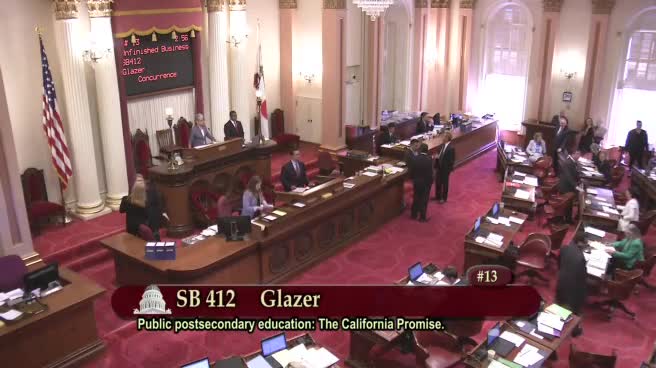 3MIN
Senate Floor
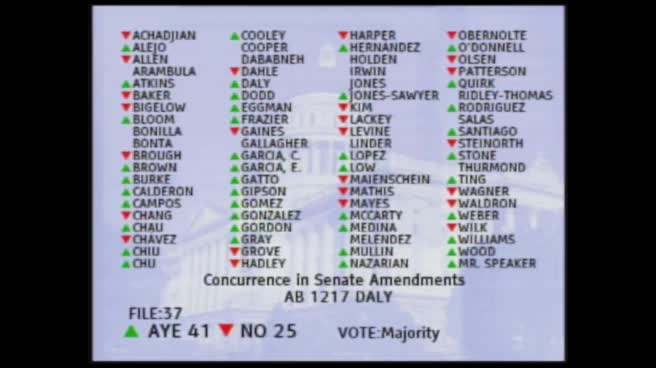 1MIN
Assembly Floor
 1MIN
Assembly Floor
 6MIN
Assembly Standing Committee on Local Government
 4MIN
Senate Floor
 41SEC
Senate Standing Committee on Appropriations
 5MIN
Senate Standing Committee on Governance and Finance
Bill Author

Bill Co-Author(s):
