SB 869: Firearms: securing handguns in vehicles.
- Session Year: 2015-2016
- House: Senate
- Latest Version Date: 2016-09-26
Existing law prohibits a person who is 18 years of age or older, and who is the owner, lessee, renter, or other legal occupant of a residence, who owns a firearm and who knows or has reason to know that another person also residing there is prohibited by state or federal law from possessing, receiving, owning, or purchasing a firearm from keeping a firearm in that residence, unless the firearm is secured, as specified. A violation of this prohibition is a misdemeanor.
This bill would require a person, when leaving a handgun in an unattended vehicle, to secure the handgun by locking it in the trunk of the vehicle, locking it in a locked container and placing the container out of plain view, or locking the handgun in a locked container that is permanently affixed to the vehicles interior and not in plain view. The bill would make a violation of these requirements an infraction punishable by a fine not exceeding $1,000. The bill would expressly make those requirements inapplicable to the transportation of unloaded firearms by a licensed common carrier in conformance with applicable federal law. The bill would also provide that these provisions do not supersede any local ordinance that regulates the storage of handguns in unattended vehicles if the ordinance was in effect before the date of enactment of this bill.
By creating a new crime, this bill would impose a state-mandated local program.
The California Constitution requires the state to reimburse local agencies and school districts for certain costs mandated by the state. Statutory provisions establish procedures for making that reimbursement.
This bill would provide that no reimbursement is required by this act for a specified reason.
Existing law prohibits a person who is 18 years of age or older, and who is the owner, lessee, renter, or other legal occupant of a residence, who owns a firearm and who knows or has reason to know that another person also residing there is prohibited by state or federal law from possessing, receiving, owning, or purchasing a firearm from keeping a firearm in that residence, unless the firearm is secured, as specified. A violation of this prohibition is a misdemeanor.
This bill would require a person, when leaving a handgun in an unattended vehicle, to secure the handgun by locking it in the trunk of the vehicle or vehicle, locking it in a locked container and placing the container out of plain view. view, or locking the handgun in a locked container that is permanently affixed to the vehicles interior and not in plain view. The bill would make a violation of these requirements an infraction punishable by a fine not exceeding $1,000. The bill would expressly make those requirements inapplicable to the transportation of unloaded firearms by a licensed common carrier in conformance with applicable federal law. The bill would also provide that these provisions do not supersede any local ordinance that regulates the storage of handguns in unattended vehicles if the ordinance was in effect before the date of enactment of this bill.
By creating a new crime, this bill would impose a state-mandated local program.
The California Constitution requires the state to reimburse local agencies and school districts for certain costs mandated by the state. Statutory provisions establish procedures for making that reimbursement.
This bill would provide that no reimbursement is required by this act for a specified reason.
Existing law prohibits a person who is 18 years of age or older, and who is the owner, lessee, renter, or other legal occupant of a residence, who owns a firearm and who knows or has reason to know that another person also residing there is prohibited by state or federal law from possessing, receiving, owning, or purchasing a firearm from keeping a firearm in that residence, unless the firearm is secured, as specified. A violation of this prohibition is a misdemeanor.
This bill would require a person, when leaving a handgun in an unattended vehicle, to secure the handgun by locking it in the trunk of the vehicle or locking it in a locked container and placing the container out of plain view. The bill would make a violation of these requirements an infraction punishable by a fine not exceeding $1,000. The bill would expressly make those requirements inapplicable to the transportation of unloaded firearms by a licensed common carrier in conformance with applicable federal law.
By creating a new crime, this bill would impose a state-mandated local program.
The California Constitution requires the state to reimburse local agencies and school districts for certain costs mandated by the state. Statutory provisions establish procedures for making that reimbursement.
This bill would provide that no reimbursement is required by this act for a specified reason.
Existing law prohibits a person who is 18 years of age or older, and who is the owner, lessee, renter, or other legal occupant of a residence, who owns a firearm and who knows or has reason to know that another person also residing there is prohibited by state or federal law from possessing, receiving, owning, or purchasing a firearm from keeping a firearm in that residence, unless the firearm is secured, as specified. A violation of this prohibition is a misdemeanor.
This bill would require a person, when leaving a handgun in an unattended vehicle, to secure the handgun by locking it in the trunk of the vehicle or locking it in a locked container and placing the container out of plain view. The bill would make a violation of these requirements an infraction punishable by a fine not exceeding $1,000.
By creating a new crime, this bill would impose a state-mandated local program.
The California Constitution requires the state to reimburse local agencies and school districts for certain costs mandated by the state. Statutory provisions establish procedures for making that reimbursement.
This bill would provide that no reimbursement is required by this act for a specified reason.
Existing law prohibits a person who is 18 years of age or older, and who is the owner, lessee, renter, or other legal occupant of a residence, who owns a firearm and who knows or has reason to know that another person also residing there is prohibited by state or federal law from possessing, receiving, owning, or purchasing a firearm from keeping a firearm in that residence, unless the firearm is secured, as specified. A violation of this prohibition is a misdemeanor.
This bill would require a person, when leaving a handgun in a an unattended vehicle, to secure the handgun by locking it in the trunk of the vehicle or locking it in a locked container and placing the container out of plain view. The bill would make a violation of these requirements an infraction punishable by a fine not exceeding $1,000.
By creating a new crime, this bill would impose a state-mandated local program.
The California Constitution requires the state to reimburse local agencies and school districts for certain costs mandated by the state. Statutory provisions establish procedures for making that reimbursement.
This bill would provide that no reimbursement is required by this act for a specified reason.
Existing law prohibits a person who is 18 years of age or older, and who is the owner, lessee, renter, or other legal occupant of a residence, who owns a firearm and who knows or has reason to know that another person also residing there is prohibited by state or federal law from possessing, receiving, owning, or purchasing a firearm from keeping a firearm in that residence, unless the firearm is secured, as specified. A violation of this prohibition is a misdemeanor.
This bill would require a person, when leaving a handgun in a vehicle, to secure the handgun by locking it in the trunk of the vehicle or locking it in a locked container and placing the container out of plain view. The bill would make a violation of these requirements an infraction punishable by a fine not exceeding $1,000.
By creating a new crime, this bill would impose a state-mandated local program.
The California Constitution requires the state to reimburse local agencies and school districts for certain costs mandated by the state. Statutory provisions establish procedures for making that reimbursement.
This bill would provide that no reimbursement is required by this act for a specified reason.
(a)A person shall, when leaving a handgun in an unattended vehicle, lock the handgun in the vehicles trunk, lock the handgun in a locked container and place the container out of plain view, or lock the handgun in a locked container that is permanently affixed to the vehicles interior and not in plain view.
(b)A violation of subdivision (a) is an infraction punishable by a fine not exceeding one thousand dollars ($1,000).
(c)(1)As used in this section, vehicle has the same meaning as specified in Section 670 of the Vehicle Code.
(2)As used in this section, locked container has the same meaning as specified in Section 16850.
(3)For purposes of this section, a vehicle is unattended when a person who is lawfully carrying or transporting a handgun in a vehicle is not within close enough proximity to the vehicle to reasonably prevent unauthorized access to the vehicle or its contents.
(d)This section does not apply to a peace officer during circumstances requiring immediate aid or action that are within the course of his or her official duties.
(e)This section does not supersede any local ordinance that regulates the storage of handguns in unattended vehicles if the ordinance was in effect before the date of enactment of the act that added this section.
SEC. 2.Section 25452 is added to the Penal Code, to read:25452.A peace officer and an honorably retired peace officer shall, when leaving a handgun in an unattended vehicle, secure the handgun in the vehicle pursuant to Section 25140.
SEC. 3.Section 25612 is added to the Penal Code, to read:25612.A person shall, when leaving a handgun in an unattended vehicle, secure the handgun in the vehicle pursuant to Section 25140.
SEC. 4.Section 25645 of the Penal Code is amended to read:25645.Sections 25140 and 25400 do not apply to, or affect, the transportation of unloaded firearms by a person operating a licensed common carrier or an authorized agent or employee thereof when the firearms are transported in conformance with applicable federal law.
SEC. 5.No reimbursement is required by this act pursuant to Section 6 of Article XIIIB of the California Constitution because the only costs that may be incurred by a local agency or school district will be incurred because this act creates a new crime or infraction, eliminates a crime or infraction, or changes the penalty for a crime or infraction, within the meaning of Section 17556 of the Government Code, or changes the definition of a crime within the meaning of Section 6 of Article XIIIB of the California Constitution.
(a)A person shall, when leaving a handgun in an unattended vehicle, lock the handgun in the vehicles trunk or trunk, lock the handgun in a locked container and place the container out of plain view. view, or lock the handgun in a locked container that is permanently affixed to the vehicles interior and not in plain view.
(b)A violation of subdivision (a) is an infraction punishable by a fine not exceeding one thousand dollars ($1,000).
(c)(1)As used in this section, vehicle has the same meaning as specified in Section 670 of the Vehicle Code.
(2)As used in this section, locked container has the same meaning as specified in Section 16850.
(3)For purposes of this section, a vehicle is unattended when a person who is lawfully carrying or transporting a handgun in a vehicle is not within close enough proximity to the vehicle to reasonably prevent unauthorized access to the vehicle or its contents.
(d)This section does not apply to a peace officer during circumstances requiring immediate aid or action that are within the course of his or her official duties.
(e)This section does not supersede any local ordinance that regulates the storage of handguns in unattended vehicles if the ordinance was in effect before the date of enactment of the act that added this section.
SEC. 2.Section 25452 is added to the Penal Code, to read:25452.A peace officer and an honorably retired peace officer shall, when leaving a handgun in an unattended vehicle, secure the handgun in the vehicle pursuant to Section 25140.
SEC. 3.Section 25612 is added to the Penal Code, to read:25612.A person shall, when leaving a handgun in an unattended vehicle, secure the handgun in the vehicle pursuant to Section 25140.
SEC. 2.SEC. 4.Section 25645 of the Penal Code is amended to read:25645.Sections 25400 and 25452 25140 and 25400 do not apply to, or affect, the transportation of unloaded firearms by a person operating a licensed common carrier or an authorized agent or employee thereof when the firearms are transported in conformance with applicable federal law.
SEC. 3.SEC. 5.No reimbursement is required by this act pursuant to Section 6 of Article XIIIB of the California Constitution because the only costs that may be incurred by a local agency or school district will be incurred because this act creates a new crime or infraction, eliminates a crime or infraction, or changes the penalty for a crime or infraction, within the meaning of Section 17556 of the Government Code, or changes the definition of a crime within the meaning of Section 6 of Article XIIIB of the California Constitution.
(a)Except as provided in Section 25645, a A person shall, when leaving a handgun in an unattended vehicle, lock the handgun in the vehicles trunk or lock the handgun in a locked container and place the container out of plain view.
(b)A violation of subdivision (a) is an infraction punishable by a fine not exceeding one thousand dollars ($1,000).
(c)(1)As used in this section, vehicle has the same meaning as specified in Section 670 of the Vehicle Code.
(2)As used in this section, locked container has the same meaning as specified in Section 16850.
(3)For purposes of this section, a vehicle is unattended when a person who is lawfully carrying or transporting a handgun in a vehicle is not within close enough proximity to the vehicle to reasonably prevent unauthorized access to the vehicle or its contents.
(d)This section does not apply to a peace officer during circumstances requiring immediate aid or action that are within the course of his or her official duties.
SEC. 2.Section 25645 of the Penal Code is amended to read:25645.Section 25400 does Sections 25400 and 25452 do not apply to, or affect, the transportation of unloaded firearms by a person operating a licensed common carrier or an authorized agent or employee thereof when the firearms are transported in conformance with applicable federal law.
SEC. 2.SEC. 3.No reimbursement is required by this act pursuant to Section 6 of Article XIIIB of the California Constitution because the only costs that may be incurred by a local agency or school district will be incurred because this act creates a new crime or infraction, eliminates a crime or infraction, or changes the penalty for a crime or infraction, within the meaning of Section 17556 of the Government Code, or changes the definition of a crime within the meaning of Section 6 of Article XIIIB of the California Constitution.
(a)A Except as provided in Section 25645, a person shall, when leaving a handgun in an unattended vehicle, lock the handgun in the vehicles trunk or lock the handgun in a locked container and place the container out of plain view.
(b)A violation of subdivision (a) is an infraction punishable by a fine not exceeding one thousand dollars ($1,000).
(c)(1)As used in this section, vehicle has the same meaning as specified in Section 670 of the Vehicle Code.
(2)As used in this section, locked container has the same meaning as specified in Section 16850.
(3)For purposes of this section, a vehicle is unattended when a person who is lawfully carrying or transporting a handgun in a vehicle is not within close enough proximity to the vehicle to reasonably prevent unauthorized access to the vehicle or its contents.
(d)This section does not apply to a peace officer during circumstances requiring immediate aid or action that are within the course of his or her official duties.
SEC. 2.No reimbursement is required by this act pursuant to Section 6 of Article XIIIB of the California Constitution because the only costs that may be incurred by a local agency or school district will be incurred because this act creates a new crime or infraction, eliminates a crime or infraction, or changes the penalty for a crime or infraction, within the meaning of Section 17556 of the Government Code, or changes the definition of a crime within the meaning of Section 6 of Article XIIIB of the California Constitution.
(a)Notwithstanding Section 25450, a A person shall, when leaving a handgun in a an unattended vehicle, lock the handgun in the vehicles trunk or lock the handgun in a locked container and place the container out of plain view.
(b)A violation of subdivision (a) is an infraction punishable by a fine not exceeding one thousand dollars ($1,000).
(c)(1)As used in this section, vehicle has the same meaning as specified in Section 670 of the Vehicle Code.
(2)As used in this section, locked container has the same meaning as specified in Section 16850.
(3)For purposes of this section, a vehicle is unattended when a person who is lawfully carrying or transporting a handgun in a vehicle is not within close enough proximity to the vehicle to reasonably prevent unauthorized access to the vehicle or its contents.
(d)This section does not apply to a peace officer during circumstances requiring immediate aid or action that are within the course of his or her official duties.
SEC. 2.No reimbursement is required by this act pursuant to Section 6 of Article XIIIB of the California Constitution because the only costs that may be incurred by a local agency or school district will be incurred because this act creates a new crime or infraction, eliminates a crime or infraction, or changes the penalty for a crime or infraction, within the meaning of Section 17556 of the Government Code, or changes the definition of a crime within the meaning of Section 6 of Article XIIIB of the California Constitution.
(a)Notwithstanding Section 25450, a person shall, when leaving a handgun in a vehicle, lock the handgun in the vehicles trunk or lock the handgun in a locked container and place the container out of plain view.
(b)A violation of subdivision (a) is an infraction punishable by a fine not exceeding one thousand dollars ($1,000).
SEC. 2.No reimbursement is required by this act pursuant to Section 6 of Article XIIIB of the California Constitution because the only costs that may be incurred by a local agency or school district will be incurred because this act creates a new crime or infraction, eliminates a crime or infraction, or changes the penalty for a crime or infraction, within the meaning of Section 17556 of the Government Code, or changes the definition of a crime within the meaning of Section 6 of Article XIIIB of the California Constitution.
|
Date
|
Status
|
|---|---|
| Apr 28, 2016 | Referred to Com. on PUB. S. |
| Aug 30, 2016 | Enrolled and presented to the Governor at 1:30 p.m. |
| Aug 24, 2016 | Assembly amendments concurred in. (Ayes 26. Noes 12.) Ordered to engrossing and enrolling. |
| Aug 19, 2016 | In Senate. Concurrence in Assembly amendments pending. |
| Aug 18, 2016 | Read third time. Passed. (Ayes 61. Noes 17. Page 5881.) Ordered to the Senate. |
| Aug 18, 2016 | Read third time. Passed. Ordered to the Senate. |
| Aug 11, 2016 | Read third time and amended. |
| Aug 11, 2016 | Ordered to third reading. |
| Jun 30, 2016 | Read second time. Ordered to third reading. |
| Jun 29, 2016 | From committee: Do pass. (Ayes 13. Noes 5.) (June 29). |
| Jun 15, 2016 | From committee: Do pass and re-refer to Com. on APPR. (Ayes 7. Noes 0.) (June 14). Re-referred to Com. on APPR. |
| May 18, 2016 | From committee with author's amendments. Read second time and amended. Re-referred to Com. on PUB. S. |
| May 3, 2016 | From committee with author's amendments. Read second time and amended. Re-referred to Com. on PUB. S. |
| Jan 12, 2016 | Introduced. Read first time. To Com. on RLS. for assignment. To print. |
| Apr 14, 2016 | Read third time. Passed. (Ayes 25. Noes 13.) Ordered to the Assembly. |
| Apr 14, 2016 | Read third time. Passed. (Ayes 25. Noes 13. Page 3535.) Ordered to the Assembly. |
| Apr 14, 2016 | In Assembly. Read first time. Held at Desk. |
| Apr 12, 2016 | Read second time. Ordered to third reading. |
| Apr 11, 2016 | From committee: Be ordered to second reading pursuant to Senate Rule 28.8. |
| Apr 1, 2016 | Set for hearing April 11. |
| Mar 30, 2016 | Read second time and amended. Re-referred to Com. on APPR. |
| Mar 29, 2016 | From committee: Do pass as amended and re-refer to Com. on APPR. (Ayes 5. Noes 2.) (March 29). |
| Mar 29, 2016 | From committee: Do pass as amended and re-refer to Com. on APPR. (Ayes 5. Noes 2. Page 3313.) (March 29). |
| Mar 15, 2016 | Set for hearing March 29. |
| Jan 28, 2016 | Referred to Com. on PUB. S. |
| Jan 13, 2016 | From printer. May be acted upon on or after February 12. |
|
Date
|
Description
|
Location
|
Votes
|
|
|---|---|---|---|---|
| Aug 24, 2016 | Unfinished Business SB869 Hill Concurrence | Senate Floor |
Passed |
|
| Aug 18, 2016 | SB 869 Hill Senate Third Reading By CHIU | Assembly Floor |
Passed |
|
| Jun 29, 2016 | Do pass. | Assembly Standing Committee on Appropriations |
Passed |
|
| Jun 14, 2016 | Do pass and be re-referred to the Committee on [Appropriations] | Assembly Standing Committee on Public Safety |
Passed |
|
| Apr 14, 2016 | Senate 3rd Reading SB869 Hill | Senate Floor |
Passed |
|
| Mar 29, 2016 | Do pass as amended, but first amend, and re-refer to the Committee on [Appropriations] | Senate Standing Committee on Public Safety |
Passed |
This list shows positions taken on this bill by organizations on the date displayed, which is linked to the original source.
Positions by individuals are not included.
|
Organization
|
Position
|
Date
|
|---|---|---|
| Alameda District Attorney | * Support | Jun 14, 2016 |
| American Academy of Pediatrics | ** Support | Aug 24, 2016 |
| California Association Of Highway Patrolmen | ** Support | Aug 24, 2016 |
| California Chapters of The Brady Campaign to Prevent Gun Violence | ** Support | Aug 24, 2016 |
| California District Attorneys Association | * Support | Jun 14, 2016 |
| California Police Chiefs Association | ** Support | Jun 14, 2016 |
| Firearms Policy Coalition | * Indeterminate | Mar 29, 2016 |
| LA County District Attorney | * Support | Jun 14, 2016 |
| Law Center to Prevent Gun Violence | ** Support | Aug 24, 2016 |
| Los Angeles County Sheriff'S Department | * Support | Jun 14, 2016 |
| National Shooting Sports Foundation, Inc. | * Support | Jun 14, 2016 |
| San Francisco Bay Area Rapid Transit | ** Support | Jun 14, 2016 |
| San Francisco Bay Area Rapid Transit District (Bart) | * Support | Jun 14, 2016 |
Office of Senate Floor Analyses (916) 651-1520 Fax: (916) 327-4478 | SB |
UNFINISHED BUSINESS
Bill No: SB 869
:
SENATE PUBLIC SAFETY COMMITTEE: 5-2, 3/29/16
AYES: Hancock, Glazer, Leno, Liu, Monning
NOES: Anderson, Stone
SENATE APPROPRIATIONS COMMITTEE: Senate Rule 28.8
SENATE FLOOR: 25-13, 4/14/16
AYES: Allen, Beall, Block, Cannella, De León, Galgiani, Glazer, Hall, Hancock, Hernandez, Hertzberg, Hill, Hueso, Jackson, Lara, Leno, Leyva, Liu, Mendoza, Mitchell, Monning, Pan, Pavley, Wieckowski, Wolk
NOES: Anderson, Bates, Berryhill, Fuller, Gaines, Huff, Moorlach, Morrell, Nguyen, Nielsen, Roth, Stone, Vidak
NO VOTE RECORDED: McGuire, Runner
ASSEMBLY FLOOR: 61-17, 8/18/16 - See last page for vote
DIGEST: This bill requires a person, when leaving a handgun in a vehicle, to secure the handgun by locking it in the trunk of the vehicle or locking it in a locked container and placing the container out of plain view, as specified.
Assembly Amendments change the placement of the newly added language and provide that the provisions of the legislation do not supersede any local ordinance that regulates the storage of handguns in unattended vehicles if the ordinance was in effect before the date of enactment of this bill.
Existing law:
- Provides that a person is guilty of carrying a concealed firearm when the person:
- Carries concealed within any vehicle that is under the person’s control or direction any pistol, revolver, or other firearm capable of being concealed upon the person.
- Carries concealed upon the person any pistol, revolver, or other firearm capable of being concealed upon the person.
- Causes to be carried concealed within any vehicle in which the person is an occupant any pistol, revolver, or other firearm capable of being concealed upon the person. (Penal Code § 25400(a).)
- States that a firearm carried openly in a belt holster is not concealed, as specified. (Penal Code § 25400(b).)
- Provides that carrying a concealed firearm in is punishable as follows:
- If the person previously has been convicted of any felony, or of any crime made punishable by a provision listed in Section 16580, as a felony.
- If the firearm is stolen and the person knew or had reasonable cause to believe that it was stolen, as a felony.
- If the person is an active participant in a criminal street gang, as defined in subdivision (a) of Section 186.22, under the Street Terrorism Enforcement and Prevention Act (Chapter 11 (commencing with Section 186.20) of Title 7 of Part 1), as a felony.
- If the person is not in lawful possession of the firearm or the person is within a class of persons prohibited from possessing or acquiring a firearm pursuant to Chapter 2 (commencing with Section 29800) or Chapter 3 (commencing with Section 29900) of Division 9 of this title, or Section 8100 or 8103 of the Welfare and Institutions Code, as a felony.
- If the person has been convicted of a crime against a person or property, or of a narcotics or dangerous drug violation, by imprisonment pursuant to subdivision (h) of Section 1170, or by imprisonment in a county jail not to exceed one year, by a fine not to exceed one thousand dollars ($1,000), or by both that imprisonment and fine.
- If both of the following conditions are met, by imprisonment pursuant to subdivision (h) of Section 1170, or by imprisonment in a county jail not to exceed one year, by a fine not to exceed one thousand dollars ($1,000), or by both that fine and imprisonment:
- The pistol, revolver, or other firearm capable of being concealed upon the person is loaded, or both it and the unexpended ammunition capable of being discharged from it are in the immediate possession of the person or readily accessible to that person.
- The person is not listed with the Department of Justice pursuant to paragraph (1) of subdivision (c) of Section 11106 as the registered owner of that pistol, revolver, or other firearm capable of being concealed upon the person. (Penal Code 25400(c).)
- Provides that the prohibition on concealed carry as described in section 25400 does not apply to, or affect, any of the following:
- Any peace officer, listed in Section 830.1 or 830.2, or subdivision (a) of Section 830.33, whether active or honorably retired;
- Any other duly appointed peace officer;
- Any honorably retired peace officer listed in subdivision (c) of Section 830.5;
- Any other honorably retired peace officer who during the course and scope of his or her appointment as a peace officer was authorized to, and did, carry a firearm;
- Any full-time paid peace officer of another state or the federal government who is carrying out official duties while in California; or
- Any person summoned by any of these officers to assist in making arrests or preserving the peace while the person is actually engaged in assisting that officer. (Penal Code § 25450.)
- States that the prohibition on concealed carry as described in section 25400 is not construed to prohibit any citizen of the United States over the age of 18 years who resides or is temporarily within this state, and who is not prohibited by state or federal law from possessing, receiving, owning, or purchasing a firearm, from transporting or carrying any pistol, revolver, or other firearm capable of being concealed upon the person, provided that the following applies to the firearm:
- The firearm is within a motor vehicle and it is locked in the vehicle's trunk or in a locked container in the vehicle.
- The firearm is carried by the person directly to or from any motor vehicle for any lawful purpose and, while carrying the firearm, the firearm is contained within a locked container. (Penal Code § 25610.)
- States that the prohibition on concealed carry, as described in section 25400, does not apply to, or affect:
- Any member of the Army, Navy, Air Force, Coast Guard, or Marine Corps of the United States, or the National Guard, when on duty, or any organization that is by law authorized to purchase or receive those weapons from the United States or this state. (Penal Code §25620.)
- The carrying of unloaded pistols, revolvers, or other firearms capable of being concealed upon the person by duly authorized military or civil organizations while parading or the members thereof when going to and from the places of meeting of their respective organizations. (Penal Code § 25625.)
- Any guard or messenger of any common carrier, bank, or other financial institution, while actually employed in and about the shipment, transportation, or delivery of any money, treasure, bullion, bonds, or other thing of value within this state. (Penal Code § 25630.)
- Members of any club or organization organized for the purpose of practicing shooting at targets upon established target ranges, whether public or private, while the members are using pistols, revolvers, or other firearms capable of being concealed upon the person upon the target ranges, or transporting these firearms unloaded when going to and from the ranges. (Penal Code § 25635.)
- Licensed hunters or fishermen carrying pistols, revolvers, or other firearms capable of being concealed upon the person while engaged in hunting or fishing, or transporting those firearms unloaded when going to or returning from the hunting or fishing expedition. (Penal Code § 25640.)
- The transportation of unloaded firearms by a person operating a licensed common carrier or an authorized agent or employee thereof when the firearms are transported in conformance with applicable federal law. (Penal Code § 25645.)
- Upon approval of the sheriff of the county in which the retiree resides, any honorably retired federal officer or agent of any federal law enforcement agency, including, but not limited to, the Federal Bureau of Investigation, the United States Secret Service, the United States Customs Service, the federal Bureau of Alcohol, Tobacco, Firearms and Explosives, the Federal Bureau of Narcotics, the United States Drug Enforcement Administration, the United States Border Patrol, and any officer or agent of the Internal Revenue Service who was authorized to carry weapons while on duty, who was assigned to duty within the state for a period of not less than one year, or who retired from active service in the state. (Penal Code § 25650.)
- The carrying of a pistol, revolver, or other firearm capable of being concealed upon the person by a person who is authorized to carry that weapon in a concealed manner pursuant to Chapter 4 (commencing with Section 26150). (Penal Code § 25655.)
This bill:
- Requires a person, when leaving a handgun in an unattended vehicle, lock the handgun in the vehicle’s trunk or lock the handgun in a locked container and place the container out of plain view.
- Makes a violation of its provisions an infraction punishable by a fine not exceeding one thousand dollars ($1,000).
- Provides “vehicle” has the same meaning as specified in Section 670 of the Vehicle Code.
- Provides “locked container” has the same meaning as specified in Section 16850.
- Provides that a vehicle is unattended when a person who is lawfully carrying or transporting a handgun in a vehicle is not within close enough proximity to the vehicle to reasonably prevent unauthorized access to the vehicle or its contents.
- Exempts a peace officer from its provisions during circumstances requiring immediate aid or action that are within the course of his or her official duties.
- Provides that its provisions do not supersede any local ordinance that regulates the storage of handguns in unattended vehicles if the ordinance was in effect before the date of enactment of this bill.
Background
The author states: “Stolen guns are a major problem in California. According to the federal Bureau of Alcohol, Tobacco, Firearms and Explosives (ATF), in 2012 at least 10,639 guns in California were reported as lost or stolen. In the past few years, according to a report published in the San Francisco Chronicle, gun thefts from cars have steadily increased in the city. For example, in San Francisco, 31 guns were stolen from cars in 2012, 48 in 2014, and through November 20, 2015, there were 57 guns stolen from cars. The rise in gun thefts from cars corresponds with a rise in car burglaries overall. Firearms belonging to law enforcement officers also have been stolen from cars throughout the Bay Area. Just last year:
- In August 2015, a handgun belonging to a Hayward police officer was stolen from a car in Oakland.
- Also in August, a handgun belonging to the chief of UC Berkeley Police was stolen from her car while she was jogging.
- In October 2015, the handgun of an off-duty CHP officer was stolen from his car while in San Francisco.
- In January 2016, 3 handguns were stolen out of an FBI vehicle parked in a Benicia neighborhood.
- Tragically, many stolen guns end up being used in violent crimes.”
Comments
Section 25400 provides that a person is guilty of carrying a concealed firearm when the person: (1) carries concealed within any vehicle that is under the person’s control or direction any pistol, revolver, or other firearm capable of being concealed upon the person; (2) carries concealed upon the person any pistol, revolver, or other firearm capable of being concealed upon the person; or, (3) causes to be carried concealed within any vehicle in which the person is an occupant any pistol, revolver, or other firearm capable of being concealed upon the person.
A defendant is guilty of a violation of 25400 if:
- The defendant carried within a vehicle a firearm capable of being concealed on the person;
- The defendant knew the firearm was in the vehicle;
- The firearm was substantially concealed within the vehicle; and
- The vehicle was under the defendant’s control or direction. (2-2500 CALCRIM 2521)
Concealed carry is, however, acceptable if the person has a concealed carry license or is a member of particular group, like law enforcement officers. Given that these groups are allowed to concealed carry, it is arguable that they are, additionally, immune from criminal liability for leaving a handgun unlocked in their vehicle. This legislation makes it clear that all individuals, including those that are exempt from the concealed carry laws, are required to lock their handguns in the vehicle’s trunk or in a locked container when a handgun is left unattended in a vehicle.
FISCAL EFFECT: Appropriation: Fiscal Com.: Local:
According to the Assembly Appropriations Committee analysis the fiscal impact includes, unknown, probably minor costs to local law enforcement for enforcement, but these costs will be offset to some degree by fines.
American Academy of Pediatrics
California Association of Highway Patrolmen
California Chapters of the Brady Campaign to Prevent Gun Violence
Law Center to Prevent Gun Violence
OPPOSITION: (Verified 8/22/16)
None received
ARGUMENTS IN SUPPORT: The California Association of Highway Patrolmen states:
This bill would require a person, when leaving a handgun in a vehicle, to secure the handgun by locking it in the trunk of the vehicle or placing it in a locked container out of sight. The bill would make a violation of these provisions an infraction punishable by a fine of up to $1,000.
Stolen firearms are used for serious crimes, such as armed robbery and murder. As an added means of prevention, handgun owners should be responsible for protecting their firearm and should be held accountable when in violation.
This bill is a matter of public safety and common sense.
ASSEMBLY FLOOR: 61-17, 8/18/16
AYES: Achadjian, Alejo, Arambula, Atkins, Baker, Bloom, Bonilla, Bonta, Brown, Burke, Calderon, Campos, Chang, Chau, Chiu, Chu, Cooley, Cooper, Dababneh, Daly, Dodd, Eggman, Cristina Garcia, Eduardo Garcia, Gatto, Gipson, Gomez, Gonzalez, Gordon, Gray, Hadley, Holden, Irwin, Jones-Sawyer, Kim, Lackey, Levine, Linder, Lopez, Low, Maienschein, McCarty, Medina, Melendez, Mullin, Nazarian, O'Donnell, Olsen, Quirk, Ridley-Thomas, Rodriguez, Salas, Santiago, Mark Stone, Thurmond, Ting, Weber, Wilk, Williams, Wood, Rendon
NOES: Travis Allen, Bigelow, Brough, Chávez, Dahle, Beth Gaines, Gallagher, Grove, Harper, Jones, Mathis, Mayes, Obernolte, Patterson, Steinorth, Wagner, Waldron
NO VOTE RECORDED: Frazier, Roger Hernández
8/22/16 9:28:40
**** END ****
SENATE THIRD READING
STR Bill Id:SB 869
Author:(Hill)
As Amended Ver:August 11, 2016
Majority vote
SENATE VOTE: 25-13
Committee | Votes | Ayes | Noes |
Public Safety | 7-0 | Jones-Sawyer, Melendez, Lackey, Lopez, Low, Quirk, Santiago | |
Appropriations | 13-5 | Gonzalez, Bloom, Bonta, Calderon, Chang, Daly, Eggman, Roger Hernández, Holden, Quirk, Santiago, Weber, Wood | Bigelow, Gallagher, Jones, Obernolte, Wagner |
SUMMARY: Requires every person who is leaving a handgun in a vehicle to secure the handgun by locking it either in the trunk or in a locked container which is out of plain view. Specifically, this bill:
- Requires a person, when leaving a handgun in an unattended vehicle, to lock the handgun in the vehicle's trunk, or to lock it in a locked container permanently affixed to the interior of the vehicle to and place the container out of plain view.
- Makes a violation of the vehicle-securement requirement an infraction punishable by a fine not exceeding $1,000.
- Defines "vehicle" as "a device by which any person or property may be propelled, moved, or drawn upon a highway, excepting a device moved exclusively by human power or used exclusively upon stationary rails or tracks."
- Defines "locked container" as "a secure container that is fully enclosed and locked by a padlock, keylock, combination lock, or similar locking device." A locked container "does not include the utility or glove compartment of a motor vehicle."
- Provides that a vehicle is unattended when a person who is lawfully carrying or transporting a handgun in a vehicle is not within close enough proximity to the vehicle to reasonably prevent unauthorized access to the vehicle or its contents.
- Exempts a peace officer from this requirement during circumstances requiring immediate aid or action that are within the course of his or her official duties.
- States that local ordinances pertaining to handgun storage in unattended cars supersede this section if the jurisdiction had enacted the ordinance before the effective date of this statute.
- States that the vehicle-securement requirement does not apply to, or affect, the transportation of unloaded firearms by a person operating a licensed common carrier or an unauthorized agent or employee thereof when the firearms are transported in conformance with applicable federal law.
- Makes conforming cross-references to other statutes.
EXISTING LAW:
- Provides that a person is guilty of carrying a concealed firearm when the person:
- Carries concealed within any vehicle that is under the person's control or direction any pistol, revolver, or other firearm capable of being concealed upon the person;
- Carries concealed upon the person any pistol, revolver, or other firearm capable of being concealed upon the person; and
- Causes to be carried concealed within any vehicle in which the person is an occupant any pistol, revolver, or other firearm capable of being concealed upon the person.
- Provides that carrying a concealed firearm is punishable as follows:
- If the person previously has been convicted of any felony, or of any crime made punishable by a provision listed in Penal Code Section 16580, as a felony;
- If the firearm is stolen and the person knew or had reasonable cause to believe that it was stolen, as a felony;
- If the person is an active participant in a criminal street gang, as a felony;
- If the person is not in lawful possession of the firearm or the person is within a class of persons prohibited from possessing or acquiring a firearm, as a felony;
- If the person has been convicted of a crime against a person or property, or of a narcotics or dangerous drug violation, by imprisonment pursuant to Penal Code Section 1170(h), or by imprisonment in a county jail not to exceed one year, by a fine not to exceed $1,000, or by both that imprisonment and fine; and
- If both of the following conditions are met, by imprisonment pursuant to Section 1170(h), or by imprisonment in a county jail not to exceed one year, by a fine not to exceed $1,000, or by both that fine and imprisonment:
- The pistol, revolver, or other firearm capable of being concealed upon the person is loaded, or both it and the unexpended ammunition capable of being discharged from it are in the immediate possession of the person or readily accessible to that person; and
- The person is not listed with the Department of Justice pursuant to Penal Code Section 11106(c)(1) as the registered owner of that pistol, revolver, or other firearm capable of being concealed upon the person.
- Exempts the following persons from the prohibition on carrying concealed weapons:
- Any peace officer, as specified, whether active or honorably retired;
- Any other duly appointed peace officer;
- Any honorably retired peace officer, as specified;
- Any other honorably retired peace officer who during the course and scope of his or her appointment as a peace officer was authorized to, and did, carry a firearm;
- Any full-time paid peace officer of another state or the federal government who is carrying out official duties while in California; or
- Any person summoned by any of these officers to assist in making arrests or preserving the peace while the person is actually engaged in assisting that officer.
- States that the prohibition on concealed carry is not construed to prohibit any citizen of the United States over the age of 18 years who resides or is temporarily within this state, and who is not prohibited by state or federal law from possessing, receiving, owning, or purchasing a firearm, from transporting or carrying any pistol, revolver, or other firearm capable of being concealed upon the person, provided that the following applies to the firearm:
- The firearm is within a motor vehicle and it is locked in the vehicle's trunk or in a locked container in the vehicle; and
- The firearm is carried by the person directly to or from any motor vehicle for any lawful purpose and, while carrying the firearm, the firearm is contained within a locked container.
- States that the prohibition on concealed carry, also does not apply to, or affect:
- Any member of the Army, Navy, Air Force, Coast Guard, or Marine Corps of the United States, or the National Guard, when on duty, or any organization that is by law authorized to purchase or receive those weapons from the United States or this state;
- The carrying of unloaded pistols, revolvers, or other firearms capable of being concealed upon the person by duly authorized military or civil organizations while parading or the members thereof when going to and from the places of meeting of their respective organizations;
- Any guard or messenger of any common carrier, bank, or other financial institution, while actually employed in and about the shipment, transportation, or delivery of any money, treasure, bullion, bonds, or other thing of value within this state;
- Members of any club or organization organized for the purpose of practicing shooting at targets upon established target ranges, whether public or private, while the members are using pistols, revolvers, or other firearms capable of being concealed upon the person upon the target ranges, or transporting these firearms unloaded when going to and from the ranges;
- Licensed hunters or fishermen carrying pistols, revolvers, or other firearms capable of being concealed upon the person while engaged in hunting or fishing, or transporting those firearms unloaded when going to or returning from the hunting or fishing expedition;
- The transportation of unloaded firearms by a person operating a licensed common carrier or an authorized agent or employee thereof when the firearms are transported in conformance with applicable federal law;
- Upon approval of the sheriff of the county in which the retiree resides, any honorably retired federal officer or agent of any federal law enforcement agency, including, but not limited to, the Federal Bureau of Investigation, the United States Secret Service, the United States Customs Service, the federal Bureau of Alcohol, Tobacco, Firearms and Explosives, the Federal Bureau of Narcotics, the United States Drug Enforcement Administration, the United States Border Patrol, and any officer or agent of the Internal Revenue Service who was authorized to carry weapons while on duty, who was assigned to duty within the state for a period of not less than one year, or who retired from active service in the state; and
- The carrying of a pistol, revolver, or other firearm capable of being concealed upon the person by a person who is authorized to carry that weapon in a concealed manner, as specified.
- Requires a firearm to be unloaded and kept in a locked container when it is being transported from one place to another, and contains other conditional exemptions for the transportation of firearms.
- Makes it a crime to carry a loaded firearm either upon the person, or in a vehicle while in any public place or on any public street in an incorporated city, or in any public place or on any public street in a prohibited area of unincorporated territory.
- Exempts peace officers and concealed carry weapon permit holders from the crime of carrying a loaded firearm in public.
FISCAL EFFECT: According to the Assembly Appropriations Committee, this bill's fiscal effect is "[u]nknown, probably minor costs to local law enforcement for enforcement, but these costs will be offset to some degree by fines."
COMMENTS: According to the author, "To prevent handgun thefts from vehicles, current law requires civilian handgun owners to store the weapon in a locked box or in the trunk when leaving it unattended in the car. This common sense requirement however, does not apply to law enforcement officers and concealed carry license holders and unfortunately, several handguns have been stolen out of police vehicles and used in deadly crimes.
"For example, an unattended handgun stolen out of a law enforcement vehicle was used to kill Kate Steinle on Pier 14 in San Francisco in July last year. Just this February, the California Supreme Court affirmed the death sentence for a man who murdered four people using a handgun stolen out of the vehicle of an off duty deputy sheriff.
"SB 869 simply extends the existing vehicle handgun storage requirement to anyone who leaves a handgun unattended in their car."
Please see the policy committee analysis for a full discussion of this bill.
Analysis Prepared by: Sandy Uribe / PUB. S. / (916) 319-3744 FN: 0003929
SENATE THIRD READING
STR Bill Id:SB 869
Author:(Hill)
As Amended Ver:May 18, 2016
Majority vote
SENATE VOTE: 25-13
Committee | Votes | Ayes | Noes |
Public Safety | 7-0 | Jones-Sawyer, Melendez, Lackey, Lopez, Low, Quirk, Santiago | |
Appropriations | 13-5 | Gonzalez, Bloom, Bonta, Calderon, Chang, Daly, Eggman, Roger Hernández, Holden, Quirk, Santiago, Weber, Wood | Bigelow, Gallagher, Jones, Obernolte, Wagner |
SUMMARY: Requires every person who is leaving a handgun in a vehicle to secure the handgun by locking it either in the trunk or in a locked container which is out of plain view. Specifically, this bill:
- Requires a person, when leaving a handgun in an unattended vehicle, to lock the handgun in the vehicle's trunk or to lock it in a locked container and place the container out of plain view.
- Makes a violation of the vehicle-securement requirement an infraction punishable by a fine not exceeding $1,000.
- Defines "vehicle" as "a device by which any person or property may be propelled, moved, or drawn upon a highway, excepting a device moved exclusively by human power or used exclusively upon stationary rails or tracks."
- Defines "locked container" as "a secure container that is fully enclosed and locked by a padlock, keylock, combination lock, or similar locking device." A locked container "does not include the utility or glove compartment of a motor vehicle."
- Provides that a vehicle is unattended when a person who is lawfully carrying or transporting a handgun in a vehicle is not within close enough proximity to the vehicle to reasonably prevent unauthorized access to the vehicle or its contents.
- Exempts a peace officer from this requirement during circumstances requiring immediate aid or action that are within the course of his or her official duties.
- States that the vehicle-securement requirement does not apply to, or affect, the transportation of unloaded firearms by a person operating a licensed common carrier or an unauthorized agent or employee thereof when the firearms are transported in conformance with applicable federal law.
EXISTING LAW:
- Provides that a person is guilty of carrying a concealed firearm when the person:
- Carries concealed within any vehicle that is under the person's control or direction any pistol, revolver, or other firearm capable of being concealed upon the person;
- Carries concealed upon the person any pistol, revolver, or other firearm capable of being concealed upon the person; and
- Causes to be carried concealed within any vehicle in which the person is an occupant any pistol, revolver, or other firearm capable of being concealed upon the person.
- Provides that carrying a concealed firearm is punishable as follows:
- If the person previously has been convicted of any felony, or of any crime made punishable by a provision listed in Penal Code Section 16580, as a felony;
- If the firearm is stolen and the person knew or had reasonable cause to believe that it was stolen, as a felony;
- If the person is an active participant in a criminal street gang, as a felony;
- If the person is not in lawful possession of the firearm or the person is within a class of persons prohibited from possessing or acquiring a firearm, as a felony;
- If the person has been convicted of a crime against a person or property, or of a narcotics or dangerous drug violation, by imprisonment pursuant to Penal Code Section 1170(h), or by imprisonment in a county jail not to exceed one year, by a fine not to exceed $1,000, or by both that imprisonment and fine; and
- If both of the following conditions are met, by imprisonment pursuant to Section 1170(h), or by imprisonment in a county jail not to exceed one year, by a fine not to exceed $1,000, or by both that fine and imprisonment:
- The pistol, revolver, or other firearm capable of being concealed upon the person is loaded, or both it and the unexpended ammunition capable of being discharged from it are in the immediate possession of the person or readily accessible to that person; and
- The person is not listed with the Department of Justice pursuant to Penal Code Section 11106(c)(1) as the registered owner of that pistol, revolver, or other firearm capable of being concealed upon the person.
- Exempts the following persons from the prohibition on carrying concealed weapons:
- Any peace officer, as specified, whether active or honorably retired;
- Any other duly appointed peace officer;
- Any honorably retired peace officer, as specified;
- Any other honorably retired peace officer who during the course and scope of his or her appointment as a peace officer was authorized to, and did, carry a firearm;
- Any full-time paid peace officer of another state or the federal government who is carrying out official duties while in California; or
- Any person summoned by any of these officers to assist in making arrests or preserving the peace while the person is actually engaged in assisting that officer.
- States that the prohibition on concealed carry is not construed to prohibit any citizen of the United States over the age of 18 years who resides or is temporarily within this state, and who is not prohibited by state or federal law from possessing, receiving, owning, or purchasing a firearm, from transporting or carrying any pistol, revolver, or other firearm capable of being concealed upon the person, provided that the following applies to the firearm:
- The firearm is within a motor vehicle and it is locked in the vehicle's trunk or in a locked container in the vehicle; and
- The firearm is carried by the person directly to or from any motor vehicle for any lawful purpose and, while carrying the firearm, the firearm is contained within a locked container.
- States that the prohibition on concealed carry, also does not apply to, or affect:
- Any member of the Army, Navy, Air Force, Coast Guard, or Marine Corps of the United States, or the National Guard, when on duty, or any organization that is by law authorized to purchase or receive those weapons from the United States or this state;
- The carrying of unloaded pistols, revolvers, or other firearms capable of being concealed upon the person by duly authorized military or civil organizations while parading or the members thereof when going to and from the places of meeting of their respective organizations;
- Any guard or messenger of any common carrier, bank, or other financial institution, while actually employed in and about the shipment, transportation, or delivery of any money, treasure, bullion, bonds, or other thing of value within this state;
- Members of any club or organization organized for the purpose of practicing shooting at targets upon established target ranges, whether public or private, while the members are using pistols, revolvers, or other firearms capable of being concealed upon the person upon the target ranges, or transporting these firearms unloaded when going to and from the ranges;
- Licensed hunters or fishermen carrying pistols, revolvers, or other firearms capable of being concealed upon the person while engaged in hunting or fishing, or transporting those firearms unloaded when going to or returning from the hunting or fishing expedition;
- The transportation of unloaded firearms by a person operating a licensed common carrier or an authorized agent or employee thereof when the firearms are transported in conformance with applicable federal law;
- Upon approval of the sheriff of the county in which the retiree resides, any honorably retired federal officer or agent of any federal law enforcement agency, including, but not limited to, the Federal Bureau of Investigation, the United States Secret Service, the United States Customs Service, the federal Bureau of Alcohol, Tobacco, Firearms and Explosives, the Federal Bureau of Narcotics, the United States Drug Enforcement Administration, the United States Border Patrol, and any officer or agent of the Internal Revenue Service who was authorized to carry weapons while on duty, who was assigned to duty within the state for a period of not less than one year, or who retired from active service in the state; and
- The carrying of a pistol, revolver, or other firearm capable of being concealed upon the person by a person who is authorized to carry that weapon in a concealed manner, as specified.
- Requires a firearm to be unloaded and kept in a locked container when it is being transported from one place to another, and contains other conditional exemptions for the transportation of firearms.
- Makes it a crime to carry a loaded firearm either upon the person, or in a vehicle while in any public place or on any public street in an incorporated city, or in any public place or on any public street in a prohibited area of unincorporated territory.
- Exempts peace officers and concealed carry weapon permit holders from the crime of carrying a loaded firearm in public.
FISCAL EFFECT: According to the Assembly Appropriations Committee, this bill's fiscal effect is "[u]nknown, probably minor costs to local law enforcement for enforcement, but these costs will be offset to some degree by fines."
COMMENTS: According to the author, "To prevent handgun thefts from vehicles, current law requires civilian handgun owners to store the weapon in a locked box or in the trunk when leaving it unattended in the car. This common sense requirement however, does not apply to law enforcement officers and concealed carry license holders and unfortunately, several handguns have been stolen out of police vehicles and used in deadly crimes.
"For example, an unattended handgun stolen out of a law enforcement vehicle was used to kill Kate Steinle on Pier 14 in San Francisco in July last year. Just this February, the California Supreme Court affirmed the death sentence for a man who murdered four people using a handgun stolen out of the vehicle of an off duty deputy sheriff.
"SB 869 simply extends the existing vehicle handgun storage requirement to anyone who leaves a handgun unattended in their car."
Analysis Prepared by: Sandy Uribe / PUB. S. / (916) 319-3744 FN: 0003593
Date of Hearing: June 29, 2016
ASSEMBLY COMMITTEE ON APPROPRIATIONS
Lorena Gonzalez, Chair
SBPCA Bill Id:SB 869
Author:(Hill) – As Amended Ver:May 18, 2016
Policy Committee: | Public Safety | Vote: | 7 - 0 |
Urgency: No State Mandated Local Program: Yes Reimbursable: No
SUMMARY:
This bill requires, with some exceptions, a person, when leaving a handgun in an unattended vehicle, to secure the handgun by locking it in the trunk of the vehicle or locking it in a locked container and placing the container out of plain view. A violation is subject to a fine of up to $1,000.
FISCAL EFFECT:
Unknown, probably minor costs to local law enforcement for enforcement, but these costs will be offset to some degree by fines.
COMMENTS:
- Background/Purpose. Current law requires civilian handgun owners to store the weapon in a locked box or in the trunk when leaving it unattended in the car. However, this does not apply to law enforcement officers and concealed carry license holders. In recent years, there has been an increase in incidents of handguns stolen from cars. This includes handguns stolen from law enforcement vehicles. Tragically, many stolen guns end up being used in violent crimes.
SB 869 extends the existing vehicle handgun storage requirement, with some exceptions, to anyone who leaves a handgun unattended in their car.
- Related Legislation.
- SB 894 (Jackson), also on today’s agenda, requires a firearm owner to report the theft or loss of a firearm to local law enforcement agency within five days of the time he or she knew, or reasonably should have known, that the firearm had been stolen or lost.
- AB 1695 (Bonta) makes it a misdemeanor to falsely report to law enforcement that a firearm has been lost or stolen. AB 1695 is pending referral by the Senate Rules Committee.
- Prior Legislation: AB 231 (Ting), Chapter 730, Statutes of 2013, created the crime of criminal storage in the third degree, which imposes liability if a person negligently stores or leaves a loaded firearm in a place where he or she knows, or reasonably should know, that a child is likely to access it without the permission of the child's parent or guardian.
Analysis Prepared by: Pedro Reyes / APPR. / (916) 319-2081
Date of Hearing: June 14, 2016
Counsel: Sandy Uribe
ASSEMBLY COMMITTEE ON PUBLIC SAFETY
Reginald Byron Jones-Sawyer, Sr., Chair
SBPCA Bill Id:SB 869
Author:(Hill) – As Amended Ver:May 18, 2016
SUMMARY: Requires every person who is leaving a handgun in a vehicle to secure the handgun by locking it either in the trunk or in a locked container which is out of plain view. Specifically, this bill:
- Requires a person, when leaving a handgun in an unattended vehicle, to lock the handgun in the vehicle's trunk or to lock it in a locked container and place the container out of plain view.
- Makes a violation of the vehicle-securement requirement an infraction punishable by a fine not exceeding $1,000.
- Defines "vehicle" as "a device by which any person or property may be propelled, moved, or drawn upon a highway, excepting a device moved exclusively by human power or used exclusively upon stationary rails or tracks."
- Defines "locked container" as "a secure container that is fully enclosed and locked by a padlock, keylock, combination lock, or similar locking device." A locked container "does not include the utility or glove compartment of a motor vehicle."
- Provides that a vehicle is unattended when a person who is lawfully carrying or transporting a handgun in a vehicle is not within close enough proximity to the vehicle to reasonably prevent unauthorized access to the vehicle or its contents.
- Exempts a peace officer from this requirement during circumstances requiring immediate aid or action that are within the course of his or her official duties.
- States that the vehicle-securement requirement does not apply to, or affect, the transportation of unloaded firearms by a person operating a licensed common carrier or an unauthorized agent or employee thereof when the firearms are transported in conformance with applicable federal law.
EXISTING LAW:
- Provides that a person is guilty of carrying a concealed firearm when the person:
- Carries concealed within any vehicle that is under the person's control or direction any pistol, revolver, or other firearm capable of being concealed upon the person;
- Carries concealed upon the person any pistol, revolver, or other firearm capable of being concealed upon the person; and
- Causes to be carried concealed within any vehicle in which the person is an occupant any pistol, revolver, or other firearm capable of being concealed upon the person. (Pen. Code, § 25400, subd. (a).)
- Provides that carrying a concealed firearm is punishable as follows:
- If the person previously has been convicted of any felony, or of any crime made punishable by a provision listed in Section 16580, as a felony;
- If the firearm is stolen and the person knew or had reasonable cause to believe that it was stolen, as a felony;
- If the person is an active participant in a criminal street gang, as a felony;
- If the person is not in lawful possession of the firearm or the person is within a class of persons prohibited from possessing or acquiring a firearm, as a felony;
- If the person has been convicted of a crime against a person or property, or of a narcotics or dangerous drug violation, by imprisonment pursuant to subdivision (h) of Section 1170, or by imprisonment in a county jail not to exceed one year, by a fine not to exceed one thousand dollars ($1,000), or by both that imprisonment and fine; and
- If both of the following conditions are met, by imprisonment pursuant to subdivision (h) of Section 1170, or by imprisonment in a county jail not to exceed one year, by a fine not to exceed one thousand dollars ($1,000), or by both that fine and imprisonment:
- The pistol, revolver, or other firearm capable of being concealed upon the person is loaded, or both it and the unexpended ammunition capable of being discharged from it are in the immediate possession of the person or readily accessible to that person; and
- The person is not listed with the Department of Justice pursuant to paragraph (1) of subdivision (c) of Section 11106 as the registered owner of that pistol, revolver, or other firearm capable of being concealed upon the person. (Pen. Code, § 25400, subd. (c).)
- Exempts the following persons from the prohibition on carrying concealed weapons:
- Any peace officer, as specified, whether active or honorably retired;
- Any other duly appointed peace officer;
- Any honorably retired peace officer, as specified;
- Any other honorably retired peace officer who during the course and scope of his or her appointment as a peace officer was authorized to, and did, carry a firearm;
- Any full-time paid peace officer of another state or the federal government who is carrying out official duties while in California; or
- Any person summoned by any of these officers to assist in making arrests or preserving the peace while the person is actually engaged in assisting that officer. (Pen. Code, § 25450.)
- States that the prohibition on concealed carry is not construed to prohibit any citizen of the United States over the age of 18 years who resides or is temporarily within this state, and who is not prohibited by state or federal law from possessing, receiving, owning, or purchasing a firearm, from transporting or carrying any pistol, revolver, or other firearm capable of being concealed upon the person, provided that the following applies to the firearm:
- The firearm is within a motor vehicle and it is locked in the vehicle's trunk or in a locked container in the vehicle; and
- The firearm is carried by the person directly to or from any motor vehicle for any lawful purpose and, while carrying the firearm, the firearm is contained within a locked container. (Pen. Code, § 25610.)
- States that the prohibition on concealed carry, also does not apply to, or affect:
- Any member of the Army, Navy, Air Force, Coast Guard, or Marine Corps of the United States, or the National Guard, when on duty, or any organization that is by law authorized to purchase or receive those weapons from the United States or this state; (Pen.Code, §25620.)
- The carrying of unloaded pistols, revolvers, or other firearms capable of being concealed upon the person by duly authorized military or civil organizations while parading or the members thereof when going to and from the places of meeting of their respective organizations; (Pen. Code, § 25625.)
- Any guard or messenger of any common carrier, bank, or other financial institution, while actually employed in and about the shipment, transportation, or delivery of any money, treasure, bullion, bonds, or other thing of value within this state; (Pen. Code, § 25630.)
- Members of any club or organization organized for the purpose of practicing shooting at targets upon established target ranges, whether public or private, while the members are using pistols, revolvers, or other firearms capable of being concealed upon the person upon the target ranges, or transporting these firearms unloaded when going to and from the ranges; (Pen. Code, § 25635.)
- Licensed hunters or fishermen carrying pistols, revolvers, or other firearms capable of being concealed upon the person while engaged in hunting or fishing, or transporting those firearms unloaded when going to or returning from the hunting or fishing expedition; (Pen. Code, § 25640.)
- The transportation of unloaded firearms by a person operating a licensed common carrier or an authorized agent or employee thereof when the firearms are transported in conformance with applicable federal law; (Pen. Code, § 25645.)
- Upon approval of the sheriff of the county in which the retiree resides, any honorably retired federal officer or agent of any federal law enforcement agency, including, but not limited to, the Federal Bureau of Investigation, the United States Secret Service, the United States Customs Service, the federal Bureau of Alcohol, Tobacco, Firearms and Explosives, the Federal Bureau of Narcotics, the United States Drug Enforcement Administration, the United States Border Patrol, and any officer or agent of the Internal Revenue Service who was authorized to carry weapons while on duty, who was assigned to duty within the state for a period of not less than one year, or who retired from active service in the state; and (Pen. Code, § 25650.)
- The carrying of a pistol, revolver, or other firearm capable of being concealed upon the person by a person who is authorized to carry that weapon in a concealed manner, as specified. (Pen. Code § 25655.)
- Requires a firearm to be unloaded and kept in a locked container when it is being transported from one place to another, and contains other conditional exemptions for the transportation of firearms. (Pen. Code, § 25505 et seq.)
- Makes it a crime to carry a loaded firearm either upon the person, or in a vehicle while in any public place or on any public street in an incorporated city, or in any public place or on any public street in a prohibited area of unincorporated territory. (Pen. Code, § 25850, subd. (a).)
- Exempts peace officers and concealed carry weapon permit holders from the crime of carrying a loaded firearm in public. (Pen. Code, §§ 25900 & 26010.)
FISCAL EFFECT: Unknown
COMMENTS:
- Author's Statement: According to the author, "To prevent handgun thefts from vehicles, current law requires civilian handgun owners to store the weapon in a locked box or in the trunk when leaving it unattended in the car. This common sense requirement however, does not apply to law enforcement officers and concealed carry license holders and unfortunately, several handguns have been stolen out of police vehicles and used in deadly crimes.
"For example, an unattended handgun stolen out of a law enforcement vehicle was used to kill Kate Steinle on Pier 14 in San Francisco in July last year. Just this February, the California Supreme Court affirmed the death sentence for a man who murdered four people using a handgun stolen out of the vehicle of an off duty deputy sheriff.
"SB 869 simply extends the existing vehicle handgun storage requirement to anyone who leaves a handgun unattended in their car." - Transporting Firearms: A U.S. citizen over 18 years of age who is not prohibited from possessing a firearm, and who is a California resident or temporarily in the state, may transport by motor vehicle any handgun provided it is unloaded and locked in the trunk or in a locked container. Furthermore, the handgun must be carried directly to or from any motor vehicle for any lawful purpose and, while being carried must be contained within a locked container.
The term "locked container" means a secure container that is fully enclosed and locked by a padlock, key lock, combination lock, or similar locking device. This includes the trunk of a motor vehicle, but does not include the utility or glove compartment. (Pen. Code, § 16850.)
Shotguns and rifles are not generally covered by concealed-carry provisions (because they are considered non-concealable) and therefore are not required to be transported in a locked container. But they must be unloaded while they are being transported.
Registered assault weapons may be transported only between specified locations and must also be unloaded and stored in a locked container when transported. (See California Department of Justice Website: <https://oag.ca.gov/firearms/travel>.) - Impetus for this Bill: According to the background provided by the author, in recent years there has been an increase in incidents of handguns stolen from cars. This includes handguns stolen from law enforcement vehicles. Tragically, many stolen guns end up being used in violent crimes.
As the background provided by the author notes, in the latter half of 2015, four people were killed with guns stolen from cars; two of the weapons were taken from law enforcement officers’ vehicles. For example, in July 2015, a gun stolen from the car of a federal Bureau of Land Management ranger was used to kill a 32-year-old woman at San Francisco’s Pier 14. (http://abc7news.com/news/rangers-stolen-gun-used-in-sf-pier-14-shooting/835700/.) In September 2015, a gun stolen from the car of a federal Immigration and Customs Enforcement officer was used in the killing of a muralist in Oakland. (http://www.sfgate.com/crime/article/Gun-used-to-kill-Oakland-muralist-traced-to-ICE-6657172.php .) And a weapon stolen from a civilian’s vehicle was used to kill a backpacker in Golden Gate Park and a hiker in Marin County. (http://www.marinij.com/article/NO/20151008/NEWS/151009812.) - Argument in Support: According to the California Chapters of the Brady Campaign to Prevent Gun Violence, "The proper and secure storage of handguns is a key part of preventing theft. To that end, current California law requires civilians who leave their handguns in their cars to store them securely in a lockbox or in the trunk. Law enforcement officers, however, are exempt from this requirement. Throughout 2015, several handguns were stolen from vehicles owned by law enforcement officers. Some of the guns were used in crimes, including two murders. Had the handguns been properly stored and out of site (sic), it's likely that they would've never been stolen and used in the commission of a crime.
"SB 869 is a common sense measure that would require any person, including law enforcement officers – local, state, and federal officers – to take the same precautions that civilians do when firearms are left in vehicles." - Related Legislation:
- SB 894 (Jackson) requires a firearm owner to report the theft or loss of a firearm to local law enforcement agency within five days of the time he or she knew, or reasonably should have known, that the firearm had been stolen or lost. SB 894 will be heard by this committee today.
- AB 1695 (Bonta) makes it a misdemeanor to falsely report to law enforcement that a firearm has been lost or stolen. AB 1695 is pending referral by the Senate Rules Committee.
- SB 894 (Jackson) requires a firearm owner to report the theft or loss of a firearm to local law enforcement agency within five days of the time he or she knew, or reasonably should have known, that the firearm had been stolen or lost. SB 894 will be heard by this committee today.
- Prior Legislation: AB 231 (Ting), Chapter 730, Statutes of 2013, created the crime of criminal storage in the third degree, which imposes liability if a person negligently stores or leaves a loaded firearm in a place where he or she knows, or reasonably should know, that a child is likely to access it without the permission of the child's parent or guardian.
REGISTERED SUPPORT / OPPOSITION:
Support
American Academy of Pediatrics, California Chapter
California Association of Highway Patrolmen
California Chapters of the Brady Campaign to Prevent Gun Violence
California Police Chiefs Association
Law Center to Prevent gun Violence
San Francisco Bay Area Rapid Transit
Opposition
None
Analysis Prepared by: Sandy Uribe / PUB. S. / (916) 319-3744
Office of Senate Floor Analyses (916) 651-1520 Fax: (916) 327-4478 | SB |
THIRD READING
Bill No: SB 869
:
SENATE PUBLIC SAFETY COMMITTEE: 5-2, 3/29/16
AYES: Hancock, Glazer, Leno, Liu, Monning
NOES: Anderson, Stone
SENATE APPROPRIATIONS COMMITTEE: Senate Rule 28.8
DIGEST: This bill requires a person, when leaving a handgun in a vehicle, to secure the handgun by locking it in the trunk of the vehicle or locking it in a locked container and placing the container out of plain view, as specified.
Existing law:
- Provides that a person is guilty of carrying a concealed firearm when the person:
- Carries concealed within any vehicle that is under the person’s control or direction any pistol, revolver, or other firearm capable of being concealed upon the person.
- Carries concealed upon the person any pistol, revolver, or other firearm capable of being concealed upon the person.
- Causes to be carried concealed within any vehicle in which the person is an occupant any pistol, revolver, or other firearm capable of being concealed upon the person. (Penal Code § 25400(a).)
- States that a firearm carried openly in a belt holster is not concealed, as specified. (Penal Code § 25400(b).)
- Provides that carrying a concealed firearm in is punishable as follows:
- If the person previously has been convicted of any felony, or of any crime made punishable by a provision listed in Section 16580, as a felony.
- If the firearm is stolen and the person knew or had reasonable cause to believe that it was stolen, as a felony.
- If the person is an active participant in a criminal street gang, as defined in subdivision (a) of Section 186.22, under the Street Terrorism Enforcement and Prevention Act (Chapter 11 (commencing with Section 186.20) of Title 7 of Part 1), as a felony.
- If the person is not in lawful possession of the firearm or the person is within a class of persons prohibited from possessing or acquiring a firearm pursuant to Chapter 2 (commencing with Section 29800) or Chapter 3 (commencing with Section 29900) of Division 9 of this title, or Section 8100 or 8103 of the Welfare and Institutions Code, as a felony.
- If the person has been convicted of a crime against a person or property, or of a narcotics or dangerous drug violation, by imprisonment pursuant to subdivision (h) of Section 1170, or by imprisonment in a county jail not to exceed one year, by a fine not to exceed one thousand dollars ($1,000), or by both that imprisonment and fine.
- If both of the following conditions are met, by imprisonment pursuant to subdivision (h) of Section 1170, or by imprisonment in a county jail not to exceed one year, by a fine not to exceed one thousand dollars ($1,000), or by both that fine and imprisonment:
- The pistol, revolver, or other firearm capable of being concealed upon the person is loaded, or both it and the unexpended ammunition capable of being discharged from it are in the immediate possession of the person or readily accessible to that person.
- The person is not listed with the Department of Justice pursuant to paragraph (1) of subdivision (c) of Section 11106 as the registered owner of that pistol, revolver, or other firearm capable of being concealed upon the person. (Penal Code 25400(c).)
- Provides that the prohibition on concealed carry as described in section 25400 does not apply to, or affect, any of the following:
- Any peace officer, listed in Section 830.1 or 830.2, or subdivision (a) of Section 830.33, whether active or honorably retired;
- Any other duly appointed peace officer;
- Any honorably retired peace officer listed in subdivision (c) of Section 830.5;
- Any other honorably retired peace officer who during the course and scope of his or her appointment as a peace officer was authorized to, and did, carry a firearm;
- Any full-time paid peace officer of another state or the federal government who is carrying out official duties while in California; or
- Any person summoned by any of these officers to assist in making arrests or preserving the peace while the person is actually engaged in assisting that officer. (Penal Code § 25450.)
- States that the prohibition on concealed carry as described in section 25400 is not construed to prohibit any citizen of the United States over the age of 18 years who resides or is temporarily within this state, and who is not prohibited by state or federal law from possessing, receiving, owning, or purchasing a firearm, from transporting or carrying any pistol, revolver, or other firearm capable of being concealed upon the person, provided that the following applies to the firearm:
- The firearm is within a motor vehicle and it is locked in the vehicle's trunk or in a locked container in the vehicle.
- The firearm is carried by the person directly to or from any motor vehicle for any lawful purpose and, while carrying the firearm, the firearm is contained within a locked container. (Penal Code § 25610.)
- States that the prohibition on concealed carry, as described in section 25400, does not apply to, or affect:
- Any member of the Army, Navy, Air Force, Coast Guard, or Marine Corps of the United States, or the National Guard, when on duty, or any organization that is by law authorized to purchase or receive those weapons from the United States or this state. (Penal Code §25620.)
- The carrying of unloaded pistols, revolvers, or other firearms capable of being concealed upon the person by duly authorized military or civil organizations while parading or the members thereof when going to and from the places of meeting of their respective organizations. (Penal Code § 25625.)
- Any guard or messenger of any common carrier, bank, or other financial institution, while actually employed in and about the shipment, transportation, or delivery of any money, treasure, bullion, bonds, or other thing of value within this state. (Penal Code § 25630.)
- Members of any club or organization organized for the purpose of practicing shooting at targets upon established target ranges, whether public or private, while the members are using pistols, revolvers, or other firearms capable of being concealed upon the person upon the target ranges, or transporting these firearms unloaded when going to and from the ranges. (Penal Code § 25635.)
- Licensed hunters or fishermen carrying pistols, revolvers, or other firearms capable of being concealed upon the person while engaged in hunting or fishing, or transporting those firearms unloaded when going to or returning from the hunting or fishing expedition. (Penal Code § 25640.)
- The transportation of unloaded firearms by a person operating a licensed common carrier or an authorized agent or employee thereof when the firearms are transported in conformance with applicable federal law. (Penal Code § 25645.)
- Upon approval of the sheriff of the county in which the retiree resides, any honorably retired federal officer or agent of any federal law enforcement agency, including, but not limited to, the Federal Bureau of Investigation, the United States Secret Service, the United States Customs Service, the federal Bureau of Alcohol, Tobacco, Firearms and Explosives, the Federal Bureau of Narcotics, the United States Drug Enforcement Administration, the United States Border Patrol, and any officer or agent of the Internal Revenue Service who was authorized to carry weapons while on duty, who was assigned to duty within the state for a period of not less than one year, or who retired from active service in the state. (Penal Code § 25650.)
- The carrying of a pistol, revolver, or other firearm capable of being concealed upon the person by a person who is authorized to carry that weapon in a concealed manner pursuant to Chapter 4 (commencing with Section 26150). (Penal Code § 25655.)
This bill:
- Requires a person, when leaving a handgun in an unattended vehicle, lock the handgun in the vehicle’s trunk or lock the handgun in a locked container and place the container out of plain view.
- Makes a violation of its provisions an infraction punishable by a fine not exceeding one thousand dollars ($1,000).
- Provides “vehicle” has the same meaning as specified in Section 670 of the Vehicle Code.
- Provides “locked container” has the same meaning as specified in Section 16850.
- Provides that a vehicle is unattended when a person who is lawfully carrying or transporting a handgun in a vehicle is not within close enough proximity to the vehicle to reasonably prevent unauthorized access to the vehicle or its contents.
- Exempts a peace officer from its provisions during circumstances requiring immediate aid or action that are within the course of his or her official duties.
Background
The author states: “Stolen guns are a major problem in California. According to the federal Bureau of Alcohol, Tobacco, Firearms and Explosives (ATF), in 2012 at least 10,639 guns in California were reported as lost or stolen. In the past few years, according to a report published in the San Francisco Chronicle, gun thefts from cars have steadily increased in the city. For example, in San Francisco, 31 guns were stolen from cars in 2012, 48 in 2014, and through November 20, 2015, there were 57 guns stolen from cars. The rise in gun thefts from cars corresponds with a rise in car burglaries overall. Firearms belonging to law enforcement officers also have been stolen from cars throughout the Bay Area. Just last year:
- In August 2015, a handgun belonging to a Hayward police officer was stolen from a car in Oakland.
- Also in August, a handgun belonging to the chief of UC Berkeley Police was stolen from her car while she was jogging.
- In October 2015, the handgun of an off-duty CHP officer was stolen from his car while in San Francisco.
- In January 2016, 3 handguns were stolen out of an FBI vehicle parked in a Benicia neighborhood.
- Tragically, many stolen guns end up being used in violent crimes.”
Comments
Section 25400 provides that a person is guilty of carrying a concealed firearm when the person: (1) carries concealed within any vehicle that is under the person’s control or direction any pistol, revolver, or other firearm capable of being concealed upon the person; (2) carries concealed upon the person any pistol, revolver, or other firearm capable of being concealed upon the person; or, (3) causes to be carried concealed within any vehicle in which the person is an occupant any pistol, revolver, or other firearm capable of being concealed upon the person.
A defendant is guilty of a violation of 25400 if:
- The defendant carried within a vehicle a firearm capable of being concealed on the person;
- The defendant knew the firearm was in the vehicle;
- The firearm was substantially concealed within the vehicle; and
- The vehicle was under the defendant’s control or direction. (2-2500 CALCRIM 2521)
Concealed carry is, however, acceptable if the person has a concealed carry license or is a member of particular group, like law enforcement officers. Given that these groups are allowed to concealed carry, it is arguable that they are, additionally, immune from criminal liability for leaving a handgun unlocked in their vehicle. This legislation makes it clear that all individuals, including those that are exempt from the concealed carry laws, are required to lock their handguns in the vehicle’s trunk or in a locked container when a handgun is left unattended in a vehicle.
FISCAL EFFECT: Appropriation: Fiscal Com.: Local:
American Academy of Pediatrics
California Association of Highway Patrolmen
California Chapters of the Brady Campaign to Prevent Gun Violence
Law Center to Prevent Gun Violence
OPPOSITION: (Verified 4/10/16)
National Shooting Sports Foundation
ARGUMENTS IN SUPPORT:
The California Association of Highway Patrolmen states,
This bill would require a person, when leaving a handgun in a vehicle, to secure the handgun by locking it in the trunk of the vehicle or placing it in a locked container out of sight. The bill would make a violation of these provisions an infraction punishable by a fine of up to $1,000.
Stolen firearms are used for serious crimes, such as armed robbery and murder. As an added means of prevention, handgun owners should be responsible for protecting their firearm and should be held accountable when in violation.
This bill is a matter of public safety and common sense.
ARGUMENTS IN OPPOSITION:
The National Shooting Sports Foundation, Inc. states,
The language included in SB 869 would severely impact the firearms industry in California in a negative manner. Because there are no exemptions for the shipment or transport of firearms by a delivery service such as FedEx or UPS, unsuspecting delivery drivers could inadvertently become criminals by carrying on in their daily duties of delivering goods to customers – some of those customers being lawful firearms retail businesses. Should there be no exceptions made to for delivery and freight services, such delivery services may forego the shipment and transportation of handguns, causing many small businesses to go out of business because they are unable to obtain the products they sell.
The language currently included in SB 869 is extremely vague and we would respectfully request that you consider many of the unintended consequences this bill could pose on law-abiding California. Additionally, we ask that you consider amending the language to take into account the commercial delivery services that transport handguns on a daily basis to businesses within the state.
For the above reasons listed above, the National Shooting Sports Foundation is opposed to the enactment of SB 869.
4/13/16 16:06:14
**** END ****
SENATE COMMITTEE ON PUBLIC SAFETY
Senator Loni Hancock, Chair
2015 - 2016 Regular
Bill No: SB 869 Hearing Date: March 29, 2016
Author: | Hill | ||
Version: | January 12, 2016 | ||
Urgency: | No | Fiscal: | Yes |
Consultant: | JRD | ||
Subject: Firearms: Securing Handguns in Vehicles
HISTORY
Source: Author
Prior Legislation: None known
Support: Law Center to Prevent Gun Violence; California Chapters of the Brady Campaign to Prevent Gun Violence
Opposition: None known
PURPOSE
The purpose of this bill is to require a person, when leaving a handgun in a vehicle, to secure the handgun by locking it in the trunk of the vehicle or locking it in a locked container and placing the container out of plain view, as specified.
Under existing law a person is guilty of carrying a concealed firearm when the person:
- Carries concealed within any vehicle that is under the person’s control or direction any pistol, revolver, or other firearm capable of being concealed upon the person.
- Carries concealed upon the person any pistol, revolver, or other firearm capable of being concealed upon the person.
- Causes to be carried concealed within any vehicle in which the person is an occupant any pistol, revolver, or other firearm capable of being concealed upon the person.
(Penal Code § 25400(a).)
Under existing law a firearm carried openly in a belt holster is not concealed, as specified.
(Penal Code § 25400(b).)
Under existing law carrying a concealed firearm in is punishable as follows:
- If the person previously has been convicted of any felony, or of any crime made punishable by a provision listed in Section 16580, as a felony.
- If the firearm is stolen and the person knew or had reasonable cause to believe that it was stolen, as a felony.
- If the person is an active participant in a criminal street gang, as defined in subdivision (a) of Section 186.22, under the Street Terrorism Enforcement and Prevention Act (Chapter 11 (commencing with Section 186.20) of Title 7 of Part 1), as a felony.
- If the person is not in lawful possession of the firearm or the person is within a class of persons prohibited from possessing or acquiring a firearm pursuant to Chapter 2 (commencing with Section 29800) or Chapter 3 (commencing with Section 29900) of Division 9 of this title, or Section 8100 or 8103 of the Welfare and Institutions Code, as a felony.
- If the person has been convicted of a crime against a person or property, or of a narcotics or dangerous drug violation, by imprisonment pursuant to subdivision (h) of Section 1170, or by imprisonment in a county jail not to exceed one year, by a fine not to exceed one thousand dollars ($1,000), or by both that imprisonment and fine.
- If both of the following conditions are met, by imprisonment pursuant to subdivision (h) of Section 1170, or by imprisonment in a county jail not to exceed one year, by a fine not to exceed one thousand dollars ($1,000), or by both that fine and imprisonment:
- The pistol, revolver, or other firearm capable of being concealed upon the person is loaded, or both it and the unexpended ammunition capable of being discharged from it are in the immediate possession of the person or readily accessible to that person.
- The person is not listed with the Department of Justice pursuant to paragraph (1) of subdivision (c) of Section 11106 as the registered owner of that pistol, revolver, or other firearm capable of being concealed upon the person.
(Penal Code 25400(c).)
Under existing law the prohibition on concealed carry as described in section 25400 does not apply to, or affect, any of the following:
- Any peace officer, listed in Section 830.1 or 830.2, or subdivision (a) of Section 830.33, whether active or honorably retired;
- Any other duly appointed peace officer;
- Any honorably retired peace officer listed in subdivision (c) of Section 830.5;
- Any other honorably retired peace officer who during the course and scope of his or her appointment as a peace officer was authorized to, and did, carry a firearm;
- Any full-time paid peace officer of another state or the federal government who is carrying out official duties while in California; or
- Any person summoned by any of these officers to assist in making arrests or preserving the peace while the person is actually engaged in assisting that officer.
(Penal Code § 25450.)
Under existing law the prohibition on concealed carry as described in section 25400 is not construed to prohibit any citizen of the United States over the age of 18 years who resides or is temporarily within this state, and who is not prohibited by state or federal law from possessing, receiving, owning, or purchasing a firearm, from transporting or carrying any pistol, revolver, or other firearm capable of being concealed upon the person, provided that the following applies to the firearm:
- The firearm is within a motor vehicle and it is locked in the vehicle's trunk or in a locked container in the vehicle.
- The firearm is carried by the person directly to or from any motor vehicle for any lawful purpose and, while carrying the firearm, the firearm is contained within a locked container.
(Penal Code § 25610.)
Under existing law the prohibition on concealed carry, as described in section 25400, does not apply to, or affect:
- Any member of the Army, Navy, Air Force, Coast Guard, or Marine Corps of the United States, or the National Guard, when on duty, or any organization that is by law authorized to purchase or receive those weapons from the United States or this state. (Penal Code §25620.)
- The carrying of unloaded pistols, revolvers, or other firearms capable of being concealed upon the person by duly authorized military or civil organizations while parading, or the members thereof when going to and from the places of meeting of their respective organizations. (Penal Code § 25625.)
- Any guard or messenger of any common carrier, bank, or other financial institution, while actually employed in and about the shipment, transportation, or delivery of any money, treasure, bullion, bonds, or other thing of value within this state. (Penal Code § 25630.)
- Members of any club or organization organized for the purpose of practicing shooting at targets upon established target ranges, whether public or private, while the members are using pistols, revolvers, or other firearms capable of being concealed upon the person upon the target ranges, or transporting these firearms unloaded when going to and from the ranges. (Penal Code § 25635.)
- Licensed hunters or fishermen carrying pistols, revolvers, or other firearms capable of being concealed upon the person while engaged in hunting or fishing, or transporting those firearms unloaded when going to or returning from the hunting or fishing expedition. (Penal Code § 25640.)
- The transportation of unloaded firearms by a person operating a licensed common carrier or an authorized agent or employee thereof when the firearms are transported in conformance with applicable federal law. (Penal Code § 25645.)
- Upon approval of the sheriff of the county in which the retiree resides, any honorably retired federal officer or agent of any federal law enforcement agency, including, but not limited to, the Federal Bureau of Investigation, the United States Secret Service, the United States Customs Service, the federal Bureau of Alcohol, Tobacco, Firearms and Explosives, the Federal Bureau of Narcotics, the United States Drug Enforcement Administration, the United States Border Patrol, and any officer or agent of the Internal Revenue Service who was authorized to carry weapons while on duty, who was assigned to duty within the state for a period of not less than one year, or who retired from active service in the state. (Penal Code § 25650.)
- The carrying of a pistol, revolver, or other firearm capable of being concealed upon the person by a person who is authorized to carry that weapon in a concealed manner pursuant to Chapter 4 (commencing with Section 26150). (Penal Code § 25655.)
This bill would require a person, when leaving a handgun in a vehicle, to secure the handgun by locking it in the trunk of the vehicle or locking it in a locked container and placing the container out of plain view.
This bill would make a violation of its requirements an infraction punishable by a fine not exceeding $1,000.
RECEIVERSHIP/OVERCROWDING CRISIS AGGRAVATION
For the past several years this Committee has scrutinized legislation referred to its jurisdiction for any potential impact on prison overcrowding. Mindful of the United States Supreme Court ruling and federal court orders relating to the state’s ability to provide a constitutional level of health care to its inmate population and the related issue of prison overcrowding, this Committee has applied its “ROCA” policy as a content-neutral, provisional measure necessary to ensure that the Legislature does not erode progress in reducing prison overcrowding.
On February 10, 2014, the federal court ordered California to reduce its in-state adult institution population to 137.5% of design capacity by February 28, 2016, as follows:
- 143% of design bed capacity by June 30, 2014;
- 141.5% of design bed capacity by February 28, 2015; and,
- 137.5% of design bed capacity by February 28, 2016.
In December of 2015 the administration reported that as “of December 9, 2015, 112,510 inmates were housed in the State’s 34 adult institutions, which amounts to 136.0% of design bed capacity, and 5,264 inmates were housed in out-of-state facilities. The current population is 1,212 inmates below the final court-ordered population benchmark of 137.5% of design bed capacity, and has been under that benchmark since February 2015.” (Defendants’ December 2015 Status Report in Response to February 10, 2014 Order, 2:90-cv-00520 KJM DAD PC, 3-Judge Court, Coleman v. Brown, Plata v. Brown (fn. omitted).) One year ago, 115,826 inmates were housed in the State’s 34 adult institutions, which amounted to 140.0% of design bed capacity, and 8,864 inmates were housed in out-of-state facilities. (Defendants’ December 2014 Status Report in Response to February 10, 2014 Order, 2:90-cv-00520 KJM DAD PC, 3-Judge Court, Coleman v. Brown, Plata v. Brown (fn. omitted).)
While significant gains have been made in reducing the prison population, the state must stabilize these advances and demonstrate to the federal court that California has in place the “durable solution” to prison overcrowding “consistently demanded” by the court. (Opinion Re: Order Granting in Part and Denying in Part Defendants’ Request For Extension of December 31, 2013 Deadline, NO. 2:90-cv-0520 LKK DAD (PC), 3-Judge Court, Coleman v. Brown, Plata v. Brown (2-10-14). The Committee’s consideration of bills that may impact the prison population therefore will be informed by the following questions:
- Whether a proposal erodes a measure which has contributed to reducing the prison population;
- Whether a proposal addresses a major area of public safety or criminal activity for which there is no other reasonable, appropriate remedy;
- Whether a proposal addresses a crime which is directly dangerous to the physical safety of others for which there is no other reasonably appropriate sanction;
- Whether a proposal corrects a constitutional problem or legislative drafting error; and
- Whether a proposal proposes penalties which are proportionate, and cannot be achieved through any other reasonably appropriate remedy.
COMMENTS
- Need for This Bill
According to the author:
Stolen guns are a major problem in California. According to the federal Bureau of Alcohol, Tobacco, Firearms and Explosives (ATF), in 2012 at least 10,639 guns in California were reported as lost or stolen.
In the past few years, according to a report published in the San Francisco Chronicle, gun thefts from cars have steadily increased in the city. For example, in San Francisco, 31 guns were stolen from cars in 2012, 48 in 2014, and through November 20, 2015, there were 57 guns stolen from cars. The rise in gun thefts from cars corresponds with a rise in car burglaries overall.
Firearms belonging to law enforcement officers also have been stolen from cars throughout the Bay Area. Just last year:
- In August 2015, a handgun belonging to a Hayward police officer was stolen from a car in Oakland.
- Also in August, a handgun belonging to the chief of UC Berkeley Police was stolen from her car while she was jogging.
- In October 2015, the handgun of an off-duty CHP officer was stolen from his car while in San Francisco.
- In January 2016, 3 handguns were stolen out of an FBI vehicle parked in a Benicia neighborhood.
Tragically, many stolen guns end up being used in violent crimes. In the latter half of 2015, four people were killed with guns stolen from cars; two of the weapons were taken from law enforcement officers’ vehicles:
- A gun stolen from the car of a federal Bureau of Land Management ranger was used to kill a 32-year-old woman who was strolling with her father on San Francisco’s Pier 14 on a July 2015 afternoon.
- A gun stolen from the car of a federal Immigration and Customs Enforcement officer was used in the slaying of a muralist as worked in Oakland in September 2015.
- A weapon stolen from a civilian’s vehicle was used to gun down a backpacker in Golden Gate Park and a hiker in Marin County.
While researching the bill, our office came upon a particularly striking story that highlights the problem. On August 4, 2000, Louis Peoples was sentenced to death for murdering 4 people. The gun he used in the murders was a .40 caliber fully loaded Glock stolen out of the vehicle of an off duty Alameda county deputy sheriff who was in Stockton to attend his son’s baseball game. The deputy left his handgun in a fanny pack in the car. Louis Peoples also used the gun to rob a bank, rob a liquor store, and hold up a market, all in Stockton.
- Effect of This Bill
Section 25400 provides that a person is guilty of carrying a concealed firearm when the person: (1) carries concealed within any vehicle that is under the person’s control or direction any pistol, revolver, or other firearm capable of being concealed upon the person; (2) carries concealed upon the person any pistol, revolver, or other firearm capable of being concealed upon the person; or, (3) causes to be carried concealed within any vehicle in which the person is an occupant any pistol, revolver, or other firearm capable of being concealed upon the person.
A defendant is guilty of a violation of 25400 if:
- The defendant carried within a vehicle a firearm capable of being concealed on the person;
- The defendant knew the firearm was in the vehicle;
- The firearm was substantially concealed within the vehicle; and
- The vehicle was under the defendant’s control or direction.[1]
(2-2500 CALCRIM 2521)
Concealed carry is, however, acceptable if the person has a concealed carry license or is a member of particular group, like law enforcement officers. Given that these groups are allowed to concealed carry, it is arguable that they are, additionally, immune from criminal liability for leaving a handgun unlocked in their vehicle. This legislation makes it clear that all individuals, including those that are exempt from the concealed carry laws, are required to lock their handguns in the vehicle’s trunk or in a locked container when a handgun is left unattended in a vehicle.
- Proposed Amendments
The bill will be amended to: (1) strike “Notwithstanding Section 25450” in subdivision (a); (2) add a cross-reference to the definition of “vehicle” in vehicle code section 670; (3) add a cross-reference to the definition of “locked container” in penal code section 16850; (4) clarify that the legislation applies to handguns left “unattended” in vehicles; (5) add a definition of “unattended”; and, (6) add an exception for on-duty peace officers actively engaged in a crime or crime scene.
– END –
A weapon is carried in a vehicle in violation of this statute, regardless of whether the vehicle is or has been in motion, where it is found concealed in a parked and locked automobile in such manner that it would be carried within the vehicle when in motion. People v. Smith (1946, Cal App Dep't Super Ct) 72 Cal App 2d Supp 875, 164 P2d 857, 1946 Cal App LEXIS 1114. ↑
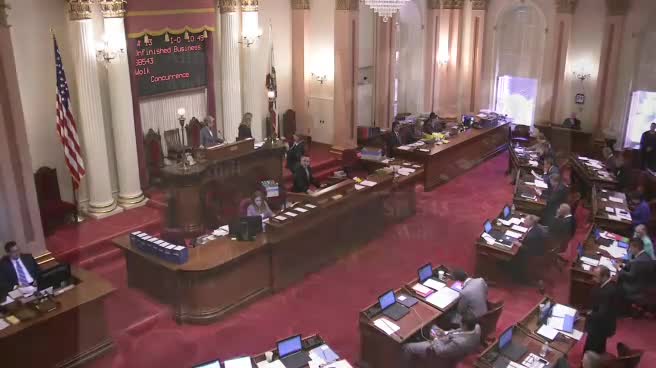
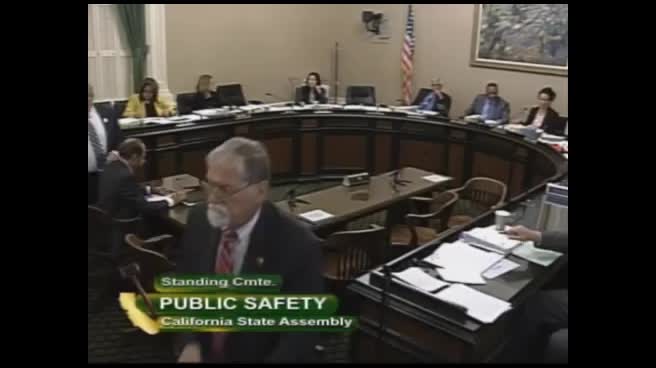
Bill Author

Bill Co-Author(s):
