SB 872: Local law enforcement: supplemental services.
- Session Year: 2015-2016
- House: Senate
- Latest Version Date: 2016-09-14
Existing law authorizes the county board of supervisors on behalf of the sheriff, and the legislative body of any city on behalf of the chief of police, to contract to provide supplemental law enforcement services to private individuals, private entities, and private corporations in specified circumstances and subject to certain conditions. Among those conditions are that the services shall be rendered by regularly appointed full-time peace officers, as defined, and that, prior to contracting for ongoing services to private corporations or private entities, the board of supervisors or legislative body, as applicable, shall discuss the contract and the legal requirements of those contracts at a duly noticed public hearing.
This bill would extend that authorization with respect to providing supplemental law enforcement services to private schools, private colleges, or private universities on an occasional or ongoing basis. The bill would authorize these services to be rendered by any category of peace officer, as specified. The bill would require, prior to contracting for these ongoing services to be provided to a private school, private college, or private university, the board of supervisors or legislative body, as applicable, to discuss the contract and the legal requirements of those contracts at a duly noticed public hearing. The bill would specify that certain public university and college police departments certified by the Commission on Peace Officer Standards and Training are not prevented from entering into agreements with private schools, private colleges, or private universities to provide law enforcement services.
Existing law authorizes the county board of supervisors on behalf of the sheriff, and the legislative body of any city on behalf of the chief of police, to contract to provide supplemental law enforcement services to private individuals, private entities, and private corporations in specified circumstances and subject to certain conditions. Among those conditions are that the services shall be rendered by regularly appointed full-time peace officers, as defined, and that, prior to contracting for ongoing services to private corporations or private entities, the board of supervisors or legislative body, as applicable, shall discuss the contract and the legal requirements of those contracts at a duly noticed public hearing.
This bill would extend that authorization with respect to providing supplemental law enforcement services to private schools, private colleges, or private universities on an occasional or ongoing basis. The bill would authorize these services to be rendered by any category of peace officer, as specified. The bill would require, prior to contracting for these ongoing services to be provided to a private school, private college, or private university, the board of supervisors or legislative body, as applicable, to discuss the contract and the legal requirements of those contracts at a duly noticed public hearing. The bill would specify that certain public university and college police departments certified by the Commission on Peace Officer and Standards and Training are not prevented from entering into agreements with private schools, private colleges, or private universities to provide law enforcement services.
Existing law authorizes the county board of supervisors on behalf of the sheriff, and the legislative body of any city on behalf of the chief of police, to contract to provide supplemental law enforcement services to private individuals, private entities, and private corporations in specified circumstances and subject to certain conditions. Among those conditions are that the services shall be rendered by regularly appointed full-time peace officers, as defined, and that, prior to contracting for ongoing services to private corporations or private entities, the board of supervisors or legislative body, as applicable, shall discuss the contract and the legal requirements of those contracts at a duly noticed public hearing.
This bill would extend that authorization with respect to providing supplemental law enforcement services to private schools, private colleges, or private universities on an occasional or ongoing basis. The bill would authorize these services to be rendered by any category of peace officer, as specified. The bill would require, prior to contracting for these ongoing services to be provided to a private school, private college, or private university, the board of supervisors or legislative body, as applicable, to discuss the contract and the legal requirements of those contracts at a duly noticed public hearing. The bill would specify that certain public university and college police departments certified by the Commission on Peace Officer and Standards Training are not prevented from entering into agreements with private schools, private colleges, or private universities to provide law enforcement services.
Existing law authorizes the county board of supervisors on behalf of the sheriff, and the legislative body of any city on behalf of the chief of police, to contract to provide supplemental law enforcement services to private individuals, private entities, and private corporations in specified circumstances and subject to certain conditions. Among those conditions are that, prior to contracting for ongoing services to private corporations or private entities, the board of supervisors or legislative body, as applicable, shall discuss the contract and the legal requirements of those contracts at a duly noticed public hearing.
This bill would extend that authorization with respect to providing supplemental law enforcement services to private schools, private colleges, or private universities on an occasional or ongoing basis. The bill would require, prior to contracting for these ongoing services to be provided to a private school, private college, or private university, the board of supervisors or legislative body, as applicable, to discuss the contract and the legal requirements of those contracts at a duly noticed public hearing.
(a)The board of supervisors of any county may contract on behalf of the sheriff of that county, and the legislative body of any city may contract on behalf of the chief of police of that city, to provide supplemental law enforcement services to:
(1)Private individuals or private entities to preserve the peace at special events or occurrences that happen on an occasional basis.
(2)Private nonprofit corporations that are recipients of federal, state, county, or local government low-income housing funds or grants to preserve the peace on an ongoing basis.
(3)Private entities at critical facilities on an occasional or ongoing basis. A critical facility means any building, structure, or complex that in the event of a disaster, whether natural or manmade, poses a threat to public safety, including, but not limited to, airports, oil refineries, and nuclear and conventional fuel powerplants.
(4)Private schools, private colleges, or private universities on an occasional or ongoing basis.
(b)Contracts entered into pursuant to this section shall provide for full reimbursement to the county or city of the actual costs of providing those services, as determined by the county auditor or auditor-controller, or by the city, as the case may be.
(c)(1)The services provided pursuant to a contract authorized pursuant to paragraphs (1), (2), and (3) of subdivision (a) shall be rendered by regularly appointed full-time peace officers, as defined in Section 830.1 of the Penal Code. For purposes of a contract authorized pursuant to paragraph (4) of subdivision (a), services may be rendered by any category of peace officer including reserve peace officers, as defined in paragraph (2) of subdivision (a) of Section 830.6 of the Penal Code, who are authorized to exercise the powers of a peace officer, as defined in Section 830.1 of the Penal Code, upon mutual agreement between the provider and the private school, private college, or private university.
(2)Notwithstanding paragraph (1), services provided in connection with special events or occurrences, as specified in paragraph (1) of subdivision (a), may be rendered by Level I reserve peace officers, as defined in paragraph (2) of subdivision (a) of Section 830.6 of the Penal Code, who are authorized to exercise the powers of a peace officer, as defined in Section 830.1 of the Penal Code, if there are no regularly appointed full-time peace officers available to fill the positions as required in the contract.
(d)Peace officer rates of pay shall be governed by a memorandum of understanding.
(e)A contract entered into pursuant to this section shall encompass only law enforcement duties and not services authorized to be provided by a private patrol operator, as defined in Section 7582.1 of the Business and Professions Code.
(f)Contracting for law enforcement services, as authorized by this section, shall not reduce the normal and regular ongoing service that the county, agency of the county, or city otherwise would provide.
(g)Prior to contracting for ongoing services under paragraph (2), (3), or (4) of subdivision (a), the board of supervisors or legislative body, as applicable, shall discuss the contract and the requirements of this section at a duly noticed public hearing.
(h)Nothing in this section shall prevent a police department appointed pursuant to either Section 72330, 89560, or 92600 of the Education Code, and certified by the Commission on Peace Officer Standards and Training pursuant to Section 13551 of the Penal Code, from entering into agreements with private schools, private colleges, or private universities to provide law enforcement services.
(a)The board of supervisors of any county may contract on behalf of the sheriff of that county, and the legislative body of any city may contract on behalf of the chief of police of that city, to provide supplemental law enforcement services to:
(1)Private individuals or private entities to preserve the peace at special events or occurrences that happen on an occasional basis.
(2)Private nonprofit corporations that are recipients of federal, state, county, or local government low-income housing funds or grants to preserve the peace on an ongoing basis.
(3)Private entities at critical facilities on an occasional or ongoing basis. A critical facility means any building, structure, or complex that in the event of a disaster, whether natural or manmade, poses a threat to public safety, including, but not limited to, airports, oil refineries, and nuclear and conventional fuel powerplants.
(4)Private schools, private colleges, or private universities on an occasional or ongoing basis.
(b)Contracts entered into pursuant to this section shall provide for full reimbursement to the county or city of the actual costs of providing those services, as determined by the county auditor or auditor-controller, or by the city, as the case may be.
(c)(1)The services provided pursuant to a contract authorized pursuant to paragraphs (1), (2), and (3) of subdivision (a) shall be rendered by regularly appointed full-time peace officers, as defined in Section 830.1 of the Penal Code. For purposes of a contract authorized pursuant to paragraph (4) of subdivision (a), services may be rendered by any category of peace officer including reserve peace officers officers, as defined in paragraph (2) of subdivision (a) of Section 830.6 of the Penal Code, who are authorized to exercise the powers of a peace officer, as defined in Section 830.1 of the Penal Code, upon mutual agreement between the provider and the private school, private college, or private university.
(2)Notwithstanding paragraph (1), services provided in connection with special events or occurrences, as specified in paragraph (1) of subdivision (a), may be rendered by Level I reserve peace officers, as defined in paragraph (2) of subdivision (a) of Section 830.6 of the Penal Code, who are authorized to exercise the powers of a peace officer, as defined in Section 830.1 of the Penal Code, if there are no regularly appointed full-time peace officers available to fill the positions as required in the contract.
(d)Peace officer rates of pay shall be governed by a memorandum of understanding.
(e)A contract entered into pursuant to this section shall encompass only law enforcement duties and not services authorized to be provided by a private patrol operator, as defined in Section 7582.1 of the Business and Professions Code.
(f)Contracting for law enforcement services, as authorized by this section, shall not reduce the normal and regular ongoing service that the county, agency of the county, or city otherwise would provide.
(g)Prior to contracting for ongoing services under paragraph (2), (3), or (4) of subdivision (a), the board of supervisors or legislative body, as applicable, shall discuss the contract and the requirements of this section at a duly noticed public hearing.
(h)Nothing in this section shall prevent a police department appointed pursuant to either Section 89560 of, or Section 92600 of, 72330, 89560, or 92600 of the Education Code Code, and certified by the Commission on Peace Officer and Standards and Training pursuant to Section 13551 of the Penal Code Code, from entering into agreements with private schools, private colleges, or private universities to provide law enforcement services.
(a)The board of supervisors of any county may contract on behalf of the sheriff of that county, and the legislative body of any city may contract on behalf of the chief of police of that city, to provide supplemental law enforcement services to:
(1)Private individuals or private entities to preserve the peace at special events or occurrences that happen on an occasional basis.
(2)Private nonprofit corporations that are recipients of federal, state, county, or local government low-income housing funds or grants to preserve the peace on an ongoing basis.
(3)Private entities at critical facilities on an occasional or ongoing basis. A critical facility means any building, structure, or complex that in the event of a disaster, whether natural or manmade, poses a threat to public safety, including, but not limited to, airports, oil refineries, and nuclear and conventional fuel powerplants.
(4)Private schools, private colleges, or private universities on an occasional or ongoing basis.
(b)Contracts entered into pursuant to this section shall provide for full reimbursement to the county or city of the actual costs of providing those services, as determined by the county auditor or auditor-controller, or by the city, as the case may be.
(c)(1)The services provided pursuant to this section a contract authorized pursuant to paragraphs (1), (2), and (3) of subdivision (a) shall be rendered by regularly appointed full-time peace officers, as defined in Section 830.1 of the Penal Code. For purposes of a contract authorized pursuant to paragraph (4) of subdivision (a), services may be rendered by any category of peace officer including reserve peace officers as defined in paragraph (2) of subdivision (a) of Section 830.6 of the Penal Code, who are authorized to exercise the powers of a peace officer, as defined in Section 830.1 of the Penal Code, upon mutual agreement between the provider and the private school, private college, or private university.
(2)Notwithstanding paragraph (1), services provided in connection with special events or occurrences, as specified in paragraph (1) of subdivision (a), may be rendered by Level I reserve peace officers, as defined in paragraph (2) of subdivision (a) of Section 830.6 of the Penal Code, who are authorized to exercise the powers of a peace officer, as defined in Section 830.1 of the Penal Code, if there are no regularly appointed full-time peace officers available to fill the positions as required in the contract.
(d)Peace officer rates of pay shall be governed by a memorandum of understanding.
(e)A contract entered into pursuant to this section shall encompass only law enforcement duties and not services authorized to be provided by a private patrol operator, as defined in Section 7582.1 of the Business and Professions Code.
(f)Contracting for law enforcement services, as authorized by this section, shall not reduce the normal and regular ongoing service that the county, agency of the county, or city otherwise would provide.
(g)Prior to contracting for ongoing services under paragraph (2), (3), or (4) of subdivision (a), the board of supervisors or legislative body, as applicable, shall discuss the contract and the requirements of this section at a duly noticed public hearing.
(h)Nothing in this section shall prevent a police department appointed pursuant to either Section 89560 of, or Section 92600 of, the Education Code and certified by the Commission on Peace Officer and Standards Training pursuant to Section 13551 of the Penal Code from entering into agreements with private schools, private colleges, or private universities to provide law enforcement services.
(a)The board of supervisors of any county may contract on behalf of the sheriff of that county, and the legislative body of any city may contract on behalf of the chief of police of that city, to provide supplemental law enforcement services to:
(1)Private individuals or private entities to preserve the peace at special events or occurrences that happen on an occasional basis.
(2)Private nonprofit corporations that are recipients of federal, state, county, or local government low-income housing funds or grants to preserve the peace on an ongoing basis.
(3)Private entities at critical facilities on an occasional or ongoing basis. A critical facility means any building, structure, or complex that in the event of a disaster, whether natural or manmade, poses a threat to public safety, including, but not limited to, airports, oil refineries, and nuclear and conventional fuel powerplants.
(4)Private schools, private colleges, or private universities on an occasional or ongoing basis.
(b)Contracts entered into pursuant to this section shall provide for full reimbursement to the county or city of the actual costs of providing those services, as determined by the county auditor or auditor-controller, or by the city, as the case may be.
(c)(1)The services provided pursuant to this section shall be rendered by regularly appointed full-time peace officers, as defined in Section 830.1 of the Penal Code.
(2)Notwithstanding paragraph (1), services provided in connection with special events or occurrences, as specified in paragraph (1) of subdivision (a), may be rendered by Level I reserve peace officers, as defined in paragraph (2) of subdivision (a) of Section 830.6 of the Penal Code, who are authorized to exercise the powers of a peace officer, as defined in Section 830.1 of the Penal Code, if there are no regularly appointed full-time peace officers available to fill the positions as required in the contract.
(d)Peace officer rates of pay shall be governed by a memorandum of understanding.
(e)A contract entered into pursuant to this section shall encompass only law enforcement duties and not services authorized to be provided by a private patrol operator, as defined in Section 7582.1 of the Business and Professions Code.
(f)Contracting for law enforcement services, as authorized by this section, shall not reduce the normal and regular ongoing service that the county, agency of the county, or city otherwise would provide.
(g)Prior to contracting for ongoing services under paragraph (2) or (3) (2), (3), or (4) of subdivision (a), the board of supervisors or legislative body, as applicable, shall discuss the contract and the requirements of this section at a duly noticed public hearing.
|
Date
|
Status
|
|---|---|
| Aug 4, 2016 | Read third time. Passed. (Ayes 76. Noes 0. Page 5714.) Ordered to the Senate. |
| Sep 14, 2016 | Chaptered by Secretary of State. Chapter 362, Statutes of 2016. |
| Sep 14, 2016 | Approved by the Governor. |
| Sep 8, 2016 | Enrolled and presented to the Governor at 5 p.m. |
| Aug 29, 2016 | Assembly amendments concurred in. (Ayes 39. Noes 0. Page 5475.) Ordered to engrossing and enrolling. |
| Aug 29, 2016 | Assembly amendments concurred in. (Ayes 38. Noes 0.) Ordered to engrossing and enrolling. |
| Aug 25, 2016 | Read third time. Passed. (Ayes 79. Noes 0. Page 6272.) Ordered to the Senate. |
| Aug 25, 2016 | Read third time. Passed. Ordered to the Senate. |
| Aug 25, 2016 | In Senate. Concurrence in Assembly amendments pending. |
| Aug 19, 2016 | Read third time and amended. (Ayes 73. Noes 0. Page 5975.) |
| Aug 19, 2016 | Read third time and amended. |
| Aug 19, 2016 | Ordered to third reading. |
| Aug 18, 2016 | Ordered to third reading. |
| Aug 18, 2016 | Action rescinded whereby the bill was read a third time, passed and ordered to the Senate. |
| Aug 11, 2016 | Ordered to the Assembly. |
| Aug 11, 2016 | In Assembly. Held at Desk. |
| Jan 14, 2016 | Introduced. Read first time. To Com. on RLS. for assignment. To print. |
| Aug 4, 2016 | Read third time. Passed. Ordered to the Senate. |
| Aug 4, 2016 | In Senate. Concurrence in Assembly amendments pending. |
| Aug 1, 2016 | Read second time. Ordered to third reading. |
| Jun 30, 2016 | From committee: Do pass. (Ayes 8. Noes 1.) (June 29). |
| May 19, 2016 | From committee with author's amendments. Read second time and amended. Re-referred to Com. on L. GOV. |
| Apr 28, 2016 | Referred to Com. on L. GOV. |
| Apr 7, 2016 | Read third time. Passed. (Ayes 38. Noes 0.) Ordered to the Assembly. |
| Apr 7, 2016 | Read third time. Passed. (Ayes 38. Noes 0. Page 3429.) Ordered to the Assembly. |
| Apr 7, 2016 | In Assembly. Read first time. Held at Desk. |
| Apr 6, 2016 | Read second time. Ordered to third reading. |
| Apr 5, 2016 | From committee: Do pass. (Ayes 7. Noes 0.) (April 5). |
| Apr 5, 2016 | From committee: Do pass. (Ayes 7. Noes 0. Page 3395.) (April 5). |
| Mar 15, 2016 | Set for hearing April 5. |
| Jan 28, 2016 | Referred to Com. on PUB. S. |
| Jan 15, 2016 | From printer. May be acted upon on or after February 14. |
|
Date
|
Description
|
Location
|
Votes
|
|
|---|---|---|---|---|
| Aug 29, 2016 | Unfinished Business SB872 Hall Concurrence | Senate Floor |
Passed |
|
| Aug 25, 2016 | SB 872 Hall Senate Third Reading By BLOOM | Assembly Floor |
Passed |
|
| Aug 19, 2016 | SB 872 Hall Senate Third Reading Amendment Set #1 | Assembly Floor |
Passed |
|
| Aug 4, 2016 | SB 872 Hall Senate Third Reading By BLOOM | Assembly Floor |
Passed |
|
| Jun 29, 2016 | Do pass. | Assembly Standing Committee on Local Government |
Passed |
|
| Apr 7, 2016 | Senate 3rd Reading SB872 Hall | Senate Floor |
Passed |
|
| Apr 5, 2016 | Do pass | Senate Standing Committee on Public Safety |
Passed |
This list shows positions taken on this bill by organizations on the date displayed, which is linked to the original source.
Positions by individuals are not included.
|
Organization
|
Position
|
Date
|
|---|---|---|
| Association For Los Angeles Deputy Sheriffs | ** Support | Jun 29, 2016 |
| Association of Independent California Colleges and Universities | ** Against | Aug 25, 2016 |
| California Association Of Code Enforcement Officers | ** Support | Jun 29, 2016 |
| California Association Of Private School Organizations | ** Support | Jun 29, 2016 |
| California College And University Police Chiefs Association | ** Support | Jun 29, 2016 |
| California Police Chiefs Association | ** Support | Aug 29, 2016 |
| California State Association Of Counties | ** Support | Jun 29, 2016 |
| California State Sheriffs' Association | ** Support | Aug 29, 2016 |
| Los Angeles County Professional Peace Officers Association | ** Support | Jun 29, 2016 |
| Los Angeles County Sheriff | ** Support | Aug 29, 2016 |
| Los Angeles County Sheriff's Department [SPONSOR] | ** Support | Jun 29, 2016 |
| Los Angeles Police Protective League | ** Support | Jun 29, 2016 |
Office of Senate Floor Analyses (916) 651-1520 Fax: (916) 327-4478 | SB |
UNFINISHED BUSINESS
Bill No: SB 872
:
SENATE PUBLIC SAFETY COMMITTEE: 7-0, 4/5/16
AYES: Hancock, Anderson, Glazer, Leno, Liu, Monning, Stone
SENATE FLOOR: 38-0, 4/7/16
AYES: Allen, Anderson, Bates, Beall, Berryhill, Block, Cannella, De León, Fuller, Gaines, Galgiani, Glazer, Hall, Hancock, Hernandez, Hertzberg, Hill, Hueso, Huff, Lara, Leno, Leyva, Liu, McGuire, Mendoza, Mitchell, Monning, Moorlach, Morrell, Nguyen, Nielsen, Pan, Pavley, Roth, Stone, Vidak, Wieckowski, Wolk
NO VOTE RECORDED: Jackson, Runner
ASSEMBLY FLOOR: 79-0, 8/25/16 - See last page for vote
SOURCE: Los Angeles County Sheriff
DIGEST: This bill allows the board of supervisors of any county to contract on behalf of the sheriff of that county, and the legislative body of any city to contract on behalf of the chief of police of that city, to provide supplemental law enforcement services to private schools, private colleges, and private universities on an occasional or ongoing basis.
Assembly Amendments state that services may be rendered by any category of peace officer including reserve peace officers. The amendments additionally provide that nothing in this bill shall prevent a University of California (UC) or California State University (CSU) police department that has been certified by the Commission on Peace Officer Standards and Training (Commission), as specified, from entering into agreements with private schools, private colleges, or private universities to provide law enforcement services.
Existing law:
- Provides that a board of supervisors of any county may contract on behalf of the sheriff of that county, and the legislative body of any city may contract on behalf of the chief of police of that city, to provide supplemental law enforcement services to:
- Private individuals or private entities to preserve the peace at special events or occurrences that happen on an occasional basis.
- Private nonprofit corporations that are recipients of federal, state, county, or local government low-income housing funds or grants to preserve the peace on an ongoing basis.
- Private entities at critical facilities on an occasional or ongoing basis. A “critical facility” means any building, structure, or complex that in the event of a disaster, whether natural or manmade, poses a threat to public safety, including, but not limited to, airports, oil refineries, and nuclear and conventional fuel power plants. (Government Code § 53069.8(a).)
- Provides that contracts entered into must provide for full reimbursement to the county or city of the actual costs of providing those services, as determined by the county auditor or auditor-controller, or by the city, as the case may be. (Government Code § 53069.8(b).)
- Requires that the services provided pursuant to any such contract be rendered by regularly appointed full-time peace officers, as defined in Section 830.1 of the Penal Code. Services provided in connection with special events or occurrences, as specified, may be rendered by Level I reserve peace officers, as defined in paragraph (2) of subdivision (a) of Section 830.6 of the Penal Code, who are authorized to exercise the powers of a peace officer, as defined in Section 830.1 of the Penal Code, if there are no regularly appointed full-time peace officers available to fill the positions as required in the contract. (Government Code § 53069.8(c).)
- Requires that peace officer rates of pay be governed by a memorandum of understanding. (Government Code § 53069.8(d).)
- Requires that any such contract encompass only law enforcement duties and not services authorized to be provided by a private patrol operator, as defined. (Government § Code 53069.8(e).)
- Requires that contracts for law enforcement services, as authorized by this section, not reduce the normal and regular ongoing service that the county, agency of the county, or city otherwise would provide. (Government Code § 53069.8(f).)
- Provides that prior to contracting for ongoing services the board of supervisors or legislative body, as applicable, must discuss the contract and the requirements of this section at a duly noticed public hearing. (Government Code § 53069.8(g).)
This bill allows the board of supervisors of any county to contract on behalf of the sheriff of that county, and the legislative body of any city to contract on behalf of the chief of police of that city, to provide supplemental law enforcement services to private schools, private colleges, and private universities on an occasional or ongoing basis.
Background
Prior to the 1982 enactment of Government Code Section 26228 by Chapter 953, Statutes of 1982, there was no explicit authority for a county to contract with private individuals or entities to provide supplemental law enforcement services. Section 26228 provided that authority for contracts at special events and occurrences that happen on an occasional basis. It appears that the authority was added for the Los Angeles Summer Olympics. Section 26288 was renumbered to the existing section 53069.8 by Chapter 307, Statutes of 1986.
SB 1024 (Johnston) was introduced in 1995 to add a new Government Code section 53069.82 that would have allowed contracts with private parties to preserve the peace at private business premises. A vote never occurred on SB 1024 in the Assembly Committee on Local Government. The Senate Committee on Criminal Procedure analysis of SB 1024 - hearing date: April 25, 1995 - contained the following in Comment #1:
At the request of constituents, last year the author asked Legislative Counsel whether or not a county is authorized to enter into a contract with private business to administer an auxiliary security services delivery system. The facts presented included off-duty deputy sheriffs engaging in private employment as security guards or patrolpersons on a compensated basis with the private employer directly reimbursing the off-duty deputies and all other costs being borne by the county.
Legislative Counsel opined: no.
The same conclusion was reached in Attorney General’s Opinion No. 84-204 (July 19, l985) which found that “Neither cities, counties, nor their heads of law enforcement have authority to contract with private parties for regular ongoing private security services.”
Government Code Section 53069.8 was then amended in 2002 (SB 131, Margett, Chapter 224, Statutes of 2002) to: (1) add two new groups with whom local governments may enter contracts for supplemental services to be provided, and (2) expand the permissible scope of the contracts to allow that such services may be provided on an ongoing basis. Specifically, SB 1313 permitted contracts with “private nonprofit corporations that are recipients of federal, state, county, or local government low-income housing funds or grants to preserve the peace on an ongoing basis” as well as with private entities at critical facilities on an occasional or ongoing basis. A “critical facility” is defined as any building, structure, or complex that in the event of a disaster, whether natural or manmade, poses a threat to public safety, including, but not limited to, airports, oil refineries, and nuclear and conventional fuel power plants.
Comments
This bill allows payment under contract for law enforcement services that a local sheriff or city police chief could otherwise provide as a matter of regular policing. Specially, this bill allows law enforcement to contract to provide services to private schools, private colleges, and private universities on an occasional or ongoing basis. However, the local police agency would still have the responsibility to provide police services, with or without a supplemental contract.
Given that 58 counties and 482 cities in California would be able to use section 53069.8 as it is proposed to be amended, is it clear in what circumstances this bill might be utilized? Is it possible that there is at least some risk that this bill may lead to law enforcement decisions on the basis of the ability to pay for at least some sites and locations? This bill adds a new circumstance where contracts may be established for services provided on an ongoing basis. Is there realistically any way for those services to be provided on an ongoing basis without impacting “the normal and regular ongoing services” as is prohibited in the existing statute in subdivision (f)?
FISCAL EFFECT: Appropriation: Fiscal Com.: Local:
Los Angeles County Sheriff (source)
California Police Chiefs Association
California State Sheriffs’ Association
OPPOSITION: (Verified 8/26/16)
None received
ARGUMENTS IN SUPPORT: The Los Angeles County Sheriff states:
Schools, colleges and universities throughout the United States have seen a tragic increase in acts of violence and domestic terrorism on campus. In 2015 alone, there were 23 shootings on college campuses across the country, causing the deaths of seventeen people and injury to another 27.
SB 872 would authorize a local law enforcement agency to enter into contracts with private schools, colleges, and universities to provide law enforcement services. Just as local law enforcement can currently contract with public school districts, colleges, and universities to provide on campus security services, SB 872 will allow a private school, college, or university, should they desire, to also benefit from the professionalism and skill offered by trained law enforcement officers.
SB 872 ensures those trained law enforcement officers, not untrained civilians, are able to promptly address an act of violence or domestic terrorism on a school campus and is a responsible step to keep students, faculty, staff and the public safe while on a school or university campus.
ASSEMBLY FLOOR: 79-0, 8/25/16
AYES: Achadjian, Alejo, Travis Allen, Arambula, Atkins, Baker, Bigelow, Bloom, Bonilla, Bonta, Brough, Brown, Calderon, Campos, Chang, Chau, Chávez, Chiu, Chu, Cooley, Cooper, Dababneh, Dahle, Daly, Dodd, Eggman, Frazier, Beth Gaines, Gallagher, Cristina Garcia, Eduardo Garcia, Gatto, Gipson, Gomez, Gonzalez, Gordon, Gray, Grove, Hadley, Harper, Roger Hernández, Holden, Irwin, Jones, Jones-Sawyer, Kim, Lackey, Levine, Linder, Lopez, Low, Maienschein, Mathis, Mayes, McCarty, Medina, Melendez, Mullin, Nazarian, Obernolte, O'Donnell, Olsen, Patterson, Quirk, Ridley-Thomas, Rodriguez, Salas, Santiago, Steinorth, Mark Stone, Thurmond, Ting, Wagner, Waldron, Weber, Wilk, Williams, Wood, Rendon
NO VOTE RECORDED: Burke
Prepared by: Jessica Devencenzi / PUB. S. /
8/26/16 8:22:39
**** END ****
SENATE THIRD READING
STR Bill Id:SB 872
Author:(Hall)
As Amended Ver:August 19, 2016
Majority vote
SENATE VOTE: 38-0
Committee | Votes | Ayes | Noes |
Local Government | 8-1 | Waldron, Alejo, Bonilla, Chiu, Cooley, Beth Gaines, Gordon, Linder | Eggman |
SUMMARY: Allows counties or cities to provide supplemental law enforcement services to private schools, colleges or universities. Specifically, this bill:
- Allows the board of supervisors (board) of any county to contract on behalf of the sheriff of that county, and the legislative body of any city to contract on behalf of the chief of police of that city, to provide supplemental law enforcement services to private schools, private colleges, or private universities on an occasional or ongoing basis.
- Allows these services to be rendered by any category of peace officer, including reserve peace officers, who are authorized to exercise the powers of a peace officer, as specified, upon mutual agreement between the provider and the private school, private college, or private university.
- Applies to these contracts existing provisions of law governing supplemental law enforcement services that counties and cities may provide to other private individuals and entities.
- Provides that nothing in this bill shall prevent a community college, University of California (UC) or California State University (CSU) police department that has been certified by the Commission on Peace Officer Standards and Training (Commission), as specified, from entering into agreements with private schools, private colleges, or private universities to provide law enforcement services.
EXISTING LAW:
- Allows a county board to contract on behalf of the sheriff of that county, and the legislative body of a city to contract on behalf of the chief of police of that city, to provide supplemental law enforcement services to the following private entities for the following purposes:
- Private individuals or private entities to preserve the peace at special events or occurrences that happen on an occasional basis;
- Private nonprofit corporations that are recipients of federal, state, county, or local government low-income housing funds or grants to preserve the peace on an ongoing basis; and,
- Private entities at critical facilities on an occasional or ongoing basis. A "critical facility" means any building, structure, or complex that, in the event of a disaster, poses a threat to public safety, including, but not limited to, airports, oil refineries, and nuclear and conventional fuel power plants.
- Requires these contracts to provide for full reimbursement to the county or city of the actual costs of providing those services, as determined by the county auditor or auditor-controller, or by the city.
- Generally requires services provided pursuant to these contracts to be rendered by regularly appointed full-time peace officers, as specified. However, services provided in connection with special events or occurrences that happen on an occasional basis may be rendered by Level I reserve peace officers who are authorized to exercise the powers of a peace officer, as specified, if there are no regularly appointed full-time peace officers available to fill the positions as required in the contract.
- Requires peace officer rates of pay under these contracts to be governed by a memorandum of understanding (MOU).
- Requires these contracts to encompass only law enforcement duties and not services authorized to be provided by a private patrol operator, as defined.
- Prohibits these contracts from reducing the normal and regular ongoing service that the county, agency of the county, or city otherwise would provide.
- Requires, prior to contracting for these services, the board or legislative body to discuss the contract and the requirements governing it at a duly noticed public hearing.
- Allows the UC and the CSU to create their own police departments, designates employees of those departments as peace officers, and generally limits their authority to headquarters and campuses, including a one-mile radius of headquarters and campuses; other properties of each institution; and, any area of the state, provided that the primary duty of the peace officer is the enforcement of the law in the aforementioned areas.
- Creates the Commission to develop regulations and professional standards for the operation of law enforcement agencies, which shall serve as a basis for the uniform operation of law enforcement agencies throughout the state to best serve the interests of the people of this state.
- Defines categories of peace officers with varying levels of authority, duties, supervision and training.
FISCAL EFFECT: None
COMMENTS:
- Bill Summary. This bill allows counties or cities to provide supplemental law enforcement services to private schools, colleges or universities on an occasional or ongoing basis. These services can be rendered by any category of peace officer, including reserve peace officers, who are authorized to exercise the powers of a peace officer, upon mutual agreement between the provider and the private school, college, or university.
Before entering into a contract, a county board or a city legislative body must discuss the contract and the requirements that govern it at a duly noticed public hearing. This bill specifies that it does not prevent a community college, UC or CSU police department that has been certified by the Commission from entering into agreements with private schools, colleges, or universities to provide law enforcement services.
These contracts would generally have to abide by the requirements for supplemental law enforcement services that existing law allows counties and cities to provide to a limited set of private individuals and entities. This bill is sponsored by the Los Angeles County Sheriff's Department.
- Author's Statement. According to the author, "Schools, colleges and universities throughout the United States have seen a tragic increase in acts of violence and domestic terrorism on campus. In 2015 alone, there were 23 shootings on college campuses across the country that caused the deaths of 17 people and injured another 27. In response to these tragic events, some individuals have irresponsibly suggested that schools should arm faculty or administrative staff with guns as a line of defense on campus. Going even further, there has been a suggestion that students on college campuses should be allowed to openly carry loaded weapons. Such reckless decisions fly in the face of the intent of California's Gun Free School Zones and would only make school campuses less safe by increasing the number of firearms in the hands of untrained and unprepared individuals.
"SB 872 would authorize a local law enforcement agency to enter into contracts with private schools, colleges, and universities to provide law enforcement services. Just as local law enforcement can currently contract with public school districts, colleges, and universities to provide on campus security services, SB 872 will allow a private school, college, or university to also benefit from the professionalism and skill offered by trained law enforcement officers, should they desire."
- Background. Counties and cities were first granted authority to provide supplemental law enforcement services to private individuals or entities in 1982, when the Legislature allowed counties and cities to provide these services under contract to preserve the peace at special events or occurrences that happen on an occasional basis. This authority was apparently granted for the Los Angeles Summer Olympics. These services were required to be provided by regularly appointed full-time peace officers.
This authority was substantially expanded by SB 1313 (Margett), Chapter 224, Statutes of 2002. SB 1313 added two new private groups for which counties or cities may provide supplemental law enforcement services:
- Private nonprofit corporations that are recipients of federal, state, county, or local government low-income housing funds or grants; and,
- Private entities at critical facilities, defined as any building, structure, or complex that, in the event of a disaster, poses a threat to public safety, including, but not limited to, airports, oil refineries, and nuclear and conventional fuel power plants.
SB 1313 also allowed these two new categories of contracts to occur on an ongoing basis, rather than being limited to an occasional basis.
- Reserve Peace Officers. AB 2164 (La Suer), Chapter 87, Statutes of 2006, was introduced to allow all of these services to be provided by Level I reserve peace officers if no regularly appointed full-time peace officers were available to fill the positions as required by the contract. The rationale for AB 2164 was as follows: "Sheriff's and Police Departments throughout the State receive requests to provide supplemental law enforcement services such as providing services to special events like sporting events, carnivals, fairs, or other citywide events. Due in large part to a statewide shortage of full time peace officers, a number of these events are going understaffed or have to be cancelled due to manpower shortages. A quick remedy would be [to] allow reserve peace officers to work these special contracts."
The Senate Public Safety Committee, in its analysis of AB 2164, noted:
"This bill would increase the opportunities for local government to enter contracts 'to provide supplemental law enforcement services to private individuals or private entities' by allowing these supplemental services to be provided not only by full-time peace officers but also by Level I reserve peace officers. Given the 58 county boards and 477 cities in California who would be able to contract out the use of reserve officers under (SB 2164), is it clear in what circumstances this bill might be utilized? Is it possible that there is at least some risk that this bill is likely to lead to law enforcement decisions on the basis of the ability to pay for at least some sites and locations? Is there realistically any way for those services to be provided on an ongoing basis without impacting 'the normal and regular ongoing services' as is prohibited in the existing statute…?
"In an opinion letter issued in 1985, the Attorney General stated some of the policy concerns that arise from any public entity contracting to provide supplemental law enforcement services with private parties on a pay-as-you-go basis:
When the police act, then, they perform public governmental functions that are fundamental to the principal purpose of any representative government, to wit, the protection of the people. And when they act, they do so on behalf and in the name of the people. In short, they and other law enforcement agencies act as the people's representatives in the enforcement of the people's laws, and the duty they own in that regard is to the public generally (within a respective territorial jurisdiction) and not to any particular segment or person. An assault or theft works the same duty on the police whether the victim be prince or pauper. Thus while it is true that with finite resources a sheriff or chief of police can provide but a limited degree of protection from crime, the duty nonetheless remains to provide that degree, as appropriate, throughout the city or county without unjustifiably deploying protective services in one area at the expense of another.
The sale of police services is not only antithetical to the notion of a public law enforcement function, but it also violates sound public policy, expressed in Penal Code Section 70, subdivision (a), by making law enforcement services subservient to those who would pay for them. If the policeman when acting in an official capacity cannot be paid by the bank for arresting the bank robber – neither should the city be paid for posting the officer in front of the bank. The influence of such payments is as potentially corrupting on city or county officials deploying their police forces as it is on the actions of the individual officers, and time and again we have inveighed against it as providing fertile field for a possible conflict of interest. Inevitably too, such payments lead to the concentration of police services for those who make the payments and a diminution of police services for the rest of the community. The end result would be a system of law enforcement which could not rightly be called a public service. 68 Op. Atty. Gen. Cal. 175 (1985) (citations omitted.)
"Since the issuance of the Attorney General's Opinion in 1985, the authority granted to local governments to enter into contracts with private parties to provide 'supplemental police services' has been substantially expanded by SB 1313. This bill would result in a further expansion of that authority. Although the author's statement refers only to provision of these supplemental law enforcement services at 'special events like sporting events, carnivals, fairs, or other citywide events,'…the bill would also permit use of reserve peace officers to provide these services on an ongoing basis (for all types of private entities specified in existing law).
"Because these services may currently only be provided by full-time peace officers, there is, of necessity, some built-in limitation on the degree to which local governments can enter into these contracts due to the limited number of full-time peace officers available to be hired out. Allowing reserve peace officers to be utilized for these private contracts will substantially expand the ability of local governments to enter into such contracts. Members may wish to consider whether this practice is one that, while occasionally necessary, should not become commonplace and whether the risks of a conflict of interest, as identified in the Attorney General's opinion, are magnified by allowing the expansion of these services to include reserve peace officers."
AB 2164 was subsequently amended to allow the use of Level 1 reserve officers only for services provided in connection with special events or occurrences on an occasional basis.
- Policy Considerations. As noted above, existing law requires most contracts for supplemental law enforcement services to be met with regularly appointed full-time peace officers. There is one exception, which allows supplemental law enforcement services at special events or occurrences that happen on an occasional basis to be provided by Level 1 reserve peace officers, if no regularly appointed full-time peace officers are available. Contracts for ongoing services are limited to regularly appointed full-time peace officers. This bill allows contracted services at private schools, colleges and universities – which can be occasional or ongoing – to be rendered by any category peace officer, as long as the county or city and the private institution mutually agree. Given concerns raised by AB 2164 and the Attorney General's 1985 opinion, the Legislature may wish to consider whether contracting for supplemental law enforcement services for private entities should be expanded, and whether all categories of peace officers should be allowed to provide supplemental law enforcement services to private educational institutions.
- Arguments in Support. The Los Angeles County Sheriff's Department, sponsor of this measure, states, "In the wake of the recent tragic school shooting, more schools, colleges and universities are reviewing their school safety plans and are looking at ways to provide the best level of protection for our children. Due to this, schools, both public and private, have recently expressed interest in contracting with local law enforcement agencies for police services.
"SB 872 would…(allow) local law enforcement to contract with private schools, private colleges, or private universities in order to provide supplemental law enforcement services on an occasional or ongoing basis. SB 872 ensures that trained law enforcement officers, not untrained civilians, are able to promptly address an act of violence or domestic terrorism on a school campus and is a responsible step to keep students, faculty, staff and the public safe while on a school or university campus."
- Arguments of Concern. The California Association of Private School Organizations (CAPSO), which represents K-12 non-profit private educational institutions, writes, "We are concerned that the opportunity to offer law enforcement services through a contract can introduce a financial incentive that might induce a law enforcement agency to delay, reduce, or withhold the normal and regular ongoing services to which all Californians are entitled. Moreover, our Public Policy Committee is unaware of any CAPSO-affiliated private K-12 school that is currently seeking additional law enforcement services that are not already permissible under existing law."
Analysis Prepared by: Angela Mapp / L. GOV. / (916) 319-3958 FN: 0004325
Office of Senate Floor Analyses (916) 651-1520 Fax: (916) 327-4478 | SB |
UNFINISHED BUSINESS
Bill No: SB 872
:
SENATE PUBLIC SAFETY COMMITTEE: 7-0, 4/5/16
AYES: Hancock, Anderson, Glazer, Leno, Liu, Monning, Stone
SENATE FLOOR: 38-0, 4/7/16
AYES: Allen, Anderson, Bates, Beall, Berryhill, Block, Cannella, De León, Fuller, Gaines, Galgiani, Glazer, Hall, Hancock, Hernandez, Hertzberg, Hill, Hueso, Huff, Lara, Leno, Leyva, Liu, McGuire, Mendoza, Mitchell, Monning, Moorlach, Morrell, Nguyen, Nielsen, Pan, Pavley, Roth, Stone, Vidak, Wieckowski, Wolk
NO VOTE RECORDED: Jackson, Runner
ASSEMBLY FLOOR: 76-0, 8/4/16 - See last page for vote
SOURCE: Los Angeles County Sheriff
DIGEST: This bill allows the board of supervisors of any county to contract on behalf of the sheriff of that county, and the legislative body of any city to contract on behalf of the chief of police of that city, to provide supplemental law enforcement services to private schools, private colleges, and private universities on an occasional or ongoing basis.
Assembly Amendments state that services may be rendered by any category of peace officer including reserve peace officers. The amendments additionally provide that nothing in this bill shall prevent a University of California (UC) or California State University (CSU) police department that has been certified by the Commission on Peace Officer Standards and Training (Commission), as specified, from entering into agreements with private schools, private colleges, or private universities to provide law enforcement services.
Existing law:
- Provides that a board of supervisors of any county may contract on behalf of the sheriff of that county, and the legislative body of any city may contract on behalf of the chief of police of that city, to provide supplemental law enforcement services to:
- Private individuals or private entities to preserve the peace at special events or occurrences that happen on an occasional basis.
- Private nonprofit corporations that are recipients of federal, state, county, or local government low-income housing funds or grants to preserve the peace on an ongoing basis.
- Private entities at critical facilities on an occasional or ongoing basis. A “critical facility” means any building, structure, or complex that in the event of a disaster, whether natural or manmade, poses a threat to public safety, including, but not limited to, airports, oil refineries, and nuclear and conventional fuel power plants. (Government Code § 53069.8(a).)
- Provides that contracts entered into must provide for full reimbursement to the county or city of the actual costs of providing those services, as determined by the county auditor or auditor-controller, or by the city, as the case may be. (Government Code § 53069.8(b).)
- Requires that the services provided pursuant to any such contract be rendered by regularly appointed full-time peace officers, as defined in Section 830.1 of the Penal Code. Services provided in connection with special events or occurrences, as specified, may be rendered by Level I reserve peace officers, as defined in paragraph (2) of subdivision (a) of Section 830.6 of the Penal Code, who are authorized to exercise the powers of a peace officer, as defined in Section 830.1 of the Penal Code, if there are no regularly appointed full-time peace officers available to fill the positions as required in the contract. (Government Code § 53069.8(c).)
- Requires that peace officer rates of pay be governed by a memorandum of understanding. (Government Code § 53069.8(d).)
- Requires that any such contract encompass only law enforcement duties and not services authorized to be provided by a private patrol operator, as defined. (Government § Code 53069.8(e).)
- Requires that contracts for law enforcement services, as authorized by this section, not reduce the normal and regular ongoing service that the county, agency of the county, or city otherwise would provide. (Government Code § 53069.8(f).)
- Provides that prior to contracting for ongoing services the board of supervisors or legislative body, as applicable, must discuss the contract and the requirements of this section at a duly noticed public hearing. (Government Code § 53069.8(g).)
This bill allows the board of supervisors of any county to contract on behalf of the sheriff of that county, and the legislative body of any city to contract on behalf of the chief of police of that city, to provide supplemental law enforcement services to private schools, private colleges, and private universities on an occasional or ongoing basis.
Background
Prior to the 1982 enactment of Government Code Section 26228 by Chapter 953, Statutes of 1982, there was no explicit authority for a county to contract with private individuals or entities to provide supplemental law enforcement services. Section 26228 provided that authority for contracts at special events and occurrences that happen on an occasional basis. It appears that the authority was added for the Los Angeles Summer Olympics. Section 26288 was renumbered to the existing section 53069.8 by Chapter 307, Statutes of 1986.
SB 1024 (Johnston) was introduced in 1995 to add a new Government Code section 53069.82 that would have allowed contracts with private parties to preserve the peace at private business premises. A vote never occurred on SB 1024 in the Assembly Committee on Local Government. The Senate Committee on Criminal Procedure analysis of SB 1024 - hearing date: April 25, 1995 - contained the following in Comment #1:
At the request of constituents, last year the author asked Legislative Counsel whether or not a county is authorized to enter into a contract with private business to administer an auxiliary security services delivery system. The facts presented included off-duty deputy sheriffs engaging in private employment as security guards or patrolpersons on a compensated basis with the private employer directly reimbursing the off-duty deputies and all other costs being borne by the county.
Legislative Counsel opined: no.
The same conclusion was reached in Attorney General’s Opinion No. 84-204 (July 19, l985) which found that “Neither cities, counties, nor their heads of law enforcement have authority to contract with private parties for regular ongoing private security services.”
Government Code Section 53069.8 was then amended in 2002 (SB 131, Margett, Chapter 224, Statutes of 2002) to: (1) add two new groups with whom local governments may enter contracts for supplemental services to be provided, and (2) expand the permissible scope of the contracts to allow that such services may be provided on an ongoing basis. Specifically, SB 1313 permitted contracts with “private nonprofit corporations that are recipients of federal, state, county, or local government low-income housing funds or grants to preserve the peace on an ongoing basis” as well as with private entities at critical facilities on an occasional or ongoing basis. A “critical facility” is defined as any building, structure, or complex that in the event of a disaster, whether natural or manmade, poses a threat to public safety, including, but not limited to, airports, oil refineries, and nuclear and conventional fuel power plants.
Comments
This bill allows payment under contract for law enforcement services that a local sheriff or city police chief could otherwise provide as a matter of regular policing. Specially, this bill allows law enforcement to contract to provide services to private schools, private colleges, and private universities on an occasional or ongoing basis. However, the local police agency would still have the responsibility to provide police services, with or without a supplemental contract.
Given that 58 counties and 482 cities in California would be able to use section 53069.8 as it is proposed to be amended, is it clear in what circumstances this bill might be utilized? Is it possible that there is at least some risk that this bill may lead to law enforcement decisions on the basis of the ability to pay for at least some sites and locations? This bill adds a new circumstance where contracts may be established for services provided on an ongoing basis. Is there realistically any way for those services to be provided on an ongoing basis without impacting “the normal and regular ongoing services” as is prohibited in the existing statute in subdivision (f)?
FISCAL EFFECT: Appropriation: Fiscal Com.: Local:
Los Angeles County Sheriff (source)
California Police Chiefs Association
California State Sheriffs’ Association
Association of Independent California Colleges and Universities
ARGUMENTS IN SUPPORT: The Los Angeles County Sheriff states:
Schools, colleges and universities throughout the United States have seen a tragic increase in acts of violence and domestic terrorism on campus. In 2015 alone, there were 23 shootings on college campuses across the country, causing the deaths of seventeen people and injury to another 27.
SB 872 would authorize a local law enforcement agency to enter into contracts with private schools, colleges, and universities to provide law enforcement services. Just as local law enforcement can currently contract with public school districts, colleges, and universities to provide on campus security services, SB 872 will allow a private school, college, or university, should they desire, to also benefit from the professionalism and skill offered by trained law enforcement officers.
SB 872 ensures those trained law enforcement officers, not untrained civilians, are able to promptly address an act of violence or domestic terrorism on a school campus and is a responsible step to keep students, faculty, staff and the public safe while on a school or university campus.
ARGUMENTS IN OPPOSITION: The Association of Independent California Colleges and Universities states:
I am writing to express our opposition to your Senate Bill (SB) 872. While we greatly appreciate your concern for the safety of students and campuses, and the support our local law enforcement agencies provide higher education institutions, we believe this legislation would create unnecessary confusion for our institutions that already have agreements with their local law enforcement agencies.
California’s independent, nonprofit higher education institutions operate under Memorandums of Understanding, pursuant to current penal codes, with their local police or sheriff’s departments that allow them varying degrees of responsibilities, depending on the needs of the campus and the agreement of their local law enforcement agency. Our campuses, and their respective agencies, work closely on these MOUs and they work well for our institutions. We are not aware of any campuses who wish to use their local law enforcement agency for full-time enforcement in a manner that is consistent with the intent of this bill.
Ultimately, we are very concerned that this legislation would create unnecessary confusion for our institutions and local law enforcement agencies regarding their current MOUs and the services that are already provided to and by campuses. For these reasons, we must respectfully oppose SB 872.
ASSEMBLY FLOOR: 76-0, 8/4/16
AYES: Achadjian, Alejo, Travis Allen, Arambula, Atkins, Baker, Bigelow, Bloom, Bonilla, Bonta, Brough, Brown, Burke, Calderon, Campos, Chang, Chau, Chiu, Chu, Cooper, Dababneh, Dahle, Daly, Dodd, Eggman, Frazier, Beth Gaines, Gallagher, Cristina Garcia, Eduardo Garcia, Gatto, Gipson, Gomez, Gonzalez, Gordon, Gray, Grove, Hadley, Harper, Holden, Irwin, Jones, Jones-Sawyer, Kim, Lackey, Levine, Lopez, Low, Maienschein, Mathis, Mayes, McCarty, Medina, Melendez, Mullin, Nazarian, Obernolte, O'Donnell, Olsen, Patterson, Quirk, Ridley-Thomas, Rodriguez, Salas, Santiago, Steinorth, Mark Stone, Thurmond, Ting, Wagner, Waldron, Weber, Wilk, Williams, Wood, Rendon
NO VOTE RECORDED: Chávez, Cooley, Roger Hernández, Linder
8/5/16 14:52:39
**** END ****
SENATE THIRD READING
STR Bill Id:SB 872
Author:(Hall)
As Amended Ver:May 19, 2016
Majority vote
SENATE VOTE: 38-0
Committee | Votes | Ayes | Noes |
Local Government | 8-1 | Waldron, Alejo, Bonilla, Chiu, Cooley, Beth Gaines, Gordon, Linder | Eggman |
SUMMARY: Allows counties or cities to provide supplemental law enforcement services to private schools, colleges or universities. Specifically, this bill:
- Allows the board of supervisors (board) of any county to contract on behalf of the sheriff of that county, and the legislative body of any city to contract on behalf of the chief of police of that city, to provide supplemental law enforcement services to private schools, private colleges, or private universities on an occasional or ongoing basis.
- Allows these services to be rendered by any category of peace officer, including reserve peace officers, who are authorized to exercise the powers of a peace officer, as specified, upon mutual agreement between the provider and the private school, private college, or private university.
- Applies to these contracts existing provisions of law governing supplemental law enforcement services that counties and cities may provide to other private individuals and entities.
- Provides that nothing in this bill shall prevent a University of California (UC) or California State University (CSU) police department that has been certified by the Commission on Peace Officer Standards and Training (Commission), as specified, from entering into agreements with private schools, private colleges, or private universities to provide law enforcement services.
EXISTING LAW:
- Allows a county board to contract on behalf of the sheriff of that county, and the legislative body of a city to contract on behalf of the chief of police of that city, to provide supplemental law enforcement services to the following private entities for the following purposes:
- Private individuals or private entities to preserve the peace at special events or occurrences that happen on an occasional basis;
- Private nonprofit corporations that are recipients of federal, state, county, or local government low-income housing funds or grants to preserve the peace on an ongoing basis; and,
- Private entities at critical facilities on an occasional or ongoing basis. A "critical facility" means any building, structure, or complex that, in the event of a disaster, poses a threat to public safety, including, but not limited to, airports, oil refineries, and nuclear and conventional fuel power plants.
- Requires these contracts to provide for full reimbursement to the county or city of the actual costs of providing those services, as determined by the county auditor or auditor-controller, or by the city.
- Generally requires services provided pursuant to these contracts to be rendered by regularly appointed full-time peace officers, as specified. However, services provided in connection with special events or occurrences that happen on an occasional basis may be rendered by Level I reserve peace officers who are authorized to exercise the powers of a peace officer, as specified, if there are no regularly appointed full-time peace officers available to fill the positions as required in the contract.
- Requires peace officer rates of pay under these contracts to be governed by a memorandum of understanding (MOU).
- Requires these contracts to encompass only law enforcement duties and not services authorized to be provided by a private patrol operator, as defined.
- Prohibits these contracts from reducing the normal and regular ongoing service that the county, agency of the county, or city otherwise would provide.
- Requires, prior to contracting for these services, the board or legislative body to discuss the contract and the requirements governing it at a duly noticed public hearing.
- Allows the UC and the CSU to create their own police departments, designates employees of those departments as peace officers, and generally limits their authority to headquarters and campuses, including a one-mile radius of headquarters and campuses; other properties of each institution; and, any area of the state, provided that the primary duty of the peace officer is the enforcement of the law in the aforementioned areas.
- Creates the Commission to develop regulations and professional standards for the operation of law enforcement agencies, which shall serve as a basis for the uniform operation of law enforcement agencies throughout the state to best serve the interests of the people of this state.
- Defines categories of peace officers with varying levels of authority, duties, supervision and training.
FISCAL EFFECT: None
COMMENTS:
- Bill Summary. This bill allows counties or cities to provide supplemental law enforcement services to private schools, colleges or universities on an occasional or ongoing basis. These services can be rendered by any category of peace officer, including reserve peace officers, who are authorized to exercise the powers of a peace officer, upon mutual agreement between the provider and the private school, college, or university.
Before entering into a contract, a county board or a city legislative body must discuss the contract and the requirements that govern it at a duly noticed public hearing. The bill specifies that it does not prevent a UC or CSU police department that has been certified by the Commission from entering into agreements with private schools, colleges, or universities to provide law enforcement services.
These contracts would generally have to abide by the requirements for supplemental law enforcement services that existing law allows counties and cities to provide to a limited set of private individuals and entities. This bill is sponsored by the Los Angeles County Sheriff's Department.
- Author's Statement. According to the author, "Schools, colleges and universities throughout the United States have seen a tragic increase in acts of violence and domestic terrorism on campus. In 2015 alone, there were 23 shootings on college campuses across the country that caused the deaths of 17 people and injured another 27. In response to these tragic events, some individuals have irresponsibly suggested that schools should arm faculty or administrative staff with guns as a line of defense on campus. Going even further, there has been a suggestion that students on college campuses should be allowed to openly carry loaded weapons. Such reckless decisions fly in the face of the intent of California's Gun Free School Zones and would only make school campuses less safe by increasing the number of firearms in the hands of untrained and unprepared individuals.
"SB 872 would authorize a local law enforcement agency to enter into contracts with private schools, colleges, and universities to provide law enforcement services. Just as local law enforcement can currently contract with public school districts, colleges, and universities to provide on campus security services, SB 872 will allow a private school, college, or university to also benefit from the professionalism and skill offered by trained law enforcement officers, should they desire."
- Background. Counties and cities were first granted authority to provide supplemental law enforcement services to private individuals or entities in 1982, when the Legislature allowed counties and cities to provide these services under contract to preserve the peace at special events or occurrences that happen on an occasional basis. This authority was apparently granted for the Los Angeles Summer Olympics. These services were required to be provided by regularly appointed full-time peace officers.
This authority was substantially expanded by SB 1313 (Margett), Chapter 224, Statutes of 2002. SB 1313 added two new private groups for which counties or cities may provide supplemental law enforcement services:
- Private nonprofit corporations that are recipients of federal, state, county, or local government low-income housing funds or grants; and,
- Private entities at critical facilities, defined as any building, structure, or complex that, in the event of a disaster, poses a threat to public safety, including, but not limited to, airports, oil refineries, and nuclear and conventional fuel power plants.
SB 1313 also allowed these two new categories of contracts to occur on an ongoing basis, rather than being limited to an occasional basis.
- Reserve Peace Officers. AB 2164 (La Suer), Chapter 87, Statutes of 2006, was introduced to allow all of these services to be provided by Level I reserve peace officers if no regularly appointed full-time peace officers were available to fill the positions as required by the contract. The rationale for AB 2164 was as follows: "Sheriff's and Police Departments throughout the State receive requests to provide supplemental law enforcement services such as providing services to special events like sporting events, carnivals, fairs, or other citywide events. Due in large part to a statewide shortage of full time peace officers, a number of these events are going understaffed or have to be cancelled due to manpower shortages. A quick remedy would be [to] allow reserve peace officers to work these special contracts."
The Senate Public Safety Committee, in its analysis of AB 2164, noted:
"This bill would increase the opportunities for local government to enter contracts 'to provide supplemental law enforcement services to private individuals or private entities' by allowing these supplemental services to be provided not only by full-time peace officers but also by Level I reserve peace officers. Given the 58 county boards and 477 cities in California who would be able to contract out the use of reserve officers under (SB 2164), is it clear in what circumstances this bill might be utilized? Is it possible that there is at least some risk that this bill is likely to lead to law enforcement decisions on the basis of the ability to pay for at least some sites and locations? Is there realistically any way for those services to be provided on an ongoing basis without impacting 'the normal and regular ongoing services' as is prohibited in the existing statute…?
"In an opinion letter issued in 1985, the Attorney General stated some of the policy concerns that arise from any public entity contracting to provide supplemental law enforcement services with private parties on a pay-as-you-go basis:
When the police act, then, they perform public governmental functions that are fundamental to the principal purpose of any representative government, to wit, the protection of the people. And when they act, they do so on behalf and in the name of the people. In short, they and other law enforcement agencies act as the people's representatives in the enforcement of the people's laws, and the duty they own in that regard is to the public generally (within a respective territorial jurisdiction) and not to any particular segment or person. An assault or theft works the same duty on the police whether the victim be prince or pauper. Thus while it is true that with finite resources a sheriff or chief of police can provide but a limited degree of protection from crime, the duty nonetheless remains to provide that degree, as appropriate, throughout the city or county without unjustifiably deploying protective services in one area at the expense of another.
The sale of police services is not only antithetical to the notion of a public law enforcement function, but it also violates sound public policy, expressed in Penal Code Section 70, subdivision (a), by making law enforcement services subservient to those who would pay for them. If the policeman when acting in an official capacity cannot be paid by the bank for arresting the bank robber – neither should the city be paid for posting the officer in front of the bank. The influence of such payments is as potentially corrupting on city or county officials deploying their police forces as it is on the actions of the individual officers, and time and again we have inveighed against it as providing fertile field for a possible conflict of interest. Inevitably too, such payments lead to the concentration of police services for those who make the payments and a diminution of police services for the rest of the community. The end result would be a system of law enforcement which could not rightly be called a public service. 68 Op. Atty. Gen. Cal. 175 (1985) (citations omitted.)
"Since the issuance of the Attorney General's Opinion in 1985, the authority granted to local governments to enter into contracts with private parties to provide 'supplemental police services' has been substantially expanded by SB 1313. This bill would result in a further expansion of that authority. Although the author's statement refers only to provision of these supplemental law enforcement services at 'special events like sporting events, carnivals, fairs, or other citywide events,'…the bill would also permit use of reserve peace officers to provide these services on an ongoing basis (for all types of private entities specified in existing law).
"Because these services may currently only be provided by full-time peace officers, there is, of necessity, some built-in limitation on the degree to which local governments can enter into these contracts due to the limited number of full-time peace officers available to be hired out. Allowing reserve peace officers to be utilized for these private contracts will substantially expand the ability of local governments to enter into such contracts. Members may wish to consider whether this practice is one that, while occasionally necessary, should not become commonplace and whether the risks of a conflict of interest, as identified in the Attorney General's opinion, are magnified by allowing the expansion of these services to include reserve peace officers."
AB 2164 was subsequently amended to allow the use of Level 1 reserve officers only for services provided in connection with special events or occurrences on an occasional basis.
- Policy Considerations. As noted above, existing law requires most contracts for supplemental law enforcement services to be met with regularly appointed full-time peace officers. There is one exception, which allows supplemental law enforcement services at special events or occurrences that happen on an occasional basis to be provided by Level 1 reserve peace officers, if no regularly appointed full-time peace officers are available. Contracts for ongoing services are limited to regularly appointed full-time peace officers. This bill allows contracted services at private schools, colleges and universities – which can be occasional or ongoing – to be rendered by any category peace officer, as long as the county or city and the private institution mutually agree. Given concerns raised by AB 2164 and the Attorney General's 1985 opinion, the Legislature may wish to consider whether contracting for supplemental law enforcement services for private entities should be expanded, and whether all categories of peace officers should be allowed to provide supplemental law enforcement services to private educational institutions.
- Arguments in Support. The Los Angeles County Sheriff's Department, sponsor of this measure, states, "In the wake of the recent tragic school shooting, more schools, colleges and universities are reviewing their school safety plans and are looking at ways to provide the best level of protection for our children. Due to this, schools, both public and private, have recently expressed interest in contracting with local law enforcement agencies for police services.
"SB 872 would…(allow) local law enforcement to contract with private schools, private colleges, or private universities in order to provide supplemental law enforcement services on an occasional or ongoing basis. SB 872 ensures that trained law enforcement officers, not untrained civilians, are able to promptly address an act of violence or domestic terrorism on a school campus and is a responsible step to keep students, faculty, staff and the public safe while on a school or university campus."
- Arguments of Concern. The California Association of Private School Organizations (CAPSO), which represents K-12 non-profit private educational institutions, writes, "We are concerned that the opportunity to offer law enforcement services through a contract can introduce a financial incentive that might induce a law enforcement agency to delay, reduce, or withhold the normal and regular ongoing services to which all Californians are entitled. Moreover, our Public Policy Committee is unaware of any CAPSO-affiliated private K-12 school that is currently seeking additional law enforcement services that are not already permissible under existing law."
Analysis Prepared by: Angela Mapp / L. GOV. / (916) 319-3958 FN: 0003582
Date of Hearing: June 29, 2016
ASSEMBLY COMMITTEE ON LOCAL GOVERNMENT
Susan Talamantes Eggman, Chair
SBPCA Bill Id:SB 872
Author:(Hall) – As Amended Ver:May 19, 2016
SENATE VOTE: 38-0
SUBJECT: Local law enforcement: supplemental services
SUMMARY: Allows counties or cities to provide supplemental law enforcement services to private schools, colleges or universities. Specifically, this bill:
- Allows the board of supervisors (board) of any county to contract on behalf of the sheriff of that county, and the legislative body of any city to contract on behalf of the chief of police of that city, to provide supplemental law enforcement services to private schools, private colleges, or private universities on an occasional or ongoing basis.
- Allows these services to be rendered by any category of peace officer, including reserve peace officers, who are authorized to exercise the powers of a peace officer, as specified, upon mutual agreement between the provider and the private school, private college, or private university.
- Applies to these contracts existing provisions of law governing supplemental law enforcement services that counties and cities may provide to other private individuals and entities.
- Provides that nothing in this bill shall prevent a University of California (UC) or California State University (CSU) police department that has been certified by the Commission on Peace Officer Standards and Training (Commission), as specified, from entering into agreements with private schools, private colleges, or private universities to provide law enforcement services.
EXISTING LAW:
- Allows a county board to contract on behalf of the sheriff of that county, and the legislative body of a city to contract on behalf of the chief of police of that city, to provide supplemental law enforcement services to the following private entities for the following purposes:
- Private individuals or private entities to preserve the peace at special events or occurrences that happen on an occasional basis;
- Private nonprofit corporations that are recipients of federal, state, county, or local government low-income housing funds or grants to preserve the peace on an ongoing basis; and,
- Private entities at critical facilities on an occasional or ongoing basis. A “critical facility” means any building, structure, or complex that, in the event of a disaster, poses a threat to public safety, including, but not limited to, airports, oil refineries, and nuclear and conventional fuel power plants.
- Requires these contracts to provide for full reimbursement to the county or city of the actual costs of providing those services, as determined by the county auditor or auditor-controller, or by the city.
- Generally requires services provided pursuant to these contracts to be rendered by regularly appointed full-time peace officers, as specified. However, services provided in connection with special events or occurrences that happen on an occasional basis may be rendered by Level I reserve peace officers who are authorized to exercise the powers of a peace officer, as specified, if there are no regularly appointed full-time peace officers available to fill the positions as required in the contract.
- Requires peace officer rates of pay under these contracts to be governed by a memorandum of understanding (MOU).
- Requires these contracts to encompass only law enforcement duties and not services authorized to be provided by a private patrol operator, as defined.
- Prohibits these contracts from reducing the normal and regular ongoing service that the county, agency of the county, or city otherwise would provide.
- Requires, prior to contracting for these services, the board or legislative body to discuss the contract and the requirements governing it at a duly noticed public hearing.
- Allows the UC and the CSU to create their own police departments, designates employees of those departments as peace officers, and generally limits their authority to headquarters and campuses, including a one-mile radius of headquarters and campuses; other properties of each institution; and, any area of the state, provided that the primary duty of the peace officer is the enforcement of the law in the aforementioned areas.
- Creates the Commission to develop regulations and professional standards for the operation of law enforcement agencies, which shall serve as a basis for the uniform operation of law enforcement agencies throughout the state to best serve the interests of the people of this state.
- Defines categories of peace officers with varying levels of authority, duties, supervision and training.
FISCAL EFFECT: None
COMMENTS:
- Bill Summary. This bill allows counties or cities to provide supplemental law enforcement services to private schools, colleges or universities on an occasional or ongoing basis. These services can be rendered by any category of peace officer, including reserve peace officers, who are authorized to exercise the powers of a peace officer, upon mutual agreement between the provider and the private school, college, or university.
Before entering into a contract, a county board or a city legislative body must discuss the contract and the requirements that govern it at a duly noticed public hearing. The bill specifies that it does not prevent a UC or CSU police department that has been certified by the Commission from entering into agreements with private schools, colleges, or universities to provide law enforcement services.
These contracts would generally have to abide by the requirements for supplemental law enforcement services that existing law allows counties and cities to provide to a limited set of private individuals and entities. This bill is sponsored by the Los Angeles County Sheriff's Department.
- Author's Statement. According to the author, "Schools, colleges and universities throughout the United States have seen a tragic increase in acts of violence and domestic terrorism on campus. In 2015 alone, there were 23 shootings on college campuses across the country that caused the deaths of 17 people and injured another 27. In response to these tragic events, some individuals have irresponsibly suggested that schools should arm faculty or administrative staff with guns as a line of defense on campus. Going even further, there has been a suggestion that students on college campuses should be allowed to openly carry loaded weapons. Such reckless decisions fly in the face of the intent of California’s Gun Free School Zones and would only make school campuses less safe by increasing the number of firearms in the hands of untrained and unprepared individuals.
"SB 872 would authorize a local law enforcement agency to enter into contracts with private schools, colleges, and universities to provide law enforcement services. Just as local law enforcement can currently contract with public school districts, colleges, and universities to provide on campus security services, SB 872 will allow a private school, college, or university to also benefit from the professionalism and skill offered by trained law enforcement officers, should they desire."
- Background. Counties and cities were first granted authority to provide supplemental law enforcement services to private individuals or entities in 1982, when the Legislature allowed counties and cities to provide these services under contract to preserve the peace at special events or occurrences that happen on an occasional basis. This authority was apparently granted for the Los Angeles Summer Olympics. These services were required to be provided by regularly appointed full-time peace officers.
This authority was substantially expanded by SB 1313 (Margett), Chapter 224, Statutes of 2002. SB 1313 added two new private groups for which counties or cities may provide supplemental law enforcement services:
- Private nonprofit corporations that are recipients of federal, state, county, or local government low-income housing funds or grants; and,
- Private entities at critical facilities, defined as any building, structure, or complex that, in the event of a disaster, poses a threat to public safety, including, but not limited to, airports, oil refineries, and nuclear and conventional fuel power plants.
SB 1313 also allowed these two new categories of contracts to occur on an ongoing basis, rather than being limited to an occasional basis.
- Reserve Peace Officers. AB 2164 (La Suer), Chapter 87, Statutes of 2006, was introduced to allow all of these services to be provided by Level I reserve peace officers if no regularly appointed full-time peace officers were available to fill the positions as required by the contract. The rationale for AB 2164 was as follows: "Sheriff's and Police Departments throughout the State receive requests to provide supplemental law enforcement services such as providing services to special events like sporting events, carnivals, fairs, or other citywide events. Due in large part to a statewide shortage of full time peace officers, a number of these events are going understaffed or have to be cancelled due to manpower shortages. A quick remedy would be [to] allow reserve peace officers to work these special contracts."
The Senate Public Safety Committee, in its analysis of AB 2164, noted:
"This bill would increase the opportunities for local government to enter contracts 'to provide supplemental law enforcement services to private individuals or private entities' by allowing these supplemental services to be provided not only by full-time peace officers but also by Level I reserve peace officers. Given the 58 county boards and 477 cities in California who would be able to contract out the use of reserve officers under (SB 2164), is it clear in what circumstances this bill might be utilized? Is it possible that there is at least some risk that this bill is likely to lead to law enforcement decisions on the basis of the ability to pay for at least some sites and locations? Is there realistically any way for those services to be provided on an ongoing basis without impacting 'the normal and regular ongoing services' as is prohibited in the existing statute…?
"In an opinion letter issued in 1985, the Attorney General stated some of the policy concerns that arise from any public entity contracting to provide supplemental law enforcement services with private parties on a pay-as-you-go basis:
When the police act, then, they perform public governmental functions that are fundamental to the principal purpose of any representative government, to wit, the protection of the people. And when they act, they do so on behalf and in the name of the people. In short, they and other law enforcement agencies act as the people's representatives in the enforcement of the people's laws, and the duty they own in that regard is to the public generally (within a respective territorial jurisdiction) and not to any particular segment or person. An assault or theft works the same duty on the police whether the victim be prince or pauper. Thus while it is true that with finite resources a sheriff or chief of police can provide but a limited degree of protection from crime, the duty nonetheless remains to provide that degree, as appropriate, throughout the city or county without unjustifiably deploying protective services in one area at the expense of another.
The sale of police services is not only antithetical to the notion of a public law enforcement function, but it also violates sound public policy, expressed in Penal Code Section 70, subdivision (a), by making law enforcement services subservient to those who would pay for them. If the policeman when acting in an official capacity cannot be paid by the bank for arresting the bank robber – neither should the city be paid for posting the officer in front of the bank. The influence of such payments is as potentially corrupting on city or county officials deploying their police forces as it is on the actions of the individual officers, and time and again we have inveighed against it as providing fertile field for a possible conflict of interest. Inevitably too, such payments lead to the concentration of police services for those who make the payments and a diminution of police services for the rest of the community. The end result would be a system of law enforcement which could not rightly be called a public service. 68 Op. Atty. Gen. Cal. 175 (1985) (citations omitted.)
"Since the issuance of the Attorney General's Opinion in 1985, the authority granted to local governments to enter into contracts with private parties to provide 'supplemental police services' has been substantially expanded by SB 1313. This bill would result in a further expansion of that authority. Although the author's statement refers only to provision of these supplemental law enforcement services at 'special events like sporting events, carnivals, fairs, or other citywide events,'…the bill would also permit use of reserve peace officers to provide these services on an ongoing basis (for all types of private entities specified in existing law).
"Because these services may currently only be provided by full-time peace officers, there is, of necessity, some built-in limitation on the degree to which local governments can enter into these contracts due to the limited number of full-time peace officers available to be hired out. Allowing reserve peace officers to be utilized for these private contracts will substantially expand the ability of local governments to enter into such contracts. Members may wish to consider whether this practice is one that, while occasionally necessary, should not become commonplace and whether the risks of a conflict of interest, as identified in the Attorney General's opinion, are magnified by allowing the expansion of these services to include reserve peace officers."
AB 2164 was subsequently amended to allow the use of Level 1 reserve officers only for services provided in connection with special events or occurrences on an occasional basis.
- Policy Considerations. As noted above, existing law requires most contracts for supplemental law enforcement services to be met with regularly appointed full-time peace officers. There is one exception, which allows supplemental law enforcement services at special events or occurrences that happen on an occasional basis to be provided by Level 1 reserve peace officers, if no regularly appointed full-time peace officers are available. Contracts for ongoing services are limited to regularly appointed full-time peace officers. This bill allows contracted services at private schools, colleges and universities – which can be occasional or ongoing – to be rendered by any category peace officer, as long as the county or city and the private institution mutually agree. Given concerns raised by AB 2164 and the Attorney General's 1985 opinion, the Committee may wish to consider whether contracting for supplemental law enforcement services for private entities should be expanded, and whether all categories of peace officers should be allowed to provide supplemental law enforcement services to private educational institutions.
- Arguments in Support. The Los Angeles County Sheriff's Department, sponsor of this measure, states, "In the wake of the recent tragic school shooting, more schools, colleges and universities are reviewing their school safety plans and are looking at ways to provide the best level of protection for our children. Due to this, schools, both public and private, have recently expressed interest in contracting with local law enforcement agencies for police services.
"SB 872 would…(allow) local law enforcement to contract with private schools, private colleges, or private universities in order to provide supplemental law enforcement services on an occasional or ongoing basis. SB 872 ensures that trained law enforcement officers, not untrained civilians, are able to promptly address an act of violence or domestic terrorism on a school campus and is a responsible step to keep students, faculty, staff and the public safe while on a school or university campus."
- Arguments of Concern. The California Association of Private School Organizations (CAPSO), which represents K-12 non-profit private educational institutions, writes, "We are concerned that the opportunity to offer law enforcement services through a contract can introduce a financial incentive that might induce a law enforcement agency to delay, reduce, or withhold the normal and regular ongoing services to which all Californians are entitled. Moreover, our Public Policy Committee is unaware of any CAPSO-affiliated private K-12 school that is currently seeking additional law enforcement services that are not already permissible under existing law."
REGISTERED SUPPORT / OPPOSITION:
Support
Los Angeles County Sheriff's Department [SPONSOR]
Association for Los Angeles Deputy Sheriffs
California Association of Code Enforcement Officers
California College and University Police Chiefs Association
California Narcotic Officers Association
California Police Chiefs Association
California State Association of Counties
California State Sheriffs' Association
Los Angeles County Professional Peace Officers Association
Los Angeles Police Protective League
Riverside Sheriffs Association
Concerns
California Association of Private School Organizations
Opposition
None on file
Analysis Prepared by: Angela Mapp / L. GOV. / (916) 319-3958
Office of Senate Floor Analyses (916) 651-1520 Fax: (916) 327-4478 | SB |
THIRD READING
Bill No: SB 872
:
SENATE PUBLIC SAFETY COMMITTEE: 7-0, 4/5/16
AYES: Hancock, Anderson, Glazer, Leno, Liu, Monning, Stone
SOURCE: Los Angeles County Sheriff
DIGEST: This bill allows the board of supervisors of any county to contract on behalf of the sheriff of that county, and the legislative body of any city to contract on behalf of the chief of police of that city, to provide supplemental law enforcement services to private schools, private colleges, and private universities on an occasional or ongoing basis.
Existing law:
- Provides that a board of supervisors of any county may contract on behalf of the sheriff of that county, and the legislative body of any city may contract on behalf of the chief of police of that city, to provide supplemental law enforcement services to:
- Private individuals or private entities to preserve the peace at special events or occurrences that happen on an occasional basis.
- Private nonprofit corporations that are recipients of federal, state, county, or local government low-income housing funds or grants to preserve the peace on an ongoing basis.
- Private entities at critical facilities on an occasional or ongoing basis. A “critical facility” means any building, structure, or complex that in the event of a disaster, whether natural or manmade, poses a threat to public safety, including, but not limited to, airports, oil refineries, and nuclear and conventional fuel powerplants. (Government Code § 53069.8(a).)
- Provides that contracts entered into must provide for full reimbursement to the county or city of the actual costs of providing those services, as determined by the county auditor or auditor-controller, or by the city, as the case may be. (Government Code § 53069.8(b).)
- Requires that the services provided pursuant to any such contract be rendered by regularly appointed full-time peace officers, as defined in Section 830.1 of the Penal Code. Services provided in connection with special events or occurrences, as specified, may be rendered by Level I reserve peace officers, as defined in paragraph (2) of subdivision (a) of Section 830.6 of the Penal Code, who are authorized to exercise the powers of a peace officer, as defined in Section 830.1 of the Penal Code, if there are no regularly appointed full-time peace officers available to fill the positions as required in the contract. (Government Code § 53069.8(c).)
- Requires that peace officer rates of pay be governed by a memorandum of understanding. (Government Code § 53069.8(d).)
- Requires that any such contract encompass only law enforcement duties and not services authorized to be provided by a private patrol operator, as defined. (Government § Code 53069.8(e).)
- Requires that contracts for law enforcement services, as authorized by this section, not reduce the normal and regular ongoing service that the county, agency of the county, or city otherwise would provide. (Government Code § 53069.8(f).)
- Provides that prior to contracting for ongoing services the board of supervisors or legislative body, as applicable, must discuss the contract and the requirements of this section at a duly noticed public hearing. (Government Code § 53069.8(g).)
This bill allows the board of supervisors of any county to contract on behalf of the sheriff of that county, and the legislative body of any city to contract on behalf of the chief of police of that city, to provide supplemental law enforcement services to private schools, private colleges, and private universities on an occasional or ongoing basis.
Background
Prior to the 1982 enactment of Government Code Section 26228 by Chapter 953, Statutes of 1982, there was no explicit authority for a county to contract with private individuals or entities to provide supplemental law enforcement services. Section 26228 provided that authority for contracts at special events and occurrences that happen on an occasional basis. It appears that the authority was added for the Los Angeles Summer Olympics. Section 26288 was renumbered to the existing section 53069.8 by Chapter 307, Statutes of 1986.
SB 1024 (Johnston) was introduced in 1995 to add a new Government Code section 53069.82 that would have allowed contracts with private parties to preserve the peace at private business premises. A vote never occurred on SB 1024 in the Assembly Committee on Local Government. The Senate Committee on Criminal Procedure analysis of SB 1024 - hearing date: April 25, 1995 - contained the following in Comment #1:
At the request of constituents, last year the author asked Legislative Counsel whether or not a county is authorized to enter into a contract with private business to administer an auxiliary security services delivery system. The facts presented included off-duty deputy sheriffs engaging in private employment as security guards or patrolpersons on a compensated basis with the private employer directly reimbursing the off-duty deputies and all other costs being borne by the county.
Legislative Counsel opined: no.
The same conclusion was reached in Attorney General’s Opinion No. 84-204 (July 19, l985) which found that “Neither cities, counties, nor their heads of law enforcement have authority to contract with private parties for regular ongoing private security services.”
Government Code Section 53069.8 was then amended in 2002 (SB 1313, Margett, Chapter 224, Statutes of 2002) to: (1) add two new groups with whom local governments may enter contracts for supplemental services to be provided, and (2) expand the permissible scope of the contracts to allow that such services may be provided on an ongoing basis. Specifically, SB 1313 permitted contracts with “private nonprofit corporations that are recipients of federal, state, county, or local government low-income housing funds or grants to preserve the peace on an ongoing basis” as well as with private entities at critical facilities on an occasional or ongoing basis. A “critical facility” is defined as any building, structure, or complex that in the event of a disaster, whether natural or manmade, poses a threat to public safety, including, but not limited to, airports, oil refineries, and nuclear and conventional fuel powerplants.
Comments
This bill allows payment under contract for law enforcement services that a local sheriff or city police chief could otherwise provide as a matter of regular policing. Specially, this bill allows law enforcement to contract to provide services to private schools, private colleges, and private universities on an occasional or ongoing basis. However, the local police agency would still have the responsibility to provide police services, with or without a supplemental contract.
Given that 58 counties and 482 cities in California would be able to use Section 53069.8 as it is proposed to be amended, is it clear in what circumstances this bill might be utilized? Is it possible that there is at least some risk that this bill may lead to law enforcement decisions on the basis of the ability to pay for at least some sites and locations? This bill adds a new circumstance where contracts may be established for services provided on an ongoing basis. Is there realistically any way for those services to be provided on an ongoing basis without impacting “the normal and regular ongoing services” as is prohibited in the existing statute in subdivision (f)?
Prior Legislation
AB 2164 (La Suer) − Chapter 87, Statutes of 2006
SB 1313 (Margett) − Chapter 224, Statutes of 2002
SB 1024 (Johnston) – No vote taken, died in the Assembly Committee on Local Government (1995)
AB 2482 (Young) − Chapter 953, Statutes of 1982
FISCAL EFFECT: Appropriation: Fiscal Com.: Local:
Los Angeles County Sheriff (source)
California Police Chiefs Association
California State Sheriffs’ Association
Association of Independent California Colleges and Universities
ARGUMENTS IN SUPPORT:
The Los Angeles County Sheriff states:
Schools, colleges and universities throughout the United States have seen a tragic increase in acts of violence and domestic terrorism on campus. In 2015 alone, there were 23 shootings on college campuses across the country, causing the deaths of seventeen people and injury to another 27.
SB 872 would authorize a local law enforcement agency to enter into contracts with private schools, colleges, and universities to provide law enforcement services. Just as local law enforcement can currently contract with public school districts, colleges, and universities to provide on campus security services, SB 872 will allow a private school, college, or university, should they desire, to also benefit from the professionalism and skill offered by trained law enforcement officers.
SB 872 ensures those trained law enforcement officers, not untrained civilians, are able to promptly address an act of violence or domestic terrorism on a school campus and is a responsible step to keep students, faculty, staff and the public safe while on a school or university campus.
ARGUMENTS IN OPPOSITION:
The Association of Independent California Colleges and Universities states:
I am writing to express our opposition to your Senate Bill (SB) 872. While we greatly appreciate your concern for the safety of students and campuses, and the support our local law enforcement agencies provide higher education institutions, we believe this legislation would create unnecessary confusion for our institutions that already have agreements with their local law enforcement agencies.
California’s independent, nonprofit higher education institutions operate under Memorandums of Understanding, pursuant to current penal codes, with their local police or sheriff’s departments that allow them varying degrees of responsibilities, depending on the needs of the campus and the agreement of their local law enforcement agency. Our campuses, and their respective agencies, work closely on these MOUs and they work well for our institutions. We are not aware of any campuses who wish to use their local law enforcement agency for full-time enforcement in a manner that is consistent with the intent of this bill.
Ultimately, we are very concerned that this legislation would create unnecessary confusion for our institutions and local law enforcement agencies regarding their current MOUs and the services that are already provided to and by campuses. For these reasons, we must respectfully oppose SB 872.
4/6/16 14:54:23
**** END ****
SENATE COMMITTEE ON PUBLIC SAFETY
Senator Loni Hancock, Chair
2015 - 2016 Regular
Bill No: SB 872 Hearing Date: April 5, 2016
Author: | Hall | ||
Version: | January 14, 2016 | ||
Urgency: | No | Fiscal: | No |
Consultant: | JRD | ||
Subject: Local Law Enforcement: Supplemental Services
HISTORY
Source: Los Angeles County Sheriff
Prior Legislation: AB 2164 (La Suer) ― Chapter 87, Statutes of 2006.
SB 1313 (Margett) ― Chapter 224, Statutes of 2002
SB 1024 (Johnston) ― no vote taken, Assembly Local Government (1995)
AB 2482 (Young) ― Chapter 953, Statutes of 1982
Support: California Police Chiefs Association; California State Sheriffs’ Association
Opposition: Association of Independent California Colleges and Universities;
PURPOSE
The purpose of this bill is to allow the board of supervisors of any county to contract on behalf of the sheriff of that county, and the legislative body of any city to contract on behalf of the chief of police of that city, to provide supplemental law enforcement services to private schools, private colleges, and private universities on an occasional or ongoing basis.
Under existing law the board of supervisors of any county may contract on behalf of the sheriff of that county, and the legislative body of any city may contract on behalf of the chief of police of that city, to provide supplemental law enforcement services to:
- Private individuals or private entities to preserve the peace at special events or occurrences that happen on an occasional basis.
- Private nonprofit corporations that are recipients of federal, state, county, or local government low-income housing funds or grants to preserve the peace on an ongoing basis.
- Private entities at critical facilities on an occasional or ongoing basis. A “critical facility” means any building, structure, or complex that in the event of a disaster, whether natural or manmade, poses a threat to public safety, including, but not limited to, airports, oil refineries, and nuclear and conventional fuel powerplants.
(Government Code § 53069.8(a).)
Under existing law contracts entered into must provide for full reimbursement to the county or city of the actual costs of providing those services, as determined by the county auditor or auditor-controller, or by the city, as the case may be. (Government Code § 53069.8(b).)
Existing law requires that the services provided pursuant to any such contract be rendered by regularly appointed full-time peace officers, as defined in Section 830.1 of the Penal Code. Services provided in connection with special events or occurrences, as specified, may be rendered by Level I reserve peace officers, as defined in paragraph (2) of subdivision (a) of Section 830.6 of the Penal Code, who are authorized to exercise the powers of a peace officer, as defined in Section 830.1 of the Penal Code, if there are no regularly appointed full-time peace officers available to fill the positions as required in the contract. (Government Code § 53069.8(c).)
Existing law requires that peace officer rates of pay be governed by a memorandum of understanding. (Government Code § 53069.8(d).)
Existing law requires that any such contract encompass only law enforcement duties and not services authorized to be provided by a private patrol operator, as defined. (Government § Code 53069.8(e).)
Existing law requires that contracts for law enforcement services, as authorized by this section, not reduce the normal and regular ongoing service that the county, agency of the county, or city otherwise would provide. (Government Code § 53069.8(f).)
Existing law provides that prior to contracting for ongoing services the board of supervisors or legislative body, as applicable, must discuss the contract and the requirements of this section at a duly noticed public hearing. (Government Code § 53069.8(g).)
This bill would allow the board of supervisors of any county to contract on behalf of the sheriff of that county, and the legislative body of any city to contract on behalf of the chief of police of that city, to provide supplemental law enforcement services to private schools, private colleges, and private universities on an occasional or ongoing basis.
RECEIVERSHIP/OVERCROWDING CRISIS AGGRAVATION
For the past several years this Committee has scrutinized legislation referred to its jurisdiction for any potential impact on prison overcrowding. Mindful of the United States Supreme Court ruling and federal court orders relating to the state’s ability to provide a constitutional level of health care to its inmate population and the related issue of prison overcrowding, this Committee has applied its “ROCA” policy as a content-neutral, provisional measure necessary to ensure that the Legislature does not erode progress in reducing prison overcrowding.
On February 10, 2014, the federal court ordered California to reduce its in-state adult institution population to 137.5% of design capacity by February 28, 2016, as follows:
- 143% of design bed capacity by June 30, 2014;
- 141.5% of design bed capacity by February 28, 2015; and,
- 137.5% of design bed capacity by February 28, 2016.
In December of 2015 the administration reported that as “of December 9, 2015, 112,510 inmates were housed in the State’s 34 adult institutions, which amounts to 136.0% of design bed capacity, and 5,264 inmates were housed in out-of-state facilities. The current population is 1,212 inmates below the final court-ordered population benchmark of 137.5% of design bed capacity, and has been under that benchmark since February 2015.” (Defendants’ December 2015 Status Report in Response to February 10, 2014 Order, 2:90-cv-00520 KJM DAD PC, 3-Judge Court, Coleman v. Brown, Plata v. Brown (fn. omitted).) One year ago, 115,826 inmates were housed in the State’s 34 adult institutions, which amounted to 140.0% of design bed capacity, and 8,864 inmates were housed in out-of-state facilities. (Defendants’ December 2014 Status Report in Response to February 10, 2014 Order, 2:90-cv-00520 KJM DAD PC, 3-Judge Court, Coleman v. Brown, Plata v. Brown (fn. omitted).)
While significant gains have been made in reducing the prison population, the state must stabilize these advances and demonstrate to the federal court that California has in place the “durable solution” to prison overcrowding “consistently demanded” by the court. (Opinion Re: Order Granting in Part and Denying in Part Defendants’ Request For Extension of December 31, 2013 Deadline, NO. 2:90-cv-0520 LKK DAD (PC), 3-Judge Court, Coleman v. Brown, Plata v. Brown (2-10-14). The Committee’s consideration of bills that may impact the prison population therefore will be informed by the following questions:
- Whether a proposal erodes a measure which has contributed to reducing the prison population;
- Whether a proposal addresses a major area of public safety or criminal activity for which there is no other reasonable, appropriate remedy;
- Whether a proposal addresses a crime which is directly dangerous to the physical safety of others for which there is no other reasonably appropriate sanction;
- Whether a proposal corrects a constitutional problem or legislative drafting error; and
- Whether a proposal proposes penalties which are proportionate, and cannot be achieved through any other reasonably appropriate remedy.
COMMENTS
- Need for This Bill
According to the author:
Schools, colleges and universities throughout the United States have seen a tragic increase in acts of violence and domestic terrorism on campus. In 2015 alone, there were 23 shootings on college campuses across the country that caused the deaths of seventeen people and injured another 27.
In response to these tragic events, some individuals have irresponsibly suggested that schools should arm faculty or administrative staff with guns as a line of defense on campus. Going even further, there has been a suggestion that students on college campuses should be allowed to openly carry loaded weapons. Such reckless decisions fly in the face of the intent of California’s Gun Free School Zones and would only make school campuses less safe by increasing the number of firearms in the hands of untrained and unprepared individuals.
SB 872 would authorize a local law enforcement agency to enter into contracts with private schools, colleges, and universities to provide law enforcement services.
Just as local law enforcement can currently contract with public school districts, colleges, and universities to provide on campus security services, SB 872 will allow a private school, college, or university to also benefit from the professionalism and skill offered by trained law enforcement officers, should they desire.
SB 872 ensures those trained law enforcement officers, not untrained civilians, are able to promptly address an act of violence or domestic terrorism on a school campus and is a responsible step to keep students, faculty, staff and the public safe while on a school or university campus.
2. History of Government Code Section 53069.8
Prior to the 1982 enactment of Government Code Section 26228 by Chapter 953, Statutes of 1982, there was no explicit authority for a county to contract with private individuals or entities to provide supplemental law enforcement services. Section 26228 provided that authority for contracts at special events and occurrences that happen on an occasional basis. It appears that the authority was added for the Los Angeles Summer Olympics. Section 26288 was renumbered to the existing section 53069.8 by Chapter 307, Statutes of 1986.
SB 1024 (Johnston) was introduced in 1995 to add a new Government Code section 53069.82 that would have allowed contracts with private parties to preserve the peace at private business premises. A vote never occurred on SB 1024 in the Assembly Local Government Committee. The Senate Committee on Criminal Procedure analysis of SB 1024 - hearing date: April 25, 1995 - contained the following in Comment #1:
At the request of constituents, last year the author asked Legislative Counsel whether or not a county is authorized to enter into a contract with private business to administer an auxiliary security services delivery system. The facts presented included off-duty deputy sheriffs engaging in private employment as security guards or patrolpersons on a compensated basis with the private employer directly reimbursing the off-duty deputies and all other costs being borne by the county.
Legislative Counsel opined: no.
The same conclusion was reached in Attorney General’s Opinion No. 84-204 (July 19, l985) which found that “Neither cities, counties, nor their heads of law enforcement have authority to contract with private parties for regular ongoing private security services.”
Government Code Section 53069.8 was then amended in 2002 (SB 1313 (Margett) Chapter 224, Statutes of 2002) to: (1) add two new groups with whom local governments may enter contracts for supplemental services to be provided, and (2) expand the permissible scope of the contracts to allow that such services may be provided on an ongoing basis. Specifically, SB 1313 permitted contracts with “private nonprofit corporations that are recipients of federal, state, county, or local government low-income housing funds or grants to preserve the peace on an ongoing basis” as well as with private entities at critical facilities on an occasional or ongoing basis. A “critical facility” is defined as any building, structure, or complex that in the event of a disaster, whether natural or manmade, poses a threat to public safety, including, but not limited to, airports, oil refineries, and nuclear and conventional fuel powerplants.
3. Effect of This Bill
This bill would allow payment under contract for law enforcement services that a local sheriff or city police chief could otherwise provide as a matter of regular policing. This bill adds to existing law another circumstance in which contracts may be established to provide supplemental law enforcement services to private entities. Specially, this bill allows law enforcement to contract to provide services to private schools, private colleges, and private universities on an occasional or ongoing basis. However, the local police agency would still have the responsibility to provide police services, with or without a supplemental contract.
Given that 58 counties and 482 cities in California would be able to use section 53069.8 as it is proposed to be amended, is it clear in what circumstances this bill might be utilized? Is it possible that there is at least some risk that this bill may lead to law enforcement decisions on the basis of the ability to pay for at least some sites and locations? This bill adds a new circumstance where contracts may be established for services provided on an ongoing basis. Is there realistically any way for those services to be provided on an ongoing basis without impacting “the normal and regular ongoing services” as is prohibited in the existing statute in subdivision (f)?
4. Argument in Opposition
The Association of Independent California Colleges and Universities states:
I am writing to express our opposition to your Senate Bill (SB) 872. While we greatly appreciate your concern for the safety of students and campuses, and the support our local law enforcement agencies provide higher education institutions, we believe this legislation would create unnecessary confusion for our institutions that already have agreements with their local law enforcement agencies.
California’s independent, nonprofit higher education institutions operate under Memorandums of Understanding, pursuant to current penal codes, with their local police or sheriff’s departments that allow them varying degrees of responsibilities, depending on the needs of the campus and the agreement of their local law enforcement agency. Our campuses, and their respective agencies, work closely on these MOUs and they work well for our institutions. We are not aware of any campuses who wish to use their local law enforcement agency for full-time enforcement in a manner that is consistent with the intent of this bill.
Ultimately, we are very concerned that this legislation would create unnecessary confusion for our institutions and local law enforcement agencies regarding their current MOUs and the services that are already provided to and by campuses. For these reasons, we must respectfully oppose SB 872.
-- END –
Discussed in Hearing
 1MIN
Assembly Floor
 58SEC
Senate Floor
 1MIN
Assembly Floor
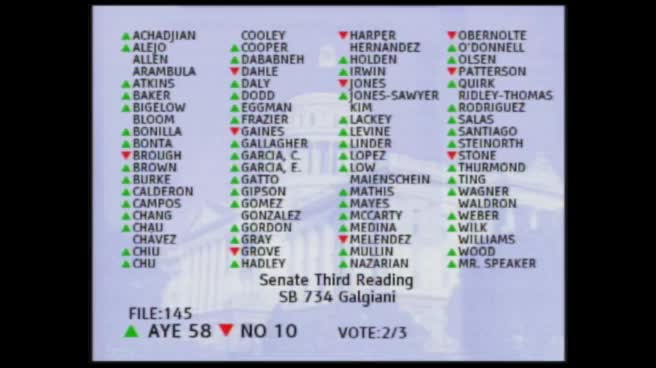 1MIN
Assembly Floor
 6MIN
Assembly Standing Committee on Local Government
 2MIN
Senate Floor
 6MIN
Senate Standing Committee on Public Safety
Bill Author
Bill Co-Author(s):