SB 875: Solemnization of marriage: county sheriff.
- Session Year: 2015-2016
- House: Senate
- Latest Version Date: 2016-08-26
Existing law authorizes specified individuals to solemnize a marriage, including, among others, an authorized person of any religious denomination, a judge or magistrate, a current Member of the Legislature or constitutional officer of this state, and a current Member of Congress of the United States who represents a district within this state, as specified.
Existing law additionally authorizes a county supervisor, a city clerk, and a mayor, as specified, to solemnize a marriage, while that person holds office. Existing law requires the county supervisor, city clerk, or mayor to obtain and review from the county clerk all available instructions for marriage solemnization before that person first solemnizes a marriage.
This bill would additionally authorize a county sheriff, while that person holds office, to solemnize a marriage. The bill would delete the requirement that county supervisors, city clerks, and elected mayors obtain and review all available instructions for marriage solemnization before first solemnizing a marriage. The bill would make conforming changes.
This bill would incorporate additional changes in Section 400 of the Family Code proposed by AB 2761, that would become operative only if AB 2761 and this bill are both chaptered and become effective on or before January 1, 2017, and this bill is chaptered last.
Existing law authorizes specified individuals to solemnize a marriage, including, among others, an authorized person of any religious denomination, a judge or magistrate, a legislator current Member of the Legislature or constitutional officer of this state, and a current Member of Congress of the United States who represents a district within this state, as specified.
Existing law additionally authorizes a county supervisor, a city clerk, and a mayor, as specified, to solemnize a marriage, while that person holds office. Existing law requires the county supervisor, city clerk, or mayor to obtain and review from the county clerk all available instructions for marriage solemnization before that person first solemnizes a marriage.
This bill would additionally authorize a county sheriff sheriff, while that person holds office, to solemnize a marriage and would impose the above requirements for a county supervisor, city clerk, or mayor on the county sheriff. marriage. The bill would delete the requirement that county supervisors, city clerks, and elected mayors obtain and review all available instructions for marriage solemnization before first solemnizing a marriage. The bill would make conforming changes.
Existing law authorizes specified individuals to solemnize a marriage, including, among others, an authorized person of any religious denomination, a judge or magistrate, a legislator or constitutional officer of this state, and a Member of Congress who represents a district within this state, as specified.
Existing law additionally authorizes a county supervisor, a city clerk, and a mayor, as specified, to solemnize a marriage, while that person holds office. Existing law requires the county supervisor, city clerk, or mayor to obtain and review from the county clerk all available instructions for marriage solemnization before that person first solemnizes a marriage.
This bill would additionally authorize a county sheriff to solemnize a marriage and would impose the above requirements for a county supervisor, city clerk, or mayor on the county sheriff.
Existing law regulates pawnbrokers by, among other things, limiting the maximum monthly rates a pawnbroker may charge and requiring specific posted disclosures of those rates. A knowing violation of the laws regulating pawnbrokers is a crime.
This bill would make nonsubstantive changes to the definition of a pawnbroker.
Although marriage is a personal relation arising out of a civil, and not a religious, contract, a marriage may be solemnized by any of the following who are 18 years of age or older:
(a)A priest, minister, rabbi, or authorized person of any religious denomination. A person authorized by this subdivision shall not be required to solemnize a marriage that is contrary to the tenets of his or her faith. Any refusal to solemnize a marriage under this subdivision, either by an individual or by a religious denomination, shall not affect the tax-exempt status of any entity.
(b)A judge or retired judge, commissioner of civil marriages or retired commissioner of civil marriages, commissioner or retired commissioner, or assistant commissioner of a court of record in this state.
(c)A judge or magistrate who has resigned from office.
(d)Any of the following judges or magistrates of the United States:
(1)A justice or retired justice of the United States Supreme Court.
(2)A judge or retired judge of a court of appeals, a district court, or a court created by an act of Congress of the United States, the judges of which are entitled to hold office during good behavior.
(3)A judge or retired judge of a bankruptcy court or a tax court.
(4)A United States magistrate or retired magistrate.
(e)A Member of the Legislature or constitutional officer of this state or a Member of Congress of the United States who represents a district within this state, while that person holds office.
(f)A county supervisor, a county sheriff, the city clerk of a charter city or serving in accordance with subdivision (b) of Section 36501 of the Government Code, or a mayor of a city elected in accordance with Article 3 (commencing with Section 34900) of Chapter 4 of Part 1 of Division 2 of Title 4 of the Government Code, while that person holds office.
SEC. 1.5.Section 400 of the Family Code is amended to read:400.(a)Although marriage is a personal relation arising out of a civil, and not a religious, contract, a marriage may be solemnized by any of the following persons who are 18 years of age or older:
(1)A priest, minister, rabbi, or authorized person of any religious denomination. A person authorized by this subdivision shall not be required to solemnize a marriage that is contrary to the tenets of his or her faith. Any refusal to solemnize a marriage under this subdivision, either by an individual or by a religious denomination, shall not affect the tax-exempt status of any entity.
(2)A judge or retired judge, commissioner of civil marriages or retired commissioner of civil marriages, commissioner or retired commissioner, or assistant commissioner of a court of record in this state.
(3)A judge or magistrate who has resigned from office.
(4)Any of the following judges or magistrates of the United States:
(A)A justice or retired justice of the United States Supreme Court.
(B)A judge or retired judge of a court of appeals, a district court, or a court created by an act of Congress of the United States, the judges of which are entitled to hold office during good behavior.
(C)A judge or retired judge of a bankruptcy court or a tax court.
(D)A United States magistrate or retired magistrate.
(b)Except as provided in subdivision (c), a marriage may also be solemnized by any of the following persons who are 18 years of age or older:
(1)A Member of the Legislature or constitutional officer of this state or a Member of Congress of the United States who represents a district within this state, or a former Member of the Legislature or constitutional officer of this state or a former Member of Congress of the United States who represented a district within this state.
(2)A person that holds or formerly held an elected office of a city, county, or city and county, including, but not limited to, a county sheriff.
(3)A city clerk of a charter city or serving in accordance with subdivision (b) of Section 36501 of the Government Code, while that person holds office.
(c)(1)A person listed in subdivision (b) shall not accept compensation for solemnizing a marriage while holding office.
(2)A person listed in subdivision (b) shall not solemnize a marriage pursuant to this section if they been removed from office due to committing an offense or have been convicted of an offense that involves moral turpitude, dishonesty, or fraud.
SEC. 2.Section 400.1 of the Family Code is repealed.SEC. 3.Section 1.5 of this bill incorporates amendments to Section 400 of the Family Code proposed by both this bill and Assembly Bill 2761. It shall only become operative if (1) both bills are enacted and become effective on or before January 1, 2017, (2) each bill amends Section 400 of the Family Code, and (3) this bill is enacted after Assembly Bill 2761, in which case Section 1 of this bill shall not become operative.
Although marriage is a personal relation arising out of a civil, and not a religious, contract, a marriage may be solemnized by any of the following who are 18 years of age or older:
(a)A priest, minister, rabbi, or authorized person of any religious denomination. A person authorized by this subdivision shall not be required to solemnize a marriage that is contrary to the tenets of his or her faith. Any refusal to solemnize a marriage under this subdivision, either by an individual or by a religious denomination, shall not affect the tax-exempt status of any entity.
(b)A judge or retired judge, commissioner of civil marriages or retired commissioner of civil marriages, commissioner or retired commissioner, or assistant commissioner of a court of record in this state.
(c)A judge or magistrate who has resigned from office.
(d)Any of the following judges or magistrates of the United States:
(1)A justice or retired justice of the United States Supreme Court.
(2)A judge or retired judge of a court of appeals, a district court, or a court created by an act of Congress of the United States, the judges of which are entitled to hold office during good behavior.
(3)A judge or retired judge of a bankruptcy court or a tax court.
(4)A United States magistrate or retired magistrate.
(e)A Member of the Legislature or constitutional officer of this state or a Member of Congress of the United States who represents a district within this state, while that person holds office.
(f)A county supervisor, a county sheriff, the city clerk of a charter city or serving in accordance with subdivision (b) of Section 36501 of the Government Code, or a mayor of a city elected in accordance with Article 3 (commencing with Section 34900) of Chapter 4 of Part 1 of Division 2 of Title 4 of the Government Code, while that person holds office.
SEC. 1.5.Section 400 of the Family Code is amended to read:400.(a)Although marriage is a personal relation arising out of a civil, and not a religious, contract, a marriage may be solemnized by any of the following persons who is are 18 years of age or older:
(a)
(1)A priest, minister, rabbi, or authorized person of any religious denomination. A person authorized by this subdivision shall not be required to solemnize a marriage that is contrary to the tenets of his or her faith. Any refusal to solemnize a marriage under this subdivision, either by an individual or by a religious denomination, shall not affect the tax-exempt status of any entity.
(b)
(2)A judge or retired judge, commissioner of civil marriages or retired commissioner of civil marriages, commissioner or retired commissioner, or assistant commissioner of a court of record in this state.
(c)
(3)A judge or magistrate who has resigned from office.
(d)
(4)Any of the following judges or magistrates of the United States:
(1)
(A)A justice or retired justice of the United States Supreme Court.
(2)
(B)A judge or retired judge of a court of appeals, a district court, or a court created by an act of Congress of the United States, the judges of which are entitled to hold office during good behavior.
(3)
(C)A judge or retired judge of a bankruptcy court or a tax court.
(4)
(D)A United States magistrate or retired magistrate.
(b)Except as provided in subdivision (c), a marriage may also be solemnized by any of the following persons who are 18 years of age or older:
(e)A legislator
(1)A Member of the Legislature or constitutional officer of this state or a Member of Congress of the United States who represents a district within this state, while that person holds office. state, or a former Member of the Legislature or constitutional officer of this state or a former Member of Congress of the United States who represented a district within this state.
(2)A person that holds or formerly held an elected office of a city, county, or city and county, including, but not limited to, a county sheriff.
(3)A city clerk of a charter city or serving in accordance with subdivision (b) of Section 36501 of the Government Code, while that person holds office.
(c)(1)A person listed in subdivision (b) shall not accept compensation for solemnizing a marriage while holding office.
(2)A person listed in subdivision (b) shall not solemnize a marriage pursuant to this section if they been removed from office due to committing an offense or have been convicted of an offense that involves moral turpitude, dishonesty, or fraud.
SEC. 2.Section 400.1 of the Family Code is repealed.SEC. 3.Section 1.5 of this bill incorporates amendments to Section 400 of the Family Code proposed by both this bill and Assembly Bill 2761. It shall only become operative if (1) both bills are enacted and become effective on or before January 1, 2017, (2) each bill amends Section 400 of the Family Code, and (3) this bill is enacted after Assembly Bill 2761, in which case Section 1 of this bill shall not become operative.
Although marriage is a personal relation arising out of a civil, and not a religious, contract, a marriage may be solemnized by any of the following who is are 18 years of age or older:
(a)A priest, minister, rabbi, or authorized person of any religious denomination. A person authorized by this subdivision shall not be required to solemnize a marriage that is contrary to the tenets of his or her faith. Any refusal to solemnize a marriage under this subdivision, either by an individual or by a religious denomination, shall not affect the tax-exempt status of any entity.
(b)A judge or retired judge, commissioner of civil marriages or retired commissioner of civil marriages, commissioner or retired commissioner, or assistant commissioner of a court of record in this state.
(c)A judge or magistrate who has resigned from office.
(d)Any of the following judges or magistrates of the United States:
(1)A justice or retired justice of the United States Supreme Court.
(2)A judge or retired judge of a court of appeals, a district court, or a court created by an act of Congress the judges of which are entitled to hold office during good behavior.
(3)A judge or retired judge of a bankruptcy court or a tax court.
(4)A United States magistrate or retired magistrate.
(e)A legislator Member of the Legislature or constitutional officer of this state or a Member of Congress of the United States who represents a district within this state, while that person holds office.
(f)A county supervisor, a county sheriff, the city clerk of a charter city or serving in accordance with subdivision (b) of Section 36501 of the Government Code, or a mayor of a city elected in accordance with Article 3 (commencing with Section 34900) of Chapter 4 of Part 1 of Division 2 of Title 4 of the Government Code, while that person holds office.
SEC. 2.Section 400.1 of the Family Code is repealed.400.1.In addition to the persons specified in Section 400, marriage may also be solemnized by a county supervisor, the city clerk of a charter city or serving in accordance with subdivision (b) of Section 36501 of the Government Code, or a mayor of a city elected in accordance with Article 3 (commencing with Section 34900) of Chapter 4 of Part 1 of Division 2 of Title 4 of the Government Code, while that person holds office. The county supervisor, the city clerk, or mayor shall obtain and review from the county clerk all available instructions for marriage solemnization before the county supervisor, the city clerk, or mayor first solemnizes a marriage.
SECTION 1.Section 400.1 of the Family Code is amended to read:400.1.In addition to the persons specified in Section 400, marriage may also be solemnized by a county supervisor, a county sheriff, the city clerk of a charter city or serving in accordance with subdivision (b) of Section 36501 of the Government Code, or a mayor of a city elected in accordance with Article 3 (commencing with Section 34900) of Chapter 4 of Part 1 of Division 2 of Title 4 of the Government Code, while that person holds office. The county supervisor, county sheriff, city clerk, or mayor shall obtain and review from the county clerk all available instructions for marriage solemnization before the county supervisor, county sheriff, city clerk, or mayor first solemnizes a marriage.
In addition to the persons specified in Section 400, marriage may also be solemnized by a county supervisor, a county sheriff, the city clerk of a charter city or serving in accordance with subdivision (b) of Section 36501 of the Government Code, or a mayor of a city elected in accordance with Article 3 (commencing with Section 34900) of Chapter 4 of Part 1 of Division 2 of Title 4 of the Government Code, while that person holds office. The county supervisor, the county sheriff, city clerk, or mayor shall obtain and review from the county clerk all available instructions for marriage solemnization before the county supervisor, the county sheriff, city clerk, or mayor first solemnizes a marriage.
SECTION 1.Section 21000 of the Financial Code is amended to read:21000.A person engaged in the business of receiving goods, including, but not limited to, motor vehicles, in pledge as security for a loan is a pawnbroker within the meaning of this division.
Every A person engaged in the business of receiving goods, including including, but not limited to, motor vehicles, in pledge as security for a loan is a pawnbroker within the meaning of this division.
|
Date
|
Status
|
|---|---|
| Aug 4, 2016 | Read third time. Passed. Ordered to the Senate. |
| Jun 16, 2016 | Read third time. Passed. Ordered to the Senate. |
| Jun 27, 2016 | Ordered to the Assembly. |
| Jun 28, 2016 | In Assembly. Held at Desk. |
| Jun 30, 2016 | Action rescinded whereby the bill was read a third time, passed, and ordered to the Senate. |
| Jun 30, 2016 | Ordered to third reading. |
| Aug 1, 2016 | Ordered to third reading. |
| Aug 1, 2016 | Read third time and amended. |
| Aug 4, 2016 | In Senate. Concurrence in Assembly amendments pending. |
| Jun 16, 2016 | In Senate. Concurrence in Assembly amendments pending. |
| Aug 4, 2016 | Read third time. Passed. (Ayes 76. Noes 0. Page 5713.) Ordered to the Senate. |
| Aug 10, 2016 | Ordered to special consent calendar. |
| Aug 11, 2016 | Assembly amendments concurred in. (Ayes 36. Noes 0.) Ordered to engrossing and enrolling. |
| Aug 11, 2016 | Assembly amendments concurred in. (Ayes 37. Noes 0. Page 4880.) Ordered to engrossing and enrolling. |
| Aug 16, 2016 | Enrolled and presented to the Governor at 11:30 a.m. |
| Aug 26, 2016 | Approved by the Governor. |
| Aug 26, 2016 | Chaptered by Secretary of State. Chapter 211, Statutes of 2016. |
| Jan 14, 2016 | Introduced. Read first time. To Com. on RLS. for assignment. To print. |
| Jun 13, 2016 | Read second time. Ordered to consent calendar. |
| Jun 9, 2016 | From committee: Do pass. Ordered to consent calendar. (Ayes 9. Noes 0.) (June 8). |
| Jun 1, 2016 | From committee with author's amendments. Read second time and amended. Re-referred to Com. on JUD. |
| May 19, 2016 | Referred to Com. on JUD. |
| May 12, 2016 | Read third time. Passed. (Ayes 38. Noes 0.) Ordered to the Assembly. |
| May 12, 2016 | Read third time. Passed. (Ayes 38. Noes 0. Page 3849.) Ordered to the Assembly. |
| May 12, 2016 | In Assembly. Read first time. Held at Desk. |
| May 5, 2016 | Read second time. Ordered to consent calendar. |
| May 4, 2016 | From committee: Do pass. Ordered to consent calendar. (Ayes 6. Noes 0.) (May 3). |
| May 4, 2016 | From committee: Do pass. Ordered to consent calendar. (Ayes 6. Noes 0. Page 3766.) (May 3). |
| Apr 21, 2016 | Set for hearing May 3. |
| Mar 16, 2016 | Re-referred to Com. on JUD. |
| Mar 8, 2016 | From committee with author's amendments. Read second time and amended. Re-referred to Com. on RLS. |
| Jan 28, 2016 | Referred to Com. on RLS. |
| Jan 15, 2016 | From printer. May be acted upon on or after February 14. |
|
Date
|
Description
|
Location
|
Votes
|
|
|---|---|---|---|---|
| Aug 11, 2016 | Special Consent SB875 Gaines Concurrence | Senate Floor |
Passed |
|
| Aug 4, 2016 | SB 875 Gaines Senate Third Reading By GAINES | Assembly Floor |
Passed |
|
| Jun 16, 2016 | SB 875 Gaines Consent Calendar Second Day | Assembly Floor |
Passed |
|
| Jun 8, 2016 | Do pass. To Consent Calendar. | Assembly Standing Committee on Judiciary |
Passed |
|
| May 12, 2016 | Consent Calendar 2nd SB875 Gaines | Senate Floor |
Passed |
|
| May 3, 2016 | Do pass and be ordered to the Consent Calendar | Senate Standing Committee on Judiciary |
Passed |
This list shows positions taken on this bill by organizations on the date displayed, which is linked to the original source.
Positions by individuals are not included.
Office of Senate Floor Analyses (916) 651-1520 Fax: (916) 327-4478 | SB |
UNFINISHED BUSINESS
Bill No: SB 875
:
SENATE JUDICIARY COMMITTEE: 6-0, 5/3/16
AYES: Jackson, Moorlach, Anderson, Leno, Monning, Wieckowski
NO VOTE RECORDED: Hertzberg
SENATE FLOOR: 38-0, 5/12/16 (Consent)
AYES: Allen, Anderson, Bates, Beall, Berryhill, Block, Cannella, De León, Fuller, Gaines, Galgiani, Glazer, Hall, Hancock, Hernandez, Hertzberg, Hill, Hueso, Huff, Jackson, Lara, Leno, Leyva, McGuire, Mendoza, Mitchell, Monning, Moorlach, Morrell, Nguyen, Nielsen, Pan, Pavley, Roth, Stone, Vidak, Wieckowski, Wolk
NO VOTE RECORDED: Liu, Runner
ASSEMBLY FLOOR: 78-0, 6/16/16 (Consent) - See last page for vote
DIGEST: This bill expands who may solemnize marriages in California to include county sheriffs.
Assembly Amendments incorporate additional changes in Section 400 of the Family Code proposed by AB 2761(Low), that become operative only if AB 2761 and this bill are both chaptered and become effective on or before January 1, 2017, and this bill is chaptered last.
Existing law:
- Requires, for a marriage to be valid, the consent of the parties, followed by the issuance of a license and solemnization, as provided. (Fam. Code Sec. 300.)
- Provides that a marriage may be solemnized by authorized persons of any religious denomination, by California legislators, constitutional officers and members of Congress, while those persons hold those offices, and by specified justices, judges, and magistrates, both current and retired. (Fam. Code Sec. 400.)
- Provides that a county supervisor, elected mayor and city clerk, as specified, may solemnize a marriage while he or she holds that office. Further requires that the supervisor, mayor or city clerk must first obtain and review from the county clerk all available instructions for marriage solemnization before the supervisor, mayor or city clerk may solemnize a marriage. (Fam. Code Sec. 400.1.)
- Provides that the county clerk is designated as a commissioner of civil marriages for each county. Allows the commissioner of civil marriages to appoint deputy commissioners of civil marriages who may solemnize marriages under the direction of the commissioner of civil marriages and perform other duties directed by the commissioner. (Fam. Code Sec. 401.)
This bill:
- Permits a county sheriff to solemnize a marriage.
- Eliminates the requirement that before a county supervisor, mayor or city clerk of a charter city, as provided, may solemnize a marriage he or she must first obtain and review from the county clerk all available instructions for marriage solemnization.
- Adds chaptering out language for AB 2761 (Low) of the current legislative session.
Background
A marriage is not valid unless it is solemnized by an authorized individual. Under existing law, marriages may be solemnized by authorized persons of any religious denomination, judges, commissioners, and magistrates. In 1998, this list was expanded to include California Legislators, constitutional officers, and members of Congress from California, during the time period that those individuals are holding office. (AB 1094 Committee on Judiciary, Chapter 932, Statutes of 1998). Subsequently, elected mayors, county supervisors, and city clerks were also authorized to solemnize marriage ceremonies, as long as they first receive training from the county clerk. (AB 2600, Ma & Lieu, Chapter 268, Statutes 2010; SB 991, Runner, Chapter 63, Statutes 2012; and Lowenthal Chapter 450, Statutes 2014.)
Additionally, the county clerk, who is statutorily designated as a commissioner of civil marriages in the county, may appoint deputy commissioners of civil marriage, who may solemnize marriages under the direction of the county clerk. Deputy commissioners of civil marriage are authorized to perform one marriage ceremony for one specified couple. The deputizing process varies slightly from county to county, but generally an individual must receive instruction from the county clerk, pay a small fee, and be sworn in as a deputy commissioner of marriage before performing a ceremony. Under current law, county supervisors are eligible to be deputized by county clerks as marriage commissioners. This bill eliminates the requirement that mayors, county supervisors, and city clerk receive training from the county clerk prior to solemnizing a marriage, and further authorizes county sheriffs to solemnize a marriage. This bill also adds language to address a chaptering-out issue with AB 2761(Low) which allows elected officials to solemnize marriage while holding office, as provided.
Prior Legislation
AB 1525 (Lowenthal, Chapter 450, Statutes 2014) authorized a city clerk to solemnize a marriage after the city clerk obtains and reviews from the county clerk all available instructions for marriage solemnization before the city clerk first solemnizes a marriage.
SB 991 (Runner, Chapter 63, Statutes of 2012) See Background.
AB 967 (Ma & Lieu, Chapter 268, Statutes 2010) would have authorized an elected mayor of a charter city, while that person holds that office, to solemnize a marriage ceremony. This bill was vetoed by Governor Schwarzenegger.
AB 2600 (Ma & Lieu, Chapter 268, Statutes 2010) authorized an elected mayor of a city, while in that office, to solemnize a marriage ceremony, after the mayor obtains and reviews from the county clerk all available instructions for marriage solemnization before the mayor first solemnizes a marriage.
FISCAL EFFECT: Appropriation: Fiscal Com.: Local:
None received
None received
ARGUMENTS IN SUPPORT: In support of the bill, the author states:
Sheriffs are faced daily with a multitude of difficult tasks. They are public servants who willingly put themselves in danger to keep our state and our citizens safe. They are community leaders and well-respected. In addition to some of the somber aspects of the job, county sheriffs would also like the ability to provide the joyful public service of marrying couples.
Sheriffs would not be obligated to perform these ceremonies but would be given the option if they desire. Granting this option would honor men and women who sacrifice much for their constituents’ safety.
ASSEMBLY FLOOR: 78-0, 6/16/16
AYES: Achadjian, Alejo, Travis Allen, Arambula, Atkins, Baker, Bigelow, Bloom, Bonilla, Bonta, Brown, Burke, Calderon, Campos, Chang, Chau, Chávez, Chiu, Chu, Cooley, Cooper, Dababneh, Dahle, Daly, Dodd, Eggman, Frazier, Beth Gaines, Gallagher, Cristina Garcia, Eduardo Garcia, Gatto, Gipson, Gomez, Gonzalez, Gordon, Gray, Grove, Hadley, Harper, Holden, Irwin, Jones, Jones-Sawyer, Kim, Lackey, Levine, Linder, Lopez, Low, Maienschein, Mathis, Mayes, McCarty, Medina, Melendez, Mullin, Nazarian, Obernolte, O'Donnell, Olsen, Patterson, Quirk, Ridley-Thomas, Rodriguez, Salas, Santiago, Steinorth, Mark Stone, Thurmond, Ting, Wagner, Waldron, Weber, Wilk, Williams, Wood, Rendon
NO VOTE RECORDED: Brough, Roger Hernández
8/5/16 10:58:16
**** END ****
SENATE THIRD READING
STR Bill Id:SB 875
Author:(Gaines)
As Amended Ver:August 1, 2016
Majority vote
SENATE VOTE: 38-0
Committee | Votes | Ayes | Noes |
Judiciary | 9-0 | Mark Stone, Wagner, Burke, Chau, Chiu, Gallagher, Cristina Garcia, Holden, Ting |
SUMMARY: Expands who may solemnize marriages in California to include county sheriffs. Specifically, this bill:
- Permits a county sheriff to solemnize a marriage.
- Eliminates the requirement that before a county supervisor, mayor or city clerk of a charter city, as provided, may solemnize a marriage he or she must first obtain and review from the county clerk all available instructions for marriage solemnization.
- Adds chaptering out language for AB 2761 (Low) of the current legislative session.
EXISTING LAW:
- For a marriage to be valid, requires the consent of the parties, followed by the issuance of a license and solemnization, as provided. (Family Code Section (FC) 300.) All further statutory references are to that code unless otherwise stated.)
- Provides that a marriage may be solemnized by authorized persons of any religious denomination, by California legislators, constitutional officers and members of Congress, while those persons hold those offices, and by specified justices, judges, and magistrates, both current and retired. (FC 400.)
- Provides that a county supervisor, elected mayor and city clerk, as specified, may solemnize a marriage while he or she holds that office. Further requires that the supervisor, mayor or city clerk must first obtain and review from the county clerk all available instructions for marriage solemnization before the supervisor, mayor or city clerk may solemnize a marriage. (FC 400.1.)
- Provides that the county clerk is designated as a commissioner of civil marriages for each county. Allows the commissioner of civil marriages to appoint deputy commissioners of civil marriages who may solemnize marriages under the direction of the commissioner of civil marriages and perform other duties directed by the commissioner. (FC 401.)
FISCAL EFFECT: None
COMMENTS: A marriage is not valid unless it is solemnized by an authorized individual. Under current law, marriages may be solemnized by authorized persons of any religious denomination, judges, commissioners and magistrates. In 1998, this list was expanded to include California legislators and constitutional officers and members of Congress from California, during the time period that those individuals hold those offices. (AB 1094 (Committee on Judiciary), Chapter 932, Statutes of 1998.) In 2010, elected mayors were also authorized to solemnize marriage ceremonies, as long as they first receive training from the county clerk. (AB 2600 (Ma), Chapter 268, Statutes of 2010.) In 2012, county supervisors were authorized to solemnize marriage ceremonies, again as long as they first receive training from the county clerk. (SB 991 (Runner), Chapter 63, Statutes of 2012.) Finally, in 2014, city clerks were added, again as long as they first receive training from the county clerk. (AB 1525 (Lowenthal), Chapter 450, Statutes of 2014.)
This bill again expands the list of those who are authorized to solemnize marriages, this time to include county sheriffs. This bill also deletes the requirement that county supervisors, mayors and city clerks must obtain and review instructional materials before solemnizing any marriages.
In support of the bill, the author states:
Sheriffs are faced daily with a multitude of difficult tasks. They are public servants who willingly put themselves in danger to keep our state and our citizens safe. They are community leaders and well-respected. In addition to some of the somber aspects of the job, county sheriffs would also like the ability to provide the joyful public service of marrying couples.
Sheriffs would not be obligated to perform these ceremonies but would be given the option if they desire. Granting this option would honor men and women who sacrifice much for their constituents' safety.
After a 15-year hodgepodge expansion of the list of persons who may solemnize marriages, this bill seeks to provide some uniformity to the rules by deleting the requirement that some officials, but not all, are required to receive instruction before solemnizing a marriage. It is unclear why, for example, mayors and county supervisors need that instruction, but a member of the Legislature or a religious official do not. This bill eliminates the instruction requirement for all parties. However, it is still assumed that if an authorized individual does not understand what is required to solemnize a marriage, he or she will learn what is required before officiating at the ceremony.
This bill is consistent with legislation passed earlier this year. Earlier this year, the Assembly unanimously passed AB 2761 (Low), which expands the list of persons who may solemnize marriages in California to include former elected officials. And, like this bill, AB 2761 deletes the requirement that county supervisors, mayors and city clerks must first obtain and review instructional materials before solemnizing any marriages. Thus, both bills are consistent.
Analysis Prepared by: Leora Gershenzon / JUD. / (916) 319-2334 FN: 0003633
SENATE THIRD READING
STR Bill Id:SB 875
Author:(Gaines)
As Amended Ver:June 1, 2016
Majority vote
SENATE VOTE: 38-0
Committee | Votes | Ayes | Noes |
Judiciary | 9-0 | Mark Stone, Wagner, Burke, Chau, Chiu, Gallagher, Cristina Garcia, Holden, Ting |
SUMMARY: Expands who may solemnize marriages in California to include county sheriffs. Specifically, this bill:
- Permits a county sheriff to solemnize a marriage.
- Eliminates the requirement that before a county supervisor, mayor or city clerk of a charter city, as provided, may solemnize a marriage he or she must first obtain and review from the county clerk all available instructions for marriage solemnization.
EXISTING LAW:
- For a marriage to be valid, requires the consent of the parties, followed by the issuance of a license and solemnization, as provided. (Family Code (FC) Section 300. All further statutory references are to that code unless otherwise stated.)
- Provides that a marriage may be solemnized by authorized persons of any religious denomination, by California legislators, constitutional officers and members of Congress, while those persons hold those offices, and by specified justices, judges, and magistrates, both current and retired. (FC Section 400.)
- Provides that a county supervisor, elected mayor and city clerk, as specified, may solemnize a marriage while he or she holds that office. Further requires that the supervisor, mayor or city clerk must first obtain and review from the county clerk all available instructions for marriage solemnization before the supervisor, mayor or city clerk may solemnize a marriage. (FC Section 400.1.)
- Provides that the county clerk is designated as a commissioner of civil marriages for each county. Allows the commissioner of civil marriages to appoint deputy commissioners of civil marriages who may solemnize marriages under the direction of the commissioner of civil marriages and perform other duties directed by the commissioner. (FC Section 401.)
FISCAL EFFECT: None
COMMENTS: A marriage is not valid unless it is solemnized by an authorized individual. Under current law, marriages may be solemnized by authorized persons of any religious denomination, judges, commissioners and magistrates. In 1998, this list was expanded to include California legislators and constitutional officers and members of Congress from California, during the time period that those individuals hold those offices. (AB 1094 ( Committee on Judiciary), Chapter 932, Statutes of 1998.) In 2010, elected mayors were also authorized to solemnize marriage ceremonies, as long as they first receive training from the county clerk. (AB 2600 (Ma), Chapter 268, Statutes of 2010.) In 2012, county supervisors were authorized to solemnize marriage ceremonies, again as long as they first receive training from the county clerk. (SB 991 (Runner), Chapter 63, Statutes of 2012.) Finally, in 2014, city clerks were added, again as long as they first receive training from the county clerk. (AB 1525 (Lowenthal), Chapter 450, Statutes of 2014.)
This bill again expands the list of those who are authorized to solemnize marriages, this time to include county sheriffs. This bill also deletes the requirement that county supervisors, mayors and city clerks must obtain and review instructional materials before solemnizing any marriages.
In support of the bill, the author states:
Sheriffs are faced daily with a multitude of difficult tasks. They are public servants who willingly put themselves in danger to keep our state and our citizens safe. They are community leaders and well-respected. In addition to some of the somber aspects of the job, county sheriffs would also like the ability to provide the joyful public service of marrying couples.
Sheriffs would not be obligated to perform these ceremonies but would be given the option if they desire. Granting this option would honor men and women who sacrifice much for their constituents' safety.
After a 15-year hodgepodge expansion of the list of persons who may solemnize marriages, this bill seeks to provide some uniformity to the rules by deleting the requirement that some officials, but not all, are required to receive instruction before solemnizing a marriage. It is unclear why, for example, mayors and county supervisors need that instruction, but a member of the Legislature or a religious official do not. This bill eliminates the instruction requirement for all parties. However, it is still assumed that if an authorized individual does not understand what is required to solemnize a marriage, he or she will learn what is required before officiating at the ceremony.
Analysis Prepared by: Leora Gershenzon / JUD. / (916) 319-2334 FN: 0003623
Date of Hearing: June 8, 2016
ASSEMBLY COMMITTEE ON JUDICIARY
Mark Stone, Chair
SBPCA Bill Id:SB 875
Author:(Gaines) – As Amended Ver:June 1, 2016
PROPOSED CONSENT
SENATE VOTE: 38-0
SUBJECT: Solemnization of marriage: county sheriffs
KEY ISSUE: SHOULD COUNTY SHERIFFS BE PERMITTED TO SOLEMNIZE MARRIAGES AND SHOULD THE REQUIREMENT THAT SOME, BUT NOT ALL, GOVERNMENT OFFICIALS RECEIVE SPECIFIC INSTRUCTIONS BEFORE THEY CAN SOLEMNIZE MARRIAGES BE ELIMINATED?
SYNOPSIS
A marriage in California is not valid unless it is solemnized by an authorized individual. Under current law, marriages may be solemnized by authorized persons of any religious denomination; judges, commissioners, and magistrates; and, while they hold office, California legislators, constitutional officers, elected mayors, county supervisors and members of Congress. Also some of those allowed to solemnize marriages, including legislators and constitutional officers, may do so with no pre-conditions, while others, including county supervisors and mayors, are required to first obtain and review instructional materials before solemnizing any marriages.
This bill expands the list of persons who are authorized to solemnize marriages to include county sheriffs. This bill also deletes the requirement that county supervisors, mayors and city clerks must obtain and review instructional materials before solemnizing any marriages. The author states that county sheriffs should be permitted to solemnize marriages in order to "honor men and women who sacrifice much for their constituents’ safety." This bill has no known opposition.
SUMMARY: Expands who may solemnize marriages in California to include county sheriffs. Specifically, this bill:
- Permits a county sheriff to solemnize a marriage.
- Eliminates the requirement that before a county supervisor, mayor or city clerk of a charter city, as provided, may solemnize a marriage he or she must first obtain and review from the county clerk all available instructions for marriage solemnization.
EXISTING LAW:
- For a marriage to be valid, requires the consent of the parties, followed by the issuance of a license and solemnization, as provided. (Family Code Section 300. All further statutory references are to that code unless otherwise stated.)
- Provides that a marriage may be solemnized by authorized persons of any religious denomination, by California legislators, constitutional officers and members of Congress, while those persons hold those offices, and by specified justices, judges, and magistrates, both current and retired. (Section 400.)
- Provides that a county supervisor, elected mayor and city clerk, as specified, may solemnize a marriage while he or she holds that office. Further requires that the supervisor, mayor or city clerk must first obtain and review from the county clerk all available instructions for marriage solemnization before the supervisor, mayor or city clerk may solemnize a marriage. (Section 400.1.)
- Provides that the county clerk is designated as a commissioner of civil marriages for each county. Allows the commissioner of civil marriages to appoint deputy commissioners of civil marriages who may solemnize marriages under the direction of the commissioner of civil marriages and perform other duties directed by the commissioner. (Section 401.)
FISCAL EFFECT: As currently in print this bill is keyed non-fiscal.
COMMENTS: A marriage is not valid unless it is solemnized by an authorized individual. Under current law, marriages may be solemnized by authorized persons of any religious denomination, judges, commissioners and magistrates. In 1998, this list was expanded to include California legislators and constitutional officers and members of Congress from California, during the time period that those individuals hold those offices. (AB 1094 (Judiciary), Chap. 932, Stats. 1998.) In 2010, elected mayors were also authorized to solemnize marriage ceremonies, as long as they first receive training from the county clerk. (AB 2600 (Ma & Lieu), Chap. 268, Stats. 2010.) In 2012, county supervisors were authorized to solemnize marriage ceremonies, again as long as they first receive training from the county clerk. (SB 991 (Runner), Chap. 63, Stats. 2012.) Finally, in 2014, city clerks were added, again as long as they first receive training from the county clerk. (AB 1525 (Lowenthal), Chap. 450, Stats. 2014.)
This bill again expands the list of those who are authorized to solemnize marriages, this time to include county sheriffs. This bill also deletes the requirement that county supervisors, mayors and city clerks must obtain and review instructional materials before solemnizing any marriages.
In support of the bill, the author states:
Sheriffs are faced daily with a multitude of difficult tasks. They are public servants who willingly put themselves in danger to keep our state and our citizens safe. They are community leaders and well-respected. In addition to some of the somber aspects of the job, county sheriffs would also like the ability to provide the joyful public service of marrying couples.
Sheriffs would not be obligated to perform these ceremonies but would be given the option if they desire. Granting this option would honor men and women who sacrifice much for their constituents’ safety.
After a 15-year hodgepodge expansion of the list of persons who may solemnize marriages, this bill seeks to provide some uniformity to the rules by deleting the requirement that some officials, but not all, are required to receive instruction before solemnizing a marriage. It is unclear why, for example, mayors and county supervisors need that instruction, but a member of the Legislature or a religious official do not. This bill eliminates the instruction requirement for all parties. However, it is still assumed that if an authorized individual does not understand what is required to solemnize a marriage, he or she will learn what is required before officiating at the ceremony.
This bill is consistent with legislation passed earlier this year. Earlier this year, this Committee and the full Assembly unanimously passed AB 2761 (Low), which expands the list of persons who may solemnize marriages in California to include former elected officials. And, like this bill, AB 2761 deletes the requirement that county supervisors, mayors and city clerks must first obtain and review instructional materials before solemnizing any marriages. Thus, both bills are consistent.
REGISTERED SUPPORT / OPPOSITION:
Support
None of file
Opposition
None on file
Analysis Prepared by: Leora Gershenzon / JUD. / (916) 319-2334
Office of Senate Floor Analyses (916) 651-1520 Fax: (916) 327-4478 | SB |
CONSENT
Bill No: SB 875
:
SENATE JUDICIARY COMMITTEE: 6-0, 5/3/16
AYES: Jackson, Moorlach, Anderson, Leno, Monning, Wieckowski
NO VOTE RECORDED: Hertzberg
DIGEST: This bill authorizes a county sheriff to solemnize a marriage after obtaining and reviewing all available instructions from the county clerk for marriage solemnization.
Existing law:
- Provides that the county clerk is designated as a commissioner of civil marriages for each county. The commissioner of civil marriages may appoint deputy commissioners of civil marriages who may solemnize marriages under the direction of the commissioner of civil marriages and shall perform other duties directed by the commissioner. (Fam. Code Sec. 401.)
- Provides that a marriage may be solemnized by authorized persons of any religious denomination, by specified Legislators, constitutional officers, and California members of Congress, while those persons are currently holding that office, and by specified justices, judges, and magistrates, both current and retired. (Fam. Code Sec. 400.)
- Provides that an elected mayor, county supervisor, or city clerk may solemnize marriage ceremonies while he or she holds office. Existing law requires such a mayor or county supervisor to obtain and review from the county clerk all available instructions for marriage solemnization before he or she first solemnizes a marriage. (Fam. Code Sec. 400.1.)
This bill additionally authorizes a county sheriff to solemnize a marriage after obtaining and reviewing from the county clerk all available instructions for marriage solemnization before he or she first solemnizes a marriage.
Background
A marriage is not valid unless it is solemnized by an authorized individual. Under existing law, marriages may be solemnized by authorized persons of any religious denomination, judges, commissioners, and magistrates. In 1998, this list was expanded to include California Legislators, constitutional officers, and members of Congress from California, during the time period that those individuals are holding office. (AB 1094 Committee on Judiciary, Chapter 932, Statutes of 1998). Subsequently, elected mayors, county supervisors, and city clerks were also authorized to solemnize marriage ceremonies, as long as they first receive training from the county clerk. (AB 2600, Ma & Lieu, Chapter 268, Statutes of 2010; SB 991, Runner, Chapter 63, Statutes of. 2012; and AB 1525, Lowenthal Chapter 450, Statutes of 2014.)
Additionally, the county clerk, who is statutorily designated as a commissioner of civil marriages in the county, may appoint deputy commissioners of civil marriage, who may solemnize marriages under the direction of the county clerk. Deputy commissioners of civil marriage are authorized to perform one marriage ceremony for one specified couple. The deputizing process varies slightly from county to county, but generally an individual must receive instruction from the county clerk, pay a small fee, and be sworn in as a deputy commissioner of marriage before performing a ceremony. Under current law, county supervisors are eligible to be deputized by county clerks as marriage commissioners. This bill additionally authorizes a county sheriff to solemnize a marriage.
FISCAL EFFECT: Appropriation: Fiscal Com.: Local:
None received
None received
ARGUMENTS IN SUPPORT: According to the author:
Under current California law, many elected officials are authorized to perform these ceremonies, including county supervisors, city mayors, state assembly members, and state senators. As an elected official and officer of the law, county sheriffs are a natural addition to this list. Sheriffs are faced daily with a multitude of difficult tasks. They are public servants who willingly put themselves in danger to keep our state and our citizens safe. They are community leaders and well-respected. In addition to some of the somber aspects of the job, county sheriffs would also like the ability to provide the joyful public service of marrying couples.
Prepared by: Nichole Rapier / JUD. / (916) 651-4113
5/6/16 14:26:25
**** END ****
Senator Hannah-Beth Jackson, Chair
2015-2016 Regular Session
Bill No: SB 875 (Author:Gaines)
Version: March 8, 2016
Hearing Date: May 3, 2016
Fiscal: No
Urgency: No
Consultant: NR
SUBJECT
Solemnization of marriage: county sheriff
DESCRIPTION
This bill would authorize a county sheriff to solemnize a marriage after obtaining and reviewing all available instructions from the county clerk for marriage solemnization.
BACKGROUND
A marriage is not valid unless it is solemnized by an authorized individual. Under existing law, marriages may be solemnized by authorized persons of any religious denomination, judges, commissioners, and magistrates. In 1998, this list was expanded to include California Legislators, constitutional officers, and members of Congress from California, during the time period that those individuals are holding office. (AB 1094 Committee on Judiciary, Chapter 932, Statutes of 1998). Subsequently, elected mayors, county supervisors, and city clerks were also authorized to solemnize marriage ceremonies, as long as they first receive training from the county clerk. (AB 2600, Ma & Lieu, Ch. 268, Stats. 2010; SB 991, Runner, Ch. 63, Stats. 2012; and Lowenthal Ch. 450, Stats. 2014.)
Additionally, the county clerk, who is statutorily designated as a commissioner of civil marriages in the county, may appoint deputy commissioners of civil marriage, who may solemnize marriages under the direction of the county clerk. Deputy commissioners of civil marriage are authorized to perform one marriage ceremony for one specified couple. The deputizing process varies slightly from county to county, but generally an individual must receive instruction from the county clerk, pay a small fee, and be sworn in as a deputy commissioner of marriage before performing a ceremony. Under current law, county supervisors are eligible to be deputized by county clerks as marriage commissioners. This bill would additionally authorize a county sheriff to solemnize a marriage.
CHANGES TO EXISTING LAW
Existing law provides that the county clerk is designated as a commissioner of civil marriages for each county. The commissioner of civil marriages may appoint deputy commissioners of civil marriages who may solemnize marriages under the direction of the commissioner of civil marriages and shall perform other duties directed by the commissioner. (Fam. Code Sec. 401.)
Existing law provides that a marriage may be solemnized by authorized persons of any religious denomination, by specified Legislators, constitutional officers, and California members of Congress, while those persons are currently holding that office, and by specified justices, judges, and magistrates, both current and retired. (Fam. Code Sec. 400.)
Existing law provides that an elected mayor, county supervisor, or city clerk may solemnize marriage ceremonies while he or she holds office. Existing law requires such a mayor or county supervisor to obtain and review from the county clerk all available instructions for marriage solemnization before he or she first solemnizes a marriage. (Fam. Code Sec. 400.1.)
This bill would additionally authorize a county sheriff to solemnize a marriage after obtaining and reviewing from the county clerk all available instructions for marriage solemnization before he or she first solemnizes a marriage.
COMMENT
- Stated need for the bill
According to the author:
Under current California law, many elected officials are authorized to perform these ceremonies, including county supervisors, city mayors, state assembly members, and state senators. As an elected official and officer of the law, county sheriffs are a natural addition to this list. Sheriffs are faced daily with a multitude of difficult tasks. They are public servants who willingly put themselves in danger to keep our state and our citizens safe. They are community leaders and well-respected. In addition to some of the somber aspects of the job, county sheriffs would also like the ability to provide the joyful public service of marrying couples.
- Ensuring county sheriffs would be qualified to solemnize marriages
This bill would add county sheriffs to the list of persons who are authorized to perform marriages while holding office. A sheriff is a sworn law enforcement officer and the duties of his or her office vary across states and counties. A sheriff is generally an elected county official, with duties that typically include policing unincorporated areas, maintaining county jails, providing security to courts in the county, and serving warrants and court papers. In addition to these policing and correction services, a sheriff is often responsible for enforcing civil law within his or her jurisdiction.
Existing law contains several different code sections that authorize individuals to perform marriages. Specifically, Family Code Section 400 authorizes a narrow selection of officials, all of whom perform a limited range of legal functions, to solemnize marriages. Elected mayors, city clerks, and county supervisors are also authorized to solemnize marriages, but that authorization is found in Section 400.1 of the Family Code. That section provides that an elected mayor, county supervisor, or city clerk may only solemnize marriages after he or she obtains and reviews, from the county clerk, all available instructions for marriage solemnization. (Fam. Code Sec. 400.1.) Additionally, under existing law, the county clerk can deputize any person as a commissioner of marriage for a single ceremony. (See Background.)
Allowing county sheriffs to solemnize marriages in a manner identical to that of mayors, county supervisors, and city clerks would appear to be appropriate because the required review of information from the county clerk would impose a standard level of knowledge and proficiency in the solemnization of marriage ceremonies. Staff further notes that this bill would not create an obligation whereby sheriffs are required to solemnize marriages, but would instead allow them to do so. This arguably creates an appropriate balance giving these elected officials the ability to prioritize official duties and public safety without being burdened by a new, municipal responsibility.
Support: None Known
Opposition: None Known
HISTORY
Source: Author
Related Pending Legislation: AB 2761 (Steinorth and Low) would authorize former Members of the Legislature and constitutional officers of this state, former Members of Congress of the United States who represented a district within this state, and current and former elected officials of a city, county, or city and county, to solemnize a marriage.
Prior Legislation:
AB 1525 (Lowenthal, Ch. 450, Stats. 2014) authorized a city clerk to solemnize a marriage after the city clerk obtains and reviews from the county clerk all available instructions for marriage solemnization before the city clerk first solemnizes a marriage. SB 991 (Runner, Chapter 63, Statutes of 2012) See Background.
AB 967 (Ma & Lieu, Ch. 268, Stats. 2010) would have authorized an elected mayor of a charter city, while that person holds that office, to solemnize a marriage ceremony. This bill was vetoed by Governor Schwarzenegger.
AB 2600 (Ma & Lieu, Ch. 268, Stats. 2010) authorized an elected mayor of a city, while in that office, to solemnize a marriage ceremony, after the mayor obtains and reviews from the county clerk all available instructions for marriage solemnization before the mayor first solemnizes a marriage.
**************
Discussed in Hearing
View Older Hearings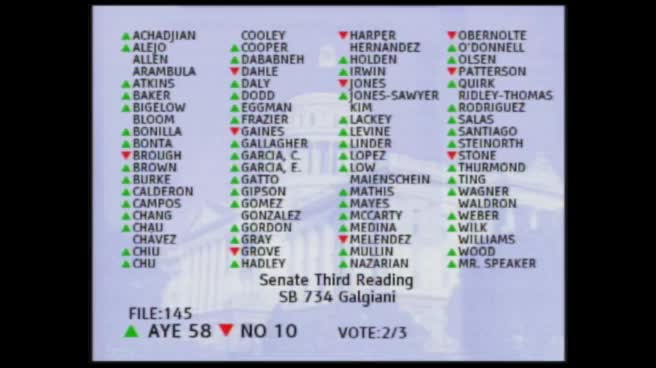
Bill Author
Bill Co-Author(s):