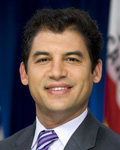
SB 900: State lands: coastal hazard removal and remediation program.
- Session Year: 2015-2016
- House: Senate
- Latest Version Date: 2016-08-30
(1)Existing law establishes the State Lands Commission in the Natural Resources Agency and prescribes the functions and duties of the commission. Under existing law, the commission has jurisdiction over various state lands, including coastal lands.
This bill would, upon appropriation of moneys by the Legislature, require the commission to, within 2 years, administer a coastal hazard removal and remediation program, as specified. The bill would authorize the commission to seek and accept on behalf of the state any gift, bequest, devise, or donation whenever the gift and the terms and conditions thereof will aid in actions undertaken to administer that program. The bill would authorize the commission to seek to abandon, in cooperation with the Division of Oil, Gas, and Geothermal Resources, legacy oil and gas wells, as defined, that present a hazard to the public health and safety and the environment. The bill would require the commission to annually report to the Legislature the activities and accomplishments of the program.
(2)Existing law, with specified exceptions, generally requires the State Lands Commission, on and after July 1, 2006, to deposit all revenue, money, and remittances, derived from mineral extraction leases on state tide and submerged lands, including tideland oil revenue, into the General Fund, to be available upon appropriation by the Legislature for specified purposes. Existing law establishes the Land Bank Fund, a continuously appropriated fund, from which the commission may expend moneys for management and improvement of real property held by the commission, as trustee, to provide open space, habitat for plants and animals, and public access.
This bill would require that, for the 201718 fiscal year, out of those funds deposited into the General Fund by the commission, the sum of $500,000 be transferred to the Land Bank Fund and be available, upon appropriation in the annual Budget Act, for the purpose of implementing the coastal hazard removal and remediation program. The bill would require that, commencing with the 201819 fiscal year and each fiscal year thereafter, an amount sufficient to bring the unencumbered balance of the Land Bank Fund available for the purpose of implementing the program to $500,000 be transferred to that fund and be available, upon an appropriation in the annual Budget Act, for the purpose of implementing the program.
(1)Existing law establishes the State Lands Commission in the Natural Resources Agency and prescribes the functions and duties of the commission. Under existing law, the commission has jurisdiction over various state lands, including coastal lands.
This bill would, upon appropriation of moneys by the Legislature, require the commission to, within 2 years, administer a coastal hazard removal and remediation program, as specified. The bill would authorize the commission to seek and accept on behalf of the state any gift, bequest, devise, or donation whenever the gift and the terms and conditions thereof will aid in actions undertaken to administer that program. The bill would authorize the commission to seek to abandon, in cooperation with the Division of Oil, Gas, and Geothermal Resources, legacy oil and gas wells, as defined, that present a hazard to the public health and safety and the environment. The bill would require the commission to annually report to the Legislature the activities and accomplishments of the program.
(2)Existing law, with specified exceptions, generally requires the State Lands Commission, on and after July 1, 2006, to deposit all revenue, money, and remittances, derived from mineral extraction leases on state tide and submerged lands, including tideland oil revenue, into the General Fund, to be available upon appropriation by the Legislature for specified purposes. Existing law establishes the Land Bank Fund, a continuously appropriated fund, from which the commission may expend moneys for management and improvement of real property held by the commission, as trustee, to provide open space, habitat for plants and animals, and public access.
This bill would require that, for the 201718 fiscal year, out of those funds deposited into the General Fund by the commission, the sum of $2,000,000 $500,000 be transferred to the Land Bank Fund and be available, upon appropriation in the annual Budget Act, for the purpose of implementing the coastal hazard removal and remediation program. The bill would require that, commencing with the 201819 fiscal year and each fiscal year thereafter, an amount sufficient to bring the unencumbered balance of the Land Bank Fund available for the purpose of implementing the program to $2,000,000 $500,000 be transferred to that fund and be available, upon an appropriation in the annual Budget Act, for the purpose of implementing the program.
(1)Existing law establishes the State Lands Commission in the Natural Resources Agency and prescribes the functions and duties of the commission. Under existing law, the commission has jurisdiction over various state lands, including coastal lands.
This bill would, upon appropriation of moneys by the Legislature, require the commission to, within 2 years, administer a coastal hazard removal and remediation program, as specified. The bill would authorize the commission to seek and accept on behalf of the state any gift, bequest, devise, or donation whenever the gift and the terms and conditions thereof will aid in actions undertaken to administer that program. The bill would authorize the commission to seek to abandon, in cooperation with the Division of Oil, Gas, and Geothermal Resources, legacy oil and gas wells, as defined, that present a hazard to the public health and safety and the environment. The bill would require the commission to annually report to the Legislature the activities and accomplishments of the program.
(2)Existing law, with specified exceptions, generally requires the State Lands Commission, on and after July 1, 2006, to deposit all revenue, money, and remittances, derived from mineral extraction leases on state tide and submerged lands, including tideland oil revenue, into the General Fund, to be available upon appropriation by the Legislature for specified purposes. Existing law establishes the Land Bank Fund, a continuously appropriated fund, from which the commission may expend moneys for management and improvement of real property held by the commission, as trustee, to provide open space, habitat for plants and animals, and public access.
This bill would require that, for the 201718 fiscal year, out of those funds deposited into the General Fund by the commission, the sum of $2,000,000 be transferred to the Land Bank Fund and be available, upon appropriation in the annual Budget Act, for the purpose of implementing the coastal hazard removal and remediation program. The bill would require that, commencing with the 201819 fiscal year and each fiscal year thereafter, an amount sufficient to bring the unencumbered balance of the Land Bank Fund available for the purpose of implementing the program to $2,000,000 be transferred to that fund and be available, upon an appropriation in the annual Budget Act, for the purpose of implementing the program.
(1)Existing law establishes the State Lands Commission in the Natural Resources Agency and prescribes the functions and duties of the commission. Under existing law, the commission has jurisdiction over various state lands, including coastal lands.
This bill would require, would, upon appropriation of moneys by the Legislature, require the commission to to, within 2 years, administer a coastal hazard removal and remediation program, as specified. The bill would authorize the commission to seek and accept on behalf of the state any gift, bequest, devise, or donation whenever the gift and the terms and conditions thereof will aid in actions undertaken to administer that program. The bill would authorize the commission to seek to abandon, in cooperation with the Division of Oil, Gas, and Geothermal Resources, legacy oil and gas wells wells, as defined, that present a hazard to the public health and safety and the environment. The bill would require the commission to annually report to the Legislature the activities and accomplishments of the program.
(2)Existing law, with specified exceptions, generally requires the State Lands Commission, on and after July 1, 2006, to deposit all revenue, money, and remittances, derived from mineral extraction leases on state tide and submerged lands, including tideland oil revenue, into the General Fund, to be available upon appropriation by the Legislature for specified purposes. Existing law establishes the Land Bank Fund, a continuously appropriated fund, from which the commission may expend moneys for management and improvement of real property held by the commission, as trustee, to provide open space, habitat for plants and animals, and public access.
This bill would require that, for the 201718 fiscal year, out of those funds deposited into the General Fund by the commission, the sum of $2,000,000 be transferred to the Land Bank Fund and be available, upon appropriation in the annual Budget Act, for the purpose of implementing the coastal hazard removal and remediation program. The bill would require that, commencing with the 201819 fiscal year and each fiscal year thereafter, an amount sufficient to bring the unencumbered balance of the Land Bank Fund available for the purpose of implementing the program to $2,000,000 be transferred to that fund and be available, upon an appropriation in the annual Budget Act, for the purpose of implementing the program.
(1)Existing law establishes the State Lands Commission in the Natural Resources Agency and prescribes the functions and duties of the commission. Under existing law, the commission has jurisdiction over various state lands, including coastal lands.
This bill would require, upon appropriation of moneys by the Legislature, the commission to administer a coastal hazard removal and remediation program, as specified. The bill would authorize the commission to seek and accept on behalf of the state any gift, bequest, devise, or donation whenever the gift and the terms and conditions thereof will aid in actions undertaken to administer that program. The bill would authorize the commission to seek to abandon, in cooperation with the Division of Oil, Gas, and Geothermal Resources, legacy oil and gas wells that present a hazard to the public health and safety and the environment. The bill would require the commission to annually report to the Legislature the activities and accomplishments of the program.
(2)Existing law, with specified exceptions, generally requires the State Lands Commission, on and after July 1, 2006, to deposit all revenue, money, and remittances, derived from mineral extraction leases on state tide and submerged lands, including tideland oil revenue, into the General Fund, to be available upon appropriation by the Legislature for specified purposes. Existing law establishes the Land Bank Fund, a continuously appropriated fund, from which the commission may expend moneys for management and improvement of real property held by the commission, as trustee, to provide open space, habitat for plants and animals, and public access.
This bill would require that, for the 201718 fiscal year, out of those funds deposited into the General Fund by the commission, the sum of $2,000,000 be transferred to the Land Bank Fund and be available, upon appropriation in the annual Budget Act, for the purpose of implementing the coastal hazard and remediation program. The bill would require that, commencing with the 201819 fiscal year and each fiscal year thereafter, an amount sufficient to bring the unencumbered balance of the Land Bank Fund available for the purpose of implementing the program to $2,000,000 be transferred to that fund and be available, upon an appropriation in the annual Budget Act, for the purpose of implementing the program.
The Legislature finds and declares all of the following:
(a)Scattered along the California coastline are the remnants of many old, human-made structures including abandoned oil and gas wells, groins, jetties, piers, pilings, and seawalls.
(b)These remnants, often covered and uncovered by tides, are the legacy of the rapid commercial development along the coastline that began just before the turn of the 20th century.
(c)Most legacy oil and gas wells were abandoned in the early 1900s when there was little or no oversight of the abandonment and removal, if any, varied from well to well. Some legacy oil and gas wells, therefore, may seep oil into the surf zone impacting swimmers, surfers, and other recreational users, and causing environmental degradation.
(d)The State Lands Commission has primary jurisdiction over sovereign lands along the California coastline that are held in trust for statewide public purposes, including, commerce, navigation, fishing, recreation, and open space and habitat preservation.
(e)The State Lands Commission has long recognized the serious and perennial health concerns and safety hazards that coastal hazards and legacy oil and gas wells pose.
(f)There is a critical need for adequate funding to inventory coastal hazards, including legacy oil and gas wells and related infrastructure, along the California coastline in order to begin determining how to remove coastal hazards and to identify and remediate leaking legacy oil and gas wells.
(g)With adequate funding, the State Lands Commission can inventory coastal hazards, legacy oil and gas wells and other oil and gas related hazards along the California coastline, including determining GPS locations, assessing entitlement requirements, preparing preliminary engineering requirements and removal cost estimates for each hazard, and removing and remediating hazards that are a significant risk to public health and safety and the environment. Adequate funding will also enable the State Lands Commission to survey and monitor oil seepage in state waters under its jurisdiction and on tidelands, and to request studies to determine oil seepage locations, rates, environmental impacts, and mitigation measures.
SEC. 2.Section 6212 is added to the Public Resources Code, to read:6212.(a)Upon appropriation of moneys by the Legislature for the purposes of this section, the commission shall, within two years, administer a coastal hazard removal and remediation program to do all of the following:
(1)Complete an in-depth inventory of legacy oil and gas wells and other coastal hazards along the California coastline, including conducting field surveys and determining high-priority hazards and legacy oil and gas wells to remediate.
(2)Survey, study, and monitor oil seepage in state waters and tidelands under its jurisdiction to determine oil seepage locations, rates, and environmental impacts. The study information can facilitate possible mitigation measures.
(3)Begin the process of remediating improperly abandoned legacy oil and gas wells that have a high risk of leaking oil and, with any remaining funds, remove other identified coastal hazards.
(b)Notwithstanding Section 11005 of the Government Code and any other law requiring approval by a state officer of gifts, bequests, devises, or donations, the commission may seek and accept on behalf of the state any gift, bequest, devise, or donation whenever the gift and the terms and conditions thereof will aid in actions undertaken pursuant to subdivision (a).
(c)In cooperation with the Division of Oil, Gas, and Geothermal Resources, the commission may seek to abandon legacy oil and gas wells that present a hazard to the public health and safety and the environment.
(d)The commission shall annually report to the Legislature the activities and accomplishments of the program. The commission may include this information in the annual report it submits pursuant to Section 8618.
(e)The commission shall prioritize its activities under this section based on available resources.
(f)For purposes of this section the following definitions apply:
(1)Coastal hazards are legacy oil and gas wells and human-made structures that have been orphaned, including piers, jetties, groins, seawalls, and facilities associated with past oil extraction and other operations, that pose a hazard to the public health and safety. Coastal hazards may include, but are not limited to, wood or steel piles or piling, sheet metal pilings, H piles and H beams, well casings, well caissons, railroad irons, cables, angle bars, pipes, pipelines, rip rap, and wood beams and structures.
(2)Legacy oil and gas wells are wells drilled near shore, before current abandonment standards, where there is little or no information on the wells abandonment procedure and there is no viable company with the responsibility to reabandon the well should it start leaking or pose a threat to the environment or the public health and safety.
SEC. 3.Section 6217 of the Public Resources Code is amended to read:6217.With the exception of revenue derived from state school lands and from sources described in Sections 6217.6, 6301.5, 6301.6, 6855, and Sections 8551 to 8558, inclusive, and Section 6404 (insofar as the proceeds are from property that has been distributed or escheated to the state in connection with unclaimed estates of deceased persons), the commission shall deposit all revenue, money, and remittances received by the commission under this division, and under Chapter 138 of the Statutes of 1964, First Extraordinary Session, in the General Fund. Out of those funds deposited in the General Fund, sufficient moneys shall be made available each fiscal year for the following purposes:
(a)Payment of refunds, authorized by the commission, out of appropriations made for that purpose.
(b)Payment of expenditures of the commission as provided in the annual Budget Act.
(c)Payments to cities and counties of the amounts specified in Section 6817 for the purposes specified in that section, out of appropriations made for that purpose.
(d)Payments to cities and counties of the amounts agreed to pursuant to Section 6875, out of appropriations made for that purpose.
(e)(1)For the 201718 fiscal year, the sum of five hundred thousand dollars ($500,000) shall be transferred to the Land Bank Fund and, notwithstanding Section 8610, shall be available, upon appropriation in the annual Budget Act, for the purpose of implementing the commissions coastal hazard removal and remediation program provided in Section 6212.
(2)Commencing with the 201819 fiscal year, and each fiscal year thereafter, an amount sufficient to bring the unencumbered balance of the Land Bank Fund available for the purpose of implementing the commissions coastal hazard removal and remediation program provided in Section 6212 to five hundred thousand dollars ($500,000) shall be transferred to the Land Bank Fund and, notwithstanding Section 8610, shall be available, upon appropriation in the annual Budget Act, for the purpose of implementing the commissions coastal hazard removal and remediation program provided in Section 6212.
The Legislature finds and declares all of the following:
(a)Scattered along the California coastline are the remnants of many old, human-made structures including abandoned oil and gas wells, groins, jetties, piers, pilings, and seawalls.
(b)These remnants, often covered and uncovered by tides, are the legacy of the rapid commercial development along the coastline that began just before the turn of the 20th century.
(c)Most legacy oil and gas wells were abandoned in the early 1900s when there was little or no oversight of the abandonment and removal, if any, varied from well to well. Some legacy oil and gas wells, therefore, may seep oil into the surf zone impacting swimmers, surfers, and other recreational users, and causing environmental degradation.
(d)The State Lands Commission has primary jurisdiction over sovereign lands along the California coastline that are held in trust for statewide public purposes, including, commerce, navigation, fishing, recreation, and open space and habitat preservation.
(e)The State Lands Commission has long recognized the serious and perennial health concerns and safety hazards that coastal hazards and legacy oil and gas wells pose.
(f)There is a critical need for adequate funding to inventory coastal hazards, including legacy oil and gas wells and related infrastructure, along the California coastline in order to begin determining how to remove coastal hazards and to identify and remediate leaking legacy oil and gas wells.
(g)With adequate funding, the State Lands Commission can inventory coastal hazards, legacy oil and gas wells and other oil and gas related hazards along the California coastline, including determining GPS locations, assessing entitlement requirements, preparing preliminary engineering requirements and removal cost estimates for each hazard, and removing and remediating hazards that are a significant risk to public health and safety and the environment. Adequate funding will also enable the State Lands Commission to survey and monitor oil seepage in state waters under its jurisdiction and on tidelands, and to request studies to determine oil seepage locations, rates, environmental impacts, and mitigation measures.
SEC. 2.Section 6212 is added to the Public Resources Code, to read:6212.(a)Upon appropriation of moneys by the Legislature for the purposes of this section, the commission shall, within two years, administer a coastal hazard removal and remediation program to do all of the following:
(1)Complete an in-depth inventory of legacy oil and gas wells and other coastal hazards along the California coastline, including conducting field surveys and determining high-priority hazards and legacy oil and gas wells to remediate.
(2)Survey, study, and monitor oil seepage in state waters and tidelands under its jurisdiction to determine oil seepage locations, rates, and environmental impacts. The study information can facilitate possible mitigation measures.
(3)Begin the process of remediating improperly abandoned legacy oil and gas wells that have a high risk of leaking oil and, with any remaining funds, remove other identified coastal hazards.
(b)Notwithstanding Section 11005 of the Government Code and any other law requiring approval by a state officer of gifts, bequests, devises, or donations, the commission may seek and accept on behalf of the state any gift, bequest, devise, or donation whenever the gift and the terms and conditions thereof will aid in actions undertaken pursuant to subdivision (a).
(c)In cooperation with the Division of Oil, Gas, and Geothermal Resources, the commission may seek to abandon legacy oil and gas wells that present a hazard to the public health and safety and the environment.
(d)The commission shall annually report to the Legislature the activities and accomplishments of the program. The commission may include this information in the annual report it submits pursuant to Section 8618.
(e)The commission shall prioritize it its activities under this section based on available resources.
(f)For purposes of this section the following definitions apply:
(1)Coastal hazards, include, but are not limited to, hazards are legacy oil and gas wells and human-made structures, structures that have been orphaned, including piers, jetties, groins, seawalls, and facilities associated with past oil extraction and other commercial operations, that pose a hazard to the public health and safety. Coastal hazards may include include, but are not limited to, wood or steel piles or piling, sheet metal pilings, H piles and H beams, well casings, well caissons, railroad irons, cables, angle bars, pipes, pipelines, rip rap, and wood beams and structures.
(2)Legacy oil and gas wells are wells drilled near shore, before current abandonment standards, where there is little or no information on the wells abandonment procedure and there is no viable company with the responsibility to reabandon the well should it start leaking or pose a threat to the environment or the public health and safety.
SEC. 3.Section 6217 of the Public Resources Code is amended to read:6217.With the exception of revenue derived from state school lands and from sources described in Sections 6217.6, 6301.5, 6301.6, 6855, and Sections 8551 to 8558, inclusive, and Section 6404 (insofar as the proceeds are from property that has been distributed or escheated to the state in connection with unclaimed estates of deceased persons), the commission shall deposit all revenue, money, and remittances received by the commission under this division, and under Chapter 138 of the Statutes of 1964, First Extraordinary Session, in the General Fund. Out of those funds deposited in the General Fund, sufficient moneys shall be made available each fiscal year for the following purposes:
(a)Payment of refunds, authorized by the commission, out of appropriations made for that purpose.
(b)Payment of expenditures of the commission as provided in the annual Budget Act.
(c)Payments to cities and counties of the amounts specified in Section 6817 for the purposes specified in that section, out of appropriations made for that purpose.
(d)Payments to cities and counties of the amounts agreed to pursuant to Section 6875, out of appropriations made for that purpose.
(e)(1)For the 201718 fiscal year, the sum of five hundred thousand dollars ($500,000) shall be transferred to the Land Bank Fund and, notwithstanding Section 8610, shall be available, upon appropriation in the annual Budget Act, for the purpose of implementing the commissions coastal hazard removal and remediation program provided in Section 6212.
(2)Commencing with the 201819 fiscal year, and each fiscal year thereafter, an amount sufficient to bring the unencumbered balance of the Land Bank Fund available for the purpose of implementing the commissions coastal hazard removal and remediation program provided in Section 6212 to five hundred thousand dollars ($500,000) shall be transferred to the Land Bank Fund and, notwithstanding Section 8610, shall be available, upon appropriation in the annual Budget Act, for the purpose of implementing the commissions coastal hazard removal and remediation program provided in Section 6212.
The Legislature finds and declares all of the following:
(a)Scattered along the California coastline are the remnants of many old, human-made structures including abandoned oil and gas wells, groins, jetties, piers, pilings, and seawalls.
(b)These remnants, often covered and uncovered by tides, are the legacy of the rapid commercial development along the coastline that began just before the turn of the 20th century.
(c)Most legacy oil and gas wells were abandoned in the early 1900s when there was little or no oversight of the abandonment and removal, if any, varied from well to well. Some legacy oil and gas wells, therefore, may seep oil into the surf zone impacting swimmers, surfers, and other recreational users, and causing environmental degradation.
(d)The State Lands Commission has primary jurisdiction over sovereign lands along the California coastline that are held in trust for statewide public purposes, including, commerce, navigation, fishing, recreation, and open space and habitat preservation.
(e)The State Lands Commission has long recognized the serious and perennial health concerns and safety hazards that coastal hazards and legacy oil and gas wells pose.
(f)There is a critical need for adequate funding to inventory coastal hazards, including legacy oil and gas wells and related infrastructure, along the California coastline in order to begin determining how to remove coastal hazards and to identify and remediate leaking legacy oil and gas wells.
(g)With adequate funding, the State Lands Commission can inventory coastal hazards, legacy oil and gas wells and other oil and gas related hazards along the California coastline, including determining GPS locations, assessing entitlement requirements, preparing preliminary engineering requirements and removal cost estimates for each hazard, and removing and remediating hazards that are a significant risk to public health and safety and the environment. Adequate funding will also enable the State Lands Commission to survey and monitor oil seepage in state waters under its jurisdiction and on tidelands, and to request studies to determine oil seepage locations, rates, environmental impacts, and mitigation measures.
SEC. 2.Section 6212 is added to the Public Resources Code, to read:6212.(a)Upon appropriation of moneys by the Legislature for the purposes of this section, the commission shall, within two years, administer a coastal hazard removal and remediation program to do all of the following:
(1)Complete an in-depth inventory of legacy oil and gas wells and other coastal hazards along the California coastline, including conducting field surveys and determining high-priority hazards and legacy oil and gas wells to remediate.
(2)Survey, study, and monitor oil seepage in state waters and tidelands under its jurisdiction to determine oil seepage locations, rates, and environmental impacts. The study information can facilitate possible mitigation measures.
(3)Begin the process of remediating improperly abandoned legacy oil and gas wells that have a high risk of leaking oil and, with any remaining funds, remove other identified coastal hazards.
(b)Notwithstanding Section 11005 of the Government Code and any other law requiring approval by a state officer of gifts, bequests, devises, or donations, the commission may seek and accept on behalf of the state any gift, bequest, devise, or donation whenever the gift and the terms and conditions thereof will aid in actions undertaken pursuant to subdivision (a).
(c)In cooperation with the Division of Oil, Gas, and Geothermal Resources, the commission may seek to abandon legacy oil and gas wells that present a hazard to the public health and safety and the environment.
(d)The commission shall annually report to the Legislature the activities and accomplishments of the program. The commission may include this information in the annual report it submits pursuant to Section 8618.
(e)The commission shall prioritize it activities under this section based on available resources.
(e)
(f)For purposes of this section the following definitions apply:
(1)Coastal hazards, include, but are not limited to, legacy oil and gas wells and human-made structures, including piers, jetties, groins, seawalls, and facilities associated with past oil extraction and other commercial operations, that pose a hazard to the public health and safety. Coastal hazards may include wood or steel piles or piling, sheet metal pilings, H piles and H beams, well casings, well caissons, railroad irons, cables, angle bars, pipes, pipelines, rip rap, and wood beams and structures.
(2)Legacy oil and gas wells are wells drilled near shore, before current abandonment standards, where there is little or no information on the wells abandonment procedure and there is no viable company with the responsibility to reabandon the well should it start leaking or pose a threat to the environment or the public health and safety.
SEC. 3.Section 6217 of the Public Resources Code is amended to read:6217.With the exception of revenue derived from state school lands and from sources described in Sections 6217.6, 6301.5, 6301.6, 6855, and Sections 8551 to 8558, inclusive, and Section 6404 (insofar as the proceeds are from property that has been distributed or escheated to the state in connection with unclaimed estates of deceased persons), the commission shall deposit all revenue, money, and remittances received by the commission under this division, and under Chapter 138 of the Statutes of 1964, First Extraordinary Session, in the General Fund. Out of those funds deposited in the General Fund, sufficient moneys shall be made available each fiscal year for the following purposes:
(a)Payment of refunds, authorized by the commission, out of appropriations made for that purpose.
(b)Payment of expenditures of the commission as provided in the annual Budget Act.
(c)Payments to cities and counties of the amounts specified in Section 6817 for the purposes specified in that section, out of appropriations made for that purpose.
(d)Payments to cities and counties of the amounts agreed to pursuant to Section 6875, out of appropriations made for that purpose.
(e)(1)For the 201718 fiscal year, the sum of two million five hundred thousand dollars ($2,000,000) ($500,000) shall be transferred to the Land Bank Fund and, notwithstanding Section 8610, shall be available, upon appropriation in the annual Budget Act, for the purpose of implementing the commissions coastal hazard removal and remediation program provided in Section 6212.
(2)Commencing with the 201819 fiscal year, and each fiscal year thereafter, an amount sufficient to bring the unencumbered balance of the Land Bank Fund available for the purpose of implementing the commissions coastal hazard removal and remediation program provided in Section 6212 to two million five hundred thousand dollars ($2,000,000) ($500,000) shall be transferred to the Land Bank Fund and, notwithstanding Section 8610, shall be available, upon appropriation in the annual Budget Act, for the purpose of implementing the commissions coastal hazard removal and remediation program provided in Section 6212.
The Legislature finds and declares all of the following:
(a)Scattered along the California coastline are the remnants of many old, human-made structures including abandoned oil and gas wells, groins, jetties, piers, pilings, and seawalls.
(b)These remnants, often covered and uncovered by tides, are the legacy of the rapid commercial development along the coastline that began just before the turn of the 20th century.
(c)Most legacy oil and gas wells were abandoned in the early 1900s when there was little or no oversight of the abandonment and removal, if any, varied from well to well. Some legacy oil and gas wells, therefore, may seep oil into the surf zone impacting swimmers, surfers, and other recreational users, and causing environmental degradation.
(d)The State Lands Commission has primary jurisdiction over sovereign lands along the California coastline that are held in trust for statewide public purposes, including, commerce, navigation, fishing, recreation, and open space and habitat preservation.
(e)The State Lands Commission has long recognized the serious and perennial health concerns and safety hazards that coastal hazards and legacy oil and gas wells pose.
(f)There is a critical need for adequate funding to inventory coastal hazards, including legacy oil and gas wells and related infrastructure, along the California coastline in order to begin determining how to remove coastal hazards and to identify and remediate leaking legacy oil and gas wells.
(g)With adequate funding, the State Lands Commission can inventory coastal hazards, legacy oil and gas wells and other oil and gas related hazards along the California coastline, including determining GPS locations, assessing entitlement requirements, preparing preliminary engineering requirements and removal cost estimates for each hazard, and removing and remediating hazards that are a significant risk to public health and safety and the environment. Adequate funding will also enable the State Lands Commission to survey and monitor oil seepage in state waters under its jurisdiction and on tidelands, and to request studies to determine oil seepage locations, rates, environmental impacts, and mitigation measures.
SEC. 2.Section 6212 is added to the Public Resources Code, to read:6212.(a)Upon appropriation of moneys by the Legislature for the purposes of this section, the commission shall, within two years, administer a coastal hazard removal and remediation program to do all of the following:
(1)Conduct Complete an in-depth inventory of legacy oil and gas wells and other coastal hazards along the California coastline. coastline, including conducting field surveys and determining high-priority hazards and legacy oil and gas wells to remediate.
(2)Survey Survey, study, and monitor oil seepage in state waters and tidelands under its jurisdiction and request studies to determine and address oil seepage locations, rates, and environmental impacts, and impacts. The study information can facilitate possible mitigation measures.
(3)Begin removal of coastal hazards from lands under its jurisdiction. the process of remediating improperly abandoned legacy oil and gas wells that have a high risk of leaking oil and, with any remaining funds, remove other identified coastal hazards.
(b)Notwithstanding Section 11005 of the Government Code and any other law requiring approval by a state officer of gifts, bequests, devises, or donations, the commission may seek and accept on behalf of the state any gift, bequest, devise, or donation whenever the gift and the terms and conditions thereof will aid in actions undertaken pursuant to subdivision (a).
(c)In cooperation with the Division of Oil, Gas, and Geothermal Resources, the commission may seek to abandon legacy oil and gas wells that present a hazard to the public health and safety and the environment.
(d)The commission shall annually report to the Legislature the activities and accomplishments of the program. The commission may include this information in the annual report it submits pursuant to Section 8618.
(e)For purposes of this section the following definitions apply:
(1)Coastal hazards, include, but are not limited to, legacy oil and gas wells and human-made structures, including piers, jetties, groins, seawalls, and facilities associated with past oil extraction and other commercial operations, that pose a hazard to the public health and safety. Coastal hazards may include wood or steel piles or piling, sheet metal pilings, H piles and H beams, well casings, well caissons, railroad irons, cables, angle bars, pipes, pipelines, rip rap, and wood beams and structures.
(2)Legacy oil and gas wells are wells drilled near shore, before current abandonment standards, where there is little or no information on the wells abandonment procedure and there is no viable company with the responsibility to reabandon the well should it start leaking or pose a threat to the environment or the public health and safety.
SEC. 3.Section 6217 of the Public Resources Code is amended to read:6217.With the exception of revenue derived from state school lands and from sources described in Sections 6217.6, 6301.5, 6301.6, 6855, and Sections 8551 to 8558, inclusive, and Section 6404 (insofar as the proceeds are from property that has been distributed or escheated to the state in connection with unclaimed estates of deceased persons), the commission shall deposit all revenue, money, and remittances received by the commission under this division, and under Chapter 138 of the Statutes of 1964, First Extraordinary Session, in the General Fund. Out of those funds deposited in the General Fund, sufficient moneys shall be made available each fiscal year for the following purposes:
(a)Payment of refunds, authorized by the commission, out of appropriations made for that purpose.
(b)Payment of expenditures of the commission as provided in the annual Budget Act.
(c)Payments to cities and counties of the amounts specified in Section 6817 for the purposes specified in that section, out of appropriations made for that purpose.
(d)Payments to cities and counties of the amounts agreed to pursuant to Section 6875, out of appropriations made for that purpose.
(e)(1)For the 201718 fiscal year, the sum of two million dollars ($2,000,000) shall be transferred to the Land Bank Fund and, notwithstanding Section 8610, shall be available, upon appropriation in the annual Budget Act, for the purpose of implementing the commissions coastal hazard removal and remediation program provided in Section 6212.
(2)Commencing with the 201819 fiscal year, and each fiscal year thereafter, an amount sufficient to bring the unencumbered balance of the Land Bank Fund available for the purpose of implementing the commissions coastal hazard removal and remediation program provided in Section 6212 to two million dollars ($2,000,000) shall be transferred to the Land Bank Fund and, notwithstanding Section 8610, shall be available, upon appropriation in the annual Budget Act, for the purpose of implementing the commissions coastal hazard removal and remediation program provided in Section 6212.
The Legislature finds and declares all of the following:
(a)Scattered along the California coastline are the remnants of many old, manmade human-made structures including abandoned oil and gas wells, groins, jetties, piers, pilings, and seawalls.
(b)These remnants, which are often covered and uncovered by tides, are the legacy of the rapid commercial development along the coastline that began just before the turn of the 20th century.
(c)Most legacy oil and gas wells were abandoned in the early 1900s when there was little or no oversight of the abandonment activities, so the level of demolition and removal, if any, varied from well to well. Some legacy oil and gas wells, therefore, may seep oil into the surf zone impacting swimmers, surfers, and other recreational users, and causing environmental degradation.
(d)The State Lands Commission has primary jurisdiction over sovereign lands along the California coastline that are held in trust for statewide public purposes, including, commerce, navigation, fishing, recreation, and open space and habitat preservation.
(e)The State Lands Commission has long recognized the serious and ongoing perennial health concerns and safety hazards posed by that coastal hazards and legacy wells. oil and gas wells pose.
(f)There is a critical need for adequate funding to conduct an in-depth inventory of coastal hazards, including legacy oil and gas wells and related infrastructure, along the California coastline. An assessment of the entitlement of lands and the engineering requirements and related funding needs for removal of coastal hazards is necessary to begin considering how to remove coastal hazards and remediate legacy wells. coastline in order to begin determining how to remove coastal hazards and to identify and remediate leaking legacy oil and gas wells.
(g)Provided With adequate funding, the State Lands Commission can inventory coastal hazards, legacy oil and gas wells and other oil and gas related hazards along the California coastline, including determining specific GPS locations, assessing entitlement requirements, preparing preliminary engineering requirements and removal cost estimates for each hazard, and removing and remediating hazards that are a significant risk to public health and safety and the environment. Adequate funding will also enable the State Lands Commission to survey and monitor oil seepage in state waters under its jurisdiction and on tidelands, and to request studies to determine oil seepage locations, rates, environmental impacts, and mitigation measures.
SEC. 2.Section 6212 is added to the Public Resources Code, to read:6212.(a)Upon appropriation of moneys by the Legislature for the purposes of this section, the commission shall shall, within two years, administer a coastal hazard removal and remediation program to do all of the following:
(1)Remove coastal hazards from lands under its jurisdiction.
(2)
(1)Conduct an in-depth inventory of the legacy oil and gas wells and other coastal hazards along the California coastline.
(3)
(2)Survey and monitor oil seepage in state waters and tidelands under its jurisdiction and request studies to determine and address oil seepage locations, rates, environmental impacts, and possible mitigation measures.
(3)Begin removal of coastal hazards from lands under its jurisdiction.
(b)Notwithstanding Section 11005 of the Government Code and any other law requiring approval by a state officer of gifts, bequests, devises, or donations, the commission may seek and accept on behalf of the state any gift, bequest, devise, or donation whenever the gift and the terms and conditions thereof will aid in actions undertaken pursuant to subdivision (a).
(c)In cooperation with the Division of Oil, Gas, and Geothermal Resources, the commission may seek to abandon legacy oil and gas wells that present a hazard to the public health and safety and the environment.
(d)The commission shall annually report to the Legislature the activities and accomplishments of the program. The commission may include this information in the annual report it submits pursuant to Section 8618.
(e)For purposes of this section the following definitions apply:
(1)Coastal hazards, include, but are not limited to, manmade legacy oil and gas wells and human-made structures, including piers, jetties, groins, seawalls, and facilities associated with past oil extraction and other commercial operations, that pose a hazard to the public health and safety. Coastal hazards may include wood or steel piles or piling, sheet metal pilings, H piles and H beams, well casings, well caissons, railroad irons, cables, angle bars, pipes, pipelines, rip rap, and wood beams and structures.
(2)Legacy oil and gas wells are oil and gas wells that were drilled in the surf zone or just offshore before the enactment of the State Tidelands Act of 1921. wells drilled near shore, before current abandonment standards, where there is little or no information on the wells abandonment procedure and there is no viable company with the responsibility to reabandon the well should it start leaking or pose a threat to the environment or the public health and safety.
SEC. 3.Section 6217 of the Public Resources Code is amended to read:6217.With the exception of revenue derived from state school lands and from sources described in Sections 6217.6, 6301.5, 6301.6, 6855, and Sections 8551 to 8558, inclusive, and Section 6404 (insofar as the proceeds are from property that has been distributed or escheated to the state in connection with unclaimed estates of deceased persons), the commission shall deposit all revenue, money, and remittances received by the commission under this division, and under Chapter 138 of the Statutes of 1964, First Extraordinary Session, in the General Fund. Out of those funds deposited in the General Fund, sufficient moneys shall be made available each fiscal year for the following purposes:
(a)Payment of refunds, authorized by the commission, out of appropriations made for that purpose.
(b)Payment of expenditures of the commission as provided in the annual Budget Act.
(c)Payments to cities and counties of the amounts specified in Section 6817 for the purposes specified in that section, out of appropriations made for that purpose.
(d)Payments to cities and counties of the amounts agreed to pursuant to Section 6875, out of appropriations made for that purpose.
(e)(1)For the 201718 fiscal year, the sum of two million dollars ($2,000,000) shall be transferred to the Land Bank Fund and, notwithstanding Section 8610, shall be available, upon appropriation in the annual Budget Act, for the purpose of implementing the commissions coastal hazard removal and remediation program provided in Section 6212.
(2)Commencing with the 201819 fiscal year, and each fiscal year thereafter, an amount sufficient to bring the unencumbered balance of the Land Bank Fund available for the purpose of implementing the commissions coastal hazard removal and remediation program provided in Section 6212 to two million dollars ($2,000,000) shall be transferred to the Land Bank Fund and, notwithstanding Section 8610, shall be available, upon appropriation in the annual Budget Act, for the purpose of implementing the commissions coastal hazard removal and remediation program provided in Section 6212.
The Legislature finds and declares all of the following:
(a)Scattered along the California coastline are the remnants of many old, manmade structures including abandoned oil and gas wells, groins, jetties, piers, pilings, and seawalls.
(b)These remnants, which are often covered and uncovered by tides, are the legacy of the rapid commercial development along the coastline that began just before the turn of the 20th century.
(c)Most legacy wells were abandoned in the early 1900s when there was little or no oversight of the abandonment activities, so the level of demolition and removal, if any, varied from well to well. Some legacy wells, therefore, may seep oil into the surf zone impacting swimmers, surfers, and other recreational users, and causing environmental degradation.
(d)The State Lands Commission has primary jurisdiction over sovereign lands that are held in trust for statewide public purposes, including, commerce, navigation, fishing, recreation, and open space and habitat preservation.
(e)The State Lands Commission has long recognized the serious and ongoing health concerns and safety hazards posed by coastal hazards and legacy wells.
(f)There is a critical need for adequate funding to conduct an in-depth inventory of coastal hazards, including legacy oil and gas wells and related infrastructure, along the California coastline. An assessment of the entitlement of lands and the engineering requirements and related funding needs for removal of coastal hazards is necessary to begin considering how to remove coastal hazards and remediate legacy wells.
(g)Provided adequate funding, the State Lands Commission can inventory coastal hazards, legacy wells and other oil and gas related hazards along the California coastline, including determining specific GPS locations, assessing entitlement requirements, preparing preliminary engineering requirements and removal cost estimates for each hazard, and removing and remediating hazards that are a significant risk to public health and safety and the environment. Adequate funding will also enable the State Lands Commission to survey and monitor oil seepage in state waters under its jurisdiction and on tidelands, and to request studies to determine oil seepage locations, rates, environmental impacts, and mitigation measures.
SEC. 2.Section 6212 is added to the Public Resources Code, to read:6212.(a)Upon appropriation of moneys by the Legislature for the purposes of this section, the commission shall administer a coastal hazard removal and remediation program to do all of the following:
(1)Remove coastal hazards from lands under its jurisdiction.
(2)Conduct an in-depth inventory of the legacy oil and gas wells and other coastal hazards along the California coastline.
(3)Survey and monitor oil seepage in state waters and tidelands under its jurisdiction and request studies to determine oil seepage locations, rates, environmental impacts, and possible mitigation measures.
(b)Notwithstanding Section 11005 of the Government Code and any other law requiring approval by a state officer of gifts, bequests, devises, or donations, the commission may seek and accept on behalf of the state any gift, bequest, devise, or donation whenever the gift and the terms and conditions thereof will aid in actions undertaken pursuant to subdivision (a).
(c)In cooperation with the Division of Oil, Gas, and Geothermal Resources, the commission may seek to abandon legacy oil and gas wells that present a hazard to the public health and safety and the environment.
(d)The commission shall annually report to the Legislature the activities and accomplishments of the program. The commission may include this information in the annual report it submits pursuant to Section 8618.
(e)For purposes of this section the following definitions apply:
(1)Coastal hazards, include, but are not limited to, manmade structures, including piers, jetties, groins, seawalls, and facilities associated with past oil extraction operations, that pose a hazard to the public health and safety. Coastal hazards may include wood or steel piles or piling, sheet metal pilings, H piles and H beams, well casings, well caissons, railroad irons, cables, angle bars, pipes, pipelines, rip rap, and wood beams and structures.
(2)Legacy oil and gas wells are oil and gas wells that were drilled in the surf zone or just offshore before the enactment of the State Tidelands Act of 1921.
SEC. 3.Section 6217 of the Public Resources Code is amended to read:6217.(a)With the exception of revenue derived from state school lands and from sources described in Sections 6217.6, 6301.5, 6301.6, 6855, and Sections 8551 to 8558, inclusive, and Section 6404 (insofar as the proceeds are from property that has been distributed or escheated to the state in connection with unclaimed estates of deceased persons), the commission shall deposit all revenue, money, and remittances received by the commission under this division, and under Chapter 138 of the Statutes of 1964, First Extraordinary Session, in the General Fund. Out of those funds deposited in the General Fund, sufficient moneys shall be made available each fiscal year for the following purposes:
(1)
(a)Payment of refunds, authorized by the commission, out of appropriations made for that purpose.
(2)
(b)Payment of expenditures of the commission as provided in the annual Budget Act.
(3)
(c)Payments to cities and counties of the amounts specified in Section 6817 for the purposes specified in that section, out of appropriations made for that purpose.
(4)
(d)Payments to cities and counties of the amounts agreed to pursuant to Section 6875, out of appropriations made for that purpose.
(e)(1)For the 201718 fiscal year, the sum of two million dollars ($2,000,000) shall be transferred to the Land Bank Fund and, notwithstanding Section 8610, shall be available, upon appropriation in the annual Budget Act, for the purpose of implementing the commissions coastal hazard and remediation program provided in Section 6212.
(2)Commencing with the 201819 fiscal year, and each fiscal year thereafter, an amount sufficient to bring the unencumbered balance of the Land Bank Fund available for the purpose of implementing the commissions coastal hazard and remediation program provided in Section 6212 to two million ($2,000,000) shall be transferred to the Land Bank Fund and, notwithstanding Section 8610, shall be available, upon appropriation in the annual Budget Act, for the purpose of implementing the commissions coastal hazard and remediation program provided in Section 6212.
(b)This section shall become operative on July 1, 2006.
|
Date
|
Status
|
|---|---|
| Jun 2, 2016 | In Assembly. Read first time. Held at Desk. |
| Sep 1, 2016 | Enrolled and presented to the Governor at 5 p.m. |
| Aug 26, 2016 | Assembly amendments concurred in. (Ayes 31. Noes 5.) Ordered to engrossing and enrolling. |
| Aug 26, 2016 | Assembly amendments concurred in. (Ayes 31. Noes 5. Page 5451.) Ordered to engrossing and enrolling. |
| Aug 25, 2016 | In Senate. Concurrence in Assembly amendments pending. |
| Aug 24, 2016 | Read third time. Passed. Ordered to the Senate. |
| Aug 19, 2016 | Read third time and amended. (Ayes 73. Noes 0. Page 5971.) |
| Aug 19, 2016 | Read third time and amended. |
| Aug 19, 2016 | Ordered to third reading. |
| Aug 18, 2016 | Read second time. Ordered to third reading. |
| Aug 17, 2016 | Read second time and amended. Ordered to second reading. |
| Aug 16, 2016 | From committee: Do pass as amended. (Ayes 15. Noes 0.) (August 11). |
| Aug 3, 2016 | August 3 set for first hearing. Placed on APPR. suspense file. |
| Jun 28, 2016 | From committee: Do pass and re-refer to Com. on APPR. (Ayes 9. Noes 0.) (June 27). Re-referred to Com. on APPR. |
| Jun 9, 2016 | Referred to Com. on NAT. RES. |
| Jan 21, 2016 | Introduced. Read first time. To Com. on RLS. for assignment. To print. |
| Jun 1, 2016 | Read third time. Passed. (Ayes 32. Noes 5.) Ordered to the Assembly. |
| Jun 1, 2016 | Read third time. Passed. (Ayes 32. Noes 5. Page 4084.) Ordered to the Assembly. |
| May 31, 2016 | Read second time and amended. Ordered to third reading. |
| May 27, 2016 | From committee: Do pass as amended. (Ayes 7. Noes 0.) (May 27). |
| May 27, 2016 | From committee: Do pass as amended. (Ayes 7. Noes 0. Page 3999.) (May 27). |
| May 20, 2016 | Set for hearing May 27. |
| Apr 25, 2016 | April 25 hearing: Placed on APPR. suspense file. |
| Apr 19, 2016 | Set for hearing April 25. |
| Mar 29, 2016 | From committee: Do pass and re-refer to Com. on APPR. (Ayes 8. Noes 1.) (March 29). Re-referred to Com. on APPR. |
| Mar 29, 2016 | From committee: Do pass and re-refer to Com. on APPR. (Ayes 8. Noes 1. Page 3312.) (March 29). Re-referred to Com. on APPR. |
| Mar 9, 2016 | Set for hearing March 29. |
| Mar 9, 2016 | From committee with author's amendments. Read second time and amended. Re-referred to Com. on N.R. & W. |
| Feb 4, 2016 | Referred to Com. on N.R. & W. |
| Jan 22, 2016 | From printer. May be acted upon on or after February 21. |
|
Date
|
Description
|
Location
|
Votes
|
|
|---|---|---|---|---|
| Aug 26, 2016 | Unfinished Business SB900 Jackson Concurrence | Senate Floor |
Passed |
|
| Aug 24, 2016 | SB 900 Jackson Senate Third Reading By WILLIAMS | Assembly Floor |
Passed |
|
| Aug 19, 2016 | SB 900 Jackson Senate Third Reading By A.,E.,S.,T., & I.M. Amendment Set #1 | Assembly Floor |
Passed |
|
| Aug 11, 2016 | Do pass as amended. | Assembly Standing Committee on Appropriations |
Passed |
|
| Jun 27, 2016 | Do pass and be re-referred to the Committee on [Appropriations] | Assembly Standing Committee on Natural Resources |
Passed |
|
| Jun 1, 2016 | Senate 3rd Reading SB900 Jackson | Senate Floor |
Passed |
|
| May 27, 2016 | Do pass as amended | Senate Standing Committee on Appropriations |
Passed |
|
| Apr 25, 2016 | Placed on suspense file | Senate Standing Committee on Appropriations |
Passed |
|
| Mar 29, 2016 | Do pass, but first be re-referred to the Committee on [Appropriations] | Senate Standing Committee on Natural Resources and Water |
Passed |
This list shows positions taken on this bill by organizations on the date displayed, which is linked to the original source.
Positions by individuals are not included.
|
Organization
|
Position
|
Date
|
|---|---|---|
| Audubon California | * Support | Jun 27, 2016 |
| Azul | ** Support | Aug 26, 2016 |
| Betty Yee, State Controller | ** Support | Jun 27, 2016 |
| Black Surfers Collective | ** Support | Aug 26, 2016 |
| California Coastal Commission | * Support | Jun 27, 2016 |
| California Coastal Protection Network | ** Support | Aug 26, 2016 |
| California Coastkeeper Alliance | ** Support | Aug 26, 2016 |
| California League Of Conservation Voters | ** Support | Aug 26, 2016 |
| California State Controller | * Indeterminate | Mar 29, 2016 |
| California State Controller Betty Yee | ** Support | Aug 26, 2016 |
| California State Lands Commission | ** Support | Aug 26, 2016 |
| Cambria Land Trust | ** Support | Aug 26, 2016 |
| Center For Biological Diversity, Inc. | ** Support | Aug 26, 2016 |
| Clean Water Action | ** Support | Aug 26, 2016 |
| Committee for Green Foothills | ** Support | Aug 26, 2016 |
| Defenders Of Wildlife | ** Support | Aug 26, 2016 |
| Endangered Habitats League | ** Support | Aug 26, 2016 |
| Environment California | ** Support | Aug 26, 2016 |
| Environmental Defense Center | ** Support | Aug 26, 2016 |
| Environmental Working Group | ** Support | Aug 26, 2016 |
| Get Oil Out! | ** Support | Aug 26, 2016 |
| GREENSPACE | ** Support | Aug 26, 2016 |
| GREENSPACE Cambria Land Trust | ** Support | Jun 27, 2016 |
| Heal the Ocean | ** Support | Aug 26, 2016 |
| League Of Women Voters Of California | ** Support | Aug 26, 2016 |
| Mel Nutter, Esq., former Coastal Commissioner | ** Support | Jun 27, 2016 |
| Natural Resources Defense Council | ** Support | Aug 26, 2016 |
| Santa Barbara Channelkeeper | ** Support | Aug 26, 2016 |
| Santa Barbara County | ** Support | Aug 26, 2016 |
| Santa Barbara Women's Political Committee | ** Support | Aug 26, 2016 |
| Save The Bay | ** Support | Aug 26, 2016 |
| Sierra Club California | ** Support | Aug 26, 2016 |
| Smith River Alliance | ** Support | Aug 26, 2016 |
| State Comptroller | * Support | Jun 27, 2016 |
| Surfrider Foundation | ** Support | Aug 26, 2016 |
| The Otter Project | ** Support | Aug 26, 2016 |
| Trust For Public Land, The | ** Support | Aug 26, 2016 |
| Wildcoast | ** Support | Aug 26, 2016 |
Office of Senate Floor Analyses (916) 651-1520 Fax: (916) 327-4478 | SB |
VETO
Bill No: SB 900
:
SENATE NATURAL RES. & WATER COMMITTEE: 8-1, 3/29/16
AYES: Pavley, Allen, Hertzberg, Hueso, Jackson, Monning, Vidak, Wolk
NOES: Stone
SENATE APPROPRIATIONS COMMITTEE: 7-0, 5/27/16
AYES: Lara, Bates, Beall, Hill, McGuire, Mendoza, Nielsen
SENATE FLOOR: 32-5, 6/1/16
AYES: Allen, Bates, Beall, Berryhill, Block, Cannella, De León, Galgiani, Glazer, Hall, Hancock, Hernandez, Hertzberg, Hill, Hueso, Huff, Jackson, Lara, Leno, Leyva, Liu, McGuire, Mendoza, Mitchell, Monning, Nguyen, Pan, Pavley, Roth, Vidak, Wieckowski, Wolk
NOES: Anderson, Gaines, Moorlach, Morrell, Stone
NO VOTE RECORDED: Fuller, Nielsen, Runner
SENATE FLOOR: 31-5, 8/26/16
AYES: Allen, Bates, Beall, Berryhill, Block, Cannella, Galgiani, Glazer, Hall, Hancock, Hernandez, Hertzberg, Hill, Hueso, Huff, Jackson, Lara, Leno, Leyva, Liu, McGuire, Mendoza, Mitchell, Monning, Nguyen, Pan, Pavley, Roth, Vidak, Wieckowski, Wolk
NOES: Anderson, Gaines, Moorlach, Morrell, Stone
NO VOTE RECORDED: De León, Fuller, Nielsen
ASSEMBLY FLOOR: 76-2, 8/24/16 - See last page for vote
SOURCE: California State Controller Betty Yee
DIGEST: This bill establishes a coastal hazard remediation program at the State Lands Commission (SLC).
ANALYSIS: Existing law establishes the SLC pursuant to Public Resources Code Section 6101 et seq., as an independent commission comprised of the Lieutenant Governor, the State Controller, and the Director of Finance. It was established in 1938. The SLC manages the state’s 4 million acres of tidelands and submerged lands and the beds of navigable rivers, streams, lakes, bays, estuaries, inlets, and straits. In the marine context, the SLC has broad authority over sovereign lands including rivers and sloughs, lakes, tidelands, and submerged lands. It also manages energy and mineral resource development through leases, has an oil spill prevention program at marine oil terminals and offshore platforms, and has an invasive species prevention program from large ocean-going vessels.
This bill:
- Requires SLC, within two years of an appropriation of funds, to administer the program to do the following:
- Complete an in-depth inventory of legacy (i.e., abandoned) oil and gas wells and other coastal hazards along the California coastline and determine high-priority hazards and legacy oil and gas wells to remediate;
- Survey, study, and monitor oil seepage in state waters and tidelands under its jurisdiction to determine oil seepage locations, rates, and environmental impacts; and,
- Begin the process of remediating improperly abandoned legacy oil and gas wells that have a high risk of leaking oil and, with any remaining funds, remove other identified coastal hazards.
- Authorizes SLC to seek and accept gifts, bequests, devises, or donations to fund the program.
- Authorizes SLC, in cooperation with the Division of Oil, Gas, and Geothermal Resources (DOGGR), to seek to abandon (properly close) legacy oil and gas wells that present a hazard to public health and safety and the environment.
- Requires SLC to annually report to the Legislature the activities and accomplishments of the program.
- Requires SLC to prioritize its actions undertaken pursuant to this bill based on available resources.
- Defines the following terms:
- "Coastal hazard" includes, but is not limited to, legacy oil and gas wells and human-made structures, including piers, jetties, groins, seawalls, and facilities associated with past oil extraction and other commercial operations, that pose a hazard to the public heath and safety; and,
- "Legacy oil and gas well" as a well drilled near shore, before current abandonment standards, where there is little or no information on the well's abandonment procedure and there is no viable company with the responsibility to reabandon the well, should it start leaking or pose a threat to the environment or the public health and safety.
- Transfers $500,000 from the Land Bank Fund annually to the SLC for the implementation of the program.
- States legislative findings regarding legacy oil and gas wells and their impacts.
FISCAL EFFECT: Appropriation: Fiscal Com.: Local:
According to the Assembly Appropriations Committee, the redirection of $500,000 from the GF to the Land Bank Fund in FY 2017-18 and up to $500,000 per year thereafter to ensure the unencumbered funds in the Land Bank Fund are available to the SLC for program implementation. One-time SLC cost of approximately $100,000 to complete the in-depth inventory of legacy wells from the Land Bank Fund. Annual SLC costs of approximately $50,000 to survey and monitor oil seepage and annual SLC costs of approximately $200,000 to remove coastal hazards also from the Land Bank Fund. Unknown costs to the Land Bank Fund to plug and abandon legacy wells, potentially in the $1 million per well range if the well is in the tidal zone. DOGGR costs are absorbable.
California State Controller Betty Yee (source)
Azul
Black Surfers Collective
California Coastkeeper Alliance
California Coastal Protection Network
California League of Conservation Voters
California State Lands Commission
Center for Biological Diversity
Clean Water Action
Committee for Green Foothills
Defenders of Wildlife
Endangered Habitats League
Environment California
Environmental Defense Center
Environmental Working Group
Get Oil Out!
GREENSPACE
Cambria Land Trust
Heal the Ocean
League of Women Voters of California
Natural Resources Defense Council
Santa Barbara Channelkeeper
Santa Barbara County
Santa Barbara Women's Political Committee
Save the Bay
Sierra Club California
Smith River Alliance
Surfrider Foundation
The Ocean Foundation
The Otter Project
Trust for Public Land
WILDCOAST
OPPOSITION: (Verified 10/6/16)
None received
ARGUMENTS IN SUPPORT: California State Controller Betty Yee is the sponsor of the bill. Along with the other supporters, she is quite concerned by the fact that the SLC estimates that there are approximately 200 “legacy” oil wells in California, the majority of which are in Santa Barbara County near Summerland and Ellwood beaches and along the Central Coast. Controller Yee is joined by in support by the SLC, the County of Santa Barbara, and Supervisor Salud Carbajal.
The SLC, Controller Yee, and many of the other supporters are also actively in support of the in-depth study of coastal hazards, the removal of other coastal hazards unrelated to oil and gas production, and the monitoring of “natural seepage.”
The SLC pointed out that drilling activity on tidelands occurred before the process was regulated and that there was little if any oversight of abandoned activities. Also, early coastal protective structures, such as seawalls and groins, have deteriorated and are now public safety hazards. In both cases, because there are no identifiable responsible parties, the State of California is responsible for removing and remediating these hazards.
The SLC argues that it has a good track record of removing and remediating coastal hazards when funding is provided.
Sierra Club California states that while the visual infrastructure of old oil operations has been removed, many of these wells were not properly capped, causing fresh oil to foul the ocean and beaches on a regular basis. Additionally, it notes that the Refugio oil spill in 2015 highlighted the state’s lack of reliable data on the amount of natural oil seepage in state waters which underscores the importance of the study and monitoring provision regarding natural seepage that is in the bill.
Many of these same points are also made by the other nonprofit conservation groups that are in support, including Heal the Ocean, the Environmental Defense Center, Get Oil Out!, and the Santa Barbara Channelkeeper.
GOVERNOR'S VETO MESSAGE:
I am returning Senate Bill 900 without my signature.
This bill would transfer $500,000 from the General Fund to the Land Bank Fund and would require additional transfer of funds that would be available upon appropriation for coastal hazard removal and remediation.
I am directing the Department of Conservation to work with the State Lands Commission to develop an inventory of legacy oil and gas wells and other hazards along the California coastline to determine the oil seepage locations, rates and environmental impacts.
Having this information will better inform what remedial actions might be warranted for both the short and long-term, and appropriate ways of funding the needed actions.
ASSEMBLY FLOOR: 76-2, 8/24/16
AYES: Achadjian, Alejo, Travis Allen, Arambula, Atkins, Baker, Bigelow, Bloom, Bonilla, Bonta, Brough, Brown, Burke, Calderon, Campos, Chang, Chau, Chávez, Chiu, Chu, Cooley, Cooper, Dababneh, Dahle, Dodd, Eggman, Frazier, Beth Gaines, Gallagher, Cristina Garcia, Eduardo Garcia, Gatto, Gipson, Gomez, Gonzalez, Gray, Hadley, Roger Hernández, Holden, Irwin, Jones, Jones-Sawyer, Kim, Lackey, Levine, Linder, Lopez, Low, Maienschein, Mathis, Mayes, McCarty, Medina, Melendez, Mullin, Nazarian, Obernolte, O'Donnell, Olsen, Patterson, Quirk, Ridley-Thomas, Rodriguez, Salas, Santiago, Steinorth, Mark Stone, Thurmond, Ting, Wagner, Waldron, Weber, Wilk, Williams, Wood, Rendon
NOES: Grove, Harper
NO VOTE RECORDED: Daly, Gordon
10/14/16 12:55:21
**** END ****
Office of Senate Floor Analyses (916) 651-1520 Fax: (916) 327-4478 | SB |
UNFINISHED BUSINESS
Bill No: SB 900
:
SENATE NATURAL RES. & WATER COMMITTEE: 8-1, 3/29/16
AYES: Pavley, Allen, Hertzberg, Hueso, Jackson, Monning, Vidak, Wolk
NOES: Stone
SENATE APPROPRIATIONS COMMITTEE: 7-0, 5/27/16
AYES: Lara, Bates, Beall, Hill, McGuire, Mendoza, Nielsen
SENATE FLOOR: 32-5, 6/1/16
AYES: Allen, Bates, Beall, Berryhill, Block, Cannella, De León, Galgiani, Glazer, Hall, Hancock, Hernandez, Hertzberg, Hill, Hueso, Huff, Jackson, Lara, Leno, Leyva, Liu, McGuire, Mendoza, Mitchell, Monning, Nguyen, Pan, Pavley, Roth, Vidak, Wieckowski, Wolk
NOES: Anderson, Gaines, Moorlach, Morrell, Stone
NO VOTE RECORDED: Fuller, Nielsen, Runner
ASSEMBLY FLOOR: 76-2, 8/24/16 - See last page for vote
SOURCE: California State Controller Betty Yee
DIGEST: This bill establishes a coastal hazard remediation program at the State Lands Commission (SLC).
Assembly Amendments reduce from $2 million to $500,000 the annual amount transferred from the Land Bank Fund to the SLC, and requires the SLC to prioritize its actions pursuant to this bill based on available resources.
ANALYSIS: Existing law establishes the SLC pursuant to Public Resources Code Section 6101 et seq., as an independent commission comprised of the Lieutenant Governor, the State Controller, and the Director of Finance. It was established in 1938. The SLC manages the state’s 4 million acres of tidelands and submerged lands and the beds of navigable rivers, streams, lakes, bays, estuaries, inlets, and straits. In the marine context, the SLC has broad authority over sovereign lands including rivers and sloughs, lakes, tidelands, and submerged lands. It also manages energy and mineral resource development through leases, has an oil spill prevention program at marine oil terminals and offshore platforms, and has an invasive species prevention program from large ocean-going vessels.
This bill:
- Requires SLC, within two years of an appropriation of funds, to administer the program to do the following:
- Complete an in-depth inventory of legacy (i.e., abandoned) oil and gas wells and other coastal hazards along the California coastline and determine high-priority hazards and legacy oil and gas wells to remediate;
- Survey, study, and monitor oil seepage in state waters and tidelands under its jurisdiction to determine oil seepage locations, rates, and environmental impacts; and,
- Begin the process of remediating improperly abandoned legacy oil and gas wells that have a high risk of leaking oil and, with any remaining funds, remove other identified coastal hazards.
- Authorizes SLC to seek and accept gifts, bequests, devises, or donations to fund the program.
- Authorizes SLC, in cooperation with the Division of Oil, Gas, and Geothermal Resources (DOGGR), to seek to abandon (properly close) legacy oil and gas wells that present a hazard to public health and safety and the environment.
- Requires SLC to annually report to the Legislature the activities and accomplishments of the program.
- Requires SLC to prioritize its actions undertaken pursuant to this bill based on available resources.
- Defines the following terms:
- "Coastal hazard" includes, but is not limited to, legacy oil and gas wells and human-made structures, including piers, jetties, groins, seawalls, and facilities associated with past oil extraction and other commercial operations, that pose a hazard to the public heath and safety; and,
- "Legacy oil and gas well" as a well drilled near shore, before current abandonment standards, where there is little or no information on the well's abandonment procedure and there is no viable company with the responsibility to reabandon the well, should it start leaking or pose a threat to the environment or the public health and safety.
- Transfers $500,000 from the Land Bank Fund annually to the SLC for the implementation of the program.
- States legislative findings regarding legacy oil and gas wells and their impacts.
FISCAL EFFECT: Appropriation: Fiscal Com.: Local:
According to the Assembly Appropriations Committee, the redirection of $500,000 from the GF to the Land Bank Fund in FY 2017-18 and up to $500,000 per year thereafter to ensure the unencumbered funds in the Land Bank Fund are available to the SLC for program implementation. One-time SLC cost of approximately $100,000 to complete the in-depth inventory of legacy wells from the Land Bank Fund. Annual SLC costs of approximately $50,000 to survey and monitor oil seepage and annual SLC costs of approximately $200,000 to remove coastal hazards also from the Land Bank Fund. Unknown costs to the Land Bank Fund to plug and abandon legacy wells, potentially in the $1 million per well range if the well is in the tidal zone. DOGGR costs are absorbable
California State Controller Betty Yee (source)
Azul
Black Surfers Collective
California Coastkeeper Alliance
California Coastal Protection Network
California League of Conservation Voters
California State Lands Commission
Center for Biological Diversity
Clean Water Action
Committee for Green Foothills
Defenders of Wildlife
Endangered Habitats League
Environment California
Environmental Defense Center
Environmental Working Group
Get Oil Out!
GREENSPACE
Cambria Land Trust
Heal the Ocean
League of Women Voters of California
Natural Resources Defense Council
Santa Barbara Channelkeeper
Santa Barbara County
Santa Barbara Women's Political Committee
Save the Bay
Sierra Club California
Smith River Alliance
Surfrider Foundation
The Ocean Foundation
The Otter Project
Trust for Public Land
WILDCOAST
OPPOSITION: (Verified 8/17/16)
None received
ARGUMENTS IN SUPPORT: California State Controller Betty Yee is the sponsor of the bill. Along with the other supporters, she is quite concerned by the fact that the SLC estimates that there are approximately 200 “legacy” oil wells in California, the majority of which are in Santa Barbara County near Summerland and Ellwood beaches and along the Central Coast. Controller Yee is joined by in support by the SLC, the County of Santa Barbara, and Supervisor Salud Carbajal.
The SLC, Controller Yee, and many of the other supporters are also actively in support of the in-depth study of coastal hazards, the removal of other coastal hazards unrelated to oil and gas production, and the monitoring of “natural seepage.”
The SLC pointed out that drilling activity on tidelands occurred before the process was regulated and that there was little if any oversight of abandoned activities. Also, early coastal protective structures, such as seawalls and groins, have deteriorated and are now public safety hazards. In both cases, because there are no identifiable responsible parties, the State of California is responsible for removing and remediating these hazards.
The SLC argues that it has a good track record of removing and remediating coastal hazards when funding is provided.
Sierra Club California states that while the visual infrastructure of old oil operations has been removed, many of these wells were not properly capped, causing fresh oil to foul the ocean and beaches on a regular basis. Additionally, it notes that the Refugio oil spill in 2015 highlighted the state’s lack of reliable data on the amount of natural oil seepage in state waters which underscores the importance of the study and monitoring provision regarding natural seepage that is in the bill.
Many of these same points are also made by the other nonprofit conservation groups that are in support, including Heal the Ocean, the Environmental Defense Center, Get Oil Out!, and the Santa Barbara Channelkeeper.
ASSEMBLY FLOOR: 76-2, 8/24/16
AYES: Achadjian, Alejo, Travis Allen, Arambula, Atkins, Baker, Bigelow, Bloom, Bonilla, Bonta, Brough, Brown, Burke, Calderon, Campos, Chang, Chau, Chávez, Chiu, Chu, Cooley, Cooper, Dababneh, Dahle, Dodd, Eggman, Frazier, Beth Gaines, Gallagher, Cristina Garcia, Eduardo Garcia, Gatto, Gipson, Gomez, Gonzalez, Gray, Hadley, Roger Hernández, Holden, Irwin, Jones, Jones-Sawyer, Kim, Lackey, Levine, Linder, Lopez, Low, Maienschein, Mathis, Mayes, McCarty, Medina, Melendez, Mullin, Nazarian, Obernolte, O'Donnell, Olsen, Patterson, Quirk, Ridley-Thomas, Rodriguez, Salas, Santiago, Steinorth, Mark Stone, Thurmond, Ting, Wagner, Waldron, Weber, Wilk, Williams, Wood, Rendon
NOES: Grove, Harper
NO VOTE RECORDED: Daly, Gordon
8/25/16 17:34:49
**** END ****
SENATE THIRD READING
STR Bill Id:SB 900
Author:(Jackson)
As Amended Ver:August 19, 2016
Majority vote
SENATE VOTE: 32-5
Committee | Votes | Ayes | Noes |
Natural Resources | 9-0 | Williams, Jones, Cristina Garcia, Gomez, Hadley, Harper, McCarty, Mark Stone, Wood | |
Appropriations | 15-0 | Gonzalez, Bigelow, Bloom, Bonilla, Bonta, Chang, Eggman, Eduardo Garcia, Jones, Obernolte, Quirk, Santiago, Weber, Wood, McCarty |
SUMMARY: Requires, upon appropriation of funding by the Legislature, that the State Lands Commission (SLC) administer a coastal hazard removal and remediation program (program). Specifically, this bill:
- Requires SLC, within two years of an appropriation of funds, to administer the program to do the following:
- Complete an in-depth inventory of legacy oil and gas wells and other coastal hazards along the California coastline and determine high-priority hazards and legacy oil and gas wells to remediate;
- Survey, study, and monitor oil seepage in state waters and tidelands under its jurisdiction to determine oil seepage locations, rates, and environmental impacts; and,
- Begin the process of remediating improperly abandoned legacy oil and gas wells that have a high risk of leaking oil and, with any remaining funds, remove other identified coastal hazards.
- In cooperation with the Division of Oil, Gas, and Geothermal Resources (DOGGR), authorizes SLC seek to abandon (properly close) legacy oil and gas wells that present a hazard to public health and safety and the environment.
- Requires SLC to annually report to the Legislature the activities and accomplishments of the program.
- Appropriates specified funds to SLC for the implementation of the program and authorizes SLC to seek and accept gifts, bequests, devises, or donations to fund the program.
FISCAL EFFECT: According to the Assembly Appropriations Committee, this bill transfers $500,000 from the General Fund to the Land Bank Fund (LBF) in Fiscal Year (FY) 2017-18 and up to $2 million per year thereafter to ensure the unencumbered funds in the LBF are available to the SLC for program implementation. One-time SLC cost of approximately $100,000 to complete the in-depth inventory of legacy wells (LBF). Annual SLC costs of approximately $50,000 to survey and monitor oil seepage and annual SLC costs of approximately $200,000 to remove coastal hazards (LBF). Unknown costs to plug and abandon legacy wells, potentially in the $1 million per well range if the well is in the tidal zone (LBF). This includes California Environmental Quality Act (CEQA) compliance (which can be hundreds of thousands of dollars). DOGGR costs are absorbable.
COMMENTS: SLC is an independent commission comprised of the Lieutenant Governor, the State Controller, and the Director of Finance. Established in 1938, SLC manages the state's 4 million acres of tidelands and submerged lands and the beds of navigable rivers, streams, lakes, bays, estuaries, inlets, and straits. In the marine context, SLC has broad authority over sovereign lands, including rivers and sloughs, lakes, tidelands, and submerged lands. It also manages energy and mineral resource development through leases, has an oil spill prevention program at marine oil terminals and offshore platforms, and has an invasive species prevention program from large ocean-going vessels.
Weather systems and extreme storms can cause dangerous coastal hazards to surface on shorelines. When funding is available, SLC removes coastal hazards. Coastal hazards can include remnants of coastal structures, piers, oil wells, pilings, deteriorated electric cables, and old pipes. Many coastal hazards are located on public trust lands set aside for commerce, navigation, fishing, and recreation, and can impede coastal use and threaten public health and safety.
The Summerland Oil Field in Santa Barbara County was the world's first offshore oil drilling operation and predates any regulatory framework. While the visual infrastructure has been removed, the wells were not properly capped and continue to leak oil into the ocean and Santa Barbara's beaches.
SLC has developed a limited coastal hazard removal program that has operated when funding has been available. The program was initiated when an inventory performed in the mid-1980s found over 400 coastal hazards in Los Angeles, Santa Barbara, and Ventura Counties. While some hazards were traced to responsible parties, most were not and consequently became the responsibility of the state. SLC has completed eight hazard removal projects since 2001. In August, 2015, SLC directed staff to conduct an initial assessment of the Becker Onshore Well (in the Summerland Oil Field).
SLC also inventories and remediates abandoned mine hazards on state school lands, in consultation with the Department of Fish and Wildlife and the State Office of Historic Preservation.
Analysis Prepared by: Elizabeth MacMillan / NAT. RES. / (916) 319-2092 FN: 0004660
SENATE THIRD READING
STR Bill Id:SB 900
Author:(Jackson)
As Amended Ver:August 17, 2016
Majority vote
SENATE VOTE: 32-5
Committee | Votes | Ayes | Noes |
Natural Resources | 9-0 | Williams, Jones, Cristina Garcia, Gomez, Hadley, Harper, McCarty, Mark Stone, Wood | |
Appropriations | 15-0 | Gonzalez, Bigelow, Bloom, Bonilla, Bonta, Chang, Eggman, Eduardo Garcia, Jones, Obernolte, Quirk, Santiago, Weber, Wood, McCarty |
|
SUMMARY: Requires, upon appropriation of funding by the Legislature, that the State Lands Commission (SLC) administer a coastal hazard removal and remediation program (program).
Specifically, this bill:
- Requires SLC, within two years of an appropriation of funds, to administer the program to do the following:
- Complete an in-depth inventory of legacy oil and gas wells and other coastal hazards along the California coastline and determine high-priority hazards and legacy oil and gas wells to remediate;
- Survey, study, and monitor oil seepage in state waters and tidelands under its jurisdiction to determine oil seepage locations, rates, and environmental impacts; and,
- Begin the process of remediating improperly abandoned legacy oil and gas wells that have a high risk of leaking oil and, with any remaining funds, remove other identified coastal hazards.
- In cooperation with the Division of Oil, Gas, and Geothermal Resources (DOGGR), authorizes SLC seek to abandon (properly close) legacy oil and gas wells that present a hazard to public health and safety and the environment.
- Requires SLC to annually report to the Legislature the activities and accomplishments of the program.
- Appropriates specified funds to SLC for the implementation of the program and authorizes SLC to seek and accept gifts, bequests, devises, or donations to fund the program.
FISCAL EFFECT: According to the Assembly Appropriations Committee, this bill transfers $500,000 from the General Fund to the Land Bank Fund (LBF) in Fiscal Year (FY) 2017-18 and up to $2 million per year thereafter to ensure the unencumbered funds in the LBF are available to the SLC for program implementation. One-time SLC cost of approximately $100,000 to complete the in-depth inventory of legacy wells (LBF). Annual SLC costs of approximately $50,000 to survey and monitor oil seepage and annual SLC costs of approximately $200,000 to remove coastal hazards (LBF). Unknown costs to plug and abandon legacy wells, potentially in the $1 million per well range if the well is in the tidal zone (LBF). This includes CEQA compliance (which can be hundreds of thousands of dollars). DOGGR costs are absorbable.
COMMENTS: SLC is an independent commission comprised of the Lieutenant Governor, the State Controller, and the Director of Finance. Established in 1938, SLC manages the state's four million acres of tidelands and submerged lands and the beds of navigable rivers, streams, lakes, bays, estuaries, inlets, and straits. In the marine context, SLC has broad authority over sovereign lands, including rivers and sloughs, lakes, tidelands, and submerged lands. It also manages energy and mineral resource development through leases, has an oil spill prevention program at marine oil terminals and offshore platforms, and has an invasive species prevention program from large ocean-going vessels.
Weather systems and extreme storms can cause dangerous coastal hazards to surface on shorelines. When funding is available, SLC removes coastal hazards. Coastal hazards can include remnants of coastal structures, piers, oil wells, pilings, deteriorated electric cables, and old pipes. Many coastal hazards are located on public trust lands set aside for commerce, navigation, fishing, and recreation, and can impede coastal use and threaten public health and safety.
The Summerland Oil Field in Santa Barbara County was the world's first offshore oil drilling operation and predates any regulatory framework. While the visual infrastructure has been removed, the wells were not properly capped and continue to leak oil into the ocean and Santa Barbara's beaches.
SLC has developed a limited coastal hazard removal program that has operated when funding has been available. The program was initiated when an inventory performed in the mid-1980s found over 400 coastal hazards in Los Angeles, Santa Barbara, and Ventura Counties. While some hazards were traced to responsible parties, most were not and consequently became the responsibility of the state. SLC has completed eight hazard removal projects since 2001. In August, 2015, SLC directed staff to conduct an initial assessment of the Becker Onshore Well (in the Summerland Oil Field).
SLC also inventories and remediates abandoned mine hazards on state school lands, in consultation with the Department of Fish and Wildlife and the State Office of Historic Preservation.
Analysis Prepared by: Elizabeth MacMillan / NAT. RES. / (916) 319-2092 FN: 0004295
Date of Hearing: August 3, 2016
ASSEMBLY COMMITTEE ON APPROPRIATIONS
Lorena Gonzalez, Chair
SBPCA Bill Id:SB 900
Author:(Jackson) – As Amended Ver:May 31, 2016
Policy Committee: | Natural Resources | Vote: | 9 - 0 |
Urgency: No State Mandated Local Program: No Reimbursable: No
SUMMARY:
This bill transfers $2 million from the General Fund (GF) to the Land Bank Fund (LBF) for FY 2017-18, to be available, upon appropriation, for the State Lands Commission (SLC) to implement a coastal hazard removal and remediation program. Beginning in FY 2018-19, this bill annually transfers up to $2 million from the GF to the LBF to ensure a total of $2 million is available. Specifically, this bill:
- Provides LBF funds are available to the SLC upon appropriation by the Legislature in the Budget Act.
- Requires SLC, within two years of an appropriation of funds, to administer the coastal hazard removal and remediation program to:
- Complete an in-depth inventory of legacy (i.e., abandoned) oil and gas wells and other coastal hazards along the coastline and determine high-priority hazards and wells to remediate.
- Survey, study, and monitor oil seepage in state waters and tidelands to determine oil seepage locations, rates, and environmental impacts.
- Begin the process of remediating improperly abandonedwells with a high risk of leaking, and with any remaining funds, remove other identified coastal hazards.
- Authorizes SLC to seek and accept gifts, bequests, devises, or donations to fund the program without the approval of the Department of Finance.
- Authorizes SLC, in cooperation with the Division of Oil, Gas, and Geothermal Resources (DOGGR), authorizes SLC to abandon (properly close) wells that present a hazard to public health and safety and the environment.
- Requires SLC to annually report to the Legislature the activities and accomplishments of the program.
FISCAL EFFECT:
- The redirection of $2 million from the GF to the LBF in FY 2017-18 and up to $2 million per year thereafter to ensure the unencumbered funds in the LBF are available to the SLC for program implementation.
- One-time SLC cost of approximately $100,000 to complete the in-depth inventory of legacy wells (LBF).
- Annual SLC costs of approximately $50,000 to survey and monitor oil seepage and annual SLC costs of approximately $200,000 to remove coastal hazards (LBF).
- Unknown costs to plug and abandon legacy wells, potentially in the $1 million per well range if the well is in the tidal zone (LBF). This includes CEQA compliance (which can be hundreds of thousands of dollars).
- DOGGR costs are absorbable.
COMMENTS:
- Purpose. According to the author, we already know there are over 200 improperly capped wells in state waters. In order to completely address the issue of legacy coastal oil wells, this bill directs the SLC to conduct an in-depth inventory of legacy oil wells along California's coastline. The author further contends, given the effectiveness of SLC and its staff at protecting California's coastline, it is the appropriate body to remediate California's legacy oil wells and other coastal hazards.
- Background. Coastal hazards can include remnants of coastal structures, piers, oil wells, pilings, deteriorated electric cables, and old pipes. Many coastal hazards are located on public trust lands set aside for commerce, navigation, fishing, and recreation, and can impede coastal use and threaten public health and safety. The Summerland Oil Field in Santa Barbara County was the world's first offshore oil drilling operation and predates any regulatory framework. While the visual infrastructure has been removed, the wells were not properly capped and continue to leak oil into the ocean and Santa Barbara's beaches.
SLC has developed a limited coastal hazard removal program that has operated when funding has been available. The program was initiated when an inventory performed in the mid-1980s found over 400 coastal hazards in Los Angeles, Santa Barbara, and Ventura Counties. While some hazards were traced to responsible parties, most were not and consequently became the responsibility of the state. SLC has completed eight hazard removal projects since 2001. In August, 2015, SLC directed staff to conduct an initial assessment of the Becker Onshore Well (in the Summerland Oil Field).
Analysis Prepared by: Jennifer Galehouse / APPR. / (916) 319-2081
Date of Hearing: June 27, 2016
ASSEMBLY COMMITTEE ON NATURAL RESOURCES
Das Williams, Chair
SBPCA Bill Id:SB 900
Author:(Jackson) – As Amended Ver:May 31, 2016
SENATE VOTE: 32-5
SUBJECT: State lands: coastal hazard removal and remediation program
SUMMARY: Requires, upon appropriation of funding by the Legislature, that the State Lands Commission (SLC) administer a coastal hazard removal and remediation program (program).
EXISTING LAW:
- Establishes SLC as an independent commission comprised of the Lieutenant Governor, the State Controller, and the Director of Finance and grants SLC with jurisdiction over state lands, including coastal lands.
- Requires SLC to inventory and remediate, where necessary, abandoned mine hazards on state school lands.
THIS BILL:
- Requires SLC, within two years of an appropriation of funds, to administer the program to do the following:
- Complete an in-depth inventory of legacy (i.e., abandoned) oil and gas wells and other coastal hazards along the California coastline and determine high-priority hazards and legacy oil and gas wells to remediate;
- Survey, study, and monitor oil seepage in state waters and tidelands under its jurisdiction to determine oil seepage locations, rates, and environmental impacts; and,
- Begin the process of remediating improperly abandoned legacy oil and gas wells that have a high risk of leaking oil and, with any remaining funds, remove other identified coastal hazards.
- Authorizes SLC to seek and accept gifts, bequests, devises, or donations to fund the program.
- In cooperation with the Division of Oil, Gas, and Geothermal Resources (DOGGR), authorizes SLC seek to abandon (properly close) legacy oil and gas wells that present a hazard to public health and safety and the environment.
- Requires SLC to annually report to the Legislature the activities and accomplishments of the program.
- Defines the following terms:
- "Coastal hazard" includes, but is not limited to, legacy oil and gas wells and human-made structures, including piers, jetties, groins, seawalls, and facilities associated with past oil extraction and other commercial operations, that pose a hazard to the public heath and safety; and,
- "Legacy oil and gas well" as a well drilled near shore, before current abandonment standards, where there is little or no information on the well's abandonment procedure and there is no viable company with the responsibility to reabandon the well, should it start leaking or pose a threat to the environment or the public health and safety.
- Appropriates $2 million annually to the SLC for the implementation of the program.
- States legislative findings regarding legacy oil and gas wells and their impacts.
FISCAL EFFECT: According to the Senate Appropriations Committee, this bill transfers $2 million per year from the General Fund to the Land Bank Fund (LBF) in FY 2017-18, and up to $2 million per year thereafter to ensure that the unencumbered funds in the LBF available for implementation equal $2 million. According to the SLC, one-time cost of $100,000 to complete the in-depth inventory of legacy wells; annual costs of approximately $50,000 to survey and monitor oil seepage; annual costs of approximately $200,000 to remove coastal hazards; cost pressures up to $390 million to plug and abandon legacy wells; minor and absorbable costs to the SLC to report activities and accomplishments to the Legislature; and, minor and absorbable costs to DOGGR for permitting and consultation activities related to plugging and abandoning wells.
COMMENTS:
- Background: SLC is an independent commission comprised of the Lieutenant Governor, the State Controller, and the Director of Finance. Established in 1938, SLC manages the state’s 4 million acres of tidelands and submerged lands and the beds of navigable rivers, streams, lakes, bays, estuaries, inlets, and straits. In the marine context, SLC has broad authority over sovereign lands, including rivers and sloughs, lakes, tidelands, and submerged lands. It also manages energy and mineral resource development through leases, has an oil spill prevention program at marine oil terminals and offshore platforms, and has an invasive species prevention program from large ocean-going vessels.
- Hazards on state lands: Weather systems and extreme storms can cause dangerous coastal hazards to surface on shorelines. When funding is available, SLC removes coastal hazards. Coastal hazards can include remnants of coastal structures, piers, oil wells, pilings, deteriorated electric cables, and old pipes. Many coastal hazards are located on public trust lands set aside for commerce, navigation, fishing, and recreation, and can impede coastal use and threaten public health and safety.
The Summerland Oil Field in Santa Barbara County was the world's first offshore oil drilling operation and predates any regulatory framework. While the visual infrastructure has been removed, the wells were not properly capped and continue to leak oil into the ocean and Santa Barbara's beaches.
SLC has developed a limited coastal hazard removal program that has operated when funding has been available. The program was initiated when an inventory performed in the mid-1980s found over 400 coastal hazards in Los Angeles, Santa Barbara, and Ventura Counties. While some hazards were traced to responsible parties, most were not and consequently became the responsibility of the state. SLC has completed eight hazard removal projects since 2001. In August, 2015, SLC directed staff to conduct an initial assessment of the Becker Onshore Well (in the Summerland Oil Field).
SLC also inventories and remediates abandoned mine hazards on state school lands, in consultation with the Department of Fish and Wildlife and the State Office of Historic Preservation.
- Author's statement:
The State Lands Commission has a demonstrated history of successfully re-abandoning oil wells located in California's tidelands. [SLC] also has a good record of remediating coastal hazards like wood and steel pilings, railroad irons, pipelines, and wooden beams and structures. Given the effectiveness of [SLC] and its staff at protecting California's coastline, it is the appropriate body to remediate California's legacy oil wells and other coastal hazards.
We already know that there are over 200 improperly capped wells in state waters. In order to completely address the issue of legacy coastal oil wells, SB 900 directs the [SLC] to conduct an in-depth inventory of legacy oil wells along California's coastline.
Finally, in the aftermath of the Refugio Oil Spill in May of 2015, we learned that the state does not have data on the amount of natural oil seepage in state waters. Natural seepage refers to oil or gas that escapes from underground reservoirs to the earth's surface or into the ocean. One famous example of terrestrial natural seepage is the La Brea Tar Pits, but the largest known oil seep – Coal Oil Point – is in the Santa Barbara Channel. By studying and monitoring natural seepage, [SLC] will be better suited to determine strategies to prevent as much natural seepage as possible.
REGISTERED SUPPORT / OPPOSITION:
Support
Azul
Betty Yee, State Controller (sponsor)
Black Surfers Collective
California Coastkeeper Alliance
California Coastal Protection Network
California League of Conservation Voters
California State Lands Commission
Center for Biological Diversity
Clean Water Action
Committee for Green Foothills
Defenders of Wildlife
Endangered Habitats League
Environment California
Environmental Defense Center
Environmental Working Group
Get Oil Out!
GREENSPACE Cambria Land Trust
Heal the Ocean
League of Women Voters of California
Mel Nutter, Esq., former Coastal Commissioner
Natural Resources Defense Council
Santa Barbara Channelkeeper
Santa Barbara County
Santa Barbara Women's Political Committee
Save the Bay
Sierra Club California
Smith River Alliance
Surfrider Foundation
The Ocean Foundation
The Otter Project
Trust for Public Land
WILDCOAST
Opposition
None on file
Analysis Prepared by: Elizabeth MacMillan / NAT. RES. / (916) 319-2092
Office of Senate Floor Analyses (916) 651-1520 Fax: (916) 327-4478 | SB |
THIRD READING
Bill No: SB 900
:
SENATE NATURAL RES. & WATER COMMITTEE: 8-1, 3/29/16
AYES: Pavley, Allen, Hertzberg, Hueso, Jackson, Monning, Vidak, Wolk
NOES: Stone
SENATE APPROPRIATIONS COMMITTEE: 7-0, 5/27/16
AYES: Lara, Bates, Beall, Hill, McGuire, Mendoza, Nielsen
SOURCE: California State Controller Betty Yee
DIGEST: This bill requires, upon appropriation of funding by the Legislature, that the State Lands Commission (SLC) administer a coastal hazard removal and remediation program.
ANALYSIS: Existing law establishes the SLC pursuant to Public Resources Code Section 6101 et seq., as an independent commission comprised of the Lieutenant Governor, the State Controller, and the Director of Finance. Established in 1938, the SLC manages the state’s 4 million acres of tidelands and submerged lands and the beds of navigable rivers, streams, lakes, bays, estuaries, inlets, and straits. In the marine context, the SLC has broad authority over sovereign lands including rivers and sloughs, lakes, tidelands, and submerged lands. It also manages energy and mineral resource development through leases, has an oil spill prevention program at marine oil terminals and offshore platforms, and has an invasive species prevention program from large ocean-going vessels.
This bill:
- Contains findings and declarations intended to demonstrate the historic and present concerns with remnants of abandoned structures along the coast including oil and gas wells, piers, pilings, jetties, and seawalls. Early oil and gas wells that were abandoned decades ago prior to the development of modern standards may still be seeping oil into the surf zone that adversely affects human recreation and other environmental issues. The findings also note the absence of a statewide inventory of coastal hazards, and the lack of funding not only for the inventory, but also for assessments for removing the hazards, as well as implementation of actual removal projects.
- Requires, upon appropriation of funding by the Legislature, that the SLC administer a coastal hazard removal and remediation program that does all of the following:
- Complete an inventory of the legacy oil and gas wells and other coastal hazards along the coast including field studies and determining high priority hazards and legacy oil and gas wells to remediate.
- Survey, study, and monitor oil seepage in state waters and request studies to determine and address oil seepage locations, rates, environmental impacts, and possible mitigation measures.
- Begin the process of remediating legacy oil and gas wells that have high risk of leaking and with any remaining fund to remove other identified coastal hazards.
- Authorizes the SLC to seek to abandon, in cooperation with the Division of Oil, Gas, and Geothermal Resources, legacy oil and gas wells that present a hazard to public health and safety and the environment. Legacy oil and gas wells are defined as those with little or no information on how the well was originally abandoned, and where there is no viable company with the responsibility to undertake abandonment procedures that complies with modern standards.
- Defines “coastal hazards” to include piers, jetties, groins, seawalls, and facilities associated with oil extraction or other commercial operations that may include wood or steel piles, sheet metal pilings, H piles and H beams, well casings, well caissons, railroad irons, cables, angle bars, pipes, pipelines, rip rap, and wood beams and structures.
- Provides that the SLC may seek private or philanthropic funding to assist with its coastal hazard removal and remediation program.
- Proposes funding pursuant to Section 6217 of the Public Resources Code (tidelands oil revenues) which generally provides that funds paid to the SLC shall be deposited in the General Fund. For fiscal year 2017-18, the sum of $2 million would be transferred to the Land Bank Fund for the purpose of implementing the SLC coastal hazard removal and remediation program.
- Requires, in subsequent fiscal years, an amount sufficient to bring the unencumbered balance to $2 million.
FISCAL EFFECT: Appropriation: Fiscal Com.: Local: No
According to the Senate Appropriations Committee, $2 million per year transferred from the General Fund to the Land Bank Fund (LBF) in FY 2017-18, and up to $2 million per year transferred thereafter to ensure that the unencumbered funds in the LBF available for implementation equal $2 million. According to the SLC, one-time cost of $100,000 to complete the in-depth inventory of legacy wells; annual costs of approximately $50,000 to survey and monitor oil seepage; annual costs of approximately $200,000 to remove coastal hazards; cost pressures up to $390 million to plug and abandon legacy wells; minor and absorbable costs to the SLC to report activities and accomplishments to the Legislature; and minor and absorbable costs to the Division of Oil, Gas and Geothermal Resources for permitting and consultation activities related to plugging and abandoning wells.
California State Controller Betty Yee (source)
County of Santa Barbara
Environmental Defense Center
Heal the Ocean
Get Oil Out
Santa Barbara Channelkeeper
State Lands Commission
Sierra Club California
OPPOSITION: (Verified 5/27/16)
None received
ARGUMENTS IN SUPPORT: California State Controller Betty Yee is the sponsor of this bill. Along with the other supporters, she is quite concerned by the fact that the SLC estimates that there are approximately 200 “legacy” oil wells in California, the majority of which are in Santa Barbara County near Summerland and Ellwood beaches and along the Central Coast.
The SLC, Controller Yee, and many of the other supporters are also actively in support of the in-depth study of coastal hazards, the removal of other coastal hazards unrelated to oil and gas production, and the monitoring of “natural seepage.”
The SLC pointed out that drilling activity on tidelands occurred before the process was regulated and that there was little if any oversight of abandoned activities. Also, early coastal protective structures, such as seawalls and groins, have deteriorated and are now public safety hazards. In both cases, because there are no identifiable responsible parties, the State of California is responsible for removing and remediating these hazards.
The SLC argues that it has a good track record of removing and remediating coastal hazards when funding is provided.
Sierra Club California states that while the visual infrastructure of old oil operations has been removed, many of these wells were not properly capped, causing fresh oil to foul the ocean and beaches on a regular basis. Additionally, it notes that the Refugio oil spill in 2015 highlighted the state’s lack of reliable data on the amount of natural oil seepage in state waters which underscores the importance of the study and monitoring provision regarding natural seepage that is in this bill.
5/31/16 21:58:34
**** END ****
SENATE COMMITTEE ON
Senator Ricardo Lara, Chair
2015 - 2016 Regular Session
SB 900 (Jackson) - State lands: coastal hazard removal and remediation program
Version: | Policy Vote: |
Urgency: | Mandate: |
Hearing Date: | Consultant: |
Bill Summary:
SB 900 requires the State Lands Commission (SLC), upon appropriation of funding by the Legislature, to administer a coastal hazard removal and remediation program within two years. The bill also requires, for fiscal year 2017-18, the transfer of $2 million to the Land Bank Fund (LBF) to implement the program, and requires the transfer of an amount sufficient to bring the unencumbered LBF balance to $2 million in subsequent years.
*********** ANALYSIS ADDENDUM – SUSPENSE FILE ***********
The following information is revised to reflect amendments
adopted by the committee on May 27, 2016
Fiscal Impact:
- $2 million per year redirected from the General Fund to the LBF in FY 2017-18, and up to $2 million per year redirected thereafter to ensure that the unencumbered funds in the LBF available for implementation equal $2 million.
- According to the SLC,
- One-time cost of $100,000 to complete the in-depth inventory of legacy wells.
- Annual costs of approximately $50,000 to survey and monitor oil seepage.
- Annual costs of approximately $200,000 to remove coastal hazards.
- Cost pressures up to $390 million to plug and abandon legacy wells. (See staff comments.)
- Minor and absorbable costs to the SLC to report activities and accomplishments to the legislature.
- Minor and absorbable costs to the Division of Oil, Gas and Geothermal Resources for permitting and consultation activities related to plugging and abandoning wells.
Author Amendments:
- Clarifies allowable uses of fuds and programmatic priorities.
- Makes nonsubstantive, clarifying changes.
-- END --
SENATE COMMITTEE ON
Senator Ricardo Lara, Chair
2015 - 2016 Regular Session
SB 900 (Jackson) - State lands: coastal hazard removal and remediation program
Version: | Policy Vote: |
Urgency: | Mandate: |
Hearing Date: | Consultant: |
This bill meets the criteria for referral to the Suspense File.
Bill Summary:
SB 900 requires the State Lands Commission (SLC), upon appropriation of funding by the Legislature, to administer a coastal hazard removal and remediation program within two years. The bill also requires, for fiscal year 2017-18, the transfer of $2 million to the Land Bank Fund (LBF) to implement the program, and requires the transfer of an amount sufficient to bring the unencumbered LBF balance to $2 million in subsequent years.
Fiscal Impact:
- $2 million per year transferred from the General Fund to the LBF in FY 2017-18, and up to $2 million per year transferred thereafter to ensure that the unencumbered funds in the LBF available for implementation equal $2 million.
- According to the SLC,
- One-time cost of $100,000 to complete the in-depth inventory of legacy wells.
- Annual costs of approximately $50,000 to survey and monitor oil seepage.
- Annual costs of approximately $200,000 to remove coastal hazards.
- Cost pressures up to $390 million to plug and abandon legacy wells. (See staff comments.)
- Minor and absorbable costs to the SLC to report activities and accomplishments to the legislature.
- Minor and absorbable costs to the Division of Oil, Gas and Geothermal Resources for permitting and consultation activities related to plugging and abandoning wells.
Background:
The SLC is an independent commission comprised of the Lieutenant Governor, the State Controller, and the Director of Finance. The Commission manages the state’s 4 million acres of tidelands, submerged lands, and the beds of navigable rivers, streams, lakes, bays, estuaries, inlets, and straits. In the marine context, the SLC has broad authority over sovereign lands including rivers and sloughs, lakes, tidelands, and submerged lands. It also manages energy and mineral resource development through leases, has an oil spill prevention program at marine oil terminals and offshore platforms, and has an invasive species prevention program from large ocean-going vessels.
Remnants of man-made structures dating back to the late 1800s remain along California’s coastline, and tidal and submerged lands. When no responsible parties can be identified, the state, as owner of the land on which these legacy wells and other coastal structures are located, is responsible for removing and remediating these hazards.
According to a February 9, 2015 staff report to the commission regarding SB 900, a preliminary review of internal files indicates that approximately 195 improperly abandoned wells from oil development between 1890 and 1938 remain on state offshore lands in or near Santa Barbara County. This internal review also indicates there are at least 26 abandoned wells from oil development between 1938 and 1950. Abandonment records for these wells are unavailable, though SLC staff note that these wells are likely not abandoned to current standards.
Proposed Law:
- The bill would require, upon appropriation of funding by the Legislature, that the SLC administer a coastal hazard removal and remediation program to:
- Conduct an inventory of the legacy oil and gas wells and other hazards along the coast.
- Survey and monitor oil seepage in state waters and request studies to determine and address oil seepage locations, rates, environmental impacts, and possible mitigation measures.
- Begin removal of coastal hazards, as defined, from lands within the SLC’s jurisdiction.
- In co-operation with the Division of Oil, Gas and Geothermal Resources, the SLC may abandon legacy oil and gas wells, as defined in the bill, that present a hazard to public health and safety, and the environment.
- The bill would also authorize the SLC to seek private or philanthropic funding to assist with its coastal hazard removal and remediation program.
Staff Comments:
The SLC estimates that approximately 195 legacy wells exist on California’s coastline, and that the average cost to properly plug and abandon a well is between $1.1 million and $2 million. The bill states that the SLC may, in cooperation with the Division of Oil, Gas and Geothermal Resources, seek to plug and abandon wells that present a hazard to the public health and safety, and the environment. While plugging and abandoning efforts are not required under the bill, this provision could create costs pressures in the hundreds of millions.
Staff notes that the Constitutional authority to appropriate funds rests with the Legislative branch of government, and the appropriation of funds allows for the oversight and monitoring of programs. Staff recommends the bill be amended to delete the continuous appropriation and make the program subject to review in the annual budget act, thus allowing oversight and monitoring of the program.
-- END --
SENATE COMMITTEE ON NATURAL RESOURCES AND WATER
Senator Fran Pavley, Chair
2015 - 2016 Regular
Bill No: SB 900 Hearing Date: March 29, 2016
Author: | |||
Version: |
| ||
Urgency: | Fiscal: | ||
Consultant: | |||
Subject: State lands: coastal hazard removal and remediation program
BACKGROUND AND EXISTING LAW
The State Lands Commission (SLC), established pursuant to Public Resources Code section 6101 et seq., is an independent commission comprised of the Lieutenant Governor, the State Controller, and the Director of Finance. Established in 1938, the Commission manages the state’s 4 million acres of tidelands and submerged lands and the beds of navigable rivers, streams, lakes, bays, estuaries, inlets, and straits. In the marine context, the SLC has broad authority over sovereign lands including rivers and sloughs, lakes, tidelands, and submerged lands. It also manages energy and mineral resource development through leases, has an oil spill prevention program at marine oil terminals and offshore platforms, and has an invasive species prevention program from large ocean-going vessels.
PROPOSED LAW
The bill contains findings and declarations intended to demonstrate the historic and present concerns with remnants of abandoned structures along the coast including oil and gas wells, piers, pilings, jetties, and seawalls. Early oil and gas wells that were abandoned decades ago prior to the development of modern standards may still be seeping oil into the surf zone that adversely affects human recreation and other environmental issues.
The findings also note the absence of a statewide inventory of coastal hazards, and the lack of funding not only for the inventory, but also for assessments for removing the hazards, as well as implementation of actual removal projects.
The bill would require, upon appropriation of funding by the Legislature, that the SLC administer a coastal hazard removal and remediation program that does all of the following:
- Conduct an inventory of the legacy oil and gas wells and other coastal hazards along the coast.
- Survey and monitor oil seepage in state waters and request studies to determine and address oil seepage locations, rates, environmental impacts, and possible mitigation measures.
- Begin removal of coastal hazards from lands within SLC jurisdiction. In addition to legacy oil and gas wells, the bill defines “coastal hazards” to include piers, jetties, groins, seawalls, and facilities associated with oil extraction or other commercial operations that may include wood or steel piles, sheet metal pilings, H piles and H beams, well casings, well caissons, railroad irons, cables, angle bars, pipes, pipelines, rip rap, and wood beams and structures.
- In co-operation with the Division of Oil, Gas, and Geothermal Resources, the SLC may seek to abandon legacy oil and gas wells that present a hazard to public health and safety and the environment. Legacy oil and gas wells are defined as those with little or no information on how the well was originally abandoned, and where there is not viable company with the responsibility to undertake abandonment procedures that complies with modern standards.
- The SLC may seek private or philanthropic funding to assist with its coastal hazard removal and remediation program.
- Funding is proposed pursuant to Section 6217 of the Public Resources Code (tidelands oil revenues) which generally provides that funds paid to the SLC shall be deposited in the General Fund. For fiscal year 2017-18, the sum of $2 million would be transferred to the Land Bank Fund for the purpose of implementing the SLC coastal hazard removal and remediation program.
- In subsequent fiscal years, an amount sufficient to bring the unencumbered balance to $2 million would be required. In other words, the bill seeks to establish an annual $2 million program for coastal hazard removal.
ARGUMENTS IN SUPPORT
California State Controller Betty Yee is the sponsor of the bill. Along with the other supporters, she is quite concerned by the fact that the SLC estimates that there are approximately 200 “legacy” oil wells in California, the majority of which are in Santa Barbara County near Summerland and Ellwood beaches and along the Central Coast. Controller Yee is joined by in support by the State Lands Commission, the County of Santa Barbara, and Supervisor Salud Carbajal.
The State Lands Commission, Controller Yee, and many of the other supporters are also actively in support of the in-depth study of coastal hazards, the removal of other coastal hazards unrelated to oil and gas production, and the monitoring of “natural seepage.”
The SLC pointed out that drilling activity on tidelands occurred before the process was regulated and that there was little if any oversight of abandoned activities. Also, early coastal protective structures, such as seawalls and groins, have deteriorated and are now public safety hazards. In both cases, because there are no identifiable responsible parties, the State of California is responsible for removing and remediating these hazards.
The SLC argues that it has a good track record of removing and remediating coastal hazards when funding is provided.
Sierra Club California states that while the visual infrastructure of old oil operations has been removed, many of these wells were not properly capped, causing fresh oil to foul the ocean and beaches on a regular basis. Additionally, it notes that the Refugio oil spill in 2015 highlighted the state’s lack of reliable data on the amount of natural oil seepage in state waters which underscores the importance of the study and monitoring provision regarding natural seepage that is in the bill.
Many of these same points are also made by the other nonprofit conservation groups that are in support, including Heal the Ocean, the Environmental Defense Center, Get Oil Out, and the Santa Barbara Channelkeeper.
ARGUMENTS IN OPPOSITION
None received.
COMMENTS
- Although not recommended as a committee amendment, assuming the bill moves forward, the author may want to consider deadlines, priorities, or phases for the implementation of proposed section 6212 (a), including the inventory of legacy oil and gas wells, the oil seepage survey (but not ongoing monitoring), and the studies on oil seepage locations, rates, and possible mitigation measures.
- Although not within the jurisdiction of this committee, the fiscal question of whether the ongoing funding should or should not be derived from what is essentially General Fund dollars should be noted. That question will be determined in discussions with the Appropriations Committee and presumably the Department of Finance.
SUPPORT
County of Santa Barbara
Environmental Defense Center
Heal the Ocean
Get Oil Out
Santa Barbara Channelkeeper
State Lands Commission
Sierra Club California
State of California Controller Betty Yee (sponsor)
OPPOSITION
None Received
-- END --
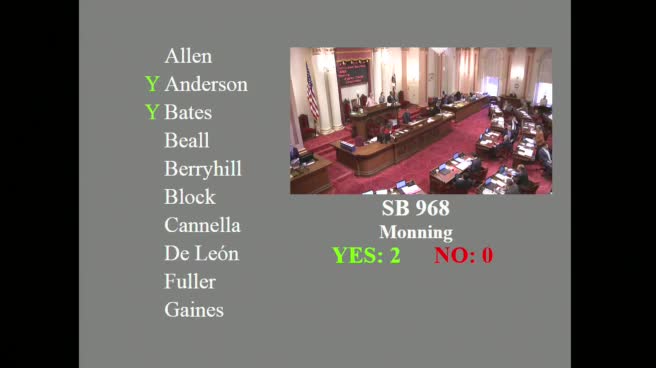
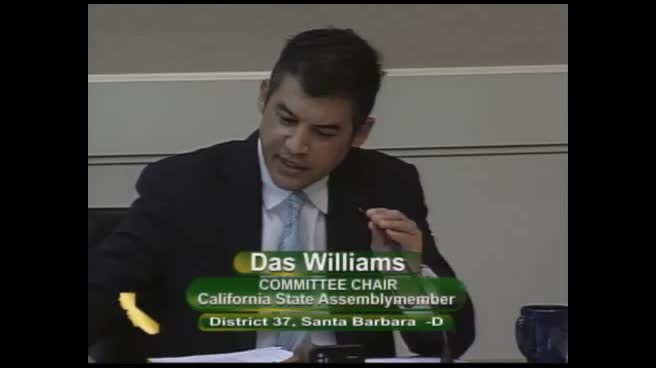
Bill Author