SB 909: Property tax postponement: special needs trust claimants.
- Session Year: 2015-2016
- House: Senate
- Latest Version Date: 2016-09-21
Existing law authorizes the Controller, upon approval of a claim for the postponement of ad valorem property taxes, to directly pay a county tax collector for the property taxes owed by the claimant, as provided. Existing law requires all sums paid for the postponement of property taxes pursuant to these provisions to be secured by a lien in favor of the state. Amounts owed by a claimant are due if the claimant, or his or her surviving spouse, ceases to occupy the premises as his or her residential dwelling, dies, disposes of the property, or allows specified taxes and special assessments to become delinquent, as provided. Existing law requires that the residential dwelling be owned by the claimant, the claimant and spouse, or the claimant and another specified individual. Existing law requires a claimant to file a claim containing specified information, including a description of the residential dwelling, under penalty of perjury.
This bill would provide that owned for these purposes includes the interest of a beneficiary of a special needs trust.
This bill would incorporate additional changes to Section 20583 of the Revenue and Taxation Code proposed by AB 1952 that would become operative if both bills are enacted and this bill is enacted last.
By requiring a special needs trust claimant for property tax postponement to file certain information under penalty of perjury, thereby expanding the crime of perjury, this bill would impose a state-mandated local program.
The California Constitution requires the state to reimburse local agencies and school districts for certain costs mandated by the state. Statutory provisions establish procedures for making that reimbursement.
This bill would provide that no reimbursement is required by this act for a specified reason.
Existing law authorizes the Controller, upon approval of a claim for the postponement of ad valorem property taxes, to directly pay a county tax collector for the property taxes owed by the claimant, as provided. Existing law requires all sums paid for the postponement of property taxes pursuant to these provisions to be secured by a lien in favor of the state. Amounts owed by a claimant are due if the claimant, or his or her surviving spouse, ceases to occupy the premises as his or her residential dwelling, dies, disposes of the property, or allows specified taxes and special assessments to become delinquent, as provided. Existing law requires that the residential dwelling be owned by the claimant, the claimant and spouse, or the claimant and another specified individual. Existing law requires a claimant to file a claim containing specified information, including a description of the residential dwelling, under penalty of perjury.
This bill would provide that owned for these purposes includes the interest of a beneficiary of a special needs trust.
This bill would incorporate additional changes to Section 20583 of the Revenue and Taxation Code proposed by AB 1952 that would become operative if both bills are enacted and this bill is enacted last.
By requiring a special needs trust claimant for property tax postponement to file certain information under penalty of perjury, thereby expanding the crime of perjury, this bill would impose a state-mandated local program.
The California Constitution requires the state to reimburse local agencies and school districts for certain costs mandated by the state. Statutory provisions establish procedures for making that reimbursement.
This bill would provide that no reimbursement is required by this act for a specified reason.
Existing law authorizes the Controller, upon approval of a claim for the postponement of ad valorem property taxes, to directly pay a county tax collector for the property taxes owed by the claimant, as provided. Existing law requires all sums paid for the postponement of property taxes pursuant to these provisions to be secured by a lien in favor of the state. Amounts owed by a claimant are due if the claimant, or his or her surviving spouse, ceases to occupy the premises as his or her residential dwelling, dies, disposes of the property, or allows specified taxes and special assessments to become delinquent, as provided. Existing law requires that the residential dwelling be owned by the claimant, the claimant and spouse, or the claimant and another specified individual. Existing law requires a claimant to file a claim containing specified information, including a description of the residential dwelling, under penalty of perjury.
This bill would provide that owned for these purposes includes the interest of a beneficiary of a special needs trust.
This bill would incorporate additional changes to Section 20583 of the Revenue and Taxation Code proposed by AB 1952 that would become operative if both bills are enacted and this bill is enacted last.
By requiring a special needs trust claimant for property tax postponement to file certain information under penalty of perjury, thereby expanding the crime of perjury, this bill would impose a state-mandated local program.
The California Constitution requires the state to reimburse local agencies and school districts for certain costs mandated by the state. Statutory provisions establish procedures for making that reimbursement.
This bill would provide that no reimbursement is required by this act for a specified reason.
Existing law authorizes the Controller, upon approval of a claim for the postponement of ad valorem property taxes, to directly pay a county tax collector for the property taxes owed by the claimant, as provided. Existing law requires all sums paid for the postponement of property taxes pursuant to these provisions to be secured by a lien in favor of the state. Amounts owed by a claimant are due if the claimant, or his or her surviving spouse, ceases to occupy the premises as his or her residential dwelling, dies, disposes of the property, or allows specified taxes and special assessments to become delinquent, as provided. Existing law requires that the residential dwelling be owned by the claimant, the claimant and spouse, or the claimant and specified another specified individual. Existing law requires a claimant to file a claim containing specified information, including a description of the residential dwelling, under penalty of perjury.
This bill would provide that owned for these purposes includes the interest of a beneficiary of a special needs trust, in which title is held in trust, as specified. trust.
By requiring a special needs trust claimant for property tax postponement to file certain information under penalty of perjury, thereby expanding the crime of perjury, this bill would impose a state-mandated local program.
The California Constitution requires the state to reimburse local agencies and school districts for certain costs mandated by the state. Statutory provisions establish procedures for making that reimbursement.
This bill would provide that no reimbursement is required by this act for a specified reason.
Existing law authorizes the Controller, upon approval of a claim for the postponement of ad valorem property taxes, to directly pay a county tax collector for the property taxes owed by the claimant, as provided. Existing law requires all sums paid for the postponement of property taxes pursuant to these provisions to be secured by a lien in favor of the state. Amounts owed by a claimant are due if the claimant, or his or her surviving spouse, ceases to occupy the premises as his or her residential dwelling, dies, disposes of the property, or allows specified taxes and special assessments to become delinquent, as provided. Existing law requires that a claimant, generally, be an individual who is a member of the household, is either an owner-occupant, tenant stockholder occupant, or possessory interestholder occupant of the residential dwelling as to which postponement is claimed, and is either 62 years of age or older, blind, or disabled. Existing law requires that the residential dwelling be owned by the claimant, the claimant and spouse, or the claimant and specified another specified individual. Existing law requires a claimant to file a claim containing specified information information, including a description of the residential dwelling, under penalty of perjury.
This bill would provide that a claimant for property tax postponement also includes a special needs trust claimant, defined as a special needs trust of which the primary beneficiary is an individual who meets the above-described criteria. The bill would also make various technical and conforming changes. owned for these purposes includes the interest of a beneficiary of a special needs trust, in which title is held in trust, as specified.
By requiring a special needs trust claimant for property tax postponement to file certain information under penalty of perjury, thereby expanding the expanding the crime of perjury, this bill would impose a state-mandated local program.
The California Constitution requires the state to reimburse local agencies and school districts for certain costs mandated by the state. Statutory provisions establish procedures for making that reimbursement.
This bill would provide that no reimbursement is required by this act for a specified reason.
Existing law authorizes the Controller, upon approval of a claim for the postponement of ad valorem property taxes, to directly pay a county tax collector for the property taxes owed by the claimant, as provided. Existing law requires all sums paid for the postponement of property taxes pursuant to these provisions to be secured by a lien in favor of the state. Amounts owed by a claimant are due if the claimant, or his or her surviving spouse, ceases to occupy the premises as his or her residential dwelling, dies, disposes of the property, or allows specified taxes and special assessments to become delinquent, as provided. Existing law requires that a claimant, generally, be an individual who is a member of the household, is either an owner-occupant, tenant stockholder occupant, or possessory interestholder occupant of the residential dwelling as to which postponement is claimed, and is either 62 years of age or older, blind, or disabled. Existing law requires a claimant to file a claim containing specified information under penalty of perjury.
This bill would provide that a claimant for property tax postponement also includes a special needs trust claimant, defined as a special needs trust of which the primary beneficiary is an individual who meets the above-described criteria. The bill would also make various technical and conforming changes.
By requiring a special needs trust claimant for property tax postponement to file certain information under penalty of perjury, thereby expanding the expanding the crime of perjury, this bill would impose a state-mandated local program.
The California Constitution requires the state to reimburse local agencies and school districts for certain costs mandated by the state. Statutory provisions establish procedures for making that reimbursement.
This bill would provide that no reimbursement is required by this act for a specified reason.
(a)Residential dwelling means a dwelling occupied as the principal place of residence of the claimant and so much of the land surrounding it as is reasonably necessary for use of the dwelling as a home, owned by the claimant, the claimant and spouse, or by the claimant and either another individual eligible for postponement under this chapter or an individual described in subdivision (a), (b), or (c) of Section 20511 and located in this state. It shall include condominiums that are assessed as realty for local property tax purposes. It also includes part of a multidwelling or multipurpose building and a part of the land upon which it is built.
(b)As used in this chapter in reference to ownership interests in residential dwellings, owned includes (1) the interest of a vendee in possession under a land sale contract provided that the contract or memorandum thereof is recorded and only from the date of recordation of the contract or memorandum thereof in the office of the county recorder where the residential dwelling is located, (2) the interest of the holder of a life estate provided that the instrument creating the life estate is recorded and only from the date of recordation of the instrument creating the life estate in the office of the county recorder where the residential dwelling is located, but owned does not include the interest of the holder of any remainder interest or the holder of a reversionary interest in the residential dwelling, (3) the interest of a joint tenant or a tenant in common in the residential dwelling or the interest of a tenant where title is held in tenancy by the entirety or a community property interest where title is held as community property, and (4) the interest, including the interest of a beneficiary of a special needs trust, in the residential dwelling in which the title is held in trust, as described in subdivision (d) of Section 62, provided that the Controller determines that the states interest is adequately protected.
(c)Except as provided in subdivision (c), and Chapter 3 (commencing with Section 20625), ownership must be evidenced by an instrument duly recorded in the office of the county where the residential dwelling is located.
(d)Residential dwelling does not include any of the following:
(1)Any residential dwelling in which the owners do not have an equity of at least 40 percent of the full value of the property as determined for purposes of property taxation or at least 40 percent of the fair market value as determined by the Controller and where the Controller determines that the states interest is adequately protected. The 40-percent equity requirement shall be met each time the claimant or authorized agent files a postponement claim.
(2)Any residential dwelling in which the claimants interest is held pursuant to a contract of sale or under a life estate, unless the claimant obtains the written consent of the vendor under the contract of sale, or the holder of the reversionary interest upon termination of the life estate, for the postponement of taxes and the creation of a lien on the real property in favor of the state for amounts postponed pursuant to this act.
(3)Any residential dwelling on which the claimant does not receive a secured tax bill.
(4)Any residential dwelling in which the claimants interest is held as a possessory interest, except as provided in Chapter 3.5 (commencing with Section 20640).
SEC. 1.5.Section 20583 of the Revenue and Taxation Code is amended to read:20583.(a)Residential dwelling means a dwelling occupied as the principal place of residence of the claimant and so much of the land surrounding it as is reasonably necessary for use of the dwelling as a home, owned by the claimant, the claimant and spouse, or by the claimant and either another individual eligible for postponement under this chapter or an individual described in subdivision (a), (b), or (c) of Section 20511 and located in this state. It shall include condominiums that are assessed as realty for local property tax purposes. It also includes part of a multidwelling or multipurpose building and a part of the land upon which it is built.
(b)As used in this chapter in reference to ownership interests in residential dwellings, owned includes (1) the interest of a vendee in possession under a land sale contract provided that the contract or memorandum thereof is recorded and only from the date of recordation of the contract or memorandum thereof in the office of the county recorder where the residential dwelling is located, (2) the interest of the holder of a life estate provided that the instrument creating the life estate is recorded and only from the date of recordation of the instrument creating the life estate in the office of the county recorder where the residential dwelling is located, but owned does not include the interest of the holder of any remainder interest or the holder of a reversionary interest in the residential dwelling, (3) the interest of a joint tenant or a tenant in common in the residential dwelling or the interest of a tenant where title is held in tenancy by the entirety or a community property interest where title is held as community property, and (4) the interest, including the interest of a beneficiary of a special needs trust, in the residential dwelling in which the title is held in trust, as described in subdivision (d) of Section 62, provided that the Controller determines that the states interest is adequately protected.
(c)Except as provided in subdivision (c), and Chapter 3 (commencing with Section 20625), ownership must be evidenced by an instrument duly recorded in the office of the county where the residential dwelling is located.
(d)Residential dwelling does not include any of the following:
(1)Any residential dwelling in which the owners do not have an equity of at least 40 percent of the full value of the property as determined for purposes of property taxation or at least 40 percent of the fair market value as determined by the Controller and where the Controller determines that the states interest is adequately protected. The 40-percent equity requirement shall be met each time the claimant or authorized agent files a postponement claim.
(2)Any residential dwelling in which the claimants interest is held pursuant to a contract of sale or under a life estate, unless the claimant obtains the written consent of the vendor under the contract of sale, or the holder of the reversionary interest upon termination of the life estate, for the postponement of taxes and the creation of a lien on the real property in favor of the state for amounts postponed pursuant to this act.
(3)Any residential dwelling on which the claimant does not receive a secured tax bill.
(4)Any residential dwelling in which the claimants interest is held as a possessory interest, except as provided in Chapter 3.5 (commencing with Section 20640).
(5)Any residential dwelling that is subject to a Property Assessed Clean Energy bond, or PACE bond, as defined in Section 26054 of the Public Resources Code.
SEC. 2.Section 1.5 of this bill incorporates amendments to Section 20583 of the Revenue and Taxation Code proposed by both this bill and Assembly Bill 1952. It shall only become operative if (1) both bills are enacted and become effective on or before January 1, 2017, (2) each bill amends Section 20583 of the Revenue and Taxation Code, and (3) this bill is enacted after Assembly Bill 1952, in which case Section 1 of this bill shall not become operative.
SEC. 3.No reimbursement is required by this act pursuant to Section 6 of Article XIIIB of the California Constitution because the only costs that may be incurred by a local agency or school district will be incurred because this act creates a new crime or infraction, eliminates a crime or infraction, or changes the penalty for a crime or infraction, within the meaning of Section 17556 of the Government Code, or changes the definition of a crime within the meaning of Section 6 of Article XIIIB of the California Constitution.
(a)Residential dwelling means a dwelling occupied as the principal place of residence of the claimant and so much of the land surrounding it as is reasonably necessary for use of the dwelling as a home, owned by the claimant, the claimant and spouse, or by the claimant and either another individual eligible for postponement under this chapter or an individual described in subdivision (a), (b), or (c) of Section 20511 and located in this state. It shall include condominiums that are assessed as realty for local property tax purposes. It also includes part of a multidwelling or multipurpose building and a part of the land upon which it is built.
(b)As used in this chapter in reference to ownership interests in residential dwellings, owned includes (1) the interest of a vendee in possession under a land sale contract provided that the contract or memorandum thereof is recorded and only from the date of recordation of the contract or memorandum thereof in the office of the county recorder where the residential dwelling is located, (2) the interest of the holder of a life estate provided that the instrument creating the life estate is recorded and only from the date of recordation of the instrument creating the life estate in the office of the county recorder where the residential dwelling is located, but owned does not include the interest of the holder of any remainder interest or the holder of a reversionary interest in the residential dwelling, (3) the interest of a joint tenant or a tenant in common in the residential dwelling or the interest of a tenant where title is held in tenancy by the entirety or a community property interest where title is held as community property, and (4) the interest, including the interest of a beneficiary of a special needs trust, in the residential dwelling in which the title is held in trust, as described in subdivision (d) of Section 62, provided that the Controller determines that the states interest is adequately protected.
(c)Except as provided in subdivision (c), and Chapter 3 (commencing with Section 20625), ownership must be evidenced by an instrument duly recorded in the office of the county where the residential dwelling is located.
(d)Residential dwelling does not include any of the following:
(1)Any residential dwelling in which the owners do not have an equity of at least 40 percent of the full value of the property as determined for purposes of property taxation or at least 40 percent of the fair market value as determined by the Controller and where the Controller determines that the states interest is adequately protected. The 40-percent equity requirement shall be met each time the claimant or authorized agent files a postponement claim.
(2)Any residential dwelling in which the claimants interest is held pursuant to a contract of sale or under a life estate, unless the claimant obtains the written consent of the vendor under the contract of sale, or the holder of the reversionary interest upon termination of the life estate, for the postponement of taxes and the creation of a lien on the real property in favor of the state for amounts postponed pursuant to this act.
(3)Any residential dwelling on which the claimant does not receive a secured tax bill.
(4)Any residential dwelling in which the claimants interest is held as a possessory interest, except as provided in Chapter 3.5 (commencing with Section 20640).
SEC. 1.5.Section 20583 of the Revenue and Taxation Code is amended to read:20583.(a)Residential dwelling means a dwelling occupied as the principal place of residence of the claimant and so much of the land surrounding it as is reasonably necessary for use of the dwelling as a home, owned by the claimant, the claimant and spouse, or by the claimant and either another individual eligible for postponement under this chapter or an individual described in subdivision (a), (b), or (c) of Section 20511 and located in this state. It shall include condominiums that are assessed as realty for local property tax purposes. It also includes part of a multidwelling or multipurpose building and a part of the land upon which it is built.
(b)As used in this chapter in reference to ownership interests in residential dwellings, owned includes (1) the interest of a vendee in possession under a land sale contract provided that the contract or memorandum thereof is recorded and only from the date of recordation of the contract or memorandum thereof in the office of the county recorder where the residential dwelling is located, (2) the interest of the holder of a life estate provided that the instrument creating the life estate is recorded and only from the date of recordation of the instrument creating the life estate in the office of the county recorder where the residential dwelling is located, but owned does not include the interest of the holder of any remainder interest or the holder of a reversionary interest in the residential dwelling, (3) the interest of a joint tenant or a tenant in common in the residential dwelling or the interest of a tenant where title is held in tenancy by the entirety or a community property interest where title is held as community property, and (4) the interest, including the interest of a beneficiary of a special needs trust, in the residential dwelling in which the title is held in trust, as described in subdivision (d) of Section 62, provided that the Controller determines that the states interest is adequately protected.
(c)Except as provided in subdivision (c), and Chapter 3 (commencing with Section 20625), ownership must be evidenced by an instrument duly recorded in the office of the county where the residential dwelling is located.
(d)Residential dwelling does not include any of the following:
(1)Any residential dwelling in which the owners do not have an equity of at least 40 percent of the full value of the property as determined for purposes of property taxation or at least 40 percent of the fair market value as determined by the Controller and where the Controller determines that the states interest is adequately protected. The 40-percent equity requirement shall be met each time the claimant or authorized agent files a postponement claim.
(2)Any residential dwelling in which the claimants interest is held pursuant to a contract of sale or under a life estate, unless the claimant obtains the written consent of the vendor under the contract of sale, or the holder of the reversionary interest upon termination of the life estate, for the postponement of taxes and the creation of a lien on the real property in favor of the state for amounts postponed pursuant to this act.
(3)Any residential dwelling on which the claimant does not receive a secured tax bill.
(4)Any residential dwelling in which the claimants interest is held as a possessory interest, except as provided in Chapter 3.5 (commencing with Section 20640).
(5)Any residential dwelling that is subject to a Property Assessed Clean Energy bond, or PACE bond, as defined in Section 26054 of the Public Resources Code.
SEC. 2.Section 1.5 of this bill incorporates amendments to Section 20583 of the Revenue and Taxation Code proposed by both this bill and Assembly Bill 1952. It shall only become operative if (1) both bills are enacted and become effective on or before January 1, 2017, (2) each bill amends Section 20583 of the Revenue and Taxation Code, and (3) this bill is enacted after Assembly Bill 1952, in which case Section 1 of this bill shall not become operative.
SEC. 3.No reimbursement is required by this act pursuant to Section 6 of Article XIIIB of the California Constitution because the only costs that may be incurred by a local agency or school district will be incurred because this act creates a new crime or infraction, eliminates a crime or infraction, or changes the penalty for a crime or infraction, within the meaning of Section 17556 of the Government Code, or changes the definition of a crime within the meaning of Section 6 of Article XIIIB of the California Constitution.
(a)Residential dwelling means a dwelling occupied as the principal place of residence of the claimant and so much of the land surrounding it as is reasonably necessary for use of the dwelling as a home, owned by the claimant, the claimant and spouse, or by the claimant and either another individual eligible for postponement under this chapter or an individual described in subdivision (a), (b), or (c) of Section 20511 and located in this state. It shall include condominiums that are assessed as realty for local property tax purposes. It also includes part of a multidwelling or multipurpose building and a part of the land upon which it is built.
(b)As used in this chapter in reference to ownership interests in residential dwellings, owned includes (1) the interest of a vendee in possession under a land sale contract provided that the contract or memorandum thereof is recorded and only from the date of recordation of the contract or memorandum thereof in the office of the county recorder where the residential dwelling is located, (2) the interest of the holder of a life estate provided that the instrument creating the life estate is recorded and only from the date of recordation of the instrument creating the life estate in the office of the county recorder where the residential dwelling is located, but owned does not include the interest of the holder of any remainder interest or the holder of a reversionary interest in the residential dwelling, (3) the interest of a joint tenant or a tenant in common in the residential dwelling or the interest of a tenant where title is held in tenancy by the entirety or a community property interest where title is held as community property, and (4) the interest, including the interest of a beneficiary of a special needs trust, in the residential dwelling in which the title is held in trust, as described in subdivision (d) of Section 62, provided that the Controller determines that the states interest is adequately protected.
(c)Except as provided in subdivision (c), and Chapter 3 (commencing with Section 20625), ownership must be evidenced by an instrument duly recorded in the office of the county where the residential dwelling is located.
(d)Residential dwelling does not include any of the following:
(1)Any residential dwelling in which the owners do not have an equity of at least 40 percent of the full value of the property as determined for purposes of property taxation or at least 40 percent of the fair market value as determined by the Controller and where the Controller determines that the states interest is adequately protected. The 40-percent equity requirement shall be met each time the claimant or authorized agent files a postponement claim.
(2)Any residential dwelling in which the claimants interest is held pursuant to a contract of sale or under a life estate, unless the claimant obtains the written consent of the vendor under the contract of sale, or the holder of the reversionary interest upon termination of the life estate, for the postponement of taxes and the creation of a lien on the real property in favor of the state for amounts postponed pursuant to this act.
(3)Any residential dwelling on which the claimant does not receive a secured tax bill.
(4)Any residential dwelling in which the claimants interest is held as a possessory interest, except as provided in Chapter 3.5 (commencing with Section 20640).
SEC. 1.5.Section 20583 of the Revenue and Taxation Code is amended to read:20583.(a)Residential dwelling means a dwelling occupied as the principal place of residence of the claimant, claimant and so much of the land surrounding it as is reasonably necessary for use of the dwelling as a home, owned by the claimant, the claimant and spouse, or by the claimant and either another individual eligible for postponement under this chapter or an individual described in subdivision (a), (b), or (c) of Section 20511 and located in this state. It shall include condominiums that are assessed as realty for local property tax purposes. It also includes part of a multidwelling or multipurpose building and a part of the land upon which it is built.
(b)As used in this chapter in reference to ownership interests in residential dwellings, owned includes (1) the interest of a vendee in possession under a land sale contract provided that the contract or memorandum thereof is recorded and only from the date of recordation of the contract or memorandum thereof in the office of the county recorder where the residential dwelling is located, (2) the interest of the holder of a life estate provided that the instrument creating the life estate is recorded and only from the date of recordation of the instrument creating the life estate in the office of the county recorder where the residential dwelling is located, but owned does not include the interest of the holder of any remainder interest or the holder of a reversionary interest in the residential dwelling, (3) the interest of a joint tenant or a tenant in common in the residential dwelling or the interest of a tenant where title is held in tenancy by the entirety or a community property interest where title is held as community property, and (4) the interest interest, including the interest of a beneficiary of a special needs trust, in the residential dwelling in which the title is held in trust, as described in subdivision (d) of Section 62, provided that the Controller determines that the states interest is adequately protected.
(c)Except as provided in subdivision (c), and Chapter 3 (commencing with Section 20625), ownership must be evidenced by an instrument duly recorded in the office of the county where the residential dwelling is located.
(d)Residential dwelling does not include any of the following:
(1)Any residential dwelling in which the owners do not have an equity of at least 40 percent of the full value of the property as determined for purposes of property taxation or at least 40 percent of the fair market value as determined by the Controller and where the Controller determines that the states interest is adequately protected. The 40-percent equity requirement shall be met each time the claimant or authorized agent files a postponement claim.
(2)Any residential dwelling in which the claimants interest is held pursuant to a contract of sale or under a life estate, unless the claimant obtains the written consent of the vendor under the contract of sale, or the holder of the reversionary interest upon termination of the life estate, for the postponement of taxes and the creation of a lien on the real property in favor of the state for amounts postponed pursuant to this act.
(3)Any residential dwelling on which the claimant does not receive a secured tax bill.
(4)Any residential dwelling in which the claimants interest is held as a possessory interest, except as provided in Chapter 3.5 (commencing with Section 20640).
(5)Any residential dwelling that is subject to a Property Assessed Clean Energy bond, or PACE bond, as defined in Section 26054 of the Public Resources Code.
SEC. 2.Section 1.5 of this bill incorporates amendments to Section 20583 of the Revenue and Taxation Code proposed by both this bill and Assembly Bill 1952. It shall only become operative if (1) both bills are enacted and become effective on or before January 1, 2017, (2) each bill amends Section 20583 of the Revenue and Taxation Code, and (3) this bill is enacted after Assembly Bill 1952, in which case Section 1 of this bill shall not become operative.
SEC. 2.SEC. 3.No reimbursement is required by this act pursuant to Section 6 of Article XIIIB of the California Constitution because the only costs that may be incurred by a local agency or school district will be incurred because this act creates a new crime or infraction, eliminates a crime or infraction, or changes the penalty for a crime or infraction, within the meaning of Section 17556 of the Government Code, or changes the definition of a crime within the meaning of Section 6 of Article XIIIB of the California Constitution.
(a)Residential dwelling means a dwelling occupied as the principal place of residence of the claimant and so much of the land surrounding it as is reasonably necessary for use of the dwelling as a home, owned by the claimant, the claimant and spouse, or by the claimant and either another individual eligible for postponement under this chapter or an individual described in subdivision (a), (b), or (c) of Section 20511 and located in this state. It shall include condominiums that are assessed as realty for local property tax purposes. It also includes part of a multidwelling or multipurpose building and a part of the land upon which it is built.
(b)As used in this chapter in reference to ownership interests in residential dwellings, owned includes (1) the interest of a vendee in possession under a land sale contract provided that the contract or memorandum thereof is recorded and only from the date of recordation of the contract or memorandum thereof in the office of the county recorder where the residential dwelling is located, (2) the interest of the holder of a life estate provided that the instrument creating the life estate is recorded and only from the date of recordation of the instrument creating the life estate in the office of the county recorder where the residential dwelling is located, but owned does not include the interest of the holder of any remainder interest or the holder of a reversionary interest in the residential dwelling, (3) the interest of a joint tenant or a tenant in common in the residential dwelling or the interest of a tenant where title is held in tenancy by the entirety or a community property interest where title is held as community property, and (4) the interest interest, including the interest of a beneficiary of a special needs trust, in the residential dwelling in which the title is held in trust, as described in subdivision (d) of Section 62, and (5) the interest of a beneficiary of a special needs trust, in which title is held in trust, as described in subdivision (d) of Section 62, provided that the Controller determines that the states interest is adequately protected.
(c)Except as provided in subdivision (c), and Chapter 3 (commencing with Section 20625), ownership must be evidenced by an instrument duly recorded in the office of the county where the residential dwelling is located.
(d)Residential dwelling does not include any of the following:
(1)Any residential dwelling in which the owners do not have an equity of at least 40 percent of the full value of the property as determined for purposes of property taxation or at least 40 percent of the fair market value as determined by the Controller and where the Controller determines that the states interest is adequately protected. The 40-percent equity requirement shall be met each time the claimant or authorized agent files a postponement claim.
(2)Any residential dwelling in which the claimants interest is held pursuant to a contract of sale or under a life estate, unless the claimant obtains the written consent of the vendor under the contract of sale, or the holder of the reversionary interest upon termination of the life estate, for the postponement of taxes and the creation of a lien on the real property in favor of the state for amounts postponed pursuant to this act.
(3)Any residential dwelling on which the claimant does not receive a secured tax bill.
(4)Any residential dwelling in which the claimants interest is held as a possessory interest, except as provided in Chapter 3.5 (commencing with Section 20640).
SEC. 2.No reimbursement is required by this act pursuant to Section 6 of Article XIIIB of the California Constitution because the only costs that may be incurred by a local agency or school district will be incurred because this act creates a new crime or infraction, eliminates a crime or infraction, or changes the penalty for a crime or infraction, within the meaning of Section 17556 of the Government Code, or changes the definition of a crime within the meaning of Section 6 of Article XIIIB of the California Constitution.
All amounts owing pursuant to Article 1 (commencing with Section 16180) of this chapter shall become due if any of the following occurs:
(a)The claimant, who is either the sole owner or sole possessory interestholder of the residential dwelling, as defined in Section 20583 or Section 20640 of the Revenue and Taxation Code, or a coowner or copossessory interestholder with a person other than a spouse or other individual eligible to postpone property taxes pursuant to Chapter 2 (commencing with Section 20581), Chapter 3 (commencing with Section 20625), Chapter 3.3 (commencing with Section 20639), or Chapter 3.5 (commencing with Section 20640) of Part 10.5 of Division 2 of that code, or, in the case of a special needs trust claimant, the beneficiary, ceases to occupy the premises as his or her residential dwelling, dies, or sells, conveys, or disposes of the property, or allows any tax or special assessment on the premises described in Section 20583 of such code to become delinquent. If the sole owner or possessory interestholder claimant dies and his or her surviving spouse inherits the premises and continues to own and occupy it as his or her principal place of residence, then the lien amount does not become due and payable unless taxes or special assessments described in the preceding sentence become delinquent, or such surviving spouse dies, or sells, conveys, or disposes of the interest in the property.
(b)The claimant, who is a coowner or copossessory interestholder of the residential dwelling, as defined in Section 20583 or Section 20640.2 of the Revenue and Taxation Code, with a spouse or another individual eligible to postpone property taxes pursuant to Chapter 2 (commencing with Section 20581), Chapter 3 (commencing with Section 20625), Chapter 3.3 (commencing with Section 20639), or Chapter 3.5 (commencing with Section 20640) of Part 10.5 of Division 2 of that code, or, in the case of a special needs trust claimant, the beneficiary, dies, and the surviving spouse or other surviving eligible individual allows any tax or special assessment on the premises described in Section 20583 of such code to become delinquent or such surviving spouse or other individual ceases to occupy the premises as a residential dwelling, dies, or conveys, or disposes of the interest in the property.
(c)The claimant fails to perform those acts the claimant is required to perform where his or her performance is secured, or will be secured in the event of nonperformance, by a lien which is senior to that of the lien provided by Section 16182.
(d)Postponement was erroneously allowed because eligibility requirements were not met.
(e)The claimant is refinancing the residential dwelling.
(f)The claimant has elected to participate in a reverse mortgage program for the residential dwelling.
SEC. 2.Section 16191 of the Government Code, as amended by Section 5 of Chapter 391 of the Statutes of 2015, is amended to read:16191.The amounts paid pursuant to Section 16180 shall continue to draw interest but amounts owing pursuant to Article 1 (commencing with Section 16180) of this chapter shall not become due and payable if any of the following occurs:
(a)The claimant, or, in the case of a special needs trust claimant, the beneficiary, continues to own and occupy or hold the possessory interest and occupy the premises as a residential dwelling, but ceases to postpone property taxes pursuant to Chapter 2 (commencing with Section 20581), Chapter 3 (commencing with Section 20625), Chapter 3.3 (commencing with Section 20639), or Chapter 3.5 (commencing with Section 20640) of Part 10.5 of Division 2 of the Revenue and Taxation Code, and does not allow any tax or assessment against the premises, as described in Section 20583 of such code, to become delinquent.
(b)The surviving spouse of a claimant, or, in the case of a special needs trust claimant, the beneficiary, continues to own and occupy or hold the possessory interest and occupy the premises as a residential dwelling, but is ineligible to postpone property taxes pursuant to Chapter 2 (commencing with Section 20581), Chapter 3 (commencing with Section 20625), Chapter 3.3 (commencing with Section 20639), or Chapter 3.5 (commencing with Section 20640) of Part 10.5 of Division 2 of the Revenue and Taxation Code, or elects not to postpone such taxes, and does not allow any tax or assessment against the premises, as described in Section 20583 of such code, to become delinquent.
(c)The surviving individual otherwise eligible to postpone property taxes pursuant to Chapter 2 (commencing with Section 20581), Chapter 3 (commencing with Section 20625), Chapter 3.3 (commencing with Section 20639), or Chapter 3.5 (commencing with Section 20640) of Part 10.5 of Division 2 of the Revenue and Taxation Code continues to own and occupy or hold the possessory interest and occupy the premises as a residential dwelling, but elects not to postpone the property taxes pursuant to such chapter, and does not allow any tax or assessment against the premises, as described in Section 20583 of such code, to become delinquent.
SEC. 3.Section 20505 of the Revenue and Taxation Code, as amended by Section 8 of Chapter 391 of the Statutes of 2015, is amended to read:20505.Claimant means an individual who
(a)For purposes of this chapter was either (1) 62 years of age or older on the last day of the calendar year or approved fiscal year designated in subdivision (b) or (c) of Section 20503, whichever is applicable, or (2) blind or disabled, as defined in Section 12050 of the Welfare and Institutions Code on the last day of the calendar year or approved fiscal year designated in subdivision (b) of Section 20503, who was a member of the household, and who was either: (1) the owner and occupier of a residential dwelling on the last day of the year designated in subdivision (b) or (c) of Section 20503, or (2) the renter of a rented residence on or before the last day of the year designated in subdivision (b) of Section 20503. An individual who qualifies as an owner-claimant may not qualify as a renter-claimant for the same year.
(b)(1)For purposes of Chapter 2 (commencing with Section 20581), Chapter 3 (commencing with Section 20625), Chapter 3.3 (commencing with Section 20639), and Chapter 3.5 (commencing with Section 20640), was a member of the household and either an owner-occupant, or a tenant stockholder occupant, or a possessory interestholder occupant, or a mobilehome owner-occupant, as the case may be, of the residential dwelling as to which postponement is claimed on the last day of the year designated in subdivision (b) or (c) of Section 20503, and who was (1) 62 years of age or older by December 31 of the fiscal year for which postponement is claimed, or (2) blind or disabled, as defined in Section 12050 of the Welfare and Institutions Code, at the time of application or on December 10 of the fiscal year for which postponement is claimed, whichever is earlier.
(2)For purposes of this subdivision, claimant shall include a special needs trust claimant. Special needs trust claimant means a special needs trust of which the primary beneficiary is an individual who would qualify as a claimant pursuant to paragraph (1).
SEC. 4.SECTION 1.Section 20583 of the Revenue and Taxation Code is amended to read:20583.(a)Residential dwelling means a dwelling occupied as the principal place of residence of the claimant, or, in the case of a special needs trust claimant, the beneficiary, claimant and so much of the land surrounding it as is reasonably necessary for use of the dwelling as a home, owned by the claimant, the beneficiary of a special needs trust claimant, the claimant and spouse, or by the claimant and either another individual eligible for postponement under this chapter or an individual described in subdivision (a), (b), or (c) of Section 20511 and located in this state. It shall include condominiums that are assessed as realty for local property tax purposes. It also includes part of a multidwelling or multipurpose building and a part of the land upon which it is built.
(b)As used in this chapter in reference to ownership interests in residential dwellings, owned includes (1) the interest of a vendee in possession under a land sale contract provided that the contract or memorandum thereof is recorded and only from the date of recordation of the contract or memorandum thereof in the office of the county recorder where the residential dwelling is located, (2) the interest of the holder of a life estate provided that the instrument creating the life estate is recorded and only from the date of recordation of the instrument creating the life estate in the office of the county recorder where the residential dwelling is located, but owned does not include the interest of the holder of any remainder interest or the holder of a reversionary interest in the residential dwelling, (3) the interest of a joint tenant or a tenant in common in the residential dwelling or the interest of a tenant where title is held in tenancy by the entirety or a community property interest where title is held as community property, and (4) the interest in the residential dwelling in which the title is held in trust, as described in subdivision (d) of Section 62, and (5) the interest of a beneficiary of a special needs trust, in which title is held in trust, as described in subdivision (d) of Section 62, provided that the Controller determines that the states interest is adequately protected.
(c)Except as provided in subdivision (c), and Chapter 3 (commencing with Section 20625), ownership must be evidenced by an instrument duly recorded in the office of the county where the residential dwelling is located.
(d)Residential dwelling does not include any of the following:
(1)Any residential dwelling in which the owners do not have an equity of at least 40 percent of the full value of the property as determined for purposes of property taxation or at least 40 percent of the fair market value as determined by the Controller and where the Controller determines that the states interest is adequately protected. The 40-percent equity requirement shall be met each time the claimant or authorized agent files a postponement claim.
(2)Any residential dwelling in which the claimants interest is held pursuant to a contract of sale or under a life estate, unless the claimant obtains the written consent of the vendor under the contract of sale, or the holder of the reversionary interest upon termination of the life estate, for the postponement of taxes and the creation of a lien on the real property in favor of the state for amounts postponed pursuant to this act.
(3)Any residential dwelling on which the claimant does not receive a secured tax bill.
(4)Any residential dwelling in which the claimants interest is held as a possessory interest, except as provided in Chapter 3.5 (commencing with Section 20640).
SEC. 5.Section 20627 of the Revenue and Taxation Code, as amended by Section 15 of Chapter 391 of the Statutes of 2015, is amended to read:20627.(a)A tenant-stockholder claimant (hereinafter referred to as claimant) is an individual who, on the last day of the calendar year ending immediately prior to the commencement of the fiscal year for which postponement is claimed is: (a) a tenant-stockholder in a cooperative housing corporation (as defined in Section 216(b) of the Internal Revenue Code) and (b) occupies as a principal place of residence a residential unit in the cooperative housing corporation (notwithstanding Section 216(b) of the Internal Revenue Code). For the purposes of this chapter, a claimant must be (1) 62 years of age or older on or before December 31 of the fiscal year for which postponement is claimed or (2) blind or disabled, as defined in Section 12050 of the Welfare and Institutions Code, at the time of application or on December 10 of the fiscal year for which the postponement is claimed, whichever is earlier.
(b)For purposes of this chapter, tenant-stockholder claimant and claimant shall include a special needs trust claimant. Special needs trust claimant means a special needs trust of which the primary beneficiary is an individual who would qualify as a tenant-stockholder claimant or claimant pursuant to subdivision (a).
SEC. 6.Section 20639.11 of the Revenue and Taxation Code is amended to read:20639.11.All amounts postponed pursuant to this chapter shall be due if any of the following occurs:
(a)The claimant, or, in the case of a special needs trust claimant, the beneficiary, ceases to occupy the residential dwelling as the principal place of residence, sells, or otherwise disposes of his or her mobilehome.
(b)The claimant, or, in the case of a special needs trust claimant, the beneficiary, dies. However, if the surviving spouse was previously approved pursuant to this chapter continues to occupy the mobilehome, then the postponed amounts shall not be due unless that person dies or ceases to occupy the residential dwelling.
(c)The claimant fails to perform those acts required by the legal owner or junior lienholder.
(d)The claimant allows any subsequent taxes to remain unpaid or to be transferred to the unsecured roll.
(e)Postponement was erroneously allowed because eligibility requirements were not met.
SEC. 7.Section 20640.2 of the Revenue and Taxation Code, as amended by Section 28 of Chapter 391 of the Statutes of 2015, is amended to read:20640.2.For the purposes of this chapter, the following definitions shall apply:
(a)Possessory interest means (1) possession of, or right to the possession of land located in this state whether or not coupled with ownership of the residential dwelling on the same, or (2) a possessory interest or right of occupancy on tax exempt land.
(b)Residential dwelling means a dwelling occupied as the principal place of residence of the claimant, or, in the case of a special needs trust claimant, the beneficiary, and so much of the land surrounding it as is reasonably necessary for use of the dwelling as a home, located on possessory interest property. It shall include condominiums upon which property taxes, as defined in subdivision (c), are assessed. It also includes part of a multidwelling or multipurpose building and a part of the land upon which it is built.
(c)Property taxes means the amount of property tax for which the claimant is personally liable as assessee or is obligated to pay directly to the tax collector pursuant to the terms of the agreement establishing the possessory interest, including all ad valorem property taxes, special assessments, capitalization of leasehold interest, and other charges or user fees which are attributable to the residential dwelling on the county tax bill and the ad valorem property taxes, special assessments, capitalization of leasehold interest, or other charges or user fees appearing on the tax bill of any chartered city which levies and collects its own property taxes.
SEC. 8.Section 20640.3 of the Revenue and Taxation Code, as amended by Section 29 of Chapter 391 of the Statutes of 2015, is amended to read:20640.3.(a)A claimant is an individual who:
(1)Holds a right to a possessory interest pursuant to a validly recorded instrument conveying such possessory interest for a term of years no less than 45 years beyond the last day of the calendar year ending immediately prior to the fiscal year for which taxes are initially postponed;
(2)Occupies as a principal place of residence the residential dwelling affixed to such possessory interest real property on the last day of the year designated in subdivision (c) of Section 20503 of this code;
(3)Is (1) 62 years of age or older on or before December 31 of the fiscal year for which postponement is claimed or (2) blind or disabled, as defined in Section 12050 of the Welfare and Institutions Code, at the time of application or on December 10 of the fiscal year for which the postponement is claimed, whichever is earlier.
(b)For purposes of this chapter, claimant shall include a special needs trust claimant. Special needs trust claimant means a special needs trust of which the beneficiary is an individual who would qualify as a claimant pursuant to subdivision (a).
SEC. 9.Section 20640.5 of the Revenue and Taxation Code is amended to read:20640.5.(a)The Controller may require as security for the postponement of property taxes pursuant to this chapter any of the following:
(1)An assignment to the State of California of the remaining term of the claimants or, in the case of a special needs trust claimant, the beneficiarys, possessory interest.
(2)A security interest in any improvement owned or leased by the claimant or, in the case of a special needs trust claimant, the beneficiary, located on the land which is subject to the possessory interest.
(3)Any other additional security interest, created and perfected with respect to the rights of third persons in the manner provided by law for such type of security interest, which the Controller deems necessary to protect the interest of the state with regard to the repayment of postponed amounts by the claimant or a deceased claimants estate.
(b)On the form supplied by the Controller, the claimant shall obtain the written consent of any coholder of the possessory interest and of the grantor of the possessory interest to the assignment by claimant of the remaining term of claimants or, in the case of a special needs trust claimant, the beneficiarys possessory interest. The consent shall be in the form and contain those provisions as prescribed by the Controller, and shall provide for written notice by the grantor of the possessory interest to the Controller of the occurrence of a default by the claimant under the terms of the instrument creating the possessory interest, a coholder or a prior recorded possessory interest holder which would result in the termination or diminution of claimants or the beneficiarys, as applicable, interest.
The term grantor of the possessory interest, as used in this section shall be deemed to include the fee owner of the real property subject to the possessory interest and the holders of all prior recorded unterminated possessory interests.
SEC. 10.Section 20640.11 of the Revenue and Taxation Code is amended to read:20640.11.All amounts postponed pursuant to this chapter shall be due if any of the following occurs:
(a)The claimant, or, in the case of a special needs trust claimant, the beneficiary, ceases to occupy the residential dwelling as the principal place of residence, sells or otherwise disposes of his possessory interest, or the possessory interest agreement expires by its terms.
(b)The claimant, or, in the case of a special needs trust claimant, the beneficiary, dies. However, if the surviving spouse or another person eligible to postpone pursuant to this chapter continues to occupy the residential dwelling, then the postponed amounts shall not be due unless such person dies, or ceases to occupy the residential dwelling.
(c)The failure of the claimant, the fee title owner, or any owner of a prior recorded possessory interest to perform those acts required by a security interest holder which is senior to the states security interest for postponed amounts.
(d)Postponement was erroneously allowed because eligibility requirements were not met.
SEC. 11.SEC. 2.No reimbursement is required by this act pursuant to Section 6 of Article XIIIB of the California Constitution because the only costs that may be incurred by a local agency or school district will be incurred because this act creates a new crime or infraction, eliminates a crime or infraction, or changes the penalty for a crime or infraction, within the meaning of Section 17556 of the Government Code, or changes the definition of a crime within the meaning of Section 6 of Article XIIIB of the California Constitution.
All amounts owing pursuant to Article 1 (commencing with Section 16180) of this chapter shall become due if any of the following occurs:
(a)The claimant, who is either the sole owner or sole possessory interestholder of the residential dwelling, as defined in Section 20583 or Section 20640 of the Revenue and Taxation Code, or a coowner or copossessory interestholder with a person other than a spouse or other individual eligible to postpone property taxes pursuant to Chapter 2 (commencing with Section 20581), Chapter 3 (commencing with Section 20625), Chapter 3.3 (commencing with Section 20639), or Chapter 3.5 (commencing with Section 20640) of Part 10.5 of Division 2 of that code, or, in the case of a special needs trust claimant, the beneficiary, ceases to occupy the premises as his or her residential dwelling, dies, or sells, conveys, or disposes of the property, or allows any tax or special assessment on the premises described in Section 20583 of such code to become delinquent. If the sole owner or possessory interestholder claimant dies and his or her surviving spouse inherits the premises and continues to own and occupy it as his or her principal place of residence, then the lien amount does not become due and payable unless taxes or special assessments described in the preceding sentence become delinquent, or such surviving spouse dies, or sells, conveys, or disposes of the interest in the property.
(b)The claimant, who is a coowner or copossessory interestholder of the residential dwelling, as defined in Section 20583 or Section 20640.2 of the Revenue and Taxation Code, with a spouse or another individual eligible to postpone property taxes pursuant to Chapter 2 (commencing with Section 20581), Chapter 3 (commencing with Section 20625), Chapter 3.3 (commencing with Section 20639), or Chapter 3.5 (commencing with Section 20640) of Part 10.5 of Division 2 of that code, or, in the case of a special needs trust claimant, the beneficiary, dies, and the surviving spouse or other surviving eligible individual allows any tax or special assessment on the premises described in Section 20583 of such code to become delinquent or such surviving spouse or other individual ceases to occupy the premises as a residential dwelling, dies, or conveys, or disposes of the interest in the property.
(c)The failure of the claimant fails to perform those acts the claimant is required to perform where such his or her performance is secured, or will be secured in the event of nonperformance, by a lien which is senior to that of the lien provided by Section 16182.
(d)Postponement was erroneously allowed because eligibility requirements were not met.
(e)The claimant is refinancing the residential dwelling.
(f)The claimant has elected to participate in a reverse mortgage program for the residential dwelling.
SEC. 2.Section 16191 of the Government Code, as amended by Section 5 of Chapter 391 of the Statutes of 2015, is amended to read:16191.The amounts paid pursuant to Section 16180 shall continue to draw interest but amounts owing pursuant to Article 1 (commencing with Section 16180) of this chapter shall not become due and payable if any of the following occurs:
(a)The claimant claimant, or, in the case of a special needs trust claimant, the beneficiary, continues to own and occupy or hold the possessory interest and occupy the premises as a residential dwelling, but ceases to postpone property taxes pursuant to Chapter 2 (commencing with Section 20581), Chapter 3 (commencing with Section 20625), Chapter 3.3 (commencing with Section 20639), or Chapter 3.5 (commencing with Section 20640) of Part 10.5 of Division 2 of the Revenue and Taxation Code, and does not allow any tax or assessment against the premises, as described in Section 20583 of such code, to become delinquent.
(b)The surviving spouse of a claimant claimant, or, in the case of a special needs trust claimant, the beneficiary, continues to own and occupy or hold the possessory interest and occupy the premises as a residential dwelling, but is ineligible to postpone property taxes pursuant to Chapter 2 (commencing with Section 20581), Chapter 3 (commencing with Section 20625), Chapter 3.3 (commencing with Section 20639), or Chapter 3.5 (commencing with Section 20640) of Part 10.5 of Division 2 of the Revenue and Taxation Code, or elects not to postpone such taxes, and does not allow any tax or assessment against the premises, as described in Section 20583 of such code, to become delinquent.
(c)The surviving individual otherwise eligible to postpone property taxes pursuant to Chapter 2 (commencing with Section 20581), Chapter 3 (commencing with Section 20625), Chapter 3.3 (commencing with Section 20639), or Chapter 3.5 (commencing with Section 20640) of Part 10.5 of Division 2 of the Revenue and Taxation Code continues to own and occupy or hold the possessory interest and occupy the premises as a residential dwelling, but elects not to postpone the property taxes pursuant to such chapter, and does not allow any tax or assessment against the premises, as described in Section 20583 of such code, to become delinquent.
SEC. 3.Section 20505 of the Revenue and Taxation Code, as amended by Section 8 of Chapter 391 of the Statutes of 2015, is amended to read:20505.Claimant means an individual who
(a)For purposes of this chapter was either (1) 62 years of age or older on the last day of the calendar year or approved fiscal year designated in subdivision (b) or (c) of Section 20503, whichever is applicable, or (2) blind or disabled, as defined in Section 12050 of the Welfare and Institutions Code on the last day of the calendar year or approved fiscal year designated in subdivision (b) of Section 20503, who was a member of the household, and who was either: (1) the owner and occupier of a residential dwelling on the last day of the year designated in subdivision (b) or (c) of Section 20503, or (2) the renter of a rented residence on or before the last day of the year designated in subdivision (b) of Section 20503. An individual who qualifies as an owner-claimant may not qualify as a renter-claimant for the same year.
(b)(1)For purposes of Chapter 2 (commencing with Section 20581), Chapter 3 (commencing with Section 20625), Chapter 3.3 (commencing with Section 20639), and Chapter 3.5 (commencing with Section 20640) 20640), was a member of the household and either an owner-occupant, or a tenant stockholder occupant, or a possessory interestholder occupant, or a mobilehome owner-occupant, as the case may be, of the residential dwelling as to which postponement is claimed on the last day of the year designated in subdivision (b) or (c) of Section 20503, and who was (1) 62 years of age or older by December 31 of the fiscal year for which postponement is claimed, or (2) blind or disabled, as defined in Section 12050 of the Welfare and Institutions Code, at the time of application or on December 10 of the fiscal year for which postponement is claimed, whichever is earlier.
(2)For purposes of this subdivision, claimant shall include a special needs trust claimant. Special needs trust claimant means a special needs trust of which the primary beneficiary is an individual who would qualify as a claimant pursuant to paragraph (1).
SEC. 4.Section 20583 of the Revenue and Taxation Code is amended to read:20583.(a)Residential dwelling means a dwelling occupied as the principal place of residence of the claimant, or, in the case of a special needs trust claimant, the beneficiary, and so much of the land surrounding it as is reasonably necessary for use of the dwelling as a home, owned by the claimant, the beneficiary of a special needs trust claimant, the claimant and spouse, or by the claimant and either another individual eligible for postponement under this chapter or an individual described in subdivision (a), (b), or (c) of Section 20511 and located in this state. It shall include condominiums that are assessed as realty for local property tax purposes. It also includes part of a multidwelling or multipurpose building and a part of the land upon which it is built.
(b)As used in this chapter in reference to ownership interests in residential dwellings, owned includes (1) the interest of a vendee in possession under a land sale contract provided that the contract or memorandum thereof is recorded and only from the date of recordation of the contract or memorandum thereof in the office of the county recorder where the residential dwelling is located, (2) the interest of the holder of a life estate provided that the instrument creating the life estate is recorded and only from the date of recordation of the instrument creating the life estate in the office of the county recorder where the residential dwelling is located, but owned does not include the interest of the holder of any remainder interest or the holder of a reversionary interest in the residential dwelling, (3) the interest of a joint tenant or a tenant in common in the residential dwelling or the interest of a tenant where title is held in tenancy by the entirety or a community property interest where title is held as community property, and (4) the interest in the residential dwelling in which the title is held in trust, as described in subdivision (d) of Section 62, provided that the Controller determines that the states interest is adequately protected.
(c)Except as provided in subdivision (c), and Chapter 3 (commencing with Section 20625), ownership must be evidenced by an instrument duly recorded in the office of the county where the residential dwelling is located.
(d)Residential dwelling does not include any of the following:
(1)Any residential dwelling in which the owners do not have an equity of at least 40 percent of the full value of the property as determined for purposes of property taxation or at least 40 percent of the fair market value as determined by the Controller and where the Controller determines that the states interest is adequately protected. The 40-percent equity requirement shall be met each time the claimant or authorized agent files a postponement claim.
(2)Any residential dwelling in which the claimants interest is held pursuant to a contract of sale or under a life estate, unless the claimant obtains the written consent of the vendor under the contract of sale, or the holder of the reversionary interest upon termination of the life estate, for the postponement of taxes and the creation of a lien on the real property in favor of the state for amounts postponed pursuant to this act.
(3)Any residential dwelling on which the claimant does not receive a secured tax bill.
(4)Any residential dwelling in which the claimants interest is held as a possessory interest, except as provided in Chapter 3.5 (commencing with Section 20640).
SEC. 5.Section 20627 of the Revenue and Taxation Code, as amended by Section 15 of Chapter 391 of the Statutes of 2015, is amended to read:20627.(a)A tenant-stockholder claimant (hereinafter referred to as claimant) is an individual who, on the last day of the calendar year ending immediately prior to the commencement of the fiscal year for which postponement is claimed is: (a) a tenant-stockholder in a cooperative housing corporation (as defined in Section 216(b) of the Internal Revenue Code) and (b) occupies as a principal place of residence a residential unit in the cooperative housing corporation (notwithstanding Section 216(b) of the Internal Revenue Code). For the purposes of this chapter, a claimant must be (1) 62 years of age or older on or before December 31 of the fiscal year for which postponement is claimed or (2) blind or disabled, as defined in Section 12050 of the Welfare and Institutions Code, at the time of application or on December 10 of the fiscal year for which the postponement is claimed, whichever is earlier.
(b)For purposes of this chapter, tenant-stockholder claimant and claimant shall include a special needs trust claimant. Special needs trust claimant means a special needs trust of which the primary beneficiary is an individual who would qualify as a tenant-stockholder claimant or claimant pursuant to subdivision (a).
SEC. 6.Section 20639.11 of the Revenue and Taxation Code is amended to read:20639.11.All amounts postponed pursuant to this chapter shall be due if any of the following occurs:
(a)The claimant claimant, or, in the case of a special needs trust claimant, the beneficiary, ceases to occupy the residential dwelling as the principal place of residence, sells, or otherwise disposes of his or her mobilehome.
(b)The claimant claimant, or, in the case of a special needs trust claimant, the beneficiary, dies. However, if the surviving spouse was previously approved pursuant to this chapter continues to occupy the mobilehome, then the postponed amounts shall not be due unless that person dies or ceases to occupy the residential dwelling.
(c)The failure of a claimant fails to perform those acts required by the legal owner or junior lienholder.
(d)The claimant allows any subsequent taxes to remain unpaid or to be transferred to the unsecured roll.
(e)Postponement was erroneously allowed because eligibility requirements were not met.
SEC. 7.Section 20640.2 of the Revenue and Taxation Code, as amended by Section 28 of Chapter 391 of the Statutes of 2015, is amended to read:20640.2.For the purposes of this chapter: chapter, the following definitions shall apply:
(a)Possessory interest means (1) possession of, or right to the possession of land located in this state whether or not coupled with ownership of the residential dwelling on the same, or (2) a possessory interest or right of occupancy on tax exempt land; land.
(b)Residential dwelling means a dwelling occupied as the principal place of residence of the claimant, or, in the case of a special needs trust claimant, the beneficiary, and so much of the land surrounding it as is reasonably necessary for use of the dwelling as a home, located on possessory interest property. It shall include condominiums upon which property taxes, as defined in subdivision (c), are assessed. It also includes part of a multidwelling or multipurpose building and a part of the land upon which it is built.
(c)Property taxes means the amount of property tax for which the claimant is personally liable as assessee or is obligated to pay directly to the tax collector pursuant to the terms of the agreement establishing the possessory interest, including all ad valorem property taxes, special assessments, capitalization of leasehold interest, and other charges or user fees which are attributable to the residential dwelling on the county tax bill and the ad valorem property taxes, special assessments, capitalization of leasehold interest, or other charges or user fees appearing on the tax bill of any chartered city which levies and collects its own property taxes.
SEC. 8.Section 20640.3 of the Revenue and Taxation Code, as amended by Section 29 of Chapter 391 of the Statutes of 2015, is amended to read:20640.3.(a)A claimant is an individual who:
(a)
(1)Holds a right to a possessory interest pursuant to a validly recorded instrument conveying such possessory interest for a term of years no less than 45 years beyond the last day of the calendar year ending immediately prior to the fiscal year for which taxes are initially postponed;
(b)
(2)Occupies as a principal place of residence the residential dwelling affixed to such possessory interest real property on the last day of the year designated in subdivision (c) of Section 20503(c) 20503 of this code;
(c)
(3)(1)Is (1) 62 years of age or older on or before December 31 of the fiscal year for which postponement is claimed or (2) blind or disabled, as defined in Section 12050 of the Welfare and Institutions Code, at the time of application or on December 10 of the fiscal year for which the postponement is claimed, whichever is earlier.
(b)For purposes of this chapter, claimant shall include a special needs trust claimant. Special needs trust claimant means a special needs trust of which the beneficiary is an individual who would qualify as a claimant pursuant to subdivision (a).
SEC. 9.Section 20640.5 of the Revenue and Taxation Code is amended to read:20640.5.(a)The Controller may require as security for the postponement of property taxes pursuant to this chapter any of the following:
1.
(1)An assignment to the State of California of the remaining term of the claimants or, in the case of a special needs trust claimant, the beneficiarys, possessory interest.
2.
(2)A security interest in any improvement owned or leased by the claimant or, in the case of a special needs trust claimant, the beneficiary, located on the land which is subject to the possessory interest.
3.
(3)Any other additional security interest, created and perfected with respect to the rights of third persons in the manner provided by law for such type of security interest, which the Controller deems necessary to protect the interest of the state with regard to the repayment of postponed amounts by the claimant or a deceased claimants estate.
(b)On the form supplied by the Controller, the claimant shall obtain the written consent of any coholder of the possessory interest and of the grantor of the possessory interest to the assignment by claimant of the remaining term of claimants or, in the case of a special needs trust claimant, the beneficiarys possessory interest. The consent shall be in such the form and contain such those provisions as prescribed by the Controller shall prescribe, Controller, and shall provide for written notice by the grantor of the possessory interest to the Controller of the occurrence of a default by the claimant under the terms of the instrument creating the possessory interest, a coholder or a prior recorded possessory interest holder which would result in the termination or diminution of claimants or the beneficiarys, as applicable, interest.
The term grantor of the possessory interest, as used in this section shall be deemed to include the fee owner of the real property subject to the possessory interest and the holders of all prior recorded unterminated possessory interests.
SEC. 10.Section 20640.11 of the Revenue and Taxation Code is amended to read:20640.11.All amounts postponed pursuant to this chapter shall be due if any of the following occurs:
(a)The claimant claimant, or, in the case of a special needs trust claimant, the beneficiary, ceases to occupy the residential dwelling as the principal place of residence, sells or otherwise disposes of his possessory interest, or the possessory interest agreement expires by its terms.
(b)The claimant claimant, or, in the case of a special needs trust claimant, the beneficiary, dies. However, if the surviving spouse or another person eligible to postpone pursuant to this chapter continues to occupy the residential dwelling, then the postponed amounts shall not be due unless such person dies, or ceases to occupy the residential dwelling.
(c)The failure of the claimant, the fee title owner, or any owner of a prior recorded possessory interest to perform those acts required by a security interest holder which is senior to the states security interest for postponed amounts.
(d)Postponement was erroneously allowed because eligibility requirements were not met.
SEC. 11.No reimbursement is required by this act pursuant to Section 6 of Article XIIIB of the California Constitution because the only costs that may be incurred by a local agency or school district will be incurred because this act creates a new crime or infraction, eliminates a crime or infraction, or changes the penalty for a crime or infraction, within the meaning of Section 17556 of the Government Code, or changes the definition of a crime within the meaning of Section 6 of Article XIIIB of the California Constitution.
|
Date
|
Status
|
|---|---|
| Jun 15, 2016 | From committee: Do pass and re-refer to Com. on REV. & TAX. (Ayes 9. Noes 0.) (June 15). Re-referred to Com. on REV. & TAX. |
| Sep 1, 2016 | Enrolled and presented to the Governor at 5 p.m. |
| Aug 26, 2016 | Assembly amendments concurred in. (Ayes 39. Noes 0.) Ordered to engrossing and enrolling. |
| Aug 26, 2016 | Assembly amendments concurred in. (Ayes 39. Noes 0. Page 5446.) Ordered to engrossing and enrolling. |
| Aug 25, 2016 | In Senate. Concurrence in Assembly amendments pending. |
| Aug 24, 2016 | Read third time. Passed. Ordered to the Senate. |
| Aug 19, 2016 | Read third time and amended. (Ayes 73. Noes 0. Page 5952.) |
| Aug 19, 2016 | Read third time and amended. |
| Aug 19, 2016 | Ordered to third reading. |
| Aug 8, 2016 | Ordered to third reading. |
| Aug 8, 2016 | From consent calendar on motion of Assembly Member Calderon. |
| Aug 4, 2016 | Read second time. Ordered to consent calendar. |
| Aug 3, 2016 | From committee: Do pass. Ordered to consent calendar. (Ayes 20. Noes 0.) (August 3). |
| Jun 27, 2016 | Read second time and amended. Re-referred to Com. on APPR. |
| Jun 23, 2016 | From committee: Do pass as amended and re-refer to Com. on APPR. (Ayes 9. Noes 0.) (June 20). |
| Jan 26, 2016 | Introduced. Read first time. To Com. on RLS. for assignment. To print. |
| May 5, 2016 | Referred to Coms. on L. GOV. and REV. & TAX. |
| Apr 21, 2016 | Read third time. Passed. (Ayes 39. Noes 0.) Ordered to the Assembly. |
| Apr 21, 2016 | Read third time. Passed. (Ayes 39. Noes 0. Page 3630.) Ordered to the Assembly. |
| Apr 21, 2016 | In Assembly. Read first time. Held at Desk. |
| Apr 19, 2016 | Read second time. Ordered to consent calendar. |
| Apr 18, 2016 | From committee: Be ordered to second reading pursuant to Senate Rule 28.8 and ordered to consent calendar. |
| Apr 8, 2016 | Set for hearing April 18. |
| Apr 6, 2016 | From committee: Do pass and re-refer to Com. on APPR. with recommendation: To consent calendar. (Ayes 7. Noes 0.) (April 6). Re-referred to Com. on APPR. |
| Apr 6, 2016 | From committee: Do pass and re-refer to Com. on APPR. with recommendation: To consent calendar. (Ayes 7. Noes 0. Page 3419.) (April 6). Re-referred to Com. on APPR. |
| Mar 29, 2016 | Set for hearing April 6. |
| Mar 29, 2016 | From committee with author's amendments. Read second time and amended. Re-referred to Com. on GOV. & F. |
| Feb 4, 2016 | Referred to Com. on GOV. & F. |
| Jan 27, 2016 | From printer. May be acted upon on or after February 26. |
|
Date
|
Description
|
Location
|
Votes
|
|
|---|---|---|---|---|
| Aug 26, 2016 | Unfinished Business SB909 Beall Concurrence | Senate Floor |
Passed |
|
| Aug 24, 2016 | SB 909 Beall Senate Third Reading By GORDON | Assembly Floor |
Passed |
|
| Aug 19, 2016 | SB 909 Beall Senate Third Reading By W., P. & W. Amendment Set #1 | Assembly Floor |
Passed |
|
| Aug 3, 2016 | Do pass. To Consent Calendar. | Assembly Standing Committee on Appropriations |
Passed |
|
| Jun 20, 2016 | Do pass as amended and be re-referred to the Committee on [Appropriations] | Assembly Standing Committee on Revenue and Taxation |
Passed |
|
| Jun 15, 2016 | Do pass and be re-referred to the Committee on [Revenue and Taxation] | Assembly Standing Committee on Local Government |
Passed |
|
| Apr 21, 2016 | Consent Calendar 2nd SB909 Beall | Senate Floor |
Passed |
|
| Apr 6, 2016 | Do pass, but first be re-referred to the Committee on [Appropriations] with the recommendation: To Consent Calendar | Senate Standing Committee on Governance and Finance |
Passed |
This list shows positions taken on this bill by organizations on the date displayed, which is linked to the original source.
Positions by individuals are not included.
|
Organization
|
Position
|
Date
|
|---|---|---|
| Board of Equalization Member George Runner | ** Support | Aug 26, 2016 |
| California State Association Of Public Administrators, Public Guardians, And Public Conservators | ** Support | Aug 26, 2016 |
| Department Of Finance | ** Against | Jun 15, 2016 |
| L. GOV. | ** Against | Jun 15, 2016 |
| Santa Clara County Board of Supervisors | ** Support | Aug 26, 2016 |
| Santa Clara County [SPONSOR] | ** Support | Jun 15, 2016 |
| Santa Clara; County Of | ** Support | Aug 24, 2016 |
| The Arc and United Cerebral Palsy California Collaboration | ** Support | Aug 26, 2016 |
Office of Senate Floor Analyses (916) 651-1520 Fax: (916) 327-4478 | SB |
UNFINISHED BUSINESS
Bill No: SB 909
:
SENATE GOVERNANCE & FIN. COMMITTEE: 7-0, 4/6/16
AYES: Hertzberg, Nguyen, Beall, Hernandez, Lara, Moorlach, Pavley
SENATE APPROPRIATIONS COMMITTEE: Senate Rule 28.8
SENATE FLOOR: 39-0, 4/21/16 (Consent)
AYES: Allen, Anderson, Bates, Beall, Berryhill, Block, Cannella, De León, Fuller, Gaines, Galgiani, Glazer, Hall, Hancock, Hernandez, Hertzberg, Hill, Hueso, Huff, Jackson, Lara, Leno, Leyva, Liu, McGuire, Mendoza, Mitchell, Monning, Moorlach, Morrell, Nguyen, Nielsen, Pan, Pavley, Roth, Stone, Vidak, Wieckowski, Wolk
NO VOTE RECORDED: Runner
ASSEMBLY FLOOR: 80-0, 8/24/16 - See last page for vote
DIGEST: This bill adds the interest of a beneficiary of a special needs trust (SNT) to the list of ownership interests necessary for the State Controller to accept a claim for the Senior Citizens and Disabled Citizens Property Tax Postponement Law (PTP) program.
Assembly Amendments clarify this bill’s application to special needs trusts.
Existing law:
- Establishes the PTP, which allows the State Controller to loan funds to pay property taxes to county tax collectors on behalf of individuals over the age of 62 or disabled persons with less than $39,000 in income per year.
- Requires the Controller to secure repayment by recording a lien against the claimant’s property, which is satisfied when the home is sold or refinanced.
- Restricts the Controller’s authority to pay property taxes only for a claimant’s principal place of residence, and any land reasonably necessary for the dwelling to be used as a home, so long as it’s owned by the claimant, the claimant and spouse, the claimant and another individual eligible for the program, or specified members of the claimant’s family. Without a demonstrable ownership interest in the property, the Controller won’t accept a PTP application.
- Charges the Controller with determining that the state’s interest is adequately protected for every PTP loan.
- Defines ownership as:
- The interest of a vendee in possession under a land sale contract, provided that it’s recorded,
- The interest of a holder of a life estate, but not remainder or reversionary interests,
- The interest of a joint tenant or tenant in common in the residential dwelling,
- The interest of a tenant in cooperative housing, or
- The interest of a residential dwelling in which title is held in trust, using the definition of trust used in Revenue and Taxation Code §62(d).
This bill:
- Adds the interest of a beneficiary of an SNT, as described in Revenue and Taxation Code §62(d), to the list of ownership interests necessary for the Controller to accept a claim for the PTP program.
- Makes legislative findings regarding the potential for a reimbursable state mandate.
- Makes a grammatical change.
- Contains language resolving conflicts with AB 1952 (Gordon).
Background
In 2009, the Legislature prohibited persons from filing new claims for property tax postponement, and the Controller from accepting applications, largely due to budgetary constraints and less funds flowing back to the Controller as a result of diminishing sales prices (SBX3 8, Ducheny, Chapter 4, Statutes of 2009-10 Third Extraordinary Session). However, the Legislature resuscitated the program in 2014 by removing SBX3 8’s prohibition, albeit with tightened eligibility criteria, and a requirement for the Controller to transfer to the General Fund repayments received above a $20 million total (AB 2231, Gordon, Chapter 703, Statutes of 2014). The Controller states that she will begin accepting PTP applications under the reconstituted program on November 1st of this year.
Ensuring that beneficiaries of SNTs are eligible for PTP is legally difficult because no clear, comprehensive, definition currently exists. To accomplish the goal, SB 909 adds a beneficiary’s interests in an SNT in which title is held in trust to the list of ownership interests which qualifies for PTP using the same code section which makes other interests in trusts eligible. The Controller states that this approach makes SNTs formed by public guardians eligible for PTP in most cases because Probate Code §2111 states that a transaction made by a guardian on behalf of a ward (or by a conservator on behalf of a conservatee) in accordance with an order directing the transaction has the same effect as if the ward had made the transaction while having legal capacity to do so. The Controller indicates that she will determine eligibility for PTP for SNTs not formed by public guardians and conservators on a case-by-case basis.
FISCAL EFFECT: Appropriation: Fiscal Com.: Local:
According to the Assembly Appropriations Committee, this bill’s costs are negligible.
Board of Equalization Member George Runner
California State Association of Public Administrators, Public Guardians, and Public Conservators
Santa Clara County Board of Supervisors
The Arc and United Cerebral Palsy California Collaboration
OPPOSITION: (Verified 8/16/16)
None received
ARGUMENTS IN SUPPORT: According to the author, “a special needs trust is designed for beneficiaries who are disabled, either physically or mentally. Some special needs trust beneficiaries have financial difficulty in meeting their property tax obligations and meet the financial qualifications for the Property Tax Postponement Program. However, because the trust itself, rather than the individual, is considered to be the technical owner of the residence held in trust, special needs trust beneficiaries are considered ineligible for the program. Thus, under current law, some special needs trust beneficiaries who have financial difficulty meeting their tax obligations may be forced to move from their homes because they are not able to defer their tax burden. SB 909 would clarify that beneficiaries of special needs trusts who meet all other criteria for participation are eligible to apply for the property tax postponement program. This bill will allow low-income, disabled individuals to stay in their own home regardless of whether their homes are held in trust.”
ASSEMBLY FLOOR: 80-0, 8/24/16
AYES: Achadjian, Alejo, Travis Allen, Arambula, Atkins, Baker, Bigelow, Bloom, Bonilla, Bonta, Brough, Brown, Burke, Calderon, Campos, Chang, Chau, Chávez, Chiu, Chu, Cooley, Cooper, Dababneh, Dahle, Daly, Dodd, Eggman, Frazier, Beth Gaines, Gallagher, Cristina Garcia, Eduardo Garcia, Gatto, Gipson, Gomez, Gonzalez, Gordon, Gray, Grove, Hadley, Harper, Roger Hernández, Holden, Irwin, Jones, Jones-Sawyer, Kim, Lackey, Levine, Linder, Lopez, Low, Maienschein, Mathis, Mayes, McCarty, Medina, Melendez, Mullin, Nazarian, Obernolte, O'Donnell, Olsen, Patterson, Quirk, Ridley-Thomas, Rodriguez, Salas, Santiago, Steinorth, Mark Stone, Thurmond, Ting, Wagner, Waldron, Weber, Wilk, Williams, Wood, Rendon
8/25/16 17:34:48
**** END ****
SENATE THIRD READING
STR Bill Id:SB 909
Author:(Beall)
As Amended Ver:August 19, 2016
Majority vote
SENATE VOTE: 39-0
Committee | Votes | Ayes | Noes |
Local Government | 9-0 | Eggman, Waldron, Alejo, Bonilla, Chiu, Cooley, Beth Gaines, Gordon, Linder | |
Revenue & Taxation | 9-0 | Ridley-Thomas, Brough, Dababneh, Gipson, Mullin, O'Donnell, Patterson, Quirk, Wagner | |
Appropriations | 20-0 | Gonzalez, Bigelow, Bloom, Bonilla, Bonta, Calderon, Chang, Daly, Eggman, Gallagher, Eduardo Garcia, Holden, Jones, Obernolte, Quirk, Santiago, Wagner, Weber, Wood, Chau |
SUMMARY: Authorizes qualified beneficiaries of special needs trusts to apply to the State Controller to defer payment of property taxes through the Senior Citizens and Disabled Citizens Property Tax Postponement (PTP) Program. Specifically, this bill:
- Adds the interest of a beneficiary of a special needs trust to the list of ownership interest in a residential dwelling defined in existing law for the purposes of eligibility for the PTP Program.
- Contains chaptering out language to avoid conflicts with AB 1952 (Gordon) of the current legislative session.
- Provides that no reimbursement is required by this bill because the only costs that may be incurred by a local agency or school district will be incurred because this bill creates a new crime or infraction, eliminates a crime or infraction, or changes the penalties for a crime or infraction, as specified.
FISCAL EFFECT: According to the Assembly Appropriations Committee, negligible state costs.
COMMENTS:
- Existing Law and Bill Summary. Under existing law, the PTP Program is limited to a claimant's principal place of residence, which is owned by the claimant, the claimant and spouse, the claimant and another individual eligible for the program, or specified members of the claimant's family. A claimant must demonstrate ownership interest in the property, which is defined by current law, as follows: a) the interest of a vendee in possession under a land sale contract, provided that it is recorded; b) the interest of a holder of a life estate; c) the interest of a joint tenant or tenant in common in the residential dwelling; d) the interest of a tenant in cooperative housing; or, e) the interest of a residential dwelling in which title is held in trust, pursuant to a specified definition of trust in the Revenue and Taxation Code, which is either revocable, or where the transferor of assets into the trust is also its beneficiary. Additionally, existing law tasks the Controller with making the determination that the state's interest is adequately protected in each PTP loan.
The definition of ownership interest in a property used to determine eligibility does not currently include a special needs trust. A special needs trust is a specific type of trust that can be created by individual beneficiaries, family members, attorneys, or county public guardians or conservators to benefit a person with a disability while allowing that person to continue to be eligible for public benefits. Many programs like Medi-Cal and Supplemental Security Income, require asset or income requirements that may disqualify a beneficiary. A special needs trust allows trustees to manage a beneficiary's affairs, if they are unable to manage their own affairs, and to ensure that the beneficiary continues to receive essential services.
This bill expands the definition of ownership to include the beneficiary of a special needs trust to the types of ownership interests eligible to participate in the PTP Program. All existing eligibility requirements in current law for potential claimants to the PTP Program would still apply.
- Author's Statement. According to the author, "A special needs trust is designed for beneficiaries who are disabled, either physically or mentally. Some special needs trust beneficiaries have financial difficulty in meeting their property tax obligations and meet the financial qualifications for the Property Tax Postponement Program. However, because the trust itself, rather than the individual, is considered to be the technical owner of the residence held in trust, special needs trust beneficiaries are considered ineligible for the program. Thus, under current law, some special needs trust beneficiaries who have financial difficulty meeting their tax obligations may be forced to move from their homes because they are not able to defer their tax burden.
"SB 909 would clarify that beneficiaries of special needs trusts who meet all other criteria for participation are eligible to apply for the property tax postponement program. This bill will allow low-income, disabled individuals to stay in their own home regardless of whether their homes are held in trust."
- PTP Program. California has several property tax programs benefiting elderly and disabled individuals, including property tax reappraisal relief, property tax assistance, and the PTP Program. Unlike the property tax assistance program that refunds a percentage of property taxes paid, the PTP Program allows eligible homeowners to defer payment of all or a portion of the property taxes on their residences. Under the PTP Program, the Controller makes payments directly to county tax collectors on behalf of individuals over the age of 62 or disabled persons with less than $39,000 annual income to pay their property taxes. In exchange for paying a claimant's property taxes, a lien is placed on the claimant's property. The loan is secured by the property and is repaid when the home is sold or refinanced.
The program was enacted in 1977, after the passage of a constitutional amendment authorizing the postponement of property taxes (California Constitution, Article XIII, Section 8) and is administered by the Controller's Office. The constitutional amendment was in response to concerns that senior homeowners on fixed incomes could lose their homes because of the inability to pay rising property tax bills. Originally designed for persons over 62 years of age, the program is now also available to eligible blind and disabled persons, regardless of age.
On February 20, 2009, the PTP Program was indefinitely suspended as part of the budget reductions to the state's General Fund programs [SB 8 X3 (Ducheny), Chapter 4, Statutes of 2009 Third Extraordinary Session]. The funding for the program was eliminated and the Controller was prohibited from accepting any new applications after February 20, 2009. In response to the negative impacts of the suspension of the PTP Program, AB 1718 (Blumenfield) of 2010 was introduced.
AB 1718 would have established the County Deferred Property Tax Program for Senior Citizens and Disabled Citizens, but was vetoed by Governor Schwarzenegger. Subsequently, the Legislature enacted AB 1090 (Blumenfield), Chapter 369, Statutes of 2011, creating the County Deferred Property Tax Program. AB 1090 was substantially similar to AB 1718, except that it did not allow the county treasurer-tax collector to secure the deferral with a superior priority status lien. Since the passage of AB 1090, the Legislature was only aware of one county (Santa Cruz County) that implemented the optional program.
AB 2231 (Gordon), Chapter 703, Statutes of 2014, reinstated a modified PTP Program to provide property tax deferment to seniors and disabled persons and allows income-eligible senior citizens and disabled persons to apply to the Controller to defer payment of property taxes, beginning on July 1, 2016. Though the funding for the previous program was eliminated in 2009, the statute remained.
- Arguments in Support. Santa Clara County argues that this bill "will allow special needs trust entities to be qualified claimants in the [PTP] program when the residential dwelling held by the trust is occupied by its beneficiary who is a senior or disabled. This change will allow a special needs trust beneficiaries to participate in the program. The ability to defer property tax payment will provide financial relief for elderly and disabled people, enabling them to remain in their homes."
- Arguments in Opposition. The Department of Finance "opposes this bill because it exposes the General Fund to potentially significant costs if the number of qualified special needs trust applicants exceeds the available Program repayment revenues."
Analysis Prepared by: Misa Lennox / L. GOV. / (916) 319-3958 FN: 0004643
SENATE THIRD READING
STR Bill Id:SB 909
Author:(Beall)
As Amended Ver:June 27, 2016
Majority vote
SENATE VOTE: 39-0
Committee | Votes | Ayes | Noes |
Local Government | 9-0 | Eggman, Waldron, Alejo, Bonilla, Chiu, Cooley, Beth Gaines, Gordon, Linder | |
Revenue & Taxation | 9-0 | Ridley-Thomas, Brough, Dababneh, Gipson, Mullin, O'Donnell, Patterson, Quirk, Wagner | |
Appropriations | 20-0 | Gonzalez, Bigelow, Bloom, Bonilla, Bonta, Calderon, Chang, Daly, Eggman, Gallagher, Eduardo Garcia, Holden, Jones, Obernolte, Quirk, Santiago, Wagner, Weber, Wood, Chau |
SUMMARY: Authorizes qualified beneficiaries of special needs trusts to apply to the State Controller to defer payment of property taxes through the Senior Citizens and Disabled Citizens Property Tax Postponement (PTP) Program. Specifically, this bill:
- Adds the interest of a beneficiary of a special needs trust to the list of ownership interest in a residential dwelling defined in existing law for the purposes of eligibility for the PTP Program.
- Provides that no reimbursement is required by this bill because the only costs that may be incurred by a local agency or school district will be incurred because this bill creates a new crime or infraction, eliminates a crime or infraction, or changes the penalties for a crime or infraction, as specified.
FISCAL EFFECT: According to the Assembly Appropriations Committee, negligible state costs.
COMMENTS:
- Existing Law and Bill Summary. Under existing law, the PTP Program is limited to a claimant's principal place of residence, which is owned by the claimant, the claimant and spouse, the claimant and another individual eligible for the program, or specified members of the claimant's family. A claimant must demonstrate ownership interest in the property, which is defined by current law, as follows: a) the interest of a vendee in possession under a land sale contract, provided that it is recorded; b) the interest of a holder of a life estate; c) the interest of a joint tenant or tenant in common in the residential dwelling; d) the interest of a tenant in cooperative housing; or, e) the interest of a residential dwelling in which title is held in trust, pursuant to a specified definition of trust in the Revenue and Taxation Code, which is either revocable, or where the transferor of assets into the trust is also its beneficiary. Additionally, existing law tasks the Controller with making the determination that the state's interest is adequately protected in each PTP loan.
The definition of ownership interest in a property used to determine eligibility does not currently include a special needs trust. A special needs trust is a specific type of trust that can be created by individual beneficiaries, family members, attorneys, or county public guardians or conservators to benefit a person with a disability while allowing that person to continue to be eligible for public benefits. Many programs like Medi-Cal and Supplemental Security Income, require asset or income requirements that may disqualify a beneficiary. A special needs trust allows trustees to manage a beneficiary's affairs, if they are unable to manage their own affairs, and to ensure that the beneficiary continues to receive essential services.
This bill expands the definition of ownership to include the beneficiary of a special needs trust to the types of ownership interests eligible to participate in the PTP Program. All existing eligibility requirements in current law for potential claimants to the PTP Program would still apply.
- Author's Statement. According to the author, "A special needs trust is designed for beneficiaries who are disabled, either physically or mentally. Some special needs trust beneficiaries have financial difficulty in meeting their property tax obligations and meet the financial qualifications for the Property Tax Postponement Program. However, because the trust itself, rather than the individual, is considered to be the technical owner of the residence held in trust, special needs trust beneficiaries are considered ineligible for the program. Thus, under current law, some special needs trust beneficiaries who have financial difficulty meeting their tax obligations may be forced to move from their homes because they are not able to defer their tax burden.
"SB 909 would clarify that beneficiaries of special needs trusts who meet all other criteria for participation are eligible to apply for the property tax postponement program. This bill will allow low-income, disabled individuals to stay in their own home regardless of whether their homes are held in trust."
- PTP Program. California has several property tax programs benefiting elderly and disabled individuals, including property tax reappraisal relief, property tax assistance, and the PTP Program. Unlike the property tax assistance program that refunds a percentage of property taxes paid, the PTP Program allows eligible homeowners to defer payment of all or a portion of the property taxes on their residences. Under the PTP Program, the Controller makes payments directly to county tax collectors on behalf of individuals over the age of 62 or disabled persons with less than $39,000 annual income to pay their property taxes. In exchange for paying a claimant's property taxes, a lien is placed on the claimant's property. The loan is secured by the property and is repaid when the home is sold or refinanced.
The program was enacted in 1977, after the passage of a constitutional amendment authorizing the postponement of property taxes (California Constitution, Article XIII, Section 8) and is administered by the Controller's Office. The constitutional amendment was in response to concerns that senior homeowners on fixed incomes could lose their homes because of the inability to pay rising property tax bills. Originally designed for persons over 62 years of age, the program is now also available to eligible blind and disabled persons, regardless of age.
On February 20, 2009, the PTP Program was indefinitely suspended as part of the budget reductions to the state's General Fund programs [SB 8 X3 (Ducheny), Chapter 4, Statutes of 2009 Third Extraordinary Session]. The funding for the program was eliminated and the Controller was prohibited from accepting any new applications after February 20, 2009. In response to the negative impacts of the suspension of the PTP Program, AB 1718 (Blumenfield) of 2010 was introduced.
AB 1718 would have established the County Deferred Property Tax Program for Senior Citizens and Disabled Citizens, but was vetoed by Governor Schwarzenegger. Subsequently, the Legislature enacted AB 1090 (Blumenfield), Chapter 369, Statutes of 2011, creating the County Deferred Property Tax Program. AB 1090 was substantially similar to AB 1718, except that it did not allow the county treasurer-tax collector to secure the deferral with a superior priority status lien. Since the passage of AB 1090, the Legislature was only aware of one county (Santa Cruz County) that implemented the optional program.
AB 2231 (Gordon), Chapter 703, Statutes of 2014, reinstated a modified PTP Program to provide property tax deferment to seniors and disabled persons and allows income-eligible senior citizens and disabled persons to apply to the Controller to defer payment of property taxes, beginning on July 1, 2016. Though the funding for the previous program was eliminated in 2009, the statute remained.
- Arguments in Support. Santa Clara County argues that this bill "will allow special needs trust entities to be qualified claimants in the [PTP] program when the residential dwelling held by the trust is occupied by its beneficiary who is a senior or disabled. This change will allow a special needs trust beneficiaries to participate in the program. The ability to defer property tax payment will provide financial relief for elderly and disabled people, enabling them to remain in their homes."
- Arguments in Opposition. The Department of Finance "opposes this bill because it exposes the General Fund to potentially significant costs if the number of qualified special needs trust applicants exceeds the available Program repayment revenues."
Analysis Prepared by: Misa Lennox / L. GOV. / (916) 319-3958 FN: 0003877
Date of Hearing: August 3, 2016
ASSEMBLY COMMITTEE ON APPROPRIATIONS
Lorena Gonzalez, Chair
SBPCA Bill Id:SB 909
Author:(Beall) – As Amended Ver:June 27, 2016
Policy Committee: | Local Government | Vote: | 9 - 0 |
Revenue and Taxation | 9 - 0 |
Urgency: No State Mandated Local Program: Yes Reimbursable: No
SUMMARY:
This bill adds the interests of beneficiaries of a special needs trust to the list of ownership interests of a home qualifying for the Senior Citizens and Disabled Citizens Property Tax Postponement (PTP).
FISCAL EFFECT:
Negligible state costs.
COMMENTS:
- Background. The PTP Program was originally enacted by Chapter 1242 of 1977 to provide property tax relief to eligible senior citizens, and was later expanded to include blind and disabled persons. Eligible persons could defer payment of property taxes by requesting that the State Controller's office (SCO) pay the amount deferred to the county. The SCO recovers payment by securing a lien on the property, ensuring repayment of deferred property taxes with accrued interest upon sale of the home, when the title changed hands, or when the homeowner died or moved. The PTP Program was funded by an annual General Fund allocation of $12.7 million appropriated to the SCO to pay the face amount of all certificates of eligibility. The PTP Program was permanently suspended in FY 2008-9 to address severe General Fund shortfalls during the recession. AB 2231 (Gordon), Chapter 703,2014, re-enacted the PTP Program, with modifications that were intended to improve the solvency over the long-term and better protect the state's interests.
- The PTP Program and special needs trusts. Current law allows the State Controller to accept PTP Program applications from ownership interests held in trusts if the trust is revocable, or if the transferor of assets into the trust is also its beneficiary. However, special needs trusts do not always satisfy these criteria.
- Purpose. SB 909 is intended to clarify the law to allow low-income persons with disabilities to participate in the PTP Program, regardless of whether their homes are held in special needs trusts. According to the author, because the trust, rather than the individual, is considered to be the owner of the home, special needs beneficiaries may be considered ineligible for the program.
Analysis Prepared by: Luke Reidenbach / APPR. / (916) 319-2081
Date of Hearing: June 20, 2016
ASSEMBLY COMMITTEE ON REVENUE AND TAXATION
Sebastian Ridley-Thomas, Chair
SBPCA Bill Id:SB 909
Author:(Beall) – As Amended Ver:March 29, 2016
Majority vote. Fiscal committee.
SENATE VOTE: 39-0
SUBJECT: Property tax postponement: special needs trust claimants
SUMMARY: Provides that a beneficiary of a special needs trust may qualify for the Senior Citizens and Disabled Citizens Property Tax Postponement (PTP) Program. Specifically, this bill:
- Adds, to the list of ownership interests in a residential dwelling qualifying for the PTP Program, the interest of a beneficiary of a special needs trust, in which title is held in trust, as described in Revenue and Taxation Code (R&TC) Section 62(d).
- Imposes a state-mandated local program and provides that no reimbursement is required because the only costs that may be incurred by a local agency or school district will be incurred by creating, eliminating, changing the penalty of, or changing the definition of a crime, as specified.
EXISTING LAW:
- Establishes the PTP Program, which allows the State Controller to loan funds to county tax collectors to pay property taxes on behalf of individuals over the age of 62 or disabled persons with less than $39,000 in annual income.
- Requires the State Controller to secure repayment of any loan by recording a lien against the claimant's property, which is satisfied when the home is sold or refinanced.
- Restricts the PTP Program to a claimant's principal place of residence, and any land reasonably necessary for the dwelling to be used as a home, so long as it is owned by the claimant, the claimant and spouse, the claimant and another individual eligible for the Program, or members of the claimant's family, as specified. The claimant must be able to demonstrate an ownership interest in the property.
- Defines "owned" in reference to ownership interests in residential dwellings to include:
- The interest of a vendee in possession under a land sale contract, provided that it is recorded;
- The interest of a holder of a life estate, but not remainder or reversionary interests;
- The interest of a joint tenant or tenant in common in the residential dwelling;
- The interest of a tenant in cooperative housing; or,
- The interest of a residential dwelling in which title is held in trust, as described in R&TC Section 62(d).
- Requires, in reference to included ownership interests in residential dwellings, the State Controller to determine that the state's interest is adequately protected.
FISCAL EFFECT: According to the Senate Appropriations Committee, pursuant to Senate Rule 28.8, negligible state costs.
COMMENTS:
- Author's Statement: The author has provided the following statement in support of this bill:
A special needs trust is designed for beneficiaries who are disabled, either physically or mentally. Some special needs trust beneficiaries have financial difficulty in meeting their property tax obligations and meet the financial qualifications for the Property Tax Postponement Program. However, because the trust itself, rather than the individual, is considered to be the technical owner of the residence held in trust, special needs trust beneficiaries are considered ineligible for the program. Thus, under current law, some special needs trust beneficiaries who have financial difficulty meeting their tax obligations may be forced to move from their homes because they are not able to defer their tax burden.
SB 909 would clarify that beneficiaries or special needs trusts who meet all other criteria for participation are eligible to apply for the property tax postponement program. This bill will allow low-income, disabled individuals to stay in their own home regardless of whether their homes are held in trust.
- Arguments in Support: Proponents of this bill state the following:
This bill will clarify the law to allow low-income persons with disabilities to participate in the Senior Citizens and Disabled Citizens Property Tax Postponement Law, regardless of whether their homes are held in special needs trusts. Preventing these Californians from staying in their homes simply because their homes are in trusts, as one interpretation of current law would require, may be the ultimate unintended consequence of all time.
- Property Tax Postponement Program: The PTP Program was originally enacted by a constitutional amendment (California Constitution, Article XIII, Section 8.5) in 1977, in response to concerns that senior homeowners on fixed incomes may lose their homes because of the inability to pay rising property tax bills. The PTP Program was subsequently amended by voters in 1984 to extend the program to eligible blind and disabled persons, regardless of age.
In 2009, the Legislature indefinitely suspended the PTP Program [SBx3 8 (Ducheny), Chapter 4, Statutes of 2009], thereby prohibiting persons from filing new claims and the State Controller from accepting applications in light of diminishing home sales prices, which resulted in less loan funds being paid back to the State Controller, and General Fund budgetary constraints. The PTP Program was reinstated in 2014 with additional provisions to help control costs (AB 2231 (Gordon), Chapter 703, Statutes of 2014), and the State Controller is slated to begin accepting new PTP Program applications later this year.
- Special Needs Trusts: A special needs trust is a specific type of trust that can be created by individual beneficiaries, family members, attorneys, or county public guardians or conservators in support of a person with a disability, while simultaneously allowing that person to remain eligible for public benefits. Many government benefit programs, such as Medi-Cal and Supplemental Security Income, have asset or income restrictions that may otherwise disqualify a beneficiary from receiving services, and assets in a special needs trust do not count towards those restrictions. A special needs trust allows the beneficiary to remain eligible for life-supporting public benefits, while the trustee manages the beneficiary's assets held for other important matters such as education. However, there is no clear, comprehensive definition of a special needs trust in state law.
Current law allows the State Controller to accept PTP Program applications from ownership interests held in trusts if the trust is revocable, or if the transferor of assets into the trust is also its beneficiary. However, special needs trusts do not always satisfy these criteria. This bill would add the interest of a beneficiary of a special needs trust to the list of ownership interests the State Controller is allowed to accept for the PTP Program, but again references R&TC Section 62(d), which describes revocable trusts or trusts in which the transferor of assets into the trust is also its beneficiary. As such, it is not clear what the practical effect of this bill may be, as the State Controller already has discretion to determine PTP Program eligibility for certain special needs trusts on a case-by-case basis. Nonetheless, if the purpose of this bill is to clarify that beneficiaries of special needs trusts who meet all other criteria for PTP Program participation are eligible program applicants, it may be preferable to restructure this provision to avoid duplicative and potentially confusing language, as follows:
"…(4) the interest, including the interest of a beneficiary of a special needs trust, in the residential dwelling in which the title is held in trust, as described in subdivision (d) of Section 62, and (5) the interest of a beneficiary of a special needs trust, in which title is held in trust, as described in subdivision (d) of Section 62, provided that the Controller determines that the state’s interest is adequately protected."
- Double Referral: This bill was double-referred to the Assembly Committee on Local Government, which passed this bill on June 15, 2016, on a vote of 9-0. For additional discussion of local government issues, please refer to the analysis prepared by the Assembly Committee on Local Government.
REGISTERED SUPPORT / OPPOSITION:
Support
County of Santa Clara (Sponsor)
California State Association of Public Administrators, Public Guardians, and Public Conservators
The Arc and United Cerebral Palsy California Collaboration
Opposition
None on file
Analysis Prepared by: Irene Ho / REV. & TAX. / (916) 319-2098
Date of Hearing: June 15, 2016
ASSEMBLY COMMITTEE ON LOCAL GOVERNMENT
Susan Talamantes Eggman, Chair
SBPCA Bill Id:SB 909
Author:(Beall) – As Amended Ver:March 29, 2016
SENATE VOTE: 39-0
SUBJECT: Property tax postponement: special needs trust claimants.
SUMMARY: Authorizes qualified beneficiaries of special needs trusts to apply to the State Controller to defer payment of property taxes through the Senior Citizens and Disabled Citizens Property Tax Postponement (PTP) Program. Specifically, this bill:
- Adds the interest of a beneficiary of a special needs trust, in which title is held in trust, to the list of ownership interest in a residential dwelling defined in existing law for the purposes of eligibility for the PTP Program.
- Provides that no reimbursement is required by this bill because the only costs that may be incurred by a local agency or school district will be incurred because this bill creates a new crime or infraction, eliminates a crime or infraction, or changes the penalties for a crime or infraction, as specified.
EXISTING LAW:
- Creates the PTP Program in the State Treasury, which is continuously appropriated to the Controller for purposes of administering the PTP Program, including, but not limited to, necessary administrative costs and disbursements relating to the postponement of property taxes pursuant to the PTP Law.
- Requires all sums paid by the Controller to be secured by a lien in favor of the State of California when funds are transferred to the county by the State Controller upon the real property for which property taxes have been postponed.
- Allows the Controller to start accepting new applications for the PTP Program on July 1, 2016.
FISCAL EFFECT: According to the Senate Appropriations Committee, pursuant to Senate Rule 28.8, negligible state costs.
COMMENTS:
- Existing Law and Bill Summary. Under existing law, the PTP program is limited to a claimant's principal place of residence, which is owned by the claimant, the claimant and spouse, the claimant and another individual eligible for the program, or specified members
of the claimant's family. A claimant must demonstrate ownership interest in the property, which is defined by current law, as follows: a) the interest of a vendee in possession under a land sale contract, provided that it is recorded; b) the interest of a holder of a life estate; c) the interest of a joint tenant or tenant in common in the residential dwelling; d) the interest of a tenant in cooperative housing; or, e) the interest of a residential dwelling in which title is held in trust, pursuant to a specified definition of trust in the Revenue and Taxation Code, which is either revocable, or where the transferor of assets into the trust is also its beneficiary. Additionally, existing law tasks the Controller with making the determination that the state's interest is adequately protected in each PTP loan.
The definition of ownership interest in a property used to determine eligibility does not currently include a special needs trust. A special needs trust is a specific type of trust that can be created by individual beneficiaries, family members, attorneys, or county public guardians or conservators to benefit a person with a disability while allowing that person to continue to be eligible for public benefits. Many programs like Medi-Cal and Supplemental Security Income, require asset or income requirements that may disqualify a beneficiary.
A special needs trust allows trustees to manage a beneficiary's affairs, if they are unable to manage their own affairs, and to ensure that the beneficiary continues to receive essential services.
This bill expands the definition of ownership to include the beneficiary of a special needs trust to the types of ownership interests eligible to participate in the PTP program. All existing eligibility requirements in current law for potential claimants to the PTP program would still apply.
- Author's Statement. According to the author, "A special needs trust is designed for beneficiaries who are disabled, either physically or mentally. Some special needs trust beneficiaries have financial difficulty in meeting their property tax obligations and meet the financial qualifications for the Property Tax Postponement Program. However, because the trust itself, rather than the individual, is considered to be the technical owner of the residence held in trust, special needs trust beneficiaries are considered ineligible for the program. Thus, under current law, some special needs trust beneficiaries who have financial difficulty meeting their tax obligations may be forced to move from their homes because they are not able to defer their tax burden.
SB 909 would clarify that beneficiaries of special needs trusts who meet all other criteria for participation are eligible to apply for the property tax postponement program. This bill will allow low-income, disabled individuals to stay in their own home regardless of whether their homes are held in trust."
- PTP Program. California has several property tax programs benefiting elderly and disabled individuals, including property tax reappraisal relief, property tax assistance, and the PTP program. Unlike the property tax assistance program that refunds a percentage of property taxes paid, the PTP program allows eligible homeowners to defer payment of all or a portion of the property taxes on their residences. Under the PTP program, the Controller makes payments directly to county tax collectors on behalf of individuals over the age of 62 or disabled persons with less than $39,000 annual income to pay their property taxes. In exchange for paying a claimant's property taxes, a lien is placed on the claimant's property. The loan is secured by the property and is repaid when the home is sold or refinanced.
The program was enacted in 1977, after the passage of a constitutional amendment authorizing the postponement of property taxes (California Constitution, Article XIII,
Section 8) and is administered by the Controller's Office. The constitutional amendment was in response to concerns that senior homeowners on fixed incomes could lose their homes because of the inability to pay rising property tax bills. Originally designed for persons over 62 years of age, the program is now also available to eligible blind and disabled persons, regardless of age.
On February 20, 2009, the PTP Program was indefinitely suspended as part of the budget reductions to the state's General Fund programs [SBx3 8 (Ducheny), Chapter 4, Statutes of 2009]. The funding for the program was eliminated and the Controller was prohibited from accepting any new applications after February 20, 2009. In response to the negative impacts of the suspension of the PTP Program, AB 1718 (Blumenfield) of 2010 was introduced.
AB 1718 would have established the County Deferred Property Tax Program for Senior Citizens and Disabled Citizens, but was vetoed by Governor Schwarzenegger. Subsequently, the Legislature enacted AB 1090 (Blumenfield), Chapter 369, Statutes of 2011, creating the County Deferred Property Tax Program. AB 1090 was substantially similar to AB 1718, except that it did not allow the county treasurer-tax collector to secure the deferral with a superior priority status lien.
In contrast to the PTP program that was funded exclusively by General Fund moneys, the County Deferred PTP program was self-financing. It was funded by a participating county through a fund to be established within its treasury. Upon adoption of a resolution by the county's governing body, and with the consent of the county treasurer, excess county funds are deposited in the fund for the purpose of providing property tax postponement loans to qualified claimants. AB 1090 established uniform statewide eligibility criteria for the claimants and certain rules and guidelines for a County Deferred Property Tax program. Since the passage of AB 1090, the Legislature was only aware of one county (Santa Cruz County) that implemented the optional program.
AB 2231 (Gordon), Chapter 703, Statutes of 2014, reinstated a modified PTP Program to provide property tax deferment to seniors and disabled persons and allows income-eligible senior citizens and disabled persons to apply to the Controller to defer payment of property taxes, beginning on July 1, 2016. Though the funding for the previous program was eliminated in 2009, the statute remained.
- Arguments in Support. Santa Clara County argues that this bill "will allow special needs trust entities to be qualified claimants in the [PTP] program when the residential dwelling held by the trust is occupied by its beneficiary who is a senior or disabled. This change will allow a special needs trust beneficiaries to participate in the program. The ability to defer property tax payment will provide financial relief for elderly and disabled people, enabling them to remain in their homes."
- Arguments in Opposition. The Department of Finance "opposes this bill because it exposes the General Fund to potentially significant costs if the number of qualified special needs trust applicants exceeds the available Program repayment revenues."
- Double-Referral. This bill is double-referred to the Revenue and Taxation Committee.
REGISTERED SUPPORT / OPPOSITION:
Support
Santa Clara County [SPONSOR]
California State Association of Public Administrators, Public Guardian, and Public Conservators
The Arc and United Cerebral Palsy California Collaboration
Opposition
Department of Finance
Analysis Prepared by: Misa Lennox / L. GOV. / (916) 319-3958
Office of Senate Floor Analyses (916) 651-1520 Fax: (916) 327-4478 | SB |
CONSENT
Bill No: SB 909
:
SENATE GOVERNANCE & FIN. COMMITTEE: 7-0, 4/6/16
AYES: Hertzberg, Nguyen, Beall, Hernandez, Lara, Moorlach, Pavley
SENATE APPROPRIATIONS COMMITTEE: Senate Rule 28.8
DIGEST: This bill adds the interest of a beneficiary of a special needs trust (SNT) to the list of ownership interests necessary for the State Controller to accept a claim for the Senior Citizens and Disabled Citizens Property Tax Postponement Law (PTP) program.
Existing law:
- Establishes the PTP, which allows the State Controller to loan funds to pay property taxes to county tax collectors on behalf of individuals over the age of 62 or disabled persons with less than $39,000 in income per year.
- Requires the Controller to secure repayment by recording a lien against the claimant’s property, which is satisfied when the home is sold or refinanced.
- Restricts the Controller’s authority to pay property taxes only for a claimant’s principal place of residence, and any land reasonably necessary for the dwelling to be used as a home, so long as it’s owned by the claimant, the claimant and spouse, the claimant and another individual eligible for the program, or specified members of the claimant’s family. Without a demonstrable ownership interest in the property, the Controller won’t accept a PTP application.
- Charges the Controller with determining that the state’s interest is adequately protected for every PTP loan.
- Defines ownership as:
- The interest of a vendee in possession under a land sale contract, provided that it’s recorded,
- The interest of a holder of a life estate, but not remainder or reversionary interests,
- The interest of a joint tenant or tenant in common in the residential dwelling,
- The interest of a tenant in cooperative housing, or
- The interest of a residential dwelling in which title is held in trust, using the definition of trust used in Revenue and Taxation Code §62(d).
This bill:
- Adds the interest of a beneficiary of an SNT, as described in Revenue and Taxation Code §62(d), to the list of ownership interests necessary for the Controller to accept a claim for the PTP program.
- Makes legislative findings regarding the potential for a reimbursable state mandate.
- Makes a grammatical change.
Background
In 2009, the Legislature prohibited persons from filing new claims for property tax postponement, and the Controller from accepting applications, largely due to budgetary constraints and less funds flowing back to the Controller as a result of diminishing sales prices (SBX3 8, Ducheny, Chapter 4, Statutes of 2009-10 Third Extraordinary Session). However, the Legislature resuscitated the program in 2014 by removing SBX3 8’s prohibition, albeit with tightened eligibility criteria, and a requirement for the Controller to transfer to the General Fund repayments received above a $20 million total (AB 2231, Gordon, Chapter 703, Statutes of 2014). The Controller states that she will begin accepting PTP applications under the reconstituted program on November 1st of this year.
Ensuring that beneficiaries of SNTs are eligible for PTP is legally difficult because no clear, comprehensive, definition currently exists. To accomplish the goal, SB 909 adds a beneficiary’s interests in an SNT in which title is held in trust to the list of ownership interests which qualifies for PTP using the same code section which makes other interests in trusts eligible. The Controller states that this approach makes SNTs formed by public guardians eligible for PTP in most cases because Probate Code §2111 states that a transaction made by a guardian on behalf of a ward (or by a conservator on behalf of a conservatee) in accordance with an order directing the transaction has the same effect as if the ward had made the transaction while having legal capacity to do so. The Controller indicates that she will determine eligibility for PTP for SNTs not formed by public guardians and conservators on a case-by-case basis.
FISCAL EFFECT: Appropriation: Fiscal Com.: Local:
Santa Clara County Board of Supervisors
The Arc and United Cerebral Palsy California Collaboration
OPPOSITION: (Verified 4/20/16)
None received
ARGUMENTS IN SUPPORT: According to the author, “a special needs trust is designed for beneficiaries who are disabled, either physically or mentally. Some special needs trust beneficiaries have financial difficulty in meeting their property tax obligations and meet the financial qualifications for the Property Tax Postponement Program. However, because the trust itself, rather than the individual, is considered to be the technical owner of the residence held in trust, special needs trust beneficiaries are considered ineligible for the program. Thus, under current law, some special needs trust beneficiaries who have financial difficulty meeting their tax obligations may be forced to move from their homes because they are not able to defer their tax burden. SB 909 would clarify that beneficiaries of special needs trusts who meet all other criteria for participation are eligible to apply for the property tax postponement program. This bill will allow low-income, disabled individuals to stay in their own home regardless of whether their homes are held in trust.”
4/20/16 16:06:01
**** END ****
SENATE COMMITTEE ON GOVERNANCE AND FINANCE
Senator Robert M. Hertzberg, Chair
2015 - 2016 Regular
Bill No: | SB 909 | Hearing Date: | 4/6/16 |
Author: | Beall | Tax Levy: | No |
Version: | 3/29/16 Amended | Fiscal: | Yes |
Consultant: | Grinnell | ||
Property tax postponement: special needs trust claimants
Allows the Controller to accept applications for property tax postponement for beneficiaries of special needs trusts.
Background
The Senior Citizens and Disabled Citizens Property Tax Postponement Law (PTP) allows the State Controller to loan funds to pay property taxes to county tax collectors on behalf of individuals over the age of 62 or disabled persons with less than $39,000 in income per year. The Controller secures repayment by recording a lien against the claimant’s property, which is satisfied when the home is sold or refinanced. As liens are repaid, revenue flows back to the Controller, who in turn uses these funds to pay property taxes for new applicants.
Loans do not become due and payable if the claimant or the claimant’s spouse continues to occupy the home. However, the Controller’s lien is only paid off when proceeds remain after previously filed liens have been satisfied; property tax liens filed by county tax collectors have “super priority” status, and therefore must be satisfied before all others regardless of when they’re filed.
In 2009, the Legislature prohibited persons from filing new claims for property tax postponement, and the Controller from accepting applications, largely due to budgetary constraints and less funds flowing back to the Controller as a result of diminishing sales prices (SBx3 8, Ducheny, 2009). However, the Legislature resuscitated the program in 2014 by removing SBx3 8’s prohibition, albeit with tightened eligibility criteria, and a requirement for the Controller to transfer to the General Fund repayments received above a $20 million total (AB 2231, Gordon, 2014). The Controller states that she will begin accepting PTP applications under the reconstituted program on November 1st of this year.
PTP will only loan funds to claimants to pay property taxes for their principal place of residence, and any land reasonably necessary for the dwelling to be used as a home, so long as it’s owned by the claimant, the claimant and spouse, the claimant and another individual eligible for the program, or specified members of the claimant’s family. Without a demonstrable ownership interest in the property, the Controller won’t accept a PTP application. Additionally, the law charges the Controller with determining that the state’s interest is adequately protected for every PTP loan. Current law defines ownership as:
- The interest of a vendee in possession under a land sale contract, provided that it’s recorded,
- The interest of a holder of a life estate, but not remainder or reversionary interests,
- The interest of a joint tenant or tenant in common in the residential dwelling,
- The interest of a tenant in cooperative housing, or
- The interest of a residential dwelling in which title is held in trust, using the definition of trust used in Revenue and Taxation Code §62(d).
Special needs trusts (SNTs) assist beneficiaries who are usually disabled. While SNTs resemble typical trusts in many ways, they differ in key respects. SNTs can be created by individual beneficiaries, family members, attorneys, or county public guardians or conservators to fund services for the beneficiary while maintaining Medi-Cal and Supplemental Security Income, which can apply asset or income tests that disqualify the beneficiary. SNTs also allow trustees to manage the beneficiary’s affairs, and ensure they receive adequate services. However, current law precludes the Controller from accepting PTP applications from many SNTs, as the section referenced in PTP law only accounts for ownership interests held in trusts which are either revocable, or where the transferor of assets into the trust is also its beneficiary, which isn’t the case for many SNTs. Santa Clara County wants to clarify that SNT beneficiaries are eligible for PTP.
Proposed Law
Senate Bill 909 adds the interest of a beneficiary of a special needs trust to the list of ownership interests necessary for the Controller to accept a claim for the PTP program.
State Revenue Impact
No estimate.
Comments
1. Purpose of the bill. According to the author: “a special needs trust is designed for beneficiaries who are disabled, either physically or mentally. Some special needs trust beneficiaries have financial difficulty in meeting their property tax obligations and meet the financial qualifications for the Property Tax Postponement Program. However, because the trust itself, rather than the individual, is considered to be the technical owner of the residence held in trust, special needs trust beneficiaries are considered ineligible for the program. Thus, under current law, some special needs trust beneficiaries who have financial difficulty meeting their tax obligations may be forced to move from their homes because they are not able to defer their tax burden. SB 909 would clarify that beneficiaries of special needs trusts who meet all other criteria for participation are eligible to apply for the property tax postponement program. This bill will allow low-income, disabled individuals to stay in their own home regardless of whether their homes are held in trust.”
2. Silent partner. Ensuring that beneficiaries of SNTs are eligible for PTP is legally difficult because no clear, comprehensive, definition currently exists. To accomplish the goal, SB 909 adds a beneficiary’s interests in a SNT in which title is held in trust to the list of ownership interests which qualifies for PTP using the same code section which makes other interests in trusts eligible. The Controller states that this approach makes SNTs formed by public guardians eligible for PTP in most cases because §2111 of the Probate Code states that a transaction made by a guardian on behalf of a ward (or by a conservator on behalf of a conservatee) in accordance with an order directing the transaction has the same effect as if the ward had made the transaction while having legal capacity to do so. The Controller indicates that she will determine eligibility for PTP for SNTs not formed by public guardians and conservators on a case-by-case basis.
Support and Opposition
(4/1/16)
Support: Santa Clara County Board of Supervisors.
Opposition: Unknown.
-- END --
Discussed in Hearing
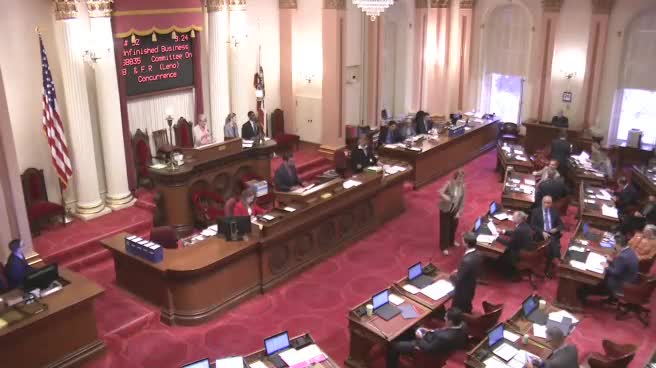 46SEC
Senate Floor
 2MIN
Assembly Floor
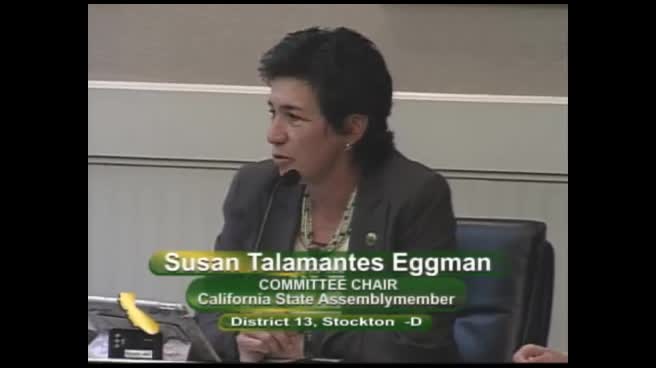 7MIN
Assembly Standing Committee on Local Government
Bill Author