SB 918: Common interest developments.
- Session Year: 2015-2016
- House: Senate
- Latest Version Date: 2016-09-28
Existing law, the Davis-Stirling Common Interest Development Act, defines and regulates common interest developments, which are managed by homeowners associations.
This bill would require the owners of the separate interests in a common interest development to annually provide the association with specified written information for the purpose of receiving notices from the association.
Existing law, the Davis-Stirling Common Interest Development Act, defines and regulates common interest developments, which are managed by a homeowners association. associations.
This bill would require the owners of the separate interests in a common interest development to annually provide the association with specified written information for the purpose of receiving notice notices from the association.
Existing law, the Davis-Stirling Common Interest Development Act, defines and regulates common interest developments. Existing law authorizes a homeowners association to place a lien on a property and to take specified enforcement actions to satisfy outstanding dues or assessments owed on a property in the development. developments, which are managed by a homeowners association.
This bill would require the owners of the separate interests in a common interest development to annually provide the association with specified written information for the purpose of receiving notice of an assessment lien on their property. The bill would require the association to provide specified notice by personal service to an owner and to offer to participate in dispute resolution procedures with an owner prior to recording a notice of default against the owners separate interest. The bill would require that specified language be included in a written notice provided to an owner prior to the recording of a notice of default by the association. from the association.
The bill would also require the association to try to personally serve the owner on at least 3 occasions, including at specified times, and to prepare a statement regarding the attempts at personal service. The bill would make conforming changes.
Existing law requires an association to provide an owner with an opportunity to meet and confer with the association prior to recording a lien for delinquent assessments.
This bill would suspend any action to enforce a lien by the association for up to 90 days when an owner requests to meet and confer.
Existing law, the Davis-Stirling Common Interest Development Act, defines and regulates common interest developments. Existing law authorizes a homeowners association to place a lien on a property and to take specified enforcement actions to satisfy outstanding dues or assessments owed on a property in the development.
This bill would require the owners of the separate interests in a common interest development to annually provide the association with specified written information for the purpose of receiving notice of an assessment lien on their property. The bill would require the association to provide specified notice by personal service to an owner and to offer to participate in dispute resolution procedures with an owner prior to recording a notice of default against the owners separate interest. The bill would require that specified language be included in a written notice provided to an owner prior to the recording of a notice of default by the association.
The bill would also require the association to try to personally serve the owner on at least 3 occasions, including at specified times, and to prepare a statement regarding the attempts at personal service. The bill would make conforming changes.
Existing law requires an association to provide an owner with an opportunity to meet and confer with the association prior to recording a lien for delinquent assessments.
This bill would suspend any action to enforce a lien by the association for up to 90 days when an owner requests to meet and confer.
This bill would state the intent of the Legislature to enact legislation to address issues relating to notice to unit owners in common interest developments who are delinquent in the payment of association assessments.
Existing law, the Davis-Stirling Common Interest Development Act, defines and regulates common interest developments. Existing law authorizes a homeowners association to place a lien on a property and to take specified enforcement actions to satisfy outstanding dues or assessments owed on a property in the development.
This bill would state the intent of the Legislature to enact legislation to address issues relating to notice to unit owners in common interest developments who are delinquent in the payment of association assessments.
(a)An owner of a separate interest shall, on an annual basis, provide written notice to the association of all of the following:
(1)The address or addresses to which notices from the association are to be delivered.
(2)An alternate or secondary address to which notices from the association are to be delivered.
(3)The name and address of his or her legal representative, if any, including any person with power of attorney or other person who can be contacted in the event of the owners extended absence from the separate interest.
(4)Whether the separate interest is owner-occupied, is rented out, if the parcel is developed but vacant, or if the parcel is undeveloped land.
(b)The association shall solicit these annual notices of each owner and, at least 30 days prior to making its own required disclosure under Section 5300, shall enter the data into its books and records.
(c)If an owner fails to provide the notices set forth in paragraphs (1) and (2) of subdivision (a), the property address shall be deemed to be the address to which notices are to be delivered.
(a)An owner of a separate interest shall, on an annual basis, provide written notice to the association of all of the following:
(1)The mailing address or addresses to which notices from the association are to be delivered.
(2)An alternate or secondary address to which notices from the association are to be delivered.
(3)The name and address of his or her legal representative, if any, including any person with power of attorney or other person who can be contacted in the event of the owners extended absence from the separate interest.
(4)Whether the separate interest is owner-occupied, is rented out, if the parcel is developed but vacant, or if the parcel is undeveloped land.
(b)The association shall solicit these annual notices of each owner and and, at least 30 days prior to making its own required disclosure under Section 5300, shall enter the data into its books and records at least 30 days prior to making its own required annual disclosures to members under Section 5300. records.
(c)If an owner fails to provide the notices set forth in paragraphs (1) and (2) of subdivision (a), the property address shall be deemed to be the mailing address to which notices are to be delivered.
(a)An owner of a separate interest shall, on an annual basis, provide written notice to the association of all of the following:
(1)The mailing address or addresses to which notices from the association are to be delivered.
(2)An alternate or secondary address where to which notices from the association are to be delivered.
(3)The name and address of his or her legal representative, if any, including any person with power of attorney or other person who can be contacted in the event of the owners extended absence from the separate interest.
(4)Whether the separate interest is owner-occupied, is rented out, if the parcel is developed but vacant, or if the parcel is undeveloped land.
(b)The association shall solicit these annual disclosures notices of each owner and enter the data into its books and records at least 30 days prior to making its own required annual disclosures to members under Section 5300.
(c)If an owner fails to provide the notices as set forth in paragraphs (1) and (2) of subdivision (a), the property address shall be deemed to be the mailing address to which notices are to be delivered.
All matter omitted in this version of the bill appears in the bill as amended in the Senate, April 7, 2016. (JR11)(a)An owner of a separate interest shall, on an annual basis, provide written notice to the association of all of the following:
(1)The mailing address or addresses to which notices from the association are to be delivered.
(2)An alternate or secondary address where notices from the association are to be delivered.
(3)The name and address of his or her legal representative, if any, including any person with power of attorney or other person who can be contacted in the event of the owners extended absence from the separate interest.
(4)Whether the separate interest is owner-occupied, is rented out, if the parcel is developed but vacant, or if the parcel is undeveloped land.
(b)The association shall solicit these annual disclosures of each owner and enter the data into its books and records at least 30 days prior to making its own required annual disclosures to members under Section 5300.
(c)If an owner fails to provide the notices as set forth in paragraphs (1) and (2) of subdivision (a), the property address shall be deemed to be the mailing address to which notices are to be delivered.
SEC. 2.Section 5660 of the Civil Code is amended to read:5660.At least 30 days prior to recording a an assessment lien upon the separate interest of the owner of record to collect a debt that is past due under Section 5650, the association shall notify the owner of record in writing by certified mail of the following:
(a)A general description of the The actual collection and lien enforcement procedures of the association adopted by the board, disclosed to owners under Section 5310, and in effect at the time that the notice is sent under this section and the method of calculation of the amount, a statement that the owner of the separate interest has the right to inspect and copy the association records pursuant to Section 5205, and and the right to request a copy of the owners own assessment account ledger, if any, in the custody of the associations agents. The association shall also notify the owner of the following statement in 14-point boldface type, if printed, or in capital letters, if typed:
IMPORTANT NOTICE: IF YOUR SEPARATE INTEREST IS PLACED IN FORECLOSURE BECAUSE YOU ARE BEHIND IN YOUR ASSESSMENTS, IT MAY BE SOLD WITHOUT COURT ACTION.
(b)An itemized statement of the charges owed by the owner, including items on the statement which indicate the amount of any delinquent assessments, the fees and reasonable costs of collection, reasonable attorneys fees, any late charges, and interest, if any. The itemized statement shall show how and when the owners payments were applied to the assessment debt and to collection charges by the association or by its agent.
(c)A statement that the owner shall not be liable to pay the charges, interest, and costs of collection, if it is determined the assessment was paid on time to the association.
(d)A statement that the collection practices of the association may be governed by state and federal laws regarding fair debt collection and that penalties can be imposed for debt collection practices that violate these laws.
(d)
(e)The right to request a meeting with the board as provided in Section 5665.
(e)
(f)The right to dispute the assessment debt by submitting a written request for dispute resolution to the association pursuant to the associations meet and confer program required in Article 2 (commencing with Section 5900) of Chapter 10.
(f)
(g)The right to request alternative dispute resolution with a neutral third party pursuant to Article 3 (commencing with Section 5925) of Chapter 10 before the association may initiate foreclosure record the assessment lien against the owners separate interest, except that binding arbitration shall not be available if the association intends to initiate a judicial foreclosure.
SEC. 3.Section 5665 of the Civil Code is amended to read:5665.(a)An owner, other than an owner of any interest that is described in Section 11212 of the Business and Professions Code that is not otherwise exempt from this section pursuant to subdivision (a) of Section 11211.7 of the Business and Professions Code, may submit a written request to meet with the board to discuss a payment plan for the debt noticed pursuant to Section 5660. The association shall provide the owners the standards for payment plans, if any exists.
(b)The board shall meet with the owner in executive session within 45 days of the postmark of the request, if the request is mailed within 15 days of the date of the postmark of the notice, unless there is no regularly scheduled board meeting within that period, in which case the board may designate a committee of one or more directors to meet with the owner.
(c)Payment plans may incorporate any assessments that accrue during the payment plan period. Additional late fees shall not accrue during the payment plan period if the owner is in compliance with the terms of the payment plan.
(d)Payment plans shall not impede an associations ability to record a lien on the owners separate interest to secure payment of delinquent assessments.
(e)In the event of a default on any payment plan, the association may resume its efforts to collect the delinquent assessments from the time prior to entering into the payment plan.
(f)Nothing in this section restricts the right of an owner, with or without a payment plan in place, from making a payment in any amount directly to the association pursuant to subdivision (a) of Section 5655. The association shall accept the payment and shall apply it per subdivision (a) of Section 5655.
SEC. 4.Section 5670 of the Civil Code is amended to read:5670.(a)Prior to recording a lien for delinquent assessments, an association shall offer the owner and, if so requested by the owner, participate in dispute resolution pursuant to the associations meet and confer program required in Article 2 (commencing with Section 5900) of Chapter 10.
(b)When an owner requests to meet and confer under this section, the association shall suspend all collection efforts for 90 days or until the meet and confer procedures have been completed, whichever is sooner. If the association fails to respond in writing within 30 days from the date of the owners request with a good faith effort to establish a time and place to meet and confer, then any lien recorded thereafter by the association shall be void and unenforceable. If the owner fails to respond to the association's effort to establish a time and place to meet and confer within 30 days thereof, then the association may proceed with collection efforts, including the recording of a lien, without further pursuing a meet and confer procedure.
SEC. 5.Section 5690 of the Civil Code is amended to read:5690.An association that fails to comply with the procedures set forth in this article shall, prior to recording a lien, recommence the required notice process. process, commencing with Section 5660. Any costs associated with recommencing the notice process shall be borne by the association and not by the owner of a separate interest.
SEC. 6.Section 5700 of the Civil Code is amended to read:5700.(a)Except as otherwise provided in this article, after the expiration of 30 days following the recording of a an assessment lien created pursuant to Section 5675, the lien may be enforced in any manner permitted by law, including sale by the court, sale by the trustee designated in the notice of delinquent assessment, or sale by a trustee substituted pursuant to Section 2934a.
(b)Nothing in Article 2 (commencing with Section 5650) or in subdivision (a) of Section 726 of the Code of Civil Procedure prohibits actions against the owner of a separate interest to recover sums for which a lien is created pursuant to Article 2 (commencing with Section 5650) or prohibits an association from taking a deed in lieu of foreclosure.
SEC. 7.Section 5705 of the Civil Code is amended to read:5705.(a)Notwithstanding any law or any provisions of the governing documents to the contrary, this section shall apply to debts for assessments that arise on and after January 1, 2006.
(b)Prior to initiating a foreclosure recording a notice of default on an owners separate interest, the association shall offer the owner and, if so requested by the owner, shall participate in dispute resolution pursuant to the associations meet and confer program required in Article 2 (commencing with Section 5900) of Chapter 10 or alternative dispute resolution as set forth in Article 3 (commencing with Section 5925) of Chapter 10. The decision to pursue dispute resolution or a particular type of alternative dispute resolution shall be the choice of the owner, except that binding arbitration shall not be available if the association intends to initiate a judicial foreclosure.
(c)The decision to initiate foreclosure of record a notice of default in order to enforce a lien for delinquent assessments that has been validly recorded shall be made only by the board and may shall not be delegated to an agent of the association. The board shall approve the decision by a majority vote of the directors in an executive session. The board shall record the vote in the minutes of the next meeting of the board open to all members. The board shall maintain the confidentiality of the owner or owners of the separate interest by identifying the matter in the minutes by the parcel number of the property, rather than the name of the owner or owners. A board vote to approve foreclosure of a lien shall take place at least 30 days prior to any public sale. recording the notice of default.
(d)The After the board votes to enforce the lien but before recording the notice of default, the board shall provide notice by personal service of its vote and of its intention to enforce the lien in accordance with the manner of service of summons in Article 3 (commencing with Section 415.10) of Chapter 4 of Title 5 of Part 2 of the Code of Civil Procedure to an owner of a separate interest who occupies the separate interest or to the owners legal representative, if the board votes to foreclose upon the separate interest. The board shall provide written notice to an owner of a separate interest who does not occupy the separate interest by first-class mail, postage prepaid, at the most current address shown on the books of the association. In the absence of written notification by the owner to the association, the address of the owners separate interest may be treated as the owners mailing address. To effect personal service, the association and its agent shall rely on the data provided annually by the owner of the separate interest under Section 4041.
(e)If the association or its agents have attempted personal service, in accordance with the manner of service of summons as set forth in Article 3 (commencing with Section 415.10) of the Code of Civil Procedure three or more times, including at least one attempt after 6:00 p.m. and one attempt on a weekend or legal holiday, on an owner who occupies the separate interest and, then both the association and its agents shall jointly subscribe a statement of compliance with the personal service requirement. This statement shall be recorded with the county recorder where the subject property is located. The statement shall include all of the following data:
(1)The physical address of subject property.
(2)The names of owners of the separate interest as they appear on the deed of title.
(3)The addresses where official notices are to be sent, per Section 4041, as shown on the associations membership books.
(4)The names and titles of documents to be delivered including the boards vote as it will appear in the association minutes and a copy of the statement.
(5)The names of, and contact information for, the persons attempting service.
(6)The dates and times of attempted service.
(f)The board shall provide written notice to an owner of a separate interest who does not occupy the separate interest by first-class mail, postage prepaid, at the most current address shown on the books of the association per Section 4041. In the absence of written notification under Section 4041 by the owner to the association, the address of the owners separate interest shall be deemed to be the owners mailing address.
SEC. 8.Section 5710 of the Civil Code is amended to read:5710.(a)Any sale by the trustee shall be conducted in accordance with Sections 2924, 2924b, and 2924c applicable to the exercise of powers of sale in mortgages and deeds of trust.
(b)In addition to the requirements of Section 2924, the association shall serve a notice of default on the person named as the owner of the separate interest in the associations records or, if that person has designated a legal representative pursuant to this subdivision, on that legal representative. Service shall be in accordance with the manner of service of summons in Article 3 (commencing with Section 415.10) of Chapter 4 of Title 5 of Part 2 of the Code of Civil Procedure. An If the association or its agents have attempted personal service three or more times then it may execute a statement of due diligence pursuant to Section 5705, regarding the attempts to serve the notice of default. Pursuant to paragraph (3) of subdivision (a) of Section 4041, an owner may designate a legal representative in a writing that is mailed to the association in a manner that indicates that the association has received it.
(c)The fees of a trustee may not exceed the amounts prescribed in Sections 2924c and 2924d, plus the cost of service for either of the following:
(1)The notice of default pursuant to subdivision (b).
(2)The decision of the board to foreclose upon the separate interest of an owner as described in subdivision (d) of Section 5705.
SEC. 9.Section 5720 of the Civil Code is amended to read:5720.(a)Notwithstanding any law or any provisions of the governing documents to the contrary, this section shall apply to debts for assessments that arise on and after January 1, 2006.
(b)An association that seeks to collect delinquent regular or special assessments of an amount less than one thousand eight hundred dollars ($1,800), not including any accelerated assessments, late charges, fees and costs of collection, attorneys fees, or interest, may not collect that debt through judicial or nonjudicial foreclosure, but may attempt to collect or secure that debt in any of the following ways:
(1)By a civil action in small claims court, pursuant to Chapter 5.5 (commencing with Section 116.110) of Title 1 of Part 1 of the Code of Civil Procedure. An association that chooses to proceed by an action in small claims court, and prevails, may enforce the judgment as permitted under Article 8 (commencing with Section 116.810) of Chapter 5.5 of Title 1 of Part 1 of the Code of Civil Procedure. The amount that may be recovered in small claims court to collect upon a debt for delinquent assessments may not exceed the jurisdictional limits of the small claims court and shall be the sum of the following:
(A)The amount owed as of the date of filing the complaint in the small claims court proceeding.
(B)In the discretion of the court, an additional amount to that described in subparagraph (A) equal to the amount owed for the period from the date the complaint is filed until satisfaction of the judgment, which total amount may include accruing unpaid assessments and any reasonable late charges, fees and costs of collection, attorneys fees, and interest, up to the jurisdictional limits of the small claims court.
(2)By recording a lien on the owners separate interest upon which the association may not foreclose until the amount of the delinquent assessments secured by the lien, exclusive of any accelerated assessments, late charges, fees and costs of collection, attorneys fees, or interest, equals or exceeds one thousand eight hundred dollars ($1,800) or the assessments secured by the lien are more than 12 months delinquent. An association that chooses to record a lien under these provisions, prior to recording the lien, shall offer the owner and, if so requested by the owner, participate in dispute resolution as set forth in Article 2 (commencing with Section 5900) of Chapter 10.
(3)Any other manner provided by law, except for judicial or nonjudicial foreclosure.
(c)The limitation on foreclosure of assessment liens for amounts under the stated minimum in this section does not apply to any either of the following:
(1)Assessments secured by a lien that are more than 12 months delinquent.
(2)Assessments owed by owners of separate interests in time-share estates, as defined in subdivision (x) of Section 11212 of the Business and Professions Code.
(3)Assessments owed by the developer.
SEC. 10.Section 5730 of the Civil Code is amended to read:5730.(a)The annual policy statement, prepared pursuant to Section 5310, shall include the following notice, in at least 12-point type:
NOTICE ASSESSMENTS AND FORECLOSURE
This notice outlines some of the rights and responsibilities of owners of property in common interest developments and the associations that manage them. Please refer to the sections of the Civil Code indicated for further information. A portion of the information in this notice applies only to liens recorded on or after January 1, 2003. You may wish to consult a lawyer if you dispute an assessment.
ASSESSMENTS AND FORECLOSURE
Assessments become delinquent 15 days after they are due, unless the governing documents provide for a longer time. The failure to pay association assessments may result in the loss of an owners property through foreclosure. Foreclosure may occur either as a result of a court action, known as judicial foreclosure, or without court action, often referred to as nonjudicial foreclosure. For liens recorded on and after January 1, 2006, an association may not use judicial or nonjudicial foreclosure to enforce that lien if the amount of the delinquent assessments or dues, exclusive of any accelerated assessments, late charges, fees, attorneys fees, interest, and costs of collection, is less than one thousand eight hundred dollars ($1,800). For delinquent assessments or dues in excess of one thousand eight hundred dollars ($1,800) or more than 12 months delinquent, an association may use judicial or nonjudicial foreclosure subject to the conditions set forth in Article 3 (commencing with Section 5700) of Chapter 8 of Part 5 of Division 4 of the Civil Code. When using judicial or nonjudicial foreclosure, the association records a lien on the owners property. The owners property may be sold to satisfy the lien if the amounts secured by the lien are not paid. (Sections 5700 through 5720 of the Civil Code, inclusive)
In a judicial or nonjudicial foreclosure, the association may recover assessments, reasonable costs of collection, reasonable attorneys fees, late charges, and interest. The association may not use nonjudicial foreclosure to collect fines or penalties, except for costs to repair common area damaged by a member or a members guests, if the governing documents provide for this. (Section 5725 of the Civil Code)
The association must comply with the notice and disclosure requirements of Article 2 (commencing with Section 5650) of Chapter 8 of Part 5 of Division 4 of the Civil Code when collecting delinquent assessments. If the association fails to follow these requirements, it may not record a an assessment lien on the owners property until it has satisfied those requirements. Any additional costs that result from satisfying the requirements are the responsibility of the association. (Section 5675 of the Civil Code)
At least 30 days prior to recording a lien on an owners separate interest, the association must provide the owner of record with certain documents by certified mail, including a description of its collection and lien enforcement procedures and the method of calculating the amount. It must also provide an itemized statement of the charges owed by the owner. An owner has a right to review the associations and the agents records to verify the debt. (Section 5660 of the Civil Code)
If a lien is recorded against an owners property in error, the person who recorded the lien is required to record a lien release within 21 days, and to provide an owner certain documents in this regard. (Section 5685 of the Civil Code)
The collection practices of the association may be governed by state and federal laws regarding fair debt collection. Penalties can be imposed for debt collection practices that violate these laws.
PAYMENTS
When an owner makes a payment, the owner may request a receipt, and the association is required to provide it. On the receipt, the association must indicate the date of payment and the person who received it. The association must inform owners of a mailing address for overnight payments. (Section 5655 of the Civil Code)
An owner may, but is not obligated to, pay under protest any disputed charge or sum levied by the association, including, but not limited to, an assessment, fine, penalty, late fee, collection cost, or monetary penalty imposed as a disciplinary measure, and by so doing, specifically reserve the right to contest the disputed charge or sum in court or otherwise.
An owner may dispute an assessment debt by submitting a written request for dispute resolution to the association as set forth in Article 2 (commencing with Section 5900) of Chapter 10 of Part 5 of Division 4 of the Civil Code. In addition, an association may not initiate a foreclosure without participating in record an assessment lien without first offering to participate with the owner in the associations internal dispute resolution or procedures or alternative dispute resolution with a neutral third party as set forth in Article 3 (commencing with Section 5925) of Chapter 10 of Part 5 of Division 4 of the Civil Code, if so requested by the owner. Binding arbitration shall not be available if the association intends to initiate a judicial foreclosure.
An owner is not liable for charges, interest, and costs of collection, if it is established that the assessment was paid properly on time. (Section 5685 of the Civil Code)
MEETINGS AND PAYMENT PLANS
An owner of a separate interest that is not a time-share interest may request the association to consider a payment plan to satisfy a delinquent assessment. The association must inform owners of the standards for payment plans, if any exists. (Section 5665 of the Civil Code)
The board must meet with an owner who makes a proper written request for a meeting to discuss a payment plan when the owner has received a notice of a delinquent assessment. These payment plans must conform with the payment plan standards of the association, if they exist. (Section 5665 of the Civil Code)
Nothing in this section restricts the right of an owner, with or without a payment plan in place, from making a payment in any amount at any time directly to the association toward an overdue assessment pursuant to Section 5655.
(b)An association distributing the notice required by this section to an owner of an interest that is described in Section 11212 of the Business and Professions Code that is not otherwise exempt from this section pursuant to subdivision (a) of Section 11211.7 of the Business and Professions Code may delete from the notice described in subdivision (a) the portion regarding meetings and payment plans.
SECTION 1.It is the intent of the Legislature to enact legislation to address issues relating to notice to unit owners in common interest developments who are delinquent in the payment of association assessments.
It is the intent of the Legislature to enact legislation to address issues relating to notice to unit owners in common interest developments who are delinquent in the payment of association assessments.
|
Date
|
Status
|
|---|---|
| May 23, 2016 | Read third time. Passed. (Ayes 37. Noes 0.) Ordered to the Assembly. |
| Aug 30, 2016 | Enrolled and presented to the Governor at 1:30 p.m. |
| Aug 24, 2016 | Assembly amendments concurred in. (Ayes 38. Noes 0.) Ordered to engrossing and enrolling. |
| Aug 19, 2016 | In Senate. Concurrence in Assembly amendments pending. |
| Aug 18, 2016 | Read third time. Passed. (Ayes 73. Noes 5. Page 5895.) Ordered to the Senate. |
| Aug 18, 2016 | Read third time. Passed. Ordered to the Senate. |
| Aug 4, 2016 | Ordered to third reading. |
| Aug 4, 2016 | From consent calendar on motion of Assembly Member Obernolte. |
| Aug 4, 2016 | From consent calendar on motion of Assembly Member Calderon. |
| Jun 30, 2016 | Read second time. Ordered to consent calendar. |
| Jun 29, 2016 | From committee: Do pass. Ordered to consent calendar. (Ayes 7. Noes 0.) (June 29). |
| Jun 16, 2016 | From committee with author's amendments. Read second time and amended. Re-referred to Com. on H. & C.D. |
| Jun 1, 2016 | Referred to Com. on H. & C.D. |
| Jan 27, 2016 | Introduced. Read first time. To Com. on RLS. for assignment. To print. |
| May 23, 2016 | Read third time. Passed. (Ayes 37. Noes 0. Page 3926.) Ordered to the Assembly. |
| May 23, 2016 | In Assembly. Read first time. Held at Desk. |
| May 10, 2016 | Read second time and amended. Ordered to third reading. |
| May 9, 2016 | From committee: Do pass as amended. (Ayes 6. Noes 0.) (May 3). |
| May 9, 2016 | From committee: Do pass as amended. (Ayes 6. Noes 0. Page 3766.) (May 3). |
| Apr 21, 2016 | Set for hearing May 3. |
| Apr 18, 2016 | April 26 set for first hearing canceled at the request of author. |
| Apr 14, 2016 | Set for hearing April 26. |
| Apr 11, 2016 | Re-referred to Com. on JUD. |
| Apr 7, 2016 | From committee with author's amendments. Read second time and amended. Re-referred to Com. on RLS. |
| Feb 4, 2016 | Referred to Com. on RLS. |
| Jan 28, 2016 | From printer. May be acted upon on or after February 27. |
|
Date
|
Description
|
Location
|
Votes
|
|
|---|---|---|---|---|
| Aug 24, 2016 | Unfinished Business SB918 Vidak Concurrence | Senate Floor |
Passed |
|
| Aug 18, 2016 | SB 918 Vidak Senate Third Reading By LINDER | Assembly Floor |
Passed |
|
| Jun 29, 2016 | Do pass. To Consent Calendar. | Assembly Standing Committee on Housing and Community Development |
Passed |
|
| May 23, 2016 | Senate 3rd Reading SB918 Vidak | Senate Floor |
Passed |
|
| May 3, 2016 | Do pass as amended | Senate Standing Committee on Judiciary |
Passed |
This list shows positions taken on this bill by organizations on the date displayed, which is linked to the original source.
Positions by individuals are not included.
|
Organization
|
Position
|
Date
|
|---|---|---|
| California Alliance For Retired Americans | * Against | May 3, 2016 |
| California Homeowner Law Association | * Against | May 3, 2016 |
| California Homeowner Law Association | * Support | May 3, 2016 |
| California Reinvestment Coalition | * Against | May 3, 2016 |
| Center for California Homeowner Association Law | ** Against | Aug 24, 2016 |
| Community Associations Institute | ** Against | Aug 24, 2016 |
| Congresswoman Jackie Speier | ** Against | Aug 24, 2016 |
| National Housing Law Project | * Neutral | May 3, 2016 |
| Sun City Palm Desert Community Association | ** Against | Aug 24, 2016 |
| United Trustee Association | ** Support | Aug 24, 2016 |
Office of Senate Floor Analyses (916) 651-1520 Fax: (916) 327-4478 | SB |
UNFINISHED BUSINESS
Bill No: SB 918
:
SENATE JUDICIARY COMMITTEE: 6-0, 5/3/16
AYES: Jackson, Moorlach, Anderson, Leno, Monning, Wieckowski
NO VOTE RECORDED: Hertzberg
SENATE FLOOR: 37-0, 5/23/16
AYES: Allen, Anderson, Bates, Beall, Berryhill, Block, Cannella, De León, Fuller, Gaines, Galgiani, Glazer, Hall, Hancock, Hernandez, Hertzberg, Hill, Hueso, Huff, Jackson, Lara, Leno, Leyva, Liu, McGuire, Mendoza, Mitchell, Monning, Moorlach, Morrell, Nguyen, Nielsen, Pan, Roth, Stone, Vidak, Wieckowski
NO VOTE RECORDED: Pavley, Runner, Wolk
ASSEMBLY FLOOR: 73-5, 8/18/16 - See last page for vote
SOURCE: United Trustee Association
DIGEST: This bill requires the owner of a separate interest and the homeowner association in a common interest development to annually verify the address or addresses to which notices from the association are to be delivered.
Assembly Amendments recast the above provision to clarify that address verification is to be completed at least 30 days prior to sending certain required disclosures.
Existing law:
- Defines and regulates residential common interest developments (CIDs), including the ability of a CID’s homeowner association to levy regular and special assessments sufficient to perform its obligations. (Civ. Code Sec. 4000 et seq.) Existing law provides that an assessment, and any late charges, reasonable fees and costs of collection, reasonable attorney’s fees, if any, and interest, shall be a debt of the owner of the separate interest. (Civ. Code Sec. 5650.)
- Requires an association to send the owner of record a notice by certified mail at least 30 days prior to recording a lien to collect the debt. That notice must include a general description of the collection and lien enforcement procedures, an itemized statement of charges, the right to inspect the association’s records, and the right to dispute the debt, as specified. (Civ. Code Sec. 5660.)
- Authorizes an association to record a lien against an owner’s separate interest in the amount of any delinquent assessment, plus any costs of collection, late charges, and interest assessed, as specified. Existing law requires a copy of a recorded notice of delinquent assessment to be mailed by certified mail to the owner of the separate interest no later than 10 calendar days after recordation. (Civ. Code Sec. 5675.)
- Authorizes an association that seeks to collect delinquent assessments of an amount of $1,800, or more, or assessments that are delinquent by more than 12 months and secured by a lien, to use judicial or non-judicial foreclosure, subject to specified requirements. (Civ. Code Sec. 5720.)
- Requires a decision to initiate foreclosure to be made only by the board of directors of the association, and, if the board votes to foreclose on the separate interest, requires the board to provide notice by personal service in accordance with the manner of service of summons. (Civ. Code Sec. 5705.) Existing law similarly requires any Notice of Default (the first step in the nonjudicial foreclosure process) to be served by the association on the owner’s legal representative in accordance with the manner of the service of summons. (Civ. Code Sec. 5710.)
This bill:
- Requires an owner of a separate interest to, on an annual basis, provide written notice to the association of all of the following:
- The address or addresses to which notices from the association are to be delivered;
- An alternate or secondary address to which notices from the association are to be delivered;
- The name and address of an owner’s legal representative, if any, including any person with power of attorney or other person who can be contacted in the event of the owner’s extended absence from the separate interest; and
- Whether the separate interest is owner-occupied, is rented out, if the parcel is developed but vacant, or if the parcel is undeveloped land.
- Requires an association to solicit annual notices of each owner and, at least 30 days prior to making certain required disclosures, enter the data into its books and records.
- Specifies that if an owner fails to provide the information specified in the above provision, the property address shall be deemed to be the mailing address to which notices are to be delivered.
Background
In California, CIDs are governed by the Davis-Stirling Common Interest Development Act (Davis-Stirling Act). Owners of separate property in CIDs have an undivided interest in the common property of the development and are subject to the CID’s covenants, conditions, and restrictions. Residential CIDs are also governed by a homeowner association, which is run by volunteer directors that may or may not have prior experience managing an association. The Court of Appeal, Fourth Appellate District, previously observed that:
[t]he homeowners associations function almost “as a second municipal government, regulating many aspects of [the homeowners’] daily lives.”
“[U]pon analysis of the association’s functions, one clearly sees the association as a quasi-government entity paralleling in almost every case the powers, duties, and responsibilities of a municipal government. As a ‘mini-government,’ the association provides to its members, in almost every case, utility services, road maintenance, street and common area lighting, and refuse removal. In many cases, it also provides security services and various forms of communication within the community. There is, moreover, a clear analogy to the municipal police and public safety functions. . . .” In short, homeowners associations, via their enforcement of the CC&R’s, provide many beneficial and desirable services that permit a common interest development to flourish. (Villa Milano Homeowners Ass’n v. Il Davorge (2000) 84 Cal.App.4th 819, 836 [citations omitted].)
The Davis-Stirling Act permits an association to foreclose upon a separate interest in a CID in certain circumstances if the owner fails to pay his or her assessments to the association. Foreclosures in California are generally non-judicial, meaning that they are accomplished without court involvement. Following a decision by the homeowner association to foreclose, the association records a Notice of Default, which generally occurs after three or more months of delinquency. The foreclosing entity must then generally wait at least three months before noticing the sale of the property, which must be posted, published, and filed with the county recorder.
This bill requires the owner of a separate interest and a homeowner association to annually verify the address or addresses to which notices from the association are to be delivered.
Comments
The author writes:
Although associations have other remedies for collection of delinquent assessments, such as judicial foreclosures in superior courts, and court actions to collect assessments (small claims, limited jurisdiction or general jurisdiction, depending upon the amount of the delinquency), existing law is silent on non-judicial foreclosure remedies available to associations if they are unable to effect personal service of required documents on unit owners. In a typical civil action, if service cannot be effected on a defendant after the exercise of reasonable diligence, a plaintiff may obtain from a judge an order to publish a summons in a newspaper of general jurisdiction. In the Davis-Stirling non-judicial foreclosure context, however, there is no “case” on which to request an order to publish the notice of default. In discussions with advocates for unit owners within common interest developments, it became clear that current law lacks provisions clearly requiring unit owners to advise associations of mailing addresses to receive required documents, and that other rights and responsibilities as between owners and associations should be clarified.
Related/Prior Legislation
SB 290 (Vidak, 2015) would have allowed the board of directors of an association formed under the Davis-Stirling Act to provide notice by personal service or by substitute service to an owner of a separate interest who occupies the separate interest, or to the owner’s legal representative, if the board votes to foreclose upon the separate interest. The bill died in the Senate Judiciary Committee.
SB 1026 (Vidak, 2014) would have permitted associations subject to the Commercial and Industrial Common Interest Development Act and the Davis-Stirling Act to serve an owner with a Notice of Default, the first step in the non-judicial foreclosure process, for failure to pay required assessments through posting, mailing, and publishing the notices, as specified, when those notices cannot be personally served after reasonable diligence, as specified. The bill died in the Senate Judiciary Committee.
SB 1244 (Harman, 2012) would have allowed an owner in a CID to be served certain notices in the non-judicial foreclosure process by both posting and mailing the notices, as specified, when those notices cannot be personally served after reasonable diligence. The bill died in the Senate Judiciary Committee.
SB 137 (Ducheny, Chapter 452, Statutes of 2005), among other things, permits an association of a CID seeking to collect delinquent regular or special assessments of $1,800 or more, or any assessments that are more than 12 months delinquent, to use foreclosure subject to specified conditions. These conditions include requiring the board of directors of an association to make the decision to foreclose upon an assessment lien at an executive meeting of the board, by a majority vote, at least 30 days prior to any public sale, to record the results of the vote, and to provide notice of the decision to foreclose.
AB 1317 (Speier, Chapter 1101, Statutes of 1996) imposed specified requirements with respect to the collection of debts based on assessments of owners by a CID, and removed a requirement that an association, prior to a sale by a trustee, make at least one bona fide attempt to serve the owner with a notice of sale by trustee.
FISCAL EFFECT: Appropriation: Fiscal Com.: Local:
United Trustee Association (source)
OPPOSITION: (Verified 8/18/16)
Center for California Homeowner Association Law
Community Associations Institute
Congresswoman Jackie Speier
Sun City Palm Desert Community Association
ASSEMBLY FLOOR: 73-5, 8/18/16
AYES: Achadjian, Alejo, Arambula, Atkins, Baker, Bigelow, Bloom, Bonilla, Bonta, Brown, Burke, Calderon, Campos, Chang, Chau, Chiu, Chu, Cooley, Cooper, Dababneh, Dahle, Daly, Dodd, Eggman, Frazier, Beth Gaines, Gallagher, Cristina Garcia, Eduardo Garcia, Gipson, Gomez, Gonzalez, Gordon, Gray, Grove, Hadley, Harper, Holden, Irwin, Jones, Jones-Sawyer, Kim, Lackey, Levine, Linder, Lopez, Low, Maienschein, Mathis, Mayes, McCarty, Medina, Melendez, Mullin, Nazarian, O'Donnell, Olsen, Patterson, Quirk, Ridley-Thomas, Rodriguez, Salas, Santiago, Steinorth, Mark Stone, Thurmond, Ting, Waldron, Weber, Wilk, Williams, Wood, Rendon
NOES: Brough, Chávez, Gatto, Obernolte, Wagner
NO VOTE RECORDED: Travis Allen, Roger Hernández
8/19/16 19:25:09
**** END ****
SENATE THIRD READING
STR Bill Id:
Author:()
As Amended Ver:
Majority vote
SENATE VOTE: 37-0
Committee | Votes | Ayes | Noes |
Housing | 7-0 | Chiu, Steinorth, Burke, Chau, Beth Gaines, Lopez, Mullin |
SUMMARY: Requires the owner of a separate interest and the homeowner association (HOA) in a common interest development (CID) to annually verify the mailing address or addresses to which notices from the HOA are to be delivered. Specifically, this bill:
- Requires an owner of a separate interest to, on an annual basis, provide written notice to the association of all of the following:
- The mailing address or addresses to which notices from the HOA are to be delivered;
- An alternate or secondary address to which notices from the HOA are to be delivered;
- The name and address of an owner's legal representative, if any, including any person with power of attorney or other person who can be contacted in the event of the owner's extended absence from the separate interest; and
- Whether the separate interest is owner-occupied, is rented out, if the parcel is developed but vacant, or if the parcel is undeveloped land.
- Requires an HOA to solicit these annual disclosures of each owner and enter the data into its books and records at least 30 days prior to making its own required annual disclosures to members.
- Specifies that if an owner fails to provide the information specified in the above provision, the property address shall be deemed to be the mailing address to which notices are to be delivered.
FISCAL EFFECT: None
COMMENTS:
Background: There are over 50,220 CIDs in the state that comprise over 4.8 million housing units, or approximately one quarter of the state's housing stock. CIDs include condominiums, community apartment projects, housing cooperatives, and planned unit developments. They are characterized by a separate ownership of dwelling space coupled with an undivided interest in a common property, restricted by covenants and conditions that limit the use of the common area and separate ownership interests, and the management of common property and enforcement of restrictions by a HOA. CIDs are governed by the Davis Stirling Act (the Act) as well as the governing documents of the HOA, including bylaws, declaration, and operating rules.
This bill requires the owner of a separate interest and a HOA to annually verify the mailing address or addresses to which notices from the association are to be delivered.
Purpose of this bill: According to the author, "currently HOA unit owners are supposed to provide the association with the best known mailing address for the association to mail required disclosures and other documents that current law requires to be shared with unit owners. There may be a situation where mailing address previously provided, if any was ever provided, may not be current and the owner is not receiving any of the required documents."
Previous Legislation:
SB 290 (Vidak) of 2015, would have allowed the board of directors of an association formed under the Davis-Stirling Act to provide notice by personal service or by substitute service to an owner of a separate interest who occupies the separate interest, or to the owner's legal representative, if the board votes to foreclose upon the separate interest. The bill died in the Senate Judiciary Committee.
SB 1026 (Vidak) of 2014, would have permitted associations subject to the Commercial and Industrial Common Interest Development Act and the Davis-Stirling Act to serve an owner with a Notice of Default, the first step in the non-judicial foreclosure process, for failure to pay required assessments through posting, mailing, and publishing the notices, as specified, when those notices cannot be personally served after reasonable diligence, as specified. The bill died in the Senate Judiciary Committee.
SB 1244 (Harman) of 2012, would have allowed an owner in a CID to be served certain notices in the non-judicial foreclosure process by both posting and mailing the notices, as specified, when those notices cannot be personally served after reasonable diligence. The bill died in the Senate Judiciary Committee.
SB 137 (Ducheny), Chapter 452, Statutes of 2005, among other things, permits an association of a CID seeking to collect delinquent regular or special assessments of $1,800 or more, or any assessments that are more than 12 months delinquent, to use foreclosure subject to specified conditions. These conditions include requiring the board of directors of an association to make the decision to foreclose upon an assessment lien at an executive meeting of the board, by a majority vote, at least 30 days prior to any public sale, to record the results of the vote, and to provide notice of the decision to foreclose.
AB 1317 (Speier), Chapter 1101, Statutes of 1996, imposed specified requirements with respect to the collection of debts based on assessments of owners by a CID, and removed a requirement that an association, prior to a sale by a trustee, make at least one bona fide attempt to serve the owner with a notice of sale by trustee.
Analysis Prepared by: Lisa Engel / H. & C.D. / (961) 319-2085 FN: 0003861
Date of Hearing: June 29, 2016
ASSEMBLY COMMITTEE ON HOUSING AND COMMUNITY DEVELOPMENT
David Chiu, Chair
SBPCA Bill Id:SB 918
Author:(Vidak) – As Amended Ver:June 16, 2016
SENATE VOTE: 37-0
SUBJECT: Common interest developments
SUMMARY: Requires the owner of a separate interest and the homeowner association (HOA) in a common interest development (CID) to annually verify the mailing address or addresses to which notices from the HOA are to be delivered. Specifically, this bill:
- Requires an owner of a separate interest to, on an annual basis, provide written notice to the association of all of the following:
- The mailing address or addresses to which notices from the HOA are to be delivered;
- An alternate or secondary address to which notices from the HOA are to be delivered;
- The name and address of an owner’s legal representative, if any, including any person with power of attorney or other person who can be contacted in the event of the owner’s extended absence from the separate interest; and
- Whether the separate interest is owner-occupied, is rented out, if the parcel is developed but vacant, or if the parcel is undeveloped land.
- Requires an HOA to solicit these annual disclosures of each owner and enter the data into its books and records at least 30 days prior to making its own required annual disclosures to members.
- Specifies that if an owner fails to provide the information specified in the above provision, the property address shall be deemed to be the mailing address to which notices are to be delivered.
EXISTING LAW:
- Defines and regulates residential CIDs, including the ability of a CID’s HOA to levy regular and special assessments sufficient to perform its obligations.
- Requires an association to send the owner of record a notice by certified mail at least 30 days prior to recording a lien to collect the debt. That notice must include a general description of the collection and lien enforcement procedures, an itemized statement of charges, the right to inspect the association’s records, and the right to dispute the debt, as specified.
- Authorizes an association to record a lien against an owner’s separate interest in the amount of any delinquent assessment, plus any costs of collection, late charges, and interest assessed, as specified. Existing law requires a copy of a recorded notice of delinquent assessment to be mailed by certified mail to the owner of the separate interest no later than 10 calendar days after recordation.
- Authorizes an association that seeks to collect delinquent assessments of an amount of $1,800, or more, or assessments that are delinquent by more than 12 months and secured by a lien, to use judicial or non-judicial foreclosure, subject to specified requirements.
- Requires a decision to initiate foreclosure to be made only by the board of directors of the association, and, if the board votes to foreclose on the separate interest, requires the board to provide notice by personal service in accordance with the manner of service of summons. (Civ. Code Sec. 5705.) Existing law similarly requires any Notice of Default (the first step in the nonjudicial foreclosure process) to be served by the association on the owner’s legal representative in accordance with the manner of the service of summons.
FISCAL EFFECT: None
COMMENTS:
Background: There are over 50,220 CIDs in the state that comprise over 4.8 million housing units, or approximately one quarter of the state's housing stock. CIDs include condominiums, community apartment projects, housing cooperatives, and planned unit developments. They are characterized by a separate ownership of dwelling space coupled with an undivided interest in a common property, restricted by covenants and conditions that limit the use of the common area and separate ownership interests, and the management of common property and enforcement of restrictions by a HOA. CIDs are governed by the Davis Stirling Act (the Act) as well as the governing documents of the HOA, including bylaws, declaration, and operating rules.
This bill requires the owner of a separate interest and a HOA to annually verify the mailing address or addresses to which notices from the association are to be delivered.
Purpose of this bill: According to the author, "currently HOA unit owners are supposed to provide the association with the best known mailing address for the association to mail required disclosures and other documents that current law requires to be shared with unit owners. There may be a situation where mailing address previously provided, if any was ever provided, may not be current and the owner is not receiving any of the required documents."
Previous Legislation:
SB 290 (Vidak, 2015) would have allowed the board of directors of an association formed under the Davis-Stirling Act to provide notice by personal service or by substitute service to an owner of a separate interest who occupies the separate interest, or to the owner’s legal representative, if the board votes to foreclose upon the separate interest. The bill died in the Senate Judiciary Committee.
SB 1026 (Vidak, 2014) would have permitted associations subject to the Commercial and Industrial Common Interest Development Act and the Davis-Stirling Act to serve an owner with a Notice of Default, the first step in the non-judicial foreclosure process, for failure to pay required assessments through posting, mailing, and publishing the notices, as specified, when those notices cannot be personally served after reasonable diligence, as specified. The bill died in the Senate Judiciary Committee.
SB 1244 (Harman, 2012) would have allowed an owner in a CID to be served certain notices in the non-judicial foreclosure process by both posting and mailing the notices, as specified, when those notices cannot be personally served after reasonable diligence. The bill died in the Senate Judiciary Committee.
SB 137 (Ducheny, Chapter 452, Statutes of 2005), among other things, permits an association of a CID seeking to collect delinquent regular or special assessments of $1,800 or more, or any assessments that are more than 12 months delinquent, to use foreclosure subject to specified conditions. These conditions include requiring the board of directors of an association to make the decision to foreclose upon an assessment lien at an executive meeting of the board, by a majority vote, at least 30 days prior to any public sale, to record the results of the vote, and to provide notice of the decision to foreclose.
AB 1317 (Speier, Chapter 1101, Statutes of 1996) imposed specified requirements with respect to the collection of debts based on assessments of owners by a CID, and removed a requirement that an association, prior to a sale by a trustee, make at least one bona fide attempt to serve the owner with a notice of sale by trustee.
REGISTERED SUPPORT / OPPOSITION:
Support
None on file
Opposition
None on file
Analysis Prepared by: Lisa Engel / H. & C.D. / (961) 319-2085
Office of Senate Floor Analyses (916) 651-1520 Fax: (916) 327-4478 | SB |
THIRD READING
Bill No: SB 918
:
SENATE JUDICIARY COMMITTEE: 6-0, 5/3/16
AYES: Jackson, Moorlach, Anderson, Leno, Monning, Wieckowski
NO VOTE RECORDED: Hertzberg
SOURCE: United Trustee Association
DIGEST: This bill requires the owner of a separate interest and the homeowner association in a common interest development to annually verify the mailing address or addresses to which notices from the association are to be delivered.
Existing law:
- Defines and regulates residential common interest developments (CIDs), including the ability of a CID’s homeowner association to levy regular and special assessments sufficient to perform its obligations. (Civ. Code Sec. 4000 et seq.) Existing law provides that an assessment, and any late charges, reasonable fees and costs of collection, reasonable attorney’s fees, if any, and interest, shall be a debt of the owner of the separate interest. (Civ. Code Sec. 5650.)
- Requires an association to send the owner of record a notice by certified mail at least 30 days prior to recording a lien to collect the debt. That notice must include a general description of the collection and lien enforcement procedures, an itemized statement of charges, the right to inspect the association’s records, and the right to dispute the debt, as specified. (Civ. Code Sec. 5660.)
- Authorizes an association to record a lien against an owner’s separate interest in the amount of any delinquent assessment, plus any costs of collection, late charges, and interest assessed, as specified. Existing law requires a copy of a recorded notice of delinquent assessment to be mailed by certified mail to the owner of the separate interest no later than 10 calendar days after recordation. (Civ. Code Sec. 5675.)
- Authorizes an association that seeks to collect delinquent assessments of an amount of $1,800, or more, or assessments that are delinquent by more than 12 months and secured by a lien, to use judicial or non-judicial foreclosure, subject to specified requirements. (Civ. Code Sec. 5720.)
- Requires a decision to initiate foreclosure to be made only by the board of directors of the association, and, if the board votes to foreclose on the separate interest, requires the board to provide notice by personal service in accordance with the manner of service of summons. (Civ. Code Sec. 5705.) Existing law similarly requires any Notice of Default (the first step in the nonjudicial foreclosure process) to be served by the association on the owner’s legal representative in accordance with the manner of the service of summons. (Civ. Code Sec. 5710.)
This bill:
- Requires an owner of a separate interest to, on an annual basis, provide written notice to the association of all of the following:
- The mailing address or addresses to which notices from the association are to be delivered;
- An alternate or secondary address to which notices from the association are to be delivered;
- The name and address of an owner’s legal representative, if any, including any person with power of attorney or other person who can be contacted in the event of the owner’s extended absence from the separate interest; and
- Whether the separate interest is owner-occupied, is rented out, if the parcel is developed but vacant, or if the parcel is undeveloped land.
- Requires an association to solicit these annual disclosures of each owner and enter the data into its books and records at least 30 days prior to making its own required annual disclosures to members.
- Specifies that if an owner fails to provide the information specified in the above provision, the property address shall be deemed to be the mailing address to which notices are to be delivered.
Background
In California, CIDs are governed by the Davis-Stirling Common Interest Development Act (Davis-Stirling Act). Owners of separate property in CIDs have an undivided interest in the common property of the development and are subject to the CID’s covenants, conditions, and restrictions. Residential CIDs are also governed by a homeowner association, which is run by volunteer directors that may or may not have prior experience managing an association. The Court of Appeal, Fourth Appellate District, previously observed that:
[t]he homeowners associations function almost “as a second municipal government, regulating many aspects of [the homeowners’] daily lives.”
“[U]pon analysis of the association’s functions, one clearly sees the association as a quasi-government entity paralleling in almost every case the powers, duties, and responsibilities of a municipal government. As a ‘mini-government,’ the association provides to its members, in almost every case, utility services, road maintenance, street and common area lighting, and refuse removal. In many cases, it also provides security services and various forms of communication within the community. There is, moreover, a clear analogy to the municipal police and public safety functions. . . .” In short, homeowners associations, via their enforcement of the CC&R’s, provide many beneficial and desirable services that permit a common interest development to flourish. (Villa Milano Homeowners Ass’n v. Il Davorge (2000) 84 Cal.App.4th 819, 836 [citations omitted].)
The Davis-Stirling Act permits an association to foreclose upon a separate interest in a CID in certain circumstances if the owner fails to pay his or her assessments to the association. Foreclosures in California are generally non-judicial, meaning that they are accomplished without court involvement. Following a decision by the homeowner association to foreclose, the association records a Notice of Default, which generally occurs after three or more months of delinquency. The foreclosing entity must then generally wait at least three months before noticing the sale of the property, which must be posted, published, and filed with the county recorder.
This bill requires the owner of a separate interest and a homeowner association to annually verify the mailing address or addresses to which notices from the association are to be delivered.
Amendments taken in the Senate Judiciary Committee removed provisions that would have modified existing requirements that certain notices be personally served during the non-judicial foreclosure process. It is unclear whether the removal of these provisions will address concerns raised by opposition stakeholders regarding the proposed modifications to the personal service requirements.
Comments
The author writes:
Although associations have other remedies for collection of delinquent assessments, such as judicial foreclosures in superior courts, and court actions to collect assessments (small claims, limited jurisdiction or general jurisdiction, depending upon the amount of the delinquency), existing law is silent on non-judicial foreclosure remedies available to associations if they are unable to effect personal service of required documents on unit owners. In a typical civil action, if service cannot be effected on a defendant after the exercise of reasonable diligence, a plaintiff may obtain from a judge an order to publish a summons in a newspaper of general jurisdiction. In the Davis-Stirling non-judicial foreclosure context, however, there is no “case” on which to request an order to publish the notice of default. In discussions with advocates for unit owners within common interest developments, it became clear that current law lacks provisions clearly requiring unit owners to advise associations of mailing addresses to receive required documents, and that other rights and responsibilities as between owners and associations should be clarified.
Related/Prior Legislation
SB 290 (Vidak, 2015) would have allowed the board of directors of an association formed under the Davis-Stirling Act to provide notice by personal service or by substitute service to an owner of a separate interest who occupies the separate interest, or to the owner’s legal representative, if the board votes to foreclose upon the separate interest. The bill died in the Senate Judiciary Committee.
SB 1026 (Vidak, 2014) would have permitted associations subject to the Commercial and Industrial Common Interest Development Act and the Davis-Stirling Act to serve an owner with a Notice of Default, the first step in the non-judicial foreclosure process, for failure to pay required assessments through posting, mailing, and publishing the notices, as specified, when those notices cannot be personally served after reasonable diligence, as specified. The bill died in the Senate Judiciary Committee.
SB 1244 (Harman, 2012) would have allowed an owner in a CID to be served certain notices in the non-judicial foreclosure process by both posting and mailing the notices, as specified, when those notices cannot be personally served after reasonable diligence. The bill died in the Senate Judiciary Committee.
SB 137 (Ducheny, Chapter 452, Statutes of 2005), among other things, permits an association of a CID seeking to collect delinquent regular or special assessments of $1,800 or more, or any assessments that are more than 12 months delinquent, to use foreclosure subject to specified conditions. These conditions include requiring the board of directors of an association to make the decision to foreclose upon an assessment lien at an executive meeting of the board, by a majority vote, at least 30 days prior to any public sale, to record the results of the vote, and to provide notice of the decision to foreclose.
AB 1317 (Speier, Chapter 1101, Statutes of 1996) imposed specified requirements with respect to the collection of debts based on assessments of owners by a CID, and removed a requirement that an association, prior to a sale by a trustee, make at least one bona fide attempt to serve the owner with a notice of sale by trustee.
FISCAL EFFECT: Appropriation: Fiscal Com.: Local:
United Trustee Association (source)
OPPOSITION: (Verified 5/11/16)
Center for California Homeowner Association Law
Community Associations Institute
Congresswoman Jackie Speier
Sun City Palm Desert Community Association
Prepared by: Tobias Halvarson / JUD. / (916) 651-4113
5/11/16 16:06:35
Senator Hannah-Beth Jackson, Chair
2015-2016 Regular Session
Bill No: SB 918 (Author:Vidak)
Version: April 7, 2016
Hearing Date: May 3, 2016
Fiscal: No
Urgency: No
Consultant: TH
SUBJECT
Common Interest Developments
DESCRIPTION
Existing law requires a homeowner association in a residential common interest development to personally serve the owner of a separate interest with a notice when the association votes to foreclose on an individual’s separate interest, and requires similar personal service of a Notice of Default when initiating the non-judicial foreclosure process.
This bill would, instead, allow the owner of a separate interest to be served by mailing these notices when the notices cannot be personally served after reasonable diligence, as specified. This bill would require an association and its agents to jointly subscribe a statement of compliance with the personal service requirement, and record that statement with the county recorder where the subject property is located, prior to serving notices by mailing. This bill would also require the owner of a separate interest and a homeowner association to annually verify the mailing address or addresses to which notices from the association are to be delivered.
(This analysis reflects author’s amendments to be offered in Committee.)
BACKGROUND
In California, residential common interest developments (CIDs) are governed by the Davis-Stirling Common Interest Development Act (Davis-Stirling Act). Owners of separate property in CIDs have an undivided interest in the common property of the development and are subject to the CID’s covenants, conditions, and restrictions. Residential CIDs are also governed by a homeowners association, which is run by volunteer directors that may or may not have prior experience managing an association. The Court of Appeal, Fourth Appellate District, previously observed that:
[t]he homeowners associations function almost “as a second municipal government, regulating many aspects of [the homeowners’] daily lives.”
“[U]pon analysis of the association’s functions, one clearly sees the association as a quasi-government entity paralleling in almost every case the powers, duties, and responsibilities of a municipal government. As a ‘mini-government,’ the association provides to its members, in almost every case, utility services, road maintenance, street and common area lighting, and refuse removal. In many cases, it also provides security services and various forms of communication within the community. There is, moreover, a clear analogy to the municipal police and public safety functions. . . .” In short, homeowners associations, via their enforcement of the CC&R’s, provide many beneficial and desirable services that permit a common interest development to flourish. (Villa Milano Homeowners Ass’n v. Il Davorge (2000) 84 Cal.App.4th 819, 836 [citations omitted].)
The Davis-Stirling Act permits an association to foreclose upon a separate interest in a CID in certain circumstances if the owner fails to pay his or her assessments to the association. Foreclosures in California are generally non-judicial, meaning that they are accomplished without court involvement. Following a decision by the homeowner association to foreclose, the association records a Notice of Default, which generally occurs after three or more months of delinquency. The foreclosing entity must then generally wait at least three months before noticing the sale of the property, which must be posted, published, and filed with the county recorder.
Under existing law, an association must personally serve required notices during the non-judicial foreclosure process. This bill would modify that requirement by allowing the association to mail required notices to an owner’s last known address if personal service cannot be effected after reasonable diligence. This bill would require an association and its agents to jointly subscribe a statement of compliance with the personal service requirement, and record that statement with the county recorder. This bill would also require the owner of a separate interest and a homeowner association to annually verify the mailing address or addresses to which notices from the association are to be delivered.
CHANGES TO EXISTING LAW
Existing law, the Davis-Stirling Common Interest Development Act, defines and regulates residential common interest developments (CIDs), including the ability of the association to levy regular and special assessments sufficient to perform its obligations. (Civ. Code Sec. 4000 et seq.) Existing law provides that an assessment, and any late charges, reasonable fees and costs of collection, reasonable attorney’s fees, if any, and interest, shall be a debt of the owner of the separate interest. (Civ. Code Sec. 5650.)
Existing law requires an association to send the owner of record a notice by certified mail at least 30 days prior to recording a lien to collect the debt. That notice must include a general description of the collection and lien enforcement procedures, an itemized statement of charges, the right to inspect the association’s records, and the right to dispute the debt, as specified. (Civ. Code Sec. 5660.)
Existing law requires an association’s decision to record a lien for delinquent assessments to be made only by the board of directors, approved by a majority vote of the directors in an open meeting, with the vote recorded in the minutes of that meeting. (Civ. Code Sec. 5673.)
Existing law authorizes an association to record a lien against an owner’s separate interest in the amount of any delinquent assessment, plus any costs of collection, late charges, and interest assessed, as specified. Existing law requires a copy of a recorded notice of delinquent assessment to be mailed by certified mail to the owner of the separate interest no later than 10 calendar days after recordation. (Civ. Code Sec. 5675.)
Existing law authorizes an association that seeks to collect delinquent assessments of an amount of $1,800, or more, or assessments that are delinquent by more than 12 months and secured by a lien, to use judicial or non-judicial foreclosure, subject to specified requirements. (Civ. Code Sec. 5720.)
Existing law requires a decision to initiate foreclosure to be made only by the board of directors of the association, and, if the board votes to foreclose on the separate interest, requires the board to provide notice by personal service in accordance with the manner of service of summons. (Civ. Code Sec. 5705.) Existing law similarly requires any Notice of Default (the first step in the nonjudicial foreclosure process) to be served by the association on the owner’s legal representative in accordance with the manner of the service of summons. (Civ. Code Sec. 5710.)
This bill requires that an owner of a separate interest to, on an annual basis, provide written notice to the association of all of the following:
- the mailing address or addresses to which notices from the association are to be delivered;
- an alternate or secondary address where notices from the association are to be delivered;
- the name and address of an owner’s legal representative, if any, including any person with power of attorney or other person who can be contacted in the event of the owner’s extended absence from the separate interest; and
- whether the separate interest is owner-occupied, is rented out, if the parcel is developed but vacant, or if the parcel is undeveloped land.
This bill requires an association to solicit these annual disclosures of each owner and enter the data into its books and records at least 30 days prior to making its own required annual disclosures to members. This bill specifies that if an owner fails to provide the information specified in the above provision, the property address shall be deemed to be the mailing address to which notices are to be delivered.
This bill provides that to effect personal service of the board of director’s vote and of its intention to enforce a lien for nonpayment of assessment, the association and its agent shall rely on the data provided annually by the owner of a separate interest pursuant to the above provisions.
This bill specifies that if the association or its agents have attempted personal service, in accordance with the specified manner of service of summons, three or more times, including at least one attempt after 6:00 p.m. and one attempt on a weekend or legal holiday, on an owner who occupies the separate interest, then both the association and its agents shall jointly subscribe a statement of compliance with the personal service requirement.
This bill specifies that this statement of compliance shall be recorded with the county recorder where the subject property is located, and that the statement shall include all of the following data:
- the physical address of subject property;
- the names of owners of the separate interest as they appear on the deed of title;
- the addresses where official notices are to be sent as shown on the association’s membership books;
- the names and titles of documents to be delivered including the board’s vote as it will appear in the association minutes and a copy of the statement of compliance;
- the names of, and contact information for, the persons attempting service; and
- the dates and times of attempted service.
This bill specifies that the board shall provide written notice to an owner of a separate interest who does not occupy the separate interest by first-class mail, postage prepaid, at the most current address shown on the books of the association, and in the absence of contrary written notification by the owner to the association, the address of the owner’s separate interest shall be deemed to be the owner’s mailing address.
COMMENT
- Stated need for the bill
According to the author:
Although associations have other remedies for collection of delinquent assessments, such as judicial foreclosures in superior courts, and court actions to collect assessments (small claims, limited jurisdiction or general jurisdiction, depending upon the amount of the delinquency), existing law is silent on non-judicial foreclosure remedies available to associations if they are unable to effect personal service of required documents on unit owners. In a typical civil action, if service cannot be effected on a defendant after the exercise of reasonable diligence, a plaintiff may obtain from a judge an order to publish a summons in a newspaper of general jurisdiction. In the Davis-Stirling non-judicial foreclosure context, however, there is no “case” on which to request an order to publish the notice of default. The primary purpose of SB 918 is to provide a remedy in the non-judicial foreclosure context to associations which are unable to effect personal service on unit owners after the exercise of reasonable diligence. In discussions with advocates for unit owners within common interest developments, it also became clear that current law lacks provisions clearly requiring unit owners to advise associations of mailing addresses to receive required documents, and that other rights and responsibilities as between owners and associations should be clarified.
- Personal service of notices
This bill would create an exception to the requirement that specified foreclosure and pre-foreclosure notices must be personally served in common interest developments. Those personal service requirements were enacted by SB 137 (Ducheny, Ch. 452, Stats. 2005), which sought to address concerns that homeowner associations were foreclosing on homes for delinquent assessments that were very small in comparison to the debts that would justify foreclosure in other instances, often with inadequate notice.
The two service requirements modified by this bill are as follows: First, existing law requires notice by personal service if an association votes to foreclose on an owner’s separate interest. Second, existing law requires a notice of default (the first step in the nonjudicial foreclosure process) to be served by the association on the owner’s legal representative. Both of those notices must be served in accordance with the manner for service of summons in a civil lawsuit as specified in Section 415.10 of the Code of Civil Procedure.
Describing the difficulties that arise when a homeowner cannot be personally served, the sponsor, United Trustees Association, asserts:
The ultimate remedy for the enforcement of delinquent assessments is non-judicial foreclosure of the unit owner’s interest. Unlike traditional mortgages, the law presently requires personal service on unit owners of two different documents relating to foreclosure: the notice of intention to foreclose adopted by CID boards, and the notice of default to actually begin the foreclosure process.
What present law lacks, however, is any remedy if personal service cannot be effected on the unit owner. The owner may have died, moved to an undisclosed location, been on an extended vacation, or simply be evading service of process. When this occurs in a traditional legal case, the law provides a remedy. Here, however, there is no “case,” so the remedy provided by the law is unavailable.
SB 918 addresses the problem in a balanced and fair way, by creating a new requirement on associations to annually solicit an actual address for unit owners to receive critical documents, and a requirement on unit owners to annually provide such an address. The bill also permits the recordation of a notice of compliance with the personal service requirement showing that service had been attempted at least three different times, on different days, on weekends and weekdays, and at different times.
It is important that all reasonable efforts be undertaken to insure that unit owners are aware of the gravity of the situation when CID assessments are not paid. To this end, current law goes even further than the law relating to unpaid mortgage obligations. But when, after due diligence, personal service cannot be effected on owners, it is also important that the law provide a remedy. SB 918 corrects this defect in the law.
To address the problem of being unable to effect personal service in these circumstances, this bill would authorize an association and its agents to jointly subscribe a statement of compliance indicating their efforts to comply with personal service requirements, and to record that statement of compliance with the county recorder for the county within which the subject property is located.
Congresswoman Jackie Speier, in opposition, contends that this bill “would undermine the current requirement in law that a resident who occupies his/her unit be personally served with the notice of foreclosure,” stating that “[i]f this provision were enacted into law it would be a serious threat to the property interest of homeowners throughout California.” Congresswoman Speier writes:
In 1996, I authored AB 1317, a bill to clarify many of the procedures in the act of foreclosure. Around 1995, then-Sea Ranch homeowner Patrick Mahaffay fell behind in his $80 per month dues to the homeowners association. While he made a few payments to the association, he still owed $567 when his home was foreclosed upon by Sea Ranch and sold for $2,403. The home’s value was $300,000 to $350,000 at the time of its sale.
Mahaffay was not personally served with the notice of foreclosure . . . the association likely had the notice of intent to foreclose taped to his front door. Sea Ranch is notoriously windy and taping a notice to the door of a home likely resulted in the notice blowing away.
I am always amazed when a change to existing law would re-create the very problem that the current law was designed to end. SB 918 would now change a clear statute – which was not created by AB 1317 but which is certainly in the spirit of my legislation – by dumbing down the personal service requirement set forth in Civil Code Section 5705(d). Whereas the current requirement is to personally serve a homeowner who resides at an address, the proposed new requirement would be to make three attempts to do so. I want to make clear: It apparently took only one botched attempt to deny Patrick Mahaffay his $300,000 home in pursuit of a $567 debt. Personal service means personal service. Anything less is open to gross abuse.
Considering the serious concerns that led to the enactment of the existing personal service requirement, from a policy standpoint, it appears appropriate to continue to ensure that homeowners do receive personal service of these notices whenever possible. Alternatively, that service requirement should arguably not be abused so as to allow a homeowner to avoid foreclosure indefinitely by continuing to evade attempts at personal service.
This bill would authorize a form of “substitute service” for owners of separate interests who, after reasonable diligence as specified, cannot be personally served with notices from the association. In order to take advantage of this substitute service, the association or its agents would have to attempt personal service three or more times, including at least one attempt after 6:00 p.m. and one attempt on a weekend or legal holiday, on an owner who occupies the separate interest. Should personal service prove ineffective, the association and its agents would then have to jointly subscribe a statement of compliance with the personal service requirement, detailing when service was attempted and by who, which would be recorded against the subject property by the county recorder.
It should be noted that the proposed method of substitute service lacks certain requirements that the Legislature has required in other substitute service provisions that are not subject to judicial oversight. Should the Committee wish to bolster the proposed substitute service process, it may consider requiring that relevant notices be posted on the subject property, that notice be published for certain durations at certain intervals in newspapers of general circulation, or that notice by mail be attempted using address data from the County Assessor’s records concerning the subject property. Alternately, the Committee may wish to consider adding a minimum default period beyond that in existing law which must be satisfied before substitute service may be used, similar to the 5-year default period in existing law for property that is tax defaulted.
It should also be noted that when associations and trustees are unable to effect personal service in the course of the non-judicial foreclosure process, those entities could elect to pursue judicial foreclosure and petition a judge for an order authorizing substitute service under Code of Civil Procedure Section 415.50.
- Annual verification of addresses
This bill would additionally require both owners of separate interests and associations to annually verify the mailing address to which official notices and communications from the association are to be sent. According to the author, “[i]n discussions with advocates for unit owners within common interest developments, it [has become] clear that current law lacks provisions clearly requiring unit owners to advise associations of mailing addresses to receive required documents.” Having a procedure to annually verify the mailing address of owners of separate interests could help reduce some of the difficulties past owners have experienced with regard to receiving critical notices from a homeowner association, including notices regarding delinquent assessments. However, according to the Sun City Palm Desert Community Association, writing in opposition, this verification tool “would add a costly component to an already mandatory list of requirements” for associations to follow.
- Author’s amendments
The author offers the following amendments to narrow the scope of the bill to only those provisions addressing: (1) the duty of an owner of a separate interest and of a homeowner association to annually verify the mailing address or addresses to which notices from the association are to be delivered; and (2) the preparation and recording of a statement of due diligence regarding attempts to affect personal service of notices from the association.
Amendments:
Commencing with page 2, strike sections 2 through 6
Commencing with page 7, strike sections 8 through 10
Support: None Known
Opposition: Center for California Homeowner Association Law; Community Associations Institute; Congresswoman Jackie Speier; Sun City Palm Desert Community Association
HISTORY
Source: United Trustee Association
Related Pending Legislation: None Known
Prior Legislation:
SB 290 (Vidak, 2015) would have allowed the board of directors of an association formed under the Davis-Stirling Common Interest Development Act to provide notice by personal service or by substitute service to an owner of a separate interest who occupies the separate interest, or to the owner’s legal representative, if the board votes to foreclose upon the separate interest. This bill died in the Senate Judiciary Committee.
SB 1026 (Vidak, 2014) would have permitted associations subject to the Commercial and Industrial Common Interest Development Act and the Davis-Stirling Common Interest Development Act to serve an owner with a Notice of Default, the first step in the non-judicial foreclosure process, for failure to pay required assessments through posting, mailing, and publishing the notices, as specified, when those notices cannot be personally served after reasonable diligence, as specified. This bill died in the Senate Judiciary Committee.
SB 1244 (Harman, 2012) would have allowed an owner in a common interest development to be served certain notices in the non-judicial foreclosure process by both posting and mailing the notices, as specified, when those notices cannot be personally served after reasonable diligence. This bill died in the Senate Judiciary Committee.
SB 137 (Ducheny, Ch. 452, Stats. 2005), among other things, permits an association of a common interest development seeking to collect delinquent regular or special assessments of $1,800 or more, or any assessments that are more than 12 months delinquent, to use foreclosure subject to specified conditions. These conditions include requiring the board of directors of an association to make the decision to foreclose upon an assessment lien at an executive meeting of the board, by a majority vote, at least 30 days prior to any public sale, to record the results of the vote, and to provide notice of the decision to foreclose.
AB 1317 (Speier, Ch. 1101, Stats. 1996) imposed specified requirements with respect to the collection of debts based on assessments of owners by a common interest development, and removed a requirement that an association, prior to a
sale by a trustee, make at least one bona fide attempt to serve the owner with a notice of sale by trustee.
**************
Discussed in Hearing
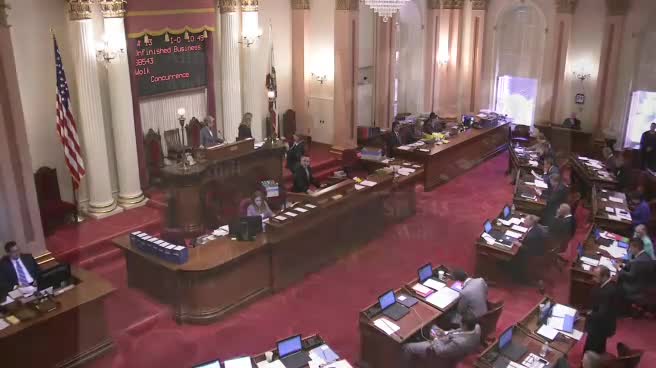 1MIN
Senate Floor
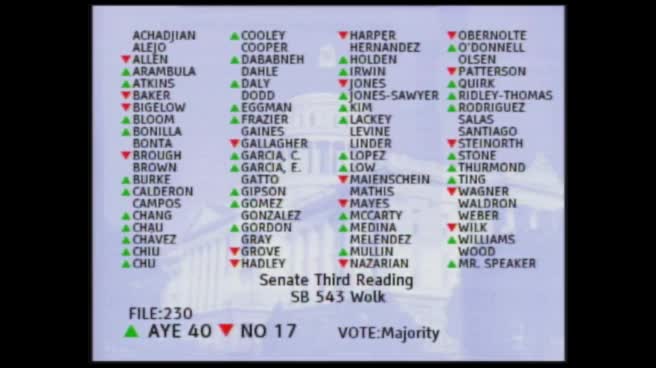 1MIN
Assembly Floor
 2MIN
Senate Floor
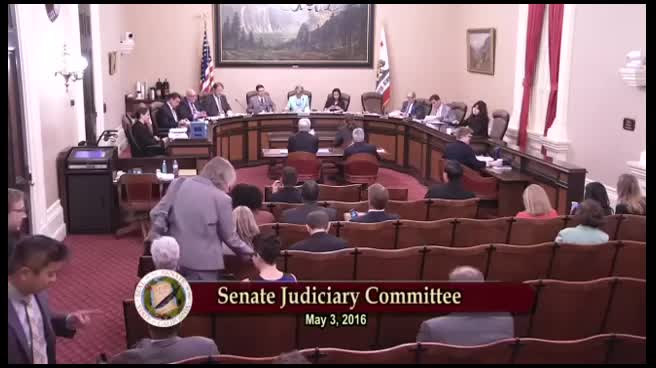 14MIN
Senate Standing Committee on Judiciary
Bill Author

Bill Co-Author(s):