SB 919: Water supply: creation or augmentation of local water supplies.
- Session Year: 2015-2016
- House: Senate
- Latest Version Date: 2016-08-26
(1)Under existing law, the Public Utilities Commission has regulatory authority over public utilities, including electrical corporations, as defined. The existing California Renewables Portfolio Standard Program requires a retail seller of electricity, as defined, and local publicly owned electric utilities to purchase specified minimum quantities of electricity products from eligible renewable energy resources, as defined, for specified compliance periods, sufficient to ensure that the level of procurement of electricity products from eligible renewable energy resources reaches a specified percentage of retail sales by a specified date.
This bill would require the commission, before January 1, 2018, in consultation with the Independent System Operator, to address the oversupply of renewable energy resources through a tariff or other economic incentive for electricity purchased by customers operating facilities that create or augment local water supplies, as defined, to reduce the cost of electricity to those facilities.
Because a violation of an order or a direction of the commission is a crime, this bill would impose a state-mandated local program.
(2)The California Constitution requires the state to reimburse local agencies and school districts for certain costs mandated by the state. Statutory provisions establish procedures for making that reimbursement.
This bill would provide that no reimbursement is required by this act for a specified reason.
(1)Under existing law, the Public Utilities Commission has regulatory authority over public utilities, including electrical corporations, as defined. The existing California Renewables Portfolio Standard Program requires a retail seller of electricity, as defined, and local publicly owned electric utilities to purchase specified minimum quantities of electricity products from eligible renewable energy resources, as defined, for specified compliance periods, sufficient to ensure that the level of procurement of electricity products from eligible renewable energy resources reaches a specified percentage of retail sales by a specified date.
This bill would require the commission, before July January 1, 2017, 2018, in consultation with the Independent System Operator, to address the oversupply of renewable energy resources through a tariff or other economic incentive for electricity purchased by customers operating facilities that create or augment local water supplies, as defined, to reduce the cost of electricity to those facilities.
Because a violation of an order or a direction of the commission is a crime, this bill would impose a state-mandated local program.
(2)The California Constitution requires the state to reimburse local agencies and school districts for certain costs mandated by the state. Statutory provisions establish procedures for making that reimbursement.
This bill would provide that no reimbursement is required by this act for a specified reason.
(1)Under existing law, the Public Utilities Commission has regulatory authority over public utilities, including electrical corporations, as defined. The existing California Renewables Portfolio Standard Program requires a retail seller of electricity, as defined, and local publicly owned electric utilities to purchase specified minimum quantities of electricity products from eligible renewable energy resources, as defined, for specified compliance periods, sufficient to ensure that the level of procurement of electricity products from eligible renewable energy resources reaches a specified percentage of retail sales by a specified date.
This bill would require the commission, before July 1, 2017, in consultation with the Independent System Operator, to adopt and implement policies or tariffs to address the oversupply of renewable energy resources, including, but not limited to, resources through a tariff or other economic incentive for use by facilities electricity purchased by customers operating facilities that create or augment local water supplies, like desalination, brackish water desalting, water recycling, or water reuse facilities, based on certain economic factors. supplies, as defined, to reduce the cost of electricity to those facilities.
Because a violation of an order or a direction of the commission is a crime, this bill would impose a state-mandated local program.
(2)The California Constitution requires the state to reimburse local agencies and school districts for certain costs mandated by the state. Statutory provisions establish procedures for making that reimbursement.
This bill would provide that no reimbursement is required by this act for a specified reason.
(1)Under existing law, the Public Utilities Commission has regulatory authority over public utilities, including electrical corporations, as defined. The existing California Renewables Portfolio Standard Program requires a retail seller of electricity, as defined, and local publicly owned electric utilities to purchase specified minimum quantities of electricity products from eligible renewable energy resources, as defined, for specified compliance periods, sufficient to ensure that the level of procurement of electricity products from eligible renewable energy resources reaches a specified percentage of retail sales by a specified date.
This bill would require the commission, before July 1, 2017, in consultation with the Independent System Operator, to adopt and implement policies or tariffs to address the oversupply of renewable energy resources, including, but not limited to, a tariff for use by facilities that create or augment local water supplies, like desalination, brackish water desalting, water recycling, or water reuse facilities, based on certain economic factors.
Because a violation of an order or a direction of the commission is a crime, this bill would impose a state-mandated local program.
(2)The California Constitution requires the state to reimburse local agencies and school districts for certain costs mandated by the state. Statutory provisions establish procedures for making that reimbursement.
This bill would provide that no reimbursement is required by this act for a specified reason.
(a)The Legislature finds and declares all of the following:
(1)Californias drought has affected every region of the state. Scientists predict our changing climate will increase the frequency, length, and severity of droughts in the future. As a result, the state must prioritize local water security.
(2)Traditionally, California has relied on interregional water transfers and tapping groundwater sources.
(3)Californias water systems were developed in an era of plentiful water, delivering fresh water hundreds of miles away at little cost. Those systems allowed regions to develop without sufficient local supplies.
(4)During droughts, however, groundwater supplies are pumped faster than they can be replenished, and 2014 saw the lowest final calendar year allocation in the 54-year history of the state water project, just 5 percent allocated of that which was requested.
(5)This drought, coupled with forecasts of a changing climate featuring even more severe droughts, has forced Californians to prioritize local water security.
(6)There are several underutilized water resources that can be managed locally, including desalination, brackish water desalting, water recycling, and water reuse. One of the barriers to cost-effective desalination, brackish water desalting, water recycling, and water reuse is the cost of electricity because moving and treating water are energy intensive.
(7)Recent forecasts of Californias electrical grid show substantial challenges to integrating a high fraction of electricity from renewable resources, including curtailment of resources due to oversupply. Such excess electricity could be directed through regulatory signals, demand response, and appropriate tariffs to facilities that create or augment local water supplies in an effort to meet the needs for local water security and integration of generation from renewable energy resources.
(8)There is a clear public interest in maximizing the development and expansion of facilities that create or augment local water supplies. Given that water and energy are inextricably linked, it is also imperative that those facilities receive all available cost-effective energy efficiency, demand response, and regulatory assistance.
(b)It is the intent of the Legislature to expedite funding made available pursuant to the Water Quality, Supply, and Infrastructure Improvement Act of 2014 (Division 26.7 (commencing with Section 79700) of the Water Code) for projects that encourage the deployment of facilities that create or augment local water supplies, including, but not limited to, desalination, brackish water desalting, water recycling, water reuse, stormwater and dry weather runoff capture and use, or groundwater recharge facilities.
SEC. 2.Section 711 is added to the Public Utilities Code, to read:711.(a)Before January 1, 2018, the commission, in consultation with the Independent System Operator, shall address the oversupply of renewable energy resources through a tariff or other economic incentive, such as time-variant rates, demand response, and dynamic pricing, for the electricity purchased by customers operating facilities that create or augment local water supplies to apply at the option of the customer, to reduce the cost of electricity to those facilities.
(b)The commission may consider implementing subdivision (a) in an existing proceeding.
(c)For purposes of this section, facilities that create or augment local water supplies include desalination, brackish water desalting, water recycling, water reuse, groundwater treatment and remediation activities, stormwater and dry weather runoff capture and use, and groundwater recharge facilities.
SEC. 3.No reimbursement is required by this act pursuant to Section 6 of Article XIIIB of the California Constitution because the only costs that may be incurred by a local agency or school district will be incurred because this act creates a new crime or infraction, eliminates a crime or infraction, or changes the penalty for a crime or infraction, within the meaning of Section 17556 of the Government Code, or changes the definition of a crime within the meaning of Section 6 of Article XIIIB of the California Constitution.
(a)The Legislature finds and declares all of the following:
(1)Californias drought has affected every region of the state. Scientists predict our changing climate will increase the frequency, length, and severity of droughts in the future. As a result, the state must prioritize local water security.
(2)Traditionally, California has relied on interregional water transfers and tapping groundwater sources.
(3)Californias water systems were developed in an era of plentiful water, delivering fresh water hundreds of miles away at little cost. Those systems allowed regions to develop without sufficient local supplies.
(4)During droughts, however, groundwater supplies are pumped faster than they can be replenished, and 2014 saw the lowest final calendar year allocation in the 54-year history of the state water project, just 5 percent allocated of that which was requested.
(5)This drought, coupled with forecasts of a changing climate featuring even more severe droughts, has forced Californians to prioritize local water security.
(6)There are several underutilized water resources that can be managed locally, including desalination, brackish water desalting, water recycling, and water reuse. One of the barriers to cost-effective desalination, brackish water desalting, water recycling, and water reuse is the cost of electricity because moving and treating water are energy intensive.
(7)Recent forecasts of Californias electrical grid show substantial challenges to integrating a high fraction of electricity from renewable resources, including curtailment of resources due to oversupply. Such excess electricity could be directed through regulatory signals, demand response, and appropriate tariffs to facilities that create or augment local water supplies in an effort to meet the needs for local water security and integration of generation from renewable energy resources.
(8)There is a clear public interest in maximizing the development and expansion of facilities that create or augment local water supplies. Given that water and energy are inextricably linked, it is also imperative that those facilities receive all available cost-effective energy efficiency, demand response, and regulatory assistance.
(b)It is the intent of the Legislature to expedite funding made available pursuant to the Water Quality, Supply, and Infrastructure Improvement Act of 2014 (Division 26.7 (commencing with Section 79700) of the Water Code) for projects that encourage the deployment of facilities that create or augment local water supplies, including, but not limited to, desalination, brackish water desalting, water recycling, water reuse, stormwater and dry weather runoff capture and use, or groundwater recharge facilities.
SEC. 2.Section 711 is added to the Public Utilities Code, to read:711.(a)Before January 1, 2018, the commission, in consultation with the Independent System Operator, shall address the oversupply of renewable energy resources through a tariff or other economic incentive, such as time-of-use time-variant rates, demand response, and dynamic pricing, for the electricity purchased by customers operating facilities that create or augment local water supplies to apply at the option of the customer, to reduce the cost of electricity to those facilities.
(b)The commission may consider implementing subdivision (a) in an existing proceeding.
(c)For purposes of this section, facilities that create or augment local water supplies include desalination, brackish water desalting, water recycling, water reuse, groundwater treatment and remediation activities, stormwater and dry weather runoff capture and use, and groundwater recharge facilities.
SEC. 3.No reimbursement is required by this act pursuant to Section 6 of Article XIIIB of the California Constitution because the only costs that may be incurred by a local agency or school district will be incurred because this act creates a new crime or infraction, eliminates a crime or infraction, or changes the penalty for a crime or infraction, within the meaning of Section 17556 of the Government Code, or changes the definition of a crime within the meaning of Section 6 of Article XIIIB of the California Constitution.
(a)The Legislature finds and declares all of the following:
(1)Californias drought has affected every region of the state. Scientists predict our changing climate will increase the frequency, length, and severity of droughts in the future. As a result, the state must prioritize local water security.
(2)Traditionally, California has relied on interregional water transfers and tapping groundwater sources.
(3)Californias water systems were developed in an era of plentiful water, delivering fresh water hundreds of miles away at little cost. Those systems allowed regions to develop without sufficient local supplies.
(4)During droughts, however, groundwater supplies are pumped faster than they can be replenished, and 2014 saw the lowest final calendar year allocation in the 54-year history of the state water project, just 5 percent allocated of that which was requested.
(5)This drought, coupled with forecasts of a changing climate featuring even more severe droughts, has forced Californians to prioritize local water security.
(6)There are several underutilized water resources that can be managed locally, including desalination, brackish water desalting, water recycling, and water reuse. One of the barriers to cost-effective desalination, brackish water desalting, water recycling, and water reuse is the cost of electricity because moving and treating water are energy intensive.
(7)Recent forecasts of Californias electrical grid show substantial challenges to integrating a high fraction of electricity from renewable resources, including curtailment of resources due to oversupply. Such excess electricity could be directed through regulatory signals, demand response, and appropriate tariffs to facilities that create or augment local water supplies in an effort to meet the needs for local water security and integration of generation from renewable energy resources.
(8)There is a clear public interest in maximizing the development and expansion of facilities that create or augment local water supplies. Given that water and energy are inextricably linked, it is also imperative that those facilities receive all available cost-effective energy efficiency, demand response, and regulatory assistance.
(b)It is the intent of the Legislature to expedite funding made available pursuant to the Water Quality, Supply, and Infrastructure Improvement Act of 2014 (Division 26.7 (commencing with Section 79700) of the Water Code) for projects that encourage the deployment of facilities that create or augment local water supplies, including, but not limited to, desalination, brackish water desalting, water recycling, water reuse, stormwater and dry weather runoff capture and use, or groundwater recharge facilities.
SEC. 2.Section 711 is added to the Public Utilities Code, to read:711.(a)Before January 1, 2018, the commission, in consultation with the Independent System Operator, shall address the oversupply of renewable energy resources through a tariff or other economic incentive, such as time-of-use rates, demand response, or and dynamic pricing, for the electricity purchased by customers operating facilities that create or augment local water supplies to apply at the option of the customer, to reduce the cost of electricity to those facilities.
(b)The commission may consider implementing subdivision (a) in an existing proceeding.
(b)
(c)For purposes of this section, facilities that create or augment local water supplies include desalination, brackish water desalting, water recycling, water reuse, stormwater and dry weather runoff capture and use, and groundwater recharge facilities.
SEC. 3.No reimbursement is required by this act pursuant to Section 6 of Article XIIIB of the California Constitution because the only costs that may be incurred by a local agency or school district will be incurred because this act creates a new crime or infraction, eliminates a crime or infraction, or changes the penalty for a crime or infraction, within the meaning of Section 17556 of the Government Code, or changes the definition of a crime within the meaning of Section 6 of Article XIIIB of the California Constitution.
(a)The Legislature finds and declares all of the following:
(1)Californias drought has affected every region of the state. Scientists predict our changing climate will increase the frequency, length, and severity of droughts in the future. As a result, the state must prioritize local water security.
(2)Traditionally, California has relied on interregional water transfers and tapping groundwater sources.
(3)Californias water systems were developed in an era of plentiful water, delivering fresh water hundreds of miles away at little cost. Those systems allowed regions to develop without sufficient local supplies.
(4)During droughts, however, groundwater supplies are pumped faster than they can be replenished, and 2014 saw the lowest final calendar year allocation in the 54-year history of the state water project, just 5 percent allocated of that which was requested.
(5)This drought, coupled with forecasts of a changing climate featuring even more severe droughts, has forced Californians to prioritize local water security.
(6)There are several underutilized water resources that can be managed locally, including desalination, brackish water desalting, water recycling, and water reuse. One of the barriers to cost-effective desalination, brackish water desalting, water recycling, and water reuse is the cost of electricity because moving and treating water are energy intensive.
(7)Recent forecasts of Californias electrical grid show substantial challenges to integrating a high fraction of electricity from renewable resources, including curtailment of resources due to oversupply. Such excess electricity could be directed through regulatory signals, demand response, and appropriate tariffs to facilities that create or augment local water supplies in an effort to meet the needs for local water security and integration of generation from renewable energy resources.
(8)There is a clear public interest in maximizing the development and expansion of facilities that create or augment local water supplies. Given that water and energy are inextricably linked, it is also imperative that those facilities receive all available cost-effective energy efficiency, demand response, and regulatory assistance.
(b)It is the intent of the Legislature to expedite funding made available pursuant to the Water Quality, Supply, and Infrastructure Improvement Act of 2014 (Division 26.7 (commencing with Section 79700) of the Water Code) for projects that encourage the deployment of facilities that create or augment local water supplies, including, but not limited to, desalination, brackish water desalting, water recycling, water reuse, stormwater and dry weather runoff capture and use, or water reuse groundwater recharge facilities.
SEC. 2.Section 711 is added to the Public Utilities Code, to read:711.(a)Before January 1, 2018, the commission, in consultation with the Independent System Operator, shall address the oversupply of renewable energy resources through a tariff or other economic incentive, such as time-of-use or rates, demand response, or dynamic pricing, for the electricity purchased by customers operating facilities that create or augment local water supplies to apply at the option of the customer, to reduce the cost of electricity to those facilities.
(b)For purposes of this section, facilities that create or augment local water supplies include desalination, brackish water desalting, water recycling, water reuse, stormwater and dry weather runoff capture and use, and groundwater recharge facilities.
SEC. 3.No reimbursement is required by this act pursuant to Section 6 of Article XIIIB of the California Constitution because the only costs that may be incurred by a local agency or school district will be incurred because this act creates a new crime or infraction, eliminates a crime or infraction, or changes the penalty for a crime or infraction, within the meaning of Section 17556 of the Government Code, or changes the definition of a crime within the meaning of Section 6 of Article XIIIB of the California Constitution.
(a)The Legislature finds and declares all of the following:
(1)Californias drought has affected every region of the state. Scientists predict our changing climate will increase the frequency, length, and severity of droughts in the future. As a result, the state must prioritize local water security.
(2)Traditionally, California has relied on interregional water transfers and tapping groundwater sources.
(3)Californias water systems were developed in an era of plentiful water, delivering fresh water hundreds of miles away at little cost. Those systems allowed regions to develop without sufficient local supplies.
(4)During droughts, however, groundwater supplies are pumped faster than they can be replenished, and 2014 saw the lowest final calendar year allocation in the 54-year history of the state water project, just 5 percent allocated of that which was requested.
(5)This drought, coupled with forecasts of a changing climate featuring even more severe droughts, has forced Californians to prioritize local water security.
(6)There are several underutilized water resources that can be managed locally, including desalination, brackish water desalting, water recycling, and water reuse. One of the barriers to cost-effective desalination, brackish water desalting, water recycling, and water reuse is the cost of electricity because moving and treating water are energy intensive.
(7)Recent forecasts of Californias electrical grid show substantial challenges to integrating a high fraction of electricity from renewable resources, including curtailment of resources due to oversupply. Such excess electricity could be directed through regulatory signals, demand response, and appropriate tariffs to facilities that create or augment local water supplies in an effort to meet the needs for local water security and integration of generation from renewable energy resources.
(8)There is a clear public interest in maximizing the development and expansion of facilities that create or augment local water supplies. Given that water and energy are inextricably linked, it is also imperative that those facilities receive all available cost-effective energy efficiency, demand response, and regulatory assistance.
(b)It is the intent of the Legislature to expedite funding made available pursuant to the Water Quality, Supply, and Infrastructure Improvement Act of 2014 (Division 26.7 (commencing with Section 79700) of the Water Code) for projects that encourage the deployment of facilities that create or augment local water supplies, including, but not limited to, desalination, brackish water desalting, water recycling, stormwater and dry weather runoff capture and use, or water reuse facilities.
SEC. 2.Section 711 is added to the Public Utilities Code, to read:711.(a)Before January 1, 2018, the commission, in consultation with the Independent System Operator, shall address the oversupply of renewable energy resources through a tariff or other economic incentive, such as time-of-use or demand response, for the electricity purchased by customers operating facilities that create or augment local water supplies to apply at the option of the customer, to reduce the cost of electricity to those facilities.
(b)For purposes of this section, facilities that create or augment local water supplies include desalination, brackish water desalting, water recycling, water reuse, stormwater and dry weather runoff capture and use, and groundwater recharge facilities.
SEC. 3.No reimbursement is required by this act pursuant to Section 6 of Article XIIIB of the California Constitution because the only costs that may be incurred by a local agency or school district will be incurred because this act creates a new crime or infraction, eliminates a crime or infraction, or changes the penalty for a crime or infraction, within the meaning of Section 17556 of the Government Code, or changes the definition of a crime within the meaning of Section 6 of Article XIIIB of the California Constitution.
(a)The Legislature finds and declares all of the following:
(1)Californias drought has affected every region of the state. Scientists predict our changing climate will increase the frequency, length, and severity of droughts in the future. As a result, the state must prioritize local water security.
(2)Traditionally, California has relied on interregional water transfers and tapping groundwater sources.
(3)Californias water systems were developed in an era of plentiful water, delivering fresh water hundreds of miles away at little cost. Those systems allowed regions to develop without sufficient local supplies.
(4)During droughts, however, groundwater supplies are pumped faster than they can be replenished, and 2014 saw the lowest final calendar year allocation in the 54-year history of the state water project, just 5 percent allocated of that which was requested.
(5)This drought, coupled with forecasts of a changing climate featuring even more severe droughts, has forced Californians to prioritize local water security.
(6)There are several underutilized water resources that can be managed locally, including desalination, brackish water desalting, water recycling, and water reuse. One of the barriers to cost-effective desalination, brackish water desalting, water recycling, and water reuse is the cost of electricity because moving and treating water are energy intensive.
(7)Recent forecasts of Californias electrical grid show substantial challenges to integrating a high fraction of electricity from renewable resources, including curtailment of resources due to oversupply. Such excess electricity could be directed through regulatory signals, demand response, and appropriate tariffs to facilities that create or augment local water supplies in an effort to meet the needs for local water security and integration of generation from renewable energy resources.
(8)There is a clear public interest in maximizing the development and expansion of facilities that create or augment local water supplies. Given that water and energy are inextricably linked, it is also imperative that those facilities receive all available cost-effective energy efficiency, demand response, and regulatory assistance.
(b)It is the intent of the Legislature to expedite funding made available pursuant to the Water Quality, Supply, and Infrastructure Improvement Act of 2014 (Division 26.7 (commencing with Section 79700) of the Water Code) for projects that encourage the deployment of facilities that create or augment local water supplies, including, but not limited to, desalination, brackish water desalting, water recycling, or water reuse facilities.
SEC. 2.Section 711 is added to the Public Utilities Code, to read:711.(a)Before July January 1, 2017, 2018, the commission, in consultation with the Independent System Operator, shall address the oversupply of renewable energy resources through a tariff or other economic incentive incentive, such as time-of-use or demand response, for the electricity purchased by customers operating facilities that create or augment local water supplies, such as time-of-use or demand response, supplies to apply at the option of the customer, to reduce the cost of electricity to those facilities.
(b)For purposes of this section, facilities that create or augment local water supplies include desalination, brackish water desalting, water recycling, water reuse, and groundwater recharge facilities.
SEC. 3.No reimbursement is required by this act pursuant to Section 6 of Article XIIIB of the California Constitution because the only costs that may be incurred by a local agency or school district will be incurred because this act creates a new crime or infraction, eliminates a crime or infraction, or changes the penalty for a crime or infraction, within the meaning of Section 17556 of the Government Code, or changes the definition of a crime within the meaning of Section 6 of Article XIIIB of the California Constitution.
(a)The Legislature finds and declares all of the following:
(1)Californias drought has affected every region of the state. Scientists predict our changing climate will increase the frequency, length, and severity of droughts in the future. As a result, the state must prioritize local water security.
(2)Traditionally, California has relied on interregional water transfers and tapping groundwater sources.
(3)Californias water systems were developed in an era of plentiful water, delivering fresh water hundreds of miles away at little cost. Those systems allowed regions to develop without sufficient local supplies.
(4)During droughts, however, groundwater supplies are pumped faster than they can be replenished, and 2014 saw the lowest final calendar year allocation in the 54-year history of the state water project, just 5 percent allocated of that which was requested.
(5)This drought, coupled with forecasts of a changing climate featuring even more severe droughts, has forced Californians to prioritize local water security.
(6)There are several underutilized water resources that can be managed locally, including desalination, brackish water desalting, water recycling, and water reuse. One of the barriers to cost-effective desalination, brackish water desalting, water recycling, and water reuse is the cost of electricity because moving and treating water are energy intensive.
(7)Recent forecasts of Californias electrical grid show substantial challenges to integrating a high fraction of electricity from renewable resources, including curtailment of resources due to oversupply. Such excess electricity could be directed through regulatory signals, demand response, and appropriate tariffs to facilities that create or augment local water supplies in an effort to meet the needs for local water security and integration of generation from renewable energy resources.
(8)There is a clear public interest in maximizing the development and expansion of facilities that create or augment local water supplies. Given that water and energy are inextricably linked, it is also imperative that those facilities receive all available cost-effective energy efficiency, demand response, and regulatory assistance.
(b)It is the intent of the Legislature to expedite funding made available pursuant to the Water Quality, Supply, and Infrastructure Improvement Act of 2014 (Division 26.7 (commencing with Section 79700) of the Water Code) for projects that encourage the deployment of facilities that create or augment local water supplies, including, but not limited to, desalination, brackish water desalting, water recycling, or water reuse facilities.
SEC. 2.Section 711 is added to the Public Utilities Code, to read:711.(a)Before July 1, 2017, the commission, in consultation with the Independent System Operator, shall adopt and implement policies or tariffs to address the oversupply of renewable energy resources, including, but not limited to, resources through a tariff or other economic incentive for use by the electricity purchased by customers operating facilities that create or augment local water supplies, including, but not limited to, desalination, brackish water desalting, water recycling, or water reuse facilities, based on economic factors, such as time-of-use or demand response, to apply at the option of the customer, to reduce the cost of electricity to those facilities.
(b)For purposes of this section, facilities that create or augment local water supplies include desalination, brackish water desalting, water recycling, water reuse, and groundwater recharge facilities.
SEC. 3.No reimbursement is required by this act pursuant to Section 6 of Article XIIIB of the California Constitution because the only costs that may be incurred by a local agency or school district will be incurred because this act creates a new crime or infraction, eliminates a crime or infraction, or changes the penalty for a crime or infraction, within the meaning of Section 17556 of the Government Code, or changes the definition of a crime within the meaning of Section 6 of Article XIIIB of the California Constitution.
(a)The Legislature finds and declares all of the following:
(1)Californias drought has affected every region of the state. Scientists predict our changing climate will increase the frequency, length, and severity of droughts in the future. As a result, the state must prioritize local water security.
(2)Traditionally, California has relied on interregional water transfers and tapping groundwater sources.
(3)Californias water systems were developed in an era of plentiful water, delivering fresh water hundreds of miles away at little cost. Those systems allowed regions to develop without sufficient local supplies.
(4)During droughts, however, groundwater supplies are pumped faster than they can be replenished, and 2014 saw the lowest final calendar year allocation in the 54-year history of the state water project, just 5 percent allocated of that which was requested.
(5)This drought, coupled with forecasts of a changing climate featuring even more severe droughts, has forced Californians to prioritize local water security.
(6)There are several underutilized water resources that can be managed locally, including desalination, brackish water desalting, water recycling, and water reuse. One of the barriers to cost-effective desalination, brackish water desalting, water recycling, and water reuse is the cost of electricity because moving and treating water are energy intensive.
(7)Recent forecasts of Californias electrical grid show substantial challenges to integrating a high fraction of electricity from renewable resources, including curtailment of resources due to oversupply. Such excess electricity could be directed through regulatory signals, demand response, and appropriate tariffs to facilities that create or augment local water supplies in an effort to meet the needs for local water security and integration of generation from renewable energy resources.
(8)There is a clear public interest in maximizing the development and expansion of facilities that create or augment local water supplies. Given that water and energy are inextricably linked, it is also imperative that those facilities receive all available cost-effective energy efficiency, demand response, and regulatory assistance.
(b)It is the intent of the Legislature to expedite funding made available pursuant to the Water Quality, Supply, and Infrastructure Improvement Act of 2014 (Division 26.7 (commencing with Section 79700) of the Water Code) for projects that encourage the deployment of facilities that create or augment local water supplies, including, but not limited to, desalination, brackish water desalting, water recycling, or water reuse facilities.
SEC. 2.Section 711 is added to the Public Utilities Code, to read:711.Before July 1, 2017, the commission, in consultation with the Independent System Operator, shall adopt and implement policies or tariffs to address the oversupply of renewable energy resources, including, but not limited to, a tariff for use by facilities that create or augment local water supplies, including, but not limited to, desalination, brackish water desalting, water recycling, or water reuse facilities, based on economic factors, such as time-of-use or demand response, to reduce the cost of electricity to those facilities.
SEC. 3.No reimbursement is required by this act pursuant to Section 6 of Article XIIIB of the California Constitution because the only costs that may be incurred by a local agency or school district will be incurred because this act creates a new crime or infraction, eliminates a crime or infraction, or changes the penalty for a crime or infraction, within the meaning of Section 17556 of the Government Code, or changes the definition of a crime within the meaning of Section 6 of Article XIIIB of the California Constitution.
|
Date
|
Status
|
|---|---|
| Aug 8, 2016 | From consent calendar on motion of Assembly Member Calderon. |
| May 16, 2016 | Referred to Coms. on U. & C. and W., P., & W. |
| May 31, 2016 | From committee with author's amendments. Read second time and amended. Re-referred to Com. on U. & C. |
| Jun 2, 2016 | June 8 hearing postponed by committee. |
| Jun 15, 2016 | From committee: Do pass and re-refer to Com. on W., P., & W. (Ayes 15. Noes 0.) (June 15). Re-referred to Com. on W., P., & W. |
| Jun 28, 2016 | From committee: Do pass and re-refer to Com. on APPR. with recommendation: To consent calendar. (Ayes 15. Noes 0.) (June 28). Re-referred to Com. on APPR. |
| Aug 1, 2016 | From committee with author's amendments. Read second time and amended. Re-referred to Com. on APPR. |
| Aug 3, 2016 | From committee: Do pass. Ordered to consent calendar. (Ayes 20. Noes 0.) (August 3). |
| Aug 4, 2016 | Read second time. Ordered to consent calendar. |
| May 10, 2016 | In Assembly. Read first time. Held at Desk. |
| Aug 8, 2016 | Ordered to third reading. |
| Aug 11, 2016 | Ordered to third reading. |
| Aug 11, 2016 | Read third time and amended. |
| Aug 18, 2016 | Read third time. Passed. Ordered to the Senate. |
| Aug 18, 2016 | Read third time. Passed. (Ayes 78. Noes 0. Page 5896.) Ordered to the Senate. |
| Aug 19, 2016 | In Senate. Concurrence in Assembly amendments pending. |
| Aug 24, 2016 | Assembly amendments concurred in. (Ayes 38. Noes 0.) Ordered to engrossing and enrolling. |
| Aug 30, 2016 | Enrolled and presented to the Governor at 1:30 p.m. |
| Apr 7, 2016 | Set for hearing April 12. |
| Jan 28, 2016 | From printer. May be acted upon on or after February 27. |
| Feb 4, 2016 | Referred to Coms. on E., U., & C. and N.R. & W. |
| Mar 7, 2016 | From committee with author's amendments. Read second time and amended. Re-referred to Com. on E., U., & C. |
| Mar 9, 2016 | Set for hearing March 29. |
| Mar 23, 2016 | March 29 set for first hearing canceled at the request of author. |
| Mar 28, 2016 | Set for hearing April 5. |
| Apr 5, 2016 | From committee: Do pass and re-refer to Com. on N.R. & W. (Ayes 9. Noes 0. Page 3392.) (April 5). Re-referred to Com. on N.R. & W. |
| Apr 6, 2016 | From committee with author's amendments. Read second time and amended. Re-referred to Com. on N.R. & W. |
| Jan 27, 2016 | Introduced. Read first time. To Com. on RLS. for assignment. To print. |
| Apr 13, 2016 | From committee: Do pass as amended and re-refer to Com. on APPR. (Ayes 8. Noes 0. Page 3495.) (April 12). |
| Apr 13, 2016 | From committee: Do pass as amended and re-refer to Com. on APPR. (Ayes 8. Noes 0.) (April 12). |
| Apr 14, 2016 | Read second time and amended. Re-referred to Com. on APPR. |
| Apr 22, 2016 | Set for hearing May 2. |
| May 2, 2016 | From committee: Be ordered to second reading pursuant to Senate Rule 28.8. |
| May 3, 2016 | Read second time. Ordered to third reading. |
| May 9, 2016 | Read third time. Passed. (Ayes 35. Noes 0. Page 3801.) Ordered to the Assembly. |
| May 9, 2016 | Read third time. Passed. (Ayes 35. Noes 0.) Ordered to the Assembly. |
|
Date
|
Description
|
Location
|
Votes
|
|
|---|---|---|---|---|
| Aug 24, 2016 | Unfinished Business SB919 Hertzberg Concurrence | Senate Floor |
Passed |
|
| Aug 18, 2016 | SB 919 Hertzberg Senate Third Reading By OLSEN | Assembly Floor |
Passed |
|
| Aug 3, 2016 | Do pass. To Consent Calendar. | Assembly Standing Committee on Appropriations |
Passed |
|
| Jun 28, 2016 | Do pass and be re-referred to the Committee on [Appropriations] with recommendation: To Consent Calendar | Assembly Standing Committee on Water, Parks, and Wildlife |
Passed |
|
| Jun 15, 2016 | Do pass and be re-referred to the Committee on [Water, Parks, and Wildlife] | Assembly Standing Committee on Utilities and Commerce |
Passed |
|
| May 9, 2016 | Senate 3rd Reading SB919 Hertzberg | Senate Floor |
Passed |
|
| Apr 12, 2016 | Do pass as amended, but first amend, and re-refer to the Committee on [Appropriations] | Senate Standing Committee on Natural Resources and Water |
Passed |
|
| Apr 5, 2016 | Do pass, but first be re-referred to the Committee on [Natural Resources and Water] | Senate Standing Committee on Energy, Utilities and Communications |
Passed |
This list shows positions taken on this bill by organizations on the date displayed, which is linked to the original source.
Positions by individuals are not included.
|
Organization
|
Position
|
Date
|
|---|---|---|
| Association Of California Water Agencies | ** Support | Aug 24, 2016 |
| California Association Of Sanitation Agencies | ** Support | Aug 24, 2016 |
| California Manufacturers & Technology | ** Support | Aug 11, 2016 |
| California Municipal Utilities Association | ** Support | Aug 24, 2016 |
| Independent Energy Producers Association | ** Support | Aug 24, 2016 |
| Orange County Water District | ** Support | Aug 24, 2016 |
| San Diego County Water Authority | ** Support | Aug 24, 2016 |
| San Gabriel Basin Water Quality Authority | ** Support | Aug 24, 2016 |
| Santa Monica, City Of | ** Support | Aug 24, 2016 |
Office of Senate Floor Analyses (916) 651-1520 Fax: (916) 327-4478 | SB 919 |
VETO
Bill No: SB 919
Amended: 8/11/16
SENATE ENERGY, U. & C. COMMITTEE: 9-0, 4/5/16
AYES: Hueso, Morrell, Cannella, Hertzberg, Hill, Lara, Leyva, McGuire, Pavley
NO VOTE RECORDED: Gaines, Wolk
SENATE NATURAL RES. & WATER COMMITTEE: 8-0, 4/12/16
AYES: Pavley, Allen, Hertzberg, Hueso, Jackson, Monning, Vidak, Wolk
NO VOTE RECORDED: Stone
SENATE APPROPRIATIONS COMMITTEE: Senate Rule 28.8
SENATE FLOOR: 35-0, 5/9/16
AYES: Allen, Anderson, Berryhill, Block, Cannella, De León, Fuller, Galgiani, Glazer, Hall, Hancock, Hernandez, Hertzberg, Hill, Hueso, Huff, Jackson, Lara, Leno, Leyva, Liu, McGuire, Mendoza, Mitchell, Monning, Moorlach, Morrell, Nguyen, Pan, Pavley, Roth, Stone, Vidak, Wieckowski, Wolk
NO VOTE RECORDED: Bates, Beall, Gaines, Nielsen, Runner
SENATE FLOOR: 39-0, 8/24/16
AYES: Allen, Anderson, Bates, Beall, Berryhill, Block, Cannella, De León, Fuller, Gaines, Galgiani, Glazer, Hall, Hancock, Hernandez, Hertzberg, Hill, Hueso, Huff, Jackson, Lara, Leno, Leyva, Liu, McGuire, Mendoza, Mitchell, Monning, Moorlach, Morrell, Nguyen, Nielsen, Pan, Pavley, Roth, Stone, Vidak, Wieckowski, Wolk
ASSEMBLY FLOOR: 78-0, 8/18/16 - See last page for vote
SUBJECT: Water supply: creation or augmentation of local water supplies
SOURCE: Independent Energy Producers Association
DIGEST: This bill requires the California Public Utilities Commission (CPUC) to address the oversupply of renewable energy resources through development of a tariff or other economic incentive available to facilities that create or augment local water supplies.
Existing law:
- Authorizes the CPUC to fix rates, establish rules, examine records, issue subpoenas, administer oaths, take testimony, punish for contempt, and prescribe a uniform system of accounts for all public utilities, including electrical and gas corporations, subject to its jurisdiction. (Article 12 of the California Constitution)
- Requires that all charges demanded or received by any public utility for any product, commodity or service be just and reasonable, and that every unjust or unreasonable charge is unlawful. (Public Utilities Code §451)
- Requires retail sellers of electricity – investor-owned utilities (IOU), community choice aggregators, and energy service providers – and publicly-owned utilities (POU) to increase purchases of renewable energy such that at least 50 percent of retail sales are procured from renewable energy resources by December 31, 2030. This is known as the Renewable Portfolio Standard (RPS). (Public Utilities Code §399.11 et seq.)
- Requires the CPUC to adopt a process for each IOU to file an integrated resource plan to ensure IOUs meet the greenhouse gas (GHG) emissions reduction targets for the electricity sector; procure at least 50 percent eligible renewable energy resources by December 31, 2030; enable each IOU to fulfill its obligation to serve its customers at just and reasonable rates; minimize impacts on ratepayers’ bills; ensure system and local reliability; strengthen the diversity, sustainability, and resilience of the bulk transmission and distribution systems, and local communities; enhance distribution systems and demand-side energy management; and minimize localized air pollutants and other GHG emissions, with early priority on disadvantaged communities. (Public Resources Code §454.52)
This bill:
- Requires the CPUC, by January 1, 2018, in consultation with the California Independent System Operator (CAISO), to address the oversupply of renewable energy resources through a tariff or other economic incentive for the electricity purchased by customers operating facilities that create or augment local water supplies to reduce the cost of electricity to those facilities.
- States the intent of the Legislature to expedite funding made available by the Water Quality, Supply, and Infrastructure Improvement Act of 2014.
Background
An embarrassment of riches. California utilities have procured increasing amounts of electricity from renewable resources, in response to the state’s RPS mandates. Much of this electricity has come from solar and wind energy resources. Such resources can be described as intermittent, meaning that they are not available at all times of the day and can experience difficult-to-predict upward or downward swings in electricity production. This intermittency creates challenges for management of the electric grid, one of which is the oversupply of electricity during some times of the day under certain conditions.
The CAISO reports that, to reliably manage the electricity grid with greater amount of electricity supplied by intermittent resources, it needs flexible resources that can:
- Sustain upward or downward ramp.
- Respond for a defined period of time.
- Change ramp directions quickly.
- Store energy or modify use.
- React quickly and meet expected operating levels.
- Start with short notice from a zero or low-electricity operating level.
- Start and stop multiple times per day.
- Accurately forecast operating capability.
This bill requires the CPUC to take actions that the author and bill proponents conclude will, in limited cases, create some of the flexible conditions the CAISO says it needs. This bill seeks to take advantage of one of those opportunities – the availability, at some times, of cheap electric power.
In many areas of the state, local water supplies are constrained. Many processes to augment local water supplies, such as desalination and water recycling, are expensive, partly because of their energy intensity. This bill seeks to balance the oversupply of electricity caused by increasing amounts of intermittent renewable energy against energy-intensive local water supply augmentation. A tariff or other economic incentive, developed by the CPUC, is the balancing mechanism.
Prior Legislation
SB 350 (De Leon, Chapter 547, Statutes of 2015) required, among other things, that IOUs and local POUs develop integrated resource plans to ensure each utility meets the GHGs reduction targets for the electricity sector; procures at least 50 percent eligible renewable energy resources by December 31, 2030; enables each IOU to fulfill its obligation to serve its customers at just and reasonable rates; minimizes impacts on ratepayers’ bills; ensures system and local reliability; strengthens the diversity, sustainability, and resilience of the bulk transmission and distribution systems, and local communities; enhances distribution systems and demand-side energy management; and minimizes localized air pollutants and other GHG emissions, with early priority on disadvantaged communities. The bill passed the Senate 26-14.
AB 2363 (Dahle, Chapter 610, Statutes of 2014) directed the CPUC to adopt estimates of expenses resulting from integrating and operating eligible renewable energy resources.
FISCAL EFFECT: Appropriation: Fiscal Com.: Local:
According to the Assembly Appropriations Committee, CPUC indicates the requirements of this bill can be addressed through existing proceedings including the Long Term Procurement Planning, the Water-Energy Nexus Order Instituting Rulemaking, and the Time-of-Use Order Instituting Rulemaking. However, the deadline in this bill may require staff to shift from working on long term over-supply mitigation to focusing on meeting the requirements of the bill.
Independent Energy Producers Association (source)
Association of California Water Agencies
California Association of Sanitation Agencies
California Manufacturers & Technology Association
California Municipal Utilities Association
City of Santa Monica
Orange County Water District
San Diego County Water Authority
San Gabriel Basin Water Quality Authority
OPPOSITION: (Verified 8/18/16)
None received
ARGUMENTS IN SUPPORT: According to the author, SB 919 encourages the development and diversification of local water supplies through water recycling, reclamation, and desalination by directing renewable energy “oversupply” to those water suppliers. An ancillary benefit, the author continues, is that this bill requires better coordination of California’s renewable energy resources and demand for power and enables better, more cost-effective utilization of renewable power as it is generated.
“To the Members of the California State Senate:
I am returning Senate Bill 919 without my signature.
This bill would require the California Public Utilities Commission to create special tariffs or other economic incentives for facilities that create or augment local water supplies, including water desalination and water recycling facilities.
Reducing electricity costs for water supply facilities can be accomplished in a variety of ways, including time of use rates and demand response. This bill mandates one approach that does not fit all.
ASSEMBLY FLOOR: 78-0, 8/18/16
AYES: Achadjian, Alejo, Travis Allen, Arambula, Atkins, Baker, Bigelow, Bloom, Bonilla, Bonta, Brough, Brown, Burke, Calderon, Campos, Chang, Chau, Chávez, Chiu, Chu, Cooley, Cooper, Dababneh, Dahle, Daly, Dodd, Eggman, Frazier, Gallagher, Cristina Garcia, Eduardo Garcia, Gatto, Gipson, Gomez, Gonzalez, Gordon, Gray, Grove, Hadley, Harper, Holden, Irwin, Jones, Jones-Sawyer, Kim, Lackey, Levine, Linder, Lopez, Low, Maienschein, Mathis, Mayes, McCarty, Medina, Melendez, Mullin, Nazarian, Obernolte, O'Donnell, Olsen, Patterson, Quirk, Ridley-Thomas, Rodriguez, Salas, Santiago, Steinorth, Mark Stone, Thurmond, Ting, Wagner, Waldron, Weber, Wilk, Williams, Wood, Rendon
NO VOTE RECORDED: Beth Gaines, Roger Hernández
Prepared by: Jay Dickenson / E., U., & C. / (916) 651-4107
11/18/16 14:42:03
**** END ****
Office of Senate Floor Analyses (916) 651-1520 Fax: (916) 327-4478 | SB |
UNFINISHED BUSINESS
Bill No: SB 919
:
SENATE ENERGY, U. & C. COMMITTEE: 9-0, 4/5/16
AYES: Hueso, Morrell, Cannella, Hertzberg, Hill, Lara, Leyva, McGuire, Pavley
NO VOTE RECORDED: Gaines, Wolk
SENATE NATURAL RES. & WATER COMMITTEE: 8-0, 4/12/16
AYES: Pavley, Allen, Hertzberg, Hueso, Jackson, Monning, Vidak, Wolk
NO VOTE RECORDED: Stone
SENATE APPROPRIATIONS COMMITTEE: Senate Rule 28.8
SENATE FLOOR: 35-0, 5/9/16
AYES: Allen, Anderson, Berryhill, Block, Cannella, De León, Fuller, Galgiani, Glazer, Hall, Hancock, Hernandez, Hertzberg, Hill, Hueso, Huff, Jackson, Lara, Leno, Leyva, Liu, McGuire, Mendoza, Mitchell, Monning, Moorlach, Morrell, Nguyen, Pan, Pavley, Roth, Stone, Vidak, Wieckowski, Wolk
NO VOTE RECORDED: Bates, Beall, Gaines, Nielsen, Runner
ASSEMBLY FLOOR: 78-0, 8/18/16 - See last page for vote
SOURCE: Independent Energy Producers Association
DIGEST: This bill requires the California Public Utilities Commission (CPUC) to address the oversupply of renewable energy resources through development of a tariff or other economic incentive available to facilities that create or augment local water supplies.
Assembly Amendments (1) modify the types of tariffs or economic incentives available to the CPUC to replace the term “time-of-use” with the term “time-variant rates” and to add dynamic pricing, (2) add to the types of facilities entailed by the term “facilities that create or augment local water supplies” to include groundwater treatment and remediation activities, and (3) authorize the CPUC to consider implementing the requirements of this bill in an existing proceeding.
Existing law:
- Authorizes the CPUC to fix rates, establish rules, examine records, issue subpoenas, administer oaths, take testimony, punish for contempt, and prescribe a uniform system of accounts for all public utilities, including electrical and gas corporations, subject to its jurisdiction. (Article 12 of the California Constitution)
- Requires that all charges demanded or received by any public utility for any product, commodity or service be just and reasonable, and that every unjust or unreasonable charge is unlawful. (Public Utilities Code §451)
- Requires retail sellers of electricity – investor-owned utilities (IOU), community choice aggregators, and energy service providers – and publicly-owned utilities (POU) to increase purchases of renewable energy such that at least 50 percent of retail sales are procured from renewable energy resources by December 31, 2030. This is known as the Renewable Portfolio Standard (RPS). (Public Utilities Code §399.11 et seq.)
- Requires the CPUC to adopt a process for each IOU to file an integrated resource plan to ensure IOUs meet the greenhouse gas (GHG) emissions reduction targets for the electricity sector; procure at least 50 percent eligible renewable energy resources by December 31, 2030; enable each IOU to fulfill its obligation to serve its customers at just and reasonable rates; minimize impacts on ratepayers’ bills; ensure system and local reliability; strengthen the diversity, sustainability, and resilience of the bulk transmission and distribution systems, and local communities; enhance distribution systems and demand-side energy management; and minimize localized air pollutants and other GHG emissions, with early priority on disadvantaged communities. (Public Resources Code §454.52)
This bill:
- Requires the CPUC, by January 1, 2018, in consultation with the California Independent System Operator (CAISO), to address the oversupply of renewable energy resources through a tariff or other economic incentive for the electricity purchased by customers operating facilities that create or augment local water supplies to reduce the cost of electricity to those facilities.
- States the intent of the Legislature to expedite funding made available by the Water Quality, Supply, and Infrastructure Improvement Act of 2014.
Background
An embarrassment of riches. California utilities have procured increasing amounts of electricity from renewable resources, in response to the state’s RPS mandates. Much of this electricity has come from solar and wind energy resources. Such resources can be described as intermittent, meaning that they are not available at all times of the day and can experience difficult-to-predict upward or downward swings in electricity production. This intermittency creates challenges for management of the electric grid, one of which is the oversupply of electricity during some times of the day under certain conditions.
The CAISO reports that, to reliably manage the electricity grid with greater amount of electricity supplied by intermittent resources, it needs flexible resources that can:
- Sustain upward or downward ramp.
- Respond for a defined period of time.
- Change ramp directions quickly.
- Store energy or modify use.
- React quickly and meet expected operating levels.
- Start with short notice from a zero or low-electricity operating level.
- Start and stop multiple times per day.
- Accurately forecast operating capability.
This bill requires the CPUC to take actions that the author and bill proponents conclude will, in limited cases, create some of the flexible conditions the CAISO says it needs. This bill seeks to take advantage of one of those opportunities – the availability, at some times, of cheap electric power.
In many areas of the state, local water supplies are constrained. Many processes to augment local water supplies, such as desalination and water recycling, are expensive, partly because of their energy intensity. This bill seeks to balance the oversupply of electricity caused by increasing amounts of intermittent renewable energy against energy-intensive local water supply augmentation. A tariff or other economic incentive, developed by the CPUC, is the balancing mechanism.
Prior Legislation
SB 350 (De Leon, Chapter 547, Statutes of 2015) required, among other things, that IOUs and local POUs develop integrated resource plans to ensure each utility meets the GHGs reduction targets for the electricity sector; procures at least 50 percent eligible renewable energy resources by December 31, 2030; enables each IOU to fulfill its obligation to serve its customers at just and reasonable rates; minimizes impacts on ratepayers’ bills; ensures system and local reliability; strengthens the diversity, sustainability, and resilience of the bulk transmission and distribution systems, and local communities; enhances distribution systems and demand-side energy management; and minimizes localized air pollutants and other GHG emissions, with early priority on disadvantaged communities. The bill passed the Senate 26-14.
AB 2363 (Dahle, Chapter 610, Statutes of 2014) directed the CPUC to adopt estimates of expenses resulting from integrating and operating eligible renewable energy resources.
FISCAL EFFECT: Appropriation: Fiscal Com.: Local:
According to the Assembly Appropriations Committee, CPUC indicates the requirements of this bill can be addressed through existing proceedings including the Long Term Procurement Planning, the Water-Energy Nexus Order Instituting Rulemaking, and the Time-of-Use Order Instituting Rulemaking. However, the deadline in this bill may require staff to shift from working on long term over-supply mitigation to focusing on meeting the requirements of the bill.
Independent Energy Producers Association (source)
Association of California Water Agencies
California Association of Sanitation Agencies
California Manufacturers & Technology Association
California Municipal Utilities Association
City of Santa Monica
Orange County Water District
San Diego County Water Authority
San Gabriel Basin Water Quality Authority
OPPOSITION: (Verified 8/18/16)
None received
ARGUMENTS IN SUPPORT: According to the author, SB 919 encourages the development and diversification of local water supplies through water recycling, reclamation, and desalination by directing renewable energy “oversupply” to those water suppliers. An ancillary benefit, the author continues, is that this bill requires better coordination of California’s renewable energy resources and demand for power and enables better, more cost-effective utilization of renewable power as it is generated.
ASSEMBLY FLOOR: 78-0, 8/18/16
AYES: Achadjian, Alejo, Travis Allen, Arambula, Atkins, Baker, Bigelow, Bloom, Bonilla, Bonta, Brough, Brown, Burke, Calderon, Campos, Chang, Chau, Chávez, Chiu, Chu, Cooley, Cooper, Dababneh, Dahle, Daly, Dodd, Eggman, Frazier, Gallagher, Cristina Garcia, Eduardo Garcia, Gatto, Gipson, Gomez, Gonzalez, Gordon, Gray, Grove, Hadley, Harper, Holden, Irwin, Jones, Jones-Sawyer, Kim, Lackey, Levine, Linder, Lopez, Low, Maienschein, Mathis, Mayes, McCarty, Medina, Melendez, Mullin, Nazarian, Obernolte, O'Donnell, Olsen, Patterson, Quirk, Ridley-Thomas, Rodriguez, Salas, Santiago, Steinorth, Mark Stone, Thurmond, Ting, Wagner, Waldron, Weber, Wilk, Williams, Wood, Rendon
NO VOTE RECORDED: Beth Gaines, Roger Hernández
8/19/16 19:25:06
**** END ****
SENATE THIRD READING
STR Bill Id:SB 919
Author:(Hertzberg)
As Amended Ver:August 11, 2016
Majority vote
SENATE VOTE: 35-0
Committee | Votes | Ayes | Noes |
Utilities | 15-0 | Gatto, Patterson, Burke, Chávez, Dahle, Eggman, Cristina Garcia, Eduardo Garcia, Hadley, Roger Hernández, Obernolte, Quirk, Santiago, Ting, Williams | > |
Water | 15-0 | Levine, Gallagher, Bigelow, Dodd, Eggman, Cristina Garcia, Eduardo Garcia, Gomez, Harper, Lopez, Mathis, Nazarian, Olsen, Salas, Williams | > |
Appropriations | 20-0 | Gonzalez, Bigelow, Bloom, Bonilla, Bonta, Calderon, Chang, Daly, Eggman, Gallagher, Eduardo Garcia, Holden, Jones, Obernolte, Quirk, Santiago, Wagner, Weber, Wood, Chau | > |
SUMMARY: Requires the California Public Utilities Commission (CPUC), in consultation with the California Independent System Operator (CAISO), to address, by January 1, 2018, the oversupply of renewable energy resources through the development of a tariff or other economic incentive for the electricity purchased by customers operating facilities that create or augment local water supplies.
This bill defines "facilities that create or augment local water supplies" to include desalination, brackish water desalting, water recycling, water reuse, stormwater and dry weather runoff capture and use, groundwater recharge facilities, and groundwater treatment and remediation activities.
FISCAL EFFECT: According to the Assembly Appropriations Committee, the requirements of this bill can be addressed through existing proceedings including the Long Term Procurement Planning, the Water-Energy Nexus Order Instituting Rulemaking, and the Time-of-Use Order Instituting Rulemaking. However, the deadline in this bill may require staff to shift from working on long term over-supply mitigation to focusing on meeting the requirements of the bill.
COMMENTS:
- Rationale: Scientists predict California's changing climate will increase the frequency, length, and severity of future droughts. The solution will require new sustainable, local water supplies, such as water recycling, ocean desalination, stormwater capture, and brackish desalting (i.e., cleaning up water that is too salty to drink, but not as salty as seawater).
Due to California's successful renewable energy programs, regulators have identified an "oversupply" of power during the day. The result is low (or negative) wholesale prices for renewable energy, a trend that is increasing in frequency but is not reflected in retail prices. Oversupply increases costs to ratepayers and represents a failure of the regulatory system to send proper price signals.
According to the author, there is a solution to this mismatch in demand for power at water facilities in the daytime and the cost of electricity. This bill encourages the development and diversification of local water supplies by directing renewable energy 'oversupply' to those water suppliers.
- Renewable Energy Oversupply: In 2013, the CAISO published the "duck chart," which shows a significant drop in mid-day net load on a spring day as solar photovoltaics are added to the state's electric grid. The chart raised concerns that the state's electric grid will not be able to maintain reliability, particularly on days characterized by the duck shape. This could result in "overgeneration" and curtailed renewable energy, increasing its costs and reducing its environmental benefits.
This bill provides for the use of such mechanisms as time variant rates, demand response, or dynamic pricing, to help create demand for electricity at times when it would be helpful for electric grid management.
Analysis Prepared by: Sue Kateley / U. & C. / (916) 319-2083 FN: 0003969
SENATE THIRD READING
STR Bill Id:SB 919
Author:(Hertzberg)
As Amended Ver:August 1, 2016
Majority vote
SENATE VOTE: 35-0
Committee | Votes | Ayes | Noes |
Utilities | 15-0 | Gatto, Patterson, Burke, Chávez, Dahle, Eggman, Cristina Garcia, Eduardo Garcia, Hadley, Roger Hernández, Obernolte, Quirk, Santiago, Ting, Williams | |
Water | 15-0 | Levine, Gallagher, Bigelow, Dodd, Eggman, Cristina Garcia, Eduardo Garcia, Gomez, Harper, Lopez, Mathis, Nazarian, Olsen, Salas, Williams | |
Appropriations | 20-0 | Gonzalez, Bigelow, Bloom, Bonilla, Bonta, Calderon, Chang, Daly, Eggman, Gallagher, Eduardo Garcia, Holden, Jones, Obernolte, Quirk, Santiago, Wagner, Weber, Wood, Chau |
SUMMARY: Requires the California Public Utilities Commission (CPUC), in consultation with the California Independent System Operator (CAISO), to address, by January 1, 2018, the oversupply of renewable energy resources through the development of a tariff or other economic incentive for the electricity purchased by customers operating facilities that create or augment local water supplies.
This bill defines "facilities that create or augment local water supplies" to include desalination, brackish water desalting, water recycling, water reuse, stormwater and dry weather runoff capture and use, and groundwater recharge facilities.
FISCAL EFFECT: According to the Assembly Appropriations Committee, according to the CPUC, the requirements of this bill can be addressed through existing proceedings including the Long Term Procurement Planning, the Water-Energy Nexus Order Instituting Rulemaking, and the Time-of-Use Order Instituting Rulemaking. However, the deadline in this bill may require staff to shift from working on long term over-supply mitigation to focusing on meeting the requirements of the bill.
COMMENTS:
- Rationale: Scientists predict California's changing climate will increase the frequency, length, and severity of future droughts. The solution will require new sustainable, local water supplies, such as water recycling, ocean desalination, stormwater capture, and brackish desalting (i.e., cleaning up water that is too salty to drink, but not as salty as seawater).
Due to California's successful renewable energy programs, regulators have identified an "oversupply" of power during the day. The result is low (or negative) wholesale prices for renewable energy, a trend that is increasing in frequency but is not reflected in retail prices. Oversupply increases costs to ratepayers and represents a failure of the regulatory system to send proper price signals.
According to the author, there is a solution to this mismatch in demand for power at water facilities in the daytime and the cost of electricity. This bill encourages the development and diversification of local water supplies by directing renewable energy 'oversupply' to those water suppliers.
- Renewable Energy Oversupply: In 2013, the CAISO published the "duck chart," which shows a significant drop in mid-day net load on a spring day as solar photovoltaics are added to the state's electric grid. The chart raised concerns that the state's electric grid will not be able to maintain reliability, particularly on days characterized by the duck shape. This could result in "overgeneration" and curtailed renewable energy, increasing its costs and reducing its environmental benefits.
This bill provides for the use of such mechanisms as time-of-use rates, demand response, or dynamic pricing, to help create demand for electricity at times when it would be helpful for electric grid management.
Analysis Prepared by: Sue Kateley / U. & C. / (916) 319-2083 FN: 0003903
Date of Hearing: August 3, 2016
ASSEMBLY COMMITTEE ON APPROPRIATIONS
Lorena Gonzalez, Chair
SBPCA Bill Id:SB 919
Author:(Hertzberg) – As Amended AugustVer: 1, 2016
Policy Committee: | Utilities and Commerce | Vote: | 15 - 0 |
Water, Parks and Wildlife | 15 - 0 | ||
|
|
Urgency: No State Mandated Local Program: Yes Reimbursable: No
SUMMARY:
This bill requires the California Public Utilities Commission (PUC), in consultation with the California Independent System Operator (CAISO), to address, by January 1, 2018, the oversupply of renewable energy resources through the development of a tariff or other economic incentive for the electricity purchased by customers operating facilities that create or augment local water supplies.
This bill defines "facilities that create or augment local water supplies" to include desalination, brackish water desalting, water recycling, water reuse, stormwater and dry weather runoff capture and use, and groundwater recharge facilities.
FISCAL EFFECT:
According to the PUC, the requirements of this bill can be addressed through existing proceedings including the Long Term Procurement Planning, the Water-Energy Nexus Order Instituting Rulemaking, and the Time-of-Use Order Instituting Rulemaking. However, the deadline in this bill may require staff to shift from working on long term over-supply mitigation to focusing on meeting the requirements of the bill.
COMMENTS:
- Rationale. California remains in a historic drought. Scientists predict our changing climate will increase the frequency, length, and severity of future droughts. The solution will require new sustainable, local water supplies, such as water recycling, ocean desalination, stormwater capture, and brackish desalting (i.e., cleaning up water that is too salty to drink, but not as salty as seawater).
According to wastewater agencies, most of the demand for recycled water is for irrigation, and due to nighttime watering rules, there is no way to avoid daytime production when retail costs are highest.
Due to California's successful renewable energy programs, regulators have identified an "oversupply" of power during the day. The result is low (or negative) wholesale prices for renewable energy, a trend that is increasing in frequency but is not reflected in retail prices. Oversupply increases costs to ratepayers and represents a failure of the regulatory system to send proper price signals.
According to the author, there is a solution to this mismatch in demand for power at water facilities in the daytime and the cost of electricity. This bill encourages the development and diversification of local water supplies by directing renewable energy 'oversupply' to those water suppliers.
- Renewable Energy Oversupply. In 2013, the CAISO published the "duck chart," which shows a significant drop in mid-day net load on a spring day as solar photovoltaics (PV) are added to the state's electric grid. The chart raised concerns that the state's electric grid will not be able to maintain reliability, particularly on days characterized by the duck shape. This could result in "overgeneration" and curtailed renewable energy, increasing its costs and reducing its environmental benefits.
This bill provides for the use of such mechanisms as time-of-use rates, demand response, or dynamic pricing, to help create demand for electricity at times when it would be helpful for electric grid management.
Analysis Prepared by: Jennifer Galehouse / APPR. / (916) 319-2081
Date of Hearing: June 28, 2016
ASSEMBLY COMMITTEE ON WATER, PARKS, AND WILDLIFE
Marc Levine, Chair
SBPCA Bill Id:SB 919
Author:(Hertzberg) – As Amended Ver:May 31, 2016
SENATE VOTE: 35-0
SUBJECT: Water supply: creation or augmentation of local water supplies
SUMMARY: Requires the Public Utilities Commission (PUC) to, before January 1, 2018, address the oversupply of renewable energy resources through a tariff or other economic incentive for electricity purchased for the operation of facilities that create or augment local water supplies. Specifically, this bill:
- Requires the tariff or economic incentive to reduce the cost of electricity for facilities that create or augment local water supplies.
- Defines facilities that create or augment local water supplies to include desalination, brackish water desalting, water recycling, water reuse, stormwater and dry weather runoff capture and use, and groundwater recharge facilities.
EXISTING LAW:
- Gives the PUC regulatory authority over public utilities, including electrical corporations.
- Requires through the California Renewables Portfolio Standard (RPS) Program a retail seller of electricity and local publicly owned electric utilities to increase purchase of renewable energy such that 50% of retail sales come from renewable sources by December 31, 2030.
FISCAL EFFECT: Unknown.
COMMENTS: Requires the PUC to, before January 1, 2018, address the oversupply of renewable energy resources through a tariff or other economic incentive for electricity purchased for the operation of facilities that create or augment local water supplies.
- Author's Statement: This bill encourages the development and diversification of local water supplies through water recycling, reclamation, and desalination by directing renewable energy 'oversupply' to those water suppliers. An ancillary benefit is that the bill requires better coordination of California’s renewable energy resources and demand for power and enables better, more cost-effective utilization of renewable power as it is generated.
- Background: Water supply reliability across much of the state will be an ongoing challenge for the foreseeable future. There are questions and uncertainty about water moving from the Colorado River and from Northern California through the Sacramento-San Joaquin Delta. It seems certain that a more diversified water portfolio that places greater emphasis on local water supplies will be more adaptable to changing water conditions.
The big challenge to diversifying the water supply portfolio is cost. Depending on the water source, energy can be a significant portion of the cost. This bill seeks to reduce the cost of energy for local water supplies while simultaneously limiting curtailment of renewable energy generation.
- Supporting Arguments: This bill creates a mechanism to harness clean, low-cost renewable energy as a power source to expand California’s water supply. This will create an opportunity to use renewable energy that might otherwise be curtailed or sold at a loss due to oversupply conditions. The nexus between the state’s water and power needs are clear and this bill provides a beneficial approach to address both those needs.
- Support if Amended: Two entities have submitted “support if amended” positions, requesting that the PUC be given more time beyond January 1, 2018, or to be allowed to consider active proceedings before having to meet the deadline currently in this bill to develop economic incentives. There are further requests to acknowledged water agencies’ energy efficiency and provide for incorporating the opportunities this bill would present in a cost-effective manner. Additionally, there is a request to remove the intent to expedite Proposition 1 as placed on the ballot by AB 1471 (Rendon), Chapter 188, Statutes of 2014, funding for local water supplies.
REGISTERED SUPPORT / OPPOSITION:
Support
Independent Energy Producers Association (Sponsor)
Association of California Water Agencies (If Amended)
California Association of Sanitation Agencies
California Manufacturers & Technology
California Municipal Utilities Association (If Amended)
San Diego County Water Authority
Opposition
None on file.
Analysis Prepared by: Ryan Ojakian / W., P., & W. / (916) 319-2096
Date of Hearing: June 15, 2016
ASSEMBLY COMMITTEE ON UTILITIES AND COMMERCE
Mike Gatto, Chair
SBPCA Bill Id:SB 919
Author:(Hertzberg) – As Amended Ver:May 31, 2016
SENATE VOTE: 35-0
SUBJECT: Water supply: creation or augmentation of local water supplies
SUMMARY: Requires the California Public Utilities Commission (CPUC) to address the oversupply of renewable energy resources through development of a tariff or other economic incentive available to facilities that create or augment local water supplies. Specifically, this bill:
- Requires the CPUC, before January 1, 2018, to approve a tariff or other economic incentive for electricity purchased by customers operating facilities that create or augment local water supplies to reduce the cost of electricity to those facilities.
- Defines "facilities that create or augment local water supplies" to include desalination, brackish water desalting, water recycling, water reuse, stormwater and dry weather runoff capture and use, and groundwater recharge facilities.
EXISTING LAW:
- Authorizes the CPUC to fix rates, establish rules, examine records, issue subpoenas, administer oaths, take testimony, punish for contempt, and prescribe a uniform system of accounts for all public utilities, including electrical and gas corporations, subject to its jurisdiction. (Article 12 of the California Constitution)
- Requires that all charges demanded or received by any public utility for any product, commodity or service be just and reasonable, and that every unjust or unreasonable charge is unlawful. (Public Utilities Code Section 451)
- Requires retail sellers of electricity – investor-owned utilities (IOU), community choice aggregators (CCAs), and energy service providers (ESPs) – and publicly-owned utilities (POU) to increase purchases of renewable energy such that at least 50% of retail sales are procured from renewable energy resources by December 31, 2030. This is known as the Renewable Portfolio Standard (RPS). (Public Utilities Code Section 399.11 et seq.)
- Requires the CPUC to adopt a process for each IOU to file an integrated resource plan to ensure the IOUs meet the greenhouse gas (GHG) emissions reduction targets for the electricity sector; procure at least 50% eligible renewable energy resources by December 31, 2030; enable each IOU to fulfill its obligation to serve its customers at just and reasonable rates; minimize impacts on ratepayers' bills; ensure system and local reliability; strengthen the diversity, sustainability, and resilience of the bulk transmission and distribution systems, and local communities; enhance distribution systems and demand-side energy management; and minimize localized air pollutants and other GHG emissions, with early priority on disadvantaged communities. (Public Resources Code Section 454.52)
FISCAL EFFECT: Unknown.
COMMENTS:
- Author's Statement: "Senate Bill 919 encourages the development and diversification of local water supplies through water recycling, reclamation, and desalination by directing renewable energy 'oversupply' to those water suppliers. An ancillary benefit is that the bill requires better coordination of California’s renewable energy resources and demand for power and enables better, more cost-effective utilization of renewable power as it is generated."
- Background: California remains in a historic drought. Scientists predict our changing climate will increase the frequency, length, and severity of droughts. The solution will require new sustainable, local water supplies, such as water recycling, ocean desalination, storm water capture, and brackish desalting (i.e., cleaning up water that is too salty to drink, but not as salty as seawater).
According to wastewater agencies, most of the demand for recycled water is for irrigation, and due to nighttime watering rules, there is no way to avoid daytime production when retail costs are highest.
The author opines that there is a solution to this mismatch in demand for power at water facilities in the daytime and cost of electricity. Due to California's successful renewable energy programs, regulators have identified an "oversupply" of power during the day. The result is low (or negative) wholesale prices for renewable energy, a trend that is increasing in frequency but is not reflected in retail prices. Oversupply increases costs to ratepayers and represents a failure of the regulatory system to send proper price signals.
- Renewable Energy Oversupply: In 2013, the California Independent System Operator (CAISO) published the "duck chart," which shows a significant drop in mid-day net load on a spring day as solar photovoltaics (PV) are added to the state's electric grid. The chart raised concerns that the state's electric grid will not be able to maintain reliability, particularly on days characterized by the duck shape. This could result in "overgeneration" and curtailed renewable energy, increasing its costs and reducing its environmental benefits.
In March 2015, the Union of Concerned Scientists pointed out in its study of California grid reliability stated that: "The CAISO currently handles overgeneration situations by reducing or 'curtailing' the generation from renewable energy facilities. This is a missed opportunity because it wastes electricity from clean sources while natural gas plants are kept online. Primarily relying on natural gas plants to meet energy needs and grid reliability services will prevent California from achieving its long-term emission reduction goals. "
In other words, gas plants are running at the same time that "renewable oversupply" in the duck chart. Other generation facilities that are running include nuclear (Diablo Canyon) and hydroelectric facilities. In addition, at the same time there is a renewable oversupply California is usually importing electricity from out-of-state. Efforts to absorb "renewable oversupply" do not address the underlying use of natural gas, as well as out-of-state coal, to meet California's electricity needs.
This bill will increase demand for electricity and provides for use of such mechanisms as time-of-use rates, demand response, or dynamic pricing, thus providing a means to help create demand for electricity at times when it would be helpful for electric grid management.
- State Desalination Policies: On May 6, 2015, the State Water Resources Control Board (SWRCB) approved an amendment to the state's Water Quality Control Plan for the Ocean Waters of California (Ocean Plan) to address effects associated with the construction and operation of seawater desalination facilities to support the use of ocean water as a reliable supplement to traditional water supplies while protecting marine life and water quality. This amendment provides a uniform, consistent process for permitting of seawater desalination facilities statewide, provides direction for regional water boards when permitting new or expanded facilities, and provides specific implementation and monitoring and reporting requirements. The amendment received final approval from the California Office of Administrative Law in January 2016.
The California Department of Water Resources (DWR) provides grants for the planning, design, and construction of water desalination facilities for both brackish and ocean water. It also provides grants for pilot, demonstration, and research projects. DWR conducted three rounds of funding since 2005. In November 2014, California voters passed Proposition 1, a part of which is the Water Quality, Supply and Infrastructure Improvement Act of 2014 (California Water Code, Division 26.7, Section 79700, et seq). Chapter 9 of Proposition 1 provides $725 million for grants/loans for water recycling and advanced treatment, including desalination projects. DWR's Water Desalination Grant Program will incorporate the Proposition 1 desalination elements.
Water Boards draw authority for storm water regulation from the federal Water Pollution Control Act (Clean Water Act) and from direction within the Clean Water Act which puts the framework for regulating storm water discharges under the National Pollutant Discharge Elimination System Permit system. Cities and other jurisdictions that operate large and medium and small storm water systems as well as specific industrial activity sites, including constructions sites that disturb more than an acre of land, must apply for storm water permits. The SWRCB provides policy and regulatory oversight, on behalf of the federal government.
- Existing Desalination Facilities. According to information available from the SWRCB there are 15 proposed desalination facilities and 12 existing desalination facilities in California.
Proposed plants include the Bay Area Regional Desalination Project, California Water Service Company, Santa Cruz and Soquel Creek, Central Coast Regional Water Project, Regional Desalination Project (CalAm), Ocean View Plaza, Monterey Peninsula Water Management District, Cambria Community Services District, Oceano Community Services District, West Basin Municipal Water District, City of Oceanside, and the San Diego County Water Authority.
Other facilities may also be in the planning process, but not included in the SWRCB list, such as the People's Moss Landing Water Desal Project.
Table 1: Existing desalination facilities
Operator/ Location | Production Capacity (Millions of Gallons per Day) | Status | |
1. | Monterey Bay Aquarium | 0.04 | Active |
2. | Marina Coast Water District | 0.3 | Temporarily idle |
3. | Duke Energy, Moss Landing | 0.5 | Active |
4. | Sand City | 0.3 | Active |
5. | City of Morro Bay | 0.6 | Intermittent use |
6. | Duke Energy | 0.4 | Not known |
7. | Pacific Gas & Electric (PG&E) | 0.6 | Not known |
8. | Chevron USA | 0.4 | Active |
9. | City of Santa Barbara | 2.8-8.9 | Temporarily idle |
10. | U.S. Navy | 0.02 | Not known |
11. | Southern California Edison (SCE) | 0.12 | Inactive |
12. | Carlsbad Desalination Plant | 50 | Active |
A May 2016 report on marine and coastal impacts of desalination in California was published by Water in the West (a partnership of the faculty, staff and students of the Stanford Woods Institute for the Environment and the Bill Lane Center for the American West) the Monterey Bay Aquarium, the Nature Conservancy and the Center for Ocean Solutions. This report found, among other things, that the role of ocean desalination will be minor in the context of California's overall water budget, although it may be very important in some local areas and that communities should compare all costs and benefits (social, environmental and economic) of desalination with the true costs and benefits of other water supply sources.
- Brackish water desalination: According to California desalination advocacy group, CalDesal, there are a number of brackish water desalination projects currently in operation in California. According to CalDesal, most projects produce less than 5 million gallons per day (or 5,600 acre-feet per year) but there are some larger-scale plants, with more expected in the coming years. Examples of currently operating brackish water desalination projects are:
- West Basin Municipal Water Distric produces 5 million gallons per day of high quality water to consumers.
- Chino Basin Desalter Authority operates a desalination project that produces 14 million gallons a day of fresh water from brackish water pumped from wells throughout the Chino area. Brine left over from the process is transported by a regional brine line and subsequently discharged to the ocean.
- Alameda County Water District operates a series of wells that remove brackish water from groundwater.
- Coordination with the SWRCB: Given that the CPUC has little expertise in the areas of brackish water desalting, water recycling, water reuse, stormwater and dry weather runoff capture and use, and groundwater recharge facilities, the CPUC should consult with the SWRCB in the development of the tariff to ensure that the projects create or augment local water supplies and to ensure consistency with the federal Water Pollution Control Act.
REGISTERED SUPPORT / OPPOSITION:
Support
Association of California Water Agencies, If Amended
California Association of Sanitation Agencies
California Municipal Utilities Association, If Amended
Independent Energy Producers Association
San Diego County Water Authority
Opposition
None on file
Analysis Prepared by: Sue Kateley / U. & C. / (916) 319-2083
Office of Senate Floor Analyses (916) 651-1520 Fax: (916) 327-4478 | SB |
THIRD READING
Bill No: SB 919
:
SENATE ENERGY, U. & C. COMMITTEE: 9-0, 4/5/16
AYES: Hueso, Morrell, Cannella, Hertzberg, Hill, Lara, Leyva, McGuire, Pavley
NO VOTE RECORDED: Gaines, Wolk
SENATE NATURAL RES. & WATER COMMITTEE: 8-0, 4/12/16
AYES: Pavley, Allen, Hertzberg, Hueso, Jackson, Monning, Vidak, Wolk
NO VOTE RECORDED: Stone
SENATE APPROPRIATIONS COMMITTEE: Senate Rule 28.8
SOURCE: Independent Energy Producers Association
DIGEST: This bill requires the California Public Utilities Commission (CPUC) to address the oversupply of renewable energy resources through development of a tariff or other economic incentive available to facilities that create or augment local water supplies.
Existing law:
- Authorizes the CPUC to fix rates, establish rules, examine records, issue subpoenas, administer oaths, take testimony, punish for contempt, and prescribe a uniform system of accounts for all public utilities, including electrical and gas corporations, subject to its jurisdiction. (Article 12 of the California Constitution)
- Requires that all charges demanded or received by any public utility for any product, commodity or service be just and reasonable, and that every unjust or unreasonable charge is unlawful. (Public Utilities Code §451)
- Requires retail sellers of electricity – investor-owned utilities (IOU), community choice aggregators, and energy service providers – and publicly-owned utilities (POU) to increase purchases of renewable energy such that at least 50 percent of retail sales are procured from renewable energy resources by December 31, 2030. This is known as the Renewable Portfolio Standard (RPS). (Public Utilities Code §399.11 et seq.)
- Requires the CPUC to adopt a process for each IOU to file an integrated resource plan to ensure IOUs meet the greenhouse gas (GHG) emissions reduction targets for the electricity sector; procure at least 50 percent eligible renewable energy resources by December 31, 2030; enable each IOU to fulfill its obligation to serve its customers at just and reasonable rates; minimize impacts on ratepayers’ bills; ensure system and local reliability; strengthen the diversity, sustainability, and resilience of the bulk transmission and distribution systems, and local communities; enhance distribution systems and demand-side energy management; and minimize localized air pollutants and other GHG emissions, with early priority on disadvantaged communities. (Public Resources Code §454.52)
This bill:
- Requires the CPUC, by January 1, 2018, in consultation with the California Independent System Operator (CAISO), to address the oversupply of renewable energy resources through a tariff or other economic incentive for the electricity purchased by customers operating facilities that create or augment local water supplies to reduce the cost of electricity to those facilities.
- States the intent of the Legislature to expedite funding made available by the Water Quality, Supply, and Infrastructure Improvement Act of 2014.
Background
An embarrassment of riches. California utilities have procured increasing amounts of electricity from renewable resources, in response to the state’s RPS mandates. Much of this electricity has come from solar and wind energy resources. Such resources can be described as intermittent, meaning that they are not available at all times of the day and can experience difficult-to-predict upward or downward swings in electricity production. This intermittency creates challenges for management of the electric grid, one of which is the oversupply of electricity during some times of the day under certain conditions.
The CAISO depicted such oversupply in its now-famous (or infamous) calculation of net electricity load, that is, forecasted load minus forecasted electricity production from wind and solar generation resources. The chart has become known as the “the duck curve,” in which the duck’s belly represents an overabundance of electricity resources in the early afternoon, whereas the duck’s “neck” represents an increase in the relative demand for electricity in the late afternoon and early evening.

According to CAISO (https://www.caiso.com/Documents/FlexibleResourcesHelp
Renewables_FastFacts.pdf), the phenomena that result in the duck create a number of challenging conditions for grid management:
- Short, Steep Ramps–when CAISO must bring on or shut down generation resources to meet an increasing or decreasing electricity demand quickly, over a short period of time.
- Overgeneration Risk–when more electricity is supplied than is needed to satisfy real-time electricity requirements.
- Decreased Frequency Response–when fewer resources are operating and available to automatically adjust electricity production to maintain grid reliability.
The CAISO reports that, to reliably manage the electricity grid under increasingly duck-like conditions, it needs flexible resources with certain characteristics. According to CAISO, those characteristics include the ability to perform the following functions:
- Sustain upward or downward ramp.
- Respond for a defined period of time.
- Change ramp directions quickly.
- Store energy or modify use.
- React quickly and meet expected operating levels.
- Start with short notice from a zero or low-electricity operating level.
- Start and stop multiple times per day.
- Accurately forecast operating capability.
This bill requires the CPUC to take actions that the author and bill proponents conclude will, in limited cases, create some of the flexible conditions the CAISO says it needs.
Duck…duck…(golden) goose. As described above, the “duck curve” creates challenges. Managed smartly, it also creates opportunities. This bill seeks to take advantage of one of those opportunities – the availability, at some times, of cheap electric power.
In many areas of the state, local water supplies are constrained. Many processes to augment local water supplies, such as desalination and water recycling, are expensive, partly because of their energy intensity. This bill seeks to balance the oversupply of electricity caused by increasing amounts of intermittent renewable energy against energy-intensive local water supply augmentation. A tariff or other economic incentive, developed by the CPUC, is the balancing mechanism.
Administration addressing oversupply of electricity and energy-water nexus. The state’s energy agencies are well aware of the “duck curve” and are working to address it. Already, the CPUC requires all nonresidential customers to use time-of-use (TOU) rates, that is, rates for electric service that vary with the time the customer uses the electricity according, in theory, to the cost of generating the electricity. The CPUC acknowledges that, largely because of the “duck curve” phenomenon described above, existing TOU rates may not coincide with the overabundance of electricity. For this reason, as well as the emergency situation created by the ongoing drought, the CPUC has initiated proceedings to consider (1) adjusting TOU rates to capture shifts in demand and electricity generation costs and (2) encourage a shift in energy use by commercial, industrial, and agricultural users to alternative times of the day when abundant renewable energy and low-water-using energy are produced at high (and growing) quantities. (See http://docs.
cpuc.ca.gov/PublishedDocs/Published/G000/M157/K412/157412121.pdf and http://docs.cpuc.ca.gov/PublishedDocs/Efile/G000/M159/K671/159671432.pdf)
According to the CPUC, it expects to complete its current proceedings on TOU rates and demand shifting before July 1, 2017. If the CPUC expectation holds true, it is not clear what effect this bill would have were it to become law, beyond explicitly pronouncing the state interest in maximizing the development and expansion of facilities that create or augment local water supplies. This bill requires that the CPUC address the oversupply of renewable energy resources through a tariff of other economic incentive. Should the CPUC issue its decisions by before the start of 2018, it could declare its compliance with this bill and be done with the matter. Bill proponents counter that establishing the “do-by” date in statute better assures timely action by the CPUC.
Water facilities have limited ability to absorb excess electric generation. According to staff of both the CPUC and the California Energy Commission, local water supply augmentation facilities currently present little potential to sop up excess electricity supply. True, desalination plants and similar facilities are somewhat intensive energy users. However, currently, there are very few desalination plants in California. Both operating needs and contractual obligations limit the ability of such plants to quickly ramp production up or down.
That said, it is conceivable that future desalination plants and similar facilities could be designed and operated to allow greater amounts of ramping. The tariff or other economic incentive could encourage development of facilities better able to utilize excess electricity generation.
Prior/Related Legislation
SB 350 (De Leon, Chapter 547, Statutes of 2015) required, among other things, that IOUs and local POUs develop integrated resource plans to ensure each utility meets the GHGs reduction targets for the electricity sector; procures at least 50 percent eligible renewable energy resources by December 31, 2030; enables each IOU to fulfill its obligation to serve its customers at just and reasonable rates; minimizes impacts on ratepayers’ bills; ensures system and local reliability; strengthens the diversity, sustainability, and resilience of the bulk transmission and distribution systems, and local communities; enhances distribution systems and demand-side energy management; and minimizes localized air pollutants and other GHG emissions, with early priority on disadvantaged communities. The bill passed the Senate 26-14.
AB 2363 (Dahle, Chapter 610, Statutes of 2014) directed the CPUC to adopt estimates of expenses resulting from integrating and operating eligible renewable energy resources.
FISCAL EFFECT: Appropriation: Fiscal Com.: Local:
Independent Energy Producers Association (source)
Association of California Water Agencies
California Association of Sanitation Agencies
California Municipal Utilities Association
San Diego County Water Authority
None received
ARGUMENTS IN SUPPORT: According to the author, SB 919 encourages the development and diversification of local water supplies through water recycling, reclamation, and desalination by directing renewable energy “oversupply” to those water suppliers. An ancillary benefit, the author continues, is that this bill requires better coordination of California’s renewable energy resources and demand for power and enables better, more cost-effective utilization of renewable power as it is generated.
5/4/16 14:57:57
SENATE COMMITTEE ON NATURAL RESOURCES AND WATER
Senator Fran Pavley, Chair
2015 - 2016 Regular
Bill No: SB Hearing Date: April 12, 2016
Author: | Hertzberg | ||
Version: | April 6, 2016 Amended | ||
Urgency: | No | Fiscal: | Yes |
Consultant: | Dennis O'Connor | ||
Subject: Water supply: creation or augmentation of local water supplies
BACKGROUND AND EXISTING LAW
Under existing law, the California Public Utilities Commission (CPUC) has regulatory authority over public utilities, including electrical corporations. The existing California Renewables Portfolio Standard Program requires a retail seller of electricity and local publicly owned electric utilities to purchase specified minimum quantities of electricity products from eligible renewable energy resources for specified compliance periods, sufficient to ensure that the level of procurement of electricity products from eligible renewable energy resources reaches a specified percentage of retail sales by a specified date.
PROPOSED LAW
This bill would require the CPUC, before July 1, 2018, in consultation with the Independent System Operator, to address the oversupply of renewable energy resources through a tariff or other economic incentive for electricity purchased by customers operating “facilities that create or augment local water supplies.”
The bill further defines “facilities that create or augment local water supplies” to “include desalination, brackish water desalting, water recycling, water reuse, and groundwater recharge facilities.”
ARGUMENTS IN SUPPORT
According to the author, “Due to California’s successful renewable energy programs, regulators have identified an “oversupply” of power during the day. The result is lower wholesale prices for renewable energy, a trend that is increasing in frequency and is not reflected in retail energy prices. Oversupply increases costs to ratepayers and represents a failure of the regulatory system to send proper price signals.”
“If we could let water suppliers know when there is an oversupply of energy, processes could be changed to take advantage of the low or negative pricing, reducing the cost of making water locally. This, in turn, helps the grid operate more efficiently and saves money for ratepayers.”
ARGUMENTS IN OPPOSITION: None received
COMMENTS
As Noted In Energy, Utilities and Communications… This bill was heard in and passed out of the Senate Committee on Energy, Utilities and Communications on April 5, 2016. That committee’s analysis noted:
“Water facilities have limited ability to absorb excess electric generation. According to staff of both the CPUC and the CEC, local water supply augmentation facilities currently present little potential to sop up excess electricity supply. True, desalination plants and similar facilities are somewhat intensive energy users. However, currently, there are very few desalination plants in California. Both operating needs and contractual obligations limit the ability of such plants to quickly ramp production up or down.”
“That said, it is conceivable that future desalination plants and similar facilities could be designed and operated to allow greater amounts of ramping. The tariff or other economic incentive could encourage development of facilities better able to utilize excess electricity generation.”
What about stormwater capture? If the purpose of this bill is to see how various local water supply or augmentation systems might be able to take advantage of low or negative electricity pricing, it might make sense to also include stormwater and dry weather runoff capture and use projects in the CPUC’s analysis.
SUGGESTED AMENDMENT
AMENDMENT: On page 3, line 16, after “reuse,” insert:
stormwater and dry weather runoff capture and use,
SUPPORT
Independent Energy Producers Association (Sponsor)
Association of California Water Agencies, if amended
California Association of Sanitation Agencies
California Municipal Utilities Association, if amended
San Diego County Water Authority
OPPOSITION
None Received
-- END --
SENATE COMMITTEE ON ENERGY, UTILITIES AND COMMUNICATIONS
Senator Ben Hueso, Chair
2015 - 2016 Regular
Bill No: SB 919 Hearing Date: 4/5/2016
Author: | Hertzberg | ||
Version: | 3/7/2016 As Amended | ||
Urgency: | No | Fiscal: | Yes |
Consultant: | Jay Dickenson | ||
SUBJECT: Water supply: creation or augmentation of local water supplies
DIGEST: This bill requires the California Public Utilities Commission (CPUC) to address the oversupply of renewable energy resources through development of a tariff or other economic incentive available to facilities that create or augment local water supplies.
ANALYSIS:
Existing law:
- Authorizes the CPUC to fix rates, establish rules, examine records, issue subpoenas, administer oaths, take testimony, punish for contempt, and prescribe a uniform system of accounts for all public utilities, including electrical and gas corporations, subject to its jurisdiction. (Article 12 of the California Constitution)
- Requires that all charges demanded or received by any public utility for any product, commodity or service be just and reasonable, and that every unjust or unreasonable charge is unlawful. (Public Utilities Code §451)
- Requires retail sellers of electricity – investor-owned utilities (IOU), community choice aggregators (CCAs), and energy service providers (ESPs) – and publicly-owned utilities (POU) to increase purchases of renewable energy such that at least 50 percent of retail sales are procured from renewable energy resources by December 31, 2030. This is known as the Renewable Portfolio Standard (RPS). (Public Utilities Code §399.11 et seq.)
- Requires the CPUC to adopt a process for each IOU to file an integrated resource plan to ensure IOUs meet the greenhouse gas (GHG) emissions reduction targets for the electricity sector; procure at least 50 percent eligible renewable energy resources by December 31, 2030; enable each IOU to fulfill its obligation to serve its customers at just and reasonable rates; minimize impacts on ratepayers’ bills; ensure system and local reliability; strengthen the diversity, sustainability, and resilience of the bulk transmission and distribution systems, and local communities; enhance distribution systems and demand-side energy management; and minimize localized air pollutants and other GHG emissions, with early priority on disadvantaged communities. (Public Resources Code §454.52)
This bill:
- Requires the CPUC, by July 1, 2017, in consultation with the California Independent System Operator (CAISO), to address the oversupply of renewable energy resources through a tariff or other economic incentive for the electricity purchased by customers operating facilities that create or augment local water supplies to reduce the cost of electricity to those facilities.
- States the intent of the Legislature to expedite funding made available by the Water Quality, Supply, and Infrastructure Improvement Act of 2014.
Background
An embarrassment of riches. California utilities have procured increasing amounts of electricity from renewable resources, in response to the state’s RPS mandates. Much of this electricity has come from solar and wind energy resources. Such resources can be described as intermittent, meaning that they are not available at all times of the day and can experience difficult-to-predict upward or downward swings in electricity production. This intermittency creates challenges for management of the electric grid, one of which is the oversupply of electricity during some times of the day under certain conditions.
The CAISO depicted such oversupply in its now-famous (or infamous) calculation of net electricity load, that is, forecasted load minus forecasted electricity production from wind and solar generation resources. The chart has become known as the “the duck curve,” in which the duck’s belly represents an overabundance of electricity resources in the early afternoon, whereas the duck’s “neck” represents an increase in the relative demand for electricity in the late afternoon and early evening.
According to CAISO[1], the phenomena that result in the duck create a number of challenging conditions for grid management:
- Short, Steep Ramps–when CAISO must bring on or shut down generation resources to meet an increasing or decreasing electricity demand quickly, over a short period of time.
- Overgeneration Risk–when more electricity is supplied than is needed to satisfy real-time electricity requirements.
- Decreased Frequency Response–when fewer resources are operating and available to automatically adjust electricity production to maintain grid reliability.
The CAISO reports that, to reliably manage the electricity grid under increasingly duck-like conditions, it needs flexible resources with certain characteristics. According to CAISO, those characteristics include the ability to perform the following functions:
- Sustain upward or downward ramp.
- Respond for a defined period of time.
- Change ramp directions quickly.
- Store energy or modify use.
- React quickly and meet expected operating levels.
- Start with short notice from a zero or low-electricity operating level.
- Start and stop multiple times per day.
- Accurately forecast operating capability.
This bill requires the CPUC to take actions that the author and bill proponents conclude will, in limited cases, create some of the flexible conditions the CAISO says it needs.
Duck…duck…(golden) goose. As described above, the “duck curve” creates challenges. Managed smartly, it also creates opportunities. This bill seeks to take advantage of one of those opportunities – the availability, at some times, of cheap electric power.
In many areas of the state, local water supplies are constrained. Many processes to augment local water supplies, such as desalination and water recycling, are expensive, partly because of their energy intensity. This bill seeks to balance the oversupply of electricity caused by increasing amounts of intermittent renewable energy against energy-intensive local water supply augmentation. A tariff or other economic incentive, developed by the CPUC, is the balancing mechanism.
Administration addressing oversupply of electricity and energy-water nexus. The state’s energy agencies are well aware of the “duck curve” and are working to address it. Already, the CPUC requires all nonresidential customers to use time-of-use (TOU) rates, that is, rates for electric service that vary with the time the customer uses the electricity according, in theory, to the cost of generating the electricity. The CPUC acknowledges that, largely because of the “duck curve” phenomenon described above, existing TOU rates may not coincide with the overabundance of electricity. For this reason, as well as the emergency situation created by the ongoing drought, the CPUC has initiated proceedings to consider (a) adjusting TOU rates to capture shifts in demand and electricity generation costs and (b) encourage a shift in energy use by commercial, industrial, and agricultural users to alternative times of the day when abundant renewable energy and low-water-using energy are produced at high (and growing) quantities.[2]
According to the CPUC, it expects to complete its current proceedings on TOU rates and demand shifting before July 1, 2017. If the CPUC expectation holds true, it is not clear what effect this bill would have were it to become law, beyond explicitly pronouncing the state interest in maximizing the development and expansion of facilities that create or augment local water supplies. This bill requires that the CPUC address the oversupply of renewable energy resources through a tariff of other economic incentive. Should the CPUC issue its decisions by the middle of 2017, it could declare its compliance with this bill and be done with the matter. Bill proponents counter that establishing the “do-by” date in statute better assures timely action by the CPUC.
It is not clear, however, that it is realistic to require the CPUC to complete the work required by this bill within six months of the bill becoming law. The author, in other contexts, has frequently noted the need for governmental regulators to keep pace with private sector innovation. And, it appears at this point that Southern California water supplies will continue to be tight at least through this summer and fall. In this light, this bill can be seen an as an effort to push the CPUC’s pace of regulation to better match real-world imperatives. Nonetheless, CPUC proceedings are slow, to an extent, by necessity: they are complex, multiparty legalistic proceedings. The author and committee may wish to push the date by which the CPUC must address the oversupply of renewable energy resources through a tariff or other economic incentive to January 1, 2018.
Water facilities have limited ability to absorb excess electric generation. According to staff of both the CPUC and the CEC, local water supply augmentation facilities currently present little potential to sop up excess electricity supply. True, desalination plants and similar facilities are somewhat intensive energy users. However, currently, there are very few desalination plants in California. Both operating needs and contractual obligations limit the ability of such plants to quickly ramp production up or down.
That said, it is conceivable that future desalination plants and similar facilities could be designed and operated to allow greater amounts of ramping. The tariff or other economic incentive could encourage development of facilities better able to utilize excess electricity generation.
What kind of water supplies? The author and committee may wish to amend the bill, as shown below, for accuracy:
- Before July 1, 2017, the commission, in consultation with the Independent System Operator, shall address the oversupply of renewable energy resources through a tariff or other economic incentive, such as time-of-use or demand response, for the electricity purchased by customers operating facilities that create or augment local water supplies
, such as time-of-use or demand response,to apply at the option of the customer, to reduce the cost of electricity to those facilities.
Double-referred. Should this bill be approved by this committee, it has been referred to the Senate Committee on Natural Resources and Water.
Prior/Related Legislation
SB 350 (De Leon, Chapter 547, Statutes of 2015) required, among other things, that IOUs and local POUs develop integrated resource plans to ensure each utility meets the GHGs reduction targets for the electricity sector; procures at least 50 percent eligible renewable energy resources by December 31, 2030; enables each IOU to fulfill its obligation to serve its customers at just and reasonable rates; minimizes impacts on ratepayers’ bills; ensures system and local reliability; strengthens the diversity, sustainability, and resilience of the bulk transmission and distribution systems, and local communities; enhances distribution systems and demand-side energy management; and minimizes localized air pollutants and other GHG emissions, with early priority on disadvantaged communities. The bill passed the Senate 26-14.
AB 2363 (Dahle, Chapter 610, Statutes of 2014) directed the CPUC to adopt estimates of expenses resulting from integrating and operating eligible renewable energy resources.
FISCAL EFFECT: Appropriation: No Fiscal Com.: Yes Local: Yes
SUPPORT:
Independent Energy Producers Association (Source)
Association of California Water Agencies, if amended
California Association of Sanitation Agencies
California Municipal Utilities Association, if amended
San Diego County Water Authority
OPPOSITION:
None received
ARGUMENTS IN SUPPORT: According to the author, SB 919 encourages the development and diversification of local water supplies through water recycling, reclamation, and desalination by directing renewable energy “oversupply” to those water suppliers. An ancillary benefit, the author continues, is that this bill requires better coordination of California’s renewable energy resources and demand for power and enables better, more cost-effective utilization of renewable power as it is generated.
-- END --
Discussed in Hearing
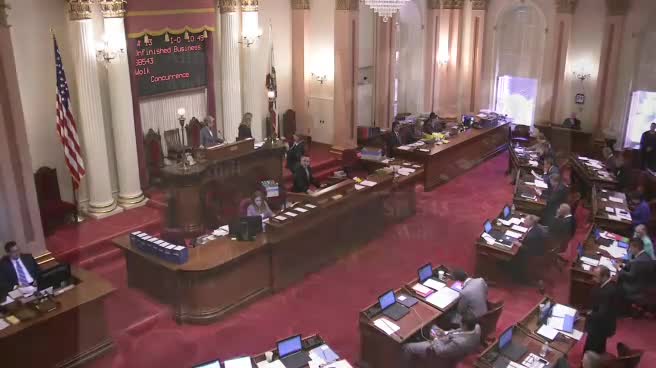 1MIN
Senate Floor
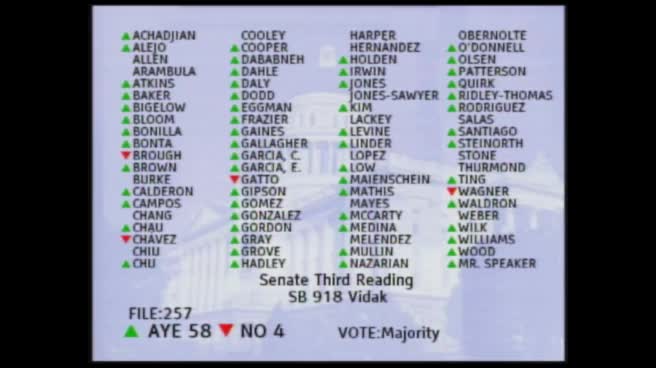 2MIN
Assembly Floor
 41SEC
Assembly Floor
 20MIN
Assembly Standing Committee on Utilities and Commerce
 4MIN
Senate Floor
 5MIN
Senate Standing Committee on Natural Resources and Water
 20MIN
Senate Standing Committee on Energy, Utilities and Communications
Bill Author