SB 923: Health care coverage: cost-sharing changes.
- Session Year: 2015-2016
- House: Senate
- Latest Version Date: 2016-08-25
Existing law, the Knox-Keene Health Care Service Plan Act of 1975, provides for the licensure and regulation of health care service plans by the Department of Managed Health Care and makes a willful violation of the act a crime. Existing law provides for the regulation of health insurers by the Department of Insurance. Existing law prohibits, except as specified, a health care service plan or a health insurer, with regard to a group contract or policy, from changing the premium rates or applicable copayments or coinsurances or deductibles during the term of a group plan contract or policy during specified time periods.
This bill would prohibit, for grandfathered plan contracts and policies and nongrandfathered plan contracts and policies in the individual and small group markets, a health care service plan contract or health insurance policy that is issued, amended, or renewed on or after January 1, 2017, from changing the cost-sharing design, as defined, during the plan year or policy year, except when required by state or federal law. Because a willful violation of this prohibition by a health care service plan would be a crime, the bill would impose a state-mandated local program.
The California Constitution requires the state to reimburse local agencies and school districts for certain costs mandated by the state. Statutory provisions establish procedures for making that reimbursement.
This bill would provide that no reimbursement is required by this act for a specified reason.
Existing law, the Knox-Keene Health Care Service Plan Act of 1975, provides for the licensure and regulation of health care service plans by the Department of Managed Health Care and makes a willful violation of the act a crime. Existing law provides for the regulation of health insurers by the Department of Insurance. Existing law prohibits, except as specified, a health care service plan or a health insurer, with regard to a group contract or policy, from changing the premium rates or applicable copayments or coinsurances or deductibles during the term of a group plan contract or policy during specified time periods.
This bill would prohibit, for grandfathered plan contracts and policies and nongrandfathered plan contracts and policies in the individual and small group markets, a health care service plan contract or health insurance policy that is issued, amended, or renewed on or after January 1, 2017, from changing the cost-sharing design, as defined, during the plan year or policy year, except when required by a change in state or federal law. Because a willful violation of this prohibition by a health care service plan would be a crime, the bill would impose a state-mandated local program.
The California Constitution requires the state to reimburse local agencies and school districts for certain costs mandated by the state. Statutory provisions establish procedures for making that reimbursement.
This bill would provide that no reimbursement is required by this act for a specified reason.
Existing law, the Knox-Keene Health Care Service Plan Act of 1975, provides for the licensure and regulation of health care service plans by the Department of Managed Health Care and makes a willful violation of the act a crime. Existing law provides for the regulation of health insurers by the Department of Insurance. Existing law prohibits, except as specified, a health care service plan or a health insurer, with regard to a group contract or policy, from changing the premium rates or applicable copayments or coinsurances or deductibles during the term of a group plan contract or policy during specified time periods.
This bill would prohibit, for grandfathered plan contracts and policies and nongrandfathered plan contracts and policies in the individual and small group markets, a health care service plan contract or health insurance policy that is issued, amended, or renewed on or after January 1, 2017, from changing any cost sharing requirements the cost-sharing design, as defined, during the plan year or policy year, except when required by a change in state or federal law. Because a willful violation of this prohibition by a health care service plan would be a crime, the bill would impose a state-mandated local program.
The California Constitution requires the state to reimburse local agencies and school districts for certain costs mandated by the state. Statutory provisions establish procedures for making that reimbursement.
This bill would provide that no reimbursement is required by this act for a specified reason.
Existing law, the Knox-Keene Health Care Service Plan Act of 1975, provides for the licensure and regulation of health care service plans by the Department of Managed Health Care and makes a willful violation of the act a crime. Existing law provides for the regulation of health insurers by the Department of Insurance. Existing law prohibits, except as specified, a health care service plan or a health insurer, with regard to a group contract or policy, from changing the premium rates or applicable copayments or coinsurances or deductibles during the term of a group plan contract or policy during specified time periods.
This bill would prohibit, for grandfathered plan contracts and policies and nongrandfathered plan contracts and policies in the individual and small group markets, a health care service plan contract or health insurance policy that is issued, amended, or renewed on or after January 1, 2017, from changing any cost sharing requirements during the plan year or policy year, except when required by a change in state or federal law. Because a willful violation of this prohibition by a health care service plan would be a crime, the bill would impose a state-mandated local program.
The California Constitution requires the state to reimburse local agencies and school districts for certain costs mandated by the state. Statutory provisions establish procedures for making that reimbursement.
This bill would provide that no reimbursement is required by this act for a specified reason.
(a)This section shall apply to grandfathered health care service plan contracts and nongrandfathered health care service plan contracts in the individual or small group markets that are issued, amended, or renewed on or after January 1, 2017.
(b)Notwithstanding paragraph (1) of subdivision (b) of Section 1374.20, a health care service plan contract shall not change the cost-sharing design during the plan year, except when required by state or federal law.
(c)For purposes of this section, the following definitions shall apply:
(1)Cost sharing includes any copayment, coinsurance, deductible, or any other form of cost sharing by the enrollee other than the premium or share of premium.
(2)Plan year has the meaning set forth in Section 144.103 of Title 45 of the Code of Federal Regulations. For nongrandfathered health care service plan contracts in the individual market, plan year means the calendar year.
(3)Cost-sharing design means the amount or proportion of cost sharing applied to a covered benefit.
SEC. 2.Section 10199.49 is added to the Insurance Code, immediately following Section 10199.48, to read:10199.49.(a)This section shall apply to grandfathered health insurance policies and nongrandfathered health insurance policies in the individual or small group markets that are issued, amended, or renewed on or after January 1, 2017.
(b)Notwithstanding paragraph (1) of subdivision (b) of Section 10199.48, a health insurance policy shall not change the cost-sharing design during the policy year, except when required by state or federal law.
(c)For purposes of this section, the following definitions shall apply:
(1)Cost sharing includes any copayment, coinsurance, deductible, or any other form of cost sharing by the insured other than the premium or share of premium.
(2)Policy year has the meaning set forth in Section 144.103 of Title 45 of the Code of Federal Regulations. For nongrandfathered health insurance policies in the individual market, policy year means the calendar year.
(3)Cost-sharing design means the amount or proportion of cost sharing applied to a covered benefit.
SEC. 3.No reimbursement is required by this act pursuant to Section 6 of Article XIIIB of the California Constitution because the only costs that may be incurred by a local agency or school district will be incurred because this act creates a new crime or infraction, eliminates a crime or infraction, or changes the penalty for a crime or infraction, within the meaning of Section 17556 of the Government Code, or changes the definition of a crime within the meaning of Section 6 of Article XIIIB of the California Constitution.
(a)This section shall apply to grandfathered health care service plan contracts and nongrandfathered health care service plan contracts in the individual or small group markets that are issued, amended, or renewed on or after January 1, 2017.
(b)Notwithstanding paragraph (1) of subdivision (b) of Section 1374.20, a health care service plan contract shall not change the cost-sharing design during the plan year, except when required by a change in state or federal law.
(c)For purposes of this section, the following definitions shall apply:
(1)Cost sharing includes any copayment, coinsurance, deductible, or any other form of cost sharing by the enrollee other than the premium or share of premium.
(2)Plan year has the meaning set forth in Section 144.103 of Title 45 of the Code of Federal Regulations. For nongrandfathered health care service plan contracts in the individual market, plan year means the calendar year.
(3)Cost-sharing design means the amount or proportion of cost sharing applied to a covered benefit.
SEC. 2.Section 10199.49 is added to the Insurance Code, immediately following Section 10199.48, to read:10199.49.(a)This section shall apply to grandfathered health insurance policies and nongrandfathered health insurance policies in the individual or small group markets that are issued, amended, or renewed on or after January 1, 2017.
(b)Notwithstanding paragraph (1) of subdivision (b) of Section 10199.48, a health insurance policy shall not change the cost-sharing design during the policy year, except when required by a change in state or federal law.
(c)For purposes of this section, the following definitions shall apply:
(1)Cost sharing includes any copayment, coinsurance, deductible, or any other form of cost sharing by the insured other than the premium or share of premium.
(2)Policy year has the meaning set forth in Section 144.103 of Title 45 of the Code of Federal Regulations. For nongrandfathered health insurance policies in the individual market, policy year means the calendar year.
(3)Cost-sharing design means the amount or proportion of cost sharing applied to a covered benefit.
SEC. 3.No reimbursement is required by this act pursuant to Section 6 of Article XIIIB of the California Constitution because the only costs that may be incurred by a local agency or school district will be incurred because this act creates a new crime or infraction, eliminates a crime or infraction, or changes the penalty for a crime or infraction, within the meaning of Section 17556 of the Government Code, or changes the definition of a crime within the meaning of Section 6 of Article XIIIB of the California Constitution.
(a)This section shall apply to grandfathered health care service plan contracts and nongrandfathered health care service plan contracts in the individual or small group markets that are issued, amended, or renewed on or after January 1, 2017.
(b)Notwithstanding paragraph (1) of subdivision (b) of Section 1374.20, a health care service plan contract shall not change any cost sharing requirements the cost-sharing design during the plan year, except when required by a change in state or federal law.
(c)For purposes of this section, the following definitions shall apply:
(1)Cost sharing includes any copayment, coinsurance, deductible, or any other form of cost sharing by the enrollee other than the premium or share of premium.
(2)Plan year has the meaning set forth in Section 144.103 of Title 45 of the Code of Federal Regulations. For nongrandfathered health care service plan contracts in the individual market, plan year means the calendar year.
(3)Cost-sharing design means the amount or proportion of cost sharing applied to a covered benefit.
SEC. 2.Section 10199.49 is added to the Insurance Code, immediately following Section 10199.48, to read:10199.49.(a)This section shall apply to grandfathered health insurance policies and nongrandfathered health insurance policies in the individual or small group markets that are issued, amended, or renewed on or after January 1, 2017.
(b)Notwithstanding paragraph (1) of subdivision (b) of Section 10199.48, a health insurance policy shall not change any cost sharing requirements the cost-sharing design during the policy year, except when required by a change in state or federal law.
(c)For purposes of this section, the following definitions shall apply:
(1)Cost sharing includes any copayment, coinsurance, deductible, or any other form of cost sharing by the insured other than the premium or share of premium.
(2)Policy year has the meaning set forth in Section 144.103 of Title 45 of the Code of Federal Regulations. For nongrandfathered health insurance policies in the individual market, policy year means the calendar year.
(3)Cost-sharing design means the amount or proportion of cost sharing applied to a covered benefit.
SEC. 3.No reimbursement is required by this act pursuant to Section 6 of Article XIIIB of the California Constitution because the only costs that may be incurred by a local agency or school district will be incurred because this act creates a new crime or infraction, eliminates a crime or infraction, or changes the penalty for a crime or infraction, within the meaning of Section 17556 of the Government Code, or changes the definition of a crime within the meaning of Section 6 of Article XIIIB of the California Constitution.
(a)This section shall apply to grandfathered health care service plan contracts and nongrandfathered health care service plan contracts in the individual or small group markets that are issued, amended, or renewed on or after January 1, 2017.
(b)Notwithstanding paragraph (1) of subdivision (b) of Section 1374.20, a health care service plan contract shall not change any cost sharing requirements during the plan year, except when required by a change in state or federal law.
(c)For purposes of this section, the following definitions shall apply:
(1)Cost sharing includes any copayment, coinsurance, deductible, or any other form of cost sharing by the enrollee other than the premium or share of premium.
(2)Plan year has the meaning set forth in Section 144.103 of Title 45 of the Code of Federal Regulations. For nongrandfathered health care service plan contracts in the individual market, plan year means the calendar year.
SEC. 2.Section 10199.49 is added to the Insurance Code, immediately following Section 10199.48, to read:10199.49.(a)This section shall apply to grandfathered health insurance policies and nongrandfathered health insurance policies in the individual or small group markets that are issued, amended, or renewed on or after January 1, 2017.
(b)Notwithstanding paragraph (1) of subdivision (b) of Section 10199.48, a health insurance policy shall not change any cost sharing requirements during the policy year, except when required by a change in state or federal law.
(c)For purposes of this section, the following definitions shall apply:
(1)Cost sharing includes any copayment, coinsurance, deductible, or any other form of cost sharing by the insured other than the premium or share of premium.
(2)Policy year has the meaning set forth in Section 144.103 of Title 45 of the Code of Federal Regulations. For nongrandfathered health insurance policies in the individual market, policy year means the calendar year.
SEC. 3.No reimbursement is required by this act pursuant to Section 6 of Article XIIIB of the California Constitution because the only costs that may be incurred by a local agency or school district will be incurred because this act creates a new crime or infraction, eliminates a crime or infraction, or changes the penalty for a crime or infraction, within the meaning of Section 17556 of the Government Code, or changes the definition of a crime within the meaning of Section 6 of Article XIIIB of the California Constitution.
|
Date
|
Status
|
|---|---|
| May 18, 2016 | From committee with author's amendments. Read second time and amended. Re-referred to Com. on HEALTH. |
| Aug 25, 2016 | Chaptered by Secretary of State. Chapter 192, Statutes of 2016. |
| Aug 25, 2016 | Approved by the Governor. |
| Aug 16, 2016 | Enrolled and presented to the Governor at 11:30 a.m. |
| Aug 11, 2016 | Assembly amendments concurred in. (Ayes 29. Noes 5. Page 4863.) Ordered to engrossing and enrolling. |
| Aug 11, 2016 | Assembly amendments concurred in. (Ayes 27. Noes 5.) Ordered to engrossing and enrolling. |
| Aug 4, 2016 | Read third time. Passed. (Ayes 75. Noes 0. Page 5711.) Ordered to the Senate. |
| Aug 4, 2016 | Read third time. Passed. Ordered to the Senate. |
| Aug 4, 2016 | In Senate. Concurrence in Assembly amendments pending. |
| Jun 30, 2016 | Read second time. Ordered to third reading. |
| Jun 29, 2016 | From committee: Do pass. (Ayes 18. Noes 0.) (June 29). |
| Jun 22, 2016 | From committee: Do pass and re-refer to Com. on APPR. (Ayes 17. Noes 0.) (June 21). Re-referred to Com. on APPR. |
| Jun 14, 2016 | June 14 set for first hearing canceled at the request of author. |
| May 31, 2016 | From committee with author's amendments. Read second time and amended. Re-referred to Com. on HEALTH. |
| Jan 28, 2016 | Introduced. Read first time. To Com. on RLS. for assignment. To print. |
| May 12, 2016 | Referred to Com. on HEALTH. |
| May 3, 2016 | In Assembly. Read first time. Held at Desk. |
| May 2, 2016 | Read third time. Passed. (Ayes 29. Noes 5.) Ordered to the Assembly. |
| May 2, 2016 | Read third time. Passed. (Ayes 29. Noes 5. Page 3735.) Ordered to the Assembly. |
| Apr 19, 2016 | Read second time. Ordered to third reading. |
| Apr 18, 2016 | From committee: Be ordered to second reading pursuant to Senate Rule 28.8. |
| Apr 8, 2016 | Set for hearing April 18. |
| Mar 30, 2016 | From committee: Do pass and re-refer to Com. on APPR. (Ayes 7. Noes 0.) (March 30). Re-referred to Com. on APPR. |
| Mar 30, 2016 | From committee: Do pass and re-refer to Com. on APPR. (Ayes 7. Noes 0. Page 3335.) (March 30). Re-referred to Com. on APPR. |
| Mar 15, 2016 | Set for hearing March 30. |
| Feb 18, 2016 | Referred to Com. on HEALTH. |
| Jan 29, 2016 | From printer. May be acted upon on or after February 28. |
|
Date
|
Description
|
Location
|
Votes
|
|
|---|---|---|---|---|
| Aug 11, 2016 | Unfinished Business SB923 Hernandez Concurrence | Senate Floor |
Passed |
|
| Aug 4, 2016 | SB 923 Hernandez Senate Third Reading By WOOD | Assembly Floor |
Passed |
|
| Jun 29, 2016 | Do pass. | Assembly Standing Committee on Appropriations |
Passed |
|
| Jun 21, 2016 | Do pass and be re-referred to the Committee on [Appropriations] | Assembly Standing Committee on Health |
Passed |
|
| May 2, 2016 | Senate 3rd Reading SB923 Hernandez | Senate Floor |
Passed |
|
| Mar 30, 2016 | Do pass, but first be re-referred to the Committee on [Appropriations] | Senate Standing Committee on Health |
Passed |
This list shows positions taken on this bill by organizations on the date displayed, which is linked to the original source.
Positions by individuals are not included.
|
Organization
|
Position
|
Date
|
|---|---|---|
| American Cancer Society Cancer Action Network Inc. | ** Support | Aug 4, 2016 |
| American Federation Of State, County And Municipal Employees, Afl-Cio | ** Support | Aug 11, 2016 |
| Association Of California Life & Health Insurance Companies | * Support | Mar 30, 2016 |
| California Association of Health Funds | * Against | Mar 30, 2016 |
| California Association Of Health Underwriters | ** Support | Aug 11, 2016 |
| California Immigrant Policy Center | ** Support | Aug 4, 2016 |
| California Labor Federation, Afl-Cio | * Support | Mar 30, 2016 |
| California Optometric Association | ** Support | Aug 11, 2016 |
| California Pharmacist Association | * Support | Mar 30, 2016 |
| California School Employees Association | ** Support | Aug 11, 2016 |
| California Teachers Association | ** Support | Aug 4, 2016 |
| CALPIRG | ** Support | Aug 11, 2016 |
| Congress of California Seniors | ** Support | Aug 11, 2016 |
| Consumers Union | ** Support | Aug 11, 2016 |
| Health Access California | ** Support | Aug 11, 2016 |
| Independent Insurance Agents and Brokers of California | ** Support | Aug 11, 2016 |
| National Alliance on Mental Illness | ** Support | Aug 4, 2016 |
| National Association Of Insurance And Financial Advisors | ** Support | Aug 11, 2016 |
| National Association of Social Workers-CA Chapter | ** Support | Aug 11, 2016 |
| National Health Law Program | ** Support | Aug 4, 2016 |
| National Multiple Sclerosis Society - CA Action Network | ** Support | Aug 11, 2016 |
| Retired Public Employees Association | ** Support | Aug 11, 2016 |
| SEIU California State Council | * Support | Mar 30, 2016 |
| Western Center On Law And Poverty Inc. | ** Support | Aug 11, 2016 |
Office of Senate Floor Analyses (916) 651-1520 Fax: (916) 327-4478 | SB |
UNFINISHED BUSINESS
Bill No: SB 923
:
SENATE HEALTH COMMITTEE: 7-0, 3/30/16
AYES: Hernandez, Hall, Mitchell, Monning, Pan, Roth, Wolk
NO VOTE RECORDED: Nguyen, Nielsen
SENATE APPROPRIATIONS COMMITTEE: Senate Rule 28.8
SENATE FLOOR: 29-5, 5/2/16
AYES: Allen, Beall, Berryhill, Block, Cannella, De León, Fuller, Galgiani, Glazer, Hall, Hancock, Hernandez, Hill, Hueso, Jackson, Lara, Leno, Leyva, Liu, McGuire, Mendoza, Mitchell, Monning, Pan, Pavley, Roth, Vidak, Wieckowski, Wolk
NOES: Anderson, Bates, Gaines, Morrell, Stone
NO VOTE RECORDED: Hertzberg, Huff, Moorlach, Nguyen, Nielsen, Runner
ASSEMBLY FLOOR: 75-0, 8/4/16 - See last page for vote
SOURCE: Health Access California
DIGEST: This bill prohibits a health plan contract or health insurance policy from changing any cost sharing design during the plan or policy year, except when required by state or federal law. Applies this prohibition to non-grandfathered health plan contracts and health insurance policies in the individual and small group markets and grandfathered health plan contracts and insurance policies in the individual market that are issued, amended, or renewed on or after January 1, 2017.
Assembly Amendments clarify the bill to prohibit changes in cost sharing “design” during the plan or policy year rather than cost sharing “requirements,” and define cost sharing design as the amount or proportion of cost sharing applied to a covered benefit.
Existing law:
- Establishes the Department of Managed Health Care (DMHC) to regulate health plans and the California Department of Insurance (CDI) to regulate insurers, including health insurers.
- Prohibits a health plan or health insurer, with regard to group contracts, from changing the premium rates or applicable copayments, coinsurances or deductibles for the length of the contract, except, when authorized or required in the contract, when the contract is a preliminary agreement subject to execution of a definitive agreement, or when the plan and contract-holder mutually agree in writing. (Enacted prior to the Affordable Care Act [ACA]).
- Defines rating period for the individual market as the calendar year for which premium rates are in effect, and for the non-grandfathered small group market as the period for which premium rates established by a plan are in effect and are no less than 12 months from the date of issuance or renewal of the plan contract. (Enacted after the ACA)
This bill:
- Prohibits a health plan contract or health insurance policy from changing any cost sharing design during the plan or policy year, except when required by a state or federal law.
- Applies 1) directly above to non-grandfathered health plan contracts and health insurance policies in the individual and small group markets and grandfathered health plan contracts and insurance policies in the individual market that are issued, amended, or renewed on or after January 1, 2017.
- Defines cost sharing as any copayment, coinsurance, deductible, or any other form of cost sharing by the enrollee other than the premium or share of premium.
- Defines cost sharing design as the amount or proportion of cost sharing applied to a covered benefit.
Comments
- Author’s statement. According to the author, the ACA provides many new consumer protections to make health insurance more affordable and available. These include protections on cost-sharing, such as actuarial value requirements and placing annual limits on out-of-pocket costs. One of the many individual market reforms California enacted while implementing the ACA was a provision that prohibited plans and insurers from altering premiums during the plan year. This essential patient protection, while meaningful on its own, does not currently apply to cost sharing requirements across all markets. This bill will ensure health care consumers are actually provided what they were promised when signing up for coverage by prohibiting a health care service plan contract or health insurance policy from changing any cost sharing requirements during the plan year. Numerous consumer protections passed by California over the last several years were designed to put an end to “bait and switch” tactics previously employed by health plans and insurers. This bill continues that tradition by advancing the basic tenet that consumers should get what they pay for.
- Health insurance and the ACA. For both small group and individual group plans or policies, California law establishes either a 12 month or calendar year rating period meaning rates have to be based on a 12 month period. Prior to the ACA, California law already prohibited in group contracts, plans and policies which allowed changing the premium rates, copayments, coinsurances or deductibles for the length of the contract, with certain exceptions, like the parties to the contract agree in writing. The law was passed because a health plan changed the premium rates after the open enrollment period closed. The law applies only to large group plans and policies, and grandfathered small group plans and policies. According to an article in the Los Angeles Times, in October of 2015, a major health plan settled an $8.3 million lawsuit that was brought because in 2011 the company was altering deductible requirements mid-year. As part of the settlement the plan assumed no wrong doing and argued that neither state law nor their existing contracts prohibited this practice. There were 50,000 affected consumers including one individual who received a $19,000 award because the individual had paid particularly high out-of-pocket costs. Affected consumers stated that they felt their plan was changing the rules of the game in the middle of that game. SB 923 would apply to all individual market plans and policies as well as non-grandfathered small group plans and policies.
FISCAL EFFECT: Appropriation: Fiscal Com.: Local:
According to the Assembly Appropriations Committee analysis, costs to DMHC and CDI are expected to be minor and absorbable, if any (Managed Care Fund/Insurance Fund).
Health Access California (source)
American Federation of State, County and Municipal Employees, AFL-CIO
California Association of Health Underwriters
California Labor Federation
California School Employees Association
California State Council of the Service Employees International Union
California Optometric Association
CALPIRG
Consumers Union
Congress of California Seniors
Independent Insurance Agents and Brokers of California
National Association of Insurance and Financial Advisors
National Association of Social Workers-CA Chapter
National Multiple Sclerosis Society - CA Action Network
Retired Public Employees Association
Western Center on Law and Poverty
None received
ARGUMENTS IN SUPPORT: Consumers Union writes that if enacted this bill would confer on policyholders the stability that comes with knowing that the health plan consumers diligently researched, and which they determined they could afford and would cover their needs, will remain the same plan throughout the year until at least the next open enrollment period. In so doing, consumers will have the ability to make informed purchasing decisions that will remain valid throughout the plan or policy year. Health Access California writes that this is a clean-up measure and that it was always the intent that both premiums and cost sharing be stable for a year at a time. California patients deserve this basic security. The National Multiple Sclerosis Society – CA Action Network writes that individuals who enroll in a health insurance plan depend on the cost sharing information provided by the insurer to plan and budget for their annual out-of-pocket expenses for medical services and prescription drugs. Consumers are surprised and unprepared when cost sharing increases in the middle of the contract year.
ASSEMBLY FLOOR: 75-0, 8/4/16
AYES: Achadjian, Alejo, Travis Allen, Arambula, Atkins, Baker, Bigelow, Bloom, Bonilla, Bonta, Brough, Brown, Burke, Calderon, Campos, Chang, Chau, Chiu, Chu, Cooper, Dababneh, Dahle, Daly, Dodd, Eggman, Frazier, Gallagher, Cristina Garcia, Eduardo Garcia, Gatto, Gipson, Gomez, Gonzalez, Gordon, Gray, Grove, Hadley, Holden, Irwin, Jones, Jones-Sawyer, Kim, Lackey, Levine, Linder, Lopez, Low, Maienschein, Mathis, Mayes, McCarty, Medina, Melendez, Mullin, Nazarian, Obernolte, O'Donnell, Olsen, Patterson, Quirk, Ridley-Thomas, Rodriguez, Salas, Santiago, Steinorth, Mark Stone, Thurmond, Ting, Wagner, Waldron, Weber, Wilk, Williams, Wood, Rendon
NO VOTE RECORDED: Chávez, Cooley, Beth Gaines, Harper, Roger Hernández
8/5/16 14:03:21
**** END ****
SENATE THIRD READING
STR Bill Id:SB 923
Author:(Hernandez)
As Amended Ver:May 31, 2016
Majority vote
SENATE VOTE: 29-5
Committee | Votes | Ayes | Noes |
Health | 17-0 | Wood, Maienschein, Bonilla, Burke, Campos, Chiu, Gomez, Roger Hernández, Lackey, Nazarian, Patterson, Ridley-Thomas, Rodriguez, Santiago, Steinorth, Thurmond, Waldron | |
Appropriations | 18-0 | Gonzalez, Bigelow, Bloom, Bonta, Calderon, Chang, Daly, Eggman, Gallagher, Roger Hernández, Holden, Jones, Obernolte, Quirk, Santiago, Wagner, Weber, Wood |
SUMMARY: Prohibits health care service plans (health plans) and health insurance policies (health policies) from changing cost sharing requirements during a plan or policy year in the individual or small group markets.
FISCAL EFFECT: According to the Assembly Appropriations Committee, the costs to Department of Managed Health Care and California Department of Insurance are expected to be minor and absorbable, if any (Managed Care Fund/Insurance Fund).
COMMENTS: According to the author, the federal Patient Protection and Affordable Care Act (ACA) provide many new consumer protections to make health insurance more affordable and available. These include protections on cost-sharing, such as actuarial value requirements and placing annual limits on out-of-pocket costs. One of the many individual market reforms California enacted while implementing the ACA, was a provision that prohibited plans and insurers from altering premiums during the plan year. This essential patient protection does not currently apply to cost sharing requirements across all markets. This bill will ensure health care consumers are actually provided what they were promised when signing up for coverage by prohibiting a health plan contract or health policy from changing any cost sharing requirements during the plan year.
The health insurance market is segmented into group and nongroup markets. In the group market there are companies that issue health insurance plans or policies to large employers or small employers, or both, and in the nongroup market plans or policies are issued to individual purchasers who buy insurance for themselves and/or their family members. Both small group and individual health plans or policies are available for purchase in health benefit exchanges (Covered California in this state) and outside health benefit exchanges. The laws that apply to specific market segments are not always the same.
The ACA includes a number of provisions that reform the health insurance market. These reforms help put American consumers back in charge of their health coverage and care, ensuring they receive value for their premium dollars. The ACA creates a more level playing field by cracking down on unreasonable health insurance premiums and holding insurance companies accountable for unjustified premium increases. Most transformational are changes to the small group and individual insurance markets, such as mandating guaranteed issuance of coverage, eliminating pre-existing condition exclusions, and limiting factors upon which premium rates can be developed. The ACA requires carriers to provide essential health benefits with standardized tiers of cost-sharing. With standardized benefits, consumers can more accurately compare plans and policies because the benefits are the same for all plans offered in the Exchange marketplace. Additionally, standardizing benefits ensures that the selected health insurance plans define what consumers get and limit the consumer's out-of-pocket costs by type of service.
For both small group and individual group health plans or policies, California law establishes either a 12 month or calendar year rating period meaning rates have to be based on a 12 month period. Prior to the ACA, California law already prohibited changing the premium rates, copayments, coinsurances, or deductibles for the length of the contract in group health plans and policies, with certain exceptions (i.e. when the parties to the contract agree in writing).
According to an article in the Los Angeles Times, in October of 2015, a major health plan settled an $8.3 million lawsuit when in 2011 the company was altering deductible requirements mid-year. As part of the settlement, the health plan assumed no wrong-doing and argued that neither state law nor their existing contracts prohibited this practice. There were 50,000 affected consumers including one individual who received a $19,000 award because the individual had paid particularly high out-of-pocket costs. Affected consumers stated that they felt their health plan was changing the rules in the middle of the game. This bill would apply to grandfathered and nongrandfathered health plan contracts and policies in the individual and small group markets that are issued, amended, or renewed on or after January 1, 2017.
Health Access California, sponsor of this bill, states that this bill requires health plans and insurers to keep cost sharing designs for a specific product in place during the entire rate year. Additionally, the sponsor explains that cost sharing design refers to what the copays or coinsurances are for a specific benefit. The American Federation of State, County and Municipal Employees, American Federation of Labor and Congress of Industrial Organizations (AFL-CIO), writes in support as this bill holds health care providers accountable for their services and patients. The National Association of Social Workers, California Chapter supports this bill because it will help consumers budget their health care expenditures and will allow consumers to understand their potential costs during the plan year. The California School Employees Association, AFL-CIO, states that this bill stops the unfair practice of the health plan increasing co-payments, or any other cost sharing requirements throughout the year.
Analysis Prepared by: Kristene Mapile / HEALTH / (916) 319-2097 FN: 0003650
Date of Hearing: June 21, 2016
ASSEMBLY COMMITTEE ON HEALTH
Jim Wood, Chair
SBPCA Bill Id:SB 923
Author:(Hernandez) – As Amended Ver:May 31, 2016
SENATE VOTE: 29-5
SUBJECT: Health care coverage: cost-sharing changes.
SUMMARY: Prohibits health care service plans (health plans) and health insurance policies (health policies) from changing cost sharing requirements during a plan or policy year in the individual or small group markets. Specifically, this bill:
- Applies to grandfathered and nongrandfathered health plan contracts and health policies in the individual or small group markets that are issued, amended, or renewed on or after January 1, 2017.
- Prohibits health plans and health policies from changing cost designs during the plan or policy year.
- Provides for an exception for changes when required by state or federal law.
- Defines cost sharing as any copayment, coinsurance, deductible, or any other form of cost sharing by the enrollee other than the premium or share of premium.
- Defines plan and policy year as set forth in existing federal law. Defines plan and policy year for nongrandfathered health plan contracts and health insurance policies in the individual market as the calendar year.
- Defines cost sharing design as the amount or proportion of cost sharing applied to a covered benefit.
EXISTING LAW:
- Establishes the Department of Managed Health Care to regulate health plans and the California Department of Insurance to regulate health insurers.
- Establishes the federal Patient Protection and Affordable Care Act (ACA), which enacts various health care coverage market reforms.
- Establishes the Exchange (now called Covered California) within state government, as an independent public entity not affiliated with an agency or department, and requires the Exchange to compare and make available through selective contracting health insurance for individual and small business purchasers as authorized under the ACA. Specifies the powers and duties of the board governing the Exchange, and requires the board to facilitate the purchase of qualified health plans though the Exchange by qualified individuals and small employers.
- Requires health plans, for certain contracts, to provide 60 days’ notice to contract holders prior to the effective date of the contract renewal for any change in premium rate or coverage.
- Prohibits a health plan or health insurer, with regard to group contracts, from changing the premium rates or applicable copayments, coinsurances, or deductibles for the length of the contract, except, when authorized or required in the contract, when the contract is a preliminary agreement subject to execution of a definitive agreement, or when the plan and contract-holder mutually agree in writing.
- Defines rating period for the individual market as the calendar year for which premium rates are in effect, and for the nongrandfathered small group market as the period for which premium rates established by a plan are in effect and are no less than 12 months from the date of issuance or renewal of the plan contract.
- Defines a plan year as a 12-month period of benefits coverage under a group health plan which may not be the same as the calendar year. Defines a policy year as a 12-month period for individual health insurance policies.
FISCAL EFFECT: According to the Senate Appropriations Committee, pursuant to Senate Rule 28.8, negligible state costs.
COMMENTS:
- PURPOSE OF THIS BILL. According to the author, the ACA provides many new consumer protections to make health insurance more affordable and available. These include protections on cost-sharing, such as actuarial value requirements and placing annual limits on out-of-pocket costs. One of the many individual market reforms California enacted while implementing the ACA, was a provision that prohibited plans and insurers from altering premiums during the plan year. This essential patient protection, while meaningful on its own, does not currently apply to cost sharing requirements across all markets. This bill will ensure health care consumers are actually provided what they were promised when signing up for coverage by prohibiting a health plan contract or health policy from changing any cost sharing requirements during the plan year. Numerous consumer protections passed by California over the last several years were designed to put an end to “bait and switch” tactics previously employed by health plans and insurers. The author concludes, this bill continues that tradition by advancing the basic tenet that consumers should get what they pay for.
- BACKGROUND. The health insurance market is segmented into group and nongroup markets. In the group market there are companies that issue health insurance plans or policies to large employers or small employers, or both, and in the nongroup market plans or policies are issued to individual purchasers who buy insurance for themselves and/or their family members. Both small group and individual health plans or policies are available for purchase in health benefit exchanges (Covered California in this state) and outside health benefit exchanges. The laws that apply to specific market segments are not always the same.
The ACA includes a number of provisions that reform the health insurance market. These reforms help put American consumers back in charge of their health coverage and care, ensuring they receive value for their premium dollars. The ACA creates a more level playing field by cracking down on unreasonable health insurance premiums and holding insurance companies accountable for unjustified premium increases. Most transformational are changes to the small group and individual insurance markets, such as mandating guaranteed issuance of coverage, eliminating pre-existing condition exclusions, and limiting factors upon which premium rates can be developed. The ACA requires carriers to provide essential health benefits (EHBs) with standardized tiers of cost-sharing. With standardized benefits, consumers can more accurately compare plans and policies because the benefits are the same for all plans offered in the Exchange marketplace. Additionally, standardizing benefits ensures that the selected health insurance plans define what consumers get and limit the consumer’s out-of-pocket costs by type of service.
Under the ACA, out-of-pocket limits for health plans are subject to the limit that currently applies to health savings account-qualified health plans. ACA regulations on grandfathered health plans or policies address how health plans or policies can retain a “grandfathered” exemption from certain ACA requirements. Grandfathered plans are health plans that were in existence on March 23, 2010, and haven’t been changed in ways that substantially cut benefits or increase costs for plan holders. Some, but not all, of the ACA requirements apply to grandfathered plans or policies, and there are differences in requirements that apply to grandfathered large group, small group, and nongroup plans or policies.
For both small group and individual group plans or policies, California law establishes either a 12 month or calendar year rating period meaning rates have to be based on a 12 month period. Prior to the ACA, California law already prohibited in group health contracts, plans, and policies which allowed changing the premium rates, copayments, coinsurances, or deductibles for the length of the contract, with certain exceptions (i.e. when the parties to the contract agree in writing).
According to an article in the Los Angeles Times, in October of 2015, a major health plan settled an $8.3 million lawsuit that was brought because in 2011 the company was altering deductible requirements mid-year. As part of the settlement, the health plan assumed no wrong-doing and argued that neither state law nor their existing contracts prohibited this practice. There were 50,000 affected consumers including one individual who received a $19,000 award because the individual had paid particularly high out-of-pocket costs. Affected consumers stated that they felt their health plan was changing the rules in the middle of the game. This bill would apply to all individual market plans and policies as well as non-grandfathered small group plans and policies.
- SUPPORT. Health Access California, sponsor of this bill, states that this bill requires health plans and insurers to keep cost sharing designs for a specific product in place during the entire rate year. Additionally, the sponsor explains that cost sharing design refers to what the copays or coinsurances are for a specific benefit. The American Federation of State, County and Municipal Employees, AFL-CIO, writes in support as this bill holds health care providers accountable for their services and patients. The National Association of Social Workers, California Chapter supports this bill because it will help consumers budget their health care expenditures and will allow consumers to understand their potential costs during the plan year. The California School Employees Association, AFL-CIO, states that this bill stops the unfair practice of the health plan increasing co-payments, or any other cost sharing requirements throughout the year. The National Multiple Sclerosis Society states that this bill serves as an important consumer protection cost measure essential to maintaining access to vital and often lifesaving treatment. The American Cancer Society Cancer Action Network states that this bill continues the tradition of numerous consumer protections designed to put an end to “bait and switch” tactics previously employed by health plans and insurers.
- PREVIOUS LEGISLATION.
- SB 43 (Hernandez), Chapter 648, Statutes of 2015, updates existing law to reflect that the Kaiser Foundation Health Plan Small Group HMO 30 plan, as offered during the first quarter of 2014, is California’s EHB benchmark for plan contracts and policies issued, amended, or renewed on or after January 1, 2017.
- AB 339 (Gordon), Chapter 619, Statutes of 2015, requires health plans and health insurers that provide coverage for outpatient prescription drugs to have formularies that do not discourage the enrollment of individuals with health conditions, and requires combination antiretrovirals drug treatment coverage of a single-tablet that is as effective as a multitablet regimen for treatment of Human Immunodeficiency Virus infection and Acquired Immune Deficiency Syndrome, as specified. AB 339 places in state law, federal requirements related to pharmacy and therapeutics committees, access to in-network retail pharmacies, standardized formulary requirements, formulary tier requirements similar to those required of health plans and insurers participating in Covered California, and copayment caps of $250 and $500 for a supply of up to 30 days for an individual prescription, as specified.
- SB 639 (Hernandez), Chapter 316, Statutes of 2013, codifies provisions of the ACA relating to out-of-pocket limits on cost-sharing.
- ABX1 2 (Pan), Chapter 1, Statutes of 2013-14 First Extraordinary Session and SBX1 2 (Hernandez), Chapter 2, Statutes of 2013-14 First Extraordinary Session, establish health insurance market reforms contained in the ACA specific to individual purchasers, such as prohibiting insurers from denying coverage based on preexisting conditions; and, make conforming changes to small employer health insurance laws resulting from final federal regulations.
- SB 961 (Hernandez) and AB 1461 (Monning) of 2012 were identical bills that would have reformed California’s individual market similar to the provisions in SBX1 2. SB 961 and AB 1461 were vetoed by Governor Brown who indicated that without the strong foundation that federal law provides, a state-level mandate on insurers alone could encourage healthy people to wait until they got sick or injured before purchasing coverage. This would lead to skyrocketing premiums, making coverage more unaffordable.
- AB 1083 (Monning), Chapter 854, Statutes of 2012, establishes reforms in the small group health insurance market to implement the ACA.
- SB 951 (Hernandez), Chapter 866, Statutes of 2012, and AB 1453 (Monning), Chapter 854, Statutes of 2012, designates the Kaiser Small Group HMO as California’s benchmark plan to serve as the EHBs, as required by the ACA.
- SB 51 (Alquist), Chapter 644, Statutes of 2011, establishes enforcement authority in California law to implement provisions of the ACA related to medical loss ratio requirements on health plans and health insurers and enacted prohibitions on annual and lifetime benefits.
- AB 2244 (Feuer), Chapter 656, Statutes of 2010, requires guaranteed issue of health plan and health insurance products for children beginning in January 1, 2011.
- SB 900 (Alquist), Chapter 659, Statutes of 2010, and AB 1602 (Perez), Chapter 655, Statutes of 2010, established the California Health Benefit Exchange.
- AB 2052 (Goldberg), Chapter 336, Statutes of 2002, prohibits a group health plan or health insurer from making any change in premium rates or cost sharing after acceptance of a contract or after the annual open enrollment period.
REGISTERED SUPPORT / OPPOSITION:
Support
Health Access California (sponsor)
American Cancer Society Cancer Action Network
American Federation of State, County and Municipal Employees, AFL-CIO
California Immigrant Policy Center
California Labor Federation
California Optometric Association
California School Employees Association, AFL-CIO
California State Council of the Service Employees International Union
California Teachers Association
CALPIRG
Congress of California Seniors
Consumers Union
National Alliance on Mental Illness
National Association of Social Workers – California Chapter
National Health Law Program
National Multiple Sclerosis Society- California Action Network
Western Center on Law and Poverty
Opposition
None on file.
Analysis Prepared by: Kristene Mapile / HEALTH / (916) 319-2097
Date of Hearing: June 29, 2016
ASSEMBLY COMMITTEE ON APPROPRIATIONS
Lorena Gonzalez, Chair
SBPCA Bill Id:SB 923
Author:(Hernandez) – As Amended Ver:May 31, 2016
Policy Committee: | Health | Vote: | 17 - 0 |
Urgency: No State Mandated Local Program: Yes Reimbursable: No
SUMMARY:
This bill prohibits health care service plans and health insurance carriers from changing cost-sharing requirements during a plan or policy year in the individual and small-group markets.
FISCAL EFFECT:
Costs to Department of Managed Health Care and California Department of Insurance are expected to be minor and absorbable, if any (Managed Care Fund/Insurance Fund).
COMMENTS:
- Purpose. The author explains one of the many individual market reforms California enacted while implementing the ACA was a provision that prohibited plans and insurers from altering premiums during the plan year. This essential patient protection, while meaningful on its own, does not currently apply to cost-sharing requirements such as deductibles, co-payments, and coinsurance. This bill is sponsored by Health Access, is supported by a number of health, legal, and consumer advocacy groups, and has no opposition.
- Background. The health insurance market is comprised of large-group, small-group, and individual segments. Large-group purchasers are generally large and sophisticated entities, such as employers, government agencies, and labor unions. Most provisions of the federal Affordable Care Act reformed the individual and small-group markets, whose purchasers were less able to negotiate reasonable prices and protections. This bill expands on existing protections in the ACA and California state law, which include limits on cost-sharing, guaranteed issuance of coverage regardless of preexisting conditions, and standardized, easily comparable benefit structure for health plans and policies.
- Prior Legislation.
- SB 639 (Hernandez, Chapter 316, Statutes of 2013) placed in California law, provisions of the ACA relating to cost-sharing limits, coverage levels, and other requirements.
- ABX1 2 (Pan, Chapter 1, Statutes of 2013) and SBX1 2 (Hernandez, Chapter 2, Statutes of 2013) establish health insurance market reforms contained in the ACA specific to individual purchasers.
Analysis Prepared by: Lisa Murawski / APPR. / (916) 319-2081
Date of Hearing: June 21, 2016
ASSEMBLY COMMITTEE ON HEALTH
Jim Wood, Chair
SBPCA Bill Id:SB 923
Author:(Hernandez) – As Amended Ver:May 31, 2016
SENATE VOTE: 29-5
SUBJECT: Health care coverage: cost-sharing changes.
SUMMARY: Prohibits health care service plans (health plans) and health insurance policies (health policies) from changing cost sharing requirements during a plan or policy year in the individual or small group markets. Specifically, this bill:
- Applies to grandfathered and nongrandfathered health plan contracts and health policies in the individual or small group markets that are issued, amended, or renewed on or after January 1, 2017.
- Prohibits health plans and health policies from changing cost designs during the plan or policy year.
- Provides for an exception for changes when required by state or federal law.
- Defines cost sharing as any copayment, coinsurance, deductible, or any other form of cost sharing by the enrollee other than the premium or share of premium.
- Defines plan and policy year as set forth in existing federal law. Defines plan and policy year for nongrandfathered health plan contracts and health insurance policies in the individual market as the calendar year.
- Defines cost sharing design as the amount or proportion of cost sharing applied to a covered benefit.
EXISTING LAW:
- Establishes the Department of Managed Health Care to regulate health plans and the California Department of Insurance to regulate health insurers.
- Establishes the federal Patient Protection and Affordable Care Act (ACA), which enacts various health care coverage market reforms.
- Establishes the Exchange (now called Covered California) within state government, as an independent public entity not affiliated with an agency or department, and requires the Exchange to compare and make available through selective contracting health insurance for individual and small business purchasers as authorized under the ACA. Specifies the powers and duties of the board governing the Exchange, and requires the board to facilitate the purchase of qualified health plans though the Exchange by qualified individuals and small employers.
- Requires health plans, for certain contracts, to provide 60 days’ notice to contract holders prior to the effective date of the contract renewal for any change in premium rate or coverage.
- Prohibits a health plan or health insurer, with regard to group contracts, from changing the premium rates or applicable copayments, coinsurances, or deductibles for the length of the contract, except, when authorized or required in the contract, when the contract is a preliminary agreement subject to execution of a definitive agreement, or when the plan and contract-holder mutually agree in writing.
- Defines rating period for the individual market as the calendar year for which premium rates are in effect, and for the nongrandfathered small group market as the period for which premium rates established by a plan are in effect and are no less than 12 months from the date of issuance or renewal of the plan contract.
- Defines a plan year as a 12-month period of benefits coverage under a group health plan which may not be the same as the calendar year. Defines a policy year as a 12-month period for individual health insurance policies.
FISCAL EFFECT: According to the Senate Appropriations Committee, pursuant to Senate Rule 28.8, negligible state costs.
COMMENTS:
- PURPOSE OF THIS BILL. According to the author, the ACA provides many new consumer protections to make health insurance more affordable and available. These include protections on cost-sharing, such as actuarial value requirements and placing annual limits on out-of-pocket costs. One of the many individual market reforms California enacted while implementing the ACA, was a provision that prohibited plans and insurers from altering premiums during the plan year. This essential patient protection, while meaningful on its own, does not currently apply to cost sharing requirements across all markets. This bill will ensure health care consumers are actually provided what they were promised when signing up for coverage by prohibiting a health plan contract or health policy from changing any cost sharing requirements during the plan year. Numerous consumer protections passed by California over the last several years were designed to put an end to “bait and switch” tactics previously employed by health plans and insurers. The author concludes, this bill continues that tradition by advancing the basic tenet that consumers should get what they pay for.
- BACKGROUND. The health insurance market is segmented into group and nongroup markets. In the group market there are companies that issue health insurance plans or policies to large employers or small employers, or both, and in the nongroup market plans or policies are issued to individual purchasers who buy insurance for themselves and/or their family members. Both small group and individual health plans or policies are available for purchase in health benefit exchanges (Covered California in this state) and outside health benefit exchanges. The laws that apply to specific market segments are not always the same.
The ACA includes a number of provisions that reform the health insurance market. These reforms help put American consumers back in charge of their health coverage and care, ensuring they receive value for their premium dollars. The ACA creates a more level playing field by cracking down on unreasonable health insurance premiums and holding insurance companies accountable for unjustified premium increases. Most transformational are changes to the small group and individual insurance markets, such as mandating guaranteed issuance of coverage, eliminating pre-existing condition exclusions, and limiting factors upon which premium rates can be developed. The ACA requires carriers to provide essential health benefits (EHBs) with standardized tiers of cost-sharing. With standardized benefits, consumers can more accurately compare plans and policies because the benefits are the same for all plans offered in the Exchange marketplace. Additionally, standardizing benefits ensures that the selected health insurance plans define what consumers get and limit the consumer’s out-of-pocket costs by type of service.
Under the ACA, out-of-pocket limits for health plans are subject to the limit that currently applies to health savings account-qualified health plans. ACA regulations on grandfathered health plans or policies address how health plans or policies can retain a “grandfathered” exemption from certain ACA requirements. Grandfathered plans are health plans that were in existence on March 23, 2010, and haven’t been changed in ways that substantially cut benefits or increase costs for plan holders. Some, but not all, of the ACA requirements apply to grandfathered plans or policies, and there are differences in requirements that apply to grandfathered large group, small group, and nongroup plans or policies.
For both small group and individual group plans or policies, California law establishes either a 12 month or calendar year rating period meaning rates have to be based on a 12 month period. Prior to the ACA, California law already prohibited in group health contracts, plans, and policies which allowed changing the premium rates, copayments, coinsurances, or deductibles for the length of the contract, with certain exceptions (i.e. when the parties to the contract agree in writing). The ACA was passed because a health plan changed the premium rates after the open enrollment period closed. The ACA applies only to large group plans and policies and grandfathered small group plans and policies.
According to an article in the Los Angeles Times, in October of 2015, a major health plan settled an $8.3 million lawsuit that was brought because in 2011 the company was altering deductible requirements mid-year. As part of the settlement, the plan assumed no wrong-doing and argued that neither state law nor their existing contracts prohibited this practice. There were 50,000 affected consumers including one individual who received a $19,000 award because the individual had paid particularly high out-of-pocket costs. Affected consumers stated that they felt their health plan was changing the rules in the middle of the game. This bill would apply to all individual market plans and policies as well as non-grandfathered small group plans and policies.
- SUPPORT. Health Access California, sponsor of this bill, states that this bill requires health plans and insurers to keep cost sharing designs for a specific product in place during the entire rate year. Additionally, the sponsor explains that cost sharing design refers to what the copays or coinsurances are for a specific benefit. The American Federation of State, County and Municipal Employees, AFL-CIO, writes in support as this bill holds health care providers accountable for their services and patients. The National Association of Social Workers, California Chapter supports this bill because it will help consumers budget their health care expenditures and will allow consumers to understand their potential costs during the plan year. The California School Employees Association, AFL-CIO, states that this bill stops the unfair practice of the health plan increasing co-payments, or any other cost sharing requirements throughout the year. The National Multiple Sclerosis Society states that this bill serves as an important consumer protection cost measure essential to maintaining access to vital and often lifesaving treatment. The American Cancer Society Cancer Action Network states that this bill continues the tradition of numerous consumer protections designed to put an end to “bait and switch” tactics previously employed by health plans and insurers.
- PREVIOUS LEGISLATION.
- SB 43 (Hernandez), Chapter 648, Statutes of 2015, updates existing law to reflect that the Kaiser Foundation Health Plan Small Group HMO 30 plan, as offered during the first quarter of 2014, is California’s EHB benchmark for plan contracts and policies issued, amended, or renewed on or after January 1, 2017.
- AB 339 (Gordon), Chapter 619, Statutes of 2015, requires health plans and health insurers that provide coverage for outpatient prescription drugs to have formularies that do not discourage the enrollment of individuals with health conditions, and requires combination antiretrovirals drug treatment coverage of a single-tablet that is as effective as a multitablet regimen for treatment of Human Immunodeficiency Virus infection and Acquired Immune Deficiency Syndrome, as specified. AB 339 places in state law, federal requirements related to pharmacy and therapeutics committees, access to in-network retail pharmacies, standardized formulary requirements, formulary tier requirements similar to those required of health plans and insurers participating in Covered California, and copayment caps of $250 and $500 for a supply of up to 30 days for an individual prescription, as specified.
- SB 639 (Hernandez), Chapter 316, Statutes of 2013, codifies provisions of the ACA relating to out-of-pocket limits on cost-sharing.
- ABX1 2 (Pan), Chapter 1, Statutes of 2013-14 First Extraordinary Session and SBX1 2 (Hernandez), Chapter 2, Statutes of 2013-14 First Extraordinary Session, establish health insurance market reforms contained in the ACA specific to individual purchasers, such as prohibiting insurers from denying coverage based on preexisting conditions; and, make conforming changes to small employer health insurance laws resulting from final federal regulations.
- SB 961 (Hernandez) and AB 1461 (Monning) of 2012 were identical bills that would have reformed California’s individual market similar to the provisions in SBX1 2. SB 961 and AB 1461 were vetoed by Governor Brown who indicated that without the strong foundation that federal law provides, a state-level mandate on insurers alone could encourage healthy people to wait until they got sick or injured before purchasing coverage. This would lead to skyrocketing premiums, making coverage more unaffordable.
- AB 1083 (Monning), Chapter 854, Statutes of 2012, establishes reforms in the small group health insurance market to implement the ACA.
- SB 951 (Hernandez), Chapter 866, Statutes of 2012, and AB 1453 (Monning), Chapter 854, Statutes of 2012, designates the Kaiser Small Group HMO as California’s benchmark plan to serve as the EHBs, as required by the ACA.
- SB 51 (Alquist), Chapter 644, Statutes of 2011, establishes enforcement authority in California law to implement provisions of the ACA related to medical loss ratio requirements on health plans and health insurers and enacted prohibitions on annual and lifetime benefits.
- AB 2244 (Feuer), Chapter 656, Statutes of 2010, requires guaranteed issue of health plan and health insurance products for children beginning in January 1, 2011.
- SB 900 (Alquist), Chapter 659, Statutes of 2010, and AB 1602 (Perez), Chapter 655, Statutes of 2010, established the California Health Benefit Exchange.
- AB 2052 (Goldberg), Chapter 336, Statutes of 2002, prohibits a group health plan or health insurer from making any change in premium rates or cost sharing after acceptance of a contract or after the annual open enrollment period.
REGISTERED SUPPORT / OPPOSITION:
Support
Health Access California (sponsor)
American Cancer Society Cancer Action Network
American Federation of State, County and Municipal Employees, AFL-CIO
California Immigrant Policy Center
California Labor Federation
California Optometric Association
California School Employees Association, AFL-CIO
California State Council of the Service Employees International Union
California Teachers Association
CALPIRG
Congress of California Seniors
Consumers Union
National Alliance on Mental Illness
National Association of Social Workers – California Chapter
National Health Law Program
National Multiple Sclerosis Society- California Action Network
Western Center on Law and Poverty
Opposition
None on file.
Analysis Prepared by: Kristene Mapile / HEALTH / (916) 319-2097
Office of Senate Floor Analyses (916) 651-1520 Fax: (916) 327-4478 | SB |
THIRD READING
Bill No: SB 923
:
SENATE HEALTH COMMITTEE: 7-0, 3/30/16
AYES: Hernandez, Hall, Mitchell, Monning, Pan, Roth, Wolk
NO VOTE RECORDED: Nguyen, Nielsen
SENATE APPROPRIATIONS COMMITTEE: Senate Rule 28.8
DIGEST: This bill prohibits a health plan contract or health insurance policy from changing any cost sharing requirements during the plan or policy year, except when required by a change in state or federal law. Applies this prohibition to non-grandfathered health plan contracts and health insurance policies in the individual and small group markets and grandfathered health plan contracts and insurance policies in the individual market that are issued, amended, or renewed on or after January 1, 2017.
Existing law:
- Establishes the Department of Managed Health Care (DMHC) to regulate health plans and the California Department of Insurance (CDI) to regulate insurers, including health insurers.
- Prohibits a health plan or health insurer, with regard to group contracts, from changing the premium rates or applicable copayments, coinsurances or deductibles for the length of the contract, except, when authorized or required in the contract, when the contract is a preliminary agreement subject to execution of a definitive agreement, or when the plan and contract-holder mutually agree in writing. (Enacted prior to the Affordable Care Act [ACA]).
- Defines rating period for the individual market as the calendar year for which premium rates are in effect, and for the non-grandfathered small group market as the period for which premium rates established by a plan are in effect and are no less than 12 months from the date of issuance or renewal of the plan contract. (Enacted after the ACA)
This bill:
- Prohibits a health plan contract or health insurance policy from changing any cost sharing requirements during the plan or policy year, except when required by a change in state or federal law.
- Applies 1) directly above to non-grandfathered health plan contracts and health insurance policies in the individual and small group markets and grandfathered health plan contracts and insurance policies in the individual market that are issued, amended, or renewed on or after January 1, 2017.
- Defines cost sharing as any copayment, coinsurance, deductible, or any other form of cost sharing by the enrollee other than the premium or share of premium.
- Defines plan year and policy year as the meaning set forth in federal regulations. Defines plan or policy year for non-grandfathered health plan contracts and health insurance policies in the individual market as the calendar year.
Comments
- Author’s statement. According to the author, the ACA provides many new consumer protections to make health insurance more affordable and available. These include protections on cost-sharing, such as actuarial value requirements and placing annual limits on out-of-pocket costs. One of the many individual market reforms California enacted while implementing the ACA was a provision that prohibited plans and insurers from altering premiums during the plan year. This essential patient protection, while meaningful on its own, does not currently apply to cost sharing requirements across all markets. This bill will ensure health care consumers are actually provided what they were promised when signing up for coverage by prohibiting a health care service plan contract or health insurance policy from changing any cost sharing requirements during the plan year. Numerous consumer protections passed by California over the last several years were designed to put an end to “bait and switch” tactics previously employed by health plans and insurers. This bill continues that tradition by advancing the basic tenet that consumers should get what they pay for.
- Health Insurance and the ACA. The health insurance market is segmented into group and nongroup markets. In the group market there are companies that issue health insurance plans or policies to large employers or small employers, or both, and in the nongroup market plans or policies are issued to individual purchasers who buy insurance for themselves and/or their family members. Both small group and individual insurance plans or policies are available for purchase in health benefit exchanges and outside health benefit exchanges (Covered California in this state). The laws that apply to specific market segments are not always the same.
The ACA represents a major expansion of U.S. health care coverage through an expansion and simplification of the Medicaid program and the adoption of major reforms of the health insurance market. Most transformational are changes to the small group and individual insurance markets, such as mandating guaranteed issuance of coverage, eliminating pre-existing condition exclusions, and limiting factors upon which premium rates can be developed. The ACA requires carriers to provide essential health benefits with standardized tiers of cost-sharing. Under the ACA, out-of-pocket limits for health plans are subject to the limit that currently applies to health savings account-qualified health plans. ACA regulations on grandfathered plans or policies address how health plans or policies can retain a “grandfathered” exemption from certain ACA requirements. Some, but not all, of the ACA requirements apply to grandfathered plans or policies, and there are differences in requirements that apply to grandfathered large group, small group, and nongroup plans or policies.
The ACA requires health plans and insurers offering non-grandfathered health plans or policies inside and outside of health benefit exchanges in the individual and small group markets to assure that any offered product must meet distinct levels of coverage called “metal tiers.” Each metal tier corresponds to an actuarial value, calculated based on the cost-sharing features of the plan. Actuarial value is the percentage of health care costs that would be paid for by a person’s health plan or policy coverage, versus out-of-pocket costs at the point of service (e.g., co-payments, co-insurance or the deductible). For example, a health plan or policy with an actuarial value of 60% would pay for 60% of an average individual’s health care costs (using a standard population), while the individual would be responsible for the remaining 40%. Federal law, effective 2014, requires health plans and health insurers to categorize products based on actuarial value as follows: Bronze – 60%, Silver – 70%, Gold – 80%, and Platinum - 90%.
For both small group and individual group plans or policies, California law establishes either a 12 month or calendar year rating period meaning rates have to be based on a 12 month period. Prior to the ACA, California law already prohibited in group contracts, plans and policies which allowed changing the premium rates, copayments, coinsurances or deductibles for the length of the contract, with certain exceptions, like the parties to the contract agree in writing. The law was passed because a health plan changed the premium rates after the open enrollment period closed. The law applies only to large group plans and policies, and grandfathered small group plans and policies. According to an article in the Los Angeles Times, in October of 2015, a major health plan settled an $8.3 million lawsuit that was brought because in 2011 the company was altering deductible requirements mid-year. As part of the settlement the plan assumed no wrong doing and argued that neither state law nor their existing contracts prohibited this practice. There were 50,000 affected consumers including one individual who received a $19,000 award because the individual had paid particularly high out-of-pocket costs. Affected consumers stated that they felt their plan was changing the rules of the game in the middle of that game. SB 923 would apply to all individual market plans and policies as well as non-grandfathered small group plans and policies.
Prior Legislation
SB 639 (Hernandez, Chapter 316, Statutes of 2013) placed in California law, provisions of the ACA relating to out-of-pocket limits on health plan enrollee and insured cost-sharing, health plan and insurer actuarial value coverage levels and catastrophic coverage requirements, and requirements on health insurers with regard to coverage for out-of-network emergency services. Applies health plan enrollee and insured out-of-pocket limits to specialized products that offer essential health benefits.
ABX1 2 (Pan, Chapter 1, Statutes of 2013) and SBX1 2 (Hernandez, Chapter 2, Statutes of 2013) established health insurance market reforms contained in the ACA specific to individual purchasers, such as prohibiting insurers from denying coverage based on preexisting conditions; and make conforming changes to small employer health insurance laws resulting from final federal regulations.
SB 961 (Hernandez of 2012) and AB 1461 (Monning) were identical bills that would have reformed California’s individual market similar to the provisions in SBX1 2. SB 961 and AB 1461 were vetoed by Governor Brown.
AB 1083 (Monning, Chapter 854, Statutes of 2012) established reforms in the small group health insurance market to implement the ACA.
SB 951 (Hernandez, Chapter 866, Statutes of 2012) and AB 1453 (Monning, Chapter 854, Statutes of 2012) designated the Kaiser Small Group HMO as California’s benchmark plan to serve as the essential health benefit standard, as required by federal health care reform.
SB 51 (Alquist, Chapter 644, Statutes of 2011) established enforcement authority in California law to implement provisions of the ACA related to medical loss ratio requirements on health plans and health insurers and enacted prohibitions on annual and lifetime benefits.
AB 2244 (Feuer, Chapter 656, Statutes of 2010) required guaranteed issue of health plan and health insurance products for children beginning in January 1, 2011.
SB 900 (Alquist, Chapter 659, Statutes of 2010) and AB 1602 (Perez, Chapter 655, Statutes of 2010), established the California Health Benefit Exchange.
AB 2052 (Goldberg, Chapter 336, Statutes of 2002) prohibited a group health plan or health insurer from making any change in premium rates or cost sharing after acceptance of a contract or after the annual open enrollment period.
FISCAL EFFECT: Appropriation: No Fiscal Com.: Yes Local: Yes
American Federation of State, County and Municipal Employees, AFL-CIO
California Association of Health Underwriters
California Labor Federation
California School Employees Association
California State Council of the Service Employees International Union
California Optometric Association
Consumers Union
Health Access California
Independent Insurance Agents and Brokers of California
National Association of Insurance and Financial Advisors
National Association of Social Workers-CA Chapter
National Multiple Sclerosis Society - CA Action Network
Western Center on Law and Poverty
OPPOSITION: (Verified 4/18/16)
None received
ARGUMENTS IN SUPPORT: Consumers Union writes that if enacted this bill would confer on policyholders the stability that comes with knowing that the health plan consumers diligently researched, and which they determined they could afford and would cover their needs, will remain the same plan throughout the year until at least the next open enrollment period. In so doing, consumers will have the ability to make informed purchasing decisions that will remain valid throughout the plan or policy year. Health Access California writes that this is a clean-up measure and that it was always the intent that both premiums and cost sharing be stable for a year at a time. California patients deserve this basic security. The National Multiple Sclerosis Society – CA Action Network writes that individuals who enroll in a health insurance plan depend on the cost sharing information provided by the insurer to plan and budget for their annual out-of-pocket expenses for medical services and prescription drugs. Consumers are surprised and unprepared when cost sharing increases in the middle of the contract year.
Prepared by: Teri Boughton / Health / (916) 651-4111
**** END ***
Office of Senate Floor Analyses (916) 651-1520 Fax: (916) 327-4478 | SB |
THIRD READING
Bill No: SB 923
:
SENATE HEALTH COMMITTEE: 7-0, 3/30/16
AYES: Hernandez, Hall, Mitchell, Monning, Pan, Roth, Wolk
NO VOTE RECORDED: Nguyen, Nielsen
SENATE APPROPRIATIONS COMMITTEE: Senate Rule 28.8
DIGEST: This bill prohibits a health plan contract or health insurance policy from changing any cost sharing requirements during the plan or policy year, except when required by a change in state or federal law. Applies this prohibition to non-grandfathered health plan contracts and health insurance policies in the individual and small group markets and grandfathered health plan contracts and insurance policies in the individual market that are issued, amended, or renewed on or after January 1, 2017.
Existing law:
- Establishes the Department of Managed Health Care (DMHC) to regulate health plans and the California Department of Insurance (CDI) to regulate insurers, including health insurers.
- Prohibits a health plan or health insurer, with regard to group contracts, from changing the premium rates or applicable copayments, coinsurances or deductibles for the length of the contract, except, when authorized or required in the contract, when the contract is a preliminary agreement subject to execution of a definitive agreement, or when the plan and contract-holder mutually agree in writing. (Enacted prior to the Affordable Care Act [ACA]).
- Defines rating period for the individual market as the calendar year for which premium rates are in effect, and for the non-grandfathered small group market as the period for which premium rates established by a plan are in effect and are no less than 12 months from the date of issuance or renewal of the plan contract. (Enacted after the ACA)
This bill:
- Prohibits a health plan contract or health insurance policy from changing any cost sharing requirements during the plan or policy year, except when required by a change in state or federal law.
- Applies 1) directly above to non-grandfathered health plan contracts and health insurance policies in the individual and small group markets and grandfathered health plan contracts and insurance policies in the individual market that are issued, amended, or renewed on or after January 1, 2017.
- Defines cost sharing as any copayment, coinsurance, deductible, or any other form of cost sharing by the enrollee other than the premium or share of premium.
- Defines plan year and policy year as the meaning set forth in federal regulations. Defines plan or policy year for non-grandfathered health plan contracts and health insurance policies in the individual market as the calendar year.
Comments
- Author’s statement. According to the author, the ACA provides many new consumer protections to make health insurance more affordable and available. These include protections on cost-sharing, such as actuarial value requirements and placing annual limits on out-of-pocket costs. One of the many individual market reforms California enacted while implementing the ACA was a provision that prohibited plans and insurers from altering premiums during the plan year. This essential patient protection, while meaningful on its own, does not currently apply to cost sharing requirements across all markets. This bill will ensure health care consumers are actually provided what they were promised when signing up for coverage by prohibiting a health care service plan contract or health insurance policy from changing any cost sharing requirements during the plan year. Numerous consumer protections passed by California over the last several years were designed to put an end to “bait and switch” tactics previously employed by health plans and insurers. This bill continues that tradition by advancing the basic tenet that consumers should get what they pay for.
- Health Insurance and the ACA. The health insurance market is segmented into group and nongroup markets. In the group market there are companies that issue health insurance plans or policies to large employers or small employers, or both, and in the nongroup market plans or policies are issued to individual purchasers who buy insurance for themselves and/or their family members. Both small group and individual insurance plans or policies are available for purchase in health benefit exchanges and outside health benefit exchanges (Covered California in this state). The laws that apply to specific market segments are not always the same.
The ACA represents a major expansion of U.S. health care coverage through an expansion and simplification of the Medicaid program and the adoption of major reforms of the health insurance market. Most transformational are changes to the small group and individual insurance markets, such as mandating guaranteed issuance of coverage, eliminating pre-existing condition exclusions, and limiting factors upon which premium rates can be developed. The ACA requires carriers to provide essential health benefits with standardized tiers of cost-sharing. Under the ACA, out-of-pocket limits for health plans are subject to the limit that currently applies to health savings account-qualified health plans. ACA regulations on grandfathered plans or policies address how health plans or policies can retain a “grandfathered” exemption from certain ACA requirements. Some, but not all, of the ACA requirements apply to grandfathered plans or policies, and there are differences in requirements that apply to grandfathered large group, small group, and nongroup plans or policies.
The ACA requires health plans and insurers offering non-grandfathered health plans or policies inside and outside of health benefit exchanges in the individual and small group markets to assure that any offered product must meet distinct levels of coverage called “metal tiers.” Each metal tier corresponds to an actuarial value, calculated based on the cost-sharing features of the plan. Actuarial value is the percentage of health care costs that would be paid for by a person’s health plan or policy coverage, versus out-of-pocket costs at the point of service (e.g., co-payments, co-insurance or the deductible). For example, a health plan or policy with an actuarial value of 60% would pay for 60% of an average individual’s health care costs (using a standard population), while the individual would be responsible for the remaining 40%. Federal law, effective 2014, requires health plans and health insurers to categorize products based on actuarial value as follows: Bronze – 60%, Silver – 70%, Gold – 80%, and Platinum - 90%.
For both small group and individual group plans or policies, California law establishes either a 12 month or calendar year rating period meaning rates have to be based on a 12 month period. Prior to the ACA, California law already prohibited in group contracts, plans and policies which allowed changing the premium rates, copayments, coinsurances or deductibles for the length of the contract, with certain exceptions, like the parties to the contract agree in writing. The law was passed because a health plan changed the premium rates after the open enrollment period closed. The law applies only to large group plans and policies, and grandfathered small group plans and policies. According to an article in the Los Angeles Times, in October of 2015, a major health plan settled an $8.3 million lawsuit that was brought because in 2011 the company was altering deductible requirements mid-year. As part of the settlement the plan assumed no wrong doing and argued that neither state law nor their existing contracts prohibited this practice. There were 50,000 affected consumers including one individual who received a $19,000 award because the individual had paid particularly high out-of-pocket costs. Affected consumers stated that they felt their plan was changing the rules of the game in the middle of that game. SB 923 would apply to all individual market plans and policies as well as non-grandfathered small group plans and policies.
Prior Legislation
SB 639 (Hernandez, Chapter 316, Statutes of 2013) placed in California law, provisions of the ACA relating to out-of-pocket limits on health plan enrollee and insured cost-sharing, health plan and insurer actuarial value coverage levels and catastrophic coverage requirements, and requirements on health insurers with regard to coverage for out-of-network emergency services. Applies health plan enrollee and insured out-of-pocket limits to specialized products that offer essential health benefits.
ABX1 2 (Pan, Chapter 1, Statutes of 2013) and SBX1 2 (Hernandez, Chapter 2, Statutes of 2013) established health insurance market reforms contained in the ACA specific to individual purchasers, such as prohibiting insurers from denying coverage based on preexisting conditions; and make conforming changes to small employer health insurance laws resulting from final federal regulations.
SB 961 (Hernandez of 2012) and AB 1461 (Monning), were identical bills that would have reformed California’s individual market similar to the provisions in SBX1 2. SB 961 and AB 1461 were vetoed by Governor Brown.
AB 1083 (Monning, Chapter 854, Statutes of 2012) established reforms in the small group health insurance market to implement the ACA.
SB 951 (Hernandez, Chapter 866, Statutes of 2012) and AB 1453 (Monning, Chapter 854, Statutes of 2012) designated the Kaiser Small Group HMO as California’s benchmark plan to serve as the essential health benefit standard, as required by federal health care reform.
SB 51 (Alquist, Chapter 644, Statutes of 2011), established enforcement authority in California law to implement provisions of the ACA related to medical loss ratio requirements on health plans and health insurers and enacted prohibitions on annual and lifetime benefits.
AB 2244 (Feuer, Chapter 656, Statutes of 2010), required guaranteed issue of health plan and health insurance products for children beginning in January 1, 2011.
SB 900 (Alquist, Chapter 659, Statutes of 2010, and AB 1602 (Perez, Chapter 655, Statutes of 2010), established the California Health Benefit Exchange.
AB 2052 (Goldberg, Chapter 336, Statutes of 2002), prohibited a group health plan or health insurer from making any change in premium rates or cost sharing after acceptance of a contract or after the annual open enrollment period.
FISCAL EFFECT: Appropriation: No Fiscal Com.: Yes Local: Yes
American Federation of State, County and Municipal Employees, AFL-CIO
California Association of Health Underwriters
California Labor Federation
California School Employees Association
California State Council of the Service Employees International Union
California Optometric Association
Consumers Union
Health Access California
Independent Insurance Agents and Brokers of California
National Association of Insurance and Financial Advisors
National Association of Social Workers-CA Chapter
National Multiple Sclerosis Society - CA Action Network
Western Center on Law and Poverty
OPPOSITION: (Verified 4/18/16)
None received
ARGUMENTS IN SUPPORT: Consumers Union writes that if enacted this bill would confer on policyholders the stability that comes with knowing that the health plan consumers diligently researched, and which they determined they could afford and would cover their needs, will remain the same plan throughout the year until at least the next open enrollment period. In so doing, consumers will have the ability to make informed purchasing decisions that will remain valid throughout the plan or policy year. Health Access California writes that this is a clean-up measure and that it was always the intent that both premiums and cost sharing be stable for a year at a time. California patients deserve this basic security. The National Multiple Sclerosis Society – CA Action Network writes that individuals who enroll in a health insurance plan depend on the cost sharing information provided by the insurer to plan and budget for their annual out-of-pocket expenses for medical services and prescription drugs. Consumers are surprised and unprepared when cost sharing increases in the middle of the contract year.
Prepared by: Teri Boughton / Health / (916) 651-4111
**** END ***
SENATE COMMITTEE ON HEALTH
Senator Ed Hernandez, O.D., Chair
BILL NO: SB 923
AUTHOR: | Hernandez | ||
VERSION: | January 28, 2016 | ||
HEARING DATE: | March 30, 2016 | ||
CONSULTANT: | Teri Boughton | ||
SUBJECT: Health care coverage: cost sharing changes
SUMMARY:
Prohibits a health plan contract or health insurance policy from changing any cost sharing requirements during the plan or policy year, except when required by a change in state or federal law. Applies this prohibition to non-grandfathered health plan contracts and health insurance policies in the individual and small group markets and grandfathered health plan contracts and insurance policies in the individual market that are issued, amended, or renewed on or after January 1, 2017.
Existing state law:
- Establishes the Department of Managed Health Care (DMHC) to regulate health plans and the California Department of Insurance (CDI) to regulate insurers, including health insurers.
- Prohibits a health plan or health insurer, with regard to group contracts, from changing the premium rates or applicable copayments, coinsurances or deductibles for the length of the contract, except, when authorized or required in the contract, when the contract is a preliminary agreement subject to execution of a definitive agreement, or when the plan and contract-holder mutually agree in writing. (Enacted prior to the Affordable Care Act [ACA]).
- Defines rating period for the individual market as the calendar year for which premium rates are in effect, and for the non-grandfathered small group market as the period for which premium rates established by a plan are in effect and are no less than 12 months from the date of issuance or renewal of the plan contract. (Enacted after the ACA)
This bill:
- Prohibits a health plan contract or health insurance policy from changing any cost sharing requirements during the plan or policy year, except when required by a change in state or federal law.
- Applies 1) directly above to non-grandfathered health plan contracts and health insurance policies in the individual and small group markets and grandfathered health plan contracts and insurance policies in the individual market that are issued, amended, or renewed on or after January 1, 2017.
- Defines cost sharing as any copayment, coinsurance, deductible, or any other form of cost sharing by the enrollee other than the premium or share of premium.
- Defines plan year and policy year as the meaning set forth in federal regulations. Defines plan or policy year for non-grandfathered health plan contracts and health insurance policies in the individual market as the calendar year.
FISCAL EFFECT:
This bill has not been analyzed yet by a fiscal committee.
COMMENTS:
- Author’s statement. According to the author, the ACA provides many new consumer protections to make health insurance more affordable and available. These include protections on cost-sharing, such as actuarial value requirements and placing annual limits on out-of-pocket costs. One of the many individual market reforms California enacted while implementing the ACA was a provision that prohibited plans and insurers from altering premiums during the plan year. This essential patient protection, while meaningful on its own, does not currently apply to cost sharing requirements across all markets. This bill will ensure health care consumers are actually provided what they were promised when signing up for coverage by prohibiting a health care service plan contract or health insurance policy from changing any cost sharing requirements during the plan year. Numerous consumer protections passed by California over the last several years were designed to put an end to “bait and switch” tactics previously employed by health plans and insurers. This bill continues that tradition by advancing the basic tenant that consumers should get what they pay for.
- Health Insurance and the ACA. The health insurance market is segmented into group and nongroup markets. In the group market there are companies that issue health insurance plans or policies to large employers or small employers, or both, and in the nongroup market plans or policies are issued to individual purchasers who buy insurance for themselves and/or their family members. Both small group and individual insurance plans or policies are available for purchase in health benefit exchanges and outside health benefit exchanges (Covered California in this state). The laws that apply to specific market segments are not always the same.
The ACA represents a major expansion of U.S. health care coverage through an expansion and simplification of the Medicaid program and the adoption of major reforms of the health insurance market. Most transformational are changes to the small group and individual insurance markets, such as mandating guaranteed issuance of coverage, eliminating pre-existing condition exclusions, and limiting factors upon which premium rates can be developed. The ACA requires carriers to provide essential health benefits with standardized tiers of cost-sharing. Under the ACA, out-of-pocket limits for health plans are subject to the limit that currently applies to health savings account-qualified health plans. ACA regulations on grandfathered plans or policies address how health plans or policies can retain a “grandfathered” exemption from certain ACA requirements. Some, but not all, of the ACA requirements apply to grandfathered plans or policies, and there are differences in requirements that apply to grandfathered large group, small group, and nongroup plans or policies.
The ACA requires health plans and insurers offering non-grandfathered health plans or policies inside and outside of health benefit exchanges in the individual and small group markets to assure that any offered product must meet distinct levels of coverage called “metal tiers.” Each metal tier corresponds to an actuarial value, calculated based on the cost-sharing features of the plan. Actuarial value is the percentage of health care costs that would be paid for by a person’s health plan or policy coverage, versus out-of-pocket costs at the point of service (e.g., co-payments, co-insurance or the deductible). For example, a health plan or policy with an actuarial value of 60% would pay for 60% of an average individual’s health care costs (using a standard population), while the individual would be responsible for the remaining 40%. Federal law, effective 2014, requires health plans and health insurers to categorize products based on actuarial value as follows: Bronze – 60%, Silver – 70%, Gold – 80%, and Platinum - 90%.
For both small group and individual group plans or policies, California law establishes either a 12 month or calendar year rating period meaning rates have to be based on a 12 month period. Prior to the ACA, California law already prohibited in group contracts, plans and policies which allowed changing the premium rates, copayments, coinsurances or deductibles for the length of the contract, with certain exceptions, like the parties to the contract agree in writing. The law was passed because a health plan changed the premium rates after the open enrollment period closed. The law applies only to large group plans and policies, and grandfathered small group plans and policies. According to an article in the Los Angeles Times, in October of 2015, a major health plan settled an $8.3 million lawsuit that was brought because in 2011 the company was altering deductible requirements mid-year. As part of the settlement the plan assumed no wrong doing and argued that neither state law nor their existing contracts prohibited this practice. There were 50,000 affected consumers including one individual who received a $19,000 award because the individual had paid particularly high out-of-pocket costs. Affected consumers stated that they felt their plan was changing the rules of the game in the middle of that game. SB 923 would apply to all individual market plans and policies as well as non-grandfathered small group plans and policies.
- Prior legislation.
SB 639 (Hernandez, Chapter 316, Statutes of 2013) placed in California law, provisions of the ACA relating to out-of-pocket limits on health plan enrollee and insured cost-sharing, health plan and insurer actuarial value coverage levels and catastrophic coverage requirements, and requirements on health insurers with regard to coverage for out-of-network emergency services. Applies health plan enrollee and insured out-of-pocket limits to specialized products that offer essential health benefits.
ABX1 2 (Pan, Chapter 1, Statutes of 2013) and SBX1 2 (Hernandez, Chapter 2, Statutes of 2013) establish health insurance market reforms contained in the ACA specific to individual purchasers, such as prohibiting insurers from denying coverage based on preexisting conditions; and make conforming changes to small employer health insurance laws resulting from final federal regulations.
SB 961 (Hernandez of 2012) and AB 1461 (Monning), were identical bills that would have reformed California’s individual market similar to the provisions in SBX1 2. SB 961 and AB 1461 were vetoed by Governor Brown.
AB 1083 (Monning, Chapter 854, Statutes of 2012) established reforms in the small group health insurance market to implement the ACA.
SB 951 (Hernandez, Chapter 866, Statutes of 2012) and AB 1453 (Monning, Chapter 854, Statutes of 2012) designated the Kaiser Small Group HMO as California’s benchmark plan to serve as the essential health benefit standard, as required by federal health care reform.
SB 51 (Alquist, Chapter 644, Statutes of 2011), established enforcement authority in California law to implement provisions of the ACA related to medical loss ratio requirements on health plans and health insurers and enacted prohibitions on annual and lifetime benefits.
AB 2244 (Feuer, Chapter 656, Statutes of 2010), requires guaranteed issue of health plan and health insurance products for children beginning in January 1, 2011.
SB 900 (Alquist, Chapter 659, Statutes of 2010, and AB 1602 (Perez, Chapter 655, Statutes of 2010), established the California Health Benefit Exchange.
AB 2052 (Goldberg, Chapter 336, Statutes of 2002), prohibits a group health plan or health insurer from making any change in premium rates or cost sharing after acceptance of a contract or after the annual open enrollment period.
- Support. Consumers Union writes that if enacted this bill would confer on policyholders the stability that comes with knowing that the health plan consumers diligently researched, and which they determined they could afford and would cover their needs, will remain the same plan throughout the year until at least the next open enrollment period. In so doing, consumers will have the ability to make informed purchasing decisions that will remain valid throughout the plan or policy year. Health Access California writes that this is a clean-up measure and that it was always the intent that both premiums and cost sharing be stable for a year at a time. California patients deserve this basic security. The National Multiple Sclerosis Society – CA Action Network writes that individuals who enroll in a health insurance plan depend on the cost sharing information provided by the insurer to plan and budget for their annual out-of-pocket expenses for medical services and prescription drugs. Consumers are surprised and unprepared when cost sharing increases in the middle of the contract year.
SUPPORT AND OPPOSITION:
Support: American Federation of State, County and Municipal Employees, AFL-CIO
California Labor Federation
California State Council of the Service Employees International Union
California Optometric Association
Consumers Union
Health Access California
National Association of Social Workers-CA Chapter
National Multiple Sclerosis Society - CA Action Network
Western Center on Law and Poverty
Oppose: None received
-- END --

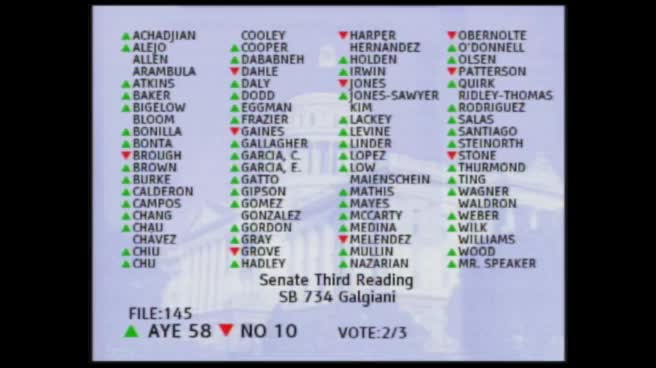


Bill Author

Bill Co-Author(s):